Tag Archives: freedmen’s bureau

The Fight for Citizenship and Suffrage: The XIV and XV Amendments and Ulyesses Grant’s Fight Against the KKK

14-amendment

Friends of Padre Steve’s World,

This is another of my continued series of articles pulled from my various Civil War texts dealing with Emancipation and the early attempts to gain civil rights for African Americans. This section that I will cover for the next few days deals with the post-war period, a period marked by conflicting political and social desires for equality, justice, revenge, and the re-victimization of Blacks who had so recently been emancipated.

I hope that you find these helpful.

Peace

Padre Steve+

The Passage of the Fourteenth Amendment

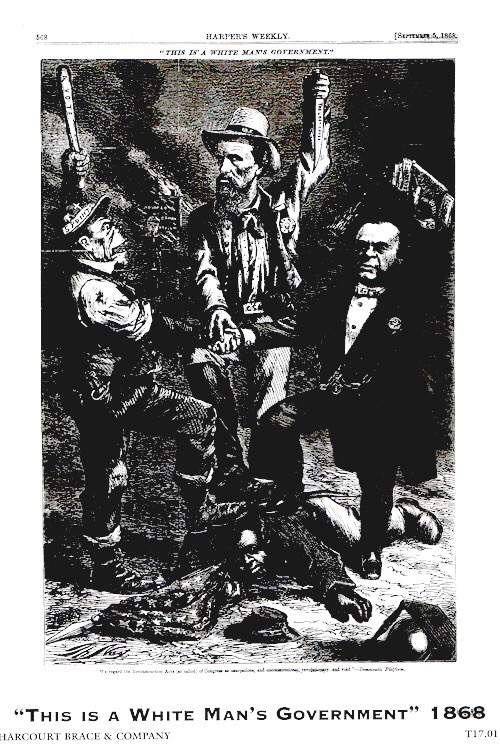
The situation for newly emancipated blacks in the South continued to deteriorate as the governors appointed by President Johnson supervised elections, which elected new governors, and all-white legislatures composed chiefly of former Confederate leaders. Freedom may have been achieved, but the question as to what it meant was still to be decided, “What is freedom?” James A. Garfield later asked. “Is it the bare privilege of not being chained?… If this is all, then freedom is a bitter mockery, a cruel delusion.” [1] The attitude of the newly elected legislatures and the new governors toward emancipated blacks was shown by Mississippi’s new governor, Benjamin G. Humphreys, a former Confederate general who was pardoned by Andrew Johnson in order to take office. In his message to the legislature Humphreys declared:

“Under the pressure of federal bayonets, urged on by the misdirected sympathies of the world, the people of Mississippi have abolished the institution of slavery. The Negro is free, whether we like it or not; we must realize that fact now and forever. To be free does not make him a citizen, or entitle him to social or political equality with the white man.”  [2]

Johnson’s continued defiance of Congress alienated him from the Republican majority who passed legislation over Johnson’s veto to give black men the right to vote and hold office, and to overturn the white only elections which had propelled so many ex-Confederates into political power. Over Johnson’s opposition Congress took power over Reconstruction and “Constitutional amendments were passed, the laws for racial equality were passed, and the black man began to vote and to hold office.” [3] Congress passed measures in 1867 that mandated that the new constitutions written in the South provide for “universal suffrage and for the temporary political disqualification of many ex-Confederates.” [4]  As such many of the men elected to office in 1865 were removed from power, including Governor Humphreys who was deposed in 1868.

These measures helped elect bi-racial legislatures in the South, which for the first time enacted a series of progressive reforms including the creation of public schools. “The creation of tax-supported public school systems in every state of the South stood as one of Reconstruction’s most enduring accomplishments.” [5] By 1875 approximately half of all children in the South, white and black were in school. While the public schools were usually segregated and higher education in tradition White colleges was restricted, the thirst for education became a hallmark of free African Americans across the county. In response to discrimination black colleges and universities opened the doors of higher education to many blacks.  Sadly, the White Democrat majorities that came to power in Southern states after Reconstruction rapidly defunded the public primary school systems that were created during Reconstruction.  Within a few years spending for on public education for white as well black children dropped to abysmal levels, especially for African American children, an imbalance made even worse by the Supreme Court’s ruling in Plessy v. Ferguson which codified the separate but equal systems.

They also ratified the Thirteenth and the Fourteenth Amendments, but these governments, composed of Southern Unionists, Northern Republicans and newly freed blacks were “elicited scorn from the former Confederates and from the South’s political class in general.” [6] Seen as an alien presence by most Southerners the Republican governments in the South faced political as well as violent opposition from defiant Southerners.

The Fourteenth Amendment was of particular importance for it overturned the Dred Scott decision, which had denied citizenship to blacks. Johnson opposed the amendment and worked against its passage by campaigning for men who would oppose it in the 1866 elections. His efforts earned him the opposition of former supporters including the influential New York Herald declared that Johnson “forgets that we have passed through a fiery ordeal of a mighty revolution, and the pre-existing order of things is gone and can return no more.” [7]

Johnson signed the Amendment but never recanted his views on the inferiority of non-white races. In his final message to Congress he wrote that even “if a state constitution gave Negroes the right to vote, “it is well-known that a large portion of the electorate in all the States, if not a majority of them, do not believe in or accept the political equality of Indians, Mongolians, or Negroes with the race to which they belong.” [8]

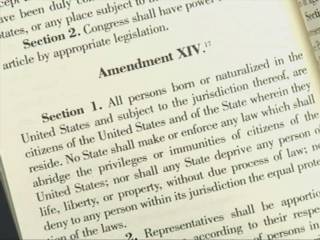
When passed by Congress the amendment was a watershed that would set Constitutional precedent for future laws. These would include giving both women and Native Americans women the right to vote. It would also be used by the Supreme Court in the 1954 Brown v. Board of Education decision that ended the use of “separate but equal” and overturned many other Jim Crow laws. It helped lead to the passage of the Voting Rights Act of 1964 and the Civil Rights Act of 1965, and most recently was the basis of the Supreme Court decision in Obergfell v. Hodges, which give homosexuals the right to marry. Section one of the amendment read:

“All persons born or naturalized in the United States, and subject to the jurisdiction thereof, are citizens of the United States and of the state wherein they reside. No state shall make or enforce any law which shall abridge the privileges or immunities of citizens of the United States; nor shall any state deprive any person of life, liberty, or property, without due process of law; nor deny to any person within its jurisdiction the equal protection of the laws.” [9]

Even so, for most white Southerners “freedom for African Americans was not the same as freedom for whites, as while whites might grant the black man freedom, they had no intention of allowing him the same legal rights as white men.” [10] As soon as planters returned to their lands they “sought to impose on blacks their definition of freedom. In contrast to African Americans’ understanding of freedom as a open ended ideal based on equality and autonomy, white southerners clung to the antebellum view that freedom meant mastery and hierarchy; it was a privilege, not a universal right, a judicial status, not a promise of equality.”  [11] In their systematic efforts to deny true freedom for African Americans these Southerners ensured that blacks would remain a lesser order of citizen, enduring poverty, discrimination, segregation and disenfranchisement for the next century.
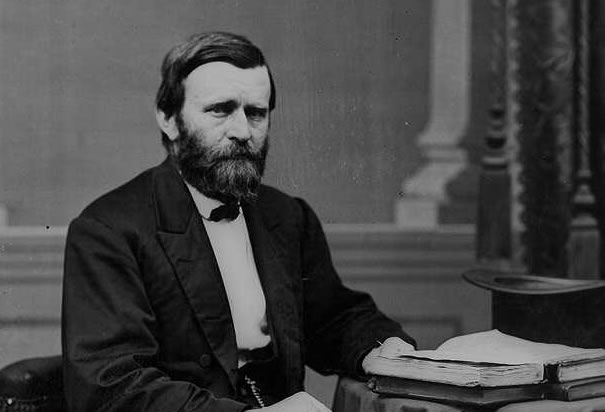
ulysses-s-grant-book

Ulysses S. Grant and the Fight against the Insurrection, Terrorism and Insurgency of the Ku Klux Klan, White Leagues, White Liners and Red Shirts

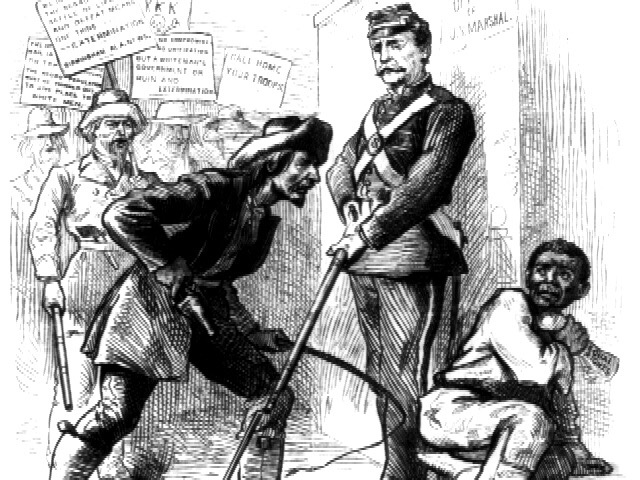
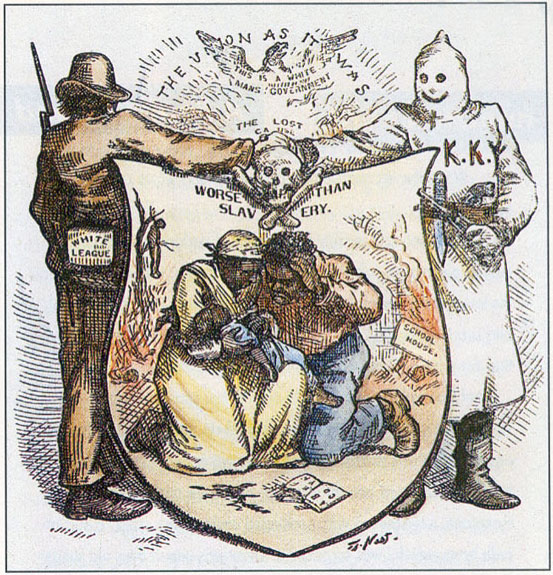
But these measures provoked even more violence from enraged Southerners who formed a variety of violent racist organizations which turned the violence from sporadic attacks to what amounted to a full-fledged insurgency against the new state governments and African Americans. Organizations like the Ku Klux Klan engaged in terroristic violence to heavily armed “social clubs” which operated under the aegis of the state Democratic Party leadership in most Southern states. Under the leadership of former Confederate general Nathan Bedford Forrest whose troops had conducted the Fort Pillow massacre, the Klan’s membership throughout the South “was estimated at five hundred thousand.” [12] The majority of these men were former Confederate soldiers, although they were also joined by those who had not fought in the war, or later those who had been too young to fight in the war but even belatedly wanted to get in on the fight against the hated Yankee and his African American allies. As the shadowy organization grew it became bolder and more violent in its attacks on African Americans, Republican members of the Reconstruction governments, and even Southern Jews. The Klan spread to every State in the South and when Congress investigated in 1870 and 1871 they submitted a thirteen volume report on Klan activities, volumes that “revealed to the country an almost incredible campaign of criminal violence by whites determined to punish black leaders, disrupt the Republican Party, reestablish control over the black labor force, and restore white supremacy in every phase of southern life.” [13]
KKK-Nast

Allegedly organized for self-defense against state militia units composed of freed blacks they named themselves “White Leagues (Louisiana), White Liners or Rifle Clubs (Mississippi), or Red Shirts (South Carolina). They were, in fact, paramilitary organizations that functioned as armed auxiliaries of the Democratic Party in southern states in their drive to “redeem” the South from “black and tan Negro-Carpetbag rule.” [14] These men, mostly Confederate veterans “rode roughshod over the South, terrorizing newly freed slaves, their carpetbagger allies, and anyone who dared to imagine a biracial democracy as the war’s change.” [15] The unrequited violence and hatred by these men set the stage for the continued persecution, murder and violence against blacks and those who supported their efforts to achieve equality in the South for the next century. In truth the activities of the Klan and other violent White Supremacist groups offer “the most extensive example of homegrown terrorism in American history.” [16]

Throughout his term in office Johnson appealed to arguments used throughout later American history by “critics of civil rights legislation and affirmative action. He appealed to fiscal conservatism, raised the specter of an immense federal bureaucracy trampling on citizens’ rights, and insisted that self-help, not government handouts, was the path to individual advancement.” [17]

Ulysses S. Grant succeeded Johnson as President in 1869, and unlike his predecessor, he was a man who believed in freedom and equal rights, “For Grant, freedom and equal rights were matters of principle, not symbolism.” [18]Grant ordered his generals in the South to enforce the Reconstruction Act and when the Ku Klux Klan attempted to stop blacks from voting Grant got Congress to pass the “enforcement Act, which made racist terrorism a federal offense.” [19] He created the Justice Department to deal with crimes against Federal law and in 1871 pushed Congress to pass a law known as the Ku Klux Klan Act and sent in the army and federal agents from the Justice Department and the Secret Service to enforce the law.

Grant’s efforts using the military as well as agents of the Justice Department and the Secret Service against the Klan were hugely successful, thousands were arrested, hundreds of Klansmen were convicted and others were either driven underground or disbanded their groups. The 1872 election was the first and last in which blacks were nearly unencumbered as they voted until the passage of the 1964 Civil Rights Act and 1965 Voting Rights Act.

However, Grant’s actions triggered a political backlash that doomed Reconstruction. The seminal moment in this came 1873 when General Philip Sheridan working in Louisiana, asked Grant for “permission to arrest leaders of the White League and try them by courts-martial” [20] for their violent acts against blacks and their seizure of the New Orleans City Hall in a brazen coup attempt. The leak of Sheridan’s request sparked outrage and even northern papers condemned the president’s actions in the harshest of terms.

Apart from the effort to support voting rights for African Americans Grant’s efforts at Reconstruction were met mostly by failure. Part of this was due to weariness on the part of many Northerners to continue to invest any more effort into the effort. Slowly even proponents of Reconstruction began to retreat from it, some like Carl Schurz, were afraid that the use of the military against the Klan in the South could set precedent to use it elsewhere. Others, embraced an understanding of Social Darwinism which stood against all types of government interference what they called the “natural” workings of society, especially misguided efforts to uplift those at the bottom of the social order…and African Americans were consigned by nature to occupy the lowest rungs of the social ladder.” [21]

Southerners knew that they were winning the political battle and continued their pressure in Congress and in the media to demonize supporters of Reconstruction as well as African Americans. Southerners worked to rig the political and judicial process through the use of terror to demoralize and drive from power anyone, black or white, who supported Reconstruction. By 1870 every former Confederate state had been readmitted to the Union, in a sense fulfilling a part Lincoln’s war policy, but at the same time denying what the war was waged for a White led governments aided by the Supreme Court increasingly set about reestablishing the previous social and political order placing blacks in the position of living life under slavery by another name.

The Passage of the Fifteenth Amendment

Slavery had been abolished, and African Americans had become citizens, but in most places they did not have the right to vote. Grant used his political capital to fight for the passage of the Fifteenth Amendment, which gave black men the right to vote. It was one of the things that he remained most proud of in his life, he noted that the amendment was, “A measure which makes at once four million people voter who were heretofore declared by the highest tribunal in the land to be not citizens of the United States, nor eligible to become so…is indeed a measure of grander importance than any other act of the kind from the foundation of our free government to the present day.” [22]

To be continued…

Notes

[1] Ibid. Foner A Short History of Reconstruction p.30

[2] Ibid. Lord The Past that Would Not Die pp.11-12

[3] Ibid. Zinn The Other Civil War p.54

[4] Ibid. McPherson The War that Forged a Nation p. 178

[5] Ibid. Foner Forever Free p.162

[6] Perman, Michael Illegitimacy and Insurgency in the Reconstructed South in The Civil War and Reconstruction Documents and Essays Third Edition edited by Michael Perman and Amy Murrell Taylor Wadsworth Cengage Learning Boston MA 2011 p.451

[7] Ibid. Foner Forever Free p.121

[8] Ibid. Langguth After Lincoln p.232

[9] _____________ The 14th Amendment to the U.S. Constitution retrieved from https://www.law.cornell.edu/constitution/amendmentxiv 29 June 2015

[10] Ibid. Carpenter Sword and Olive Branch p.93

[11] Ibid. Foner Forever Free p.92

[12] Lane, Charles The Day Freedom Died: The Colfax Massacre, the Supreme Court, and the Betrayal of Reconstruction Henry Holt and Company, New York 2008  p.230

[13] Ibid. Foner Forever Free p.171

[14] Ibid. McPherson The War that Forged a Nation p. 178

[15] Ibid. Jordan Marching Home p.118

[16] Ibid. Foner Forever Free p.171

[17] Ibid. Foner Forever Free p.116

[18] Ibid. Lane The Day Freedom Died:  p.2

[19] Ibid. Lane The Day Freedom Died p.4

[20] Ibid. Langguth, A.J. After Lincoln p.314

[21] Ibid. Foner Forever Free pp.192-193

[22] Flood, Charles Bracelen, Grant’s Final Victory: Ulysses S. Grant’s Heroic Last Year DaCapo Press, Boston 2011 pp.78-79
Leave a comment

Filed under civil rights, civil war, ethics, laws and legislation, Military, Political Commentary

Slavery Under Another Name: The Black Codes

7100338_orig

Blacks Sentenced to Work Planatations Under the Black Codes

Friends of Padre Steve’s World,

This is another of my continued series of articles pulled from my various Civil War texts dealing with Emancipation and the early attempts to gain civil rights for African Americans. This section that I will cover for the next few days deals with the post-war period, a period marked by conflicting political and social desires for equality, justice, revenge, and the re-victimization of Blacks who had so recently been emancipated.

I hope that you find these helpful.

Peace

Padre Steve+

Southern Resistance to Reconstruction and the Black Codes

White Southerners including the newly pardoned Confederates enacted black codes that “codified explicit second-class citizenship for freedpeople.” [1] The legislature of Mississippi refused to ratify the Thirteenth Amendment, and did not do so until 1995. One Southerner noted that “Johnson “held up before us the hope of a ‘white man’s government,’ and this led us to set aside negro suffrage…. It was natural that we should yield to our old prejudices.” [2] Former Confederates, including Alexander Stephens the former Vice President of the Confederacy were elected to high office, Stephens to the United States Senate and the aggrieved Republicans in Congress in turn refused to admit the former Confederates. Many Union veterans were incensed by Johnson’s actions, one New York artilleryman noted “I would not pardon the rebels, especially the leaders, until they should kneel in the dust of humiliation and show their deeds that they sincerely repent.” [3] He was not alone, many Northern Veterans who formed the integrated Grand Army of the Republic veterans maintained a patent disregard, if not hatred of what the old South stood for and felt that their efforts in the war had been betrayed by the government.

sherman-full-length

General William Tecumseh Sherman provide for Freed Blacks to have land 

Johnson’s restoration of property to the former white owners drove tens of thousands of blacks off lands that they had been farming, or left them as laborers for their former slave masters. Johnson countermanded General William Tecumseh Sherman and Secretary of War Edwin Stanton’s Field Order 15 to “divide abandoned and confiscated lands on the Sea Islands and in a portion of the Low Country coast south of Charleston into forty-acre plots for each black family.” [4] As such many freed blacks were now at the mercy of their former white owners for any hope of economic sustenance.

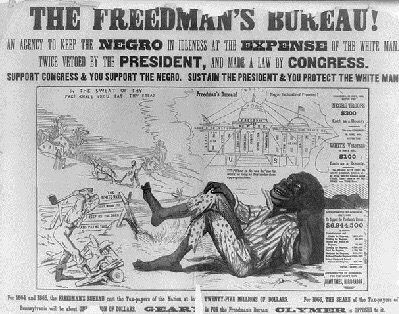
Johnson worked stridently, and often successfully to frustrate the efforts of the Freedmen’s Bureau headed by Major General Oliver Howard to help freed blacks to become landowners and to protect their legal rights. In immediate post-war South states organized all white police forces and state militias composed primarily of Confederate veterans, many still wearing their gray or butternut uniforms. In such a climate blacks had few rights, and officers of the Freedmen’s Bureau lamented the situation. In Georgia one officer wrote that no jury would “convict a white man for killing a freedman,” or “fail to hang” a black man who killed a white in self-defense. Blacks commented another agent, “would be just as well off with no law at all or no Government,” as with the legal system established in the South under Andrew Johnson. “If you call this Freedom,” wrote one black veteran, “what do you call slavery?” [5]

The struggle between Johnson and Congress intensified when the President vetoed the Civil Rights Bill. Congress responded by overriding his veto. Eventually the battle between Johnson and Congress climaxed when Johnson was impeached when he tried to remove Secretary of War Stanton from office. Johnson barely survived the impeachment proceedings and was acquitted by one vote in the Senate in 1868.

The various black codes enacted throughout the South were draconian measures to codify and institutionalize racism and White Supremacy:

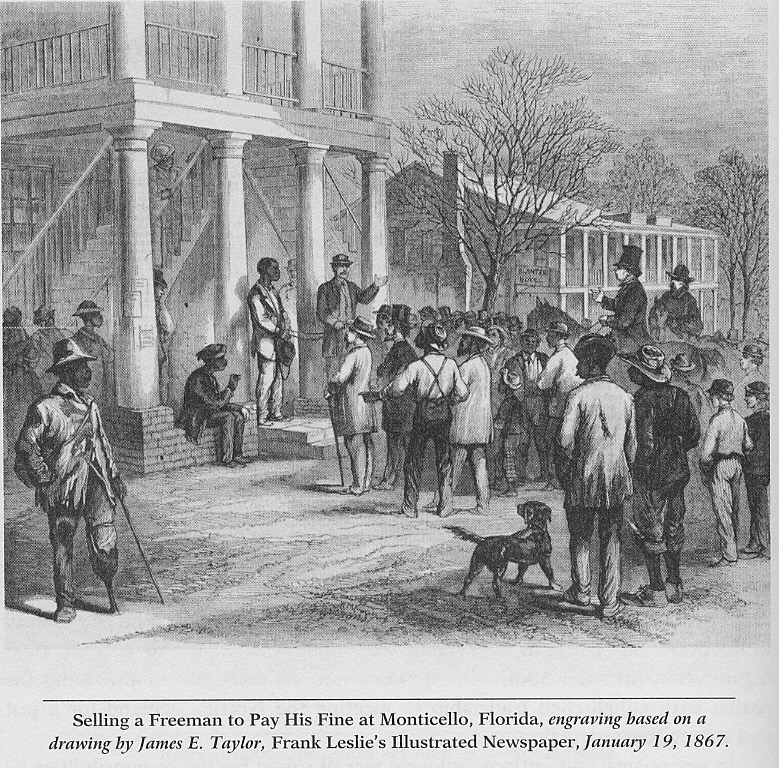
“passed labor laws that bound blacks to employers almost as tightly as slavery once bound them to their masters. Other codes established patterns of racial segregation that had been impossible under slavery, barred African Americans from serving on juries or offering testimony in court against whites, made “vagrancy,” “insulting gestures,” and “mischief” offenses by blacks punishable by fines or imprisonment, forbade black-white intermarriage, ad banned ownership by blacks of “fire-arms of any kind, or any ammunition, dirk or bowie-knife.” [6]

14-1_Page_43_Image_0001

African Americans leased out to build Railroad 

Mississippi’s Black Codes were the first of these and among the sections dealt with a change in vagrancy laws, specifically aimed at emancipated blacks and those whites who might associate with them:

“That all freedmen, free Negroes, and mulattoes in this state over the age of eighteen years found on the second Monday in January, 1866, or thereafter, with no lawful employment or business, or found unlawfully assembling themselves together in the day or night time, and all white persons so assembling with freedmen, free Negroes, or mulattoes on terms of equality, or living in adultery with a freedwoman, free Negro, or mulatto, shall be deemed vagrants; and on conviction thereof shall be fined…and imprisoned….”  [7]

The black codes were condoned and supported by President Johnson. While the black codes recognized the bare minimal elements of black freedom, their provisions confirmed the observations of one journalist who wrote “the whites seem wholly unable to comprehend that freedom for the negro means the same thing as freedom for them. They readily admit that the Government has made him free, but appear to believe that the have the right to exercise the old control.” [8] As state after state followed the lead of Mississippi, which was the first state to enact black codes Northern anger grew and some newspapers took the lead in condemn the black codes. “We tell the white men of Mississippi,” exploded the Chicago Tribune on December 1, “ that the men of the North will convert the state of Mississippi into a frog pond before they allow any such laws to disgrace one foot of soil in which the bones of our soldiers sleep and over which the flag of freedom waves.”  [9]

black_americans_attacked_in_memphis_riot_of_1866

The Memphis Massacre

Within weeks of the end of the war, violence against blacks began to break out in different parts of the South and it continued to spread as Johnson and the new Congress battled each other in regard to Reconstruction policy:

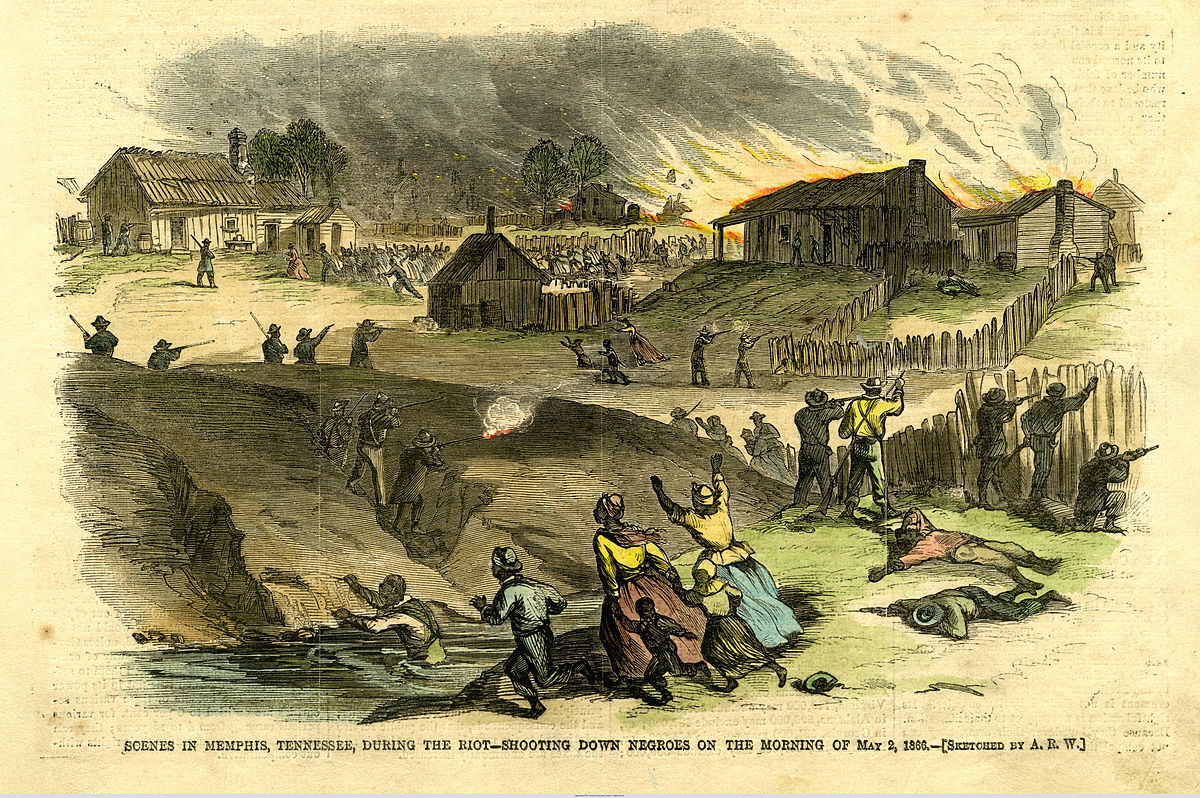
“In Memphis, Tennessee, in May of 1866, whites on a rampage of murder killed forty-six Negroes, most of them veterans of the Union army, as well as two white sympathizers. Five Negro women were raped. Ninety homes, twelve schools and four churches were burned. In New Orleans in the summer of 1866, another riot against blacks killed thirty-five Negroes and three whites.” [10]

The hatred of blacks and the violence against them was not limited to adults, children joined in as well. In Natchez Mississippi an incident that showed how deep the antipathy towards blacks was when on a Sunday afternoon, “an elderly freedman protested to a small white boy raiding his turnip patch. The boy shot him dead, and that was that. In Vicksburg the Herald complained that the town’s children were hitting innocent bystanders when using their “nigger shooters.” [11]

Colonel Samuel Thomas, the director of the Freedmen’s Bureau in Mississippi noted the attitudes that he saw in many whites toward the newly emancipated African Americans. He wrote that white public sentiment had not progressed and that whites had not “come to the attitude in which it can conceive of the negro having any rights at all. Men, who are honorable in their dealings with their white neighbors, without feeling a single twinge of honor…. And however much they confess that the President’s proclamation broke up the relation of the individual slave to their owners, they still have the ingrained feeling that the black people at large belong to whites at large.” [12] Sadly, the attitude reported by Colonel Thomas not only remained but also grew more violent with each passing month.

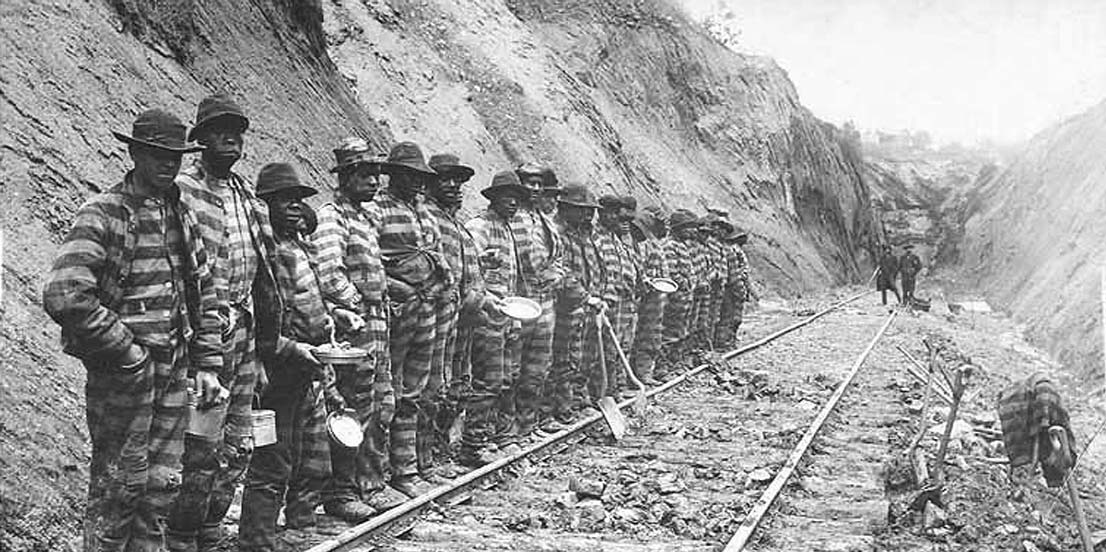
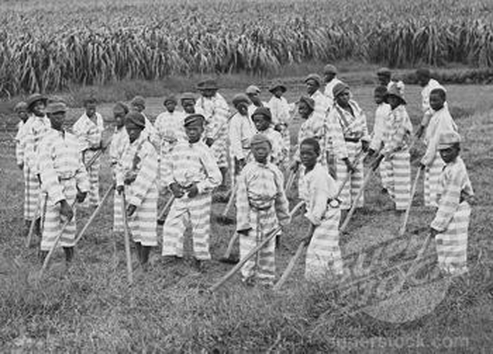
Another lesser-discussed aspect of the Black Codes was their use to return African Americans who had been convicted under the “vagrancy” statutes to a new type of slavery in all but name. The state governments then leased the prisoners to various corporations; railroads, mines and plantations, even former Confederate General and founder of the Ku Klux Klan Nathan Bedford Forrest received his share of prisoners to work his land.

parks_chain_gang

The practice became a lucrative source of revenue, for not only did the states collect the fees from the companies, but did not have to spend tax dollars to incarcerate, feed or otherwise care for the prisoners. Mortality rates were very high among the prisoners in private custody and the regulations, which stipulated that prisoners would be adequately fed, housed and treated, were not enforced.

By 1877 “every former Confederate state except Virginia had adopted the practice of leasing black prisoners into commercial hands. There were variations among the states, but all shared the same basic formula. Nearly all the penal functions of government were turned over to the companies purchasing convicts. In return for what they paid each state, the companies received absolute control of the prisoners… Company guards were empowered to chain prisoners, shoot those attempting to flee, torture any who wouldn’t submit, and whip the disobedient – naked or clothed – almost without limit. Over eight decades, almost never were there penalties to any acquirer of these slaves for their mistreatment or deeds.” [13]

The profitability of these ventures brought Northern investors, including the owners and shareholders of U.S. Steel into the scheme allowing financial houses and Northern corporations to grow their wealth, as they had during the pre-war days off the backs of slaves. However, the practice was also detrimental to poor Southern Whites who could not compete fairly in the labor market. In 1891 miners of the “Tennessee Coal Company were asked to sign an “iron-clad contract”: pledging no strikes, agreeing to get paid in scrip, and giving up the right to check the weight of the coal they mined (they were paid by weight). They refused to sign and were evicted from their houses. Convicts were brought in to replace them.” [14] The company’s response brought about an insurrection by the miners who took control of the mine and the area around it and freed 500 of the convict-slaves. The leaders were primarily Union Army veterans and members of the Grand Army of the Republic veteran’s organization. The company backed down, but others learned the lesson and began to employ heavily armed Pinkerton agents as well as the state militias to deal with the growing labor movement, not only in the South but also in the North.

Non-convict black laborers as well as poor white “sharecroppers” on the large plantations were forced back into servitude of another manner, where legislatures gave “precedence to a landlord’s claim to his share of the crop over that of the laborer for wages or a merchant for supplies, thus shifting the risk of farming from employer to employee.” Likewise, “a series of court decisions defined the sharecropper not as a partner in agriculture or a renter with a property right in the growing crop, but as a wage laborer possessing “only a right to go on the land to plant, work, and gather the crop.” [15]

The practice did not end until Franklin Delano Roosevelt ordered his Attorney General Francis Biddle to order Federal prosecutors who had for decades looked the other way begin prosecuting individuals and companies involved in this form of slavery. Biddle was the first U.S. Attorney General to admit the fact that “African Americans were not free and to assertively enforce the statutes written to protect them.” [16] Biddle, who later sat as a justice at the Nuremberg trials of major Nazi War Criminals commented during the war “One response of this country to the challenge to the ideals of democracy made by the new ideologies of Fascism and Communism has been a deepened realization of the values of a government based on a belief in the dignity and the rights of man.” [17] Biddle charged the newly formed Civil Rights Division of the Justice Department to shift its focus from organized crime to cases of discrimination and racial abuse. Biddle repudiated the rational that allowed for the practice and wrote that the “law is fixed and established to protect the weak-minded the poor, the miserable” and that the contracts of the states that allowed the practices were “null and void.” [18] It was the beginning of another twenty-year process in which African Americans and their allies in the Civil Rights Movement worked to bring about what Lincoln referred to as “a new birth of freedom.”

To be continued….

Notes 

[1] Ibid. McPherson The War that Forged a Nation p. 177

[2] Ibid. Guelzo Fateful Lightning p.491

[3] Jordan, Brian Matthew. Marching Home: Union Veterans and Their Unending Civil War Liveright Publishing Corporation a Division of W.W. Norton and Company Inc. New York and London 2014 p.119

[4] Ibid. Goldfield America Aflame p.411

[5] Ibid. Foner Forever Free p.96

[6] Ibid. Guelzo Fateful Lightening p.491

[7] ____________ Mississippi’s Black Code, November 24-29, 1865 in the Confederate and Neo-Confederate Reader: The “Great Truth” about the “Lost Cause” Loewen, James W. and Sebesta, Edward H. Editors, University Press of Mississippi, Jackson 2010 Amazon Kindle edition location 4505 of 8647

[8] Ibid. Foner Forever Free pp.93-94

[9] Lord, Walter The Past that Would Not Die Harper Collins Publishers, New York 1965 p.12

[10] Ibid. Zinn The Other Civil War p.55

[11] Ibid. Lord The Past that Would Not Die p.8

[12] Ibid. Foner Forever Free p.92

[13] Blackmon, Douglas A. Slavery By another Name: The Re-enslavement of Black Americans from the Civil War to World War II Anchor Books, a Division of Random House, New York 2008 p.56

[14] Ibid. Zinn A People’s History of the United States p.275

[15] Ibid. Foner A Short History of Reconstruction p.250

[16] Ibid. Blackmon Slavery By another Name pp.378-379

[17] Ibid. Blackmon Slavery By another Name p.378

[18] Ibid. Blackmon Slavery By another Name p.379

1 Comment

Filed under civil rights, civil war, laws and legislation, leadership, Political Commentary

Racism and the Failure of Reconstruction

IMG_1877

Friends of Padre Steve’s World,

This is another of my continued series of articles pulled from my various Civil War texts dealing with Emancipation and the early attempts to gain civil rights for African Americans. This section that I will cover for the next few days deals with the post-war period, a period marked by conflicting political and social desires for equality, justice, revenge, and the re-victimization of Blacks who had so recently been emancipated.

I hope that you find these helpful.

Peace

Padre Steve+

Failing to Win the Peace: Racism and the Failure of Reconstruction

Colin Gray wrote, “A successful exercise in peacemaking should persuade the defeated party to accept its defeat.” [1] This is a fact seen throughout history as the peoples of nations that have been defeated militarily rise up against their occupiers to regain some form of independence, often coupled by a desire for revenge. As Liddell-Hart wrote, “History should have taught the statesman that there is no practical halfway house between a peace of complete subjection and a peace of moderation.” [2]

When the Civil War ended the Confederacy was beaten and most people in the South would have agreed to anything that the North presented regarding peace and return to the Union. The primary political policy goal of Lincoln regarding the war was the reestablishment of the Union and one of the military measures adopted by Lincoln was the emancipation of the South’s slaves who were an important part of the Southern war economy. “During the last two years of the war the abolition of slavery evolved from a means of winning the war to a war aim – from national strategy to national policy.” [3] By Lincoln’s reelection in 1864 that policy included the unconditional surrender of the Confederacy as well as the passage of the Thirteenth Amendment, while Lincoln himself advocated moderation in achieving the political and social goals of his war policy, as well as in the restoration of the Southern States to the Union, his assassination served to destroy that goal as his successor, Andrew Johnson, and the Radical Republican majority in Congress warred against each other in implementing the policy of Reconstruction.

10467FS_DA_090409_worst-johnson

The Unreconstructed President Andrew Johnson

That change in policy, the complete abolition of slavery necessitated a remaking of the old South, a culture where economics, social standing and even religion was linked to the “peculiar institution.” In a sense Reconstruction was “what the war was about.” [4] Had Lincoln’s successor, President Andrew Johnson desired he could have gotten the South to accept almost any demands that he decided to place upon them. A Northern correspondent who traveled throughout the South in May of 1865 and surveyed the mood of the leaders and people “concluded that any conditions for reunion specified by the President, even black suffrage, would be “promptly accepted.” [5] But that was not the way of Andrew Johnson.

Johnson set about to work with Southerners to affect a rapid reunion and to reestablish white rule in the South. He adopted a “minimalist process that would establish a mechanism by which former Confederate states could return to the Union with little or no change except for the abolition of slavery.” [6] The procedures Johnson established for the re-admission of states only allowed people who were eligible to vote in 1861 to vote. In effect this ensured a white only electorate, and excluded any free blacks. Johnson then began working to pardon former Confederates as quickly as possible to allow them to return to their political offices. Johnson would often issue hundreds of pardons a day, between June and August 1865, “the president awarded more than five thousand pardons in three states alone – Virginia, North Carolina, and Alabama.” [7] These pardons ensured that the former Confederates would never again have to worry about being brought up on charges of treason or war crimes, and no “federal law permitted them from voting once their states had been readmitted to the Union” [8] which under Johnson’s plan ensured that they would have the voted before any newly freed black in the South.

Johnson countermanded the orders of Union Generals in the occupied Confederate States to protect the rights of freed blacks further strengthening and emboldening those committed to restoring white rule in the South and regulating freed blacks to a state all but in name like slavery. Relieved at Johnson’s mild terms for reunion Southerners language included “defiant talk of states’ rights and resistance to black suffrage. My midsummer, prominent whites realized that Johnson’s Reconstruction empowered them to shape the transition from slavery to freedom and to define black’s civil status.” [9] Johnson’s policy set the stage for racial strife that in some places still has fully not ended.

Just two months after Lee’s surrender of the Army of Northern Virginia at Appomattox, Richard Henry Dana, a Federal District Attorney in Boston, declared that “a war is over when its purpose is secured. It is a fatal mistake to hold that this war is over because the fighting has ceased. This war is not over…” [10] As Dana so succinctly noted, and Clausewitz so well understood, was that that war is a continuation of policy and politics by other means. The failure of President Johnson and so many others in the North to fully grasp this fact led to over a century of subjugation of emancipated African Americans by whites. The confusion and lack of determined purpose has fueled a continual racial divide in the United States that is still felt today. Defeated on the battlefield Southerners and emboldened by Johnson’s leniency, Southerners soon turned to political, psychological and even violent means to reverse their losses.

Frederick Douglass understood that simple emancipation was not enough, and that the “war and its outcome demanded racial equality.” [11] Despite the that efforts of many in the North this would not happen during Reconstruction and Douglass knew that the failure to accomplish this would be disastrous, “Whether the tremendous war so heroically fought…shall pass into history a miserable failure…or whether on the other hand, we shall, as the rightful reward of victory over treason have a solid nation, entirely delivered from all contradictions and social antagonisms, must be determined one way or another.” [12]

Other Northern leaders, political and military harbored deep seated illusions about the willingness of Southerners to change their way of life simply because they had lost the war, but with Johnson’s blessing seemed to be winning the peace. Major General Oliver O. Howard, a convinced and longtime abolitionist who believed that it was God’s will for the North to liberate African Americans who was appointed by Lincoln to head the new Freedman’s Bureau “believed that the Southern whites, or at least a sufficient number of them, through their humanitarian instincts and sense of fair play, or if not that, through enlightened self-interest, would deal fairly and justly with the freedmen, would aid in his education, and would give him the same civil and legal rights as the white man.” [13] Likewise, Major General Henry Slocum, who served with Howard at Gettysburg and in the West was appointed military commander of the District of Mississippi. Slocum, like many others entered his duties and “did not fathom the depth of anger and loathing many white Southerners harbored toward blacks, and to the new system in general.” [14]

There was a problem with implementing Reconstruction; when John Wilkes Booth assassinated Abraham Lincoln, the political leaders of the North could not agree on how to do this. The new President, Andrew Johnson was probably the worst possible leader to lead the country in the aftermath of war for all practical purposes Johnson was a Democrat who believed in white supremacy, he had been brought onto the ticket for his efforts to keep Kentucky in the Union and to support Unionist elements in Tennessee. While his selection helped Lincoln in parts of the North and the Border States it was a disaster for the post-war era.

Johnson’s approach to reconstruction was very simply to “impose minimal demands on the South. He required only minor concessions from the former Confederates before allowing them to resume their political rights and retain their land. As for freedmen, he seemed to think that the needed no further protection beyond the fact of their emancipation.”  [15] Johnson’s attitude regarding freedmen was quite common, even men like William Lloyd Garrison who had spent his life in the cause of abolitionism believed that emancipation and abolition and the passage of the Thirteenth Amendment was the end of his work. He urged the dissolution of the American Anti-Slavery Society in May of 1865 declaring, “My vocation, as an Abolitionist, thank God, is ended.” [16] His suggestion was rejected by the membership, but it was a harbinger of things to come.

Johnson was “a lonely stubborn man with few confidants, who seemed to develop his policies without consulting anyone, then stuck to them inflexibly in the face of any and all criticism. He lacked Lincoln’s ability to conciliate his foes and his capacity for growth, which was best illustrated by Lincoln’s evolving attitude to black suffrage during the Civil War.” [17] In the months after his unexpected accession to the presidency Johnson demonstrated that he had no understanding of Lincoln’s political goals for the South and the desires of the Republican dominated Congress.

By the summer of 1865 Johnson was already demonstrating “that his sympathies were with the Southern white population and that he believed that their interests should be cared for even at the expense of freedmen.” [18] Johnson’s approach to reconstruction was very simply to “impose minimal demands on the South. He required only minor concessions from the former Confederates before allowing them to resume their political rights and retain their land. As for freedmen, he seemed to think that the needed no further protection beyond the fact of their emancipation.”  [19] Johnson gave individual pardons to more than thirteen thousand “high-ranking Confederate civil and military officers and wealthy Southerners.” [20] While doing this he minimized political influence the Southern Unionists who had not supported the Confederacy and ensured that freed slaves were excluded from the political process.  He issued a number of orders “appointing interim provisional governors and urging the writing of new state constitutions based upon the voter qualifications in force at the time of secession in 1861 – which meant, in large but invisible letters, no blacks.” [21]

When Frederick Douglass led a delegation of blacks to meet with Johnson in February 1865 Johnson preached that it was impossible to give political freedom to blacks. When Douglass attempted to object Johnson became angry and told Douglass “I do not like to be arraigned by some who can get up handsomely-rounded periods and rhetoric, and talk about abstract ideas of liberty, who never periled life, liberty, or property.” [22] When Douglass took his objections to Johnson’s harangue to a Washington newspaper, Johnson railed against Douglass “I know that d—–d Douglass…he’s just like any other nigger & would sooner cut a white man’s throat than not.” [23]

Notes 

[1] Ibid. Gray Fighting Talk p.14

[2] Ibid. Liddell- Hart Why Don’t We Learn From History? p.86

[3] Ibid. McPherson The War that Forged a Nation p. 132

[4] Perman, Michael and Murrell Taylor, Amy editors The Civil War and Reconstruction Documents and Essays Third Edition Wadsworth Cengage Learning Boston MA 2011 p.323

[5] Foner, Eric A Short History of Reconstruction Harper and Row, New York 1990 p.89

[6] Ibid. McPherson The War that Forged a Nation p. 177

[7] Langguth, A.J. After Lincoln: How the North Won the Civil War and Lost the Peace Simon and Schuster, New York 2014 p.119

[8] Ibid. Langguth After Lincoln p.319

[9] Ibid. Foner A Short History of Reconstruction p.89

[10] Ibid. McPherson The War that Forged a Nation p. 175

[11] Ibid. Goldfield America Aflame p.407

[12] Ibid. Goldfield America Aflame p.407

[13] Carpenter, John A. Sword and Olive Branch: Oliver Otis Howard Fordham University Press, New York 1999 p.93

[14] Melton, Brian C. Sherman’s Forgotten General: Henry W. Slocum University of Missouri Press, Columbia and London 2007

[15] Ibid. Perman and Taylor The Civil War and Reconstruction Documents and Essays Third Edition p.323

[16] Ibid. Foner A Short History of Reconstruction p.30

[17] Ibid. Foner Forever Free p.108

[18] Ibid. Carpenter Sword and Olive Branch: Oliver Otis Howard  New York 1999 p.109

[19] Ibid. Perman and Taylor The Civil War and Reconstruction Documents and Essays Third Edition p.323

[20] Ibid. McPherson The War that Forged a Nation p. 177

[21] Ibid. Guelzo Fateful Lightening p.490

[22] Ibid. Guelzo Fateful Lightning p.494

[23] Ibid. Guelzo Fateful Lightning p.494

Leave a comment

Filed under civil rights, civil war, History, Military, Political Commentary

The Black Codes

IMG_1879

Friends of Padre Steve’s World,

My wife is having a minor procedure today so I am publishing this article from my Civil War and Gettysburg text. It is not new, but has been updated some. Have a great day,

Peace

Padre Steve+

White Southerners including the newly pardoned Confederates enacted black codes that “codified explicit second-class citizenship for freedpeople.” [1] The legislature of Mississippi refused to ratify the Thirteenth Amendment, and did not do so until 1995. One Southerner noted that “Johnson “held up before us the hope of a ‘white man’s government,’ and this led us to set aside negro suffrage…. It was natural that we should yield to our old prejudices.” [2] Former Confederates, including Alexander Stephens the former Vice President of the Confederacy were elected to high office, Stephens to the United States Senate and the aggrieved Republicans in Congress in turn refused to admit the former Confederates. Many Union veterans were incensed by Johnson’s actions, one New York artilleryman noted “I would not pardon the rebels, especially the leaders, until they should kneel in the dust of humiliation and show their deeds that they sincerely repent.” [3] He was not alone, many Northern Veterans who formed the integrated Grand Army of the Republic veterans maintained a patent disregard, if not hatred of what the old South stood for and felt that their efforts in the war had been betrayed by the government.

Johnson’s restoration of property to the former white owners drove tens of thousands of blacks off lands that they had been farming, or left them as laborers for their former slave masters. Johnson countermanded General William Tecumseh Sherman and Secretary of War Edwin Stanton’s Field Order 15 to “divide abandoned and confiscated lands on the Sea Islands and in a portion of the Low Country coast south of Charleston into forty-acre plots for each black family.” [4] As such many freed blacks were now at the mercy of their former white owners for any hope of economic sustenance.

Johnson worked stridently, and often successfully to frustrate the efforts of the Freedmen’s Bureau headed by Major General Oliver Howard to help freed blacks to become landowners and to protect their legal rights. In immediate post-war South states organized all white police forces and state militias composed primarily of Confederate veterans, many still wearing their gray or butternut uniforms. In such a climate blacks had few rights, and officers of the Freedmen’s Bureau lamented the situation. In Georgia one officer wrote that no jury would “convict a white man for killing a freedman,” or “fail to hang” a black man who killed a white in self-defense. Blacks commented another agent, “would be just as well off with no law at all or no Government,” as with the legal system established in the South under Andrew Johnson. “If you call this Freedom,” wrote one black veteran, “what do you call slavery?” [5]

The struggle between Johnson and Congress intensified when the President vetoed the Civil Rights Bill. Congress responded by overriding his veto. Eventually the battle between Johnson and Congress climaxed when Johnson was impeached when he tried to remove Secretary of War Stanton from office. Johnson barely survived the impeachment proceedings and was acquitted by one vote in the Senate in 1868.

The various black codes enacted throughout the South were draconian measures to codify and institutionalize racism and White Supremacy:

“passed labor laws that bound blacks to employers almost as tightly as slavery once bound them to their masters. Other codes established patterns of racial segregation that had been impossible under slavery, barred African Americans from serving on juries or offering testimony in court against whites, made “vagrancy,” “insulting gestures,” and “mischief” offenses by blacks punishable by fines or imprisonment, forbade black-white intermarriage, ad banned ownership by blacks of “fire-arms of any kind, or any ammunition, dirk or bowie-knife.” [6]

Mississippi’s Black Codes were the first of these and among the sections dealt with a change in vagrancy laws, specifically aimed at emancipated blacks and those whites who might associate with them:

“That all freedmen, free Negroes, and mulattoes in this state over the age of eighteen years found on the second Monday in January, 1866, or thereafter, with no lawful employment or business, or found unlawfully assembling themselves together in the day or night time, and all white persons so assembling with freedmen, free Negroes, or mulattoes on terms of equality, or living in adultery with a freedwoman, free Negro, or mulatto, shall be deemed vagrants; and on conviction thereof shall be fined…and imprisoned….”  [7]

The black codes were condoned and supported by President Johnson. While the black codes recognized the bare minimal elements of black freedom, their provisions confirmed the observations of one journalist who wrote “the whites seem wholly unable to comprehend that freedom for the negro means the same thing as freedom for them. They readily admit that the Government has made him free, but appear to believe that the have the right to exercise the old control.” [8] As state after state followed the lead of Mississippi, which was the first state to enact black codes Northern anger grew and some newspapers took the lead in condemn the black codes. “We tell the white men of Mississippi,” exploded the Chicago Tribune on December 1, “ that the men of the North will convert the state of Mississippi into a frog pond before they allow any such laws to disgrace one foot of soil in which the bones of our soldiers sleep and over which the flag of freedom waves.”  [9]

Within weeks of the end of the war, violence against blacks began to break out in different parts of the South and it continued to spread as Johnson and the new Congress battled each other in regard to Reconstruction policy:

“In Memphis, Tennessee, in May of 1866, whites on a rampage of murder killed forty-six Negroes, most of them veterans of the Union army, as well as two white sympathizers. Five Negro women were raped. Ninety homes, twelve schools and four churches were burned. In New Orleans in the summer of 1866, another riot against blacks killed thirty-five Negroes and three whites.” [10]

The hatred of blacks and the violence against them was not limited to adults, children joined in as well. In Natchez Mississippi an incident that showed how deep the antipathy towards blacks was when on a Sunday afternoon, “an elderly freedman protested to a small white boy raiding his turnip patch. The boy shot him dead, and that was that. In Vicksburg the Herald complained that the town’s children were hitting innocent bystanders when using their “nigger shooters.” [11]

Colonel Samuel Thomas, the director of the Freedmen’s Bureau in Mississippi noted the attitudes that he saw in many whites toward the newly emancipated African Americans. He wrote that white public sentiment had not progressed and that whites had not “come to the attitude in which it can conceive of the negro having any rights at all. Men, who are honorable in their dealings with their white neighbors, without feeling a single twinge of honor….And however much they confess that the President’s proclamation broke up the relation of the individual slave to their owners, the still have the ingrained feeling that the black people at large belong to whites at large.” [12] Sadly, the attitude reported by Colonel Thomas not only remained but also grew more violent with each passing month.

Another lesser-discussed aspect of the Black Codes was their use to return African Americans who had been convicted under the “vagrancy” statutes to a new type of slavery in all but name. The state governments then leased the prisoners to various corporations; railroads, mines and plantations, even former Confederate General and founder of the Ku Klux Klan Nathan Bedford Forrest received his share of prisoners to work his land.

7100338_orig

14-1_Page_43_Image_0001

The practice became a lucrative source of revenue, for not only did the states collect the fees from the companies, but did not have to spend tax dollars to incarcerate, feed or otherwise care for the prisoners. Mortality rates were very high among the prisoners in private custody and the regulations, which stipulated that prisoners would be adequately fed, housed and treated, were not enforced.

By 1877 “every former Confederate state except Virginia had adopted the practice of leasing black prisoners into commercial hands. There were variations among the states, but all shared the same basic formula. Nearly all the penal functions of government were turned over to the companies purchasing convicts. In return for what they paid each state, the companies received absolute control of the prisoners… Company guards were empowered to chain prisoners, shoot those attempting to flee, torture any who wouldn’t submit, and whip the disobedient – naked or clothed – almost without limit. Over eight decades, almost never were there penalties to any acquirer of these slaves for their mistreatment or deeds.” [13]

The profitability of these ventures brought Northern investors, including the owners and shareholders of U.S. Steel into the scheme allowing financial houses and Northern corporations to grow their wealth, as they had during the pre-war days off the backs of slaves. However, the practice was also detrimental to poor Southern Whites who could not compete fairly in the labor market. In 1891 miners of the “Tennessee Coal Company were asked to sign an “iron-clad contract”: pledging no strikes, agreeing to get paid in scrip, and giving up the right to check the weight of the coal they mined (they were paid by weight). They refused to sign and were evicted from their houses. Convicts were brought in to replace them.” [14] The company’s response brought about an insurrection by the miners who took control of the mine and the area around it and freed 500 of the convict-slaves. The leaders were primarily Union Army veterans and members of the Grand Army of the Republic veteran’s organization. The company backed down, but others learned the lesson and began to employ heavily armed Pinkerton agents as well as the state militias to deal with the growing labor movement, not only in the South but also in the North.

Non-convict black laborers as well as poor white “sharecroppers” on the large plantations were forced back into servitude of another manner, where legislatures gave “precedence to a landlord’s claim to his share of the crop over that of the laborer for wages or a merchant for supplies, thus shifting the risk of farming from employer to employee.” Likewise, “a series of court decisions defined the sharecropper not as a partner in agriculture or a renter with a property right in the growing crop, but as a wage laborer possessing “only a right to go on the land to plant, work, and gather the crop.” [15]

The practice did not end until Franklin Delano Roosevelt ordered his Attorney General Francis Biddle to order Federal prosecutors who had for decades looked the other way begin prosecuting individuals and companies involved in this form of slavery. Biddle was the first U.S. Attorney General to admit the fact that “African Americans were not free and to assertively enforce the statutes written to protect them.” [16] Biddle, who later sat as a justice at the Nuremberg trials of major Nazi War Criminals commented during the war “One response of this country to the challenge to the ideals of democracy made by the new ideologies of Fascism and Communism has been a deepened realization of the values of a government based on a belief in the dignity and the rights of man.” [17] Biddle charged the newly formed Civil Rights Division of the Justice Department to shift its focus from organized crime to cases of discrimination and racial abuse. Biddle repudiated the rational that allowed for the practice and wrote that the “law is fixed and established to protect the weak-minded the poor, the miserable” and that the contracts of the states that allowed the practices were “null and void.” [18] It was the beginning of another twenty-year process in which African Americans and their allies in the Civil Rights Movement worked to bring about what Lincoln referred to as “a new birth of freedom.”

Notes

[1] Ibid. McPherson The War that Forged a Nation p. 177

[2] Ibid. Guelzo Fateful Lightening p.491

[3] Jordan, Brian Matthew. Marching Home: Union Veterans and Their Unending Civil War Liveright Publishing Corporation a Division of W.W. Norton and Company Inc. New York and London 2014 p.119

[4] Ibid. Goldfield America Aflame p.411

[5] Ibid. Foner Forever Free p.96

[6] Ibid. Guelzo Fateful Lightening p.491

[7] ____________ Mississippi’s Black Code, November 24-29, 1865 in the Confederate and Neo-Confederate Reader: The “Great Truth” about the “Lost Cause” Loewen, James W. and Sebesta, Edward H. Editors, University Press of Mississippi, Jackson 2010 Amazon Kindle edition location 4505 of 8647

[8] Ibid. Foner Forever Free pp.93-94

[9] Lord, Walter The Past that Would Not Die Harper Collins Publishers, New York 1965 p.12

[10] Ibid. Zinn The Other Civil War p.55

[11] Ibid. Lord The Past that Would Not Die p.8

[12] Ibid. Foner Forever Free p.92

[13] Blackmon, Douglas A. Slavery By another Name: The Re-enslavement of Black Americans from the Civil War to World War II Anchor Books, a Division of Random House, New York 2008 p.56

[14] Ibid. Zinn A People’s History of the United States p.275

[15] Ibid. Foner A Short History of Reconstruction p.250

[16] Ibid. Blackmon Slavery By another Name pp.378-379

[17] Ibid. Blackmon Slavery By another Name p.378

[18] Ibid. Blackmon Slavery By another Name p.379

Leave a comment

Filed under civil rights, History, laws and legislation, Political Commentary

The Notorious Black Codes 

  
Friends of Padre Steve’s World

As I work on my Civil War and Gettysburg text I continue to write about truth, and truth can be very uncomfortable. Today is a section of my text that deals with the Black Codes that were enacted in Southern States in the immediate aftermath of the Civil War. They sprang up because Abraham Lincoln’s successor, Andrew Johnson was a unregenerate racist who encouraged such measures.  In the next few days I will be posting more sections of the text dealing with specific aspects of Reconstruction and the more often than not heavily racist opposition to rights of any kind being granted to blacks in the North and the South. 

Sadly, there are people today, people who were expensive suits, walk the halls of Congress, speak in our largest churches and travel in high style accompanied by the media who continue to fight against the rights of not only blacks, but of immigrants, the LGBTQ community, women and Moslems.

Have a great night,

Peace

Padre Steve+

White Southerners including the newly pardoned Confederates enacted black codes that “codified explicit second-class citizenship for freedpeople.” [1] The legislature of Mississippi refused to ratify the Thirteenth Amendment, and did not do so until 1995. One Southerner noted that “Johnson “held up before us the hope of a ‘white man’s government,’ and this led us to set aside negro suffrage…. It was natural that we should yield to our old prejudices.” [2] Former Confederates, including Alexander Stephens the former Vice President of the Confederacy were elected to high office, Stephens to the United States Senate and the aggrieved Republicans in Congress in turn refused to admit the former Confederates. Many Union veterans were incensed by Johnson’s actions, one New York artilleryman noted “I would not pardon the rebels, especially the leaders, until they should kneel in the dust of humiliation and show their deeds that they sincerely repent.” [3] He was not alone, many Northern Veterans who formed the integrated Grand Army of the Republic veterans maintained a patent disregard, if not hatred of what the old South stood for and felt that their efforts in the war had been betrayed by the government.

  
Johnson’s restoration of property to the former white owners drove tens of thousands of blacks off lands that they had been farming, or left them as laborers for their former slave masters. Johnson countermanded General William Tecumseh Sherman and Secretary of War Edwin Stanton’s Field Order 15 to “divide abandoned and confiscated lands on the Sea Islands and in a portion of the Low Country coast south of Charleston into forty-acre plots for each black family.” [4] As such many freed blacks were now at the mercy of their former white owners for any hope of economic sustenance.

  
Johnson worked stridently, and often successfully to frustrate the efforts of the Freedmen’s Bureau headed by Major General Oliver Howard to help freed blacks to become landowners and to protect their legal rights. In immediate post-war South states organized all white police forces and state militias composed primarily of confederate veterans, many still wearing their gray or butternut uniforms. In such a climate blacks had few rights, and officers of the Freedmen’s Bureau lamented the situation. In Georgia one officer wrote that no jury would “convict a white man for killing a freedman,” or “fail to hang” a black man who killed a white in self-defense. Blacks commented another agent, “would be just as well off with no law at all or no Government,” as with the legal system established in the South under Andrew Johnson. “If you call this Freedom,” wrote one black veteran, “what do you call slavery?” [5]

  
The struggle between Johnson Congress intensified when Johnson vetoed the Civil Rights Bill. Congress responded by overriding his veto. Eventually the battle between Johnson and Congress climaxed when Johnson was impeached when he tried to remove Secretary of War Stanton from office. Johnson barely survived the impeachment proceedings and was acquitted by one vote in the Senate in 1868.

The various black codes enacted throughout the South were draconian measures to codify and institutionalize racism and White Supremacy:

“passed labor laws that bound blacks to employers almost as tightly as slavery once bound them to their masters. Other codes established patterns of racial segregation that had been impossible under slavery, barred African Americans from serving on juries or offering testimony in court against whites, made “vagrancy,” “insulting gestures,” and “mischief” offenses by blacks punishable by fines or imprisonment, forbade black-white intermarriage, ad banned ownership by blacks of “fire-arms of any kind, or any ammunition, dirk or bowie-knife.” [6]

The black codes which were condoned and supported by President Johnson recognized minimal elements of black freedom but their provisions confirmed the observations of one journalist who wrote “the whites seem wholly unable to comprehend that freedom for the negro means the same thing as freedom for them. They readily admit that the Government has made him free, but appear to believe that the have the right to exercise the old control.” [7]

Likewise within weeks of the end of the war, violence against blacks began to break out in different parts of the South and it continued to spread as Johnson and Congress battled each other in regard to Reconstruction policy:

“In Memphis, Tennessee, in May of 1866, whites on a rampage of murder killed forty-six Negroes, most of them veterans of the Union army, as well as two white sympathizers. Five Negro women were raped. Ninety homes, twelve schools and four churches were burned. In New Orleans in the summer of 1866, another riot against blacks killed thirty-five Negroes and three whites.” [8]

Colonel Samuel Thomas, the director of the Freedmen’s Bureau in Mississippi noted the attitudes that he saw in many whites toward the newly emancipated African Americans. He wrote that white public sentiment had not progressed and that whites had not “come to the attitude in which it can conceive of the negro having any rights at all. Men, who are honorable in their dealings with their white neighbors, without feeling a single twinge of honor….And however much they confess that the President’s proclamation broke up the relation of the individual slave to their owners, the still have the ingrained feeling that the black people at large belong to whites at large.” [9] Sadly, the attitude reported by Colonel Thomas not only remained but grew more violent with each passing month.

Notes

[1] Ibid. McPherson The War that Forged a Nation p. 177

[2] Ibid. Guelzo Fateful Lightening p.491

[3] Jordan, Brian Matthew. Marching Home: Union Veterans and Their Unending Civil War Liveright Publishing Corporation a Division of W.W. Norton and Company Inc. New York and London 2014 p.119

[4] Ibid. Goldfield America Aflame p.411

[5] Ibid. Foner Forever Free p.96

[6] Ibid. Guelzo Fateful Lightening p.491

[7] Ibid. Foner Forever Free pp.93-94

[8] Ibid. Zinn The Other Civil War p.55

[9] Ibid. Foner Forever Free p.92

1 Comment

Filed under civil rights, civil war, History, Political Commentary