Tag Archives: general dick garnett csa

Gettysburg Day Three: The Tragedy of Friends at War; Lewis Armistead and Winfield Scott Hancock

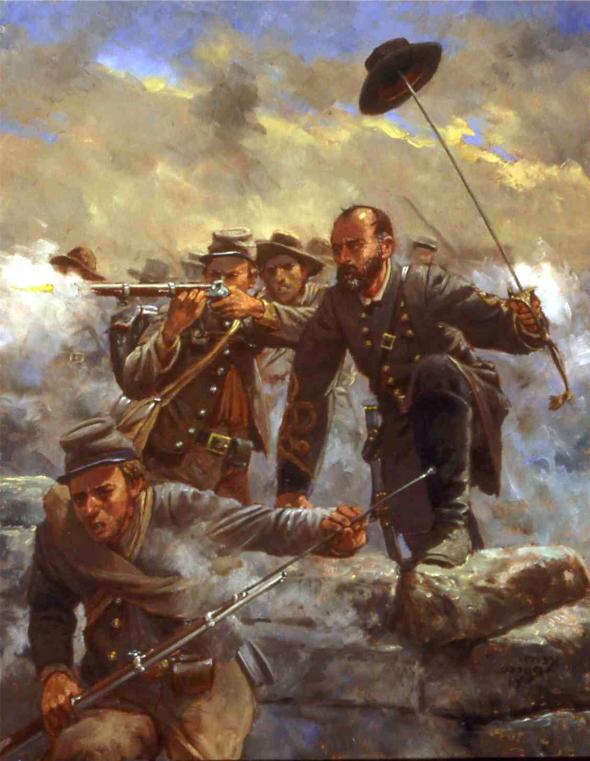
“Armistead at Gettysburg” by Keith Rocco

The bonds of friendship forged by soldiers are some of deepest and long lasting that are formed anywhere.  Those bonds are formed by military professionals in the small rather closed society that is the regular United States military over years of deployments, isolated duty, combat and a culture that is often quite different than that of civilian society.

When the people of a nation goes to war against each other the military is often the last to split and when it does men that were friends and comrades turn their weapons against each other and seldom with pleasure. Mass levies of civilian volunteers motivated by ideological, sectional or religious hatred tend to take up such causes with great aplomb. But those that serve together, even those that may believe in their cause are often torn between oaths that they swore to defend their country and their family and home. When their decisions are made they often part with great sadness knowing that they could one day meet each other on a battlefield.

The American Civil War has many such tales. One of the most remembered due to it being a key story line in Michael Shaara’s Pulitzer Prize winning novel The Killer Angels is that of Union General Winfield Scott Hancock and Confederate General Lewis Armistead. This friendship was immortalized in the movie Gettysburg which is based on Shaara’s novel.

Major General Winfield Scott Hancock USA

Hancock was from Pennsylvania was a career soldier and Infantry officer, a graduate of West Point Class of 1844. He served in Mexico and held numerous positions and in 1861 he was stationed in California as a Quartermaster under the command of Colonel (Brevet Brigadier General) Albert Sidney Johnston. One of his fellow officers, who he and his wife Almira became fast friends with was Captain Lewis Armistead, a twice widowed Virginian who also served as a commander of the New San Diego Garrison under Johnston’s command. Armistead was a nephew of the officer who defended Fort McHenry from the British in the War of 1812, a battle which occasioned Francis Scott Key to pen the Star Spangled Banner.  Armistead had academic difficulties at West Point and also had an altercation with Jubal Early in which he broke a plate over Early’s head.  His father helped him obtain a commission as an Infantry officer and his career was similar to many other officers of his day, Mexico, the Great Plains, Kansas, Utah and California.

As the war clouds built and various southern states seceded from the Union numerous officers were torn between their oath, their friendships with their fellow officers and their deep loyalty to their home state and families even if they personally opposed secession. In the end it was a decided minority of of Southern born officers that remained loyal to the Union, the most prominent of these men were General Winfield Scott and Major General George Thomas, the Rock of Chickamauga. Thomas’s action cost him his relationship with his immediate family who deemed him to be a traitor. Both men were pilloried and demonized in the most base ways by many in the South, during and after the war. Some Southerners who served the Union were executed when captured, George Pickett, who called for Thomas’ death ordered 22 North Carolinians captured fighting for the Union in Kinston North Carolina and he was not alone.
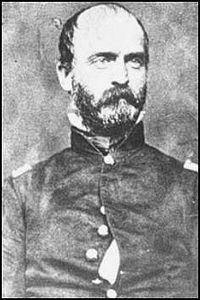
Brigadier General Lewis Armistead CSA

Armistead and other officers asked Hancock, who was a Democrat advice on what he would do if war came. Hancock’s reply was simple. I shall not fight upon the principle of state-rights, but for the Union, whole and undivided” 

The Hancock’s hosted a going away party for their friends departing from the service to join the Confederacy. Almira Hancock wrote that “Hearts were filled with sadness over the surrendering of life-long ties.”with the Johnston’s wife Eliza singing the popular Irish song Kathleen Mavourneen:

“Mavourneen, mavourneen, my sad tears are falling, To think that from Erin and thee I must part!

It may be for years, and it may be forever, Then why art thou silent, thou voice of my heart?…”

Armistead was tearful and said “Hancock, good-by; you can never know what this has cost me, and I hope God will strike me dead if I am ever induced to leave my native soil, should worse come to worse.”

At Gettysburg Armistead spoke his fears to his comrades, including Brigadier General Dick Garnett, another of his comrades from the California days as they met the night before the fateful charge of July 3rd. The next afternoon Armistead and Garnett led their brigades of Pickett’s Division against Hancock’s II Corps which was defending Cemetery Ridge.

During the engagement Garnett was killed just before reaching the Union lines and Hancock gravely wounded. Armistead, leading his brigade breached the Union line with his black hat atop his sword was wounded in the right arm and shoulder and fell near one of the Union artillery pieces, a point now known as “The High Water Mark” of the Confederacy.  As Armistead lay wounded he was approached by Major Bingham of Hancock’s staff who was responding to Armistead’s making a Masonic sign of distress. When Bingham told Armistead of Hancock’s injury Armistead was grieved and told Bingham to “Tell General Hancock for me that I have done him and you all an injury which I shall regret the longest day I live.” He gave Bignham a wrapped Bible and Prayer book to give to Almira Hancock, inscribed were the words “Trust in God and fear nothing.” 
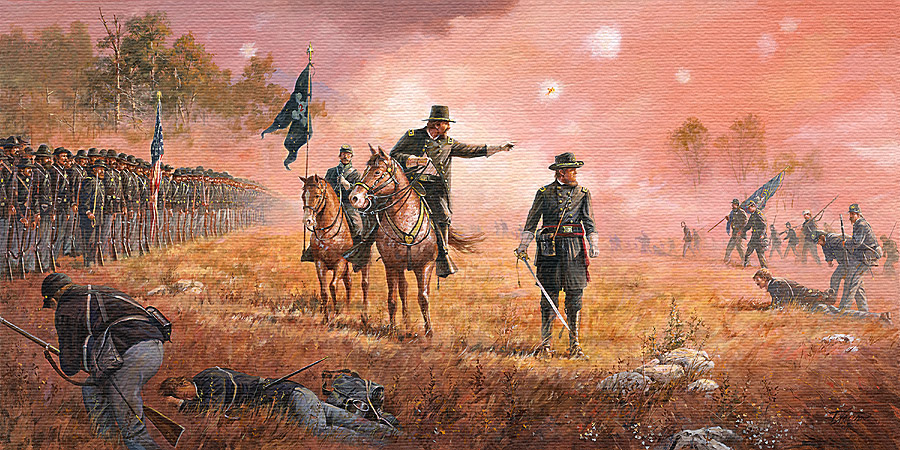
“Minnesota Forward” Hancock directing the Defense by Dale Gallon

Armistead would die from infections caused by his wounds which were initially not thought to be life threatening. Hancock would go on to continued fame and be one of the most admired and respected leaders of the Army during and after the war. He was gracious as a victor and spoke out against reprisals committed against Southerners after the war. He was the Democratic nominee for President losing a close election to James Garfield, losing the popular vote by under 40,000 votes.  It was an era of great political corruption and Hancock was one of the few major public figures Even his political opponents respected him for his integrity and honesty. Former President Rutherford B Hayes said “[i]f, when we make up our estimate of a public man, conspicuous both as a soldier and in civil life, we are to think first and chiefly of his manhood, his integrity, his purity, his singleness of purpose, and his unselfish devotion to duty, we can truthfully say of Hancock that he was through and through pure gold.” 

A few years after his death Republican General Francis A Walker, lamenting the great corruption of the time said:

“Although I did not vote for General Hancock, I am strongly disposed to believe that one of the best things the nation has lost in recent years has been the example and the influence of that chivalric, stately, and splendid gentleman in the White House. Perhaps much which both parties now recognize as having been unfortunate and mischievous during the past thirteen years would have been avoided had General Hancock been elected.”

The story of Hancock and Armistead is one that reminds us of how hardened ideologues can divide a nation to the point of civil war. It is a story that should give pause to any political or spiritual leader that incites people to war against their neighbor and use their ideology to enslave or brutalize their political opponents.

The blood of the approximately 50,000 soldiers that were killed or wounded during the three days of the Battle of Gettysburg is ample reminder of the human suffering brought about by unrestrained ideologues.

Peace

Padre Steve+
8 Comments

Filed under civil war, History

The Oath: Reflections on the Oath of Office and 30 Years of Service

It was a hot and smoggy summer day in Van Nuys California when drove into the parking lot of the old Armory on Van Nuys Boulevard in my 1975 yellow Chevy Monza with a black vinyl top.  It was August 25th 1981.  That night the San Francisco Giants defeated the St. Louis Cardinals by a score of 4-2 and the Baltimore Orioles defeated the Seattle Mariners 6-5 in 12 innings.  In less important news the Voyager II space craft reached its lowest orbit around Saturn.

Getting out of the car I walked into the offices of the Headquarters, 3rd Battalion 144th Field Artillery of the California Army National Guard.  I had in my sweaty hands the paperwork from the Army ROTC detachment at UCLA the “Bruin Battalion” accepting me into the program and allowing me to enlist simultaneously in the National Guard.

I was met by the Headquarters Battery Commander, Captain Jeff Kramer who after my commissioning would allow me to borrow his sword and sword belt to wear at my wedding with my Dress Blue Uniform.  Jeff finished his career as a full Colonel.  He took me to Major Charles Armagost the battalion S-1 who rapidly had a clerk type up my enlistment papers and administered the oath of enlistment below:

I, Padre Steve (I wasn’t one then but it sounds good) do solemnly swear (I don’t affirm because it’s namby pamby) that I will support and defend the Constitution of the United States and the State of California against all enemies, foreign and domestic; that I will bear true faith and allegiance to the same; and that I will obey the orders of the President of the United States (Ronald Reagan) and the Governor of California (Jerry Brown)  and the orders of the officers appointed over me, according to law and regulations. So help me God.

That was the beginning.  I was taken to the supply sergeant who ordered my uniforms which came as a surprise since I had been issued a set by the ROTC detachment.  Of course the ROTC ones were the green permanent press fatigues which I loved and the Guard ordered the then new BDUs which some Navy units still wear. The Army, Marine Corps, Air Force and parts of the Navy having replaced them over the past decade.  My first drill was when the Battalion went to Fort Irwin for a long weekend in early September; I was on the advanced party and was assigned to drive a M151A1 “Jeep” in the convoy from Van Nuys to Fort Irwin.

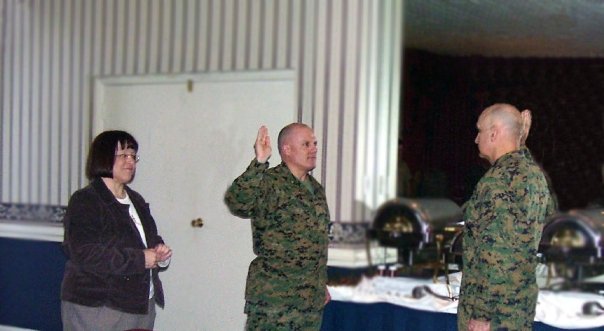
Renewing the Oath on my Promotion to Lieutenant Commander 2006

In June of 1983 I was commissioned as a Second Lieutenant and I took a different oath, an oath of office versus enlistment, I would repeat it again in February 1999 when I was commissioned in the Navy and renew it in 2006 upon my promotion to Lieutenant Commander.

I, Padre Steve, do solemnly swear (again I don’t affirm, namby pamby) that I will support and defend the Constitution of the United States against all enemies, foreign and domestic; that I will bear true faith and allegiance to the same; that I take this obligation freely, without any mental reservation or purpose of evasion; and that I will well and faithfully discharge the duties of the office on which I am about to enter. So help me God.

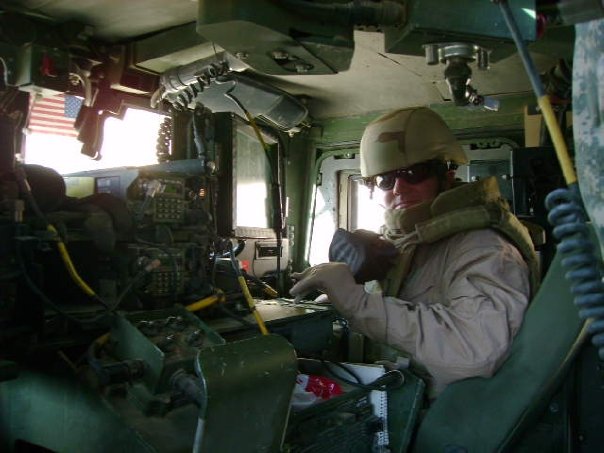
Since I swore the oath the first time I have served in the Army and Navy, in the Army National Guard of California, Texas and Virginia and the Army Reserves. I have spent about six years assigned to the Marines in my capacity as a Navy Chaplain.  I have served in Europe, Asia and the Middle East, at sea and ashore in war and peace.  I have served as a Company Commander and a Staff Officer before becoming a Chaplain and there is no greater honor than to serve this country.

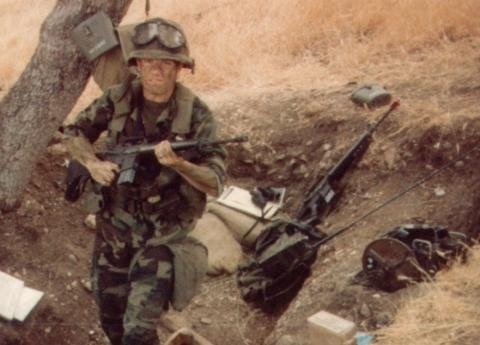
Iraq 2007

It is hard to believe that it has been 30 years.  I do take the oath of office quite seriously especially the part about defending the Constitution against all enemies foreign and domestic.  Since I have served 30 years I have served five Presidents and seen Congress make some fairy wild changes of direction.  That is the thing about our republic our officers do not make their oath to the President or even the majority party in the House of Representatives or the Senate. National Guard Officers also swear an oath to the Constitution of the State in which they serve but their commissions are cognizant on their Federal recognition and thus they like all other officers are sworn to support and defend the Constitution of the United States above all.

This is a good thing as I have not completely agreed with the actions or policies of each President and Congress that I have served. While I have deeply held political views they have never kept me from serving under administrations that I have disagreed with on major policies.  Officers may have strong political views but those must always be subordinated to our oath to support and defend the Constitution.  General Winfield Scott Hancock said “We are serving one country and not one man.” Hancock was a states rights Democrat who remained in the Union because he did not believe that secession was legal.  He had no political friends in Washington and he served valiantly during and after the war.  When asked about his opinion on what to do when their home state of Virginia seceded from the Union by his friends and fellow officers George Pickett, Lo Armistead and Dick Garnett before the war in California he said “I shall not fight upon the principle of state-rights, but for the Union, whole and undivided.”

This is not the case in much of the world. Many militaries swear allegiance to the ruler, the state, ruling political party or the majority religion.  The officers in many Moslem nations combine their oath with the Bya’ah which includes a personal oath to the King or Sheik and the Islamic statement of faith.

The British military swears an oath to the Queen and her successors:

“I ( name), swear by Almighty God that I will be faithful and bear true allegiance to Her Majesty Queen Elizabeth II, her heirs and successors and that I will as in duty bound honestly and faithfully defend Her Majesty, her heirs and successors in person, crown and dignity against all enemies and will observe and obey all orders of Her Majesty, her heirs and successors and of the generals and officers set over me.”

The Red Army of the Soviet Union swore an oath to “to protect with all his strength the property of the Army and the People and to cherish unto death his People, the Soviet homeland and the government of Workers and Peasants, also to respond at the first call from the government of Workers and Peasants to defend the homeland, the USSR.”

Germany has had a rather perilous history with oaths sworn by the military.  The Imperial Army swore an oath to the Kaiser but when the Kaiser abdicated and the Weimar Constitution was ratified German Officers and Soldiers took this oath: “I swear loyalty to the Reich’s constitution and pledge, that I as a courageous soldier always want to protect the German Nation and its legal institutions, (and) be obedient to the Reichspräsident and to my superiors.”  The history of the Republic shows that many officers and soldiers, especially those that had served under the Kaiser resented this oath.  In 1933 Hitler changed the oath to this  “I swear by God this sacred oath, that I will render unconditional obedience to Adolf Hitler, the Fuehrer of the German Reich and people, Supreme Commander of the Armed Forces, and will be ready as a brave soldier to risk my life at any time for this oath.” The current German military oath states: “I swear to serve loyally the Federal Republic of Germany and to defend bravely the right and the freedom of the German people. So help me God.”

All oaths hold potential dangers but those of theUnited States military officer corps is perhaps the best thought out oath in the world.  The oath is to the Constitution, not a person, political party or religion.  The efficacy of the oath is based on the honor of those that swear to uphold it.  In times of national turmoil it is important for officers and enlisted personnel to ensure that remember that fact.

When a nation is as badly divided as we are at this point in our history there will be divergent views regarding political beliefs in the officer corps.  This has happened before but only one time did it fracture the military and that was during the Civil War.  Many Southern officers in Federal service resigned their commissions and entered the service of their home states as did a number from the North who had family or marriage connections to Southerners.  Those that did so believed that they had a higher allegiance to their states and viewed the Federal government as an oppressor.

My family came from Cabell County Virginia in the far west of the state.  It was one of six Virginia counties to vote to remain in the Union. My family opposed this and sided with the Confederacy.  They owned slaves and sided with their self interests over their neighbors.  I find the talk of secession by some politicians today repulsive and hateful and those that even suggest it should be shunned by every American.

But there were Southern Officers that remained loyal to the Union; the most prominent of which was General George Thomas. Thomas was a highly successful commander who remained in the Army despite having his friends and superiors in the Second U.S. Cavalry Regiment including Albert Sidney Johnston and Robert E. Lee.  He struggled with his decision but kept his oath.  His family was outraged by this and turned his picture against the wall, destroyed his letters, and never spoke to him again.  They also refused his financial help after the war.  He was pro-emancipation and commanded some of the first Black Regiments in battle during the Western campaigns.  Thomas is emblematic of the cost that one can endure in remaining true to his oath.

Politicians, pundits and preachers from both parties will always attempt to peel military personnel, especially officers away from their oath to the Constitution in order to appear strong on defense, more patriotic or ingratiate themselves to them during a time of war.  This is nothing new, George Thomas noticed it after the Civil War and said “I am also afraid that the military arm is becoming more or less infected with politics; let us by all means keep that branch of the public service free from the taint of intrigue and party strife.”

Yes we have problems I this nation, but they are not insurmountable.  A strong and able military that keeps its oath to support and defend the Constitution of the United Statesis necessary to that end; it cannot allow itself to be drawn away from that no matter what our individual political beliefs.  General Winfield Scott Hancock said “The time under our System of Government, when an army becomes political in its character … is about the end of its career.”

I’m proud that I will have a chance to renew that Oath of Office when I am promoted to Commander in the Navy on Thursday.  Technically there is no legal requirement to do this as an officer in continuous service as the promotion is only cognizant on me accepting it and signing the letter of acceptance.  However I do think it important that I renew it publicly to remind me that I serve the people of this country in a time of war and not any political party.

A dear friend, Retired Marine Corps Colonel and former commanding officer will do the honors for me behind home plate at Harbor Park in Norfolk before the Norfolk Tides play the Gwinnett Braves.  We went through many difficult times together and I cannot imagine having anyone else stand with me in reaffirming this sacred oath.

As for the place of the Oath, I could have chosen from several but the Tides and baseball mean a lot to me, after Iraq Harbor Park was one of the few places that I found peace.  When the season ended the team management allowed me to visit and walk the concourse in the off season.  I can’t think of a more fitting place to renew the Oath.

I pray that I will be faithful to the oath and the people that I serve in the coming years.  It is an honor to still remain in the service of this country.  I have served five Presidents and quite possibly will serve under another before I finally end my service. That is a testament to our political system, there have been no purges of the military like in many other nations and the military is not a king maker.  We can be immensely thankful for that.

Those serving in the military come from every walk of life as well as political and religious beliefs.  What sets us apart is that we serve in harm’s way and look out for each other regardless of those beliefs even when they conflict.  I think the rest of the country could learn a lesson from us.

So long as we remain people of good will and commit ourselves to placing the interests of the nation above our own we shall do well.  That is the essence of the Officer’s Oath of Office.

Peace

Padre Steve+

3 Comments

Filed under History, leadership, Military, philosophy, Political Commentary