Tag Archives: giglio island

Sinking the Costa Concordia: A Lesson in Hubris and Cowardice

“You go up that ladder and get on board the ship. You go on board and you then tell me how many people there are. Is this clear? I am recording this conversation, Commander Schettino.” Commander Di Falco, coastguard

Captain Francesco Schettino acted with hubris and demonstrated cowardice in the sinking of his ship the Costa Concordia.  He has denied taking his ship the massive 114,500 ton Costa Concordia too close to to the island of Giglio but evidence is showing that this is a bold faced lie.  From the what we know now the ship passed too close to a rocky outcropping under 300 meters from the main island but much closer to a smaller rocky island just offshore. The ship based on its AIS tracking system was sailing at about 15.3 knots when she struck the rock on her port quarter at 2137 local time.
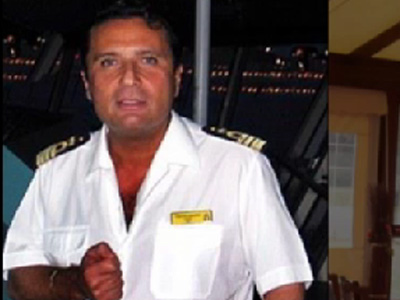
Captain Francesco Schettino

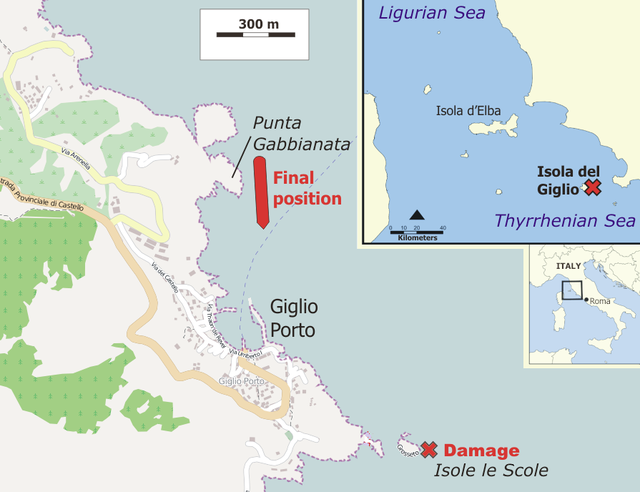
Damage was massive and within moments of impact the ship suffered a power outage but evidently still had some power and Schettino or one of his officers attempted to turn the ship toward Giglio harbor, presumably to get her into shallow water so she would not go down in deep water.  Investigators have found the exact point of impact with the rocks off the Le Scole Shoal (42° 21′ 20″ N, 10° 55′ 50″ E)

See map  http://toolserver.org/~geohack/geohack.php?pagename=Costa_Concordia_disaster&params=42_21_20_N_10_55_50_E_ )

If you look at the track charts and diagrams it is easy to see how short of distance the ill fated liner travelled before sinking. She struck the rocks and turned slightly to starboard as she rapidly listed 20 degrees to port. The track shows that Casta Concordia slowed and turned rapidly to port (left) and slowed to a near standstill in the space of about 1000 meters as she lost power as Captain Schettino attempted to get her closer inshore.
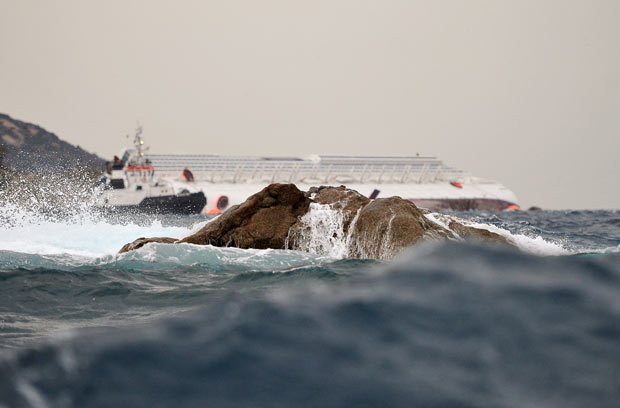
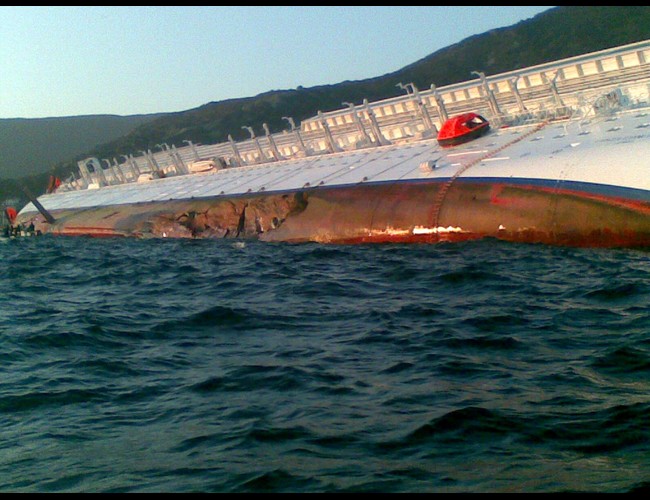
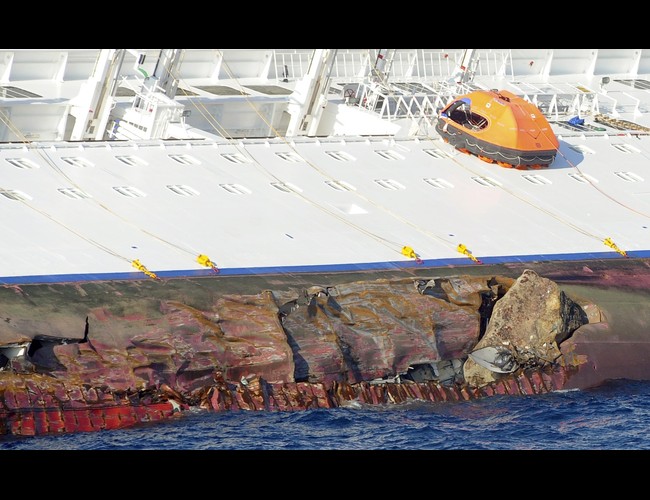
The visible damage shows a massive gash of about 150 feet in her port side beginning just aft of midships to her port quarter.  The extent of the damage indicated that her double bottom was pierced and that numerous watertight compartments were breached including her main engineering spaces. The power failure experienced by the ship was most likely due to the flooding in the engineering spaces which powered its electrical generators.
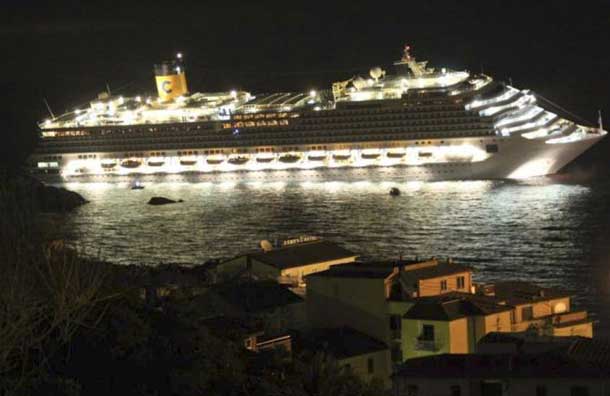
The damage itself was catastrophic and probably mortal, but when she turned to sharply to port she heeled back to starboard as the ship’s center of gravity shift and water in the flooded compartments shifted to starboard.  At 2145 the Chief Engineer informed the captain that the breach could not be repaired and was impossible to manage. Schettino should have ordered the ship abandoned at that moment but waited until 2258 to sound the alarm.   The rapidity with which the ship heeled to starboard could have also been affected by winds and the ship’s proximity to shore.  It is also possible that the very design of such large ships can make them vulnerable to such damage in that with such high superstructures they could be more prone to instability when flooding rapidly.

Concordia rolled over on her starboard side on the rocks off of Point del Lazzaretto eventually settling to the bottom at an 80 degree list. 11 people are known to have died and many more are still missing with hope fading for their rescue.

The situation is made worse by the actions of the Captain of the Concordia, Captain Schettino.  First based on the evidence of previous sailings that this is not the first time that Schettino took the ship close inshore. Apparently he did this to allow show off the ship to the relatives of the Maitre d’hotel of the ship to see the ship pass close to the island. Another report said that Schettino called a former commander now retired who lives on Giglio to let him know that he was coming close to the island.  The fact is that taking a ship the size of Costa Concordia so close to a rocky shore at night for the purpose of showing off is reckless endangerment and an act of hubris.

The second concern is the fact that Schettino abandoned ship and despite repeated orders from a Italian Coast Guard officer to return to the ship did not and that junior officers on their own initiative began to evacuate the ship well before Schettino gave the official order to abandon.

see transcript of the exchange between Schettino and the Coast Guard Officer here http://news.sky.com/home/world-news/article/16150968

After his rescue Schettino claimed that the rock was uncharted and that he was farther out to sea than he actually was.  The fact that Schettino and his First Officer abandoned ship while hundreds of not thousands of passengers were still in danger and refused orders to return to the ship shows cowardice.

The will be more on this but Captain Schettino bears the ultimate responsibility for what happened to his ship and the loss of life.

Peace

Padre Steve+

3 Comments

Filed under Navy Ships, News and current events

The Sinking of the Costa Concordia…Unanswered Questions in the Loss of Massive Cruise Ship

“I cannot imagine any condition which would cause a ship to founder. I cannot conceive of any vital disaster happening to this vessel. Modern shipbuilding has gone beyond that.” Captain Edward Smith, Captain of RMS Titanic referring to RMS Adriatic

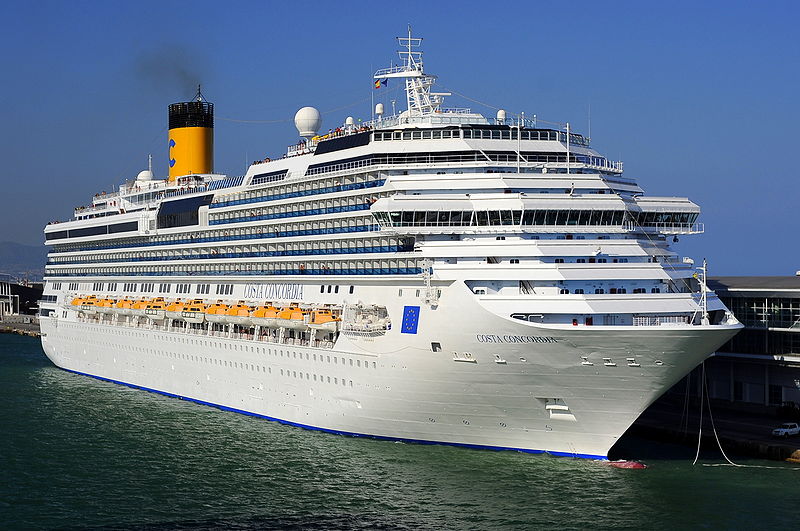
They are considered the queens of the high seas but they are not unsinkable. Modern ship design and technology can always be doomed by the hubris of those that design, build and command them. The Italian cruise ship Costa Concordia sank off of the tiny tourist resort island of Giglio in constricted waters off the Italian coast.  The ship which displaced 114,500 tons and is 952 feet long was carrying over 4000 souls when sailing less than 300 meters from shore she struck a rocky outcropping for unknown reasons.

The liner’s captain claims that he struck an “uncharted” rock and some have speculated that a power failure or navigational systems error could have caused the ship to go off course. However the ship was miles off course and any experienced mariner or Merchant Captain would have recognized that the ship was far off course by visual observation as the weather was clear and the sea calm at the time of the sinking. Additionally the route was a weekly event for the ship and crew.

What we do know is that the ship struck rocks which opened a gash 150-300 (depending on the estimate) feet long in the ship’s port side below the waterline encompassing an area that included the main engineering spaces.  The could be more damage below the water on the ship’s bottom as well.

The ship continued on for a bit but the flooding had to rapid and the ship first heeled 20 degrees to port (left as you face the bow or front of the ship) and the Captain ordered the ship about to get her into shallow water obviously fearing that she might go down in deep water.  He did get the ship into shallow water but something else unexpected occurred to cause the ship to list to starboard (right as you face the bow). The list became so bad that she hit bottom with about a nearly 90 degree list exposing the massive damage on the port side which included a massive boulder sticking out of the hull.

The two main questions are why did the ship go strike bottom and why did she sink? A third question that I have regards the ability of any large cruise ship to survive sudden and massive emergencies, not just maritime emergencies but God forbid a terrorist attack like that which nearly sank the USS Cole. The first is being answered by the cruise line which stated:

“While the investigation is ongoing, preliminary indications are that there may have been significant human error on the part of the ship’s Master, Captain Francesco Schettino, which resulted in these grave consequences.

“The route of the vessel appears to have been too close to the shore, and the captain’s judgment in handling the emergency appears to have not followed standard Costa procedures.”

Italian authorities have arrested the Captain and First Officer on charges of manslaughter.  Other charges will probably be filed.  I believe that as the investigation progresses investigators will discover that the Captain endangered the vessel by deliberately sailing close to shore, far closer than any large vessel should sail.    Had he stayed in the main shipping channel nothing would have occurred.

The second question involves how fast the ship sank and why she heeled to starboard when the damage was on the port side. I would suspect that the crew was overwhelmed by damage of the extent that occurred and that their damage control training was insufficient.  The actual number of deck hands and engineers compared to kitchen and wait staff, entertainment and housekeeping was probably minimal. This is because of the tendency for merchant crews to be just large enough to run the ship depending on technology.  However in catastrophic situations technology can be overwhelmed and what is needed are sailors that can effect emergency repairs to keep the ship afloat until help can arrive.  However keeping a surplus of qualified deck hands and engineers on board would cut into the corporate bottom line. Since this is the case it would be important that every member of the crew have some real training in shipboard damage control and firefighting. I suspect that this is not the case even though according to Costa “All crew members hold a BST (Basic Safety Training) certificate and are trained and prepared to emergency management and to assist passengers abandoning the ship with numerous drills.”

However that is not the same as being qualified to assist deck hands and engineers in serious damage control situations.  The crew did a commendable job in evacuating the ship despite the inability to use many lifeboats due to the steep list but had this occurred in deep water or stormy conditions the death toll could have been catastrophic. As of now 6 people are known dead and several dozen  are unaccounted for and could be either trapped in the ship or drowned.

These are important questions to ask and hopefully what happened to the Costa Concordia will lead to even more safety measures and improvement in ship design. There have been a number of incidents of cruise ships sinking in the past number of years but most have been smaller or older ships. The Concordia was very new and considered state of the art.  She is one of the largest ships to every be sunk in history and a warning to those like Captain Smith of Titanic.

Peace

Padre Steve+

4 Comments

Filed under History, Navy Ships, News and current events