Tag Archives: hezbollah

Padre Steve’s 2013 Down and Dirty Primer on the Muddle East

Free Syrian Army soldiers in Idlib

“When you are up to your arse in alligators it is hard to remember that your mission is to drain the swamp.” Old British Colonial Saying

Note: This is an update to my 2011 Primer on the Muddle East

During the dark days of World War Two when Field Marshal Erwin Rommel was making fools of a series of British commanders in North Africa people including senior British military and government leaders sometimes referred to the theater of operations as “the Muddle East.” Some things never seem to change. The Muddle East today is quite frankly speaking in a real muddled state if there ever was one with world leaders and regional leaders muddling about as if they were the New York Mets.

A large part of the muddle goes back to the fall of the Ottoman Empire at the close of the First World War when the victorious Allied Powers redrew the map of the Middle East and made alliances with various local tribal sheiks who many times were crowned king over other tribes who didn’t necessarily want them as king. This along with heavy handed European military actions such as the British using poison gas dropped from aircraft in Iraq and a real lack of effort to better the lives of the newly “liberated” peoples of the region was just the start. Add to the cesspool a bunch of oil presided over by major oil companies, the anti-colonial movements that flourished in the years after World War Two when the French, British and Italians had to divest themselves of their Middle Eastern holdings. The French had to fight a real war in Algeria but finally withdrew leaving Algeria’s new rulers to goof up the country and oppress their people for decades to come.  In the coming years many of these newly independent nations found that life still sucked so in a number of countries military officers overthrew the despised monarchs promising reforms but oppressing their people while blaming all their problems on the Israelis.  They got their asses kicked by the Israelis in a series of wars which did a number of things that made the Middle East Muddle even worse.

First it ensured that Palestinian Arabs ended up under Israeli rule and were used with great aplomb by the Middle Eastern despots to prop up support for their regimes while doing nothing to help the Palestinians other than to put them in camps in Lebanon.  Even when the Egyptians made a peace deal with Israel most of the Arab World ostracized them.  Then in 1979 the Shah of Iran was sent packing by a bunch of Mullahs and in 1981 Saddam Hussein’s Iraq attacked Iran in one of the bloodier wars of the late 20th Century which finally ended in 1988. Of course the United States was pissed at the Mullahs so Saddam became our favorite Arab despot for a while.  Add to the mix the Soviet Union and the United States arming their favorite Arab dictators who were given carte blanche to continue oppressing their people so long as it didn’t interfere with their support of either party or the oil supply. Finally the Soviets went Tango Uniform in 1989 not long after being forced out of Afghanistan by the U.S. supplied, Pakistani supported and Saudi Arabian fundamentalist financed Mujahideen.

With the Soviets “Tango Uniform” and the Warsaw Pact nations trying to get into NATO the United States was now the uncontested Numero Uno country in the world Saddam presumed upon his late supporters and invaded Kuwait, albeit after thinking that the U.S. Ambassador to Iraq said that we wouldn’t mind.

Well he was wrong we did mind and got a lot of countries from NATO and including a bunch of Arab countries like Egypt, Syria and Saudi Arabia to get on board on a mission to get Saddam’s troops out of Kuwait. It was a kick ass mission and since the United Nations didn’t authorize removing Saddam and because President George H.W. Bush was smart enough to not to drive on Baghdad to kick him out preferring the despot we knew to a quagmire Saddam was left in power.

So we stationed ground and air forces around the Gulf to keep Saddam and Iran in check and even put them in Saudi Arabia which a large number of radicals such as Osama Bin Laden equated to letting the Devil play in Allah’s Holy Sandbox.  So Osama went and set up a base with the Medieval bunch of Pashtun known as the Taliban in Afghanistan stirred up a bunch of shit killing Americans and blowing up stuff including the World Trade Center in 1993, the Khobar Towers barracks complex in 1996, the USS Cole in 2000 and then 2001 another attack on the World Trade Center which took down the towers with hijacked aircraft and also struck the Pentagon triggered an American response against Bin Laden and his Taliban hosts.  The United States then invaded in Iraq in 2003 and succeeded in taking out Saddam but also succeeded in alienating a good many Iraqis who greeted us with open arms because we goofed up the occupation and pissed a lot of them off by dissolving the Army, Police and Civil Service and letting thugs and opportunists take over. Unfortunately since we didn’t go in with enough troops to secure all the Iraqi bases, their weapons depots and actually take control of surrendering Iraqi units these newly unemployed and dishonored people launched an insurgency bolstered by Al Qaeda and other foreign fighters even as Sunni and Shi’a Moslems began to settle scores with each other. Insurgency and civil war, two great tastes that go great together, but what the heck right?

Of course it took years to get control of the situation on the ground and thankfully the United States forces in Iraq were helped when the Sunni Moslems in Al Anbar Province realized that these foreign fighters were a worse enemy than the United States and switched sides. This turned the tables in Iraq and the insurgency was brought under control and an elected government managed to start to get their stuff together and allow us to begin withdrawing from Iraq. Of course the focus on Iraq gave the Taliban a chance to regroup as the Afghani Government proved itself corrupt, incompetent and not to give a shit about the Afghani people. So the Taliban who had been hated made a comeback and made our lives much harder so that now almost 10 years into the fight we are having a really hard time.  Well enough about us there was plenty more going on in the Muddle East besides the Iraq and Afghanistan wars.

Let’s see….there was the law of unintended consequences in that by taking Saddam Down and weakening Iraq we took away Iran’s natural enemy and the key to the balance of power in the region. Iran was strengthened and began a nuclear program that everyone with half a brain knows in intended for military use and expanded its influence in Lebanon where the Iranian backed Hezbollah took power.  Now Hezbollah which actually has an experienced military force and probably owns 40,000 or so rockets and missiles a good number of which can hit deep in Israel seems to be ready for war especially because they fought the Israelis to a stalemate in 2008, the first time an Arab military ever did that. Not only did they take on the Israelis but they are also helping Syrian dictator Bashir Assad turn the tide against the polyglot Syrian rebel forces which are being assisted by Sunni foreign fighters from all over the Middle East and the ever present Al Qaida presence.

Then was the effect that the wars in those countries made things harder for us in many other friendly Arab nations.  Of course there is the problem of a nuclear armed Pakistan which is about as stable as a Japanese nuclear reactor after getting hit by a tsunami and plays both sides of the street in the war on terror.  The Palestinians and Israelis continued their love affair and since Fatah which ran Palestinian Authority was so corrupt and gooned up a more militant group, Hamas took power in the Gaza strip. Hamas is a pretty bloodthirsty lot too but not the same level of threat as Hezbollah to the Israelis.  Of course the Israelis have done little to help the situation by their often heavy handed treatment of Palestinians and Israeli Arabs.

The witches’ cauldron of the Muddle East is getting even more muddled on a daily basis as young Arabs throughout the Muddle East are rising up against their despotic rulers and it doesn’t seem that any are safe, those allied with the United States and the West as well as those that have been a thorn in the side of the United States and the West. It just seems that despots and tyrants are no longer in vogue. The uprisings began in Iran after a disputed election where reformers were cheated of power and the revolt crushed by the Revolutionary Guard and other thugs of the Iranian regime. However with the election of “moderate” whatever that means cleric Hasan Rowhani as President hopes are that Iran, despite the machinations of many other clerics and the Revolutionary Guard might be brought to the negotiating table. That being said Iran is reportedly sending about 4000 troops to go help Assad in Syria so go figure.

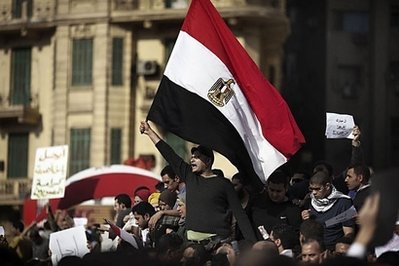
Elsewhere in the Middle East things continue to boil. In December 2010 the people of Tunisia rose up and overthrew their President for Life Ben Ali in a peaceful uprising followed shortly after by the Egyptians who tossed out long term President and U.S. ally Hosni Mubarak. In Tunisia a “moderate Islamist” regime has been attempting to maintain control of radicals and keep some semblance of balance in that country while in Egypt the Islamic Brotherhood was able to get majorities elected in the Parliament and elect Mohammed Morsi as President. Needless to say both countries are still in turmoil.

In Iraq the Sunni Shi’a divide is as wide as ever and that country is threatening to become engulfed in yet another civil war as sectarian violence increases and the Kurds make more moves toward independence.
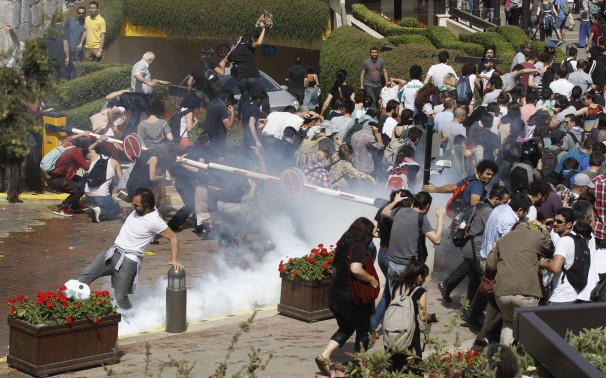
2013-05-31T115012Z_01_IST12_RTRIDSP_3_TURKEY-PROTESTS

Turkey, the heart of the old Ottoman Empire is now beginning to erupt as secularist elements in the society are protesting the policies of Islamist President Recep Tayyip Erdoğan leading to repeated clashes over the past two weeks between protestors and police.

054

Afghanistan though technically not part of the Middle East continues to be a problem for US and NATO consuming intelligence, economic diplomatic and military resources that could be put to play with better effect elsewhere.  What T.E. Lawrence said of the British occupation of a restive Mesopotamia  in 1920:

“We realise the burden the army in Mesopotamia is to the Imperial Exchequer, but we do not see as clearly the burden it is to Mesopotamia. It has to be fed, and all its animals have to be fed. The fighting forces are now eighty-three thousand strong, but the ration strength is three hundred thousand. There are three labourers to every soldier, to supply and serve him.” ‘France, Britain, and the Arabs’ by Col. T. E. Lawrence The Observer, 8 August 1920

In Libya the Arab Spring claimed the long time pain in the ass Moammar Gaddafi. That conflict center of the action in 2011 until Gaddafi was overthrown and murdered. Since then Libya has remained in turmoil despite elections, militias run amok and the US Ambassador Chris Stevens was killed in an attack on the US Consulate and CIA base in Benghazi on September 11th 2012.

Yemen and Bahrain, Algeria, and Jordan have or are experiencing demonstrations which look to be revolts in the making and even Saudi Arabia is trying to head off a potential popular uprising.

However the real problem now, the problem that threatens to send the region into a regional war is the revolt in Syria which began with peaceful protests by reformers against the Assad regime. However the hard line response of that regime to the protests spawned a civil war which now threatens to overflow the borders of Syria. France, Britain and the US have stated that they believe that there is evidence that the Syria government has used chemical weapons, in particular Sarin nerve agents against the rebels. The conflict has claimed the lives of an estimated 80,000 people with hundreds of thousands more now living as refugees.

The conflict in Syria epitomizes one of the greatest challenges in the Middle East that many in the West are just beginning to recognize, the Sunni Shi’a divide. That divide is becoming more serious with every passing day as Iran continues to lead and assist Shi’a elements in predominantly Sunni Arab countries, as well as in Iraq where the Arab Shi’a are in the majority. The conflict in Syria is predominantly Sunni versus Shi’a though in that patchwork nation of Sunni, Shi’a, Alawite Shi’a tribe of the Assad clan, various Christian and Druse groups. Lebanon which borders Syria is as divided as its larger neighbor and Hezbollah holds tremendous power in that country.

Yes my friends this is a mess and almost everybody that is anybody in the military and economic power houses of the world doesn’t have their handprints all over at least some part of this mess. All of these own some of the blame for what is going on, both the rulers of the nations in the region as well as world powers who all try to influence the nations and peoples for their own diplomatic, intelligence, military or economic gain. Almost no one is unsoiled by their involvement in the Muddle East over the past 90 years or so and so in a way all of great world powers, as well as the despots who ran these countries are to blame.

images-46

The region is more volatile than at any time in recent history and events there could easily ignite a regional war with worldwide implications.  That is why the region has been called the Muddle East for decades.  We all hope and pray for the best and that somehow all of this that the promise of a peaceful and democratic “Arab Spring” will become a reality, but there are better than even odds that things get way worse before they get better. There are just too many wild cards in this deck and the swamp is full of hungry alligators.

With the announcement this week that the US would provide military aid and training to the Syrian rebels and that US forces will remain in Jordan even as US and NATO Patriot missile batteries stand ready in Turkey there is a really good chance that the conflict in Syria will not stay in Syria.

Of course there is always the wild card if what Israel may do in what it perceives to be its security interests against outward foes such as Iran and Syria but also inside its borders and occupied territories, especially if it is attacked or provoked by Iran, Hezbollah or Hamas.

May God help us all and bring about peaceful change, or as my Iraqi friends simply say “Inshallah, God willing.”

Peace

Padre Steve+
Leave a comment

Filed under History, iraq,afghanistan, middle east, Military, national security

Looking into the Abyss: The Middle East November 2012

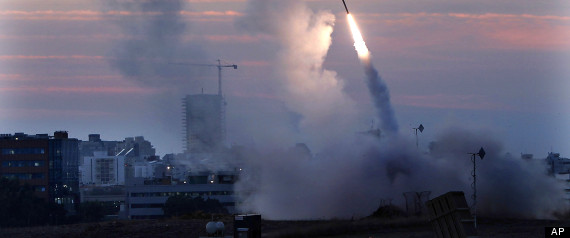
Israeli “Iron Dome” Missile Defense System in Action (Ap Photo: Tasafrir Abayov)

“You don’t have any communication between the Israelis and the Iranians. You have all sorts of local triggers for conflict. Having countries act on a hair trigger – where they can’t afford to be second to strike – the potential for a miscalculation or a nuclear war through inadvertence is simply too high.”  Dennis Ross


As I write this the Israeli Army is beginning the mobilization of 30,000 reservists as the IDF continues to respond with great vigor to the missile attacks conducted by Hamas and the Islamic Jihad on Israeli cities including Tel Aviv. On the sidelines are Hezbollah and Iran while Egypt, now governed by leaders of the Islamic Brotherhood attempts to finesse support for the Islamists while not provoking a wider conflict with the Israelis. To the northeast, Israeli forces have exchanged fire with the forces of Bashir Assad’s Syria which are engaged in their own version of an Arabic Götterdämmerung against their own people.

In the past two days nearly 300 rockets launched from Gaza have hit Israel, killing 3 Israelis. The missiles that hit Tel Aviv were the first to hit that city since Saddam Hussein’s Scuds in the 1991 Gulf War. Over 100 more have been successfully intercepted by Israeli “Iron Dome” missiles. In response the IDF has launched numerous sustained attacks against Hamas, Islamic Jihad and other militant groups in Gaza, even killing the military chief of Hamas.

The Obama Administration has warned the Hamas forces to cease fire and urged leaders in Egypt and Turkey to help get the Hamas forces to stand down. Representatives of France are attempting to broker a cease fire even as the fighting escalates. The US Senate passed a unanimous declaration of support for Israel and demand for Hamas to cease its missile attacks.

The situation is escalating and could spread, especially in light of the fact that the Arab Spring swept away dictatorships like that of Hosni Mubarak which though they oppressed their own people also used their military and police power to just enough ant-Israel protest to defuse more extreme reactions. The fact that an Islamic Brotherhood government is now in control of Egypt is a wild card that no US administration has had to face since the days before the Camp David accords. Likewise the actions of the IDF two years ago against a Turkish flagged merchant ship attempting to break the Gaza blockade severely damaged Israeli-Turkish relations and crippled a previously strong Israeli-Turkish military alliance.

We are in uncharted waters. The US is tied down in Afghanistan and the burgeoning crisis in the senior leadership of the US military and intelligence services caused by the Petraeus scandal has the potential to cripple senior military and intelligence leadership. Likewise ongoing domestic political crisis brought about by a badly divided electorate and government as well as the Fiscal Cliff the timing could not be worse. Despite a decade of bloody and expensive military campaigns in the region United States now has less influence in the Middle East than it did in the 1970s, 1980s, 1990s and even the early 2000s.

As bad is the situation is the best case scenario is that it can be localized between the Israelis and Hamas in Gaza. As tragic and as devastating as that will be to both Israelis and Palestinians the possibility that the conflict could spread and become a regional war involving Egypt, Iran, Lebanon, Syria and the United States is a distinct possibility. Syria is falling apart and in the middle of a brutal civil war. Lebanon is torn between its own historic divisions and heavily dominated by the Iranian backed Hezbollah terrorist group. Egypt is in the throws of its own revolution and in turmoil. Iran sits on the sidelines stoking the fires while making its own threats against Israel as well as its own Arab neighbors and the US forces in the region.

I am not going to try to predict what will happen next. The situation is developing and dangerous. One hopes for the best, that the conflict can be contained and the suffering of innocents minimized, but possibilities of a larger and more disastrous conflict are all too real not to downplay.

Peace

Padre Steve+

1 Comment

Filed under middle east, national security, News and current events

Senate Joint Resolution 41: The Blank Cheque of 2012

“The Emperor Francis Joseph may, however, rest assured that His Majesty will faithfully stand by Austria-Hungary, as is required by the obligations of his alliance and of his ancient friendship.” Telegram from German Imperial Chancellor Bethmann-Hollweg to Austrian Government 

It seems like it is a rare occasion when either the House or Senate combine to pass any sort of bi-partisan measure. One wishes that when they did that it would be something actually that would benefit the people of the United States. However in recent times it seems that the only time that the Senate or House can agree on anything is when they vote to raise their pay or give their blessing to a new war, of course without actually going on record as declaring war.

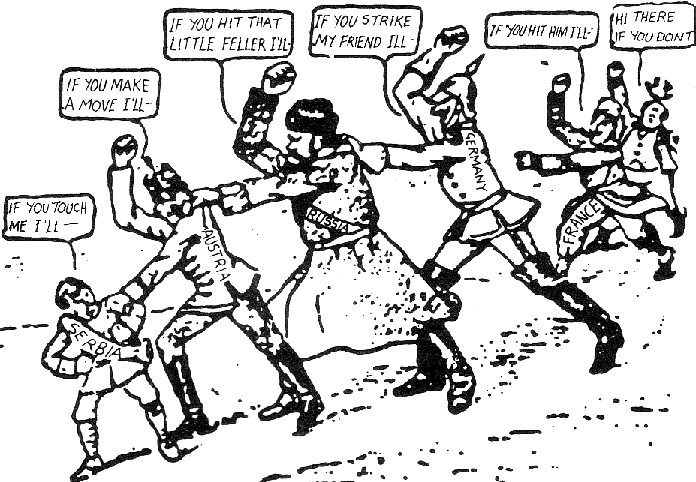
In July of 1914 the Austro-Hungarian Empire sought German backing to go to war against Serbia for the assassination of Archduke Franz Ferdinand. The Balkans were boiling over. The Austrians felt that the chaos in the Balkans was an existential threat to their already fragile empire and aimed to shore up their position by crushing Serbia. However, since the Russian Empire supported the Serbs and was a direct threat to exposed areas of the Austrian empire in what is now Poland the Austrians sought a guarantee of German support for their action.

The Germans made the decision to support Austria knowing that if they did that it was likely that war with Russia, and probably France and Britain would ensue. Austria despite its limitations was Germany’s only real ally in Europe. By a series of diplomatic blunders Kaiser Wilhelm II managed to undo all of Otto Von Bismarck’s diplomacy following the German unification. He scuttled the treaty of friendship that the Bismarck and Kaiser Wilhelm I had with Russia and built a Navy that threatened Britain’s interests both against the protests of Bismarck. As Wilhelm’s Germany became more isolated the more it prepared for war and many of its military and political leaders felt that war was not only inevitable but desirable before Germany’s enemies, especially Russia became more powerful.

Now with war threatening Germany was isolated and decided to support the Austrians believing that even if war came that they would emerge victorious. It was a decision that would be fatal for the German Empire as well as the Austro-Hungarian Empire.

This week as the situation between Israel and Iran has continued to deteriorate with most experts believing that it is only a matter of time before Israel will launch a pre-emptive strike on Iran’s emerging nuclear weapons capability. Leaders of Iran and Israel have continued to escalate rhetoric as well as conduct clandestine operations against each other. Iran has been isolated by the west and by much of the Sunni Moslem world, particularly Saudi Arabia and the Gulf States. It believes that the west and the heretical Sunni’s desire the overthrow of its theocratic regime. Israel sees Iran’s possession of nuclear weapons as an existential threat and also faces local border conflicts with Hamas and Hezbollah. Israel now has to deal with the threat posed by Egypt which is now led by the Muslim Brotherhood.

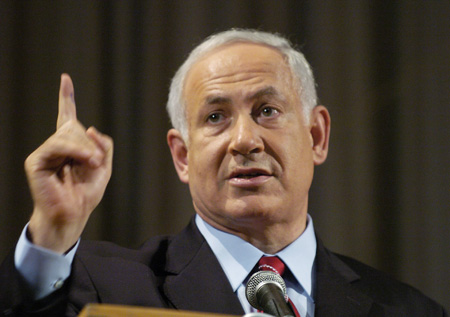
Israel’s leaders, especially Prime Minister Benjamin Netanyahu feel that time is very short before Iran reaches the stage where it can produce nuclear weapons. The United States, the European Union and the United Nations have also opposed the development of such weapons by Iran and instituted ever tougher economic sanctions but those nations and entities feel that more time is needed for sanctions to take effect.

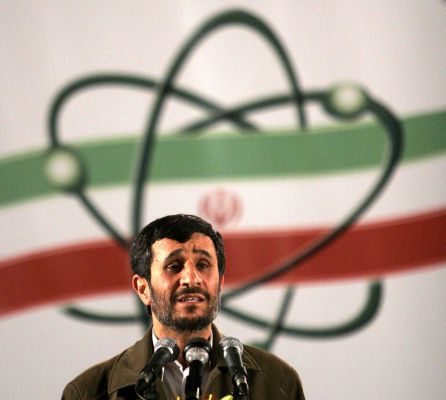
Likewise the leaders of Iran including President Mahmoud Ahmadinejad, Supreme Leader Ali Khamenei and leaders of Iran’s Revolutionary Guards frequently talk of war with Israel which would lead to the destruction of the Jewish State. In light of Iran’s support for Hizbollah and involvement in the Syrian civil war Israel takes Iran’s threats seriously.

The tensions continue to increase and many believe that Israel could strike in the very near future the United States Senate in a rare moment of bi-partisanship the Senate passed what amounts to a “Blank Cheque” to Israel or the President to take action against Iran. In a vote Friday it passed Senate Joint Resolution 41 by a vote of 90-1. Amid all the domestic political jockeying, economic problems and yes the football season most people didn’t even know the vote occurred. The Senate voted it on the Friday that they recessed until after the November elections. The resolution stated that the Senate:

“strongly supports United States policy to prevent the Government of the Islamic Republic of Iran from acquiring a nuclear weapons capability;

rejects any United States policy that would rely on efforts to contain a nuclear weapons-capable Iran; and

joins the President in ruling out any policy that would rely on containment as an option in response to the Iranian nuclear threat.”  http://thomas.loc.gov/cgi-bin/query/D?c112:2:./temp/~c1126dTHw8::

The lone vote of dissent was cast by Kentucky Republican Senator Rand Paul who said: “A vote for this resolution is a vote for the concept of preemptive war.”

The resolution in effect rules out and shackles any President using any form of diplomacy to deter Iran. Should Iran gain a nuclear capacity it effectively negates any form of deterrence, diplomacy or containment options other than war to stop Iran. In effect it gives the blessing of the Senate to either Israeli or American preventive war against Iran. The resolution is similar in this instance to the guarantee of Germany to Austria in 1914.

At this point I doubt that there is anything that will stop a war from happening. Too much has been invested by too many governments in ensuring that it will happen to stop it. Regardless of who is President of the United States Iran will continue its course until Israel strikes. When that happens all bets are off.

It will be a war designed to prevent a war but it will trigger events that will go well beyond a conflict between Iran and Israel. Others will be pulled in, the United States, NATO, the Gulf States, possibly Syria, Iraq, Pakistan and even Egypt. American and NATO forces in Afghanistan will be in great danger.

One would hope that we would learn from the mistakes of others. The great Otto Von Bismarck commented said “preventive war is like committing suicide out of fear of death.” Obviously we haven’t learned anything.

Pray for Peace

Padre Steve+


2 Comments

Filed under Foreign Policy, middle east, national security, News and current events

The Gathering Storm: Shades of 1914 as War Threatens in the Middle East

Israeli Navy Dolphin Class Submarine

“The world tells Israel ‘Wait, there’s still time.’ And I say, ‘Wait for what? Wait until when?’” Benjamin Netanyahu 

The question is not if but when. The tensions between Iran and Israel continue to boil over even as the rest of the Middle East begins to melt down.

Last week on the 11th anniversary of the September 11th attacks Al Qaeda backed forces attack the US Consulate in Benghazi Libya killing Ambassador Christopher Stevens and three others. Militants in Egypt laid siege to the US Embassy while newly elected Egyptian President and Moslem Brotherhood leader Mohammed Morsi dithered torn between his party ideology and the pragmatic reality of the dependency of Egypt on the United States for military and economic assistance. Throughout the region from Tunisia to Indonesia protests, some marked by violence broke out at United States and other Western nations diplomatic outposts.

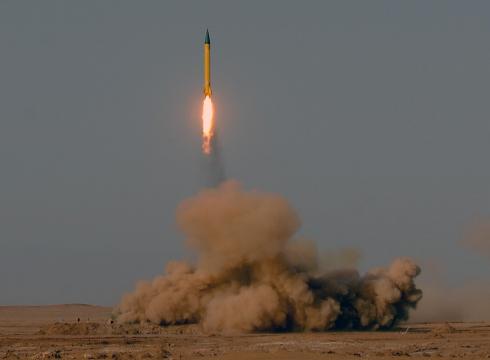
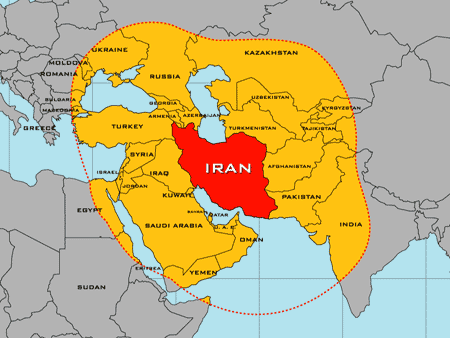
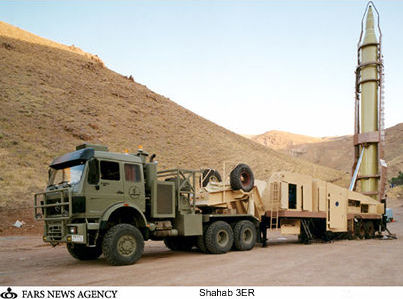
Shahab III Missile Ranges

The Iranians and their Hezbollah allies have repeatedly threatened Israel with destruction and have improved their missile forces significantly ever the past number of years even without nuclear weapons. Prime Minister Benjamin Netanyahu is demanding the United States and the west set “Red Lines” regarding the Iranian nuclear program that would trigger an automatic attack on Iran by the United States.

Like the First World War the tensions, provocations and rhetoric increase even as military forces mobilize and gather in the region. Iran is preparing for massive military exercises involving land, air defense and ballistic missile units from the Iranian military and Revolutionary Guards to begin in October.  Iran admitted this weekend that forces from their Revolutionary Guards are currently operating in Syria placing them in position to directly engage Israeli forces in the event of conflict.

By October the United States will have three Carrier Strike Groups, the USS Enterprise, USS Dwight D. Eisenhower and USS John C Stennis and an Expeditionary Strike Group with an embarked Marine Expeditionary Unit in the region. Additionally warships from more than 25 countries are gathering for exercises designed to counter any blockade of the strategic Straits of Hormuz by Iran. Other ships, including the French Aircraft Carrier Charles DeGaulle battle group and the British HMS Illustrious  “Response Task Forces Group” are in the Eastern Mediterranean and could be in the region within a week. US Navy submarines, both attack and ballistic missile are never far from a threatened area. US Air Force  Fighter Squadrons have been reinforced and it is certain that strategic air force units of B-2, B-52 and B-1 bombers are certainly deployed where they can respond as needed. The build up by all sides is unprecedented.

The countries of the region are on hair trigger alert. Any act, intentional or unintentional by any party could trigger a war that would most certainly bring great destruction to the region but would likely sink the global economy and spread around the world through acts of terror and revolutionary violence.

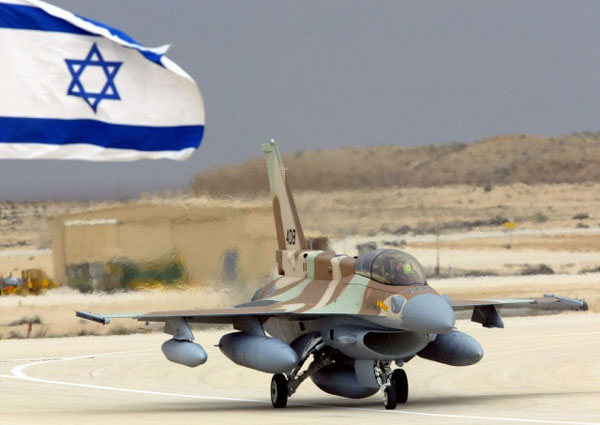
Numerous reports and Israel government official statements indicate that Israel is ready, to strike Iran, if need be alone to prevent what they believe is an existential threat to Israel. While some believe that any Israeli attack on Iran would be precision strikes aimed at Iran’s nuclear program and ballistic missiles sites. However, most experts believe that an Israeli strike would at best set back the Iranian nuclear weapons program a couple of years and trigger a regional war with very unpredictable outcomes. If the Israeli strike is conventional in nature the Iranians will strike back against Israel, as well as US targets in the region. The US would certainly respond but any war would affect the region and the world economy as oil prices would rise exponentially.

With that in mind it is possible that the Israelis fearing the existential threat of Iranian nukes might use their nuclear forces in a first strike role.

Most experts believe that the Israelis would only use nuclear weapons in a retaliatory “second strike” capacity. The reasoning is that the first use of nuclear weapons by Israel would be against their national interests. That is logical but history is replete with times that nations have acted in ways contrary to logic because the action is deemed “necessary.” It is the same logic that said that the Germans would not violate Belgian neutrality in 1914 knowing that such an action would trigger British intervention on the side of France and Russia. It was believed by most that “the Germans are dangerous but they are not maniacs….” The Germans faced war on more than one front and felt that they had to deliver a swift blow to knock France out of the war in order to defeat Russia. It was a risk that they were willing to take and one which helped lose them the war and set about a series of events that made the 20th Century the bloodiest in human history.

In the current situation many in Israeli leadership may view the use of nuclear weapons to stop an existential threat as a legitimate use of the weapons. Israel does face real threats and those threats are increasing as Iran increases in strength and no longer has traditional rival Iraq to worry about. Likewise the instability of Egypt and the anti-Israeli animus of the Moslem Brotherhood which now leads Egypt has increased the real and perceived threat from that country. An Egypt openly hostile to Israel armed to the teeth with advanced American weapons is a dagger pointed at the heart of Israel. Israel’s leaders may be willing to suffer international condemnation in order eliminate what they consider an existential Iranian threat to ensure their survival and ability to defend against Egypt as well as conventional and unconventional Hizbollah forces operating out of Lebanon and those of Hamas in Gaza.

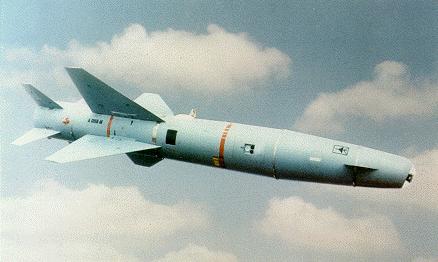
If they were to use nuclear weapons the primary delivery system in such a strike would most likely be Dolphin Class submarines armed with nuclear capable Popeye cruise missiles. These missiles have a 1500 km range and while the missiles could be used in a conventional strike their utility would be limited to precision strikes against unfortified headquarters buildings housing Iranian leadership, or command and control facilities. The numbers of Popeye missiles the Dolphins carry is limited since the majority of Iranian nuclear sites are hardened facilities or deep underground their use against them in a conventional manner would be a waste.

The threat to United States and NATO forces in Afghanistan is great if a broader war erupts. US and NATO forces, already fighting an increasing Taliban insurgency are for all practical purposes surrounded if a war spreads and Pakistan shuts down the southern supply route. Even this week Taliban insurgents scored a victory successfully attacking the strongly fortified joint US Marine and British base Camp Leatherneck-Camp Bastion destroying 6 AV-8B Harrier jets on the ground, damaging more aircraft, valuable hangers and support facilities while killing 2 Marines. A war with Iran would threaten to turn Afghanistan into a trap for nearly 100,000 US and NATO coalition troops.

It could as Barbara Tuchman said of the the Germans of 1914 that the Israelis have “staked everything on decisive battle in the image of Hannibal….” but that the ghost of Hannibal might have reminded the Germans and the Israelis that though Hannibal and “Carthage won at Cannae, Rome won the war.” In mid May and early June of 1914 even before the assassination of Franz Ferdinand Field Marshal Von Molkte and others felt that the scales were tipping against them. He told his Austrian counterpart Field Marshal Conrad Von Hotzendorf that “from now on ‘any adjournment will have the effect of diminishing our chances of success.’” On June 1st Von Molkte said to Baron Eckhardstein,“We are ready, and the sooner the better for us.”

The storm clouds of war are thickening and darkness hovers as the storm gathers. In 1914 the politicians, diplomats and soldiers that realized war would be disastrous were a minority in their respective governments and their warnings went unheeded. In 1914 “war pressed against every frontier. Suddenly dismayed, governments struggled and twisted to fend it off. It was no use….” As the sun set and the lamps of London were lit on August 4th 1914 Sir Edward Grey said to a friend “The lamps are going out all over Europe; we shall not see them lit again in our lifetime.” It is as if we are watching the same drama play out in the Middle East now.

Peace

Padre Steve+


3 Comments

Filed under Foreign Policy, middle east, Military, national security, News and current events

Fear and Loathing in Damascus

Free Syrian Army Fighter

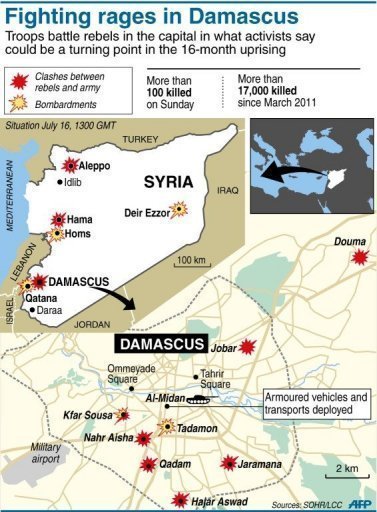
The situation in Syria continues to worsen as the battle for Damascus heats up. Syrian Dictator Bashar Assad reportedly has moved his headquarters to the Alawite Mountains as fighting rages in the Syrian capitol.   The International Red Cross has declared what most of us already believed that the conflict is a civil war and call for the United Nations to intervene under Chapter 7 of the UN Charter grow ever stronger despite the opposition of Russia and China to those calls.

In the 16 months that this fighting has been going on an estimated 10,000-15,000 Syrians have been killed. Thousands more have been wounded, many are missing and the number of refugees in Turkey has risen to roughly 120,000.  Despite the harsh repression of the Syria government, military, security and police against the opposition the opposition continues to grow in strength and is being joined by increasing numbers of senior military officers and soldiers.

Syrian Army Troops fighting in Damascus

On Wednesday the 18th after four days of sustained combat in Damascus the Free Syrian Army struck a blow at the heart of the Syrian dictatorship of Bashar Al Assad. It was a blow that no-one saw coming except the plotters. From a strategic point of view it was a brilliantly executed strike that will inspire fear among Assad’s loyalists and increase the opposition to him.

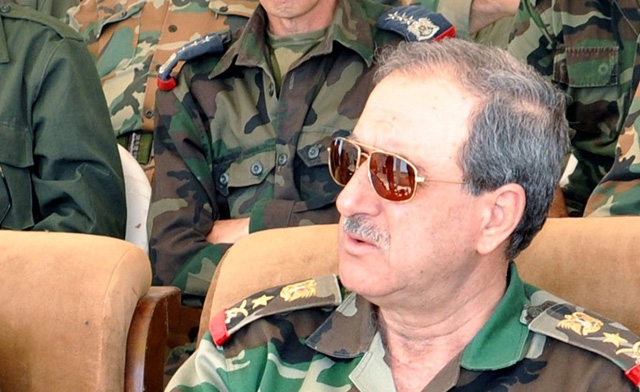
Bashar Assad and Senior Generals including Defense Minister Dawood Rajiha

Both the FSA and the Liwa al-Islam group claimed credit for a strike using a remotely detonated explosive inside the national security headquarters building in to decapitate the military and intelligence leadership of the Assad regime. Killed were Defense Minister Dawood Rajiha; and his “deputy” Asef Shawkat. Shawkat is Assad’s brother-in law and one of the regime’s most feared strongmen.

Defense Minister Dawood Rajiha; and his “deputy” Asef Shawkat (below)

Also killed was Assistant Vice President Hassan Turkmani, a former Defense Minister who served as the head of Assad’s Crisis Management Office. Syrian State TV reported that Hisham Ikhtiar, director of the National Security Bureau, and Interior Minister Mohammad Ibrahim al-Shaar, were among those hurt in the attack.  Al Arabia reported that another key official, Hafez Makhlouf, head of the investigations at the Syrian Intelligence Agency was killed in the attack.

The dead were key members of Assad’s attempt to crush the rebels and maintain his control over Syria. Rajiha was the most senior Christian in the Syrian government. Shawkat who was the husband of Assad’s sister Bushra had been Assed’s enforcer who wielded great power in Syria and with Syrian dealings in Lebanon.  AFP reports that the “Syrian Observatory for Human Rights called Shawkat’s death “a severe blow to the Syrian regime since he played the main role in operations by regular forces to crush the revolution.”

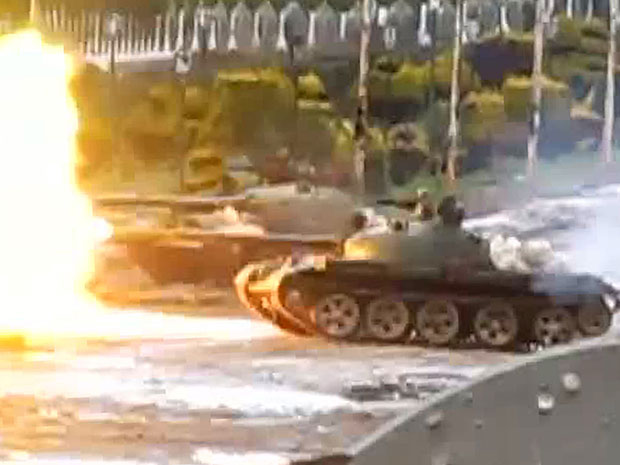
Syrian Army Tanks fire on Opposition Fighters

With the successful attack the revolution has reached a turning point. It has show the ability to strike at the heart of the Assad regime. Assad is counter-attacking but with the loss of such trusted key players his efforts, which have been a failure to date will be dealt a fatal blow. Even before the attack a number of Generals and other senior officers as well as thousands of troops have defected to the revolution. Rebels find arms and ammunition easy to come by in the corrupt Syrian government. Last week the Syrian Ambassador to Iraq Nawaf Fares defected to the rebels and claimed that he believed that Assad would use his chemical weapons against the opposition if he felt the need to do so.

Syrian Refugees in Turkey

The probable end of this is that the Assad regime will fall and a long term sectarian civil war like that that has plagued Lebanon since the 1970s will ensue. Hezbollah having lost its ally will attempt to retain power in Lebanon and influence events in Syria to their advantage, possibly attempting to gain control of Syria’s chemical weapon stockpile.

The collapse of Syria which to all before 2010 appeared to be stable by Arab standards despite fomenting problems for its neighbors will bring more instability, uncertainty and violence to the region. Expect that Assad’s loyalists among the Shite Alawite sect will be targeted for revenge by the persecuted Sunni majority. Also expect that Christianity will lose its last place of refuge in the broader Middle East as Syrian Arab Orthodox and Catholic Christians are targeted by all sides as were Iraqi Christians during the Iraq civil war and insurgency.

Peace

Padre Steve+

1 Comment

Filed under Foreign Policy, middle east, Military, national security, News and current events

The Naval Balance in the Arabian Gulf

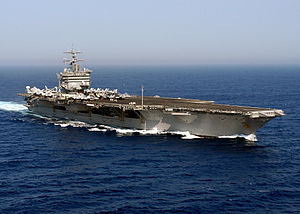
USS Eisenhower and a Ticonderoga Class Cruiser

The tension in the Arabian Gulf and the Strait of Hormuz continues to build with every passing week. With the imposition of additional sanctions on Iran and its oil industry, tensions over Iran’s Nuclear program and threats by Iran to close the Straits it is important to know what naval forces are in the area to counter any Iranian action.

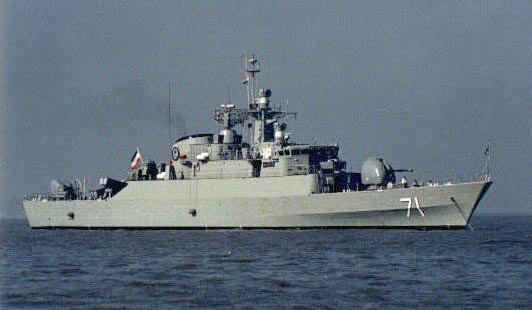
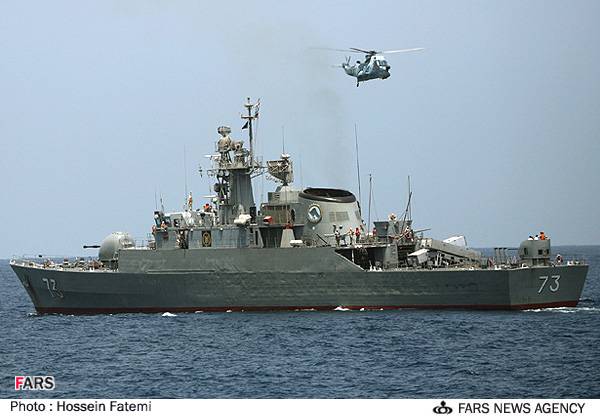
Iranian Alvand Class Frigate

The Iranian propaganda machine continues to promote the idea that its Navy is a major threat, not only in the region but around the world. However despite a number of high publicly deployments to the Mediterranean it is small coastal defense force. It has the capability to disrupt traffic in the Straits of Hormuz and is supported by land based Surface to Surface Missile batteries. However should a real shooting war break out it would be destroyed in short order, although it could inflict some damage on allied shipping if it was able to mount a surprise attack against an isolated ship.

The Islamic Republic of Iran Navy

Iranian Kilo Class Sub

3 Kilo Class Attack Submarines (Built in Mid 1990s in Russia)

Ghadar Class Submarine

19 Ghadar Class Coastal Submarines (120-150 ton built in Iran)

4 Yugo Class Coastal Submarines (90 ton built in North Korea)

3 Alvand Class (Vosper Type 5) Frigates (All are 40 years old and lightly armed)

1 Jamaran Class (Modified Iranian Built Vosper Mark V)

2 Bayador Class Patrol Frigates (US PF 103 Class) built in 1964

10 Houdong Type Missile Attack Boats (Operated By Revolutionary Guards Corps)

14 Kaman/Sina Class Missile Attack Boats

5 Coastal Patrol Boats

Numerous inshore patrol craft and auxiliary ships many capable of laying mines. The patrol craft could be used in “swarm” attacks against larger surface targets which Allied navies practice to defend against.  The larger Iranian ships are armed with C802 Surface to Surface Missiles.

US and Allied Navies in the Region are Commanded by Combined Task Force 150. 

Arab and Gulf State Navies

Omani Khareef Class Corevette

Oman (Royal Navy of Oman)  Oman has 5 very modern Corvettes. 2 Qahir Class which are British built Vosper Mark 9 and three new ships of the BAE Systems Khareef Class are entering service. These ships displace 2660 tons and are more modern, stealthy and heavily armed than most ships their size in the Gulf. The Omanis also have 8 modern patrol ships or craft and several amphibious ships and a number of smaller craft and auxiliaries.

Saudi Arabian Frigate Al Riyadh 

Saudi Arabia (Royal Saudi Navy) The Saudis boast a modern Navy built around three French Built Al Riyadh Class (La Fayette Class) Frigates, 4 Al Madina Class Frigates and 4 US Built Badr Class Corvettes, 9 Patrol Boats and 3 British Built Sandown Class Mine Hunters and numerous support vessels.

UAE The UAE Navy is small with only 2 small Swedish Built Corvettes and 14 Fast Attack or Patrol Craft, 2 Mine Hunters and numerous small patrol craft and amphibious craft.

Bahrain Bahrain has a former U.S. Navy Oliver Hazard Perry Class Guided Missile Frigate the Al Sabha and a number of patrol and fast attack craft.

Kuwait 10 Guided Missile Fast Attack Craft

US Allies in Gulf (current) 

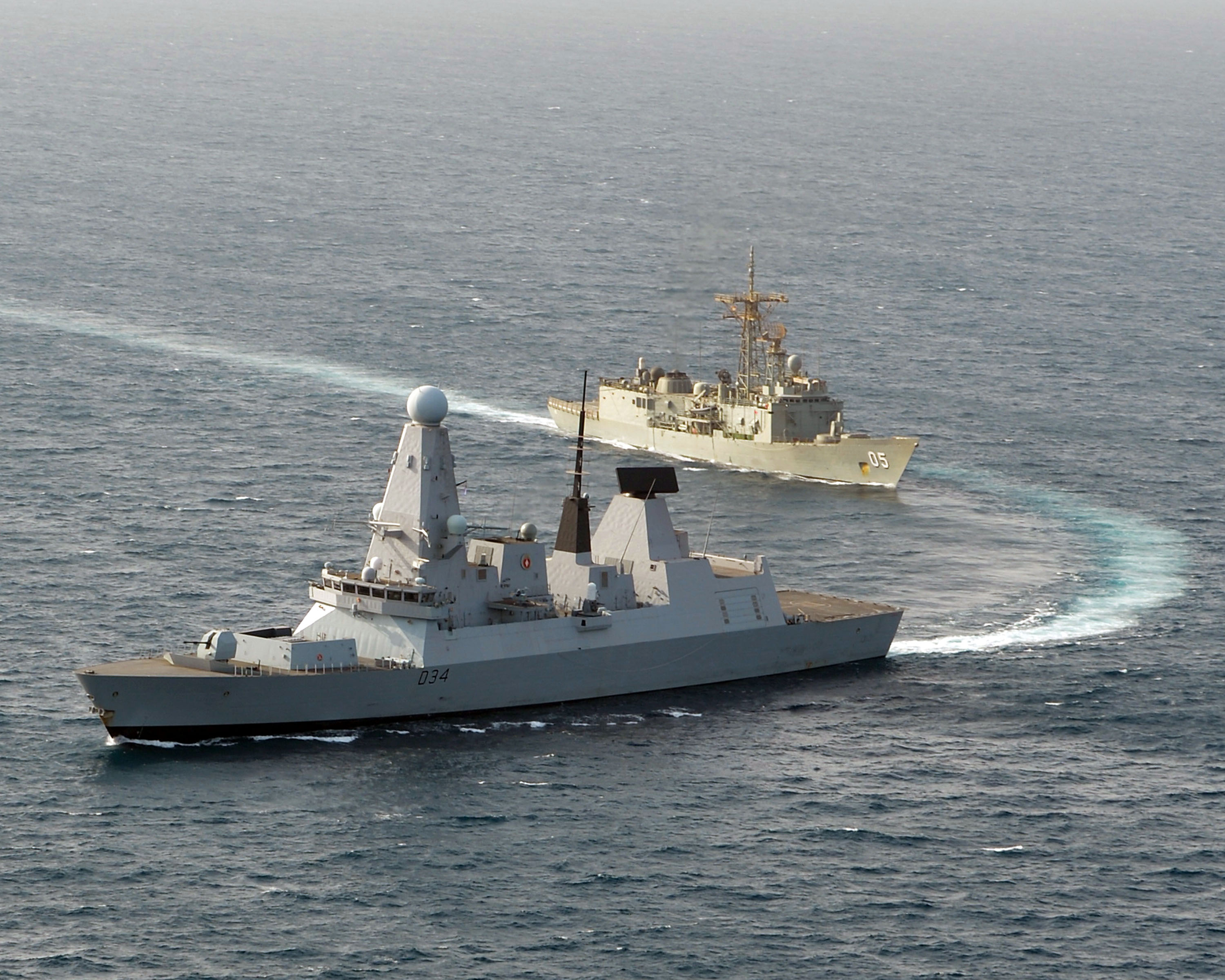
HMS Daring and HMAS Stuart

Britain: HMS Daring Type 45 DDG

Canada: Frigate HMCS Regina which is relieving the HMCS Charlottetown

France: Frigate La Motte Picquet


South Korean Destroyer Wang Geon

South Korea: Destroyer Wang Geon

Australia: Guide Missile Frigate HMAS Stuart

The United States Navy

USS Enterprise

2 Carrier Strike Groups (USS Eisenhower and USS Enterprise) with supporting Guided Missile Cruisers, Guided Missile Destroyers and Attack Submarines. The Navy now has 8 Mine Countermeasure Ships in the region and deployed the USS Ponce as a Floating Base for Special Operations Forces and Mine hunting helicopters. An Amphibious Ready Group with an Embarked Marine Expeditionary Unit (MEU) is also usually deployed in the region.

USS Ponce

Note that Allied ship movements and deployments change frequently and other nations not listed here frequently contribute ships to this mission.  Other US and Allied ships are deployed near the Horn of Africa. It is believed that the Israel Navy maintains a Dolphin Class submarine capable of launching nuclear cruise missiles within range of Iran.

Carrier based and land based US and Saudi Aircraft vastly outnumber and outclass the Iranian Air Force.

Conclusion

I do not believe that the Iranians are foolish enough to actually try to close the Strait of Hormuz, but would attempt to make enough threats to force oil prices up and get nations to attempt to skirt the trade and oil sanctions levied against it. That being said there is no accounting for an unforeseen or accidental incident or series of incidents that escalate the situation into a war. The Revolutionary Guards naval forces are particularly aggressive. There is also the possibility of an Israeli strike against Iran’s nuclear facilities that could trigger a regional war and naval battle over the Strait of Hormuz. If war comes it will probably be because a miscalculation that spins out of control.

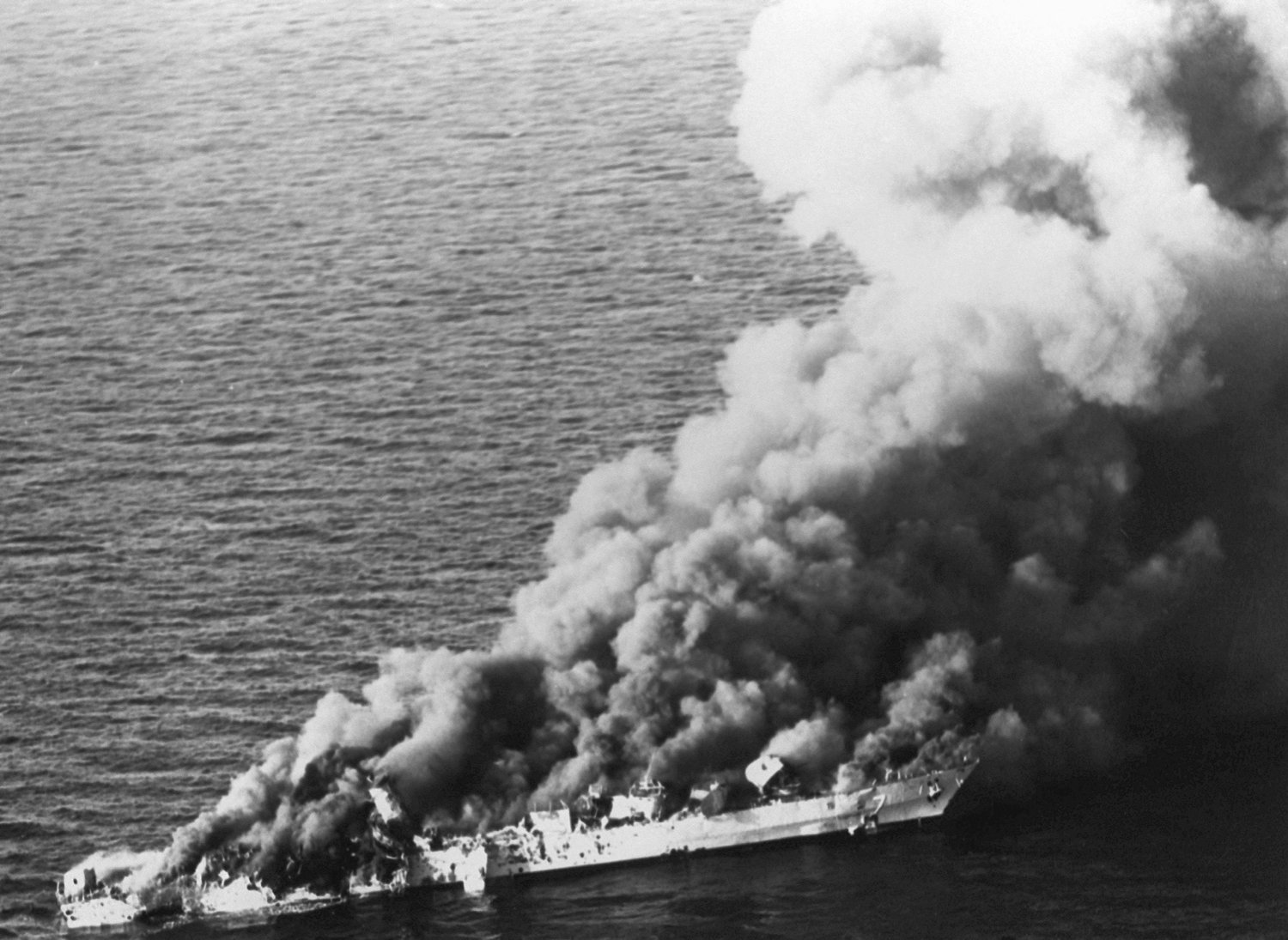
Tanker Burning and Sinking during 1988 Tanker War

Should a war begin for whatever reason it would still be disastrous. Hundreds of thousands of people could be killed or wounded and countries in the region devastated. Iranian Allies in the region especially the Iranian proxy Hezbollah could cause major problems. I don’t believe that Syria is in any shape to assist Iran due to its ongoing civil war but instability in it could give Hezbollah additional room to maneuver in Lebanon and against Israel.

Iranian Frigate Sahand Burning and Sinking following US Attack in 1988

If war was to break out it would be costly and the Iranians would cause damage to the world economy by attacking the oil infrastructure of its neighbors and attempting to close the Strait of Hormuz. However when all is said and done the Navy of the Islamic Republic and its air forces would be devastated in relatively short order.  That does not mean that such a war would be contained or limited. It could become a regional war where Iran launches missile strikes against Israel as well as the U.S. and its Gulf Allies. Terrorist and commando raids could also be part of any Iranian response to an Israeli strike or as part of any offensive operations that they decide to undertake. The fragile world economy could take a big hit with unknown political, social and economic effects.

In spite of how bad it would be I am of the opinion that someone will miscalculate and that war will ensue. Exactly how it will happen I am not sure. But it will not take much to ignite the powder keg that is the Middle East.

Peace

Padre Steve+

Leave a comment

Filed under Foreign Policy, History, middle east, Military, national security, Navy Ships

The Miscalculations of July

The Assassination of Archduke Franz Ferdinand 

“War is the unfolding of miscalculations.” Barbara Tuchman

Sometimes I miss the Cold War and the ever constant threat of Nuclear annihilation.  Not that I looked forward to getting nuked and having the world blown out from under us, but back in those days it was pretty much for sure that the United States and Soviets would keep their missiles in their silos no matter how much they jibber-jabbered. Things did get awfully sporting during the Cuban Missile Crisis and during the 1973 Yom Kippur War but cooler heads prevailed. Yes there were incidents but we survived. We fought proxy wars and helped despots that we liked while the Soviets did the same. There was an air of predicability as both sides restrained their client states. Those were the days, we only really had to worry about two sides keeping things under control. Yes, those were the days… not really but compared to now I wonder.

Now, it seems that the shit is really starting to hit the fan all over the world, especially in the Middle East, Southwestern and Central Asia and even Europe. As day does into day it is hard to keep track of all the boiling cauldrons of hatred and misery and the vast numbers of political, religious, military, economic and ideological “leaders” that pour gasoline on the fires that stoke them. While I cannot definitively predict exactly where the disaster of war will begin or what the reasons that men will justify it; I do know that whenever, wherever and for whatever reasons it will be because of a failure of political, religious, military and economic leaders to prevent it. Abba Eban said “History teaches us that men and nations behave wisely once they have exhausted all other alternatives.”

*Iran continues to threaten to close the Straits of Hormuz and unleash missiles on neighboring countries and Israel. 

*Israel is making plans for pre-emptive wars in Iran and Lebanon.

*The EU Oil Embargo on Iran has gone into effect.

*In Lebanon Hezbollah, the proxy army of Iran has made major strides in its ability to strike Israel and border skirmishes are now occurring between Israeli forces, Hezbollah fighters and even the Lebanese Army. 

*Syria’s Assad dictatorship is killing vast numbers of its own people and violence from its civil war is spreading to Lebanon. 

*Turkey has reinforced its borders with Syria after one of its aircraft was shot down by Syrian forces. 

*The United States sends additional naval and air forces to the Persian Gulf while maintaining a strong ground force in Kuwait. 

*Iraq, still beset by sectarian violence and undermined by Iranian agents is unable to maintain its traditional role as a balance to the Persians. 

*In Egypt a government led by the Muslim Brotherhood has taken power and threatens to end the peace with Israel even as they contend with the still powerful Egyptian military, and more secularist Egyptians for control of the country. 

*The United States and NATO are bogged down in a war in Afghanistan that cannot be won and works with a government that cannot be trusted and a military whose members are killing more NATO troops than actual “enemy” forces.

*Pakistan teeters on the brink and supports Taliban and Al Qaida forces even as the United States wages a clandestine war against those forces ensconced in their Pakistan bases. 

*The United States fights a drone war in Yemen as that country’s military fights Al Qaida Yemen forces, forces that are now more capable of harming the United States and its interests than those based in either Afghanistan or Pakistan. 

*Violence in the Horn of Africa spread by the Al Shabaab terrorist network threatens to spill over into neighboring countries. 

*In Nigeria Moslem extremists burn Christian churches and threaten that country’s oil production and economy. 

*European nations stand on the brink of disorder and anarchy should nations begin to default on their debts and abandon the Euro. 

*Simmering long term disputes in the Balkans continue to cause worry about more war and instability.

*Fascist political parties and movements are gaining momentum throughout Europe, especially in Eastern Europe.

*Leaders of all of nations make bellicose statements meant to stoke the passions of their most zealous political supporters often invoking apocalyptic visions of the future.

*Other leaders attempt to maintain a precarious balance in order to ride out the wave of change, hatred and discontent sweeping the Middle East and Europe.

*Religious and political leaders do their best to demonize anyone that does not agree with them or their version of “the truth.” 

*The war profiteers sell arms in abundance to every side to maximize their profits by legal and illegal sales and transfers.

I could keep going but the point is that eventually someone is going to miscalculate in one or more of these conflicts or situations and events will take on a life of their own. Leaders will commit themselves to wars that they think that they will be able to manage and like 1914 things will go horribly wrong. The hatreds of peoples, many which go back hundreds of years will spill out against their neighbors.  Martin Luther said “War is the greatest plague that can affect humanity; it destroys religion, it destroys states, it destroys families. Any scourge is preferable to it.”  Unfortunately it seems that we are heading down a path that will bring great suffering and misfortune all because of all types of leaders who are willing to take a chance on war rather than to do the hard work of peace. Confederate General Robert E Lee wrote about the American Civil War “The war…was an unnecessary condition of affairs, and might have been avoided if forbearance and wisdom had been practiced on both sides.” 

I wonder if any of the leaders now waging war or preparing for war will say the same when the coming wars are over, or if they will find words to justify the suffering that they have inflicted on millions of people. I imagine that it will be the latter.

Peace

Padre Steve+

1 Comment

Filed under History, middle east, national security, Political Commentary

Padre Steve’s Primer on the Muddle East

“When you are up to your arse in alligators it is hard to remember that your mission is to drain the swamp.” Old British Colonial Saying

During the dark days of World War Two when Field Marshal Erwin Rommel was making fools of a series of British commanders in North Africa people including senior British military and government leaders sometimes referred to the theater of operations as “the Muddle East.” Some things never seem to change. The Muddle East today is quite frankly speaking in a real muddled state if there ever was one with world leaders and regional leaders muddling about as if they were the New York Mets.

A large part of the muddle goes back to the fall of the Ottoman Empire at the close of the First World War when the victorious Allied Powers redrew the map of the Middle East and made alliances with various local tribal sheiks who many times were crowned king over other tribes who didn’t necessarily want them as king. This along with heavy handed European military actions such as the British using poison gas dropped from aircraft in Iraq and a real lack of effort to better the lives of the newly “liberated” peoples of the region was just the start. Add to the cesspool a bunch of oil presided over by major oil companies, the anti-colonial movements that flourished in the years after World War Two when the French, British and Italians had to divest themselves of their Middle Eastern holdings. The French had to fight a real war in Algeria but finally withdrew leaving Algeria’s new rulers to goof up the country and oppress their people for decades to come.  In the coming years many of these newly independent nations found that life still sucked so in a number of countries military officers overthrew the despised monarchs promising reforms but oppressing their people while blaming all their problems on the Israelis.  They got their asses kicked by the Israelis in a series of wars which did a number of things that made the Middle East Muddle even worse.

First it ensured that Palestinian Arabs ended up under Israeli rule and were used with great aplomb by the Middle Eastern despots to prop up support for their regimes while doing nothing to help the Palestinians other than to put them in camps in Lebanon.  Even when the Egyptians made a peace deal with Israel most of the Arab World ostracized them.  Then in 1979 the Shah of Iran was sent packing by a bunch of Mullahs and in 1981 Saddam Hussein’s Iraq attacked Iran in one of the bloodier wars of the late 20th Century which finally ended in 1988. Of course the United States was pissed at the Mullahs so Saddam became our favorite Arab despot for a while.  Add to the mix the Soviet Union and the United States arming their favorite Arab dictators who were given carte blanche to continue oppressing their people so long as it didn’t interfere with their support of either party or the oil supply. Finally the Soviets went Tango Uniform in 1989 not long after being forced out of Afghanistan by the U.S. supplied, Pakistani supported and Saudi Arabian fundamentalist financed Mujahedeen.

With the Soviets Tango Uniform and the Warsaw Pact nations trying to get into NATO the United States was now the uncontested Numero Uno country in the world Saddam presumed upon his late supporters and invaded Kuwait, albeit after thinking that the U.S. Ambassador to Iraq said that we wouldn’t mind. Well he was wrong we did mind and got a lot of countries from NATO and including a bunch of Arab countries like Egypt, Syria and Saudi Arabia to get on board on a mission to get Saddam’s troops out of Kuwait. It was a kick ass mission and since the United Nations didn’t authorize removing Saddam and because President George H.W. Bush was smart enough to not to drive on Baghdad to kick him out preferring the depot we knew to a quagmire despite Saddam’s crimes against his own people who thought we would help them.  So we stationed ground and air forces around the Gulf to keep Saddam and Iran in check and even put them in Saudi Arabia which a large number of radicals such as Osama Bin Laden equated to letting the Devil play in Allah’s Holy Sandbox.  So Osama went and set up a base with the Medieval bunch of Pashtun known as the Taliban in Afghanistan stirred up a bunch of shit killing Americans and blowing up stuff including the World Trade Center in 1993, the Khobar Towers barracks complex in 1996, the USS Cole in 2000 and then 2001 another attack on the World Trade Center which took down the towers with hijacked aircraft and also struck the Pentagon triggered an American response against Bin Laden and his Taliban hosts.  The United States then invaded in Iraq in 2003 and succeeded in taking out Saddam but also succeeded in alienating a good many Iraqis who greeted us with open arms because we goofed up the occupation and pissed a lot of them off by dissolving the Army, Police and Civil Service and letting thugs and opportunists take over. Unfortunately since we didn’t go in with enough troops to secure all the Iraqi bases, their weapons depots and actually take control of surrendering Iraqi units these newly unemployed and dishonored people launched an insurgency bolstered by Al Qaeda and other foreign fighters even as Sunni and Shi’a Moslems began to settle scores with each other. Insurgency and civil war, two great tastes that go great together, but what the heck right?

Of course it took years to get control of the situation on the ground and thankfully the United States forces in Iraq were helped when the Sunni Moslems in Al Anbar Province realized that these foreign fighters were a worse enemy than the United States and switched sides. This turned the tables in Iraq and the insurgency was brought under control and an elected government managed to start to get their stuff together and allow us to begin withdrawing from Iraq. Of course the focus on Iraq gave the Taliban a chance to regroup as the Afghani Government proved itself corrupt, incompetent and not to give a shit about the Afghani people. So the Taliban who had been hated made a comeback and made our lives much harder so that now almost 10 years into the fight we are having a really hard time.  Well enough about us there was plenty more going on in the Muddle East besides the Iraq and Afghanistan wars.

Let’s see….there was the law of unintended consequences in that by taking Saddam Down and weakening Iraq we took away Iran’s natural enemy and the key to the balance of power in the region. Iran was strengthened and began a nuclear program that everyone with half a brain knows in intended for military use and expanded its influence in Lebanon where the Iranian backed Hezbollah took power last year.  Now Hezbollah which actually has an experienced military force and probably owns 40,000 or so rockets and missiles a good number of which can hit deep in Israel seems to be ready for war especially because they fought the Israelis to a stalemate in 2008, the first time an Arab military ever did that.

Then was the effect that the wars in those countries made things harder for us in many other friendly Arab nations.  Of course there is the problem of a nuclear armed Pakistan which is about as stable as a Japanese nuclear reactor after getting hit by a tsunami and plays both sides of the street in the war on terror.  The Palestinians and Israelis continued their love affair and since Fatah which ran Palestinian Authority was so corrupt and gooned up a more militant group, Hamas took power in the Gaza strip. Hamas is a pretty bloodthirsty lot too but not the same level of threat as Hezbollah to the Israelis.  Of course the Israelis have done little to help the situation by their often heavy handed treatment of Palestinians and Israeli Arabs.

The witches’ cauldron of the Muddle East is getting even more muddled on a daily basis as young Arabs throughout the Muddle East are rising up against their despotic rulers and it doesn’t seem that any are safe, those allied with the United States and the West as well as those that have been a thorn in the side of the United States and the West. It just seems that despots and tyrants are no longer in vogue. The uprisings began in Iran after a disputed election where reformers were cheated of power and the revolt crushed by the Revolutionary Guard and other thugs of the Iranian regime. But then in December 2010 the people of Tunisia rose up and overthrew their President for Life Ben Ali in a peaceful uprising followed shortly after by the Egyptians who tossed out long term President and U.S. ally Hosni Mubarak.

This brought about spontaneous uprisings all over the Middle East with Libya and the long time pain in the ass Muammar Gaddafi being the current center of the action. However Yemen and Bahrain both are in trouble, Algeria, Jordan and Syria have or are experiencing demonstrations which look to be revolts in the making and even Saudi Arabia is trying to head off a potential popular uprising.

Yes my friends this is a mess and almost everybody that is anybody in the military and economic power houses of the world doesn’t have their handprints all over at least some part of this mess. All of these own some of the blame for what is going on, both the rulers of the nations in the region as well as world powers who all try to influence the nations and peoples for their own diplomatic, intelligence, military or economic gain. Almost no one is unsoiled by their involvement in the Muddle East over the past 90 years or so and so in a way all of world powers, as well as the despots who ran these countries are to blame.

The region is more volatile than at any time in recent history and events there could easily ignite a regional war with worldwide implications.  That is why the region has been called the Muddle East for decades.  We all hope and pray for the best and that somehow all of this will bring about a peaceful and democratic “Arab Spring” but there are better than even odds that things get way worse before they get better. There are just too many wild cards in this deck and the swamp is full of hungry alligators.

May God help us all and bring about peaceful change, or as my Iraqi friends simply say “Inshallah, God willing.”

Peace

Padre Steve+
4 Comments

Filed under Foreign Policy, History, middle east, national security

The Iranian Navy in the Mediterranean: Looking for War in all the Right Places

Iranian Frigate Alvand

For the first time since the Iranian Revolution Iranian warships have permission to transit the Suez Canal, an international waterway.  The Frigate Alvand and the supply ship Kharq passed inspection to ensure that no contraband or illegal weapons were aboard and should pass through the canal in the coming days. The Iranians clam that the ships will sail to Syria where they will operate from in the coming months.

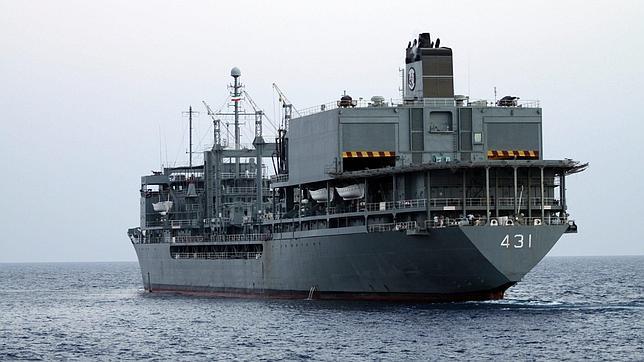
Iranian Supply Ship Kharq

To me the move by Iran appears to be an attempt to provoke Israel into a war. Israel views the move with suspicion and calls it provocative. In that they are right. It is suspicious that the Iranians would send ships to the Mediterranean and one wonders what they are up to. Based in Syria the ships can support pro-Iranian Hezbollah forces in Lebanon and show the Iranian flag in countries that are slipping into the throws of revolution.  As such the two ships are a provocative presence that Israel has a right to be concerned about. At the same time the ships themselves pose no threat to Israel in any way shape or form.

The Frigate Alvand is a Vosper Mark V Frigate commissioned in 1971. It is small (1,540 tons full load) and fast but old and not heavily armed. Alvand and its two sister ships are armed with 4 C-802 Anti-Ship cruise missiles and a 4.5” gun was well as various light anti-aircraft weapons and anti-submarine torpedoes. The electronics suite on Alvand class is not state of the art by any sense and they are of limited combat value despite Iranian claims otherwise.

The 40 year old  Alvand is accompanied by the Supply Ship Kharq which is a 1960s British design which the Iranians commissioned in 1980. It has a light armament and is of negligible combat value. The two ships paid a recent port call at Jeddah Saudi Arabia while conducting operations in the Red Sea.

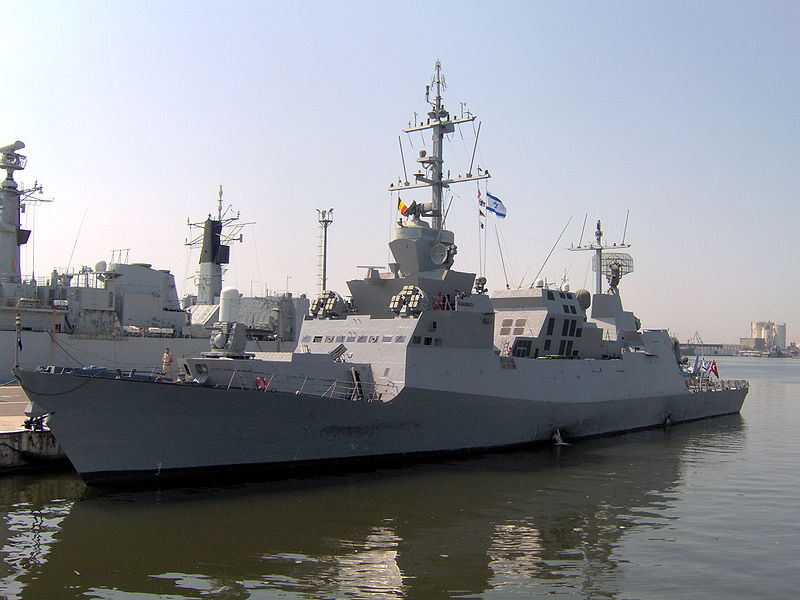
Israeli Navy Corvette Eilat a very modern and deadly SAAR V Class ship

Both the Alvand and the Kharq are totally outclassed by the Israeli Eilat Class (Saar V) Corvettes and have no defense to speak of against Israeli surface units, submarines or air forces.  They are of propaganda value only and if as some suggest they would attempt to escort convoys into Gaza they would probably be sunk by the Israelis before they could get off a shot. The danger of course is that the Iranians are purposely sending the ships to the Mediterranean to provoke an Israeli response and ignite a conflict between the two nations to further destabilize the region.

The Israeli Navy has a first strike capability against Iran itself in its three modern German built Dolphin Class submarines which are believed to be capable of launching nuclear capable cruise missiles and which have been deployed in waters near Iran.

Israel’s Defense Minister Ehud Barak said in an e-mail statement: “Israel is closely following the movements of the Iranian ships and has updated friendly states on the issue. Israel will continue to follow the ships movements.”

While the movement of the two ships through the Suez which is an international waterway is provocative and comes at a time of increasing tensions they pose little threat to Israel. However as part of a broader view taking into account the activities of Hezbollah in Lebanon, instability in Israel’s Arab allies Egypt and Jordan and Iran’s military buildup and nuclear program it is obvious that Iran has a purpose in deploying the two ships to the Mediterranean and that the purpose includes upping the pressure on Israel and perhaps provoking a military response. Whatever the actual purpose we can be sure that Iran’s intentions are not peaceful and the only purpose for the ships to be in the Mediterranean is to provoke a clash with the Israelis or to offer direct support to the actions of Hezbollah and Hamas against the Israelis or in the case of Hezbollah to ensure the complete hegemony of Iran, Syria and Hezbollah in Lebanon.

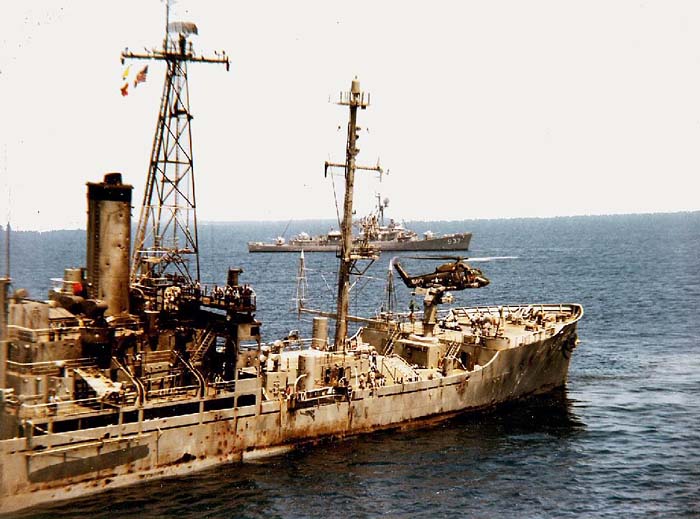
The USS Liberty AGTR-5 after being attacked by Israeli Air and Naval Units on 8 June 1967

Israel’s Navy while the smallest of the Israeli armed forces is quite capable and combat proven over the years. It has shown that it is not afraid to engage in combat with what Israel perceives to be threats, even the United States Navy as it did in the 1967 Six Day War where it launched a devastating prolonged attack on the USS Liberty AGTR-5 killing 34 and wounding 171 of its crew. The Israelis have long contended that the attack was a case of mistaken identity but the preponderance of evidence makes it look like the attack was deliberate.

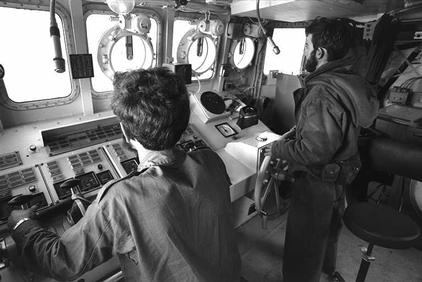
Israeli Sailors during the Battle of Latakia

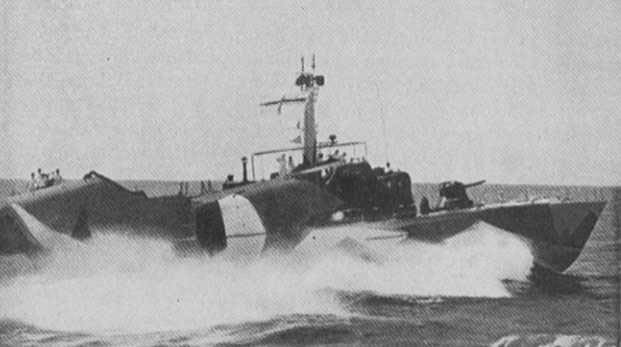
Egyptian Osa Class Missile Boat during 1973 War. The Israeli Navy sank 8 Egyptian and Syrian ships at the Battle of Latakia and Battle of Baltim with no losses to themselves in the first battles between guided missile ships

During the Yom Kippur War of 1973 the Israeli Navy destroyed 5 out of 5 Syrian Komar and Osa Class Missile Boats at the Battle of Latakia and 3 of 4 Egyptian Osa Class Missile Boats at the Battle of Baltim. Should the Iranian ships even look like they are threatening Israel the Israelis will have little patience and the ships will have an incredibly short combat life.  If that happens then expect a regional war to follow as Hezbollah, Iran and possibly Syria respond.

The clip below is from Iran’s English Language Press TV and is an Iranian assessment of their naval capabilities.

http://www.youtube.com/user/PressTVGlobalNews#p/u/13/doiWKWz4ZN8

Peace

Padre Steve+
10 Comments

Filed under Foreign Policy, History, middle east, Military, national security, Navy Ships

Fighting a World Wide Insurgency: The Problem Fighting Revolutionary Terrorists and Insurgents- Part One

Taliban Insurgents

“Warfare is now an interlocking system of actions political, economic, psychological; military that aims at the overthrow of the established authority in a country and its replacement by another regime.  To achieve this end, the aggressor tries to exploit the internal tensions of the country attacked ideological, social, religious, economic, any conflict liable to have a profound influence on the population to be conquered.” Roger Trinquier Modern Warfare

The United State and our allies have been at war with Islamic terrorists as well as nationally based insurgencies for over nine years.  The war that we are fighting is not like the Second World War where we fought a conventional war against enemies that were defined by national, political and geographic boundaries.  That war as well as the First World War and most recently the 1991 Gulf War but rather is a global insurgency in which we are pitted against a number of sometimes disparate groups One of the things that seems to be misunderstood by much of the media as well as the public

Muslim terrorist groups they use some tenants of Islam, mostly from the Wahabi school that emerged on the Arabian Peninsula in the late 1700s to justify what they do. Hezbollah and the Iranian Revolutionary Guard use the Islam taught by the school of the Ayatollah to do the same.

However that being said there are a sizable number of Muslims worldwide that oppose the terrorists and their brands of Islam but still can be offended and driven to the other side by Americans doing just what pastor Jones got started. The radicals take this and use it as propaganda against us.

The fact is that it is all about using propaganda effectively and not giving the terrorists the grist they need to use against us. The terrorist or the insurgent has no need to tell the truth and usually will not and will twist any “truth” to his own end. This is true in every revolutionary war, which is what all of these groups are waging. They are fighting to turn all of Islam and anyone else they can against us. This is the case since the beginning of time and not limited to Muslims.

We as Americans have been pretty lousy at this except when we were the revolutionaries. It is a fact, not just with the Muslims but all revolutionaries that since they are on the weak side of the military equation that they use propaganda, especially what any of our people do to radicalize people on the fence against us. Jones and others played into their hands and by doing so jeopardize the mission and endanger our troops. The fact is that we neither have the resources or people to allow this to become a war against all of Islam. Thus we have to exploit natural divisions and cultural divides in the Moslem world to isolate and neutralize the radicals of Al Qaeda, Hamas, the Taliban, Hezbollah and the Iranian Revolutionary Guard.

It may seem on the surface to be politically correct appeasement but a true strategic purpose is served. The counter-insurgent cannot do what the insurgent can as they will lose the propaganda war and with it the broader war. We are fighting a world-wide revolutionary war against Moslem fundamentalist extremists that want us to make it a war against all of Islam. If that were to be the case we would have to go to a total war footing, ignore our own economy renew the draft and prepare for a war that in the long run we cannot win and will leave us as broken as Germany after WWII.

The problem with Islam as that for the most part much of Islam especially in the Middle East still lives in the 14th century with fancy technology. They did not have the Renaissance, Reformation or the enlightenment thus the appeal of the fundamentalist sects and radical Islam. That makes our job hard and that of Bin Laden easy as their world-view  promotes a black and white understanding of the world which makes recruitment of youthful idealists easy especially when the conflict is framed as against “Crusaders” or “Imperialists” opposed to Islam.

The war that we are engaged in is not conventional and we do not have a good record in recent times of fighting this kind of war. We lost in Vietnam because we ignored this. We won all the battles and lost the war. Despite what some pundits believe this is not like WWII and no new incarnation of George Patton will win it.

As I said we are engaged in a revolutionary war which is different than other types of war. In revolutionary wars the revolutionary no matter what his cause is able to use propaganda to influence opinion, usually of people that they are trying to bring to their side. Our founders were very good in portraying the British as violent and brutal occupiers. We used British excess especially in Boston and in the South against them very well. The Jihadists are promoting a revolutionary cause, that cause being the overthrow of established governments in the Middle East and bringing about a radical and fundamental brand of Islamic rule. This happened in Iran and after 30 years the young people are beginning to revolt against the Ayatollahs. It is also revolutionary because they are actively promoting the overthrow of established states and have a goal of establishing their brand of Islam over the entire world. The use revolutionary techniques and strategies used successfully by other revolutionaries attempting to control the populations where they operate through both terror and by discrediting unpopular or corrupt governments.

One of the problems that we in the United States have in understanding Al Qaida and other Islamic groups that rely on terrorism as their primary means of conducting warfare is the nature of the terrorist himself.  Roger Trinquier who observed and fought against such groups in the 1940s and 1950s wrote one of the fundamental books on this type of warfare.  Trinquier said something that will undoubtedly be taken wrong by some readers of this essay but if one understands the nature of Revolutionary war has been true going back for centuries and is not confined to militant Islamic Fundamentalism.   Trinquier observed that “the terrorist should not be considered an ordinary criminal.  Actually he fights within the framework of his organization, without personal interest, for a cause he considers noble and for a respectable ideal, the same as soldiers in the armies confronting him.”

One can see how this is demonstrated in history in such disparate groups as the Israeli Irgun fighters who used terrorist tactics from 1931 until the founding of the state of Israel in 1948 against the British occupiers, the Irish Republican Army.  This is even part of the American experience in the post Civil War South of the Reconstruction era.  Then many Southern whites organized into guerrilla terrorist units such as the Klan in Tennessee, the Red Shirts in South Carolina, the Knights of the White Camellia in Louisiana, the Young Men’s Democratic Club in Florida in order to attack anyone associated with Reconstruction. Their targets included newly free blacks, carpetbaggers, Scalawags, teachers from the North, Freedmen Bureau officials, northern troops, and Republicans.  If you read their writings or even query their current day descendants you will find that none believed that they were criminals and their actions, while unacceptable to many were justified.  One does not have to agree that the terrorists cause is right to acknowledge that terrorists believe this to be true.  Thus in fighting the terrorist organizations one has to employ a wide variety of tactics to protect the populations targeted by terrorists to include police, limited military involvement, the use of propaganda, and “soft” methods to provide aid to these populations and isolate the terrorists from them.

The current batch of Jihadists are actually fairly disparate and not necessarily allies as we found out in Iraq where Al Qaeda and the foreign fighters turned the population of Al Anbar Province against them and brought that Sunni population to our side. They also have sometimes conflicting goals or limit their cause to local areas. The Sunni and the Shi’a have a hard time working together so while this is a global revolution it is not monolithic. Thus if we are smart we can exploit natural divisions in these groups. To do so we have to play smart in how we fight them recognizing that the “soft” approach often is better as the French found out too late in Vietnam but did well with in Algeria. See books by David Galula “Counterinsurgency in Algeria 1956-1954” “Counterinsurgency Warfare”, Roger Trinquier’s “Modern Warfare” as well as the book by Alister Horne “A Savage War of Peace” all are excellent reads. Bernard Fall’s book “Street Without Joy” is a good study of how this happened in French Indochina. The US Counterinsurgency Manual is available online or in bookstores as is “Learning to Eat Soup with a Knife” by John Nagl, a major writer of US Counterinsurgency doctrine.

US Advisors with Afghan Army Officers

In a world-wide insurgency even actions which seem logical to Americans at home can be detrimental to US Forces and political goals in Afghanistan, Pakistan, and Iraq and throughout the Muslim world. I’m not a fan of the Mosque near the World Trade Center even though it is the equivalent of 6 normal city blocks away and not visible from the site. Many Americans if not an outright majority oppose this building project yet the builders don’t seem to understand the raw wounds that the project has opened for many Americans. I’m sure for them that much of it is a business, they are developers in New York City and the land was available. Yet the project can quite rightly be seen as insensitive because of what it means to the victims.

At the same time politicians and protesters by naming it the “Ground Zero Mosque” has raised its propaganda value exponentially, that is why Hamas and Hezbollah have also raised the ante in their talk about it. Thus what was an annoyance and hurtful to the victims has become a propaganda victory for the terrorists. In a sense we have let our collective outrage play into the terrorist’s hands. When he pastor of a small church in Florida threatened to burn a large number of copies of the Koran he helped ignite a firestorm of protest in many parts of the Islamic world especially in the epicenter of our current struggle in Afghanistan and neighboring Pakistan.

We are at war with the warlike highly militant strains of Islam and trying to keep the more Western leaning peaceful variants on the sidelines or enlist them to our side. This is a hard path for our leaders to walk as President Bush found out and President Obama is finding out is that most Americans don’t see it that way.  To many Americans all of Islam is the enemy and nothing can change that and the heated passion of our population often plays into the hands of our enemies.  Thus both Presidents’ comments about Islam have usually fallen on deaf ears and both have been excoriated for straddling this fence.

Anyway as you gather I have spent a considerable amount of time studying this type of warfare. I admit that this is pretty unusual for a chaplain, but I also have a Masters degree in Military History as well as the Marine Corps Command and Staff College. When I was in Iraq I knew more than many Marine and Army officers about fighting this type of war. Kind of weird I know but what can I say?

One of the most famous and successful practitioners of Counterinsurgency Warfare was French Colonel David Galula.  Galula in a sense is the “voice crying in the wilderness” of counterinsurgency doctrine and his methods have been used with some measure of success during the “Surge” in Iraq and the “Anbar Awakening” which turned the tide of the Iraqi insurgency.  Galula commented about terrorist tactics, tactics that have not changed in either Iraq or Afghanistan:

“The rebels realized that they could achieve the greatest psychological effect on the French and on world opinion at the cheapest price by stepping up terrorism in the main cities, notably in Algiers, which served as headquarters to most French and foreign correspondents and thus acted as a natural amplifier. A grenade or a bomb in a café there would produce far more noise than an obscure ambush against French soldiers in the Ouarsenis Mountains.” Galula “Counterinsurgency in Algeria”

One of the most frustrating aspects for military and police personnel fighting insurgencies that employ terrorist tactics is that quite often superior forces cannot finish off the insurgents. Galula provides an answer to this question.

“Our forces were vastly superior to the rebels. Then why couldn’t we finish with them quickly? Because they managed to mobilize the population through terror and persuasion . . . It was therefore imperative that we isolate the rebels from the population and that we gain the support of the population.  This implied that under no circumstances could we afford to antagonize the population even if we had to take risks for ourselves in sparing it.”

This is a lesson that we have not always learned as incidents such as the Abu Ghraib torture and most recently a series of targeted killings of Afghan civilians by a squad of Army Soldiers in Afghanistan in which they allegedly planned the killings in advance and kept body parts of their victims.  Unfortunately atrocities like this as was demonstrated at Mei Lai in Vietnam do little to the enemy and everything to turn the populations that we are trying to protect and world opinion against us. It also provides grist for the terrorist propaganda purposes and aids him in recruiting more insurgents to his cause.

Galula recognized the quandary that commanders of police and military units involved in counterinsurgency operations face when dealing with populations where terrorists operate. Galula was a realist about this and noted “If we distinguish between people and rebels, then we have a chance. One cannot catch a fly with vinegar. My rules are this: outwardly treat every civilian as a friend; inwardly you must consider him as a rebel ally until you have positive proof to the contrary.” This may seem contradictory but the concept was used by Ronald Reagan during the Cold War using the term “trust but verify” in relationship to the Soviet Union and arms control.

David Kilcullen an Australian Army Lieutenant Colonel and counterinsurgency expert and advisor to General David Petreus noted

Colonel Dennis Drew writing in 1988 understood the linkage of all parts of insurgency and how well an insurgency represents the essence of the thought of Prussian theorist Carl von Clausewitz: “Although theorists consider insurgent warfare to be anti-Clausewitzian, such warfare is the very embodiment of the Prussian master’s most famous dictum. Insurgency represents the total integration of political and military factors, but with political factors always in complete domination.” (INSURGENCY AND COUNTERINSURGENCY American Military Dilemmas and Doctrinal Proposals- Air University Press Maxwell Air Force Base, Alabama 1988)

Thus attempting to fight an insurgency and terrorist groups thinking that one can defeat them in the style of world War Two, as is so often espoused by pundits and amateur military theorists that crowd the airwaves and cyber space is foolish and only leads to the defeat of the counter-insurgent and the loss of the population targeted by the insurgent. The wars in Afghanistan and Iraq are not conventional wars and the political outweighs the military in every respect.  As Drew noted:

“Although the military aspect of the struggle may ebb and flow, the source of insurgent strength–a covert political infrastructure–remains constant. This infrastructure, the bitter fruit resulting from the perceived political and economic inequities sown much earlier, is the most important ingredient in the insurgent recipe for success. The political infrastructure performs at least six major functions vital to the survival, growth, and eventual success of the insurgency: (1) intelligence gathering and transmission; (2) provision of supplies and financial resources; (13) recruitment; (4) political expansion and penetration; (5) sabotage, terrorism, and intimidation; and (6) establishment of a shadow government.”

This is exactly what has happened in Afghanistan and why we have such difficulty in fighting the insurgency.

One of the most common tactics that the United States has attempted in attacking the insurgents is the strategy of decapitation. In this the U.S. has attempted to kill the leaders at the top echelons of the insurgency with limited success. Even when we kill off a senior Al Qaida or Taliban leader others rapidly take their place with little affect in their operations against us. Galula recognized the fallacy of this approach in Algeria when the French government succeeded in capturing five top leaders of the Algerian rebellion. “Then, five top leaders of the rebellion, including Ben Bella, had been neatly caught during a flight from Rabat to Tunis. Their capture, I admit, had little effect on the direction of the rebellion, because the movement was too loosely organized to crumble under such a blow.” The lesson here is that should we ever succeed in capturing or killing Osama Bin Laden or Mullah Omar that this will not lead to victory unless we are able to protect the population of Afghanistan.

Protecting the population Iraqi Police and Civilians in Ramadi

To do this the population must come to our side because they know that we will stay the course and that we can be counted on to help them.  This cannot just be the military aspect of protecting them against the terrorists as well as economic and political reforms that is consistent with their traditional way of life which is not necessarily consistent with Western political and social traditions or practices. In fact the difficulty for the United States and NATO in Afghanistan is the political struggle on the home front where as Drew states:

“American military dilemma concerns time, public support, and image. Time is the ally of the insurgent; the longer an insurgent survives, the stronger its chances of growing. Meanwhile, as time drags on, the American military position is weakened by declining support, impatience, and war weariness at home, particularly if there is no perceived progress in the struggle. Maintaining public support is clearly a responsibility of the political side of the equation and involves factors far beyond the battlefield–although military progress is a key ingredient. The connection between the duration of the struggle and public support is the image of the insurgency presented to the American body politic.”

To be continued….

Peace

Padre Steve+
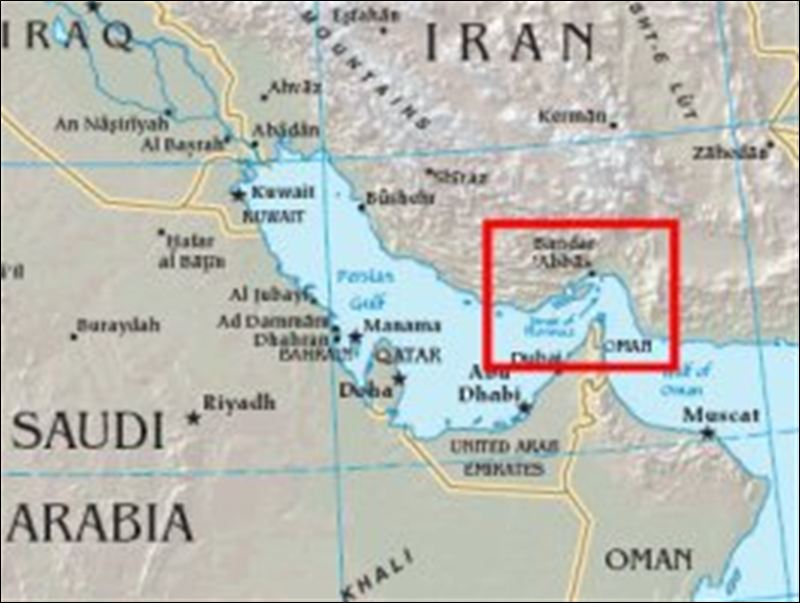
1 Comment

Filed under counterinsurency in afghanistan, History, iraq,afghanistan, Military, national security, Political Commentary