Tag Archives: iraq

Faith’s Journey: A Progressive Christian Navy Chaplain Looks at the Journey to Wholeness

400236_10151328400862059_541742014_n

June 27th 2013: After the events of this week including the Supreme Court decision declaring the Defense of Marriage Act unconstitutional I decided to re-publish an article that was one of the most important that I ever published. Not so much because of the what I think was so earth shattering regarding the content but because of what happened after its publication. At the point in time that I wrote it I was pushing the envelope with my former denomination, but figured that in light of all the controversies and schisms in that church at the time that whatever I wrote would not result in any problems. But I was wrong. I received a call the next day from my bishop telling me that I needed to find a new home because I was “too liberal.”

It was actually quite fascinating, I was able to gain a new church home which was much more progressive, welcoming and catholic, being of the Old Catholic tradition. For me that phone call was just a few months later deposed for attempting to create yet another schism in the church. I think it is even more interesting because some of my friends still in that church think that he used this article as a reason to get rid of me in order to keep me from exposing his scheme. I don’t know if that it the case or not, but my friends believe it to be a distinct possibility. That being said one of my long time priest friends revealed his plot to the other bishops and the bishop who forced me  was deposed. Irony is fascinating. Since that time my former church is regaining its footing and doing better and for my friends in it I am glad for even if I have differences in theology, faith or beliefs with people who I consider to be friends, they are still friends and I wish them well.  

So anyway, for those that are fairly new followers on this site here is the article that in a sense served as a declaration of independence and station on the road to wholeness and integrity. 

Peace, Padre Steve+

Faith Journeys: Why I am Still a Christian (Originally published 22 September 2010)

There are many times that I totally empathize with author Anne Rice in saying that she has left Christianity yet still has faith in Christ.  For Rice it was the lack of love shown by the institutional church for people that are marginalized and treated as if they were unredeemable by often well meaning Christians.

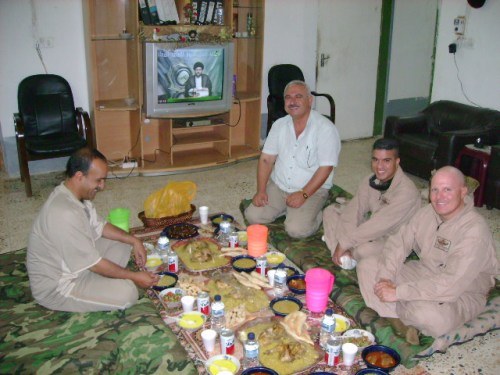
I know what it feels like to be marginalized after I came back from Iraq because many of my Christian friends seemed, at least in my view to be tied to the absolute hogwash that spews from talk radio hosts and allegedly “Christian” politicians.  I remember having some Christians question my patriotism and even my faith because I disagreed with them regarding certain aspects of the war, despite the fact that I had been on the ground in harm’s way serving with our advisors and Iraqis in Al Anbar province.  The fact that not a clergyman, civilian or military, took time to care for me when I was in a major PTSD meltdown and crisis of faith before I went to Naval Medical Center Portsmouth didn’t seem to matter because a political agenda was given primacy over the simple truths and hard demands of the Gospel.

Yesterday I wrote about Chaplains that experience a crisis of faith after coming home from a combat deployment.  For me there is nothing more symbolic of the lack of soul left in many Christians and Christian Churches in how they treat those that have served faithfully. Those Chaplains that have served  God, Church and Country and come back spiritually wondering what happened, not knowing what to believe and feeling abandoned by God and cast off by the Church and the military simply because we have a hard time with the so called “orthodoxy” of some Christians.

I went through a period after Iraq where feeling abandoned and isolated from those of a like faith that I was for all practical purposes an agnostic.  That was a really difficult time in my life and if you think that anything sucks try to be a Chaplain when you no longer know if God exists and the only person asking how you are doing with “the Big Guy” is your therapist. I can say without a doubt that it sucks like a Hoover and I know that I am not alone in my feelings.  I have met others whose experience is similar to mine but those that are struggling right now, caught between our faith and the feeling of being abandoned by God and his people because our experience of seeing the human suffering caused by war has shaken us.

Let’s talk about spiritual despair. Did you know that in the past couple of years that two Army Chaplains and one Navy Chaplain have committed suicide? These were men of faith who had served in peace and war at least one that had served at the Battle of Hue City as a Marine before becoming a Priest and Chaplain.  Another Army Chaplain that had served in Iraq as a minister of a conservative Charismatic and Evangelical Christian denomination became a Wiccan and was excoriated by Christians.  I don’t know his faith journey but I have to believe that part was his experience in Iraq and experience on his return. I don’t know about you but those are all signs of spiritual despair and feeling cut off from their faith community and even God, his or her self.

I am still a Christian. I believe in the God of Scripture, the Creeds and the Councils. At the same time that belief is not as rigid as it once was. I used to consider those that didn’t believe like I did in relation to Scripture, the Creeds and Councils not to be Christians.  I cannot say that now. I am much more to have the Grace and Mercy of God be my default position and let other things fall out where they may.  My practice of my faith has changed. When I came back from Iraq I attempted, as it were without success to keep my faith structure and practice the same as it was before I deployed to Iraq.  Within six months of Iraq I could no longer pray the Daily Office with any kind of faithfulness and by Lent 2009 give up the practice for Lent hoping to recover some authenticity to my faith. The authenticity has returned and after about a hear and a half I am seeking a way to reincorporate what had been a very important part of my daily practice of faith into my life without feeling like I am a phony in doing so.

I went through a period of absolute spiritual despair even leaving a Christmas Eve Mass in 2008 to walk home in the dark, alone, looking at the sky and asking God if he even existed.  A year later after my life had completely fallen apart I experienced what I call my “Christmas miracle” where I was called to our Emergency Room to provide the “last rites” to a retired Navy doctor and active Episcopalian when I was the duty Chaplain.  As I prayed the last prayer of commendation and removed my oil covered fingers from the man’s forehead he breathed his last. His wife told me that he was waiting to be anointed before he died.  The young doctor, a Psychology Resident doing his ER rotation who called me to the ER would die a couple of months later of natural causes in his living room not long after we had taken the “fat boy” program PT test together.

From that moment the paradigm shifted.  Faith began to return and I began to experience the presence of God again, not is the same was as before Iraq but one that was more relational, grace filled and informal.  I will likely begin praying the Daily Office again in the near future but I will approach it from a different point of view.  I will no longer use it simply to fulfill my priestly vows and obligations but rather as a way to re-experience and if need be re-imagine God.  Now before the heresy hunters think that I am re-imagining God is some unbiblical manner they are wrong. I want to re-imagine God as he has been revealed to his people both in Scripture, Tradition and in the life of his, or her people today.

moralssquad

How have I changed? I believe again. I am no longer an agnostic hoping and praying that God just might be there. My faith has become much more deeply rooted and grounded in the “Crucified God” and my faith in the “theology of the Cross.”  It is no longer connected to my politics and I refute any political ideology that attempts to use the Christian faith and the faith of well meaning Christians for purposes that Jesus himself would have condemned.  I don’t think Jesus was a big fan of his followers attempting to be the favorites of any political party or ideological system. In fact if I recall he really had pretty harsh words for his fellow Jews who were all wrapped around the axels with that kind of stuff. Jesus seems to befriend and hang around with those that are not connected to the religious, political or economic elites. In fact he seemed to reserve his harshest words for such people.  Jesus seemed to have a pretty good relationship with those marginalized and rejected by the religious folks of his day. He welcome sinners and tax collectors to his table and praised the faith of gentile Roman officers and stopped the super-religious folks from stoning an adulterous woman.

This is the Jesus that I follow and the Jesus that I believe is present in body, soul and spirit in the Eucharist.  I believe like Hans Kung and others that this table belongs to the baptized community of faith and not to an exclusive Priestly class who dictate who can come to the table.  It is not the exclusive property of any denomination or Church organization especially those that most loudly state this to be the case.

Now if saying this makes me a heretic then a heretic I will be. It is better to be a heretic in the eyes of Pharisees than to be one that denies justice to the persecuted people of God.  I guess that makes this moderate a liberal and to some an unbeliever.  Yet I believe in the God of Abraham, Isaac and Jacob. I believe in the Jesus that defied religious systems to offer the grace of God to the people that those systems rejected and the Jesus that was far more critical of “believers’ than those rejected as unbelievers.  I guess that is why I can accept women as ministers or even Priests, accept homosexuals as Christian brothers and sisters, and see Christ and the grace and love of God in people that are not “Christians” even the Muslims in Iraq that treated me with respect and even if they had an “Aryan” view of Jesus still showed a greater reverence for Jesus and the Blessed Virgin Mary than many that claim Jesus for themselves.

Why? You ask. Very simply I once was lost but now am found.  I thought that I knew it all before, now I know that I don’t know it all and that God is the God of surprises, just look in Scripture.  I doubt at times. I know that there are many answers that elude me and I cannot answer just by citing or using Scripture out of its historic, cultural and linguistic context.  I believe in the God that did not reject me when I didn’t know if he even existed.

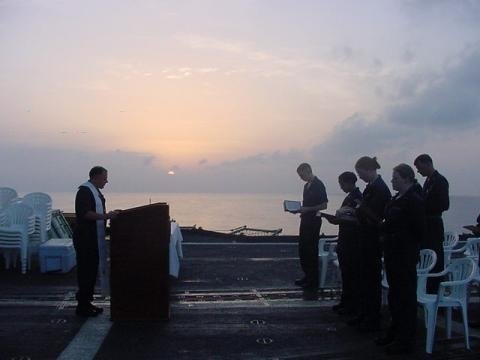
Why am I still a Christian when I have so many problems with how many Christians practice the faith? Because I believe and not because will not I tow anyone’s party line be they liberals or conservatives. I believe in spite of my unbelief in a fellowship of those who as a result of war and trauma have trouble believing those that won’t race the cold realities of this life. I believe because many times it was those marginalized by others, especially those marginalized by the “faithful” showed me the love of God when the “faithful” for pure or impure motives, or even because they didn’t know what to do allowed me to sink into despair and isolation. So in the words of my favorite heretic Martin Luther I say “Here I stand, I can do no other. So help me God. Amen.”

Peace,

Padre Steve+
1 Comment

Filed under christian life, faith, Pastoral Care, philosophy, Religion

Looking Back at 30 Years of Commissioned Service

320578_10150433535627059_671902058_10348652_2128805973_n

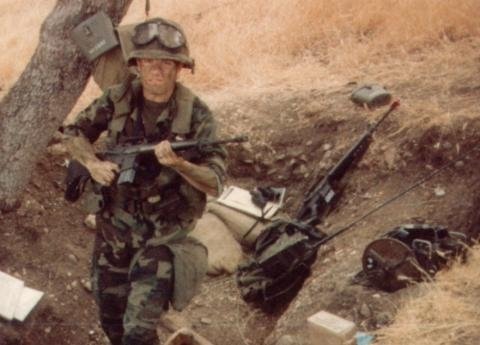
I was going to write about the situation in Syria tonight but that will wait until tomorrow because June 19th is the 30th anniversary of my commissioning as a 2nd Lieutenant in the US Army. That was a long time ago. I had enlisted in the California Army National Guard in August of 1981 at the same time that I entered the Army ROTC program at UCLA.

295_27076757058_7361_n-1

California Army National Guard 1982

Like most of my life I can admit that my military career, 17 1/2 years in the Army and another 14 1/2 in the Navy has been to quote Jerry Garcia “a long strange trip.” It has been eventful and it is not over. One interesting thing is because I spent about 10 years of my career in the Army National Guard and Army Reserve in a drill status I still am able to serve, probably until I reach age 58 or maybe even 60. If so my career will span early 40 years. Judy tells me that she doesn’t think I will retire until I am 60 which would be just under another 7 years.  That being said I can still crush the Navy Physical Fitness Test. I am still in the game.

295_27076742058_6685_n-1

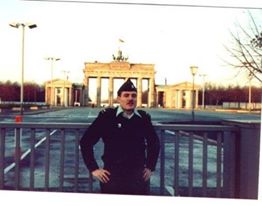
Berlin Wall (East Berlin) 1986

It is interesting what I have seen and where I have served. My career began back during the early days of the Reagan build up during the Cold War, not long after the Iranian Hostage Crisis, which was the catalyst for me volunteering even though the truth of the matter was that I wanted to serve in the military since I was a child. I was a Navy brat, my dad was a Chief Petty Officer and I loved that life.

603858_10151664883067059_2000407407_n

Germany 1984

I wanted to join the Navy out of high school but my parents convinced me to try college first, which I did, meeting my wife Judy my freshman year at San Joaquin Delta College in Stockton California. After that it was California State University at Northridge where I began the serious exploration of commissioning programs. I was actually accepted into the Air Force Program but turned it down, Judy told me that she wouldn’t marry me if I joined the Navy and the Navy ROTC program informed me that I would have to change my major to hard science, math or engineering to enter the ROTC program. So I asked who I could work with and they pointed me down the hall to the Army.

1006172_10151735951292059_1275042886_n-1

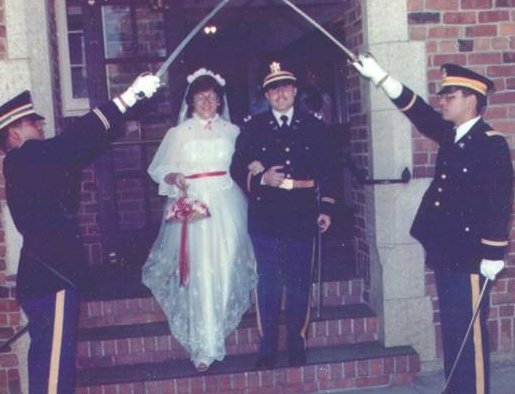
Marriage to Judy 25 June 1983

That was the beginning. A long time ago in a galaxy far far away. When I was commissioned in 1983 this college history major was commissioned into the Medical Service Corps, the administrative and operational side of the Army Medical Department. That made a lot of sense, or maybe it didn’t but it did save me from a career as an Ordinance Corps Maintenance Officer or Adjutant General’s Officer Corps paper pusher, both tasks that the Army trained and assigned me to do as a Medical Service Corps officer.

652_55115567058_8786_n

Company Commander 557th Medical Company (Ambulance) 1985

As a Medical Service Corps officer I attended my Medical Officer Basic Course, the Junior Officer Maintenance Corps, the NBC Defense Officer Corps, the Air Force Air Load Planner Course and the Military Personnel Officer course.

1929_55558982058_3465_n

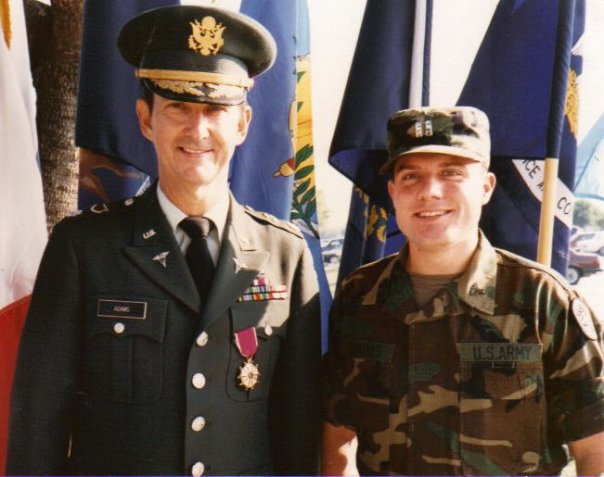
Academy of Health Sciences 1987 with LTC Ike Adams who was largely responsible for redirecting my career and calling to be a Chaplain

I served as a platoon leader, company XO, company commander and Group level staff officer in Cold Wr Germany. I then served as the Brigade Adjutant for the Academy Brigade of the Academy of Health Sciences, where I also helped draft the personnel instruction regarding personnel infected with the HIV virus.

652_55560577058_1525_n

Army Chaplain School August 1990 with LTC Rich Whaley and CPT Bill Blacky

I left active duty to attend seminary in 1988 and joined the texas Army National Guard, initially as an Armor Corps officer serving as the Adjutant for an Armored battalion, until the State Chaplain found out and demanded that I be transferred to the Chaplain Candidate Program which I entered in 1990. I was at the Chaplain Officer Basic Course in August 1999 when Saddam Hussein invaded Kuwait and the war ended just before our unit was to be mobilized for service. Technically Chaplain candidates can’t be mobilized, but one of the full time Guard personnel technician Warrant Officers in Austin kept me on the rolls for mobilization purposes as a Medical Service officer. But like I said the war ended, I graduated from seminary and was ordained and became a chaplain in 1992. I completed the Chaplain Officer Advanced Course and after completing my Pastoral Care Residency at Parkland Memorial Hospital in 1994 took a chaplain job in Huntington West Virginia where I transferred to the Virginia Army National Guard and once promoted to Major transferred to a local Army Reserve unit.

652_55560597058_3348_n

Exchange Officer with German Army at Panzer School 

That was a turn of events that got me mobilized to support the Bosnia mission in 1996 and allowed me to serve supporting a number of units and military communities in Germany. Upon my return to the states and no civilian employment I served as the final Federal Chaplain at fort Indiantown Gap Pennsylvania. When that assignment ended I went back to West Virginia.

652_55560592058_2987_n

295_27076797058_9175_n

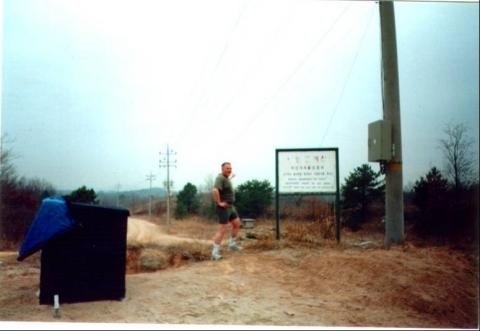
Mt Fuji Japan and Panmunjom Korea 2001

Just before Christmas 1998 I got a call from my bishop telling me that the Navy was willing to consider me for active duty. Remembering Judy’s admonition that she would not marry me if I joined the Navy I did it without asking her. Not a smart thing, she was quite pissed because had I bothered to consult her she probably would have said yes, but the way I did it devalued her. Likewise she was sort of looking forward to the time I hit 20 years in the reserves so she wouldn’t have to lose me all the time to the military.

295_27076837058_752_n

Korea DMZ PT Session

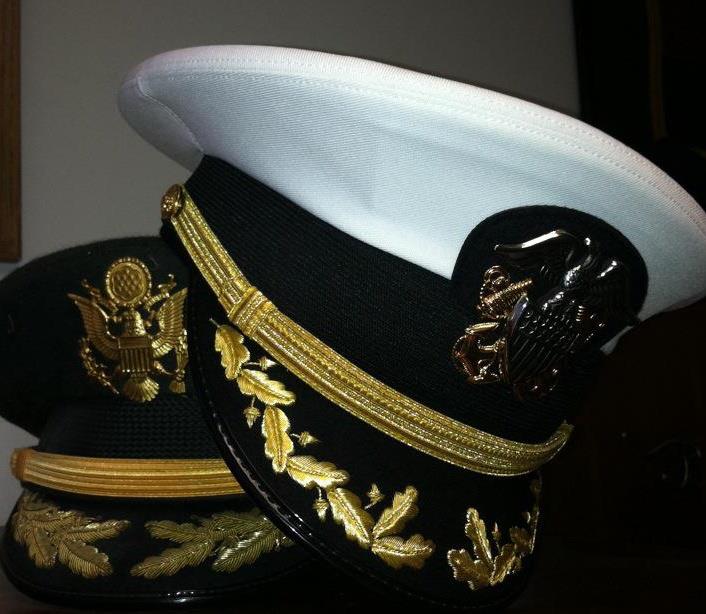
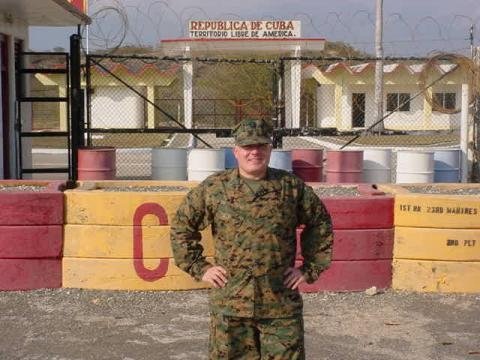
Long story short. The Navy took me and I took a reduction in rank to come on active duty. One day I was a Major in the Army Reserve and the next a Navy Lieutenant. I was given a choice of assignments. I wanted to serve on a ship. I was given the choice of Marines or Marines. So I chose Marines and after completing the Navy Chaplain Office Basic course I reported to the Second Marine Division where I served as the “relief pitcher” for the division Chaplain, whenever someone got in trouble or was transferred without a relief in place I went in like a baseball relief pitcher. I deployed with 3rd Battalion 8th Marines to Okinawa, Japan and Korea. I was at Camp LeJeune on 9-11-2001 and in December 2001 reported to the USS Hue City CG-66 in Mayport Florida deploying shortly thereafter to support Operation Enduring Freedom.

11787_4053256768208_1427277720_n

295_27076892058_2637_n-1

555306_316970661755579_1118848704_n

295_27076832058_495_n

USS Hue City Operation Enduring Freedom

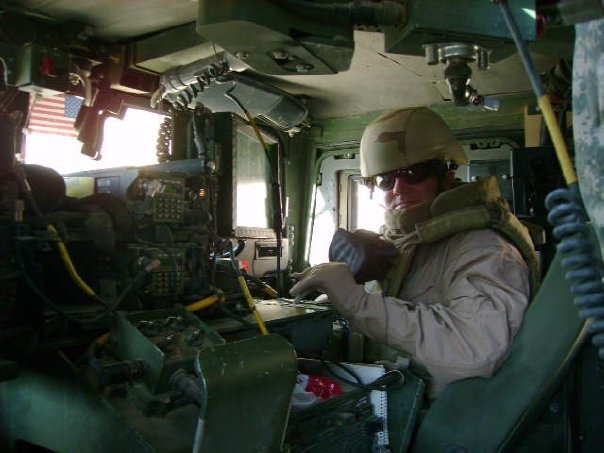
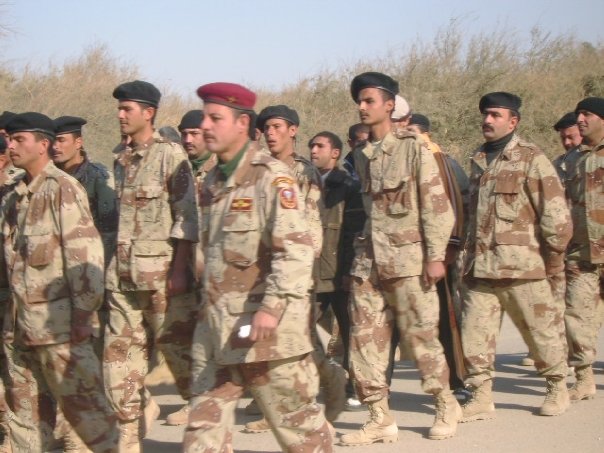
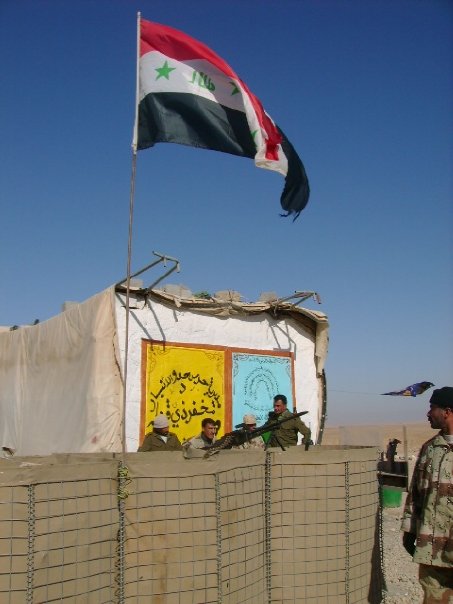
In October 2003 I reported to the Marine Security Force Battalion (now Regiment) and travelled the world in support of those Marines, spending between 1-3 weeks a month on the road. That was an amazing assignment because it gave me a global perspective of the Navy Marine Corps mission traveling frequently to the Middle East, Europe, Asia, Guantanamo Bay Cuba and various locations in the United States. While in that billet I completed the Marine Corps Command and Staff College and my Fleet Marine Force Officer qualification and was promoted to Lieutenant Commander. After that I went to EOD Group 2 and from there was sent to Iraq as an Individual Augment to support advisors to the Iraqi 1st and 7th Divisions, 2nd Border Brigade, Highway Patrol and Police in Al Anbar Province working under the authority of the Iraq Assistance Group and II Marine Expeditionary Force Forward.

943043_10151694525692059_632653331_n

185615_1857288397412_3950321_n

25508_360207007058_7846512_n

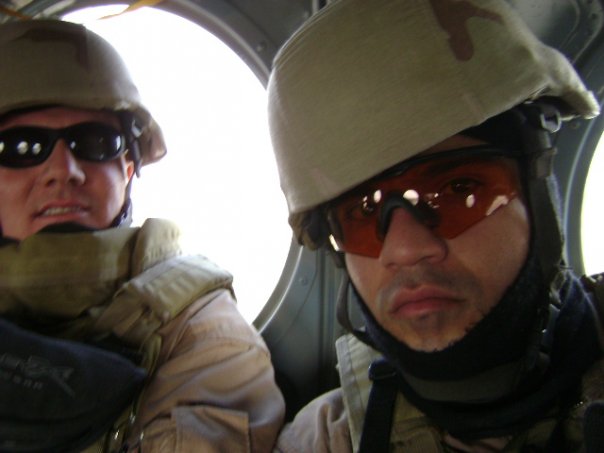
Iraq 2007-2008

I came back from Iraq in pretty bad shape but consider it the pinnacle of my operational ministry as a Chaplain that I would not trade for anything. Since I have written much about it I will not say more about it in this article. From EOD I was transferred to Naval Medical Center Portsmouth and after being selected for Commander in 2010 was transferred to Naval Hospital Camp LeJeune as the command chaplain. This tour was as a geographic bachelor and every couple of weeks I drove back to Virginia.

Now in a couple of months I will be reporting to be the Ethics Faculty and Chaplain at the Joint Forces Staff College in Norfolk.

652_55115572058_9345_n

1905_50393137058_7454_n

2097_58015302058_3658_n

295_26911967058_7489_n

652_55115587058_50_n

295_27076772058_8004_n

1905_50393107058_5924_n

295_27076822058_54_n

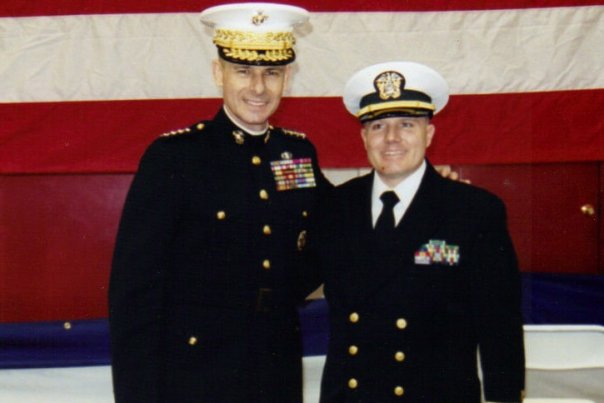
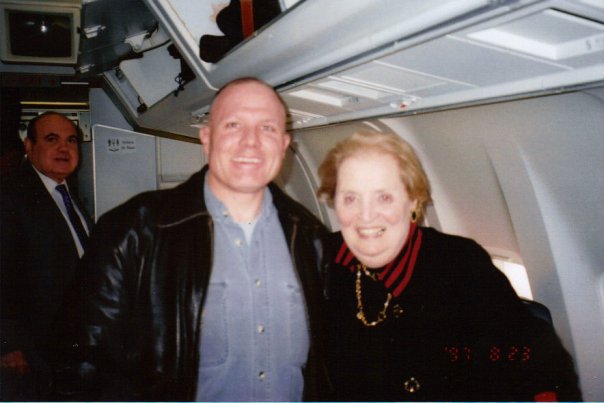
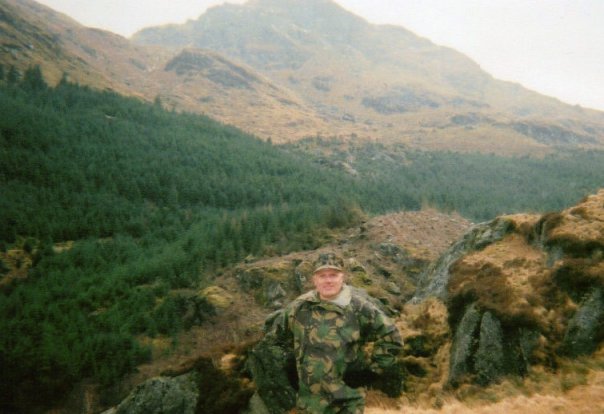
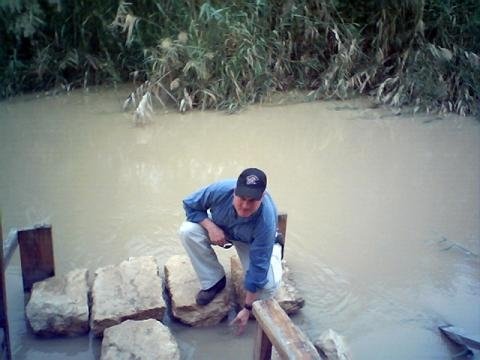
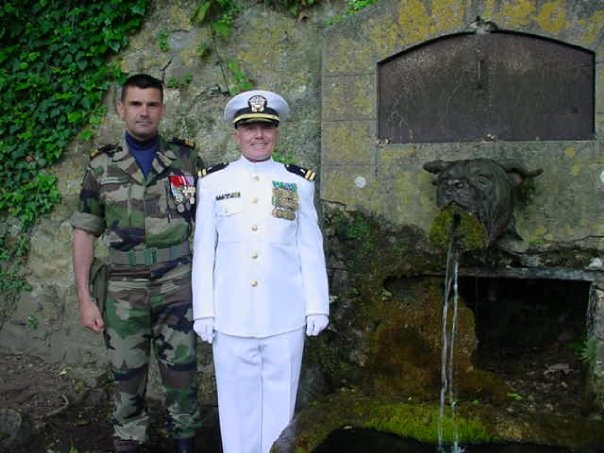
Various scenes top to bottom with General Peter Pace, teaching Marines at Normandy, with Secretary of State Madeline Albright 2005 Spain, with German office in Jordan 2007, Scottish Highlands with US Marines and Royal Marine Commandos 2005, Jordan River 2007, Belleau Wood France 2004, Guantanamo Bay Cuba 2003 or 2004

There have been highs and lows in my career and a few times that I thought that I wasn’t going to survive. But of all the things that I value in serving this country are the people that I have served with, Army, Navy, Marines and others including allied officers. I have met a lot of wonderful people, quite a few of whom I still stay in contact with despite the distance and years.

1905_50393027058_1870_n

295_27076762058_7573_n-1

295_27076892058_2637_n-1

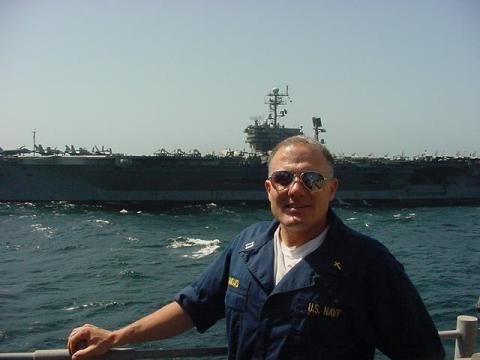
With FAST Marines in Bahrain 2004 or 2005, Easter Sunday 2002 aboard USS Hue City and aboard USS Hue City with USS John F Kennedy CV-67 in background.

While I value my service in the Army, because it is a big part of my life I echo President John F Kennedy who said “I can imagine no more rewarding a career. And any man who may be asked in this century what he did to make his life worthwhile, I think can respond with a good deal of pride and satisfaction: ‘I served in the United States Navy.'”

Until tomorrow,

Peace

Padre Steve+
2 Comments

Filed under Military

Padre Steve’s 2013 Down and Dirty Primer on the Muddle East

Free Syrian Army soldiers in Idlib

“When you are up to your arse in alligators it is hard to remember that your mission is to drain the swamp.” Old British Colonial Saying

Note: This is an update to my 2011 Primer on the Muddle East

During the dark days of World War Two when Field Marshal Erwin Rommel was making fools of a series of British commanders in North Africa people including senior British military and government leaders sometimes referred to the theater of operations as “the Muddle East.” Some things never seem to change. The Muddle East today is quite frankly speaking in a real muddled state if there ever was one with world leaders and regional leaders muddling about as if they were the New York Mets.

A large part of the muddle goes back to the fall of the Ottoman Empire at the close of the First World War when the victorious Allied Powers redrew the map of the Middle East and made alliances with various local tribal sheiks who many times were crowned king over other tribes who didn’t necessarily want them as king. This along with heavy handed European military actions such as the British using poison gas dropped from aircraft in Iraq and a real lack of effort to better the lives of the newly “liberated” peoples of the region was just the start. Add to the cesspool a bunch of oil presided over by major oil companies, the anti-colonial movements that flourished in the years after World War Two when the French, British and Italians had to divest themselves of their Middle Eastern holdings. The French had to fight a real war in Algeria but finally withdrew leaving Algeria’s new rulers to goof up the country and oppress their people for decades to come.  In the coming years many of these newly independent nations found that life still sucked so in a number of countries military officers overthrew the despised monarchs promising reforms but oppressing their people while blaming all their problems on the Israelis.  They got their asses kicked by the Israelis in a series of wars which did a number of things that made the Middle East Muddle even worse.

First it ensured that Palestinian Arabs ended up under Israeli rule and were used with great aplomb by the Middle Eastern despots to prop up support for their regimes while doing nothing to help the Palestinians other than to put them in camps in Lebanon.  Even when the Egyptians made a peace deal with Israel most of the Arab World ostracized them.  Then in 1979 the Shah of Iran was sent packing by a bunch of Mullahs and in 1981 Saddam Hussein’s Iraq attacked Iran in one of the bloodier wars of the late 20th Century which finally ended in 1988. Of course the United States was pissed at the Mullahs so Saddam became our favorite Arab despot for a while.  Add to the mix the Soviet Union and the United States arming their favorite Arab dictators who were given carte blanche to continue oppressing their people so long as it didn’t interfere with their support of either party or the oil supply. Finally the Soviets went Tango Uniform in 1989 not long after being forced out of Afghanistan by the U.S. supplied, Pakistani supported and Saudi Arabian fundamentalist financed Mujahideen.

With the Soviets “Tango Uniform” and the Warsaw Pact nations trying to get into NATO the United States was now the uncontested Numero Uno country in the world Saddam presumed upon his late supporters and invaded Kuwait, albeit after thinking that the U.S. Ambassador to Iraq said that we wouldn’t mind.

Well he was wrong we did mind and got a lot of countries from NATO and including a bunch of Arab countries like Egypt, Syria and Saudi Arabia to get on board on a mission to get Saddam’s troops out of Kuwait. It was a kick ass mission and since the United Nations didn’t authorize removing Saddam and because President George H.W. Bush was smart enough to not to drive on Baghdad to kick him out preferring the despot we knew to a quagmire Saddam was left in power.

So we stationed ground and air forces around the Gulf to keep Saddam and Iran in check and even put them in Saudi Arabia which a large number of radicals such as Osama Bin Laden equated to letting the Devil play in Allah’s Holy Sandbox.  So Osama went and set up a base with the Medieval bunch of Pashtun known as the Taliban in Afghanistan stirred up a bunch of shit killing Americans and blowing up stuff including the World Trade Center in 1993, the Khobar Towers barracks complex in 1996, the USS Cole in 2000 and then 2001 another attack on the World Trade Center which took down the towers with hijacked aircraft and also struck the Pentagon triggered an American response against Bin Laden and his Taliban hosts.  The United States then invaded in Iraq in 2003 and succeeded in taking out Saddam but also succeeded in alienating a good many Iraqis who greeted us with open arms because we goofed up the occupation and pissed a lot of them off by dissolving the Army, Police and Civil Service and letting thugs and opportunists take over. Unfortunately since we didn’t go in with enough troops to secure all the Iraqi bases, their weapons depots and actually take control of surrendering Iraqi units these newly unemployed and dishonored people launched an insurgency bolstered by Al Qaeda and other foreign fighters even as Sunni and Shi’a Moslems began to settle scores with each other. Insurgency and civil war, two great tastes that go great together, but what the heck right?

Of course it took years to get control of the situation on the ground and thankfully the United States forces in Iraq were helped when the Sunni Moslems in Al Anbar Province realized that these foreign fighters were a worse enemy than the United States and switched sides. This turned the tables in Iraq and the insurgency was brought under control and an elected government managed to start to get their stuff together and allow us to begin withdrawing from Iraq. Of course the focus on Iraq gave the Taliban a chance to regroup as the Afghani Government proved itself corrupt, incompetent and not to give a shit about the Afghani people. So the Taliban who had been hated made a comeback and made our lives much harder so that now almost 10 years into the fight we are having a really hard time.  Well enough about us there was plenty more going on in the Muddle East besides the Iraq and Afghanistan wars.

Let’s see….there was the law of unintended consequences in that by taking Saddam Down and weakening Iraq we took away Iran’s natural enemy and the key to the balance of power in the region. Iran was strengthened and began a nuclear program that everyone with half a brain knows in intended for military use and expanded its influence in Lebanon where the Iranian backed Hezbollah took power.  Now Hezbollah which actually has an experienced military force and probably owns 40,000 or so rockets and missiles a good number of which can hit deep in Israel seems to be ready for war especially because they fought the Israelis to a stalemate in 2008, the first time an Arab military ever did that. Not only did they take on the Israelis but they are also helping Syrian dictator Bashir Assad turn the tide against the polyglot Syrian rebel forces which are being assisted by Sunni foreign fighters from all over the Middle East and the ever present Al Qaida presence.

Then was the effect that the wars in those countries made things harder for us in many other friendly Arab nations.  Of course there is the problem of a nuclear armed Pakistan which is about as stable as a Japanese nuclear reactor after getting hit by a tsunami and plays both sides of the street in the war on terror.  The Palestinians and Israelis continued their love affair and since Fatah which ran Palestinian Authority was so corrupt and gooned up a more militant group, Hamas took power in the Gaza strip. Hamas is a pretty bloodthirsty lot too but not the same level of threat as Hezbollah to the Israelis.  Of course the Israelis have done little to help the situation by their often heavy handed treatment of Palestinians and Israeli Arabs.

The witches’ cauldron of the Muddle East is getting even more muddled on a daily basis as young Arabs throughout the Muddle East are rising up against their despotic rulers and it doesn’t seem that any are safe, those allied with the United States and the West as well as those that have been a thorn in the side of the United States and the West. It just seems that despots and tyrants are no longer in vogue. The uprisings began in Iran after a disputed election where reformers were cheated of power and the revolt crushed by the Revolutionary Guard and other thugs of the Iranian regime. However with the election of “moderate” whatever that means cleric Hasan Rowhani as President hopes are that Iran, despite the machinations of many other clerics and the Revolutionary Guard might be brought to the negotiating table. That being said Iran is reportedly sending about 4000 troops to go help Assad in Syria so go figure.

Elsewhere in the Middle East things continue to boil. In December 2010 the people of Tunisia rose up and overthrew their President for Life Ben Ali in a peaceful uprising followed shortly after by the Egyptians who tossed out long term President and U.S. ally Hosni Mubarak. In Tunisia a “moderate Islamist” regime has been attempting to maintain control of radicals and keep some semblance of balance in that country while in Egypt the Islamic Brotherhood was able to get majorities elected in the Parliament and elect Mohammed Morsi as President. Needless to say both countries are still in turmoil.

In Iraq the Sunni Shi’a divide is as wide as ever and that country is threatening to become engulfed in yet another civil war as sectarian violence increases and the Kurds make more moves toward independence.

2013-05-31T115012Z_01_IST12_RTRIDSP_3_TURKEY-PROTESTS

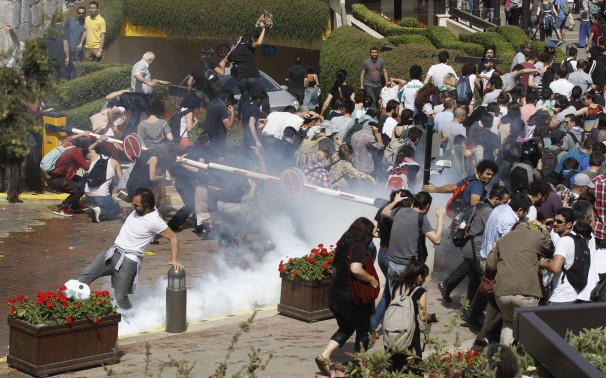
Turkey, the heart of the old Ottoman Empire is now beginning to erupt as secularist elements in the society are protesting the policies of Islamist President Recep Tayyip Erdoğan leading to repeated clashes over the past two weeks between protestors and police.

054

Afghanistan though technically not part of the Middle East continues to be a problem for US and NATO consuming intelligence, economic diplomatic and military resources that could be put to play with better effect elsewhere.  What T.E. Lawrence said of the British occupation of a restive Mesopotamia  in 1920:

“We realise the burden the army in Mesopotamia is to the Imperial Exchequer, but we do not see as clearly the burden it is to Mesopotamia. It has to be fed, and all its animals have to be fed. The fighting forces are now eighty-three thousand strong, but the ration strength is three hundred thousand. There are three labourers to every soldier, to supply and serve him.” ‘France, Britain, and the Arabs’ by Col. T. E. Lawrence The Observer, 8 August 1920

In Libya the Arab Spring claimed the long time pain in the ass Moammar Gaddafi. That conflict center of the action in 2011 until Gaddafi was overthrown and murdered. Since then Libya has remained in turmoil despite elections, militias run amok and the US Ambassador Chris Stevens was killed in an attack on the US Consulate and CIA base in Benghazi on September 11th 2012.

Yemen and Bahrain, Algeria, and Jordan have or are experiencing demonstrations which look to be revolts in the making and even Saudi Arabia is trying to head off a potential popular uprising.

However the real problem now, the problem that threatens to send the region into a regional war is the revolt in Syria which began with peaceful protests by reformers against the Assad regime. However the hard line response of that regime to the protests spawned a civil war which now threatens to overflow the borders of Syria. France, Britain and the US have stated that they believe that there is evidence that the Syria government has used chemical weapons, in particular Sarin nerve agents against the rebels. The conflict has claimed the lives of an estimated 80,000 people with hundreds of thousands more now living as refugees.

The conflict in Syria epitomizes one of the greatest challenges in the Middle East that many in the West are just beginning to recognize, the Sunni Shi’a divide. That divide is becoming more serious with every passing day as Iran continues to lead and assist Shi’a elements in predominantly Sunni Arab countries, as well as in Iraq where the Arab Shi’a are in the majority. The conflict in Syria is predominantly Sunni versus Shi’a though in that patchwork nation of Sunni, Shi’a, Alawite Shi’a tribe of the Assad clan, various Christian and Druse groups. Lebanon which borders Syria is as divided as its larger neighbor and Hezbollah holds tremendous power in that country.

Yes my friends this is a mess and almost everybody that is anybody in the military and economic power houses of the world doesn’t have their handprints all over at least some part of this mess. All of these own some of the blame for what is going on, both the rulers of the nations in the region as well as world powers who all try to influence the nations and peoples for their own diplomatic, intelligence, military or economic gain. Almost no one is unsoiled by their involvement in the Muddle East over the past 90 years or so and so in a way all of great world powers, as well as the despots who ran these countries are to blame.

images-46

The region is more volatile than at any time in recent history and events there could easily ignite a regional war with worldwide implications.  That is why the region has been called the Muddle East for decades.  We all hope and pray for the best and that somehow all of this that the promise of a peaceful and democratic “Arab Spring” will become a reality, but there are better than even odds that things get way worse before they get better. There are just too many wild cards in this deck and the swamp is full of hungry alligators.

With the announcement this week that the US would provide military aid and training to the Syrian rebels and that US forces will remain in Jordan even as US and NATO Patriot missile batteries stand ready in Turkey there is a really good chance that the conflict in Syria will not stay in Syria.

Of course there is always the wild card if what Israel may do in what it perceives to be its security interests against outward foes such as Iran and Syria but also inside its borders and occupied territories, especially if it is attacked or provoked by Iran, Hezbollah or Hamas.

May God help us all and bring about peaceful change, or as my Iraqi friends simply say “Inshallah, God willing.”

Peace

Padre Steve+

Leave a comment

Filed under History, iraq,afghanistan, middle east, Military, national security

Musing on Life as Journeyman on a Lazy Saturday: Billy Chapel, Crash Davis and Padre Steve

163017_10150113444907059_3944470_n

Today is one of those lazy Saturdays where Judy and I, both tired from a long week and watching a winter weather system approach the area have been taking it easy. We have talked, napped, and enjoyed playing with and watching the antics of our dogs Molly and Minnie. Judy has been reading a Kindle book on her I-Pad and I have been sort of puttering around, paying the bills, updating connections on Linked-In and reading the comics online. This afternoon I have been listening to the songs that I linked in my Valentine’s Day article Padre Steve’s Top 25 Lonely Hearts Club Valentine Day Love Songs and musing about life.

Music tends to make be a bit more contemplative and introspective. Some of those songs, as well as the thoughts of the beginning of Baseball Spring Training have led me to muse about my own long strange trip as a long time military officer and chaplain. I’ve always related to the characters in Kevin Costner’s baseball films the classic Bull Durham, the touching and sentimental Field of Dreams and For the Love of the Game.

The main characters in each of the films touch me each in a different way. The character of Billy Chapel in For the Love of the Game helps me remember why I keep going and how I want to leave my military career, at the top of my game and ready to move on with life with Judy. Ray Kinsella, the lead character in Field of Dreams is like my dreamer side, the one that sees possibilities that others do not, even those that most people think are foolish. The character also reminds me of how much I miss my dad but know that he is still with me.

Crash-Davis

However, the character of Crash Davis who Costner played in Bull Durham strikes a particular chord in me. Crash is a journeyman minor league catcher with the dubious distinction of having the most minor league homers. He also spent three weeks “in the show.” I guess what gets me is how much he loves the game and the intensity that he gives it, but also has a sense of humor and knowledge about when to back off the seriousness.

Crash is a consummate professional. He loves the game works hard on his own skills and actually cares about the development of the young guys, even if they try his patience. I can say that his I find a lot of commonality with him.

Crash’s relationship with the young pitcher he is assigned by the organization to help, Ebby Calvin “Nuke” LaLoosh (Tim Robbins) is case in point.  Crash is demoted by the big team from a AAA contract to a single A contract to develop the young bonus baby.  He’s not happy with the job, in fact he is angry at being sent down. Crash is proud, threatens to quit the game but he then takes on the task of dealing with the wild and cocky LaLooshe with a mixture of skill and humor in a manner that benefits not only the young pitcher but motivates the rest of the team, which until his arrival was derided by its fans, manager and announcer as “the worst.”

It does not matter that he is in the minor leagues as Crash still plays his heart out and spends his time teaching the next generation.  He even gets thrown out of a games if it helps motivate his team and let’s his young charge learn the hard way when young “Nuke” decides to ignore his advice.

My life is like a journeyman ball player. I started in the Army, and to use the baseball journeyman analogy I played one position for a number of years and then so to speak left the big team to train for a new position while playing in the minors.

I left active duty as a Medical Service Corps officer for seminary in 1988. It was like going from playing in the Majors to going to learn a new position in an instructional league. In seminary I entered the Army Chaplain Candidate program in the National Guard. When I graduated from seminary and become a National Guard and Reserve Chaplain while doing my hospital residency and first hospital chaplain jobs it was like working my way up through the minors.

The National Guard and Reserve assignments then were the ones that didn’t pay much and involved a lot of travel, long nights and time away from home. The civilian jobs offered little job security or upward as I found out when I lost a contract chaplain job when I was mobilized with Reserves.

When I was promoted to the rank of Major in the Army Reserve it was like moving up to Triple A ball. The assignments were better but I was still like playing in the minors as the active duty, especially then often viewed reservists and National Guardsmen as inferiors.  But when I was mobilized to support the Bosnia operation in 1996 to 1997 and then remain on active duty to serve as the Installation Command Chaplain for Fort Indiantown Gap it was like getting promoted to the Major League, however it was with the knowledge that it was a call up not a career. When that time ended and I returned to the reserve it was like being sent back to the minors.

I honestly thought that I would spend the rest of my career there, maybe getting called up for brief periods of time but knowing that my career, like that of Crash Davis was destined to end in the minor leagues.

for_the_love_of_the_game

That changed when I was given a chance to go into the Navy.  I reduced in rank and came in with no time in grade meaning that I was starting from scratch with a new slate.  Now all of my experience was still there, but I was starting over.  It was like when a player gets traded between from the American League to the National League in mid season, or is called up from the minors to play on the big team with a clean slate. That to me was the beginning of the Billy Chapel side of my career.

After 17 1/2 years in the Army, going up and down the food chain I have been blessed to serve the last 14 years in the Navy. I am now an old veteran, still a journeyman at heart but I got the chance to go back and live my dream serving as an active duty Navy Chaplain.  I’ve gotten to serve on ship and with the Marines and EOD.  I’ve travelled the world and I’ve gone to war.  I’m not the same as I was as when I started.  I have issues, maybe even the full subscription.

400236_10151328400862059_541742014_n

I have streaks where I am hot and when I am not, I have my slumps. The biggest slump was the struggle with PTSD and a faith crisis that engulfed my life for several years. That is pretty much over now, though I have my moments and flashbacks but things are back to my new normal. I know my limitations now, and like Billy Chapel fighting through his near career ending injury to come back and finish well, I want to do the same.

652_53210437058_4925_n

I’m somewhat superstitious at times. I am not the same person that started the journey so long ago, but I make do. I guess now my goal is to help the younger guys and gals that are coming up through the ranks, chaplains as well as others. Sometimes this is difficult, I have had to work with some who are potential superstars and others who struggle greatly either due to lack of skills or bad judgement and decision making. I have had others who have seen their dreams in the military ended my injury, wounds, illness or supervisors or commanders that did not appreciate them.

295_26911932058_5614_n

I know that disappointment but thankfully I can point to several men and women in the course of who have helped me through those times. I have also had men who helped set me up for success through their personal example and the opportunities that they provided me. For all of them I will always be grateful.

The thing is now I’ve been in the military since before many of them were born. In a sense I’m a Crash Davis or Billy Chapel kind of guy.  I love both of those movies and those characters and find inspiration in them.

I hope we can all find something or someone to help connect us to what we do in life.

Peace, Steve+

Leave a comment

Filed under Baseball, Military, movies, PTSD

“Lancing” the Boil: The Ethical Conundrum Presented by Lance Armstrong

image-3

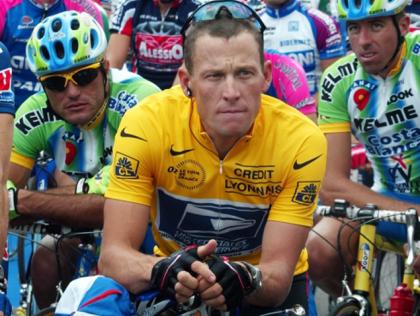
“Listen, I’ve said it for seven years. I’ve said it for longer than seven years. I have never doped. I can say it again. But I’ve said it for seven years. It doesn’t help. But the fact of the matter is I haven’t. And if you consider my situation: A guy who comes back from arguably, you know, a death sentence, why would I then enter into a sport and dope myself up and risk my life again? That’s crazy. I would never do that. No. No way.” Lance Armstrong to Larry King and Bob Costas on Larry King Live August 25th 2005 

It appears that Lance Armstrong has confessed to cheating to win his historic 7 Tour de France cycling championships. Using a sophisticated means of blood doping he sometimes with the cooperation of his teams he, like the majority of the high level competition cyclists of his era used an illegal but often hard to detect means to bolster his ability to win.

Armstrong, like so many at the top level of his sport appears to have been a habitual cheater, liar and bully. The fact that he was a cancer survivor and had returned to the top of his sport made him a legend and gave him an almost mythic aura. Who could criticize such a heroic individual? Certainly his struggle to defeat cancer and return to the top of his sport was worth something and indeed it was. Armstrong became a legend and established a foundation that did and still is doing wonderful things for cancer victims.

If it was simply cheating and then getting caught the situation would be different. Armstrong was not different than many of his competitors and if it was like the cases of people in other sports who cheated and later either were caught or admitted their misdeeds it would be just another case of a sports cheater.

However in the Armstrong case the story is one that is not so simple. His also involves an aggressive cover up and willful destruction of the reputations of anyone who dared challenge him or accuse him of cheating. It involved attacks on the character of critics as well as threats made against them, even veiled physical threats. It involved legal actions to attempt to prevent the publication of articles or books that could damage him in multiple countries. It involved a campaign of lies that lasted over a decade. It also ensnared cancer victims as his charity foundation Livestrong was devoted to helping those battling the dread disease.

It is a case that will not simply interest sport writers, but one which will engage philosophers, ethicists and theologians for years to come. The reason is that it is so multifaceted and brings to the fore questions that most people care not to even think about, even though they fascinate us.

The questions are hard. Who would want to think that the cancer victims helped by Livestrong were not positive beneficiaries of Armstrong’s benevolence? It is certain that Armstrong’s foundation has done remarkable work. At the same time can Armstrong’s actions be justified simply because many people were benefited by them? What about the his victims? Those men and women who suffered professional, legal and financial reverses as well as had their reputations damaged for attempting to stand up to someone that looks by the actions committed against his critics and accusers to be a bully.

It is the classic question of whether the needs of the many outweigh the needs of the few combined with the actions of one person to advance himself at the expense of others. Some would like to be able to fame Armstrong’s cheating and subsequent support of Livestrong and its tremendous work in helping people in a positive manner.

That can be done, but at what cost? We wrestle with such ethical questions all the time but seldom do we see the drama play out out in such a personal manner. Usually we are able to keep it theoretical and distant. But Armstrong, he had become a legend, a hero to many and

I think that most of us, me included were enamored with the myth of Armstrong the cancer survivor rising to unheard of heights in his sport. I think that this was especially the case in the United States where the thought of an American winning at the top levels of a sport that has few American long dominated by Europeans was particularly pleasurable, especially since most Americans couldn’t care less about competitive cycling. However, Armstrong got us to care about it, even if it was only when we saw Tour de France highlights on ESPN Sports Center.

Caught up in the myth we surrendered to it. It was attractive and it appeals to the underdog in all of us. However, it was a myth and the creation and sustainment of the myth created victims just as it helped others in need of live saving treatment as well as cancer research.

As for Armstrong, his confession and apology that will be aired on Oprah Winfrey’s show the next two nights I am of mixed feelings. Some like Mike Lupica have stated that it is another attempt of Armstrong to control the situation and the narrative. He could well be right and there is part of me, the cynical and realistic part that believes this. At the same time I would hope that Armstrong has had a real epiphany as to the consequences of his actions in the lives of the people who were his fans, his beneficiaries as well as his victims.

As for the very harsh remarks of Pat McQuaid the President of the International Cycling Union that “Lance Armstrong has no place in cycling and he deserves to be forgotten in cycling….” I have a negative opinion. He and his championships, though tainted and no stripped from him are a part of the history of cycling. He helped popularize the sport in the United States. He and his tainted accomplishments cannot be erased as if he did not exist. No cycling bodies took any substantive actions against Armstrong during his competitive career. No sport was as inundated by a culture of cheating as professional cycling. Armstrong cannot be forgotten as McQuaid says he deserves to be. It is okay to say “never again” and work to build an authentic and honest competitive sport. But to erase and forget is to ensure that another Armstrong will come along. It is a cautionary tale.

As long as Armstrong brought attention and income to the sport his actions were tolerated and despite numerous accusations he was celebrated and because of his story as a cancer survivor many looked the other way. I have to say that I am part of that latter group that saw a cancer survivor winning as inspirational. I did not want to believe the accusations and I did not look to see or even pay attention to the things that he and his associates were doing to those attempting to bring the story to the light of public scrutiny.

As for Livestrong I do hope that it will survive and continue to help cancer victims. As for Armstrong I hope that his confession and admission of wrong doing are genuine and that he will make restitution to those that he bullied or ruined in maintaining the cover up. I am less concerned about his competitors in the Tour de France as so many of them were doping that it makes the steroids scandals in other sports pale in comparison.

I encountered Armstrong once in Iraq when he was on a tour with a number of celebrities. I had come back to my base of operations the day that he and his tour led by the now retired Chairman of the Joint Chief’s of Staff Admiral Mike Mullen came through. Since the number of people who could attend the show was limited and I wanted to make sure that junior personnel had a chance to see Armstrong, Robin Williams, Kid Rock and Lewis Black I did not attempt to go. The next morning I was walking to the dinning facility and passed Armstrong as he was walking back to is quarters. I said “good morning” and he returned the greeting and we both continued on our way. I figured that he didn’t need another person coming up to him to get an autograph and though he was a public figure on a USO morale tour I still attempt to honor some modicum of privacy. The tour left later that morning and my friend, Father Jose Bautista-Rojas a Catholic Chaplain who had escorted Mrs Mullen during the visit brought me a ball cap signed by both Armstrong and Robin Williams. I will keep it and remember the fact that Armstrong and those with him came to Iraq at the height of an unpopular war, but also to remind me that all of us have feet of clay.

I do hope that he is able to make his peace and reconcile with those that he has hurt or disappointed and that some good will come out of this for him, his family, those that benefit from Livestrong and the sport.

Peace

Padre Steve+
1 Comment

Filed under News and current events, philosophy, sports and life

Iraq and the Middle East 2013: Lessons from T. E. Lawrence

295_26912097058_4309_n

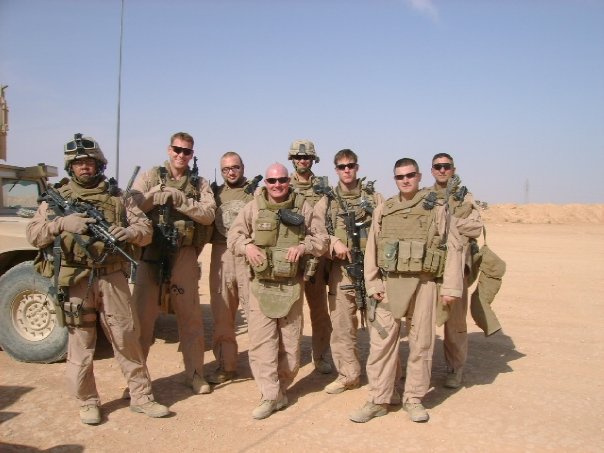
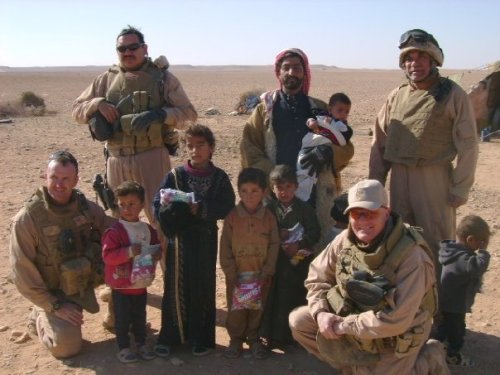
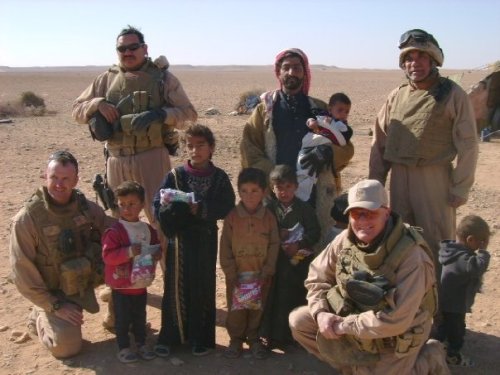
The Author with Advisors and Bedouin on the Iraqi Syrian Border

I left Iraq just under five years ago and in the process left part of me in that long suffering country.  I have written much about my experience there and how even today I have a deep regard for the Iraqi people and their hopes for a better future.

In 2003 the United States invaded Iraq and made short work of that country’s military. Many, if not most Iraqis of all creeds looked upon the US and coalition forces as liberators but within a few months the illusion was over. The US military personnel and leaders who were working with Iraqi officials, both military and civilian to get the country back on its feet were replaced by the Bush administration.

vault.von.saddam.statue.fall.itn.640x360

False Hopes in 2003, believing that US Forces were Liberators 

In their place a new entity, the Coalition Provisional Authority was created and staffed. The first administrator of the entity was retired Army Lieutenant General Jay Garner, who had much experience in Iraq but was replaced quickly for not conducting an immediate purge of members of the Ba’athist Party from key positions in the civil service or security forces.  Led by Ambassador L. Paul Bremer, a man who had no experience in the Arab world, much less in Iraq. Bremer and his staff, most of who had little experience or knowledge of the country created conditions that directly led the the Iraq insurgency, the sacrifice of thousands of American and allied lives and the friendship of the Iraqi people. They also gave a victory to Iraq’s traditional enemy and oppressor Iran to become a dominant regional power without having to worry about the Iraqi threat.

410w-1

Lawrence

rumsfeld-bremerL Paul Bremer (r) with SECDEF Donald Rumsfeld

It was as if Bremer, the leaders of the Bush administration and their neo-conservative allies knew nothing of history. T.E. Lawrence wrote of the British incursion into Turkish Mesopotamia in 1915, managed by the British Indian Office:

“By brute force it marched then into Basra. The enemy troops in Irak were nearly all Arabs in the unenviable predicament of having to fight on behalf of their secular oppressors against a people long envisaged as liberators, but who obstinately refused to play the part.”

The actions of the CPA laid waste pragmatists in the Pentagon and State Department who hoped that existing civil service, police and military forces would be retained and individuals with significant ties to the regime of Saddam removed. Instead Bremer dissolved the Iraqi military, police and civil service within days of his arrival. Since the military invasion had been accomplished with minimal forces most Iraqi weapon sites, arsenals and bases were looted once their Iraqi guardians were banished and left their posts. The embryonic insurgency was in effect given a full arsenal of weapons to use against American forces, many of who were now mobilized Reservists and National Guardsmen that were neither trained or equipped to fight an insurgency or in urban areas.

The reaction of the Iraqi Arabs to US occupation should have been anticipated. Lawrence wrote in 1920 a letter that could have easily been written in 2004:

“It is not astonishing that their patience has broken down after two years. The Government we have set up is English in fashion, and is conducted in the English language. So it has 450 British executive officers running it, and not a single responsible Mesopotamian. In Turkish days 70 per cent of the executive civil service was local. Our 80,000 troops there are occupied in police duties, not in guarding the frontiers. They are holding down the people.”

295_26912047058_2328_n

Rebuilding an Army

The actions of Bremer’s incompetent leadership team led to a tragic insurgency that need not have taken place. The now unnumbered US forces had to fight an insurgency while attempting to re-create an army, security forces and civil service from the wreckage created by Bremer’s mistakes and its own often heavy handed tactics in the months following the invasion. Nearly 4500 US troops would die and over 30,000 more wounded in the campaign. Hundreds of thousands of Iraqis were killed, wounded or died of disease during the war.  Lawrence wrote about the British administration of Iraq words that could well have been written about Bremer’s Coalition Provisional Authority: “Meanwhile, our unfortunate troops, Indian and British, under hard conditions of climate and supply, are policing an immense area, paying dearly every day in lives for the wilfully wrong policy of the civil administration in Bagdad.”

It took dramatic efforts in blood and treasure to rebuilt that was only beaten back after the US acted to conduct a surge in conjunction with the revolt of the Sunni of Anbar Province against foreign fighters who had become a dominant force in the insurgency. The surge under the command of General David Petreus achieved the desired result. It gave the Iraqis a chance to stabilize their government and increase their own security forces. Unfortunately many of those that remained in power of the Shi’ite sect refused to  share power in meaningful ways with Iraq’s Sunni and Kurds leading to a political crisis. The US military mission ended in December 2011 and since then Iraq security forces and civil authorities, often divided by tribal or sectarian loyalties have struggled to maintain order. The result is that in 2013 that Iraq is again heading toward the abyss of civil war. Sunni protestors in Anbar and other provinces conduct frequent protests as sectarian violence spreads. Many Iraqis of all sects have mixed feelings about the American invasion and the bloody aftermath and fear the future.

In 1920 Lawrence wrote of the continuing British intervention and occupation of Iraq: “The people of England have been led in Mesopotamia into a trap from which it will be hard to escape with dignity and honour. They have been tricked into it by a steady withholding of information. The Bagdad communiqués are belated, insincere, incomplete. Things have been far worse than we have been told, our administration more bloody and inefficient than the public knows. It is a disgrace to our imperial record, and may soon be too inflamed for any ordinary cure. We are to-day not far from a disaster.”

His words have a sadly familiar tone. The US invasion of Iraq did have a different outcome than we imagined. The Arab Spring erupted and the consequences of it will be far reaching and effect much of the Middle East and the world. However, Lawrence’s words and wisdom concerning the Arabs who rebelled against the Turkish Ottoman Empire are something that we in the West need to heed today.

baghdad1917

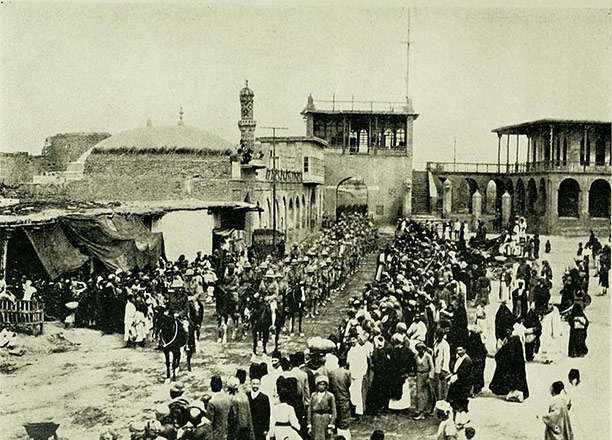
British Troops entering Baghdad

“The Arabs rebelled against the Turks during the war not because the Turk Government was notably bad, but because they wanted independence. They did not risk their lives in battle to change masters, to become British subjects or French citizens, but to win a show of their own.”

481801_10151367001287059_1003164983_n

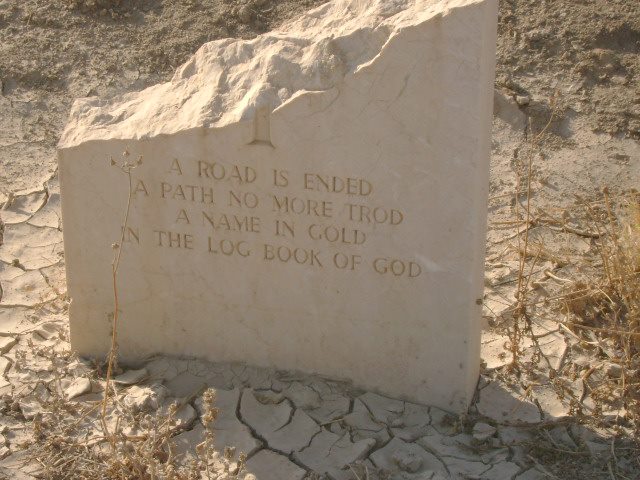
Grave of a British Soldier in Habbaniyah Iraq

That is the case in many Arab countries today. One can only hope that in those countries and in Afghanistan where our troops are embroiled in a war that cannot end well that we will do better.

Peace

Padre Steve+

2 Comments

Filed under Foreign Policy, History, iraq,afghanistan, middle east, national security

That War Would Cease: The Christmas Truce of 1914

joyeux_noel3

“Tonight, these men were drawn to that altar like it was a fire in the middle of winter. Even those who aren’t devout came to warm themselves.” Chaplain Palmer Joyeux Noël

12010440-mmmain

The war was supposed to be over by Christmas, or so the planners had said. Instead after a series of massive battles that produced unprecedented number of casualties the war settled into a stalemate. As the sides exhausted themselves in a series of meeting engagements throwing the flower of their idealistic youth into the great maw of the front to be torn apart by massed artillery and machine gun fire the planners sought new ways to find military victory.

In December 1914 with neither side having the ability to force the issue and casualties already running over a million dead and wounded the armies dug in. Massive trench networks were constructed in the mud of France and Belgium as the artillery continued its impersonal work of destroying men, machines and the homeland of millions of civilians.

From Clipboard

Despite the stalemate the high commands of the various nations continued to through their troops into meaningless attacks to gain a few yards of their opponent’s trench networks. The attackers always suffered the worst as they went “over the top” and were cut down by well sited machine guns and networks of defensive redoubts.

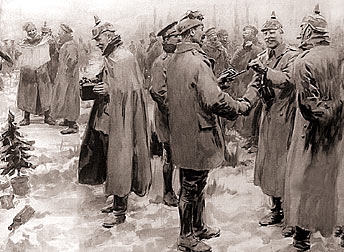
As Christmas neared individual parties of British and German troops began to fraternize exchanging gifts and attempting despite the wishes of their commanders to maintain an attitude of live and let live. On Christmas Eve German troops began to decorate their trenches with Christmas trees and lights, carols were sung and Christmas greetings exchanged as the local truces became widespread and soldiers met in no man’s land to talk and give each other gifts of cigarettes, alcohol, food and souvenirs.  In some places the sides helped each other collect and bury their dead and some Chaplains even led Christmas services in which men of both sides worshipped.

football-truce

The truce would not last as the high commands of each side issued strict orders against them and within days had moved the units that they believed most “infected” by the Christmas spirit to other locations and replaced them with units inculcated with the message of the inhumanity of their enemy. Such messages often included the religious understanding of this being a “holy war” against enemies of God and humanity. It is funny that though Moslems are frequently demonized for committing Jihad that Christians have a terrible record when it comes to finding theological reasons to kill those that they believe, even other Christians to be the enemy.

Christmas Day December 1914 World War One

joyeux-noel-2

http://www.youtube.com/watch?v=7-MGfNsgB3A

joyeux-noel-3

This really wasn’t surprising, after all for in the years leading up to the war many school children, especially in France and Germany had been propagandized. Churches and ministers cooperated in the carnage. In the movie Joyeux Noel the British Padre who had cooperated in the Christmas truce is relieved by his Bishop and sent home. The Bishop then preaches to the newly arrived soldiers, those replacing the men who had found peace for a moment. The sermon is not a work of fiction, it is actually part of a sermon that actually was given in Westminster Abbey in 1915. It was a sentiment that fit the mood of the high command who sought to minimize the danger of peace without victory. It was a sermon, the likes of which were preached by ministers, preachers, priests and bishops throughout that terrible war. It is a sermon that many preachers, Christian, Jewish, Islamic and Hindu even today mimic with terrible consequences.

http://www.youtube.com/watch?v=fMPxjUE40iw

“Christ our Lord said, “Think not that I come to bring peace on earth. I come not to bring peace, but a sword.” The Gospel according to St. Matthew. Well, my brethren, the sword of the Lord is in your hands. You are the very defenders of civilization itself. The forces of good against the forces of evil. For this war is indeed a crusade! A holy war to save the freedom of the world. In truth I tell you: the Germans do not act like us, neither do they think like us, for they are not, like us, children of God. Are those who shell cities populated only by civilians the children of God? Are those who advanced armed hiding behind women and children the children of God? With God’s help, you must kill the Germans, good or bad, young or old. Kill every one of them so that it won’t have to be done again.”

Unfortunately I have met and heard men preach the same message against those they hate, a message that twists the words of Jesus in a diabolical way to justify the worst acts of nations and peoples. In the year 2013 wars rage around the world. Some are conducted by well organized professional militaries but many by militias, paramilitary and terrorists groups. In some cases the brutality and inhumanity exhibited makes the industrialized carnage of the First World War seem sane. Even now preachers of various religions, including Christians, Moslems and Jews advocate the harshest treatment of the enemies of their peoples all in “the name of God.”

295_26912097058_4309_n

n671902058_1153798_5336

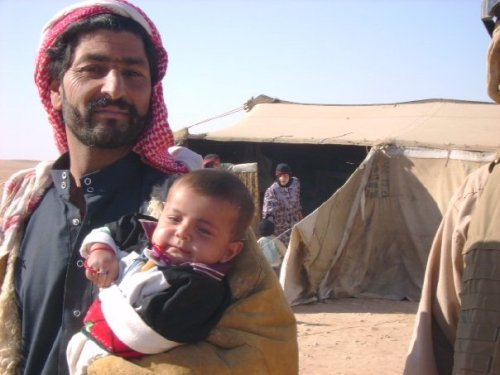
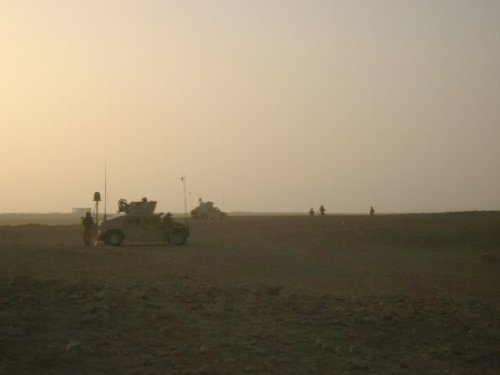
Six years ago I was traveling up and down the western border of Iraq with Syria. I was visiting our Marines that were advising the Iraqi Army and Border Forces, conducting Christmas services for them and also visiting Iraqi soldiers as well as civilians. In a couple of instances Iraqi and Jordanian Christians working as interpreters came to the Eucharist services, for one it had been years since he had received the Body and Blood of Christ in the Holy Communion. While out and about visiting Iraqis we were hosted by Iraqi troops and well as Bedouin tribesmen and their families. The warmth and hospitality and faith of these wonderful people was amazing.  T.E. Lawrence wrote that the Bedouin could not look for God within him: he was too sure that he was within God.” 

n671902058_1153804_6925

I think that for me that Christmas week was the one that will remain with me more than any and despite being in a war zone, it for me was a time of peace on earth and good will toward men.

Maybe someday we will begin to understand.

Peace

Padre Steve+

6 Comments

Filed under christian life, faith, film, History, iraq,afghanistan, Religion, Tour in Iraq

A Place of Peace: Where My Iraq Meets the Atlantic

35923_10151361668782059_785733223_n

Where Iraq Meets the Atlantic

I have talked about things bring me peace amidst the struggles of life in recent days and in one post I briefly mentioned that while running on the beach in Emerald Isle it was the place where in that moment “Iraq met the Atlantic.”

It has been nearly 5 years since I left Iraq in February of 2008 but there are times that it feels like I have never left and times when I would like to be back there. I have always loved the ocean and the desert. For some reason the vast expanses of barren desert and the untamed ocean draw me to them like nothing else.

262_29132267058_9181_n

I have struggled with a lot over the past 5 years. However as I mentioned recently it seems that things are coming together in ways that I have never could have fathomed even a few months ago. On Wednesday I needed to take a day off to reflect and gather my thoughts after a particularly cathartic sequence of events. One of the things that I did that day was to rest, but then to run along the beach where I live.

198177_10151361204842059_1890411795_n

I mentioned to a couple of people that it was like Iraq met the Atlantic and they didn’t understand, until I showed the pictures. I guess though that the juxtaposition of the Western Desert of Iraq, sometimes known as the Syrian Desert and the Atlantic Ocean would seem strange to most people, unless they have experienced both in their stark beauty.

270107_10151361199622059_1286921284_n

I ran about seven and a half miles Wednesday along the beach and it was breathtaking. The deep blue skies and seas met with the desert tan of the sands of the beach. There were few people out that day so the beach was nearly deserted and I was alone with nature and God. It has been many years since I felt that depth of peace in my soul that I felt on Wednesday.

262_29132262058_8844_n

I really can’t explain it and most people will probably never understand and I have learned that such a lack of understanding is okay. There is a big part of me that is still in the Iraqi desert and will always be there. There in the land of Abraham, amid the barren deserts, the rich valley of the Euphrates river valley, the battered cities and town of war torn Al Anbar Province many of my hopes and dreams still live. When I ran along the beach that day it was like I had returned, but instead of being traumatic it was peaceful.

262_29132227058_6903_n

I pray for the people of Iraq, especially those in Al Anbar Province and the Iraqi military. I pray that they will know peace and that their country, so long victimized by tyrants, devastated by war and torn by terrorism and civil-religious strife will be a place of blessing.

295_26912097058_4309_n

As T.E. Lawrence wrote about 85 years ago: “We were fond together because of the sweep of open places, the taste of wide winds, the sunlight, and the hopes in which we worked. The morning freshness of the world-to-be intoxicated us. We were wrought up with ideas inexpressible and vaporous, but to be fought for. We lived many lives in those whirling campaigns, never sparing ourselves: yet when we achieved and the new world dawned, the old men came out again and took our victory to remake in the likeness of the former world they knew. Youth could win, but had not learned to keep, and was pitiably weak against age. We stammered that we had worked for a new heaven and a new earth, and they thanked us kindly and made their peace.” 

262_29132307058_1522_n

Peace

Padre Steve+
 

3 Comments

Filed under History, iraq,afghanistan, Tour in Iraq

Horizons, Tapestries and the Possibilities of Different Futures

Captain Picard: I sincerely hope that this is the last time that I find myself here. 

Q: You just don’t get it, do you, Jean-Luc? The trial never ends. We wanted to see if you had the ability to expand your mind and your horizons. And for one brief moment, you did. 

Captain Picard: When I realized the paradox. 

Q: Exactly. For that one fraction of a second, you were open to options you had never considered. That is the exploration that awaits you. Not mapping stars and studying nebulae, but charting the unknown possibilities of existence. 

Yesterday I wrote about epiphanies that were occurring in my personal, spiritual and professional life. As I mentioned yesterday they were brought about during a rather cathartic session with my Doctor regarding my PTSD. I think that it was a breakthrough type session because so many new horizons seemed to open at once. Last night it was hard to put it all into words or to sort things out. So after I published that article I went to bed and was subjected to the most intense night of dreams that I have ever experienced and that is saying a lot because my dreams are often frighteningly real. They are like super high definition to begin with because my brain goes into warp drive when my eyes are closed, but last night even more so.

It was like past present and multiple futures intersecting around the them of roads taken, roads not taken and the possibility of different roads home. They spanned my life and many dealt with my time in Iraq while others seemed a blend of many experiences. It was positively surreal. So much so that when the alarm rang I was absolutely exhausted having not slept the previous night because I had left all of my sleep medicines in my gym bag that I had taken to work. So I made a direct call to my Commanding Officer to let him know what was going on and that I needed to take a personal day to rest and reflect on the flood of spiritual, emotional and existential things that I had experienced in the past day. If I had to give an example of what last night was like, it was like the final episode of the Star Trek Next Generation series as Captain Picard kept switching between different realities of past, present and future while being relentlessly grilled by the being simply known as “Q”.

So this morning I rested, spent time with my dog Molly, pretty much avoided the computer and television and then went out and ran about 7.5 miles on the beach. The weather was wonderful and the tide conditions were such that the nearly deserted beach was optimal for running. As I ran the brilliant blue of the sky, the calm waves of the deep blue Atlantic lapping upon the tan sands of the beach. It was as if I was running where the sands of the Western Iraqi Desert met the Atlantic. I was at peace and the images of the previous night began to make sense.

They were about roads, paths, possibilities and the journey to home, wherever or whatever that it is. They were a juxtaposition of past, present and future and variations of each. People, places, images and actions blended together in ways that were at times comforting and other times terrifying. But they were all about possibilities new and unimaginable and as Q told Picard “charting the unknown possibilities of existence” and not being trapped in the past that we cannot change, that even if we could would make us less than we are now.

In another episode of Next Generation called Tapestry, Picard has a death experience where he is confronted by Q and regretting decisions that he made which helped cause his death Q offered him a chance to go back and make it different. When Picard found that the Picard that played it safe was not a person that he would want to be he confronted Q.

LT. j.g. Picard: You having a good laugh now, Q? Does it amuse you to think of me living out the rest of my life as a dreary man in a tedious job?

Q: I gave you something most mortals never experience: a second chance at life. And now all you can do is complain? 

Lt. j.g. Picard: I can’t live out my days as that person. That man is bereft of passion… and imagination! That is not who I am!

Q: Au contraire. He’s the person you wanted to be: one who was less arrogant and undisciplined in his youth, one who was less like me… The Jean-Luc Picard you wanted to be, the one who did not fight the Nausicaan, had quite a different career from the one you remember. That Picard never had a brush with death, never came face to face with his own mortality, never realized how fragile life is or how important each moment must be. So his life never came into focus. He drifted through much of his career, with no plan or agenda, going from one assignment to the next, never seizing the opportunities that presented themselves. He never led the away team on Milika III to save the Ambassador; or take charge of the Stargazer’s bridge when its captain was killed. And no one ever offered him a command. He learned to play it safe – and he never, ever, got noticed by anyone.

It is funny that those two episodes of Star Trek TNG came up a number of times this week with different people. I think what I am discovering is that life is a limitless set of possibilities and that our past, as tangled and messy as it may be at time is part of a tapestry that is who we are but not what we can become. As Picard noted to Counselor Troy after his resuscitation:  There are many parts of my youth that I’m not proud of. There were… loose threads – untidy parts of me that I would like to remove. But when I pulled on one of those threads – it’d unravel the tapestry of my life.

Past, present and future. Dreams and reality, hopes and fears, things real and things imagined. A future unexplored and hopeful so long as we are willing appreciate our past without being trapped by it, to live in the present and imagine the future that we have yet to chart.

But to do this we have to be willing to take the risks, be authentic and realize the possibilities that God in his love and grace imagines for our future.

Peace

Padre Steve+

2 Comments

Filed under faith, philosophy, PTSD

The Fallacy of “Complete” Victory and the Seeds of Perpetual War and the Way to Peace

“We learn from history that complete victory has never been completed by the result that the victors always anticipate—a good and lasting peace. For victory has always sown the seeds of a fresh war, because victory breeds among the vanquished a desire for vindication and vengeance and because victory raises fresh rivals.” B H Liddell Hart

The current conflict between Israel and Hamas in Gaza has brought into light the fallacy of the belief that military victories alone can bring peace. One would think that leaders would know this and understand the basic truth of this key aspect of the human condition but it seems that we are doomed in every generation for leaders to ignore this basic fact of human life and civilization.

While one can easily criticize the Israelis and Palestinian Arabs for their unremitting hostility and desire for revenge they are not unique. Europe bears the scars of over 1500 years of Christendom’s own tribal and religious hatreds, many which still simmer underneath the surface of “free and democratic society.” Asia is rife with ethnic hatred and desire for revenge for actions committed by people long dead. Africa, the same except for the most part those in the “First World” be they Americans, Europeans or Asians only care about Africa for its natural resources, otherwise we would have acted to stop the various genocides on that rich, beautiful and diverse but seemingly cursed continent. The inter-Islamic and other Middle Eastern and Central Asian Moslems likewise have their hatreds, try as they might Arabs and Persians despite a common allegiance to Islam are mortal enemies with animosities that pre-date their conversion to Islam. Even we Americans are not immune to such hostility in our own country and against those that we label as our enemies overseas.

Despite this there are those that first and always resort to military force or terrorist violence to attempt to fight the “war to end all wars.”

The current episode of violence in Gaza is simple another chapter in what has been an unending series of wars since the establishment of the State of Israel. The time since has been marked by major wars in 1948, 1956, 1967, 1973 and 1981 the Palestinian Infatada as well as border conflicts between Israel, Fatah, Hamas and Hezbollah that have occurred since. These wars forced exodus of Palestinian Arabs from their ancestral homes, as well as the practical end of substantial Jewish and Christian communities in Moslem dominated nations.

The Israelis have in many cases lived under threat of invasion and destruction by neighboring Arab states for much of their history even while maintaining control of territories that they occupy by brutal force in the name of their own security. In some sense the Israeli position is understandable. They occupy but a small portion of land and threats of extermination, real and propagandistic by Arab and nations and the Iranians cause them to see these threats as existential threats.

The Arabs on the other hand deal with centuries of humiliation at the hand of foreigners, many Christian and European, but also that of the Turk and Persian. The constant drumbeat of military defeats endured by them at the hands of the Israelis and the support of Israel by western nations, some of whom ran the brutal colonial administrations which divided their lands, appointed despots as surrogates and exploited their natural resources has ingrained in them a deep seated need for revenge and respect.

I know from my time in Iraq and other Middle Eastern countries that the key to friendship and mutual respect is the simple act of taking time to know and appreciate the culture, history, faith and traditions of other people. I frequently in my dealings with Iraqi officers in Al Anbar Province opened doors by taking the time to learn their history, which goes back several millennia as the cradle of civilization and to be both polite and respectful in dealing with them. Iraqi officers were surprised that I knew the positive contributions of Iraqi military officers to Iraq, including the abolition of child labor, public education, the expansion of universities, universal suffrage and public works that benefited all Iraqis before the takeover of the country by Saddam Hussein and his Ba’ath Party. Likewise the fact that I could name the victories of Iraq forces against the British at Al Kut in the First World War, the largest surrender of British forces during the war as well as other victories gained me their respect and friendship as the “American” or “Christian Imam.”

However most Americans have not learned this despite over a decade of war in Afghanistan and Iraq. I was listening to a friend today who was upset that the government of Iraq was urging that Arabs use oil as a weapon against the United States to force the United States to change its policy in regard to the Palestinians. The argument presented on Fox News and echoed around much of the country is that the statement of the Iraqis is an act of ingratitude by a country that we “liberated.”

But that is our fiction that we create to absolve ourselves from the fact that over a period of 20 years American and other Western nations destroyed Iraq and humiliated its people. Yes we overthrew Saddam Hussein, a brutal dictator, a man that we supported for years as an ally until he crossed a line that we determined that he should not cross when he invaded Kuwait in 1990. To Shi’te Iraqis the overthrow of Saddam in 2003 was liberation, but it was “liberation” that followed the betrayal of them in 1991 where after encouraging them to revolt against Saddam we allowed them to be slaughtered by his Republican Guard.

To the Sunni of Anbar Province who after realizing that the radicals of Al Qaeda who were bringing more destruction to them than the Americans and allied themselves with the United States military in 2007, the Anbar Awakening the withdraw of American forces was an abandonment. They made our exit from Iraq possible and helped break the back of Al Qaeda, and for their trouble they believe that they have been abandoned to a corrupt Shi’te led government in Baghdad.

In light of all of this who can blame the Iraqis for making those statements. How would be we feel if that were to happen to us in the United States, or in Western Europe? Actually we know from history how we would feel. The answer is obvious in our history as well as our current actions and attitudes. We would not rest until those that brought destruction on our country and betrayed our people were defeated.

It is no wonder that Sun Tzu said that “To win one hundred victories in one hundred battles is not the acme of skill. To subdue the enemy without fighting is the acme of skill.”

Likewise Abraham Lincoln asked a question that those consumed by the need to destroy their enemies by military force should ask before ever mobilizing an army for war: “Am I not destroying my enemies when I make friends of them?”

Peace

Padre Steve+

2 Comments

Filed under History, iraq,afghanistan, middle east, Military, Tour in Iraq