Tag Archives: kaiser wilhelm ii

Busting National Myths

In light of the many historical myths and conspiracy theories being floated by pseudo “historians” like the infamous David Barton it is always appropriate to look at examples of the power of those myths in the lives of nations and their influence on citizens. Some myths can be positive and inspiring, but others can lead to conspiracy theories, false accusations and the demonization of others for the purpose of inciting hatred against political, social or religious opponents. They also can be used to perpetuate false beliefs about other countries that influence policy decisions, including the decision to go to war that ultimately doom those that believe them.

A good example of this is the Stab in the Back myth that began after the armistice that ended the First World War, as well as the false beliefs held by Hitler and other Nazi leaders about the United States.

There are many times in history where leaders of nations and peoples embrace myths about their history even when historical, biographical and archeological evidence points to an entirely different record.

Myths are powerful in the way that they inspire and motivate people. They can provide a cultural continuity as a people celebrates the key events and people that shaped their past, even if they are not entirely true.  At the same time myths can be dangerous when they cause leaders and people to make bad choices and actually become destructive. Such was the case in Germany following the First World War.

After the war the certain parts of the German political right posited that the German Army was not defeated by the Allied powers, but was betrayed by the German people, especially those of the political left. But such was not the case the German Army was on the verge of collapse.

Like all myths there was an element of truth in the “stab in the back” myth. It is true that there were revolts against the Monarchy of Kaiser Wilhelm II, including the mutiny  of the German High Seas Fleet, as well as Army units stationed in Germany. However, in truth, the crisis had been brought about by General Ludendorff who until the last month of the war refused to tell the truth about the gravity of Germany’s position to those in the German government.

So when everything came crashing down in late October and early November 1918, the debacle came as a surprise to most Germans.

The myth arose because the truth had not been told by Ludendorff who was arguably the most powerful figure in Germany from 1916-1918.  In the crisis which Ludendorff suffered what could be called an emotional collapse and  was relieved of his duty. His successor, General Wilhelm Groener presented the facts to the Kaiser and insisted that the Kaiser Wilhelm abdicate his throne.

The Republic that was proclaimed on the 9th of November was saddled with the defeat and endured revolution, civil war and threats from the extreme left and right.  When it signed the Treaty of Versailles it accepted the sole responsibility of Germany for the war and its damages because to not sign was to have the Allies resume the war against Germany.

The treaty required the Germany to dismantle its military, cede territory that had not been lost in battle, and pay massive reparations to the Allies. The  legend of the “stab in the back” gained widespread acceptance in Germany during the chaotic years of the Weimar Republic.

Hitler always believed that the defeat of Germany in the First World War was due to the efforts of internal enemies of the German Reich on the home front and not due to battlefield losses or the entry of the United States.  He made the “stab in the back” a staple of his attacks on the Republic. This was expressed in his writings, speeches and actions.

The internal enemies of Germany for Hitler included the Jews, as well as the Socialists and Communists who he believed were at the heart of the collapse on the home front.  Gerhard Weinberg believes that the effect of this misguided belief on Hitler’s actions has “generally been ignored” by historians. (Germany, Hitler and World War II p. 196)

Hitler believed that those people and groups that perpetrated the “stab in the back” were “beguiled by the by the promises of President Wilson” (World in the Balance p.92) in his 14 Points.

Thus for Hitler, the Americans were in part responsible for undermining the German home front, something that he would not allow to happen again.  In fact Hitler characterization of Wilson’s effect on the German people in speaking about South Tyrol.  It is representative of his belief about not only the loss of that region but the war: “South Tyrol was lost by those who, from within Germany, caused attrition at the front, and by the contamination of German thinking with the sham declarations of Woodrow Wilson.” (Hitler’s Second Book p.221)

While others will note Hitler’s lack of respect for the potential power of the United States, no other author that I am familiar with links Hitler’s actions and the reaction of the German political, military and diplomatic elites to the entry of the United States into the war to the underlying belief in the “stab in the back.”   Likewise Hitler had little regard for the military abilities or potential of the United States. Albert Speer notes that Hitler believed “the Americans had not played a very prominent role in the war of 1914-1918,” and that “they would certainly not withstand a great trial by fire, for their fighting qualities were low.” (Inside the Third Reich: Memoirs by Albert Speer p.121)

Hitler not only dismissed the capabilities of the Americans but also emphasized the distance that they were from Germany and saw no reason to fear the United States when “he anticipated major victories on the Eastern Front.” (Germany Hitler and World War II p.92)   Hitler’s attitude was reflected by the majority of the military high command and high Nazi officials. Ribbentrop believed that the Americans would be unable to wage war if it broke out “as they would never get their armies across the Atlantic.” (History of the German General Staff, Walter Goerlitz, p.408).  General Walter Warlimont notes the “ecstasy of rejoicing” found at Hitler’s headquarters after Pearl Harbor and the fact that the he and Jodl at OKW caught by surprise by Hitler’s declaration of war. (Inside Hitler’s Headquarters 1939-1945 pp.207-209) Kenneth Macksey noted Warlimont’s comments about Hitler’s beliefs; that Hitler “tended to dismiss American fighting qualities and industrial capability,” and that Hitler “regarded anyone who tried to show him such information [about growing American strength] as defeatist.” (Why the Germans Lose at War, Kenneth Macksey, p.153.)

Others like Field Marshal Erwin Rommel wrote about the disregard of senior Nazis toward American capabilities in weaponry.  Quoting Goering who when Rommel discussed 40mm anti-aircraft guns on aircraft that were devastating his armored forces Goering replied “That’s impossible. The Americans only know how to make razor blades.” (The Rommel Papers edited by B.H. Liddell-Hart p.295)

Rommel was one of the few German commanders who recognized the folly of Hitler’s declaration of war on the United States noting that “By declaring war on America, we had brought the entire American industrial potential into the service of Allied war production. We in Africa knew all about the quality of its achievements.” (The Rommel Papers p.296)

When one also takes into account the general disrespect of the German military for the fighting qualities of American soldiers though often with good reason (see Russell Weigley’s books Eisenhower’s Lieutenants and The American Way of War) one sees how the myth impacted German thought.  This is evidenced by the disparaging comments of the pre-war German military attaché to the United States; General Boeticher, on the American military, national character and capability. (See World in the Balance pp. 61-62)

The overall negative view held by many Germans in regard to the military and industrial power and potential of the United States reinforced other parts of the myth.

Such false beliefs served to bolster belief in the stab-in-the back theory as certainly the Americans could not have played any important role in the German defeat save Wilson’s alleged demoralization of the German population.  This was true not only of Hitler, but by most of his retinue and the military, diplomatic and industrial leadership of the Reich. Hitler’s ultimate belief shaped by the stab-in-the back and reinforced by his racial views which held the United States to be an inferior mongrel people. This led him to disregard the impact that the United States could have in the war and ultimately influenced his decision to declare war on the United States, a decision that would be a key factor in the ultimate defeat of Germany.

Myth can have positive value, but myth which becomes toxic can and often does lead to tragic consequences. All societies have some degree of myth in relationship to their history including the United States.  The myths are not all the same, various subgroups within the society create their own myth surrounding historic events.

The danger is that those myths can supplant reason in the minds of political, military, media and religious figures and lead those people into taking actions that work to their own detriment or even destruction.

It is the duty of historians, philosophers and others in the society to ensure that myth does not override reality to the point that it moves policy both domestic and foreign in a manner that is ultimately detrimental to the nation.

The lesson of history demonstrated by myths surrounding the German defeat and role of the United States in that defeat shows just how myth can drive a nation to irrational, evil and ultimately tragic actions not only for that nation and its people, but for the world. Sadly in the case of the United States, a portion of the political Right,  mostly found in the conservative Christian elements of the Tea Party movement are spreading their own version of the “stab in the back.” They blame Democrats, liberals, atheists, racial and religious minority groups, educators, labor unions and a host of others for the calamities that those that they have supported: the big banks and financial instructions that collapsed the economy in 2008, the politicians of the Republican Party who took the country into an unwise, unjust and illegal war in Iraq that not only cost many American lives and treasure but brought on the crisis that has led to the advance and power of the Islamic State, and the list can go on and on, and includes social issues, race, education, and even religion. But ignoring the responsibility of those they support,mother create myth, and cast blame on everyone but themselves.

That myth that they preach has become a staple of our political crisis. It is little differnt in tenor and intent of those who promoted the stab in the back myth during the Weimar Republic.

Peace,

Padre Steve+
Leave a comment

Filed under History, News and current events, Political Commentary

August 1914: The Beginning of a Century of Disasters

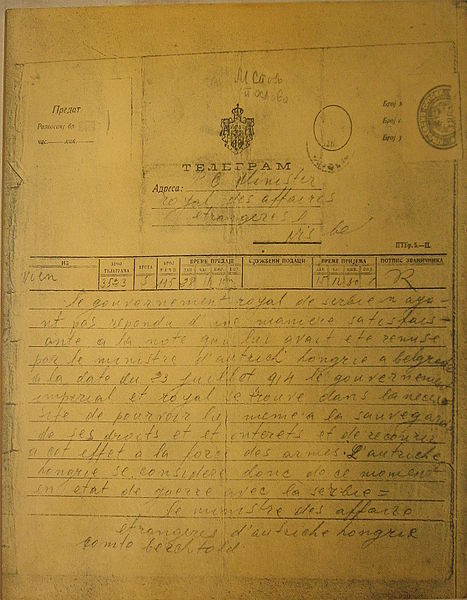
467px-TelegramWW1

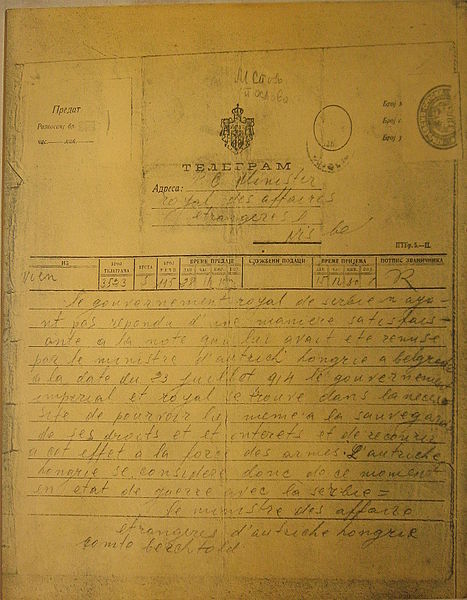
The Austrian Declaration of War against Serbia

“No one starts a war–or rather, no one in his senses ought to do so–without first being clear in his mind what he intends to achieve by that war and how he intends to conduct it.” Carl Von Clausewitz

It was a war that should never have happened. It was a war for which the belligerent powers could boast many causes but for which few had any real objectives. Ninety-nine years ago this week the nations of Europe were hell bent on waging a war that all thought would be short, decisive and end in victory for their side. They were wrong and nearly a century later the world still pays the price for their misplaced beliefs and hubris of those men.

It was a war in large part brought on by the declining Austro-Hungarian Empire’s fears. Fear of neighbors, ethnic minorities and its place among regional and world powers led the leaders of the Austro-Hungarian Empire to decide for war when the very unpopular heir to the throne Archduke Franz Ferdinand was assassinated in Sarajevo, the capital of the recently annexed province of Bosnia-Herzegovina on June 28th 1914.

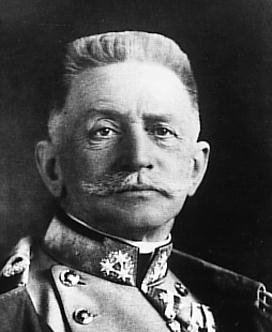
Baron Conrad von Hotzendorf

Conrad von Hötzendorf: War was the only means of politics

 It was a series of decisions by those in the government of the Empire that brought Europe and the world to war, a war which we still feel the effects of today. In particular it was the decisions of the Austrian Chief of the General Staff Conrad von Hötzendorf, the Foreign Minister Leopold Berchtold and the aging Emperor, Franz Joseph which plunged the world into a world war which spawned revolutions, regional wars, a second world war, a cold war and countless other wars. The decisions were based on the belief, still common today that war is the only means of politics.

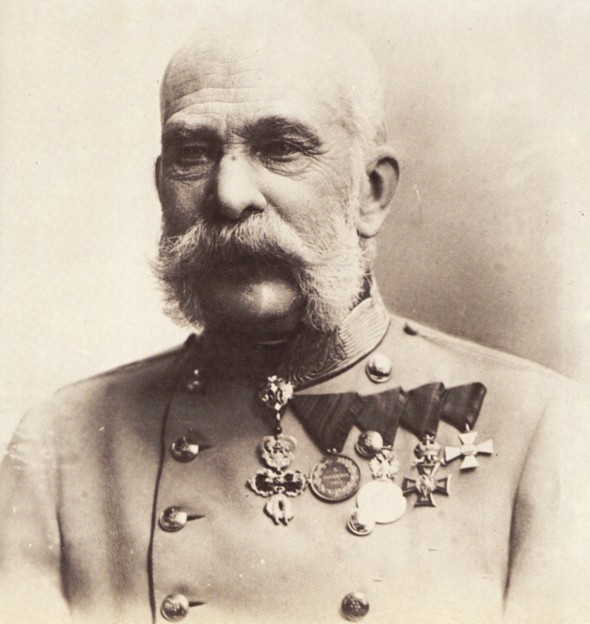
WIK_Franz-Joseph_ca-1910[1]

Emperor Franz Joseph: “If we must go under, we better go under decently”

 Hötzendorf had been a continual advocate of war in every situation. He lobbied for war in 1907 against Italy and Serbia, in 1908 against Serbia, Russia and Italy, in 1909 against Serbia and Montenegro, in 1910 against Italy and the list increased in the years leading up to the war. He fervently believed that “the use of armed force alone could retard the centrifugal forces of nationalism in the ‘multinational empire’; war was the only means of politics.” The Emperor, Franz Joseph was of the same mindset by 1914 and in the days following the assassination of Franz Ferdinand he gave his approval to the actions of Hotzendorf and the diplomacy of Berchtold which doomed the Austro-Hungarian Empire and would destroy and remake Europe within a span of four years.

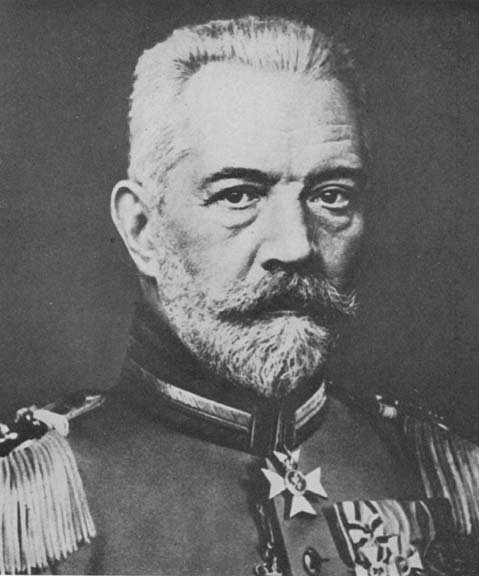
b305084a

Theobald von Bethmann-Hollweg: The Blank Checque

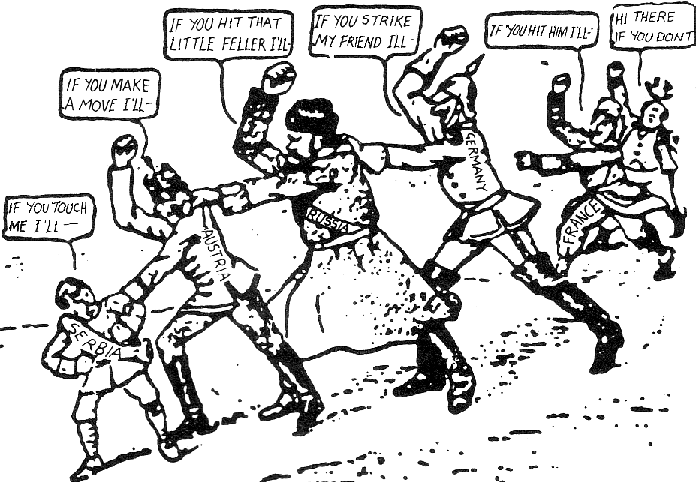
 The leadership of the Empire had decided on war within days of the assassination. Berchtold dispatched an emissary to Kaiser Wilhelm who decided in counsel with his Imperial Chancellor Theobald von Bethmann-Hollweg gave the Austrians a “blank cheque” of unconditional support for war against Serbia. Berlin was confident that “the Balkan crisis could be localized” and “advised Vienna to “proceed with all means at its disposal” and that Germany would support Austria-Hungary “come what may.” In doing so they willingly ignored the wise counsel of Otto Von Bismarck who considered the Balkans “not worth the life of a single Pomeranian Grenadier.

After they received German support the Austrians did everything that they could to ensure that war would occur. Their demands of Serbia were intentionally designed to be unacceptable to that country and they held key information from their German allies in the three weeks after they received the unconditional German support.

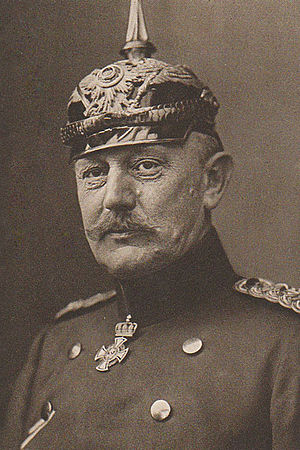
300px-Vonmoltke

Helmuth Von Molkte: “no alternative but to fight a preventive war…” 

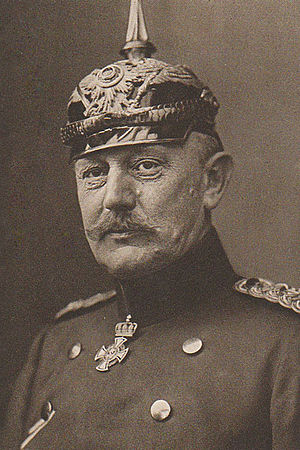
 German militarists, particularly the Chief of the General Staff Helmuth Von Molkte the younger saw the coming conflict in racial and cultural terms. Von Molkte said that the coming war   would come “sooner or later” and be a war “primarily a struggle between Germans and Slavs” and compared Serbia to an “abscess.”  As the war cloud built Von Molkte told the Foreign Secretary von Jagrow that there was “no alternative but to fight a preventive war so as to beat the enemy while we could still emerge fairly well from the struggle” ignoring the advice of the Iron Chancellor Otto Von Bismarck who counseled “Preventive war is like committing suicide out of fear of death.”

d345009d3a48

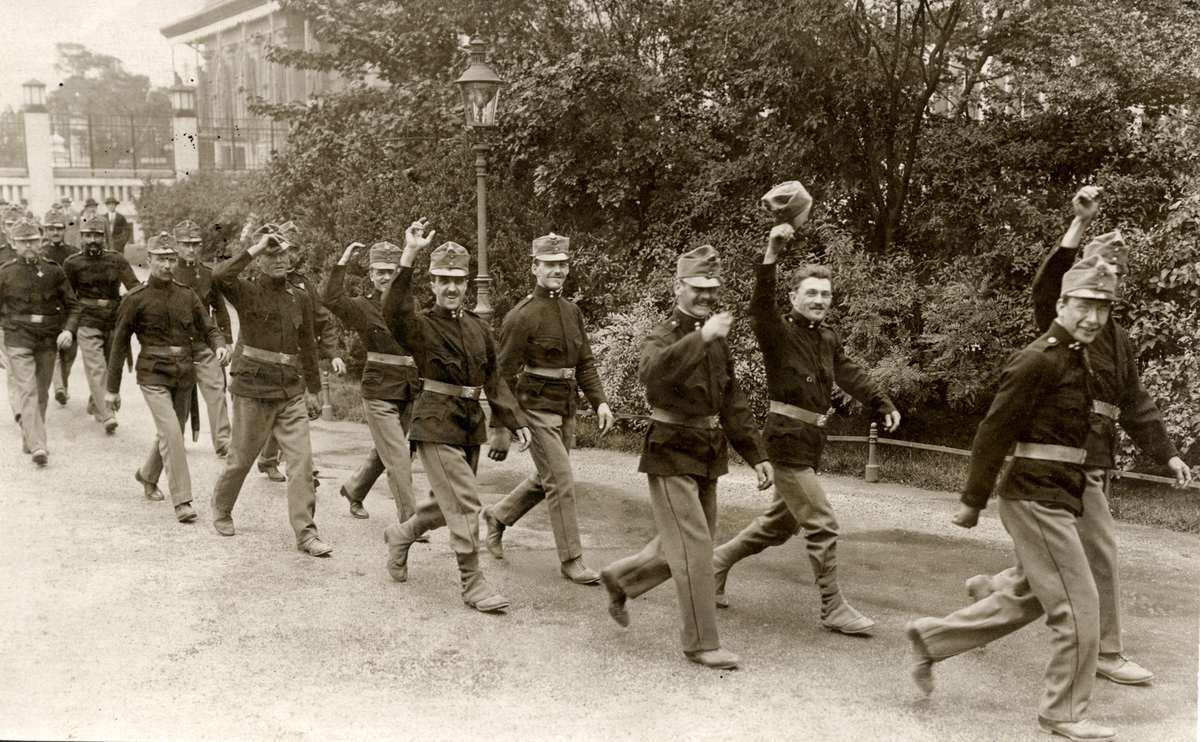
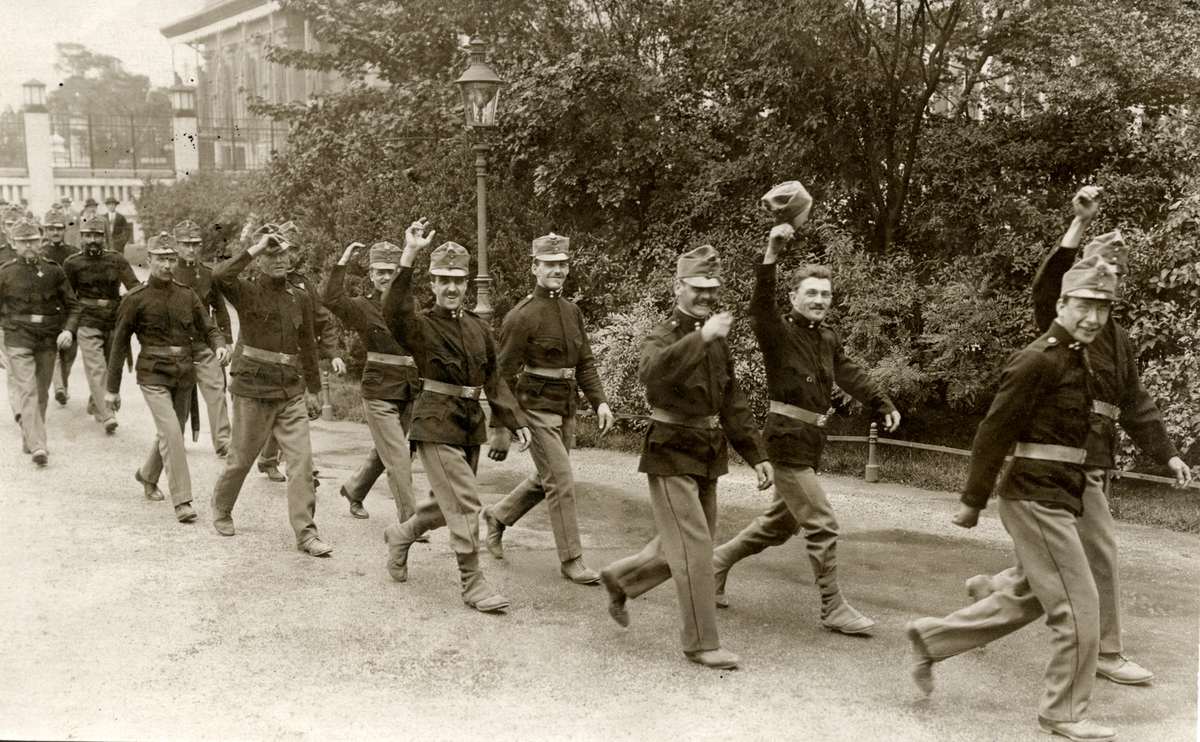
Austrian Reservists going to war

 The Austrians felt that the threat from Serbia combined with internal political factors related to the Hungarian and other Slavic regions of the Empire, and the increasing influence of Russia and Germany in the Balkans was an existential threat. At the same time they were poorly prepared for war. Their military was large but poorly trained and equipped.  Their national infrastructure, industry and railroads were ill-prepared for the demands of war. Their German allies had not planned for war either and were critically short of the required stocks of ammunition needed for a general war in Europe.

d8c27e8a26d2

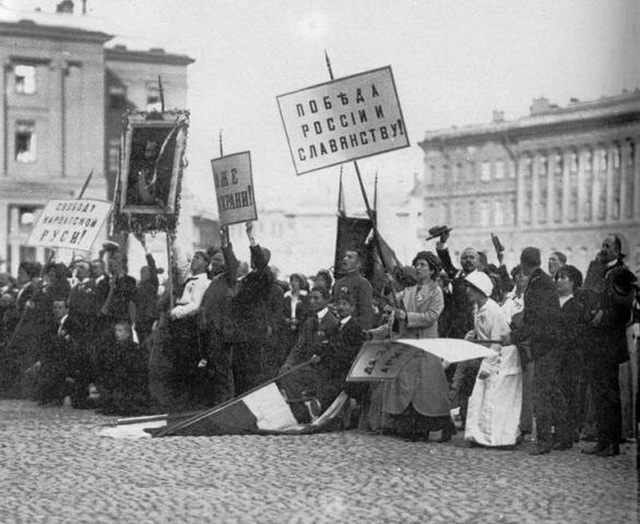
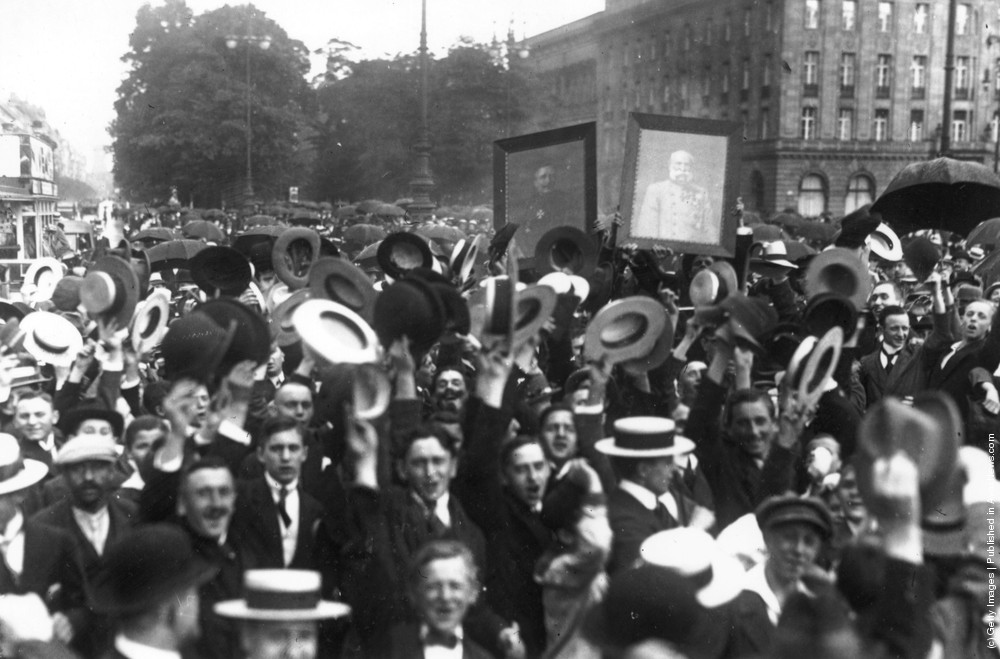
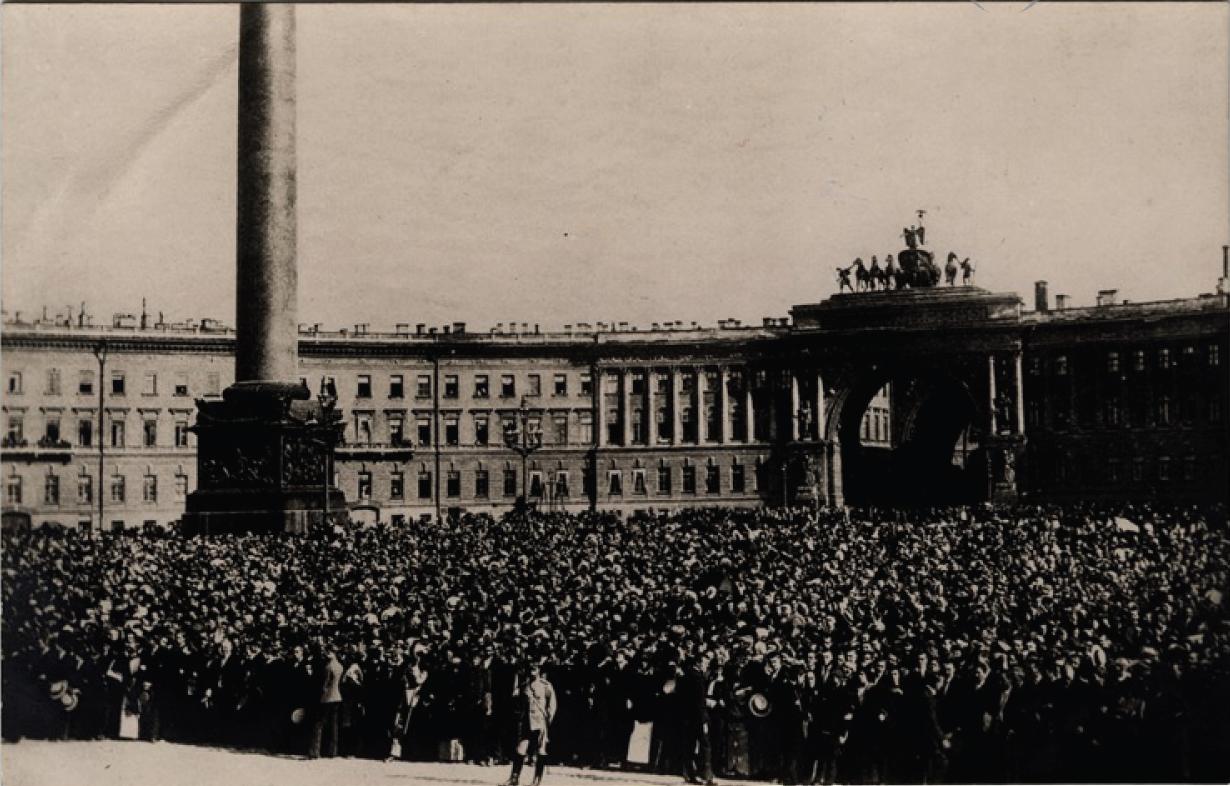
Cheering crowds in Petersburg

 The Russians were heavily invested in the Balkans linked to other Slavic people by culture, language and religion. The French were bent on revenge against the Germans for the debacle of 1870 and had no stake in what happened in the Balkans. The British a few years prior to the war had told the Belgians not to expect support if they were invaded by Germany, but declared war to “protect Belgian neutrality.”

f0268cf28513

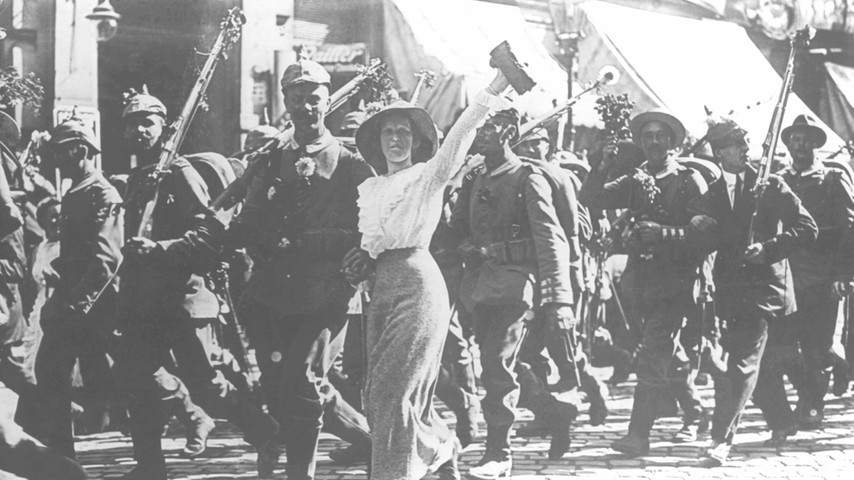
German wives and girlfriends walking alongside the Landser…

 The Austrians thought that with German support that even if Russia intervened that the war could be limited to Serbia. They were wrong. Just as the Germans had given the Austrians a “blank cheque” the French, both officially and unofficially were giving the Russians their own blank cheque. French Ambassador Maurice Paleologue assured Russian Foreign Minister S.D. Sazonov of the “complete readiness of France to fulfill her obligations as an ally in case of necessity.

93bb04dba7d3

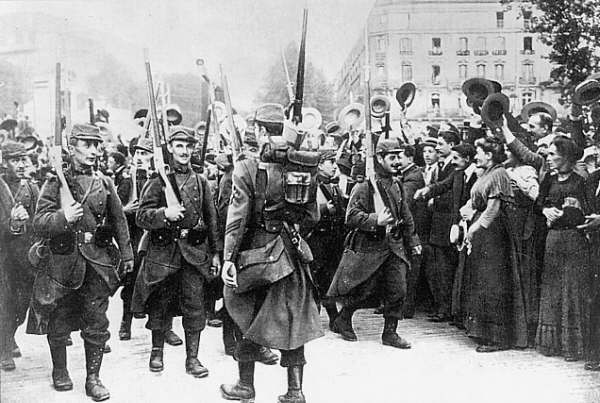
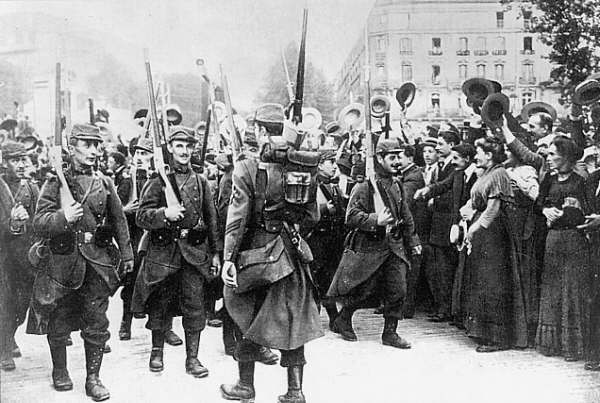
French Soldiers being cheered

 Austria declared war on July 28th, Russia followed by a partial mobilization to support Serbia on the 29th. Kaiser Wilhelm attempted to avert war at the last minute but Czar Nicholas II wrote “An ignoble war has been declared on a weak country. The indignation of Russia, fully shared by me, is enormous. I foresee that very soon I shall be overwhelmed by pressure to which I am exposed and compelled to take measures which will lead to war.”  This was met with German mobilization on the 30th and the French on August 1st. Declarations of war were exchanged and on August 4th in response to Germany’s refusal to respect the neutrality of Belgium Great Britain declared war against Germany.

d1d14e05247c

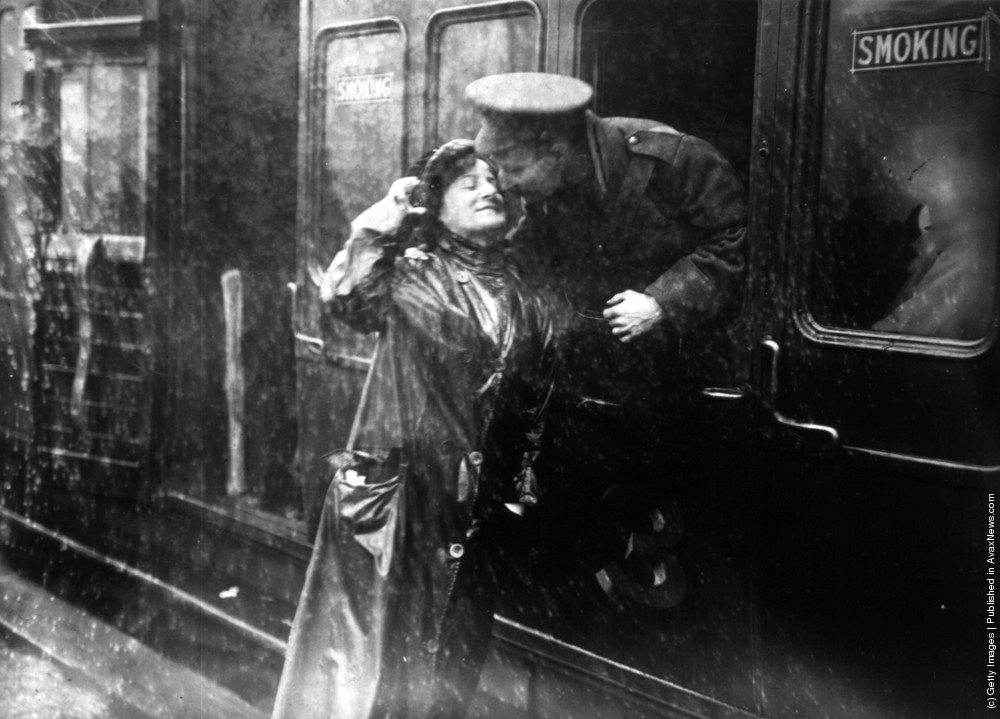
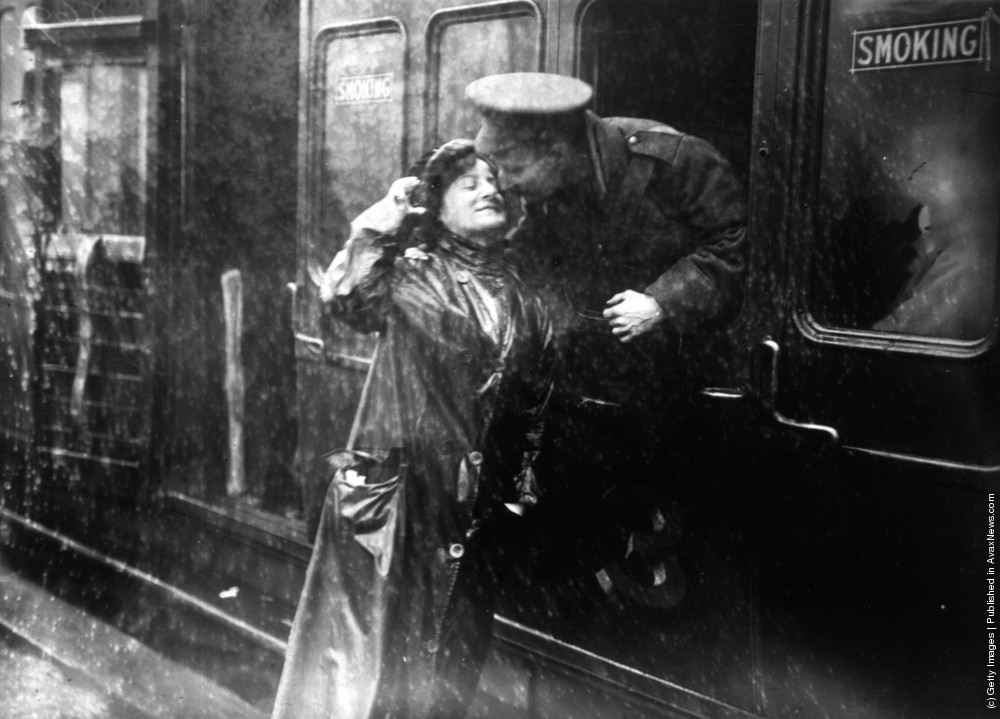
A final kiss from a British Soldier at Victoria Station

They were fateful days. Only the Austrians entered the war with any positive objectives, military or political goals. Every other power lurched into the war without clear objectives or end states. One writer noted that the war had “causes but no objectives.”

The world again finds itself perched at the edge of the abyss of war. There are people, smart and otherwise reasonable people who believe that they can wage “preventive wars” and rely on brute military force to solve nearly any problem. There are others that suggest that we should not criticize “allies” even when their decisions could be disastrous to them and the world, much as the Germans gave their Austrian brothers a “blank cheque.”  I wish that they would just look at the consequences before they commit nations and the world to more war that can only result in calamity and great suffering without benefit for anyone or any nation involved.

Those that counsel “preventive wars” need to remember the words of Otto Von Bismarck that “Preventive war is like committing suicide out of fear of death.”

Peace

Padre Steve+

3 Comments

Filed under History, Military, national security, Political Commentary

The Royal Baby: George Alexander Louis, A Name Fit for a Costanza

BP-eAg7CUAA_jm6.jpg-large

The Once and Future King George? Serenity Now! 

Like many Americans whose families left the old world, particularly England because of the Monarchy I was fascinated to see what Will and Kate would name their new baby. I was betting on William Robert which would give him the nickname “Billy Bob” or James Joseph “Jimmy Joe” or simply a Boy Named Sue, how do you do?

But alas I was wrong. The young Royal’s who unlike their American counterparts have never won a World Series went back to history for the name. The new babe, the firstborn son of William and Kate is His Royal Highness Prince George Alexander Louis of Cambridge.

George, Alexander and Louis. All very royal names, English, Russian and French, alas the Royals are still punishing their wayward cousin Kaiser Wilhelm for that unfortunate 1914-1918 bloodbath called the First World War otherwise Willy might have been in the name somewhere. For a normal Royal Voyeur history might have some meaning when it comes to names, but I am not normal, nor Royal, nor a voyeur. But I digress…

I expected that George might be in the running as the first name of the new Royal heir. It is a good name, George V and VI did pretty well of course George III was one of the reasons that we Americans are no longer British subjects but every name has its share of less than stellar progenitors. It could be worse, he could be a descendent of the infamous Edmund Black Adder who I’m sure would have something to say about the new Royal offspring.

If the babe’s name had been George William Edmund Henry or any other number of good historic Royal names I might have not give it another thought. However when I heard the combination “George Alexander Louis” my PTSD and Mad Cow afflicted brain went other places. I had heard these names before, but where?

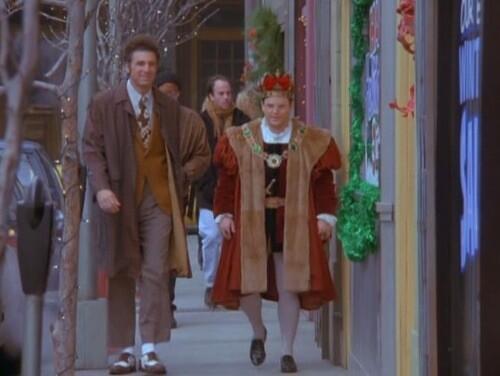
Then it occurred to me, Seinfeld… yes Seinfeld. George Louis Costanza, played so well by Jason Alexander. George, Alexander Louis Costanza Windsor. The name just sings, even better than “Seven.”

It was then that signals began reaching my tinfoil hat and entering my PTSD Mad Cow warped brain. No, this was not an accident. It was not just a reference to history. It was kismet. It was if Seinfeld had become a reality, it is the real “Summer of George” manifested in the offspring of Will and Kate.

I am blessed to have such a warped mind that allows me to see what most mortals cannot see, that somehow God or whatever divine or supernatural forces brought this about has a sense of humor. From now on the House of Windsor will be related to the House of Costanza.

Coincidence? I think not.

Serenity Now!

Peace

Padre Steve+

Leave a comment

Filed under History, Just for fun, News and current events, purely humorous

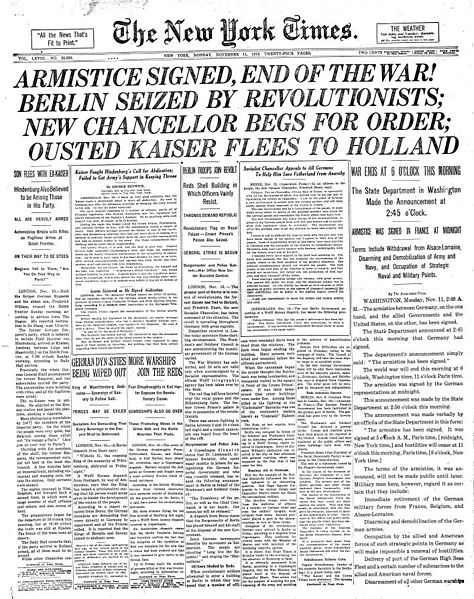
The 11th Hour of the 11th Day of the 11th Month: The Continuing Legacy of the Armistice of World War One

“Armistice Day is a constant reminder that we won a war and lost a peace.” General Omar Bradley

Germany was in pre-revolutionary turmoil. The High Command of the Army had told Kaiser Wilhelm II that military resistance was no longer possible and that the Army would not follow him back to Germany to put down the revolutionaries.

After four long years of war in which around 10 million soldiers and 7 million civilians were killed and another 20 million wounded the guns fell silent. In the end it was also the end of an era. It was then end of empires. The Russian Empire had collapsed in 1917 and been initially been replaced by a republic and then by a Soviet State and Czar Nicholas II and his family became victims of the revolutionary violence. The Austro-Hungarian Empire collapsed and in its place a hodge-podge of new states as well as liberated areas came into existence. The Ottoman Empire was carved up with its various parts being granted “independence” by the allies under the leadership of tribal leaders supported by the French or British.

Britain survived the war but not without crisis due to the massive losses in manpower and economic losses sustained during the war. France nearly fell in 1917 when the Army, demoralized by the unrelenting losses of years of brutal warfare mutinied. Belgium was devastated as was much of northern and eastern France.

Most surprisingly Imperial Germany collapsed. After knocking Russia out of the war in 1917 the Germans attempted a knockout punch against France. The offensive, code named Michael was successful at first and nearly succeeded, but in the end ran up against obstacles that could not be overcome, including the arrival of a massive and still fresh American Expeditionary Force. By the summer the tide had changed and the allies were on the offensive and threatening to break through the now vulnerable German lines. At home revolution was in the air, fed by the starvation of the German people and rising unrest units of the High Seas Fleet mutinied, as did units of the Army stationed in Germany proper. Workers and Soldiers Soviets took control of local and state governments.  Finally with everything on the line the Kaiser left Berlin to meet with his High Command at their headquarters in Spa, Belgium.

It was in Spa that the Kaiser found out that his reign was over. On November 9th General Wilhelm Groener, the Quartermaster General and the de-facto second in command of the Army told the Kaiser that the Army no longer supported him. It was a seminal moment. The Kaiser abdicated his throne and to prevent a communist takeover the leadership of the Social Democratic party proclaimed a republic that day. Hurried negotiations between the Socialists and the Army produced an alliance which averted the threatened Soviet takeover, but also doomed the new Weimar Republic. A hated state, it was blamed by monarchists and other conservatives for the German defeat and the humiliation of Versailles and hated by the communists, who viewed it as illegitimate.

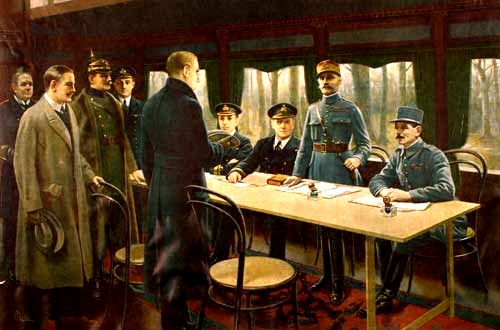
The Germans send a peace delegation to France which agreed to the armistice at about  5 AM on November 11th which stipulated that hostilities were to cease at 1100. The firing stopped and German troops withdrew to a nation totally unprepared for defeat. The allies maintained their naval blockade of German ports until the Treaty of Versailles was signed the following year, wracked by starvation, the great Influenza epidemic, economic collapse and civil war Germany never came to terms with its defeat. Eventually, a crippled Weimar Republic would fall in 1933. Adolf Hitler , a decorated veteran of the war in the trenches became Chancellor and and with an year the undisputed dictator of Germany in 1934.

During the interregnum between the wars the victors cobbled together states from the the former empires. Borders were drawn without respect to racial, tribal or religious divisions. The victors, particularly the British, French and Italians expanded their overseas empires at the expense of the former empires and the newly acquired lands.

The war that was to end all wars only brought about another even more bloody war that would end with the dropping of Atomic Bombs in Hiroshima and Nagasaki Japan in August 1945. Hitler, who led Germany to ruin died by his own hand in his bunker. The remnants of empires that had not collapsed in the immediate aftermath of the First World War did not survive the second. By the 1970s most of the former colonies of the great empires were independent, but not necessarily free. Tribal and religious conflicts as well as genocide followed in Africa and Asia. A “Cold War” between the former allies of the Second World War followed, only ending with the fall of the Berlin Wall on November 9th 1989, which was exactly 71 years to the day that Kaiser Wilhelm abdicated his throne.

Today, though it is nearly a century later the ramifications of that war, a war that was “to end all wars” are still with us. War and more revolution threatens in the Middle East even as former colonies wracked by tribal, religious or ethnic divisions within their artificially drawn boundaries continue to implode. Europe, buoyed by the hope of economic integration following the end of the Cold War is again being torn apart by ethnic and nationalist divisions as the Euro crisis deepened.

On November 11th 1918 few thought that the end of that war would still be felt today. After all, it was the “war to end all wars.”

Peace

Padre Steve+


1 Comment

Filed under History, Military, national security

Senate Joint Resolution 41: The Blank Cheque of 2012

“The Emperor Francis Joseph may, however, rest assured that His Majesty will faithfully stand by Austria-Hungary, as is required by the obligations of his alliance and of his ancient friendship.” Telegram from German Imperial Chancellor Bethmann-Hollweg to Austrian Government 

It seems like it is a rare occasion when either the House or Senate combine to pass any sort of bi-partisan measure. One wishes that when they did that it would be something actually that would benefit the people of the United States. However in recent times it seems that the only time that the Senate or House can agree on anything is when they vote to raise their pay or give their blessing to a new war, of course without actually going on record as declaring war.

In July of 1914 the Austro-Hungarian Empire sought German backing to go to war against Serbia for the assassination of Archduke Franz Ferdinand. The Balkans were boiling over. The Austrians felt that the chaos in the Balkans was an existential threat to their already fragile empire and aimed to shore up their position by crushing Serbia. However, since the Russian Empire supported the Serbs and was a direct threat to exposed areas of the Austrian empire in what is now Poland the Austrians sought a guarantee of German support for their action.

The Germans made the decision to support Austria knowing that if they did that it was likely that war with Russia, and probably France and Britain would ensue. Austria despite its limitations was Germany’s only real ally in Europe. By a series of diplomatic blunders Kaiser Wilhelm II managed to undo all of Otto Von Bismarck’s diplomacy following the German unification. He scuttled the treaty of friendship that the Bismarck and Kaiser Wilhelm I had with Russia and built a Navy that threatened Britain’s interests both against the protests of Bismarck. As Wilhelm’s Germany became more isolated the more it prepared for war and many of its military and political leaders felt that war was not only inevitable but desirable before Germany’s enemies, especially Russia became more powerful.

Now with war threatening Germany was isolated and decided to support the Austrians believing that even if war came that they would emerge victorious. It was a decision that would be fatal for the German Empire as well as the Austro-Hungarian Empire.

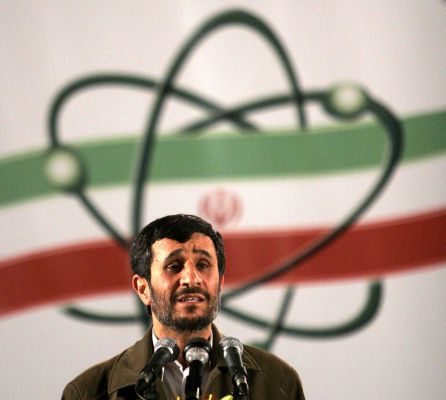
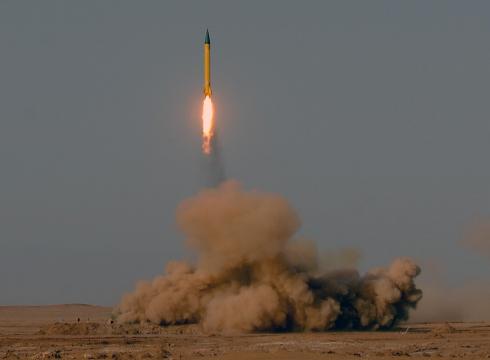
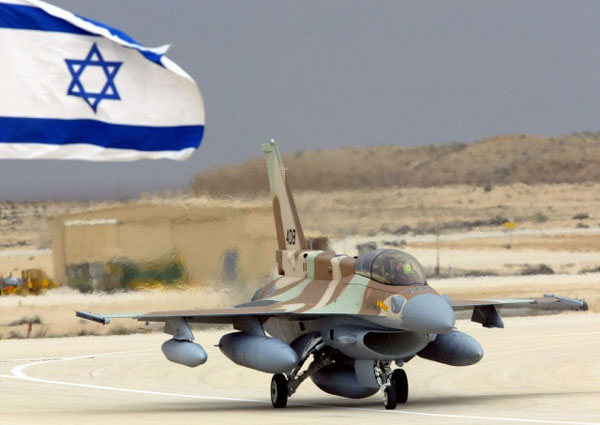
This week as the situation between Israel and Iran has continued to deteriorate with most experts believing that it is only a matter of time before Israel will launch a pre-emptive strike on Iran’s emerging nuclear weapons capability. Leaders of Iran and Israel have continued to escalate rhetoric as well as conduct clandestine operations against each other. Iran has been isolated by the west and by much of the Sunni Moslem world, particularly Saudi Arabia and the Gulf States. It believes that the west and the heretical Sunni’s desire the overthrow of its theocratic regime. Israel sees Iran’s possession of nuclear weapons as an existential threat and also faces local border conflicts with Hamas and Hezbollah. Israel now has to deal with the threat posed by Egypt which is now led by the Muslim Brotherhood.

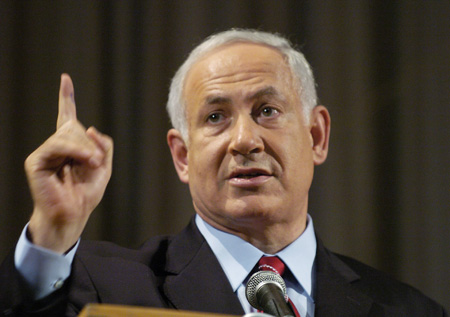
Israel’s leaders, especially Prime Minister Benjamin Netanyahu feel that time is very short before Iran reaches the stage where it can produce nuclear weapons. The United States, the European Union and the United Nations have also opposed the development of such weapons by Iran and instituted ever tougher economic sanctions but those nations and entities feel that more time is needed for sanctions to take effect.

Likewise the leaders of Iran including President Mahmoud Ahmadinejad, Supreme Leader Ali Khamenei and leaders of Iran’s Revolutionary Guards frequently talk of war with Israel which would lead to the destruction of the Jewish State. In light of Iran’s support for Hizbollah and involvement in the Syrian civil war Israel takes Iran’s threats seriously.

The tensions continue to increase and many believe that Israel could strike in the very near future the United States Senate in a rare moment of bi-partisanship the Senate passed what amounts to a “Blank Cheque” to Israel or the President to take action against Iran. In a vote Friday it passed Senate Joint Resolution 41 by a vote of 90-1. Amid all the domestic political jockeying, economic problems and yes the football season most people didn’t even know the vote occurred. The Senate voted it on the Friday that they recessed until after the November elections. The resolution stated that the Senate:

“strongly supports United States policy to prevent the Government of the Islamic Republic of Iran from acquiring a nuclear weapons capability;

rejects any United States policy that would rely on efforts to contain a nuclear weapons-capable Iran; and

joins the President in ruling out any policy that would rely on containment as an option in response to the Iranian nuclear threat.”  http://thomas.loc.gov/cgi-bin/query/D?c112:2:./temp/~c1126dTHw8::

The lone vote of dissent was cast by Kentucky Republican Senator Rand Paul who said: “A vote for this resolution is a vote for the concept of preemptive war.”

The resolution in effect rules out and shackles any President using any form of diplomacy to deter Iran. Should Iran gain a nuclear capacity it effectively negates any form of deterrence, diplomacy or containment options other than war to stop Iran. In effect it gives the blessing of the Senate to either Israeli or American preventive war against Iran. The resolution is similar in this instance to the guarantee of Germany to Austria in 1914.

At this point I doubt that there is anything that will stop a war from happening. Too much has been invested by too many governments in ensuring that it will happen to stop it. Regardless of who is President of the United States Iran will continue its course until Israel strikes. When that happens all bets are off.

It will be a war designed to prevent a war but it will trigger events that will go well beyond a conflict between Iran and Israel. Others will be pulled in, the United States, NATO, the Gulf States, possibly Syria, Iraq, Pakistan and even Egypt. American and NATO forces in Afghanistan will be in great danger.

One would hope that we would learn from the mistakes of others. The great Otto Von Bismarck commented said “preventive war is like committing suicide out of fear of death.” Obviously we haven’t learned anything.

Pray for Peace

Padre Steve+


2 Comments

Filed under Foreign Policy, middle east, national security, News and current events

Days of Disastrous Decision Making: July 28th – August 4th 1914

The Austrian Declaration of War against Serbia

“No one starts a war–or rather, no one in his senses ought to do so–without first being clear in his mind what he intends to achieve by that war and how he intends to conduct it.” Carl Von Clausewitz 

It was a war that should never have happened. It was a war for which the belligerent powers could boast many causes but for which few had any real objectives.

It was a war in large part brought on by a declining empire’s fears. Fear of neighbors, ethnic minorities and its place among regional and world powers led the leaders of the Austro-Hungarian Empire to decide for war when the very unpopular heir to the throne Archduke Franz Ferdinand was assassinated in Sarajevo, the capital of the recently annexed province of Bosnia-Herzegovina on June 28th 1914.

Conrad von Hötzendorf: War was the only means of politics

It was a series of decisions by those in the government of the Empire that brought Europe and the world to war, a war which we still feel the effects of today. In particular the Chief of the General Staff Conrad von Hötzendorf, the Foreign Minister Leopold Berchtold and the aging Emperor, Franz Joseph.

Emperor Franz Joseph: “If we must go under, we better go under decently”

Hötzendorf had been a continual advocate of war in every situation. He lobbied for war in 1907 against Italy and Serbia, in 1908 against Serbia, Russia and Italy, in 1909 against Serbia and Montenegro, in 1910 against Italy and the list increased in the years leading up to the war. He fervently believed that “the use of armed force alone could retard the centrifugal forces of nationalism in the ‘multinational empire’; war was the only means of politics.” The Emperor, Franz Joseph was of the same mindset by 1914 and in the days following the assassination of Franz Ferdinand he gave his approval to the actions of Hotzendorf and the diplomacy of Berchtold which doomed the Austro-Hungarian Empire and would destroy and remake Europe within a span of four years.

Theobald von Bethmann-Hollweg: The Blank Checque

The leadership of the Empire had decided on war within days of the assassination. Berchtold dispatched an emissary to Kaiser Wilhelm who decided in counsel with his Imperial Chancellor Theobald von Bethmann-Hollweg gave the Austrians a “blank cheque” of unconditional support for war against Serbia. Berlin was confident that “the Balkan crisis could be localized” and “advised Vienna to “proceed with all means at its disposal” and that Germany would support Austria-Hungary “come what may.” In doing so they willingly ignored the wise counsel of Otto Von Bismarck who considered the Balkans “not worth the life of a single Pomeranian Grenadier.

After they received German support the Austrians did everything that they could to ensure that war would occur. Their demands of Serbia were intentionally designed to be unacceptable to that country and they held key information from their German allies in the three weeks after they received the unconditional German support.

Helmuth Von Molkte: “no alternative but to fight a preventive war…” 

German militarists, particularly the Chief of the General Staff Helmuth Von Molkte the younger saw the coming conflict in racial and cultural terms. Von Molkte said that the coming war   would come “sooner or later” and be a war “primarily a struggle between Germans and Slavs” and compared Serbia to an “abscess.”  As the war cloud built Von Molkte told the Foreign Secretary von Jagrow that there was “no alternative but to fight a preventive war so as to beat the enemy while we could still emerge fairly well from the struggle” ignoring the advice of the Iron Chancellor Otto Von Bismarck who counseled “Preventive war is like committing suicide out of fear of death.” 

Austrian Reservists going to war

The Austrians felt that the threat from Serbia combined with internal political factors related to the Hungarian and other Slavic regions of the Empire, and the increasing influence of Russia and Germany in the Balkans was an existential threat. At the same time they were poorly prepared for war. Their military was large but poorly trained and equipped.  Their national infrastructure, industry and railroads were ill-prepared for the demands of war. Their German allies had not planned for war either and were critically short of the required stocks of ammunition needed for a general war in Europe.

Cheering crowds in Petersburg

The Russians were heavily invested in the Balkans linked to other Slavic people by culture, language and religion. The French were bent on revenge against the Germans for the debacle of 1870 and had no stake in what happened in the Balkans. The British a few years prior to the war had told the Belgians not to expect support if they were invaded by Germany, but declared war to “protect Belgian neutrality.”

German wives and girlfriends walking alongside the Landser…

The Austrians thought that with German support that even if Russia intervened that the war could be limited to Serbia. They were wrong. Just as the Germans had given the Austrians a “blank cheque” the French, both officially and unofficially were giving the Russians their own blank cheque. French Ambassador Maurice Paleologue assured Russian Foreign Minister S.D. Sazonov of the “complete readiness of France to fulfill her obligations as an ally in case of necessity.

French Soldiers being cheered

Austria declared war on July 28th, Russia followed by a partial mobilization to support Serbia on the 29th. Kaiser Wilhelm attempted to avert war at the last minute but Czar Nicholas II wrote “An ignoble war has been declared on a weak country. The indignation of Russia, fully shared by me, is enormous. I foresee that very soon I shall be overwhelmed by pressure to which I am exposed and compelled to take measures which will lead to war.”  This was met with German mobilization on the 30th and the French on August 1st. Declarations of war were exchanged and on August 4th in response to Germany’s refusal to respect the neutrality of Belgium Great Britain declared war against Germany.

A final kiss from a British Soldier at Victoria Station

They were fateful days. Only the Austrians entered the war with any positive objectives, military or political goals. Every other power lurched into the war without clear objectives or end states. One writer noted that the war had “causes but no objectives.”

The world again finds itself perched at the edge of the abyss of war. There are people, smart and otherwise reasonable people who believe that they can wage “preventive wars” and rely on brute military force to solve nearly any problem. There are others that suggest that we should not criticize “allies” even when their decisions could be disastrous to them and the world, much as the Germans gave their Austrian brothers a “blank cheque.”  I wish that they would just look at the consequences before they commit nations and the world to more war that can only result in calamity and great suffering without benefit for anyone or any nation involved.

Peace

Padre Steve+

4 Comments

Filed under History, Military, national security, Political Commentary