Tag Archives: matthew 8: 8b-9

God’s Will?

battleofgettysburg-devils-den

Friends of Padre Steve’s World,

The late Father Andrew Greeley wrote, “We are born with two incurable diseases, life, from which we die, and hope, which says maybe death isn’t the end.”

With Judy recovering from her surgery and things looking much more positive than a few weeks ago I have been doing some reflecting. One thing that really impressed me was how Judy handled this from beginning to end. She was concerned and worried much of the time, of course, when you get diagnosed with Cancer you should be worried, because you never know what course the disease will take, and what might even happen during surgery or subsequent treatments. I know people who thought that they were on the way to recovery who died unexpectedly due to an adverse reaction to chemotherapy.

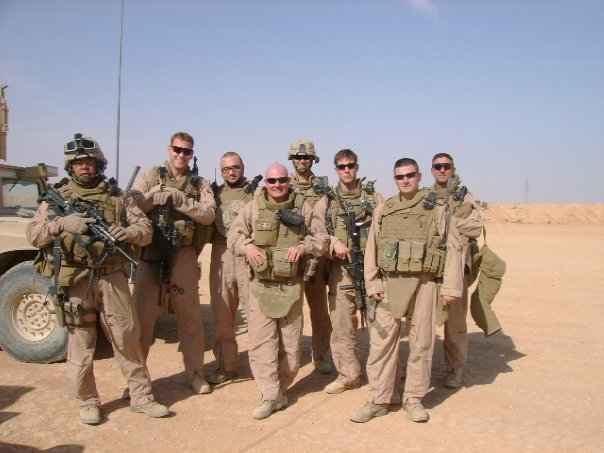
That being said Judy never asked “why me?” nor did she attribute this to “God’s will” or try to rationalize it by saying that “God was testing her faith” or any of this other quasi-providential but really fatalistic bullshit. Her reaction to this mirrored much of what I believed when I returned from Iraq when there were times that I easily could have been injured, wounded or even killed in incidents that were all too similar to others who were injured, killed or wounded. Of course here I am referring to visible physical wounds, not the Post Traumatic Stress and Traumatic Brain Injury that has so messed with my mind. Like Judy I never asked “why me?’ of attributed what happened to me to being “God’s will” or the “providence of God.”

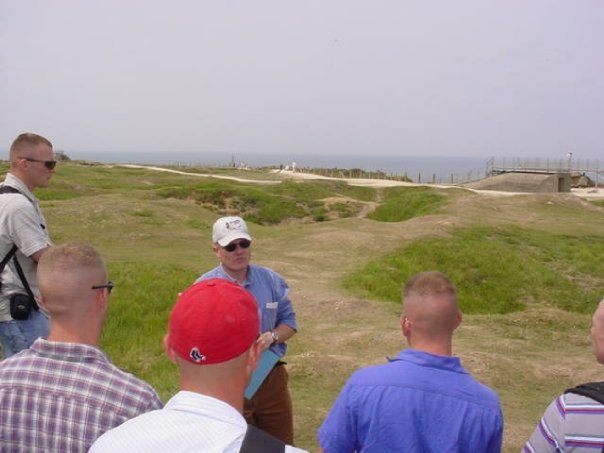
I tend to agree with Confederate Colonel William Oates whose 15th Alabama fought so bravely and unsuccessfully against Joshua Chamberlain and the 20th Maine at Little Round Top on July 2nd 1863 at Gettysburg. After the war, Oates, who was a Christian, reflected about God’s role in the battle and noted that he believed that God, “endowed men with the power of acting for themselves and with responsibility for their acts. When we went to war it was a matter of business, of difference of opinion among men about their temporal affairs. God had nothing to do with it. He never diverted a bullet from one man, or caused it to hit another, nor directed who should fall or who should escape, nor how the battle should terminate. If I believed in such intervention of Providence I would be a fatalist….”

I apply that to all of life, I do not believe that God intentionally afflicts people with disease, or directs events so they are killed. I don’t believe that it is God’s will for people to suffer from terrible diseases or directs bullets, speeding cars or other things which kill young men and women, children or other innocents.

I know that from the beginning of time that people have attributed things that they cannot endure to God, the Devil, or in some cultures gods and devils, or even to attribute such things as God’s punishment for the “sins” of individuals and even their descendants. I know that helps some people, sometimes I think even some of the writers of scripture to frame suffering; as a whole people need to credit or blame someone for terrible things that happen.

I cringe when I hear people say that they are suffering because it is God’s will, or that God is testing them, or I see something that a terrible natural disaster that kills thousands of people is an “act of God.” To be truthful I cannot believe that God is so cruel and capricious to be in that kind of business, and if indeed God is really that way I would rather be an atheist than go to seek a heaven ruled by such a being. And yes, I know that as a Christian that this puts me in a minority. I simply believe that as Jesus so wisely noted that “the rain falls on the just and the unjust alike,” in other words that it is called life, or the human condition, and all of us have to deal with it. To be somewhat crude I believe that shit happens and we have to deal with it.

I cannot imagine a God who wills, plans, and condones genocide, slavery,Infanticide, wars of aggression waged in his name, and every imaginable form of suffering known to humanity. I cannot image a God who so so earnestly believe inflicts such grievous suffering on his children. If we were to apply the standards of justice that we apply to human fathers who abuse or kill their children to God we would do ourselves good and we would probably lock him away for consecutive life terms, but our human need for explaining this prevents us from asking hard questions to the God that we claim to believe. Mark Twain wrote: “The best minds will tell you that when a man has begotten a child he is morally bound to tenderly care for it, protect it from hurt, shield it from disease, clothe it, feed it, bear with its waywardness, lay no hand upon it save in kindness and for its own good, and never in any case inflict upon it a wanton cruelty. God’s treatment of his earthly children, every day and every night, is the exact opposite of all that, yet those best minds warmly justify these crimes, condone them, excuse them, and indignantly refuse to regard them as crimes at all, when he commits them. Your country and mine is an interesting one, but there is nothing there that is half so interesting as the human mind.”

That being said I do live in hope, which is a part of my faith, a faith which is in things that I cannot understand nor can I prove. In this I do believe that God somehow gives people, even people that religious people call “non-believers” a grace to deal with tragedy, illness, suffering and death. I have to believe that because I have often seen non-Christians endure suffering and tragedy with a grace that many Christians, intent on finding a biblical or theological reason for such events do not display. When I think of this I am reminded of Jesus’s remarks about the Centurion who asked him to heal his servant and when Jesus offers to come tells Jesus that he is not worthy for Jesus to come under his roof, but to only speak the word and his servant should be healed (Matthew 8:5-13). The interesting thing about the passage is that the word used for servant is a Greek word for servant which only occurs once in the New Testament, the word Pais. In ancient Greek literature the term denotes a homosexual relationship, that of a man with his houseboy. In other words, Jesus healed a Roman, gentile, pagan Centurion’s homosexual lover, and had the nerve to say that he had “not seen such faith in Israel.” Since the writer of Matthew used the word Pais instead of the word doulos for servant it had to be deliberate and he had to know what he was doing, but I digress…

While I do not believe that God directs or permits death and suffering, I do believe that God is not absent in suffering that people endure, that God “Emmanuel” is with us, all of us; that God suffers with us, for that is the message of Jesus, the crucified one. I also believe that God who is with us, weeps with us as well as rejoices with us. That may not be a good answer for some who want to prove that God is behind everything, nor for those who do not believe in God at all.

I’m sure that some will consider what I wrote today as blasphemy, but then I have to agree with Mark Twain who wrote, “Blasphemy? No, it is not blasphemy. If God is as vast as that, he is above blasphemy; if He is as little as that, He is beneath it.”

Have a great night,

Peace

Padre Steve+

2 Comments

Filed under christian life, faith, Religion

Letter to a New Military Chaplain: Part Two The Minefields of the Heart

295_27076892058_2637_n-1

This is second part of a response to a question I had from a new Navy Chaplain. I have decided to post it here without any identification of the chaplain because I know that many men and women who are new to the military chaplaincy or who are exploring the possibilities of becoming a chaplain have the same questions. I was fortunate to have had a number of chaplains who at various points in my decision process and formation as a minister, Priest and Chaplain in both the Army and the Navy help me with many of these questions. Likewise I learned far too much the hard way and blew myself up on some of the “land mines” that almost all who serve as chaplains experience in their careers. This is the second of several parts to the letter and is my attempt to systematically explain my understanding of what it is to be a Chaplain serving in the military and in particularly the Navy. The first part is linked here:

Letter to a New Military Chaplain: Part One

“There is a twilight zone in our hearts that we ourselves cannot see. Even when we know quite a lot about ourselves-our gifts and weaknesses, our ambitions and aspirations, our motives and our drives-large parts of ourselves remain in the shadow of consciousness. This is a very good thing. We will always remain partially hidden to ourselves. Other people, especially those who love us, can often see our twilight zones better than we ourselves can. The way we are seen and understood by others is different from the way we see and understand ourselves. We will never fully know the significance of our presence in the lives of our friends. That’s a grace, a grace that calls us not only to humility, but to a deep trust in those who love us. It is the twilight zones of our hearts where true friendships are born.”Henri J. M. Nouwen

Dear Chaplain

The next section of our discussion is about the “minefields” that we so often encounter as Chaplains and to some degree as Ministers, Priests or Rabbis or other religious leaders. As I noted in the first section I am dividing these “minefields” into three major areas; the personal, the behavioral and the professional.

This section is about the “personal” minefields which I call the “Minefields of the Heart.” I call it this because it seems from the Christian and Jewish Scriptures the heart is the figurative locus of what we are, good and bad alike as human beings.

Of course there is always some spillage between the areas personal, behavior and professional areas and our behaviors and professional relationships are certainly influenced by the things that we hide deep in our hearts. As human beings we may try to compartmentalize our life to keep things apart such as keeping our personal life separate from our professional life, or hide behaviors from our friends, families, peers or co-workers; but the cold hard fact is whether we are aware of it or not each area impacts the other. If we are not aware of this fact, if we have little self awareness, if we have self awareness but try to live our lives with the illusion that we can separate our lives into neat little boxes we will most undoubtedly hurt ourselves, and as spiritual leaders harm those that come to us.

q_who

There is a scene of the last episode of Star Trek the Next Generation entitled “All Good Things” that comes to mind.  In it the being known simply as “Q” helps Captain Picard discover how his actions influence human history.

Q: You just don’t get it, do you, Jean-Luc? The trial never ends. We wanted to see if you had the ability to expand your mind and your horizons. And for one brief moment, you did.

Capt. Picard: When I realized the paradox.

Q: Exactly. For that one fraction of a second, you were open to options you had never considered. That is the exploration that awaits you. Not mapping stars and studying nebulae, but charting the unknown possibilities of existence.

You may wonder where I am going with this but it has to do with the personal minefields, those that exist inside of us, those that lurk beneath the surface which if we are unaware wreak havoc on everything else that we do. In the episode of Star Trek that I am referring to Captain Picard is allowed by Q to see the effects of his actions and to see how limited his thinking was.  The challenge for us is chaplains are to be aware of what Nouwen calls “the twilight zone in our hearts” and how what is at the depth of our heart impacts everything else that we do.

Too often though, mostly because of our own personal limitations and serious lack of real theological and pastoral formation involving self reflection and exploration we fail to see them. Like an uncharted minefield we are unaware of them until we either discover their existence through accident and “blow ourselves and others up” or until we listen to those that can see those twilight zones, those minefields better than we ourselves. Of course the latter, especially when it comes from those who love us, care for us and have our best at heart is the preferable method to learn about these things.

943043_10151694525692059_632653331_n

However, that being said part of this can be done through reading. A lot of us simply read “how to” type books when it comes to ministry. We seek direct easy answers in how to run our programs be it in the church, in a para-church ministry or in the chaplaincy. Believe me there are plenty of those kinds of books out there, not only that but a plethora of “self help” books that tell us the “three things we must know” the “five whatever’s to success” or the Seven Habits of Highly Defective People.” The sad thing is, even when these books contain nuggets of truth, they serve it like fast food and reduce it to the lowest common denominator. In a sense, even the most well intentioned of these “how to” or “self help” books promote a reductionist view of faith, spirituality, psychology and in some cases ethics and doctrine.

Reading is important, especially the hard stuff, philosophy, history, moral theology, but also things that you might not expect science fiction for example. In addition classic literature from antiquity and from non-western traditions also sheds light on those personal minefields. Heck we can even find truth in television and film, note my continued references to Star Trek. I find that God can speak to us in many ways.

As Christians we may also find lessons, insights and inspiration from the Bible that can be quite helpful. Unfortunately most of us have so many theological filters in place that we often miss the very things that would be most helpful to us. They can serve as blinders that keep us from sensing what the Spirit of God is trying to teach us. Our church, denominational or theological traditions as well as our hermeneutical methods often cloud our minds to what God is trying so hard to say. It was a problem that the religious establishment of his time had with Jesus, and often with the various prophets that preceded him whose stories we read about in the Old Testament.

1905_50393137058_7454_n

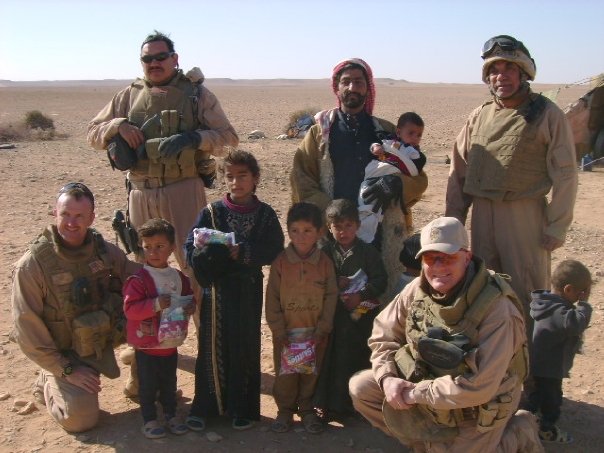
I am sure that others who are not Christians can say similar things about their faith, traditions and holy books. I remember an Iraqi General who I met who took the time to show me his well worn and read Arabic-English Bible. He was a Moslem, but he said that he learned so much from it because it was different than what was in the Koran and he meant no disrespect of his own faith by saying that. He had opened his mind to truth that others turn a blind eye to.

Some of the personal issues that prove to be deadly include what we don’t know about ourselves, usually dating back to childhood, how were raised, how we see God, if we perceive ourselves to be worthy of God’s love or worthy of the love and respect of others.  Those attitudes, especially those created as a result of negative relationships or even physical, emotional or sexual abuse, abandonment and rejection are powerful. Many of us like to pretend that we have gotten past those things but few of us actually do. Unfortunately there is a tendency for those issues to raise their heads in often very ugly ways as we minister as Chaplains.

For example: Let us say that we are distrustful of authority because of having an abuse parent, that we fear that no matter how well we do that there is always someone waiting to take us down. Let us say that we had previous experiences in the church, at work or maybe in prior military service where we were mistreated by those in authority.

I have found that if that condition is not dealt with that in a hierarchical organization such as the Chaplain Corps and the military that it is almost always fatal to the ability of the chaplain to minister in the organization. That is because the military is based on trust, our lives and mission depend on it. We have to trust the chain of command, we have to trust those that serve alongside of us and we have to trust our subordinates. There may be times when the chain of command fails and things don’t go right. There are toxic leaders and there are also toxic chaplains, one has to be aware that they are out there, know how to deal with them or survive under their command but one cannot presume that everyone is like that, trust is essential.

father

I find it interesting that Jesus commended the faith of the Roman Centurion when instead of asking Jesus to come to his house and heal his servant simply said “But just say the word, and my servant will be healed. For I myself am a man under authority, with soldiers under me. I tell this one, ‘Go,’ and he goes; and that one, ‘Come,’ and he comes. I say to my servant, ‘Do this,’ and he does it.”Matthew 8: 8b-9 Jesus told the people around that “he had not seen such faith in all of Israel.” Jesus saw the virtue of the Centurion, a virtue that many of his own people were lacking.

That is just one of a myriad of personal issues that can trip up a Chaplain in the military. The fact is that issues of the heart those things that we don’t like to admit are true about us, things that we are unaware about or in outright denial about in our lives are the things that go to the “heart” of who we are.

As fa as the minefields of my heart, they too are many. However the one that gets me time and time again is my passion for justice and my visceral reaction to those that I believe are bullies. That comes from my childhood. As a Navy brat I was always the new kid in town, and being that I was kind of the short, shy and introverted kid I was also kind of a nerd, or geek. I was not gifted with speed or great athletic abilities and it took me a while to find my academic prowess. That meant that I often didn’t fit in and though I was generally well liked that I would on occasion be bullied and I learned to defend myself, not very well at times but well enough to as the Klingons say “to die an honorable death.”

Jeremiah the prophet, who admittedly was most certainly clinically depressed if you look at his writings did note that “The heart is deceitful above all things and beyond cure. Who can understand it?” Jeremiah 17:9 Depressed or not Jeremiah did seem to understand that what he and many writers of scripture call “the heart” is hard to understand, especially when it is our own.

Thus I go back to Nouwen’s comment about the “twilight zone of the heart” that we cannot see. That it is why as Chaplains we have to develop relationships with people who can help us see what is in the twilight zone of our hearts and lovingly come alongside of us, not just as colleagues but as friends.

Those people may be clergy or other chaplains, but then they may not be. Perhaps they are senior enlisted personnel, long time friends, teachers, spiritual directors, counselors or our God forbid our spouses, I jest about the latter because my wife can see things about things about me that I cannot see, she is incredibly wise.

The minefields that exist in our hearts are so varied, so diverse and so treacherous. They have the potential to affect so many other parts of our lives. Thus for us as chaplains if we are not careful they can be destructive not only to us, but to those that we serve as well as those that we presume to love.

295_26912097058_4309_n

When I look back at my career and I am honest about it, I can say without a doubt that most of the things that hurt me were a direct reflection of the minefields that were already present in my heart. When things that happened that I felt were unjust or threatening I reacted and quite often my reactions caused problems greater than what I was reacting to. All they needed was something to set them off. What I have come to understand is even though I have had a very successful and that I am now a Senior Officer that what lies in my heart can still blow me up and that I need to always be careful of those minefields that exist in the twilight zone of my heart.

Lao Tzu said: “Watch your thoughts; they become words. Watch your words; they become actions. Watch your actions; they become habit. Watch your habits; they become character. Watch your character; it becomes your destiny.”

That is the key, those things that emanate from the deepest recesses of our hearts are full of minefields and we need to guard our hearts and minds in this ministry that we are privileged to have as military chaplains.

Peace

Padre Steve+


4 Comments

Filed under christian life, faith, Military, ministry, Pastoral Care, philosophy, Tour in Iraq, US Navy