Tag Archives: navy expeditionary combat command

To Iraq and Back: A Bus Ride to Carolina

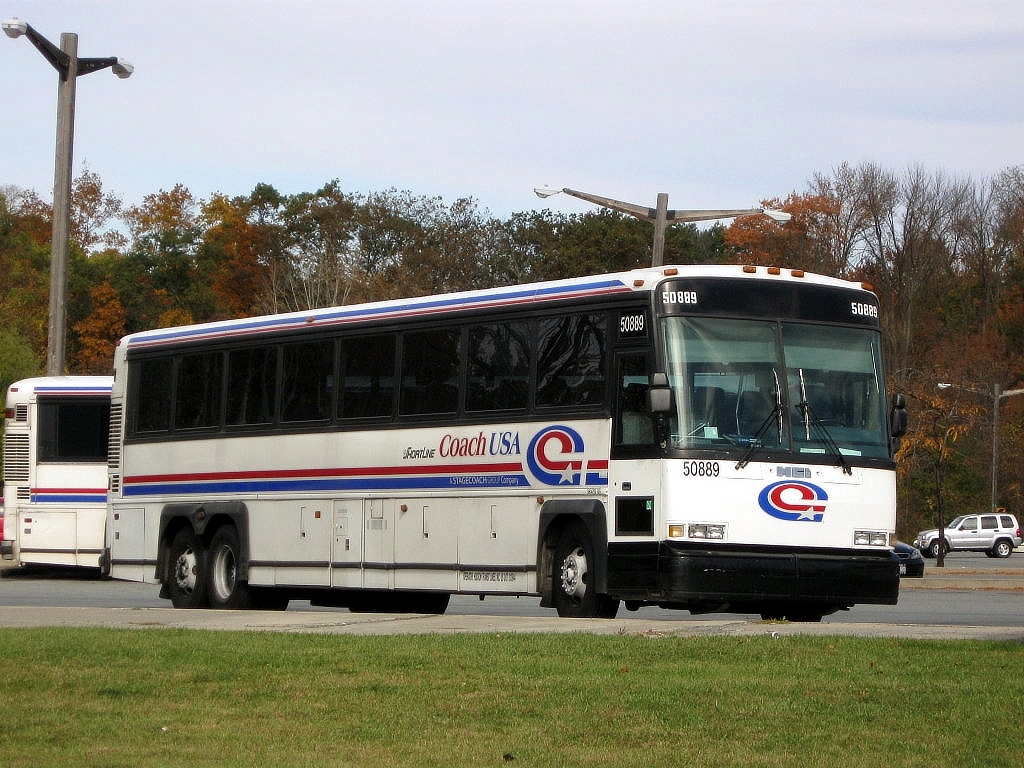
Coach_USA_ShortLine_50889

This is another installment of my To Iraq and Back series.

My CRV with Judy in it pulled away and Nelson and I went about our business. We staged our gear as we waited for the buses to arrive to take us to Fort Jackson South Carolina where we were to receive our training for the deployment.  As we talked other sailors arrived and soon the gear of over 100 sailors was stacked in rows of sea bags just off of the sidewalk.

Nelson’s parents, brother and sister had come to see him off.  His brother is a Navy First Class Petty Officer. His dad a former Vietnam era Marine Recon NCO who made several deployments “in the shit” as many Vietnam vets call tours in that combat zone.  They were really nice folks. Over the years I had heard much about them. They are close to each other and all are supportive of Nelson.

Nelson is a career amateur boxer; kick boxer, martial artist and more recently MMA fighter. He is active in children’s martial arts instruction and has been on Team USA and fought internationally.  During his previous deployment to Afghanistan he helped coach the fledgling Afghan National Boxing Team. A couple of months before this deployment he won the Arnold Schwarzenegger Classic.

So we waited while the other sailors gathered, some individually and some with family.  Some stood alone as couples while others mingled with each other.  For most this was a new way to see their sailor deploy.  No pier side goodbyes, no banners, no manning the rails by the crew as the ship was nudged away from the pier by tugs.

When you have a “normal” deployment of a ship or something like a Marine battalion it is a big deal. Many times media is there, sometimes there are speeches, but most of all there is the understanding that we are all in this together. We are going in as a unit.

In such times families say goodbye to their Sailors, Marines or Soldiers who are going to war together.  When you deploy as a unit there is familiar support system for the families we leave behind. This is not so when you deploy individually.  Those leaving on this day were very much strangers. We would train together, but few would stay together on the deployment.

If you are a ship or unit chaplain and deploy with your people there is a relationship. Generally you know each other, in this case we were strangers.  I was going to war with Nelson but we would not remain with any sailors we were with today when we got to Iraq. This was also the case for others who would serve in isolated posts, mostly working with the Army in support roles. Some would serve in specialized roles such as the Electronic Warfare Officers detailed to work on defeating IEDs and roadside bombs.

As others said their goodbyes and hugged each other I thought of Judy and knew that she was going to be down for some time but I felt that for once that she had an adequate support network. I was right about her being down for a while but this deployment would be harder on her than others and the support network proved woefully inadequate. So much for assumptions.

I looked at our gear as opposed to the others. Our gear was in large and rectangular bags of coyote or sand color. Most everyone else had traditional green sea bags, or what are known in the Army as “duffle bags.”  We already had our personal protective equipment of the EOD/Special Warfare type while others would receive Army issue at Fort Jackson. There are pros and cons to such a arrangement.  The pro is that we had great gear certainly some of the best in theater. The con was that we had to lug the great gear everywhere we went going to and coming back from war.  This would get old, but the benefits do outweigh the advantages when you are actually in a combat zone.

Finally an officer came out and began calling role and giving us our signed “official” orders.  After this we loaded our gear on the buses that would take us to Fort Jackson. These were the first of many buses we would ride and the first of many roll calls and gear load outs in the coming months.

Nelson and I got on the same bus which was not full and took seats near the front.  I got a seat alone because I was the senior officer on the bus and a chaplain to boot. This was not because I asked for it or hogged the seat.  It is actually fairly typical in such a setting where young enlisted guys don’t want to sit next to an officer they don’t know and some are afraid of chaplains because of experiences that they have had in civilian churches.

Many of the sailors had ever darkened the door of a church and many of those that have been in church have been burned in relationships with pastors or religious people.  I have found that many times, even those with a vibrant faith are hesitant to approach a chaplain that they do not know. Some are afraid that the chaplain might try to convert them be judgmental about of the manner in which they live their lives. So as a chaplain I try to be cognizant of this and be friendly and caring without scaring them away.  Of course I did build relationships with a quite a number of these sailors during the next few weeks but on this bus ride I was still an unknown quantity to them.

Sitting alone however was good for me since I general despise bus travel regardless of the company I keep.  For some reason my height works against me, I can never get my feet comfortably on the ground on these new tour buses and I have a terrible time getting comfortable.  Since bus travel takes forever to get anywhere the discomfort is palpable. Now I did a three month tour on buses in 1979 while touring as a spotlight tech for the Continental Singers and Orchestra across the US and in Europe.  Somehow the old Greyhound buses were more comfortable than the new tour buses.  Maybe I’m just nostalgic but they somehow fit people like me better than the fancy new buses.

When you travel by bus with a bunch of sailors, the majority of whom are at least 20 years younger than you, the experience can be entertaining. Part of course is a generational thing. I grew up and came of age the 60’s 70’s and 80’s. The majority of these sailors from the 90’s and 2000’s.

The trip was a chance for me to observe a lot about these sailors just by watching.  Some had their portable i-pods and MP-3 players going, others spent time talking on cell phones, a few read or talked among themselves, but the sailors near me gravitated to the DVD movie which was 300 the comic book style account of the Spartan’s defense of Thermopylae against the Persians.  As the Spartans made their stand I could see the young sailors who were going to war take inspiration from King Leonditis of Sparta.   Since we were going into a place where 50-100 Americans a month were being killed and hundreds more wounded I could understand the need for inspiration along with entertainment.

The bus ride itself was a lot like what I imagine that Minor League teams take in the Carolina League. Our journey reminded me of the bus rides in the movie Bull Durham.  The older guys staying pretty quiet and to themselves and the young guys having fun, playing games and joking around with each other,  We made a couple of stops, one at some little Interstate town with a fair amount of gas stations and a few fast food places.  About half the sailors went to the McDonalds while the rest ran down the street to the Burger King and Taco Bell. Once everyone had their fill the buses pulled back out onto the interstate.

When we finally got near Columbia the buses got of the Interstate highway and onto some small two lane state highway.  We drove down this road about twenty to thirty minutes and pulled into what appeared to be a tiny out of the way base. I wondered where the hell we were. Fort Jackson is a fairly large training base where thousands of recruits are trained every year.  Where we were certainly was not the Fort Jackson that I had imagined.

Instead of the main post we were at the South Carolina National Guard training facility called Camp McCready.  It is here that the Naval Expeditionary Combat Command has a training center set up with the Army to train sailors in basic combat tasks.

Our welcome that first night was simple.  We formed up, checked in, got our linens for our standard issue military beds and were marched to dinner at the chow hall or in the Army vernacular the DFAC by our newest and bestest buddies, our Army Drill Sergeants.  We were met at the DFAC by a civilian.  I can’t remember his name but this guy was most congenial and he put the RED in “Redneck.” He joked with everyone that came through the line, asked where people were from and what they did.  When he found out that I was a chaplain he began to ask me for a joke every meal thereafter. As such nearly every meal would be entertaining.

As Nelson and I sat down for chow with a couple of other sailors we looked at each other.  He said: “Boss I don’t think some of these guys know what is coming.”  I said “I think that your right partner, hopefully they adjust and do well.”  The other sailors, both more senior petty officers nodded in agreement.

Going back to the barracks I met some of the other officers enjoying their first night at Camp McCready.  More sailors from NMPS San Diego were due in later. I introduced myself to a number of the officers near me and engaged in some rather surface pleasantries. When lights out was called lay down on the same type of Army bunk bed that I had first encountered some twenty five years before at Camp Roberts California and Fort Lewis Washington.  I swear the sheets, blankets and pillowcases were of the same vintage.

Much was still on my mind when I laid down and my mind was still thinking about the trip to base with Judy and the final kiss goodbye. I was troubled by it and how I had handed things. Despite that I fell asleep fairly quickly. It had been a long day and coupled with the lack of sleep and stress of the previous couple of days I was tired.

Peace

Padre Steve+
Leave a comment

Filed under iraq,afghanistan, Military, ministry, Pastoral Care, to iraq and back, Tour in Iraq, US Navy

To Iraq and Back: Prelude: I was Born for This

295_27076757058_7361_n-1

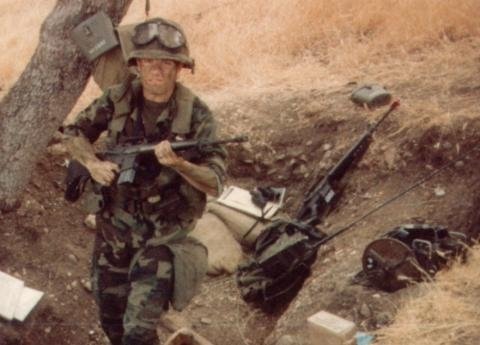
Me in 1982 

This is the first actual chapter in my series “To Iraq and Back: Padre Steve’s War and Return.” I wrote last night that I was going to be doing this and I figure that there is no time like the present to start. Just about 6 years ago I was preparing to deploy to Iraq as an individual augment supporting the US Marine and Army advisors to Iraqi Army and Security Forces in Al Anbar Province. After 6 years I think I can finally complete my literary account of my experiences in Iraq, my return and subsequent struggle with Post Traumatic Stress Syndrome (PTSD). 

Though I am not certain, I do think that many of us were born for what we feel called to do. As bit of a theologian I can honestly say that I am not a Calvinist or strict Augustinian who believes that we are simply playing out some predetermined role or fate on earth. Neither am I a fatalist but I really do feel, that whether it was something God ordained, something genetic or a product of my environment growing up, that I was born to do what I do.

As one who has some training as well in psychology and pastoral care I also understand that the human mind is a very complicated lump of gray matter. I know that we as human being as products of our genetic make up, our upbringing and environment, education, spiritual formation, relationships ad infinitum, ad nauseum.

So I know what I believe about my calling to serve in the military and the priestly vocation cannot be scientifically proven. That being said, I believe and that belief in my calling survived even in my times of unbelief.  A paradox for sure, belief and unbelief coexisting at the same time in the same person, but Father Andrew Greeley said it well in his novel The Bishop and the Beggar Girl of St Germain: “Most priests, if they have any sense or any imagination, wonder if they truly believe all the things they preach. Like Jean-Claude they both believe and not believe at the same time.”

My tour in Iraq in a sense was the culmination of my calling, a call that I felt at a very early age, to serve in the military and later to be called to serve as a Priest in the military. I have long figured that to have served a full career in the military in time of war and not to have gone forward into danger to do what I have trained all my life to do.

I have a hard time not remembering when I wanted to serve in the military and serve in combat. That may sound strange but for some reason, even though I was not encouraged to follow this path it was something that growing up as the son of a Navy Chief Petty Officer who served at the Battle of An Loc in the Vietnam War that I felt was my destiny. Maybe it is faith, maybe it is some sort of mysticism or even fatalism, but I do believe that for good or for bad that I am doing what I was born to do.

George Patton commented: “A man must know his destiny. if he does not recognize it, then he is lost. By this I mean, once, twice, or at the very most, three times, fate will reach out and tap a man on the shoulder. if he has the imagination, he will turn around and fate will point out to him what fork in the road he should take, if he has the guts, he will take it.”

I am sure that my family and my earliest friends can testify to my love of all things military and the nearly romantic calling that soldiering had on my life. At nearly every turn in life I have responded to the military calling by volunteering for assignments that would place me closest to the action. There were times that my wishes were thwarted and my desires placed on hold, but they never died.

I served on the Fulda Gap in the Cold War and missed serving in ht First Iraq War because I had left active duty to attend seminary and my National Guard unit just missed being mobilized. I did support the Bosnia operation as a mobilized Army Reserve Major and during that mobilized period of service was told that I was not a place for me in the Regular Army. However, a few months after my last active reserve posting I was given the chance to apply for active duty as a Navy Chaplain. Less than 7 weeks after the first talk with the Navy I resigned my Army Reserve commission as a Major and accepted a lower rank, that of a Navy Lieutenant to enter active duty in February 1999.

The Marine unit that I was serving with in 1999 came very close to being sent to the Kosovo crisis and had Slobodan Milosevic not made a last minute peace deal after a 70 day air campaign I am sure I would have ended up there.

555306_316970661755579_1118848704_n

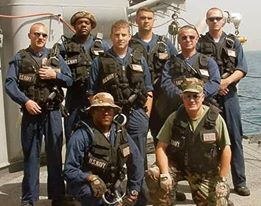
With my Boarding Team, April 2002 aboard USS Hue City

However it was 9-11-2001 that changed everything. I was in Camp LeJeune North Carolina with the 2nd Marine Division when the hijacked aircraft hit the Twin Towers and the Pentagon. Shortly after those attacks I was transferred to the USS Hue City, a Aegis Guided Missile Cruiser. My first wartime deployment was in 2002 aboard Hue City supporting Operation Enduring Freedom and Southern Watch. On that deployment I served as an advisor to one of our boarding teams and took part in over 70 boarding party operations against Iraqi and other oil smugglers who were breaking the United Nations oil sanctions against Iraq.

We were in the yards when Operation Iraqi Freedom began and in the fall of 2003 I was assigned to the Marine Security Force Battalion. In my time at Security Forces I travelled around the world and often to the Middle East and Europe, but not to Iraq or Afghanistan. Because the elements that we sent to Iraq were too small to rate an organic chaplain I did not deploy with them, though I heard about the experiences of many of those Marines and Navy Corpsmen as they came to me for counsel when they came home.

Despite having spent time of the boarding teams and having deployed numerous other places in my career there were times that I felt like William Tecumseh Sherman, who missed the war with Mexico having been sent to California who wrote: “I have felt tempted to send my resignation to Washington and I really feel ashamed to wear epaulettes after having passed through a war without smelling gun-powder.”

In October 2006 I was assigned to Navy EOD Group Two and shortly thereafter my life which had been very active with more time spent away from home than with my wife since my call up in 1996 to support the Bosnia operation became much more complicated. While at EOD I was supporting very skilled sailors most of whom had deployed multiple times in the always dangerous work of defusing and defending against Improvised Explosive Devices, or IEDs, the signature weapon of the wars in Iraq and Afghanistan. I also was called to support sailors either preparing to go to Iraq or Afghanistan as Individual Augments or those that were returning home.  As I heard their stories, especially those serving as advisors with Iraqis or Afghani soldiers I knew that was what I needed to be doing.

In early 2007 a call went out seeking chaplains to serve in Iraq and Afghanistan in various roles that were not supported by unit chaplains. With the permission of my supervisory Chaplain, Captain Deborah McGuire who was at the Navy Expeditionary Combat Command I put my name in the hat and was notified that I would be sent overseas. I explained to Judy that despite her misgivings that I felt that Nelson and I were the most ready, qualified and prepared team to take on the mission. Needless to say that did not assuage her fears and concerns and an emotional distance began to grow between us.

Initially we thought it would be sent to Iraq, then it was Afghanistan, and finally the first week of June 2007 the orders came down for Iraq. My faithful assistant, Religious Program Specialist Nelson Lebron would go with me. It was the first time that an existing Religious Ministry Team had been tagged to take on an independent mission of this nature.

Our orders were to support Marine Corps and Army advisors in Al Anbar Province, a mission that was new because when the advisory teams were first formed no one thought about organic religious or spiritual support. It was assumed that chaplains from nearby units would suffice but the Army and Marines learned that the assumption was wrong and that the advisors needed their own chaplain support.

The next few weeks would be a whirlwind as we prepared to go. They would be weeks that were trying both individually and for our families and neither of us would realize how much we would be impacted by our time in Iraq, but in June of 2007 that was still a part of our yet uncharted future.

Peace

Padre Steve+

Next: The Preparations


Leave a comment

Filed under PTSD, to iraq and back, Tour in Iraq

Going to War: A Bus Ride to the Carolina Countryside

This is part four in my “Going to War” series. Previous parts are noted here:

Part One:Going to War: Reflections on My Journey to Iraq and Back- Part One

Past Two: Going to War: Interlude July 4th 2007

Part Three: Going to War: Wills, Living Wills, Immunizations Gone Bad and Christmas in July

Part Four: Going to War: Last Night together and a Kiss Goodbye

Nelson and I staged our gear as we waited for the buses to arrive to take us to Fort Jackson South Carolina where we were to receive our training for the deployment.  As we talked other sailors arrived and gear was stacked in rows of sea bags just off of the sidewalk.  Nelson’s parents, brother and sister were on hand to see him off.  His brother is a First Class Petty Officer and his dad a former Vietnam era Marine Recon NCO who made several deployments “in the shit” as many Vietnam vets call tours in that combat zone.  They were really nice folks.  Over the years I had heard much about them.  They are close to each other and all are supportive of Nelson.

Nelson is a career amateur boxer; kick boxer, martial artist and more recently MMA fighter.  He is active in children’s martial arts instruction and has been on Team USA and fought internationally.  During his Afghanistan deployment before he and I hooked up again he helped coach the fledgling Afghan National Boxing Team.  His last major title was just this year when he won the Arnold Schwarzenegger Classic.  The guy has more titles than you can imagine, his title belt collect could fill a room.  However, he was raised by a boxer, his dad.  His dad taught him and coached him growing up and helped Nelson win multiple New York State Golden Gloves titles.  His dad is a congenial man and who was very friendly, speaking English with a heavy Puerto Rican accent.  Nelson’s mom speaks some English.  Nelson tells a great story of the only time he was knocked out in a fight.  This happened at the Fort Apache Gym in the Bronx after Nelson had gone picking on his little sister when Nellie was about seventeen.  Nelson’s dad found out, told him to put on his gloves and get in the ring.  Nelson proceeded to talk trash to his dad as he got ready to fight and the first round got quite a few hits in on his dad.  In between rounds according to Nelson’s account he told his dad to quit, that he was too old to be in the same ring with him.  Nelson said that his dad simply commented “I was just letting you taste the water.”  The second round began and Nelson was hit by a combination from his dad, which he says “rung his bell” and made him “see stars.”  He remembers trying to get up and not being able to while his dad was talking trash to him.  I cannot do the story justice but meeting Nelson’s family was a joy.

So we waited while the other sailors gathered, some individually and some with family.  Some stood alone as couples while others mingled with each other.  For most this was a new way to see their sailor deploy.  No pier side goodbyes, no banners, no manning the rails by the crew as the ship was nudged away from the pier by tugs.  When you have a “normal” deployment of a ship or something like a Marine battalion it is a big deal.  Media is there, sometimes there are speeches, but most of all there is the understanding that we are all in this together.  The families say goodbye to their Sailors, Marines or Soldiers who are going to war together and leaving some kind of familiar support system for the families.  This is not so when you deploy individually.  We may have been going off to train together, but few would stay together on the deployment.  Normally as a chaplain you are a known quantity to the people that you go to war with.  I was going to war with Nelson but we would not remain with any sailors who were going through this process with us.  I know that was the case for others who would serve in isolated posts, often without any other Navy personnel, mostly working with the Army in support roles, and specialized roles such as the Electronic Warfare Officers detailed to work on defeating IEDs and roadside bombs.  As others said their goodbyes and hugged each other I thought of Judy and knew that she was going to be down for some time but I felt that for once that she had an adequate support network.

I looked at our gear as opposed to the others.  Our gear was in different deployment bags, ours were large and rectangular and more of a coyote or sand color while most everyone else had traditional green sea bags, or what are known in the Army as “duffle bags.”  We had all of our personal protective equipment or the EOD/Special Warfare type while others would receive some variation of Army issue at Fort Jackson.  There are pros and cons to such a arrangement.  The pro is that we had great gear certainly some of the best in theater.  The con was that we had to lug the great gear everywhere we went going to and coming back from war.  This would get old, but the benefits do outweigh the advantages when you are actually in a combat zone.

Finally an officer came out and began calling role and giving us our signed “official” orders.  After we were accounted for we were told to load our gear on the buses that would take us to Fort Jackson. I think there were four or five of these chartered tour buses  which as it turned out would be the first of many tour buses, roll calls and gear loads in the coming months, especially as we entered and exited theater.  Nelson and I got on the same bus which was not full and took seats near the front.  I got a seat alone because I was the senior officer on the bus and a chaplain to boot. This was not because I asked for it or hogged the seat.  It is actually fairly typical in such a setting where young enlisted guys don’t want to sit next to an officer and some are afraid of chaplains because of experiences that they have had in civilian churches.  Some of the young folks have never darkened the door of a church and many of those that have been in church have been burned in relationships with pastors or really over the top religious people.  I have found in my career that until they get to know a Chaplain a lot of them will be very careful in how they approach a chaplain, even those with a vibrant faith.  Some are afraid that the chaplain might try to convert them or disapprove of the manner in which they live their lives. So as a chaplain I need to be cognizant of this fact and be friendly and caring without scaring them away.  Of course I did build relationships with a quite a number of these sailors during the next few weeks but on this bus I was still an unknown quantity to them.  Sitting alone however was good for me since I general despise bus travel regardless of the company I keep.  For some reason my height works against me, I can never get my feet comfortably on the ground on these new tour buses and I have a terrible time getting comfortable.  Since bus travel takes forever to get anywhere the discomfort is palpable.  Now I did a three month tour on buses in 1979 while touring as a spotlight tech for the Continental Singers and Orchestra across the US and in Europe.  Somehow the old Greyhound buses were more comfortable than the new tour buses.  Maybe I’m just nostalgic but they somehow fit people like me better than the fancy new buses.

When you travel by bus with a bunch of sailors, the majority of whom are at least 20 years younger than you, the experience can be entertaining to say the least.   Part of course is a generational thing.  I am from the 60’s 70’s and 80’s.  These guys and gals are from the 90’s and 2000’s.  Music is different, culture is different, and the internet, cell phones, i-phones and Blackberries have revolutionized communications and life.  The trip was a chance for me to observe a lot about these sailors just by watching.  Some had their portable i-pods and MP-3 players going, others spent time talking on cell phones, a few read or talked among themselves, but the sailors near me gravitated to the DVD movie which was 300 the comic book style account of the Spartan’s defense of Thermopylae against the Persians.  As the Spartans made their stand I could see the young sailors who were going to war taking inspiration from King Leonditis of Sparta.   Since we were going into a place where 50-100 Americans a month were being killed and many others wounded and maimed I could understand the need for inspiration along with entertainment.

The bus ride itself was a lot like what I imagine that Minor League teams take in the Carolinas like in the movie Bull Durham, the coaches and older players mixed in with a lot of young guys.  The older guys staying pretty quiet and to themselves and the young guys having fun, playing games and joking around with each other,  We made a couple of stops, one at some little Interstate town with a fair amount of gas stations and a few fast food places.  About half the folks went to the McDonalds where we pulled in while the rest ran down the street to the Burger King and Taco Bell.  Once everyone had their fill the buses pulled back out onto the interstate.  When we finally got near Columbia the buses got of the Interstate highway and onto some small two lane state highway.  We drove down this road about twenty to thirty minutes and pulled into what appeared to be a tiny out of the way base.  I wondered where the hell we were.  Fort Jackson is a fairly large training base where thousands of recruits are trained every year.  Where we were certainly was not the Fort Jackson that I had imagined.

Instead of the main post we were at the South Carolina National Guard training facility called Camp McCready.  It is here that the Naval Expeditionary Combat Command has a training center set up with the Army to train sailors in basic combat tasks.

Our welcome that first night was simple.  We formed up, checked in, got our linens for our standard issue military beds and were marched to dinner at the chow hall or in the Army vernacular the DFAC by our newest and bestest buddies, our Army Drill Sergeants.  In the chow hall or DFAC we were met by a civilian running the line.  I can’t remember his name but this guy was really nice and put the RED in “Redneck.”  He made jokes with everyone that came through the line, asked where people were from and what they did.  When he found out that I was a chaplain he began to ask me for a joke every meal thereafter.  As Nelson and I sat down for chow with a couple of other sailors we looked at each other.  He said: “Boss I don’t think some of these guys know what is coming.”  I said “I think that your right partner, hopefully they adjust and do well.”  The other sailors, both more senior petty officers nodded in agreement.

Going back to the barracks I met some of the other officers enjoying their first night at Camp McCready.  More sailors to fill out the class were due later coming in from San Diego.  I introduced myself to a number of the officers near me and when lights out was called lay down on the same type of bed that I had first encountered some twenty five years before at Camp Roberts California and Fort Lewis Washington.  I swear the sheets, blankets and pillowcases were of the same vintage.  Despite that I fell asleep fairly quickly.

Leave a comment

Filed under iraq,afghanistan, Military, Tour in Iraq