Tag Archives: oil supply

Tension in the Gulf: Don’t Miscalculate; Speak Softly and Carry a Big Stick

“War is the unfolding of miscalculations.” Barbara Tuchman
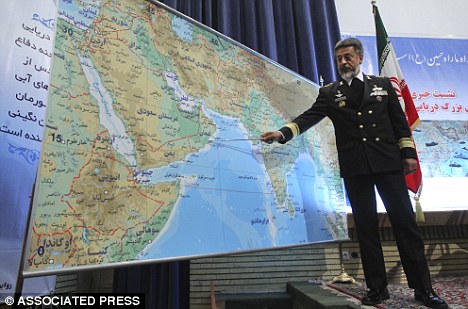
Iran’s navy chief Habibollah Sayyari briefs media on the naval exercise 

The greatest danger in the current war of words between Iran and the United States is the danger that the Iranians one side or the other will miscalculate the will, resolve and strength of the other.  Teddy Roosevelt made the comment “speak softly and carry a big stick.” The Iranians have been shouting loudly and brandishing a small stick and if they are not careful they will bluster their way into a naval war that they cannot win and that will cause significant economic and physical disruption in the region.

The Iranian Navy and Revolutionary Guards Naval Forces are about halfway into a 10 day series of exercises in the Gulf of Oman, the Strait of Hormuz and the Northern Arabian Gulf, or what they call the Persian Gulf. Iranian leaders have increased their rhetoric in regard to closing the Strait of Hormuz if more sanctions are leveled against them for their nuclear program.

The bellicosity of the Iranians comes at a time when they are feeling internal political pressure from Iranian young people, as well as external diplomatic and most likely espionage campaigns.  The latter are designed to slow down or halt their nuclear program which most analysts now believe to be designed to produce nuclear weapons.

For what it is the Iranian Navy can threaten the strait and maybe even close it for a limited time. It is possible if they ever launched a surprise attack on an isolated US or Western warship using their “swarm” tactics close inshore to Iran in the constricted waters of the strait or in a narrow part of the NAG that they could sink or cause severe damage to it.  They would probably mine the straits if they could do so before hostilities began or before sufficient forces could be deployed to stop them. Likewise their missile forces and special operations forces could cause some damage and chaos in the Gulf but the repercussions would isolate and devastate Iran.  However closing the strait or attacking a US or Western warship would be the end of Iran’s naval forces and cause more damage to the country than its leaders are willing to accept at least right now. The Iranians would find that they were fighting far more than the United States Navy should this happen and their Russian and Chinese supporters would more than likely do everything possible to dissuade them from trying this.  Since China imports the bulk of its oil from the Gulf it is unlikely that they would support the Iranians.

While such a direct attack is unlikely the possibility of an accidental war caused by miscalculation on the part of one side or the other is always real and should the Israelis strike Iran’s nuclear facilities Iran would certainly retaliate against Israel but also US Forces and installations in the Gulf and probably against the Gulf States and even Iraq.
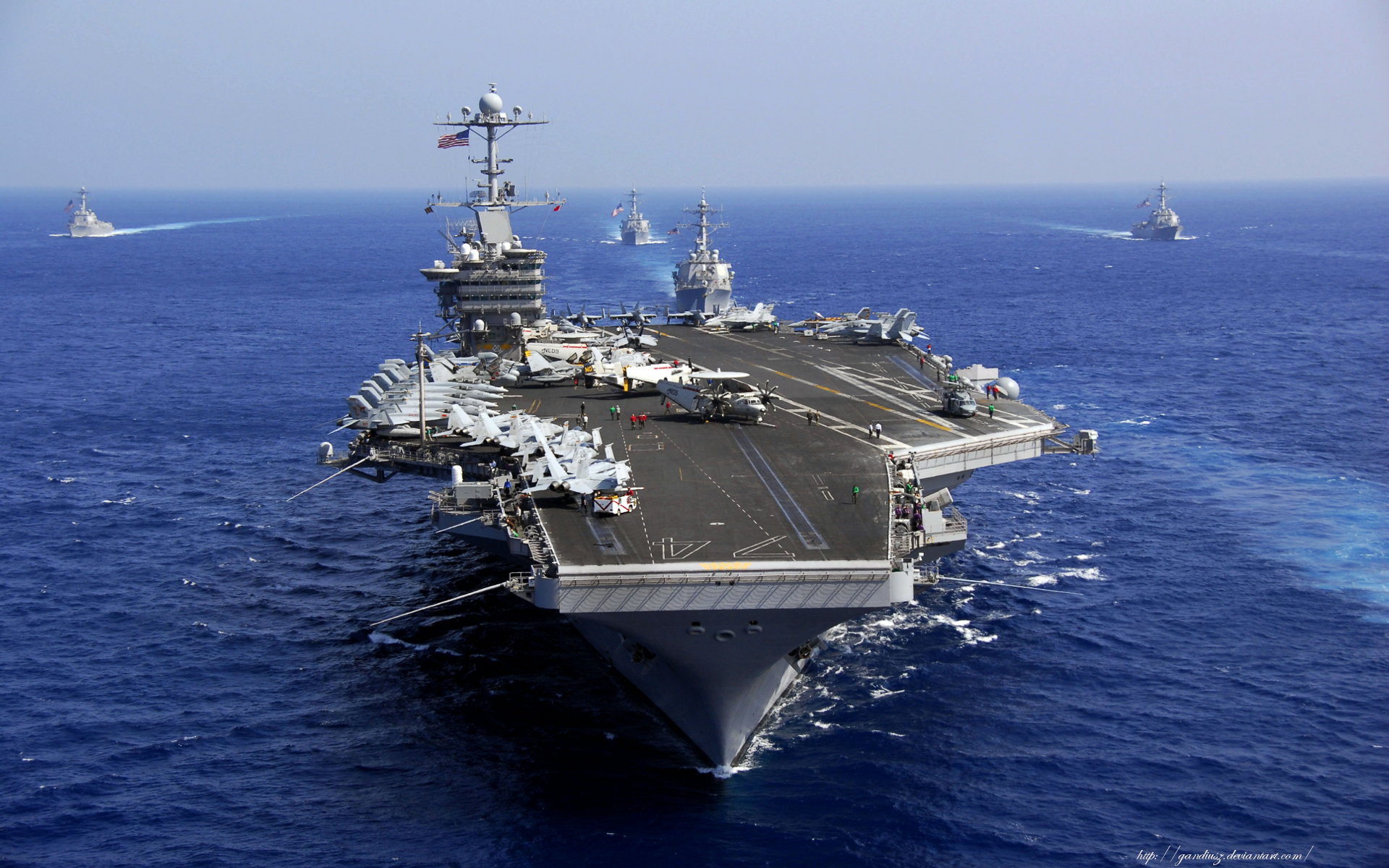
USS John C Stennis (US Navy Photo)

Regarding how such a campaign would be fought the United States would stand off a safe distance and pound Iranian naval, air and coastal defenses and not allow Iranian surface ships to get close enough to make a swarm attack.  This is a big reason that the USS John C. Stennis transited the straits and entered the Gulf of Oman (GOO).  Operating in the open seas gives the blue water US Navy the edge. The Iranian navy’s ships lack the range and endurance for sustained operations at sea and could not sustain a blockade. US attack submarines would hunt down the Iranian Kilo class subs before they could become a threat and US Naval Aviation assets would sweep the surface assets of the Iranian Navy and Revolutionary Guard Naval Forces from the sea while destroying Iranian coastal defenses on the islands in and the Iranian side of the strait.  Once the strait was cleared tanker traffic would resume and Iran would be the biggest loser.  History shows time and time again that light coastal naval forces are no match for a professional seagoing navy even if they score an occasional victory.

Much has been made about Iranian claims to have tracked the USS John C Stennis as she transited the straits.  That is nothing new, the Iranians have air, sea and land surveillance of the narrow straits. The fact is that US ships transit the strait and its approaches on high alert and have done so since the Tanker Wars of the 1980s.  Every Iranian move is watched by the US Navy.  Likewise while transiting the strait the ships of both sides communicate with each other regarding navigation.  It is standard practice.

Since I believe that the Iranians despite their rhetoric are far more prudent than some believe and that they will not launch an unprovoked attack. Even if they succeeded in temporarily closing the straits and even scoring some kind of naval victory by sinking a US ship the victory would be extremely short lived. US and other forces would stream to the region and devastate all that is Iran. The costs for the Iranians and their long term goal of regional hegemony would be too great for them to intentionally start a naval confrontation in the Gulf.  However the chances of either side miscalculating and stumbling into war should not be underestimated.

The biggest danger now is the potential for miscalculation but Iran’s long term goal of dominating the Gulf and acquiring nuclear weapons will probably keep them from attempting anything of this sort. That said there are factions in Iran that could try to use the threat of new sanctions to force a confrontation in the straits and for that we must be ready to meet the threat.  Iranian threats should not be disparaged nor their political and military will underestimated. To underestimate an Iran’s capabilities and will are extremely dangerous. At the same time we should not overestimate their capabilities and yield to their threats when they threaten to cut off the flow of oil from the Gulf.

The United States needs to follow Theodore Roosevelt’s advice and remember history as we follow the situation and ensure that whatever Iran does that we will not be surprised or unprepared.

Peace

Padre Steve+

Leave a comment

Filed under Foreign Policy, History, middle east, national security, US Navy

Japan’s Self Defeating Attempts to Become Economically Self Sufficient in the 1930s

This is the first of a two part series that explores the similarities of the United States in 2009 to Japan of the early 1930s.  It explores the topic of economic self sufficiency or “autarky” and how nations can put the proverbial cart before the horse in terms of seeking ways to become self sufficient.  The Japanese chose the path of military conquest seeming to forget the fact that they were dependent on natural resources and manufactured equipment to wage such a war by the nations that they were attacking.

In the early 1930’s Japan’s desired to emulate the economic self-sufficiency of the United States or to achieve autarky controlling its own economic destiny by securing sufficient natural resources.  Japanese industrial and military leaders felt that such was needed for economic expansion as well as military preparation and expansion.  Key resources such as oil, specialized steels and alloys, iron ore, coking coal, machining tools and even cotton were not readily available in Japan proper.

Japans’ goal was unrealistic based on the differences of the two countries. In the early part of the 20th century the United States was self-sufficient in most critical natural resources and was a key supplier to the world of oil, iron, coal and grain.  Additionally most of the United States’ resources were contained within its borders or provided to it in trade with nations that needed what the United States had to offer in manufactured goods.  Japan did not have this.  As a nation it had few natural resources on the home islands and even suffered food shortages that resulted in famine at times.  It was dependant on other nations for basic natural resources to power its economy and to feed its population. As a result some of its political, economic and military leaders looked to achieve autarky through conquest.

Unfortunately for the Japanese they were surrounded by numerous powers that stood in their way.  To the north was Russia, which they vanquished in the 1905 war, but in doing so ended up nearly bankrupt, though they gained the Korean peninsula. However, the Japanese now faced the Soviet Union with its immense military on the Manchurian border and subterfuge in the politics of China by their support of Mao Tse Tung’s Red Chinese forces.  The Japanese were able to gain some possessions by participating on the Allied side in WWI at the expense of Germany and China, though they did not achieve all they wanted and felt cheated by the Allies at the Versailles peace conference. The first step was to invade Manchuria and seize its natural resources in 1931.  However to gain more than what they could garner in Manchuria the Japanese would have to do so at the expense of China and the Western Colonial powers, France, Britain, the Netherlands and United States. Japan’s quandary was how to achieve autarky without resorting to war with multiple enemies.

The Japanese faced a sort of “chicken or the egg scenario” as to what came first. In order to wage war Japan needed iron ore, coking coal and industrial salt from North China, oil from Borneo and Southeast Asia, cotton from America to make finished products for the American market. Likewise it needed special steels and alloys from the US to supply the war effort. The US was also the primary source of Japan for machine tools and other sophisticated industrial equipment needed for Japanese industry.  To go to war the Japanese required the imports of the very nations who stood in their way.

Yet to go to war entailed great risk, Japan did not have the resources, especially oil and metals with which to sustain their war effort without maintaining foreign trade with the very countries that they would have to engage in war.  All of these factors together made autarky in the style of the United States unreasonable through military means alone. It is likely that the Japanese could have achieved more by using more skillful diplomacy during the 1930s.  Had they built a mutually beneficial alliance with China, did more to exploit the natural resources of Manchuria and negotiated favorable trade deals with the United States they probably would have accomplished more than they did through using military force.  Some Japanese reformers attempted to make some of these reforms but were unsuccessful as the military particularly the Imperial Army, the government and industrial concerns became locked into the military option.

By contrast during its growth period the United States did not have to deal with significant military powers as it moved west across North America, only Native American Tribal groups.  The only power capable of stopping the United States was Great Britain.  While there were tensions between the United States and Great Britain along the Canadian border and Pacific Northwest during the 1850s, the United States never faced a significant external threat.  Thus the United States using very little military power gobbled up the continent and established its status as the Hegemon of the Western Hemisphere.  Japan could not do what it needed to do unless it negotiated with or conquered the powers that had significant military power to confront the Japanese and economic ability to strangle the Japanese economy.

This period should interest to any student of history, foreign policy and economics.  The study of the period of Japanese history needs to be considered by policy makers when considering war to obtain natural resources or critical supplies not indigenous to their country or for which they are dependent on potential hostile suppliers.  Like Japan in the 1930s the United States is not currently self sufficient in many natural resources especially oil and is dependent on other nations, especially China for critical items in its economy.  Having surrendered much of its industrial capacity and having failed to exploit alternatives to fossil based fuels, especially oil the United States faces a conundrum similar to the Japanese in the early 1930s.  The United States is militarily strong yet deeply politically divided and possibly unstable.  The United States is dependent on many nations, some who outwardly hostile to us for the very lifeblood of its economy.  Like the Japanese the military is singularly incapable of securing all of these resources and engaged in multiple wars that are tying up close to half our ground forces when one considers troops in theater and those unavailable because they slated to go or having just returned from combat deployments.  Additionally like the Japanese who were in the midst of the Great Depression the United States is going through what appears to be the worst economic times since that period.  Policy makers need to be careful when dealing with situations where economic factors are diminished and natural resources have to be imported to sustain the economy. Autarky is fine if you can do it but the United States has more in common economically with Japan of the 1930s than the we would like to admit.  Something to think about.

The second concluding section of this will be published in the next few days, the Deity Herself permitting…

Peace,

Steve+

5 Comments

Filed under History, Military