Tag Archives: PTSD

Papillion Therapy


Friends of Padre Steve’s World,

Dean Koontz wrote: “Petting, scratching, and cuddling a dog could be as soothing to the mind and heart as a deep meditation and almost as good for the soul as prayer.”

I do believe that Mr. Koonz is correct. We don’t have kids, not that we didn’t try, but we have always had dogs. Our first two dogs were Dachshunds, Frieda, a Wire Hair that we got in Germany, and Greta a smooth hair that we got in Texas. They were both great dogs and we still have a soft spot for Wiener Dogs. 


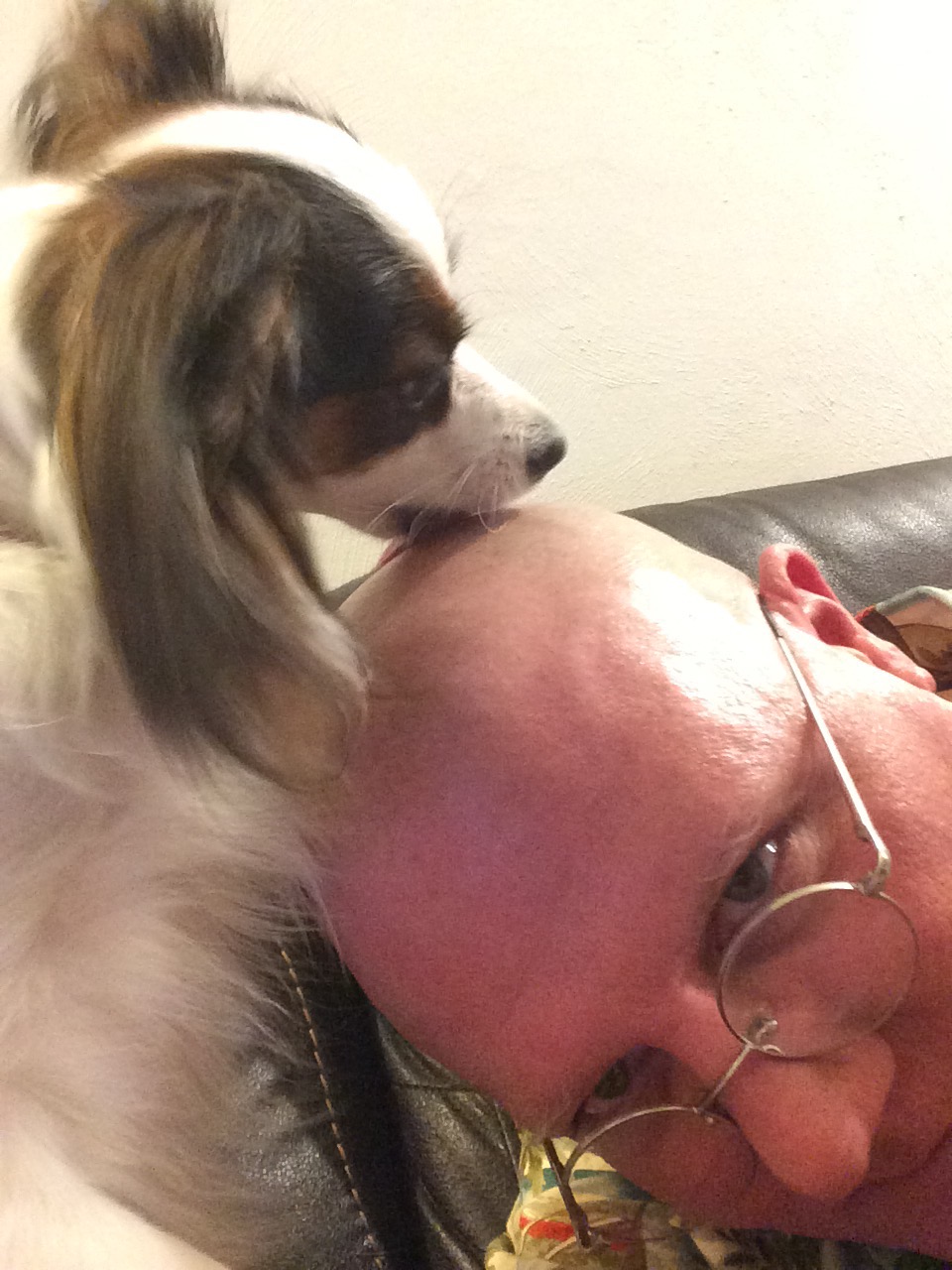
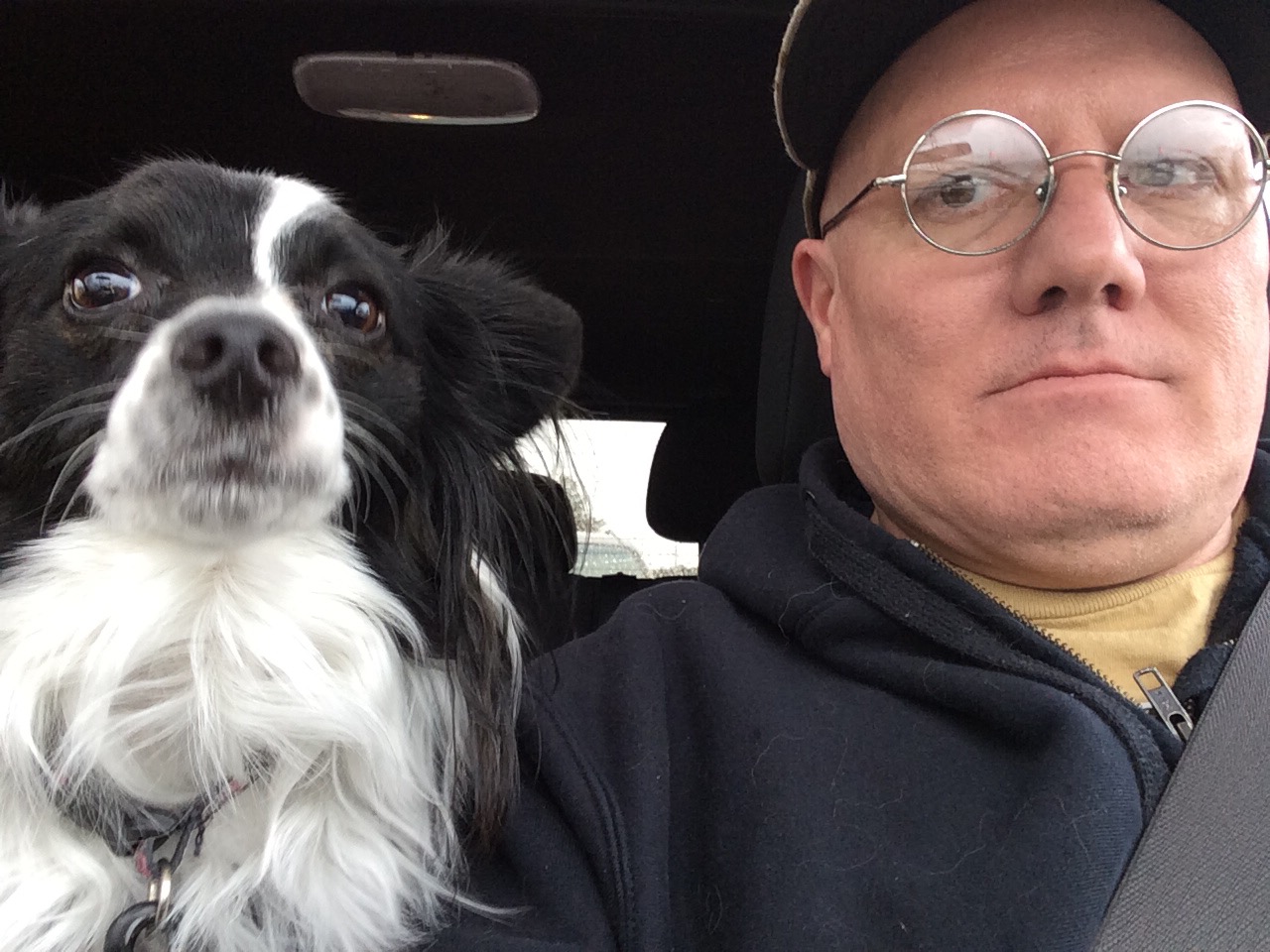
But today we are blessed to have the three best dogs in the world, Minnie Scule, Izzy Bella, and Pierre. They are all Papillons, a small breed of Spaniels from France. The breed is ranked in the top ten most intelligent breeds and they are in my view scary smart. But they are also incredibly sweet, sensitive, playful, decidedly quirky and sometimes obnoxious, in a good way.


I love spending Saturday and Sunday morning with Judy and our babies. Sometimes we sleep late and then after they have gone out to do their business just lay in bed with them, and let them play or cuddle. It is one of the most therapeutic things in the world for both of us since we both suffer from PTSD and have struggled with depression. They are so therapeutic that I often stay off the internet and social media just to enjoy them. 


Our Papillon experience began with Molly, a half-Papillon and half-Dachshund mix that we got as a rescue in September of 2001. We lost her at age 14 in May of 2015, but she was an amazing dog. Exceptionally sensitive and sweet, Judy nicknamed her “Nurse Molly” because if we were physically sick or depressed she would be there doing whatever she could to comfort us. In 2011 Molly decided that she wanted to live with me when I was stationed in North Carolina as our home in Virginia with Judy couldn’t compete with chasing deer off my lawn or running on the beach. So a few months later we got Minnie.


Now Minnie was only two and a half pounds when we got her and she became Judy’s baby. Until she got too big she would sit on Judy’s shoulder like a Parrot. Minnie is funny. She’s very smart, and sweet, but very quirky. She talks like Scooby Doo and has something to say about everything. She’s now five years old, when I walk her in the neighborhood she likes to chase the ducks, geese, and rabbits occasionally diving into the water after a duck. She’s also my drinking buddy. She loves to steal my beer and is an incorrigible thief, but we love her. She can be aloof at times and acts like she’s the Queen of the manor. Minnie grew up a bit. We thought she would be about 7-8 pounds but she topped out at 12 pounds, sometimes a bit more. She has the light bone structure of a classic Papillon and is a Black and White with the black ticking that looks like freckles and a crooked blaze that makes her almost look like a dwarf Australian Shepherd.


A couple of months before we lost Molly we got Izzy. Izzy is fascinating. She like Molly is our nurse and once when we had a friend over and he was mourning the loss of his parents, she glued herself to him trying to make him feel better. In fact it is my plan to get her certified as a therapy dog. We got Izzy at the same age we got Minnie but she was already four pounds and built like a tank. The first time our vet met her he picked her up during the examination and said “My, she’s sturdy!” Sturdy is not a word commonly associated with the breed, but Izzy is just that. Slightly smaller in height and length than Minnie she outweighs Minnie by a pound or a pound and a half. She’s built like a tank, not an ounce of fat on her, just solid muscle and bone. When she jumps on you, especially if you’re not expecting it can take the wind out of you, it’s like being blindsided by a linebacker. Izzy is a very distinctive looking Tricolor who is also incredible agile and loves to dance doing pirouettes when she wants attention.


Izzy and Minnie have been together now a bit over two years and in February we ended up getting our little boy Pierre unexpectedly. Some friends found that his owner could not afford surgery for a luxating patella. They helped arrange for us to get him and he is a joy. He’s a year old and at 4.5 pounds is about as big as he is going to get. He’s incredibly sweet, has a bit of a grumpy side when he doesn’t want to do something, and like Minnie he is talkative, and like Izzy he is incredibly playful. Despite their size difference he and Izzy play constantly and when they wrestle they grapple like MMA fighters with Pierre fighting a bit out of his weight category, but he gives as good as he gets. Sometimes when we go to bed it is time for them to launch their evening Pappy War.


Our life is better for having our puppies, they are amazing therapy. So I guess when I get home from work I’ll get greeted by the three pups and when we get back from our time out with friends we’ll have our evening play and snuggle time with Minnie, Izzy, and Pierre.

Life is good. Have a great day,

Peace

Padre Steve+

2 Comments

Filed under dogs, papillons, PTSD

Reflections on PTSD and Moral Injury after a Gettysburg Staff Ride


Friends of Padre Steve’s World,

The past few weeks have been a whirlwind of activity which has involved a transfer, travel, and teaching, coupled with finding that I was not selected for promotion. The failure to select for promotion was less of a disappointment with not being selected, or jealousy towards those that were, but rather the feelings of betrayal I feel towards the senior leaders of the Chaplain Corps that have been part of my life since I returned from Iraq back in 2008, and my ever present battle with the effects of PTSD. Since I have written about these things many times I shall not go into depth about them today.

While I was at Gettysburg I stood beside the monument to General Gouverneur Warren on Little Round Top as I discussed Warren’s actions which were decisive in ensuring that Union forces held that edifice against the Confederate assault of July 2nd 1863. However, Warren would suffer unjustly at the hands of General Philip Sheridan at the Battle of Five Forks just days before the end of the war. The effects of combat trauma, what we would now diagnose as PTSD and moral injury at having been betrayed by the leaders of an institution that he had faithfully served in war and peace were devastating to him. After the war he wrote his wife:

“I wish I did not dream that much. They make me sometimes dread to go to sleep. Scenes from the war, are so constantly recalled, with bitter feelings I wish to never experience again. Lies, vanity, treachery, and carnage.” 

I fully understand what Warren felt in terms of dreams and what they call to mind time and time again nearly every night. Whenever I go to bed I pray that I will not again injure myself during a nighttime as I have numerous times, two of which sent me to the emergency room with head and facial injuries including a concussion and a broken nose. Yet even the dreams and nightmares that do not result in physical injury are often disturbing, and thankfully one of our Papillon dogs, Izzy, will do all that she can to comfort me and calm me down, and if I am awake and she senses that I am depressed or anxious she does what she can to be near me and to calm me. She is incredibly sensitive and does this with anyone not feeling well. I need to get her certified as a therapy dog as she is a special soul. 

Even so there are really very few people with whom I can talk about these things as they are foreign to the experience of most people. Guy Sager wrote in his classic book The Forgotten Soldier of his experience on returning home after the Second World War: “In the train, rolling through the sunny French countryside, my head knocked against the wooden back of the seat. Other people, who seemed to belong to a different world, were laughing. I couldn’t laugh and couldn’t forget.” 

But anyway, that is where I live. I am happy, relatively content, and look forward to life. I love to teach as I did at Gettysburg over the weekend and to write, at the same time I struggle every night with sleep, and with belonging in the institution that I have served for nearly thirty-six years. After I found out about the non-selection for promotion I became quite angry, as I said, not because I wasn’t selected, but because of the feelings of betrayal that go back now some nine years. It helped for me to walk in the woods along the Potomac River on Thursday night and to walk the lines that the Union Union First Corps occupied on the first day of the Battle of Gettysburg last Friday. For me there is something about walking hallowed ground which no matter what I am feeling helps to center me. It is as Joshua Lawrence Chamberlain wrote:

“In great deeds, something abides. On great fields, something stays. Forms change and pass; bodies disappear; but spirits linger, to consecrate ground for the vision-place of souls… generations that know us not and that we know not of, heart-drawn to see where and by whom great things were suffered and done for them, shall come to this deathless field, to ponder and dream; and lo! the shadow of a mighty presence shall wrap them in its bosom, and the power of the vision pass into their souls.”

Every time I walk that hallowed ground at Gettysburg I feel that presence and experience the power of that vision.

So I do wish you the best and appreciate the kind thoughts and words that many of you post on this page, in emails, and on my Facebook and Twitter accounts. Until tomorrow, have a great day. 

Peace

Padre Steve+

2 Comments

Filed under civil war, Gettysburg, History, Loose thoughts and musings, mental health, PTSD

Thoughts on Being Passed Over for Promotion 


Friends of Padre Steve’s World,

Yesterday was a tough day. I failed to select for promotion to Captain for the second time. It wasn’t so much not being selected for promotion as I neither expected it or wanted it, but it was a reminder to me of the many painful experiences that I have had with senior leaders in both the Army and Navy Chaplain Corps in my 25 years of service as a chaplain. But that being said I was warned. When I was a young Medical Service Corps Captain in the Army I felt the call to go to seminary to become a chaplain. As I got close to leaving active duty, my brigade executive officer pulled me aside. He told me: “Steve, if you think that the Army Medical Department is political and cutthroat, we can’t hold a candle the the Chaplain Corps.” 

Sadly, Lieutenant Colonel Wigger was all too correct. Much of the senior leadership in all of the military chaplain corps, as well as Federal, State, and hospital chaplaincies are as toxic as Zyclon-B. Of course they are not alone, many leaders in church hierarchies are just as bad if not worse. Maybe there is something in humanity that makes some people when given authority in both the temporal as well as spiritual realms exhibit the worst aspects of human nature. 

I have always said that I would never be that way and I have always tried to best to value and care for the chaplains, as well as enlisted personnel who have worked for me. Honestly I think that I’ve done pretty good in that, and I hope that when they remember me that they don’t have the visceral reaction I have at the thought of some of the chaplains and other clergy who have used, abused, and then thrown me under the bus, especially in the depths of my post-Iraq experience with PTSD, mild TBI and moral injury. 

I am not bitter about not getting promoted, but I still bear much animus to those who have used, abused, and then did not care for my spiritual or emotional needs when I needed them. Betrayal is a big part of moral injury and I really do not think that we ever fully recover from that. People, especially Christians say that we should forgive those who have committed acts that have harmed us. I am a priest and I do understand that necessity to forgive, but when one has been harmed over the course of many years it is difficult to do. Actually, until today yesterday I thought that I was pretty much over those feelings and that the wounds had pretty much healed. I was wrong, I have a long way to go. 

After I found out that I hadn’t been selected I took a long walk. I was on my way to Gettysburg and I was dropping my wife and our dogs off with good friends before departing this morning. My walk took me through about five miles of woods along the banks of the Potomac River, including the place that JEB Stuart and his Confederate cavalry forded it during the Gettysburg campaign. That walk in the quiet as well as a conversation with a senior chaplain who has been there for me got me to a better place. When I got back both Minnie and Izzy did what they could to comfort me. Good dogs, they act like nurses. 

I am grateful for the career that I have had. I have been very lucky and very blessed. While there have been some that have gone out of their way to hurt me, or just didn’t give a damn about the way their words and actions impacted me or others, I have been lucky to have some who have done whatever they can to help me and in some cases protected me from myself. Their care, mentoring, and practical, observable love means more to me than anything. I was able to let a number of them know that last night. 

I also know a lot of other fine chaplains and ministers who have been screwed worse by varies chaplain systems or churches than I ever was. Good men and women who deserved far better. I will land on my feet. Some of them are dead, a couple by their own hand because of how they were treated and abandoned when they needed help. I have friends, a wife who loves me and three great Papillons. I am not alone. 

Likewise, had I gotten the operational assignments that I wanted when I was selected for Commander, I never would have gotten my orders to the Staff College. That assignment has opened doors for life after the Navy that I would never have had. I now get to be an academic and hopefully I’ll have my first Civil War era book published in a year or so, and that is when the fun will really begin, so I have nothing to bitch about, but I still hurt. Some say that God has a plan, but honestly I don’t know who true that is, but even so I’m hurting but okay and I’d rather have Judy, my dogs, and my friends than some pie in the sky theology. 

So today I will be going up to Gettysburg early. I’ll arrive well in advance of my students and today my plan is to walk the battlefield from McPherson’s Ridge, to Herbst Woods, and on to Seminary Ridge where I also hope to visit the museum now located in the old seminary building. This is important to do because one never fully appreciates what happened in a certain spot until they have walked the ground. Likewise, there are many markers at Gettysburg that have a lot of meaning that most people never see because they are too busy driving around to see the high points like Little Round Top, the Angle and High Water Mark, and the Virginia And Pennsylvania memorials. 

As I do so I will remember the heroes of the Union side who held their ground, and the men who were not recognized for their actions, and in some cases, like Abner Doubleday, after having done well and fighting heroically were relieved of duty simply because some above them didn’t like them, and acted on false reports. I think that will be a healthy experience for me. Later, I will meet my students for dinner and discuss the strategic and operational aspects of the campaign that connect with what they are learning in regard to planning at the Staff College. 

So anyway, I know that there is a lot of other stuff going on in the world. I’ve seen bit and pieces about the GOP Health Care repeal but have not had time to read anything. Maybe I’ll get to it later in the weekend or early next week as it’s not going to go away. 

I’ll post something small from Gettysburg the next two days. So until tomorrow,

Peace

Padre Steve+

8 Comments

Filed under christian life, faith, Gettysburg, Loose thoughts and musings, Military, PTSD

The Lenten Mendoza Line and a Birthday

Friends of Padre Steve’s World,

It looks like we’re about halfway through the season of Lent, my least favorite season of the liturgical year and I am doing pretty. Good. I’m going to celebrate my 57th birthday a day early and that causes me to reflect on life. Thankfully I am doing much better than I was this time last year when I was off my anti-depressants for 9 days and dealing with the deaths of two friends and a rainy Easter birthday. I was in a nasty funk, all my PTSD stuff, reflections on my own mortality and upset about the loss of friends. I never want to experience an Easter, or a birthday like that ever again.

This year I am happy. I seem to be doing life a bit above the Mendoza Line over the past year and that is good. For those that don’t know what the Mendoza Line is, it is named after Mario Mendoza who played for the Pittsburgh Pirates. He hit for a career batting average of .215 and the Mendoza Line is considered to be a .200 average which is the line below which players can pretty much be assured that they will not remain in the Major Leagues.

But anyway, as I was thinking about perspective this year with all the craziness in the world and the antics of our President which scare the Bejeezus out of me, I am reminded of the words of former pitcher Bill “Spaceman Lee” to put things in perspective. Lee noted:

“I think about the cosmic snowball theory. A few million years from now the sun will burn out and lose its gravitational pull. The earth will turn into a giant snowball and be hurled through space. When that happens it won’t matter if I get this guy out.” 

Anyway, that’s just a thought that oddly comforts me when I don’t well as I should in life or anything else. Let’s face it, in spite of everything we have to be able to put things in perspective and appreciate what life we have no matter how bad things get. Hopefully, we get to wait a few million years for the cosmic snowball to do its thing without the President or anyone else in the world blowing it up.

That being said I have so much to be thankful for in life, my wonderful wife, my family back in California, my three great Papillon dogs, my friends, my readers here, and getting to do what I love doing. Hopefully, this year is good for me, as well as all of you. Thanks so much for being a part of my life.

So, have a great day,

Peace

Padre Steve+

5 Comments

Filed under Baseball, faith, Loose thoughts and musings

Tragic Heroes of Little Round Top: The Hidden Side of the Hero

fannychamberlain1

Fannie and Joshua Chamberlain (Dale Gallon) 

Friends of Padre Steve’s World,

I’m back after an amazing but very cold weekend in Gettysburg. I had a great group of students as well as guests. The past few days I have posted articles from my still untitled text on the Battle of Gettysburg dealing with the lives of three of the men who were immortalized during the battle of Little Round Top. Today is A follow up to those articles dealing with an American icon with feet of clay. The impact of war on those who go to war and the loved ones that they return to is often incredibly difficult, I know from experience. I am lucky, first I survived war, then I at least until now have survived its aftermath, finally, I have a wife who survived it with me and in spite of all the trauma our marriage not only survived but has become better. I hope that you appreciate this account of the post-war life of Joshua and Fannie Chamberlain.

Peace

Padre Steve+

Chamberlain’s accolades were certainly earned but others on that hill have been all too often overlooked by most people. This list includes Gouverneur Warren who was humiliated by Phillip Sheridan at Five Forks, Strong Vincent who died on of wounds suffered on Little Round Top and Paddy O’Rorke, the commander of the 140th New York of Weed’s Brigade on Vincent’s right who was mortally wounded that day.

After the war like most citizen soldiers, Chamberlain returned to civilian life, and a marriage that was in crisis in which neither Joshua nor Fannie seemed able to communicate well enough to mend.  The troubled couple “celebrated their tenth wedding anniversary on December 7, 1865. He gave her a double banded gold-and-diamond bracelet from Tiffany’s, an extravagant gift that only temporarily relieved the stresses at work just below the surface of their bland marriage. Wartime separation had perhaps damaged it more than Chamberlain knew.”  [1]

When he came home Chamberlain was unsettled. Fannie quite obviously hoped that his return would reunite them and bring about “peaceful hours and the sweet communion of uninterrupted days with the husband that had miraculously survived the slaughter” [2] and who had returned home, but it was not to be. Army life had given him a sense of purpose and meaning that he struggled to find in the civilian world. He was haunted by a prediction made by one of his professors. A prediction that “he would return from war “shattered” & “good for nothing,” [3] Chamberlain began to search for something to give his life meaning. He began to write a history of V Corps and give speeches around the northeast, and “these engagements buoyed his spirit, helping him submerge his tribulations and uncertainties in a warm sea of shared experience. [4] In his travels he remained apart from Fannie, who remained with the children, seldom including her in those efforts. She expressed her heart in a letter in early 1866:

“I have no idea when you will go back to Philadelphia, why dont you let me know about things dear?….I think I will be going towards home soon, but I want to hear from you. What are you doing dear? are you writing for your book? and how was it with your lecture in Brunswick- was it the one at Gettysburg? I look at your picture when ever I am in my room, and I am lonely for you. After all, every thing that is beautiful must be enjoyed with one you love, or it is nothing to you. Dear, dear Lawrence write me one of the old letters…hoping to hear from you soon…I am as in the old times gone bye Your Fannie.” [5]

In those events he poured out his heart in ways that seemed impossible for him to do with Fannie. He accounted those wives, parents, sons and daughters at home who had lost those that they loved, not only to death:

“…the worn and wasted and wounded may recover a measure of their strength, or blessed by your cherishing care live neither useless nor unhappy….A lost limb is not like a brother, an empty sleeve is not like an empty home, a scarred breast is not like a broken heart. No, the world may smile again and repair its losses, but who shall give you back again a father? What husband can replace the chosen of your youth? Who shall restore a son? Where will you find a lover like the high hearted boy you shall see no more?” [6]

Chamberlain set his sights on politics, goal that he saw as important in championing the rights of soldiers and their well treatment by a society, but a life that again interrupted his marriage to Fannie and brought frequent separation. Instead of the one term that Fannie expected, Chamberlain ended up serving four consecutive one year terms as Governor of Maine, and was considered for other political offices. However, the marriage continued to suffer and Fannie’s “protracted absence from the capital bespoke her attitude toward his political ambitions.” [7]  Eventually Chamberlain returned home and. “For twelve years following his last term as governor, he served as president of Bowdoin College, his alma mater. [8]

He became a champion of national reconciliation admired by friend and former foe alike, but he returned with bitterness towards some in the Union who he did not believe cared for his comrades or their families, especially those who had lost loved ones in the war. While saluting those who had served in the Christian and Sanitary Commissions during the war, praising veterans, soldiers and their families he noted that they were different than:

Those who can see no good in the soldier of the Union who took upon his breast the blow struck at the Nation’s and only look to our antagonists for examples of heroism- those over magnanimous Christians, who are so anxious to love their enemies that they are willing to hate their friends….I have no patience with the prejudice or the perversity that will not accord justice to the men who have fought and fallen on behalf of us all, but must go round by the way of Fort Pillow, Andersonville and Belle Isle to find a chivalry worthy of praise.” [9]

Chamberlain’s post-war life, save for the times that he was able to revisit the scenes of glory and be with his former comrades was marred by deep personal and professional struggles and much suffering. He struggled with the adjustment to civilian life, which for him was profoundly difficult. He “returned to Bowdoin and the college life which he had sworn he would not again endure. Three years of hard campaigning however, had made a career of college teaching seem less undesirable, while his physical condition made a permanent army career impossible.” [10] The adjustment was more than even he could anticipate, and the return to the sleepy college town and monotony of teaching left much to be desired.

These are not uncommon situations for combat veterans to experience, and Joshua Chamberlain, the hero of Little Round Top who was well acquainted with the carnage of war, suffered immensely. His wounds never fully healed and he was forced to wear what would be considered an early form of a catheter and bag. In 1868 he was awarded a pension of thirty dollars a month for his Petersburg wound which was described as “Bladder very painful and irritable; whole lower part of abdomen tender and sensitive; large urinal fistula at base of penis; suffers constant pain in both hips.” [11] Chamberlain struggled to climb out of “an emotional abyss” in the years after the war. Part was caused by his wounds which included wounds to his sexual organs, shattering his sexuality and caused his marriage to deteriorate.

He wrote to Fannie in 1867 about the “widening gulf between them, one created at least in part by his physical limitations: “There is not much left in me to love. I feel that all too well.” [12] Chamberlain’s inability to readjust to civilian life following the war, and Fanny’s inability to understand what he had gone through during it caused great troubles in their marriage. Chamberlain “felt like hell a lot of the time, morose in mood and racked with pain.” [13] His wounds would require more surgeries, and in “April 1883 he was forced to have extensive surgery on his war wounds, and through the rest of the decade and well into the next he was severely ill on several occasions and close to death once.” [14]

By 1868 the issues were so deep that Fannie threatened him with divorce and was accusing Joshua of domestic abuse, not in court, but among her friends and in town; a charge which he contested. It is unknown if the abuse actually occurred and given Chamberlain’s poor physical condition it is unlikely that he could have done what she claimed, it is actually much more likely, based on her correspondence as well as Fannie’s:

“chronic depression, her sense of being neglected of not abandoned, and her status as an unappreciated appendage to her husband’s celebrated public career caused her to retaliate in a manner calculated to get her husband’s attention while visiting on him some of the misery she had long endured.” [15]

The bitterness in their relationship at the time was shown in his offer to her of a divorce; a condition very similar to what many combat veterans and their families experience today. After he received news of the allegations that Fannie was spreading among their friends around town, Chamberlain wrote to her:

“If it is true (as Mr. Johnson seems to think there is a chance of its being) that you are preparing for an action against me, you need not give yourself all this trouble. I should think we had skill enough to adjust the terms of a separation without the wretchedness to all our family which these low people to whom it would seem that you confide your grievances & plans will certainly bring about.

You never take my advice, I am aware.

But if you do not stop this at once it will end in hell.” [16]

His words certainly seem harsh, especially in our time where divorce, be it contested or uncontested does not have the same social stigma it did then. Willard Wallace writes that the letter “reflects bewilderment, anger, even reproof, but not recrimination; and implicit throughout is an acute concern for Fanny, who did not seem to realize the implications of legal action. The lot of a divorcee in that era in a conservative part of the country was not likely to be a happy one.” [17]This could well be the case, but we do not know for sure his intent. We can say that it speaks to the mutual distress, anger and pain that both Joshua and Fannie were suffering at the time.

The marriage endured a separation which lasted until 1871 when his final term of office expired they reconciled, and the marriage did survive, for nearly forty more years. “Whatever differences may have once occasionally existed between Chamberlain and Fanny, the two had been very close for many years.” [18] The reconciliation could have been for any number of reasons, from simple political expedience, in that he had been rejected by his party to be appointed as Senator, and the realization that “that politics, unlike war, could never stir his soul.” [19] Perhaps he finally recognized just how badly he had hurt her over all the years of his neglect of her needs. But it is just as likely that deep in his heart he really did love her despite his chronic inability for so many years to demonstrate it in a way she could feel. Fannie died in 1905 and Chamberlain, who despite all of their conflicts loved her and grieved her, a grief “tinged with remorse and perhaps also with guilt.” [20] The anguished widower wrote after her death:

“You in my soul I see, faithful watcher, by my cot-side long days and nights together, through the delirium of mortal anguish – steadfast, calm, and sweet as eternal love. We pass now quickly from each other’s sight, but I know full well that where beyond these passing scenes you shall be, there will be heaven!”

Chamberlain made a final trip to Gettysburg in May of 1913. He felt well enough to give a tour to a delegation of federal judges. “One evening, an hour or so before sunset, he trudged, alone, up the overgrown slope of Little Round Top and sat down among the crags. Now in his Gothic imagination, the ghosts of the Little Round Top dead rose up around him….he lingered up the hillside, an old man lost in the sepia world of memory.” [21] He was alone.

Chamberlain died on a bitterly cold day, February 24th 1914 of complications from complications of the ghastly wound that he received at Petersburg in 1864. The Confederate minié ball that had struck him at the Rives’ Salient finally claimed his life just four months shy of 50 years since the Confederate marksman found his target.

Sadly, the story of the marriage of Joshua and Fannie Chamberlain is all too typical of many military marriages and relationships where a spouse returns home changed by their experience of war and struggles to readjust to civilian life. This is something that we need to remember when we encounter those changed by war and the struggles of soldiers as well as their families; for if we have learned nothing from our recent wars it is that the wounds of war extend far beyond the battlefield, often scarring veterans and their families for decades after the last shot of the war has been fired.

The Battle for Little Round Top which is so legendary in our collective history and myth was in the end something more than a decisive engagement in a decisive battle. It was something greater and larger than that, it is the terribly heart wrenching story of ordinary, yet heroic men like Vincent, Chamberlain and O’Rorke and their families who on that day were changed forever. As Chamberlain, ever the romantic, spoke about that day when dedicating the Maine Monument in 1888; about the men who fought that day and what they accomplished:

“In great deeds, something abides. On great fields, something stays. Forms change and pass; bodies disappear; but spirits linger, to consecrate ground for the vision-place of souls… generations that know us not and that we know not of, heart-drawn to see where and by whom great things were suffered and done for them, shall come to this deathless field, to ponder and dream; and lo! the shadow of a mighty presence shall wrap them in its bosom, and the power of the vision pass into their souls.” [22]

Notes 

[1] Ibid. Golay, To Gettysburg and Beyond p.282

[2] Ibid. Smith Fanny and Joshua p.182

[3] Ibid. Smith, Fanny and Joshua p.180

[4] Ibid. Longacre Joshua Chamberlain p.260

[5] Ibid. Smith, Fanny and Joshua pp.178-179

[6] Ibid. Smith, Fanny and Joshua p.181

[7] Ibid. Longacre Joshua Chamberlain p.

[8] Ibid. LaFantasie Twilight at Little Round Top p.245

[9] Ibid. Smith, Fanny and Joshua p.180 It is interesting to note that Chamberlain’s commentary is directed at Northerners who were even just a few years after the war were glorifying Confederate leader’s exploits. Chamberlain instead directs the attention of his audience, and those covering the speech to the atrocities committed at the Fort Pillow massacre of 1864 and to the hellish conditions at the Andersonville and Belle Isle prisoner of war camps run by the Confederacy.

[10] Ibid. Wallace The Soul of the Lion p.203

[11] Ibid. Golay, To Gettysburg and Beyond p.289

[12] Ibid. Longacre  Joshua Chamberlain: The Soldier and the Man p.259

[13] Ibid. Golay, To Gettysburg and Beyond p.288

[14] Ibid. Longacre Joshua Chamberlain: The Soldier and the Man p.285

[15] Ibid. Longacre Joshua Chamberlain: The Soldier and the Man p.268

[16] Chamberlain, Joshua L. Letter Joshua L. Chamberlain to “Dear Fanny” [Fanny Chamberlain], Augusta, November 20, 1868 retrieved from Bowdoin College, Joshua Lawrence Chamberlain Documents http://learn.bowdoin.edu/joshua-lawrence-chamberlain/documents/1868-11-20.html 8 November 2014

[17] Ibid. Wallace The Soul of the Lion p.227

[18] Ibid. Wallace The Soul of the Lion p.297

[19] Ibid. Golay To Gettysburg and Beyond p.290

[20] Ibid. Longacre  Joshua Chamberlain: The Soldier and the Man p.290

[21] Ibid. Golay To Gettysburg and Beyond PPP.342-343

[22] Chamberlain, Joshua Lawrence. Chamberlain’s Address at the dedication of the Maine Monuments at Gettysburg, October 3rd 1888 retrieved from http://www.joshualawrencechamberlain.com/maineatgettysburg.php 4 June 2014


4 Comments

Filed under civil war, Gettysburg, History, marriage and relationships, mental health, Military, PTSD

Ash Wednesday 2017

cross-ash-wednesday

Friends of Padre Steve’s World,

It is Ash Wednesday, the beginning of the season of Lent, which thankfully is far shorter than baseball season, even though it will drag on into the second week of the season, but such is life, and Lent.

Lent is an ancient season of the church, going back to around the Council of Nicea, 325 CE. It is celebrated, though better said “observed” by a majority of Christians, though some evangelical Protestants do little to recognize it. The season is better observed than celebrated as it is a season of penitence.

Lent is technically 40 days long, though it is really 46 days long, but the Sundays don’t count. Call it fuzzy calendar math done to match Biblical accounts of the 40 days of the great flood and Noah’s Ark, the 40 years spent by the Israelites doing laps around Mount Sinai, and the 40 days spent by Jesus in the desert being tempted by Satan, but the forty days actually span 46 calendar days.

It begins today, which is Ash Wednesday and ends on Holy, or Maundy Thursday, which begins the Easter Triduum. It is marked by times of fasting, and abstinence, as well as personal reflection, penance, charity, and renewed focus on our spiritual lives.

That being said, I don’t do Lent well. It is a time that I struggle, and since I returned from Iraq a period in which I have experienced some of my deepest depression and crisis. I thoroughly dislike the season and not because of its profound theological and spiritual significance and benefit. On the contrary, I believe that everything that is a part of Lent, the fasting, abstinences, prayer, reflection, penance, and works of charity is good; they can help keep us grounded in the world and our community.

That being said, I still thoroughly dislike the season because I struggle so much emotionally during it, probably because Lent usually falls not long after the anniversary of my return from Iraq. So my dislike for Lent, and my struggle during it is more coincidental than it is actually based on any real objections to it.

That being said once Lent begins I cannot wait for it to end. I still do my best to observe the fasting and abstinence, and over the past few years I have really worked on being a better person, and to attempt to fulfill the commands that Jesus said surmised the law, to love God and love my neighbor. The first one of those is hard because there are times during Lent that more than any time of the year I struggle with the very existence of God. The second, to love my neighbor is less of a struggle, though some people really push my limits. Likewise, over the past year if I say I will pray for someone I tend to do it, and if they are in need I try my best to help in some tangible way.

So today I will be conducting my last Ash Wednesday service during my assignment at the Staff College. This will be a somewhat bittersweet as I found my assignment there to be the most fulfilling of all of mine since I served in Iraq, without all the emotional baggage and struggles with PTSD, TBI, and the associated symptoms of them, the depression, anxiety, night terrors, insomnia, fear of crowds, and thoughts of death. Thankfully, I am doing better, and have managed to get through he past couple of weeks after the ninth anniversary of my return from Iraq without crashing, though a few times I felt the shadow of depression casting its pall over me. Thankfully, as of yet, I haven’t crashed, and hope not to, although I know that I will breath a deep sigh of relief once we get past Easter.

But going back to Lent, if it is to have the kind of impact it should, in our lives it cannot simply be our struggle with God, it also has to encompass a commitment to those around us and to our world. That means doing more than talking, doing more than praying, but actively participating in the lives of others, even those with whom we have adversarial relationships. As Hans Kung noted: “In the last resort, a love of God without love of humanity is no love at all.”

So anyway, I wish the best for all of you today, and if you observe Lent, I pray and trust that it will be beneficial to your life, and to those you know. Likewise, I ask you to pray for me, a sinner.

Have a great day,

Peace

Padre Steve+


1 Comment

Filed under christian life, faith, PTSD, Religion

Howling at the Moon and Ministry at the End of a Long Military Career

Crash-Davis

Friends of Padre Steve’s World

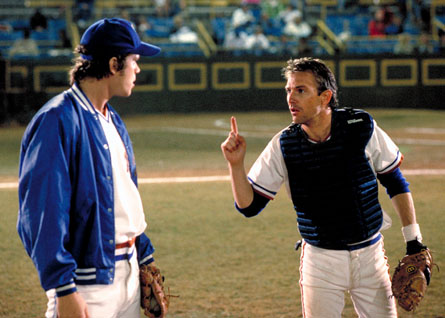
The past few days I have been quietly reflecting on ministry as I get ready to transition out of my current assignment at the Staff College to be the senior base chaplain at one of the bases nearby. Fortunately I will be able to continue conducting the Gettysburg Staff Ride for the college but the transition to being a base chaplain for the second time in my career, the first some twenty years ago when I was in the Army, has caused me to ponder the form ministry again and why I am here. It also has made me think of my long career and my transition from being a rising star, to a old and bit sore veteran who still has something to give, I’ve been in the military now for almost 36 years, not much left to prove but some left to give.  A younger friend and chaplain once said I reminded him of Kevin Costner’s character in the movie Bull Durham, Crash Davis. I like the analogy, as Crash said: “I have been known on occasion to howl at the moon.”

I like hard questions and hard cases. My life has been quite interesting and that includes my faith journey as a Christian and human being. It is funny that in my life I have as I have grown older begun to appreciate those that do not believe and to rather distrust those who proclaim their religious faith with absolute certitude, especially when hard questions are asked.

Paul Tillich once said “Sometimes I think it is my mission to bring faith to the faithless, and doubt to the faithful.” 

I get “trolled” a lot and I find it amusing when trolls come by to condemn my “heresy.” When they do I realize that most of them must have some kind of psychological need to be right. I say this because for all of their certitude I sense a deep fear that they might be wrong. I think that is why they must do this.

I think that the quote by the late theologian is quite appropriate to me and the ministry that I find myself. I think it is a ministry pattern quite similar to Jesus in his dealings with the people during his earthly incarnate ministry.

Jesus was always hanging out with the outcasts, whether they be Jewish tax collectors collaborating with the Romans, lepers and other “unclean” types, Gentiles including the hated Roman occupiers, Samaritans and most dangerously, scandalous women. He seemed to reach out to these outcasts while often going out of his way to upset the religious establishment and the “true believers” of his day.

There is even one instance where a Centurion whose servant he healed was most likely involved in a homosexual relationship, based on the writer of the Gospel of Matthew’s use of the Greek word “Pais” which connotes a homosexual servant, instead of the more common “Doulos.” That account is the only time in the New Testament where that distinction is made, and Pais is used throughout Greek literature of the time to denote a homosexual slave or “house boy” relationship. Jesus was so successful at offending the profoundly orthodox of his day that his enemies made sure that they had him killed.

I think that what has brought me to this point is a combination of things but most importantly what happened to me in and after my tour in Iraq. Before I went to Iraq I was certain of about everything that I believed and was quite good at what we theologians and pastors call “apologetics.” My old Chaplain Assistant in the Army, who now recently serves as a Lieutenant Colonel in the Army Chaplain Corps called me a “Catholic Rush Limbaugh” back in 1997, and he meant it quite affectionately.

I was so good at it that I was silenced by a former Archbishop in my former church and banned from publishing for about 7 years after writing two articles for a very conservative Roman Catholic journal, the New Oxford Review.

The funny thing is that he, and a number of my closest friends from that denomination are either Roman Catholic priests or priests in the Anglican Ordinariate which came into communion with Rome a couple of years back. Ironically while being “too Catholic” was the reason I was forbidden to write it was because I questioned certain traditions and beliefs of the Church including that I believed that there was a role for women in the ordained ministry, that gays and lesbians could be “saved” and that not all Moslems were bad that got me thrown out in 2010.

However when I returned from Iraq in the midst of a full blown emotional, spiritual and physical collapse from PTSD that certitude disappeared. It took a while before I was able to rediscover faith and life and when I did it wasn’t the same. There was much more mystery to faith as well as reason. I came out of that period with much more empathy for those that either struggle with or reject faith. Thus I tend to hang out at bars and ball games more than church activities or socials, which I find absolutely tedious. I also have little use for clergy than in dysfunctional and broken systems that are rapidly being left behind. I am not speaking about belief here, but rather structure and methodology.

I think that if there is anything that God will judge the American versions of the Christian church is our absolute need for temporal power in the political, economic and social realms and the propagation of religious empires that only enrich the clergy which doing nothing for the least, the lost and the lonely. The fact that the fastest growing religious identification in the United States is “none” or “no preference” is proof of that and that the vast amounts of money needed to sustain these narcissistic religious empires, the mega-churches and “Christian” television industry will be their undoing.  That along with their lack of care for anyone but themselves. Jesus said that his disciples would be known by their love for one another, not the size of their religious empire or temporal power.

The interesting thing is that today I have friends and colleagues that span the theological spectrum. Many of these men even if they do not agree with what I believe trust me to love and care for them, even when those most like them in terms of belief or doctrine, both religious and political treat them like crap. Likewise I attract a lot of people who at one time were either in ministry or preparing for it who were wounded in the process and gave up, even to the point of doubting God’s love and even existence. It is kind of a nice feeling to be there for people because they do not have to agree with me for me to be there for them.

In my darkest times my only spiritual readings were Father Andrew Greeley’s Bishop Blackie Ryan mysteries which I began reading in Iraq to help me get through the nights in between missions in Iraq and through the nights when I returned from them.  In one of those books, the last of the series entitled “The Archbishop goes to Andalusia” the miscreant Auxiliary Bishop to the Cardinal Archbishop of Chicago goes to Seville Spain.  In the novel Bishop Blackie makes a comment after celebrating Mass in the cathedral at Seville. He said “Every sacramental encounter is an evangelical occasion. A smile warm and happy is sufficient. If people return to the pews with a smile, it’s been a good day for them. If the priest smiles after the exchanges of grace, it may be the only good experience of the week.”  (The Archbishop in Andalusia p.77)

In my ministry as a military chaplain working in combat units, critical care hospital settings, and teaching, I have found that there are many hurting people, people who like me question their faith and even long held beliefs.

img_0207-1

So, I guess that is why I stay in the game, I still love it, and why when I go to my new assignment I will do my best to care for all who come to me for any kind of guidance, respecting who they are and what they believe, while mentoring the junior chaplains who I will supervise so that they blossom as minsters of their faith groups, and chaplains to our diverse community. More than likely this will be my last assignment before I retire, and for me the job is not about me or any promotion, it is helping the next generation, because they are the future.  They must increase, and in the military sense I must decrease, I mean for God’s sake, 39 or 40 years of military service should be enough for me.

Peace

Padre Steve+

5 Comments

Filed under christian life, faith, leadership, LGBT issues, Military, ministry

God In the Empty Places: Remembering Iraq

bedouin

Friends of Padre Steve’s World,

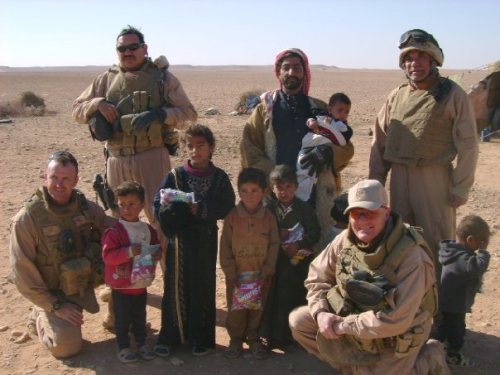
In the midst of all I have been writing lately, when I recalled yesterday that I had been writing on this site for eight years, it brought back a lot of memories. Those memories kept me up a lot of last night, and I realized that many of my newer readers don’t know about some of the events that brought me to where I am today. In December of 2007 while I was in Iraq I wrote an e-mail to my former denomination that was published in the denomination newsletter.

When I wrote it I was between missions and getting ready to head out to the Syrian border of Iraq for an extended visit with five of our Military Training Teams of advisors who were working with Iraqi Army and Border troops.

This is the unedited post from that article that I posted here in early March 2009. It is amazing to me, on this day that is also the 50th anniversary of the death of Bernard Fall who I quote in the original article, that so little has changed, except possibly for the worse.

Have a great night, tomorrow my series on civil rights and African American history continues.

Peace,

Padre Steve+

I have been doing a lot of reflecting on ministry and history over the past few months. While both have been part of my life for many years, they have taken on a new dimension after serving in Iraq. I can’t really explain it; I guess I am trying to integrate my theological and academic disciplines with my military, life and faith experience since my return.

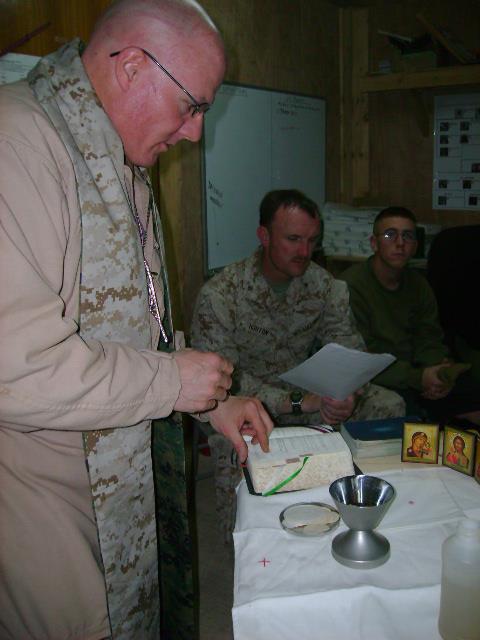
The Chaplain ministry is unlike civilian ministry in many ways. As Chaplains we never lose the calling of being priests, and as priests in uniform, we are also professional officers and go where our nations send us to serve our Soldiers, Sailors, Marines and Airmen. There is always a tension, especially when the wars that we are sent to are unpopular at home and seem to drag on without the benefit of a nice clear victory such as VE or VJ Day in World War II or the homecoming after Desert Shield and Desert Storm.

It is my belief that when things go well and we have easy victories that it is easy for us to give the credit to the Lord and equally easy for others to give the credit to superior strategy, weaponry or tactics to the point of denying the possibility that God might have been involved. Such is the case in almost every war and Americans since World War Two have loved the technology of war seeing it as a way to easy and “bloodless” victory. In such an environment ministry can take on an almost “cheer-leading” dimension. It is hard to get around it, because it is a heady experience to be on a winning Army in a popular cause. The challenge here is to keep our ministry of reconciliation in focus, by caring for the least, the lost and the lonely, and in our case, to never forget the victims of war, especially the innocent among the vanquished, as well as our own wounded, killed and their families.

But there are other wars, many like the current conflict less popular and not easily finished.The task of chaplains in the current war, and similar wars fought by other nations is different.In these wars, sometimes called counter-insurgency operations, guerilla wars or peace keeping operations, there is no easily discernable victory. These types of wars can drag on and on, sometimes with no end in sight. Since they are fought by volunteers and professionals, much of the population acts as if there is no war since it does often not affect them, while others oppose the war.

Likewise, there are supporters of war who seem more interested in political points of victory for their particular political party than for the welfare of those that are sent to fight the wars. This has been the case in about every war fought by the US since World War II. It is not a new phenomenon. Only the cast members have changed.

dien-bien-phu6

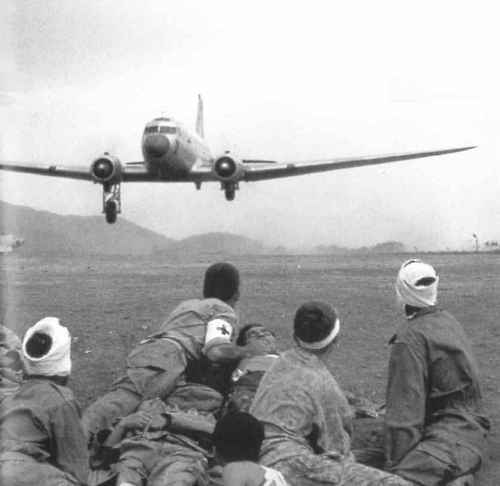
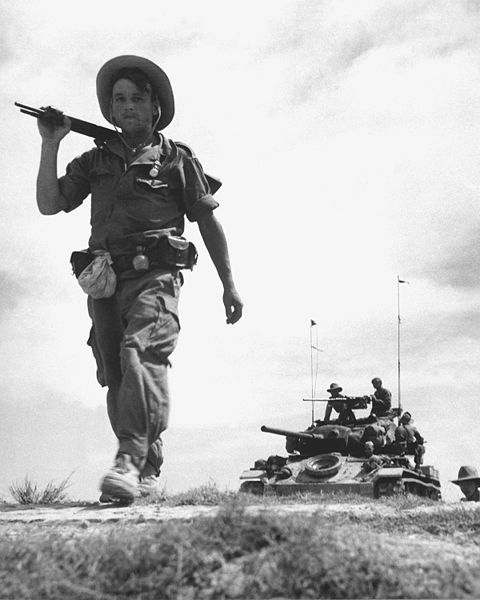
This is not only the case with the United States. I think that we can find parallels in other militaries. I think particularly of the French professional soldiers, the paratroops and Foreign Legion who bore the brunt of the fighting in Indo-China, placed in a difficult situation by their government and alienated from their own people. In particular I think of the Chaplains, all Catholic priests save one Protestant, at the Battle of Dien Bien Phu, the epic defeat of the French forces that sealed the end of their rule in Vietnam. The Chaplains there went in with the Legion and Paras. They endured all that their soldiers went through while ministering the Sacraments and helping to alleviate the suffering of the wounded and dying. Their service is mentioned in nearly every account of the battle. During the campaign which lasted 6 months from November 1953 to May 1954 these men observed most of the major feasts from Advent through the first few weeks of Easter with their soldiers in what one author called “Hell in a Very Small Place.”

Another author describes Easter 1954: “In all Christendom, in Hanoi Cathedral as in the churches of Europe the first hallelujahs were being sung. At Dienbeinphu, where the men went to confession and communion in little groups, Chaplain Trinquant, who was celebrating Mass in a shelter near the hospital, uttered that cry of liturgical joy with a heart steeped in sadness; it was not victory that was approaching but death.” A battalion commander went to another priest and told him “we are heading toward disaster.” (The Battle of Dienbeinphu, Jules Roy, Carroll and Graf Publishers, New York, 1984 p.239)

Of course one can find examples in American military history such as Bataan, Corregidor, and certain battles of the Korean War to understand that our ministry can bear fruit even in tragic defeat. At Khe Sahn in our Vietnam War we almost experienced a defeat on the order of Dien Bien Phu. It was the tenacity of the Marines and tremendous air-support that kept our forces from being overrun.

You probably wonder where I am going with this. I wonder a little bit too. But here is where I think I am going. It is the most difficult of times; especially when units we are with take casualties and our troops’ sacrifice is not fully appreciated by a nation absorbed with its own issues.

french troops indochina

For the French the events and sacrifices of their soldiers during Easter 1954 was page five news in a nation that was more focused on the coming summer. This is very similar to our circumstances today because it often seems that own people are more concerned about economic considerations and the latest in entertainment news than what is going on in Iraq or Afghanistan. The French soldiers in Indo-china were professionals and volunteers, much like our own troops today. Their institutional culture and experience of war was not truly appreciated by their own people, or by their government which sent them into a war against an opponent that would sacrifice anything and take as many years as needed to secure their aim, while their own countrymen were unwilling to make the sacrifice and in fact had already given up their cause as lost. Their sacrifice would be lost on their own people and their experience ignored by the United States when we sent major combat formations to Vietnam in the 1960s. In a way the French professional soldiers of that era have as well as British colonial troops before them have more in common with our force than the citizen soldier heroes of the “Greatest Generation.” Most of them were citizen soldiers who did their service in an epic war and then went home to build a better country as civilians. We are now a professional military and that makes our service a bit different than those who went before us.

Yet it is in this very world that we minister, a world of volunteers who serve with the highest ideals. We go where we are sent, even when it is unpopular. It is here that we make our mark; it is here that we serve our Soldiers, Sailors, Marines and Airmen. Our duty is to bring God’s grace, mercy and reconciliation to men and women, and their families who may not see it anywhere else. Likewise we are always to be a prophetic voice within the ranks.

When my dad was serving in Vietnam in 1972 I had a Sunday school teacher tell me that he was a “Baby Killer.” It was a Catholic Priest and Navy Chaplain who showed me and my family the love of God when others didn’t. In the current election year anticipate that people from all parts of the political spectrum will offer criticism or support to our troops. Our duty is to be there as priests, not be discouraged in caring for our men and women and their families because most churches, even those supportive of our people really don’t understand the nature of our service or the culture that we represent. We live in a culture where the military professional is in a distinct minority group upholding values of honor, courage, sacrifice and duty which are foreign to most Americans. We are called to that ministry in victory and if it happens someday, defeat. In such circumstances we must always remain faithful.

For those interested in the French campaign in Indo-China it has much to teach us. Good books on the subject include The Last Valley by Martin Windrow, Hell in a Very Small Place by Bernard Fall; The Battle of Dien Bein Phu by Jules Roy; and The Battle of Dien Bien Phu- The Battle America Forgot by Howard Simpson. For a history of the whole campaign, readStreet Without Joy by Bernard Fall. I always find Fall’s work poignant, he served as a member of the French Resistance in the Second World War and soldier later and then became a journalist covering the Nurnberg Trials and both the French and American wars in Vietnam and was killed by what was then known as a “booby-trap” while covering a platoon of U.S. Marines.

There is a picture that has become quite meaningful to me called the Madonna of Stalingrad. It was drawn by a German chaplain-physician named Kurt Reuber at Stalingrad at Christmas 1942 during that siege. He drew it for the wounded in his field aid station, for most of whom it would be their last Christmas. The priest would die in Soviet captivity and the picture was given to one of the last officers to be evacuated from the doomed garrison. It was drawn on the back of a Soviet map and now hangs in the Kaiser Wilhelm Memorial Church in Berlin where it is displayed with the Cross of Nails from Coventry Cathedral as a symbol of reconciliation. I have had it with me since before I went to Iraq. The words around it say: “Christmas in the Cauldron 1942, Fortress Stalingrad, Light, Life, Love.” I am always touched by it, and it is symbolic of God’s care even in the midst of the worst of war’s suffering and tragedy.

1 Comment

Filed under faith, History, iraq,afghanistan, Military, ministry, Political Commentary, Tour in Iraq

Padre Steve’s World at Eight Years: I’m Still Standing

img_3414

Friends of Padre Steve’s World,

Tonight a short pause to reflect. I was reminded by my WordPress, the company that hosts my site that I began this blog eight years ago today.

The blog came out of a question my first shrink asked me as I was beginning to melt down with PTSD and TBI after my tour in Iraq which ended in February 2008. His question, “Well chaplain, what are you going to do with your your experience?” forced me to think, and get outside of myself.

iraq-2007

bedouin

I certainly wasn’t in great shape, in fact I was falling apart. Chronic insomnia, nightmares, night terrors, depression, anxiety, hyper-vigilance, fear of everyday activities, all took their and my doctors trying different combinations of medicines, each with their own side effects, even while I was undergoing different psychiatric and neurological test. I was a total wreck and often impossible to be around. I was always on edge and prone to anger. I threw myself into work in the ICU sixty to one hundred hours a week depending on my call schedule. That didn’t help, and I got worse. It would take years to see measurable improvement, and even then, with periodic crashes, often connected to the deaths of friends, including those who suffered from what I suffered.

In contemplating my therapist’s question I knew that I wanted to share what I was going through, even while I was in the middle of it. But there was a risk, and he pointed it out, and I had seen it before; anyone who opens up and talks of their brokenness when they themselves are supposed to be one of the “healers” often ends up ostracized by their community. Their fellow professionals frequently withdraw from them, old friends distance themselves, and sometimes their family lives fall apart. This happens to physicians, nurses, hospital corpsmen, mental health providers, law enforcement officers, as well as highly trained Special Forces, EOD, and other military professionals. It also happens to Chaplains. Henri Nouwen wrote: “But human withdrawal is a very painful and lonely process, because it forces us to face directly our own condition in all its beauty as well as misery.” That happened to me, and I am better for it.  In the depths of my struggle I found a strange solace in the words of T.E. Lawrence who toward the end of his life wrote a friend: “You wonder what I am doing? Well, so do I, in truth. Days seem to dawn, suns to shine, evenings to follow, and then I sleep. What I have done, what I am doing, what I am going to do, puzzle and bewilder me. Have you ever been a leaf and fallen from your tree in autumn and been really puzzled about it? That’s the feeling.”

So that’s how things began. I wrote about what was going on with me. That included my spiritual struggles, as well as writing about baseball which is as much a part of my spirituality as anything. As I continued to write I began to address social and political issues, and then on to my real love, writing history, which I completed my second Master’s degree in a year after I started this blog.

The latter which has been both educational, as well as therapeutic. In my reading, research, and writing, I discovered fellow travelers from history whose stories helped me find myself again, men with feet of clay, doubts, depression, often masked by triumph. My examples included T.E. Lawrence, Gouveneur Warren, Joshua Lawrence Chamberlain, Ulysses Grant, and William Tecumseh Sherman. I found a measure of comfort as well as solace in their lives, experience, and writings.

My historical writings been further motivated by being able to teach and lead the Gettysburg Staff Ride at the Staff College. That is unusual for a chaplain, but I am an unusual chaplain, as one of my fellow professors said, “You’re a historian masquerading as a chaplain, not that there is anything wrong with that.” 

So that’s how, some 2,862 posts, and three draft books, I got to this point. I still do suffer symptoms of PTSD but I have stabilized for the most part, much of it I attribute to a decent combination of meds, a renewed love and friendship with my wife, and my Papillon Izzy, who is a therapy dog in every sense of the word. Likewise there have been a few people who stood by me through thick and thin. I have expressed to them how much I appreciate them and because of them I really began to appreciate the words of William Tecumseh Sherman who noted: “Grant stood by me when I was crazy. I stood by him when he was drunk, now we stand together.” Since I have been both at times, I find that such camaraderie is more important than about anything else.

I appreciate all the people who subscribe to this blog, those who follow it through social media sites like Facebook and Twitter, and who take the time to comment, as well as to provide words of encouragement. For that I thank all of you.

Have a great night,

Peace

Padre Steve+


1 Comment

Filed under faith, mental health, Military, PTSD

Christmas Eve 2016: I Belong with Those in Pain and Those who have Lost Their Faith

palmer

Friends of Padre Steve’s World,

It is Christmas Eve on this holiest of occasions I am posting an updated version of something that I have posted before because for me it means even more today than it has in the past few years.

As a veteran who served in the badlands of Al Anbar Province during Christmas of 2007 I can relate to Father Palmer, the British priest and chaplain in the film Joyeux Noel (Merry Christmas) when he makes the comment “I belong with those who are in pain, and who have lost their faith, I belong here.” In the post-truth Trump era I feel my services will still be needed when those who believed in him discover just how badly they have been betrayed.

I again watched that film Wednesday. The film is the story of the amazing and exceptional Christmas Truce of 1914. It is a film that each time I see it that I discover something new, more powerful than the last time I viewed it. It reminds me of serving in Iraq, at Christmas from my perspective as a Chaplain, and thereby giving voice to those who serve now, as well as those who served God’s people in hellish places before me. It reminds me of how much I hate war, and how much I often hate the clergy who are all too often, bloodthirsty cheerleaders for war.


As a Chaplain I am drawn to the actions of the British Padre in the film, who during the truce conducts a Mass for all the soldiers, British, French and German in no-man’s land, who goes about caring for the soldiers both the living and the dead. His actions are contrasted with his Bishop who comes to relieve him of his duties and to urge on the replacement soldiers to better kill the Germans.

As the Chaplain begins to provide the last Rites to a dying soldier the Bishop walks in, in full purple cassock frock coat and hat and the chaplain looks up and kisses his ring.

As the chaplain looks at his clerical superior there is a silence and the Bishop looks sternly at the priest and addresses him:

“You’re being sent back to your parish in Scotland. I’ve brought you your marching orders.”

Stunned the Priest replies: “I belong with those who are in pain, and who have lost their faith, I belong here.”

The Bishop then sternly lectures the Priest: “I am very disappointed you know. When you requested permission to accompany the recruits from your parish I personally vouched for you. But then when I heard what happened I prayed for you.”

I have served that type of Bishop before, not anymore, but I have, and I have little tolerance for those of high office in the Church or anywhere else use their office not to serve the Prince of Peace, but the gods of war and greed.

The Priest humbly and respectfully yet with conviction responds to his superior: “I sincerely believe that our Lord Jesus Christ guided me in what was the most important Mass of my life. I tried to be true to his trust and carry his message to all, whoever they may be.”

The Bishop seems a bit taken aback but then blames the Chaplain for what will next happen to the Soldiers that he has served with in the trenches: “Those men who listened to you on Christmas Eve will very soon bitterly regret it; because in a few days time their regiment is to be disbanded by the order of His Majesty the King. Where will those poor boys end up on the front line now? And what will their families think?”

They are interrupted when a soldier walks in to let the Bishop know that the new soldiers are ready for his sermon. After acknowledging the messenger the Bishop continues: “They’re waiting for me to preach a sermon to those who are replacing those who went astray with you.” He gets ready to depart and continues: “May our Lord Jesus Christ guide your steps back to the straight and narrow path.”

The Priest looks at him and asks: “Is that truly the path of our Lord?”

The Bishop looks at the Priest and asks what I think is the most troubling question: “You’re not asking the right question. Think on this: are you really suitable to remain with us in the house of Our Lord?”

With that the Bishop leaves and goes on to preach. The words of the sermon are from a 1915 sermon preached by an Anglican Bishop in Westminster Abbey. They reflect the poisonous aspects of many religious leaders on all sides of the Great War, but also many religious leaders of various faiths even today, sadly I have to say Christian leaders are among the worst when it comes to inciting violence against those that they perceive as enemies of the Church, their nation or in some cases their political faction within a country. In the Trump era the powerful preachers are doing exactly that, and I will not condone their actions or remain silent. This is not about politics it is about the perversion of the Christian faith by those who should know better.


“Christ our Lord said, “Think not that I come to bring peace on earth. I come not to bring peace, but a sword.” The Gospel according to St. Matthew. Well, my brethren, the sword of the Lord is in your hands. You are the very defenders of civilization itself. The forces of good against the forces of evil. For this war is indeed a crusade! A holy war to save the freedom of the world. In truth I tell you: the Germans do not act like us, neither do they think like us, for they are not, like us, children of God. Are those who shell cities populated only by civilians the children of God? Are those who advanced armed hiding behind women and children the children of God? With God’s help, you must kill the Germans, good or bad, young or old. Kill every one of them so that it won’t have to be done again.”

The sermon is chilling and had it not been edited by the director would have contained the remark actually said by the real Bishop that the Germans “crucified babies on Christmas.” Of course that was typical of the propaganda of the time and similar to things that religious leaders of all faiths use to demonize their opponents and stir up violence in the name of their God.

When the Bishop leaves the Priest finishes his ministration to the wounded while listening to the words of the Bishop who is preaching not far away in the trenches. He meditates upon his simple cross, takes it off, kisses it hand hangs it upon a tripod where a container of water hangs.

The scene is chilling for a number of reasons. First is the obvious, the actions of a religious leader to denigrate the efforts of some to bring the Gospel of Peace into the abyss of Hell of earth and then to incite others to violence dehumanizing the enemy forces. The second and possibly even more troubling is to suggest that those who do not support dehumanizing and exterminating the enemy are not suitable to remain in the house of the Lord. Since I have had people, some in person and others on social media say similar things to what the Bishop asks Palmer the scene hits close to home.

When I left Iraq in February 2008 I felt that I was abandoning those committed to my spiritual care, but my time was up. Because of it I missed going with some of my advisors to Basra with the 1st Iraqi Division to retake that city from insurgents. It was only a bit over a month after I had celebrated what I consider to be my most important Masses of my life at COP South and COP North on December 23rd as well as Christmas Eve and Christmas Day. In fact they were really the last masses that I felt the mystery and awe of the love of God that I used to so much feel.

When I left the new incoming senior Chaplain refused to take my replacement leaving our advisers without dedicated support. He then slandered me behind my back because what I was doing was not how he would do things and because I and my relief were under someone else’s operational control. It is funny how word gets back to you when people talk behind your back. Thankfully he is now retired from the Navy and I feel for any ministers of his denomination under his “spiritual” care. So I cannot forget those days and every time I think about them, especially around Christmas I am somewhat melancholy and why I can relate so much to Father Palmer in the movie.

It has been nine years since those Christmas Masses and they still feel like yesterday. In the intervening years my life has been different. Just a year later I was walking home from church where my wife was to sing in the choir during the Christmas vigil mass. I couldn’t handle the crowds, the noise, and I felt so far away from God. That night I walked home in the dark looking up into the sky asking God if he still was there. If there had been a bar on the way home I would have stopped by and poured myself in.

Since Iraq I have dealt with severe and chronic PTSD, depression, anxiety and insomnia were coupled with a two year period where due to my struggles I lost faith, was for all practical purposes an agnostic. I felt abandoned by God, but even more so and maybe more importantly by my former church and most other Chaplains. It was like being radioactive, there was and is a stigma for Chaplains that admits to PTSD and go through a faith crisis, especially from other Chaplains and Clergy. It was just before Christmas in late 2009 that faith began to return in what I call my Christmas Miracle. But be sure, let no one tell you differently, no Soldier, Sailor, Marine or Airman who has suffered the trauma of war and admitted to PTSD does not feel the stigma that goes with it, and sadly, despite the best efforts of many there is a stigma.

Now that faith is different and I have become much more skeptical of the motivations of religious leaders, especially those that demonize and dehumanize those that do not believe like them or fully support their cause or agenda. Unfortunately there are far too many men and women who will use religion to do that, far too many.

As for me, I thought that I was in a better place a few years ago, but then I had the floor kicked from out from under me in the summer of 2014 and it has been a hard fight and while I have gotten back to a sense of normal, call it a “new normal,” it is a day to day thing. I still suffer the effects of the PTSD, especially the insomnia, nightmares and the nightmares which came back with a vengeance, I had one nightmare so realistic that I flew off the bed into a bookcase and broke my nose a few months back. I also still have the anxiety in crowded places and bad traffic, but working with my new therapist I am coming up with some effective coping mechanisms. As for faith, I do believe again, though at the same time I doubt. I would have to consider myself a Christian Agnostic who echoes the cry of the man who cried out to Jesus, “Lord I believe, help my unbelief!” I believe and I don’t, and yet I still believe.

Like the Priest in Joyeux Noel I know that my place is with those who are “in pain, and who have lost their faith.” For me this may no longer be on the battlefield as I will retire from the Navy in a few years. However, that being said I will strive to be there for those that struggle with faith and believe, especially those who struggle because of what they saw and experienced during war and when they returned home.

533506_10151366982457059_868388211_n


Likewise I expect that I will do my best to speak truth to those in power and those whose faithfulness is more a product of their comfort with the God that they create in their own mind rather than the Crucified God wise death on the Cross s a scandal. For many Christians the scandal of the cross is too easy to avoid by surrounding ourselves with pet theologies that appeal to our pride, prejudice and power, and vote into office men that mock the very faith that they say they believe.  That kind of malevolent power represented by the bishop in Joyeux Noel. Thus I take a measure of comfort in the words of Simone Weil who said “He who has not God in himself cannot feel His absence.” 

Thus, like Paul Tillich I have come to believe that “Sometimes I think it is my mission to bring faith to the faithless, and doubt to the faithful.” In other words to become a complete pain in the ass until the day that I die.

Praying for Peace this Christmas,

Padre Steve+

4 Comments

Filed under christian life, faith, History, Military, Political Commentary