

Israeli Navy Dolphin Class Submarine
“The world tells Israel ‘Wait, there’s still time.’ And I say, ‘Wait for what? Wait until when?’” Benjamin Netanyahu
The question is not if but when. The tensions between Iran and Israel continue to boil over even as the rest of the Middle East begins to melt down.
Last week on the 11th anniversary of the September 11th attacks Al Qaeda backed forces attack the US Consulate in Benghazi Libya killing Ambassador Christopher Stevens and three others. Militants in Egypt laid siege to the US Embassy while newly elected Egyptian President and Moslem Brotherhood leader Mohammed Morsi dithered torn between his party ideology and the pragmatic reality of the dependency of Egypt on the United States for military and economic assistance. Throughout the region from Tunisia to Indonesia protests, some marked by violence broke out at United States and other Western nations diplomatic outposts.
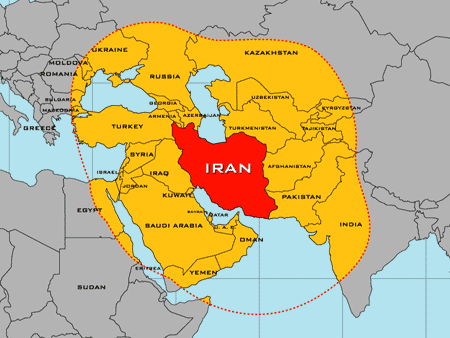
Shahab III Missile Ranges
The Iranians and their Hezbollah allies have repeatedly threatened Israel with destruction and have improved their missile forces significantly ever the past number of years even without nuclear weapons. Prime Minister Benjamin Netanyahu is demanding the United States and the west set “Red Lines” regarding the Iranian nuclear program that would trigger an automatic attack on Iran by the United States.
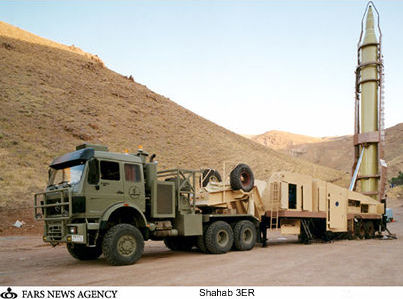
Like the First World War the tensions, provocations and rhetoric increase even as military forces mobilize and gather in the region. Iran is preparing for massive military exercises involving land, air defense and ballistic missile units from the Iranian military and Revolutionary Guards to begin in October. Iran admitted this weekend that forces from their Revolutionary Guards are currently operating in Syria placing them in position to directly engage Israeli forces in the event of conflict.

By October the United States will have three Carrier Strike Groups, the USS Enterprise, USS Dwight D. Eisenhower and USS John C Stennis and an Expeditionary Strike Group with an embarked Marine Expeditionary Unit in the region. Additionally warships from more than 25 countries are gathering for exercises designed to counter any blockade of the strategic Straits of Hormuz by Iran. Other ships, including the French Aircraft Carrier Charles DeGaulle battle group and the British HMS Illustrious “Response Task Forces Group” are in the Eastern Mediterranean and could be in the region within a week. US Navy submarines, both attack and ballistic missile are never far from a threatened area. US Air Force Fighter Squadrons have been reinforced and it is certain that strategic air force units of B-2, B-52 and B-1 bombers are certainly deployed where they can respond as needed. The build up by all sides is unprecedented.
The countries of the region are on hair trigger alert. Any act, intentional or unintentional by any party could trigger a war that would most certainly bring great destruction to the region but would likely sink the global economy and spread around the world through acts of terror and revolutionary violence.
Numerous reports and Israel government official statements indicate that Israel is ready, to strike Iran, if need be alone to prevent what they believe is an existential threat to Israel. While some believe that any Israeli attack on Iran would be precision strikes aimed at Iran’s nuclear program and ballistic missiles sites. However, most experts believe that an Israeli strike would at best set back the Iranian nuclear weapons program a couple of years and trigger a regional war with very unpredictable outcomes. If the Israeli strike is conventional in nature the Iranians will strike back against Israel, as well as US targets in the region. The US would certainly respond but any war would affect the region and the world economy as oil prices would rise exponentially.
With that in mind it is possible that the Israelis fearing the existential threat of Iranian nukes might use their nuclear forces in a first strike role.
Most experts believe that the Israelis would only use nuclear weapons in a retaliatory “second strike” capacity. The reasoning is that the first use of nuclear weapons by Israel would be against their national interests. That is logical but history is replete with times that nations have acted in ways contrary to logic because the action is deemed “necessary.” It is the same logic that said that the Germans would not violate Belgian neutrality in 1914 knowing that such an action would trigger British intervention on the side of France and Russia. It was believed by most that “the Germans are dangerous but they are not maniacs….” The Germans faced war on more than one front and felt that they had to deliver a swift blow to knock France out of the war in order to defeat Russia. It was a risk that they were willing to take and one which helped lose them the war and set about a series of events that made the 20th Century the bloodiest in human history.
In the current situation many in Israeli leadership may view the use of nuclear weapons to stop an existential threat as a legitimate use of the weapons. Israel does face real threats and those threats are increasing as Iran increases in strength and no longer has traditional rival Iraq to worry about. Likewise the instability of Egypt and the anti-Israeli animus of the Moslem Brotherhood which now leads Egypt has increased the real and perceived threat from that country. An Egypt openly hostile to Israel armed to the teeth with advanced American weapons is a dagger pointed at the heart of Israel. Israel’s leaders may be willing to suffer international condemnation in order eliminate what they consider an existential Iranian threat to ensure their survival and ability to defend against Egypt as well as conventional and unconventional Hizbollah forces operating out of Lebanon and those of Hamas in Gaza.
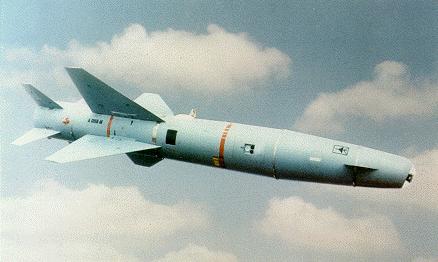
If they were to use nuclear weapons the primary delivery system in such a strike would most likely be Dolphin Class submarines armed with nuclear capable Popeye cruise missiles. These missiles have a 1500 km range and while the missiles could be used in a conventional strike their utility would be limited to precision strikes against unfortified headquarters buildings housing Iranian leadership, or command and control facilities. The numbers of Popeye missiles the Dolphins carry is limited since the majority of Iranian nuclear sites are hardened facilities or deep underground their use against them in a conventional manner would be a waste.
The threat to United States and NATO forces in Afghanistan is great if a broader war erupts. US and NATO forces, already fighting an increasing Taliban insurgency are for all practical purposes surrounded if a war spreads and Pakistan shuts down the southern supply route. Even this week Taliban insurgents scored a victory successfully attacking the strongly fortified joint US Marine and British base Camp Leatherneck-Camp Bastion destroying 6 AV-8B Harrier jets on the ground, damaging more aircraft, valuable hangers and support facilities while killing 2 Marines. A war with Iran would threaten to turn Afghanistan into a trap for nearly 100,000 US and NATO coalition troops.
It could as Barbara Tuchman said of the the Germans of 1914 that the Israelis have “staked everything on decisive battle in the image of Hannibal….” but that the ghost of Hannibal might have reminded the Germans and the Israelis that though Hannibal and “Carthage won at Cannae, Rome won the war.” In mid May and early June of 1914 even before the assassination of Franz Ferdinand Field Marshal Von Molkte and others felt that the scales were tipping against them. He told his Austrian counterpart Field Marshal Conrad Von Hotzendorf that “from now on ‘any adjournment will have the effect of diminishing our chances of success.’” On June 1st Von Molkte said to Baron Eckhardstein,“We are ready, and the sooner the better for us.”
The storm clouds of war are thickening and darkness hovers as the storm gathers. In 1914 the politicians, diplomats and soldiers that realized war would be disastrous were a minority in their respective governments and their warnings went unheeded. In 1914 “war pressed against every frontier. Suddenly dismayed, governments struggled and twisted to fend it off. It was no use….” As the sun set and the lamps of London were lit on August 4th 1914 Sir Edward Grey said to a friend “The lamps are going out all over Europe; we shall not see them lit again in our lifetime.” It is as if we are watching the same drama play out in the Middle East now.
Peace
Padre Steve+




 The Inglorius Padre Steve's World