Tag Archives: union cavalry

The Development of Cavalry in the American Civil War

gallonbuyingtime

Friends of Padre Steve’s World,

Today, since I am tired and it looks like I am not get a chance to write anything new before we begin our trip to Germany I am going to  I am post a revised part of one of my Civil War texts.  This one deals with the organization, use, and development of cavalry during the war in the United States Army and the Army of the Confederate States Army.  

Peace

Padre Steve+

Cavalry in the United States in the ante-bellum period and during the war differed from the massive cavalry arms of European armies. In Europe the major armies had two types of cavalry units, light cavalry which was used for scouting, reconnaissance and screening, and heavy cavalry which was designed to be employed at the decisive moment of the battle in order to break enemy infantry formations through the shock of the massed charge. Napoleon always had a number of reserve cavalry corps to fulfill this mission.

The United States had little in the way of a cavalry tradition. Cavalry was considered by many American political leaders to be too aristocratic for America and as a result this arm of service suffered. In its early years the U.S. Army did not have any sizable mounted formations to call upon.

There were a number of other reasons for the cultural and institutional resistance to a strong were trained and armed cavalry service in the United States Army.

First, the nation as a whole distrusted large standing armies and viewed them as a source of potential tyranny and traditional cavalry was the most aristocratic part of European armies. The struggle between Federalists who desired a standing army and a militia that could be organized under central control and Republicans who wanted nothing of the sort was a constant source of friction in the new republic. Anti-Federalists saw standing armies as despotic, as one anti-federalist publication noted “In despotic governments, as well as in all the monarchies of Europe, standing armies are kept to execute the commands of the prince or magistrate…. By establishing an armed force to execute the laws at the point of the bayonet – a government of all others is the most to be dreaded.” [1]

As such, much of the nation’s military spending was focused on the Navy, which was deemed as less of a domestic threat, and even then the limited budgets meant that many times significant numbers of ships were laid up in ordinary. The Regular Army struggled to maintain its existence from 1787 until the War of 1812 in the face of Republican opposition led by Thomas Jefferson. After the War of 1812 the nation soon lost interest in paying for a standing army and in 1821 against the wishes of Secretary of War John C. Calhoun slashed “the Army’s strength by eliminating regiments and reducing the number of officers.” [2] With appropriations cut to the bone there was no effort to create a cavalry arm for the service as cavalry formations were much more expensive to equip and maintain than infantry.

Even though the Regular Army survived, it was tiny in. Its strength ranged from 3,000 to 6,000 men, the bulk were infantry who for the most part formed a frontier constabulary or manned coastal fortifications. However, in 1796 two companies of Dragoons were authorized, but even so the mounted arm remained a poor stepchild. Likewise, “Doctrinal resistance to battle cavalry was also very strong. The ‘American’ tradition had no place for such an animal….” [3]

Finally as the nation expanded westward the army formed the First Dragoon Regiment in 1833. In 1836 the Second Dragoons were organized. The Dragoons were basically mounted infantry formations and these units were scattered about the expanding western frontiers of the nation were employed “guarding the routes of expansion as far west as the Rocky Mountains and as far south as the Red River.” The army also formed Mounted Infantry units, which like the Dragoons were hybrid formations. Though many thought that such units promised “a double return on the government’s investment, but which did not manage to provide either an efficient force of infantry or an efficient battle force of cavalry.” [4]

The First Dragoons would serve with “distinction in numerous engagements in what was to become California and New Mexico.”[5] The regiment fought well in the War with Mexico but suffered heavy casualties in the process. When the war ended it was again dispersed on the frontier when it was used to protect settlers and fight Native American tribes that resisted the advance of the flood of white settlers.

One of the reasons for the heavy losses sustained by the First Dragoons in Mexico was because “West Point cavalry doctrine was based upon a Napoleonic mania for the massed saber charge.” [6] However, one problem with this was that the United States Army never had sufficient numbers of cavalry, not to mention a death of heavy cavalry needed to make such attacks successful, but in Mexico the limited number of cavalry troops available made such tactics untenable. The tactic had often worked well for Napoleon and massed cavalry charges were used to sweep the field of broken enemy infantry formation. However, the suicidal charge of Marshal Ney’s vaunted Cuirassiers against the Duke of Wellington’s highly disciplined infantry squares at Waterloo had shown that such tactics were destined for extinction unless they were part of an all arms assault. Marshal Ney failed because he used his cavalry in unsupported attacks against the allied infantry squares rather advancing artillery to support the attack or bringing infantry up to force the defenders out of their squares.

It was not until the 1850s that the army organized its first two Cavalry regiments for duty on the frontier. The new cavalry regiments were the equivalent of European light cavalry and during the war primarily served in that role, conducting reconnaissance, raids, and screening the army. Even so the tactical doctrine taught at West Point focused continued to “support the continuing predominance of the offense over the defense, of shock over firepower” [7] which was at odds with the cavalry’s actual capabilities.

Cavalry regiments were usually composed of four to six squadrons, each squadron having two companies. Cavalry regiments could range in size from 660 to nearly 1,200 troopers. Both the Union and the Confederacy grouped their cavalry into brigades and later divisions, but the Confederates were first to establish cavalry brigades and divisions. By 1863 both the Confederate Army of Northern Virginia and the Union Army of the Potomac each formed cavalry corps. Cavalry tactics “complemented conventional infantry assault tactics, emphasizing shock and the role of the saber”; unfortunately both the infantry and the cavalry developed their doctrine independently. U.S. Army Cavalry doctrine was prescribed in Philip St. George Cooke’s Cavalry Tactics which was published in 1861 while a corresponding Confederate manual, Joseph Wheeler’s A Revised System of Cavalry Tactics appeared in 1863.

Before the war American cavalry units tended to operate in small numbers with regiments seldom sending into action more than a few companies at once. At the beginning of the war the Federal government decided to form just five mounted regiments, including two of Dragoons and one of Mounted Infantry. It soon decided to add a sixth but the units were hindered by the fact that many of their officers had gone to the Confederacy, and some of those remaining “would jump to volunteer units to secure higher rank, pay, and prestige.”[8] The result was defeat after defeat at the hands of J.E.B. Stuart’s Confederate cavalry.

Eventually large scale programs to train and equip large numbers of volunteers and the Regulars combined with wartime reorganizations and solid leadership would make the Federal cavalry a force that was able to hold its own and then to sweep Confederate cavalry from the field. But it took time to train cavalry, and early Union commanders like McClellan refused to take that time and a “whole year was lost as a result, during which the cavalry was allowed to indoctrinate itself in the notion that it could never make use of European standards.” [9] While McClellan may have done well in organizing and training the infantry and artillery of the Army of the Potomac, he did little in the way of providing the mounted arm with leaders, training or missions that would increase their effectiveness. Unlike Stuart who combined his troopers with effective horse artillery, McClellan “failed to appreciate the advantage of coordinating the tactical strengths of cavalry with those of infantry and artillery.” [10]

CWP015

J.E.B. Stuart

While the South did struggle at times with its cavalry arm but did have an advantage in that the vast majority of their cavalry troopers owned their mounts and were experienced horsemen, something that could not be said of the many city dwellers who volunteered for duty in the Union cavalry. But the initial Southern superiority in cavalry was also due to the fact that “the principal of massing regiments into brigades and divisions was pursued earlier than by the Federal.” [11] In contrast McClellan “followed the evil course of reducing mounted regiments to their smallest components for operational use.” Likewise, he “wasted cavalry’s potential and depressed its morale by employing it as couriers, bodyguards for his subordinates, pickets for his encampments, and wagon train escorts, instead of as combat troops.” [12] The result as one would expect was that for the first two years of the war “J.E.B. Stuart and his horsemen were able, literally, to run rings around their opponents.” [13]

One Union writer compared the development of the Confederate and Union cavalry arms during the war:

“The habits of the Southern people facilitated the formation of cavalry corps which were comparatively efficient even without instruction; and accordingly we see Stuart, John Morgan, and Forrest riding around with impunity around the Union armies, and destroying or harassing their communications. Late in the war that agency was reversed. The South was exhausted of horses, while the Northern cavalry increased in numbers and efficiency, and acquired the audacity which had characterized the Southern.” [14]

buford

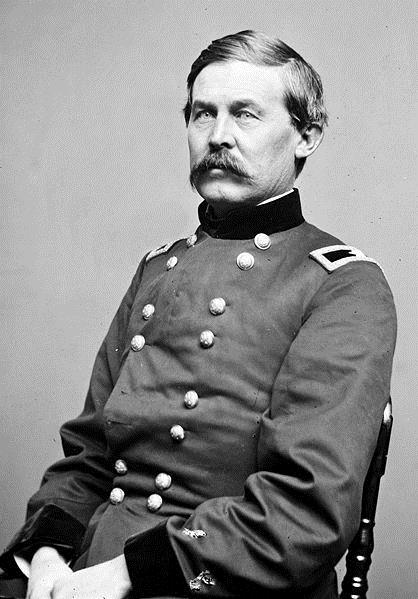
John Buford

As such much of the initial improvement in the Union cavalry arm were due to solid commanders like Brigadier General John Buford to teach new recruits as well as discouraged veterans to become effective cavalrymen.

Cavalry remained a fairly small in comparison to the infantry and artillery branches of service. Even during the wartime expansion the amount of cavalry available was miniscule compared to European armies. On the average only about 8% of the Army of the Potomac was composed of cavalry, compared to Napoleon’s 20 to 25%. [15] Part of this was due to the perceived cost of the cavalry arm which many believed was too expensive to maintain on a large scale: “estimates held that every twelve companies mounted and outfitted at public expense would rob the Treasury of over $300,000 a year merely to cover upkeep on animals, remounts, weapons, and equipment….” [16]

The cost of equipping cavalry was high enough that in the South that troopers had to procure their own mounts. Edwin Coddington noted that the Confederate policy “was a wonderful arrangement for keeping the strength of the cavalry below par, much more than enemy bullets, for it encouraged absenteeism.” [17] The Confederate government paid the own for the use of the horse, and a cash reimbursement if it was lost in combat, but if it was lost in any other manner the soldier had to get another horse if he wanted to remain in the service. Since the Confederates never set up a “centralized replacement service” troopers who lost their mount “had to go home to procure a new horse. If he were a Virginian he needed from thirty to sixty days to accomplish his purpose, and a much longer time should he have to come deeper south.” [18]

Despite the doctrinal predilection to the offense and using the cavalry as a shock unit, the U.S. Army formed no heavy cavalry formations on the order of the famous French Cuirassiers, named after their armored breastplates and metal helmets which were the primary type of cavalry used in Europe for such tactics. As such, during the Civil War both Union and Confederate cavalry formations were primarily assigned to reconnaissance and screening missions normally conducted by light cavalry units in Europe. These larger formations began to be used en masse for the purpose of raiding by both sides “but in the hands of J.E.B Stuart and his friends it became little more than a license to roam off into the enemy’s rear areas looking for plunder and glory.”[19] The cavalry Corps of the Army of the Potomac was used in a similar manner to raid enemy rear areas with often dreadful results which contributed nothing to the overall goal of defeating Lee’s army. A prime example was when Joseph Hooker detached his newly formed Cavalry Corps under George Stoneman to raid Richmond leaving the flank of the army uncovered at Chancellorsville.

Quite often the soldiers assigned to the infantry and artillery had little use for the cavalry who they saw as pampered and contributing little to the war. Many infantrymen held the “cavalry in open contempt. “These cavalry are a positive nuisance,” an officer in the 123rd Illinois wrote. “They won’t fight, and whenever they are around they are always in the way of those who will fight.” [20] Disdainful Confederate infantrymen “greeted their cavaliers with “Here’s your mule!” and “their Federal counterparts would exclaim: “There’d going to be a fight, boy; the cavalry’s running back!” and “Whoever saw a dead cavalryman.”[21]

The lethality of the rifled musket also made the classic Napoleonic cavalry charge against enemy infantry a costly and dangerous enterprise if the enemy infantry still had the means to make organized resistance, and if the cavalry assault was not supported by infantry and cavalry.. An example of this was the ill-fated cavalry attack ordered by Brigadier General Judson Kilpatrick against the men of Lafayette McLaws’s well prepared division on the Confederate right after the failure of Pickett’s Change at Gettysburg.

Cavalry tactics began to change during the war. Both sides used their cavalry for raids, sometimes very large ones, and operations against enemy partisans in their rear areas. In each case the cavalry was typically deployed by itself and even when it accompanied the armies into battle cavalry units were typically employed on the periphery of the battle. As such as Griffith wrote, “Civil War doctrine of raiding… was not only a deliberate turn away from the hope of victory on the battlefield, but it actually removed the means by which victory might have been won at the very moment when those means were at last starting to be properly efficient.” [22] The lack of heavy cavalry of the European model sometimes kept commanders from completing victories, one can only imagine what would have happened had George Meade had a division of heavy cavalry at hand to sweep the Confederates from the battlefield after Pickett’s Charge.

sheridanphiliphbio

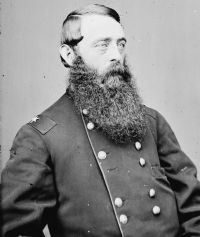
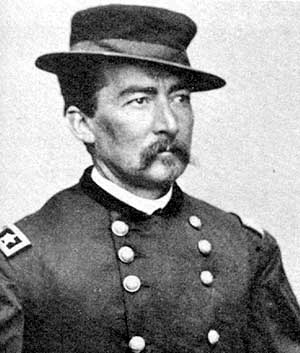
Philip Sheridan

Tactics only began to change when General Philip Sheridan took command of Grant’s cavalry. Sheridan kept the cavalry close to the main body of the arm. Sheridan had replaced Major General Alfred Pleasanton as commander of the Cavalry Corps of the Army of the Potomac in early 1864. It is quite possible had he not died in December 1863 that the post would have gone to John Buford, but Sheridan had a vision for the cavalry that foreshadowed modern operational art. Sheridan wanted to organize the Cavalry Corps by concentrating it “into a powerful striking arm. He desired to do this, first, to deal with the Confederate cavalry, on the theory that “with a mass of ten thousand mounted men… I could make it so lively for the enemy’s cavalry that… the flanks and rear of the Army of the Potomac would require little or no defense.” [23] Sheridan was making no idle boast as by now his troops “were not only more numerous, but they had better leaders, tactics, and equipment than before,” [24] especially when it came to the Spencer repeating rifle which was now standard issue for the cavalrymen, and which gave them a tremendous advantage in firepower over Stuart’s now ill-equipped troops.

Sheridan first did this at the beginning of the Wilderness campaign when he took his 10,000 strong corps around the Confederate flank. Sheridan had been quarreling with Meade about the latter’s insistence that Sheridan’s horsemen were clogging the roads that his infantry needed to advance upon. In the heated discussion Sheridan came very close to being insubordinate with Meade. Meade reportedly told Sheridan that “Stuart “will do about how he pleases anyhow” to which Sheridan supposedly replied “Damn Stuart, I can trash hell out of him any day.” [25] Furious, Meade went and reported the matter to Grant. Grant listened and replied “Did Sheridan say that?… He usually knows what he is talking about. Let him go ahead and do it.” [26] At Grant’s request Meade provided Sheridan with new orders to concentrate his cavalry, march south and engage Stuart’s cavalry. Unlike previous raids which sought to avoid battle with Stuart’s troops in order to hit prescribed objectives, above all Sheridan wanted to engage and defeat the legendary Confederate cavalier. He “defined the raid as “a challenge to Stuart for a cavalry duel behind Lee’s lines in his own country.” And the more there were of the gray riders when the showdown was at hand, the better he would like it, since that would mean there were more to be smashed up.” [27]

Sheridan’s column totaled nearly 13,000 men and was nearly 13 miles long as he proceeded at a slow pace around Lee’s army and south towards Richmond. In addition to his horsemen he brought all of his horse artillery batteries. He was well around Lee’s flank before he was discovered and during the march his troops burned a depot and over one hundred railroad cars containing “close to a million rations of meat and better than a half million of bread, along with Lee’s entire reserve of medical stores.” [28]

On May 11th Stuart managed to intercept Sheridan’s column at a place called Yellow Tavern, just south of Ashland and the Ana River, but his corps was outnumbered by at least three to one. Three well trained, experienced, equipped, and superbly led Federal cavalry divisions confronted Stuart. With no hopes of fighting an offensive action, Stuart’s troops fought dismounted and were routed by the superior Bluecoats who continued on to cut the railroad between Lee’s army and Richmond. During the battle Stuart, who had cheated death on a number of occasions was mortally wounded. The Confederate cavalry of the Army of Northern Virginia would never recover, and to Southerners Stuart’s death was a profound psychological blow, only slightly worse than that of Stonewall Jackson a year before. Robert E. Lee, to who Stuart was like a son took the loss harder than he had taken Jackson’s. “I can scarcely think of him without weeping,” he told one of Stuart’s officers.” [29]

As the armies in the East and West dueled throughout 1864, Sheridan and other Federal cavalry officers transformed the Union cavalry into a striking force which could be the spearhead of the army and use new tactics to overcome the problem of combining fire with rapid maneuver which had never been satisfactory applied by the infantry. There were four components in the new tactical mix: “fast operational mobility on horseback out of contact with the enemy; a willingness to take cover and fight on foot when the enemy was close; new repeating carbines to give enhanced firepower; and a mounted reserve to make the sabre charge when the moment was ripe.” [30] Sheridan would apply these tactics in his later campaigns against Jubal Early in the Shenandoah Valley and during the Appomattox campaign and his cavalry, working with infantry and artillery smashed the beleaguered Confederate armies which tried to oppose them. The reorganized cavalry was not the answer to all of the battlefield problems faced by Civil War commanders but it gave Union commanders an impressive weapon in which the speed and firepower of the cavalry could be readily combined with artillery and infantry to achieve decisive results. On the Confederate side, General Joseph Wheeler who commanded the cavalry in the west, Wheeler usually fought dismounted in “skirmish order using field fortification, whether skirmishing independently or in the line…. In the last major action of the war, he dramatically displayed how cavalry had become tactically integrated with infantry. At Bentonville, while fighting his cavalry dismounted, first on the right, then moving around to the left flank, Wheeler constructed a line of breastworks 1,200 yards long.” [31]

European cavalry officers found little to admire in American use of cavalry. Few paid attention to the importance of fighting dismounted and working as part of a combined arms team. In August 1914 their cavalry formations paid severe price for ignoring the realities of modern war, realities which the Americans, both Union and Confederate learned during the Civil War.

Notes

[1] ____________ Anti-Federalists Fear a Large Military “Brutus I.” “To the Citizens of the State of New York” 1787 in Major Problems in American Military History edited by John Whiteclay Chambers II and G. Kurt Piehler, Houghton-Mifflin and Company, Boston and New York 1999 p. 103

[2] Ibid. Millet and Maslowski For the Common Defense: A Military History of the United States p.122

[3] Ibid. Griffith, Battle Tactics of the Civil War p.181

[4] Ibid. Griffith, Battle Tactics of the Civil War p.181

[5] Longacre, Edward G. John Buford: A Military Biography Da Capo Press, Perseus Book Group, Cambridge MA p.33

[6] Thomas, Emory M. Bold Dragoon: The Life of J.E.B. Stuart University of Oklahoma Press, Norman OK 1986 and 1999 p.30

[7] Ibid. Hagerman The American Civil War and the Origins of Modern Warfare p.21

[8] Longacre, Edward G. The Cavalry at Gettysburg: A Tactical Study of Mounted Operations, during the Civil War’s Pivotal Campaign, 9 June- 14 July 1863. University of Nebraska Press, Lincoln and London 1986 p.44

[9] Ibid. Griffith, Battle Tactics of the Civil War p.182

[10] Ibid. Longacre The Cavalry at Gettysburg: A Tactical Study of Mounted Operations, during the Civil War’s Pivotal Campaign, 9 June- 14 July 1863 p.45

[11] Ibid. Griffith, Battle Tactics of the Civil War p.181

[12] Ibid. Longacre The Cavalry at Gettysburg: A Tactical Study of Mounted Operations, during the Civil War’s Pivotal Campaign, 9 June- 14 July 1863 p.45

[13] Ibid. Griffith, Battle Tactics of the Civil War p.183

[14] Buell, Don Carlos. East Tennessee and the Campaign of Perryville in Battles and Leaders of the Civil War Volume III, The Tide Shifts. Edited by Robert Underwood Johnson and Clarence Clough Buel Castle, Secaucus NJ p.51

[15] Ibid. Griffith, Battle Tactics of the Civil War p.181

[16] Ibid. Longacre The Cavalry at Gettysburg: A Tactical Study of Mounted Operations, during the Civil War’s Pivotal Campaign, 9 June- 14 July 1863 p.43

[17] Coddington, Edwin B. The Gettysburg Campaign: A Study in Command, A Touchstone Book, Simon and Schuster New York, 1968 p.17

[18] Ibid. Coddington The Gettysburg Campaign: A Study in Command p.17

[19] Ibid. Griffith, Battle Tactics of the Civil War p.183

[20] Ibid. Robertson Soldiers Blue and Gray p.20

[21] Ibid. Longacre The Cavalry at Gettysburg: A Tactical Study of Mounted Operations, during the Civil War’s Pivotal Campaign, 9 June- 14 July 1863 p.45

[22] Ibid. Griffith, Battle Tactics of the Civil War pp.183-184

[23] Ibid. Weigley A Great Civil War: A Military and Political History 1861-1865 p.369

[24] Ibid. Whelan Bloody Spring: Forty Days that Sealed the Confederacy’s Fate p.181

[25] Ibid. Thomas Bold Dragoon: The Life of J.E.B. Stuart p.288

[26] Catton, Bruce Grant Takes Command Little, Brown, and Company, New York, Toronto, London 1968 and 1969 p.216

[27]Ibid. Foote The Civil War, A Narrative. Volume Three Red River to Appomattox p.564 p.224

[28] Ibid. Foote The Civil War, A Narrative. Volume Three Red River to Appomattox p.564 p.225

[29] Ibid. Korda, Clouds of Glory p.626

[30] Ibid. Griffith, Battle Tactics of the Civil War p.184

[31] Ibid. Hagerman The American Civil War and the Origins of Modern Warfare p.298

Leave a comment

Filed under civil war, Gettysburg, History, Military, us army

Cavalry in the American Civil War

gallonbuyingtime

Friends of Padre Steve’s World,

Today I am posting a revised part of one of my Civil War texts, this one dealing with the organization, use, and development of cavalry during the war. It’s kind of a history geek thing, I’m re-working on the section on artillery. I hope that you enjoy.

Peace

Padre Steve+

Cavalry in the United States in the ante-bellum period and during the war differed from the massive cavalry arms of European armies. In Europe the major armies had two types of cavalry units, light cavalry which was used for scouting, reconnaissance and screening, and heavy cavalry which was designed to be employed at the decisive moment of the battle in order to break enemy infantry formations through the shock of the massed charge. Napoleon always had a number of reserve cavalry corps to fulfill this mission.

The United States had little in the way of a cavalry tradition. Cavalry was considered by many American political leaders to be too aristocratic for America and as a result this arm of service suffered. In its early years the U.S. Army did not have any sizable mounted formations to call upon.

There were a number of other reasons for the cultural and institutional resistance to a strong were trained and armed cavalry service in the United States Army.

First, the nation as a whole distrusted large standing armies and viewed them as a source of potential tyranny and traditional cavalry was the most aristocratic part of European armies. The struggle between Federalists who desired a standing army and a militia that could be organized under central control and Republicans who wanted nothing of the sort was a constant source of friction in the new republic. Anti-Federalists saw standing armies as despotic, as one anti-federalist publication noted “In despotic governments, as well as in all the monarchies of Europe, standing armies are kept to execute the commands of the prince or magistrate…. By establishing an armed force to execute the laws at the point of the bayonet – a government of all others is the most to be dreaded.” [1]

As such, much of the nation’s military spending was focused on the Navy, which was deemed as less of a domestic threat, and even then the limited budgets meant that many times significant numbers of ships were laid up in ordinary. The Regular Army struggled to maintain its existence from 1787 until the War of 1812 in the face of Republican opposition led by Thomas Jefferson. After the War of 1812 the nation soon lost interest in paying for a standing army and in 1821 against the wishes of Secretary of War John C. Calhoun slashed “the Army’s strength by eliminating regiments and reducing the number of officers.” [2] With appropriations cut to the bone there was no effort to create a cavalry arm for the service as cavalry formations were much more expensive to equip and maintain than infantry.

Even though the Regular Army survived, it was tiny in. Its strength ranged from 3,000 to 6,000 men, the bulk were infantry who for the most part formed a frontier constabulary or manned coastal fortifications. However, in 1796 two companies of Dragoons were authorized, but even so the mounted arm remained a poor stepchild. Likewise, “Doctrinal resistance to battle cavalry was also very strong. The ‘American’ tradition had no place for such an animal….” [3]

Finally as the nation expanded westward the army formed the First Dragoon Regiment in 1833. In 1836 the Second Dragoons were organized. The Dragoons were basically mounted infantry formations and these units were scattered about the expanding western frontiers of the nation were employed “guarding the routes of expansion as far west as the Rocky Mountains and as far south as the Red River.” The army also formed Mounted Infantry units, which like the Dragoons were hybrid formations. Though many thought that such units promised “a double return on the government’s investment, but which did not manage to provide either an efficient force of infantry or an efficient battle force of cavalry.” [4]

The First Dragoons would serve with “distinction in numerous engagements in what was to become California and New Mexico.” [5] The regiment fought well in the War with Mexico but suffered heavy casualties in the process. When the war ended it was again dispersed on the frontier when it was used to protect settlers and fight Native American tribes that resisted the advance of the flood of white settlers.

One of the reasons for the heavy losses sustained by the First Dragoons in Mexico was because “West Point cavalry doctrine was based upon a Napoleonic mania for the massed saber charge.” [6] However, one problem with this was that the United States Army never had sufficient numbers of cavalry, not to mention a death of heavy cavalry needed to make such attacks successful, but in Mexico the limited number of cavalry troops available made such tactics untenable. The tactic had often worked well for Napoleon and massed cavalry charges were used to sweep the field of broken enemy infantry formation. However, the suicidal charge of Marshal Ney’s vaunted Cuirassiers against the Duke of Wellington’s highly disciplined infantry squares at Waterloo had shown that such tactics were destined for extinction unless they were part of an all arms assault. Marshal Ney failed because he used his cavalry in unsupported attacks against the allied infantry squares rather advancing artillery to support the attack or bringing infantry up to force the defenders out of their squares.

It was not until the 1850s that the army organized its first two Cavalry regiments for duty on the frontier. The new cavalry regiments were the equivalent of European light cavalry and during the war primarily served in that role, conducting reconnaissance, raids, and screening the army. Even so the tactical doctrine taught at West Point focused continued to “support the continuing predominance of the offense over the defense, of shock over firepower” [7] which was at odds with the cavalry’s actual capabilities.

Cavalry regiments were usually composed of four to six squadrons, each squadron having two companies. Cavalry regiments could range in size from 660 to nearly 1,200 troopers. Both the Union and the Confederacy grouped their cavalry into brigades and later divisions, but the Confederates were first to establish cavalry brigades and divisions. By 1863 both the Confederate Army of Northern Virginia and the Union Army of the Potomac each formed cavalry corps. Cavalry tactics “complemented conventional infantry assault tactics, emphasizing shock and the role of the saber”; unfortunately both the infantry and the cavalry developed their doctrine independently. U.S. Army Cavalry doctrine was prescribed in Philip St. George Cooke’s Cavalry Tactics which was published in 1861 while a corresponding Confederate manual, Joseph Wheeler’s A Revised System of Cavalry Tactics appeared in 1863.

Before the war American cavalry units tended to operate in small numbers with regiments seldom sending into action more than a few companies at once. At the beginning of the war the Federal government decided to form just five mounted regiments, including two of Dragoons and one of Mounted Infantry. It soon decided to add a sixth but the units were hindered by the fact that many of their officers had gone to the Confederacy, and some of those remaining “would jump to volunteer units to secure higher rank, pay, and prestige.” [8] The result was defeat after defeat at the hands of J.E.B. Stuart’s Confederate cavalry.

Eventually large scale programs to train and equip large numbers of volunteers and the Regulars combined with wartime reorganizations and solid leadership would make the Federal cavalry a force that was able to hold its own and then to sweep Confederate cavalry from the field. But it took time to train cavalry, and early Union commanders like McClellan refused to take that time and a “whole year was lost as a result, during which the cavalry was allowed to indoctrinate itself in the notion that it could never make use of European standards.” [9] While McClellan may have done well in organizing and training the infantry and artillery of the Army of the Potomac, he did little in the way of providing the mounted arm with leaders, training or missions that would increase their effectiveness. Unlike Stuart who combined his troopers with effective horse artillery, McClellan “failed to appreciate the advantage of coordinating the tactical strengths of cavalry with those of infantry and artillery.” [10]
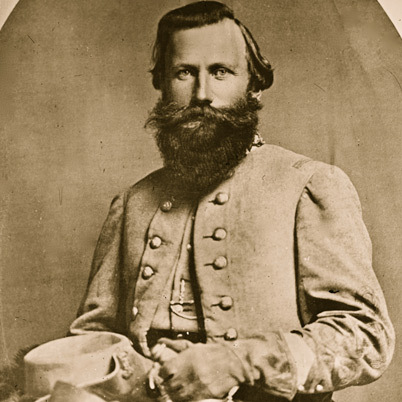
CWP015

J.E.B. Stuart

While the South did struggle at times with its cavalry arm but did have an advantage in that the vast majority of their cavalry troopers owned their mounts and were experienced horsemen, something that could not be said of the many city dwellers who volunteered for duty in the Union cavalry. But the initial Southern superiority in cavalry was also due to the fact that “the principal of massing regiments into brigades and divisions was pursued earlier than by the Federal.” [11] In contrast McClellan “followed the evil course of reducing mounted regiments to their smallest components for operational use.” Likewise, he “wasted cavalry’s potential and depressed its morale by employing it as couriers, bodyguards for his subordinates, pickets for his encampments, and wagon train escorts, instead of as combat troops.” [12] The result as one would expect was that for the first two years of the war “J.E.B. Stuart and his horsemen were able, literally, to run rings around their opponents.” [13]

One Union writer compared the development of the Confederate and Union cavalry arms during the war:

“The habits of the Southern people facilitated the formation of cavalry corps which were comparatively efficient even without instruction; and accordingly we see Stuart, John Morgan, and Forrest riding around with impunity around the Union armies, and destroying or harassing their communications. Late in the war that agency was reversed. The South was exhausted of horses, while the Northern cavalry increased in numbers and efficiency, and acquired the audacity which had characterized the Southern.” [14]
buford

John Buford

As such much of the initial improvement in the Union cavalry arm were due to solid commanders like Brigadier General John Buford to teach new recruits as well as discouraged veterans to become effective cavalrymen.

Cavalry remained a fairly small in comparison to the infantry and artillery branches of service. Even during the wartime expansion the amount of cavalry available was miniscule compared to European armies. On the average only about 8% of the Army of the Potomac was composed of cavalry, compared to Napoleon’s 20 to 25%. [15] Part of this was due to the perceived cost of the cavalry arm which many believed was too expensive to maintain on a large scale: “estimates held that every twelve companies mounted and outfitted at public expense would rob the Treasury of over $300,000 a year merely to cover upkeep on animals, remounts, weapons, and equipment….” [16]

The cost of equipping cavalry was high enough that in the South that troopers had to procure their own mounts. Edwin Coddington noted that the Confederate policy “was a wonderful arrangement for keeping the strength of the cavalry below par, much more than enemy bullets, for it encouraged absenteeism.” [17] The Confederate government paid the own for the use of the horse, and a cash reimbursement if it was lost in combat, but if it was lost in any other manner the soldier had to get another horse if he wanted to remain in the service. Since the Confederates never set up a “centralized replacement service” troopers who lost their mount “had to go home to procure a new horse. If he were a Virginian he needed from thirty to sixty days to accomplish his purpose, and a much longer time should he have to come deeper south.” [18]

Despite the doctrinal predilection to the offense and using the cavalry as a shock unit, the U.S. Army formed no heavy cavalry formations on the order of the famous French Cuirassiers, named after their armored breastplates and metal helmets which were the primary type of cavalry used in Europe for such tactics. As such, during the Civil War both Union and Confederate cavalry formations were primarily assigned to reconnaissance and screening missions normally conducted by light cavalry units in Europe. These larger formations began to be used en masse for the purpose of raiding by both sides “but in the hands of J.E.B Stuart and his friends it became little more than a license to roam off into the enemy’s rear areas looking for plunder and glory.” [19] The cavalry Corps of the Army of the Potomac was used in a similar manner to raid enemy rear areas with often dreadful results which contributed nothing to the overall goal of defeating Lee’s army. A prime example was when Joseph Hooker detached his newly formed Cavalry Corps under George Stoneman to raid Richmond leaving the flank of the army uncovered at Chancellorsville.

Quite often the soldiers assigned to the infantry and artillery had little use for the cavalry who they saw as pampered and contributing little to the war. Many infantrymen held the “cavalry in open contempt. “These cavalry are a positive nuisance,” an officer in the 123rd Illinois wrote. “They won’t fight, and whenever they are around they are always in the way of those who will fight.” [20] Disdainful Confederate infantrymen “greeted their cavaliers with “Here’s your mule!” and “their Federal counterparts would exclaim: “There’d going to be a fight, boy; the cavalry’s running back!” and “Whoever saw a dead cavalryman.” [21]

The lethality of the rifled musket also made the classic Napoleonic cavalry charge against enemy infantry a costly and dangerous enterprise if the enemy infantry still had the means to make organized resistance, and if the cavalry assault was not supported by infantry and cavalry.. An example of this was the ill-fated cavalry attack ordered by Brigadier General Judson Kilpatrick against the men of Lafayette McLaws’s well prepared division on the Confederate right after the failure of Pickett’s Change at Gettysburg.

Cavalry tactics began to change during the war. Both sides used their cavalry for raids, sometimes very large ones, and operations against enemy partisans in their rear areas. In each case the cavalry was typically deployed by itself and even when it accompanied the armies into battle cavalry units were typically employed on the periphery of the battle. As such as Griffith wrote, “Civil War doctrine of raiding… was not only a deliberate turn away from the hope of victory on the battlefield, but it actually removed the means by which victory might have been won at the very moment when those means were at last starting to be properly efficient.” [22] The lack of heavy cavalry of the European model sometimes kept commanders from completing victories, one can only imagine what would have happened had George Meade had a division of heavy cavalry at hand to sweep the Confederates from the battlefield after Pickett’s Charge.
sheridanphiliphbio

Philip Sheridan

Tactics only began to change when General Philip Sheridan took command of Grant’s cavalry. Sheridan kept the cavalry close to the main body of the arm. Sheridan had replaced Major General Alfred Pleasanton as commander of the Cavalry Corps of the Army of the Potomac in early 1864. It is quite possible had he not died in December 1863 that the post would have gone to John Buford, but Sheridan had a vision for the cavalry that foreshadowed modern operational art. Sheridan wanted to organize the Cavalry Corps by concentrating it “into a powerful striking arm. He desired to do this, first, to deal with the Confederate cavalry, on the theory that “with a mass of ten thousand mounted men… I could make it so lively for the enemy’s cavalry that… the flanks and rear of the Army of the Potomac would require little or no defense.” [23] Sheridan was making no idle boast as by now his troops “were not only more numerous, but they had better leaders, tactics, and equipment than before,” [24] especially when it came to the Spencer repeating rifle which was now standard issue for the cavalrymen, and which gave them a tremendous advantage in firepower over Stuart’s now ill-equipped troops.

Sheridan first did this at the beginning of the Wilderness campaign when he took his 10,000 strong corps around the Confederate flank. Sheridan had been quarreling with Meade about the latter’s insistence that Sheridan’s horsemen were clogging the roads that his infantry needed to advance upon. In the heated discussion Sheridan came very close to being insubordinate with Meade. Meade reportedly told Sheridan that “Stuart “will do about how he pleases anyhow” to which Sheridan supposedly replied “Damn Stuart, I can trash hell out of him any day.” [25] Furious, Meade went and reported the matter to Grant. Grant listened and replied “Did Sheridan say that?… He usually knows what he is talking about. Let him go ahead and do it.” [26] At Grant’s request Meade provided Sheridan with new orders to concentrate his cavalry, march south and engage Stuart’s cavalry. Unlike previous raids which sought to avoid battle with Stuart’s troops in order to hit prescribed objectives, above all Sheridan wanted to engage and defeat the legendary Confederate cavalier. He “defined the raid as “a challenge to Stuart for a cavalry duel behind Lee’s lines in his own country.” And the more there were of the gray riders when the showdown was at hand, the better he would like it, since that would mean there were more to be smashed up.” [27]

Sheridan’s column totaled nearly 13,000 men and was nearly 13 miles long as he proceeded at a slow pace around Lee’s army and south towards Richmond. In addition to his horsemen he brought all of his horse artillery batteries. He was well around Lee’s flank before he was discovered and during the march his troops burned a depot and over one hundred railroad cars containing “close to a million rations of meat and better than a half million of bread, along with Lee’s entire reserve of medical stores.” [28]

On May 11th Stuart managed to intercept Sheridan’s column at a place called Yellow Tavern, just south of Ashland and the Ana River, but his corps was outnumbered by at least three to one. Three well trained, experienced, equipped, and superbly led Federal cavalry divisions confronted Stuart. With no hopes of fighting an offensive action, Stuart’s troops fought dismounted and were routed by the superior Bluecoats who continued on to cut the railroad between Lee’s army and Richmond. During the battle Stuart, who had cheated death on a number of occasions was mortally wounded. The Confederate cavalry of the Army of Northern Virginia would never recover, and to Southerners Stuart’s death was a profound psychological blow, only slightly worse than that of Stonewall Jackson a year before. Robert E. Lee, to who Stuart was like a son took the loss harder than he had taken Jackson’s. “I can scarcely think of him without weeping,” he told one of Stuart’s officers.” [29]

As the armies in the East and West dueled throughout 1864, Sheridan and other Federal cavalry officers transformed the Union cavalry into a striking force which could be the spearhead of the army and use new tactics to overcome the problem of combining fire with rapid maneuver which had never been satisfactory applied by the infantry. There were four components in the new tactical mix: “fast operational mobility on horseback out of contact with the enemy; a willingness to take cover and fight on foot when the enemy was close; new repeating carbines to give enhanced firepower; and a mounted reserve to make the sabre charge when the moment was ripe.” [30] Sheridan would apply these tactics in his later campaigns against Jubal Early in the Shenandoah Valley and during the Appomattox campaign and his cavalry, working with infantry and artillery smashed the beleaguered Confederate armies which tried to oppose them. The reorganized cavalry was not the answer to all of the battlefield problems faced by Civil War commanders but it gave Union commanders an impressive weapon in which the speed and firepower of the cavalry could be readily combined with artillery and infantry to achieve decisive results. On the Confederate side, General Joseph Wheeler who commanded the cavalry in the west, Wheeler usually fought dismounted in “skirmish order using field fortification, whether skirmishing independently or in the line…. In the last major action of the war, he dramatically displayed how cavalry had become tactically integrated with infantry. At Bentonville, while fighting his cavalry dismounted, first on the right, then moving around to the left flank, Wheeler constructed a line of breastworks 1,200 yards long.” [31]

European cavalry officers found little to admire in American use of cavalry. Few paid attention to the importance of fighting dismounted and working as part of a combined arms team. In August 1914 their cavalry formations paid severe price for ignoring the realities of modern war, realities which the Americans, both Union and Confederate learned during the Civil War.

Notes

[1] ____________ Anti-Federalists Fear a Large Military “Brutus I.” “To the Citizens of the State of New York” 1787 in Major Problems in American Military History edited by John Whiteclay Chambers II and G. Kurt Piehler, Houghton-Mifflin and Company, Boston and New York 1999 p. 103

[2] Ibid. Millet and Maslowski For the Common Defense: A Military History of the United States p.122

[3] Ibid. Griffith, Battle Tactics of the Civil War p.181

[4] Ibid. Griffith, Battle Tactics of the Civil War p.181

[5] Longacre, Edward G. John Buford: A Military Biography Da Capo Press, Perseus Book Group, Cambridge MA p.33

[6] Thomas, Emory M. Bold Dragoon: The Life of J.E.B. Stuart University of Oklahoma Press, Norman OK 1986 and 1999 p.30

[7] Ibid. Hagerman The American Civil War and the Origins of Modern Warfare p.21

[8] Longacre, Edward G. The Cavalry at Gettysburg: A Tactical Study of Mounted Operations, during the Civil War’s Pivotal Campaign, 9 June- 14 July 1863. University of Nebraska Press, Lincoln and London 1986 p.44

[9] Ibid. Griffith, Battle Tactics of the Civil War p.182

[10] Ibid. Longacre The Cavalry at Gettysburg: A Tactical Study of Mounted Operations, during the Civil War’s Pivotal Campaign, 9 June- 14 July 1863 p.45

[11] Ibid. Griffith, Battle Tactics of the Civil War p.181

[12] Ibid. Longacre The Cavalry at Gettysburg: A Tactical Study of Mounted Operations, during the Civil War’s Pivotal Campaign, 9 June- 14 July 1863 p.45

[13] Ibid. Griffith, Battle Tactics of the Civil War p.183

[14] Buell, Don Carlos. East Tennessee and the Campaign of Perryville in Battles and Leaders of the Civil War Volume III, The Tide Shifts. Edited by Robert Underwood Johnson and Clarence Clough Buel Castle, Secaucus NJ p.51

[15] Ibid. Griffith, Battle Tactics of the Civil War p.181

[16] Ibid. Longacre The Cavalry at Gettysburg: A Tactical Study of Mounted Operations, during the Civil War’s Pivotal Campaign, 9 June- 14 July 1863 p.43

[17] Coddington, Edwin B. The Gettysburg Campaign: A Study in Command, A Touchstone Book, Simon and Schuster New York, 1968 p.17

[18] Ibid. Coddington The Gettysburg Campaign: A Study in Command p.17

[19] Ibid. Griffith, Battle Tactics of the Civil War p.183

[20] Ibid. Robertson Soldiers Blue and Gray p.20

[21] Ibid. Longacre The Cavalry at Gettysburg: A Tactical Study of Mounted Operations, during the Civil War’s Pivotal Campaign, 9 June- 14 July 1863 p.45

[22] Ibid. Griffith, Battle Tactics of the Civil War pp.183-184

[23] Ibid. Weigley A Great Civil War: A Military and Political History 1861-1865 p.369

[24] Ibid. Whelan Bloody Spring: Forty Days that Sealed the Confederacy’s Fate p.181

[25] Ibid. Thomas Bold Dragoon: The Life of J.E.B. Stuart p.288

[26] Catton, Bruce Grant Takes Command Little, Brown, and Company, New York, Toronto, London 1968 and 1969 p.216

[27]Ibid. Foote The Civil War, A Narrative. Volume Three Red River to Appomattox p.564 p.224

[28] Ibid. Foote The Civil War, A Narrative. Volume Three Red River to Appomattox p.564 p.225

[29] Ibid. Korda, Clouds of Glory p.626

[30] Ibid. Griffith, Battle Tactics of the Civil War p.184

[31] Ibid. Hagerman The American Civil War and the Origins of Modern Warfare p.298
4 Comments

Filed under civil war, History, Military

The Glory of Fighting The Anticlimactic Cavalry Clashes at Gettysburg

4 R

Custer leads his Michigan Cavalry Brigade on July 3rd

On the evening of July 2nd 1863 with the attacks of Longstreet now finished and Ewell’s abortive battle for Culp’s Hill reaching its bloody climax, Major General J.E.B. Stuart finally arrived at Robert E Lee’s headquarters on Seminary Ridge. Stuart and his troopers had been missing from Lee’s army since the evening of June 23rd, causing Lee no end of anxiety as well as depriving Lee of his most trusted source of information regarding enemy movements and intentions.

Stuart’s tired and hungry brigades were at Carlisle where he was endeavoring to take that town from local militia when Stuart leaned the location of Lee’s army. He was directed to “move to Gettysburg. Jeb did not delay compliance. Exhausted troopers mounted their staggering horses,” [1] and began the ride to Gettysburg where much of the army greeted with “joyful shouts” [2] which was a relief to his exhausted troopers. Stuart’s chief of staff Major Henry McClellan wrote: “For eight days and nights the troops had been marching incessantly. On the ninth night they rested within the shelter of the army, and with a grateful sense of relief which words cannot express.” [3]

Stuart rode ahead to Lee’s headquarters where unlike the “joyful” greeting his troops were accorded, he was met with a frosty reception by his beloved commander. Over the eight days of his absence Lee Apparently the meeting between Lee and his Cavalry division commander was short “abrupt and frosty. As soldier-historian Porter Alexander put it, “although Lee said only, ‘Well, General, you are here at last,’ his manner implied rebuke, and it was understood by Stuart.” [4] One account noted that “Lee reddened at the sight of Stuart and raised his arm as if he would strike him.” [5] Lee’s cold greeting stunned Stuart, who “may have been disappointed that no applause greeted his return from his longest raid, which he was to persuade himself was his greatest.” [6] Henry McClellan reported that Stuart “regarded the incident as painful beyond description.” [7]

In his official report of the battle “Lee would allude to Stuart with but a single pejorative sentence: “The movements of the Army preceding the Battle of Gettysburg had been much embarrassed by the absence of the cavalry.” [8]

Stuart left as quickly as he arrived and in his official report he noted that his new orders were to take up a position “on the left wing of the Army of Northern Virginia.” [9] For a man like Stuart whose soldierly skills as a cavalry commander and leader were only matched by his vanity the incident was humiliating, he had failed Robert E Lee.

Stuart devised a plan to put his strong>“entire cavalry force in a position from which he could separate the Union cavalry from the main body of the army and at proper moment swoop down on its rear.” [10] However, there is no supporting evidence to indicate that Lee ever ordered Stuart to conduct an attack, and the suggestion runs counter to how Lee employed his cavalry throughout the war. The idea that Lee intended Stuart “to commit his small cavalry force to an attack on infantry belies every tactical lesson the Civil War afforded.” [11] It was a bad plan and it was now beyond the capabilities of Stuart’s troopers exhausted troopers and their broken mounts, who would face similar numbers of relatively fresh Federal cavalry; which as noted before was now their equal in leadership, training, organization and equipment.

Stuart moved four of his brigades the following morning to the north and east. He hoped to cover his movement from Federal observation but he was discovered by “watchful Union signal officers” who reported “large columns of cavalry moving toward the right of the Union line” [12] The message was relayed by Howard to Brigadier General David Gregg of the Second Cavalry Division who quickly deployed his troopers to meet the emerging threat. Stuart unjustly blamed the discovery of his force on brigades of Hampton and Fitzhugh Lee who he said had “debouched onto open ground and disclosed his presence.” But Stuart himself was also to blame for the discovery as he announced his force’s presence by bringing one cannon from Griffin’s battery of his artillery “to the edge of the woods and fired a number of random shots in different directions, himself giving orders to the gun.” [13] For a veteran officer such as Stuart that decision is inexplicable.

david-gregg

Brigadier General David Gregg

When Gregg received word of Stuart’s approach from Alfred Pleasanton, he was ordered to intercept him and in the process relieve the Michigan Brigade of the newly minted Brigadier General George Custer, which was deployed there so it could rejoin Judson Kilpatrick’s Third Cavalry Division on the extreme Federal left.

However, upon his arrival Gregg realized that he would be outnumbered and that Stuart posed “a serious threat to the Union rear.” [14] Custer indicated that he thought Gregg would soon have a battle and Gregg replied “in that case he would like to have the assistance of his Michigan brigade.” Custer agreed with Gregg and said that he would be “only too happy” to stay.” [15] Without bothering to consult his Cavalry Corps Commander, Major General Pleasanton, Gregg ordered Custer to remain with him and “willingly risked his military career and reputation in his anxiety to protect the Federal rear.” [16]

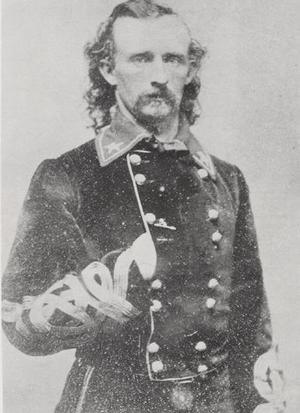
 custer

Brigadier General George Armstrong Custer

Gregg’s action was yet another of the superior judgments executed by a Federal commander during the battle. It was an outstanding example of how Federal commanders on the whole recognized the overall tactical situation and used their judgment to take action when waiting for a superior could prove fatal to the army. In our modern understanding it would be an example of how Mission Command is to work.

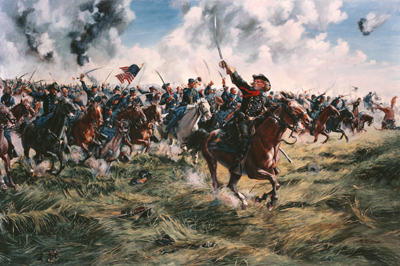
The main battle took place after Three P.M. when Pickett and Pettigrew’s divisions were battling for their lives in their ill-fated assault on Cemetery Hill. “For almost an hour, from 12:300 to 1:30, both sides jockeyed for advantage in a long range duel of cavalry, fighting with carbines and artillery.” [17] were a number of charges and counter charges, culminating in a “furious saber-swinging mounted counterattack by Custer and his Michigan cavalry, Custer at their head crying, “Come on, you Wolverines!” [18] As the clash continued “Stuart saw that General Gregg did not intend to allow an assault on Meade’s rear. The enemy was as stoutly determined as they had been at Brandy Station or in the passes in Northern Virginia.” [19] The battle evolved into a “smaller-scale version of the cavalry scrum at Brandy Station a month before.[20]

Though the battle was tactically a draw, Gregg and Custer’s troopers had prevailed, casualties on both sides were well under ten percent, 254 Union and 181 Confederate. But it was a victory for Gregg who had forced Stuart to enter a battle “in which the Confederates gained nothing except the “glory of fighting” [21] and had stopped Stuart from his objective of disrupting the Federal rear and aiding Pickett’s assault. Stuart wrote: “Had the enemy’s main body been dislodged, as was confidently hoped and expected, I was in precisely the right position….” [22]

As the battle to the east of town wound down Brigadier General Judson Kilpatrick ordered a “poorly calculated mounted attack on some of John Bell Hood’s men down by Big Round Top.” [23] Kilpatrick ordered Brigadier General Elon Farnsworth to attack the dug in Confederates. Farnsworth was incredulous and objected saying “No successful charge can be made against the enemy in my front.” [24] When Kilpatrick questioned his courage Farnsworth said “if you order the charge I will lead it, but you must take the responsibility.” [25] Farnsworth told one of his officers “My God Hammond, Kil is going to have a cavalry charge. It is too awful to think of….” [26] Farnsworth’s troopers struck Law’s brigade and the Alabama troops of Colonel William Oates who had been repulsed the day before at Little Round Top. Defending rugged ground and backed by artillery it was Oates’ soldiers turn to enact slaughter on the charging Federals.

farnsworth

Elon Farnsworth

It was a hopeless charge. Farnsworth’s units were surrounded and while many men were able to ride to safety Farnsworth and ten or so of his men were cut off,
and he was wounded at least three times and knocked from his horse. Offered the opportunity to surrender by a Confederate officer he refused and “with an oath he swore he would not do it, and placing his pistol to his own body shot himself through the heart.” [27] Though the assault was going nowhere the now frantic Kilpatrick hurled the last regiment available into the fight screaming at its commander “Why in hell and damnation don’t you move those troops out,” The troopers of the 18th Pennsylvania “went forward and were stopped in their tracks.” [28]

During the battle with Gregg and Custer’s troopers, Stuart displayed little of his normally sharp tactical leadership and took little part in the battle leaving the conduct of it to his subordinates. Though the Federal Horse Artillery was outnumbered Gregg used the two batteries he had far more effectively than Stuart used his. Additionally Gregg had two brigade commanders willing to take the fight to the Confederates, something that had not been common before the Gettysburg campaign. Stuart again claimed victory as he had at Brandy Station, but once more his words were deceptively inaccurate, he had been bested by the Federals once again.

Stuart’s aid Major Henry McClellan wrote of the battle on the Cavalry Field:

“The result of this battle shows that there is no possibility that Stuart could successfully have carried out his intention of attacking the rear of the Federal right flank, for it was sufficiently protected by Gregg’s command. As soon as General Gregg was aware of Stuart’s presence he wisely assumed the aggressive and forced upon Stuart a battle…while Gregg himself performed the paramount flank of protecting the right flank of the Federal Army.” [29]

McClellan’s analysis is both succinct and accurate. As Stuart’s forces retired and Pickett’s shattered command withdrew the Battle of Gettysburg was effectively over.

Peace

Padre Steve+

Notes

[1] Freeman, Douglas Southall, Lee’s Lieutenant’s a Study in Command, One volume abridgement by Stephen W Sears, Scribner, New York 1998 p.586

[2] Guelzo, Allen C. Gettysburg: The Last Invasion Vintage Books a Division of Random House, New York 2013 p.362

[3] McClellan, Henry Brainerd The Life and Campaigns of Major General J.E.B. Stuart Commander of the Cavalry of the Army of Northern Virginia 1885. Digital edition copyright 2011 Strait Gate Publications, Charlotte NC location 6373 of 12283

[4] Sears, Stephen W. Gettysburg A Mariner Book, Houghton Mifflin Company, Boston and New York 2003. pp.257-258

[5] Davis, Burke J.E.B. Stuart: The Last Cavalier Random House, New York 1957 p.334

[6] Ibid. Freeman Lee’s Lieutenants p.586

[7] Ibid. Sears Gettysburg p.258

[8] Taylor, John M. Duty Faithfully Performed: Robert E Lee and his Critics Brassey’s Dulles VA 1999 p.150

[9] Trudeau, Noah Andre. Gettysburg: A Testing of Courage, Harper Collins Books New York 2001 p.316

[10] Coddington, Edwin B. Gettysburg: A Study in Command. A Touchstone Book, Simon and Schuster, New York 1968 p.520

[11] Ibid. Guelzo Gettysburg the Last Invasion p.429

[12] Ibid. Coddington pp.520-521

[13] Ibid. McClellan The Life and Campaigns of Major General J.E.B. Stuart location 6486 of 12283

[14] Ibid. Coddington p. 521

[15] Ibid. Coddington p. 521

[16] Ibid. Coddington p. 521

[17] Ibid. Guelzo Gettysburg the Last Invasion p.430

[18] Ibid. Guelzo Gettysburg the Last Invasion p.430

[19] Ibid. Davis. J.E.B. Stuart p.338

[20] Ibid. Guelzo Gettysburg the Last Invasion p.430

[21] Ibid. Coddington p. 523

[22] Wert, Jeffry D. A Glorious Army: Robert E. Lee’s Triumph 1862-1863 Simon and Schuster, New York and London 2011 p.271

[23] Ibid. Guelzo Gettysburg the Last Invasion p.430

[24] Wert, Jeffery D. Gettysburg Day Three A Touchstone Book, New York 2001 p.277

[25] Ibid. Wert Gettysburg Day Three p.277

[26] Ibid. Sears Gettysburg p.463

[27] Oates, Willam C. and Haskell, Frank A. Gettysburg: The Confederate and Union Views of the Most Decisive Battle of the War in One Volume Bantam Books edition, New York 1992, originally published in 1905 p.122

[28] Ibid. Sears Gettysburg p.463

[29] Ibid. McClellan The Life and Campaigns of Major General J.E.B. Stuart location 6516 of 12283

Leave a comment

Filed under civil war, History, leadership, Military