Tag Archives: world war i

The Beginning of the Never Ending End: August 1914

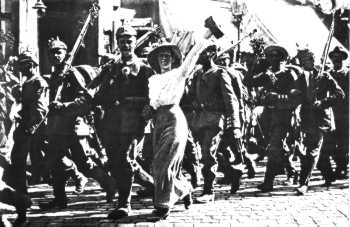
wwimobilization

“An event of great agony is bearable only in the belief that it will bring about a better world. When it does not, as in the aftermath of another vast calamity in 1914-18, disillusion is deep and moves on to self-doubt and self-disgust.” Barbara Tuchman

On August 1st 1914 the armies of Europe were mobilizing for war. The last feeble efforts at diplomacy were failing as leaders, and diplomats sought a way out of the situation that their policies had brought about. They had allowed the military instrument to drive policy, rather than for policy to dictate how the military should be employed as an instrument of national strategy. As such they became prisoners to their military mobilization plans, all of which depended on speed in order to gain advantage over their adversaries.

The nations and militaries of Europe were devoted to the “cult of the offensive” by which they would crush their enemy’s armies in a quick campaign. In Germany there was the modified Schlieffen Plan that was about to be executed by the army commanded by Von Molkte the younger in which Germany would violate the neutrality of Belgium in order to invade France, risking war with England in the process. In France, the offense was also the rule of the day, Plan 17 dictated an advance to recapture the Alsace and drive into the heart of Germany. Russia had “Plan 19” nicknamed by some “the Russian Steamroller,” while Austria-Hungary, the chief protagonist of the War dithered with plans to attack Serbia and defend against Russia, which her military commander Conrad von Hotzendorf neither shared with his German allies, or the politicians leading his country to war.

The numbers of troops were massive, the Germans mobilizing nearly four million troops in less than two weeks, the Austrians three point three million, the French over three million and the Russians nearly five million. Serbia, Belgium and Great Britain were mobilizing as well, but the numbers of soldiers that they mobilized were a fraction the size of the major land powers. Soon other nations would become involved, the Ottoman Empire on the side of Austria and Germany, Italy on the side of England and France. Bulgaria and Romania would become involved as well as far away Japan, which saw the opportunity to expand its empire and influence at the expense of Germany.

No leaders had planned for a long war; they did not believe such a war could last. “One constant among the elements of 1914—as of any era—was the disposition of everyone on all sides not to prepare for the harder alternative, not to act upon what they suspected to be true.”

But they were wrong and in the opening weeks and months of the war, every army lost massive numbers of troops ensuring that victory would not come quickly or cheaply. Between August and December 1914 the Germans had sustained about 800,000 casualties, the French about the same, the Austrians close to a million, the Russians at least 500,000 and the tiny British expeditionary force took about 87,000 casualties of the 110,000 troops deployed to France.

The war dragged on until November 1918. An armistice was signed; a peace treaty made, territory divided but the war never really ended, and in a way continues today in the Middle East, Africa and Eastern Europe. The “War to end all War” really never ended, it continues today in some many places. It really was a war without end.

Of course in August 1914 the leaders of Europe gambled everything on a roll of the dice. The decisions that they made were made deliberately and with forethought, but the logic of those leaders was fatally flawed, and the implications of their flawed decision making process are still haunting us today. Unfortunately it doesn’t look like the politicians, pundits and preachers, that “Trinity of Evil” that find glory and profit in war have learned anything. Like Conrad von Hotzendorf many leaders today believe that “the essence of politics lies in the use of the means called “war.” As Barbara Tuchman said “Learning from experience is a faculty almost never practiced”

Peace

Padre Steve+

1 Comment

Filed under Foreign Policy, History, leadership, Military, Political Commentary

The Unfolding of Miscalculations


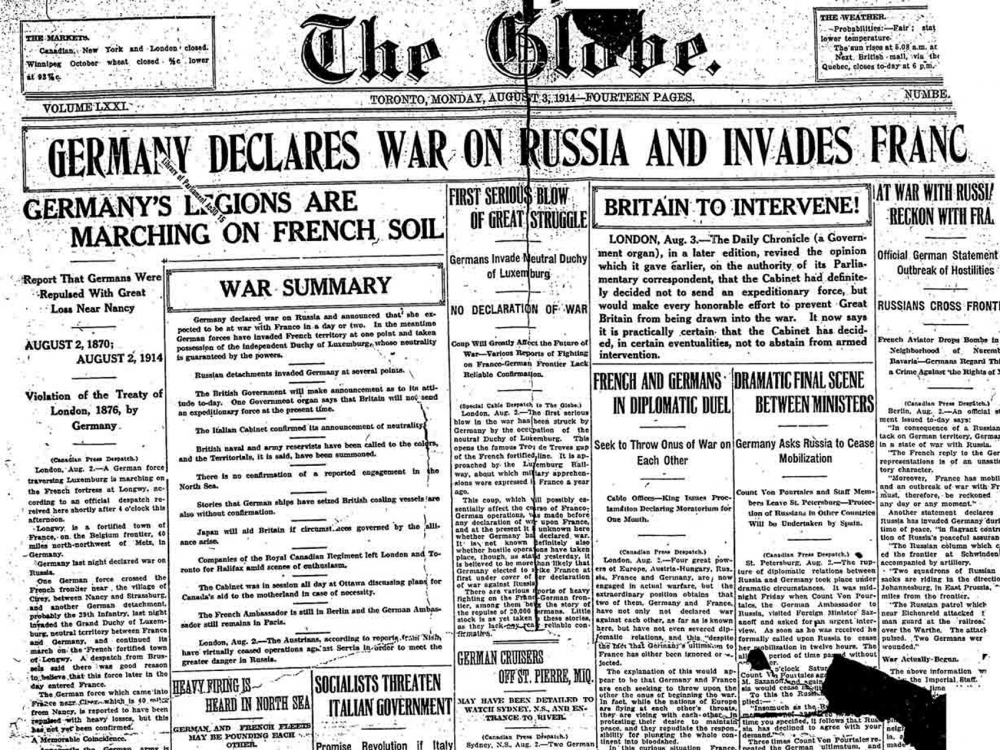
GM_Aug3_1914_Germany-Declares-war-on-Russia-invades-France

“The muffled tongue of Big Ben tolled nine by the clock as the cortege left the palace, but on history’s clock it was sunset, and the sun of the old world was setting in a dying blaze of splendor never to be seen again.” Barbara Tuchman, The Guns of August

It is now late July of 2014 and for the past month I have been reading about the events in Europe of 100 years ago, a time when the leaders of Europe were hurtling into a war which would change the world forever and the effects of which redound to our day. As I read each book I am always amazed at the hubris, vanity, ignorance and incompetence of the monarchs, prime ministers, foreign ministers and diplomats and military leaders. Men who managed to miscalculate their way into a war that was far larger, longer, destructive and earth shaking than most imagined at the time. As Barbara Tuchman wrote “War is the unfolding of miscalculations.”

Yes there were some who knew that a war would be longer, larger and more destructive than most expected, they were either ignored, or in the case of Field Marshal von Molkte of Germany and Joffre of France ignored their own predictions of a long costly war “made any allowance in their plans for the war of attrition which they both foresaw.” Lord Kitchener of Britain, who had no part in his nation’s planning for war and who was recalled to become War Minister on August 4th 1914 was the only military leader to act on his predictions. He predicted to a colleague that the war would last three years, but added that it might last longer, but “three years will do to begin with. A nation like Germany, after having forced the issue, will only give in after it is beaten to the ground. That will take a very long time. No one living knows.”

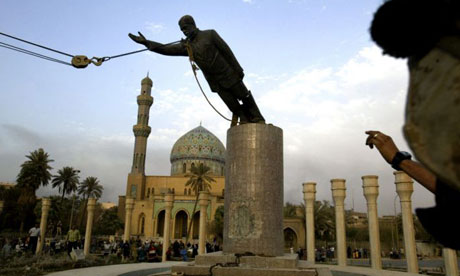
Of course few people, especially leaders learn from history, including Americans. In November 2002 Donald Rumsfeld predicted that the coming U.S. invasion of Iraq would “Five days or five weeks or five months, but it certainly isn’t going to last any longer than that….It won’t be a World War III.” Of course, he and those who led the United States into war were incredibly wrong, the American involvement lasted 8 years, cost about 4500 U.S. military dead and about 40,000 wounded and when all costs are factored in will have cost the nation trillions of dollars. It also helped bring into existence the group known as ISIL, or the Islamic State of Iraq and the Levant, which now controls vast swaths of Iraq and Syria and whose conquests may drag the United States back in to the Iraq conflagration, maybe even in concert with Iran. It may not be a “world war” but threatens to become global as the influence of ISIL is spreading to other parts of the Middle East, Africa and Asia.

There are also rumblings of war coming from Russia and the Ukraine, a conflict that has now claimed nearly 300 people who had no stake in it, the passengers and crew of Malaysia Air Flight 17, shot down by pro-Russian insurgents with a missile very probably supplied by Russia. Both Russia and Ukraine have begun limited mobilization of their militaries. While one would want to believe that neither Russia or Ukraine, or for that matter Europe or the United States has an interest in war one can never be sure. As Tuchman wrote “One constant among the elements of 1914—as of any era—was the disposition of everyone on all sides not to prepare for the harder alternative, not to act upon what they suspected to be true.”

In the weeks leading to the First World War, some nations were determined on war, others thrust into it by their perceived military interests and still others because they ignored the danger of the situation until it was too late. In all cases their actions and inaction led to disaster.

Peace

Padre Steve+

2 Comments

Filed under History, history, News and current events, world war one

The Stab in the Back: The Destructive Power of Myth in the Life of a Nation

stab-in-the-back

In light of the many historical myths and conspiracy theories being floated by pseudo “historians” like the infamous David Barton it is always appropriate to look at examples of the power of those myths in the lives of nations and their influence on citizens. Some myths can be positive and inspiring, but others can lead to conspiracy theories, false accusations and the demonization of others for the purpose of inciting hatred against political, social or religious opponents. They also can be used to perpetuate false beliefs about other countries that influence policy decisions, including the decision to go to war that ultimately doom those that believe them. A good example of this is the Stab in the Back myth that began after the armistice that ended the First World War, as well as the false beliefs held by Hitler and other Nazi leaders about the United States.

There are many times in history where leaders of nations and peoples embrace myths about their history even when historical, biographical and archeological evidence points to an entirely different record.  Myths are powerful in the way that they inspire and motivate people. They can provide a cultural continuity as a people celebrates the key events and people that shaped their past, even if they are not entirely true.  At the same time myths can be dangerous when they cause leaders and people to make bad choices and actually become destructive. Such was the case in Germany following the First World War.

After the war the belief that the German Army was not defeated but was betrayed by the German people, especially those of the political left.  Like all myths there was an element of truth in the “stab in the back” myth, there were revolts against the Monarchy of Kaiser Wilhelm II and even mutiny on elements of the German High Seas Fleet and Army units stationed in Germany. However the crisis had been brought about by General Ludendorff who until the last month of the war refused to tell the truth about the gravity of Germany’s position to those in the German government.

So when everything came crashing down in late October and early November 1918 the debacle came as a surprise to most Germans.  The myth arose because the truth had not been told by Ludendorff who was arguably the most powerful figure in Germany from 1916-1918.  In the looming crisis which included Ludendorff’s collapse and relief, General Wilhelm Groener presented the facts to the Kaiser and insisted on his abdication.  The Republic that was proclaimed on the 9th of November was saddled with the defeat and endured revolution, civil war and threats from the extreme left and right.  When it signed the Treaty of Versailles it accepted the sole responsibility of Germany for the war and its damages. Ordered to dismantle its military, cede territory that had not been lost in battle and pay massive reparations the legend of the “stab in the back” gained widespread acceptance in Germany.

Hitler always believed that the defeat of Germany in the First World War was due to the efforts of internal enemies of the German Reich on the home front and not due to battlefield losses or the entry of the United States.  This was a fundamental belief for him and was expressed in his writings, speeches and actions.  The internal enemies of Germany for Hitler included the Jews, as well as the Socialists and Communists who he believed were at the heart of the collapse on the home front.  Gerhard Weinberg believes that the effect of this misguided belief on Hitler’s actions has “generally been ignored” by historians. (Germany, Hitler and World War II p. 196)

Hitler believed that those people and groups that perpetrated the “stab in the back” were “beguiled by the by the promises of President Wilson” (World in the Balance p.92) in his 14 Points.  Thus for him Americans were in part responsible for undermining the German home front, something that he would not allow to happen again.  In fact Hitler characterization of Wilson’s effect on the German people in speaking about South Tyrol.  It is representative of his belief about not only the loss of that region but the war: “South Tyrol was lost by those who, from within Germany, caused attrition at the front, and by the contamination of German thinking with the sham declarations of Woodrow Wilson.” (Hitler’s Second Book p.221)

While others will note Hitler’s lack of respect for the potential power of the United States, no other author that I am familiar with links Hitler’s actions and the reaction of the German political, military and diplomatic elites to the entry of the United States into the war to the underlying belief in the “stab in the back.”   Likewise Hitler had little regard for the military abilities or potential of the United States. Albert Speer notes that Hitler believed “the Americans had not played a very prominent role in the war of 1914-1918,” and that “they would certainly not withstand a great trial by fire, for their fighting qualities were low.” (Inside the Third Reich: Memoirs by Albert Speer p.121)

Hitler not only dismissed the capabilities of the Americans but also emphasized the distance that they were from Germany and saw no reason to fear the United States when “he anticipated major victories on the Eastern Front.” (Germany Hitler and World War II p.92)   Hitler’s attitude was reflected by the majority of the military high command and high Nazi officials. Ribbentrop believed that the Americans would be unable to wage war if it broke out “as they would never get their armies across the Atlantic.” (History of the German General Staff, Walter Goerlitz, p.408).  General Walter Warlimont notes the “ecstasy of rejoicing” found at Hitler’s headquarters after Pearl Harbor and the fact that the he and Jodl at OKW caught by surprise by Hitler’s declaration of war. (Inside Hitler’s Headquarters 1939-1945 pp.207-209) Kenneth Macksey notes Warlimont’s comments about Hitler’s beliefs; that Hitler “tended to dismiss American fighting qualities and industrial capability,” and that Hitler “regarded anyone who tried to show him such information [about growing American strength] as defeatist.” (Why the Germans Lose at War, Kenneth Macksey, p.153.)

Others like Field Marshal Erwin Rommel record the disregard of senior Nazis toward American capabilities in weaponry.  Quoting Goering who when Rommel discussed 40mm anti-aircraft guns on aircraft that were devastating his armored forces Goering replied “That’s impossible. The Americans only know how to make razor blades.” (The Rommel Papers edited by B.H. Liddell-Hart p.295) Rommel was one of the few German commanders who recognized the folly of Hitler’s declaration of war on the United States noting that “By declaring war on America, we had brought the entire American industrial potential into the service of Allied war production. We in Africa knew all about the quality of its achievements.” (The Rommel Papers p.296)

When one also takes into account the general disrespect of the German military for the fighting qualities of American soldiers though often with good reason (see Russell Weigley’s books Eisenhower’s Lieutenants and The American Way of War) one sees how the myth impacted German thought.  This is evidenced by the disparaging comments of the pre-war German military attaché to the United States; General Boeticher, on the American military, national character and capability. (See World in the Balance pp. 61-62)

The overall negative view held by many Germans in regard to the military and industrial power and potential of the United States reinforced other parts of the myth. Such false beliefs served to bolster belief in the stab-in-the back theory as certainly the Americans could not have played any important role in the German defeat save Wilson’s alleged demoralization of the German population.  This was true not only of Hitler, but by most of his retinue and the military, diplomatic and industrial leadership of the Reich. Hitler’s ultimate belief shaped by the stab-in-the back and reinforced by his racial views which held the United States to be an inferior mongrel people. This led him to disregard the impact that the United States could have in the war and ultimately influenced his decision to declare war on the United States, a decision that would be a key factor in the ultimate defeat of Germany.

Myth can have positive value, but myth which becomes toxic can and often does lead to tragic consequences. All societies have some degree of myth in relationship to their history including the United States.  The myths are not all the same, various subgroups within the society create their own myth surrounding historic events. The danger is that those myths can supplant reason in the minds of political, military, media and religious figures and lead those people into taking actions that work to their own detriment or even destruction.

It is the duty of historians, philosophers and others in the society to ensure that myth does not override reality to the point that it moves policy both domestic and foreign in a manner that is ultimately detrimental to the nation.  The lesson of history demonstrated by myths surrounding the German defeat and role of the United States in that defeat shows just how myth can drive a nation to irrational, evil and ultimately tragic actions not only for that nation and its people, but for the world.

Peace,

Padre Steve+

1 Comment

Filed under History, nazi germany, philosophy

Who Profits by War?

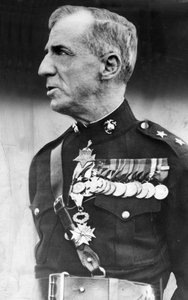
butler-medals1

In an age where Defense contractors overcharge and under produce, where lobbyists for them ensure that congressional leaders and other elected officials and appointees cater to the needs of these corporations it is important to know who profits from war. It is certainly not the military personnel, nor is it the taxpayer.

The sad fact is that the people that profit from unending war are those who really couldn’t care less about the economy, except as it benefits them nor care about the taxpayers or those that they send into battle in wars that do little or nothing to enhance the security this nation, or for that matter the security of those we are supposedly fight for.

Major General Smedley Butler who was awarded the Congressional Medal of Honor twice, and earned the ire of the Hoover Administration for criticizing Mussolini wrote a book called War is a Racket. I recommend everyone read it because it is timeless. Dwight Eisenhower kind of echoed it when he talked about the military-industrial complex.

Here is the second chapter of that hard hitting book. By the way take the time to Google the names of these corporations in this chapter and see how many are still profiting from war.

Peace

Padre Steve+

Who Makes The Profits?

The World War, rather our brief participation in it, has cost the United States some $52,000,000,000. Figure it out. That means $400 to every American man, woman, and child. And we haven’t paid the debt yet. We are paying it, our children will pay it, and our children’s children probably still will be paying the cost of that war.

The normal profits of a business concern in the United States are six, eight, ten, and sometimes twelve percent. But war-time profits — ah! that is another matter — twenty, sixty, one hundred, three hundred, and even eighteen hundred per cent — the sky is the limit. All that traffic will bear. Uncle Sam has the money. Let’s get it.

Of course, it isn’t put that crudely in war time. It is dressed into speeches about patriotism, love of country, and “we must all put our shoulders to the wheel,” but the profits jump and leap and skyrocket — and are safely pocketed. Let’s just take a few examples.

Take our friends the du Ponts, the powder people — didn’t one of them testify before a Senate committee recently that their powder won the war? Or saved the world for democracy? Or something? How did they do in the war? They were a patriotic corporation. Well, the average earnings of the du Ponts for the period 1910 to 1914 were $6,000,000 a year. It wasn’t much, but the du Ponts managed to get along on it. Now let’s look at their average yearly profit during the war years, 1914 to 1918. Fifty-eight million dollars a year profit we find! Nearly ten times that of normal times, and the profits of normal times were pretty good. An increase in profits of more than 950 per cent.

Take one of our little steel companies that patriotically shunted aside the making of rails and girders and bridges to manufacture war materials. Well, their 1910-1914 yearly earnings averaged $6,000,000. Then came the war. And, like loyal citizens, Bethlehem Steel promptly turned to munitions making. Did their profits jump — or did they let Uncle Sam in for a bargain? Well, their 1914-1918 average was $49,000,000 a year!

Or, let’s take United States Steel. The normal earnings during the five-year period prior to the war were $105,000,000 a year. Not bad. Then along came the war and up went the profits. The average yearly profit for the period 1914-1918 was $240,000,000. Not bad.

There you have some of the steel and powder earnings. Let’s look at something else. A little copper, perhaps. That always does well in war times.

Anaconda Copper for instance. Average yearly earnings during the pre-war years 1910-1914 of $10,000,000. During the war years 1914-1918 profits leaped to $34,000,000 per year. (One should read their history of strip mining massive pollution, ARCO bought them in the 1970s but was stuck with massive environmental problems, such that the company is only on the books to show the losses)

Or Utah Copper. Average of $5,000,000 per year during the 1910-1914 period. Jumped to an average of $21,000,000 yearly profits for the war period.

Let’s group these five, with three smaller companies. The total yearly average profits of the pre-war period 1910-1914 were $137,480,000. Then along came the war. The average yearly profits for this group skyrocketed to $408,300,000. A little increase in profits of approximately 200 per cent.

Does war pay? It paid them. But they aren’t the only ones. There are still others. Let’s take leather. For the three-year period before the war the total profits of Central Leather Company were $3,500,000. That was approximately $1,167,000 a year. Well, in 1916 Central Leather returned a profit of $15,000,000, a small increase of 1,100 per cent. That’s all.

The General Chemical Company (now part of Honeywell) averaged a profit for the three years before the war of a little over $800,000 a year. Came the war, and the profits jumped to $12,000,000. a leap of 1,400 per cent.

International Nickel Company — and you can’t have a war without nickel — showed an increase in profits from a mere average of $4,000,000 a year to $73,000,000 yearly. Not bad? An increase of more than 1,700 per cent.

American Sugar Refining Company (largest Sugar refining company in the world, name brand Domino Sugar) averaged $2,000,000 a year for the three years before the war. In 1916 a profit of $6,000,000 was recorded.

Listen to Senate Document No. 259. The Sixty-Fifth Congress, reporting on corporate earnings and government revenues. Considering the profits of 122 meat packers, 153 cotton manufacturers, 299 garment makers, 49 steel plants, and 340 coal producers during the war. Profits under 25 per cent were exceptional. For instance the coal companies made between 100 per cent and 7,856 per cent on their capital stock during the war. The Chicago packers doubled and tripled their earnings.

And let us not forget the bankers who financed the great war. If anyone had the cream of the profits it was the bankers. Being partnerships rather than incorporated organizations, they do not have to report to stockholders. And their profits were as secret as they were immense. How the bankers made their millions and their billions I do not know, because those little secrets never become public — even before a Senate investigatory body.

But here’s how some of the other patriotic industrialists and speculators chiseled their way into war profits.

Take the shoe people. They like war. It brings business with abnormal profits. They made huge profits on sales abroad to our allies. Perhaps, like the munitions manufacturers and armament makers, they also sold to the enemy. For a dollar is a dollar whether it comes from Germany or from France. But they did well by Uncle Sam too. For instance, they sold Uncle Sam 35,000,000 pairs of hobnailed service shoes. There were 4,000,000 soldiers. Eight pairs, and more, to a soldier. My regiment during the war had only one pair to a soldier. Some of these shoes probably are still in existence. They were good shoes. But when the war was over Uncle Sam has a matter of 25,000,000 pairs left over. Bought — and paid for. Profits recorded and pocketed.

There was still lots of leather left. So the leather people sold your Uncle Sam hundreds of thousands of McClellan saddles for the cavalry. But there wasn’t any American cavalry overseas! Somebody had to get rid of this leather, however. Somebody had to make a profit in it — so we had a lot of McClellan saddles. And we probably have those yet.

Also somebody had a lot of mosquito netting. They sold your Uncle Sam 20,000,000 mosquito nets for the use of the soldiers overseas. I suppose the boys were expected to put it over them as they tried to sleep in muddy trenches — one hand scratching cooties on their backs and the other making passes at scurrying rats. Well, not one of these mosquito nets ever got to France!

Anyhow, these thoughtful manufacturers wanted to make sure that no soldier would be without his mosquito net, so 40,000,000 additional yards of mosquito netting were sold to Uncle Sam.

There were pretty good profits in mosquito netting in those days, even if there were no mosquitoes in France. I suppose, if the war had lasted just a little longer, the enterprising mosquito netting manufacturers would have sold your Uncle Sam a couple of consignments of mosquitoes to plant in France so that more mosquito netting would be in order.

Airplane and engine manufacturers felt they, too, should get their just profits out of this war. Why not? Everybody else was getting theirs. So $1,000,000,000 — count them if you live long enough — was spent by Uncle Sam in building airplane engines that never left the ground! Not one plane, or motor, out of the billion dollars worth ordered, ever got into a battle in France. Just the same the manufacturers made their little profit of 30, 100, or perhaps 300 per cent.

Undershirts for soldiers cost 14¢ [cents] to make and uncle Sam paid 30¢ to 40¢ each for them — a nice little profit for the undershirt manufacturer. And the stocking manufacturer and the uniform manufacturers and the cap manufacturers and the steel helmet manufacturers — all got theirs.

Why, when the war was over some 4,000,000 sets of equipment — knapsacks and the things that go to fill them — crammed warehouses on this side. Now they are being scrapped because the regulations have changed the contents. But the manufacturers collected their wartime profits on them — and they will do it all over again the next time.

There were lots of brilliant ideas for profit making during the war.

One very versatile patriot sold Uncle Sam twelve dozen 48-inch wrenches. Oh, they were very nice wrenches. The only trouble was that there was only one nut ever made that was large enough for these wrenches. That is the one that holds the turbines at Niagara Falls. Well, after Uncle Sam had bought them and the manufacturer had pocketed the profit, the wrenches were put on freight cars and shunted all around the United States in an effort to find a use for them. When the Armistice was signed it was indeed a sad blow to the wrench manufacturer. He was just about to make some nuts to fit the wrenches. Then he planned to sell these, too, to your Uncle Sam.

Still another had the brilliant idea that colonels shouldn’t ride in automobiles, nor should they even ride on horseback. One has probably seen a picture of Andy Jackson riding in a buckboard. Well, some 6,000 buckboards were sold to Uncle Sam for the use of colonels! Not one of them was used. But the buckboard manufacturer got his war profit.

The shipbuilders felt they should come in on some of it, too. They built a lot of ships that made a lot of profit. More than $3,000,000,000 worth. Some of the ships were all right. But $635,000,000 worth of them were made of wood and wouldn’t float! The seams opened up — and they sank. We paid for them, though. And somebody pocketed the profits.

It has been estimated by statisticians and economists and researchers that the war cost your Uncle Sam $52,000,000,000. Of this sum, $39,000,000,000 was expended in the actual war itself. This expenditure yielded $16,000,000,000 in profits. That is how the 21,000 billionaires and millionaires got that way. This $16,000,000,000 profits is not to be sneezed at. It is quite a tidy sum. And it went to a very few.

The Senate (Nye) committee probe of the munitions industry and its wartime profits, despite its sensational disclosures, hardly has scratched the surface.

Even so, it has had some effect. The State Department has been studying “for some time” methods of keeping out of war. The War Department suddenly decides it has a wonderful plan to spring. The Administration names a committee — with the War and Navy Departments ably represented under the chairmanship of a Wall Street speculator — to limit profits in war time. To what extent isn’t suggested. Hmmm. Possibly the profits of 300 and 600 and 1,600 per cent of those who turned blood into gold in the World War would be limited to some smaller figure.

Apparently, however, the plan does not call for any limitation of losses — that is, the losses of those who fight the war. As far as I have been able to ascertain there is nothing in the scheme to limit a soldier to the loss of but one eye, or one arm, or to limit his wounds to one or two or three. Or to limit the loss of life.

There is nothing in this scheme, apparently, that says not more than 12 per cent of a regiment shall be wounded in battle, or that not more than 7 per cent in a division shall be killed.

Of course, the committee cannot be bothered with such trifling matters.

3 Comments

Filed under History, Military, Political Commentary

“A Foreign World”: The High Cost of Coming Home from War

295_26912117058_5652_n

For me it began in February 2008 when on the way back from Iraq the military charter aircraft bringing us home stopped in Ramstein Germany. After a few hour layover we re-boarded the aircraft but we were no longer alone, the rest of the aircraft had been filled with the families of soldiers and airmen stationed in Germany. Just days before most of us had been in Iraq or Afghanistan. The cries of children and the intrusion of these people, not bad people by any means on our return flight was shocking, it was like returning to a world that I no longer knew.

I think that coming home from war, especially for those damaged in some way, in mind, body or spirit is harder than being at war. In that thought I am not alone. Erich Maria Remarque in his classic novel All Quiet on the Western Front wrote:

“I imagined leave would be different from this. Indeed, it was different a year ago. It is I of course that have changed in the interval. There lies a gulf between that time and today. At that time I still knew nothing about the war, we had been only in quiet sectors. But now I see that I have been crushed without knowing it. I find I do not belong here any more, it is a foreign world.” Erich Maria Remarque in All Quiet on the Western Front

Likewise, Guy Sager a French-German from the Alsace and veteran of the Grossdeutschland Division on the Eastern Front in World War II noted at the end of his book The Forgotten Soldier: 

“In the train, rolling through the sunny French countryside, my head knocked against the wooden back of the seat. Other people, who seemed to belong to a different world, were laughing. I couldn’t laugh and couldn’t forget.” Guy Sager in The Forgotten Soldier

I have been reminded of this several times in the past week. It began walking through a crowded Navy commissary on Saturday, in the few minutes in the store my anxiety level went up significantly. On Tuesday I learned of the death of Captain Tom Sitsch my last Commodore at EOD Group Two, who died by his own hand. His life had come apart. After a number of deployments to Iraq as the Commander EOD Mobile Unit 3 and of Task Force Troy he was afflicted with PTSD. Between June of 2008 and the end of 2009 he went from commanding an EOD Group to being forced to retire.  Today I had a long talk with a fairly young friend agonizing over continued medical treatments for terminal conditions he contracted in two tours in Iraq where he was awarded the Bronze Star twice.

I have a terrible insomnia, nightmares and night terrors due to PTSD. My memories of Iraq are still strong, and this week these conditions have been much worse. Sager wrote:

“Only happy people have nightmares, from overeating. For those who live a nightmare reality, sleep is a black hole, lost in time, like death.”

Nearly 20 years after returning from war, a survivor of the 1st Battalion 308th Infantry, the “Lost Battalion” of World War One, summed up the experience of so many men who come back from war:

“We just do not have the control we should have. I went through without a visible wound, but have spent many months in hospitals and dollars for medical treatment as a result of those terrible experiences.”

Bradley-12-2

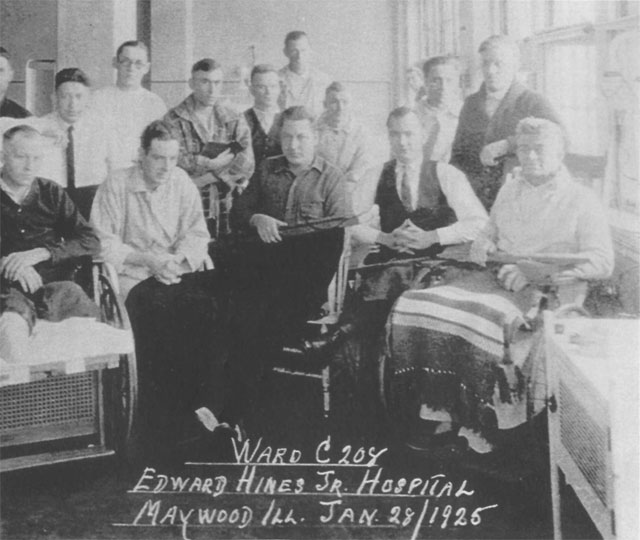
Two time Medal of Honor winner Major General Smedley Butler toured Veterans hospitals following his retirement from the Marine Corps. He observed the soldiers who had been locked away. In his book War is a Racket:

“But the soldier pays the biggest part of this bill. If you don’t believe this, visit the American cemeteries on the battlefields abroad. Or visit  any of the veterans’ hospitals in the United States….I have visited eighteen government hospitals for veterans. In them are about 50,000 destroyed men- men who were the pick of the nation eighteen years ago. The very able chief surgeon at the government hospital in Milwaukee, where there are 3,800 of the living dead, told me that mortality among veterans is three times as great as among those who stayed home.”

Similarly Remarque wrote in All Quiet on the Western Front:

“A man cannot realize that above such shattered bodies there are still human faces in which life goes its daily round. And this is only one hospital, a single station; there are hundreds of thousands in Germany, hundreds of thousands in France, hundreds of thousands in Russia. How senseless is everything that can ever be written, done, or thought, when such things are possible. It must be all lies and of no account when the culture of a thousand years could not prevent this stream of blood being poured out, these torture chambers in their hundreds of thousands. A hospital alone shows what war is.”

Lt.ColonelCharlesWhiteWhittlesey

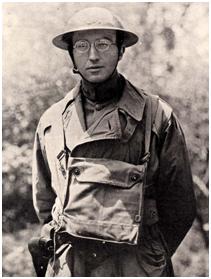
Sometimes even those who have been awarded our Nation’s highest award for valor succumb to the demons of war that they cannot shake, and never completely adjust to life at “home” which is no longer home. For them it is a different, a foreign world to use the words of Sager and Remarque. Lieutenant Colonel Charles Whittlesey won the Congressional Medal Medal of Honor as Commander of 1st Battalion 308th Infantry, the “Lost Battalion” in France. After the war he was different. He gave up his civilian law practice and served as head of the Red Cross in New York. In that role, and as the Colonel for his reserve unit, he spent his time visiting the wounded who were still suffering in hospitals. He also made the effort to attend the funerals of veterans who had died. The continued reminders of the war that he could not come home from left him a different man. He committed suicide on November 21st 1921not long after serving as a pallbearer for the Unknown Soldier when that man was interred at Arlington National Cemetery.

In the eulogy Judge Charles L. Hibbard noted:

“He is sitting on the piazza of a cottage by the sea on a glorious late September day but a few weeks ago. . . He is looking straight out to sea, with naught but sea between him and that land where lie so many of his boys. The beating surf is but an echo, the warm, bright sunshine, the blue sky, the dancing waves, all combine to charm. But a single look at his face and one knows he is unconscious of this glory of Nature. Somewhere far down in the depths of his being or in imagination far off across the waters he lives again the days that are past. That unconscious look has all the marks of deep sorrow, brooding tragedy, unbearable memories. Weeks pass. The mainspring of life is wound tighter and tighter and then comes the burial of the Unknown Soldier. This draws the last measure of reserve and with it the realization that life had little now to offer. This quiet, reserved personality drew away as it were from its habitation of flesh, thought out the future, measured the coming years and came to a mature decision. You say, ‘He had so much to live for – family, friends, and all that makes life sweet.’ No, my friends, life’s span for him was measured those days in that distant forest. He had plumbed the depth of tragic suffering; he had heard the world’s applause; he had seen and touched the great realities of life; and what remained was of little consequence. He craved rest, peace and sweet forgetfulness. He thought it out quietly, serenely, confidently, minutely. He came to a decision not lightly or unadvisedly, and in the end did what he thought was best, and in the comfort of that thought we too must rest. ‘Wounded in action,’ aye, sorely wounded in heart and soul and now most truly ‘missing in action.’”

Psychologist and professor Dr Ari Solomon analyzed the case of Colonel Whittlesey and noted:

“If I could interview Whittlesey as a psychologist today, I’d especially have in mind … the sharp discrepancy between the public role he was playing and his hidden agony, his constant re-exposure to reminders of the battle, his possible lack of intimate relations, and his felt need to hide his pain even from family and dearest friends.”

I wish I had the answer. I have some ideas that date back to antiquity in the ways that tribes, clans and city states brought their warriors home. The warriors were recognized, there were public rituals, sometimes religious but other times not. But the difference is that the warriors were welcomed home by a community and re-integrated into it. They were allowed to share their stories, many of which were preserved through oral traditions so long that they eventually were written down, even in a mythologized state.

But we do not do that. Our society is disconnected, distant and often cold. Likewise it is polarized in ways that it has not been since the years before our terrible Civil War. Our warriors return from war, often alone, coming home to families, friends and communities that they no longer know. They are misunderstood because their experience is not shared by the population at large. The picture painted of them in the media, even when it is sympathetic is often a caricature.  Their camaraderie with the friends that they served alongside is broken by distance and the frenetic pace of our society. Remarque wrote “We were all at once terribly alone; and alone we must see it through.”

If we wonder about the suicide epidemic among veterans we have to ask hard questions. Questions like why do so many combat veterans have substance abuse problems and why is it that approximately one in ten prisoners serving time are veterans? It cannot be simply that they are all bad eggs. Many were and are smart, talented, compassionate and brave, tested and tried in ways that our civilian society has no understanding for or clue about. In fact to get in the military most had to be a cut above their peers. We have to ask if we are bringing our veterans home from war in a way that works. Maybe even more importantly we have to ask ourselves if as a culture if we have forgotten how to care about each other. How do we care for the men and women who bear the burden of war, even while the vast majority of the population basks in the freedom and security provided by the soldier without the ability to empathize because they have never shared that experience.

For every Tom Sitsch, Charles Whittlesey or people like my friend, there are countless others suffering in silence as a result of war. We really have to ask hard questions and then decide to do something as individuals, communities and government to do something about it. If we don’t a generation will suffer in silence.

Peace

Padre Steve+

2 Comments

Filed under History, iraq,afghanistan, Military, PTSD

The End of an Empire: The Abdication of Kaiser Wilhelm II

NYTimes-Page1-11-11-1918

Imperial Germany in 1918 was a nation in a state of collapse. Four years of war had cost it the flower of its manhood had bled the nation dry. Over 2 million men had died and another 5.6 million wounded and nearly a million more take prisoner. “One German soldier had died nearly every minute, 55 every hour, and 1331 every day of the war.” (1)

Revolution was in the air. The effects of the war and shortages of nearly every commodity including basic foodstuffs caused by the Allied blockade of German ports had taken their toll. Communists and members of the radical Independent Socialist Party agitated for revolution in key industries and in the military. Units of the Army and the High Seas Fleet whose ranks had been filled with conscripts who were “undisciplined youths, already indoctrinated with the defeatist propaganda of the extreme Leftist parties, to which they adhered more from the fear of combat than from political conviction.” (2)

Even in the spring of 1918 when German troops were winning spectacular victories on the Western Front revolts were occurring at home. 

As Germany’s allies collapsed around her, the Ottoman Empire, Bulgaria and finally the Astro-Hungarian Empire it was apparent to the High Command that an Armistice with the Allies was imperative. On October 29th the Kaiser left Berlin for the last time and arrived at the headquarters of the Army High Command in Spa, Belgium. In the next few days plans devoid of reality were suggested that the Kaiser should either lead the Army back to Germany to crush the revolts or die at the head of a regiment in battle. 

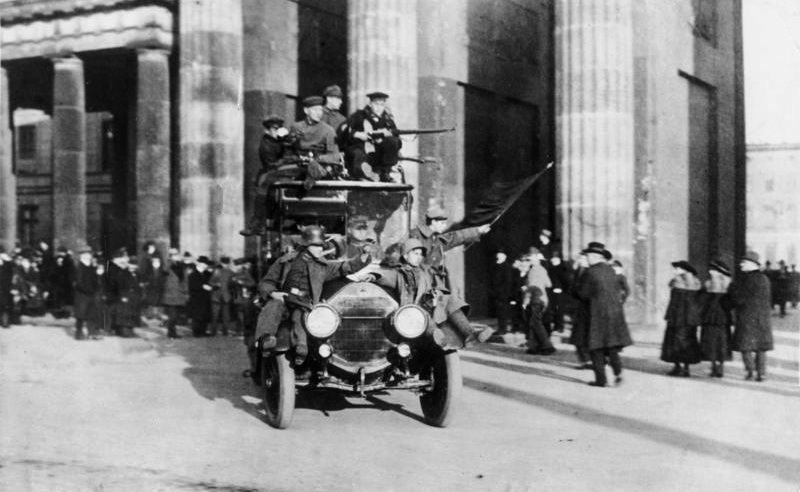
Bundesarchiv_Bild_183-B0527-0001-810,_Berlin,_Brandenburger_Tor,_Novemberrevolution

Revolting Troops in Berlin

Then in early November the red flags of revolution were raised aboard the battleships of the High Seas Fleet in its bases of Kiel and Wilhemshaven. Soon workers, sailors and soldiers councils were “springing up everywhere to take over power.” (3) The authority of Naval Officers on their ships was gone, many were prisoners of their crews. “From the ports the torch of revolution was carried to western and southern Germany.” (4) Soon the royal dynasties that made up Imperial Germany were toppled one by one. In spite of this Wilhelm who had lived in a dream world throughout most of the war, shielded from the truth by advisors, military and civilian believed that the German people would rally to his cause. 

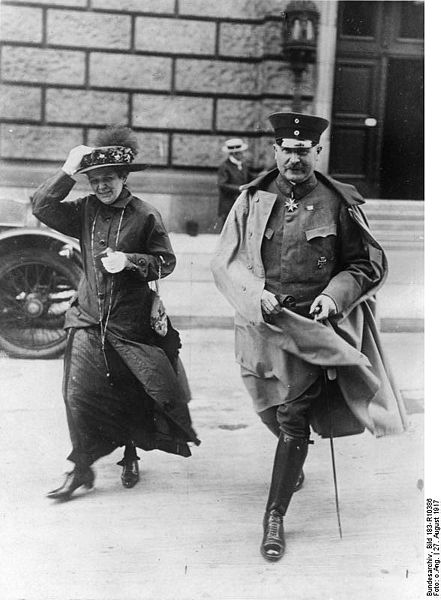
441px-bundesarchiv_bild_183-r10386_wilhelm_groener_mit_frau

Groener

General Wilhelm Groener who had replaced General Erich Luddendorff as the First Quartermaster of the Army was now showing himself to be the “most clear headed and determined of the army’s leaders.” (5)  After a brief visit to Berlin in the first week of November Groener became convinced that the Kaiser must abdicate if there was any hope of preserving the monarchy and transitioning to a constitutional monarchy an idea supported by the Majority Socialists and their leader Friedrich Ebert. 

Facing the unrealistic ideas of the Kaiser Groener called an emergency meeting of 50 senior commanders of which 39 arrived in time to take part in the council. In answer to Groener’s questions as to whether the Army would stand beside the Kaiser only one commander “guaranteed that the soldiers stood squarely behind the Kaiser.” (6)

That morning Admiral von Hintze an emissary of Prince Max of Baden, the Chancellor and the Army headquarters in Berlin brought new messages warning “that unless the Emperor abdicated at once, a revolution would sweep him and the monarchy away.” (7)

With that news and the results of his poll of the army leadership at Spa Groener took action. Hintze and Groener convinced Field Marshal Paul von Hindenburg that the Kaiser must be informed. Hindenburg wanted to offer his his resignation and remained silent in the background as Groener told Wilhelm “The Army will march home in peace and under orders from its leaders and commanding generals, but not under the command of Your Majesty for it no longer stands behind Your Majesty!” (8)

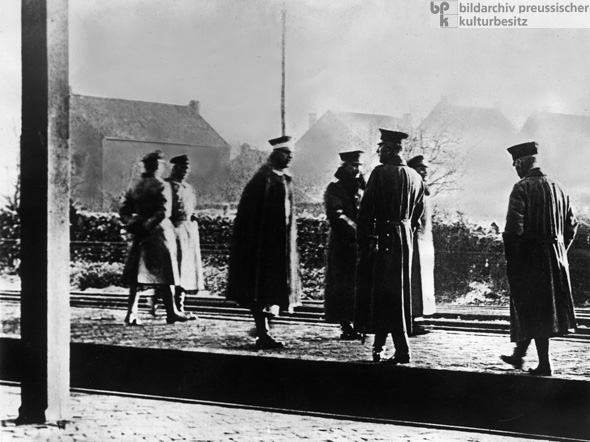
Wilhelm II. (4.v.l.) geht am Tag der Unterzeichnung seiner Abdankung über die Grenze in das holländische Exil

Wilhelm II Arriving in Holland

The Kaiser was stunned and by the morning of the 10th he departed by his royal train to Holland where he went into exile. Several years later in recounting the day the former monarch still lived in a dream world writing in his memoirs:

“The decision as to my going or staying, as to my renunciation of the Imperial Crown and retention of the Royal Crown of Prussia, was summarily snatched from me. The army was shaken to the core by the erroneous belief that its King had abandoned it at the most critical moment of all.”  (9)

Of course he was wrong. He had helped lead his nation and the world into a war that swept his monarchy and other great monarchies away. It was a war that ultimately led to another war of even greater destruction. It changed the world order which had existed from the time of Metternich and the Congress of Vienna. 

Groener was instrumental in preserving the unity of Germany and helped establish the Weimar Republic working with the leaders of the Majority Socialists. Unfortunately their efforts to establish a working republic were frustrated by the actions of the vengeful Allied powers, the terrible political polarization of the country and the effects of several economic crisis which doomed the Republic. 

The abdication of Kaiser Wilhelm II was to many in Germany, especially the Officer class and nobility “the end of the world.” That being said had more leaders had the foresight and leadership of Groener and Ebert the republic might have survived. Had Ebert not died unexpectedly it is possible that the center might have held. But it was not to be. 

Peace 

Padre Steve+

1 Herwig, Holger The First World War, Arnold a Member of the Hodder Headline Group, London 1997 p.446

2 Gordon, Harold J, The Reichswehr and the German Republic 1919-1926, Princeton University Press, Princeton New Jersey 1956 p. 4

3 Ibid. Gordon. p.6 

4 Carsten, F. L. The Reichswehr and Politics 1918-1933, Oxford University Press, London 1966 p.7

5 Craig, Gordon A. The Politics of the Prussian Army, Oxford University Press, London 1955 p.345

6 Ibid, Herwig p. 445

7 Dorpallen, Andreas, Hindenburg and the Weimar Republic Princeton University Press, Princeton NJ 1964 p.17

8 Ibid. Herwig p.445

9 Wilhelm II, The Kaiser’s Memoirs Translated by Thomas R. Ybarra, Harper and Brothers Publishers, New York and London 1922, pp.287-288


Leave a comment

Filed under History, Military

The Guns of September: Beginnings, Endings and Beginnings

tumblr_mcwtrr8DcW1rpl538o1_500

“Do not try to do too much with your own hands. Better the Arabs do it tolerably than that you do it perfectly. It is their war, and you are to help them, not to win it for them. Actually, also, under the very odd conditions of Arabia, your practical work will not be as good as, perhaps, you think it is.”  T. E. Lawrence

In September 1939 Adolf Hitler led his Nazi regime into the bloodiest war in human history. In September 1945 that war ended when representatives of Germany’s ally Imperial Japan signed the instruments of surrender on the deck of the Battleship USS Missouri in Tokyo Bay. In those 5 years  over 60 million people died and the world changed.

Twenty five years before Hitler ordered the Wehrmacht into Poland the former leaders of the imperial dynasties of Europe as well as France  had led their world into the abyss of the First World War. In that war close to 37 million people, both military and civilian died.

EVN-385_Japanese-surrender-aboard-USS-Missouri_1945

In both conflicts leaders schemed to ensure that their nations would come out on top and the human costs were simply counted as immaterial so long as the overall goals of conquest and domination were achieved.

Since the Second World War ended the world has not become a safer place. In fact because the United Nations which was in essence created to prevent war and mitigate its effects has been so politicized where just five nations on the Security Council hold the key to it being able to act forcibly to stop genocide and the used of weapons of mass destruction. More often than not at least one of those five nations, the United States, Russia, China, Britain and France have ensured that whichever despot they they support is protected from any action by the world body through the use of their veto in the UN Security Council.

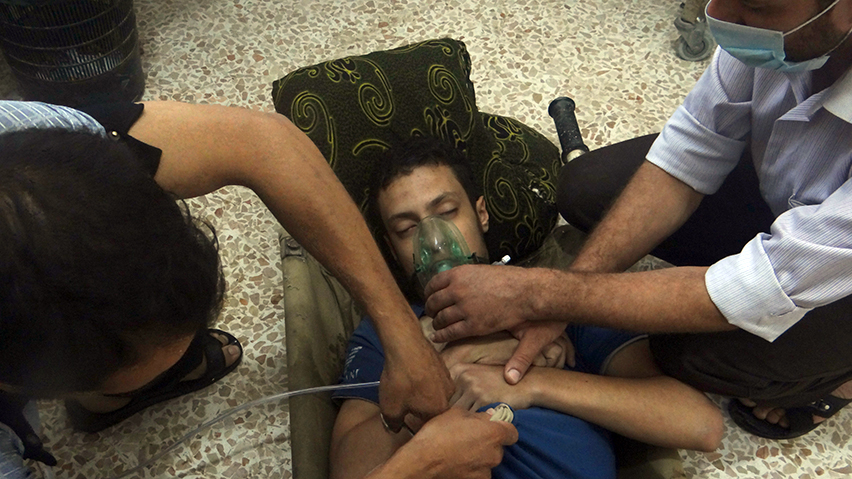
No we stand at the precipice of war again. This time in Syria. The United States, France and a number of other countries have concluded that the regime of Bashir Assad has employed the nerve agent Sarin against its own people in their bloody civil war.  This is disputed by the Russians as well as the Syrians but backed up by the Israelis and Saudi Arabians.

hi-syria-gas-rtx12sc9

As for the United States leading any strike on Syria to either degrade or weaken the Assad regime’s ability to use chemical weapons or any other weapons of mass destruction that they might have it finds itself on the horns of a dilemma. If it does nothing then the Assad regime can claim hat it forced the United States to back down and continue to slaughter its own people. If the United States attacks there is some chance of the strikes having some effect on the Syria ability to make war on their own people but opens the possibility of a wider and more bloody conflict, a conflict that may solve nothing but actually make matters worse.

The United State is also hindered on the world stage and at home by the Iraq debacle brought on by the Bush Administration. Despite the fact that less than one percent of the population has served in the military since the attacks of 9-11-2001 and even fewer have served in combat zones the political leaders, talking heads, pundits, preachers and media in general referrer to the country as “war weary.” The retired former Chief prosecutor at Guantanamo Bay made the comment on Twitter that they must be tired of shopping since so few have actually served. If there is war weariness it is in the military which has been in continuous action since 9-11-2001 and if we want to be honest almost ever since the First Gulf War with stops in the Balkans and Somalia along the way. I have been in the military 32 years and I have lost count of the number of places that we have deployed forces to and the amount of time that I have spent away from home. I think I have been away from my wife 10 of the last 17 years due to deployments and assignments that took me away from home. But I digress…

The fact of the matter that there are a number of layers to the situation in Syria that all need to be addressed but will not be. Instead they will be spun by those in favor or those opposed to war and mostly for for a very fleeting political advantage. An advantage only as good as today’s polls.

saddam0978

In the past couple of days the Obama Administration has been taking its case for action against Syria to the American people and Congress and also to other nations. The reasons for intervention have been primarily moral as well as citing the precedent of international law regarding chemical weapons. Real politic has not played much of a role, at least yet but it should.

The reality is that the Obama Administration as well as the UN, the Arab League, NATO, the EU and other nations with an interest in what happens in Syria have to deal with the moral and ethical level of the arguments for or against intervention. They also have to look at the legal justification which depending on which part of international law you examine could be used to argue for or against the legality of intervention. Finally there is the real politic of the situation, not only the chances of a successful intervention but the consequences of action versus inaction, action versus delay in the hopes of finding another solution and the results of whatever course of action is taken. After all, there are always results and even the most well intended and executed plans result in unintended consequences.

As I have said a number of times I think that President Obama is damned no matter what he decides to do and that this war no matter what we do in the next week will most likely spill over the borders of Syria into adjoining countries. That is already happening in the form of refugees going into Turkey, Jordan and Iraq, further instability in Lebanon and occasional skirmishes along the Syria and Lebanon borders with Israel. The question is not “if” but rather when and how the military conflict and sectarian violence spreads to other countries surrounding Syria. That has t be weighed with the consequences of and consideration of the “branches and sequels” to any intervention or non-intervention strategy employed by the United States and whatever allies choose to go along for the ride.

Syria03_GQ_07Dec12_getty_b_642x390

I am not in favor of war. That being said I do not know if there is a way to avoid it yet still enforce the norms of moral behavior in terms of the use of chemical, biological or even nuclear weapons.

There are times that I wonder about those who believe that they can orchestrate policy that only benefits their country or political-economic interests. The fact is that the “war genie” is out of the bottle and where the situation in Syria ends is anybody’s best guess. What we do have to remember is that those rebelling against the Assad regime are not doing so for our benefit or for that matter any other nation’s benefit. What T. E. Lawrence said of the Arabs who revolted against the Ottoman Empire in the First World War is as true now as it was then:

“The Arabs rebelled against the Turks during the war not because the Turk Government was notably bad, but because they wanted independence. They did not risk their lives in battle to change masters, to become British subjects or French citizens, but to win a show of their own.”

There are nations and groups attempting to use this for their own interests and ultimately it will blow back on them. The region is perched on the abyss of war, possibly without end. What happens now will be less decided by what happens in Washington or the capitals or Europe or the United Nations but with the people actually fighting the war, their active supporters and their proxies.

As far as the United States political scene if a single leader votes for or against war based purely on their individual or political party’s gain in either the 2014 or 2016 elections or to undermine the current President a pox on them. I want an honest debate about the real world consequences, ethical, legal, moral, economic, military and geopolitical of any intervention or non-intervention in Syria. We owe it to the Syrians, those people in the region as well as our own people, especially those who will certainly bear the burden of whatever war ensues.

Honestly, we really need to think this through before so much as one missile is launched.

Peace

Padre Steve+

Leave a comment

Filed under Foreign Policy, History, middle east, national security

August 1914: The Beginning of a Century of Disasters

467px-TelegramWW1

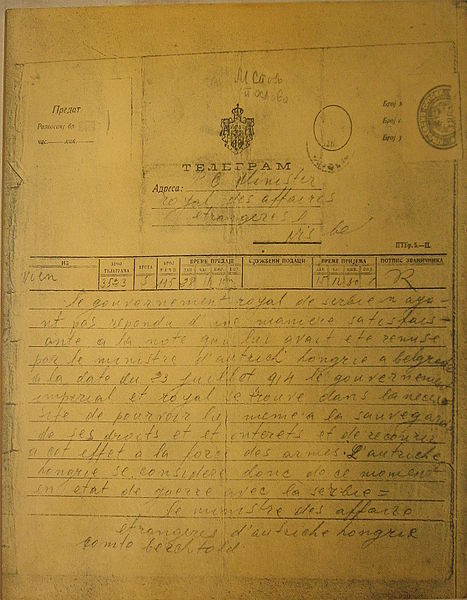
The Austrian Declaration of War against Serbia

“No one starts a war–or rather, no one in his senses ought to do so–without first being clear in his mind what he intends to achieve by that war and how he intends to conduct it.” Carl Von Clausewitz

It was a war that should never have happened. It was a war for which the belligerent powers could boast many causes but for which few had any real objectives. Ninety-nine years ago this week the nations of Europe were hell bent on waging a war that all thought would be short, decisive and end in victory for their side. They were wrong and nearly a century later the world still pays the price for their misplaced beliefs and hubris of those men.

It was a war in large part brought on by the declining Austro-Hungarian Empire’s fears. Fear of neighbors, ethnic minorities and its place among regional and world powers led the leaders of the Austro-Hungarian Empire to decide for war when the very unpopular heir to the throne Archduke Franz Ferdinand was assassinated in Sarajevo, the capital of the recently annexed province of Bosnia-Herzegovina on June 28th 1914.

Baron Conrad von Hotzendorf

Conrad von Hötzendorf: War was the only means of politics

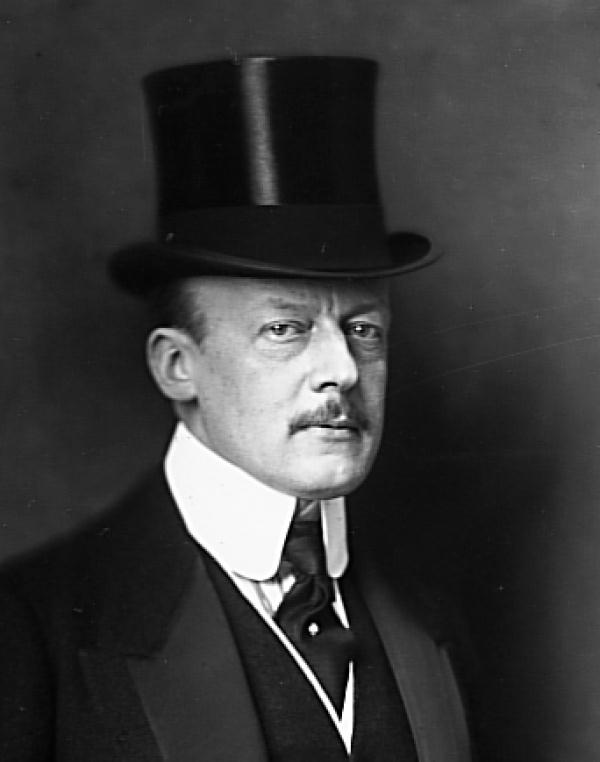
 It was a series of decisions by those in the government of the Empire that brought Europe and the world to war, a war which we still feel the effects of today. In particular it was the decisions of the Austrian Chief of the General Staff Conrad von Hötzendorf, the Foreign Minister Leopold Berchtold and the aging Emperor, Franz Joseph which plunged the world into a world war which spawned revolutions, regional wars, a second world war, a cold war and countless other wars. The decisions were based on the belief, still common today that war is the only means of politics.

WIK_Franz-Joseph_ca-1910[1]

Emperor Franz Joseph: “If we must go under, we better go under decently”

 Hötzendorf had been a continual advocate of war in every situation. He lobbied for war in 1907 against Italy and Serbia, in 1908 against Serbia, Russia and Italy, in 1909 against Serbia and Montenegro, in 1910 against Italy and the list increased in the years leading up to the war. He fervently believed that “the use of armed force alone could retard the centrifugal forces of nationalism in the ‘multinational empire’; war was the only means of politics.” The Emperor, Franz Joseph was of the same mindset by 1914 and in the days following the assassination of Franz Ferdinand he gave his approval to the actions of Hotzendorf and the diplomacy of Berchtold which doomed the Austro-Hungarian Empire and would destroy and remake Europe within a span of four years.

b305084a

Theobald von Bethmann-Hollweg: The Blank Checque

 The leadership of the Empire had decided on war within days of the assassination. Berchtold dispatched an emissary to Kaiser Wilhelm who decided in counsel with his Imperial Chancellor Theobald von Bethmann-Hollweg gave the Austrians a “blank cheque” of unconditional support for war against Serbia. Berlin was confident that “the Balkan crisis could be localized” and “advised Vienna to “proceed with all means at its disposal” and that Germany would support Austria-Hungary “come what may.” In doing so they willingly ignored the wise counsel of Otto Von Bismarck who considered the Balkans “not worth the life of a single Pomeranian Grenadier.

After they received German support the Austrians did everything that they could to ensure that war would occur. Their demands of Serbia were intentionally designed to be unacceptable to that country and they held key information from their German allies in the three weeks after they received the unconditional German support.

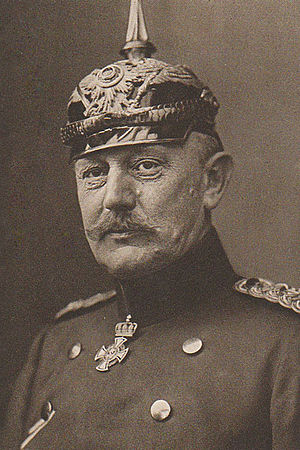
300px-Vonmoltke

Helmuth Von Molkte: “no alternative but to fight a preventive war…” 

 German militarists, particularly the Chief of the General Staff Helmuth Von Molkte the younger saw the coming conflict in racial and cultural terms. Von Molkte said that the coming war   would come “sooner or later” and be a war “primarily a struggle between Germans and Slavs” and compared Serbia to an “abscess.”  As the war cloud built Von Molkte told the Foreign Secretary von Jagrow that there was “no alternative but to fight a preventive war so as to beat the enemy while we could still emerge fairly well from the struggle” ignoring the advice of the Iron Chancellor Otto Von Bismarck who counseled “Preventive war is like committing suicide out of fear of death.”

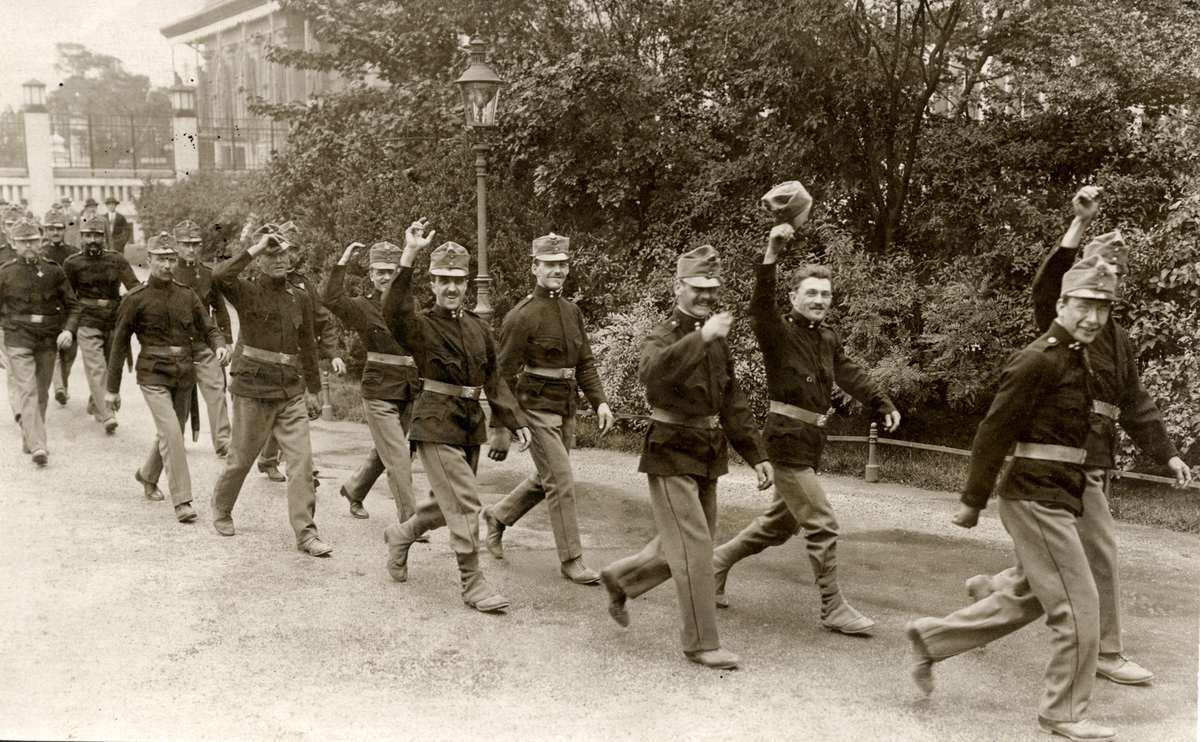
d345009d3a48

Austrian Reservists going to war

 The Austrians felt that the threat from Serbia combined with internal political factors related to the Hungarian and other Slavic regions of the Empire, and the increasing influence of Russia and Germany in the Balkans was an existential threat. At the same time they were poorly prepared for war. Their military was large but poorly trained and equipped.  Their national infrastructure, industry and railroads were ill-prepared for the demands of war. Their German allies had not planned for war either and were critically short of the required stocks of ammunition needed for a general war in Europe.

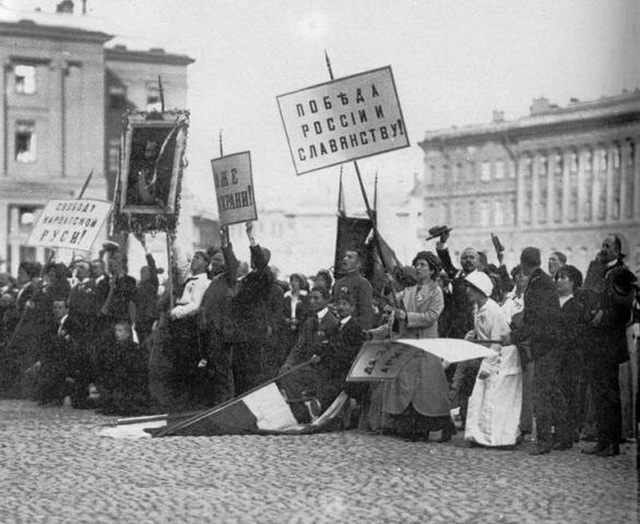
d8c27e8a26d2

Cheering crowds in Petersburg

 The Russians were heavily invested in the Balkans linked to other Slavic people by culture, language and religion. The French were bent on revenge against the Germans for the debacle of 1870 and had no stake in what happened in the Balkans. The British a few years prior to the war had told the Belgians not to expect support if they were invaded by Germany, but declared war to “protect Belgian neutrality.”

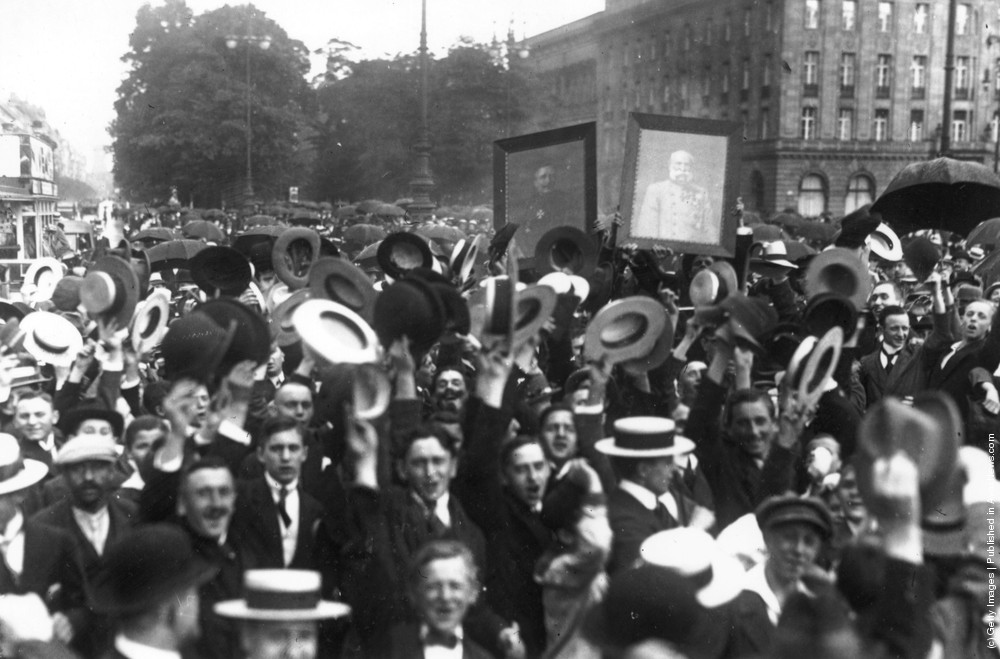
f0268cf28513

German wives and girlfriends walking alongside the Landser…

 The Austrians thought that with German support that even if Russia intervened that the war could be limited to Serbia. They were wrong. Just as the Germans had given the Austrians a “blank cheque” the French, both officially and unofficially were giving the Russians their own blank cheque. French Ambassador Maurice Paleologue assured Russian Foreign Minister S.D. Sazonov of the “complete readiness of France to fulfill her obligations as an ally in case of necessity.

93bb04dba7d3

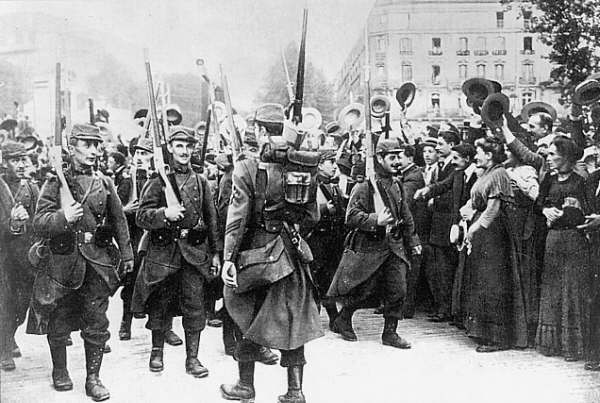
French Soldiers being cheered

 Austria declared war on July 28th, Russia followed by a partial mobilization to support Serbia on the 29th. Kaiser Wilhelm attempted to avert war at the last minute but Czar Nicholas II wrote “An ignoble war has been declared on a weak country. The indignation of Russia, fully shared by me, is enormous. I foresee that very soon I shall be overwhelmed by pressure to which I am exposed and compelled to take measures which will lead to war.”  This was met with German mobilization on the 30th and the French on August 1st. Declarations of war were exchanged and on August 4th in response to Germany’s refusal to respect the neutrality of Belgium Great Britain declared war against Germany.

d1d14e05247c

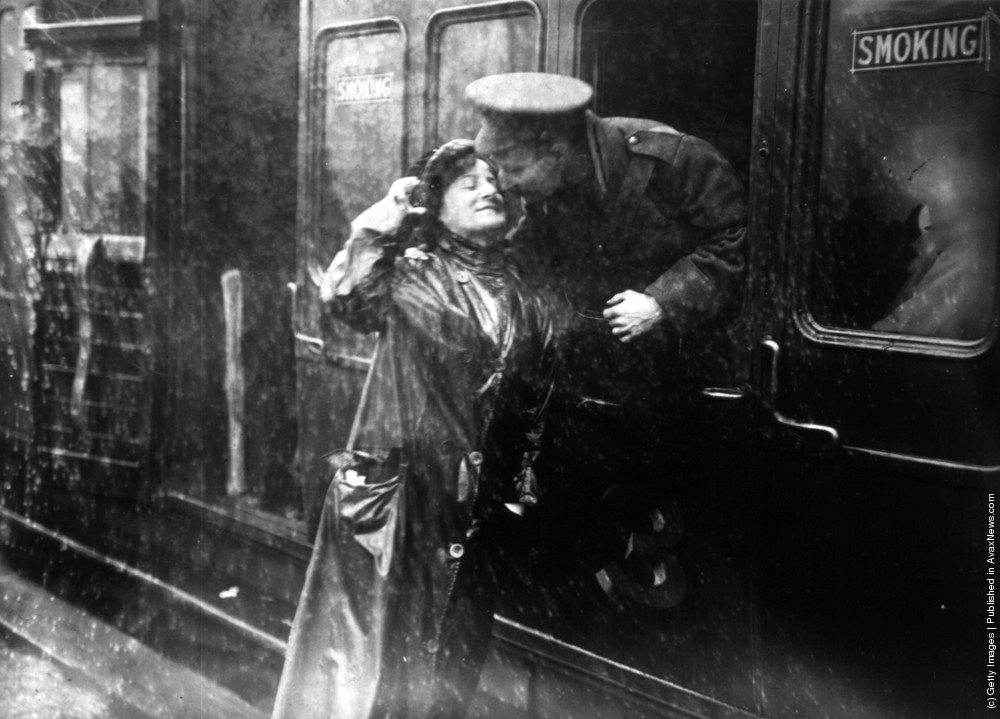
A final kiss from a British Soldier at Victoria Station

They were fateful days. Only the Austrians entered the war with any positive objectives, military or political goals. Every other power lurched into the war without clear objectives or end states. One writer noted that the war had “causes but no objectives.”

The world again finds itself perched at the edge of the abyss of war. There are people, smart and otherwise reasonable people who believe that they can wage “preventive wars” and rely on brute military force to solve nearly any problem. There are others that suggest that we should not criticize “allies” even when their decisions could be disastrous to them and the world, much as the Germans gave their Austrian brothers a “blank cheque.”  I wish that they would just look at the consequences before they commit nations and the world to more war that can only result in calamity and great suffering without benefit for anyone or any nation involved.

Those that counsel “preventive wars” need to remember the words of Otto Von Bismarck that “Preventive war is like committing suicide out of fear of death.”

Peace

Padre Steve+

3 Comments

Filed under History, Military, national security, Political Commentary

Sequester Is Here and I Feel a Sermon Coming On: Padre Steve Hammers the War Profiteers and their Political and Religious Supporters

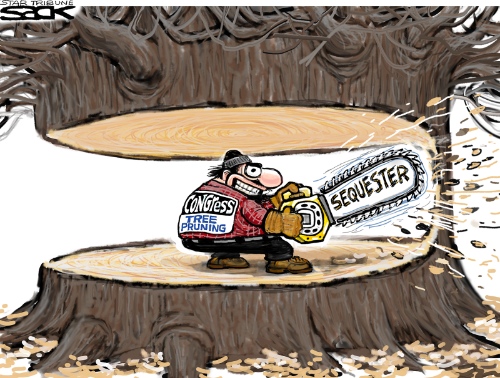
url Well the effects of the great sequester foisted on us by Congress in 2011 are finally starting to be felt. In my little part of the world they are impacting the health care needs of Marines and Sailors and their families. In fact our hospital will be having to cut over 800 mental health appointments in the next 11 weeks. Many other services will be impacted. The probability is that should this continue that the effects will be even more severe on the current active duty force as well as veterans being care for in military or VA facilities, this my friends is just the beginning.

So much for supporting the troops who are dealing with PTSD, Traumatic Brain Injury, crippling wounds that leave them dependent on pain killers, narcotics which in previous wars they would not have survived. Let’s not forget the suicide epidemic and sexual assault crisis, as well as collapsing families due to to the repeated stress of deployments and a system that is already struggling to cope with all of this. But that doesn’t really matter as long as corporate profits from war remain high and political contributions come rolling in. Thank you Congress, while you continue to get the best health care imaginable, take no cuts to your salary, and get more vacation days than anyone else employed by the government, even deciding when to not do business so you can take a paid holiday at taxpayer expense while the people that you have sent to war for the last 12 years pay the price, but I digress…

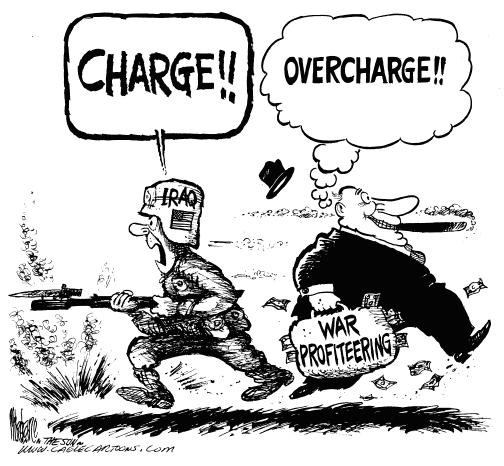
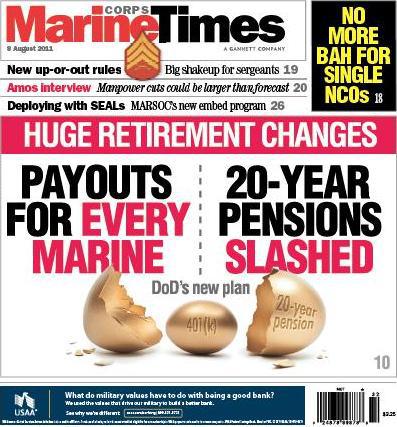
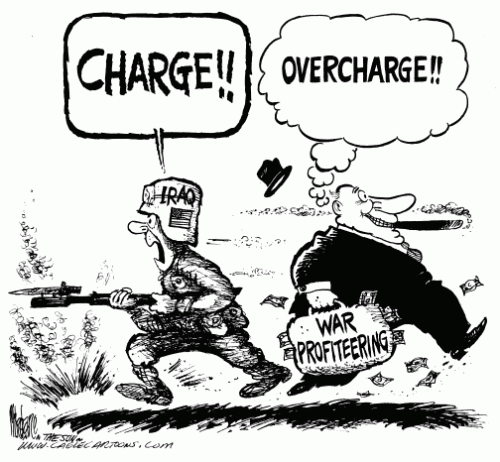
The K Street Lobbyists that advocate for all of the big defense industries whose programs and profits are getting relief from sequestration at every turn because their Congressional lackeys ensure it happens aren’t suffering. Their stocks and profits are going through the roof, even as they still sell things to the military that quite often we neither do not want or do not need. However, because the contractors and lobbyists have made sure that they located their programs in every Congressional district it takes an act of Congress that you can’t get to cut them. profiteering Meanwhile, those poor districts that only service the people of the military get hammered. Yes, all of those troop laden bases that don’t require big aerospace or shipyard investments in those southern Red States that take the hardest hits. You know, the really patriotic ones North Carolina, Texas, Georgia, Louisiana, Missouri, Kentucky and South Carolina where such bases as Fort Hood, Fort Bragg, Fort Bliss, Fort Polk, Fort Benning, Fort Knox, Fort Campbell, Fort Jackson and Camp LeJeune are located. It is they who take the biggest cuts to personnel and programs both the active duty military as well as our DOD civilian workers and personnel working for us employed by contractors. Of course these cuts affect other areas in Blue States or Swing States but I find the irony that those pushing hardest for sequester affecting military personnel and operations tend to be from those same Red States and those fighting hardest for the benefits to troops and veterans over weapons programs and industry are those that are traditionally called anti-military liberal Democrats. mct_cover_080811 Likewise those pushing for the most severe cuts in personnel and benefits are mostly men appointed to their advisory positions by Donald Rumsfeld. Men who have a decided interest in pushing for the profits of corporations that they are connected. The sad thing is that some of these men are former senior officers. (See my article The Disdain of American Business for Military Personnel and their Benefits and Follow the Money: The Real Motives behind those Seeking to Radically Change the Military Retirement System). There is more irony. Back in the early days of the Bush administration even after we went to war in Afghanistan and Iraq Defense Secretary Rumsfeld worked hard to civilianize military positions, especially medical billets. Those medical personnel billets were downsized and replaced by civilians or contractors. Of course the Federal civilians are now sequestered meaning that military personnel including wounded warriors will face even more hurdles to obtain needed medical care. Throw in the fact that even without the sequester the Veteran’s Administration system is broken and that many “conservative” politicians and their business allies want to reduce the Tricare health insurance coverage for service members, retirees and their families and it all adds up to betrayal.
But the sad thing is that none of this is new. The irony is that Marine Corps icon and two time Medal of Honor winner Major General Smedley Butler wrote about the very same thing when he retired from the Marine Corps in 1932. He wrote a little book that I highly recommend called War is a Racket. It is a damning indictment of American politics and business. It shows just how callous, brutal and truly traitorous political and business interests can be when it comes to the trust of the nation and those that serve it in time of war. I quote the entirety of Chapter Two of Butler’s Book because rings so true today.
Who Makes the Profits


The World War, rather our brief participation in it, has cost the United States some $52,000,000,000. Figure it out. That means $400 to every American man, woman, and child. And we haven’t paid the debt yet. We are paying it, our children will pay it, and our children’s children probably still will be paying the cost of that war.
The normal profits of a business concern in the United States are six, eight, ten, and sometimes twelve percent. But war-time profits — ah! that is another matter — twenty, sixty, one hundred, three hundred, and even eighteen hundred per cent — the sky is the limit. All that traffic will bear. Uncle Sam has the money. Let’s get it.

Of course, it isn’t put that crudely in war time. It is dressed into speeches about patriotism, love of country, and “we must all put our shoulders to the wheel,” but the profits jump and leap and skyrocket — and are safely pocketed. Let’s just take a few examples.

Take our friends the du Ponts, the powder people — didn’t one of them testify before a Senate committee recently that their powder won the war? Or saved the world for democracy? Or something? How did they do in the war? They were a patriotic corporation. Well, the average earnings of the du Ponts for the period 1910 to 1914 were $6,000,000 a year. It wasn’t much, but the du Ponts managed to get along on it. Now let’s look at their average yearly profit during the war years, 1914 to 1918. Fifty-eight million dollars a year profit we find! Nearly ten times that of normal times, and the profits of normal times were pretty good. An increase in profits of more than 950 per cent.

Take one of our little steel companies that patriotically shunted aside the making of rails and girders and bridges to manufacture war materials. Well, their 1910-1914 yearly earnings averaged $6,000,000. Then came the war. And, like loyal citizens, Bethlehem Steel promptly turned to munitions making. Did their profits jump — or did they let Uncle Sam in for a bargain? Well, their 1914-1918 average was $49,000,000 a year!

Or, let’s take United States Steel. The normal earnings during the five-year period prior to the war were $105,000,000 a year. Not bad. Then along came the war and up went the profits. The average yearly profit for the period 1914-1918 was $240,000,000. Not bad. There you have some of the steel and powder earnings. Let’s look at something else. A little copper, perhaps. That always does well in war times.

Anaconda Copper for instance. Average yearly earnings during the pre-war years 1910-1914 of $10,000,000. During the war years 1914-1918 profits leaped to $34,000,000 per year. (One should read their history of strip mining massive pollution, ARCO bought them in the 1970s but was stuck with massive environmental problems, such that the company is only on the books to show the losses)

Or Utah Copper. Average of $5,000,000 per year during the 1910-1914 period. Jumped to an average of $21,000,000 yearly profits for the war period.
Let’s group these five, with three smaller companies. The total yearly average profits of the pre-war period 1910-1914 were $137,480,000. Then along came the war. The average yearly profits for this group skyrocketed to $408,300,000. A little increase in profits of approximately 200 per cent.

Does war pay? It paid them. But they aren’t the only ones. There are still others. Let’s take leather. For the three-year period before the war the total profits of Central Leather Company were $3,500,000. That was approximately $1,167,000 a year. Well, in 1916 Central Leather returned a profit of $15,000,000, a small increase of 1,100 per cent. That’s all.
The General Chemical Company (now part of Honeywell) averaged a profit for the three years before the war of a little over $800,000 a year. Came the war, and the profits jumped to $12,000,000. a leap of 1,400 per cent.

International Nickel Company — and you can’t have a war without nickel — showed an increase in profits from a mere average of $4,000,000 a year to $73,000,000 yearly. Not bad? An increase of more than 1,700 per cent.

American Sugar Refining Company (largest Sugar refining company in the world, name brand Domino Sugar) averaged $2,000,000 a year for the three years before the war. In 1916 a profit of $6,000,000 was recorded.

Listen to Senate Document No. 259. The Sixty-Fifth Congress, reporting on corporate earnings and government revenues. Considering the profits of 122 meat packers, 153 cotton manufacturers, 299 garment makers, 49 steel plants, and 340 coal producers during the war. Profits under 25 per cent were exceptional. For instance the coal companies made between 100 per cent and 7,856 per cent on their capital stock during the war. The Chicago packers doubled and tripled their earnings.
And let us not forget the bankers who financed the great war. If anyone had the cream of the profits it was the bankers. Being partnerships rather than incorporated organizations, they do not have to report to stockholders. And their profits were as secret as they were immense. How the bankers made their millions and their billions I do not know, because those little secrets never become public — even before a Senate investigatory body.

But here’s how some of the other patriotic industrialists and speculators chiseled their way into war profits.
Take the shoe people. They like war. It brings business with abnormal profits. They made huge profits on sales abroad to our allies. Perhaps, like the munitions manufacturers and armament makers, they also sold to the enemy. For a dollar is a dollar whether it comes from Germany or from France. But they did well by Uncle Sam too. For instance, they sold Uncle Sam 35,000,000 pairs of hobnailed service shoes. There were 4,000,000 soldiers. Eight pairs, and more, to a soldier. My regiment during the war had only one pair to a soldier. Some of these shoes probably are still in existence. They were good shoes. But when the war was over Uncle Sam has a matter of 25,000,000 pairs left over. Bought — and paid for. Profits recorded and pocketed.

There was still lots of leather left. So the leather people sold your Uncle Sam hundreds of thousands of McClellan saddles for the cavalry. But there wasn’t any American cavalry overseas! Somebody had to get rid of this leather, however. Somebody had to make a profit in it — so we had a lot of McClellan saddles. And we probably have those yet.
Also somebody had a lot of mosquito netting. They sold your Uncle Sam 20,000,000 mosquito nets for the use of the soldiers overseas. I suppose the boys were expected to put it over them as they tried to sleep in muddy trenches — one hand scratching cooties on their backs and the other making passes at scurrying rats. Well, not one of these mosquito nets ever got to France!

Anyhow, these thoughtful manufacturers wanted to make sure that no soldier would be without his mosquito net, so 40,000,000 additional yards of mosquito netting were sold to Uncle Sam.

There were pretty good profits in mosquito netting in those days, even if there were no mosquitoes in France. I suppose, if the war had lasted just a little longer, the enterprising mosquito netting manufacturers would have sold your Uncle Sam a couple of consignments of mosquitoes to plant in France so that more mosquito netting would be in order.
Airplane and engine manufacturers felt they, too, should get their just profits out of this war. Why not? Everybody else was getting theirs. So $1,000,000,000 — count them if you live long enough — was spent by Uncle Sam in building airplane engines that never left the ground! Not one plane, or motor, out of the billion dollars worth ordered, ever got into a battle in France. Just the same the manufacturers made their little profit of 30, 100, or perhaps 300 per cent.

Undershirts for soldiers cost 14¢ [cents] to make and uncle Sam paid 30¢ to 40¢ each for them — a nice little profit for the undershirt manufacturer. And the stocking manufacturer and the uniform manufacturers and the cap manufacturers and the steel helmet manufacturers — all got theirs.

Why, when the war was over some 4,000,000 sets of equipment — knapsacks and the things that go to fill them — crammed warehouses on this side. Now they are being scrapped because the regulations have changed the contents. But the manufacturers collected their wartime profits on them — and they will do it all over again the next time.
There were lots of brilliant ideas for profit making during the war.

One very versatile patriot sold Uncle Sam twelve dozen 48-inch wrenches. Oh, they were very nice wrenches. The only trouble was that there was only one nut ever made that was large enough for these wrenches. That is the one that holds the turbines at Niagara Falls. Well, after Uncle Sam had bought them and the manufacturer had pocketed the profit, the wrenches were put on freight cars and shunted all around the United States in an effort to find a use for them. When the Armistice was signed it was indeed a sad blow to the wrench manufacturer. He was just about to make some nuts to fit the wrenches. Then he planned to sell these, too, to your Uncle Sam.

Still another had the brilliant idea that colonels shouldn’t ride in automobiles, nor should they even ride on horseback. One has probably seen a picture of Andy Jackson riding in a buckboard. Well, some 6,000 buckboards were sold to Uncle Sam for the use of colonels! Not one of them was used. But the buckboard manufacturer got his war profit.
The shipbuilders felt they should come in on some of it, too. They built a lot of ships that made a lot of profit. More than $3,000,000,000 worth. Some of the ships were all right. But $635,000,000 worth of them were made of wood and wouldn’t float! The seams opened up — and they sank. We paid for them, though. And somebody pocketed the profits.
It has been estimated by statisticians and economists and researchers that the war cost your Uncle Sam $52,000,000,000. Of this sum, $39,000,000,000 was expended in the actual war itself. This expenditure yielded $16,000,000,000 in profits. That is how the 21,000 billionaires and millionaires got that way. This $16,000,000,000 profits is not to be sneezed at. It is quite a tidy sum. And it went to a very few.

The Senate (Nye) committee probe of the munitions industry and its wartime profits, despite its sensational disclosures, hardly has scratched the surface.
Even so, it has had some effect. The State Department has been studying “for some time” methods of keeping out of war. The War Department suddenly decides it has a wonderful plan to spring. The Administration names a committee — with the War and Navy Departments ably represented under the chairmanship of a Wall Street speculator — to limit profits in war time. To what extent isn’t suggested. Hmmm. Possibly the profits of 300 and 600 and 1,600 per cent of those who turned blood into gold in the World War would be limited to some smaller figure.

Apparently, however, the plan does not call for any limitation of losses — that is, the losses of those who fight the war. As far as I have been able to ascertain there is nothing in the scheme to limit a soldier to the loss of but one eye, or one arm, or to limit his wounds to one or two or three. Or to limit the loss of life. There is nothing in this scheme, apparently, that says not more than 12 per cent of a regiment shall be wounded in battle, or that not more than 7 per cent in a division shall be killed.

Of course, the committee cannot be bothered with such trifling matters.

But still even so the real costs of the actions of the vultures of business and their political lackeys in both major parties impact military personnel and their families and devastate the nation as a whole. Butler wrote: “What is the cost of war? what is the bill? Major General Smedley Butler wrote: “This bill renders a horrible accounting. Newly placed gravestones. Mangled bodies. Shattered minds. Broken hearts and homes. Economic instability. Depression and all of its attendant miseries. Back -breaking taxation for generations and generations. For a great many years as a soldier I had a suspicion that war was a racket; not only until I retired to civilian life did I fully realize it….” warracket1-1 The sad thing is that the “racket” that Butler wrote about hasn’t changed an iota. In fact it has gotten worse because the profiteers and politicians have shuffed off the actual war fighting on a tiny part of the population, barely half a percent. They don’t even need to draft people to serve in war anymore and risk a political blowback.
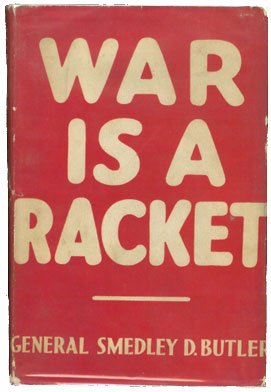
It’s really quite a system, the profiteers get the profits and political support and have almost no risk because it is other people’s money, you know, the taxpayers money and when the cuts come they still make a profit while the military personnel get thrown under the bus. It is wonderful business but really quite immoral even if they have the blessing of the political preachers.

Butler talked about those guys too. Butler wrote: “So vicious was this war propaganda that even God was brought into it. With few exceptions our clergymen joined in the clamor to kill, kill, kill. To kill Germans. God is on our side…it is his will that the Germans be killed.”

Substitute “Islamists” for “Germans” and the message from the Right Wing Preachers is the same. Not very Jesus like, but hey, the peace and love stuff doesn’t rake in the big bucks for the big politically driven “ministries.” Get people angry, sow fear and distrust, convince people that they are threatened and even civilized “Christian” people will commit genocide, all in the name of Jesus.

Enough for tonight.

Peace Padre Steve+

2 Comments

Filed under Military, national security, News and current events, Political Commentary

Padre Steve’s 2013 Down and Dirty Primer on the Muddle East

Free Syrian Army soldiers in Idlib

“When you are up to your arse in alligators it is hard to remember that your mission is to drain the swamp.” Old British Colonial Saying

Note: This is an update to my 2011 Primer on the Muddle East

During the dark days of World War Two when Field Marshal Erwin Rommel was making fools of a series of British commanders in North Africa people including senior British military and government leaders sometimes referred to the theater of operations as “the Muddle East.” Some things never seem to change. The Muddle East today is quite frankly speaking in a real muddled state if there ever was one with world leaders and regional leaders muddling about as if they were the New York Mets.

A large part of the muddle goes back to the fall of the Ottoman Empire at the close of the First World War when the victorious Allied Powers redrew the map of the Middle East and made alliances with various local tribal sheiks who many times were crowned king over other tribes who didn’t necessarily want them as king. This along with heavy handed European military actions such as the British using poison gas dropped from aircraft in Iraq and a real lack of effort to better the lives of the newly “liberated” peoples of the region was just the start. Add to the cesspool a bunch of oil presided over by major oil companies, the anti-colonial movements that flourished in the years after World War Two when the French, British and Italians had to divest themselves of their Middle Eastern holdings. The French had to fight a real war in Algeria but finally withdrew leaving Algeria’s new rulers to goof up the country and oppress their people for decades to come.  In the coming years many of these newly independent nations found that life still sucked so in a number of countries military officers overthrew the despised monarchs promising reforms but oppressing their people while blaming all their problems on the Israelis.  They got their asses kicked by the Israelis in a series of wars which did a number of things that made the Middle East Muddle even worse.

First it ensured that Palestinian Arabs ended up under Israeli rule and were used with great aplomb by the Middle Eastern despots to prop up support for their regimes while doing nothing to help the Palestinians other than to put them in camps in Lebanon.  Even when the Egyptians made a peace deal with Israel most of the Arab World ostracized them.  Then in 1979 the Shah of Iran was sent packing by a bunch of Mullahs and in 1981 Saddam Hussein’s Iraq attacked Iran in one of the bloodier wars of the late 20th Century which finally ended in 1988. Of course the United States was pissed at the Mullahs so Saddam became our favorite Arab despot for a while.  Add to the mix the Soviet Union and the United States arming their favorite Arab dictators who were given carte blanche to continue oppressing their people so long as it didn’t interfere with their support of either party or the oil supply. Finally the Soviets went Tango Uniform in 1989 not long after being forced out of Afghanistan by the U.S. supplied, Pakistani supported and Saudi Arabian fundamentalist financed Mujahideen.

With the Soviets “Tango Uniform” and the Warsaw Pact nations trying to get into NATO the United States was now the uncontested Numero Uno country in the world Saddam presumed upon his late supporters and invaded Kuwait, albeit after thinking that the U.S. Ambassador to Iraq said that we wouldn’t mind.

Well he was wrong we did mind and got a lot of countries from NATO and including a bunch of Arab countries like Egypt, Syria and Saudi Arabia to get on board on a mission to get Saddam’s troops out of Kuwait. It was a kick ass mission and since the United Nations didn’t authorize removing Saddam and because President George H.W. Bush was smart enough to not to drive on Baghdad to kick him out preferring the despot we knew to a quagmire Saddam was left in power.

So we stationed ground and air forces around the Gulf to keep Saddam and Iran in check and even put them in Saudi Arabia which a large number of radicals such as Osama Bin Laden equated to letting the Devil play in Allah’s Holy Sandbox.  So Osama went and set up a base with the Medieval bunch of Pashtun known as the Taliban in Afghanistan stirred up a bunch of shit killing Americans and blowing up stuff including the World Trade Center in 1993, the Khobar Towers barracks complex in 1996, the USS Cole in 2000 and then 2001 another attack on the World Trade Center which took down the towers with hijacked aircraft and also struck the Pentagon triggered an American response against Bin Laden and his Taliban hosts.  The United States then invaded in Iraq in 2003 and succeeded in taking out Saddam but also succeeded in alienating a good many Iraqis who greeted us with open arms because we goofed up the occupation and pissed a lot of them off by dissolving the Army, Police and Civil Service and letting thugs and opportunists take over. Unfortunately since we didn’t go in with enough troops to secure all the Iraqi bases, their weapons depots and actually take control of surrendering Iraqi units these newly unemployed and dishonored people launched an insurgency bolstered by Al Qaeda and other foreign fighters even as Sunni and Shi’a Moslems began to settle scores with each other. Insurgency and civil war, two great tastes that go great together, but what the heck right?

Of course it took years to get control of the situation on the ground and thankfully the United States forces in Iraq were helped when the Sunni Moslems in Al Anbar Province realized that these foreign fighters were a worse enemy than the United States and switched sides. This turned the tables in Iraq and the insurgency was brought under control and an elected government managed to start to get their stuff together and allow us to begin withdrawing from Iraq. Of course the focus on Iraq gave the Taliban a chance to regroup as the Afghani Government proved itself corrupt, incompetent and not to give a shit about the Afghani people. So the Taliban who had been hated made a comeback and made our lives much harder so that now almost 10 years into the fight we are having a really hard time.  Well enough about us there was plenty more going on in the Muddle East besides the Iraq and Afghanistan wars.

Let’s see….there was the law of unintended consequences in that by taking Saddam Down and weakening Iraq we took away Iran’s natural enemy and the key to the balance of power in the region. Iran was strengthened and began a nuclear program that everyone with half a brain knows in intended for military use and expanded its influence in Lebanon where the Iranian backed Hezbollah took power.  Now Hezbollah which actually has an experienced military force and probably owns 40,000 or so rockets and missiles a good number of which can hit deep in Israel seems to be ready for war especially because they fought the Israelis to a stalemate in 2008, the first time an Arab military ever did that. Not only did they take on the Israelis but they are also helping Syrian dictator Bashir Assad turn the tide against the polyglot Syrian rebel forces which are being assisted by Sunni foreign fighters from all over the Middle East and the ever present Al Qaida presence.

Then was the effect that the wars in those countries made things harder for us in many other friendly Arab nations.  Of course there is the problem of a nuclear armed Pakistan which is about as stable as a Japanese nuclear reactor after getting hit by a tsunami and plays both sides of the street in the war on terror.  The Palestinians and Israelis continued their love affair and since Fatah which ran Palestinian Authority was so corrupt and gooned up a more militant group, Hamas took power in the Gaza strip. Hamas is a pretty bloodthirsty lot too but not the same level of threat as Hezbollah to the Israelis.  Of course the Israelis have done little to help the situation by their often heavy handed treatment of Palestinians and Israeli Arabs.

The witches’ cauldron of the Muddle East is getting even more muddled on a daily basis as young Arabs throughout the Muddle East are rising up against their despotic rulers and it doesn’t seem that any are safe, those allied with the United States and the West as well as those that have been a thorn in the side of the United States and the West. It just seems that despots and tyrants are no longer in vogue. The uprisings began in Iran after a disputed election where reformers were cheated of power and the revolt crushed by the Revolutionary Guard and other thugs of the Iranian regime. However with the election of “moderate” whatever that means cleric Hasan Rowhani as President hopes are that Iran, despite the machinations of many other clerics and the Revolutionary Guard might be brought to the negotiating table. That being said Iran is reportedly sending about 4000 troops to go help Assad in Syria so go figure.

Elsewhere in the Middle East things continue to boil. In December 2010 the people of Tunisia rose up and overthrew their President for Life Ben Ali in a peaceful uprising followed shortly after by the Egyptians who tossed out long term President and U.S. ally Hosni Mubarak. In Tunisia a “moderate Islamist” regime has been attempting to maintain control of radicals and keep some semblance of balance in that country while in Egypt the Islamic Brotherhood was able to get majorities elected in the Parliament and elect Mohammed Morsi as President. Needless to say both countries are still in turmoil.

In Iraq the Sunni Shi’a divide is as wide as ever and that country is threatening to become engulfed in yet another civil war as sectarian violence increases and the Kurds make more moves toward independence.

2013-05-31T115012Z_01_IST12_RTRIDSP_3_TURKEY-PROTESTS

Turkey, the heart of the old Ottoman Empire is now beginning to erupt as secularist elements in the society are protesting the policies of Islamist President Recep Tayyip Erdoğan leading to repeated clashes over the past two weeks between protestors and police.

054

Afghanistan though technically not part of the Middle East continues to be a problem for US and NATO consuming intelligence, economic diplomatic and military resources that could be put to play with better effect elsewhere.  What T.E. Lawrence said of the British occupation of a restive Mesopotamia  in 1920:

“We realise the burden the army in Mesopotamia is to the Imperial Exchequer, but we do not see as clearly the burden it is to Mesopotamia. It has to be fed, and all its animals have to be fed. The fighting forces are now eighty-three thousand strong, but the ration strength is three hundred thousand. There are three labourers to every soldier, to supply and serve him.” ‘France, Britain, and the Arabs’ by Col. T. E. Lawrence The Observer, 8 August 1920

In Libya the Arab Spring claimed the long time pain in the ass Moammar Gaddafi. That conflict center of the action in 2011 until Gaddafi was overthrown and murdered. Since then Libya has remained in turmoil despite elections, militias run amok and the US Ambassador Chris Stevens was killed in an attack on the US Consulate and CIA base in Benghazi on September 11th 2012.

Yemen and Bahrain, Algeria, and Jordan have or are experiencing demonstrations which look to be revolts in the making and even Saudi Arabia is trying to head off a potential popular uprising.

However the real problem now, the problem that threatens to send the region into a regional war is the revolt in Syria which began with peaceful protests by reformers against the Assad regime. However the hard line response of that regime to the protests spawned a civil war which now threatens to overflow the borders of Syria. France, Britain and the US have stated that they believe that there is evidence that the Syria government has used chemical weapons, in particular Sarin nerve agents against the rebels. The conflict has claimed the lives of an estimated 80,000 people with hundreds of thousands more now living as refugees.

The conflict in Syria epitomizes one of the greatest challenges in the Middle East that many in the West are just beginning to recognize, the Sunni Shi’a divide. That divide is becoming more serious with every passing day as Iran continues to lead and assist Shi’a elements in predominantly Sunni Arab countries, as well as in Iraq where the Arab Shi’a are in the majority. The conflict in Syria is predominantly Sunni versus Shi’a though in that patchwork nation of Sunni, Shi’a, Alawite Shi’a tribe of the Assad clan, various Christian and Druse groups. Lebanon which borders Syria is as divided as its larger neighbor and Hezbollah holds tremendous power in that country.

Yes my friends this is a mess and almost everybody that is anybody in the military and economic power houses of the world doesn’t have their handprints all over at least some part of this mess. All of these own some of the blame for what is going on, both the rulers of the nations in the region as well as world powers who all try to influence the nations and peoples for their own diplomatic, intelligence, military or economic gain. Almost no one is unsoiled by their involvement in the Muddle East over the past 90 years or so and so in a way all of great world powers, as well as the despots who ran these countries are to blame.

images-46

The region is more volatile than at any time in recent history and events there could easily ignite a regional war with worldwide implications.  That is why the region has been called the Muddle East for decades.  We all hope and pray for the best and that somehow all of this that the promise of a peaceful and democratic “Arab Spring” will become a reality, but there are better than even odds that things get way worse before they get better. There are just too many wild cards in this deck and the swamp is full of hungry alligators.

With the announcement this week that the US would provide military aid and training to the Syrian rebels and that US forces will remain in Jordan even as US and NATO Patriot missile batteries stand ready in Turkey there is a really good chance that the conflict in Syria will not stay in Syria.

Of course there is always the wild card if what Israel may do in what it perceives to be its security interests against outward foes such as Iran and Syria but also inside its borders and occupied territories, especially if it is attacked or provoked by Iran, Hezbollah or Hamas.

May God help us all and bring about peaceful change, or as my Iraqi friends simply say “Inshallah, God willing.”

Peace

Padre Steve+

Leave a comment

Filed under History, iraq,afghanistan, middle east, Military, national security