Tag Archives: world war i

Sequester, Lent and Hope

198177_10151361204842059_1890411795_n

“As lousy as things are now, tomorrow they will be somebody’s good old days.” Gerald Barzan

Sequester is here and with it the era of mutual assured destruction by our political, economic and media elites continues in an unabated form.

At the same time sequester occurs during the season of Lent when Christians are called on to make voluntary sacrifices of things that are important to them in the forms of fasting and abstinence. Lent is a season of penitence which hopefully builds in the heart of the believer a new love for God and neighbor, a season that changes a person from a “me first” attitude to an attitude of thanksgiving, gratitude and service to those in distress. That being said, the season of Lent should be a season of hope.

However it is difficult at times to be hopeful when all around there is bad news. We seem to be living the ancient Chinese curse that says “May you live in interesting times.” The times are certainly interesting with lots going on of historic significance that may years from now be remembered as one of those tumultuous times where the world changed before our eyes.

History of course is replete with such times, the rise and fall of ancient empires, the age of exploration, the Reformation, the French and American Revolutions, the Napoleonic era, the American Civil War, the Industrial Revolution, the First and Second World War with the Great Depression sandwich, the 1960’s, the post Cold War era and the post-911 era just for a start.

I could go back further in history for other epochal periods, but I think that the reason that today’s crisis seem so much more dire is that we are both the beneficiaries and the victims of the instantaneous communication revolution in which common people have real time access to events that are impacting their lives.  This causes many a great deal of anxiety both real and imagined, anxiety which usually finds expression in a desire for the good old days as well as seeks solace and security from those who feverishly exploit that anxiety.  It does not matter if the security comes from religion, political ideology and matters neither if it comes from the left or the right so long as the call resonates with them they will follow it. They will faithfully follow even as the purveyors of the message drive up their worry and anxiety that they no longer can actually enjoy life or be thankful because they are so consumed with how “lousy” things are or “evil” their opponents are.

Thus even during the season of Lent it is hard for many people to grasp the meaning of it when all around them appears to be falling apart and in chaos.

It is in times like these that one has to take a deep breath, look around at all that they have to be thankful for and just really examine of the nostalgia that they feel for “better times” is that or an escape from an unpleasant present and fear of the future if the other side wins.

The fact is that we have seen such times before and somehow made it through.  I hear from friends and relatives who lived through the Great Depression and World War II that those were good times in spite of everything happening, much of which is present today but somehow things are worse now.  Even I fall into the trap about somehow thinking that the times that I grew up in were somehow better than the present, this may be true for music but overall things were not that good for a lot of people but somehow we made it through them.  Lent is a time to step back from the brink, take stock and renew our life with God and our neighbor.

When I returned from Iraq back in February 2008 I soon discovered that the bombardment of bad news and über-partisan political battles took its toll on me.  I was neither as resilient as I thought that I was nor as consumed by the need to continue to ratchet up rhetoric on one side or the other as the more extreme elements on the right or left were doing.  PTSD or not I realized that the purveyors of the 24/7 bad news cycle were driving people with legitimate ideological differences to extremes that I had never seen, but which I recognized from history have a lot of precedent and can lead to making things even worse.  One only has to look at Weimar Germany to realize how things can go so very wrong when extremes on both sides of the ideological spectrums squeeze out those in the middle or chance at mutually beneficial solutions and that was in the days before type of information overload that is the bedrock of the political and ideological landscape of today.

I am not attacking those who get caught up in this but I do question the politicians, pundits, “news-networks” and talk show hosts who continue to ratchet up rhetoric to the point that many feel that the only alternative is some kind of “revolution.”  Again those that call for “radical change” or revolt against those who are in favor of that kind of change are both calling for revolution when revolutionary talk reaches a point where one side or the other does not see a way to resolve things in a civil manner then the those alternatives slip away and the only recourse is violence.

It is not the fault of one side or the other as those that stoke this talk are found on both sides of the American as well as other nations political and ideological spectrum testify to daily.  In the United States we also have a long history of apocalyptic thought which presents the lousy state of current events in any generation as something that will certainly bring the end of life as we know it or the return of the Lord, the Great Tribulation or whatever you chalk it up to. There are those on both the religious and secular side of the spectrum who have apocalyptic visions related to their world view.  For some reason we Americans do the apocalyptic quite well whether we believe in God or not.

The thing that has been most on my mind this Lent, as it has been the past several years has been the idea of being reconciled both to God and to one another.  Lent is a season of self examination, repentance and forgiveness.  The call to “be reconciled to one another” is a never ending command and applies across the variety and spectrum of life.

cross-ash-wednesday

Lent reminds us that that “we are dust and to dust we shall return” but that we are also all made in the image of the God who created us, redeems us and sanctifies us who calls us to himself and reminds us that mercy triumphs over judgment and “not be conformed to this world, but be transformed by the renewing of your minds, so that you may discern what is the will of God—what is good and acceptable and perfect.” I am afraid that in times like these even the best intentioned of people can find themselves pulled into the orbit of those that in less stressful or trying times that they would never be involved with.

The German martyr Dietrich Bonhoeffer once wrote: “Our enemies are those who harbor hostility against us, not those against whom we cherish hostility… As a Christian I am called to treat my enemy as a brother and to meet hostility with love. My behavior is thus determined not by the way others treat me, but by the treatment I receive from Jesus.”

I know for some that call themselves “Christians” this message is lost. However, I believe that it is not because they are consciously rejecting the message of the Gospel but because that have become so deeply involved in whatever cause they endorese that they have lost the ability at least temporarily to see the good that may rest in their opponents and their ideas.

As Bonhoeffer also wrote “Judging others makes us blind, whereas love is illuminating. By judging others, we blind ourselves to our own evil and to the grace which others are just as entitled to as ourselves.”  Now of course Bonhoeffer knew the evil that was the Nazis and eventually gave his life by supporting the German resistance to Hitler.  Loving our enemies does not absolve us from public responsibility but in ensuring that we do not ensnare ourselves in ideology that restricts our ability to love them as Christ has commanded.

I think in the past few years that I have gained a new perspective on life that has changed the way that I look at the world.  I know that things are not good right now and that there are a lot of things to be legitimately concerned. That said I know too that somehow our country as well as much of humanity have weathered worse and like Barzan said that for some these will be the good old days someday.

That thought helps me to live in the present knowing that the future is not yet written and known only to God who in his grace condescends to love us and desires that we better love him and one another and not be conformed to any ideology that would prevent that. Sequestration and political division aside I do pray that we will both see better days as well as be reconciled to God and to one another.

It is in times like this that I think of Bonhoeffer’s words:

“God loves human beings. God loves the world. Not an ideal human, but human beings as they are; not an ideal world, but the real world. What we find repulsive in their opposition to God, what we shrink back from with pain and hostility, namely, real human beings, the real world, this is for God the ground of unfathomable love.”

That is my Lenten prayer.

Peace,

Padre Steve+

1 Comment

Filed under christian life, faith, History, News and current events, Political Commentary

That War Would Cease: The Christmas Truce of 1914

joyeux_noel3

“Tonight, these men were drawn to that altar like it was a fire in the middle of winter. Even those who aren’t devout came to warm themselves.” Chaplain Palmer Joyeux Noël

12010440-mmmain

The war was supposed to be over by Christmas, or so the planners had said. Instead after a series of massive battles that produced unprecedented number of casualties the war settled into a stalemate. As the sides exhausted themselves in a series of meeting engagements throwing the flower of their idealistic youth into the great maw of the front to be torn apart by massed artillery and machine gun fire the planners sought new ways to find military victory.

In December 1914 with neither side having the ability to force the issue and casualties already running over a million dead and wounded the armies dug in. Massive trench networks were constructed in the mud of France and Belgium as the artillery continued its impersonal work of destroying men, machines and the homeland of millions of civilians.

From Clipboard

Despite the stalemate the high commands of the various nations continued to through their troops into meaningless attacks to gain a few yards of their opponent’s trench networks. The attackers always suffered the worst as they went “over the top” and were cut down by well sited machine guns and networks of defensive redoubts.

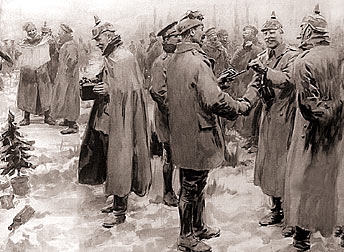
As Christmas neared individual parties of British and German troops began to fraternize exchanging gifts and attempting despite the wishes of their commanders to maintain an attitude of live and let live. On Christmas Eve German troops began to decorate their trenches with Christmas trees and lights, carols were sung and Christmas greetings exchanged as the local truces became widespread and soldiers met in no man’s land to talk and give each other gifts of cigarettes, alcohol, food and souvenirs.  In some places the sides helped each other collect and bury their dead and some Chaplains even led Christmas services in which men of both sides worshipped.

football-truce

The truce would not last as the high commands of each side issued strict orders against them and within days had moved the units that they believed most “infected” by the Christmas spirit to other locations and replaced them with units inculcated with the message of the inhumanity of their enemy. Such messages often included the religious understanding of this being a “holy war” against enemies of God and humanity. It is funny that though Moslems are frequently demonized for committing Jihad that Christians have a terrible record when it comes to finding theological reasons to kill those that they believe, even other Christians to be the enemy.

Christmas Day December 1914 World War One

joyeux-noel-2

http://www.youtube.com/watch?v=7-MGfNsgB3A

joyeux-noel-3

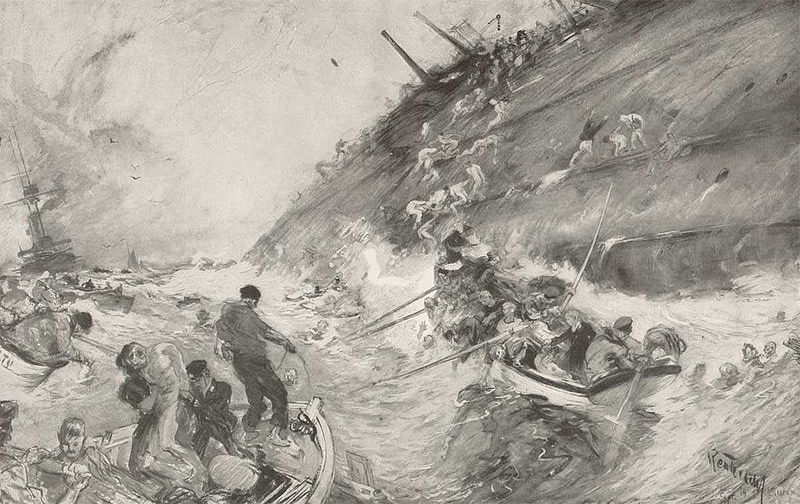
This really wasn’t surprising, after all for in the years leading up to the war many school children, especially in France and Germany had been propagandized. Churches and ministers cooperated in the carnage. In the movie Joyeux Noel the British Padre who had cooperated in the Christmas truce is relieved by his Bishop and sent home. The Bishop then preaches to the newly arrived soldiers, those replacing the men who had found peace for a moment. The sermon is not a work of fiction, it is actually part of a sermon that actually was given in Westminster Abbey in 1915. It was a sentiment that fit the mood of the high command who sought to minimize the danger of peace without victory. It was a sermon, the likes of which were preached by ministers, preachers, priests and bishops throughout that terrible war. It is a sermon that many preachers, Christian, Jewish, Islamic and Hindu even today mimic with terrible consequences.

http://www.youtube.com/watch?v=fMPxjUE40iw

“Christ our Lord said, “Think not that I come to bring peace on earth. I come not to bring peace, but a sword.” The Gospel according to St. Matthew. Well, my brethren, the sword of the Lord is in your hands. You are the very defenders of civilization itself. The forces of good against the forces of evil. For this war is indeed a crusade! A holy war to save the freedom of the world. In truth I tell you: the Germans do not act like us, neither do they think like us, for they are not, like us, children of God. Are those who shell cities populated only by civilians the children of God? Are those who advanced armed hiding behind women and children the children of God? With God’s help, you must kill the Germans, good or bad, young or old. Kill every one of them so that it won’t have to be done again.”

Unfortunately I have met and heard men preach the same message against those they hate, a message that twists the words of Jesus in a diabolical way to justify the worst acts of nations and peoples. In the year 2013 wars rage around the world. Some are conducted by well organized professional militaries but many by militias, paramilitary and terrorists groups. In some cases the brutality and inhumanity exhibited makes the industrialized carnage of the First World War seem sane. Even now preachers of various religions, including Christians, Moslems and Jews advocate the harshest treatment of the enemies of their peoples all in “the name of God.”

295_26912097058_4309_n

n671902058_1153798_5336

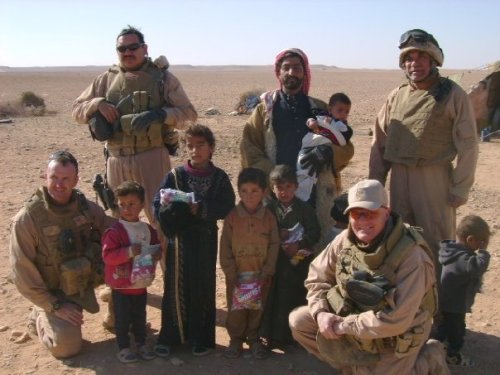
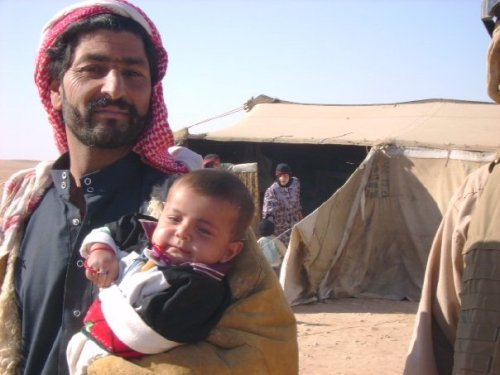
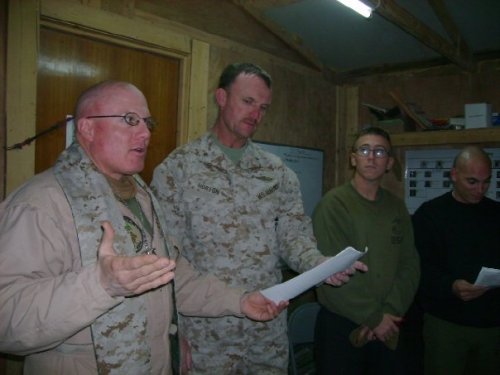
Six years ago I was traveling up and down the western border of Iraq with Syria. I was visiting our Marines that were advising the Iraqi Army and Border Forces, conducting Christmas services for them and also visiting Iraqi soldiers as well as civilians. In a couple of instances Iraqi and Jordanian Christians working as interpreters came to the Eucharist services, for one it had been years since he had received the Body and Blood of Christ in the Holy Communion. While out and about visiting Iraqis we were hosted by Iraqi troops and well as Bedouin tribesmen and their families. The warmth and hospitality and faith of these wonderful people was amazing.  T.E. Lawrence wrote that the Bedouin could not look for God within him: he was too sure that he was within God.” 

n671902058_1153804_6925

I think that for me that Christmas week was the one that will remain with me more than any and despite being in a war zone, it for me was a time of peace on earth and good will toward men.

Maybe someday we will begin to understand.

Peace

Padre Steve+
6 Comments

Filed under christian life, faith, film, History, iraq,afghanistan, Religion, Tour in Iraq

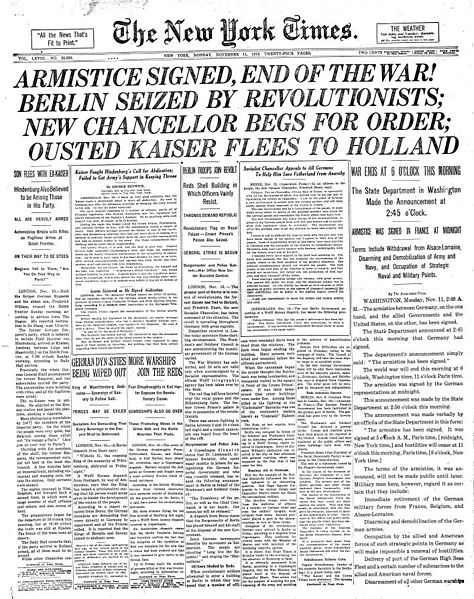
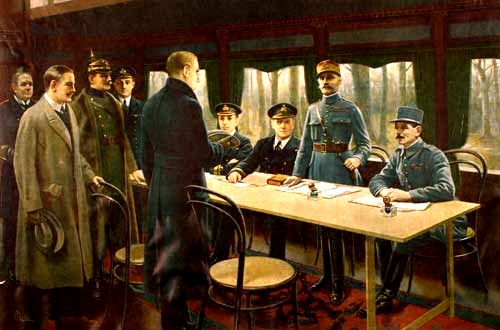
The 11th Hour of the 11th Day of the 11th Month: The Continuing Legacy of the Armistice of World War One

“Armistice Day is a constant reminder that we won a war and lost a peace.” General Omar Bradley

Germany was in pre-revolutionary turmoil. The High Command of the Army had told Kaiser Wilhelm II that military resistance was no longer possible and that the Army would not follow him back to Germany to put down the revolutionaries.

After four long years of war in which around 10 million soldiers and 7 million civilians were killed and another 20 million wounded the guns fell silent. In the end it was also the end of an era. It was then end of empires. The Russian Empire had collapsed in 1917 and been initially been replaced by a republic and then by a Soviet State and Czar Nicholas II and his family became victims of the revolutionary violence. The Austro-Hungarian Empire collapsed and in its place a hodge-podge of new states as well as liberated areas came into existence. The Ottoman Empire was carved up with its various parts being granted “independence” by the allies under the leadership of tribal leaders supported by the French or British.

Britain survived the war but not without crisis due to the massive losses in manpower and economic losses sustained during the war. France nearly fell in 1917 when the Army, demoralized by the unrelenting losses of years of brutal warfare mutinied. Belgium was devastated as was much of northern and eastern France.

Most surprisingly Imperial Germany collapsed. After knocking Russia out of the war in 1917 the Germans attempted a knockout punch against France. The offensive, code named Michael was successful at first and nearly succeeded, but in the end ran up against obstacles that could not be overcome, including the arrival of a massive and still fresh American Expeditionary Force. By the summer the tide had changed and the allies were on the offensive and threatening to break through the now vulnerable German lines. At home revolution was in the air, fed by the starvation of the German people and rising unrest units of the High Seas Fleet mutinied, as did units of the Army stationed in Germany proper. Workers and Soldiers Soviets took control of local and state governments.  Finally with everything on the line the Kaiser left Berlin to meet with his High Command at their headquarters in Spa, Belgium.

It was in Spa that the Kaiser found out that his reign was over. On November 9th General Wilhelm Groener, the Quartermaster General and the de-facto second in command of the Army told the Kaiser that the Army no longer supported him. It was a seminal moment. The Kaiser abdicated his throne and to prevent a communist takeover the leadership of the Social Democratic party proclaimed a republic that day. Hurried negotiations between the Socialists and the Army produced an alliance which averted the threatened Soviet takeover, but also doomed the new Weimar Republic. A hated state, it was blamed by monarchists and other conservatives for the German defeat and the humiliation of Versailles and hated by the communists, who viewed it as illegitimate.

The Germans send a peace delegation to France which agreed to the armistice at about  5 AM on November 11th which stipulated that hostilities were to cease at 1100. The firing stopped and German troops withdrew to a nation totally unprepared for defeat. The allies maintained their naval blockade of German ports until the Treaty of Versailles was signed the following year, wracked by starvation, the great Influenza epidemic, economic collapse and civil war Germany never came to terms with its defeat. Eventually, a crippled Weimar Republic would fall in 1933. Adolf Hitler , a decorated veteran of the war in the trenches became Chancellor and and with an year the undisputed dictator of Germany in 1934.

During the interregnum between the wars the victors cobbled together states from the the former empires. Borders were drawn without respect to racial, tribal or religious divisions. The victors, particularly the British, French and Italians expanded their overseas empires at the expense of the former empires and the newly acquired lands.

The war that was to end all wars only brought about another even more bloody war that would end with the dropping of Atomic Bombs in Hiroshima and Nagasaki Japan in August 1945. Hitler, who led Germany to ruin died by his own hand in his bunker. The remnants of empires that had not collapsed in the immediate aftermath of the First World War did not survive the second. By the 1970s most of the former colonies of the great empires were independent, but not necessarily free. Tribal and religious conflicts as well as genocide followed in Africa and Asia. A “Cold War” between the former allies of the Second World War followed, only ending with the fall of the Berlin Wall on November 9th 1989, which was exactly 71 years to the day that Kaiser Wilhelm abdicated his throne.

Today, though it is nearly a century later the ramifications of that war, a war that was “to end all wars” are still with us. War and more revolution threatens in the Middle East even as former colonies wracked by tribal, religious or ethnic divisions within their artificially drawn boundaries continue to implode. Europe, buoyed by the hope of economic integration following the end of the Cold War is again being torn apart by ethnic and nationalist divisions as the Euro crisis deepened.

On November 11th 1918 few thought that the end of that war would still be felt today. After all, it was the “war to end all wars.”

Peace

Padre Steve+


1 Comment

Filed under History, Military, national security

Buffalo Soldiers and Racial Prejudice on the Western Front 1918

They were volunteers and many of their veteran soldiers had served full careers on the Great Plains. They were the Buffalo Soldiers. In the First World War they were left on the frontier and a new generation of draftees and volunteers became the nucleus of two infantry Divisions, the 92nd and 93rd. However in the beginning they were regulated to labor service units until the protests of organizations such as the NAACP and men like W.E.B.DuBois and Phillip Randolph forced the War Department to reconsider the second class status of these men and form them into combat units.

Despite this the leadership of the AEF, or the American Expeditionary Force refused to allow these divisions to serve under American command. Instead they were broken up and the regiments of the 93rd Division were attached to French divisions. The 369th “Harlem Hellfighters” were assigned to the French 16th Division and then to the 161st Division. The 370th “Black Devils” to the French 26th Division and the 371st and 372nd to the French 157th (Colonial) Division also known as the Red Hand Division. The 371st was awarded the French Croix de Guerre and Légion d’honneur and Corporal Freddie Stowers of the 1st Battalion 371st was the only African American awarded the Congressional Medal of Honor in the First World War. The 372nd was also awarded the Croix de Guerre and Légion d’honneur for its service with the 157th Division.

The 157th Division had suffered badly during the war and been decimated in the unrelenting assaults in the trench warfare of the Western Front. It was reconstituted in 1918 with one French Regiment and two American regiments, the Negro 371st and 372nd Infantry. On July 4th 1918 the commanding General of the French 157th Division, General Mariano Goybet issued the following statement:

“It is striking demonstration of the long standing and blood-cemented friendship which binds together our two great nations. The sons of the soldiers of Lafayette greet the sons of the soldiers of George Washington who have come over to fight as in 1776, in a new and greater way of independence. The same success which followed the glorious fights for the cause of liberty is sure to crown our common effort now and bring about the final victory of right and justice over barbarity and oppression.”

The citation for Corporal Stowers reads as follows:

Corporal Stowers, distinguished himself by exceptional heroism on September 28, 1918 while serving as a squad leader in Company C, 371st Infantry Regiment, 93d Division. His company was the lead company during the attack on Hill 188, Champagne Marne Sector, France, during World War I. A few minutes after the attack began, the enemy ceased firing and began climbing up onto the parapets of the trenches, holding up their arms as if wishing to surrender. The enemy’s actions caused the American forces to cease fire and to come out into the open. As the company started forward and when within about 100 meters of the trench line, the enemy jumped back into their trenches and greeted Corporal Stowers’ company with interlocking bands of machine gun fire and mortar fire causing well over fifty percent casualties. Faced with incredible enemy resistance, Corporal Stowers took charge, setting such a courageous example of personal bravery and leadership that he inspired his men to follow him in the attack. With extraordinary heroism and complete disregard of personal danger under devastating fire, he crawled forward leading his squad toward an enemy machine gun nest, which was causing heavy casualties to his company. After fierce fighting, the machine gun position was destroyed and the enemy soldiers were killed. Displaying great courage and intrepidity Corporal Stowers continued to press the attack against a determined enemy. While crawling forward and urging his men to continue the attack on a second trench line, he was gravely wounded by machine gun fire. Although Corporal Stowers was mortally wounded, he pressed forward, urging on the members of his squad, until he died. Inspired by the heroism and display of bravery of Corporal Stowers, his company continued the attack against incredible odds, contributing to the capture of Hill 188 and causing heavy enemy casualties. Corporal Stowers’ conspicuous gallantry, extraordinary heroism, and supreme devotion to his men were well above and beyond the call of duty, follow the finest traditions of military service, and reflect the utmost credit on him and the United States Army.

Corporal Stowers is buried at the Meuse-Argonne American Cemetery. The award of the Medal of Honor was not made until 1991 when President George H. W. Bush presented it to Stowers’ two surviving sisters.

The contrast between the American treatment of its own soldiers and that of the French in the First World War is striking. The fact that it took President Harry S. Truman to integrate the U.S. Military in 1948 is also striking. African Americans had served in the Civil War, on the Great Plains, in Cuba and in both the European and Pacific Theaters of Operation in the Second World War and were treated as less than fully human by many Americans.

Men of the 371st and 372nd Infantry Regiments of the French 157th Division Awarded the Croix d’Guerre

Unfortunately racial prejudice is still rampant in the United States. In spite of all the advances that we have made racism still casts an ugly cloud over our country. Despite the sacrifices of the Buffalo Soldiers, the leaders of the Civil Rights movement and others there are some people who like the leaders of the AEF in 1917 and 1918 cannot stomach having blacks as equals or God forbid in actual leadership roles in this country.  A good friend of mine who is a retired military officer, a white man, an evangelical Christian raised in Georgia who graduated from an elite military school in the South, who is a proponent of racial equality has told me that the problem that many white people in the South have with President Obama is that “he doesn’t know his place.” Yes racism is still real and rears its ugly head all too often.

Today is the anniversary of the Meuse-Argonne Offensive where American troops helped break the back of the German Army in World War One. As we remember the brave men who went “over the top” and suffered over 117,000 casualties in that battle let us not forget the intrepid Buffalo Soldiers who blazed a way to an equality that some would still seek to deny those of color.

Peace

Padre Steve+

9 Comments

Filed under History, Military

Senate Joint Resolution 41: The Blank Cheque of 2012

“The Emperor Francis Joseph may, however, rest assured that His Majesty will faithfully stand by Austria-Hungary, as is required by the obligations of his alliance and of his ancient friendship.” Telegram from German Imperial Chancellor Bethmann-Hollweg to Austrian Government 

It seems like it is a rare occasion when either the House or Senate combine to pass any sort of bi-partisan measure. One wishes that when they did that it would be something actually that would benefit the people of the United States. However in recent times it seems that the only time that the Senate or House can agree on anything is when they vote to raise their pay or give their blessing to a new war, of course without actually going on record as declaring war.

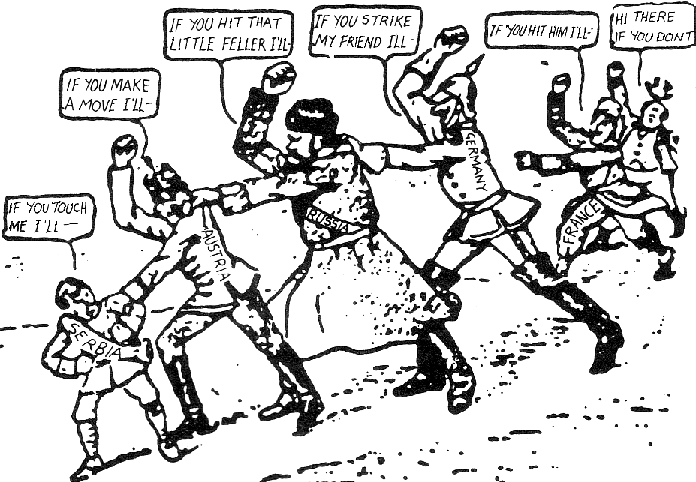
In July of 1914 the Austro-Hungarian Empire sought German backing to go to war against Serbia for the assassination of Archduke Franz Ferdinand. The Balkans were boiling over. The Austrians felt that the chaos in the Balkans was an existential threat to their already fragile empire and aimed to shore up their position by crushing Serbia. However, since the Russian Empire supported the Serbs and was a direct threat to exposed areas of the Austrian empire in what is now Poland the Austrians sought a guarantee of German support for their action.

The Germans made the decision to support Austria knowing that if they did that it was likely that war with Russia, and probably France and Britain would ensue. Austria despite its limitations was Germany’s only real ally in Europe. By a series of diplomatic blunders Kaiser Wilhelm II managed to undo all of Otto Von Bismarck’s diplomacy following the German unification. He scuttled the treaty of friendship that the Bismarck and Kaiser Wilhelm I had with Russia and built a Navy that threatened Britain’s interests both against the protests of Bismarck. As Wilhelm’s Germany became more isolated the more it prepared for war and many of its military and political leaders felt that war was not only inevitable but desirable before Germany’s enemies, especially Russia became more powerful.

Now with war threatening Germany was isolated and decided to support the Austrians believing that even if war came that they would emerge victorious. It was a decision that would be fatal for the German Empire as well as the Austro-Hungarian Empire.

This week as the situation between Israel and Iran has continued to deteriorate with most experts believing that it is only a matter of time before Israel will launch a pre-emptive strike on Iran’s emerging nuclear weapons capability. Leaders of Iran and Israel have continued to escalate rhetoric as well as conduct clandestine operations against each other. Iran has been isolated by the west and by much of the Sunni Moslem world, particularly Saudi Arabia and the Gulf States. It believes that the west and the heretical Sunni’s desire the overthrow of its theocratic regime. Israel sees Iran’s possession of nuclear weapons as an existential threat and also faces local border conflicts with Hamas and Hezbollah. Israel now has to deal with the threat posed by Egypt which is now led by the Muslim Brotherhood.

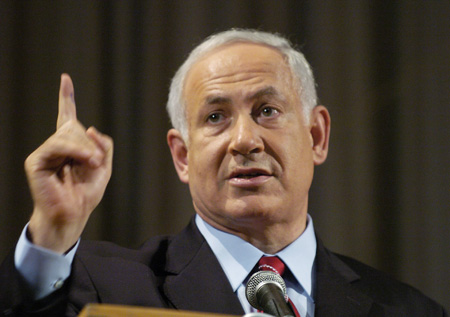
Israel’s leaders, especially Prime Minister Benjamin Netanyahu feel that time is very short before Iran reaches the stage where it can produce nuclear weapons. The United States, the European Union and the United Nations have also opposed the development of such weapons by Iran and instituted ever tougher economic sanctions but those nations and entities feel that more time is needed for sanctions to take effect.

Likewise the leaders of Iran including President Mahmoud Ahmadinejad, Supreme Leader Ali Khamenei and leaders of Iran’s Revolutionary Guards frequently talk of war with Israel which would lead to the destruction of the Jewish State. In light of Iran’s support for Hizbollah and involvement in the Syrian civil war Israel takes Iran’s threats seriously.

The tensions continue to increase and many believe that Israel could strike in the very near future the United States Senate in a rare moment of bi-partisanship the Senate passed what amounts to a “Blank Cheque” to Israel or the President to take action against Iran. In a vote Friday it passed Senate Joint Resolution 41 by a vote of 90-1. Amid all the domestic political jockeying, economic problems and yes the football season most people didn’t even know the vote occurred. The Senate voted it on the Friday that they recessed until after the November elections. The resolution stated that the Senate:

“strongly supports United States policy to prevent the Government of the Islamic Republic of Iran from acquiring a nuclear weapons capability;

rejects any United States policy that would rely on efforts to contain a nuclear weapons-capable Iran; and

joins the President in ruling out any policy that would rely on containment as an option in response to the Iranian nuclear threat.”  http://thomas.loc.gov/cgi-bin/query/D?c112:2:./temp/~c1126dTHw8::

The lone vote of dissent was cast by Kentucky Republican Senator Rand Paul who said: “A vote for this resolution is a vote for the concept of preemptive war.”

The resolution in effect rules out and shackles any President using any form of diplomacy to deter Iran. Should Iran gain a nuclear capacity it effectively negates any form of deterrence, diplomacy or containment options other than war to stop Iran. In effect it gives the blessing of the Senate to either Israeli or American preventive war against Iran. The resolution is similar in this instance to the guarantee of Germany to Austria in 1914.

At this point I doubt that there is anything that will stop a war from happening. Too much has been invested by too many governments in ensuring that it will happen to stop it. Regardless of who is President of the United States Iran will continue its course until Israel strikes. When that happens all bets are off.

It will be a war designed to prevent a war but it will trigger events that will go well beyond a conflict between Iran and Israel. Others will be pulled in, the United States, NATO, the Gulf States, possibly Syria, Iraq, Pakistan and even Egypt. American and NATO forces in Afghanistan will be in great danger.

One would hope that we would learn from the mistakes of others. The great Otto Von Bismarck commented said “preventive war is like committing suicide out of fear of death.” Obviously we haven’t learned anything.

Pray for Peace

Padre Steve+
 

2 Comments

Filed under Foreign Policy, middle east, national security, News and current events

The Advent of Submarine Warfare: Otto Weddigen the U-9 and the Sinking of the Aboukir, Cressy and Hogue

“There was a fountain of water, a burst of smoke, a flash of fire, and part of the cruiser rose in the air. Then I heard a roar and felt reverberations sent through the water by the detonation.” Otto Weggigen’s account of sinking the HMS Aboukir.

In September 1914 most naval experts held the submarine was not much of a threat. The submarines of the day were limited in range, diving depth, speed, armament and endurance. The U-9 was powered by kerosine engines on the surface which charged batteries which were used when the boats were submerged. Later submarines would be powered by diesel engines.

U-9 was small, displacing only 543 tons on surface and 674 submerged. 188 feet long and just 19.7 feet in beam the conditions for her crew of 4 officers and 25 enlisted men were less than spartan. She was armed with four 17.7 inch torpedo tubes, two forward and two aft and carried six torpedoes, four in the tubes and two reloads for the forward torpedo tubes.

The boat had been commissioned in April 1910 and on the outbreak of the First World War she was commanded by Kapitänleutnant Otto Weddigen.  On September 22nd 1914 with enormous battles raging on the Western Front and the High Seas Fleet in port the soon to be famous submarine was patrolling in the North Sea. The U-9 was about 18 miles off the Dutch Coast near the Hook of Holland when she encountered three ships of the Royal Navy’s 7th Cruiser Squadron.

The squadron was composed of three obsolete Cressy Class Armored Cruisers, the HMS Cressy, HMS, Aboukir and HMS Hogue displacing 12,000 tons and mounting two 9.2” and 12 6” guns. Manned primarily by recently called up reservists the ships were derisively known as the “Live Bait Squadron” and on that September morning they would unfortunately live up to that title.

The ships were steaming in a line ahead formation when Weddigen on the U-9 spotted them about 0600. They were not zig-zagging to lessen the chance of submarine attack and thought they had posted lookouts had no idea that U-9 was stalking them.

Weddigen on worked the boat into what he felt was a better firing position and launched his first torpedo at the center cruiser, the Aboukir at 0620 from a distance of just 550 yards. The torpedo struck her midships and broke her back. She began to sink and within 25 minutes capsize taking 527 of her crew of 760 down with her.

Thinking that Aboukir had struck a mine the Cressy and Hogue moved in to rescue survivors. Weddigen had surfaced to observe the British and then fired two torpedoes into Hogue from a range of just 300 yards and then dived with Hogue opening fire as she did so. Hogue capsized and sank in 15 minutes.

The British now knew that a submarine was responsible for the attack and the last ship and after reloading his forward tubes attacked Cressy at 0720 firing two torpedoes from her stern tubes. Weddigen then surfaced to bring his bow tubes into action and fired another shot, as he dis so the British cruiser opened fire and attempted to ram. Cressy was struck by two torpedoes during the attack capsized and then sank at 0755.

In little more than an hour and a half U-9 had sunk three cruisers with a loss of 1459 British sailors. Only 837 crew members from all three ships survived.

Weddigen then moved off as he knew that the British would be looking for the U-9. When the boat returned to port Weddigen  and his crew were hailed as heroes. Weddigen was awarded the Iron Cross First Class and the boat was one of only two ships of the Imperial Navy awarded the Iron Cross, the other being the Light Cruiser Emden.

The plucky U-9 would survive the war, sinking another cruiser, the HMS Hawke in 1915 and 13 other merchant ships or fishing boats. She was withdrawn from front line service in 1916 and assigned to training duties. Weddigen was killed on March 18th 1915 when his new command the U-29 was sunk.

Future First Sea Lord Dudley Pound then serving on the Battleship St. Vincent wrote: “Much as one regrets the loss of life one cannot help thinking that it is a useful warning to us — we had almost begun to consider the German submarines as no good and our awakening which had to come sooner or later and it might have been accompanied by the loss of some of our Battle Fleet”.

Submarines would go on to be one of the most feared and effective weapons developed for naval warfare. German U-Boats nearly brought Britain to its knees in both World Wars and the submarines of the US Navy’s Pacific Fleet decimated the Japanese merchant fleet and inflicted great losses on the Imperial Japanese Navy. While the US Navy replaced its losses in early 1942 it was the submarine force that according to Admiral Chester Nimitz “held the lines against the enemy.”

Today the most deadly submarines ever built prowl underneath the surface of the world’s oceans. Nuclear powered and advanced diesel electric boats armed with torpedoes and cruise missiles, and giant nuclear powered ballistic missile submarines armed with long range nuclear ballistic missiles provide an invisible deterrent.

Unlike 1914 today all navies take the submarine threat seriously. Should any significant naval war be fought in the Persian Gulf or the Pacific submarines will certainly have an impact not only at sea but in strategic strikes on enemy installations and land based units.

In 1914 no one would have thought that the success of the tiny U-9 would eventually lead to such a dominating weapon.

Peace

Padre Steve+
1 Comment

Filed under History, Military, Navy Ships

The Gathering Storm: Shades of 1914 as War Threatens in the Middle East

Israeli Navy Dolphin Class Submarine

“The world tells Israel ‘Wait, there’s still time.’ And I say, ‘Wait for what? Wait until when?’” Benjamin Netanyahu 

The question is not if but when. The tensions between Iran and Israel continue to boil over even as the rest of the Middle East begins to melt down.

Last week on the 11th anniversary of the September 11th attacks Al Qaeda backed forces attack the US Consulate in Benghazi Libya killing Ambassador Christopher Stevens and three others. Militants in Egypt laid siege to the US Embassy while newly elected Egyptian President and Moslem Brotherhood leader Mohammed Morsi dithered torn between his party ideology and the pragmatic reality of the dependency of Egypt on the United States for military and economic assistance. Throughout the region from Tunisia to Indonesia protests, some marked by violence broke out at United States and other Western nations diplomatic outposts.

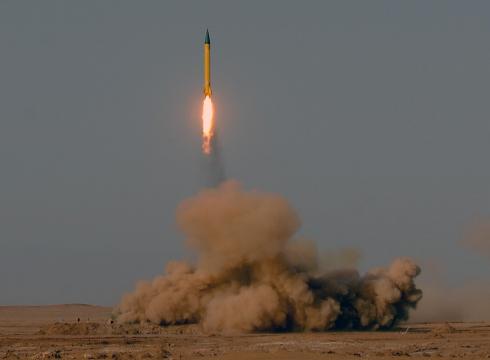
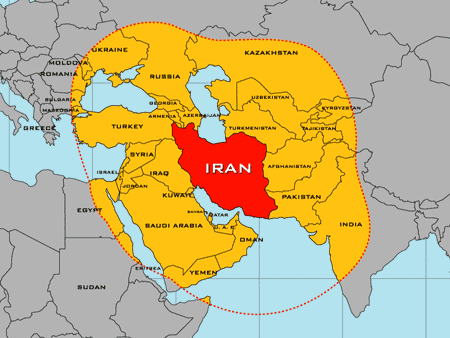
Shahab III Missile Ranges

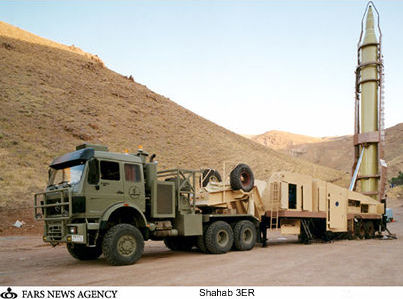
The Iranians and their Hezbollah allies have repeatedly threatened Israel with destruction and have improved their missile forces significantly ever the past number of years even without nuclear weapons. Prime Minister Benjamin Netanyahu is demanding the United States and the west set “Red Lines” regarding the Iranian nuclear program that would trigger an automatic attack on Iran by the United States.

Like the First World War the tensions, provocations and rhetoric increase even as military forces mobilize and gather in the region. Iran is preparing for massive military exercises involving land, air defense and ballistic missile units from the Iranian military and Revolutionary Guards to begin in October.  Iran admitted this weekend that forces from their Revolutionary Guards are currently operating in Syria placing them in position to directly engage Israeli forces in the event of conflict.

By October the United States will have three Carrier Strike Groups, the USS Enterprise, USS Dwight D. Eisenhower and USS John C Stennis and an Expeditionary Strike Group with an embarked Marine Expeditionary Unit in the region. Additionally warships from more than 25 countries are gathering for exercises designed to counter any blockade of the strategic Straits of Hormuz by Iran. Other ships, including the French Aircraft Carrier Charles DeGaulle battle group and the British HMS Illustrious  “Response Task Forces Group” are in the Eastern Mediterranean and could be in the region within a week. US Navy submarines, both attack and ballistic missile are never far from a threatened area. US Air Force  Fighter Squadrons have been reinforced and it is certain that strategic air force units of B-2, B-52 and B-1 bombers are certainly deployed where they can respond as needed. The build up by all sides is unprecedented.

The countries of the region are on hair trigger alert. Any act, intentional or unintentional by any party could trigger a war that would most certainly bring great destruction to the region but would likely sink the global economy and spread around the world through acts of terror and revolutionary violence.

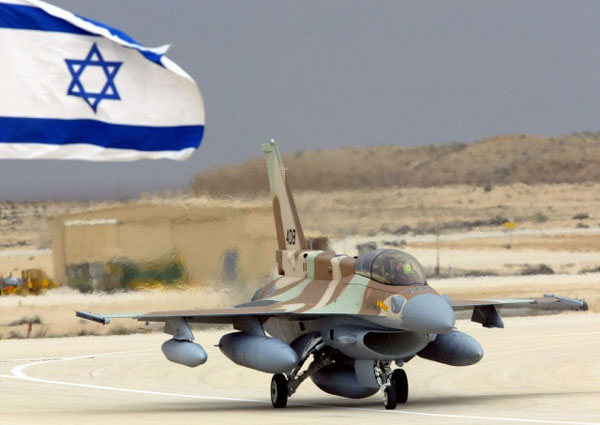
Numerous reports and Israel government official statements indicate that Israel is ready, to strike Iran, if need be alone to prevent what they believe is an existential threat to Israel. While some believe that any Israeli attack on Iran would be precision strikes aimed at Iran’s nuclear program and ballistic missiles sites. However, most experts believe that an Israeli strike would at best set back the Iranian nuclear weapons program a couple of years and trigger a regional war with very unpredictable outcomes. If the Israeli strike is conventional in nature the Iranians will strike back against Israel, as well as US targets in the region. The US would certainly respond but any war would affect the region and the world economy as oil prices would rise exponentially.

With that in mind it is possible that the Israelis fearing the existential threat of Iranian nukes might use their nuclear forces in a first strike role.

Most experts believe that the Israelis would only use nuclear weapons in a retaliatory “second strike” capacity. The reasoning is that the first use of nuclear weapons by Israel would be against their national interests. That is logical but history is replete with times that nations have acted in ways contrary to logic because the action is deemed “necessary.” It is the same logic that said that the Germans would not violate Belgian neutrality in 1914 knowing that such an action would trigger British intervention on the side of France and Russia. It was believed by most that “the Germans are dangerous but they are not maniacs….” The Germans faced war on more than one front and felt that they had to deliver a swift blow to knock France out of the war in order to defeat Russia. It was a risk that they were willing to take and one which helped lose them the war and set about a series of events that made the 20th Century the bloodiest in human history.

In the current situation many in Israeli leadership may view the use of nuclear weapons to stop an existential threat as a legitimate use of the weapons. Israel does face real threats and those threats are increasing as Iran increases in strength and no longer has traditional rival Iraq to worry about. Likewise the instability of Egypt and the anti-Israeli animus of the Moslem Brotherhood which now leads Egypt has increased the real and perceived threat from that country. An Egypt openly hostile to Israel armed to the teeth with advanced American weapons is a dagger pointed at the heart of Israel. Israel’s leaders may be willing to suffer international condemnation in order eliminate what they consider an existential Iranian threat to ensure their survival and ability to defend against Egypt as well as conventional and unconventional Hizbollah forces operating out of Lebanon and those of Hamas in Gaza.

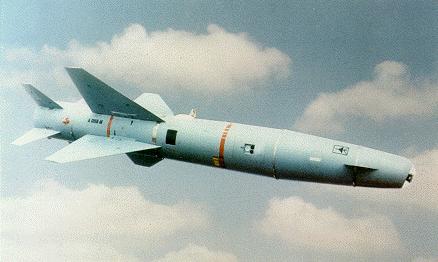
If they were to use nuclear weapons the primary delivery system in such a strike would most likely be Dolphin Class submarines armed with nuclear capable Popeye cruise missiles. These missiles have a 1500 km range and while the missiles could be used in a conventional strike their utility would be limited to precision strikes against unfortified headquarters buildings housing Iranian leadership, or command and control facilities. The numbers of Popeye missiles the Dolphins carry is limited since the majority of Iranian nuclear sites are hardened facilities or deep underground their use against them in a conventional manner would be a waste.

The threat to United States and NATO forces in Afghanistan is great if a broader war erupts. US and NATO forces, already fighting an increasing Taliban insurgency are for all practical purposes surrounded if a war spreads and Pakistan shuts down the southern supply route. Even this week Taliban insurgents scored a victory successfully attacking the strongly fortified joint US Marine and British base Camp Leatherneck-Camp Bastion destroying 6 AV-8B Harrier jets on the ground, damaging more aircraft, valuable hangers and support facilities while killing 2 Marines. A war with Iran would threaten to turn Afghanistan into a trap for nearly 100,000 US and NATO coalition troops.

It could as Barbara Tuchman said of the the Germans of 1914 that the Israelis have “staked everything on decisive battle in the image of Hannibal….” but that the ghost of Hannibal might have reminded the Germans and the Israelis that though Hannibal and “Carthage won at Cannae, Rome won the war.” In mid May and early June of 1914 even before the assassination of Franz Ferdinand Field Marshal Von Molkte and others felt that the scales were tipping against them. He told his Austrian counterpart Field Marshal Conrad Von Hotzendorf that “from now on ‘any adjournment will have the effect of diminishing our chances of success.’” On June 1st Von Molkte said to Baron Eckhardstein,“We are ready, and the sooner the better for us.”

The storm clouds of war are thickening and darkness hovers as the storm gathers. In 1914 the politicians, diplomats and soldiers that realized war would be disastrous were a minority in their respective governments and their warnings went unheeded. In 1914 “war pressed against every frontier. Suddenly dismayed, governments struggled and twisted to fend it off. It was no use….” As the sun set and the lamps of London were lit on August 4th 1914 Sir Edward Grey said to a friend “The lamps are going out all over Europe; we shall not see them lit again in our lifetime.” It is as if we are watching the same drama play out in the Middle East now.

Peace

Padre Steve+


3 Comments

Filed under Foreign Policy, middle east, Military, national security, News and current events

“We Built This” Part One: Smedley Butler Tells Just How Big Business Did it All by Themselves

I am amazed at the hubris of the Romney campaign doubling down on this “we built it” crap. The fact is that many of if not most of the “American” corporations that now in fact are multinationals that couldn’t give a crap about Americans were and are made much of their profits off of war and the sacrifices made by American military personnel for over 100 years. Politicians of both parties have been in on this game since the beginning and while I mention the Romney campaign he is not the first nor the last that will play it.

Now don’t get me wrong. I am a big fan of how American business and ingenuity can get things done. Nor am I against people making money, even lots of money especially if they produce something worthwhile and they earn their money honestly. Nor am I jealous of those that were born into money, so long as they are honest about it and admit that that it was the product of those that gave it to them or provided them the opportunity to succeed. Nor do I criticize those small business owners that invest their heart, soul and treasure into becoming successful and doing great things, often against the odds and government regulations which are written to favor the big players and multinationals.

At the same time I also know that despite the rhetoric none of our major corporations or their CEOs got there all by themselves. Despite all the hype the facts are that our major corporations including the banks have subsisted on the government and American taxpayers for years. Bailouts, subsidies, government loans and all sorts of other perks are part of this history, but nowhere more glaring is how many in business got where they are by being war profiteers.

While these corporations have produced some the the best weapons systems ever seen. However they have also produced a lot of crap that failed the military, or which was not needed, or which were so bad or problem laden that they were rejected by the military. However they still got paid or are still getting getting paid for by the taxpayer.

To me there is something unseemly in saying “we built it ourself” when the profits are made off the taxpayer and with the blood of American military personnel. What is even more obscene is that some of these companies make money from our enemies  by supplying them even while those enemies use the weapons and materials paid at least in part by American taxpayers against our troops.

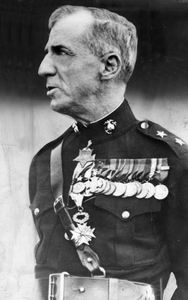
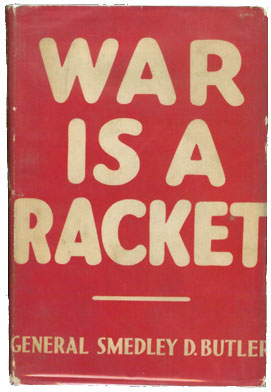
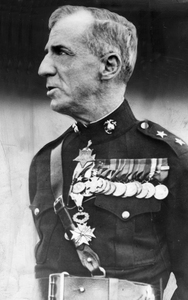
Major General Smedley Butler, US Marine Corps who was awarded the Medal of Honor twice wrote about how American business engorged themselves at the cost of Americans during the First World War, often without any positive result, apart from their profits. The fact is that little has changed since then.

Butler’s book, War is a Racket should be required reading for all voters if nothing else to demonstrate the absolute cynicism and moral bankruptcy of the “we built this ourselves” argument. The book was written after the war and Butler’s retirement during the Great Depression. The monetary figures are those of the period. One can adjust them for inflation if they want to, but it suffices to say that the big banks and corporations didn’t do it all by themselves.

Chapter Two of the book is entitled Who Makes the Profits. If you believe that these companies got where they were all by themselves then you need to read this. This article only discusses World War One. Volumes can be written about how American business has made much of its profit from none other than Uncle Sam, and our tax dollars.  The interesting thing is that many of the corporations named by Butler are still doing this today, sometimes under different names because of mergers but still the same companies.

I am already thinking about doing some more articles on just how various corporations made their money and exploited the government and taxpayers in order to do it. That is the wonderful thing about history. It shows when people are lying in order to increase their power.

So enjoy Chapter Two of War is a Racket

Who Makes The Profits?

The World War, rather our brief participation in it, has cost the United States some $52,000,000,000. Figure it out. That means $400 to every American man, woman, and child. And we haven’t paid the debt yet. We are paying it, our children will pay it, and our children’s children probably still will be paying the cost of that war.

The normal profits of a business concern in the United States are six, eight, ten, and sometimes twelve percent. But war-time profits — ah! that is another matter — twenty, sixty, one hundred, three hundred, and even eighteen hundred per cent — the sky is the limit. All that traffic will bear. Uncle Sam has the money. Let’s get it.

Of course, it isn’t put that crudely in war time. It is dressed into speeches about patriotism, love of country, and “we must all put our shoulders to the wheel,” but the profits jump and leap and skyrocket — and are safely pocketed. Let’s just take a few examples.

Take our friends the du Ponts, the powder people — didn’t one of them testify before a Senate committee recently that their powder won the war? Or saved the world for democracy? Or something? How did they do in the war? They were a patriotic corporation. Well, the average earnings of the du Ponts for the period 1910 to 1914 were $6,000,000 a year. It wasn’t much, but the du Ponts managed to get along on it. Now let’s look at their average yearly profit during the war years, 1914 to 1918. Fifty-eight million dollars a year profit we find! Nearly ten times that of normal times, and the profits of normal times were pretty good. An increase in profits of more than 950 per cent.

Take one of our little steel companies that patriotically shunted aside the making of rails and girders and bridges to manufacture war materials. Well, their 1910-1914 yearly earnings averaged $6,000,000. Then came the war. And, like loyal citizens, Bethlehem Steel promptly turned to munitions making. Did their profits jump — or did they let Uncle Sam in for a bargain? Well, their 1914-1918 average was $49,000,000 a year!

Or, let’s take United States Steel. The normal earnings during the five-year period prior to the war were $105,000,000 a year. Not bad. Then along came the war and up went the profits. The average yearly profit for the period 1914-1918 was $240,000,000. Not bad.

There you have some of the steel and powder earnings. Let’s look at something else. A little copper, perhaps. That always does well in war times.

Anaconda Copper for instance. Average yearly earnings during the pre-war years 1910-1914 of $10,000,000. During the war years 1914-1918 profits leaped to $34,000,000 per year. (One should read their history of strip mining massive pollution, ARCO bought them in the 1970s but was stuck with massive environmental problems, such that the company is only on the books to show the losses)

Or Utah Copper. Average of $5,000,000 per year during the 1910-1914 period. Jumped to an average of $21,000,000 yearly profits for the war period.

Let’s group these five, with three smaller companies. The total yearly average profits of the pre-war period 1910-1914 were $137,480,000. Then along came the war. The average yearly profits for this group skyrocketed to $408,300,000. A little increase in profits of approximately 200 per cent.

Does war pay? It paid them. But they aren’t the only ones. There are still others. Let’s take leather. For the three-year period before the war the total profits of Central Leather Company were $3,500,000. That was approximately $1,167,000 a year. Well, in 1916 Central Leather returned a profit of $15,000,000, a small increase of 1,100 per cent. That’s all.

The General Chemical Company (now part of Honeywell) averaged a profit for the three years before the war of a little over $800,000 a year. Came the war, and the profits jumped to $12,000,000. a leap of 1,400 per cent.

International Nickel Company — and you can’t have a war without nickel — showed an increase in profits from a mere average of $4,000,000 a year to $73,000,000 yearly. Not bad? An increase of more than 1,700 per cent.

American Sugar Refining Company (largest Sugar refining company in the world, name brand Domino Sugar) averaged $2,000,000 a year for the three years before the war. In 1916 a profit of $6,000,000 was recorded.

Listen to Senate Document No. 259. The Sixty-Fifth Congress, reporting on corporate earnings and government revenues. Considering the profits of 122 meat packers, 153 cotton manufacturers, 299 garment makers, 49 steel plants, and 340 coal producers during the war. Profits under 25 per cent were exceptional. For instance the coal companies made between 100 per cent and 7,856 per cent on their capital stock during the war. The Chicago packers doubled and tripled their earnings.

And let us not forget the bankers who financed the great war. If anyone had the cream of the profits it was the bankers. Being partnerships rather than incorporated organizations, they do not have to report to stockholders. And their profits were as secret as they were immense. How the bankers made their millions and their billions I do not know, because those little secrets never become public — even before a Senate investigatory body.

But here’s how some of the other patriotic industrialists and speculators chiseled their way into war profits.

Take the shoe people. They like war. It brings business with abnormal profits. They made huge profits on sales abroad to our allies. Perhaps, like the munitions manufacturers and armament makers, they also sold to the enemy. For a dollar is a dollar whether it comes from Germany or from France. But they did well by Uncle Sam too. For instance, they sold Uncle Sam 35,000,000 pairs of hobnailed service shoes. There were 4,000,000 soldiers. Eight pairs, and more, to a soldier. My regiment during the war had only one pair to a soldier. Some of these shoes probably are still in existence. They were good shoes. But when the war was over Uncle Sam has a matter of 25,000,000 pairs left over. Bought — and paid for. Profits recorded and pocketed.

There was still lots of leather left. So the leather people sold your Uncle Sam hundreds of thousands of McClellan saddles for the cavalry. But there wasn’t any American cavalry overseas! Somebody had to get rid of this leather, however. Somebody had to make a profit in it — so we had a lot of McClellan saddles. And we probably have those yet.

Also somebody had a lot of mosquito netting. They sold your Uncle Sam 20,000,000 mosquito nets for the use of the soldiers overseas. I suppose the boys were expected to put it over them as they tried to sleep in muddy trenches — one hand scratching cooties on their backs and the other making passes at scurrying rats. Well, not one of these mosquito nets ever got to France!

Anyhow, these thoughtful manufacturers wanted to make sure that no soldier would be without his mosquito net, so 40,000,000 additional yards of mosquito netting were sold to Uncle Sam.

There were pretty good profits in mosquito netting in those days, even if there were no mosquitoes in France. I suppose, if the war had lasted just a little longer, the enterprising mosquito netting manufacturers would have sold your Uncle Sam a couple of consignments of mosquitoes to plant in France so that more mosquito netting would be in order.

Airplane and engine manufacturers felt they, too, should get their just profits out of this war. Why not? Everybody else was getting theirs. So $1,000,000,000 — count them if you live long enough — was spent by Uncle Sam in building airplane engines that never left the ground! Not one plane, or motor, out of the billion dollars worth ordered, ever got into a battle in France. Just the same the manufacturers made their little profit of 30, 100, or perhaps 300 per cent.

Undershirts for soldiers cost 14¢ [cents] to make and uncle Sam paid 30¢ to 40¢ each for them — a nice little profit for the undershirt manufacturer. And the stocking manufacturer and the uniform manufacturers and the cap manufacturers and the steel helmet manufacturers — all got theirs.

Why, when the war was over some 4,000,000 sets of equipment — knapsacks and the things that go to fill them — crammed warehouses on this side. Now they are being scrapped because the regulations have changed the contents. But the manufacturers collected their wartime profits on them — and they will do it all over again the next time.

There were lots of brilliant ideas for profit making during the war.

One very versatile patriot sold Uncle Sam twelve dozen 48-inch wrenches. Oh, they were very nice wrenches. The only trouble was that there was only one nut ever made that was large enough for these wrenches. That is the one that holds the turbines at Niagara Falls. Well, after Uncle Sam had bought them and the manufacturer had pocketed the profit, the wrenches were put on freight cars and shunted all around the United States in an effort to find a use for them. When the Armistice was signed it was indeed a sad blow to the wrench manufacturer. He was just about to make some nuts to fit the wrenches. Then he planned to sell these, too, to your Uncle Sam.

Still another had the brilliant idea that colonels shouldn’t ride in automobiles, nor should they even ride on horseback. One has probably seen a picture of Andy Jackson riding in a buckboard. Well, some 6,000 buckboards were sold to Uncle Sam for the use of colonels! Not one of them was used. But the buckboard manufacturer got his war profit.

The shipbuilders felt they should come in on some of it, too. They built a lot of ships that made a lot of profit. More than $3,000,000,000 worth. Some of the ships were all right. But $635,000,000 worth of them were made of wood and wouldn’t float! The seams opened up — and they sank. We paid for them, though. And somebody pocketed the profits.

It has been estimated by statisticians and economists and researchers that the war cost your Uncle Sam $52,000,000,000. Of this sum, $39,000,000,000 was expended in the actual war itself. This expenditure yielded $16,000,000,000 in profits. That is how the 21,000 billionaires and millionaires got that way. This $16,000,000,000 profits is not to be sneezed at. It is quite a tidy sum. And it went to a very few.

The Senate (Nye) committee probe of the munitions industry and its wartime profits, despite its sensational disclosures, hardly has scratched the surface.

Even so, it has had some effect. The State Department has been studying “for some time” methods of keeping out of war. The War Department suddenly decides it has a wonderful plan to spring. The Administration names a committee — with the War and Navy Departments ably represented under the chairmanship of a Wall Street speculator — to limit profits in war time. To what extent isn’t suggested. Hmmm. Possibly the profits of 300 and 600 and 1,600 per cent of those who turned blood into gold in the World War would be limited to some smaller figure.

Apparently, however, the plan does not call for any limitation of losses — that is, the losses of those who fight the war. As far as I have been able to ascertain there is nothing in the scheme to limit a soldier to the loss of but one eye, or one arm, or to limit his wounds to one or two or three. Or to limit the loss of life.

There is nothing in this scheme, apparently, that says not more than 12 per cent of a regiment shall be wounded in battle, or that not more than 7 per cent in a division shall be killed.

Of course, the committee cannot be bothered with such trifling matters.

Smedley Butler, War is a Racket 

Peace

Padre Steve+
1 Comment

Filed under History, News and current events

Days of Disastrous Decision Making: July 28th – August 4th 1914

The Austrian Declaration of War against Serbia

“No one starts a war–or rather, no one in his senses ought to do so–without first being clear in his mind what he intends to achieve by that war and how he intends to conduct it.” Carl Von Clausewitz 

It was a war that should never have happened. It was a war for which the belligerent powers could boast many causes but for which few had any real objectives.

It was a war in large part brought on by a declining empire’s fears. Fear of neighbors, ethnic minorities and its place among regional and world powers led the leaders of the Austro-Hungarian Empire to decide for war when the very unpopular heir to the throne Archduke Franz Ferdinand was assassinated in Sarajevo, the capital of the recently annexed province of Bosnia-Herzegovina on June 28th 1914.

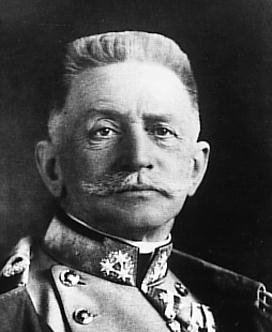
Conrad von Hötzendorf: War was the only means of politics

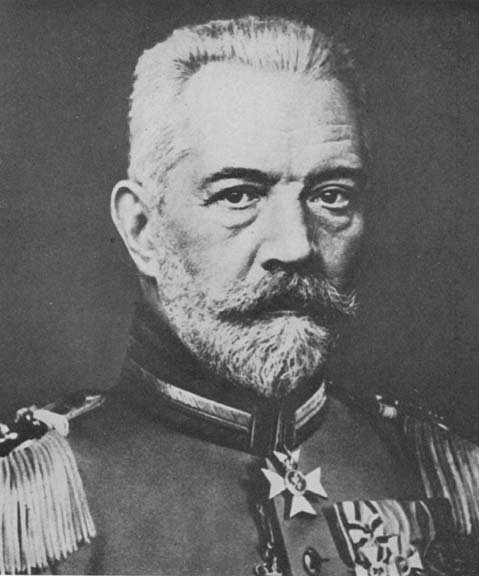
It was a series of decisions by those in the government of the Empire that brought Europe and the world to war, a war which we still feel the effects of today. In particular the Chief of the General Staff Conrad von Hötzendorf, the Foreign Minister Leopold Berchtold and the aging Emperor, Franz Joseph.

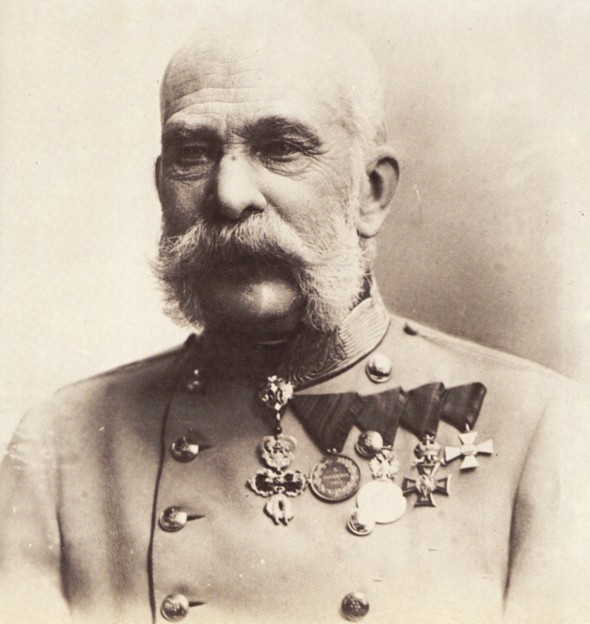
Emperor Franz Joseph: “If we must go under, we better go under decently”

Hötzendorf had been a continual advocate of war in every situation. He lobbied for war in 1907 against Italy and Serbia, in 1908 against Serbia, Russia and Italy, in 1909 against Serbia and Montenegro, in 1910 against Italy and the list increased in the years leading up to the war. He fervently believed that “the use of armed force alone could retard the centrifugal forces of nationalism in the ‘multinational empire’; war was the only means of politics.” The Emperor, Franz Joseph was of the same mindset by 1914 and in the days following the assassination of Franz Ferdinand he gave his approval to the actions of Hotzendorf and the diplomacy of Berchtold which doomed the Austro-Hungarian Empire and would destroy and remake Europe within a span of four years.

Theobald von Bethmann-Hollweg: The Blank Checque

The leadership of the Empire had decided on war within days of the assassination. Berchtold dispatched an emissary to Kaiser Wilhelm who decided in counsel with his Imperial Chancellor Theobald von Bethmann-Hollweg gave the Austrians a “blank cheque” of unconditional support for war against Serbia. Berlin was confident that “the Balkan crisis could be localized” and “advised Vienna to “proceed with all means at its disposal” and that Germany would support Austria-Hungary “come what may.” In doing so they willingly ignored the wise counsel of Otto Von Bismarck who considered the Balkans “not worth the life of a single Pomeranian Grenadier.

After they received German support the Austrians did everything that they could to ensure that war would occur. Their demands of Serbia were intentionally designed to be unacceptable to that country and they held key information from their German allies in the three weeks after they received the unconditional German support.

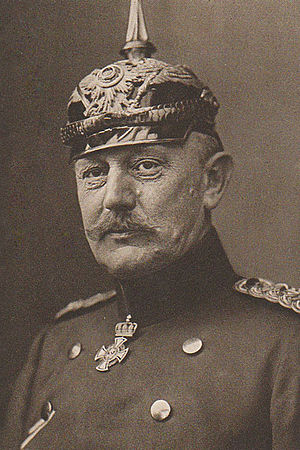
Helmuth Von Molkte: “no alternative but to fight a preventive war…” 

German militarists, particularly the Chief of the General Staff Helmuth Von Molkte the younger saw the coming conflict in racial and cultural terms. Von Molkte said that the coming war   would come “sooner or later” and be a war “primarily a struggle between Germans and Slavs” and compared Serbia to an “abscess.”  As the war cloud built Von Molkte told the Foreign Secretary von Jagrow that there was “no alternative but to fight a preventive war so as to beat the enemy while we could still emerge fairly well from the struggle” ignoring the advice of the Iron Chancellor Otto Von Bismarck who counseled “Preventive war is like committing suicide out of fear of death.” 

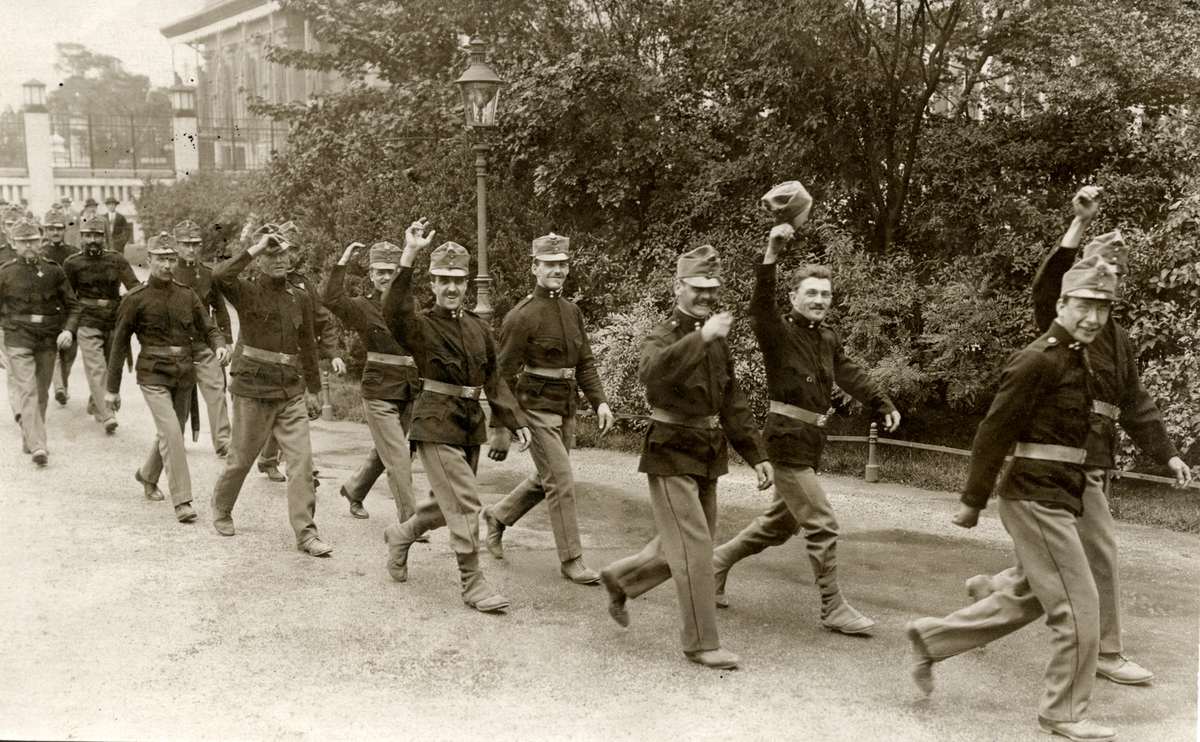
Austrian Reservists going to war

The Austrians felt that the threat from Serbia combined with internal political factors related to the Hungarian and other Slavic regions of the Empire, and the increasing influence of Russia and Germany in the Balkans was an existential threat. At the same time they were poorly prepared for war. Their military was large but poorly trained and equipped.  Their national infrastructure, industry and railroads were ill-prepared for the demands of war. Their German allies had not planned for war either and were critically short of the required stocks of ammunition needed for a general war in Europe.

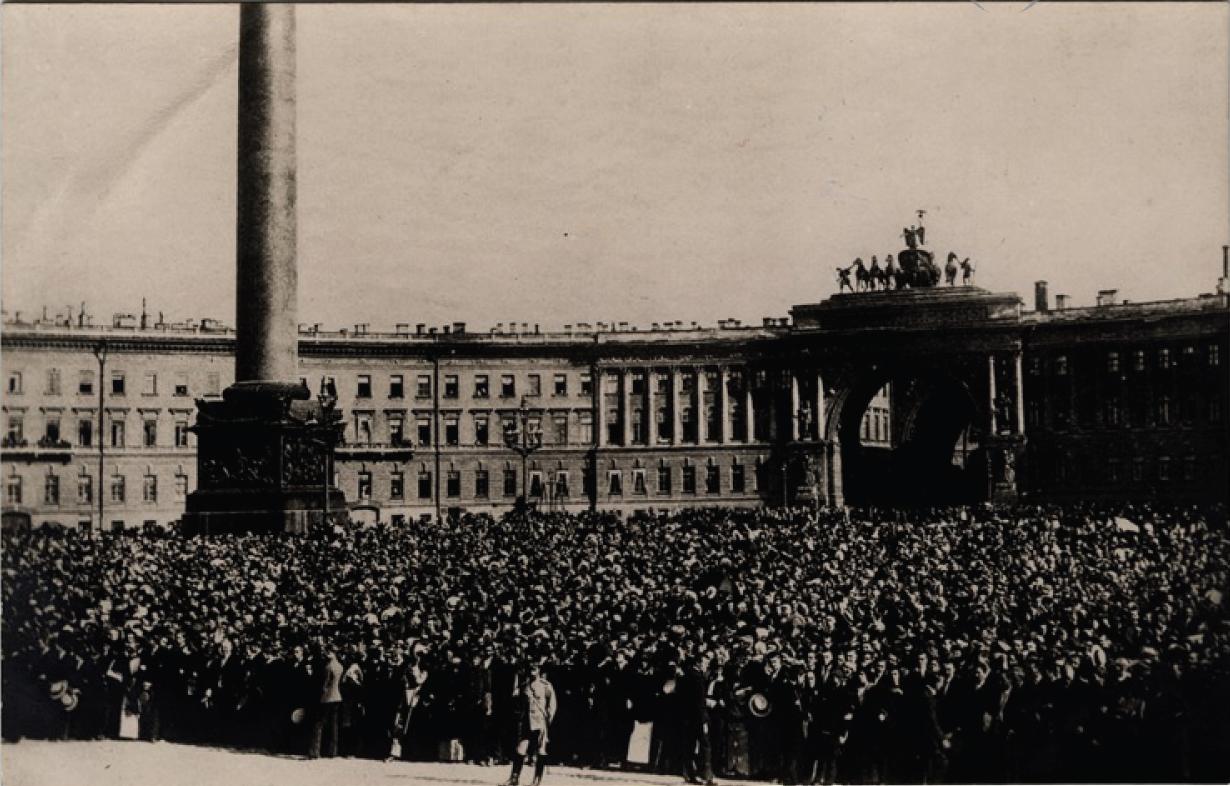
Cheering crowds in Petersburg

The Russians were heavily invested in the Balkans linked to other Slavic people by culture, language and religion. The French were bent on revenge against the Germans for the debacle of 1870 and had no stake in what happened in the Balkans. The British a few years prior to the war had told the Belgians not to expect support if they were invaded by Germany, but declared war to “protect Belgian neutrality.”

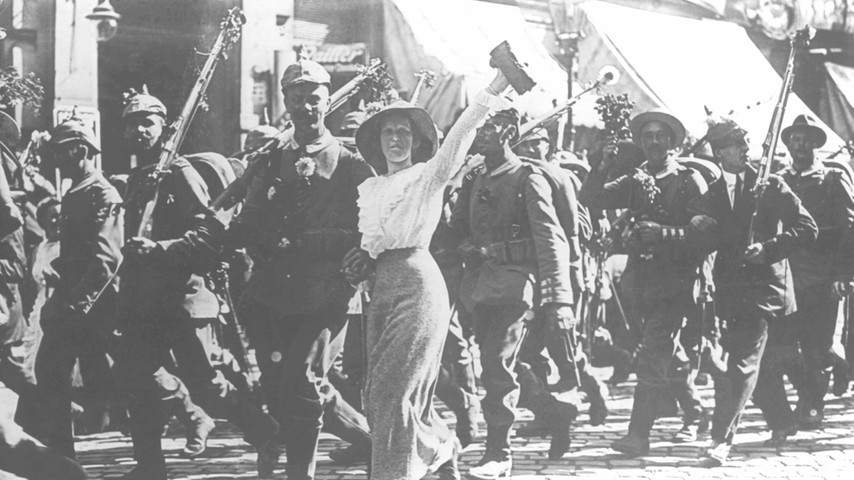
German wives and girlfriends walking alongside the Landser…

The Austrians thought that with German support that even if Russia intervened that the war could be limited to Serbia. They were wrong. Just as the Germans had given the Austrians a “blank cheque” the French, both officially and unofficially were giving the Russians their own blank cheque. French Ambassador Maurice Paleologue assured Russian Foreign Minister S.D. Sazonov of the “complete readiness of France to fulfill her obligations as an ally in case of necessity.

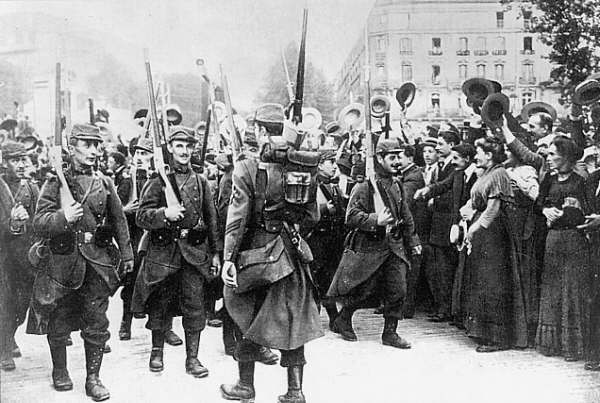
French Soldiers being cheered

Austria declared war on July 28th, Russia followed by a partial mobilization to support Serbia on the 29th. Kaiser Wilhelm attempted to avert war at the last minute but Czar Nicholas II wrote “An ignoble war has been declared on a weak country. The indignation of Russia, fully shared by me, is enormous. I foresee that very soon I shall be overwhelmed by pressure to which I am exposed and compelled to take measures which will lead to war.”  This was met with German mobilization on the 30th and the French on August 1st. Declarations of war were exchanged and on August 4th in response to Germany’s refusal to respect the neutrality of Belgium Great Britain declared war against Germany.

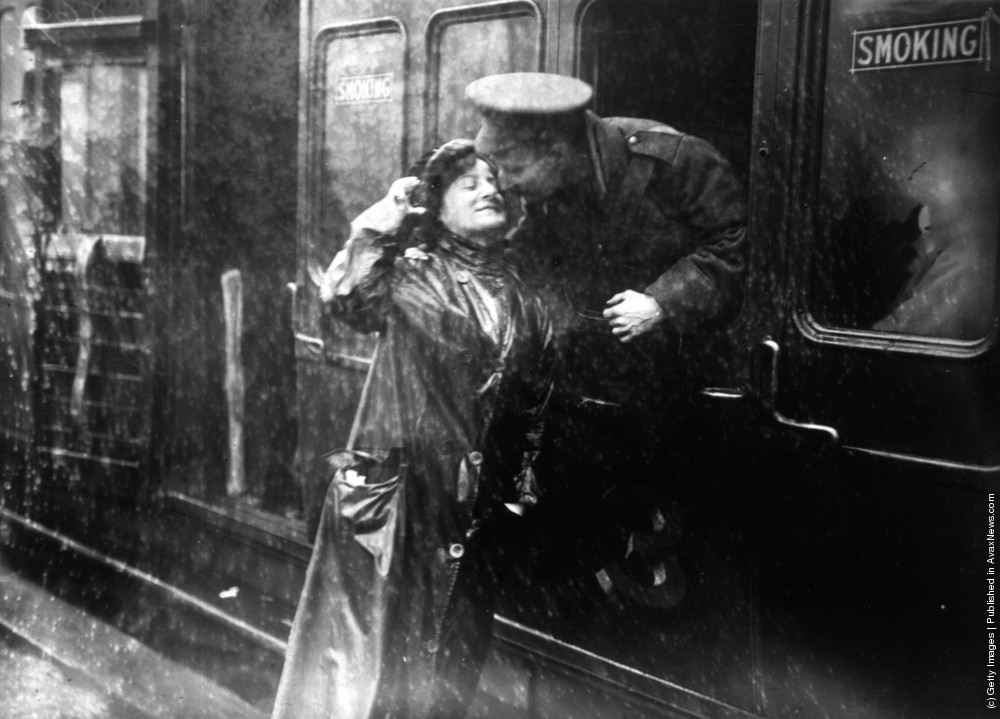
A final kiss from a British Soldier at Victoria Station

They were fateful days. Only the Austrians entered the war with any positive objectives, military or political goals. Every other power lurched into the war without clear objectives or end states. One writer noted that the war had “causes but no objectives.”

The world again finds itself perched at the edge of the abyss of war. There are people, smart and otherwise reasonable people who believe that they can wage “preventive wars” and rely on brute military force to solve nearly any problem. There are others that suggest that we should not criticize “allies” even when their decisions could be disastrous to them and the world, much as the Germans gave their Austrian brothers a “blank cheque.”  I wish that they would just look at the consequences before they commit nations and the world to more war that can only result in calamity and great suffering without benefit for anyone or any nation involved.

Peace

Padre Steve+
4 Comments

Filed under History, Military, national security, Political Commentary

War is a Racket: Remembering Major General Smedley Butler USMC and Why He Matters

What is the cost of war? what is the bill? Major General Smedley Butler wrote: “This bill renders a horrible accounting. Newly placed gravestones. Mangled bodies. Shattered minds. Broken hearts and homes. Economic instability. Depression and all of its attendant miseries. Back -breaking taxation for generations and generations. For a great many years as a soldier I had a suspicion that war was a racket; not only until I retired to civilian life did I fully realize it….”

With all the domestic political news and the apocalyptic talk and actions surrounding John Roberts the Supreme Court and Obamacare it is hard to believe that we are at war for over 10 years and are at war or now preparing for war all over the Middle East. Iran, Syria, Afghanistan, Yemen, Somalia, the Persian Gulf, Libya, Egypt, Pakistan, you name the place there is a real a present danger of US forces becoming involved in even more war.

Maybe it is just me but it doesn’t seem that anybody in Washington has a damned bit of sense. I saw the “tweet” of a Michigan Republican party leader asking if “armed revolt was now justified” because of the Supreme Court ruling on Obamacare. That makes my blood boil, we are at war and this idiot wants to have a real live civil war and he is not alone. The process is to win elections if you want to change laws not to threaten civil war or revolution when the cause that you are against and take to the Supreme Court gets upheld for whatever reason. Anyone with a half a grain of sense knows that if you take something to the Supreme Court that you need to ask yourself the “Dirty Harry” question: “Do you feel lucky? Well do you punk?” When you go to the Supreme Court you put your case in front of nine Justices and not the electorate. That goes for Liberals as well as Conservatives.

The simple act of working together in the legislative process has been sabotaged by both parties over the years.  This finally hit the culminating point when GOP pushed through the self inflicted wound of the Budget Control Act of 2012. It is this act which now threatens the military which is at war with “sequestration.”  This threatens deep cuts in the military beyond those already anticipated and planned for by DOD. The Republicans are now trying to change it and the Administration is refusing to budge on the issue. Again this didn’t need to happen but brinksmanship is the order of the day.

There are no statesmen left in Washington DC only shills of the Right and Left and their masters from Wall Street to K Street. The only people profiting from this are the war profiteers who even if the budget gets cut and they fail to deliver usable weapon systems on time or in budget will still get paid. The losers will be the military personnel who must fight the wars who will get tossed onto the street by those that claim that personnel costs are the problem. Of course those that make this point are almost always the same lobbyists that shill for the defense industries and the banks. But enough about them.

Right now over 100,000 American military personnel and tens of thousands of other Department of Defense, Federal law enforcement, intelligence, diplomatic, humanitarian workers as well as contractors are fighting a war in Afghanistan. Tens of thousands more (mostly contractors)  are helping to shore up the Iraqi government or are fighting wars by other names in Pakistan, Yemen, the Horn of Africa or are deployed to counter Iran or standing by to assist Turkey if it comes into conflict with Syria. Of course this does not take into account the instability in Egypt, Libya, Eastern and Central Africa that threatens even more war or the potential of turmoil in Europe should the Euro Crisis bring about more financial disaster or even revolution in countries that are our allies. By the way let’s not forget about the nutcase leaders of North Korea who could provoke war on that side of the world in a heartbeat.

But never mind this, let’s fight each other instead threaten insurrection when we don’t get our way. But wait, I digress…

Did you know that while Americans stand in harms way almost every real or potential enemy has been armed, subsidized or assisted by American corporations and paid for by American tax dollars.  We have armed much of the world with weapons that have already in Iraq and Afghanistan killed thousands of American military personnel. But those were small time weapons compared to what we have provided to Egypt, Pakistan, Saudi Arabia and yes even Israel. F-15, F-16 and F-18 fighter planes, Tomahawk cruise missiles and Harpoon Anti-Ship Missiles, M-1 Tanks, M113 Fighting vehicles, Patriot Air Defense systems, you name the weapons system the war profiteers will sell it and US taxpayers will pay for it. These are weapons that very easily could be used with great effect to attack American interests should leaders in any of those countries decide to use them against us. I only include Israel because in 1967 its forces viciously attacked the USS Liberty which was operating in the Eastern Mediterranean Sea as Israel launched its pre-emptive war against Egypt. Although all of these countries are “allies” we must remember that alliances are only as good as the interests and values that unite nations.

Our defense industries with the support of the government sell advanced weapons to nations that often are less than trustworthy allies, allies of convenience that have little love for the United States but welcome the weapons and training that we provide.  They often use them to suppress the aspirations of their own people and plant the cultivate the seeds of radicalism and revolution.  It is hard not to cringe when pro-democracy protestors are killed by totalitarian regimes whose police and military are armed to the teeth with American made weapons. When those totalitarian regimes fall as did that of the Shah of Iran in 1979 those weapons fall into the hands of people radicalized against us by our support of their former oppressors.

Certainly nobody seriously believes that the angry masses in the countries that we have armed to the teeth with the latest in American weaponry would not use that weaponry against us should they desire.  But wait…. our politicians, arms dealers, bankers and their political, religious and financial backers certainly wouldn’t put Americans in harms way? Perish the thought, but not so quickly. They have done so before and will do it again.

Smedley Butler is one of under two dozen American military personnel to win the Congressional Medal of Honor twice. He saw the dangers of Fascism as well as the danger of unlimited corporate and business power to profit by war. Butler was not only a  valiant Marine he was also a commander that in war and peace cared about those who served. He saw how American finance and banking interests helped drag us into the Fist World War, the promises broken by the government and the lives destroyed by war.

In his book War is a Racket Butler wrote eloquently about how the heads of corporations and their political supporters in both parties were the only benefactors of war. He wrote of the plight of the soldiers that served and returned wounded and often changed by war and he did not mince words in what he saw. He became an anti-war activist. He was a supporter of the Bonus Army, the veterans that “occupied” Washington DC during the last year of the Hoover Administration to get the bonuses promised for their service and were violently evicted by troops under the command of General Douglas MacArthur. If he was alive today I have no doubt that he would be an active supporter of the current “Occupy” movement and opponent of politicians, political activists, lobbyists and even preachers that advocate even more war.

Butler’s War is a Racket as well as other published works are a worthwhile read and should make the most rabid fan of war think twice. Butler’s patriotism and devotion to the United States and the Constitution is unquestioned. His warnings are strong, he was a prophet in regard to the dangers of the Military-Industrial Complex well before President Eisenhower coined the term as he left office. He detailed how corporations made obscene profits often by selling the US Military vast amounts of materials that it could not possibly use and which taxpayers bought while business leaders and bankers made their fortunes that they never had realized when the nation was at peace. He reminds us of the dangers that our founders recognized about entwining ourselves in other people’s wars. While his answers on how to end war are now utopian dreams because of advances in technology and the wars which now rage without end in sight they are nonetheless not a bad place to start a debate.

Butler writes movingly about the price paid by veterans years after the war, men broken in body, mind and spirit from their war service.

“But the soldier pays the biggest part of this bill.

If you don’t believe this, visit the American cemeteries on the battlefields abroad. Or visit  any of the veterans’ hospitals in the United States….I have visited eighteen government hospitals for veterans. In them are about 50,000 destroyed men- men who were the pick of the nation eighteen years ago. The very able chief surgeon at the government hospital in Milwaukee, where there are 3,800 of the living dead, told me that mortality among veterans is three times as great as among those who stayed home.” 

One would think that things would be better now but our veterans’ health care system is a train wreck and there is an epidemic of suicide among active duty troops and veterans. In 2005 after years of hand wringing the Bush administration grudgingly increased the number of Soldiers and Marines even while cutting Navy personnel and ships to the  minimum that they could despite ever increasing operational tempos. The Navy was reduced by over 50,000 sailors during the Bush years and now when the Navy is needed more it has been reduced to the point that 8-10 month deployments with short turn arounds will be normal.

Now the Obama administration is cutting back partly due to the withdraw from Iraq but mostly because of the economic crisis. However the bulk of these cuts are falling on the military personnel and not the war profiteers. The Army will be cut by nearly 80,000 in the coming years the Marines by 20,000 and that may increase if the budget takes the sequestration hit without any reduction in operational tempo. These Soldiers and Marines will enter a bleak job market where many employers give little value to military experience or training, which has resulted in a vastly higher unemployment rate for Iraq and Afghanistan veterans than the general population.

It wasn’t much different in Butler’s day. He writes:

“Boys with a normal viewpoint were taken out of the fields and offices and factories and classrooms and put into the ranks. They were remolded; they were made over; they were made to “about face”; to regard murder as the order of the day. They were put shoulder to shoulder and through mass psychology, they were entirely changed. We used them for a couple of years and trained them to think of nothing but killing and being killed.

The suddenly, we discharged them and told them to make another “about face”! This time they had to do their own readjusting, sans mass psychology, sans officers’ aid and advice, sans nation-wide propaganda. We didn’t need them anymore. So we scattered them about without any “three minute” or “Liberty Loan” speeches or parades.”

Butler recounted another visit to a different veterans’ hospital:

“In the government hospital at Marion, Indiana 1,800 of these boys are in pens! Five hundred of them in a barracks with steel bars and wires all around the outside of the buildings and on the porches. These have already been mentally destroyed. These boys don’t even look like human beings. Oh, the looks on their faces! Physically they are in good shape but mentally they are gone.” 

There are thousands and thousands of these cases and more and more are coming in all the time…

That’s a part of the bill. So much for the dead-they have paid their part of the war profits. So much for the mentally and physically wounded- they are paying now with thier share of the war profits. But others paid with the heartbreaks when they tore themselves away for their firesides and their families to don the uniform of Uncle Sam- on which a profit had been made….”

I could go on but I think that Butler says it quite well and with the passion of a Marine who was wounded on more than one occasion and won the Medal of Honor twice.

The only people that want war are those that profit from it and don’t have to pay the price paid by those that have to fight them and pay for them. When I see pictures of Mitt Romney protesting in support of the Vietnam war while getting deferment after deferment to avoid service it makes my head spin. My head spins even more when I hear him talking brazenly about committing US troops to even more war. For me the pictures of Romney’s pro-war protests as a college student avoiding war on educational and religious service deferments as millions of other Americans went to war are up there with the pictures of “Hanoi” Jane Fonda giving aid and comfort to those that were killing our troops.

Butler’s detractors and they are legion on the political right attempt to paint him as an isolationist or appeaser of Hitler. However they misunderstand him and his work. They don’t understand as Butler understood that there would not have been a Nazi Germany without Versailles and that was not possible without the American intervention on the side of Britain and France in 1917. That involvement was driven by the bankers and industrialists who had supplied raw materials, weapons and technical patents to the British and French, and had done so before with the Germans who believed that they would lose their investments if the Germans won the war. That would have happened in late 1917 or early 1918 had not the Americans declared war and entered the war on the side of the British and French.

Most of Butler’s current critics have never served a day in uniform much less a day in a combat zone. They make their livings and profits by the sacrifice of others and other than a few of his quotes have never read anything about him.

If you sense indignation in my voice it is real. I have lived the nightmare of PTSD for over 4 years. I see and work with the young men and women that have bravely endured the hardship of combat deployments and come home physically, mentally and spiritually wounded. To our credit we are trying to do better but for the war profiteers that will be too much. If military spending is cut you can bet that they will not take the hit that military personnel, their families and our veterans will take. They and their political benefactors will not allow it.

I am a military man through and through. I have spent nearly my whole life associated with the military as a dependent of a Navy Chief who served in Vietnam and a career of over 30 years divided between the Army and Navy. Some of my friends dads did not return from Vietnam, other friends and those who I have served with have paid with their lives in Iraq or Afghanistan while others suffer the continuing wounds of war.

This is personal for me and it is also motivated by my faith as a Christian. Butler chided the pro-war clergy propagandists of the Great War. He wrote:

“So vicious was this war propaganda that even God was brought into it. With few exceptions our clergymen joined in the clamor to kill, kill, kill. To kill Germans. God is on our side…it is his will that the Germans be killed.”

Such preaching is not much different from the right wing pro-war preachers who advocate killing Moslems simply because they are Moslems and that go out of their way to preach the value of “pre-emptive war” despite such wars being against the Christian understanding of the  “Just War” or international law against such war that we as Americans helped develop after World War Two at Nuremberg and to which we hold the leaders of what we call “rogue nations.”

I only wish that our leaders; political leaders of both parties, religious leaders, and even business leaders would see the folly of this course and their responsibility for the results.

Someone has to say it.

Peace

Padre Steve+
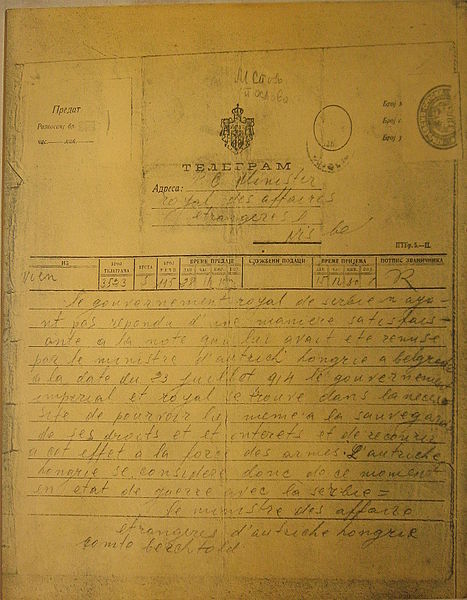
Note: All quotations from “War is a Racket” by Smedley Butler copyright 1935 and 2003 by the Butler family. Amazon Kindle edition. 

6 Comments

Filed under faith, History, iraq,afghanistan, Military, national security, News and current events, Political Commentary, PTSD, shipmates and veterans