
 Lili Marleen Statue in Munster Germany
Lili Marleen – Original version
Vor der Kaserne vor dem grossen Tor
Stand eine Laterne, und stebt noch davor,
So wolln wir uns da wiedersehn
Bei der Laterne wolln wir stehn,
Wie einst Lili Marleen, wie einst Lili Marleen.
Unsre beide Schatten sahn wie einer aus.
Dass wir so lieb uns hatten, das sah man gleich daraus
Un alle Leute solln es sehn,
Wenn wir bei der Laterne stehn,
Wie einst Lili Marleen, wie einst Lili Marleen.
Schon rief der Posten: Sie blasen Zapfenstreich
Es kann drei Tage kosten! Kam’rad, ich komm ja gleich.
Da sagten wir auf Wiedersehn.
Wie gerne wollt ich mit dir gehn,
Mit dir Lili Marleen, mit dir Lili Marleen.
Deine Schritte kennt sie, deinen zieren Gang
Alle Abend brennt sie, mich vergass sie lanp
Und sollte mir ein Leids geschehn,
Wer wird bei der Laterne stehn,
Mit dir Lili Marleen, mit dir Lili Marleen?
Aus dem stillen Raume, aus der Erde Grund
Hebt mich wie im Traume dein verliebter Mund.
Wenn sich die spaeten Nebel drehn,
Werd’ ich bei der Laterne stehn
Wie einst Lili Marleen, wie einst Lili Marleen
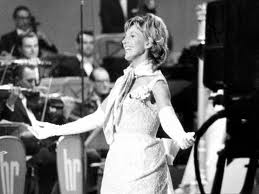 German Singer Lale Andersen recorded the song that touched the lives of Axis and Allied Soldiers alike
Lili Marleen Original Lale Andersen 1939
http://www.youtube.com/watch?v=vL0KniirXHM&feature=related
Lili Marlene- Marlene Dietrich German version
http://www.youtube.com/watch?v=W7J6OPurrtw&feature=fvwrel
Lili Marlene – English version
Underneath the lantern by the barrack gate,
Darling I remember the way you used to wait;
‘Twas there that you whispered tenderly,
That you lov’d me, you’d always be,
My Lilli of the lamplight,
My own Lilli Marlene.
Time would come for roll call time for us to part
Darling I’d carress you and press you to my heart.
And there ‘neath that far off lantern light
I’d hold you tight we’d kiss goodnight,
My Lillie of the lamplight,
My own Lilli Marlene.
Orders came for sailing somewhere over there,
All confined to barracks was more than I could bear;
I knew you were waiting in the street,
I heard your feet, but could not meet,
My Lillie of the lamplight,
My own Lilli Marlene.
Resting in a billet just behind the line
Even tho’ we’re parted your lips are close to mine,
You wait where that lantern softly gleams
Your sweet face seems to haunt my dreams,
My Lillie of the lamplight,
My own Lilli Marlene.
Lale Andersen English Version (1942)
http://www.youtube.com/watch?v=y0P_m7SZBvQ&feature=related
It is seldom in the history of war that something transcends hatred and touches hearts of soldiers of opposing sides. In the Second World War a song did just that. Sometimes called the Soldatenlieder it was written as a poem by a World War One soldier of the Imperial German Army named Hans Liep, a school teacher drafted into the Army. It was recorded in 1939 by Lale Anderson but was not liked by the Nazi Propaganda Minster Josef Goebbels. However it was liked by those in the military and it found its way into the programming of the German Military Radio Service which had taken over Radio Belgrade. A lieutenant working for the station picked up a copy of the recording in a Vienna record store and began to play it. Goebbels ordered it banned but reluctantly changed his mind in response to a barrage of letters sent to the station by German and other Axis soldiers across Europe. Field Marshal Erwin Rommel of the Afrika Korps had a soft spot for the song and requested that it be played nightly and from then on the song was played at 9:55 PM every night by Radio Belgrade.
 Field Marshal Erwin Rommel requested that Lili Marleen be played nightly
The song was not just popular among the Axis it was popular among Allied soldiers beginning with the Australians and New Zealanders serving with the British 8th Army in North Africa. One has to imagine his longing for his own “Dearest Lu” his wife in Germany. The popularity of the song spread to others including Americans. The British High command did not appreciate soldiers singing it in German and songwriter Tommy Conner wrote an English version which was recorded by Anne Shelton in 1944.
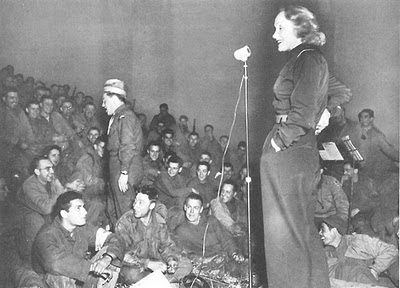 Marlene Dietrich performing in front of American Soldiers in World War II
Marlene Dietrich performed it often in USO shows for US Servicemen during the war. It has been reported translated and performed in 48 languages around the world. Her recordings of the song are still popular.
The never has been a war where military men, Soldiers, Sailors, Marines and Airmen who have left their loves behind have not dreamed of them. Lili Marlene expressed that dream perhaps more than any song in history.
Today soldiers from many countries serve away from their loved ones in combat or deployed far from home. I think that many have their Lili Marleen waiting for them and when they close their eyes can see that special person.
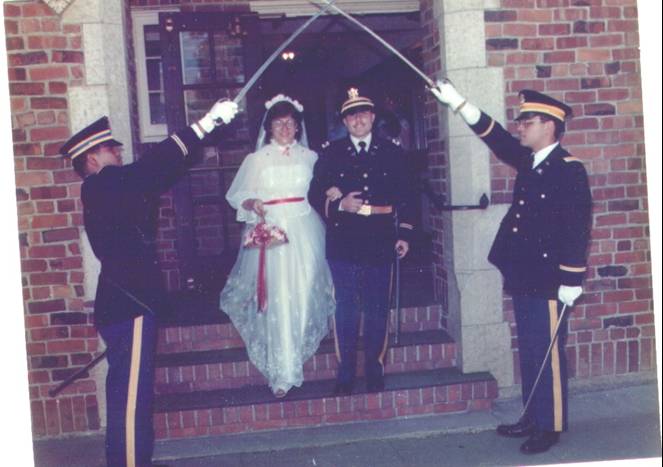 Me with my Bride Judy in 1983
Since I have served away from my wife many times for longer than I can count in the past 27 years I can relate to the feelings expressed in this song for I still remember the first time that served away from her when three weeks after we were married I departed for active duty as a new Army Second Lieutenant back in 1983. Years later in Iraq I still could see my young bride. Sometimes our loves never change.
Peace
Padre Steve+



A wonderful post about an enduring song. Thank you for the history, especially on the Allied side – I knew of the English version, but not how it came about. Stay warm!
Padre Steve:
Remember this?
Kurt Jurgens, “The Enemy Below” (U Boat commander to his exec officer):
“Sing, Heini!”
Also starred Robert Mitchem as the USN commander dropping depth charges on the German sub while the crew sang along with what I am assuming was this very recording of Lili Marlene. A dramatic film moment I have never forgotten.
Your recent posts have sent me on quite an emotional roller coaster ride. We have a lot in common. I look forward to reading and discussing more. I’m sure glad I found you!
Bill
Bill
Thank you for your kind comments. I love The Enemy Below great film. I know well the emotional roller coaster.
Blessings
Steve+
Bill- I assume you’ve seen “Das Boot”? If not, you need to – it is an outstanding movie. If you have a choice, watch it with subtitles – the English dub has a fair number of (minor) mis-translations.
By the way, the song sung in “The Enemy Below” is actually an 18th century military march called “Der Dessauer Marsch”, it’s also known by the first line of lyrics as “So leben wir” (“That’s how we live”). (Thanks, Wikipedia, I didn’t have my DVD box handy!) It was very popular in the First World War, and though not an “official” song, was accepted by the Nazi regime due to its’ military background. (Useless information – my specialty! 🙂 )
John, I stand corrected. Thank you (he says with egg on his face)! lol! Actually, didn’t Marlene Dietrich sing it in a sixties or seventies era flick about the Nuremberg Trials starring among others, Burt Lancaster?
Yes, I saw “Das Boot”, have the DVD with subtitles. Love to watch it without the subtitles once in awhile just to enjoy the reality of it.
Check Barnes and Noble for “The Adventures of the U-202,” by Baron Spiegel Von Und Zu Peclelsheim. A true adventure from the log of an actual U-Boat commander on patrol.
John, as you can tell I’m not a lettered historian, just an average guy with a lust for military history. Sometimes when I think I know something good enough to wear it on my chest, I get in trouble. Your “useless information” turned out to be quite useful. Thank you, Sir.
Bill
Bill, knowing me means never having to say you’re sorry! I don’t have any letters after my name, unless they’re PITA (pain in the … anterior). It’s just that, having studied military stuff for over 40 years, I just got a LOT more mileage, thus allowing me more opportunities to get lucky! 🙂 And I’ll have to trust you on the Marlene Dietrich part – my movies history before the 70s is rather spotty at best.
Can I ask you one favour? Are you either 1) from the Midwest, around Chicago, or 2) a published author? Your name is VERY familiar, but I can’t place you – wondering if I ran across you during my time running sci-fi conventions, doing WW2 re-enacting, or if it was something I read. (Or I may just be hallucinating – I do that a lot!)
If you ever need any kind of military information, I’ve collected a lot between my ears, a HUGE number of bookmarks, and some friends out on the Net who are more obsessive historians than I. (Yeah, I find that hard to believe too, but it’s true.) I’m stuck at home in the wilds of SE Ohio (I emphasise wilds), so if you need me, you can whistle me up through the good Padre. I look forward to our next encounter! 🙂
Can you please tell me the words to the song “That’s how we live” from the film – The enemy below? Also … is it possible to get a piano arrangement for this song? – Thank you.
David
A link to the lyrics can be found here: http://www.uboat.net/forums/read.php?4,32339,32394
It should lead you to more information.
Blessings
Padre Steve+