Monthly Archives: February 2011

Predators of the High Seas: The Type IX U-Boats

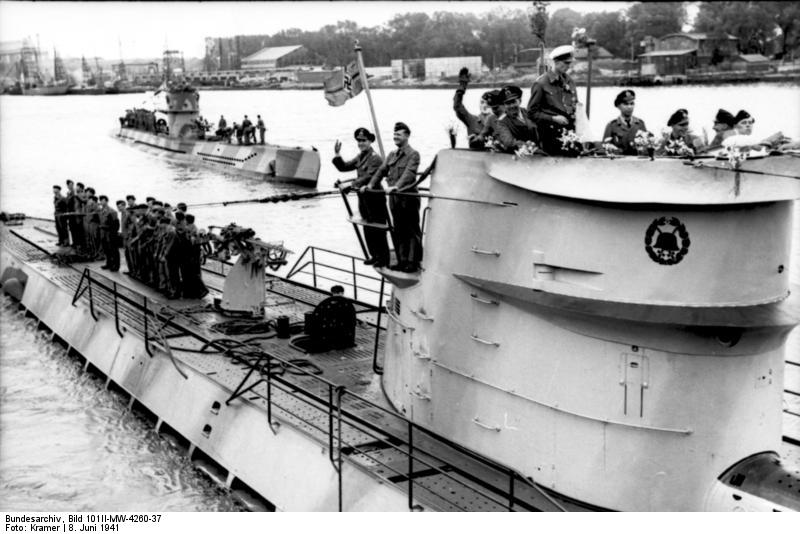
U-123 returning from patrol

As the Kriegsmarine began its expansion in the mid-1930s the new U-Boat arm developed several types of submarines. The Type IX class was designed in 1935-36 as a long range attack boat and was larger had a greater range and were more heavily armed than the more numerous Type VII boats.  The Kreigsmarine designers envisioned a submarine capable of operating far from German bases for extended periods of time.  The design of these boats was derived from the two boat Type 1 class and incorporated lessons learned from that class.  283 boats of the type were constructed between 1937 and 1944 and the Kriegsmarine continuously sought to improve the type which resulted in five distinct models within the class.

Type IXA The first group referred to as the Type IXA or simply the Type IX was comprised of 8 boats built by AG Weser of Bremen.  Ordered in 1936 the group was part of the Kriegsmarine’s Plan Z rearmament plan which began when the Nazi Government announced that it would no longer abide by the Treaty of Versailles.  The initial 8 boats had a 1032 ton standard displacement were 251 feet long and were armed with six 21” torpedo tubes with 22 torpedoes.  They had a 105mm deck gun with 110 rounds as well as a 37mm and 20mm anti-aircraft gun.  They were the first German submarines equipped with a double hull which increased survivability and seaworthiness.  They were powered on the surface by two MAN M9V40/46 supercharged 9-cylinder diesel engines that produced 4,400 shp as well as two SSW GU345/34 double-acting electric motors for underwater operations. As in all diesel-electric boats the diesels were used to recharge the batteries for the electric motors while the boat was operating on the surface. They had a maximum speed of 18.2 knots on the surface and a range of 22,354 miles at 10 knots. Underwater they had a maximum speed of 7.7 knots and range of 166 miles at 4 knots.  The official maximum diving depth was 230 meters or 750 feet.  Of the 8 boats of this type 6 were sunk during combat operations and two scuttled at the end of the war by their crews to prevent their capture by the Allies. The most successful of the Type IXA boats was the U-37 was the most successful boat of the type sinking 53 merchant ships for a total of 200,124 tons as well as two warships, the Sloop HMS Penzance and French Submarine Q-182.
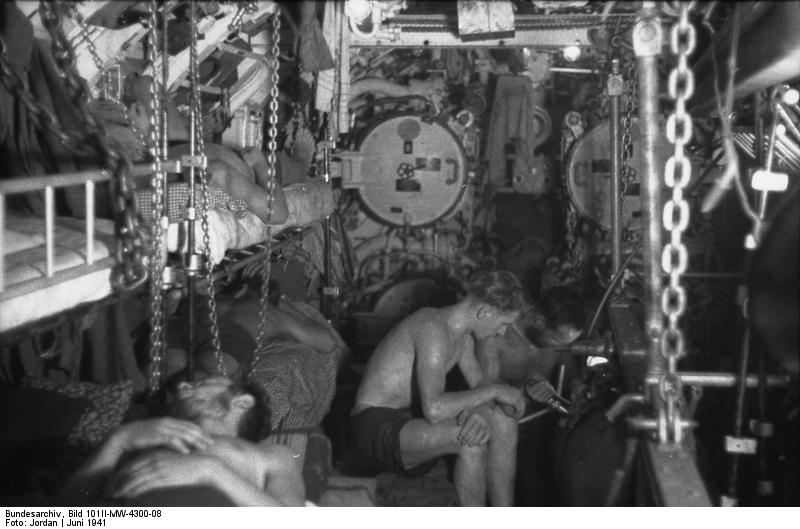
Crew members  of U-107 in Torpedo Room

Type IXB The next group was the IXB of which 14 boats were built by AG Weser Bremen. This was the most successful class of U-boats, or for that matter any class of submarines based on tonnage sunk per boat during the Second World War. Each of these ships sank over 100,000 tons of Allied shipping.  They were slightly larger than the IXA boats and had a significantly longer operational range of 24,600 miles on the surface at 10 knots. The U-107 of this class had the most successful war patrol of any U-Boat in the war sinking nearly 100,000 tons of Allied shipping off Freetown Sierra Leone while U-103 sank over 237,000 tons of Allied shipping during 11 war patrols over the course of 4 years. These boats were involved in Operation Drumbeat off the coast of the United States in early 1942.
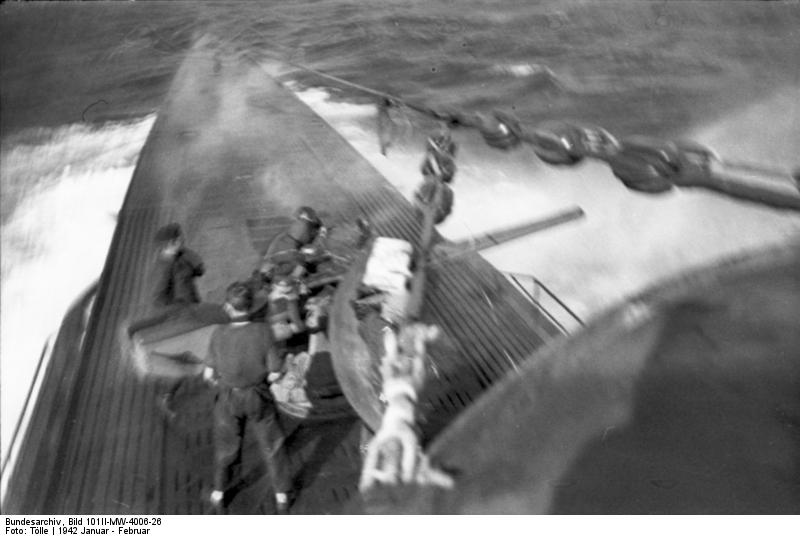
U-123 Gun Crew

Type IXC The Type IXC was a further improvement of the type with additional fuel capacity and longer range. They displaced 1120 tons and 54 of the boats were commissioned of which 19 were equipped as minelayers with a capacity of 44 TMA or 66 TMB mines. The boats were built by AG Weser Bremen, Seebeckwerft Bremen and Deutsche Werft Hamburg.  The U-505 of this type is the only surviving Type IX and was captured by a boarding team from the Escort Carrier USS Guadalcanal on June 4th 1944. Her capture was kept secret from the Germans and her crew kept as POWs in a separate POW Camp. The story of the crew and their encounter with the game of baseball is recorded in Gary Moore’s book, Playing with the Enemy: A Baseball Prodigy, a World at War, and a Field of Broken Dreams. The book is being turned into a movie entitled Playing with the Enemy which is scheduled to be released in 2011. She is preserved at the Museum of Science and Industry in Chicago.
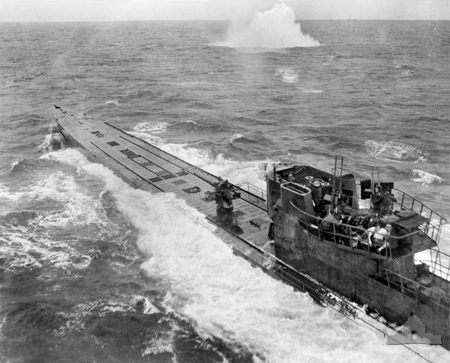
U-848 under attack by USN Aircraft

Type IXC/40 This was a further refinement of the IXC with slightly greater range and surface speed. It was the most numerous type of the class built with 87 being built by AG Weser Bremen, Seebeckwerft Bremen and Deutsche Werft Hamburg.  The remains of the U-534 of the class are displayed at Woodside Ferry Terminal in Birkenhead England after being raised from the North Sea in 1986.

Type IXD The final type in the Type IX Series was the Type IXD.  This was a significantly larger boat than the others in the class 287 feet long with a standard displacement of 1610 tons. They were unique in that they had two sets of diesel engines, one for cruising and the other for high speed runs and battery recharge. There were three variants within the type, the IXD1 which were all converted to transport use due to problems with their engines, the most numerous variant the IXD2 and the IXD42 which had greater horsepower.  Thirty Type IXs were commissioned with a further six Type IXD42s which were ordered with only one commissioned by the end of the war.
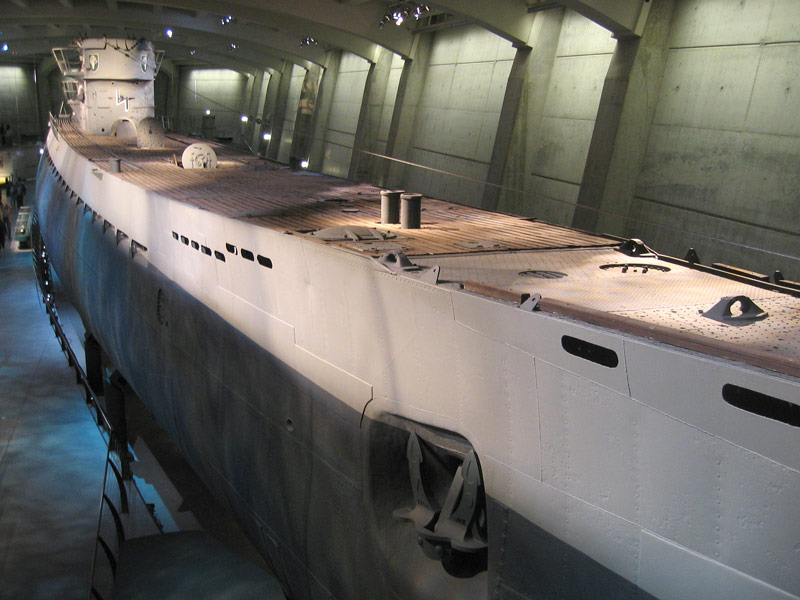
U-505 at the Museum of Science and Industry in 2005 (Jerry Atherton)

During the war surviving boats would receive increased anti-aircraft armament, the Schnorkel device which allowed them to operate on diesel power while submerged as well as better electronics and detection devices. Most of the boats which survived the war were scuttled by the Allies in Operation Deadlight.  The U-511 was sold to Japan in 1943 and U-862 taken over by the Japanese after the German Surrender in May 1945. Both survived the war and were scuttled by the Allies. U-1231 was taken over by the Soviet Navy and served as the B-26 after the war.

The sailors of these U-Boats like all submarine sailors endured many hardships and during the war approximately 75% of the 40,000 U-Boat sailors never returned from patrol, forever interred in the deep with their proud boats.
1 Comment

Filed under History, Military, Navy Ships, world war two in europe

A Lack of Wisdom in a Sea of Facts

Dietrich Bonhoeffer

“To understand reality is not the same as to know about outward events. It is to perceive the essential nature of things. The best-informed man is not necessarily the wisest. Indeed there is a danger that precisely in the multiplicity of his knowledge he will lose sight of what is essential. But on the other hand, knowledge of an apparently trivial detail quite often makes it possible to see into the depths of things. And so the wise man will seek to acquire the best possible knowledge about events, but always without becoming dependent upon this knowledge. To recognize the significant in the factual is wisdom.” — Dietrich Bonhoeffer

Cyberspace and the airwaves in the United States are awash with “facts” about the current crisis that seems to have enveloped the world.  They are also awash in those that in an almost Gnostic manner act as if they or a group that they are part of have discovered the key to understanding the “facts” that surround the crisis. The pseudo-Gnostic “experts” be they pundits, preachers or politicians, the unholy Trinity of the information age come in all political, religious and philosophic persuasions and are entrenched in every aspect of life in a more pervasive and invasive manner than in any previous generation.

The sheer mass of information now at the fingertips of anyone who has a computer or smart phone has made everyone an expert in their own mind. However the simple knowledge of facts or even some level of understanding of them does not necessarily mean that such opinion, even that of the most popular of the unholy Trinity of pundits, preachers and politicians qualifies as wisdom.  In fact much of the so called analysis and presentation of the “facts” regardless of their political, social or religious orientation actually occurs in liberal or conservative echo chambers where the “facts” are crafted into sound bites designed to stir up and even enrage supporters in order to gain or maintain power. However the sound bites which are allegedly “factual” are beaten into us in some cases by men who ask us to give them “three hours a day every day” do not necessarily mean that those that spout them are wise, be they popular pundits, persuasive preachers or powerful politicians.

Now I know that this may offend those that bow at the altar of these personalities, but knowledge as important as it is does not equal wisdom even it comes from people with good ratings, great attendance or high poll numbers. The problem as Bonhoeffer put it so well is not that facts are not important but rather the significance of the facts to the time, place and situation.   We have become dependent men and women who make their living packaging the truth in such a way that it looks like they alone of the key to get past the Archons that ensnare us and keep us from understanding the truth.

The scary part is that much of the pervasive distrust and hatred that comes from all sides in the poisoned political pond of the American body politic is not due to an absence of information or lack of facts, but rather the intentional perversion of them for partisan gain by people that should know better.  As a Christian that which scares me most is when I see fellow Christians on the cutting edge of such actions even using the Christian faith and Scriptures to justify themselves. I think it is because that we have lost our way instead of being consumed by the love of God we have been consumed by the need to be in control, or be at the table of those in power.  We have allowed others to define our faith in such a way that it is hardly recognizable as anything Christian and that applies to all parties.

I have given up on having any answer to the madness that has overtaken the United States of America except to look back at history.  I think that Bonhoeffer had it right. He saw the evil of such unbridled passions in Germany in the 1930s and 1940s.  Germany was deeply divided and in political, social and economic crisis the same as we are in now.

I pray that we will not head down that path.

As Bonhoeffer said:

“Unless we have the courage to fight for a revival of wholesome reserve between man and man, we shall perish in an anarchy of human values… . Socially it means the renunciation of all place-hunting, a break with the cult of the “star,” an open eye both upwards and downwards, especially in the choice of one’s more intimate friends, and pleasure in private life as well as courage to enter public life. Culturally it means a return from the newspaper and the radio to the book, from feverish activity to unhurried leisure, from dispersion to concentration, from sensationalism to reflection, from virtuosity to art, from snobbery to modesty, from extravagance to moderation.”

I pray and hope against hope that we will find a way to step back from the Abyss.

Peace

Padre Steve+

5 Comments

Filed under christian life, philosophy, Political Commentary, Religion

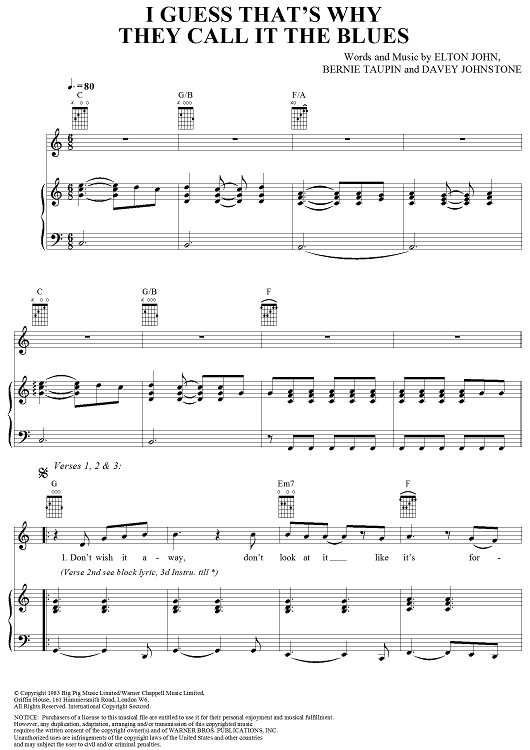
I Guess that’s Why they call it the Blues: Padre Steve’s Critique of Valentine’s Day

The Original Elton John Music Video of “I Guess that’s Why they Call it the Blues”

http://www.youtube.com/watch?v=h6KYAVn8ons

Valentine’s Day can be a difficult holiday for those that are alone. After all, Valentine’s Day is marketed as a day to celebrate romance, love and togetherness. However there are a lot of people alone, in my case it is my chosen vocation of the military that has necessitated numerous absences from my longsuffering wife over the past 29 plus years. I have lost track of just how many Valentine’s Day times with Judy that I have missed over the years and I know plenty of other military men and women that can all testify to this and say “Amen.” In fact I remember seeing the video of Elton John’s hit I Guess that’s Why they Call it the Blues on my first “Post marriage” military separation from Judy immediately after we were married in 1983. The song has always had a fond place in my otherwise crusty heart and reminds me that even I have a little romantic sentiment.

However as much as the military is part of my life it is a very small percentage of the population of the United States. That being said there are a lot of other lonely people on Valentine’s Day. There are a lot of single people, divorced people and others who for a myriad of reasons are alone this Valentine’s Day and for some the loneliness is almost unbearable.  For them it is a painful day that reminds them of just how alone they are or that they feel they are.

Let’s face it. The way Valentine’s Day is marketed the single, the divorced or those who struggle in painful or even abusive relationships are really left out. It is almost as if they are second class citizens or even non-entities. It’s like there is almost a stigma about being single or alone on Valentine’s Day. The hard thing for many people in this situation is that they are often smart, attractive and successful but still alone. Then there are those that are socially awkward or incredibly shy for whom the fear of relationships keeps them from entering into romance. For all of these people the day is difficult and something that they would prefer to just get past. Some will find ways to hang out with others in their situation but when they go home it will be to an empty bed, unless they have a dog.

As I have thought about this beginning the day after Christmas when the first Valentine’s Day candy and cards went on the shelves. Ever since I have been bombarded by commercials on television, radio and the internet and e-mails from online flower distributers, candy makers and specialty marketers advertising what I need to do to make this a holiday special for the one that I love. Now I couldn’t be with my bride this year but I ignored all the hype and surprised her with something that she asked for which cost very little and it made her happy. It is very seldom that I get Valentine’s Day, birthdays or anniversaries right. I am about as romantic as the German Pocket Battleship Graf Spee or a Panzer IV Tank, so when I in spite of myself actually do something that makes Judy’s day a bit brighter I am pleased because I cannot count the number of such occasions that I have messed up.

We’re apart this year but I will get some leave in conjunction with the upcoming President’s Day holiday and I think that will be good just to spend time with her.  Tonight I will go have dinner and a beer or two with another Chaplain, a Catholic Priest who I served with in Iraq.  It is good for us to get together in our line of work, when you are like my friend celibate or like me a geographic celibate there are not a lot of other people that you can hang out with.  Most of our colleagues are married and with their wives if they are not deployed and since a good number don’t drink you can’t exactly show up on their doorstep with a six-pack of Sam Adams (Patriot Brewer and Friend) a bucket of Buffalo wings and some action flick or guy kind of comedy DVD, aka no Chick Flicks or Christian romance movies.

So I am looking forward to tonight with my friend as we share a meal together at a local watering hole and an extended weekend with my bride, the love of my life.

So to all, those together, those apart and those alone I wish you the best.


1 Comment

Filed under marriage and relationships

Spring Training and the Integration of the Major Leagues

Jackie Robinson

In April 1947 Branch Rickey of the Brooklyn Dodgers had one African-American ballplayer at the Dodgers’ Spring Training site in Daytona Beach Florida. The Dodgers had been coming to Florida for years but had moved from Jacksonville to Daytona Beach in 1947 after Jacksonville had refused to alter its segregation laws to allow an exhibition game between the Dodgers International League affiliate the Montreal Royals.  Dodgers’ Club President and General Manager Branch Rickey had signed Jackie Robinson to a minor league contract with the Royals.  When Rickey called up Robinson 6 days prior to the 1947 season Robinson broke the color barrier for the Dodgers and Major League Baseball.  However it would take another 12 years before all Major League teams had a black player on their roster.

It is hard to imagine now that even after Jackie Robinson had broken the color barrier that other teams did not immediately sign black players. However Rickey and Robinson broke the color barrier a year before Harry Truman had integrated the Armed Forces and seven years before the Supreme Court ruled the segregation of public schools illegal.

Larry Doby

The Cleveland Indians under the legendary owner Bill Veeck were not far behind the Dodgers signing Larry Doby on July 5th 1947.  Doby would go on to the Hall of Fame and was a key player on the 1948 Indian team which won the 1948 World Series. The St. Louis Browns signed Third Baseman Hank Thompson 12 days later. Robinson and Doby would be joined by others in 1948 including Roy Campenella and Satchel Paige.

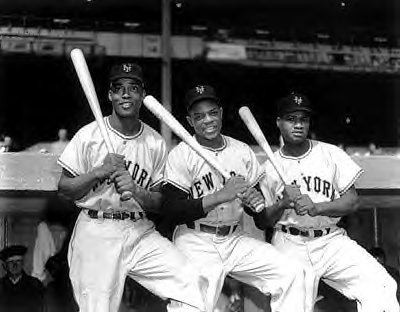
Irvin,  Mays and Thompson

It was not until 1949 when the New York Giants became the next team to integrate bringing up Monte Irvin and Hank Thompson who they had acquired from the Browns.  In 1951 they would be joined by rookie Willie Mays to become the first all African-American outfield in the Major Leagues. Both Mays and Irvin would enter the Hall of Fame and both are still a key part of the Giants’ story and despite their age have continued to be active in with the Giants and Major League Baseball.

The Boston Braves were the next to desegregate calling up Samuel “the Jet” Jethroe to play Center Field. Jethroe was named the National League Rookie of the Year in 1950.

In 1951 the Chicago White Sox signed Cuban born Minnie Minoso who had played for Cleveland in 1949 and 1951 before signing with the White Sox. Minoso would be elected to 9 All-Star teams and win 3 Golden Gloves.

Ernie Banks

The Chicago Cubs and Philadelphia Athletics integrated at the end of the 1953 season. The Cubs signed Shortstop Ernie Banks who would go on to be a 14 time All-Star, 2 time National League MVP and be elected to the Hall of Fame in 1977 on the first ballot. The Athletics called up pitcher Bob Trice from their Ottawa Farm team where he had won 21 games. Trice only pitched in 27 Major League games over the course of three seasons with the Athletics.

Four teams integrated in 1954. The Pittsburgh Pirates acquired Second Baseman Curt Roberts from Denver of the Western League as part of a minor league deal. He would play 171 games in the Majors.  He was sent to the Columbus Jets of the International League in 1956 and though he played in both the Athletics and Yankees farm systems but never again reached the Majors. The St. Louis Cardinals who had threatened to not play against the Dodgers and Jackie Robinson in 1947 traded for First Baseman Tom Alston of the Pacific Coast League San Diego Padres. Alston would only play in 91 Major League games with his career hindered by depression and anxiety.  The Cincinnati Reds brought up Puerto Rican born First Baseman Nino Escalera and Third Baseman Chuck Harmon who had played in the Negro Leagues and had been a Professional Basketball player in the American Basketball League. Harmon who was almost 30 when called up played just 4 years in the Majors. Both he and Escalera would go on to be Major League scouts, Escalera is considered one of the best First Baseman from Puerto Rico and was elected to the Puerto Rican Hall of Fame. Harmon’s first game was recognized by the Reds in 2004 and a plaque hangs in his honor. The Washington Senators called up Cuban born Center Fielder Carlos Paula from their Charlotte Hornets’ farm team in September 1954.  He played through the 1956 season with the Senators and his contract was sold to the Sacramento Salons of the Pacific Coast League. He hit .271 in 157 plate appearances with 9 home runs and 60 RBIs. He died at the age of 55 in Miami.

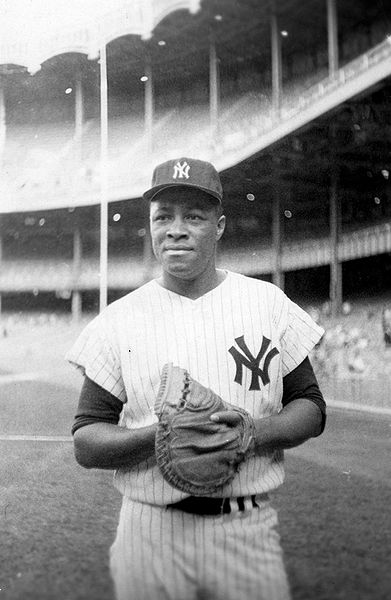
Elston Howard

In April 1955 the New York Yankees finally integrated 8 years after the Dodgers and 6 years after the Giants. They signed Catcher/Left Fielder Elston Howard from their International League affiliate where he had been the League MVP in 1954. Howard would play 13 years in the Majors with the Yankees and later the Red Sox retiring in 1968. He would be a 12-time All Star and 6-time World Series Champion as a player and later as a coach for the Yankees. He died of heart disease in 1980.  His number #32 was retired by the Yankees in 1984.

The Philadelphia Phillies purchased the contract of Shortstop John Kennedy from the Kansas City Monarchs of the Negro League at the end of the 1956 season. Kennedy played in just 5 games in April and May of 1957.

In 1958 the Detroit Tigers obtained Dominican born Utility Player Ozzie Virgil Sr. who had played with the Giants in 1955 and 1956. Virgil would play 9 seasons in the Majors with the Giants, Tigers, Athletics and Pirates and retire from the Giants in 1969. He later coached for 19 years in the Majors with the Giants, Expos, Padres and Mariners.

The last team to integrate was the Boston Red Sox who signed Infielder Pumpsie Green. Green made his debut on 21 July 1959 during his three years with the Red Sox was primarily used as a pinch runner. He played his final season with the New York Mets in 1963. He was honored by the Red Sox in 2009 on the 50th anniversary of breaking the Red Sox color barrier.

It took 12 years for all the teams of the Major Leagues to integrate, part of the long struggle of African Americans to achieve equality not just in baseball but in all areas of public life.  These men, few in number paved the way for African Americans in baseball and were part of the inspiration of the Civil Rights Movement itself.  They should be remembered by baseball fans everywhere.

Peace

Padre Steve+

3 Comments

Filed under Baseball

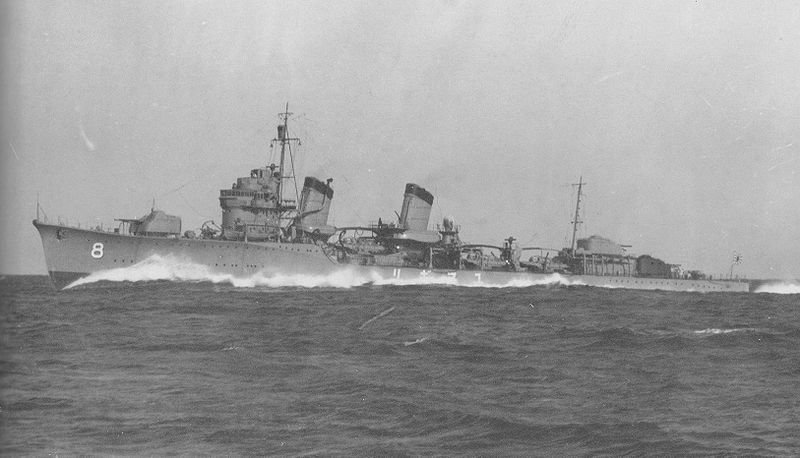
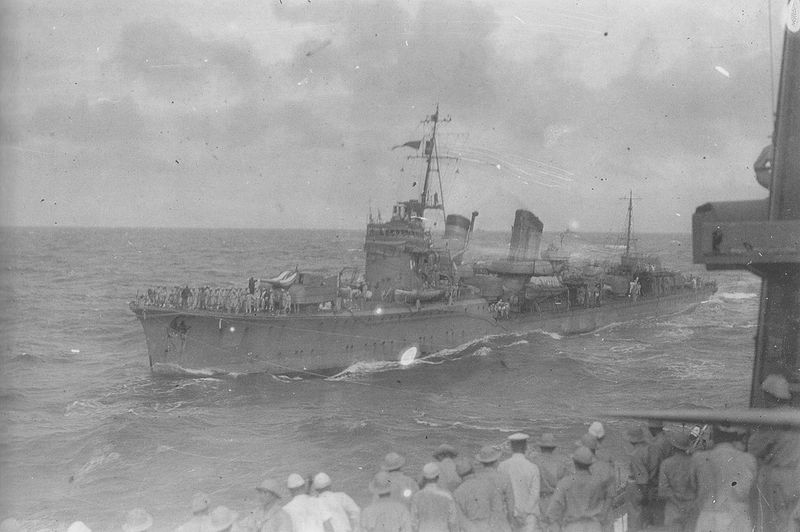
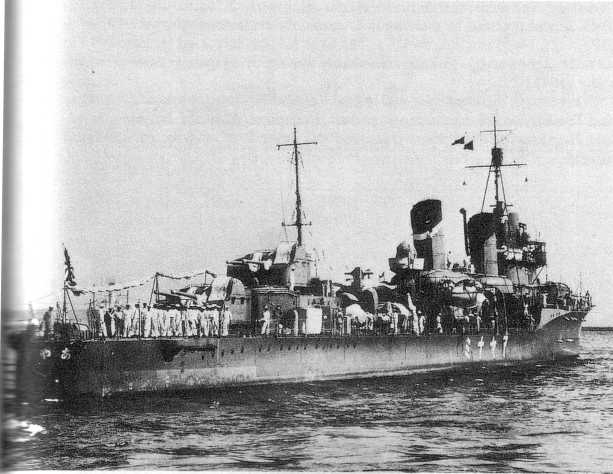
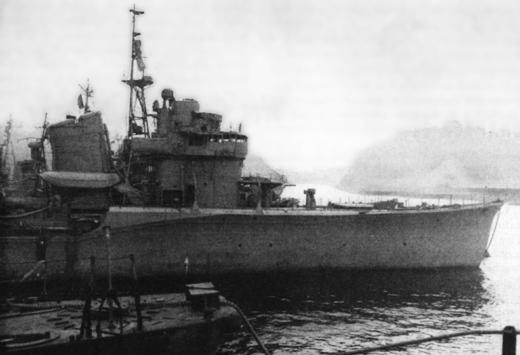
The First Modern Destroyers: The Imperial Japanese Navy Fubuki Class

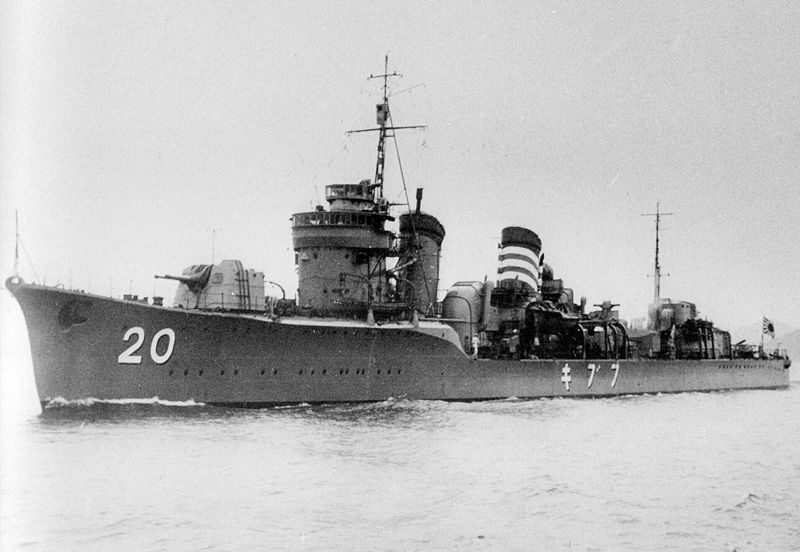
IJNS Fubuki

The Imperial Japanese Navy set the standard for destroyer construction in the 1920. While the United States Navy and British Royal Navy were fully stocked with their First World War design destroyers the Imperial Navy’s General Staff issued a requirement for a class of large destroyers which would complement the new classes of modern cruisers being built for the navy. The requirement called for a 2000 ton ship capable of 39 knots with a 4000 mile range at 14 knots that could carry a large number of torpedoes and a heavy gun armament. The program was designed to give the numerically inferior Imperial Navy a qualitative superiority against any opponent.

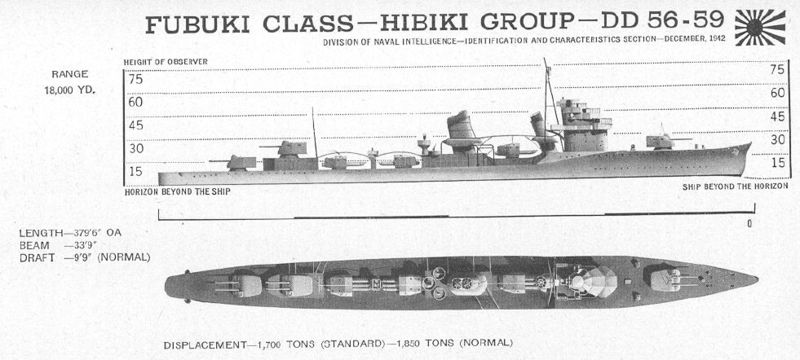
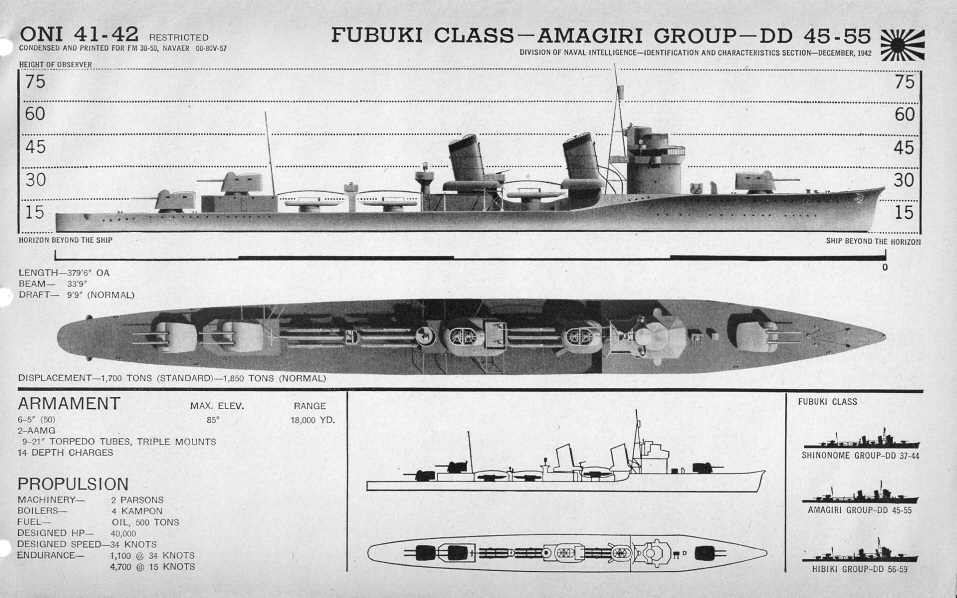
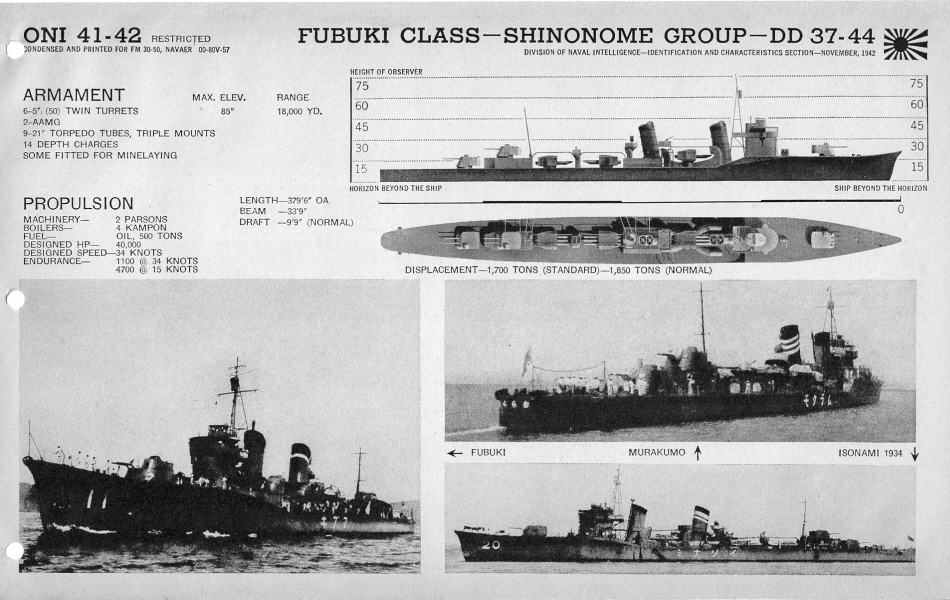
WWII Office of Naval Intelligence images for Fubuki Class variants

The 24 ship Fubuki Class was such a quantum leap over other contemporary destroyers that the Imperial Navy referred to them as the Special Type. Their large size, heavy armament and high speed made them equal to many of the light cruisers of the time. The design was modified to carry more guns and torpedoes on an increased displacement and the result was a 388 foot long 1750 ton ship armed with six 5” 50 caliber guns in weather proof and splinter proof mounts.  On the initial 10 ships of the class the guns could only be elevated 40 degrees which made them less than effective as anti-aircraft guns but in the succeeding two groups of ships the mounts were an improved type which allowed them to elevate each gun separately to 75 degrees.  The ammunition magazines were below the gun mounts and ammunition was passed to the guns by hoists.  This gave them a decided edge in rate of fire over other destroyers which had open or partially shield mounts dependant on ammunition passers carrying ammunition to them.

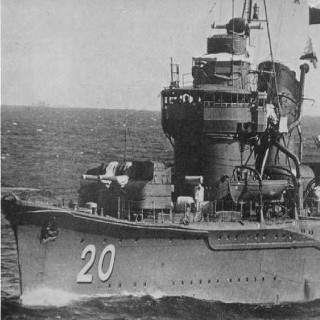
Close up of IJNS Sagiri

The light anti-aircraft armament when built was two Type 93 13mm machine guns.  In the years before the war and during the war this was increased in some cases up to twenty-two 25mm anti-aircraft guns and 10 of the Type 93 machine guns. In 1944 surviving ships of the class had their X- 5” gun mount removed to facilitate more of the 25mm guns, radar and additional depth charge capacity.

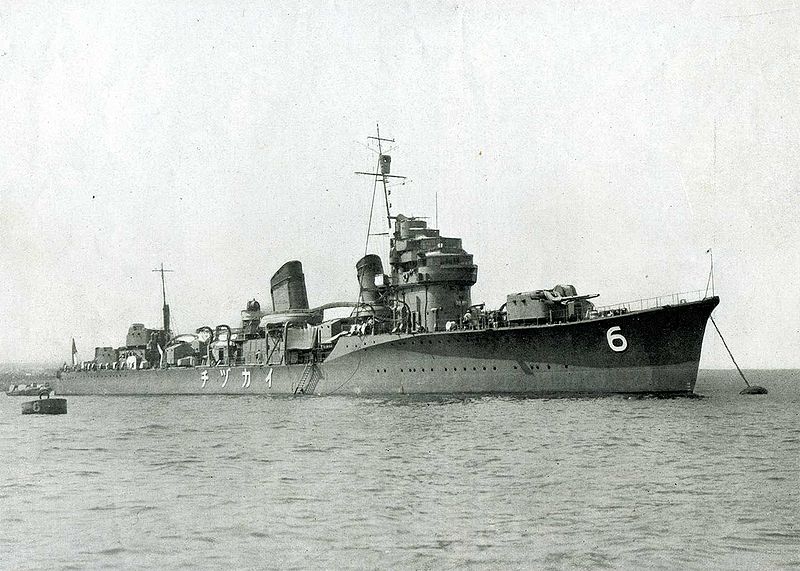
IJNS Ikazuchi

The nine 24” torpedo tubes in triple mounts were able to be reloaded while in battle a capability not shared by other destroyers.  They carried a total of 18 torpedoes which initially were the Type 8 but these were replaced by the oxygen powered Type 93 “Long Lance” torpedoes before the war. These torpedoes had a higher speed, longer range and heavier warhead than torpedoes produced by other navies.  These torpedoes would become the scourge of Allied navies during the war in the brutal surface engagements of 1942.

IJNS Yugiri

Due to the modifications made to the design which put more armament on a smaller displacement than the original design made them unstable in heavy seas and resulted in longitudinal hull weakness that resulted in the class being rebuilt between 1935 and 1937. The rebuild increased their displacement to 2050 tons standard and over 2400 tons full load and resulted in a slight reduction of their speed.

IJNS Hibiki

The class was built in three groups and each is sometimes referred to as a separate class as each incorporated improvements over the preceding group. The first 10 ships of the class which are sometimes referred to as the Fubuki Class were of less complex design than subsequent ships. They were feet long had a smaller bridge and exposed gunfire control room.  The second group of 10 ships commonly referred to as the Ayanami Class had an enlarged bridge structure which enclosed previous exposed positions to include the gunfire control room, range finders and included a range finder tower.  They also were the first ships to receive the improved Type B gun mounts.  The final subtype of the class, the Akatsuki Class comprised just 4 ships and was distinguished by a smaller forward funnel, larger boilers and unique splinter proof torpedo tube mount housing.

IJNS Ayanami

The ships of the class participated in every major campaign of Japan’s war in the Pacific as well as operations against China in the 1930s. One ship the Miyuki was lost in a collision with another destroyer in August 1934. All remaining ships of the class except the Hibiki and Ushio were lost in action during the war. Four the Fubuki, Ayanami, Yuguri and Ataksuki were sunk in surface actions. Eight ships the Usogumo, Shirakumo, Isonami, Shikinami, Sagiri, Sazanami, Inazuma, and Ikazuchi were lost to Allied submarines.  Seven ships the Shirayuki, Hatsuyuki, Murakumo, Uranami, Asagiri, Oboro and Akebono were sunk by aircraft and two the Shinonome and Amagiri fell victim to mines.

The demilitarized IJNS Ushio after the war

Hibiki was given to the Soviet Union following the war and served in that Navy until either 1953 or 1963 depending on the source. She was scrapped. Ushio surrendered to the Allies was demilitarized and scrapped in 1948.

The Amagiri played a role in the life of future President John F Kennedy when she rammed and sank his PT-109 in the Blackett Strait on August 2nd 1943. Her commanding officer at the time Lieutenant Commander Kohei Hanami attended Kennedy’s inauguration in 1961.

The Fubuki Class destroyers set a standard in destroyer construction that other navies around the world sought to emulate. Fast and powerful they and their crews fought gallantly in the Second World War and though in a losing cause deserve to be remembered.


5 Comments

Filed under History, Military, Navy Ships

Egypt: As Mysterious as the Sphinx and as Dangerous as a Cobra….What Next?

Hosni Mubarak delivers his speech (AFP Photo via Yahoo News)

Today after hours of speculation fueled by senior Egyptian Army officers demonstrators in Tahrir Square believed that Hosni Mubarak was about to leave office. The Army High command convened without Mubarak present and issued statement which said:

“In the name of God, Statement No 1, issued by the Higher Council of the Armed Forces, stemming from the armed forces’ responsibility and committing to the protection of the people, safeguarding their interest and security, and keen on the safety of the homeland, the citizens and the achievements of the great Egyptian people, and asserting the legitimate rights of the people, the Higher Council of the Armed Forces convened today, Thursday 10 February 2011, to deliberate on the latest developments of the situation and decided to remain in continuous session to discuss what measures and arrangements could be taken to safeguard the homeland and its achievements, and the aspirations of the great Egyptian people. Peace, mercy and the blessings of God.”

The Army with the Protesters in Tahrir Square (Reuters Photo via Yahoo News)

It appeared that the Army was forcing Mubarak’s hand as earlier in the day General Hassan al-Roweni, an Egyptian army commander went to Tahrir Square and told protesters in the square that “everything you want will be realized.”

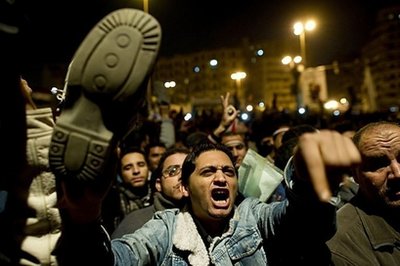
It was announced that Mubarak would address the nation in the evening and other reports indicated that he would step down.  Mubarak announced his intention to remain as President while handing over the some responsibilities to Vice President Omar Sulleimen.  His tone was defiant although he said that he is “totally committed to fulfilling all the promises” that he has earlier made regarding constitutional and political reform. Both Mubarak and Sulleiman addressed the crowd saying that they understood them and promised justice for those martyred.  After the initial shock wore off the demonstrators began to shake their shoes a sign of disrespect and some broke away from the main demonstration heading in the direction of the Presidential Palace. The Egyptian Ambassador to the United States Sameh Shoukry said “The vice president is the de facto president.”

Protesters wave their shoes at Mubarak (AFP Photo via Yahoo News)

None of this has swayed the demonstrators and the expectation is that even larger demonstrations will occur tomorrow.  Some believe that Mubarak is baiting the protestors hoping that they will become violent so he has reason to use massive force against them. The Vice President is also in charge of the Interior Ministry which controls the Police, the Secret Police and a vast network of paid informants with an estimated one million men at his disposal. Mohammed El Baradei tweeted “Egypt will explode. Army must save the country now.”  Despite their chants for Mubarak to “go” the other chant was “peace.” It does not appear that the protesters will resort to violence with the mood still upbeat.

The question mark is still the Army which appears to have been blindsided by Mubarak’s announcement. Unlike those under Sulleiman’s command the Army contains large numbers of young people who likely have very similar sentiments to the protestors. I am sure that the Army High Command understands that fact.  It is very possible that the Army is at loggerheads with Mubarak and Sulleiman.

Tomorrow will be critical.  We do not know what will happen. As mysterious as the Sphinx itself the situation in Egypt remains a mystery to many observers.  Will the Army take control? Will it stand by and do nothing? Will the Police take action? Will a civil war break out between the Army and the Interior Ministry forces?

We don’t know. However one thing can be certain if there is a crackdown on the demonstrators, which decapitates the movement the only benefits the Moslem Brotherhood which has been conspicuously absent from the demonstration and would be poised to take over leadership of the revolution should the Mubarak-Sulleiman government fall quickly.  I do not expect the Army to lead any such crackdown but it is conceivable that the same thugs who attacked last week could do so again.

This was a very dangerous situation. I pray that the end will be peaceful.

Peace

Padre Steve+


4 Comments

Filed under Foreign Policy, national security

It may be Winter but Scent of Baseball is in the Air and Friends are taking the Field

We are under a winter storm warning here in Coastal Carolina. The winter has been pretty weird a few weeks back we had 5-7 inches of snow on Emerald Isle and the area around Camp LeJeune might get another 2-4 inches tomorrow if the storm tracks quickly as predicted. However the last one was supposed to do that but got hung up and dumped a lot more snow than expected. Back in December we received 14 inches in Virginia Beach when only 2-4 were predicted. I hope the weather guessers are right.

Despite the wintery weather that has plagued our usually more temperate climate baseball is coming and with it spring.  On Sunday the first players will report to Spring Training.  I know a good number of players now due to my association with the Norfolk Tides and the Baltimore Orioles. Some have made the Majors; some are on the cusp and some hoping for another chance. I hope that for all of them they have a great season free of injury and full of success.

I know a couple of players who have ended up in Japan for the coming season and some that are no longer in the Orioles system having been traded or signed elsewhere following becoming free agents. The life of the players on the cusp of the Major Leagues can be somewhat unsettled. Many are journeymen and have spent years working hard to make it. Some will but many won’t and some of those that do will not stay in the Majors a full career.  Many are used in trades to sweeten deals for bigger name players. Their families may be able to come with them but sometimes because of low pay and the uncertainty of the assignment the families remain in their home towns or where they went to college.  It’s a difficult life.

Yet these men will take to the fields in Arizona and Florida in the coming days. In two weeks the first Spring Training games will begin and thousands of players, some young right out of high school, some just out of college and some who have played professional ball for years will start a new season.  So to my friends, Andy, Jim, Kam, David, Chris and Chris, Tim, Zach and Zach, Paco, Adam, Dennis, Brandon, Bob, Jeff, Joey, Jonny, David, Pat and Troy have a great season. I wish my best to all of you and your families. Unfortunately due to my current assignment I can’t be in my seat in section 102 at the Church of Baseball, Harbor Park Parish but I will follow your season the best that I can and whenever possible mention you on this site.

To my readers who have started reading this site after the World Series expect to see a lot about baseball and life in the coming months. Baseball is back and I am a member of the Church of Baseball.  Next week I’ll start looking at the off-season and how the Orioles did in it and how it will impact the Norfolk Tides.

Peace

Padre Steve+


1 Comment

Filed under Baseball, Batlimore Orioles, norfolk tides

The Last Full Measure: The Long Wars with more to Come

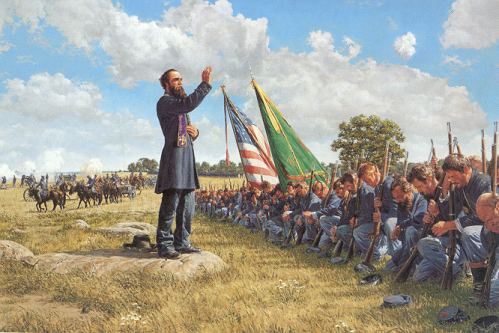
Fr Corby gives absolution to the Irish Brigade at Gettysburg as they stood in the breach

I have been watching the events in Egypt as well as other parts of the world with concern. We live in very dangerous times.  I do not want to sound like an alarmist but things are looking like we are heading into some very perilous waters.  For me this is personal because I have friends serving in harm’s way, I serve those wounded in body soul and spirit from their time in combat and I know in my heart that we will but blessed beyond compare if nothing else blows up on us.  But I am not optimistic.

The United States and its Allies have been fighting a war against Moslem extremists and terrorists on multiple fronts.  Some of these have been of necessity because they were where Al Qaeda and its allies were based such as Afghanistan and the Horn of Africa as well as a number of places in the shadows around the world. In 2003 President Bush elected to invade Iraq and another from was opened which drew the bulk of our combat forces into a protracted counter-insurgency campaign which we seem finally have been able to extricate ourselves from.  After years of neglect President Obama ordered a surge of troops into Afghanistan where the situation had deteriorated.  The fight is still raging there with the Taliban and their Al Qaeda allies receiving support from various entities in Pakistan supportive of their cause probably including parts of the Pakistani Intelligence services.

In these wars the all volunteer U.S. Military has performed many remarkable feats but suffered over 5000 deaths and more than 35,000 wounded not counting those with the unseen wounds of the soul and spirit.  Parts of it including the elite Special Operations Forces according to their Commander are stretched and frayed.  The operations tempo of deployment, redeployment, training and deployment is continuing to take a toll on active and reserve forces.

If this was all that we had to be concerned about it would be enough.  Unfortunately it seems as if the Arab world is about to experience a revolution. While we normally cheer the triumph of people over tyrants it is unknown how this will develop. Conceivably it could be a good thing should moderate forces take control of the situation in Egypt should Hosni Mubarak step down.  Unfortunately history shows that the control of revolutions seldom remain under the influence of moderates as extremists are far better organizers and much more likely to use violence to gain control through terror, especially in cultures where there is little experience of freedom or or history of non-despotic rule.  Egypt lies at the heart of the Arab World and what happens there will likely influence events in other Arab nations.

Meanwhile Iran, Syria and their Hezbollah confederates work to destabilize the region and Iran seeks to build weapons capable of carrying WMD which could be used against US Forces, our Allies in the Middle East and Europe in defiance of international organizations.  In light of all of this the outgoing Chief of Staff of the Israeli Defense Forces has told his country that it needs to prepare for “all out war.”

I could go on and talk about all the other simmering cauldrons but the point is that no matter how much we would like not to be involved when the cauldrons boil over we will. It is a very dangerous time.

Our forces, Army, Marines, Navy and Air Force which have fought gallantly for 10 years will be sent into the breach.  The place and time are not yet determined but it will happen.  And unlike Iraq and Afghanistan which are counterinsurgencies this will be a fight like we haven’t seen in many years and it may even come to our shores in the form of terrorism.

While all of us that volunteer to serve have our own motivations ranging from idealism to simply needing a job we all have volunteered. We know that we are at war and it is not going to end anytime soon.  For me the call is to be with my Sailors, Marines and Soldiers wherever I am sent, which for the moment is caring for those injured in mind body and spirit at a Naval Hospital on a Marine major Marine base but I know that I will be involved again somewhere and I am alright with that because this is a sacred calling.  That call for me is call as a Priest and Chaplain to serve our Sailors, Marines, Soldiers and Airmen wherever I am sent. Many others have this as well as the call to the profession of arms and share in the brotherhood of war.  We are a brotherhood knit together by war as Shakespeare said “We few, we happy few, we band of brothers.” This band of brothers will be called into the breach the only question is where and when. May our hearts and spirits be up to the task as just as Henry V prayed:

O God of battles! Steel my soldiers’ hearts.

Possess them not with fear. Take from them now

The sense of reckoning, if the opposed numbers

Pluck their hearts from them. Not today, O Lord,

O, not today, think not upon the fault…

Peace

Padre Steve+

4 Comments

Filed under History, iraq,afghanistan, Military

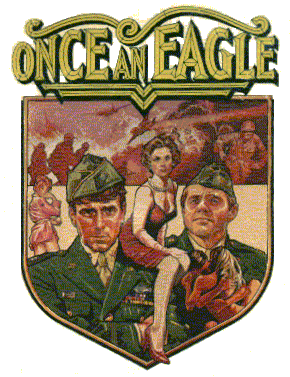
Once an Eagle: A Classic Novel of Military Life

“This classic novel of soldiers and soldiering ranks with Red Badge of Courage and All Quite on the Western Front as time-tested epics of war and warriors.”— John W. Vessey, Jr., Gen., US Army (Ret.)

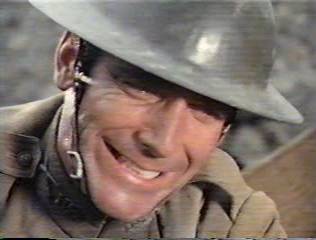
Sam Damon (Sam Elliot) cries over a fallen friend

Tonight I started watching the NBC television mini-series adaptation of Anton Myrer’s classic novel of war military life and love Once an Eagle on DVD. I had been hoping to find the series on video or DVD for years and it was released again last year. I was introduced to the book through the series which I saw in High School when it came out in 1976. Back then I never missed an episode. I found the story which weaves the life of a soldier who rises from the ranks named Sam Damon who is played by Sam Elliott and a self-serving careerist named Courtney Massengale to be compelling then and caused me to get the book and read it back in High School and I found it even more compelling than the series.

Coutney Massengale (Cliff Potts)

Years later while deployed to Okinawa I saw a few episodes on AFN and purchased another copy which I took to Iraq with me in 2007. Reading the book there made even more of an impact on me.  I guess it was something about getting shot at and being out in locations with small groups of Americans and our Iraqis with the big battalions far away that made it more poignant. I was pleased to find it this week on DVD at the Camp LeJeune Marine Corps Exchange.

I guess for me the hook is that ever since I was a small child I dreamed of all things military and knew that I would probably spend a major part of my life in the military I was attracted to the story. Since I grew up in a Navy family and lived up and down the West Coast and the Philippines it was in my blood. Part of this was being surrounded by the Navy as well as the Marines. I remember seeing the movie The Green Berets when I was in second grade and listening to the Ballad of the Green Berets on the radio. A couple of my friends and I got sent to the principal’s office because we decided to play war a bit long at recess and didn’t go back to class. If there was something military on television I was going to watch it and I remember films like Patton, The Battle of the Bulge, Kelly’s Heroes, The Dirty Dozen, The Desert Fox, M*A*S*H, The Sands of Iwo Jima and tons of others. I built hundreds of model tanks and armored vehicles, ships and aircraft and lived for the day that I could join.

The idealistic and altruistic character of Sam Damon struck a chord in me. The Character of Sam Damon is man who worked his way up from the ranks and not afraid to speak his mind who is able to lead men in the worst situations and accomplish the mission. He cares for his troops but knows his job and knows that men, even friends die in war. At the same time he does not recklessly throw his men’s lives away and they believe that he will get them through. The book takes Damon along with his wife “Tommy” who is not a big fan of the Army despite being an Army Brat and the daughter of a General through their sometimes tumultuous marriage as they are stationed in many places both the glamorous and the not so glamorous in the United States and overseas. It follows Damon’s career from the days before World War One thorough the Great War, the doldrums of the 1920s and 1930s, World War Two, Korea and as a special envoy retired from the Army in a fictionalized Vietnam.  It also traces his relationship with the ambition driven Courtney Massengale.  To avoid spoilers I won’t go into detail but the two characters are in a sense stereotypical of the best and the worst types of men that populate the Officer Corps of the Army, but in a broader sense any military institution.

Tommy Damon (Darlene Carr)

The book is very real in its descriptions of combat as Myrer was an enlisted Marine who was wounded during the invasion of Guam and his descriptions of military life including the hardships endured by military families and while the novel is set in an earlier time where military personnel and their families did not have the communication abilities as we do now, but even with such niceties deployments and family separations, especially those where the military member deploys to a combat zone take a terrible toll on military families.

The novel is very pertinent for those of us in the military because it makes us ask the hard questions of what we will do to further our career and the cost of such a life on our families. I am coming up on 30 years service including about 10 years in the reserves and have made many deployments and my wife has had to endure many separations including my current geographic bachelor tour. Thankfully I am close enough to see her most weekends but we are apart more than we are together.  It is funny that knowing what I knew from my life as a Navy Brat and from books like Once an Eagle that I chose such a life. It is in a sense a calling for me. I know that I’ll never be an Admiral nor do I want to be it is enough to have the privilege to continue to serve when most or all of my contemporaries from my early days in the military have long since left the service or retired. I thank God for that privilege as well as a wife who when she was looking forward to me retiring from the Army Reserve saw me decide to join the Navy to go back on active duty following a mobilization tour where I lost my civilian job, without asking her first. She has endured years of me being gone.  Someday I’ll lay it down but not yet as I still feel that sacred call and thankfully despite the hardship she still loves me but is not unaware of my shortcomings.

In spite of this I am a realist when it comes to the institution of the military. It is not perfect. We have our Sam Damon’s and Courtney Massengale’s but most including me fall somewhere in between these polar opposites to one degree or another. I think that is why men or women who are too idealistic sometimes struggle when their leaders don’t measure up to those ideals.  I remember who my idealism was shattered.  After that I have endeavored to do the best as a Line Officer, Priest and Chaplain knowing that that I won’t always get it right but also knowing that I will try to always uphold the best ideals of the Navy and the military.

The book is required reading in many advanced military schools and is on the Army and the Marine Corps required reading lists.  There is much to learn from it and a lot of wisdom on its pages.  When I finish the mini-series I will read the book again. I recommend it highly.

Peace

Padre Steve+

4 Comments

Filed under books and literature, leadership, marriage and relationships, Military, movies

Flush Decks and Four Pipes: The Wickes and Clemson Class Destroyers

USS Pope DD-225

The destroyers of the Wickes and Clemson classes defined the destroyer force of the U.S. Navy. In 1916 with the advent of the submarine as an effective weapon of war the Navy realized that its pervious classes of destroyers were insufficient to meet the new threat. Likewise the lack of endurance of earlier destroyers kept them from vital scouting missions since the U.S. Navy unlike the Royal Navy or Imperial German Navy maintained few cruisers for such missions.

USS Paul Jones DD-230 late war note 3 stacks and radar

The Naval Appropriation Act of 1916 included the authorization of 50 Wickes Class destroyers to compliment 10 new battleships, 6 battlecruisers and 10 light cruisers with the goal of building a Navy second to none.  The new destroyers were designed for high speed operations and intentionally designed for mass production setting a precedent for the following Clemson class as well as the destroyer classes built during the Second World War.

USS Boggs DMS-3

The Wickes Class had a designed speed of 35 knots in order to be able to operate with the new Omaha Class light cruisers and Lexington Class Battlecruisers in the role of scouting for the fleet. They were flush-decked which provided additional hull strength and their speed was due to the additional horsepower provided by their Parsons turbines which produced 24,610 hp.  They were 314’ long and had a 30 foot beam. Displacing 1247 tons full load they were 100 tons larger than the previous Caldwell class ships.  They were armed with four 4 inch 50 caliber guns, one 3” 23 caliber gun and twelve 21” torpedo tubes.

USS Crosby APD 17

Although they were very fast they proved to be very “wet” ships forward and despite carrying an additional 100 tons of fuel they still lacked range.  Due to the realization the U-Boat war required more escorts the order for Wickes Class ships was increased and 111 wear completed by 1919.

The Wickes Class was followed by the Clemson Class which was an expansion of the Wickes class being more tailored to anti-submarine warfare.  They had a greater displacement due to additional fuel tanks and mounted the same armament had identical dimensions and were capable of 35 knots but had a larger rudder to give them a tighter turning radius. 156 ships of the class were completed.

In the inter-war years a number of each class were scrapped and 7 of the Clemson Class from DESRON 11 were lost in the Honda Point Disaster of September 8th 1943.

Many of the ships never saw combat in either war as numerous ships were scrapped due to the limitations of the London Naval Treaty. Of the 267 ships of the two classes only 165 were still in service in 1936. As new destroyers were added to the navy in the 1930s a number of ships from each class were converted to other uses. Some became High Speed Transports (APD) and carried 4 LCVP landing craft and a small number of troops, usually about a company sized element. Others were converted to High Speed Minelayers (DM) or High Speed Minesweepers (DMS). A few were converted to Light Seaplane Tenders (AVD).  Those converted to other uses had their armament reduced with dual purpose 3” 50 caliber guns replacing the 4” guns and the removal of their torpedoes. Those which remained received 6 of the 3” guns to replace their original gun armament and lost half of their torpedo tubes.  During the war all would have light additional anti-aircraft armament and radar installed.

USS Stewart DD-22after return from Japanese service

In 1940 19 of the Clemson Class and 27 of the Wickes Class were transferred to the British Royal Navy under the Lend Lease program.  Some of these would see later service in the Soviet Navy being transferred by the Royal Navy serving after the war with those ships being scrapped between 1950 and 1952.

The ships of these classes performed admirably during the Second World War despite their age.  The USS Ward DD-139 fired the first shots of the war when it engaged and sank a Japanese midget sub outside of Pearl Harbor.  The 13 ships of the Asiatic Fleet’s DESRON 29 took part in six engagements against far superior Japanese Navy units while operating in the Philippines and then in the Dutch East Indies as part of the ABDA Command including the Battle of Balikpapan where the John D Ford DD-228, Pope DD-225, Paul Jones DD-230 and Parrot DD-218 sank 4 Japanese transports.   During that campaign 4 of these gallant ships were sunk in battle and a 5th the USS Stewart DD-224 was salvaged by the Japanese after being damaged and placed in a floating drydock at Surabaya following the Battle of Badung Strait. She was placed in service as a patrol ship by the Imperial Navy. She was discovered by U.S. Forces after the surrender and returned to the U.S. Navy.

HMS Cambeltown (ex USS Buchanan DD-131) at St Nazaire

Whether in the Atlantic or the Pacific the ships contributed to the Allied victory. The former USS Buchanan DD-131 which had been transferred to the Royal Navy where she was re-named the HMS Campbeltown and used in the Saint-Nazaire Raid. For the raid she was altered in appearance to look like a German Möwe class destroyer was rammed into the only drydock on the Atlantic capable of holding the Battleship Tirpitz. The mission was successful and the drydock was unusable by the Germans for the rest of the war.

During the war they served in every major campaign and when no longer fit for front line service were used in escort roles in rear areas as well as in a variety of training and support roles.  By the end of the war the surviving ships of both classes were worn out and a number were decommissioned and some scrapped even before the end of hostilities. Those that survived the war were all decommissioned by 1946 and most scrapped between 1945 and 1948.

During Second World War 9 of the Wickes Class were sunk in battle, and 7 were sunk or destroyed in other ways. 5 were later sunk as targets and the remaining ships were all scrapped. A total of 20 of the Clemson Class were lost either in battle or to other causes including those lost and Honda Point.

USS Peary Memorial

The brave Sailors that manned these ships in peace and war become fewer in number every day as the Greatest Generation passes. It is a sad testimony that none of these ships were preserved as a memorial; however the Australians have a memorial at Darwin dedicated to the USS Peary DD-226 which was sunk with 80 of her crew during the Japanese raid on that city’s port on 19 February 1942. The memorial has one of her 4” guns pointed in the direction of the wreck of the Peary. A memorial to the USS Ward, her #3 4” gun which sank the Japanese midget sub is located on the Capitol Grounds in St. Paul Minnesota.

10 Comments

Filed under History, Military, Navy Ships, US Navy, world war two in europe, world war two in the pacific