Yearly Archives: 2011

It may be Winter but Scent of Baseball is in the Air and Friends are taking the Field

We are under a winter storm warning here in Coastal Carolina. The winter has been pretty weird a few weeks back we had 5-7 inches of snow on Emerald Isle and the area around Camp LeJeune might get another 2-4 inches tomorrow if the storm tracks quickly as predicted. However the last one was supposed to do that but got hung up and dumped a lot more snow than expected. Back in December we received 14 inches in Virginia Beach when only 2-4 were predicted. I hope the weather guessers are right.

Despite the wintery weather that has plagued our usually more temperate climate baseball is coming and with it spring.  On Sunday the first players will report to Spring Training.  I know a good number of players now due to my association with the Norfolk Tides and the Baltimore Orioles. Some have made the Majors; some are on the cusp and some hoping for another chance. I hope that for all of them they have a great season free of injury and full of success.

I know a couple of players who have ended up in Japan for the coming season and some that are no longer in the Orioles system having been traded or signed elsewhere following becoming free agents. The life of the players on the cusp of the Major Leagues can be somewhat unsettled. Many are journeymen and have spent years working hard to make it. Some will but many won’t and some of those that do will not stay in the Majors a full career.  Many are used in trades to sweeten deals for bigger name players. Their families may be able to come with them but sometimes because of low pay and the uncertainty of the assignment the families remain in their home towns or where they went to college.  It’s a difficult life.

Yet these men will take to the fields in Arizona and Florida in the coming days. In two weeks the first Spring Training games will begin and thousands of players, some young right out of high school, some just out of college and some who have played professional ball for years will start a new season.  So to my friends, Andy, Jim, Kam, David, Chris and Chris, Tim, Zach and Zach, Paco, Adam, Dennis, Brandon, Bob, Jeff, Joey, Jonny, David, Pat and Troy have a great season. I wish my best to all of you and your families. Unfortunately due to my current assignment I can’t be in my seat in section 102 at the Church of Baseball, Harbor Park Parish but I will follow your season the best that I can and whenever possible mention you on this site.

To my readers who have started reading this site after the World Series expect to see a lot about baseball and life in the coming months. Baseball is back and I am a member of the Church of Baseball.  Next week I’ll start looking at the off-season and how the Orioles did in it and how it will impact the Norfolk Tides.

Peace

Padre Steve+
 

1 Comment

Filed under Baseball, Batlimore Orioles, norfolk tides

The Last Full Measure: The Long Wars with more to Come

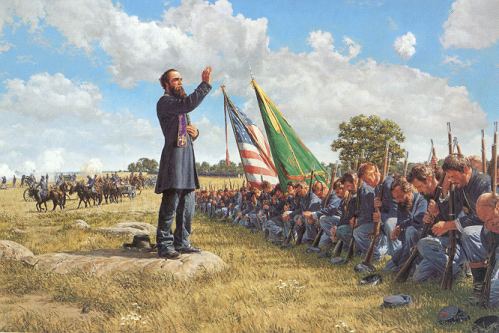
Fr Corby gives absolution to the Irish Brigade at Gettysburg as they stood in the breach

I have been watching the events in Egypt as well as other parts of the world with concern. We live in very dangerous times.  I do not want to sound like an alarmist but things are looking like we are heading into some very perilous waters.  For me this is personal because I have friends serving in harm’s way, I serve those wounded in body soul and spirit from their time in combat and I know in my heart that we will but blessed beyond compare if nothing else blows up on us.  But I am not optimistic.

The United States and its Allies have been fighting a war against Moslem extremists and terrorists on multiple fronts.  Some of these have been of necessity because they were where Al Qaeda and its allies were based such as Afghanistan and the Horn of Africa as well as a number of places in the shadows around the world. In 2003 President Bush elected to invade Iraq and another from was opened which drew the bulk of our combat forces into a protracted counter-insurgency campaign which we seem finally have been able to extricate ourselves from.  After years of neglect President Obama ordered a surge of troops into Afghanistan where the situation had deteriorated.  The fight is still raging there with the Taliban and their Al Qaeda allies receiving support from various entities in Pakistan supportive of their cause probably including parts of the Pakistani Intelligence services.

In these wars the all volunteer U.S. Military has performed many remarkable feats but suffered over 5000 deaths and more than 35,000 wounded not counting those with the unseen wounds of the soul and spirit.  Parts of it including the elite Special Operations Forces according to their Commander are stretched and frayed.  The operations tempo of deployment, redeployment, training and deployment is continuing to take a toll on active and reserve forces.

If this was all that we had to be concerned about it would be enough.  Unfortunately it seems as if the Arab world is about to experience a revolution. While we normally cheer the triumph of people over tyrants it is unknown how this will develop. Conceivably it could be a good thing should moderate forces take control of the situation in Egypt should Hosni Mubarak step down.  Unfortunately history shows that the control of revolutions seldom remain under the influence of moderates as extremists are far better organizers and much more likely to use violence to gain control through terror, especially in cultures where there is little experience of freedom or or history of non-despotic rule.  Egypt lies at the heart of the Arab World and what happens there will likely influence events in other Arab nations.

Meanwhile Iran, Syria and their Hezbollah confederates work to destabilize the region and Iran seeks to build weapons capable of carrying WMD which could be used against US Forces, our Allies in the Middle East and Europe in defiance of international organizations.  In light of all of this the outgoing Chief of Staff of the Israeli Defense Forces has told his country that it needs to prepare for “all out war.”

I could go on and talk about all the other simmering cauldrons but the point is that no matter how much we would like not to be involved when the cauldrons boil over we will. It is a very dangerous time.

Our forces, Army, Marines, Navy and Air Force which have fought gallantly for 10 years will be sent into the breach.  The place and time are not yet determined but it will happen.  And unlike Iraq and Afghanistan which are counterinsurgencies this will be a fight like we haven’t seen in many years and it may even come to our shores in the form of terrorism.

While all of us that volunteer to serve have our own motivations ranging from idealism to simply needing a job we all have volunteered. We know that we are at war and it is not going to end anytime soon.  For me the call is to be with my Sailors, Marines and Soldiers wherever I am sent, which for the moment is caring for those injured in mind body and spirit at a Naval Hospital on a Marine major Marine base but I know that I will be involved again somewhere and I am alright with that because this is a sacred calling.  That call for me is call as a Priest and Chaplain to serve our Sailors, Marines, Soldiers and Airmen wherever I am sent. Many others have this as well as the call to the profession of arms and share in the brotherhood of war.  We are a brotherhood knit together by war as Shakespeare said “We few, we happy few, we band of brothers.” This band of brothers will be called into the breach the only question is where and when. May our hearts and spirits be up to the task as just as Henry V prayed:

O God of battles! Steel my soldiers’ hearts.

Possess them not with fear. Take from them now

The sense of reckoning, if the opposed numbers

Pluck their hearts from them. Not today, O Lord,

O, not today, think not upon the fault…

Peace

Padre Steve+

4 Comments

Filed under History, iraq,afghanistan, Military

Once an Eagle: A Classic Novel of Military Life

“This classic novel of soldiers and soldiering ranks with Red Badge of Courage and All Quite on the Western Front as time-tested epics of war and warriors.”— John W. Vessey, Jr., Gen., US Army (Ret.)

Sam Damon (Sam Elliot) cries over a fallen friend

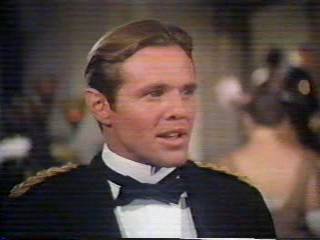
Tonight I started watching the NBC television mini-series adaptation of Anton Myrer’s classic novel of war military life and love Once an Eagle on DVD. I had been hoping to find the series on video or DVD for years and it was released again last year. I was introduced to the book through the series which I saw in High School when it came out in 1976. Back then I never missed an episode. I found the story which weaves the life of a soldier who rises from the ranks named Sam Damon who is played by Sam Elliott and a self-serving careerist named Courtney Massengale to be compelling then and caused me to get the book and read it back in High School and I found it even more compelling than the series.

Coutney Massengale (Cliff Potts)

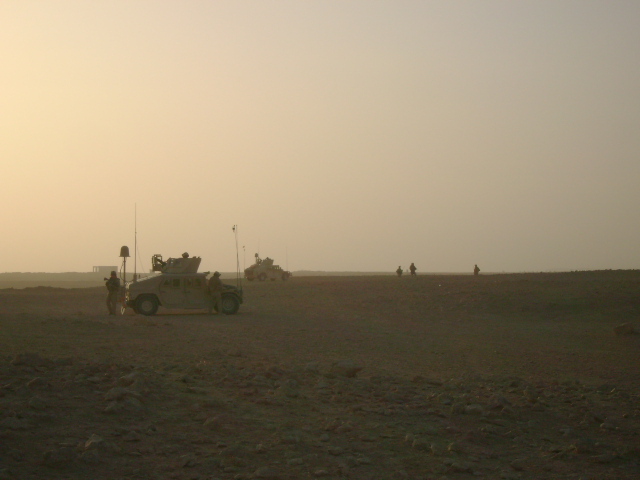
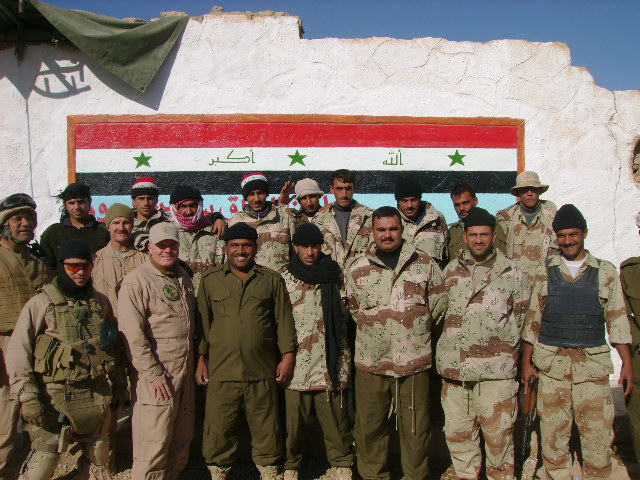
Years later while deployed to Okinawa I saw a few episodes on AFN and purchased another copy which I took to Iraq with me in 2007. Reading the book there made even more of an impact on me.  I guess it was something about getting shot at and being out in locations with small groups of Americans and our Iraqis with the big battalions far away that made it more poignant. I was pleased to find it this week on DVD at the Camp LeJeune Marine Corps Exchange.

I guess for me the hook is that ever since I was a small child I dreamed of all things military and knew that I would probably spend a major part of my life in the military I was attracted to the story. Since I grew up in a Navy family and lived up and down the West Coast and the Philippines it was in my blood. Part of this was being surrounded by the Navy as well as the Marines. I remember seeing the movie The Green Berets when I was in second grade and listening to the Ballad of the Green Berets on the radio. A couple of my friends and I got sent to the principal’s office because we decided to play war a bit long at recess and didn’t go back to class. If there was something military on television I was going to watch it and I remember films like Patton, The Battle of the Bulge, Kelly’s Heroes, The Dirty Dozen, The Desert Fox, M*A*S*H, The Sands of Iwo Jima and tons of others. I built hundreds of model tanks and armored vehicles, ships and aircraft and lived for the day that I could join.

The idealistic and altruistic character of Sam Damon struck a chord in me. The Character of Sam Damon is man who worked his way up from the ranks and not afraid to speak his mind who is able to lead men in the worst situations and accomplish the mission. He cares for his troops but knows his job and knows that men, even friends die in war. At the same time he does not recklessly throw his men’s lives away and they believe that he will get them through. The book takes Damon along with his wife “Tommy” who is not a big fan of the Army despite being an Army Brat and the daughter of a General through their sometimes tumultuous marriage as they are stationed in many places both the glamorous and the not so glamorous in the United States and overseas. It follows Damon’s career from the days before World War One thorough the Great War, the doldrums of the 1920s and 1930s, World War Two, Korea and as a special envoy retired from the Army in a fictionalized Vietnam.  It also traces his relationship with the ambition driven Courtney Massengale.  To avoid spoilers I won’t go into detail but the two characters are in a sense stereotypical of the best and the worst types of men that populate the Officer Corps of the Army, but in a broader sense any military institution.

Tommy Damon (Darlene Carr)

The book is very real in its descriptions of combat as Myrer was an enlisted Marine who was wounded during the invasion of Guam and his descriptions of military life including the hardships endured by military families and while the novel is set in an earlier time where military personnel and their families did not have the communication abilities as we do now, but even with such niceties deployments and family separations, especially those where the military member deploys to a combat zone take a terrible toll on military families.

The novel is very pertinent for those of us in the military because it makes us ask the hard questions of what we will do to further our career and the cost of such a life on our families. I am coming up on 30 years service including about 10 years in the reserves and have made many deployments and my wife has had to endure many separations including my current geographic bachelor tour. Thankfully I am close enough to see her most weekends but we are apart more than we are together.  It is funny that knowing what I knew from my life as a Navy Brat and from books like Once an Eagle that I chose such a life. It is in a sense a calling for me. I know that I’ll never be an Admiral nor do I want to be it is enough to have the privilege to continue to serve when most or all of my contemporaries from my early days in the military have long since left the service or retired. I thank God for that privilege as well as a wife who when she was looking forward to me retiring from the Army Reserve saw me decide to join the Navy to go back on active duty following a mobilization tour where I lost my civilian job, without asking her first. She has endured years of me being gone.  Someday I’ll lay it down but not yet as I still feel that sacred call and thankfully despite the hardship she still loves me but is not unaware of my shortcomings.

In spite of this I am a realist when it comes to the institution of the military. It is not perfect. We have our Sam Damon’s and Courtney Massengale’s but most including me fall somewhere in between these polar opposites to one degree or another. I think that is why men or women who are too idealistic sometimes struggle when their leaders don’t measure up to those ideals.  I remember who my idealism was shattered.  After that I have endeavored to do the best as a Line Officer, Priest and Chaplain knowing that that I won’t always get it right but also knowing that I will try to always uphold the best ideals of the Navy and the military.

The book is required reading in many advanced military schools and is on the Army and the Marine Corps required reading lists.  There is much to learn from it and a lot of wisdom on its pages.  When I finish the mini-series I will read the book again. I recommend it highly.

Peace

Padre Steve+

4 Comments

Filed under books and literature, leadership, marriage and relationships, Military, movies

Flush Decks and Four Pipes: The Wickes and Clemson Class Destroyers

USS Pope DD-225

The destroyers of the Wickes and Clemson classes defined the destroyer force of the U.S. Navy. In 1916 with the advent of the submarine as an effective weapon of war the Navy realized that its pervious classes of destroyers were insufficient to meet the new threat. Likewise the lack of endurance of earlier destroyers kept them from vital scouting missions since the U.S. Navy unlike the Royal Navy or Imperial German Navy maintained few cruisers for such missions.

USS Paul Jones DD-230 late war note 3 stacks and radar

The Naval Appropriation Act of 1916 included the authorization of 50 Wickes Class destroyers to compliment 10 new battleships, 6 battlecruisers and 10 light cruisers with the goal of building a Navy second to none.  The new destroyers were designed for high speed operations and intentionally designed for mass production setting a precedent for the following Clemson class as well as the destroyer classes built during the Second World War.

USS Boggs DMS-3

The Wickes Class had a designed speed of 35 knots in order to be able to operate with the new Omaha Class light cruisers and Lexington Class Battlecruisers in the role of scouting for the fleet. They were flush-decked which provided additional hull strength and their speed was due to the additional horsepower provided by their Parsons turbines which produced 24,610 hp.  They were 314’ long and had a 30 foot beam. Displacing 1247 tons full load they were 100 tons larger than the previous Caldwell class ships.  They were armed with four 4 inch 50 caliber guns, one 3” 23 caliber gun and twelve 21” torpedo tubes.

USS Crosby APD 17

Although they were very fast they proved to be very “wet” ships forward and despite carrying an additional 100 tons of fuel they still lacked range.  Due to the realization the U-Boat war required more escorts the order for Wickes Class ships was increased and 111 wear completed by 1919.

The Wickes Class was followed by the Clemson Class which was an expansion of the Wickes class being more tailored to anti-submarine warfare.  They had a greater displacement due to additional fuel tanks and mounted the same armament had identical dimensions and were capable of 35 knots but had a larger rudder to give them a tighter turning radius. 156 ships of the class were completed.

In the inter-war years a number of each class were scrapped and 7 of the Clemson Class from DESRON 11 were lost in the Honda Point Disaster of September 8th 1943.

Many of the ships never saw combat in either war as numerous ships were scrapped due to the limitations of the London Naval Treaty. Of the 267 ships of the two classes only 165 were still in service in 1936. As new destroyers were added to the navy in the 1930s a number of ships from each class were converted to other uses. Some became High Speed Transports (APD) and carried 4 LCVP landing craft and a small number of troops, usually about a company sized element. Others were converted to High Speed Minelayers (DM) or High Speed Minesweepers (DMS). A few were converted to Light Seaplane Tenders (AVD).  Those converted to other uses had their armament reduced with dual purpose 3” 50 caliber guns replacing the 4” guns and the removal of their torpedoes. Those which remained received 6 of the 3” guns to replace their original gun armament and lost half of their torpedo tubes.  During the war all would have light additional anti-aircraft armament and radar installed.

USS Stewart DD-22after return from Japanese service

In 1940 19 of the Clemson Class and 27 of the Wickes Class were transferred to the British Royal Navy under the Lend Lease program.  Some of these would see later service in the Soviet Navy being transferred by the Royal Navy serving after the war with those ships being scrapped between 1950 and 1952.

The ships of these classes performed admirably during the Second World War despite their age.  The USS Ward DD-139 fired the first shots of the war when it engaged and sank a Japanese midget sub outside of Pearl Harbor.  The 13 ships of the Asiatic Fleet’s DESRON 29 took part in six engagements against far superior Japanese Navy units while operating in the Philippines and then in the Dutch East Indies as part of the ABDA Command including the Battle of Balikpapan where the John D Ford DD-228, Pope DD-225, Paul Jones DD-230 and Parrot DD-218 sank 4 Japanese transports.   During that campaign 4 of these gallant ships were sunk in battle and a 5th the USS Stewart DD-224 was salvaged by the Japanese after being damaged and placed in a floating drydock at Surabaya following the Battle of Badung Strait. She was placed in service as a patrol ship by the Imperial Navy. She was discovered by U.S. Forces after the surrender and returned to the U.S. Navy.

HMS Cambeltown (ex USS Buchanan DD-131) at St Nazaire

Whether in the Atlantic or the Pacific the ships contributed to the Allied victory. The former USS Buchanan DD-131 which had been transferred to the Royal Navy where she was re-named the HMS Campbeltown and used in the Saint-Nazaire Raid. For the raid she was altered in appearance to look like a German Möwe class destroyer was rammed into the only drydock on the Atlantic capable of holding the Battleship Tirpitz. The mission was successful and the drydock was unusable by the Germans for the rest of the war.

During the war they served in every major campaign and when no longer fit for front line service were used in escort roles in rear areas as well as in a variety of training and support roles.  By the end of the war the surviving ships of both classes were worn out and a number were decommissioned and some scrapped even before the end of hostilities. Those that survived the war were all decommissioned by 1946 and most scrapped between 1945 and 1948.

During Second World War 9 of the Wickes Class were sunk in battle, and 7 were sunk or destroyed in other ways. 5 were later sunk as targets and the remaining ships were all scrapped. A total of 20 of the Clemson Class were lost either in battle or to other causes including those lost and Honda Point.

USS Peary Memorial

The brave Sailors that manned these ships in peace and war become fewer in number every day as the Greatest Generation passes. It is a sad testimony that none of these ships were preserved as a memorial; however the Australians have a memorial at Darwin dedicated to the USS Peary DD-226 which was sunk with 80 of her crew during the Japanese raid on that city’s port on 19 February 1942. The memorial has one of her 4” guns pointed in the direction of the wreck of the Peary. A memorial to the USS Ward, her #3 4” gun which sank the Japanese midget sub is located on the Capitol Grounds in St. Paul Minnesota.

10 Comments

Filed under History, Military, Navy Ships, US Navy, world war two in europe, world war two in the pacific

The U-Boat Type VIIC: Workhorse of the Kriegsmarine

U-96

The signature warship of the German Kreigsmarine of the Second World War has to be the U-Boat Type VIIC, the most numerous type of submarine ever produced by any Navy.  568 of these U-Boats would be commissioned between 1940 and 1945 as well as 91 of the Type VIIC/41.  The Type VIIC was developed from the prewar Type I and Type VIIA and VIIB classes.

Compared to contemporary American submarines of the Gato class they were smaller, mounted fewer torpedo tubes and had a shorter range. However the American boats were designed for the vast expanse of the Pacific while the German boats for the most part were operated in the smaller confines of the Atlantic and Mediterranean.

U-1023

They displaced a mere 769 tons on the surface and 871 tons submerged and were 67.1 meters (220.14 feet) long. The boats had a single pressure hull and the VIIC could dive to a maximum depth of 230 meters (754 feet) and had a crush depth of 250-295 meters (820-967 feet).  The VIIC/41 could dive to 250 meters or 820 feet and a crush depth of 275-325 meters (902-1066 feet).  This was deeper than any allied submarines of the period and a testament to their sound construction.

Admiral Dönitz greeting U-94 in 1941

The Type VIICs were armed with a C35 88 mm/L45 gun with 220 rounds for surface actions and various types and numbers of anti-aircraft guns. The standard configuration for torpedo tubes was 4 bow mounted tubes and 1 stern mounted tube although a small number only carried 2 forward and none aft. They carried a maximum of 14 torpedoes and could carry 26 TMA Mines which would be laid at approaches to various ports.

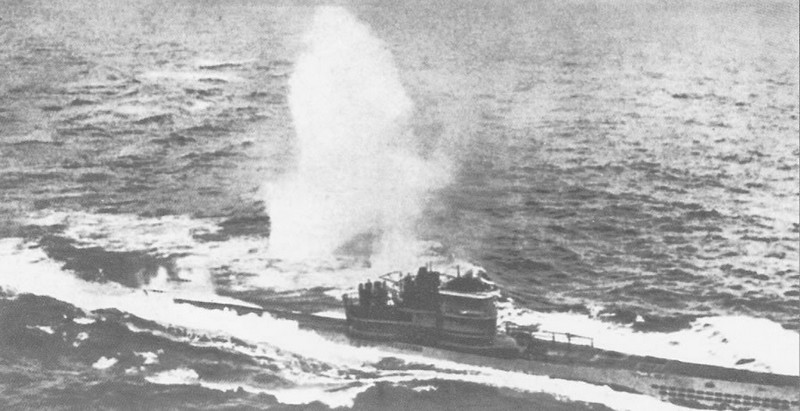
U-966 under air attack

The Type VIIC was powered by two supercharged Germaniawerft, 6 cylinder, 4-stroke M6V 40/46 diesel engines on the surface producing between 2,800 to 3,200 horsepower which gave the boats a 17.7 knot maximum speed on surface. For submerged operations the boats were powered by one of a number of different electric motors whose batteries were charged by the diesels. The electric motors produced 750 horsepower (560 kW) and could drive the boats a maximum of 7.6 knots. In 1944 many of the surviving boats were equipped with the schnorkel apparatus which allowed them to use their diesel engines underwater at shallow depths.  The had a range of 8190 miles at 10 knots surfaced which gave them a decent amount of operational flexibility for their Atlantic operations.

The last Type VII- U-995 (Type VIIC/41) German U-Boat Memorial Laboe Germany

During the war the German U-Boat force suffered grievous losses many of which were Type VIICs. The VIICs performed excellently in combat and many survived engagements that would have sunk less tough boats. The most famous of the Type VIICs of all variants is probably the U-96 which was featured in the epic submarine film Das Boot. A number had post war careers in several navies and the last active VIIC the U-573 which served in the Spanish Navy as the G-7 was decommissioned in 1970 and sold for scrap over the objections of those that wanted to purchase her as a memorial.  The only surviving Type VIIC is the U-995 at Laboe Germany where she is a memorial to all the U-Boat Sailors of the Second World War.  Two full sized mock ups one for exterior scenes and one for interior scenes were constructed for Das Boot and the exterior mock up was also used in Raiders of the Lost Ark.

During the war U-Boats of all types sank nearly 3000 Allied ships including 175 warships among which were the carriers HMS Glorious, HMS Ark Royal and HMS Eagle and the Battleships HMS Barham and HMS Royal Oak. The Germans lost nearly 800 U-Boats of all types and over 28,000 U-Boat Sailors, about 75% of the force.

The films Das Boot and The Enemy Below are excellent reminders of the courage of the men that operated these submarines during the war. Though the Nazi Regime was evil the men of the U-Boat Service often displayed courage and ingenuity in the face of overwhelming odds and they nearly won the war for the Germans.

9 Comments

Filed under History, Military, Navy Ships, world war two in europe

Contemplating the Past, Present and Future: The Third Anniversary of Leaving Iraq


“It is well that war is so terrible, or we should get too fond of it.” Robert E. Lee

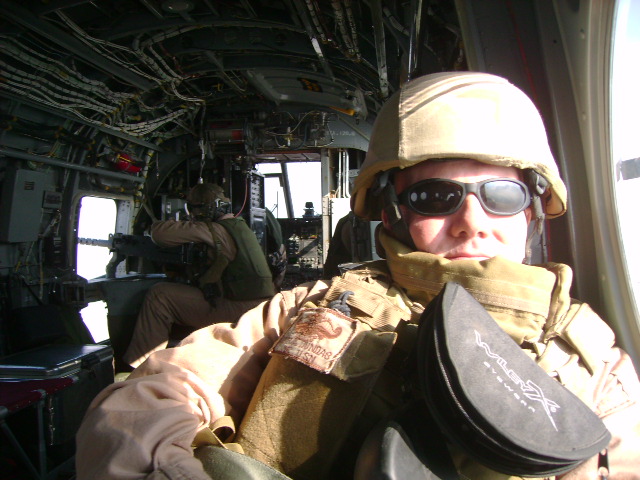
I began my flight home from the Middle East three years ago today. Three years ago I could not imagine what has transpired in my life since neither my return nor the situation that we see developing in Egypt.  It has been three years but it feels longer.  I have recounted my PTSD and psychological collapse as well as my crisis of faith which for nearly two years left me a practical agnostic numerous times so I will not say much about them in this article except to say while I still suffer from the effects of both I am doing better and faith has returned.

The war in Iraq changed me. I saw the suffering of the people of Iraq that the conservative media to which I had been wedded for years ignored or distorted.

Likewise when I came home to the nastiness of the 2008 Presidential Election I was unprepared for it. To see my countrymen tearing each other apart with increasingly violent rhetoric as well as the militancy of some was deeply unsettling and was a part of my collapse because I felt like my country was plunging into the abyss of hatred.

Since I have seen the tragic and long lasting effects of the unbridled hatred among former friends and neighbors in the Balkans as well as Iraq I know that anything is possible when we make the subtle shift from viewing fellow Americans as political opponents to mortal enemies to whom we equate every vice and evil.  What has happened to us?  Last night I responded to a dear family friend who has kept sending me e-mails of such intense anger and even hatred regarding those that he believes are destroying the country. I had to tell him that I could no longer go to those places and told him things that I have experienced after Iraq. He is older and both he and his wife have been sick and are isolated.  They are good people but I have not heard back from him.

Likewise the sense of abandonment I felt from my former church as well as many clergy and chaplains did nothing to help my faith. For the first time I realized how deeply that I needed other Christians and for the most part few were there for me, my brokenness made me radioactive to many.  As Dietrich Bonhoeffer said “Many people are looking for an ear that will listen. They do not find it among Christians, because these Christians are talking where they should be listening.”


Despite this healing came but also change which I think actually has been good for me and for the ministry that I am called to as a Priest and Chaplain.  While healing has begun I am cognizant of my own wounds and how they affect how I deal with life and others. I pray that they have made me a better vessel of the grace of God and his love.

Tonight I am somewhat contemplative. I have turned off the news and I am watching a movie called Lost Command starring Anthony Quinn.  It is an adaptation of Jean Larteguy’s novel The Centurions which is about the French Paratroops in Indo-China and Algeria.  These were men who after surviving Viet Minh prison camps after the fall of Dien Bien Phu were almost immediately redeployed to fight the insurgency in Algeria, sometimes against former Algerian comrades who were now part of the Algerian independence movement. Algeria was brutal and though the French had militarily defeated the insurgency they still lost the war, and for many soldiers part of their souls which were sacrificed for their country.

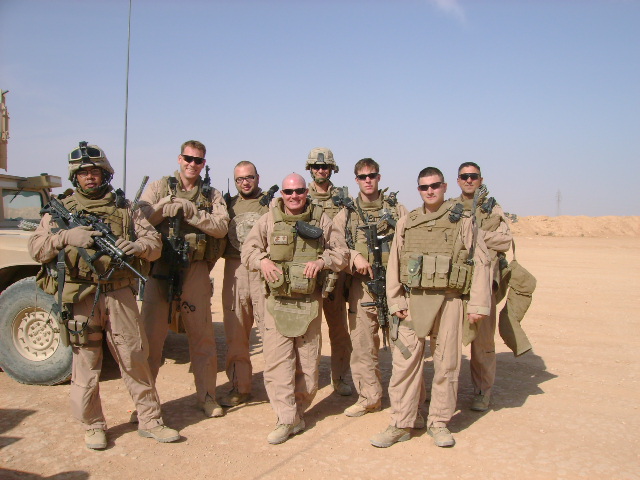
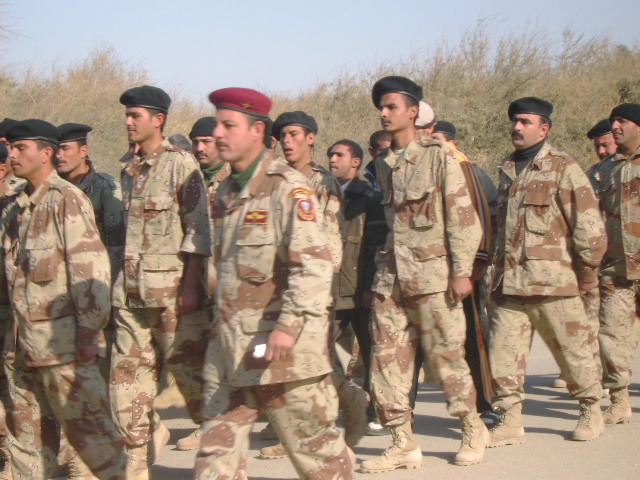
It has been three years since I stepped on the aircraft to come home and in some ways miss Iraq and my friends American and Iraqi. I watch as that nation and its people struggle.  I watch the continuing war in Afghanistan and emerging danger in Egypt and much of the Arab world I wonder what further sacrifices our Marines, Soldiers, Sailors and Airmen will have to make if the chaos spreads and if the violence will again come to our shores.  I wonder if our politicians from both parties will support us or abandon us even as we fight.

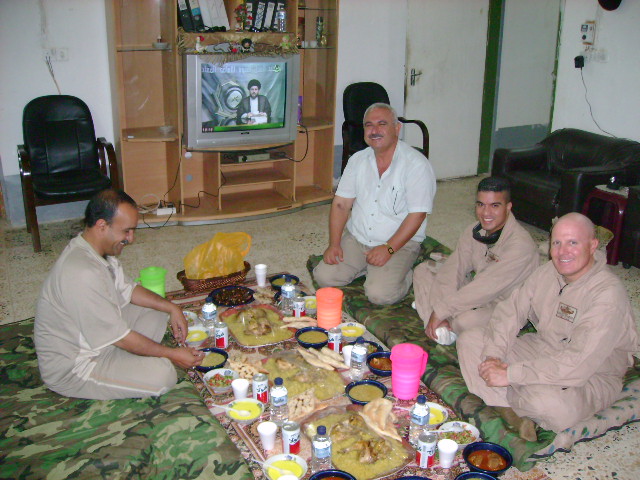
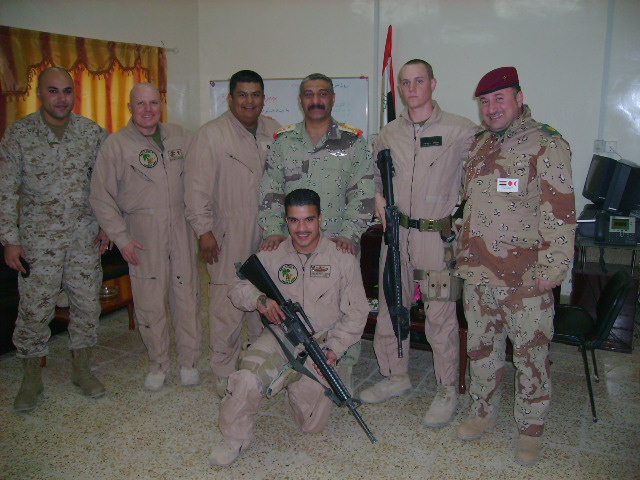
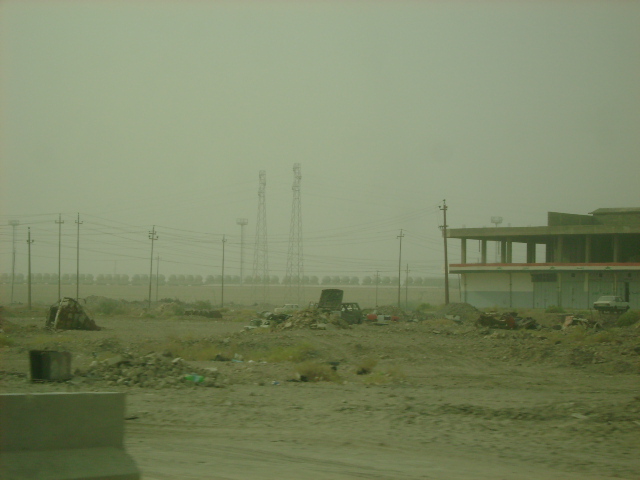
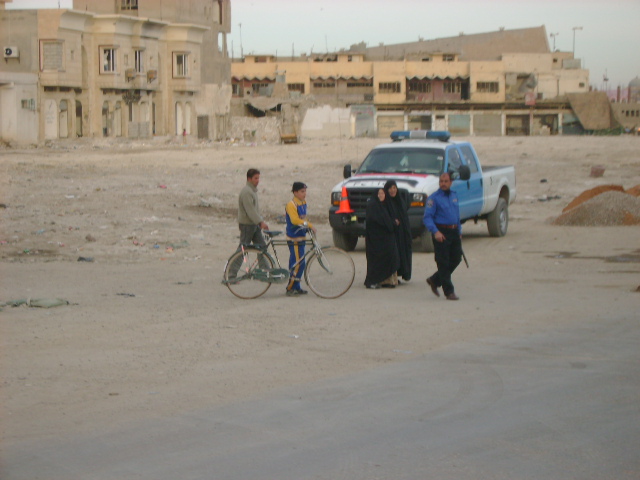
I remember my time in Iraq well. I can see the faces of my friends; remember the hospitality of the advisors that I spent my time with and the friendship of Iraqi Officers.  Sometimes the memories seem so real especially when I look into the eyes of those that served in Iraq. Fallujah, Ta-Qaddum, Habbinyah, Al Asad, Al Waleed, Al Qaim, Korean Village, Ramadi and its various neighborhoods, Hit, Baghdadi, COP North and COP South and what seems like a hundred more locations in Al Anbar Province from villages to small outposts.

I remember thousands of miles in helicopters, C-130s and in convoys, the smell of Jet Fuel, Diesel and hydraulic fluid which always seemed to find me in any helicopter I rode in.   I hear the helicopters fly overhead, some even tonight. I close my eyes and it feels like I am in Iraq again.

I am somewhat melancholy tonight, that war is never far away and unfortunately there are more to come.  But tomorrow is another day.

Peace

Padre Steve+
3 Comments

Filed under christian life, faith, iraq,afghanistan, Military, Political Commentary, PTSD, Tour in Iraq

The Beginning of Chaos in Egypt: Watching and Waiting as the Situation Deteriorates

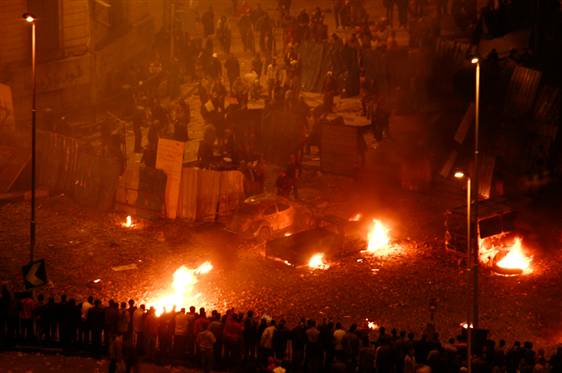
Battle Lines in Tahrir Square (Yanis Behrakis -Reuters via MSNBC)

Today violent street clashes broke out in Cairo’s Tahrir Square. Following President Hosni Mubarak’s pledge not to run for the Presidency again but remain in office until September and the opposition’s denunciation of that move as too little too late Tuesday night pro-Mubarak groups entered the fray. Men on camels and horses swept into the square during the afternoon whipping and clubbing anti-Mubarak protesters as they stormed through the crowd.  Reporters were attacked and as evening came the clashes became more violent as the pro-Mubarak supports began to throw Molotov Cocktails at the demonstrators. The Army did appear to attempt to make some efforts to separate the groups and fired tear gas to disperse the crowds but did little else. The scene was remarkably different from Tuesday when the protesters calling for Mubarak to step down did so in a peaceful manner unmolested by the Army units in the square.  The Egyptian military has aired television spots asking all of the protesters to “go home for the love of Egypt.”

Although the images shown on our television sets conjure the worst and appear to the country devolving into chaotic violence with unpredictable consequences. The fact is mystery shrouds developments outside the view of the cameras surrounding Tahrir Square. We are unaware of what is transpiring inside the government or the military. We are unsure about the extent of Egypt’s government or ruling party’s involvement in today’s counter demonstrations, some reports are that some at least were ordered in from government jobs.  The only thing that we can safely assume is that unless some kind of resolution acceptable to both sides arises the situation could get dramatically worse and imperil the success of any government that replaces the Mubarak regime whether he steps down in the next few weeks or holds on until September.

Regardless of the outcome Egypt and possibly much of the Arab World is at a turning point. Authoritarian regimes as different as that of Muammar Ghadaffi and Saudi Arabian King Abdullah have condemned the Egyptian uprisings as well as that which overthrew Ben Ali in Tunisia.  They know that the dynamics at work in Egypt, unemployment, poverty and political repression are shared to one degree or another in much of the Arab World, the common factor repressive authoritarian regimes which to many lack legitimacy.  Rulers in Jordan and Yemen have already seen demonstrations and Jordan’s king has fired his government apparently to get ahead of the protests and Yemen’s ruler has pledged to step down at the end of his term in 2014.  Leaders of other Arab nations cast a wary eye on Egypt and their own opposition groups.

The Egyptian revolution will more than likely not result in fundamentalist Islam dominated state due to the unpopularity of such regimes as the Taliban and Iran in the Arab World. At the same time while Islamists are not leading the revolution in Egypt they are an important part of the Egyptian political landscape and must be taken into account.  I would think that if the violence subsides and a peaceful orderly transition takes place that a government similar to Turkey, probably not led by a religious party could be the best result. Such a government would likely not be as close to the United States as Mubarak but probably remain an ally and not an active enemy of Israel as it seeks its own economic growth and stability to reinforce its pivotal role in the Arab World.  However there is no guarantee of this outcome.

The worst outcome would be continued violence that leads to a radicalized country led by more extreme members of the Muslim Brotherhood, some of whom have called the Egyptian people to prepare for war against Israel.  Unfortunately unlike the older generation of Egyptians the new generation has not experienced war and war’s desolation. The older generation was at war with Israel for nearly 40 years suffering defeat after defeat.  In 1967 they lost control of the Suez Canal and the income derived from it in the 6 Day War and in 1973 after successfully crossing the canal and inflicting heavy casualties on the previously invincible Israelis had the tables turned on them. An Israeli Army after driving off the Syrians in a desperate battle on the Golan Heights and advancing deep into that country crossed the Suez Canal, surrounded an Egyptian Army on the far side of the canal, lay siege to Suez and were poised to drive to Cairo saved only by a cease fire brokered by Henry Kissinger and the United Nations. The war nearly brought the Soviet Union and the United States into nuclear conflict when the Soviets marshaled Airborne divisions to intervene and President Nixon raised the DEFCOM from 4 to 3. I remember talking to Egyptian officers, veterans of the wars with Israel when I was a student at an Army school in 1983, they talked of sacrifice and the brutality of war and the effects of the war on their country.  One simply said “I do not like Israel but I am tired of war and I do not want it for my children.”  Since Camp David Egypt has had all of its territory in the Sinai returned was able to reopen the Suez Canal.  Another war between Egypt and Israel would devastate both countries and for that matter not be contained.  A radicalized government set on such a course would be an unmitigated disaster for Egypt, Israel and the world.

While we watch Egypt protests are about to begin in Yemen with a “day of rage” scheduled for Thursday with demonstrations planned in Syria and Jordan Friday and Saturday and even Bahrain on February 14th. Expect such demonstrations as the old guard of the Arab World experiences the long suppressed rage of their people which is now spread in seconds through the power of the social media.  Meanwhile radicals in Iran, Al Qaeda and as well as other radicals and terrorist groups wait to take advantage. Yemen which has a strongly entrenched Al Qaeda organization and sits astride the strategically important Bab-el-Mendeb passage at the south end of the Red Sea is a country that is a prime target of these radicals and terrorists.  All the other countries for different reasons are important to the stability of the Middle East.

Today’s protests in Tahrir Square killed three and wounded over 600.

We can only watch and wait….and pray as these events develop.

Peace

Padre Steve+
 

2 Comments

Filed under Foreign Policy, History, national security, Political Commentary

Lili Marlene: The Song of Soldiers and Sailors away from their Homes and Lovers

Lili Marleen Statue in Munster Germany

Lili Marleen – Original version

Vor der Kaserne vor dem grossen Tor
Stand eine Laterne, und stebt noch davor,
So wolln wir uns da wiedersehn
Bei der Laterne wolln wir stehn,
Wie einst Lili Marleen, wie einst Lili Marleen.

Unsre beide Schatten sahn wie einer aus.
Dass wir so lieb uns hatten, das sah man gleich daraus
Un alle Leute solln es sehn,
Wenn wir bei der Laterne stehn,
Wie einst Lili Marleen, wie einst Lili Marleen.

Schon rief der Posten: Sie blasen Zapfenstreich
Es kann drei Tage kosten! Kam’rad, ich komm ja gleich.
Da sagten wir auf Wiedersehn.
Wie gerne wollt ich mit dir gehn,
Mit dir Lili Marleen, mit dir Lili Marleen.

Deine Schritte kennt sie, deinen zieren Gang
Alle Abend brennt sie, mich vergass sie lanp
Und sollte mir ein Leids geschehn,
Wer wird bei der Laterne stehn,
Mit dir Lili Marleen, mit dir Lili Marleen?

Aus dem stillen Raume, aus der Erde Grund
Hebt mich wie im Traume dein verliebter Mund.
Wenn sich die spaeten Nebel drehn,
Werd’ ich bei der Laterne stehn
Wie einst Lili Marleen, wie einst Lili Marleen

German Singer Lale Andersen recorded the song that touched the lives of Axis and Allied Soldiers alike

Lili Marleen Original Lale Andersen 1939

http://www.youtube.com/watch?v=vL0KniirXHM&feature=related

Lili Marlene- Marlene Dietrich German version

http://www.youtube.com/watch?v=W7J6OPurrtw&feature=fvwrel

Lili Marlene – English version

Underneath the lantern by the barrack gate,
Darling I remember the way you used to wait;
‘Twas there that you whispered tenderly,
That you lov’d me, you’d always be,
My Lilli of the lamplight,
My own Lilli Marlene.

Time would come for roll call time for us to part
Darling I’d carress you and press you to my heart.
And there ‘neath that far off lantern light
I’d hold you tight we’d kiss goodnight,
My Lillie of the lamplight,
My own Lilli Marlene.

Orders came for sailing somewhere over there,
All confined to barracks was more than I could bear;
I knew you were waiting in the street,
I heard your feet, but could not meet,
My Lillie of the lamplight,
My own Lilli Marlene.

Resting in a billet just behind the line
Even tho’ we’re parted your lips are close to mine,
You wait where that lantern softly gleams
Your sweet face seems to haunt my dreams,
My Lillie of the lamplight,
My own Lilli Marlene.

Lale Andersen English Version (1942)

http://www.youtube.com/watch?v=y0P_m7SZBvQ&feature=related

It is seldom in the history of war that something transcends hatred and touches hearts of soldiers of opposing sides.  In the Second World War a song did just that. Sometimes called the Soldatenlieder it was written as a poem by a World War One soldier of the Imperial German Army named Hans Liep, a school teacher drafted into the Army.  It was recorded in 1939 by Lale Anderson but was not liked by the Nazi Propaganda Minster Josef Goebbels. However it was liked by those in the military and it found its way into the programming of the German Military Radio Service which had taken over Radio Belgrade. A lieutenant working for the station picked up a copy of the recording in a Vienna record store and began to play it. Goebbels ordered it banned but reluctantly changed his mind in response to a barrage of letters sent to the station by German and other Axis soldiers across Europe. Field Marshal Erwin Rommel of the Afrika Korps had a soft spot for the song and requested that it be played nightly and from then on the song was played at 9:55 PM every night by Radio Belgrade.

Field Marshal Erwin Rommel requested that Lili Marleen be played nightly

The song was not just popular among the Axis it was popular among Allied soldiers beginning with the Australians and New Zealanders serving with the British 8th Army in North Africa.  One has to imagine his longing for his own “Dearest Lu” his wife in Germany.  The popularity of the song spread to others including Americans. The British High command did not appreciate soldiers singing it in German and songwriter Tommy Conner wrote an English version which was recorded by Anne Shelton in 1944.

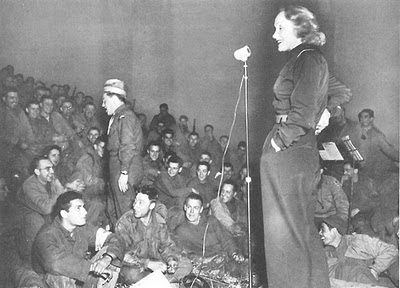
Marlene Dietrich performing in front of American Soldiers in World War II

Marlene Dietrich performed it often in USO shows for US Servicemen during the war. It has been reported translated and performed in 48 languages around the world.  Her recordings of the song are still popular.

The never has been a war where military men, Soldiers, Sailors, Marines and Airmen who have left their loves behind have not dreamed of them. Lili Marlene expressed that dream perhaps more than any song in history.

Today soldiers from many countries serve away from their loved ones in combat or deployed far from home.  I think that many have their Lili Marleen waiting for them and when they close their eyes can see that special person.

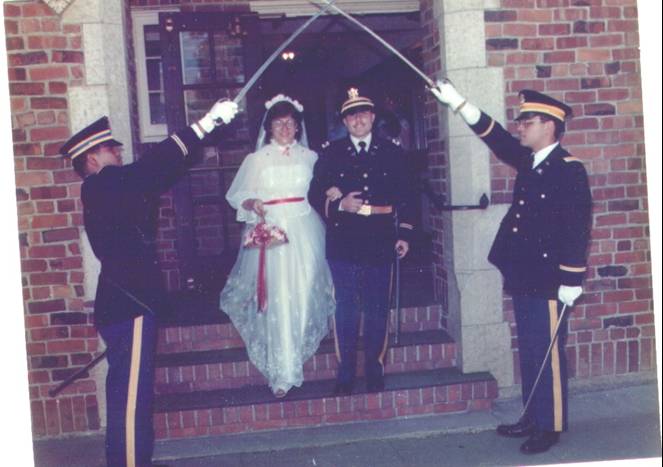
Me with my Bride Judy in 1983

Since I have served away from my wife many times for longer than I can count in the past 27 years I can relate to the feelings expressed in this song for I still remember the first time that served away from her when three weeks after we were married I departed for active duty as a new Army Second Lieutenant back in 1983.  Years later in Iraq I still could see my young bride. Sometimes our loves never change.

Peace

Padre Steve+
 

8 Comments

Filed under History, marriage and relationships, music, world war two in europe

The Minstrel Boy: The Song of Souls Changed by War

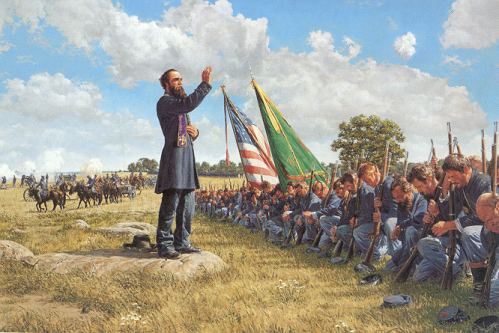
Fr Corby gives absolution to the Irish Brigade at Gettysburg

The Minstrel Boy (Thomas Moore)

The minstrel boy to the war is gone,
In the ranks of death ye will find him;
His father’s sword he hath girded on,
And his wild harp slung behind him;
“Land of Song!” said the warrior bard,
“Tho’ all the world betray thee,
One sword, at least, thy rights shall guard,
One faithful harp shall praise thee!”

The Minstrel fell! But the foeman’s chain
Could not bring his proud soul under;
The harp he lov’d ne’er spoke again,
For he tore its chords asunder;
And said “No chains shall sully thee,
Thou soul of love and bravery!
Thy songs were made for the pure and free
They shall never sound in slavery!”

The Minstrel Boy will return we pray
When we hear the news we all will cheer it,
The minstrel boy will return one day,
Torn perhaps in body, not in spirit.
Then may he play on his harp in peace,
In a world such as heaven intended,
For all the bitterness of man must cease,
And ev’ry battle must be ended.

(Last verse anonymous Civil War)

Three years ago I was in the process of returning home from Iraq spending my last couple of days in country before flying out to Kuwait and then the United States. I was already in a rather melancholy state knowing that the Chaplain incoming higher headquarters had turned off my relief for Al Anbar Province after I had paved the way for him with all of the teams of advisors that I had worked with during my time serving them. My relief a personal friend was diverted to the Army advisors with a different Iraqi Division in the north of the country. I felt that the incoming senior chaplain had betrayed and abandoned the men that I worked so hard to care for. Later I heard that he had disregarded my heavily detailed after action reports and told at least one senior chaplain that he “had heard that I was out there but didn’t know if I had done anything.”

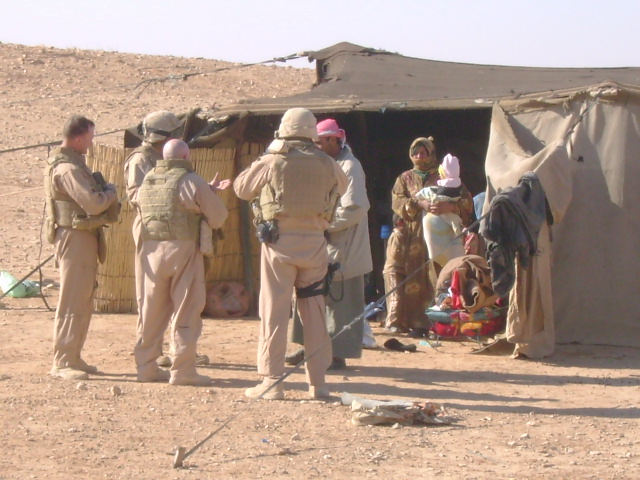
On the Syrian Border with members of a Border Team and Bedouin family

It was at that point that I realized that you could do your job and sacrifice yourself to complete a mission only to have someone with their own agenda do what they could to discredit you.  Where the senior Chaplain that I worked for did all that he could to support my team’s mission and see that we were properly recognized at Multi-National Corps Iraq in Baghdad his successor dismissed our work. It was the first time in my Navy career that I had experienced that.  I think it was the fact that I worked for a non-traditional billet working for an Army led joint command outside the normal Navy-Marine Corps chain was a big part of this. Inter-service rivalries and the distain of those bound by conventional thinking are not new and those that have done such non-conventional work have frequently been treated in a similar manner.

Looking back there are some songs which are particularly meaningful to me after my time in Iraq that send a chill up my spine when I hear them. One of these is the patriotic Irish song The Minstrel Boy written by Thomas Moore while a student in honor of friends killed in the Irish Rebellion of 1798.  The song was very popular among soldiers of Irish descent in the American Civil War as well as soldiers fighting in Irish Regiments in World War One and World War Two.

The song is powerful when you hear it for it speaks of the reality of war, war that changes those, even those that return home are not unchanged by it.  It speaks of the sacrifices required by those that go to war and even the effects on the community, the loss of young people.  The final verse added by an anonymous author during the American Civil War in a sense is a prayer, a prayer of return as well as reconciliation. It has been recorded a number of times including an instrumental during the film Blackhawk Down. Another rendition is in the telvision mini-series Rough Riders about the 1st U.S. Volunteer Cavalry at the Battle of San Juan Hill.

http://www.youtube.com/watch?v=un_AVYB-GI8&feature=player_embedded

My life has been changed and faith challenged. When I went to Iraq I still maintained a sense of idealism.   After Iraq and having to deal with PTSD and a psychological, spiritual and physical breakdown as well as a profound sense of abandonment by some senior chaplains, my former church and even God I am a different person. My faith which had been shattered to the point of being a practical agnostic for nearly two years has returned. I don’t regret that and do believe that it is a good thing. If we are not changed by what God allows or by what life brings I don’t think that we grow. As a Priest I wonder if I could work in the environment that I work without having gone through what I did.

I see many of the “minstrel boys” and girls of our era and having also been to war and come back changed the last lines of the final verse is a prayer that I echo. One of the versions that I particularly like is the one sung in the Star Trek the Next Generation episode “The Wounded.” While it is only the first verse it deals with the lives of two officers whose lives are forever changed by war. http://www.youtube.com/watch?v=RJudJ9S579A

This is dedicated to all those who have served who have gone through the pain of war and return until war shall be no more.

Peace

Padre Steve+

5 Comments

Filed under faith, film, History, iraq,afghanistan, Tour in Iraq, US Navy

Walk Like an Egyptian: The Egyptian Revolution and the Radicalization of the Middle East

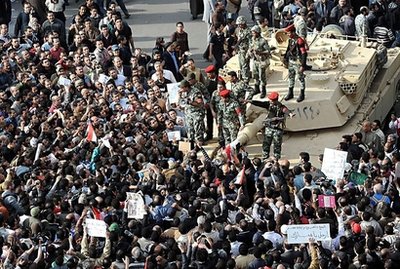
Egyptian Protesters with Army Soldiers (AFP Photo)

As Egypt goes so goes the Arab World. Egypt is the leader of the Arab World, the largest country and the country with the most powerful military, a developing educated class and one of the most strategically located countries in the world. Much of the world’s shipping passes the Suez Canal and the Egyptian peace treaty with Israel and cooperation with Israel on security issues has resulted in the most secure parts of the Middle East for decades.  The United States and the West count Egypt is their key ally in the Arab World but now the world trembles at the revolution going on in Egypt because of the uncertain and potentially destabilizing potential in the Middle East and the world.

Mohamed El Baradei (AFP Photo)

Egyptian President Hosni Mubarak had ruled Egypt under emergency conditions since the assassination of President Anwar Sadat in 1981 by military members loyal to the Muslim Brotherhood.  Mubarak has continued Sadat’s policies and been a strong ally of the United States and frequently has mediated for Israel in the Arab World.  He has been a stabilizing influence in the Middle East but has ruled as a dictator for all practical purposes since.  Mubarak dissolved his government and appointed a Vice President for the first time during his rule. He has steadfastly refused to step down.

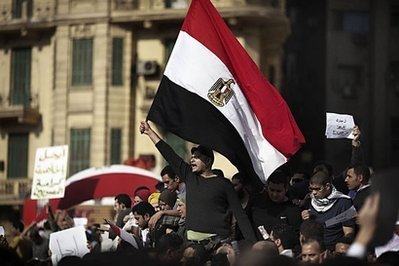
Protesters (AFP Photo)

Conditions in Egypt include extremely high unemployment, poverty and social services which are insufficient at best and in many locations non-existent. Discontent has been simmering for years with Egyptian Police and internal security forces keeping a tight lid on dissent. The military however is the most trusted and respected institution in Egypt as it has kept a distance between it and internal security matters. The Police on the other hand are viewed as corrupt and brutal.

Matters have blown up in ways that few anticipated in the past week and it all began in Tunisia, a country on the fringe of the Arab World. Within a week of a popular overthrow of their President the flames of change were rolling across the Arab World, Yemen, Jordan and Egypt. Popular uprisings in key Arab countries led in many cases by educated pro-Western moderate professionals using social media such as Facebook and Twitter.

As of now we are unsure of exactly what will happen. However Egypt is the key. The protests now have an internationally respected leader, the Nobel Laureate former head of the United Nations Nuclear Inspection agency Mohamed El Baradei.  El Baradei has called on the United States to support the Egyptian people and says that he has the mandate to form a national unity government and reached out to the Egyptian military which is important for the stability and security of any new government.

The demonstrations have grown in intensity and the Army had taken the place of the police on the streets to the cheers of demonstrators.  While this is happening there is a surge of looting and vandalism and individuals as well as communities are taking their security on themselves with no police on the streets to do so.

With the situation on the ground continuing to get worse the United States will have to act in support of the protestors or see its influence in whatever kind of government and with the Egyptian people dissipate.  The best outcome would be an orderly transition of power to some kind of national unity government headed by pro-Western leaders such as El Baradei.  Unless such a transition takes place the chances of the uprising to become radicalized under the domination of the long suppressed Muslim Brotherhood is a real possibility.  The key right now is the Egyptian military, respected at home and trusted it is closely linked to the United States in many ways.

We do not know how this will end and chances of it ending badly are as great as or greater than in 1979 when the Islamic Revolution overthrew the Shah of Iran and the subsequent moderate government. At least there is no Khomeini like figure ready to seize the moment and lead the country into an Iranian style revolution.  The Muslim Brotherhood has been under wraps for many years and though a fundamentalist movement is populated with professional people and not clerics and it publically renounced violence years ago. One can only hope that El Baradei and the military can lead the Egypt on a democratic and peaceful course and that Hosni Mubarak will ensure that the transition is peaceful.

Lord help us all.

Peace,

Padre Steve+
 

1 Comment

Filed under Foreign Policy, national security