Yearly Archives: 2013

Character Sacrifice, Service in the Face of Blatant Racism and the Dream that Cannot be Stopped: Brigadier General Benjamin O Davis Sr and Lieutenant General Benjamin O Davis Jr.

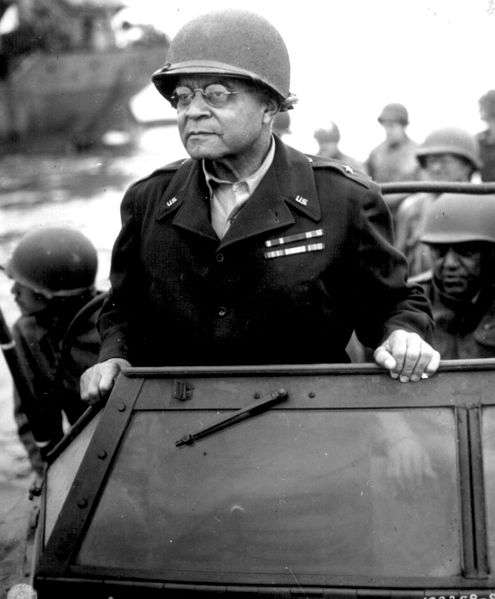
495px-Benjamin_o_davis

“I have a dream that my four little children will one day live in a nation where they will not be judged by the color of their skin, but by the content of their character.” Dr. Martin Luther King, Jr.

Last Friday, October 25th was the 73rd anniversary of the promotion of Colonel Benjamin O. Davis to the Rank of Brigadier General in the United States Army. In 1940 as the nation prepared for war many experienced officers were being promoted, some to Flag or General Officer rank. However, Colonel Davis was different, he was black.

Seldom do we take the time to remember that it really wasn’t that long ago that African Americans were for all practical purposes less than full citizens. Jim Crow laws, discrimination, segregation and impediments to voting were the norm in much of the country. Separate but equal was that mantra of racists in power. Blacks no matter how educated, how patriotic or how successful were discriminated against, held back and in far to many cases the target of hatred, violence and even murder. It was in such a climate that Benjamin O Davis served as an officer in the US Army.

While American History would not be the same without the life, work and prophetic ministry of Dr. Martin Luther King Jr. much of his hard fought success was brought about by men and women who served in the military, or for that matter played the game of baseball in an exemplary manner in an otherwise whiter than white bread world.

Dr. King was born in a time when most of the country was segregated when “separate by equal” was simply façade to cover the lie that in no way did African Americans have equal rights or privileges in the United States. Something some leaders attempt today through the use of voter purges that target Blacks, hispanics and other minorities. Sad to day that some things don’t change. Racists are still racists.

In 1922 Carrie Williams Clifford published the poem The Black Draftee from Georgia which alluded to to the lynching of Wilbur Little, a soldier and veteran of the First World War  who was lynched by a mob for wearing his uniform after being warned not to:

What though the hero-warrior was black?
His heart was white and loyal to the core;
And when to his loved Dixie he came back,
Maimed, in the duty done on foreign shore,
Where from the hell of war he never flinched,
Because he cried, “Democracy,” was lynched.

 Dr King was born less than 60 years after the secession of the Southern states from the Union and the beginning of the American Civil War. Though that blood conflict had freed the slaves it had not freed African Americans from prejudice, violence and discrimination.  When Dr. King began his ministry and was thrust upon the national stage as the strongest voice for equal rights and protections for blacks the discrimination and violence directed towards blacks was a very real and present reality in much of the United States.
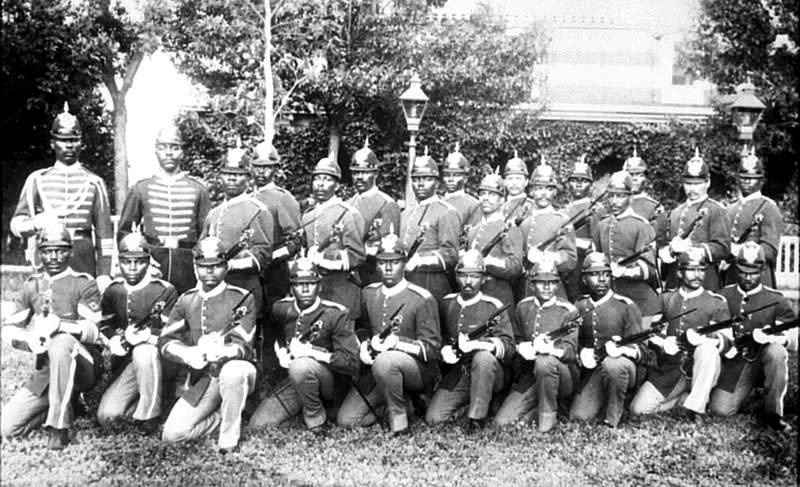
Events_Buffalo_Soldier

 Buffalo Soldiers in the 1880s 

However there were cracks beginning to appear in the great wall of segregation in the years preceding Dr. King’s ascent to leadership as the moral voice of the country in the matter of racial equality. In baseball Jackie Robinson became the first African American player in Major League Baseball opening a door for others who would become legends of the game as well as help white America begin its slow acceptance of blacks in sports and the workplace.

Likewise the contributions of a father and son Brigadier General Benjamin O. Davis Sr. and General Benjamin O. Davis Jr. were advancing the cause of blacks in the military which eventually led to the desegregation of the military in 1948.  The impact of these two men cannot be underestimated for they were trailblazers who by their lives, professionalism and character blazed a trail for African Americans in the military as well as society.

Benjamin O. Davis Sr. was a student at Howard University when the USS Maine exploded and sank in Havana Harbor.  He volunteered for service and was commissioned as a temporary 1st Lieutenant in the 8th United States Volunteer Infantry. He was mustered out of service in 1899 but enlisted as a private in the 9th United States Cavalry one of the original Buffalo Soldiers regiments.

9th_cavalry_camp_lawton_1

 Buffalo Soldiers in the Philippines 

He was initially the unit clerk of I troop of 3rd Squadron and was promoted to be the squadron Sergeant Major. He was commissioned while the unit was deployed to the Philippines counterinsurgency campaign and assigned to the 10th Cavalry.

Early in his career Davis was assigned in various positions including command, staff and instruction duties including as Professor of Military Science and Tactics in various ROTC programs.  He reached the rank of rank of temporary Lieutenant Colonel and Squadron Commander of 3rd and later 1st Squadron 9th Cavalry from 1917-1920 in the Philippines before reverting to the rank of Captain on his return as part of the post World War I reduction in force.

He continued to serve during the inter-war years and assumed command of the 369th Infantry Regiment New York National Guard in 1938. He was promoted to Brigadier General on 25 October 1940 becoming the first African American elevated to that rank in the United States Army and was assigned as Commander 4th Brigade 2nd Cavalry Division. He later served in various staff positions at the War Department and in France and was instrumental in the integration of the U.S. Military. He retired after 50 years service in 1948 in a public ceremony with President Harry S. Truman presiding. He was a member of the American Battle Monuments Commission from 1953-1961 and died in 1970.
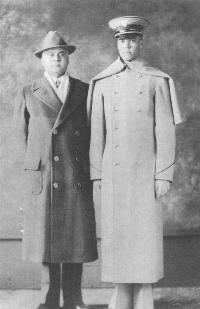
davis-3

Colonel Davis with his son Cadet Benjamin O Davis Jr.

His son Benjamin O. Davis Jr. was appointed to West Point in 1932.  He graduated and was commissioned in 1936 graduating 35 out of 278, the fourth African American graduate of West Point. During his time at the Academy most of his classmates shunned him and he never had a roommate.  Despite this he maintained a dogged determination to succeed.  The Academy yearbook made this comment about him:

“The courage, tenacity, and intelligence with which he conquered a problem incomparably more difficult than plebe year won for him the sincere admiration of his classmates, and his single-minded determination to continue in his chosen career cannot fail to inspire respect wherever fortune may lead him.”

He was denied entrance to the Army Air Corps because of his race and assigned to the Infantry first to the all lack 24th Infantry Regiment at Ft Benning where he was not allowed in the Officers Club due to his race. Upon his commissioning the Regular Army had just 2 African American Line Officers, 2nd Lieutenant Davis and his father Colonel Davis. After completion of Infantry School he was assigned as an instructor of Military Science and Tactics and the Tuskegee Institute.
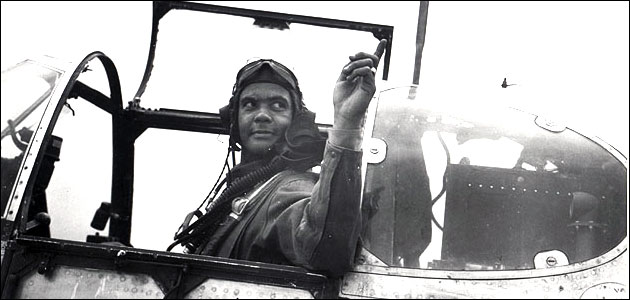
benjaminodavisjr02

Benjamin O Davis Jr in WWII

In 1941 the Roosevelt Administration moved to create a black flying unit and Captain Davis was assigned to the first black class at the Tuskegee Army Air Field and in March 1942 one his wings as one of the first 5 African Americans to complete flight training.  In July 1942 the younger Davis was assigned as Commanding Officer of the 99th Pursuit Squadron which served in North Africa and Sicily flying Curtiss P-40 Warhawks.

He was recalled to the United States in September 1943 to command the 332nd Fighter Group. However some senior officers attempted to prevent other black squadrons from serving in combat alleging that the 99th had performed poorly in combat. Davis defended his squadron and General George Marshall ordered an inquiry which showed that the 99th was comparable to white squadrons in combat and during a 2 day period over the Anzio beachhead the pilots of the 99th shot down 12 German aircraft.
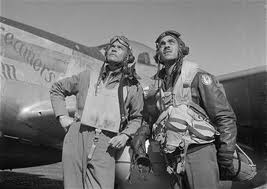
images-58

Colonel Benjamin O Davis Jr (left) with one of his Tuskegee Airmen

Davis took the 332nd to Italy where they transitioned to P-47 Thunderbolts and in July 1944 to the P-51 Mustang which were marked with a signature red tail. During the war, the units commanded by Davis flew more than 15,000 sorties, shot down 111 enemy planes, and destroyed or damaged 273 on the ground at a cost of 66 of their own planes. Their record against the Luftwaffe was outstanding and their protection of the bombers that they escorted was superb with very few bombers lost while escorted by them men that the Luftwaffe nicknamed the Schwarze Vogelmenschen and the Allies the Red-Tailed Angels or simply the Redtails. Davis led his Tuskegee Airmen to glory in the war and their performance in combat helped break the color barrier in the U.S. Military which was ended in 1948 when President Truman signed an executive order to end the segregation of the military. Colonel Davis helped draft the Air Force plan and the Air Force was the first of the services to fully desegregate.
250px-Benjamindavis-228x300

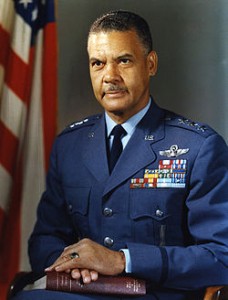
Lieutenant General Benjamin O Davis Jr

 Colonel Davis transitioned to jets and let the 51st Fighter Interceptor Wing against Chinese Communist MIGs in the Korean War.  He was promoted to Brigadier General in 1954 and served in numerous command and staff positions. He retired in 1970 with the rank of Lieutenant General and was advanced to General while retired by President Clinton in 1998.  He died in 2002 at the age of 89.

The legacy of Benjamin O. Davis Senior and Benjamin O. Davis Junior is a testament to their character, courage and devotion to the United States of America. They helped pioneer the way for officers such as General Colin Powell and helped change this country for the better.  During times when discrimination was legal they overcame obstacles that would have challenged lesser men.

Benjamin O. Davis Junior remarked “My own opinion was that blacks could best overcome racist attitudes through achievements, even though those achievements had to take place within the hateful environment of segregation.”

Such men epitomize the selfless service of so many other African Americans who served the country faithfully and “by the content of their character” triumphed over the evil of racism and helped make the United States a more perfect union. Today many African Americans as well as members of other minorities including racial minorities, women and gays serve with distinction in the military. What they do today is in many part a direct result of the courage, character and convictions of men like Benjamin O Davis Sr and Benjamin O Davis Jr.

Unfortunately the struggle for equality is never over and current generation will have to work just as hard to ensure that the freedoms won at so great a cost are not lost. General Colin Powell, the first Black man to serve as Chairman of the Joint Chiefs of Staff and Secretary of State commented in 1994:

“I stand here today as a direct descendant of those Buffalo Soldiers and of the Tuskegee Airmen and all the black men and women who have served the nation in uniform, I will never forget my debt to them. I didn’t just show up. I climbed on the backs of those who never had the kind of opportunity that I had.”

Peace

Padre Steve+

4 Comments

Filed under civil rights, History, Military, Political Commentary, world war two in europe

Whoever Exalts Himself: The Snare of Ideological Christians

self-righteousness

“Jesus addressed this parable to those who were convinced of their own righteousness and despised everyone else. 

“Two people went up to the temple area to pray; one was a Pharisee and the other was a tax collector.  The Pharisee took up his position and spoke this prayer to himself, ‘O God, I thank you that I am not like the rest of humanity — greedy, dishonest, adulterous — or even like this tax collector. I fast twice a week, and I pay tithes on my whole income.’

But the tax collector stood off at a distance and would not even raise his eyes to heaven but beat his breast and prayed, ‘O God, be merciful to me a sinner.’

I tell you, the latter went home justified, not the former;for whoever exalts himself will be humbled, and the one who humbles himself will be exalted.” Luke 18: 9-14

Pope Francis astounded the catholic, and much of the conservative Christian world last week when he commented in a homily that Christians who had allowed their faith to become ideology had a “serious illness.”

The Pope’s comments would not have been so remarkable had so many Christians not have surrendered faith in Jesus for barren ideologies.

Pope Francis is no stranger to this. In Argentina where he served as a Priest, Bishop and Cardinal he saw this type of faith from ideologues of both the political left and political right. The conservatives were those who saw faith as something to buttress their standing and place in society condoning the heavy handed methods of torture, intimidation and murder used by military dictatorships. On the left he saw theologians and pastors who had embraced Liberation Theology who went beyond all the good things brought out by that theology and joined hard lined Marxists in a political struggle. Both sides in Argentina’s culture wars had a part in politicizing and turning the Gospel into ideologies which only used Jesus as to buttress their agendas.

Because of this he is probably a bit more understanding of the havoc that ideologues claiming to be Christians can do to the redemptive message of the Gospel. In the passage from Luke I cannot help but see so many of the ideologues that masquerade as ministers in our American society as the Pharisee.

Since many have not read or hear what the Pope had to say I am copying some of that homily here:

“The faith passes, so to speak, through a distiller and becomes ideology. And ideology does not beckon [people]. In ideologies there is not Jesus: in his tenderness, his love, his meekness. And ideologies are rigid, always. Of every sign: rigid. And when a Christian becomes a disciple of the ideology, he has lost the faith: he is no longer a disciple of Jesus, he is a disciple of this attitude of thought… For this reason Jesus said to them: ‘You have taken away the key of knowledge.’ The knowledge of Jesus is transformed into an ideological and also moralistic knowledge, because these close the door with many requirements.”

… “The faith becomes ideology and ideology frightens, ideology chases away the people, distances, distances the people and distances  the Church from the people. But it is a serious illness, this of ideological Christians. It is an illness, but it is not new, eh? Already the Apostle John, in his first Letter, spoke of this. Christians who lose the faith and prefer the ideologies. His attitude is: be rigid, moralistic, ethical, but without kindness. This can be the question, no? But why is it that a Christian can become like this? Just one thing: this Christian does not pray. And if there is no prayer, you always close the door.”

“The key that opens the door to the faith,” the Pope added, “is prayer.” The Holy Father warned: “When a Christian does not pray, this happens. And his witness is an arrogant witness.” He who does not pray is “arrogant, is proud, is sure of himself. He is not humble. He seeks his own advancement.” Instead, he said, “when a Christian prays, he is not far from the faith; he speaks with Jesus.”

Today’s Gospel lesson from the lectionary was the passage from Luke quoted at the beginning of this article. It really is a remarkable passage. It is so  because Luke notes that Jesus is talking to people who “were convinced of their own righteousness and despised everyone else.” 

This is the mark of an ideologue and zealot regardless of their ideology. The sad thing is that when those people claim to be Christians that it does great damage to the faith, the Gospel and the witness of the people of God. One of the major reasons noted by a Barna Group survey in 2011 as to why young people were fleeing the church was that “Christians demonize everything outside of the church,” that “God seems missing from my experience of church” that “Christians are too confident they know all the answers” that “church is like a country club, only for insiders” and that they cannot “ask my most pressing life questions in church.”

Others have noted that many outside the church feel that Christians are selfish and not interested in those outside the church, are self centered and judgmental, and are unwilling to develop true friendships with non-Christians.

It is amazing when you think of it. I for one remember my days in Evangelical Churches where if you talked about someone that was not a member of the church that people would ask “are they saved?” That always bothered me because I had a lot of friends that were Christians but not Evangelicals, from mainline, Anglican, Roman Catholic and Orthodox churches. likewise I had friends outside the church, people who were non-believers, agnostics, atheists or members of other religions. I saw them as friends and people, but inside the sheltered and isolated cloisters of Evangelicalism they were less than fully human.

The words of Jesus to those he addressed in this passage from Luke are much like so many of us who claim to be Christians.

I have to admit that I still struggle many times with faith and that I get nervous when I see Christians appear to have no regard for others. Maybe it is because I was treated rather shamefully by Conservative Christians who I thought cared about me who when I experienced a faith crisis abandoned or even worse attacked me. Likewise when I was 12 years old and my dad was serving in Vietnam I had a Sunday School teacher tell me that my dad was a “baby killer.”

So I have experienced the Christian ideologue attack from the left and the right. Neither time did I like it and I hate to say that I have little tolerance when I see it.  Thus I try very hard, despite my own theological, philosophical and political leanings to treat people as I would want to be treated. Thus I have friends that range across the entire political and religious spectrum. I also probably have some enemies across the spectrum too, but it is not because I want to be.

I have become enamored with Pope Francis. I do not agree with everything that he says, but that being said I find him to be authentic and human, a man who I can not only respect as a religious leader, but as a human being. I would never want his job or for that matter to be anything more than a Priest, Chaplain and academic and in doing so care for the people that I serve as a Priest, Chaplain and teacher, as well as those who I meet in the places that many Christians would never enter.

I do hope that doesn’t sound arrogant because I certainly don’t mean it to be. I guess it is just because I have seen so much wrong done in the name of Jesus that I want to call attention to it without being an ass or being harsh.

So tomorrow begins a new work week. School continues as does the World Series and my Joint forces Staff College Softball league. This coming weekend I will be heading up to Gettysburg as part of a staff ride.

Have a great week and don’t forget the Gospel and the people that Jesus seems to care about.

Peace

Padre Steve+
Leave a comment

Filed under christian life, faith, ministry, Political Commentary, Religion

1812: The Year of the Frigates

Friends of Padre Steve’s World,
It has been a busy day. I have had a friend over working to lay down some laminate and as usual I find that I am nearly useless when it comes to anything dealing with tools. Since I am tired and because I will be celebrating Eucharist at the JFSC Chapel and then coming home to finish the work on the laminate with my friend I will simply re-post an older article. Since the Navy birthday was not long ago I thought that an article about the “Year of the Frigates” or the first year of the War 1812 would be in order.
Have a nice night and weekend, and thank you for following and welcome to my new subscribers.
Peace
Padre Steve+

padresteve's avatarThe Inglorius Padre Steve's World

USS Constitution

This is the second of a series of articles I will write commemorating the 236th anniversary of the founding of the United States Navy. This article discusses the actions of the USS Constitution and USS United States at the outbreak of hostilities in which they defeated three British Frigates in battles that are legend in the annals of Naval History. I grew up reading the stories of naval actions during the War of 1812 with rapt fascination.  I could describe the battles, the ships and the brave Captains in detail even at a young age.  I can close my eyes and see the paintings, drawings and the diagrams of the ships, their sailors and the battles that they fought. I guess that I was destined to end up in the Navy. But then how could I not? My birthday falls on March 27th, the anniversary…

View original post 1,726 more words

Leave a comment

Filed under Loose thoughts and musings

The Battle of Cape Engano

RptsI-P60

“TURKEY TROTS TO WATER GG FROM CINCPAC ACTION COM THIRD FLEET INFO COMINCH CTF SEVENTY-SEVEN X WHERE IS RPT WHERE IS TASK FORCE THIRTY FOUR RR THE WORLD WONDERS.” Admiral Nimitz to Admiral Halsey

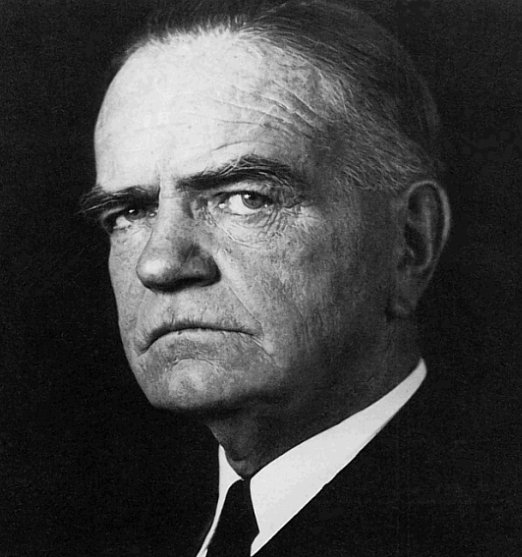
After Admiral William “Bull” Halsey felt that he had heavily damaged the Japanese Center Force during the Battle of the Sibuyan Sea he withdrew the Fast Battleships of Task Force 34 from the San Bernardino Strait in order to use them in a surface engagement against Admiral Jisaburo Ozawa’s Northern Force. Halsey assumed that Ozawa’s carriers were the main threat to the American invasion forces. However he did not know that Ozawa’s carriers had very few aircraft embarked and that the Northern force was in fact a decoy, designed to draw him away from Vice Admiral Takeo Kurita’s Center and the two task forces of the Southern force.

b55

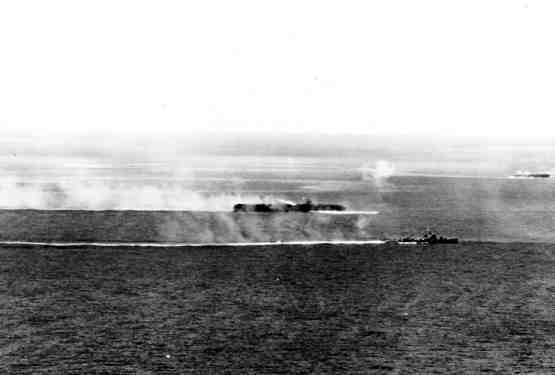
The Zuikaku uder attack at Cape Engano

When Halsey’s aircraft reported the Center force withdrawing he believed that the threat had been removed. He wrote in his memoirs “I believed that the Center Force had been so heavily damaged in the Sibuyan Sea that it could no longer be considered a serious menace to Seventh Fleet.” Thus he moved with haste to intercept, engage and destroy the Northern force and its carriers and battleships.  Halsey believed that his engagement against the Northern force would culminate when his fast battleships destroyed whatever Japanese surface forces remained.

It was not a bad assumption. Ever since the early days of the Pacific war the truly decisive engagements had been decided by carriers. Unfortunately for the American sailors of Taffy-3, the group of Escort Carriers, destroyers and destroyer escorts which encountered Kurita’s Center force which had doubled back overnight and passed through the San Bernardino Strait surprising Rear Admiral Thomas Kinkaid’s task group of “Jeep” Carriers.

Destroyers_laying_smoke_screen_during_Battle_of_Samar_1944

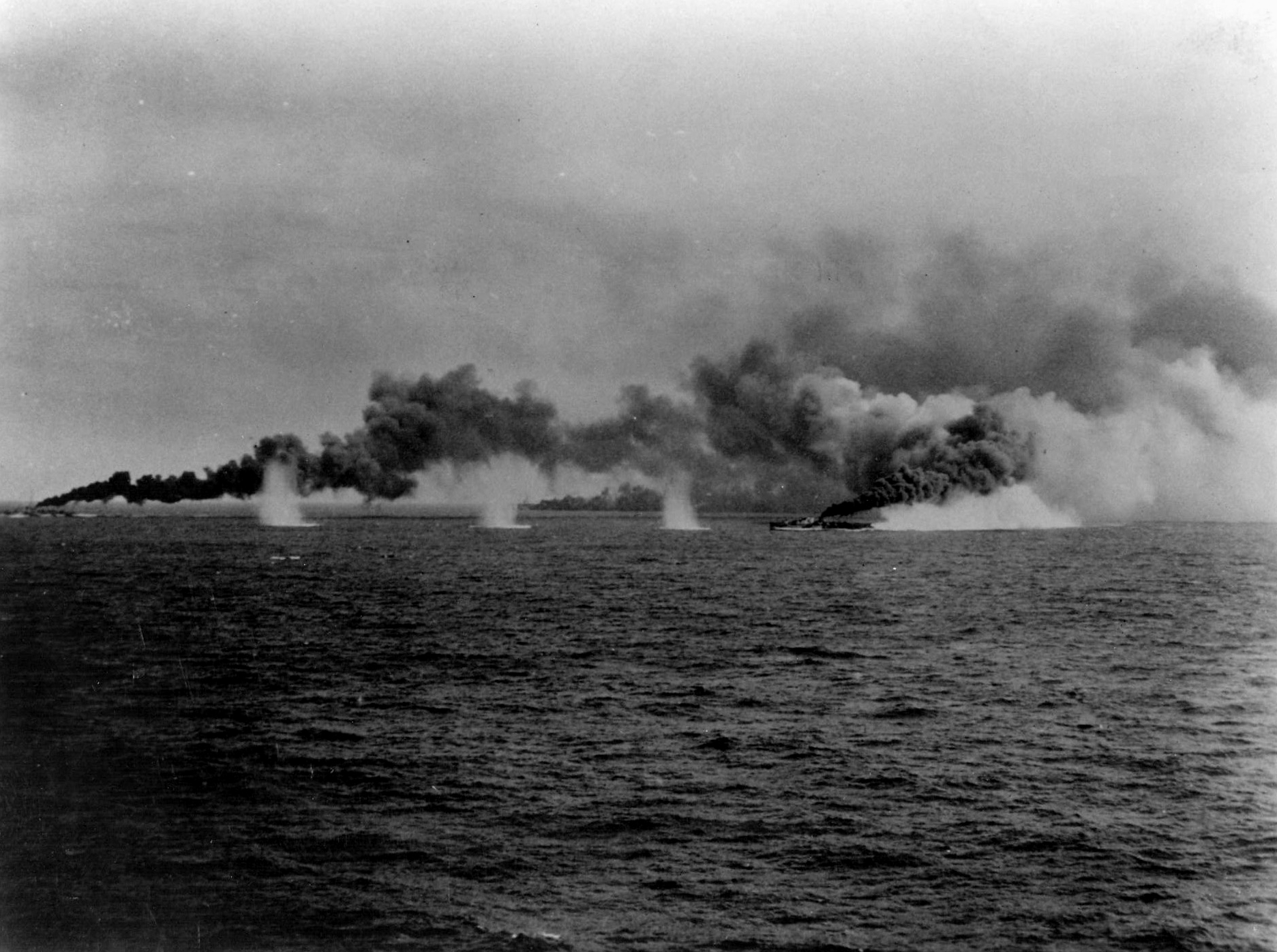
The Battle off Samar

The unequal battle that ensued off Samar was a near run thing for the Americans. Had Kurita not been confused about what forces he was facing and pressed his attacks he may have inflicted painful damage on the actual invasion forces. However after a morning of battle, in which Taffy-3’s destroyers, destroyer escorts, aircraft and even the Jeep carriers themselves inflicted heavy damage on the Japanese force Kurita withdrew.

Halsey

Admiral William “Bull” Halsey

However as Taffy-3 battled for its life against Kurita’s battleships, cruisers and destroyers Halsey’s carrier air groups were pounding Ozawa’s hapless carriers and their escorts. About 0800 on the 25th Kinkaid’s desperate messages began to reach Nimitz and Halsey. However since Halsey did not believe just how serious the situation was he continued to pursue Ozawa’s force. When he received Nimitz’s message he was incensed. The message “TURKEY TROTS TO WATER GG FROM CINCPAC ACTION COM THIRD FLEET INFO COMINCH CTF SEVENTY-SEVEN X WHERE IS RPT WHERE IS TASK FORCE THIRTY FOUR RR THE WORLD WONDERS was composed of three parts. The preface “Turkey trots to water” was padding, as was the last part “the world wonders.”

ship_zuiho2

Light Carrier Zuiho under attack

However the communications officer on Halsey’s flagship only removed the first section leaving “Where is Third Fleet, the world wonders.” Halsey was flabbergasted and though the battleships of Task Force 34 were almost in range of the Japanese force he sent them south to relieve Kinkaid’s beleaguered force. However by the time Vice Admiral Willis Lee’s battle line arrived Kurita had withdrawn, losing 3 heavy cruisers sunk, three heavy cruisers and one destroyer heavily damaged.

gsxN4rT

Zuikaku being abandoned

All the Japanese carriers were sunk along with a light cruiser and a number of destroyers, but Kurita’s heavy forces escaped. Among the Japanese losses was the carrier Zuikaku the last surviving carrier of the Pearl Harbor attack. Naval historian Samuel Elliott Morrison wrote:

“If TF 34 had been detached a few hours earlier, after Kinkaid’s first urgent request for help, and had left the destroyers behind, since their fueling caused a delay of over two and a half hours, a powerful battle line of six modern battleships under the command of Admiral Lee, the most experienced battle squadron commander in the Navy, would have arrived off the San Bernardino Strait in time to have clashed with Kurita’s Center Force… Apart from the accidents common in naval warfare, there is every reason to suppose that Lee would have “crossed the T” and completed the destruction of Center Force.” 

The Battle of Cape Engano closed the epic extended battle of Leyte Gulf. The victory of the US Navy was decisive even without the final destruction of Kurita’s forces. The remnants of the Japanese forces would never mount a serious offensive threat again. The survivors would be hunted down over the next 9 months, some sunk by submarines, other in surface engagements, still more to air attacks at Okinawa and in Japanese ports.

USS Mobile 10

Halsey received much criticism for his decision to withdraw TF 34 from San Bernardino Strait. However in his defense the action exposed one of the key problems in any kind of warfare, the problem of seams. Kinkaid’s escort carriers belonged to 7th Fleet which came under the operational control of Douglas MacArthur’s Southwest Pacific Region while Halsey commanded 3rd Fleet fell under Admiral Nimitz’s Central Pacific region. This created a situation where two fleets belonging to two regions under two separate commanders were attempting to fight a single battle. The principle of unity of command and unity of effort was violated with nearly disastrous results.

Peace

Padre Steve+

1 Comment

Filed under History, Military, Navy Ships, US Navy, world war two in the pacific

The Rebirth of the Divine Wind: Kamikazes at Leyte Gulf

800px-St._Lo_First_Kamikaze_attack_sl1a

“In my opinion, there is only one way of assuring that our meager strength will be effective to a maximum degree. That is to organize suicide attack units composed of A6M Zero fighters armed with 250-kilogram bombs, with each plane to crash-dive into an enemy carrier…” Admiral Takijirō Ōnishi

It was a tactic born of desperation but one that fit in well with the philosophy of Bushido. After the Battle of the Philippine Sea, the “Marianas Turkey Shoot” in June 1944 and the slaughter of land based Japanese Naval and Army air forces based in Formosa in September of that year Japanese leaders began to look to a tactics born of desperation but which fit their Bushido based ethos of sacrifice.

Lt_Yukio_Seki_in_flightgear

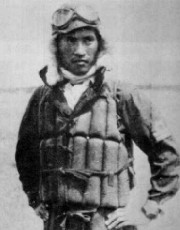
Lt. Yukio Seki

Suicide attacks were nothing new to the Japanese, but until October 1944 they were tactics decided on by individuals who saw no alternative to the choice. In October 1944 that calculus changed, instead of individuals or isolated units which had no hope of victory conducting suicide attacks, commanders decided to employ suicide attackers as a matter of course.

1st_Kamikaze_Mission_19441025-1


When the American forces invaded the Philippines Admiral Takijirō Ōnishi was commander of the First Air Fleet based in the Northern Philippines. He was not a fan of Kamikaze tactics and viewed them as heresy. However after the slaughter of the reconstituted Naval Air Force at the Battle of the Philippine Sea he reluctantly changed his mind. I say reluctantly based on his previous views and because after he committed ritual suicide following the Japanese surrender he apologized to the estimated 4000 pilots that he sent to their death and their families.

Admiral_Takijiro_Onishi

Admiral Ōnishi

But in October 1944 with Japan reeling from defeats in the Pacific and its supply route for oil and other raw materials threatened desperation was the order of the day.

The 201st Navy Flying Corps based out of Clark Field near Manila was the major land based Japanese Naval Air Force unit in the Philippines. Among its pilots was a young Naval Officer and Aviator named Lt. Yukio Seki. Seki was a graduate of the Japanese Naval Academy at Eta Jima and was recently married. He was not an ideologue or believer in suicide attacks. When questioned by a reporter before his squadron launched the first Kamikaze attacks he remarked to Masashi Onoda, a War Correspondent :“Japan’s future is bleak if it is forced to kill one of its best pilots. I am not going on this mission for the Emperor or for the Empire… I am going because I was ordered to!” 

Seki_photo_ma1944-10-20

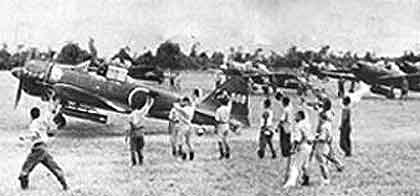
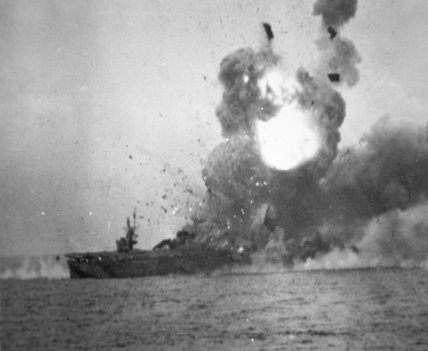
On October 25th 1944 Seki led his group of 5 A6M2-5 Zero fighters, each carrying a 550 pound bomb took off and attacked the Escort Carriers of Rear Admiral Clifton Sprague’s “Taffy-3.” The five pilots all died in their attacks but two damaged the USS Kalinin Bay and USS Kitkun Bay while two aircraft, one believed to be Seki’s hit the USS St Lo causing mortal damage which sank that ship in less than half an hour with the loss of over 140 sailors.

The attacks of Seki’s small squadron were a harbinger of what was to come. Over the next 10 months over 4000 Japanese pilots would die in Kamikaze attacks against US Navy and Allied Naval units. Numbers of ships destroyed or damaged by Kamikazes are debated by some historians believe that 70 US and Allied ships were sunk or damaged beyond repair and close to 300 more damaged. 2525 Imperial Japanese Navy pilots and 1387 Imperial Army pilots died in Kamikaze attacks killing almost 5000 sailors and wounding over 5000 more.

Admiral Ōnishi who made the decision to make Kamikazes a part of Japan’s offensive strategy in 1944 appeared to regret that decision. In his suicide note he urged young Japanese to rebuild the country and seek peace with all people and offered his death a penance for the nearly 4000 pilots he sent to their deaths. Accordingly when he committed ritual suicide (seppuku) he did so alone, with a second to finish the job and died over 15 hours after disemboweling himself.

The Kamikaze campaign did not alter the course of the war, but it did introduce a new dimension of terror and misguided sacrifice. I do pray that one day war will be no more and that even though I expect war to remain part of our world until longer after my death  that nations, peoples or revolutionary groups will no longer send their v=best and brightest to certain death.

Peace

Padre Steve+
 

3 Comments

Filed under aircraft, History, Military, Navy Ships, world war two in the pacific

Leyte Gulf: The Greatest Naval Battle in the History of the World

gb_at_samar

USS Gambier Bay being attacked by Japanese Surface Forces battle 

I will break into Leyte Gulf and fight to the last man…would it not be shameful to have the fleet remaining intact while our nation perishes?” Vice-Admiral Takeo Kurita – 1944

”In case opportunity for destruction of a major portion of the enemy fleet is offered, or can be created, such destruction becomes the primary task.”

Admiral Chester Nimitz – In his order to Halsey, prior to the Battle of Leyte Gulf – October 1944

battle-line-leyte-gulf_life1

The Old Battleships of the 7th Fleet

Sixty-nine years ago the largest and most geographically expansive naval battle ever fought began. A few days before the forces of General Douglas MacArthur’s Southwest Pacific command and Admiral Chester Nimitz’s Central Pacific command joined to invade and liberate the Philippines from the Japanese. It was less than three years since Japan had attacked Pearl Harbor and two and a half years after MacArthur had left the Philippines vowing “I shall return.” 

h63435-1

The Japanese knew that the battle for the Philippines was a must win. An American victory would ensure that Japan would be cut off from the vital natural resources of Indo-China, the Dutch East Indies and Borneo, particularly oil, without which it could not remain in the war.

The Imperial Navy was tasked to work with land based air forces to thwart the invasion by drawing off the American Fast Carrier task forces and allowing heavy surface forces to seek out and destroy potentially vulnerable troop transports and supply ships in Leyte Gulf.

It was a complicated plan, but one which had a chance of disrupting the American invasion, and came perilously close to doing so.

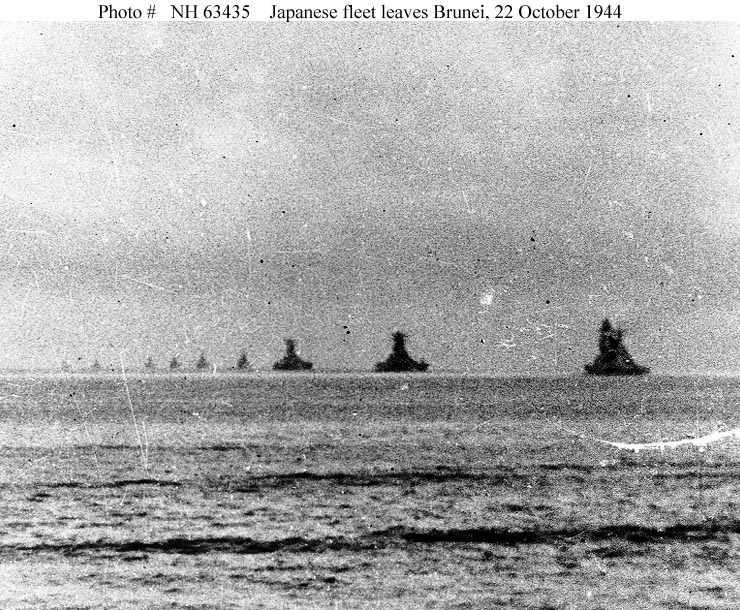
Admiral Jisaburo Ozawa’s Northern force of four aircraft carriers without viable air groups was a decoy. Vice Admiral Shoji Nishimura and Vice Admiral Kiyohide Shima commanded separate task forces both committed to breaking into Leyte Gulf through Surigo Strait. Vice Admiral Takeo Kurita who commanded the main effort, the powerful Center Force which was to break into Leyte Gulf through San Bernardino Strait. Vice Admiral Takijirō Ōnishi commanded the Philippines based 1st Air Fleet which turned to the use of Kamikazes as a means to destroy American warships.

Princeton1

Kamikaze attack

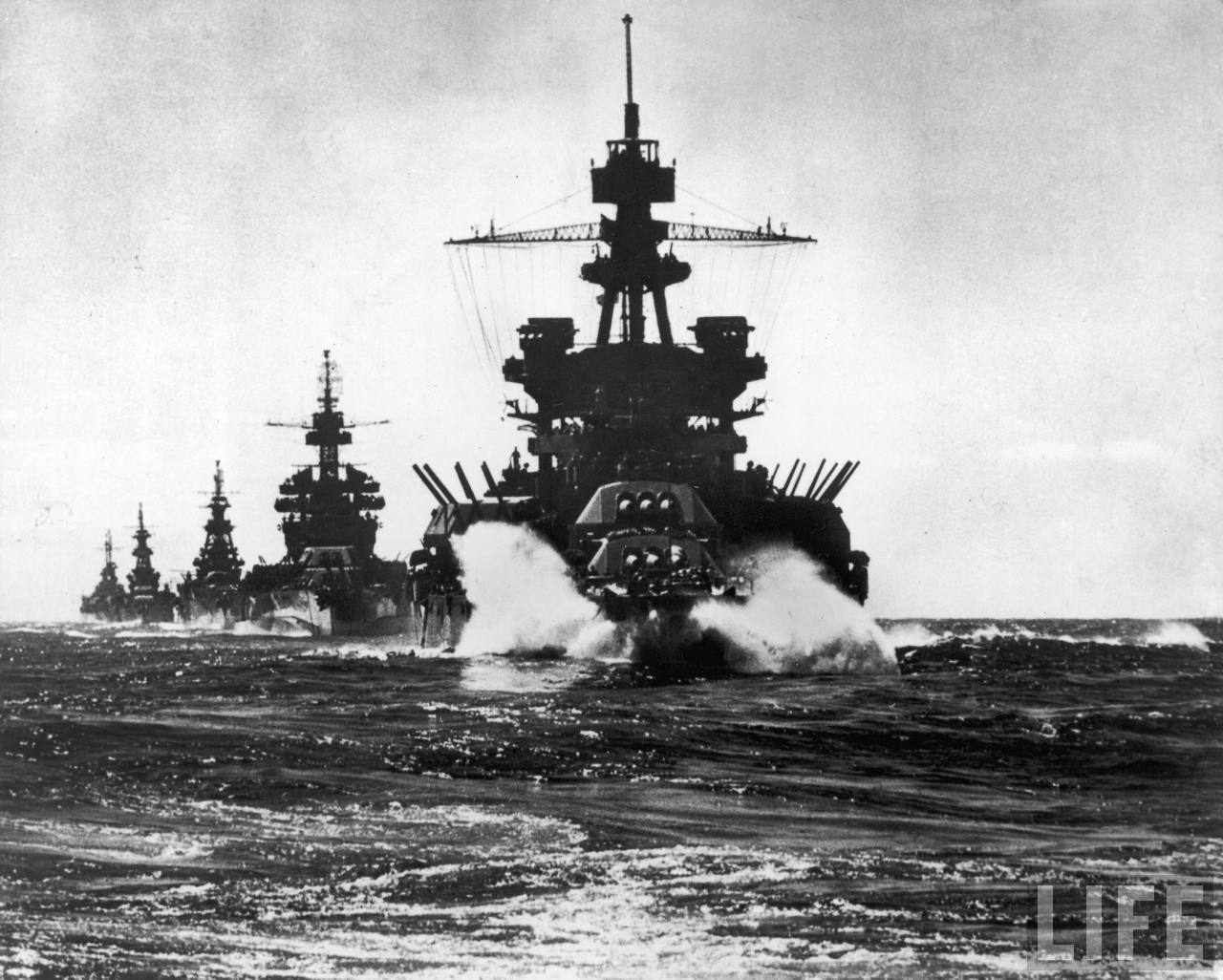
The US forces included the American Third Fleet commanded by Admiral William “Bull” Halsey was the primary naval force composed of the Fast Carrier Task Forces and fast battleships. Adusmiral Thomas Kinkaid commanded the 7th Fleet which was the invasion force and its escorts, including a number of carrier task forces built around the Escort Carriers and the old battleships of Jesse Oldendorf’s Task Group. The latter included a number of the survivors of the Pearl Harbor attack including the USS West Virginia, USS California, USS Tennessee, USS Maryland and USS Pennsylvania. Oldendorf’s flagship, the USS Mississippi was not at Pearl Harbor but likewise one of the “old ladies” of the fleet.

g378525

The battle was unique because of how long it went and how many separate engagements were included.  Not counting patrol craft, submarines and auxiliaries close to 300 warships and nearly 2000 aircraft were engaged in 5 separate engagements waged by surface ships, naval air forces and submarines.

886896

USS St Lo blows up after being hit by Kamikaze 

The battles included an engagement in which American Submarines took on the Center Force, naval aircraft engaged the Center and Southern Forces, the old battleships fought the last battleship against battleship engagement in history, heavy surface forces engaged and were repulsed by light forces and a decoy force which would suffer terribly would keep the bulk of the best American forces out of the main battle. It would also see the first coordinated use of Kamikaze suicide attack aircraft by Japan.

014849

USS West Virginia 

Tonight I am linking a number of articles that I have written previously about this amazing battle. In the next few days I will add a couple new articles to the collection.

The Battle of Leyte Gulf: Introduction and the Battle of Palawan Passage

The Battle of Leyte Gulf: Sinking the Musashi 

Slaughter at Surigao: The Old Ladies get their Revenge

For those unfamiliar with the battle that would like a deeper treatment than I provide in these links I recommend The Battle of Leyte Gulf 23-26 October 1944 by Thomas C Cutler, The Last Stand of the Tin Can Sailors: The Extraordinary World War II Story of the U.S. Navy’s Finest Hour by James Hornfisher, Battle Of Leyte Gulf by Edwin P Hoyt, Leyte: June 1944-January 1945 (History of United States Naval Operations in World War II) by Samuel Elliott Morrison and Battle of Surigao Strait by Anthony P Tully. Hoyt and Morrison’s books were the first that I ever read on the subject back when I was in Junior High School but for an overview I think Cutler’s work is better. The other two works present interesting and informative views of two of the decisive engagements of the battle.

uss roberts 101944

As I said in the next few days I plan on adding more articles on this fascinating battle. If things work out I should have something on the Battle off Samar, the Battle of Cape Engano and the Kamikaze debut.

Have a nice night and never forget the sacrifice of all of the brave sailors.

Peace

Padre Steve+

1 Comment

Filed under History, Military, Navy Ships, US Navy, world war two in the pacific

Remember those that Came in Peace: BLT 1/8 and the Bombing of the Beirut Barracks

People of Padre Steve’s World. A post from last year but since today is the 30th anniversary of this terrible attack on our Marines in Beirut I thought it fitting to put it out again.
Peace,
Padre Steve+

padresteve's avatarThe Inglorius Padre Steve's World

In the early hours of October 23rd 1983 I was awake. I could not sleep. I was a new Army 2nd Lieutenant attending the Junior Officer Maintenance Course at Ft Knox Kentucky following the completion of the Medical Service Corps Officer Basic Course enroute to my first assignment in Germany.


I had gone out with friends earlier in the evening. Since Ft Knox was located in a dry county we made a trip up to a restaurant in Louisville followed by a trip to a bar and dance club for drinks. All of us that went were either newly married or engaged and none of our wives or soon to be wives were there we were on good behavior. After a dinner and a few drinks we went back to Knox, each to our own quarters.


It was late and since I couldn’t get to sleep I…

View original post 687 more words

Leave a comment

Filed under Loose thoughts and musings

England Expects….Horatio Nelson and the Battle of Trafalgar October 21st 1805

497px-HoratioNelson1

Admiral Horatio Nelson

“Duty is the great business of a sea officer; all private considerations must give way to it, however painful it may be.” Horatio Nelson

I have always been fascinated by the life of Admiral Horatio Nelson and the Battle of Trafalgar. In fact I still have a biography of Nelson written for young people and published by American Heritage Publishers that I bought when I was in 5th Grade.

Since then there has been a lot of water under my keel but even today, about 43 years later I still am fascinated about the very heroic and flawed man who commanded the British Fleet on that day.

HMS_Victory

HMS Victory

In 1805 Britain was facing the threat of invasion by Napoleon’s French Empire which was allied with Spain. All Napoleon had to do was have he combined French and Spanish naval might to defeat the Royal Navy and a least for a time control the English channel to allow the French invasion force to land.

It was a daunting challenge to the British but the force the Royal Navy send to hunt down the combined fleet of France and Spain was commanded by the diminutive one eyed, one armed victor of the Battle of the Nile and Battle of Copenhagen Admiral Horatio Nelson.

When the French Fleet under the command of Charles Villeneuve escaped into the Atlantic aided by storms which forced Nelson’s Fleet off station in early 1805. Nelson assumed it was heading to Egypt and sailed into the Mediterranean in pursuit. He found out that he was wrong and that Villeneuve had sailed to the Caribbean he went after him. Barely missing contact with the combined French and Spanish Fleet Nelson followed it to Cadiz where the Combined Fleet took refuge.

Villeneuve’s task was difficult. Though he outnumbered the British force his crews were inexperienced and  because the ships had been blockaded for many years not trained to the standard of French forces in earlier times. Likewise many French naval leaders had not survived the bloodletting of the Revolution or been killed in action at the Battle of the Nile. In order to execute Napoleon’s strategy he would have to take his Combined Fleet out of Cadiz, rendezvous with another French Squadron from Brest, defeat the Royal Navy and gain control over the channel.

However Napoleon changed the plan and on September 16th 1805 ordered the Fleet to break out of Cadiz and sail to Naples, however Villeneuve had misgivings and deliberating with his Captains and Spanish Allies remained in Cadiz. That changed on October 18th when Villeneuve gave the order to sail despite light winds. His decision was based less on strategy or tactics but the fact that he had discovered that he was to be relieved of command and that his relief was on the way to Cadiz.

800px-Battle_Of_Trafalgara_By_William_Lionel_Wyllie,_Juno_Tower,_CFB_Halifax_Nova_Scotia

Nelson was a controversial and often contradictory man. He was the son of an Anglican Priest, a man of faith who struggled in marriage and had an affair with Lady Emma Hamilton which bore him a daughter and eclipsed his marriage. He was a man of valor who lost an arm and eye in battle and led his sailors to victory time and time again. He was loved by the men who served under him but the target of the jealousy of officers who disapproved of him.

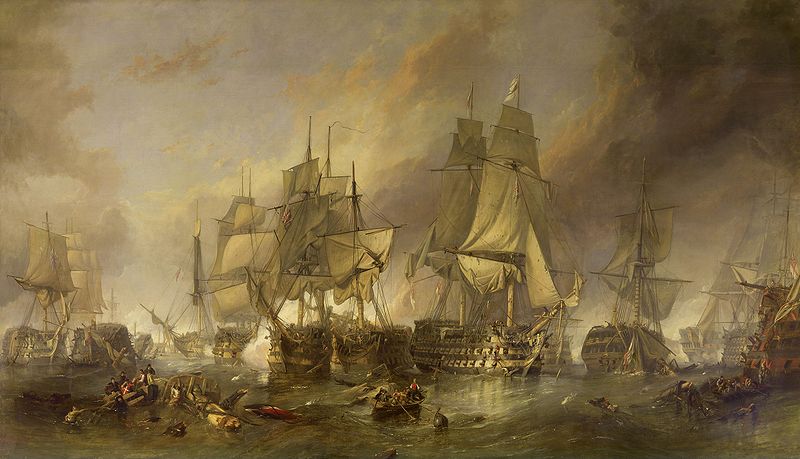
When Villeneuve attempted to break out on October 18th Nelson was alerted by the screen of frigates conducting the close blockade of Cadiz. Nelson began to pursue and when Villeneuve discovered this he attempted to return to Cadiz. On the morning of the 21st the fleets drew closer, Nelson with 27 Ships of the line mounting 2148 guns against the Combined Fleet of 33 Ships of the Line mounting 2568 guns. It was a battle that many a British Tar believed held the faye of the nation.

mp_full.3

Nelson was less than orthodox in is conduct of battle. Instead of laying alongside the French line he opted to split his force into two columns and break the French and Spanish line with the intent of the total destruction of the enemy force in close combat where the individual superiority of his ships and sailors . It was a risky strategy of the approach meant that the Combined Fleet would if properly handled could possibly use its superior firepower against a few British ships at a time.

As his Fleet approached the Combined Fleet Nelson penned a prayer:

“May the great God, whom I worship, grant to my country and for the benefit of Europe in general, a great and glorious victory: and may no misconduct, in any one, tarnish it: and may humanity after victory be the predominant feature in the British fleet.

For myself individually, I commit my life to Him who made me and may His blessing light upon my endeavours for serving my country faithfully.

To Him I resign myself and the just cause which is entrusted to me to defend.

Amen. Amen. Amen.” 

At 1145 Nelson had his signalmen hoist the signal that would go down in history. ENGLAND EXPECTS THAT EVERY MAN WILL DO HIS DUTY. The signal as composed by Nelson said that ENGLAND CONFIDES THAT EVERY MAN WILL DO HIS DUTY. However that signal was more complicated and the Signal’s Officer LT Pasco informed Nelson that “Expects” was in the signals vocabulary where “confides” would have to be spelt requiring extra lifts. Nelson concurred.

800px-The_Battle_of_Trafalgar_by_William_Clarkson_Stanfield

In the slow run up to the Combined Fleet the British took a beating, but when the British broke the French line and opened fire the battle took a different turn. Following Nelson’s orders his captains and his second in command Admiral Cuthbert Collingwood took the fight to the enemy.

Nelson’s flagship, the HMS Victory delivered he opening broadsides into the stern of Villeneuve’s flagship the Bucentaure with devastating results. After passing Bucentaure the Victory was engaged in close combat by the 74-gun Redoutable and the ships became locked together. Redoutable was commanded by one of the finest Captain’s in French Fleet, Captain Lucas who had trained his crew well including in close combat. His marksmen took a deadly toll of Victory’s crew exposed on the upper decks and one of his marksmen mortally wounded Nelson as the British Admiral walked his flagship’s quarterdeck.

800px-Fall_of_Nelson

Nelson is Mortally Wounded

Nelson was carried to the sick bay of Victory where as he lay dying he continued to receive updates on the battle. Knowing a storm was coming he gave orders for his ships to anchor. Upon being informed of the number of French and Spanish ships taken he whispered “Thank God I have done my duty” and Nelson’s Chaplain noted Nelson’s last words as “God and my country.

By the end of the battle the British had captured or sunk 22 of the 33 French and Spanish Ships of the Line including Villeneuve’s flagship Bucentaure and the largest warship of time the 130 gun Spanish behemoth Santisima Trinidad. On the night of the battle and the days following the British Fleet and the survivors of the Combined Fleet were battered by a massive storm causing much more suffering, misery and loss of life as badly damaged ships succumbed and sank or ran aground on the shores of Cape Trafalgar.

The battle broke the naval strength of the French and Spanish and removed the threat of invasion from Britain. Napoleon hid the defeat from his people and calling it a victory, but throughout England it was celebrated even as Nelson was mourned.

The Battle of Trafalgar epitomized the courage of Nelson and the Royal Navy. As an officer of the United States Navy I tip my hat and drink a toast to Admiral Nelson.

Peace

Padre Steve+

4 Comments

Filed under History, Military, Navy Ships

Vindictive Angry Christians: When Faith is subordinated to a Political Agenda Redemption Dies

People of Padre Steve’s World,
Today Pope Francis further rocked the world of Conservative Christians making these statements about Christians ensnared by their political ideology. He said: In ideologies there is not Jesus: in his tenderness, his love, his meekness. And ideologies are rigid, always. Of every sign: rigid.
“And when a Christian becomes a disciple of the ideology, he has lost the faith: he is no longer a disciple of Jesus, he is a disciple of this attitude of thought… For this reason Jesus said to them: ‘You have taken away the key of knowledge.’ The knowledge of Jesus is transformed into an ideological and also moralistic knowledge, because these close the door with many requirements.”
“The faith becomes ideology and ideology frightens, ideology chases away the people, distances, distances the people and distances of the Church of the people,” Francis added. “But it is a serious illness, this of ideological Christians. It is an illness, but it is not new, eh?”
I was amazed as I have been saying the same thing for years. Here is a blast from the past, an article that I wrote back in early 2010 entitled “Vindictive Angry Christians: When Faith is Subordinated to a Political Agenda Redemption Dies.”
It is nice to be ahead of a Papal pronouncement eh?
Peace,
Padre Steve+

padresteve's avatarThe Inglorius Padre Steve's World

Over the past year or so I have seen many of my fellow Christians including people that I can at least at one time call friends lose themselves and their faith, even though they think that they are defending their faith by subordinating to message of the Gospel which the Apostle Paul so well stated “For God was in Christ, reconciling the world to himself, no longer counting people’s sins against them. This is the wonderful message he has given us to tell others.” (2 Corinthians 5:19) or the command of Jesus who said:  “But I tell you, love your enemies, bless those who curse you, do good to those who hate you, and pray for those who mistreat you and persecute you” (Matthew 5:44)

This is nowhere more apparent in the coarse invective leveled at the current President.  Now I can care less whether someone agrees or disagrees with…

View original post 1,952 more words

Leave a comment

Filed under Loose thoughts and musings

The Stuff of Dreams: The Montana Class, H-Class and Super-Yamato Class Battleships

battleship_bismarck_by_rainerkalwitz-d5ejpqd

“It was a warship, after all. It was built, designed to glory in destruction, when it was considered appropriate. It found, as it was rightly and properly supposed to, an awful beauty in both the weaponry of war and the violence and devastation which that weaponry was capable of inflicting, and yet it knew that attractiveness stemmed from a kind of insecurity, a sort of childishness. It could see that–by some criteria–a warship, just by the perfectly articulated purity of its purpose, was the most beautiful single artifact the Culture was capable of producing, and at the same time understand the paucity of moral vision such a judgment implied….” Iain M. Banks 

None ever sailed the high seas and only two even began construction but they are the stuff of dreams for those fascinated with the history of battleships and their development. I happen to be one of those who are fascinated about warships, especially the all gun battleships and cruisers of the first half of the 20th Century.

One of the amazing aspects of the Battleships after the launching of the HMS Dreadnought in 1906 how they impacted every major power and were in some part a reason that England went to war with Germany in 1914. The great naval arms races, especially that of the race to build the most powerful battleships were expensive and after the First World War, nations exhausted by war and bankrupted by the costs attempted, for a bit longer than a decade to dictate limits on their construction and size. However in the mid-1930s with the threat of war again in the air nations once again began to build bigger, faster and more powerful Battleships.

Most of the ships described here were already on the drawing board by the late 1930s, even as the Super-Dreadnaught Battleships of the Bismarck, Yamato and Iowa classes were under construction. But that was before the vulnerability of battleships to carrier based aircraft brought about a revolution in naval warfare as Fast Carrier Task Forces supplanted the traditional battle line of battleships.

Had they been built they would have been some of the largest and most heavily armed ships ever seen. The guns to be mounted ranged from 16” guns on the Montana’s and the initial German H-39 class, to 20” guns aboard the Super Yamato’s and the H-44. the latter would have been the largest artillery ever mounted aboard ship.

When war came work and planning was suspended on the ships. The simple reason was that their construction would have consumed vast amounts of raw materials, labor and industry which was needed for other types of vessels. The Germans chose the path of U-Boats, the Japanese and Americans Aircraft carriers and their escorts.

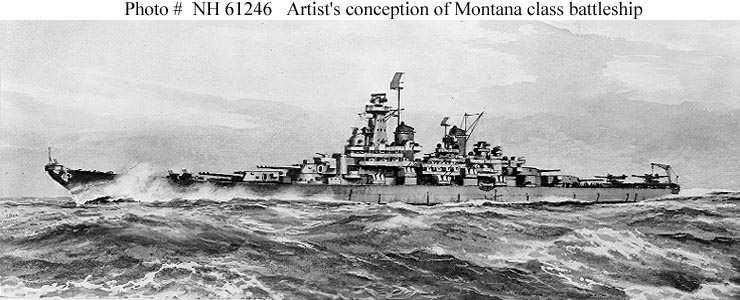
h61246

Montana Class

The Montana class would have been comprised of 5 ships, each armed with 12 16” guns displacing over 72,000 tons at full load. They would have had a speed of 28 knots as designers chose firepower and protection over speed. Thus they would have been 5 knots slower than the preceding Iowa’s which were designed to keep up with the fast carriers. The class was suspended in May of 1942 and cancelled after the battle of Midway.

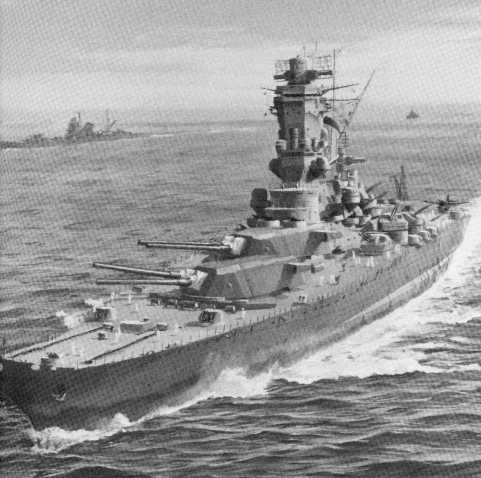
Design_A-150

A-150 or Super Yamato Class Battleship 

The Super Yamato’s or the A-150 class as their design was known would have been comprised of 2 vessels each armed with 6 20.1” guns displacing over 70,000 tons with a speed of 30 knots. Initially the designers called for 8-9 20.1” guns but tests indicated that the ships would then displace over 90,000 tons making them too large and costly.

However as grandiose as the plans of the Americans and Japanese were the German proposals grew from ships somewhat larger than the Bismarck and Tirpitz to ships that would have dwarfed any warship ever built, including the US Navy Nimitz Class Aircraft Carriers.

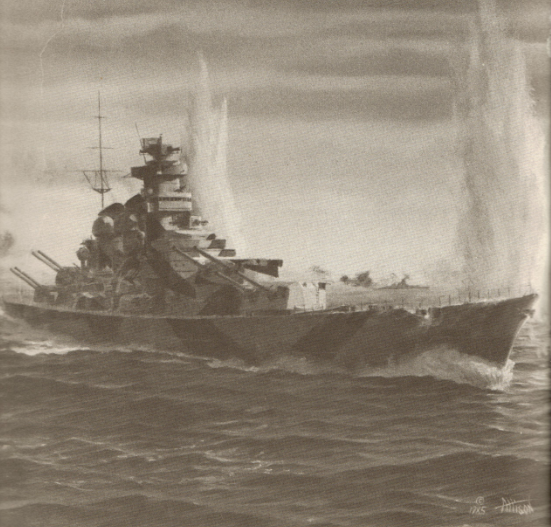
H_class_(Richard_Allison)

H Class Battleship

The H-39 class, the direct successor to the Bismarck Class came closest to fruition of any of these ships. They were designed to carry 8 16” guns, displace over 55,000 tons and steam at 30 knots powered by diesel engines. 2 of the 6 planned ships were actually laid down and several of the main guns were completed and used as coastal defense artillery along the Atlantic Wall.

Atlantikwall, Batterie "Lindemann"

However Hitler ordered his Naval Staff to design even larger and more powerful battleships. The H-41 class would have have displaced 68,000 tons and mounted 8 17” guns, the H-42 class over 96,000 tons full load and mount 8 19” guns, the H-43 118,000 tons full load  and 8 19” guns while the H-44 would have displaced over 139,000 tons full load and mount 8 20” guns. One innovative feature of the last three designs would have been the use of a combined diesel/steam turbine power plan which would have given the ships good speed as well as tremendous range.

However since none of the ships from any of the nations was ever built one can only speculate how they might have performed operationally or how they might have fared had they ever met in battle.

They would have been an amazing sight to behold, massive power and beauty, but the kind of deadly beauty that one wishes never had to be employed.

Peace,

Padre Steve+


1 Comment

Filed under History, Military, Navy Ships