Monthly Archives: September 2014

The Fallacy of Reductionist Fundamentalism: You Cannot be Competent in God

galaxy_universe-normal1

Today is a day for something a bit more theological in nature. A couple of days ago I wrote about the dangers of reductionist fundamentalism. One of the issues that fundamentalists of all stripes wrestle with is the issue of certitude. For them life has to be bounded by certainty. For them, whether in the matter of origins, or how life came about, in the matter of faith and morals, how life is lived in the present; or how the world ends, life must be certain. In fact, fundamentalism in all its forms inculcates believers that there is only one way of thinking, one way of knowing, one way of understanding things that are unknowable. 

Because of this need for certitude, Christians, Moslems, Jews and others of various persuasions have attempted to define the beginning and the end, as well as to dictate what is acceptable to believe, or acceptable behavior. However, this actually says more about their insecurity than reflects the strength of their beliefs. I can speak to this need for certitude from a Christian point of view, and from my study of other faiths make what I think is informed commentary.

But for people who supposedly believe in God, the reality is that in presuming certitude in what we think that we know  is actually a denial of faith. Dietrich Bonhoeffer wrote that “a God who would let us prove his existence is an idol.” Bonhoeffer was right, not only do those that presume to know exactly how creation came about, how the universe will end or say with unrequited certitude what constitutes proper belief or behavior in the eyes of God make an idol of their God, they also, whether they intend to or not, put themselves in the place of God.

According to the writer of the Book of Hebrews, “faith is the essence of things hoped for, the evidence of things unseen.” That writer, who I think is Priscilla (see Acts Priscilla and Aquila) understood that faith was not the same as empirical knowledge, otherwise it would not be faith. To understand faith in a modern sense it means that faith is something that we admittedly cannot prove. That is why it is faith.

I am admittedly a skeptic. I am. Christian, I do believe, but I doubt as much as I believe. In fact for nearly two years I lived as an agnostic, a priest praying that God still existed, thus is believe but even now doubt. That being said I have seen things that cannot be explained by science or anything rational, and there are physicians that I have worked with that can attest to those things. That being said I think there are a lot of events claimed by some as “miraculous” that are explainable and are not miraculous at all.

The fact is, whether it it about creation and the questions of origins, an exact definition by which to judge absolute truth for living or belief, or the manner of how creation will end; every single statement of such absolutes is contradicted by the fact that we live as Bonhoeffer wrote, and I like to call “the uncomfortable middle. Bonhoeffer wrote in his book Creation, Fall and Temptation that:

“Man no longer lives in the beginning–he has lost the beginning. Now he finds he is in the middle, knowing neither the end nor the beginning, and yet knowing that he is in the middle, coming from the beginning and going towards the end. He sees that his life is determined by these two facets, of which he knows only that he does not know them.”  

The reality for Christians is that we have to admit is that our belief is rooted in our faith, faith which is given to us through the witness of very imperfect people influenced by their own culture, history, traditions as well as limitations in terms of scientific knowledge. Even scripture does not make the claim to be inerrant, though some Christian Fundamentalist make that claim. Because of that, the Bible cannot be understood like the Koran or other texts which make the claim to be the infallible compendium of faith delivered by an angel or dictated by God himself. The Bible, of we actually believe it, is a Divine-human collaboration so symbolic of the relationship that God has with his people, often confusing and contradictory yet inspiring. As Hans Kung so rightly wrote:

“Christians are confident that there is a living God and that in the future of this God will also maintain their believing community in life and in truth. Their confidence is based on the promise given with Jesus of Nazareth: he himself is the promise in which God’s fidelity to his people can be read.” 

Does that mean that we fully comprehend the nature of Christ, or the doctrinal formulation of the Hypostatic Union which defines Christ as being fully human and fully God? Or does it mean that we fully comprehend or understand the doctrine of the Trinity encapsulated in either the Nicene or Athanasian Creed? Certainly not, none of those doctrines are provable by science, or for that manner even history, for there were and are people who consider themselves Christians who do not believe and who reject those doctrinal formulations. Thus for Christians to attempt to argue such matters as fact to those who do not believe is not productive at all. We must understand that faith in the living Christ is not in a doctrine but  a promise that we believe, by faith, is given given by God through Jesus of Nazareth.

The real fact of the matter is that fixed doctrines are much more comfortable than living with difficult questions or honestly examining the contradictions that exist within Scripture, history and tradition. The fact is this makes many people uncomfortable and thus the retreat into the fortress of fixed and immutable doctrine found in the various incarnations of Fundamentalism.

The fact is the world is not a safe place, and our best knowledge is always being challenged by new discoveries many of which make people nervous and uncomfortable, especially people who need the safety of certitude. So in reaction “true believers” become even more strident and sometimes even violent when confronted with issues that question immutable doctrine.

I wish it were otherwise but Christianity cannot get away unscathed by such criticism. At various points in our history we have had individuals, churches and Church controlled governments persecute and kill those that have challenged their particular orthodoxy. Since Christian fundamentalists are human they like others have the capacity for violence if they feel threatened, or the cause is “holy” enough. Our history is full of sordid tales of the ignorance of some Christians masquerading as absolute truth and crushing any opposition. Doctrinal certitude is comforting. It is as Eric Hoffer wrote:

“A doctrine insulates the devout not only against the realities around them but also against their own selves. The fanatical believer is not conscious of his envy, malice, pettiness and dishonesty. There is a wall of words between his consciousness and his real self.”

This is the magnetic attraction of fundamentalism in all of its forms, not just Christian fundamentalism.  Yet for me there is a comfort in knowing that no matter how hard and fast we want to be certain of our doctrines, that God has the last say in the matter in the beginning and the end.

But there some Christians who now faced with the eloquence of men like Neil DeGrasse Tyson and Bill Nye who make legitimate challenges respond in the most uncouth and ignorant manners. The sad thing is that their response reveals more about them and their uncertainty and insecurity than it does the faith that they boldly proclaim.

themiddle1

Our doctrines, the way we interpret Scripture and the way we understand God are limited by our humanity and the fact that no matter how clever we think we are that our doctrines are at best expressions of faith. We were not there in the beginning  and we will not be present at the end, at least in this mortal state. We do live in the uncomfortable middle. Our faith is not science, nor is it proof. That is why it is called faith, even in our scriptures where as Paul the Apostle says “If Christ is not raised your faith is worthless”  and we “are to be pitied among men.” (1 Cor. 15:17-18)

We are to always seek clarity and understanding. However it is possible that such understanding and the seeking of truth, be it spiritual, historical, scientific or ethical could well upset our doctrines about God and that is not heresy, it is an admission that God will not allow us to put hi m in our theological box. As Henri Nouwen wrote: “Theological formation is the gradual and often painful discovery of God’s incomprehensibility. You can be competent in many things, but you cannot be competent in God.”

With that I will close for tonight.

Peace

Padre Steve+

Leave a comment

Filed under christian life, faith, philosophy, Religion

The Sinking of the Aboukir, Cressy and Hogue and the Advent of Submarine Warfare

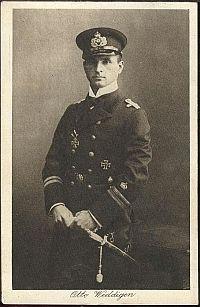
livebait_pc_weddigen1

“There was a fountain of water, a burst of smoke, a flash of fire, and part of the cruiser rose in the air. Then I heard a roar and felt reverberations sent through the water by the detonation.”

Otto Weddigen describing the sinking of HMS Aboukir 

Ninety years ago this month an event took place that changed naval warfare and introduced the world to how deadly a single submarine could be. In September 1914 most naval experts held the submarine was not much of a threat. The submarines of the day were limited in range, diving depth, speed, armament and endurance.

U9Submarine1


U-9

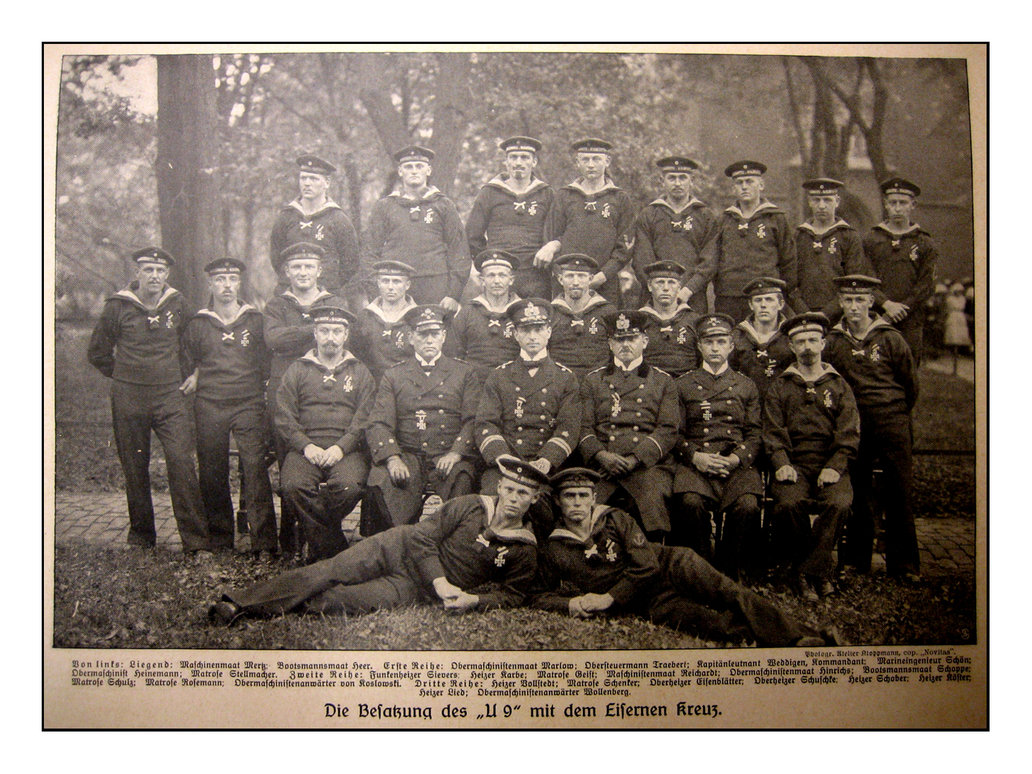
The U-9 was powered by kerosene engines on the surface which charged batteries which were used when the boats were submerged. Later submarines would be powered by diesel engines. U-9 was small, displacing only 543 tons on surface and 674 submerged. She was 188 feet long and just 19.7 feet in beam. The living conditions for her crew of 4 officers and 25 enlisted men were less than spartan. She was armed with four 17.7 inch torpedo tubes, two forward and two aft and carried six torpedoes, four in the tubes and two reloads for the forward torpedo tubes. The boat had been commissioned in April 1910 and on the outbreak of the First World War she was commanded by Kapitänleutnant Otto Weddigen.

kapitaenleutnant_-_otto_eduard_weddigen_-_03_01_1918


Otto Weddigen 

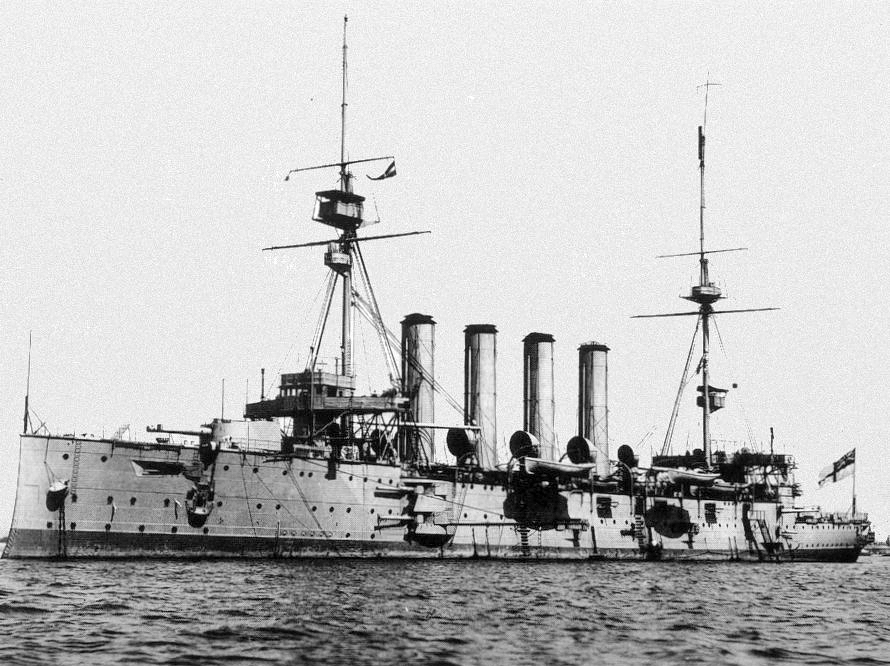
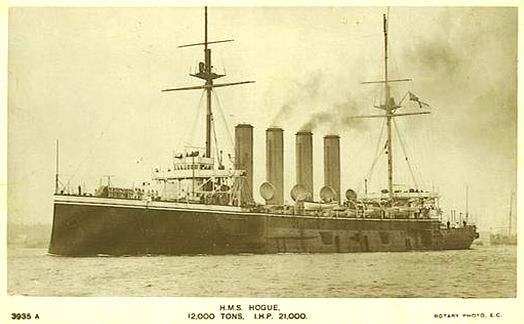
On September 22nd 1914 with enormous battles raging on the Western Front and the High Seas Fleet in port the soon to be famous submarine was patrolling in the North Sea. The U-9 was about 18 miles off the Dutch Coast near the Hook of Holland when she encountered three ships of the Royal Navy’s 7th Cruiser Squadron, or Cruiser Force C. The squadron was composed of three obsolete Cressy Class Armored Cruisers, the HMS Cressy, HMS, Aboukir and HMS Hogue displacing 12,000 tons and mounting two 9.2” and 12 6” guns each.

HMS_Aboukir


HMS Aboukir at Malta before the War, HMS Cressy (below)

HMS_Cressy

wjb_hogue_2

HMS Hogue shortly after being commissioned

The three ships were manned primarily by recently called up reservists and were derisively known throughout the fleet as the “Live Bait Squadron.” On that September morning they would be just that. The squadron was reduced in number as the squadron flagship was not present and the HMS Euryalus had to drop out due to lack of coal and weather damage to her wireless. The weather was bad, so the admiral in command was had to remain with the ship, unable to transfer. As such he delegated command to the captain of the Aboukir. The same bad weather also kept the destroyers that would of accompanied the patrol in port.


The ships were steaming in a line ahead formation when Weddigen on the U-9 spotted them about 0600 on the morning of September 22nd. They were not zig-zagging to lessen the chance of submarine attack and thought they had posted lookouts had no idea that U-9 was stalking them.

Weddigen on worked the boat into what he felt was a better firing position and launched his first torpedo at the center cruiser, the Aboukir at 0620 from a distance of just 550 yards. The torpedo struck her midships and broke her back. She began to sink and within 25 minutes capsize taking 527 of her crew of 760 down with her. Weddigen wrote in his post battle report:

“Her crew were brave, and even with death staring them in the face kept to their posts, ready to handle their useless guns….”

livebait_aboukir_sinking1

Aboukir Sinking

Thinking that Aboukir had struck a mine the Captains of the Cressy and Hogue moved their ships close to rescue survivors. Weddigen had surfaced to observe the British and then fired two torpedoes into Hogue from a range of just 300 yards and then dived with Hogue opening fire as she did so. Hogue capsized and sank in 15 minutes.

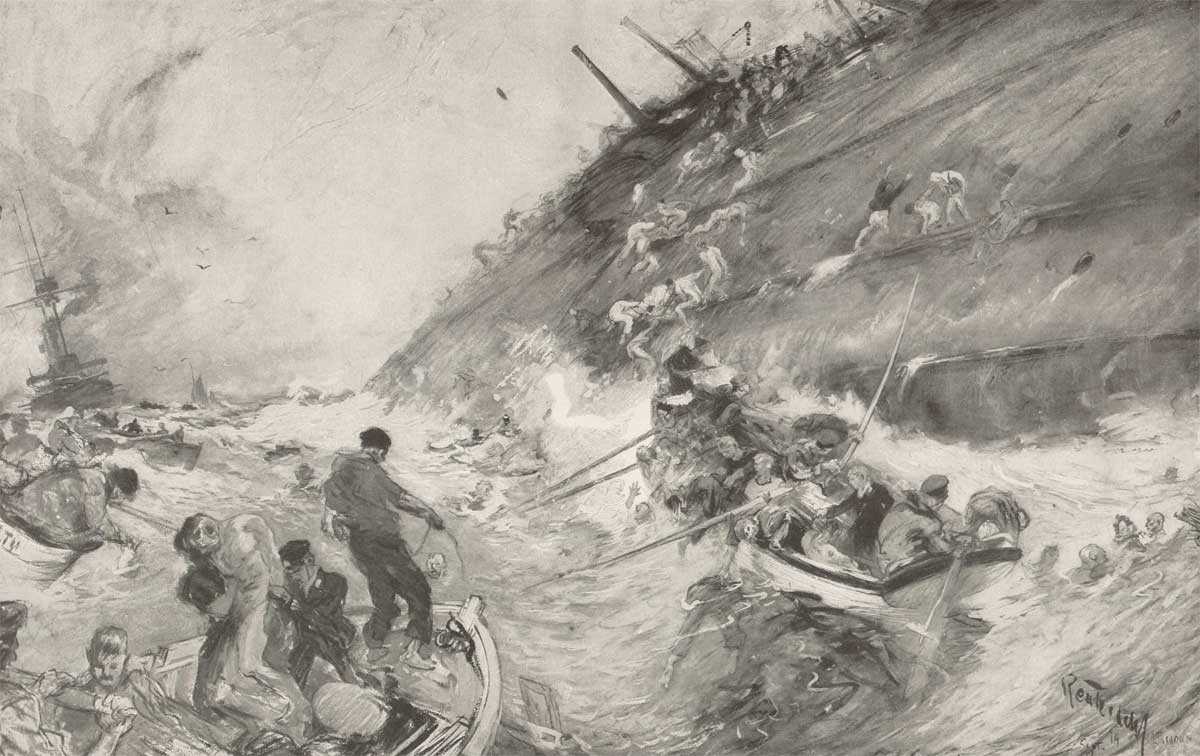
The British now knew that a submarine was responsible for the attack and the last ship and after reloading his forward tubes attacked Cressy at 0720 firing two torpedoes from her stern tubes. Weddigen then surfaced to bring his bow tubes into action and fired another shot, as he dis so the British cruiser opened fire and attempted to ram. Cressy was struck by two torpedoes during the attack, the doomed ship capsized and then sank at 0755.

Reuterdahl_-_HMS_Cressy_Sinking


Cressy Sinking 

In a little over an hour the U-9 had sunk three British cruisers. A total of 1459 British sailors died in the attacks and only 837 crew members from all three ships survived. Weddigen withdrew from the area as he knew that the British would be looking for the U-9. When the boat returned to port, Weddigen, and his crew were hailed as heroes. Weddigen was awarded the Iron Cross First Class and later the Pour le Merite which he received personally from Kaiser Wilhelm II. The U-9 was one of only two ships of the Imperial Navy awarded the Iron Cross. The other was the Light Cruiser Emden, nicknamed the “Swan of the East” which tied down a large number of British, French and Russian ships in the Pacific and Indian Ocean during her short but productive deployment as a commerce raider.

U9_Heimkehr

The Return of the U-9 to Wilhelmshaven

The plucky U-9 would survive the war, sinking another cruiser, the HMS Hawke in 1915 and 13 other merchant ships or fishing boats. She was withdrawn from front line service in 1916 and assigned to training duties.

German_marines___U9_submarine_by_G497


The Crew of U-9

Weddigen was less fortunate, the aggressive young officer was killed on March 18th 1915 when his new command the U-29 was rammed and sunk by the HMS Dreadnought.

Future First Sea Lord Dudley Pound then serving on the Battleship HMS St. Vincent wrote:

“Much as one regrets the loss of life one cannot help thinking that it is a useful warning to us — we had almost begun to consider the German submarines as no good and our awakening which had to come sooner or later and it might have been accompanied by the loss of some of our Battle Fleet.”

Submarines would go on to be one of the most feared and effective weapons ever developed for naval warfare. German U-Boats nearly brought Britain to its knees in both World Wars and the submarines of the US Navy’s Pacific Fleet decimated the Japanese merchant fleet and inflicted great losses on the Imperial Japanese Navy in the Second World War. After Pearl Harbor and the many defeats of early 1942 it was the submarine force that according to Admiral Chester Nimitz “held the lines against the enemy.”

Today the most deadly submarines ever built prowl underneath the surface of the world’s oceans. Nuclear powered and advanced diesel electric boats armed with torpedoes and cruise missiles, and giant nuclear powered ballistic missile submarines armed with long range nuclear ballistic missiles provide an invisible and nearly undetectable deterrent.

Unlike 1914 today all navies take the submarine threat seriously. Should any significant naval war be fought in the Persian Gulf or the Pacific submarines will certainly have an impact not only at sea but in strategic strikes on enemy installations and land based units. In 1914 no one would have thought that the success of the tiny U-9 would eventually lead to such a dominating weapon.

Peace

Padre Steve+

Leave a comment

Filed under History, history, Military, Navy Ships, world war one

The Dangers of the Reductionist Religion of Fundamentalism

IMG_1915.JPG

My friends, today will be a busy day so I wanted to share a few thoughts about religious fundamentalism in it’s various forms. Now I want to say up front this is not an attack on God or people that believe it God, or in what God they choose to believe in for either their eternal salvation or just getting through life. Instead it is some observations about fundamentalist, or absolutist belief systems that allow no room for doubt or that any other view of God might have some measure of truth and how some groups use political, police and military power, even terror to impose those views on others.

It occurred to me a few years back that many Christians, among them Evangelicals, certain Reformed types, Fundamentalists, and even some conservative Roman Catholics practice a reductionist form of the Christian faith. It is a form that woefully short changes those that embrace it. Now I am speaking very general terms right now and the subject probably needs to be fleshed out some for each particular form. I probably will do that sometime soon, but let me continue.

What I have observed is that the richness, the history, the intellectual achievements, and the diverseness of the Christian experience, whether it that of the mystics like Hildegarde of Bingen, the patristic theologians such as Basil, Origen or Gregory of Nyssia, the scholastics such as Anselm of Canterbury who penned a philosophy that I much admire, “faith seeking understanding” the reformers such as Martin Luther, those of the awakenings such as John and Charles Wesley, the humanists such as Erasmus of Rotterdam, those of the enlightenment such as Schleiermacher, and Kierkegaard, the Neo-Orthodox of the early part of the Twentieth Century like Karl Barth, Dietrich Bonhoeffer, Emil Brunner and Paul Tillich, or the Catholic reformers leading up to and following Vatican II like Pierre Teilhard de Chardin, Hans Kung, Yves Congar, Bernhard Haring, and Andrew Greeley, and the Theologians of Hope led by Jurgen Moltmann.

This list is certainly not exclusive by any means. However, the one common thing about these men was that they understood their faith in the context of the society, history, culture and learning of their day. They used reason informed by faith and wrestled with subjects that are for the most part denied to the reductionists of Christian Fundamentalism. The fact is that most fundamentalists of any stripe tend to disregard history, science, philosophy and other disciplines that seek to interpret the world and instead place their own understanding of God, their scriptures or creeds above all others. Various groups of Christians, Jews, Moslems, Buddhists, Hindus and other religions all do this, even some Atheists and other Secularists are not immune. It is a reality of many people’s need for certitude in a world that is full of too many troubles and contradictions.

Christian fundamentalism in its various forms reduces the faith to a small set of absolute principles from which no deviation is allowed. As I mentioned there are different forms of this, but in a sense adherents to any version of Christian Fundamentalism treat the Bible, their Statement of Faith, catechism or Creed as a sort of “tech manual” that provides quick solutions to those that “know the truth.”

By this I mean is that when there is a really difficult question that requires critical thinking, reasoning and nuance, instead of wrestling with it they throw out a Bible verse or a credal type statement to shut down the person asking the question. I think I remember the classic line that I heard when I was in high school: “Jesus is the answer, what was the question?” The sad thing was this was not a joke, the person who said it meant it.

Now I admit for some people a simple faith works well, that is human nature, but when religious leaders present the faith in such reductionist and absolute terms they impoverish their followers and end up driving off those who ask the hard questions. These are questions which cannot be answered by the shibboleths thrown out by these leaders because they are not easy, and defy attempts to simplify them. This is because they often deal with existential matters and the mysteries of human life and nature.

The fundamentalism in all it’s forms reduces life to a dualism in which one is either on God’s side (that is whoever’s God) or not in which all life’s questions are resolved by faith or religion. I would dare say that most of people’s most difficult questions, issues and needs are not religious at all and that is why so many people reject fundamentalism, either because they see the fallacies inherent in such inflexible systems of belief, or because they experience disappointment in those groups when the ideal of God presented, either as individuals or the community does not match reality.

As for as what people believe as individuals or within their religious communities that does not bother me one bit, even if I disagree with them. I fact I think the discussion of religion should be allowed in the public square. However, I believe that to discussion should include everyone, not just which religious group has the most power in government or influence in society.

The problem that I see is when such groups, regardless of what God they believe in decide to impose their beliefs on others through the power of the government, and for that matter even use their beliefs to silence others in the public square. The danger is when any such group decides it is superior, that it’s leaders have a lock on the truth, are “anointed” or whatever term they call it, hear directly from God, authoritatively speak for God and then use that to suppress dissenters or control unbelievers through the power of the state, of in the case of the new Islamic State, the power of military conquest and terror.

In fact the leaders and followers of such groups almost practice a form of Gnosticism, where if you have the right understanding of “the truth” you are superior to those that do not. Since God is the ultimate trump card in any argument those who believe they have the direct line are the most dangerous.

In spirit, this reductionist understanding of faith is ultimately destructive and when people take it to its logical end use it to justify the most heinous crimes against their fellow human beings. What we see with the Islamic State is really no different than other fundamentalist religions with absolute control of their society do to unbelievers. The ultimate choice for those under their rule, is to “convert or die.”

Christians have done this numerous times since Christianity became the state religion of the Empire under Constantine, and Catholics, Orthodox and Protestants have all exercised that option. One only has to look at the persecution of various Protestants by Roman Catholics, the persecution of the Anabaptists by Catholic and Protestant State Churches, the burning of heretics and witches, even in Colonial America, and the persecution of Catholic immigrants from Europe by American Protestants in the 1800s, not to mention the pogroms conducted against the Jews in Europe, the Holocaust, or the extermination of Native Americans in the name of the Christian God.

Moslems have done this too throughout history and in the present,where the Islamic State and other groups like it, Boko Haram, Al Shabab, and Hezbollah among them practice it in its worst form.

It is also part of the earliest forms of Judaism in the conquest of Canaan where God’s command, to put it in the modern vernacular was “kill them all and let God sort them out later.” In fact I remember scandalizing my Old Testament class in seminary by blurting that out. But when I read supposedly Christian apologists defending the legitimacy of what even they refer to as genocide it sickens me.

Likewise it was fascinating thing for me this week was to hear the star of the Duck Dynasty Phil Robertson, a Christian fundamentalist explain that “convert or die” was the choice that the people in the Islamic State should be offered. Others have said similar things and not just in regard to Islamic radicals.

Again, I have no problem who need to believe in a God of absolutes, some people need that and it is a free country. But I think that such beliefs shortchange and deprive them of the richness of faith, life and the mystery of God and faith, even the great mystery of the Christian faith that we proclaim in the celebration of the Eucharist “Christ has died, Christ is risen, Christ will come again.” The mystery of God who became man, or as Anselm of Canterbury wrote “cur Deus homo” “Why God Man?” or what Christians call the Incarnation, is central to the the Christian faith.  Like creation and the eschaton is a mystery, as Bonhoeffer wrote and we would be so wise to remember:

“Man no longer lives in the beginning–he has lost the beginning. Now he finds he is in the middle, knowing neither the end nor the beginning, and yet knowing that he is in the middle, coming from the beginning and going towards the end. He sees that his life is determined by these two facets, of which he knows only that he does not know them.”

The fact is that no matter what we say, we do not know and when we make absolutist claims based on our scriptures we have to remember that they as well are shrouded in mystery, but then Eric Hoffer noted “We can be absolutely certain only about things we do not understand.”

The mystery associated with the Canon of Scripture, includes the authorship as well as the contents of scripture. Since we don’t have the original autographs of any book of the Bible, or for that matter any major religions scriptures there is a certain mystery associated with the scriptures. We believe them by faith, just as we do in the existence of God. The reality is that in many cases we don’t know who the actual authors were and even as to when some of them were written.

This might make the Christian Canon of scriptures as well as those of other major religions sources of inspiration, spirituality, sources of good advice, lessons and ethics; but not absolute truth and fact in matters of history, science or anything else we might want them to be. The fact is we believe in God by faith, and we trust scriptural accounts by faith.

However, for those who must claim the Bible as absolute there is a need to prove it, and that need brings about the controversies of “inerrancy” that are part and parcel of Protestant fundamentalism as well as the absolutist claims of others in regards to their scriptures. Sadly, for many, their absolutist understandings of scripture or creedal claims are dogma to be defended to the death and to force upon others, rather than mysteries by which we experience the love and grace of God.

The problem is that such beliefs, even if they are from antagonistic or competing groups are all variations on a theme. They are all variations of the same species of religion, religion that must control or suppress dissenters at all costs, and if given the chance to use the police and military power of the state to succeed when dialogue fails. The only differences these religions have, besides the God that they believe is right, is the matter of degree with which they apply those beliefs. For some they are quite happy with keeping such matters in house and leave outsiders alone. But there are others in every major religion who have a need to impose their beliefs on others using any means necessary, including special privileges for themselves that no other groups get as well as to use the state to persecute, terrorize against or conquer by brute military force those who do not believe.

That is why the Islamic State must be defeated and why we must be ever vigilant at home to such beliefs, no matter what religious group utters them. Sadly the reality is that there are Americans as well as those in Western Europe and other countries

Now I am sure that I have offended some today, but that was not the intention. I believe in a person’s right to believe in anything they chose to believe or not to believe and to defend those rights, while at the same time defending others from anyone that wants to use the state to impose those beliefs on others.

Have a great night,

Peace.

Padre Steve+

1 Comment

Filed under faith, History, Loose thoughts and musings, philosophy, Political Commentary, Religion

Who Profits by War?

Friends of Padre Steve’s World,
Today has been a long day with a long round trip to get our driver’s licenses in the state that is our “home of record” for the military. Thankfully it is only one state over, but we had to cross the entirety of our state to get there and back. However after 10 hours on the road I am too tired to write anything new.
However, since another war is brewing in the Middle East and maybe even another in Eastern Europe, it is a poignant time to remember just who profits from war, and by the way it’s not the regular guy or gal o the street or the soldier who fights the war.
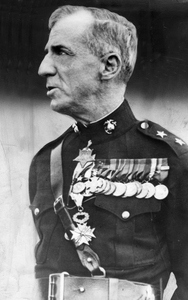
So here is an older post containing a chapter of Major General Smedley Butler’s classic anti-war book “War is a Racket.”
Have a great night,
Peace
Padre Steve+

padresteve's avatarThe Inglorius Padre Steve's World

butler-medals1

In an age where Defense contractors overcharge and under produce, where lobbyists for them ensure that congressional leaders and other elected officials and appointees cater to the needs of these corporations it is important to know who profits from war. It is certainly not the military personnel, nor is it the taxpayer.

The sad fact is that the people that profit from unending war are those who really couldn’t care less about the economy, except as it benefits them nor care about the taxpayers or those that they send into battle in wars that do little or nothing to enhance the security this nation, or for that matter the security of those we are supposedly fight for.

Major General Smedley Butler who was awarded the Congressional Medal of Honor twice, and earned the ire of the Hoover Administration for criticizing Mussolini wrote a book called War is a Racket.I…

View original post 2,076 more words

4 Comments

Filed under Loose thoughts and musings

The Islamic State and the New, Old Nature of War

bilad ash shaam

I am a realist when it comes to human nature and the reality of the evil that human beings can do. I have been to war, and personally I can think of nothing worse than more war. For me war is part of the reality that I live with, and which I am reminded of every time I try to sleep. That being said, a new war is gaining in intensity and threatening to blow away what is left of the old world order.

For most modern Americans and others living in the West, war is an often abstract concept regulated to small bodies of professionals fighting actions far away, of which we only catch occasional glimpses of on television or the internet. For most Americans and others in the West, modern war has become a spectator sport, and one far less interesting to most than either American or European football matches.

We in the West have been protected from the savage nature of war for the better part of six decades, with the sole possible exception being Vietnam, when the press had nearly unfettered access to the battlefields and the troops fighting the war. That war was a staple of the six o’clock news on a daily basis for a decade, bringing the war home in almost real time, and that coverage as well as the large numbers of Americans killed and wounded coming home from the war triggered a public backlash against it that helped bring the American involvement to an end.

The government and the military changed the way that war has been covered since, now reporters are vetted and closely supervised, even when they are imbedded with the troops. When the war in Iraq began to go bad, even the return of those killed in action was largely off limits. During the Iraq War many news programs took on the character of cheerleaders as Saddam was toppled. The media only slowly adjusted to the reverses brought about by the failed strategy of the Bush administration in Iraq as the falsehoods that brought about the invasion were revealed and the Iraq Civil War and insurgency spread like wildfire.

As such most people, including political, business, media elites, and even military theorists fail to understand the essential and unchanging, character, nature and complexity of war. As British theorist Colon S. Gray so bluntly points out: “Some confused theorists would have us believe that war can change its nature. Let us stamp on such nonsense immediately. War is organized violence threatened or waged for political purposes.” 1 If we fail to understand that we cannot understand the ongoing wars, to include that being waged by the Islamic State, or Caliphate in Iraq and Syria.

This war that the Islamic State is waging is bigger than most of us understand or want to believe. It is not simply about toppling the Assad regime, nor even taking Baghdad, or even about gaining control of the oil of the Middle East, though each is a goal for the Islamic State.

The larger and much more ambitious goal of the ISIS leadership; that of toppling the Saudi monarchy, which ISIS feels is corrupt and heretical, and the occupation of Mecca, Medina and ultimately Jerusalem, the three most holy sites in Islam. The Puritanical and violent Wahhabi Islam practiced by ISIS rightly understands as so many other Wahhabi fundamentalists have throughout the years; that the possession of these sites, especially Mecca and Medina, give them both legitimacy and standing as the preeminent Islamic government in the World.

The House of Saud allied itself with the founder of Wahhabi Islam in the 1700s, but it was not until the 1920s when the British Indian Office backed the Saudi against the other tribes of the Arabian Peninsula that Wahhabi Islam had a stable base to reach out and touch the rest of the world. As the Saudis became more affluent and connected to the world through oil and the global economy some leading Saudis have tried to moderate their Wahhabi beliefs, modernize the Kingdom, even allowing women a few rights, and to accommodate more progressive beliefs. In the 1970s this brought about the assassination of King Faisal in March 1975 and the seizure of the holy sites of Mecca by extremists in November of 1979. That, coupled with their military alliance with the United States after the Gulf War brought about more opposition from the more radical Wahhabi including Osama Bin Laden whose Al Qaeda network spawned ISIS.

ISIS has found its greatest success in exploiting failures of many of the despotic and totalitarian leaders of Arab states, divisions in Islam, foreign influences and the seemingly hopeless plight of Arabs to overcome poverty and oppression in those countries to advance their cause and promote their ideology. Their brand of Islam which teaches that almost anything is an idol enables them to destroy historical sites, cemeteries, houses of worship and archeological treasures belonging to Christians, Jews, Buddhists and even to other Moslems.

Terrorism and terrorist groups have not generally been non-state actors in the world wide political drama, however, that being said, even non-state actors have strategic, ideological and political goals to which their violence is directed. The unique nature of ISIS is that what most of us assumed to be yet another non-state terrorist group is becoming an embryonic state with its own economic assets, media arm coupled with defined military and political-religious goals, both against other Moslems and the West. Is is morphing before our very eyes from a non-state entity to a hybrid entity with character traits of a non-state and a state actor, especially as it takes control of more and more territory in the Tigris-Euphrates basin of Syria and Iraq.

The message of ISIS to all, including other Moslems, is to convert to their understanding of Islam or die. It is the same kind of message that other religious extremists at the helm of governments have used for millennia, sadly including many Christians.

The fact that the Islamic State is aspiring to become not just a non-state actor, but to place itself as a dominant power on the world stage makes it different. It has the capability of operating in the open where it physically controls cities or regions, as well as in the shadows in countries viewed by them as the enemy. It will most likely adapt its tactics as the situation dictates. Against weaker, or politically unstable neighbors, it will use more conventional means and asymmetrical warfare. However, against enemies who have the power to strike them from afar such as the United States, they will use the asymmetrical means of various types of terrorism; traditional bombings, kidnappings, hijackings and assassinations, the use of any kind of WMD that they can obtain and even cyber-terrorism to attack financial institutions or critical infrastructure.

The war that the Islamic State is preparing for is a throwback to the heady days of Moslem conquest from the 7th to the 15th Centuries. But unlike those days where early Moslems were interested in such things as classical Greek learning, the preservation of historic sites or advances scientific or mathematical learning, the Islamic State is bent on destroying all vestiges of other peoples, groups or religions. Because their absolutist and apocalyptic beliefs allow no compromise, they can and will ruthlessly pursue their religious, ideological and political goals using terror as a tool.

We in the West have not faced something like this in a very long time. War is not just a military and political endeavor, “it is social and cultural… and must reflect the characteristics f the communities that wage it.” 2 The leaders of the Islamic State understand this fact all too well, that is a major reason why they are attracting new Jihadists around the world. However, we in the United States in Europe are on the whole, so detached from such matters that we do not understand the savage nature of war, or the motivations groups like the Islamic State. To us they are barbarous and a throwback to times where our ancestors waged wars of religion and ideology to conquer, convert and enslave unbelievers.

There are many politicians that seem to believe that the Islamic State can be crushed quickly by US and allied forces. However, history shows that such religious-political-ideological movements do not die easily, even when mercilessly attacked by superior military forces.

Those that think a series of surgical strikes by aircraft, cruise missiles or drones; or attacks by Special Forces will eliminate ISIS as a threat do not understand the nature of that beast. We have become enamored of the technology that we use to make war, and we often forget the preeminence of the human dimension. Technology changes rapidly, the nature of the people that employ it seldom changes.

The West must, for human rights and freedom and not for imperialist, economic or even the mission of spreading democracy, we must be prepared for a long and difficult war that will be waged in the most brutal of manners by all sides. We must realize that there will be a terrible cost such a war, economic and human to be sure, people will die and economies will suffer, but worse there will be a cost to our individual and corporate psyche.  This war will eventually have a profound effect on all  us.

We must realize as Helmuth Von Molkte told Kaiser Wilhelm II in 1906 that the next war “will be a national war which will not be settled by a decisive battle but by a long wearisome struggle with a country that will not be overcome until its whole national force is broken, and a war which will utterly exhaust our own people, even if we are victorious.” Von Molkte’s tragic mistake was that he did nothing to “follow through the logic of his prophecy” 3 and allowed his country to enter a war that it was not prepared to wage, and which caused its collapse.

Ultimately, despite our protestations this war, which has already started will become a war without mercy to use the words of John Dower. The West will be slow to move, and half measures will provoke more attacks and a further spread of the Islamic State. Alliances will have to be made with nations that we may despise, but who are also threatened by the Islamic State. Such is nothing new, the United States and Great Britain allied themselves with the Soviet Union to defeat Hitler.

However, when ISIS successfully attacks a major European or American city causing great loss of life, which they very probably will do, the gloves will finally come off. Then the only words to describe how the West will wage the war will be those of William Tecumseh Sherman who said: “You cannot qualify war in harsher terms than than I will. War is cruelty, and you cannot refine it and those who brought war into our country deserve all the curses and maledictions a people can pour out….” 4 The Islamic State is sowing the wind, and they will reap the whirlwind.

We must look to history, our own as well as Islamic and Arab to understand the new era we are entering, for in truth, despite all the technological advances and changes in strategy and tactics, the fact is that as Colin Gray writes “what changes about war and warfare, although it can be very obvious and can even seem dramatic, is actually overmatched by the eternal features of war’s nature.” 5

T.E. Lawrence wrote a memorandum to the British Foreign Office warning of what we are seeing today: “A Wahabi-like Moslem edition of Bolshevism is possible, and would harm us almost as much in Mesopotamia as in Persia…” T.E. Lawrence, Memorandum to Foreign Office 15 September 1919

Well, that vision is upon us, and with that I will close for today.

Peace

Padre Steve+

4 Comments

Filed under History, history, iraq,afghanistan, middle east, national security, News and current events, philosophy

Wars Without Mercy: The New Old Way of War

MacArthur Shigemitsu

Today is significant for it marks the end of the World War Two in the Pacific. Sixty-nine years ago a delegation from the Imperial Japanese government signed surrender documents with the Americans and their Allies aboard the Battleship Missouri in Tokyo Bay. The surrender marked the end of one of the most brutal wars ever fought, a war between two sides where in many cases no quarter was given. Violations of the Geneva and Hague conventions ran rampant on both sides as the respective governments and the media of each nation dehumanized and demonized their opponents, making it that much easier to excuse wanton barbarism and cruelty. 

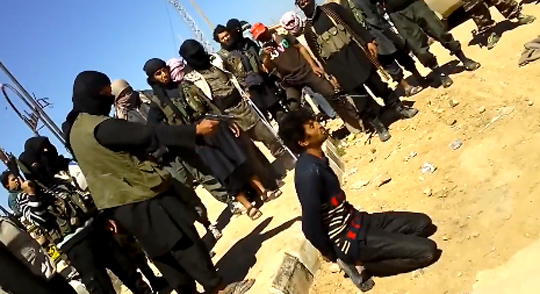
Today another American reporter, Steven Sotloff, was beheaded by the ISIS/ISIL Islamic Caliphate, and as it does so often it released the video of the execution. The Caliphate, which developed out of Al Qaeda fighting the United States in Iraq has become a formidable fighting organization, with deep financial resource is gaining radicalized adherents around the world, and its brutality toward all enemies, even other Moslems is unmatched. The propaganda of the Caliphate against its enemies is similar to what was used by both sides in the Second World War and with each massacre of civilians, each execution of innocent reporters, humanitarian workers and others they ensure that they will reap the whirlwind.

What ISIS forgets is that beneath the civilized veneer of the West, that part of us that likes to abide by treaties and focus on human rights, is that when enraged Americans, Britons, Australians, Germans, Russians and even the French can be just as brutal and also fight wars without mercy. Our histories are full of such examples. The problem is that since we haven’t had to fight such a total war since the Second World War, the leaders of groups such as ISIS assume we are weak and decadent, easy targets. They forget the manner in which all sides, even the Allies waged the Second World War, especially in the Pacific, where the war was fought without mercy. 

isis-terrorists

By waging war in the manner it is doing, ISIS will ensure that its leaders and members will receive no mercy. The post 9-11 response of the United States to Al Qaeda will look like a game compared to what is coming. And unfortunately, we will all lose a bit of our humanity, maybe even a lot of it the longer this war goes on. As far as propaganda, many U.S. politicians , corporate interests and our corporate media are great at promoting war and demonizing opponents. This will be brutal my friends and I for one wish it had never come about. I want peace, I went to Iraq believing that the Iraqis I served alongside and those who had me in their homes would eventually know peace. I grieve for them, as I grieve for all that will suffer in this new war without mercy. 

61VVOf2iniL

I have reposted a book review of John Dower’s book “War without Mercy: Race and Power in the Pacific War.” Pantheon Books, a Division of Random House, New York, NY 1986. I highly recommend the book to anyone who thinks that the conflict with ISIS will be anything but uncivilized and barbarous. It has all the elements to make it so: race, religion, ideology and power, it will mark a return to barbarism that many of us thought would never happen again. 

Here is that review.

The study of war cannot simply be confined to the study of battles, weapons and leaders. While all of these are important one must as Clausewitz understood examine the human element of policy, ideology and the motivations of nations as they wage war. Clausewitz understood that war could not be reduced to formulas and templates but involved what he called the “remarkable trinity” which he described in on war as (1) primordial violence, hatred, and enmity; (2) the play of chance and probability; and (3) war’s element of subordination to rational policy. Clausewitz connects this with the people being connected to the primordial forces of war, the military with the non-rational elements of friction, chance and probability and the government.

The Clausewitzian understanding of war is rooted in the Enlightenment and classic German Liberalism, born out of his experience in the Napoleonic Wars, which forever changed the face of warfare. From the defeat of Prussia and its liberation from Napoleonic rule under Scharnhorst and Gneisenau Clausewitz developed the understanding that war was more than simply tactics and weapons. Thus when we examine war today we deprive ourselves of properly understanding the dynamic of war if we fail to appreciate the human factor which is frequently not rational. Such is especially the case when one fights an enemy who wages war on religious, racial or ideological grounds as is the case in the current war against Al Qaida and other extremist Moslem groups. Such groups would like to turn this war into such a conflict as do certain figures in the American political milieu who repeatedly label all of Islam as the enemy. In such a climate it is imperative to look at history to show us the results of such primal passions.

It is in such conflict as we are engaged in today it is good to look at previous wars from the human experiential component and not simply military operations. If one wants to look at how inflamed passion driven by racial prejudice and hatred took war to a level of barbarity and totality that defy our comprehension we only need to look back to the Pacific war between Japan and the United States. In another post I dealt with the how racial ideology influenced Nazi Germany’s conduct of the war against Poland and the Soviet Union. https://padresteve.wordpress.com/2009/09/14/the-ideological-war-how-hitlers-racial-theories-influenced-german-operations-in-poland-and-russia/

To do this I will look at John Dower’s “War Without Mercy.” In this book Dower examines World War Two in the Pacific from the cultural and ideological viewpoints of the opposing sides. He looks at the war as a race war, which he says “remains one of the great neglected subjects of World War Two.”[i] Dower examines race hated and its influence on both the Japanese and the Allies, particularly in the way that each side viewed one another and conducted the war. He examines the nature of racial prejudice and hate in each society, including its religious, psychological, ideological, scientific and mythological components. He also examines the use of media and propaganda, and how racial attitudes not only influenced national and individual attitudes, but also the military and intelligence operations of both sides. This book is not about military campaigns, thus it is much more like “In the Name of War” by Jill Lepore[ii] than any history of the Pacific war.

Dower uses sources such as songs, movies, cartoons and various writings of the times to demonstrate the totality of the war. Dower admits many of these are difficult to handle and “not respectable sources in some academic sources.”[iii] Despite this he puts together a work that is sometimes chilling, especially when one looks at the current war that our country is engaged in. He also endeavors to explain how after a war where “extraordinarily fierce and Manichean”[iv] race hate predominated, it could “have dissipated so easily”[v] after the war was over.

Dower divides his work into three major sections. The first which examines how the aspect of race effected the fighting of the war, the second, the war through Western eyes and the third the war through Japanese eyes. The first section begins with how racial attitudes in Western and Japanese societies helped fuel the war and compares similar attitudes and concepts in Western and Japanese thought, including how “prejudice and racial stereotypes frequently distorted both Japanese and Allied evaluations of the enemy’s intentions and capabilities.”[vi] He looks at the language of the conflict; at how war words and race words came together “in a manner which did not reflect the savagery of the war, but truly contributed to it….”[vii] the result being “an obsession with extermination on both sides.”[viii] He comes back to this theme throughout the book comparing the two sides and occasionally contrasting these attitudes with corresponding attitudes of the Allies to their German and Italian foes in Europe.[ix]

In the first chapter Dower examines the role played by the propaganda used by both sides. In particular he expalins how the “Know Your Enemy: Japan” movies commissioned by the War Department and directed by Frank Capra, and the Japanese works “Read this and the War is Won” and “The Way of the Subject” helped shape the view of each side. Propaganda developed the idea of the war in terms of good versus evil and the mortal threat posed to their respective cultures by the enemy.

From this he looks at the visceral emotions that the war engendered and how those emotions spilled over into the conduct of the war especially in regard to its ferocity and the war crimes that were spawned by the unbridled hatred of both sides. He notes the targeted terror bombings of civilians by both sides and how those actions were portrayed as “barbaric” by the other side when they were the victim.[x] He notes the viciousness of the war and how for the Americans the war brought forth “emotions forgotten since our most savage Indian wars.”[xi] He contrasts this with European war in particular how the Japanese and their actions were portrayed in Western media, and how similar actions by the Germans, such as the Holocaust, were ignored by Western media until the war was over.[xii] He traces some of this to the understanding of the psychological effects of the defeats and humiliations of the Allies at the hands of the Japanese, and the corresponding brutality toward Allied prisoners by the Japanese as compared to that of the Germans.[xiii] He uses this section to also examine the prevailing attitudes of the Japanese toward the Allies as being weak and “psychologically incapable of recovery” from blows such as the Pearl Harbor attack, and the Allied view of the Japanese as “treacherous.”[xiv]

Dower’s second major section describes the attitudes and actions of the Americans and British toward their Japanese enemy. He looks at the view that the Japanese were less than human and often portrayed as apes or other primates such as monkeys. To do this he examines cartoons and illustrations in popular magazines and military publications, and includes those cartoons in the book. The sheer vulgarity of these cartoons is easily contrasted with those promoted and published by Nazis such as Julius Streicher in Der Stürmer, something often overlooked or ignored in other histories.[xv] The early Western views of Japan as sub-human continued throughout the war, while at the same time, especially after the rapid series of Allied defeats and Japanese victories they were viewed as almost “super-human.” Paradoxically some allied leaders turned the Japanese from “the one time “little man” into a Goliath.”[xvi] They were now “tough, disciplined and well equipped.”[xvii] Ambassador Joseph Grew, reported on his return from Japan, that the Japanese were; “”sturdy,” “Spartan,” “clever and dangerous,” and that “his will to conquer was “utterly ruthless, utterly cruel and utterly blind to the values that make up our civilization….””[xviii] The juxtaposition of such conflicting attitudes is curious, although understandable, especially in light of other Western wars against Asians or Arabs.[xix]

Dower then examines how some Americans and British explained the Japanese “National Character,” their approach to war, and actions during the war from Freudian psychiatry as well as Anthropology and other social and behavioral sciences. Beginning with the widespread Allied understanding that the Japanese were “dressed-up primitives-or “savages” in modern garb…”[xx] he notes that these interpretations of the Japanese national character stemmed from “child-rearing practices and early childhood experiences,”[xxi] including toilet training and Freudian interpretations that saw an arrested psychic development at the “infantile (anal or genital) stage of development.”[xxii] Dower deduces that it was not hard to see how “Japanese overseas aggression became explicable in terms of penis envy or a castration complex….”[xxiii] The views were widespread and emphasized that the “Japanese were collectively unstable.”[xxiv] Dower notes that the “very notion of “national character”-was the application to whole nations and cultures of an analytical language that had been developed through personal case studies…”[xxv] which he is rightly critical in suggesting that this premise “was itself questionable.”[xxvi] In addition to this was the understanding of Margaret Mead and others of the Japanese as “adolescents” and “bullies,”[xxvii] and notes that from “the diagnosis of the Japanese as problem children and juvenile delinquents, it was but a small step to see them as emotionally maladjusted adolescents and, finally as a deranged race in general.”[xxviii] Dower cites numerous other “experts” of the time and their interpretations of the Japanese national character, but the overwhelming message is that the application of these theories, regardless of their validity had a major impact on the Allied war against Japan.

He follows this chapter with one with much importance in explaining the similarities in how Americans and Westerners in general viewed the Japanese in relationship to other races that they had dealt with including Blacks, Chinese, Filipinos, and American Indians. Common themes include the views of each as primitives, children and madmen and the view of the Japanese as part of the “Yellow Peril.” Of particular note is his analysis of the work of Homer Lea’s 1909 book The Valor of Ignorance and the vision of Japanese supermen which enjoyed a revival after Pearl Harbor.[xxix] Dower examines depictions of Asians in general in the Fu Manchu and Charlie Chan series of films and other racial aspects hearkening back to the “specter of Genghis Khan and the prospect that the white races “may be liquidated.”[xxx] He notes how Japanese propagandists attempted to use Allied prejudice to influence the Chinese and other Asians against the Allies[xxxi] and American blacks against whites,[xxxii] while attempting to maintain their own racial superiority which is the subject of the next section.

The chapters dealing with the Japanese view of themselves and their opponents tie together neatly. These deal with the Japanese view of themselves as the leading race in Asia and the world. Dower talks about symbols and the understanding of racial purity that motivated the Japanese from the 1800s to the rejection of Japan’s request for a declaration of “racial equity” at the League of Nations.[xxxiii] He notes the “propagation of an elaborate mythohistory in Japan and the time spent “wrestling with the question of what it really meant to be “Japanese” and how the “Yamato race” was unique among races….”[xxxiv] He notes the relationship of Shinto with whiteness and purity and connotations of how the Japanese indulged in “Caucasianization” of themselves vis-à-vis other Asians during World War Two,”[xxxv] and their emphasis on a Japanese racial worldview.[xxxvi] He also tackles the way in which the Japanese wrestled with evolution and its relationship to other racial theories contrasting books such as A History of Changing Theories about the Japanese Race and Evolution of Life with Cardinal Principles of the National Polity published by the Thought Bureau of the Ministry of Education in1937. These declared that the Japanese were “intrinsically different from the so-called citizens of Occidental countries.”[xxxvii] He also deals with the Kyoto school and the Taiwa concept.[xxxviii] In Chapter Nine Dower looks at how the Japanese viewed themselves and outsiders, in particular the characterization of Westerners as nanbanjin or barbarians and how this eventually train of thought carried through the war led to the “Anglo-American foe emerged full blown as the demonic other.”[xxxix] Dowers final chapter deals with how quickly the race hatred dissipated and genuine goodwill that developed between the Japanese and Americans after the war.[xl]

This book holds a unique place in the literature of the Pacific war. It is not a comfortable book, it is challenging. No other deals with these matters in any systemic way. If there is a weakness in Dower is that he does not, like Lepore in “In the Name of War” deal with the attitudes of soldiers and those who actually fought the war. His examples are good and go a long way in explaining the savagery with which the war was conducted, but could have been enhanced with reflections and accounts of those who fought the war and survived as well as the writings of those who did not, and the way those attitudes were reflected in different services, times and theaters during the war, including adjustments that commanders made during the war.[xli] His description of how Japanese “reluctance to surrender had meshed horrifically with Allied disinterest …in contemplating anything short of Japan’s “thoroughgoing defeat.”[xlii]

The lessons of the book are also contemporary in light of the cultural and religious differences between the West and its Moslem opponents in the current war. Possibly even more so than the war between the United States and Japan which was fought by nation states that still were signatories to international conventions, not nation states against terrorists unbound by any Western code or law or indigenous forces engaged in revolutionary war against the west such as the Taliban.[xliii] The temptation is for both sides to demonize one’s opponent while exalting one’s own way of life through official propaganda and popular media, with a result of increased viciousness and inhumanity in pursuit of ultimate victory. In today’s world with the exponential rise in the radicalization of whole people groups and the availability of weapons of mass destruction, it is possibility that the war could develop into one that is a racial as well as religious and ideological war that would make the War in the Pacific look like a schoolyard brawl.

As William Tecumseh Sherman said: “You cannot qualify war in harsher terms than I will. War is cruelty, and you cannot refine it…”

Bibliography

Alexander, Joseph H. Utmost Savagery: The Three Days of Tarawa. Ivy Books, Published by Ballantine Books, New York, NY 1995

Dower, John W. War without Mercy: Race and Power in the Pacific War.” Pantheon Books, A Division of Random House, New York, NY 1986.

Leckie, Robert. Okinawa. Penguin Books USA, New York NY, 1996

Lepore, Jill The Name of War Vintage Books a Division of Random House, New York, NY 1998

Tregaskis, Richard Guadalcanal Diary Random House, New York NY 1943, Modern Library Edition, 2000.

[i] Dower, John W. War without Mercy: Race and Power in the Pacific War.” Pantheon Books, A Division of Random House, New York, NY 1986. p.4
[ii] Lepore, Jill The Name of War Vintage Books a Division of Random House, New York, NY 1998. Lepore’s book deals with King Phillip’s War and how that war shaped the future of American war and how it shaped the views of Indians and the English Colonists and their later American descendants both in the language used to describe it, the histories written of it and the viciousness of the war.

[iii] Ibid. p.x

[iv] Ibid. p.ix

[v] Ibid. p.x

[vi] Ibid. p.11

[vii] Ibid.

[viii] Ibid. Also see Alexander, Joseph H. Utmost Savagery: The Three Days of Tarawa. Ivy Books, Published by Ballantine Books, New York, NY 1995 Alexander notes an incident that shows a practical application of the Japanese views and the ruthlessness inflicted on their enemies, in this case prisoners in response to an American bombing raid. In 1942 the commander of the Japanese Garrison of Makin Island ordered 22 prisoners beheaded after one cheered following a bombing raid. (p.32)

[ix] An interesting point which Dower does not mention but is interesting for this study is how the Germans referred to the British and Americans as “Die gegener” (opponents) and the Soviets as “Die Feinde” (the enemy), the implication being that one die gegener was a common foe, much like an opposing team in a sport, and the other a mortal enemy, the implication of Feinde being evil, or demonic.

[x] In particular he makes note of the Japanese actions during the “Rape of Nanking,” and the 1945 sack of Manila, as well as the fire bombing of Japanese cities by the US Army Air Corps in 1945.

[xi] Ibid. Dower. p.33

[xii] Ibid. p.35

[xiii] Ibid. This is important in the fact that the Allies tended not to make much of German brutality to the Jews, Russians and other Eastern Europeans.

[xiv] Ibid. p.36.

[xv] Dower does not make this implicit comparison, but having seen both and studied the Nazi propaganda directed toward the Jews, Russians and other Slavic peoples considered to be Untermenschen (sub-humans) by the Nazis the similarities are striking.

[xvi] Ibid. pp.112-113.

[xvii] Ibid. p.113

[xviii] Ibid.

[xix] In the 2006 Israeli invasion of Lebanon, Israeli soldiers who previously showed no respect to any Arab fighter described their Hezbollah opponents as “soldiers and warriors.” Similar attitudes were voiced by American soldiers in Vietnam when they fought NVA regulars.

[xx] Ibid. p.123

[xxi] Ibid.

[xxii] Ibid.

[xxiii] Ibid.

[xxiv] Ibid. p.124

[xxv] Ibid.

[xxvi] Ibid.

[xxvii] Ibid. p.129

[xxviii] Ibid. p.143

[xxix] Ibid. P.157. Lea is interesting because he predicts a decline in the stature of the British Empire and softness of both the Americans and British as peoples. Also see John Costello in The Pacific War 1941-1945 Quill Books, New York, NY 1982 pp.31-32 notes Lea’s concerns and how they drove the American Pacific strategy until the outbreak of World War Two.

[xxx] Ibid. p.161

[xxxi] Ibid. p.169

[xxxii] Ibid. pp.174-180. This is an interesting section. One of the most interesting topics being the reaction of the NAACP’s Walter White’s book A Rising Wind published which “suggested a sense of kinship with other colored-and also oppressed-peoples of the world….he senses that the struggle of the Negro in the United States is part and parcel of the struggle against imperialism and exploitation in India, China, Burma….” (p.177-178)

[xxxiii] Ibid. p.204

[xxxiv] Ibid. p.205

[xxxv] Ibid. p.209 This is interesting when one compares the Japanese emphasis on “Pan-Asianism” and the inherent contradiction between the two.

[xxxvi] Ibid. p.211 Dower notes that the article Establishing a Japanese Racial Worldview in the monthly Bungei Shunju “clarified the Japanese character, whose basic traits were brightness, strength and uprightness. These qualities made the Japanese “the most superior race in the world.”

[xxxvii] Ibid. p.221

[xxxviii] Ibid. p.227 This was the theory of Zen Buddhism’s Suzuki Daisetsu (D.T. Suzuki) in his teaching of the struggle for the Great Harmony “Taiwa” which attempted to identify “an intuitive sense of harmony and oneness that he declared to be characteristic of Oriental thought.”

[xxxix] Ibid. p.247. Descriptions of the Allies as Barbarians, Gangsters and Demons permeated Japanese propaganda.

[xl] Ibid. Dower makes a number of observations relating to how the Japanese were able to use their own self concept to adapt to their defeat. He also notes that the Japanese were able to transfer their self concept to a peaceful orientation.

[xli] See Leckie, Robert. Okinawa. Penguin Books USA, New York NY, 1996 p.35. Leckie quotes General Ushijima “You cannot regard the enemy as on par with you,” he told his men. “You must realize that material power usually overcomes spiritual power in the present war. The enemy is clearly our superior in machines. Do not depend on your spirits overcoming this enemy. Devise combat method [sic] based on mathematical precision-then think about displaying your spiritual power.” Leckie comments: “Ushijima’s order was perhaps the most honest issued by a Japanese commander during the war. It was Bushido revised, turned upside down and inside out-but the revision had been made too late.”

[xlii] Ibid. Dower. p.37

[xliii] See Tregaskis, Richard Guadalcanal Diary Random House, New York NY 1943, Modern Library Edition, 2000. p.95. Tregaskis notes when commenting on Japanese POWs on Guadalcanal “We stared at them and they stared back at us. There was no doubt what we or they would have liked to do at that moment-if we had not remembered our code of civilization or if they had not been unarmed.”

1 Comment

Filed under Foreign Policy, History, history, iraq,afghanistan, middle east, Military, Religion, world war two in the pacific

“Unparalleled Bestiality” Hitler’s Racial and Ideological War in Poland and Russia

Friends of Padre Steve’s World,
On September 1st 1939 the armies of Adolf Hitler’s Germany invaded Poland, following in their wake were some special purpose formations composed of SS and Police units commanded by officers of the Sicherheitdienst, the SD. These units were the Einsatzgruppen and they enforced the racial and ideological campaign against the Jews as well as Polish social elites using mass killings as their method of operations. They employed the same tactics when they invaded the Soviet Union in 1941. Those deemed worth of death were summarily killed, often in mass shootings and thrown in mass graves, in some places the Einsatzgruppen killed as many as 30,000 people in a single operation. That kind of brutality is not absent us in our era, today the forces of ISIS are rampaging in Syria and Iraq, and using their twisted religious ideology are killing political or religious opponents who dare resist them, or forcing conversion to their twisted form of Islam. Like the Nazis they are proud of their activities and ensure that they are filmed, although then Nazis did their filming for the historical record, not to share with the world. Unlike the Nazis, ISIS uses its recordings to spread terror and win the hearts of others to their cause. In the Ukraine there are also massacres as Ukrainian forces fight Russian backed separatists in the eastern Ukraine. It is amazing that in 75 years so little has changed. The Nazis had a few years of conquest where they sowed the wind, and they reaped the whirlwind. I believe that that is what is coming as ISIS spreads and the world finally decides to crush them. It will be an ideological war of a nature that we have not seen since World War II on the Eastern Front, where the terror spread by the Nazis was met with the unrequited terror of the Red Army.
So today I republish an article about the Nazi terror spread by the Einsatzgruppen in Poland and Russia, and its ideological and doctrinal foundations.
Peace
Padre Steve+

padresteve's avatarThe Inglorius Padre Steve's World

babi yar

As part of my academic work I teach military ethics as related to the Just War Theory. In the class on jus post bellum or justice after war I deal with the implication of participating in war crimes. It is a serious subject and in the class I attempt to make my students, all relatively senior officers as uncomfortable as possible. I use a number of examples from the major war crimes trials at Nuremberg as well as the Generals Trial. I had an exceptionally good class over the past several weeks and that caused me to go back and do some revisions to a number articles that I have written in the past. I have published a version of this before but I have made some additions and expect that like my work on Gettysburg that this work too will be an ongoing project.

I think part of why…

View original post 13,648 more words

2 Comments

Filed under Loose thoughts and musings