Daily Archives: September 24, 2015

I Imagined that it Would be Different than This: Thoughts on Coming Home from War

Friends of Padre Steve’s World

Judy and I are now on our last full day in Germany and the Oktoberfest in Munich. Tomorrow evening we should be back in the good old USA. Since I am posting in advance as I do not plan on writing anything in Germany unless something really important happens, I am re-posting a modified version of an article that I first posted over a year ago.

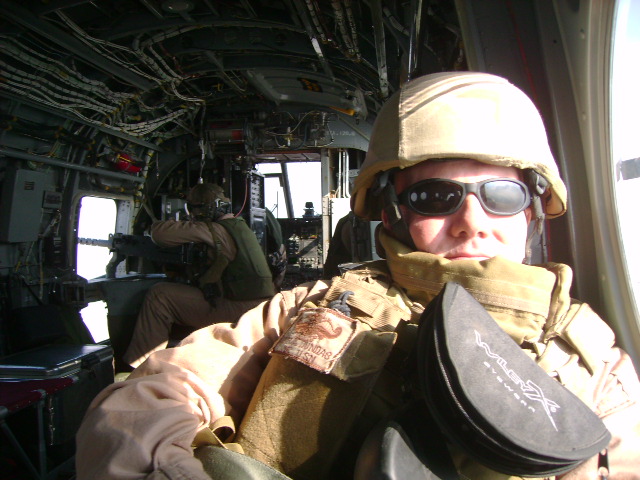
For me it began in February 2008 when on the way back from Iraq the military charter aircraft bringing us home stopped in Ramstein Germany. After a few hour layover we re-boarded the aircraft but we were no longer alone, the rest of the aircraft had been filled with the families of soldiers and airmen stationed in Germany. Just days before most of us had been in Iraq or Afghanistan. The cries of children and the intrusion of these people, not bad people by any means on our return flight was shocking, it was like returning to a world that I no longer knew.

I think that coming home from war, especially for those damaged in some way, in mind, body or spirit is harder than being at war.

In that thought I am not alone. Erich Maria Remarque in his classic novel All Quiet on the Western Front wrote:

“I imagined leave would be different from this. Indeed, it was different a year ago. It is I of course that have changed in the interval. There lies a gulf between that time and today. At that time I still knew nothing about the war, we had been only in quiet sectors. But now I see that I have been crushed without knowing it. I find I do not belong here any more, it is a foreign world.”

Likewise, Guy Sajer a French-German from the Alsace and veteran of the Grossdeutschland Division on the Eastern Front in World War II noted at the end of his book The Forgotten Soldier: 

“In the train, rolling through the sunny French countryside, my head knocked against the wooden back of the seat. Other people, who seemed to belong to a different world, were laughing. I couldn’t laugh and couldn’t forget.”

I have been reminded of this several times in the past week. It began walking through a crowded Navy commissary on Saturday, in the few minutes in the store my anxiety level went up significantly. On Tuesday I learned of the death of Captain Tom Sitsch my last Commodore at EOD Group Two, who died by his own hand. His life had come apart. After a number of deployments to Iraq as the Commander EOD Mobile Unit 3 and of Task Force Troy he was afflicted with PTSD. Between June of 2008 and the end of 2009 he went from commanding an EOD Group to being forced to retire.  Today I had a long talk with a fairly young friend agonizing over continued medical treatments for terminal conditions he contracted in two tours in Iraq where he was awarded the Bronze Star twice.

I have a terrible insomnia, nightmares and night terrors due to PTSD. My memories of Iraq are still strong, and this week these conditions have been much worse. Sager wrote:

“Only happy people have nightmares, from overeating. For those who live a nightmare reality, sleep is a black hole, lost in time, like death.”

Nearly 20 years after returning from war, a survivor of the 1st Battalion 308th Infantry, the “Lost Battalion” of World War One, summed up the experience of so many men who come back from war:

“We just do not have the control we should have. I went through without a visible wound, but have spent many months in hospitals and dollars for medical treatment as a result of those terrible experiences.”
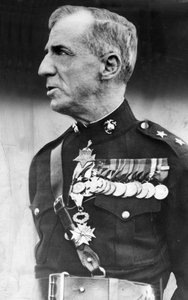
butler-medals1

Two time Medal of Honor winner Major General Smedley Butler toured Veterans hospitals following his retirement from the Marine Corps. He observed the soldiers who had been locked away. In his book War is a Racket:

“But the soldier pays the biggest part of this bill. If you don’t believe this, visit the American cemeteries on the battlefields abroad. Or visit  any of the veterans’ hospitals in the United States….I have visited eighteen government hospitals for veterans. In them are about 50,000 destroyed men- men who were the pick of the nation eighteen years ago. The very able chief surgeon at the government hospital in Milwaukee, where there are 3,800 of the living dead, told me that mortality among veterans is three times as great as among those who stayed home.”

Similarly Remarque wrote in All Quiet on the Western Front:

“A man cannot realize that above such shattered bodies there are still human faces in which life goes its daily round. And this is only one hospital, a single station; there are hundreds of thousands in Germany, hundreds of thousands in France, hundreds of thousands in Russia. How senseless is everything that can ever be written, done, or thought, when such things are possible. It must be all lies and of no account when the culture of a thousand years could not prevent this stream of blood being poured out, these torture chambers in their hundreds of thousands. A hospital alone shows what war is.”
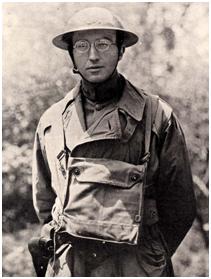
Lt.ColonelCharlesWhiteWhittlesey

Lieutenant Colonel Charles Whittlesey

Sometimes even those who have been awarded our Nation’s highest award for valor succumb to the demons of war that they cannot shake, and never completely adjust to life at “home” which is no longer home. For them it is a different, a foreign world to use the words of Sager and Remarque. Lieutenant Colonel Charles Whittlesey won the Medal Medal of Honor as Commander of 1st Battalion 308th Infantry, the “Lost Battalion” in France. After the war he was different. He gave up his civilian law practice and served as head of the Red Cross in New York. In that role, and as the Colonel for his reserve unit, he spent his time visiting the wounded who were still suffering in hospitals. He also made the effort to attend the funerals of veterans who had died. The continued reminders of the war that he could not come home from left him a different man. He committed suicide on November 21st 1921not long after serving as a pallbearer for the Unknown Soldier when that man was interred at Arlington National Cemetery.

In his eulogy, Judge Charles L. Hibbard noted:

“He is sitting on the piazza of a cottage by the sea on a glorious late September day but a few weeks ago. . . He is looking straight out to sea, with naught but sea between him and that land where lie so many of his boys. The beating surf is but an echo, the warm, bright sunshine, the blue sky, the dancing waves, all combine to charm. But a single look at his face and one knows he is unconscious of this glory of Nature. Somewhere far down in the depths of his being or in imagination far off across the waters he lives again the days that are past. That unconscious look has all the marks of deep sorrow, brooding tragedy, unbearable memories. Weeks pass. The mainspring of life is wound tighter and tighter and then comes the burial of the Unknown Soldier. This draws the last measure of reserve and with it the realization that life had little now to offer. This quiet, reserved personality drew away as it were from its habitation of flesh, thought out the future, measured the coming years and came to a mature decision. You say, ‘He had so much to live for – family, friends, and all that makes life sweet.’ No, my friends, life’s span for him was measured those days in that distant forest. He had plumbed the depth of tragic suffering; he had heard the world’s applause; he had seen and touched the great realities of life; and what remained was of little consequence. He craved rest, peace and sweet forgetfulness. He thought it out quietly, serenely, confidently, minutely. He came to a decision not lightly or unadvisedly, and in the end did what he thought was best, and in the comfort of that thought we too must rest. ‘Wounded in action,’ aye, sorely wounded in heart and soul and now most truly ‘missing in action.’”

Psychologist and professor Dr. Ari Solomon analyzed the case of Colonel Whittlesey and noted:

“If I could interview Whittlesey as a psychologist today, I’d especially have in mind … the sharp discrepancy between the public role he was playing and his hidden agony, his constant re-exposure to reminders of the battle, his possible lack of intimate relations, and his felt need to hide his pain even from family and dearest friends.”

I wish I had the answer. I have some ideas that date back to antiquity in the ways that tribes, clans and city states brought their warriors home. The warriors were recognized, there were public rituals, sometimes religious but other times not. But the difference is that the warriors were welcomed home by a community and re-integrated into it. They were allowed to share their stories, many of which were preserved through oral traditions so long that they eventually were written down, even in a mythologized state.

But we do not do that. Our society is disconnected, distant and often cold. Likewise it is polarized in ways that it has not been since the years before our terrible Civil War. Our warriors return from war, often alone, coming home to families, friends and communities that they no longer know. They are misunderstood because the population at large does not share their experience. The picture painted of them in the media, even when it is sympathetic is often a caricature; distance and the frenetic pace of our society break the camaraderie with the friends that they served alongside. Remarque wrote, “We were all at once terribly alone; and alone we must see it through.”

If we wonder about the suicide epidemic among veterans we have to ask hard questions. Questions like why do so many combat veterans have substance abuse problems and why is it that approximately one in ten prisoners serving time are veterans? It cannot be simply that they are all bad eggs. Many were and are smart, talented, compassionate and brave, tested and tried in ways that our civilian society has no understanding for or clue about. In fact to get in the military most had to be a cut above their peers. We have to ask if we are bringing our veterans home from war in a way that works. Maybe even more importantly we have to ask ourselves if as a culture if we have forgotten how to care about each other. How do we care for the men and women who bear the burden of war, even while the vast majority of the population basks in the freedom and security provided by the soldier without the ability to empathize because they have never shared that experience.

For every Tom Sitsch, Charles Whittlesey or people like my friend, there are countless others suffering in silence as a result of war. We really have to ask hard questions and then decide to do something as individuals, communities and government to do something about it. If we don’t a generation will suffer in silence.

Peace

Padre Steve+
 

Leave a comment

Filed under History, leadership, Military, PTSD

Fanatical Idealists: John Brown

Friends of Padre Steve’s World

Another section from my Civil War and Gettysburg text while I am away. This one on John Brown, a man who was incredibly idealistic in his desire to free the slaves and frustrated by the lack of political progress in doing so. Brown was also a fanatic, willing to take lives, even innocent ones to make his point and fulfill his destiny. That is the problem with idealism when it becomes frustrated. Frustrated idealists often turn to violence to get their point across, which in turn makes even good causes suspect. Brown is no different than other religious ideologues and not just Christian ones. Religious idealists who become fanatics based on their belief in their cause and their destiny to fulfill it as agents of the almighty tend to be some of the most violent and ruthless of all. Brown provides us a little bit of an insight into the hearts of people who are willing to kill and to die for their religious, social and ideological beliefs. Interestingly enough it was none other than Edmund Ruffin, a slave owner and rabid supporter of the expansion of slavery and secession who seemed to understand Brown the best.

Peace

Padre Steve+

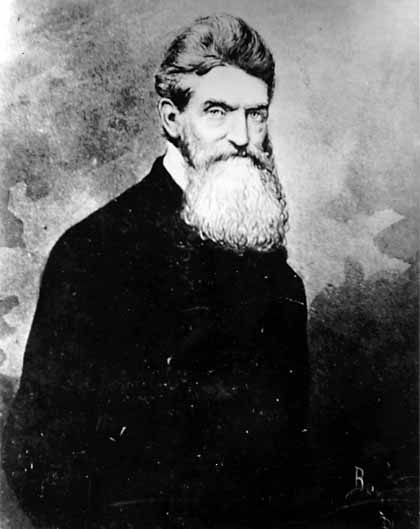
jb_portrait

John Brown

In the North there too existed an element of religious fanaticism. While “the restraining hand of churches, political parties and familial concerns bounded other antislavery warriors,” [1] and while most abolitionists tried to remain in the mainstream and work through legislation and moral persuasion to halt the expansion of slavery with the ultimate goal of emancipation; there were fanatical abolitionists that were willing to attempt to ignite the spark which would cause the powder keg of raw hatred and emotion to explode.

Most prominent among these men was John Brown. Brown was a “Connecticut-born abolitionist…a man with the selfless benevolence of the evangelicals wrought into a fiery determination to crush slavery.” [2] His father was an early abolitionist who helped later found Oberlin College. In his early years Brown “formulated a certitude about divine intervention against sinners, starring himself as God’s warrior against slaveholders.” [3] As early as 1834 Brown was “an ardent sympathizer the Negroes,” desiring to raise a black child in his own home and to “offering guidance to a colony of Negroes on the farm of the wealthy abolitionist Gerrit Smith at North Elba New York.” [4] Brown regarded moderate free Staters with disdain and though he was a fanatical Christian he never joined any church, and “obeyed only his conception of God’s unbounded command.” [5]

Brown “ridiculed Republican’s mainstream tactics. He disparaged even Yankee extremists for deploying too non-violent a strategy.” [6] After a series of failed business ventures the militant Brown went to Kansas and set about to change the equation through the use of terror. After the sack of Lawrence, Brown and a company of his marauders set upon and slaughtered the family of a pro-slavery settler at Pottawatomie Creek. [7] Brown and his son’s entered the house of one family, “dragged three men outside, shot the father through the head, and hacked and mutilated his two sons with broadswords.” [8] Two years later Brown went to Missouri where he “murdered a slaveholder, seized eleven slaves, and led the new freedmen 1100 miles to Canadian sanctuary.” [9]

The example of John Brown provides us with a good example to understand religious extremism, especially when it becomes violent. The counterinsurgency field manual notes in words that are certainly as applicable to Brown as they are to current religiously motivated terrorists, that “Religious extremist insurgents….frequently hold an all-encompassing worldview; they are ideologically rigid and uncompromising…. believing themselves to be ideologically pure, violent religious extremists brand those they consider insufficiently orthodox as enemies.”[10]

Brown was certainly “a religious zealot…but was nevertheless every much the product of his time and place….” [11] Brown was a veteran of the violent battles in Kansas where he had earned the reputation as “the apostle of the sword of Gideon” as he and his men battled pro-slavery settlers. Brown was possessed by a zealous belief that God had appointed him as God’s warrior against slaveholders. He despised the peaceful abolitionists and demanded action. “Brave, unshaken by doubt, willing to shed blood unflinchingly and to die for his cause if necessary, Brown was the perfect man to light the tinder of civil war in America, which was what he intended to do.” [12]

Brown attempted to gain financing from wealthy abolitionists for a new expedition to seize the Federal arsenal at Harper’s Ferry Virginia, and most would have nothing to do with his scheme. When they “touted their pacific antislavery societies, Brown responded that “your methods are perfectly futile; you would not release five slaves in a century; peaceful emancipation is impossible.” [13] After hearing William Lloyd Garrison and other abolitionist leaders after pleas for peaceful abolition he remarked: “We’ve reached a point,” I said, “where nothing but war can get rid of slavery in this guilty nation. It’s better that a whole generation of men, women, and children should pass away by a violent death than that slavery should continue to exist.” I meant that literally, every word of it.” [14]

Following that meeting, as well as a meeting with Frederick Douglass who rejected Brown’s planned violent action, Brown went about collecting recruits for his cause and set out to seize 10,000 muskets at the Federal armory in Harper’s Ferry, Virginia in order to ignite a slave revolt. Brown and twenty-one followers, sixteen whites and five blacks moved on the arsenal. As they went, Brown:

“believed that we would probably fail at the Ferry, would probably die. But I believed that all we had to do was make the attempt, and Jehovah would do the rest: the Heavens would turn black, the thunder would rend the sky, and a mighty storm would uproot this guilty land, washing its sins away with blood. With God’s help, I, John Brown, would effect a mighty conquest even though it was like the last victory of Samson.” [15]

After initial success in capturing the armory, Brown’s plan was frustrated and Brown captured by a force of U.S. Marines, led by Colonel Robert E. Lee and Lieutenant J.E.B. Stuart. Brown was tried and hanged, but his raid “effectively severed the country into two opposing parts, making it clear to moderates there who were searching for compromise, that northerner’s tolerance for slavery was wearing thin.” [16]

It now did not matter that Brown was captured, tried, convicted and executed for his raid on Harper’s Ferry. Brown to be sure was “a half-pathetic, half-mad failure, his raid a crazy, senseless exploit to which only his quiet eloquence during trial and execution lent dignity” [17] but his act was the watershed from which the two sides would not be able to recover; the population on both sides having gone too far down the road to disunion to turn back.

Brown had tremendous support among the New England elites, the “names of Howe, Parker, Emerson and Thoreau among his supporters.” [18] To abolitionists he had become a martyr “but to Frederick Douglass and the negroes of Chatham, Ontario, nearly every one of whom had learned something from personal experience on how to gain freedom, Brown was a man of words trying to be a man of deeds, and they would not follow him. They understood him, as Thoreau and Emerson and Parker never did.” [19]

But to Southerners Brown was the symbol of an existential threat to their way of life. In the North there was a nearly religious wave of sympathy for Brown, and the “spectacle of devout Yankee women actually praying for John Brown, not as a sinner but as saint, of respectable thinkers like Thoreau and Emerson and Longfellow glorifying his martyrdom in Biblical language” [20] horrified Southerners, and drove pro-Union Southern moderates into the secession camp.

The day that Brown went to his hanging he wrote his final missive. This was written once more in apocalyptic language, but also in which he portrayed himself as a Christ figure going to his cross on the behalf of a guilty people, but a people whom his blood would not atone:

“It’s now December second – the day of my hanging, the day the gallows become my cross. I’m approaching those gallows while sitting on my coffin in the bed of a military wagon. O dear God, my eyes see the glory in every step of the divine journey that brought me here, to stand on that platform, in that field, before all those soldiers of Virginia. Thank you, Father, for allowing an old man like me such might and soul satisfying rewards. I am ready to join thee now in Paradise…

They can put the halter around my neck, pull the hood over my head. Hanging me won’t save them from God’s wrath! I warned the entire country: I, John Brown, am now quite certain that the crimes of this guilty land will never be purged away, but with blood.” [21]

Brown’s composure and dignity during the trial impressed Governor Henry Wise of Virginia who signed Brown’s death warrant as well as that of fire-eater Edmund Ruffin. In his diary Ruffin “praised Brown’s “animal courage” and “complete fearlessness & insensibility to danger and death.” [22]

Brown’s death was marked with signs of mourning throughout the North, for Brown was now a martyr. Henry David Thoreau “pronounced Brown “a crucified hero,” [23] while through the North, Brown’s death was treated as a martyr’s death. Even abolitionists like William Lloyd Garrison who had condemned violence in the quest of emancipation praised Brown’s actions, while throughout the North:

“Church bells tolled, black bunting was hung out, minute guns were fired, prayer meetings assembled, and memorial resolutions adopted. In the weeks following, the emotional outpouring continued: lithographs of Brown circulated in vast numbers, subscriptions were organized for the support of his family, immense memorial meetings took place in New York, Boston and Philadelphia…” [24]

But in the South there was a different understanding. Despite official denunciations of Brown by Lincoln and other Republican leaders, the message was that the North could not be trusted. Brown’s raid, and the reaction of Northerners to it “was seized upon as argument-clinching proof that the North was only awaiting its opportunity to destroy the South by force….” [25]

Notes

[1] Ibid. Freehling The Road to Disunion Volume II p.207

[2] Ibid. Guelzo Fateful Lightening p.81

[3] Ibid. Freehling The Road to Disunion Volume II p.207

[4] Ibid. Potter The Impending Crisis p.211

[5] Ibid. Freehling The Road to Disunion Volume II p.207

[6] Ibid. Freehling The Road to Disunion Volume II p.206

[7] Ibid. Potter The Impending Crisis pp.211-212

[8] Ibid. Goldfield America Aflame p.118

[9] Ibid. Freehling The Road to Disunion Volume II p.208

[10] Ibid. U.S. Army/ Marine Counterinsurgency Field Manual p.27

[11] Ibid. Levine Half Slave and Half Free p.197

[12] Ibid. Korda, Clouds of Glory p.xviii

[13] Ibid. Freehling The Road to Disunion Volume II p.208

[14] Ibid. Oates The Approaching Fury p.203

[15] Ibid. Oates The Approaching Fury p.284

[16] Ibid. Korda Clouds of Glory p.xxxix

[17] Ibid. Catton Two Roads to Sumter p.187

[18] Ibid. Potter The Impending Crisis p.381

[19] Ibid. Potter The Impending Crisis p.375

[20] Ibid. Catton Two Roads to Sumter p.187

[21] Ibid. Oates The Approaching Fury p.290

[22] Ibid. Thomas The Confederate Nation p.3

[23] Ibid. McPherson The Battle Cry of Freedom p.210

[24] Ibid. Potter The Impending Crisis p.378

[25] Ibid. Guelzo Fateful Lightening p.119

1 Comment

Filed under civil war, History, Religion
