Category Archives: books

Breaking Precedent: Trump and Hitler Compared to their Predecessors

Friends of Padre Steve’s World,

I recently read German historian Joachim Fest’s book Inside Hitler’s Bunker: the Last Days of the Third Reich. The book is the basis for the German language film Downfall which depicted the last ten days of the Third Reich.

I don’t read books or movies about the Third Reich to find comparisons to the present day, I have been studying that period since my years as a college undergraduate and first year graduate student at California State University at Northridge. Most of my history major studies focused on modern German history beginning with Imperial German but really focusing on the Weimar Republic and the Nazi era through the major war crimes trials at Nuremberg. My professor, Dr. Helmut Heussler had served there as a translator.

That was nearly 40 years ago. I continued that study in seminary to some extent, individually during the times that I was stationed in Germany in the 1980s and 1990s, and during my second Masters degree. I have continued those studies since then and used what I learned teaching ethics to senior military officers at the Joint Forces Staff College. We dealt a lot with war crimes and I used the film about the Wannsee Conference, Conspiracy as our capstone exercise. I used it so my students could see how ordinary men, officers, lawyers, bureaucrats, and police officials could cooperate to coordinate their agencies actions in regards to implementing the Final Solution to what they referred to as the Jewish Question.

Since 2014 I have made yearly visits to Germany where I take the time to visit the sites and centers related to the study of the Holocaust and the Nazi period. Thankfully because I read, speak and write German I do pretty well navigating around these sites and many of the materials I have now are in German, but I digress, that was all to state my expertise regarding the subject before some troll comes by to say that I don’t know what I’m talking about.

So anyway going back to Fest’s book and one particular statement that Fest made about Hitler in the context of German history and the various leaders who preceded him. Fest wrote:

“What differentiated Hitler from any conceivable predecessors was the complete lack of sense of responsibility beyond the merely personal, of any clear-headed, selfless ethos of service, and of any historic morality.”

I had to stop reading at that point and go back and re-read the preceding section of that chapter to make sure that I had the context right. Hitler certainly absorbed the ideas of racism, anti-Semitism, racial purity and the superiority of the Aryan Race, which do have precedent in German history. They were part and parcel of ideas that he was exposed to while in Vienna before the war and the people that he socialized with in Munich following Germany’s defeat in 1918.

There are also examples of German military forces conducting what amounted to genocide in Namibia when it was a German colony, as well as very harsh measures being conducted against Belgian civilians during the First World War, but those knew limits, and there the comparison with his predecessors ends. Fest wrote:

“There would be a “New Man”who razed everything to the ground, resettled territories, and sought relaxation from his mission… It was a break with everything the world had ever stood for. Trying to invent an origin for this revolution – an origin it did not have – is to fall retrospectively for the regime’s own propaganda. The origins of this program were entirely self generated. No one had ever gone to such extremes, and with such utter madness….”

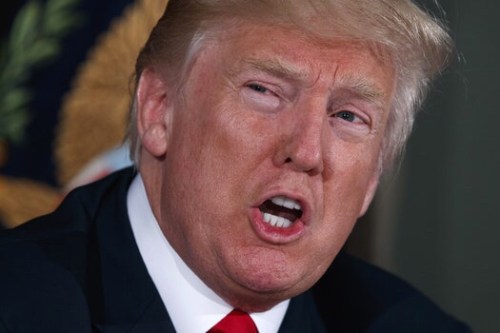
Then I began to think about President Trump in the context of his presidential predecessors and I realized that in the context of the American political system that what Fest said about Hitler is also true of the 45th American President. While he may represent some of the more isolationist, and racist parts of our history there is no real American Presidential precedent for him.

He has gone back and borrowed from the worst aspects of the American experience and mythology to create his personal cult of personality based on Making America Great Again. He blends crude ante-Bellum and Jim Crow racism, with the anti-immigrant and religious prejudices of the Know Nothings, as well as the Isolationist and Nazi supporting America First movement of the late 1930s and early 1940s. He tries to link himself to Ronald Reagan but that to is a fallacy based on the policies enacted by both men.

Like Hitler, Trump has been enabled by a cult-like following who themselves were ideologically and socially prepared to sacrifice themselves for him and his repackaging of their beliefs despite overwhelming evidence that he will lead them to ruin despite a veneer of success.

I really don’t try to go out of my way to find connections between our era and the early period of Nazi rule in Germany, but when they jump out like this I cannot ignore them. Such moments are epiphanies and should not be ignored.

Until tomorrow,

Peace,

Padre Steve+
5 Comments

Filed under books, History, News and current events, Political Commentary

The Witness of History: What is the Worth of Human Life?

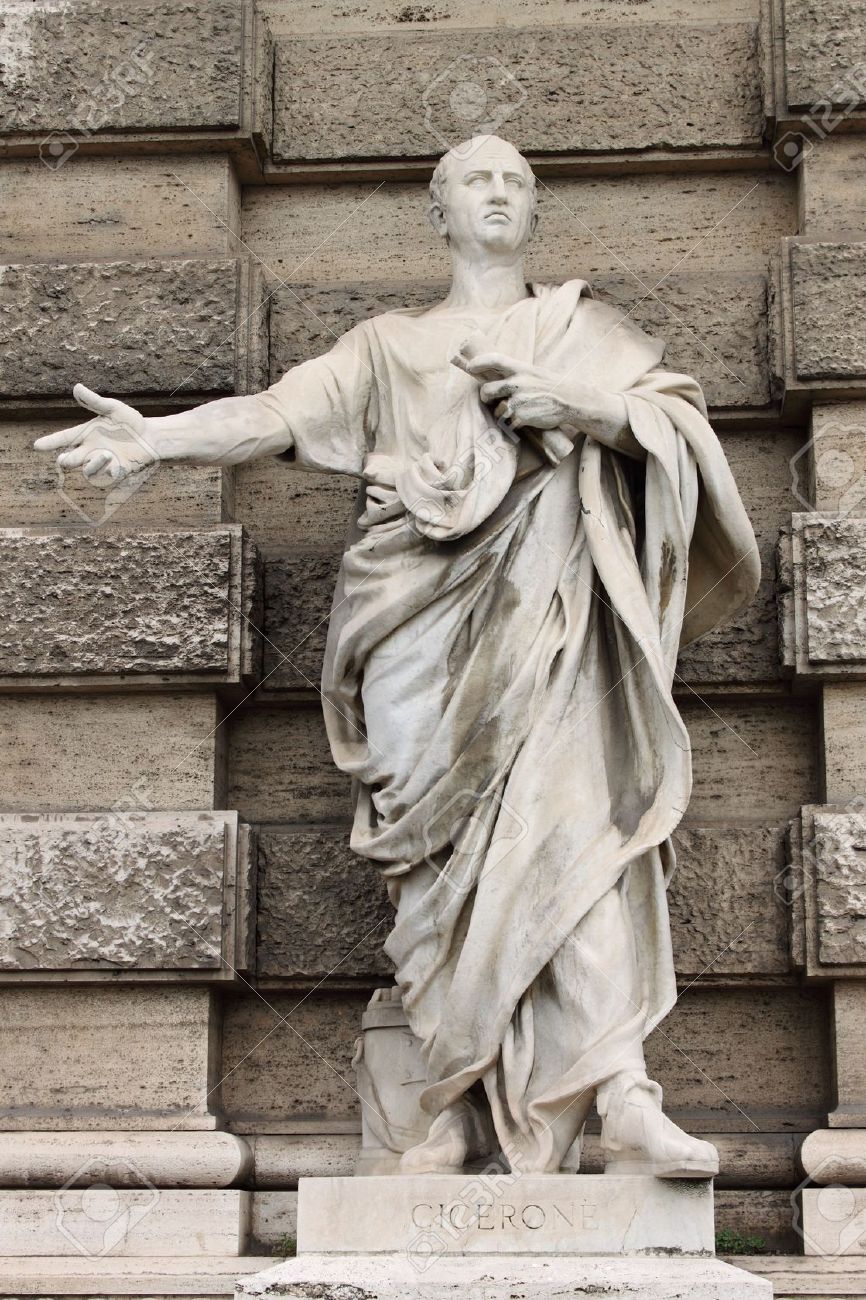
Statue-of-Cicero-Stock-Photo-rome

Friends of Padre Steve’s World,

The great Roman philosopher and political theorist Marcus Tullius Cicero wrote, “History is the witness that testifies to the passing of time; it illumines reality, vitalizes memory, provides guidance in daily life and brings us tidings of antiquities.”

Those who follow my writings here on this site know that I am a historian and that much of what I write, even regarding current events, is framed by history and the stories of those who came before us. That is one of my driving passions, a passion for historical truth, and a passion to ensure that the past is not forgotten.

Cicero is an important figure in history. He resisted the moves toward the dictatorship of the Caesars and would die for his belief in the Republic. As such he inspired the founders of the United States, including Thomas Jefferson and John Adams. Adams wrote of the Roman:

“As all the ages of the world have not produced a greater statesman and philosopher united than Cicero, his authority should have great weight.”

Sadly, it seems that our society, and even our education system is disconnecting itself from history. We have pretty much stopped teaching history in schools, and often what is taught is myth. As such we have become a society that through its ignorance of the past is ever repeating the worst aspects of our history. As a whole we are ignorant of our past, and that ignorance is demonstrated by many of our political, business, journalism, educational, and military leaders on a daily basis.

Cicero wrote “To be ignorant of what occurred before you were born is to remain always a child. For what is the worth of human life, unless it is woven into the life of our ancestors by the records of history?”

Our lives must be woven together with those who came before us, without that sacred connection to the past, we endanger the future, and doom those who follow us. Cicero wrote, “The life of the dead is placed in the memory of the living.” Thus, it is for us the living to remember and never forget those who have gone before. That is why I write.

I will write more on things that Cicero wrote and said, including political and social lessons that are as relevant today as when he wrote them.

Until tomorrow,

Peace

Padre Steve+

1 Comment

Filed under books, History, leadership, philosophy

Though Poppies Grow: Buddy Poppies & Memorial Day 2018

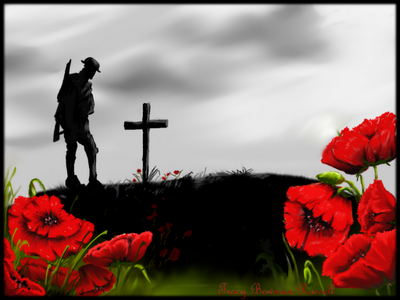
flanders_field

Friends of Padre Steve’s World

This is Memorial Day Weekend, a weekend where we remember those who died in the service of our country. It is not a day to thank the living veterans, that day is Veteran’s Day. Nor is it the day to thank those men and women who currently wear the uniform and fight the wars of our country. This weekend I am reposting a number of articles from past years to remind my regular readers and those new to my writings about how important this remembrance is, not just to me, but to all of us. I do not say that lightly. Memorial Day is the offspring of the families of the American Civil War dead, when people who lost loved ones in the cause of liberty and the defense of the Union honored their loved ones.

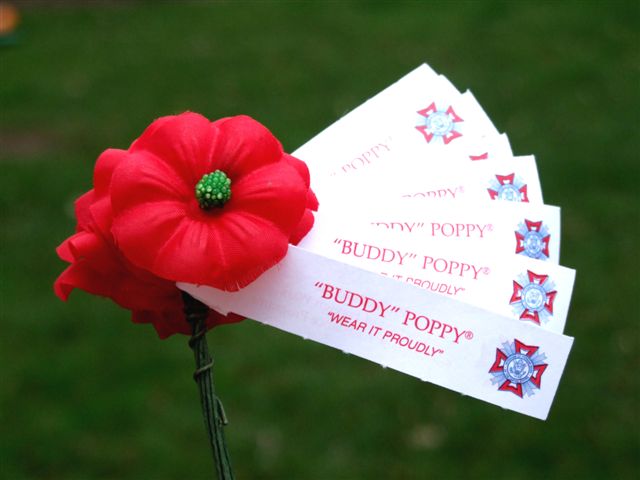
While the Buddy Poppy was something that came out of the First World War, and Armistice Day, which after the Second World War became Veteran’s Day. In time it has also become connected with the original Memorial Day. So today’s post is my first reflection of this weekend on the Buddy Poppy and Memorial Day.

I write this in the disastrous aftermath of President Trump’s high stakes game of chicken with North Korean Leader Kim Jung Un in which he bailed after aggressively praising Kim and pushing for direct talks. When I read the President’s letter to the North Korean I realized that the chances of a catastrophic war have gone up.

I also have been watching Ken Burns’ series The Vietnam War while reading Robert K. Massie’s Castles of Steel: Britain, Germany, and the Winning of the Great War at Sea. Both are filled with stories of hubris and tragedy.

No matter what your political views, ideology, or religious beliefs, please take time to remember the high human cost of war this weekend, especially on Monday when we observe Memorial Day.

Until tomorrow,

Peace,

Padre Steve+
1144221_orig

In Flanders Fields

John McCrae, 1915.

In Flanders fields the poppies blow

Between the crosses, row on row

That mark our place; and in the sky

The larks, still bravely singing, fly

Scarce heard amid the guns below.

We are the Dead. Short days ago

We lived, felt dawn, saw sunset glow,

Loved and were loved, and now we lie

In Flanders fields.

Take up our quarrel with the foe:

To you from failing hands we throw

The torch; be yours to hold it high.

If ye break faith with us who die

We shall not sleep, though poppies grow

In Flanders fields.

Besides the American Flag the Buddy Poppy is perhaps the most ubiquitous symbol of Memorial Day. This poppy as we know it came about when Mrs. Moina Michael read McRea’s poem and inspired wrote this verse:

We cherish too, the Poppy red

That grows on fields where valor led,

It seems to signal to the skies

That blood of heroes never dies.

She then had the inspiration to begin wearing Red Poppies on Memorial Day and sold the poppies to friends and others with the money going to those in need. A French woman visiting the United States, a Madame Guerin discovered the new custom and took it back to France where she began to make artificial red poppies to sell with the proceeds going to the widows and orphans of the First World War. The custom spread to other countries and in 1921 the Franco-American Children’s League sold the poppies but disbanded in 1921. Madame Guerin approached the newly formed Veteran’s of Foreign Wars, the VFW in 1922 for assistance and in 1922 the VFW became the first American organization to sell poppies. Two years later the Buddy Poppy program began. The artificial poppies were made by disabled veterans who were paid for their work in order to provide them some form of income and distributed by other veterans across the country. Today the VFW continues to distribute the Buddy Poppies which are still produced by disabled Veterans at the nation’s Veteran’s Administration Hospitals.

I remember the first Buddy Poppy that I every received. It was just before Memorial Day 1970, before it became a 3 day weekend falling on the last Monday of May. We were living with my Grandparents in Huntington West Virginia as my dad sought suitable housing for us in Long Beach California while he was in the Navy.

Our initial move from the small town of Oak Harbor Washington, where my dad had been stationed at Naval Air Station Whidbey Island to Long Beach had not gone well. The first place we lived was in a dangerous neighborhood and with my dad traveling frequently to Naval Shipyards around the country to help commission new ships the stress on the family, especially my mother in dealing with that and two young boys was too much. Dad sent us back to Huntington where my Grandparents and numerous other relatives still lived for the duration of the school year as he sought better housing.

veterans-day-05-26-10-1

Memorial Day then was filled with visits to cemeteries to place flowers on the graves of departed relatives as well as flags on the graves of relatives who had served in the military. We made a number of stops that day at the Bowen and Dundas cemeteries as well as others where relatives were interred. Afterward we had a home cooked meal prepared by my maternal grandmother Christine and then made a trip on a city bus to to the other side of town to see my paternal grandmother Verdie.

Holidays, were much like that for us during that time that we lived in Huntington, until my dad came back and brought us back to Long Beach in June. Just before my dad arrived to take us back to Long Beach my mom, her cousin Valerie and I were shopping downtown, which at the time before I-64 took traffic around the town and led to a new mall and shopping complex being built just out of town, was a bustling place of commerce and activity. Major retailers all had their stores downtown, while the best movie theaters and restaurants were there as well.

We were coming out of the old SS Kresge store on Fourth Avenue and an elderly man wearing a VFW cap approached us and handed me a poppy. He had to be in his 70s so I presume that he was a Veteran of the First World War. He chatted briefly with my mom and Valerie and I am sure my mom gave him a bit of money for the poppy. I kept it for many years and it was eventually lost in one of our moves. But I will not forget it and any time I see a Veteran distributing them I make sure that I get one.

But I haven’t seen anyone passing them out for years, maybe I will need to start getting them and giving them out myself. Maybe I’ll start that as Veteran’s Day approaches.

Babe-Ruth_MAIN

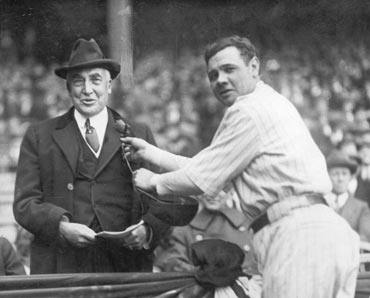
Babe Ruth and President Warren G Harding with the first official Buddy Poppy of 1923

For me the Buddy Poppy is a symbol of thanks for the sacrifices made by so many, those who did not come home from wars being killed or missing in action, as well as the wounded and the families of the dead and those that came home forever changed by their time in war. This year marks the 90th anniversary of it being the official flower of remembrance for those who died in our nation’s wars.

The poppy has even more significance for me now having served in Iraq. Seeing war’s devastation and knowing so many who have either been killed or wounded in the wars that we have engaged since September 11th 2001 has impacted me in ways that I could not have imagined before the war. Likewise having come back changed by my experience and having to deal with the affliction of severe PTSD I sense a camaraderie with those men who came home changed from war and in many cases returned to a country that did not understand them.

I will be observing the “Go Silent” moment at 12:01 Monday with the Iraq Afghanistan Veterans Association to honor those who have given the last full measure.

Peace

Padre Steve+

1 Comment

Filed under books, film, iraq, News and current events, PTSD, vietnam, world war one

Leak: Why Mark Felt Became Deep Throat

Friends of Padre Steve’s World,

Back in 2012 I was asked to do a review of Max Holland’s book about Watergate Leak: Why Mark Felt Became Deep Throat. It think that the book is very pertinent today and well worth the read for anyone immersed in the daily revelations of numerous members of the Trump campaign and administration. The sheer number of these allegations, not to mention the number of convictions and plea deals already racked up by the Muller investigation demonstrates the seriousness of the allegations while the web of connections to the fact of Russian meddling in the 2016 demands answers. That being said we need to look back at the history of the Nixon administration to help us understand what is going on today.

So I am posting my review that I published for TLC Book Reviews on June 12th 2012. The review is exactly how I wrote it with no editing for today. I recommend the book to my readers. 

Until tomorrow,

Peace

Padre Steve+

Motives do matter and actions often have unintended consequences. That is the lesson of Max Holland’s book about Mark Felt. Felt was the man whose leaks helped end the Presidency of Richard Nixon and skyrocket the young and obscure Bob Woodward and Carl Bernstein to fame. For more than three decades Mark Felt’s identity remained hidden a mystery man to the public, a man popularized by the dark moniker “Deep Throat.” His role as the leaker was suspected by some, including President Nixon and some of his staff but known only for sure by Woodward, Bernstein and Washington Post Editor Ben Bradlee.

In this truly scholarly book Max Holland pieces together the dark underside of the Watergate tapestry that Woodward and Bernstein helped to break in 1972 and would go on to write about in All the President’s Men and The Final Days. It is a book that is important because it is the first account to seriously explore the motivation of Mark Felt when he began to leak and the background story of the monumental post J. Edgar Hoover FBI power struggle.  That story which in normal times would have been a major story was missed in an era where the country was in turmoil and there were so many other “big” stories to cover.

Taking advantage of more recent revelations, disclosures and evidence Holland paints a picture that not only broadens one’s understanding of Watergate but helps the reader understand how important it is to understand the motivations of those that were involved, Nixon and his staff, Felt and other FBI officials and the media.

The picture painted by Holland of Felt makes his role in the story more understandable. Felt was not the altruistic leaker of myth who sought to destroy the Nixon Presidency, something that was the picture painted by Woodward and Bernstein. His motivations were much more down to earth. He wanted to use his knowledge to ensure that he became Hoover’s successor as the Director of the FBI. He used it to destroy L. Patrick Gray who served as the interim Director and his chief rival in the Bureau William C. “Bill” Sullivan in the eyes of the White House, Congress, the Bureau and the media. Felt’s leaks helped blow the lid off of the White House cover up of the Watergate break-in and which led to the resignation of President Nixon and the conviction of a number of his closest advisors. Felt’s duplicity which included deceiving the Administration, Congress, his superiors and the media with falsehoods even as he revealed key truths is amazing to behold.

The picture that Holland paints of the White House is not pretty. The moral depravity and ruthlessness of Nixon and his advisors is shown without dehumanizing them.  In fact they become more human in Holland’s account.  Likewise Holland’s portrayal of other key figures in Felt’s story at the FBI, L. Patrick Gray, William Ruckelshaus and William Sullivan is compelling. The naive and compliant Gray, Felt’s bitter rival Sullivan and the “sweeper” (to use the term given to Harvey Keitel’s character Winston “the Wolf” Wolfe in Pulp Fiction) Ruckelshaus who helps to “sweep” Felt out of the FBI.

But the most interesting part of the book for me is Holland’s portrayal of Woodward and Bernstein. They are young and idealistic and Woodward believes whatever Felt tells him, including deliberate misinformation. What jumped out at me was their willingness to take at face value what Felt told them and not to explore his motivations which could have led to even more revelations that could have shaken the FBI to its core.  Likewise was Woodward’s willingness to press the limits with information provided by Felt going beyond what Felt demanded for secrecy but which Felt, even though upset by the reporter continued to provide information cumulating in his long and rambling confession to Woodward following his retirement under pressure on May 16th 1973.

They, particularly Woodward did not ask themselves the three key questions that anyone should ask when someone comes to them with this kind of information: Why this? Why this information. Why Me?  Why am I being chosen to receive the information. Why Now? Why is the source telling me this information now. Those three questions could have blown the case open even more had they explored them. Of course they were caught up in the chase for “scoops” with rivals at the New York Times, The Washington Sun and Time Magazine and chose to believe what Felt told them, something that occasionally left them hanging when the information was wrong.

Conversely Felt’s distain and lack of respect for the media and the belief that he could use Woodward, Bernstein and others in the media to further his goals with impunity proved false. He became careless and caused the Nixon Administration to suspect him and work to force him out of the FBI without drawing more attention to themselves.

Holland also covers the “cover-up” of “Deep Throat’s identity which was maintained by Felt, Woodward and Bernstein until Felt was in the beginning stages of dementia and his family was ready to reveal his role.  The dual myths of Deep Throat’s motives and the role of the press as the “men in the  white hats” against the evil bad guys in the White House are exposed by Holland who points out how much of the investigation broken by Woodward and Bernstein was being accomplished by FBI agents and appointed to investigate the break-in and staff members at the Committee to Re-Elect the President who were appalled by the illegality of what they saw being done by their superiors.

The book is excellently sourced and researched. It is a compelling narrative that sheds light on a dark period of our nation’s history which also serves as a reminder to those who investigate “leaks” from well placed sources that there is always another layer of motivation and intent that cannot be discounted and must be factored into the investigation.

This is relevant today as the media, Congress and the the Justice Department investigate leaks from inside the Obama White House regarding national security information. Why This? Why Me? Why Now? Those are the questions. Thanks to Max Holland we now know much of what transpired behind the scenes as Woodward and Bernstein investigated and published their accounts of the Watergate break-in and cover up with the information provided by Mark Felt.

The book Leak: How Mark Felt Became Deep Throat is published by the University of Kansas Press and is available at http://www.amazon.com/Leak-Mark-Felt-Became-Throat/dp/0700618295/ref=sr_1_1?ie=UTF8&qid=1339544616&sr=8-1&keywords=leak

Leave a comment

Filed under books, crime, ethics, History, News and current events, Political Commentary

If You Don’t Have Time to Read You don’t Have the Time or Tools to Lead

img_3914

Friends of Padre Steve’s World,

During the first week of March I took about a week off of regular writing and commended a new campaign of reading. This was not because I don’t read, I am always reading, but sometimes I don’t read enough, so that week I began to catch up on some reading. Since then I have read, and read, even as I began to write again, not that I ever really stopped. I fully subscribe to the words of American satirist Will Rogers who noted: “There are three kinds of men. The one that learns by reading. The few who learn by observation. The rest of them have to pee on the electric fence for themselves.”

Honestly I prefer to learn by reading or observing, and reading has been part of my life since I was a child and I cannot imagine trying to write a single sentence without reading, as Stephen King noted: “If you don’t have time to read, you don’t have the time (or the tools) to write. Simple as that.” I would extend King’s observation to say that if you don’t have time to read you don’t have time or the tools to lead. Sadly the American President and many of his most devoted followers never challenge themselves by reading.

So tonight I wanted to take a few minutes and catch you up on the newest additions to my reading rainbow. I finished reading German historian Paul Carrel’s Unternehmen Barbarossa im Bild (Operation Barbarossa in Pictures) in which the text is in German and Max Boot’s The Road Not Taken: Edward Lansdale an the American Tragedy in Vietnam. 

I took on Carrel’s book because I had read many of his histories of the German Army in the Second World War in English and I wanted to use this large German volume to improve my German vocabulary. It’s an excellent volume first published in 1976 but unless you have a moderate familiarity of German it I don’t recommend it despite the vast number of photos that I have not seen elsewhere and his honest commentary and reflections on the moral, social, and political disaster that was Operation Barbarossa.

I also finished Max Boot’s outstanding volume of the life of General Edward Lansdale. This is really a good account of U.S. involvement in the Philippines and Vietnam from 1945 until 1975. Lansdale was deeply involved in one of the few successful counter-insurgencies of the 20th Century, that against the Communist supported Huks in the Philippines  by Lansdale who worked closely with political reformers and sought to understand and win over insurgents without engaging in massive military sweeps. However successful he was he was distrusted by much of the CIA and military establishment and his efforts in Vietnam were undercut by them. Boot treats Lansdale’s story well without attempting to hide his many flaws. Lansdale has been referred to as an American T. E. Lawrence and Boot gives an excellent account of his life in the context of the CIA, American actions in Indochina, and American politics in the from the mid 1950s until the early 1970s. The book is well worth the read.

On the Vietnam front I read the late Michael Herr’s Dispatches, his classic account of his time serving as a war correspondent in Vietnam at Hue, Khe San, and other battles over the course of 18 months. Having been to war I highly recommend it.

On the more contemporary American political situation I read conservative and former Bush Administration advisor, David Frum’s book on the Trump Era, Trumpocracy: The Corruption of the American Republic. It is well worth the read for anyone but I highly recommend that conservatives read it. I don’t always agree with some of Frum’s political positions, but his take on the corrosive effects of Donald Trump on the United States and how Republicans have aided and abetted him.

Continuing down that road I read Michael Isikoff and David Corn’s masterpiece of investigative journalism Russian Roulette: The Inside Story of Putin’s War on America and the Election of Donald Trump. Trump loyalists will hate this book because their work continues to be verified by every new discovery about the Russians and their role in the 2016 elections. It gives the reader a superb understanding of the key players  in this drama and help the reader to put in context the daily revelations of the investigation being conducted by Special Prosecutor Robert Muller and the actions of the President’s words, actions, and policies toward Russia and Putin as well as when he melts down on Twitter. In time it might be ranked with All the President’s Men. 

As a matter of contextualizing the present I read the late historian Tony Judt’s Ill Fares the Land which was written following the collapse of 2008. Judt discusses how we have not learned the lessons of the Twentieth Century and the problems related to the failures of both the right and left to learn those lessons. It is well worth the read but it is not a book designed or written to comfort partisans on any side of the political spectrum.

Going back to look at history I took the time to read Walter Lord’s sequel to his classic book on the sinking of the Titanic, A Night to Remember by reading his book The Night Lives On: The Untold Stories and Secrets of the “Unsinkable” Ship – Titanic. The second volume was published some three decades after Lord’s first volume which I think is the best account of the event ever written.  To follow it up I ordered and watched the film A Night To Remember which was also well worth watching. While not as technically accurate nor filled with “A list” stars the film captures the the tragedy of the ship in a way I don’t think that James Cameron’s masterpiece Titanic really gets.

I re-read Lord’s book on the integration of Ol’e Miss The Past that Would Not Die which though it recounts events of 1962 seems amazingly relevant in the present day.  The account of the admission of Air Force veteran James Howard Meredith in the face of the political opposition of Mississippi’s Governor and Legislature, armed White Supremacists against Attorney General Robert F. Kennedy Jr. and civil rights activists. The event was a crisis that brought to the present the memories and ideology of secession and revolt against the Federal Government and Constitution in the name of preserving a history of white supremacism. Likewise I also re-read British historian and military theorist B. H. Liddell Hart’s little book Why Don’t We Learn from History? 

I took up Jason Stanley’s excellent How Propaganda Works. This is an excellent book for academics but I do not recommend it for the casual reader because it presupposes a knowledge of political philosophy and history that most people don’t have. It was a long and tiring read for me and I liked it. It provides a lot of insights into the mechanics of propaganda. For me it gave me a different level of understanding of the propaganda being used by the Russians agains the United States and the machinations of the American President to discredit opponents through both official government pronouncements and the official unofficial White House propaganda network, Fox News.

I am currently reading a number of books. I am about a quarter of the way through John Dower’s The Bloody American Century, about a third of the way through Timothy Snyder’s The Road to Unfreedom: Russia, Europe, America, and have just started Tony Judt’s Thinking the Twentieth Century and Ron Chernow’s biography of Ulysses S. Grant.

So anyway. Have a great night and see you tomorrow,

Peace

Padre Steve+

Leave a comment

Filed under books, History, leadership, life