Category Archives: faith

The Importance of the Navy Family

There are families and there are families. One family apart from my biological family that I think I treasure the most is my Navy family going back to when I was a Navy Brat and the friends of my parents who were in fact another family.  These were people that my dad served with at various times, mostly though from our tour in the Philippines that remained lifelong friends through thick and thin now for close to 50 years.  In my own life I have serve in the Army and the Navy.  We have a couple that we have known since my first month on active duty that we stay in contact with and hope in the near future to see again. Marty and Sue are part of my Army family we served together in Germany and I expect that we will remain friends the rest of our lives.  Then there is my Chapel family from Fort Indiantown Gap Pennsylvania many special people, some now with the Lord some of whom wrote letters of recommendation for me to transfer from the Army to the Navy.

I entered the Navy in February 1999 and there have been people that have been part of our lives since early in my Navy career. We will be seeing one of our best friend’s son’s graduate from high school next month, hard to believe how young that he was when we first met.  Judy loves both of their boys and we have been fortunate to share many special occasions with them. I also have friends that I have known since coming in the Navy.  Some are fellow Chaplains and though our careers have often taken divergent paths when we get together it is like yesterday. In an institution where denominational barriers and distrust sometimes disrupt relationships these are special relationships. Today during a training session aboard Camp LeJeune I was able to meet up with some old friends, many like me who have or are going through periods of great trial and pain.  I was able to share a couple of beers with one dear from my old denomination who was here from out of town for the training.  He was still shaking his head about how I had been tossed from the denomination and the subsequent events and scandal associated with the Bishop who had tossed me and the stories from others in the denomination who believed what the man had said about me.  He told them that it couldn’t be true but many did not know me as well as he did and evidently believed the lie. Even so it was good to see Dean again and I hope that we are able to meet again sometime soon.  Another friend that I saw is going walking with his wife through her terribly painful cancer treatments.  These are friends that I know if I need that I can go to and be honest.

Some are former shipmates from the USS HUE CITY CG-66 and Marines from any of the number of Marine Corps units that I have served and my friends EOD Group Two and from the Navy Medicine Community at Naval Medical Center Portsmouth and Naval Hospital Camp LeJeune.  I have baptized their babies, married them and been their when death took a spouse, counseled regarding personal, marital or spiritual issues many times long after we served together. I have been able to stay connected and I am happy to be their “Padre” or simply “Chaps.”

Yesterday I conducted the funeral of a retired Navy Master Chief and I talked about the Navy family and how important it was. There were many heads that nodded in agreement when I talked about this. I got an e-mail from the son of a man who was one of my parent’s closest friends in the Navy.  I mentioned Frank yesterday during the funeral how he had been my dad’s Chief and sponsored us in the Philippines nearly 50 years ago. He sent my mom an e-mail about a chance to the ID card system yesterday, a Yeoman he never missed administrative messages.  His son contacted me this evening on his e-mail account to tell me that he had passed away early this morning and asking me to contact my mother.

After I responded to the e-mail I called her and of course she was shocked and she wondered what would happen to Frank’s wife who has been chronically ill for many years.  Frank took care of her. He had a heart attack about 10 days ago and when he got out of the hospital he was told to take it easy and even stay off the internet.  He didn’t listen and he had to stay involved in the lives of his family as well as his Navy family.  He has been an encouraging person to me in my ministry as a Priest though he was a conservative Roman Catholic. He prayed for me and cared and I am sure that he will keep praying for me now that he is with the Lord.

While this was going on a sailor from a previous command popped in on me on Facebook regarding a pressing family matter. Another friend from Marine Corps Command and Staff College and Iraq responded to a friend request and sent me a couple of messages and another friend from the past chimed in on a humorous post that I had placed on Facebook regarding Osama Bin Laden’s Facebook account.  Another sailor who referred to me as the “Anti-Chaps” when I bought beer from him and some other sailors on a liberty call and stays in regular contact. What can I say? I do like the nickname.

What I find wonderful about my Navy family is that they have been there for me and my family over my entire life more so than most of my non-immediate biological family.  Those that don’t know this because they have not served in the Navy or another military branch of service are missing so much. For most it isn’t politics, religion or even if they are Dodgers’ fans we share a common bond serving in war and peace that transcends everything else.  They are my friends and I am their Chaplain or friend.  It is a most wonderful fellowship far better than most churches will ever known.

It has been a long day there were other things that happened in caring for Sailors and Marines over the past couple of days, some things that I can assist and others that I can only pray for and offer some guidance.

I am also exhausted by some of the commentators on the David Wilkerson article in which I postulated that his death could be a suicide. It is amazing how nasty some people can be when you even suggest that their idol was a human being.  Likewise I made the mistake of getting involved in a discussion with some pro-life activists who had to throw abortion into the death of Osama Bin Laden and been frustrated with how fellow Christians are wringing their hands about the killing of that perfidious bastard who killed so many of our people. The lack of moral clarity in these people who see the world in black and white dualistic terms and ignorant of philosophy, ethics and history as well as the nasty gray areas of life really pisses me off. Tomorrow I should get a good PT session in after physical therapy and play ball in the evening. Thanks be to God.

I’m now finish a big glass of Riesling and getting ready to prepare for tomorrow. Thankfully I have an appointment with my shrink in the afternoon.

Pray for me a sinner.

Peace

Padre Steve+

1 Comment

Filed under faith, Military, shipmates and veterans, US Navy

Full Military Honors: Getting a Chance to Repay a Service done for My Family by the Navy

Last summer my dad Aviation Storekeeper Chief Carl Dundas died after a long battle with Alzheimer’s disease.  Since I wasn’t much good for anything then my boss at my last duty station Chaplain Jesse Tate contacted the Chief of Chaplains Office and our mutual friend Chaplain Jerry Seeley in California.  These men and the Navy came through to provide my family with a funeral with full military honors for my dad.  It was something that we all treasured and something that really helped my mom get through that dark time. It allowed her to reconnect with the Navy something that was a big part of our lives for years. I won’t forget Chaplain Seeley and his comforting words and the Senior Chief Petty Officer who presented our Nation’s Flag to my mother.  One thing that I did do was construct two collages of pictures from his life which were available for friends and family to view. When I put them together it was really for my mom but the task of sorting through a couple of thousand photos to find the ones that best epitomized my dad, his life and personality was healing to me.

Since I am a Chief’s kid I have a soft heart for Navy Chiefs and in the past two and a half years working in Navy Medicine I have been able to be with quite a few of these men and women in their final days as well as their families. Last week I had the duty pager and received a call to come to our multi-service ward as a family had requested a baptism for one of our former Master Chief Petty Officers named Carl.  He and his family had arranged with one of my staff to be baptized last Friday as he knew his life was coming to an end.  Well late Wednesday night it became apparent that he would not last that long and I was asked to come in.  I got to the hospital and put on my Khakis and went to the nurse’s station where I listened to them tell me the situation and read his chart. I noted the request for baptism and the plan for it to be done Friday.  When I had done that I went to the room where Carl lay in bed dozing. I met his wife Judy and son’s Randy and Jeff and we visited for nearly an hour as he lay there and I listened to them tell me about him as a husband and father, his Navy service, his faith and his love for baseball.

Carl had entered the Navy a couple of years after my dad and remained in it a good deal longer retiring in 1988.  He served in combat as a Corpsman with the Marines in Vietnam and saw service around the world. He retired as the Command Master Chief of Naval Hospital Camp LeJeune.  He was active and played for and managed various Navy Baseball and Softball teams including the hospital’s team which I now play on.  There were a lot of emotional connections for me with this man. He served during the era that my dad did and both served on the ground in Vietnam.  His name was Carl like my dad, his wife Judy like my wife and one son Jeff like my brother.  He loved baseball.  I felt like I was family and in a sense I was because we are part of the Navy family and that is something that is special. I still receive e-mails from one of my dad’s former Chief Petty Officers almost like he is trying to watch out for his friend and fellow Chief’s son.

I prepared to conduct the baptism and Carl woke up. His wife introduced me to him and he greeted me. I explained that I was there to baptize him and asked if he still desired to be baptized and he replied yes and gave me a “thumbs up.” As I baptized him he was praying with a smile on his face as the water flowed over his forehead. I then asked for Carl and his family to join me in the Lord’s Prayer and as we prayed he prayed along with us.  It was a special moment and I elected to stay with the family for a while longer and simply be with them as they shared and ministered to Carl.  I gave Judy my card and went home getting to bed about three AM Thursday.

Yesterday afternoon I received word that I had been asked to conduct his funeral and I was honored. It was like having a chance to repay the generosity given to my family by the Navy.  This morning it seemed that nothing went right in trying to get my stuff together. We are in temporary office spaces as our offices and Chapel are being renovated. As a result I have no earthly idea where half of my things are. I prepared my Service Dress Blue uniform last night and placed it where I wouldn’t forget it. I discovered that I didn’t have it about 5 miles into my trip and had to go back and get it. Then on my second trip in about the same place I had the feeling that I had forgotten something else.  I looked around the car and couldn’t find my Bible and Book of Common Prayer.  I thought I had packed it and taken it home with me last night so I turned around again. I got home to the Island Hermitage and try as I might I couldn’t find them.  So I grabbed the Kindle that my Judy had got me for my birthday knowing that I had the Book of Common Prayer and the liturgy for burial on it.  I got back on the road for the third time and arrived at the office where I found my Bible and Book of Common Prayer.  I then started to get ready to go after a bit of business and discovered that I had everything but a tie, which I only have about five of but none were to be found. Our small Marine Corps Exchange in the hospital had none so I had to go to main side where I got one of the two on the rack; this is a Marine Corps Uniform store so the Navy items are not well stocked.  Getting back to the office I donned my uniform looking perfectly resplendent I might add and went to the funeral home where I met up with other perfectly resplendent Chiefs and Sailors.  One thing about the Navy Service Dress Blues they are a classic uniform and are always a classy look.

We had a significant number of sailors there with members of our Chief’s Mess acting as pallbearers, other Petty Officers and Sailors serving as the Flag detail and one of our Master Chiefs presenting the American Flag to Judy.   We also had about 30 other Sailors present joining Carl’s family, his extended family and friends which included a number of men who had served with Carl during his career.  A Marine Honor Guard commanded by a Gunnery Sergeant fired the 21 gun salute and then Taps was played.  It was an honor and privilege to participate.

The brief homily that I gave came out of the Gospel according to John where Jesus tells Martha at the tomb of Lazarus “I am the resurrection and the life.”  In it I focused on that message even as I mentioned his service, life and care of his family and his sailors and his service during and after Vietnam.  After the committal I lingered with various friends of Carl’s and as the crowd dissipated I got into my car and left.  I was blessed by God to be able to return a favor done to my family.  For me this is a large part of why I continue to serve, to care for God’s people in the Sea Services those currently serving and those that blazed the trail for us.  Sometimes one gets lucky.

Peace

Padre Steve+

1 Comment

Filed under faith, Military, Pastoral Care, shipmates and veterans, US Navy, vietnam

Clergy Burnout and Suicide: A Growing Problem

Father Mulcahy: What an ordeal. 72 hours straight. I’m prayed out – absolutely prayed out.
Hawkeye: Don’t forget, Father, God was on six days straight.
Father Mulcahy: He was a lot younger then
.

It doesn’t matter whether you feel useful or not when you’re moving from one disaster to another. The trick, I guess, is to just keep moving. Father Mulcahy, William Christopher M*A*S*H

Note: This is a modification and update to an article that I wrote last summer based on the death of the Reverend David Wilkerson and his writings of the past few months.

A while back I read an article in the New York Times ( the link is here:http://www.nytimes.com/2010/08/02/nyregion/02burnout.html?_r=1&hp&adxnnl=1&adxnnlx=1280746899-Fj4AG+SysGvlJ/xdTT+ZZg ) about the large number of civilian clergy experiencing burnout, discouragement, disillusionment to the point that they end up developing chronic physical illnesses, psychological or psychiatric conditions, experience marriage or family difficulties or are so beaten down that they leave the ministry entirely.   Many clergy now suffer from high rates of obesity, hypertension and depression more so than most Americans. In the last decade, the use of antidepressants by clergy has risen and their life expectancy has fallen. Job satisfaction is down and many clergy would leave the ministry if they felt that they could. The issue cuts across denominational and even religious lines and is not bound by the depth of faith or the fervency of the minister in his or her pursuit of “doing good ministry” in whatever venue they are in.  It also impacts those of all sides of the theological spectrum from fundamentalists and Pentecostals to progressives or in old time parlance “liberals” and everything in between. The pressure is incredible. I should know I have been in ministry over 20 years mostly as a Priest and Chaplain serving in the military and in hospital critical care environments.

Likewise there have been articles about ministers and pastors that commit suicide one of the more prominent about a North Carolina pastor who committed suicide in 2009 published in the USA Today: http://www.usatoday.com/news/religion/2009-10-28-pastor_suicides_N.htm

Actually I am not surprised by the studies or the conclusions of the article or the situation described in the USA Today article.  This came to mind this week with the death of David Wilkerson which I suggest could have been suicide based on the struggle with faith and perceived failure shown in his recent blog posts, his and his family’s ordeal of cancer and the circumstances of the wreck in which he died. I suggested this as a possibility as well the other possibilities of inattentive driving or sudden medical impairment. https://padresteve.wordpress.com/2011/04/28/the-unexplained-and-tragic-death-of-david-wilkerson/ Of course I have been blasted by a number of people for even daring to suggest such a thing and I really hope that it was not suicide but if it was his death serves as a reminder of loneliness and even frailty of great pastors who go through long periods of darkness.  If his death was other than suicide we still have to look realistically at the incredible spiritual and emotional pain that he was in over the past few months. Of course I meant no offense to those that condemned me for suggesting this but the reactions drew me back to the unrealistic expectations that many people place on those that serve in ministry and I would hate to be their pastor.  The expectation is that we are somehow closer to God and don’t experience doubts, temptations or even depression and despair. The more popular and beloved the minster the taller the pedestal that people place them on in fashioning them as their idol.  Most don’t ask for this and resist it even though some embrace it and become spiritual train wrecks because of their narcissistic behavior.

When I was in seminary back in the late 1980s and early 1990s the school that I attended was filled with pastors either those in ministry or those recovering from nasty church splits, or being fired for often trivial reasons. These were by and large good men, I say men because the Southern Baptist Convention then and now has few women in parish ministry.  Many of the men that I knew were broken; they had come back to school as a way to see if there was some way to find a safe place of ministry.  In the last years of seminary and the year prior to entering my clinical pastoral education residency I worked for a nationwide ministry and was assigned the task of assisting clergy that came to us for help or counsel.  One of the interesting things to note was that during this time the average longevity of a Southern Baptist pastor in his church was a dismal 18 months. Later I had a friend in another Baptist denomination accept a call to a church that had been through 33 pastors in 30 years.  He thought that he would be the exception, less than 8 months later a time that he and his new wife were harassed, abused and hounded by the congregation he quit. He ended up in my denomination as he was moving in a more liturgical and sacramental way of life and is now in the process of becoming a married Roman Catholic priest.

When I left the active duty Army to go to seminary I was under the impression that most clergy were relatively satisfied with life but the men that I met in seminary and those that I dealt with later showed me that all was not well for many good men and women doing their best to serve Christ and the people of God committed to their charge.  I never will forget men saying to me that they struggled with depression, alcoholism, sexual addiction, were being divorced by their wives or considering either leaving the ministry or changing the type of ministry that they served or even their denominational home.  Nearly all reported the stress that they experienced in their ministry, the unmanageable tasks of trying to compete for numbers, and in many churches it is all about numbers, see Chuck Colson’s book “The Body” cater to the nearly insatiable “needs” of parishioners who demanded more time, and investment in programs to keep them in the church, pressures resulting from the financial costs of trying to manage building programs, special ministries and programs and an every growing desire for more excitement and “thrills” in the church program.  Add to this the unrealistic expectation of parishioners, local and denominational leaders and the constant upbraiding to be more like Reverend so and so on television or the guy that wrote the latest book on church growth, spiritual warfare or whatever as the list goes on ad infinitum. Add to this the intrusiveness brought about by cell phones, texting, the internet which place clergy in a place where they have no place to go when they need a rest because there is always one more need to satisfy many of  which cannot be satisfied. One minister of a well-known Mega-Church when confronted by Colson about not preaching on more controversial moral topics told Colson that “they pay me to get them in the door and keep them coming.”

The pastor of our age must become a teacher, preacher, counselor, evangelist, financer, program director, personnel manager, marketing executive and most of all be able to reinvent himself at a whim in order to remain relevant and in tune with the current “move of God.”  Those that don’t keep pace with whatever the latest “move of God” (read marketing ploy) is finds that they are out of a job faster than a Mob hit-man with bad aim. It is a recipe for disaster, not only for clergy and their families but for congregation when their pastors experience burn out, marital problems or divorce or those become compromised sex, alcohol or money problems and then suffer the consequences.  The congregations suffer because many parishioners lose faith in God, the church or ministers because the person that they had made their idol failed.

The pressures are immense and not just for married or single Protestant pastors but for Catholic Priests, Jewish Rabbis and even Moslem Imam’s all under some kind of unreasonable pressure.  It does not matter of it is trying to balance the competing theological factions present in their faith tradition from fundamentalists to progressives and everything in between, trying to meet unattainable goals set by congregational or denominational leaders or just to attempt to be all things to all people just to survive it is amazing that that any survive at all.  This is not the life of clergy even a generation ago, a generation that reported high job satisfaction, good health and congregations that would if possible strive to serve their pastor as much as he served them.

The world has changed and clergy are not doing well.  When a big name pastor, evangelist or leader of a church or denomination screws up perfectly the good men and women serving in ministry that don’t do those things are lumped in with those that commit various crimes or ethically challenged behavior.

In my chosen vocation within the vocation of being a priest and minister, that of a military Chaplain the pressures of service often exceed those that our civilian counterparts face. In a time where we have been at war almost 10 years with many chaplains making multiple deployments to the various combat zones the pressures are immense. The pressures on chaplains, their families as well as the men and women that they serve are unparalleled in civilian ministry, which as I describe above is no picnic, unless perchance you serve the fabulously well to do.

While I do not know statistics on Chaplains and burnout I can assure you that it is a concern of mine based on some of the men and women that I have met who have suffered spiritual crisis, depression, failed marriages, become embroiled in extramarital affairs or engaged in behaviors that were detrimental to their physical, spiritual and psychological health.  I have even known some that committed suicide.

In my service, the Navy we have battled shortages of Chaplains and the increasing demands necessitated by the war.  Likewise Chaplains in the Navy and Air Force face personnel cuts or elimination of billets due to cuts in their services personnel and more cuts are coming, at least to the billets that at one time offered chaplains the chance to recover from deployments and still serve God’s people. Most of the billet cuts are in shore commands, the places that at one time were the places that one could serve and recuperate after having done multiple operational tours.  As the force gets smaller and mission requirements increase these chaplains are deployed more often to combat zones and stress and family separation take their toll of chaplains.  Chaplains serving at bases and hospitals now serve large numbers of men and women traumatized by war and their families but have seen their own numbers shrink.  I work in a major medical center like all of the chaplains that serve in similar billets are caring for our wounded (in body, mind or spirit) warriors, their families those deploying or returning from deployment, are subject to deployment during our shore tours as Individual Augments to the operating forces all while dealing with life and death on a daily basis. In my last posting at a major Naval Medical Center it was not uncommon for me to come home from work at 5:30 PM after going to work at 6 AM the previous day, nearly 36 hours on duty in which time I was often involved in multiple crisis situations, baptizing dying babies, to people being removed from life support and care of patients their families and our staff in every imaginable setting. In my current assignment it is not uncommon to be called in as I was in the middle of the night on Wednesday to ministry to a dying patient and his family.  This is not uncommon for those of us that serve in health care ministry. What I described for me is typical of many Chaplains of all our military services serving in health care institutions.  It requires a tremendous sense of discipline to manage all of these competing demands and maintain ones physical, emotional and spiritual balance.

In fact when I came to my first Naval Medical Center assignment assignment I was suffering from PTSD from my tour in Iraq. I was in an emotional and spiritual nosedive and in trying to meet the demands of the job I did not take care of me and I fell apart physically, spiritually and emotionally.  It took a year and a half to begin to recover and I am now moving forward on all counts but I know others don’t recover. I was fortunate, my boss knew well enough to shield me and let me recover and get the help that I needed to do so. I did not come out of the experienced unscathed as my old denomination asked me to leave because I had become “too liberal.” Nonetheless it was not and is not easy to recover and I still have work that I need to do sleep is problematic and I am still in therapy and on medication and my longsuffering wife has to deal with this.  I was recently interviewed by our local paper in Jacksonville North Carolina about my struggles. http://www.jdnews.com/articles/cmdr-89433-stephen-military.html

Add to this the pressure to perform and get promoted to stay in the military chaplain ministry.  Chaplains like all officers have to get promoted to stay in the military.  The promotion rate from the Captain/Navy Lieutenant rank to Major / Lieutenant Commander has been consistently in the 50-60% range for those being looked at the first time.  This basically means that 40-50% will not be retained on active duty long enough to qualify for retirement unless they had prior active service before becoming a Chaplain. Even if they have this the stigma of not being selected is something that is incredibly hard on chaplains just as it is for other officers.  Non-selection is considered failure even for those that have great ministries and are awesome ministers. Sometimes failure to select has nothing to do with how well you care for God’s people but simply comes down to numbers. When a military service contracts as all of our Armed Services did following Vietnam, the Cold War and today as personnel numbers are cut the respective Chaplain Corps or Services take their share of the cuts and this often means that men and women worthy of promotion are not selected and are eventually let go.  I have been fortunate during the cutbacks following the Cold War I was selected for Major in the Army Reserve and though I reduced in rank in 1999 to enter the Navy was promoted to Lieutenant Commander and recently selected for Commander and I am very grateful for the opportunity of both increased responsibility as well as the chance to care for God’s people in the Navy and Marine Corps.  Not everyone gets that chance.

Being a minister is no easy way of life if you are seeking to love and serve God and God’s people. Burnout, discouragement and depression are not uncommon.  Health problems for many are increasing and at younger ages. Many no longer have safe places that they can go for counsel and care because doing so might hurt their ministry.  I have seen much of this, good men and women doing their best to serve God and God’s people broken, depressed and sometimes addicted to behaviors that ultimately are destructive to their lives, families, congregations and ministries.

It is my opinion that while those that take on military ministry sort of ask for this because we know going in that we may be deployed to combat zones or separated from family for extended periods of time when we sign up. However many on the civilian side have no idea of the pressures that they will face and the tasks that will become theirs when they begin to work at a parish.  It is a tough life and I am not surprised to see so many broken, discouraged and disillusioned ministers just trying to survive instead of thriving in the field that God called them to serve.  I am blessed. Despite the hard work, separations from my wife and family and even the PTSD that I came back from Iraq with I am doing well. I get to serve people in a community that I love and in which I was born into.  I get to do what I believed that I am called to do in a venue that I am very comfortable in serving.  No everyone is so lucky or blessed. As Lou Gehrig said “I am the luckiest man alive.”

Please pray for your ministers and support them. Give them grace to serve knowing that they will not always make the right decisions, preach the best sermons or compete with the minister with the “hot hand” and latest “word from God” down the street or on television.  Ministers are certainly not perfect, some of us are pretty earthy. Don’t impose the culture of corporate America into the local church.  The vast majority of clergy really do care about the people that they serve even when they make mistakes and screw up. Give them the grace that you wish that your boss would give to you.  Of course there are exceptions, men and women with few people skills, with their own agendas and even with their own dark-side which shows up in how they abuse God’s people. However these people are the exception.  Don’t let the foibles or crimes of such people lead you to turn you back on good men and women that make mistakes common with the rest of humanity.

Peace

Padre Steve+

11 Comments

Filed under christian life, faith, healthcare, Military, Pastoral Care, philosophy, PTSD, Religion

Learning from David Wilkerson: A Reflective Moment

David Wilkerson died Wednesday in a tragic car wreck on a rural East Texas highway bridge. I wrote about this yesterday and have had more time to reflect on Reverend Wilkerson’s life and ministry and what struck me again and again as I read his blog posts and some of his books, was how he defied being put in a neat box.  It is a time for us to reflect on the life of the man and the content of his ministry so we might learn from him and serve God’s people.

If you cherry picked his writings you could paint a picture of him to make him in your own image. His theology was classic Pentecostalism and he was a Pre-Millennial Dispensationalist. These two pillars were foundational to his ministry. He was a young Pentecostal minister before Pentecostalism hit the mainstream and became a fashionable faith for well off political conservatives.  Pentecostalism began as a movement among the not so well to do back in the early part of the 20th Century. I think that gave David Wilkerson a heart to go into the slums of New York City and begin a ministry to gang members, drug abusers and prostitutes, people that most churches across the denomination spectrum of the day held in distain kind of like the religious crowd back in Jesus’ day.  He certainly didn’t go there for the money or for that matter with the goal of building a mega-church.  He went there because he heard about the violence and the suffering and he was used by God to change a lot of lives.  Likewise he never lost sight of that ministry but took it worldwide and then in the late 1980s when New York was in the tank awash in poverty crime and gang violence he went back. He took a former theater in Times Square which was the hub of all sorts of nastiness and planted a church there which is there to this day attracting a wide variety of parishioners and pilgrims.  By the church-growth school models it was not a smart move but he was obedient to the call that God had placed upon him two decades before.

His message was influenced by his Eschatology or belief in the End Times.  That message saturates his writings as he called people to be ready for the coming of the Lord, something that if I recall correctly is scriptural even if one does not embrace Wilkerson’s Dispensationalism as their eschatology. The Creed even says it “and he shall come again to judge the living and the dead and his kingdom will have no end.” Wilkerson was a Pentecostal in his understanding of this and also believed that God still speaks today and that the spiritual gift of prophecy was still operative in the church. In this he was not unique even if some of his warnings seemed overblown or did not take place.  However his messages were always full of sadness when he spoke of judgment and he obviously was not watching CNN on a daily basis to check out what changes he needed to make to his message to sell more books and tapes.  He was authentic and honest and the message that he preached came out of a heart that was broken for the people of the earth. Through his work with the least, the lost and the lonely he was very sensitive to injustice, greed and the cult of personality.  When he preached a message of impending judgment it was because he believed it and because like so many of the Biblical prophets, especially Jeremiah who he reminded me of.  One could disagree with his interpretation of the signs of the times but one could never doubt that he actually cared about those he was warning.

If that was all that you wanted to believe about him you could paint him as just another Fundamentalist preacher.  But he defied that label.  His work, preaching and life showed that he was a man who also embraced the call of Jesus to care for those who were not welcome in respectable circles making him somewhat of a social Gospel type as well. In his prophetic preaching he condemned the Social Darwinism of unfettered Capitalism and some of his harshest messages were to the financial elites especially the banking industry.

Another interesting thing about him was that as he grew in ministry he refused to judge or condemn individuals and unlike many popular preachers had friends who were homosexual.  He did not agree with their lifestyle and he was honest in what he believed about homosexuality when he dealt with them but he did not drive them away.  He hated what he believed were the sins of homosexuals but he actually had compassion for them and maintained friendships with homosexuals, in other words he hated what he believed to be their sin but loved them and had compassion for them.

Wilkerson held himself and others to very high standards of Christian conduct a direct outgrowth of Pentecostalism’s roots in the Holiness movement.  Again he wasn’t a hypocrite, in his writings he admitted his own struggles in regard to his faithfulness and what he believed were his own failings. When one reads his last several months of essays on his blog you see a man engaged in an intense personal spiritual struggle even as he sought to encourage others going through similar times.  His willingness to write about this was remarkable by present standards where so much allegedly Christian preaching is shallow and insipid pop-psychology covered with a veneer of Bible verses and baptized as “Christian teaching” by men and women that never admit their weakness or faults until a scandal erupts and they have to apologize.  His writings as I pointed out last night reminded me of Jeremiah the weeping prophet who undoubtedly suffered from severe depression and even a bit of Martin Luther who struggled with his own worthiness even as he proclaimed the message of being saved by grace through faith.

I think that we can really learn from David Wilkerson’s life without putting him on a pedestal and proclaiming him as some sort of extra-special Christian that he would tell us not to do.  He was not a man of pretense and if you read his writings there are in them a sense of humility and unworthiness that at times comes to the forefront.  I think we need to remember him as someone who was obedient and authentic in the way that he lived his life and conducted his ministry.  He didn’t seek out the approval of the rich or powerful and was not one who was a partisan political activist. Where he was politically active it was mostly at the local level in trying to help those without a voice.  He was not a pawn of either major political party. Liberals could agree with his messages against corporate greed while conservatives could agree with his message of personal responsibility.  He was simply a Christian minster who cared about the kind of people that Jesus hung out with most of the time.  He embodied the traditions of his Pentecostal faith and was not a man that pursued the latest and hottest ministry fads.

I think that those things make him unique and hard to copy. There will be those that seek to emulate him and if they do it in his spirit versus trying to “claim his mantle” as some would want to do they will do well. I hope that those that emulate him will do it in humility and seek to be who they are as Christians and ministers and care for those that he cared for rather than trying to mimic his prophetic messages.

As I read article after article about Reverend Wilkerson today I was struck that even those that disagreed with him had nothing bad to say about him. The closest thing to a snarky attitude in an article came from the Wall Street Journal which appeared attempt to smear him by noting that Jim Bakker and Jimmy Swaggart were fellow Assembly of God ministers and was the only paper to make light of his preaching.   The “liberal” New York Times, USA Today and others were much classier than the journal in writing about Wilkerson and good on them.

I didn’t agree with his eschatology and some of his teachings as I theological moderate from a catholic tradition. Likewise I see his struggle in his writings and I wonder about the circumstances of his death in light of those writings, but none of that takes away my admiration for his authenticity and willingness to care and be a voice for the least, the lost and the lonely.  We can only hope than in our time of economic crisis and political division that we will have more men like him who are authentic and faithfully proclaim the Word of God while caring for God’s people without seeking their own aggrandizement or power.

We thank God for David Wilkerson and for the lives that were changed through his ministry even as we pray for his family, friends and co-workers.

Peace

Padre Steve+

21 Comments

Filed under christian life, faith, Pastoral Care, philosophy, Religion

The Unexplained and Tragic Death of David Wilkerson

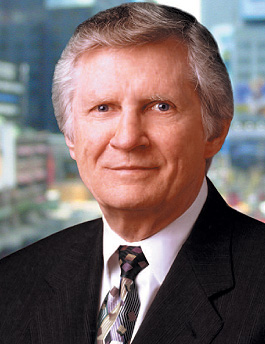
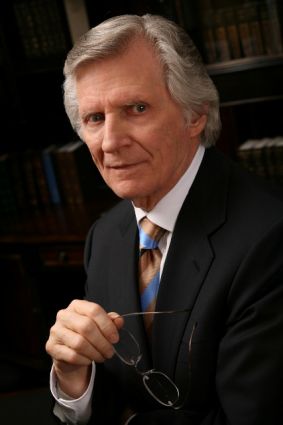
The Reverend David Wilkerson 1931-2011

Renowned Pentecostal  preacher David Wilkerson was killed in an automobile accident in East Texas about 1PM yesterday.  Wilkerson was one of the more influential preachers of his era preaching a message of God’s love, God’s judgment and rigorous personal holiness. Unlike many of his contemporaries who embraced the “word of faith” and “prosperity gospel” message Wilkerson condemned that message without denying the fact that God still does miracles and answers prayers.  Likewise there was never any scandal associated with him or his ministry financial, sexual or otherwise.  He proclaimed many “prophetic” words concerning judgment upon the church and the world as the time of Jesus’ second coming approached. Whether one agreed with his prophecies or interpretation of the Biblical texts concerning the second coming or not one did not question the reality of his faith or his belief in the message that he preached.  In fact one can see even in his more extravagant prophecies a tone similar to that of the Old Testament prophets especially Jeremiah.

The heart of Wilkerson’s outreach was to people that much of the church had ignored or condemned, gang members, criminals, drug abusers and other young people who lived on the margins of society. One cannot deny his impact on those that he ministered to as well as those that he influenced.  Many young people who became Christians in the 1960s and 1970s, especially those that were considered “hippies” found his message attractive and many have talked of his influence in their lives and ministries.  In fact back in 1975 I remember reading his famous book The Cross and the Switchblade and actually being inspired by it.

When I heard that Reverend Wilkerson had died in a car crash I looked up the articles on the news and was surprised to see that he evidently swerved into an oncoming logging truck and was not wearing a seat belt.  I really found this strange.  Of course there are a number of reasons that this could have transpired he could have become distracted while driving, tried to avoid a small animal in the road, been startled by something or even experienced a sudden medical problem that caused him to lose control of the car.  Looking at the pictures on a local Texas television station of the car which is unrecognizable as to its make and model it is no wonder that he did not survive the crash. His wife was probably saved by her seat belt, she is recovering in hospital and I join with their family, friends, co-workers and those that he ministered to for her complete recovery.

As I searched for information on the crash I came across an article that included his last daily blog post which was posted in the hours before his death. As I read it I sensed a man struggling with faith and God a man who seems to have been enduring his own “Dark Night of the Soul.”  The article was entitled When All Means Fail http://davidwilkersontoday.blogspot.com/2011/04/when-all-means-fail.html and it is thought provoking especially when read in the light of the circumstances of his death. I repost it here because it appears to me to show a man struggling with burdens that are overwhelming. Please know as someone who has struggled greatly with faith that I seek in no way to cast any dispersion upon the life, ministry, character or godliness of David Wilkerson.  I do not know what he was facing but it was something incredibly painful that caused him in this post and many of his recent posts on his blog site and ministry web site to wrestle with God.  As a minster I know that many things that we write or preach about deal with the things that we are dealing with ourselves. Sometimes it seems that we are preaching as much to ourselves as to the people that God has entrusted to us.  Of course we are not alone even Paul the Apostle demonstrated such a struggle in the Letter to the Romans.

Wilkerson posted:

“To believe when all means fail is exceedingly pleasing to God and is most acceptable. Jesus said to Thomas, “You have believed because you have seen, but blessed are those that do believe and have not seen” (John 20:29).

Blessed are those who believe when there is no evidence of an answer to prayer—who trust beyond hope when all means have failed.

Someone has come to the place of hopelessness—the end of hope—the end of all means. A loved one is facing death and doctors give no hope. Death seems inevitable. Hope is gone. The miracle prayed for is not happening.

That is when Satan’s hordes come to attack your mind with fear, anger, overwhelming questions: “Where is your God now? You prayed until you had no tears left. You fasted. You stood on promises. You trusted.”

Blasphemous thoughts will be injected into your mind: “Prayer failed. Faith failed. Don’t quit on God—just do not trust him anymore. It doesn’t pay!”

Even questioning God’s existence will be injected into your mind. These have been the devices of Satan for centuries. Some of the godliest men and women who ever lived were under such demonic attacks.

To those going through the valley and shadow of death, hear this word: Weeping will last through some dark, awful nights—and in that darkness you will soon hear the Father whisper, “I am with you. I cannot tell you why right now, but one day it will all make sense. You will see it was all part of my plan. It was no accident. It was no failure on your part. Hold fast. Let me embrace you in your hour of pain.”

Beloved, God has never failed to act but in goodness and love. When all means fail—his love prevails. Hold fast to your faith. Stand fast in his Word. There is no other hope in this world.”

If this were the only time that he wrote such deep and troubling words and if the circumstances of his death were different I would not have given the article a second thought.  But because of the circumstances I decided to keep reading. I read every blog post dating back to February and the topics of hopelessness, failure and struggle are present in almost every article.  They can be found here: http://davidwilkersontoday.blogspot.com/ and here http://www.worldchallenge.org/view/devotions

As I read these articles I felt the pain of a man who has been a weeping prophet and the mould of Jeremiah.  Jeremiah comes to my mind as his writings show a man that struggled with faith and was probably suffering from profound and deep depression and I get the same sense from Wilkerson’s writings.  Wilkerson’s prophetic words, be they true or not are not the words of a man who is angry and lashing out at the society around him.  They are, even dating back to the 1980s the words of a man who preaches out of a heart of sadness and concern for those people, nations and leaders that he believes are coming under the judgment of God.  I have seen some lash out and condemn Wilkerson as a false prophet because of the nature of his words but I cannot and will not do so even though I disagree with underlying premises of his eschatology.  Wilkerson cannot be compared to those that have made their living simply “studying Bible prophecy” and making money off of it or many of the other supposed modern day “prophets” who seem to believe that all they say is as inspired as the Scriptures themselves.  Wilkerson’s struggles which are so apparent in his writings show a personal humility and introspection lacking in the vast bulk of the self proclaimed prophets and Bible prophecy experts.

His writings of the past few months show a man concerned with not failing God and struggling with physical, spiritual or emotional pain of some kind. While the writings are almost always directed to the encouragement of God’s people there is also the sense that he was preaching to himself as much as anyone else.  I think that and preacher who is honest will admit that this is the case and it is not a mark of failure or lack of faith or character for this to be the case.  Likewise it is not hypocritical.

I don’t know what happened on that East Texas Highway yesterday. I don’t know if something happened to cause David Wilkerson to lose control of his vehicle or if in a moment of despair that he steered his vehicle into the oncoming truck. It doesn’t matter really because he is now with the Lord and he leaves the legacy of many changed lives and of faithfulness even while he struggled with things that we cannot fathom.  Perhaps we will know what happened someday but not today and it really doesn’t matter except if it was the latter and Wilkerson committed “suicide by car” it shows us that no-one, even famous preachers that we place on pedestals is immune from struggle, pain or doubt even while they struggle to believe.

We remember his life and ministry and we pray for his family. We trust his soul to God.

Peace

Padre Steve+

Note: I have closed comments to this article things seem to be getting repetitive.  I may reopen them if the situation warrants me doing so. Thank you to all that contributed even those that disagree with my speculation or even those that said bad things about me!

Peace

Padre Steve+

51 Comments

Filed under christian life, faith, Religion

A Quiet Alleluia: Padre Steve Celebrates Easter 2011

“Ministry means the ongoing attempt to put one’s own search for God, with all the moments of pain and joy, despair and hope, at the disposal of those who want to join this search but do not know how.”  — Henri J.M. Nouwen

Those readers and friends that have walked with me over the past two years on this site as well as those that walked with me before I ever put pen to my thoughts know how much I have struggled with God and faith since my return from Iraq. Easter has been difficult during that time as was Christmas.  My journey has been marked by many doubts. Today was different. Today we observed a quiet Easter out at the Island Hermitage marked by solitude and community.

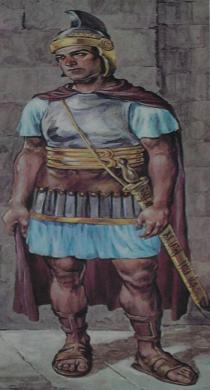
The day was quiet and uneventful. I have been writing of late on the Easter story as told by Longinus the Centurion who Church tradition accords the honor of being the Centurion who remarked at the foot of the cross “truly this man was the son of God.”  The Centurions of the Bible have always been models for me as a Christian because they were career military men who served a far flung empire and at in least one part of their careers served in an unpopular occupation of a subjugated land with a proud and unbroken populace.  In their case it was Judea of the First Century and mine was Iraq. The story of Longinus as he is known to Church tradition is one that has fascinated me, a gentile officer of an occupying army discovers God at the scene of a brutal execution which he himself supervised. The story has helped me as I imagined what it must have been like for a Roman Centurion serving in a troubled land ruled by a cabal of corrupt politicians representing Rome, the family of Herod and the powerful institution of the Jewish Temple leadership composed of the High Priest, the ruling Sanhedrin and various religious parties. Likewise the lad featured an undying insurgency dedicated to overthrowing the Romans and what some considered the corrupt administration of the High Priest who they believed to be a collaborator with the Roman occupiers. These were the Zealots.  I was fascinated by the story and the story led me to a deeper appreciation of the Easter story.

We had contemplated going to Camp LeJeune to Mass at the Base Chapel. My friend Father Jose is a wonderful pastor and serves as the base Catholic Chaplain. While it would have been nice to see him celebrate the liturgy it meant that we would do so as strangers in a large community of faith.  Judy and I still both struggle with large gatherings especially where we know very few people and decided that we would celebrate Eucharist together. We were joined in this by my land lady Sharon.  It was a quiet but joyful expression of faith and community where each of us has at times suffered under sometimes cold and unfeeling Church institutions and leaders.

I used the story of Longinus as my homily telling the story in story form rather than as a theological treatise or sermon.  After the homily we confessed the faith of the Nicene Creed, prayed for the church and the world especially the outcast and persecuted and celebrated the Eucharist around my small pine dining room table, which is actually in my living room which doubles a my bedroom. The Island Hermitage is not a mansion.

Later in the day Judy and I would take our little dog Molly on a walk through a park not far from here. The park is a woodland and wetland area on the Bogue Sound side of the island. To walk in those peaceful woods hearing, seeing and listening to the sights and sounds of nature was wonderful. Molly especially loved it as she hunted for some of the deer that she had seen a few days before while walking near the hermitage.  Following that we drove the 2 ½ miles to lands end with Molly’s ears and fur flapping in the breeze as she stood on Judy’s lap with her head and shoulders hanging out the door.  The evening was also quiet as I finished the Easter installment of the Longinus story and Judy made a number of bracelets from her seemingly unending supply of bracelet stuff.

About an hour ago I took Molly on a walk to do her nightly constitutional and as we walked in the dark I looked up into the clear night sky to see thousands of stars.  In 2008 I walked home from church on Christmas Eve looking up into the cold winter night sky wondering if God even existed.  Tonight I looked at the sky and uttered a simple thank you for the resurrection. I know that I believe again. The belief that became real again in 2009 during my “Christmas Miracle” while on duty at the Naval Medical Center is now a quiet and real part of my life and ministry, especially to those who have lost their faith or struggle with faith. It is a quiet alleluia that is now a part of my life again. It is not the same as what I had before and certainly some critics including some in my old denomination have labeled me a liberal, a heretic and even an apostate mostly because I do not agree with their political agenda or narrow and often undemocratic understanding of the Gospel and its social ramifications.  I suppose that should bother me but it no longer does. My skin has become more resistant to such critics and while such criticism from people that I counted as friends still stings in general I am much more resilient to it, obviously the Holy Spirit’s work in the life of this miscreant priest.

Yet I remain a Christian and an Old Catholic and treasure the gift that God has given us in Christ.  The ministry that I have now is different but it is founded upon that faith that people like Longinus discovered that first Easter and I can only say “I believe alleluia!”

Peace

Padre Steve+

3 Comments

Filed under christian life, faith, Pastoral Care, Religion

Trouble in River City the Centurion’s Easter: An Empty Tomb, Duplicitous Politicians and a Lingering Question

What springs from earth dissolves to earth again, and heaven-born things fly to their native seat.
Marcus Aurelius 

The pounding on his door awakened Longinus before he expected on this day after the Jewish Passover. He was hoping perhaps beyond hope that the worst was over and that in a few days he could take his soldiers back to the confines of Caesarea and away from the troubled city of Jerusalem. He was tired of this duty and longed for service with a real Legion with real Roman soldiers. He wiped the sleep from his eyes and went to the door of his quarters in Fortress Antonia.  He opened the door to find his Adjutant Marcus with a look of near panic on his face.

He asked the young officer to come into his quarters and take a seat at his table. He took a wineskin and poured the contents into two cups. He asked Marcus what was so urgent and frightening that he had to be at his quarters well before the duty day began. The young man took off his helmet to reveal a crop of blondish brown hair common to the Tyrol in the northern part of Italy and told an almost unbelievable story. He explained that there was trouble at the tomb of the itinerant preacher named Jesus. The two guards from their unit who had relieved the previous watch at the tomb had evidently fallen asleep and there had been a break in.  They claimed that they had been overcome when some kind of angelic being who had descended in front of them and some of the women who had been at the execution site previously.  The story seemed preposterous but Longinus could not believe that they had fallen asleep on duty either as such could be punished by a death sentence.  Adding to the confusion was a report that two of the preacher’s “disciples” had reportedly entered the tomb and claimed that the body was gone as had some of the women that had been there at the crucifixion.  It was unbelievable but yet in light of the strangeness of the man and his execution.  Longinus had the Adjutant bring the two soldiers to him along with the Sergeant of the Guard to explain what had happened.

The two soldiers, one a Samaritan and the other a Greek had good reputations in the unit. Neither had given him cause for concern and the terrified expression on their faces as they explained what happened gave Longinus reason to believe them. Yes it was possible that they were lying but Longinus believed their story. I found that not to believe them and their story that they heard the angel or whatever it was tell the women that the preacher had been raised from the dead. Longinus was not much of a believer in miracles angels or any sort of magic hocus pocus purveyed by seers, magicians or fortune tellers but here he was believing this outlandish story because to disbelieve would mean that there was a serious breakdown of discipline by two outstanding soldiers. He had some soldiers that he wouldn’t believe for an Athenian minute if they told him such a tale but he believed these men and he again thought of his words as the preacher hung dying on the cross on that evil hill.

Longinus went to Pilate’s headquarters when he and the other Centurions were participants in a meeting with the High Priest and his representatives and two of Herod’s people.  The meeting reminded him of a meeting of criminals.  The High Priest and his representatives were livid and Herod’s henchmen voiced their displeasure regarding the lapse of the Roman soldiers that allowed this to happen. Longinus spoke for his men and said that as improbable as it was that he believed their story. That only made the non-Romans angrier; he almost thought that they were engaging Pilate in some histrionic episode in order to force Pilate to do their bidding. They insisted that Longinus’ soldiers had to have fallen asleep and or that they had conspired with the preacher’s followers to remove the body from the tomb. This angered Longinus to the point that he interrupted their ranting to defend his men’s honor. Pilate finally ordered Longinus and the High Priest to be silent.  He asked the non-Romans to step outside while he conferred with Longinus and the other Centurions.

Pilate explained his dilemma. He was afraid that if he sent the High Priest away by supporting his soldiers that there would be a revolt in the streets. He had seen the tumult on the streets by the supporters of the High Priest when he tried to release the “King of the Jews” and felt that this would be worse for security. He advised the Centurions that while he had no reason to doubt them or their men that he had to placate the High Priest and Herod in order to avoid chaos, chaos that could lose him his job if he wasn’t careful. Likewise he did not feel that he had the manpower in the city to handle a full-fledged revolt and that he would have to call for reinforcements from the Legions based in Syria, something that he was loathe to do as this would get back to the Emperor.

Longinus thought back to the day of the execution.  Pilate had agreed to place a guard at the tomb at the urging of the High Council. Longinus had argued against placing any soldiers at the tomb as he felt that since the “King of the Jews” them man that he had called the “son of God” was dead that Rome’s obligation was over. The whole thing reeked of politics, Longinus was overruled by Pilate who explained that Roman soldiers needed to guard the tomb because the High Priest who Longinus detested as much as Pilate insisted that Jesus’ followers would attempt to steal the body and claim that he had been raised from the dead to lead a revolt against the Council and eventually Rome itself.  Added to the Judean witches’ cauldron was Herod, the corpulent and corrupt “King” of Judea.  If Longinus detested Pilate and Caiaphas he hated Herod and all that he stood for, it made him wonder why Roman lives and treasure were spent to solve the problems of this God-forsaken land which he believed would still be trouble two millennia from now if the world lasted that long. Longinus believed that as long as Rome allowed the High Council and Herod to rule the region by proxy that the troubles would never end. He believed that it was only a matter of time before these people, led by the Zealots would revolt as they had against the Seleucids nearly 200 years before. He knew if that happened that Rome would crush the revolt and not leave as much as a house standing.  He hated this occupation and all that it stood for, especially when he saw a good man, an innocent man killed for no good reason other than the politics of it all. It sickened him.

When he was done explaining his decision to Longinus and the other Centurions he called the now quite irate non-Romans back into the proceedings.  He told the High Priest and Herod’s men that he would disciple the soldiers involved and he would assist them in finding just what parties removed the body from the tomb.  In the mean time he would suppress any stories coming from the soldiers about this supposed “resurrection.”  The High Priest and Herod’s men agreed that this would suffice and thanked Pilate for his time and effort. Longinus and the other Centurions quietly seethed as this took place. When the non-Roman parties had left Pilate ensured the officers that no action would be taken against the men and that he would not actively assist the Jews in trying to find the perpetrators of the event. He then let the officer know that they would remain in Jerusalem for another week to allow the multitude of pilgrims to leave the city and then they would return to Caesarea.

Longinus left with the others and met his Adjutant and stepped into the court of the fortress. He was very unhappy with the deal that Pilate made with the High Priest and Herod.  He felt that he had dishonored his soldiers and the unit for the sake of political expediency. He felt ashamed of the Empire for what Pilate had done in cooperating with these people from beginning to end during this affair. He would not forget.

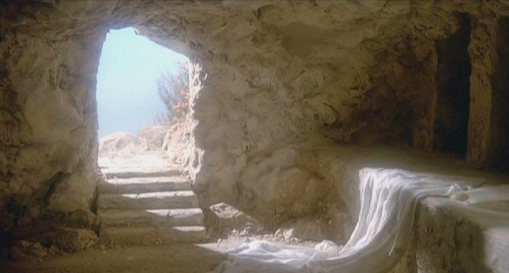
That night he felt compelled to walk to the empty tomb.  In the darkness he looked into the sepulcher aided by a lantern. He saw the grave cloths where they remained; the large stone was rolled away and the seal that had been placed on it was broken.  He looked for any evidence to suggest that his soldiers had fallen asleep but could not find any.  Nor did he see how anyone could have stolen the body and gotten very far without being seen by anyone. Convinced by what he saw he set down in the tomb and thought about this man.  He looked at ground where the body had been placed.  In the dim light he noticed what appeared to be some thorns.  He reached down He would have to find out more about him if he truly was the son of God.

He walked back to the fortress when he went to the Officer’s Mess and had the steward pour him some wine. He drank quite a few before the evening was out and then went to his quarters where he lay down exhausted and perplexed by the events of the past few days.

Peace

Padre Steve+

1 Comment

Filed under faith, History, Religion

The Morning after a Crucifixion: A Centurion Reflects on a Days Work

The horrible day was over and the night had passed. The sun rose over the escarpment overlooking the Jordan River casting a red glow in the east as the city awoke to the Sabbath morning.  Longinus rose as always when his adjutant arrived at his quarters in Fortress Antonia with his breakfast.  He preferred a private breakfast and this was typical for the area, a cup of the local tea, a plate of figs a loaf of bread with honey and since they were in a major city a portion of mutton procured from a local butcher who was more interested in earning a living than completely avoiding contact with the gentile Roman legionnaires.  Longinus invited the young officer to sit on a small chair beside the table which served both as his dining table and office desk.

They discussed the impending return to Caesarea and the needs of the soldiers as well as the case of a soldier caught drunk and disorderly stumbling around the outer court of the Temple. The Temple Police apprehended the man and returned him to the watch officer of the fortress. It was embarrassing but not atypical of the locally recruited Samaritans.  Sometimes Longinus wished that he was back with an Italian Cohort or even with the elite Imperial Guard, but even in those units individual soldiers would still do stupid things.  After discussing the matters he dismissed the officer and rose from his chair.  Longinus took the cup of tea and a piece of the bread and walked to the small window which looked out across the city and he could see the rocky crag called Golgotha now devoid of crucifixes where he supervised the executions of the two criminals and the man called by Pilate “the King of the Jews.”

It was the last that bothered him; while Longinus had seen or supervised numerous crucifixions he never enjoyed them as did some of his brother officers.   Occupation duty anywhere but especially here was difficult on soldiers.  The troops were not the elite of the Empire, many of the officers were cast offs from the Legions and the duty itself drained officers and men alike. They knew that the Jews hated them their Caesar and their taxes.  Violence against soldiers posted to remote outposts was not uncommon; the Jews of the Zealot party had no compunction about killing Roman infidels and felt that dying to free their land was an honorable thing to do. They could be brutal both to the Romans as well as other Jews that they suspected of collaborating with the hated occupiers.  Longinus hated them and treated them as terrorists whenever he encountered them, they were not soldiers and they had no honor He hated them and their land, he longed for the culture and peace of the home provinces of the Empire.

There was something unusual about the man that Pilate called “the King of the Jews.” Longinus took a sip of his tea and took another bite from the honey covered bread and shook his head. He had no idea why a man who did not seem to be violent whose followers melted away the moment this “King” was arrested by the Temple Police.  He gazed upon the sunrise as the sky began to lighten. He thought about the women and the young man who stood nearby the cross the day before. He thought about the blood and the water and his remark to his men as the man died “truly this man was the son of God.”  He hadn’t thought about it much until now. He knew that he would have to think some more on this subject but he had too much to accomplish today. There was still the possibility of violence in the city and one never knew what the Zealots were up to.  Yes he would be busy. He took another sip from his tea and dressed for his meeting with Pilate and the other Centurions.

Peace,

Padre Steve+

4 Comments

Filed under faith, History, Religion

The Long Good Friday: The Story of Longinus the Centurion

It was another ignominious day in the life of Longinus the Centurion. Posted to the troubled outpost of Judea he commanded a unit composed of locally recruited troops mostly Samaritans and some Syrians. How he wished that he commanded elite troops of the Italian Cohort or any of the European Legions stationed in nearby Syria.  Normally he and his men were posted to the Roman capital of Judea Caesarea on the Mediterranean coast of Judea, though his troops were not elite the location was not bad so far as amenities, especially for Judea.

However, today’s mission was another distasteful assignment away from Caesarea back to the always troublesome city of Jerusalem.  Since the Jewish Passover was coming and with it thousands of Jewish pilgrims from around the world were in the city and in there was always the potential for trouble. Longinus had heard around the headquarters that tensions in Jerusalem were increasing due to the presence of some itinerant preacher from up in Galilee which according to the agents and spies in the city allegedly had healed the sick, raised the dead and restored sight to the blind. Evidently he had even stirred things up on a previous visit by chasing money changers out of the Temple. Longinus had to admire that, this Jesus was pretty ballsy. Since the worldly and seasoned Longinus didn’t think much of religious zealots, Jewish or otherwise he could only chuckle when thinking of some bumpkin raising hell in the Temple and pissing off the religious elite.

He led his unit as part of the mixed Cohort which provided security for the Imperial Legate, Pontius Pilate. He remembered a previous mission where Pilate had posted the Imperial Standards with the Image of Caesar as God outside the Fortress Antonia very close to the Jewish Temple caused a riot and Pilate had the Standards returned to Caesarea under heavy escort the next day.  This time there was a rebel named Barabbas who had been causing no end of trouble and Pilate had sentenced him to death.  But then the Jewish High Council brought Pilate another case, the case of this itinerant preacher, Jesus of Nazareth. It seemed to Longinus and the other Centurions present that the case was a simple religious disagreement that the Romans should not get involved in. However Pilate took the case fearful of the threat to his job if he allowed another “king” to live.  Yet Pilate had found this Jesus innocent but caved to the pressure of the mob, even ignoring the pleas of his wife Claudia to spare the preacher.  Pilate was a typical politician and cut a deal which allowed King Herod, the Sanhedrin and himself to meet the demands of their various constituencies or in the case of Pilate his boss to end this Jesus of Nazareth problem once and for all.

On the day before the Passover one of the preacher’s own men turned him in to the Council for the paltry sum of 30 pieces of silver. That alone proved to Longinus that this Jesus was no threat to anyone. The Temple Police brought Jesus to the Sanhedrin which condemned him to death, but since they were not authorized by the Roman administration to carry out the death sentence they took the case to Pilate. Longinus saw Pilate use every trick that he could to make the decision the responsibility of someone else and if Longinus had been Pilate he would have told those religious types to pound sand and get the hell out of his headquarters, but he was a soldier not a politician with greater aspirations like the legate.

Instead Pilate complicated his life and those of his fellow Roman officers in charge of their local troops. One Centurion had the duty of supervision the torture of this Jesus. The troops were brutal, Samaritans and Syrians they hated the Jews and torturing a Jew for any offense was just too much fun, but for the Roman officers it was unseemly and lacked the honor of a true battle against other soldiers. After the brutal scourging with a barbed whip those soldiers placed a rough hewn “crown” of thorns on the unfortunate man’s head and robed him in purple to mock his claims to be a “king.” Longinus felt that the whole exercise was a cruel joke but the order had been given and by Roman law had to be carried out. After the scouring Pilate tried one last time to get out of killing this man offering to spare him for the life of Barabbas, a man who was a legitimate terrorist threat to the Empire’s interests in Judea. Instead the weak willed Pilate caved and spared the life of the terrorist for a man who couldn’t even control his own people. It was sad what was done in the name of the Emperor.

When final sentence was pronounced Longinus was assigned to the crucifixion detail.  Normally with such inflamed passions he would have assigned much of his unit to the task of the execution and related security measures. However it seemed that the usually surly population had little interest in stopping this execution of one of their own. With that in mind Longinus took just four soldiers with him to conduct the execution, security did not seem to be a problem. After a rather tumultuous parade through Jerusalem where the condemned man was heckled and abused they arrived at a hill just outside of the city called Golgotha, the place of the Skull. Longinus felt that the place was grotesque but it did work for the execution. Any visitor to the city would see the condemned man as well as two common thieves who were being executed at the same time.

His men performed the execution in the prescribed manner and he allowed the men to divide the condemned man’s clothing among them. For three hours the men along with a number of observers those that were obviously mourning the scene including a woman that appeared to be the itinerant preacher’s mother and a young man who he might be one of his followers. They were balanced out by a group of hecklers who mocked the condemned men, especially the preacher. Even one of the common thieves joined in the heckling. Yet in spite of this the preacher responded with grace and love to those who mocked him in his dying hours offering forgiveness to his men and promising eternal life to one of the condemned men who hung on either side of him.  The only real trouble came when some of the Council members noticed that the placard above the preacher said “The King of the Jews.” They immediately send men to Pilate to change the wording but Pilate finally told them to pack sand saying “I have written what I have written.” Longinus kept his silence when he heard this he and the other Centurions arrived back in Caesarea and had a chance to share drinks and a meal in a local pub.

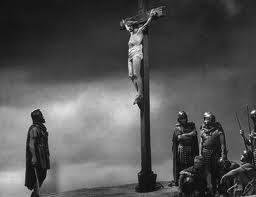
It was an unusual day, the skies grew black as noon approached and the preacher made a number of chilling statements from his place on the cross the most poignant being where he cried out “my God my God why have you forsaken me?” That struck Longinus, this man was not really guilty of anything in Roman Law but was being killed and Longinus was part of the process.  A tear came to his eye when the preacher cried out “it is finished” and died.  Without thinking he called out to his men and to those remaining at the site “truly this man was the Son of God” drawing the ire of those cheering the execution and the bewilderment of those that appeared to be there to support this man. So when a runner came from Pilate came to order the deaths be speeded up to accommodate the religious traditions of the Jews he was relieved. His men broke the legs of the men on either side of the preacher but when they came to the limp body of the preacher they found that he was dead. Just to ensure that this was the case he had a soldier drive a spear into the side of the man. Blood and water flowed from the wound. The man was dead and the job was complete. Another Centurion came with a detail of soldiers to remove the bodies and to ensure the security of the preacher’s tomb, yet another concession to the religious people.

Longinus was glad that the day was done. He cast a glance at a number of women and one young man that remained. They obviously were his friends and the older women might have even been the preacher’s mother. He shook his head marched his troops back into the city and reported that the mission was complete when he reached Fortress Antonia.  He felt hollow inside and hoped beyond hope that time could be altered to allow him to save the many before it ever got to this point.

Arriving at Antonia he joined a number of fellow officers and as they chatted about the day he felt his anger and frustration rise. That preacher didn’t deserve to die and it was too bad that he could not be restored to life. But the Centurion in change of the Tomb Guard detail reported that the body had disappeared from the tomb. Longinus was tired. He hoped that it might be true. He asked the bartender for another drink and wondered just what was going on in this hellhole called Judea and he thought again “truly this man was the Son of God.”

Peace

Padre Steve+

Note: Longinus is the name attributed to the Centurion at the Cross during the crucifixion by early church tradition. Likewise this is true of Claudia the wife of Pilate. This story is simply my versions of what might have happened that fateful Friday when a Centurion named Longinus became an actor in a play that he could not imagine.

5 Comments

Filed under faith, History, Religion

Deadly Chatter: The Danger of Talking and not Listening

“Christians, especially ministers, so often think they must always contribute something when they are in the company of others, that this is the one service they have to render. They forget that listening can be a greater service than speaking.” Dietrich Bonhoeffer

I am a man of words sometimes many but mostly in writing but when I am in the company of others, unless I know them well or feel an exceptional need to add to a conversation I tend not to say much. In fact many times what I contribute is nothing more than something funny or witty to break tension or point out irony, speaking of which I need to do my Summer White uniform shirt in the next couple of days because we have an inspection next week but I digress.

Since I happen to be a minister I often get to experience the incessant droning and chatter of many Christians especially ministers who seem to believe that God would have them pounce on every opportunity to prattle on feeling that they must contribute something even if they have nothing to say.  Since I have on occasion been guilty of this myself I must always remember to take the Lincoln Log out of my eye before I go pointing out the Sequoia in someone else’s eye.  But we Christians and especially those of the ministerial type can really be a pain in the ass about this and I speak from experience on both the giving and receiving end of this proposition. What I fin amazing is for some ministers, especially the really popular ones on television or the mega-mart, I mean mega-church variety can take a small section of the Bible, usually the most insignificant ones like The Prayer of Jabez and turn them into a series of sermons each lasting nearly an hour complete with the DVD and the book, or series of books on the subject.

I remember a pastor of a mega-church that would begin sermon series on various topics and never complete them. He had one that was on “mission, vision and passion” which died somewhere around the eighth week of hour-long sermons into the mission section.  The sad thing is I can’t even remember what his primary Scriptural texts for this. Likewise I have endured many other sermon series to nowhere by various pastors or simply been held hostage by pastors that won’t shut up even when they know that they are beating a dead horse.  As for me I try to spend no more than 15 minutes on a sermon and usually shoot for about 12 minutes and focus on one thing either from the Gospel lesson or tying that lesson in with either the Old Testament or Epistle reading.  I just hope that in that time I don’t put anyone to sleep and that somehow by the miraculous work of the Holy Spirit that at least someone in the congregation takes a nugget from the message and that it is helpful.

Judy helped me in this when I was the Base Chaplain at Fort Indiantown Gap Pennsylvania.  The congregation had an unwritten rule that the service would begin promptly at 1100 and end promptly at 1200.  Judy and I know some American Sign Language since she went to California State University at Northridge because of her rather significant hearing loss and as any boyfriend who was passionately in love and lust would do I followed her.  As a result I became fairly well versed in sign language though I have lost most of that capability over time.  However she was good to let me know during a sermon how much time that I had before I had to be done and if I waxed too poetically she would let me know that I was boring something that I should have figured out by the sleeping members of the congregation.  But what the heck, none of them were sitting on a window ceil. No harm no foul.

I have found in the ministry of Priest and Chaplain that more often than not people don’t really want me to pontificate about everything that I know and would much rather that I take the time to listen to them. I actually try hard to notice the words as well as the inflection and the non-verbal aspects of communication when I spend time with people because it is all a part of listening.  I don’t always do it well and many times I have to catch myself before I interject a comment, idea or suggestion that might not be what the person needs at all in order to ensure the sanctity of the moment.  I know that when I am not doing well, which I spent the better part of the past three years not doing after my return from Iraq that the last thing that I want is someone who spouts “answers” and pushes their agenda without ever taking the time to care for or listen to what I am actually saying.  I think that I am not alone in this.

Bonhoeffer made this amazingly succinct comment about just what I am saying here and he does it far better than I could have done. “Many people are looking for an ear that will listen. They do not find it among Christians, because these Christians are talking where they should be listening.”  Therein lays the danger for both the person seeking someone that will listen to them as well as the one with all the answers.    The danger is that when we are in constant transmission mode we not only fail to listen or to really hear the other but also become deaf to the still small voice of God. Bonhoeffer noted this danger saying “he who can no longer listen to his brother will soon be no longer listening to God either; he will be doing nothing but prattle in the presence of God too.”  I figured due to the wisdom of my long-suffering wife Judy that God stopped taking theology lessons from me a long time ago, if indeed the Deity Herself ever took them from me. Of course back in my younger days I knew everything but since I have learned that I really know very little but I am definitely sure that I prattle in the presence of God as much as anyone else, and that is reality. Taking the time in the Daily Office and Scripture is something that I struggled with on my return from Iraq when I even struggled with the existence of God.  I am aware of this and I am trying to take some time every day to “be still and know.”

Unfortunately our media and information obsessed culture beats us senseless throwing more information, much of which is useless, deceptive or destructive in terms of content that it dulls our senses to the reality of others around us and keeps us from listening and seeing those who cry out for someone that will just take the time to listen even if they cannot “fix” the problem. You see in much of Christianity we suffer the same ailment of the culture around us in that we would rather “fix” someone than care for them. You see care takes loving nurture and patience especially the latter. Fixing is a “fire and forget” kind of thing, the kind of thing that “miracle workers” do for a living even if they are miracles faux no miracles at all. However the real act of care by a minister appropriately called “pastoral care” or the spiritual care of souls by a lay person takes time and involves a relationship and that requires listening when the answers are not apparent.  It is standing near the cross and not abandoning Jesus in the crisis something that nearing Good Friday we should remember with fear and trembling. I’m no fool when it comes to knowing my limitations especially when it comes to something like survival and I would have probably much more like Peter who went into hiding after denying Jesus than John on that day when the sky turned black.

You see to care involves love and as the Apostle Paul so aptly described love and what it is not in 1 Corinthians 13: “If I speak in the tongues of mortals and of angels, but do not have love, I am a noisy gong or a clanging cymbal. And if I have prophetic powers, and understand all mysteries and all knowledge, and if I have all faith, so as to remove mountains, but do not have love, I am nothing.”

Paul got it, even though he put a young man to sleep when preaching. The man fell out a window and died but thankfully the Holy Spirit wrought a miracle and raised the young man from the dead as he does so many weeks for so many of the faithful who suffer injury when passing out in the middle of a tedious sermon.  Maybe Paul wrote the epistle after that incident.

But simply to preach with no end is one thing but to fail to care or fail to really listen is worse.  Providing “answers” without understanding the question and to impatiently wait our opportunity to jump in and push our agenda no matter how noble or even “Biblical” it is is not faith nor is it Christian, insofar as Jesus would have understood it to be.

I remember an associate pastor of a mega-church that we attended in the late 1980s as I was getting ready to begin seminary. This pastor who was very charismatic and a wonderful preacher could not be bothered to care for or listen to the questions and struggles of a budding seminarian.  He would cross his arms and tap his foot to signal that his time was better spent doing anything other than listening to someone else. I had another senior pastor at a different mega-church who was one of my ordaining pastors back in my Evangelical Protestant days who told the congregation that someone asked him how sick that he would have to be for him to visit them in hospital he said “you don’t want to be that sick.” Of course he told the story during a sermon so the clear message was “if you are sick don’t expect a visit and don’t even bother calling me.”

Unfortunately this attitude has been all too common throughout the history of the Church and today it almost seems epidemic among pampered pastors who appear to be more intent on their personal gain than on caring for the flock that God has given them. Likewise it is all too common in church life. To  again quote from Bonhoeffer “This is the beginning of the death of the spiritual life, and in the end there is nothing left but spiritual chatter and clerical condescension arrayed in pious words. One who cannot listen long and patiently will presently be talking beside the point and be never really speaking to others, albeit he be not conscious of it. Anyone who thinks that his time is too valuable to spend keeping quiet will eventually have no time for God and his brother, but only for himself and for his own follies.”

This is a much bigger danger to Christians and the Christian faith than many if not most active clergy and laity alike across the denominational spectrum imagine.  The fact is if people don’t believe that we care about them and fail to show them the unconditional love that God shows us instead seeking to provide fixes that gel with our agenda then we will lose a generation. Perhaps we are already well on the way to this and it will be our fault.

Peace

Padre Steve+

1 Comment

Filed under christian life, faith, Pastoral Care, philosophy, Religion