Category Archives: film

Laughing All the Way: Padre Steve’s Favorite Christmas Films and TV Shows

christmas-vacation

Where do you think you’re going? Nobody’s leaving. Nobody’s walking out on this fun, old-fashioned family Christmas. No, no. We’re all in this together. This is a full-blown, four-alarm holiday emergency here. We’re gonna press on, and we’re gonna have the hap, hap, happiest Christmas since Bing Crosby tap-danced with Danny Kaye.”

This is the time of year that a lot of Christmas movies are shown on almost every television outlet known to humanity.  Of course there are many that are absolutely timeless such as Miracle on 34th Street, White Christmas, Dickens’ A Christmas Carol and its derivatives and It’s a Wonderful Life.

There are also ones of various religious themes, usually involving the birth of Jesus, like no duh, it’s Christmas. Unfortunately most of these films as classic as they are bore me to tears.  Yes they have nice messages and tug at the heartstrings but without wanting to sound too much like Scrooge I get bored by them, frightfully bored.

I guess part of this is a generational thing.  The ones set in the 1930s and 1940s are from a different era, an era that I know from history books and family members but not something that is a part of my life.  It’s like the film The Bell’s of Saint Mary’s is about the Roman Catholic Church of a half century ago, not the one that I know or that exists now.  They are fictional and while touching are indelibly tied to their time.  The religious themed films tended often to be major productions of the Hollywood Gospel genre, not very faithful to Scripture or the teachings of the church, not that there is anything wrong with that.  But it is certain to me that Cecil B. De Mille did not write the 5th Gospel, or the 6th Book of Moses (You have to know your Luther Bible for that one) thus I have a hard time with films that use the nativity or for that matter the passion of Christ for a quick buck.

charlie-brown-christmas5

However, every year, there are several Christmas movies and television shows that I cannot live without seeing.  Of the television shows my all time favorite is A Charlie Brown Christmas and How the Grinch Stole Christmas.  As a kid I had a deep affinity for both Charlie Brown and Linus. The frustration of Charlie Brown with the commercialization of Christmas was something that resonated in me at a young age and still does today. If you want to see this just look at my articles on Black Friday.  Likewise Linus’ reading of the Luke’s account of the Angel’s message to the shepherds always brings tears to my eyes.  There is something about the sensitivity of Linus to the actual Gospel message that resonates in my heart.

grinch-1

As for the Grinch, and I mean the television Grinch where Boris Karloff voiced the part of the Grinch not the Jim Carey movie version, it has always been a favorite of mine.  I find the plot of the Grinch to steal Christmas from the Whos of Whoville to be a masterful account of how the message of Christmas can touch even the smallest and coldest of hearts.  Of course I absolutely loved the Grinch’s dog “Max” a dog whose loyalty to the Grinch reminds me of my dog Molly.

As far as movies are concerned I watch Scrooged staring Bill Murray and National Lampoon’s Christmas Vacation staring Chevy Chase with almost a religious reverence every year.

Xmas-Scrg3

I relate to the main characters in both movies.  That’s not necessarily a compliment to me. Bill Murray’s Character in Scrooged pricks my cynical nature and there are times that I almost need to cover my eyes when in Christmas Vacation where Clark Griswold kicks the decorative reindeer and sleigh across the lawn when he can’t get his house lights on.  His rants when his Christmas Tree goes up in flames and when his family tries to leave the house are so close to the way that I can act under the stress of the holidays that is scary.  Since Judy says this is the case I know that I am not imagining this.

trading-places

Three other films that get me are Home Alone and A Christmas Story and though it is not really a Christmas story Trading Places staring Dan Aykroyd whose Christmas season meltdown is at the center of a film about the greed of certain parts of the American financial sector.

These are what I grew up with and which were the films about Christmas as it takes place in the United States that I became an adult in that typify my era, not that of my grandparents.  I think that is why they are my favorites and not the classics of a bygone time.

festivus-card

Of course there is the Festivus episode of Seinfeld that is almost scary because of how close to home it hits. There are times that I think we only lacked the “feats of strength” and the Festivus Pole to complete the picture.  Sticking to Seinfeld I always feel a twinge of sympathy for George when makes up a fake charity called “The Human Fund: Money for People” to give to his co-workers at Kruger Industrial Smoothing. There are times that I am tempted, but thankfully never will do something similar.

X-Files-How-The-Ghosts-Stole-Christmas-6X06-the-x-files-7967511-852-480

Finally I like the X-Files Christmas episode How the Ghosts Stole Christmas where Ed Asner and Lilly Tomlin played ghosts in a haunted house that Agents Scully and Mulder get trapped in while investigating a case. When I go shopping anywhere this time of year I am quite fond of Agent Scully’s comment to Mulder: “Sorry. Checkout lines were worse than rush-hour on the 95. If I heard “Silent Night” one more time, I was gonna start taking hostages.” 

Okay, so these are not the classics of a bygone era, but they are my classics and I will enjoy Charlie Brown, Linus, the Grinch, Clark Griswold, Frank Cross, the Costanzas Agents Mudler and Scully and the rest of my warped favorites as I continue to rediscover the joy and hilarity of Christmas as we celebrate it in the United States. After all, to quote Clark Griswold “We’re all in this together.”

Peace,

Padre Steve+

1 Comment

Filed under christian life, faith, film, Religion

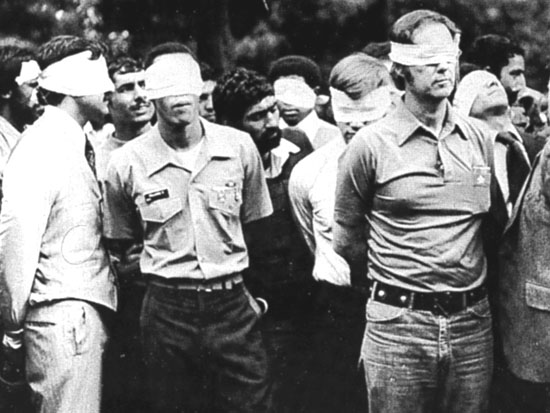
November 4th 1979: The Beginning of the Iranian Hostage Crisis and a New World

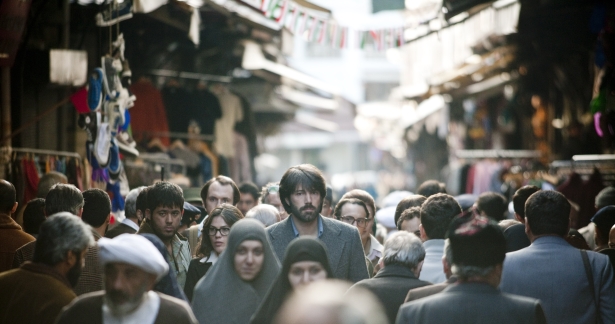
Tonight Judy and I went and saw the movie Argo. I saw it the day it opened here but Judy had not seen it. When the movie began with the storming of the U.S. Embassy in Teheran on November 4th 1979 I looked at Judy and said, “it is the anniversary.” It is hard to believe that 33 years ago was when that event happened. At the time Judy and I were still in the early stages of our courtship and it was then that I decided that I would enter the military.

I enlisted in the Army National Guard and entered Army ROTC after the hostages were released. I had been accepted into the Air Force ROTC program in early 1980 but waited a year and did the Army because I needed the money provided by a summer job that could not be made up in a 4 week Air Force Summer camp before the school year began in 1980. Such is life when you didn’t get any academic scholarships and chose to attend college in a high cost of living area.

The hostage crisis was an event that changed my life and watching the film Argo was a very emotional experience the first time that I saw it and brought tears to my eyes again tonight. It was so well done and having travelled in much of the Middle East and been surrounded by crushing crowds in Bazaars, thankfully without being accosted for taking pictures and going through various Middle Eastern nation airport security checkpoints, as well as numerous other countries in Europe and Asia I could feel a bit of the anxiety rise in me as the film showed the American fugitives from the embassy as they went through the motions of being Canadians. There have been a number of times when traveling alone on official Navy business to countries after 9-11 that I relied on my skills in German to pass a German when accosted in public for being an American in a foreign country rife with anti-American sentiments.  Thank God for bad grammar and a Bavarian accent.

So now 33 years later I am still in the military and the United States and Iran are still mortal enemies and if some politicians, pundits and preachers have their way will be at war with each other, for some the sooner the better.  I personally don’t understand the mentality of people that have never, or will ever serve in the military who preach a Gospel of war, of pre-emptive war under the guise of “protecting America.” Having seen the effects of the war-mongers that preach “pre-emptive” war in Iraq, both on the people of that unfortunate country and our own troops I cannot fathom yet another pre-emptive war. But there are plenty of politicians, pundits and preachers, the Unholy Trinity of war and pestilence who seek such a war with Iran. Of course should Iran ever attack us that is another matter, but to launch another war after we destroyed the military potential and power of Iran’s natural and traditional enemy Iraq which kept the Iranians at bay is altogether one of the most stupid ideas ever dreamed about, especially when the American military is stretched thin with close to 70,000 troops exposed to disaster in Afghanistan if supply lines are cut and Iran becomes more actively involved.

In January 1980 Jimmy Carter gave final approval to CIA operative Bob Mendez’s operation to bring those 6 Americans out of Iran. Since the publicity could have caused harm or death to the other American hostages held by the Iranians Carter gave the credit to the Canadians. He ordered a military operation to free those hostages which ended in disaster and would go on to lose his re-election to Ronald Reagan in 1980. Back then I did not appreciate anything that Jimmy Carter did but I have to respect the fact that he was willing not to claim credit for something that could have helped his re-election campaign in order to protect the lives of Americans.

Afghanistan is something else that hasn’t changed that much. In December 1979 the Soviets invaded that country and the United States would supply and support the Afghan Mujahideen. Some of these became the nucleus of the Taliban who along with their Arab “foreign fighter” allies under Osama Bin Laden became Al Qaeda. The Reagan administration began a program in 1985 to trade arms to Iran for American hostages with monetary proceeds being used to fund Nicaraguan rebels which resulted in the Iran-Contra affair. Both of funding of the Mujahideen and the Iran-Contra affair have come to cause the United States much grief in both the Middle East and Central and South America.

Both were short term expedient operations conducted without long term though to the results of both for American prestige as well as foreign policy, politics, economics and military operations since.

Hindsight is not a bad thing, but foresight is much better. Perhaps we can learn not to repeat the follies of those that helped create the world that we now live.

Peace

Padre Steve+

1 Comment

Filed under film, History, movies, News and current events

High Anxiety: Padre Steve and Flight Delays


I am not as good of air traveler as I used to be. I get anxious when I travel by air now.  Sometimes when I fly it feels like I am Mel Brooks at the beginning of the movie High Anxiety http://www.youtube.com/watch?v=1_phD__FPsQ or Robert Hays in Airplane. The only thing missing from modern air terminals are the incessant bands of religious zealots that used to be a staple of large airport lobbies back in the 1970s.

Almost every time I travel by air I have the title song from High Anxiety going through my mind: “High Anxiety, it’s always the same. High anxiety, it’s you that I blame. It’s very clear to me I’ve got to give in, high anxiety, you win.” 

 http://www.youtube.com/watch?v=grLM1WrivPA

Despite the absence of those bands of zealots, who I almost miss going to the airport is never fun. It starts with long lines at the check in counter and through the TSA checkpoints, endure more lines at the gates and get stuffed into a packed aircraft next to someone who insists on taking up their seat plus a third of your seat. It finally ends when you pull out of the parking lot after waiting an unbearable length of time at the baggage carousel of doom for the checked bag that may or may not arrive when you do.

However I have this miserable experience down to a science.  I make sure that everything in my pockets can fit in my baseball hat, I wear shoes that come on and off easily and may backpack is set up so that my computer can be taken in and out quickly. I don’t carry any liquids whatsoever even those that are allowed by TSA. I find the trouble of bagging tiny containers in quart size plastic bags to be too much effort to make it worth while.  My backpack which has accompanied me since Iraq fits well in the overhead compartments of most aircraft and I only carry it so I don’t have to check anything at the gate.

Today has been another adventure in air travel. At Houston Hobby Airport the TSA operates the new scanning devices which enable the agents to look at your naked body. This is not new technology. I saw it used the first time in the movie Airplane. Somehow the thought of my naked body being exposed to anyone other than Judy is not comforting. I wonder what TSA does with these images.

Today I flew out of Houston on the American Airlines subsidiary American Eagle. To make it to the airport I had to catch a cab from the hotel and build in enough time for Houston morning rush hour traffic, so I was on the road by 0720. I had, the operative word had a flight that was to depart at 1020 and be in Dallas by about 1130. My connecting flight was scheduled to depart at 1335. That would have been great. Two hours to make connections right? But no, the scheduled aircraft had a mechanical problem and the replacement did not arrive in Houston until 1145. By the time I took off it was 1225 by the time I landed it was too late. I missed my flight by about 5 minutes. It was pushing away from the gate when I got off of the Sky Link train. I was able to get a picture of it as it left.

Now I get to wait until 1830 local time to take off to arrive in Norfolk about 2220. That is 10:20 PM to the no-military types. Thankfully I was able to get some Tex-Mex food and a couple of beers as I wait out the nearly 5 hour interval between flights. At least I don’t have Robert Hays’s “drinking problem.”http://www.youtube.com/watch?v=pl4plPGRG8o

By the time I get home, Lord willing, or as my Iraqi friends say “Inshallah” it will be nearly midnight, about 18 hours after I left the hotel. I could have driven Judy’s Mustang straight through in just a few hours more.

Oh, High Anxiety, you win… looks like I picked the wrong day to stop sniffing glue…

Oh well… c’est le vie.

Peace

Padre Steve+

1 Comment

Filed under aircraft, film, Just for fun, Loose thoughts and musings, purely humorous

Memorial Day 2012: The Perpetual Cost in Human Lives, PTSD, Suicide and Other Issues

Al Waleed Border Crossing 2007

On Memorial Day there will be many official observances at various Military and Veterans cemeteries to honor the members of the United States Military that have died in the service of our country throughout our history. Many died directly in battle while many more died to combat related injuries, illness, suicide as well as substance abuse and addiction.

In addition to the more than 6000 US Soldiers, Sailors, Marines and Airmen killed in battle there have been tens of thousands more who have died of causes related to their service in combat.  That is nothing new, the same was true in Vietnam, Korea, the World Wars and before.  War changes people and the wounds incurred, physical, psychological, spiritual and moral impact those that served as well as their loved ones for years, sometimes for the rest of their life. The problem is exacerbated when the society in which the soldiers return is itself not invested in the war being fought.

The fact is that no matter how well individual soldiers train and prepare for combat and combat conditions there is nothing that truly prepares that one can never fully expect what will happen to them in theater or after they return.  I can speak personally to this as well as testify about the things that I learn from others that have served. Likewise I know what others have written or shared.

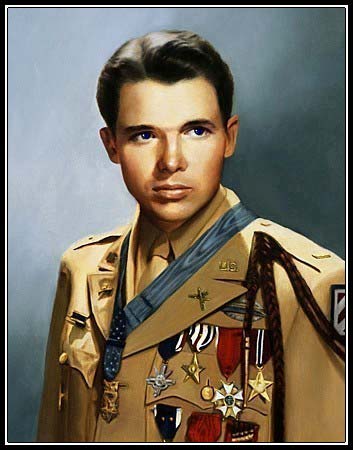
Audie Murphy 

One of the most prominent soldiers ever to share his experiences of what was then called “battle-fatigue” was America’s most decorated soldier, Audie Murphy. Murphy served in North Africa and Europe in the Second World War and was awarded the Congressional Medal of Honor, Two Silver Stars and Two Bronze Stars in addition to 28 other US and foreign awards for service and for valor. When he returned from the war he suffered from depression, chronic insomnia slept with a loaded pistol under his pillow and became addicted to prescription sleeping pills. In the immediate aftermath of the war following his discharge from active duty he struggled to find employment and slept in a gym before finally finding work as an actor. He starred in 44 films including the biographical film about his life To Hell and Back. He spoke up for Vietnam vets returning from war with similar problems before he was killed in a plane crash on May 28th 1971.

I have also found that Chaplains and others that provide care to those in combat become particularly isolated when they return with PTSD or other combat stress related issues. One of the biggest reasons for this is that in many churches and religious bodies a chaplain that suffers from these issues has nowhere to turn and is isolated in his or her denomination. In the past few years a number of chaplains, Army and Navy have committed suicide following tours in Iraq. I knew a couple of them, one who had also served as an Marine infantryman in Vietnam. I have know others including medical personnel that have suffered from PTSD, depression, substance abuse and known a couple that have attempted suicide following their return from combat. I know others that have lost their faith or suffered a spiritual crisis brought about by their time in combat. I read today about Army Chaplain Darren Turner who left the Army following his time in Iraq suffering from combat stress issues, faith and readjustment to life back at home and for a time was separated from his wife. He has since returned to the Army but his path was not easy and I am sure based on my knowledge of others that more are out there afraid to tell their story.  (See the article on CNN http://religion.blogs.cnn.com/2012/05/26/battlefield-chaplains-war-unfolded-on-many-fronts/?hpt=hp_c2

Former Army Vice Chief Of Staff General Peter Chiarelli has fought the American Psychological Association to have the diagnostic term PTSD changed to PTSI, Post Traumatic Stress Injury to reduce the stigma that often prevents servicemen and women from seeking help. His request was recently rejected but it has merit. Other countries such as Canada treat it as such for their veterans.

I wrote about my experience of this on a number of occasions one of which I wrote in 2010 I asked if there were other chaplains like me. That article Raw Edges: Are there other Chaplains out there Like Me? attracted the interested of the local newspaper in Jacksonville North Carolina which did an article on me. (See http://www.jdnews.com/articles/cmdr-89433-stephen-military.html ) That article in turn led to my involvement with the DOD Real Warriors Campaign http://www.realwarriors.net/  They did a video on my story and interviewed me last week as part of a DOD Military Bloggers live forum.

I don’t feel alone anymore. I still have my struggles and I have talked about them a lot in other articles and plan to continue to do my best to help others who are struggling with the effects of war and return from it, especially chaplains, medical personnel and those that now struggle with faith and belief after their time at war. My encouragement is to just say that in spite of everything you are not alone.

Peace

Padre Steve+

2 Comments

Filed under film, healthcare, iraq,afghanistan, PTSD, vietnam

The Paradox of the Passion: Reflections on Palm or Passion Sunday

I celebrated a quiet Palm Sunday liturgy this morning.  As I read the scriptures, especially the Passion Narrative of Mark the Evangelist I was moved in a way that I have not been for some time and found that my time of prayer following the readings and the recitation of the Creed was perhaps more impassioned on account of all the suffering and injustice that I see in the world.  As such I wondered what to write and thought about the story of Longinus the Centurion who was according to tradition the Centurion at the foot of the Cross of the day of the crucifixion.  I went back through a number of articles that I wrote last year about what I imagined a soldier and officer of his time might imagine in such a situation and I will repost those articles on Good Friday, Holy Saturday and Easter. However today I decided to go back into my archives and repost with a few modification a more theological reflection on this Sunday which marks the beginning of Holy Week for Christians around the world. 

“Although we praise our common Lord for all kinds of reasons, we praise and glorify him above all for the cross. Paul passes over everything else that Christ did for our advantage and consolation and dwells incessantly on the cross. The proof of God’s love for us, he says, is that Christ died for us while we were yet sinners. Then in the following sentence he gives us the highest ground for hope: If, when we were alienated from God, we were reconciled to him by the death of his Son, how much more, now that we are reconciled, shall we be saved by his life!” John Chrysostom (AD 347-407)

“God speaking to Luther: “Discipleship is not limited to what you can comprehend—it must transcend all comprehension. … Not to know where you are going is the true knowledge. My comprehension transcends yours. Thus Abraham went forth from His father… not knowing whither he went. … Behold, that is the way of the cross. You cannot find it yourself, so you must let me lead you as though you were a blind man. Wherefore it is not you, no man… but I myself, who instruct you by my Word and Spirit in the way you should go. Not the work which you choose, not the suffering you devise, but the road which is clean contrary to all you choose or contrive or desire—that is the road you must take. To that I call you and in that you must be my disciple.” Dietrich Bonhoeffer the Cost of Discipleship

Palm or Passion Sunday always is a day that invokes mixed emotions in me. It is the last Sunday of the Lenten Season and in modern times has become a juxtaposition of two events, the Triumphant Entry of Jesus into Jerusalem where he according to all four Gospels was greeted by crowds of people who lined the street with palms as Jesus riding on a donkey processed from Bethany and Bethphage where he had been staying with Lazarus into Jerusalem and the narrative of the Passion.  As such it is a roller coaster ride in our experience of walking with Jesus in the most difficult times.

This particular occasion is the Sunday where the disciples of Jesus are confronted with the reality that our earthy expectations of him do not meet the reality of his condensation to walk among us fully Divine yet fully Human but one too well acquainted with suffering, rejection and shame.  He shatters our expectations that he will bless any particular political or social ideology that we allow to take pre-eminence over him, even those that invoke his name. Thus our liturgy brings us to this strange day where in a sense we are confronted with celebrating the entrance of the King and in the next breath cursing him and betraying him to those who torture and crucify him.

In the Roman Catholic and Anglican liturgy the observance is divided between the Liturgy of the Palms which takes place outside the Church Nave either outside the church building or in the Narthex in cold or inclement weather.  After an opening collect and reading of the Gospel passage from one of the synoptic Gospels, which one depends on which of the three year liturgical readings that the church is in. Following the reading of the Gospel the congregation led by choir, acolytes and clergy process into the church reciting the words of Psalm 118: 18-29 or singing a hymn such as “All Glory Laud and Honor.”  Once the congregation is in the church the Liturgy of the Word continues and when the Passion Gospel is read and specific roles may be assigned to members of the congregation, while the congregation remains seated through the first part of the Passion the congregation stands at the verse where “Golgotha” is mentioned and remains standing.

The liturgy takes the congregation on an emotional and spiritual roller coaster.  As the congregation begins outside the following is read:

When Jesus had come near Bethphage and Bethany, at the place called the Mount of Olives, he sent two of the disciples, saying, “Go into the village ahead of you, and as you enter it you will find tied there a colt that has never been ridden. Untie it and bring it here. If anyone asks you, ‘Why are you untying it?’ just say this, ‘The Lord needs it.’” So those who were sent departed and found it as he had told them. As they were untying the colt, its owners asked them, “Why are you untying the colt?” They said, “The Lord needs it.” Then they brought it to Jesus; and after throwing their cloaks on the colt, they set Jesus on it. As he rode along, people kept spreading their cloaks on the road. As he was now approaching the path down from the Mount of Olives, the whole multitude of the disciples began to praise God joyfully with a loud voice for all the deeds of power that they had seen, saying,

“Blessed is the king who comes in the name of the Lord!

Peace in heaven, and glory in the highest heaven!”

Some of the Pharisees in the crowd said to him, “Teacher, order your disciples to stop.” He answered, “I tell you, if these were silent, the stones would shout out.” Luke 19:29-40

It is hard when you read this passage and be caught in the reenactment of this procession not to feel the excitement that must have accompanied that procession.  It has the feeling of a victory parade but this road ends in a manner that those present, those seeking an earthly king and Messiah who would drive our the Roman oppressor and restore the kingdom to Israel would not expect with some of them perhaps playing a role in the drama that would take place later in the week.  I particularly like the hymn “All Glory Laud and Honor.”

All glory, laud and honor,
To Thee, Redeemer, King,
To Whom the lips of children
Made sweet hosannas ring.

Thou art the King of Israel,
Thou David’s royal Son,
Who in the Lord’s Name comest,
The King and Blessèd One.
Refrain

The company of angels
Are praising Thee on High,
And mortal men and all things
Created make reply.
Refrain

The people of the Hebrews
With palms before Thee went;
Our prayer and praise and anthems
Before Thee we present.
Refrain

To Thee, before Thy passion,
They sang their hymns of praise;
To Thee, now high exalted,
Our melody we raise.
Refrain

Thou didst accept their praises;
Accept the prayers we bring,
Who in all good delightest,
Thou good and gracious King.

During the Liturgy of the Word one of the following is read, either Isaiah 45:21-25 or Isaiah 52:13-53:12, the second being the Song of the Suffering Servant.  The Psalm is Psalm 22 where the Psalmist foretells Jesus’ anguished cry from the Cross; “My God, my God, why have you forsaken me? and are so far from my cry and from the words of my distress?”And then we have the New Testament reading Philippians 2: 5-11, the hymn to Christ is read:

Let the same mind be in you that was in Christ Jesus, who, though he was in the form of God, did not regard equality with God as something to be exploited, but emptied himself, taking the form of a slave, being born in human likeness. And being found in human form, he humbled himself and became obedient to the point of death– even death on a cross. Therefore God also highly exalted him and gave him the name that is above every name, so that at the name of Jesus every knee should bend, in heaven and on earth and under the earth, and every tongue should confess that Jesus Christ is Lord, to the glory of God the Father.”
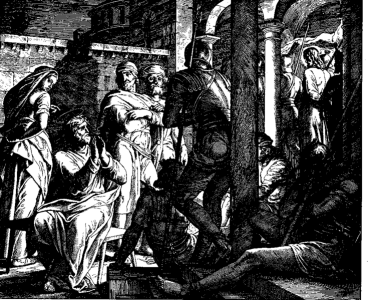
This year the Passion Narrative is that of Mark (14:1-15:47) but I find the passage in Luke 22:39-71 and 23:1-49 (50-56) to be more dramatic.  The three parts of Luke’s narrative that stand out in this narrative for me are Peter’s denial of Jesus, the interaction of Jesus with those crucified with him and that of the Centurion:

“Then they seized him and led him away, bringing him into the high priest’s house. But Peter was following at a distance. When they had kindled a fire in the middle of the courtyard and sat down together, Peter sat among them. Then a servant-girl, seeing him in the firelight, stared at him and said, “This man also was with him.” But he denied it, saying, “Woman, I do not know him.” A little later someone else, on seeing him, said, “You also are one of them.” But Peter said, “Man, I am not!” Then about an hour later still another kept insisting, “Surely this man also was with him; for he is a Galilean.” But Peter said, “Man, I do not know what you are talking about!” At that moment, while he was still speaking, the cock crowed. The Lord turned and looked at Peter. Then Peter remembered the word of the Lord, how he had said to him, “Before the cock crows today, you will deny me three times.” And he went out and wept bitterly.”

Peter’s denial is in large part because he has had his illusions about Jesus shattered and the fact that he had not understood the message up to that point.  As Bonhoeffer says “Jesus is a rejected Messiah. His rejection robs the passion of its halo of glory. It must be a passion without honor. Suffering and rejection sum up the whole cross of Jesus. To die on the cross means to die despised and rejected of men. Suffering and rejection are laid upon Jesus as a divine necessity, and every attempt to prevent it is the work of the devil, especially when it comes from his own disciples; for it is in fact an attempt to prevent Christ from being Christ.”

Likewise Jesus interaction with the condemned thieves that were crucified with him:

“One of the criminals who were hanged there kept deriding him and saying, “Are you not the Messiah? Save yourself and us!” But the other rebuked him, saying, “Do you not fear God, since you are under the same sentence of condemnation? And we indeed have been condemned justly, for we are getting what we deserve for our deeds, but this man has done nothing wrong.” Then he said, “Jesus, remember me when you come into your kingdom.” He replied, “Truly I tell you, today you will be with me in Paradise.”

Mark (15:25-32) records that interaction in this manner:

“It was nine o’clock in the morning when they crucified him. The inscription of the charge against him read, “The King of the Jews.” And with him they crucified two bandits, one on his right and one on his left. Those who passed by derided him, shaking their heads and saying, “Aha! You who would destroy the temple and build it in three days, save yourself, and come down from the cross!” In the same way the chief priests, along with the scribes, were also mocking him among themselves and saying, “He saved others; he cannot save himself. Let the Messiah, the King of Israel, come down from the cross now, so that we may see and believe.” Those who were crucified with him also taunted him.”

The final passage from this narrative that strikes me is the moment of Jesus’ death on the Cross:

“It was now about noon, and darkness came over the whole land until three in the afternoon, while the sun’s light failed; and the curtain of the temple was torn in two. Then Jesus, crying with a loud voice, said, “Father, into your hands I commend my spirit.” Having said this, he breathed his last. When the centurion saw what had taken place, he praised God and said, “Certainly this man was innocent.” And when all the crowds who had gathered there for this spectacle saw what had taken place, they returned home, beating their breasts. But all his acquaintances, including the women who had followed him from Galilee, stood at a distance, watching these things.”

Mark records that event in Mark 15: 33-39. In Mark’s account the reaction of the Centurion (15:39) to the death of Jesus is even more salient than the account of Luke.

“When it was noon, darkness came over the whole land until three in the afternoon. At three o’clock Jesus cried out with a loud voice, “Eloi, Eloi, lema sabachthani?” which means, “My God, my God, why have you forsaken me?” When some of the bystanders heard it, they said, “Listen, he is calling for Elijah.” And someone ran, filled a sponge with sour wine, put it on a stick, and gave it to him to drink, saying, “Wait, let us see whether Elijah will come to take him down.” Then Jesus gave a loud cry and breathed his last. And the curtain of the temple was torn in two, from top to bottom. Now when the centurion, who stood facing him, saw that in this way he breathed his last, he said, “Truly this man was God’s Son!”

The darkness of this is event is perplexing to those who want to find God in some place where he is untouched by human suffering to them the Cross is folly for what kind of God would submit himself to such ignominy but as Martin Luther wrote “He who does not know Christ does not know God hidden in suffering. Therefore, he prefers works to suffering, glory to the cross, strength to weakness, wisdom to folly. For they hate the cross and suffering and love works and the glory of works. Thus they call the good of the cross, evil and the evil of a deed, good. God can only be found in suffering and the cross.” It is in the contradiction of this week that we come to know God, not a God who seeks not the righteous or the powerful, those who seek the power of an earthy kingdom backed by an ideology of power which tramples the weak, but rather those who will simply walk in the footsteps of Jesus the Christ who rules by serving the least, the lost and the lonely.

The liturgy of this day be from any of the Passion narratives takes us to the heart of the Gospel as we led by the writers through the triumph of the entrance into Jerusalem, to the betrayal of Jesus by Judas, the abandonment of him by the disciples and the denial of Peter.  As the writers lead us through his trial, conviction, scourging and trek to Golgotha we see the gamut of human emotions and reactions to Jesus and we know that we can be there as well in any of the characters simply because we are human and capable of compassion or betrayal.  As Jesus is on the Cross it is not the religious or upstanding that remain with him.  He is left with his mother, the other Mary and John the beloved.  He is shown compassion by a thief and recognized as the Son of God by the Roman Centurion, a gentile serving an empire oppressing the people of Israel and whose governor had pronounced the sentence of death upon him.  In this liturgy we have been taken from the heights of exhilaration in the triumphant entry to the depths of despair felt by his disciples that Friday afternoon. It is in this time that we realize how right Dietrich Bonhoeffer is when he writes “God loves human beings. God loves the world. Not an ideal human, but human beings as they are; not an ideal world, but the real world. What we find repulsive in their opposition to God, what we shrink back from with pain and hostility, namely, real human beings, the real world, this is for God the ground of unfathomable love.”

It is the Centurion for which I have the greatest affinity in this story. He is a soldier and in the words of so many soldiers who have obey orders carried out the sentence upon Christ by crucifying him and then as the life ebbs out of Christ’s crucified body exclaims “surely this was a good man” or in other accounts “surely this was the Son of God.” That is the cry of a man who knows that he has executed an unjust sentence, the reaction of a true penitent, the reaction of a man who comes to realize even before many of Jesus’ closest followers understood.  According to tradition the Centurion was named Longinus who left the service of the Imperial Legion, was baptized by the Apostles and was martyred under the orders of Pontius Pilate by soldiers of the unit that he had once commanded.

It is important for the Church not to lose this identification.  The Church is not to become enmeshed and co-opted by those who attempt to use the Gospel to promote ideologies foreign to it as is the temptation in times of crisis.  As Jürgen Moltmann notes:

“In Christianity the cross is the test of everything which deserves to be called Christian… The Christian life of theologians, churches and human beings is faced more than ever today with a double crisis: the crisis of relevance and the crisis of identity. These two crises are complementary. The more theology and the church attempt to become relevant to the problems of the present day, the more deeply they are drawn into the crisis of their own Christian identity….Christian identity can be understood only as an act of identification with the crucified Christ, to the extent to which one has accepted that in him God has identified himself with the godless and those abandoned by God, to whom one belongs oneself.” The Crucified God [pgs. 7, 19]

Nor is our task is not to attempt to invent “crosses” for ourselves in acts of pseudo-martyrdom but simply to be faithful in loving Jesus and our neighbor as Bonhoeffer noted “Must the Christian go around looking for a cross to bear, seeking to suffer? Opportunities for bearing crosses will occur along life’s way and all that is required is the willingness to act when the time comes. The needs of the neighbor, especially those of the weak and downtrodden, the victimized and the persecuted, the ill and the lonely, will become abundantly evident.” The mark of the Christian is not to blindly give his life for a cause or be consumed by the false “messiah’s” promoted by politicians, pundits and even preachers captivated by the lust for power and glory.

As we walk through the mystery of Holy Week together let us renew our faith in the Crucified One and not be conformed to those things that seek to turn us from the way of discipleship and the way of the Cross.

Peace

Padre Steve+

Leave a comment

Filed under christian life, film, Religion

Seventies Movies Tonight: Foul Play, Airplane and Smokey and the Bandit

http://www.youtube.com/watch?v=elHoRhGrTiE

Well after a couple of weeks of nothing but seriousness I decided to give myself a break from the real world and retreat to the 1970s. Well, I didn’t drag out a Leisure Suit or start playing the Bee Gees or anything like that but I decided to drag out some 1970s comedies. First up was Foul Play starring Goldie Hawn and Chevy Chase; next the slapstick classic  Airplane starring Robert Hedges, Julie Hagerty and a cast of all-stars including Lloyd Bridges, Robert Stack, Leslie Nielsen, Peter Graves and even Kareem Abdul Jabbar and finally Smokey and the Bandit starring Burt Reynolds, Sally Field and Jackie Gleason.

Sometimes I need these kind of nights. I wrote yesterday about things that trouble me and yes they still do, but to maintain some sense of sanity I need to break away and clear the brain housing unit.  Baseball does this a lot for me but alas it is not yet the regular season and not much is on although I could tune in to the MLB channel and maybe catch a Spring Training game or speculation and analysis of the coming season.

But tonight I needed to laugh and laughing is good for us and that is in the Bible, Solomon wrote in Ecclesiastes that there is a “time to laugh” of course there are other verses in the Bible that make laughter to be a bad thing and I don’t think that the Apostle Paul would approve of my taste in comedy. However after Paul’s shipwreck he might have gotten a kick out of Airplane, but then maybe not. But Karl Barth the great Swiss Theologian once said that “laughter is the closest thing to the grace of God” and I think that he was right and that if we can find things that allow us to laugh, even at ourselves that it is good for us.

I love comedy and lover to laugh and movies like these never get old to me and watching Airplane was even more enjoyable after having spent some time on a flight simulator for the MV-22 Osprey on Thursday afternoon.  I was able to take off and land without crashing. I want to go to flight school.

http://www.youtube.com/watch?v=rzRJWy-3_Dc

I love Foul Play and I think a lot is because that it was filmed in San Francisco.  Airplane though is special because of all the one liners, puns and parodies of things that I grew up with in the 1970s that make it so funny to me.

After I watched the movie once I went back and watched it with the commentary by Jim Abrahams and David and Jerry Zucker.  Watching the movie with their comments made it even funnier because as many times as I have seen it I noticed more things that I had missed in previous viewings.  Likewise I found out things that I never knew. I guess that the most interesting was that the part of Roger Murdock played by Kareem Abdul Jabbar was originally written for Pete Rose but Rose had to turn it down because it was filmed in the summer.

So I guess that means that I watched Airplane twice tonight and because of that I am not going to watch Smokey and the Bandit. Oh well it was fun and I am still laughing.

Peace

Padre Steve+
2 Comments

Filed under film, Just for fun, movies

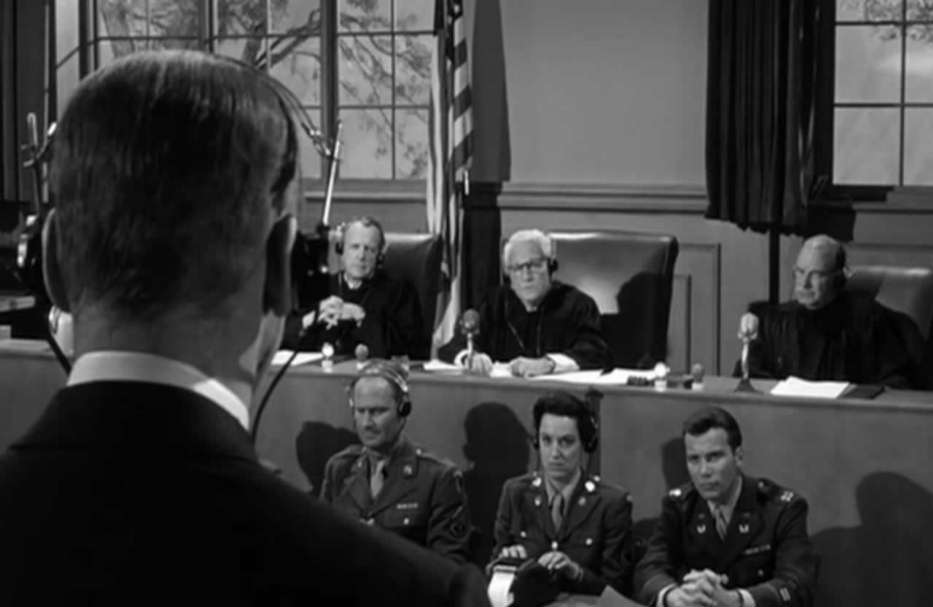
Those that Should Know Better: Judgement at Nuremberg

“There was a fever over the land. A fever of disgrace, of indignity, of hunger. We had a democracy, yes, but it was torn by elements within. Above all, there was fear. Fear of today, fear of tomorrow, fear of our neighbors, and fear of ourselves. Only when you understand that – can you understand what Hitler meant to us. Because he said to us: ‘Lift your heads! Be proud to be German! There are devils among us. Communists, Liberals, Jews, Gypsies! Once these devils will be destroyed, your misery will be destroyed.’. It was the old, old story of the sacrifical lamb. What about those of us who knew better? We who knew the words were lies and worse than lies? Why did we sit silent? Why did we take part? Because we loved our country! What difference does it make if a few political extremists lose their rights? What difference does it make if a few racial minorities lose their rights? It is only a passing phase. It is only a stage we are going through. It will be discarded sooner or later. Hitler himself will be discarded… sooner or later. The country is in danger. We will march out of the shadows. We will go forward. Forward is the great password. And history tells how well we succeeded, your honor. We succeeded beyond our wildest dreams. The very elements of hate and power about Hitler that mesmerized Germany, mesmerized the world! We found ourselves with sudden powerful allies. Things that had been denied to us as a democracy were open to us now…”  Judge Ernst Janning (Burt Lancaster) in Judgement at Nuremberg

I am getting ready to do some serious writing over the coming months about what Hannah Arendt called “the Banality of Evil.” Banality is not a word often used now days. But it simply means trivial, uncreative or simply ordinary and unremarkable.  I have been pondering this for years and believe that history has to be continually learned and written about in order not to see it repeated.

I studied Weimar and Nazi Germany as well as the Holocaust under Dr. Helmut Haeussler at California State University at Northridge as an undergraduate and in a year of graduate studies.  I also continued that study while in Seminary as well as in my Masters Degree in Military History. I was stationed in Germany several times, done an exchange tour with the German Army and my German friends say that I am fluent in German. I have been to Nuremberg, Dachau and Bergen-Belsen. I have stood on the reviewing stand where Adolf Hitler preached to the multitudes of assembled party faithful on the Zepplinfeld in Nuremberg.

As such I am a realist about the unique horror of the Holocaust. I am a realist about people and how and the circumstances of the times brought ordinary people, men and women to either commit, support or simply turn their backs on the greatest atrocities ever committed by a “civilized” Western nation. A nation steeped in the traditions of Christendom and the Enlightenment.

I have broken out many of my old books used in my various degree programs as well as  as the resources of museums and universities now available on the internet. I am also watching films about the era. Not war films, films about the ordinary men that carried out these crimes either by pulling the trigger, pushing a button, signing an order or simply turning their backs and remaining silent.

At the end of the movie Judgement at Nuremberg Spencer Tracy as the Presiding Judge Dan Haywood concluded his sentencing remarks with this statement. It is perhaps one of the most powerful statement and something to remember as the Unholy Trinity of Politicians, Pundits and Preachers urge us to hate one another and those different than us. It is something that is especially needed in times of great societal stress as well as real and perceived dangers from without and within.

http://www.youtube.com/watch?v=N3BwK51YFgQ

“Janning, to be sure, is a tragic figure. We believe he loathed the evil he did. But compassion for the present torture of his soul must not beget forgetfulness of the torture and the death of millions by the Government of which he was a part. Janning’s record and his fate illuminate the most shattering truth that has emerged from this trial: If he and all of the other defendants had been degraded perverts, if all of the leaders of the Third Reich had been sadistic monsters and maniacs, then these events would have no more moral significance than an earthquake, or any other natural catastrophe.

But this trial has shown that under a national crisis, ordinary – even able and extraordinary – men can delude themselves into the commission of crimes so vast and heinous that they beggar the imagination. No one who has sat through the trial can ever forget them: men sterilized because of political belief; a mockery made of friendship and faith; the murder of children. How easily it can happen. There are those in our own country too who today speak of the “protection of country” – of ‘survival’. A decision must be made in the life of every nation at the very moment when the grasp of the enemy is at its throat. Then, it seems that the only way to survive is to use the means of the enemy, to rest survival upon what is expedient – to look the other way. Well, the answer to that is ‘survival as what’? A country isn’t a rock. It’s not an extension of one’s self. It’s what it stands for. It’s what it stands for when standing for something is the most difficult! Before the people of the world, let it now be noted that here, in our decision, this is what we stand for: justice, truth, and the value of a single human being.”

This is an unsettling subject and people on the political right and left in this country are apt to compare their opponents to those that were tried at Nuremberg and those that led them. However it is possible that any party in society when divided by fear, hate and the desire for power can behave just as the industrialists, financiers, doctors, soldiers, jurists, civil servants, pastors and educators who oversaw those heinous crimes. People that should have known better.

Peace

Padre Steve+

1 Comment

Filed under film, History, philosophy, Political Commentary

Groundhog Day and the 2012 Presidential Campaign

I don’t know about you but the endless cycle of fratricide among the Republican candidates for the GOP Presidential nomination is getting old. Unfortunately this to use “Biblical” terminology is just the beginning of the “birth pangs.” The really intensive labor will begin after the respective party conventions in the summer and climax on November 6th when either Barack Obama will be re-elected or be defeated by Newt Ronmittorum, or possibly Mitt Gingrontorum or maybe Ron Santrongrich or Rick Mittpaulich.

That campaign promises to be one of the nastiest in our history and will be propelled by hundreds of millions of dollars in primarily negative campaign ads from the Super-PACs aligned with the candidates of both parties. I am also resigned to the fact that no matter who wins in November that the endless campaign will continue without a break beginning on November 7th when the parties will gear up for the 2014 mid-term elections and the 2016 pre-primary festivities for the losing party will begin and prospective  candidates will begin a series of 262 debates leading up to the Iowa Caucus.

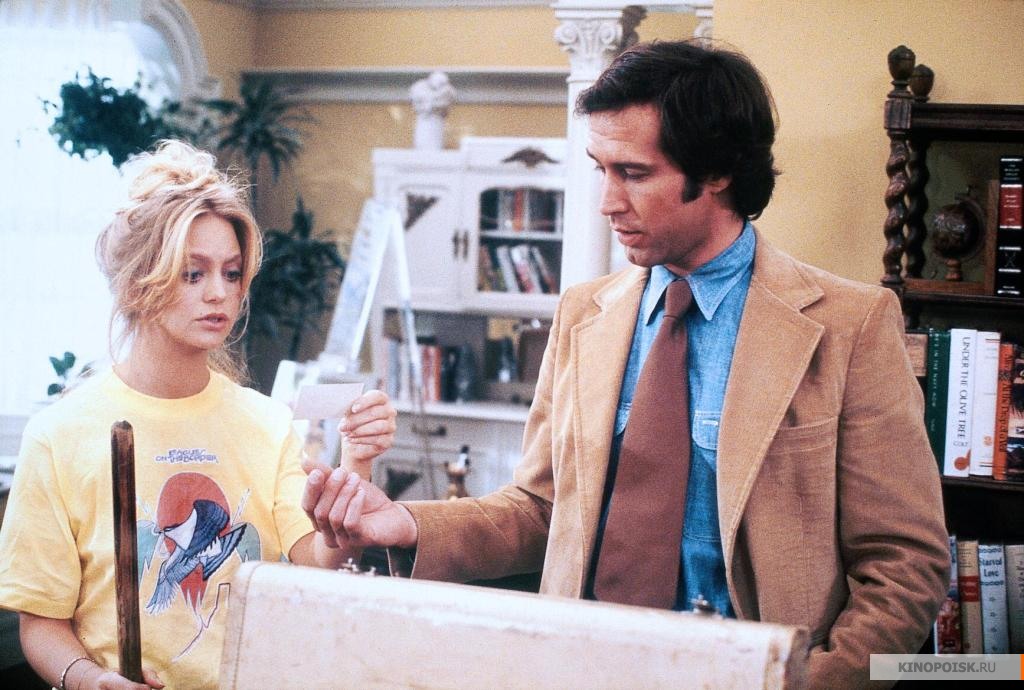
I am starting to feel like Bill Murray’s character, weatherman Phil Conners in the movie Groundhog Day which coincidentally is observed tomorrow, Wednesday February 2nd 2012.  Unfortunately the emergence of Punxsutawney Phil tomorrow morning will not allow us to get out of this. Much like Phil Conners we will be trapped in an endless cycle of hate filled half-truths that will air between every TV show and even displace popular Super Bowl commercials.  I’m sure that even the infomercial networks will be airing campaign ads.

Happy Groundhog Day,

Peace

Padre Steve+
3 Comments

Filed under film, Political Commentary, purely humorous

A Weekend of Old Navy Movies: Mister Roberts, The Caine Mutiny and In Harm’s Way

Well I have the duty pager for the hospital this weekend so I have been hanging out at the Island Hermitage with my dog Molly watching classic Navy movies.

Friday night I watched the classic film Mister Roberts. Yesterday I watched In Harm’s Way and The Caine Mutiny.

All three films are fictional and because of that I find them great for understanding the complexity of Navy life and leadership.  Mister Roberts and the Caine Mutiny the films deal with the complexities of life and leadership on small and rather insignificant ships while In Harm’s Way deals with more senior officers and their lives. All three deal with subjects that are uncomfortable because they still exist not just in the Navy but throughout the military. Thus all three offer insights into toxic leaders, poor morale, discipline, mental illness, alcoholism and subjects such as sexual assault and suicide.

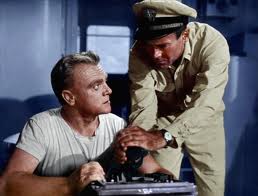
Mister Roberts stared Henry Fonda, James Cagney, Jack Lemmon and William Powell. It is set on the USS Reluctant a Light Cargo Ship in the backwaters of the Pacific in the closing months of the Second World War. Released in 1955 the film was based on the 1946 novel of the same name by Thomas Heggen.

http://www.tcm.com/mediaroom/video/323485/Mister-Roberts-Movie-Clip-Up-All-Night.html

Cagney plays a despotic former Merchant Marine Captain, LCDR Morton an officer of the type that the Navy did not want portrayed on film then, and still doesn’t today.  He is petty, self serving and rules as a tyrant in order to secure his promotion to Commander. His prize possession is a palm tree which was awarded to the ship for handling the most cargo which he believes will be his ticket to promotion. Lemon plays the ship’s Laundry and Morale Officer Ensign Frank Pulver who creatively finds ways of avoiding work. He is so successful that Captain Morton doesn’t know who he is despite having been on the ship 14 months. Pulver provides amusement and aggravation to Henry Fonda plays the ship’s Cargo Officer LTJG Doug Roberts. Roberts is liked by the crew and always in conflict with hs captain.  He is desperate to be transferred off the Reluctant and serve on a ship on the front lines. He fears that the war will pass him by and sends in letter after letter to get transferred to a fighting ship only to have Morton send them on without recommending approval.

Roberts is caught in the position of many young leaders where they are torn between their duty and their loyalty to their crew.  Eventually he  William Powell in his last film plays ship’s Medical Officer, the wise sage whose advice and counsel is invaluable to Roberts.  Eventually Roberts gets off the ship because the crew forges a request for transfer along with a forged recommendation from the Captain. When he leaves the ship the crew presents him with their “Medal” the “Order of the Palm.” He is transferred to a destroyer and is killed in action. His final letter to Ensign Pulver tells of his appreciation for the crew and comes along with a letter from a friend of Pulver’s on board the destroyer Roberts was transferred telling of Roberts being killed when the ship was hit by a kamikaze.

In the letter Roberts expresses that he finally understood the enemy faced by those in rear areas and all of those that cannot see why they matter or know their place in a war.  The challenge of leaders to understand “that the unseen enemy of this war is the boredom that eventually becomes a faith and, therefore, a terrible sort of suicide.”  He finally after having seen combat that those that he served with on the Reluctant “Right now I’m looking at something that’s hanging over my desk. A preposterous hunk of brass attached to the most bilious piece of ribbon I’ve ever seen. I’d rather have it than the Congressional Medal of Honor. It tells me what I’ll always be proudest of: That at a time in the world when courage counted most I lived among 62 brave men.” 

The Caine Mutiny adapted from the novel written by Herman Wouk deals with a another ship where leadership challenges abound. The Captain of the ship, LCDR Queeg played by Humphrey Bogart is plagued by doubt, fear and paranoia.  A Regular Navy Officer on with a wardroom of reservists he comes to the ship battered from two years in the Atlantic. He is also plagued by his Communications Officer, LT Tom Keefer played by Fred MacMurray who spends the time not writing a novel in spreading poison about his ship, the Navy and his commanding officers. Queeg begs for their support and understanding.

http://www.tcm.com/mediaroom/video/413561/Caine-Mutiny-The-Movie-Clip-Like-A-Family.html

However Keefer is so successful at undermining Queeg that in the midst of a typhoon the Executive Officer, LT Steve Maryk played by Van Johnson takes command and relieves Queeg on the bridge supported by the Officer of the deck Ensign Willie Keith.

http://www.youtube.com/watch?v=vtqf0CCVUek

Maryk is tried and acquitted at court marital but his defense attorney, LT Barney Greenwald played by Jose Ferrer has to destroy Queeg on the witness stand to do it.  During the trial Keefer is called as a witness for the prosecution lies on the stand to avoid incriminating himself while damaging the case of his friend Maryk. At the end Greenwald confronts Kiefer at a party and provides the leadership lesson for a wardroom which abandoned their sick captain long before the mutiny occurred.

http://www.youtube.com/watch?v=EKeISsYKROI

[Greenwald staggers into the Caine crew’s party, inebriated] 

Lt. Barney Greenwald: Well, well, well! The officers of the Caine in happy celebration! 

Lt. Steve Maryk: What are you, Barney, kind of tight? 

Lt. Barney Greenwald: Sure. I got a guilty conscience. I defended you, Steve, because I found the wrong man was on trial. 

[pours himself a glass of wine] 

Lt. Barney Greenwald: So, I torpedoed Queeg for you. I had to torpedo him. And I feel sick about it. 

[drinks wine] 

Lt. Steve Maryk: Okay, Barney, take it easy. 

Lt. Barney Greenwald: You know something… When I was studying law, and Mr. Keefer here was writing his stories, and you, Willie, were tearing up the playing fields of dear old Princeton, who was standing guard over this fat, dumb, happy country of ours, eh? Not us. Oh, no, we knew you couldn’t make any money in the service. So who did the dirty work for us? Queeg did! And a lot of other guys. Tough, sharp guys who didn’t crack up like Queeg. 

Ensign Willie Keith: But no matter what, Captain Queeg endangered the ship and the lives of the men. 

Lt. Barney Greenwald: He didn’t endanger anybody’s life, you did, all of you! You’re a fine bunch of officers. 

Lt. JG H. Paynter Jr.: You said yourself he cracked. 

Lt. Barney Greenwald: I’m glad you brought that up, Mr. Paynter, because that’s a very pretty point. You know, I left out one detail in the court martial. It wouldn’t have helped our case any. 

[to Maryk] 

Lt. Barney Greenwald: Tell me, Steve, after the Yellowstain business, Queeg came to you guys for help and you turned him down, didn’t you? 

Lt. Steve Maryk: [hesitant] Yes, we did. 

Lt. Barney Greenwald: [to Paynter] You didn’t approve of his conduct as an officer. He wasn’t worthy of your loyalty. So you turned on him. You ragged him. You made up songs about him. If you’d given Queeg the loyalty he needed, do you suppose the whole issue would have come up in the typhoon? 

[to Maryk] 

Lt. Barney Greenwald: You’re an honest man, Steve, I’m asking you. You think it would’ve been necessary for you to take over? 

Lt. Steve Maryk: [hesitant] It probably wouldn’t have been necessary. 

Lt. Barney Greenwald: [muttering slightly] Yeah. 

Ensign Willie Keith: If that’s true, then we were guilty. 

Lt. Barney Greenwald: Ah, you’re learning, Willie! You’re learning that you don’t work with a captain because you like the way he parts his hair. You work with him because he’s got the job or you’re no good! Well, the case is over. You’re all safe. It was like shooting fish in a barrel. 

[long pause; strides toward Keefer] 

Lt. Barney Greenwald: And now we come to the man who should’ve stood trial. The Caine’s favorite author. The Shakespeare whose testimony nearly sunk us all. Tell ’em, Keefer! 

Lieutenant Tom Keefer: [stiff and overcome with guilt] No, you go ahead. You’re telling it better. 

Lt. Barney Greenwald: You ought to read his testimony. He never even heard of Captain Queeg! 

Lt. Steve Maryk: Let’s forget it, Barney! 

Lt. Barney Greenwald: Queeg was sick, he couldn’t help himself. But you, you’re *real* healthy. Only you didn’t have one tenth the guts that he had. 

Lieutenant Tom Keefer: Except I never fooled myself, Mr. Greenwald. 

Lt. Barney Greenwald: I’m gonna drink a toast to you, Mr. Keefer. 

[pours wine in a glass] 

Lt. Barney Greenwald: From the beginning you hated the Navy. And then you thought up this whole idea. And you managed to keep your skirts nice, and starched, and clean, even in the court martial. Steve Maryk will always be remembered as a mutineer. But you, you’ll publish your novel, you’ll make a million bucks, you’ll marry a big movie star, and for the rest of your life you’ll live with your conscience, if you have any. Now here’s to the *real* author of “The Caine Mutiny.” Here’s to you, Mr. Keefer. 

[splashes wine in Keefer’s face] 

Lt. Barney Greenwald: If you wanna do anything about it, I’ll be outside. I’m a lot drunker than you are, so it’ll be a fair fight. 

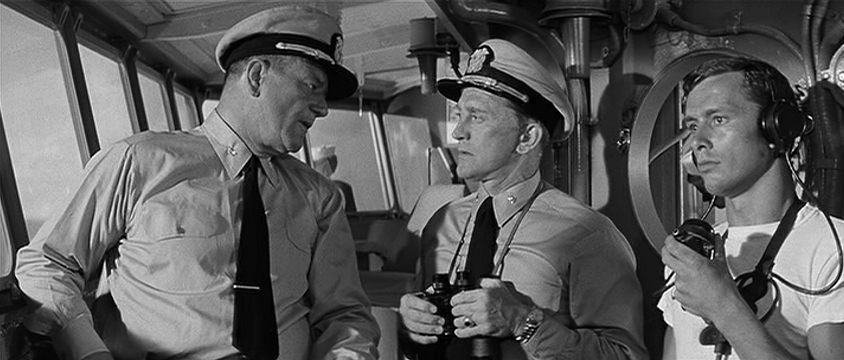
In Harm’s Way was filmed a decade after the Caine Mutiny and Mister Roberts. Starring John Wayne, Kirk Douglas, Henry Fonda, Patricia Neal, Burgess Meredith and Tom Tryon it was a epic that was panned by critics as having a shallow plot. It involved the intersecting lives of a number of officers during the war with John Wayne playing Rear Admiral “Rock” Torrey. Although the plot is relatively shallow the film brings up several very serious subjects that are faced by leaders even today.  The topics of alcoholism, sexual assault and suicide are touched upon through the character played by Kirk Douglas, Captain Paul Eddington.  Eddington is plagued by alcoholism and a failed marriage that ended when his wife was killed while with an Army Air Corps Officer on the morning of the Peal Harbor attack.  Sentenced to a backwater assignment he is called to be Torrey’s Chief of Staff.  In that position he ends up raping a nurse played by Jill Howarth that happens to be the fiancee of Torrey’s son. She then commits suicide. When Eddington discovers that she is dead he sets off on a suicide mission to find the Japanese fleet.

http://www.tcm.com/mediaroom/video/348030/In-Harm-s-Way-Movie-Clip-The-Navy-s-Never-Wrong.html

The questions raised in the film are not answered, there is no Barney Greenwald to point out the moral of the story.  John Wayne plays a flawed hero surrounded by characters of that are all in some way dealing with their own personal demons. However the questions are those that have been faced by military leaders for generations.  How does a leader deal with men and women in failing marriages? How does one deal with those that simply are advancing their own careers? How does a leader deal with key staff that are dealing with alcoholism? How does one prevent sexual assault in a combat area and prevent suicide?  The truth is that we still deal with all of these questions and none of us or any military in the world has solved any of them.  Perhaps Henry Fonda as Admiral Nimitz sums up the situation that we still face “Well, we all know the Navy’s never wrong. But in this case, it was a little weak on bein’ right.”

Taken as a whole the three films all are valuable for today’s naval leader as well as military leaders in general. The I do learn something new every time that I watch them and all challenge me to be a better leader.

Peace

Padre Steve+
3 Comments

Filed under film, leadership, Military, movies, US Navy, world war two in the pacific

Doing the Sidestep: The Best Little Whorehouse in Texas and American Politics and Media

After the past week of seriousness I have decided to take a night off of the news and even away from ESPN before driving to see Judy tomorrow for the long weekend. After watching a couple episodes of 30 Rock and walking and playing with Molly I decided to watch a couple of more light hearted movies.

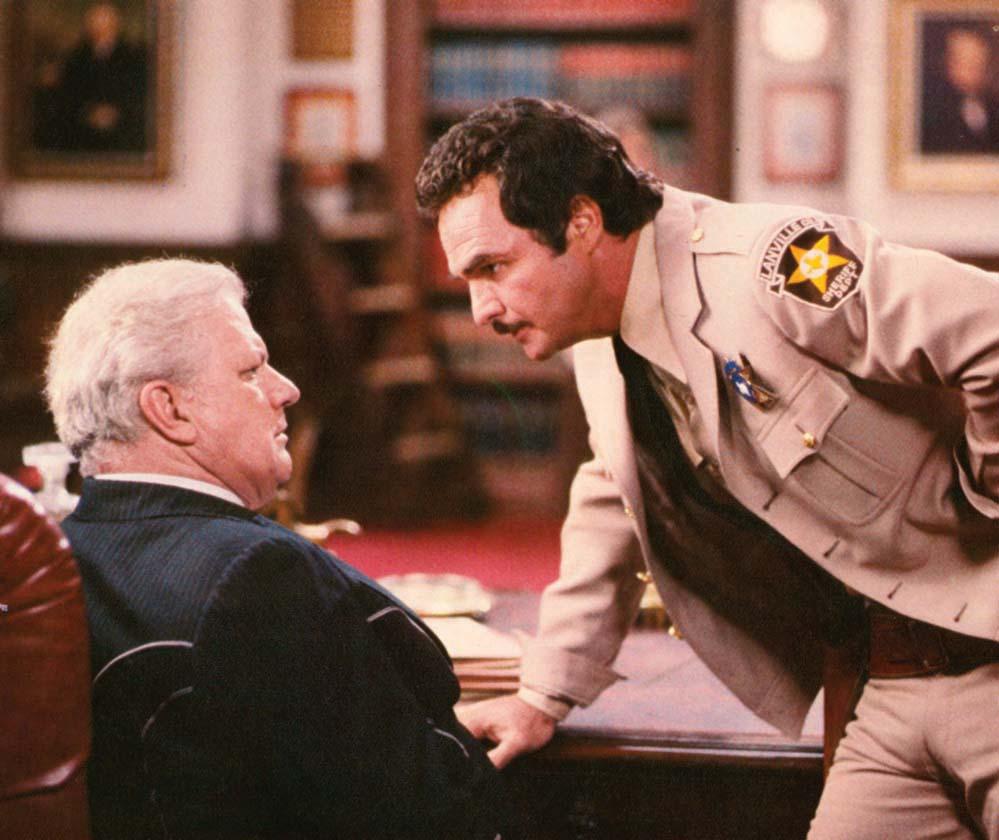
The first was The Best Little Whorehouse in Texas a classic musical comedy from 1982 starring Dolly Parton, Burt Reynolds, Dom Deluise, Jim Neighbors and Charles Durning as the Governor.  Based on the real life closing of the Chicken Ranch brothel near LeGrange Texas in 1973 I have always liked it.  The music is nice to relax to and I find the social commentary quite poignant about holy than thou media types that use their power to sensationalize stories and most politicians have no morality other than the latest poll numbers. My inner Libertarian actually thinks that the media and government should stay out of people’s private lives as Sheriff Ed Earl (Burt Reynolds) said “I’ve been fightin’ crime all my life but let’s not confuse crime with committing a sin. You can’t legislate morality.”

Dom Deluise portrays a consumer watchdog reporter for a Houston television station named Melvin P Thorp.  The song Texas has a Whorehouse in It is emblematic of such reporters methods.

http://www.youtube.com/watch?v=Z5CXQGCxphU&feature=related

 Despite my attempt to avoid politics tonight I did get a laugh as Durning playing the governor answered a reporter’s question about what he thought of the Middle East saying “I was sayin’ just this morning at the weekly prayer breakfast, in this historic capital, that it behooves both the Jews and the Arabs to settle their differences in a Christian manner!”

http://www.youtube.com/watch?v=NJG75FJkjr8

But the best is the song “Sidestep” the lyrics of which are below. The song sounds like it could come out of the mouth of any of our Presidential candidates that have either run for office or been elected in the past 50 years, with the possible exception of Ron Paul.  But the song sounds just like speeches I hear from those on the campaign trail on the news every night.

Fellow Texans, I am proudly standing here to humbly see.

I assure you, and I mean it- Now, who says I don’t speak out as plain as day?

And, fellow Texans, I’m for progress and the flag- long may it fly.

I’m a poor boy, come to greatness. So, it follows that I cannot tell a lie.

Ooh I love to dance a little sidestep, now they see me now they don’t-

I’ve come and gone and, ooh I love to sweep around the wide step,

cut a little swathe and lead the people on.

Now my good friends, it behooves me to be solemn and declare,

I’m for goodness and for profit and for living clean and saying daily prayer.

And now, my good friends, you can sleep nights, I’ll continue to stand tall.

You can trust me, for I promise, I shall keep a watchful eye upon ya’ll…

Ooh I love to dance a little sidestep, now they see me now they don’t-

I’ve come and gone and, ooh I love to sweep around the wide step,

cut a little swathe and lead the people on.

Now, Miss Mona, I don’t know her, though I’ve heard the name, oh yes.

But, of course I’ve no close contact, so what she is doing I can only guess.

And now, Miss Mona, she’s a blemish on the face of that good town.

I am taking certain steps here, someone somewhere’s gonna have to close her down.

Ooh I love to dance a little sidestep, now they see me now they don’t-

I’ve come and gone and, ooh I love to sweep around the wide step,

cut a little swathe and lead the people on.

Ooh I love to dance a little sidestep…

And, ooh I love to sweep around the wide step…

Cut a little swathe and lead the people on

So anyway, a little humor can help all of us navigate the current election season.

Peace

Padre Steve+

2 Comments

Filed under film, music, Political Commentary