Category Archives: History

Iraq and the Middle East 2013: Lessons from T. E. Lawrence

295_26912097058_4309_n

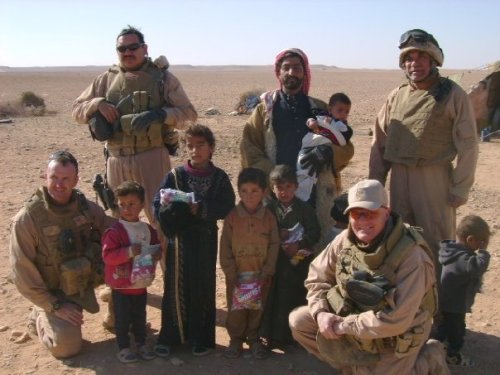
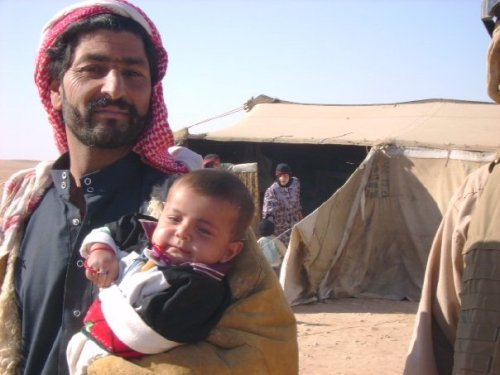
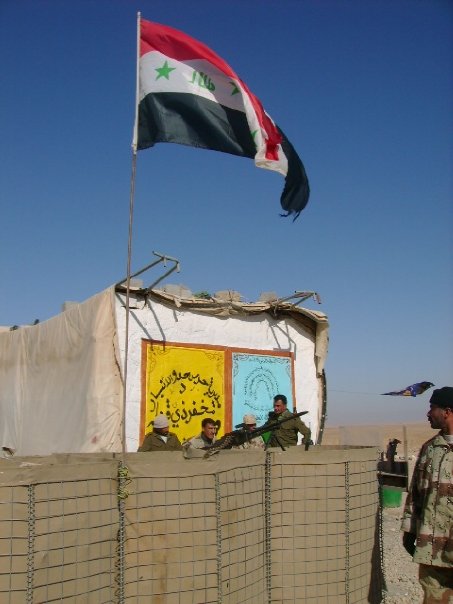
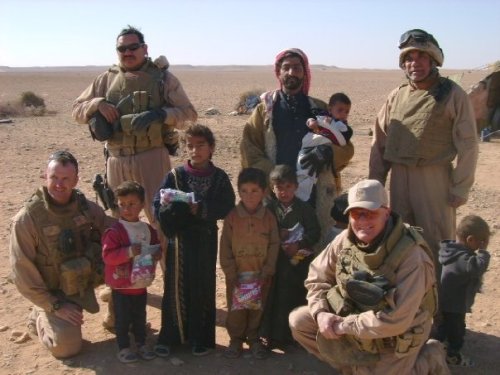
The Author with Advisors and Bedouin on the Iraqi Syrian Border

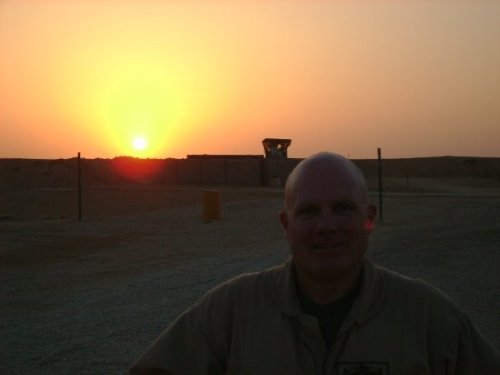
I left Iraq just under five years ago and in the process left part of me in that long suffering country.  I have written much about my experience there and how even today I have a deep regard for the Iraqi people and their hopes for a better future.

In 2003 the United States invaded Iraq and made short work of that country’s military. Many, if not most Iraqis of all creeds looked upon the US and coalition forces as liberators but within a few months the illusion was over. The US military personnel and leaders who were working with Iraqi officials, both military and civilian to get the country back on its feet were replaced by the Bush administration.

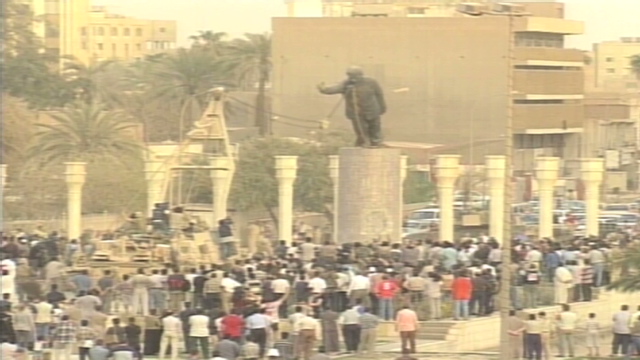
vault.von.saddam.statue.fall.itn.640x360

False Hopes in 2003, believing that US Forces were Liberators 

In their place a new entity, the Coalition Provisional Authority was created and staffed. The first administrator of the entity was retired Army Lieutenant General Jay Garner, who had much experience in Iraq but was replaced quickly for not conducting an immediate purge of members of the Ba’athist Party from key positions in the civil service or security forces.  Led by Ambassador L. Paul Bremer, a man who had no experience in the Arab world, much less in Iraq. Bremer and his staff, most of who had little experience or knowledge of the country created conditions that directly led the the Iraq insurgency, the sacrifice of thousands of American and allied lives and the friendship of the Iraqi people. They also gave a victory to Iraq’s traditional enemy and oppressor Iran to become a dominant regional power without having to worry about the Iraqi threat.

410w-1

Lawrence

rumsfeld-bremerL Paul Bremer (r) with SECDEF Donald Rumsfeld

It was as if Bremer, the leaders of the Bush administration and their neo-conservative allies knew nothing of history. T.E. Lawrence wrote of the British incursion into Turkish Mesopotamia in 1915, managed by the British Indian Office:

“By brute force it marched then into Basra. The enemy troops in Irak were nearly all Arabs in the unenviable predicament of having to fight on behalf of their secular oppressors against a people long envisaged as liberators, but who obstinately refused to play the part.”

The actions of the CPA laid waste pragmatists in the Pentagon and State Department who hoped that existing civil service, police and military forces would be retained and individuals with significant ties to the regime of Saddam removed. Instead Bremer dissolved the Iraqi military, police and civil service within days of his arrival. Since the military invasion had been accomplished with minimal forces most Iraqi weapon sites, arsenals and bases were looted once their Iraqi guardians were banished and left their posts. The embryonic insurgency was in effect given a full arsenal of weapons to use against American forces, many of who were now mobilized Reservists and National Guardsmen that were neither trained or equipped to fight an insurgency or in urban areas.

The reaction of the Iraqi Arabs to US occupation should have been anticipated. Lawrence wrote in 1920 a letter that could have easily been written in 2004:

“It is not astonishing that their patience has broken down after two years. The Government we have set up is English in fashion, and is conducted in the English language. So it has 450 British executive officers running it, and not a single responsible Mesopotamian. In Turkish days 70 per cent of the executive civil service was local. Our 80,000 troops there are occupied in police duties, not in guarding the frontiers. They are holding down the people.”

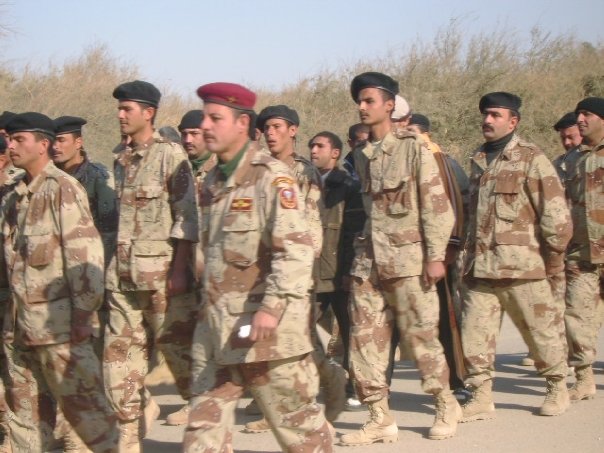
295_26912047058_2328_n

Rebuilding an Army

The actions of Bremer’s incompetent leadership team led to a tragic insurgency that need not have taken place. The now unnumbered US forces had to fight an insurgency while attempting to re-create an army, security forces and civil service from the wreckage created by Bremer’s mistakes and its own often heavy handed tactics in the months following the invasion. Nearly 4500 US troops would die and over 30,000 more wounded in the campaign. Hundreds of thousands of Iraqis were killed, wounded or died of disease during the war.  Lawrence wrote about the British administration of Iraq words that could well have been written about Bremer’s Coalition Provisional Authority: “Meanwhile, our unfortunate troops, Indian and British, under hard conditions of climate and supply, are policing an immense area, paying dearly every day in lives for the wilfully wrong policy of the civil administration in Bagdad.”

It took dramatic efforts in blood and treasure to rebuilt that was only beaten back after the US acted to conduct a surge in conjunction with the revolt of the Sunni of Anbar Province against foreign fighters who had become a dominant force in the insurgency. The surge under the command of General David Petreus achieved the desired result. It gave the Iraqis a chance to stabilize their government and increase their own security forces. Unfortunately many of those that remained in power of the Shi’ite sect refused to  share power in meaningful ways with Iraq’s Sunni and Kurds leading to a political crisis. The US military mission ended in December 2011 and since then Iraq security forces and civil authorities, often divided by tribal or sectarian loyalties have struggled to maintain order. The result is that in 2013 that Iraq is again heading toward the abyss of civil war. Sunni protestors in Anbar and other provinces conduct frequent protests as sectarian violence spreads. Many Iraqis of all sects have mixed feelings about the American invasion and the bloody aftermath and fear the future.

In 1920 Lawrence wrote of the continuing British intervention and occupation of Iraq: “The people of England have been led in Mesopotamia into a trap from which it will be hard to escape with dignity and honour. They have been tricked into it by a steady withholding of information. The Bagdad communiqués are belated, insincere, incomplete. Things have been far worse than we have been told, our administration more bloody and inefficient than the public knows. It is a disgrace to our imperial record, and may soon be too inflamed for any ordinary cure. We are to-day not far from a disaster.”

His words have a sadly familiar tone. The US invasion of Iraq did have a different outcome than we imagined. The Arab Spring erupted and the consequences of it will be far reaching and effect much of the Middle East and the world. However, Lawrence’s words and wisdom concerning the Arabs who rebelled against the Turkish Ottoman Empire are something that we in the West need to heed today.

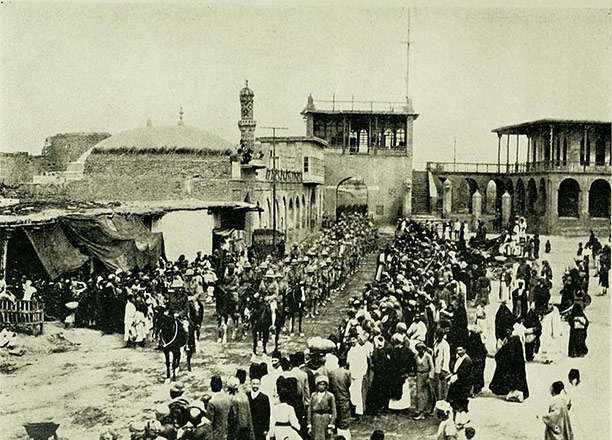
baghdad1917

British Troops entering Baghdad

“The Arabs rebelled against the Turks during the war not because the Turk Government was notably bad, but because they wanted independence. They did not risk their lives in battle to change masters, to become British subjects or French citizens, but to win a show of their own.”

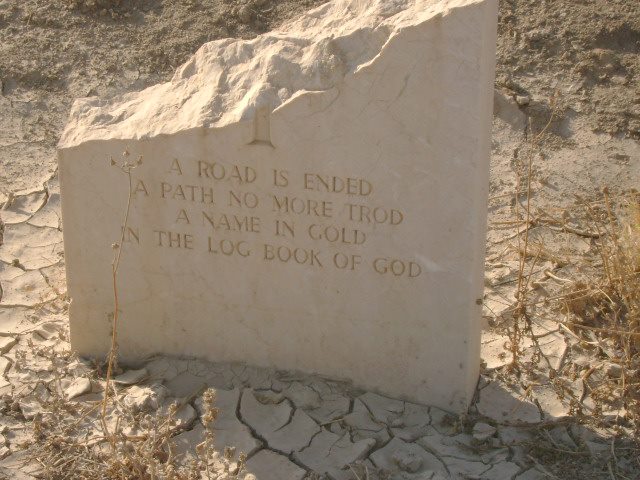
481801_10151367001287059_1003164983_n

Grave of a British Soldier in Habbaniyah Iraq

That is the case in many Arab countries today. One can only hope that in those countries and in Afghanistan where our troops are embroiled in a war that cannot end well that we will do better.

Peace

Padre Steve+

2 Comments

Filed under Foreign Policy, History, iraq,afghanistan, middle east, national security

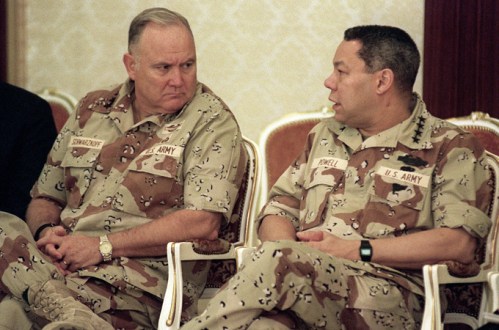
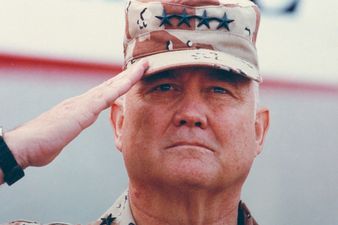
The Loss of an Icon: General Norman Schwarzkopf dies at 79

201212281047938734_20

Schwarzkopf and Powell, the Eisenhower and Marshall of their Era

“Do what is right, not what you think the high headquarters wants or what you think will make you look good.” 

Americans lost a military hero and an icon yesterday. General Norman Schwarzkopf died in Tampa at the age of 79 due to complications of pneumonia.

Schwarzkopf was one of the most brilliant commanders of his era, a multi-dimensional character who was to many of us bigger than life.

Schwarzkopf was the quintessential Army Brat, growing up on military bases in the United States as well as in diplomatic posts overseas. The son of General he graduated from West Point, was commissioned as an infantry officer, became a paratrooper at Fort Campbell Kentucky before being assigned to the Berlin Brigade, a post he left just prior to the erection of the Berlin Wall by the Soviets and the East Germans. He completed a Masters degree in Mechanical Engineering from USC and was assigned as an instructor at West Point.

sch0-008a

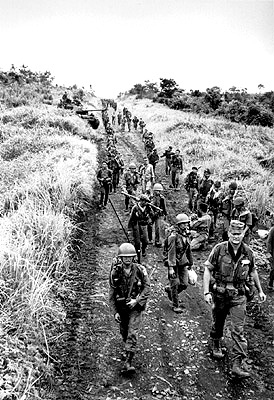
Schwarzkopf helping to carry a wounded South Vietnamese Paratrooper 

During that tour he volunteered to serve as an advisor with South Vietnamese paratroopers.  After that tour and the completion of his tour at West Point he was promote to Lieutenant Colonel and commanded the 1st Battalion 6th Infantry, 198th Brigade and was wounded while with his troops and who in the crisis kept his head and helped lead his troops, though seriously wounded out of the trap. He was known with affection by many soldiers as “the Bear,” a moniker that he appreciated much more than Desert Storm media nickname of “Stormin’ Norman.”

sch0-017

Schwarzkopf with ARVN Paratroops

It was during his time in Vietnam that Schwarzkopf came to a realization about men at war and his own personality. “I prided myself on being unflappable even in the most chaotic of circumstances,…That guise lasted until Vietnam, where I realized that I was dealing with human lives and if one were lost, it could never be replaced. I quickly learned that there was nothing wrong with being emotional.”

sch0-007a

Following his time in Vietnam he remained in the Army to help be a part of its rebuilding as an All Volunteer force. By the late 1970s he had served as a Brigade commander in the 9th Infantry Division and Assistant Division Commander in the 8th Infantry Division before taking command of the 24th Infantry Division in late 1982. He was appointed the Deputy Commander for the Joint Task Force that invaded Grenada in 1983 and in 1988 was appointed Commander for the US Central Command.

1general122812

It was in this capacity that he took command of US and coalition troops gathering to respond to Saddam Hussain’s invasion of Kuwait in August 1981. His leaders and planning cells helped engineer a military campaign in conjunction with the admirable skill of President George H.W. Bush and his diplomats the successful expulsion and destruction of Saddam’s forces. While some criticize the decision not to continue the war and go on to Baghdad Schwarzkopf made a comment that those that invaded Iraq in 2003 might well have better heeded: had “we taken all of Iraq, we would have been like a dinosaur in the tar pit — we would still be there, and we, not the United Nations, would be bearing the costs of that occupation.”

20436634_BG1

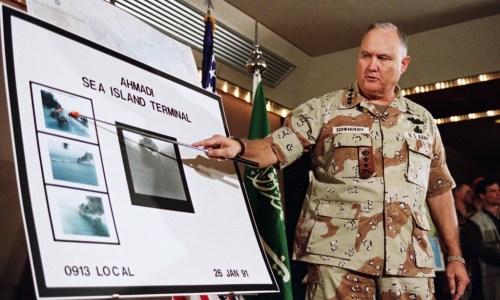
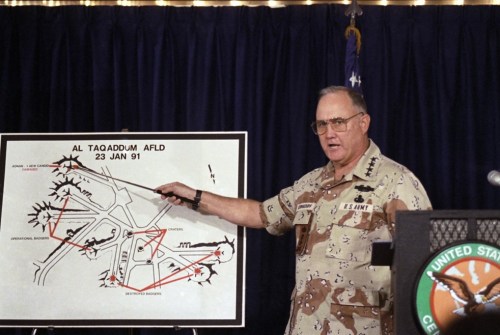
Schwarzkopf’s Briefings

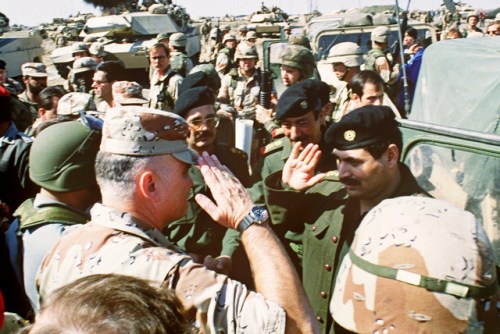
After his retirement he was active in supporting cancer research programs, efforts to save the Grizzly Bear and was a military commentator and analyst for NBC. Although he supported the invasion of Iraq in 2003 he asked questions that few were asking. In early 2003 he told the Washington Post: “What is postwar Iraq going to look like, with the Kurds and the Sunnis and the Shiites? That’s a huge question, to my mind. It really should be part of the overall campaign plan.”  Following the invasion and the beginning of the insurgency he became a critic of the operation. He was particularly critical of Defense Secretary Donald Rumsfeld for not anticipating the consequences of the invasion and for Rumsfeld’s criticism of the Army and the deployment of reserve component troops into urban combat who did not have the correct training or equipment for the job. He also made another observation that few noted about Rumsfeld and much of the Pentagon staff and the Bush Administration appointees in Iraq, in that they “showed a total lack of understanding of the culture that we were dealing with.” 

Schwarzkopf was an original and though he was loathe to admit it a hero. He also knew that life was bigger than the military and that one has to be more than the sum of their career. He once told the Associated Press: “I may have made my reputation as a general in the Army and I’m very proud of that… “But I’ve always felt that I was more than one-dimensional. I’d like to think I’m a caring human being. … It’s nice to feel that you have a purpose.”

ip8CXZqG.OL8

Schwarzkopf with Iraqi Generals at Cease Fire

Though I never served under his command while in the Army I knew many friends that did and my early career was shaped and molded by men life him.  He was not a perfect commander, analysis of his command in the Gulf show that he did make some mistakes, the greatest and most long lasting being the concession to allow the defeated Iraqi forces the use of helicopters which they used with great effect against the Shi’a tribes near Basra that sought independence.

However, in my mind it was Schwarzkopf’s public leadership that helped inspire his troops and encourage the nation which until that point had not recovered from all of the effects of the Vietnam War.  His briefings inspired confidence in America and with our Allies. He was as much of a diplomat in figuring out how to employ over 700,000 troops, military forces of 32 nation coalition, including numerous large Arab countries in a successful war.

Schwarzkopf also understood the full gravity of war and its effects on nations and people. He said: “I hate war. Absolutely, I hate war…Good generalship is a realization that … you’ve got to try and figure out how to accomplish your mission with a minimum loss of human life.”

He is remembered well. General Colin Powell who served as the Chairman of the Joint Chiefs during Desert Storm remarked after Schwarzkopf’s death “His leadership not only inspired his troops, but also inspired the nation. He was a good friend of mine, a close buddy. I will miss him.” From his hospital bed former President George H W Bush issued a statement saying that Schwarzkopf: “epitomized the ‘duty, service, country’ creed that has defended our freedom and seen this great nation through our most trying international crises….More than that, he was a good and decent man — and a dear friend.”  President Barak Obama praised him saying that “He was an American original” and “From his decorated service in Vietnam to the historic liberation of Kuwait and his leadership of United States Central Command, General Schwarzkopf stood tall for the country and Army he loved…”

Norman+Schwarzkopf+

Rest in Peace General, Rest in Peace,

Peace

Padre Steve+

2 Comments

Filed under History, iraq,afghanistan, leadership, middle east, Military, News and current events, vietnam

That War Would Cease: The Christmas Truce of 1914

joyeux_noel3

“Tonight, these men were drawn to that altar like it was a fire in the middle of winter. Even those who aren’t devout came to warm themselves.” Chaplain Palmer Joyeux Noël

12010440-mmmain

The war was supposed to be over by Christmas, or so the planners had said. Instead after a series of massive battles that produced unprecedented number of casualties the war settled into a stalemate. As the sides exhausted themselves in a series of meeting engagements throwing the flower of their idealistic youth into the great maw of the front to be torn apart by massed artillery and machine gun fire the planners sought new ways to find military victory.

In December 1914 with neither side having the ability to force the issue and casualties already running over a million dead and wounded the armies dug in. Massive trench networks were constructed in the mud of France and Belgium as the artillery continued its impersonal work of destroying men, machines and the homeland of millions of civilians.

From Clipboard

Despite the stalemate the high commands of the various nations continued to through their troops into meaningless attacks to gain a few yards of their opponent’s trench networks. The attackers always suffered the worst as they went “over the top” and were cut down by well sited machine guns and networks of defensive redoubts.

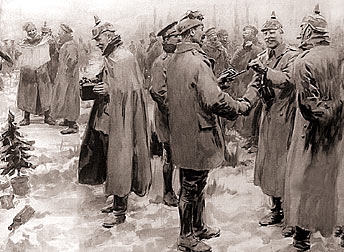
As Christmas neared individual parties of British and German troops began to fraternize exchanging gifts and attempting despite the wishes of their commanders to maintain an attitude of live and let live. On Christmas Eve German troops began to decorate their trenches with Christmas trees and lights, carols were sung and Christmas greetings exchanged as the local truces became widespread and soldiers met in no man’s land to talk and give each other gifts of cigarettes, alcohol, food and souvenirs.  In some places the sides helped each other collect and bury their dead and some Chaplains even led Christmas services in which men of both sides worshipped.

football-truce

The truce would not last as the high commands of each side issued strict orders against them and within days had moved the units that they believed most “infected” by the Christmas spirit to other locations and replaced them with units inculcated with the message of the inhumanity of their enemy. Such messages often included the religious understanding of this being a “holy war” against enemies of God and humanity. It is funny that though Moslems are frequently demonized for committing Jihad that Christians have a terrible record when it comes to finding theological reasons to kill those that they believe, even other Christians to be the enemy.

Christmas Day December 1914 World War One

joyeux-noel-2

http://www.youtube.com/watch?v=7-MGfNsgB3A

joyeux-noel-3

This really wasn’t surprising, after all for in the years leading up to the war many school children, especially in France and Germany had been propagandized. Churches and ministers cooperated in the carnage. In the movie Joyeux Noel the British Padre who had cooperated in the Christmas truce is relieved by his Bishop and sent home. The Bishop then preaches to the newly arrived soldiers, those replacing the men who had found peace for a moment. The sermon is not a work of fiction, it is actually part of a sermon that actually was given in Westminster Abbey in 1915. It was a sentiment that fit the mood of the high command who sought to minimize the danger of peace without victory. It was a sermon, the likes of which were preached by ministers, preachers, priests and bishops throughout that terrible war. It is a sermon that many preachers, Christian, Jewish, Islamic and Hindu even today mimic with terrible consequences.

http://www.youtube.com/watch?v=fMPxjUE40iw

“Christ our Lord said, “Think not that I come to bring peace on earth. I come not to bring peace, but a sword.” The Gospel according to St. Matthew. Well, my brethren, the sword of the Lord is in your hands. You are the very defenders of civilization itself. The forces of good against the forces of evil. For this war is indeed a crusade! A holy war to save the freedom of the world. In truth I tell you: the Germans do not act like us, neither do they think like us, for they are not, like us, children of God. Are those who shell cities populated only by civilians the children of God? Are those who advanced armed hiding behind women and children the children of God? With God’s help, you must kill the Germans, good or bad, young or old. Kill every one of them so that it won’t have to be done again.”

Unfortunately I have met and heard men preach the same message against those they hate, a message that twists the words of Jesus in a diabolical way to justify the worst acts of nations and peoples. In the year 2013 wars rage around the world. Some are conducted by well organized professional militaries but many by militias, paramilitary and terrorists groups. In some cases the brutality and inhumanity exhibited makes the industrialized carnage of the First World War seem sane. Even now preachers of various religions, including Christians, Moslems and Jews advocate the harshest treatment of the enemies of their peoples all in “the name of God.”

295_26912097058_4309_n

n671902058_1153798_5336

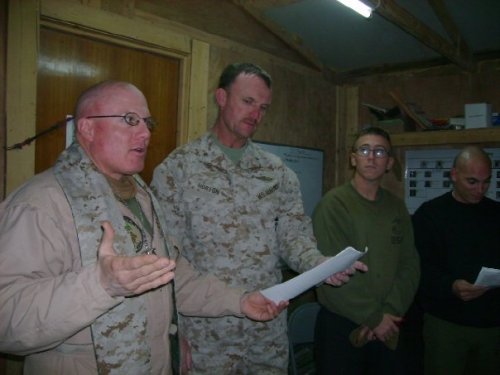
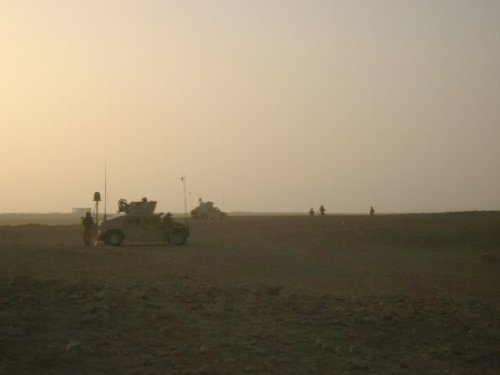
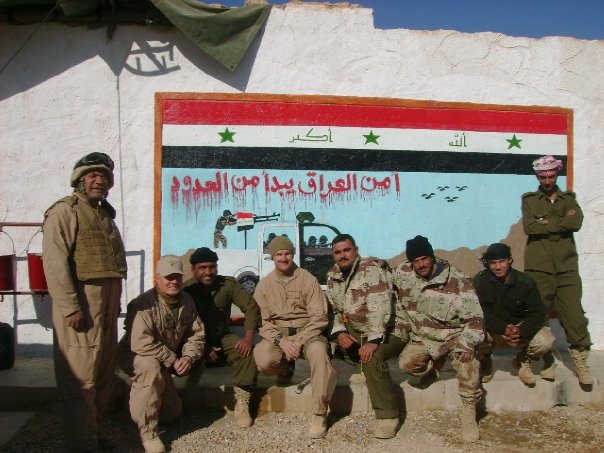
Six years ago I was traveling up and down the western border of Iraq with Syria. I was visiting our Marines that were advising the Iraqi Army and Border Forces, conducting Christmas services for them and also visiting Iraqi soldiers as well as civilians. In a couple of instances Iraqi and Jordanian Christians working as interpreters came to the Eucharist services, for one it had been years since he had received the Body and Blood of Christ in the Holy Communion. While out and about visiting Iraqis we were hosted by Iraqi troops and well as Bedouin tribesmen and their families. The warmth and hospitality and faith of these wonderful people was amazing.  T.E. Lawrence wrote that the Bedouin could not look for God within him: he was too sure that he was within God.” 

n671902058_1153804_6925

I think that for me that Christmas week was the one that will remain with me more than any and despite being in a war zone, it for me was a time of peace on earth and good will toward men.

Maybe someday we will begin to understand.

Peace

Padre Steve+

6 Comments

Filed under christian life, faith, film, History, iraq,afghanistan, Religion, Tour in Iraq

Remembering the Battle of the Bulge and the Campaign in France

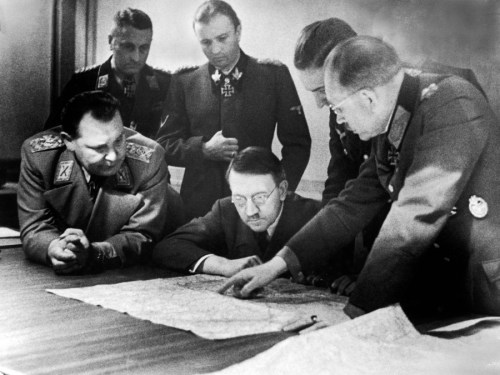
Hitler's General Staff Reviews Plans

Adolf Hitler gathered with the Chiefs of Oberkommando des Wehrmachton September 16th 1944 at his “Wolf’s Lair” headquarters in East Prussia.  The situation was critical; he had recently survived an assassination attempt by Army officers led by Colonel Klaus Von Staufenberg at his Wolf’s Lair headquarters in East Prussia.  When the assassination attempt took place the German situation in Normandy was critical. The Americans broke out of the Bocage at St. Lo and spread out across Brittany and the interior of France with Patton’s 3rd Army leading the way.  Even as his commanders in the West pleaded for permission to withdraw to the Seine Hitler forbade withdraw and ordered a counter attack at Mortain to try to close the gap in the German line and isolate American forces. When the German offensive failed the German front collapsed. 40,000 troops, hundreds of tanks and thousands of vehicles were eliminated when the Americans and Canadians closed the Falaise pocket. Despite this cadres of decimated divisions including SS Panzer, Army Panzer and elite Paratroops made their way out of Normandy.  With the Germans in full retreat the Allies advanced to the border of the Reich itself. On the Eastern Front as well disaster threatened when the Red Army launched an offensive which annihilated Army Group Center and advanced to the border of Poland before outrunning supply lines and stalling on the Vistula.

tiger2_in_action-bulge

Tiger II

  Since Normandy Hitler had wanted to counter attack but had neither the forces nor the opportunity to strike the Allied armies. As the Allied offensive ground to a halt due to combat losses, lack of supplies and stiffening German resistance Hitler maintained a close eye on the situation in the West.  He believed that despite their success that the Americans and British alliance was weak and that a decisive blow could cause one or both to drop out of the war. During a briefing an officer noted the events of the day on the Western Front including a minor counterattack by kampfgrüppen of the 2nd SS Panzer and the 2nd Panzer Divisions which had made minor gains in the Ardennes, Hitler rose from his seat ““Stop!” He exclaimed. “I have come to a momentous decision. I shall go over to the counterattack….Out of the Ardennes, with the objective Antwerp.””[i]
indexb_10a

            Thus began the planning for the last great German offensive of WWII.  Hitler “believed that sufficient damage could be inflicted to fracture the Anglo-American alliance, buy time to strike anew against the Soviets, and allow his swelling arsenal of V-weapons to change the course of the war.”[ii]  It was a course of born of desperation, even admitted by Hitler in his briefings to assembled commanders in the week prior to the offensive, one officer noted his remarks: “Gentlemen, if our breakthrough via Liege to Antwerp is not successful, we will be approaching an end to the war which will be extremely bloody. Time is not working for us, but against us. This is really the last opportunity to turn the war in our favor.”[iii]

us-at-gun-bulge

US 57mm Anti-Tank Gun and Crew

             Despite shortages of men and equipment, continuous Allied assaults and over the objections of General Guderian who argued to reinforce the Eastern Front[iv], the OKW staff secretly developed detailed plans. The planning was so secretive that the “Commander in Chief West and the other senior commanders destined to carry out the attack were not informed.”[v] The plans were submitted to Hitler on October 9th [vi] and presented to Field Marshalls Von Rundstedt and Model at the End of October. General Hasso Von Manteuffel, commander of 5th Panzer Army commented that: “The plan for the Ardennes offensive…drawn up completely by O.K.W. and sent to us as a cut and dried “Führer order.”[vii]
24-1

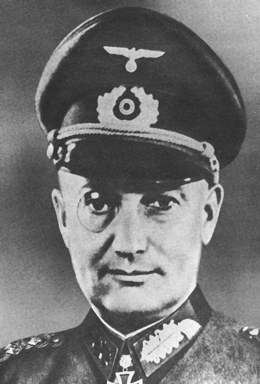
Field Marshal Walter Model Commander Army Group B

          Model and Von Rundstedt also objected to the scope of the attack. Von Rundstedt stated: “I was staggered…It was obvious to me that the available forces were way too small for such an extremely ambitious plan. Model took the same view of it as I did….”[viii]  Model reportedly said to General Hans Krebs: “This plan hasn’t got a damned leg to stand on.”[ix] And “you can tell your Führer from me, that Model won’t have any part of it.”[x] Sepp Dietrich, the old SS fighter and commander of 6th Panzer Army expressed similar sentiments.[xi]  Despite the objections by so many senior commanders Hitler scorned Model’s attempt to float a less ambitious plan to reduce the Allied salient at Aachen. Likewise Von Rundstedt’s desire to remain of the defense and wait for the Allies to attack using the armored forces to launch against any breakthrough was rejected.[xii] Hitler’s mind was set and the preparations moved forward.  The plan was complete down to the timing of the artillery bombardment and axes of advance, and “endorsed in the Führer’s own handwriting “not to be altered.””[xiii] Such a plan flew in the face of the well established doctrine of theAuftragstaktik which gave commanders at all levels the freedom of action to develop the battle as the situation allowed and opportunities arose.

sepp20dietrich

SS General Sepp Dietrich, Commander of 6th Panzer Army 

              The Germans who the Allies presumed to be at the brink of collapse made a miraculous  recovery following their ghastly losses in Normandy. Kampfgrüppenand remnants of divisions bled the Americans White at the Huertgen Forrest and blunted the British attempt to leapfrog the Northern Rhine at Arnhem decimating the British First Airborne division and causing heavy casualties among other British and American units. The German 15th Army avoided disaster when the British failed to close their escape route from Walchern island allowing 60,000 troops and much equipment to escape.   

ManteuffelGeneral Hasso von Manteuffel Commander 5th Panzer Army

         The Germans also re-formed and reorganized the front.  They pulled back many units of the 5th and 6th Panzer Armies for re-fitting and diverted nearly all tank, armored fighting vehicle and artillery production to the West at the expense of the Eastern Front.  The Germans called up 17 year olds and transferred young fit personnel from the Navy and Luftwaffe to the Army and Waffen SS.  Here they were trained by experienced NCOs and officers and brought into veteran units alongside hardened veterans who showed taught them the lessons of 5 years of war.[xiv]  However the rapid influx of new personnel meant that they could not be assimilated as quickly as needed and thus many were not as well trained as they might have been with more time.[xv] Many infantry and Parachute units had received inexperienced officers, taken from garrison duty to fill key positions a problem that would show up during the offensive.[xvi]

pzkw-iv-bulge

Panzer IV Ausf H of an SS Panzer Divsion in the Bulge

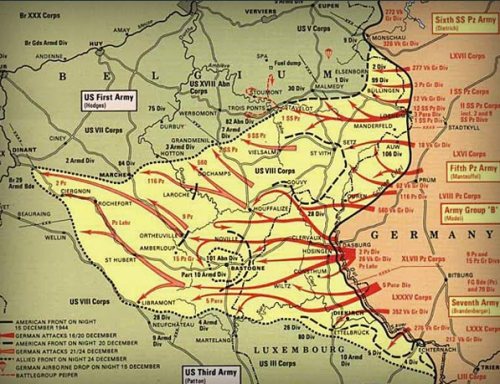
The Germans were aided by the caution displayed by the Allies throughout the campaign in France which allowed the Germans to reconstitute formations around veteran headquarters staffs.[xvii]  The Germans built up the 5th and 6thPanzer Armies as the Schwerpunkt of the offensive giving them the lion’s share of reinforcements and pulling them out of the line during the fall battles along the Seigfried line and in the Alsace and Lorraine.  The plan was for the two Panzer armies and 7th Army to punch through the Ardennes, cross the Meuse, drive across Belgium, capture Antwerp and severe the link between the British and the Americans.

The spearhead of the German assault was 6th Panzer Army Commanded by SS General Sepp Dietrich. It was composed of 1st and 2nd SS Panzer Corps and Army’s LXVII Corps.  The 6th SS Panzer Army included some of the best formations available to the German Army at this late stage of the war including the 1st  SS Panzer Division, the Leibstandarte Adolf Hitler, the 2nd  SS Panzer Division Das Reich, the 9th SS Panzer Division Hohenstaufen and the12th  SS Panzer Division Hitler Jügend. It’s ranks were filled out by the 3rd Parachute Division, the 501st SS Heavy Tank Battalion (attached to 1st SS), the 3rd Panzer Grenadier Division and the 12th, 246th, 272nd, 277th and 326th Volksgrenadier or Infantry divisions. The 6th Panzer Army would be the northern thrust of the offensive and its ultimate objective was Antwerp.  The 6th Panzer Army would be aided by a hastily organized parachute battalion under Colonel Von Der Heydte[xviii] and the 150thPanzer Brigade under SS Colonel Otto Skorzeny which included teams of American dialect speaking soldiers in American uniforms and equipment that were to spread confusion and panic in American rear areas.[xix]

bradleyeisenhowerpatton20a20bastogne

Bradley, Eisenhower and Patton at Bastogne

          To the south was the 5th Panzer Army commanded by General Hasso Von Manteuffel.  The 5th Panzer Army was to advance alongside of the 6th Panzer Army with Brussels as its objective.  Composed of the XLVII and LVIII Panzer Corps and LXVI Corps the major subordinate commands included the best of the Army Panzer divisions including the 2nd Panzer, Panzer Lehr, 9th and the16thPanzer division. It also had the elite Führer Begleit Brigade composed of troops from Panzer Corps Grossdeutschland and commanded by Otto Remer who had help crush the coup against Hitler in July.  The 5th Panzer Army also included the 18th, 26th, 62nd, 560th and later the 167th Volksgrenadier divisions.
bulge1

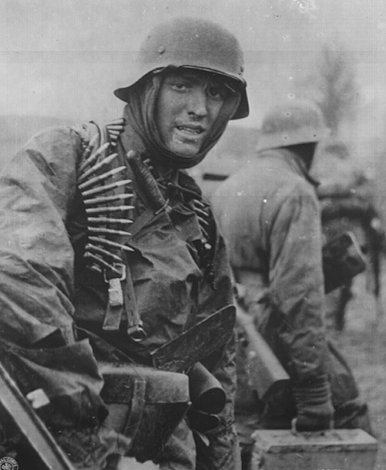
German Panzer Grenadier 

The south flank was guarded by 7th Army commanded by General Erich Brandenburger composed of LIII, LXXX and LXXXV Corps.  It included theFührer Grenadier Brigade and later the 15th Panzergrenadier division.  It was the weakest of the three armies but eventually included 6Volksgrenadier divisions of varying quality and strength[xx] and the veteran 5th Parachute division.[xxi]  However with only 4 divisions at the start of the offensive the 7th Army was the equivalent of a reinforced corps.

bulge-jeep

While this force seemed formidable it had a number of weaknesses beginning with tank strength.  The 1st and 12th SS Panzer divisions were only at approximately half their established tank strengths and faced severe shortages in other vehicles.[xxii]  2nd SS and 9th SS of II SS Panzer Corps reported similar shortages.[xxiii]The shortage of other motorized vehicles, even in Panzer divisions was acute.  “Even the best equipped divisions had no more than 80 percent of the vehicles called for under their tables of equipment, and one Panzergrenadier division had sixty different types of motor vehicles, a logistician’s nightmare.[xxiv] Panzer Lehr was so short in armored half tracks that only one battalion of its Panzer Grenadiers could be transported in them while others had to use “trucks or bicycles.”[xxv]

Limitations on equipment as well as fuel were not the only challenges that the Germans faced. The US V Corps launched an attack on the Roer River Dams just before the offensive making it necessary for the Germans to divert 6th SS Panzer Army infantry divisions and Jagdpanzer units to be used by 6th SS Panzer Army.  One regiment of 3rd Parachute Division and over half of a second division could not take part in the initial 6th Panzer Army attack. Likewise some Jagdpanzer andSturmgeschutzen units did not arrive until three days after the offensive began.[xxvi]

The Allies Before the Battle

            While the German commanders sought to implement Hitler’s plan Allied commanders looked only to completing the destruction of Germany not believing the Germans capable of any major operation.  The Allied commanders with the exception of Patton did not believe the Germans capable of any more than local counter attacks.  Patton’s 3rd Army G-2 Colonel Koch was the only intelligence officer to credit the Germans with the ability to attack.[xxvii]  Most allied commanders and intelligence officers discounted the German ability to recover from disastrous losses, something that they should have learned in Holland or learned from the Soviet experiences on the Eastern front.  Bradley noted in his memoirs hat “I had greatly underestimated the enemy’s offensive capabilities.”[xxviii]  Carlo D’Este noted that “there was another basic reason why the Allies were about to be caught with their pants down: “Everyone at SHAEF was thinking offensively, about what they could do to the enemy, and never about what the enemy might do to them.””[xxix]   This mindset was amazing due to the amount of intelligence from Ultra and reports from frontline units that major German forces were no longer in the line.[xxx] Additionally nearly all commentators note that American units in the Ardennes did not conduct aggressive patrols to keep the enemy off balance and obtain intelligence.[xxxi]  One describes the efforts of 106th Division as “lackadaisical” and notes that enemy before the offensive was not the Germans but the cold.[xxxii] Max Hastings noted that: “the Allies’ failure to anticipate Hitler’s assault was the most notorious intelligence disaster of the war.”[xxxiii]

408

Tanks of US 7th Armored Division near St Vith

            The Allies also were in the midst of a manpower crisis. Eisenhower did not have enough divisions to establish a clear manpower advantage as “there were not enough Anglo-American divisions, or enough replacements for casualties in the existing divisions.”[xxxiv]  No more American Infantry divisions were available as the Army had been capped at 90 divisions and infantry replacements were in short supply.  This shortage meant that Eisenhower could not pull divisions out of line to rest and refit. He could only transfer divisions such as the 4th and 28thInfantry divisions to the relative quiet of the Ardennes. He had no ability to “create a strategic reserve unless he abandoned the broad front strategy.”[xxxv]The Germans knew of the allied weakness and believed that they could achieve local superiority even if they did not believe they could reach Antwerp. Model believed that “he was sure that he would reach the Meuse in strength before the Americans could move sufficient reserves to halt his armies or even head them off.”[xxxvi]

American Response: The Breakthrough

            The German assault began on December 16th. Some breakthroughs were made especially in the vicinity of the Losheim Gap and the Schnee Eifel by the southern elements of 6th Panzer Army and Manteuffel’s 5th Panzer Army. However the Germans could not break through around Monschau and Elsenborn Ridge held by the inexperienced but well trained 99th Infantry division and elements of the veteran 2nd “Indianhead” Division.  In the far south near Diekirch the 4th Infantry Division held stubbornly against the attacks of 7th Army’sVolksgrenadiers. The Germans achieved their greatest success at Losheim where SS Colonel Josef Peiper and his 1st SS Panzer Regiment had driven off the US 14thCavalry Group and penetrated 6 miles into the American front.  5th Panzer Army made several breakthroughs and isolated two regiments of newly arrived 106thInfantry Division in the Schnee Eifel. Manteufel also pressed the 28th Division hard along the Clerf River, Skyline Ridge and Clairvaux.  Yet at ‘no point on that first day did the Germans gain all of their objectives.”[xxxvii]  The credit goes to US units that stubbornly held on, but also to the poor performance of many German infantry units.  German commanders were frustrated by their infantry’s failure even as the panzers broke through the American lines.  Manteuffel noted his infantry was “incapable of carrying out the attack with the necessary violence.”[xxxviii]
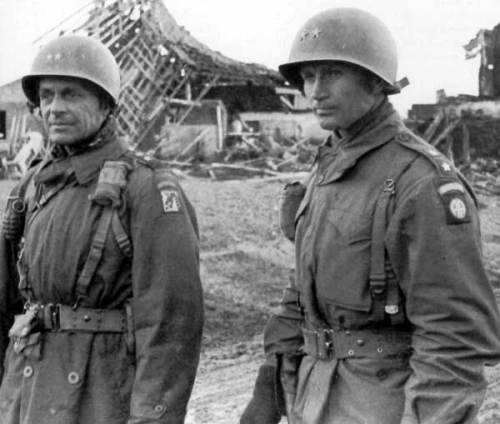
gavin-and-ridgeway

US Airborne Commanders James Gavin (R) and Matthew Ridgeway (L)

            The initial Allied command response to the attack by senior commanders varied.  Bradley believed it was a spoiling attack “to try and force a shift of Patton’s troops from the Saar offensive back to the Ardennes.”[xxxix] Courtney Hodges of 1st Army agreed with Bradley and refused to allow General Gerow, commander of V Corps to call off 2nd Infantry Division’s attack against the Roer dams on the 16th in order to face the German offensive.[xl]  Gerow was one of the first American commanders to recognize the scope of the German attack but Hodges, perhaps the least competent senior American commander in Europe failed to heed Gerow’s advice.

Battle of the Bulge - US prisoners on December 22nd 1944


        Soldiers of the 106th Infantry Division as POWs

         Soon after making this decision Hodges “panicked” and evacuated his headquarters at Spa fearing that it would be overrun by the advancing Germans.[xli] Eisenhower when informed of the news realized that something major was occurring and ordered the 7th Armored Division from the 9th Army and 10th Armored Division from 3rd Army into the Ardennes. On the 17thhe made other dispositions and released the 82nd and 101st Airborne Divisions from SHAEF reserve at Rheims to the Ardennes under the command of XVIII Airborne Corps.[xlii]  However during this short amount of time Mantueffel’s panzers had advanced 20 miles.

peiper-in-schwimwagen

SS Panzer Troops of Kampfgruppe Knittel on the advance.  Photo has often been identified for decades in books and other publications as Waffen-SS Colonel Joachim Peiper the commanding officer of the 1st SS Panzer Regiment and Kampfgruppe Peiper. This has been refuted by recent study.  Peiper is pictured below.

peiper

               At the command level Eisenhower made a controversial, but correct decsion to divide the command of the Bulge placing on a temporary basis all forces in the northern sector under Montgomery and leaving those to the south under Bradley.  Montgomery according to one commentary initially “had been astonishingly tactful in handing his American subordinates.”[xliii] However he quickly made himself obnoxious to many American commanders.[xliv] Following the battle Montgomery made the situation worse by claiming to have saved the Americans and giving credit to British units which scarcely engaged during the battle.[xlv]  Eisenhower also ordered Patton to launch a counter-attack along the southern flank of the German advance.  However Patton was already working on such an eventuality and promised to be able to launch a counterattack with three divisions by the 22nd.[xlvi]  Bradley praised Patton highly in his memoirs noting: “Patton’s brilliant shift of 3rd Army from its bridgehead in the Saar to the snow-covered Ardennes front became one of the most astonishing feats of generalship of our campaign in the West.”[xlvii]

American Response: the Shoulder’s Hold

bulge07             Malmedy Massacre 

          The 99th Division’s position was precarious, its right flank was subject to being turned and it was suffering severely at the hands of 12 SS Panzer and several Volksgrenadier divisions.  Gerow reinforced the 99th with elements of the 2nd Infantry division even before he had the final authorization to end its attack.  The two divisions stubbornly held Elsenborn Ridge and the villages of Rockerath, Krinkelt and Büllingen. By the 20th the 9th and 1st Infantry divisions arrived to strengthen the defense and lengthen the line to prevent it from being rolled up by the Germans.  The stubborn resistance of the Americans and arrival of reinforcements meant line was proof “against anything Sepp Dietrich might hurl against it”[xlviii]  By the 23rd Dietrich and 6th SS Panzer Army conceded defeat at Elsenborn and “turned its offensive attentions to other sectors.”[xlix]  German commanders like General Priess the commander of 1st SS Panzer Corps believed that terrain and road network in this sector was unfavorable to the German offensive and had proposed moving the attack further south.[l]  The Panzers could not deploy properly and the German infantry was not up to the task of driving the Americans out of their positions before the reinforcements arrived.
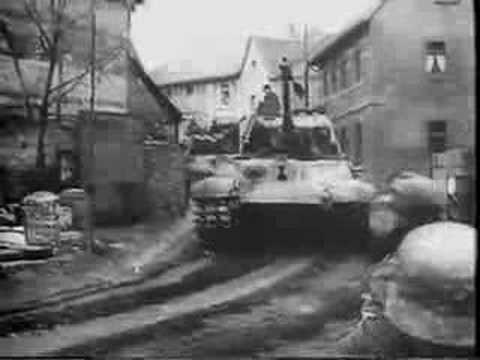
0-5

In the south the 4th Infantry Division held the line though heavily pressed by Brandenburger’s 7th Army.  The division was reinforced by elements of both 9thand 10th Armored divisions on the 17th and generally held its line along the Sauer River around Echternach “largely because the left flank of the enemy assault lacked the power-and particularly the armor-of the thrust farther north.”[li]

Turning Point: The Destruction of Kampfgruppe Peiper
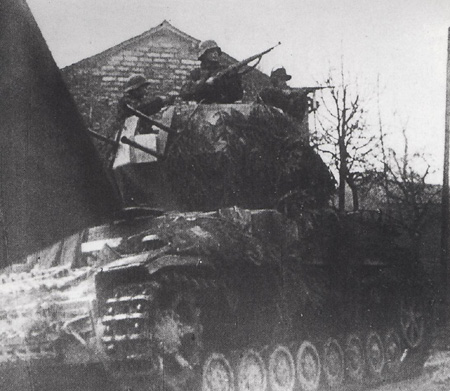
panzeri00265om

            While V Corps fought the 6th Panzer Army to a standstill, to the south 1st SS Panzer Division led by Kampfgrüppe Peiper split the seam between V Corps and VIII Corps. The Kampfgrüppe moved west leaving a brutal path of destruction in its wake, including massacres of American POWs and Belgian civilians.[lii]  However its advance was marked with difficulty. On the night of the 17th it failed to take Stavelot. After clearing the American defenders from the town after a hard fight on the 19th it failed to capture a major American fuel dump a few miles beyond the town.  When the Germans approached the American commander ordered his troops to pour 124,000 gallons down the road leading to the dump and set it on fire, depriving the Germans of badly needed fuel.[liii]  Combat Engineers from the 291st Engineer Battalion blew a key bridge across the Ambleve at Trois Ponts and another bridge across the Lienne Creek which left the Germans bottled up in the Ambleve River valley.  This bought time for the 30th Infantry Division to set up positions barring Peiper from the Meuse.  The 30th would be joined by Combat Command B of 3rd Armored Division and elements of 82nd Airborne. These units eventually forced Peiper to abandon his equipment and extricate some 800 troops by foot by the 23rd after a hard fight with the Americans who had barred his every effort to break through to the Meuse.

Turning Point: The Crossroads: St Vith & Bastogne

            The battle rapidly became focused on key roads and junctions, in particular St. Vith in the north and Bastogne in the south.  At St. Vith the 7th Armored Division under General Hasbrouck, who Chester Wilmont calls one of the “great men of the Ardennes”[liv] completed a fifty mile road march from Aachen to St. Vith.  On his arrival he deployed his combat commands around the town which was the key to the road network in the north and also to the only rail line running west through the Ardennes.[lv]  Hasbrouck gathered in Colonel Hoge’s Combat Command B of 9th Armored Division and the 424th Infantry Regiment of the 106th Division into his defensive scheme as well as the survivors of the 112thInfantry Regiment of the 28th Infantry Division which had escaped the German onslaught after holding as long as possible along the Clerf River and Skyline Drive.[lvi]  With these units Hasbrouck conducted “an eight-day stand that was as critical and courageous, as the defense of Bastogne.”[lvii]  After holding the Germans at St. Vith the units were withdrawn to another defensive position along the Salm and Ourthe Rivers and the village of Viesalm.  This was done at the behest of Montgomery and General Ridgeway of XVII Airborne Corps whose 82nd Airborne had moved into that area on the 19th.  The arrival of the 82ndgreatly assisted Hasbrouck’s force holding St. Vith whose defenders had lost an estimated 5000 casualties.[lviii]

The stand at St. Vith confined the “confined the Sixth Panzer Army’s penetration to a chokingly narrow corridor.”[lix]  It also posed a problem for German command and control which because it was out of the 6th Panzer Army’s area of operations Dietrich was unable to lend his weight into the fight.  “Hitler himself had strictly prohibited deviations from the zonal boundaries”[lx] which left the fight for St. Vith in the hands of 5th Panzer Army who felt the impact of the stand as the Americans “also choked off one of the Fifth Panzer Army’s best routes to Bastogne, almost nullifying the significance of the captured road junction at Houffalize.”[lxi]
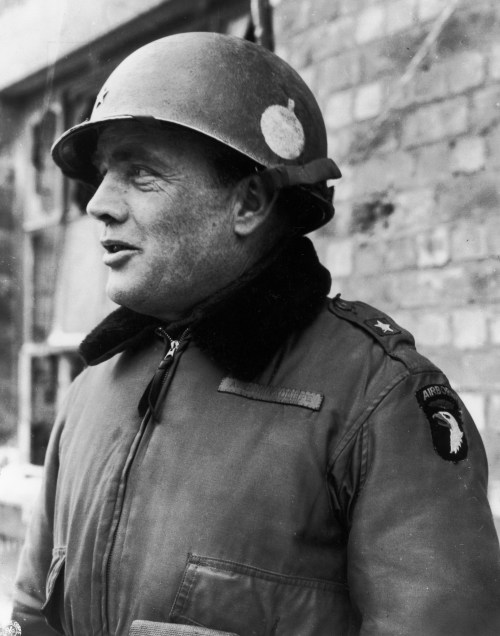
American General Anthony McAuliffe commander of the 101st

Brigadier General Anthony McAuliffe 

        To the south of St. Vith lay Bastogne, another key road junction needed by 5thPanzer Army for its advance.  On the night of the18th Panzer Lehr division came within two miles of the town before being checked by resistance by units of the 10th Armored division, remnants of 28th Division and misdirection by “friendly” Belgian guides onto a muddy path that helped halt their advance.[lxii]  This gave the 101st Airborne just enough time to get to the town and prevent its capture. The siege of Bastogne and its defense by the 101st elements of 9th and 10thArmored Divisions and 28th Division became an epic stand against Manteuffel’s Panzers which had surged around the town.  Wilmont comments that “had the Germans won the race for Bastogne, Manteuffel’s armor would have had a clear run to Dinant and Namur on December 19th and 20th” [lxiii] when there were only scattered American units between them and the Meuse. Manteuffel b bypassed Bastonge after the failure to capture it and masked it with 26th VolksgrenadierDivision and a regiment of Panzer Lehr.  The remainder of Panzer Lehr and the 2nd Panzer Division moved to the west. [lxiv]  The garrison endured numerous attacks and on the 22nd one of the most celebrated incidents of the war took place when Brigadier General Anthony McAuliffe responded to a demand for the surrender of the town with the reply; “Nuts.”  The town would continue to hold until relieved by 3rd Army on the afternoon of December 26th.[lxv]

Allied Response: The Counterattack

sherman-bastogne

            The Allied counterattack began with 3rd Army in the south on 21 December.  Patton’s initially proposed to attack toward the base of the Bulge in order to cut off the largest number of Germans possible.  Eisenhower dictated an attack further west with the goal of relieving Bastogne.  Eisenhower wanted to delay the attack to concentrate combat power while Patton wanted to attack sooner in order to ensure surprise. Patton got his way but attacked on a wide front.  The attack lost its impetus and bogged down into a slugging match with 7thArmy’s infantry and paratroops along the southern flank. [lxvi]  Patton’s failure to concentrate his forces for the advance to the north diminished his combat power.[lxvii] While Patton attacked from the south the 1st Army dealt with the advanced spearhead of 2nd Panzer Division which had reached the town of Celles and ran out of gas just four miles from Dinant and the Meuse. The 84th Infantry Division stopped the 116th Panzer division from being able to effect a relief of the 2nd Panzer the US 2nd Armored Division and allied fighter bombers chopped up the virtually immobile 2nd Panzer division completing that task by the 26th.[lxviii]

To the north Montgomery launched a cautious counterattack which slowly and methodically took back lost ground but allowed many Germans to escape. While Montgomery moved south Patton faced heavy German resistance from elements of 5th Panzer Army, reinforced by 1st SS Panzer Corps and 7th Army.  The rupture in the American front was not repaired until 17 January when the American forces met at Houffalize.[lxix] Bradley took over for Montgomery and the Americans pushed the Germans slowly back across the Clerf River by the 23rd.  The advance was hampered by tough German resistance and terrible weather which forced much of the attack to be made by dismounted troops as the roads had completely frozen over.[lxx]

The Allied counter attack has been criticized for allowing too many Germans to escape what could have been a major encirclement.  Patton recognized the incompleteness of the victory in the Ardennes stating: ““We want to catch as many Germans as possible, but he is pulling out.” The “but” clause, the note of regret, the awareness of the imperfection of his victories typified Patton.””[lxxi]  Patton in his memoirs notes: “In making the attack we were wholly ignorant of what was ahead of us, but we were determined to strike through to Bastogne.”[lxxii] Max Hastings simply said: “the Allies were content with success.”[lxxiii]  Murray and Millett place blame on Bradley and Hodges for choosing “merely to drive the enemy out of the Ardennes rather than destroy him.”[lxxiv]

Analysis: Could Wacht Am Rhein Have Worked?

          Could Wacht am Rhein worked?  If much was different, yes.  If the German had been stronger in tanks and vehicles and had adequate stocks of fuel; if their infantry was better trained, and had the Americans not resisted so stubbornly it might have at least got to the Meuse.  Perhaps if the the bad weather held keeping Allied air forces away from the Germans, or had St. Vith and Bastogne been taken by the 18th or 19th, they might have reached the Meuse.  Had the Germans executed their plan and coordinated their assault better[lxxv] in the 6thPanzer Army sector and had the 7th Army enough strength to conduct offensive operations in depth and secure the left flank the attack might have succeeded.  Because the Americans held the shoulders and road junctions, Manteuffel’s 5thPanzer Army, the only force besides the regimental sized Kampfgrüppe Peiper to actually threaten the Meuse was forced to advance while attempting to take Bastogne and defeat 3rd Army’s counterattack. Whether they could have made Antwerp is another matter.  Nearly all German commanders felt the offensive could not take Antwerp but did believe that they could inflict a defeat on the Allies and destroy a significant amount of allied combat power.

The German offense was a desperate gamble.  Too few divisions, scant supplies of petrol, formations that had recently been rebuilt and not given enough time to train to the standard needed for offensive operations coupled with Hitler’s insistence on an unalterable plan kept them from success.  At the same time the Allies were weak in troops as Eisenhower had no strategic reserve save the two American Airborne Divisions.  All reinforcements to the threatened sector had to come from the flanks and by the middle of the battle the 9th Army was drawn down to two divisions. Russell Weigley notes the constraints imposed by the 90 division Army, and of the limited stocks of artillery ammunition.[lxxvi] If the Germans had more forces they might have inflicted a significant defeat on the Allies had they been able to reinforce their success in depth.  Despite this they still inflicted punishing losses on the Americans though suffering greatly themselves.  Hastings notes that the real beneficiaries of the Ardennes offensive were the Russians.[lxxvii]  It is unlikely that the offensive could have ever achieved Hitler’s goals of taking Antwerp and fracturing the British-American alliance.

A Note About other Parts of the Campaign in France

The Riviera and Rhone

USA-E-Riviera-p193US Soldier Being Greeted as a Liberator 

          The campaign in south France was strategically wise although opposed by the British to the last minute because they felt it would take away from Overlord.[lxxviii] Though delayed the campaign was well executed by 7th Army, particularly Lt. General Lucian Truscott’s VI Corps of 3 American divisions. Truscott believed “destroying the enemy army was the goal”[lxxix] managed the battle well and skillfully maneuvered his small forces against Blaskowitz’s 19thArmy inflicting heavy losses, though some German commanders noted the caution of American infantry in the attack.[lxxx]  Only Blaskowitz’s tactical skills and the weakness of the American force prevented the Germans from disaster. The seizure of Marseilles and Toulon provided the allies with sorely needed ports that were invaluable to sustain the campaign.[lxxxi]

The Lorraine Campaign

            Patton attacked in the Lorraine with the goal of crossing the Moselle and attempting to break into Germany. He doing so he ran into some of the strongest German forces on the front and bogged down in the poor terrain and mud of the region.[lxxxii]  Patton was delayed in making his assault due to his place “at the far end of the logistics queue.”[lxxxiii] German forces skillfully defended the ancient fortress of city Metz forcing the Americans into a protracted campaign to clear the area with the last strongpoint surrendering on 13 December.  Patton is criticized for his failure to concentrate his forces[lxxxiv] but American tactics were less to blame than the weather, German resistance and shortages of infantry.[lxxxv] In some cases American infantry units performed admirably, particularly 80th Division’s assault on the Falkenburg Stellung.[lxxxvi]Liddell Hart criticized the Allies for failing to attack through the then weakly defended Ardennes, commenting: “By taking what appeared to be the easier paths into Germany the Allies met greater difficulties.”[lxxxvii]

The Huertgen Forrest
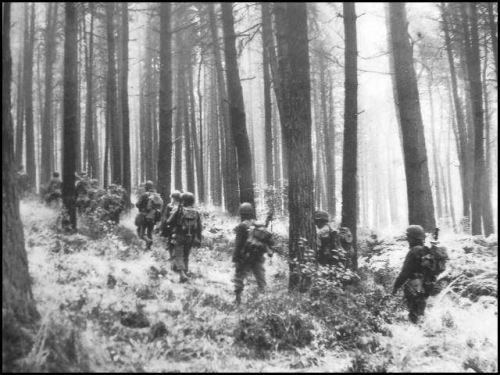
hurtgen-forest-soldiers

The Huertgen Forrest was the worst managed American fight Western European campaign. [lxxxviii] General Courtney Hodges leadership was poor.[lxxxix] In the Huertgen he fed division after division into a battle that made no strategic sense.  American infantry performed poorly and took extremely heavy casualties leaving four divisions shattered.[xc]  Poor American tactics demonstrated by attacking into a forest in poor weather without concentration negated all of Hodges’ advantages in tanks, artillery and airpower. The forest contained no significant German forces capable of threatening any American advance[xci] and its gain offered little advantage.[xcii] Hastings noted that the gains the only saving grace was that it made it easier for the northern shoulder of the Bulge to hold[xciii]   General Model and his subordinates expertly handled their handful of excellent but weary divisions in this battle using terrain, weather and prepared defensive positions to contest nearly every yard of the Forrest.[xciv]

Conclusions

            The lessons of the Bulge and the other campaigns on the German-French border are many and can be gleaned from Allied and German mistakes. On the Allied side the most glaring mistakes were assumptions prior to the German attack that the Germans were incapable of any serious offensive and ignoring the fact that the Germans had attacked through the Ardennes in 1940.  Likewise the self limitation of the American Army to 90 divisions for world-wide service meant that there were no more divisions in the pipeline and that worn out divisions would have to be reinforced with inexperienced troops while in the front line which ensured a lack of cohesiveness in many divisions, especially the infantry.  Allied intelligence failures as well as their reliance of forces much smaller than they should have had for such a campaign ensured that they would suffer heavy losses in the Bulge while poor planning and execution by Hodges wasted many good troops in a senseless battle.  The Germans were hamstrung by Hitler’s fantasy that the Western Allies could be forced out of the war or the Alliance split by a defeat in the Ardennes.  Likewise German forces, even those so quickly reconstituted were often short troops, tanks and vehicles.  German commanders were forced by Hitler’s rigid insistence on not altering the plan to not be as flexible as they might have been in earlier offensives to adjust according to the situation on the ground.


[i] Dupay, Trevor N.  Hitler’s Last Gamble: The Battle of the Bulge December 1944-January 1945Harper Collins Publishers, New York NY 1994 p.2.

[ii] Hastings, Max. Armageddon:  The Battle for Germany 1944-1945 Alfred A Knopf, New York NY 2004 p.197.

[iii] Reynolds, Michael. Sons of the Reich: II SS Panzer Corps; Normandy, Arnhem, Ardennes, and on the Eastern Front.  Casemate Publishing, Havertown PA 2002 p.186

[iv] Ibid. p.198

[v] Warlimont, Walter. Inside Hitler’s Headquarters 1939-1945 translated by R.H. Barry. Presidio Press, San Francisco, CA 1964. p. 480

[vi] Ibid.

[vii] Liddell Hart, B.H. The German Generals Talk. Originally published 1948, Quill Publishers Edition, New York 1979 p.274.

[viii] Liddell Hart, B.H. The History of the Second World War G.P. Putnam’s Sons, New York NY 1970. p.646.

[ix] MacDonald, Charles B. A Time for Trumpets: The Untold Story of the Battle of the Bulge William Morrow and Company, New York, NY 1985 p.35.

[x] [x] Newton, Steven H. Hitler’s Commander: Field Marshal Walter Model, Hitler’s Favorite General.DeCapo Press, Cambridge MA 2005. p.329

[xi] Ibid. Hastings p.198.  Hastings quotes Dietrich: “All Hitler wants me to do is cross a river, capture Brussels, then go on and take Antwerp. And all this at the worst time of year through the Ardennes when the snow is waist-deep and there isn’t enough room to deploy four tanks abreast let alone armored divisions. When it doesn’t get light until eight and it’s dark again by four and with re-formed divisions made up chiefly of kids and sick old men-and at Christmas.”

[xii] Ibid. Liddell-Hart The German Generals Talk p.276

[xiii] Wilmont, Chester. The Struggle for Europe Harper and Brothers Publishers, New York, NY 1952 p.576

[xiv] Ibid. p.557.

[xv] Ibid. Hastings. p.199. Hastings notes that Manteuffel said: “It was not that his soldiers now lacked determination of drive; what they lacked were weapons and equipment of every sort. Von Manteuffel also considered the German infantry ill trained.”

[xvi] Ibid. Dupay.p.47  Dupay notes that in 3rd Parachute Division that most of the regimental commanders had no combat experience.

[xvii] Weigley, Russell  F. Eisenhower’s Lieutenants: The Campaign in France and Germany 1944-1945. Indiana University Press, Bloomington IN 1981 p.432.  Weigley speaks of Allied caution and predictable strategy, caution in logistical planning which did not allow the Allies to provide the fuel needs for a rapid drive into Germany and caution of operational commanders.

[xviii] Liddell Hart discusses the issue of paratroops at length in discussions with Manteuffel and General Kurt Student. At the time of the operation there were very few jump trained paratroops available for the operation as most of the 6 organized Parachute Divisions were committed to battle as infantry during the 1944 battles in the East, Italy and in the West. German Generals Talk pp.282-285.  Although Liddell Hart makes note of the employment of these troops and talked with Model and student about why they were not used to seize bridges and other critical terrain featured ahead of the Panzers instead of the use as a blocking force, I have found no one who questioned why the Germans did not use small glider detachments for the same purpose.  The Germans had demonstrated with Skorzeny when they rescued Mussolini from his mountain prison that they still retained this capability.  The use of the SS Paratroop battalion which could have been assigned to Skorzeny as a glider borne force could have been decisive in capturing the key bridges and terrain ahead of 6th Panzer Army.

[xix] Skorzeny’s operation was Operation Greif designed to sow confusion in the Allied Ranks.  His brigade numbered about 3500 men and had a good number of captured US vehicles including some tanks and tank-destroyers on hand to confuse American units that they came in contact with.

[xx] Ibid. Hastings.  p. 199.  Hastings quotes the Adjutant of 18th Volksgrenadier Division who “felt confident of his unit’s officers, but not of the men “some were very inexperienced and paid the price.”  MacDonald notes that the division had many Navy and Air Force replacements but was at full strength. p.646.

[xxi] See MacDonland pp. 644-655 for a detailed commentary on the German Order of Battle.

[xxii] Reynolds, Michael. Men of Steel: 1st SS Panzer Corps;  The Ardennes and Eastern Front 1944-1945 Sarpendon Publishers, Rockville Center NY, 1999. pp.36-37.  Reynolds notes that the 1st SS Panzer Regiment only had 36 Panthers and 34 Mark IV Panzers to begin the operation (excluding the attached 501st SS Heavy Tank Battalion).  He also notes that many of the tank crew replacements had no more than 6 weeks of military training and some of the tank crews had never been in a tank.  Similar problems were found in all the Panzer Divisions.  Severe shortages of armored half tracks, reconnaissance vehicles and other vehicles meant that Panzer Grenadier and Motorized battalions lacked the lift needed and some went on foot or on bicycles.

[xxiii] Ibid. Reynolds. Sons of the Reich. P.183

[xxiv] Ibid. MacDonald. p.44.

[xxv] Ibid.

[xxvi] Ibid. Dupay pp. 27-28.

[xxvii] Ibid. MacDonald. p.52.  MacDonald notes that Koch warned that the Germans were not finished, that “his withdraw, though continuing has not been a rout or mass collapse.” He calls Koch a “lone voice” in the Allied intelligence world.

[xxviii] Bradley, Omar  N. A Soldier’s Story Henry Holt and Company, New York NY 1951. p.459.  Weigley makes some poignant calling Bradley’s comments  “contradictory” and states that: “his apologia is hardly a model of coherence. (p.461)

[xxix]  D’Este, Carlo. Eisenhower: A Soldier’s Life Owl Books, Henry Holt and Company, New York NY 2002. p.638

[xxx] Dupay and others talk about this in detail. See Dupay pp. 35-44.

[xxxi] Ibid. p.38.

[xxxii] Ibid. Hastings. p.201

[xxxiii] Ibid. Hastings. p.199

[xxxiv] Ibid. Weigley. p.464

[xxxv] Ibid.

[xxxvi] Ibid. Wilmont. P.581.

[xxxvii] Ibid. p.583

[xxxviii] Ibid. Hastings. p.223

[xxxix] Ibid. Weigley. P.457

[xl] Ibid. p.471

[xli] Ibid. Hastings. pp.205-206

[xlii] Ibid. Wilmont. pp.583-584

[xliii] Murray, Williamson and Millett, Allan R. A War to Be Won: Fighting the Second World War The Belknap Press of Harvard University Press, Cambridge Massachusetts and London England, 2000 p.470 The authors must base their conclusion on the fact that Montgomery who mentioned to Eisenhower that Hodges might have to be relieved, did not do so and by the next day told Eisenhower that the action was not needed.  A  few other American commanders in the north were favorable to Montgomery but this appears to be a minority view.

[xliv] Ibid. Weigley. pp.504-506.  Weigley and Wilmont both note the comment of a British Staff Officer the Montgomery “strode into Hodges HQ like Christ come to cleanse the temple.” (Wilmont p.592)

[xlv] Ibid. Hastings. pp.230-232.  Hastings is especially critical of Montgomery.  Weigley, equally critical notes regarding  the January 7th press conference, Montgomery’s “inability to be self critical at any point.” p.566.

[xlvi] Ibid. Weigley. p.500.

[xlvii] Ibid. Bradley. p.472  Other commentators differ in their view of Patton’s movement.  Wilmont notes that Patton had no “equal in the on the Allied side in the rapid deployment of troops. (p.589) Weigley urges readers that “it should be kept in appropriate perspective; it was not a unique stroke of genius.” And he compares it to Guderians disengagement with Panzer Group 4 and 90 degree change of direction and assault against the Kiev pocket in the 1941 Russian campaign (p.500)  Hastings notes that “Patton had shown himself skilled in driving his forces into action and gaining credit for their successes. But he proved less effective in managing a tough, tight battle on the southern flank.” (p.230)  Regardless of the perspective and criticism Patton’s movement was unequaled by any Allied commander in the war and had he not moved so quickly the 101stAirborne might not have held Bastogne. Admittedly his attack north was dispersed along a wide front but part of the blame for this must be assigned to Eisenhower who dictated the attack toward the west vice the base of the Bulge where Patton desired to make it.  A note I would make is that being a cavalryman Patton thought like one and when faced with the tight battles in close quarters was not at his best.  Similar comparisons could be made to J.E.B. Stuart at Chancellorsville when he had to take command of Jackson’s Corps.

[xlviii] Ibid. Weigley. p.475

[xlix] Ibid. p.474

[l] Ibid. Reynolds Men of Steel pp.51-52.

[li] Ibid. Weigley. p.470

[lii] The worst of these took place at the village of Malmedy where Battery B 285th Field Artillery Observation Battalion of 7th Armored Division was captured and about 150 soldiers were rounded up and machined gunned in a field with survivors killed with pistol shots in the head.

[liii] Ibid. Weigley. pp.478-479.

[liv] Ibid. Wilmont. p.584

[lv] Ibid. Weigley. p.487

[lvi] Ibid. Weigley. pp.486-487

[lvii] Ibid. Hastings. p.215. Hastings gives most of the credit to Brigadier General Bruce Clarke of CCB 7th Armored Division for the stand.

[lviii] Ibid. MacDonald. 481-487.  MacDonald notes that following the war that the commanders of the units involved “would be grateful to Field Marshal Montgomery for getting them out of what they saw as a deathtrap for their commands. (p.487)

[lix] Ibid. Weigley. p.487

[lx] Ibid.

[lxi] Ibid.

[lxii] Ibid. Hastings. p.217 Also  MacDonald. p.289 who talks of the confused situation east of Bastogne both for the Americans and Germans.

[lxiii] Ibid. Wilmont. p.598

[lxiv] Ibid. Liddel Hart. The German Generals Talk. p.288

[lxv] The defense of Bastogne would continue until after the 1st of January as Hitler renewed the attempts to secure the town in order to push on to the Meuse. Other German formations including units of 1st SS Panzer Corps shifted south from their original attack would make determined efforts to dislodge the stubborn American defenders.

[lxvi] Ibid. Weigley. pp.500-501.  Bradley gives Patton more credit than later commentators. Wilmont notes that the Germans though “amazed at the speed with which Patton had disengaged from the Saar and wheeled them northward…they received due warning of his movement by monitoring the radio net which controlled American traffic, and they were braced to meet his assault. (p.599).

[lxvii] Ibid. Weigely. Pp.520-521

[lxviii] Ibid.  pp.535-537

[lxix] Ibid. pp. 558-561

[lxx] Ibid. pp.563-564

[lxxi] Ibid. p.566.

[lxxii] Patton, George S. War as I Knew It  Originally published by Houghton Mifflin Company NY 1947, Bantam Paperback Edition,  Bantam Books, New York, NY 1980 p.364

[lxxiii] Ibid. Hastings. p.230

[lxxiv] Ibid. Murray and Millett p.471.

[lxxv] Hastings notes that “Tactically, the Ardennes was one of the worst-conducted German battles of the war, perhaps reflecting that none of the generals giving the orders saw any prospect of success. (p.236)

[lxxvi] Ibid. Weigley. pp.567-572

[lxxvii] Ibid. Hastings. p.236-237.  Hastings believes that the employment of the 5th and 6th Panzer Armies in the East “made the task of Zhukov and his colleagues much harder.”

[lxxviii] Ibid. Weigley. p.236. I find it interesting that neither Hastings nor Liddell Hart mention the Riviera and Rhone campaign.

[lxxix] Ibid. Weigley. p.236

[lxxx] Giziowski, Richard. The Enigma of General Blaskowitz  Hippocrene Books Inc. New York NY, 1997. p.328

[lxxxi] Ibid.  Weigley comments on how much the overall supply situation was aided by the operation and capture of the ports and notes that the pace of the Cobra breakout had created a crisis in supply and “without the southern French ports the crisis would have been insurmountable.” (p.237)

[lxxxii] Ibid. p.397.  Weigley notes: “The immobilizing mud and the enemy’s recalcitrant resistance had fragmented the battle into affairs of squads, platoons, companies and battalions….and Patton’s juniors more than he controlled the course of action, to the extent that control was possible.”

[lxxxiii] Ibid. p.384

[lxxxiv] Ibid. p.390 Weigley states: “The American disinclination to concentrate power was rarely more apparent.” comparing the frontages of 1st, 9th and 3rdArmies and notes that Patton attacked along his entire front.”

[lxxxv] Ibid. Weigley. pp.400-401.  Weigley spends a fair amount of time on American infantry shortages in 3rd Army.

[lxxxvi] Ibid. Weigly. P.400.  Weigley notes a German General Wellm attributed part of that victory to the “prowess of the American infantry.”

[lxxxvii] Ibid. Liddell Hart. The History of the Second World War p.560

[lxxxviii] Hastings and Weigley both note how many American division and regimental commanders were relieved of command for their failures in the Huertgen.

[lxxxix] Ibid. Hastings. p.179.  Hastings notes that “instead of recognizing the folly of attacking on terrain that suited the Germans so well, Courtney Hodges reinforced failure.”

[xc] Ibid. Weigley. p.420.  Weigley notes the high numbers of ballet and non battle casualties in the 4th, 8th, 9th and 28th Divisions as well as CCR of 5thArmored and 2nd Ranger Battalion.

[xci] Ibid. Hastings. p.275.  Hastings notes that defending 275th Division “were poor grade troops who-like the garrison of Aachen posed no plausible threat to the flanks of an American advance to the Roer.”

[xcii] Weigley compares the battle in its effect on the American army to Grants “destruction of the Confederate army in the Wilderness-Spotsylvania-Cold Harbor campaign expended many proud old Union army formations…” (p.438)

[xciii] Ibid. Hastings. p.215

[xciv] Ibid. Newton. p.324

3 Comments

Filed under History, Military, nazi germany, world war two in europe

Arab Spring Fever: The Revolution Begins Anew in Egypt as Syria Begins to Melt Down

bouazizi

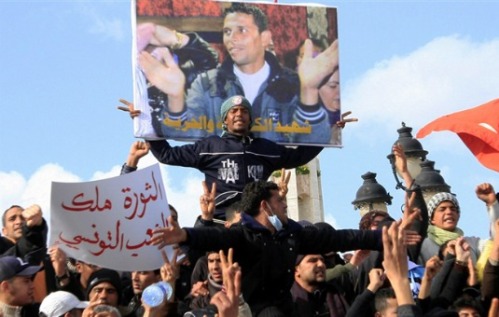
Tunisian Demonstrators

It began in such an innocuous manner. A Tunisian street vendor named Tarek al-Tayeb Mohamed Bouazizi set fire to himself due to what he viewed as harassment and humiliation by a local government official who confiscated his goods when he could not afford to pay bribes to the police. He died a few weeks later. That act set in motion widespread protests that led to the overthrow of long time Tunisian dictator Zine El Abidine Ben Ali ten days later.

The events in Tunisia sparked revolts throughout the Arab World, including the largest and most influential of the Arab States, Egypt and Syria. The situation in Egypt ended in the overthrow of President Hosni Mubarak and free elections where Islamists gained a majority in Parliament and the election of Moslem Brotherhood leader Mohamed Mursi as President. The situation in Syria led to minor reforms before the government of Bashir Al Asad began a series of repressive and violent crackdowns against protestors. This led to a armed revolt that has only continued to gain ground and achieve a modicum of international recognition.

2012-12-07T183045Z_340924292_GM1E8C71U0S01_RTRMADP_3_EGYPT-POLITICS

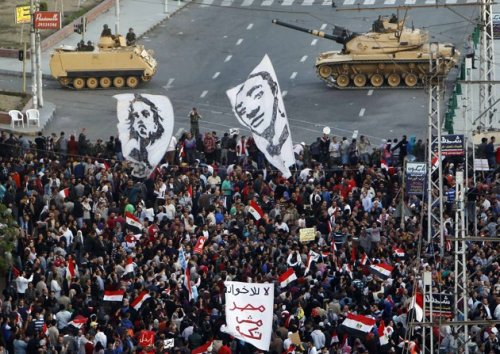
Egyptian Demonstrators calling for the Ouster of President Mursi

It appears that Egyptian President Mursi and the Islamic Brotherhood may have bit off a bit more than they could chew when they hurriedly wrote a new draft constitution that maximized their power and limited freedoms of non-Islamists including Coptic Christians, Democrats and secularists. Mursi compounded his mistake by issuing an edict that gave him practically unlimited power. The backlash from the Egyptian judiciary, journalists and opposition parties has been dramatic. Protests on the order of the original demonstrations against the Mubarak regime have engulfed Egypt, Mursi has  annulled his decree that granted him those powers and the opposition is calling for his overthrow. The Egyptian military has again become a player in the unfolding drama.

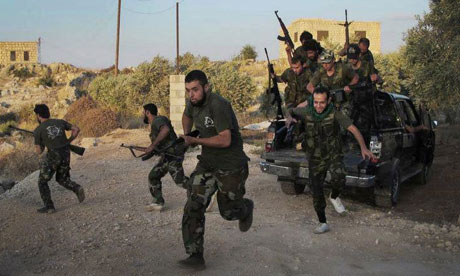
Free Syrian Army soldiers in Idlib

Free Syrian Army Soldiers in Action

In Syria the opposition is nearing complete control of many areas of the country and Bashir Al Asad’s regime is believed by many to be on its last legs, only the endgame remains to be played out. Some believe that Syria’s regime may be willing to use chemical weapons, particularly Sarin nerve gas agents against the opposition. The leaders of Western nations, especially the United States have announced that the use of such weapons would be unacceptable.

There are continued demonstrations, protests and political actions ongoing in several countries including US Allies Jordan, Kuwait and Bahrain.

Throughout the Arab World the Arab Spring has had marked repercussions. The long term dictators of Yemen and Libya were both overthrow, with Yemen’s case Ali Abdullah Saleh was able to negotiate his exit from power, while in Libya the regime of Muammar Ghadaffi was overthrown in a bloody manner following a protracted civil war. Ghadaffi himself was brutally murdered following his capture.

The Arab has also has had effects on the foreign policy of nations, particularly the United States, Russia and the European Union and others around the world who have stood to gain by maintaining the status quo in the region, playing off the interests of their Arab “friends” for their own benefit. The fact is that most countries or alliances with military, economic and political, diplomatic and intelligence interests are still trying to make sense of the new Middle East and how it will impact their interests.

The problem is that most people outside the region have little understanding of it or how different the culture, history and social considerations of each part of the Arab world is different than others. We like to take about the “Arab Street” or the “Moslem world” but the fact is that neither the Arab Street or the Moslem world is monolithic and what is the case in one country is not necessarily true in other countries.

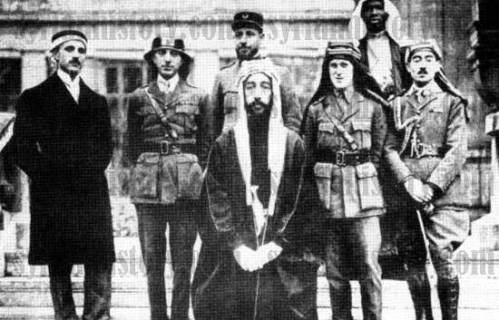
054

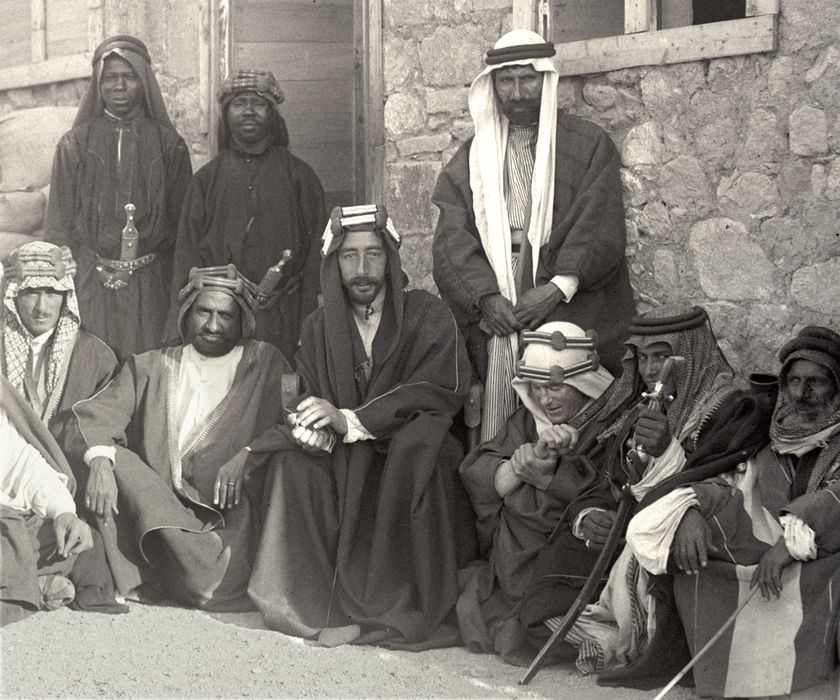
T.E. Lawrence with members of Arab delegation at Versailles

What we know as countries in many cases are nothing more than disparate Arab peoples of different, Tribal affiliations, cultural traditions, history as well as Islamic and Christian factions. There is no generic Arab country or people and in many Arab countries there is internal conflict based on tribal, ethnic or religious lines. This was something that T.E. Lawrence noted in his works and something that we in our desire to shape events to our liking, need to remember.

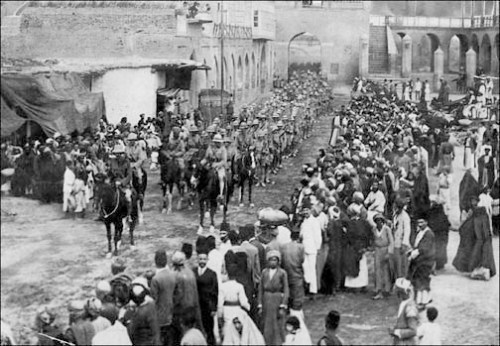
britishbaghdad1917www

British Troops Enter Baghdad in 1920

During and after the First World War, European powers, particularly the English and French, but also the Italians used their military, economic and diplomatic power to divide the Arab World, recently free of Ottoman-Turk domination through the Sykes-Picot agreement, agreements made at Versailles and San Remo. In doing so they prevented a natural development of Arab freedom and helped poison relations between the Arabs and the West for generations and in the case of Saudi Arabia led to the domination of the Wahhabi house of Saud.

The Arab world is a mosaic of different peoples, cultures, traditions and histories. As the Arab Spring continues to unfold it is very important that we, who are not Arabs understand the various tensions at play and make vague assumptions about them or what the Arab Spring portends in Egypt or elsewhere.

Yes, we have important interests in the region. However as chaotic as it may seem the Arab Spring is a natural outgrowth of a region and its peoples finding themselves after centuries of foreign domination, be it that of the Roman, the Byzantine, the Turk, the Persian, or various countries of Europe and even the United States. It is important that it play out with as little foreign interference as possible. The lesson from history is that the last century of Western domination, imperialism and interference in Arab affairs have not helped and that these events will have to play themselves out, and that may take at least a generation.

arabspring-640x480

Whether we like it or not, what is happening now, despite the violence, strife and chaos is a necessary part of their story. How can we not understand? How many centuries of ethnic, cultural, religious and political war and strife have the nations of Europe and America endured to come to some semblance of working peacefully together?

The Arab Spring will be with us for a while because Arabs, regardless of their nationality, tribe or religious sect must determine their fate.

Peace

Padre Steve+

2 Comments

Filed under Foreign Policy, History, middle east, News and current events

The Paths Taken and Not: The Tapestry of Life, Authenticity and Wisdom Passed Down

n671902058_2044112_2975

Nearly 32 years ago I was getting ready to embark on a military career. It was  the fall of 1980 and I was a junior at California State University Northridge. Within the year I was beginning my first furtive steps in my career by enlisting in the California National Guard and enrolling in the Army ROTC program at UCLA.

It was an interesting time. My imagination of the military back in the days of the Cold War was quite orthodox and founded on what a “normal” Army career should look like. I would get commissioned, serve as a platoon leader, company executive officer, battalion staff officer and company commander. I would attend the appropriate military schools, the officer basic course, the advanced course, specialized courses and Command and General Staff College and then hopefully be promoted to the field grade ranks and after serving 20-30 years would retire as a Major, Lieutenant Colonel or maybe even a Colonel.
If that had been the case I would have had a very different life than I have today. Certainly a good life, but not what I have today. I would be me, but a different me. I would have probably played everything safe and been the perfect servant of the institution while ensuring my own success.
Instead the tapestry of my life and choices have produced something different than I could have ever imagined 32 years ago. Those choices have resulted in successes and failures, blessings and great difficulties as well as trials that honestly I would never want to go through again. However all of those things have helped make me what and who I am today.

I look back at the people in my life who have influenced me at different points, as well as critical junctures where I made decisions I see a tapestry that I could never have thought possible, a tapestry much richer and diverse than I could have thought of back then. It has not been without pain but it has been worth it.

One of the things that I discovered early was that as hard as I tried to fit the mould of the Army, I was a non-comformistby nature.  I thought outside of the box and that in attempting to fit in I was not happy. I had one rater  in his evaluation of me offer the criticism that thought too much of my abilities that “lent me to criticism.” That may have been true to some extent, and my rather blunt and outspoken opinions to criticize higher ranking officers and to take liberties with orders got me in trouble at times.

However I did survive some of my more stupid escapades such as telling my Medical Group Commander that he had embarrassed our command as a very junior Army 1st Lieutenant and in another case banned the two local CID investigators from running amok on a fishing expedition in my barracks without probable cause or a warrant for their investigation. They never returned with probable cause or a warrant. Another time I told the the senior personnel officer in the command I was stationed as a Captain that he could take his spies out of my command, as well as getting thrown out of the Army Chaplain Officer Advanced Course in 1992. It would take too long to explain the details of these incidents here but assuredly they were the fault of a young, opinionated and outside the box thinking officer who dared to voice his opinion to men who were institutional careerists, they were not bad people, just people conformed to and servants of institutional norms. That being said my troubles were troubles brought on me by my own actions because I did not understand what the institution, any institution can do to otherwise well meaning and honorable people.

Despite some black eyes I did make Major in the Army Reserve and finally to get back on active duty reduced in rank to enter the Navy back in 1999. The good thing was that I learned from my experiences and have been able to use them to learn, survive and succeed in my Navy-Marine Corps career.

In the process there were men and women who at various times in my life and career passed along wisdom, not just advice, not just knowledge, but wisdom. It is to them that I owe my successes. Without their sage advice, authentic leadership and honesty I would have certainly crashed and burned a long time ago, a prisoner of my own limited insight and unlimited ambition.

400236_10151328400862059_541742014_n

But more than succeeding in my career I have learned that it is okay to be me, to be authentic and to be honest about who I am and what I do. My goal now as a relatively senior chaplain is to care for, mentor and allow those men and women who work directly for me to succeed, even as well as those that I serve.  It is no longer about my career. I am on the backside of my career regardless of my next assignment or even if I get promoted to Captain in the Navy several years from now when I am eligible. But promotion is not an end to itself, if I have learned anything it is that many times promotion to a higher office can be a prison that some men never escape.

The fact is that I have far fewer years left to serve than I have served to this point. Thus it is far more important to do right for the people that I serve and help them take lessons that I have learned into their futures and if they remain in the military pass them along to others as they become authentic leaders. Johann_von_Staupitz

Johann Von Staupitz

My study of history and more practically in my case military history and to some extent church history and theory shows me quite those who don’t achieve the highest levels of command or institutional power often have a greater influence in the long term than those who do. Without Johann von Stauptiz it is doubtful if the young Martin Luther would have began to study the Bible and hence bring about the Protestant Reformation.

clausewitz2

Carl Von Clausewitz

As the foremost interpreter of Napoleon, a relatively unknown Prussian General Staff Officer, Carl von Clausewitz had a greater impact on warfare and military theory than did Napoleon himself. There are many other examples of such individuals in history, men and women, many times of far lesser estate than Clausewitz or Staupitz who have by their wisdom helped those that eventually held power or influence in thinking outside the bounds of tradition to accomplish things that were not possible to their teachers.

Wisdom comes slowly to most of us, especially people like me. The problematic thing is that is, for the most part wisdom is a commodity that is not highly treasured in a society built upon expediency and crass materialism. It is certainly not something the most men and women that seek power are gifted with, despite their intellectual gifts and often well earned knowledge. But learned knowledge and raw intelligence are different than wisdom. Knowledge and intelligence are quite wonderful but ungoverned by wisdom the ambition that they breed is often the undoing of those that rely on them as well as their physical, economic or even military power.

The key thing is that wisdom, experience and learning was passed along to men and women who, God willing, will be serving long after I retire from the Navy. Today I was approached by one of our wounded warriors stationed at our hospital because of his injuries. He engaged me in a conversation and he said that he would like to spend some time with me, to listen to some of my stories about my life in the military and experience. Evidently a couple of his young friends have told him a bit about me. That meant a lot to me, just as the times that young people have come to me not because of my position, or rank, but because they see me as a real person, approachable and available.  The nice thing for me is that there are many times that I learn from them, for many times it is young people that can see the greatest problems and offer ideas and solutions that elude older and more experienced people in every walk of life.

liddellhart

B. H. Liddell-Hart

I recently read B.H. Liddell-Hart’s biography of T.E. Lawrence, perhaps one of the most gifted military commanders, philosophers and men of the 20th Century. Lawrence and to some extent Liddell-Hart understood something about wisdom that most of their contemporaries and even students miss. Liddell-Hart himself, though a medically retired as a Captain due to wounds suffered in World War One was one of the more influential thinkers of his day. His works had a profound impact on the most successful commanders of the Second World War. He understood that the key to wisdom is self understanding and a recognition of their own knowledge as well as limitations. Liddell-Hart wrote of Lawrence, wisdom and humanity in 1937:

“A study of history, past and in the making, seems to suggest that most of mankind’s troubles are man-made, and arise from the compound effect of decisions taken without knowledge, ambitions uncontrolled by wisdom and judgements that lack understanding.  Their ceaseless repetition is the grimmest jest that destiny plays on the human race. Men are helped to authority by their knowledge continually make decisions on questions beyond their knowledge. Ambition to maintain their authority forbids them from admitting the limits of their knowledge and calling upon the knowledge that is available in other men. Ambition to extend the bounds of their authority leads them to a frustration of others opportunity and interference with others’ liberty that, with monotonous persistency, injures themselves or their successors on the rebound.  

The fate of mankind in all ages has ben the plaything of petty personal ambitions. The blend of wisdom with knowledge would restrain men from contributing to this endless cycle of folly, but understanding can guide them toward progress.” B.H. Liddell-Hart “Lawrence of Arabia” DeCapo Press, Reprint, originally published as “The Man Behind the Legend” Halcyon House 1937 

410w

T. E. Lawrence

It is my hope that no matter what my next assignment is and no matter how long I have left in the military as well as in life that I will be able to be one of those wise old sages who helps the next generations do things that were impossible for my generation, to succeed where we failed and who like Staupitz, Clausewitz, Liddell-Hart and Lawrence inspired others to greatness far beyond their own.

I am coming up for orders soon, order that will take me to my next assignment. I have spent the past two years as a geographic bachelor, apart from my wife, by the time I leave this assignment it will be close to three years. I have been assured that my next assignment will be in the area where our home is, however I do not know what it will be. I know what I want to do but do not know if it is possible based on the needs of the Navy. However, that being said I do know enough that no matter where I am assigned the mission is the same, as well as the pay. That mission is to care for, guide and assist those that work for me as well as those that I have the honor of serving, or possibly simply be the wise old sage.

I think I like that idea.

Peace

Padre Steve+

1 Comment

Filed under faith, History, philosophy, Religion

The Illusion of Peace: Remembering the Day Before Pearl Harbor

h97398

“A nation brought up on peace was going to war and didn’t know how.” Walter Lord 

For most Americans and Western Europeans this is time of peace. Well, at least the illusion of peace.

Tens of thousands of American, NATO and European Union troops operating in a number of mandates are in harm’s way. In some places like Afghanistan they are at war, in others attempting to keep the peace. Around the world regional conflicts, civil wars, insurgencies  and revolutions threaten not only regional peace but the world peace and economy. Traditional national rivalries and ethnic and religious tensions especially in Asia and the broader Middle East have great potential to escalate into wars that should they actually break will involve the US, NATO and the EU, if not militarily economically and diplomatically.

But, we live in a dream world an illusory world of peace. as W.H. Auden said in his poem September 1st 1939:

Defenseless under the night
Our world in stupor lies…

On December 6th 1941 the world was already at war and the United States was edging into the war. The blood of Americans has already been shed but for the vast majority of Americans the events in Europe and Asia were far away and not our problem. Though President Roosevelt had began the expansion of the military there were those in Congress seeking to demobilize troops and who fought all attempts at to intervene.

maltese-falcon-by-content-artofmanlinessdotcomw499h371

Most people went about their business that last furtive day of peace. People went about doing their Christmas shopping, going to movies like The Maltese Falcon staring Humphrey Bogart or the new short Tom and Jerry cartoon, The Night Before Christmas.

Tom And Jerry

Others went to football games. UCLA and USC had played their annual rivalry game to a 7-7 tie, Texas crushed Oregon in Austin by a score of 71-7 while Texas A&M defeated Washington State in the Evergreen Bowl in Tacoma by a score of 7-0.

0-3

In Europe a Soviet counter-offensive was hammering a freezing and exhausted German Wehrmacht at the gates of Moscow. U-Boats were taking a distressing toll of ships bound for Britain including neutral US merchant ships and warships, including the USS Reuben James. American Airmen were flying as the volunteer Flying Tigers for the Nationalist Chinese against the Japanese invaders.

decwarp1

War was everywhere but there was still the illusion of peace. When the messages came out of Pearl Harbor the next morning it was already early afternoon on the East Coast. The Japanese Ambassador had been delayed in delivering the declaration of war, people across the country going about their Sunday business, going to church, relaxing or listening to the radio. Thus when war came, despite all the precursors and warnings war came. When it happened it took the nation by surprise. Walter Lord wrote in his classic account of the Pearl Harbor attack Day of Infamy: “A nation brought up on peace was going to war and didn’t know how.”

By the end of the day over 2400 Americans were dead and over 1200 more wounded. The battleships of the Pacific Fleet were shattered. 4 sunk, one grounded and 3 more damaged. 10 other ships were sunk or damaged in the attack. 188 aircraft were destroyed and 159 damaged.

cn3992

The next day President Franklin D. Roosevelt called the nation to action requesting that Congress declare war on Japan. http://www.youtube.com/watch?v=ufoUtoQLGQY

Mr. Vice President, and Mr. Speaker, and Members of the Senate and House of Representatives:

Yesterday, December 7, 1941 — a date which will live in infamy — the United States of America was suddenly and deliberately attacked by naval and air forces of the Empire of Japan.

The United States was at peace with that Nation and, at the solicitation of Japan, was still in conversation with its Government and its Emperor looking toward the maintenance of peace in the Pacific. Indeed, one hour after Japanese air squadrons had commenced bombing in the American Island of Oahu, the Japanese Ambassador to the United States and his colleague delivered to our Secretary of State a formal reply to a recent American message. And while this reply stated that it seemed useless to continue the existing diplomatic negotiations, it contained no threat or hint of war or of armed attack.

It will be recorded that the distance of Hawaii from Japan makes it obvious that the attack was deliberately planned many days or even weeks ago. During the intervening time the Japanese Government has deliberately sought to deceive the United States by false statements and expressions of hope for continued peace.

The attack yesterday on the Hawaiian Islands has caused severe damage to American naval and military forces. I regret to tell you that very many American lives have been lost. In addition American ships have been reported torpedoed on the high seas between San Francisco and Honolulu.

Yesterday the Japanese Government also launched an attack against Malaya.
Last night Japanese forces attacked Hong Kong.
Last night Japanese forces attacked Guam.
Last night Japanese forces attacked the Philippine Islands.
Last night the Japanese attacked Wake Island. And this morning the Japanese attacked Midway Island.

Japan has, therefore, undertaken a surprise offensive extending throughout the Pacific area. The facts of yesterday and today speak for themselves. The people of the United States have already formed their opinions and well understand the implications to the very life and safety of our Nation.

As Commander in Chief of the Army and Navy I have directed that all measures be taken for our defense.

But always will our whole Nation remember the character of the onslaught against us.

No matter how long it may take us to overcome this premeditated invasion, the American people in their righteous might will win through to absolute victory. I believe that I interpret the will of the Congress and of the people when I assert that we will not only defend ourselves to the uttermost but will make it very certain that this form of treachery shall never again endanger us.

Hostilities exist. There is no blinking at the fact that our people, our territory, and our interests are in grave danger.

With confidence in our armed forces- with the unbounding determination of our people- we will gain the inevitable triumph- so help us God.

I ask that the Congress declare that since the unprovoked and dastardly attack by Japan on Sunday, December 7, 1941, a state of war has existed between the United States and the Japanese Empire.

171-0417042317-pearlharbor_paper

Today tens of thousands of US and NATO troops are deployed in Afghanistan. Some of them are dying that people that most of us do not care about in the least might have a chance at peace and a better life. Eleanor Roosevelt reflected:

“Lest I keep my complacent way I must remember somewhere out there a person died for me today. As long as there must be war, I ask and I must answer was I worth dying for?”

Wars, revolutions and other tensions in other parts of the world threaten on every side, but most Americans and Europeans live in the illusion of peace.  A very few professi0onals are given the task of preparing for and fighting wars that our politicians, business leaders, Armageddon seeking preachers and the talking heads of the media sow the seeds. As such many have no idea of the human, material and spiritual cost of war and when it comes again in all of its awful splendor few will be prepared.

We do not know what tomorrow will bring and unfortunately for the vast bulk of Americans and Western Europeans the comments of Walter Lord are as applicable today as they were on December 7th 1941.

Peace

Padre Steve+

6 Comments

Filed under History, Military, national security, world war two in the pacific

An older post of mine about Pearl Harbor as we approach the 71st anniversary of that “Day of Infamy.”

padresteve's avatarThe Inglorius Padre Steve's World

Arizona Leading the Battle Line

“Yesterday, Dec. 7, 1941 – a date which will live in infamy – the United States of America was suddenly and deliberately attacked by naval and air forces of the Empire of Japan…. The attack yesterday on the Hawaiian Islands has caused severe damage to American naval and military forces. Very many American lives have been lost.” Except of President Franklin D Roosevelt’s Pearl Harbor Speech December 8th 1941

Today is the 68th anniversary of the Japanese attack on Pearl Harbor and as we were then we are at war.

A Date that Will Live in Infamy: USS Arizona Burning

I remember reading Walter Lord’s “Day of Infamy” when I was a 7th grade student at Stockton Junior High School back in 1972.  At the time my dad was on his first deployment to Vietnam on the USS Hancock CVA-19.  As…

View original post 1,837 more words

1 Comment

Filed under History, Military, Navy Ships, traumatic national events, US Navy, world war two in the pacific

A Place of Peace: Where My Iraq Meets the Atlantic

35923_10151361668782059_785733223_n

Where Iraq Meets the Atlantic

I have talked about things bring me peace amidst the struggles of life in recent days and in one post I briefly mentioned that while running on the beach in Emerald Isle it was the place where in that moment “Iraq met the Atlantic.”

It has been nearly 5 years since I left Iraq in February of 2008 but there are times that it feels like I have never left and times when I would like to be back there. I have always loved the ocean and the desert. For some reason the vast expanses of barren desert and the untamed ocean draw me to them like nothing else.

262_29132267058_9181_n

I have struggled with a lot over the past 5 years. However as I mentioned recently it seems that things are coming together in ways that I have never could have fathomed even a few months ago. On Wednesday I needed to take a day off to reflect and gather my thoughts after a particularly cathartic sequence of events. One of the things that I did that day was to rest, but then to run along the beach where I live.

198177_10151361204842059_1890411795_n

I mentioned to a couple of people that it was like Iraq met the Atlantic and they didn’t understand, until I showed the pictures. I guess though that the juxtaposition of the Western Desert of Iraq, sometimes known as the Syrian Desert and the Atlantic Ocean would seem strange to most people, unless they have experienced both in their stark beauty.

270107_10151361199622059_1286921284_n

I ran about seven and a half miles Wednesday along the beach and it was breathtaking. The deep blue skies and seas met with the desert tan of the sands of the beach. There were few people out that day so the beach was nearly deserted and I was alone with nature and God. It has been many years since I felt that depth of peace in my soul that I felt on Wednesday.

262_29132262058_8844_n

I really can’t explain it and most people will probably never understand and I have learned that such a lack of understanding is okay. There is a big part of me that is still in the Iraqi desert and will always be there. There in the land of Abraham, amid the barren deserts, the rich valley of the Euphrates river valley, the battered cities and town of war torn Al Anbar Province many of my hopes and dreams still live. When I ran along the beach that day it was like I had returned, but instead of being traumatic it was peaceful.

262_29132227058_6903_n

I pray for the people of Iraq, especially those in Al Anbar Province and the Iraqi military. I pray that they will know peace and that their country, so long victimized by tyrants, devastated by war and torn by terrorism and civil-religious strife will be a place of blessing.

295_26912097058_4309_n

As T.E. Lawrence wrote about 85 years ago: “We were fond together because of the sweep of open places, the taste of wide winds, the sunlight, and the hopes in which we worked. The morning freshness of the world-to-be intoxicated us. We were wrought up with ideas inexpressible and vaporous, but to be fought for. We lived many lives in those whirling campaigns, never sparing ourselves: yet when we achieved and the new world dawned, the old men came out again and took our victory to remake in the likeness of the former world they knew. Youth could win, but had not learned to keep, and was pitiably weak against age. We stammered that we had worked for a new heaven and a new earth, and they thanked us kindly and made their peace.” 

262_29132307058_1522_n

Peace

Padre Steve+


3 Comments

Filed under History, iraq,afghanistan, Tour in Iraq

Epiphanies: PTSD, Life, Leadership, Lawrence of Arabia and the Gospel

I have been going through a process lately in preparation for some treatment of my chronic insomnia, nightmares and other PTSD symptoms which has caused me to have to be very deliberate and reflective in examining the various parts of the often tattered tapestry of my life.

Part of this has involved my experiences in military, religious and civilian institutional settings and how those experiences have helped shaped me as a Priest as well as a Naval Officer. Today was one of those days where a convergence of thoughts came together in a number of encounters juxtaposed with some reading of B.H. Liddell Hart’s book about T.E. Lawrence, Lawrence of Arabia.

While I was waiting for my doctor late this afternoon I was reading the book on my Kindle and as he came into the waiting room I had just finished marking this passage.

“The rare man who attains wisdom is, by the very clearness of his sight, a better guide in solving practical problems than those, more commonly the leaders of men, whose eyes are misted and minds warped by ambition for success….”

Somehow this little passage in a book that I am about halfway through reading and which I have already made numerous other annotations really struck me as profound. It encapsulated close to 20 years of experience as a military chaplain and over 30 years in the military as well as civilian professional work, and it struck me especially in regard to my experiences both in Iraq and after my return. Before, during and after my time in Iraq I had come to see Lawrence as a kindred spirit, someone that thought outside the box and went to places that no one else wanted to go. My job in Iraq to me to those places that few Americans and almost no other chaplains went or had the chance to experience with Iraqi Arabs and the Bedouin.

Those that read my posts regularly know that the impetus for my writing came about during my time in Iraq around Christmas of 2007 in the western Iraqi Al Anbar Province while on the Syrian border. At that time I wrote a short article for my former denomination’s website and a little more than a year after my return to the United States  I began this site I modified that article and published it here under the title of God in the Empty Places. It was a catharsis for me because I going though a tremendously ark period of my life where I had for all practical purposes become an Agnostic struggling to believe in God again. It was published a couple of months after I walked out of a church on Christmas Eve 2008 and walked an hour home in the dark and cold of that night.

During the interregnum of returning from Iraq and now I experienced a number of additional traumatic life events, both personal and professional. Following my assignment to my current post where I supervise a number of chaplains, pastoral counselors and support personnel I made it my goal in life not to let things that happened to me at the hands of some senior chaplains happen to others, especially those struggling with life, health, spiritual or emotional issues.

I have been asked by a number of people in the past couple of weeks, how in light of things that could leave me embittered and cynical could I embody grace to others. I admit that I still hurt and have issues of anger and some bitterness towards some people who I thought used me and betrayed me both in my old denomination as well as some senior chaplains. That is a given, though I try to live in a state of forgiveness toward them there are times that I do get upset the things that happened during that time. It is something that I deal with and I don’t always do well. I have my bad moments in which that grace doesn’t come out well,  but my path to healing has involved a conscious effort to see the good in people and to embody something different than I experienced.

A couple of people made the comment as we discussed these experiences as well as their own that “you do the Gospel it by living it.” I think that is what Jesus did, he taught yes and he did miracles, but the biggest miracles were those that he did when he rocked the religious-political establishment of his day by hanging out and caring for the people it despised. In fact Jesus surmised the entire law in two commandments, love God with all your heart and love your neighbor as yourself. The prophet Malachi noted what God required “to do justice, and to love kindness, and to walk humbly with your God.”

Those two passages have been tremendously important as faith returned after what I refer to as Padre Steve’s Christmas Miracle faith began to return in a way that I never expected.

So the past few weeks have served as an epiphany to me about wisdom can evade leaders whose “eyes are misted and minds warped by ambition for success…” My eyes are opening in more ways to the bigness of God, the grace of God, the love of God and the mercy of God. My ambition is simply to care for the people that God allows me to care for and show that grace, love and mercy to those who some would attempt to destroy because they themselves have become prisoners of the institutions and their offices and ambitions.  I have resolved in daily life to do all I can to avoid becoming a prisoner of my office or ambitions and simply to be real. One of the senior leaders of the hospital that I work noted that he saw me as not just as the senior chaplain but a “real person.” I can live with that.

Well that is enough for tonight.

Peace

Padre Steve+

1 Comment

Filed under faith, History, iraq,afghanistan, Tour in Iraq