Category Archives: Loose thoughts and musings

A Son of Erin

Friends of Padre Steve’s World,

Like any American whose family on both the paternal and maternal sides has been in this country since well before the American Revolution, I am kind of a genetic mutt. However, it seems that most of my DNA is Irish, the rest being from Scotland, England, Wales, and the Iberian Peninsula, so basically, I’m Celtic. Most of my Irish seems to come from my mom’s side of the family with Travis’s who came from the Old Country and eventually settled in Illinois. My favorite uncle when I was a kid was my uncle Ted. He was as Irish as they come, and according to my mom uncle Ted help begin my great love of beer when I was just a babe.

I have come rather belatedly to the conclusion that I am a son of Erin. In addition to my love of a good beer, when I look at my temperament I see the Irish come through in my readiness to fight, my love of laughter, and my occasional melancholy. I love Irish songs like The Minstrel Boy and Garryowen as well as songs that were made famous by Irish soldiers like It’s a Long Way to Tipperary.


On my dad’s side I descend from Scottish nobility, not that it matters in this country. But when I was younger I found it a source of pride, especially the military tradition that came with it, and for that matter I still am, but I have become more cognizant of my Irish heritage. This is a heritage that I plan on doing research on in the near future.

As much as the Irish are a part of the rich tapestry that make up America, and the celebration of Saint Patrick’s Day has become a fest that most Americans revel in, the Irish were not welcomed with open arms. They were poor, Roman Catholic immigrants, fleeing persecution and famine in the Old Country. The tradition Irish song, The Wearing of the Green includes this verse:

I’ve heard a whisper of a country
That lies beyond the sea,
Where rich and poor stand equal
In the light of freedom’s day.

When they arrived in the United States the found themselves at the bottom of the white man’s world, despised and often violently persecuted by Americans of the anti-immigrant, anti-Catholic “Know Nothing” movement. They were accused of being agents of the Pope, and wanting to overthrow Protestant America. As such they had to work hard, and they also stayed together in predominant Irish neighborhoods, and in time they became a political constituency that even non-Irish politicians could not ignore. In a time when other groups of immigrants are discriminated against and demonized, often for their religious beliefs I think that we cannot forget the Irish immigrants, and those who are of Irish descent, those whose ancestors were persecuted in the Old Country as well in this country need to think twice before doing the same to people who are fleeing political and religious persecution as well as war and famine. My Irish heritage has made me feel a closer bond with immigrants than almost anything.

As a historian I want to do that because I wonder if any of my Irish-American ancestors fought with any of the Civil War Irish regiments. I have always been particularly fond of the Irish Brigade of the Army of the Potomac and many times I fly the flag of the 69th New York Volunteer Infantry, also known as the 1st Regiment of the Irish Brigade alongside my 34 Star Circle Union Flag outside my house, especially this time of year. The motto of the regiment,  Faugh A Ballagh  (pronounced “Fah-g Ahn BAY-Lick”) means “Clear the way!”

Approximately 150,000 Irish immigrants fought in the Union Army during the Civil War, many hoping that their display of loyalty would put a stop to anti-Irish discrimination, but despite their gallantry and sacrifice on the battlefield it did not. With casualties mounting and the institution of the draft which hit poor people and immigrants the hardest, many Irish staged draft riots in 1863. Eventually the Irish would be accepted, but what happened to them has happened to almost every other group ethnic and religious immigrants who have come to America to be free.

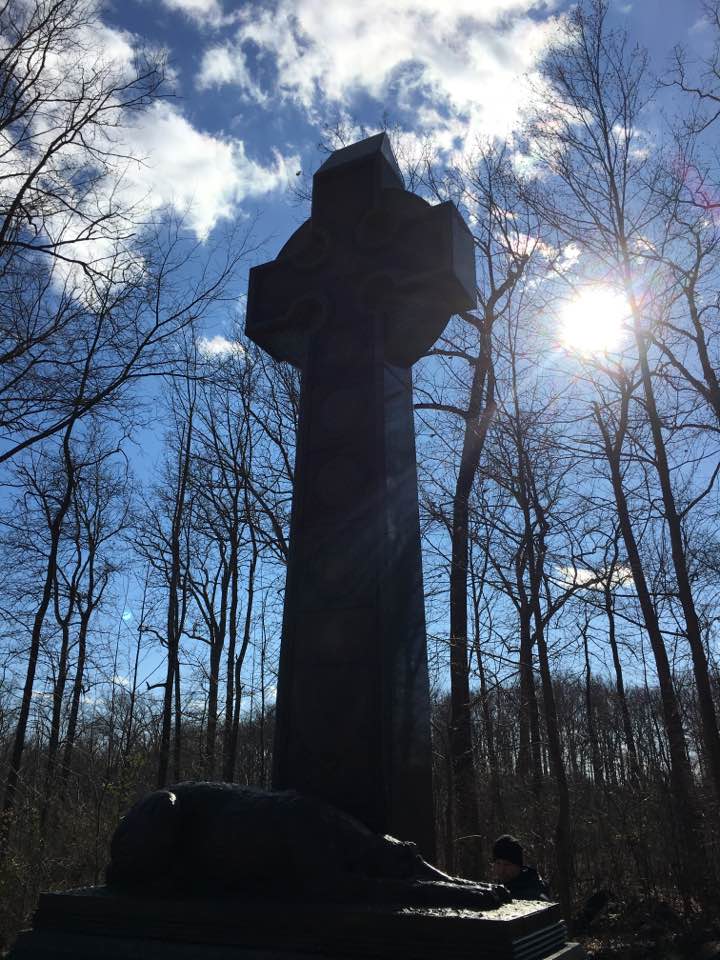
Whenever I go to Gettysburg I stop at the Irish Brigade memorial near the edge of the bloody Wheat Field and speak of its service during the war and the absolution granted to it by its chaplain, Father Corby before it went into battle that hot summer afternoon of July 2nd 1863. Likewise I tell the story of the young Colonel Paddy O’Rorke, the first Irish Catholic to graduate from West Point who died leading his regiment at Little Round Top, not far from where his kinsmen were fighting at the Wheat Field.

So I wish you a Happy Saint Patrick’s Day even as I reflect more on my Irish heritage and raise a pint or two; after all a bird never flew on one wing. Sláinte.

Peace

Padre Steve+

1 Comment

Filed under History, Loose thoughts and musings

Reflections on a Sanity Day


Friends of Padre Steve’s World,

Today I am just going to share some reflections of a restful day off regarding friendship, family, and being deliberate rather than reactive in the way I get information. 

I was able to take a comp day for my trip to Gettysburg yesterday. I am coming to enjoy taking a day once in a while to do little but hang out with Judy, each on of us with at least one dog on our lap while I take time to read and reflect. There is nothing more relaxing, comforting, and therapeutic than having a content and happy dog on my lap as I read or write, or just think and muse about various topics. Doing this helps me put priorities back in order and keep me from obsessing about the craziness of the world. 

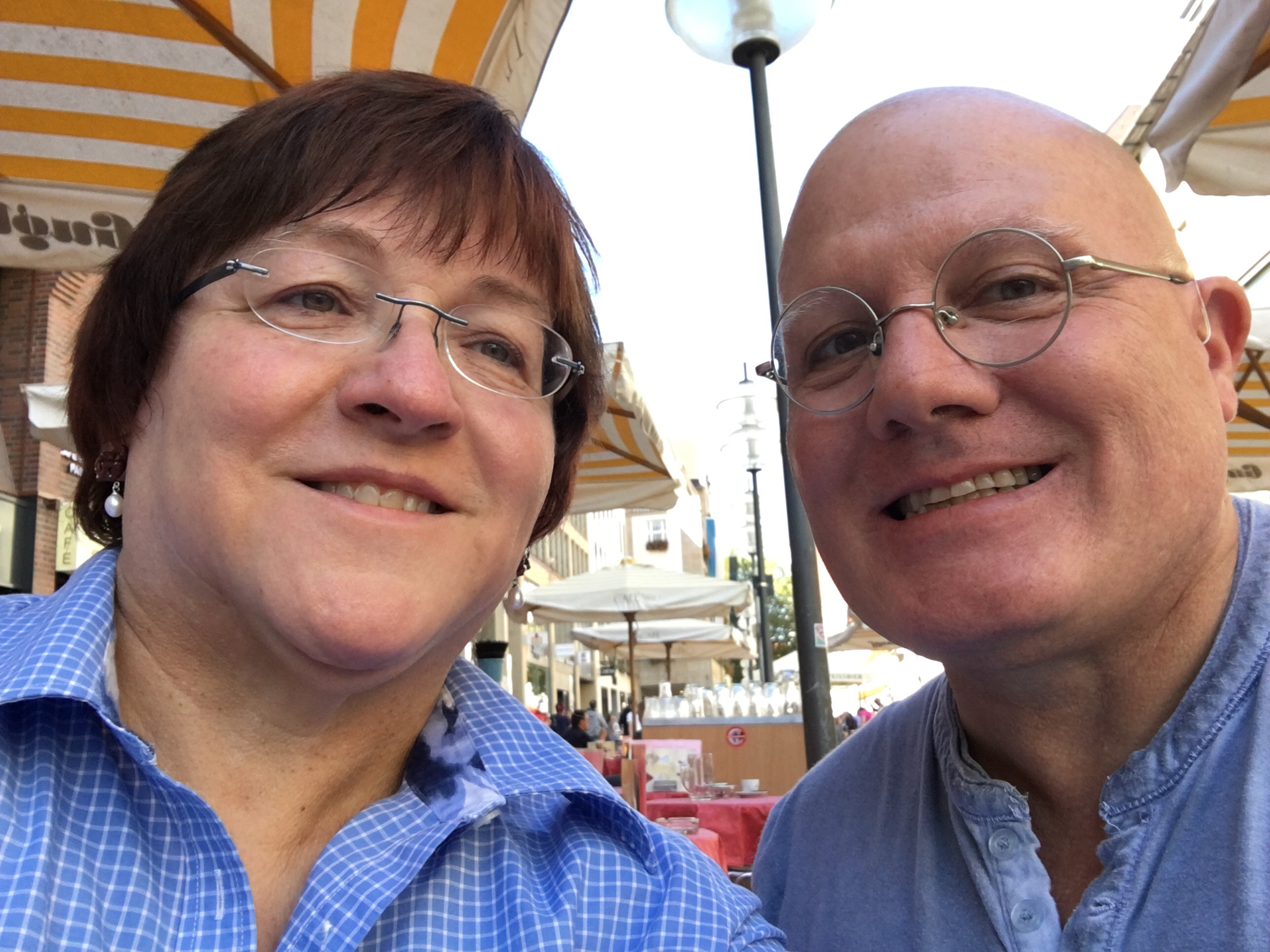
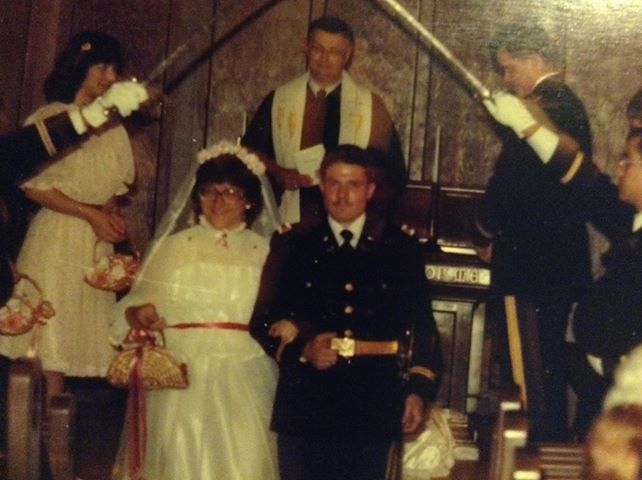
I spent some time with an old friend Tuesday night. He and I attended the Army ROTC program and were commissioned together at UCLA in 1983. His path took him into academia well before mine, he is a history professor and published author who like me enjoys good craft beer. Though we hadn’t seen each other since my wedding, where he was a part of the wedding party, we have stayed in contact and we picked up where we left off talking about friends, our families, careers, and interests, not to mention our political and social views which are quite similar. Maybe part of that’s because we are both Californians who have lived most of our adult lives outside the state and long for the day when we retire and go back to the Golden State. 

I think days like yesterday and visits like the one with my friend are necessary to keep ones balance and sanity. I know for me that is the case, especially when it comes to disconnecting a bit from social media.  I find that the vast amount of information of all kinds on social media can seam almost overwhelming at times, and attempting to sort truth from fiction can be more than a full time job. The fact is we are not designed to be continually bombarded by information, especially that which is presented as urgent but which is designed by those who put it out to manipulate us and our emotional response to it. It was nice yesterday morning to wake up and not immediately reach for my iPhone, iPad, or e-mail, but simply to enjoy the quiet, laying in bed with Judy and three adorably sweet Papillons. 

When I did get up I first read the comics, then I read through the online editions of major U.S. And European newspapers and periodicals. I leisurely took my time to read articles on a number of different topics from news, politics, sports, arts and literature, and even food. It was a deliberate yet relaxing effort because the news wasn’t cascading against my screen faster than I could digest it. I did share some of those articles on my social media feeds, but I was very deliberate and careful in what I shared. When I finally went to my Facebook page I was taking the time to see what was happening in the lives of my friends. That too was rewarding. 

So anyway, I wish you a good day, tomorrow I’ll be posting an article which is kind of a follow up to my review of Timothy Snyder’s new book On Tyranny that I posted yesterday. 

Peace,

Padre Steve+ 

Leave a comment

Filed under Loose thoughts and musings, philosophy

Tragic Heroes of Little Round Top, Part Two

The Professor: Joshua Lawrence Chamberlain

While Colonel Joshua Chamberlain’s story is much better known than his brigade commander, Strong Vincent, he was another of the citizen soldiers whose performance and leadership on Little Round Top saved the Union line that hot July evening. Chamberlain was a graduate of Bowdoin College and Bangor Theological Seminary. Fluent in nine languages other than English, he remained at Bowdoin as Professor of Rhetoric and was deeply unhappy at missing the war even as his students left and were commissioned as officers in newly raised regiments.

In June of 1862 Chamberlain wrote to Governor Israel Washburn requesting an appointment in a newly raised Maine Regiment without consulting either the college or his wife Fannie, who was “shocked, hurt, and alarmed by the decision he had made without consulting her…She remonstrated, she raised her voice, and quite possibly wept over the injustice he had done to both by this unilateral act that threatened to send their world careening in all directions.” [1]

As far as Bowdoin went, Chamberlain actually deceived the college by requesting a “scholarly sabbatical when in fact he had applied to the governor of Maine in the new 20th Maine Infantry in the late summer of 1862.” [2] When the faculty of Bowdoin found out of Chamberlain’s action many of them “were livid over what they considered his duplicity, and some shunned him during the brief period that he remained in Brunswick before reporting to training camp. [3]

The letter that Chamberlain wrote to Governor Israel Washburn details Chamberlain’s desire to serve and in some ways shows his considerable political skill in presenting his case to join the army:

“For seven years past I have been Professor in Bowdoin College. I have always been interested in military matters, and what I do not know in that line I know how to learn.

Having been lately elected to a new department here, I am expecting to have leave, at the approaching Commencement, to spend a year or more in Europe, in the service of the College. I am entirely unwilling, however, to accept this offer, if my Country needs my service or example here.

Your Excellency presides over the Educational as well as the military affairs of our State, and, I am well aware, appreciates the importance of sustaining our Institutions of Learning. You will therefore be able to decide where my influence is most needed.

But, I fear, this war, so costly of blood and treasure, will not cease until the men of the North are willing to leave good positions, and sacrifice the dearest personal interests, to rescue our Country from Desolation, and defend the National Existence against treachery at home and jeopardy abroad. This war must be ended, with a swift and strong hand; and every man ought to come forward and ask to be placed at his proper post.

Nearly a hundred of those who have been my pupils, are now officers in our army; but there are many more all over our State, who, I believe, would respond with enthusiasm, if summoned by me, and who would bring forward men enough to fill up a Regiment at once. I can not free myself from my obligations here until the first week in August, but I do not want to be the last in the field, if it can possibly be helped.” [4]

Chamberlain’s pre-war experiences gave no indication that he would emerge as a military hero. His father, a veteran of the War of 1812 had named him after Captain James Lawrence, the commanding officer of the frigate USS Chesapeake in the War of 1812 who uttered the famous words “Don’t give up the ship” as he lay mortally wounded when that ship was defeated by the HMS Shannon off Boston Harbor in 1813. However, Chamberlain’s mother added the name Joshua as his first name in the town’s books. While his father hoped that the young Chamberlain would pursue a military career, his mother earnestly desired that he would pursue a ministerial career. Chamberlain did become a licensed minister but had no desire to become a pastor, and was never ordained. This was reinforced by Fannie, who though the daughter of a minister was “too much a free thinker” and “did not share the devotion her father and Chamberlain held for organized religion.”  [5]

Chamberlain debated attending West Point after graduation, a path that his classmate Oliver O. Howard took. Instead he attended Bangor Theological Seminary and following graduation took up his academic career at Bowdoin. It was during this time that he met, fell in love with, pursued, courted and finally married Frances Caroline Adams, who played the organ at the local Congregational Church that he attended. Known by most as “Fannie,” she was the adopted daughter of the eminent Congregationalist minister, Dr. George Adams who served as pastor. Fannie had a strong independent streak and was as an accomplished musician and artist.

The couple was an interesting match. Chamberlain was impressed by Fannie’s “artistic gifts. Fannie had talent not only in music but in poetry and, especially; art…” [6] but he ignored potential areas of conflict that would create difficulties throughout their marriage. However, Fannie was beset by numerous fears, as well as a desire not to be dominated by any man. Chamberlain pursued her with abandon but for a time she resisted, until her widowed father married a woman not much older than herself. She desired to pursue the study of music and went away to New York to do so, but in 1852 she decided that she was in love with him. “Yet she harbored doubts about her ability to return his feelings for her measure for measure.” [7]

Fannie suffered from depression and a constant worry about her eyesight which began failing her and an early age. It was a malady that eventually left her completely blind by then turn of the century. Compounding her struggles was that fact that her new husband struggled with his own doubts and depression, a depression that only seamed to lift during the war years.

“During most of his life, Chamberlain struggled with bouts of deep depression and melancholy. But not during the war years. It was as if the war and soldiering had made a new man out of him.” [8]

Chamberlain was offered command of the 20th Maine but asked Governor Washburn that he was appointed as a Lieutenant Colonel, which he was in August 1862. He fought with the regiment at Fredericksburg and was named commander of it when Colonel Adelbert Ames, his commander was transferred to preform staff duties prior to obtaining a brigade command in Oliver Howard’s XI Corps following the debacle at Chancellorsville.

Chamberlain at his heart, through his association with abolitionists and other prior to the war was a staunch Unionist. Before going into the army he wrote:

“We have this war upon is & we want to stop it. It has cost us already too much precious blood. It has carried stagnation, starvation & grief in to too many villages of our fair land – brought death to too many noble hearts that we could ill afford to lose. But the only way to stop this war, is first to show that we are strongest…I feel that we are fighting for our country – for our flag- not as so many Stars and Stripes, but as the emblem of a good &  powerful nation – fighting to settle the question whether we are a nation or a basket of chips. Whether we shall leave our children the country we have inherited – or leave them without a country – without a name – without a citizenship among the great nations of the earth – take the chief city of the rebels. They will have no respect for us unless we whip them & and I say it in all earnestness….” [9]

Like Vincent, Chamberlain was also a quick student or military science and rapidly adapted to being a soldier, officer and commander of troops in combat. He spent as much time studying the art of war under the supervision of Colonel Ames including Henri Jomini’s Art of War which he wrote to Fannie “The Col. & I are going to read it. He to instruct me, as he is kindly doing everything now.” [10] He excelled at his studies under Ames, but since most of the manuals that he studied were based on Napoleonic tactics and had not incorporated the changes brought about by the rifled musket, Chamberlain like so many others would have to learn the lesson of war the hard way.

Chamberlain was with the regiment at Antietam, but it saw no action.  He was in the thick of the fighting at Fredericksburg and Burnside’s subsequent “Mud March” which were both disastrous for the army.

He took command of the regiment in late April after Ames left on detached duty before assuming a brigade command. As the new commander of the regiment, Chamberlain and the 20th Maine missed the Battle of Chancellorsville as the regiment had been quarantined due to an epidemic of smallpox, which they had probably received from “poorly prepared serum with which the regiment was vaccinated” [11] in April.

From the regiment’s quarantined location Chamberlain and his men could hear the sound of battle. One of his soldiers wrote “We could hear the firing plain but there we lay in glorious idleness without being able to lift a finger or fire a gun.” [12] In frustration Chamberlain rode to Major General Joseph Hooker’s headquarters and asked Hooker’s Chief of Staff Dan Butterfield for the chance to enter the fight. Refused the chance Chamberlain told Butterfield “If we couldn’t do anything else we would give the rebels the smallpox!” [13] The regiment spent the battle guarding a telegraph line must to Chamberlain and his soldier’s disgust.

On the march up to Gettysburg, Chamberlain was ordered to take a number of veterans of the 2nd Maine who had signed three year, rather than two year enlistment contracts and were angry at remaining in the army when the regiment was mustered out. The men were angry and Chamberlain was given permission by Meade to fire on them “if they refused to do duty. The new colonel realized he had a crisis on his hands.” [14] The soldiers were bitter but Chamberlain treated them graciously and “almost all of them agreed to take up their muskets again the service of the 20th Maine.” [15] Chamberlain later remarked of how these men “we’re afterward among my best men, worthy of the proud fame of the 2nd, and the hard earned laurels of the 20th.” [16]

On receiving his orders from Vincent, Chamberlain deployed his small regiment halfway down the southern slope facing the small valley between Little Round Top and Big Round Top. By the time he arrived at Gettysburg he had become “a great infantry officer, and among his valuable qualities was [understanding] where an attack would come….” [17]

Since Chamberlain’s account is so important I will forgo a discussion of his tactics and instead quote the sections of his after action report that explains his actions. Chamberlain wrote:

“On reaching the field at about 4 p.m. July 2d, Col. Vincent commanding the Brigade, placing me on the left of the Brigade and consequently on the extreme left of our entire line of battle, instructed me that the enemy were expected shortly to make a desperate attempt to turn our left flank, and that the position assigned to me must be held at every hazard.

I established my line on the crest of a small spur of a rocky and wooded hill, and sent out at once a company of skirmishers on my left to guard against surprise on that unprotected flank.

These dispositions were scarcely made when the attack commenced, and the right of the Regt. found itself at once hotly engaged. Almost at the same moment, from a high rock which gave me a full view of the enemy, I perceived a heavy force in rear of their principal line, moving rapidly but stealthily toward our left, with the intention, as I judged, of gaining our rear unperceived. Without betraying our peril to any but one or two officers, I had the right wing move by the left flank, taking intervals of a pace or two, according to the shelter afforded by rocks or trees, extending so as to cover the whole front then engaged; and at the same time moved the left wing to the left and rear, making a large angle at the color, which was now brought to the front where our left had first rested.

This hazardous maneuvre [sic] was so admirably executed by my men that our fire was not materially slackened in front, and the enemy gained no advantage there, while the left wing in the meantime had formed a solid and steady line in a direction to meet the expected assault. We were not a moment too soon; for the enemy having gained their desired point of attack came to a front, and rushed forward with an impetuosity which showed their sanguine expectations.

Their astonishment however was evident, when emerging from their cover, they met instead of an unsuspecting flank, a firm and ready front. A strong fire opened at once from both sides, and with great effect, the enemy still advancing until they came within ten paces of our line, where our steady and telling volleys brought them to a stand. From that moment began a struggle fierce and bloody beyond any that I have witnessed, and which lasted in all its fury, a full hour. The two lines met, and broke and mingled in the shock. At times I saw around me more of the enemy than of my own men. The edge of conflict swayed to and fro -now one and now the other party holding the contested ground. Three times our line was forced back, but only to rally and repulse the enemy. As often as the enemy’s line was broken and routed, a new line was unmasked, which advanced with fresh vigor. Our “sixty rounds” were rapidly reduced; I sent several messengers to the rear for ammunition, and also for reinforcements. In the mean time we seized the opportunity of a momentary lull to gather ammunition and more serviceable arms, from the dead and dying on the field. With these we met the enemy’s last and fiercest assault. Their own rifles and their own bullets were turned against them. In the midst of this struggle, our ammunition utterly failed. The enemy were close upon us with a fresh line, pouring on us a terrible fire. Half the left wing already lay on the field. Although I had brought two companies from the right to its support, it was now scarcely more than a skirmish line. The heroic energy of my officers could avail no more. Our gallant line withered and shrunk before the fire it could not repel. It was too evident that we could maintain the defensive no longer. As a last desperate resort, I ordered a charge. The word “fix bayonets” flew from man to man. The click of the steel seemed to give new zeal to all. The men dashed forward with a shout. The two wings came into one line again, and extending to the left, and at the same time wheeling to the right, the whole Regiment described nearly a half circle, the left passing over the space of half a mile, while the right kept within the support of the 83d Penna. thus leaving no chance of escape to the enemy except to climb the steep side of the mountain or to pass by the whole front of the 83d Penna. The enemy’s first line scarcely tried to run-they stood amazed, threw down their loaded arms and surrendered in whole companies. Those in their rear had more time and gave us more trouble. My skirmishing company threw itself upon the enemy’s flank behind a stone wall, and their effective fire added to the enemy’s confusion. In this charge we captured three hundred and sixty eight prisoners, many of them officers, and took three hundred stand of arms. The prisoners were from four different regiments, and admitted that they had attacked with a Brigade.” [18]

Colonel William Oates of the 15th Alabama gave Chamberlain and his regiment the credit for stopping his attack. Oates wrote: “There have never been harder fighters than the Twentieth Maine and their gallant Colonel. His skill and persistency and the great bravery of his men saved Little Round Top and the Army of the Potomac from defeat.” [19]

As with any firsthand account, aspects of Chamberlain’s accounts are contested by others at the scene. But in another way Chamberlain’s accounts of battle have to be carefully examined, because they often reflect his romanticism, and because he was not always a realist. Unlike others in his command like Major Ellis Spear, who played such an important role on Little Round Top that day, a realist who “saw things plainly and remembered them clearly, in stark, unadorned hues. Joshua Chamberlain was a romanticist; even when describing the horrors of bloodbath his prose could be colorful, lyrical, even poetic.” [20]

There are accounts that differ from Chamberlain’s; Oates wrote that he ordered the retreat and that there were not as many prisoners taken as Chamberlain states. Likewise, one of Chamberlain’s company commanders disputed the account of the Chamberlain’s order of the bayonet charge. But even these accounts take nothing away from what Chamberlain accomplished that day. The fact is that Chamberlain’s regiment was outnumbered nearly two to one by the 4th 15th and 47th Alabama regiments. Chamberlain “offset this superiority with strength of position, iron determination and better tactics.” [21]

While the actions of Chamberlain, Vincent, Warren and others on the Union side, another factor was at play. This was the fatigue of the Confederate soldiers. The regiments attacking Little Round Top and their parent unit, Law’s brigade of Hood’s division, had conducted a grueling 28 mile march to get to the battlefield. By the time that they arrived and made their assault, most soldiers were exhausted and dehydrated. This was something that their commander, Colonel Oates believed was an important factor in what happened. While Oates gives tremendous credit to Chamberlain and the 20th Maine he wrote that the fatigue and dehydration of his soldiers “contributed largely to our failure at Little Round Top.” [22]

Vincent was mortally wounded while leading the defense of the hill. As the men of Robertson’s Texas brigade rushed the hill and threatened to crack “the stout 16th Michigan defense…” [23] Vincent rushed to bolster the defenders. He was standing on a large boulder with a riding crop as the men of the 16th Michigan were beginning to waiver. Fully exposed to enemy fire he attempted to drive the retreating men back into the fight. Brandishing the riding which he cried out: “Don’t yield an inch now men or all is lost,” [24] and moments later was struck by a “minié ball which passed through his left groin and lodged in his left thigh. He fell to the ground and as he was being carried from the field, “This is the fourth or fifth time they have shot at me…and they have hit me at last.” [25]

To be continued…

Notes

[1] Ibid. Longacre Joshua Chamberlain p.52

[2] Ibid. LaFantasie Twilight at Little Round Top pp.44-45

[3] ibid. Longacre Joshua Chamberlain p.52

[4] Chamberlain, Joshua Lawrence Letter From Joshua L. Chamberlain to Governor [Israel] Washburn, Brunswick, July 14, 1862 retrieved from Bowdoin College, Joshua Lawrence Chamberlain Documents http://learn.bowdoin.edu/joshua-lawrence-chamberlain/documents/1862-07-14.html 8 November 2014

[5] Longacre, Edward Joshua Chamberlain: The Soldier and the Man Combined Publishing Conshohocken PA 1999 p.39

[6] Ibid. Longacre, Edward Joshua Chamberlain: The Soldier and the Man p.28

[7] Ibid. Longacre  Joshua Chamberlain: The Soldier and the Man p.30

[8] Ibid. LaFantasie Twilight at Little Round Top p.45

[9] Smith, Diane Monroe Fanny and Joshua: The Enigmatic Lives of France’s Caroline Adams and Joshua Lawrence Chamberlain Thomas Publications, Gettysburg PA 1999 p.120

[10] Ibid. Longacre Joshua Chamberlain p.80

[11] Ibid. Wallace The Soul of the Lion p.66

[12] Ibid. Golay, To Gettysburg and Beyond p.132

[13] Ibid. Wallace The Soul of the Lion p.66

[14] Ibid. Longacre Joshua Chamberlain p.116

[15] Ibid. LaFantasie Twilight at Little Round Top p.45

[16] Ibid. Longacre Joshua Chamberlain p.117

[17] Ibid. Wallace The Soul of the Lion p.94

[18] Chamberlain, Joshua Lawrence. Official Narrative of Joshua Chamberlain of July 6th 1863, Maine Military Historical Society, Inc., Augusta, Maine, copyright 1989 U.S. Army Combat Studies Institute Reprint, retrieved from http://usacac.army.mil/cac2/cgsc/carl/download/csipubs/chamberlain.pdf June 15th 2014

[19] Oates, William C. and Haskell, Frank A. Gettysburg Bantam Books edition, New York 1992, originally published in 1905 p.98

[20] Ibid. Longacre Joshua Chamberlain p.94

[21] Ibid. Coddington The Gettysburg Campaign: A Study in Command p.393

[22] Ibid. Oates and Haskell Gettysburg p.87

[23] Ibid. Wallace The Soul of the Lion p.95

[24] Ibid. Guelzo Gettysburg: The Last Invasion Vintage p.272

[25] Ibid. Trudeau, Gettysburg: A Testing of Courage p.361

3 Comments

Filed under Loose thoughts and musings

A Valentine’s Day Reflection: “the kindest, sweetest, prettiest person I’ve ever met in my life”

img_0343

Friends of Padre Steve’s World,

I am one of the luckiest men that I know. If you need some God talk, also one of the most blessed people that I know. I do guess that I am blessed, but I just cringe at the way that to be blessed has for so many people become another part of the vocabulary of religious mumbo-jumbo that passes for faith now days. Most of the time that I see it the words “blessed” is used for the ungodly amounts of material stuff that clutters our lives. I actually have plenty of stuff, especially when it comes to the “3 B’s”: Books, Baseball, and Beer.

But while I do consider myself blessed, it’s not for those things; it is for one person who I have had the privilege of spending most of my life with, my wife Judy.

Since I am not a fan of Calvinism with its often absurd views of God’s Providence, I consider myself lucky to even know her, much less to have known her for almost 39 years and having spent 33 of those years married, without her either divorcing or murdering me in my sleep, either of which probably would have been ruled justified in the court system at any number of points in our marriage.

young loves

1980 

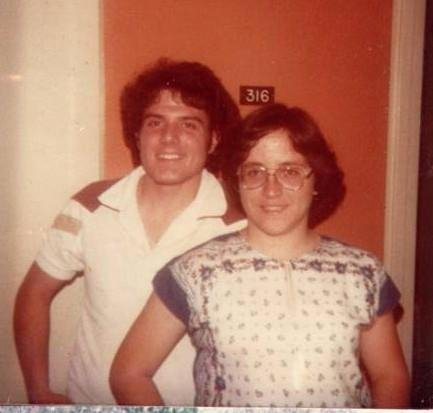
I met her my first year at San Joaquin Delta College, in Stockton, California. We went to rival high schools and she was a year ahead of me. When I met her I feel in love. I think it took her longer to fall in love with me, but honestly, for me it was love at first sight and I’ve never looked back.

1012128_10151749215177059_1902693993_n

Judy has stood by me through almost 36 years in the military and most of those were not easy. I did a quick count and we have spent over 13 years apart due to my work, and that doesn’t count all the times where we were together when I was in the reserves and working in civilian hospitals where the hours that I worked were so odd that I seldom saw her for 3 years, nor four years of seminary where I was a full time student and worked more than full time, nor when I was home working on yet another master’s degree, and let’s not even mention the time that I spend researching and writing my books.

295_26912077058_3276_n

Then there has been my ongoing battle with the effects of PTSD and mild TBI. Thankfully I am doing a lot better, but from 2008 until 2014 I was pretty unbearable.

Likewise, I am an introvert who can become so focused on what I’m doing that I ignore her. I have done that all too often throughout our marriage. But, that being said, over the past couple of years since I came back from three years of a geographic bachelor tour while serving at Camp LeJeune, North Carolina, we have reconnected. I think that part of that was caused when she was diagnosed with Endometrial Cancer last year. She got through it, and so far remains cancer free, but it hit me hard because it brought me to the realization that I could lose her, and that I want the rest of our life together to be better than it ever was. She is my best friend, she knows me better than anyone, and I tell her things that I can tell no one else. I love coming home to her.

She is a remarkable woman. On Groundhog Day I watched, as is my custom, the movie Groundhog Day starring Bill Murray and Andie McDowell. It is one of my favorites. But when I watched it this time I was struck by something that Murray’s character tells her, because it pretty much sums up the way that I feel about Judy.

I think you’re the kindest, sweetest, prettiest person I’ve ever met in my life. I’ve never seen anyone that’s nicer to people than you are. The first time I saw you… something happened to me. I never told you but… I knew that I wanted to hold you as hard as I could. I don’t deserve someone like you. But if I ever could, I swear I would love you for the rest of my life.

She is all that, and more. I am so lucky to have her in my life and cannot imagine life without her. We never had kids, but we have each other, our dogs, and some really good friends.

In 1979, the year we started dating the group Dr. Hook released a single called Years from Now. When I first heard it back then on American Top Forty and bought the 45 at Tower Records in Stockton, I knew it summed up how I would always feel about her.

So please, have a great Valentine’s Day with whoever you love.

Peace

Padre Steve+

1 Comment

Filed under Loose thoughts and musings, marriage and relationships

An Article on the Importance of the Humanities by Sean Munger

Friends of Padre Steve’s World,

A really good article by my friend Sean Munger. If you don’t know him he is a history professor and his blog is definitely worth keeping on your favorites list. As Sean says, “Let’s not build walls. Let’s try building more libraries.”

Peace

Padre Steve+

via Why we need humanities and the arts: now, more than ever. — SeanMunger.com

Leave a comment

Filed under Loose thoughts and musings

Eichenwald: Neil Gorsuch Is Supremely Qualified, and Must Not Be Confirmed

Friends of Padre Steve’s World,

This post by Kurt Eichenwald echoes my feelings about the nomination of Neil Gorsuch to the Supreme Court. I can support qualified men like Gorsuch to the Court even when I disagree with their judicial philosophy. I have done that in the past.

To me this is far less about the man than to the unconstitutional actions of Senate Republicans to even hold a hearing on President Obama’s nominee Merritt Gerland last year.

President Trump’s longstanding disdain for the courts and judicial system is legendary. I honestly feel bad for Judge Gorsuch because of how Trump’s poisonous reputation will soil his name regardless of whether he is confirmed to the Supreme Court of not.

It’s an excellent article.

Peace

Padre Steve+

http://www.newsweek.com/why-neil-gorsuch-must-not-be-confirmed-supreme-court-eichenwald-551429

2 Comments

Filed under Loose thoughts and musings

Beer is Proof that God Loves Us and wants Us to be Happy


Friends of Padre Steve’s World,

Nothing serious today unless you really believe that whatever deity you believe in loves us and wants us to be happy. 

But truthfully, in every age, since the people of Mesopotamia discovered the secret of fermenting hops and malts into a bread that one can drink, beer has been proof that God does love us and wants us to be happy.

I love good craft beer as well as imports, especially German and Irish beers. In my years in Germany I learned to enjoy really good beer. In my Navy deployments the the Mediterranean Sea and Persian Gulf I learned to appreciate Irish beer at the Irish expatriate bars that dot both regions. 

Last night I went to a tapping party at the Virginia Beach Gordon Biersch Brewery Restaurant. Those who know me know that this is my version of Cheers, it is a place where everyone knows my name. 

No matter how bad things are in the world, or in my life, or in the country, beer is there, because God loves us; and unlike the pie in the sky “God loves you and wants you to be happy”  of the Evangelical Christian Four Spiritual Laws,  beer is here. 

So no matter what happens today I simply remind you that no-matter what your belief or ideology, that the creator of the universe does love you and wants you to be happy. Beer is the proof.

Have a great day.

Peace,

Padre Steve+

2 Comments

Filed under beer, Loose thoughts and musings

The Development of Artillery from the Napoleon Period to the American Civil War: Part One

cannons

Friends of Padre Steve’s World,

I’ve been working on revisions to one of my Civil War texts, A Great War in a Revolutionary Age of Change and decided to post one of those today. Hopefully tomorrow I will follow up with the second part of this section, which deals with the development of artillery from the pre-Napoleonic era to the beginning of the American Civil War. This is kind of a post for geeks who study the period.

I hope that you enjoy.

Peace

Padre Steve+

The Gribeauval System, Napoleon, and the U.S. Army

Like the infantry and cavalry the technical specifics and tactics of the artillery of the United States Army had their roots in the Napoleonic era. Artillery theory “emphasized both the offensive and defensive role of field artillery, with the emphasis on the offensive role in support of infantry assault tactics.” [1] Much of this was due to how Napoleon, a master of artillery tactics, employed his artillery. Napoleon depended heavily on his artillery, he “liked to assemble them in a Grand Battery and use them as an offensive, as against a defensive weapon. At Wagram, in 1809, Napoleon had torn the heart out of an Austrian army with a Grand Battery of 112 guns.” [2] Napoleon would also use a tactic called the artillery rush in which just prior to launching an attack, “the greater part of his artillery reserve would rush to the front. An intensive bombardment would pulverize the opposing line at the point of assault.” [3] If successful he would unleash his heavy and light cavalry in pursuit of broken enemy formations, if not, the guns would cover the retreat of the assault troops.

Napoleon used the system of General Jean Baptiste Gribeauval (1715-1789) who was the real father of artillery in the French army. Gribeauval adapted the Prussian system of Frederick the Great for France. “He “undertook a complete overhaul of the French artillery system.” [4] He developed an entire artillery system for the French army including field, siege and coastal artillery manned by specially trained soldiers. These soldiers were trained in specialized artillery schools. Napoleon, who was trained in the artillery school of the Regiment La Fere in 1785, “used Gribeauval’s guns, equipment, and organization as steppingstones on the path to becoming First Counsel of France and later of a large part of Europe.” [5]

In order to improve mobility, Gribeauval standardized weapons in each arm of the artillery, and most importantly for field artillery he reduced the number of gun types found in different artillery units. He “selected 4-, 8-, and 12-pr guns, all plain unchambered pieces of 18 caliber length, and 6-in howitzers. All of these fired well-fitting projectiles with powder charges about one-third the weight of the shot.” [6] To increase accuracy he ordered that the bore of artillery pieces be drilled rather than case which “produced more exact tolerances within the bore and reduced the windage between the projectile and the bore’s wall.” [7] To enhance mobility he designed standardized limbers and caissons for his guns and all field artillery pieces were “mounted on the same basic carriage so that many carriage parts were interchangeable.” [8] Likewise, the Frenchman “introduced a series of innovations that aimed at improving the artillery’s accuracy. He introduced an elevating screw to adjust the guns range instead of a wedge, allowing for more precise ranging. Gribeauval also provided the gun crews with graduated rear sights. The elevating screw and the rear sight were seen as the most significant improvements regarding cannon in two hundred years.” [9]

One of the most important aspects of Gribeauval’s system was that it touched “nearly every aspect of cannon design, construction, carriages, and deployment, the so-called Gribeauval System served France into the Napoleonic Era. It was so far reaching that it also profoundly influenced artillery in other nations, including that of the emerging United States” [10] which adopted the Gribeauval System in 1818.

American Army officers had long been in the thrall of Napoleon and had been educated in Napoleon’s theory of war by Napoleon’s Swiss interpreter, Henri Jomini, through Denis Hart Mahan, the first military theoretician of the United States who had studied in France and taught at West Point. As such the army sent officers to France to study, among them was Lieutenant Daniel Tyler who went to France in 1828. He translated all of Gribeauval’s System and noted that the French were in the process of adopting British designs of weapons and accouterments, which they had found to be superior to the older designs. Tyler recommended that the Army continue with the Gribeauval System.

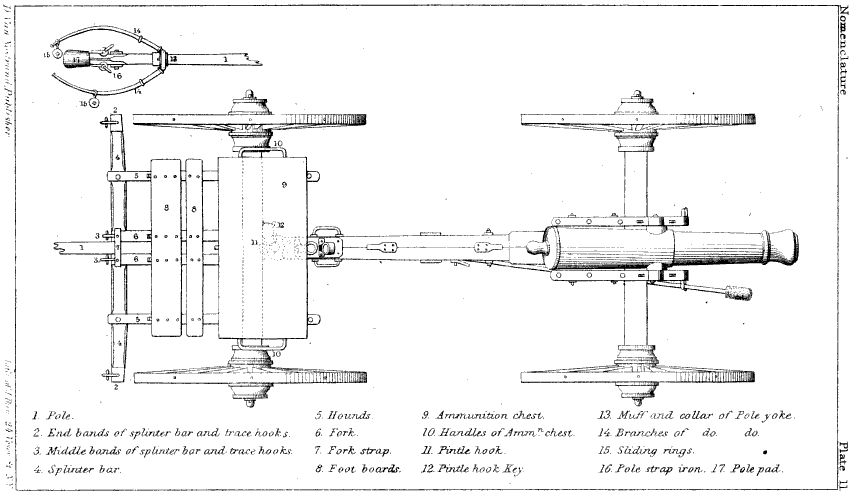
One of these advancements was the stock-rail carriage to mount artillery, which was superior to the Gribeauval designs. Janice McKenny, in her book The Organizational History of Field Artillery 1775-2003 noted that Tyler also translated copies of the French evaluations of British designs, and “obtained complete drawings and specifications of the Système anglais modié, which the Americans later named the “stock-trail system” after the design of the carriage. The new trail consisted of a solid block of wood, simpler and stronger than the old split-trail then in use by the American army, and was significantly superior in maneuverability.” [11] In response to Tyler, some American designers “began fabricating stock trail prototypes” [12] from Tyler’s drawings. However, it took over a decade for the Army to adopt the design, but once adopted the army would use the stock-rail system for its field artillery guns until after the Civil War.

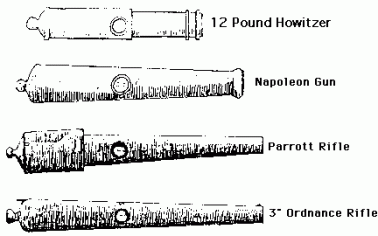
This was in large part due to the work of Captain Alfred Mordecai, who traveled to France in 1833-1834 and collected data on the French development of the stock-rail system. His information, “which included detailed drawings, became the basis for U.S. prototypes of the design.” [13] An Ordnance officer, Mordecai went on to become head of the Frankford Arsenal and later was appointed to the Ordnance Board where he wrote the 1841 Ordnance Manual for the Use of Officers in the United States Army. Mordecai was instrumental in standardizing weapons types and carriages. The guns of his 1841 Pattern, 6- and 12-pound guns, as well as the 12-pound howitzer were all mounted on a standard carriage. Larger weapons, the 24- and 32- pound howitzers of the 1841 pattern were developed but did not see as much service due to their weight. Additionally, limbers and caissons were redesigned to lighten them and improve mobility. Though approaching obsolescence, many these guns saw action in early part of the Civil War and Confederate artilleryman Porter Alexander noted that the 24-pound howitzer was “his favorite gun” [14] for the effectiveness of its heavy shells and canister.
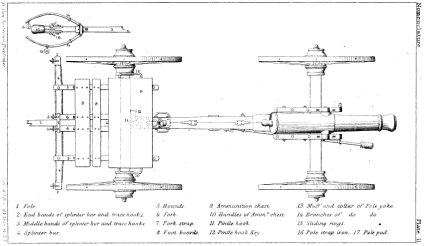
6pdrcarriagetravel

M-1841 6-Pounder Artillery Carriage and Limber

The artillery service in United States Army was organized like the French army into batteries of six guns, which in turn were detailed to brigades, regiments or battalions. The regimental system was adopted in 1821, following discussions by Secretary of War John C. Calhoun and Congress. As a result, the existing artillery of the army, “the Corps of Artillery and the Regiment of Light Artillery were consolidated to form the 1st, 2d, 3d, and 4th Regiments of Artillery. One of the nine companies authorized to each of the four regiments was to be equipped as light artillery…. The number of artillery companies was reduced from forty-two (thirty-two in the Corps of Artillery and ten in the Regiment of Light Artillery) to thirty-six in the four artillery regiments.[15] The units were dispersed at forts as coastal artillery and depots around the country.

Most of the artillery companies of the period were maintained well below strength and none were organized as horse artillery. In order to give artillerymen practical experience and training working as part of a larger force, Calhoun and the Army established an artillery school at Fortress Monroe. This was an important step. The mission of the school was to provide artillerymen the necessary training in the science of gunnery and artillery tactics, which could not be accomplished in isolated posts. To ensure that the total force was trained the army determined that, “ten artillery companies were to be drawn from the four regiments and assembled as the Artillery Corps for Instruction. The faculty was to be selected from the artillery at large. Through a plan of rotation, all artillery companies were eventually to pass through the school. Cadets assigned to the artillery after graduating from West Point were to receive a year’s instruction at the school before joining their regiments.” [16] The school was closed in 1835 due to the demands for artillerymen in the increased number of coastal fortifications and the need for troops to serve in Florida against the Seminoles.

Though almost all artillery units participated in the war “for the most part, the artillerists were limited in employment to manning the numerous stockades erected to confine the Indians to the Everglades.” [17] Thus they gained no practical experience in their trade. In spite of this by the late 1830s a high percentage of the West Point faculty and staff were men who had served with the artillery in Florida. Major Richard Delafield, an artilleryman became Superintendent in 1838 and gave “artillery instruction wider curricular attention: an artillery “laboratory” would be set up, and practice with lightweight and mobile cannon would receive new impetus.” [18] In another move, Secretary of the Army Joel Poinsett decided to implement the provision of the 1821 regulations to establish four light companies. Using surplus horses from the war he mounted one company as horse artillery in which each crew member had his own horse or rode on the limber, and three as mounted units, “meaning that though the guns were horse-drawn, the cannoneers rode on the carriages or caissons or they walked. In theory the mounted units were to be employed with infantry as regular field artillery and the horse (or light) artillery was to be employed with cavalry.” [19]

The Apex of the Smoothbore
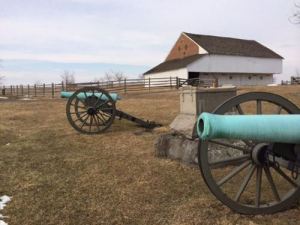
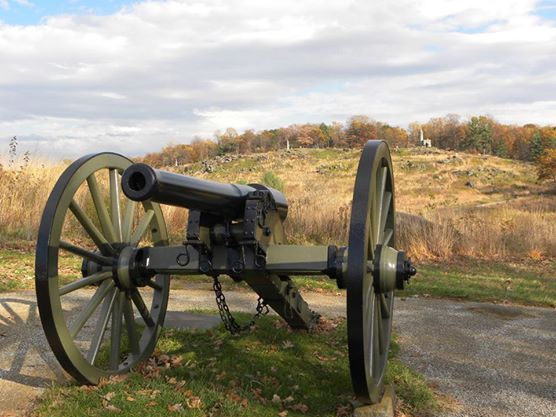
12 pound napoleon

12 Pound M-1857 Napoleons at Gettysburg

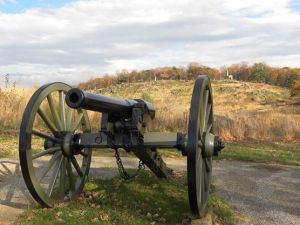
Most of the improvements in artillery design between the Napoleonic era and the Civil War were on focused on lightening the weight of the tube, developing better and more mobile limbers, and improvements to fuses and ammunition. During this time the smoothbore cannon reached the apex of its development. In the United States this was realized with the brass M 1857 12-pound Napoleon, which was developed from a French design, however the gun “embodied none of the recent advances in technology” and was “already considered obsolescent by the French Army.” [20] However, much of the choice was dictated by purchasing agents and the budget which required any new ordnance to be cheap. The Napoleon was intended to replace the 1841 patter 6 and 12 pound guns and the 12 pound howitzer. It was nearly 500 pounds lighter than the old guns and “though it was technically a gun, owing to its ability to fire canister and solid shot, the Napoleon was often referred to as a gun-howitzer for its ability to fire explosive shell.” [21] It would see its first action at the Battle of Bull Run and nearly 1,800 of these versatile cannon would be produced in Northern and Confederate foundries during the war. Despite its obsolescence it “proved to be the most popular field piece during the Civil War,” [22] and Union artillery General Henry Hunt later acclaimed the Napoleon as “the best all round field piece of this era.” [23] Robert E. Lee told the Prussian observer to the Army of Northern Virginia, Justus Scheibert: “Nothing surpasses… the impression of a battery of 12-pound smoothbores which approaches to within 400-600 paces of the enemy…. In such moment rifled artillery, the advantages of which in open country I fully appreciate, cannot replace the smoothbore.” [24] Some of these guns remained in service until 1880.

The Development of Rifled Cannon and Breechloaders

While the development of rifled, breech loading, and repeating rifles advanced the capabilities of the infantry in terms of firepower, range, accuracy and battlefield lethality, developments to modernize the artillery around the world lagged behind the rifled musket due to the economic costs involved. Because of the cost “no country would face the cost of re-equipment.” [25] This would begin to change in the mid-1850s as the experience of the Crimean began to give new impetus to weapons development.

However, a number of artillerymen and innovators began to experiment with breech loading and rifled cannon. These were not new ideas, and “when combined, they were first experimented with in England in 1745,” [26] but it would take another hundred years before Italian Major Giovanni Cavalli developed “a cast iron gun, its bore cut with simple two groove rifling to accept an elongated projectile fitted with corresponding lugs that mated with the gun’s grooves.” [27] As Cavalli improved his design others in Europe designed rifled guns. In France Colonel Treuille de Bealieu designed a similar gun to Cavalli; but which fired a cylindrical projectile. Napoleon III who was himself authority on artillery ordered brass smoothbores to be rifled on Bealieu’s design. [28] Swedish Baron Martin Wahrendorf “experimented with smaller, multiple-grooved rifling using lead-sheathed projectiles” [29] Cavalli’s guns were used by the Sardinian army, while the French deployed a number of theirs to Algeria and against the Austrians in Italy.

In the 1850s three English inventors, Charles William Lancaster, Joseph Whitworth, and William George Armstrong began to develop rifled guns. During the Crimean War the British Army modified some old large-caliber guns as breech-loaders. The “first British rifled ordnance consisted of a few old 68-pr and 8-in. cast iron guns, which were made oval and twisted in the bore and so converted to pieces rifled on the Lancaster principle.” [30] Some of these guns saw action during the siege of Sevastopol. Whitworth also produced a breech loading rifled cannon. His gun had a very long range and was exceptionally accurate, however the design was complex and temperamental, and the gun “ultimately proved impractical for general use.” This was in part due to their complexity and the “precise tolerances used in the manufacture… required meticulous maintenance by gun crews to avoid malfunctions, and even moderate bore wear led to jamming in the bores.” [31] A few Whitworth rifles were employed by the Confederate army during the Civil War, two seeing action in Richard Ewell’s Second Corps at Gettysburg.

Armstrong, proposed a lightweight rifled field gun, made of forged rather than cast iron to the Duke of Newcastle, Secretary of State for War in 1854. [32] His design incorporated features that remain today. “His rifled breechloader had multiple groves to distribute the twisting force equally around the projectile. The iron projectile was coated with lead to permit a tight sealing into the grooves. Later projectiles have employed copper rotating bands to produce the tight seal without leaving the deposits of lead which tended to foul the cannon.” [33] The only real issues with Armstrong’s guns was that his “breech-loading system was complex and rather advance of its time, and there were a number of accidents due to various mechanical weaknesses.” [34] Likewise, the early breech-loading systems “were so clumsy and slow to operate that a good crew could fire a muzzle-loader faster than a breach loader.” [35]

The United States Army began to examine the possibilities of rifled guns, but the process took time, and much struggle due to the bureaucracy and political infighting. “In the mid-1850s, experiments with the forerunners of rifled cannon began at Fort Monroe. In 1860, a board of artillery and ordnance officers was established to make further tests on rifling, and the board submitted its report late that year. It recommended that at least 50 percent of the guns at forts and arsenals be converted into rifles.” [36]
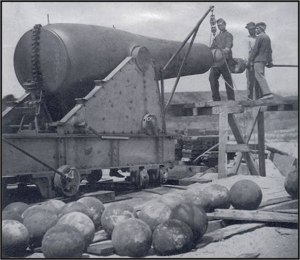
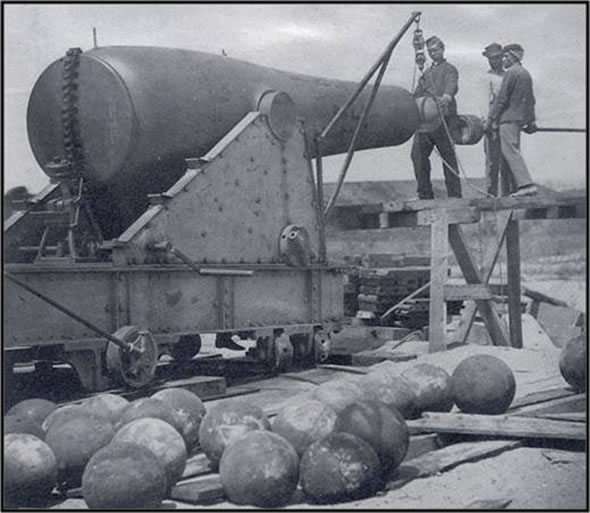
15inch-rodman-gun

15 inch Rodman Gun

During the same time period a number of Americans both military, and civilian, began to develop their own variations of rifled cannon for use in the U.S. Army. The most important of these were Captain Robert Jackson Rodman and Captain Robert Parrott. Rodman was a true scientist who understood both metallurgy and gunpowder. Rodman was instrumental in using his knowledge to design the largest guns of the era. Called Columbiads, these heavy guns came in 8 inch, 10 inch, 15 inch and even a 20 inch model. They were used in coastal fortifications. In the 1870s over 200 of the 10 inch model were converted to 8 inch rifles. The Rodman guns remained in service the rest of the century and are considered to be the best cast-iron cannon ever produced.

Parrott was the Superintendent of the West Point Iron and Cannon Foundry of Cold Spring New York. Parrott “became interested in rifled guns after the successes of Krupp in Germany. In the following years he applied his own skills to designing an American rifled gun.” [37] Parrott focused on improving cast-iron guns. He “developed a method for shrinking wrought-iron bands around the breech of a cast barrel.”[38] The band was designed to strengthen the cast iron barrel and “the final result was a relatively lightweight, economical gun and gave the Parrot rifle its distinctive profile.” [39] For field artillery use Parrot designed a 2.9 inch 10-pounder in 1861 which was modified to a 3 inch bore in 1863 to standardized ammunition with the 3 inch Ordnance Rifle. Parrot also designed a 20-pound 4.7 inch rifle for field service. Both models were manufactured in the North and the South and saw wide use with over 2,000 produced for the Federal government. When he was at VMI in 1860, Thomas “Stonewall” Jackson was “one of the first to test and recommend for adoption the rifled Parrott guns.” [40] At Jackson’s “recommendation, Virginia purchased twelve” of the new rifled guns. [41]
999130_10152038135167059_1801660138_n

10 Pound Parrot Rifle at Devil’s Den Gettysburg

Parrot also produced heavy guns used by the Navy for use on ships, and the Army for seacoast and siege weapons. The one problem with the Parrot rifles was the fact that the cast-iron barrel was brittle and prone to burst, especially those of large caliber, which made it unpopular among its crews and caused the Navy to withdraw them from service aboard ship. Porter Alexander reported that during the Battle of Fredericksburg that for the first and only time he had 30-pound Parrott rifles in the field and that during the battle “they filled a great want, until they, unfortunately, both exploded towards the middle of the day, one on the 37th round & one on the 42nd.” [42]

A civilian, John Griffen of the Phoenix Ironwork of Phoenixville, Pennsylvania, “pioneered the use of wrought iron in the construction of field pieces[43] and patented his prototype in 1855. The designed was slightly modified by the Ordnance Department and adopted by the army in 1861. The weapon was known as the Ordnance Rifle and is had a bore of 3 inches and threw a 10-pound projectile. Unlike the cast iron Parrot, it was “constructed of tougher wrought iron, consisting of iron bands welded together around a mandrel and then lathed to a sleek, modern profile. It was then bored and rifled.” [44] The Ordnance rifles were light, easy to maneuver and beloved by their crews for their accuracy, and dependability. Phoenix manufactured over 1,000 of these weapons for the Federal government.

To be continued…

Notes

[1] Ibid. Hagerman The American Civil War and the Origins of Modern Warfare p.21

[2] Ibid. Cornwell Waterloo: The History of Four Days, Three Armies, and Three Battles p.165

[3] Nesmith, Vardell E. Stagnation and Change in Military Thought: The Evolution of American Field Artillery Doctrine, 1861-1905 – An Example United States Army Command and Staff College, Fort Leavenworth, KS 1976 p.5

[4] Kinard, Jeff Artillery: An Illustrated History of Its Impact ABC Clio, Santa Barbara, Denver, and Oxford 2007 p.148

[5] Stevens, Phillip H. Artillery Through the Ages Franklin Watts Inc. New York 1965 p.47

[6] Rogers, H.C.B. A History of Artillery The Citadel Press, Secaucus NJ 1975 p.58

[7] Ibid. Kinard Artillery: An Illustrated History of Its Impact p.148

[8] Ibid. Stevens, Phillip H. Artillery Through the Ages Franklin Watts Inc. New York 1965 p.48

[9] Garcia, Manuel R. The Pursuit of Precision in Field Artillery School of Advanced Military Studies, United States Army Command and General Staff College, Fort Leavenworth KS 2010 pp.7-8

[10] Ibid. Kinard Artillery: An Illustrated History of Its Impact p.148

[11] McKenny, Janice E. The Organizational History of Field Artillery 1775-2003 Center For Military History, United States Army, Washington D.C. 2007 p.36

[12] Ibid. Kinard Artillery: An Illustrated History of Its Impact p.170

[13] Ibid. Kinard Artillery: An Illustrated History of Its Impact p.169

[14] Ibid. Alexander Fighting for the Confederacy: The Personal Recollections of General Edward Porter Alexander p.182

[15] Ibid. McKenny The Organizational History of Field Artillery 1775-2003 p.32

[16] Ibid. McKenny The Organizational History of Field Artillery 1775-2003 p.34

[17] Ibid. McKenny The Organizational History of Field Artillery 1775-2003 p.34

[18] Longacre, Edward G. The Man Behind the Guns: A Military Biography of General Henry J. Hunt, Chief of Artillery, Army of the Potomac Da Capo Press, a Perseus Group, Cambridge MA 2003 p.28

[19] Ibid. McKenny The Organizational History of Field Artillery 1775-2003 p.38

[20] Ibid. Stevens, Phillip H. Artillery Through the Ages Franklin Watts Inc. New York 1965 pp.62-63

[21] Ibid. Kinard Artillery: An Illustrated History of Its Impact p.188

[22] Ibid. McKenny The Organizational History of Field Artillery 1775-2003 p.49

[23] Ibid. Longacre The Man Behind the Guns: A Military Biography of General Henry J. Hunt, Chief of Artillery, Army of the Potomac p.70

[24] Ibid. Guelzo Fateful Lightening p.257

[25] Ibid. Fuller The Conduct of War 1789-1961 p.89

[26] Ibid. Fuller The Conduct of War 1789-1961 p.89

[27] Ibid. Kinard Artillery: An Illustrated History of Its Impact p.222

[28] Ibid. Rogers A History of Artillery p.94

[29] Ibid. Kinard Artillery: An Illustrated History of Its Impact p.222

[30] Ibid. Rogers A History of Artillery p.94

[31] Ibid. Kinard Artillery: An Illustrated History of Its Impact p.223

[32] Ibid. Rogers A History of Artillery p.94

[33] Ibid. Stevens, Phillip H. Artillery Through the Ages Franklin Watts Inc. New York 1965 p.60

[34] Ibid. Rogers A History of Artillery p.94

[35] Ibid. Stevens, Phillip H. Artillery Through the Ages Franklin Watts Inc. New York 1965 p.60

[36] Ibid. McKenny The Organizational History of Field Artillery 1775-2003 pp.50-51

[37] Ibid. Kinard Artillery: An Illustrated History of Its Impact p.190

[38] Ibid. Stevens, Phillip H. Artillery Through the Ages Franklin Watts Inc. New York 1965 p.61

[39] Ibid. Kinard Artillery: An Illustrated History of Its Impact p.190

[40] Ibid. Gwynne Rebel Yell: The Violence, Passion, and Redemption of Stonewall Jackson p.88

[41] Ibid. Nesmith Stagnation and Change in Military Thought: The Evolution of American Field Artillery Doctrine, 1861-1905 – An Example p.15

[42] Ibid. Alexander Fighting for the Confederacy: The Personal Recollections of General Edward Porter Alexander p.172

[43] Ibid. Nesmith Stagnation and Change in Military Thought: The Evolution of American Field Artillery Doctrine, 1861-1905 – An Example p.14

[44] Ibid. Kinard Artillery: An Illustrated History of Its Impact p.192

2 Comments

Filed under Loose thoughts and musings

On Inauguration 2017

Friends of Padre Steve’s World

I seldom re-post other people’s work but Frank Angle is a blogger that I have followed for years. I think there is a lot of wisdom in this article.

Peace

Padre Steve+

Frank @ Beach Walk Reflections's avatarA Frank Angle

Because Inauguration Day of a new president coincides with my normal posting of Opinions in the Shorts, I decided to forego my normal OITS for a posting that is fitting for the day.

In a short moment of time, Barack Obama goes from the one with the title to a former occupant of the Oval Office. My view of President Obama is different from the many who follow partisan lines. At this moment I want to thank him for his service. Thank him for the way he handled himself in representing our nation. Thank him for the way he carried the extra burden of being the first non-white to serve in the most powerful office in the land. Thank him for taking us from where we were in January 20, 2009 to today. (A good read in USA Today.)

Inauguration Day marks the peaceful transition from one…

View original post 431 more words

2 Comments

Filed under Loose thoughts and musings

The Friend in My Adversity…

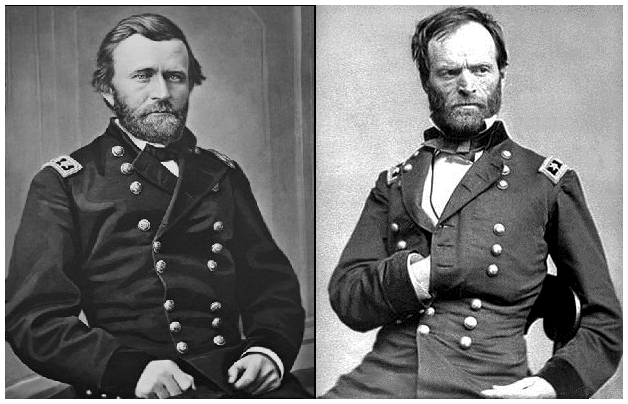
grant-and-sherman-122304

Friends of Padre Steve’s World,

Today just a short thought. I spent most of this holiday weekend down with a nasty cold which allowed me to do some reading and working on my book A Great War in a Revolutionary Age of Change: The Foundations of the American Civil War and Why it Still Matters Today. What I was working on was more on the technical “wonk” side of the development and use of artillery that preceded the war and how artillery was used in it. Lots of analysis, and delving through obscure books which I found absolutely fascinating, but anyway I digress and someday soon you’ll get to read that as well.

Last night a got a wonderful phone call from an old friend, a priest from my former denomination who remarkably hasn’t cast me off. We had a wonderful time, he’s a brilliant man, a combat veteran of Iraq and suffers from some of the same issues that plague me, but with added medical issues from inhaling so many toxins during his two combat tours. He’s gone through a lot, but he and his family are doing well. He is now in medical school and doing very well, but like I said he’s brilliant.

After we returned from Iraq we suffered and commiserated a lot, sometimes over a lot of alcoholic beverages. Last night our talk went on for quite a while and it was great just to do that, so relaxing, good memories, thoughtful discussion of what is going on in the country and in our lives. One thing he said that meant the world to me was the difference I had made as a mentor, encourager, and friend and how important I was to him. He said I was like the character that Kevin Costner played in Bull Durham, Crash Davis, the old catcher sent down to help out the rising star. In a way he is right, and I love the comparison.

As we talked he noted it was so seldom that people take the time to listen, care, encourage, and mentor others. In fact its something that is mentioned quite often in the New Testament. I mentioned to him that one of the people who recently expressed a similar thought to me was a former Navy doctor who I knew when he was an intern; he’s an atheist, but we truly appreciate and value each other.

Sadly, as a culture we have lost that connection and ability to care and learn from each other, even when we disagree on certain points, even important ones. Additionally, we often tend to discard those who are broken in some way, or who color too far outside the lines. There is a creeping Ayn Rand, survival of the fittest style of Social Darwinism that has infiltrated our culture, and especially the church. It has become part of our politics as well and I am sure under the new administration we will see it bloom as we have never seen it before, but I digress again…

Being friends means to let each other know how much we appreciate each other and encourage one another.

Ulysses S. Grant, who is one of my heroes with feet of clay remarked, The friend in my adversity I shall always cherish most. I can better trust those who helped to relieve the gloom of my dark hours than those who are so ready to enjoy with me the sunshine of my prosperity.” Grant’s ever mindful friend and subordinate William Tecumseh Sherman noted, “Grant stood by me when I was crazy, I stood by him when he was drunk. Now we stand together.” 

With that I wish you a good day,

Peace

Padre Steve+

2 Comments

Filed under christian life, Loose thoughts and musings, Pastoral Care, PTSD, remembering friends