Category Archives: Military

England Expects: Nelson at Trafalgar

497px-HoratioNelson1

Admiral Horatio Nelson

“Duty is the great business of a sea officer; all private considerations must give way to it, however painful it may be.” Horatio Nelson

Friends of Padre Steve’s World,

I have always been fascinated by the life of Admiral Horatio Nelson and the Battle of Trafalgar. In fact I still have a biography of Nelson written for young people and published by American Heritage Publishers that I bought when I was in 5th Grade.

Those who follow my writings know that I am fascinated by people who are often courageous, brilliant, and masters of their field of expertise, yet flawed. I think that is one reason that I like history, because if we really study it, we find that even the greatest men and women who have ever lived and inhabited the pages of books, are often little different than us. Horatio Nelson is one of those individuals.

Since I read little biography of Nelson a lot of water has passed under my keel. But even today, about 45 years later I still am fascinated about the very heroic and flawed man who commanded the British Fleet at Trafalgar and was mortally wounded at the moment of his greatest victory.

Peace

Padre Steve+

HMS_Victory

HMS Victory

In 1805 Britain was facing the threat of invasion by Napoleon’s French Empire which was allied with Spain. All Napoleon had to do was have he combined French and Spanish naval might to defeat the Royal Navy and a least for a time control the English channel to allow the French invasion force to land.

It was a daunting challenge to the British but the force the Royal Navy send to hunt down the combined fleet of France and Spain was commanded by the diminutive one eyed, one armed victor of the Battle of the Nile and Battle of Copenhagen Admiral Horatio Nelson.

When the French Fleet under the command of Charles Villeneuve escaped into the Atlantic aided by storms which forced Nelson’s Fleet off station in early 1805. Nelson assumed it was heading to Egypt and sailed into the Mediterranean in pursuit. He found out that he was wrong and that Villeneuve had sailed to the Caribbean he went after him. Barely missing contact with the combined French and Spanish Fleet Nelson followed it to Cadiz where the Combined Fleet took refuge.

Villeneuve’s task was difficult. Though he outnumbered the British force his crews were inexperienced and  because the ships had been blockaded for many years not trained to the standard of French forces in earlier times. Likewise many French naval leaders had not survived the bloodletting of the Revolution or been killed in action at the Battle of the Nile. In order to execute Napoleon’s strategy he would have to take his Combined Fleet out of Cadiz, rendezvous with another French Squadron from Brest, defeat the Royal Navy and gain control over the channel.

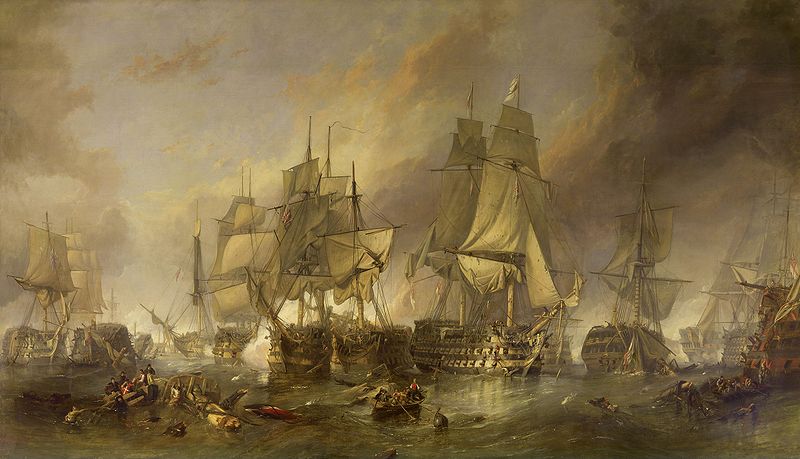
800px-The_Battle_of_Trafalgar_by_William_Clarkson_Stanfield

However Napoleon changed the plan and on September 16th 1805 ordered the Fleet to break out of Cadiz and sail to Naples, however Villeneuve had misgivings and deliberating with his Captains and Spanish Allies remained in Cadiz. That changed on October 18th when Villeneuve gave the order to sail despite light winds. His decision was based less on strategy or tactics but the fact that he had discovered that he was to be relieved of command and that his relief was on the way to Cadiz.

Nelson was a controversial and often contradictory man. He was the son of an Anglican Priest, a man of faith who struggled in marriage and had an affair with Lady Emma Hamilton which bore him a daughter and eclipsed his marriage. He was a man of valor who lost an arm and eye in battle and led his sailors to victory time and time again. He was loved by the men who served under him but the target of the jealousy of officers who disapproved of him.

mp_full.3

When Villeneuve attempted to break out on October 18th Nelson was alerted by the screen of frigates conducting the close blockade of Cadiz. Nelson began to pursue and when Villeneuve discovered this he attempted to return to Cadiz. On the morning of the 21st the fleets drew closer, Nelson with 27 Ships of the line mounting 2148 guns against the Combined Fleet of 33 Ships of the Line mounting 2568 guns. It was a battle that many a British Tar believed held the fate of the nation.

Nelson was less than orthodox in is conduct of battle. Instead of laying alongside the French line he opted to split his force into two columns and break the French and Spanish line with the intent of the total destruction of the enemy force in close combat where the individual superiority of his ships and sailors . It was a risky strategy of the approach meant that the Combined Fleet would if properly handled could possibly use its superior firepower against a few British ships at a time.

As his Fleet approached the Combined Fleet Nelson penned a prayer:

“May the great God, whom I worship, grant to my country and for the benefit of Europe in general, a great and glorious victory: and may no misconduct, in any one, tarnish it: and may humanity after victory be the predominant feature in the British fleet.

For myself individually, I commit my life to Him who made me and may His blessing light upon my endeavours for serving my country faithfully.

To Him I resign myself and the just cause which is entrusted to me to defend.

Amen. Amen. Amen.” 

At 1145 Nelson had his signalmen hoist the signal that would go down in history. ENGLAND EXPECTS THAT EVERY MAN WILL DO HIS DUTY. The signal as composed by Nelson said that ENGLAND CONFIDES THAT EVERY MAN WILL DO HIS DUTY. However that signal was more complicated and the Signal’s Officer LT Pasco informed Nelson that “Expects” was in the signals vocabulary where “confides” would have to be spelt requiring extra lifts. Nelson concurred.

In the slow run up to the Combined Fleet the British took a beating, but when the British broke the French line and opened fire the battle took a different turn. Following Nelson’s orders his captains and his second in command Admiral Cuthbert Collingwood took the fight to the enemy.

Nelson’s flagship, the HMS Victory delivered he opening broadsides into the stern of Villeneuve’s flagship the Bucentaure with devastating results. After passing Bucentaure the Victory was engaged in close combat by the 74-gun Redoutable and the ships became locked together. Redoutable was commanded by one of the finest Captain’s in French Fleet, Captain Lucas who had trained his crew well including in close combat. His marksmen took a deadly toll of Victory’s crew exposed on the upper decks and one of his marksmen mortally wounded Nelson as the British Admiral walked his flagship’s quarterdeck.

800px-Fall_of_Nelson

Nelson is Mortally Wounded

Nelson was carried to the sick bay of Victory where as he lay dying he continued to receive updates on the battle. Knowing a storm was coming he gave orders for his ships to anchor. Upon being informed of the number of French and Spanish ships taken he whispered “Thank God I have done my duty” and Nelson’s Chaplain noted Nelson’s last words as “God and my country.

By the end of the battle the British had captured or sunk 22 of the 33 French and Spanish Ships of the Line including Villeneuve’s flagship Bucentaure and the largest warship of time the 130 gun Spanish behemoth Santisima Trinidad. On the night of the battle and the days following the British Fleet and the survivors of the Combined Fleet were battered by a massive storm causing much more suffering, misery and loss of life as badly damaged ships succumbed and sank or ran aground on the shores of Cape Trafalgar.

The battle broke the naval strength of the French and Spanish and removed the threat of invasion from Britain. Napoleon hid the defeat from his people and calling it a victory, but throughout England it was celebrated even as Nelson was mourned.

The Battle of Trafalgar epitomized the courage of Nelson and the Royal Navy. As an officer of the United States Navy I tip my hat and drink a toast to Admiral Nelson.

Peace

Padre Steve+

Leave a comment

Filed under History, leadership, Military, Navy Ships

I Imagined that it Would be Different than This: Thoughts on Coming Home from War

Friends of Padre Steve’s World

Judy and I are now on our last full day in Germany and the Oktoberfest in Munich. Tomorrow evening we should be back in the good old USA. Since I am posting in advance as I do not plan on writing anything in Germany unless something really important happens, I am re-posting a modified version of an article that I first posted over a year ago.

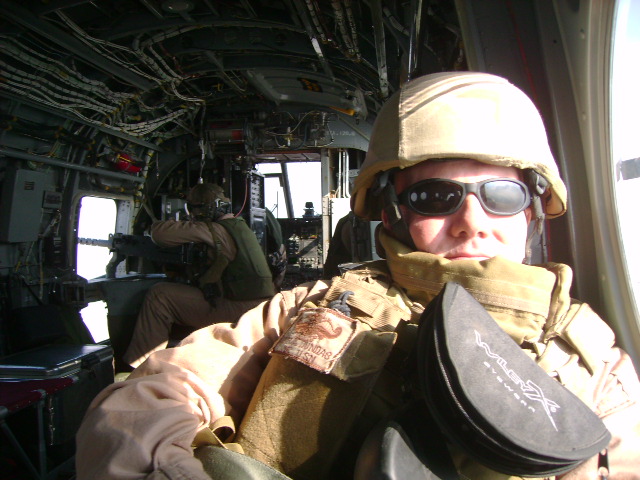
For me it began in February 2008 when on the way back from Iraq the military charter aircraft bringing us home stopped in Ramstein Germany. After a few hour layover we re-boarded the aircraft but we were no longer alone, the rest of the aircraft had been filled with the families of soldiers and airmen stationed in Germany. Just days before most of us had been in Iraq or Afghanistan. The cries of children and the intrusion of these people, not bad people by any means on our return flight was shocking, it was like returning to a world that I no longer knew.

I think that coming home from war, especially for those damaged in some way, in mind, body or spirit is harder than being at war.

In that thought I am not alone. Erich Maria Remarque in his classic novel All Quiet on the Western Front wrote:

“I imagined leave would be different from this. Indeed, it was different a year ago. It is I of course that have changed in the interval. There lies a gulf between that time and today. At that time I still knew nothing about the war, we had been only in quiet sectors. But now I see that I have been crushed without knowing it. I find I do not belong here any more, it is a foreign world.”

Likewise, Guy Sajer a French-German from the Alsace and veteran of the Grossdeutschland Division on the Eastern Front in World War II noted at the end of his book The Forgotten Soldier: 

“In the train, rolling through the sunny French countryside, my head knocked against the wooden back of the seat. Other people, who seemed to belong to a different world, were laughing. I couldn’t laugh and couldn’t forget.”

I have been reminded of this several times in the past week. It began walking through a crowded Navy commissary on Saturday, in the few minutes in the store my anxiety level went up significantly. On Tuesday I learned of the death of Captain Tom Sitsch my last Commodore at EOD Group Two, who died by his own hand. His life had come apart. After a number of deployments to Iraq as the Commander EOD Mobile Unit 3 and of Task Force Troy he was afflicted with PTSD. Between June of 2008 and the end of 2009 he went from commanding an EOD Group to being forced to retire.  Today I had a long talk with a fairly young friend agonizing over continued medical treatments for terminal conditions he contracted in two tours in Iraq where he was awarded the Bronze Star twice.

I have a terrible insomnia, nightmares and night terrors due to PTSD. My memories of Iraq are still strong, and this week these conditions have been much worse. Sager wrote:

“Only happy people have nightmares, from overeating. For those who live a nightmare reality, sleep is a black hole, lost in time, like death.”

Nearly 20 years after returning from war, a survivor of the 1st Battalion 308th Infantry, the “Lost Battalion” of World War One, summed up the experience of so many men who come back from war:

“We just do not have the control we should have. I went through without a visible wound, but have spent many months in hospitals and dollars for medical treatment as a result of those terrible experiences.”

butler-medals1

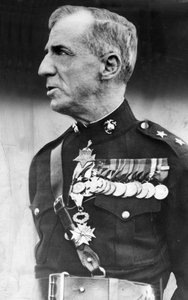
Two time Medal of Honor winner Major General Smedley Butler toured Veterans hospitals following his retirement from the Marine Corps. He observed the soldiers who had been locked away. In his book War is a Racket:

“But the soldier pays the biggest part of this bill. If you don’t believe this, visit the American cemeteries on the battlefields abroad. Or visit  any of the veterans’ hospitals in the United States….I have visited eighteen government hospitals for veterans. In them are about 50,000 destroyed men- men who were the pick of the nation eighteen years ago. The very able chief surgeon at the government hospital in Milwaukee, where there are 3,800 of the living dead, told me that mortality among veterans is three times as great as among those who stayed home.”

Similarly Remarque wrote in All Quiet on the Western Front:

“A man cannot realize that above such shattered bodies there are still human faces in which life goes its daily round. And this is only one hospital, a single station; there are hundreds of thousands in Germany, hundreds of thousands in France, hundreds of thousands in Russia. How senseless is everything that can ever be written, done, or thought, when such things are possible. It must be all lies and of no account when the culture of a thousand years could not prevent this stream of blood being poured out, these torture chambers in their hundreds of thousands. A hospital alone shows what war is.”

Lt.ColonelCharlesWhiteWhittlesey

Lieutenant Colonel Charles Whittlesey

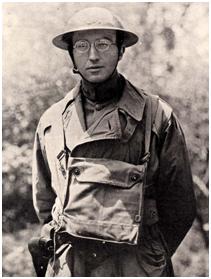
Sometimes even those who have been awarded our Nation’s highest award for valor succumb to the demons of war that they cannot shake, and never completely adjust to life at “home” which is no longer home. For them it is a different, a foreign world to use the words of Sager and Remarque. Lieutenant Colonel Charles Whittlesey won the Medal Medal of Honor as Commander of 1st Battalion 308th Infantry, the “Lost Battalion” in France. After the war he was different. He gave up his civilian law practice and served as head of the Red Cross in New York. In that role, and as the Colonel for his reserve unit, he spent his time visiting the wounded who were still suffering in hospitals. He also made the effort to attend the funerals of veterans who had died. The continued reminders of the war that he could not come home from left him a different man. He committed suicide on November 21st 1921not long after serving as a pallbearer for the Unknown Soldier when that man was interred at Arlington National Cemetery.

In his eulogy, Judge Charles L. Hibbard noted:

“He is sitting on the piazza of a cottage by the sea on a glorious late September day but a few weeks ago. . . He is looking straight out to sea, with naught but sea between him and that land where lie so many of his boys. The beating surf is but an echo, the warm, bright sunshine, the blue sky, the dancing waves, all combine to charm. But a single look at his face and one knows he is unconscious of this glory of Nature. Somewhere far down in the depths of his being or in imagination far off across the waters he lives again the days that are past. That unconscious look has all the marks of deep sorrow, brooding tragedy, unbearable memories. Weeks pass. The mainspring of life is wound tighter and tighter and then comes the burial of the Unknown Soldier. This draws the last measure of reserve and with it the realization that life had little now to offer. This quiet, reserved personality drew away as it were from its habitation of flesh, thought out the future, measured the coming years and came to a mature decision. You say, ‘He had so much to live for – family, friends, and all that makes life sweet.’ No, my friends, life’s span for him was measured those days in that distant forest. He had plumbed the depth of tragic suffering; he had heard the world’s applause; he had seen and touched the great realities of life; and what remained was of little consequence. He craved rest, peace and sweet forgetfulness. He thought it out quietly, serenely, confidently, minutely. He came to a decision not lightly or unadvisedly, and in the end did what he thought was best, and in the comfort of that thought we too must rest. ‘Wounded in action,’ aye, sorely wounded in heart and soul and now most truly ‘missing in action.’”

Psychologist and professor Dr. Ari Solomon analyzed the case of Colonel Whittlesey and noted:

“If I could interview Whittlesey as a psychologist today, I’d especially have in mind … the sharp discrepancy between the public role he was playing and his hidden agony, his constant re-exposure to reminders of the battle, his possible lack of intimate relations, and his felt need to hide his pain even from family and dearest friends.”

I wish I had the answer. I have some ideas that date back to antiquity in the ways that tribes, clans and city states brought their warriors home. The warriors were recognized, there were public rituals, sometimes religious but other times not. But the difference is that the warriors were welcomed home by a community and re-integrated into it. They were allowed to share their stories, many of which were preserved through oral traditions so long that they eventually were written down, even in a mythologized state.

But we do not do that. Our society is disconnected, distant and often cold. Likewise it is polarized in ways that it has not been since the years before our terrible Civil War. Our warriors return from war, often alone, coming home to families, friends and communities that they no longer know. They are misunderstood because the population at large does not share their experience. The picture painted of them in the media, even when it is sympathetic is often a caricature; distance and the frenetic pace of our society break the camaraderie with the friends that they served alongside. Remarque wrote, “We were all at once terribly alone; and alone we must see it through.”

If we wonder about the suicide epidemic among veterans we have to ask hard questions. Questions like why do so many combat veterans have substance abuse problems and why is it that approximately one in ten prisoners serving time are veterans? It cannot be simply that they are all bad eggs. Many were and are smart, talented, compassionate and brave, tested and tried in ways that our civilian society has no understanding for or clue about. In fact to get in the military most had to be a cut above their peers. We have to ask if we are bringing our veterans home from war in a way that works. Maybe even more importantly we have to ask ourselves if as a culture if we have forgotten how to care about each other. How do we care for the men and women who bear the burden of war, even while the vast majority of the population basks in the freedom and security provided by the soldier without the ability to empathize because they have never shared that experience.

For every Tom Sitsch, Charles Whittlesey or people like my friend, there are countless others suffering in silence as a result of war. We really have to ask hard questions and then decide to do something as individuals, communities and government to do something about it. If we don’t a generation will suffer in silence.

Peace

Padre Steve+


Leave a comment

Filed under History, leadership, Military, PTSD

The Uncounted Cost of War: Veteran Suicides

481801_10151367001287059_1003164983_n

Friends of Padre Steve’s World,

Marine Corps Major General Smedley Butler probably discussed the true cost of war better than anyone. Butler, a two time Medal of Honor winner wrote in his book War is a Racket:

“What is the cost of war? what is the bill? “This bill renders a horrible accounting. Newly placed gravestones. Mangled bodies. Shattered minds. Broken hearts and homes. Economic instability. Depression and all of its attendant miseries. Back -breaking taxation for generations and generations. For a great many years as a soldier I had a suspicion that war was a racket; not only until I retired to civilian life did I fully realize it….”

Mangled bodies, shattered minds. The bodies get counted, the minds do not, and when a Marine, Sailor, Soldier, Airman or former serviceman or women ends their life due to suicide their name is not included on the casualty reports.

In January 2014 the Veterans Administration released a disturbing report that male veterans under 30 years old saw a 44% increase in the rate of suicide. The rate for women veterans increased by 11%. About 22 veterans a day committed suicide in 2013. That did not count those still on active duty numbers which are still high but have dropped somewhat since 2012 and previous years.

The VA National Mental Health Director for Suicide Prevention, Jan Kemp said “Their rates are astronomically high and climbing…” Kemp postulated that reasons for the spike might include “the pressures of leaving military careers, readjusting to civilian life and combat injuries like post-traumatic stress disorder…”

I believe that the stigma that many felt about getting psychological help while they were in the military continues on when they enter civilian life. Unlike the military where there is still some sense of camaraderie and a chance that the chain of command might force a service member to get help, no corresponding structure or community exists in the civilian world. Young veterans are often isolated and face new stresses while they are already on edge. Many find that the military occupation specialties that they trained for have no direct civilian counterpart, leaving them struggling in the civilian job market. Combat injuries as well as injuries sustained in training often continue on, limiting what they can do and the unseen injuries of PTSD, Traumatic Brain Injury and Moral Injury, often undiagnosed and untreated lurk in the background.

126642_600

This is a national tragedy and crisis. Many of these young men and women are among the best and brightest. They volunteered to serve in time of war and now as the military, especially the Army and Marine Corps begin to shed large numbers of troops, many more will be thrust into a world that they may be ill equipped to survive.

They will attempt to go to work or attend school, quite often alone. There they will be surrounded by people who have no idea of the issues that they face or understanding of the military world that they left, or the places that they served. I think this social isolation will be a killer for many.

My recommendation is that people who work or go to school with these young veterans, or for that matter any veteran get to know them. Help them adjust to the world and keep an eye on them. Ask them how they are doing and just show that you care. You do not have to be a veteran to do that. Likewise get to know about the resources that are available for veterans and help direct them to them. Have the courage to care.

20131108-ArlingtonVA-MilitaryInforgraphic

Resources include the Veterans Crisis Hotline which is staffed 24 hours a day, 7 days a week. They can be reached at (800)-273-8255, press 1, or here to chat online. They also allow veterans to send a text message to 838255 to receive confidential support 24 hours a day.

Another resource is the Real Warriors Live Chat. The a trained health resource consultant is ready to talk, listen and provide guidance and resources. They can be reached by calling 866-966-1020 or going to their live chat service here http://www.realwarriors.net/livechat.

Afterdeployment.org http://afterdeployment.t2.health.mil offers wellness resources for the Military Community. Service members in transition to civilian life can contact inTransition by calling 800-424-7877 or at their website http://www.health.mil/InTransition/default.aspx

To me this is personal. I still suffer from the effects of PTSD, TBI, Moral Injury and have been to the brink of suicide. I am doing a lot better, and I love life, and I can’t imagine living it without me.

However, I have known far too many veterans who have taken their own lives, or struggle with mental health issues, physical injuries and illness, or social isolation. Last January, about the time the VA report came out a brilliant and heroic senior officer I knew, Captain Tom Sitsch who helped me when I was collapsing due to the effects of PTSD took his own life. This is something that all of us have a stake in. Please help look out for our veterans.

Peace

Padre Steve+

4 Comments

Filed under leadership, mental health, Military, PTSD, suicide

A Christian & an Enthusiast: General Oliver O. Howard

Friends of Padre Steve’s World,

A change of pace as I get ready for a new class and a section of my Gettysburg Text about Major General Oliver O. Howard. Howard is interesting because alone of senior Union generals his Christian Faith guided his actions and he was maligned by some for that faith. 

This section is only biographic sketch before his Eleventh Corps went into action at Gettysburg. Likewise it does not discuss his very successful command of a corps and army in the West under William Tecumseh Sherman, nor his post war service. I think that he makes an interesting character study; after all, the one constant in history is humanity. We learn from men like Howard and that is important.

Peace

Padre Steve+

Oliver-Otis-Howard-9345101-1-402

Major General Oliver O. Howard, U.S. Army

With John Reynolds dead and Abner Doubleday directing First Corps in its defense west of Gettysburg Major General Oliver O. Howard, commander of Eleventh Corps assumed command of the Federal forces around Gettysburg. Howard was one of the more unusual characters in the senior leadership of the Army of the Potomac, and later when he served under William Tecumseh Sherman’s command in the west, mostly because of his strong Evangelical Christian religious convictions and the fact that he did not drink. Sherman remarked to a group of generals who were mocking Howard’s temperance, “Let Howard alone! I want one officer who don’t drink!” [1]

“A Christian and an Enthusiast”

The thirty-three year old Howard was from Maine, his father had died when he was ten and in 1846 at the age of sixteen he entered Bowdoin College. He graduated from Bowdoin in 1850 near the top of his small class, and education, far from being something simply to prepare himself for a career was important of itself, and he told his mother, “Education is my first aim…. I seek not money, but a cultivated and enlightened mind, becoming & corresponding with the age in which we live.” [2] During his time at Bowdoin Howard was introspective and frequently mused on his own shortcomings and failures. He also showed little interest in world or national events, including the war with Mexico, but in his first year at Bowdoin he did take an interest in the cousin of a classmate, Elizabeth Ann Waite, or Lizzie who eventually became his wife.

While he was finishing his time at Bowdoin he was still uncertain of what he would do. It was then that his uncle, Congressman John Otis who had help to raise him following the death of his father secured for him an appointment to West Point. He did very well academically but at times struggled with some of his fellow students, some of who considered him “priggish, self-righteous, and opinionated.” [3] This was most likely due to a number of reasons, first his moderate abolitionist views, which were unpopular with many cadets, his active participation in the Bible class, which some classmates ridiculed, and his high academic standing, which provoked the jealousy of others. Howard was also resented by some for his friendship with Sergeant Warren Lothrop, a Mexican War veteran, a childhood friend who was “the son of a close friend of his own father” [4] as well as maintaining a friendship with a cadet “who had been “cut” – shunned – by the corps.” [5] While he stood by the cadet, he was forbidden to maintain the friendship by the Commandant of Cadets due to rules on fraternization, but in the eyes of some classmates, the damage had been done. One cadet who never accepted Howard was Custis Lee, an academic rival and the son of Robert E. Lee.

Despite a rough start Howard became friends with many cadets, including some who had shunned him early in his West Point experience. However, one friend who stood by Howard throughout was a cadet from Virginia named J.E.B. Stuart, who he knew from the Bible class. Howard wrote of that friendship, “I can never forget the manliness of J.E.B. Stuart…. He spoke to me, he visited me, and we became warm friends, often, on Saturday afternoons, visiting the young ladies of the post together.” [6] Howard’s friends included cadets from north and south, and never appeared to let political or ideological differences influence his choice of friends.

He graduated fourth in the class of 1854 and commissioned as a Brevet Second Lieutenant in the highly technical Ordinance Corps. He married Lizzie the following year and held a number of assignments in his corps before being assigned to Florida at the tail end of the Seminole Wars where as an Ordinance officer he saw no action. However, during his time in Florida he experienced his conversion to Evangelical Christianity, following his attendance of a number of Methodist revival meetings and his future life would bear evidence of the influence of the founder of Methodism, John Wesley. His faith became a facet of his life that he would never waver from incurring the praise as well as the criticism of various contemporaries. He wrote Lizzie:

“I then bore hat the text above in mind, & said in my heart oh! My Saviour, I know that thou canst save me! I made an effort to fully believe that my sins were washed in the blood of the Lamb, that my dear Saviour had actually saved me at that moment, i.e. had pardoned all my transgressions of the laws of God, & all the wickedness of a corrupt heart – The fullness of the glow of happiness came into my heart, the tugging & burning left me – the choking sensation was gone…my mind is as clear as when making out an Ordinance Return…” [7]

Following his conversion he led prayers and Bible studies, had enlisted me to his quarters for morning devotions and even considered leaving the army for the ministry. It was fortunate for Howard that his commander, an elderly Colonel, Gustavus Loomis, was a devout Christian who had first taken him to the Methodist revival meetings, for many other senior officers would have not approved of such overtly evangelical behavior.

Howard was transferred back to West Point in September of 1857 where now as a First Lieutenant he was assigned as an instructor in Mathematics, and was able to again be with Lizzie and their children. At West Point he continued his religious activities, leading Bible studies and became the superintendent of a Sunday school for the children of enlisted men and briefly explored the possibility of entering the ministry with a local Episcopal priest and even studied Hebrew for a time.

During his time as an instructor at West Point the young officer, like many devout converts to any religion, wrestled with his faith. Always introspective Howard became even more so, do much soul-searching and with two issues that he recognized in himself, vanity and pride. He wrote: “the pride & haughtiness of my heart is more than pen can tell, but I believe God will so school me, by failures when I act without Christ, by disappointments & afflictions, as to bring my miserably foolish soul into full subjection to himself…. I fear if God would give me success with my heart as it is now, that I would be puffed up with pride & thus lose the countenance of my blessed Saviour.” [8] That struggle to harmonize the tension between his desire to excel in the army and life, with his concerns for his soul should he become consumed by ambition and vanity would become more pronounced within a few very short years.

As he had for most of his life Howard took little interest in political questions and the growing movement toward secession. This was not surprising because Howard, whose religious commitment was continuing to grow was planning to take a leave of absence from the army to attend Bangor Theological Seminary, where his brother, Charles was already a student. However, when Fort Sumter was fired on Howard “abandoned the plan to enter the ministry and determined to stay as a regular or volunteer until the war was over.” [9]

As the officers who made their choice to remain loyal to the Union were now confronted with the decision to remain in the Regular Army or join the new volunteer regiments being formed by Northern states. For many, loyalty and the desire to fight to protect the Union was mixed with a certain amount of pragmatic ambition. Remaining in the relatively small Regular Army might leave them in the position of assisting the training of new volunteer units, or involved with the administration or organizing and equipping them, possibly with limited promotion opportunity while taking a volunteer commission could lead to rapid promotion, command of a regiment or even a brigade.

But initially “the was “a prevalent opposition to regular officers accepting commissions in the volunteers,” [10] but soon the reality that the Regular army was insufficient to bring the rebellious states back into the Union caused the army to allow officers to serve with the volunteers. Howard’s fellow Mathematics instructor, Lieutenant Gouverneur Warren was one of the first young officers at West Point to accept a volunteer commission in the Fifth New York Infantry, the Duryea Zouaves. Howard wrote to Maine’s governor, Israel Washburne offering his services to the State, and after an initial rebuff was offered command of the Third Maine Volunteer Infantry. When he received the offer from Maine Howard took it to Lieutenant Colonel John Reynolds, the Commandant of Cadets and told Reynolds of the offer and asked, “I’ve had the tender, or what amounts to it, of a Maine Regiment. What answer would you give, colonel?’ Reynolds replied, “You’ll accept, of course, Howard,” [11] and then preceded to give the young officer a lesson on what colonels needed to know.

One thing Howard had settled in his mind was the legitimacy of war. As a cadet at West Point he had studied the works of Henry Wager Halleck, who wrote one of the first comprehensive books on strategy by an American and who included in his work a synopsis of the traditional Just War Theory. Halleck, like Howard, was a devout Christian and in his book he wrote “The prevention and punishment of crime causes much human suffering; nevertheless the good of the community requires that crime should be prevented and punished. So, as a nation, we employ military officers to man our ships and forts, to protect our property and our persons, and to repel and punish those who seek to rob us of our life, liberty, and pursuit of happiness…” [12] When Fort Sumter was attacked and other Federal installations in the South being overrun Howard believed that “it was a citizen’s duty to defend his country just as a father would defend his wife and children from an assassin.” [13] When the regiment arrived in New York on its way to Washington it was presented a flag by patriotic Maine citizens living there. Upon receiving it, Howard thanked them and his words reflected his thoughts about war and duty, as well as his religious faith: “I was born in the East, but I was educated by my country. I know no section; I know no party; I never did. I know only my country to love it, and my God who is over my country. We go forth to battle in defense of righteousness and liberty, civil and religious. We go strong in muscle, strong in heart, strong in soul, because we are right…” [14]

Howard’s faith would be a source of personal strength throughout the war and while some like Joseph Hooker ridiculed his faith saying “He was always taken up with Sunday Schools and the temperance cause. Those things are all very good, you know, but have little to do with commanding an army corps. He would command a prayer meeting with a good deal more ability than he would an army.” [15] Likewise his “reputation as a Christian “hampered his acceptance by both fellow officers and enlisted men.” [16] Despite this, many soldiers and officers in every unit Howard commanded came to admire him

Despite this Howard did eventually succeed and became the only officer of his West Point class of 1854 to become a Major General in the Regular Army of the United States. It was not always an easy road, but Howard displayed a resiliency in the face difficulty and even defeat, a resiliency that enabled him to grow as an officer and commander as the war went on.

Shortly after the Third Maine joined the army at Washington Howard was made a brigade commander. His brigade was involved in the final attack at Bull Run were it was caught up in the disaster that overtook the army of Irvin McDowell. He was promoted to brigadier general and commanded a brigade during McClellan’s inept Peninsular Campaign and “at Fair Oaks on June 1, he was hit twice in the right arm while leading a charge; a second bullet shattered the bone near the elbow, and the arm had to be amputated.” [17] Howard’s bravery in the face of the enemy was noted, especially after having received the first wound he continued to lead his men despite having three horses shot from under him. One of his regimental commanders wrote, “The General was the only Brigadier that I saw on the field who led his men into battle & handled them there – He acted with a bravery bordering on rashness & nobly sustained his reputation as a brave and efficient officer.” [18]

Within two months Howard was back with the army, his former officers writing McClellan to recommend that Howard be given command of a division. He did not immediately get that, but was given command of a brigade of Pennsylvania Reserves, the Philadelphia Brigade in John Sedgwick’s division. He took command of that division when Sedgwick was wounded at Antietam. He commanded the division when it was thrown into General Ambrose Burnside’s ill-advised and doomed assault of Marye’s Heights at the Battle of Fredericksburg. Though his division could not break the Confederate line he was commended by Major General Charles Sumner and Major General Darius Couch for his actions. Sumner noted Howard’s “judicious disposition” in driving the Confederates from Fredericksburg” while “Couch, in speak of the corps losses, stated: “Howard, coming up late, lost 700 men, besides 150 on the 11th. He did well in the part assigned to him.” [19]

During the winter following Burnside’s relief and the appointment of Major General Joseph Hooker to command the Army of the Potomac, Howard remained in command of his division. The vanity that he wrestled with in his spiritual life got the better of him when Daniel Sickles, a political general with no formal military training was appointed to command the Third Corps. Howard, who was senior to Sickles protested to Hooker and was promised the newly arrived Eleventh Corps. The corps, which had just become part of Hooker’s army was never “accepted as a true part of the Army of the Potomac,” where it was viewed as a “foreign contingent,” [20] “and was looked upon by the older units with some distain, despite its having seen considerable action.” [21] The previous Corps commander, Major General Fritz Sigel had just left the army after a disagreement regarding not receiving a larger command during the reorganization of the army. When he left many of the corps’ soldiers remained very loyal to their old commander, and “thought Howard was being advanced at Sigel’s expense.” [22]

But Hooker had created a problem for himself. Eleventh Corps was the only large unit in the Federal Army with a high concentration of Germans. Many of the soldiers had enlisted to serve under men that they knew and trusted, Fritz Sigel and Carl Schurz. When Sigel left command Hooker could have appointed Carl Schurz to command the corps, but “Hooker had little use for Schurz’s generalship,” [23] and bluntly told Secretary of War Stanton that he would not appoint Schurz to corps command. For Howard, this was not good, for “in his anxiety to receive a command commensurate with his rank he had failed to consider all the consequences.” [24]

Howard took command of Eleventh Corps barely a month before Hooker launched his offensive against Robert E. Lee’s Army of Northern Virginia, which culminated in the Battle of Chancellorsville. Howard struggled to gain the acceptance of the German soldiers of his new command, many of whom were resentful of having to serve under a non-German officer who did not understand them. Howard’s overtly Evangelical Christian approach to command and stress on temperance, which included the distribution of religious tracts did not endear him to the Germans, many of who were Catholics, free-thinkers and beer drinkers. While Howard’s piety was appreciated many soldiers of English and Scottish descent with Protestant roots, the “Germans of the Eleventh Corps, many of whom were freethinkers, the activities of “Old Prayer Book” were not welcome…. The Eleventh Corps would go on campaign under a general it neither liked nor trusted, and Howard was marching quite out of step with his command.” [25] Some understood this, Colonel Charles Wainwright, commander of the First Corps artillery wrote, “Howard, who succeeds Sigel in the Eleventh is brave enough, and a most perfect gentleman. He is a Christian and an enthusiast, as well as a man of ability, but there is some doubt as to his having snap enough to manage the Germans, who require to be ruled with a rod of iron.” [26]

In the ensuing battle Howard’s Eleventh Corps was taken in the flank by Stonewall Jackson’s troops which outnumbered his badly situated corps by nearly three-to-one, his only reserve brigade having been taken by Hooker to support Sickle’s Third Corps. The ensuing action was a disaster as regiment after regiment was rolled up by the rapidly advancing Confederate phalanx.

Blame could be assigned to both Hooker and Howard, Hooker for leaving Eleventh Corps unsupported and isolated on the flank without a reserve, and Howard for not taking better precautions to secure his right flank from a surprise attack. Neither Howard, nor his senior division commander Brigadier general Charles Devens “personally investigated any of the reports of Rebel activity on their front, and Howard compounded his negligence by leaving his command for two critical hours.” [27] Only Carl Schurz took any action to protect the corps flank and rear by quietly facing three of his regiments west. When the night was over Howard admitted “I wanted to die…. That night I did all in my power to remedy the mistake, and I sought death everywhere I could find an excuse to go to the field.” [28] However, Jackson’s victory was more tactical than strategic and as one historian noted “the corps had generally acquitted itself well in a nearly hopeless situation and delayed Confederate progress until dark,” [29]at which time the Confederates experienced the loss of Stonewall Jackson who was mortally wounded in the darkness by his own troops as he tried to push his corps forward.

However, the morale of the Eleventh Corps was crushed and it would not get a chance to redeem itself during the rest of the Chancellorsville campaign. When Hooker lost his nerve, refused to counter-attack, and then decided to withdraw he was opposed by Howard, George Meade, Darius Couch and John Reynolds who advocated a renewal of the offensive against Lee who they knew to have taken heavy casualties and had to be outnumbered by the Army of the Potomac.

The ever insightful Charles Wainwright wrote, “Some of the papers are very severe on Hooker, and insist upon that he was drunk, which I do not believe. Others go quite as far the other way, and try to screen him from all blame, seeking to throw it on one or the other of his subordinates. The attacks on General Howard are outrageous. He had been in command of the Eleventh Corps but a month before the fight, and was previously unknown to its officers and men…. He is the only religious man of high rank I know in this army, and, in the little intercourse I have had with him, shewed himself the most polished gentleman I have met. I know that he was very anxious to attack Lee on Monday, and together with Couch, Reynolds, and Meade was decidedly opposed to our withdraw on Wednesday night…” [30]

But the damage to the Eleventh Corps had been done. In the search for blame the old line prejudice and sentiment of the “Know nothings” against the immigrant Germans was once again unleashed. Inside and outside the Army of the Potomac, the Eleventh Corps was given the derisive nickname of “the flying Dutchmen” despite the fact that approximately half of its soldiers were of old line Yankee stock. The Eleventh Corps was not without good soldiers or good leaders, the real issue came from “the prejudice of Americans and the defensive attitude of the Germans…” [31] The soldiers of the corps had to endure the mocking of soldiers of other units and the scorn of the press, which “spoke of the “unexampled conduct” of the Eleventh Corps and how “the whole failure of the Army of the Potomac was owing to [its] scandalous poltroonery.” [32] In defense of the Corps Brigadier General Alexander Schimmelpfennig wrote “It would seem a nest of vipers had but waited for an auspicious moment to spit out their poisonous slanders upon this heretofore honored corps…. I have been proud to command the brave men in this brigade; but I am sure that unless these infamous falsehoods be retracted and reparations made, their good will and soldierly spirit will be broken…” [33]

Like his army commander, Fighting Joe Hooker, Howard never “conceded that he was in any way negligent, but he once hinted that at Chancellorsville he was inexperienced and that he had learned a lesson. “When I was a lad, a larger boy gave me a drubbing, but I grew in size and strength till he could do it no longer. The war experience of some of us was like that.” [34] To his credit, Howard did learn from his mistakes and never was surprised again as Eleventh Corps commander or the Commander of the Army of Tennessee under the command of William Tecumseh Sherman. However, Hooker, not only refused to take any blame, but proceeded to blame “squarely upon three of the army’s eight corps commanders…” [35] Howard, John Sedgwick and cavalry corps commander George Stoneman.

The troops were discouraged and resentful of their treatment; one officer wrote of the corps’ withdraw from Chancellorsville “I recrossed with a heavy heart, and… I felt tears rolling down my cheeks. I was ashamed of the battle, and deplored the sad experience of the Eleventh Corps…” while Howard noted, “there was no gloomier period during the great war than the month which followed the disasters at Chancellorsville.” [36] Carl Schurz wrote “The spirit of this corps is broken, and something must be done to revive it.” [37] It was in this depressed environment, commanding a corps that was defeated and demoralized that Oliver Howard advanced into Gettysburg on July 1st 1863.

Notes

[1] Hebert, Walter H. Fighting Joe Hooker University of Nebraska Press, Lincoln and London 1999. Originally published by Bobbs-Merrill, New York 1944 p.178

[2] Carpenter, John A. Sword and Olive Branch: Oliver Otis Howard Fordham University Press, New York 1999 p.3

[3] Thomas, Emory M. Bold Dragoon: The Life of J.E.B. Stuart University of Oklahoma Press, Norman OK 1986 and 1999 p.24

[4] Ibid. Carpenter Sword and Olive Branch p.8

[5] Ibid. Thomas Bold Dragoon p.24

[6] Ibid. Thomas Bold Dragoon p.25

[7] Ibid. Carpenter Sword and Olive Branch p.17

[8] Ibid. Carpenter Sword and Olive Branch p.20

[9] Ibid. Carpenter Sword and Olive Branch p.21

[10] Jordan, David M. Happiness is Not My Companion: The Life of G.K. Warren Indiana University Press, Bloomington Indiana 2001 p.34

[11] Howard, Oliver O. Autobiography of Oliver Otis Howard, Major General, U.S. Army Volume 1 The Baker and Taylor Company, New York 1907 Made available by the Internet Achieve through Amazon Kindle location1627 of 9221

[12] Halleck, Henry Wager. Elements of Military Art and Science Or, Course Instruction In Strategy, Fortification Tactics of Battles, &c. Embracing the Duties of Staff, Infantry, Cavalry, Artillery, and Engineers, Adapted for the Use of Volunteers and Militia Third Edition D. Appleton & Company, New York and London 1862 Amazon Kindle edition location 149 of 6332

[13] Ibid. Carpenter Sword and Olive Branch p.21

[14] Ibid. Howard Autobiography of Oliver Otis Howard location 1983 of 9221

[15] Girardi, Robert I. The Civil War Generals: Comrades, Peers, Rivals in Their Own Words Zenith Press, MBI Publishing, Minneapolis MN 2013 p.92

[16] Ibid. Carpenter Sword and Olive Branch p.25

[17] Tagg, Larry The Generals of Gettysburg: The Leaders of America’s Greatest Battle Da Capo Press Cambridge MA 1998 Amazon Kindle Edition p. 121

[18] Ibid. Girardi The Civil War Generals: Comrades, Peers, Rivals in Their Own Words p.91

[19] Ibid. Carpenter Sword and Olive Branch p.41

[20] Ibid. Hebert Fighting Joe Hooker p.178

[21] Ibid. Carpenter Sword and Olive Branch p.43

[22] Ibid. Hebert Fighting Joe Hooker p.178

[23] Sears, Stephen W. Chancellorsville Houghton Mifflin Co. Boston and New York 1996 p.64

[24] Ibid. Carpenter Sword and Olive Branch p.43

[25] Ibid. Sears Chancellorsville p.65

[26] Wainwright, Charles S. A Diary of Battle: The Personal Journal of Colonel Charles S. Wainwright 1861-1865 edited by Allan Nevins, Da Capo Press, New York 1998 p.183

[27] Ibid. Sears Chancellorsville p.270

[28] Ibid. Sears Chancellorsville p.286

[29] Greene, A. Wilson. From Chancellorsville to Gettysburg: O. O. Howard and Eleventh Corps Leadership in The First Day at Gettysburg edited by Gallagher, Gary W. Kent State University Press, Kent Ohio 1992 p.57

[30] Ibid. Wainwright A Diary of Battle p.210

[31] Coddington, Edwin B. The Gettysburg Campaign: A Study in Command, A Touchstone Book, Simon and Schuster New York, 1968 p.306

[32] Ibid. Green From Chancellorsville to Gettysburg: O. O. Howard and Eleventh Corps Leadership p.58

[33] Ibid. Green From Chancellorsville to Gettysburg: O. O. Howard and Eleventh Corps Leadership p.58

[34] Ibid. Carpenter Sword and Olive Branch p.49

[35] Sears, Stephen W Gettysburg Houghton Mifflin Company, New York 2003 pp.193-194 and Coddington p.20

[36] Ibid. Green From Chancellorsville to Gettysburg: O. O. Howard and Eleventh Corps Leadership p.57

[37] Ibid. Sears Gettysburg p.37

Leave a comment

Filed under civil war, Gettysburg, History, leadership, Military

Be Clear in Your Mind: The Lesson of 9-11’s Aftermath

IMG_2671

Friends of Padre Steve’s World

I have been reflecting about the attacks of September 11th 2001 and their aftermath, and today a final post on that subject for now. The great German military theorist Carl von Clausewitz wrote, “No one starts a war-or rather, no one in his senses ought to do so-without first being clear in his mind what he intends to achieve by that war and how he intends to conduct it.” Sadly, the leaders of nations seldom heed his sage advice.

Nations and peoples who suffer devastating attacks often respond out of deep anger and emotion, and many times. The United States did so after 9-11-2001, and while the initial response to attempt to kill Osama Bin Laden and destroy Al Qaeda in Afghanistan was considered justified by most of the world, what that war, and the subsequent war invasion of Iraq became can be best described as best ill-advised and at worst criminal. After over fourteen years of war, these wars are by no means over, and I have to use the words of T.E. Lawrence to describe the situation, “We have not reached the limit of our military commitments…”

The great Greek Historian Thucydides wrote words which pretty much describe how we got to where we are in this war without end:

“Think, too, of the great part that is played by the unpredictable in war: think of it now, before you are actually committed to war. The longer a war lasts, the more things tend to depend on accidents. Neither you nor we can see into them: we have to abide their outcome in the dark. And when people are entering upon a war they do things the wrong way round. Action comes first, and it is only when they have already suffered that they begin to think.”

Likewise, we, and I don’t just mean the former Bush administration, but many others today who think that war is always the first and best option. We forget the words of Winston Churchill who, despite his many blunders in both World Wars wrote:

“Never, never, never believe any war will be smooth and easy, or that anyone who embarks on the strange voyage can measure the tides and hurricanes he will encounter. The statesman who yields to war fever must realize that once the signal is given, he is no longer the master of policy but the slave of unforeseeable and uncontrollable events…. Always remember, however sure you are that you could easily win, that there would not be a war if the other man did not think he also had a chance.”

The imperial hubris of our actions following 9-11-2001, most notably the invasion of Iraq have opened the gates of Hell in the Middle East and it will take a lot, and not just military power to contain them. Let’s face it, as much as we don’t like to admit it, General James Mattis was right when he said, “No war is over until the enemy says it’s over. We may think it over, we may declare it over, but in fact, the enemy gets a vote.”

image.adapt.960.high

What is next, I do not know; but if history teaches us anything, people, especially the leaders of nations don’t learn from it. Barbara Tuchman said it so well:

When information is relayed to policy-makers, they respond in terms of what is already inside their heads and consequently make policy less to fit the facts than to fit the notions and intentions formed out of the mental baggage that has accumulated in their minds since childhood.”

Peace

Padre Steve+

1 Comment

Filed under History, iraq,afghanistan, Military, national security, Political Commentary

You Can’t go Back: The Aftermath of 9-11-2001

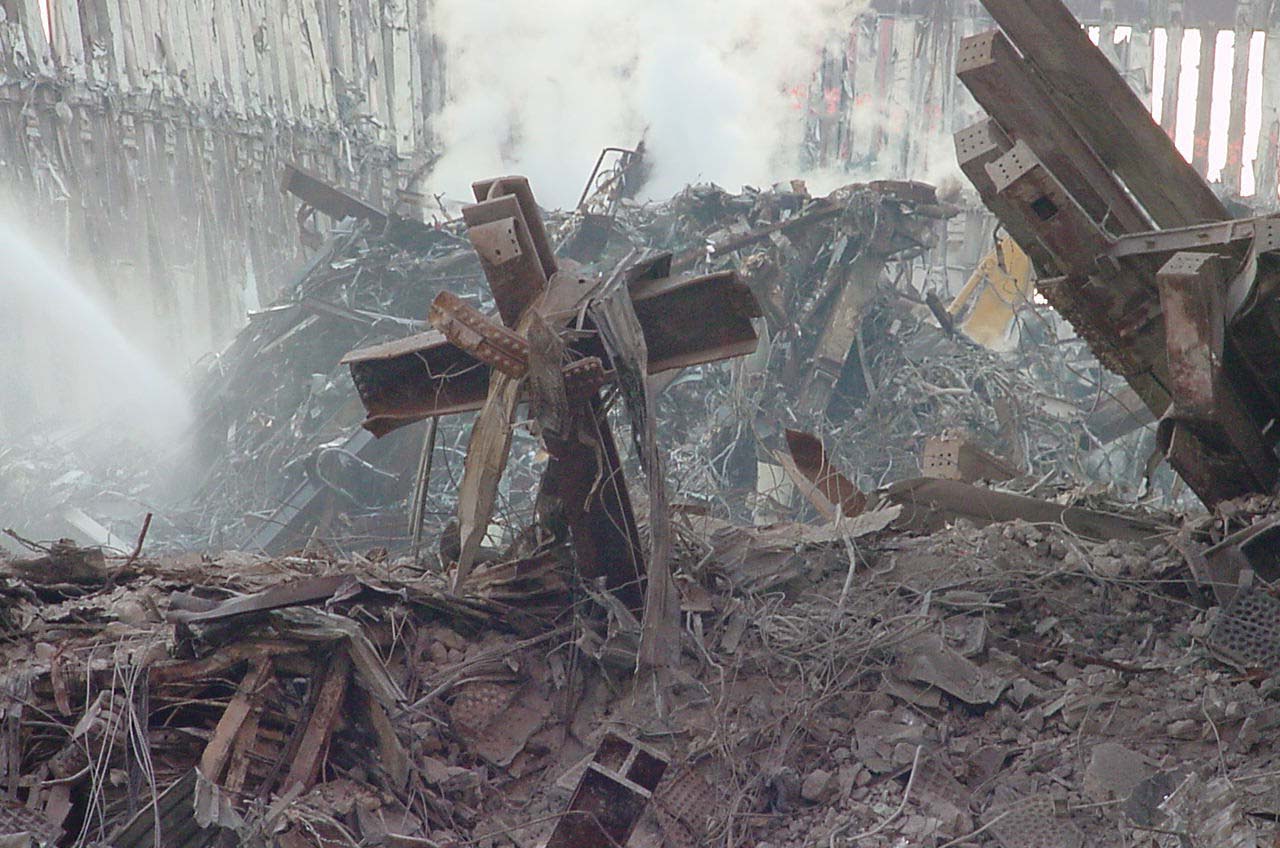
World-Trade-Center-9-11-cross-1

Friends of Padre Steve’s World

I wrote a reflection yesterday on some of my reflections on the 9-11-2001 attacks on the World Trade Center and the Pentagon, today a continuation of those thoughts.

I can still remember the day like it was yesterday. I was getting out of my office at Camp LeJeune after an early morning counseling case and some administrative duties I was getting ready to head to the French Creek gym.  I was about to close out my browser when I saw a little note on the Yahoo.com homepage: “Airplane crashes into World Trade Center.” It was about 0900 that tragic morning.  I thought to myself, “Some dumb ass just crashed his Cessna into the building.

The day was clear and absolutely gorgeous, a slight north wind and low humidity, a well-deserved break from what had been a hot and humid summer.  Not that I had seen much of the Carolina summer having returned from a deployment to Okinawa, Mainland Japan and Korea in late July. When I got to my car the local talk radio station was broadcasting a second or third tier national talk radio host and he was screaming “oh my God another plane just flew into the towers!”

I drove over to the gym where I joined a large crowd of Marines and Sailors transfixed as we watched the towers burn.  I went back to my office showered and went over to my battalion headquarters and was there when the South Tower went down at 0959.

Since then a lot has changed.  I have made two deployments and traveled to the Middle East many more times.  I came back from my deployment to Iraq with a serious case of PTSD and a health distrust of the media, politicians, preachers and especially the talk radio hosts that I used to listen to as often as I could.  I remember being in Iraq in between missions to the far reaches of Al Anbar Province and watching the news on the televisions at the dining facility and wondering just what war that they were covering.

Before Iraq I could be considered a pretty solid “conservative” but eight years after going to war I am decidedly liberal.  However, despite many allegedly conservative  talk pundits, politicians  and right wing preachers say just because a person is “liberal” does not mean that they are unpatriotic or do not care about our country or freedom.  After serving in Iraq and seeing how certain people have equated patriotism with adherence to their political agenda I wholeheartedly believe that a person’s patriotism has nothing to do with their politics or their religious beliefs.

Before Iraq I was jaded by what happened to my dad’s generation after Vietnam when liberals called returning Veterans “baby killers” or “Nazis.”  In fact I had a Sunday school teacher tell me that my dad was a “baby killer” in 1972 and in 1981 had some ass at UCLA call me a “ROTC Nazi.”  As a result I had little love for the Left.  After September 11th I followed the “conservative” talk radio crowd and Fox News more than I had ever before.  The emotions that they stirred up were primal.  But experience and reflection caused me to get beyond the pain of my past and the emotion of the present.  Just as I detest those that characterized my dad’s service or my service as being criminal I also detest those that say one cannot be critical of those that advocate for war regardless of the human and economic cost or actual strategic benefit.

I rejoiced when our SEALS killed Osama Bin Laden and every Al Qaeda leader that we have ushered into the arms of Allah.  They have caused unmitigated suffering around the world, not just to us but to their own Islamic neighbors and deserve no pity and since they refuse to give quarter should be shown none. I feel the same way about ISIS and ISIL who are killing the Iraqis that I served alongside and their families, and if that sounds harsh I can’t help it. The attacks of 9-11 and the wars that have followed are all too personal.

At the same time I question the strategic purpose and value of the campaign in we conducted in Iraq which seems to me has opened the gates of hell. I still think that the words that T.E. Lawrence wrote in 1920 about the British in Iraq are as applicable today as when he penned them; only the empires are different:

“The people of England have been led in Mesopotamia into a trap from which it will be hard to escape with dignity and honour. They have been tricked into it by a steady withholding of information. The Bagdad communiqués are belated, insincere, incomplete. Things have been far worse than we have been told, our administration more bloody and inefficient than the public knows. It is a disgrace to our imperial record, and may soon be too inflamed for any ordinary cure. We are to-day not far from a disaster.”

The British who Lawrence wrote about, gave their people reasons for going into Mesopotamia which were similar to those of the Bush administration over 80 years later. They cloaked their intentions in the words of liberation and protection, the British from the Turks, and the Americans from Saddam. Lawrence noted in words that are hauntingly familiar to those that paid attention to the American war in Iraq:

“Yet our published policy has not changed, and does not need changing. It is that there has been a deplorable contrast between our profession and our practice. We said we went to Mesopotamia to defeat Turkey. We said we stayed to deliver the Arabs from the oppression of the Turkish Government, and to make available for the world its resources of corn and oil. We spent nearly a million men and nearly a thousand million of money to these ends. This year we are spending ninety-two thousand men and fifty millions of money on the same objects.”

At the fourteen year mark I grieve for those that have lost their lives as well as loved ones in the attacks or in the wars that have followed.  On September 11th 2001 2977 people were killed at the World Trade Center, the Pentagon or on United Flight 93 which went down in Pennsylvania.  One of those killed at the Pentagon was Lieutenant Colonel Karen Wagner who I had served with at the Academy of Health Sciences Brigade in 1987-1988.

Since then 4492 American military personnel have given their lives in Iraq and 2363 in Afghanistan.  NATO or coalition allies, excluding the Iraqi and Afghani military or police forces have lost another 1270 military personnel. Another 45,170 Americans have been wounded.  I know a decent number of those wounded and some of those that have died.  The losses are intensely personal and to think that we have lost well over twice the number killed on September 11th 2001 in two wars; many of whom were children aged 8-12 years old on that tragic September day. Of course the numbers do not count those that died by their own hand after they returned from the war, a number that grows daily. I have known too many of them as well, heroes who could not make the adjustment coming home. Likewise I cannot forget the devastation that I saw in Iraq, the deaths of so many, some estimates of over a million civilian casualties, not county what has happening during the current ISIS/ISIL era.

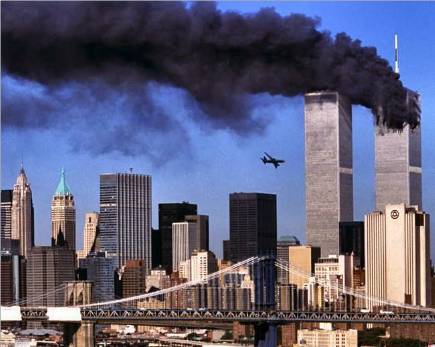
I have been changed by that tragic event. I still shudder when I see the video of United Air Lines Flight 175 crashing into the South Tower or see the videos of the towers crashing down.  They are hard to watch and while I will observe the anniversary with prayers and a lot of reflection as I do not know how much of the continuous media coverage of the anniversary that I will be able to watch.

The events of that tragic day changed me, and changed countless numbers of other Americans as well as others around the world.  While we yearn to return to the day’s before9-11-2001 that is impossible, there is too much water and too much blood that has passed under the bridge.   I know I can’t go back, but I wish that I could, so as I have for the last fourteen years I will continue to learn to live with it.

Peace

Padre Steve+

2 Comments

Filed under afghanistan, Foreign Policy, History, iraq, iraq,afghanistan, middle east, Military, News and current events, Political Commentary

Days Seem to Dawn: Reflections on 9-11-2001 & War

flight_175_photo

Friends of Padre Steve’s World,

September 11th is a day that always makes me more introspective. It brings back so many memories, some that I wish I could forget; but I cannot get the images of that day out of my mind. The burning towers, the people jumping to their deaths to escape the flames, and the scenes of devastation. I knew one of the victims in the attack on the Pentagon, an Army Lieutenant Colonel, Karen Wagner who commanded a Medical training company at Fort Sam Houston where I was serving as the Brigade Adjutant in 1987 and 1988. She was a very nice person, very gracious and decent, admired by everyone who knew her; I was shocked to see her name on the casualty list after the attack.

The emotions that I feel on the anniversary of these terrorist attacks which claimed the lives of so many innocent people, and which devastated so many families, still haunts me, and my subsequent service, especially in Iraq has changed me. Years after he returned from his time in the Middle East, T.E. Lawrence; the immortal Lawrence of Arabia wrote to a friend, “You wonder what I am doing? Well, so do I, in truth. Days seem to dawn, suns to shine, evenings to follow, and then I sleep. What I have done, what I am doing, what I am going to do, puzzle and bewilder me. Have you ever been a leaf and fallen from your tree in autumn and been really puzzled about it? That’s the feeling.” I often feel that way.

Fourteen years ago I was getting ready to go to the French Creek Gym at Camp Le Jeune North Carolina where I was serving as the Chaplain of Headquarters Battalion 2nd Marine Division. I had been back from a deployment to Okinawa, Mainland Japan and Korea just two months before and was preparing to transfer to the USS Hue City, a guided missile cruiser stationed in Mayport, Florida.

At the time of the attack I had already been in the military for over 20 years and I had actually taken a reduction in rank to transfer from the Army, where I was a Major in the reserves, to the Navy to serve on active duty. In those previous 20 years I had served overseas during the Cold War along the Fulda Gap. I had been mobilized to support the Bosnia mission in 1996, and I had just missed being mobilized for Operation Desert Storm as my unit was awaiting its mobilization orders when the war ended. I had done other missions as well as the deployment to the Far East that returned from in July 2001; but nothing prepared me for that day. Like other career military officers I expected that we would be at war again and thought it might be back in the Middle East, and probably a result of some fool’s miscalculations; but like the American officers who were serving at the time of the Pearl Harbor attack, I never expected what happened that morning.

Tuesday, September 11th 2001 had started like so many days in my career. Routine office work, a couple of counseling cases and what I thought would be a good PT session. I was about to close out my computer browser when I saw a little headline on Yahoo News that a plane had crashed into the World Trade Center. I paid little attention and figured that a private plane, something like a Cessna piloted by an incompetent had inadvertently flown into the building.

9-11 jumpers

That delusion lasted about two minutes. I got in my car and the radio, tuned to an AM talk station had a host calling the play by play. He started screaming “oh my God another airliner flew into the other tower.” Seeking to see what was happening I went to the gym where there were many televisions. I got there and saw the towers burning, with stunned Marines and Sailors watching silently, some in tears. I went back out, drove to my office and got into uniform. After checking in with my colonel a made a quick trip to my house for my sea bags and some extra underwear, and personal hygiene items. When I got back the headquarters we went into a meeting, and the base went on lock down mode. The gates were closed and additional checkpoints, and roadblocks established on base. Marines in full battle-rattle patrolled the perimeter and along the waterfront. I did not leave the base until the night of the 15th when things began to settle down and we all went into contingency planning mode for any military response to the attacks.

My wife, who as waiting for a doctor’s appointment with a friend saw the attacks on live television and knew when the first plane struck she told her friend that it was terrorism. Her friend responded “that damned Saddam Hussein.” Like so many of us who initially thought this, my wife’s friend was wrong.

Those were tumultuous days, so much fear; so much paranoia; and so much bad information as to who committed the attacks and what was going to happen next.

boardingteam

boarding team

A few months later I deployed aboard Hue City to the Middle East where we supported the air operations in Afghanistan, anti-terrorist operations off the Horn of Africa and in Operation Southern Watch and the U.N. Oil Embargo against Iraq. I then did three years with Marine Security Forces, traveling around the world to support Marine Fleet Anti-Terrorism Security Team companies. For three years I was on the road one to three weeks a month traveling to the Middle East, Europe, the Pacific and many parts of the United States. Then I was promoted and transferred to Explosive Ordnance Disposal Group Two, from which I was deployed with my assistant to Iraq, where we served as members of the Iraq Assistance Group in all Al Anbar Province supporting small teams of Marine Corps, Army and Joint Force adviser teams to the Iraqi Army, Border troops, Port of Entry police, police and highway patrol.

lastmass2

iraq-bedouin1

iraq-2007

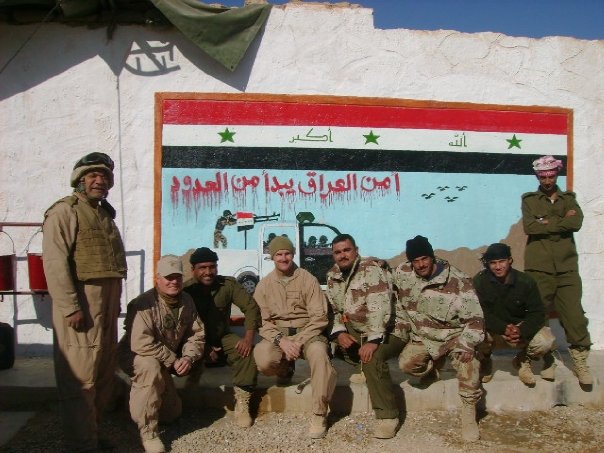
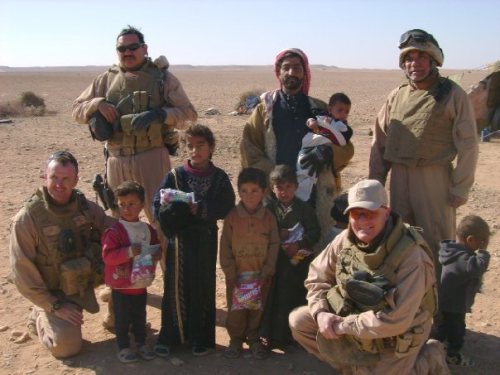
When I returned from Iraq I was a changed man and while proud of my service I am haunted by my experiences. One cannot go to war, see its devastation, see the wounded and dead, as well as the innocents traumatized by it. One cannot get shot at, or be in enclosed rooms, meeting with people that might be friends, or might be enemies, and while everyone else is armed, you are not.

War changed me, and my homecoming was more difficult than I could have imagined. I never felt so cut off from my country, my society, my church, or even other chaplains. My experience is not uncommon among those who have served in Iraq or Afghanistan, or for that matter those who have served in almost any modern war. Erich Maria Remarque in his classic All Quite on the Western Front wrote:

“I imagined leave would be different from this. Indeed, it was different a year ago. It is I of course that have changed in the interval. There lies a gulf between that time and today. At that time I still knew nothing about the war, we had been only in quiet sectors. But now I see that I have been crushed without knowing it. I find I do not belong here any more, it is a foreign world.”

That being said I would not trade my experience for anything. The experience of PTSD and other war related afflictions has been a blessing as well as a curse. They have changed my world view and made me much more emphatic to the suffering and afflictions of others, as well when they are abused, mistreated, terrorized and discriminated against. These experiences along with my training as a historian, theologian, and hospital chaplain clinician before and after my tour have given me a lot bigger perspective than I had before.

But I have to live with all of the memories. Guy Sajer wrote in his book The Forgotten Soldier, “Only happy people have nightmares, from overeating. For those who live a nightmare reality, sleep is a black hole, lost in time, like death.” General Gouverneur Warren, a hero of many Civil War battles including Gettysburg wrote to his wife after the war “I wish I did not dream so much. They make me sometimes to dread to go to sleep. Scenes from the war, are so constantly recalled, with bitter feelings I wish never to experience again. Lies, vanity, treachery, and carnage.”

As hard as this has been these are good things, and as I go on I wonder what will happen next. I do not think that the wars and conflicts which have followed in the wake of the 9-11 attacks will be over for years, maybe even decades. I pray for peace, but too many people, some even in this country seem to live for the bloodlust of war. One can only hope and as my Iraqi friends say, Inshallah, (إن شاء الله) God willing…

isis3-840x550

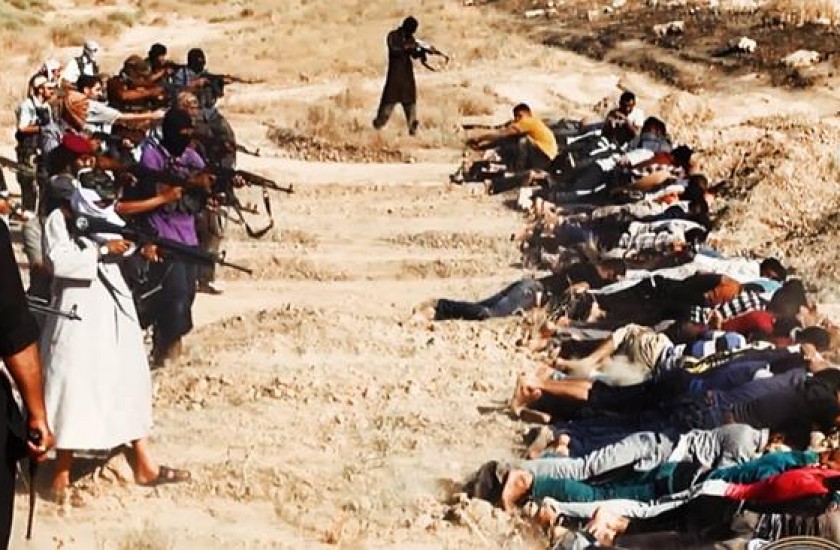
I wonder too, if the words of T.E. Lawrence reflecting on his service in the Arab Revolt are not as applicable to me and others who came back from Iraq, “We had been hopelessly labouring to plough waste lands; to make nationality grow in a place full of the certainty of God… Among the tribes our creed could be only like the desert grass – a beautiful swift seeming of spring; which, after a day’s heat, fell dusty.”  I have lost too many friends in these wars, including men who could not readjust to home, many like me. I have seen the men and women, broken in body, mind and spirit and I wonder if any of it was worth it, and if in some of our response, especially the invasion of Iraq has not made a bad situation even worse, and turned the war into a generational conflict.

As for me, I am now an old guy by military standards. In a couple of years I hope to retire with 36 years of service, knowing that those who I have worked with will be continuing to fight a war which seems to be without end.

481801_10151367001287059_1003164983_n

Today there will be many ceremonies and services to remember the victims of the attacks. I think that is fitting. President Obama has declared a day of prayer and remembrance which is also good. I will not attend the ceremonies because I still get too emotional, but I will be there in spirit, even though much of me is still in Iraq. 

I will quietly reflect at the office today as I get ready for our incoming class at the Staff College. Afterward I will go get a beer and dinner with Judy and our friends at Gordon Biersch after catching to remainder of the Norfolk Tides vs. Columbus Clippers International League playoff game which was postponed due to rain last night. I guess that is fitting to as it was baseball that helped begin the healing in Nee York in the days after the attack. 

Have a good day, and do not forget those whose lives were forever changed by those dastardly attacks and all that has transpired in the years since. Maybe things will get better… Inshallah, (إن شاء الله) God willing…

Peace

Padre Steve+

2 Comments

Filed under History, iraq,afghanistan, Military, PTSD

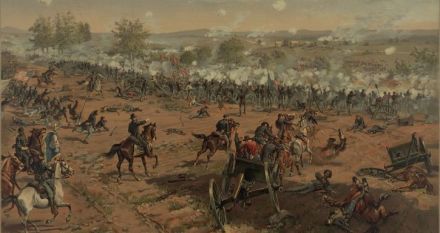
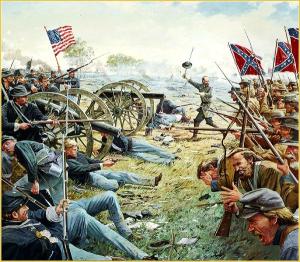
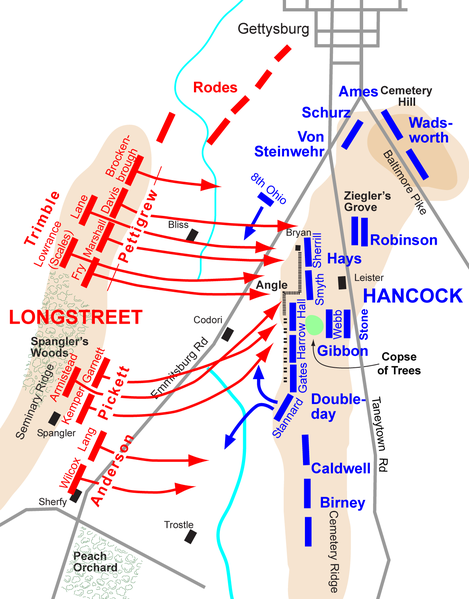
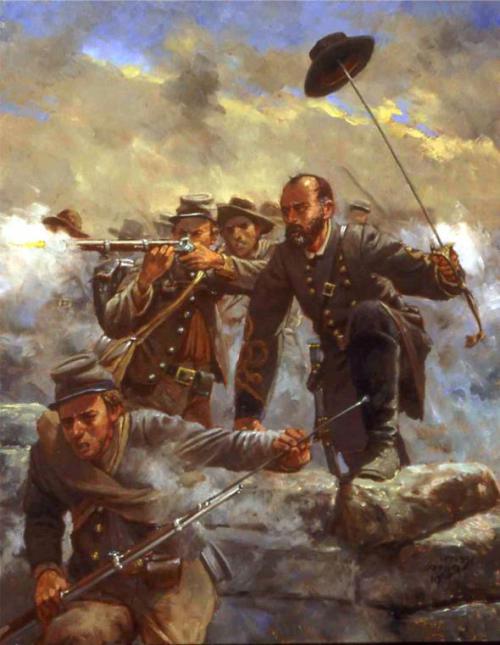
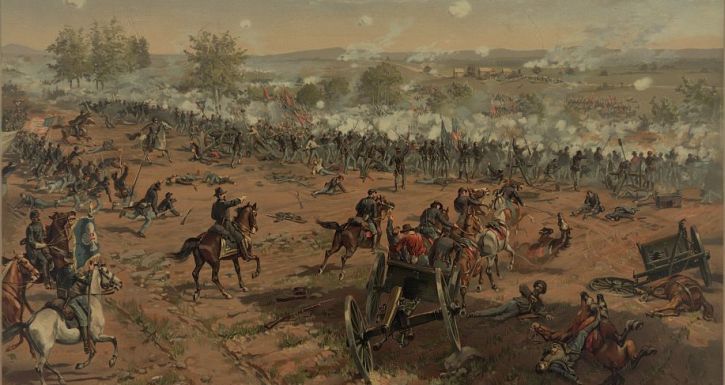
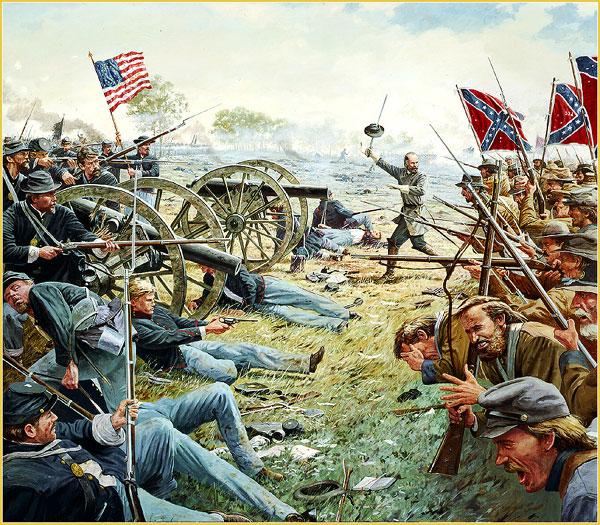
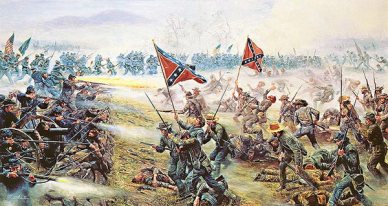
“They Fell like Grain Before the Reaper” Pickett’s Charge

picketts charge

Friends of Padre Steve’s World

As promised I am continuing the work on my Gettysburg text and again attempting to stress the tragedy of war and the immense suffering as well as courage that takes place in it. War and battles are about people, and all too often the people are neglected in favor of painting the big picture of winners and losers and the tactics involved. Yes, those have to be addressed, and I do address them, but as a veteran of Iraq, I have seen the carnage and destruction of war. I have seen the effects on the bodies, minds and spirits of those who have fought in war, as well as the innocent victims of it. Thus when I present a topic like this it becomes intensely personal, especially those times that I lead my students to Gettysburg as I did two almost three weeks ago.

Anyway, this is another look at Pickett’s Charge, the final climactic moment of the Battle of Gettysburg which is often described as the “high water mark of the Confederacy.” So anyway, the text here is probably a 80-90% solution of what I will finally publish, re-reading it I know I have some more work to do, not as much as on other sections but nonetheless more work.

Have a nice night,

Peace

Padre Steve+

The great German theoretician of war Carl von Clausewitz had an exceptionally keen understanding of the human element in war and its importance in setting policy, deciding on operations, and especially in what men face on the battlefield. Clausewitz wrote, Danger is part of the friction of war. Without an accurate conception of danger we cannot understand war. That is why I have dealt with it here. [1] This is an important understanding because it brings the human element to the fore, thus, when commanders send their troops into battle to execute the plans of their staff, they cannot forget, as Clausewitz so succinctly that War is the province of danger and, In the dreadful presence of suffering and danger, emotion can easily overwhelm intellectual conviction, and in the psychological fog it is so hard to form clear and complete insights that changes in view become more understandable and excusable.No degree of calm can provide enough protection: new impressions are too powerful, too vivid, and always assault the emotions as well as the intellect.[2] The memories of the men who fight in such conditions are vivid and seldom forgotten.

However, in the more modern wars of today, many soldiers of developed nations with modern high-tech militaries are not exposed to the same type of danger. Thus it is important to examine the issue in light of history and understand that no-matter how much technology advances that the human element remains the same. Understanding the element of danger is important, for leaders, as General Martin Dempsey noted, Understanding equips decision makers at all levels with the insight and foresight to make effective decisions, to manage the associated risks, and to consider second and subsequent order effects. [3] The fact is that many current and recent wars fought by the United States and its NATO and coalition allies have shielded many military professionals from this aspect of war. But the realm of danger it is still present and should not be ignored. As noted in the 2006 edition of the Armed Forces Officer:

The same technology that yields unparalleled success on the battlefield can also detach the warrior from the traditional ethos of the profession by insulating him or her from many of the human realities of war. [4]

However, The nature of the warrior leader is driven by the requirements of combat [5] and courage, both courage in the face of the danger, and the courage to accept responsibility [6] are of paramount importance. That is why the study of history is never a waste, and in fact should be given more importance in general education, but even more so in the education of those who are to lead men and women in combat.

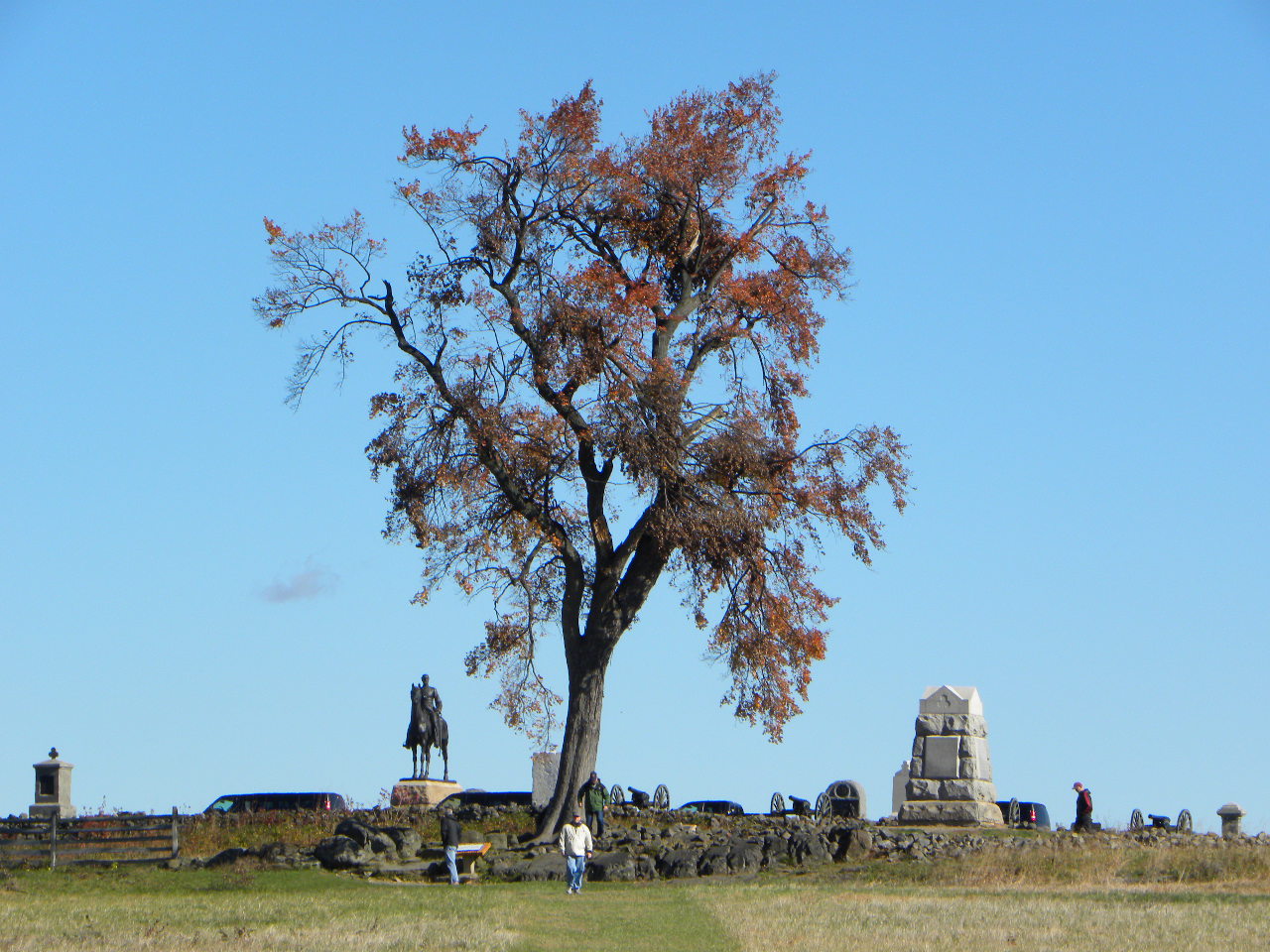
Both Pickett’s Charge and the life of George Pickett provide excellent case studies in courage and responsibility. We live in a time where the numbers of soldiers that actually experience combat or served in true combat conditions where the element of danger is present is shrinking. As such the Battle of Gettysburg and the climactic event of Pickett’s Charge on July 3rd is a good place to reimagine the element of danger from the point of view of the soldiers, but also the commanders involved in the action.

Gettysburg is also a place that we can look to find the end of dreams, the shattering of legacies, the emergence of myth as history, and the terrible effects ill-conceived of plans gone awry.

Major General George Pickett’s men’s opinions varied as they anticipate the approaching battle. Some in Richard Garnett’s brigade were in splendid spirits and confident of sweeping everything before them;never was there anything like the same enthusiasm entering battle. [7] Others were not so confident. In Armistead’s brigade, Lieutenant James F. Crocker of the 9th Virginia ,who had been wounded at Malvern Hill surveyed the ridge before them and told a number of officers that the attack was going to be another Malvern Hill, another costly day to Virginia and Virginians, [8] while a Colonel in Pickett’s division noted that when the men were told of the attack that they went being unusually merry and hilarious that they on a sudden had become as still and thoughtful as Quakers at a love feast. [9] Their commander, George Pickett received the plan of attack from James Longstreet who later noted that Pickett seemed to appreciate the severity of the contest he was about to enterbut was quite hopeful of success. [10]

A member of Pickett’s staff noted years later that It is said, that the condemned, in going to execution, the moments fly.To the good soldier, about to go into action, I am sure the moments linger. Let us not dare say, that with him, either individually, or collectively, is that mythical love of fighting, poetical but fabulous; but rather, that it is the nervous anxiety to solve the great issue as speedily as possible, without stopping to count the cost. [11]

Porter Alexander’s artillery began its bombardment at 1:07 p.m. As it did, the Union artillery commenced a deliberate counter-fire, in which the Confederate infantry behind Seminary Ridge began to take a beating. Unlike the Confederate barrage which had mainly sailed over the Union troops on Cemetery Ridge causing few causalities, a large proportion” of the Union long shots landed squarely in the ranks of the gray soldiers drawn up to await the order to advance. [12] Estimates vary, but the waiting Confederates lost 300 to 500 men killed and wounded during the Union counter-barrage. The most affected was Kemper’s brigade of Pickett’s division which lost about 250 men or fifteen percent of its strength. [13] Other units lost significant numbers, with those inflicted on Pettigrew’s brigades further depleting their already sparse numbers.
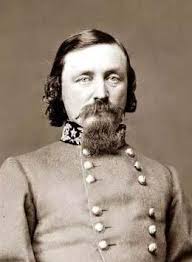
Pickett

Major General George Pickett C.S.A.

The Union counter fire had an effect on many of the Confederates including Pickett. As the artillery duel continued Porter Alexander found Pickett in a very positive and excited frame of mind. [14] There are conflicting opinions of Pickett’s state of mind; supporters tending to believe the best about him and his conduct on the battlefield, while detractors, both his contemporaries and current historians allege that he was afraid and quite possibly minimizing his exposure to enemy fire due to his obsession with his young fiancée La Salle “Sallie” Corbell. Edwin Longacre wrote: While not himself under fire, Pickett appears not to have taken the barrage too calmly. Aware that Longstreet had asked Alexander recommend the most opportune time for our attack based on the enemys response to his cannonade, Pickett at least twice sent couriers to as the colonel if they should go in. [15]

Like in any historical account, the truth probably lies in the middle of the extreme viewpoints and while we think that we know much about the greatest charge in the history of the United States, we are hindered by the lack of written accounts by most of the senior Confederate officers who took part in Pickett’s Charge. This complicates the task of attempting to separate the true from the false and the truth from a judgment or verdict rendered by a less than impartial judge. Lee, Hill and Longstreet treated the charge as just one episode in long campaign reports, and modern readers, like some of the participants, can wonder how much of any of the three generals really saw once the firing started. [16]

Since no reports of the Confederate division commanders are available, Pickett’s was suppressed because of how critical it was toward other commanders. Pettigrew and Pender were dead, Trimble was wounded and in a Federal prison and Harry Heth, Pickett’s cousin limited his report to the action of July 1st 1863. Likewise, only two of the nine brigade commanders filed reports and none of them were from Pickett’s division, so it is hard to get a complete and accurate view from official sources. Longstreet discussed Pickett’s report and said that it was not so strong against the attack as mine before the attack was made but his was made in writing and of official record. [17] Pickett was reportedly furious at being forced to destroy his report and refused to submit an edited report. So what we are left with on the Confederate side are the reports of two corps commanders and an army commander who were far away from the scene of the action, after action reports of regiments, many of which had lost their commander’s and most of their senior officers, and the recollections from men with axes to grind and or reputations to defend; some Longstreet, some Pickett, some Pettigrew.
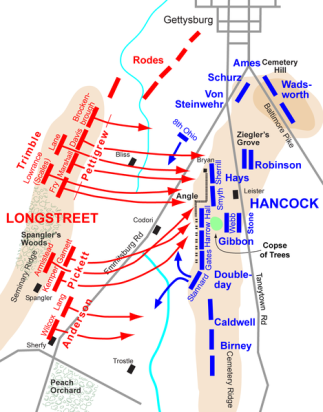
469px-Picketts-Charge

The assault force was composed of Pickett’s fresh division from First Corps, Harry Heth’s battered division now under Johnston Pettigrew which had already taken close to 40% casualties and two brigades of Pender’s division now commanded by Isaac Trimble. Of these two brigades, only Lane’s was fresh while Scales brigade, now under command of Colonel William Lowrence had suffered greatly on July 1st; its “casualty rate was 63% and it had lost its commander and no fewer than fifty-five field and company grade officers. [18] And now, these battered units began to take casualties from well directed Federal fire. George Stewart wrote: In most armies, such a battered unit would have been sent to the rear for reorganization, but here it was being selected for a climactic attack! [19]

The Confederate losses mounted at an alarming rate. The psychological impact of artillery casualties was great, for the big guns not only killed but mangled bodies, tore them apart, or disintegrated them. [20] A survivor wrote his wife days later: If the crash of worlds and all things combustible had been coming in collision with each other, it could not have surpassed it seemingly. To me it was like the Magazine of Vengeanceblown up. [21] A soldier of Kemper’s brigade recalled that The atmosphere was rent and broken by the rust and crash of projectilesThe sun, but a few minutes before so brilliant, was now darkened. Through this smoky darkness came the missiles of deaththe scene beggars descriptionMany a fellow thought his time had comeGreat big, stout hearted men prayed, loudly too. [22] Colonel Joseph Mayo of the 3rd Virginia regiment was heavily hit. One of its survivors wrote: when the line rose up to chargeit appeared that as many were left dead and wounded as got up. [23]

general-george-meade

Major General George Gordon Meade U.S. Army

On the opposite ridge, Union forces were experiencing the same kind of intense artillery fire. But these effects were minimized due to the prevalent overshooting of the Confederate artillery as well as the poor quality of ammunition. This resulted in few infantry casualties with the worst damage being taken by a few batteries of artillery at “the Angle.” Soldiers behind the lines took the worst beating, but the routing of these non-combatants was of no military significance, [24] This did create some problems for the Federals as Meade was forced to abandon their headquarters and the Artillery Reserve was forced to relocate a little over a half mile to the rear.[25] The effects of this on operations were minimal as Brigadier General Robert Tyler commanding the Artillery Reserve posted couriers at the abandoned position, should Hunt want to get in touch with him. [26]

Despite the fusillade Meade maintained his humor and as some members of his staff tried to find cover on the far side of the little farmhouse quipped:

Gentlemen, are you trying to find a safe place?…You remind me of the man who drove the oxen team which took ammunition for the heavy guns to the field at Palo Alto. Finding himself in range, he tipped up his cart and hid behind it. Just then General Taylor came along and shouted You damned fool, dont you know you are no safer there than anywhere else?The driver responded, I dont suppose I am general, but it kind of feels so. [27]

A bombardment of this magnitude had never been seen on the American continent, but despite its apparent awesome power, the Confederate artillery barrage had little actual effect on the charge. The Prussian observer traveling with Lee’s headquarters dismissed the barrage as a Pulververschwindung,”…a waste of powder. [28] The Federal infantry remained in place behind the stone wall on Cemetery Ridge ready to meet the assault. Henry Hunt replaced his damaged artillery batteries on Cemetery Ridge. But even more importantly Lieutenant Colonel Freeman McGilvery’s massive battery was lying undetected where it could deliver devastating enfilade fire as the Confederate infantry neared their objective. Likewise, Rittenhouse’s batteries on Little Round Top and Osborne’s on Cemetery Hill were unaffected by the Confederate bombardment were poised to wreak destruction on the men of the three Confederate divisions.

Unlike the Federal Army which had a large pool of artillery battalions in the Artillery Reserve with which to replace batteries that had taken casualties or were running low on ammunition, Porter Alexander had no fresh artillery batteries and suffered a want of ammunition. The manifestation of the effect of this was not long in coming: soon the drivers of the caissons found that the heavy fire had exhausted their supply of shot and shell, and they had to go even farther to get it from the reserve train. As a result some of the guns remained mute and their gunners stood helpless during the cannonade and charge, for Alexander had no batteries in reserve to replace them. [29]

There were two reasons for this. First was that Lee had reorganized the artillery before Chancellorsville. He eliminated the artillery reserve and assigned all artillery battalions and batteries directly to the three infantry corps. This meant that Alexander could only draw upon the battalions assigned to First Corps and had no operational control over the batteries of Ewell’s Second Corps or Hill’s Third Corps.

The second was due to the meddling of Brigadier General William Pendleton, Lee’s senior artilleryman who as a staff officer had no command authority over any of the guns in the army. Pendleton relocated the artillery trains of First Corps further to the rear without informing Alexander or Longstreet. Likewise, Pendleton also ordered the eight guns of the Richardson’s artillery away without notifying anyone. These were guns that Alexander was counting on to provide direct support to the attack by advancing them to provide close support to the infantry.

At about 2:20 p.m. Alexander, knowing that he was running short of ammunition sent a note to Picket and Pettigrew advising them:

General: If you are to advance at all, you must come at once or we will not be able to support you as we ought. But the enemys fire has not slackened and there are still 18 guns firing from the cemetery.[30]

About twenty minutes later Alexander saw some of the Federal guns along Cemetery Ridge begin to limber up and depart. He also noticed a considerable drop off in Federal fire. He interpreted this to mean that his guns had broken the Federal resistance, and at 2:40 Alexander sent word to Pickett For Gods sake come quick or my ammunition will not let me support you. [31]

However, what Alexander did not realize was that what was happening on Cemetery Ridge had little to do with his bombardment but instead was directed by Henry Hunt. Hunt ordered batteries low on ammunition or that had sustained damage to withdraw and was replacing them with fresh batteries that Alexander could not see, Although he assumed that such might be the case, he noted that the withdraw of batteries was new, for the Federals had never done anything of that sort before, & I did not believe that they were doing it now. [32] He had also decided to conserve ammunition by ordering an immediate cessation and preparation for the assault to follow. [33]

Alexander’s message reached Pickett and Pickett immediately rode off to confer with Longstreet. Pickett gave the message to Longstreet who read it and said nothing. Pickett said, “General, shall I advance!Longstreet, knowing it had to be, but unwilling to give the word, turned his face away. Pickett saluted and said I am going to move forward, sirgalloped off to his division and immediately put it in motion. [34] Sadly, Pickett had no inkling that his corps commander was immovably opposed to the charge [35] and Pickett, caught up in the moment with the excitement of leading his Division into battle did not notice his friend’s mood.

A few minutes later Longstreet rode to find Alexander. Meeting him at 2:45 Alexander informed him of the shortage of ammunition. The news was surprising to Longstreet as neither he nor Lee had checked on the supply of ammunition during the morning. [36] The news took him aback enough that he seemed momentarily stunned [37] by it. Longstreet told Alexander: Stop Pickett immediately and replenish your ammunition. [38] But Alexander now had to give Longstreet even worse news telling him I explained that it would take too long, and the enemy would recover from the effect of our fire was then having, and too that we had, moreover, very little to replenish it with. [39] Longstreet continued to ride with Alexander and again eyed the Federal positions on Cemetery Ridge with his binoculars. As he looked at the Federal position he slowly spoke and said I dont want to make this attack,pausing between sentences as if thinking aloud. I believe it will fail- I do not know how it can succeed- I would not make it even now, but Gen. Lee has ordered it and expects it. [40] Alexander, who as a battalion commander now in charge of First Corps artillery was very uncomfortable, he later wrote:

I had the feeling that he was on the verge of stopping the charge, & that with even slight encouragement he would do it. But that very feeling kept me from saying a word, or either assent I would not willingly take any responsibility in so grave a matter & I had almost a morbid fear of causing any loss of time. So I stood by, & looked on, in silence almost embarrassing. [41]

While Longstreet was still speaking Pickett’s division swept out of the woods to begin the assault. Alexander wrote that the battle was lost if we stopped. Ammunition was too low to try anything else, for we had been fighting for three days. There was a chance, and it was not my part to interfere.[42]

Despite this Pickett and many of his soldiers were confident of success, and: “no officer reflected the mens confidence better than George Pickett. There was no fatalism in him. Believing that his hour of destiny had come and expecting to take fortune at its flood, he rode down the slope like a knight in a tournament. [43] Pickett was an unforgettable man at first sight [44] Pickett wore a dark mustache drooping and curled at the ends, a thin goatee, and hair worn long and curled in ringlets. His hair was brown, and in the morning sunlight it reflected auburn hints. George Pickett stood slender and graceful at the middle height, and carried himself with an air. Dandified in dress, he was the most romantic looking of all Confederates, the physical image of that gallantry implicit in the Souths self concept. [45]

George Pickett was born to wealth and privilege in a Neo-feudal society [46] and came from an old and distinguished Virginia family with a long military heritage dating to the Revolution and the War of 1812. He attended the Richmond Academy until he was sixteen and had to withdraw due to the financial losses his parents had suffered during the panic of 1837.

This led to the young Pickett being sent to live with and study law under his mother’s older brother, the future President, Andrew Johnston in Quincy Illinois. The family’s continued financial distress led them to get George to consider the free education provided by West Point. His mother asked Johnston to assist and Johnston set about obtaining an appointment for his nephew. As befit an up-and-coming politician, his quest was short and successful. His Springfield acquaintances included a United States Congressman who happened to be a fellow Southerner and brother Whig, Kentucky native John T. Stuart. [47] There is a long running myth that connects Pickett’s appointment to West Point to Abraham Lincoln, but it is fiction, fabricated by Pickett’s widow Sallie long after her husband and Lincoln’s death. [48]

Pickett entered West Point in 1842 where he was described by a fellow cadet thought a jolly good fellow with fine natural gifts sadly neglected [49] through his tendency to demonstrate in word and deed that henhouse neither to authority nor submit to what’re considered the Academys narrow, arbitrary, unrealistic, harshly punitive, and inconsistently applied code of conduct [50] became a loyal patron of Benny Havens tavern where he was stealing away regularly now to life his glass in good fellowship…” [51]

Pickett’s academic performance, as well as his record of disciplinary infractions at West Point was exceptionally undistinguished. He racked up vast amounts of demerits for everything from being late to class, chapel and drill, uniform violations and pranks on the drill field where he mocked those who observed proper drill and ceremonies. Pickett graduated last in the class of 1846, something that his vast amount of demerits contributed.

His widow Sallie wrote after his death that he accumulated them so long as he could afford the black marks and punishments they entailed. He curbed his harmful behavior, however, when he found himself approaching the magic number of 200 demerits per year that constituted grounds for dismissal. [52] Pickett finally graduated only five behavioral demerits short of expulsion. [53] The graduating class included George McClellan, A.P. Hill, Thomas, later “Stonewall” Jackson as well as a number of other cadets, most of whom who went on to distinguished military and other careers. At West Point Pickett was considered to be the class clown by many of his classmates was the most popular and prominent young man in the class. [54] Among the many friends that he made was an upperclassman named Ulysses S. Grant and their friendship would span decades and would survive the fire of a war that placed them at swords point. [55]

Pickett was commissioned into the infantry and served alongside James Longstreet in the Mexican War where they fought valiantly in a number of battles, including Contreras, Churubusco, El Molino Del Rey. [56] Pickett distinguished himself at Chapultepec where he had been the first American to scale the ramparts of Chapultepec, where he planted the flag before the admiring gaze of his friend Longstreet. [57] During that assault Longstreet was wounded and Pickett had snatched the colors and planted them on the castle heights for all to see and cheer. [58] For his actions he received a brevet promotion to First Lieutenant.

Following the war Pickett married but was widowed less than two years later when his wife Sally Minge Pickett died during childbirth along with their infant son in 1852. The loss was devastating to the young officer. He went into a deep depression caused by grief and considered leaving the army. He was persuaded by friends, peers and understanding commanding officers to remain.

While on leave following Sally’s death, he was at Fort Monroe, laying under an umbrella at Point Comfort when a child approached him and took pity on him. The child was the nine year old La Salle “Sallie” Corbell and she broke through his emotional defenses by persistently, as only a child can do asking what the source of his grief was. Pickett told the child that his heart had been broken by a sorrow almost too great to bear. When the child asked how ones heart could break, he replied that God broke it when he took from him his loved ones and left him so lonely. [59] While Pickett may not have thought much of the meeting, he did give the little girl a ring and a golden heart bearing his wife’s name. He likely expected never to see her again but though she was a child she was a willful and determined one. She knew her own mind and heart, both told her that one day she would marry George Pickett. [60]

Pickett returned to Texas to serve with the 8th Infantry and was promoted to Captain and ordered to take command of the newly raised Company “D” 9th Infantry at Fort Monroe. Transferred to the Pacific Northwest he married. Widowed after that war he served in the Pacific Northwest where he took a Native American wife who bore him a son, however she did not survive childbirth and when she died in early 1858 Pickett was again widowed. In 1859 Captain Pickett faced down British troops from the Hudson Bay Company in an incident now known at the Pig War which at its heart was a dispute about whether the British or the Americans own San Juan Island. The dispute, which brought the two nations to the brink of war, was settled without bloodshed, save for the unfortunate pig, and Pickett became a minor celebrity in the United States and anathema to the British.

When Virginia seceded from the Union, Pickett like many other southern officers was conflicted in his feelings and loyalties and hoped to the last that he would have to take up arms against neither state nor country. [61] Pickett resigned his commission on June 25th 1861. He wrote to Sallie with who he now maintained a frequent correspondence about his decision and decidedly mixed feelings as he:

Always strenuously opposed disunion…” But While I love my neighbor, i.e., my country, I love my household, i.e., my state, more, and I could not be an infidel and lift my sword against my own kith and kin, even though I do believethat the measure of American greatness can be achieved only under one flag. [62]

Pickett returned to Virginia by a circuitous route where he was commissioned as a Captain in the new Confederate army on September 14th and two weeks later was promoted to Colonel and assigned to command forces along the Rappahannock. Though he had as yet seen no combat serving in the Confederate army, Pickett was promoted to brigadier General and assigned to command a Virginia brigade belonging to Longstreet’s division.

Pickett led his brigade well on the peninsula and at Williamsburg was instrumental in routing an advancing Federal force, and at Seven Pines had helped repel a dire threat to the Confederate position. At Gaines Mill Pickett was wounded in the shoulder during the assault put out of action and placed on convalescent leave to recover from his wounds. During his convalescence he fell in love with an old acquaintance; La Salle Corbell, who as a young girl had cheered him after the loss of his wife now a beautiful young woman nursed him back to health and started a chain reaction that would nearly engulf the Confederate officer. [63]

Pickett was promoted to Major General in October 1862 and was assigned command of the division formerly commanded by David R. Jones, which was assigned to Longstreet’s First Corps. The division was sent to peripheral areas and took no part in the battles of late 1862 or Chancellorsville serving instead in the Tidewater with Longstreet’s corps. The corps took part in a series of operations against Union forces in the Hampton Roads area and Pickett’s division bested a Federal force at Suffolk on April 24th 1863, though it was hardly a true test of his ability to command the division in combat. During this time Pickett spent much time visiting La Salle, much to the concern of some of his officers and Longstreet’s staff, and by the time the corps left the area the two were engaged to be married.

When the Division returned to the Army of Northern Virginia after Chancellorsville, it was among the forces considered by Jefferson Davis to be sent west for the relief of Vicksburg. Since that operation never materialized, the division was assigned to accompany First Corps with the army during the upcoming Pennsylvania campaign. However, much to the consternation of Lee, Longstreet and Pickett, two of its brigades were detached by the order of Jefferson Davis to protect Richmond from any Federal incursion.

During the advance into Pennsylvania the division, now composed of the brigades of James Kemper, Lewis Armistead and Richard Garnett was the trail division in Longstreet’s corps and often, in the absence of cavalry assigned to guard the corps and army trains. Due to its late release from these duties at Chambersburg, Pickett’s Division did not arrive at Gettysburg until late afternoon on July 2nd. Lee decided that they would not be needed that day and Longstreet placed that the division in bivouac at Marsh Creek for the night, sending word by messenger to tell Pickett I will have work for him tomorrow. [64]

Pickett spent the night with his soldiers and woke them about 3 a.m. After a quick breakfast Pickett moved the division to Seminary Ridge marshaling his troops in Spangler’s Woods where there was a modicum of protection from Federal fires and observation. However, despite these advantages it placed his division about 1000 yards from the extreme right of Pettigrew’s division with which he would have to coordinate his attack that fateful day.

Pickett scribbled a final note to Sallie as his troops prepared to attack. Oh, may God in his mercy help me as He never has helped me beforeremember always that I love you with all my heart and soul That now and forever I am yours. [65]

When Pickett’s division as well as those of Pettigrew and Trimble swept out of the wood to begin the attack, the last chance for anyone to stop it ended. Robert E. Lee’s final die was cast and nearly thirteen-thousand men began to advance into what Longstreet called “a cul de sac of death.”

As Pickett’s brigades moved out, Pickett galloped up, as debonair as if he had been riding through the streets of the Richmond under the eye of his affianced [66] and every soldier within hearing was stirred by Picketts appeal [67] as he shouted Remember Old Virginia! or to Garnett’s men Up, men, and to your posts! Dont forget today that you are from Old Virginia! [68] But when Garnett asked if there were any final instructions Pickett was told I advise you to make the best kind of time in crossing the valley; its a hell of an ugly looking place over yonder. [69]

Armistead called out to his soldiers, Men, remember who you are fighting for! Your homes, your firesides, and your sweethearts! Follow Me! [70]Armistead’s example had a major impact on his brigade. His men were inspired, as one later wrote They saw his determination, and they were resolved to follow their heroic leader until the enemys bullets stopped them. [71] About 500 yards to Pickett’s left Pettigrew exhorted his men for the honor of the good old North State, forward.[72]

Pickett’s division showed the full length of its long gray ranks and shining bayonets, as grand as a sight as ever a man looked on.[73] The sight was impressive on both sides of the line, a Confederate Captain recalling the glittering forest of bayonetsthe two half mile wide formations bearing down in superb alignment. [74] The sight of the amassed Confederates moving forward even impressed the Federals. Colonel Philippe Regis de Trobriand, a veteran of many battles in Europe and the United States recalled it was a splendid sight, [75] and another recalled that the Confederate line gave their line an appearance of being irresistible. [76]

But the Federals were confident. Having withstood the Confederates for two days and having survived the artillery bombardment the Union men on Cemetery Ridge eagerly awaited the advancing Confederates. Directly facing the Confederate advance in the center of the Union line was the division of Pickett’s West Point Classmate and North Carolina native who remained with the Union, John Gibbon. The cry went out Here they come! Here they come! Here comes the infantry! [77] To the left of Gibbon Alexander Hays called to his men Now boys look outnow you will see some fun! [78]

The Confederates faced difficulties as they advanced, and not just from the Union artillery which now was already taking a terrible toll on the advancing Confederates. Stuck by the massed enfilade fire coming from Cemetery Hill and Little Round Top, they continued their steady grim advance. Carl Schurz from his vantage point on Cemetery Hill recalled:

Through our field-glasses we could distinctly see the gaps torn in their ranks, the grass dotted with dark spots- their dead and wounded.But the brave rebels promptly filled the gaps from behind or by closing up on their colors, and unasked and unhesitatingly they continued with their onward march.[79]

Pettigrew’s division was met by fire which enveloped them obliquely from Osborne’s thirty-nine guns emplaced on Cemetery Hill. On their left flank a small Federal regiment, the 8th Ohio lay in wait unnoticed by the advancing Confederates. Seeing an opportunity the regiment’s commander Lieutenant Colonel Franklin Sawyer deployed his 160 men in a single line, took aim at Brockenbrough’s Virginia brigade some two hundred yards ahead of the Emmitsburg Road, and opened a devastating fire. Above the boiling clouds the Union men could see a ghastly debris of guns, knapsacks, blanket rolls, severed human heads, and arms and legs and parts of bodies tossed into the air by the impact of the shot. [80] So sudden and unexpected was this that the Confederates panicked and fled in confusion… to the rear where they created more chaos in Trimble’s advancing lines as one observed they Came tearing through our ranks, which caused many men to break. [81] The effect on Confederate morale was very important, for the Army of Northern Virginia was not used to seeing a brigade, even a small one, go streaming off to the rear, with all its flags.Even Picketts men sensed that something disastrous had happened on the left. [82]

8th_Ohio_At_Gettysburg

In one fell swoop Pettigrew was minus four regiments. Brockenbrough was singularly ineffective in leading his men, he was a nonentity who did not know how to control his recalcitrant rank and file; nor did he have the presence to impress his subordinate officers and encourage them to do his bidding. [83] The disaster that had overtaken Brockenbrough’s brigade now threatened another important component of Lee’s plan- protecting the left flank of the assaulting force. As Brockenbrough’s brigade collapsed, the vital protection of the left flank collapsed with it.

Pettigrew’s division continued its advance after Brockenbrough’s brigade collapsed, but the Confederate left was already beginning to crumble. Sawyer changed front, putting his men behind a fence, and the regiment began firing into the Confederate flank. [84] Now Davis’s brigade was taking the full brunt of the storm of artillery shells from Osborne’s guns. This brigade had suffered terribly at the railroad cut on July 1st. The brigade, especially in terms of field and company grade officers was virtually leaderless, and the inexperienced Joe Davis was helpless to control them. [85] To escape the devastating fire Davis ordered his brigade to advance at the double quick which brought them across the Emmitsburg Road ahead of the rest of the division, where they were confronted by enfilade canister fire from Woodruff’s battery to its left, as well as several regiments of Federal infantry and from the 12th New Jersey directly in their front. A New Jersey soldier recalled We opened on them and they fell like grain before the reaper, which nearly annihilated them. [86] Davis noted that the enemy’s fire commanded our front and left with fatal effect. [87] Davis saw that further continuing was hopeless and ordered his decimated brigade to retire to the position originally held. [88]

Pettigrew’s remain two brigades continued grimly on to the Emmitsburg Road, now completely devoid of support on their left flank. Under converging fire from Hay’s Federal troops the remaining troops of Pettigrew’s command were slaughtered. Hay’s recalled As soon as the enemy got within range we poured into them and the cannon opened with grape and canister [, and] we mowed them down in heaps.[89] The combination of shot, shell, canister and massed musket fire simply erased the North Carolinians ranks. [90] Pettigrew was wounded, Colonel Charles Marshall was killed fifty yards from the stone wall and only remnants of companies and regiments remained unscathed. Soon the assault of Pettigrew’s division was broken:

Suddenly Pettigrews men passed the limit of human endurance and the lines broke apart and the hillside covered with men running for cover, and the Federal gunners burned the ground with shell and canister. On the field, among the dead and wounded, prostrate men could be seen holding up handkerchiefs in sign of surrender. [91]

Trimble’s two brigades fared no better. Scales brigade, now under the command of Colonel W. Lee Lowrence never crossed the Emmitsburg Road but instead took position along it to fire at the enemy on the hill. The soldiers from North Carolina who two days before had marched without flinching into the maw of Wainwrights cannon on Seminary Ridge could not repeat the performance. [92] Trimble was severely wounded in the leg and sent a message to Lane to take command of the division. The order written in the third person added a compliment to his troops: He also directs me to say that if the troops he had the honor to command today for the first time couldnt take that position, all hell cant take it. [93] Lane attempted to rally the troops for one last charge when one of his regimental commanders exploded telling him My God, General, do you intend rushing your men into such a place unsupported, when the troops on the right are falling back? [94] Lane looked at the broken remains of Pettigrew’s division retiring from the field and ordered a retreat. Seeing the broken remnants of the command retreating, an aide asked Trimble if the troops should be rallied. Trimble nearly faint from loss of blood replied: No Charley the best these brave fellows can do is to get out of this,so let them get out of this, its all over. [95] The great charge was now over on the Confederate left.

The concentrated Federal fire was just as effective and deadly on the Confederate right. Kemper’s brigade, on the right of Pickett’s advance was mauled by the artillery of Rittenhouse on Little Round Top, which tracked their victims with cruel precision of marksmen in a monstrous shooting galleryand the overs landed their shots on Garnetts ranks with fearful effect.[96]

As the Confederates advanced Pickett was forced to attempt to shift his division to the left to cover the gap between his and Pettigrew’s division. The move involved a forty-five degree oblique and the fences, which had been discounted by Lee as an obstacle which along the Emmitsburg Road virtually stopped all forward movement as men climbed over them or crowed through the few openings. [97] Pickett’s division’s oblique movements to join with Pettigrew’s had presented the flank of his division to McGilvery’s massed battery. The movement itself had been masterful, the execution of it under heavy fire impressive; however it meant the slaughter of his men who were without support on their right flank.

Pickett himself was doing his best to direct the movements of his Division. Placing himself just behind his Division he “kept his staff busy carrying messages to various generals and performing other duties on the field. At different times he sent his aides back to Confederate lines to inform Longstreet of his need for reinforcements, or to direct Wilcox when to advance his troops, or to ask Major James Dearing for artillery support.” [98] While some of Pickett’s detractors attempt to accuse him of cowardice, including inventing fables about him drinking behind the lines, the facts do not substantiate the accusations. Likewise, Pickett’s position about one hundred yards behind his advancing troops was optimal for command and control purposes.

Though he did not have operational control of Pettigrew’s division, “when he saw it beginning to falter, he ordered Captains E.R. Baird and W. Stuart Symington to help rally them. Then Pickett himself galloped to the left in an effort to steady the men.” [99]

As Pickett’s division advanced into the Plum Run Valley they were met by the artillery of Freeman McGilvery, who wrote that the execution of the fire must have been terrible, as it was over a level plain, and the effect was plain to be seen. In a few minutes, instead of a well-ordered line of battle, there were broken and confused masses, and fugitives fleeing in every direction. [100]

Kemper’s brigade which had the furthest to go and the most complicated maneuvering to do under the massed artillery fire suffered more damage. The swale created by Plum Run was a “natural bowling alley for the projectiles fired by Rittenhouse and McGilvery” [101] was now flanked by Federal infantry as it passed the Condori farm. The Federal troops were those of the Vermont brigade commanded by Brigadier General George Stannard. These troops were nine month volunteers recruited in the fall of 1862 and due to muster our in a few days. They were new to combat, but one of the largest brigades in the army and 13th Vermont had performed with veteran like precision the day before [102] leading Hancock to use them to assault the Confederate right. The Vermonters were positioned to pour fire into the Confederate flank, adding to the carnage created by the artillery, and the 13th and 16th Vermont pivoted ninety degrees to the right and fired a succession of volleys at pistol range on the right of Picketts flank. [103]

Kemper had not expected this, assuming that the Brigades of Wilcox and Perry would be providing support on the flank. As he asked a wounded officer of Garnett’s brigade if his wound was serious, the officer replied that he soon expected to be a prisoner and asked Kemper Dont you see those flanking columns the enemy are throwing on our right to sweep the field? [104] Kemper was stunned but ordered his troops to rush the federal guns, however they were torn to pieces first by the artillery and then by the successive musketry of three and a half brigades of Yankee infantry. [105] Kemper was fearfully wounded in the groin and no longer capable of command. His brigade was decimated and parts of two regiments had to refuse their line to protect the flank, and those that continued to advance had hardly any strength left with which to succeed, meaning that the Confederate left and right were for all intents and purposes out of the fight.

This left Armistead and Garnett’s grimly advancing brigades to carry on the fight as they crossed the Emmitsburg Road and approached the stone wall. The brigades where now bunched together and at the point of attack and for a few minutes outnumbered the Federal defenders at the stone wall and the Angle, as one regiment of Webb’s Philadelphia Brigade, the 71st Pennsylvania had bolted to the rear.

This left the decimated remains of Lieutenant Alonzo Cushing’s battery of artillery alone to face the advancing Confederates. Cushing who had already received multiple wounds in his shoulder and groin was desperately wounded. A number of his guns had been disabled and his battery had taken significant numbers of casualties during the Confederate bombardment. Cushing was another of the young West Point graduates who directed batteries at key points during the battle who was not only a skilled artilleryman, but a gifted leader and a warrior who won the respect of his men. One corporal said that Cushing was the best fighting man I ever saw while another recollected He was so cool and calm as I ever saw him, talking to the boys between shots with the glass constantly to his eyes, watching the effect of our shots. [106]

92681186b29b70439321935b2ab79a62

He received permission from the commander of the Philadelphia Brigade, Alexander Webb, among whose regiments his battery was sited to advance his guns to the wall. Though wounded Cushing remained with his gunners and when a subordinate suggested that he go to the rear he replied I will stay right here and fight it out or die in the attempt. [107]

a-ALONZO-CUSHING-768x504

Lieutenant Alonzo Cushing

When Webb came to his battery and told Cushing that he believed that the Confederate infantry was about to assault their position Cushing replied I had better run my guns right up to the stone fence and bring all my canister alongside each piece. [108] From the stone fence the young officer directed the fire of his remaining guns. His gunners rammed in more loads of double canister when the Confederates were less than seventy yards away. [109] When the Garnett and Armistead’s survivors were just a hundred yards away from the wall, Cushing ordered triple canister. He was hit a third time, this time in his mouth killing him instantly.[110] The surviving gunners, now commanded by a sergeant fought hand to hand against the Confederates as they were overrun.

The survivors of Garnett’s brigade, led by their courageous but injured commander, who rode fully exposed to Federal fire on his horse, crossed the Emmitsburg Road and pushed forward, overwhelming the few Federals remaining at the wall. They reached the outer area of the Angle “which had been abandoned by the 71st Pennsylvaniaand some of his men stood on the stones yelling triumphantly at their foes. [111]

Dick Garnett, was still leading his troops mounted upon his horse, miraculously un-hit until he was almost to the wall. There, Garnett, “muffled in his dark overcoat, cheered his troops, waving a black hat with a silver cord” [112] and still seeking redemption from the scurrilous accusations of Stonewall Jackson was shot down, in a blast of musket fire and canister. His now rider less and frightened horse, now alone, ran off the battlefield, a symbol of the disaster which had befallen Pickett’s division.
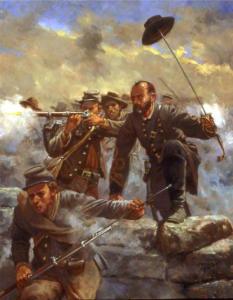
armistead

Armistead and his decimated brigade continued their grim advance into the fiery cauldron of death, their commander, sword raised with his hat still on it, climbed over the wall shouting to his men Come on boys! Give them the cold steel”…and holding his saber high, still with the black hat balanced on its tip for a guidon, he stepped over the wall yelling as he did so: Follow me! [113] It would be a moment that those that survived would remember for the rest of their lives.

Now, Armistead and his remaining soldiers, maybe about one hundred in total of the approximately 1570 who had advanced out of the woods on Seminary Ridge just twenty minutes before when the order was given to advance. [114] The survivors waded into the wreckage of Cushing’s battery and some began to attempt to turn the guns on the Federals. For a few moments there was a sense of supreme exultation as the rebels swarmed over the fence, forced back two Federal companies, and swallowed up a third. Armistead was the first to reach Cushings two guns, placing a hand on one of them and yelling, The day is ours men, come turn this artillery upon them. [115]

hancock at pickett's charge

However, the triumph of Armistead and his band was short lived; the 72nd Pennsylvania was rushed into the gap by the brigade commander Brigadier General Alexander Webb. The climax of the battle was now at hand and the next few minutes would tell the story, and what that story would be would all depend on whether these blue-coated soldiers really meant it. Right here there were more Confederates than Federals, and every man was firing in a wild, feverish haste, with smoke settling down thicker and thicker. [116] The 69th Pennsylvania, an Irish regiment under Colonel Dennis O’Kane stood fast and their fire slaughtered many Confederates. Other Federal regiments poured into the fight, famous veteran regiments like the 19th and 20th Massachusetts, the 7th Michigan and the valiant remnants of the 1st Minnesota who had helped stop the final Confederate assault on July 2nd at such fearful cost. Major Rice of the 19th Massachusetts wrote:

The grove was fairly jammed with Picketts men. In all positions, lying and kneeling. Back from the edge were many standing and firing over those in front.Every foot of ground was occupied by men engaged in mortal combat, who were in every possible position which can be taken while under arms, or lying wounded or dead. [117]

Gettysburg_General_Armistead_Picketts_Charge_small

As his troops battled the Federals hand to hand, using muskets as clubs, and the bayonet Armistead, standing by one of Cushing’s cannon was he was hit by several bullets and collapsed, mortally wounded. Armistead had been the driving force behind the last effort, there was no one else on hand to take the initiative. Almost as quickly as it had come crashing in, the Rebel tide inside the outer angle ebbed back to the wall. [118]

For a time the Confederate survivors engaged Webb’s men in a battle at the wall itself in a stubborn contest with men battling in some places within rifle-length of each other and other places hopelessly mingled. [119] A Federal regimental commander wrote The opposing lines were standing as if rooted, dealing death into each other. [120] The Federals launched a local counterattack and many Confederates elected to surrender rather than face the prospect of retiring across the battlefield that was still swept by Federal fire.

Webb had performed brilliantly in repulsing the final Confederate charge andgained for himself an undying reputation. Faced with defeat, he accepted the challenge and held his men together through great personal exertion and a willingness to risk his life. [121] For his efforts he was belatedly awarded the Medal of Honor.

Webb, like John Buford on July 1st, Strong Vincent, Freeman McGilvery and George Sears Greene on July 2nd, was instrumental in the Union victory. Hancock said of Webb:

In every battle and on every important field there is one spot to which every army [officer] would wish to be assigned- the spot upon which centers the fortunes of the field. There was but one such spot at Gettysburg and it fell to the lot of Genl Webb to have it and to hold it and for holding it he must receive the credit due him. [122]

The surviving Confederates of Pickett’s division who had not surrendered at the Angle retreated without order [123] and as they drew nearer to the safety of their own lines the survivors of Picketts division soon turned into a sullen mob intent on getting as far as possible from the bloody battlefield. [124] Some commanders attempted to restore order but their efforts were in vain as Pickett’s defeated and shell shocked men realized the enormity of their defeat and the terrible cost.

As the survivors of Pickett, Pettigrew and Trimble’s shattered divisions retreated from the killing field Robert E. Lee did not yet understand that his great assault had been defeated. However, the sullen James Longstreet, who was in a position to observe the horror, did. Longstreet was approached by Lieutenant Colonel Arthur Fremantle, a British observer from the Coldstream Guards. Fremantle did not realize that the attack had been repulsed, having just seen one of Longstreet’s regiments advancing through the woods in good orderand unwisely bubbled I would not have missed this for anything.[125] Longstreet replied with a sarcastic laugh The devil you wouldntbarked Longstreet. I would have liked to have missed this very much; weve attacked and been repulsed. Look there. [126]

Fremantle looked out and for the first time I then had a view of the open space between the two positions, and saw it covered with Confederates slowly and sulkily returning towards us in small broken parties, under a heavy fire of artillery. [127] Henry Owen of the 18th Virginia wrote that the retreating men without distinction of rank, officers and privates side by side, pushed, poured and rushed in a continuous stream, throwing away guns, blankets, and haversacks as they hurried on in confusion to the rear. [128]

It was a vision of utter defeat. Pickett, who had seen his division destroyed and had been unable to get it additional support was distraught. An aide noted that Pickett was greatly affected and to some extent unnerved [129] by the defeat. He found Longstreet and poured out his heart in terrible agony: General, I am ruined; my division is gone- it is destroyed. [130] Lee had come up by now and attempted to comfort Pickett grasping his hand and telling him: General, your men have done all that they could do, the fault is entirely my own and instructed him that he should place his division in the rear of this hill, and be ready to repel the advance of the enemy should they follow up their advantage. [131] The anguished Pickett replied, General Lee, I have no division now. Armistead is down, Garnett is down and Kemper is mortally wounded. [132] Lee missed the point of Picketts anguish completely and attempted to console Pickett again and told the distraught General, General Pickettyou and your men have covered themselves in glory. [133]

Pickett, the romantic true believer in the cause refused to be consoled and told Lee not all the glory in the world, General Lee, can atone for the widows and orphans this day has made. [134] Pickett’s bitterness toward Lee over the loss of his division would redound through the remainder of his life. While Longstreet and Lee maintained their composure, Pickett felt an overpowering sense of helplessness as he observed the high tide from Emmitsburg Road and the subsequent retreat of his shattered division. It was too much for the mercurial romantic to absorb. [135] But Pickett was not alone. Cadmus Wilcox told Lee as he returned from the assault that he came into Pennsylvania with one of the finest brigades in the Army of Northern Virginia and now all my people are gone. [136]

When others attempted to stop the flight of his men, Pickett countermanded them and ordered his survivors to return to the site where they had bivouacked the previous night. A soldier from the 18th Virginia who saw the retreat noted that at Willoughby Run:

The fugitives, without distinction of rank, officers and privates side by side pushed, poured and rushed in a continuous stream, throwing away guns, blankets, and haversacks as they hurried in confusion toward the rear. Before long there was another attempt to restore order, but again Pickett intervened. Don’t stop any of my men! he cried. Tell them to come to the camp we occupied last night. As he said this he was weeping bitterly, and then he rode on alone toward the rear. [137]

When the survivors finally assembled the next morning, they numbered less than 1000 out of the approximately 5000 troops Pickett led into the attack. “Four out of every five of Picketts men had been either killed, wounded, or captured. Two of his three brigadiers were gone, probably dead, the third perhaps mortally wounded. Every one of his regimental commanders had been killed, wounded or captured. [138]

During the retreat Pickett and his remaining soldiers would be assigned to the task of being the Provost Guard for the army, escorting Federal prisoners back during the long retreat back to Virginia. For them, it was a humiliating experience.

Pickett was never the same after the charge of July 3rd 1863. Pickett’s after action report which complained about the lack of support his division received was suppressed and destroyed by Lee who wrote Pickett You and your men have crowned yourselves in glory But we have an enemy to fight, and must carefully, at this critical moment, guard against dissections which the reflections in your report will create. [139]

Pickett married La Salle “Sallie” Corbell in September of 1863, and the marriage would last until his death in 1875. Sallie, impoverished by the death of “her soldier” took up writing as well as speaking tours in both the South and the North. Sallie was a stalwart defender of her husband, who she said had the keenest sense of justice, most sensitive consciousness of right, and the highest moral courage but also opposing hatred, sectionalism and strife. [140] Though much of her work was panned by historians and shunned by established magazines and periodicals; her writing were published by newer popular magazines. Her book The Heart of a Soldier, as Revealed in the Intimate Letters of General George Pickett, C.S.A. was for the most part fabrications authored by her, but she found a niche in newer popular magazines and journals, including Cosmopolitan for which she authored a ten part serial of the Pickett family story on the fiftieth anniversary of the battle. Sallie Pickett’s:

idealized portrait of her husband made him a Confederate hero. He never reached the status of Robert E. Lee or Stonewall Jackson, but his association with the famed but futile charge at Gettysburg helped. Virginia veterans and newspapers began romanticizing Picketts all-Virginia divisions role soon after the battle; it was almost by association that George too would share in this idolization…” [141]

Pickett retained command of his division which was reconstituted after Gettysburg and shipped off to North Carolina where he and it performed adequately but without marked distinction. Pickett had one moment of glory when reacting to a Federal Army under Benjamin Butler advancing on Petersburg he threw a scratch force together which preserved Petersburg and its vital rail line in early May 1864. This allowed General P.T.G. Beauregard to bring up more troops to hold the city.

The division performed adequately in the defensive battles around Richmond and Petersburg, though it suffered terribly from the lack of rations, medicines, clothing and equipmentaggravated by the rigors of life in the trenches. [142] Morale and desertion was a terrible problem in Pickett’s division and Lee was concerned enough to bring enough to bring the matter to Longstreet. Lee used terms like unsoldierly and unmilitary, lax in discipline, loose in military instruction [143] to describe the division. Though he was fully cognizant of the conditions of the trenches Lee identified the source of the problem as Pickett and his officers who were not sufficiently attentive to the men,not informed as to their condition and he told Longstreet: I desire you to correct the evils in Picketts divisionby every means in your power… I beg that you will insist upon these points. [144]

During the Richmond and Petersburg campaign, Pickett was often sick, and at several intervals he was unable to exercise command, and the poor state of his general health, aggravated by the unusually stressful conditions of the past year, age him beyond his years. [145]

The end came at the battle at Five Forks where Pickett’s division was deployed on the far right of the Confederate line, was overwhelmed by a massive assault by Sheridan’s cavalry and the Fifth Corps which destroyed it as a fighting formation. Pickett, for unknown reasons did not put much effort into the defense of Five Forks. He successfully repulsed an attack by Sheridan on March 31st but evidently did not expect an attack the following day. On the afternoon of April 1st Pickett was away from his division at a Shad bake with Fitzhugh Lee and Thomas Rosser when the attack came and destroyed his division as a fighting unit. No cowardice was involved; Pickett simply misjudged the situation by assuming that no attack was imminent, yet it left a bad taste in everyones mouth. [146] That being said Picketts lackadaisical effort in holding Five Forks is indefensible. So to is his incredible derelict behavior late on the morning of April 1st when he slipped away from his command to the shad bake not even informing the next senior officer, Rooney Lee that he was gone. [147]

Whether cowardice was involved or not, Pickett’s decision to be away from his division with a very aggressive Federal army at his front was ill-advised and demonstrated to Lee that Pickett was unfit for command. Two days later Pickett and two other generals, including Richard Anderson were relieved of their duties and dismissed by Lee. However Pickett remained with his division until the end and at Appomattox Lee was heard to remark in what some believed was a disparaging manner Is that man still with this army? [148]

George Pickett attempted to rebuild his life after the war and the task was not easy, for though he applied for amnesty, his case was complicated by an incident where he had ordered the execution of twenty-two former North Carolina militiamen who had defected to the Union and been re-captured by the Confederates. Pickett’s action was no different than many Confederate commanders who followed the Richmond government’s decision to take ruthless measures to suppress Unionist sentiments and secession of areas of the Confederacy where Union sympathies ran high. The area of Pickett’s operation was a haven for Tories who openly supported U.S. troops. What was worse, hundreds of local Unionists engaged in the most violent guerrilla activities, shooting and burning out their secessionist neighbors, waylaying Confederate supply trains, attacking outposts. [149]

In a sense Pickett was now engaged in counter-insurgency operations, and like many commanders involved in such operations descend into the same type of barbaric actions of those they are fighting. By early 186 the war was turning into a grim, hate-filled struggle that knew few rules and niceties, and Pickett was changing to the pattern. [150] When Pickett captured the former militiamen he refused to treat them as prisoners of war and instead he court-martialed them and hanged them all. [151] He established a military court composed of Virginia, North Carolina and Georgia officers, hauled the deserters-in-arms before it, and approved the death sentences. [152] When the prisoners went to the gallows Pickett reportedly told each of them God damn you, I reckon you will ever hardly go back there again, you damned rascals; Ill have you shot, and all the other damned rascals who desert. [153]

Federal authorities thought about charging him with war crimes which resulted in Pickett fleeing to Canada. It took the intervention of Pickett’s faithful friend Ulysses S. Grant to have the charges dismissed and for Pickett to be granted amnesty by President Johnson in 1868. Grant admitted that the punishment was harsh, however, Grant’s judgment was steeped in the fact that many Northern commanders had resorted to similar actions in combating insurgents and deserters. Grant wrote in his friend’s defense:

But it was in time of war and when the enemy no doubt it necessary to retain, by some power, the services of every man within their reach. Gen. Pickett I know personally to be an honorable man but in this case his judgement [sic] prompted him to do what can not well be sustained though I do not see how good, either to the friends of the deceased or by fixing an example for the future, can be secured by his trial now. [154]

Even so, Pickett’s life was difficult. Health difficulties plagued him and employment was scarce, even for a man of Pickett’s stature in Virginia. He refused employment which would take him away from Sallie and his children and finally took a job as an insurance agent in Richmond. It was a job which he felt demeaning, requiring that he attempt to sell insurance policies to destitute and out of work Confederate veterans and their families. Sallie wrote that he could not come to terms with a profession that made its profits through what one colleague called gall, gall, old man, gall and grub. [155] Distinctly unhappy the dejected old soldier told her Id sooner face a canon,than to take out a policy with me. [156]

In 1870 he was convinced by John Singleton Mosby to visit Lee when the latter was visiting Richmond as Lee was making a final tour of battlefields and other sites. For Pickett the visit only reinforced his resentment that he felt for Lee, who he felt blamed him for the defeat at Five Forks and had ostracized him. The meeting occurred in Lees room at the Ballard Hotel was icy and lasted only two or three minutes. [157]

Mosby realized quickly that the meeting was not going well and Sensing the unpleasantness of the meeting, Mosby got up in a few moments and Pickett followed him. Once outside the room, Pickett broke out bitterly against that old man who, he said, had my division massacred at Gettysburg. [158] Mosby attempted to assuage his friend’s feelings but Pickett was not mollified by Mosbys rejoinder that it made you immortal. [159]

George Pickett was a romantic as well as a true believer in the cause of the Confederacy. Pickett was vain, often self-serving and even irresponsible. He certainly as Porter Alexander noted was a better brigade commander than division commander, a position that he desired but at which never excelled. He was a poor administrator, and in the campaigns of 1864 and 1865 demonstrated exceptionally poor leadership.

His temperament, especially his seeming inability to function in a hierarchical structure, and the rebellious streak that he had as a cadet at West Point was never exercised: He resented authority and chafed at deferring to any man as his superiorPickett never understood his place in the hierarchy. He considered himself part of the cream of the Army of Northern Virginia, but without being willing to shoulder all the responsibilities and sacrifices that entailed. [160]

All that being said, in the matter of Pickett’s conduct during the charge that bears his name; the charges of cowardice or incompetence that some leveled at him are certainly not true. The fact that Pickett retained command after the battle indicates that Lee did not believe that he had acted with cowardice, or that Lee questioned the manner in which Pickett led the assault. Lee had many concerns about Pickett and reservations about his leadership but those stand apart from Pickett’s conduct on July 3rd 1863.

In the matter of Pickett not going far enough forward, it is unlikely that such any such action on Pickett’s part to charge further into the maelstrom would have done little more than add yet another name to the list of Confederate general officers killed or wounded at Gettysburg. The question of how Pickett survived without a scratch, when his three brigadiers and all of his field officers but one went down. This could be done by the brief explanation that his escape was miraculous. [161] Edwin Coddington wrote that it would have been better for his reputation if had been called to give his life or if the attack had been known for what it was, Longstreets Second Assault. [162]

Bitter and discouraged at the end of his life he uttered his last words to Sallie’s uncle who had also served in the Army of Northern Virginia Well, Colonel, the enemy is too strong for me againmy ammunition is all out He closed his eyes, and settled back as if at peace for the first time in his life. Sallie never left his side; two hours after his death they gently pried her hands from his. [163]

Pickett’s charge was over, except for the blame, the stories and the legends, especially in the South. The failure of this disastrous tactical assault that bears Pickett’s name placed the final nail in Lee’s operational plan to take the war to the North and defeat the Federal army on its own territory. Lees plan was almost Burnside-like in its simplicity, and it produced a Fredericksburg with the roles reversed. [164] James McPherson made the very succinct observation that Picketts charge represented the Confederate war effort in microcosm: matchless valor, apparent initial success, and ultimate disaster. [165]

That tactical and operational failure had strategic implications for the Confederacy; it ensured the loss of Vicksburg and forced Lee to assume the defensive in the east. Lee and his men would go on to further laurels. But they never again possessed the power and reputation that they carried into Pennsylvania those palmy midsummer days of 1863. [166] The repulse ended the campaign that Lee had hoped would secure the independence of the Confederacy. The Battle of Gettysburg was and it was much more than a military defeat, but a political one as well, for with it went the slightest hope remaining of foreign intervention. As J.F.C. Fuller wrote It began as a political move and it had ended in a political fiasco.[167]

Notes

[1] Clausewitz, Carl von. On War Indexed edition, edited and translated by Michael Howard and Peter Paret, Princeton University Press, Princeton NJ 1976 p.114

[2] Ibid. Clausewitz On War p.108

[3] Dempsey, Martin Mission Command White Paper 3 April 2012 p.5 retrieved ( July 2014 from http://www.dtic.mil/doctrine/concepts/white_papers/cjcs_wp_missioncommand.pdf

[4] ___________. The Armed forces Officer U.S. Department of Defense Publication, Washington DC. January 2006 p.18

[5] Ibid. The Armed Forces Officer p.18

[6] Ibid. Clausewitz On War p.101

[7] Stewart, George R. Pickett’s Charge: A Micro-History of the Final Attack at Gettysburg, July 3rd 1863 Houghton Mifflin Company Boston 1959 p.94

[8] Hess, Earl J. Pickett’s Charge: The Last Attack at Gettysburg University of North Carolina Press, Chapel Hill and London 2001 p. 55

[9] Ibid. Stewart Pickett’s Charge: A Micro-History p.94

[10] Wert, Jeffery D. Gettysburg Day Three A Touchstone Book, New York 2001 p.110

[11] Foote, Shelby, The Civil War, A Narrative. Volume Two Fredericksburg to Meridian Random House, New York 1963 p.548

[12] Ibid. Foote The Civil War, A Narrative. Volume Two p.548

[13] Gottfried, Bradley The Artillery of Gettysburg Cumberland House Publishing, Nashville TN 2008 p.206

[14] Ibid. Gottfried The Artillery of Gettysburg p.193

[15] Longacre, Edward G. Pickett: Leader of the Charge White Mane Publishing Company, Shippensburg PA 1995 p.121

[16] Reardon, Carol The Convergence of History and Myth in the Southern Past: Pickett’s Charge in The Third Day at Gettysburg and Beyond edited by Gallagher, Gary W. University of North Carolina Press, Chapel Hill and London 1994 p.83

[17] Ibid. Wert Gettysburg Day Three p.297

[18] Sears, Stephen W. Gettysburg. Houghton Mifflin Co. Boston and New York 2003 p.387

[19] Ibid. Stewart Picketts Charge: A Micro-History p.39

[20] Ibid. Hess Picketts Charge p.153

[21] Ibid. Wert Gettysburg Day Three p.181

[22] Dowdy, Clifford. Lee and His Men at Gettysburg: The Death of a Nation Skyhorse Publishing, New York 1986, originally published as Death of a Nation Knopf, New York 1958 p.294

[23] Ibid. Wert Gettysburg Day Three p.179

[24] Ibid. Stewart Picketts Charge p.132

[25] Coddington, Edwin B. The Gettysburg Campaign: A Study in Command, A Touchstone Book, Simon and Schuster New York, 1968 p.496

[26] Ibid. Coddington The Gettysburg Campaign p.496

[27] Huntington, Tom Searching for George Gordon Meade: The Forgotten Victor of Gettysburg Stackpole Books, Mechanicsburg PA 2013 p.171

[28] Ibid. Hess Picketts Charge p.163

[29] Ibid. Coddington The Gettysburg Campaign p.499

[30] Trudeau, Noah Andre. Gettysburg: A Testing of Courage, Harper Collins Publishers, New York 2002 p.459

[31] Ibid. Coddington The Gettysburg Campaign p.500

[32] Alexander, Edward Porter Fighting for the Confederacy: The Personal Recollections of General Edward Porter Alexander edited by Gallagher, Gary The University of North Carolina Press, Chapel Hill and London 1989 p.258

[33] Hunt, Henry The Third Day at Gettysburg in Battles and Leaders of the Civil War edited by Bradford, Neil Meridian Press, New York 1989 p.374

[34] Alexander, Edwin Porter. The Great Charge and the Artillery Fighting at Gettysburg, in Battles and Leaders of the Civil War edited by Bradford, Neil Meridian Press, New York 1989 p.364

[35] Ibid. Dowdy Lee and His Men at Gettysburg p.297

[36] Wert, Jeffry D. General James Longstreet: The Confederacy’s Most Controversial Soldier A Touchstone Book, Simon and Schuster, New York and London 1993 p.291

[37] Ibid. Coddington The Gettysburg Campaign p.501

[38] Ibid. Alexander The Great Charge and the Artillery Fighting at Gettysburg p.365

[39] Ibid. Alexander The Great Charge and the Artillery Fighting at Gettysburg p.365

[40] Ibid. Trudeau. Gettysburg: A Testing of Courage pp.474-475

[41] Ibid. Alexander The Great Charge and the Artillery Fighting at Gettysburg p.365

[42] Ibid. Alexander Fighting for the Confederacy p.261

[43] Ibid. Dowdy Lee and His Men at Gettysburg p.313

[44] Ibid. Wert Gettysburg Day Three p.109

[45] Ibid. Dowdy, Lee and His Men at Gettysburg p.264

[46] Ibid. Longacre Pickett p.4

[47] Ibid. Longacre Pickett p.6

[48] See Longacre Pickett pp.6-7. The myth was quite successful and it endures in some accounts of Pickett’s life and in a number of military histories including Larry Tagg’s The Generals of Gettysburg

[49] Waugh, John C. The Class of 1846 from West Point to Appomattox: Stonewall Jackson, George McClellan and their Brothers A Ballantine Book, New York 1994 pp.38-39

[50] Ibid. Longacre Pickett p.7

[51] Ibid. Waugh The Class of 1846 from West Point to Appomattox p.39

[52] Ibid. Longacre Pickett p.12

[53] Guelzo, Allen C. Gettysburg: The Last Invasion Vintage Books a Division of Random House, New York 2013 p.378

[54] Ibid. Guelzo Gettysburg: The Last Invasion p.378

[55] Ibid. Longacre Pickett p.20

[56] Ibid. Hess Picketts Charge p.37

[57] Ibid. Dowdy Lee and His Men at Gettysburg p.264

[58] Ibid. Waugh The Class of 1846 p.457

[59] Ibid. Longacre Pickett p.32

[60] Ibid. Longacre Pickett p.33

[61] Ibid. Longacre Pickett pp.50-51

[62] Ibid. Longacre Pickett p.51

[63] Ibid. Hess Pickett’s Charge p.38

[64] Ibid. Hess Pickett’s Charge p.47

[65] Ibid. Dowdy Lee and his Men at Gettysburg p.296

[66] Freeman, Douglas Southall, Lee an abridgment by Richard Harwell, Touchstone Books, New York 1997 p.338

[67] Freeman, Douglas Southall Lee’s Lieutenants: A Study in Command abridged in one volume by Stephen Sears, Scribner Books, Simon and Schuster, New York 1998 p.594

[68] Ibid. Guelzo, Gettysburg: The Last Invasion p.408

[69] Ibid. Hess Picketts Charge p.166

[70] Ibid. Hess Picketts Charge p.167

[71] Ibid. Hess Picketts Charge p.167

[72] Ibid. Trudeau. Gettysburg: A Testing of Courage p.483

[73] Ibid. Alexander The Great Charge and the Artillery Fighting at Gettysburg p.365

[74] Ibid. Foote The Civil War, A Narrative. Volume Two p.553

[75] Ibid. Guelzo Gettysburg: The Last Invasion p.407

[76] Ibid. Hess Picketts Charge p.193

[77] Ibid. Hess Picketts Charge p.193

[78] Ibid. Guelzo Gettysburg: The Last Invasion p.411

[79] Ibid. Sears Gettysburg p.422

[80] Catton, Bruce The Army of the Potomac: Glory Road Doubleday and Company, Garden City New York, 1952 p.318

[81] Ibid. Sears Gettysburg p.423

[82] Ibid. Stewart Pickett’s Charge: A Micro-History of the Final Attack at Gettysburg pp.193-194

[83] Ibid. Hess Pickett’s Charge p.187

[84] Ibid. Stewart Pickett’s Charge: A Micro-History of the Final Attack at Gettysburg p.193

[85] Ibid. Dowdy Lee and His Men at Gettysburg p.311

[86] Ibid. Trudeau. Gettysburg: A Testing of Courage p.494

[87] Ibid. Sears Gettysburg p.425

[88] Ibid. Trudeau. Gettysburg: A Testing of Courage p.494

[89] Ibid. Trudeau. Gettysburg: A Testing of Courage p.502

[90] Ibid. Wert Gettysburg Day Three p.216

[91] Ibid. Catton The Army of the Potomac: Glory Road p.318

[92] Ibid. Trudeau. Gettysburg: A Testing of Courage p.504

[93] Ibid. Stewart Pickett’s Charge: A Micro-History of the Final Attack at Gettysburg pp.238-239

[94] Ibid. Trudeau. Gettysburg: A Testing of Courage p.504

[95] Ibid. Guelzo Gettysburg: The Last Invasion p.425

[96] Ibid. Foote The Civil War, A Narrative. Volume Two p.555

[97] Ibid. Coddington The Gettysburg Campaign p.503

[98] Ibid. Coddington The Gettysburg Campaign p.505

[99] Ibid. Coddington The Gettysburg Campaign p.505

[100] Ibid. Gottfried The Artillery of Gettysburg p.217

[101] Ibid. Hess Pickett’s Charge p.220

[102] Ibid. Coddington The Gettysburg Campaign p.515

[103] Ibid. Coddington The Gettysburg Campaign p.515

[104] Ibid. Trudeau. Gettysburg: A Testing of Courage p.502

[105] Ibid. Sears Gettysburg p.448

[106] Ibid. Gottfried The Artillery of Gettysburg p.200

[107] Ibid. Gottfried The Artillery of Gettysburg p.221

[108] Ibid. Gottfried The Artillery of Gettysburg p.208

[109] Ibid. Wert Gettysburg Day Three p.211

[110] Ibid. Gottfried The Artillery of Gettysburg p.221

[111] Ibid. Trudeau. Gettysburg: A Testing of Courage p.505

[112] Ibid. Dowdy Lee and His Men at Gettysburg p.317

[113] Ibid. Foote The Civil War, A Narrative. Volume Two p.562

[114] Ibid. Stewart Pickett’s Charge: A Micro-History of the Final Attack at Gettysburg p.172

[115] Ibid. Hess Pickett’s Charge p.262

[116] Ibid. Catton The Army of the Potomac: Glory Road p.319

[117] Ibid. Stewart Pickett’s Charge: A Micro-History of the Final Attack at Gettysburg pp.235-236

[118] Ibid. Trudeau Gettysburg p.508

[119] Ibid. Stewart Pickett’s Charge: A Micro-History of the Final Attack at Gettysburg p.236

[120] Ibid. Sears Gettysburg p.451

[121] Ibid. Coddington The Gettysburg Campaign p.528

[122] Ibid. Coddington The Gettysburg Campaign p.528

[123] Ibid. Stewart Pickett’s Charge: A Micro-History of the Final Attack at Gettysburg p.248

[124] Ibid. Hess Pickett’s Charge p.309

[125] Fremantle, Arthur Three Months in the Southern States, April- June 1863 William Blackwood and Sons, Edinburgh and London 1863 Amazon Kindle edition p.285

[126] Ibid. Wert General James Longstreet The Confederacy’s Most Controversial Soldier p.292

[127] Ibid. Fremantle Three Months in the Southern States p.287

[128] Ibid. Sears Gettysburg p.456

[129] Ibid. Hess Pickett’s Charge p.326

[130] Ibid. Guelzo Gettysburg: The Last Invasion p.428

[131] Ibid. Guelzo Gettysburg: The Last Invasion p.428

[132] Ibid. Hess Pickett’s Charge p.326

[133] Ibid Guelzo Gettysburg: The Last Invasion p.428

[134] ibid. Guelzo Gettysburg: The Last Invasion pp.428-429

[135] Ibid. Hess Pickett’s Charge p.325

[136] Ibid. Guelzo Gettysburg: The Last Invasion p.429

[137] Ibid. Sears Gettysburg p.456

[138] Ibid. Waugh The Class of 1846 p.489

[139] Ibid. Hess Pickett’s Charge p.354

[140] Ibid. Reardon The Convergence of History and Myth in the Southern Past: Pickett’s Charge p.76

[141] Gordon, Lesley J. “Let the People See the Old Life as it Was” La Salle Corbell Pickett and the Myth of the Lost Cause in The Myth of the Lost Cause and Civil War History edited by Gallagher, Gary W. and Nolan, Alan T. Indiana University Press, Bloomington and Indianapolis 2000 p.170

[142] Ibid. Longacre Pickett p.160

[143] Selcer, Richard F. Lee vs. Pickett: Two Divided by War Thomas Publications, Gettysburg PA 1998 p.66

[144] Ibid. Selcer Lee vs. Pickett p.66

[145] Ibid. Longacre Pickett pp.160-161

[146] Ibid. Hess Pickett’s Charge p.375

[147] Ibid. Longacre Pickett pp.166-167

[148] Ibid. Hess Pickett’s Charge p.375

[149] Ibid. Longacre Pickett p.137

[150] Ibid. Longacre Pickett p.141

[151] Guelzo Allen C. Fateful Lightening: A New History of the Civil War Era and Reconstruction Oxford University Press, Oxford and New York 2012 p.368

[152] Ibid. Longacre Pickett p.140

[153] Ibid. Guelzo Fateful Lightening p.368

[154] Ibid. Longacre Pickett p.175

[155] Ibid. Longacre Pickett p.178

[156] Ibid. Longacre Pickett p.178

[157] Ibid. Hess Pickett’s Charge p.377

[158] Ibid. Freeman Lee p.569

[159] Ibid. Waugh The Class of 1846 p.529

[160] Ibid. Selcer Lee vs. Pickett p.101

[161] Ibid. Stewart Pickett’s Charge: A Micro-History p.287

[162] Ibid. Coddington The Gettysburg Campaign p.528

[163] Ibid. Longacre Pickett p.180

[164] Millet, Allan R. and Maslowski, Peter, For the Common Defense: A Military History of the United States The Free Press a Division of Macmillan Inc. New York, 1984 p.206

[165] McPherson, James The Battle Cry of Freedom: The Civil War Era Oxford University Press, Oxford and New York 1988 p.662

[166] Ibid. McPherson The Battle Cry of Freedom p.665

[167] Fuller, J.F.C. Grant and Lee: A Study in Personality and Generalship, Indiana University Press, Bloomington IN 1957 pp.200-201

2 Comments

Filed under civil war, Gettysburg, history, leadership, Military

A Magnificent Display: The Artillery at Pickett’s Charge

Friends of Padre Steve’s World

I am continuing to edit, update and revise my Gettysburg text and today I am putting out an article dealing with the artillery at Pickett’s Charge. The artillery engagement was the largest ever conducted on the American continent. I am in the process of combining two chapters into one to make the text flow better. While not a final effort, I will be adding to this as I work my way through the text, I wanted to present it now as I will be published a section on what soldiers went through while waiting to go into action yesterday and will be putting out the section on Pickett’s Charge tomorrow.

Like all of my writings I do my best to convey the human element and the suffering involved in battle as in our day too few people, even military personnel see it first hand, and I will be doing more to revise this chapter in the coming weeks and months.

I hope that you enjoy.

Peace

Padre Steve+

24 pound field howitzers

Confederate Guns on Seminary Ridge

Indescribably Grand… a Mere Waste of Ammunition: The Confederate Artillery at Pickett’s Charge

Many times battles are won or lost due to organizational failures as much as they are by tactical decisions. One of the issues that plagued Robert E Lee at Gettysburg was the effects of the army reorganization prior to and after Chancellorsville. While much attention is given to the reorganization of the Second Corps following the death of Stonewall Jackson and its division between A.P. Hill and Richard Ewell, less attention is given to the reorganization of the artillery.

Following Chancellorsville Lee abolished his artillery reserve and split all artillery between the three corps of his army. Each corps now had its own artillery reserve while divisions maintained control of their own organic batteries. Each corps had its own artillery reserve commander. The reorganization had been delegated by Pendleton to Porter Alexander and Jackson’s Corps Artillery Chief Colonel Stapleton Crutchfield. [1] The initial reorganization approved by Lee on April 16th 1863 retained a 36 gun general reserve was retained, but after Chancellorsville the battalions assigned to it were distributed to the corps. [2] While the reorganization did give the corps commanders more firepower it took away the ability of the army commander to have a ready reserve of firepower that could be used at when he needed.

At Gettysburg the artillery of the Army of Northern Virginia was assigned to each of the three army corps. First Corps under James Longstreet was assigned 5 battalions with 21 total batteries of 84 guns. Longstreet’s artillery chief was Colonel James B Walton, though during the battle Longstreet would come to rely on Lieutenant Colonel Edward Porter Alexander as his de facto artillery chief. Richard Ewell’s Second Corps also had five battalions of artillery, again with 21 assigned batteries totaling 84 guns. The chief of Second Corps artillery was Colonel J. Thomson Brown. Lastly A. P. Hill’s Third Corps had five battalions composed of 20 batteries with 80 guns under direction of Colonel Lindsey Walker. [3]

It was an idea the Union army had experimented with but Henry Hunt had the wisdom to retain the reserve. [4] The actions of the union artillery reserve on the second day were in large measure responsible for breaking the back of Confederate assaults on both flanks of July 2nd. The fact Meade and his artillery Chief Henry Hunt had this reserve available and not split up among the various army corps gave them a flexibility in employing massed firepower at critical points throughout the battle.

WNPendelton

Brigadier General William Pendleton

The head of the Army of Northern Virginia’s artillery Brigadier General William Pendleton, given the inflated title of “General in Chief Artillery” had his actual role “deflated to purely advisory.” [5] However as Lee’s adviser he was still the senior artilleryman in the army and Lee issued orders regarding the employment of the artillery through him. Pendleton was an 1830 graduate of West Point but had left the army to enter the Episcopal Priesthood. A “well meaning bumbler” [6] he owed his appointment to his “friendship with both Lee and Davis.” [7] He had no combat experience prior to the war, had missed the war with Mexico, shared in the responsibility for the disaster at Malvern Hill and he “lacked any instinct for the battlefield.” [8]

At Gettysburg Pendleton was especially ineffectual and his role on July 3rd was to sow confusion in Confederate artillery units as he “sought to supervise the whole artillery operation.” [9] Though his administrative skills should have made him effective in the advisory role he contributed to the failure of the attack.

Since the Confederates were more than 200 miles from their nearest artillery depot the amount of ammunition for the operation was always an issue. This became critical after the first two days of battle because Pendleton did not keep track of his ammunition expenditure and failed to let Lee know of ammunition shortages, information that might have made Lee reconsider the ill-fated attack of July 3rd.

During the day of July 3rd without a real job of his own to do Pendleton moved batteries on his own authority without coordination with the commanders to which they belonged. Even more importantly he placed the artillery ammunition supply trains too far to the rear to resupply the guns. This was discovered by Alexander during the great artillery barrage when his ammunition ran low and he had to tell Longstreet and Pickett at a critical point that he could not maintain his fire much longer. Pendleton should have ensured that the ammunition was located where it needed to be instead “lurked about the artillery corps commanders and gave them the impression that he was exercising the supervisory control implied by his title.” [10] As a result “some of the guns remained mute and their gunners stood helpless during the cannonade and charge.” [11]

fig66

With Longstreet’s First Corps given the assignment of breaking the center of the Federal line priority of fires was given to him. Lee had high expectations of the artillery. Alexander recorded that Lee’s intent was “First, to give the enemy the most effective cannonade possible. It was not meant simply to make a noise, but to try to cripple him-to tear him limbless, as it were, if possible….” [12] Lee wanted the artillery from all of his corps to concentrate on the Federal position. In theory the exterior lines that his army occupied which were such a disadvantage to him in the attack should have allowed Ewell’s and some of Hill’s batteries to enfilade the Federal position, in a sense creating a cross fire.

This should have been the job of Pendleton as the General in Chief of Artillery, but as noted he was not effective in coordinating anything. It was the biggest artillery operation ever attempted by the Army of Northern Virginia and it required a great deal of coordination, “assigning or approving the best firing positions, specifying targets, ordering and coordinating the fire of a dozen artillery battalions of three army corps” [13] and a host of other important details, which Pendleton, though he claimed to have given “earnest attention” to all of these matters fell short. Alexander noted “our line was so extended that all of it was not well studied, and the officers of the different corps had no opportunity to examine each other’s ground for chances to cooperate.” [14]

Parrott-Answer-LRESM

Instead the real responsibility for the artillery battle fell upon the shoulders of three corps artillery commanders, each unaware of what the other was doing. “Alexander did not know what Lindsey Walker was doing with Hill’s artillery and Walker was apparently not even sure of what he was doing himself.” [15] While Porter Alexander attempted to provide what Lee and Longstreet required Ewell’s artillery took almost no part in the battle and Hill’s artillery under Walker was largely ineffectual in large part because it had spent much of its ammunition supporting a meaningless skirmish prior to Pickett’s attack. Likewise, Second Corps artillery badly needed supervision as Crutchfield was now wounded and out of action. [16]

As a result “two thirds of Lee’s guns were idle or improperly employed.” Instead of shattering Meade’s lines as Lee intended “the guns achieved little beyond adding to the terrifying noise, and overshooting, scaring the men in Meade’s noncombatant services…” [17] In all at least 58 guns assigned to support the attack never fired a shot.

When the bombardment began at 1:07 P.M. Henry Hunt described the sight as “indescribably grand.” but he noted that “most of the enemy’s projectiles passed overhead, the effect being to sweep all the open ground in our rear, which was of little benefit to the Confederates – a mere waste of ammunition.” [18] Their target, a thin infantry and gun line was hard to hit and complicating matters was the smoke which obscured their view and “the inferior quality of their fuzes.” [19]

Command, control, logistics and organization helped make the largest artillery attack on American soil fall far short of what Robert E. Lee expected. As Lee stood by Alexander watching the battered remnants of Pickett’s division return from the assault Alexander noted that “at this moment he must have foreseen Appomattox.” [20]

“The Artillery…Must Concur as a Unit” Henry Hunt and the Union Artillery at Pickett’s Charge

henryhunt

Major General Henry Hunt

Major General Henry Hunt the Chief of Union artillery was the admitted expert of all the artillerymen present at Gettysburg. Prior to the war he had taught artillery theory and tactics at West Point and written the Army’s artillery doctrine. However, he was no mere theoretician. He was an excellent battlefield leader who had a keen eye to assess the tactical situation and effectively employ his batteries. Hunt also understood the change in warfare brought about by small arms, particularly the rifled musket and that artillery had become a support weapon instead of an assault weapon, something that Lee had not yet fully appreciated as we have seen from his use of artillery.

fig59

The employment of fires is an important part of military art and to be effective it must be understood and used in concert with maneuver. As George Patton wrote in “War as I Knew ItBattles are won by fire and by movement. The purpose of the movement is to get the fire in a more advantageous place to play on the enemy. In contrast to Lee and his employment of artillery at Gettysburg which was ineffective in large part because he declined to use maneuver to his advantage, Meade, Hancock, Hunt and the various Union Corps commanders used their artillery to maximum effect taking advantage of their interior lines.

After Hooker’s disastrous experiment at Chancellorsville to decentralize the command and organization of the artillery Hunt was give a free hand to reorganize the artillery of the Army of the Potomac. The changes were sweeping. Batteries were removed from divisions and consolidated into brigades for each corps. Additionally Hunt created an Artillery Reserve of five Brigades totaling 21 batteries which could be employed to support the army at any given point and provided both him and the army commander a flexible and powerful source of firepower. Hunt put his best veteran artillerymen in charge of these brigades, and their deployment was in the hands of Hunt and the corps commanders. [21] At Gettysburg the changes would be of decisive importance.

cemeteryridgearty

Hunt had been very active on July 2nd in working with Meade, Hancock and vital in ensuring that Sickles beleaguered command received batteries from the artillery reserve. He was not present at the council of war held that night but was informed of the decision to remain upon his return from his last inspection of his lines and supervision of artillery at Culp’s Hill. In his inspection of the Federal artillery positions he took charge and moved units as needed and coordinated his work with the brigade commanders of each corps ensuring that they understood their part in the next day’s action.

Unlike his Confederate counterpart William Pendleton, Hunt went into battle on July 3rd with very definite ideas of how he was going to employ his artillery and developed a detailed plan of fire support. Hunt’s artillery regulations dictated that in the attackthe artillery is employed to silence the batteries that protect the [enemy] position. In the defense it is better to direct its fire on the advancing troops. [22]

cemeteryridge

One of his most critical decisions was in relation to the Artillery Reserve to address Meade’s concerns about an attack on the Union center. About 11 A.M. Hunt went to Cemetery Hill where he was able to gain a good view of Confederate preparations. He wrote that Here a magnificent display greeted my eyes. Our whole front for two miles was covered by batteries in line or going into position. Never before had such a sight been witnessed on this continent, and rarely if ever abroad…” [23]Hunt placed twenty batteries of his artillery reserve along Cemetery Ridge and laid out a deadly latticework of crossfire lanes designed to scourge the fields in front of every living thing. [24] Hunt was aided in his efforts by the commander of the Artillery Reserve Brigadier General Robert O. Tyler who was able to increase the number of guns available through repairs and reconditioning. [25]

92681186b29b70439321935b2ab79a62

As Hunt examined the situation before him he had to discern what the Confederate intentions were. He thought there was the possibility that Lee might use them to cover a move of infantry to support Ewell but he dismissed that as he did the possibility of Lee withdrawing his army. Despite the fact that he could not see the deployment of the Confederate infantry massing for the assault Hunt was convinced that the attack would hit the center. In light of his understanding of the how artillery should be employed in the defense he grasped the essence of the situation-that the duty of the artillery was not to combat the opposing ones, but to reserve themselves to smash the infantry assault. [26]

As such his guns, both of the artillery reserve as well as II Corps deployed on Cemetery Ridge was confronted with an artilleryman’s dream. He was posted on the high groundwith clear fields of fire. He had 119 guns of high quality massed in battery, with plentiful reserves and sufficient ammunition. He was positioned to catch an infantry attack in a deadly crossfire. His brigade commanders were chosen by him and trained by him. [27] This total included the guns on Cemetery Hill as well as Cemetery Ridge.

Notes

[1] Golay, Michael To Gettysburg and Beyond: The Parallel lives of Joshua Lawrence Chamberlain and Edward Porter Alexander Crown Publishers Inc. New York 1994 p.155

[2] Coco, Gregory A. A Concise Guide to the Artillery at Gettysburg Colcraft Industries Ortanna PA 1998 p.43

[3] Ibid.

[4] Dowdey, Clifford Lee and His Men at Gettysburg: The Death of a Nation, Skyhorse Publishing New York 1958 p.284

[5] Sears Stephen W Gettysburg Houghton Mifflin Company Boston and New York 2004 p.377

[6] Ibid Dowdey, p.284

[7] Ibid. Sears p.377

[8] Ibid.

[9] Ibid. Dowdey p.285

[10] Ibid. p.286

[11] Coddington, Edwin The Gettysburg Campaign, a Study in Command A Touchstone Book, Simon and Schuster New York 1968 p.499

[12] Trudeau, Noah Andre Gettysburg A Testing of Courage Harper Collins New York 2002 pp.444-445

[13] Ibid. Sears p.379

[14] Alexander, Edward Porter The Great Charge and the Artillery Fighting at Gettysburg in Battles and Leaders of the Civil War edited by Bradford, Neil Meridian Press New York 1989 p.395

[15] Ibid. Dowdey p.286

[16] Ibid.

[17] Ibid

[18] Hunt, Henry The Third Day at Gettysburg in Battles and Leaders of the Civil War edited by Bradford, Neil Meridian Press, New York 1989 p.386

[19] Ibid. Sears p.381

[20] Ibid. Alexander p.397

[21] Sears, Stephen W. Gettysburg. Houghton Mifflin Co. Boston and New York 2003 p.32

[22] Foote, Shelby, The Civil War, A Narrative. Volume Two Fredericksburg to Meridian Random House, New York 1963 p.545

[23] Hunt, Henry The Third Day at Gettysburg in Battles and Leaders of the Civil War edited by Bradford, Neil Meridian Press, New York 1989 p.385

[24] Trudeau, Noah Andre. Gettysburg: A Testing of Courage, Harper Collins Publishers, New York 2002 p.486

[25] Ibid. Sears p.375

[26] Stewart, George R. Pickett’s Charge: A Micro-History of the Final Attack at Gettysburg, July 3rd 1863 Houghton Mifflin Company Boston 1959 p.131

[27] Ibid. Sears p.376

Leave a comment

Filed under civil war, Gettysburg, History, leadership, Military

Almost Unbearable: Waiting for Pickett’s Charge

gettysburgpickettscharge

Friends of Padre Steve’s World,

A couple of weeks ago I led a group of my students from the Staff College to Gettysburg. One thing that an observant person will do when they go to such a location is to imagine what was going through the minds of the people who were there. At Gettysburg this is very possible because the battlefield is in such good shape, thus when you stand in the wood line on Seminary Ridge looking out at the federal positions as did the Confederates on July 3rd 1863, or on Cemetery Ridge looking to the west as the Union troops did you can get a sense of what these men were face. The Confederates were to advance across an open field in the face of concentrated artillery, much of which they could not even see before they came into range. I think that when we look at events like this that there is always a current application simply because people are people and no-matter how much technology changes, it is the actions of people that are important, be it in a military setting or not. To go to a place such as Gettysburg and to take in the sites while reading and imagining what those men were thinking, both those in command as well as those being ordered to their deaths.

Anyway, this a a part of my Gettysburg text and I do hope that it helps you understand the plight of those invested with command as well as those whose only real option based on their society and culture is to obey their orders.

Peace

Padre Steve+

Pickett

Major General George Pickett C.S.A.

While James Longstreet was depressed and doubted whether any assault could break the Federal line, as were many other Confederate commanders who had seen the great cost in lives of attacking the entrenched Federal army on July 2nd, Robert E. Lee held on to the hope that one more assault would carry the day. It had to Lee had staked everything on a decisive battle, “the importance with which his whole strategy had invested in this battle and the stubbornness which had driven him on at Gainess Mill, Malvern Hill, and Antietam, impelled Lee to still try another major attack on July 3.” [1]

However, Robert E. Lee was encouraged by the partial success of his forces on July 2nd and he was now confident “that with the proper coordination and support of artillery, it was still possible to assault and break through Meades front.” [2] Convinced that his men could conquer the Federal position, and encouraged by the small successes of the second day, “the general plan of attack was unchanged.” [3]

Lee’s tactical problem remained the same as it had on July 2nd, when the power of the rifled musket and massed artillery of the Federal defenders had cut his assaulting troops to ribbons. True his troops inflicted heavy casualties on the Federal army, especially on Sickles’ badly exposed III Corps in the Wheat Field and the Peach Orchard, but the Federal position was unbroken. His problem was how to break the enemy’s line and then exploit the breakthrough in order to gain not only a victory, but destroy the Army of the Potomac as a fighting force in the process. Some of his troops had pierced the Federal line on July 2nd but unsupported with Federal reinforcements flowing in were forced to withdraw. Thus Lee’s real problem was not breaking through the Federal line, but “how to stay there and exploit the advantage once the enemys line was pierced.” [4] Lee’s solution was a grand frontal attack on the center of the Federal position, something that he had absolute faith that his troops could accomplish.

As we have already discussed, the new battlefield of the Civil War was one where the killing power of entrenched troops on the defense had grown exponentially as compared to the Napoleonic era or even the Mexican War, of which Lee and so many commanders were veterans. Troops on the offense assaulting an entrenched enemy had few advantages. As Russell Weigley noted that by the time an attacking force was able to breach a prepared defensive position, “almost invariably, by that time the attacker had lost so heavily, and his reserves were so distant, that he could not hold on against a counterattack by the defending armys nearby reserves.” [5] Like Lee’s costly assaults at Gaines’s Mill, Malvern Hill and those at Gettysburg on July 2nd, the assault of July 3rd by the divisions of Pickett, Pettigrew and Trimble were facing a similar bloody repulse; only Lee refused to accept it.

Colonel Porter Alexander, commanding Longstreet’s corps artillery noted that “even if the attack was “entirely successful, it can be only be at a very bloody cost” [6] while Brigadier General A.R. Wright, whose brigade had actually reached Cemetery Ridge on the afternoon of July 2nd told Alexander “The trouble is not going in there…the problem is to stay there after you get there.” [7]

With a fresh army, or perhaps a number of fresh divisions, Lee’s plan might have had a chance to success. But Lee had already lost heavily on July 1st and July 2nd and in the process shattered the divisions of Heth, Pender, Rodes, Johnson, Hood and McLaws and suffered serious casualties to the divisions of Early and Anderson. As far as infantry he had very little left, only Pickett’s shorthanded division which was missing two of its five brigades, with which to mount a frontal assault. An assault, that even if it was successful in driving Meade from his position on Cemetery Ridge would further decimate his army, deplete its ammunition, encumber it with wounded and render it incapable of further offensive operations.

DSCN8783

But Robert E. Lee was not deterred, as over the past year of action, involving many large battles “Lee had developed extremely high expectations of his enlisted men.” [8] He had seen them overcome adversity as well as defeat far larger forces. Unlike his doubting Lieutenant Longstreet, Lee was never in awe “of the formidable character of the Union position…and he felt sure his incomparable infantry if properly handled could take any height.” [9]But this time the terrain with all of its advantages to the defense, the superiority of the Federal artillery, the excellent position that Meade’s army occupied and his own lack of fresh troops and scarcity of artillery ammunition, combined with poor staff work and bad organization ensured that this assault would be more than his superb troops could handle.

Porter Alexander, like most in the Army, held Lee in such esteem that regardless of the situation that he implicitly trusted Lee’s judgment. As the preparations were made in the morning initially “believed that it would come out right, because General Lee had planned it.” [10] But as he weighed the matter more fully Alexander began to have his doubts and told Longstreet “if there is any alternative to this attack, it should be carefully considered before opening our fire, for it will take all the artillery ammunition we have left to test this one thoroughly, and if the result is unfavorable, we will have none left for another effort.” [11]

While Lee was certainly determined to reengage the Federals and defeat them, his lack of clarity and vagueness in his orders combined with the reluctance of a subordinate to carry them out hindered his plan. Lee again had not published a written plan of attack and relied on verbal instructions, which were vague, and more importantly he and Longstreet “had not reached a clear understanding on the nature, extent, and direction of his offensive operations.” [12] The misunderstandings and disagreement between the two men had not gotten better over the course of the battle, and somehow, in “the strange, undeclared conflict of wills that had begun thirty-six hours before, neither general was thinking clearly. As Longstreet would now do anything to avoid assuming responsibility for a full-scale attack, Lee would do anything to get him to move out.” [13]

Pickett’s division had arrived at Marsh Creek was of Gettysburg after a long and tiring forced march from Chambersburg on July 2nd at about 4 p.m.. Lee informed Pickett that his division would not be needed that day and ordered him to rest his troops. Thereafter, for whatever reason, they remained in that position until about 4 in the morning on July 3rd. Neither Lee nor Longstreet ordered them up earlier, which would have allowed them to be in position for an earlier assault on the Federal center, an attack that might have been coordinated with Ewell’s attack on Culp’s Hill which went off about 4 a.m.

Some of the blame for this can be laid at the feet of Longstreet, who still determined to find a way to turn the Federal left flank had his staff planning throughout the night for a way to execute that attack, but Lee was remiss in not clearly communicating his intent to his subordinate, to include what he expected him to do as well as when and where he expected him to do it. These questions were not cleared up until after sunrise on July 3rd, when Lee reiterated his plans to Longstreet and A.P. Hill.

Lee decided to attack the Federal center, where Cemetery Ridge was less commanding than Cemetery Hill, or the Round Tops which had been so costly to attack on the first two days of battle. All of Pickett’s division arrived behind Seminary Ridge between 7 a.m. and 9 a.m. on the morning of July 3rd. There it joined the other units assigned to the attack by Lee. Those units, apart from Pickett all came from A.P. Hill’s Third Corps, Longstreet having convinced Lee that the badly cut up divisions of Hood and McLaws should remain in place on the south end of the battlefield to protect the flank. Longstreet was of the opinion, and gained Lee’s concurrence that if those units joined the assault that the flank would be exposed to the well dug in and reinforced Federal units on and around the Round Tops, as Longstreet explained, “To have rushed forward with my two divisions, then carrying bloody noses from their terrible conflict the day before, would have been madness.” [14]

The decision to leave these two divisions in place resulted in a change of plan as to where the Confederate assault would be directed. Lee initially planned for Longstreet’s corps to continue its push in the south, from the positions they had taken near Little Round Top, Devil’s Den, the Peach Orchard and the Wheat Field. In that attack Hood’s division now lead by Evander Law, would be on the extreme right, McLaws division in the center attacking from the Wheat Field and Peach Orchard and Pickett on the left, supported by some of A.P. Hill’s Third Corps. Their target would be the south center of Cemetery Ridge, where Wright’s brigade had made it the day before.

However, with the change of plan Pickett’s division was now on the left of the attack, while Heth’s division, now commanded by Johnston Pettigrew would be in the center supported by Lane’s and Scales’ brigades of Dorsey Pender’s division, now commanded by Isaac Trimble, who had taken command only that morning. The selection of Heth’s division to join the attack now “provided a focal point for the attack, since it was roughly opposite the Federal center; then, too, there was a concealed position to the right of Heths line that offered room enough for Picketts men.” [15] This necessitated a change to the intended target of the attack, which Lee now identified as the “small clump of trees” visible in the center of the Federal position.

Lee discounted the terrain as a factor, thinking that the fences that crisscrossed the open field between the two opponents were of little concern. The open ground lent itself to the “massive attack on the scale that Lee visualized” but would “expose his men to a raking fire from enemy muskets and artillery.” [16] Lee hoped to reduce this danger with an overwhelming artillery barrage as we have already discussed.

DSCN8855

While Longstreet had opposed the attack opposed the attack and finally consented to Lee’s wishes, and other Confederate commanders such as Armistead and Garnett realized the near hopelessness of the attack but maintained their silence, William Mahone, whose brigade was part of Anderson’s division and not assigned to the attack was mortified. Mahone begged Anderson to observe the battlefield and told him his honest opinion of the coming attack: “That no troops ever formed a line of battle that could cross the plain of fire to which the attacking force would be subjected, and…that I could not believe that General Lee would insist on such an assault after he had seen the ground.” [17] But Lee was determined and Anderson refused to confront Lee, saying “in substance, that we had nothing to do but to obey the orders.” [18]

Mahone was right both about the ground and the fires from the Federal army that the attacking Confederates would encounter. While the fences along the Emmitsburg road in Pickett’s area were not much of a factor, they were on Pettigrew’s front. The Plum Run Valley which cut across the battlefield was a wide swale which “was truly a valley of death; Union artillery placed on Little Round Top could easily fire up its shallow groove as if it were a bowling alley, and Federal infantry could easily counterattack into it.” [19] In front of Pettigrew the ground formed “a natural glacis. In short, it naturally sloped at a steeper angle, forcing the attacker to literally walk up directly into the muzzles of the defending infantrymen.” [20] Whether Lee recognized it or not the ground itself offered major obstacles that the attacking Confederates would have to negotiate under heavy artillery and musket fire.

DSCN8851

From a command, control and coordination aspect there was little to be commended in Lee’s plan. The artillery support, nominally to be conducted by all the Confederate artillery from all three corps was not well coordinated and lacked an overall commander, this ensured that the “corps artillery commanders acted independently, without a firm understanding of the crucial importance of their roles.” [21] Porter Alexander, who had the heaviest responsibility during the attack, and on whose recommendation the attack would proceed, only had operational control of the batteries of First Corps and a few from Third Corps, the rest of the artillery battalions remained under their respective corps artillery commanders.

Additionally, to further complicate the artillery plan, the senior artilleryman present, Brigadier General William Pendleton, despite his lack of command authority muddled the artillery preparations by batteries committed to Alexander and the infantry assault without telling him. He also moved the artillery trains from their location near the batteries, far to the rear where the ammunition needed to sustain an attack was out of reach when needed. Lacking central control the batteries of Third Corps did not conserve their limited ammunition and became involved in a long battle over the Bliss farmhouse between the lines which limited their ability to take part in the attack. Likewise the guns of Second Corps, some of which could have had good enfilade fire on Cemetery Hill took little part in the action.

Of the three infantry divisions allotted to the attack, only one, Pickett’s actually belonged to Longstreet, the corps commander leading the attack, while the two divisions from Third Corps were badly cut up from the battle on July 1st and commanded by new commanders, neither who had commanded a division, and one of who, Trimble had never worked with or even met his subordinate commanders until that morning. The two brigades assigned to Trimble from Pender’s division were units that had been heavily engaged on July 1st, while two other brigades, those of Mahone and Posey from Anderson’s division, had “yet to see serious action” and were “just as fresh as Picketts division, yet they were overlooked and not even assigned a supporting role.” [22]

Despite his objections to it and the challenges posed by the attack, James Longstreet earnestly worked to make it succeed. Longstreet, Pickett and Pettigrew attempted to smooth out communications to “avoid mistakes and secure proper coordination between various units.” [23] However, despite his good intentions, Longstreet made a number of mistakes which could be best described as “lapses of thought.” He failed to “explain the details of the attack to all levels of command in all units…he failed to communicate effectively with anyone outside of First Corps, even though Third Corps troops would make up more than half of the attackers.” He left the artillery plan to Alexander and failed to develop a detailed plan that would determine if the artillery bombardment had weakened the Federals enough “to justify sending in the infantry.” He also did not appreciate the weakened condition of the attached Third Corps units and more importantly seemed to give little thought to the placement of Pickett’s troops in relationship to Pettigrew. This left a 400 yard gap between the Pickett and Pettigrew’s divisions, a gap that would cause problems during the attack, as it necessitated “a significant and difficult left oblique movement by the Virginians across the valley, under artillery fire.” [24]

Despite Longstreet’s lapses he was not solely responsible for the outcome of the attack. The fact was that Lee reviewed the plans, and troop dispositions late in the morning. Lee had ridden up and down the line inspecting it and receiving the accolades of his devoted soldiers, but somehow despite his keen eye and battlefield prowess, he too “did not detect the hidden flaws in the deployment of his troops and the layout of its batteries.” [25] Likewise Lee seemed to continue the passive role that he had maintained throughout the battle. Alexander spelled this out in a private letter noting that “The arrangement of all the troops… must have been apparent to Gen Lee when he was going about the lines between 11 & 12, & his not interfering with it stamps of his approval.” [26]

About noon the approximately 13,000 troops in the three attacking divisions continued to make their individual preparations for the attack. As they did this “a great stillness came down over the field and over the two armies on their ridges…the Confederates maintaining their mile wide formation along the wooded slope and in the swale, the heat was oppressive.” [27] Pickett wrote his young fiancée “the suffering and waiting are almost unbearable.” [28]

Notes

[1] Weigley, Russell F. The American Way of War: A History of United States Military Strategy and Policy Indiana University Press, Bloomington and Indianapolis 1973 p.117

[2] Fuller, J.F.C. Grant and Lee: A Study in Command Indiana University Press, Bloomington and Indianapolis 1957 pp. 198-199

[3] Guelzo, Allen C. Gettysburg: The Last Invasion Vintage Books, a Division of Random House, New York 2013 p.375

[4] Ibid. Weigley The American Way of War p.117

[5] Ibid. Weigley The American Way of War p.117

[6] Korda, Michael. Clouds of Glory: The Life and Legend of Robert E Lee Harper Collins Books, New York 2014 p.591

[7] Coddington, Edwin B. The Gettysburg Campaign: A Study in Command A Touchstone Book, New York, 1968 p.459

[8] Hess, Earl J. Picketts Charge: The Last Attack at Gettysburg University of North Carolina Press, Chapel Hill and London 2001 p.13
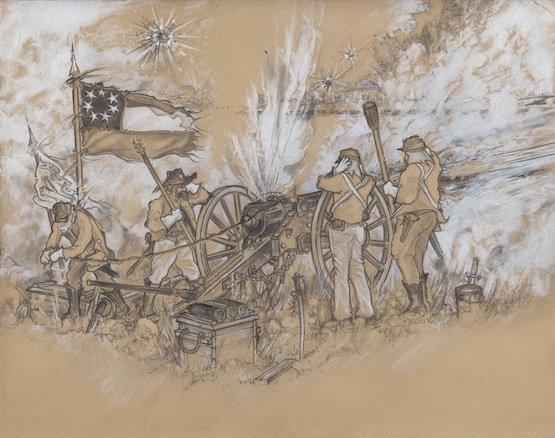
[9] Coddington The Gettysburg Campaign: A Study in Command p.457

[10] Golay, Michael To Gettysburg and Beyond: The Parallel Lives of Joshua Lawrence Chamberlain and Edward Porter Alexander Crown Publishers, New York 1994 p.167

[11] Freeman, Douglas Southall. Lees Lieutenants: A Study in Command One Volume Abridgment by Stephen Sears, Scribner New York 1998 p.592

[12] Ibid. Coddington Gettysburg: A Study in Command p.454

[13] Dowdy, Clifford Lee and His Men at Gettysburg: The Death of a Nation originally published as Death of a Nation Skyhorse Publishing New York 1958 p.258

[14] Trudeau, Noah Andre Gettysburg a Testing of Courage Harper Collins Publishers, New York 2002 p.441
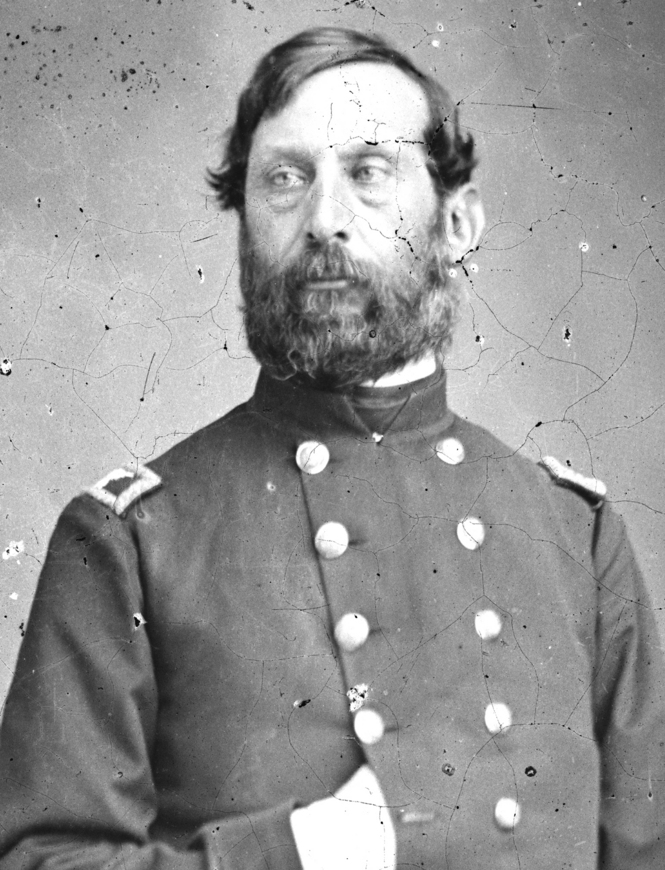
[15] Ibid. Trudeau Gettysburg: A Testing of Courage p.441

[16] Ibid. Coddington The Gettysburg Campaign p.459

[17] Ibid. Trudeau Gettysburg: A Testing of Courage p.458

[18] Ibid. Trudeau Gettysburg: A Testing of Courage p.458

[19] Ibid. Hess Picketts Charge p.79

[20] Ibid. Hess Picketts Charge p.81

[21] Wert, Jeffery D. Gettysburg Day Three A Touchstone Book, New York 2001 p.126

[22] Ibid. Coddington The Gettysburg Campaign p.462

[23] Ibid. Coddington The Gettysburg Campaign p.491

[24] Ibid. Hess Picketts Charge p.32

[25] Ibid. Coddington The Gettysburg Campaign p.492

[26] Ibid. Wert. Gettysburg Day Three p.128

[27] Foote, Shelby The Civil War a Narrative: Fredericksburg to Meridian Vintage Books a Division of Random House, New York 1963 p.539

[28] Ibid. Dowdy Lee and His Men at Gettysburg p.281

Leave a comment

Filed under civil war, Gettysburg, History, Military