Category Archives: ministry

Letter to A New Military Chaplain Part V: Count it All Joy

20130822-235225.jpg

“The theologian who labors without joy is not a theologian at all. Sulky faces, morose thoughts and boring ways of speaking are intolerable in this field.” ― Karl Barth

This is fifth part of a response to a question I had from a new Navy Chaplain. I have decided to post it here without any identification of the chaplain because I know that many men and women who are new to the military chaplaincy or who are exploring the possibilities of becoming a chaplain have the same questions. I was fortunate to have had a number of chaplains who at various points in my decision process and formation as a minister, Priest and Chaplain in both the Army and the Navy help me with many of these questions. Likewise I learned far too much the hard way and blew myself up on some of the “land mines” that almost all who serve as chaplains experience in their careers. This is the fifth of several parts to the letter and is my attempt to systematically explain my understanding of what it is to be a Chaplain serving in the military and in particularly the Navy. As I wrote this tonight I thought of one more installment so I expect soon that I will write it, but not tonight. The first three parts are linked here:

Letter to a New Military Chaplain: Part One

Letter to a New Military Chaplain: Part Two The Minefields of the Heart 

Letter to a New Military Chaplain Part Three: The Minefields of the Soul: Power and Arrogance

Letter to a New Military Chaplain Part IV: The Minefields of the Flesh, Sex, Alcohol and Money

It has been a while since I started this series so tonight I figured that I would quickly finish what I started. The young Chaplain who I wrote this for is about to report to his new assignment and I do wish him well and pray that he will do well in it. If things go as I expect and he does well he should still be serving as a chaplain at least 15 years after I retire.

Thus for me this series is in a sense about passing the torch. I figure that in five or six years I will finally retire from the Navy Chaplain Corps. Of course that could change because I’m not God and so until I actually retire I will keep my head in the game. There is always a new generation and those of us who have labored need to be there for and be ready to do all we can to help, encourage and mentor those who follow us.

One of the things that I have learned over the course of 32 years in the military and 21 years as a military chaplain is that one must keep a sense of humor and not take oneself too seriously. In that time I have ran into many a chaplain and minister who lived their lives bereft of a sense of humor, had no ability to laugh at themselves and who were positively gloomy people. Saint Teresa of Avila made the comment “God save us from gloomy saints!” I think that she was right and she did take fire from people in the church because of her joyous spirit.

Now I have my times where I am not a happy camper. I can be morose and moody and sometimes even a bit cynical. However, that being said I try not to live my life that way and certainly do my best to keep a sense of humor, laugh at myself and even when things are not going well to try to find a silver lining in the otherwise dark clouds.

Chaplains have a unique ministry. We are not cloistered in parishes or trying to build churches. We serve in a secular institution with people who volunteer to serve their nation in often dangerous, lonely and arduous manners. Those who serve alongside of us on our ships, or in our units we in the Navy call “shipmate” and that transcends differences in religious beliefs, politics or philosophy. As the chaplain it is our duty in this secular institution to care for the people who we serve alongside. They are our parish whether they be believers or not. Pastoral care in this setting is about caring for and loving people who many times don’t believe like us (no matter what our religious tradition) respecting their faith or beliefs and treating them with the same dignity that we would want others to treat us, our families or our friends.

For me this is a joyful life. I like working outside the brick and mortar of the church because it suits my personality and way of doing life. I was a Navy “Brat” growing up. Had it not been for a Roman Catholic Navy Chaplain who helped care for my family when my dad was in Vietnam and a civilian church of our denomination made us unwelcome. I trace my calling back to that man. He was not about pushing his denominational or personal agenda, he simply cared about a military family who needed it.

I think that approaching life and ministry as a chaplain with joy is paramount. It is I think a reflection of the grace of God. As Karl Barth said: “Grace creates liberated laughter. The grace of God…is beautiful, and it radiates joy and awakens humor.”

In our military careers we chaplains will find many opportunities to lose our joy, to become graceless and to become consumed with our own status, promotion and even power. It is a temptation and danger of any kind of institutional ministry where there is an “up or out” promotion system.  Thus we must be careful to keep our focus on caring for others, doing our best in all things, build collegial relationships and real friendships with others and trust God with how everything else works out.

Joy is essential if we are to be living sacraments or vehicles of God’s grace and we have to chose joy. As Henri J. M. Nouwen said: “Joy does not simply happen to us. We have to choose joy and keep choosing it every day.”

So count it all joy.

Peace

Padre Steve+

1 Comment

Filed under christian life, faith, Military, ministry, US Navy

Living the Nightmares: PTSD and Iraq Six Years Later

481801_10151367001287059_1003164983_n-1.jpg

“Only happy people have nightmares, from overeating. For those who live a nightmare reality, sleep is a black hole, lost in time, like death.”  Guy Sajer, The Forgotten Soldier

Last week I woke up screaming thanks to some nightmare brought to me in high definition by PTSD. It woke Judy and both of the dogs up and well, it wasn’t exactly pleasant. Unfortunately this happens more often than I would like it to. When I was stationed away from home in North Carolina it was only Molly my faithfully dog who was disturbed by this, now I wake up Judy and our younger Papillon Minnie, or Minnie Scule as is her full name.

This afternoon I read a story of a Marine veteran who lost his battle with PTSD, taking his own life. I see a lot of these stories and each one makes me wonder what s going on and gives me pause when I think just how bad I was doing not too long ago.

It is hard for me to believe that nearly six years after I returned from Iraq that I still have a lot of trouble sleeping, though less trouble than a couple of years ago and that my nightmares associated with war still return with more regularity than I would like. Likewise it is hard for me to believe how much my life is impacted by this. I still experience a fair amount of hyper-vigilance, crowds of people are difficult and the craziness of traffic on the local freeways causes me a fair amount of distress.

n671902058_1153829_4642

Despite that I am doing a lot better than I was even a year or so ago when I was still struggling a lot more than I am now and let’s say 4 years ago when there were times I wondered why I was still alive. Of course the time from 2008-2010 was probably the worst time of my life when it seemed that everything that I had believed in had melted away. I didn’t know if God existed, I felt abandoned by my former Church and even by many peers. The only thing that kept me going was a deep sense of call and vocation as a Priest and Chaplain, even though I was for all practical purposes an agnostic who was praying that maybe God still might exist.

Those who have been with me on this blog over the years know how central that struggle has been. I have written about it many times.

Though I am doing much better than I was I still have my times of doubt, times of fear and times of absolute panic. I do what I can to manage but once in a while something will trigger a response. The biggest problem still is sleep and vivid dreams and nightmares. Once I finish the course I am in I am going to get back into therapy a couple of times a month. Thankfully my new job after I complete the school will be more academic with a small chapel where I serve the Students of the Joint Forces Staff College.

Physically I am doing much better, in terms of overall health and physical fitness. I am playing softball again and my PT regimen is much better. Spiritually I can say that being active in having a Chapel where I celebrate Eucharist in a small setting has been good for me. Having to preach again from the lectionary readings is a good thing. Likewise getting a break from five years of hospital ministry, dealing with death, suffering and psychological issues is good. After Iraq I threw myself into the most difficult areas of hospital ministry, the critical care Intensive Care Units hoping that such work would help bring me out of my own issues. Unfortunately, it made it more difficult.

Being at home again is good. I just wish that my nightmares would not cause distress to the rest of my little family. However, it is nice when after they look at me like I am nuts one or both dogs come to me and help calm me down.

I quoted Guy Sajer, the author of the classic book The Forgotten Soldier. If anyone wants to understand something about what war does to a person and see PTSD in non-clinical terms I think it is possibly the best book to read.

Forgotten_Soldier

Since I have gone to war and experienced fear on a daily basis out in the hinterlands of Al Anbar Province with small groups of American Marines and Soldiers and Iraqi troops I understand a bit of what Sajer writes. My war was different, out with advisors on small Iraqi basis, traveling in dangerous areas far from any big American units, occasionally being shot at and seeing the devastation of war in that unfortunate country,  though my experience of war pales in comparison with what Sager describes.

That being said I do understand in ways that I never did before. Sajer makes a comment which I think is incredibly appropriate for those that read of war without having ever experienced it. too often is the case in the United States and Western Europe where very few ever put on a uniform and even fewer experience war. Sager wrote:

“Too many people learn about war with no inconvenience to themselves. They read about Verdun or Stalingrad without comprehension, sitting in a comfortable armchair, with their feet beside the fire, preparing to go about their business the next day, as usual.

One should really read such accounts under compulsion, in discomfort, considering oneself fortunate not to be describing the events in a letter home, writing from a hole in the mud. One should read about war in the worst circumstances, when everything is going badly, remembering that the torments of peace are trivial, and not worth any white hairs. Nothing is really serious in the tranquility of peace; only an idiot could be really disturbed by a question of salary. 

One should read about war standing up, late at night, when one is tired, as I am writing about it now, at dawn, while my asthma attack wears off. And even now, in my sleepless exhaustion, how gentle and easy peace seems!”

This weekend I will visit the Gettysburg Battlefield as part of a staff ride. I have been there a good number of times but not since I returned from Iraq. Thus in a sense it will take on new meaning, especially when I walk those hallowed fields of battle where so many died and so many more were maimed in our own terrible Civil War.

295_26911892058_4301_n

That being said I wonder if the solution to my nightmares is to go back to Iraq someday like so many WWII, Korea and Vietnam veterans have done to the places that they served. That has to remain in the future, but hopefully I will get the chance and maybe by then Iraq will at last be at peace.

Tonight I will attempt to sleep and hopefully what dreams I have, though they be high definition will at least not be nightmares that disturb Judy or the dogs.

Peace

Padre Steve+

2 Comments

Filed under civil war, faith, Military, ministry, Pastoral Care, PTSD

Whoever Exalts Himself: The Snare of Ideological Christians

self-righteousness

“Jesus addressed this parable to those who were convinced of their own righteousness and despised everyone else. 

“Two people went up to the temple area to pray; one was a Pharisee and the other was a tax collector.  The Pharisee took up his position and spoke this prayer to himself, ‘O God, I thank you that I am not like the rest of humanity — greedy, dishonest, adulterous — or even like this tax collector. I fast twice a week, and I pay tithes on my whole income.’

But the tax collector stood off at a distance and would not even raise his eyes to heaven but beat his breast and prayed, ‘O God, be merciful to me a sinner.’

I tell you, the latter went home justified, not the former;for whoever exalts himself will be humbled, and the one who humbles himself will be exalted.” Luke 18: 9-14

Pope Francis astounded the catholic, and much of the conservative Christian world last week when he commented in a homily that Christians who had allowed their faith to become ideology had a “serious illness.”

The Pope’s comments would not have been so remarkable had so many Christians not have surrendered faith in Jesus for barren ideologies.

Pope Francis is no stranger to this. In Argentina where he served as a Priest, Bishop and Cardinal he saw this type of faith from ideologues of both the political left and political right. The conservatives were those who saw faith as something to buttress their standing and place in society condoning the heavy handed methods of torture, intimidation and murder used by military dictatorships. On the left he saw theologians and pastors who had embraced Liberation Theology who went beyond all the good things brought out by that theology and joined hard lined Marxists in a political struggle. Both sides in Argentina’s culture wars had a part in politicizing and turning the Gospel into ideologies which only used Jesus as to buttress their agendas.

Because of this he is probably a bit more understanding of the havoc that ideologues claiming to be Christians can do to the redemptive message of the Gospel. In the passage from Luke I cannot help but see so many of the ideologues that masquerade as ministers in our American society as the Pharisee.

Since many have not read or hear what the Pope had to say I am copying some of that homily here:

“The faith passes, so to speak, through a distiller and becomes ideology. And ideology does not beckon [people]. In ideologies there is not Jesus: in his tenderness, his love, his meekness. And ideologies are rigid, always. Of every sign: rigid. And when a Christian becomes a disciple of the ideology, he has lost the faith: he is no longer a disciple of Jesus, he is a disciple of this attitude of thought… For this reason Jesus said to them: ‘You have taken away the key of knowledge.’ The knowledge of Jesus is transformed into an ideological and also moralistic knowledge, because these close the door with many requirements.”

… “The faith becomes ideology and ideology frightens, ideology chases away the people, distances, distances the people and distances  the Church from the people. But it is a serious illness, this of ideological Christians. It is an illness, but it is not new, eh? Already the Apostle John, in his first Letter, spoke of this. Christians who lose the faith and prefer the ideologies. His attitude is: be rigid, moralistic, ethical, but without kindness. This can be the question, no? But why is it that a Christian can become like this? Just one thing: this Christian does not pray. And if there is no prayer, you always close the door.”

“The key that opens the door to the faith,” the Pope added, “is prayer.” The Holy Father warned: “When a Christian does not pray, this happens. And his witness is an arrogant witness.” He who does not pray is “arrogant, is proud, is sure of himself. He is not humble. He seeks his own advancement.” Instead, he said, “when a Christian prays, he is not far from the faith; he speaks with Jesus.”

Today’s Gospel lesson from the lectionary was the passage from Luke quoted at the beginning of this article. It really is a remarkable passage. It is so  because Luke notes that Jesus is talking to people who “were convinced of their own righteousness and despised everyone else.” 

This is the mark of an ideologue and zealot regardless of their ideology. The sad thing is that when those people claim to be Christians that it does great damage to the faith, the Gospel and the witness of the people of God. One of the major reasons noted by a Barna Group survey in 2011 as to why young people were fleeing the church was that “Christians demonize everything outside of the church,” that “God seems missing from my experience of church” that “Christians are too confident they know all the answers” that “church is like a country club, only for insiders” and that they cannot “ask my most pressing life questions in church.”

Others have noted that many outside the church feel that Christians are selfish and not interested in those outside the church, are self centered and judgmental, and are unwilling to develop true friendships with non-Christians.

It is amazing when you think of it. I for one remember my days in Evangelical Churches where if you talked about someone that was not a member of the church that people would ask “are they saved?” That always bothered me because I had a lot of friends that were Christians but not Evangelicals, from mainline, Anglican, Roman Catholic and Orthodox churches. likewise I had friends outside the church, people who were non-believers, agnostics, atheists or members of other religions. I saw them as friends and people, but inside the sheltered and isolated cloisters of Evangelicalism they were less than fully human.

The words of Jesus to those he addressed in this passage from Luke are much like so many of us who claim to be Christians.

I have to admit that I still struggle many times with faith and that I get nervous when I see Christians appear to have no regard for others. Maybe it is because I was treated rather shamefully by Conservative Christians who I thought cared about me who when I experienced a faith crisis abandoned or even worse attacked me. Likewise when I was 12 years old and my dad was serving in Vietnam I had a Sunday School teacher tell me that my dad was a “baby killer.”

So I have experienced the Christian ideologue attack from the left and the right. Neither time did I like it and I hate to say that I have little tolerance when I see it.  Thus I try very hard, despite my own theological, philosophical and political leanings to treat people as I would want to be treated. Thus I have friends that range across the entire political and religious spectrum. I also probably have some enemies across the spectrum too, but it is not because I want to be.

I have become enamored with Pope Francis. I do not agree with everything that he says, but that being said I find him to be authentic and human, a man who I can not only respect as a religious leader, but as a human being. I would never want his job or for that matter to be anything more than a Priest, Chaplain and academic and in doing so care for the people that I serve as a Priest, Chaplain and teacher, as well as those who I meet in the places that many Christians would never enter.

I do hope that doesn’t sound arrogant because I certainly don’t mean it to be. I guess it is just because I have seen so much wrong done in the name of Jesus that I want to call attention to it without being an ass or being harsh.

So tomorrow begins a new work week. School continues as does the World Series and my Joint forces Staff College Softball league. This coming weekend I will be heading up to Gettysburg as part of a staff ride.

Have a great week and don’t forget the Gospel and the people that Jesus seems to care about.

Peace

Padre Steve+

Leave a comment

Filed under christian life, faith, ministry, Political Commentary, Religion

It’s Called Sedition and Treason: “Prophet” Rick Joyner Calls prays for Military Coup to Oust President Obama

Rick-12-620x350

Sedition: To write, print, utter or publish, or cause it to be done, or assist in it, any false, scandalous, and malicious writing against the government of the United States, or either House of Congress, or the President, with intent to defame, or bring either into contempt or disrepute, or to excite against either the hatred of the people of the United States, or to stir up sedition, or to excite unlawful combinations against the government, or to resist it, or to aid or encourage hostile designs of foreign nations. Sedition Act of 1798

I am always amazed when certain political preachers make their pronouncements about how they think that God is speaking to them about political issues. However yesterday, when my troubles seemed so far away the radical Christian Dominionist and self proclaimed “Prophet and Apostle” Rick Joyner stunned me. Joyner is one of the leaders of what he and others like C. Peter Wagner call the New Apostolic Reformation which inculcates people to believe that they and they alone are hearing from the Lord and that the task of the church is to rule the earth and if need be judge and destroy those that do not agree with this particular form of Christianity.

Now as most people who really know me know it takes a lot to stun me, even from the right wing political preachers that crowd the airways and cyber space of the United States and the world. I am not a fan of these very non-pastoral and often quite un-Christian political animals who claim to be speaking for God.

Now I am all in favor of freedom of speech and freedom of religion, even for men like the prophet Rick. In fact when I swore an oath to support and defend the Constitution of the United States it included defending the rights of irresponsible, hateful and idiotic men like Joyner and others like him no matter what their political or religious persuasion.

But there is a line where what someone says is irresponsible, hateful and idiotic, which mind you are perfectly legal and Constitutional; after all there is nothing prohibiting people from being hate driven fear mongering idiots. That being said there is a time when speech borders or crosses the line into what Federal law, common law and the laws of most western civilized countries which have a Judeo-Christian heritage call “treason” or “sedition.”

I think that yesterday the prophet Rick looked to me like he crossed that line. He said yesterday on his broadcast that in terms of the President Obama that our “only hope is a military takeover, martial law.” Not only that but he continued: “And that the most crucial element of that is who to the martial [sic] is going to be,” he said. “I believe there are noble leaders in our military that love the republic and love everything we stand for. And they could seize the government.”

Now obviously Joyner neither understands the Constitution of the United States, nor knows history our military. The fact is that most of us who have been around any time at all in the military know the history of just how bad military coups are for Republics or Democracies. The fact is that they seldom end well and usually bring about worse conditions than if sensible people took charge and let the political system work as it was designed. The fact that our often badly divided founders understood that there would be times that one faction, party or another would not be happy with the way an election turned out.

I would have linked the video of this absolutely insane, treasonous and seditious video Joyner’s Morningstar ministries have now pulled it. I guess that some clearer headed people, likely his corporate lawyers realized that this was over the line.

I wonder what Joyner and his supporters would say if a religious leader of another faith other than their own uttered such foolishness. I suspect that if there was a Conservative Republican in the White House that they would be calling for the prosecution, conviction, imprisonment or maybe even the execution of such a person who suggested the overthrow of the civil government. But then for such people the irony of this is too rich for them to comprehend.

The sad thing is that this is now par for the course for people like Joyner whose hubris, narcissism and Gnostic understanding of the Christian faith justifies their radicalism and arrogance. I took some time to read Joyner’s comments about this controversy in his “Morningstar Prophetic Bulletin” and it looks to me like he is willing to go even farther in the coming days. Speaking to his disciples he wrote:

“I am very glad for this controversy, even the outrage I have created in some by the Prophetic Perspectives program. To quote King David, “I will yet be more vile” (see II Samuel 6:22 KJV). I don’t enjoy controversy, but I do appreciate it for what it can accomplish. It is not likely that anyone will be able to speak the truth in these times without it. I intend to use the controversy started by that program to delve into more depth on these issues. Therefore, future Prophetic Perspectives programs will likely be even more controversial….”

Sad to say it looks to me like Joyner is looking to collect some cash for his ministry by getting them fired up. Back in the late 1980s and early 1990s I heard Joyner speak and had some of his books. He is very good at deceiving people and ensuring his material well being by doing this kind of thing. He has been doing it for years. In fact he has been castigated by conservative and Fundamentalist Bible Christians for his incredibly shoddy and self serving “revelations.” Hank Handergraaf’s Christian Research Institute even noted that “Joyner leaves us no middle way. Either we treat him as God’s chosen super-prophet for the end-times, or we treat him as a man in the grip of evil deceit and seek to expose him as such.”

While I am not in agreement with Handergraaf on many things I can agree with him on this. Joyner and others like him in the Christian Dominionist movement are not only narcissistic, arrogant and full of hubris but are dangerous not only to those that follow them but to others. Especially those that they decide based on their personal “word from the Lord” are against Jesus.

Honestly this is little different from the way that people like Osama Bin Laden and the Taliban interpret Islam.

Yes if you ask me what Joyner is saying is seditious and borders on treason. However because people are afraid of the religious right in this country no charges will ever be filed. Joyner will get away with this and rake in more cash from those that he leads into disaster, people who swallow his heresy and radicalism hook line and sinker because it fits their world view.

The late associate Justice of the Supreme Court and Chief Prosecutor at the Nuremberg Trials wrote: “[I]n our country are evangelists and zealots of many different political, economic and religious persuasions whose fanatical conviction is that all thought is divinely classified into two kinds — that which is their own and that which is false and dangerous.”

Joyner and those like him fit Justice Jackson’s description.

God help us all.

Peace

Padre Steve+

1 Comment

Filed under christian life, faith, History, Military, ministry, News and current events, Religion

Letter to a New Military Chaplain Part IV: The Minefields of the Flesh, Sex, Alcohol and Money

1905_50393027058_1870_n

This is fourth part of a response to a question I had from a new Navy Chaplain. I have decided to post it here without any identification of the chaplain because I know that many men and women who are new to the military chaplaincy or who are exploring the possibilities of becoming a chaplain have the same questions. I was fortunate to have had a number of chaplains who at various points in my decision process and formation as a minister, Priest and Chaplain in both the Army and the Navy help me with many of these questions. Likewise I learned far too much the hard way and blew myself up on some of the “land mines” that almost all who serve as chaplains experience in their careers. This is the third of several parts to the letter and is my attempt to systematically explain my understanding of what it is to be a Chaplain serving in the military and in particularly the Navy. The first three parts are linked here:

Letter to a New Military Chaplain: Part One

Letter to a New Military Chaplain: Part Two The Minefields of the Heart 

Letter to a New Military Chaplain Part Three: The Minefields of the Soul: Power and Arrogance

Dear Chaplain

It has been about a week since my last letter concerning the minefields that so easily ensnare those in the various Military Chaplain ministries. This section of my letter to you will be of the more practical type of advice and less philosophical and theological than the first several installments even though at the heart these observations are both theological and philosophical.

I chose the title of this section carefully because I do think that the way a number of New Testament writers deal with the subject of sin, calling it “the flesh” as opposed to “the spirit” is appropriate to the topic.

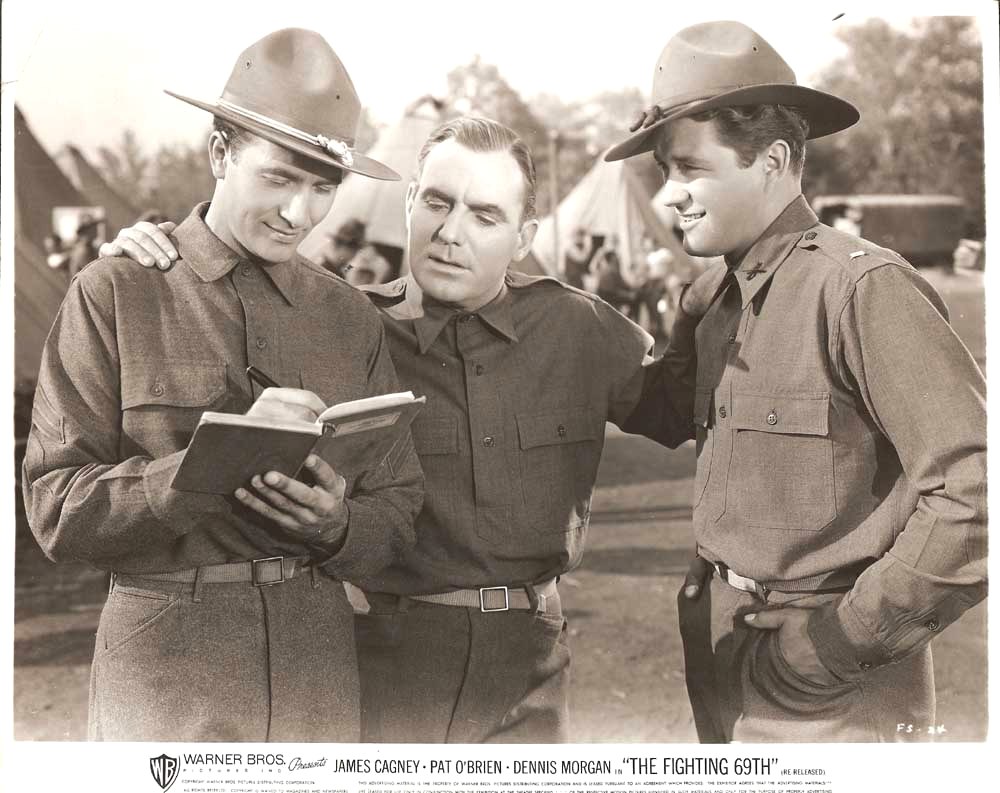
I think that people of my generation and earlier had a very high view of clergy. We didn’t think that they could do much wrong. Of course we all knew that they did but we didn’t like to talk about it, even productions such as Elmer Gantry did little to dissuade us from our beliefs that Ministers, Priests and Rabbis were somehow morally and certainly spiritually better than us. Even Hollywood maintained the myth, movies like The Bells of St Mary’s showed the essential goodness of the parish priest, while The Fighting 69th in which Pat O’Brien played the legendary Father Duffy, a man both streetwise and holy became the quintessential Chaplain of his generation.

18722 - The Fighting 69th

In fact the prayer that he prays in the movie is one that I have echoed in my career as a Chaplain and I am sure that many others have as well.

“Almighty God, in Thine infinite mercy grant me, thy servant, the wisdom to guide my young flock through the trials of war. Oh, Father, they’re so young. So young and they know so little of life and nothing at all of that terrible and bloody altar towards which they move, carrying so eagerly the bright sacrifice of their youth. Their need will be great, O Lord, and I am weak. Therefore, I beseech thee through Thy Son, Christ, our Lord, grant me the strength to keep them steadfast in the faith, in decency and courage to the glory of God, their country, and their regiment in the bad times to come. And if in battle you see fit to gather them to your protecting arms, thy will be done, but let them die like men, valiant and unafraid.”

Of course there is Father Mulcahy of the movie and television series M*A*S*H. I actually liked the portrayal of him by William Christopher in the series better than the movie, perhaps because he became more than a bit player, but like many real life chaplains of every denomination an integral part of the life of his unit. His struggles are the same that many of us who serve as chaplains. In one episode he says to Hawkeye “For some time now, I’ve been comparing the disparity of our callings – Doctor versus priest. You fellows are always able to see the end result of your work. I mean, you know immediately if you’ve been successful. For me, the results are far less tangible. Sometimes… most of the time… I honestly don’t know whether I’m doing any good or not.” 

father

The film and television portrayals of chaplains such as Father Duffy and Father Mulcahy are inspiring, as are the examples of so many good men and women who have served as military chaplains. Some of these even gave their lives in combat so others might live, or placed themselves in harms way to be the the visible representation of God’s presence in places that God himself seems to have abandoned.

That being said there are minefields that exist which even the most noble, caring  and committed Chaplains can fall victim. They primarily lie in the real of Sex, Alcohol and Money, what we referred to as “SAM” when I was an Army Chaplain. Those are general categories to which unfortunately we need to discuss, illicit drugs, disobeying lawful orders and simple rudeness. I will save the issues of disobeying lawful orders and simple rudeness for part five, or Part V as they say in Roman numerals.

At any given time there are between a half a dozen and dozen military chaplains serving time at either Leavenworth or one of the regional Brigs. Others end up in trouble, are disciplined and then discharged from the the service often after devastating the lives of those that they served with. Those numbers are not included in the numbers incarcerated.

You wouldn’t think that sex would be a big issue being that we are supposed to be better at keeping our zippers up than others, but this is not always the case. I can cite from personal knowledge case after case where chaplains that I have known from across the denominational spectrum conservatives and liberals alike. Those actions have included heterosexual and homosexual relationships, inside and outside their units and sometimes involved the spouses of their unit members or parishioners.

For some this is due to the isolation that many Chaplains experience, be they married or single. Some are sexual predators, loathsome and evil animals masquerading as good, while others in moments of weakness succumb to temptation. I have had to go into a number of billets where the chaplain just before me had been relieved of their duties for sexual misconduct. Regardless of the reason the real fact of the matter is that when a chaplain is relieved and disciplined for their sexual misconduct their actions radiate out and damage the ministry and reputations of Chaplains who are completely innocent of wrong doing. This is much like how the actions of disgraced televangelists, pastors of large churches and Bishops or Priests implicated in pedophile or other sexual crimes cause problems for others in similar positions who again are without reproach. In every case where I have had to go into such a situation the onus has been on me to help heal the wounds and rebuild the credibility of the Chaplain Corps. This is true for every Chaplain who has to take a job where his or her predecessor was a criminal.

bilde-2

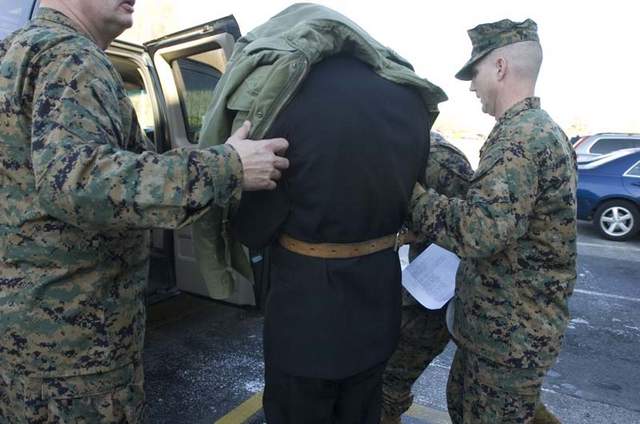
A Navy Chaplain being taken to the Brig after being convicted at Court Martial for sexual crimes (Marine Corps Times Photo)

Sexuality can be one of the greatest minefields that a military chaplain has to navigate, but there are others less visible that also trip men and women up.

The second major area is alcohol. I know a number of chaplains who have become alcoholics. I like to drink good craft beer, but I do know my limits now and am very careful about my consumption of alcohol. When I first came back from Iraq that was not the case. I did drink too much, mainly because I was in the process of coming apart with severe and chronic PTSD. I almost ended up in a bar fight one night and I am thankful that I never ended up in an accident or involved in any other alcohol related incident. There were times at various conferences that I would sit around and drink late into the night at the hotel with other chaplains going through similar problems as I was going through. For us it was safer than going to our superiors either in our churches or the chaplain corps.

That being said I have seen other Chaplains succumb to alcoholism and know one who in dealing with his own demons from service in Vietnam committed suicide while on active duty. Alcohol is also related to many of the incidents regarding sex, so even if it was not the primary issue it was a factor. I also know a number of chaplains who are involved with Alcoholics Anonymous and fight the battle of sobriety on a daily basis.

Related to alcohol are drugs. This is a relatively new phenomena and in most cases is related to prescription medicines, especially pain killers and anti-psychotics prescribed to treat the wounds of war, injuries and things like PTSD and TBI. Once again these are easy to become addicted to and chaplains are much like others when dealing with chronic pain, PTSD or TBI. Recently I saw something that I never thought I would see and that was a chaplain who tested positive for THC, the active ingredient in Marijuana. I figure that if there is one there probably are more that are using, many who battled addictions before their faith conversions and call to the ministry but when placed under the stress of this ministry go back to old friends.

The last component of SAM is money. I think this is a more difficult area in the Army than the Navy because in the Navy chaplains are not allowed to deal with the Religious Offering Fund, where in the Army a Chaplain at every installation is the Religious Offering Fund Manager. It is said by some that “money is the root of all evil” but I am not sure if that is exactly true in this case. I think that money and the power it brings sometimes reveals the inner character of a man more than anything. The great televangelist scandals of the late 1980s and early 1990s, the continuing saga of corruption at the Vatican Bank and the all too frequent revelations of ministers of all faiths misusing church finances are legend. When I had to manage a relative small installation chapel fund I lived in terror of making an innocent mistake, and thankfully I had an outstanding Chaplain Assistant and Parish Council to work with and maintained close contact with the fund manager at our higher headquarters.

Another issue dealing with money is what we are paid when in a travel status. I know that there are Chaplains who play fast and loose with this and I know people in the travel and disbursing offices who tell me about the actions of chaplains that they have to deal with who are not playing straight with the system. In my case I don’t make claims that I cannot substantiate even if it costs me money. I would rather be absolutely honest on a travel claim and lose money that claim something that I may or may not be entitled to that might cause scandal and bring disrepute to God, my church or the Chaplain Corps.

Money is a great temptation and more than one military Chaplain has fallen to it.

The sad thing about all of this is that most of our religious traditions deal explicitly with all of these matters as do our various Service Regulations and Defense Department Instructions. They are not rocket surgery but they are the downfall of far too many chaplains, many of whom actually came into the ministry and chaplaincy with good motives. Once again I lay a lot of this at the feet of our churches and theological schools which for decades have stressed how to run a church program over any real pastoral or theological formation process.

I am lucky. I have made mistakes but I have had numerous chaplains in both the Army and the Navy help me to see the blind spots and teach me about these things. They span the denominational, theological and even political spectrum. Conservatives, liberals, men and women, Protestants, Catholics, Later Day Saints, Jews and even a Moslem.

I could easily have gone into detail about the specific incidents where I knew the people involved or had to deal with them or follow in their footsteps. Some have made the national media, but somehow to do so would be unseemly, after all I do not work for the National Enquirer or for that matter the Navy or Army Times. That being said the Chaplain Corps of the various services all have by percentage among the highest incidences of misconduct of any officer branch or community and this has been a constant since I began my military career in 1981.

That should be a warning. If you know something is wrong don’t do it. If you are unsure about something ask someone. If you need help get it before your actions destroy the lives of those you serve and bring disrepute to your office, your religious body, the Chaplain Corps of your military service and yes even God. After all God does tend to get the blame for all of the actions of those in his service so be careful, guard your heart and mind and for God sakes keep your zipper up and all appearances thereof.

Until the next installment,

Peace

Padre Steve+

1 Comment

Filed under christian life, faith, leadership, Military, ministry, Pastoral Care

Letter to a New Military Chaplain Part Three: The Minefields of the Soul: Power and Arrogance

295_27076762058_7573_n-1

This is third part of a response to a question I had from a new Navy Chaplain. I have decided to post it here without any identification of the chaplain because I know that many men and women who are new to the military chaplaincy or who are exploring the possibilities of becoming a chaplain have the same questions. I was fortunate to have had a number of chaplains who at various points in my decision process and formation as a minister, Priest and Chaplain in both the Army and the Navy help me with many of these questions. Likewise I learned far too much the hard way and blew myself up on some of the “land mines” that almost all who serve as chaplains experience in their careers. This is the third of several parts to the letter and is my attempt to systematically explain my understanding of what it is to be a Chaplain serving in the military and in particularly the Navy. The first two parts are linked here:

Letter to a New Military Chaplain: Part One

Letter to a New Military Chaplain: Part Two The Minefields of the Heart 

Dear Chaplain

The late great Hall of Fame Manager of the Baltimore Orioles Earl Weaver said “It’s what you learn after you know it all that counts.”

The first two parts of this letter dealt with aspects of the chaplain ministry that were very much philosophical and theological in their emphasis. This part is more direct and will deal with things that are more associated with behaviors, mostly bad behaviors. I call them minefields of the soul because they are common to all human beings. They are dark parts of the soul that lurk within us that none of us like to admit exist.

220px-3ChaplainSymbols

Sometimes they are merely weaknesses, but sometimes they are pathological or in some cases sociopathic. There is no restriction on such maladies of the soul, ministers are just as prone, if not more prone to them than others. It goes with the territory. One only has to look at the Christian and Jewish scriptures as well as the history of religious leaders of all religions throughout history to see this fact. Religious leaders, especially ones whose ministry involves some form of temporal power, be it in the religious structures of their religion, behinds the scenes in secular government and the political process or those whose ministries are in the secular arena of the chaplaincy often find themselves compromised by behaviors that others might not even consider that loathsome.

As I talked about in the first two parts of this letter, all of these behaviors are linked to who we are as human beings, as ministers and have a lot to do with our theological, ministerial and pastoral formation. They also have a lot to do with our upbringing, our cultures, family backgrounds and the family systems that were formative in our upbringing as well as the prejudices that we hold deep in our hearts.

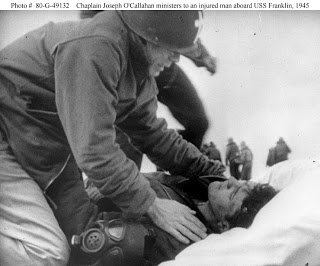
CMH Chaplain O'Callahan

This part of the letter focuses on things that are more observable to most people, especially those who see us in action. When I was leaving active duty as an Army Captain back in 1988 to attend seminary, an Army Chaplain Major Wayne Lura took the time to pull me aside and preach to me a warning sermon about the minefields that existed in the chaplain ministry. It was a warning that I took to heart.

Likewise my Executive Officer at the Academy Brigade of the Academy of Health Sciences Colonel James Wigger gave me this warning: “Steve, you think that the Army Medical Department is political and backstabbing. Let me tell you, we can’t hold a candle to the brutality of Chaplain Corps.” Unfortunately he was right. In my 21 years as an Army and Navy Chaplain I have seen this often up close and personal. I have had senior Line Officers and officers from other Staff Corps of the Navy talk about how bad of reputation many senior Chaplains have, especially in promotion boards.

The warnings of Chaplain Lura and Colonel Wigger hit me hard as a young officer, especially in the ideals that I held out about the Chaplain Corps. I took their warnings to heart but did not want to believe that they could be true. The sad fact was that they were all too true, Chaplains like all ministers and people often have feet of clay and at times hearts of stone.

Even so I had to find out the hard way about how destructive the “minefields of the soul” were in the lives of my fellow chaplains and and the Chaplain Corps of the Army and Navy.

I will first address the issues of power and arrogance. These issues plague institutional ministry and those minister within institutions. I think a part of this is that many who wind up in Chaplain ministry because of their lack of pastoral formation readily grasp at the apple of power, like the fruit of the tree of the knowledge of good and evil, that fruit is a powerful elixir. Yet even those that have a more thorough formal pastoral formation can fall prey to the lust of power.

Power is a great temptation and a minefield. The military chaplaincy is unique in ministry in that chaplains also hold commissions as officers in whatever military branch we serve. As I mentioned in my first article we have to be fully clergy of our own faith tradition and at the same time fully a commissioned officer if we are to succeed in the military chaplain ministry.

gettysburg-blog-photo-1

Unfortunately there are some that embrace the fullness of the commission and leave behind their ministerial identity, and even more unfortunately when they do they do this they are neither aware of it, nor very good at it. They forget with the exception of a couple of billets or positions, one being the Commanding Officer of the Navy Chaplain School that all the rest of us are staff officers. We are officers but we have no command authority. That does not mean that we cannot supervise chaplains, chaplain assistants or religious program specialists and civilian or contract staff. But when we do so we function under the authority of our commanding officer. I have seen some in both the Army and Navy who have forgotten this and have become tyrants and used the power that they have to destroy the lives and careers of those that they do not like, or have somehow offended them. They are toxic and if they were serving in a denominational structure they would be the ones abusing that power as well.

The temptation of power is great, but just is dangerous is the temptation of arrogance. A Kenyan prayer says: From the cowardice that dare not face new truth, From the laziness that is contented with half truth, From the arrogance that thinks it knows all truth, Good Lord, deliver us.

Arrogance usually shows up in the Chaplain ministry in the way we advertise our selves and our beliefs. Arrogance comes in the form of deciding that whatever truth we proclaim trumps the rights of others to their beliefs. One of the chief complaints of people about chaplains is that some of us, perhaps even many of us are more intent on promoting our agendas, religious, social and even political than we are actually listening to and caring for the people whose religious rights that we are constitutionally mandated to protect. Yes, even those people that we do not agree with on doctrine or anything else. Our mission is to provide or perform ministry and care for the people we have been given to serve. That is a sacred trust. If there is something that we cannot do for someone by virtue of what our church or personal beliefs mandate we don’t have to do it, but we do have the legal and moral obligation to help them find someone who can.

schluter

Our Navy Chaplain Corps motto of “Cooperation without Compromise” should be the bedrock of how we minister and how we respect the rights of others, both other chaplains and those that we serve. Sadly, there are horror stories about how some chaplains of various traditions, liberal and conservative, Christian, Jewish and Moslem have run roughshod over the rights of others. I have seen it first hand and there is no excuse for it. But that being said none of us can allow our own arrogance to dictate how we treat others nor can we allow the mistreatment we may have experienced from other Chaplains to justify doing the same to others.

The Navy policy is quite clear and when we apply for a commission we agree to do this, and in fact all of our religious bodies have agreed that their chaplains will do the same. SECNAV INSTRUCTION 1730.7D is quite clear on this. Like the Prime Directive in Star Trek it is non-negotiable.

(1) Chaplains are qualified Religious Ministry Professionals’ (RMPs) endorsed by a DoD-listed RO and commissioned as Naval officers in the CHC.

(2) Per reference (d), as a condition of appointment, every RMP must be willing to function in the diverse and pluralistic environment of the military, with tolerance for diverse religious traditions and respect for the rights of individuals to determine their own religious convictions. Chaplains must be willing to support the free exercise of religion by all Service members, their families, and other authorized persons. Chaplains are trained and expected to cooperate with other chaplains and RMPs and work within the specialized environment of the military while not compromising the tenets of their own religious traditions. 

(3) To meet the requirements of religious accommodation, morale and welfare, and to facilitate the understanding of the complexities of religion with regard to its personnel and mission, the DON has designated four core CHC capabilities: care, facilitate, provide, and advise. Chaplains care for all Service members, including those who claim no religious faith, facilitate the religious requirements of personnel of all faiths, provide faith-specific ministries, and advise the command. 

In my next installment I will discuss what I call “The Minefields of the Flesh” also known as Sex Alcohol and Money.

Until the next time,

Peace

Padre Steve+

2 Comments

Filed under faith, Military, ministry, Religion

Letter to a New Military Chaplain: Part Two The Minefields of the Heart

295_27076892058_2637_n-1

This is second part of a response to a question I had from a new Navy Chaplain. I have decided to post it here without any identification of the chaplain because I know that many men and women who are new to the military chaplaincy or who are exploring the possibilities of becoming a chaplain have the same questions. I was fortunate to have had a number of chaplains who at various points in my decision process and formation as a minister, Priest and Chaplain in both the Army and the Navy help me with many of these questions. Likewise I learned far too much the hard way and blew myself up on some of the “land mines” that almost all who serve as chaplains experience in their careers. This is the second of several parts to the letter and is my attempt to systematically explain my understanding of what it is to be a Chaplain serving in the military and in particularly the Navy. The first part is linked here:

Letter to a New Military Chaplain: Part One

“There is a twilight zone in our hearts that we ourselves cannot see. Even when we know quite a lot about ourselves-our gifts and weaknesses, our ambitions and aspirations, our motives and our drives-large parts of ourselves remain in the shadow of consciousness. This is a very good thing. We will always remain partially hidden to ourselves. Other people, especially those who love us, can often see our twilight zones better than we ourselves can. The way we are seen and understood by others is different from the way we see and understand ourselves. We will never fully know the significance of our presence in the lives of our friends. That’s a grace, a grace that calls us not only to humility, but to a deep trust in those who love us. It is the twilight zones of our hearts where true friendships are born.”Henri J. M. Nouwen

Dear Chaplain

The next section of our discussion is about the “minefields” that we so often encounter as Chaplains and to some degree as Ministers, Priests or Rabbis or other religious leaders. As I noted in the first section I am dividing these “minefields” into three major areas; the personal, the behavioral and the professional.

This section is about the “personal” minefields which I call the “Minefields of the Heart.” I call it this because it seems from the Christian and Jewish Scriptures the heart is the figurative locus of what we are, good and bad alike as human beings.

Of course there is always some spillage between the areas personal, behavior and professional areas and our behaviors and professional relationships are certainly influenced by the things that we hide deep in our hearts. As human beings we may try to compartmentalize our life to keep things apart such as keeping our personal life separate from our professional life, or hide behaviors from our friends, families, peers or co-workers; but the cold hard fact is whether we are aware of it or not each area impacts the other. If we are not aware of this fact, if we have little self awareness, if we have self awareness but try to live our lives with the illusion that we can separate our lives into neat little boxes we will most undoubtedly hurt ourselves, and as spiritual leaders harm those that come to us.

q_who

There is a scene of the last episode of Star Trek the Next Generation entitled “All Good Things” that comes to mind.  In it the being known simply as “Q” helps Captain Picard discover how his actions influence human history.

Q: You just don’t get it, do you, Jean-Luc? The trial never ends. We wanted to see if you had the ability to expand your mind and your horizons. And for one brief moment, you did.

Capt. Picard: When I realized the paradox.

Q: Exactly. For that one fraction of a second, you were open to options you had never considered. That is the exploration that awaits you. Not mapping stars and studying nebulae, but charting the unknown possibilities of existence.

You may wonder where I am going with this but it has to do with the personal minefields, those that exist inside of us, those that lurk beneath the surface which if we are unaware wreak havoc on everything else that we do. In the episode of Star Trek that I am referring to Captain Picard is allowed by Q to see the effects of his actions and to see how limited his thinking was.  The challenge for us is chaplains are to be aware of what Nouwen calls “the twilight zone in our hearts” and how what is at the depth of our heart impacts everything else that we do.

Too often though, mostly because of our own personal limitations and serious lack of real theological and pastoral formation involving self reflection and exploration we fail to see them. Like an uncharted minefield we are unaware of them until we either discover their existence through accident and “blow ourselves and others up” or until we listen to those that can see those twilight zones, those minefields better than we ourselves. Of course the latter, especially when it comes from those who love us, care for us and have our best at heart is the preferable method to learn about these things.
943043_10151694525692059_632653331_n

However, that being said part of this can be done through reading. A lot of us simply read “how to” type books when it comes to ministry. We seek direct easy answers in how to run our programs be it in the church, in a para-church ministry or in the chaplaincy. Believe me there are plenty of those kinds of books out there, not only that but a plethora of “self help” books that tell us the “three things we must know” the “five whatever’s to success” or the Seven Habits of Highly Defective People.” The sad thing is, even when these books contain nuggets of truth, they serve it like fast food and reduce it to the lowest common denominator. In a sense, even the most well intentioned of these “how to” or “self help” books promote a reductionist view of faith, spirituality, psychology and in some cases ethics and doctrine.

Reading is important, especially the hard stuff, philosophy, history, moral theology, but also things that you might not expect science fiction for example. In addition classic literature from antiquity and from non-western traditions also sheds light on those personal minefields. Heck we can even find truth in television and film, note my continued references to Star Trek. I find that God can speak to us in many ways.

As Christians we may also find lessons, insights and inspiration from the Bible that can be quite helpful. Unfortunately most of us have so many theological filters in place that we often miss the very things that would be most helpful to us. They can serve as blinders that keep us from sensing what the Spirit of God is trying to teach us. Our church, denominational or theological traditions as well as our hermeneutical methods often cloud our minds to what God is trying so hard to say. It was a problem that the religious establishment of his time had with Jesus, and often with the various prophets that preceded him whose stories we read about in the Old Testament.
1905_50393137058_7454_n

I am sure that others who are not Christians can say similar things about their faith, traditions and holy books. I remember an Iraqi General who I met who took the time to show me his well worn and read Arabic-English Bible. He was a Moslem, but he said that he learned so much from it because it was different than what was in the Koran and he meant no disrespect of his own faith by saying that. He had opened his mind to truth that others turn a blind eye to.

Some of the personal issues that prove to be deadly include what we don’t know about ourselves, usually dating back to childhood, how were raised, how we see God, if we perceive ourselves to be worthy of God’s love or worthy of the love and respect of others.  Those attitudes, especially those created as a result of negative relationships or even physical, emotional or sexual abuse, abandonment and rejection are powerful. Many of us like to pretend that we have gotten past those things but few of us actually do. Unfortunately there is a tendency for those issues to raise their heads in often very ugly ways as we minister as Chaplains.

For example: Let us say that we are distrustful of authority because of having an abuse parent, that we fear that no matter how well we do that there is always someone waiting to take us down. Let us say that we had previous experiences in the church, at work or maybe in prior military service where we were mistreated by those in authority.

I have found that if that condition is not dealt with that in a hierarchical organization such as the Chaplain Corps and the military that it is almost always fatal to the ability of the chaplain to minister in the organization. That is because the military is based on trust, our lives and mission depend on it. We have to trust the chain of command, we have to trust those that serve alongside of us and we have to trust our subordinates. There may be times when the chain of command fails and things don’t go right. There are toxic leaders and there are also toxic chaplains, one has to be aware that they are out there, know how to deal with them or survive under their command but one cannot presume that everyone is like that, trust is essential.

father

I find it interesting that Jesus commended the faith of the Roman Centurion when instead of asking Jesus to come to his house and heal his servant simply said “But just say the word, and my servant will be healed. For I myself am a man under authority, with soldiers under me. I tell this one, ‘Go,’ and he goes; and that one, ‘Come,’ and he comes. I say to my servant, ‘Do this,’ and he does it.”Matthew 8: 8b-9 Jesus told the people around that “he had not seen such faith in all of Israel.” Jesus saw the virtue of the Centurion, a virtue that many of his own people were lacking.

That is just one of a myriad of personal issues that can trip up a Chaplain in the military. The fact is that issues of the heart those things that we don’t like to admit are true about us, things that we are unaware about or in outright denial about in our lives are the things that go to the “heart” of who we are.

As fa as the minefields of my heart, they too are many. However the one that gets me time and time again is my passion for justice and my visceral reaction to those that I believe are bullies. That comes from my childhood. As a Navy brat I was always the new kid in town, and being that I was kind of the short, shy and introverted kid I was also kind of a nerd, or geek. I was not gifted with speed or great athletic abilities and it took me a while to find my academic prowess. That meant that I often didn’t fit in and though I was generally well liked that I would on occasion be bullied and I learned to defend myself, not very well at times but well enough to as the Klingons say “to die an honorable death.”

Jeremiah the prophet, who admittedly was most certainly clinically depressed if you look at his writings did note that “The heart is deceitful above all things and beyond cure. Who can understand it?” Jeremiah 17:9 Depressed or not Jeremiah did seem to understand that what he and many writers of scripture call “the heart” is hard to understand, especially when it is our own.

Thus I go back to Nouwen’s comment about the “twilight zone of the heart” that we cannot see. That it is why as Chaplains we have to develop relationships with people who can help us see what is in the twilight zone of our hearts and lovingly come alongside of us, not just as colleagues but as friends.

Those people may be clergy or other chaplains, but then they may not be. Perhaps they are senior enlisted personnel, long time friends, teachers, spiritual directors, counselors or our God forbid our spouses, I jest about the latter because my wife can see things about things about me that I cannot see, she is incredibly wise.

The minefields that exist in our hearts are so varied, so diverse and so treacherous. They have the potential to affect so many other parts of our lives. Thus for us as chaplains if we are not careful they can be destructive not only to us, but to those that we serve as well as those that we presume to love.

295_26912097058_4309_n

When I look back at my career and I am honest about it, I can say without a doubt that most of the things that hurt me were a direct reflection of the minefields that were already present in my heart. When things that happened that I felt were unjust or threatening I reacted and quite often my reactions caused problems greater than what I was reacting to. All they needed was something to set them off. What I have come to understand is even though I have had a very successful and that I am now a Senior Officer that what lies in my heart can still blow me up and that I need to always be careful of those minefields that exist in the twilight zone of my heart.

Lao Tzu said: “Watch your thoughts; they become words. Watch your words; they become actions. Watch your actions; they become habit. Watch your habits; they become character. Watch your character; it becomes your destiny.”

That is the key, those things that emanate from the deepest recesses of our hearts are full of minefields and we need to guard our hearts and minds in this ministry that we are privileged to have as military chaplains.

Peace

Padre Steve+


4 Comments

Filed under christian life, faith, Military, ministry, Pastoral Care, philosophy, Tour in Iraq, US Navy

Letter to a New Military Chaplain: Part One

185615_1857288397412_3950321_n

Note: This is a response to a question I had from a new Navy Chaplain. I have decided to post it here without any identification of the chaplain because I know that many men and women who are new to the military chaplaincy or who are exploring the possibilities of becoming a chaplain have the same questions. I was fortunate to have had a number of chaplains who at various points in my decision process and formation as a minister, Priest and Chaplain in  both the Army and the Navy help me with many of these questions. Likewise I learned far too much the hard way and blew myself up on some of the “land mines” that almost all who serve as chaplains experience in their careers. It will be the first of several parts to the letter and is my attempt to systematically explain my understanding of what it is to be a Chaplain serving in the military and in particularly the Navy.

Dear Chaplain,

“Preach the Gospel at all times, use words when necessary.” Francis of Assisi 

I thank you for writing me about the questions that you have concerning ministry as a Navy Chaplain. They are incredibly good questions and I since you first asked me two days ago I have given them much thought before responding. I find that if I take the time to mull over such questions it is much more beneficial than simply spitting out whatever comes to mind first because if I don’t get the questions right my advice however good might be wrong. Of course even well thought out advice can be wrong in a given circumstance so you must contextualize the advice and adapt it to your own circumstances at any given time.

As a prologue to the actual questions that you ask I want to point you back to the words of St Francis. I think that they are they key to success in any ministry, but especially the chaplaincy.

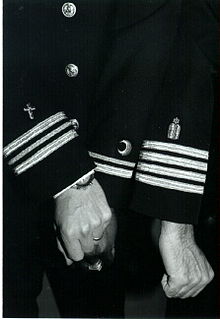
As chaplains we are called by our churches or religious bodies to serve in an organization that is essentially secular. Our ordinations come from our churches or religious bodies and we are to be faithful to them. However our commissions as officers come from the President and this creates a dialectical tension that is hard to resolve for some. You will hear people talk about managing the “right and left side of our collars.” That of course is the fact that we wear our military rank on the right collar and the Cross that we wear as Christians or in the case of our Jewish, Islamic or Buddhist colleagues the Tablets of David, the Crescent or the Wheel of Life on the left.

Some attempt to seek a balance between the rank and the religious symbol. That is a bad model because but what typically happens is that chaplains become fall to one side or the other. By that I mean that they either place the military side higher and forget their call or minimize the military side and find that they have no voice in the system. I have seen many chaplains who have in their attempt to fit in with the military forgotten their call as ministers. On the other hand I have seen a number place such an emphasis on their own religious traditions and their perceived rights as ministers that they neglect the vast majority of the people that they are assigned to care for as chaplains. Both options are bad because ultimately we fail to serve those that we are called and given the privilege to serve.

A few years back I saw the travesty of trying to “balance” the two sides of the collar. From my observation those who tried this always end up becoming so military that they end up losing their faith distinctions or they never adapt to the military and even if they do “good ministry” they end up frustrated, are seen as an outsiders and have relatively short careers.

295_27076762058_7573_n-1

As such I went back to Christian theology to find a model of ministry and that is in the hypostatic union of Jesus the Christ. By our understanding as Christians Jesus is both fully God and fully Human, not half and half, or any other percentage, but 100% God and 100% human. The fact is that as Navy Chaplains we are 100% ministers of our own faith group and 100% Naval Officer. As such we need to be the best we can at both and cannot allow ourselves to settle for anything less. If we attempt to “balance” we will fail in being ministers or being officers.

The military is not the church, as such  In the United States our service in such a capacity is not a right, it is a privilege. The right is not ours, it is right of the people that we serve to have the Constitutional right under the First Amendment to their “Free Exercise” of religion. As chaplains we facilitate the religious rights and freedoms of those who wear the same uniform that we wear, whether they of our faith, another faith or even of no faith. This is not about being “politically correct” but rather being faithful to two callings, both of which must be valid and respected in order for us to do what we are called to do as Navy Chaplains and there is always a tension in this. If you take a look at the chaplains that have trouble it is most often because believe that their right to free exercise is greater than the people that they are called to serve or that they lack a sufficient understanding of their call as Ministers, Priests, Rabbis or Imams. That is why Francis’ words are so important.

I think that many ministers, not just chaplains have a terrible understanding of our calling and vocation. To many the ministry is simply a job, their ordination and theological education the necessary prerequisites to perform the task. It is an attitude that I noted in seminary back in the late 1980s and early 1990s and have continued to observe over time. In seminary I had fellow students tell me that they were just thier to get a more advanced degree to help them get a bigger and better paying church. I had others friends disparage their theological education. I had one friend tell me that our degree was “only good for 5 years.” Obviously he was only thinking about the “how too classes” and not the courses that are really important to theological and pastroral formation.

But such is the state of theological education in this country. The fact is that most churches, seminaries or religious bodies do a pretty bad job at pastoral formation. We do a great job on teaching people how to manage churches, direct programs, teach doctrine, evangelize, run media empires or even become social and political activists, but a terrible job at actual pastoral formation and the latter is actually the most important task. Formation is primarily about relationships and relationships are what the Gospel is all about, beginning with the relationship of God to humanity and all of creation.

That may sound like I chased the proverbial rabbit but the attitude has a decided impact on the chaplain ministry. What happens is that this simply becomes a job and “skill sets” take priority over our calling and our service to those who were are called to serve during the time that we are allowed to serve in the Navy. We must never lose sight of who we are called to be as ministers, including the vows the we took when we were ordained as well as the oath that we swore as Naval Officers.

All that being said back to your questions. You asked first about the minefields that you might encounter as a chaplain. In a sense I have described some of them, they are very often related to who we are on the inside. It is as Lao Tzu said: “He who knows others is wise; he who knows himself is enlightened.”

The minefields that you asked are varied but most are related to what I have already described. They are often directly related to our own understanding of ourselves, our calling and our relationship to those that we are called to serve.

But to get into some detail on real, perceived and potential “minefields” you might encounter let me break them into several categories.

The first is the personal. As I stated before we have to know ourselves. This takes time and many people remain oblivious to who they are and what they are about, sometimes for most of their lives. Where this comes into play as a chaplain is that if we do not understand who we are and what we are about we will fail either in regard to our ministerial calling, our military vocation or our familial or ecclesiastical relationships.

The second is behavior. This is directly related to our personal behaviors and as we were told back during my early times as a new Army Chaplain. Most chaplains who self destruct tend to do so through SAM. Sex, alcohol or money. At any given time there are anywhere between half a dozen and dozen chaplains of all services serving time in Leavenworth or a regional Brig most having been convicted of charges involving SAM.

The third is professional. This is the nuts and bolts of what you will face as a Navy Chaplain. This includes your service to your crew, relationships with the chain of command and your fellow chaplains, your peers, your superiors and eventually those that you supervise as well as your Religious Programs Specialists or Chaplain Assistants. Likewise it includes your continuing relationships with your endorser and church that ordained you.

n671902058_1153804_6925

I will continue the discussion of these three areas in the next couple of days. After those topics are address I will discuss the particularities of promotion and assignments in the Chaplain Corps. Since my experience includes 17 1/2 years  in the Army and 14 1/2 years in the Navy including service as a junior chaplain in both as well as service as a Field Grade Officer in the Army and now as a Senior Officer in the Navy Chaplain Corps my perspectives will be quite unique.

Thank you for your patience in reading through this as well as for asking your questions.  They have forced me to think about this subject in new ways and write in down my thoughts down ways that I never have before. Yes I have set down with and discussed these ideas and concepts with various chaplains but have never written them down in a systematic format until now. I do appreciate you giving me the chance to do this. It means a lot.

Until tomorrow,

Peace

Padre Steve+

5 Comments

Filed under faith, leadership, Military, ministry, Pastoral Care, philosophy

Dreamers and the Obligation of Ideas

Lawrence_1519699c

“All men dream: but not equally. Those who dream by night in the dusty recesses of their minds wake up in the day to find it was vanity, but the dreamers of the day are dangerous men, for they may act their dreams with open eyes, to make it possible.” T E Lawrence

I am an out of the box thinker and when I am allowed to pursue my ideas I do my best. When I feel constrained or force myself to “stay between” the lines in order to fit in I get frustrated. When I was younger this lead to instances where I got in trouble for too aggressively pushing my ideas.

However as I have matured I have become more patient. When my ideas are shunned or pushed aside I will stay within the lines of the system but work through back channels, finding people who will listen and hope that they will take up the ideas, even if I do not get credit. This is often frustrating in its own right but it allows me to continue to develop the ideas and to propagate them among people who will listen and possibly will in their own way help see those dreams to fruition.

Many times I have been order to stand down and stay in my lane and been taken to task on more than one occasion for pushing too hard. This has actually happened a number of times in my military career dating back to my time as an Army Lieutenant serving in Germany, even to the point of having that noted as a point of criticism in an Officer Evaluation Report.

So over the years I have learned that the direct approach to trying to propagate ideas that are considered out of the mainstream, or even dare I say radical when compared with conventional doctrines is not always the best case. The truth is that many people consider dreamers and outside the box thinkers to be arrogant and dangerous. It took me many years to discover this fact.

Thus I have taken to being more patient and using indirect approaches to get ideas across. Part of this is in taking the time to get to know myself. Lao Tzu said “He who knows others is wise; he who knows himself is enlightened.” When I was younger I often acted on impulse thinking that my ideas needed to be implemented and fought for right then and there. Now I am willing to take more time, allow them to germinate and take form and if necessary allow other people to take credit as long as the ideas find a home.

I am a dreamer, one who dreams with my eyes open. Admiral James Stavridis said: “ overall, I think that’s an obligation to share your ideas. It’s how we move forward with innovation.”

I think both Lawrence and Admiral Stavridis are right. Innovation and dreams are the key to the future. Those trapped in outdated orthodoxies be they military, scientific, philosophical or religious will find that they will be left behind in history. One once said that the seven last words of the church were “We’ve never done it that way before.” That being said, those words are the last words of any organization or culture that refuses to dream or think outside the box. Eric Hoffer wrote “In a time of drastic change it is the learners who inherit the future. The learned usually find themselves equipped to live in a world that no longer exists.”

In an age of decreasing resources, rapid social and technological change and ever increasing challenges we must heed the words of Admiral Stavridis who said: “Because we’re in an era of declining resources, and I think we need to be unafraid of and embrace change. That means listening to more junior people, who often have the best ideas, trying new things…”

It also means listening to people from different disciplines or even cultures than our own, military from civilian, civilian from military, science from religion, religion from science and so on. It may be necessary to look to times than our own, delving into history to find answers to current challenges. Likewise it may prove wise to look to the dreamers who write science fiction for answers. It is important for the dreamers as well allow themselves and ideas to be questioned or challenged and to keep an open mind. Ideas developed in the vacuum of self seldom hold up over the course of time and stubbornness and intolerance of contradiction of one’s ideas and dreams come from a type of ego that is often as destructive to the self as it is to others.

Military historian and theorist B. H. Liddell-Hart wrote about using the indirect approach in the realm of though and ideas and not just military strategy or tactics:

“Opposition to the truth is inevitable, especially if it takes the form of a new idea, but the degree of resistance can be diminished- by giving thought not only to the aim but to the method of approach. Avoid a frontal attack on a long established position; instead, seek to turn it by flank movement, so that a more penetrable side is exposed to the thrust of truth. But, in any such indirect approach, take care not to diverge from the truth- for nothing is more fatal to its real advancement than to lapse into untruth.”

But like Lawrence said, the dreamers must be the ones who dream with their eyes open in order to make those dreams possible. However, the dreamers need to know that their ideas may not be welcome and that patience the use of the the indirect approach and willingness to let others receive credit in order to see see those dreams fulfilled is essential. Truth matters over individual success or recognition and in a sense it alone is eternal while our lives on this earth are fleeting.

Peace

Padre Steve+
Leave a comment

Filed under faith, leadership, ministry, philosophy

To Iraq and Back: A Bus Ride to Carolina

Coach_USA_ShortLine_50889

This is another installment of my To Iraq and Back series.

My CRV with Judy in it pulled away and Nelson and I went about our business. We staged our gear as we waited for the buses to arrive to take us to Fort Jackson South Carolina where we were to receive our training for the deployment.  As we talked other sailors arrived and soon the gear of over 100 sailors was stacked in rows of sea bags just off of the sidewalk.

Nelson’s parents, brother and sister had come to see him off.  His brother is a Navy First Class Petty Officer. His dad a former Vietnam era Marine Recon NCO who made several deployments “in the shit” as many Vietnam vets call tours in that combat zone.  They were really nice folks. Over the years I had heard much about them. They are close to each other and all are supportive of Nelson.

Nelson is a career amateur boxer; kick boxer, martial artist and more recently MMA fighter. He is active in children’s martial arts instruction and has been on Team USA and fought internationally.  During his previous deployment to Afghanistan he helped coach the fledgling Afghan National Boxing Team. A couple of months before this deployment he won the Arnold Schwarzenegger Classic.

So we waited while the other sailors gathered, some individually and some with family.  Some stood alone as couples while others mingled with each other.  For most this was a new way to see their sailor deploy.  No pier side goodbyes, no banners, no manning the rails by the crew as the ship was nudged away from the pier by tugs.

When you have a “normal” deployment of a ship or something like a Marine battalion it is a big deal. Many times media is there, sometimes there are speeches, but most of all there is the understanding that we are all in this together. We are going in as a unit.

In such times families say goodbye to their Sailors, Marines or Soldiers who are going to war together.  When you deploy as a unit there is familiar support system for the families we leave behind. This is not so when you deploy individually.  Those leaving on this day were very much strangers. We would train together, but few would stay together on the deployment.

If you are a ship or unit chaplain and deploy with your people there is a relationship. Generally you know each other, in this case we were strangers.  I was going to war with Nelson but we would not remain with any sailors we were with today when we got to Iraq. This was also the case for others who would serve in isolated posts, mostly working with the Army in support roles. Some would serve in specialized roles such as the Electronic Warfare Officers detailed to work on defeating IEDs and roadside bombs.

As others said their goodbyes and hugged each other I thought of Judy and knew that she was going to be down for some time but I felt that for once that she had an adequate support network. I was right about her being down for a while but this deployment would be harder on her than others and the support network proved woefully inadequate. So much for assumptions.

I looked at our gear as opposed to the others. Our gear was in large and rectangular bags of coyote or sand color. Most everyone else had traditional green sea bags, or what are known in the Army as “duffle bags.”  We already had our personal protective equipment of the EOD/Special Warfare type while others would receive Army issue at Fort Jackson. There are pros and cons to such a arrangement.  The pro is that we had great gear certainly some of the best in theater. The con was that we had to lug the great gear everywhere we went going to and coming back from war.  This would get old, but the benefits do outweigh the advantages when you are actually in a combat zone.

Finally an officer came out and began calling role and giving us our signed “official” orders.  After this we loaded our gear on the buses that would take us to Fort Jackson. These were the first of many buses we would ride and the first of many roll calls and gear load outs in the coming months.

Nelson and I got on the same bus which was not full and took seats near the front.  I got a seat alone because I was the senior officer on the bus and a chaplain to boot. This was not because I asked for it or hogged the seat.  It is actually fairly typical in such a setting where young enlisted guys don’t want to sit next to an officer they don’t know and some are afraid of chaplains because of experiences that they have had in civilian churches.

Many of the sailors had ever darkened the door of a church and many of those that have been in church have been burned in relationships with pastors or religious people.  I have found that many times, even those with a vibrant faith are hesitant to approach a chaplain that they do not know. Some are afraid that the chaplain might try to convert them be judgmental about of the manner in which they live their lives. So as a chaplain I try to be cognizant of this and be friendly and caring without scaring them away.  Of course I did build relationships with a quite a number of these sailors during the next few weeks but on this bus ride I was still an unknown quantity to them.

Sitting alone however was good for me since I general despise bus travel regardless of the company I keep.  For some reason my height works against me, I can never get my feet comfortably on the ground on these new tour buses and I have a terrible time getting comfortable.  Since bus travel takes forever to get anywhere the discomfort is palpable. Now I did a three month tour on buses in 1979 while touring as a spotlight tech for the Continental Singers and Orchestra across the US and in Europe.  Somehow the old Greyhound buses were more comfortable than the new tour buses.  Maybe I’m just nostalgic but they somehow fit people like me better than the fancy new buses.

When you travel by bus with a bunch of sailors, the majority of whom are at least 20 years younger than you, the experience can be entertaining. Part of course is a generational thing. I grew up and came of age the 60’s 70’s and 80’s. The majority of these sailors from the 90’s and 2000’s.

The trip was a chance for me to observe a lot about these sailors just by watching.  Some had their portable i-pods and MP-3 players going, others spent time talking on cell phones, a few read or talked among themselves, but the sailors near me gravitated to the DVD movie which was 300 the comic book style account of the Spartan’s defense of Thermopylae against the Persians.  As the Spartans made their stand I could see the young sailors who were going to war take inspiration from King Leonditis of Sparta.   Since we were going into a place where 50-100 Americans a month were being killed and hundreds more wounded I could understand the need for inspiration along with entertainment.

The bus ride itself was a lot like what I imagine that Minor League teams take in the Carolina League. Our journey reminded me of the bus rides in the movie Bull Durham.  The older guys staying pretty quiet and to themselves and the young guys having fun, playing games and joking around with each other,  We made a couple of stops, one at some little Interstate town with a fair amount of gas stations and a few fast food places.  About half the sailors went to the McDonalds while the rest ran down the street to the Burger King and Taco Bell. Once everyone had their fill the buses pulled back out onto the interstate.

When we finally got near Columbia the buses got of the Interstate highway and onto some small two lane state highway.  We drove down this road about twenty to thirty minutes and pulled into what appeared to be a tiny out of the way base. I wondered where the hell we were. Fort Jackson is a fairly large training base where thousands of recruits are trained every year.  Where we were certainly was not the Fort Jackson that I had imagined.

Instead of the main post we were at the South Carolina National Guard training facility called Camp McCready.  It is here that the Naval Expeditionary Combat Command has a training center set up with the Army to train sailors in basic combat tasks.

Our welcome that first night was simple.  We formed up, checked in, got our linens for our standard issue military beds and were marched to dinner at the chow hall or in the Army vernacular the DFAC by our newest and bestest buddies, our Army Drill Sergeants.  We were met at the DFAC by a civilian.  I can’t remember his name but this guy was most congenial and he put the RED in “Redneck.” He joked with everyone that came through the line, asked where people were from and what they did.  When he found out that I was a chaplain he began to ask me for a joke every meal thereafter. As such nearly every meal would be entertaining.

As Nelson and I sat down for chow with a couple of other sailors we looked at each other.  He said: “Boss I don’t think some of these guys know what is coming.”  I said “I think that your right partner, hopefully they adjust and do well.”  The other sailors, both more senior petty officers nodded in agreement.

Going back to the barracks I met some of the other officers enjoying their first night at Camp McCready.  More sailors from NMPS San Diego were due in later. I introduced myself to a number of the officers near me and engaged in some rather surface pleasantries. When lights out was called lay down on the same type of Army bunk bed that I had first encountered some twenty five years before at Camp Roberts California and Fort Lewis Washington.  I swear the sheets, blankets and pillowcases were of the same vintage.

Much was still on my mind when I laid down and my mind was still thinking about the trip to base with Judy and the final kiss goodbye. I was troubled by it and how I had handed things. Despite that I fell asleep fairly quickly. It had been a long day and coupled with the lack of sleep and stress of the previous couple of days I was tired.

Peace

Padre Steve+
Leave a comment

Filed under iraq,afghanistan, Military, ministry, Pastoral Care, to iraq and back, Tour in Iraq, US Navy