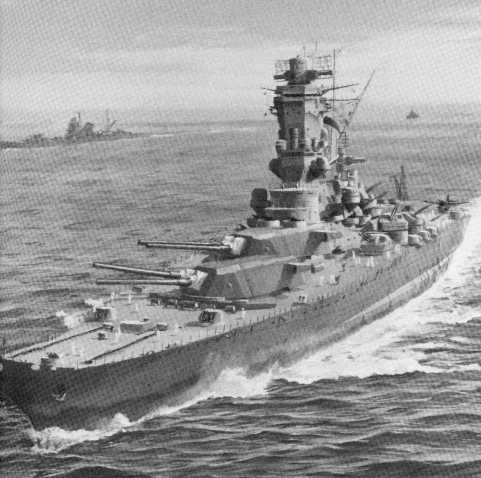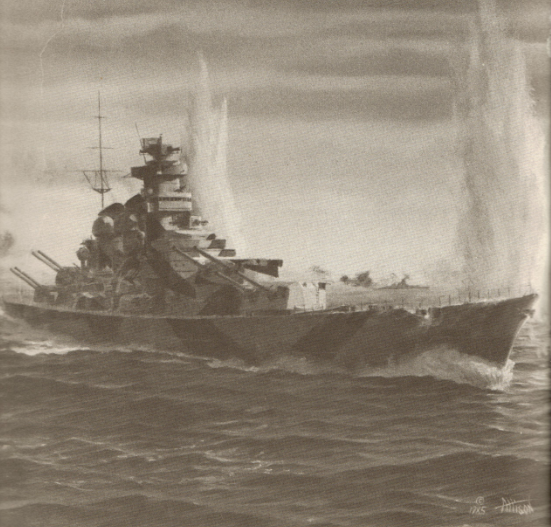
Category Archives: Navy Ships

Pearl Harbor, the Missing Carriers: USS Enterprise, USS Lexington and USS Saratoga

h50931

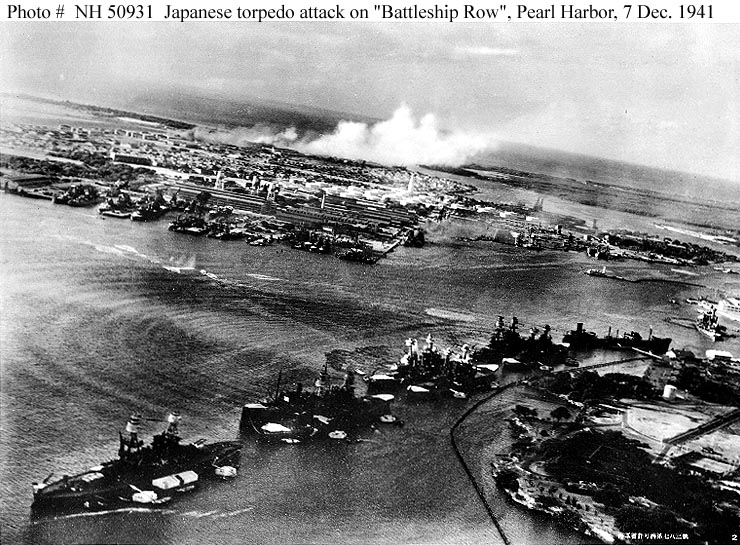
On the morning of December 7th 1941 8 of the 9 Battleships assigned to the US Pacific Fleet were in Pearl Harbor. Seven, the USS California, USS Maryland, USS Oklahoma, USS Tennessee, USS West Virginia, USS Arizona and USS Nevada were moored on Battleship Row. The USS Pennsylvania was in the massive dry dock which she shared with the destroyers USS Cassin and USS Downes. The USS Colorado, a sister ship of Maryland and West Virginia was at the Puget Sound Naval Yard being overhauled.

pearlharbor_wide-6febcbc3473e02a65f9b7b9e151905b7300c328f-s6-c30

USS West Virginia sinking at left and USS Tennessee burning at Pearl Harbor

At the time both the United States Navy and the Japanese Imperial Navy still viewed the Battleships as the heart of the fleet and the essence of naval power. Aircraft Carriers were still viewed as an adjunct and support to the traditional battle line.

Japanese-carriersJapanese Aircraft preparing to launch at Pearl Harbor

Thus as the Japanese Carrier Strike Group, the Kido Butai under the command of Vice Admiral Chūichi Nagumo approached Pearl Harbor and intelligence reports came in indicating that the carriers were not present the Japanese were not overly concerned. The lack of concern was in a sense ironic because the force they assigned to destroy the Battleships of the Pacific Fleet was the carrier strike group, not their battle line.

Kido-Butai-in-the-North-Pacific

The Kido Butai enroute to Pearl Harbor

Comprised of six carriers, the Akagi, Kaga, Hiryu, Soryu, Shokaku and Zuikaku the force embarked over 300 first line aircraft. The aviators of the air groups aboard the carriers had been training for months to attack Pearl Harbor. Their aircraft had been specially outfitted with Type 91 Model 2 aerial torpedoes designed to run in the shallow waters of Pearl Harbor and Type 99 Model 5 armor piecing bombs modified from battleship shells. These weapons would be employed with a devastating effect on the morning of December 7th 1941.

The three carriers assigned to the Pacific Fleet, the USS Saratoga, USS Lexington and USS Enterprise had been dispatched on missions that took them away from Pearl Harbor that fateful Sunday.
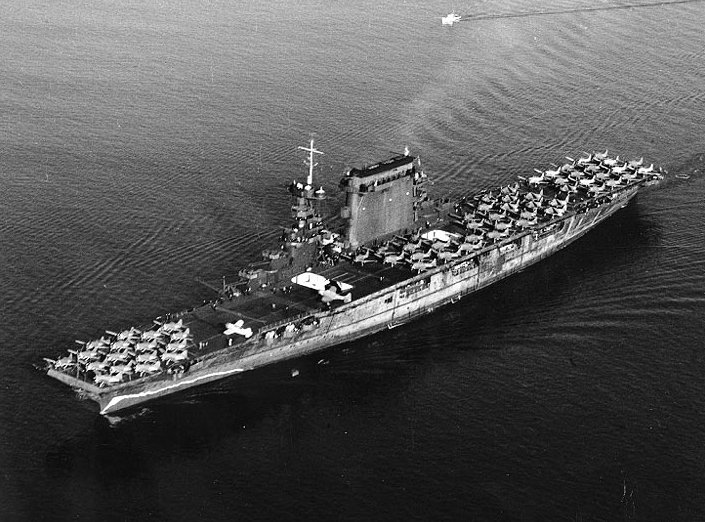
USS_Lexington

USS Lexington

The Lexington and Task Force 12 had departed Pearl Harbor on December 5th to ferry 18 SB2U Vindicator Dive Bombers of VSMB-231 to Midway Island. Saratoga was entering San Diego to embark her air group and Enterprise which had left Pearl Harbor on November 28th to deliver VMF-211 to Wake Island was due to return to Pearl Harbor on the 7th of December. As such none of these ships were in Pearl Harbor at the time of the attack. Their absence helped save the United States and Allied cause in the Pacific.

USS_Saratoga_CV-3_underway_1942

USS Saratoga

The United States had other carriers but all were assigned to the Atlantic Fleet due to the belief that Nazi Germany was a greater threat than Japan. The USS Yorktown was at Norfolk in between deployments in support of the Neutrality Patrol. USS Ranger was returning to Norfolk from a patrol, USS Wasp was at Grassy Bay Bermuda and the newly commissioned USS Hornet was training out of Norfolk. The USS Long Island, the first Escort carrier was undergoing operational tests and training out of Norfolk.
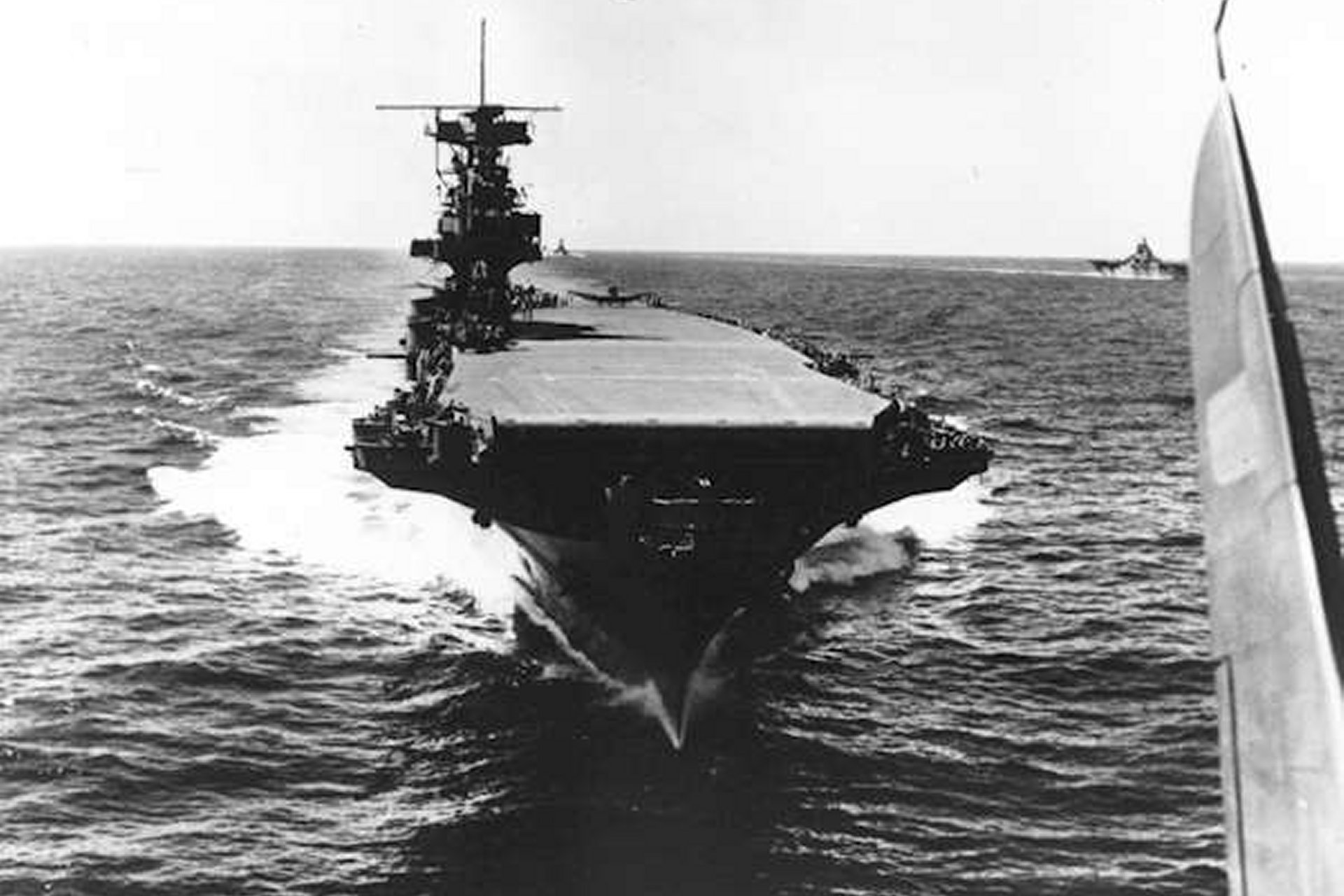
cv-6-01USS Enterprise at Midway

Had any of the three carriers assigned to the Pacific Fleet been in Pearl Harbor on the morning of the Japanese attack the results would have been even more disastrous for the United States. Instead the carriers began operations against the Japanese almost immediately. Carriers based on the East Coast including Hornet, Yorktown and Wasp were transferred to the Pacific. In the perilous months following the Pearl Harbor attack the US carriers took the fight to the Japanese conducting raids against Japanese held islands. In April 1942 the Enterprise and Hornet, the latter with 16 B-25 Mitchell bombers under the command of Colonel Jimmy Doolittle struck Tokyo.
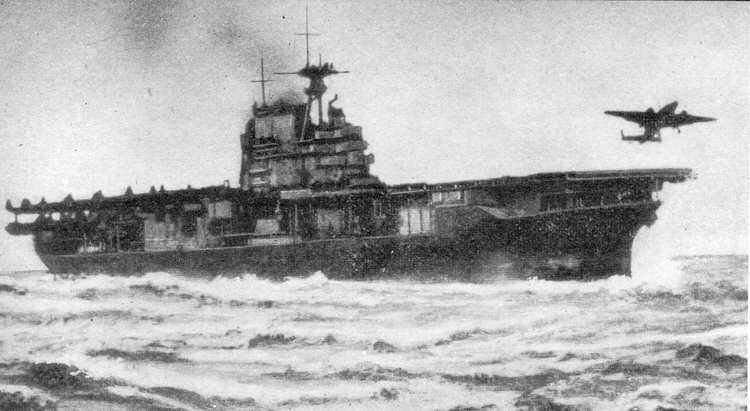
gallery_30225_28868_12824874244ae0d6734af3b

USS Hornet launching the Doolittle Raiders

The result was that Admiral Isoruku Yamamoto decided to attack Midway Island to force the US fleet and its carriers into a decisive battle. Although the Japanese had lost a good number of aircrew from Shokaku and Zuikaku at the Battle of Coral Sea, while sinking the Lexington Yamamoto remained committed to the decisive battle. That battle was decisive, but not in the way Yamamoto had planned. Akagi, Kaga, Hiryu and Soryu were sunk by aircraft operating from Enterprise, Yorktown and Hornet. Yorktown was lost in the battle bat it was a decisive defeat for the Japanese.

Attack_of_the_Akagi

Sinking the Akagi at Midway

In the succeeding months in the vicious battles around the Solomon Islands the remaining US carriers proved decisive. Although Wasp and Hornet were sunk in those battles and both Saratoga and Enterprise often heavily damaged they held the line. The carriers that the Japanese missed proved decisive in turning the tide and winning the war.

22_bb48

Raised from the mud of Pearl Harbor the USS West Virginia in Tokyo Bay

Though Yamamoto did not realize it the attack on Pearl Harbor signaled the end of the supremacy of the Battleship and the ascendency of the Aircraft Carrier. By 1943 Battleships were regulated to escorting the fast carrier task forces or conducting shore bombardments. The ultimate irony was that the last battleship engagement in history was won by the survivors of the attack on Pearl Harbor. Raised from the mud the West Virginia, Tennessee, California, Maryland and Pennsylvania joined by the USS Mississippi rained destruction on two Japanese task forces attempting to penetrate Leyte Gulf and destroy the US invasion force transports at the Battle of Surigao Strait.

The ironies and intricacies of war. They are amazing.

Peace

Padre Steve+

24 Comments

Filed under History, Military, Navy Ships, US Navy, world war two in the pacific

Humble Harbinger: The USS Langley CV-1

020148

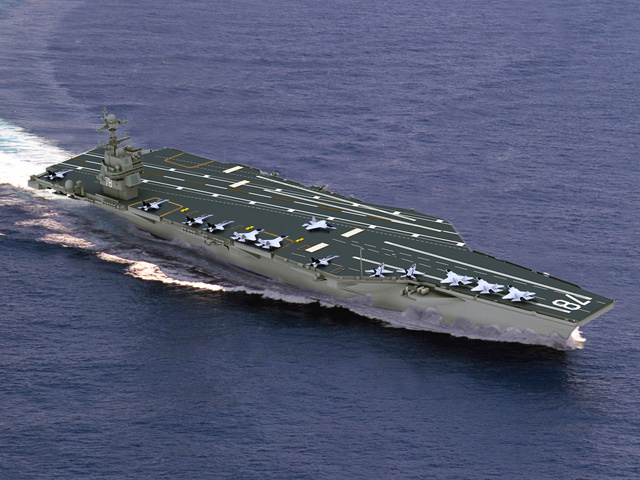
Last week the US Navy’s newest Aircraft Carrier the USS Gerald R Ford was launched and christened. Looking at the behemoth it is hard to believe that nine decades ago the US Navy was experiment with its first aircraft carrier the USS Langley.

USS-Gerald-R.-Ford_20091109121329_640_480

Now Langley was not the first aircraft carrier. That honor went to the Royal Navy’s HMS Furious. The HMS Argus, a converted passenger liner was more comparable to Langley and served many of the same purposes for the Royal Navy.

020114

Langley was not much to look at, her nickname in the fleet was the “Covered Wagon.” She was not built as a carrier. Instead, like most of the early aircraft carriers in the US Navy, Royal Navy, French Navy and Japanese Navy she was converted from a ship built for a different purpose. Langley initially took to the water as the USS Jupiter, AC-3 a Collier, or coal ship in the days before oil replaced coal as the fuel for warships. Her more infamous sister ship, the ill-fated USS Cyclops disappeared with all hands in what is called the Bermuda Triangle in March 1918.

020124

She was converted into a carrier in 1920 and joined the fleet again as Langley on March 22nd 1922. At 542 feet long and 65 feet in beam she would fit several times over on the flight deck of any current US Navy carrier. Her slow speed of 15 knots meant that she would be relegated to training aviators, participating in fleet exercises and testing new aircraft.

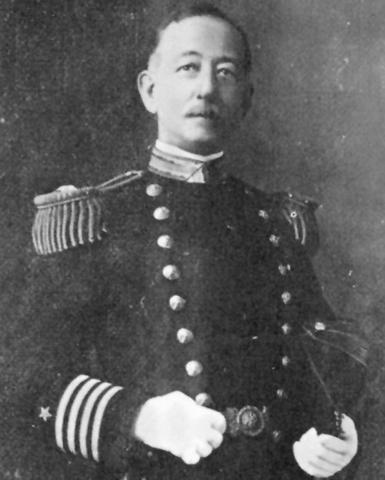
LCDR_Godfrey_Chevalier

Lieutenant Commander Godfrey DeCourcelles Chevalier

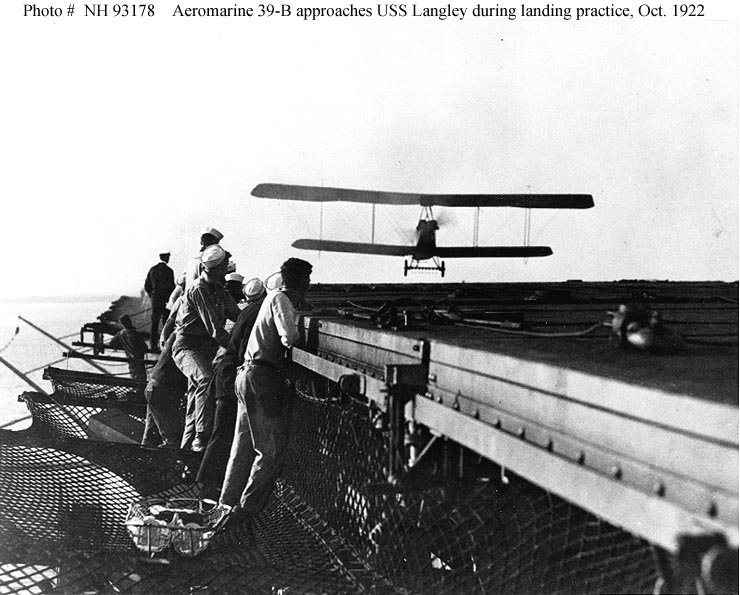
The first takeoff from Langley was on 17 October 1922 when Lieutenant Virgil Griffin flew a Vought VE-7 off her bow. It was the beginning of carrier based aviation in the US Navy. Nice days later Lieutenant Commander Godfrey DeCourcelles Chevalier made the first landing on Langley landing a Aeromarine 39B trainer on a deck equipped with experimental arresting gear. Chevalier died less than a month later when his Vought VE-7 crashed on a flight from Norfolk to Yorktown Virginia. Langley was the first carrier of any navy equipped with a catapult and on 18 November 1922 her Commanding Officer, Commander Kenneth Whiting was the first aviator to be catapulted from a ship.

348px-Kenneth_Whiting_aboard_USS_Saratoga_CV-3

Commander Kenneth Whiting

Whiting is considered by some to be the “father of the aircraft carrier” and had been instrumental in the selection of Jupiter for conversion, the conversion process and the continued development of carrier aviation following his command of Langley.

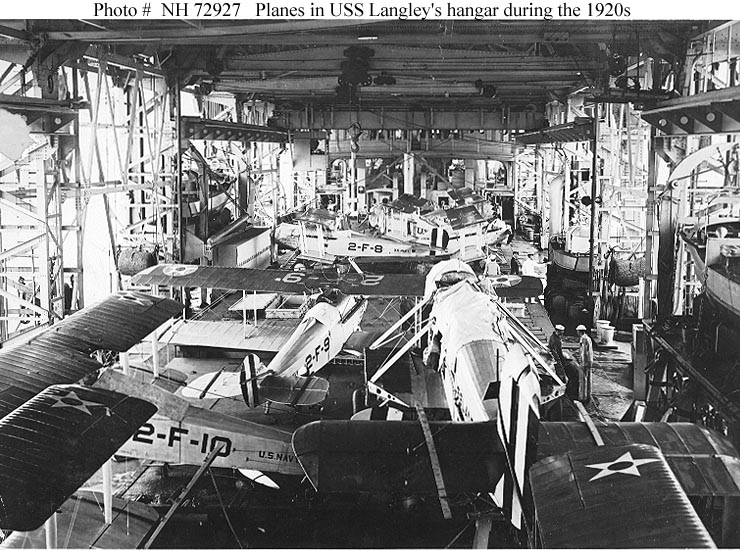
020122Langley’s Hangar Deck

Langley remained the primary training carrier for the Navy until 1936 when she was converted into a Seaplane Tender. In the decade and a half that she served in this role she was used to test various catapult and arresting systems the knowledge gained being useful in the development of new carriers. Likewise the aviators trained aboard her would go on to help develop US Navy Carrier aviation before and during the Second World War.

09020309

Langley served in the Southwest Pacific during the opening months of the war and was sunk on 27 February 1942 after being attacked by Japanese bombers near Tjilatjap Java.

When the Gerald R Ford enters service in 2016 she will continue a tradition that began with the humble USS Langley, the illustrious Covered Wagon.

Peace

Padre Steve+
1 Comment

Filed under History, Military, Navy Ships, US Navy

103 Years of Naval Aviation: Celebrating Eugene Ely and the First Flight on and Off a Ship

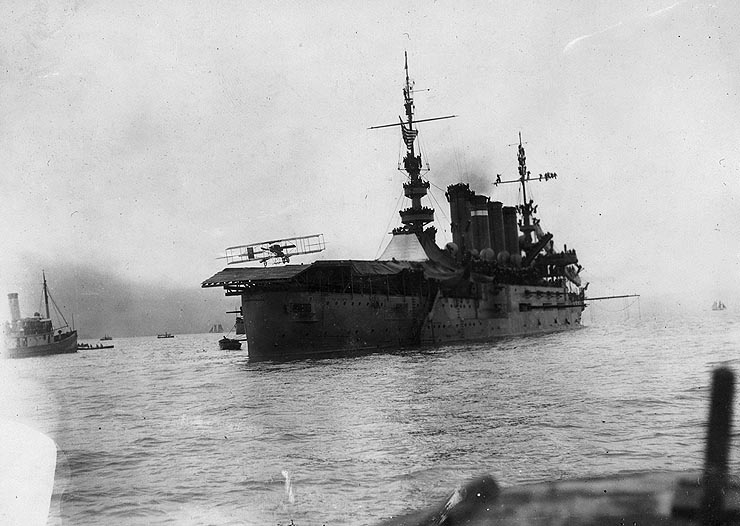
First_airplane_takeoff_from_a_warship

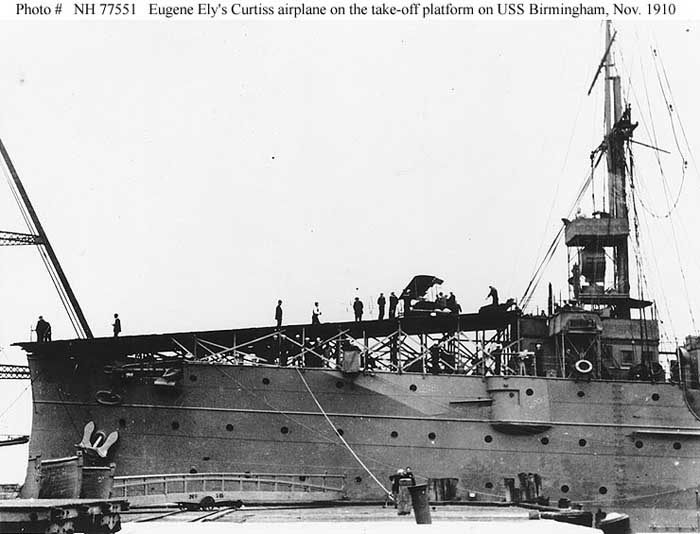
On a blustery November 14th in the year 1910 a young civilian pilot hailing from Williamsport Iowa became the first man to fly an aircraft off the deck of a ship.  At the age of 24 and having taught himself to fly barely 7 months before Eugene Ely readied himself and his Curtis biplane aboard the Cruiser USS Birmingham anchored just south of Fort Monroe in Hampton Roads.

458px-Eugene_Ely

Eugene Ely (above) Captain Washington Irving Chambers (below)

Washington_Irving_Chambers

Ely was there because he was discovered by Navy Captain Washington Irving Chambers.  Chambers had been tasked with exploring how aircraft might become part of Naval Operations. Chambers had no budget or authority for his seemingly thankless task nor any trained Navy aviators. But when he heard that a German steamship might launch and aircraft from a ship Chambers hustled to find a way to stake a claim for the U.S. Navy to be the first in flight.

77551

Weather was bad that day as is so typical for Hampton Roads in November. Between rain squalls Ely decided to launch even though Birmingham did not have steam up to get underway to assist the launch.  Ely gunned the engine and his biplane rumbled down the 57 foot ramp and as he left the deck the aircraft nosed down and actually make contact with the water splintering the propeller. The damage to his aircraft forced Ely to cut the flight short and land on Willoughby Spit about 2 ½ miles away. This is not far from the southern entrance to the modern Hampton Roads Bridge Tunnel.

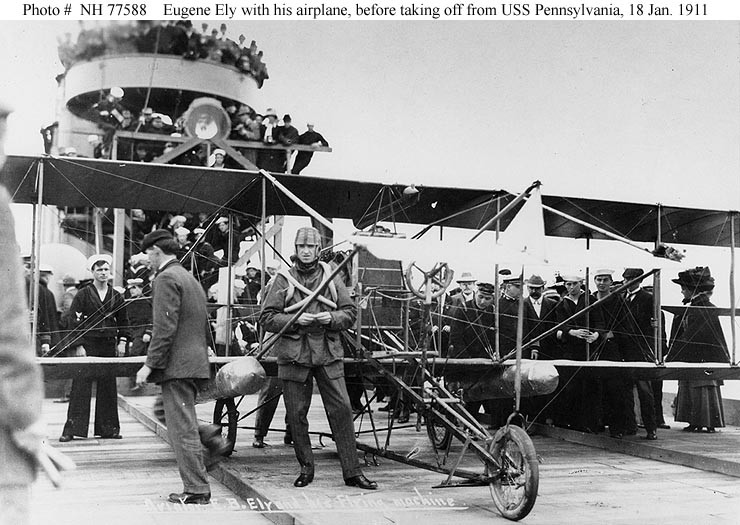
ELY-Eugene-B.-before-taking-off-from-USS-Pannsylvania-18-January-1911

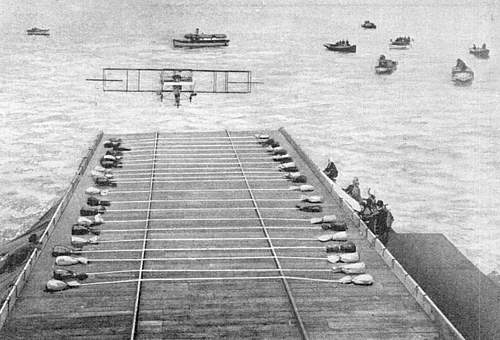
Chambers would talk Ely into making the first landing on a Navy ship the Armored Cruiser USS Pennsylvania in San Francisco Bay on January 18th 1911. In this flight his aircraft was modified and equipped with an arrestor hook, a standard feature on carrier aircraft since the early days of US Navy aviation.

USS_Pennsylvania_-_First_airplane_landing

ElyEugene-ShipLandingPM2-500px

Ely landing on USS Pennsylvania (note the “arrestor cables” on the deck)

Ely desired employment in the Navy but the Navy Air Arm had not yet been established so he continued his exhibition flying around the country. Ely died in a crash while performing at the Georgia State Fairgrounds on October 11th 1911 less than a year after his historic flight off the deck of the Birmingham.

Ely would not be forgotten. Though he was a civilian he was posthumously awarded the Distinguished Flying Cross by Congress in 1933. The citation read in part: “for extraordinary achievement as a pioneer civilian aviator and for his significant contribution to the development of aviation in the United States Navy.”

images-62

It is hard to believe that Naval Aviation traces its heritage back to this humble beginning. However the next time you see whether in person or on television aircraft taking off and landing from a modern super carrier remember the brave soul named Eugene Ely who 103 years ago gunned his frail aircraft down that short ramp aboard the Birmingham. To Ely and all the men and women who would follow him as Naval Aviators.

Peace

Padre Steve+

1 Comment

Filed under aircraft, History, Military, Navy Ships, US Navy

The Sinking of the USS Juneau and the Loss of the Sullivan Brothers

USS_Juneau_(CL-52)_0405201

Seldom in military history are five brothers killed in action on the same ship or same unit in the same action on the same day. Many families have lost multiple children in military conflicts but they usually are spread out over time. In fact in all of my study I only know if one family that lost five sons in the same action on the same day. That family was the Sullivan family of Waterloo Iowa who lost their sons George, Francis “Frank”, Joseph, Madison “Matt” and Albert aboard the USS Juneau CLAA-52 when that ship was torpedoed and sunk on the morning of November 13th 1942 after being badly damaged at the Naval Battle of Guadalcanal.

The fact that all were lost aboard Juneau was in large part because the brothers refused to serve unless they served together, The two oldest brothers George and Frank had served in the Navy before the war and both had been discharged in May of 1941. When war broke out the older brothers with their three younger siblings Joe, Matt and Al volunteered to serve in the Navy but only if they could serve together. Though the Navy had a policy of separating siblings it was not always followed and the five brothers enlisted to serve together and were assigned to the new Anti-Aircraft Light Cruiser USS Juneau. 

Juneau was an Atlanta Class Light Cruiser, actually designed as an anti-aircraft escort of the fast carrier task forces. Armed with 16 5” 38 caliber dual purpose guns and a large number of smaller anti-aircraft guns as well as 8 21” torpedo tubes as well as depth charge racks and projectors the class was an excellent escort ship, but woefully equipped to fight heavy fleet units in close surface actions.

Juneau and her sister Atlanta were part of Rear Admiral Daniel Callaghan’s Task Force 67.4 when it encountered a Japanese bombardment force comprised of the battleships Hiei and Kirishima Light Cruiser Nagara and 14 destroyers. Callahan’s Task Group was composed of the heavy cruisers USS San Francisco and USS Portland the light cruiser USS Helena the two Atlanta Class ships and 8 destroyers. In a confused and merciless night action the Japanese lost Hiei and two destroyers while the US Navy lost Atlanta and four destroyers. All the surviving US ships except the destroyer USS Fletcher incurred moderate to heavy damage. Among the ships suffering heavy damage was Juneau which suffered a torpedo hit which crippled her. The following day while returning to base Juneau suffered a torpedo hit from the Japanese submarine. I-26 which struck her her in the same spot as the hit from the night engagement. The Juneau exploded and sank in 20 seconds taking with her 600 of her crew of 700 men. Among those killed in the explosion were Frank, Matt and Joe Sullivan.

About 100 men survived the explosion including Al and George Sullivan. Unfortunately because the senior surviving US commander believed there to be no survivors and that his remaining ships could also be sunk by submarines these men were left at the surviving ships steamed away. Reports of possible survivors from a B-17 Bomber crew went unheeded for several days and it was not until 8 days after Juneau was sunk that 10 survivors were rescued by a PBY Catalina flying boat. By then the two remaining brothers had perished.

Sullivanbrothers

It was not until January 12th 1943 that the Sullivan family was notified of the loss of all of their sons. The Fletcher Class destroyer The Sullivans DD-537 was named after the brothers, she is now a museum ship in Buffalo New York.

USS_The_Sullivans_(DD-537)_off_Ponape_1944

USS The Sullivans DD-537 (above) and DDG-68 (below)

05016808

Her successor USS The Sullivans DDG-68 is a Arliegh Burke Class Aegis guided missile destroyer based out of Mayport Naval Station Florida. For many years they were the only ships named after more than one person in the US Navy, something that they now share with the USS Roosevelt DDG-80 named after President Franklin Roosevelt and Brigadier General Theodore Roosevelt Jr, a Medal of Honor winner on D-Day and son of President Theodore Roosevelt.

The loss of the five brothers prompted the War Department to end the assignment of siblings in the same unit and adopt the Sole Survivor Policy which became law in 1948.

Juneau was a good ship with a fine crew but unsuited for the type of battle that out of military necessity she was thrown into. Heavily damaged she had the unfortunate luck to be part of a battered task force which had no ships capable of anti-submarine protection because of damage incurred the previous night. Her sinking at the hands of the I-26 and the subsequent loss of her survivors through was a tragedy of the highest order.

Tonight I remember Juneau her gallant crew and the Sullivan brothers.

May they all rest in peace.

Padre Steve+

5 Comments

Filed under History, Military, Navy Ships, world war two in the pacific

The Battle of Cape Engano

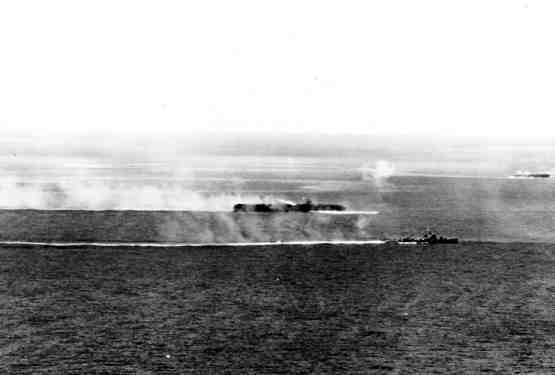
RptsI-P60

“TURKEY TROTS TO WATER GG FROM CINCPAC ACTION COM THIRD FLEET INFO COMINCH CTF SEVENTY-SEVEN X WHERE IS RPT WHERE IS TASK FORCE THIRTY FOUR RR THE WORLD WONDERS.” Admiral Nimitz to Admiral Halsey

After Admiral William “Bull” Halsey felt that he had heavily damaged the Japanese Center Force during the Battle of the Sibuyan Sea he withdrew the Fast Battleships of Task Force 34 from the San Bernardino Strait in order to use them in a surface engagement against Admiral Jisaburo Ozawa’s Northern Force. Halsey assumed that Ozawa’s carriers were the main threat to the American invasion forces. However he did not know that Ozawa’s carriers had very few aircraft embarked and that the Northern force was in fact a decoy, designed to draw him away from Vice Admiral Takeo Kurita’s Center and the two task forces of the Southern force.

b55

The Zuikaku uder attack at Cape Engano

When Halsey’s aircraft reported the Center force withdrawing he believed that the threat had been removed. He wrote in his memoirs “I believed that the Center Force had been so heavily damaged in the Sibuyan Sea that it could no longer be considered a serious menace to Seventh Fleet.” Thus he moved with haste to intercept, engage and destroy the Northern force and its carriers and battleships.  Halsey believed that his engagement against the Northern force would culminate when his fast battleships destroyed whatever Japanese surface forces remained.

It was not a bad assumption. Ever since the early days of the Pacific war the truly decisive engagements had been decided by carriers. Unfortunately for the American sailors of Taffy-3, the group of Escort Carriers, destroyers and destroyer escorts which encountered Kurita’s Center force which had doubled back overnight and passed through the San Bernardino Strait surprising Rear Admiral Thomas Kinkaid’s task group of “Jeep” Carriers.

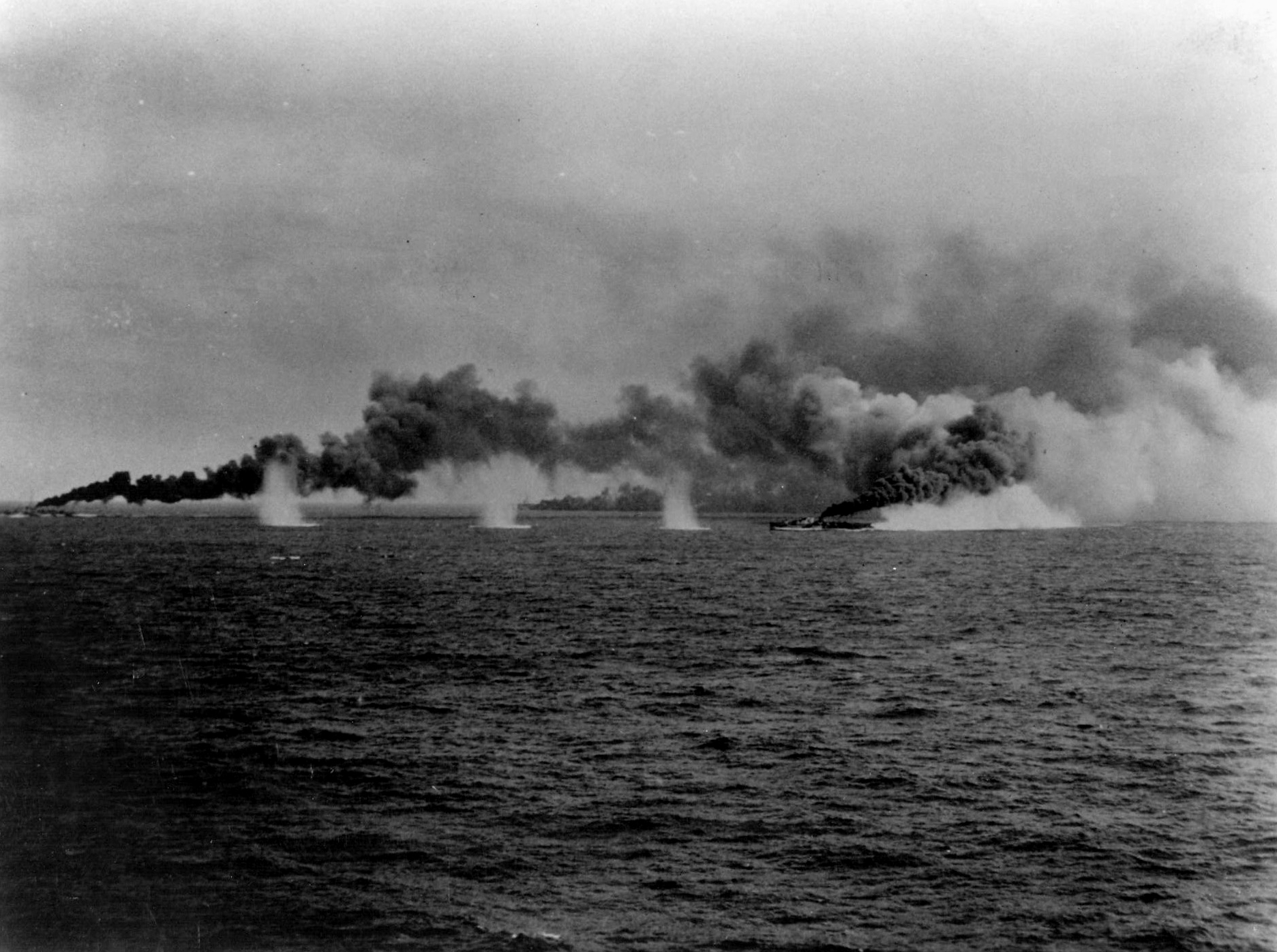
Destroyers_laying_smoke_screen_during_Battle_of_Samar_1944

The Battle off Samar

The unequal battle that ensued off Samar was a near run thing for the Americans. Had Kurita not been confused about what forces he was facing and pressed his attacks he may have inflicted painful damage on the actual invasion forces. However after a morning of battle, in which Taffy-3’s destroyers, destroyer escorts, aircraft and even the Jeep carriers themselves inflicted heavy damage on the Japanese force Kurita withdrew.

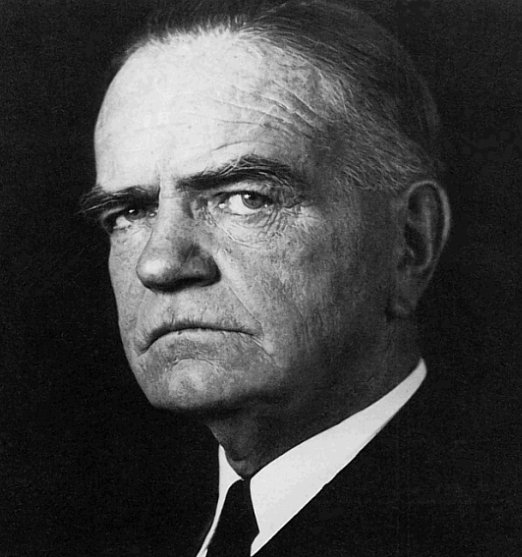
Halsey

Admiral William “Bull” Halsey

However as Taffy-3 battled for its life against Kurita’s battleships, cruisers and destroyers Halsey’s carrier air groups were pounding Ozawa’s hapless carriers and their escorts. About 0800 on the 25th Kinkaid’s desperate messages began to reach Nimitz and Halsey. However since Halsey did not believe just how serious the situation was he continued to pursue Ozawa’s force. When he received Nimitz’s message he was incensed. The message “TURKEY TROTS TO WATER GG FROM CINCPAC ACTION COM THIRD FLEET INFO COMINCH CTF SEVENTY-SEVEN X WHERE IS RPT WHERE IS TASK FORCE THIRTY FOUR RR THE WORLD WONDERS was composed of three parts. The preface “Turkey trots to water” was padding, as was the last part “the world wonders.”

ship_zuiho2

Light Carrier Zuiho under attack

However the communications officer on Halsey’s flagship only removed the first section leaving “Where is Third Fleet, the world wonders.” Halsey was flabbergasted and though the battleships of Task Force 34 were almost in range of the Japanese force he sent them south to relieve Kinkaid’s beleaguered force. However by the time Vice Admiral Willis Lee’s battle line arrived Kurita had withdrawn, losing 3 heavy cruisers sunk, three heavy cruisers and one destroyer heavily damaged.

gsxN4rT

Zuikaku being abandoned

All the Japanese carriers were sunk along with a light cruiser and a number of destroyers, but Kurita’s heavy forces escaped. Among the Japanese losses was the carrier Zuikaku the last surviving carrier of the Pearl Harbor attack. Naval historian Samuel Elliott Morrison wrote:

“If TF 34 had been detached a few hours earlier, after Kinkaid’s first urgent request for help, and had left the destroyers behind, since their fueling caused a delay of over two and a half hours, a powerful battle line of six modern battleships under the command of Admiral Lee, the most experienced battle squadron commander in the Navy, would have arrived off the San Bernardino Strait in time to have clashed with Kurita’s Center Force… Apart from the accidents common in naval warfare, there is every reason to suppose that Lee would have “crossed the T” and completed the destruction of Center Force.” 

The Battle of Cape Engano closed the epic extended battle of Leyte Gulf. The victory of the US Navy was decisive even without the final destruction of Kurita’s forces. The remnants of the Japanese forces would never mount a serious offensive threat again. The survivors would be hunted down over the next 9 months, some sunk by submarines, other in surface engagements, still more to air attacks at Okinawa and in Japanese ports.

USS Mobile 10

Halsey received much criticism for his decision to withdraw TF 34 from San Bernardino Strait. However in his defense the action exposed one of the key problems in any kind of warfare, the problem of seams. Kinkaid’s escort carriers belonged to 7th Fleet which came under the operational control of Douglas MacArthur’s Southwest Pacific Region while Halsey commanded 3rd Fleet fell under Admiral Nimitz’s Central Pacific region. This created a situation where two fleets belonging to two regions under two separate commanders were attempting to fight a single battle. The principle of unity of command and unity of effort was violated with nearly disastrous results.

Peace

Padre Steve+
1 Comment

Filed under History, Military, Navy Ships, US Navy, world war two in the pacific

The Rebirth of the Divine Wind: Kamikazes at Leyte Gulf

800px-St._Lo_First_Kamikaze_attack_sl1a

“In my opinion, there is only one way of assuring that our meager strength will be effective to a maximum degree. That is to organize suicide attack units composed of A6M Zero fighters armed with 250-kilogram bombs, with each plane to crash-dive into an enemy carrier…” Admiral Takijirō Ōnishi

It was a tactic born of desperation but one that fit in well with the philosophy of Bushido. After the Battle of the Philippine Sea, the “Marianas Turkey Shoot” in June 1944 and the slaughter of land based Japanese Naval and Army air forces based in Formosa in September of that year Japanese leaders began to look to a tactics born of desperation but which fit their Bushido based ethos of sacrifice.

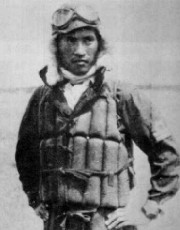
Lt_Yukio_Seki_in_flightgear

Lt. Yukio Seki

Suicide attacks were nothing new to the Japanese, but until October 1944 they were tactics decided on by individuals who saw no alternative to the choice. In October 1944 that calculus changed, instead of individuals or isolated units which had no hope of victory conducting suicide attacks, commanders decided to employ suicide attackers as a matter of course.

1st_Kamikaze_Mission_19441025-1


When the American forces invaded the Philippines Admiral Takijirō Ōnishi was commander of the First Air Fleet based in the Northern Philippines. He was not a fan of Kamikaze tactics and viewed them as heresy. However after the slaughter of the reconstituted Naval Air Force at the Battle of the Philippine Sea he reluctantly changed his mind. I say reluctantly based on his previous views and because after he committed ritual suicide following the Japanese surrender he apologized to the estimated 4000 pilots that he sent to their death and their families.

Admiral_Takijiro_Onishi

Admiral Ōnishi

But in October 1944 with Japan reeling from defeats in the Pacific and its supply route for oil and other raw materials threatened desperation was the order of the day.

The 201st Navy Flying Corps based out of Clark Field near Manila was the major land based Japanese Naval Air Force unit in the Philippines. Among its pilots was a young Naval Officer and Aviator named Lt. Yukio Seki. Seki was a graduate of the Japanese Naval Academy at Eta Jima and was recently married. He was not an ideologue or believer in suicide attacks. When questioned by a reporter before his squadron launched the first Kamikaze attacks he remarked to Masashi Onoda, a War Correspondent :“Japan’s future is bleak if it is forced to kill one of its best pilots. I am not going on this mission for the Emperor or for the Empire… I am going because I was ordered to!” 

Seki_photo_ma1944-10-20

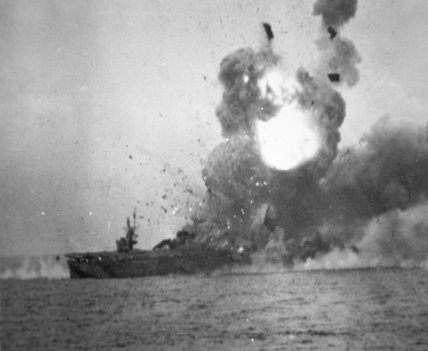
On October 25th 1944 Seki led his group of 5 A6M2-5 Zero fighters, each carrying a 550 pound bomb took off and attacked the Escort Carriers of Rear Admiral Clifton Sprague’s “Taffy-3.” The five pilots all died in their attacks but two damaged the USS Kalinin Bay and USS Kitkun Bay while two aircraft, one believed to be Seki’s hit the USS St Lo causing mortal damage which sank that ship in less than half an hour with the loss of over 140 sailors.

The attacks of Seki’s small squadron were a harbinger of what was to come. Over the next 10 months over 4000 Japanese pilots would die in Kamikaze attacks against US Navy and Allied Naval units. Numbers of ships destroyed or damaged by Kamikazes are debated by some historians believe that 70 US and Allied ships were sunk or damaged beyond repair and close to 300 more damaged. 2525 Imperial Japanese Navy pilots and 1387 Imperial Army pilots died in Kamikaze attacks killing almost 5000 sailors and wounding over 5000 more.

Admiral Ōnishi who made the decision to make Kamikazes a part of Japan’s offensive strategy in 1944 appeared to regret that decision. In his suicide note he urged young Japanese to rebuild the country and seek peace with all people and offered his death a penance for the nearly 4000 pilots he sent to their deaths. Accordingly when he committed ritual suicide (seppuku) he did so alone, with a second to finish the job and died over 15 hours after disemboweling himself.

The Kamikaze campaign did not alter the course of the war, but it did introduce a new dimension of terror and misguided sacrifice. I do pray that one day war will be no more and that even though I expect war to remain part of our world until longer after my death  that nations, peoples or revolutionary groups will no longer send their v=best and brightest to certain death.

Peace

Padre Steve+
 

3 Comments

Filed under aircraft, History, Military, Navy Ships, world war two in the pacific

Leyte Gulf: The Greatest Naval Battle in the History of the World

gb_at_samar

USS Gambier Bay being attacked by Japanese Surface Forces battle 

I will break into Leyte Gulf and fight to the last man…would it not be shameful to have the fleet remaining intact while our nation perishes?” Vice-Admiral Takeo Kurita – 1944

”In case opportunity for destruction of a major portion of the enemy fleet is offered, or can be created, such destruction becomes the primary task.”

Admiral Chester Nimitz – In his order to Halsey, prior to the Battle of Leyte Gulf – October 1944

battle-line-leyte-gulf_life1

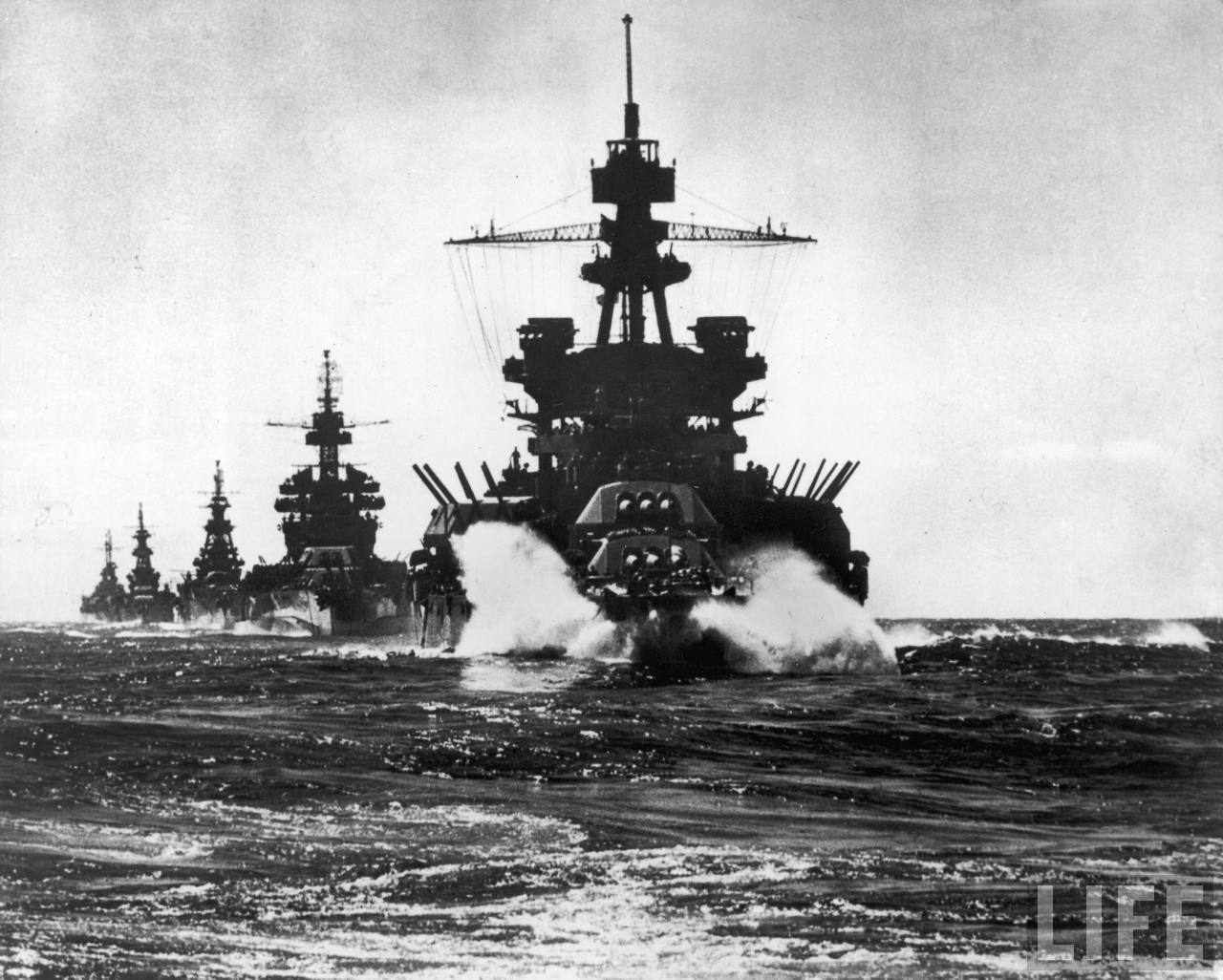
The Old Battleships of the 7th Fleet

Sixty-nine years ago the largest and most geographically expansive naval battle ever fought began. A few days before the forces of General Douglas MacArthur’s Southwest Pacific command and Admiral Chester Nimitz’s Central Pacific command joined to invade and liberate the Philippines from the Japanese. It was less than three years since Japan had attacked Pearl Harbor and two and a half years after MacArthur had left the Philippines vowing “I shall return.” 

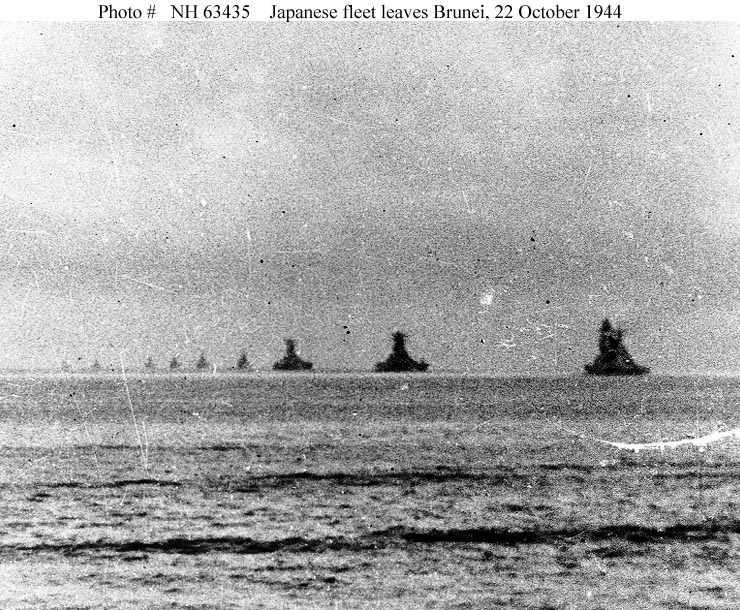
h63435-1

The Japanese knew that the battle for the Philippines was a must win. An American victory would ensure that Japan would be cut off from the vital natural resources of Indo-China, the Dutch East Indies and Borneo, particularly oil, without which it could not remain in the war.

The Imperial Navy was tasked to work with land based air forces to thwart the invasion by drawing off the American Fast Carrier task forces and allowing heavy surface forces to seek out and destroy potentially vulnerable troop transports and supply ships in Leyte Gulf.

It was a complicated plan, but one which had a chance of disrupting the American invasion, and came perilously close to doing so.

Admiral Jisaburo Ozawa’s Northern force of four aircraft carriers without viable air groups was a decoy. Vice Admiral Shoji Nishimura and Vice Admiral Kiyohide Shima commanded separate task forces both committed to breaking into Leyte Gulf through Surigo Strait. Vice Admiral Takeo Kurita who commanded the main effort, the powerful Center Force which was to break into Leyte Gulf through San Bernardino Strait. Vice Admiral Takijirō Ōnishi commanded the Philippines based 1st Air Fleet which turned to the use of Kamikazes as a means to destroy American warships.

Princeton1

Kamikaze attack

The US forces included the American Third Fleet commanded by Admiral William “Bull” Halsey was the primary naval force composed of the Fast Carrier Task Forces and fast battleships. Adusmiral Thomas Kinkaid commanded the 7th Fleet which was the invasion force and its escorts, including a number of carrier task forces built around the Escort Carriers and the old battleships of Jesse Oldendorf’s Task Group. The latter included a number of the survivors of the Pearl Harbor attack including the USS West Virginia, USS California, USS Tennessee, USS Maryland and USS Pennsylvania. Oldendorf’s flagship, the USS Mississippi was not at Pearl Harbor but likewise one of the “old ladies” of the fleet.

g378525

The battle was unique because of how long it went and how many separate engagements were included.  Not counting patrol craft, submarines and auxiliaries close to 300 warships and nearly 2000 aircraft were engaged in 5 separate engagements waged by surface ships, naval air forces and submarines.

886896

USS St Lo blows up after being hit by Kamikaze 

The battles included an engagement in which American Submarines took on the Center Force, naval aircraft engaged the Center and Southern Forces, the old battleships fought the last battleship against battleship engagement in history, heavy surface forces engaged and were repulsed by light forces and a decoy force which would suffer terribly would keep the bulk of the best American forces out of the main battle. It would also see the first coordinated use of Kamikaze suicide attack aircraft by Japan.

014849

USS West Virginia 

Tonight I am linking a number of articles that I have written previously about this amazing battle. In the next few days I will add a couple new articles to the collection.

The Battle of Leyte Gulf: Introduction and the Battle of Palawan Passage

The Battle of Leyte Gulf: Sinking the Musashi 

Slaughter at Surigao: The Old Ladies get their Revenge

For those unfamiliar with the battle that would like a deeper treatment than I provide in these links I recommend The Battle of Leyte Gulf 23-26 October 1944 by Thomas C Cutler, The Last Stand of the Tin Can Sailors: The Extraordinary World War II Story of the U.S. Navy’s Finest Hour by James Hornfisher, Battle Of Leyte Gulf by Edwin P Hoyt, Leyte: June 1944-January 1945 (History of United States Naval Operations in World War II) by Samuel Elliott Morrison and Battle of Surigao Strait by Anthony P Tully. Hoyt and Morrison’s books were the first that I ever read on the subject back when I was in Junior High School but for an overview I think Cutler’s work is better. The other two works present interesting and informative views of two of the decisive engagements of the battle.

uss roberts 101944

As I said in the next few days I plan on adding more articles on this fascinating battle. If things work out I should have something on the Battle off Samar, the Battle of Cape Engano and the Kamikaze debut.

Have a nice night and never forget the sacrifice of all of the brave sailors.

Peace

Padre Steve+
1 Comment

Filed under History, Military, Navy Ships, US Navy, world war two in the pacific

England Expects….Horatio Nelson and the Battle of Trafalgar October 21st 1805

497px-HoratioNelson1

Admiral Horatio Nelson

“Duty is the great business of a sea officer; all private considerations must give way to it, however painful it may be.” Horatio Nelson

I have always been fascinated by the life of Admiral Horatio Nelson and the Battle of Trafalgar. In fact I still have a biography of Nelson written for young people and published by American Heritage Publishers that I bought when I was in 5th Grade.

Since then there has been a lot of water under my keel but even today, about 43 years later I still am fascinated about the very heroic and flawed man who commanded the British Fleet on that day.

HMS_Victory

HMS Victory

In 1805 Britain was facing the threat of invasion by Napoleon’s French Empire which was allied with Spain. All Napoleon had to do was have he combined French and Spanish naval might to defeat the Royal Navy and a least for a time control the English channel to allow the French invasion force to land.

It was a daunting challenge to the British but the force the Royal Navy send to hunt down the combined fleet of France and Spain was commanded by the diminutive one eyed, one armed victor of the Battle of the Nile and Battle of Copenhagen Admiral Horatio Nelson.

When the French Fleet under the command of Charles Villeneuve escaped into the Atlantic aided by storms which forced Nelson’s Fleet off station in early 1805. Nelson assumed it was heading to Egypt and sailed into the Mediterranean in pursuit. He found out that he was wrong and that Villeneuve had sailed to the Caribbean he went after him. Barely missing contact with the combined French and Spanish Fleet Nelson followed it to Cadiz where the Combined Fleet took refuge.

Villeneuve’s task was difficult. Though he outnumbered the British force his crews were inexperienced and  because the ships had been blockaded for many years not trained to the standard of French forces in earlier times. Likewise many French naval leaders had not survived the bloodletting of the Revolution or been killed in action at the Battle of the Nile. In order to execute Napoleon’s strategy he would have to take his Combined Fleet out of Cadiz, rendezvous with another French Squadron from Brest, defeat the Royal Navy and gain control over the channel.

However Napoleon changed the plan and on September 16th 1805 ordered the Fleet to break out of Cadiz and sail to Naples, however Villeneuve had misgivings and deliberating with his Captains and Spanish Allies remained in Cadiz. That changed on October 18th when Villeneuve gave the order to sail despite light winds. His decision was based less on strategy or tactics but the fact that he had discovered that he was to be relieved of command and that his relief was on the way to Cadiz.

800px-Battle_Of_Trafalgara_By_William_Lionel_Wyllie,_Juno_Tower,_CFB_Halifax_Nova_Scotia

Nelson was a controversial and often contradictory man. He was the son of an Anglican Priest, a man of faith who struggled in marriage and had an affair with Lady Emma Hamilton which bore him a daughter and eclipsed his marriage. He was a man of valor who lost an arm and eye in battle and led his sailors to victory time and time again. He was loved by the men who served under him but the target of the jealousy of officers who disapproved of him.

When Villeneuve attempted to break out on October 18th Nelson was alerted by the screen of frigates conducting the close blockade of Cadiz. Nelson began to pursue and when Villeneuve discovered this he attempted to return to Cadiz. On the morning of the 21st the fleets drew closer, Nelson with 27 Ships of the line mounting 2148 guns against the Combined Fleet of 33 Ships of the Line mounting 2568 guns. It was a battle that many a British Tar believed held the faye of the nation.

mp_full.3

Nelson was less than orthodox in is conduct of battle. Instead of laying alongside the French line he opted to split his force into two columns and break the French and Spanish line with the intent of the total destruction of the enemy force in close combat where the individual superiority of his ships and sailors . It was a risky strategy of the approach meant that the Combined Fleet would if properly handled could possibly use its superior firepower against a few British ships at a time.

As his Fleet approached the Combined Fleet Nelson penned a prayer:

“May the great God, whom I worship, grant to my country and for the benefit of Europe in general, a great and glorious victory: and may no misconduct, in any one, tarnish it: and may humanity after victory be the predominant feature in the British fleet.

For myself individually, I commit my life to Him who made me and may His blessing light upon my endeavours for serving my country faithfully.

To Him I resign myself and the just cause which is entrusted to me to defend.

Amen. Amen. Amen.” 

At 1145 Nelson had his signalmen hoist the signal that would go down in history. ENGLAND EXPECTS THAT EVERY MAN WILL DO HIS DUTY. The signal as composed by Nelson said that ENGLAND CONFIDES THAT EVERY MAN WILL DO HIS DUTY. However that signal was more complicated and the Signal’s Officer LT Pasco informed Nelson that “Expects” was in the signals vocabulary where “confides” would have to be spelt requiring extra lifts. Nelson concurred.

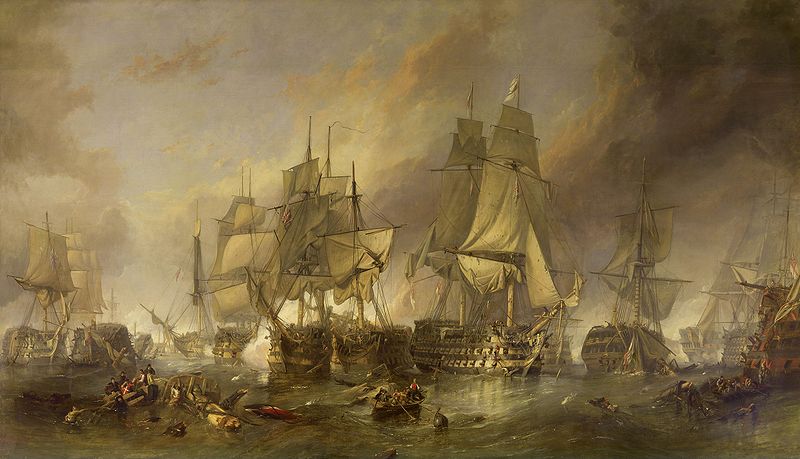
800px-The_Battle_of_Trafalgar_by_William_Clarkson_Stanfield

In the slow run up to the Combined Fleet the British took a beating, but when the British broke the French line and opened fire the battle took a different turn. Following Nelson’s orders his captains and his second in command Admiral Cuthbert Collingwood took the fight to the enemy.

Nelson’s flagship, the HMS Victory delivered he opening broadsides into the stern of Villeneuve’s flagship the Bucentaure with devastating results. After passing Bucentaure the Victory was engaged in close combat by the 74-gun Redoutable and the ships became locked together. Redoutable was commanded by one of the finest Captain’s in French Fleet, Captain Lucas who had trained his crew well including in close combat. His marksmen took a deadly toll of Victory’s crew exposed on the upper decks and one of his marksmen mortally wounded Nelson as the British Admiral walked his flagship’s quarterdeck.

800px-Fall_of_Nelson

Nelson is Mortally Wounded

Nelson was carried to the sick bay of Victory where as he lay dying he continued to receive updates on the battle. Knowing a storm was coming he gave orders for his ships to anchor. Upon being informed of the number of French and Spanish ships taken he whispered “Thank God I have done my duty” and Nelson’s Chaplain noted Nelson’s last words as “God and my country.

By the end of the battle the British had captured or sunk 22 of the 33 French and Spanish Ships of the Line including Villeneuve’s flagship Bucentaure and the largest warship of time the 130 gun Spanish behemoth Santisima Trinidad. On the night of the battle and the days following the British Fleet and the survivors of the Combined Fleet were battered by a massive storm causing much more suffering, misery and loss of life as badly damaged ships succumbed and sank or ran aground on the shores of Cape Trafalgar.

The battle broke the naval strength of the French and Spanish and removed the threat of invasion from Britain. Napoleon hid the defeat from his people and calling it a victory, but throughout England it was celebrated even as Nelson was mourned.

The Battle of Trafalgar epitomized the courage of Nelson and the Royal Navy. As an officer of the United States Navy I tip my hat and drink a toast to Admiral Nelson.

Peace

Padre Steve+

4 Comments

Filed under History, Military, Navy Ships

The Stuff of Dreams: The Montana Class, H-Class and Super-Yamato Class Battleships

battleship_bismarck_by_rainerkalwitz-d5ejpqd

“It was a warship, after all. It was built, designed to glory in destruction, when it was considered appropriate. It found, as it was rightly and properly supposed to, an awful beauty in both the weaponry of war and the violence and devastation which that weaponry was capable of inflicting, and yet it knew that attractiveness stemmed from a kind of insecurity, a sort of childishness. It could see that–by some criteria–a warship, just by the perfectly articulated purity of its purpose, was the most beautiful single artifact the Culture was capable of producing, and at the same time understand the paucity of moral vision such a judgment implied….” Iain M. Banks 

None ever sailed the high seas and only two even began construction but they are the stuff of dreams for those fascinated with the history of battleships and their development. I happen to be one of those who are fascinated about warships, especially the all gun battleships and cruisers of the first half of the 20th Century.

One of the amazing aspects of the Battleships after the launching of the HMS Dreadnought in 1906 how they impacted every major power and were in some part a reason that England went to war with Germany in 1914. The great naval arms races, especially that of the race to build the most powerful battleships were expensive and after the First World War, nations exhausted by war and bankrupted by the costs attempted, for a bit longer than a decade to dictate limits on their construction and size. However in the mid-1930s with the threat of war again in the air nations once again began to build bigger, faster and more powerful Battleships.

Most of the ships described here were already on the drawing board by the late 1930s, even as the Super-Dreadnaught Battleships of the Bismarck, Yamato and Iowa classes were under construction. But that was before the vulnerability of battleships to carrier based aircraft brought about a revolution in naval warfare as Fast Carrier Task Forces supplanted the traditional battle line of battleships.

Had they been built they would have been some of the largest and most heavily armed ships ever seen. The guns to be mounted ranged from 16” guns on the Montana’s and the initial German H-39 class, to 20” guns aboard the Super Yamato’s and the H-44. the latter would have been the largest artillery ever mounted aboard ship.

When war came work and planning was suspended on the ships. The simple reason was that their construction would have consumed vast amounts of raw materials, labor and industry which was needed for other types of vessels. The Germans chose the path of U-Boats, the Japanese and Americans Aircraft carriers and their escorts.

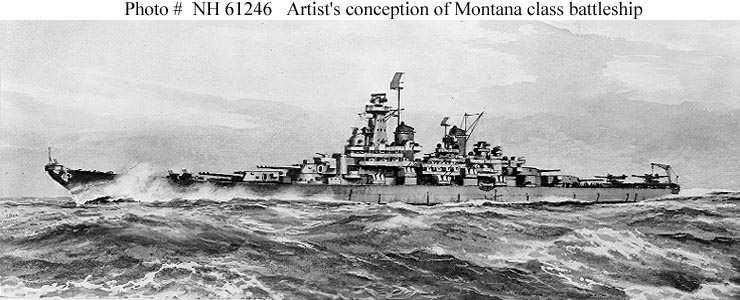
h61246

Montana Class

The Montana class would have been comprised of 5 ships, each armed with 12 16” guns displacing over 72,000 tons at full load. They would have had a speed of 28 knots as designers chose firepower and protection over speed. Thus they would have been 5 knots slower than the preceding Iowa’s which were designed to keep up with the fast carriers. The class was suspended in May of 1942 and cancelled after the battle of Midway.

Design_A-150

A-150 or Super Yamato Class Battleship 

The Super Yamato’s or the A-150 class as their design was known would have been comprised of 2 vessels each armed with 6 20.1” guns displacing over 70,000 tons with a speed of 30 knots. Initially the designers called for 8-9 20.1” guns but tests indicated that the ships would then displace over 90,000 tons making them too large and costly.

However as grandiose as the plans of the Americans and Japanese were the German proposals grew from ships somewhat larger than the Bismarck and Tirpitz to ships that would have dwarfed any warship ever built, including the US Navy Nimitz Class Aircraft Carriers.

H_class_(Richard_Allison)

H Class Battleship

The H-39 class, the direct successor to the Bismarck Class came closest to fruition of any of these ships. They were designed to carry 8 16” guns, displace over 55,000 tons and steam at 30 knots powered by diesel engines. 2 of the 6 planned ships were actually laid down and several of the main guns were completed and used as coastal defense artillery along the Atlantic Wall.

Atlantikwall, Batterie "Lindemann"

However Hitler ordered his Naval Staff to design even larger and more powerful battleships. The H-41 class would have have displaced 68,000 tons and mounted 8 17” guns, the H-42 class over 96,000 tons full load and mount 8 19” guns, the H-43 118,000 tons full load  and 8 19” guns while the H-44 would have displaced over 139,000 tons full load and mount 8 20” guns. One innovative feature of the last three designs would have been the use of a combined diesel/steam turbine power plan which would have given the ships good speed as well as tremendous range.

However since none of the ships from any of the nations was ever built one can only speculate how they might have performed operationally or how they might have fared had they ever met in battle.

They would have been an amazing sight to behold, massive power and beauty, but the kind of deadly beauty that one wishes never had to be employed.

Peace,

Padre Steve+


1 Comment

Filed under History, Military, Navy Ships

A Global Force for Good: Happy 238th Birthday to the US Navy

Navy Heritage WWII Recruitment Poster

http://www.navy.mil/viewVideo.asp?id=17676

“A good Navy is not a provocation to war. It is the surest guaranty of peace.” Theodore Roosevelt 

For me anything to do with the United States Navy is historical as well as decidedly personal. Sunday is the 238th anniversary of the founding of the United States Navy, actually the founding of the Continental Navy but let’s not get too technical.

The fact is that back in 1775 most people and political leaders in the revolting colonies felt that founding a Navy was quite foolish. After all, who in their right mind would ever dare to challenge the might of the British Royal Navy? Even revolting colonies. But like when King George III was told that “the Colonies are revolting” he reportedly said “tell me something I don’t know.” But I digress…

In fact had General George Washington not sent a letter to the Continental Congress say that he had taken some vessels in hand to disrupt the supplies of the the British Army a Navy might not have ever been established. Timing is everything and in this case it was pretty good timing.

Since that fortuitous day in 1775 the United States Navy went from being a piss ant annoyance to the Royal Navy to the premier naval power in the world. Men like John Paul Jones, Edward Preble Stephen Decatur, Thomas Truxtun, William Bainbridge, Oliver Hazard Perry, David Farragut, David Dixon Porter, George Dewey and many more blazed a path of glory which others, great and small would continue to build on the legacy of the iron men who sailed wooden ships into harm’s way. Men like Arleigh Burke, Howard Gilmore, John C. Waldron, Maxwell Leslie, Bull Halsey, Richard O’Kane, Daniel Callahan, Raymond Spruance, Ernest Evans built upon that legacy in the Second World War. Others would do so in the Cold War, Vietnam and the Global War on Terrorism.

Great ships like the USS Constitution, USS Monitor, USS Kerasarge, USS Olympia, USS Enterprise, USS Hornet, USS Yorktown, USS Growler, USS Tang, USS Hoel, USS Johnston, USS Samuel B Roberts, USS Laffey, USS San Francisco, USS Houston and USS Arizona, USS Nevada, USS West Virginia and USS California helped build a legacy of valiant sacrifice and service often at great cost in the defense of freedom.

But over those 238 years it all it came down to the men and now the men and women who served in every clime and place, many times outnumbered and facing certain defeat who through their courage, honor and commitment helped secure the liberty of their countrymen and others around the world. Most of these men and women served in obscurity in war and peace but all had the distinction of serving in the United States Navy.

As President John F Kennedy said: “I can imagine no more rewarding a career. And any man who may be asked in this century what he did to make his life worthwhile, I think can respond with a good deal of pride and satisfaction: ‘I served in the United States Navy.'”

295_26911932058_5614_n-1

Like my father before me I can say that I am proud to have served and continue to serve in the United States Navy, because we are no matter what some may say or think,  a global force for good.

Peace

Padre Steve+

1 Comment

Filed under History, Navy Ships, US Navy