Category Archives: Pastoral Care

Disaster in Japan: A Time to Act and Pray

A Woman sits amid the rubble in the town of Natori, Myagi Prefecture

It appears that we have crossed the line from cataclysm to absolute disaster as three nuclear reactors at the Fukushima Daiichi plant appear to be melting down top one extent or another. Japanese government officials have increased the evacuation zone following the latest explosion at the number 2 reactor which may have had its containment vessel compromised. Additionally a fire has broken out in unit 4 which was not active but contains spent fuel rods and according to the government is probably releasing radiation into the atmosphere. Even without such a calamitous turn of events the tremendous devastation caused by the massive earthquake and tsunami were beyond compare in any first world nation. Japan has one of the largest economies in the world and despite a long term economic downturn has remained one of the key industrial nations in the world’s economic system. It also has probably the best civil defense and disaster relief systems in the world but even still this highly advanced country has been overwhelmed by the dual natural disasters and now a probable nuclear disaster.

Thousands have been confirmed dead and many thousands more are missing as the tsunami swept everything before it and probably has washed many thousands of victims out to sea. Whole cities lay in ruin and hundreds of thousands are in shelters or homeless many without power or water. Thousands more are critically injured are being cared for in an advanced but now highly stressed medical system. Transportation networks to include airports and military airfields, rail lines, seaports and highways are damaged to such an extent that relief agencies cannot use them.

There is little good news other than the tremendous grace that the Japanese people have shown under such terrible conditions. In conditions which would have sparked rioting and looting in most other nations including the United States and Western Europe the Japanese people are banding together to survive and respecting their neighbors even when such necessities as fresh water and food run out.

The Japanese power company TEPCO has evacuated all but 50 personnel from the compound and has admitted that the containment vessel for reactor number two may have been breached. Radiation levels are rising and no one knows what will happen to the reactors as they remain in such an uncontrolled state. For days Japanese engineers have worked feverishly to restore cooling systems and when that failed have attempted to cool the reactors by pumping in seawater and boric acid. Nothing appears to be working and with each news conference Japanese government and TEPCO officials seem to be preparing the Japanese public and the world for the worst.  Today people have been told to evacuate further or shelter in place as radiation levels have reached levels that could harm human beings.  Should all three reactors melt down and lose containment there will be a nuclear catastrophe that will make all previous nuclear incidents pale in significance.

While many Americans and others across the world are reaching out to provide aid and assistance to the victims of this tragedy others make pronouncements which are simply idiotic or even full of hatred and evil. On a YouTube posting of the tsunami I read posts that simply were hateful in response to the Japanese as well as those that would offer to help them. Unfortunately most of these comments were bundled into domestic American politics in which the people posting them were attacking President Obama and “the liberal media.” I wonder where the humanity of such people is when I see such lack of compassion for those affected by a catastrophe of this scale. I saw one post where the writer said that the “Japanese deserved it because he saw some Japanese cheer the 9-11 attacks.” Such Schadenfreude is simply are reflection of the darkness that inhabits the hearts of such people.

Conservative talk radio and Fox Television host Glenn Beck alluded that the earthquake might be “might be a message from God.” Now Beck has been known for putting his mouth around his foot without thinking for years and frequently apologizes and then tries to make amends so it is par for the course. However when CNBC financial host Lawrence Kudlow says “the human toll here looks to be much worse than the economic toll, and we can be grateful for that” it shows the depravity of our own financial elites who only look at the economic bottom line.  I guess the true morality of the economic Social Darwinism called Capitalism shows up in its starkest and most banal form in Kudlow’s words.  Not to be outdone Rapper 50 Cent tweeted crude jokes to his followers about the earthquake.

There are also a host of supposed Christians both Protestant and Catholic who supposedly are in the know about “God’s prophetic plan” that the earthquake and tsunami are God’s judgment against Japan for criticizing Israel or even “Demon worship” in Japan. When I read such nonsense I wonder how such people can call this the hand of God or blame it on the victims. I guess if such people get hit by a massive earthquake and tsunami that wipes them out it is also God’s judgment on them? What about all of those Bible believing churches in the tornado belt of the United States that get wiped out every year? Is that God’s judgment too?  I’m just asking.

While the situation in Japan is caused by unprecedented environmental factors which have overwhelmed nuclear plants, electronic grids and transportation systems and added to the misery the words of Larry Kudlow 50 Cent and the contributors to the YouTube video show a deeper problem in the United States. At its heart it is a moral and theological sickness that I think is beginning to overwhelm this country. Dietrich Bonhoeffer wrote from his prison cell before his execution by the Nazis something that speaks volumes in reference to the crisis in the American spirit and among some that call themselves Christian:

We have been silent witnesses of evil deeds: we have been drenched by many storms; we have learnt the arts of equivocation and pretence; experience has made us suspicious of others and kept us from being truthful and open; intolerable conflicts have worn us down and even made us cynical. Are we still of any use?

Well I think that the question “are we still of any use?” is something that we as a people need to ponder before we go making such comments be they religious, economic or just plain evil or stupid.

Thankfully there are a great many American and other people around the world that do not think like this. Among them are the civilian rescue teams and military personnel who are now in harm’s way and those that contribute of their time, talent or treasure to contribute something to agencies providing relief efforts.  Some celebrities most notably Lady Gaga have encouraged prayer for Japan and provided ways to donate to relief efforts. For those that desire to donate many organizations are providing relief supplies and assistance. People can contribute to the Red Cross and Salvation Army by donating $10 via text message with the money being applied to your cellular bill. To donate to the Red Cross text “redcross” to 90999 and for the Salvation Army text either “japan” or “quake” to 80888.  The Christian relief agency Samaritan’s Purse which is part of the Billy Graham organization is taking donations online at https://www.samaritanspurse.org/index.php/Giving/Project_Donations/

Many other churches across the denomination spectrum and secular relief societies are helping. If you are connected to one particular charity that is helping to provide aid to Japan that is another way to help.

CNN published a list of organizations on its website as well as other pertinent information at http://news.blogs.cnn.com/2011/03/11/tsunami-aid-and-relief-how-you-can-help/

We can all pray for the people of Japan as well. This is a crisis which transcends national boundaries and political or religious divisions. I have modified a prayer issued by the Church of England here:

O loving Creator, bring healing and hope to those who, at this time, grieve, suffer pain, or who have been affected by the earthquake, tsunami and nuclear disasters in Japan.

We remember those who have died and we pray for those who mourn for them and those whose fates are not yet known.

May we all be aware of Your compassion, O God, which calms our troubled hearts and shelters our anxious souls that trusting in your grace that we will not lose heart and stretch forth our hands to help the victims of this disaster.

May we pray with humility with our troubled and struggling brothers and sisters on earth.

May we dare to hope that through the generosity of your people around the world that the destitute might glimpse hope, warmth and life again and that you will preserve the people of Japan from further harm and deliver them from all evil.

Grant this through our Savior Jesus Christ who lives with us, comforts us and soothes us. Amen.

Peace

Padre Steve+

3 Comments

Filed under christian life, faith, natural disasters, Pastoral Care, philosophy

A Meditation for the First Sunday of Lent: Be Anxious for Nothing

“Deliver us, Lord, from every evil, and grant us peace in our day. In your mercy keep us free from sin and protect us from all anxiety as we wait in joyful hope for the coming of our Savior, Jesus Christ” From the Mass

It seems that no matter where we turn today that there is a sense of terrible foreboding as events at home and around the world create a great sense of anxiety.  Of course people in every time have gone through such times and Abraham Lincoln once remarked “We live in the midst of alarms; anxiety beclouds the future; we expect some new disaster with each newspaper we read.” Of course in our media age we are reminded by the late journalist Eric Sevareid of a truth about America “The biggest big business in America is not steel, automobiles, or television. It is the manufacture, refinement and distribution of anxiety.” Since Sevareid died before the onslaught of our information overload age which is driven by insatiable need to have information now and is fed by our media conglomerates as well as individuals empowered by technology that puts raw information at their fingertips which is then spread by the same individuals that thrive on creating more anxiety.

I have to admit that with the cacophony of bad news which has enveloped us in the past number of years which seems to have increased in intensity over the past few months and days that people are anxious about tomorrow.  I can feel this anxiety in many of those around me and at times myself. It is easy to feel this way.  Since Iraq I feel anxiety much more than I once did and I have to fight it in order not to cycle down into depression or outright fear. Such is life with PTSD.

We have been bombarded by terrible news in Japan, a building tragedy in Libya as Muammar Gaddafi takes revenge on those that dared to challenge his rule, distressing economic news, paralysis in all levels of government and a rising hatred of each other by the political right and left in the United States.

This has the feel of the 1920s and 1930s as world economic crises, a massive earthquake in Japan, and the collapse of existing orders and great political division and radicalism. Of course that era included so many events similar to our times and those events coalesced in the rise of dictatorships and finally in a World War. While events do not need to play out in that way it just appears that they might, if not in a World War a series of devastating regional wars.

We live in a world where we are confronted by evil men who through force and violence commit atrocities against others while others impoverish nations while enriching themselves bringing untold suffering on many, a world where men and women who allegedly speak for God commit acts against God’s people that would make the inquisitors tremble.

Yet it is in this world that Christians are told not to be anxious. As Jesus so aptly put it “can any of you by worrying add a single hour to your span of life?” In our present time many are very worried about their material security and their possessions. In a materialistic age where the economy has been battered and seems to be teetering on the brink we find that the material and financial security that we have built for ourselves is fleeting. Dietrich Bonhoeffer who lived in similar times noted “Earthly possessions dazzle our eyes and delude us into thinking that they can provide security and freedom from anxiety. Yet all the time they are the very source of anxiety.”

In Lent we are reminded of our mortality but also God’s love, grace and mercy. In fact we are reminded that we are “a new creation” and have been “set free from the law of sin and death.” We are reminded that God also cares about the world which “in hope that the creation itself will be set free from its bondage to decay and will obtain the freedom of the glory of the children of God.” Bonhoeffer put this love for God of his people and creation well:

“God loves human beings. God loves the world. Not an ideal human, but human beings as they are; not an ideal world, but the real world. What we find repulsive in their opposition to God, what we shrink back from with pain and hostility, namely, real human beings, the real world, this is for God the ground of unfathomable love.”

During the seven weeks of Lent I am trying to focus more on being less anxious in order that I can be free of worry and maintain a clear and present hope for today and the future even as the cacophony of chaos builds around the world. I hope that during this Lent I will understand this prayer of the Apostle Paul for the Church at Philippi:

“Do not worry about anything, but in everything by prayer and supplication with thanksgiving let your requests be made known to God.  And the peace of God, which surpasses all understanding, will guard your hearts and your minds in Christ Jesus.” (Phil 4:6-7 NRSV)

Peace

Padre Steve+


4 Comments

Filed under christian life, film, Pastoral Care, philosophy, Religion

Faith and Life: A Meditation for those that Doubt

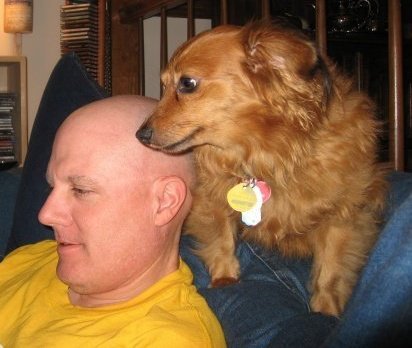
Padre Steve gets a little advice from Molly

I am coming up on three years since I returned from Iraq and experienced my crisis in faith and belief that for nearly two years left me as a practical agnostic.  During that time when it was hard for me to even believe that God existed and if he did exist even cared about me or others I was forced to wrestle with faith and belief from the perspective of a doubter.  This was not comfortable from me because from an early age I had a real faith in God and in Jesus. Likewise I have always been one that tried to think through the implications of faith and belief but because I am a historian and theologian tended to look at things from the perspective of a historian or theologian trying to convince others of the truth using Scriptures, the Creeds, the Councils and what great theologians and Church leaders taught to convince people of that.  I was rather good at the art of polemics which I think was one of the reasons some of my seminary classmates asked me why I was in seminary and not in law school. That was not a compliment in my seminary.

Now I do not want to discredit the importance of history and theology or the roles of historians and theologians in the church.  Far from it, I still rely on that knowledge and seek to understand both better. In fact for me faith and life is connected with both and since coming back I have worked to better integrate these subjects into my spiritual life so that they are not simply something that I do but a part of who I am.

That being said as I dug my way out of my PTSD and anxiety ridden life, I felt alienated from God and God’s people.  In fact I felt abandoned by them I struggled to believe again. It seems to be my experience that Christians especially clergy seem to treat doubters and those in spiritual as if they are radioactive.  The only ones that seemed to understand were those going through similar trials and the first person who asked me how I was doing with God was not a pastor, chaplain or bishop but a psychotherapist. It was that therapist who made it one of his goals to help me be able to reconnect with God and was not threatened by the anger, frustration and alienation that I felt from God and the Church.

Eventually faith began to return but it was in the simple performance of the Sacrament of the Sick and Dying in the hospital that I worked where faith began to return.  I have written about that in a number of articles linked here so I will not rehash those details.

A Sea of Contradictions: My Life and Faith since returning from Iraq

Faith Journey’s: Why I am Still a Christian

God in the Empty Places…Padre Steve Remembers the Beginnings of Padre Steve’s World

Doubt and Faith: My Crisis in Faith and Why I am Still a Christian an Advent Meditation

Raw Edges: Are there other Chaplains out there Like Me?

The Church Maintained in Love: Maintaining Integrity and Preserving Relationships When Asked to Leave a Church

However there is a quote that I used to lead off one article that I will mention from the German Pastor, Theologian and Martyr Dietrich Bonhoeffer:

“Many people are looking for an ear that will listen. They do not find it among Christians, because these Christians are talking where they should be listening. But he who can no longer listen to his brother will soon be no longer listening to God, either; he will be doing nothing but prattle in the presence of God, too. This is the beginning of the death of the spiritual life, and in the end there will be nothing left but spiritual chatter and clerical condescension arrayed in pious words… never really speaking to others.”

Since I know that there are pastors, chaplains and other Christians out there who are experiencing a crisis in faith I just want to say that you are not alone and that there is life after the abyss.  I have faith again in God, working on that faith with God’s people and I believe again but I also doubt and have questions.

Faith and belief for me now is more in caring for God’s people and trying not cause further alienation to people who already struggle with faith, life, depression, anxiety and those that are often marginalized by the Church to include those not of the Christian faith, men and women that have experienced the trauma of war or crimes committed against them, abuse of all kinds as well as people of more “liberal” political beliefs and Gays and Lesbians.  Somehow I think the community of faith is enriched by those on the fringe of the “Christian” world and that God still cares even when Christians don’t.

Please know that while I am still in the process of recovering faith and reordering my spiritual life to make it less rote and more authentic that I believe that God cares for everyone. One of my favorite scriptural passages 2nd Corinthians 5:18 is included in the Lake George Benediction which I will close this article with:

“As you leave this place always remember the Gospel: God was in Christ reconciling the world to himself counting men’s sins not against them. God loves you, God is not mad at you and God will never leave you or forsake you. May Almighty God bless you, the Father and the Son and the Holy Spirit. Amen.”

Peace

Padre Steve+


18 Comments

Filed under christian life, faith, Pastoral Care, philosophy, Religion

Introduction to “I Believe please Help Me Believe: The Apostle’s Creed for those Who Struggle with Faith”

“God weeps with us so that we may one day laugh with him.” Jürgen Moltmann

This is the first of a series of essays on the topic of doubt and faith related to the Apostle’s Creed.  There was a time in my life that faith in God, for me the Christian God, Father, Son and Holy Spirit was something that I pretty much took for granted until I had my own crisis of faith when I returned from Iraq in 2008.  It was that crisis where for all practical purposes I was an agnostic trying to believe while feeling abandoned by God and many of his people.  That crisis has etched a permanent scar in my soul which has led to some fairly major changes in my life but even more so forced me to actually enter what Saint John of the Cross called the “Dark Night of the Soul.”

I will not tell of how my great spiritual disciplines helped me get through this as they did not. I found it hard to pray or believe in anything for nearly two years as I struggled with abandonment. I felt that God, the Church and the Navy had abandoned me.  I was losing my battle with PTSD during that time, depressed, anxious and despairing I threw myself into my work among the critically ill ICU patients and those that cared for them.  Christmas Eve of 2008 was spent in despair as I wandered through the darkness on a cold night after leaving Mass because I could not get through it.

Though I found a community and camaraderie among those that I worked with and tried to provide spiritual care for my own condition grew worse, so much so that my clinical duties had to be curtailed in September of 2009.  I still stood the overnight duty and filled in for others as needed but for a number of months I had no ward assignments.  On one of the on call nights not long before Christmas I received a call to the ER where I was called to give the last rites to a retired Navy Medical Doctor who was a true Saint, faithful to God, his Church and the community where for years he had dedicated much of his practice to the poorest members of the community to include prisoners in the Portsmouth City Jail. He breathed his last as I prayed this prayer following the anointing of the sick:

Depart, O Christian soul, out of this world;

In the Name of God the Father Almighty who created you;

In the Name of Jesus Christ who redeemed you;

In the Name of the Holy Spirit who sanctifies you.

May your rest be this day in peace,

and your dwelling place in the Paradise of God.

Something happened that night and by Christmas Eve I realized that something was happening to me. As I wrote in Padre Steve’s Christmas Miracle on Christmas Eve of 2009 following an incredibly busy day full of life and death situations and ministry which amazed me:

“Mid afternoon I was walking down the hall and I experienced a wave of emotion flood over me, and unlike the majority of emotions that I have felt in the past couple of years this was different.  It was a feeling of grace and I guess the presence of God.  I went up and talked with Elmer the shrink about what I was feeling and the experience was awesome, I was in tears as I shared, not the tears of sadness, but of grace.  I am beginning to re-experience the grace of God, something that has been so long absent that I did not expect it, at least right now.  I didn’t do anything differently; I certainly was not working extra hard to pray more, get more spiritual or pack my brain full of Bible verses.  I was too far gone to do those things.  It was all I could do many mornings just to get out of bed and come to work.”

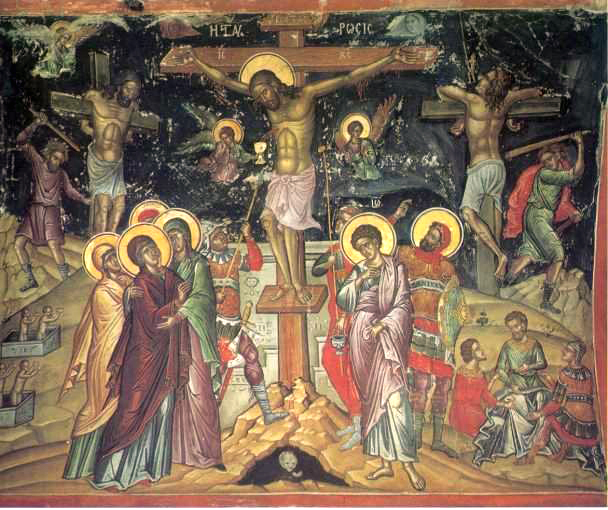
Since that time I have continued to recover faith and belief. I cannot say that it is the same kind of faith that I had before Iraq. No this was different, it was faith born of the terrible emptiness and pain of abandonment and despair, a faith that is not content with easy answers and not afraid to ask questions.  It is a faith in Jesus Christ, the crucified one who’s image we see hanging from the crucifix and adorning icons of the Crucifixion. It is as Jürgen Moltmann wrote in The Crucified God:

“The Symbol of the Crucifix in church points to the God who was crucified not between two candles on an altar, but between two thieves in the place of the skull, where the outcasts belong, outside the gates of the city. It is a symbol which therefore leads out of the church and out of religious longing in to the fellowship of the oppressed and abandoned. On the other hand, it is a symbol which calls the oppressed and godless into the church and through the church into the fellowship of the crucified God”

My Philosophy of Religion Professor in seminary, Dr. Yandall Woodfin told us in class that until we had “dealt with the reality of suffering and death we were not doing Christian theology.” At the time the words were offensive to me, but by the time I had graduated and also done a year of Clinical Pastoral Education they became a part of my experience, but even then that did not prepare me for the darkness that I lived in from February of 2008 until that Christmas Eve of 2009.  I would say that in addition to grappling with suffering and death that one has to add the abandonment of the outcast to the equation.

It is from this perspective that I will look at an ancient document that for many Christians is their Baptismal statement of faith or Creed.  ‘Credo in unum Deum’ “I Believe in God” is no longer for me simply a theological proposition which I both ascent to and defend, but rather an experience of God born out of pain, despair, anxiety, doubt, unbelief and abandonment finding almost no Christians willing to walk through the darkness with me, including clergy. It was if I was radioactive, many people had “answers” but none understood the questions and until my therapist Dr. Elmer Maggard asked me “how I was with the big guy?” and Commodore Tom Sitsch asked me “Where does a Chaplain go for help?”

When I finally collapsed in the summer of 2008 and met with Dr. Maggard I made a conscious decision that I would not hide what I was going through because I felt that if someone didn’t speak out then others like me wouldn’t seek help. In the nearly three years since I returned from Iraq I have encountered many people, men and women, current and former military personnel and families of veterans who came to me either in person or through this website.  Included were military chaplains also experiencing life and faith crisis. Most said that I was the first Chaplain or minister that they had met or read who said that he struggled with faith, belief and didn’t know if God existed.  In each of those encounters there was a glimmer of hope for me and I think for them, for the first time we had people that we could be open with.  Co-workers and others said that I was “real” and I certainly do not boast of that because it was painful to try to be transparent with people while in the depths of doubt and despair while hoping that somehow God would touch them with some measure of grace when I found it hard to believe.  I guess it was the fact that I was willing to walk, sometimes in unusual circumstances and locations with them even if it meant facing my own pain and doubt. I was learning something about being what Henri Nouwen called a wounded healer.  Nouwen wrote:

“Nobody escapes being wounded. We all are wounded people, whether physically, emotionally, mentally, or spiritually. The main question is not “How can we hide our wounds?” so we don’t have to be embarrassed, but “How can we put our woundedness in the service of others?” When our wounds cease to be a source of shame, and become a source of healing, we have become wounded healers.”

My journey through the words of the Apostle’s Creed will be less of a doctrinal exposition than a pastoral narrative of rediscovering faith. It is my hope and prayer that this feeble and imperfect attempt to experience the Apostle’s Creed will be of help to people.  People like me that have experienced the terrible effects of a crisis of faith that leads a person into despair of even to the point of life itself and all that is good.

Peace

Padre Steve+

6 Comments

Filed under christian life, faith, Pastoral Care, philosophy, PTSD, Religion

New Year’s Resolutions and the Problem of Forgiveness


“New Year’s Day… now is the accepted time to make your regular annual good resolutions. Next week you can begin paving hell with them as usual.”  Mark Twain

I don’t do New Year’s resolutions well.  Usually mine are not worth the time to make them. However this year I am resolving the make a couple of resolutions that actually are resolvable it real time which I actually stand a chance at keeping.  Well….at least I hope that I can keep most of them, one will be tougher than the others.

The first of these resolutions is to make sure that I am within my weight and body fat standards for the Navy. This is doable and if I don’t do it I could get put out of the Navy and never see the rank of Commander that I worked so hard to be selected. The big test of this is the middle of April and I will make sure this happens and once I meet the standards in April the goal is to keep them and get in even better shape the rest of the year.  Thus I resolve to lose the weight and body fat while keeping it off and getting in great shape. P-90X here I come.

The second resolution is to do everything that I can as a supervisory chaplain to set my co-laborers up for success and to care for the spiritual and human needs our hospital staff as well the Marines, Sailors and their families that come to our hospital for their medical care. I am blessed to have a great staff and a supportive administration so this should be a pretty resolvable resolution.

My third resolution is to continue to rebuild my spiritual life both in daily spiritual disciples and in relationships with God and all the people that God puts in my path.  The past few years have taken a lot out of me and the past year has been a year in which faith returned after living life as for all practical matters an agnostic after I returned from Iraq.

At the same time I still have issues that I struggle with. One of those is on forgiveness. However when people make nasty attacks on me I struggle to forgive. I am rather earthy and certainly cannot be mistaken for a real saint as I have far too many rough edges to think too much of myself in regard to “how good of Christian I am.”  I have to leave that to judgment God and others.  I remember my first confession when I asked the Priest hearing the confession “if they deserved it is it still a sin?” I was told that my actions were still sins even if they deserved it although there might be some mitigation.  I think that my response was “damn.”

A rather nasty attack on me occurred on a website run by people that have left the CEC that had posted my essay about leaving the CEC on their site.  The comment has since been removed as the site administrator.  When I contacted this person he was shocked that was on the site and removed it and apologized to me a number of times and provided me the text of the offending comment.  The weird thing is was that I would have never read the comment if a CEC Bishop had not asked me to go to the site to defend him when the attack was on me.

The comments made about me were typical of much of my experience in the denomination. The person who was quite obviously a CEC clergyman twisted my words and accused me being an apostate. He accused me of “posturing” and denying need for the work of Christ to forgive the sins of humankind especially in regard to homosexuals and Moslems.

In fact these are some of his words: “Fr. Steve now believes that it was unnecessary for Jesus to atone for our sins as even Muslims can obtain Heaven without the Cross. And hasn’t God repeatedly taught us throughout Scripture that homosexual sex is condemned as an abomination. Yet Fr Steve now believes God didn’t really say that at all and that gay sex is okay with God.” My crime is to believe that the grace of God can extend to anyone and the Blood of Christ is sufficient to save anyone.

To put my beliefs and words about this I quote from one of the keynote documents of the Second Vatican Council.  It is a long quote but obviously my critic is clueless and readers unfamiliar with my writings could take what he wrote at face value and agree with him thus I quote from The Dogmatic Constitution of the Church Lumen Gentium paragraph 16:

16. Finally, those who have not yet received the Gospel are related in various ways to the people of God.(18*) In the first place we must recall the people to whom the testament and the promises were given and from whom Christ was born according to the flesh.(125) On account of their fathers this people remains most dear to God, for God does not repent of the gifts He makes nor of the calls He issues.(126) But the plan of salvation also includes those who acknowledge the Creator. In the first place amongst these there are the Mohammedans, who, professing to hold the faith of Abraham, along with us adore the one and merciful God, who on the last day will judge mankind. Nor is God far distant from those who in shadows and images seek the unknown God, for it is He who gives to all men life and breath and all things,(127) and as Saviour wills that all men be saved.(128) Those also can attain to salvation who through no fault of their own do not know the Gospel of Christ or His Church, yet sincerely seek God and moved by grace strive by their deeds to do His will as it is known to them through the dictates of conscience.(19*) Nor does Divine Providence deny the helps necessary for salvation to those who, without blame on their part, have not yet arrived at an explicit knowledge of God and with His grace strive to live a good life. Whatever good or truth is found amongst them is looked upon by the Church as a preparation for the Gospel.(20*) She knows that it is given by Him who enlightens all men so that they may finally have life. But often men, deceived by the Evil One, have become vain in their reasonings and have exchanged the truth of God for a lie, serving the creature rather than the Creator.(129) Or some there are who, living and dying in this world without God, are exposed to final despair. Wherefore to promote the glory of God and procure the salvation of all of these, and mindful of the command of the Lord, “Preach the Gospel to every creature”, (130) the Church fosters the missions with care and attention.

I may be a moderate to liberal on some social issues and be more inclined to err of the side of the grace of God when it comes to people that many conservative Christians demean and damn to hell but I don’t deny the Creeds and my beliefs are those espoused in the documents of Vatican II and the Encyclicals of Pope John Paul II.  Personally I think that puts me in some pretty good company as far as my orthodoxy and Catholicity are concerned but there are some in the CEC that like to twist words and beliefs to demonize those that have left that church.  In fact when I was in the church I was attacked and even silenced for being “too Catholic.”  At the same time I was one of the most stalwart defenders of the CEC Church leadership despite how I had been treated by some Church leaders and not defended by others that should have defended me. I understand the pathological needs of those that make such spurious and cowardly attacks under the cloak of anonymity I have a terrible time forgiving them.  I don’t hide who I am or what I believe I expect that anyone that claims to be a Christian minister would have the decency to contact me personally rather than take the low road and do a drive by hit on me on another site. This process will be terribly hard and I will endeavor to forgive and get beyond it but I know my nature.  I am one of those old fashioned people that believe in honest and open dialogue and have a concept of personal honor.  This will require a lot of work and prayer and I will need your prayers to do this.

So there they are. As you can see some resolutions will take some work but I should be able to accomplish them. The last resolution regarding forgiveness will probably take a lot of struggle. Since I presume that the aforementioned coward and those like him will take other pot shots at me my wound will probably remain fresh as much as I want to leave it this part of my life behind.

I appreciate your prayers for me in the coming year. So many people have been so encouraging to me on this website in so many ways since I began the site in February of 2009.  I am so grateful for all of you and give thanks to God for all the love and care that so many readers have shown to me over the past two years.  I pray that you will know the love, peace and blessing of the Incarnate God in the coming year and covet your prayers that I will be able to do the same.

Peace

Padre Steve+


2 Comments

Filed under christian life, faith, Pastoral Care, philosophy, Religion

Recovering My Spiritual Disciplines during Advent: Celtic Daily Prayer

A few months after I returned from Iraq my spiritual life fell apart. It felt like God was no longer there. It had been that way for a while but in June of 2008 the frustration and despair of the situation coupled with an emotional collapse had gotten the best of me and I stopped doing the various spiritual disciplines that had been an important part of my life as a Christian and Priest for years. I think the last really meaningful times that I had spent with God had been in Iraq and the sense of disorientation, loss and abandonment that I felt when I could no longer pray the Daily Office.

Now for those that don’t know what the Daily Office is, it is a form of prayer that is structured to included Psalms, Prayers and Scripture readings. There are a number of variants within the Anglican, Catholic and Orthodox traditions each with somewhat different emphasis but all similar. I would alternate between those from the Book of Common Prayer and the Catholic Liturgy of the hours. One year I did the Orthodox daily prayers.  I found different things in each that were helpful and version I found a lot that I liked and some things that I didn’t like as much.  The most helpful thing about the Daily Office for me was that it helped build an internal spiritual discipline and order in my life. Contrary to being limiting as some would think it was of great benefit.

However with my internal compass messed up and wondering if God even existed, the mere act of doing what used to bring order and joy to my life became an exercise in futility. I tried different rites to see if it was just me as well as different physical settings to see if something would work. None did and my spiritual crisis continued to grow as I felt estranged from my former church and felt abandoned by God and by some parts of the Navy.  Although I was struggling and people knew it no clergy of any kind asked about my spiritual life, it was my therapist that first asked me “how are you and the Big Guy doing?” I had to admit that I was not doing well with the “Big Guy” and wondered at times if he even existed.

I went through nearly two years of spiritual emptiness with glimmers of hope. Last year in what I describe as my “Christmas Miracle” faith began to return in the midst of the Sacrament of the anointing of the sick in our ER at Portsmouth Naval Medical Center.  In that simple act done on call at the in the final moments of a retired Navy doctor and Episcopal layman who had given himself to his church and the community faith returned.  He died as my hand was upon his head praying the final prayers of commendation. His wife said that he was holding on until I got there and a number of ER staff said that they had never seen anything like what happened.  When I left the next day I knew that something was different, I felt hope again and that maybe just maybe that God might very well exist.

This year has been a continuous yet slow time of spiritual growth. The act of prayer returned as did occasional spiritual reading and reflection. I also began to feel the sense of mystery and awe when celebrating or attending a Eucharist.  Now I was still struggling especially to rebuild my spiritual life, but after 2 years of not even knowing if God existed but it was a quantum improvement over being an agnostic.

Since moving to my new job I have been looking to see how to build structure back into my life using the daily office. I looked at the Roman Catholic Liturgy of the hours which I really like as well as the Book of Common Prayer which I had been using most recently but decided to wait until Advent and the new liturgical year to start. During this time one of my Chaplains shared the “Celtic Daily Prayer” of the Northumbria Community with me. I was hesitant to try something new at first but I respect this Chaplain who as an Evangelical Christian uses the Benedictine Daily Office of the Roman Catholic tradition.  One thing that attracted me to this variant of the Daily Office was its Celtic roots. Celtic Saints have played a part in my spiritual journey St Willibald of Eichstadt a Celtic missionary to Germany has the feast day associated with my ordination, his brother Wunibald an Abbott in Germany that of my Baptism, St Rupert of Salzburg my birthday and St Killian of Wurzburg  the Patron Saint of my first duty station as a Priest. I find great comfort and inspiration in the lives of these saints.

He loaned me his copy and over the weekend I began to explore it. Sunday night before going to bed I prayed the Sunday Night office of Compline.  Since the night is still one of my most difficult times when I struggle with insomnia as well as occasional nightmares, disturbing dreams and even on rare occasion night terrors related to my PTSD.  When I prayed this variant of Compline I felt peace descend and this morning I did the Morning Prayer. Of course I was at work and despite the fact that my door was closed it seemed everyone wanted my time. I was thinking, my God I’m trying to actually pray can’t I catch a break? I finally did and I really liked the order for Morning Prayer.  I am going to begin the Evening Prayer tomorrow and try to finish each night with the Office of Compline.   I am hopeful that the renewal that began last Advent in our ER will continue and become a major part of my spiritual renewal. I do like the basic vow of the Northumbria Community which is to live with Availability and Vulnerability
before God and others as one expression of living faithfully in a fragmented world. I have included the Sunday night Compline below.

Sunday – The Ita Compline

Ita, who died in about 570, was abbess of a women’s community in Killeedy, County Limerick in Ireland. She ran a school for boys where she taught: Faith in God with purity of heart; simplicity of life with religion; generosity with love.  Among those schooled by Ita was Brendan, who honoured her as his foster-mother and adviser. The Compline that follows is named after her because of its emphasis on examination of the heart, and the prayers of care and protection for each soul who crosses our path.

If this Compline is being used in a group setting the * notation indicates a change of reader; words in bold are said all together; words in bold italic are said by each person in turn; and + indicates where you might make the sign of the cross.

+ (silently)

The Sacred Three
to save
to shield
to surround
the hearth
the home
this night
and every night.

* Search me, O God, and know my heart.
Test me and know my thoughts.

* See if there is any wicked way in me
and lead me in the way everlasting.

O Father, O Son, O Holy Spirit,
forgive me my sins.
O only-begotten Son of the heavenly Father,
forgive.
O God who is one,
O God who is true,
O God who is first,
O God who is one substance,
O God only mighty,
in three Persons, truly merciful,
forgive.

* O God of life, this night,
O darken not to me Thy light.

* O God of life, this night,
close not Thy gladness to my sight.

* Keep Your people, Lord,
in the arms of Your embrace.
Shelter them under Your wings.

* Be their light in darkness.
Be their hope in distress.
Be their calm in anxiety.

* Be strength in their weakness.

* Be their comfort in pain.

* Be their song in the night.

In peace will I lie down, for it is You, O Lord,
You alone who makes me to rest secure.

* Be it on Your own beloved arm,
O God of grace, that I in peace shall awake.

Be the peace of the Spirit
mine this night.
Be the peace of the Son
mine this night.
Be the peace of the Father
mine this night.
The peace of all peace
be mine this night
+ in the name of the Father,
and of the Son,
and of the Holy Spirit.
Amen.

Peace

Padre Steve+

P.S. If you desire to find the Celtic Prayer of the Northumbria Community it can be found at their website: http://www.northumbriacommunity.org/pray-the-daily-office

Prayer request. I have been called into the hospital regarding a very sick young man in our ICU. Please pray for him as he is not doing well.

Leave a comment

Filed under christian life, faith, Pastoral Care, PTSD, Religion

Reforming the Church Today Part One: By their Budgets Ye Shall know Them

John Tetzel shook down Germans for Indulgences….Have we learned anything from history?

This is the first in a series of essays on reforming the Church today that will appear on this website

It seems that Christians and especially ministers of all traditions forget the lessons of history.  The church in the United States is at a critical point in history and is fast losing its credibility due to the arrogance and excess of many churches as well as individual clergy in matters related to personal behavior, financial accountability as well as accountability before the law concerning clergy that who have committed grievous crimes against children and others.  Likewise there is the nearly incestuous relationship between many ministers and those holding political and or economic power in which quite often one cannot tell where the “gospel” ends and the politics begin.  This exists in many churches large and small and spans the denominational spectrum not being the sole property of any particular body.  There is also the matter of accountability in which it seems that many churches, ministries and ministers practice a “do as I say, not as I do” lifestyle holding their subordinate clergy as well as parishioners to a higher standard than they practice themselves.

The United States has always had a strong Christian heritage that has impacted its faith as well as its national life.  This is not of itself a bad thing as one looks at how churches and Christian leaders have made an impact that goes beyond them and is beneficial to the nation as a whole.  Some of these achievements include the pressure put on James Madison by Virginia Baptists to ensure a guarantee of religious freedom in the Bill of Rights, the abolition of slavery the ending of child labor, the Civil Rights movement as well as numerous charitable and public interest oriented ministries to care for society’s most disadvantaged citizens as well as the aliens that have lived among us.  At the same time there were many Christians, churches and ministers that supported slavery, an established state religion, segregation and many other issues.  That being said churches and individual ministers have made a huge contribution to American life and community that cannot be easily dismissed despite the many problems, controversies, and scandals that have surrounded churches of almost all denominations since the founding of the United States.  Religious liberty as well as Christian churches and religion in general has traditionally been seen as a positive rather than a negative aspect of the United States going back to Alexis de Tocqueville in his comments on American democracy.

Clergy have enjoyed a special status in American life that exists in large part due the Bill of Rights and the Jeffersonian understanding of an “eternal wall of separation” between church and state.   This is because clergy were seen as fair arbiters because they were not an appendage of the state as were the clergy of most European states that had established state religion.  Thus the “clericalism” of Europe which was seen as a danger by our Founding Fathers was not a major issue. Yes some of the founders recognized a potential danger but that did not stop Congress from treating clergy and churches favorably in the early years of the republic and worked to ensure that no church became a “State church.”  Over the years since the founding of the United States clergy of many denominations have made many positive contributions to our Nation in both their pastoral and prophetic roles.  At the same time over the years some clergy have attempted to use their status and privileges as an entry into the elite parts of society, especially in the political, government policy and financial realms.

The point to be short is that many clergy in the United States, especially those in influential pulpits and ministries have forgotten the dangers of “clericalism” and the abuses of clerics who use their office as clergy to gain political, financial and personal power.  Jesus told his disciples that they had to be servants and not seek wealth, status or position something that was echoed by the New Testament writers as well as many of the Ante-Nicene Fathers.

By their budgets ye shall know them….I saw the report of the Reverend Robert Schuler of the “Crystal Cathedral” megachurch which declared bankruptcy last week being $43 Million dollars in debt and embroiled in struggles about Schuler’s successor call for his parishioners to give more money.  He asked “tithers to double tithe” and those that do not tithe to “start tithing.” He talked about what the church has given to them and earned their support. I found this to be a rather pompous plea from a man who has had the ear of Presidents and leaders in the political and business world.  The fact is that Southern California has been terribly hard hit by the economic downturn and recession and that obviously includes many of his parishioners both those that worship at the Cathedral as well as those who what Schuler’s “Hour of Power” show.  The Chrystal Cathedral now has to live “month to month on $2 Million dollars a month” and has cut back staff, curtailed programs and sold property to try to make ends meet. I’m sorry but when you live off of other people’s money you should never build a ministry requiring millions of dollars on the presumption that if you get it wrong that the faithful givers should have to bail you out.  I saw this at a local level a few years back and it all but destroyed the local church and the denomination that church belonged.  I wonder how many more megachurches built on piles of debt are facing what is happening at the Chrystal Cathedral.

By their budgets ye shall know them….Other churches at denominational and local levels have often become embroiled in banking scandals that tarnished the reputation of those churches, their leaders and disillusioned their membership often causing mass defections to other churches or leave the organized church all together.  The Roman Catholic Church had to deal with a major scandal involving the Vatican Bank in the 1970s and 1980s and have recently had other allegations of another potential banking scandal involving the Vatican have surfaced.

By their budgets ye shall know them….I worked for a fairly reputable Television ministry while I was a seminary student. The common plea of these types of ministries is that they “are on a mission from God” well, maybe that is a Blues Brother’s paraphrase but you get my drift. Most are not part of any denominational structure and have little oversight and presume that since someone might watch them that they are entitled to financial support. They do not ask their audience for actual input into their “mission” strategy, they just ask for their audience’s money to do with as they “and as the Lord would have them to do” with it. This of course is not the sole property of television ministries but it occurs in many churches as well.  If someone questions the church and its financial accountability they are accused of “being unfaithful,” “not hearing God,” or being “disobedient to God’s will or to the church.”  Since many churches and ministries suffer a terrible lack of accountability and oversight these abuses are more widespread than we would want to believe. Sometimes it takes personal experience to see this but when one sees it up close and in person the blinders can be removed. In regard to television ministries in particular the amount of money required to keep their programs on the air is beyond exorbitant. It comes often from those that are barely surviving financially even in “good times” and the most desperate of people “believing in God for a miracle” in response to obediently shelling out of their meager incomes to ministries in response to persuasive pleas by ministers that should know better. The motivation, love and obedience of these often wonderful people is exploited in order to support air programs that have little impact on the world despite the boastings of these ministers that they are “fulfilling the great commission.” One has to ask if this is the case why there is so little to be seen in our society as a result of all the money poured into these pricy ministries.

By their budgets ye shall know them….If money was the only thing it would be a manageable problem…. Oh but wait money and power is the root of the problem as the problem extends to lifestyles of ministers and other church leaders which are hardly supported by the demands of the Gospel. It is not uncommon at all to see clergy living off of the offerings of their parishioners live opulent lifestyles and when times get tough demand more money from their flocks rather than amending their own behaviors.  Instead of accountability, repentance and a change in behavior there is a demand for obedience from their flock and if the flock objects they are the ones that are vilified.  This again cuts across denominational lines and includes Protestants and Catholics, those in parish as well as those in parachurch, television and radio ministries. In my old church those clergy who could not meet their tithe for whatever reason were told that they were being “disobedient to their vows” which instead of vows to the Church in regard to orthodoxy as well as orthopraxy were narrowed down to if you were paying your tithe on time. I remember one Bishop who left the church to go elsewhere told the assembled priests in his diocese that the tithe was the “essential test of obedience, and what bound us together.” Families and parishioners of parishes were described by another Bishop as “tithing units” not people and when I was in the reserves contemplating a mission parish start up was told that in order to be “successful” the church needed at least “x-number of tithing units.” Doctrine or even other forms of public witness were secondary to paying the tithe.  That church had many major financial scandals that are well documented elsewhere so I won’t go into detail about them.

By their budgets ye shall know them…. If churches spend more money on the salaries of their pastors than they do on outreach to the poor or missions something is severely out of order, one cannot imagine the Apostles of those Ante-Nicene Fathers who suffered poverty and persecution advocating for what amounts to be an “Imperial” church even those that advocated a firm hierarchy in regard to faith and belief.  When leaders of a church, especially a small church get together and dine in luxury on the monies donated by their often impoverished flocks it shows a tacit denial of the Gospel and lack of respect or care for the people of God.

By their budgets ye shall know them….When church building programs and plant maintenance are extravagant and require massive amounts of money to sustain without demanding more from their parishioners than something is out of kilter.  When chandeliers cost more than a mission budget for the poor something is wrong.  My Church History professor from who I appropriated the “by their budgets ye shall know them” line used to say that “God is going to get us for our stained glass windows when we neglect the poor.”  I love good church architecture including stained glass windows but it is presumptive on God the people of God for churches, ministries and ministers to demand monies when they have failed to play and manage effective especially when in spite of economic indicators they spend like drunken sailors and expect others to pick up the tab while crying crocodile tears about how “God’s plans will be thwarted” if their ministry fails.

By their budgets ye shall know them….Back prior to the Protestant Reformation in Europe there was a large amount of discontent which focused on the arrogance, opulence and financial demands of the Catholic Church.  In fact much of Dr. Martin Luther’s protest in the 95 Thesis dealt with the manner in which the Church used a practice called indulgences and the selling of “relics” to fund the construction of St Peters Basilica in Rome.  In people gave because they believed men like John Tetzel who preached in regard to indulgences “a penny into the coffer rings a soul from purgatory springs.”  Of course there was the manner that the Church also used its power to reward or punish rulers which was also part of the problem but the complaint of many reformers was often directly related to the Churches’ financial as well as political abuses of its members and nations to buttress its position in Europe.  Unfortunately I do not think that we have learned this lesson and that Churches and ministries in the United States are losing membership and the trend is that people are opting for individual expressions of faith rather than become a part of institutions that they feel are out of touch with real people.  I believe that if things do not change there will be a mass exodus from many churches and religious institutions because of the odious nature of the financial dealings and pressure put on people to support questionable programs and lavish lifestyles.

By their budgets ye shall know them….There are honest and hard working ministers and churches that emphasize ministry and care for people as part of the Gospel message.  Many are foreign missionaries that eke out support while working full time in “tentmaker” professions in order to fund their missions without unduly burdening those that support them.  I know many people like this and for them whether they be working in foreign missions or caring for the poor at home live the Gospel in word and deed and nothing in this essay should be construed to be against such people or their missions.  I may disagree with someone’s theology but when I see them demonstrate humility and the love of God in all that they do I can only commend them.

You see my friends and readers my experience leads me to believe that people are still searching for authentic faith and spirituality and have not necessarily given up on orthodox Christian beliefs.  The problem is they are finding little of substance in many churches and other religious institutions. Novelist and write Anne Rice recently did this, leaving “Christianity” but not Christ and I fully understand her reasoning for doing so.

Martin Luther and the 95 Thesis: What if the Church had listened to him rather than branding him as a heretic and criminal?

Some will say that by writing this that I am “causing division in the Church” or the more pious “causing division in the body of Christ.”  However that is a red herring argument that attempts to divert attention from the real problem. If the Church and I mean across denominations not any particular body fails to reform itself it will fall on its own and fall hard and in the process harm the faith of many people. Churches which have to defend the indefensible to “retain unity” are those that are in schism from Christ, not those that raise issues that the society at large recognizes but church and religious leaders seem incapable of admitting. The Church must reform and a big part of that in the United States involves how we deal with wealth. By their budgets ye shall know them.

This essay will be continued as I move to the next segment which will be about the incestuous relationship between many ministers and those of the political and financial elites.  I’m sure that I will come up with a catch title for that essay but need to ruminate some more.

Peace

Padre Steve+


3 Comments

Filed under christian life, faith, History, Pastoral Care, philosophy, Religion

The Church Maintained in Love: Maintaining Integrity and Preserving Relationships When Asked to Leave a Church

“There comes a time when one must take a position that is neither safe, nor politic, nor popular, but he must take it because his conscience tells him it is right….” Martin Luther

The past three years have been filled with change and transition for me as anyone who is a regular reader of this site understands.  This week another transition took place as I was asked to leave the Charismatic Episcopal Church over my perceived “liberal” writings and spiritual journey.  This has been a long time in coming and while I was surprised at the timing I was not surprised that it eventually came to this.  While my Bishop states that he did not ask me to leave the tenor of his call, which was pastoral and friendly yet used terms such as “you do not appear to be happy in the CEC,” “I would think that you might be happier in another church” and “liberal beliefs” indicated to me that I was being asked to leave and that was how I interpreted it.  He did not at all threaten my status in the military as I made my transition but left me with the impression that the sooner I found a new home the better.

Before I go into the process of how this happened I have to say that I depart the CEC without rancor or personal animosity and that unlike many who have departed the CEC will not engage in criticism or attacks on that Church or its leadership.  While I have theological, philosophical and pastoral disagreements with where I see the CEC going it is not for me to sit as the judge upon the CEC.  I have too many friends in the church and dare not risk relationships over issues that are mine to deal with.  At the same time I will in this post note those differences.  But again I say that all churches have the right and responsibility to do what they think is correct regarding their beliefs and how to deal with their clergy and laity that have differing views.  It is my view that unless a person is willing to stay within their church and abide by its discipline that they should leave peacefully.  I also believe that if a person feels that they are bound by the faith and by Scripture to remain in a church as a voice of loyal opposition that they should but have the grace not to make their opposition a personal crusade to get their way or to force change in their church before it is time.  I believe that a person who practices principled opposition can never use his opposition as an excuse to seek further division in the church. Likewise a person cannot allow his or herself to become so attached to his cause that he sees his opponents as enemies and allows hate to dominate his actions.

I believe that the Church is a community centered on Jesus and bound together by our baptism, One Lord, One Faith, One Baptism, One God and Father of All.  I believe in this community that there are many expressions of that faith.  We maintain the faith that comes passed to us in the Gospel “that God was in Christ, reconciling the world to himself, no longer counting people’s sins against them. And he gave us this wonderful message of reconciliation.” (2 Cor. 5:19 NLT)

Within this context lies my journey. As a priest in the CEC I was bound by my vows to be obedient to the discipline of the church.  When I entered the CEC in 1996 I felt very comfortable with those vows. Over the course of the years I began to have misgivings about those vows as the church went through a number of very bitter splits over what amounted to be the issue of power and authority.  Money was at the root of much of this but also the personal misconduct of a number of Bishops as well as clergy aggravated the situation. In the United States during the period of 2004-2007 a total of 8 bishops left the church to form their own denominations or join other groups, many taking the majority of their clergy and parishes with them. Two of these bishops would return to the CEC in later years. One Archbishop resigned and became a Roman Catholic layman. One Archbishop was removed from his episcopate and left the church to form his own church and eventually the world-wide Patriarch was forced to step down after being complicit in the cover-up of an affair of his archdeacon and the wife of a layman in the church whose father was a priest in the military. All of those Bishops did more to damage the faith and witness of the CEC than any article that I could ever write so I am not ashamed as I have behaved with honor and maintained my vows.

During my time in the CEC I had a number of negative experiences with Bishops and clergy that are no longer in the CEC. The Archbishop that laicized and became Roman Catholic had forbidden me from writing after publishing two articles in a conservative Catholic journal.  The accusation was that I was “too Catholic and misrepresenting the church.” Of course my writings were following the lead of this bishop and a number of others that were trying on their own accord to push the CEC into communion with Rome. He did not inform the Archbishop for the Military of this.  I later had conflict with this bishop when I corrected a priest in his diocese who was not following what the bishop said to do. For my trouble I was forbidden to have relationships with civilian clergy in that diocese. When this bishop laicized this diocese imploded, only a few missions with very few members remain in the CEC. The others found homes in communions that the other departing bishops formed after failing to remove the Patriarch in 2006.  I had many friends leave the CEC at that time.  Thus from 2004 I had no local support of fellowship with anyone in the CEC. The bishop that inherited the scattered remnants of this diocese never contacted me in that time, apart from my fellow chaplains I felt completely cut off from the church.  Thus when all the major scandals and schisms occurred I only had the support and fellowship of a number of the priests of our military archdiocese. Despite this I felt bound to my vows as none of the Bishops that remained had wronged me in any way and I valued my relationship with my military bishop and fellow chaplains.

The CEC continued its implosion while I was in Iraq with the resignation of the Patriarch. I wondered if the CEC would survive in any form and began to explore options contacting a number of communions while in Iraq. When I returned home suffering from PTSD flashbacks, insomnia and anxiety as well as the lingering effects of wear and tear injuries to my shoulders and knees and a badly sprained ankle which refused to heal I was in pretty ragged shape. I told Judy that I felt that I needed to leave the CEC and recognizing the danger of a hasty move she persuaded me to stay and at least wait a year to make any decisions.

In fact in light of the journey that I have been on, especially since returning from Iraq in February 2008 I had began the process of seeking to find a home. This was done in large part because when I am done with my military service we plan on retiring in the Hampton Roads area.  One thing that I discovered after Iraq was that I needed local relationships and a church home.  This was something that even if I had remained in sync with the CEC that they could not have provided and I did find a local church home at St. James Episcopal Church in Portsmouth.

During that year I experienced a major crisis of faith that left me for nearly two years as a practical agnostic wondering where God was. Christmas of 2008 was so bleak that I left the Christmas Eve Mass at Judy’s parish before it started walking into the cold of the night asking God if he even existed.  Faith was a struggle for the next year, but I did find a local church home at St. James Episcopal Church in Portsmouth whose priest, Father John Agbaje became my pastor and friend. Though I was still struggling I found comfort in the liturgy and tradition of this historic church. It was a place of solace, something that I had not had in the CEC for many years.

By the summer I realized that if we were to remain in the Hampton Roads area that I would have to leave the CEC if nothing else for the local relationships that we were building at St. James. While this was occurring my faith journey continued. I saw many things going on in much of the church world, to sometimes include the CEC that concerned me as a Christian. These were pastoral, societal and political issues and not creedal issues even though for many conservative Christians including most of the CEC they are “hot button” issues.  While I consider myself a moderate many people on the far right consider that to be “liberal.” Due to the poisonous political and social climate that we live in here in the United States most people are no longer open to debate or dialogue on those issues. Since I have written about this in my recent article “Faith Journey’s: Why I am Still a Christian” ( https://padresteve.wordpress.com/2010/09/22/faith-journey%E2%80%99s-why-i-am-still-a-christian/) I will not go into them here.

In fact it was the Monday following that article that I received a call from my military archbishop telling me that I would have to find a new denominational home due to my “liberal” beliefs.  He is a friend and I sure that the call pained him to make, we go back almost 15 years.  I do not know what led to the call but presume it was pressure from other bishops to do something about me although he stated that this was not the case. I hold no ill will toward Bishop Doug or anyone else in the CEC leadership for asking me to leave. In a way it was a relief as I realized that my writings, even as circumspect as I tried to make them could cause problems for me in the CEC.

At no time did I attack the leadership of the CEC or its stand on any of these issues but evidently some considered my statements as a challenge to the church and its authority.  I am of the belief that to remain viable that there should be differing opinions on matters that are pastoral and societal and not out of keeping with the Christian tradition.  For me it does not matter if a church is conservative or liberal, if it silences dissent by people who are committed to that church for dissent on non-creedal issues then it does itself a disservice in the long run. But again I have to say that the CEC like any Church has the right and responsibility to maintain its church discipline and uphold what it believes to be true and that asking me to leave was within the bounds of its canons

Another endorsing agent helped me find the the Apostolic Catholic Orthodox Church (http://www.apostoliccatholic.org/default1.htm) an Old Catholic Communion whose ethos is very similar to mine.  I have had meaningful talks with the Presiding Bishop, Diana Dale and a number of priests who have served or are serving as military chaplains.  I really look forward to serving in the ACOC for many years to come.

My original desire was to leave the CEC quietly but my writings have placed me at odds with the CEC as a whole and as a consequence I have been asked to leave.  I can do so in good conscience knowing that for 14 years I served the church well and presented a positive view of the church even when the church was going through its most difficult times.  I can maintain my integrity and be more open in my beliefs by leaving than remaining.

Over the past three years Bishop Doug has been most supportive and even had not chided me on other articles that voiced similar sentiments as the Faith Journey’s article and I shall maintain a friendship even if we disagree on some issues. Relationships matter and I refuse to make enemies on my way out of the CEC. I will miss my friends at Church of the Messiah in Jacksonville where we worshipped in 2002-2003 and St. Michael’s in San Clemente who hosted the best of our military diocese convocations, as well as my friends and brothers in the Archdiocese for the Armed Forces. I will remain in contact with many through Facebook and other means.  Friends are friends and I and I will not leave with the bitterness and animosity of so many that left the CEC earlier in the decade, people who have not been able to move past their hurt and embrace their new church homes.

I hope this article in some ways explains my journey. Bishop Doug has already let my fellow military priests know that I am leaving the CEC so at least some people know what has happened. I will contact those that I am closest to personally and provide this article to others.  This is a painful time of transition but it is the right decision for both the CEC and me.

My official change over to the ACOC will take place sometime next week.  I thank all of my friends in the CEC for your support and prayers over the years.  I will keep the CEC and you my friends in my prayers as I continue my journey.

Peace and blessings,

Padre Steve+

Non nobis, non nobis, Domine
Sed nomini tuo da gloriam

Postscript: I had a conversation with Bishop Doug this morning. In that conversation he stated that he did not ask me to leave the CEC in our conversation two weeks ago, just that I appeared to be “unhappy” in the CEC and might want to look elsewhere because of “liberal views” suggesting the Episcopal Church as a possibility.  This is true, he did not directly ask me to leave, but I interpreted the call in that manner he used the term “liberal views.” It was that term that led me to believe that perhaps he had been talked to about me as the term is loaded in the current climate of American religious and political debate. I did not mention other instances regarding past encounters with some in the current CEC leadership that also influenced my interpretation of Bishop Doug’s words. That serves no purpose and I will not mention names or even incidents because I do not want those encounters to be used against the CEC or anyone in it.

I implore anyone that reads this post NOT to disparage Bishop Doug in any way. He is a gentleman and a Christian and I know that he bears me no malice whatsoever. He has been attacked personally on the blogs of many that left the CEC and I cannot countenance that or lend my voice to those criticisms. SLD+

13 Comments

Filed under christian life, faith, Pastoral Care, philosophy, remembering friends

Suicide isn’t Painless: The Epidemic of Suicide in the Military

I leave the Naval Medical Center Portsmouth Virginia tomorrow and toward the end of October report as the Command Chaplain for Naval Hospital Camp LeJeune North Carolina. My last time at Camp LeJeune was as part of the Portsmouth SPRINT (Special Psychiatric Rapid Intervention Team) mission to care for Emergency Department personnel at the Naval Hospital and Base Fire/EMS responders to a particularly gruesome suicide of a young Marine who had recently served in Iraq and was preparing for another tour.

As a Chaplain and in my previous life as a Medical Service Corps officer commanding a Medical Company in Germany and Brigade Adjutant in Texas I have dealt with a lot of suicides, attempted suicides and the lives left shattered by suicide.  Likewise I have seen the results of suicide attempts as a trauma, emergency and critical care chaplain in major medical centers. I have attended the DOD Suicide Prevention Conference on a number of occasions and gotten to know many of the experts working in the field.

As I said I began my career as an officer in the Army Medical Service Corps. We had a close connection to the movie and television series M*A*S*H and the theme music to that movie is emblematic of the feelings of many combat vets who continue to deploy even after making many combat deployments. http://www.metacafe.com/watch/3444418/suicide_is_painless_johnny_mandel/

Through early morning fog I see
visions of the things to be
the pains that are withheld for me
I realize and I can see…
[chorus]:

That suicide is painless
It brings on many changes
and I can take or leave it if I please.

I try to find a way to make
all our little joys relate
without that ever-present hate
but now I know that it’s too late, and…
[Chorus]

The game of life is hard to play
I’m gonna lose it anyway
The losing card I’ll someday lay
so this is all I have to say.
[Chorus]

The only way to win is cheat
And lay it down before I’m beat
and to another give my seat
for that’s the only painless feat.
[Chorus]

The sword of time will pierce our skins
It doesn’t hurt when it begins
But as it works its way on in
The pain grows stronger…watch it grin, but…
[Chorus]

A brave man once requested me
to answer questions that are key
‘is it to be or not to be’
and I replied ‘oh why ask me?’

‘Cause suicide is painless
it brings on many changes
and I can take or leave it if I please.
…and you can do the same thing if you choose.

Last week four soldiers, one a highly decorated senior NCO and all combat veterans are believed to have committed suicide at Fort Hood Texas.  The base which has already seen more than its fair share of tragedy with 14 confirmed suicides this year is stunned that these occurred in one weekend.

Defense Secretary Robert Gates commented about the stress on the all-volunteer force: “No major war in our history has been fought with a smaller percentage of this country’s citizens in uniform full-time — roughly 2.4 million active and reserve service members out of a country of over 300 million, less than 1 percent,” as a result the wars have been fought by a small proportion of the country, for many they are “a distant and unpleasant series of news items that does not affect them personally.” While the distance grows between those that serve and the general population military families are under even more stress, with anxiety and disruption inflicted on children, increased domestic strife and a growing number of suicides. Divorce rates in the Army have doubled since the wars in Afghanistan and Iraq began.

In the years prior to about 2004-2005 the military suicide rate was almost always below civilian rates in all demographics.  This is something that we took legitimate pride in.  That began to change as the war in Iraq shifted from a “Shock and Awe” campaign to a rather nasty and intractable insurgency this began to change as the deployment tempo increased and the Army increased its “boots on ground” time from a year to 15 months with a one year dwell time between deployments. Even as Iraq calmed down and the US role shifted many troops remain and Afghanistan has become a much more difficult war than it was even a few years ago. The Marines retained a 6-7 month deployment schedule but as the war went on and personnel requirements increased many Marine units were doing 6 months in country and 6 months home.  The difficult of what was described as “dwell time” for the Army and Marines was that for all intents and purposes it wasn’t. The units would get a few weeks leave and stand down time on their return home and then begin preparing for their next deployment. These preparations out of necessity entailed much time in the field training including trips to the Fort Irwin National Training Center (NTC) or the Marine Corps Air Ground Combat Training Center at 29 Palms.  Speaking from experience before 9-11 I can say that a Marine battalion going to 29 Palms in reality makes a short but intense deployment which is taxing on the organization even as it sharpens combat skills.  The same can be said for Army units going to NTC.  Thus the time that is nominally considered time at home to recuperate is not that and instead serves to keep the pressure on already stressed units, leaders and soldiers/Marines.  In the intervening time those that present to mental health providers or chaplains are provided with care to get them back in shape for the next deployment but never really get to deal with the deeper psychological and spiritual wounds. These include “moral injury”  which often involves unresolved grief for the loss of comrades and real or imagined guilt for their own actions in war.  Such wounds ultimately create despair, loss of faith and eventually cause some service members to make attempts on their life with varying degrees of “success” in “completing” the suicide.

The result is that those who have experienced the moral injuries that come as a result of combat, seeing comrades killed and wounded, participating in actions where they are directly or indirectly involved in killing the enemy, see the “collateral damage” of civilians, including children killed and maimed go right back into to fight.  Since this war has now gone on longer than any war in US history and we are fighting it with an all volunteer force of limited numbers with many making multiple deployments, some as many as 5 or more these wounds are pushed aside.  The effect of this is a cumulative grinding down of those that serve in harm’s way. Many suffer from some form of psychological, neurological or even spiritual injury that in combination with other life stressors make them particularly vulnerable to taking their lives.  In regard to moral injury “Many of the troops kill themselves because they feel that those kinds of experiences have made them unforgivable,” said Dr. William Nash, a top PTSD researcher. “It’s a lot harder for most people to forgive themselves than to forgive others.”

Unfortunately there is a stigma attached to seeking treatment or admitting that one is suffering from depression, anxiety or any other condition associated with either seeking help on their own or being “command referred” for psychological/psychiatric help.  Since that stigma is real many war fighters don’t seek help and take “refuge” in destructive behaviors such as alcohol abuse, drug abuse (to include prescription drugs) and risky behaviors.  One wonders how many of the single vehicle accident fatalities that occur late at night to combat vets are not accidental at all but are suicides by another more “socially acceptable” means.  If a forensic psychological profile was done on every service member that dies in such events I would guess that the finding would be a lot more suicides not an accidental deaths as we would like to believe. Yes all of these deaths are tragic but it is far easier to rationalize death in an auto accident than death by gunshot, knife wounds, overdose or hanging.

I am not proposing any solutions for this problem.  I do believe that somehow the deployment tempo needs to be slowed down to allow troops to actually recover and get help.  This is one of the suggestions of the DOD Suicide Prevention Task Force.  Their report is linked here: http://www.health.mil/dhb/downloads/Suicide%20Prevention%20Task%20Force%20report%2008-21-10_V4_RLN.pdf

When I go to LeJeune I know that as a Chaplain at the Naval Hospital I will be collaborating with our mental health professionals to provide care to Marines, Sailors and their families that are living this daily.  The Marine situation is poignantly show in this article: http://www.nctimes.com/news/local/military/article_3dc03ec3-6a37-5608-8563-aca88f635271.html

I have served with the Marines almost 6 years and from what I see the Corps has changed.  It is battle hardened but less resilient than it used to be.  The Marine Corps’ suicide rate has reached 24 per 100,000, a rate that surpasses all the other services. The rate was 13 per 100,000 in 2006 when I finished my tour at Marine Security Forces. The latest available figures put the civilian suicide rate at 20 per 100,000.  The problem extends past active duty as Veterans Affairs Secretary Eric Shinseki, the former Army chief of staff, said the suicide rate for men aged 18-29 who have been discharged had gone up by 26% from 2005-07. Likewise, “of the more than 30,000 suicides in this country each year, fully 20% of them are acts by veterans.” This means as Shinseki said “on average 18 veterans commit suicide each day. Five of those veterans are under our care at VA. So losing five veterans who are in treatment every month, and then not having a shot at the other 13 who for some reason haven’t come under our care, means that we have a lot of work to do.”

There is also an effect on military health care providers of all kinds and chaplains. These individuals not only have to deal with their trauma but the trauma and hopelessness that they see in many of their patients or parishioners. These caregivers have no respite between deployments because their reason for being is to care for the Soldiers, Marines, Airmen and Sailors that present to them be they deployed or back in a military hospital or clinic.

The work will be hard and long after the last Marine, Sailor, Soldier or Airman leaves Iraq and Afghanistan we will be dealing with this for years to come.

Peace

Padre Steve+

3 Comments

Filed under healthcare, iraq,afghanistan, Military, Pastoral Care, PTSD

Passages: Thoughts on My Last Week at Naval Medical Center Portsmouth

“Andre Dawson has a bruised knee and is listed as day-to-day. Aren’t we all?” Vin Scully

“It’s a mere moment in a man’s life between an All-Star Game and an Old-timers’ Game.” Vin Scully

“The oldest pitcher acquires confidence in his ball club – he doesn’t try to do it all himself.” Burleigh Grimes

Every day is a new opportunity. You can build on yesterday’s success or put its failures behind and start over again. That’s the way life is, with a new game every day, and that’s the way baseball is.”  -Bob Feller

As any of my regular readers know I relate most of life to baseball. For me it resonates more than more than almost any other part of my life.  I think by now with over 29 years in the military that I count as a seasoned veteran who has been dinged up some and had to try to recover from injuries to his body but also to his self confidence and ability to stay in the game. My assignment at Naval Medical Center Portsmouth has been one of those assignments that was a lot like a rehab assignment to get me back in form for an assignment on a new team where I will be the number one starter in the rotation instead of a rehabbing pitcher making spot starts and relief appearances.

Today I finish up most of my administrative out processing from NMCP as I prepare to transfer to Naval Hospital Camp LeJeune. I have been at the command two years and it has been an eventful tour.  During the assignment I was forced to deal with the effects of my tour in Iraq, notably my PTSD and its related physical, psychological and spiritual impacts which included a loss of faith and absence of God that left me for a year and a half a practical agnostic. I also had to deal with the end stages of my father’s struggle with Alzheimer’s disease which culminated in his death in June of this year.  While this was going on I also dealt with a nasty Kidney stone that sidelined me from almost all human activity for over a month, a tooth that had abscessed and had to be replaced by an implant after a root canal failed and various nagging injuries to my shoulders, elbows, a knee and ankle from Iraq.  Most recently I have had to struggle with my hearing, I have something called Auditory Processing Disorder as well as some really annoying Tinnitus, I can hear lots of noise but somehow my brain is not processing it correctly. With all of this in the background and sometimes the foreground I worked and often struggled through the assignment which despite my skills as a critical care chaplain was more difficult than I could imagine.

I compare my time at Portsmouth to a baseball pitcher that goes to a new team but has injuries that he thought were manageable but which were severe enough to take him out of the game and into a rehab mode.  Of course not all teams give older pitchers that chance and that is true more often than not in the military when injuries to an officer are severe enough, especially emotional ones to keep him from functioning at top form.  I was fortunate as Chaplain Tate gave me the chance to heal and looked at my potential rather than my weaknesses when writing up my evaluation reports.  I can say that that is not the norm in much of the military where I probably would have been given reports that would have kept me from being promoted and resulted in me being placed in second tier jobs until I was able to retire.

I was fortunate however because during the assignment I was given time to recuperate and begin to heal.  That has not been easy by far but I am doing well enough now to handle things that would have sent me down the toilet of tears a few months ago. I give a lot of credit to Chaplain Jesse Tate and my therapist Dr. Elmer Maggard, better known as “Elmer the Shrink.”  I couple of retired Navy Chaplains on our staff also were men that helped me through the very rough times; Monsignor Fred Elkin and Reverend Jerry Shields gave me much spiritual support and provided me the opportunity to vent as I needed to during really difficult times.   As I got better and able to handle more responsibility Chaplain Tate started putting more responsibility on me, especially after I was selected for promotion to Commander.  It was like I was done with the rehab work and being put back into the game.  He held me accountable and was like a pitching coach or manager working with me, pushing my limits and making corrections even while encouraging me.  He did this with the purpose of getting me ready for my next assignment where I will be in charge of a staff of 6 personnel.  The past couple of months were high pressure due to all the activities the department was engaged in. These including a retirement, two major conferences and the transition of our Pastoral Care Resident Chaplains as one group finished their residency and a new group went through orientation.  In that time I had to deal with a lot more pressure than I had been exposed to most of my tour. After the last conference ended I realized that I could now function at a high level again and not just in my clinical areas.  I am now sure that I can do well in my new assignment and I am looking forward to the opportunity.

As I leave NMCP I will be leaving a lot of friends in my department as well as the rest of the hospital, especially the staff of our adult, pediatric and neonatal ICUs.  Some of these staff members will continue to serve at NMCP, others are now either deployed in harm’s way, have transferred to other commands or have left the service or retired.  I have to thank them as well because each in their own way has been a part of my recovery.

Most people do not get this kind of opportunity to serve and to heal at my age, rank or time in service. Most are put out to pasture until they can retire.  To quote baseball immortal Lou Gehrig “today, I consider myself the luckiest man on the face of the earth.” As I re-read his farewell speech a lot of it resonated with me even though I’m not to my knowledge dying and he was.  I’m blessed and somewhat lucky and I am grateful for all that I have experienced at NMCP.  I will leave many friends and if I am lucky enough hope to continue my career as a chaplain in Navy Medicine and return to Portsmouth, perhaps to finish my Navy career.  When I depart on Thursday it will be with a grateful heart and I will miss those that I worked with at NMCP. I am fortunate in one respect that my next assignment is a Naval Hospital and that I will know a good number of the staff at it from my time at NMCP or other duty stations.

Peace,

Padre Steve+

Leave a comment

Filed under Baseball, Military, Pastoral Care, philosophy, PTSD, remembering friends, US Navy