Category Archives: Religion

Heresies and Drumheads: Evangelicals and Trump through the Lens of Star Trek

galaxy_universe-normal

Friends of Padre Steve’s World,

The German theologian, pastor and martyr Dietrich Bonhoeffer wrote:

“Man no longer lives in the beginning–he has lost the beginning. Now he finds he is in the middle, knowing neither the end nor the beginning, and yet knowing that he is in the middle, coming from the beginning and going towards the end. He sees that his life is determined by these two facets, of which he knows only that he does not know them”  

There is an episode of Star Trek Voyager called Distant Origin where a scientist of a race in the Delta Quadrant believes that genetic evidence indicated that their race originated on Earth. His thesis is challenged the doctrine of his species and he was accused of “heresy against Doctrine” for positing something different than his people believed. He ends up being persecuted and punished for his beliefs.

Now I want to be diplomatic about this. I am not someone who simply is contrary to established doctrines, be they theological, scientific or even military theories. That being said I think it is only right to question our presuppositions, as Anselm of Canterbury did through faith seeking understanding.

That understanding as a Christian is based on the totality of the message of the Christian faith. Hans Kung said it well:

“Christians are confident that there is a living God and that in the future of this God will also maintain their believing community in life and in truth. Their confidence is based on the promise given with Jesus of Nazareth: he himself is the promise in which God’s fidelity to his people can be read.” 

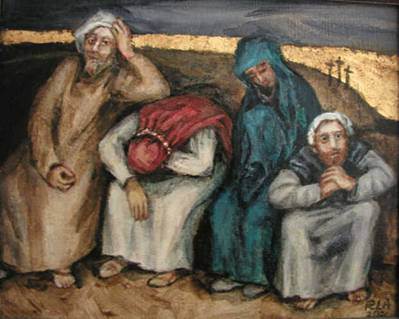
What we have to admit is that our belief is rooted in our faith, faith which is given to us through the witness of very imperfect people influenced by their own culture, history and traditions. Even scripture does not make the claim to be inerrant, and the Bible cannot be understood like the Koran or other texts which make the claim to be the infallible compendium of faith delivered by an angel or dictated by God himself. It is a Divine-human collaboration so symbolic of the relationship that God has with his people, often confusing and contradictory yet inspiring.
themiddle

There is a certain sense of relationship between God and humanity within scripture and that relationship creates certain tensions between God and those people. The interesting thing is that Scripture is a collection of texts which record often in terrible honesty the lack of perfection of both the writers and their subjects. They likewise record the sometimes unpredictable and seemingly contradictory behavior of God toward humanity in the Old Testament. They bear witness to the weaknesses, limitations and lack of understanding of the people of God of the message of God but even in that those limitations and weaknesses that God is still faithful to humanity in the life death and resurrection of Jesus of Nazareth.

The real fact of the matter is that fixed doctrines are much more comfortable than difficult questions than honestly examining the contradictions that exist within Scripture, history and tradition. The fact is this makes many people uncomfortable and thus the retreat into the fortress of fixed and immutable doctrine found in the various incarnations of Fundamentalism.

The fact is the world is not a safe place, and our best knowledge is always being challenged by new discoveries many of which make people nervous and uncomfortable, especially people who need the safety of certitude. So in reaction the true believers become even more strident and sometimes, in the case of some forms of Islam and Hinduism violent.
Picard

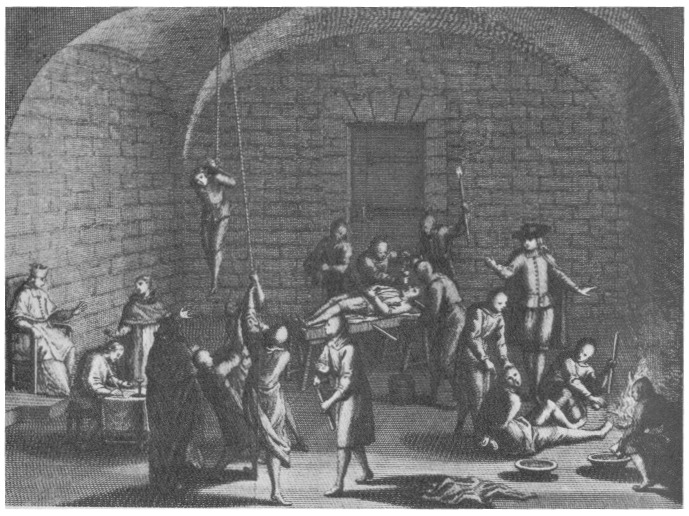
Christianity cannot get away unscathed by such criticism. At various points in our history we have had individuals, churches and Church controlled governments persecute and kill those that have challenged their particular orthodoxy. Since Christian fundamentalists are human they like others have the capacity for violence if they feel threatened, or the cause is “holy” enough. Our history is full of sordid tales of the ignorance of some Christians masquerading as absolute truth and crushing any opposition. It is as Eric Hoffer wrote:

“A doctrine insulates the devout not only against the realities around them but also against their own selves. The fanatical believer is not conscious of his envy, malice, pettiness and dishonesty. There is a wall of words between his consciousness and his real self.”

This is the magnetic attraction of fundamentalism in all of its forms, not just Christian fundamentalism.  Yet for me there is a comfort in knowing that no matter how hard and fast we want to be certain of our doctrines, that God has the last say in the matter in the beginning and the end. We live in the uncomfortable middle but I have hope in the faith that God was in the beginning. Besides as Bonhoeffer well noted “A God who let us prove his existence would be an idol” 

But there some Christians who now faced with the eloquence of men like Neil DeGrasse Tyson and Bill Nye who make legitimate challenges respond in the most uncouth and ignorant manners. The sad thing is that their response reveals more about them and their uncertainty than it does the faith that they boldly proclaim.

Our doctrines, the way we interpret Scripture and the way we understand God are limited by our humanity and the fact that no matter how clever we think we are that our doctrines are expressions of faith. This is because we were not in the beginning as was God and we will not be at the end, at least in this state. We live in the uncomfortable middle, faith is not science, nor is it proof, that is why it is called faith, even in our scriptures.

We are to always seek clarity and understanding but know that it is possible that such understanding and the seeking of truth, be it spiritual, historical, scientific or ethical could well upset our doctrines, but not God himself. As Henri Nouwen wrote: “Theological formation is the gradual and often painful discovery of God’s incomprehensibility. You can be competent in many things, but you cannot be competent in God.” Is that not the point of the various interactions of Jesus with the religious leaders of his day? Men who knew that they knew the truth and even punished people who had been healed by Jesus such as the man born blind in the 9th Chapter of John’s Gospel.

vasily-surikov-christ-healing-the-man-born-blind

“You are that man’s disciple; we are disciples of Moses! We know that God spoke to Moses, but we do not know where this one is from.” The man answered and said to them, “This is what is so amazing, that you do not know where he is from, yet he opened my eyes. We know that God does not listen to sinners, but if one is devout and does his will, he listens to him. It is unheard of that anyone ever opened the eyes of a person born blind. If this man were not from God, he would not be able to do anything.” They answered and said to him, “You were born totally in sin, and are you trying to teach us?” Then they threw him out.”

The interchange between the religious leaders and the man is not an indictment on Judaism, but rather on religious certitude in any time or place. The fact is that the Pharisees are no different than those who ran the Inquisition, or those who conducted Witch Trials or those who attempt to crush anyone who questions their immutable doctrine no matter what their religion.

They were and many of their theological and ecclesiastical descendants still are true believers. That has been demonstrated over and over again in regards to biblically and theologically challenged yet politically fanatical American Evangelical Christians who have willingly surrendered any pretense of following Christ to paying obeisance to President Trump; a would be dictator who plays to their perpetual sense of victimhood in order to cement his power over them and to use them as his willing foot soldiers.

What Trump has done has turned the Gospel on its head, the Christian faith has become a political bludgeon to support laws and policies that are in diametric opposition to the message of Jesus. Sadly, a large majority of Evangelicals and their leaders have become Trump’s willing accomplices.

In the episode of Star Trek the Next Generation called The Drumhead Captain Picard counsels Lieutenant Worf after their encounter with a retired admiral who turned an investigation involving a Klingon exchange scientist into a witch hunt aboard the Enterprise. That episode is well worth watching especially because it anticipates what is going on in the United States today, where a President, his party, and a reactionary fear filled cabal of religious followers has declared war on all who oppose them.

At the end of the episode Lieutenant  Worf comes to Captain Picard’s office. He is apologetic about having believed and cooperated with the Admiral. The dialogue is striking and should be heeded, especially by Evangelical Christians and others who have with open eyes sacrificed their faith even as they tear up the Constitution thinking that they are defending it.

WORF: Am I bothering you, Captain?
PICARD: No. Please, Mister Worf. Come in.
WORF: It is over. Admiral Henry has called an end to any more hearings on this matter.
PICARD: That’s good.
WORF: Admiral Satie has left the Enterprise.
PICARD: We think we’ve come so far. The torture of heretics, the burning of witches, it’s all ancient history. Then, before you can blink an eye, it suddenly threatens to start all over again.
WORF: I believed her. I helped her. I did not see what she was.
PICARD: Mister Worf, villains who wear twirl their moustaches are easy to spot. Those who clothe themselves in good deeds are well camouflaged.
WORF: I think after yesterday, people will not be as ready to trust her.
PICARD: Maybe. But she, or someone like her, will always be with us, waiting for the right climate in which to flourish, spreading fear in the name of righteousness. Vigilance, Mister Worf, that is the price we have to continually pay.

And that is true and despite the certitude of the true believers that we do live in the uncomfortable middle.

Peace

Padre Steve+

1 Comment

Filed under ethics, faith, News and current events, philosophy, Political Commentary, Religion, star trek

“We’ve Got Some Difficult Days Ahead…” The Assassination of Dr. Martin Luther King Jr. at 50 Years

20130404-203529.jpg

Friends of Padre Steve’s World,

Fifty years ago today a bullet killed Dr. Martin Luther King Jr. while he was in Memphis supporting Sanitation Workers who were being subjected to unsafe working conditions without the same rights, protections, pay, or benefits of white Sanitation workers. As always there were threats on King’s life and he knew that he was a target. The night before his assassination Dr. King spoke at Mason Temple the international headquarters of the Church of God in Christ, the largest historically Black denomination in the United States.

That speech is now known as the “I have been to the mountaintop” speech. Dr. King had flown into Memphis earlier in the day, on a flight delayed by a bomb threat. King like many Civil Rights leaders of his day lived under the constant threat of physical violence, intimidation and assassination. After the heady days of the great march in Washington and the I Have a Dream speech and the award of the Nobel Prize his positions on social and economic justice and his opposition to the Vietnam War had made him a pariah of sorts, even in the Black community. He had place himself in the gunsights of his opponents as he pressed on in spite of the opposition.

Life was precious to him, but he like many others understood that it could be cut short at any moment for simply speaking the truth about racial discrimination, prejudice and violence. King himself had been accosted at different times and spent time in jail for “breaking” laws that enforced and enabled institutions and individuals to discriminate against Blacks with no consequences whatsoever. He was called a radical, a Communist and anti-American by those that opposed any changes to the status quo. He knew that his life was always in danger.

In that speech Dr. King seemed to understand the threat but he was determined to go on and to do God’s will. Dr. King understood that the Christian faith required more than intellectual assent to a doctrine. He understood the words of the German martyr Dietrich Bonhoeffer: We are not to simply bandage the wounds of victims beneath the wheels of injustice, we are to drive a spoke into the wheel itself.”

At Mason Temple Dr King proclaimed:

“And then I got to Memphis. And some began to say the threats…or talk about the threats that were out… What would happen to me from some of our sick white brothers? Well I don’t know what will happen now. We’ve got some difficult days ahead. but it doesn’t matter with me now. Because I been to the mountaintop. And I don’t mind. Like anybody, I would like to live a long life. Longevity has its place. But I’m not concerned about that now. I just want to do God’s will. And He’s allowed me to go up to the mountain. And I’ve looked over.and I have seen the promised land. I may not get there with you. But I want you to know tonight, that we, as a people, will get to the promised land! And so I am happy, tonight. I’m not worried about anything. I am not fearing any man. Mine eyes have seen the glory of the coming of The Lord.”

It was April 4th 1968. The United States was divided by the Vietnam War and numerous social crises. President Lyndon Johnson had just done the unthinkable, he had announced that he was withdrawing from his reelection bid. In many places despite the integration of the Armed Forces, Baseball, the repeal of many Jim Crow laws and the passage of the 1964 Voter’s Rights Act African Americans still felt the sting of individual and institutional racial prejudice. In Vietnam the effects of the Tet Offensive still lingered even as American cities burned.

His speech at Mason Temple was almost prophetic in its message. The words of the thirty-nine year old Baptist Preacher from Atlanta echoed through the sanctuary of the church to the applause of those present even as a heavy spring thunderstorm rocked the city.

The following evening, King with a number of other Civil Rights leaders including Ralph Abernathy and Andrew Young were at the Lorraine Motel, where King often stayed. King was standing on the balcony outside of his room, Room 306 when at 6:01 PM he was cut down and mortally wounded by a single shot fired from a Remington 760 rifle. The bullet struck him in the right cheek, traveled down his spine and severed his jugular vein and several major arteries before it came to rest in his shoulder. He still had a heartbeat when the ambulance arrived and on his arrival at St Joseph’s Hospital. Efforts to revive him by opening his chest and attempting cardiac massage were unsuccessful and at 7:05 PM Dr King was pronounced dead.

20130404-221100.jpg

20130404-221225.jpg

Witnesses reported a man named James Earl Ray fleeing the area after the shooting. The Remington rifle and a pair of binoculars with Ray’s fingerprints were found at the scene. Ray was apprehended at London’s Heathrow Airport two months later. Ray was tried and convicted of Dr King’s murder. He was sentenced to 99 years in prison and died in 1998. During the trial Ray recanted his confession, implicated an unknown man named “Raul” who he had supposedly met in Montreal as being involved and said that “he personally did not kill” Dr King hinting at a conspiracy. Ray plead guilty to avoid the death penalty.

Other theories were postulated about the murder and Lloyd Jowers who owned a restaurant across from the Lorraine Motel claimed in a 1993 interview that the US Government and the Mafia were complicit in the killing, that Ray was a scapegoat and that Memphis Police Lieutenant Earl Clark was the shooter.

Jowers’ story is disputed but it was believed by King’s widow Coretta Scott King.  She filed a wrongful death lawsuit in which a jury found that Jowers and others including government agencies were guilty of the plot to kill Dr King on December 8th 1998. Though Jowers’ story was contradicted by much of his own testimony during the trial the results have caused a divide in who experts believe killed Dr King. As for the King family they reconciled with Ray before his death.

20130404-221809.jpg

Regardless of who killed Dr King the result was a shock to much of the nation and in many places riots broke out despite the pleadings of most Civil Rights leaders to continue in Dr King’s path of non-violence.

20130404-230118.jpg

Senator Robert F Kennedy, then running for the Democratic Party nomination for President learned of Dr King’s shooting just before flying to Indianapolis for a campaign rally. On his arrival he learned of Dr King’s death. Warned by police that he could be in danger he made an impromptu speech from the back of a flat bed truck. The speech was short, under 5 minutes but its message is applicable even today.

“Ladies and Gentlemen,

I’m only going to talk to you just for a minute or so this evening, because I have some — some very sad news for all of you — Could you lower those signs, please? — I have some very sad news for all of you, and, I think, sad news for all of our fellow citizens, and people who love peace all over the world; and that is that Martin Luther King was shot and was killed tonight in Memphis, Tennessee.

Martin Luther King dedicated his life to love and to justice between fellow human beings. He died in the cause of that effort. In this difficult day, in this difficult time for the United States, it’s perhaps well to ask what kind of a nation we are and what direction we want to move in. For those of you who are black — considering the evidence evidently is that there were white people who were responsible — you can be filled with bitterness, and with hatred, and a desire for revenge.

We can move in that direction as a country, in greater polarization — black people amongst blacks, and white amongst whites, filled with hatred toward one another. Or we can make an effort, as Martin Luther King did, to understand, and to comprehend, and replace that violence, that stain of bloodshed that has spread across our land, with an effort to understand, compassion, and love.

For those of you who are black and are tempted to fill with — be filled with hatred and mistrust of the injustice of such an act, against all white people, I would only say that I can also feel in my own heart the same kind of feeling. I had a member of my family killed, but he was killed by a white man.

But we have to make an effort in the United States. We have to make an effort to understand, to get beyond, or go beyond these rather difficult times.

My favorite poem, my — my favorite poet was Aeschylus. And he once wrote:

Even in our sleep, pain which cannot forget falls drop by drop upon the heart, until, in our own despair, against our will, comes wisdom through the awful grace of God.

What we need in the United States is not division; what we need in the United States is not hatred; what we need in the United States is not violence and lawlessness, but is love, and wisdom, and compassion toward one another, and a feeling of justice toward those who still suffer within our country, whether they be white or whether they be black.

So I ask you tonight to return home, to say a prayer for the family of Martin Luther King — yeah, it’s true — but more importantly to say a prayer for our own country, which all of us love — a prayer for understanding and that compassion of which I spoke.

We can do well in this country. We will have difficult times. We’ve had difficult times in the past, but we — and we will have difficult times in the future. It is not the end of violence; it is not the end of lawlessness; and it’s not the end of disorder.

But the vast majority of white people and the vast majority of black people in this country want to live together, want to improve the quality of our life, and want justice for all human beings that abide in our land.

And let’s dedicate ourselves to what the Greeks wrote so many years ago: to tame the savageness of man and make gentle the life of this world. Let us dedicate ourselves to that, and say a prayer for our country and for our people.

Thank you very much.”

Two months later Kennedy was shot and mortally wounded by Sirhan Sirhan after winning the California Primary.

The loss of Dr King and later Senator Kennedy was profound. So tonight take the time to remember and pray that we all will be able to go to the mountain and see the promised land where in a more perfect Union we will heal the wounds that so divide our country.

20130405-004046.jpg

Today the rights that Dr. King and so many others fought for dating back to the days of Frederick Douglass are being rolled back at the local, state and Federal level. The administration of President Trump and Republican led statehouses have been working overtime to silence dissent, discredit opposition, and through unjust laws and policies upend the civil rights not only of Blacks, but other people of color, immigrants, women, LGBTQ people, and Muslims.

Dr. King noted the night before he was slain that “we’ve got some difficult days ahead” but as he told his staff in January 1968 “Hope is the final refusal to give up.”

Peace

Padre Stave+

Leave a comment

Filed under christian life, civil rights, ethics, faith, History, leadership, ministry, News and current events, Political Commentary, Religion

Reflections on Holy Week 2018

Friends of Padre Steve’s World,

Those who follow this blog and people who know me know how much I have struggled with faith since returning from Iraq ten years ago, especially during Holy Week. Truthfully it has been one of the most difficult times of the Church year for me, but over the past year I have rediscovered faith, yes I still doubt but I believe a lot more than I have for quite a long time.

Holy Week is over but the Easter Season has just begun. Likewise it will be about another week before I get some real time off after pretty much working every day for the past two weeks. That being said though tired and a bit emotionally worn down from it especially with the sudden death of our Army Deputy Base Commander on Monday night which led to a very full day on Tuesday which also was my 58th birthday, a funeral on Wednesday for one of our long time Catholic parishioners who like my father was a retired Chief Petty Officer who died of complications from Alzheimer’s Disease, our Ecumenical Good Friday service, various medical appointments, and Chaplain duty supervisor tasks culminating in our oceanfront Easter Sunrise Service at the First Landing monument at Fort Story and ministry afterwards.

Tomorrow will be full getting ready for the memorial service for our Deputy Commander which takes place Tuesday. Wednesday is filled with meetings, Thursday I begin working with children of our German NATO contingent to get them ready for their confirmation in May. I’ll conclude the week with medical appointments for my Sleep Apnea and checking to see how my C-Pap machine is doing.

But all of that being said I emerged from Holy Week doing a lot better than I thought. For the first time in years sensing a certain amount of joy in my faith, a reaffirmation of my priestly vocation; and this despite all injustices I see and threats of war, especially in the threat that I feel that the President poses to the country and the world. Despite the sadness of my Deputy Commander and friend’s death I was comforted by the Orthodox Prayers that I had the opportunity to pray over his body in one last time with him. Part of those prayers from the Trisagion service was a reminder of the promise of Easter in between the reading of the Passion Gospels on Palm Sunday and Good Friday:

“O God of spirits and of all flesh, You trampled upon death and abolished the power of the devil, giving life to Your world. Give rest to the soul of Your departed servant in a place of light, in a place of green pasture, in a place of refreshment, from where pain, sorrow, and sighing have fled away…”

As I studied for my Good Friday and Easter Sunrise services I was drawn back to the writings of the German Lutheran theologian Jurgen Moltmann and the Swiss Reformed theologian Karl Barth.

One of thing Moltmann wrote really struck me in regard to Good Friday. I finished that sermon quoting and then discussing it for a few minutes:

“When God becomes man in Jesus of Nazareth, he not only enters into the finitude of man, but in his death on the cross also enters into the situation of man’s godforsakenness. In Jesus he does not die the natural death of a finite being, but the violent death of the criminal on the cross, the death of complete abandonment by God. The suffering in the passion of Jesus is abandonment, rejection by God, his Father. God does not become a religion, so that man participates in him by corresponding religious thoughts and feelings. God does not become a law, so that man participates in him through obedience to a law. God does not become an ideal, so that man achieves community with him through constant striving. He humbles himself and takes upon himself the eternal death of the godless and the godforsaken, so that all the godless and the godforsaken can experience communion with him.”

Two quotes, one from Moltmann and the other by Barth really stayed with me for the Sunrise service. Moltmann wrote: “In the cross of Christ God is taking man dead-seriously so that he may open up for him the happy freedom of Easter. God takes upon himself the pain of negation and the God forsakenness of judgement to reconcile himself with his enemies and to give the godless fellowship with himself,” as did these words of Barth:

“What happened on that day (of Easter) became, was and remained the centre around which everything else moves. For everything lasts its time, but the love of God – which was at work and was expressed in the resurrection of Jesus Christ from the dead – lasts forever. Because this event took place, there is no reason to despair, and even when we read the newspaper with all its confusing and frightening news, there is every reason to hope.”

For the first time in years I could truly exclaim the Easter Alleluia, that Christ is Risen.

So until tomorrow,

Peace

Padre Steve+

2 Comments

Filed under christian life, faith, Pastoral Care, Religion

Soldiers, Politics, and Empty Tombs: The Strange Experience of Longinus the Centurion

roman-soldiers-guard-james-tissot-1

Friends of Padre Steve’s World,

Those who follow my writings know that I struggle with faith. Since my return from Iraq in 2008 I have found a certain kinship with soldiers who have been assigned the unthankful and trying tasks of dealing with occupation duties or fighting insurgencies. 

In the case of the story of Easter it is all too common that writers, theologians and others focus on the story of Jesus and his disciples, or conversely, if they explore anyone else, they focus on the Jewish religious leaders of the time. 

After Iraq I had a harder time relating to Jesus and his followers, or the religious leaders of Jerusalem. That being said, coming home from Iraq, struggling to believe, I find a tremendous affinity with the officers of the Roman Legions serving in Judea and Samaria in the 1st Century A.D. 

This is the final chapter of a series that I wrote several years ago about the Roman Centurion known as Longinus, who according to tradition, was at the cross when Jesus was crucified. I have tried to weave other characters from the Gospel narratives, including the Centurion whose “beloved servant” was healed by Jesus an account mentioned in both Matthew and Luke, where the Greek word for servant “Pais” is only found in these accounts and is different from the word commonly used in the New Testament “Doulos.” The difference leads to some interesting and potentially powerful understandings about the people that Jesus interacted during his earthly ministry.

The reason I am doing this is because I believe that many Christians cannot imagine what it must have felt like to be the Roman occupiers of Judea in a time where they were hated and deep divisions, religious, cultural and political complicated the lives of Roman officers like the Centurion known as Longinus.

I do hope that you enjoyed the series and that it and the Gospel narratives challenged you whether you are a Christian or not. I know from my time in Iraq serving with our advisors to the Iraqi forces that what the Roman officers dealt with was more difficult than any of us could imagine, unless you have been a soldier or officer of an occupying power, which I have been.

By the way, at the point this article posts I will be preaching at the Easter Sunrise Service at my base proclaiming the triumph of life over death and the universal love of God for all people. As the German Lutheran theologian Jurgen Moltmann wrote:

“Believing in the resurrection does not just mean assenting to a dogma and noting a historical fact. It means participating in this creative act of God’s … Resurrection is not a consoling opium, soothing us with the promise of a better world in the hereafter. It is the energy for a rebirth of this life. The hope doesn’t point to another world. It is focused on the redemption of this one.”

Peace and Happy Easter…

Padre Steve+

The pounding on his door awakened Longinus before he expected on this day after the Jewish Passover. He was hoping perhaps beyond hope that the worst was over and that in a few days he could take his soldiers back to the confines of Caesarea and away from the troubled city of Jerusalem. He was tired of this duty and longed for service with a real Legion with real Roman soldiers.

The pounding continued and the weary centurion wiped the sleep from his eyes, rolled out of his bed and went to the door of his quarters in Fortress Antonia. He opened the door to find his Optimo, or second in command Decius standing there, his fist ready to continue pounding, with a look of near panic on his face.

Startled, Longinus asked the young officer to come into his quarters and take a seat at his table. They like the other officers had seen events that they could barely explain over the past week, and some of those events had troubled Longinus in a manner in which he was not accustomed to, or prepared for.

Longinus took a wineskin and poured the contents into two cups. He asked Decius what was so urgent and frightening that he had to be at his quarters well before the duty day began. The young man took off his helmet to reveal a crop of blondish brown hair common to the Tyrol in the northern part of Italy.

The young officer took the cup of wine and downed it in one motion. Longinus, pureed and another as the young Tyrolean told an almost unbelievable story. Wiping his brow and taking a drink from the cup he explained that there was trouble at the tomb of the itinerant preacher named Jesus.

Longinus listened to his report:

The two guards from Longinus’s unit who had relieved the previous watch at the tomb had evidently fallen asleep. While they were asleep there had been a break in. The soldiers claimed that they had been overcome when some kind of “angelic being” descended in front of them. They reported that some of the women who had been at the execution site previously had been near the tomb. They said that when they awakened the body of this Jesus was no longer in the tomb.

The story seemed preposterous, but Longinus could not believe that his soldiers had fallen asleep on duty, as such an act could be punished by a death sentence. Adding to the confusion was a report that two of the preacher’s “disciples” had reportedly entered the tomb and claimed that the body was gone as had some of the women that had been there at the crucifixion.

Longinus took a drink from his cup of wine and thought for a moment. He had to admit that the story was unbelievable, but yet in light of the strangeness of the man and the events surrounding his execution Longinus, was no longer surprised at anything. Longinus looked at his young executive officer and said:

“Optimo, there has to be a logical explanation for what happened, and we need to find the truth. I do not like to think that our soldiers were asleep on duty, and I don’t think that the High Priest would not attempt to use this against us. Please have the soldiers and the Sergeant of the Guard report to me.”

Longinus had Decius bring the two soldiers to him along with the Sergeant of the Guard to explain what had happened.

The two soldiers, one a Samaritan and the other a Greek had good reputations in the unit. Neither had given him cause for concern and the terrified expression on their faces as they explained what happened at the tomb gave Longinus reason to believe them. Yes, it was possible that they were lying but Longinus believed their story because in spite of his threats they stuck to it. He threatened them with death if they had fallen asleep and were lying. When that did not produce results he promised a light punishment if they only told the truth, but despite his efforts to get them to testify to something rational they stuck with this outrageous story.

Longinus was not much of a believer in miracles angels or any sort of magic hocus-pocus purveyed by seers, magicians or fortunetellers. He did not believe in the state “gods” of Rome and likewise had little respect for the Jewish God, not so much because he understood the theology of the Jews, or even might believe in some sort of all-powerful being, but because he was disgusted by their use of their god for their political purposes.

All that being said, Longinus was inclined to believe his solders. When his friend Flavius had told him about his servant being healed by the Jesus fellow he found it hard to accept. That being the case here he was now beginning to believe this outlandish story. It was preposterous, but he could not accept the alternative. To disbelieve his men would mean that there was a serious breakdown of discipline by two outstanding soldiers. Longinus had some soldiers that he wouldn’t believe for an Athenian minute if they told him such a tale, but he believed these men. The terror on their face as they told the story led Longinus to believe that they had to be telling the truth as improbable as it was.

Longinus again thought of his words as the darkness enfolded the city and the earth quaked preacher hung dying on the cross on that evil hill just two days before. He dismissed the soldiers and as they left he prepared himself to tell the scheming governor they latest “good news.” If only Rome had let these people stew in their own mess. Longinus shook his head as he wondered about the wisdom of attempting to police such fouled up lands.

After he washed and put on his uniform, Longinus went to Pilate’s headquarters where he and the other Centurions, including his friend Flavius participated in a meeting with Pilate and his staff, the Jewish High Priest and his representatives and two of Herod’s people.

The meeting reminded Longinus  of a meeting of criminals. The High Priest and his representatives were livid at the report he delivered and demanded that Pilate take immediate action to solve their problem. Herod’s henchmen voiced their displeasure regarding the lapse of the Roman soldiers that allowed this to happen.

Longinus spoke up for his men and said that as improbable as the story was, that he believed his men. That only made the non-Romans angrier and they began not only calling for punishing the soldiers, but Longinus as well. Longinus thought that they were engaging Pilate in yet another histrionic episode in order to force Pilate to do their bidding, if not today, in the future.

The High Priest and Herod’s men insisted that Longinus’ soldiers had to have fallen asleep and or that they had conspired with the preacher’s followers to remove the body from the tomb. This angered Longinus to the point that he interrupted their ranting to defend his men’s honor. Pilate finally ordered Longinus and the High Priest to be silent. He asked the non-Romans to step outside while he conferred with Longinus and the other Centurions. The High Priest objected, but decided not to press the point and left the room.

Pilate explained his dilemma. He was afraid that if he sent the High Priest away by supporting his soldiers that there would be a revolt in the streets. He had seen the tumult on the streets by the supporters of the High Priest when he tried to release the “King of the Jews” and felt that this would be worse for security. He advised the Centurions that while he had no reason to doubt them or their men that he had to placate the High Priest and Herod in order to avoid chaos, chaos that could lose him his job if he wasn’t careful. Likewise he did not feel that he had the military manpower in the city to handle a full-fledged revolt and that he would have to call for reinforcements from the Legions based in Syria. Pilate was loath to do as this as it would get back to the Emperor, and the Emperor did not take kindly to governors who could not manage their provinces.

Longinus thought back to the day of the execution. Pilate had agreed to place a guard at the tomb at the urging of the High Council. Longinus had argued against placing any soldiers at the tomb as he felt that since the “King of the Jews” was the problem of the Jews and since man that he had called the so called  “son of God” was dead that Rome’s obligation was over. Let the Jews handle their own problems.

The whole thing reeked of politics and Longinus did not like it, but on Friday Pilate had overruled him. Then Pilate explained that Roman soldiers needed to guard the tomb because the High Priest insisted that Jesus’ followers would attempt to steal the body and then claim that he this Jesus had been raised from the dead. That insisted the High Priest would lead a revolt against the Jewish council and eventually Rome itself.

Another actor who added to the Judean witches’ cauldron was the Herod Antipas, the corpulent and corrupt “King” of Judea. If Longinus detested Pilate and the Jewish High Priest he hated Herod and all that he stood for even more. The presence of Herod made Longinus wonder why Roman lives and treasure were spent to solve the problems of this God-forsaken land; a land that Longinus believed would still be trouble two millennia from now if the world lasted that long.

Longinus believed that as long as Rome allowed the High Council and Herod to rule the region by proxy that the troubles would never end. He believed that it was only a matter of time before these people, mobilized by the passion of the Zealots would revolt as they had against the Seleucids nearly 200 years before. He knew if that happened that Rome would mobilize more the  enough legions to crush the revolt, and when they were done would not leave as much as a house standing. Longinus hated this occupation and all that it stood for, especially when he saw a good and innocent man like this Jesus fellow killed for no good reason other than the politics of it all. It sickened him.

When Pilate was done explaining his decision to Longinus and the other Centurions Pilate called the quite irate non-Romans back into the proceedings. He told the High Priest and Herod’s men that he would discipline the soldiers involved. He also explained that he would assist them in finding just what parties removed the body from the tomb. In the mean time he would suppress any stories coming from the soldiers about this supposed “resurrection” of this Jesus character from the dead.

The High Priest and Herod’s men agreed that this would suffice and thanked Pilate for his time and effort. Longinus and the other Centurions quietly seethed as this took place. When the non-Roman parties had left Pilate, knowing how his officers hated his decision called them to him. He told the officers that no action would be taken against the men and that he would not actively assist the Jews in trying to find the perpetrators of the event. He had in fact deceived the High Priest and Herod’s men.

Pilate then let the officers know that they and their units would remain in Jerusalem for another week to allow the multitude of pilgrims to leave the city. Once the Jewish festivities were over and the people had departed, they would return to Caesarea. Longinus thought about it and for a brief moment he admired Pilate’s duplicity. Pilate the consummate politician had again found a way to defuse the situation, deceive the local leaders and protect his soldiers, and as much as Longinus and the other Centurions despised the deal it was better than trying to deal with a full fledged rebellion with so few troops available in Jerusalem.

Longinus left with the others and met Decius and Flavius when he stepped into the court of the fortress. He was very unhappy with the deal that Pilate made with the High Priest and Herod even though he understood the reality of the politics behind it. Longinus felt that he had dishonored his soldiers and the unit for the sake of political expediency. He felt ashamed of the Empire for what Pilate had done in cooperating with these people from beginning to end during this affair. He would not forget.

MLPPT_CenturionCross_1

When Longinus returned to his quarters he again looked at his blood stained lance and thought about the man who was put to such an ignominious death for such putrid reasons. Surely something had to be different about him and there had to be some purpose to this injustice. Longinus again mused quietly, “truly this was the Son of God…”

Whatever that meant…

1 Comment

Filed under christian life, ethics, faith, History, Loose thoughts and musings, middle east, Military, Religion

Adjusting to the Worship of Power: Evangelicalism in 2018

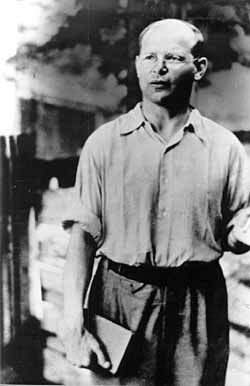
Dietrich Bonhoeffer 

Friends of Padre Steve’s World,

One of the most frightening things to me as a historian who happens of claim to be a Christian is the propensity for the Church and its leaders to be attracted to the worship of power and all of its folly. This has been the case since Constantine made Christianity the State religion of the Roman Empire. Leaders of the church in every place and clime as well as almost every denomination have cozied up to rulers in the pursuit of power almost always to the detriment the Church and sometimes their nation. The hierarchies of different churches were in the forefront of the extermination of supposed “heretics,” the persecution of non-state favored religions, the slave trade, the conquest, subjugation, and extermination of indigenous peoples in the Americas, Africa, parts of Asia; they were often the supporters of disastrous wars, and at home used their place of power to wealthy beyond all measure.

Conversely, on the occasions where the Church and its leaders have advocated for the poor, the marginalized, and others who had no earthly power it lead to advances in human rights and liberty. The abolition of slavery in Great Britain was led by William Wilberforce against heated opposition in Parliament and even the Church of England that spanned decades. During the period of the Industrial Revolution, some churches and Christians made a determined effort to end child labor, support workers’ rights, and advocate for the poor, but many others feasted upon the wealth that their rich benefactors lavished upon them and remained silent. Dr. Martin Luther King Jr. and other African American church leaders helped lead the Civil Rights movement and were joined by some white religious leaders, but many others, including men who were early leaders of the Christian Right opposed the Civil rights movement and used their pulpits to advocate for segregation. Many other just remained silent, just as their forbears had from Constantine one. Silence and the acquiescence to injustice has been a hallmark of the Christian church.

The German martyr Dietrich Bonhoeffer saw the disastrous effects of the German church’s subservience to the Nazi regime and before that to the Kaiser. He wrote:

“Christianity stands or falls with its revolutionary protest against violence, arbitrariness and pride of power and with its plea for the weak. Christians are doing too little to make these points clear rather than too much. Christendom adjusts itself far too easily to the worship of power. Christians should give more offense, shock the world far more, than they are doing now. Christian should take a stronger stand in favor of the weak rather than considering first the possible right of the strong.”

Sophie Scholl (Center)

Bonhoeffer spoke those words in a 1934 sermon, just a bit over a year following the Nazi takeover as Hitler was still consolidating his power and before he and his regime began their war of conquest and extermination. Some German Christians did take the chance to stand up for those oppressed by the Nazis, both in Germany in in the areas the Nazis conquered. Many of those who did would pay for their opposition with either their freedom or their lives, but most of the church was silent. One of the young Christians who opposed the Nazis was Sophie Scholl, a 22 year old student at the University of Munich. She and a number of fellow students formed a group called the White Rose to distribute anti-Nazi materials and to speak out against the crimes of the regime. She wanted those Christians of her day that silence was not an option. She wrote:

“The real damage is done by those millions who want to ‘survive.’ The honest men who just want to be left in peace. Those who don’t want their little lives disturbed by anything bigger than themselves. Those with no sides and no causes. Those who won’t take measure of their own strength, for fear of antagonizing their own weakness. Those who don’t like to make waves—or enemies. Those for whom freedom, honor, truth, and principles are only literature. Those who live small, mate small, die small. It’s the reductionist approach to life: if you keep it small, you’ll keep it under control. If you don’t make any noise, the bogeyman won’t find you. But it’s all an illusion, because they die too, those people who roll up their spirits into tiny little balls so as to be safe. Safe?! From what? Life is always on the edge of death; narrow streets lead to the same place as wide avenues, and a little candle burns itself out just like a flaming torch does. I choose my own way to burn.”

The same is true today in the United States. The vast majority of Evangelical Christians who support the policies of the Trump presidency in order to be at the table of temporal power have cast the church into the pigsty of lies. Likewise they vocally support polices that crush the lives of people who have no power and in doing so mock the words of Jesus. I can only shake my head that it has come to this.

img_0476

There is a choice to be made by anyone who claims the mantle of Jesus the Christ or claims to follow him. Will we do better than our ancestors or will we to silently slide down the road to perdition?

Sadly, I think that most Evangelical Christians have made that choice and that it is not the one that Bonhoeffer and Scholl made.

With that I will end for the day. Until tomorrow,

Peace

Padre Steve+

10 Comments

Filed under christian life, civil rights, ethics, faith, History, News and current events, philosophy, Political Commentary, Religion

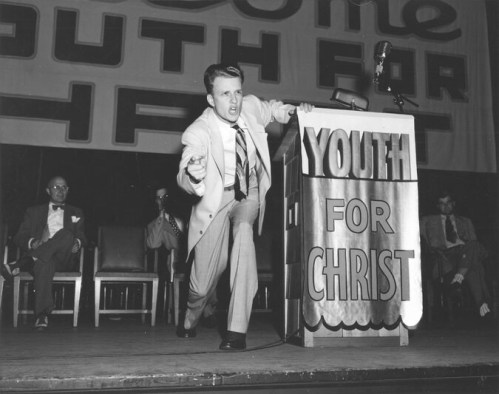
“Don’t Try to be Like Me, I didn’t Always Get it Right” Rest In Peace Billy Graham

Friends of Padre Steve’s World,

No matter how one viewed him Billy Graham was both a legend, a remarkable man, and a truly historic figure in terms of the Evangelical Christianity that he popularized more than any other preacher before or after him. His legacy will be debated for years and I think that it is very possible that in death he will become larger than he was in life; mostly because those who attempted to follow him were poor imitations or politically motivated hucksters that Graham himself would later have nothing to do with.

Though many knew him as “America’s Pastor” he only briefly served as the pastor of a small church before he became an evangelist, a role for which he was particularly suited, he was the entire package. Graham was young, good looking, and could communicate a simple evangelical message with conviction, passion, and grace in a way that few evangelists before or since have been able to do. He was also incredibly adept in understanding the potential of television and the broadcasting of his message world wide.

When I was a kid his crusades were a staple of television. I had an aunt in Stockon California who when she wasn’t watching Lawrence Welk she was watching Billy Graham crusades. Whenever we visited her viewing habits didn’t change, no wonder my uncle Ted spent so much time in at his favorite local bar, but I digress…

That being said, even when I was eleven or twelve years old Reverend Graham’s crusades were amazing to watch. First was the fact that despite the simplicity of his message he was exceptionally talented in delivering it. To see thousands of people responding to his call for conversion or rededication to Christ as George Beverly Shea led choirs singing the invitational hymn Just as I Am was a thing of rare beauty when it comes to evangelical crusades and altar calls. Billy Graham was a master of manipulating emotions to bring people down the aisle, and I do not mean anything malicious by that.

Graham’s message was simple in its traditional evangelical message. All have sinned, and that means all of us; Christ died to save sinners; repent, believe, and confess Jesus as your savior. The message was not new, it had been preached by Christians in a variety of forms and in many cultural variations for about 1900 years before Graham ever began his first crusade, but Graham’s were much more of the simplistic fundamentalist evangelicalism that has been part of the American landscape since the Second Great Awakening. It had been a staple of Fundamentalist revival preachers for decades before Graham but unlike the hellfire and brimstone message of previous preachers like Billy Sunday Graham focused on the love of God, and unlike so many his sincerity in preaching that message came through whether in person or on television.

His message was grounded in the theology of Pre-millennial Dispensationalism of Irish Anglican Priest John Darby which found its way to North America where it was popularized by American C.I. Schofield. The message was simple and based on the belief the the return of Christ to judge the world was imminent: accept Christ and avoid the wrath to come.

His message was no different than thousands of other preachers like him, but he was better at it and understood the role of media, particularly television in spreading the message. Likewise while he encouraged Christians to become more politically active in the 1950s and 1960s though when Jerry Falwell and other fundamentalist preachers formed a political movement that became the current Christian Right he warned against it. In 1981 he said:

“I don’t want to see religious bigotry in any form. It would disturb me if there was a wedding between the religious fundamentalists and the political right. The hard right has no interest in religion except to manipulate it.”

He had learned the hard way, while he was a gifted evangelist, he was not a prophet and in the first two decades of his career, Graham, the North Carolina Democrat allowed himself to become captive to Republican Presidents. He compared Dwight D. Eisenhower’s first foreign policy speech to the Sermon on the Mount and said that Richard Nixon was “the most able and best trained man for the job in American history.”

To his credit Graham did not seek the friendship or companionship of Presidents, except for Nixon, but every President after John F. Kennedy regardless of Party sought Graham’s counsel, advice and spiritual support. That being said the low mark of his career and ministry was when tapes of him and Richard Nixon emerged in 2002 in which while they agreed with their support of Israel, disparaged American Jews and their supposed control of the media, to which Graham added the Jews support for pornography. When that came to light Graham apologized and tried to put his remarks in context of those of President Nixon but his retractions for that was well as his remarked in a letter to Nixon to “bomb the dikes” in order to flood North Vietnam irregardless of civilian casualties demonstrated a ruthlessness in support of American military power being used against civilians damaged his credibility for many people.

In terms of civil rights and race relations Graham desegregated his crusades, even personally taking down the ropes that separated whites and blacks at one location. He told one audience in Mississippi that “there was no room for segregation at the foot of the Cross.” He supported Dr. Martin Luther King Jr. to a degree but when Dr. King was jailed in Birmingham Alabama and wrote his classic Letter from a Birmingham Jail, Graham told reporters that King should “put the brakes on a little bit.” His unwillingness to take risks in supporting civil rights later in life was something that would also damage his reputation among Christians and non-Christians alike.

In the 1980s he said that AIDS was the judgement of God, a comment that he quickly walked back. Later he realized his mistakes in being too close to Presidents and avoided Washington and the White House. That did not keep him from befriending or caring for Presidents including Bill Clinton, George W. Bush, and Barak Obama.

To his credit Graham could admit his mistakes with a display of humility that is lacking in most big time preachers and evangelists. When Jonathan Merritt asked Graham how people could be more like him Graham responded: “First, I’d say, don’t try to be like me, because I didn’t always get it right.”

Likewise, in 2007 when he was asked why he never supported or was affiliated with the Moral Majority or other Right Wing Christian Evangelical political groups he said:

“I’m all for morality, but morality goes beyond sex to human justice. We as clergy know so very little to speak with authority on the Panama Canal or the superiority of armaments. Evangelists cannot be closely identified with any particular party or person. We have to stand in the middle in order to preach to people, right and left. I haven’t been faithful to my own advice in the past. I will be in the future.”

I only wish that those who pretend to be the leaders of the Christian Right today, including Graham’s son Franklin and daughter Annie would be wise enough to heed his advice.

I could go on and try to evaluate the other parts of his life and ministry both positive and negative, and those debates could could go in for decades.

As for me, I always found Reverend Graham to be a genuine, yet flawed man. Whether one agreed with his theology, style of ministry, or positions on different issues he wasn’t a fake. He was exactly who he was, he believed the message that he preached. He was neither a prophet or theologian, and he approached the political world with a certain naivety that unscrupulous politicians like Richard Nixon exploited.

Charles Templeton who traveled with Graham and frequently roomed with him in various crusades eventually parted ways with Graham and became an agnostic. Templeton, who died in 2001 was asked about Graham and said something that resonates with how I feel about him and his influence:

“I disagree with him profoundly on his view of Christianity and think that much of what he says in the pulpit is puerile nonsense. But there is no feigning in him: he believes what he believes with an invincible innocence. He is the only mass evangelist I would trust. And I miss him.”

Honestly, I don’t think there will be another like him, certainly among those who have tried to emulate him or take up his mantle in the now hyper-political world of American Evangelicalism. Graham learned lessons in dealing in the political world that those who have followed him, including his son Franklin have ignored, and when American Evangelicalism crumbles under the weight of political, social, and financial malfeasance and painfully shallow theology it will be their fault.

Later in life Graham moderated some of his views on salvation. When asked by John Meacham in 2006 whether he believes heaven will be closed to good Jews, Muslims, Buddhists, Hindus or secular people, Graham said:

“Those are decisions only the Lord will make. It would be foolish for me to speculate on who will be there and who won’t … I don’t want to speculate about all that. I believe the love of God is absolute. He said he gave his son for the whole world, and I think he loves everybody regardless of what label they have.”

As I reflect on his passing I think that he will understand the implications of eternity more than any of us will and whether I agreed with him or not I will miss him and wish that his son and other Evangelicals would take heed and learn from his experiences rather than to keep digging the Church into the abyss.

Until tomorrow,

Peace,

Padre Steve+

2 Comments

Filed under christian life, culture, faith, ministry, News and current events, Religion

“When You Are Lost, You are Not Alone” Doubt and Faith in Lent

Friends of Padre Steve’s World,

Yesterday was a convoluted day. It was Ash Wednesday, Valentine’s Day and the beginning of Baseball’s Spring Training. It was also a tremendously busy day at work that included multiple meetings, conducting the Ecumenical Ash Wednesday liturgy, the usual program, administrative, personnel, and facility management issues. Likewise because it was Valentine’s Day I didn’t want to screw it up. Since I usually find a way to screw up birthdays, anniversaries, Valentine’s Day and other assorted holidays involving marriage it was a bit stressful. Thankfully I did pretty well regarding Valentine’s Day, I started by trying to suck up in the days before Valentine’s Day doing little things to build up some extra points in case I screwed up on the actual day, and for once I didn’t totally screw the pooch, in fact I did rather well, but I digress…

Of course if I had wanted to be an ass I could have celebrated Ashentine’s Day, that is the rare day when Ash Wednesday falls on Valentine’s Day enabling asshat spouses, fiancee’s, or partners to tell their beloved that they can’t take them out for a fancy dinner because of the fasting rules prescribed by the Church on Ash Wednesday. This confluence doesn’t happen often, the last time it did was seventy-tree or seventy-four years ago, so cheapskates and other turds don’t get the opportunity to do this often, and the fact that I even thought of it means that while I may be a complete turd at times that I would never tell Judy: “Sorry, I can’t take you out or give you anything for Valentine’s Day because it’s Ash Wednesday and I don’t want to lead you to hell.” I value my life too much. That being said I can imagine that there are some people who will do exactly that, not because they really are trying to observe the true meaning of Lent, but because they are cheap asshats who look for ways out of doing something nice for their partner using the cover of religion to do it. But again I digress as I so often do…

The truth is that a decade after returning from Iraq I still struggle with faith and belief, and doubt is always a part of my life and Lent has never really been a good time for me. In the early years of this blog I masked my struggle with humor about trying to make getting through Lent focusing more on the outward displays of faith and the actions of prayer, abstinence, and fasting than really wrestling with why the penitential aspects of Lent are important; far from being onerous they help us remember our shared humanity; especially with the least, the lost, and the lonely.

That being said I do still have faith, more than I have had for quite a few years and when it came time to schedule an Ecumenical Ash Wednesday service at my Chapel to compliment our Roman Catholic Mass which was scheduled for the evening I decided to lead it. I am glad that I did.

Since I was not serving at this chapel last year I had no idea how many people might show up or what the composition would be. Since I’m in an odd situation being an Old Catholic Priest, in a sense occupying a line between Roman Catholicism and Lutheran Protestantism I never know exactly what to expect in such a situation. Thankfully I have been able to build bridges with our Catholic and Protestant communities in the ten months that I have served here and I had members of both congregations at the service. Again not knowing what to expect I used the liturgy from the Episcopal Book of Common Prayer, with a couple of more Anglo-Catholic modifications in the Liturgy of the Eucharist, which I used in my previous denomination because it kind of splits the difference between Protestants and Catholics.

I do love celebrating the Eucharist and conducting the liturgy and it’s funny that after almost 22 years since I was ordained as a Priest I am beginning to acquire a taste for Ash Wednesday and Lent. This is especially true when I read the Biblical passages from the Lectionary associated with them, especially those of Ash Wednesday which include Isaiah 58: 1-12; Second Corinthians 5:20b-6:10; and Matthew 6:1-6, and 16-21. When I read them, especially the passage from Isaiah I am continually amazed at how they speak to the state of American Christianity in the age of Trump. I’m going to try to avoid politics for tonight but I could see Isaiah preaching them today almost any church in America, especially the great Evangelical and Charismatic megachurches, and television ministries whose leaders have abandoned all pretense of being “Biblical” as they prostrate themselves before the President in pursuit of raw political power masked in an extremely thin veneer of religion.

In my sermon I did not hammer home on that but I did spend a lot of time with the Isaiah passage without being overtly political; which in my position that would have been less than wise. Sometimes it’s better to let the scriptures speak for themselves.

I also talked about doubt, something that many people, including Christians of all persuasions struggle with but few ministers really honor as a measure of faith. I used my own struggle with faith and doubt after Iraq. I struggled and I still struggle with faith, I believe but sometimes I don’t, and I am certainly not someone who thinks that he has the Christian life down, in fact sometimes my witness; my temper, my language, and so much more about me do not reflect Jesus. I am not okay with that, but it is the truth. Since Spring Training began today I let the congregation know that I am a Mendoza Line Christian, meaning that I have a Christian life batting average of about .200, just enough to say in the game.

Doubt is usually ignored, and most of the Christians who I know who struggle with doubt are afraid to talk about it in church, you tend to lose friends by expressing doubts or struggles in most churches. To me it is no wonder that the fastest growing religious demographic in the United States are those people with no religious preference and those who have either fled the church or those outside who look at the Church and find nothing redeeming in it. Sadly, most of these people actually like or admire Jesus, some even believing that he is the Son of God, but who are so disgusted by the actions of Christians that they have walked away. As Pedro Cerrano in Major League said: “Ah, Jesus, I like him very much, but he no help with curveball.” 

As I finished my sermon I decided to read the words of the homily given by Father Flynn played by Philip Seymour Hoffman in the movie Doubt. The film is powerful, set in 1964 and I won’t do spoilers to tell you what happens in it and how it ends, you’ll need to watch it yourself. But I will share the words of Father Flynn’s sermon because they are so symbolic of our time when so many people struggle with faith. His words which compare the collective experience of people whose world has been shattered versus those whose struggles are invisible to most people. I know what that is like and because of my own struggles I have come to be able to read the unspoken angst, fear, doubt, and weariness of the lonely.

“Last year, when President Kennedy was assassinated, who among us did not experience the most profound disorientation? Despair? Which way? What now? What do I say to my kids? What do I tell myself? It was a time of people sitting together, bound together by a common feeling of hopelessness. But think of that! Your bond with your fellow being was your Despair. It was a public experience. It was awful, but we were in it together. How much worse is it then for the lone man, the lone woman, stricken by a private calamity?

‘No one knows I’m sick.’

‘No one knows I’ve lost my last real friend.’

‘No one knows I’ve done something wrong.’

Imagine the isolation. Now you see the world as through a window. On one side of the glass: happy, untroubled people, and on the other side: you.

I want to tell you a story. A cargo ship sank one night. It caught fire and went down. And only this one sailor survived. He found a lifeboat, rigged a sail…and being of a nautical discipline…turned his eyes to the Heavens and read the stars. He set a course for his home, and exhausted, fell asleep. Clouds rolled in. And for the next twenty nights, he could no longer see the stars. He thought he was on course, but there was no way to be certain. And as the days rolled on, and the sailor wasted away, he began to have doubts. Had he set his course right? Was he still going on towards his home? Or was he horribly lost… and doomed to a terrible death? No way to know. The message of the constellations – had he imagined it because of his desperate circumstance? Or had he seen truth once… and now had to hold on to it without further reassurance? There are those of you in church today who know exactly the crisis of faith I describe. And I want to say to you: doubt can be a bond as powerful and sustaining as certainty. When you are lost, you are not alone.

In the name of the Father, the Son, and the Holy Ghost.”

So as Lent begins I encourage those who struggle and doubt to realize that there are a lot more people like then they realize; and for those who are not struggling not to look down on the lonely, not to be afraid that doubt is contagious, but instead to do the little things that remind people that they are not alone.

Likewise it is important to realize that some of the people who outwardly appear the most sanctimonious, the most sure of their beliefs, and the most rigid in their opposition to others also struggle, and that their display of certitude masks their own doubts and their own aloneness.

So until tomorrow,

Peace,

Padre Steve+


1 Comment

Filed under Baseball, christian life, faith, film, Religion

“Are We Still of Any Use?” The Horrible Witness of Conservative Christians in the Trump Era

Friends of Padre Steve’s World,

Over his first year in office President Trump has managed to tell over 2,000 lies. That being said we all expect politicians to lie, it’s part of American life and political discourse. Will Rogers once said “If you ever injected truth into politics you have no politics.” I think that the expectation that elected officials will lie is one reason that Mark Twain quipped: “An honest man in politics shines more there than he would elsewhere.”

However the shear numbers of lies and falsehood proclaimed by the President is having a toxic effect on our society, in particular on those in the church, men and women who call themselves by the name of Christ who not only believe them, but repeat them, and defend them.  The fact is that for decades these same Christian leaders and people have proclaimed their allegiance to what they call “moral absolutes” and  “Biblical values”while excoriating Democrats, particularly Bill and Hillary Clinton for their lies. The fact is that by doing this Christians simply become another political interest group hustling politicians for favors that benefit them, even at the expense of the credibility of their witness to Christ.

The constant repetition the President’s well documented lies, and their defense by his preacher’s daughter Press Secretary, his other administration flacks, Congressional supporters, the Fox News media empire, and the big name Evangelical Preachers who have sold their souls in his defense have damaged the soul of the country and yes the Church.

Of course one would expect the President’s opponents to point out his lies but in normal times you wouldn’t expect his conservative religious supporters to go to the mat defending him and his lies, and even calling him a “role model” for young people.  In a recent survey some 70% of his predominantly Christian, Republican supporters say that he is and that my friends is, if you value the long term witness of the Christian Church absolutely devastating, especially since for over a decade young people have been fleeing the church in never before seen numbers while unbelievers, even those that admire Christ and what some would call Christian values want nothing to do with the Church.

The fact is that the repetition of lies and falsehoods, whether you are a Trump supporter or opponent there is a not a good thing either for the Church or for the country. It has a terrible effect, and one only has to look to the countries of Europe to see how Christian support for malevolent leaders has reduced it to irrelevance. Whether it be the support of ethnic and religious persecution, or the participation in and protection of sexual predators masquerading and Bishops, Priests, and Nuns has eviscerated the witness of the Church.

Dietrich Bonhoeffer understood this and asked a question that should be asked by people that call themselves by the name of Christ who at the same time defend the indefensible and not only defend, but take great pleasure in defending the lies of the President. Bonhoeffer observed the same dynamic in his day. He wrote:

“We have been silent witnesses of evil deeds; we have been drenched by many storms; we have learnt the arts of equivocation and pretense; experience has made us suspicious of others and kept us from being truthful and open; intolerable conflicts have worn us down and even made us cynical. Are we still of any use? What we shall need is not geniuses, or cynics, or misanthropes, or clever tacticians, but plain, honest, and straightforward men. Will our inward power of resistance be strong enough, and our honesty with ourselves remorseless enough, for us to find our way back to simplicity and straightforwardness?”

Please believe me when I say that I am not being an alarmist about this situation. I know too much about history, human nature, and yes the Church not to see the danger.

But that’s part of the problem. The lies and actions of the President and his administration have been cumulative; what was shocking on day one became normalized over the course of the past year. The effect is both numbing and corrosive: first on the President’s defenders who surrender all pretext of moral or religious authority, and on his opponents who gradually are worn down by the barrage of lies and the fact that they are also the minority party, or if the are Republicans, the minority in the President’s party.

Since President Trump first announced his candidacy for President in 2015 I have been sounding a warning about the President. I have lost friends and been ostracized or attacked by others for doing so, despite the fact that until my return from Iraq in 2008 I had been both a politically active Conservative Christian and Republican for over thirty years. That being said regardless of the cost I would rather follow my conscience than surrender it to the cacophony of lies and acceptance of evil by people who were once friends.

I do not consider myself to be a victim of my former friends. In fact I understand how they got to this point. In fact what has happened with them did not begin with the lies of President Trump. For decades, they, like I did until 2008, bought the repeated lies of the politicians, pundits, and preachers of the American conservative movement. The leaders of this movement coopted them by constantly repeating that they were under attack and needed to take control of the government in order to both defend the faith and implement a Christian government.  Whole theologies were built around this and gradually many, if not most conservative and Evangelical Christians accepted the idea that Christians had to “take dominion”over the country regardless of the cost. The leaders of the so-called “Christian Right” including Franklin Graham, Tony Perkins, James Dobson, Pat Robertson, Albert Mohler, Robert Jeffress, and far too many others have sacrificed every bit of their integrity in defending the President and excusing his lies to further their own power.

Truthfully, I understand how they got there. If I hadn’t gone to Iraq, seen what I saw there, realized the lies that went into the propagation of the war and the lies of Christians who demonized all Muslims because of some after the attacks of September 11th 2001, I would probably still be one of them. For me it took war to understand the moral and theological bankruptcy the politics and theology of the Christian Right, of which over 80% voted for the President and over 75% still support him.

Bonhoeffer asked the right question in terms of Christians and their support of morally bankrupt regimes. Are we still of any use?

Until tomorrow,

Peace,

Padre Steve+

4 Comments

Filed under christian life, ethics, faith, History, holocaust, nazi germany, News and current events, Political Commentary, Religion

“It Merely Required No Character” The Truth About Trump’s Evangelical Cheerleaders

Catch-22 (1970) Alan Arkin Mike Nichols 24

Friends of Padre Steve’s World,

When I see the political-religious leaders of the Christian Right defend the indefensible actions of President Trump I am reminded of the words of Joseph Heller in his classic novel Catch 22  who wrote about the Chaplain:

“The chaplain had mastered, in a moment of divine intuition, the handy technique of protective rationalization, and he was exhilarated by his discovery. It was miraculous. It was almost no trick at all, he saw, to turn vice into virtue and slander into truth, impotence into abstinence, arrogance into humility, plunder into philanthropy, thievery into honor, blasphemy into wisdom, brutality into patriotism, and sadism into justice. Anybody could do it; it required no brains at all. It merely required no character.” 

As much as I doubt I am still a Christian, even if I wasn’t already a Christian I couldn’t think of a single reason to follow the false God of men like Pat Robertson, Jerry Falwell Jr., Franklin Graham, Tony Perkins, or any of the host of big name Evangelical Christian preachers who excuse the behaviors of President Trump and his decadently despicable defenders, including people that I once thought that I knew.

I used to think that most people like to believe that religion is a benign or positive influence in the world. As much as I want to believe the positive aspects I have to admit based on the historical and sociological evidence that this is not so, especially during unsettled times of great change. We live in such an era and when it comes to identity, God is the ultimate trump card.

If one wonders why the most fanatical individuals and groups on earth are tied to religions, whether it is the Islamic State and Al Qaeda, Boko Haram, Hezbollah, Orthodox Jews, radical Hindus and Buddhists as well as militant Christians. Of course all of these groups have different goals, but their thought and philosophy are quite similar.

Robert Heinlein wrote:

“Almost any sect, cult, or religion will legislate its creed into law if it acquires the political power to do so.”

Heinlein, the author of the classic Starship Troopers was absolutely correct. Just look at any place in any time where any religion, sect or cult has gained control of a government. They are not loving, they are not forgiving and they use the police power of the state to persecute any individual or group that is judged to be in error, or even worse has the gall to question their authority.

Since the Christian groups tend to thrive in the West, they only speak in terms of violence, most, with the exception of Russian Orthodox Christians, do not have a government to translation of those words into action. Many, especially conservative Catholics and some Evangelical and Charismatic Protestants seem for a long for the day when they can assume control of a theocratic government.

Samuel Huntington wrote in his book The Clash of Civilizations:

“People do not live by reason alone. They cannot calculate and act rationally in pursuit of their self-interest until they define their self. Interest politics presupposes identity. In times of rapid social change established identities dissolve, the self must be redefined, and new identities created. For people facing the need to determine Who am I? Where do I belong? Religion provides compelling answers….In this process people rediscover or create new historical identities. Whatever universalist goals they may have, religions give people identity by positing a basic distinction between believers and non-believers, between a superior in-group and a different and inferior out-group.”

Huntington was right, you see the true believers, those who follow their religion without question and believe that it is superior to all others also believe that their religion entitles them to be atop the food chain, others who don’t believe like them be damned, if not in this life, the next. That is the certitude of the true believer, especially the religious one. Secular or atheistic fanatics could care less about the next life, for this life is all that they have. But the religious “true believers” are not only interested in destroying someone in this life, but ensuring that in the next that they suffer for eternity, unless they believe in the annihilation of the soul after death, which really spoils the whole Dante’s Inferno perspective of the damned in the afterlife.

The great American philosopher, Eric Hoffer wrote:

“The impression somehow prevails that the true believer, particularly the religious individual, is a humble person. The truth is the surrendering and humbling of the self breed pride and arrogance. The true believer is apt to see himself as one of the chosen, the salt of the earth, the light of the world, a prince disguised in meekness, who is destined to inherit the earth and the kingdom of heaven too. He who is not of his faith is evil; he who will not listen will perish.”

That is why they, the religious true believers of any faith are capable of such great evil, and why such people can murder innocents in the most brutal manner simply because they do not believe correctly. In fact today when I see the words and actions of these supposed Conservative Christians.

Please do not get me wrong. I am a Christian, a priest, a historian and a theologian, but I also know just how insidious those who hold their religion over those of others can be. While I hold faith dear, I know that it can be abused for the claim of some to have God as their final authority is a sort of trump card with which they are able to justify the most obscene and evil acts against others.

Likewise I struggle with faith every day. If you have read this blog from the beginning you will see chronicle my struggles with faith and its practice, especially in life and politics.

I guess that is why I am even more frightened of religious true believers than non-religious true believers. While the non-religious true believer may sacrifice everything for the sake of power and control in this life, and may in fact commit the most heinous crimes against humanity, their hatred is bounded in space and time to this earth. The religious true believer is not content with that; their enemies must be damned and punished in this life, but for eternity, without hope of salvation.

When they look at people like me or Yossarian they believe as Heller wrote:

“Morale was deteriorating and it was all Yossarian’s fault. The country was in peril; he was jeopardizing his traditional rights of freedom and independence by daring to exercise them.” 

With that I wish you a good day.

Peace,

Padre Steve+

3 Comments

Filed under books and literature, christian life, film, Loose thoughts and musings, News and current events, Political Commentary, Religion

Déjà Vu All Over Again: Are We Sleepwalking into 2018?

North-Korea-Kim-Jong-un-nuclear-Starfish-800967

Friends of Padre Steve’s World,

The late great Yogi Berra once said “Déjà vu all over again, and as I wrap up the year and reflect on a number of things, I keep thinking about how much history can teach us about our own time, should we just pay attention to it. I have been continuing to do research and work on my future book “Mine Eyes Have Seen the Glory: Race, Religion, Ideology, and Politics in the Civil War Era” as well as my Gettysburg and Civil War text, and that continues to lead me to pure gold in the pursuit for truth, historical truth that is as relevant today as it was when it happened over a century and a half ago. Likewise I have increased my study of totalitarian leaders and movements as well as the military, political, social, and economic effects of entering into unadvised, aggressive wars.

The former, that is studying and writing about the Civil War era is something that I have been doing for a few years, but the latter: the study of authoritarian leaders and of ill advised wars of aggression is something that I have renewed beginning in 2016 with the emergence of Donald Trump, his followers, and the rapid decline of the Republican Party as anything other than a shill for the extremely wealthy and a convenient cover for white nationalists and other assorted enemies of the American Constitution and ideals forged over a period of more than two centuries of conflict and compromise, as well as assorted attempts to help the country meet those ideals in order to form “a more perfect Union.”

Sadly, the same issues that dominated America in the 1840s, 1850s, and 1860s and later following Reconstruction still dominate so much of our social, political and religious debate. Whether it is the voting franchise which many on the political right seek to restrict, the rights of women, blacks and other minorities, immigrants and the LGBT community, to any semblance of political, economic equality or social justice very little has changed. Not only that there are some political, media and religious leaders who argue for the unabashed imperialism of Manifest Destiny and American Exceptionalism.

As it was then, much of this can be laid squarely at the feet of Evangelical Protestant and other conservative Christian leaders. A century and a half ago men who claimed to be Christian leaders led the efforts to support slavery, discriminate against women, persecute gays and promote imperialistic policies that would have embarrassed the founders of the United States. After the defeat of the Confederacy most of the same people used the same theology to disenfranchise and discriminate against African Americans through Jim Crow laws, as well as discriminate against minorities, women and gays all the while claiming to be the victims of persecution.

Before the Civil War many Protestant ministers, intellectuals, and theologians, not only Southerners, but men like “Princeton’s venerable theologian Charles B. Hodge – supported the institution of slavery on biblical grounds, often dismissing abolitionists as liberal progressives who did not take the Bible seriously.”  This leaves a troubling question over those who claim to oppose other issues on supposedly Biblical grounds. Conservative Anglican theologian Alistair McGrath asks, “Might not the same mistakes be made all over again, this time over another issue?”

But moving on from the issues of economic inequity, intolerance for minorities, and racism that still permeate there is the very real threat of war. When I speak about war I do not mean the never ending small wars of empire that the United States has been involved with since September 11th 2001, I mean massive, destructive, and bloody wars the likes that have not been seen since the Second World War. Unfortunately the leaders of nations, especially President Trump and Kim Jong Un seem to be a prisoners of their preconceived ideas and are sleepwalking into war, each acting as if the forces of destiny were controlling them and placing, as Christopher Clark wrote in his book about the outbreak of the First World War The Sleepwalkers:

“Here again is the tendency we can discern in the reasoning of so many of the actors in this crisis, to perceive oneself as operating under irresistible external constraints while placing the responsibility for deciding between peace and war firmly on the shoulders of the opponent.” 

As I watch events unfold and comment just how real that I believe the the threat of war is I am often met with disbelief. I really want to be wrong but I don’t think that I am, and the possibility that Trump, Kim Jong Un, or another actor whether intentionally or unintentionally bringing about such a war is all too real, and all of them are too blind to the horror that they will unleash. Clark wrote:

“the protagonists of 1914 were sleepwalkers, watchful but unseeing, haunted by dreams, yet blind to the reality of the horror they were about to bring into the world.”

The question is will we learn from history or make the same mistakes all over again? That is something to ask ourselves as we leave 2017 behind and enter 2018, a year that promises to be tumultuous and eventful, but which the history of is yet to be written. The That my friends is important, and why all of us must be engaged and not remain silent, there is too much at stake.

As a side note I want to I thank all of those who subscribe to this site, as well as those who follow my writings through Twitter or Facebook. The fact that so many people are doing this humbles me, thank you.

Until tomorrow,

Peace

Padre Steve+

5 Comments

Filed under History, Loose thoughts and musings, News and current events, Political Commentary, Religion