Category Archives: Religion

The Story of Longinus the Centurion: A Visit to Death Row

MLPPT_CenturionCross_1

This is the third chapter of a prequel to my series on Longinus the Centurion, who according to tradition was the Centurion in charge of the execution of Jesus. The Previous chapters as well as the original series can be found at the links supplied below. 

A Centurion’s Sunday in Jerusalem: The Story of Longinus

The Story of Longinus the Centurion: A Meeting of Friends

Good Friday Special: The Long Good Friday of Longinus the Centurion

Holy Saturday Special: A Centurion Reflects on a Days Work

Easter Special: Trouble in River City the Centurion’s Easter: An Empty Tomb, Duplicitous Politicians and a Lingering Question

The next morning a messenger knocked on the door to Longinus’s quarters in Fortress Antonia. He told Longinus that Pilate wanted to speak to him and to report as soon as possible to Pilate’s headquarters in the fortress.
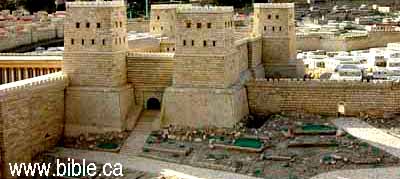
bible-archeology-jerusalem-temple-mount-antonia-fortress

Longinus, who had been discussing the day with Decius in order to ensure his soldiers were ready for any contingency but also conduct some training was bothered by the request. He had discussed the situation in the city and about Jesus in particular the previous afternoon with Pilate and figured that unless there was some sort of incident that he would meet again later in the day to discuss the latest events.

Instead Longinus, was being ordered to report to Pilate again and it was interfering with his conduct of military business. Longinus hated dealing with politicians and diplomats and though he respected Pilate who he felt to be as decent of man as any politically appointed diplomat as any Pilate was still not a military man. He did not always understand military matters.

Longinus looked at the messenger and asked: “Tell me. what would the Governor need of me at this hour?”

“Centurion,” the messenger replied. I was only told to have you report as soon as possible.”

Bothered by the lack of detail Longinus told the messenger to go and tell Pilate that he would be there shortly. He then looked at Decius, and shook his head. “My friend, I am afraid that I will be delayed. Take care to conduct today’s training and be ready in case any trouble arises.” With that he put on his armored breastplate and cape and left the room.

When he arrived at Pilate’s headquarters the Governor greeted him cheerfully. “Centurion, it is good to see you.”

“Likewise sir…” Pilate stopped him before he could continue.

“I don’t suppose that you know why I called you here do you?” Pilate asked, irritating Longinus who feeling even more irritated by Pilate’s levity kept his feelings to his self and simple replied: “No my Lord, your messenger only told me to report here, he did not give me a reason.”

Pilate smiled. “It was with good reason, had he done so I am sure that you, like any other Centurion in the province would have found some “pressing military duty,” isn’t that what you call it? to avoid coming here.”  He paused for just a moment and before Longinus could respond continued: “Of course I know the answer, you need not say anything and I suppose if I was in your position that I would feel the same way.”

Longinus knew this was the case and had no answer to Pilate who continued.

“Centurion, this week will unfortunately be a week where we must conduct some rather unpleasant business, less than soldierly business but necessary.” Pilate paused again and motioned for Longinus to take a seat at his desk and Longinus did so, looking about the room and noticing Pilate’s civilian staff and several soldiers assigned as his personal bodyguard.

Longinus, decided to hasten the length of the visit and asked: “My Lord, may I ask why I am here? After all I do have pressing military business to attend to.”

Pilate immediately caught the sarcasm in Longinus’s words and smiled. “Centurion, you amuse me, because I know how you military types think. You see I may not have served with a Legion, but I have served with enough officers to know that you would rather be fighting the enemies of the Empire than doing police work, but we are in Palestine, not the Teutonic Forrest.”

Longinus stared back at Pilate and said nothing.

“Centurion, this week we will dispense justice to three Jewish prisoners. Men of your unit will conduct the crucifixions this Friday.”

“Yes my Lord.” Longinus’s muted response spoke more than any protest could.

Pilate continued. “Centurion, I want you to see the prisoners and in doing so know in your heart why this must be done. These men are violent criminals, and one of them is the infamous Bar-Abbas.”  Longinus looked at Pilate, and asked “the insurgent who has attacked and killed our soldiers and officials?”

Pilate nodded and replied “so you know why this is important, in an environment as volatile as Judea we cannot let a man like this remain unpunished, it would only encourage more men to rise up like him.” Pilate smiled and continued. “We cannot forget how the Jews rose up and overthrew the Seleucid rulers underestimated these Jews when that Judas Maccabee fellow led that bloody revolt.”

Longinus replied “No we could not let that happen on our watch.”

Pilate nodded in agreement and continued. “So you understand Centurion, it is an unpleasant duty, but mind you history will thank us for it, as will any God that you believe in.” Pilate finished by telling Longinus to visit the prison for himself and begin to choose his soldiers for the crucifixion detail with care.

Longinus rose and saluted Pilate, turned and left the room without another word. He was not happy but proceeded to the dungeon where he met the Jailer of the Fortress, a rather obese and dirty looking man named Alexander, a Roman citizen of Greek origin hailing from Antioch.

When Longinus reached the dungeon he immediately noticed the stench and again realized why he was a Legionnaire and not a policeman. The prison was dark, and by Palestinian standards dank and moist smelling of human excrement and body odor.

“Well Centurion, welcome to my kingdom” said Alexander, a smile pressing through his grimy face.

“Thank you Alexander, where are the condemned?” asked Longinus icily.

They are in the cells to your left. Bar-Abbas is in the first and the other two, neither as notorious as he are in the next cell.”

“What are their names?”

“Dismas and Gestas, they are violent criminals of their own accord, but they were only out for personal gain. I think that one feels some remorse, but the other seems to be a rather hardened and unrepentant man.” The words came effortlessly to the unkempt jailer

“Thank you warden, I will see them now” said Longinus as he turned to look over these men as quickly as possible so he could return to his unit.

He walked past Bar-Abbas without making eye contact and went to the second cell. The two prisoners could not appear more different. One, seemed to accept his fate while the other looked at Longinus without remorse. After about a minute Longinus asked their names. The remorseful looking one answered, “I am Dismas, I stand condemned for robbery and murder. I accept my fate Centurion.” The other prisoner glared at his mate and with hatred in his voice and eyes said to Longinus “I am Gestas, and I am not sorry for anything that I did you Roman swine.”

Longinus stared back saying nothing, his continued lack of respect for such people seemed vindicated. He turned to the other cell and looked at the burley prisoner in it. “So you are Bar-Abbas?”
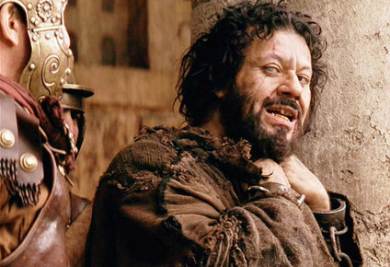
barabbas

The prisoner snarled “So what is it to you Roman?”

Longinus began to feel better about his mission. “Well, Bar-Abbas, it seems that you have killed one too many of my comrades and it is I who will get to exact justice on you.”

Bar-Abbas smiled an evil smile and said, “The Roman that can kill me has not been born.” He laughed at Longinus who stood silently for a moment. Then, quietly Longinus replied, “We’ll see about that.” With that Longinus motioned to Alexander the Jailer to let him out. The jailer unlocked the door and Longinus walked up the steps and into the courtyard of the fortress where his unit was practicing battle drills.

Calling Decius to his side, he said. “We have a second mission this week, the mission of executing some dangerous prisoners, including Bar-Abbas the insurgent.”

“Bar-Abbas sir?” replied the junior officer.

“The same, but we have to wait until Friday. It seems that our governor wants to make a show if his generosity to the people here. If it was up to me I would have killed them in the dungeon and been done with it, we could have said that they died of the plague.” Longinus looked at his assistant and then continued “Of course that is not how we Romans do things, they will be executed in public to show these Jews that they cannot engage in such conduct, but it will only build more resentment.”

“Sir, are you saying that our methods are wrong?” asked Decius.

“Young man, look around you. You know the history of these people. They will continue to rise up until they regain their independence or we kill them all.” He paused. “That is their history and they can do no other. After all, if they were occupying our homes, establishing their God in cities and forcing our people to serve them how would we respond?”

Decius nodded his understanding and looked at the Legionnaires practicing close combat tactics that might be necessary in a pitched battle if the city was to erupt in revolt.

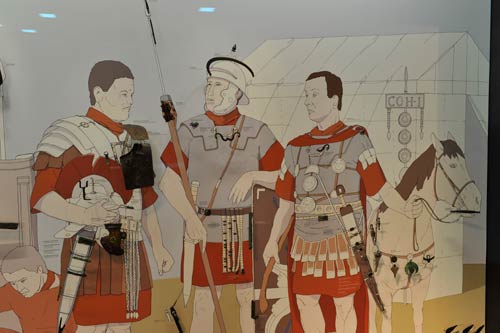
Longinus continued “Decius, choose a squad of men as the execution team and another as the escort. The rest of the Century is to be trained to maintain a secure perimeter and ensure that no Jews attempt to interfere with our mission.

“Sir, where is the execution to take place?” asked Decius.

images-36

Longinus motioned to a hill visible just outside the city walls. “Over there, that barren hill. The locals call it Golgotha.” He paused. “Fitting name, the place of the Skull. I perfect place to kill people that don’t want us here wouldn’t you say?” He chuckled and continued, “don’t answer, it is a rhetorical question.”

His assistant nodded and Longinus gave the order “Carry on with training, let me know which men you think should be on the execution team later tonight.”

Longinus turned and walked away wondering what else might happen, after all, the best laid plans of men sometimes don’t work out. He silently cursed under his breath the day that he was assigned to this place, which despite its history and splendor seemed forsaken by the Gods
4 Comments

Filed under faith, History, Military, Religion

The Story of Longinus the Centurion: A Meeting of Friends

14_2009_da_02_int

This is another in the historical fiction series that I am writing with the Centurion Longinus, who according to tradition was the Centurion at the Cross who put his lance in the side of Jesus and who would exclaim “Surely this was the Son of God” as Jesus breathed his last.

That series began with a prequel that I published last night as well as three that I published over the last couple of years. Those chapters can be found at the links below:

This chapter takes up where after the Triumphant Entry of Jesus into Jerusalem.

A Centurion’s Sunday in Jerusalem: The Story of Longinus

Good Friday Special: The Long Good Friday of Longinus the Centurion

Holy Saturday Special: A Centurion Reflects on a Days Work

Easter Special: Trouble in River City the Centurion’s Easter: An Empty Tomb, Duplicitous Politicians and a Lingering Question

The day after the entry of this Jesus character into Jerusalem was uneventful for Longinus and his fellow Roman officers. Jesus had returned to Bethany after driving out the money changers and other assorted riff-raff out of the Temple but had returned without the tumult of the preceding day, Instead, Jesus with a number of his disciples went to the Temple where he engaged the people and some of the Pharisees in a time of teaching culminating in a series of what Longinus’ Jewish spy said were comments that could be interpreted as threats against the Temple establishment and veiled allusions to Jesus being the Messiah of the Jews.

Jesus left the Temple at the end of the day without incident but Longinus’ spy indicated that the Priests and other religious authorities were discussing ways by which they might rid themselves of this Galilean would be Messiah. Now Longinus and his fellow officers couldn’t care a whit about Jewish religious disputes so long as it did not make their job keeping the peace any more difficult than it already was.

p-063-1

When his spy reported back Longinus briefed Pilate of the simmering tensions. Pilate was with his wife Bernice when he received the report. Pilate did not like what was going on but had no contact with any of the religious leaders from any faction since his arrival and was troubled. His wife warned him in the presence of Longinus “not to have anything to do with that man” and he told Longinus to continue monitoring the situation, He also dispatched a messenger to the commander of the Legion in Caesarea to send reinforcements to Jerusalem just in case things got out of hand. Until then, Longinus, the Primus Pilus, or senior Centurion of the Legion was to help him maintain a close watch on the situation and hopefully keep the situation from boiling over.

After his meeting with Pilate and Bernice, Longinus sat around the tavern in Fortress Antonia with several others of his officers and Centurions from the Legion currently in Jerusalem. His Optio, or second in command Decius, a Roman from his former unit who had accompanied him to Palestine was there, as were two Decurio officers from the cavalry detachment and his Tesserarius, Quentin, a man who held a position much like a First Sergeant. Late in the evening another Centurion came to the tavern. This Centurion, was accompanied by his young servant was in charge of the Century based in Capernaum in Galilee.

The Centurion, Flavius by name ordered an ale from the barkeeper and walked over to the table where Longinus and the other officers sat. After the exchange of formalities Flavius sat with them. His young servant remained at the bar sitting alone.

Longinus had known Flavius for several years and known him to be an honorable man, though he did not necessarily approve of the very “Greek” arrangement that he had with his Pais,* which was common in the Roman and Greek military units, he respected Flavius’s soldiering abilities, leadership and integrity. Flavius and his Century had arrived in Jerusalem the previous night after Jesus had made his entry into the city. Longinus was glad to see Flavius because he felt that an officer stationed in Galilee might be able to shed more light on this man of mystery who had Jerusalem up in arms and so troubled Pilate.

Flavius asked what Longinus knew about Jesus, and Longinus told him what he had seen the day before as well as the information that he had obtained from his own Jewish spy.

Flavius, nodded and then began to tell Longinus and the other officers of his encounter with Jesus a couple of years before in Capernaum of Galilee.

Flavius began: “Longinus my friend, I met this Jesus in Capernaum and he is no ordinary man.” He paused to take a drink and continued as Longinus nodded for him to continue.

“It was a difficult time my friend. My Pais was very ill, sick to the point of death, He lay in our quarters and I heard that the miracle working Rabbi named Jesus was in town. Now, you know my friends that I care not a thing about what these Jews believe but I was desperate and from what I had heard and seen I believed that the Gods had to be with this man.”

Longinus continued to listen and then asked “Why didn’t you go to our Temple and have our Gods intercede for your Pais?”

“My friend I had already done that but my Pais’ condition had worsened. So I found this Jesus fellow as he was entering the city and sent some Jews that I had befriended to him.” He paused. “Those Jews convinced Jesus that I was a friend of the Jews and had done many good things for their community, and this my friend is true.”

“So the Jews helped you contact this Jesus fellow?” asked Decius. Longinus looked at his subordinate disapprovingly and asked Flavius to continue.

“I tell you my friends, this man is like no one that I have ever met, the Gods are certainly with him, whether our Gods or the Jewish God I know not which but he is not a normal Rabbi.”

The officers looked around the table as Flavius continued.

centurion1

“Gentlemen, when this Jesus came to me I felt something that I have never felt in my life. Jesus asked what he could do for me and I told him of the sickness of my Pais and he asked if he could come to my quarters. I replied that I didn’t need him to come, because I was not worthy for him to come under my roof but to only say the word and my Pais would be healed.”

Longinus looked at his fellow Centurion in disbelief. Flavius sensing this continued. “My friend, I could not believe that I uttered those words but Jesus peered into my eyes and I knew that he knew all about me. Then he replied that “your servant is healed” and then exclaimed to all of the Jews around us that he “had not seen such faith in all of Israel.” Then, he put his hand on my shoulder, blessed me with some Hebrew blessing and walked away with his friends. When I returned to my quarters, my Pais, the young man over at the bar was well.”

Longinus saw the deep emotion that Flavius was expressing and raised his mug. “A toast to this Jesus!, whatever and whoever he he is.”

“Here here” replied those at table as Flavius looked on and several laughed. He had not expected such a reaction and said softly.

“My friends I don’t think you understand.” He paused a second and looked Longinus in the eyes. “I do hope that whatever happens in the next few days that no harm will come to this man. I would hate that my spear could bring harm to him.”

Longinus responded. “I hope that nothing happens to cause any of us any problems. The city is boiling with emotion and unlike your friend Jesus, most of them hate us and would rather see us dead, and some of their leaders from what I understand wouldn’t mind seeing him dead either.” Longinus paused and emptied his mug, drinking the ale to the last and then continued “My friend, I appreciate what you have to say, but we have to do our duty for the Empire regardless of our personal feelings. We are outnumbered here and this Jesus, as much as we may find him fascinating is the source of much of the current discord.” He looked at Flavius. “You do understand this?”

Flavius looked down at his drink and looked back up at Longinus and then at the officers around the table.

“I do understand my duty my friend, but you have to know what he did for me.”

“We do understand my friend” replied Longinus, “but our honor is loyalty to Caesar, not any other man.”

“I know Longinus, I do know, more than you think, but what if he is more than just a man?”

Longinus and the other officers sat silently pondering Flavius’s words. The silence was deafening and slowly the junior officers individually asked to be excused, begging pressing duties to attend to leaving Flavius and Longinus at the table. The bartender brought each man another ale and they continued to drink silently.

The Greek word Pais is the word used in many Greek texts to to describe a homosexual relationship. The use by Matthew in his account of the healing of the servant of the Centurion used the word Pais to describe the servant, not the typical Doulos which is used for slave or bond servant as is most common throughout the New Testament. In fact this is the only use of the word in the New Testament. Many Biblical scholars and linguists, though not completely certain do entertain that possibility that the Centurion that I call “Flavius” and his servant were a Gay couple.

4 Comments

Filed under faith, History, Loose thoughts and musings, Religion

A Centurion’s Sunday in Jerusalem: The Story of Longinus

triumphal-entry


This article is the prequel to a trilogy that I wrote about Longinus the Centurion who according to tradition commanded the detail in charge of the crucifixion of Jesus. I find a special affinity to this soldier who while serving his country in a land far from home whose people detested the occupiers of their country by a foreign power that most considered infidels. I don’t think that anyone can really understand the plight of the Roman officers assigned to the occupation of Judea and Samaria in the First Century until they have  done their time in Iraq or Afghanistan. These peoples, though not Jewish have similar divisions,  contradictions and prejudices against foreigners as those that lived in First Century Palestine. Those American, NATO or coalition troops that served in Iraq or Afghanistan, especially those who actually worked alongside or came to know the people in those countries understand the plight of the Roman soldiers assigned to occupation duty throughout the Empire, but especially in the volatile provinces of Judea and Samaria like Longinus. 

The others in the trilogy are linked below: 

Good Friday Special: The Long Good Friday of Longinus the Centurion

Holy Saturday Special: A Centurion Reflects on a Days Work

Easter Special: Trouble in River City the Centurion’s Easter: An Empty Tomb, Duplicitous Politicians and a Lingering Question

MLPPT_CenturionCross_1

Longinus and his men were tired. Pilate, the Governor had decided that he would travel from his Provincial capital of Caesarea in order to maintain a close watch on the Jews of Jerusalem during the annual celebration of Passover. During such times that city, the largest in the province would see its population expand exponentially as Jews from the diaspora, that is those living around the known world would make pilgrimage to the holy city.

Longinus’s men had helped provide the escort as Pilate travelled the nearly 80 miles moving up from the coastal plain where Caesarea was up to the hill country of Judea. The trip took three days as Pilate wanted to be in the city in plenty of time. The weather was conducive to the march, but though well trained Longinus’ men were not Romans but primarily recruited locally from drafts of Syrian’s and Samaritans.

Longinus never really enjoyed this assignment. He had served in other areas as a young officer and much preferred serving with and commanding Italians, Greeks, Macedonians and others to the men that he now commanded, but his duty was to serve wherever he was sent. He thought at times of his family in Italy near his home in Lanciano in the Abruzzo region near the Adriatic, missing his wife and children.

vespasian-judea-capta-sestertius

The duty of Longinus and other Romans in the region chiefly consisted of helping police the region and protecting the much despised tax collectors. One of those tax collectors, a Jewish man named Matthew had left the employ of Caesar a few years back and was now a “disciple” of some itinerant Jewish preacher named Jesus. He had heard a story from another Centurion about this preacher that made him chuckle. Evidently some Jews of the sect know as the Pharisees, a particularly strict group tried to trap the Jesus with the question of whether it was lawful to pay taxes to the Romans. They thought that they had trapped him because if he answered in the affirmative he would be rejected by them and discredited among the people, while if he answered that it was not they would have him on record as urging the people to disobey Caesar. The Centurion who told the story said how with him standing in the background watching and listening that Jesus asked one of the Pharisees to bring him a coin. Looking at the coin he asked the man whose image was on it. The Pharisee, a bit hesitantly replied that it was “Caesar” to which Jesus, who supposedly was an unlearned but charismatic bumpkin from Galilee replied “give to Caesar what is Caesar and to God that which was God’s.” Longinus’ colleague, an outsider looking in at this curious religious dispute was amazed with the acumen of Jesus in dealing with a question that someone less intuitive could have botched with potentially fatal consequences.

images-35

The march through Samaria was particularly uneventful but as the Legionaries entered Judea, a region seething with hostility toward the Romans he and his men became more guarded, very aware of the hostility that sometimes invited violence.

They arrived about noon on Friday in order not to stir up the Jewish faithful on their sabbath and took up residence in the Fortress Antonia, the symbol of Roman might in this always rebellious city. That evening and the next day were uneventful, but on Sunday, Longinus was told to have his troops stand by in case of violence. The man named Jesus was entering the city and pandemonium was expected. According to rumor this Jesus had raised a many from the dead in Bethany the day before and was being greeted as a potential King and liberator.

The Roman presence was muted, Pilate and senior commanders not wanting to do anything that might provoke an insurrection. The troops remained on alert at the fortress while Longinus and a number of other officers went to observe events at a distance.

Longinus was amazed at what he saw. Thousands of people singing and throwing cloaks and palms along the street as Jesus, mounted on a white donkey accompanied by his disciples as well as numerous people from Bethany where he had been staying paraded down the street.

The procession moved toward the Temple where an understandably nervous delegation of Pharisees and the Priests of the Temple wondered what Jesus might do. If he was the “Messiah” that they preached about it could be a direct threat to their positions of power and provoke a Roman crackdown against them.

Jesus dismounted from the donkey and entered the Temple area, now crowed with thousands of pilgrims coming to offer sacrifice where he began to condemn the moneychangers. The moneychangers were in charge of selling animals for sacrifice to pilgrims, many of whom who could not bring their own animals for sacrifice. They were not according to what Longinus knew from his previous visits to the city at Passover and other Holy days men of good repute. They were believed to make their profit off the poor and widows and even the Romans that knew of the practice considered it less than honorable, and certainly the religious authorities were making money from their efforts.

Jesus_temple

As Jesus went into the Temple Longinus and his fellow officers stayed back. As Gentiles their presence would create a crisis so they remained outside entrusting a Jew who worked with them to make the observation. They could hear commotion in the Temple and as they watched money changers and others came spilling out of the Temple grounds, many surrounded by their animals, lambs, doves and oxen. Longinus wondered what in the name of Jupiter was going on and soon his spy came running out of the Temple to make his report.

Slowing down as he approached Longinus he breathlessly gave his report. Jesus had taken a whip and driven out the moneychangers, condemning their activities and those of the religious leaders. Longinus had never heard of Jesus ever doing anything remotely violent before and this shocked him. He asked what else had happened and the spy reported that the Temple police and authorities did nothing and that Jesus left without further incident.

Pontius-Pilate

Longinus knew that the coming days could prove interesting. Going to Pilate that evening he gave his report. Pilate was quite concerned about the situation and considered it volatile. He ordered Longinus and the other officers to maintain an elevated state of readiness in case there was some sort of protest or even civil strife between the followers of Jesus and the Jewish authorities.

Longinus left Pilate and he and his fellow officers discussed the situation, briefed their subordinates and as night fell met in the tavern in the fortress where they quietly drank and wondered what the coming days might bring.

5 Comments

Filed under faith, History, Religion

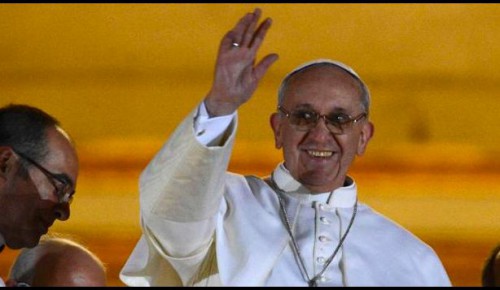
Papal Conclave Day One: Secrecy Oath, Black Smoke and 50 Shades of Gray Smoke

_66353097_66353092

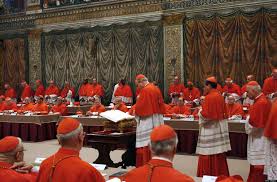
Well today the Cardinals of the Catholic Church entered into their first day of sequester, I mean Conclave which is kind of like sequester but easier to spell. The Cardinals who had completed a number of meetings last week in preparation for the Conclave and today after the completion of the Mass, lunch and a no host bar, entered the Sistine Chapel. Amid the solemn choral sounds of the Vatican Men’s Chorus and Madonna the Cardinals took the double top secret oath of secrecy binding them to absolute secrecy with no real penalties should they break the oath. Their aides and others in the chapel prior to this also took an oath of secrecy which if they break will be excommunicated and get to spend eternity in Hell. Yes, it is a double standard but someone will have to pay if the cloak of secrecy is broken and it will not be Cardinal Roger “Dodger” and Tweeter Mahoney of the “Cardinal Mahoney Love Network.”

images-31

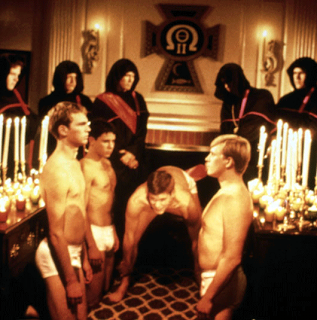
I was watching the procession into the chapel at lunch as I ate my soup. Amid the pomp, splendor and mystery that surround such solemn occasions I was reminded of another solemn ceremony which I saw decades ago for the first time and watch at least a couple of times a year. That ceremony of the young men of Omega Theta Pi of Animal House who also took a solemn pledge, “thank you sir may I have another” is forever etched in my mind. But how can it not be?

After the 115 voting Cardinals swore the oath which among other things they pledged the oath of secrecy:

“In a particular way, we promise and swear to observe with the greatest fidelity and with all persons, clerical or lay, secrecy regarding everything that in any way relates to the election of the Roman Pontiff and regarding what occurs in the place of the election, directly or indirectly related to the results of the voting; we promise and swear not to break this secret in any way, either during or after the election of the new Pontiff, unless explicit authorization is granted by the same Pontiff; and never to lend support or favor to any interference, opposition or any other form of intervention, whereby secular authorities of whatever order and degree or any group of people or individuals might wish to intervene in the election of the Roman Pontiff.”

The only thing missing was the Cardinals getting whacked on the backside like Kevin Bacon as they made the oath. But I digress….

animalhousescene

After several hours the now sequestered Cardinals gave an indication of where the process was at. Dark black smoke began to issue out of the temporary chimney above the Chapel indicating that the Cardinals had not yet elected a new Pope. This was not surprising to me because unlike the Baseball Hall of Fame election, seldom does a man become Pope on the first ballot. But then the Baseball Hall of Fame candidates cannot vote for themselves, and don’t get a vote for anyone, they have to depend on Sports Writers. Let’s see anyone but Cardinal Dolan or Cardinal O’Malley get elected if they had to depend on Sports Writers.

Tomorrow the balloting will continue. Most experts expect that the balloting will continue at least through tomorrow evening or more likely Thursday. Actually since I am sure there must be a betting line in Vegas I hope it drags out until Friday or later. I mean what else do these guys have to do? Many work in Rome and those that don’t are probably getting per diem payments while away from home.  Besides, look at the business that it brings to the money changers and trinket sellers in Vatican Square. It is good for their economy and what is good for the economy is good for the economy.

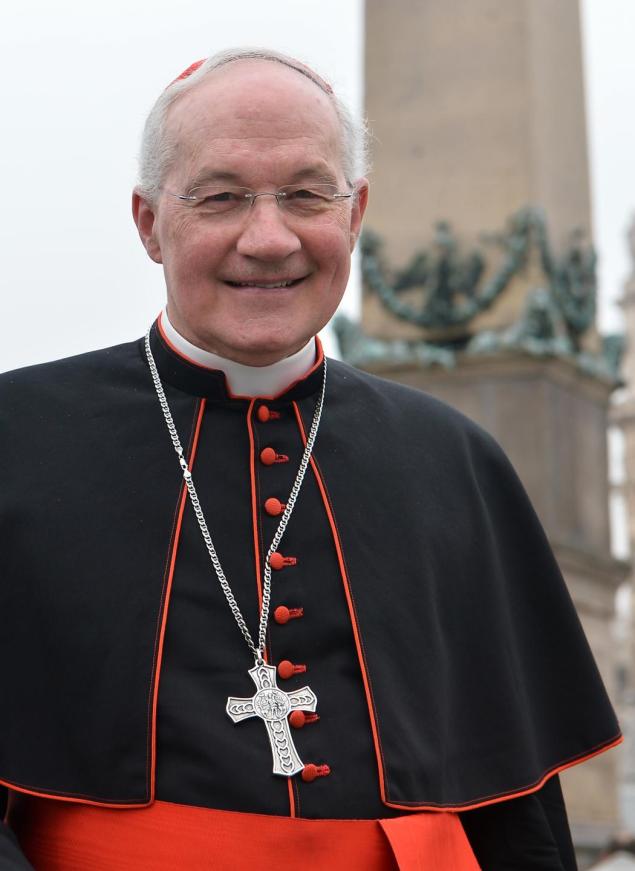
oulette6n-1-web

Could Cardinal Ouellet become Pope Bob? Eh? 

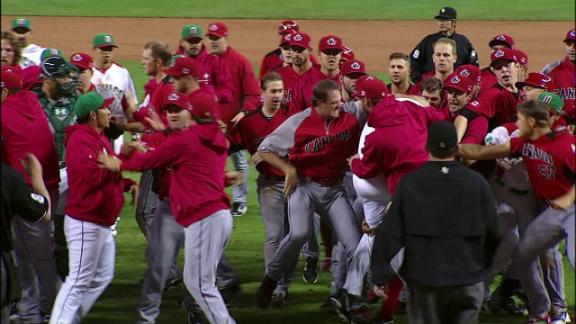
Now there is a lot of speculation on which of the 115 Cardinals will be elected Pope. Honesty I don’t want an American, European, Asian, African, Romulan or Vulcan. I want a Canadian and I want him to choose the name “Pope Bob” which I think would be very blue collar. First because Canadians are peaceful and ecumenical people who love to beat the crap out of each other during hockey or World Baseball Classic games.

dm_130309_wbc_canada_mexico

Second because I cannot wait to hear the benediction “In Nomeni Patri Et Fili Spiritus Sancti eh” at the end of each Papal Mass. That would be worth it. When I listened to the Cardinals doing their best Latin during the secrecy oath I just liked the way that the Canadians did it. It sounded right and it would make great fodder for South Park. I would love to see an audience with Canadian Pope Bob and Eric Cartman and the rest of the South Park kids and maybe even Terrance and Phillip.

tumblr_m7ro8lRIty1r2v6rv

Apart from this and all kidding aside, pray for these men as they meet to elect the next Pope. After all, even for non-Catholics a good Pope can do a lot of great things. Besides the Church is always in need of good, holy and decent leaders who have not lost their souls to the institution or their own desire for power. That is possible and it has happened before.

Maybe tomorrow we will see White Smoke, or maybe just 50 shades of gray smoke, but whatever it is important to all of us who the next Pope is.

So until tomorrow,

Peace

Padre Steve+

1 Comment

Filed under faith, News and current events, Religion

Doing the Gospel: “Beyond the Possible” by Cecil Williams and Janice Mirikitani A TLC Book Tour Review

l

Beyond the Possible, 50 Years of Creating Radical Change at a Community Called Glide, Cecil Williams and Janice Mirikitani Harper One Books, New  York 2013 

“You never know when the Spirit will knock at your door…” 

I seldom read books by American pastors of any denomination. I have gotten over the cult of celebrity associated with most of our most esteemed preachers. Likewise, when I read a story about a church, be it a local church or denomination I am generally filled with skepticism and wonder when I am going get hit on for a financial contribution or political favor. I guess that I have seen the light in regard to how many church leaders run their business. Or maybe I am just a bit cynical having spent many years in the Mega-Church world and worked for a nationally recognized and now very politically active “evangelist” about 20 years ago.

When I received the note from the good people at TLC Book Tours to do a review on this book I almost turned it down but then thought well “what the hell? If I think it’s bullshit I can rip it apart.”

However I cannot do that, even after reading it. I had remembered the name of Cecil Williams from growing up east of San Francisco in the 1970s. At the time I thought Williams a bit too radical and not “Christian” enough. Of course I knew little of him or of Glide only what I saw on television news reports, many of which were not always the most complimentary of him. Since I knew little of Glide that impression was what I had for many years. However, over the years I would occasionally see Pastor Williams on different interviews and was impressed with him and what I heard. I didn’t necessarily always agree but he was impressive, not the liberal monster I thought him to be.

Of course the book is a memoir of Williams and his wife Janice Mirikitani and how their lives intersected with a dying church in the heart of San Francisco’s Tenderloin district, a place ridden with drugs, crime and poverty. It was a place that most of the church members had departed from. It was a church, like so many that had seen better days. It was a church like the one that I was baptized in as a baby which as the neighborhood that it was located slid into poverty and change in ethnic composition saw the majority of its membership move away. Eventually, that Methodist church died and was closed. It was a fate that Glide Memorial Methodist Church was heading to when the last 35 members welcomed their new pastor, Cecil Williams in 1963. It was a moment of change. It was a moment when a fresh breeze blew through the church.

The book chronicles the stories of Williams, the son of a church janitor and his wife in Jim Crow San Angelo Texas and his early life under those laws. It tells of his struggles as a pioneer African American student at SMU’s Perkin’s Seminary and his part in the Civil Rights movement of the late 1950s and early 1960s, including time in a Birmingham jail.

It also tells the story of a young Japanese American woman, Janice Miritikani who with her family had endured the pain and humiliation of being incarcerated after the attack on Pearl Harbor simply because they were Japanese. It is her story as well, a story that was not only about the prejudice that she experienced the dehumanizing experience of rape and incest covered up by family and cultural pressures, the story of a woman who prayed for God’s presence and struggled as God remained silent.

It is a story of love, faith hope, purpose and the endless possibilities that exist when one sees that which is considered “beyond the possible.” It is a book that tells of struggle of a community which many people did not consider redeemable. It is the story of a church and of people, not just Williams and Miritikani but the people who in turbulent times launched a church that has become a bastion of living the Social Gospel, speaking prophetically to those in power and working for the benefit of the least, the lost and the lonely.

Glide, the community is a place of acceptance and love, a place which serves and empowers those without power, without a voice. Providing care to the homeless, the jobless, the needy, the HIV infected and those suffering from AIDS, those battling drug and alcohol abuse, those rejected for their lifestyles and a host of others. The Glide foundation, which Williams has headed since his “official” retirement from the church is one of the top philanthropic organizations in the nation.

Now there are some that would not agree with Williams and the message of Glide. It is a church that welcomes people of all walks of life and faith. It is a church with a door open to all, even those who would come to the church intentionally to cause trouble as did a number of White Supremacists attired in  White Power, Neo-Nazi and Neo-Confederate images, who ended up staying when their hate was met by love. It is a church where the rich and the poor worship together in a service called a “celebration.”

Glide is a strange animal. It is a by all definitions a politically and socially active Mega-Church with about 11,000 members. Those that know me well and read this site regularly know that I am not a fan of most Mega-Churches. To me most, regardless of their theological or political views seem to exist for themselves.  However, Glide is a place that thanks to Williams, Miritikani and those that over the past 50 years have sacrificed to build reaches out to redeem the community where it resides and does not exist for itself. It may not speak the same language as the contemporary Evangelical Mega-Churches but it is reaching those who quite often would be unwelcome in those churches. It is the embodiment of the love of God, an incarnation of the love of Jesus to those that would be, and were in fact the same kind of people that Jesus himself went to in his earthly ministry.

This book is inspirational to read for anyone who has a heart for those disenfranchised and uncared for by the church or the world. I found it hard to put down. The message “you never know when the Spirit will knock at your door” was real to me as I read this book during the Season of Lent. Indeed it is possible for God and the people of God to go Beyond the Possible.

tlc-tour-host

I highly recommend it to anyone and plan to visit Glide the next time that I go to San Francisco and hope that should I be involved in parish ministry after my Navy career is over that I can emulate the spirit and love that I saw described in this book.

Peace

Padre Steve+

3 Comments

Filed under christian life, faith, leadership, Pastoral Care, Religion

Papal Conclave Date Set: Cardinals Gather to Elect Pope on Tuesday

briefcase082way_custom-47172e04ff2ea7a1382b0fb66f11fe8f40539310-s6-c10

The 115 Cardinals present and eligible to vote for the Next Pope have  gathered including Roger the Dodger Cardinal Mahoney from Los Angeles. Mahoney, a man now banned by his successor from public ministry for his complicity in the cover up of numerous sexual crimes by his clergy will be one of those men meeting to elect Benedict XVI’s successor. The date was determined in the 8th pre-game meeting of the Cardinals and did not include the late Stan Musial, or the still living Tony LaRussa or Mark McGuire. I for one cannot imagine a meeting of Cardinals that does not include any of these men or even Bob Gibson or Rogers Hornsby.

creation

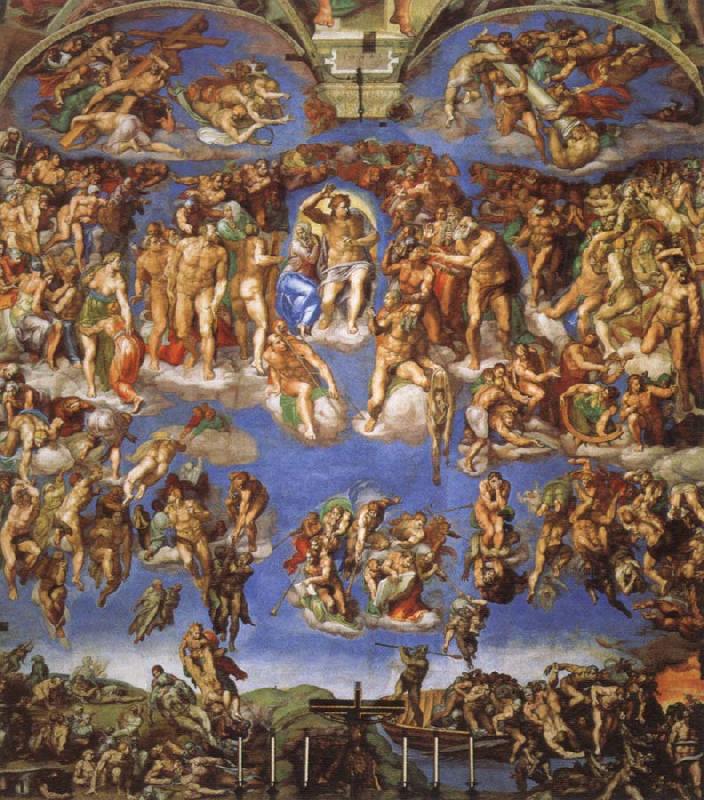
Politics of Papal elections are quite secretive. The process begins with a morning Mass called the “pro eligendo Romano Pontifice Mass.” Following this Mass and a luncheon with a no-host bar the Cardinals head over to the Sistine Chapel where under the hand of God painted on the ceiling by Michelangelo and the great fresco over the altar of the Last Judgement.

Michelangelo Buonarroti-876564

We do not know who will come out of the conclave as Pope. However the conclave, coming on the abdication of Benedict XVI and the Double Top Secret report ordered by Benedict, a report only to be seen by him and whoever comes out of the Conclave as the next Pope. It is believed by some including those that investigated the Vatileaks scandal that the contents were so disturbing that they led directly to Benedict’s resignation.

That aside, Papal elections, as well as the politics of the Curia are always shrouded in secrecy and often conspiracy theories. They make for great writing, especially in the fiction and mystery genre of literature. This undoubtably will be the case again in this election, especially due to the unusual circumstances surrounding this conclave.  I’ll bet that Dan Brown has a new novel brewing for Tom Hanks to make a movie right now.

collegeofcardinals

The scandals involving Catholic Prelates, Clergy and institutions around the world have rocked the Church to its foundations and for the most part the Church has not responded well. It is floundering and theologian Hans Kung notes that “behind the facade, the whole house is crumbling.”

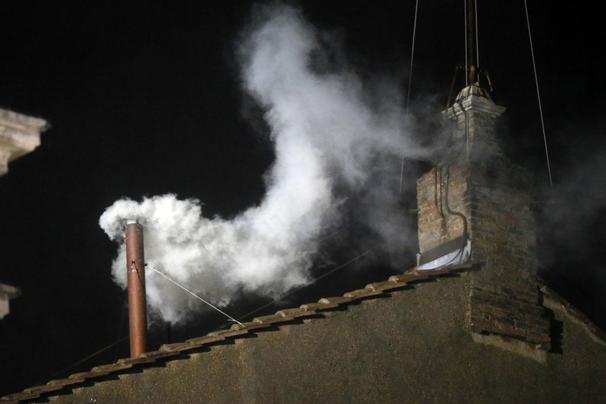
When that magic number of 77 votes is reached and a new Pope is elected white smoke will rise from the chimney of the chapel. I think that the chimney is pretty unremarkable and needs to be replaced with something more Papal  with a bit more bling. After the smoke blows the new Pope will pick a name, I personally like “Bob” because it is kind of blue collar and easy to spell.  He will then get fitted for his new white cassock, of which three sizes will be available. Third World skinny, and White Guy Medium and Large, the Large actually being a 2X just in case the new Pope is not just a man of wisdom but substantial stature.

white_smoke_new_pope_1-1

I do pray for the Cardinals, as well as the Orioles as the conclave commences and the Orioles continue Spring Training games. I also pledge to pray for whoever is elected as the next Pope. Since I have no clue as to who this will be, with the possible exception of not Cardinal Mahoney that prayer is one of faith and trust in God to work through fallible men to select the Pope. This is something that matters to the 1.2 billion Roman Catholics worldwide and to non-Roman Catholics alike. I like Cardinal Timothy Dolan of New York because he is a baseball fan, but since he is an American I don’t expect him to get the job.

Thus while I approach this with a bit of humor and levity I also recognize how serious this is for both the Church and the world.

Peace

Padre Steve+

Leave a comment

Filed under News and current events, Religion

The Toxic Faith of “Americananity” and its Antidote

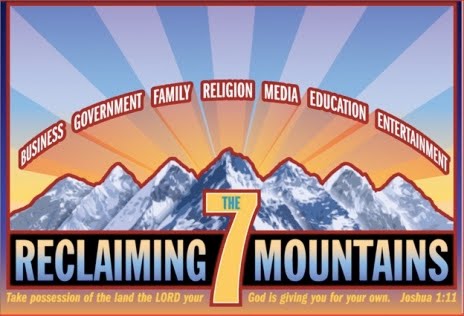
seven-mountains

“The notion of a Christian commonwealth should be exploded forever. … Government should protect every man in thinking and speaking freely, and see that one does not abuse another. The liberty I contend for is more than toleration. The very idea of toleration is despicable; it supposes that some have a pre-eminence above the rest to grant indulgence, whereas all should be equally free, Jews, Turks, Pagans and Christians.” John Leland 

There is a form of religion and indeed the “Christian” faith that is toxic and if not treated leads to the spiritual and sometimes the physical and emotional death of the infected person.

There is a nationalized version of this faith which in this country with respect to the Christian tradition I will call “Americananity.” It is a bastardized version of the Christian faith overlaid with the thin veneer of a bastardized version of American history. Its purveyors are quite popular in the world of “conservative” American Evangelicalism and Catholicism.  Supreme Court Justice Robert Jackson wrote “[I]n our country are evangelists and zealots of many different political, economic and religious persuasions whose fanatical conviction is that all thought is divinely classified into two kinds — that which is their own and that which is false and dangerous.”

Pat Robertson, evangelist and founder of the Christian Broadcasting Network is an example of what Leland and Jackson warned us about. Robertson said on his program that “You say you’re supposed to be nice to the Episcopalians and the Presbyterians and the Methodists and this, that, and the other thing. Nonsense, I don’t have to be nice to the spirit of the Antichrist.” — Pat Robertson, The 700 Club, January 14, 1991. The late David Chilton was another. He wrote: “We believe that institutionally Christianity should be the official religion of the country, that its laws should be specifically Christian”

It is quite fascinating when you look at it. This faith is a combination of a selective reading of American history, Christian teaching and Biblical interpretation which mixes and matches a wide variety of mutually conflicting and contradictory traditions. This Toxic Americananity is based on a reading of American and Western History which negates, marginalizes or willingly distorts the views or contributions of those who were not Christian or who like Baptists, John Leland and Roger Williams due to their own experiences of religious persecution refused to buy into any form of state sanctioned religion.

I find it interesting that Conservative Icon and champion of limited government Barry Goldwater had great reservations about those that sought to establish the superiority of any religion. Goldwater said on the Senate floor: “The religious factions that are growing throughout our land are not using their religious clout with wisdom. They are trying to force government leaders into following their position 100 percent.”

The leaders of this new and quasi “Christian faith” are many and include some of the most popular religious leaders in the United States such as Pat Robertson, the pseudo-historian David Barton, James Robison, Gary North, Bryan Fischer, James Dobson, Gary Bauer Phyllis Schafley and a host of others. For them the Gospel has been equated with government legislation of “Christian” values which conveniently are defined by them and their political allies often in complete contradiction to the Gospel and to nearly 2000 years of Christian experience. North, one of the most eloquent expositors of the Dominionist movement wrote:

“The long-term goal of Christians in politics should be to gain exclusive control over the franchise. Those who refuse to submit publicly to the eternal sanctions of God by submitting to His Church’s public marks of the covenant–baptism and holy communion–must be denied citizenship, just as they were in ancient Israel.”

That is quite a statement and those who think that they can co-opt people like North, Robertson or others are quite mistaken. Goldwater realized this. What is fascinating to me is to watch these men and women advocate religious and political positions in regard to Church-State relations that completely opposite of what early American Christian and non-Christian civil libertarians imagined when our country was founded. Positions that quite often are at odds with even the historical tenants of their own faith. Their only claim to innocence can be because not a one of them have any training in history and often are even worse when it comes to their understanding of the Christian tradition, which did not begin in and will not end in the United States.

In this confused and often hateful “faith’ we see men and women who hate centralized government but extol a centralized religion. I was talking with a friend who is adamantly opposed to a powerful Federal Government but extols the perfection of the centralized bureaucracy of his Roman Catholic Faith. He could not see the contradiction. I watch others who extol an almost Libertarian understanding of the government and the Constitution who supposedly in their religious tradition are from the “Free Church” who advocate the supremacy of the Church over the State and in doing so their particular and limited understanding of Church over that of the Church Universal.

In this confused and contradictory setting there are Catholics espousing political views that are in direct opposition to the understanding of government supported by the Magisterium of the Church. There are Evangelical and Charismatic Protestants that mix and match the untenable and contradictory beliefs of Dominionism and Millennialism which involve on one hand the takeover of earthly power by the Church and the ushering in of the Kingdom of God and the understanding that earthly power is ultimately under the dominion of Satan and must be overcome by the Second Coming of Christ.

Leland wrote:

“These establishments metamorphose the church into a creature, and religion into a principle of state, which has a natural tendency to make men conclude that Bible religion is nothing but a trick of state.”

leland-1

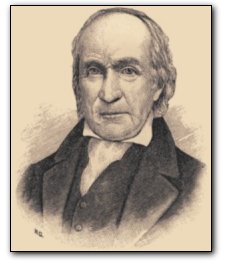
John Leland

Leland was one of the most important persons in regards to the relationship of the Christian Churches to the American Government. He was a champion of the religious liberty enshrined in the Bill of Rights and helped influence both James Madison and Thomas Jefferson. He noted in 1791:

“Is conformity of sentiments in matters of religion essential to the happiness of civil government? Not at all. Government has no more to do with the religious opinions of men than it has with the principles of mathematics. Let every man speak freely without fear–maintain the principles that he believes–worship according to his own faith, either one God, three Gods, no God, or twenty Gods; and let government protect him in so doing, i.e., see that he meets with no personal abuse or loss of property for his religious opinions. Instead of discouraging him with proscriptions, fines, confiscation or death, let him be encouraged, as a free man, to bring forth his arguments and maintain his points with all boldness; then if his doctrine is false it will be confuted, and if it is true (though ever so novel) let others credit it. When every man has this liberty what can he wish for more? A liberal man asks for nothing more of government.” John Leland, “Right of Conscience Inalienable, and Therefore, Religious Opinions Not Cognizable By The Law”

When the adherents of a faith, any faith, but especially the Christian faith enlist the government to enforce their understanding of faith they introduce a toxicity that is eventually fatal when consumed and acted on.

I think that much of what we are witnessing today is much more the product of fear mongering preachers that see opportunity in their political alliances and that are willing to reduce the Gospel to a number of “Christian values” in order to achieve a political end; even if that end is ultimately destructive to the Church and to the Gospel.

The message of the Apostle Paul to the Church in Corinth was this: “All this is from God, who reconciled us to himself through Christ, and has given us the ministry of reconciliation; that is, in Christ God was reconciling the world to himself, not counting their trespasses against them, and entrusting the message of reconciliation to us.” (2 Cor 5:18-19 NRSV) 

The early church thrived when it had no early power. It thrived when it was persecuted and when the Roman government openly supported almost every religion but it. However, once it became powerful and worldly it became ensnared in affairs far from that simple message of reconciliation.

It was in this country that the various sects of the Christian faith had the opportunity to make a new start, unencumbered by the trappings of power. But instead, like those that came before us we have all too often been seduced by the toxin of power. John Leland understood this and fought to ensure that all people of faith were free and unencumbered by state supported religion. He wrote:

“The liberty I contend for is more than toleration. The very idea of toleration is despicable; it supposes that some have a pre-eminence above the rest to grant indulgence; whereas all should be equally free, Jews, Turks [Muslims], Pagans and Christians. Test oaths and established creeds should be avoided as the worst of evils.”

Leland’s friend James Madison wrote to Edward Everett toward the end of his life:

“The settled opinion here is, that religion is essentially distinct from civil Government, and exempt from its cognizance; that a connection between them is injurious to both; that there are causes in the human breast which ensure the perpetuity of religion without the aid of the law; that rival sects, with equal rights, exercise mutual censorships in favor of good morals; that if new sects arise with absurd opinions or over-heated imaginations, the proper remedies lie in time, forbearance, and example; that a legal establishment of religion without a toleration could not be thought of, and with a toleration, is no security for and animosity; and, finally, that these opinions are supported by experience, which has shewn that every relaxation of the alliance between law and religion, from the partial example of Holland to the consummation in Pennsylvania, Delaware, New Jersey, &c., has been found as safe in practice as it is sound in theory. Prior to the Revolution, the Episcopal Church was established by law in this State. On the Declaration of Independence it was left, with all other sects, to a self-support. And no doubt exists that there is much more of religion among us now than there ever was before the change, and particularly in the sect which enjoyed the legal patronage. This proves rather more than that the law is not necessary to the support of religion” (Letter to Edward Everett, Montpellier, March 18, 1823).

That is the antidote to the toxic faith of what I now call “Americanity.” It stands against any idea of a state sanction or religion or a religion that like in Saudi Arabia or Iran controls the state. It stands in opposition to the beliefs of so many “Christian” religious leaders work to  ensure that they control the powers of government. Attempts that try to proclaim their superiority above even the ultimate message of the Gospel which proclaims “for God so loved the world….” 

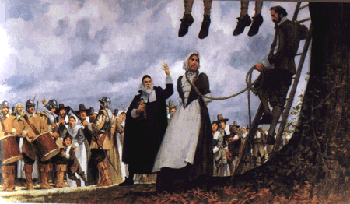
By the way there are always results. The Puritans who many extoll were some of the most intolerant of dissenters of any group that has every held the reigns of power over the state and religion ever known in this country. Their victims included Quakers as well as American Indian converts to Christianity. The picture below of the Puritans hanging Quakers in the Massachusetts Bay Colony should give pause to anyone who thinks that such actions are not possible today should any religion gain control of political power.

dyer-hanging

Peace

Padre Steve+

PS. I do not expect some people to agree with me. It is a free country and I am not God, the Pope or Bill O’Reilly and thus quite fallible. While I welcome opposing viewpoints and comments I do expect them to be civil and respectful and done in a spirit of dialogue. Those that are not civil, respectful or which simply attempt to beat me down or which are sermons will not be approved and I will not answer them. It gets really old and I have learned that in some cases no matter how hard I try to respect the beliefs of others are treat others as I would want to be treated that some people just love to destroy everything and everyone in their path. I don’t have time for that and having allowed people to do it on this site in the past I won’t do it again. If you are that kind of person feel free to start your own website and attack my viewpoints on it and not here. After all it is a free country and you have that right. I promise not to come on your site and attack you. Like I said, I don’t have time for that kind of stuff. 

7 Comments

Filed under christian life, faith, History, laws and legislation, News and current events, Religion

The Pope has Left the Building: Benedict XVI Gracefully Departs Amid Cloud of Scandal and Speculation

ITALY-VATICAN-POPE-HELICOPTER

Pope Benedict XVI, Joseph Ratzinger of Bavaria, the first German Pope since Victor who died in 1057 left office in a less than customary manner today. Unlike every one of his predecessors dating back to Celestine V who resigned in 1294 Gregory XII who resigned in 1414 to help end the Avignon schism he did not die in office.

Pope Benedict announced his resignation on February 11th and it stunned the Church and the world. Such an event had not occurred in nearly 600 years, over 700 years for one that resigned that was not under duress. Popes do not resign every day, it is not “normal” for those of us in the modern era. Benedict in his resignation letter cited his “lack of strength of mind and body” as his reason for resigning. After the lengthly suffering of his predecessor Pope John Paul II, who spent the last years of his papacy crushed under the weight of Parkinson’s disease and other illnesses leaving much of the day to day operations of the Church to the Curia led by Ratzinger, his friend and the head of the Office of the Congregation for the Faith, one could understand.

Benedict, now 85 years old, battling health concerns and under the increasing weight of scandals involving sexual abuse by clergy including Cardinal Roger Mahoney and Cardinal Michael Patrick O’Brien of the United Kingdom, the Vatican bank corruption and the “Vatileaks” scandal involving his butler resigned.

We probably know all of the factors that went into the resignation of Benedict. He is both lionized by Roman Catholic conservatives and vilified by those who resented his approach to the Church and its relation to the world. He seemed like a man out of his element as Pope, a contemplative theologian thrust by his office and relationship to his predecessor into the most high profile position in Christendom and for that matter in the religious world.

His legacy and impact will be debated and not really known for years because though no longer Pope he lives and his life story is not yet complete. The verdict of history and faith in the case of Pope Benedict XVI is not complete and it is foolhardy for one to attempt to access his Papacy until that life on this earth is ended. Likewise, it is unlikely baring the release of all information concerning Benedict as well as the various scandals in the church and his relationship to them and actions concerning them that we can know the full story.

I hope that Pope Benedict is able to continue his ministry as a former Pope in a manner that helps the Church heal and also be transparent. In this capacity it is possible that Benedict will have the chance to be a force for good that no Pope has ever had the chance, being the first to resign in so long.

Italy Vatican Pope

A Final Blessing at Castel Gandolfo 

Perhaps his resignation will be an inspiration to his successors as well as his fellow bishops not to simply remain in office because they can but instead attempt to listen to the Holy Spirit and the the people of God have to say. That being said there is the possibility that Benedict will become a “shadow Pope” influencing and dictating the course of the church remaining in a covent in Vatican City. I hope that will not happen. His words on his departure today and arrival at Castel Gandolfo if taken at face value indicate that he will be content to remain on the sidelines, but only time will tell. His story is not yet complete. As of now it appears that his departure is one of graceful humility and I pray that will be his legacy.

That being said it is up to the men that lead the Roman Catholic Church to be honest in dealing with the seemingly unending waves of scandal and corruption that seem to plague the Church. The time for cover ups has to end and the time for new beginnings, starting with repentance and renewal to begin.

Though I am not a Roman Catholic I will pray for Benedict and whoever his successor may be. I do hope that whoever that man is will be able to lead the church through the coming difficult days in an open and transparent manner and help lead the church to the renewal promised by the Gospel and opened again in Vatican II. There are far too many crisis in the Church and the world not to pray for this.

I hope that the next Pope, like Father Andrew Greeley’s fictional contender for the Papacy Luis Emilio Cardinal Menendez y Garcia says in the novel White Smoke: a Novel About the Next Papal Conclave (New York: Tom Doherty, 1996; pp. 140-143)

“It must be admitted honestly that many of our people have a negative impression of our institution, as of course do many who know us only from outside the Church. They view us as harsh and unbending, as narrow and uninformed, as arrogant and unsympathetic. Are we prepared to say that there are no reasons to justify that view of us? Are we prepared to say that there is nothing in our manner, our style, our institutional organization, our narrowness of vision which has given them that impression?

I for one am not ready to say those things. I candidly believe that we are our own worst enemies because we have often seem to worship not the Father in heaven but our own institutional being. We should not, my fellow Catholics, worship the Church, we should not make the Church an end in itself. The Church clearly is only a means. When the means gets in the way of the end it has become the object of idolatry. When we seem to want to impose that idolatry on others, we appear to many to be religious imperialists. Are we so sure that we never act like idolaters and religious imperialists?”

I think that the new Pope needs to be able to admit this and in doing so liberate the Church to do the work of the Gospel.

Peace

Padre Steve+

1 Comment

Filed under faith, History, News and current events, Religion

Ash Wednesday and the Beginning of a Radical and Happy Lent

barmherzigkeit

“Accustom yourself continually to make many acts of love, for they enkindle and melt the soul.”  Teresa of Avila 

Well my friends today is Ash Wednesday and the beginning of the season of Lent. Lent is, for those unfamiliar with the custom is a penitential season in the days leading up to Easter in which Christians, through prayer, fasting and abstinence seek to prepare themselves for Holy Week and Easter. It really is a time of great value if its observance is not done simply out of legalism or even the need to show ones personal holiness as somehow more important than the relationships that one has with both God and one’s neighbor.

If you have read my articles on this site dealing with Ash Wednesday and Lent you will note that Lent is a season that I have struggled with throughout my life, even my life as a Priest. I did not grow up in the catholic tradition, Roman, Orthodox or Anglican. I came to a catholic understanding of faith in a Southern Baptist Seminary and my journey took years and when I finally came over to the “catholic” side of the line in 1995 and 1996 I attempted for a number of years to be more individualistically pious in my observance of the Lenten season and tradition than others.

That did not work well. Instead of finding a depth of meaning and transformation Lent became a burden. I observed it and did my best but without much joy. When I returned from Iraq in 2008, my faith shaken, and emotionally broken my Lenten observance was so painful that mid-way through it I abandoned it. The following year I declared that I was not going to do Lent in the way that I had done in the past, but even in this I struggled. That was not unexpected because by then I was for all intents and purposes an agnostic struggling to believe and praying that God might be real. The only thing that kept me going at times was the belief that my vocation as a Priest mattered, no matter how I felt.

The past few years Lent has been a struggle. I have worked to make it both meaningful and joyful. When I think of the irony that I was attempting to work to experience God’s grace I can now laugh.

This year Lent started out differently. Over the past number of months my life, including my spirituality has been coming back into focus and much more free and integrated than it was in the past.

Today I was part of our hospital Chapel ecumenical Ash Wednesday service. Our small chapel was full, with more people standing than sitting. Working with my two colleagues, a Southern Baptist Pastoral Counselor and an American Baptist Chaplain we served those who came, Catholics and various expressions of Protestants. My colleagues did most of the work for the service. I simply approved their work and though about what I was going to say and do as the primary celebrant during the service.

Our Old Testament reading out of Isaiah Chapter 58 actually set the tone for me because it has been something that has been zinging my spirit ever since my seminary days and early days as a Priest. In the passage Isaiah was speaking to a very religious people who seemed to take great pride in their external demonstrations of righteousness but whose hearts were far from God and the people that God had placed around them. Isaiah wrote:

Is not this the fast that I choose: to loose the bonds of injustice, to undo the thongs of the yoke, to let the oppressed go free, and to break every yoke?
Is it not to share your bread with the hungry, and bring the homeless poor into your house; when you see the naked, to cover them, and not to hide yourself from your own kin?
Then your light shall break forth like the dawn, and your healing shall spring up quickly;
your vindicator shall go before you, the glory of the LORD shall be your rear guard.
Then you shall call, and the LORD will answer; you shall cry for help, and he will say, Here I am.

Likewise Jesus warned his disciples about the dangers of religious hypocrisy in the Gospel reading which was from Matthew Chapter Six. “Beware of practicing your piety before others in order to be seen by them; for then you have no reward from your Father in heaven.” He then went on to warn them about how to pray and how to fast. In each case he was very much against public displays that would serve to show off an individual’s religious superiority. Instead he talked about prayer being in secret and fasting that did not attract the attention of others. That is actually quite a revolutionary idea if you take a look at the practices of many who call themselves Christian, or for that matter religious people of any religion.

Jesus seemed to “get off” so to speak in confounding the severely religious people of his day. He hung out with, care for, fed, healed and loved people that the people who were more concerned with outward religious displays actually despised. I think that Jesus actually understood the real meaning of Lent than we do. Yes, Jesus prayed, he fasted, actually for 40 days in the wilderness once and was tempted by the Devil who offered food, protection from harm if he jumped off the pinnacle of the Temple and even the whole world, if Jesus would only worship him. Of course Jesus withstood the temptation, but it was real and if we actually take the humanity of Jesus seriously it was a real temptation that actually threatened to destroy the eternal relationship that Jesus had with the Father and the Holy Spirit.

So there is a value in spiritual disciplines of prayer and fasting, but they are not the be all and end all of the Christian faith. Instead, they are important but unless they actually are part of a change in our hearts that turns them from us to God and maybe even more importantly the real people that we meet, especially the least, the lost and the lonely.

However according to the Barna Group, which surveys Christians and their attitudes it seems that American Christians don’t seem to get the message. Barna commented:

“The vast majority of (secularists) don’t need to hear the Good News. They have been exposed to Christianity in an astonishing number of ways, and that’s exactly why they’re rejecting it. They react negatively to our ‘swagger’, how we go about things, and the sense of self-importance we project.” They quote one outsider as saying: “Most people I meet assume that Christian means very conservative, entrenched in their thinking, antigay, antichoice, angry, violent, illogical, empire builders; they want to convert everyone, and they generally cannot live peacefully with anyone who doesn’t believe what they believe.”

Over the past few years I have gotten to the point that I have a hard time simply giving money to causes, ministries and churches but really have a hard time passing up the homeless, the hurting and the despondent people that I see every day.

I just wonder what it would be if people that call themselves Christians would during Lent, instead of giving up chocolate or going meatless on certain days would instead do something kind for a person that can do nothing for them, especially people who may or may not be Christians. I’m sorry but that seemed to be what Jesus did more often than not.

Can you imagine what the practical result of over one billion Christians doing one act of kindness a day to someone that can’t pay them back, that they don’t know, that may even to them seem to be of a class, religion or lifestyle that they do not approve? What if instead of giving billions of dollars to the money pits of self indulgent Christian ministries and churches they simply paid someone’s rent, bought a meal, or a tank of gas for someone in need, took someone to the doctor, or helped someone find a job?  What if instead of giving up something that for practical purposes is meaningless for 40 days, like our favorite food or drink seek out opportunities to do something as simple as walking up to the homeless person on the side of the road who has the “please help” sign and look them in the eye, ask them what they need and then do something to help them?

And let me preach. When we were down and out and losing almost every earthly possession we had when I was in seminary there were regular people who did those practical acts of kindness and mercy that helped us through terrible times. People bought us gas, let us borrow or gave us cars, paid for doctors visits, food and even tuition.  Of course I was working my ass off in two or more jobs at any given time, going to school full time and serving in the National Guard as we attempted to recover from the debacle we had experienced while still moving forward. Thus I approach this with a great deal of gratitude and empathy.

I think that this is a radical idea. Not original by any means, but certainly radical.

normal_LaughingJesus

And then there is one other thing, what we do should be done with a happy heart, not with a gloomy one. Saint Teresa of Avila once said “God save us from gloomy saints!”

Have a happy Lent.

Peace

Padre Steve+

Leave a comment

Filed under christian life, faith, Religion