Category Archives: shipmates and veterans

A Return to “God in the Empty Places”

313_34838767058_2205_n

Leaving Iraq, January 31st 2008

Seven years ago yesterday I arrived home from Iraq. It was the beginning of a new phase in my life.  I wrote an article shortly after my return for the church that I belonged to at the time and I have republished it around this time of year a number of times.

When I wrote it I really had no idea how much I had changed and what had happened to me. When I wrote it I was well on my way to a complete emotional and spiritual collapse due to PTSD.  In some ways things are better, now but it was a very dark time for several years and I still have a lot of bad days.
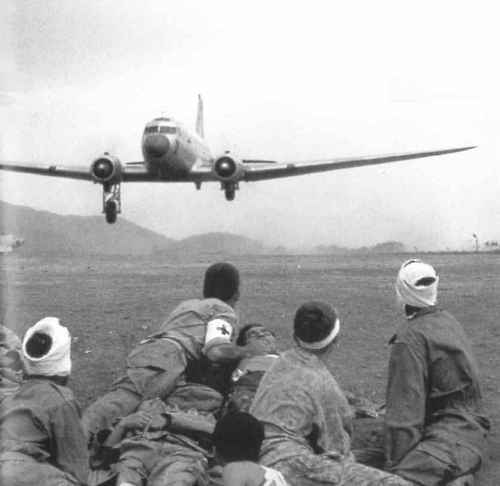
dien-bien-phu6

French Wounded awaiting Evacuation from Dien Bien Phu

These wars in Iraq and Afghanistan have been terribly costly in lives, treasure and they have lost almost all sense of public support. I have been in the military almost all of my adult life, over 32 years. I am also a historian and the son of a Vietnam Veteran. Thus, I feel special kinship with those that have fought in unpopular wars before me. French Indochina, Algeria and Vietnam, even the Soviet troops in Afghanistan before we ever went there. 

I am honored to have served with or known veterans of Vietnam, particularly the Marines that served at the Battle of Hue City, who are remembering the 44th anniversary of the beginning of that battle.  My dad also served in Vietnam at a place called An Loc. He didn’t talk about it much and I can understand having seen war myself. 

533506_10151366982462059_34997654_n

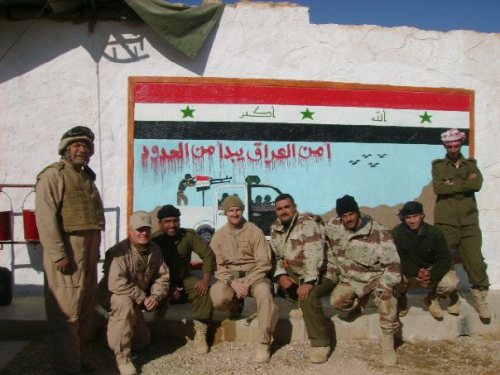
Border Fort Five “West Virginia” on Syrian Border

When I look up at the moonlit sky I think about seeing all of those stars and the brilliance of the moon over the western desert of Iraq near Syria. Somehow, when I see that brilliant sight it comforts me instead of frightens me. 

Tonight our Soldiers, Marines, Sailors and Airmen serve in harm’s way nearly 10,000 Americans in Afghanistan alone. We are sort back Iraq but Lord knows how things will turn out in the long run, and it appears that the fight with the Islamic State will be long and costly.  
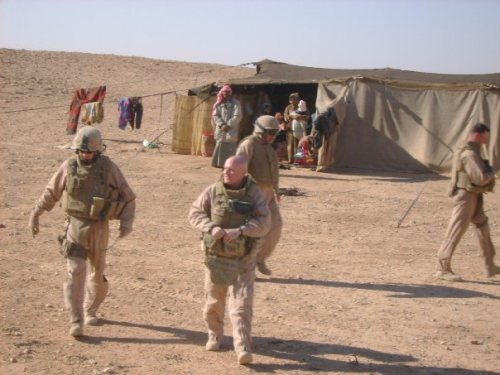
295_26912092058_3949_n

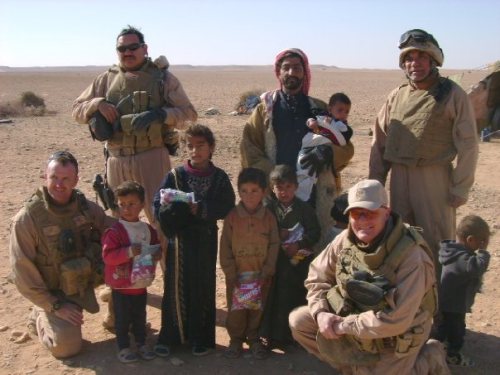
Bedouin Camp

Tonight I am thinking about them, as well as those men who fought in other unpopular wars which their nation’s government’s sent them. 

When I left Iraq I was traumatized. All that I had read about our Vietnam veterans, the French veterans of Indochina and Algeria and the Soviet veterans of Afghanistan resonated in my heart. The words of T. E. Lawrence, Smedley Butler, Erich Maria Remarque and Guy Sager also penetrated the shields I had put around my heart. 

So I wrote, and I wrote, and I still write. But tonight here is God in the empty Places.

262_29132262058_8844_n-2

God in the Empty Places. 

I have been doing a lot of reflecting on ministry and history over the past few months. While both have been part of my life for many years, they have taken on a new dimension after serving in Iraq. I can’t really explain it; I guess I am trying to integrate my theological and academic disciplines with my military, life and faith experience since my return.

481801_10151367001287059_1003164983_n1

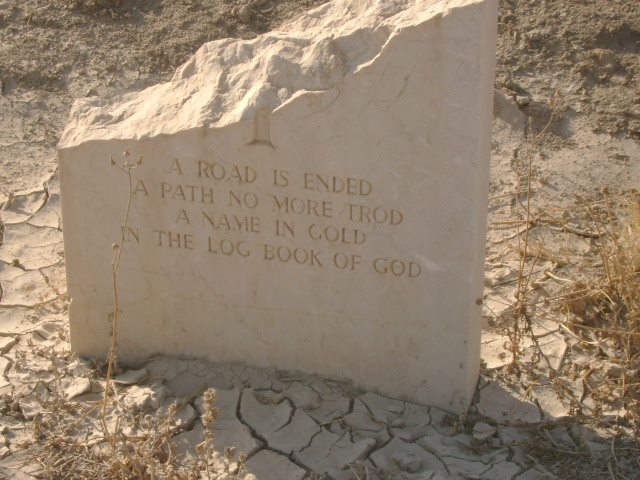
British Tombstone: Habbinyah Iraq

The Chaplain ministry is unlike civilian ministry in many ways. As Chaplains we never lose the calling of being priests, and as priests in uniform, we are also professional officers and go where our nations send us to serve our Soldiers, Sailors, Marines and Airmen. There is always a tension, especially when the wars that we are sent to are unpopular at home and seem to drag on without the benefit of a nice clear victory such as VE or VJ Day in World War II or the homecoming after Desert Shield and Desert Storm.
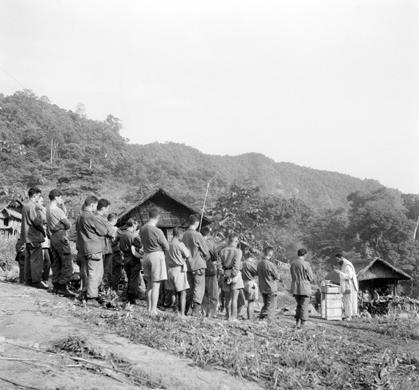
french-chaplain-and-soldiers-2

French Chaplain and Soldiers Indochina

It is my belief that when things go well and we have easy victories that it is easy for us to give the credit to the Lord and equally easy for others to give the credit to superior strategy, weaponry or tactics to the point of denying the possibility that God might have been involved. Such is the case in almost every war and Americans since World War Two have loved the technology of war seeing it as a way to easy and “bloodless” victory. In such an environment ministry can take on an almost “cheer-leading” dimension. It is hard to get around it, because it is a heady experience to be on a winning Army in a popular cause. The challenge here is to keep our ministry of reconciliation in focus, by caring for the least, the lost and the lonely, and in our case, to never forget the victims of war, especially the innocent among the vanquished, as well as our own wounded, killed and their families.
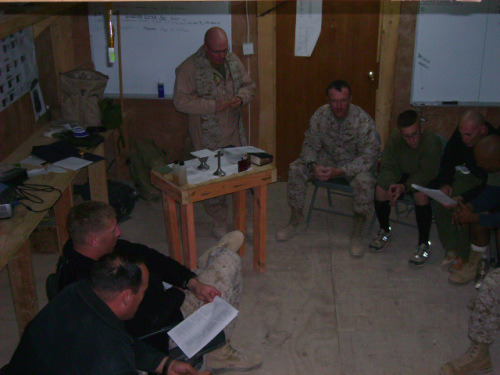
iraqchristmas

Mass at COP South and Blessing a Convoy at Ramadi
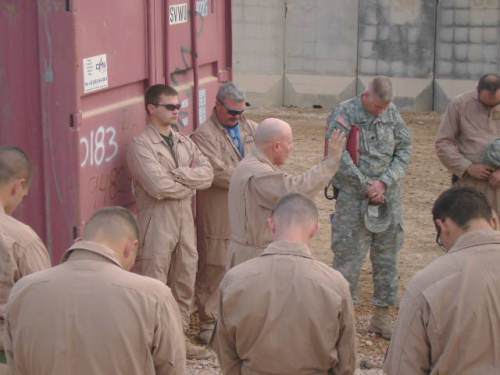
377

But there are other wars, many like the current conflict less popular and not easily finished. The task of chaplains in the current war, and similar wars fought by other nations is different. In these wars, sometimes called counter-insurgency operations, guerrilla wars or peace keeping operations, there is no easily discernible victory. These types of wars can drag on and on, sometimes with no end in sight. Since they are fought by volunteers and professionals, much of the population acts as if there is no war since it does often not affect them, while others oppose the war.

Likewise, there are supporters of war who seem more interested in political points of victory for their particular political party than for the welfare of those that are sent to fight the wars. This has been the case in about every war fought by the US since World War II. It is not a new phenomenon. Only the cast members have changed.
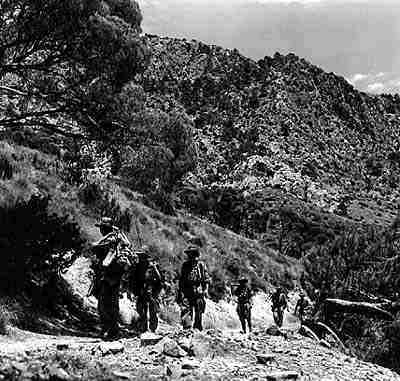
legion-algeria1

French Foreign Legion Paratroops Algeria

iraq-2007

Ready for Convoy: Ramadi to Al Asad

This is not only the case with the United States. I think that we can find parallels in other militaries. I think particularly of the French professional soldiers, the paratroops and Foreign Legion who bore the brunt of the fighting in Indochina, placed in a difficult situation by their government and alienated from their own people. In particular I think of the Chaplains, all Catholic priests save one Protestant, at the Battle of Dien Bien Phu, the epic defeat of the French forces that sealed the end of their rule in Vietnam. The Chaplains there went in with the Legion and Paras. They endured all that their soldiers went through while ministering the Sacraments and helping to alleviate the suffering of the wounded and dying. Their service is mentioned in nearly every account of the battle. During the campaign which lasted 6 months from November 1953 to May 1954 these men observed most of the major feasts from Advent through the first few weeks of Easter with their soldiers in what one author called “Hell in a Very Small Place.”
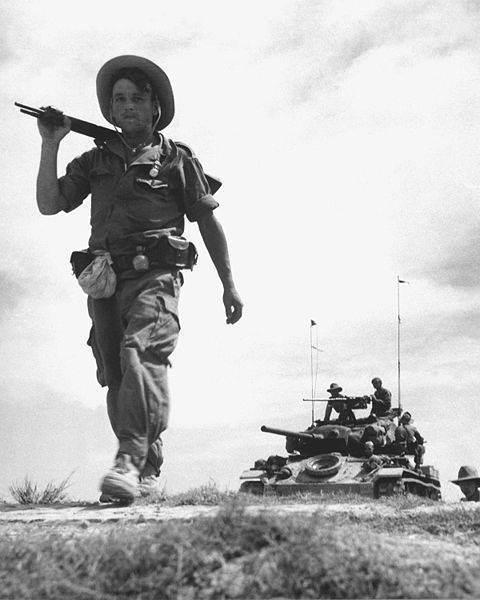
frenchforeignlegionairevtnamdod-2

French Foreign Legion in Indochina

n671902058_1153794_4301

Convoy: Route Uranium west of Ramadi

Another author describes Easter 1954: “In all Christendom, in Hanoi Cathedral as in the churches of Europe the first hallelujahs were being sung. At Dienbeinphu, where the men went to confession and communion in little groups, Chaplain Trinquant, who was celebrating Mass in a shelter near the hospital, uttered that cry of liturgical joy with a heart steeped in sadness; it was not victory that was approaching but death.” A battalion commander went to another priest and told him “we are heading toward disaster.” (The Battle of Dien Bien Phu, Jules Roy, Carroll and Graf Publishers, New York, 1984 p.239)
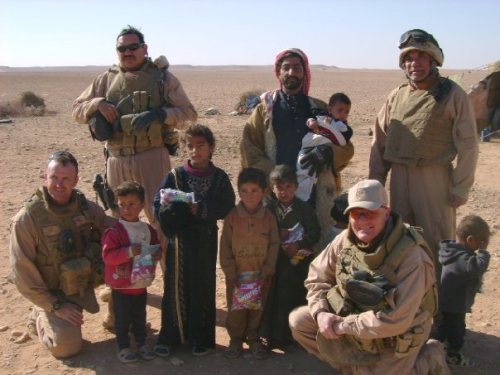
bedouin

Of course one can find examples in American military history such as Bataan, Corregidor, and certain battles of the Korean War to understand that our ministry can bear fruit even in tragic defeat. At Khe Sanh in our Vietnam War we almost experienced a defeat on the order of Dien Bien Phu. It was the tenacity of the Marines and tremendous air-support that kept our forces from being overrun.

You probably wonder where I am going with this. I wonder a little bit too. But here is where I think I am going. It is the most difficult of times; especially when units we are with take casualties and our troops’ sacrifice is not fully appreciated by a nation absorbed with its own issues.
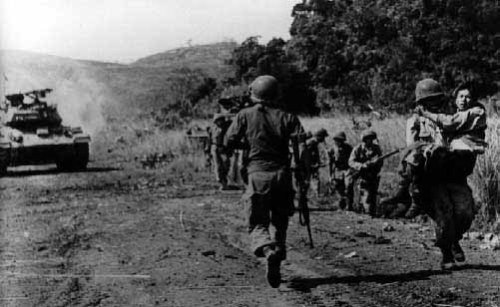
legion-indo-china

French Convoy Under Attack Indochina

1931281_53208642058_6303_n

Al Waleed

For the French the events and sacrifices of their soldiers during Easter 1954 was page five news in a nation that was more focused on the coming summer. This is very similar to our circumstances today because it often seems that own people are more concerned about economic considerations and the latest in entertainment news than what is going on in Iraq or Afghanistan.

french-at-dien-bien-phu

Commanders of a Doomed Force: French Commanders at Dien Bien Phu
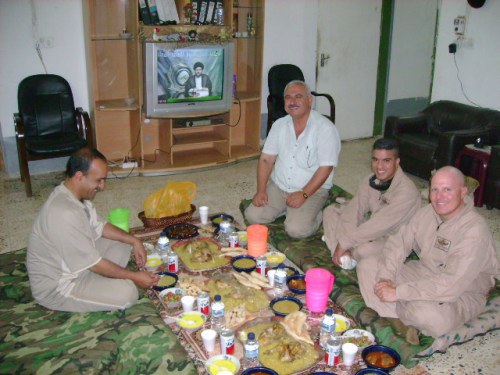
dinner-w-bg-sabah

With Brigadier General Sabah, Interpreter and my Assistant Nelson Lebron: Ramadi

The French soldiers in Indochina were professionals and volunteers, much like our own troops today. Their institutional culture and experience of war was not truly appreciated by their own people, or by their government which sent them into a war against an opponent that would sacrifice anything and take as many years as needed to secure their aim, while their own countrymen were unwilling to make the sacrifice and in fact had already given up their cause as lost. Their sacrifice would be lost on their own people and their experience ignored by the United States when we sent major combat formations to Vietnam in the 1960s.

In a way the French professional soldiers of that era, as well as British colonial troops before them have more in common with our current all volunteer force than the citizen soldier heroes of the “Greatest Generation.” Most of them were citizen soldiers who did their service in an epic war and then went home to build a better country as civilians. We are now a professional military and that makes our service a bit different than those who went before us.

943043_10151694525692059_632653331_n

Advisers at COP South

Yet it is in this very world that we minister, a world of volunteers who serve with the highest ideals. We go where we are sent, even when it is unpopular. It is here that we make our mark; it is here that we serve our Soldiers, Sailors, Marines and Airmen. Our duty is to bring God’s grace, mercy and reconciliation to men and women, and their families who may not see it anywhere else. Likewise we are always to be a prophetic voice within the ranks.

When my dad was serving in Vietnam in 1972 I had a Sunday school teacher tell me that he was a “Baby Killer.” It was a Catholic Priest and Navy Chaplain who showed me and my family the love of God when others didn’t. In the current election year anticipate that people from all parts of the political spectrum will offer criticism or support to our troops. Our duty is to be there as priests, not be discouraged in caring for our men and women and their families because most churches, even those supportive of our people really don’t understand the nature of our service or the culture that we represent. We live in a culture where the military professional is in a distinct minority group upholding values of honor, courage, sacrifice and duty which are foreign to most Americans. We are called to that ministry in victory and if it happens someday, defeat. In such circumstances we must always remain faithful.

flight-to-baghdad-4-me

For those interested in the French campaign in Indochina it has much to teach us. Good books on the subject include The Last Valley by Martin Windrow, Hell in a Very Small Place by Bernard Fall; The Battle of Dien Bien Phu by Jules Roy; and The Battle of Dien Bien Phu- The Battle America Forgot by Howard Simpson. For a history of the whole campaign, read Street Without Joy by Bernard Fall. I always find Fall’s work poignant, he served as a member of the French Resistance in the Second World War and soldier later and then became a journalist covering the Nuremberg Trials and both the French and American wars in Vietnam and was killed by what was then known as a “booby-trap” while covering a platoon of U.S. Marines.

Bundeswehr zeigt "Stalingrad"-Ausstellung

There is a picture that has become quite meaningful to me called the Madonna of Stalingrad. It was drawn by a German chaplain-physician named Kurt Reuber at Stalingrad at Christmas 1942 during that siege. He drew it for the wounded in his field aid station, for most of whom it would be their last Christmas. The priest would die in Soviet captivity and the picture was given to one of the last officers to be evacuated from the doomed garrison. It was drawn on the back of a Soviet map and now hangs in the Kaiser Wilhelm Memorial Church in Berlin where it is displayed with the Cross of Nails from Coventry Cathedral as a symbol of reconciliation. I have had it with me since before I went to Iraq. The words around it say: “Christmas in the Cauldron 1942, Fortress Stalingrad, Light, Life, Love.” I am always touched by it, and it is symbolic of God’s care even in the midst of the worst of war’s suffering and tragedy. I have kept a a copy hanging over my desk in my office since late 2008. It still hangs in my new office.

Peace

Padre Steve+


Leave a comment

Filed under christian life, faith, History, iraq,afghanistan, middle east, Military, shipmates and veterans, Tour in Iraq

They Thanked us Kindly and Made Their Peace: Veteran’s Day 2014

481801_10151367001287059_1003164983_n

“We were fond together because of the sweep of open places, the taste of wide winds, the sunlight, and the hopes in which we worked. The morning freshness of the world-to-be intoxicated us. We were wrought up with ideas inexpressible and vaporous, but to be fought for. We lived many lives in those whirling campaigns, never sparing ourselves: yet when we achieved and the new world dawned, the old men came out again and took our victory to remake in the likeness of the former world they knew. Youth could win, but had not learned to keep, and was pitiably weak against age. We stammered that we had worked for a new heaven and a new earth, and they thanked us kindly and made their peace.”

T.E. Lawrence

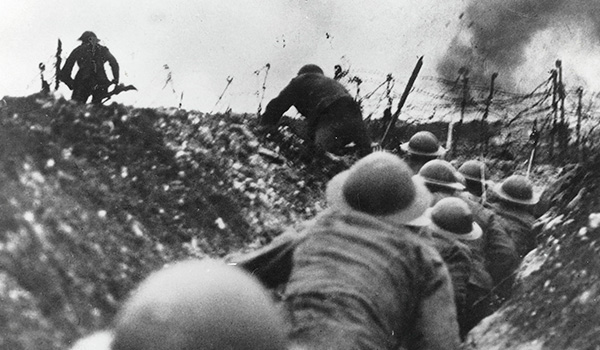
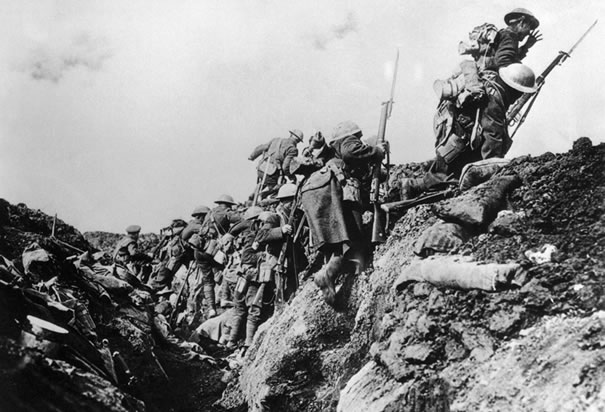
In November 1914 millions of soldiers were fighting in horrible conditions throughout Europe. From the English Channel to Serbia, Poland and Galicia; French, British, German, Austro-Hungarian, Serbian and Russian troops engaged each other in bloody and often pointless battles. Often commanded by old men who did not understand how the character of war had changed, millions were killed, wounded, maimed or died of disease.

After four years, with the Empires that were at the heart of the war’s outbreak collapsing one after the other there was an armistice. On the eleventh  hour, of the eleventh day, of the eleventh month the shooting stopped and the front lines quieted. By then over 20 million people, soldiers and civilians alike had died. Millions more had been wounded, captured, seen their homes and lands devastated or been driven from there ancestral homelands, never to return.

The human cost of that war was horrific. Over 65 million soldiers were called up on all sides of the conflict, of which nearly 37.5 million became casualties, some 57.5% of all soldiers involved. Some countries saw the flower of their manhood, a generation decimated. Russia sustained over 9 million casualties of the 12 million men they committed to the war, a casualty rate of over 76%. The other Allied powers suffered as well.  France lost 6.4 million of 8.5 million, or 73%, Great Britain 3.1 million of nearly 9 million, 35%; Italy 2.2 million of 5.6 million, 39%. Their opponents, Germany, Austria-Hungary and the Ottoman Empire suffered greatly. Germany sustained 7.1 million casualties of 11 million men called up, or nearly 65%, Austria 7 million of 7.8 million, 90% and the Ottoman Empire 975,000 of 2.8 million or 34% of the soldiers that they sent to war.

It was supposed to be the War to end all War…but it wasn’t, it was the mother of countless wars.

pic_giant_021814_SM_Lessons-of-World-War-1

It has been a century since that bleak November of 1914, and ninety-six years since the time where for a brief moment, people around the world, but especially in Europe dared to hope for a lasting and just peace. But that would not be the case…

The victors imposed humiliating peace terms on the vanquished, be it the Germans on the Russians, or the Allies on Germany and her partners. The victors divided up nations, drew up borders without regard to historic, ethnic, tribal or religious sensibilities. But then, it was about the victors imposing themselves and their quest for domination, expanding colonial empires and controlling natural resources rather than seeking a just and lasting peace. The current war against the Islamic State is one of the wars spawned by the Sykes-Picot agreement which divided the Middle East between the French and the British at the end of the war. It was a war that keeps on giving.

Of course we have known the disastrous results of their hubris, a hubris still carried on by those who love and profit by war…war without end which continues seemingly with no end in sight.

I am a veteran of Iraq and Operation Enduring Freedom, as well as the Bosnia mission and the Cold War. My dad was a Vietnam veteran who enlisted during the Korean War. I serve because it is the right thing to do, not because I find war romantic or desirable. It is as General William Tecumseh Sherman said “Hell.” If called to go back to Iraq, where I left so much of my soul, I would in a heartbeat.

canadian-soldiers-going-over-trench

Today we pay our day of homage to our honor veterans, especially in the United States, Great Britain, Canada and France. But sometimes it seems so hollow, for in all of our countries those that serve are a tiny minority of those eligible to serve, who are much of the time ignored or even scorned by those that feel that providing for them after they have served is too much of a burden on the wealthy who make their profits on the backs of these soldiers, sailors, marines and airmen.

I have walked about since returning from Iraq often in a fog, trying to comprehend how a country can be at war for so long, and there is such a gap between the few who serve and the vast majority for whom war is an abstract concept happening to someone else, in places far away, and whose experience of war is its glorification in video games. Personally I find that obscene, and feel that I live in a foreign world. Erich Maria Remarque wrote in All Quiet on the Western Front: 

“I imagined leave would be different from this. Indeed, it was different a year ago. It is I of course that have changed in the interval. There lies a gulf between that time and today. At that time I still knew nothing about the war, we had been only in quiet sectors. But now I see that I have been crushed without knowing it. I find I do not belong here any more, it is a foreign world.”

Similarly Guy Sager wrote in his classic The Forgotten Soldier: 

“In the train, rolling through the sunny French countryside, my head knocked against the wooden back of the seat. Other people, who seemed to belong to a different world, were laughing. I couldn’t laugh and couldn’t forget.”

Major General Gouverneur Warren wrote to his wife two years after the American Civil War:

“I wish I did not dream that much. They make me sometimes dread to go to sleep. Scenes from the war, are so constantly recalled, with bitter feelings I wish to never experience again. Lies, vanity, treachery, and carnage.”

Sometimes I find it obscene that retailers and other corporations have turned this solemnity into another opportunity to profit. But then why should I expect different? Such profiteers have been around from the beginning of time, but then maybe I still am foolish enough to hope for something different. Please don’t get me wrong, I do appreciate the fact that some businesses attempt in at least some small way to thank veterans. I also know there are many businesses and business owners who do more than offer up tokens once a year, by putting their money where their mouth is to support returning veterans with decent jobs and career opportunities; but for too many others the day is just another day to increase profits while appearing to “support the troops.”

As Marine Corps legend and two time Medal of Honor winner Major General Smedley Butler Wrote:

“What is the cost of war? what is the bill? “This bill renders a horrible accounting. Newly placed gravestones. Mangled bodies. Shattered minds. Broken hearts and homes. Economic instability. Depression and all of its attendant miseries. Back -breaking taxation for generations and generations. For a great many years as a soldier I had a suspicion that war was a racket; not only until I retired to civilian life did I fully realize it….”

But the marketers of war do not mind, almost Orwellian language is used to lessen its barbarity. Dave Grossman wrote in his book On Killing:

“Even the language of men at war is the full denial of the enormity of what they have done. Most solders do not “kill,” instead the enemy was knocked over, wasted, greased, taken out, and mopped up. The enemy is hosed, zapped, probed, and fired on. The enemy’s humanity is denied, and he becomes a strange beast called a Jap, Reb, Yank, dink, slant, or slope. Even the weapons of war receive benign names- Puff the Magic Dragon, Walleye, TOW, Fat Boy, Thin Man- and the killing weapon of the individual soldier becomes a piece or a hog, and a bullet becomes a round.”

There is even a cottage industry of war buffs, some of who are veterans seeking some kind of camaraderie after their service, but most of whom have little or know skin in the real game, and at no inconvenience to themselves. As far as the veterans I understand, but as for the others I can fully understand the words of Guy Sager, who wrote:

“Too many people learn about war with no inconvenience to themselves. They read about Verdun or Stalingrad without comprehension, sitting in a comfortable armchair, with their feet beside the fire, preparing to go about their business the next day, as usual…One should read about war standing up, late at night, when one is tired, as I am writing about it now, at dawn, while my asthma attack wears off. And even now, in my sleepless exhaustion, how gentle and easy peace seems!”

dscn0064

It was to be the War to end all war” but I would venture that it was the war that birthed countless wars, worse tyrannies and genocides; That war, which we mark the end of today, is in a very real and tragic sense, the mother of the wars that have followed. War without end…Amen.

As so to my friends, my comrades and all that served I honor you, especially those that I served alongside. We are a band of brothers, no matter what the war profiteers do, no matter how minuscule our number as compared to those who do not know what we do, and those who never will.  We share a timeless bond and no-one can take that away.

n671902058_1153829_4642-2

I close with the words of a German General from the television mini-series Band of Brothers which kind of sums up how I feel today. The American troops who have fought so long and hard are watching the general address his troops after their surrender. An American soldier of German-Jewish descent translates for his comrades the words spoken by the German commander, and it as if the German is speaking for each of them as well.

Men, it’s been a long war, it’s been a tough war. You’ve fought bravely, proudly for your country. You’re a special group. You’ve found in one another a bond that exists only in combat, among brothers. You’ve shared foxholes, held each other in dire moments. You’ve seen death and suffered together. I’m proud to have served with each and every one of you. You all deserve long and happy lives in peace.

In hopes of peace,

Padre Steve+

Leave a comment

Filed under History, Military, News and current events, philosophy, Political Commentary, shipmates and veterans, world war one

The Bond: Veteran’s Day 2014

all who served

Honor to the soldier and sailor everywhere, who bravely bears his country’s cause. Honor, also, to the citizen who cares for his brother in the field and serves, as he best can, the same cause. Abraham Lincoln

I always become a bit more thoughtful and quite often emotional  around Veterans Day and Memorial Day.  I’ve been in the military for over 30 years now.  I enlisted in the National Guard while in college and entered Army ROTC back on August 25th 1981.  Since then it has been to quote Jerry Garcia “a long strange trip.”  During that trip I learned a lot from the veterans who I am blessed to have encountered on the way, men and women who have touched my life in truly special ways.

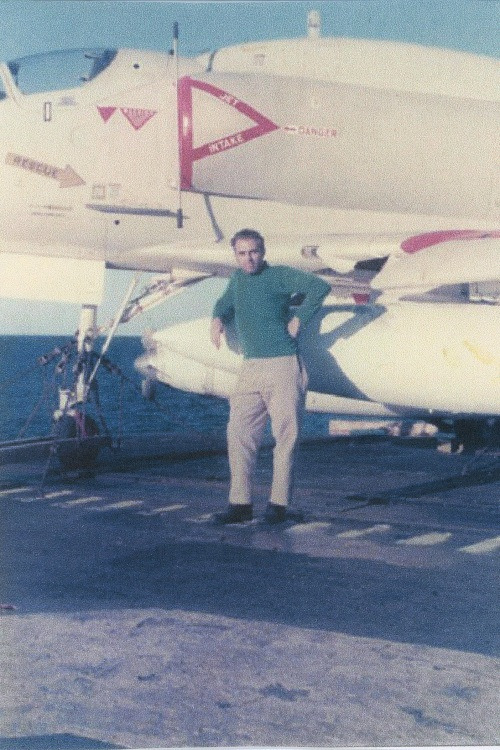
dad-on-hancock

My Dad: Chief Petty Officer Carl Dundas aboard the USS Hancock CVA 19 circa 1971-72

I come from a Navy family. My dad served twenty years in the Navy.  Growing up in a Navy family in the 1960s and 1970s was an adventure for me and that Navy family that surrounded us then remained part of my family’s life long after.  My mom and dad remained in contact with friends that they served with or were stationed with, and now many of them are elderly and a good number have passed away.  Even so my mom, now a widow stays in regular contact with a number of her Navy wife “sisters.”

My dad retired in 1974 as a Chief Petty Officer and did time surrounded in the South Vietnamese city of An Loc when it was surrounded by the North Vietnamese for 80 days in 1972.  He didn’t talk about it much when he came back; in fact he came back different from the war.  He probably suffered from PTSD.  All the markers were there but we had no idea about it back then, after all he was in the Navy not the Army.  I had friends whose dad’s did not return from Vietnam and saw how Vietnam veterans were treated by the country as a whole including some members of the Greatest Generation.  They were not welcomed home and were treated often with scorn, even by veterans who had fought in the “real wars” of World War II and Korea.  Instead of being depicted a Americans doing their best in a war that few supported they were demonized in the media and in the entertainment industry for many years afterwards.

My dad never made a big deal out of his service but he inspired me to pursue a career in the military by being a man of honor and integrity.

It was the early Navy family experience that shaped much of how I see the world and is why I place such great value on the contributions of veterans to our country and to me.  That was also my introduction to war; the numbers shown in the nightly news “body count” segment were flesh and blood human beings.

breedlove-ness2

My second view of war came from the Veterans of Vietnam that I served with in the National Guard and the Army.  Some of these men served as teachers and mentors.  LCDR Jim Breedlove and Senior Chief John Ness at the Edison High School Naval Junior ROTC program were the first who helped me along.  Both have passed away but I will never forget them.  Commander Breedlove was someone that I would see every time that I went home as an adult. His sudden death the week before I returned from Iraqshook me.  I have a post dedicated to them at this link.  (In Memorium: Chief John Ness and LCDR Jim Breedlove USN )

Colonel Edgar Morrison was my first battalion commander.  He was the most highly decorated member of the California National Guard at that time and had served multiple tours in Vietnam.  He encouraged me as a young specialist and officer cadet and showed a tremendous amount of care for his soldiers.  Staff Sergeant’s Buff Rambo and Mickey Yarro taught me the ropes as a forward observer and shared many of their Vietnam experiences. Buff had been a Marine dog handler on the DMZ and Mickey a Forward Observer.

The Senior NCOs that trained me while in the Army ROTC program at UCLA and Fort Lewis had a big impact. All were combat veterans that had served in Vietnam.  Sergeant First Class Harry Zilkan was my training NCO at the UCLA Army ROTC program.  He was a Special Forces Medic with 7th Group in Vietnam.  He still had part of a VC bayonet embedded in his foot.  He received my first salute as a newly commissioned Second Lieutenant as well as a Silver Dollar.  I understand that after the Army he became a fire fighter.  He had a massive heart attack on the scene of a fire and died a few years later from it.  Sergeant Major John Butler was our senior enlisted advisor at UCLA.  An infantryman he served with the 173rd Airborne in Vietnam.  Sergeant First Class Harry Ball was my drill sergeant at the ROTC pre-commissioning camp at Fort Lewis Washington in 1982.  He was a veteran of the Special Forces and Rangers and served multiple tours in Vietnam.  Though he only had me for a summer he was quite influential in my life, tearing me apart and then building me back up.  He was my version of Drill Sergeant Foley in An Officer and a Gentleman. Like Zack Mayo played by Richard Gere in the movie I can only say: Drill Sergeant “I will never forget you.”

As I progressed through my Army career I encountered others of this generation who also impacted my life. First among them was First Sergeant Jim Koenig who had been a Ranger in the Mekong Delta.  I was the First Sergeant that I would measure all others by.  Once during an ARTEP we were aggressed and all of a sudden he was back in the Delta. This man cared so much for his young soldiers in the 557th Medical Company.   He did so much for them and I’m sure that those who served with him can attest to this as well as me. Jim had a brick on his desk so that when he got pissed he could chew on it.   He was great.  He played guitar for the troops and had a song called “Jane Fonda, Jane Fonda You Communist Slut.” It was a classic.  He retired after he was selected to be a Command Sergeant Major because he valued his wife and family more than the promotion.  It hurt him to do this, but he put them first. Colonel Donald Johnson was the commander of the 68th Medical Group when I got to Germany in January 1984.  Colonel “J” as well all called him was one of the best leaders I have seen in 28 years in the military.  He knew everything about everything and his knowledge forced us all to learn and be better officers and NCOs.  On an inspection visit you could always find him dressed in coveralls and underneath a truck verifying the maintenance done on it.  He served a number of Vietnam tours.  He died of Multiple Myeloma and is buried at Arlington.  Chaplain (LTC) Rich Whaley who had served as a company commander in Vietnam on more than one occasion saved my young ass at the Army Chaplain School.  No really he saved my career at least twice, and kept me out of big trouble on both occasions. Personally I don’t know too many senior chaplains who would put themselves on the line for a junior chaplain the way that Rich did for me. He remains a friend and is the Endorsing Agent for the Church of Jesus Christ of Latter Day Saints. As a Mormon he is one of the most “Christian” men that I have ever met.  I know some Christians who might have a hard time with that, but Rich demonstrated every trait of a Christian who loved God and his neighbor.

When I was the Installation Chaplain at Fort Indiantown Gap PA I was blessed to have some great veterans in my Chapel Parish.  Major General Frank Smoker flew 25 missions as a B-17 pilot over Germany during the height of the air war in Europe. He brought his wonderful wife Kate back from England with him and long after his active service was over he remained a vital part of the military community until his death in 2010.  Sergeant Henry Boyd was one of the 101st Airborne soldiers epitomized in Band of Brothers. He had a piece of shrapnel lodged next to his heart from the Battle of the Bulge until the day he died and was honored to conduct his funeral while stationed at Indiantown Gap. Colonel Walt Swank also served in Normandy.  Major Scotty Jenkes was an Air Force pilot in Vietnam flying close air support while Colonel Ray Hawthorne served several tours both in artillery units and as an adviser in 1972 and was with General Smoker a wonderful help to me as I applied to enter the Navy while CWO4 Charlie Kosko flew helicopters in Vietnam.  All these men made a deep impact on me and several contributed to my career in very tangible ways.

My life more recently has been impacted by others. Since coming into the Navy I have been blessed to serve with the Marines and Sailors of the 2nd Combat Engineer Battalion and Lieutenant Colonel T D Anderson, 1st Battalion 8thMarines and Lieutenant Colonel Desroches, 3rd Battalion 8th Marines and Colonel Lou Rachal and Headquarters Battalion 2nd Marine Division and Colonel, now Major General Richard Lake.   My friends of the veterans of the Battle of Hue City including General Peter Pace, Barney Barnes, Tony “Limey” Cartilage, Sergeant Major Thomas and so many others have become close over the years, especially after I did my time in Iraq. They and all the Vietnam vets, including the guys from the Vietnam Veterans of America like Ray and John who manned the beer stand behind the plate at Harbor Park all mean a lot to me.  My friends at Marine Security Forces Colonel Mike Paulovich and Sergeant Major Kim Davis mean more than almost any people in the world.  We traveled the globe together visiting our Marines.  Both of these men are heroes to me as well as friends, Colonel Paulovich was able to administer the oath of office to me when I was promoted to Commander.

hue city boarding team

Finally there are my friends and brothers that I have served with at sea on USS HUE CITY during Operation Enduring Freedom and the advisers on the ground in Al Anbar mean more than anything to me. Perhaps the most important is my bodyguard, RP1 Nelson Lebron, who helped keep me safe and accompanied me all over the battlefield.  Nelson who has done Iraq three times, Afghanistan, Lebanon and the Balkans is a hero.  The men and women of Navy EOD who I served with from 2006-2008 have paid dearly in combating IEDs and other explosive devices used against us in Iraq and Afghanistan are heroes too.  There is no routine mission for EOD technicians.  Then there are the friends that I serve with in Navy Medicine, medical professionals who care for our Sailors, Marines, Soldiers and Airmen, family members and veterans at home and in the thick of the fighting in Afghanistan.

bedouin

There are many from my time in Navy Medicine who have meant so much to me. Chaplain Jeff Seiler, an Episcopal Priest at Naval Medical Center Portsmouth and Father Fred Elkin, a retired Navy Chaplain who served there helped keep me together during the darkest time of my life after Iraq, as did many of the physicians and nurses that I worked with there, and many of them were not Christians, but they helped and cared for me. That continued at Naval Hospital Camp LeJeune, where I served as Director of Pastoral Care. At Lejeune I was fortunate to serve with Duke Quarles, a civilian pastoral counselor and retired Navy Chaplain. Duke was a rock for me there, as was Command Master Chief Ed Marino, one of the most spiritual and kind people that I know.

IMG_0230

I now serve in a wonderful place, the Joint Forces Staff College. I am surrounded by great people here, from all the services of our armed forces, active duty and retired. I get to do wonderful things, and despite having gone through absolute hell dealing with the military mental health system this year, these folks have stood by me, especially Commander Lisa Rose, our staff nurse. She is a highly skilled nurse and a courageous woman. For eighteen years of her career she served always wondering if someone was going to try to persecute, prosecute or try to run her out the Navy because she is a lesbian. For years she could not take her spouse to official functions, she could not even take a chance on being seen in public by someone with her spouse, even under “don’t ask don’t tell.” She is now able to do that, but truthfully I cannot imagine what it would be like to want to serve your country, your shipmates and your God, while always knowing that anyone could end that simply because they didn’t approve. I am glad that Lisa and my other gay and lesbian friends in the military are able to openly serve.

There are others who I have served alongside who have died while in the service of the country, or after their service had ended. Some, like Staff Sergeant Ergin Osman who I served with at 3rd Battalion 8th Marines, were killed in Afghanistan, others like Commander Marsha Handley, a nurse I served with in the ICU at Portsmouth, who was one of the people who helped hold me together when I was so fragile, died of complications of chemotherapy treatment. Damage Control Specialist 2nd Class Ray Krolikowski, who I served with aboard USS Hue City died yesterday eleven years after suffering an injury that left him a quadriplegic in 2003, and some like Captain Tom Sitsch who was my last Commodore at EOD Group Two, and Father Dennis Rocheford died by their own hand after being tormented by the demons of PTSD and TBI. Both of them were real heroes. I could mention so many more, but will end there because I am getting a bit emotional.

There is a closing thought from the television mini-series Band of Brothers which kind of sums up how I feel. The American troops who have fought so long and hard are watching a German general address his troops after the German surrender. An American soldier of German-Jewish descent translates for his comrades the words spoken by the German commander, and it as if the German is speaking for each of them as well.

Men, it’s been a long war, it’s been a tough war. You’ve fought bravely, proudly for your country. You’re a special group. You’ve found in one another a bond that exists only in combat, among brothers. You’ve shared foxholes, held each other in dire moments. You’ve seen death and suffered together. I’m proud to have served with each and every one of you. You all deserve long and happy lives in peace.

So for me, I have a bond, a special bond with so many of my brothers and sisters who volunteer to serve. Today we number less than one percent of the nation, a tiny number of people in comparison to the size of our nation and the commitments that our leaders have engaged us.

Unless by some chance I am selected for Captain, I plan to retire from the Navy at the end of this assignment. As Sergeant Murtaugh (Danny Glover) said in the movie Lethal Weapon “I’m getting too old for this shit.” The military is a young person’s game, and I am now older than almost everyone on active duty, and have been in the military longer than almost everyone that I know, including many people senior in rank to me. I am a dinosaur, and sometimes a cranky one at that when it comes to dealing with the bureaucracy of the military.

I give thanks for all them men that I mention in this post, especially my dad. For the countless others that are not mentioned by name please know that I thank God for all of you too. Someone once said “A ‘Special Day’ once a year creates an excuse for neglect on the other 365 days for mothers, fathers & veterans” Please do not let that continue to happen, please do not just look at this as time off, or if you are a corporation or retailer use this day to boost your sales by acting like you care.

I do hope that people will remember the Veterans that impacted their lives this and every day. Some may have been the men and women that we served with, perhaps a parent, sibling or other relative, maybe a childhood friend, a teacher, coach or neighbor. As we pause for a moment this Friday let us honor those who gave their lives in the defense of liberty in all of the wars of our nation. They have earned it and please thank any veteran that you know in some small way this weekend.

Peace

Padre Steve+


Leave a comment

Filed under iraq,afghanistan, Military, PTSD, remembering friends, shipmates and veterans

Memorial Day 2014: Remembering the Memorial Day Order of 1868

memorial-day-traditions_1399868491

Oliver Wendell Holmes ended his Decoration Day 1884 speech:

But grief is not the end of all…Our dead brothers still live for us, and bid us think of life, not death, — of life to which in their youth they lent the passion and glory of the spring. As I listen, the great chorus of life and joy begins again, and amid the awful orchestra of seen and unseen powers and destinies of good and evil our trumpets sound once more a note of daring, hope, and will.

Frederick Douglass noted the same year in his Decoration Day Speech:

“Dark and sad will be the hour to this nation when it forgets to pay grateful homage to its greatest benefactors. The offering we bring to-day is due alike to the patriot soldiers dead and their noble comrades who still live; for, whether living or dead, whether in time or eternity, the loyal soldiers who imperiled all for country and freedom are one and inseparable.” From Frederick Douglass’ Memorial Day Speech 1884

The words of both men are something that we should not forget as we remember and honor all who have given the “last full measure of devotion to duty.”

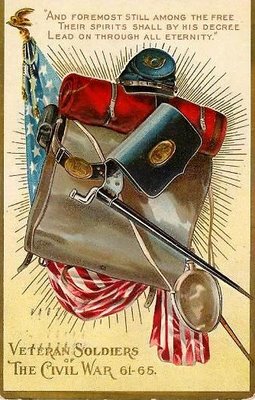
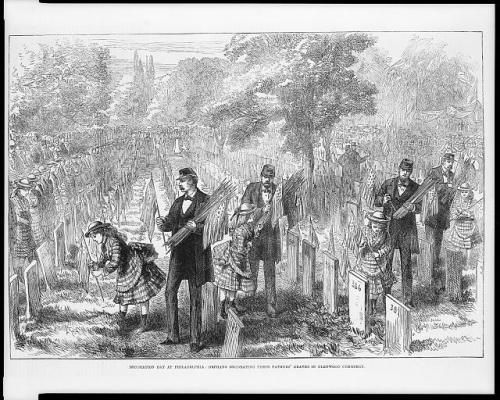
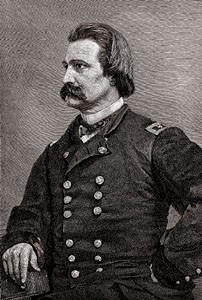
It was after the great bloodletting known as the American Civil War that Memorial Day, originally known as Decoration Day was established. The first observance was made by the recently freed slaves of Charleston South Carolina who honored the memory of the Union Soldiers who had died at the Washington Racecourse Prison Camp on May 1st 1865.  Other celebrations began around the country in May and June of 1866. By 1868 the Commander of the Grand Army of the Republic Union Veterans association General John Logan issued an order directing that the 30th of May 1868 be designated to the memory of the Union Soldiers, Sailors and Marines who had given their lives in the defense of the Union.

decoration-day1

Since its establishment the holiday has grown to encompass the honored dead of all American wars.  However its roots were in the Civil War, a war that claimed the lives of between 600,000 and 700,000 American military personnel on both sides of the conflict. It is hard to imagine that on one, September 17th 1862 that over 23,000 Union and Confederate Soldiers were killed, wounded or missing. At Gettysburg more men were killed and wounded than in the entirety of the Iraq and Afghanistan wars. Two percent of the population was killed in the war. To put that in perspective that casualty rate would involve the deaths of more than 6 million soldiers, well over twice as many men and women as currently serve on active duty and in the reserve components. Abraham Lincoln noted in his Gettysburg Address the importance of not forgetting those men:

“It is rather for us to be here dedicated to the great task remaining before us — that from these honored dead we take increased devotion to that cause for which they gave the last full measure of devotion — that we here highly resolve that these dead shall not have died in vain — that this nation, under God, shall have a new birth of freedom — and that government of the people, by the people, for the people, shall not perish from the earth.”


DSCN8774

General Logan’s order is remarkable in its frankness and the understanding of the war in the immediate context of its conclusion.  In 1868 the day would be observed at 183 cemeteries in 27 States and the following year over 300 cemeteries. Michigan was the first state to make the day a holiday and by 1890 all states in the North had made it so. In the South there were similar observances but the meaning attributed to the events and the sacrifices of the Soldiers of both sides was interpreted differently. In the North it was about preserving the Union and in the South the interpretation of the Lost Cause.  Yet in both regions and all states, the surviving Soldiers, family members and communities honored their dead.

This Memorial Day we will honor all that have fallen but in our mind are the few that fight our current wars, wars that unlike that terrible Civil War, the majority of the population does not experience.

The order of the Grand Army of the Republic establishing Memorial Day is posted below.

Peace

Padre Steve+

logan_engraving

HEADQUARTERS GRAND ARMY OF THE REPUBLIC, General Orders No.11, WASHINGTON, D.C., May 5, 1868

I. The 30th day of May, 1868, is designated for the purpose of strewing with flowers or otherwise decorating the graves of comrades who died in defense of their country during the late rebellion, and whose bodies now lie in almost every city, village, and hamlet church-yard in the land. In this observance no form of ceremony is prescribed, but posts and comrades will in their own way arrange such fitting services and testimonials of respect as circumstances may permit.

We are organized, comrades, as our regulations tell us, for the purpose among other things, “of preserving and strengthening those kind and fraternal feelings which have bound together the soldiers, sailors, and marines who united to suppress the late rebellion.” What can aid more to assure this result than cherishing tenderly the memory of our heroic dead, who made their breasts a barricade between our country and its foes? Their soldier lives were the reveille of freedom to a race in chains, and their deaths the tattoo of rebellious tyranny in arms. We should guard their graves with sacred vigilance. All that the consecrated wealth and taste of the nation can add to their adornment and security is but a fitting tribute to the memory of her slain defenders. Let no wanton foot tread rudely on such hallowed grounds. Let pleasant paths invite the coming and going of reverent visitors and fond mourners. Let no vandalism of avarice or neglect, no ravages of time testify to the present or to the coming generations that we have forgotten as a people the cost of a free and undivided republic.

If our eyes grow dull, other hands slack, and other hearts cold in the solemn trust, ours shall keep it well as long as the light and warmth of life remain to us.

Let us, then, at the time appointed gather around their sacred remains and garland the passionless mounds above them with the choicest flowers of spring-time; let us raise above them the dear old flag they saved from dishonor; let us in this solemn presence renew our pledges to aid and assist those whom they have left among us a sacred charge upon a nation’s gratitude, the soldier’s and sailor’s widow and orphan.

II. It is the purpose of the Commander-in-Chief to inaugurate this observance with the hope that it will be kept up from year to year, while a survivor of the war remains to honor the memory of his departed comrades. He earnestly desires the public press to lend its friendly aid in bringing to the notice of comrades in all parts of the country in time for simultaneous compliance therewith.

III. Department commanders will use efforts to make this order effective.

By order of

JOHN A. LOGAN,
Commander-in-Chief

N.P. CHIPMAN,
Adjutant General

Official:
WM. T. COLLINS, A.A.G.

Leave a comment

Filed under civil war, History, Military, shipmates and veterans

Rest In Peace Captain Tom Sitsch USN

481801_10151367001287059_1003164983_n-2

Captain Tom Sitsch died by his own hand on January 6th outside a hospital Emergency Room in Littleton New Hampshire. Captain Sitsch was loved and respected by his sailors. As an Explosive Ordnance Demolition officer and expert he was deployed into harms way many times. As the commanding officer of Task Force Troy, a Joint Task Force in Iraq his expertise and leadership helped save countless lives from Improvised Explosive Devices or as they are more familiarly known “IEDs.”

He was my last Commodore at EOD Group Two in Norfolk. He took command from Captain, now Admiral Frank Morneau. Both men mean a lot to me. They were leaders of men and care for those who they commanded. When I collapsed from the effects of PTSD in June 2008 then Commodore Morneau made sure that I got the help I needed and worked with our Medical Officer to make it happen. Commodore Sitsch was one of the first men, maybe the first to ask me the hard question: “where does a chaplain go for help?”

Both were men of compassion, and Captain Sitsch’s suicide has stunned me. I learned of his death tonight on Facebook as I had lost track of him after he was retired from the Navy in 2009.

Evidently his demons were too much for him. He suffered from PTSD, which considering his vocation is not surprising. In 2009 he was relieved of his command and forced to retire after he was caught shoplifting a pair of shoes from a local Navy Exchange. Following his retirement he struggled and was in and out of trouble. He was estranged from his wife, and he was forbidden to enter the state she lived by a court order. Four weeks before he took his life he was arrested for shoplifting at a Fredericksburg Virginia Wal-Mart. When arrested he told the police that he was a kleptomaniac.

Some who do not understand will condemn him even as he lies in his grave. I cannot. I didn’t know Captain Sitsch well, but no matter what his flaws may have been, he showed me compassion when I needed it most. For that I am grateful. Many of his EOD officers and sailors, as well as the Army, Marine Corps and Air Force EOD technicians Who served alongside him will say the same thing.

The one question all of us are probably asking is “what could any of us done to prevent this?”

Truthfully I don’t know. Captain Sitsch is not the first and will not be the last legitimate American hero to fall victim to his own demons, or end his life by his own hand. The physical wounds of war, PTSD, traumatic Brian Injury as well as what is called “moral injury” not to mention the months and years away from hearth and home take a tremendous toll on our veterans and their families.

From my perspective it seems that rank, age and experience are not necessarily safeguards against any of these conditions. It is my opinion after over 30 years of service that our military bureaucracy and promotion systems contribute to tragedies like that of Captain Sitsch. As they are set up they ensure that those who admit to struggles are shunted aside even as equally damaged individuals who “suck it up” and say nothing move up.

I was able to chat with some EOD friends this evening. That was helpful. I pray for the soul of Captain Sitsch, as well as his family, friends, and shipmates during this time of inexpressible loss.

I pray that the soul of Captain Tom Sitsch and all the departed will rest in peace.

Peace

Padre Steve+
40 Comments

Filed under PTSD, shipmates and veterans, US Navy

My Melancholy Memorial Day Thoughts

Remembrance_Day___Poppy_Day_by_daliscar

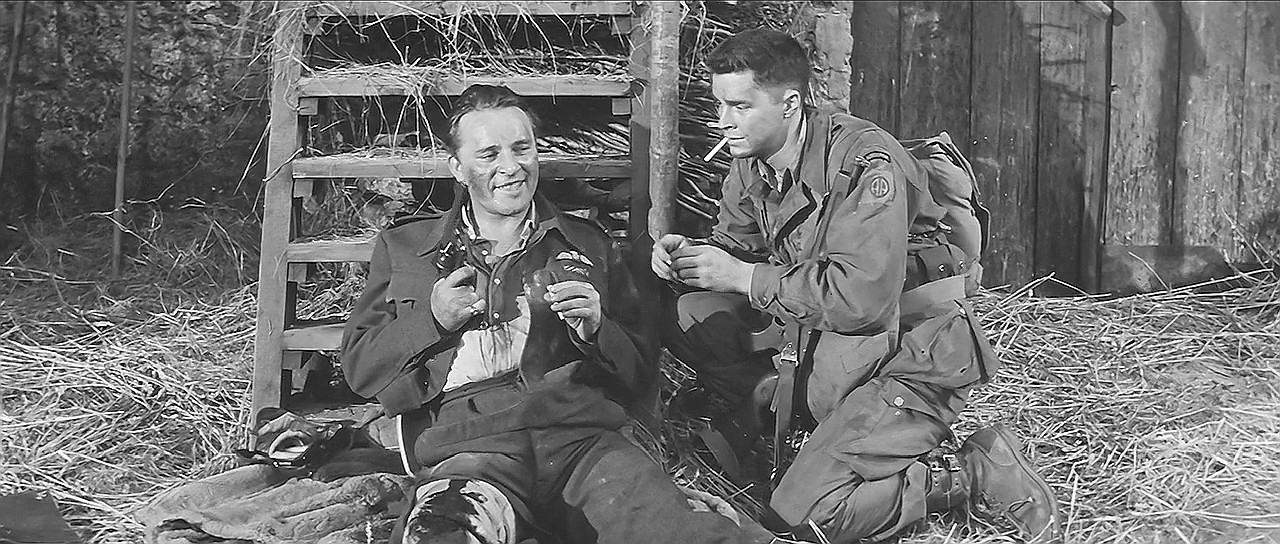
“It’s funny isn’t it. He’s dead, I’m crippled, you’re lost. Suppose it’s always like that. I mean war.” Flying Officer David Campbell played by Richard Burton in “The Longest Day” 

LD20

I came back a different man from Iraq. It seems that for me with every passing year Memorial Day becomes more of a melancholy observance. It is a weekend and observance that I feel deeply having lost friends in war and served in Iraq as well as Operation Enduring Freedom. It is also a day in which I feel more and more disconnected from the vast majority of my fellow Americans. I don’t know, but just from my observation it seems that for most Americans the weekend serves as not much more than the end of the school year and the beginning of the summer holiday and vacation season.

I could be wrong, but it seems to me that for most Americans, the vast majority who have themselves never served a day in uniform and who have no more than a passing relationship with anyone who is either serving in our current wars or has served in any war that war is at best a spectator sport. It is an attitude that has been nurtured by our politicians of all parties, political pundits and preachers for decades. As a result there is a grave disconnect between the society at large and the men and women who serve in the military and in our wars.

To be fair I don’t think it is a matter of ordinary people not caring, not that at all, just that no one has really called the nation to war, as such we have been at war but only a small amount of the population is called on to serve. The real fact of the matter is that the wars that we have fought since World War II have not been national affairs. If they were we would not be continually fighting wars that most people neither understand and which in many if not most cases we would be better off staying out of completely.  That being said I am appreciative of those who do things to care for and honor our veterans, honor our fallen and do practical things for the survivors. There are some really wonderful people, many who have never served who do what they can for those who fight and die in or come back forever changed from these misbegotten and unpopular wars.

What I do find offensive are the war mongers and profiteers who have never served. I feel this way about those who did all that they could to avoid serving in the military and those who did the very minimum to satisfy outward appearances of service while avoiding anything difficult, especially deployment to combat zones. Of the latter I can think of five to six currently serving and very outspoken conservative members of the House of Representatives and the Senate that fit the description. I shan’t mention the members of the previous Presidential administration who through their willing lies caused the deaths of nearly 4500 American military personnel in Iraq. I speak about men who in their writings, their appearances on news networks and their think tanks and corporations that do nothing but profit off of war. Some are current or former politicians, others supposedly “academics” and others men who smell a profit in war.

memorial-day1-300x225

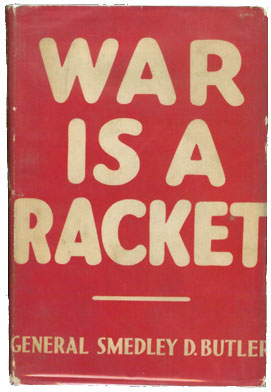
I find such people to be loathsome and wonder how on Memorial Day weekend they can show their faces. But then they are rather shameless. Sometimes their actions make me wonder if the sacrifices made by those who serve are in vain. However, I strive to resist that and pray that our sacrifices will not be in vain. While they profit from war others pay the bill and it has always been this way. Marine Corps Major General Smedley Butler, a two time winner of the Congressional Medal of Honor wrote after World War One in his book War is a Racket:

“This bill renders a horrible accounting. Newly placed gravestones. Mangled bodies. Shattered minds. Broken hearts and homes. Economic instability. Depression and all of its attendant miseries. Back -breaking taxation for generations and generations. For a great many years as a soldier I had a suspicion that war was a racket; not only until I retired to civilian life did I fully realize it….”

Maybe I feel this way because I grew up in a military family where my dad was frequently deployed and served in Vietnam, a place where some of my friends fathers died, and because I have been in the military 32 years between the Army and the Navy. Maybe it is partly because I am a military historian, theologian, priest and chaplain who has seen the horrors of war and the wounds that remain for life in the bodies, minds and spirits of those that fight in them.  I cannot speak of how my heart feels when I see young men and women, wounded in war, their lives forever changed bravely struggling to go on even as the war mongers, war profiteers and chicken-hawks profit off of their suffering.

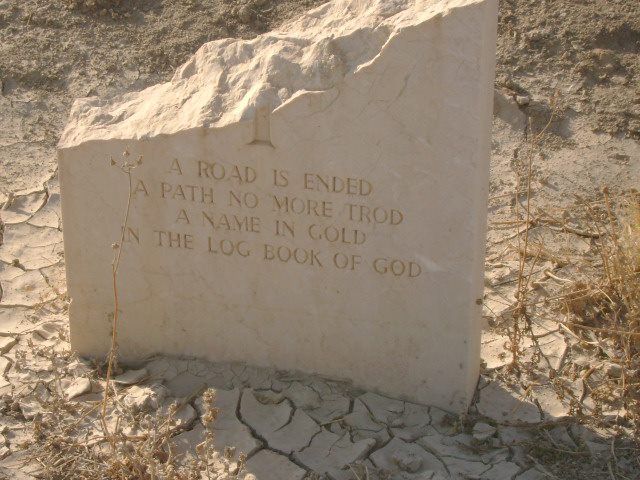
481801_10151367001287059_1003164983_n-1.jpg

So for me this is a rather melancholy time. A time where I struggle. I honor the fallen, my brothers and sisters who have given the last full measure of devotion in serving this country, those that I know personally or have served with and those who did so before I was every born.

Until tomorrow.

Peace

Padre Steve+
3 Comments

Filed under History, iraq,afghanistan, Military, News and current events, shipmates and veterans

Remembering Why We Keep Memorial Day

memorial-day1-300x225

“even if those who come after us are to forget all that we hold dear, and the future is to teach and kindle its children in ways as yet unrevealed, it is enough for us that this day is dear and sacred…”

Nearly 20 years after the Civil War, Oliver Wendell Holmes Jr. then serving as Chief Justice of the Massachusetts Supreme Court spoke on Memorial Day 1884 in Keene New Hampshire at a gathering of veterans. He recalled an incident not long before where he had heard a young man ask “why people still kept up Memorial Day. The question was one that he pondered before his speech and that he attempted to find an answer, not to his fellow veterans who certainly understood their shared memories of war “but an answer which should command the assent of those who do not share our memories.”

I think that having an answer for the question is as timely now as when Holmes first pondered it. Though his war was twenty years past and had torn the nation apart, there were still many men on both sides who had served in that terrible time and but even so many people were not only forgetting the war and the sacrifices made by so many but intent on becoming rich. Something that he would directly state in a Memorial Day address to the graduating class of Harvard University in 1895:

1-oliver-wendell-holmes-jr-1841-1935-everett

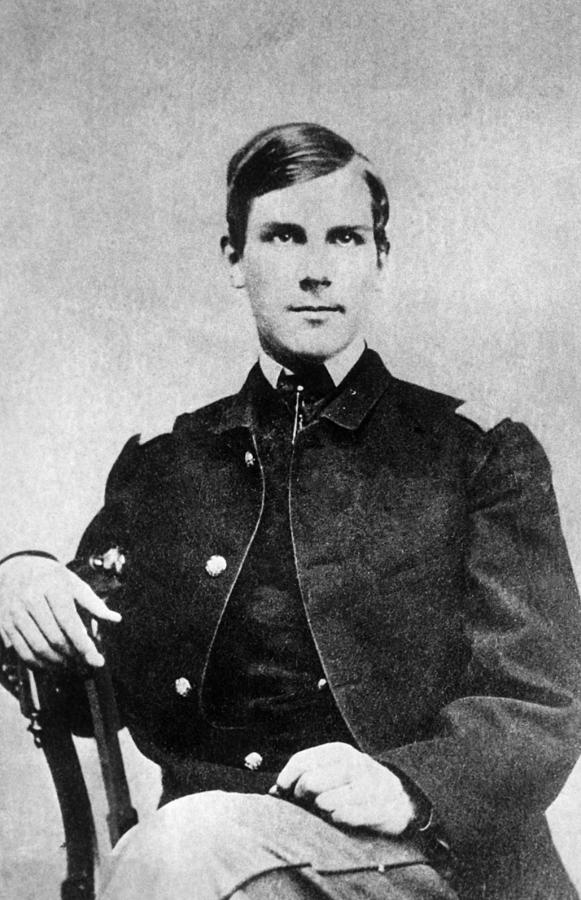
Oliver Wendell Holmes Jr in the Civil War

“The society for which many philanthropists, labor reformers, and men of fashion unite in longing is one in which they may be comfortable and may shine without much trouble or any danger. The unfortunately growing hatred of the poor for the rich seems to me to rest on the belief that money is the main thing (a belief in which the poor have been encouraged by the rich), more than on any other grievance. Most of my hearers would rather that their daughters or their sisters should marry a son of one of the great rich families than a regular army officer, were he as beautiful, brave, and gifted as Sir William Napier. I have heard the question asked whether our war was worth fighting, after all. There are many, poor and rich, who think that love of country is an old wife’s tale, to be replaced by interest in a labor union, or, under the name of cosmopolitanism, by a rootless self-seeking search for a place where the most enjoyment may be had at the least cost.”

However his message to his fellow veterans, mostly men from his own former regiment, the 20th Massachusetts was quite personal and something that they could find meaning in. Holmes understood war, he had seen much action and had been wounded at Ball’s Bluff, Antietam and Chancellorsville. He talked of the shared experience of war, something that those who have fought in our nation’s wars, as well as combat veteran soldiers in other countries can understand far more than people that have only known peace, even while their countrymen are at war.

dscn0044

Holmes remembrances of the war and the comrades that he and those present had served with, those living and those dead is powerful. Many of us who have served in the wars that began on September 11th 2001 have lost friends in either Iraq or Afghanistan, and many more who are wounded or maimed in body, mind and spirit. Many survivors of wounds today would have died in previous wars.

Likewise his descriptions of the memories of war, triggered by “accidents” are real to those that have experienced war and combat.

“Accidents may call up the events of the war. You see a battery of guns go by at a trot, and for a moment you are back at White Oak Swamp, or Antietam, or on the Jerusalem Road. You hear a few shots fired in the distance, and for an instant your heart stops as you say to yourself, The skirmishers are at it, and listen for the long roll of fire from the main line. You meet an old comrade after many years of absence; he recalls the moment that you were nearly surrounded by the enemy, and again there comes up to you that swift and cunning thinking on which once hung life and freedom–Shall I stand the best chance if I try the pistol or the sabre on that man who means to stop me? Will he get his carbine free before I reach him, or can I kill him first?These and the thousand other events we have known are called up, I say, by accident, and, apart from accident, they lie forgotten.”

dscn0064

We all have our memories of our wars, those of us who remain, be we veterans of Iraq or Afghanistan, Somalia, Desert Storm, Lebanon, Vietnam, Korea or World War II. It is hard to believe that so few remain from World War II and Korea, and that even the Vietnam veterans are aging rapidly, most now in their 60s or 70s. In as much as the wars of the past decade have been fought by a tiny minority of American citizens fewer and fewer will understand the bond that we share through our memories of the living and the dead. We have been set apart by our experiences, even though the wars that we have fought differ in many ways.

As such we should whenever possible take the time to meet and remember. That might be as groups of friends, unit associations or perhaps local chapters of Veterans organizations. We do this to remember but also to remind ourselves that we cannot live in the past alone, for the present likewise calls us to action, even after our service is complete.

Army+Marine+Casualties+Afghanistan+War+Return+dSZmlJbciN5l

Holmes put it well: “When we meet thus, when we do honor to the dead in terms that must sometimes embrace the living, we do not deceive ourselves. We attribute no special merit to a man for having served when all were serving. We know that, if the armies of our war did anything worth remembering, the credit belongs not mainly to the individuals who did it, but to average human nature. We also know very well that we cannot live in associations with the past alone, and we admit that, if we would be worthy of the past, we must find new fields for action or thought, and make for ourselves new careers.”

We remember the past, we remember our fallen and we remember the families who have lost loved ones in these wars as well as those whose lives have been changed and maybe even torn apart by the changes that war has wrought in their loved ones who returned different from war. In our service we have been set apart and as such as Holmes so well states we have the duty to “bear the report to those who will come after us.” His words carry forth to us today, we few we happy few as Shakespeare so eloquently wrote.

“nevertheless, the generation that carried on the war has been set apart by its experience. Through our great good fortune, in our youth our hearts were touched with fire. It was given to us to learn at the outset that life is a profound and passionate thing. While we are permitted to scorn nothing but indifference, and do not pretend to undervalue the worldly rewards of ambition, we have seen with our own eyes, beyond and above the gold fields, the snowy heights of honor, and it is for us to bear the report to those who come after us.” 

n671902058_1896194_6303

I will remember my time in Iraq and those that I served alongside. I will also remember friends who served in other units who did not return as well as those Marines, Sailors and Soldiers that I see every day in our Naval Hospital suffering from the physical, psychological and spiritual wounds of war.

This weekend I will remember and on Monday, that sacred day that we set aside to remember the fallen I take some time at noon to join in that time of remembrance and pray that maybe someday war will be no more.

That is why I think that we should remember Memorial Day even if others forget.

Peace

Padre Steve+
5 Comments

Filed under civil war, History, iraq,afghanistan, Military, shipmates and veterans, vietnam

Happy 105th Birthday to the United States Navy Nurse Corps

navy_nurse-1


Last week was National Nurses Week. Today was the 105th Anniversary of the Navy Nurse Corps. Nurses are the lynchpin of medicine. Physicians are incredibly important and as a society we usually ascribe more value to them. However in many case, if not most it is a nurse who is the person that does the heavy lifting in the care of the sick. Before the modern era of nursing was often done by Nuns or by women that volunteered to assist military physicians.

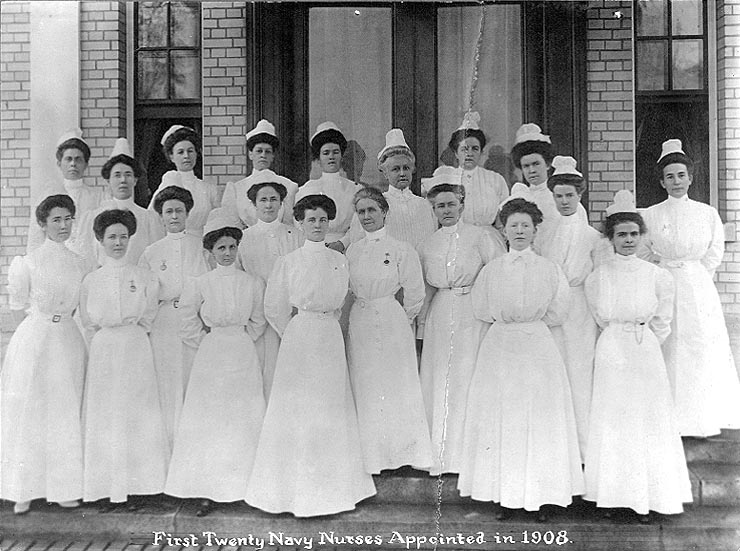
Navy_nurse_corps_1908

The First 20 Navy Nurses “the Sacred 20” 1908

It was in the quagmire of the Crimean War that Florence Nightingale brought about the modern era of nursing, even though physicians and hospitals often saw the women who served as nurses as inexpensive help to care for the sick. Despite this nursing became more and more professional and technical over the years without ever losing that particular calling of ministering to the afflicted that is the essence of their history. In the later 1800s the first nursing schools were established and in 1901 New Zealand was the first country to have Registered Nurses. In 1903 North Carolina became the first US State to require the licensure of nurses.

485px-Lenah_Higbee

Chief Nurse Lena Higbee, Second Superintendent of the Nurse Corps, and first woman awarded the Navy Cross (above) and the ship named after her the USS Higbee DD 806 (below)

USS_Higbee_(DDR-806)_being_refueled_in_1960

The US Navy Nurse Corps was established n 1908 with nurses being commissioned as officers and assigned to Naval Hospitals. However it was the needs of war that brought nursing into the modern age where it is formally recognized as a key component of Health Care. In the World Wars nursing came into its own as a profession. Nurses were among the US personnel that endured the initial onslaught of the war in the Pacific. The Army and Navy Nurses that served and cared for the wounded, starving and emaciated Soldiers, Marines and Sailors on Bataan and Corregidor were heroes in their own right.

Chief_Nurse_Laura_Cobb_and_Dorothy_Still_Danner_among_other_Navy_Nurse_POWs_after_their_release

Navy Nurses released from Japanese Captivity (above) and a Nurse aboard USS Benevolence with a POW released from Japanese Captivity in 1945

733px-Navy_nurse_and_released_POW_on_USS_benevolence,_August_1945_highres

The profession of nursing continues to grow and the women and men who serve as nurses at various levels, from the most highly trained Clinical Nurse Specialists and Nurse Practitioners, or other highly specialized Registered Nurses many of whom have advanced degrees including doctorates down to the most humble Licensed Vocational (or Practical) Nurse and even Certified Nursing Aides. These women and men are the backbone of medicine and despite the long hours, the years of training and certification required of them, many people don’t fully appreciate them until they become sick and are cared for by these wonderful people.

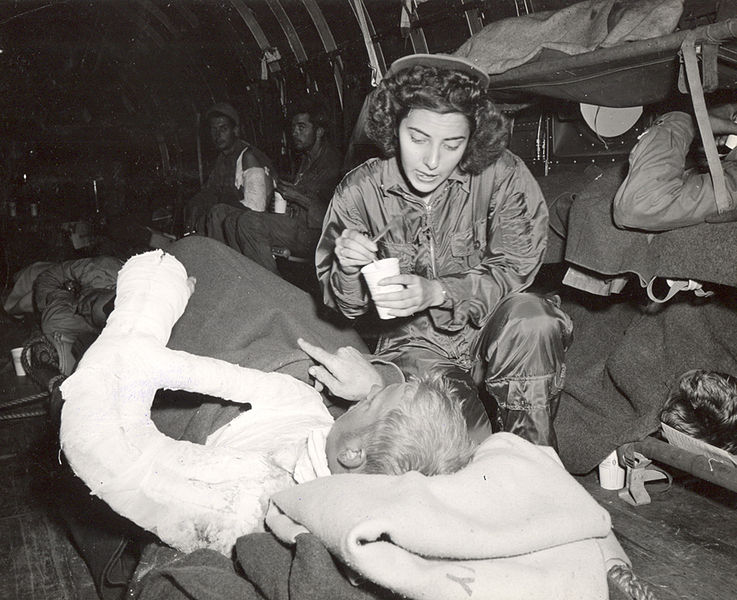
737px-Jane_Kendeigh_USN_Flight_Nurse_1945_a

Ensign Jane “Candy” Kendeigh, the First flight nurse to serve in Iwo Jima and Okinawa Campaigns

Today US Navy Nurses serve in every place one can find a Sailor or Marine. They serve in Hospitals, Medical Centers and other Medical Facilities in the United States and overseas. They serve aboard surface ships, combatants as well as Hospital Ships, with the Fleet Marine Force, in Joint and Multi-National Medical activities deployed in combat zones and in humanitarian operations.

DSCN0066

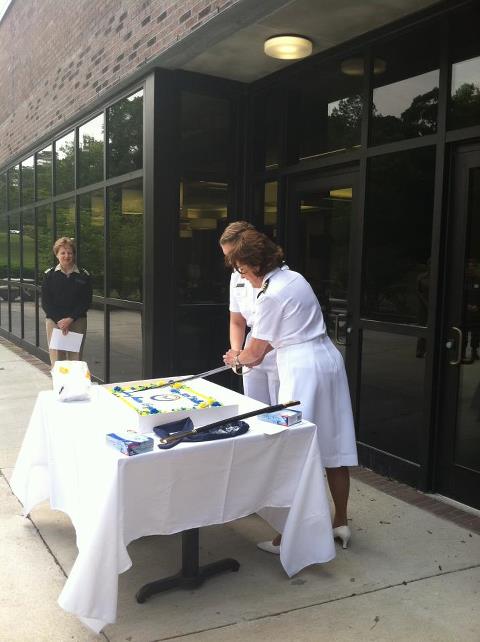
I have been blessed to have known and worked with many amazing nurses in the course of my career as a Medical Service Corps Officer in the Army and as a Chaplain in the military and civilian settings. Today I was present and offered a prayer at the cutting of the Navy Nurse Corps Birthday Cake at Naval Hospital Camp LeJeune. It was my 5th year serving in Navy Medicine and offering this prayer and blessing was an honor that I will always remember. Since I will be transferring out of Navy Medicine in the August-September time frame to assume new duties at the Joint Forces Staff College this will be the last one of these events that I get to officiate at for a few years.

media_db2f5cf3581e4c93b84fbe221904111a_t607


LCDR Eric Gryn in Afghanistan tending a wounded Afghan Soldier on a Medivac flight in 2011, he serves at Naval Hospital Camp LeJeune

5989_10151677233582059_485026871_nCaptain Nancy Pearson cuts the Birthday Cake at Naval Hospital Camp LeJeune

As such I just want to thank all of my friends that serve as Navy Nurses with whom I have shared joys and sorrows the past several years. Blessings on all of you!

God Bless all Nurses tonight, especially those tending the sick, ill and injured and those in harm’s way.

Peace,

Padre Steve+

3 Comments

Filed under healthcare, History, iraq,afghanistan, Military, shipmates and veterans, US Navy

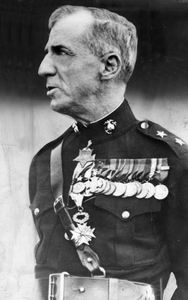
War is a Racket: Remembering Major General Smedley Butler USMC and Why He Matters

What is the cost of war? what is the bill? Major General Smedley Butler wrote: “This bill renders a horrible accounting. Newly placed gravestones. Mangled bodies. Shattered minds. Broken hearts and homes. Economic instability. Depression and all of its attendant miseries. Back -breaking taxation for generations and generations. For a great many years as a soldier I had a suspicion that war was a racket; not only until I retired to civilian life did I fully realize it….”

With all the domestic political news and the apocalyptic talk and actions surrounding John Roberts the Supreme Court and Obamacare it is hard to believe that we are at war for over 10 years and are at war or now preparing for war all over the Middle East. Iran, Syria, Afghanistan, Yemen, Somalia, the Persian Gulf, Libya, Egypt, Pakistan, you name the place there is a real a present danger of US forces becoming involved in even more war.

Maybe it is just me but it doesn’t seem that anybody in Washington has a damned bit of sense. I saw the “tweet” of a Michigan Republican party leader asking if “armed revolt was now justified” because of the Supreme Court ruling on Obamacare. That makes my blood boil, we are at war and this idiot wants to have a real live civil war and he is not alone. The process is to win elections if you want to change laws not to threaten civil war or revolution when the cause that you are against and take to the Supreme Court gets upheld for whatever reason. Anyone with a half a grain of sense knows that if you take something to the Supreme Court that you need to ask yourself the “Dirty Harry” question: “Do you feel lucky? Well do you punk?” When you go to the Supreme Court you put your case in front of nine Justices and not the electorate. That goes for Liberals as well as Conservatives.

The simple act of working together in the legislative process has been sabotaged by both parties over the years.  This finally hit the culminating point when GOP pushed through the self inflicted wound of the Budget Control Act of 2012. It is this act which now threatens the military which is at war with “sequestration.”  This threatens deep cuts in the military beyond those already anticipated and planned for by DOD. The Republicans are now trying to change it and the Administration is refusing to budge on the issue. Again this didn’t need to happen but brinksmanship is the order of the day.

There are no statesmen left in Washington DC only shills of the Right and Left and their masters from Wall Street to K Street. The only people profiting from this are the war profiteers who even if the budget gets cut and they fail to deliver usable weapon systems on time or in budget will still get paid. The losers will be the military personnel who must fight the wars who will get tossed onto the street by those that claim that personnel costs are the problem. Of course those that make this point are almost always the same lobbyists that shill for the defense industries and the banks. But enough about them.

Right now over 100,000 American military personnel and tens of thousands of other Department of Defense, Federal law enforcement, intelligence, diplomatic, humanitarian workers as well as contractors are fighting a war in Afghanistan. Tens of thousands more (mostly contractors)  are helping to shore up the Iraqi government or are fighting wars by other names in Pakistan, Yemen, the Horn of Africa or are deployed to counter Iran or standing by to assist Turkey if it comes into conflict with Syria. Of course this does not take into account the instability in Egypt, Libya, Eastern and Central Africa that threatens even more war or the potential of turmoil in Europe should the Euro Crisis bring about more financial disaster or even revolution in countries that are our allies. By the way let’s not forget about the nutcase leaders of North Korea who could provoke war on that side of the world in a heartbeat.

But never mind this, let’s fight each other instead threaten insurrection when we don’t get our way. But wait, I digress…

Did you know that while Americans stand in harms way almost every real or potential enemy has been armed, subsidized or assisted by American corporations and paid for by American tax dollars.  We have armed much of the world with weapons that have already in Iraq and Afghanistan killed thousands of American military personnel. But those were small time weapons compared to what we have provided to Egypt, Pakistan, Saudi Arabia and yes even Israel. F-15, F-16 and F-18 fighter planes, Tomahawk cruise missiles and Harpoon Anti-Ship Missiles, M-1 Tanks, M113 Fighting vehicles, Patriot Air Defense systems, you name the weapons system the war profiteers will sell it and US taxpayers will pay for it. These are weapons that very easily could be used with great effect to attack American interests should leaders in any of those countries decide to use them against us. I only include Israel because in 1967 its forces viciously attacked the USS Liberty which was operating in the Eastern Mediterranean Sea as Israel launched its pre-emptive war against Egypt. Although all of these countries are “allies” we must remember that alliances are only as good as the interests and values that unite nations.

Our defense industries with the support of the government sell advanced weapons to nations that often are less than trustworthy allies, allies of convenience that have little love for the United States but welcome the weapons and training that we provide.  They often use them to suppress the aspirations of their own people and plant the cultivate the seeds of radicalism and revolution.  It is hard not to cringe when pro-democracy protestors are killed by totalitarian regimes whose police and military are armed to the teeth with American made weapons. When those totalitarian regimes fall as did that of the Shah of Iran in 1979 those weapons fall into the hands of people radicalized against us by our support of their former oppressors.

Certainly nobody seriously believes that the angry masses in the countries that we have armed to the teeth with the latest in American weaponry would not use that weaponry against us should they desire.  But wait…. our politicians, arms dealers, bankers and their political, religious and financial backers certainly wouldn’t put Americans in harms way? Perish the thought, but not so quickly. They have done so before and will do it again.

Smedley Butler is one of under two dozen American military personnel to win the Congressional Medal of Honor twice. He saw the dangers of Fascism as well as the danger of unlimited corporate and business power to profit by war. Butler was not only a  valiant Marine he was also a commander that in war and peace cared about those who served. He saw how American finance and banking interests helped drag us into the Fist World War, the promises broken by the government and the lives destroyed by war.

In his book War is a Racket Butler wrote eloquently about how the heads of corporations and their political supporters in both parties were the only benefactors of war. He wrote of the plight of the soldiers that served and returned wounded and often changed by war and he did not mince words in what he saw. He became an anti-war activist. He was a supporter of the Bonus Army, the veterans that “occupied” Washington DC during the last year of the Hoover Administration to get the bonuses promised for their service and were violently evicted by troops under the command of General Douglas MacArthur. If he was alive today I have no doubt that he would be an active supporter of the current “Occupy” movement and opponent of politicians, political activists, lobbyists and even preachers that advocate even more war.

Butler’s War is a Racket as well as other published works are a worthwhile read and should make the most rabid fan of war think twice. Butler’s patriotism and devotion to the United States and the Constitution is unquestioned. His warnings are strong, he was a prophet in regard to the dangers of the Military-Industrial Complex well before President Eisenhower coined the term as he left office. He detailed how corporations made obscene profits often by selling the US Military vast amounts of materials that it could not possibly use and which taxpayers bought while business leaders and bankers made their fortunes that they never had realized when the nation was at peace. He reminds us of the dangers that our founders recognized about entwining ourselves in other people’s wars. While his answers on how to end war are now utopian dreams because of advances in technology and the wars which now rage without end in sight they are nonetheless not a bad place to start a debate.

Butler writes movingly about the price paid by veterans years after the war, men broken in body, mind and spirit from their war service.

“But the soldier pays the biggest part of this bill.

If you don’t believe this, visit the American cemeteries on the battlefields abroad. Or visit  any of the veterans’ hospitals in the United States….I have visited eighteen government hospitals for veterans. In them are about 50,000 destroyed men- men who were the pick of the nation eighteen years ago. The very able chief surgeon at the government hospital in Milwaukee, where there are 3,800 of the living dead, told me that mortality among veterans is three times as great as among those who stayed home.” 

One would think that things would be better now but our veterans’ health care system is a train wreck and there is an epidemic of suicide among active duty troops and veterans. In 2005 after years of hand wringing the Bush administration grudgingly increased the number of Soldiers and Marines even while cutting Navy personnel and ships to the  minimum that they could despite ever increasing operational tempos. The Navy was reduced by over 50,000 sailors during the Bush years and now when the Navy is needed more it has been reduced to the point that 8-10 month deployments with short turn arounds will be normal.

Now the Obama administration is cutting back partly due to the withdraw from Iraq but mostly because of the economic crisis. However the bulk of these cuts are falling on the military personnel and not the war profiteers. The Army will be cut by nearly 80,000 in the coming years the Marines by 20,000 and that may increase if the budget takes the sequestration hit without any reduction in operational tempo. These Soldiers and Marines will enter a bleak job market where many employers give little value to military experience or training, which has resulted in a vastly higher unemployment rate for Iraq and Afghanistan veterans than the general population.

It wasn’t much different in Butler’s day. He writes:

“Boys with a normal viewpoint were taken out of the fields and offices and factories and classrooms and put into the ranks. They were remolded; they were made over; they were made to “about face”; to regard murder as the order of the day. They were put shoulder to shoulder and through mass psychology, they were entirely changed. We used them for a couple of years and trained them to think of nothing but killing and being killed.

The suddenly, we discharged them and told them to make another “about face”! This time they had to do their own readjusting, sans mass psychology, sans officers’ aid and advice, sans nation-wide propaganda. We didn’t need them anymore. So we scattered them about without any “three minute” or “Liberty Loan” speeches or parades.”

Butler recounted another visit to a different veterans’ hospital:

“In the government hospital at Marion, Indiana 1,800 of these boys are in pens! Five hundred of them in a barracks with steel bars and wires all around the outside of the buildings and on the porches. These have already been mentally destroyed. These boys don’t even look like human beings. Oh, the looks on their faces! Physically they are in good shape but mentally they are gone.” 

There are thousands and thousands of these cases and more and more are coming in all the time…

That’s a part of the bill. So much for the dead-they have paid their part of the war profits. So much for the mentally and physically wounded- they are paying now with thier share of the war profits. But others paid with the heartbreaks when they tore themselves away for their firesides and their families to don the uniform of Uncle Sam- on which a profit had been made….”

I could go on but I think that Butler says it quite well and with the passion of a Marine who was wounded on more than one occasion and won the Medal of Honor twice.

The only people that want war are those that profit from it and don’t have to pay the price paid by those that have to fight them and pay for them. When I see pictures of Mitt Romney protesting in support of the Vietnam war while getting deferment after deferment to avoid service it makes my head spin. My head spins even more when I hear him talking brazenly about committing US troops to even more war. For me the pictures of Romney’s pro-war protests as a college student avoiding war on educational and religious service deferments as millions of other Americans went to war are up there with the pictures of “Hanoi” Jane Fonda giving aid and comfort to those that were killing our troops.

Butler’s detractors and they are legion on the political right attempt to paint him as an isolationist or appeaser of Hitler. However they misunderstand him and his work. They don’t understand as Butler understood that there would not have been a Nazi Germany without Versailles and that was not possible without the American intervention on the side of Britain and France in 1917. That involvement was driven by the bankers and industrialists who had supplied raw materials, weapons and technical patents to the British and French, and had done so before with the Germans who believed that they would lose their investments if the Germans won the war. That would have happened in late 1917 or early 1918 had not the Americans declared war and entered the war on the side of the British and French.

Most of Butler’s current critics have never served a day in uniform much less a day in a combat zone. They make their livings and profits by the sacrifice of others and other than a few of his quotes have never read anything about him.

If you sense indignation in my voice it is real. I have lived the nightmare of PTSD for over 4 years. I see and work with the young men and women that have bravely endured the hardship of combat deployments and come home physically, mentally and spiritually wounded. To our credit we are trying to do better but for the war profiteers that will be too much. If military spending is cut you can bet that they will not take the hit that military personnel, their families and our veterans will take. They and their political benefactors will not allow it.

I am a military man through and through. I have spent nearly my whole life associated with the military as a dependent of a Navy Chief who served in Vietnam and a career of over 30 years divided between the Army and Navy. Some of my friends dads did not return from Vietnam, other friends and those who I have served with have paid with their lives in Iraq or Afghanistan while others suffer the continuing wounds of war.

This is personal for me and it is also motivated by my faith as a Christian. Butler chided the pro-war clergy propagandists of the Great War. He wrote:

“So vicious was this war propaganda that even God was brought into it. With few exceptions our clergymen joined in the clamor to kill, kill, kill. To kill Germans. God is on our side…it is his will that the Germans be killed.”

Such preaching is not much different from the right wing pro-war preachers who advocate killing Moslems simply because they are Moslems and that go out of their way to preach the value of “pre-emptive war” despite such wars being against the Christian understanding of the  “Just War” or international law against such war that we as Americans helped develop after World War Two at Nuremberg and to which we hold the leaders of what we call “rogue nations.”

I only wish that our leaders; political leaders of both parties, religious leaders, and even business leaders would see the folly of this course and their responsibility for the results.

Someone has to say it.

Peace

Padre Steve+
Note: All quotations from “War is a Racket” by Smedley Butler copyright 1935 and 2003 by the Butler family. Amazon Kindle edition. 

6 Comments

Filed under faith, History, iraq,afghanistan, Military, national security, News and current events, Political Commentary, PTSD, shipmates and veterans

The Fallen: Remembering the Human Cost of the Iraq and Afghanistan Wars

Today I read through and looked at the pictures of every American service member to die in harm’s way since last Memorial Day in this week’s Navy Times. When I looked at those pictures of men and women, officers and enlisted from every service and state, native born and immigrant alike, representing many races, religions and probably sexual preferences I was again reminded of the human cost. I knew or had served with a number of these people.  The sacrifice of our military is too often unappreciated.

There is a human cost to war. As I wrote yesterday it is a cost mainly borne by those that serve in the military, their families and those close to them. There are also civilian employees, both government and contractors that also share the cost of war. I have written about men that I have known that have died in harm’s way as well as others that have died while on active service, most recently Commander Marsha Hanly.

I think that in this interregnum between Armed Forces Day and Memorial Day that we remember the fallen.  They are too often forgotten in the politics and economics of war as are the men women and children non-combatants that die in the crossfire of war either to premeditated action by one or both sides or simply because they were in the wrong place at the wrong time.

The Washington Post has a section online called Faces of the Fallen http://apps.washingtonpost.com/national/fallen/ which shows the pictures of the servicemen and women killed in Operation Iraqi Freedom, Operation Enduring Freedom and Operation New Dawn. 

Staff Sergeant Ergin Osman

I simply ask that readers spend some time there before Memorial Day to reacquaint ourselves with this cost, the real human cost of war. Just about a year ago a former Marine that I had served with at 3rd Battalion 8th Marines in 2000-2001 was killed in Afghanistan with 6 members of his platoon when they were ambushed with an Improvised Explosive Device while pursuing a Taliban leader. His name was Staff Sergeant Ergin Osman. he had left the Marines and then enlisted in the Army and was serving with the 101st Airborne Division when he was killed on May 26th 2011, one of over 2400 American Servicemen and women killed by IEDs.  I have lost other friends and comrades in both Iraq and Afghanistan.

The Iraq Afghanistan Veterans Association has a pledge to “Go Silent” on Memorial Day at 12:01 Eastern Standard Time to remember the 6433 servicemen and women who have fallen in Iraq or Afghanistan to date. One can pledge to do so in honor of a fallen Soldier, Sailor, Marine or Airman at their website http://iava.org/

In addition to Americans 593 British and 753 other non-Iraqi or Afghani coalition personnel have died in these wars. A further 468 contractors employed by the US military were killed in Iraq and 763 by Department of Labor count in Afghanistan as of March 31st 2011.  Nearly 50,000 more American military personnel have been wounded and this total does not include those with TBI or PTSD nor do the numbers killed reflect those that died by suicide following their time in Iraq or Afghanistan or those who died after they left the service due to disease, injury or psychological malady following their service in a combat zone. A well sourced listing of casualties can be found on the icasualties.org website http://icasualties.org/Iraq/index.aspx  Over 10,000 Iraqi Army, Police or Security Force personnel were killed fighting alongside US and Coalition forces. Numbers of civilians killed in Iraq and Afghanistan are estimated the hundreds of thousands.

Please take some time this week to remember the fallen as well as those wounded in body, mind and spirit during the last 10 years of war. I will be focusing on different aspects of these wars and wars past this week as we prepare to observe Memorial Day.

Peace

Padre Steve+
2 Comments

Filed under iraq,afghanistan, Military, shipmates and veterans