Category Archives: US Navy

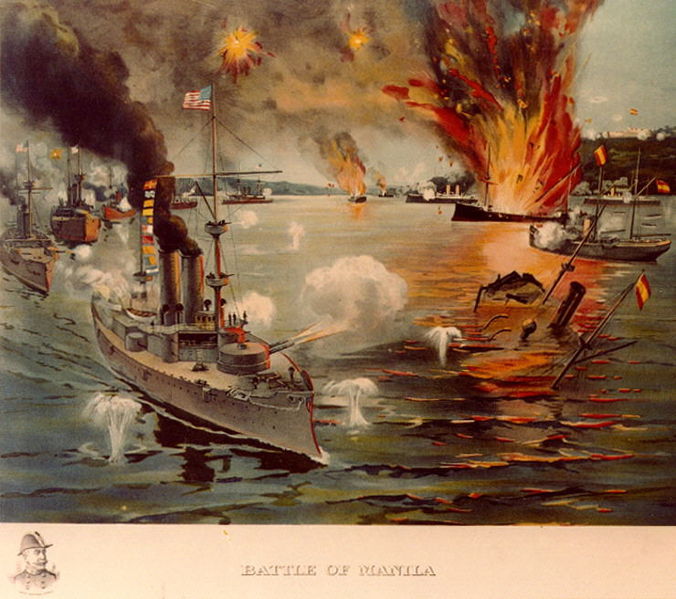
“You May Fire When Ready Gridley” The Battle of Manila Bay 1 May 1898: Victory and Unexpected Consequences

676px-USS_Olympia_art_NH_91881-KN

In 1898 Spain was a weak and declining power with overseas territories which were seething with resentment to Spanish rule and ripe for the pickings of any power that wanted to challenge Spain. The United States was beginning its ascendency to becoming a world power and the Spanish colony of Cuba, which had many American economic interests and the possession of which could allow the United States to dominate the Caribbean was considered by many American political and economic leaders to be ripe for the picking. It was just a short distance from the United States, had a restive population whose cause was being promoted and exploited by the Yellow journalists of the Hearst media empire.

In response to the alleged dangers faced by American citizens in Havana, President McKinley sent the USS Maine to Cuba to safeguard American interests and citizens. The deployment was part of a larger world wide deployment of US Navy forces in the Caribbean, Europe and Asia. On February 15th the Maine blew up and sank. The American press declared it to be an act of terrorism perpetrated by Spanish agents in Havana. A US Navy investigation concluded that such was the case, while Spanish investigators concluded Maine’s loss was due to a magazine explosion. The truth of the matter was that the Maine blew up and the cause is inconclusive with experts, including a commission led by Admiral Hyman Rickover in 1974 determining that the cause could have been an internal ammunition magazine explosion, while others do not rule out the possibility of a Spanish mine.

Regardless of the actual cause tensions rapidly escalated and on April 23rd Spain declared war on the United States. On the 25th Congress declared war on Spain. In the Pacific the US Navy Asiatic Squadron under the command of Commodore George Dewey set sail from Honk Kong to Manila, where a poorly equipped squadron of mostly obsolete ships under the command of Admiral Patricio Montojo awaited them.

USS_Olympia_with_Dewey_at_Battle_of_Manila_bay_DSCN4191_at_Vermont_State

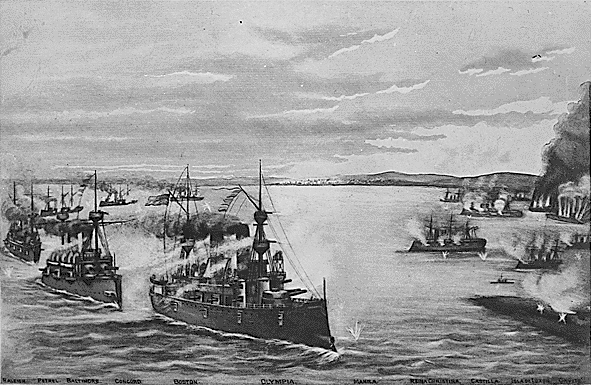
The US Navy forces were modern and well equipped compared to the Spanish. Composed of 4 relatively modern protected cruisers and 2 gunboats led by the Protected Cruiser USS Olympia. Dewey’s force was well trained and its ships superior to anything in the Spanish squadron. The Spanish ships, undermanned and some of which had much of their armament shipped ashore to supplement shore batteries were composed of 4 unprotected cruisers, two small protected cruisers and two gunboats. A number of smaller and even less capable ships were in the area but took no part in the action.

Dewey’s squadron sailed into Manila Bay on the evening of the 30th of April, surprising Montojo who believed that the approaches to the bay were too treacherous to navigate at night for mariners unfamiliar with them. Arriving in Manila Bay in the early morning hours and ineffectively opposed by shore batteries at El Fraile and Cavite and at 0541 Dewey ordered the Captain of the Olympia to open fire using the famous line “You may fire when ready Gridley.”
ManilaBayBattle

Within two and a half hours the Spanish force was destroyed. Dewey lost one man dead and 9 men wounded though some Spanish sources report that Dewey might have lost 13 killed and 30 wounded. The Spanish force lost all of its engaged forces with 77 men killed and 271 wounded. Dewey’s force would destroy the Spanish shore batteries and land Marines taking possession of the Cavite Naval Yard on May 7th.

The action was the first major naval action conducted by the United States overseas in the steam age and helped secure the United States a place in the early 20th Century colonization of Asia by European powers and Japan. As a result of Dewey’s victory other Spanish possessions in the Pacific like Guam would be occupied by the United States. It would also through the American occupation of the Philippines necessitate a campaign against the recently liberated Filipino population who had looked to the United States as liberators, and eventually to the Philippines becoming a major campaign in the Pacific war between Japan and the United States.
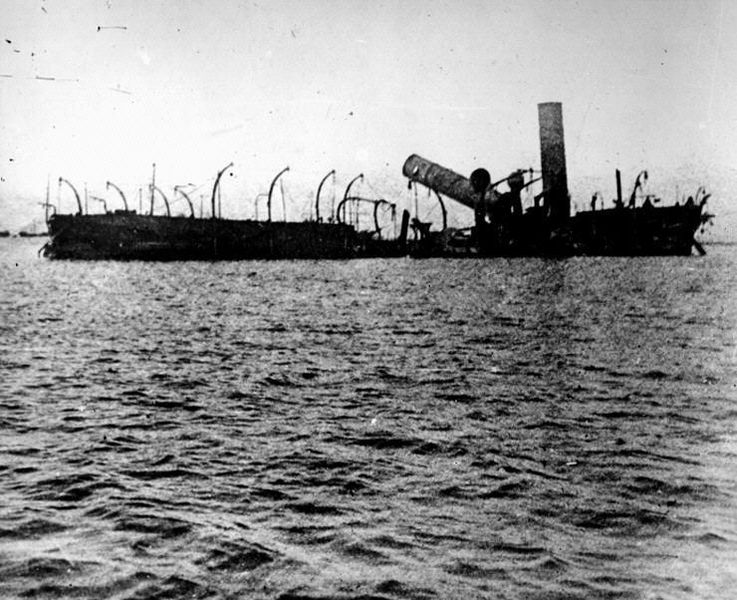
737px-Sunken_Reina_Cristina_3

The wreck of the Spanish Flagship the Cruiser Regina Cristina 

Destroying the Montojo’s Spanish squadron was easy compared to the American counter-insurgency campaign against the Filipinos and the later conflict with the Japanese in the Second World War. However, Dewey’s defeat of Montojo’s squadron would help establish the United States as a world power and help ensure that the United States Navy would become one of the world’s preeminent Naval forces within a decade of the battle. Spain never fully recovered from the battle or the war and declined in influence. eventually succumbing to a violent civil war in the 1930s.

As a so common the initial battle or battles of a war can seem easy compared to the later tasks of occupying and ruling a conquered territory or the unexpected consequences that follow. As such it should serve as a warning for those that see easy conquests and do not calculate what might happen after the initial battle is won.

Peace

Padre Steve+

Leave a comment

Filed under History, Navy Ships, US Navy

The Doolittle Raid: 30 Seconds that Changed the Course of the Pacific War

20130417-235602.jpg

This week marks the 71st anniversary of the Doolittle Raid on Tokyo. 80 US Army Air Corps flyers manning 16 B-25 Mitchell bombers conducted a mission from the deck of the USS Hornet CV-8which though it caused little damage changed the course of World War Two in the Pacific.

The genus of the strike came from the desire of President Franklin Roosevelt to bomb Japan as soon as possible during a meeting just prior to Christmas 1941. Various aircraft types were considered and in the end the military chose the B-25 because it had the requisite range and had the best characteristics. Aircraft and their crews from the 17th Bomb Group which had the most experience with the aircraft were modified to meet the mission requirements. Lieutenant Colonel Jimmy Doolittle was selected to lead the mission.

Once the aircraft were ready they and their crews reported to Eglin Field for an intensive three week period of training. Supervised by a Navy pilot the crews practiced simulated carrier take offs, low level flying and bombing, night flying and over water navigation. When the training was complete the aircraft and crews and support personnel flew to McClellan Field for final modifications and then to NAS Alameda California where they were embarked on the Hornet Hornet’s air group had to be stowed on the ships hanger deck since the 16 B-25s had to remain of the flight deck. Each bomber was loaded with 4 specially modified 500 lb. bombs, three high explosive and one incendiary.

Departing Alameda on April 2nd the Hornet and her escorts, Hornet’s Task Force 18 rendezvoused with the Admiral William “Bull” Halsey’s Task Force 16 built around the USS EnterpriseCV-6. task Force 16 provided escort and air cover during the mission. The carriers, escorted by 4 cruisers, 8 destroyers and accompanied by two oilers hoped to get close enough to the Japanese home islands so that the raiders could reach bases in allied China.

The destroyers and slow oilers broke off on the evening of the 17th after refueling the carriers and cruisers. The two carriers and the cruisers then commenced a high speed run to get into range. However early in the morning of April 18th the ships were sited by a Japanese patrol boat, the #23 Nitto Maru which was sunk by the USS Nashvillebut not before it got off a radio message alerting the Japanese command. However the Japanese knowing that carrier aircraft had a relatively short range did not expect an attack. However, realizing the danger that the sighting brought, Captain Marc Mitscher elected to launch immediately, even though it meant that bombers would have to ditch their aircraft or attempt to land well short of the friendly Chinese airfields. The launch was 10 hours earlier and about 170 miles farther out from the Chinese bases than planned.

Flying in groups of two to four aircraft the raiders struck the Japanese cities of Tokyo, Yokohama, Yokosuka, Nagoya, Kobe and Osaka. Minimal damage was done and only one aircraft was damaged. However they needed to fly nearly 1500 more miles to get to areas of China unoccupied by Japanese forces. Miraculously most of the aircraft and crews managed to find refuge in China. 69 of the 80 pilots and crew members avoided death or capture. Two flyers drowned, one died when parachuting from his aircraft. Eight men were captured. Of those captured by the Japanese three, Lieutenants William Farrow, Dean Hallmark and Corporal Harold Spatz were tried and executed for “war crimes” on October 15th 1942.

Many of the surviving flyers continued to serve in China while others continued to serve in North Africa and Europe, another 11 died in action following the raid. Doolittle felt that with the loss of all aircraft and no appreciable damage that he would be tried by courts-martial. Instead since the raid had so bolstered American morale he was awarded the Congressional Medal of Honor, promoted to Brigadier General and would go on to command the 12th Air Force, the 15th Air Force and finally the 8th Air Force.

The raid shook the Japanese, especially the leadership of the Imperial Navy who had allowed American aircraft to strike the Japanese homeland. The attack helped convince Admiral Isoroku Yamamoto that an attack on Midway was needed in order to destroy the American Carriers and the threat to the home islands.

When asked by a reporter about where the attack was launched from, President Roosevelt quipped “Shangri-La” the fictional location of perpetual youth in the Himalayas’ made famous in the popular book and movie Lost Horizon.

The raid in terms of actual damage and losses to the attacking forces was a failure, but in terms of its impact a major victory of the United States. It gave the people of the United States a huge morale boost at a time when very little was going right. It forced the Japanese Navy to launch an attack on Midway that turned out to be a disaster, decimating the best of the Japanese Naval Air Forces and the loss of four aircraft carriers and enable the US Navy to take the offensive two month later at Guadalcanal.

In the years after the war the survivors would meet. Today four survivors of the raid remain alive. Three of them will meet in Fort Walton Beach Florida this week for their final public reunion. At some time the remaining men will meet privately and drink a bottle of 1896 Hennessy Cognac from silver goblets each inscribed with their names.

It will not be long before the final survivors will be gone and it is up to us to never forget their heroism, sacrifice and service in a mission the likes of which had never before been attempted, and which would in its own way help change the course of the Second World War.

Peace

Padre Steve+

3 Comments

Filed under History, Military, US Navy, world war two in the pacific

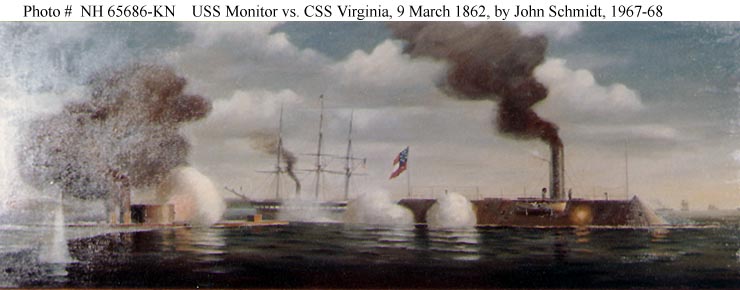
The Battle of Hampton Roads: 9 March 1862: The Epic Beginning of Modern Naval Warfare

800px-The_Monitor_and_Merrimac

On the morning of March 8th 1862 the CSS Virginia steamed slowly from her base at Portsmouth Virginia into Hampton Roads at the mouth of the Chesapeake Bay. Awaiting her was a US Navy squadron of wooden warships including the steam Frigate USS Minnesota, the Sloop of War USS Cumberland and Frigate USS Congress and a number of smaller vessels. The Virginia was an armored ram built from the salvaged remains of the large steam frigate USS Merrimack which had been burned at Gosport (Now Norfolk) Naval Shipyard. Her plans had been leaked to the US Navy which was also in the process of constructing a number of ironclad ships of different types. The first of these ships to be ready was the USS Monitor, a small ship mounting a single heavily armored turret mounting two powerful 11” Dalghren smoothbore guns was still steaming to Hampton Roads when Virginia came out for battle.

CSSVirginia1862.2.ws

During the ensuing fight of March 8th Virginia rammed and sank Cumberland which though fatally wounded disabled two of Virginia’s 9” in guns. She destroyed Congress by gunfire which burned and blew up and appeared to be in position to destroy Minnesota the following day as that ship had run hard aground. The losses aboard Cumberland and Congress were severe and included the Captain of the Congress and Chaplain John L. Lenhart of Cumberland, the first US Navy Chaplain to die in battle. During the battle Virginia had several men wounded including her Captain Franklin Buchanan.

Cumberland_rammed_by_Merrimac

Due to the coming of darkness and a falling tide the acting commander of Virginia, Lieutenant Catsby Ap Roger Jones her executive officer took her in for the night. During the night Monitor, under the command of Lieutenant John Worden arrived and took up station to defend Minnesota.

603px-Battle_of_Hampton_Roads_Map

The next morning Virginia again ventured out and was intercepted by the Monitor. The ships fought for over three hours, with Monitor using her superior speed and maneuverability to great effect. During the battle Monitor suffered a hit on her small pilothouse near her bow blinding her Captain. Neither side suffered much damage but the smokestack of Virginia was pierced in several places affecting her already poor engine performance.  Jones broke off the action and returned to Gosport for repairs and Monitor remained on station.

USSMonitor1862.3.ws

The battle showed the world the vulnerability of wooden warships against the new ironclads. Monitor in particular revolutionized naval warfare and warship construction. Her defining mark was the use of the armored gun turret which over the succeeding decades became the standard manner for large ships guns to be mounted. Turrets like the warships they were mounted upon grew in size and power reaching their apex during the Second World War.

arizon-main-battery2

Both Virginia and Monitor reached less than glorious ends. Virginia had to be destroyed by her crew to prevent her capture just over two months after the battle on May 11th 1862. Monitor survived until January 31st 1862 when she sank during a heavy storm off Cape Hatteras North Carolina with the loss of 16 of her 62 man crew. The remains of two of those men, recovered during the salvage of Monitor’s engines, turret, guns and anchor were interred at Arlington National Cemetery yesterday. The relics from Monitor and some from Virginia are displayed at the Mariners Museum in Newport News (http://www.marinersmuseum.org )while one of Virginia’s anchors resides on the lawn of the Museum of the Confederacy in Richmond.

Those early ironclads and the brave men who served aboard them revolutionized naval warfare and their work should never be forgotten.

Peace

Padre Steve+

Leave a comment

Filed under civil war, History, Navy Ships, US Navy

Vice Admiral Samuel Gravely Jr: Pioneer of Integration and Civil Rights in the U.S. Navy

gravely

“I was sure that I could not afford to fail. I thought that would affect other members of my race if I failed anywhere along the line. I was always conscious of that, particularly in midshipman school and any other schools I went to…I tried to set a record of perfect conduct ashore and at sea.” Vice Admiral Samuel Gravely

Things have changed much since 1942 when following the attack on Pearl Harbor a young black college student from Richmond Virginia enlisted in the Navy. Samuel Gravely Jr. was the son of a postal worker and Pullman porter while his mother worked as a domestic servant for white families in Richmond. His mother died unexpectedly when he was 15 in 1937 and he remained to help care for his siblings as his father continued to work. Balancing the care of his family with his education he enrolled in Virginia Union College, a Baptist school in Richmond.

gravely_young

Fireman Apprentice Samuel Gravely Jr

It is hard to imagine for most of us now to comprehend the world that the young Gravely grew up in. Segregation was the norm. Blacks in the south and many other locations faced personal as well as intrenched institutional racism. Violence against blacks was quite common and the Ku Klux Klan was strong.

The military was still segregated and a great gulf existed between white military personnel and blacks. Though the selective service law of 1940 called for the conscription of people regardless of race, creed or color the services enjoyed much latitude in determining how minorities could serve. The Secretary of the Navy at the time, Frank Knox resisted integration. Knox determined that African Americans would remain segregated and serve only as Mess Stewards to “prevent undermining and disruptive conditions in the Navy.” Knox told President Roosevelt in the presence of black leaders that “because men live in such intimacy aboard ship that we simply can’t enlist Negroes above the rank of messman. “

That sentiment was strong in both the Navy and the Marines the leaders of which resisted attempts to broaden the ability for African Americans to serve and urged that blacks serve in the Army, not the Naval Service.  Marine Corps Commandant Major General Thomas Holcomb agreed with this stance. He commented:

“If we are defeated we must not close our eyes to the fact that once in they [Negroes] will be strengthened in their effort to force themselves into every activity we have. If they are not satisfied to be messmen. they will not be satisfied to go into the constriction or labor battalions. Don’t forger the colleges are turning out a large number of well educated Negroes. I don’t know how long we will be able to keep them out of the V-7 class. I think not very long.”

But Roosevelt was not deterred and by April 1942 changes were announced to allow African Americans to serve in other capacities. Even so African Americans selected for ratings other than messman were to be segregated and commanded by White Officers and Petty Officers.

USS_PC-1264_officers_and_crew

images-18

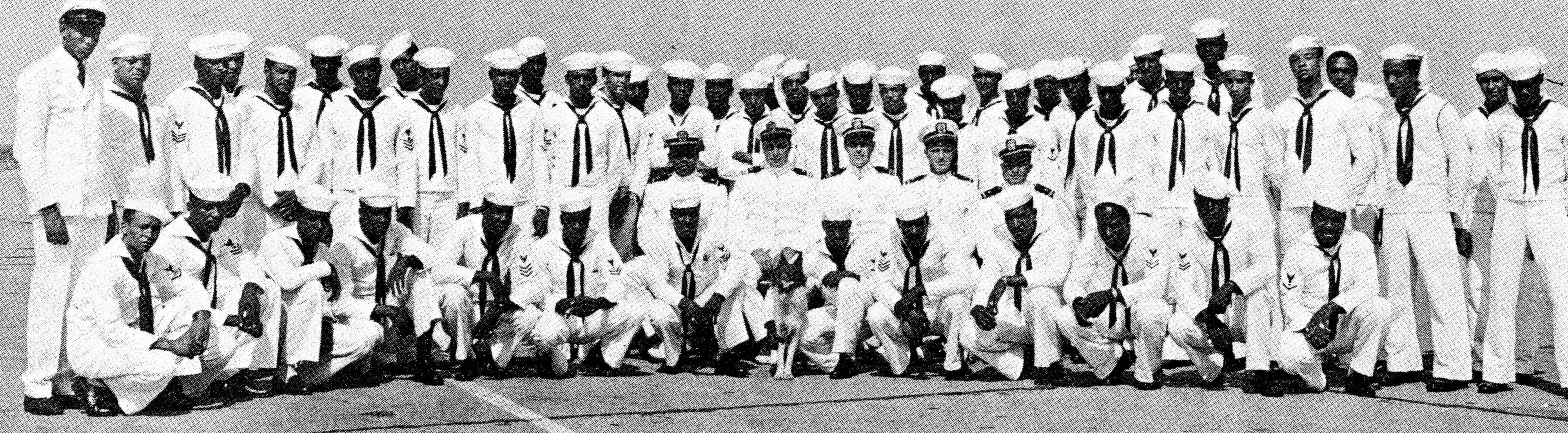
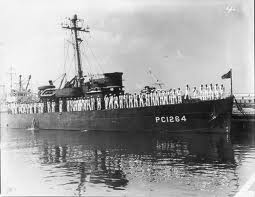
The USS PC-1264 and its crew, Gravely is the lone black officer

Gravely enlisted in the Navy under these conditions. Serving as a Fireman Apprentice after receiving training as a Motor Machinist in San Diego he worked in menial jobs. In 1943 Gravely was one of only three sailors in his unit to be selected for the V-12 officer training program. He was the only black to make the cut. He was commissioned as an Ensign on December 14th 1944 and assigned to train black recruits at Great Lakes though the vast majority of his class went to sea. The was mainly due to the policy set forth by the General Board in 1942 that prescribed:

“(a) the white man will not accept the negro in a position of authority over him; (b) the white man considers that he is of a superior race and will not admit the negro as an equal; and (c) the white man refuses to admit the negro to intimate family relationships leading to marriage. These concepts may not be truly democratic, but it is doubtful if the most ardent lovers of democracy will dispute them, particularly in regard to inter-marriage.”

Despite this by 1945 the Navy was beginning to change. Gravely was chosen to serve on one of two ships assigned to the “experiment” of seeing how blacks in general ratings could serve at sea. The USS Mason (DE 539) and the USS PC-1264 were assigned black crews with majority white officers, except that Gravely was assigned to PC-1264. Though his commander was pleased with his service Gravely, who had been denied admittance to Officer Clubs and many other “white only” facilities resigned from the Navy in 1946. He believed that the inherent discrimination of the Navy left him no place for advancement. He returned to complete his bachelors degree at Virginia Union.

In 1949, following President Truman’s integration of the military Gravely was asked by the Navy to return to active duty. But the end of the old order was foreshadowed by a Navy pamphlet published in 1944 entitled The Guide to the Command of Negro Personnel. That publication included the statement that ”The Navy accepts no theories of racial differences in inborn ability, but expects that every man wearing its uniform be trained and used in accordance with his maximum individual capacity determined on the basis of individual performance.”

images-17

300px-USS_Taussig_(DD-746)_port_side_1965

cg29

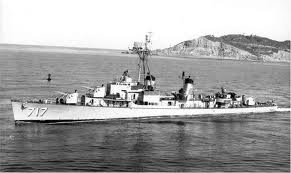
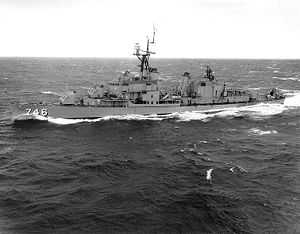
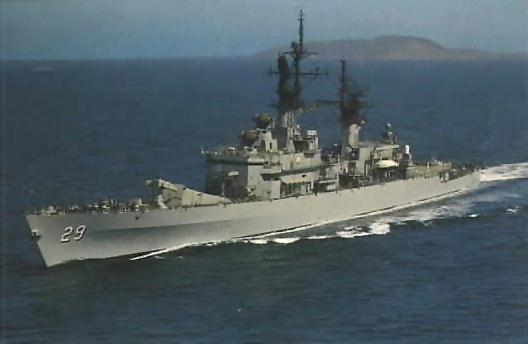
Gravely’s commands (top to bottom) USS Theodore E Chandler, USS Taussig and USS Jouett

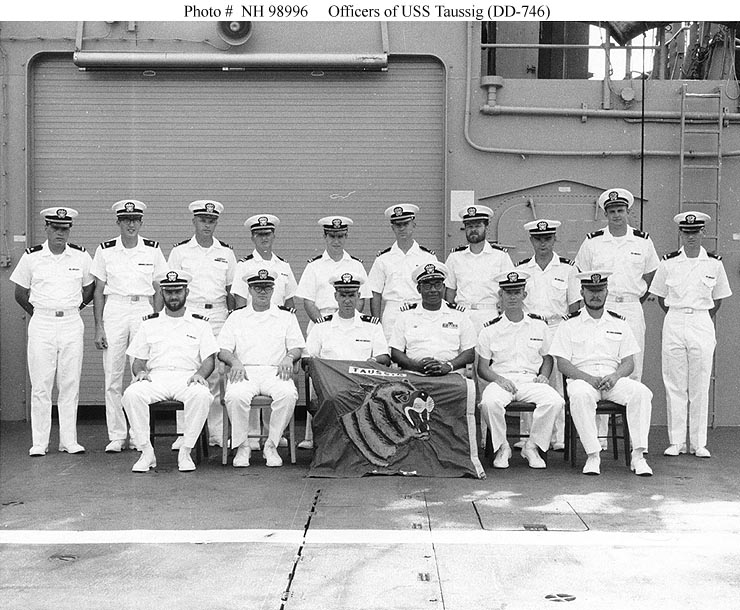
Gravely accepted the offer to return to active duty and never looked back. He worked hard for respect and used his natural talents, personality and size to command respect. He was a man who would blaze the way for other African Americans, and later women and most recently gays to go on to greater things. Gravely would go on to command three ships. He was the first African American Naval Officer to command a Navy warship, the USS Theodore E Chandler (DD 717), the first to command a Navy ship in combat, the USS Taussig (DD 746) and the first to command a major warship, the USS Jouett (CG 29). Promoted to flag rank he eventually became the first to command a Fleet when he took command of 3rd Fleet. He retired in 1980 and passed away in 2004.

h98996

Commander Gravely and his officers on USS Taussig

Gravely gave his parents and conditions of his upbringing much credit for his success. He believed that those conditions which forced him to “capitalize on his strong points, build his weak areas and sustain the positive self-esteem and self-worth that his parents instilled in him as a young child.”

He was a great leader. LCDR Desiree Linson who interviewed him for her Air Command and Staff College project noted that Gravely like many other great military leaders before him learned to manage the image that he presented, be a caretaker for his people, what we would now call a mentor. He said “[If I was CNO] my responsibility would be to make sure enlisted men and families were taken care of. I would do everything in my power to make sure.”

His pursuit of excellence, self confidence and mastery of professional skills empowered him in an institution where he was still an anomaly and where racism still existed. He believed in effective communication, especially verbal communication and in building teams and in being a good follower, listening, learning and proactively anticipating the needs of his superiors. Gravely was also a believer in personal morality and self discipline and preparedness. He said:

“I did everything I could think of to prepare myself. If the opportunity came, I would be prepared for it. [The question would not be] “Why didn’t you prepare for this opportunity.” I would be prepared for whatever opportunity that came. If it came, fine. If it did not, fine, but I would be prepared if it did come.”

USS_Gravely

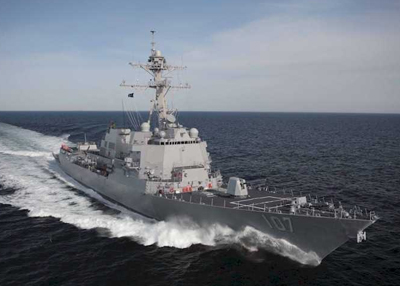
The USS Gravely

Vice Admiral Gravely blazed a trail for those that followed him and set an example for all Naval Officers to follow. He did it under conditions that most of us could not imagine. I am proud to serve in the Navy that he helped to make.  His vision, service and memory are carried on in this navy and in the ship that bears his name, the USS Gravely DDG-107.

Peace

Padre Steve+

3 Comments

Filed under History, laws and legislation, leadership, Military, Navy Ships, US Navy

Transitions in the Military: New Assignments

NDU-JFSC-campus

In the Navy, as well as most military branches in the United States the officer community regardless of their specialty have branch, corps or specialty managers. These men and women work with the services and the individual officers to fill assignments. In the Navy these men and women are called “Detailers” and the process of assignments called detailing.

This afternoon I received a call from my detailer. I am coming up on my “projected Rotation Date” or PRD in October and have been negotiating for orders. The process was disrupted by some other changes in the system and I have been waiting a bit longer than normal to find out what I would be doing next.

In my last two assignments I had no choice. In 2006 the assignment that I thought I had was changed and in 2008 I was requested by name for an assignment at Naval Medical Center Portsmouth and in 2010, a year before I expected to rotate and less than a week after I had been selected for promotion to the rank of Commander I was informed that I would be assigned as the Command Chaplain at the Naval Hospital Camp Lejeune North Carolina. I have now completed most of that tour and was awaiting word.

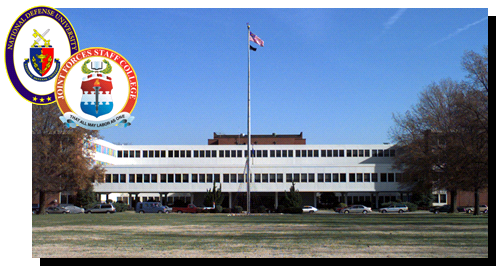
What I wanted to do was to teach and be the Chaplain at the Joint Forces Staff college in Norfolk. It has been an assignment that I have wanted for a number of years. It combines being an instructor in Ethics for students from the Army, Navy, Marines, Air Force, Coast Guard and foreign officers attending the courses at the college, as well as having chapel responsibilities. However I was told a couple of months ago that the assignment was going to another chaplain. I was disappointed because it was a billet that I thought that I was uniquely qualified.

I had spent 17 1/2 years in the Army, been a company commander as well as battalion, group and brigade staff officer before becoming a chaplain. Additionally my military and civilian education which include the Marine Corps Command and Staff College and a Masters Degree in military history and some rather unusual assignments including a joint tour in Iraq as chaplain to American advisors in Al Anbar province as a member of the Iraq Assistance Group, made me, at least in my opinion an ideal choice.

However as of a couple of months ago the billet was already filled. Thus I had no idea what assignment that I would get and since there were very few assignments available in my detailing “window.”

I was expecting a call in the next week or so, but I did not expect the detailer to tell me that I would get the Joint Forces Staff College job. I am happy to get it. It will mean that I will return to the Norfolk area in the September-October time frame. The position will allow me to teach in a very interesting setting as well as pastor the chapel congregation.   It will also allow me to continue my academic education and writing. It will also allow me to be at home after a three year tour away from my wife Judy. For that I am most grateful.

Since it is a non-deploying billet it probably will not help my chances too much to make Captain in a view years, but that is not my goal. My goal is to be at the place where I can do the most good, take advantage of my skills and experience and which will challenge me to continue to grow as a human being, priest, chaplain and Naval officer.

It is good news and I am happy that the detailers and senior leadership honored my request for the assignment. The timing allows me to finish well where I currently serve and contribute the the continuing mission of healing the minds, bodies and spirits of Marines and Sailors, including those wounded, ill or injured in war at Camp LeJeune.

It is a good day.

Peace

Padre Steve+

4 Comments

Filed under Military, US Navy

An older post of mine about Pearl Harbor as we approach the 71st anniversary of that “Day of Infamy.”

padresteve's avatarThe Inglorius Padre Steve's World

Arizona Leading the Battle Line

“Yesterday, Dec. 7, 1941 – a date which will live in infamy – the United States of America was suddenly and deliberately attacked by naval and air forces of the Empire of Japan…. The attack yesterday on the Hawaiian Islands has caused severe damage to American naval and military forces. Very many American lives have been lost.” Except of President Franklin D Roosevelt’s Pearl Harbor Speech December 8th 1941

Today is the 68th anniversary of the Japanese attack on Pearl Harbor and as we were then we are at war.

A Date that Will Live in Infamy: USS Arizona Burning

I remember reading Walter Lord’s “Day of Infamy” when I was a 7th grade student at Stockton Junior High School back in 1972.  At the time my dad was on his first deployment to Vietnam on the USS Hancock CVA-19.  As…

View original post 1,837 more words

1 Comment

Filed under History, Military, Navy Ships, traumatic national events, US Navy, world war two in the pacific

“Let’s Make Sure that History Never Forgets the Name Enterprise” USS Enterprise Inactivated at Norfolk

F-A-18Main

51 years of service and 26 deployments after she was placed in commission the USS Enterprise, CVN-65 was decommissioned at Naval Station Norfolk.  In a ceremony attended by 12,000-15,000 people, many former Sailors and Marines who served aboard her the ship was officially inactivated.

The inactivation is the first step in which the gigantic 1123 foot long 93,000 ton behemoth will have her 8 nuclear reactors, de-fueled and then removed prior to her being towed to Bremerton Washington where she is slated, along with other previous nuclear warships to be scrapped.

sea-orbit

Enterprise spent the first half of her career in the Pacific until she returned to the East Coast in 1989 to have her nuclear reactors refueled after which she was home ported at Norfolk.

She served in action in the Vietnam War, during the Cold War, against the Iranians during the 1988-89 Tanker War, where her aircraft sank one Iranian Frigate and damaged a second, the 1998 Operation Desert Fox which attacked Iraqi military targets,. She also made deployments in support of Operation Enduring Freedom and Operation Iraqi Freedom.

In July 1964, she along with the USS Long Beach CGN-9 and USS Bainbridge DLGN-25  formed Task Force One, for Operation Sea Orbit, a 63 day voyage around the world.

images-15

She is a part of American popular culture. Named after the most combat decorated carrier of World War II she served as a symbol of American Naval Power and ingenuity. Her name was appropriated by Gene Roddenberry for use in the now legendary Star Trek television and movie franchise. She was also the setting for the films Top Gun, The Hunt for Red October and Star Trek IV: The Voyage Home, however since she was not available for filming her place was taken by the USS Ranger.

The name was used for the first Space Shuttle and will always be a part of American Naval lore and popular culture. Today on her decommissioning day the Navy announced that it will name the next carrier to be built after the new Gerald Ford CVN-78 class ships, USS Gerald R Ford and USS John F Kennedy will be the USS Enterprise CVN-80.

IMAG0508_20121201124744_320_240

I saw the Enterprise for the first time as a teenager when she was stationed at NAS Alameda. She was so much larger than the other carriers at the pier it was a sight to see. I often saw her at Norfolk and I know as she is stripped down at Norfolk and Newport News that I will see her again.

As Captain Jean Luc Picard said in Star Trek the Next Generation “Let’s make sure history never forgets the name Enterprise.” 

Peace

Padre Steve+

5 Comments

Filed under Navy Ships, News and current events, star trek, US Navy

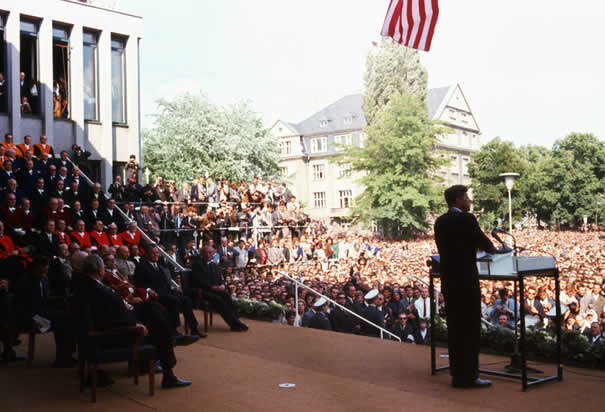
Remembering the Hope of John F Kennedy

“Let us not seek the Republican answer or the Democratic answer, but the right answer. Let us not seek to fix the blame for the past. Let us accept our own responsibility for the future.” 

“The problems of the world cannot possibly be solved by skeptics or cynics whose horizons are limited by the obvious realities. We need men who can dream of things that never were and ask, why not?”

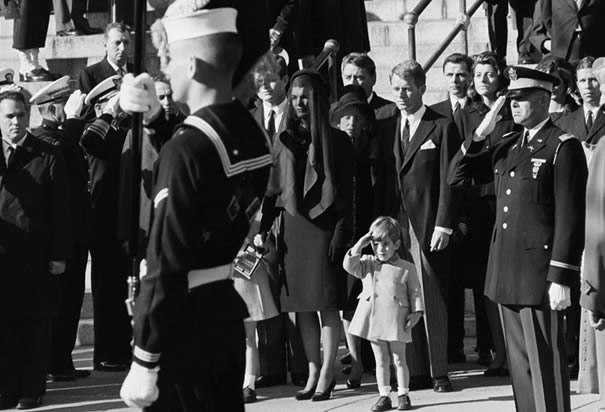
President John F Kennedy was assassinated in Dallas Texas on a sunny November afternoon 49 years ago this Thursday.  The images of the event and its aftermath in photos and film still haunt us and find themselves etched in our individual and collective memory. The two shots that killed the President were fired by Lee Harvey Oswald according to the Warren Commission and subsequent inquiries although there are a host of conspiracy theories regarding the assassination. My purpose is not to prove or disprove the official version or any alternative explanation although I personally believe that Oswald was the lone gunman.  It is merely to remember a horrible event in the life of our nation and how easily it could happen again.

Kennedy was not the first President killed by an assassin. Four Presidents of the United States have died by the hand of assassins. The first was Abraham Lincoln killed by John Wilkes Booth on Good Friday 1865.  The next was James A Garfield who was shot on July 2nd 1881 by Charles Guiteau a disgruntled supporter who claimed that he had been commanded by God to kill a the President who he believed to be ungrateful for his support.  Garfield died on September 19th probably due to the incompetence of his doctors.   The third was William McKinley who was shot by Leon Czolgosz on September 6th 1901. McKinley died on September 14th.  Over 20 other attempts have been made on incumbent or former Presidents of which one wounded Theodore Roosevelt after his Presidency and another which nearly killed President Ronald Reagan on March 30th 1981.  Gerald Ford had two close brushes with female assassins within 2 weeks of each other in September 1975. More recent attempts have been made on George H.W Bush, Bill Clinton and George W Bush.  A man was arrested for shooting at the White House last week but President Obama was away from Washington during the attack.

However Kennedy’s assassination tends to be the most talked about and studied and has left a scar on the country that really hasn’t healed. I can remember the effect that it as well as the subsequent killings of Martin Luther King Jr. and Robert F Kennedy had on my parents in the following years.  My mother recounted how she felt when she heard the news of Kennedy’s death on Armed Forces Radio while we were stationed in the Philippines.  I remember the times around the anniversary of his assassination we would watch television shows about it and the movie PT-109. While I do not have direct memories of President Kennedy’s assassination I do remember those of Dr King and Senator Kennedy as well as the subsequent attempts on President Ford, Reagan, Bush, Clinton and Bush.

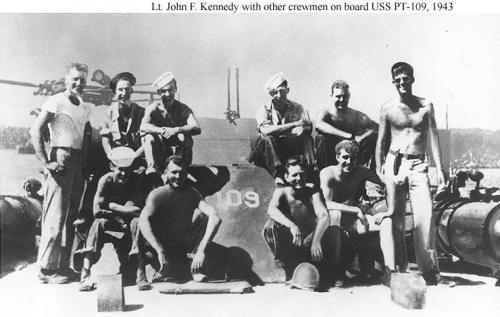
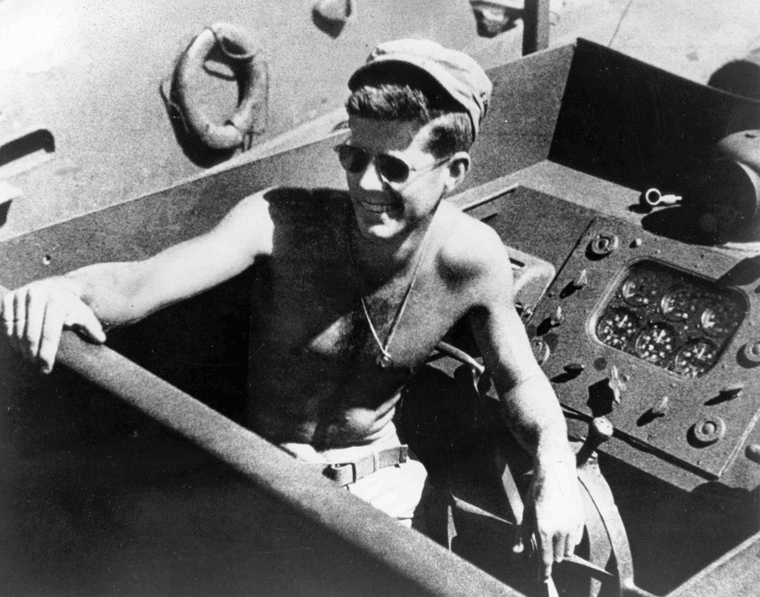
John F Kennedy is one of my favorite Presidents. I know that John F Kennedy was a deeply flawed man and I do not gloss over his failings either as a man or some of his decisions while President. He was certainly not perfect or That being said I still I admire him.  He volunteered to serve in combat on PT Boats despite having chronic lower back problems tht kept him out of the Army and necessitated a waiver to enter the Navy. His actions in saving his crew after his PT-109 was sunk were nothing short of heroic and his crew knew it. After he his crew was rescued Kennedy elected to remain in action and commanded PT-59 in combat rescuing Marines on Choisuel Island. Kennedy’s citation for the Navy and Marine Corps Medal read:

“For extremely heroic conduct as Commanding Officer of Motor Torpedo Boat 109 following the collision and sinking of that vessel in the Pacific War Theater on August 1–2, 1943. Unmindful of personal danger, Lieutenant (then Lieutenant, Junior Grade) Kennedy unhesitatingly braved the difficulties and hazards of darkness to direct rescue operations, swimming many hours to secure aid and food after he had succeeded in getting his crew ashore. His outstanding courage, endurance and leadership contributed to the saving of several lives and were in keeping with the highest traditions of the United States Naval Service.”

Kennedy’s speeches still inspire me. As a child a had a copy of his book Profiles in Courage. I grew up with his promise to put a man on the Moon by the end of the decade, the creation of the Peace Corps, his backing of Special Forces, his love of the Navy, the great “Ich bin ein Berliner” speech, his support of the Civil Rights movement and and his defusing of the Cuban Missile Crisis all inspire me.  His inauguration speech where he said “Ask not what your country can do for you but what you can do for your country” was and still is a lot of my motivation for serving in the Navy.  John F Kennedy symbolized to me as a young person the hope of a country that had he lived might be different today

I could be critical and point out all of John Kennedy’s flaws and contradictions.  But then too easy to do. People make a living doing that. People often forget that Kennedy was a hero, not perfect but a hero. I wish a quarter of our current elected officials served their country in combat as Kennedy did and understood what real danger and heroism is. Instead with very few exceptions we have elected men as much or even more flawed and contradictory than John F Kennedy with none of his personal courage.

Kennedy’s wartime service always earned him my respect. I tremble when I think that someone would have such a deep hatred of him or for that matter any other President that they would kill or attempt to kill them. That kind of hatred goes beyond me.  Lee Harvey Oswald was a small and pathetic man who needed to be a revolutionary, who needed to be important failing everything else he killed the President. Unfortunately there are people like Oswald on all sides of the political, ideological and religious spectrum who will gladly trade the life of a President or any other public figure for their moment in the spotlight and need to demonstrate their importance to the world.

I fear for our country because of the intense hatred that has become part and parcel of our political landscape. The hatred toward directed toward President Obama and the many threats made against his life and person are chilling. As I looked for images for this article I found pictures of Kennedy’s body after the assassination and they shook me. I have seen far too much in the way of violent and senseless death. Thus I do pray for the safety of President Obama as well as all of our leaders and for God to protect us from ourselves and those so possessed by hatred and their own self righteousness that they would commit such an abominable act.

While I do so I remember the President whose life was cut short by the bullets fired by Lee Harvey Oswald and pray that such an event will never happen again and even more importantly that American political leaders would begin to dream again, visions of hope for the country and world and instead of only seeing limitations, ask that one question in terms of ideas of hope and progress: “Why not?”

“Now the trumpet summons us again. Not as a call to bear arms, though arms we need; not as a call to battle, though embattled we are; but a call to bear the burden of a long twilight struggle, year in and year out, ‘rejoicing in hope, patient in tribulation’, a struggle against the common enemies of man: tyranny, poverty, disease, and war itself.”

Peace

Padre Steve+
3 Comments

Filed under History, Political Commentary, US Navy

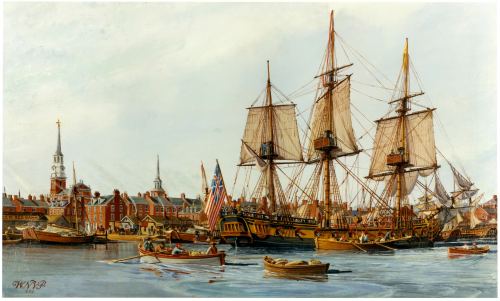
237 Years of Service: Happy Birthday US Navy!

Raising the Flag Aboard the USS Alfred 

“It follows than as certain as that night succeeds the day, that without a decisive naval force we can do nothing definitive, and with it, everything honorable and glorious.” George Washington 15 November 1781 to the Marquis de Lafayette

On October 13th 1775 the Continental Congress passed legislation to establish a Navy for a country that did not yet exist.  It was the first was the first in a long line of legislative actions taken by it and subsequent Congresses that helped define the future of American sea power.

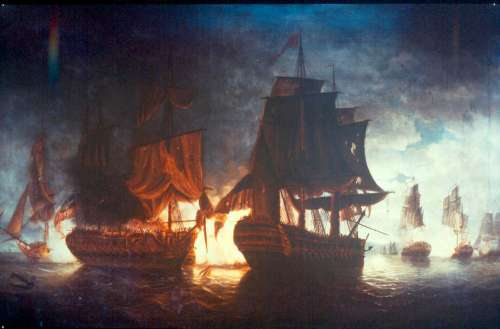
The Battle of Flamborough Head

The legislation was the beginning of a proud service that the intrepid founders of our nation could have ever imagined.  Less than two months after it was signed on December 3rd 1775 Lieutenant John Paul Jones raised the Grand Union Flag over the new fleet flagship the Alfred. The fleet set sail and raided the British colony at Nassau in the Bahamas capturing valuable cannon and other military stores.  It was the first amphibious operation ever conducted by the Navy and Marines.

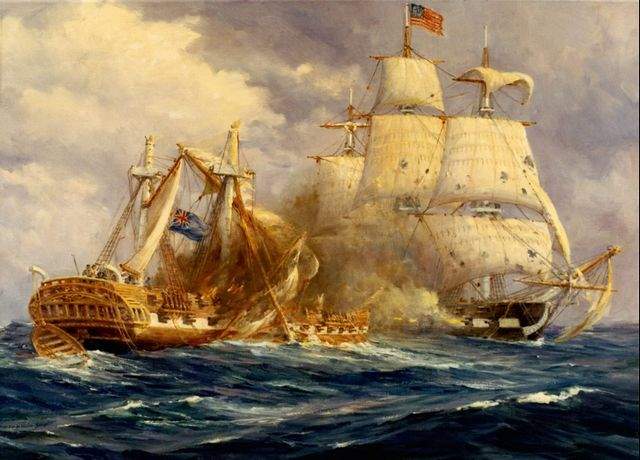
USS Constitution and HMS Guerriere

Jones received the first recognition of the American flag shortly after France recognized the new United States.  In command of the Sloop of War Ranger his ship received a nine-gun salute from the French flagship at Quiberon Bay.

Oliver Hazard Perry at the Battle of Lake Erie

Jones would go on to to greater glory when he in command of the Bonhomme Richard defeated the HMS Serapis at the Battle of Flamborough Head. During the battle when all seemed lost and the colors had been shot away he replied to a British question if he had surrendered replied “I have not yet begun to fight!”

Admiral David Farragut at the Battle of Mobile Bay

When the war ended very few of these ships remained most having been destroyed or captured during the war. But these few ships and the brave Sailors and Marines who manned them blazed a trail which generations of future sailors would build on.  The Navy has served the nation and the world as a “Global Force for Good” for 237 years.

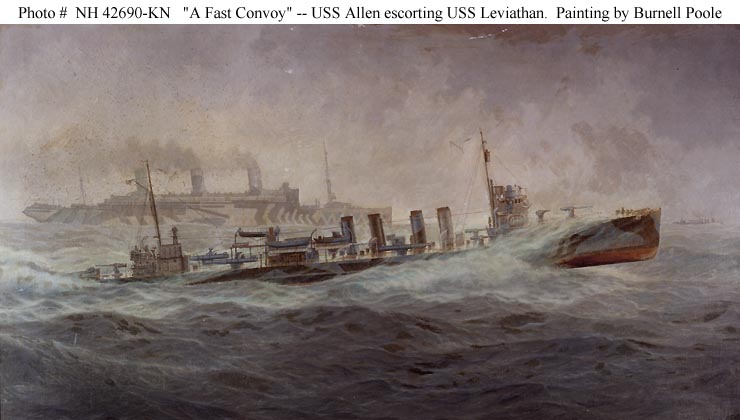
World War One: Convoy Escort USS Allen

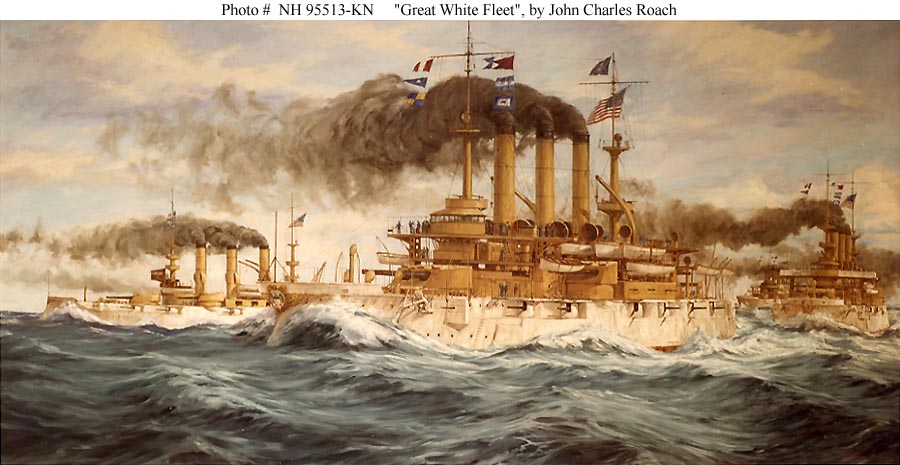
The Great White Fleet

This force for good is on duty today and those that have served over the past 237 years are part of a tradition that is more than honorable. President John F. Kennedy who served as a PT Boat Commander in World War Two remarked:

“I can imagine no more rewarding a career. And any man who may be asked in this century what he did to make his life worthwhile, I think can respond with a good deal of pride and satisfaction: ‘I served in the United States Navy.'”

The Battle of Midway

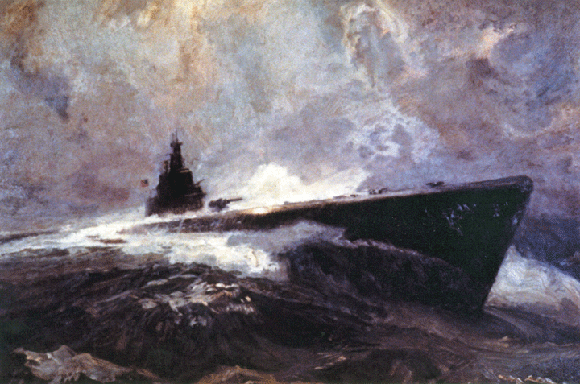
USS Growler

Tonight as you go to bed and sleep soundly after eating well and spending time with family, friends or enjoying some form of entertainment remember those of our Navy who serve at sea at the ready in the Straits of Hormuz, in the mountains and deserts of Afghanistan, the desolation of the Horn of Africa and around the world defending our interests, caring for our military personnel and their families and deploying to serve in harm’s way and in areas of devastation.  They are America’s “Global Force for Good.”  They are my shipmates they are your fellow citizens.  They are the United States Navy.

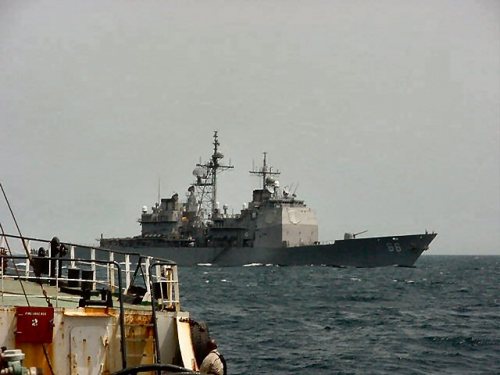
USS Hue City CG-66

Happy Birthday Shipmates.

Peace

Padre Steve+
1 Comment

Filed under History, Military, Navy Ships, US Navy

The Battle of Cape Esperance: October 11-12 1942

Naval battles between U.S. Navy and Imperial Japanese Navy surface forces around Guadalcanal in 1942 were almost always brief and bloody. The number of ships sunk in the area around Guadalcanal, Tulagi and Savo Island led to the area being nicknamed “Iron Bottom Sound.”

The battles around Guadalcanal occurred in a time of technical transition as radar became better at detecting ships and fire direction systems advanced. By October 1942 the U.S. Marines battling on Guadalcanal were fighting an enemy growing in numbers and felt the effects of the the predatory Japanese surface raiders that routinely bombarded their positions and endangered U.S. resupply efforts.

USS Helena

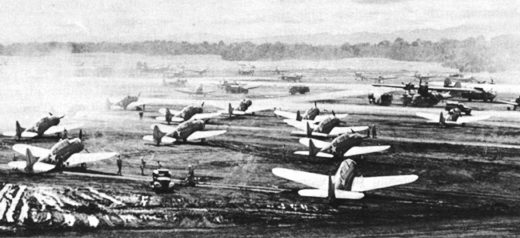
Since the Marine, Navy and Army Air Force Squadrons based on Guadalcanal maintained air superiority in the nearby waters during the day the Japanese were limited to night surface operations against the island, operations involving the reinforcement and resupply of Japanese Forces on the island as well as offensive operations to aid the land forces by attempting to make the U.S. airstrip, Henderson Field inoperable.

Henderson Field

The first of their major operations was in early August when a Japanese cruiser destroyer force ravaged the U.S. cruiser forces off Savo Island sinking 3 American and one Australian Heavy cruiser while damaging another. The Battle was a disaster for the U.S. forces and led to the early withdraw of ships of the invasion force before many could finish unloading the equipment and supplies that were critical to the operation.

The Tokyo Express Route along the Slot

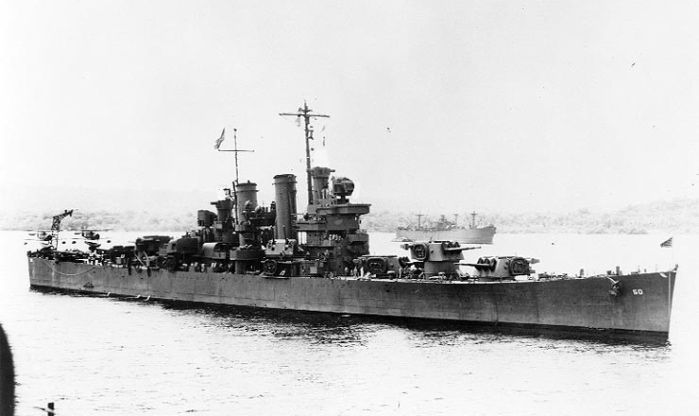
Japanese resupply and reinforcement operations were so frequent that the Japanese forces were nicknamed the Tokyo Express by the Americans. Knowing that the Marines who had been in bitter combat with the Japanese needed reinforcements the U.S. sent a convoy to land the 164th Infantry Regiment of the Americal Division on October 13th and sent a surface task force TF-64 composed of the Cruisers USS San Francisco, USS Boise, USS Salt Lake City and USS Helena and 5 destroyers under the command of Rear Admiral Norman Scott to protect it from any Japanese surface threats.

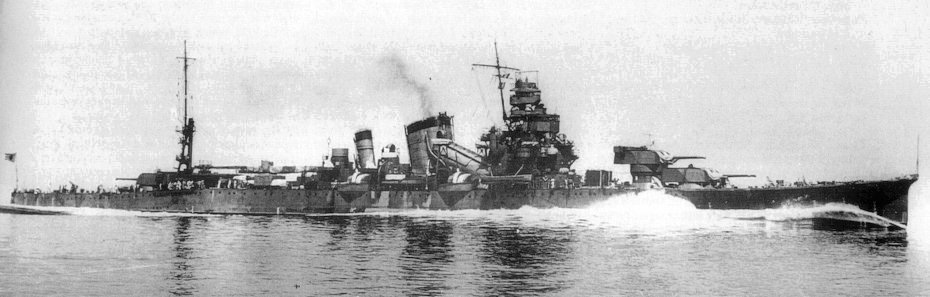
IJN Heavy Cruiser Aoba after the battle

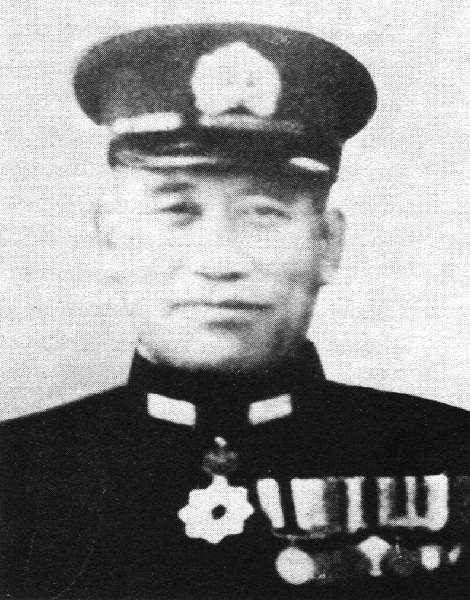
The U.S. moves coincided with a Japanese reinforcement effort which was covered by a force of three heavy cruisers, the Aoba, Furutuka and Kinugasa and two destroyers under the command of Rear Admiral Arimoto Goto. The Japanese cruisers were to bombard Henderson Field as the Japanese were not expecting any American surface forces to oppose their effort.

Rear Admiral Arimoto Goto

The Japanese were detected by aerial reconnaissance on the afternoon of the 10th when they were about 200 miles from Guadalcanal. Scott, whose forces lacked experience in night surface combat made a simple plan to “cross the T” of the enemy force in a single line formation with three destroyers in the van, the cruisers in the center and two destroyers in the rear.

Rear Admiral Norman Scott

U.S. floatplanes from the cruisers detected the Japanese at 2300 hours and at 2322 the radar of the USS Helena picked up the Japanese force at a range of about 27,000 yards. However misunderstandings of Scott’s orders broke his formation and put the van destroyers out of position in the poor visibility of the moonless night caused Scott to believe that the radar contacts were his own destroyers.

The Japanese still did not realize that an American force was near them and continued on. At 2345 the ships were only about 5,000 yards apart when Helena radioed asking permission to fire. The message was received by Scott who did not grant permission but acknowledged receipt of the message. Mistaking this as permission Helena, followed by the other cruisers opened a devastating fire on the Japanese force. Goto’s lookouts had sight the Americans at 2343 but assumed that they were friendly. The result was heavy damage to the Japanese flagship Aoba and left Goto mortally wounded.

IJN Heavy Cruiser Furutaka

Scott. taken by surprise ordered ceasefire at 2347 thinking that he was shooting at his own destroyers, but resumed fire at 2351. At 2349 Furutaka was heavily damaged by American fire and at 2358 was hit by a torpedo fired by the destroyer Buchanan. The Japanese destroyer Fubuki was mortally wounded about the same time and began to sink. The U.S. destroyers Duncan and Farenholt were both damaged in the crossfire with Duncan so badly damaged that she would be abandoned and sunk.

USS Duncan

The American cruisers turned on their searchlights which provided the last Japanese cruiser, Kinugasa the opportunity to hit them hard. Kinugasa heavily damaged Boise forcing her out of the battle. As Boise sheared away from the action Kinugasa and Salt Lake City exchanged fire hitting each other before the Japanese cruiser broke off the action.

The commander of the Japanese reinforcement group, his mission completed dispatched destroyers to assist Goto’s force at it withdrew and rescue survivors. However these ships were caught by U.S. aircraft from Henderson Field as the light of the dawn lit the sky. The destroyers Murakumo and Natsugumo were heavily damaged and scuttled.

On the 13th the American reinforcements arrived, as did Japanese reinforcements that night. On the night the 13th Japanese battleships Kongo and Haruna almost destroyed Henderson Field. However the resilient Marines kept the airfield operational and the Marines of the 1st Marine Division and the nearly arrived soldiers of the 164th Regiment held off a major Japanese assault from 23-26 October, known as the Battle of Henderson Field or Bloody Ridge.

Task Force 64 lost one destroyer sunk and two cruisers damaged while the Japanese lost one cruiser and three destroyers sunk and two cruisers damaged, with Aoba taking severe damage from nearly 40 6” and 8” shells that knocked her out of the war for four months. The battle had lasted less than 50 minutes from the time Helena picked up the Japanese force on her radar.

The battle was a tactical victory for the U.S. Navy but the lessons of the battle about the power of Japanese torpedoes and effectiveness in night combat were not learned causing other U.S. task forces to have to learn the hard way in subsequent engagements. Rear Admiral Scott would not long survive his victory being killed in action aboard the USS Atlanta during the Naval Battle of Guadalcanal just a month later.

Peace

Padre Steve+
6 Comments

Filed under History, Military, Navy Ships, US Navy, world war two in the pacific