Category Archives: war crimes trials

The Film that Shocked the World: Nazi Concentration Camps From Nuremberg

Friends of Padre Steve’s World,

Friends of Padre Steve’s World,


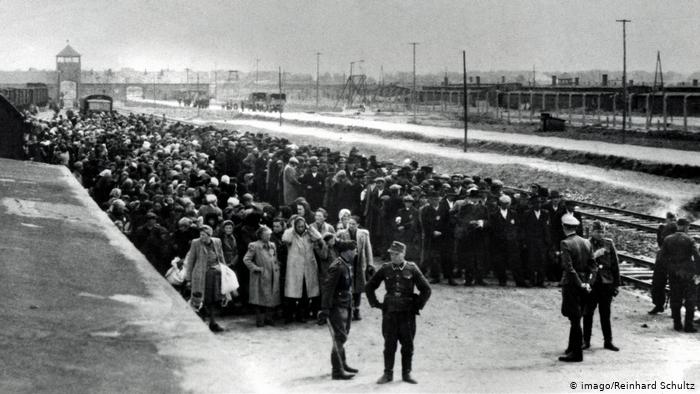
Instead of writing much tonight I am posting a video compiled by American and British personnel as they liberated Nazi Concentration Camps in Germany. The images even though shot in black and white are still nearly 75 years after it was shown in the Nuremberg Palace of Justice on 29 November 1945, just a week into the trial the Allied Prosecutors led by Associate U.S. Supreme Court Justice, Robert H. Jackson introduced it into evidence.

The UPI report of the day’s testimony and the film described the scene:

NUREMBERG, Nov. 29, 1945 (UP) – A tense audience at the war crimes trial watched for 52 horror-packed minutes today a 6,000-foot American Army film baring conditions at Nazi concentration camps. The prosecution charged that the camps were an instrument of policy of German leaders, including the 20 men on trial in the courtroom, in their drive for power.

In an almost deathlike silence the defendants, silhouetted in the dark courtroom by fluorescent lamps so that their guards could watch them, stared fascinated, bowed their heads low or mopped their faces as the show proceeded.

One, Hjalmar Schacht, kept his back turned throughout. Another, Polish Overlord Hans Frank, one of the most infamous mass murderers in world history, got sick.

American Sidney S. Alderman had closed the case on the German seizure of Austria, denouncing Reichsmarshal Hermann Goering, Austrian traitor Arthur Seyss-Inquart, Baron Franz von Papen and former Foreign Minister Baron Constantin von Neurath as the arch-plotters – “sly bullies wearing sanctimonious masks to cover their duplicity.”

High spots included a telephone talk in which Goering dictated to Seyss-Inquart a request which Seyss-Inquart was to make that German troops be sent into Austria; a telephone talk in which Adolf Hitler said he would “never, never forget” Benito Mussolini for co-operating and a 41-minute call by Goering to former Foreign Minister Joachim von Ribbentrop, then Ambassador in London, describing how “the birds are twittering here” in Berchtesgaden the day after the German invasion.

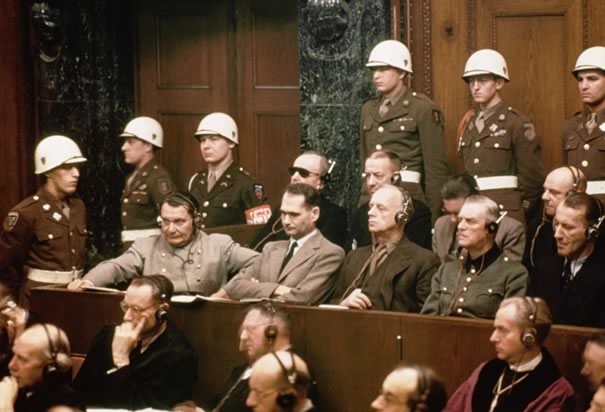
Court recessed at 3:15 so the movie screen could be made ready. At 3:35 the lights suddenly went out. At the same instant lights set around the prisoners’ dock rail flashed on to light the defendants. Reinforcements of American M.P.’s filed silently into the room to join the white-helmeted guards around the dock.

American Prosecutor Thomas Dodd rose.

“We will now show what concentration camps mean,” he said. “… the camps were not an end in themselves but an integral part of the Nazi system of government. We intend to prove that each defendant knew of the camps and that the camps were instruments by which the defendants retained power. They used the camps to prepare aggressive war.”

At 3:50 the film started grinding. The 6,000 feet shown were selected from 80,000 feet.

First came Leipzig – shots of bodies, burned to a crisp, of men and women who had tried to flee barracks the Nazis set afire and were mowed down by machine-gun fire.

Goering leaned forward in his seat, staring. Rudolf Hess snapped upright, betraying intelligent interest for the first time since the trial started, and whispered to Goering on his right and Ribbentrop on his left.

The camera eye moved slowly over the heaps of burned bodies. War correspondents had seen them before they were piled up – fingers dug into the earth in agony.

Col. Gen. Alfred Jodi put on dark glasses. Field Marshal Wilhelm Keitel bent stiffly forward.

The film flashed to Hamadar, which the Germans called the shudder house.

Papen lowered his head and covered his face with a handkerchief.

The film went on to Northausen, which the American 3rd Armored and 104th Infantry divisions liberated. It showed 2,500 bodies stacked beside a bombed building.

Schacht, his owl-like glasses reflecting the light in the prisoners’ dock, remained rigidly facing the audience, turned away from the screen.

German civilians, carrying bodies to mass graves under the guns of American troops, passed on the screen.

Grand-Adm. Karl Doenitz leaned heavily over the side of the dock as if he had taken all he could. Keitel took off his glasses, mopped his sweating face and lowered his head.

Next came Buchenwald, one of the worst of all. The film showed German civilians marching past a display of lamp shades, picture frames, plaques and bookmarks made of the skin of murdered men. The wife of the S.S. camp commandant had selected the victims.

Hess still watched, intensified. Julius Streicher stared with a deadpan face. Ribbentrop still had his eyes to the floor.

Then came Mauthausen, notorious Dachau, one of the earliest, greatest and most dreadful, and Belsen, where bodies were piled so high British bulldozers had to push them int o mass graves.

The film ended and the lights went on. For long moments the entire audience sat as if transfixed. Goering did not move his eyes from the screen until court adjourned one minute later. Schacht stood up and his lawyer said that he had nothing to do with the camps – in fact, would tell the court that he spent seven months at Dachau himself.

The film is real, and there was much more like it; in fact the Soviets would show a film from the death camps they liberated just two months later. But for now I will leave you with the film that shocked the world, and forever turned the tide against the Nazi Major War Criminals.

Please don’t believe that such events could happen in any country in the World, including Trump’s America. Please watch all of it, even if it sickens you as it should. Please don’t believe anything Trump says regarding race, ethnicity, religion, political opponents, the free press, and his deliberate falsification or anything that might embarrass him, because in each case he is telling his alternate version of the truth which acquits him and blames his victims.
As of today he has been responsible for decisions that have claimed the lives of over 160,000 American and infected over Five million Americans with the Coronavirus 19 virus and a pandemic that has made a nation with just 4.25% of the Worlds population, which supposedly had the best in medical, scientific and research programs to stop pandemics to the worst for a nation supposedly so well educated, prepared, and ready for a pandemic.

But instead of a President dedicated to telling the truth, backing the facts of science and medicine, we have a man who only speaks for himself and those who will not turn on him. 162,000 dead, and over Five Million infected Americans testify against him

Yet, unlike the President I will tell the truth because I am bound by my oath to the Constitution, and my vows as a priest.

With that I leave you for tonight. I do need get some sleep.

I report, you decide.

Peace,

Padre Steve+

1 Comment

Filed under civil rights, Coronavirus, crimes against humanity, culture, ethics, euthanasia, faith, film, germany, History, holocaust, laws and legislation, leadership, LGBT issues, natural disasters, nazi germany, News and current events, Political Commentary, war crimes, war crimes trials

When Military Forces Become Criminal Institution’s: The WWII Wehrmacht and the Attempt of Trump to Turn the Military into His Instrument of Terror

Hitler and His Commanders Planning Operation Barbarossa 

Friends of Padre Steve’s World,

Tonight I am continuing on with my series on Supreme Court Justice Robert Jackson’s closing arguments while serving as the Chief American Prosecutor at the Major War Crimes Trials at Nuremberg. These crimes are not without relevance today, thus it is important for us to revisit them, for as I noted yesterday, quoting Yehuda Bauer, the Holocaust did not deviate from human norms.

For me it is a difficult subject, for I served in and supported a war that by any standard of legal and moral judgement would have met the criteria that we prosecuted the Nazis for in 1945. I should have known better because I had studied the Nazi crimes and had been the student of a professor who served as an interrogator and interpreter during the Nuremberg War Crimes Trials. But in the moment of hysteria after the attacks of September 11th 2001 and my belief in the integrity of Secretary of State Colin Powell, I allowed my good sense to be persuaded that an act of aggressive war that resulted in war crimes, and might even include crimes against humanity was perfectly legal.

I went to Iraq in 2007 and 2008. I worked with advisors to Iraqi Army, Border Troops, Police, Port of Entry, and Provincial Reconstruction Teams In Al Anbar Province. I came back from Iraq a very different man. I saw the lies. I came to love and appreciate the Iraqis and what they had suffered under both Saddam Hussein and our invasion and occupation. I can still see the maimed bodies, the destroyed cities and hamlets, the crippled children, as well as the wounded Marines in my mind. I pray and hope that the Iraqis that I served alongside did not become victims of ISIS after I left the country.

I am haunted by it to this day, and I no longer trust the supposedly good intentions of the American government, and in the age of Donald Trump fear for our nation and the world. Since he took office he has attempted to use military units in operations both on the Mexican Border, in Washington D.C., and has pardoned convicted U.S. Army and Navy War Criminals.

After Border Patrol agents, in full combat gear and body armor fired tear gas across across the Mexican border against Mexicans throwing rocks at them,  President Trump said that he authorized U. S. Military personnel to use deadly force against rock throwers. His former Chief of Staff, and now opponent, retired Marine Corps General John Kelly issued a “cabinet order” something never heard of before, allowing U. S. Military personnel to engage refugees believed to be endangering Border Control agents, in what appears to be a direct violation of Posse Comitatus. Add to those issues the use of drone strikes, by the Bush, Obama, and Trump Administrations, both DOD and CIA, against often insignificant targets that that more often than not have many women and children in them, and finally the pardoning of convicted war criminals by President Trump, and firing the only administration who stood in his way, Secretary of the Navy Richard Spencer.

Since then the President attempted to use the Army against peaceful protestors in Lafayette Part outside the White House on 1 June 2020, their use was not authorized by the Secretary of Defense and Chairman of the Joint Chiefs of Staff. However, the President used U.S. Park Police, a mixture of other Federal Police, and D.C. National Guardsmen launched a violent attack on the protestors in order to allow the President unimpeded access to St. John’s Episcopal Church for a disastrous photo-op. But the optics for the military were bad, both Secretary of Defense Mark Esper and General Mark Miley apologized for their presence. Subsequently, they have taken actions following it directly opposing the President’s most racist and pro-Confederate, and White Nationalist words and tweets, while the Commandant of the Marine Corps, Chief of Naval Operations, and other Service Chiefs banned Confederate and other racist symbols on military bases. They also ordered investigations into racial incidents and at least in the case of the Navy have moved to initiate a climate of command that takes the issues of racism, gender bias, sexual assault, religious prejudice and other actions harm anyone serving in the Navy.

But I digress. When I read these accounts my mind is taken back to the subject of war crimes, and based on my expertise and study of the crimes of the Nazis, not to mention the Japanese in the Second World War, I automatically default to those settings.

So, I will stop with my words and go back to those of Robert Jackson at Nuremberg, because they are so pertinent today, and because I have been writing about Justice Jackson and the Major War Crimes Trials at Nuremberg. There will be a time that I write about the subsequent Generals Trial, and the Einsatzgruppen Trial. 

Until tomorrow,

Peace,

Padre Steve+

Immediately after the seizure of power the Nazis went to work to implement these aggressive intentions by preparing for war. They first enlisted German industrialists in a secret rearmament programme. Twenty days after the seizure of power Schacht was host to Hitler, Goering and some twenty leading industrialists. Among them were Krupp von Bohlen of the great Krupp armament works and representatives of I. G. Farben and other Ruhr heavy industries. Hitler and Goering explained their programme to the industrialists, who became so enthusiastic that they set about to raise three million Reichsmarks to strengthen and confirm the Nazi Party in power. Two months later Krupp was working to bring a reorganised association of German industry into agreement with the political aims of the Nazi Government. Krupp later boasted of the success in keeping the German war industries secretly alive and in readiness despite the disarmament clauses of the Versailles Treaty, and recalled the industrialists’ enthusiastic acceptance of “the great intentions of the Fuehrer in the rearmament period of 1933-1939”.

Some two months after Schacht had sponsored his first meeting to gain the support of the industrialists, the Nazis moved to harness industrial labour to their aggressive plans. In April, 1933, Hitler ordered Dr. Ley “to take over the trade unions”, numbering some 6 million members. By Party directive Ley seized the unions, their property and their funds. Union leaders, taken into “protective custody” by the SS and SA, were put into concentration camps. The free labour unions were then replaced by a Nazi organization known as the German Labour Front, with Dr. Ley at its head. It was expanded until it controlled over 23 million members. Collective bargaining was eliminated, the voice of labour could no longer be heard as to working conditions, and the labour contract was prescribed by “trustees of labour” appointed by Hitler. The war purpose of this labour programme was clearly acknowledged by Robert Ley five days after war broke out, when he declared in a speech that:

“We National Socialists have monopolised all resources and all our energies during the past seven years so as to be able to be equipped for the supreme effort of battle.”

The Nazis also proceeded at once to adapt the Government to the needs of war. In April, 1933, the Cabinet formed a Defence Council, the working committee of which met frequently thereafter. In the meeting of 22nd May, 1933, at which defendant Keitel presided, the members were instructed that:

“No document must be lost since otherwise the enemy propaganda would make use of it. Matters communicated orally cannot be proven; they can be denied by us in Geneva.”

In February, 1934 -and, your Honours, dates in this connection are important -with defendant Jodl present, the Council planned a mobilization calendar and mobilization order for some 240,000 industrial plants. Again it was agreed that nothing should be in writing so that “the military purpose may not be traceable”.

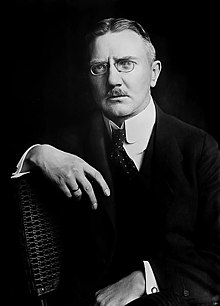
Hjalmar Schacht


On 21st May, 1935, the top secret Reich Defence Law was enacted. Defendant Schacht was appointed Plenipotentiary General for War Economy with the task of secretly preparing all economic forces for war and, in the event of mobilization, of financing the war.

Schacht’s secret efforts were supplemented in October, 1936, by the appointment of defendant Goering as Commissioner of the Four-Year Plan, with the duty of putting the entire economy in a state of readiness for war within four years.

A secret programme for the accumulation of the raw materials and foreign credits necessary for extensive rearmament was also set on foot immediately upon seizure of power. In September of 1934, the Minister of Economics was already complaining that:

“The task of stock-piling is being hampered by the lack of foreign currency; the need for secrecy and camouflage also is a retarding influence.”

Foreign currency controls were at once established. Financing was delegated to the wizard Schacht, who conjured up the MEFO bill to serve the dual objectives of tapping the short-term money market for rearmament purposes while concealing the amount of these expenditures.

The spirit of the whole Nazi administration was summed up by Goering at a meeting of the Council of Ministers, which included Schacht, on 27th May, 1936, when he said: “All measures are to be considered from the standpoint of an assured waging of war.” The General Staff, of course, also had to be enlisted in the war plan. Most of the generals, attracted by the prospect of rebuilding their armies, became willing accomplices. The Minister of War von Blomberg and the Chief of Staff General von Fritsch, however, were not cordial to the increasingly belligerent policy of the Hitler regime, and by vicious and obscene plotting they were discredited and removed in January, 1938. Thereupon, Hitler assumed for himself supreme command of the armed forces and the positions of von Blomberg and of von Fritsch were filled by others who became, as Blomberg said of Keitel, “a willing tool in Hitler’s hands for every one of his decisions”. The generals did not confine their participation to merely military matters. They participated in all major diplomatic and political manoeuvres, such as the Obersalzberg meeting where Hitler, flanked by Keitel and other top generals, issued his virtual ultimatum to Schuschnigg.

As early as 5th November, 1937, the plan to attack had begun to take definiteness as to time and victim. In a meeting which included the defendants Raeder, Goering and von Neurath, Hitler stated the cynical objective:

“The question for Germany is where the greatest possible conquest could be made at the lowest possible cost.”

He discussed various plans for the invasion of Austria and Czechoslovakia, indicating clearly that he was thinking of these territories not as ends in themselves, but as means for further conquest. He pointed out that considerable military and political assistance could be afforded by possession of these lands, and discussed the possibility of constituting from them new armies up to a strength of about 12 divisions. The aim he stated boldly and baldly as the acquisition of additional living-space in Europe, and recognized that “The German question can be solved only by way of force.” Six months later, emboldened by the bloodless Austrian conquest, Hitler, in a secret directive to Keitel, stated his “unalterable decision to smash Czechoslovakia by military action in the near future”.

On the same day, Jodl noted in his diary that the Fuehrer had stated his final decision to destroy Czechoslovakia soon and had initiated military preparations all along the line. By April the plan had been perfected to attack Czechoslovakia “with lightning swift action as the result of an ‘incident’”.

All along the line preparations became more definite for a war of expansion, on the assumption that it would result in a world-wide conflict. In September, 1938, Admiral Carls officially commented on a “Draft Study of Naval Warfare against England”:

“There is full agreement with the main theme of the study.

1. If, according to the Fuehrer’s decision, Germany is to acquire a position as a world power, she needs not only sufficient colonial possessions but also secure naval communications and secure access to the ocean.

2. Both requirements can only be fulfilled in opposition to Anglo-French interests and will limit their positions as world powers. It is unlikely that they can be achieved by peaceful means. The decision to make Germany a world power therefore forces upon us the necessity of making the corresponding preparations for war.

3. War against England means at the same time war against the Empire, against France, probably against Russia as well, and a large number of countries overseas; in fact, against one-third to one-half of the whole world.

It can only be justified and have a chance of success if it is prepared economically as well as politically and militarily and waged with the aim of conquering for Germany an outlet to the ocean.”

This Tribunal knows what categorical assurances were given to an alarmed world after the Anschluss, after Munich, after the occupation of Bohemia and Moravia, that German ambitions were realised and that Hitler had “no further territorial demands to make in Europe.” The record of this trial shows that those promises were calculated deceptions and that those high in the bloody brotherhood of Nazidom knew it.

As early as 15th April, 1938, Goering pointed out to Mussolini and Ciano that the possession of those territories would make possible an attack on Poland. Ribbentrop’s Ministry wrote on 26th August, 1938:

“After the liquidation of the Czechoslovakian question, it will be generally assumed that Poland will be next in turn.”

Hitler, after the Polish invasion, boasted that it was the Austrian and Czechoslovakian triumphs by which “the basis for the action against Poland was laid”. Goering suited the act to the purpose and gave immediate instructions to exploit, for the further strengthening of the German war potential, first the Sudetenland, and then the whole Protectorate.

By May of 1939 the Nazi preparations had ripened to the point that Hitler confided to the defendants Goering, Raeder, Keitel, and others, his readiness “to attack Poland at the first suitable opportunity”, even though he recognized that “further successes cannot be attained without the shedding of blood”. The larcenous motives behind this decision he made plain in words that echoed the covetous theme of Mein Kampf:

“Circumstances must be adapted to aims. This is impossible without invasion of foreign States or attacks upon foreign property. Living-space in proportion to the magnitude of the State is the basis of all power -further successes cannot be attained without expanding our living-space in the East ….”

While a credulous world slumbered, snugly blanketed with perfidious assurances of peaceful intentions, the Nazis prepared not as before for a war but now for the war. The defendants Goering, Keitel, Raeder, Frick and Funk, with others, met as the Reich Defence Council in June of 1939. The minutes, authenticated by Goering, are revealing evidence of the way in which each step of Nazi planning dovetailed with every other. These five key defendants, three months before the first panzer unit had knifed into Poland, were laying plans for “employment of the population in wartime”, and had gone so far as to classify industry for priority in labour supply after “five million servicemen had been called up”. They decided upon measures to avoid “confusion when mobilization takes place”, and declared a purpose “to gain and maintain the lead in the decisive initial weeks of war”. They then planned to use in production prisoners of war, criminal prisoners, and concentration camp inmates. They then decided on “compulsory work for women in war time”. They had already passed on applications from 1,172,000 specialist workmen for classification as indispensable, and had approved 727,000 of them. They boasted that orders to workers to report for duty “are ready and tied up in bundles at the labour offices”. And they resolved to increase the industrial manpower supply by bringing into Germany “hundreds of thousands of workers” from the Protectorate to be “housed together in hutments”.

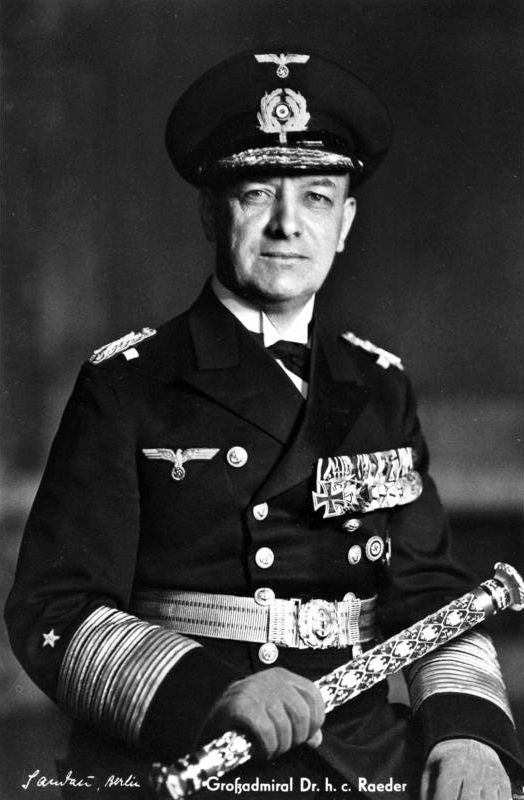
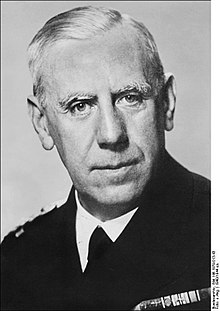
Grand Admiral Erich Raeder

It is the minutes of this significant conclave of many key defendants which disclose how the plan to start the war was coupled with the plan to wage the war through the use of illegal sources of labour to maintain production. Hitler, in announcing his plan to attack Poland, had already foreshadowed the slave labour programme as one of its corollaries when he cryptically pointed out to the defendants Goering, Raeder, Keitel, and others that the Polish population “will be available as a source of labour”. This was part of the plan made good by Frank, who as Governor-General notified Goering, that he would supply “at least one million male and female agricultural and industrial workers to the Reich”, and by Sauckel, whose impressments throughout occupied territory aggregated numbers equal to the total population of some of the smaller nations of Europe.

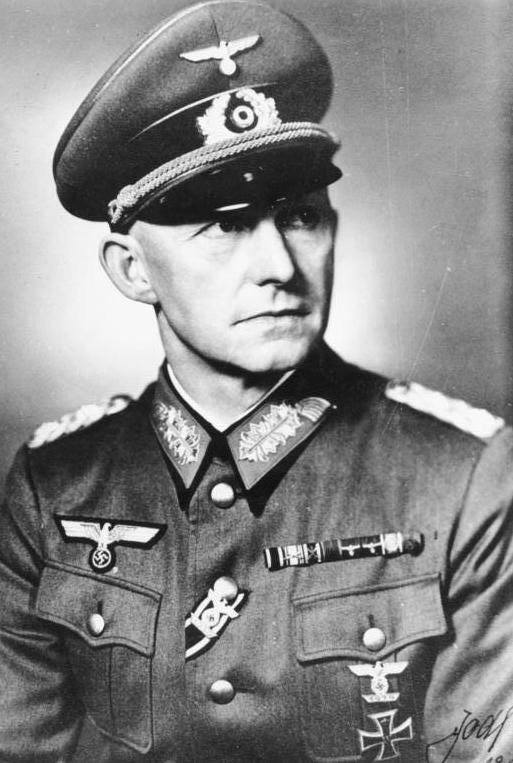
Colonel General Alfred Jodl 


Here also comes to the surface the link between war labour and concentration camps, a manpower source that was increasingly used and with increasing cruelty. An agreement between Himmler and the Minister of Justice, Thierack, in 1942 provided for “the delivery of anti-social elements from the execution of their sentence to the Reichsfuehrer SS to be worked to death”. An SS directive provided that bedridden prisoners be drafted for work to be performed in bed. The Gestapo ordered 46,000 Jews arrested to increase the “recruitment of manpower into the concentration camps”. One hundred thousand Jews were brought from Hungary to augment the camps’ manpower. On the initiative of the defendant Donitz concentration camp labour was used in the construction of submarines. Concentration camps were thus geared into war production on the one hand, and into the administration of justice and the political aims of the Nazis on the other. The use of prisoner-of-war labour, as then planned in that meeting, also grew with German needs. At a time when every German soldier was needed at the front and forces were not available at home, Russian prisoners of war were forced to man anti-aircraft guns against Allied planes. Field-Marshal Milch reflected the Nazi merriment at this flagrant violation of International Law, saying: “… This is an amusing thing, that the Russians must work the guns.”

Admiral Wilhelm Canaris, Executed on the order of Adolf Hitler 9 April 1945 


The orders for the treatment of Soviet prisoners of war were so ruthless that Admiral Canaris, pointing out that they would “result in arbitrary mistreatments and killing”,  protested to the OKW against them as breaches of International Law. The reply of Keitel was unambiguous. He said:

“The objections arise from the military conception of chivalrous warfare! This is the destruction of an ideology! Therefore I approve and back the measures”.

The Geneva Convention would have been thrown overboard openly, except that Jodl objected because he wanted the benefits of Allied observance of it while it was not being allowed to hamper the Germans in any way.

Field Marshal Wilhelm Keitel

Other crimes in the conduct of warfare were planned with equal thoroughness as a means of ensuring victory of German arms: In October, 1938, almost a year before the start of the war, the large-scale violation of the established rules of warfare was contemplated as a policy, and the Supreme Command circulated a most secret list of devious explanations to be given by the Propaganda Minister in such cases. Even before this time commanders of the armed forces were instructed to employ any methods of warfare so long as they facilitated victory. During the progress of the war the orders increased in savagery. A typical Keitel order, demanding the use of the “most brutal means”, provided that .

“… It is the duty of the troops to use all means without restriction, even against women and children, so long as they ensure success.”

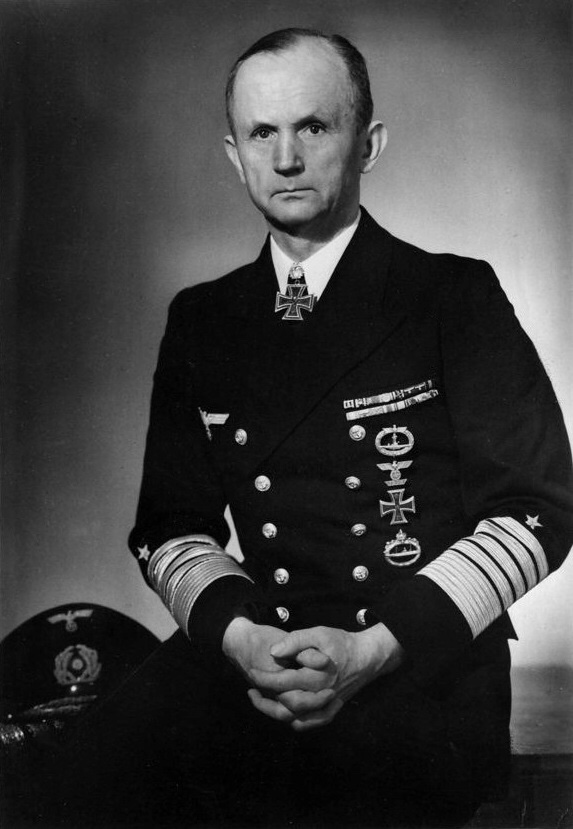
Grand Admiral Karl Donitz

The German naval forces were no more immune from the infection than the land forces. Raeder ordered violations of the accepted rules of warfare wherever necessary to gain strategic successes. Donitz urged his submarine crews not to rescue survivors of torpedoed enemy ships, in order to cripple merchant shipping of the Allied Nations by decimating their crews.

Thus, the WAR CRIMES against Allied forces and the CRIMES AGAINST HUMANITY committed in occupied territories are incontestably part of the programme for making the war because, in the German calculations, they were indispensable to its hope of success.

Similarly, the whole group of pre-war crimes, including the persecutions within Germany, fall into place around the plan for aggressive war like stones in a finely wrought mosaic. Nowhere is the whole catalogue of crimes of Nazi oppression and terrorism within Germany so well integrated with the crime of war as in that strange mixture of wind and wisdom which makes up the testimony of Hermann Goering. In describing the aims of the Nazi programme before the seizure of power, Goering stated that the first question was to achieve and establish a different political structure for Germany, which would enable Germany to object against the Dictate (of Versailles), and to make not only a protest, but an objection of such a nature that it would actually be considered.

With these purposes, Goering, admitted that the plan was made to overthrow the Weimar Republic, to seize power, and to carry out the Nazi programme by whatever means were necessary, whether legal or illegal.

Reichsmarschal Hermann Goering 

From Goering’s cross-examination we learn how necessarily the whole programme of crime followed. Because they considered a strong State necessary to get rid of the Versailles Treaty, they adopted the Fuehrerprinzip. Having seized power, the Nazis thought it necessary to protect it by abolishing parliamentary government, and suppressing all organized opposition from political parties. This was reflected in the philosophy of Goering that the opera was more important than the Reichstag. Even the “opposition of each individual was not tolerated unless it was a matter of unimportance”. To insure the suppression of opposition a secret police force was necessary. In order to eliminate incorrigible opponents, it was necessary to establish concentration camps and to resort to the device of protective custody. Protective custody, Goering, testified, meant that:

“People were arrested arid taken into protective custody who had not yet committed any crime but who could be expected to do so if they remained free.”

The same war purpose was dominant in the persecution of the Jews. In the beginning, fanaticism and political opportunism played a principal part, for anti-Semitism and its allied scapegoat, mythology, were the vehicle on which the Nazis rode to power. It was for this reason that the filthy Streicher and the blasphemous Rosenberg were welcomed at Party rallies and made leaders and officials of the State or Party. But the Nazis soon regarded the Jews as foremost amongst the opposition to the police State with which they schemed to put forward their plans of military aggression. Fear of their pacifism and their opposition to strident nationalism was given as the reason that the Jews had to be driven from the political and economic life of Germany. Accordingly, they were transported like cattle to the concentration camps, where they were utilised as a source of forced labour for war purposes.

At a meeting held on 12th November, 1938, two days after the violent anti-Jewish pogroms instigated by Goebbels and carried out by the Party Leadership Corps and the SA, the programme for the elimination of Jews from the German economy was mapped out by Goering, Funk, Heydrich, Goebbels, and the other top Nazis. The measures adopted included confinement of the Jews in ghettoes, cutting off their food supply, “aryanizing” their shops, and restricting their freedom of movement. Here another purpose behind the Jewish persecutions crept in, for it was the wholesale confiscation of their property which helped to finance German rearmament. Although Schacht’s plan to use foreign money to ransom the entire race within Germany was not adopted, the Jews were stripped to the point where Goering was able to advise the Reich Defence Council that the critical situation of the Reich exchequer, due to rearmament, had been relieved “through the billion Reichsmark fine imposed on Jewry, and through profits accrued to the Reich in the aryanization of Jewish enterprises”.

A glance over the dock will show that, despite quarrels among themselves, each defendant played a part which fitted in with every other, and that all advanced the Common Plan. It contradicts experience that men of such diverse backgrounds and talents should so forward each other’s aims by coincidence. The large and varied role of Goering was half militarist and half gangster. He stuck his pudgy finger in every pie. He used his SA bullies to help bring the gang into power. In order to entrench that power he contrived to have the Reichstag burned, established the Gestapo, and created the concentration camps. He was equally adept at massacring opponents and at framing scandals to get rid of stubborn generals. He built up the Luftwaffe and hurled it at his defenceless neighbours. He was among the foremost in harrying Jews out of the land. By mobilising the total economic resources of Germany he made possible the waging of the war which he had taken a large part in planning. He was, next to Hitler, the man who tied the activities of all the defendants together in a common effort.

The parts played by the other, defendants, although less comprehensive and less spectacular than that of the Reichsmarschall, were nevertheless integral and necessary contributions to the joint undertaking, without any one of which the success of the common enterprise would have been in jeopardy. There are many specific deeds of which these men have been proven guilty. No purpose would be served -nor indeed is time available -to review all the crimes which the evidence has charged against their names. Nevertheless, in viewing the conspiracy as a whole and as an operating mechanism, it may be well to recall briefly the outstanding services which each of the men in the dock rendered to the common cause.

To be continued…

2 Comments

Filed under ethics, germany, History, holocaust, laws and legislation, leadership, Military, national security, nazi germany, Political Commentary, war crimes, war crimes trials, White nationalism, world war two in europe

The Combination of Trump and his System has Brought About this Catastrophe

Friends of Padre Steve’s World,

The crimes of Adolf Hitler’s Nazi regime may seem like the happened a long time ago in a galaxy far, far away, we would all like to believe that. However, they are only as far away as the next time. That is why we must continue to show them in their awful reality. Yehuda Bauer, a renowned historian of the Holocaust whose family escaped from Czechoslovakia the day it was annexed by the Third Reich wrote:

“The horror of the Holocaust is not that it deviated from human norms; the horror is that it didn’t. What happened may happen again, to others not necessarily Jews, perpetrated by others, not necessarily Germans. We are all possible victims, possible perpetrators, possible bystanders.”

This is an eternal truth. The Red Chinese in Tibet, the Cambodian Killing Fields, the Serbians massacring Bosnians under the noses of Dutch Peacekeepers in Srebrenica, the Tutsis of Rwanda butchered by their Hutu neighbors shortly after Easter, as well as the crimes of the Islamic State against Kurds, opposition Sunnis, Shia, Yazidis, and Christians in Iraq and Syria.

Besides genocide we can add the crime of aggressive war against weaker neighbors or nations committed Russia in Georgia and the Ukraine, and the United States against Iraq. Then there is the assault on minority groups within various nations, the rejection of refugees, and rise in anti-Semitism across Russia, Europe, and the United States have all produced myriads of victims, perpetrators, and bystanders.

The crimes committed by the Nazis against their own citizens and the nations that they victimized are not completely unique to them. While the Nazi Genocide committed against the Jews is unique, what motivated them is far more common than we would want to admit. The Holocaust and the Nazi war for Lebensraum is not an aberration from the norms of human nature, it is the norm. That is why continuing to expose those crimes, the men and women behind them, and those who stood by, doing nothing while their neighbors were being marched away, or stood by as other men marched men, women, and children to massive pits and shot them one by one, up close and personal, by the tens of thousands.

I would like with all my heart to consign the crimes of the Nazis to the depths of history, but I cannot. That is why I, a man born thirteen and a half years after the major Nuremberg War Crimes ended with ten of the defendants hanging from the gallows continues to write about it.

However, that is not the case. What is happening in the United States under the authoritarian regime of President Trump which is smashing the legal, constitutional, and institutional guardrails that until now preventing a Chief Executive from becoming an autocrat are endangering the Republic and threading to destroy our system of government, our alliances, economy, National security, and the lives and civil rights of all Americans, including his deluded cult followers who he will condemn to death by COVID19, lack of health care, or simply betray them to poverty, unemployment and opioid addiction. Of course as far as the heavily armed self-proclaimed militias, they would do well to remember the story of SA the Sturmanteilung, or Storm Troopers, that once their purpose was finished, Hitler killed their leaders and consigned them to the lowest rungs of the Nazi hierarchy, with meaningless titles and no power. He needed no competition from an armed force that wanted to displace the military, police, and SS from their positions. No one, not even his faithful should trust him because he only cares for himself, and will blame them if he falls from power.

Albert Speer commented:

“The tremendous danger, however, contained in this totalitarian system only became abundantly clear at the moment when we were approaching the end. It was then that one could see what the meaning of the principle was, namely, that every order should be carried out without any criticism. Everything . . . you have seen in the way of orders which were carried out without any consideration, did after all turn out to be mistakes . . . This system let me put it like this to the end of the system it had become clear what tremendous dangers are contained in any such system, as such quite apart from Hitler’s principle. The combination of Hitler and this system, then, brought about this tremendous catastrophe to this world.” 

He told his staff on the morning of 22 April 1945:

“Everyone has lied to me, everyone has deceived me… the SS left me in the lurch. The German people have not fought heroically. It deserves to perish… it is not I who have lost the war, but the German people.”

If Trump loses and lives, that will be his judgement on both the nation and those who followed him into the abyss of his own making. After all, he has never taken personal responsibility for anything;  his multiple corporate bankruptcies, his avoidance of military service in Vietnam, his failed marriages, all which all ended because of his unfaithfulness to his wives, and then with the Coronavirus 19 Pandemic, where he has claimed on several occasions, “I take no responsibility for anything.”  That is one thing that he is not lying about. To him, all of his failures are the fault of someone else.

Over the past few days I have been writing about the Nuremberg Trials and the American Chief Prosecutor, Supreme Court Justice Robert Jackson. Last night I wrote about the introduction of his closing arguments before the Tribunal which followed his opening address by nine months. I now continue with Justice Jackson’s closing arguments against the Nazi war criminals sitting in the dock of Nuremberg’s Palace of Justice, many of whom were little different than Trump and his sycophants.

So until tomorrow, I leave you with Jackson’s words.

Peace,

Padre Steve+

THE CRIMES OF THE NAZI REGIME

The strength of the case against these defendants under the conspiracy count, which it is the duty of the United States to argue, lies in its simplicity. It involves but three ultimate inquiries: First, have the acts defined by the Charter as crimes been committed; second, were they committed pursuant to a common plan or conspiracy; third, are these defendants among those who are criminally responsible? The charge requires examination of a criminal policy, not of a multitude of isolated, unplanned, or disputed crimes. The substantive crimes upon which we rely, either as goals of a common plan or as means for its accomplishment, are admitted. The pillars which uphold the conspiracy charge may be found in five groups of overt acts, whose character and magnitude are important considerations in appraising the proof of conspiracy.

1. THE SEIZURE OF POWER AND SUBJUGATION OF GERMANY TO A POLICE STATE The Nazi Party seized control of the German State in 1933. “Seizure of power” is a characterisation used by defendants and defence witnesses, and so apt that it has passed into both history and everyday speech. The Nazi junta in the early days lived in constant fear of overthrow. Goering, in 1934, pointed out that its enemies were legion, and said:

“Therefore, the concentration camps have been created, where we have first confined thousands of Communists and Social Democrat functionaries.”

In 1933 Goering forecast the whole programme of purposeful cruelty and oppression when he publicly announced:

“Whoever in the future raises a hand against a representative of the National Socialist movement or of the State must know that he will lose his life in a very short while.”

New political crimes were created to this end. It was made a treason, punishable with death, to organize or support a political party other than the Nazi Party. Circulating a false or exaggerated statement, or one which would harm the State or even the Party, was made a crime. Laws were enacted of such ambiguity that they could be used to punish almost any innocent act. It was, for example, made a crime to provoke “any act contrary to the public welfare”.

The doctrine of punishment by analogy was introduced to enable conviction for acts which no statute forbade. Minister of Justice Guertner explained that National Socialism considered every violation of the goals of life which the community set up for itself to be a wrong per se, and that the acts could be punished even though it was not contrary to existing “formal law”.

The Gestapo and the SD were instrumentalities of an espionage system which penetrated public and private life. Goering controlled a personal wiretapping unit. All privacy of communication was abolished. Party Blockleiter appointed over every 50 householders spied continuously on all within their ken.

Upon the strength of this spying individuals were dragged off to “protective custody” and to concentration camps without legal proceedings of any kind1and without statement of any reason therefore. The partisan political police were exempted from effective legal responsibility for their acts.

With all administrative offices in Nazi control and with the Reichstag reduced to impotence, the judiciary remained the last obstacle to this reign of terror. But its independence was soon overcome and it was reorganised to dispense a venal justice. Judges were ousted for political or racial reasons and were spied upon and put under pressure to join the Nazi Party. After the Supreme Court had acquitted three of the four men whom the Nazis accused of setting the Reichstag on fire, its jurisdiction over treason cases was transferred to a newly established “People’s Court” consisting of two judges and five Party officials. The German film of this “People’s Court” in operation, which the showed in this chamber, revealed its presiding judge pouring partisan abuse on speechless defendants. Special courts were created to try political crimes, only Party members were appointed judges, and “Judges’ letters” instructed the puppet judges as to the “general lines” they must follow.

The result was the removal of all peaceable means either to resist or to change the Government. Having sneaked through the portals of power, the Nazis slammed the gate in the face of all others who might also aspire to enter. Since the law was what the Nazis said it was, every form of opposition was rooted out and every dissenting voice throttled. Germany was in the clutch of a police State, which used the fear of the concentration camp as a means to enforce non-resistance. The Party was the State, the State was the Party, and terror by day and death by night were the policy of both.

2. THE PREPARATION AND WAGING OF WARS OF AGGRESSION From the moment the Nazis seized power, they set about with feverish but stealthy efforts, in defiance of the Versailles Treaty, to arm for war. In 1933 they found no air force. By 1939 they had 21 squadrons, consisting of 240 echelons or about 2,400 first-line planes, together with trainers and transports.

In 1933 they found an army of 3 infantry and 3 cavalry divisions. By 1939 they had raised and equipped an army of 51 divisions, 4 of which were fully motorized and 4 of which were panzer divisions. In 1933 they found a navy of one cruiser and six light cruisers. By 1939 they had built a navy of 4 battleships, 1 aircraft carrier, 6 cruisers, 22 destroyers, and 54 submarines. They had also built up in that period an armament industry as efficient as that of any country in the world.

These new weapons were put to use, commencing in September, 1939, in a series of undeclared wars against nations with which Germany had arbitration and non-aggression treaties, and in violation of repeated assurances.

On 1st September, 1939, this rearmed Germany attacked Poland. The following April witnessed the invasion and occupation of Denmark and Norway, and May saw the overrunning of Belgium, the Netherlands, and Luxembourg. Another spring saw Yugoslavia and Greece under attack, and in June, 1941, came the invasion of Soviet Russia. Then Japan, which Germany had embraced as a partner, struck without warning at Pearl Harbour in December, 1941, and four days later Germany declared war on the United States.

We need not trouble ourselves about the many abstract difficulties that can be conjured up about what constitutes aggression in doubtful cases. I shall show you, in discussing the conspiracy, that by any test ever put forward by any responsible authority, by all the canons of plain common sense, these were unlawful wars of aggression in breach of treaties and in violation of assurances.

3. WARFARE IN DISREGARD OF INTERNATIONAL LAW

It is unnecessary to labour this point on the facts. Goering asserts that the Rules of Land Warfare were obsolete, that no nation could fight a total war within their limits. He testified that the Nazis would have denounced the Conventions to which Germany was a party, but that General Jodl wanted captured German soldiers to continue to benefit from. their observance by the Allies.

It was, however, against the Soviet people and Soviet prisoners that Teutonic fury knew no bounds, in spite of a warning by Admiral Canaris that the treatment was in violation of International Law. We need not, therefore, for the purposes of the conspiracy count, recite the revolting details of starving, beating, murdering, freezing, and mass extermination admittedly used against the Eastern soldiery. Also, we may take as established or admitted that the lawless conduct such as shooting British and American airmen, mistreatment of Western prisoners of war, forcing French prisoners of war into German war work, and other deliberate violations of the Hague and Geneva Conventions, did occur, and in obedience to highest levels of authority.

4. ENSLAVEMENT AND PLUNDER OF POPULATIONS IN OCCUPIED COUNTRIES

The defendant Sauckel, Plenipotentiary General for the Utilization of Labour, is authority for the statement that “out of five million foreign workers who arrived in Germany, not even 200,000 came voluntarily”. It was officially reported to defendant Rosenberg that in his territory “recruiting methods were used which probably have their origin in the blackest period of the slave trade”. Sauckel himself reported that male and female agents went hunting for men, got them drunk, and “shanghaied” them to Germany. These captives were shipped in trains without heat, food, or sanitary facilities. The dead were thrown out at stations, and the newborn were thrown out the windows of moving trains.

Sauckel ordered that “all the men must be fed, sheltered and treated in such a way as to exploit them to the highest possible extent at the lowest conceivable degree of expenditure”. About two million of these were employed directly in the manufacture of armaments and munitions. The director of the Krupp locomotive factory in Essen complained to the company that Russian forced labourers were so underfed that they were too weakened to do their work, and the Krupp doctor confirmed their pitiable condition. Soviet workers were put in camps under Gestapo guards, who were allowed to punish disobedience by confinement in a concentration camp or by hanging on the spot.

Populations of occupied countries were otherwise exploited and oppressed unmercifully. Terrorism was the order of the day. Civilians were arrested without charges, committed without counsel, executed without hearing. Villages were destroyed, the male inhabitants shot or sent to concentration camps, the women sent to forced labour, and the children scattered abroad. The extent of the slaughter in Poland alone was indicated by Frank, who reported:

” If I wanted to have a poster put up for every seven Poles who were shot, the forests of Poland would not suffice for producing the paper for such posters.”

Those who will enslave men cannot be expected to refrain from plundering them. Boastful reports show how thoroughly and scientifically the resources of occupied lands were sucked into the German war economy, inflicting shortage, hunger, and inflation upon the inhabitants. Besides this grand plan to aid the German war effort there were the sordid activities of the Rosenberg “Einsatzstab”, which pillaged art treasures for Goering and his fellow-bandits. It is hard to say whether the spectacle of Germany’s No. 2 leader urging his people to give up every comfort and strain every sinew on essential war work while he rushed around confiscating art by the trainload should be cast as tragedy or comedy. In either case it was a crime.

International Law at all times before and during this war spoke with precision and authority respecting the protection due to civilians of an occupied country, and the slave trade and plunder of occupied countries was at all times flagrantly unlawful.

5. PERSECUTION AND EXTERMINATION OF JEWS AND CHRISTIANS

The Nazi movement will be of evil memory in history because of its persecution of the Jews, the most far-flung and terrible racial persecution of all time. Although the Nazi Party neither invented nor monopolised anti-Semitism, its leaders from the very beginning embraced it, incited it, and exploited it. They used it as “the psychological spark that ignites the mob”. After seizure of power, it became an official State policy. The persecution began in a series of discriminatory laws eliminating the Jews from the civil service, the professions, and economic life. As it became more intense it included segregation of Jews in ghettoes, and exile. Riots were organized by Party leaders to loot Jewish business places and to burn synagogues. Jewish property was confiscated and a collective fine of a billion marks was imposed upon German Jewry. The programme progressed in fury and irresponsibility to the “final solution”. This consisted of sending all Jews who were fit to work to concentration camps as slave labourers, and all who were not fit, which included children under 12 and people over 50, as well as any others judged unfit by an SS doctor, to concentration camps for extermination.

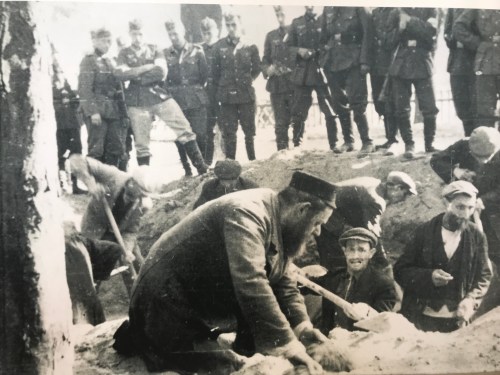
Adolf Eichmann, the sinister figure who had charge of the extermination programme, has estimated that the anti-Jewish activities resulted in the killing of six million Jews. Of these, four million were killed in extermination institutions, and two million were killed by Einsatzgruppen, mobile units of the Security Police and SD which pursued Jews in the ghettoes and in their homes and slaughtered them in gas wagons, by mass shooting in anti-tank ditches and by every device which Nazi ingenuity could conceive.

So thorough and uncompromising was this programme that the Jews of Europe as a race no longer exist, thus fulfilling the diabolic “prophecy” of Adolf Hitler at the beginning of the war. Of course, any such programme must reckon with the opposition of the Christian Church. This was recognized from the very beginning. Defendant Bormann wrote all Gauleiter in 1941 that “National Socialism and Christian concepts are irreconcilable”, and that the people must be separated from the Churches, and the influence of the Churches totally removed. Defendant Rosenberg even wrote dreary treatises advocating a new and weird. Nazi religion.

The Gestapo appointed “Church specialists” who were instructed that the ultimate aim was “destruction of the confessional Churches”. The record is full of specific instances of the persecution of clergymen, the confiscation of Church property, interference with religious publications, disruption, of religious education, and suppression of religious organizations.

The chief instrument for persecution and extermination was the concentration camp, sired by the defendant Goering and nurtured under the overall authority of defendants Frick and Kaltenbrunner.

The horrors of these iniquitous places have been vividly disclosed by documents and testified to by witnesses. The Tribunal must be satiated with ghastly verbal and pictorial portrayals. From your records it is clear that the concentration camps were the first and worst weapon of Nazi oppression used by the National Socialist State, and that they were the primary means utilised for the persecution of the Christian Church and the extermination of the Jewish race. This has been admitted to you by some of the defendants from the witness stand. In the words of defendant Frank:

“A thousand years will pass and this guilt of Germany will still not be erased.”

These, then, were the five great substantive crimes of the Nazi regime. Their commission, which cannot be denied, stands admitted. The defendant Keitel, who is in a position to know the facts, has given the Tribunal what seems to be a fair summation of the case on the facts:

“The defendant has declared that ‘he admits the contents of the general Indictment to be proved from the objective and factual point of view’ (that is to say, not every individual case) ‘and this in consideration of the law of procedure governing the trial. It would be senseless, despite the possibility of refuting several documents or individual facts, to attempt to shake the Indictment as a whole.’” I pass now to the inquiry as to whether these groups of criminal acts were integrated in a common plan or conspiracy.

THE COMMON PLAN OR CONSPIRACY

The prosecution submits that these five categories of premeditated crimes were not separate and independent phenomena but that all were committed pursuant to a common plan or conspiracy.

The defence admits that these classes of crimes were committed, but denies that they are connected one with another as parts of a single programme. The central crime in this pattern of crimes, the king-pin which holds them all together, is the plot for aggressive wars. The chief reason for international cognizance of these crimes lies in this fact. Have we established the plan or conspiracy to make aggressive war?

Certain admitted or clearly proven facts help to answer that question. First is the fact that such war of aggression did take place. Second, it is admitted that from the moment the Nazis came to power, every one of them and every one of the defendants worked like beavers to prepare for some war. The question therefore comes to this: Were they preparing for the war which did occur, or were they preparing for some war which never happened?

It is probably true that in their early days none of them had in mind what month of what year war would begin, the exact dispute which would precipitate it, or whether its first impact would be Austria, Czechoslovakia, or Poland. But I submit that the defendants either knew or were chargeable with knowledge that the war for which they were making ready would be a war of German aggression. This is partly because there was no real expectation that any power or combination of powers would attack Germany. But it is chiefly because the inherent nature of the German plans was such that they were certain sooner or later to meet resistance and that they could then be accomplished only by aggression.

The plans of Adolf Hitler for aggression were just as secret as Mein Kampf, of which over six million copies were published in Germany. He not only openly advocated overthrowing the Treaty of Versailles, but made demands which went far beyond a mere rectification of its alleged injustices. He avowed an intention to attack neighbouring States and seize their lands, which he said would have to be won with “the power of a triumphant sword”. Here, for every German to hearken to, were the “ancestral voices prophesying war”.

Goering has testified in this courtroom that at his first meeting with Hitler, long before the seizure of power:

“I noted that Hitler had a definite view of the impotency of protest and, as a second point, that he was of the opinion that Germany should be freed of the Peace of Versailles. ‘We did not say we shall have to have a war and defeat our enemies’; this was the aim and the methods had to be adapted to the political situation.”

When asked if this goal were to be accomplished by war if necessary, Goering did not deny that eventuality but evaded a direct answer by saying, “We did not debate about that at all at that time.” He went on to say that the aim to overthrow the Treaty of Versailles was open and notorious and that, I quote again, “Every German in my opinion was for its modification, and there was no doubt that this was a strong inducement for joining the party.”

Thus, there can be no possible excuse for any person who aided Hitler to get absolute power over the German people, or who took a part in his regime, to fail to know the nature of the demands he would make on Germany’s neighbours.

Until tomorrow…

1 Comment

Filed under anti-semitism, crimes against humanity, ethics, euthanasia, faith, History, holocaust, nazi germany, News and current events, Political Commentary, racism, Religion, war crimes, war crimes trials, world war two in europe