Category Archives: World War II at Sea

Modern and Deadly: The Japanese Fubuki Class Destroyers

battledestroy

Friends of Padre Steve’s World,

As I mentioned the past few days I am taking a little bit of a break from current events and I am going back to my archives to re-publish older articles about great classes of warships. I am a Navy officer as well as a Navy brat. I grew up with an appreciation for all things navy and various classes of warships that made history. Today, a post about a class of Japanese destroyers that set a standard for the world and can truly described as the first modern destroyers, the Fubuki Class

I hope that you enjoy.

Peace

Padre Steve+

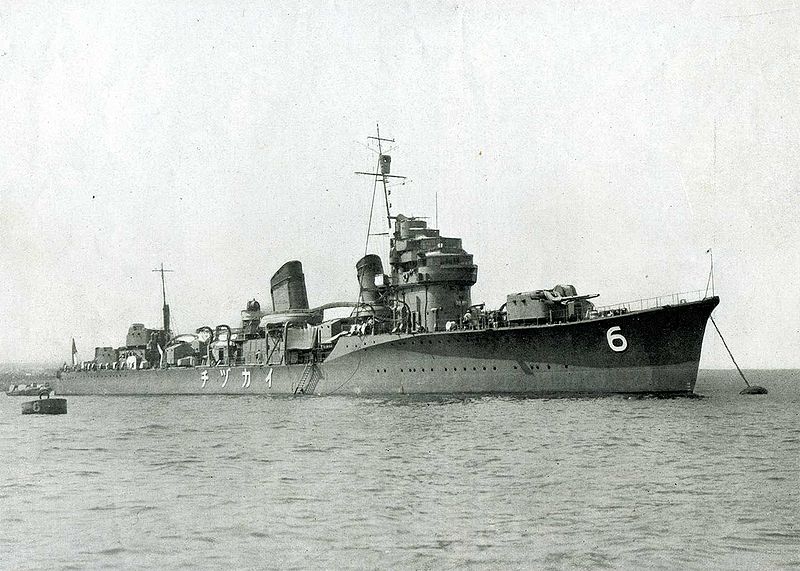
Fubuki

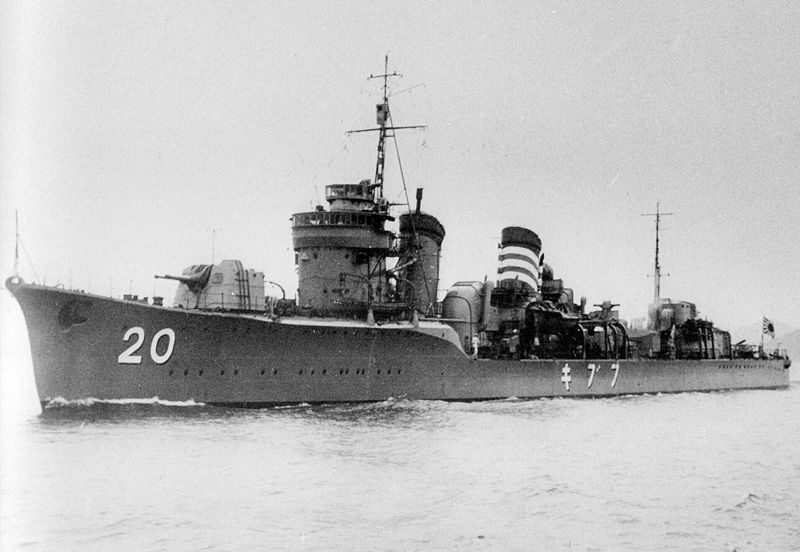
IJNS Fubuki

The Imperial Japanese Navy set the standard for destroyer construction in the 1920. While the United States Navy and British Royal Navy were fully stocked with their First World War design destroyers the Imperial Navy’s General Staff issued a requirement for a class of large destroyers which would complement the new classes of modern cruisers being built for the navy. The requirement called for a 2000 ton ship capable of 39 knots with a 4000 mile range at 14 knots that could carry a large number of torpedoes and a heavy gun armament. The program was designed to give the numerically inferior Imperial Navy a qualitative superiority against any opponent.

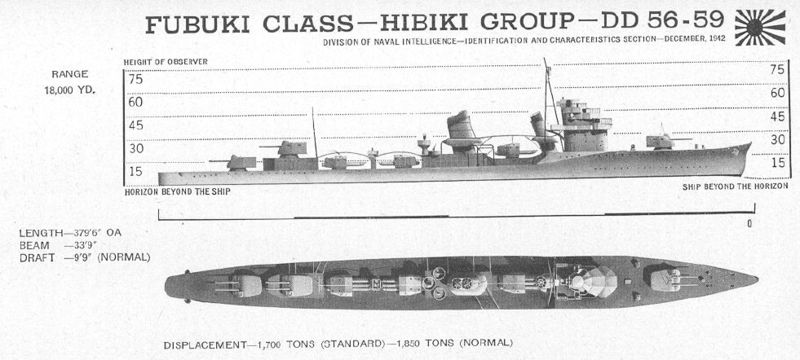
Fubuki-class ONI

WWII Office of Naval Intelligence images for Fubuki Class variants

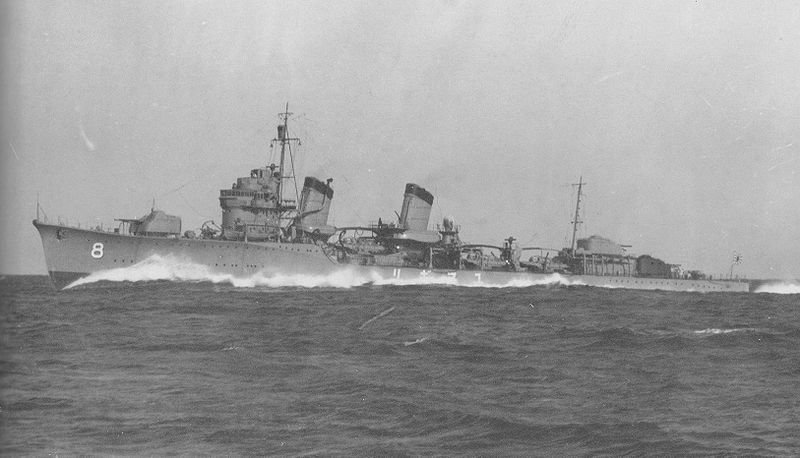
The 24 ship Fubuki Class was such a quantum leap over other contemporary destroyers that the Imperial Navy referred to them as the Special Type. Their large size, heavy armament and high speed made them equal to many of the light cruisers of the time. The design was modified to carry more guns and torpedoes on an increased displacement and the result was a 388 foot long 1750 ton ship armed with six 5” 50 caliber guns in weather proof and splinter proof mounts. On the initial 10 ships of the class the guns could only be elevated 40 degrees which made them less than effective as anti-aircraft guns but in the succeeding two groups of ships the mounts were an improved type which allowed them to elevate each gun separately to 75 degrees. The ammunition magazines were below the gun mounts and ammunition was passed to the guns by hoists. This gave them a decided edge in rate of fire over other destroyers which had open or partially shield mounts dependant on ammunition passers carrying ammunition to them.

Sagiri

Close up of IJNS Sagiri

The light anti-aircraft armament when built was two Type 93 13mm machine guns. In the years before the war and during the war this was increased in some cases up to twenty-two 25mm anti-aircraft guns and 10 of the Type 93 machine guns. In 1944 surviving ships of the class had their X- 5” gun mount removed to facilitate more of the 25mm guns, radar and additional depth charge capacity.

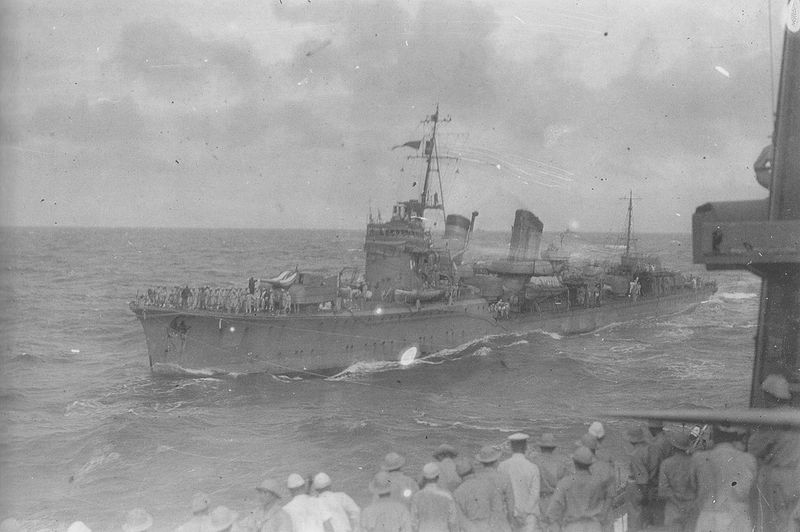
Ikazuchi

IJNS Ikazuchi

The nine 24” torpedo tubes in triple mounts were able to be reloaded while in battle a capability not shared by other destroyers. They carried a total of 18 torpedoes which initially were the Type 8 but these were replaced by the oxygen powered Type 93 “Long Lance” torpedoes before the war. These torpedoes had a higher speed, longer range and heavier warhead than torpedoes produced by other navies. These torpedoes would become the scourge of Allied navies during the war in the brutal surface engagements of 1942.

Yugiri_II

IJNS Yugiri

Due to the modifications made to the design which put more armament on a smaller displacement than the original design made them unstable in heavy seas and resulted in longitudinal hull weakness that resulted in the class being rebuilt between 1935 and 1937. The rebuild increased their displacement to 2050 tons standard and over 2400 tons full load and resulted in a slight reduction of their speed.

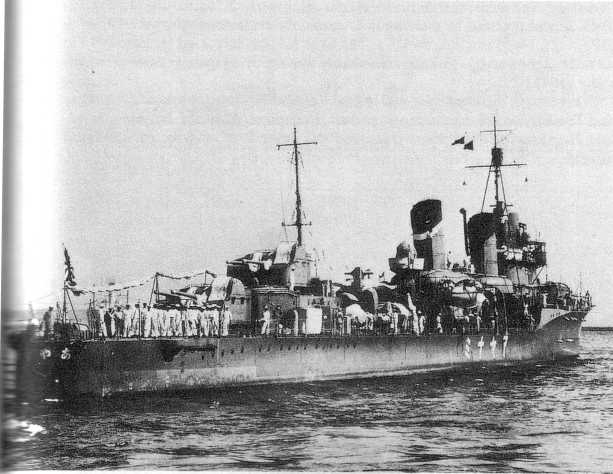
Hibiki_II

IJNS Hibiki

The class was built in three groups and each is sometimes referred to as a separate class as each incorporated improvements over the preceding group. The first 10 ships of the class which are sometimes referred to as the Fubuki Class were of less complex design than subsequent ships. They were feet long had a smaller bridge and exposed gunfire control room. The second group of 10 ships commonly referred to as the Ayanami Class had an enlarged bridge structure which enclosed previous exposed positions to include the gunfire control room, range finders and included a range finder tower. They also were the first ships to receive the improved Type B gun mounts. The final subtype of the class, the Akatsuki Class comprised just 4 ships and was distinguished by a smaller forward funnel, larger boilers and unique splinter proof torpedo tube mount housing.

ayanami

IJNS Ayanami

The ships of the class participated in every major campaign of Japan’s war in the Pacific as well as operations against China in the 1930s. One ship the Miyuki was lost in a collision with another destroyer in August 1934. All remaining ships of the class except the Hibiki and Ushio were lost in action during the war. Four the Fubuki, Ayanami, Yuguri and Ataksuki were sunk in surface actions. Eight ships the Usogumo, Shirakumo, Isonami, Shikinami, Sagiri, Sazanami, Inazuma, and Ikazuchi were lost to Allied submarines. Seven ships, the Shirayuki, Hatsuyuki, Murakumo, Uranami, Asagiri, Oboro and Akebono were sunk by aircraft, while the Shinonome and Amagiri fell victim to mines.

Ushio

The demilitarized IJNS Ushio after the war

Hibiki was given to the Soviet Union following the war and served in that Navy until either 1953 or 1963 depending on the source. She was scrapped. Ushio surrendered to the Allies was demilitarized and scrapped in 1948.

The Amagiri played a role in the life of future President John F Kennedy when she rammed and sank his PT-109 in the Blackett Strait on August 2nd 1943. Her commanding officer at the time Lieutenant Commander Kohei Hanami attended Kennedy’s inauguration in 1961.

The Fubuki Class destroyers set a standard in destroyer construction that other navies around the world sought to emulate. Fast and powerful they and their brave crews fought gallantly in the Second World War and though they fought in a losing cause, they deserve to be remembered as do all those who go down to the sea in ships.

Leave a comment

Filed under History, Military, Navy Ships, World War II at Sea, world war two in the pacific

Flush Decks and Four Pipes: The Classic Wickes and Clemson Class Destroyers

USS Ward 1919

USS Ward DD-139

Friends of Padre Steve’s World,

I have so  much I could write about right now but instead I am going to go back to the well and dredge up an older post about some iconic warships. I guess that you can say that I am kind of taking a bit of a break from the present to remember the past, but be assured, a lot of stuff is percolating in my mind, so be expecting some new material sometime soon, but for the next few days, unless something really dramatic happens I will be continuing to re-pubish some older articles about historic warships that I find fascinating. 

Have a great day,

Peace

Padre Steve+

USS_Pope_(DD-225)

USS Pope DD-225

The destroyers of the Wickes and Clemson classes defined the destroyer force of the U.S. Navy. In 1916 with the advent of the submarine as an effective weapon of war the Navy realized that its pervious classes of destroyers were insufficient to meet the new threat. Likewise the lack of endurance of earlier destroyers kept them from vital scouting missions since the U.S. Navy unlike the Royal Navy or Imperial German Navy maintained few cruisers for such missions.

uss paul jones late war

USS Paul Jones DD-230 late war note 3 stacks and radar

The Naval Appropriation Act of 1916 included the authorization of 50 Wickes Class destroyers to compliment 10 new battleships, 6 battlecruisers and 10 light cruisers with the goal of building a Navy second to none. The new destroyers were designed for high speed operations and intentionally designed for mass production setting a precedent for the following Clemson class as well as the destroyer classes built during the Second World War.

uss boggs dms 3

USS Boggs DMS-3

The Wickes Class had a designed speed of 35 knots in order to be able to operate with the new Omaha Class light cruisers and Lexington Class Battlecruisers in the role of scouting for the fleet. They were flush-decked which provided additional hull strength and their speed was due to the additional horsepower provided by their Parsons turbines which produced 24,610 hp. They were 314’ long and had a 30 foot beam. Displacing 1247 tons full load they were 100 tons larger than the previous Caldwell class ships. They were armed with four 4 inch 50 caliber guns, one 3” 23 caliber gun and twelve 21” torpedo tubes.

uss crosby apd 17

USS Crosby APD 17

Although they were very fast they proved to be very “wet” ships forward and despite carrying an additional 100 tons of fuel they still lacked range. Due to the realization the U-Boat war required more escorts the order for Wickes Class ships was increased and 111 wear completed by 1919.

The Wickes Class was followed by the Clemson Class which was an expansion of the Wickes class being more tailored to anti-submarine warfare. They had a greater displacement due to additional fuel tanks and mounted the same armament had identical dimensions and were capable of 35 knots but had a larger rudder to give them a tighter turning radius. 156 ships of the class were completed.

h84822

Honda Point Disaster 

In the inter-war years a number of each class were scrapped and 7 of the Clemson Class from DESRON 11 were lost in the Honda Point Disaster of September 8th 1923.

uss gamble dm 15

Many of the ships never saw combat in either war as numerous ships were scrapped due to the limitations of the London Naval Treaty. Of the 267 ships of the two classes only 165 were still in service in 1936. As new destroyers were added to the navy in the 1930s a number of ships from each class were converted to other uses. Some became High Speed Transports (APD) and carried 4 LCVP landing craft and a small number of troops, usually about a company sized element. Others were converted to High Speed Minelayers (DM) or High Speed Minesweepers (DMS). A few were converted to Light Seaplane Tenders (AVD). Those converted to other uses had their armament reduced with dual purpose 3” 50 caliber guns replacing the 4” guns and the removal of their torpedoes. Those which remained received 6 of the 3” guns to replace their original gun armament and lost half of their torpedo tubes. During the war all would have light additional anti-aircraft armament and radar installed.

USS_Stewart_(DD-224)

USS Stewart DD-224 after return from Japanese service

In 1940 19 of the Clemson Class and 27 of the Wickes Class were transferred to the British Royal Navy under the Lend Lease program. Some of these would see later service in the Soviet Navy being transferred by the Royal Navy serving after the war with those ships being scrapped between 1950 and 1952.

uss pope final moments

The ships of these classes performed admirably during the Second World War despite their age. The USS Ward DD-139 fired the first shots of the war when it engaged and sank a Japanese midget sub outside of Pearl Harbor. The 13 ships of the Asiatic Fleet’s DESRON 29 took part in six engagements against far superior Japanese Navy units while operating in the Philippines and then in the Dutch East Indies as part of the ABDA Command including the Battle of Balikpapan where the USS John D Ford DD-228, USS Pope DD-225, USS Paul Jones DD-230 and USS Parrot DD-218 sank 4 Japanese transports. During that campaign 4 of these gallant ships were sunk in battle and a 5th the USS Stewart DD-224 was salvaged by the Japanese after being damaged and placed in a floating drydock at Surabaya following the Battle of Badung Strait. She was placed in service as a patrol ship by the Imperial Navy. She was discovered by U.S. Forces after the surrender and returned to the U.S. Navy.

campbeltown

HMS Cambeltown (ex USS Buchanan DD-131) at St Nazaire

Whether in the Atlantic or the Pacific the ships contributed to the Allied victory. The former USS Buchanan DD-131 which had been transferred to the Royal Navy where she was re-named the HMS Campbeltown and used in the Saint-Nazaire Raid. For the raid she was altered in appearance to look like a German Möwe class destroyer was rammed into the only drydock on the Atlantic capable of holding the Battleship Tirpitz. The mission was successful and the drydock was unusable by the Germans for the rest of the war.

During the war they served in every major campaign and when no longer fit for front line service were used in escort roles in rear areas as well as in a variety of training and support roles. By the end of the war the surviving ships of both classes were worn out and a number were decommissioned and some scrapped even before the end of hostilities. Those that survived the war were all decommissioned by 1946 and most scrapped between 1945 and 1948.

During Second World War 9 of the Wickes Class were sunk in battle, and 7 were sunk or destroyed in other ways. 5 were later sunk as targets and the remaining ships were all scrapped. A total of 20 of the Clemson Class were lost either in battle or to other causes including those lost and Honda Point.

800px-USS_Peary_Memorial_Darwin

USS Peary Memorial

The brave Sailors that manned these ships in peace and war become fewer in number every day as the Greatest Generation passes. It is a sad testimony that none of these ships were preserved as a memorial; however the Australians have a memorial at Darwin dedicated to the USS Peary DD-226 which was sunk with 80 of her crew during the Japanese raid on that city’s port on 19 February 1942. The memorial has one of her 4” guns pointed in the direction of the wreck of the Peary. A memorial to the USS Ward which showcases her #3 4” gun which sank the Japanese midget sub is located on the Capitol Grounds in St. Paul Minnesota.

The ships of the Wickes and Clemson classes were iconic, and their crews were heroic. Though none are left we should never forget the valiant service of these ships during both World Wars.

Leave a comment

Filed under History, Navy Ships, US Navy, World War II at Sea, world war one

The Dawn of the Future: The Type XXI U-Boats

U-2513_off_Key_West

Friends of Padre Steve’s World,

I am continuing to go back deep into the archives to re-publish articles about warships which helped change history. As I mentioned, the last few days have been very busy and I am doing some things to assist co-workers after a traumatic event at work, and to continue working on my Civil War texts. This article deals with the U-Boat Type XXI which was the harbinger of the modern submarines that ply the depths of the oceans today. I do hope that you enjoy.

Peace

Padre Steve+ 

Throughout history there have been ships that have changed the course of Naval strategy and made previous types of ships obsolete overnight, the USS Monitor, the HMS Dreadnought and USS Nautilus are three, but add to the list the German Type XXI U-Boats which forever changed the way that submarines were built around the world.

type xxi u-boat SRH025-p40

The Type XXI was designed in 1943 in order to regain the initiative and thereby reassert German naval power in the Atlantic in order to turn the tide against the Allies. By 1943 the Allies had turned the tide against the Germans as the Type VII and Type IX U-Boats took heavy losses against naval units and convoys which now had air support at every stage of their trek across the North Atlantic. These boats had to surface for prolonged periods in order to recharge their batteries and had limited range, speed and endurance when submerged. The advent of the Escort Carrier, long range patrol bombers and hunter killer groups of Destroyers and the new Destroyer Escorts took a great toll on the U-Boat Force.

U3008

U-3008 in U.S. Navy Service

In order to meet the challenge the Germans opted for new technology based on the high speed hydrogen powered Walter turbines for underwater operations. Since these turbines which could produce a high underwater speed had a short endurance the designers modified the design to use conventional diesels but equip the boats with batteries that had three times the capacity of previous boats. The boats were a radical change from all previous submarine designs which were basically surface ships with the ability to operate underwater for limited periods of time. The Type XXIs were really the first true submarines. They could operate at underwater speeds that were faster than many of their opponents, had a streamlined design which facilitated higher submerged speed of 18 knots and silent running making them very difficult to track. They could remain underwater for 11 days while only needing 5 hours to recharge their batteries when using the schnorkel device.

Bundesarchiv_Bild_146-2008-0214,_Uboot_-Wilhelm_Bauer-_(ex_U_2540)

The Wilhelm Bauer the former U-2540 in 1960

The Type XXI had a full streamlined hull and conning tower and even equipment which were externally mounted such as the radio antennae, hydrophones, DF Ring and forward planes were fully retractable. They had no deck guns and their twin 20mm flak guns mounted in a streamlined housing on the conning tower. The German designers eliminated the traditional open bridge in favor of three small openings for the watch officer and 2 lookouts. They had a superior silent running ability and at 15 knots were quieter than the US Navy Balao Class doing 8 knots. They had a 1 inch thick steel aluminum alloy pressure hull with a designed crush depth of 280 meters (919 feet), a greater designed crush depth than any previous submarine.

They incorporated other innovations which would be incorporated into the post-war submarines of the victorious Allied powers. Among these innovations were semi-automatic hydraulic torpedo reload system which allowed three 6 torpedo salvos to be fired in less than 20 minutes where prior U-Boats had manual reloads and took over 10 minutes to reload a single torpedo. To make the fullest use of this capability the German equipped the boats with an advanced passive and active sonar system called the called Gruppenhorchgerät and Unterwasser-Ortungsgerät NIBELUNG mounted in the bow. The improved passive system enabled the boats to close to where they could emit short active sonar bursts to fix the target location. They could fire from a depth of 160 feet. The torpedoes themselves were an advanced design called the LUT or Lageunabhängiger Torpedo. The LUT was a guided torpedo that could be fired from the U-Boat regardless of the target’s bearing as it was programmed to steer an interception course programmed by the torpedo computer.

Submarines influenced by the Type XXI:

USS_Gudgeon_;0856710 tang class

USS Gudgeon a Tang Class submarine

ORP_Orzel2 wishkey class

Polish Submarine ORP Orzel a WHISKEY Type Submarine

SS-571-Nautilus-trials

USS Nautilus on trials

The Type XXI boats were unique in production as they had no prototype and went directly in production. They were assembled from prefabricated sections built from factories around Germany and transported to the major shipbuilding yards. This was efficient but caused problems that slowed final assembly as many of the factories had no experience building U-Boats and quality suffered because the exacting specifications required by the Kriegsmarine. Likewise Allied air strikes on German factories and rail networks hampered production. Yet even in spite of these difficulties 119 Boats were completed although only four were rated as combat ready and only two were fully operational at war’s end. Of these only one embarked on a war patrol. Most were destroyed in air attacks while in port or scuttled by the Germans to prevent their capture. Eight Type XXIs were taken over by Allied navies at the end of the war where they were used to evaluate technology for use in future submarines. The U.S. Navy Tang Class boats were heavily influenced by the Type XXI as were the GUPPY upgrades to Balao and Tench class boats. The first nuclear submarines of the U.S. Navy, the Nautilus, Seawolf and the Skate Classes all incorporated design features of the Type XXIs. The Soviet Union developed its 613 and 614 project submarines which became the type known by NATO as the WHISKEY class from the Type XXIs that they received following Germany’s surrender. In 1957 the Federal Republic of Germany raised the scuttled U-2540 and commissioned her as the research submarine Wilhelm Bauer. That boat was operated by both the Bundesmarine and civilian crews until her decommissioning in 1982. She is now a museum ship open to the public in Bremerhaven.

The Type XXIs were the first true submarines and influenced every submarine constructed since. Though introduced too late in the war to make a difference they were truly a wonder-weapon.

Peace

Padre Steve+

1 Comment

Filed under historic preservation, History, Military, Navy Ships, nazi germany, World War II at Sea

Predators of the High Seas: The U-Boat Type IX

Friends of Padre Steve’s World,

As I mentioned yesterday I am kind of taking some time away from politics and all the other stuff I could write about to go back to one of my passions, the great warships of history. I am busy at work and I am continuing to work on my Civil War texts but I’m not ready to post any of the new material from those just yet. Last night I wrote about the U-Boat Type VII, the most numerous, and one of the most successful type of submarines ever produced. Today, an older article dredged up from my archives about the U-Boat Type IX, which was one of the most successful types of submarines ever built. This is a tribute to them and their brave crews, who though fighting for an evil cause demonstrated bravery and courage even when the odds were stacked against them, most of who never saw home again. 

Have a great day,

Peace,

Padre Steve+

Lorient, U-Boote U-123 und U-201 auslaufend

U-123 returning from patrol

As the Kriegsmarine began its expansion in the mid-1930s the new U-Boat arm developed several types of submarines. The Type IX class was designed in 1935-36 as a long range attack boat and was larger had a greater range and were more heavily armed than the more numerous Type VII boats. The Kreigsmarine designers envisioned a submarine capable of operating far from German bases for extended periods of time. The design of these boats was derived from the two boat Type 1 class and incorporated lessons learned from that class. 283 boats of the type were constructed between 1937 and 1944 and the Kriegsmarine continuously sought to improve the type which resulted in five distinct models within the class.

type ix

Type IXA The first group referred to as the Type IXA or simply the Type IX was comprised of 8 boats built by AG Weser of Bremen. Ordered in 1936 the group was part of the Kriegsmarine’s Plan Z rearmament plan which began when the Nazi Government announced that it would no longer abide by the Treaty of Versailles. The initial 8 boats had a 1032 ton standard displacement were 251 feet long and were armed with six 21” torpedo tubes with 22 torpedoes. They had a 105mm deck gun with 110 rounds as well as a 37mm and 20mm anti-aircraft gun. They were the first German submarines equipped with a double hull which increased survivability and seaworthiness. They were powered on the surface by two MAN M9V40/46 supercharged 9-cylinder diesel engines that produced 4,400 shp as well as two SSW GU345/34 double-acting electric motors for underwater operations. As in all diesel-electric boats the diesels were used to recharge the batteries for the electric motors while the boat was operating on the surface. They had a maximum speed of 18.2 knots on the surface and a range of 22,354 miles at 10 knots. Underwater they had a maximum speed of 7.7 knots and range of 166 miles at 4 knots. The official maximum diving depth was 230 meters or 750 feet. Of the 8 boats of this type 6 were sunk during combat operations and two scuttled at the end of the war by their crews to prevent their capture by the Allies. The most successful of the Type IXA boats was the U-37 was the most successful boat of the type sinking 53 merchant ships for a total of 200,124 tons as well as two warships, the Sloop HMS Penzance and French Submarine Q-182.

U-107 in See, Bugraum

Crew members of U-107 in Torpedo Room

Type IXB The next group was the IXB of which 14 boats were built by AG Weser Bremen. This was the most successful class of U-boats, or for that matter any class of submarines based on tonnage sunk per boat during the Second World War. Each of these ships sank over 100,000 tons of Allied shipping. They were slightly larger than the IXA boats and had a significantly longer operational range of 24,600 miles on the surface at 10 knots. The U-107 of this class had the most successful war patrol of any U-Boat in the war sinking nearly 100,000 tons of Allied shipping off Freetown Sierra Leone while U-103 sank over 237,000 tons of Allied shipping during 11 war patrols over the course of 4 years. These boats were involved in Operation Drumbeat off the coast of the United States in early 1942.

U-Boot U-123 in See

U-123 Gun Crew

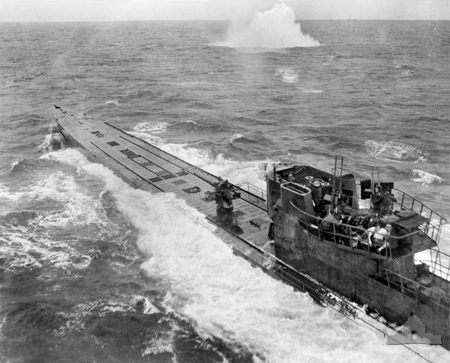
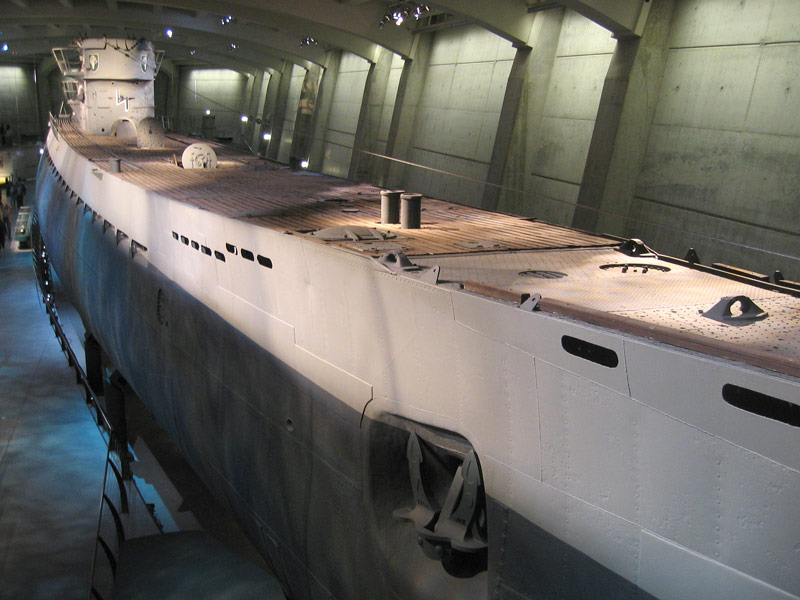
Type IXC The Type IXC was a further improvement of the type with additional fuel capacity and longer range. They displaced 1120 tons and 54 of the boats were commissioned of which 19 were equipped as minelayers with a capacity of 44 TMA or 66 TMB mines. The boats were built by AG Weser Bremen, Seebeckwerft Bremen and Deutsche Werft Hamburg. The U-505 of this type is the only surviving intact Type IX and was captured by a boarding team from the Escort Carrier USS Guadalcanal on June 4th 1944. Her capture was kept secret from the Germans and her crew kept as POWs in a separate POW Camp. The story of the crew and their encounter with the game of baseball is recorded in Gary Moore’s book, Playing with the Enemy: A Baseball Prodigy, a World at War, and a Field of Broken Dreams. The book is being turned into a movie entitled Playing with the Enemy which is scheduled to be released in 2011. She is preserved at the Museum of Science and Industry in Chicago.

U-848 Submarine_attack_(AWM_304949)

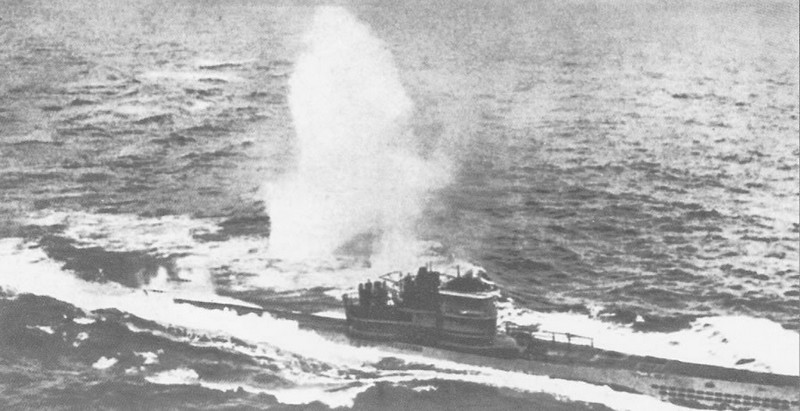
U-848 under attack by USN Aircraft

Type IXC/40 This was a further refinement of the IXC with slightly greater range and surface speed. It was the most numerous type of the class built with 87 being built by AG Weser Bremen, Seebeckwerft Bremen and Deutsche Werft Hamburg. The remains of the U-534 of the class are displayed at Woodside Ferry Terminal in Birkenhead England after being raised from the North Sea in 1986.

U-534_exhibit,_Birkenhead_(geograph_4545759)

U-534

Type IXD The final type in the Type IX Series was the Type IXD. This was a significantly larger boat than the others in the class 287 feet long with a standard displacement of 1610 tons. They were unique in that they had two sets of diesel engines, one for cruising and the other for high speed runs and battery recharge. There were three variants within the type, the IXD1 which were all converted to transport use due to problems with their engines, the most numerous variant the IXD2 and the IXD42 which had greater horsepower. Thirty Type IXs were commissioned with a further six Type IXD42s which were ordered with only one commissioned by the end of the war.

U-505chicago jerry atherton 2005

U-505 at the Museum of Science and Industry in 2005 (Jerry Atherton)

During the war surviving boats would receive increased anti-aircraft armament, the Schnorkel device which allowed them to operate on diesel power while submerged as well as better electronics and detection devices. Most of the boats which survived the war were scuttled by the Allies in Operation Deadlight. The U-511 was sold to Japan in 1943 and U-862 taken over by the Japanese after the German Surrender in May 1945. Both survived the war and were scuttled by the Allies. U-1231 was taken over by the Soviet Navy and served as the B-26 after the war.

The sailors of these U-Boats like all submarine sailors endured many hardships and during the war approximately 75% of the 40,000 U-Boat sailors never returned from patrol, forever interred in the deep with their proud boats.

Leave a comment

Filed under historic preservation, History, Military, Navy Ships, nazi germany, World War II at Sea, world war two in europe

The Type VIIC U-Boat: The Workhorse of the German Navy

das_boot03

Das Boot 

Friends of Padre Steve’s World,

The beginning of this week has been really busy with something unexpected at work that took up much of my day caring for some of my co-workers. Nobody died or anything like that, but it was pretty traumatic and I am not the person to write about it, though I expect that Thomas Ricks may do so soon. That being said, as always there is much to write about but after today I am kind of taking it easy, besides, Donald Trump’s antics are getting pretty boring as he continues to implode as a serious candidate for President, as are the machinations of the GOP House members, the gang who could’t shoot strait, who are trying once again to torpedo Hillary Clinton. Sorry, but after five years they remind me of Wile E. Coyote trying to get the Road Runner, simply boring. 

So tonight something not very controversial but interesting. Those that know me and have been following my writings from the beginning know that I am fascinated with warships. Today, and the next few days I am going to republish some very old articles about three important types of German U-Boats in the Second World War. Tonight, an article on the Type VII U-Boat, the workhorse of the German Navy during the Battle of the Atlantic, and a tribute to the brave sailors who served aboard them, most of who never returned home.

Have a great night.

Peace

Padre Steve+

type viic

The signature warship of the German Kreigsmarine of the Second World War has to be the U-Boat Type VIIC, the most numerous type of submarine ever produced by any Navy. 568 of these U-Boats would be commissioned beutween 1940 and 1945 as well as 91 of the Type VIIC/41. The Type VIIC was developed from the prewar Type I and Type VIIA and VIIB classes.

Compared to contemporary American submarines of the Gato class they were smaller, mounted fewer torpedo tubes and had a shorter range. However the American boats were designed for the vast expanse of the Pacific while the German boats for the most part were operated in the smaller confines of the Atlantic and Mediterranean.

u1023

U-1023

The boats displaced a mere 769 tons on the surface and 871 tons submerged and were 67.1 meters (220.14 feet) long. The boats had a single pressure hull and the VIIC could dive to a maximum depth of 230 meters (754 feet) and had a crush depth of 250-295 meters (820-967 feet). The VIIC/41 could dive to 250 meters or 820 feet and a crush depth of 275-325 meters (902-1066 feet). This was deeper than any allied submarines of the period and a testament to their sound construction.

St. Nazaire, Uboot U 94, Karl Dönitz

Admiral Dönitz greeting U-94 in 1941

The Type VIICs were armed with a C35 88 mm/L45 gun with 220 rounds for surface actions and various types and numbers of anti-aircraft guns. The standard configuration for torpedo tubes was 4 bow mounted tubes and 1 stern mounted tube although a small number only carried 2 forward and none aft. They carried a maximum of 14 torpedoes and could carry 26 TMA Mines which would be laid at approaches to various ports.

u966

U-966 under air attack

The Type VIIC was powered by two supercharged Germaniawerft, 6 cylinder, 4-stroke M6V 40/46 diesel engines on the surface producing between 2,800 to 3,200 horsepower which gave the boats a 17.7 knot maximum speed on surface. For submerged operations the boats were powered by one of a number of different electric motors whose batteries were charged by the diesels. The electric motors produced 750 horsepower (560 kW) and could drive the boats a maximum of 7.6 knots. In 1944 many of the surviving boats were equipped with the schnorkel apparatus which allowed them to use their diesel engines underwater at shallow depths. The had a range of 8190 miles at 10 knots surfaced which gave them a decent amount of operational flexibility for their Atlantic operations.

U995_2004_1

The last Type VII- U-995 (Type VIIC/41) German U-Boat Memorial Laboe Germany

During the war the German U-Boat force suffered grievous losses many of which were Type VIICs. The VIICs performed excellently in combat and many survived engagements that would have sunk less tough boats. The most famous of the Type VIICs of all variants is probably the U-96 which was featured in the epic submarine film Das Boot. A number had post war careers in several navies and the last active VIIC the U-573 which served in the Spanish Navy as the G-7 was decommissioned in 1970 and sold for scrap over the objections of those that wanted to purchase her as a memorial. The only surviving Type VIIC is the U-995 at Laboe Germany where she is a memorial to all the U-Boat Sailors of the Second World War. Two full sized mock ups one for exterior scenes and one for interior scenes were constructed for Das Boot and the exterior mock up was also used in Raiders of the Lost Ark.

7865_6_screenshot

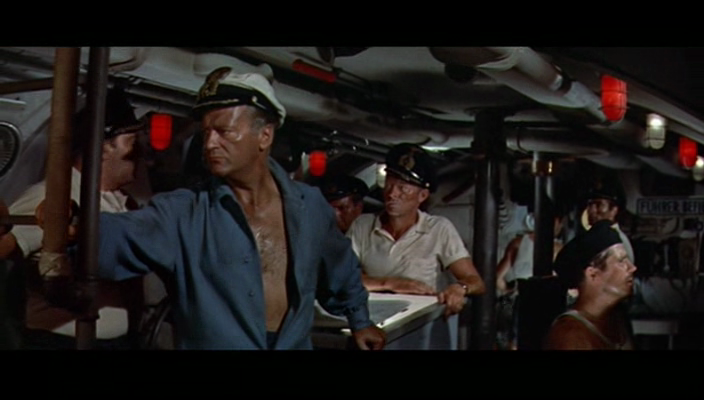
The Enemy Below


During the war U-Boats of all types sank nearly 3000 Allied ships including 175 warships among which were the carriers HMS Glorious, HMS Ark Royal and HMS Eagle and the Battleships HMS Barham and HMS Royal Oak. The Germans lost nearly 800 U-Boats of all types and over 28,000 U-Boat Sailors, about 75% of the force.

The films Das Boot and The Enemy Below are excellent reminders of the courage of the men that operated these submarines during the war. Though the Nazi Regime was evil the men of the U-Boat Service often displayed courage and ingenuity in the face of overwhelming odds and they nearly won the war for the Germans.


2 Comments

Filed under History, Military, Navy Ships, nazi germany, World War II at Sea, world war two in europe

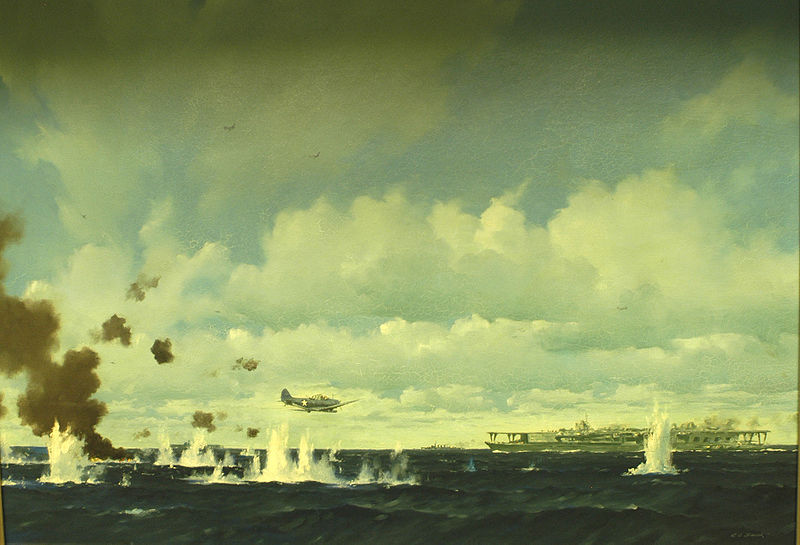
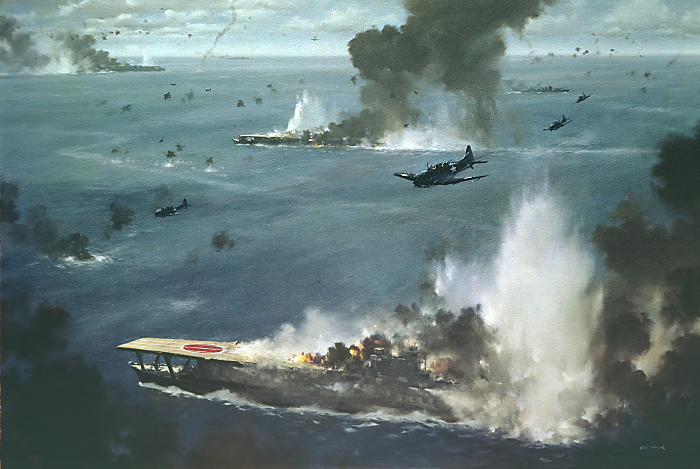
Unlikely and Incredible: Victory at Midway

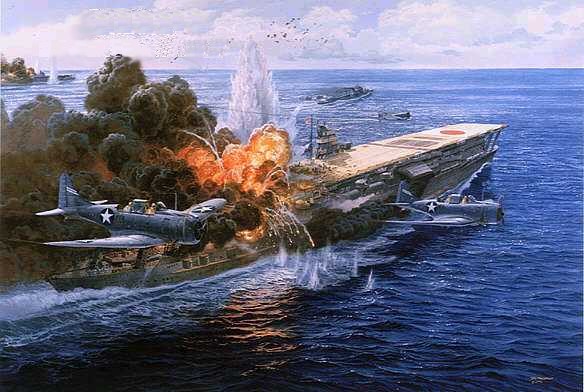
SBDstoastjapcarrier

Friends of Padre Steve’s World

As I mentioned that I would be writing about a number of watershed events this week. Today is the 74th anniversary of the beginning of the Battle of Midway. As a Navy officer and having grown up in a Navy family, this battle is still something that I find fascinating. It was a battle that could have easily been lost, and with it the war in the Pacific significantly lengthened, and which had the Japanese won, forced a change in strategy that might have allowed Hitler to strengthen his grip on Europe and maybe even defeat the Soviet Union.

It was a watershed event because it was the first real defeat that the Japanese Imperial Navy sustained in the war, and it ensured that the Japanese would not be able to win the war, except by exhausting the United States.

So it still remains important even today. If you are interested in books about Midway I recommend Walter Lord’s classic “Incredible Victory” and Gordon Prange’s “Miracle at Midway.

Peace

Padre Steve+

Prelude to Battle

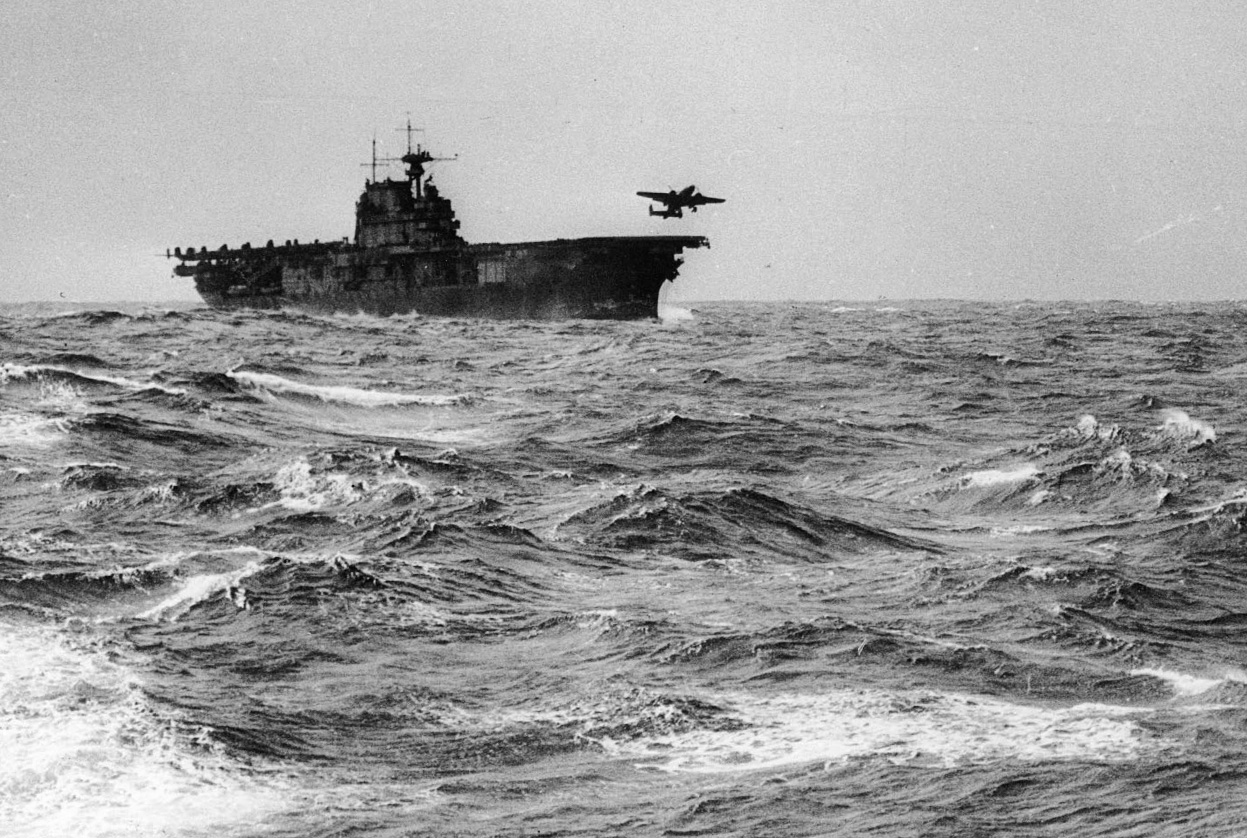
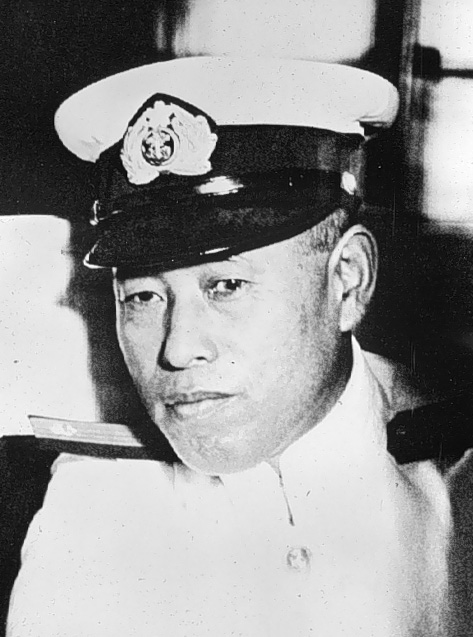
The Imperial Japanese Navy under the command of Admiral Isoruku Yamamoto had been humiliated. On April 18th 1942 16 B-25 bombers under the command of Colonel Jimmy Doolittle were launched from the deck of the USS Hornet and bombed Tokyo.  Though the physical damage was insignificant the psychological impact was massive on the Japanese military establishment. In response to the threat, Yamamoto was directed to bring the aircraft carriers of the U.S. Navy to battle and to destroy them.

Prior to the Doolittle Raid, Yamamoto and his deputy Rear Admiral Matome Ugaki had explored the possibility of attacking Midway. However, the Japanese armed forces were competing with each other to determine an overall strategy for the war effort. The Army was insistent on a China strategy while the Navy preferred expansion in the Western, South and Central Pacific.  Yamamoto’s idea envisioned seizing Midway and using it as a forward base from which an invasion of Hawaii could be mounted as well as the bait to draw the carrier task forces of the U.S. Navy into battle and destroy them. Until the Doolittle Raid shocked the Japanese leadership he was unable to do this.

“I Shall Run Wild for the First Six Months”

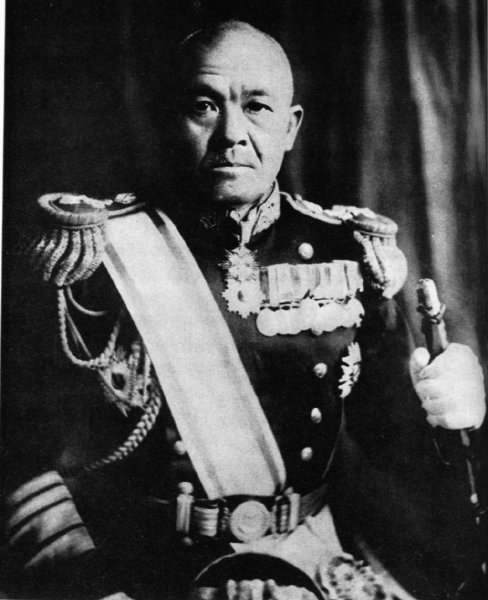
yamamoto-isoroku1

Admiral Isoruku Yamamoto

Yamamoto was one of the few Japanese military or political leaders who opposed war with the United States. He had lived in the United States, gotten to know Americans and recognized the how the massive economic and industrial power of the United States would lead to the defeat of Japan. He told Premier Konoye in 1941 “I shall run wild for the first six months or a year, but I have utterly no confidence for the second or third years of the fighting.”

It is hard to imagine now, but in June of 1942 it seemed a good possibility that the Americans and British could be on the losing side of the Second World War.

True to Yamamoto’s words in 1942 the Japanese onslaught in the Pacific appeared nearly unstoppable. The Imperial Navy stormed across the Pacific and Indian Oceans in the months after Pearl Harbor decimating Allied Naval forces that stood in their way.  The British Battleships HMS Prince of Wales and HMS Repulse were sunk by land based aircraft off of Singapore. A force of Royal Navy cruisers and the Aircraft Carrier HMS Hermes were sunk by the same carriers that struck Pearl Harbor in the Indian Ocean.  Darwin Australia was struck with a devastating blow on February 19th and on February 27th the Japanese annihilated the bulk of the American, British, Dutch and Australian naval forces opposing them at the Battle of the Java Sea. American forces in the Philippines surrendered on May 8th 1942 while the British in Singapore surrendered on February 15th.

In only one place had a Japanese Naval task force been prevented from its goal and that was at the Battle of the Coral Sea.  Between 4-8 May the US Navy’s Task Force 11 and Task Force 17 centered on the Carriers USS Lexington and USS Yorktown prevented a Japanese invasion force from taking Port Moresby. Their aircraft sank the light carrier Shoho, damaged the modern carrier Shokaku and decimated the air groups of the Japanese task force. But it was the unexpected raid by US Army Air Corps B-25 Bombers launched from the USS Hornet under command of Colonel Jimmy Doolittle on April 18th 1942 which embarrassed Yamamoto so badly that he ordered the attack to take Midway and destroy the remaining US Naval power in the Pacific.

Cracking the Code

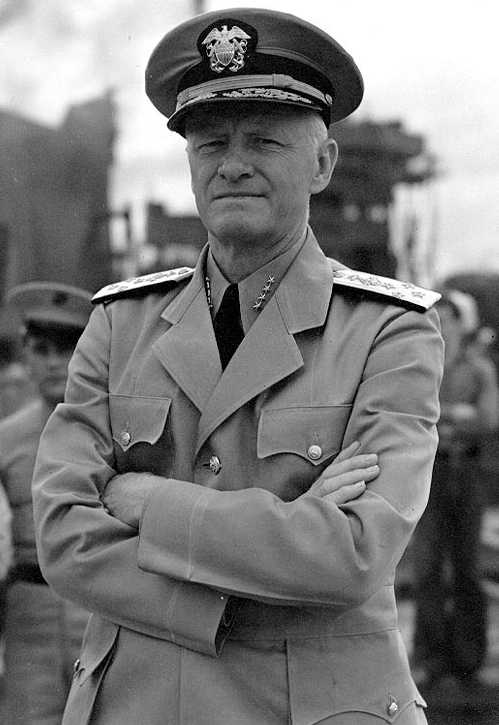
Chester-W.-Nimitz-militarymuseum.org_

Admiral Chester Nimitz

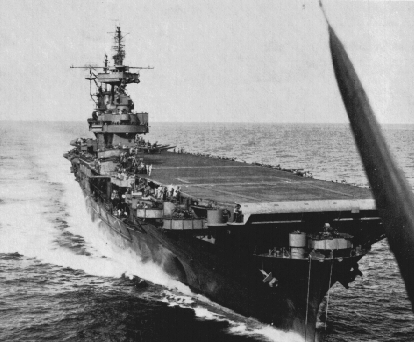
United States Navy codebreakers had broken the Japanese diplomatic and naval codes in 1941, and in May the Navy code breakers at Pearl Harbor discovered Yamamoto’s plan to have the Imperial Navy attack Midway Island and the Aleutian Islands.  Knowing the Japanese were coming, and that the occupation of Midway by Japanese forces would give them an operational base less than 1000 miles from Pearl Harbor, Admiral Chester Nimitz, commander of the U.S. Pacific Fleet committed the bulk of his naval power, the carriers USS Enterprise CV-6, USS Yorktown CV-5 and USS Hornet CV-8 and their 8 escorting cruisers and 15 destroyers to defend Midway.  This force of 26 ships with 233 aircraft embarked to defend Midway while a force of smaller force 5 cruisers and 4 destroyers was dispatched to cover the Aleutians.  The forces on the ground at Midway had a mixed Marine, Navy and Army air group of 115 aircraft which included many obsolete aircraft, 32 PBY Catalina Flying Boats and 83 fighters, dive bombers, torpedo planes and Army Air Force bombers piloted by a host of inexperienced but resolute airmen with which to defend itself. It also had a ground force of U.S. Marines, should the Japanese actually land on the island.

With the foreknowledge provided by the code breakers the US forces hurried to an intercept position northeast of Midway. They eluded the Japanese submarine scout line which the Japanese Commander Admiral Yamamoto presumed would find them when they sailed to respond to the Japanese attack on Midway.  Task Force 16 with the Enterprise and Hornet sailed first under the command of Rear Admiral Raymond A Spruance in place of the ailing William “Bull” Halsey. Task Force 17 under Rear Admiral Frank “Jack” Fletcher was built around the Yorktown which had been miraculously brought into fighting condition after suffering heavy damage at Coral Sea. Fletcher assumed overall command by virtue of seniority and Admiral Nimitz instructed his commanders to apply the principle of “calculated risk” when engaging the Japanese as the loss of the US carriers would place the entire Pacific at the mercy of the Japanese Navy.

On June 3rd a PBY Catalina from Midway discovered the Japanese invasion force transport group.  US long-range B-17 bombers launched attacks against these ships but inflicted no damage.

“Our hearts burn with the conviction of sure victory.”

On the night of June 3rd 1942 Nagumo’s First Carrier Strike Force sailed east toward the tiny Midway Atoll. Nagumo had seen many of the risks involved in the plan and considered it an “impossible and pointless operation” before the Doolittle Raid on Tokyo, but even the reluctant Nagumo fell in line as Yamamoto relentlessly lobbied for the operation.

As the First Carrier strike force closed within 300 miles of Midway on the night of June 3rd 1942 Nagumo and his staff prepared for the battle that they and many others believed would be the decisive battle. Aircraft received their final preparations, bombs were loaded and as night faded into early morning air crew arose, ate their breakfast and went to their aircraft. The ships had been observing radio silence since they departed their bases and anchorages in Japan the previous week. Honed to a fine edge the crews of the ships and the veteran aircrews anticipated victory.

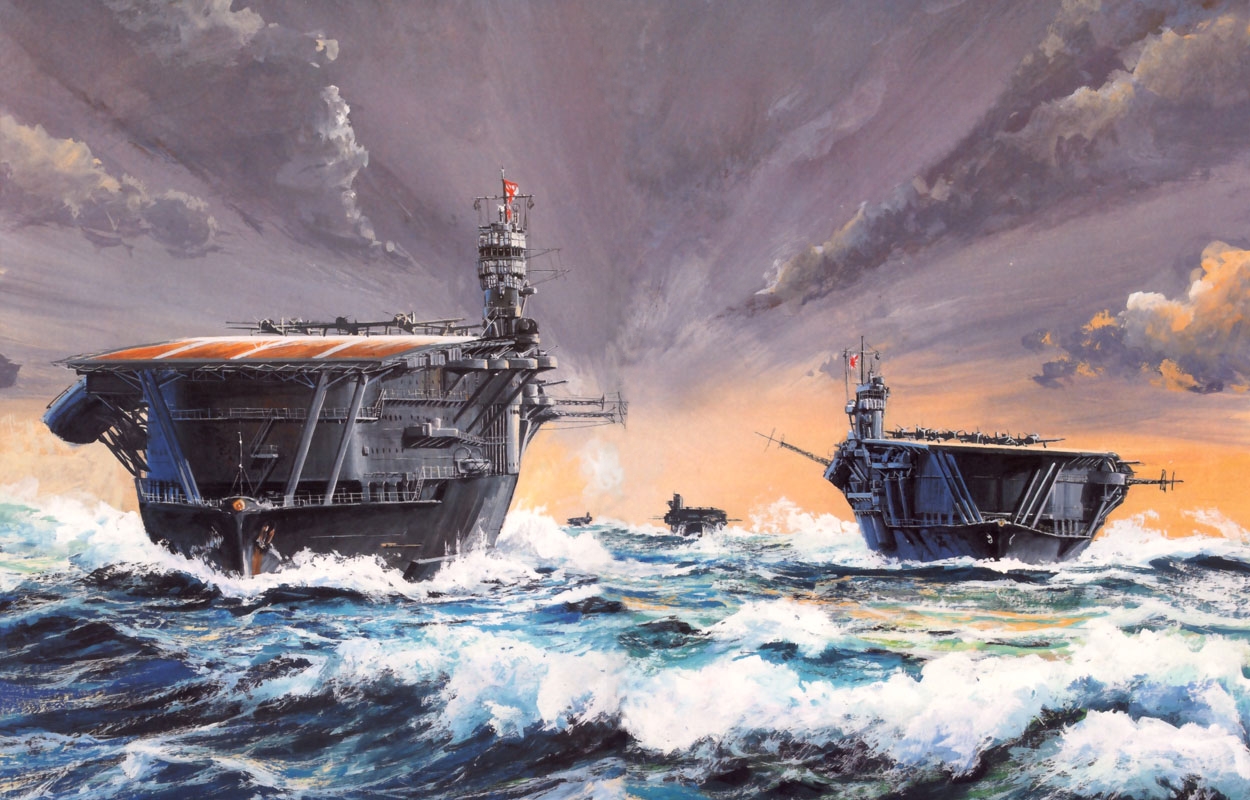
The crews of the ships of the task force and the air groups embarked on the great aircraft carriers Akagi, Kaga, Soryu and Hiryu as well as their escorts were confident. They had since the war began known nothing but victory. They had devastated the Pacific Fleet at Pearl Harbor and roamed far and wide raiding allied targets and sinking allied shipping across the Pacific and deep into the Indian Ocean. Commander Magotaro Koga of the destroyer Nowaki wrote in his diary “Our hearts burn with the conviction of sure victory.

PERSON JAP Nagumo1

Vice Admiral Chuichi Nagumo

However, Nagumo and his sailors had no idea that most of what they knew about their American opponents was wrong. Nagumo and Yamamoto were confident that the Americans could field no more than two operational carriers to defend Midway. They had no idea that the Yorktown, which they believed had been sunk at Coral Sea was operational and her air group reinforced by the aircraft of the damaged Saratoga which was being repaired on the West Coast. Unknown to the Japanese the Yorktown and her escorts had joined Enterprise and Hornet northeast of Midway.

The Japanese were going into battle blind. They had planned to get aerial surveillance of US Fleet dispositions at Pearl Harbor, but that had been cancelled because the atoll at French Frigate Shoals that the Japanese flying boats would operate from had been occupied by a small US force. Likewise a line of Japanese submarines arrived on station a day too late, after the US carrier task forces had passed by them. Those aboard the First Carrier Strike Force, including Nagumo or his senior commanders and staff had no idea that the Americans not only knew of their approach but were already deployed in anticipation of their strike.

Within a day all of the Japanese carriers would be sunk or sinking. Thousands of Japanese sailors would be dead and the vaunted air groups which had wreaked havoc on the Allies would be decimated, every aircraft lost and the majority of pilots and aircrew dead. It would be a most unexpected and devastating defeat stolen out of the hands of what appeared to be certain victory.

There is a lesson to be learned from the Japanese who sailed into the night on June 3rd 1942 and saw the sunrise of June 4th. There is no battle, campaign or war that goes according to plan. Thousands of Japanese sailors and airmen went to bed on the night of the 3rd expecting that the following night, or within the next few days they would be celebrating a decisive victory. Thousands of those sailors would be dead by the night of the 4th of June 1942, and as their ships slid beneath the waves, the ambitions of Imperial of Japan to defeat the United States Navy and end the war were dealt a decisive defeat from which they never recovered.

Hawks at Angles Twelve

F2A-3+Buffalo

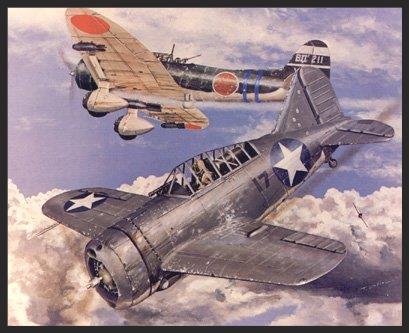
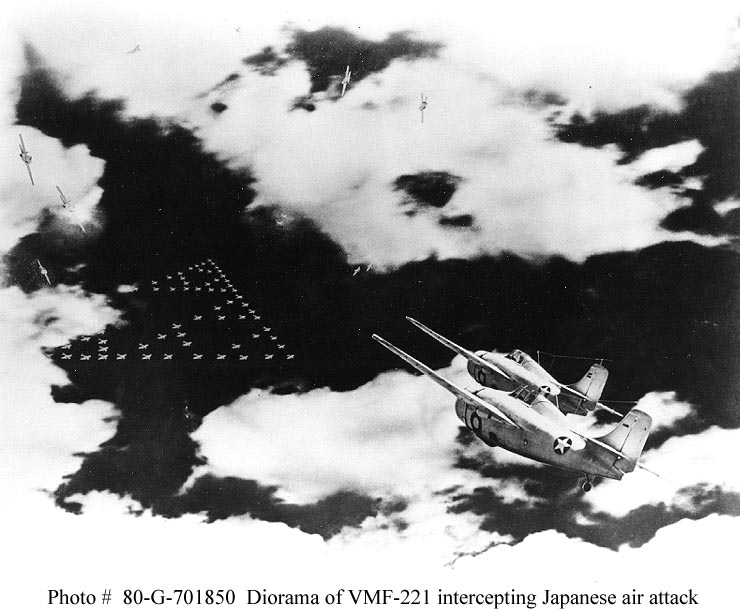
One of the more overlooked aspects of the Battle of Midway is the sacrifice of Marine Fighter Squadron 221 on the morning of June 4th 1942.   The Marine aviators flying a mix of 21 obsolescent Brewster F2A-3 Buffalos and 7 Grumman F4F-3 Wildcats engaged a vastly superior force of Japanese Navy aircraft as they vectored toward the atoll to begin softening it up for the planned invasion.

Led by Major Floyd Parks the squadron had arrived at Midway on Christmas day 1941 being delivered by the USS Saratoga after the aborted attempt to relieve Wake Island.  The squadron along with Marine Scout Bombing Squadron 241 (VMSB 241) formed Marine Air Group 22.  They fighter pilots of VMF-221 scored their first victory shooting down a Japanese Kawanishi H8K2 “Emily” flying boat. The squadron which initially was composed of just 14 aircraft, all F2A-3’s was augmented by 7 more F2A-3s and 7 of the more advanced F4F-3s before the battle.

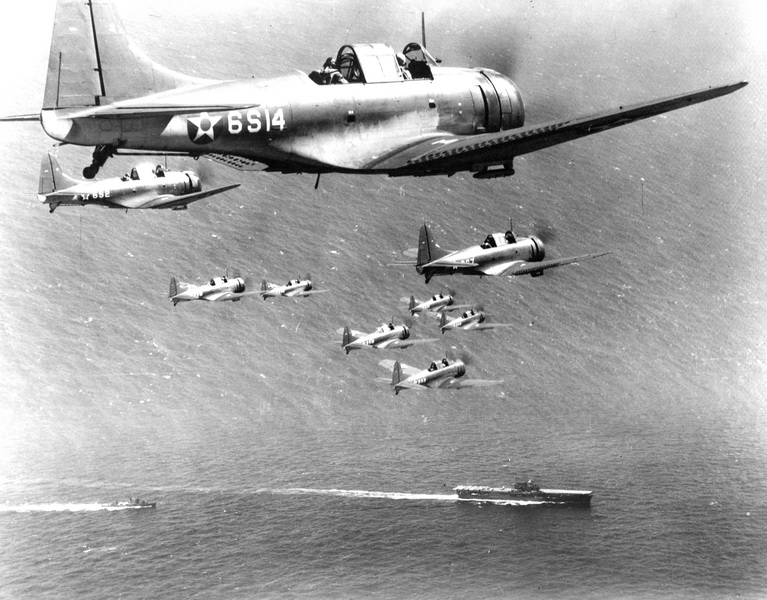
When the Japanese First Carrier Striking Group was spotted in the wee hours of June 4th the Marines and other aircrew aboard Midway scrambled to meet them.  The 18 SBD-2 Dauntless’ and 12 Vought SB2-U3 Vindicator dive bombers of VMSB-241, the 6 TBF Avengers of the Navy Torpedo Eight detachment, 4 Army Air Corps B-26 Marauders and 15 B-17 Flying Fortresses flew out to attack the Japanese carriers while the fighters rose to intercept the 108 aircraft heading toward Midway. The 72 strike aircraft, 36 Aichi 99 Val Dive Bombers and 36 Nakajima B5N Torpedo/ High Level Bombers were protected by 36 AM6-2 Zeros which thoroughly outclassed the Marine opponents in speed, maneuverability and in the combat experience of their pilots.

The Marine fighters audaciously attacked the far superior Japanese force, throwing themselves against the Japanese phalanx with unmatched courage.  Despite their courage the Marine fighters were decimated by the Japanese Zeros.  The Marines shot down 4 Val dive bombers and at least three Zeros but lost 13 Buffalos and 3 Wildcats during the battle.  Of the surviving aircraft only three Buffalos and three Wildcats were in commission at the end of the day. Among the casualties killed was Major Parks.  Of the surviving pilots of VMF-221, two became “Aces” during the war. Lieutenant Charles M. Kunz would later fly in VMF-224, adding six victories to end the war with 8 victories. Capt. Marion E. Carl would later fly in VMF-223 raising his score to 18.5 Japanese aircraft shot down.  Other pilots like 2nd Lieutenant Clayton M. Canfield shot down two additional aircraft while flying with VMF-223. 2nd Lieutenant Walter W. Swansberger won the Medal of Honor at Guadalcanal.

The last remaining Marine fighter pilot of VMF-221 from the battle of Midway, Williams Brooks died in January 2010 and was buried with full military honors, in Bellview, Nebraska. Brooks in his after action report described his part in the battle:

I was pilot of F2A-3, Bureau number 01523, Our division under Capt. Armistead was on standby duty at he end of the runway on the morning of June 4, 1942, from 0415 until 0615. At about 0600, the alarm sounded and we took off. My division climbed rapidly, and I was having a hard time keeping up. I discovered afterwards that although my wheels indicator and hydraulic pressure indicator both registered “wheels up”, they were in reality about 1/3 of the way down. We sighted the enemy at about 14,000 feet, I would say that there were 40 to 50 planes. At this time Lt. Sandoval was also dropping back. My radio was at this time putting out no volume, so I could not get the message from Zed. At 17,000 feet, Capt. Armistead led the attack followed closely by Capt. Humberd. They went down the left of the Vee , leaving two planes burning. Lt. Sandoval went down the right side of the formation and I followed. One of us got a plane from the right side of the Vee. At this time, I had completely lost sight of my division. As I started to pull up for another run on the bombers, I was attacked by two fighters. Because my wheels being jammed 1/3 way down, I could not out dive these planes, but managed to dodge them and fire a burst or so into them as they went past me and as I headed for the water. As I circled the island, the anti-aircraft fire drove them away. My tabs, instruments and cockpit were shot up to quite an extent at this time and I was intending to come in for a landing. 

It was at this time that I noticed that a important feature in their fighting. I saw two planes dog-fighting over in the east, and decided to go help my friend if at all possible. My plane was working very poorly, and my climb was slow. As I neared the fight both planes turned on me. It was then that I realized I had been tricked in a sham battle put on by two Japs and I failed to recognize this because of the sun in my eyes. Then I say I was out-numbered, I turned and made a fast retreat for the island, collecting a goodly number of bullets on the way. After one of these planes had been shaken, I managed to get a good burst into another as we passed head-on when I turned into him. I don’t believe this ship could have gotten back to his carrier, because he immediately turned away and started north and down. I again decided to land, but as I circled the island I saw two Japs on a Brewster. Three of my guns were jammed, but I cut across the island, firing as I went with one gun. But I could not get there in time to help the American flier and as soon as the Brewster had gone into the water I came in for a landing at approximately 0715 (estimated). 

As for VMF-221 it was re-equipped with the F4F-4 and later with the F4U Corsair during the course of two more deployments overseas.  VMF-221 finished the war with a score of 155 victories, 21 damaged and 16 probable kills, the second highest total of any Marine Corps Squadron during the war.

Their bomber counterparts of VMSB 241 attacked the Japanese task force on the morning of June 4th and scored no hits while losing 8 aircraft. The survivors were again in action later in the day as well as the following day where they helped sink the Japanese Heavy Cruiser Mikuma with their squadron leader Major Henderson diving his mortally wounded aircraft into the cruiser’s number 4 8” gun turret. While the Marines’ actions are not as well known or as successful as those of their Navy counterparts they were brave.  Fighter pilots had to engage some of the most experienced pilots flying superior machines while the bomber crews had little to no experience before being thrown into combat.

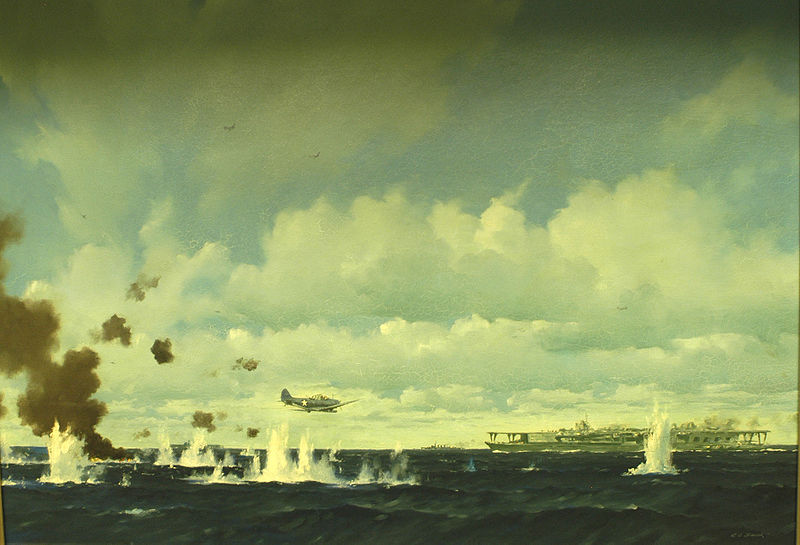
800px-tbd_attacking_at_midway_painting-1

Into the Valley of Death: The Last Ride of the Torpedo Bombers

Alfred, Lord Tennyson wrote in the Charge of the Light Brigade something that echoes to this day when we talk or write about men who charge the gates of death against superior enemies.

Half a league half a league,

Half a league onward,

All in the valley of Death

Rode the six hundred:

‘Forward, the Light Brigade!

Charge for the guns’ he said:

Into the valley of Death

Rode the six hundred.

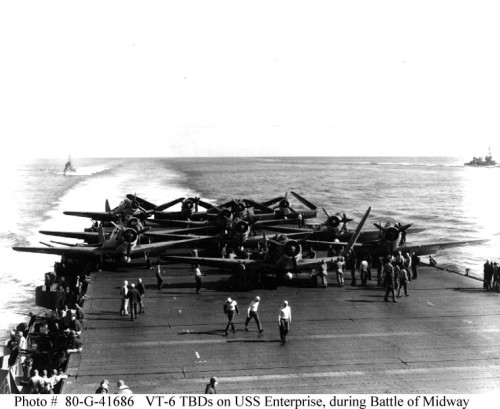
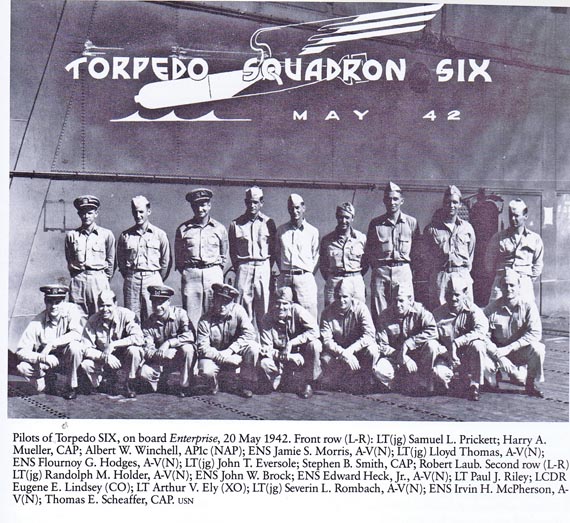
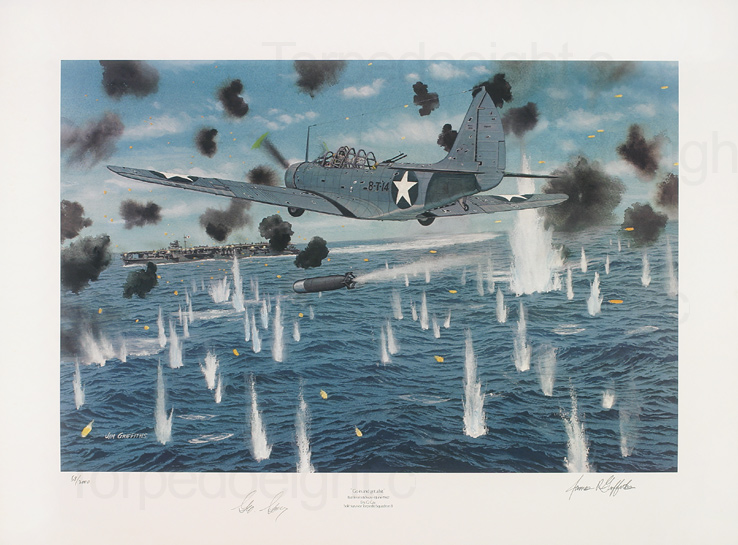
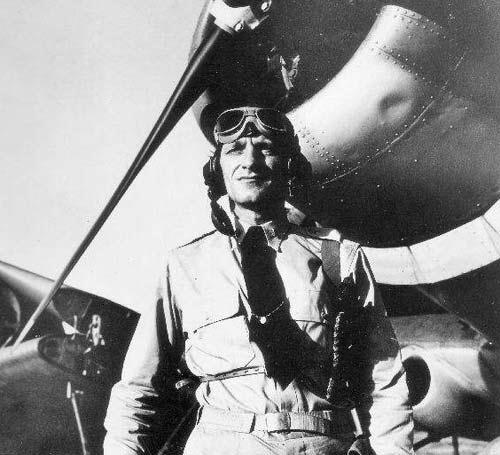
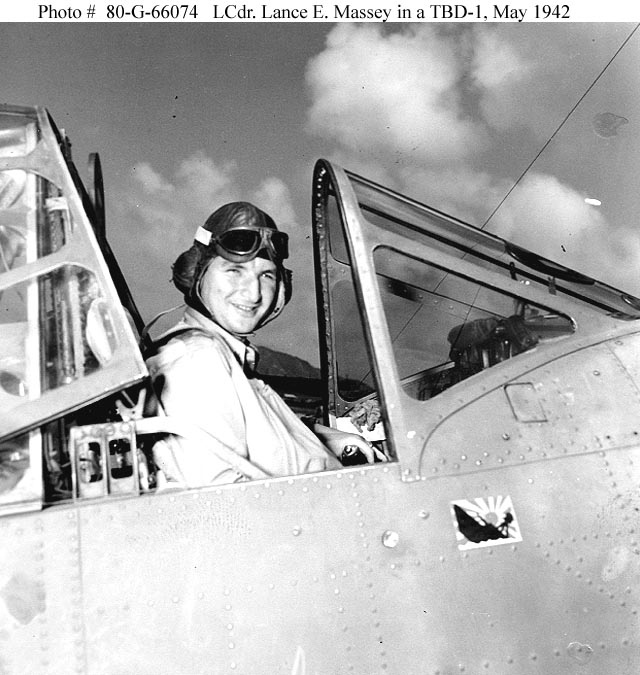
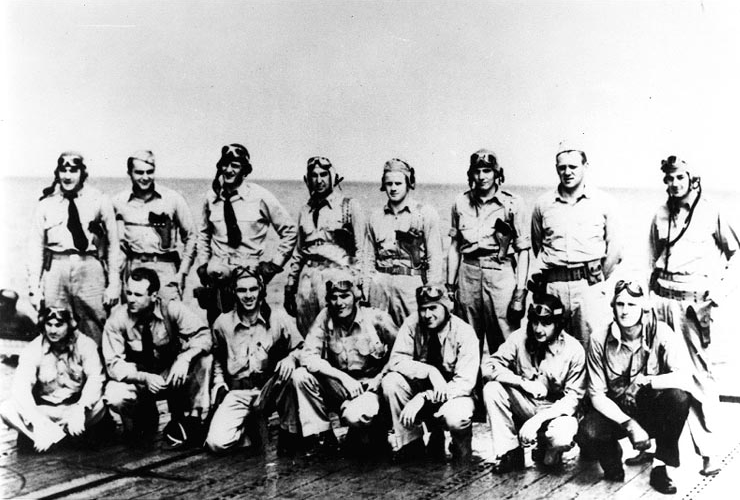
They were not six hundred and they were not mounted on horses, but the Naval Aviators of Torpedo Squadrons 3, 6 and 8 and their aerial steeds 42 Douglas TBD Devastators and 6 TBF Avengers wrote a chapter of courage and sacrifice seldom equaled in the history of Naval Aviation. Commanded by veteran Naval Aviators, LCDR Lance “Lem” Massey, LCDR Eugene Lindsey and LCDR John Waldron the squadrons embarked aboard the carriers flew the obsolete TBD Devastators. The young pilots of the Midway based Torpedo 8 detachment under the command of LT Langdon Fieberling flew in the new TBF Avengers.

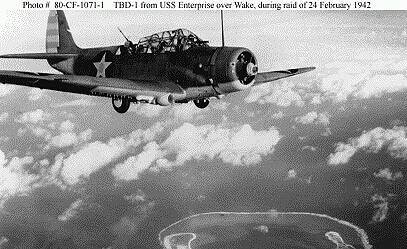
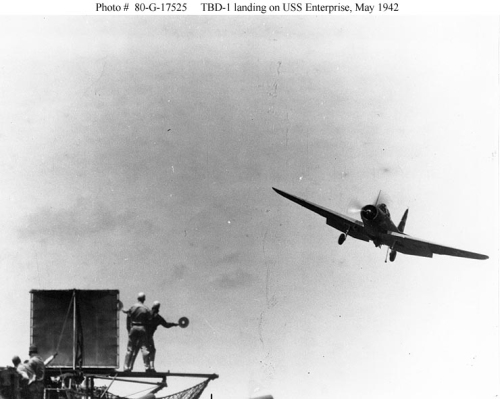
he TBD which first flew in 1935 entered service in 1937 and was possibly the most modern naval aircraft in the world when it entered service.  It was a revolutionary aircraft. It was the first monoplane widely used on carriers and was first all-metal naval aircraft.  It was the first naval aircraft with a totally enclosed cockpit, the first with hydraulic powered folding wings.  The TBD had crew of three and had a maximum speed of 206 miles an hour and carried a torpedo or up to 1500 pounds of bombs (3 x 500) or a 1000 pound bomb.  129 were built and served in all pre-war torpedo bombing squadrons based aboard the Lexington, Saratoga, Ranger, Yorktown, Enterprise and Hornet with a limited number embarked aboard Wasp. 

The Devastator saw extensive service prior to the war which pushed many airframes to the end of their useful service life and by 1940 only about 100 were operational by the beginning of the war.  They were still in service in 1942 as their replacement the TBF Avenger was not available for service in large enough numbers to replace them before Midway.  The TBDs performed adequately against minor opposition at Coral Sea and in strikes against the Marshalls but the squadrons embarked on Yorktown (VT3), Enterprise (VT-6) and Hornet (VT-8) were annihilated at Midway with only 6 of 41 aircraft surviving their uncoordinated attacks against the Japanese Carrier Strike Force.  They were too slow, had poor maneuverability, insufficient armor and defensive armament.

The Torpedo squadrons attacked independently of each other between 0920 and 1030 on June 4th 1942. The Japanese Combat Air Patrol ripped into the slow, cumbersome and under armed TBD Devastators as they came in low to launch their torpedoes.  Torpedo Eight from Hornet under the command of LCDR John C Waldron pressed the attack hard but all 15 of the Devastators were shot down.  Only Ensign George Gay’s aircraft was able to launch its torpedo before being shot down and Gay would be the sole survivor of the squadron to be picked up later by a PBY Catalina patrol plane.

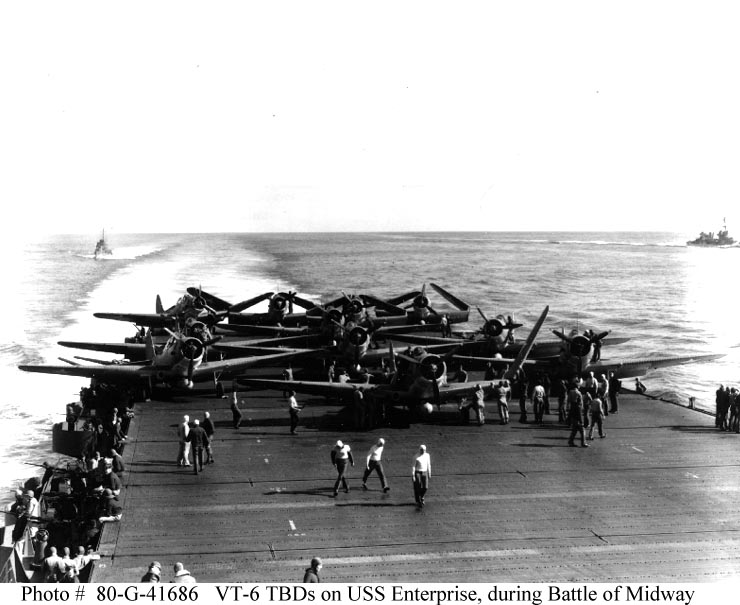
Torpedo Six from the Enterprise under the command of LCDR Eugene Lindsey suffered heavy casualties losing 10 of 14 aircraft with Lindsey being one of the casualties.  The last group of Devastators to attack was Torpedo Three from the Yorktown under the command of LCDR Lem Massey losing 11 of 13 aircraft with Massey a casualty last being seen standing on the wing of his burning aircraft as it went down.  These aircraft were also decimated and Massey killed but they had drawn the Japanese Combat Air Patrol down to the deck leaving the task force exposed to the Dive Bombers of the Enterprise and Yorktown.  The six aircraft of the Torpedo Eight detachment from Midway under the command of LT Fieberling lost 5 of their 6 aircraft while pressing their attacks.  Only Ensign Bert Earnest and his aircraft survived the battle landing in a badly damaged state on Midway.  Four U.S. Army B-26 Marauder Medium Bombers were pressed into service as torpedo bombers of which 2 were lost.  No torpedo bomber scored a hit on the Japanese Task force even those torpedoes launched at close range failed to score and it is believe that this was in large part due to the poor performance of the Mark 13 aircraft torpedoes.

Despite the enormous losses of the torpedo squadrons their sacrifice was not in vain. Their attacks served to confuse the Japanese command and delay the rearmament of aircraft following the Japanese strikes on Midway. They also took the Japanese Combat Air Patrol down to sea level and opened the way for American Dive Bombers to strike the Japanese with impunity fatally damaging the Akagi, Kaga and Soryu in the space of 5 minutes.

eneterprise vt-6 midway

After Midway the remaining TBDs were withdrawn from active service and no example survives today. The TBF became the most effective torpedo bomber of the war and some remained in service in a civilian capacity to fight forest fires until 2012.

img_0064

The Provence of Chance: Five Minutes that Changed the War

The land based aircraft from Midway attacked the Japanese carrier force taking heavy casualties and failed to damage the Japanese task force. When the results of the first strike of the Japanese bombers that hit Midway was analyzed Nagumo readied his second wave.

As this was happening the American carriers launched their strike groups at the Japanese fleet leaving enough aircraft behind as for Combat Air Patrol and Anti-submarine patrol missions.  As the Americans winged toward the Japanese fleet the Japanese were in a state of confusion. The confusion was caused when a scout plane from the Heavy Cruiser Tone that had been delayed at launch discovered US ships but did not identify a carrier among them until later into the patrol. The carrier was the Yorktown and TF 17, but for Nagumo who first expected no American naval forces, then received a report of surface ships without a carrier followed by the report of a carrier the reports were unsettling.

Aboard the Japanese ships, orders and counter-orders were issued as the Japanese attempted to recover their strike aircraft and prepare for a second strike on the island, but when the Yorktown task force was discovered, orders were changed and air crews unloaded ground attack ordnance in favor of aerial torpedoes and armor piercing bombs. In their haste to get their aircraft ready to strike the Americans, the hard working Japanese aircrews did not have time to stow the ordnance removed from the aircraft. But due to their hard work at 1020 they had the Japanese strike group ready to launch against the US carriers. Aircraft and their crews awaited the order to launch, their aircraft fully armed and fully fueled.

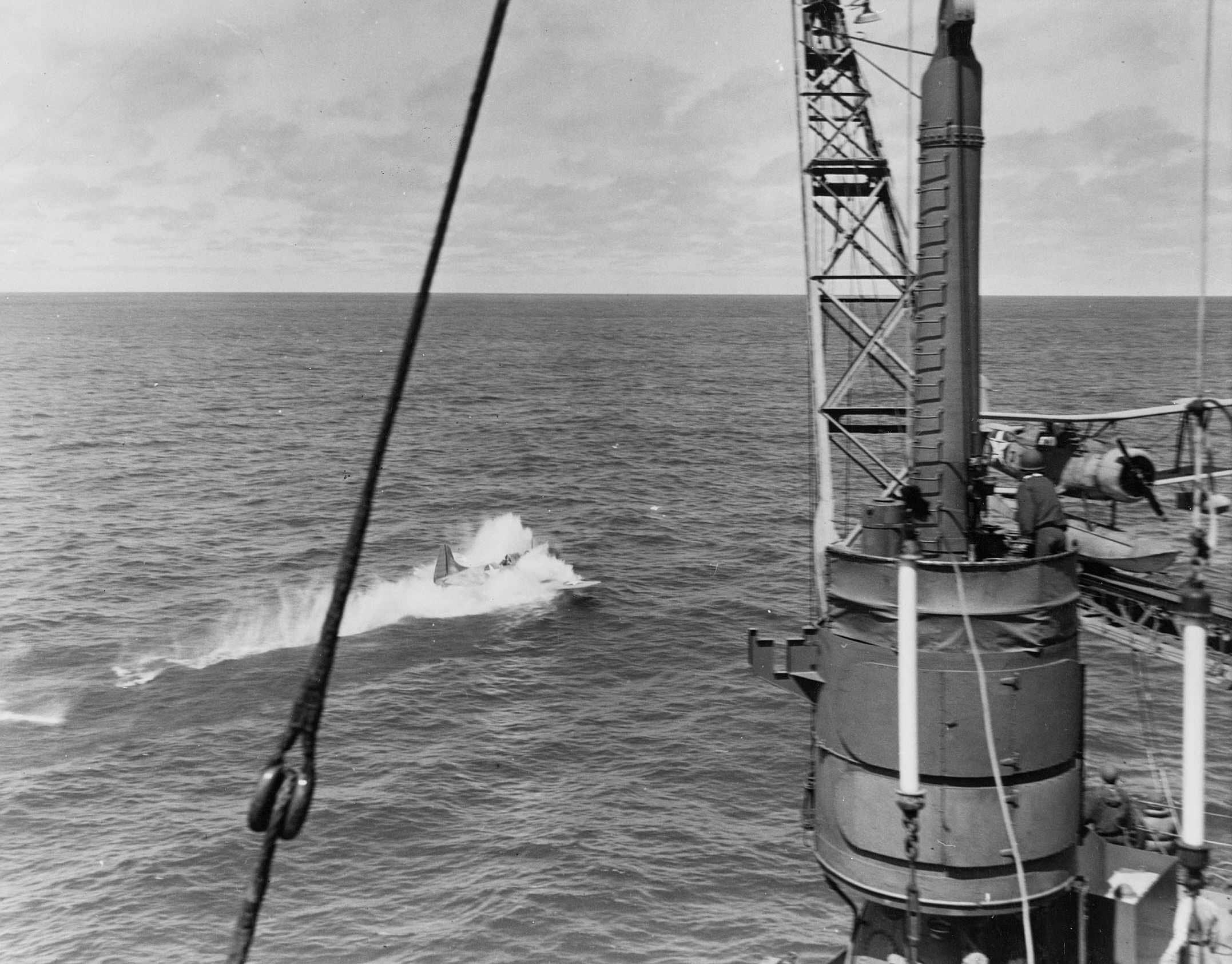
There had been confusion among the Americans as to the exact location of the Japanese Carriers. Bombing 8 and Scouting 8 from Hornet made a wrong turn and not find the Japanese carriers. The squadrons had to return due to a lack of fuel and a number of bombers and their fighter escort had to ditch in the ocean and wait for rescue. The Enterprise group composed of Bombing-6 and Scouting 6 under CDR Wade McClusky was perilously low on fuel when they spotted the wake of a Japanese destroyer steaming at high speed to catch up with the Japanese carriers.  Taking a chance, McClusky followed it straight to the Japanese Task Force arriving about 1020. The Yorktown’s group under LCDR Max Leslie arrived about the same time.

When the American dive bombers arrived over the Japanese Carrier Strike Force they found the skies empty of Japanese aircraft. Below, aboard the Japanese ships there was a sense of exhilaration as each succeeding group of attackers was brought down and with their own aircraft ready to launch and deal a fatal blow to the American carrier wondered how big their victory would be. The war would soon be decided.

At 1020 the first Zero of the Japanese attack group began rolling down the flight deck of the flagship Akagi, aboard Kaga aircraft were warming up as they were on the Soryu.  The unsuspecting Japanese were finally alerted to the threat of the American dive bombers when lookouts screamed “helldivers.” The Japanese fighters assigned to the combat air patrol were flying too low as the mopped up the last of the doomed torpedo bombers and were not in a position to intercept the Americans.

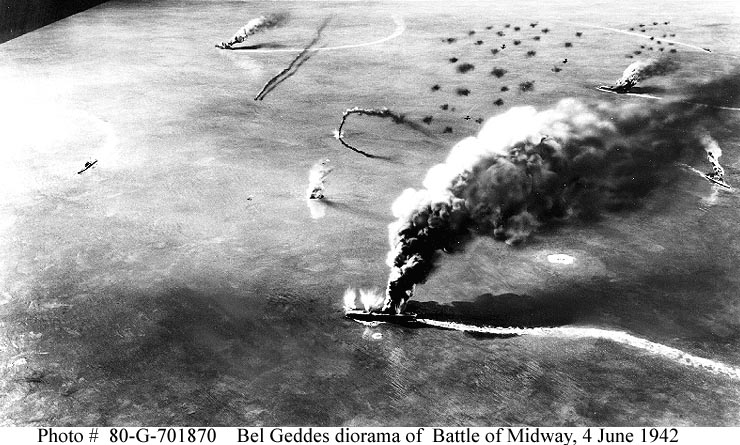
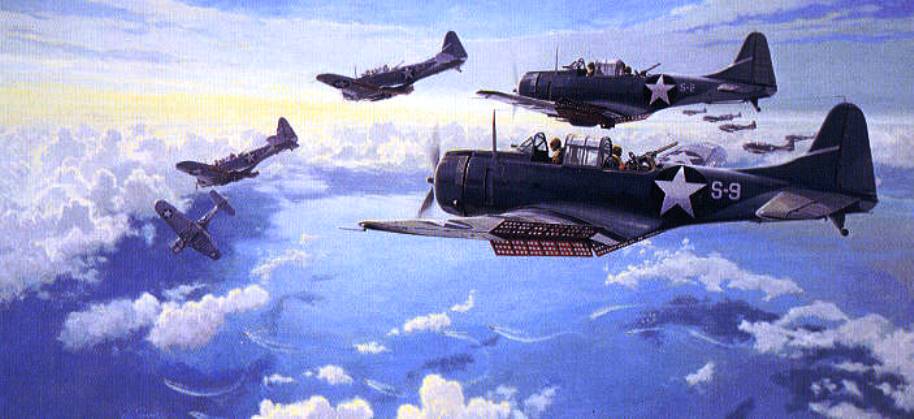
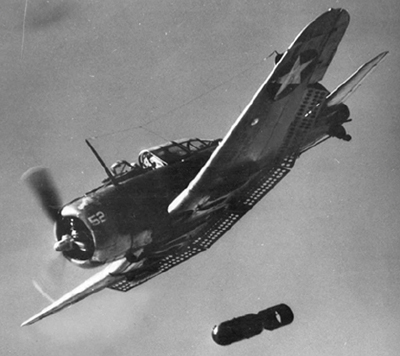
Wade McClusky’s aircraft lined up over the Akagi and Kaga pushing into their dives at 1022. There was a bit of confusion when the bulk of Scouting 6 joined the attack of Bombing 6 on the Kaga. That unprepared ship was struck by four 1000 pound bombs which exploded on her flight deck and hangar deck igniting the fully fueled and armed aircraft of her strike group and the ordnance littered about the hangar deck.  Massive fires and explosions wracked the ship and in minutes the proud ship was reduced to an infernal hell with fires burning uncontrollably. She was abandoned and would sink at 1925 taking 800 of her crew with her.

LT Dick Best of Scouting 6 peeled off from the attack on Kaga and shifted to the Japanese flagship Akagi. On board Akagi were two of Japan’s legendary pilots CDR Mitsuo Fuchida leader of and CDR Minoru Genda the architect of the Pearl Harbor attack and subsequent string of Japanese victories. Both officers were on the sick list and had come up from sick bay to watch as the fleet was attacked. Seeing Kaga burst into flames they stood mesmerized until Akagi’s lookouts screamed out the warning “helldivers” at 1026.

Best’s few aircraft hit with deadly precision landing two of their bombs on Akagi’s flight deck creating havoc among the loaded aircraft and starting fires and igniting secondary explosions which turned the ship into a witch’s cauldron.  By 1046 Admiral Nagumo and his staff were forced to transfer the flag to the cruiser Nagara as Akagi’s crew tried to bring the flames under control. They would do so into the night until nothing more could be done and abandoned ship at 2000.  Admiral Yamamoto ordered her scuttled and at 0500 on June 5th the pride of the Japanese carrier force was scuttled.

VB-3 under LCDR Max Leslie from the Yorktown stuck the Soryu with 17 aircraft, however only 13 of the aircraft had bombs due to an electronic arming device malfunction on 4 of the aircraft, including that of Commander Leslie.  Despite this Leslie led the squadron as it dove on the Soryu at 1025 hitting that ship with 3 and maybe as many as 5 bombs. Soryu like her companions burst into flames as the ready aircraft and ordnance exploded about her deck. She was ordered abandoned at 1055 and would sink at 1915 taking 718 of her crew with her. A few hours later Hiryu, which had succeeded in launching strikes that seriously damaged Yorktown met the fate of her sisters. Yorktown would be sunk by a Japanese submarine, along with the destroyer Hamman a few days later as her crew attempted to get her to Pearl Harbor. In five pivotal minutes the course of the war in the Pacific was changed.

A Final Ignominy

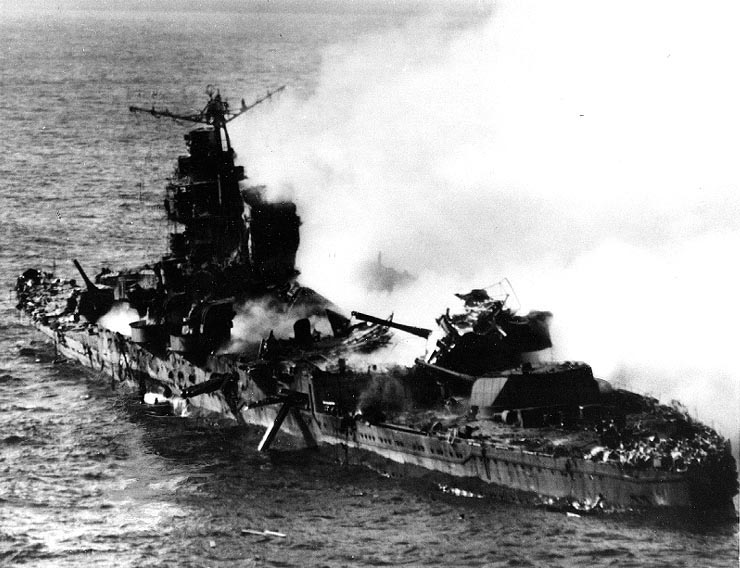
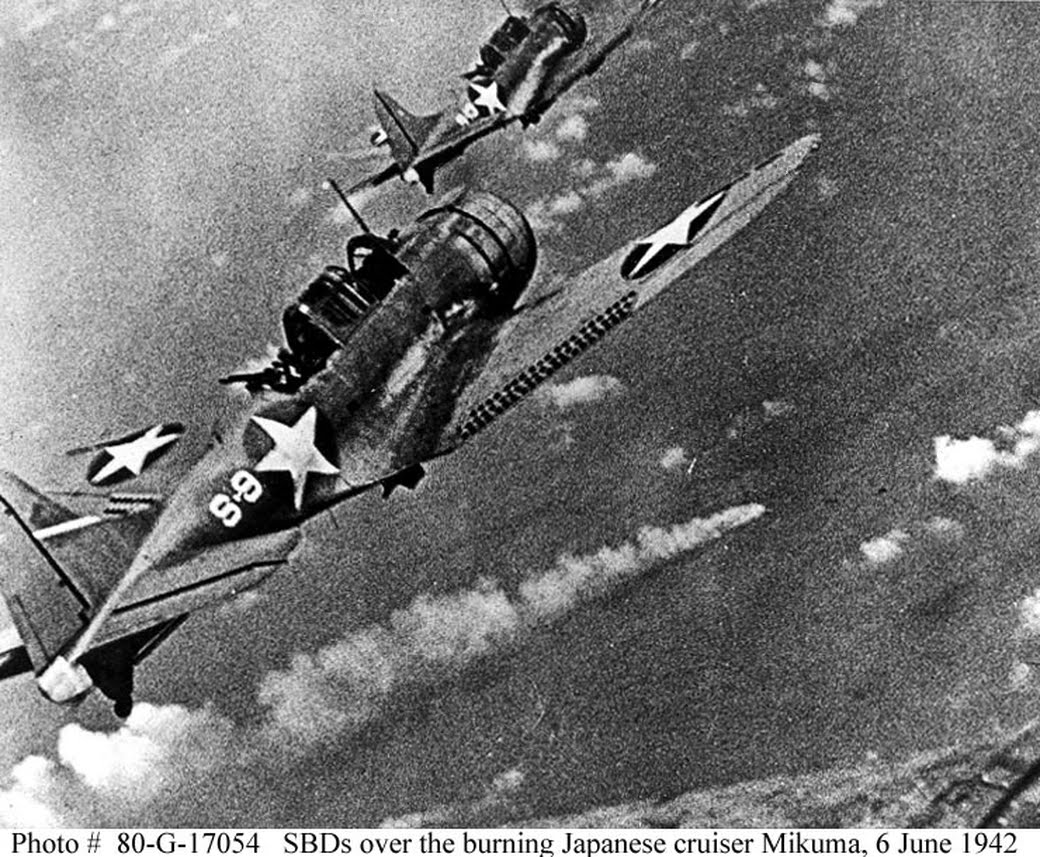
Sinking_of_japanese_cruiser_Mikuma_6_june_1942

Admiral Yamamoto was still attempting to digest the calamity that had befallen Admiral Nagumo’s carrier task force. In the shocked atmosphere of the mighty Super Battleship Yamato’s command center the Staff of the Combined Fleet was hastily attempting to arrive at a solution which might reverse the disaster and bring victory.  Admiral Ugaki, Yamamoto’s Chief of Staff, despite strong personal doubts, ordered Vice Admiral Nobutake Kondo to prepare for a night surface engagement with the US Fleet and dispatched a strong surface force to bombard Midway in order to prevent the Americans from reinforcing it and to prevent its further use against his forces should the invasion move forward.  Kondo then organized his fleet to attempt to find the American carriers and bring them to battle before dawn.

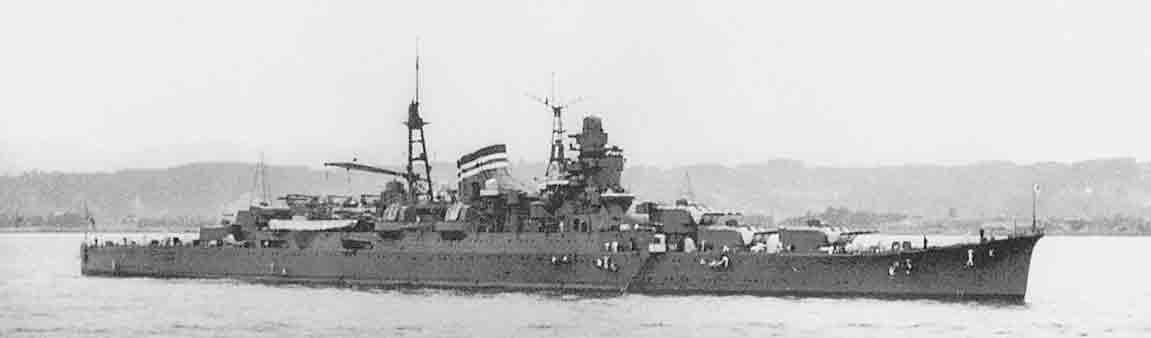
Kondo detached Vice Admiral Takeo Kurita’s Close Support Group composed of Cruiser Seven, the fastest and most modern cruisers in the Imperial Navy proceed at full speed to attack Midway.  Kurita’s cruisers, the Kumano, Suzuya, Mikuma and Mogami were each armed with 10 8” guns and were escorted by the two destroyers.

Kurita’s force was 80 miles from Midway when Yamamoto realizing that his plan was unrealistic ordered Kondo’s forces to retreat and rendezvous with his main force shortly after midnight. The order was met with a measure of relief by most officers in the force and the force turned northwest and steamed at 28 knots to meet the Main Body.  At 0215 lookouts on Kumano sighted a submarine on the surface which turned out to be the USS Tambor which had been shadowing the group, and made a signal for the force to make a emergency 45 degree turn to port.

During the process Mogami’s Navigator took over from the watch to oversee the tricky maneuver. In doing so he thought that there was too much distance between him and the ship ahead, the Mikuma. So he adjusted his course to starboard and then realized his mistake. The ship he thought was Mikuma was actually Suzuya and Mikuma was directly ahead. As soon as he recognized his mistake Mogami’s Navigator ordered a hard turn to port and reversed the engines but it was too late. Mogami’s bow crashed into Mikuma’s port quarter. The impact caused minimal damage to Mikuma but Mogami was heavily damaged. She lost 40 feet of her bow and everything else was bent back to port at right angles to her number one turret.

Mogami’s damage control teams isolated the damage and worked the ship up to 12 knots. This was not fast enough for Kurita to make his rendezvous so he left Mikuma and the destroyers to escort Mogami while he steamed ahead with Kumano and Suzuya.

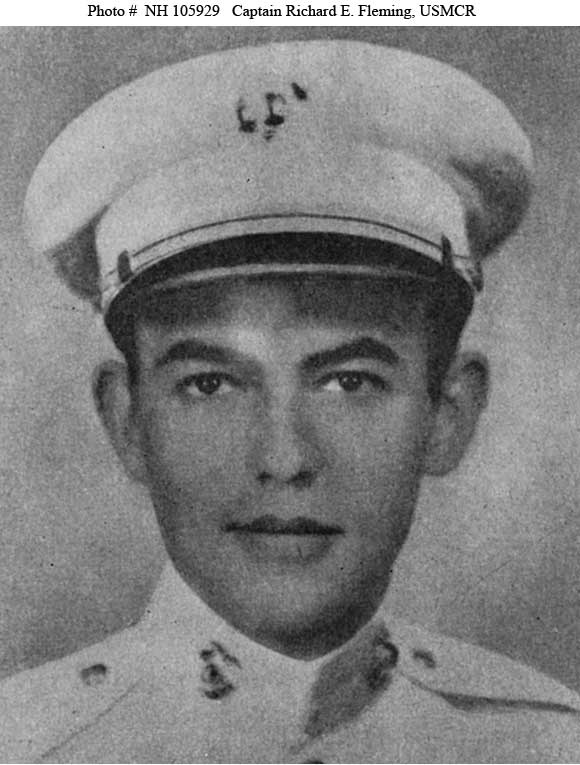
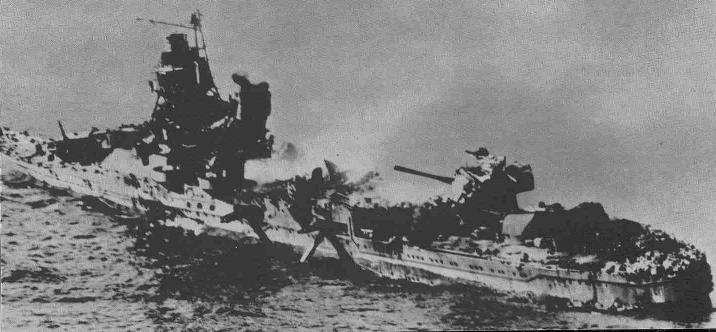
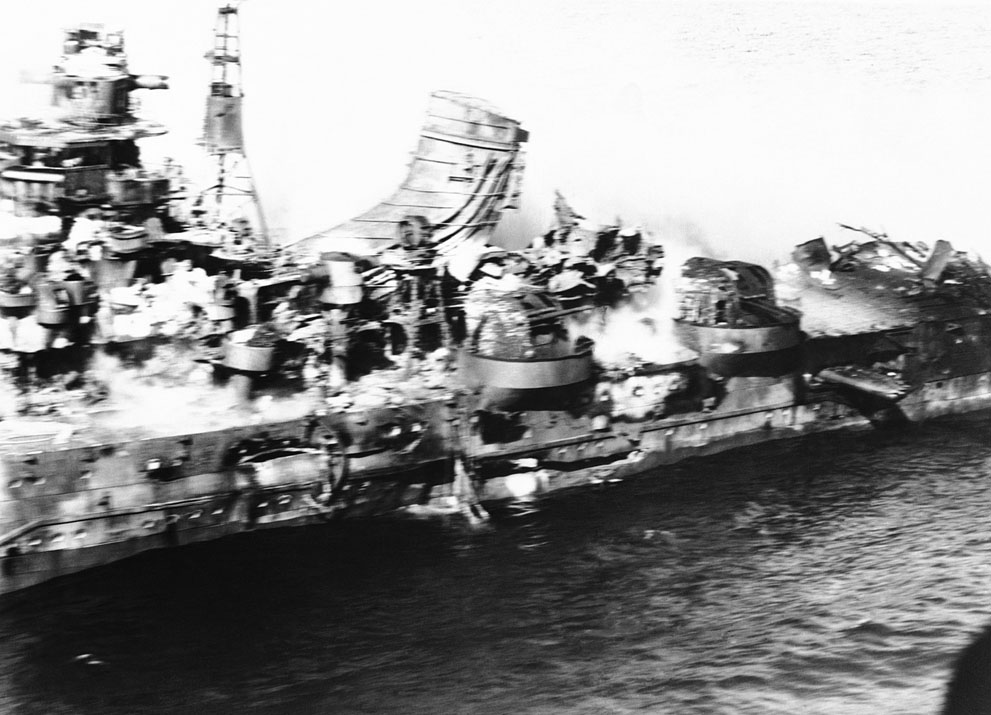
Tambor’s skipper LCDR John W Murphy sent a contact report at 0300 reporting “many unidentified ships.” He followed this with more detailed information and the Americans on Midway began to launch its remaining serviceable aircraft to attack the threat. A flight of B-17 Bombers launched at 0430 could not find the Japanese ships but at 0630 a PBY Catalina found the Japanese and radioed Midway “two Japanese battleships streaming oil.”  The remaining 12 aircraft of VSMB-241 under command of Captain Marshall Tyler a mix of SBD Dauntless and SB2U Vindicators took off at 0700. His force attacked at 0808 scoring no hits. However, Marine Captain Richard Fleming, his Vindicator on fire dropped his bomb and then crashed his aircraft into Mikuma’s after turret. Sailors aboard Mogami were impressed, the American had sacrificed himself in a suicide attack worthy of the Samurai. The fire was sucked down air intakes into the starboard engine room with disastrous results. The Mikuma’s engineers were suffocated by the smoke and fumes and Mikuma was greatly reduced in speed.

The two ships limped northwest at 12 knots escorted by the destroyers and were unmolested through much of the day with the exception of an ineffective attack by the B-17s at 0830. The following morning the Dive Bombers of Enterprise and Hornet were at work and found the crippled Japanese ships. Waves over US Dive Bombers attacked the cruisers throughout the morning and into the afternoon. Mikuma was hit at least 5 times and secondary explosions of ammunition and torpedoes doomed the ship. Mogami was also heavily damaged but remained afloat while both destroyers received bomb damage.  At sunset the tough cruiser rolled over to port and sank into the Pacific. Mogami whose damage control teams had performed miracles to keep their ship afloat helped the destroyers rescue survivors from Mikuma.  Only 240 were rescued with 650 officers and sailors going down with the ship.

The action against the cruisers ended the combat operations at Midway. The Japanese ships were doomed by Yamamoto’s decision to try to salvage victory from defeat and the error of Mogami’s Navigator during the emergency turn when Kumano sighted Tambor. The only thing that kept the result from being total was the efficacy of Mogami’s damage control teams.  Mogami was out of the war for 10 months following repairs and conversion to an Aircraft Cruiser in which her aft turrets were removed to increase the number of float plane scouts that the ship could carry. She rejoined the fleet in April 1943 and was sunk following the Battle of the Surigao Strait on 25 October 1944.

The Mogami and Mikuma proved to be tough ships to sink. Unprotected by friendly aircraft they fought hard against the unopposed American Dive Bombers. They suffered massive damage from 500 and 1000 pound bombs, both direct hits and near misses. Mogami was saved by the skill of her damage control teams and the foresight of her Damage Control Officer to jettison her torpedoes so that they did not explode and compound the damage wrought by the American bombs.

Epilogue

At Midway a distinctly smaller force defeated a vastly superior fleet in terms of experience, training and equipment. At the very moment that it appeared to the Japanese that they would advance to victory their vision disappeared. In a span of less than 5 minutes what looked like the certain defeat of the US Navy became one of the most incredible and even miraculous victories in the history of Naval warfare. In those 5 minutes history was changed in a breathtaking way. While the war would drag on and the Japanese still inflict painful losses and defeats on the US Navy in the waters around Guadalcanal the tide had turned and the Japanese lost the initiative in the Pacific never to regain it.

The Japanese government hid the defeat from the Japanese people instead proclaiming a great victory. The American government could not fully publicize the victory for fear of revealing the intelligence that led to the ability of the US Navy to be at the right place at the right time and defeat the Imperial Navy.

The American victory at Midway changed the course of the war in the Pacific. The Battle of Midway established the aircraft carrier and the fast carrier task force as the dominant force in naval warfare which some would argue it still remains. Finally those five minutes ushered in an era of US Navy dominance of the high seas which at least as of yet has not ended as the successors to the Enterprise, Hornet and Yorktown ply the oceans of the world and the descendants of those valiant carrier air groups ensure air superiority over battlefields around the world today.


1 Comment

Filed under History, Military, Navy Ships, US Navy, World War II at Sea, world war two in the pacific

Improbable and Unlikely: Victory at Midway

800px-tbd_attacking_at_midway_painting-1

Friends of Padre Steve’s World

As I mentioned earlier in the week I am publishing a number of articles on Greatest Generation as we remember the anniversaries of the Battle of Midway in 1942 and the D-Day landings in 1944.

This article is a compilation of a number of articles that I have done in the past with a bit of edition. It deals with the battle of Midway. I hope to do some really serious writing on the topic someday, but most of my writing and research time has been devoted to the Battle of Gettysburg and the American Civil War. Too bad I am not like LCDR Data in Star Trek the Next Generation. Image the productivity, but I digress…

I grew up in a Navy family when it was not popular for people to “support the troops” back during the Vietnam War and in the post-Vietnam era. That being said I developed a love for all things Navy and buried myself in the library, reading and checking out books. My friends probably remember he hauling armloads of books too and from class and too and from school  on the buses that we rode. One of those books was Walter Lord’s classic Incredible Victory about the Battle of Midway. Through it and other books I felt as if I had come to know the men who fought that battle, the men of both sides, gaining an appreciation for their bravery and humanity. As I have mentioned time and time again on this site, people matter the most in history, especially in war. In the intervening years I have spent over 34 years in the U.S. Army and U.S. Navy serving at sea and ashore in combat operations. As such I have a connection to these men, I can imagine what they were going through.

As we get further away from these events we have fewer people who even know about them, and that is really sad because they are so important, and the sacrifices of the men who fought those battles helped secure an opportunity freedom for so many. I know that after the war that the United States has not always lived up to the ideals set forth in the Declaration of Independence, nor how our founders believed that we should pursue relations with other countries. In fact, they would not recognize what we have become. Even so, it is important for us to reexamine these events, to remember the men and women who served, and to remember their sacrifice, even as we acknowledge the tragedy of war and all that it brings.

I hope that you enjoy this and trust that you will have a good day.

Peace

Padre Steve+
 538x362xNorth-American-Aviation-B-25B-Mitchell-launches-from-USS-Hornet-CV-8-18-April-1942-21.jpg.pagespeed.ic.fjuaPl49hb

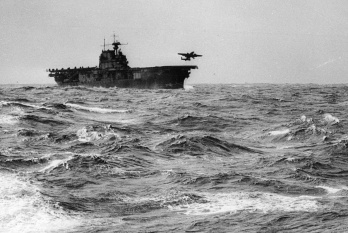
The Doolittle Raid

Prelude to Battle

The Imperial Japanese Navy under the command of Admiral Isoruku Yamamoto had been humiliated. On April 18th 1942 16 B-25 bombers under the command of Colonel Jimmy Doolittle were launched from the deck of the USS Hornet and bombed Tokyo.  Though the physical damage was insignificant the psychological impact was massive on the Japanese military establishment. In response to the threat, Yamamoto was directed to bring the aircraft carriers of the U.S. Navy to battle and to destroy them.

Prior to the Doolittle Raid, Yamamoto and his deputy Rear Admiral Matome Ugaki had explored the possibility of attacking Midway. However, the Japanese armed forces were competing with each other to determine an overall strategy for the war effort. The Army was insistent on a China strategy while the Navy preferred expansion in the Western, South and Central Pacific.  Yamamoto’s idea envisioned seizing Midway and using it as a forward base from which an invasion of Hawaii could be mounted as well as the bait to draw the carrier task forces of the U.S. Navy into battle and destroy them. Until the Doolittle Raid shocked the Japanese leadership he was unable to do this.

“I Shall Run Wild for the First Six Months”
 893594c746

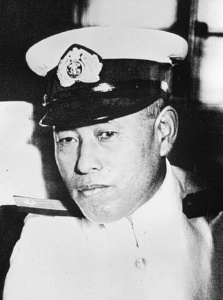
Admiral Isoruku Yamamoto

Yamamoto was one of the few Japanese military or political leaders who opposed war with the United States. He had lived in the United States, gotten to know Americans and recognized the how the massive economic and industrial power of the United States would lead to the defeat of Japan. He told Premier Konoye in 1941 “I shall run wild for the first six months or a year, but I have utterly no confidence for the second or third years of the fighting.”

It is hard to imagine now, but in June of 1942 it seemed a good possibility that the Americans and British could be on the losing side of the Second World War.

True to Yamamoto’s words in 1942 the Japanese onslaught in the Pacific appeared nearly unstoppable. The Imperial Navy stormed across the Pacific and Indian Oceans in the months after Pearl Harbor decimating Allied Naval forces that stood in their way.  The British Battleships HMS Prince of Wales and HMS Repulse were sunk by land based aircraft off of Singapore. A force of Royal Navy cruisers and the Aircraft Carrier HMS Hermes were sunk by the same carriers that struck Pearl Harbor in the Indian Ocean.  Darwin Australia was struck with a devastating blow on February 19th and on February 27th the Japanese annihilated the bulk of the American, British, Dutch and Australian naval forces opposing them at the Battle of the Java Sea. American forces in the Philippines surrendered on May 8th 1942 while the British in Singapore surrendered on February 15th.

In only one place had a Japanese Naval task force been prevented from its goal and that was at the Battle of the Coral Sea.  Between 4-8 May the US Navy’s Task Force 11 and Task Force 17 centered on the Carriers USS Lexington and USS Yorktown prevented a Japanese invasion force from taking Port Moresby. Their aircraft sank the light carrier Shoho, damaged the modern carrier Shokaku and decimated the air groups of the Japanese task force. But it was the unexpected raid by US Army Air Corps B-25 Bombers launched from the USS Hornet under command of Colonel Jimmy Doolittle on April 18th 1942 which embarrassed Yamamoto so badly that he ordered the attack to take Midway and destroy the remaining US Naval power in the Pacific.

Cracking the Code
 images-2

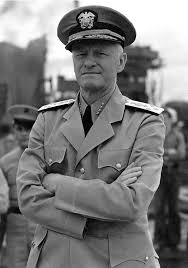
Admiral Chester Nimitz

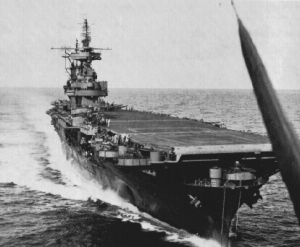
United States Navy codebreakers had broken the Japanese diplomatic and naval codes in 1941, and in May the Navy code breakers at Pearl Harbor discovered Yamamoto’s plan to have the Imperial Navy attack Midway Island and the Aleutian Islands.  Knowing the Japanese were coming, and that the occupation of Midway by Japanese forces would give them an operational base less than 1000 miles from Pearl Harbor, Admiral Chester Nimitz, commander of the U.S. Pacific Fleet committed the bulk of his naval power, the carriers USS Enterprise CV-6, USS Yorktown CV-5 and USS Hornet CV-8 and their 8 escorting cruisers and 15 destroyers to defend Midway.  This force of 26 ships with 233 aircraft embarked to defend Midway while a force of smaller force 5 cruisers and 4 destroyers was dispatched to cover the Aleutians.  The forces on the ground at Midway had a mixed Marine, Navy and Army air group of 115 aircraft which included many obsolete aircraft, 32 PBY Catalina Flying Boats and 83 fighters, dive bombers, torpedo planes and Army Air Force bombers piloted by a host of inexperienced but resolute airmen with which to defend itself. It also had a ground force of U.S. Marines, should the Japanese actually land on the island.
20150122152242

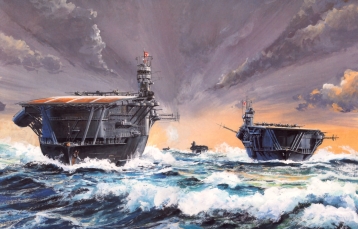
The Japanese Fleet and was built around the elite First Carrier Striking Group, the Kido Butai composed of the Pearl Harbor attackers Akagi, Kaga, Soryu and Hiryu. Led by Vice Admiral Chuichi Nagumo its highly trained and combat experienced air groups composed of 273 aircraft. This force was escorted by 2 Battleships, 3 Cruisers 12 Destroyers. Yamamoto commanded a force of 2 light carriers, 5 Battleships, 11 cruisers and 27 destroyers.  Meanwhile a force of 4 battleships, 12 destroyers assigned screen to the Aleutian invasion force which was accompanied by 2 carriers 6 cruisers and 10 destroyers. The other carriers embarked a further 114 aircraft.  The Japanese plan was ambitious but it was so ambitious that the Japanese Task forces were scattered over thousands of square miles of the Northern Pacific Ocean from which they could not rapidly come to the support of each other.
uss-enterprise-cv-6-1

With the foreknowledge provided by the code breakers the US forces hurried to an intercept position northeast of Midway. They eluded the Japanese submarine scout line which the Japanese Commander Admiral Yamamoto presumed would find them when they sailed to respond to the Japanese attack on Midway.  Task Force 16 with the Enterprise and Hornet sailed first under the command of Rear Admiral Raymond A Spruance in place of the ailing William “Bull” Halsey. Task Force 17 under Rear Admiral Frank “Jack” Fletcher was built around the Yorktown which had been miraculously brought into fighting condition after suffering heavy damage at Coral Sea. Fletcher assumed overall command by virtue of seniority and Admiral Nimitz instructed his commanders to apply the principle of “calculated risk” when engaging the Japanese as the loss of the US carriers would place the entire Pacific at the mercy of the Japanese Navy.
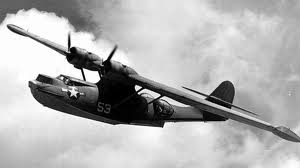
images-43

On June 3rd a PBY Catalina from Midway discovered the Japanese invasion force transport group.  US long-range B-17 bombers launched attacks against these ships but inflicted no damage.

“Our hearts burn with the conviction of sure victory.”
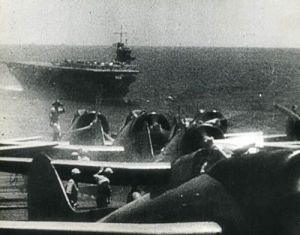
 10-japanese-carriers-coral-sea-midway

On the night of June 3rd 1942 Nagumo’s First Carrier Strike Force sailed east toward the tiny Midway Atoll. Nagumo had seen many of the risks involved in the plan and considered it an “impossible and pointless operation” before the Doolittle Raid on Tokyo, but even the reluctant Nagumo fell in line as Yamamoto relentlessly lobbied for the operation.

As the First Carrier strike force closed within 300 miles of Midway on the night of June 3rd 1942 Nagumo and his staff prepared for the battle that they and many others believed would be the decisive battle. Aircraft received their final preparations, bombs were loaded and as night faded into early morning air crew arose, ate their breakfast and went to their aircraft. The ships had been observing radio silence since they departed their bases and anchorages in Japan the previous week. Honed to a fine edge the crews of the ships and the veteran aircrews anticipated victory.

The crews of the ships of the task force and the air groups embarked on the great aircraft carriers Akagi, Kaga, Soryu and Hiryu as well as their escorts were confident. They had since the war began known nothing but victory. They had devastated the Pacific Fleet at Pearl Harbor and roamed far and wide raiding allied targets and sinking allied shipping across the Pacific and deep into the Indian Ocean. Commander Magotaro Koga of the destroyer Nowaki wrote in his diary “Our hearts burn with the conviction of sure victory.

Chuichi_Nagumo

Vice Admiral Chuichi Nagumo

However, Nagumo and his sailors had no idea that most of what they knew about their American opponents was wrong. Nagumo and Yamamoto were confident that the Americans could field no more than two operational carriers to defend Midway. They had no idea that the Yorktown, which they believed had been sunk at Coral Sea was operational and her air group reinforced by the aircraft of the damaged Saratoga which was being repaired on the West Coast. Unknown to the Japanese the Yorktown and her escorts had joined Enterprise and Hornet northeast of Midway.

The Japanese were going into battle blind. They had planned to get aerial surveillance of US Fleet dispositions at Pearl Harbor, but that had been cancelled because the atoll at French Frigate Shoals that the Japanese flying boats would operate from had been occupied by a small US force. Likewise a line of Japanese submarines arrived on station a day too late, after the US carrier task forces had passed by them. Those aboard the First Carrier Strike Force, including Nagumo or his senior commanders and staff had no idea that the Americans not only knew of their approach but were already deployed in anticipation of their strike.

Within a day all of the Japanese carriers would be sunk or sinking. Thousands of Japanese sailors would be dead and the vaunted air groups which had wreaked havoc on the Allies would be decimated, every aircraft lost and the majority of pilots and aircrew dead. It would be a most unexpected and devastating defeat stolen out of the hands of what appeared to be certain victory.

There is a lesson to be learned from the Japanese who sailed into the night on June 3rd 1942 and saw the sunrise of June 4th. There is no battle, campaign or war that goes according to plan. Thousands of Japanese sailors and airmen went to bed on the night of the 3rd expecting that the following night, or within the next few days they would be celebrating a decisive victory. Thousands of those sailors would be dead by the night of the 4th of June 1942, and as their ships slid beneath the waves, the ambitions of Imperial of Japan to defeat the United States Navy and end the war were dealt a decisive defeat from which they never recovered.

Hawks at Angles Twelve
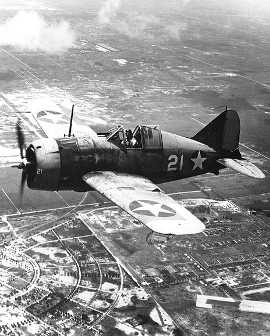
 f2 number mf 21

One of the more overlooked aspects of the Battle of Midway is the sacrifice of Marine Fighter Squadron 221 on the morning of June 4th 1942.   The Marine aviators flying a mix of 21 obsolescent Brewster F2A-3 Buffalos and 7 Grumman F4F-3 Wildcats engaged a vastly superior force of Japanese Navy aircraft as they vectored toward the atoll to begin softening it up for the planned invasion.
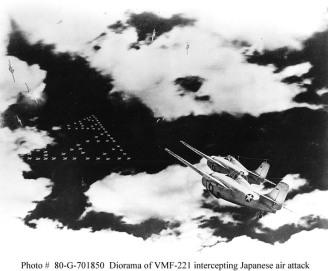
g701850

Led by Major Floyd Parks the squadron had arrived at Midway on Christmas day 1941 being delivered by the USS Saratoga after the aborted attempt to relieve Wake Island.  The squadron along with Marine Scout Bombing Squadron 241 (VMSB 241) formed Marine Air Group 22.  They fighter pilots of VMF-221 scored their first victory shooting down a Japanese Kawanishi H8K2 “Emily” flying boat. The squadron which initially was composed of just 14 aircraft, all F2A-3’s was augmented by 7 more F2A-3s and 7 of the more advanced F4F-3s before the battle.
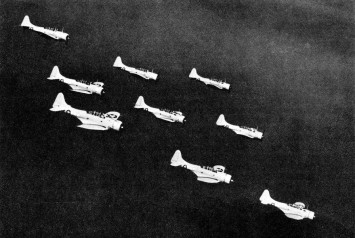
douglas-sbd5-dauntless-dive-bomber-battle-of-midway-01

USMC Vought SB2-U3 Vindicators

When the Japanese First Carrier Striking Group was spotted in the wee hours of June 4th the Marines and other aircrew aboard Midway scrambled to meet them.  The 18 SBD-2 Dauntless’ and 12 Vought SB2-U3 Vindicator dive bombers of VMSB-241, the 6 TBF Avengers of the Navy Torpedo Eight detachment, 4 Army Air Corps B-26 Marauders and 15 B-17 Flying Fortresses flew out to attack the Japanese carriers while the fighters rose to intercept the 108 aircraft heading toward Midway. The 72 strike aircraft, 36 Aichi 99 Val Dive Bombers and 36 Nakajima B5N Torpedo/ High Level Bombers were protected by 36 AM6-2 Zeros which thoroughly outclassed the Marine opponents in speed, maneuverability and in the combat experience of their pilots.

The Marine fighters audaciously attacked the far superior Japanese force, throwing themselves against the Japanese phalanx with unmatched courage.  Despite their courage the Marine fighters were decimated by the Japanese Zeros.  The Marines shot down 4 Val dive bombers and at least three Zeros but lost 13 Buffalos and 3 Wildcats during the battle.  Of the surviving aircraft only three Buffalos and three Wildcats were in commission at the end of the day. Among the casualties killed was Major Parks.  Of the surviving pilots of VMF-221, two became “Aces” during the war. Lieutenant Charles M. Kunz would later fly in VMF-224, adding six victories to end the war with 8 victories. Capt. Marion E. Carl would later fly in VMF-223 raising his score to 18.5 Japanese aircraft shot down.  Other pilots like 2nd Lieutenant Clayton M. Canfield shot down two additional aircraft while flying with VMF-223. 2nd Lieutenant Walter W. Swansberger won the Medal of Honor at Guadalcanal.
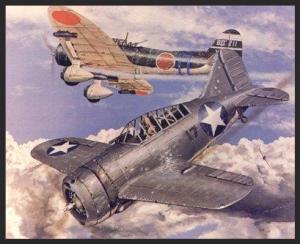
F2A-3+Buffalo

VMF-221 Attacks

The last remaining Marine fighter pilot of VMF-221 from the battle of Midway, Williams Brooks died in January 2010 and was buried with full military honors, in Bellview, Nebraska. Brooks in his after action report described his part in the battle:

I was pilot of F2A-3, Bureau number 01523, Our division under Capt. Armistead was on standby duty at he end of the runway on the morning of June 4, 1942, from 0415 until 0615. At about 0600, the alarm sounded and we took off. My division climbed rapidly, and I was having a hard time keeping up. I discovered afterwards that although my wheels indicator and hydraulic pressure indicator both registered “wheels up”, they were in reality about 1/3 of the way down. We sighted the enemy at about 14,000 feet, I would say that there were 40 to 50 planes. At this time Lt. Sandoval was also dropping back. My radio was at this time putting out no volume, so I could not get the message from Zed. At 17,000 feet, Capt. Armistead led the attack followed closely by Capt. Humberd. They went down the left of the Vee , leaving two planes burning. Lt. Sandoval went down the right side of the formation and I followed. One of us got a plane from the right side of the Vee. At this time, I had completely lost sight of my division. As I started to pull up for another run on the bombers, I was attacked by two fighters. Because my wheels being jammed 1/3 way down, I could not out dive these planes, but managed to dodge them and fire a burst or so into them as they went past me and as I headed for the water. As I circled the island, the anti-aircraft fire drove them away. My tabs, instruments and cockpit were shot up to quite an extent at this time and I was intending to come in for a landing. 

It was at this time that I noticed that a important feature in their fighting. I saw two planes dog-fighting over in the east, and decided to go help my friend if at all possible. My plane was working very poorly, and my climb was slow. As I neared the fight both planes turned on me. It was then that I realized I had been tricked in a sham battle put on by two Japs and I failed to recognize this because of the sun in my eyes. Then I say I was out-numbered, I turned and made a fast retreat for the island, collecting a goodly number of bullets on the way. After one of these planes had been shaken, I managed to get a good burst into another as we passed head-on when I turned into him. I don’t believe this ship could have gotten back to his carrier, because he immediately turned away and started north and down. I again decided to land, but as I circled the island I saw two Japs on a Brewster. Three of my guns were jammed, but I cut across the island, firing as I went with one gun. But I could not get there in time to help the American flier and as soon as the Brewster had gone into the water I came in for a landing at approximately 0715 (estimated). 

As for VMF-221 it was re-equipped with the F4F-4 and later with the F4U Corsair during the course of two more deployments overseas.  VMF-221 finished the war with a score of 155 victories, 21 damaged and 16 probable kills, the second highest total of any Marine Corps Squadron during the war.

Their bomber counterparts of VMSB 241 attacked the Japanese task force on the morning of June 4th and scored no hits while losing 8 aircraft. The survivors were again in action later in the day as well as the following day where they helped sink the Japanese Heavy Cruiser Mikuma with their squadron leader Major Henderson diving his mortally wounded aircraft into the cruiser’s number 4 8” gun turret. While the Marines’ actions are not as well known or as successful as those of their Navy counterparts they were brave.  Fighter pilots had to engage some of the most experienced pilots flying superior machines while the bomber crews had little to no experience before being thrown into combat.

Into the Valley of Death: The Last Ride of the Torpedo Bombers
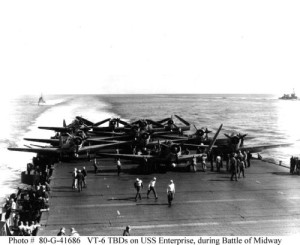
 eneterprise-vt-6-midway1

Alfred, Lord Tennyson wrote in the Charge of the Light Brigade something that echoes to this day when we talk or write about men who charge the gates of death against superior enemies.

Half a league half a league,

Half a league onward,

All in the valley of Death

Rode the six hundred:

‘Forward, the Light Brigade!

Charge for the guns’ he said:

Into the valley of Death

Rode the six hundred.
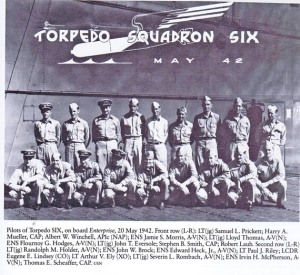
 VT-6

They were not six hundred and they were not mounted on horses, but the Naval Aviators of Torpedo Squadrons 3, 6 and 8 and their aerial steeds 42 Douglas TBD Devastators and 6 TBF Avengers wrote a chapter of courage and sacrifice seldom equaled in the history of Naval Aviation. Commanded by veteran Naval Aviators, LCDR Lance “Lem” Massey, LCDR Eugene Lindsey and LCDR John Waldron the squadrons embarked aboard the carriers flew the obsolete TBD Devastators. The young pilots of the Midway based Torpedo 8 detachment under the command of LT Langdon Fieberling flew in the new TBF Avengers.
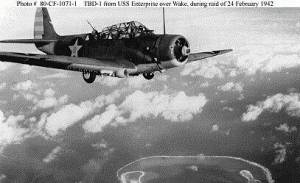
tbd-devastator1

The TBD which first flew in 1935 entered service in 1937 and was possibly the most modern naval aircraft in the world when it entered service.  It was a revolutionary aircraft. It was the first monoplane widely used on carriers and was first all-metal naval aircraft.  It was the first naval aircraft with a totally enclosed cockpit, the first with hydraulic powered folding wings.  The TBD had crew of three and had a maximum speed of 206 miles an hour and carried a torpedo or up to 1500 pounds of bombs (3 x 500) or a 1000 pound bomb.  129 were built and served in all pre-war torpedo bombing squadrons based aboard the Lexington, Saratoga, Ranger, Yorktown, Enterprise and Hornet with a limited number embarked aboard Wasp. 
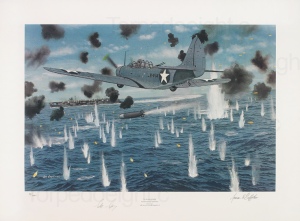
Go-in-and-get-a-hit


The Devastator saw extensive service prior to the war which pushed many airframes to the end of their useful service life and by 1940 only about 100 were operational by the beginning of the war.  They were still in service in 1942 as their replacement the TBF Avenger was not available for service in large enough numbers to replace them before Midway.  The TBDs performed adequately against minor opposition at Coral Sea and in strikes against the Marshalls but the squadrons embarked on Yorktown (VT3), Enterprise (VT-6) and Hornet (VT-8) were annihilated at Midway with only 6 of 41 aircraft surviving their uncoordinated attacks against the Japanese Carrier Strike Force.  They were too slow, had poor maneuverability, insufficient armor and defensive armament.

The Torpedo squadrons attacked independently of each other between 0920 and 1030 on June 4th 1942. The Japanese Combat Air Patrol ripped into the slow, cumbersome and under armed TBD Devastators as they came in low to launch their torpedoes.  Torpedo Eight from Hornet under the command of LCDR John C Waldron pressed the attack hard but all 15 of the Devastators were shot down.  Only Ensign George Gay’s aircraft was able to launch its torpedo before being shot down and Gay would be the sole survivor of the squadron to be picked up later by a PBY Catalina patrol plane.
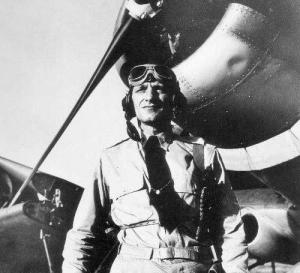
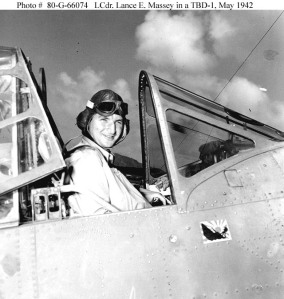
Page500_163_6

g66074

LCDR John Waldron (above) LCDR Lem Massey (below)

Torpedo Six from the Enterprise under the command of LCDR Eugene Lindsey suffered heavy casualties losing 10 of 14 aircraft with Lindsey being one of the casualties.  The last group of Devastators to attack was Torpedo Three from the Yorktown under the command of LCDR Lem Massey losing 11 of 13 aircraft with Massey a casualty last being seen standing on the wing of his burning aircraft as it went down.  These aircraft were also decimated and Massey killed but they had drawn the Japanese Combat Air Patrol down to the deck leaving the task force exposed to the Dive Bombers of the Enterprise and Yorktown.  The six aircraft of the Torpedo Eight detachment from Midway under the command of LT Fieberling lost 5 of their 6 aircraft while pressing their attacks.  Only Ensign Bert Earnest and his aircraft survived the battle landing in a badly damaged state on Midway.  Four U.S. Army B-26 Marauder Medium Bombers were pressed into service as torpedo bombers of which 2 were lost.  No torpedo bomber scored a hit on the Japanese Task force even those torpedoes launched at close range failed to score and it is believe that this was in large part due to the poor performance of the Mark 13 aircraft torpedoes.
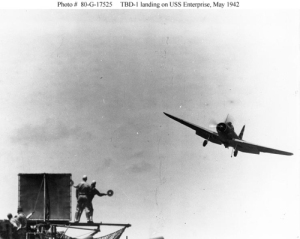
enterprise-tbd-landing1

Despite the enormous losses of the torpedo squadrons their sacrifice was not in vain. Their attacks served to confuse the Japanese command and delay the rearmament of aircraft following the Japanese strikes on Midway. They also took the Japanese Combat Air Patrol down to sea level and opened the way for American Dive Bombers to strike the Japanese with impunity fatally damaging the Akagi, Kaga and Soryu in the space of 5 minutes.
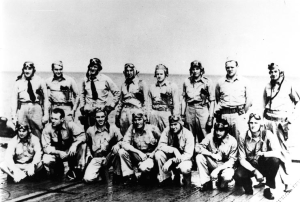
ts8

The men of Torpedo 8 only one survived 

After Midway the remaining TBDs were withdrawn from active service and no example survives today. The TBF became the most effective torpedo bomber of the war and some remained in service in a civilian capacity to fight forest fires until 2012.


The Provence of Chance: Five Minutes that Changed the War
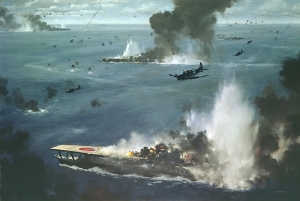
 Battle%20of%20Midway%20flat_080817160843

The land based aircraft from Midway attacked the Japanese carrier force taking heavy casualties and failed to damage the Japanese task force. When the results of the first strike of the Japanese bombers that hit Midway was analyzed Nagumo readied his second wave.

As this was happening the American carriers launched their strike groups at the Japanese fleet leaving enough aircraft behind as for Combat Air Patrol and Anti-submarine patrol missions.  As the Americans winged toward the Japanese fleet the Japanese were in a state of confusion. The confusion was caused when a scout plane from the Heavy Cruiser Tone that had been delayed at launch discovered US ships but did not identify a carrier among them until later into the patrol. The carrier was the Yorktown and TF 17, but for Nagumo who first expected no American naval forces, then received a report of surface ships without a carrier followed by the report of a carrier the reports were unsettling.
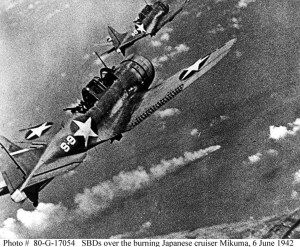
Dauntless_dive_bombers

Aboard the Japanese ships, orders and counter-orders were issued as the Japanese attempted to recover their strike aircraft and prepare for a second strike on the island, but when the Yorktown task force was discovered, orders were changed and air crews unloaded ground attack ordnance in favor of aerial torpedoes and armor piercing bombs. In their haste to get their aircraft ready to strike the Americans, the hard working Japanese aircrews did not have time to stow the ordnance removed from the aircraft. But due to their hard work at 1020 they had the Japanese strike group ready to launch against the US carriers. Aircraft and their crews awaited the order to launch, their aircraft fully armed and fully fueled.
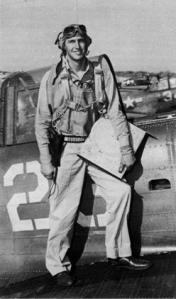
sbdpilot

CDR Wade McClusky 

There had been confusion among the Americans as to the exact location of the Japanese Carriers. Bombing 8 and Scouting 8 from Hornet made a wrong turn and not find the Japanese carriers. The squadrons had to return due to a lack of fuel and a number of bombers and their fighter escort had to ditch in the ocean and wait for rescue. The Enterprise group composed of Bombing-6 and Scouting 6 under CDR Wade McClusky was perilously low on fuel when they spotted the wake of a Japanese destroyer steaming at high speed to catch up with the Japanese carriers.  Taking a chance, McClusky followed it straight to the Japanese Task Force arriving about 1020. The Yorktown’s group under LCDR Max Leslie arrived about the same time.
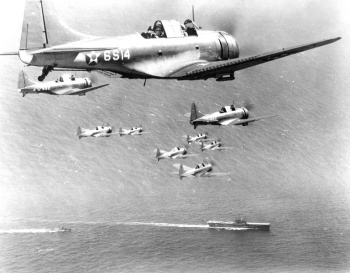
4-17-106

When the American dive bombers arrived over the Japanese Carrier Strike Force they found the skies empty of Japanese aircraft. Below, aboard the Japanese ships there was a sense of exhilaration as each succeeding group of attackers was brought down and with their own aircraft ready to launch and deal a fatal blow to the American carrier wondered how big their victory would be. The war would soon be decided.
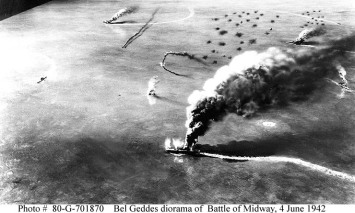
g701870

At 1020 the first Zero of the Japanese attack group began rolling down the flight deck of the flagship Akagi, aboard Kaga aircraft were warming up as they were on the Soryu.  The unsuspecting Japanese were finally alerted to the threat of the American dive bombers when lookouts screamed “helldivers.” The Japanese fighters assigned to the combat air patrol were flying too low as the mopped up the last of the doomed torpedo bombers and were not in a position to intercept the Americans.
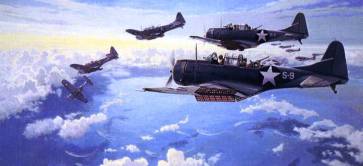
2edd2yr

Wade McClusky’s aircraft lined up over the Akagi and Kaga pushing into their dives at 1022. There was a bit of confusion when the bulk of Scouting 6 joined the attack of Bombing 6 on the Kaga. That unprepared ship was struck by four 1000 pound bombs which exploded on her flight deck and hangar deck igniting the fully fueled and armed aircraft of her strike group and the ordnance littered about the hangar deck.  Massive fires and explosions wracked the ship and in minutes the proud ship was reduced to an infernal hell with fires burning uncontrollably. She was abandoned and would sink at 1925 taking 800 of her crew with her.
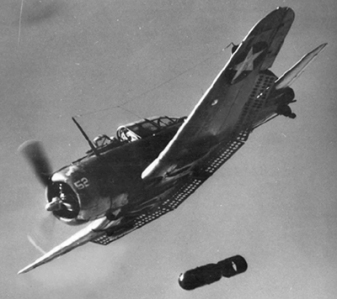
sbddauntless

LT Dick Best of Scouting 6 peeled off from the attack on Kaga and shifted to the Japanese flagship Akagi. On board Akagi were two of Japan’s legendary pilots CDR Mitsuo Fuchida leader of and CDR Minoru Genda the architect of the Pearl Harbor attack and subsequent string of Japanese victories. Both officers were on the sick list and had come up from sick bay to watch as the fleet was attacked. Seeing Kaga burst into flames they stood mesmerized until Akagi’s lookouts screamed out the warning “helldivers” at 1026.
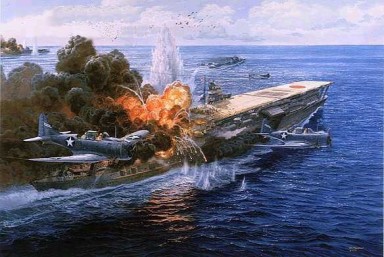
SBDstoastjapcarrier

Best’s few aircraft hit with deadly precision landing two of their bombs on Akagi’s flight deck creating havoc among the loaded aircraft and starting fires and igniting secondary explosions which turned the ship into a witch’s cauldron.  By 1046 Admiral Nagumo and his staff were forced to transfer the flag to the cruiser Nagara as Akagi’s crew tried to bring the flames under control. They would do so into the night until nothing more could be done and abandoned ship at 2000.  Admiral Yamamoto ordered her scuttled and at 0500 on June 5th the pride of the Japanese carrier force was scuttled.
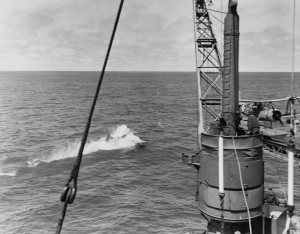
SBD_ditching_near_USS_Astoria_1942

LCDR Max Leslie ditches his aircraft near a cruiser 

VB-3 under LCDR Max Leslie from the Yorktown stuck the Soryu with 17 aircraft, however only 13 of the aircraft had bombs due to an electronic arming device malfunction on 4 of the aircraft, including that of Commander Leslie.  Despite this Leslie led the squadron as it dove on the Soryu at 1025 hitting that ship with 3 and maybe as many as 5 bombs. Soryu like her companions burst into flames as the ready aircraft and ordnance exploded about her deck. She was ordered abandoned at 1055 and would sink at 1915 taking 718 of her crew with her. A few hours later Hiryu, which had succeeded in launching strikes that seriously damaged Yorktown met the fate of her sisters. Yorktown would be sunk by a Japanese submarine, along with the destroyer Hamman a few days later as her crew attempted to get her to Pearl Harbor. In five pivotal minutes the course of the war in the Pacific was changed.

A Final Ignominy
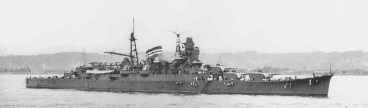
mikuma_135889

IJN Mikuma 

Admiral Yamamoto was still attempting to digest the calamity that had befallen Admiral Nagumo’s carrier task force. In the shocked atmosphere of the mighty Super Battleship Yamato’s command center the Staff of the Combined Fleet was hastily attempting to arrive at a solution which might reverse the disaster and bring victory.  Admiral Ugaki, Yamamoto’s Chief of Staff, despite strong personal doubts, ordered Vice Admiral Nobutake Kondo to prepare for a night surface engagement with the US Fleet and dispatched a strong surface force to bombard Midway in order to prevent the Americans from reinforcing it and to prevent its further use against his forces should the invasion move forward.  Kondo then organized his fleet to attempt to find the American carriers and bring them to battle before dawn.

Kondo detached Vice Admiral Takeo Kurita’s Close Support Group composed of Cruiser Seven, the fastest and most modern cruisers in the Imperial Navy proceed at full speed to attack Midway.  Kurita’s cruisers, the Kumano, Suzuya, Mikuma and Mogami were each armed with 10 8” guns and were escorted by the two destroyers.

Kurita’s force was 80 miles from Midway when Yamamoto realizing that his plan was unrealistic ordered Kondo’s forces to retreat and rendezvous with his main force shortly after midnight. The order was met with a measure of relief by most officers in the force and the force turned northwest and steamed at 28 knots to meet the Main Body.  At 0215 lookouts on Kumano sighted a submarine on the surface which turned out to be the USS Tambor which had been shadowing the group, and made a signal for the force to make a emergency 45 degree turn to port.

During the process Mogami’s Navigator took over from the watch to oversee the tricky maneuver. In doing so he thought that there was too much distance between him and the ship ahead, the Mikuma. So he adjusted his course to starboard and then realized his mistake. The ship he thought was Mikuma was actually Suzuya and Mikuma was directly ahead. As soon as he recognized his mistake Mogami’s Navigator ordered a hard turn to port and reversed the engines but it was too late. Mogami’s bow crashed into Mikuma’s port quarter. The impact caused minimal damage to Mikuma but Mogami was heavily damaged. She lost 40 feet of her bow and everything else was bent back to port at right angles to her number one turret.

Mogami’s damage control teams isolated the damage and worked the ship up to 12 knots. This was not fast enough for Kurita to make his rendezvous so he left Mikuma and the destroyers to escort Mogami while he steamed ahead with Kumano and Suzuya.
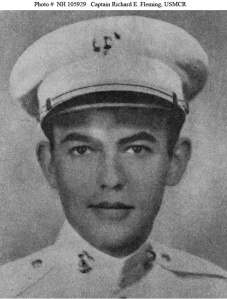
72149d1361e15e9f1540c2b425c023c7

Tambor’s skipper LCDR John W Murphy sent a contact report at 0300 reporting “many unidentified ships.” He followed this with more detailed information and the Americans on Midway began to launch its remaining serviceable aircraft to attack the threat. A flight of B-17 Bombers launched at 0430 could not find the Japanese ships but at 0630 a PBY Catalina found the Japanese and radioed Midway “two Japanese battleships streaming oil.”  The remaining 12 aircraft of VSMB-241 under command of Captain Marshall Tyler a mix of SBD Dauntless and SB2U Vindicators took off at 0700. His force attacked at 0808 scoring no hits. However, Marine Captain Richard Fleming, his Vindicator on fire dropped his bomb and then crashed his aircraft into Mikuma’s after turret. Sailors aboard Mogami were impressed, the American had sacrificed himself in a suicide attack worthy of the Samurai. The fire was sucked down air intakes into the starboard engine room with disastrous results. The Mikuma’s engineers were suffocated by the smoke and fumes and Mikuma was greatly reduced in speed.
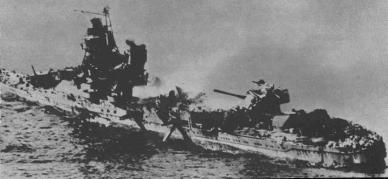
mogami

Mikuma shattered, note wreckage of Captain Fleming’s Vindicator on turret 

The two ships limped northwest at 12 knots escorted by the destroyers and were unmolested through much of the day with the exception of an ineffective attack by the B-17s at 0830. The following morning the Dive Bombers of Enterprise and Hornet were at work and found the crippled Japanese ships. Waves over US Dive Bombers attacked the cruisers throughout the morning and into the afternoon. Mikuma was hit at least 5 times and secondary explosions of ammunition and torpedoes doomed the ship. Mogami was also heavily damaged but remained afloat while both destroyers received bomb damage.  At sunset the tough cruiser rolled over to port and sank into the Pacific. Mogami whose damage control teams had performed miracles to keep their ship afloat helped the destroyers rescue survivors from Mikuma.  Only 240 were rescued with 650 officers and sailors going down with the ship.
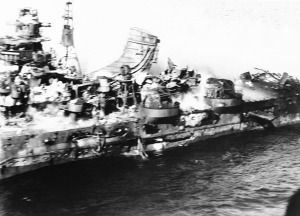
Link15-Mikuma-damage

Survivors abandoning Mikuma

The action against the cruisers ended the combat operations at Midway. The Japanese ships were doomed by Yamamoto’s decision to try to salvage victory from defeat and the error of Mogami’s Navigator during the emergency turn when Kumano sighted Tambor. The only thing that kept the result from being total was the efficacy of Mogami’s damage control teams.  Mogami was out of the war for 10 months following repairs and conversion to an Aircraft Cruiser in which her aft turrets were removed to increase the number of float plane scouts that the ship could carry. She rejoined the fleet in April 1943 and was sunk following the Battle of the Surigao Strait on 25 October 1944.

The Mogami and Mikuma proved to be tough ships to sink. Unprotected by friendly aircraft they fought hard against the unopposed American Dive Bombers. They suffered massive damage from 500 and 1000 pound bombs, both direct hits and near misses. Mogami was saved by the skill of her damage control teams and the foresight of her Damage Control Officer to jettison her torpedoes so that they did not explode and compound the damage wrought by the American bombs.


Epilogue

At Midway a distinctly smaller force defeated a vastly superior fleet in terms of experience, training and equipment. At the very moment that it appeared to the Japanese that they would advance to victory their vision disappeared. In a span of less than 5 minutes what looked like the certain defeat of the US Navy became one of the most incredible and even miraculous victories in the history of Naval warfare. In those 5 minutes history was changed in a breathtaking way. While the war would drag on and the Japanese still inflict painful losses and defeats on the US Navy in the waters around Guadalcanal the tide had turned and the Japanese lost the initiative in the Pacific never to regain it.
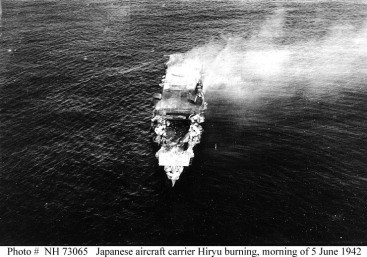
h73065

The Japanese government hid the defeat from the Japanese people instead proclaiming a great victory. The American government could not fully publicize the victory for fear of revealing the intelligence that led to the ability of the US Navy to be at the right place at the right time and defeat the Imperial Navy.

The American victory at Midway changed the course of the war in the Pacific. The Battle of Midway established the aircraft carrier and the fast carrier task force as the dominant force in naval warfare which some would argue it still remains. Finally those five minutes ushered in an era of US Navy dominance of the high seas which at least as of yet has not ended as the successors to the Enterprise, Hornet and Yorktown ply the oceans of the world and the descendants of those valiant carrier air groups ensure air superiority over battlefields around the world today.

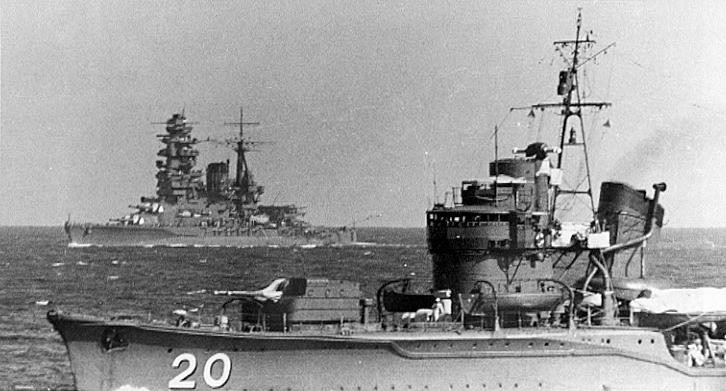
Leave a comment

Filed under aircraft, History, Military, Navy Ships, US Navy, World War II at Sea, world war two in the pacific

Coming this Week: Midway, D-Day and the Greatest Generation

Friends of Padre Steve’s World

I hope that your week is starting out well. This week promises to be interesting on Padre Steve’s World as I will be doing some writing about  the Battle of Midway and the Normandy landings. I have done a lot on both subjects before but will try to be doing something different with them. The reason why I do this is because both battles are important. Each in their own way was a watershed that helped to change the course of the war.

Now those who know me and probably many who regularly follow my writings know that I don’t readily fit into anyone’s mold. I am a career military officer, chaplain and military historian and I am certainly a liberal-progressive  in most of my politics, at least as defined in the current American political-ideological climate. I am a curious blend of idealist and realist, I like to think the best about my country, but know that we don’t always live up to the ideals enunciated in the Declaration of Independence. This makes me true minority group. But I digress…

Battle%20of%20Midway%20flat_080817160843

The Battle of Midway, which was fought on June 4-6 1942 turned back the previously undefeated Japanese Imperial Navy by all that the U.S. Navy had left, three aircraft carriers and a handful of surface ships in a classic David versus Goliath encounter. The battle is referred sometimes referred to, with good reason, as the Miracle at Midway or the Incredible Victory. Had the U.S. Navy lost at Midway, the Japanese would have held a dominant position in the Pacific, and though the United States would probably still won the war, it may have taken at least an extra  year, maybe more for that to happen.

british commandos d-day

The Allied invasion of France on in Normandy was another watershed moment. In June 1944 Nazi Germany still had a stranglehold on much of Europe. Finally, the Allied Expeditionary Force under Dwight D. Eisenhower was ready to attack. It was the greatest amphibious operation ever conducted. Six Allied Infantry divisions and three Airborne Divisions supported by an invasion fleet of 5,000 ships and landing craft and thousands of warplanes were sent against the Germans. Had the invasion failed, the result would have been disastrous. The Germans would have been able to shift troops to the Eastern Front where Josef Stalin’s Soviet Red Army was about to launch its offensive on the German Army Group Center, an event that might have led to stalemate in the East.

Political pressure was already going against Winston Churchill and Franklin Roosevelt as the war continued and a defeat could have brought to power politicians in Britain and the United States willing to make a deal for peace with the Nazis. Such an occurrence would have led to even more genocide in Nazi occupied territories and the possibility of a Nazi atomic bomb, and please remember the Germans were far beyond the United States in building delivery systems, including ballistic missiles for such weapons. The thought of either instance is too horrifying to imagine. Likewise the thought of Imperial Japan continuing to rape China and Indochina, the East Indies and to possibly even to threaten Australia and India is equally horrifying.

These are things that more than seventy years later that we forget, to our detriment,  but they were the reality that our grandparents and great-grandparents who were part of that Greatest Generation faced.

Now, these seventy years later most of the men and women of that generation who defeated the mortal enemies of freedom, and I do not use that term flippantly are passing away. The young ones are in their late eighties, soon most will be gone, and the question has to be asked: Would we find the wherewithal to stand against mortal enemies of freedom, and then when the war was over, help them rebuild their shattered nations and turn former enemies into friends, even while ensuring that war criminals were brought to justice?

I would hope so, but I don’t know. I guess that is why I am a realist.

So until tomorrow I wish you a good night.

Peace

Padre Steve+

Leave a comment

Filed under History, leadership, Military, World War II at Sea, world war two in europe, world war two in the pacific

The Death of Leviathan: Sinking the Bismarck

FinalBattle

Friends of Padre Steve’s World

This is the final part of my rendition of the great naval tragedy in three acts involving the German Battleship Bismarck. The first part was the sinking of the legendary and graceful pride of the Royal Navy, the Battle Cruiser Hood. The second part was the seemingly futile hunt and chase of the Bismarck by units of the British Home Fleet. What seemed hopeless changed when hours from the protection of night Bismarck was discovered and then torpedoed in a last ditch effort by Swordfish torpedo planes from the HMS Ark Royal. Today, the final act, the sinking of the Bismarck. 

I have written about this before and this is an edited version of that article. As I have mentioned before I have long been fascinated with this naval tragedy. I call it that because I have served at sea and in combat ashore; and because I understand that amid all the technology and weaponry that ultimately it is the men who suffer the terrors of war, and who suffer and die who matter. Soldiers, Sailors, Marines and Airmen seldom get a choice in the wars that the leaders of their nations send them to fight. Thus for me, even the Sailors of the Bismarck, the pride of Adolf Hitler’s Kriegsmarine are as much victims of war as the British Sailors aboard the HMS Hood. 

Peace

Padre Steve+

King_George_V-px800

Rodney

HMS King George V (above) and HMS Rodney (below)

The torpedo from the Swordfish from the HMS Ark Royal that struck the Bismarck in her stern, jammed her rudders and wrecked her steering gear at last light on May 26th 1941, doomed that remarkable ship and her crew. It was an astounding turn of events, as just minutes before both the Germans and the British were expecting Bismarck to reach safety to fight again.

Just days before Bismarck had sunk the legendary British Battle Cruiser HMS Hood in minutes and had she persisted in her attack could have sunk the new Battleship HMS Prince of Wales. Instead, Vice Admiral Gunther Lutjens in command of the Bismarck and her consort the Heavy Cruiser Prinz Eugen decided to break off contact and make for safety in the French port of Brest.

Bismarck slipped her pursuers and allowed Prinz Eugen to escape. It seemed that nothing that the British could do would stop her from gaining the safety of the French port and with it the knowledge that she had sunk the most powerful ship in the Royal Navy and gotten away. Then out of nowhere Bismarck was spotted by a Royal Air Force Coastal Command PBY Catalina seaplane piloted by an American Naval Officer. Hours later a relatively small and slow torpedo dropped from an obsolescent Swordfish torpedo bomber, a stringbag hit the Bismarck in in her stern, wrecking her rudders and steering gear. Remarkably it was perhaps the only place that such a torpedo could have changed the developing narrative of a great German naval victory into defeat.

As darkness fell on May 26th, Bismarck, unable to steer towards Brest due to her damage and the following seas steered toward the oncoming British armada at a reduced speed. Her crew, now exhausted from countless hours on watch and at their battle stations knew that they were doomed.

Despite this the officers and sailors aboard Bismarck still labored trying in vain for a way to repair and save their their ship. As Bismarck’s engineers and damage control personnel sought at way to repair the damage on that dark night Royal Navy destroyers under the command of Captain Phillip Vian harassed her, closing to fire torpedoes and keep the exhausted crew of the mighty German ship engaged at their battle stations throughout the long night. Knowing that the end was near the Captain of the Bismarck ordered the contents of the ship’s store to be given to crew members.

photo045

Bismarck under Fire from King George V and Rodney

As light broke on the morning of May 27th the remaining heavy units from the Home Fleet which still had enough fuel in their tanks to continue the action, the Battleships HMS King George V and HMS Rodney along with the Heavy Cruisers HMS Norfolk and HMS Dorsetshire which had broke from its convoy escort duties on the 26th closed in for the kill. Norfolk had been in on the hunt since the beginning when she and her sister ship the HMS Suffolk had discovered Bismarck and Prinz Eugen as the transited the Denmark Strait on the night of May 23rd and 24th.

WTBR_Bismarck_Sinking_pic

Bismarck from Dorsetshire

Warily the British ships closed the crippled but still powerful German battleship. At 0847 Admiral Tovey ordered British Battleships to open fire on Bismarck. The crippled German ship replied with accurate salvos and straddled Rodney. However, the British shells hammered the Bismarck. 16” shells from Rodney destroyed the command center of Bismarck and her main fire control stations. Within 30 minutes the mighty guns of the Bismarck which had sunk the Hood days before were silenced.  With no opposition from the stricken German ship the British battleships and cruisers pounded Bismarck from point blank range with 16”, 14”, 8” and 6” shells as well as torpedoes.

painting28

The end of the Bismarck

The British ships scored at least 400 hits on Bismarck and though they had silenced her and reduced the German ship to smoking ruins, the Bismarck remained afloat, defying her attackers. She was burning and certainly doomed but undaunted. The British battlewagons pounded Bismarck, until finally, with their adversary obviously doomed and their own fuel supplies dangerously low, Admiral Tovey ordered the battleships to break off the action. As he did this the British cruisers continued to fire their guns and torpedoes at the blazing helpless ship.

bismar1

Bismarck Survivors being hauled aboard Dorsetshire

The Bismarck’s First Officer, Fregattenkapitan (Commander) Hans Oels ordered her Chief Engineer Korvettenkapitan (Lieutenant Commander) Gerhard Junack to prepare the ship for scuttling and ordered the crew to abandon ship. The watertight doors were opened by Bismarck’s damage control teams and engineers as the scuttling charges fired at about the same time as HMS Dorsetshire launched her torpedoes at Bismarck. 1039 the Bismarck slipped beneath the waves. To this day those who claim the Bismarck sank because her crew scuttled her, and those who believe the the fish fired by Dorsetshire decided the fate of the ship, but truthfully it doesn’t matter. No matter what happened Bismarck was going to sink and no German forces could save her, or her crew.

hmsdorsetshirempl1284

HMS Dorsetshire 1941

With the great ship headed to the depths of the North Atlantic, hundreds of survivors bobbed about in the cold Atlantic waters. Of these men, 110 were rescued by British ships, mostly by Dorchester. Then lookouts aboard the cruiser spotted the periscope of a U-Boat, and the British ships broke off their rescue operations leaving hundreds more survivors to die of exposure or their wounds in the Atlantic. In a cruel twist of fate, the U-Boat they believed they spotted had expended all of its torpedoes and was not a threat to them. A few more of the Bismarck’s survivors were rescued later by German ships or U-boats, but about 2200 German sailors went down with their ship or died awaiting rescue that never came. When it was all over just 2 officers and 113 men survived the sinking of the Bismarck, combined with the three men who survived the sinking of the Hood nearly 3700 British and German Sailors perished.

images-40

Artist’s image of the Wreck of the Bismarck

Subsequent investigations of the wreck of the Bismarck would show that all the British shells and torpedoes did not sink the Bismarck, and that it was indeed the scuttling charges that sent the mighty ship to the bottom of the Atlantic. But even had she not been scuttled, she was doomed, and the damage that she had sustained would have sent her to the bottom within 12 to 24 hours had Commander Oels not ordered Lieutenant Commander Junack to scuttle the ship.

Within a year the Ark Royal, Prince of Wales, and Dorsetshire would also lie at the bottom of the seas. Prince of Wales along the HMS Repulse was sunk by Japanese land based bombers off Malaya in 1941, Dorsetshire was sunk near Ceylon by Japanese Carrier aircraft in April 1942, and Ark Royal was torpedoed by the U-Boat U-81 in November 1941 not far from Gibraltar. Of the destroyers that harassed Bismarck the night before her sinking only one, the Polish Destroyer ORP Piorun would survive the war.

The tragedy of mission of the Bismarck is that nearly 3700 sailors died aboard the two mightiest ships in the world, and while legendary the losses of the two ships did not materially alter the course of the war. Hood’s loss though tragic did not alter the strategic equation as more new battleships of the King George V class entered service. Likewise the surfing German capital ships were harassed by RAF bomber sorties and attacks by the Royal Navy’s Fleet Air Arm. With few exceptions these ships remained confined to ports in France, Germany or Norway and slipped into irrelevance as the war progressed as the German U-Boat force took the lead in the Battle of the Atlantic. 

As an officer who has served at sea on a cruiser at war which came within minutes of a surface engagement with Iranian Revolutionary Guard patrol boats in the Northern Arabian Gulf in 2002 I have often wondered what would happened in the event of an engagement that seriously damaged or sank our ship. Thus I have a profound sense of empathy for the sailors of both sides who perished aboard the Hood and the Bismarck in the fateful days of May 1941.

I hope that no more brave sailors will have to die this way, but I know from what history teaches that tragedies like this will happen again. 

Peace

Padre Steve+

4 Comments

Filed under History, Military, Navy Ships, World War II at Sea

Stringbags vs. the Bismarck

Alan Fearnley; (c) Alan Fearnley; Supplied by The Public Catalogue Foundation

Friends of Padre Steve’s World

A couple of days ago I reposted an article about the sinking of the HMS Hood by the German Battleship Bismarck. The story of the Bismarck is an epic saga of naval warfare and history. It is tragedy played out as if scripted by a playwright in three parts. The first was the sinking of the illustrious “Mighty” Hood by the Bismarck on May 24th 1941. 

The second, which I deal with today, was the pursuit and search for Bismarck by the British Home Fleet and the desperate attempt of the British to find a way, any way, to slow Bismarck down and bring her to battle, before she could return to the safety of Nazi occupied France.  The final chance to stop the mighty German Leviathan came as night fell on May 26th. 

I hope you appreciate the heroism of the men who flew the hopelessly obsolete aircraft who dealt the blow which crippled Bismarck. This is a re-wright of past articles and I will post the final article about the sinking of the Bismarck tomorrow. 

Peace

Padre Steve

h69721

On May 24th 1941 the German Battleship Bismarck had sunk the celebrated Battlecruiser HMS Hood in the Denmark Strait and had seriously damaged the new Battleship HMS Prince of Wales. The news of the disaster stunned the Royal Navy. Fighting a war on multiple fronts and now standing alone against Hitler’s Germany the British deployed every warship available to find and sink Bismarck.

On the evening of the 24th of May Bismarck was being shadowed by the heavy cruisers HMS Norfolk and HMS Suffolk. To the east the ships of the Home Fleet, Britain’s last line of defense under the command Admiral John Tovey was making the fastest speed to intercept the Bismarck.  Far to the southeast, Vice Admiral James Sommerville’s  “Force H” comprised of the carrier HMS Ark Royal, the fast but elderly battlecruiser HMS Renown, and the light cruiser HMS Sheffield were ordered to leave the vital convoy which there were escorting and proceed to the northwest to join the hunt for the German battleship.

HMS_Ark_Royal_h85716

HMS Ark Royal with Swordfish in 1939

With Bismarck loose the North Atlantic Convoys on which Britain depended for her survival were vulnerable. The previous year the commander of the Bismarck task force Admiral Günther Lütjens with the Battlecruisers Scharnhorst and Gneisenau had wreaked havoc on the convoys. Now of Britain was on edge with the news of Bismarck’s break out into the Atlantic. Churchill was furious with the Navy when the Mighty Hood, the largest and most powerful ship in the Royal Navy destroyed with the loss of all but three crew members. Now every effort was directed to find and sink the Bismarck.

gallbismlastdays01

Bismarck photographed from a Swordfish from 825 Squadron

Accompanying the Home Fleet was the brand new Aircraft Carrier HMS Victorious with 825 Naval Air Squadron embarked under the command of LCDR Eugene Esmond. The squadron, like many in the Fleet Air Arm was equipped with Fairy Swordfish Torpedo Bombers. The squadron had seen action aboard other carriers in the North Atlantic, the Norway Campaign and in the Mediterranean before being assigned to the Victorious. On the night of 24 May 1941, in foul North Atlantic weather the Victorious launched nine Swordfish from a range of 120 miles in a desperate attempt to slow the Bismarck down. Esmond’s squadron scored one hit amidships on the Bismarck which did no serious damage.

780px-Swordfish_on_HMS_Victorious_before_strike_on_Bismarck

825 Squadron Swordfish on HMS Victorious

About 6 hours after the attack by Victorious’s Swordfish, Bismarck shook her pursuers and disappeared into the mists of the North Atlantic, while her consort, the Heavy Cruiser Prinz Eugen escaped to the northwest in order to conduct independent raiding operations. Not knowing the location or course of the Bismarck the Royal Navy frantically searched for the German Leviathan. Most of the ships nearest to Bismarck’s last reported position were low on fuel and others seemed too far away to be of any importance in the search.

However the British were able to intercept and decode some German communications which indicated that Lütjens had orders to steam to Brest, in German occupied France for repairs.

Though the British believed that the Bismarck could be headed toward Brest they could not be sure, as each hour passed the chances of finding and bringing Bismarck to battle diminished. For nearly 36 hours the British searched in vain for the Bismarck, and for much of the 25th Tovey’s squadron was searching in the wrong direction. Then at 1030 on the 26th of May their luck changed.

Likewise the crew of the Bismarck believed with every hour that they would soon be under the protection of Herman Goering’s Luftwaffe and safely in France, but the good fortune of the British was the worst thing that could happen to the 2200 men aboard Bismarck.

On that morning a Royal Air Force Coastal Command PBY Catalina co-piloted by US Navy Ensign Leonard Smith found the Bismarck. Once Smith transmitted Bismarck’s location every available ship converged on her location but unless something could be done to slow the German down the chances bringing her to battle diminished by the hour.

The only heavy forces close enough to successfully engage Bismarck, Tovey’s battleships HMS King George V and HMS Rodney were over 100 miles behind Bismarck, too far away unless Bismarck changed course or could be slowed down. Somerville’s Force H to the south did not have the combat power to survive a surface engagement with the Bismarck should they encounter the Bismarck without the support of other heavy fleet units. Even so Sommerville was willing to risk the Renown in a suicidal action to bring Bismarck to battle if it would allow Tovey to catch her before she could escape. Desperation was the order of the day for both sides.

HMS_Ark_Royal_swordfish

820 Squadron Swordfish returning to Ark Royal after the attack on Bismarck

The situation was desperate, if Bismarck could not be slowed down she would be in range of heavy Luftwaffe Air support as well as support from U-Boats and destroyers based in France. Unless something akin to a miracle occurred Bismarck would join the Scharnhorst and Gneisenau in Brest and with the addition of Bismarck’s sister-ship Tirpitz form a surface squadron strong enough to devastate British shipping in the Atlantic.

Ark Royal’s aircraft were the last hope of slowing down Bismarck before she could effect her escape and emerge from the Atlantic after having dealt the Royal Navy a devastating blow.

The strike aircraft available on Ark Royal were the most unlikely aircraft imaginable to successfully carry out such a mission. Ark Royal’s 820 Squadron, like Victorious’ 824 Squadron was equipped with Fairy Swordfish Mk 1 Torpedo Bombers. These were biplanes with their crew compartment exposed to the weather.

Introduced to the Navy in 1936 the aircraft was an antique compared with most aircraft of its day. Likewise the Mark XII 18” torpedo carried by the aircraft was smaller or slower and equipped with a less powerful warhead than comparable torpedoes used by other navies. Despite their limitations the venerable Swordfish had performed admirably during the early part of the war sinking or damaging three Italian battleships at Taranto in November 1940. Their success against the Italians at Taranto gave inspiration to the Japanese for their attack against the U.S. Pacific Fleet at Pearl Harbor the following year. But now, in the face of foul weather and a powerful opponent the Swordfish were all the Royal Navy had left to stop Bismarck before she could make her escape.
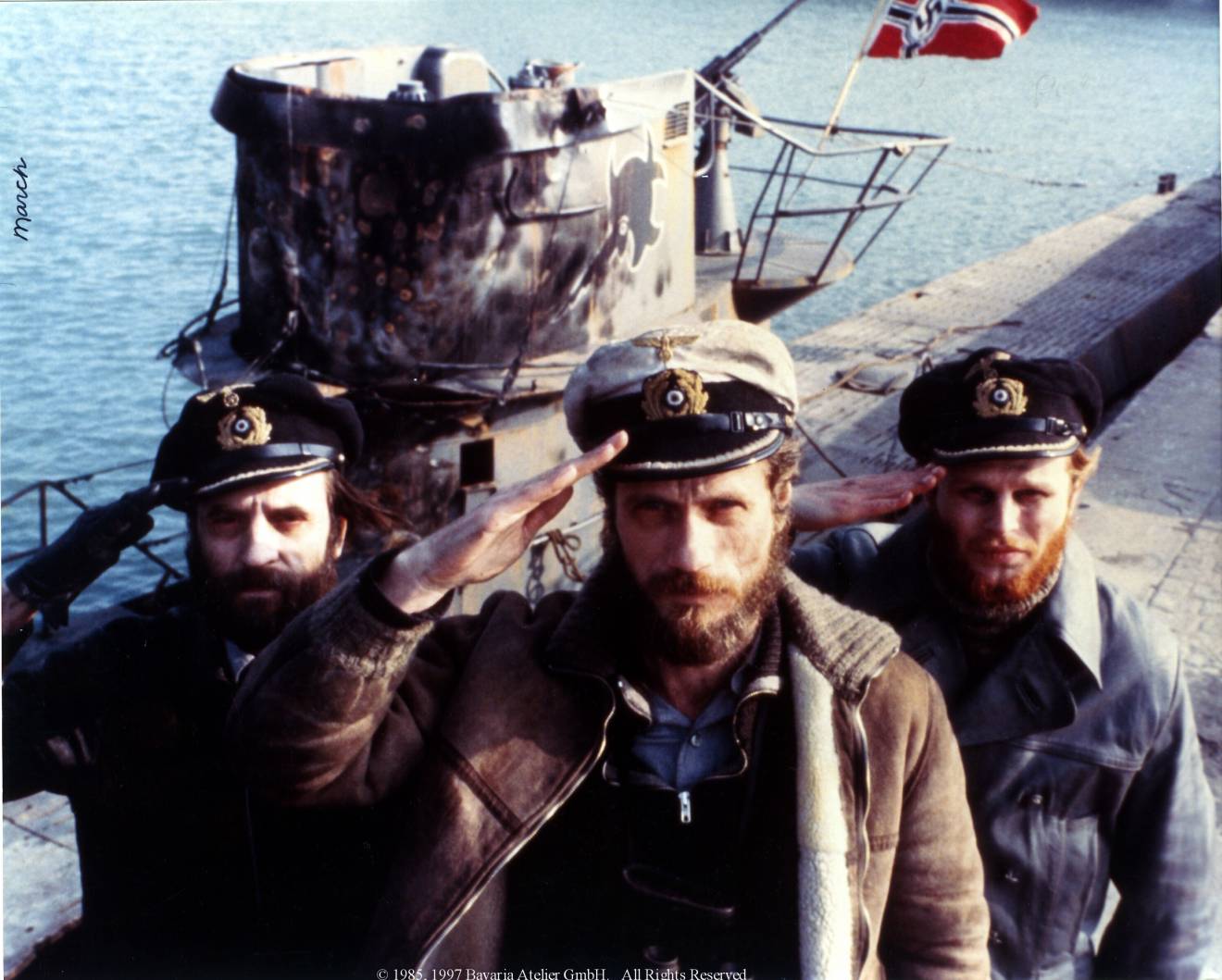
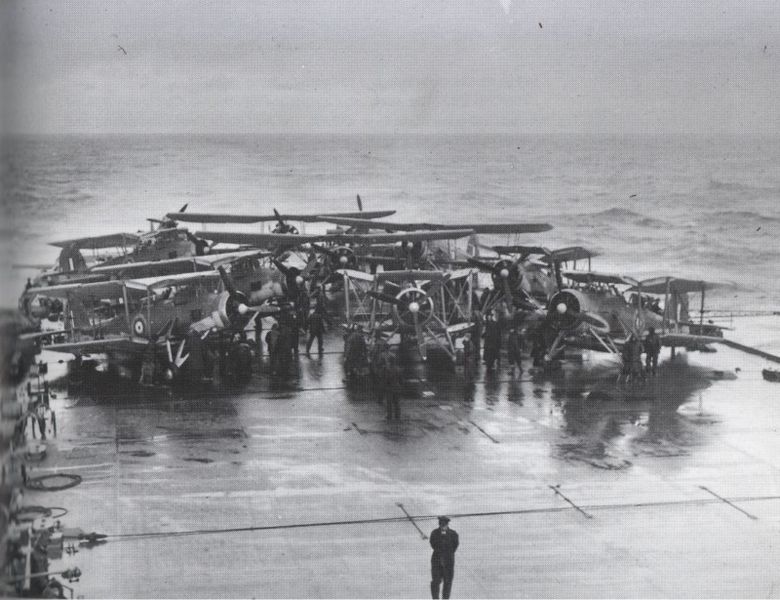
gallbismlastdays03

Bismarck steering erratically after the torpedo hit to her stern

With that in mind  Sommerville in sent his light cruiser, the  HMS Sheffield ahead to shadow Bismarck while Ark Royal closed in to launch her Swordfish against Bismarck. The first wave of aircraft strike, unaware Sheffield was near Bismarck mistakenly attacked the British cruiser. Thankfully, the new design magnetic detonators failed to detonate the torpedoes saving Sheffield from destruction. With little daylight left the aircraft returned to Ark Royal where they rearmed with torpedoes equipped with contact fuzes and refueled by flight deck crew laboring in rain and 50 knot winds blowing across the carrier’s flight deck. Just before 8 p.m. 15 Swordfish of 820 Squadron took off for what they knew was the very last chance to attack Bismarck before night fell. If they failed Bismarck would most certainly escape.

As darkness began to fall the 15 Swordfish from 820 Squadron descended through the clouds to attack the German ship. Just fifteen obsolete aircraft and thirty men attacking the most powerful warship afloat. They dispersed and attacked from all points of the compass. Bismarck twisted and turned and fired all of her guns at the attacking aircraft. The Germans fired with every weapon available, even the 15″ guns of her main battery, which she fired her into the ocean ahead of the Swordfish. It appeared for a moment that the Bismarck had successfully avoided serious damage. All but two torpedoes missed.  One torpedo struck the German midships and barely dented her massive armor. However a second torpedo, launched by a Swordfish piloted by Lieutenant John Moffat hit Bismarck in her weakly armored stern. The hit jammed Bismarck’s port rudder at a 12 degree angle, and destroyed her steering gear. The weather was such that German damage control teams could not repair the damage. Bismarck now steamed in circles, unable to maneuver. This enabling Tovey with King George V, Rodney, the heavy cruisers Norfolk and Dorchester, as well as a number of destroyers to catch up with the elusive German.

The attacks of the antiquated Swordfish on the Bismarck achieved results that no one in the Royal Navy expected. When reports indicated that Bismarck had reversed course following the torpedo attack Tovey could not believe them. It was only when lookouts aboard Sheffield confirmed the reports from the Swordfish that Tovey realized that Bismarck must have been damaged and was unable to maneuver.

It was a dramatic and unexpected turn of events. The German crew sank into gloom as the night went on and they dealt with torpedo attacks from the British Destroyers as Tovey’s battleships moved in for the kill.

To be continued…

Leave a comment

Filed under aircraft, History, Military, Navy Ships, World War II at Sea, world war two in europe