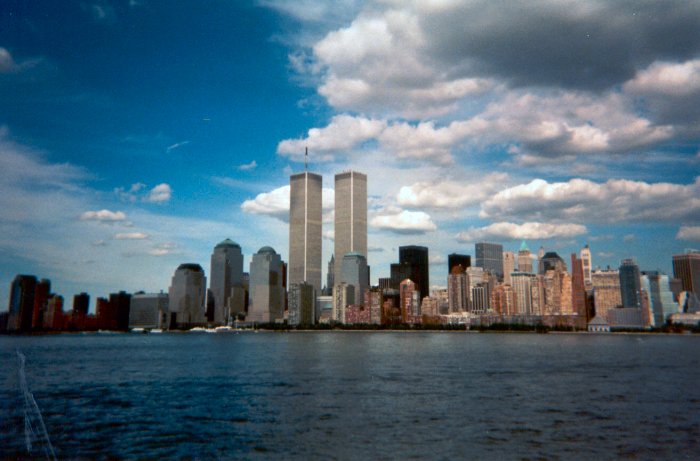
Over the past few days I have been quite busy but despite that I have not been able to take my mind off of the events of September 11th 2001. As I was walking my dogs around the lake near our house tonight I was struck by the calm, except when they went chasing the ducks, the geese, and a lone Crane. Papillons with a Napoleon complex are fare too funny not to enjoy, but I digress…
I cannot get that day out of my mind, it changed millions of lives including my own.
On the night of September 10th 2001 my mind was as far from war and terror as it could be. I was much more interested in the MLB Pennant Race than I was anything going on in the world, after all the only issues we faced were occasional, if deadly terrorist attacks on foreign installations and deployed ships like the USS Cole. But as to the security of the Continental United States, or as it has been referred to since 9-11 as “the Homeland”I wasn’t concerned. Somehow, despite my knowledge, understanding and study of terrorist groups I just never thought anyone could pull off an attack of this magnitude. The next morning I discovered just how wrong I was as the first reports came in while I was on my way to a late PT session at Camp LeJeune North Carolina where I was serving with the Second Marine Division.
That day changed all of our lives and ushered in years of war which has cost the United States military almost 60,000 casualties including nearly 7,000 dead or died of wounds including a number of friends and others who I served alongside at various points in my career. Of course that does not count non-DOD agency casualties, or those of the contractors who have been a big part of the war effort. Nor does it count hundreds of thousands of other lives in the Middle East that were a result of our response to 9-11, and the unending attacks by terrorists who trace their inspiration to the attacks of September 11th 2001 in so many places; France, Germany, Britain, Spain, India, Pakistan, Turkey, Lebanon, Australia, Belgium, Africa, Asia, and so many other places that I have a hard time naming them all.
Whether we wanted it to or not the war which began on 9-11, which was so stupidly expanded into Iraq by the Bush Administration, opening the door to Al Qaeda Iraq and now the Islamic State, and which greatly strengthened Iran by eliminating their worst enemy, Saddam Hussein have made our task most difficult.
Fifteen years after 9-11-2001 we are not only still at war, but it is becoming a war without end. Fifteen years ago I figured that after a few months Al Qaeda would be no more, and the war that they had unleashed upon us would be over. however I was wrong. I do not know what September 11th 2016 will bring, but there is one thing that I know it will not bring… peace.
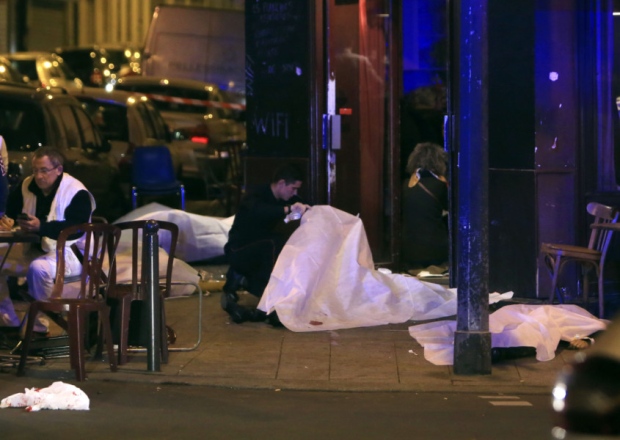
It is barely a day and a half after the massacre committed by Islamic terrorists in Paris, and the shock is still being felt around the world. In watching the images and listening to the words of various leaders I feel that something has changed; that the illusion of peace that we have lived under, has been shattered.
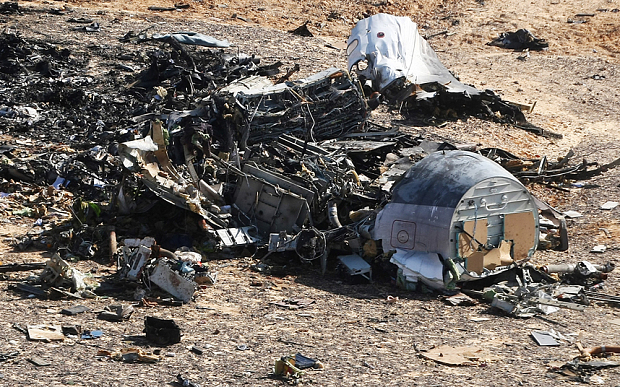
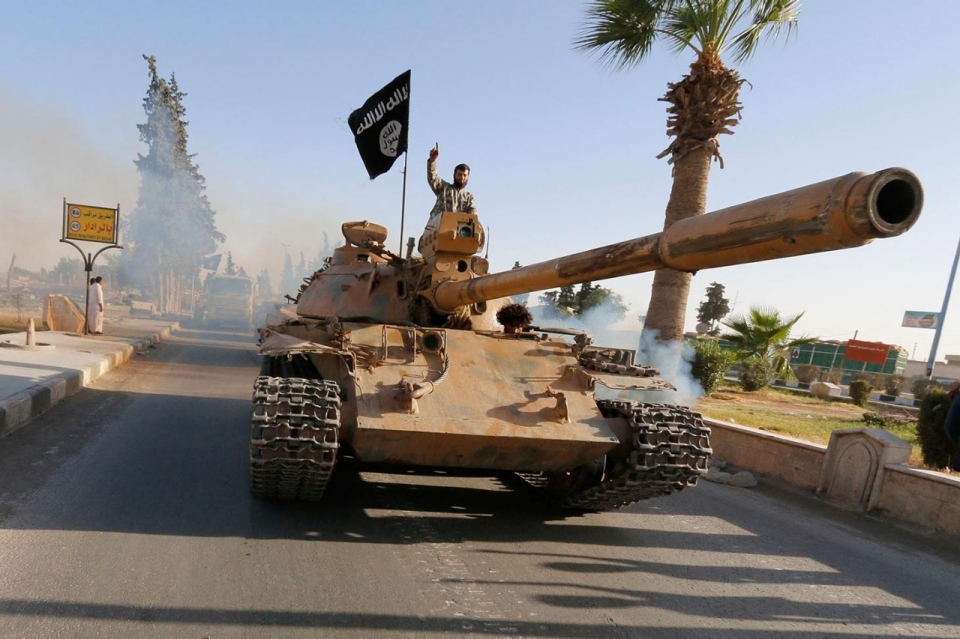
In two weeks the self-proclaimed Islamic State has claimed credit for the downing of a Russian airliner over the Sinai Peninsula, an attack in Beirut Lebanon, and, on Friday night the horrific series of attacks in Paris. The combined death toll for the three attacks is close to 400, almost all of who were innocent civilians doing nothing more than going about their daily lives. Hundreds more were wounded in Beirut and Paris. ISIL has promised to conduct more attacks on all nations that oppose them in Syria and Iraq. The attacks have awakened people to the fact that ISIL is not just a threat to the Middle East, but around the world.
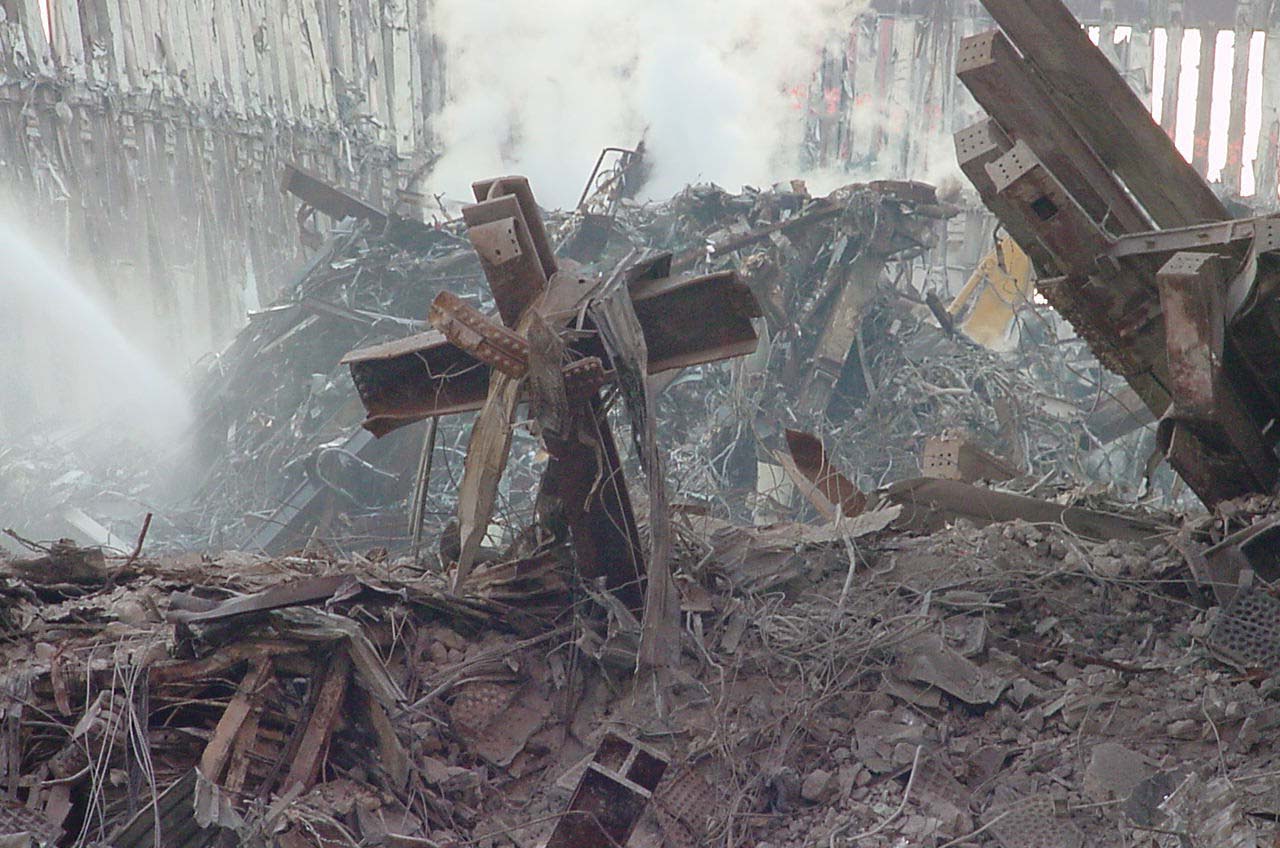
Some are now calling this war, and in fact it is, a war that most of us have ignored though it has been going on for over two decades. But in just two weeks, the hybrid terrorist state known as ISIL has changed the course of that war. The war as we know it began in the years after the First Gulf War as young Saudis returning from Afghanistan, led by Osama Bin Laden took up arms against the “infidel” Americans based in Saudi Arabia. In the 1990s the terrorism was confined to Al Qaeda attacks throughout the Middle East, and included attacks on American military personnel, installations, and ships. Then on September 11th 2001 Al Qaeda changed the narrative by attacking the United States, killing nearly 3000 people at the World Trade Center, the Pentagon, and aboard four airliners. The United States responded by going after Al Qaeda and its supporters in Afghanistan.
Had the American response been contained to that action, the war might have taken a different course, and we might not be here today. But within months of 9-11 the Bush Administration began planning to attack Saddam Hussein’s Iraq and propagandizing the American people to support it, with or without allied or United Nations sanction. The operation to topple Saddam opened Pandora’s box, and who knows when we will ever live in peace again. Twelve years after President Bush announced the end operations in Iraq aboard the USS Abraham Lincoln with a banner that boldly proclaimed, “Mission Accomplished” behind him, the war that he unleashed in Iraq has spread in ways that even the most pessimistic critics of Bush did not predict.
With the war now entering an even more troubling and dangerous phase we should remind ourselves of the words of Winston Churchill, “Never, never, never believe any war will be smooth and easy, or that anyone who embarks on the strange voyage can measure the tides and hurricanes he will encounter. The statesman who yields to war fever must realize that once the signal is given, he is no longer the master of policy but the slave of unforeseeable and uncontrollable events…. Always remember, however sure you are that you could easily win, that there would not be a war if the other man did not think he also had a chance.”
As I observe events on I am reminded of Barbara Tuchman’s description of Sir Edward Gray on the eve of the First World War, “Watching with his failing eyes, the lamps being lit in St. James Park, Grey was heard to remark that“the lamps are going out all over Europe; we shall not see them again in our lifetime.”
Sadly, I do believe that the last lamps of peace are going out around the world in the fight against the Islamic State. I have no idea when, how, or even if this conflict will end.
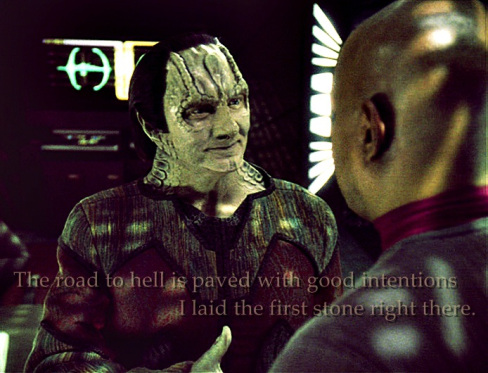
“My father used to say that the road to Hell is paved with good intentions. I laid the first stone right there. I’d committed myself. I’d pay any price, go to any lengths, because my cause was righteous. My… intentions were good. In the beginning, that seemed like enough.” Captain Benjamin Sisko (Avery Brooks) Star Trek Deep Space Nine, In the Pale Moonlight
Friends of Padre Steve’s World,
With the increasing probability that elements of the self-proclaimed Islamic State brought down a Russian airliner in the Sinai last week, it is important to ask what we are willing to do to protect innocent lives. I am not just talking about the situation in Syria and Iraq, where tens of thousands have died and millions have been displaced; but around the world from a hybrid terrorist state that knows no creed but victory or death.
The question is not just about fighting the Islamic State as this is already happening. Though there is no formal alliance and many of the states involved have their own interests at heart, the war now involves the United States, some NATO allies, Russia, Iran, Saudi Arabia, and a number of Arab states, not to mention the kaleidoscope of different warring parties in Iraq and Syria. Until last week the United States was content to fight using airpower alone. Now it appears that albeit with great hesitancy the Obama administration is slowly expanding the fight to include ground troops, although at the time this is limited to special operations troops and advisers.
As the war expands, we do have to ask hard questions, chief among them how far we will go to fight the Islamic State. The fact that no matter what course of action the United States, our allies, and the other combatants take, each one has its drawbacks, as well as benefits. Each one involves a certain amount of risk, and the fact is that the Islamic State does believe that the United States, Europe, Russia, Iran, and Israel are their greatest enemies and is working to attack each one. This poses a question of making alliances with disparate nations, some of which are mortal enemies of each other. But sometimes necessity makes strange bedfellows, just ask Winston Churchill and Josef Stalin.
So today, I am posing a reflection from the television series Star Trek Deep Space Nine. I think that among the Star Trek series that my favorite is Deep Space Nine. Of course all of the Star Trek series and movies deal with ethics, philosophy and morality to some extent; but Deep Space Nine is perhaps the most interesting to me. Don’t get me wrong I think that the Original Series and Start Trek the Next Generationwere and are leap years ahead of most television series when it comes to addressing ethical, moral and existential issues, but somehow living in the post 9-11 “War on Terrorism” world I find Deep Space Nineto be the most compelling. I think that is that the fact that the moral issues get blurred which attracts me to the series, and to this episode in particular.
I think that using the medium of science fiction we can think about real life issues in a new, and maybe more creative way than we might. I think it to do this is to think outside the traditional box, which sometimes limits our discussion, and consideration of all of the factors involved. But the subject is uncomfortable because it makes us face truths that we might not want to see, and parts of ourselves, our beliefs, and our values that can become clouded in times of crisis.
One of my favorite episodes is from season six and is entitled “In the Pale Moonlight.”The episode deals with the unsavory matter of contriving a reason to get the Romulan Empire to join with the Federation and the Klingons to fight the Dominion-Cardassian alliance that is threatening those entities as well as potentially the entire Alpha Quadrant. I have included a link to the conclusion of that episode here:
The ethics of this episode seem very timely as I look at the new phase of the conflict that the United States has been engaged for the past thirteen years. The fact is that in spite of our appeal to higher ideals we are having to make alliances with powers that are only slightly less unsavory than ISIS, powers whose polices have help ISIS grow. In a sense it is the classic scenario of making a deal with the devil to defeat one’s enemy. Of course this is not a new phenomena, individuals and nations have made such deals, sometimes with mortal enemies throughout history.
Unfortunately we usually judge such decisions based on their results, rather than wrestle with the ethical issues involved and how we might behave in similar situations. For me the philosophical and ethical issues involved in such alliances have a special interest and as such I tend to notice or recall instances where I saw, read or heard something that makes a connection to an ethical or moral dilemma faced by policy makers and planners today.
Some of the issues involved for policy makers are related to the traditional Just War Theory, and what is called the “Supreme Emergency” exemption. This exemption basically posits that when faced with a supreme and existential emergency a person or state may engage in behaviors that ordinarily would be considered unethical if the situation were not of a supreme emergency.
Of course such decisions in the real world are difficult. Those who have a system of beliefs that help them define right and wrong behaviors, even if they are not codified in law may struggle with such decisions, while those who act according to what they deem necessary or expedient, unbridled by religious, philosophical or other similar codes may not, instead making their decisions based on what appears to be necessary at the time.
This Deep Space Nine episode is remarkable because we get to see an actor playing a military commander dealing with the morality of the course of action that he is taking. In one of the early scenes Captain Sisko expresses his doubts relating to the morality of a decision that he is making in a war that has already consumed the lives of tens of millions of people.
After an incident where a Federation starship was destroyed, Sisko went to Elim Garak (Andrew Robinson), an exiled Cardassian intelligence officer to uncover any evidence about Dominion-Cardassian collusion to attack the Romulans. When none was uncovered and Garak’s sources on Cardassia were compromised he agreed to allow Garak to manufacture evidence in order to get the Romulans into the war on the side of the Federation and Klingons. Sisko compounded the situation by having the Klingons release a master forger who was on death row to help Garak. Sisko knew it was wrong and confided in his log:
“Why I didn’t listen to the voice in the back of my mind telling me not to believe a word he said, I’ll never know… But it didn’t take long for me to come face to face with the fact that I’d made a mistake.”
When the former prisoner gets drunk and attacks the owner of a tavern on the space station Sisko was in a bind. He wanted no evidence that the man had been on his station and in order to keep Quark, the bar owner quite had to bribe him. Sisko again expressed his doubts in his personal log:
“Maybe I should have put a stop to it right there. Maybe I should have said, “Thank you very much for your input, Mister Garak, I will take your suggestion under advisement,” and then gone back to my office and forgotten the whole thing. But I didn’t. Because in my heart, I knew what he was saying made sense.”
Even so Sisko still had doubts:
“That was my first moment of real doubt, when I started to wonder if the whole thing was a mistake. So I went back to my office. And there was a new casualty list waiting for me. People are dying out there every day! Entire worlds are struggling for their freedom! And here I am still worrying about the finer points of morality! No, I had to keep my eye on the ball! Winning the war, stopping the bloodshed, those were the priorities! So I pushed on. And every time another doubt appeared before me, I just found another way to shove it aside.”
When nations feel they are engaged in a life and death struggle, those who serve as policy makers, planners and military commanders often make uncomfortable compromises with their own religious, ethical or philosophical codes. Sisko continued down the path despite his doubts but justified his actions by the fact that Starfleet had approved them:
“Maybe… I was under more pressure than I realized. Maybe it really was starting to get to me, but I was off the hook. Starfleet Command had given the plan their blessing and I thought that would make things easier. But I was the one who had to make it happen. I was the one who had to look Senator Vreenak in the eye and convince him that a lie… was the truth.”
The forgery was completed and the Romulan Senator secretly arrived on the station to examine the evidence and as he did so all Sisko could do was wait, confiding in his log:
“So all I could do was wait… and see how masterful Tolar’s forgery really was. So I waited… tried to catch up on my paperwork, but I find it very difficult to focus on criminal activity reports, cargo manifests… So I went back to pacing, staring out of the window. I’m not an impatient man, I’m not one to agonize over decisions once they’re made. I got that from my father. He always says, “Worry and doubt are the greatest enemies of a great chef. The soufflé will either rise or it won’t – there’s not a damn thing you can do about it, so you might as well just sit back and wait and see what happens.” But this time the cost of failure was so high, I found it difficult to take his advice. If Vreenak discovered that the data rod was a forgery, if he realized that we were trying to trick them into the war it could push the Romulans even farther into the enemy camp. They could start to openly help the Dominion. If worst came to worst they could actually join the war against us. I had the distinct feeling that victory or defeat would be decided in the next few minutes.”
It did not work, Vreenak discovered that the data rod was a forgery and threatened to expose Sisko’s deception and possibly bring the Romulans into alliance with the Dominion. When Sisko’s actions blew up in his face and his deceit was revealed he was not happy and resigned himself to face the consequences:
“So it all blew up in my face. All the lies and the compromises, the inner doubts and the rationalizations – all for nothing. Vreenak was furious. I can’t say I blamed him; I’d have reacted the same way. After telling me in no uncertain terms that he intended to expose this “vile deception” to the entire Alpha Quadrant, he got back in his shuttle and headed home. There didn’t seem to be anything more to do… so I went back to work. Two days later we got the news.”
Sisko learned in a Starfleet communication that Vreenak’s shuttle had blown up and that is was suspected to be the work of the Dominion. When Sisko found that Vreenak was dead he went to Garak and forcefully confronted him, striking him in the process. He accused Garak of sabotaging the senator’s ship and killing him as well as the forger, Tolar. Instead of backing down Garak confronted the results and the ethical issue. The heated exchange between the two men is fascinating:
Garak: If you can allow your anger to subside for a moment, you’ll see that they did not die in vain! The Romulans will enter the war!
Captain Sisko: There’s no guarantee of that!
Garak: Oh, but I think that there is. You see, when the Tal Shiar finishes examining the wreckage of Vreenak’s shuttle, they’ll find the burnt remnants of a Cardassian optolythic data rod which somehow miraculously survived the explosion. After painstaking forensic examination, they’ll discover that the rod contains a recording of a high-level Dominion meeting, at which the invasion of Romulus was being planned.
Captain Sisko: And then they’ll discover that it is a fraud!
Garak: Oh, I don’t think they will! Because any imperfections in the forgery will appear to be a result of the explosion. So – with a seemingly legitimate rod in one hand, and a dead senator in the other, I ask you, Captain – what conclusion would you draw?
As Sisko’s anger subsided Garak continued:
“That’s why you came to me, isn’t it, Captain? Because you knew I could do those things that you weren’t capable of doing? Well, it worked. And you’ll get what you want: a war between the Romulans and the Dominion. And if your conscience is bothering you, you should soothe it with the knowledge that you may have just saved the entire Alpha Quadrant. And all it cost was the life of one Romulan senator, one criminal, and the self-respect of one Starfleet officer. I don’t know about you, but I’d call that a bargain.”
Shortly thereafter Sisko found out that the out that the deception was successful as Garak had said it would be. The Romulans who recovered the damaged data rod believed that it was genuine and declared war on the Dominion-Cardassian alliance and had entered the war on the side of the Federation. He completed his personal log:
“At oh-eight-hundred hours, station time… the Romulan Empire formally declared war against the Dominion. They’ve already struck fifteen bases along the Cardassian border. So, this is a huge victory for the good guys! This may even be the turning point of the entire war! There’s even a “Welcome to the Fight” party tonight in the wardroom!… So… I lied. I cheated. I bribed men to cover up the crimes of other men. I am an accessory to murder. But most damning of all… I think I can live with it… And if I had to do it all over again… I would. Garak was right about one thing – a guilty conscience is a small price to pay for the safety of the Alpha Quadrant. So I will learn to live with it…Because I can live with it…I can live with it. Computer – erase that entire personal log.”
My guess is that before this war is over, there will be men and women serving in positions of responsibility in our or allied militaries, policy makers and government officials who will make similar deals, violating their own moral codes and even laws in order to defeat the Islamic State and prevent acts of terror against their citizens. Most, like Sisko will not be happy but will live with their decisions. The fact is that long asymmetrical wars in which nation states have to fight non-state terrorist entities get really ugly and the longer and more bloody that they become the more decent and honorable people will make decisions like Sisko and resort to actions that in normal times they would never countenance.
This is nothing new. Those who have fought in such wars throughout history have found ways to “live” with actions that they would not approve of had things been different. Wars such as the one that we are fighting and continue to fight in the years ahead have a corrosive affect on the human spirit. They corrupt and destroy even when they are “successful.”
The question is: Can we live with it? Sadly, as much as I hate to admit it, in a similar situation I think like Sisko, that I could condone or be complicit in something like this. I too could probably convince myself that the end justified the means and that I could live with it, against ISIL. If in fact an ISIL bomb downed the Russian airliner, it is a watershed, and points to worse things to come, and we will have to ask the question, “can you live with it?”
Of course it is possible that this was an accident, truthfully, I do as tragic as it would be, hope this it the case.
Of course there is always the possibility that ISIL or one of its allied groups did it. But another possibility cannot be ruled out; that a bomb was planted bye third party, possibly the Russians themselves, hoping to implicate ISIL. That my friends is far to frightening to contemplate as there are too many nations that have both the capability and a motive to do this.
There are some other issues that I want to discuss about this war using the Star Trek motif, and like this they will be unsettling.
I have been reflecting about the attacks of September 11th 2001 and their aftermath, and today a final post on that subject for now. The great German military theorist Carl von Clausewitz wrote, “No one starts a war-or rather, no one in his senses ought to do so-without first being clear in his mind what he intends to achieve by that war and how he intends to conduct it.” Sadly, the leaders of nations seldom heed his sage advice.
Nations and peoples who suffer devastating attacks often respond out of deep anger and emotion, and many times. The United States did so after 9-11-2001, and while the initial response to attempt to kill Osama Bin Laden and destroy Al Qaeda in Afghanistan was considered justified by most of the world, what that war, and the subsequent war invasion of Iraq became can be best described as best ill-advised and at worst criminal. After over fourteen years of war, these wars are by no means over, and I have to use the words of T.E. Lawrence to describe the situation, “We have not reached the limit of our military commitments…”
The great Greek Historian Thucydides wrote words which pretty much describe how we got to where we are in this war without end:
“Think, too, of the great part that is played by the unpredictable in war: think of it now, before you are actually committed to war. The longer a war lasts, the more things tend to depend on accidents. Neither you nor we can see into them: we have to abide their outcome in the dark. And when people are entering upon a war they do things the wrong way round. Action comes first, and it is only when they have already suffered that they begin to think.”
Likewise, we, and I don’t just mean the former Bush administration, but many others today who think that war is always the first and best option. We forget the words of Winston Churchill who, despite his many blunders in both World Wars wrote:
“Never, never, never believe any war will be smooth and easy, or that anyone who embarks on the strange voyage can measure the tides and hurricanes he will encounter. The statesman who yields to war fever must realize that once the signal is given, he is no longer the master of policy but the slave of unforeseeable and uncontrollable events…. Always remember, however sure you are that you could easily win, that there would not be a war if the other man did not think he also had a chance.”
The imperial hubris of our actions following 9-11-2001, most notably the invasion of Iraq have opened the gates of Hell in the Middle East and it will take a lot, and not just military power to contain them. Let’s face it, as much as we don’t like to admit it, General James Mattis was right when he said, “No war is over until the enemy says it’s over. We may think it over, we may declare it over, but in fact, the enemy gets a vote.”
What is next, I do not know; but if history teaches us anything, people, especially the leaders of nations don’t learn from it. Barbara Tuchman said it so well:
“When information is relayed to policy-makers, they respond in terms of what is already inside their heads and consequently make policy less to fit the facts than to fit the notions and intentions formed out of the mental baggage that has accumulated in their minds since childhood.”
I wrote a reflection yesterday on some of my reflections on the 9-11-2001 attacks on the World Trade Center and the Pentagon, today a continuation of those thoughts.
I can still remember the day like it was yesterday. I was getting out of my office at Camp LeJeune after an early morning counseling case and some administrative duties I was getting ready to head to the French Creek gym. I was about to close out my browser when I saw a little note on the Yahoo.com homepage: “Airplane crashes into World Trade Center.” It was about 0900 that tragic morning. I thought to myself, “Some dumb ass just crashed his Cessna into the building.
The day was clear and absolutely gorgeous, a slight north wind and low humidity, a well-deserved break from what had been a hot and humid summer. Not that I had seen much of the Carolina summer having returned from a deployment to Okinawa, Mainland Japan and Korea in late July. When I got to my car the local talk radio station was broadcasting a second or third tier national talk radio host and he was screaming “oh my God another plane just flew into the towers!”
I drove over to the gym where I joined a large crowd of Marines and Sailors transfixed as we watched the towers burn. I went back to my office showered and went over to my battalion headquarters and was there when the South Tower went down at 0959.
Since then a lot has changed. I have made two deployments and traveled to the Middle East many more times. I came back from my deployment to Iraq with a serious case of PTSD and a health distrust of the media, politicians, preachers and especially the talk radio hosts that I used to listen to as often as I could. I remember being in Iraq in between missions to the far reaches of Al Anbar Province and watching the news on the televisions at the dining facility and wondering just what war that they were covering.
Before Iraq I could be considered a pretty solid “conservative” but eight years after going to war I am decidedly liberal. However, despite many allegedly conservative talk pundits, politicians and right wing preachers say just because a person is “liberal” does not mean that they are unpatriotic or do not care about our country or freedom. After serving in Iraq and seeing how certain people have equated patriotism with adherence to their political agenda I wholeheartedly believe that a person’s patriotism has nothing to do with their politics or their religious beliefs.
Before Iraq I was jaded by what happened to my dad’s generation after Vietnam when liberals called returning Veterans “baby killers” or “Nazis.” In fact I had a Sunday school teacher tell me that my dad was a “baby killer” in 1972 and in 1981 had some ass at UCLA call me a “ROTC Nazi.” As a result I had little love for the Left. After September 11th I followed the “conservative” talk radio crowd and Fox News more than I had ever before. The emotions that they stirred up were primal. But experience and reflection caused me to get beyond the pain of my past and the emotion of the present. Just as I detest those that characterized my dad’s service or my service as being criminal I also detest those that say one cannot be critical of those that advocate for war regardless of the human and economic cost or actual strategic benefit.
I rejoiced when our SEALS killed Osama Bin Laden and every Al Qaeda leader that we have ushered into the arms of Allah. They have caused unmitigated suffering around the world, not just to us but to their own Islamic neighbors and deserve no pity and since they refuse to give quarter should be shown none. I feel the same way about ISIS and ISIL who are killing the Iraqis that I served alongside and their families, and if that sounds harsh I can’t help it. The attacks of 9-11 and the wars that have followed are all too personal.
At the same time I question the strategic purpose and value of the campaign in we conducted in Iraq which seems to me has opened the gates of hell. I still think that the words that T.E. Lawrence wrote in 1920 about the British in Iraq are as applicable today as when he penned them; only the empires are different:
“The people of England have been led in Mesopotamia into a trap from which it will be hard to escape with dignity and honour. They have been tricked into it by a steady withholding of information. The Bagdad communiqués are belated, insincere, incomplete. Things have been far worse than we have been told, our administration more bloody and inefficient than the public knows. It is a disgrace to our imperial record, and may soon be too inflamed for any ordinary cure. We are to-day not far from a disaster.”
The British who Lawrence wrote about, gave their people reasons for going into Mesopotamia which were similar to those of the Bush administration over 80 years later. They cloaked their intentions in the words of liberation and protection, the British from the Turks, and the Americans from Saddam. Lawrence noted in words that are hauntingly familiar to those that paid attention to the American war in Iraq:
“Yet our published policy has not changed, and does not need changing. It is that there has been a deplorable contrast between our profession and our practice. We said we went to Mesopotamia to defeat Turkey. We said we stayed to deliver the Arabs from the oppression of the Turkish Government, and to make available for the world its resources of corn and oil. We spent nearly a million men and nearly a thousand million of money to these ends. This year we are spending ninety-two thousand men and fifty millions of money on the same objects.”
At the fourteen year mark I grieve for those that have lost their lives as well as loved ones in the attacks or in the wars that have followed. On September 11th 2001 2977 people were killed at the World Trade Center, the Pentagon or on United Flight 93 which went down in Pennsylvania. One of those killed at the Pentagon was Lieutenant Colonel Karen Wagner who I had served with at the Academy of Health Sciences Brigade in 1987-1988.
Since then 4492 American military personnel have given their lives in Iraq and 2363 in Afghanistan. NATO or coalition allies, excluding the Iraqi and Afghani military or police forces have lost another 1270 military personnel. Another 45,170 Americans have been wounded. I know a decent number of those wounded and some of those that have died. The losses are intensely personal and to think that we have lost well over twice the number killed on September 11th 2001 in two wars; many of whom were children aged 8-12 years old on that tragic September day. Of course the numbers do not count those that died by their own hand after they returned from the war, a number that grows daily. I have known too many of them as well, heroes who could not make the adjustment coming home. Likewise I cannot forget the devastation that I saw in Iraq, the deaths of so many, some estimates of over a million civilian casualties, not county what has happening during the current ISIS/ISIL era.
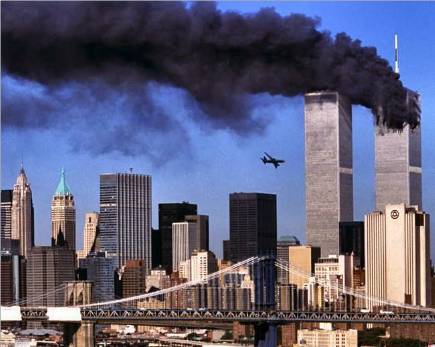
I have been changed by that tragic event. I still shudder when I see the video of United Air Lines Flight 175 crashing into the South Tower or see the videos of the towers crashing down. They are hard to watch and while I will observe the anniversary with prayers and a lot of reflection as I do not know how much of the continuous media coverage of the anniversary that I will be able to watch.
The events of that tragic day changed me, and changed countless numbers of other Americans as well as others around the world. While we yearn to return to the day’s before9-11-2001 that is impossible, there is too much water and too much blood that has passed under the bridge. I know I can’t go back, but I wish that I could, so as I have for the last fourteen years I will continue to learn to live with it.
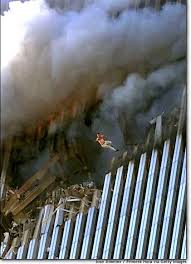
September 11th is a day that always makes me more introspective. It brings back so many memories, some that I wish I could forget; but I cannot get the images of that day out of my mind. The burning towers, the people jumping to their deaths to escape the flames, and the scenes of devastation. I knew one of the victims in the attack on the Pentagon, an Army Lieutenant Colonel, Karen Wagner who commanded a Medical training company at Fort Sam Houston where I was serving as the Brigade Adjutant in 1987 and 1988. She was a very nice person, very gracious and decent, admired by everyone who knew her; I was shocked to see her name on the casualty list after the attack.
The emotions that I feel on the anniversary of these terrorist attacks which claimed the lives of so many innocent people, and which devastated so many families, still haunts me, and my subsequent service, especially in Iraq has changed me. Years after he returned from his time in the Middle East, T.E. Lawrence; the immortal Lawrence of Arabia wrote to a friend, “You wonder what I am doing? Well, so do I, in truth. Days seem to dawn, suns to shine, evenings to follow, and then I sleep. What I have done, what I am doing, what I am going to do, puzzle and bewilder me. Have you ever been a leaf and fallen from your tree in autumn and been really puzzled about it? That’s the feeling.” I often feel that way.
Fourteen years ago I was getting ready to go to the French Creek Gym at Camp Le Jeune North Carolina where I was serving as the Chaplain of Headquarters Battalion 2nd Marine Division. I had been back from a deployment to Okinawa, Mainland Japan and Korea just two months before and was preparing to transfer to the USS Hue City, a guided missile cruiser stationed in Mayport, Florida.
At the time of the attack I had already been in the military for over 20 years and I had actually taken a reduction in rank to transfer from the Army, where I was a Major in the reserves, to the Navy to serve on active duty. In those previous 20 years I had served overseas during the Cold War along the Fulda Gap. I had been mobilized to support the Bosnia mission in 1996, and I had just missed being mobilized for Operation Desert Storm as my unit was awaiting its mobilization orders when the war ended. I had done other missions as well as the deployment to the Far East that returned from in July 2001; but nothing prepared me for that day. Like other career military officers I expected that we would be at war again and thought it might be back in the Middle East, and probably a result of some fool’s miscalculations; but like the American officers who were serving at the time of the Pearl Harbor attack, I never expected what happened that morning.
Tuesday, September 11th 2001 had started like so many days in my career. Routine office work, a couple of counseling cases and what I thought would be a good PT session. I was about to close out my computer browser when I saw a little headline on Yahoo News that a plane had crashed into the World Trade Center. I paid little attention and figured that a private plane, something like a Cessna piloted by an incompetent had inadvertently flown into the building.
That delusion lasted about two minutes. I got in my car and the radio, tuned to an AM talk station had a host calling the play by play. He started screaming “oh my God another airliner flew into the other tower.” Seeking to see what was happening I went to the gym where there were many televisions. I got there and saw the towers burning, with stunned Marines and Sailors watching silently, some in tears. I went back out, drove to my office and got into uniform. After checking in with my colonel a made a quick trip to my house for my sea bags and some extra underwear, and personal hygiene items. When I got back the headquarters we went into a meeting, and the base went on lock down mode. The gates were closed and additional checkpoints, and roadblocks established on base. Marines in full battle-rattle patrolled the perimeter and along the waterfront. I did not leave the base until the night of the 15th when things began to settle down and we all went into contingency planning mode for any military response to the attacks.
My wife, who as waiting for a doctor’s appointment with a friend saw the attacks on live television and knew when the first plane struck she told her friend that it was terrorism. Her friend responded “that damned Saddam Hussein.” Like so many of us who initially thought this, my wife’s friend was wrong.
Those were tumultuous days, so much fear; so much paranoia; and so much bad information as to who committed the attacks and what was going to happen next.
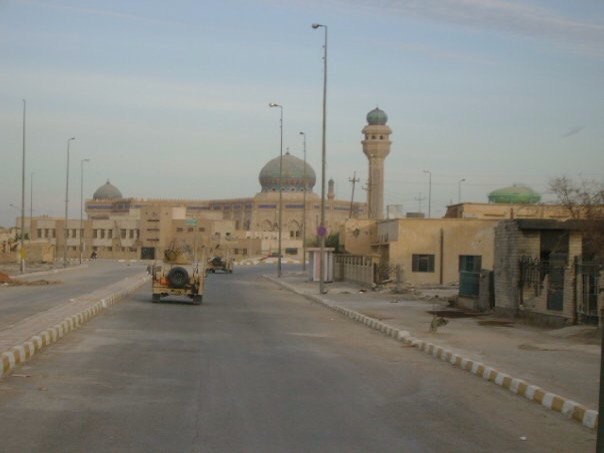
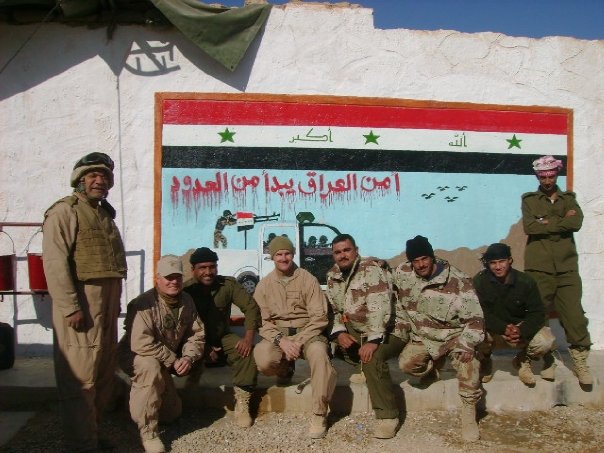
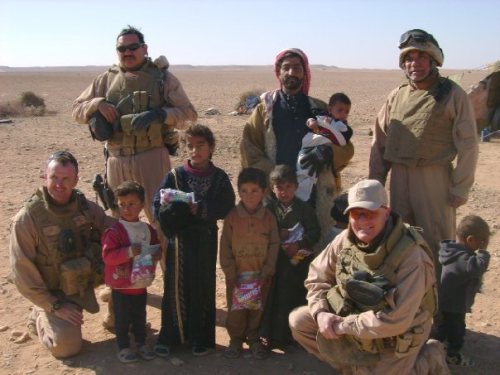
A few months later I deployed aboard Hue City to the Middle East where we supported the air operations in Afghanistan, anti-terrorist operations off the Horn of Africa and in Operation Southern Watch and the U.N. Oil Embargo against Iraq. I then did three years with Marine Security Forces, traveling around the world to support Marine Fleet Anti-Terrorism Security Team companies. For three years I was on the road one to three weeks a month traveling to the Middle East, Europe, the Pacific and many parts of the United States. Then I was promoted and transferred to Explosive Ordnance Disposal Group Two, from which I was deployed with my assistant to Iraq, where we served as members of the Iraq Assistance Group in all Al Anbar Province supporting small teams of Marine Corps, Army and Joint Force adviser teams to the Iraqi Army, Border troops, Port of Entry police, police and highway patrol.
When I returned from Iraq I was a changed man and while proud of my service I am haunted by my experiences. One cannot go to war, see its devastation, see the wounded and dead, as well as the innocents traumatized by it. One cannot get shot at, or be in enclosed rooms, meeting with people that might be friends, or might be enemies, and while everyone else is armed, you are not.
War changed me, and my homecoming was more difficult than I could have imagined. I never felt so cut off from my country, my society, my church, or even other chaplains. My experience is not uncommon among those who have served in Iraq or Afghanistan, or for that matter those who have served in almost any modern war. Erich Maria Remarque in his classic All Quite on the Western Front wrote:
“I imagined leave would be different from this. Indeed, it was different a year ago. It is I of course that have changed in the interval. There lies a gulf between that time and today. At that time I still knew nothing about the war, we had been only in quiet sectors. But now I see that I have been crushed without knowing it. I find I do not belong here any more, it is a foreign world.”
That being said I would not trade my experience for anything. The experience of PTSD and other war related afflictions has been a blessing as well as a curse. They have changed my world view and made me much more emphatic to the suffering and afflictions of others, as well when they are abused, mistreated, terrorized and discriminated against. These experiences along with my training as a historian, theologian, and hospital chaplain clinician before and after my tour have given me a lot bigger perspective than I had before.
But I have to live with all of the memories. Guy Sajer wrote in his book The Forgotten Soldier, “Only happy people have nightmares, from overeating. For those who live a nightmare reality, sleep is a black hole, lost in time, like death.” General Gouverneur Warren, a hero of many Civil War battles including Gettysburg wrote to his wife after the war “I wish I did not dream so much. They make me sometimes to dread to go to sleep. Scenes from the war, are so constantly recalled, with bitter feelings I wish never to experience again. Lies, vanity, treachery, and carnage.”
As hard as this has been these are good things, and as I go on I wonder what will happen next. I do not think that the wars and conflicts which have followed in the wake of the 9-11 attacks will be over for years, maybe even decades. I pray for peace, but too many people, some even in this country seem to live for the bloodlust of war. One can only hope and as my Iraqi friends say, Inshallah, (إنشاءالله) God willing…
I wonder too, if the words of T.E. Lawrence reflecting on his service in the Arab Revolt are not as applicable to me and others who came back from Iraq, “We had been hopelessly labouring to plough waste lands; to make nationality grow in a place full of the certainty of God… Among the tribes our creed could be only like the desert grass – a beautiful swift seeming of spring; which, after a day’s heat, fell dusty.” I have lost too many friends in these wars, including men who could not readjust to home, many like me. I have seen the men and women, broken in body, mind and spirit and I wonder if any of it was worth it, and if in some of our response, especially the invasion of Iraq has not made a bad situation even worse, and turned the war into a generational conflict.
As for me, I am now an old guy by military standards. In a couple of years I hope to retire with 36 years of service, knowing that those who I have worked with will be continuing to fight a war which seems to be without end.
Today there will be many ceremonies and services to remember the victims of the attacks. I think that is fitting. President Obama has declared a day of prayer and remembrance which is also good. I will not attend the ceremonies because I still get too emotional, but I will be there in spirit, even though much of me is still in Iraq.
I will quietly reflect at the office today as I get ready for our incoming class at the Staff College. Afterward I will go get a beer and dinner with Judy and our friends at Gordon Biersch after catching to remainder of the Norfolk Tides vs. Columbus Clippers International League playoff game which was postponed due to rain last night. I guess that is fitting to as it was baseball that helped begin the healing in Nee York in the days after the attack.
Have a good day, and do not forget those whose lives were forever changed by those dastardly attacks and all that has transpired in the years since. Maybe things will get better… Inshallah, (إنشاءالله) God willing…
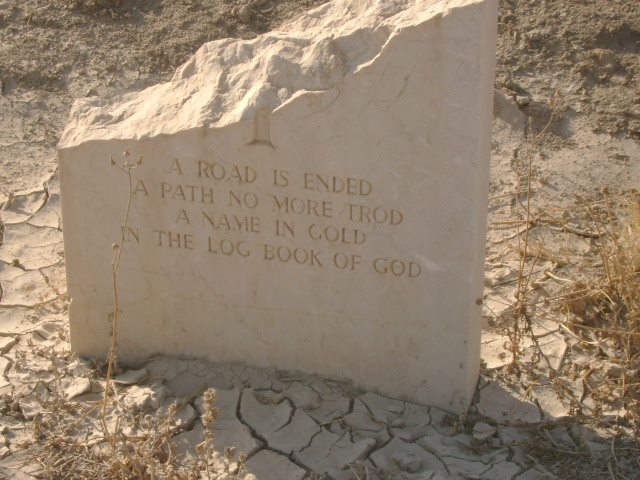
Destroyed Tombstone at the British Cemetery: Habbinyah Iraq
I am a career military officer, an Iraq veteran and an anti-war liberal, but I am also a realist in terms of the world. I have no illusions about the world. I do not believe that the United States always acts with honor and I know in my heart of hearts that much of the chaos that we are seeing in the world, particularly the Middle East comes from years of American intrigue and intervention. But I also know that once you have let the genie of war and chaos out of the bottle that it seldom returns to it without creating more chaos, death and destruction. Since I am a realist, I understand that whether I want it or not, and regardless of who is President that this war will remain part of our lives, maybe for a generation or more. Thus we have to understand that this war is not a movie, it is not a video game, and it has the potential to change all of our lives, and not for the better.
I fully agree with two time Medal of Honor Winner and Marine Corps Major General, Smedley Butler who wrote in his book War is a Racket:
“What is the cost of war? what is the bill?…This bill renders a horrible accounting. Newly placed gravestones. Mangled bodies. Shattered minds. Broken hearts and homes. Economic instability. Depression and all of its attendant miseries. Back -breaking taxation for generations and generations. For a great many years as a soldier I had a suspicion that war was a racket; not only until I retired to civilian life did I fully realize it….”
Today I am taking some time to write about the nature of war. It is something that the vast majority of Americans have only vicariously experienced in news accounts, movies, television shows and video games which desensitize people to the horror of war as they kill virtual enemies in often the most violent ways. Abraham Lincoln noted “There’s no honorable way to kill, no gentle way to destroy. There is nothing good in war. Except its ending.”
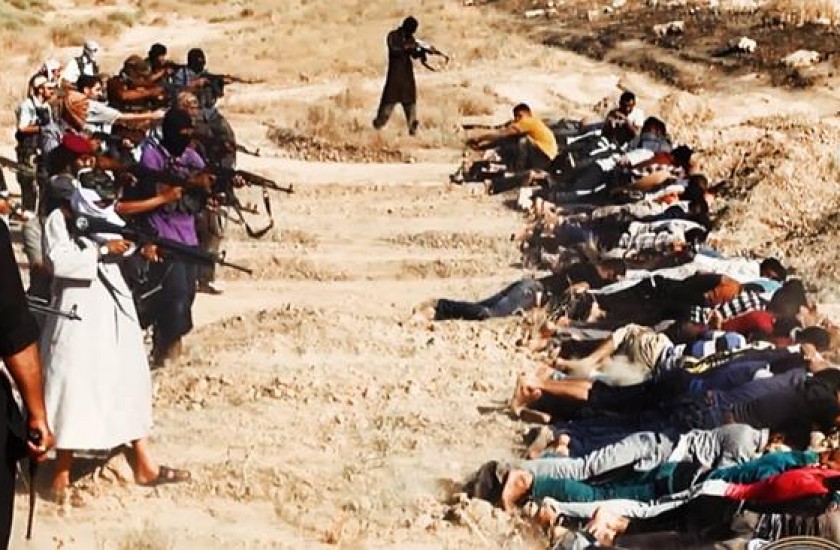
This is amazing since we have been at war for over thirteen years now. This war has been extended indefinitely by the actions of the Islamic State and the announced intentions of President Obama to fight. Sadly, it will become much worse than people want to believe regardless of whether it is a long or a short war and believe me it will not be a short war. The Islamic State seems to up the ante every day with new atrocities against the peoples of the areas that they control, desecration of religious shrines and the destruction of irreparable historical sites and artifacts.
Americans have grown up for the past twenty years with hi-tech wars that with a few exceptions of terrorism inflicted on American civilians have been waged by a comparatively small professional military; a military that at any given time over the last 20 years has comprised less than one percent of the American population. As such war is a spectator sport for most Americans, we watch it on television, or on You Tube videos on the internet, but it is a distant thing, happening to others that doesn’t touch us too deeply because most of us think that we have no skin in the game. In fact people that bet on baseball have more skin in the game than most Americans do in the current war, but that will probably change.
Since I have written much about that military at its sacrifices in the war that began on September 11th 2001 I am not going to belabor that today. Instead I am going to go back to the nature of war, even wars that may be fought in self-defense and with just cause. It was General William Tecumseh Sherman who wrote:
“You cannot qualify war in harsher terms than I will. War is cruelty, and you cannot refine it; and those who brought war into our country deserve all the curses and maledictions a people can pour out…
Chris Hedges wrote: “Violence is a disease, a disease that corrupts all who use it regardless of the cause,” and as Clausewitz noted of war’s nature, that it is: “a paradoxical trinity-composed of primordial violence, hatred and enmity…”
We try to use language to soften war; to make it more palatable, but to do so is an Orwellian charade that is deceptive and destructive to the soul. Dave Grossman, the army infantry officer who has spent his post military life writing about the psychology of war and killing wrote:
“Even the language of men at war is the full denial of the enormity of what they have done. Most solders do not “kill,” instead the enemy was knocked over, wasted, greased, taken out, and mopped up. The enemy is hosed, zapped, probed, and fired on. The enemy’s humanity is denied, and he becomes a strange beast called a Jap, Reb, Yank, dink, slant, or slope. Even the weapons of war receive benign names- Puff the Magic Dragon, Walleye, TOW, Fat Boy, Thin Man- and the killing weapon of the individual soldier becomes a piece or a hog, and a bullet becomes a round.”
Likewise Thucydides wrote:
“Words had to change their ordinary meaning and to take that which was now given them. Reckless audacity came to be considered the courage of a loyal supporter; prudent hesitation, specious cowardice; moderation was held to be a cloak for unmanliness; ability to see all sides of a question incapacity to act on any….”
Such language gives those who have never been to war but cannot live without it to bring it on, but as Sherman noted: “It is only those who have neither fired a shot nor heard the shrieks and groans of the wounded who cry aloud for blood, more vengeance, more desolation. War is hell.”
President Obama in his address to the nation, and the world on the eve of September 11th talked of a war against the Islamic State, using far more diplomatic, restrained and less warlike language than did Vice President Biden who said:
“As a nation we are united and when people harm Americans we don’t retreat, we don’t forget. We take care of those who are grieving and when that’s finished, they should know we will follow them to the gates of hell until they are brought to justice because hell is where they will reside. Hell is where they will reside.”
I commend the President for his humanity and desire to fight the Islamic State with a matter of restraint. That restraint will last so long as the Islamic State is unable or unwilling to strike at American civilians in the American homeland, or in a country that is not in the war zone, or an American ship or military installation at home or abroad. But once that happens, and it will the pretense of restraint will drop and what the Vice President said will become our goal, even if we do not officially say it. But once those restraints are passed, the war will get really messy. Michael Walzer wrote in his book Just and Unjust Wars:
“We don’t call war hell because it is fought without restraint. It is more nearly right to say that, when certain restraints are passed, the hellishness of war drives us to break with every remaining restraint in order to win. Here is the ultimate tyranny: those who resist aggression are forced to imitate, and perhaps even to exceed, the brutality of the aggressor.”
The problem with this war is that it has lasted so long already, and such long wars are detrimental to the nations and peoples that fight them, as Sun Tzu wrote: “There is no instance of a nation benefitting from prolonged warfare,” as such the longer we drag this war against the Islamic State and other similar groups out, the longer the war continues, the crueler it will become and the more damage it will do to our civil liberties, our economy and even more importantly to the spirit of our nation. One can only look at the Patriot Act and related measures undertaken in the name of national security after 9-11-2001 and recall the words of President John F Kennedy who said in respect to the epidemic of loyalty oaths and restrictions on civil liberties enacted in the 1950s:
“We have also seen a sharpening and refinement of abusive power. The legislative investigation, designed and often exercised for the achievement of high ends, has too frequently been used by the Nation and the States as a means for effecting the disgrace and degradation of private persons. Unscrupulous demagogues have used the power to investigate as tyrants of an earlier day used the bill of attainder.
The architects of fear have converted a wholesome law against conspiracy into an instrument for making association a crime. Pretending to fear government they have asked government to outlaw private protest. They glorify “togetherness” when it is theirs, and call it conspiracy when it is that of others.”
Thus the place that we now find ourselves is not good. On one hand by using restraint the war goes on and on, war without end, and if we embrace Sherman’s realism and admit that “War is cruelty. There’s no use trying to reform it. The crueler it is, the sooner it will be over” is that we will imitate or exceed the brutality of the Islamic State. Either way, we lose something of ourselves.
My hope is that somehow, when this is war is done, maybe in our time or in another generation or two, that we will be able to establish peace by making our enemies our friends.
The war that we are in, and please let’s call it that, which we have been in for over thirteen years now; and which has been extended indefinitely by the actions of the Islamic State and the announced intentions of President Obama to fight it will become much worse than people want to believe regardless of whether it is a long or a short war.
Americans have grown up for the past twenty years with hi-tech wars that with a few exceptions of terrorism inflicted on American civilians have been waged by a comparatively small professional military; a military that at any given time over the last 20 years has comprised less than one percent of the American population. As such war is a spectator sport for most Americans, we watch it on television, or on You Tube videos on the internet, but it is a distant thing, happening to others that doesn’t touch us too deeply because most of us think that we have no skin in the game. In fact people that bet on baseball have more skin in the game than most Americans do in the current war, but that will probably change.
Since I have written much about that military at its sacrifices in the war that began on September 11th 2001 I am not going to belabor that today. Instead I am going to go back to the nature of war, even wars that may be fought in self-defense and with just cause. It was General William Tecumseh Sherman who wrote:
“You cannot qualify war in harsher terms than I will. War is cruelty, and you cannot refine it; and those who brought war into our country deserve all the curses and maledictions a people can pour out…
Chris Hedges wrote: “Violence is a disease, a disease that corrupts all who use it regardless of the cause,” and as Clausewitz noted of war’s nature, that it is: “a paradoxical trinity-composed of primordial violence, hatred and enmity…”
We try to use language to soften war; to make it more palatable, but to do so is an Orwellian charade that is deceptive and destructive to the soul. Dave Grossman, the army infantry officer who has spent his post military life writing about the psychology of war and killing wrote:
“Even the language of men at war is the full denial of the enormity of what they have done. Most solders do not “kill,” instead the enemy was knocked over, wasted, greased, taken out, and mopped up. The enemy is hosed, zapped, probed, and fired on. The enemy’s humanity is denied, and he becomes a strange beast called a Jap, Reb, Yank, dink, slant, or slope. Even the weapons of war receive benign names- Puff the Magic Dragon, Walleye, TOW, Fat Boy, Thin Man- and the killing weapon of the individual soldier becomes a piece or a hog, and a bullet becomes a round.”
Likewise Thucydides wrote:
“Words had to change their ordinary meaning and to take that which was now given them. Reckless audacity came to be considered the courage of a loyal supporter; prudent hesitation, specious cowardice; moderation was held to be a cloak for unmanliness; ability to see all sides of a question incapacity to act on any….”
Such language gives those who have never been to war but cannot live without it to bring it on, but as Sherman noted: “It is only those who have neither fired a shot nor heard the shrieks and groans of the wounded who cry aloud for blood, more vengeance, more desolation. War is hell.”
President Obama in his address to the nation, and the world on the eve of September 11th talked of a war against the Islamic State, using far more diplomatic, restrained and less warlike language than did Vice President Biden who said:
“As a nation we are united and when people harm Americans we don’t retreat, we don’t forget. We take care of those who are grieving and when that’s finished, they should know we will follow them to the gates of hell until they are brought to justice because hell is where they will reside. Hell is where they will reside.”
I commend the President for his humanity and desire to fight the Islamic State with a matter of restraint. That restraint will last so long as the Islamic State is unable or unwilling to strike at American civilians in the American homeland, or in a country that is not in the war zone, or an American ship or military installation at home or abroad. But once that happens, and it will the pretense of restraint will drop and what the Vice President said will become our goal, even if we do not officially say it. But once those restraints are passed, the war will get really messy. Michael Walzer wrote in his book Just and Unjust Wars:
“We don’t call war hell because it is fought without restraint. It is more nearly right to say that, when certain restraints are passed, the hellishness of war drives us to break with every remaining restraint in order to win. Here is the ultimate tyranny: those who resist aggression are forced to imitate, and perhaps even to exceed, the brutality of the aggressor.”
The problem with this war is that it has lasted so long already, and such long wars are detrimental to the nations and peoples that fight them, as Sun Tzu wrote: “There is no instance of a nation benefitting from prolonged warfare,” as such the longer we drag this war against the Islamic State and other similar groups out, the longer the war continues, the crueler it will become and the more damage it will do to our civil liberties, our economy and even more importantly to the spirit of our nation. One can only look at the Patriot Act and related measures undertaken in the name of national security after 9-11-2001 and recall the words of President John F Kennedy who said in respect to the epidemic of loyalty oaths and restrictions on civil liberties enacted in the 1950s:
“We have also seen a sharpening and refinement of abusive power. The legislative investigation, designed and often exercised for the achievement of high ends, has too frequently been used by the Nation and the States as a means for effecting the disgrace and degradation of private persons. Unscrupulous demagogues have used the power to investigate as tyrants of an earlier day used the bill of attainder.
The architects of fear have converted a wholesome law against conspiracy into an instrument for making association a crime. Pretending to fear government they have asked government to outlaw private protest. They glorify “togetherness” when it is theirs, and call it conspiracy when it is that of others.”
Thus the place that we now find ourselves is not good. On one hand by using restraint the war goes on and on, war without end, and if we embrace Sherman’s realism and admit that “War is cruelty. There’s no use trying to reform it. The crueler it is, the sooner it will be over” is that we will imitate or exceed the brutality of the Islamic State. Either way, we lose something of ourselves. But as Abraham Lincoln said “There’s no honorable way to kill, no gentle way to destroy. There is nothing good in war. Except its ending.”
My hope is that somehow, when this is war is done, maybe in our time or in another generation or two, that we will be able to establish peace by making our enemies our friends.
“We have not reached the limit of our military commitments…” T.E. Lawrence (Mesopotamia 22 August 1920 in the Sunday Times)
Thirteen years after the Al Qaeda attacks on the World Trade Center and Pentagon in which nearly 3000 Americans were killed and the American response against Al Qaeda and its Taliban hosts in Afghanistan a month later we enter a new phase of war against old and familiar as well as new and frighteningly brutal enemies.
Of course the war was extended to Iraq by the Bush Administration, pursuing the goal of toppling Saddam Hussein and his non-existent weapons of mass destruction. That extension of the war, which so reminds me of what T.E. Lawrence wrote about the British adventure in Mesopotamia in 1920 has led to the creation of a much more ruthless and capable enemy than Al Qaeda ever was and strengthened our old adversary Iran in ways that it could not have done itself. Lawrence wrote of the British effort:
“The people of England have been led in Mesopotamia into a trap from which it will be hard to escape with dignity and honour. They have been tricked into it by a steady withholding of information. The Bagdad communiqués are belated, insincere, incomplete. Things have been far worse than we have been told, our administration more bloody and inefficient than the public knows. It is a disgrace to our imperial record, and may soon be too inflamed for any ordinary cure. We are to-day not far from a disaster.”
Like the Bush administration the British reasons for going into Mesopotamia were cloaked in the words of liberation and protection, only from the Turks, not Saddam. Lawrence noted in words that are hauntingly familiar to those that paid attention to the American war in Iraq:
“Yet our published policy has not changed, and does not need changing. It is that there has been a deplorable contrast between our profession and our practice. We said we went to Mesopotamia to defeat Turkey. We said we stayed to deliver the Arabs from the oppression of the Turkish Government, and to make available for the world its resources of corn and oil. We spent nearly a million men and nearly a thousand million of money to these ends. This year we are spending ninety-two thousand men and fifty millions of money on the same objects.”
Perhaps the most poignant and relevant note on the ill thought out Bush decision to invade Iraq in 2003 was by Thucydides who wrote:
“Think, too, of the great part that is played by the unpredictable in war: think of it now, before you are actually committed to war. The longer a war lasts, the more things tend to depend on accidents. Neither you nor we can see into them: we have to abide their outcome in the dark. And when people are entering upon a war they do things the wrong way round. Action comes first, and it is only when they have already suffered that they begin to think.”
Last night President Obama announced his intention to fight the brutal and extreme fighters of the Islamic State, or ISIL by building a broad coalition spearheaded by American airpower and intelligence agencies. Of course the President’s announcement was met with cries of not being enough by some on the political right, and with equal vehemence by opponents on the political left who feel that he has displayed cowardice in the face of “9/11 fear mongering” and the implementation of a policy of “perpetual war.” Of course the answer is more complex than anyone wants to admit, the critics on both sides are right in some things and wrong in some things, and the fact is there are no good answers.
Sadly because of what we and the British and others have done in Iraq and Syria the President is left with few options, mainly those that are bad, and those that are worse. So now, as the President, with a fair amount of judiciousness and caution commits the country to continue and maybe even expand the war that began thirteen years ago, it is time to remember those burning towers, the flailing bodies of our fellow Americans and others falling to their deaths to escape the surety of death in those flames and those who have perished in Iraq and Afghanistan; not just Americans, but coalition partners and the people of those lands who had no say in what Osama Bin Laden and Al Qaeda did or what Saddam did or didn’t do; and who went from the oppression of Saddam or the Taliban, to unending civil, tribal and religious wars, in which they were caught in the middle, the Iraqis in a war that was devised by President Bush and his advisors.
There are always results and today we are dealing with the results of at least a century of incredibly short sighted decisions of Western as well as Arab leaders which have blighted the Middle East and caused immense suffering to the peoples of the region. Now because of those decisions there exists a terrorist organization which is rapidly becoming a state in the areas of Iraq and Syria that it occupies. Islamic scholar Reza Aslan described the Islamic State on CNN Monday:
“Number one, you do have to respond militarily to ISIS soldiers and fighters. These guys are fighting a war of the imagination, a war that they think is happening between the forces of good and evil. There is no negotiation. There’s no diplomacy. There’s nothing to talk about with these guys. They have to be destroyed.”
Sadly, Aslan is right in his analysis of the Islamic State. Because of that fact, on this thirteenth anniversary of the 9-11-2001 attacks we and the already suffering people of the region will see war continue without end. One wonders how many generations it will last and what the cost on lives and treasure will be.
On the night of September 10th 2001 my mind was as far from war and terror as it could be. I was much more interested in the MLB Pennant Race than I was anything going on in the world, after all the only issues we faced were occasional, if deadly terrorist attacks on foreign installations and deployed ships like the USS Cole. But as to the security of the Continental United States, or as it has been referred to since 9-11 as “the Homeland” I wasn’t concerned. Somehow, despite my knowledge, understanding and study of terrorist groups I just never thought anyone could pull off an attack of this magnitude. The next morning I discovered just how wrong I was as the first reports came in while I was on my way to a late PT session at Camp LeJeune North Carolina where I was serving with the Second Marine Division.
That day changed all of our lives and ushered in what is now 13 years of war which has cost the United States military almost 60,000 casualties including nearly 7,000 dead or died of wounds. Of course that does not count non-DOD agency casualties, or those of the contractors who have been a big part of the war effort.
Today I was in Washington DC participating in the Military Officers Association of America “Warrior-Family” Symposium, which was an effort to bring together DOD, VA and the private sector to pool ideas, share best practices and attempt to make the connections that we need to serve and care for our military personnel and their families. It was a very good day and I will report out on it in detail in the coming days. That being said I was nervous my entire time in DC because of the approaching anniversary of the 9-11-2001 attacks as my hotel, and the facility where the symposium were conducted were both just three blocks from the White House. Needless to say with the anniversary occurring tomorrow I am glad to be home.
This evening I watched as President Obama addressed the nation regarding the military and diplomatic actions that he is taking against the Islamic State, also known and ISIS or ISIL. Whether we wanted it to or not the war which began on 9-11, which was so stupidly expanded into Iraq by the Bush Administration, opening the door to Al Qaeda Iraq and now the Islamic State, and which greatly strengthened Iran by eliminating their worst enemy, Saddam Hussein have made our task most difficult.
Thirteen years after 9-11-2001 we are not only still at war, but it is becoming a war without end.
Thirteen years ago, I figured that after a few months Al Qaeda would be no more, and the war that they had unleashed upon us would be over. however I was wrong .
Friends of Padre Steve's World
I welcome comments, even those which disagree with my positions and articles. I have done this for years, but recently I have been worn out by some people.
I have just a couple of rules for comments. First, be respectful of me and other commentators. If you are polite and respectful' even if I disagree with you your comment will be posted and I will respond accordingly.
That being said I will not allow people to hijack the comment section to push their religious or ideological views. Unless the comment deals with the meat of the article, don't expect me to allow you to preach, especially if you are a racist, anti-Semetic, or are a homophobe.
Nor will I allow spam comments. Most of those are automatically blocked by Wordpress but some do get through, and deal with them accordingly.
Peace
Padre Steve+








 The Inglorius Padre Steve's World