Tag Archives: abraham lincoln

A Letter from a Birmingham Jail; Shitholes, Know Nothings, and Trump

cwbwma

Friends of Padre Steve’s World,

Today I re-read again Dr. Martin Luther King Jr.’s Letter from a Birmingham Jail  which I wrote about yesterday and before on this site. In fact I posted it in its entirety here yesterday. Truthfully if the canon of scripture wasn’t closed it should be included in the books of Holy Scripture because it is up there with anything the Apostle Paul ever wrote.

Dr. King’s sermon and its implicit message of how White Christian moderates accept racism as well as discrimination against people who are not like them as a matter of evoked the memory of the Know Nothings. 

Now I have written about the Know Nothings before. They were were xenophobes and racists of the first degree, hell they even thought that Ireland and Germany were shithole countries.  Truthfully they have no redeeming moral or social value except to serve as a warning to others; that being said their ideological and religious descendants are running this country today including a lot of people of Irish and German ancestry. The irony is too rich, that’s why I take my dress uniforms to the cleaners.

So tonight I’ll share something I wrote about the Know Nothings and before they helped elect President Trump to office way back in 2015 when he announced his bid for the presidency. While I neither claim to be the Prophet or the son of the Prophet I was more correct than I ever wanted to be back then. Now, some two and a half years later the President’s racism and the banal evil of his followers is on full display for all to see.

If I only made money being so correct in my historical assessments.

Here it is:


Mark Twain reportedly said that “History does not repeat itself, but it often rhymes.” One can see that in the nomination of Donald Trump as the nominee of the Republican Part for President. Eleven months ago I wrote an article called Trump and the Return of the Know Nothings. At the time few people gave him little chance of becoming the Republican nominee, and now he is the nominee and for all practical purposes owns the GOP.

Trump’s xenophobic views on immigration charged the debate in the Republican Party during the primaries, and his positions which were fringe positions of most Repulicans for decades became the mainstream, just as the same issue did during the 1840s and 1850s. So this is not a new phenomenon, and even over the past few decades the debate has come and gone, but it has returned with a vengeance as Donald Trump made immigration, or rather a virulent anti-immigration platform the centerpiece of his campaign. Trump’s focus on the issue forced other Republican candidates to scramble in order to find a position close enough to Trump’s without completely throwing away the vote of immigrants who they will need to win in many states; if they are to have any hope of winning back the presidency in 2016. But they failed. Trump outmaneuvered them at every point, and in the end Trump’s strongest opponent, Senator Ted Cruz went into the witch’s cauldron of the Republican National Convention not to endorse Trump but to stand on principle and in the process destroy his politic career and maybe endanger his life.

But Trump’s positionresonated with parts of the Republican base, and by appealing to their anger and frustration he has built a solid core of support which loyally supported him in a campaign that featured so many blunders and heneous comments that in a normal election cycle his campaign would not have survived past the Southern Super Tuesday. But he did, and if on the  takes the time to read Trump’s speeches and the reactions to them by his supporters it becomes apparent that Trump has tapped into that vast reservoir of nativism that has always been a part of the American body-politic.


As I said, such attitudes and movements are nothing new. Anti-immigrant movements in the United States go back to our earliest days, ever since the first Irish Catholics showed up in the northeast in the late 1790s and early 1800s. Met with scorn and treated as criminals the Irish Catholics had to work hard to gain any kind of acceptance in Protestant America. But immigrants continued to come, seeking the freedom promised in the Declaration of Independence.

Many White American Protestants viewed Irish, German and other European immigrants to the Unites States in the 1830s, 1840s, and 1850s as interlopers who were attempting to take over the country. The immigrants were regarded as poor, uneducated, uncouth, and immoral, and in the case of Catholic immigrants as representatives and foot soldiers of a hostile government, the Vatican, headed by the Pope and the bishops. Those who opposed immigration formed a movement that was aimed at forbidding immigrants from being granted full rights, especially the rights of citizenship and voting. The fear was pervasive. Many Northern Whites were afraid that immigrants would take their jobs, since like slaves in the South, the new immigrants were a source of cheap labor.

Northern Protestant church leaders and ministers were some of the most vocal anti-immigrant voices and their words were echoed by politicians and in the press. The movement grew and used government action, the courts and violence to oppress the Irish and Germans who were the most frequent targets of their hate. The movement eventually became known as the “Know Nothing” movement.

Know Nothing leaders were not content to simply discuss their agenda in the forum of ideas and political discourse, they often used mob-violence and intimidation to keep Catholics away from the ballot box. Mobs of nativist Know Nothings sometimes numbering in the hundreds or even the thousands attacked immigrants in what they called “Paddy hunts,” Paddy being a slur for the Irish. To combat immigrants who might want to exercise their right to vote, the Know Nothings deployed gangs like the New York’s Bowery Boys and Baltimore’s Plug Uglies. They also deployed their own paramilitary organization to intimidate immigrants on Election Day. This group, known as the Wide Awakes was especially prone to use violence and physical intimidation in pursuit of their goals. The Nativist paramilitaries also provided security for anti-immigrant preachers from angry immigrants who might try to disrupt their “prayer” meetings.

Know Nothing’s and other Nativist organizations, organized mass meetings throughout the country which were attended by thousands of men. The meetings were often led by prominent Protestant ministers who were rich in their use of preaching and prayer to rile up their audiences. The meetings often ended with physical attacks and other violence against German or Irish immigrants and sometimes with the burning of the local Catholic Church. They also provided security for preachers from angry immigrants who might try to disrupt nativist prayer meetings.


Bloody Monday, Louisville 1855

The violence was widespread and reached its peak in the mid-1850s.

Monday, August 6, 1855 was Election Day in Louisville, Kentucky. To prevent German and Irish Catholics from voting, Know Nothing mobs took to the street and launched a violent attack on immigrants as well as their churches and businesses. Known now as “Black Monday” the Nativists burned Armbruster’s Brewery, they rolled cannons to the doors of the St. Martin of Tours Church, the Cathedral of the Assumption and Saint Patrick’s Church, which they then were searched for arms. The private dwellings and the businesses of immigrants were looted. A neighborhood known as “Quinn’s Row” was burned with the inhabitants barricaded inside. At least 22 persons were killed in the violence and many more were injured. In Baltimore the 1856, 1857, and 1858 elections were all marred by violence perpetrated by Nativist mobs. In Maine, Know Nothing followers tarred and feathered a Catholic priest and burned down a Catholic church.

The Know Nothings did not merely seek to disenfranchise immigrants through violence alone, they were more sophisticated than that. They knew that to be successful they had to change the law. Then, as now, a new immigrant had to live in the United States for five years before becoming eligible to become a naturalized of the United States. The Know nothings felt that this was too short of time and their party platform in the 1856 election had this as one of the party planks:

A change in the laws of naturalization, making a continued residence of twenty-one years, of all not heretofore provided for, an indispensable requisite for citizenship hereafter, and excluding all paupers, and persons convicted of crime, from landing upon our shores; but no interference with the vested rights of foreigners.

The rational of the Know Nothings for the 21 year wait was that if a baby born in the United States had to wait until it was 21 years old he could vote, that immigrants were being permitted to “jump the line” and vote sooner than native-born Americans. But really what the Know Nothings wanted to was to destroy the ability of immigrant communities to use the ballot box. In many localities and some states Know Nothing majorities took power. The Massachusetts legislature, which was dominated by Know Nothings, passed a law barring immigrants from voting for two additional years after they became United States citizens.

The 1856 platform Know Nothing Party was synopsized by a Know Nothing supporter:

(1) Repeal of all Naturalization Laws.

(2) None but Americans for office.

(3) A pure American Common School system.

(4) War to the hilt, on political Romanism.

(5) Opposition to the formation of Military Companies, composed of Foreigners.

(6) The advocacy of a sound, healthy and safe Nationality.

(7) Hostility to all Papal influences, when brought to bear against the Republic.

(8) American Constitutions & American sentiments.

(9) More stringent & effective Emigration Laws.

(10) The amplest protection to Protestant Interests.

(11) The doctrines of the revered Washington.

(12) The sending back of all foreign paupers.

(13) Formation of societies to protect American interests.

(14) Eternal enmity to all those who attempt to carry out the principles of a foreign Church or State.

(15) Our Country, our whole Country, and nothing but our Country.

(16) Finally,-American Laws, and American Legislation, and Death to all foreign influences, whether in high places or low

In addition to their violent acts, the use of the courts and political intimidation the Know Nothings waged a culture war against immigrants. Latin mottoes on courthouses were replaced by English translations. Actions were taken to remove immigrants who had become naturalized citizens from public offices and civil service jobs as well as to use the government to persecute Catholic churches. In Philadelphia, all naturalized citizens on the police force were fired, including non-Catholics who has supported Catholic politicians, and in Boston, a special board was set up to investigate the sex lives of nuns and other supposed crimes of the Catholic church.
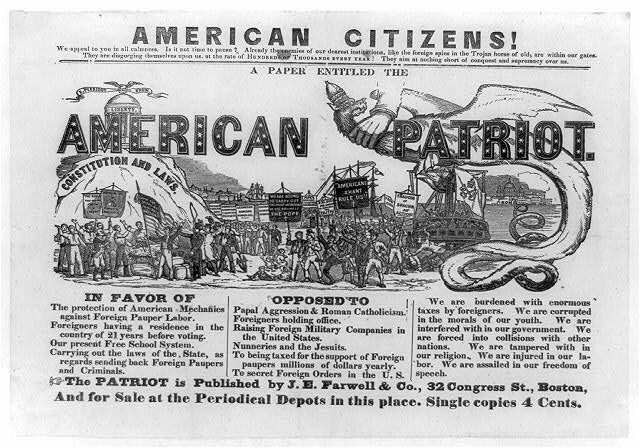

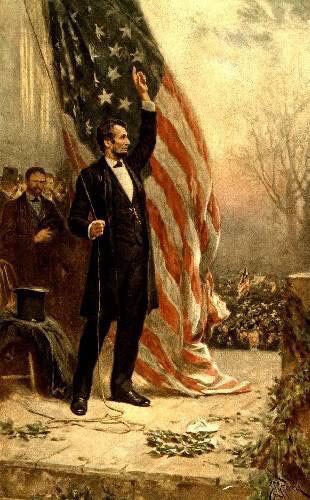
In the political upheaval of the 1850s Nativists tried to find homes in the different political parties. Some Know Nothings who were abolitionists became part of the new Republican Party, and Abraham Lincoln condemned them in harsh terms. He wrote his friend Joshua Speed about the hypocrisy that they displayed by supposedly being against the oppression of blacks while willing to oppress immigrants:

“I am not a Know-Nothing. That is certain. How could I be? How can any one who abhors the oppression of negroes, be in favor or degrading classes of white people? Our progress in degeneracy appears to me to be pretty rapid. As a nation, we began by declaring that “all men are created equal.” We now practically read it “all men are created equal, except negroes” When the Know-Nothings get control, it will read “all men are created equal, except negroes, and foreigners, and Catholics.” When it comes to this I should prefer emigrating to some country where they make no pretence of loving liberty — to Russia, for instance, where despotism can be taken pure, and without the base alloy of hypocracy [sic].”

As an organized movement, the Know Nothings died out by the early 1860s, migrating to different parties and causes. In the North many became part of the pro-slavery Copperhead movement, which opposed Lincoln on emancipation and the Thirteenth Amendment. In the post-war South the anti-Catholic parts of the Nativist movement found a home in the Ku Klux Klan and other white terrorist organizations which also used racist and nativist propaganda to perpetuate violence, and disenfranchise emancipated blacks in the decades following the end of the Civil War and the end of Reconstruction. The Nativist and anti-immigrant sentiments have periodically found a home in different parts of the country and the electorate. Violence was used against Chinese, Japanese and Filipino immigrants on the West Coast, against Mexicans in the Southwest, Italians, Slavs, Eastern Europeans and Jews in the Northeast.

Sadly it seems that the Know Nothing is being turned against others today. I find it strange that there are a host of people, mostly on the political right that are doing their best in their local communities, state legislatures and even Congress to roll back civil liberties for various groups of people. There is a certain amount of xenophobia in regard to immigrants of all types, especially those with darker skin white Americans, but some of the worst is reserved for Arabs and other Middle-Easterners, even Arab Christians who are presumed as all Middle Easterners are to be Moslem terrorists, even those who have been here decades and hold respectable places in their communities.

But immigrants are not alone, there seems to be in some states a systematized attempt to disenfranchise the one group of people that has almost always born the brunt of legal and illegal discrimination, African Americans.

Likewise there have been numerous attempts to roll back the rights of women, especially working women; the use of the legislature by religious conservatives to place limits on the reproductive rights of women, holding them to the standard of a religion that they do not practice. Despite the Supreme Court’s ruling for Marriage Equality in Obergfell v. Hodges there still are numerous attempts to curb any civil rights, including the right to marriage or civil unions of the LGBT community.
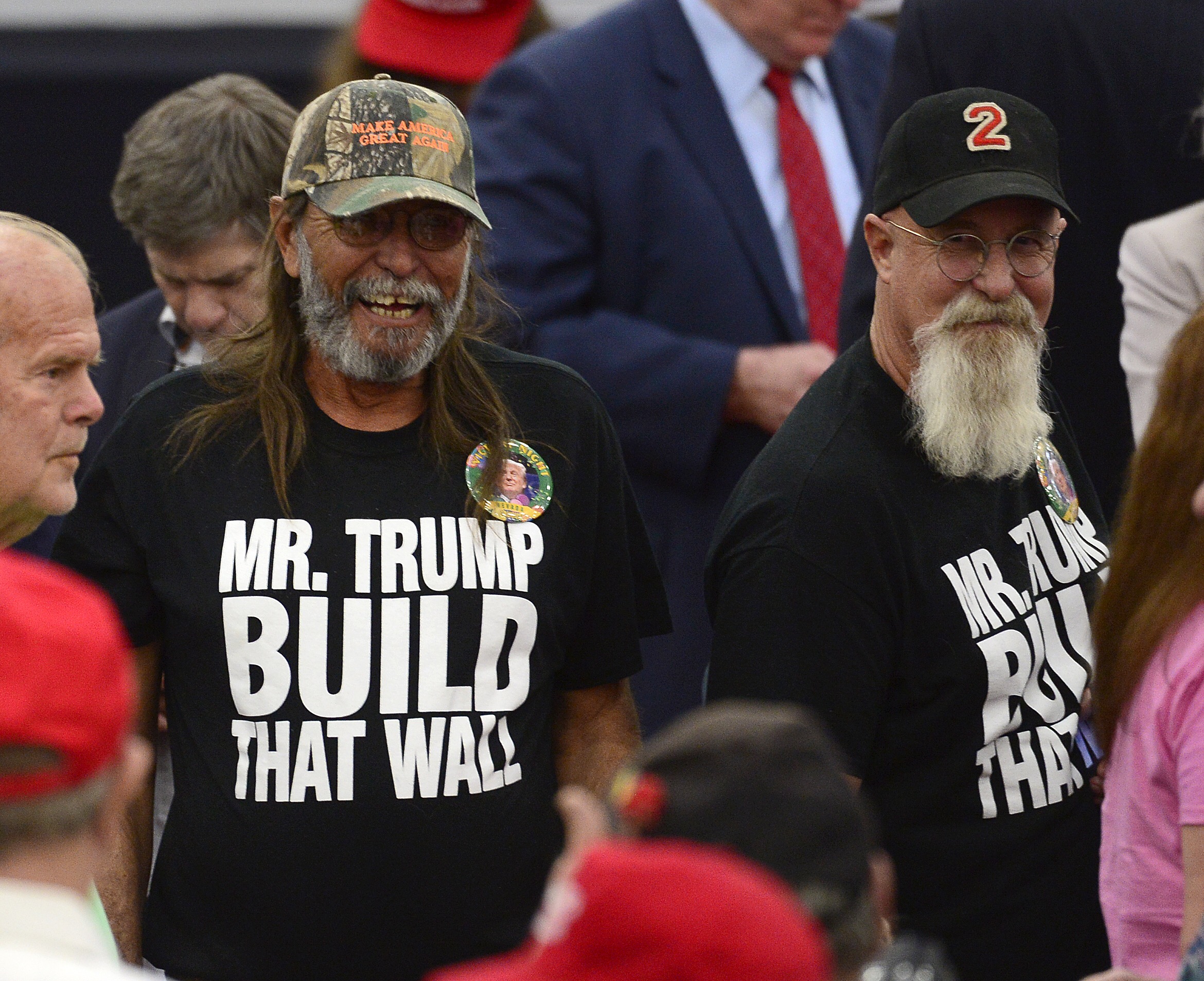

As I said, this is nothing new, that hatred and intolerance of some toward anyone who is different than them, who they deem to be a threat is easily exploited by politicians, pundits and preachers, none of whom care for anything but their prosperity, ideology, religion, or cause. While I would not call them a new incarnation of the Know Nothings, I have to notice the similarities in their message and the way that they push their agenda. As for those among them who claim the mantle of Christ and call themselves Christians I am troubled, because I know that when religion is entwined with political movements that are based in repressing or oppressing others that it does not end well. As Brian Cox who played Herman Goering in the television miniseries Nuremberg told the American Army psychologist Captain Gustave Gilbert played by Matt Craven “The segregation laws in your country and the anti-Semitic laws in mine, are they not just a difference of degree?

That difference of degree does matter, and there have been and still could be times when the frustration and anger of people, especially religious people can be whipped into a frenzy of violence and government sanctioned oppression by unscrupulous politicians, preachers and pundits. History is replete with examples of how it can happen. When I think of this I am reminded of the close of Spencer Tracy’s remarks in the movie Judgment at Nuremberg:

But this trial has shown that under a national crisis, ordinary – even able and extraordinary – men can delude themselves into the commission of crimes so vast and heinous that they beggar the imagination. No one who has sat through the trial can ever forget them: men sterilized because of political belief; a mockery made of friendship and faith; the murder of children. How easily it can happen. There are those in our own country too who today speak of the “protection of country” – of ‘survival’. A decision must be made in the life of every nation at the very moment when the grasp of the enemy is at its throat. Then, it seems that the only way to survive is to use the means of the enemy, to rest survival upon what is expedient – to look the other way. Well, the answer to that is ‘survival as what’? A country isn’t a rock. It’s not an extension of one’s self. It’s what it stands for. It’s what it stands for when standing for something is the most difficult! Before the people of the world, let it now be noted that here, in our decision, this is what we stand for: justice, truth, and the value of a single human being.”

So for today I will leave it there. I probably will return to the similarities between the Know Nothings and Trump, but not this moment. I actually do have a life and want to write about other things. But that being said, there are times when history rhymes, and this is one of them.

Let him who has ears let him hear those rhymes.

Peace

Padre Steve+
 

2 Comments

Filed under civil rights, ethics, faith, History

Americans are Not the Übermenschen: We Are the Wretched Refuse

billmurraystripes

Friends of Padre Steve’s World,

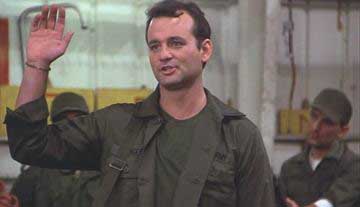
In the wake of President Trump’s remarks about “shithole” countries I have top put in my two cents. The fact is that most Americans, even the whiter than white, are descended from people who were the “wretched refuse” of their countries of origin. As Bill Murray said in the movie Stripes:

“The hell’s the matter with you?! Stupid! We’re all very different people. We’re not Watusi. We’re not Spartans. We’re Americans, with a capital ‘A’, huh? You know what that means? Do ya? That means that our forefathers were kicked out of every decent country in the world. We are the wretched refuse.” 

I’m sorry Mr. President, your family and mine our no different, our ancestors escaped countries that they felt that they had no future. In my family that included members of the Scottish nobility who weren’t high enough on the nobility scale to inherit much and as such went to the colonies to use their name and money to their advantage; or others who fled poverty, famine, and religious persecution: Irish Catholics, French Huguenots, Welsh coal miners, indentured servant English farmers and herdsmen, just to name a few. At least to my knowledge none of my ancestors were dodging the draft or conscription to get here, not that there is anything wrong with that, but I digress…

I hate to be so blunt but anyone that thinks that the United States is some kind of white nationalist homeland is sadly mistaken. The most kind word to describe people who believe that bullshit is ignorant; the worst, deliberately deceitful and evil.

So when the American President makes comments about Haitians, Hispanics, and African immigrants as coming from “shithole countries” one has to remember how the Irish, Germans, Italians, Poles, Russians, Greeks, Jews, and Eastern European immigrants were viewed and treated when they came to this country. While were at it let’s not even talk about the Chinese, Japanese, Filipinos, Indians, Arabs, various Latin Americans, or Mexicans; the latter who lost 40% of their country to an expanding and imperialistic United States after the War with Mexico.

The United States of America is not an ethnicity, it is not a race, it is an idea; a proposition that “all men are created equal, that they are endowed by their Creator with certain unalienable Rights, that among these are Life, Liberty and the pursuit of Happiness.” Abraham Lincoln certainly understood this to the extent that he was willing to issue the Emancipation Proclamation and push through the 13th Amendment and in his last public remarks voiced support for Negro Suffrage, something that infuriated John Wilkes Booth that it moved him to assassinate Lincoln.

That being said if we are really Americans. If we are truly part of that “wretched refuse” then we should never forget the words of Lincoln’s Gettysburg Address where he said:

“It is for us the living rather to be dedicated here to the unfinished work which they who fought here have thus far so nobly advanced. It is rather for us to be here dedicated to the great task remaining before us–that from these honored dead we take increased devotion to that cause for which they gave the last full measure of devotion–that we here highly resolve that these dead shall not have died in vain, that this nation under God shall have a new birth of freedom, and that government of the people, by the people, for the people shall not perish from the earth.”

The remarks of the President which he denied, but have not been denied by the White House and testified to by Democrat and Republican Senators who heard them are despicable, racist, and conduct unbecoming for an American President. In the military I have served alongside men and women from every country that the President has called shitholes, every single one of them has more integrity, honor, and courage than the President, some have given their lives in defense of this country while many of them still serve this country in harms way. Many came as immigrants or were the sons or daughters of immigrants: all of them volunteered to serve and none dodged the draft like the current occupant of the White House.

The fact is if you are an American, unless perhaps you are a direct descendent of one of the great American Indian Chiefs or Shamans, you, like me are part of the wretched refuse.

So with that I wish you a good day.

Peace,

Padre Steve+


2 Comments

Filed under civil rights, culture, film, History, movies, News and current events, Political Commentary

“Sound Loud the Timbrel” The Emancipation Proclamation at 155 Years

Friends of Padre Steve’s World

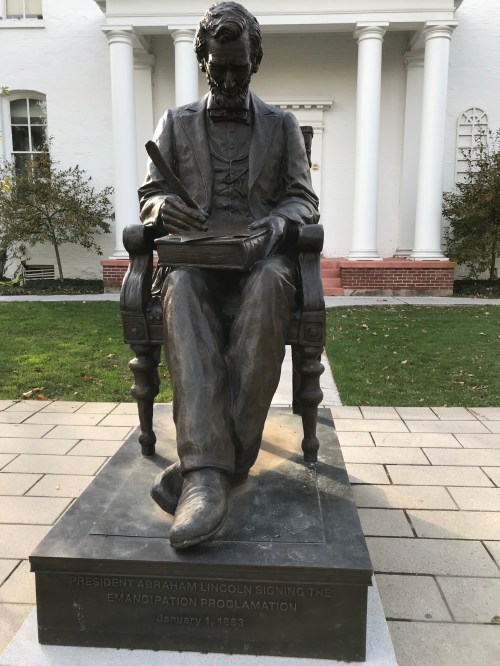
Today is the 155th anniversary of the Emancipation Proclamation. The proclamation made by Abraham Lincoln when the outcome of the rebellion of the Southern slave states against the Union was still up in the air was a watershed for civil rights in the United States. Though it was a military order that only affected slaves in the rebellious states, it also set the stage for the 13th, 14th, and 15th Amendments and other legal rulings that affected not only African Americans and former slaves, but also Native Americans, Women, other racial minorities and LGBTQ people. It is something that in our era when so many civil rights are under threat that we must remember and continue to fight for in the coming years. Freedom is never free.

This article is a part of my hopefully soon to be published book “Mine Eyes Have Seen the Glory!” Race, Religion, Ideology, and Politics in the civil War Era. 

Peace

Padre Steve+
From the beginning of the war many Northerners, especially abolitionists and radical Republicans believed that “as the “cornerstone” of the confederacy (the oft-cited description by the South’s vice-president, Alexander H. Stephens) slavery must become a military target.” [1]When some Union generals made their own attempts at issuing emancipation orders, Lincoln countermanded them for exceeding their authority. Lincoln resisted the early calls of the abolitionists to make that a primary war goal for very practical reasons, he had to first ensure that the Border Slave States did not secede, something that would have certainly ensured that the Union would not survived. As a result in the first year of the war, Lincoln “maneuvered to hold Border South neutrals in the Union and to lure Union supporters from the Confederacy’s Middle South white belts. He succeeded on both scores. His double success with southern whites gave the Union greater manpower, a stronger economy, and a larger domain. These slave state resources boosted free labor states’ capacity to should the Union’s heavier Civil War burden.” [2] His success in doing this was instrumental in enabling him to turn to emancipation in 1862.

Finally, some twenty months after Fort Sumter fell and after nearly two years of unrelenting slaughter culminating in the bloody battle of Antietam, Abraham Lincoln published the Emancipation Proclamation. Emancipation was a tricky legal issue for Lincoln as “an executive order of emancipation would be beyond the powers of the president, but not, Lincoln concluded, if such an order were issued as furtherance of the executive’s war powers.” [3] Lincoln had desired to issue the order during the summer and sounded out elected officials and soldiers as to his plan.

Lincoln discussed his views with General George McClellan during a visit to the latter’s headquarters. McClellan stated his strident opposition to them in writing. McClellan did not admire slavery but he despised abolitionists and he wrote one of his political backers “Help me to dodge the nigger – we want nothing to do with him. I am fighting for the Union…. To gain that end we cannot afford to mix up the negro question.”  [4]

Lincoln then called border state Congressmen to sound them out on the subject on July 12th 1862 only to be met with opposition. Such opposition caused Lincoln “to give up trying to conciliate conservatives. From then on the president tilted toward the radical position, though this would not become publicly apparent for more than two months.” [5]

Lincoln’s cabinet met to discuss the proclamation on July 22nd 1862 and after some debate decided that it should be issued, although it was opposed by Postmaster General Montgomery Blair who believed that “the Democrats would capitalize on the unpopularity of such a measure in the border states and parts of the North to gain control of the House in the fall elections.” [6] Wisely, Lincoln heeded the advice of Secretary of State Seward to delay the announcement until military victories ensured that people did not see it as a measure of desperation. Seward noted: “I approve of the proclamation, but I question the expediency of its issue at this juncture. The depression of the public mind, consequent on our repeated reverses, is so great I fear…it may be viewed as the last measure of an exhausted government, a cry for help…our last shriek on the retreat.” Seward suggested that Lincoln wait “until the eagle of victory takes his flight,” and buoyed by military success, “hang your proclamation about his neck.” [7]

After the Battle of Antietam, President Lincoln issued the Preliminary Emancipation Proclamation. This document served as a warning to the leaders of the South, and insisted that there was much more at stake in their rebellion unless they surrendered; their slaves, the very “property” for which the seceded. The document “warned that unless the South laid down its arms by the end of 1862, he would emancipate the slaves.” [8] This was something that they could not and would not do, even as their cities burned and Confederacy collapsed around them in 1864.

The proclamation was a military order in which Lincoln ordered the emancipation of slaves located in the Rebel states and areas of those states occupied by Union troops. It was not designed to change law, which would have to wait until Lincoln felt he could have Congress amend the Constitution.  Instead of law it was “the doctrine of military necessity justified Lincoln’s action.” [9] The concept emanated from Boston lawyer William Whiting who argued “the laws of war “give the President full belligerent rights” as commander and chief to seize enemy property (in this case slaves) being used to wage war against the United States.” [10] There was a legitimate military necessity in the action as Confederate armies used slaves as teamsters, laborers, cooks, and other non-combatant roles to free up white soldiers for combat duty, and because slaves were an important part of the Southern war economy which could not function without them. The proclamation gave inspiration to many slaves throughout the South to desert to the Union cause or to labor less efficiently for their Confederate masters. A South Carolina planter wrote in 1865:

“the conduct of the Negro in the late crisis of our affairs has convinced me that we were all laboring under a delusion….I believed that these people were content, happy, and attached to their masters, But events and reflection have caused me to change these positions….If they were content, happy and attached to their masters, why did they desert him in the moment of need and flocked to the enemy, whom they did not know….” [11]

The proclamation authorized that freed blacks be recruited into the Federal army and it ensured that freed slaves would not again be surrendered back into slavery. As Montgomery Blair had warned Lincoln and the Republicans suffered sharp electoral reverses as “Democrats made opposition to emancipation the centerpiece of their campaign, warning that the North would be “Africanized” – inundated by freed slaves competing for jobs and seeking to marry white women.”  [12]

Lincoln’s response was to continue on despite the opposition and issue the Proclamation in spite of electoral reverses and political resistance. The vehemence of some Northern Democrats came close to matching that of white Southerners. The “white Southerner’s view of Lincoln as a despot, hell-bent on achieving some unnatural vision of “equality,” was shared by Northern Democrats, some of whom thought the president was now possessed by a “religious fanaticism.” [13] But Lincoln was not deterred and he understood “that he was sending the war and the country down a very different road than people thought they would go.” [14] He noted in December 1862:

“Fellow citizens, we cannot escape history….This fiery trial through which we pass, will light us down, in honor or dishonor, to the latest generation….In giving freedom to the slave, we assure freedom to the free – honorable alike in what we give, and what we preserve.”[15]

For Lincoln the Emancipation Proclamation was something that he believed was something that he had to do, and he believed that it would be the one thing that he did in life that would be remembered. He had long been convicted of the need for it, but timing mattered, even six months before it might have created a political backlash in the North which would have fractured support for the war effort, and in this case timing and how he made the proclamation mattered.

The Emancipation Proclamation had military, domestic political, and diplomatic implications, as well as moral implications for the conduct of the war.

The military implication would take some time to achieve but were twofold. First, Lincoln hoped that the Emancipation Proclamation would encourage former slaves, as well as already free blacks in the North to join the Union cause and enlist to serve in the Federal Army. The act would vest African Americans in the Union’s cause as little else could, and at the same time begin to choke-off the agricultural labor force that provided the backbone of the Confederate economy. Frederick Douglass eloquently made the case for African Americans to serve in July 1863, telling a crowd in Philadelphia, “Do not flatter yourself, my friends, that you are more important to the Government than the Government is to you. You stand but as a plank to the ship. This rebellion can be put down without your help. Slavery can be abolished by white men: but Liberty so won for the black man, while it may leave him an object of pity, can never make him an object of respect…. Young men of Philadelphia, you are without excuse. The hour has arrived, and your place is in the Union army. Remember that the musket – the United States musket with its bayonet of steel – is better than all the parchment guarantees of Liberty. In you hands the musket means Liberty…” [16] By the end of the war over 180,000 African American men would serve as volunteers in the United States Army.

Politically the proclamation would the diplomatic purpose by isolating the Confederacy from European assistance. This it did, after the proclamation public sentiment, especially among Europe’s working classes turned solidly against the Confederacy. Domestically it would break-ground for the Thirteenth Amendment, which Lincoln, the pragmatic lawyer was needed to actually abolish slavery. Morally, it  would serve as the guarantee of The United States Government’s public, irrevocable pledge of freedom to African Americans if the North won the war.

Lincoln signed the order on January 1st 1863. As he got ready to sign the document he paused and put down the pen, speaking to Seward he said “I never, in my life, felt more certain that I was doing right, than I do now in signing this paper….If my name ever goes down in history it will be for signing this act, and my whole soul is in it.” [17] The opening paragraph read:

“That on the first day of January, in the year of our Lord one thousand eight hundred and sixty-three, all persons held as slaves within any State or designated part of a State, the people whereof shall then be in rebellion against the United States, shall be then, thenceforward, and forever free; and the Executive Government of the United States, including the military and naval authority thereof, will recognize and maintain the freedom of such persons, and will do no act or acts to repress such persons, or any of them, in any efforts they may make for their actual freedom.” [18]

At the ends of the proclamation he added the words suggested by his devoutly Christian Secretary of the Treasury Salmon Chase: “And upon this act, sincerely believed to be an act of justice, warranted by the Constitution, upon military necessity, I invoke the considerate judgment of mankind, and the gracious favor of Almighty God.” [19]

The response throughout the North was euphoric as celebrations took place throughout the North. In some cities one hundred gun salutes were fired. At Boston’s Tremont Temple people broke out singing a hymn “Sound the loud timbrel o’er Egypt’s dark sea, Jehovah hath triumphed, his people are free.” [20] The Boston Daily Evening Telegraph predicted, “Slavery from this hour ceases to be a political power in this country…such a righteous revolution as it inaugurates never goes backward.” [21]

Frederick Douglass wrote about his reactions to the Emancipation proclamation as he had nearly despaired wondering if the Lincoln administration would actually take up the fight for emancipation:

“The fourth of July was great, but the first of January, when we consider it in all of its relations and bearings in incomparably greater. The one we respect to the mere political birth to a nation, the last concerns national life and character, and is to determine whether that life and character shall be radiantly and glorious with all high and noble virtues, or infamously blackened, forevermore, with all the hell-darkened crimes and horrors which we attach to Slavery.” [22]

The proclamation was not all some had hoped for and it was certainly provoked a negative response in the South and among many Northern Democrats. Southerners accused Lincoln of inciting racial warfare and Jefferson Davis responded “The day is not so distant when the old Union will be restored with slavery nationally declared to be the proper condition of all of African descent.” [23]

But the proclamation did something that politicians, lawyers did not comprehend, that “the details of the emancipation decree were less significant than the fact that there was an emancipation decree, and while the proclamation read like a dull legal brief, filled with qualifying clauses and exceptions, it was not language made for this, finally, a moral document. It was its existence, its title, its arrival into this world, its challenge to the accepted order, and from that there was no turning back. In this sense it was a revolutionary statement, like the Declaration itself, and nearly as significant.” [24]That the proclamation most certainly was and it was a watershed from which there was no stepping back. “It irrevocably committed the government of the United States to the termination of slavery. It was an act of political courage, take at the right time, in the right way.” [25]

However, it would take another two years, with the Confederacy crumbling under the combined Federal military onslaught before Lincoln was able to secure passage of the Thirteenth Amendment to the Constitution in January 1865.  The amendment abolished slavery and involuntary servitude throughout the country, as well as nullified the fugitive slave clause and the Three-Fifths Compromise. It would be followed after Lincoln’s death by the Fourteenth Amendment which reversed the result of the Dred Scott decision and declared that all people born in the United States were citizens and entitled to the rights of citizenship. During the Grant administration the Fifteenth Amendment was passed, and this finally extended to African American men, the right to vote in every state.

Though limited in scope, the Emancipation Proclamation had more than a domestic military, social and political effect. It also had an effect on foreign policy which ensured that Britain, and thereby France would not intervene in the war on behalf of the Southern Confederacy. It stopped all British support for the Rebels to include seizing warships that had been contracted for by Confederate agents that were building or being fitted out in British Yards. Likewise the British rejected various proposals of Emperor Napoleon III to intervene in the war in late 1862 and during the summer of 1863.

Effects of the Emancipation Proclamation on Military Law

The Emancipation Proclamation and the elimination of slavery also impacted the Union war effort in terms of law, law that eventually had an impact around the world as nations began to adapt to the changing character of war. It was important because for the first time slavery was accounted for in the laws of war. The “Instructions for the Government of Armies of the United States in the Field, General Orders No. 100 by President Lincoln, April 24, 1863; Prepared by Francis Lieber, LLD noted in Article 42 of that Code:

“Slavery, complicating and confounding the ideas of property, (that is of a thing,) and of personality, (that is of humanity,) exists according to municipal or local law only. The law of nature and nations has never acknowledged it. The digest of the Roman law enacts the early dictum of the pagan jurist, that “so far as the law of nature is concerned, all men are equal.” Fugitives escaping from a country in which they were slaves, villains, or serfs, into another country, have, for centuries past, been held free and acknowledged free by judicial decisions of European countries, even though the municipal law of the country in which the slave had taken refuge acknowledged slavery within its own dominions.” [26]

It continued in Article 43:

“Therefore, in a war between the United States and a belligerent which admits of slavery, if a person held in bondage by that belligerent be captured by or come as a fugitive under the protection of the military forces of the United States, such person is immediately entitled to the rights and privileges of a freeman To return such person into slavery would amount to enslaving a free person, and neither the United States nor any officer under their authority can enslave any human being. Moreover, a person so made free by the law of war is under the shield of the law of nations, and the former owner or State can have, by the law of postliminy, no belligerent lien or claim of service.” [27]

The Continued Fight for Emancipation: Dealing with the Copperheads and the Passage of the Thirteenth Amendment

But there were still legitimate concerns that slavery might survive as the war continued. Lincoln knew that in issuing the Emancipation Proclamation raised the stakes of the war far higher than they had been. He noted, “We shall nobly save, or meanly lose, the last best hope on earth.” [28] The threat of the destruction of the Union and the continuance of slavery in either the states of the Confederacy, the new western states, territories, or the maintenance of the Union without emancipation was too great for some; notably, the American Freedmen’s Commission to contemplate. With Grant’s army stalled outside Richmond the Copperheads and the peace party gained influence and threatened to bring about a peace that allowed Confederate independence and the continuance of slavery; members of that caucus they Edwin Stanton in the spring of 1864:

“In such a state of feeling, under such a state of things, can we doubt the inevitable results? Shall we escape border raids after fleeing fugitives? No man will expect it. Are we to suffer these? We are disgraced! Are we to repel them? It is a renewal of hostilities!…In the case of a foreign war…can we suppose that they will refrain from seeking their own advantage by an alliance with the enemy?”[29]

The effort of the Copperheads and the peace party to was soon crushed under the military successes of William Tecumseh Sherman’s armies in Georgia. This was especially true of the capture of Atlanta, which was followed by Sherman’s march to the sea and the Carolinas. Additionally the naval victory of David Farragut’s fleet at the Battle of Mobile Bay served to break the stranglehold that the Copperheads were beginning to wield in Northern politics.  These efforts helped secure Lincoln’s reelection by a large margin in the 1864 presidential election over a divided Democratic opposition, whose presidential nominee McClellan could not even endorse his party’s platform.

In his Second Inaugural Address, Abraham Lincoln discussed the issue of slavery as the chief cause of the war. In it, Lincoln noted that slavery was the chief cause of the war in no uncertain terms and talked in a language of faith that was difficult for many, especially Christians, who “believed weighty political issues could be parsed into good or evil. Lincoln’s words offered a complexity that many found difficult to accept,” for the war had devastated the playground of evangelical politics, and it had “thrashed the certitude of evangelical Protestantism” [30] as much as the First World War shattered Classic European Protestant Liberalism.  Lincoln’s confrontation of the role that people of faith brought to the war in both the North and the South is both illuminating and a devastating critique of the religious attitudes that so stoked the fires of hatred.  His realism in confronting facts was masterful, and badly needed.  He spoke of “American slavery” as a single offense ascribed to the whole nation.” [31]

“One-eighth of the whole population were colored slaves, not distributed generally over the Union, but localized in the southern part of it. These slaves constituted a peculiar and powerful interest. All knew that this interest was somehow the cause of the war. To strengthen, perpetuate, and extend this interest was the object for which the insurgents would rend the Union even by war, while the Government claimed no right to do more than to restrict the territorial enlargement of it. Neither party expected for the war the magnitude or the duration which it has already attained. Neither anticipated that the cause of the conflict might cease with or even before the conflict itself should cease. Each looked for an easier triumph, and a result less fundamental and astounding. Both read the same Bible and pray to the same God, and each invokes His aid against the other. It may seem strange that any men should dare to ask a just God’s assistance in wringing their bread from the sweat of other men’s faces, but let us judge not, that we be not judged. The prayers of both could not be answered. That of neither has been answered fully. The Almighty has His own purposes. “Woe unto the world because of offenses; for it must needs be that offenses come, but woe to that man by whom the offense cometh.” If we shall suppose that American slavery is one of those offenses which, in the providence of God, must needs come, but which, having continued through His appointed time, He now wills to remove, and that He gives to both North and South this terrible war as the woe due to those by whom the offense came, shall we discern therein any departure from those divine attributes which the believers in a living God always ascribe to Him? Fondly do we hope, fervently do we pray, that this mighty scourge of war may speedily pass away. Yet, if God wills that it continue until all the wealth piled by the bondsman’s two hundred and fifty years of unrequited toil shall be sunk, and until every drop of blood drawn with the lash shall be paid by another drawn with the sword, as was said three thousand years ago, so still it must be said “the judgments of the Lord are true and righteous altogether.” [32]

Notes 

[1] Ibid. Foner Forever Free: The Story of Emancipation and Reconstruction p.42

[2] Ibid. Freehling The South vs. The South p.47

[3] Brewster, Todd. Lincoln’s Gamble: The Tumultuous Six Months that Gave America the Emancipation Proclamation and Changed the Course of the Civil War Scribner a Division of Simon and Schuster, New York and London p.59

[4] Ibid. McPherson The Battle Cry of Freedom p.364

[5] Ibid. McPherson The Battle Cry of Freedom p.504

[6] McPherson, James M. Tried by War: Abraham Lincoln as Commander in Chief Penguin Books, New York and London 2008 p.109

[7] Ibid. Goodwin Team of Rivals p. 468

[8] Ibid. Foner Forever Free p.49

[9] McGovern, George Abraham Lincoln Times Books, Henry Holt and Company, New York 2009 p.70

[10] Ibid. McPherson Tried by War: p.108

[11] Ibid. Zinn The Other Civil War p.39

[12] Ibid. Foner Forever Free p.49

[13] Ibid. Brewster Lincoln’s Gamble p.169

[14] Ibid. Guelzo Fateful Lightning p.184

[15] Ibid. Foner Forever Free p.49

[16] Douglass, Frederick. Philadelphia Speech of July 6th 1863 recorded in the Liberator in The Civil War and Reconstruction: A Documentary Collection edited by William E. Gienapp, W.W. Norton and Company, New York and London 2001 p.221

[17] Ibid. Goodwin Team of Rivals p. 499

[18] Lincoln, Abraham The Emancipation Proclamation The National Archives & Records Administration retrieved from http://www.archives.gov/exhibits/featured_documents/emancipation_proclamation/transcript.html 14 June 2014

[19] Ibid. Lincoln The Emancipation Proclamation

[20] Ibid. Brewster Lincoln’s Gamble p.244

[21] Ibid. McPherson The Battle Cry of Freedom p.501

[22] Ibid. Guelzo Fateful Lightning pp. 180-181

[23] Ibid. Goldfield America Aflame p.263

[24] Ibid. Brewster Lincoln’s Gamble p.245

[25] Ibid. McGovern Abraham Lincoln p.78

[26] Reichberg, Gregory M, Syse Henrik, and Begby, Endre The Ethics of War: Classic and Contemporary Readings Blackwell Publishing Ltd, Malden, MA and Oxford UK 2006 p.570

[27] Ibid. Reichberg et al. The Ethics of War p.570

[28] Ibid. Goldfield America Aflame p.263

[29] Ibid. Guelzo Fateful Lightning p.534

[30] Ibid. Goldfield  America Aflame p.358

[31] Ibid. Wills Lincoln at Gettysburg p.186

[32] Lincoln, Abraham Second Inaugural Address March 4th 1865 retrieved from www.bartleby.com/124/pres32.html 24 March 2014

1 Comment

Filed under civil rights, civil war, History, laws and legislation, leadership, News and current events, Political Commentary

The Thanksgiving Proclamation of 1863

Friends of Padre Steve’s World,

In October 1863 President Abraham Lincoln declared that the fourth Thursday of November the following year would be declared a day of thanksgiving. His words reflect the times. The nation was at war with itself. Hundreds of thousands of soldiers fighting for the Union or the rebellious Confederacy had been killed or wounded in the two and a half years since South Carolinian militia had opened fire on Fort Sumter in Charleston harbor.

When Lincoln wrote the text of the proclamation the war had shifted in favor of the Union. Vicksburg had fallen and Robert E. Lee’s invasion of Pennsylvania had been crushed by the Army of the Potomac at Gettysburg, and the Emancipation Proclamation had changed the tenor of the war. European leaders, pressured by their own people turned their backs on the Confederacy and brought a new source of manpower to Union ranks, men not motivated by money or simply patriotism, but their own freedom. Even so in the East the fall brought stalemate, and in the West more desperate battles were being fought in Tennessee and northwestern Georgia at Chattanooga and Chickamauga. In the North the Copperheads were agitating for peace at any price with the Confederacy while despite food riots, military setbacks, internal strife between various governors and the central government in Richmond, and the impossibility of foreign recognition; the leaders of the Confederacy plodded on in a war that they could not win.

By November of 1864 the Union military forces were bleeding Robert E. Lee’s Army to death following intense battles in the Wilderness In which Ulysses S. Grant’s armies drove the Confederates into a desperate defense around Petersburg. In the Shenandoah Valley Philip Sheridan’s troops had gutted the breadbasket of the Confederacy, and in the South, William Tecumseh Sherman’s armies had taken Atlanta and were preparing to blaze a path across Georgia and the Carolinas that would devastate those areas even as Admiral David Farragut’s fleet had defeated the Confederate defenders of Mobile Bay.

Lincoln’s words reflect the Union advantage during the stalemate of late 1863 but also look forward to the healing of the nation.

Washington, D.C.

October 3, 1863

By the President of the United States of America.

A Proclamation.

The year that is drawing towards its close, has been filled with the blessings of fruitful fields and healthful skies. To these bounties, which are so constantly enjoyed that we are prone to forget the source from which they come, others have been added, which are of so extraordinary a nature, that they cannot fail to penetrate and soften even the heart which is habitually insensible to the ever watchful providence of Almighty God. In the midst of a civil war of unequalled magnitude and severity, which has sometimes seemed to foreign States to invite and to provoke their aggression, peace has been preserved with all nations, order has been maintained, the laws have been respected and obeyed, and harmony has prevailed everywhere except in the theatre of military conflict; while that theatre has been greatly contracted by the advancing armies and navies of the Union. Needful diversions of wealth and of strength from the fields of peaceful industry to the national defence, have not arrested the plough, the shuttle or the ship; the axe has enlarged the borders of our settlements, and the mines, as well of iron and coal as of the precious metals, have yielded even more abundantly than heretofore. Population has steadily increased, notwithstanding the waste that has been made in the camp, the siege and the battle-field; and the country, rejoicing in the consciousness of augmented strength and vigor, is permitted to expect continuance of years with large increase of freedom. No human counsel hath devised nor hath any mortal hand worked out these great things. They are the gracious gifts of the Most High God, who, while dealing with us in anger for our sins, hath nevertheless remembered mercy. It has seemed to me fit and proper that they should be solemnly, reverently and gratefully acknowledged as with one heart and one voice by the whole American People. I do therefore invite my fellow citizens in every part of the United States, and also those who are at sea and those who are sojourning in foreign lands, to set apart and observe the last Thursday of November next, as a day of Thanksgiving and Praise to our beneficent Father who dwelleth in the Heavens. And I recommend to them that while offering up the ascriptions justly due to Him for such singular deliverances and blessings, they do also, with humble penitence for our national perverseness and disobedience, commend to His tender care all those who have become widows, orphans, mourners or sufferers in the lamentable civil strife in which we are unavoidably engaged, and fervently implore the interposition of the Almighty Hand to heal the wounds of the nation and to restore it as soon as may be consistent with the Divine purposes to the full enjoyment of peace, harmony, tranquillity and Union.

In testimony whereof, I have hereunto set my hand and caused the Seal of the United States to be affixed.

Done at the City of Washington, this Third day of October, in the year of our Lord one thousand eight hundred and sixty-three, and of the Independence of the United States the Eighty-eighth.

By the President: Abraham Lincoln

William H. Seward,

Secretary of State

I think his words are worth pondering in an era where the nation is divided in so many ways.

So until tomorrow,

Peace,

Padre Steve+

1 Comment

Filed under civil war, History

Recommitting to A New Birth of Freedom: The Gettysburg Address at 154 Years

Friends of Padre Steve’s World,

In November 1863 President Abraham Lincoln travelled to Gettysburg Pennsylvania yards behind the temporary to attend and say a few words at the dedication of the Soldiers Cemetery where the remains of the Union dead who had not been recovered by their families and taken home for burial were being interred by local laborers. When Lincoln arrived the process was barely halfway complete. The ground on West Cemetery Hill was still scarred by the battle that took place barely four and a half months prior, a battle that was the deadliest in United States military history in which the Army of the Potomac under the command of George Gordon Meade defeated Confederate General Robert E. Lee’s storied Army of Northern Virginia.

Lincoln was not the primary speaker, that honor went to Edward Everett, former Secretary of State, Senator, and Representative from Massachusetts. Everett, an academic from Harvard was also a leader in the Greek Revival and the Rural Cemetery movement in the United States. Gettysburg’s Evergreen Cemetery, less than 100 yards behind the temporary structure from which Everett and Lincoln would speak was a legacy of the movement that Everett had helped to begin. Now Everett was the primary orator at the dedication of of this cemetery dedicated to the Union dead, and Lincoln, the President there as more of window dressing.

Everett spoke for nearly two hours providing an impressive narrative of the battle. When he ended his speech, which was not long by the standards of his day it was left to Lincoln to say a few words. Those few words are now part of the lexicon of American secular scripture along with the Declaration of Independence, the Preamble of the United States Constitution, Franklin Delano Roosevelt’s “Four Freedoms” speech, andDr. Martin Luther King’s “I Have a Dream” speech.

His words are the antithesis of what is so often heard in American political discourse today. The fact is that while many Americans give lip service to all of these speeches, we have to admit that there is a significant portion of our population that not only give lip service to their ideas but actually oppose them, instead valuing theocracy, racism, authoritarianism, and militarism more than the ideals that the United States was founded upon. Despite that, they remain something that we must strive to pursue until this nation actually experiences the new birth of Freedom that Lincoln ended up dying to see established.

Lincoln’s words which he penned over a number of days were not long, and while some like Everett himself thought that they eclipsed his own words, many politicians and members of the press thought little of them. However, those words probably encapsulate the ideas of the founders better than any words outside of the Declaration of Independence. I will leave you with those words. So until tomorrow,

Peace,

Padre Steve+

Four score and seven years ago our fathers brought forth on this continent, a new nation, conceived in Liberty, and dedicated to the proposition that all men are created equal.

Now we are engaged in a great civil war, testing whether that nation, or any nation so conceived and so dedicated, can long endure. We are met on a great battle-field of that war. We have come to dedicate a portion of that field, as a final resting place for those who here gave their lives that that nation might live. It is altogether fitting and proper that we should do this.

But, in a larger sense, we can not dedicate — we can not consecrate — we can not hallow — this ground. The brave men, living and dead, who struggled here, have consecrated it, far above our poor power to add or detract. The world will little note, nor long remember what we say here, but it can never forget what they did here. It is for us the living, rather, to be dedicated here to the unfinished work which they who fought here have thus far so nobly advanced. It is rather for us to be here dedicated to the great task remaining before us — that from these honored dead we take increased devotion to that cause for which they gave the last full measure of devotion — that we here highly resolve that these dead shall not have died in vain — that this nation, under God, shall have a new birth of freedom — and that government of the people, by the people, for the people, shall not perish from the earth.

Abraham Lincoln
November 19, 1863

1 Comment

Filed under civil rights, civil war, Gettysburg, History, leadership, Political Commentary

I Will Bear True Faith and Allegiance: Patriotism and Protest

Friends of Padre Steve’s World,

Over the past month I have been watching and occasionally commenting on the kneeling during the National Anthem controversy on my social media accounts but not here. But tonight I want to share a few thoughts on the actions of NFL players who have protested continued inequities, injustice, evil, and racism in the United States by choosing to kneel during the National Anthem.

The fact is these players as much as their critics claim otherwise are not protesting the Flag, nor are they insulting the troops. They are doing what all true American patriots have done since the beginning of our American experiment. They are being as patriotic as our founders were when they not only criticized, but took up arms against England. After all as Adlai Stevenson once said “Do not… regard the critics as questionable patriots.  What were Washington and Jefferson and Adams but profound critics of the colonial status quo?”

They are acting in the best tradition of America, they are peacefully protesting. They are not committing violence, they are using their position to draw attention to things in our society which must be addressed if we are in the words of the Preamble of the Constitution “to form a more perfect Union.” They are speaking of how we as Americans still fail to live up to the promise embodied but never perfected in the words“we hold these truths to be self evident: that all men are created equal…” From our earliest days as a nation we as a people have struggled with that ideal and at every point in our there have been Americans who have, often much to the chagrin of others have protested in some way how we failed to live up to that ideal.

When freshman Congressman Abraham Lincoln spoke up against James K. Polk’s invasion of Mexico in 1848 he was condemned as unpatriotic by many and was not returned to the House of Representatives, but he was heard. When Henry Clay, a slave-owner himself condemned that war as a means to expand slavery he lost his last chance to gain the Presidency. When Stephen Douglas opposed the attempt by pro-slavery partisans to use an illegitimate election in Kansas to have that territory admitted as a slave state he lost his chance to win the Presidency in 1860. I could go on with hundreds of examples, from the Suffragettes of the early Women’s rights movement who fought for the right to vote and equality in the workplace; the abolitionists, white and black, who resisted laws which enslaved Blacks in the slave states and enabled slave owners to go into Free States and avoid U.S. courts to re-enslave any Black be they a former slave or not solely based on the word of a slave holder; Civil Rights leaders who were imprisoned, beaten, and sometimes killed for defying unjust laws…

I am sorry but the list could go on and on and on. In every case they were declared by their opponents to be both unpatriotic and lawbreakers. Today, many are saying those things about those who protest during the National anthem at sporting events while defending people who are working day in and day out to roll back the rights of other Americans, and sadly, that does include the President and many members of his political party. When I say sadly, it is because I belonged to and supported that party for 32 years until after my tour in Iraq, when I saw the lies of how the war had been sold by my party, lies which I believed in spite of evidence to the contrary. The last part was my fault, I should have known better, yet I condemned the war’s opponents as being unpatriotic only to find that they were right.

So now, nearly a decade later I support the right to protest as I would not have before Iraq. While I would not take a knee at the National Anthem even if I wasn’t still in the military I cannot condemn those who do. Patriotism involves much more than respecting the Flag, it means respecting and honoring the principles and ideals in Declaration of Independence, our Constitution and Bill of Rights, the Gettysburg Address, Franklin Roosevelt’s Four Freedoms, Dr. Martin Luther King Jr.’s I Have a Dream and re-dedicating ourselves to the “new birth of freedom” that Lincoln alluded in the Gettysburg Address. To do that we must remove the blinders from our eyes, to re-look at our own history to get past the myths and untruths that have been used to buttress the the claims of those who want to squelch unpopular dissent and uncomfortable truths.

Mark Twain said some words that all should hold dear:

“Each of you, for himself, by himself and on his own responsibility, must speak. And it is a solemn and weighty responsibility, and not lightly to be flung aside at the bullying of pulpit, press, government, or the empty catch-phrases of politicians. Each must for himself alone decide what is right and what is wrong, and which course is patriotic and which isn’t. You cannot shirk this and be a man. To decide it against your convictions is to be an unqualified and inexcusable traitor, both to yourself and to your country, let men label you as they may. If you alone of all the nation shall decide one way, and that way be the right way accordng to your convictions of the right, you have done your duty by yourself and by your country—hold up your head.”

One cannot sit in silence while Americans, particularly racial or religious minorities, women, and gays are threatened through legislation and sometimes violent action by other Americans who for whatever reason want to return the country to a place where those people cannot exercise those rights. If we do what good are we? If we do are we any better than those who looked the other way in the Third Reich when Jews, Gypsies, Gays, Jehovah’s Witnesses, the Handicapped, and others were marched off to Concentration Camps?

When I salute the Flag I salute the symbol of ideals not yet fully realized, and when I do so I pay honor and respect to all of those whose patriotism was lived out over a lifetime, and while I include the men and women who served in the military in that, I also include all of those dissidents whose sacrifice paved the way for every new advance of freedom in this country. Likewise, I remember the times that we as a nation have fallen short of those ideals and I recommit myself to my oath of office to support and defend the Constitution of the United States against all enemies, foreign and domestic, and to bear true faith and allegiance to the same…

As I do that I have to stand for the right of the players and others to peacefully protest anywhere and by whatever means they choose no matter how unpopular it is or how uncomfortable it makes us. Frederick Douglass said:

“If there is no struggle, there is no progress. Those who profess to favor freedom, and yet depreciate agitation, are men who want crops without plowing up the ground. They want rain without thunder and lightning. They want the ocean without the awful roar of its many waters. This struggle may be a moral one; or it may be a physical one; or it may be both moral and physical; but it must be a struggle. Power concedes nothing without a demand. It never did and it never will.”

So until tomorrow,

Peace,

Padre Steve+

9 Comments

Filed under History, News and current events, Political Commentary

The NFL and the Problem of Patriotism versus Nationalism

Friends of Padre Steve’s World,

I thought that the controversy over the peaceful demonstrations of athletes kneeling during the National Anthem to protest racial prejudice and violence committed against African Americans and other people was beginning to die down. That was before today when Vice President Mike Pence traveled to Indianapolis allegedly to watch a football came and see former Indianapolis Colt’s quarterback Peyton Manning be honored by the team. Instead, taking his orders from President Trump, the Vice President traveled to the game and walked out when members of the San Francisco 49ers knelt during the National Anthem. Thereafter the Vice President and the President went to Twitter to castigate the players and using taxpayer money, in this case over $200,000 to make their point, condemning the protesting players as being disrespectful to the flag and to the military. As labor leader Eugene Debs noted in 1918: ““In every age it has been the tyrant, the oppressor and the exploiter who has wrapped himself in the cloak of patriotism, or religion, or both to deceive and overawe the People.”

The act was an act of craven political nationalism disguised as patriotism, and there is a difference between the two. George Orwell noted this when he wrote “Nationalism is not to be confused with patriotism.” Sadly I fear that the vast majority of Americans do not know the difference.

For those who don’t know I’m a veteran. In fact I’m a combat veteran. Not only that I am basically a dinosaur in today’s military as I’ve been serving continuously in some component of the military since I enlisted in August 1981. My oath is to the Constitution and that document enshrines the right of free speech and political protest, even of people that I may disagree with, and to see the President and Vice President flagrantly demonizing people for peacefully expressing their beliefs, and exercising those Constitutionally protected rights by kneeling during the national anthem not only offends, but angers me. Likewise the fact that the President found every way he could to avoid military service and openly mocked combat wounded veterans as losers during the Presidential campaign demonstrates the President’s hackneyed understanding of what he calls patriotism. 

My dad also served a full career in the U.S. Navy including a combat tour in Vietnam where he was assigned to an emergency airstrip in the city of An Loc, surrounded by the North Vietnamese and Viet Cong for 80 days.

I also had relatives fight in both World Wars and one of my great uncles, a brother of my dad’s mother was killed in action serving as an infantryman during World War Two. Over the last sixteen years of war I have had a good number of friends and comrades die or suffer so much from the psychological and spiritual wounds of war that they later ended their lives.

As such, I have the highest regard for the armed forces of the United States and those who have served in them whether they be volunteers or if they were drafted. At the same time I don’t think that simply being a veteran makes one any more patriotic than someone who hasn’t served in uniform and I find it disgraceful that the military and those that serve are all too often reduced to stereotyped symbols that are used for partisan political causes which are not at all related to patriotism, but instead the most base and banal forms of nationalism, often paid for at sporting events by the Department of Defense.

Please understand that patriotism and nationalism are two different things. One can be a patriot and not a nationalist. That difference was first shown by the members of Congress and other elder statesmen of the country who between 1846 and 1848 opposed President James K. Polk’s unjust and shameful war against Mexico who included John Quincy Adams, Henry Clay, and a freshman Congressman named Abraham Lincoln. All were called traitors by Polk and his supporters. Military men serving in Mexico found the war criminal and the actions of state volunteers abominable. Ulysses S. Grant, then a young Lieutenant wrote that the Mexican war was “as one of the most unjust ever waged by a stronger against a weaker nation.”

Patriots want the country and our leaders to live up to our highest ideals. Patriots actually believe the words of the Declaration of Independence which state “We hold these truths to be self-evident, that all men are created equal, that they are endowed by their Creator with certain unalienable Rights, that among these are Life, Liberty and the pursuit of Happiness.” A patriot believes and works for what the founders wrote in the First Amendment to the Constitution regarding freedom of speech, religion, association, and the right to petition the government for the redress of grievances, and yes, that includes kneeling during the National Anthem.

Likewise a patriot is committed to building upon those foundations as Abraham Lincoln said in the Gettysburg Address “It is for us the living, rather, to be dedicated here to the unfinished work which they who fought here have thus far so nobly advanced. It is rather for us to be here dedicated to the great task remaining before us — that from these honored dead we take increased devotion to that cause for which they gave the last full measure of devotion — that we here highly resolve that these dead shall not have died in vain — that this nation, under God, shall have a new birth of freedom — and that government of the people, by the people, for the people, shall not perish from the earth.”

While those who served in the military and those who have died to protect this county and honored the Constitution are worthy of respect, there have been far to many other patriots who have sacrificed themselves for the ideals of the country and have been treated as criminals for doing so. Those who fought against slavery and who defied the law to fight against it and to protect African Americans from slave owners who were backed by the government were patriots. Women who fought for the right to vote were patriots. Workers who fought for fair wages and safe working conditions. Men and women who protested and opposed unjust wars against Native Americans, the War with Mexico, the Spanish American War, the Vietnam War and the U.S invasion of Iraq were all patriots. Likewise the men and women who have stood up for the civil rights of all citizens often in the face of violent opposition from police were patriots too. 

This list could go in and on listing the patriotic endeavors of Americans of all races, all genders, and all religions to promote the liberty of all, whether they had ever served in the military. Frederick Douglass wrote: “Liberty is meaningless where the right to utter one’s thoughts and opinions has ceased to exist. That, of all rights, is the dread of tyrants. It is the right which they first of all strike down. They know its power. Thrones, dominions, principalities, and powers, founded in injustice and wrong, are sure to tremble, if men are allowed to reason… Equally clear is the right to hear. To suppress free speech is a double wrong. It violates the rights of the hearer as well as those of the speaker.”

However, nationalism is not the same as patriotism even though a fervent nationalists will without hesitation co-opt the symbols of the nation for purposes that were feared by our founders. Historian Timothy Snyder makes a good comparison of patriotism and nationalism:

“A nationalist encourages us to be our worst, and then tells us that we are the best. A nationalist, “although endlessly brooding on power, victory, defeat, revenge,” wrote Orwell, tends to be “uninterested in what happens in the real world.” Nationalism is relativist, since the only truth is the resentment we feel when we contemplate others. As the novelist Danilo Kiš put it, nationalism “has no universal values, aesthetic or ethical.” A patriot, by contrast, wants the nation to live up to its ideals, which means asking us to be our best selves. A patriot must be concerned with the real world, which is the only place where his country can be loved and sustained. A patriot has universal values, standards by which he judges his nation, always wishing it well—and wishing that it would do better.”

One can have honest disagreement as to what they think of the actions of the protesting players, but to deride them as being unpatriotic even as they use the flag as a campaign fundraising tools as the President did in an ad last week and the Vice President’s cynical move Sunday were shameful. Their nationalism reminds me of what Mark Twain called “Monarchical Patriotism” which he noted was different than republican patriotism. Twain wrote:

“There are two kinds of patriotism — monarchical patriotism and republican patriotism. In the one case the government and the king may rightfully furnish you their notions of patriotism; in the other, neither the government nor the entire nation is privileged to dictate to any individual what the form of his patriotism shall be. The gospel of the monarchical patriotism is: “The King can do no wrong.” We have adopted it with all its servility, with an unimportant change in the wording: “Our country, right or wrong!” We have thrown away the most valuable asset we had:– the individual’s right to oppose both flag and country when he (just he, by himself) believed them to be in the wrong. We have thrown it away; and with it all that was really respectable about that grotesque and laughable word, Patriotism.”

We as a people have become so hopelessly confused as to the meaning of patriotism that we as Twain noted, are throwing away the most valuable assets we have, the right of the individual to oppose both flag and country when they believe them to be wrong. We have allowed the President and those like him to turn the protests regarding injustices that bring shame to our republic to be attacks on the flag and the military, and that is grotesque. We are throwing away our birthright as Americans to protest wrong in our land and are embracing the creed of tyrants. If we continue down this path we will lose our republic. 

Until tomorrow,

Peace,

Padre Steve+

7 Comments

Filed under History, leadership, News and current events, philosophy, Political Commentary

Thoughts on Labor Day

Friends of Padre Steve’s World,

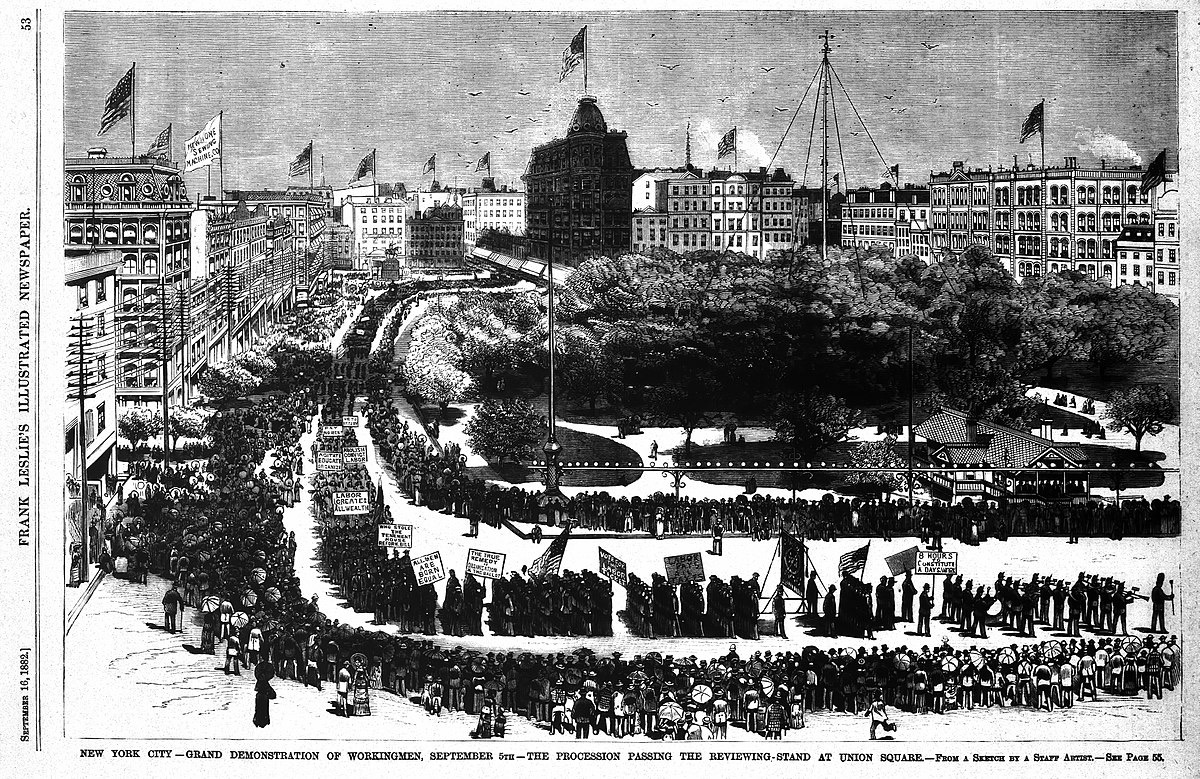
Yesterday was Labor Day and sadly many people don’t really understand its significance. For decades organized labor has been demonized by the descendants of people who died to secure decent working conditions, wages, and benefits for regular hard working people. But most of the people lucky enough not to have to work on Labor Day really don’t know why it it matters, and whips in spite of those who despise labor and care not a whit about working people, who simply to use business terminology are simply human capital or resources.

So today I am digging into the vault to explore why Labor Day and what it represents matters to us now. This article is one that I have taken the time to edit and update.

Until tomorrow,

Peace,

Padre Steve+

Abraham Lincoln, who was perhaps our only President who was a real working man once said, “If any man tells you he loves America, yet hates labor, he is a liar. If any man tells you he trusts America, yet fears labor, he is a fool.” Likewise, Adam Smith wrote:

“In regards to the price of commodities, the rise of wages operates as simple interest does, the rise of profit operates like compound interest. Our merchants and masters complain much of the bad effects of high wages in raising the price and lessening the sale of goods. They say nothing concerning the bad effects of high profits. They are silent with regard to the pernicious effects of their own gains. They complain only of those of other people.”

It seems that nothing about humanity ever changes, even so it is hard to believe that at one time American workers had no rights and I am not talking about African American slaves who as slaves didn’t even count as human beings. No I’m talking about the people Mel Brooks called in Blazing Saddles: “the white God fearing citizens of Rock Ridge” and for that matter every place and every race in America.

It was not until the mid-1800s in the United States and Europe that workers began to organize and protest for the right to decent wages and working conditions. But this came at a cost; the loss of jobs, homes, property, prison, deportation, deportation, and death.

There were many instances when this cost workers and labor organizers their lives. Employers, often backed by heavily armed private security contractors like the Pinkerton Agency, used deadly force to break up peaceful strikes. In the days of the Robber Barons, when business ran the government at almost every level, employers frequently called in local and state law enforcement, as well as the National Guard, and occasionally Federal troops to break strikes. They played various ethnic and racial groups off of each in order to divide the labor movement. There are hundreds of instances of such violence being used against workers, in some strikes the dead numbered in the hundreds.

Some of these attacks on workers occurred in major cities, others at isolated work sites and factories. Some are famous, the Haymarket Massacre of May 4th 1886 in Chicago, the Pullman Strike Massacre of 1894, the Homestead Strike and Massacre of 1892, the Lattimer Massacre of 1897, the Ludlow Massacre of 1914, and the Columbine Mine Massacre of 1927.

Others less so, but there was more. In the Bisbee Deportation of 1917 1300 striking miners and their families were deported from their homes in Bisbee Arizona by 2000 armed deputies, put in box cars and transported 200 miles to the New Mexico desert, where without food, water or money they were left. There was the Triangle Shirtwaist Factory Fire where managers locked the doors in order to ensure that the fleeing women workers did not put anything unauthorized in their purses. One hundred forty-four workers, mostly young women died, many jumping from the burning building to their death.

Early labor organizations such as the Knights of Labor led the effort to bring about better conditions. For doing so they were labeled subversive and even called communists. Their meetings were often attacked and the leaders jailed and some lynched.

The sacrifices of those early workers, and organizers are why we have Labor Day. One of the early American labor leaders was a man named Eugene Debs. Debs eventually became a Socialist, but he said something remarkable which still is as timely as when he uttered the words:

“I am opposing a social order in which it is possible for one man who does absolutely nothing that is useful to amass a fortune of hundreds of millions of dollars, while millions of men and women who work all the days of their lives secure barely enough for a wretched existence.”

I wish that wasn’t true but it is. The Social Darwinists who follow Ayn Rand as if she were the Prophet and who populate Wall Street boardrooms and every major school of business ensure that it is. The disparity between wage laborers and CEOs is higher than it has ever been. But I digress…

On September 5th 1882 the first Labor Day was observed when members of several Unions in New York City organized the first Labor Day parade. The police came armed and ready to intervene if the workers got out of hand, but the parade was peaceful. It ended and the marchers moved over to Wendell’s Elm Park where they had a party. Twenty-five thousand Union men and their families celebrated, with hundreds of kegs of lager beer.

Within a few years many states began to institute Labor days of their own. In 1894, just days after the violent end of the Pullman strike in which Federal troops and Marshalls killed 30 workers and wounded 57 more, Congress and President Grover Cleveland rushed through legislation to establish a Federal Labor Day.

My Great Aunt Goldie Dundas was a labor organizer for the International Ladies Garment Worker’s Union in West Virginia in the 1920s – 1950s. I wish I had gotten to really know her, but she died when I was about 8 or 9 years old. Sadly the workers represented by that Union have had almost all of their jobs in the textile industry outsourced to China, India, Pakistan, the Caribbean, and Bangladesh where cheaply made garments are produced, and workers abused. The examples of mass deaths due to safety issues and fires in Bangladeshi factories are too numerous to list. But then who cares? The fact is you can drive through many parts of the South and see the poverty created by the exodus of these Union employers, the textile industry, which was part of the fabric of the South is gone. Empty factories and poverty stricken towns dot the countryside. I saw a lot of them living in Eastern North Carolina, towns that once thrived are ghost towns, riddled with crime, unemployment and no hope, unless Wal-Mart opens a store in town. Ironically it sells the clothing made overseas that used to be manufactured by the parents, grandparents and great-grandparents of the people who live there today.

Adam Smith, the father of Capitalism understood it in a very different manner than those who claim to be Capitalists today. He wrote in his magnum opus, The Wealth of All Nations:

“In regards to the price of commodities, the rise of wages operates as simple interest does, the rise of profit operates like compound interest. Our merchants and masters complain much of the bad effects of high wages in raising the price and lessening the sale of goods. They say nothing concerning the bad effects of high profits. They are silent with regard to the pernicious effects of their own gains. They complain only of those of other people.”

The fact is that today, labor is under threat. Unions have been demonized by politicians and pundits and their power and influence much reduced. Some of this was due to their own success in improving conditions from workers, and not just Union workers. When my dad retired from the Navy in 1974, he went to work at one of the few non-Union warehouses of the John Deere Company in Stockton, California. While they were not union, the workers received every benefit won by the majority of the workers in the company who were members of the United Auto Workers Union. Due to that my dad had high wages, excellent working conditions and benefits. The company had a program for the children of workers, which allowed them to work in the summer in the warehouse and receive incredibly high pay and benefits while in college. I did that for two years, and it helped pay for much of my college. I was not a union member but I benefited because Union men and leaders did the hard work to make that job happen.

However, in many places, Unions and labor are under attack, sometimes not just by corporations, but also by state governments. Job security and stability for most American workers is a thing of the past. Federal and State agencies charged with protecting those rights, including safety in the workplace are being cut in the mad rush to reduce government power. Corporations are offshoring and outsourcing jobs without regard to American workers or the country itself. Part of that is due to globalization and I understand that, but these companies frequently relocate jobs to places where they can exploit workers, deny them benefits, pay them less, and suffer no penalty for ignoring safety procedures or harming the environment. It seems to me that we are returning to the days of the Robber Barons. I wonder when violence against workers and those who support them will be condoned or simply ignored.

Pope Leo XIII wrote in his encyclical Renum Novarum:

“The following duties . . . concern rich men and employers: Workers are not to be treated as slaves; justice demands that the dignity of human personality be respected in them, … gainful occupations are not a mark of shame to man, but rather of respect, as they provide him with an honorable means of supporting life. It is shameful and inhuman, however, to use men as things for gain and to put no more value on them than what they are worth in muscle and energy.”

He also wrote:

“Equity therefore commands that public authority show proper concern for the worker so that from what he contributes to the common good he may receive what will enable him, housed, clothed, and secure, to live his life without hardship. Whence, it follows that all those measures ought to be favored which seem in any way capable of benefiting the condition of workers. Such solicitude is so far from injuring anyone, that it is destined rather to benefit all, because it is of absolute interest to the State that those citizens should not be miserable in every respect from whom such necessary goods proceed.”

But sadly there are far too few church leaders of any denomination who will take the side of workers or the poor, and when they do they are either condemned by the disciples of Ayn Rand or politely thanked and ignored by politicians and corporate leaders.

So please, when you celebrate Labor Day, do not forget that it is important, and that we should not forget why we celebrate it. If we forget that, it will become a meaningless holiday and our children may have to make the same sacrifices of our ancestors.

Labor Day is a day to remember the men and women, some of them former soldiers, workers, labor organizers, and leaders; some of whom were killed by National Guard and Federal troops for their effort, who paved the way for workers today. We cannot forget that. So when you see a politician attacking Labor and seeking to diminish workers rights or benefits ask them what Abraham Lincoln or Adam Smith would think. If they can’t answer, turn your backs on them and start fighting for what is right.

Dr. Martin Luther King Jr., who always stood for the rights of workers no-matter what their race, creed, or color, said: “We must rapidly begin the shift from a “thing-oriented” society to a “person-oriented” society. When machines and computers, profit motives and property rights are considered more important than people, the giant triplets of racism, materialism, and militarism are incapable of being conquered.”

This my friends is why Labor and the protection of working people from those who abase them, mistreat them, and exploit them is so important.

7 Comments

Filed under ethics, faith, History, labor, laws and legislation, News and current events, Political Commentary

They Silently Gather Around Me: Walking the Antietam Battlefield


Friends of Padre Steve’s World,

As you know from yesterday’s article I am taking an extended weekend in the D.C. area and yesterday I took a trip up to the Antietam Battlefield which surrounds much of Sharpsburg, Maryland. It was a time of quiet reflection on a battle, on the lives of soldiers, and on our country. The Battle of Antietam was the bloodiest day in American military history, more Americans were killed and wounded on that day than any other single day. While the battle was a draw from a military point of view it was singularly important in that it stopped Robert E. Lee’s invasion of the North and gave Abraham Lincoln enough of a victory to announce the preliminary Emancipation Proclamation. The announcement of that, and creative Union diplomacy helped turn the tide of the war by helping to keep England and France from recognizing the Confederacy.


It was my intention to walk as much of the battlefield as I could and I did. The weather was good but a bit warmer and sunnier than what the soldiers who fought there experienced on September 17th 1862. Even so it is my opinion that walking battlefields, be it on a staff ride, reenactment, or simply doing what I did yesterday helps one put the battle into a human context especially if one has a fair amount of historical knowledge and familiarity with a given battle. Being hot, sweaty, feeling ones legs, feet, and back hurt, dealing with waterlogged shoes, being assaulted by swarms of insects, and fighting your way through thrushes, reeds, and high grass along the banks of a creek or river, and drinking the bare minimum of water, and getting a little bit sunburned, is a good way to get a feel for what the soldiers experienced at Antietam or other Civil War battles. I am just glad that I was not wearing a wool uniform, carrying a heavy rifle, 60 rounds of ammunition and cartridges, and all my kit wearing what we would no call substandard shoes, if like the Union soldiers did we even had them. If you were a Confederate soldier at Antietam you might have been barefoot. Since I have been to war and lugged heavy amounts of gear around Iraq I can imagine that, even though I never had to walk as far there as I did today. That’s a good thing.


In his book The Forgotten Soldier, Guy Sajer wrote:

“Too many people learn about war with no inconvenience to themselves. They read about Verdun or Stalingrad without comprehension, sitting in a comfortable armchair, with their feet beside the fire, preparing to go about their business the next day, as usual…One should read about war standing up, late at night, when one is tired, as I am writing about it now, at dawn, while my asthma attack wears off. And even now, in my sleepless exhaustion, how gentle and easy peace seems!”

I am sure that many a Civil War soldier would agree with him. The fact is that reading the history of various wars is important, but whenever possible it is good to experience some of the discomfort of those who fought the battle. When I finished the last part of my battlefield experience my feet hurt and when I took off my shoes they looked pretty bad, but much of that was from the dirt, grass, and moisture that had found its way into my shoes. But unlike the soldiers at Antietam I could return to a safe and dry place and care for my feet, they couldn’t.


We are fortunate along much of the east and central parts of the United States to have many well preserved battlefields. I highly recommend those who have not gotten out to see them, walk them, and to remember those who were killed, wounded, or emotionally scarred for life. Walking the Antietam battlefield for the first time since 2001 I was able to sense the terrible reality that that battlefield was the bloodiest single day of fighting in American history. Depending on the estimate some 22,000 to 27,000 Union and Confederate soldiers were killed or wounded on that one day. As I walked through the Cornfield and the West Woods I tried to imagine how over 13,000 troops were killed or wounded in that part of the battlefield alone. I felt the same way along the Bloody Lane, near the Dunker Church, at the Burnside Bridge, and along the furthest point of the Union advance. Of course this is hallowed ground and the National Cemetery has in it the remains of over 5,000 Union soldiers.


The remains of nearly 3,000 Confederates were interred in a new cemetery on the outskirts of Hagerstown which was dedicated in 1877 as well as two other cemeteries. This is interesting to me because at Gettysburg the Confederate dead were exhumed and taken back to the south with many buried in Richmond’s Hollywood Cemetery.


The National Cemetery is guarded by Old Simon a massive granite statue of a representative Union soldier. The monument is 44 feet tall, and Old Simon, designed and sculpted by James Batterson is 21 1/2 feet tall and weighs 30 tons. The inscription is appropriate. It simply reads: Not for themselves but for their country, September 17, 1862.


The graves of the soldiers are laid out around the statue grouped in the states from where they came. There are a few individual monuments and a monument erected by the survivors of the 20th New York, a unit primarily composed of German immigrants that also has a monument not far from the Dunker Church. The inscription on one side has in German the words Zum Andenken an unsere Gefallenen Kameraden, errichtet von dem Ueberlebenden des Regts. (Erected to our fallen comrades by the survivors of the regiment)


As far as battlefield monuments are concerned there are comparatively few, just 96 as compared to Gettysburg which has some 1,300 of all types. Almost all of the monuments at Antietam, with the exception of the ubiquitous bronze markers that show the positions of units and describe their actions, are dedicated to units of the Army of the Potomac. These were erected by states, communities that contributed troops and veteran associations. There are only six monuments specifically honoring Confederates with Maryland having a monument to its soldiers of both sides.


 Of the Confederate monuments most are of fairly recent import. Georgia and Texas have monuments to all of their soldiers, while Mississippi has one dedicated to the 11thMississippi Infantry. All three of these stand within a hundred yards of each other on the southern edge of the Cornfield.


There is a monument to Robert E. Lee near the new Burnside bridge off Maryland Highway 34 as you cross Antietam Creek. It too is a rather new addition, being funded by William F. Chaney and dedicated in June 2003. Chaney had noted that he just wanted “even things up a bit.” The inscription on it furthers the Lee myth promoted by the purveyors of the Lost Cause and the Noble South saying “Although hoping for a decisive victory Lee had to settle for a military draw, Robert E. Lee was personally against secession and slavery, but decided his duty was to fight for his home and the universal right of every people to self-determination.”


A monument on the northern edge of the Cornfield is dedicated to Clara Barton who along with other nurses helped to care for the wounded of the battle and one near the Burnside Bridge to President William McKinley who was a Sergeant in the 23rd Ohio Infantry. Six monuments each with a cannon placed upside down into a stone, these are mortuary markers noting where six Generals were killed or mortally wounded. They include Union Generals Joseph Mansfield, commander of XII Corps, and division commanders Israel Richardson and Isaac Rodman. Three Confederate brigade commanders, George Anderson, William Starke, and Lawrence O’Brien Branch are marked by identical monuments.


There was an eerie pristine feeling when I walked the battlefield yesterday. There were not many people on it, especially compared to Gettysburg. This led to a rather solitary experience amid the quite, only punctuated by the calls of birds, the chattering of squirrels, and the assorted buzzing, chirping, and humming of insects. As I walked the Cornfield, the West Woods, the Sunken Road and Bloody Lane, crossed the Burnside Bridge, made my way to the furthest point of the Union advance, and paused in the cemetery I was continually reminded of Walt Whitman’s poem, Ashes of Dead Soldiers:

“Ashes of soldiers South or North, As I muse retrospective murmuring a chant in thought, The war resumes, again to my sense your shapes, And again the advance of the armies. Noiseless as mists and vapors, From their graves in the trenches ascending, From cemeteries all through Virginia and Tennessee, From every point of the compass out of the countless graves, In wafted clouds, in myriads large, or squads of twos or threes or single ones they come, And silently gather round me…”


Until tomorrow,

Peace,

Padre Steve+

3 Comments

Filed under civil war, History, Loose thoughts and musings, Military, Travel

Stand by Those Principles, Against All Foes, At Any Cost: Independence Day 2017


Friends of Padre Steve’s World,

It is July 4th and the 241st anniversary of the declaration by the leaders of 13 colonies of their independence from Britain and the founding on a new nation. It was a nation founded on a principle of the Enlightenment, the principle that all men are created equal, and as their Declaration of Independence noted that as such are “endowed by their creator with certain unalienable rights, among which are life, liberty, and the pursuit of happiness.” 

That founding principle was revolutionary and regardless of how badly it was many times lived out in the history of our nation, it was and still is the first time that a nation was not founded on the basis of ethnicity or religion, but rather a principle, a proposition that no matter how noble was, and still is often despised by Americans. 

One of the most notable was George Fitzhugh, a major Southern slaveholder and apologist for not only slavery but the inequality of poor whites and women wrote: 

“We must combat the doctrines of natural liberty and human equality, and the social contract as taught by Locke and the American sages of 1776. Under the spell of Locke and the Enlightenment, Jefferson and other misguided patriots ruined the splendid political edifice they erected by espousing dangerous abstractions – the crazy notions of liberty and equality that they wrote into the Declaration of Independence and the Virginia Bill of Rights. No wonder the abolitionists loved to quote the Declaration of Independence! Its precepts are wholly at war with slavery and equally at war with all government, all subordination, all order. It is full if mendacity and error. Consider its verbose, newborn, false and unmeaning preamble…. There is, finally, no such thing as inalienable rights. Life and liberty are not inalienable…. Jefferson in sum, was the architect of ruin, the inaugurator of anarchy. As his Declaration of Independence Stands, it deserves the appropriate epithets which Major Lee somewhere applies to the thought of Mr. Jefferson, it is “exuberantly false, and absurdly fallacious.

Fitzhugh also wrote: 

“We conclude that about nineteen out of twenty individuals have “a natural and inalienable right” to be taken care of and protected, to have guardians, trustees, husbands or masters; in other words they have a natural and inalienable right to be slaves. The one in twenty are clearly born or educated in some way fitted for command and liberty.”

But he was not alone. In 1860 South Carolina led a procession of 11 states out of the Union based on the proposition that only certain men were created equal. Every declaration of secession had at its heart the statement that the institution of slavery was to be protected and expanded with the implication that African American slaves could never be equal, free, or enjoy the slightest legal protections of citizenship. These states were willing to fight a war for this and even at the end of that war many of their leaders resisted any call for granting emancipation to blacks, and then when that was over use terrorism and law to again strip away the rights from newly freed blacks through lynching, the Black Codes, and Jim Crow. 

In 1852 not long after the passage of the Compromise of 1850 which included an enhanced Fugitive Slave Act which dictated that Northerners had to cooperate in the recapture and reenslavement of blacks residing in their free states, Frederick Douglass preached one of the most damning sermons about what July 4th meant to slaves. He said:

“I answer; a day that reveals to him, more than all other days in the year, the gross injustice and cruelty to which he is the constant victim. To him, your celebration is a sham; your boasted liberty, an unholy license; your national greatness, swelling vanity; your sounds of rejoicing are empty and heartless; your denunciations of tyrants, brass fronted impudence; your shouts of liberty and equality, hollow mockery; your prayers and hymns, your sermons and thanksgivings, with all your religious parade, and solemnity, are, to him, mere bombast, fraud, deception, impiety, and hypocrisy—a thin veil to cover up crimes which would disgrace a nation of savages. There is not a nation on the earth guilty of practices, more shocking and bloody, than are the people of these United States, at this very hour.” 

Even so men like Fitzhugh would proclaim: “Liberty for the few – slavery in every form, for the mass.”

Of course such is not liberty, it is tyranny and it is the seedbed of dictatorship. The word liberty is often abused by those who seek total power and control over the lives of others. Abraham Lincoln said as much when he noted: 

“We all declare for liberty” but “in using the same word we do not all mean the same thing. With some the word liberty may mean for each man to do as he pleases with himself and the product of his labor; while with others the same word may mean for some men to do as they please with other men and the product of other men’s labor.” 

The proposition in the Declaration that all men are created equal is essential to understanding or appreciating liberty. If we view others as below us, as even less than human then we cannot say that we believe in liberty. If we decide to limit the right of citizens to speak out because of their color, their national origin, their race, their religion, their gender, or sexual identity then we are not for liberty, we are no better than George Fitzhugh or others, even the Nazis, who enslaved, imprisoned, and exterminated others in the name of their power, and their right. 

If our concept of liberty is so limited by our ideology that we cannot accept others having it or being equal to us then we stand against the very proposition that the United States was founded and we should bury the American experiment and stop lying about a proposition that we no longer believe in. The eminent American jurist wrote these words, which for me are like the Declaration, the Preamble of the Constitution, the Gettysburg Address, Lincoln’s Second Inaugural Address, and Dr. Martin Luther King Jr.’s I Have a Dream speech are secular scripture that are sacred to my understanding of being an American, and something that I will never yield. Judge Hand said: 

“Liberty lies in the hearts of men and women; when it dies there, no constitution, no law, no court can even do much to help it. The spirit of Liberty is the spirit which is not too sure that it is right; the spirit of Liberty is the spirit which seeks to understand the minds of other men and women; the spirit of Liberty is that which weighs their interests alongside its own without bias.”

So today, on this 241st anniversary of our independence when the rights of citizenship, the rights of suffrage, the rights of the freedom of the press and freedom of speech are under assault for the man occupying the highest office in the land I do not despair. I do not despair because the spirit of liberty still lives in my heart as it does many others who still believe in that sacred and revolutionary proposition that all men are created equal and endowed by their creator with certain unalienable rights, among them life, liberty, and the pursuit of happiness. 

In the darkness of 1852 Frederick Douglass said these words to people who at the time were refused citizenship and who were enslaved:  

“I have said that the Declaration of Independence is the ring-bolt to the chain of your nation’s destiny; so, indeed, I regard it. The principles contained in that instrument are saving principles. Stand by those principles, be true to them on all occasions, in all places, against all foes, and at whatever cost.”

May we not forget those words on this day when the founding proposition of our country is under attack. 

Cherish our independence and never stop believing in or fighting for liberty. 

Peace

Padre Steve+ 
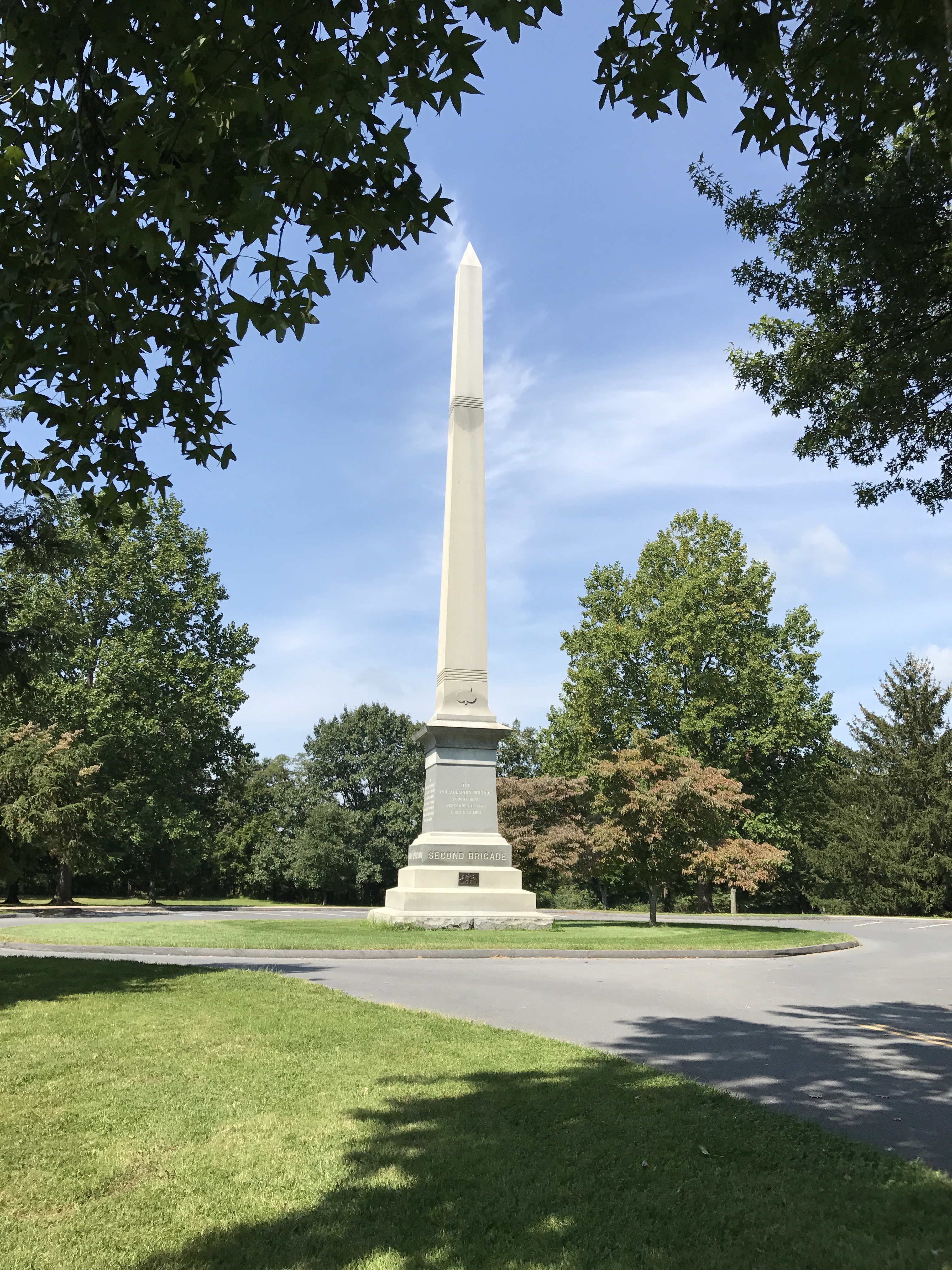
1 Comment

Filed under History, News and current events, philosophy, political commentary