Tag Archives: afghanistan

Padre Steve’s 2013 Down and Dirty Primer on the Muddle East

Free Syrian Army soldiers in Idlib

“When you are up to your arse in alligators it is hard to remember that your mission is to drain the swamp.” Old British Colonial Saying

Note: This is an update to my 2011 Primer on the Muddle East

During the dark days of World War Two when Field Marshal Erwin Rommel was making fools of a series of British commanders in North Africa people including senior British military and government leaders sometimes referred to the theater of operations as “the Muddle East.” Some things never seem to change. The Muddle East today is quite frankly speaking in a real muddled state if there ever was one with world leaders and regional leaders muddling about as if they were the New York Mets.

A large part of the muddle goes back to the fall of the Ottoman Empire at the close of the First World War when the victorious Allied Powers redrew the map of the Middle East and made alliances with various local tribal sheiks who many times were crowned king over other tribes who didn’t necessarily want them as king. This along with heavy handed European military actions such as the British using poison gas dropped from aircraft in Iraq and a real lack of effort to better the lives of the newly “liberated” peoples of the region was just the start. Add to the cesspool a bunch of oil presided over by major oil companies, the anti-colonial movements that flourished in the years after World War Two when the French, British and Italians had to divest themselves of their Middle Eastern holdings. The French had to fight a real war in Algeria but finally withdrew leaving Algeria’s new rulers to goof up the country and oppress their people for decades to come.  In the coming years many of these newly independent nations found that life still sucked so in a number of countries military officers overthrew the despised monarchs promising reforms but oppressing their people while blaming all their problems on the Israelis.  They got their asses kicked by the Israelis in a series of wars which did a number of things that made the Middle East Muddle even worse.

First it ensured that Palestinian Arabs ended up under Israeli rule and were used with great aplomb by the Middle Eastern despots to prop up support for their regimes while doing nothing to help the Palestinians other than to put them in camps in Lebanon.  Even when the Egyptians made a peace deal with Israel most of the Arab World ostracized them.  Then in 1979 the Shah of Iran was sent packing by a bunch of Mullahs and in 1981 Saddam Hussein’s Iraq attacked Iran in one of the bloodier wars of the late 20th Century which finally ended in 1988. Of course the United States was pissed at the Mullahs so Saddam became our favorite Arab despot for a while.  Add to the mix the Soviet Union and the United States arming their favorite Arab dictators who were given carte blanche to continue oppressing their people so long as it didn’t interfere with their support of either party or the oil supply. Finally the Soviets went Tango Uniform in 1989 not long after being forced out of Afghanistan by the U.S. supplied, Pakistani supported and Saudi Arabian fundamentalist financed Mujahideen.

With the Soviets “Tango Uniform” and the Warsaw Pact nations trying to get into NATO the United States was now the uncontested Numero Uno country in the world Saddam presumed upon his late supporters and invaded Kuwait, albeit after thinking that the U.S. Ambassador to Iraq said that we wouldn’t mind.

Well he was wrong we did mind and got a lot of countries from NATO and including a bunch of Arab countries like Egypt, Syria and Saudi Arabia to get on board on a mission to get Saddam’s troops out of Kuwait. It was a kick ass mission and since the United Nations didn’t authorize removing Saddam and because President George H.W. Bush was smart enough to not to drive on Baghdad to kick him out preferring the despot we knew to a quagmire Saddam was left in power.

So we stationed ground and air forces around the Gulf to keep Saddam and Iran in check and even put them in Saudi Arabia which a large number of radicals such as Osama Bin Laden equated to letting the Devil play in Allah’s Holy Sandbox.  So Osama went and set up a base with the Medieval bunch of Pashtun known as the Taliban in Afghanistan stirred up a bunch of shit killing Americans and blowing up stuff including the World Trade Center in 1993, the Khobar Towers barracks complex in 1996, the USS Cole in 2000 and then 2001 another attack on the World Trade Center which took down the towers with hijacked aircraft and also struck the Pentagon triggered an American response against Bin Laden and his Taliban hosts.  The United States then invaded in Iraq in 2003 and succeeded in taking out Saddam but also succeeded in alienating a good many Iraqis who greeted us with open arms because we goofed up the occupation and pissed a lot of them off by dissolving the Army, Police and Civil Service and letting thugs and opportunists take over. Unfortunately since we didn’t go in with enough troops to secure all the Iraqi bases, their weapons depots and actually take control of surrendering Iraqi units these newly unemployed and dishonored people launched an insurgency bolstered by Al Qaeda and other foreign fighters even as Sunni and Shi’a Moslems began to settle scores with each other. Insurgency and civil war, two great tastes that go great together, but what the heck right?

Of course it took years to get control of the situation on the ground and thankfully the United States forces in Iraq were helped when the Sunni Moslems in Al Anbar Province realized that these foreign fighters were a worse enemy than the United States and switched sides. This turned the tables in Iraq and the insurgency was brought under control and an elected government managed to start to get their stuff together and allow us to begin withdrawing from Iraq. Of course the focus on Iraq gave the Taliban a chance to regroup as the Afghani Government proved itself corrupt, incompetent and not to give a shit about the Afghani people. So the Taliban who had been hated made a comeback and made our lives much harder so that now almost 10 years into the fight we are having a really hard time.  Well enough about us there was plenty more going on in the Muddle East besides the Iraq and Afghanistan wars.

Let’s see….there was the law of unintended consequences in that by taking Saddam Down and weakening Iraq we took away Iran’s natural enemy and the key to the balance of power in the region. Iran was strengthened and began a nuclear program that everyone with half a brain knows in intended for military use and expanded its influence in Lebanon where the Iranian backed Hezbollah took power.  Now Hezbollah which actually has an experienced military force and probably owns 40,000 or so rockets and missiles a good number of which can hit deep in Israel seems to be ready for war especially because they fought the Israelis to a stalemate in 2008, the first time an Arab military ever did that. Not only did they take on the Israelis but they are also helping Syrian dictator Bashir Assad turn the tide against the polyglot Syrian rebel forces which are being assisted by Sunni foreign fighters from all over the Middle East and the ever present Al Qaida presence.

Then was the effect that the wars in those countries made things harder for us in many other friendly Arab nations.  Of course there is the problem of a nuclear armed Pakistan which is about as stable as a Japanese nuclear reactor after getting hit by a tsunami and plays both sides of the street in the war on terror.  The Palestinians and Israelis continued their love affair and since Fatah which ran Palestinian Authority was so corrupt and gooned up a more militant group, Hamas took power in the Gaza strip. Hamas is a pretty bloodthirsty lot too but not the same level of threat as Hezbollah to the Israelis.  Of course the Israelis have done little to help the situation by their often heavy handed treatment of Palestinians and Israeli Arabs.

The witches’ cauldron of the Muddle East is getting even more muddled on a daily basis as young Arabs throughout the Muddle East are rising up against their despotic rulers and it doesn’t seem that any are safe, those allied with the United States and the West as well as those that have been a thorn in the side of the United States and the West. It just seems that despots and tyrants are no longer in vogue. The uprisings began in Iran after a disputed election where reformers were cheated of power and the revolt crushed by the Revolutionary Guard and other thugs of the Iranian regime. However with the election of “moderate” whatever that means cleric Hasan Rowhani as President hopes are that Iran, despite the machinations of many other clerics and the Revolutionary Guard might be brought to the negotiating table. That being said Iran is reportedly sending about 4000 troops to go help Assad in Syria so go figure.

Elsewhere in the Middle East things continue to boil. In December 2010 the people of Tunisia rose up and overthrew their President for Life Ben Ali in a peaceful uprising followed shortly after by the Egyptians who tossed out long term President and U.S. ally Hosni Mubarak. In Tunisia a “moderate Islamist” regime has been attempting to maintain control of radicals and keep some semblance of balance in that country while in Egypt the Islamic Brotherhood was able to get majorities elected in the Parliament and elect Mohammed Morsi as President. Needless to say both countries are still in turmoil.

In Iraq the Sunni Shi’a divide is as wide as ever and that country is threatening to become engulfed in yet another civil war as sectarian violence increases and the Kurds make more moves toward independence.
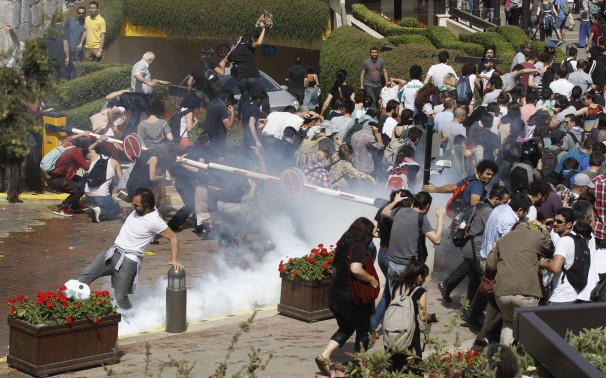
2013-05-31T115012Z_01_IST12_RTRIDSP_3_TURKEY-PROTESTS

Turkey, the heart of the old Ottoman Empire is now beginning to erupt as secularist elements in the society are protesting the policies of Islamist President Recep Tayyip Erdoğan leading to repeated clashes over the past two weeks between protestors and police.

054

Afghanistan though technically not part of the Middle East continues to be a problem for US and NATO consuming intelligence, economic diplomatic and military resources that could be put to play with better effect elsewhere.  What T.E. Lawrence said of the British occupation of a restive Mesopotamia  in 1920:

“We realise the burden the army in Mesopotamia is to the Imperial Exchequer, but we do not see as clearly the burden it is to Mesopotamia. It has to be fed, and all its animals have to be fed. The fighting forces are now eighty-three thousand strong, but the ration strength is three hundred thousand. There are three labourers to every soldier, to supply and serve him.” ‘France, Britain, and the Arabs’ by Col. T. E. Lawrence The Observer, 8 August 1920

In Libya the Arab Spring claimed the long time pain in the ass Moammar Gaddafi. That conflict center of the action in 2011 until Gaddafi was overthrown and murdered. Since then Libya has remained in turmoil despite elections, militias run amok and the US Ambassador Chris Stevens was killed in an attack on the US Consulate and CIA base in Benghazi on September 11th 2012.

Yemen and Bahrain, Algeria, and Jordan have or are experiencing demonstrations which look to be revolts in the making and even Saudi Arabia is trying to head off a potential popular uprising.

However the real problem now, the problem that threatens to send the region into a regional war is the revolt in Syria which began with peaceful protests by reformers against the Assad regime. However the hard line response of that regime to the protests spawned a civil war which now threatens to overflow the borders of Syria. France, Britain and the US have stated that they believe that there is evidence that the Syria government has used chemical weapons, in particular Sarin nerve agents against the rebels. The conflict has claimed the lives of an estimated 80,000 people with hundreds of thousands more now living as refugees.

The conflict in Syria epitomizes one of the greatest challenges in the Middle East that many in the West are just beginning to recognize, the Sunni Shi’a divide. That divide is becoming more serious with every passing day as Iran continues to lead and assist Shi’a elements in predominantly Sunni Arab countries, as well as in Iraq where the Arab Shi’a are in the majority. The conflict in Syria is predominantly Sunni versus Shi’a though in that patchwork nation of Sunni, Shi’a, Alawite Shi’a tribe of the Assad clan, various Christian and Druse groups. Lebanon which borders Syria is as divided as its larger neighbor and Hezbollah holds tremendous power in that country.

Yes my friends this is a mess and almost everybody that is anybody in the military and economic power houses of the world doesn’t have their handprints all over at least some part of this mess. All of these own some of the blame for what is going on, both the rulers of the nations in the region as well as world powers who all try to influence the nations and peoples for their own diplomatic, intelligence, military or economic gain. Almost no one is unsoiled by their involvement in the Muddle East over the past 90 years or so and so in a way all of great world powers, as well as the despots who ran these countries are to blame.

images-46

The region is more volatile than at any time in recent history and events there could easily ignite a regional war with worldwide implications.  That is why the region has been called the Muddle East for decades.  We all hope and pray for the best and that somehow all of this that the promise of a peaceful and democratic “Arab Spring” will become a reality, but there are better than even odds that things get way worse before they get better. There are just too many wild cards in this deck and the swamp is full of hungry alligators.

With the announcement this week that the US would provide military aid and training to the Syrian rebels and that US forces will remain in Jordan even as US and NATO Patriot missile batteries stand ready in Turkey there is a really good chance that the conflict in Syria will not stay in Syria.

Of course there is always the wild card if what Israel may do in what it perceives to be its security interests against outward foes such as Iran and Syria but also inside its borders and occupied territories, especially if it is attacked or provoked by Iran, Hezbollah or Hamas.

May God help us all and bring about peaceful change, or as my Iraqi friends simply say “Inshallah, God willing.”

Peace

Padre Steve+

Leave a comment

Filed under History, iraq,afghanistan, middle east, Military, national security

Thoughts after Springing Forward: A Symposia, Time with Family and Miscellaneous Thoughts

602843_10151494689514490_2075182584_n

Sprung forward

Last night most of us that observe Daylight Savings Time “sprang forward” losing an our of sleep but gaining added daylight with which to enjoy life. As usual I was “one of us” and though it was my last night home following a week at a Navy Medicine Chaplain Training Symposia, which happened to be where my wife is, I did get some sleep.

The week was interesting because for the past two and a half years I have been stationed in Camp LeJeune North Carolina while my wife has been in Virginia Beach Virginia. So the week was kind of like one of those weird make up baseball games where the visiting team, which I was got to be the home time, or more fitting the home team playing as the visiting team.

A Symposia

The training was well worth it and featured speakers from both the Pastoral Care and Psychological disciplines who spoke on how Chaplains work as part of the interdisciplinary team in health care, mental health and other aspects of caring for wounded warriors. One thing that was nice to see that the Navy Hospital that I serve at is on the cutting edge of much of what was discussed and that what the speakers discussed was not really news to me. Most of that is because I work with a wonderful team of Physicians, Chaplains, Mental Health Professionals and Pastoral Counselors who are not threatened by each other and who work together for the good of those that we serve. We are not perfect, we are all still learning; I guess that is why they call it “practicing” medicine but we are constantly moving forward. For me it was nice to see just how far along we are compared to other military, VA and civilian health care and mental health care services.

Family

The week also allowed me to spend time with Judy and both of our dogs. For those that have not experienced military life, it is not only deployments where you are apart but quite often due to health, family or professional concerns military personnel are forced to serve in locations away from their families, sometimes after deployments and injury that affect their family relationships.

Like many, if not most returning veterans, especially those suffering from PTSD or TBI injuries our relationship suffered and there were times that we wondered if our marriage would survive. I can say now that despite the fact that we are still apart that we are enjoying our life together again. Our times together, mostly limited to long weekend or unusual situations like the past week are becoming sweet again, times that we both look forward to whenever they are possible. It will be about two and a half weeks before we are together again when I take a bit of leave in conjunction with the Easter Holiday to celebrate my birthday with her.

While we were together we were able to spend a lot of time together and saw the new film The Great and Powerful Oz and take Judy to her first hockey game watching the Norfolk Admirals defeat the Hershey Bears by a score of 4-1 in an American Hockey League game at Norfolk’s Scope Arena. The sad thing was there were no fights in the hockey game and I missed the bench cleaning brawl between Canada and Mexico in the World Baseball Classic.

dm_130309_wbc_canada_mexico

Miscellaneous Thoughts on Krazy Karzai, North Korea Nukes, Sequester, a Papal Conclave, NASCAR and the World Baseball Classic

Kim and Karzai

Hamid-Karzai

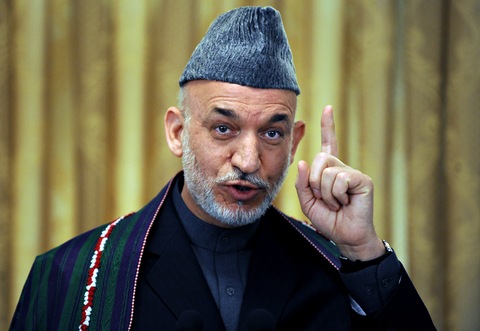
I have been watching with mixed feelings as I have caught bits and pieces of the news. First in my mind has been the continued nutty rantings of Hamid Karzai, President and First Buffoon of Afghanistan. I wonder how long before someone in his own government does away with him.

rodman-kim_2496070b

Then there was Kim Jun Number One and his new nuclear threats against the US and South Korea mixed in with a You-Tube video combining nuclear explosions going off to the tune of We are the World. http://www.youtube.com/watch?v=hK8zQIsMmnk But who can blame him for wanting to destroy us after spend a weekend with Dennis Rodman?

Seaquest-ration 

caot

Amid this the continued Sequester nonsense continues to amaze me. First of all because I thought the series Seaquest DSV was positive stupid but especially when I realize that if it happens that I won’t be getting much time off. This is because my civilian Pastoral Counselors will not be able to keep their place in our on call chaplain duty rotation. The limitations on hours that they can work, overtime and comp time will keep them from doing this, not to  mention that we will have to do what we can to make up for the 32 hours per pay period that they cannot work. If it happens as planned it looks like I will have the after hours and weekend duty pager 15-16 days a month and still work 5 days a week. The same will be true for my other Navy Chaplain. Yes sequester will be a pain in the ass. I challenge anyone in the civilian world to work 50 plus hours a week and be on call 24 hours a day 15-16 days a month dealing with life and death issues on a base heavily impacted by the war with suicides, murders, drug and alcohol abuse and mental illness. So if you are one of those “I hate the government types” please don’t tell me how overpaid I am, or for that matter anyone else dealing with this working for the Federal Government. If you think that then you can blow it out your ass. With all due respect.

Papal Conclave

anglican_darth_vader

484670_10151342912806840_136883395_n

The Cardinals arrive

Of course I have written about the upcoming Conclave to elect the next Pope in Rome so I won’t say much more about it now except to say that if elected I will turn down the job, I have such a hard time keeping white uniforms clean. My money is on one the the old European guys dressed in red to be elected as the next Pope.

NASCAR

daytona-500racing1

Then there are sports. Living in North Carolina is starting to wear me down. I am getting interested in NASCAR and am now doing strange things like read about the technical specs of the cars and the types of tracks. I think that part of this is because I think that Danica Patrick is hot, something that I can’t say about any of the men racing the other cars.

Baseball

WBC13_PRIMARY_LOGO_H

I have also gotten a chance to follow more baseball this week with Spring Training and the World Baseball Classic going on. What is nice is finally to have baseball on TV again. Tonight I am watching Puerto Rico play the Dominican Republic following the victory of the United States over Canada in their elimination game. The really cool thing about the game I am watching now is to see how much energy the fans of the Puerto Ricans and Dominicans bring to the game. It makes it a joy to watch.

Site Notes 

I have done some updates to a number of the pages on this site and added pages titled Baseball and Life, Shipmates Veterans and Friends and TLC Book Tour Reviews as well as the addition of several new links. 

Coming this Week

This week, Lord willing and the creek don’t rise I expect to do some baseball writing, and write about the Conclave and the new Pope. whoever he may be. Tomorrow I will publish a book review for TLC Book Tours on Cecil Williams and Janice Mirikitani’s memoir Beyond the Possible about Glide Memorial United Methodist Church in San Francisco. Of course I will also write about other events as they break or others as I inspired.

Have a great week.

Peace

Padre Steve+


Leave a comment

Filed under Baseball, healthcare, laws and legislation, Military, News and current events

Iraq and the Middle East 2013: Lessons from T. E. Lawrence

295_26912097058_4309_n

The Author with Advisors and Bedouin on the Iraqi Syrian Border

I left Iraq just under five years ago and in the process left part of me in that long suffering country.  I have written much about my experience there and how even today I have a deep regard for the Iraqi people and their hopes for a better future.

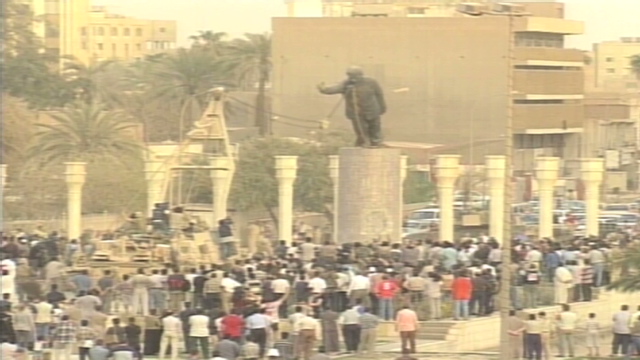
In 2003 the United States invaded Iraq and made short work of that country’s military. Many, if not most Iraqis of all creeds looked upon the US and coalition forces as liberators but within a few months the illusion was over. The US military personnel and leaders who were working with Iraqi officials, both military and civilian to get the country back on its feet were replaced by the Bush administration.

vault.von.saddam.statue.fall.itn.640x360

False Hopes in 2003, believing that US Forces were Liberators 

In their place a new entity, the Coalition Provisional Authority was created and staffed. The first administrator of the entity was retired Army Lieutenant General Jay Garner, who had much experience in Iraq but was replaced quickly for not conducting an immediate purge of members of the Ba’athist Party from key positions in the civil service or security forces.  Led by Ambassador L. Paul Bremer, a man who had no experience in the Arab world, much less in Iraq. Bremer and his staff, most of who had little experience or knowledge of the country created conditions that directly led the the Iraq insurgency, the sacrifice of thousands of American and allied lives and the friendship of the Iraqi people. They also gave a victory to Iraq’s traditional enemy and oppressor Iran to become a dominant regional power without having to worry about the Iraqi threat.

410w-1

Lawrence

rumsfeld-bremerL Paul Bremer (r) with SECDEF Donald Rumsfeld

It was as if Bremer, the leaders of the Bush administration and their neo-conservative allies knew nothing of history. T.E. Lawrence wrote of the British incursion into Turkish Mesopotamia in 1915, managed by the British Indian Office:

“By brute force it marched then into Basra. The enemy troops in Irak were nearly all Arabs in the unenviable predicament of having to fight on behalf of their secular oppressors against a people long envisaged as liberators, but who obstinately refused to play the part.”

The actions of the CPA laid waste pragmatists in the Pentagon and State Department who hoped that existing civil service, police and military forces would be retained and individuals with significant ties to the regime of Saddam removed. Instead Bremer dissolved the Iraqi military, police and civil service within days of his arrival. Since the military invasion had been accomplished with minimal forces most Iraqi weapon sites, arsenals and bases were looted once their Iraqi guardians were banished and left their posts. The embryonic insurgency was in effect given a full arsenal of weapons to use against American forces, many of who were now mobilized Reservists and National Guardsmen that were neither trained or equipped to fight an insurgency or in urban areas.

The reaction of the Iraqi Arabs to US occupation should have been anticipated. Lawrence wrote in 1920 a letter that could have easily been written in 2004:

“It is not astonishing that their patience has broken down after two years. The Government we have set up is English in fashion, and is conducted in the English language. So it has 450 British executive officers running it, and not a single responsible Mesopotamian. In Turkish days 70 per cent of the executive civil service was local. Our 80,000 troops there are occupied in police duties, not in guarding the frontiers. They are holding down the people.”

295_26912047058_2328_n

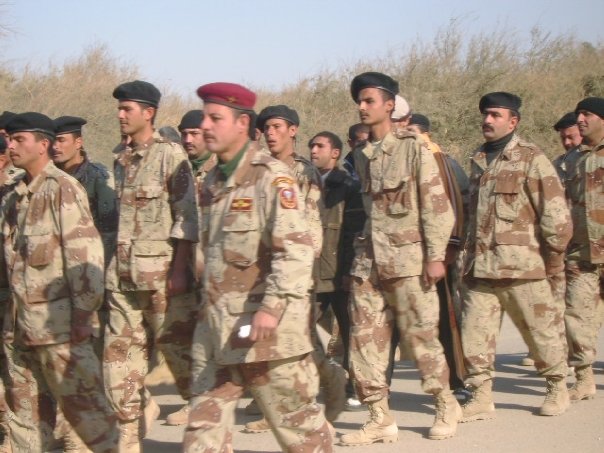
Rebuilding an Army

The actions of Bremer’s incompetent leadership team led to a tragic insurgency that need not have taken place. The now unnumbered US forces had to fight an insurgency while attempting to re-create an army, security forces and civil service from the wreckage created by Bremer’s mistakes and its own often heavy handed tactics in the months following the invasion. Nearly 4500 US troops would die and over 30,000 more wounded in the campaign. Hundreds of thousands of Iraqis were killed, wounded or died of disease during the war.  Lawrence wrote about the British administration of Iraq words that could well have been written about Bremer’s Coalition Provisional Authority: “Meanwhile, our unfortunate troops, Indian and British, under hard conditions of climate and supply, are policing an immense area, paying dearly every day in lives for the wilfully wrong policy of the civil administration in Bagdad.”

It took dramatic efforts in blood and treasure to rebuilt that was only beaten back after the US acted to conduct a surge in conjunction with the revolt of the Sunni of Anbar Province against foreign fighters who had become a dominant force in the insurgency. The surge under the command of General David Petreus achieved the desired result. It gave the Iraqis a chance to stabilize their government and increase their own security forces. Unfortunately many of those that remained in power of the Shi’ite sect refused to  share power in meaningful ways with Iraq’s Sunni and Kurds leading to a political crisis. The US military mission ended in December 2011 and since then Iraq security forces and civil authorities, often divided by tribal or sectarian loyalties have struggled to maintain order. The result is that in 2013 that Iraq is again heading toward the abyss of civil war. Sunni protestors in Anbar and other provinces conduct frequent protests as sectarian violence spreads. Many Iraqis of all sects have mixed feelings about the American invasion and the bloody aftermath and fear the future.

In 1920 Lawrence wrote of the continuing British intervention and occupation of Iraq: “The people of England have been led in Mesopotamia into a trap from which it will be hard to escape with dignity and honour. They have been tricked into it by a steady withholding of information. The Bagdad communiqués are belated, insincere, incomplete. Things have been far worse than we have been told, our administration more bloody and inefficient than the public knows. It is a disgrace to our imperial record, and may soon be too inflamed for any ordinary cure. We are to-day not far from a disaster.”

His words have a sadly familiar tone. The US invasion of Iraq did have a different outcome than we imagined. The Arab Spring erupted and the consequences of it will be far reaching and effect much of the Middle East and the world. However, Lawrence’s words and wisdom concerning the Arabs who rebelled against the Turkish Ottoman Empire are something that we in the West need to heed today.

baghdad1917

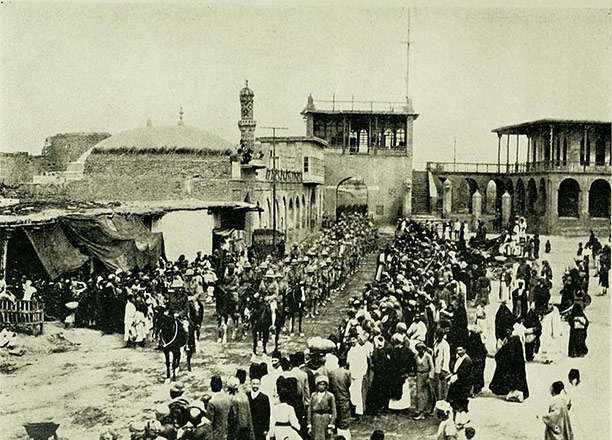
British Troops entering Baghdad

“The Arabs rebelled against the Turks during the war not because the Turk Government was notably bad, but because they wanted independence. They did not risk their lives in battle to change masters, to become British subjects or French citizens, but to win a show of their own.”

481801_10151367001287059_1003164983_n

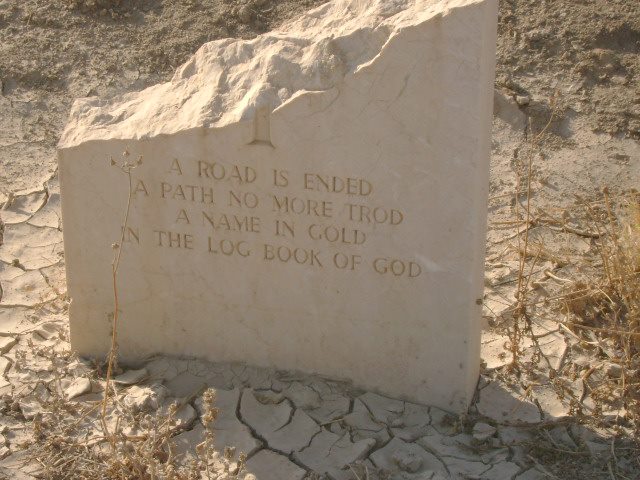
Grave of a British Soldier in Habbaniyah Iraq

That is the case in many Arab countries today. One can only hope that in those countries and in Afghanistan where our troops are embroiled in a war that cannot end well that we will do better.

Peace

Padre Steve+

2 Comments

Filed under Foreign Policy, History, iraq,afghanistan, middle east, national security

The Illusion of Peace: Remembering the Day Before Pearl Harbor

h97398

“A nation brought up on peace was going to war and didn’t know how.” Walter Lord 

For most Americans and Western Europeans this is time of peace. Well, at least the illusion of peace.

Tens of thousands of American, NATO and European Union troops operating in a number of mandates are in harm’s way. In some places like Afghanistan they are at war, in others attempting to keep the peace. Around the world regional conflicts, civil wars, insurgencies  and revolutions threaten not only regional peace but the world peace and economy. Traditional national rivalries and ethnic and religious tensions especially in Asia and the broader Middle East have great potential to escalate into wars that should they actually break will involve the US, NATO and the EU, if not militarily economically and diplomatically.

But, we live in a dream world an illusory world of peace. as W.H. Auden said in his poem September 1st 1939:

Defenseless under the night
Our world in stupor lies…

On December 6th 1941 the world was already at war and the United States was edging into the war. The blood of Americans has already been shed but for the vast majority of Americans the events in Europe and Asia were far away and not our problem. Though President Roosevelt had began the expansion of the military there were those in Congress seeking to demobilize troops and who fought all attempts at to intervene.

maltese-falcon-by-content-artofmanlinessdotcomw499h371

Most people went about their business that last furtive day of peace. People went about doing their Christmas shopping, going to movies like The Maltese Falcon staring Humphrey Bogart or the new short Tom and Jerry cartoon, The Night Before Christmas.

Tom And Jerry

Others went to football games. UCLA and USC had played their annual rivalry game to a 7-7 tie, Texas crushed Oregon in Austin by a score of 71-7 while Texas A&M defeated Washington State in the Evergreen Bowl in Tacoma by a score of 7-0.

0-3

In Europe a Soviet counter-offensive was hammering a freezing and exhausted German Wehrmacht at the gates of Moscow. U-Boats were taking a distressing toll of ships bound for Britain including neutral US merchant ships and warships, including the USS Reuben James. American Airmen were flying as the volunteer Flying Tigers for the Nationalist Chinese against the Japanese invaders.

decwarp1

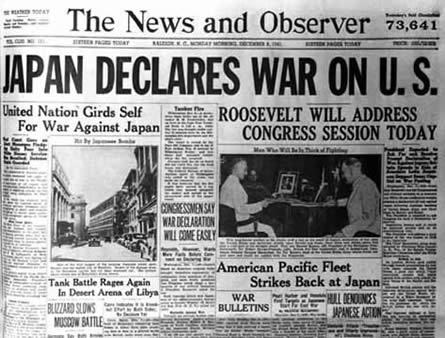
War was everywhere but there was still the illusion of peace. When the messages came out of Pearl Harbor the next morning it was already early afternoon on the East Coast. The Japanese Ambassador had been delayed in delivering the declaration of war, people across the country going about their Sunday business, going to church, relaxing or listening to the radio. Thus when war came, despite all the precursors and warnings war came. When it happened it took the nation by surprise. Walter Lord wrote in his classic account of the Pearl Harbor attack Day of Infamy: “A nation brought up on peace was going to war and didn’t know how.”

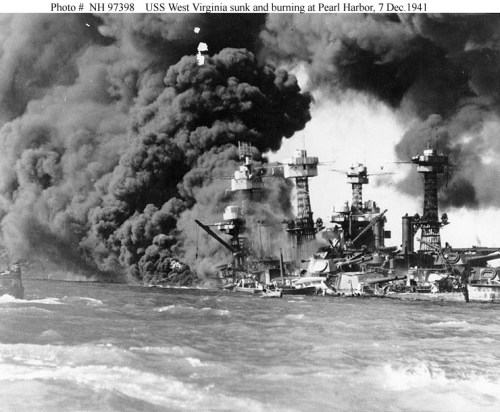
By the end of the day over 2400 Americans were dead and over 1200 more wounded. The battleships of the Pacific Fleet were shattered. 4 sunk, one grounded and 3 more damaged. 10 other ships were sunk or damaged in the attack. 188 aircraft were destroyed and 159 damaged.

cn3992

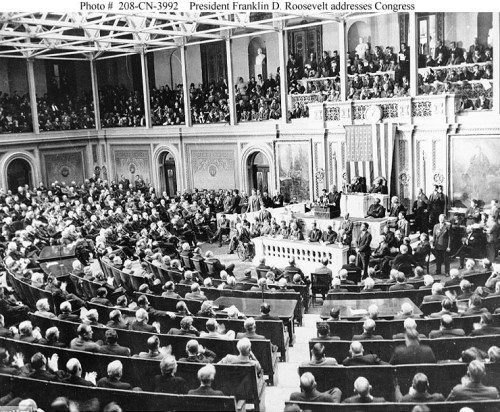
The next day President Franklin D. Roosevelt called the nation to action requesting that Congress declare war on Japan. http://www.youtube.com/watch?v=ufoUtoQLGQY

Mr. Vice President, and Mr. Speaker, and Members of the Senate and House of Representatives:

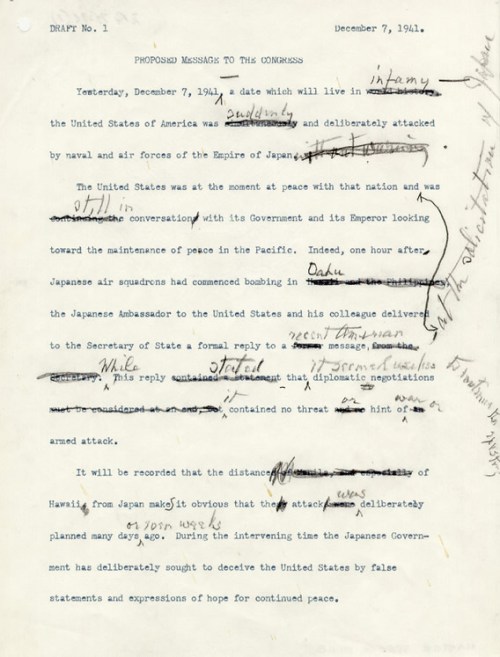
Yesterday, December 7, 1941 — a date which will live in infamy — the United States of America was suddenly and deliberately attacked by naval and air forces of the Empire of Japan.

The United States was at peace with that Nation and, at the solicitation of Japan, was still in conversation with its Government and its Emperor looking toward the maintenance of peace in the Pacific. Indeed, one hour after Japanese air squadrons had commenced bombing in the American Island of Oahu, the Japanese Ambassador to the United States and his colleague delivered to our Secretary of State a formal reply to a recent American message. And while this reply stated that it seemed useless to continue the existing diplomatic negotiations, it contained no threat or hint of war or of armed attack.

It will be recorded that the distance of Hawaii from Japan makes it obvious that the attack was deliberately planned many days or even weeks ago. During the intervening time the Japanese Government has deliberately sought to deceive the United States by false statements and expressions of hope for continued peace.

The attack yesterday on the Hawaiian Islands has caused severe damage to American naval and military forces. I regret to tell you that very many American lives have been lost. In addition American ships have been reported torpedoed on the high seas between San Francisco and Honolulu.

Yesterday the Japanese Government also launched an attack against Malaya.
Last night Japanese forces attacked Hong Kong.
Last night Japanese forces attacked Guam.
Last night Japanese forces attacked the Philippine Islands.
Last night the Japanese attacked Wake Island. And this morning the Japanese attacked Midway Island.

Japan has, therefore, undertaken a surprise offensive extending throughout the Pacific area. The facts of yesterday and today speak for themselves. The people of the United States have already formed their opinions and well understand the implications to the very life and safety of our Nation.

As Commander in Chief of the Army and Navy I have directed that all measures be taken for our defense.

But always will our whole Nation remember the character of the onslaught against us.

No matter how long it may take us to overcome this premeditated invasion, the American people in their righteous might will win through to absolute victory. I believe that I interpret the will of the Congress and of the people when I assert that we will not only defend ourselves to the uttermost but will make it very certain that this form of treachery shall never again endanger us.

Hostilities exist. There is no blinking at the fact that our people, our territory, and our interests are in grave danger.

With confidence in our armed forces- with the unbounding determination of our people- we will gain the inevitable triumph- so help us God.

I ask that the Congress declare that since the unprovoked and dastardly attack by Japan on Sunday, December 7, 1941, a state of war has existed between the United States and the Japanese Empire.

171-0417042317-pearlharbor_paper

Today tens of thousands of US and NATO troops are deployed in Afghanistan. Some of them are dying that people that most of us do not care about in the least might have a chance at peace and a better life. Eleanor Roosevelt reflected:

“Lest I keep my complacent way I must remember somewhere out there a person died for me today. As long as there must be war, I ask and I must answer was I worth dying for?”

Wars, revolutions and other tensions in other parts of the world threaten on every side, but most Americans and Europeans live in the illusion of peace.  A very few professi0onals are given the task of preparing for and fighting wars that our politicians, business leaders, Armageddon seeking preachers and the talking heads of the media sow the seeds. As such many have no idea of the human, material and spiritual cost of war and when it comes again in all of its awful splendor few will be prepared.

We do not know what tomorrow will bring and unfortunately for the vast bulk of Americans and Western Europeans the comments of Walter Lord are as applicable today as they were on December 7th 1941.

Peace

Padre Steve+

6 Comments

Filed under History, Military, national security, world war two in the pacific

November 4th 1979: The Beginning of the Iranian Hostage Crisis and a New World

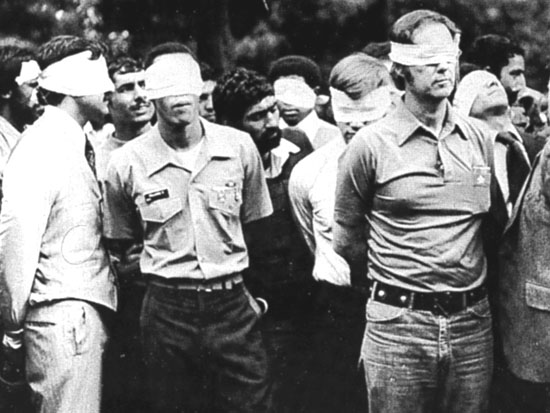
Tonight Judy and I went and saw the movie Argo. I saw it the day it opened here but Judy had not seen it. When the movie began with the storming of the U.S. Embassy in Teheran on November 4th 1979 I looked at Judy and said, “it is the anniversary.” It is hard to believe that 33 years ago was when that event happened. At the time Judy and I were still in the early stages of our courtship and it was then that I decided that I would enter the military.

I enlisted in the Army National Guard and entered Army ROTC after the hostages were released. I had been accepted into the Air Force ROTC program in early 1980 but waited a year and did the Army because I needed the money provided by a summer job that could not be made up in a 4 week Air Force Summer camp before the school year began in 1980. Such is life when you didn’t get any academic scholarships and chose to attend college in a high cost of living area.

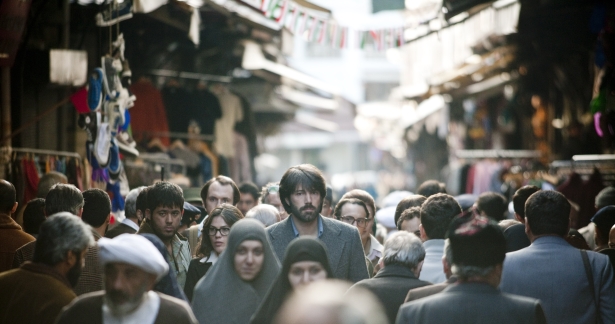
The hostage crisis was an event that changed my life and watching the film Argo was a very emotional experience the first time that I saw it and brought tears to my eyes again tonight. It was so well done and having travelled in much of the Middle East and been surrounded by crushing crowds in Bazaars, thankfully without being accosted for taking pictures and going through various Middle Eastern nation airport security checkpoints, as well as numerous other countries in Europe and Asia I could feel a bit of the anxiety rise in me as the film showed the American fugitives from the embassy as they went through the motions of being Canadians. There have been a number of times when traveling alone on official Navy business to countries after 9-11 that I relied on my skills in German to pass a German when accosted in public for being an American in a foreign country rife with anti-American sentiments.  Thank God for bad grammar and a Bavarian accent.

So now 33 years later I am still in the military and the United States and Iran are still mortal enemies and if some politicians, pundits and preachers have their way will be at war with each other, for some the sooner the better.  I personally don’t understand the mentality of people that have never, or will ever serve in the military who preach a Gospel of war, of pre-emptive war under the guise of “protecting America.” Having seen the effects of the war-mongers that preach “pre-emptive” war in Iraq, both on the people of that unfortunate country and our own troops I cannot fathom yet another pre-emptive war. But there are plenty of politicians, pundits and preachers, the Unholy Trinity of war and pestilence who seek such a war with Iran. Of course should Iran ever attack us that is another matter, but to launch another war after we destroyed the military potential and power of Iran’s natural and traditional enemy Iraq which kept the Iranians at bay is altogether one of the most stupid ideas ever dreamed about, especially when the American military is stretched thin with close to 70,000 troops exposed to disaster in Afghanistan if supply lines are cut and Iran becomes more actively involved.

In January 1980 Jimmy Carter gave final approval to CIA operative Bob Mendez’s operation to bring those 6 Americans out of Iran. Since the publicity could have caused harm or death to the other American hostages held by the Iranians Carter gave the credit to the Canadians. He ordered a military operation to free those hostages which ended in disaster and would go on to lose his re-election to Ronald Reagan in 1980. Back then I did not appreciate anything that Jimmy Carter did but I have to respect the fact that he was willing not to claim credit for something that could have helped his re-election campaign in order to protect the lives of Americans.

Afghanistan is something else that hasn’t changed that much. In December 1979 the Soviets invaded that country and the United States would supply and support the Afghan Mujahideen. Some of these became the nucleus of the Taliban who along with their Arab “foreign fighter” allies under Osama Bin Laden became Al Qaeda. The Reagan administration began a program in 1985 to trade arms to Iran for American hostages with monetary proceeds being used to fund Nicaraguan rebels which resulted in the Iran-Contra affair. Both of funding of the Mujahideen and the Iran-Contra affair have come to cause the United States much grief in both the Middle East and Central and South America.

Both were short term expedient operations conducted without long term though to the results of both for American prestige as well as foreign policy, politics, economics and military operations since.

Hindsight is not a bad thing, but foresight is much better. Perhaps we can learn not to repeat the follies of those that helped create the world that we now live.

Peace

Padre Steve+

1 Comment

Filed under film, History, movies, News and current events

Where Were You on 9-11-2001? Share Your Memories

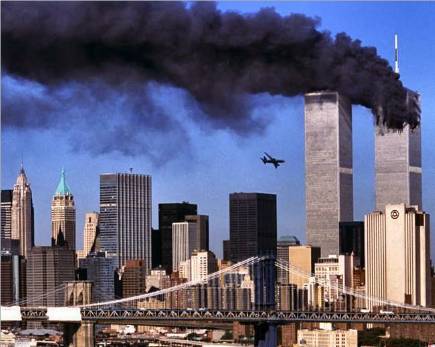
I was reminded today about how the terrible events of September 11th 2001 are part of our national fabric and how those that remember that day have in some way been affected by it. Most of us I am sure remember where they were when they found out and what they were doing. I have written about my experience at Camp LeJeune but I know that others have just as vivid memories.

I was asking one of my sailors where he was on 9-11. He is young, just a year in the Navy and he replied that he was in 3rd grade. He explained that he remembers his teachers and other adults in states of shock and disbelief. He said that as a kid the significance was not understandable, that the pictures looked like a movie.

One of my friends who I served with in Germany early in my Army career was a hospital administrator at a large medical center on the New Jersey side of the Hudson across from Manhattan when the towers were hit and how he watched from his office as the towers burned and fell.

I have many friends from the USS Hue City which I reported aboard in December 2001 who were at sea and after the attack patrolled the East Coast. Another one of my friends who works with me on our pastoral care staff was in the gym at 29 Palms following a combined arms exercise with the 2nd Marine Regiment when the news showed the second aircraft hitting the South Tower of the WTC. He informed his disbelieving commanding officer of the attack.

My wife Judy was in a doctor’s office waiting room when the news came on the television. She said to a friend who was with her that “it was terrorism” and the friend said “that damned Saddam Hussein.”

I had friends that served as first responders or provided support to first responders at the site. Many were clergy, both Navy Chaplains serving with the US Coast Guard and civilian clergy.

Quite a few of the young Sailors, Marines, Soldiers and Airmen that I have served alongside joined following in the days, months and years after 9-11-2001 because of that terrible event. Others who had done their time on active duty volunteered as Reservists or National Guardsmen to return to active duty .  They are part of the 9-11 Generation, a new Greatest Generation, who have served in the longest and most far flung war in our nation’s history.

I believe that we should never forget that day and the lives of those that were killed or injured during the attack, the families who lost husbands, wives, children or parents and those that laid down their lives going up to save lives even as the buildings came down. Some of us knew people killed in the attacks. One of my Army Officer Basic Course Classmates, Lieutenant Colonel Karen Wagner died in the Pentagon. Other friends and comrades have died in the wars in Afghanistan and Iraq. For their sake we should remember and never forget 9-11-2001.

Many of us have gone to war, deploying more than once to Iraq, Afghanistan or the Arabian Gulf, the Horn of Africa and other less known theaters of the Global War on Terrorism. Over 6,000 of us, twice the number killed on 9-11-2001 have died in those wars, tens of thousands of others wounded and forever changed. The name Operation Enduring Freedom is no misnomer, it has gone on far longer than anyone of us imagined that it would.

However on 9-11-2001and in the days following that day Americans stood as one. Liberals and conservatives, Republicans and Democrats, straight and gay, religious people and non-religious people, secularists and humanists, Christians of all denominations, Jews, Hindus, Sikhs, Buddhists, followers of Wicca and earth based religions and American Moslems who often took the brunt of others anger for the actions of the terrorists all stood together. We were Americans again.

We have lost unity that over the past eleven years and all of us, especially those  probably share some of the blame for the division. I do hope that as we remember the events of 9-11-2001 that we somehow recover a sense that we are all in this together and come together as Americans no matter which political party is in power.

Tomorrow at the Naval Hospital that I serve we will mark the events of 9-11-2001 with a small ceremony at morning Colors and have moment of silence at the time of the first attack. Others around the country, especially at the World Trade Center where the Freedom Tower is rising, the Pentagon and in Somerset County Pennsylvania will have more elaborate ceremonies. Regardless of where we are we will be one in spirit.

I invite anyone reading this to share in the comments your memories of the day, perhaps your experiences of it.

Peace

Padre Steve+


1 Comment

Filed under History, News and current events

Remembering the Killing of Osama Bin Laden While Realistically Looking at Afghanistan and Pakistan

A year ago US Navy SEALs from SEAL Team Six and other Special Operations Forces made a daring night raid into Pakistan to kill Osama Bin Laden.  Bin Laden had orchestrated the Al Qaeda attacks on September 11th 2001 which killed over 3000 Americans, the near sinking of the US Navy Destroyer USS Cole, the Luxor Massacre of 1997 and the bombings of the US Embassies in Dar es Salaam Tanzania and Nairobi Kenya in 1998 and numerous other terror attacks throughout the Middle East. Bin Laden was the sworn enemy of the United States. The killing of Bin Laden was a victory, perhaps the biggest victory that we have achieved in over 10 years of war. In fact Bin Laden was the reason we went to war, the reason that we became embroiled in Afghanistan.

Bin Laden had been the “guest” of the Afghan Taliban government and used Afghanistan as his base of operations to train his fighters and plan his operations. After September 11th the United States attacked Afghanistan, toppled the Taliban and put Bin Laden on the run. Pakistan which had supported the Taliban government following the fall of the former Soviet supported Republic of Afghanistan and subsequent civil war which brought the Taliban to power. Pakistan’s President Musharraf quickly allied his country with the United States.  However over the course of the 10 year war in Afghanistan the government and certain elements of its security and intelligence services gave tacit support to the Taliban as well as Al Qaeda. The most damning was the fact that Bin Laden had resided in the Pakistani military town of Abbottabad with a significant amount of his family for five years.

President Obama gave the order for the SEAL team to kill Bin Laden over the objections of his Vice President and Secretary of Defense. It was a ballsy move. If it had gone wrong which it easily could have many US troops could have been killed, captured and placed on display by the Pakistani government.  The credit to the planning and execution of the operation has to go to the SEALs and Special Operations Command, but credit for the order to do it needs to be given to the President.  If President Bush had succeeded in killing Bin Laden I would feel the same way.

The fact is that President Obama has been successfully waging war against Al Qaeda, not only killing Bin Laden but other top leaders. Even Bin Laden before his death was concerned about the toll being taken on his organization by the reinvigorated US campaign.  The Pakistanis enraged by the United States taking the war against Al Qaeda and its Taliban allies inside Afghanistan, something that it should have been doing but had not despite Jihadist terrorist attacks on it cut the supply lines to US and NATO forces running through it months ago and have not reopened them. Some ally.

But that is not surprising. As far back as November 1979, before the Soviets intervened in Afghanistan the US Embassy was ransacked and burned by Pakistani mobs, an attack which killed a US Marine. The Pakistanis only began to reluctantly cooperate with the United States in supporting some of the Afghan Pashtun Mujahideen fighters.  After the Soviets left Afghanistan it continued to support its Pashtuns against Uzbek and Tajik Afghans, support which eventually allowed the Taliban to take over the country. Despite US protests in the 1990s the Pakistanis did little to nothing to hinder Bin Laden, Al Qaeda or the Taliban regime. While it quickly and officially “supported” the US under former President Musharraf factions within its ISI intelligence service are believed to have continued to support Taliban and Al Qaeda fighters and encouraged attacks on US, Afghan and  NATO troops.

Pakistan itself teeters on the edge of collapse. Its economy is in shambles, it cannot control its borders, its intelligence service is often at odds with the government while extremist groups gain more power every day. It is a rapidly failing state with nuclear weapons. Every day it grows more antagonistic towards the United States which under the Obama Administration had been persistent in using arial drones to attack suspected terrorists in Pakistan. The relationship between the United States and Pakistan is as bad or worse as it was in 1979.

In the mean time our former nemesis the Russian Federation, the former Soviet Union has been stalwart in allowing our troops and supplies to flow through their country and the neighboring Central Asian Republics into Afghanistan. The Russians having experienced the agony of Afghanistan and the reality of Jihadist terrorism emanating from it as well as Chechnya do not want the US and NATO mission to stabilize Afghanistan to fail.  Currently without the support of the Russians we would be unable to supply our troops in Afghanistan.

Today President Obama travelled to Afghanistan and announced the signing of a long term security and cooperation agreement with the Afghan government. The agreement will take effect after the current plan to withdraw most US and NATO troops by 2014. We have no idea how well this will turn out and despite all the good intentions on our part I doubt that the agreement stands the test of time because of the nature of Afghanistan and its competing ethnic, religious, political and tribal divisions. It is my belief that we will be lucky to get out as well as the Soviets did in 1989 because I do not see a truly united Afghanistan coming out of this and it is more than likely that Pakistan will descend into chaos making our presence in Afghanistan even more problematic.

The mission started to get Bin Laden after 9-11. In the process it became something different as we attempted to transform Afghanistan. A year ago we finally succeeded in killing Bin Laden and have significantly degraded Al Qaeda.  That is why we went to war.  That is probably the best it will get.

At some point President Obama or his successor will likely have to decide to withdraw completely from Afghanistan and like former Soviet Premier Gorbachev admit that “We are not going to save the regime. We’ve already transformed it.”

Peace

Padre Steve+

1 Comment

Filed under History, iraq,afghanistan, national security, News and current events

Unforced Errors: The Bane of the American-NATO Campaign in Afghanistan

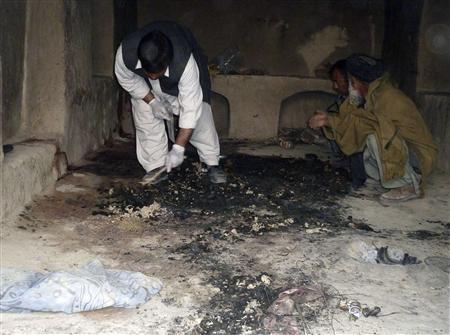
The Scene at one of the Houses (Reuters: Ahmad Nadeem) 

The efforts of the United States in Afghanistan and chances of coming out with anything resembling a successful conclusion to the longest war in its history are being destroyed by unforced errors. Of course anyone who watches any kind of sporting event knows that there are many times that the team that should win self destructs by committing unforced errors that result in them losing a game. In football they might be penalties, fumbles or badly thrown balls that result in interceptions. In basketball the errant pass, the bad foul, the unforced turnover in baseball the error that costs a game. However in war unforced errors cost precious lives, harm the strategic goals of a nation and lead to greater suffering of the populations affected.

Today we learned that a US Army Staff Sergeant went on a rampage in the Afghan villages near his base in Kandahar killing 15 or 16 Afghan civilians including 9 children and 3 women. The killings were particularly brutal. We don’t know details except that some reports indicate that the sergeant had recently had a breakdown and had deployed at least one other time to Iraq or Afghanistan. I would guess that he had multiple deployments.  The initial reports say that he was assigned to troops supporting a Special Forces team that was working with the local villagers.  Some Afghans say that more than one soldier was involved although NATO says that the soldier acted alone.

The murders come after the accidental burning of a Koran sparked riots and attacks on US and NATO forces killing 6 NATO soldiers including 2 US officers working inside a secure area of the Afghan interior ministry. They also follow the video display of Marines urinating on the bodies of dead Taliban and the trial and conviction of soldiers who had their own killing team. All the incidents were unrelated and none had the imprimatur of the American or NATO command.  However like the My Lai massacre committed by the platoon led by Lieutenant William Calley during the Vietnam War the crimes have tarnished the honor of the US military and are undermining all efforts to bring about a successful conclusion to the war in Afghanistan.

Unforced errors do not help when the strategic goals are totally dependent on the cooperation and goodwill of the populace of the country that you are operating in and trying to secure. The whole tenant of Counterinsurgency Warfare is securing the population and by doing that bringing them to cooperate with you. If you do not have the massive numbers of troops to actually secure the country yourself it is doubly important. In fact by doctrine there should be 4 times more troops to conduct a successful counterinsurgency campaign. In places where the indigenous forces are larger and more capable some or even much of the burden can be born by them, however the Afghan National Army and National Police are able to shoulder the burden. Riddled with corruption, plagued by incompetent leaders, poor discipline, high desertion rates and awash in Taliban sympathizers. A growing number of American and NATO soldiers have lost their lives in attacks from the Afghan soldiers and police working alongside of them.

Of course there are other factors such as that the government of the country must inspire the confidence of its own people in order to turn back an insurgency.  Afghanistan is “governed” if one can call it that by the regime of Mohammed Karzai. The government can most charitably be described as corrupt and incompetent.  However the Karzai government has little power or authority outside of Kabul.  It has little control over its own security forces or for that matter even regional governors who function in a near autonomous fashion as best benefits them personally or the tribe that they belong.  A shadow government of the Taliban factions often hold as much real power over the people as the “legitimate” government.  The biggest money maker is the Opium trade as Afghanistan is one of the top Opium producers in the world. The real truth is that for all practical matters Afghanistan is for all practical purposes a narco-State run by criminals and thugs of different factions.

Afghanistan also is a nation whose people believe that it is an offense against Islam foreigners to occupy the country. The Afghanis have shown their resolve against every invader and though successfully invaded they have never been long occupied nor cooperated well with their occupiers, even those that considered themselves liberators. As such the campaign to rid Afghanistan of the Taliban and bring about some form of democracy has had little chance of success after forces were diverted to the invasion of Iraq.

The latest incident will cause more American and NATO soldiers to die and will likely erase any possibility that we can succeed in our goal of an orderly train up of Afghan security forces and transfer of the conduct of the war to them.  It is very likely that the situation on the ground will get worse, perhaps markedly worse.  The American military will do the right thing regarding the investigation and prosecution of this case but that investigation may prove to show how bad things have become.

Unforced errors.  I don’t know how to overcome them.

Peace

Padre Steve+
Leave a comment

Filed under Foreign Policy, History, iraq,afghanistan, Military, national security

God in the Empty Places: Four Years Later

Four years ago I was leaving Iraq for Kuwait, the first stop in the process of coming home.  At that point I wanted to go home but I didn’t want to go either. It was the beginning of a new phase in my life.  I wrote an article shortly after my return for the church that I belonged to at the time. I am reposting article here tonight.  

When I wrote it I really had no idea how much I had changed and what had happened to me.  I feel s special kinship with those that have fought in unpopular wars before me. French Indochina, Algeria and Vietnam, even the Soviet troops in Afghanistan before we ever went there.  

I am honored to have served with or known veterans of Vietnam, particularly the Marines that served at the Battle of Hue City, who are remembering the 44th anniversary of the beginning of that battle.  My dad also served in Vietnam at a place called An Loc. He didn’t talk about it much and I can understand having seen war myself. 

There are no new edits to the article. When I wrote it I was well on my way to a complete emotional and spiritual collapse due to PTSD.  Things are better now but it was a very dark time for several years and occasionally I still have my bad days. Today was a day of reflection.  As I walked my little dog Molly down the street tonight to the beach I looked up at the moonlit sky and I was as I have been thinking lately about seeing all of those stars and the brilliance of the moon over the western desert of Iraq near Syria. Somehow that sight now comforts me instead of frightens me. 

Tonight our Soldiers, Marines, Sailors and Airmen serve in harm’s way nearly 100,000 in Afghanistan alone. We are out of Iraq but Lord knows how things will turn out in the long run there.  

Anyway. Here is is.

God in the Empty Places. 

I have been doing a lot of reflecting on ministry and history over the past few months. While both have been part of my life for many years, they have taken on a new dimension after serving in Iraq. I can’t really explain it; I guess I am trying to integrate my theological and academic disciplines with my military, life and faith experience since my return.

The Chaplain ministry is unlike civilian ministry in many ways. As Chaplains we never lose the calling of being priests, and as priests in uniform, we are also professional officers and go where our nations send us to serve our Soldiers, Sailors, Marines and Airmen. There is always a tension, especially when the wars that we are sent to are unpopular at home and seem to drag on without the benefit of a nice clear victory such as VE or VJ Day in World War II or the homecoming after Desert Shield and Desert Storm.

It is my belief that when things go well and we have easy victories that it is easy for us to give the credit to the Lord and equally easy for others to give the credit to superior strategy, weaponry or tactics to the point of denying the possibility that God might have been involved. Such is the case in almost every war and Americans since World War Two have loved the technology of war seeing it as a way to easy and “bloodless” victory. In such an environment ministry can take on an almost “cheer-leading” dimension. It is hard to get around it, because it is a heady experience to be on a winning Army in a popular cause. The challenge here is to keep our ministry of reconciliation in focus, by caring for the least, the lost and the lonely, and in our case, to never forget the victims of war, especially the innocent among the vanquished, as well as our own wounded, killed and their families.

French Paratroop Corpsmen treating wounded at Dien Bien Phu

But there are other wars, many like the current conflict less popular and not easily finished. The task of chaplains in the current war, and similar wars fought by other nations is different. In these wars, sometimes called counter-insurgency operations, guerrilla wars or peace keeping operations, there is no easily discernible victory. These types of wars can drag on and on, sometimes with no end in sight. Since they are fought by volunteers and professionals, much of the population acts as if there is no war since it does often not affect them, while others oppose the war.

Likewise, there are supporters of war who seem more interested in political points of victory for their particular political party than for the welfare of those that are sent to fight the wars. This has been the case in about every war fought by the US since World War II. It is not a new phenomenon. Only the cast members have changed.

This is not only the case with the United States. I think that we can find parallels in other militaries. I think particularly of the French professional soldiers, the paratroops and Foreign Legion who bore the brunt of the fighting in Indochina, placed in a difficult situation by their government and alienated from their own people. In particular I think of the Chaplains, all Catholic priests save one Protestant, at the Battle of Dien Bien Phu, the epic defeat of the French forces that sealed the end of their rule in Vietnam. The Chaplains there went in with the Legion and Paras. They endured all that their soldiers went through while ministering the Sacraments and helping to alleviate the suffering of the wounded and dying. Their service is mentioned in nearly every account of the battle. During the campaign which lasted 6 months from November 1953 to May 1954 these men observed most of the major feasts from Advent through the first few weeks of Easter with their soldiers in what one author called “Hell in a Very Small Place.”

Another author describes Easter 1954: “In all Christendom, in Hanoi Cathedral as in the churches of Europe the first hallelujahs were being sung. At Dienbeinphu, where the men went to confession and communion in little groups, Chaplain Trinquant, who was celebrating Mass in a shelter near the hospital, uttered that cry of liturgical joy with a heart steeped in sadness; it was not victory that was approaching but death.” A battalion commander went to another priest and told him “we are heading toward disaster.” (The Battle of Dienbeinphu, Jules Roy, Carroll and Graf Publishers, New York, 1984 p.239)

Of course one can find examples in American military history such as Bataan, Corregidor, and certain battles of the Korean War to understand that our ministry can bear fruit even in tragic defeat. At Khe Sahn in our Vietnam War we almost experienced a defeat on the order of Dien Bien Phu. It was the tenacity of the Marines and tremendous air-support that kept our forces from being overrun.

You probably wonder where I am going with this. I wonder a little bit too. But here is where I think I am going. It is the most difficult of times; especially when units we are with take casualties and our troops’ sacrifice is not fully appreciated by a nation absorbed with its own issues.

For the French the events and sacrifices of their soldiers during Easter 1954 was page five news in a nation that was more focused on the coming summer. This is very similar to our circumstances today because it often seems that own people are more concerned about economic considerations and the latest in entertainment news than what is going on in Iraq or Afghanistan. The French soldiers in Indochina were professionals and volunteers, much like our own troops today. Their institutional culture and experience of war was not truly appreciated by their own people, or by their government which sent them into a war against an opponent that would sacrifice anything and take as many years as needed to secure their aim, while their own countrymen were unwilling to make the sacrifice and in fact had already given up their cause as lost. Their sacrifice would be lost on their own people and their experience ignored by the United States when we sent major combat formations to Vietnam in the 1960s. In a way the French professional soldiers of that era have as well as British colonial troops before them have more in common with our force than the citizen soldier heroes of the “Greatest Generation.” Most of them were citizen soldiers who did their service in an epic war and then went home to build a better country as civilians. We are now a professional military and that makes our service a bit different than those who went before us.

Yet it is in this very world that we minister, a world of volunteers who serve with the highest ideals. We go where we are sent, even when it is unpopular. It is here that we make our mark; it is here that we serve our Soldiers, Sailors, Marines and Airmen. Our duty is to bring God’s grace, mercy and reconciliation to men and women, and their families who may not see it anywhere else. Likewise we are always to be a prophetic voice within the ranks.

When my dad was serving in Vietnam in 1972 I had a Sunday school teacher tell me that he was a “Baby Killer.” It was a Catholic Priest and Navy Chaplain who showed me and my family the love of God when others didn’t. In the current election year anticipate that people from all parts of the political spectrum will offer criticism or support to our troops. Our duty is to be there as priests, not be discouraged in caring for our men and women and their families because most churches, even those supportive of our people really don’t understand the nature of our service or the culture that we represent. We live in a culture where the military professional is in a distinct minority group upholding values of honor, courage, sacrifice and duty which are foreign to most Americans. We are called to that ministry in victory and if it happens someday, defeat. In such circumstances we must always remain faithful.

For those interested in the French campaign in Indochina it has much to teach us. Good books on the subject include The Last Valley by Martin Windrow, Hell in a Very Small Place by Bernard Fall; The Battle of Dienbeinphu by Jules Roy; and The Battle of Dien Bien Phu- The Battle America Forgot by Howard Simpson. For a history of the whole campaign, read Street Without Joy by Bernard Fall. I always find Fall’s work poignant, he served as a member of the French Resistance in the Second World War and soldier later and then became a journalist covering the Nuremberg Trials and both the French and American wars in Vietnam and was killed by what was then known as a “booby-trap” while covering a platoon of U.S. Marines.

There is a picture that has become quite meaningful to me called the Madonna of Stalingrad. It was drawn by a German chaplain-physician named Kurt Reuber at Stalingrad at Christmas 1942 during that siege. He drew it for the wounded in his field aid station, for most of whom it would be their last Christmas. The priest would die in Soviet captivity and the picture was given to one of the last officers to be evacuated from the doomed garrison. It was drawn on the back of a Soviet map and now hangs in the Kaiser Wilhelm Memorial Church in Berlin where it is displayed with the Cross of Nails from Coventry Cathedral as a symbol of reconciliation. I have had it with me since before I went to Iraq. The words around it say: “Christmas in the Cauldron 1942, Fortress Stalingrad, Light, Life, Love.” I am always touched by it, and it is symbolic of God’s care even in the midst of the worst of war’s suffering and tragedy.

Peace

Padre Steve+
Leave a comment

Filed under History, iraq,afghanistan, Military, PTSD, Tour in Iraq

Casing the Colors in Iraq

Today the colors were cased in a ceremony at the US Airbase co-located at the Baghdad International Airport.  It really is hard to believe that this excursion in Mesopotamia is over.  The ceremony marked the formal end to the US military operation in Iraq although a few thousand troops are finishing the retrograde of equipment from the country.

The fact that we might not end up in Iraq again if the Iranians push their Iraq Arab Shia friends too hard. They may share a common strain of Islam but there really is no love lost between the Arabs and the Persians as many Iraqis will derisively call them.  The Iraqis are a proud people and remember Persian rule like it was yesterday. The Persians treated Arabs like dirt and though it was centuries ago the Arabs have not forgotten.  My Iraqi friends both Sunni and Shia recognized that Iran was a threat and hope that if Iran ever attempted to take Iraq over that we would help defend Iraq.

The current US involvement is over after 4484 American service members were killed in action and 32000 wounded.  318 coalition Allied troops died.  The Iraqi Security Forces have lost 8825 soldiers killed with a further 1300 killed during the initial invasion of the country.  Over 100,000 Iraqi civilians are believed to have been killed and some agencies have estimated far higher totals.  Of course the Iraqis are still taking casualties as extremist groups both Shia and Sunni continue their blood feud and the Shia majority tries to solidify its power over the minority former ruling party Sunni.  Over a trillion dollars was spent on the war by the United States and long term costs are expected to reach 2-3 Trillion dollars.  Of course Iraq is still reeling from all of the damage and its involvement in wars with Iran from 1980-1988, the invasion of Kuwait by Saddam Hussein in 1990 and the United States response Operation Desert Storm, the post war sanctions and the enforcement of an oil embargo and a no-fly zone to keep Saddam contained even as he butchered thousands of Iraqis who rose up against him after he was driven from Kuwait and the the current war which began in 2003.

But the numbers are not just numbers, behind every one is a family, wives, husbands, parents, siblings and children as well as friends.  Every one has a name and a face and all meant something to somebody and left a void when they died or were irreversibly changed by the war.  That pain and cost will go on for a long time and there are no words that adequately compensate for these losses. Faith and trust in God’s grace help some but others struggle, even believers.  That I know for a fact because I still do.

I remember flying into Baghdad in 2007 it was the height of the “surge” and I was going to provide Chaplain support to US Advisors to Iraqi Army, Border, Police and other Security Forces in Al Anbar Province.  At the time the base was shelled and when we exited the aircraft it was no peacetime drill we left in our full gear and were brief on what to do should we encountered incoming fire.  It was in Baghdad that I first experienced a rocket attack when one flew over my head.  But now the bases are empty, it must be surreal to be one of the last Americans leaving the country.

For me the end of our involvement is a strange experience.  It was hard to believe in 2007 that we would ever leave. The great edifices that we erected around country some of which were going up even when I was there are mostly empty except for some taken over by the Iraqi military.  Former military bases even in this country are a surreal site.  I have been to a number that were closed following the end of the Cold War.  Fort Wolters Texas near Fort Worth is an example. When I would go to a small section of the base used by the National Guard I would go past many mostly unused buildings including what had been a brand new hospital which opened just before the base was closed following Vietnam. The last time I flew through the former George Air Force Base  when going to and returning from Twenty-Nine Palms it was a ghost town except a few businesses and hundreds of former commercial jets parked on the tarmac. I remember going through recently closed American bases in Germany in the 1990s and saw installations empty. I was also the final Federal Chaplain at Fort Indiantown Gap Pennsylvania when it was transferred to the National Guard.  Built during World War II it was a throwback to a different era. The base has been revitalized as a sizable ground and aviation training center by the Guard with much new construction but the sight of all the World War II “temporary” wooden buildings was amazing. Vast areas of the base we unused and some complete areas were demolished. I helped in getting the main Post Chapel Renovated in order that the existing congregation would be able to continue with a contract Chaplain paid by the Guard and activated or drilling Guard Chaplains.  We had to decommission or convert some to other uses and saved one which was donated to a church 40 miles away who paid to have it deconstructed and rebuilt on their own land. But I digress…

When I was in Iraq in many places there were the remains of Saddam Hussein’s military.  The base that I operated from had a number of abandoned or damaged Iraqi bombers and fighter aircraft parked at it.  Of course most of the existing buildings were converted to American use.  The biggest of these were the Al Faw Palace complex at Camp Victory but Camp Fallujah was the site of one of the Baath Party resorts used by Uday and Qusay Hussein.  I stayed there couple of days while traveling from Baghdad to Taqaddum which was my base of operations because of the capability to get around by air to where I needed to go and proximity to many advisor teams supporting the Iraqi First and Seventh Divisions.

Back then all were major bases with a large American presence which was inflated by many of the contractors, American and from other countries that supported base operations from the chow hall, to the laundry, the fire department and even the cleaning of the shower trailers and countless porta-johns.

People will debate for many years whether the war was worth it and I can only say that I hope that history will show that it was despite the huge loss of life, the destruction of a country and the vast expenditure of the national treasury.  It is probably too early to make that judgement, we tend to be pretty bad in making those decisions in the moment.  That is one of the problems in this age of information overload.  We have lots of data but no historical context and we make decisions that we think are correct but find out years later were tragically erroneous.

At the same time we cannot go back in time and change the past. For good or for bad we have to go forward from now and hopefully in time Iraq and its people will recover from the effects of over 30 years of war and economic sanctions.  We will find out over the next 10 to 50 years what the real effect is.  But for now we are left with a weak Iraq, a strong and threatening Iran and our own diminished military capacity and weak economy as well as a war that is not going well in Afghanistan.

I doubt that that can give comfort to the families of those that died in Iraq or came back wounded in mind body or spirit.  I know that I came back different, PTSD has a way of doing that.

But I am proud of the Marines, Soldiers, Sailors, Airmen and Iraqi officers that I served alongside in the badlands of Al Anbar Province mostly far away from the immediate help of any big units if they got in trouble.  I know how valiant and skilled they were fighting Al Qaida Iraq and other insurgents and even foreign fighters from places like Chechnya aided by Iran and others.  It was a brutal fight at times but the men of the Iraqi 1st and 7th Divisions and our advisors helped turn the tide during 2007 and 2008.  Without their diligence and toughness combined with the help of Iraqi civilians the war would have ended differently.

Tonight as I walked the dog to the beach I looked up at the sky. In our neighborhood there are not many street lights and most are clustered in one small area. Since many residents are not here in the winter many of the homes are dark as well and there are areas that have no houses but are lots covered in pine trees.  In the dark I was thinking about Iraq and I could hear the sound of the sea crashing on the beach.  I looked up at the sky and saw the most stars I have seen since being out on the Syrian border in December 2007.  I was reminded that I left part of me in Iraq and I pray for the Iraqis that I served with and those that provided us hospitality during our missions.

As I walked I thought of the words of Otto Von Bismarck one of the greatest statesmen that every lived.  Our war in Iraq was a preventive war.  Bismarck said that “Preventive war is like committing suicide out of fear of death.”  I pray that in our case that he was not right and that we think long and hard before entering another preventive war with anyone.  Bismarck, who knew war commented that “Anyone who has ever looked into the glazed eyes of a soldier dying on the battlefield will think hard before starting a war.” Unfortunately the vast majority of our elected leaders have ever done that.  Bismarck was certainly no pacifist but warned us that “I consider even a victorious war as an evil, from which statesmanship must endeavor to spare nations.”

The world is not a safe place and our near about 140,000 US and NATO troops are still engaged against a stubborn enemy in Afghanistan that has been aided by wavering allies such as Pakistan and sworn enemies like Iran.  War seems to threaten on many fronts.  I pray that we will be prudent before entering another.

I have rambled a bit tonight because I have so many thoughts and images of the war.  I trust your indulgence.  But for now the colors have been cased and our military involvement in Iraq is over.  We can only pray that Iraq will recover and become a free and prosperous country that treats its citizens well and that we too will recover from this war.  But then Bismarck is sometimes quoted saying that “There is a Providence that protects idiots, drunkards, children, and the United States of America.” I do hope that if he did say this that he was right.

Peace and and as my Iraqi friends would say Inshallah (إن شاء الله)

Padre Steve+
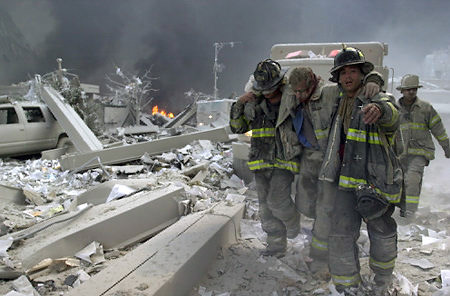
1 Comment

Filed under iraq,afghanistan, PTSD, Tour in Iraq