Tag Archives: al anbar province

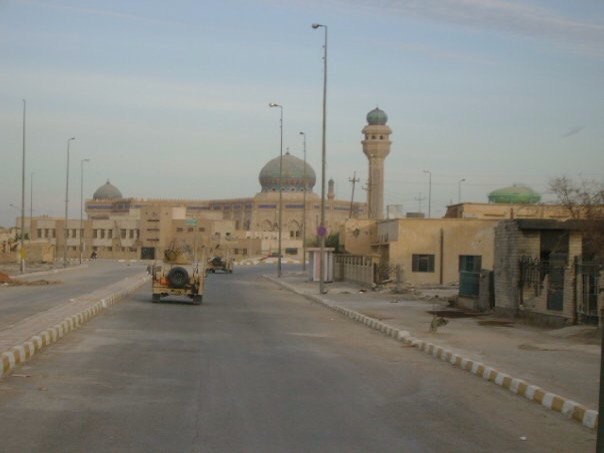
Tears for Ramadi


“We had been hopelessly labouring to plough waste lands; to make nationality grow in a place full of he certainty of God…among the tribes our creed could be only like the desert grass – a beautiful swift seeming of spring, which, after a day’s heat, fell dusty.” T.E. Lawrence 

Tonight I write about Ramadi, a place where I spent some of the best worst days of my life. A place where like T.E. Lawrence I gave of myself to help the Arabs, in my case the Iraqi tribes, in his those of the Arabian Peninsula. 

  
My life was changed forever in Iraq and in my time there I came to appreciate the Iraqis that I met. 

I am not writing tonight to talk a bunch of military-political analysis, God knows that I do enough of that as it is. As my own life settles down I probably will do this, but with just a couple of observations will avoid that tonight. It will suffice to say that Ramadi, the capital of Al Anbar Province fell to the Islamic State over the weekend. The city has been besieged for months by ISIL forces and fell to them, surviving military and police units fled the onslaught accompanied by thousands of residents. The Iraqi Governmnet claims that it will retake Ramadi and the local Sunni government officials are now reluctantly supporting the introduction of the Iranian backed Shia militias which recently recaptured Tikrit. The significance of this cannot be overstated, the people of Ramadi are caught between the Sunni fanatics of ISIL and the the Shia dominated central government in Bahgdad who they neither love or trust and with good reason. 

  
I have no doubt that eventually the Iraq government supported by the Shia militias will re-take Ramadi for the city is far too important to be allowed to remain until ISIL control. But it will not happen overnight and the battle will be fought to the death between the radical Sunni and the radical Shia whose bloodlust and hatred of each other will create an even more catastrophic situation for those who cannot escape the city or who have been forced into refugee camps or into the open desert. 

  
When I think of the appalling decision of the Bush administration to overthrow Saddam Hussein, his Ba’ath Party and military, which is the major reason this is now happening I get very angry. I think of the thousands of American Soldiers, Marines, Sailors and Airmen, as well as those of our coalition allies and the Iraqis who lost everything by supporting us and I weep. I still see the carnage, devastation inflicted by us on Iraq, as well as that done by the Al Qaida Iraq insurgents and the suffering of the people of Anbar whenever I close my eyes and try to sleep. 

  
We did hope for better days, especially after the Anbar Sunnis rose up against AQI and helped us drive them out. However, that hope was like the desert grass, squandered by the inept, corrupt and insanely treacherous Maliki regime which as soon as it could turned on the Anbar Sunni in 2010 and 2011 and planted the seeds of another, even more viscious insurgency. 

  
Iraq is now ground zero in the war being waged between Sunni and Shia Islam, a war which will devastate the Middle East much as the Thirty Years War waged by warring factions of Catholic and Protestant Christians did to Europe. Like that war it is a war which will go on until the borders are sealed by the blood of hundreds of thousands and maybe even millions of Arabs, sadly including the best and brightest of this and maybe the next generation, the very people who like men like me dreamed dreams. 


Today the places that were often my home away from home, places that we Americans new as Ramadi Main, Blue Diamond, the Shark’s Tooth, and so many others are under ISIL control. Places like Hit, Haditha, Ar Rutbah. Al Qaim, Waleed, Korean Village, Fallujah, Habbinyah are either under the control of ISIL or besieged. I travelled thousands of miles across Anbar working with our advisors and Iraqis, it is so much a part of me, and so tonight my heart breaks for the people of Ramadi and Al Anbar. 
  
Peace,

Padre Steve+

1 Comment

Filed under History, iraq, Loose thoughts and musings, Political Commentary, Religion, remembering friends

“Tho’ all the world betray thee” The Minstrel Boy

lastmass2

The Minstrel Boy (Thomas Moore)

The minstrel boy to the war is gone,
In the ranks of death ye will find him;
His father’s sword he hath girded on,
And his wild harp slung behind him;
“Land of Song!” said the warrior bard,
“Tho’ all the world betray thee,
One sword, at least, thy rights shall guard,
One faithful harp shall praise thee!”

The Minstrel fell! But the foeman’s chain
Could not bring his proud soul under;
The harp he lov’d ne’er spoke again,
For he tore its chords asunder;
And said “No chains shall sully thee,
Thou soul of love and bravery!
Thy songs were made for the pure and free
They shall never sound in slavery!”

The Minstrel Boy will return we pray
When we hear the news we all will cheer it,
The minstrel boy will return one day,
Torn perhaps in body, not in spirit.
Then may he play on his harp in peace,
In a world such as heaven intended,
For all the bitterness of man must cease,
And ev’ry battle must be ended.

(Last verse anonymous Civil War)

Seven years ago I was in the process of returning home from Iraq spending my last couple of days in country before flying out to Kuwait and then the United States. I was already in a rather melancholy state knowing that the Chaplain incoming higher headquarters had turned off my relief for Al Anbar Province after I had paved the way for him with all of the teams of advisors that I had worked with during my time serving them. My relief a personal friend was diverted to the Army advisors with a different Iraqi Division in the north of the country. I felt that the incoming senior chaplain had betrayed and abandoned the men that I worked so hard to care for. Later I heard that he had disregarded my heavily detailed after action reports and told at least one senior chaplain that he “had heard that I was out there but didn’t know if I had done anything.”

It was at that point that I realized that you could do your job and sacrifice yourself to complete a mission only to have someone with their own agenda do what they could to discredit you.  I felt betrayed and still do. I was asked by my therapist about this and frankly, though I have tried to forgive the feelings always come back.

Where the senior Chaplain that I worked for did all that he could to support my team’s mission and see that we were properly recognized at Multi-National Corps Iraq in Baghdad his successor dismissed our work. It was the first time in my Navy career that I had experienced that.  I think it was the fact that I worked for a non-traditional billet working for an Army led joint command outside the normal Navy-Marine Corps chain was a big part of this. Inter-service rivalries and the distain of those bound by conventional thinking are not new and those that have done such non-conventional work have frequently been treated in a similar manner.

I think that is why the line in the song “Tho’ all the world betray thee” means so much to me and w.a big reason why the song touches me in the way it does. It is a song of men changed by war.

Looking back there are some songs which are particularly meaningful to me after my time in Iraq that send a chill up my spine when I hear them. One of these is the patriotic Irish song The Minstrel Boy written by Thomas Moore while a student in honor of friends killed in the Irish Rebellion of 1798.  The song was very popular among soldiers of Irish descent in the American Civil War as well as soldiers fighting in Irish Regiments in World War One and World War Two.

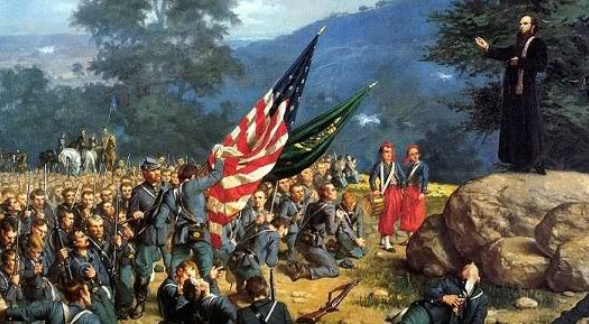
The song is powerful when you hear it for it speaks of the reality of war, war that changes those, even those that return home are not unchanged by it.  It speaks of the sacrifices required by those that go to war and even the effects on the community, the loss of young people.  The final verse added by an anonymous author during the American Civil War in a sense is a prayer, a prayer of return as well as reconciliation. It has been recorded a number of times including an instrumental during the film Blackhawk Down. Another rendition is in the telvision mini-series Rough Riders about the 1st U.S. Volunteer Cavalry at the Battle of San Juan Hill and one in the movie Gettysburg as Father Corby blesses the Irish Brigade.

william_corby_reformat

My life has been changed and faith challenged. When I went to Iraq I still maintained a sense of idealism.   After Iraq and having to deal with PTSD and a psychological, spiritual and physical breakdown as well as a profound sense of abandonment by some senior chaplains, my former church and even God I am a different person. My faith which had been shattered to the point of being a practical agnostic for nearly two years has returned and even now seven years later I struggle with belief, unbelief and faith in general, but I don’t think that is a bad thing. If we are not changed by what God allows or by what life brings I don’t think that we grow. As a Priest I wonder if I could work in the environment that I work without having gone through what I did.

hqdefault1

I see many of the “minstrel boys” and girls of our era and having also been to war and come back changed the last lines of the final verse is a prayer that I echo. One of the versions that I particularly like is the one sung in the Star Trek the Next Generation episode “The Wounded.” While it is only the first verse it deals with the lives of two officers whose lives are forever changed by war. http://www.youtube.com/watch?v=RJudJ9S579A

This is dedicated to all those who have served who have gone through the pain of war and return until war shall be no more.

Peace

Padre Steve+

Leave a comment

Filed under civil war, History, Military, movies, music, PTSD, Tour in Iraq

Christmas 2007 in Anbar: My Last Mass to Love…

lastmass

“It’s my last mass, my last mass to love…”

It’s funny how a slight twisting of the lyrics of a classic Disco song can blend with one’s wartime experience, instead of my last dance, it was my last mass, to love….

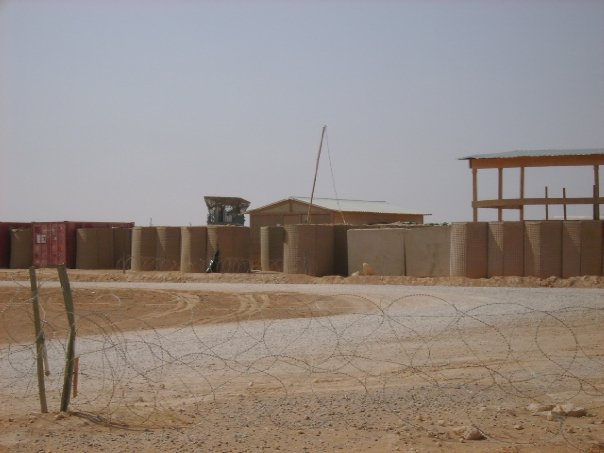
I was in Iraq in December 2007 on an 11 day expedition to American advisors to Iraqi Army and Border units in Al Anbar Province toward the end of my tour in Iraq. The mission was to provide chaplain support and spiritual succor to the American soldiers, marines, sailors, airmen and civilians, as well as the Iraqi and other Arab interpreters and contractors serving in incredibly isolated parts of the province near the Syrian border.

For me it was one of the last magical times in my life. I was exhausted and already suffering from insomnia and nightmares caused by PTSD that I was unaware of having, but while I was there that didn’t matter, in fact if I would have been allowed to extend in Iraq back then I would have. It was my life and the men and women that I served mattered more to me than anything. It still does…

copsouth

COP South

After a number of visits with other elements we traveled out to a small base near the Syrian border called COP South. It was the location of two teams of advisors, one which supported elements of the Second Border Brigade and one which supported the 3rd Battalion of the 3rd Brigade of the 7th Iraqi Army Division. We were not strangers to either team. Following the vista there we made our way to COP North, also along the Syrian border to do the same for two other advisor teams, one supporting a different Border unit and and the 2nd battalion of the 3rd Brigade of the 7th Division.

10400534_29132407058_7347_n

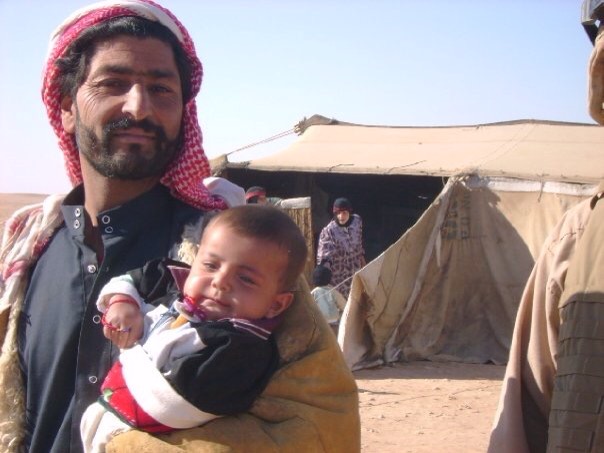
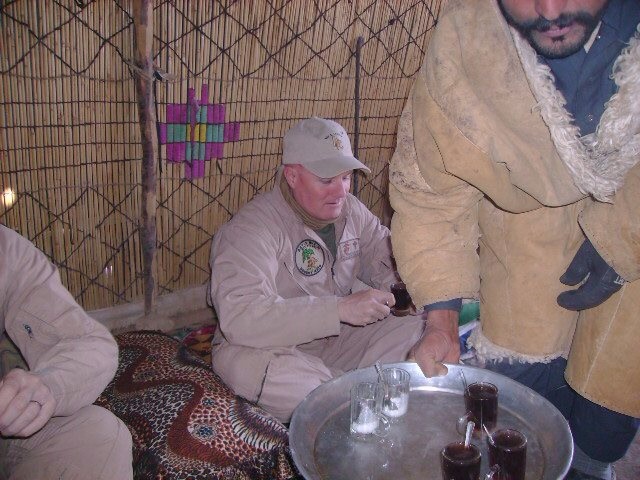
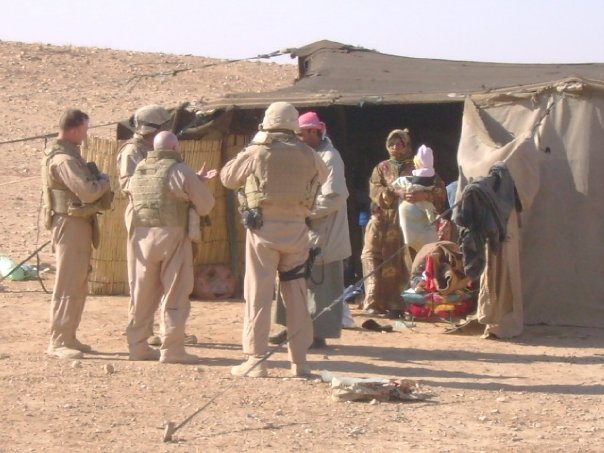
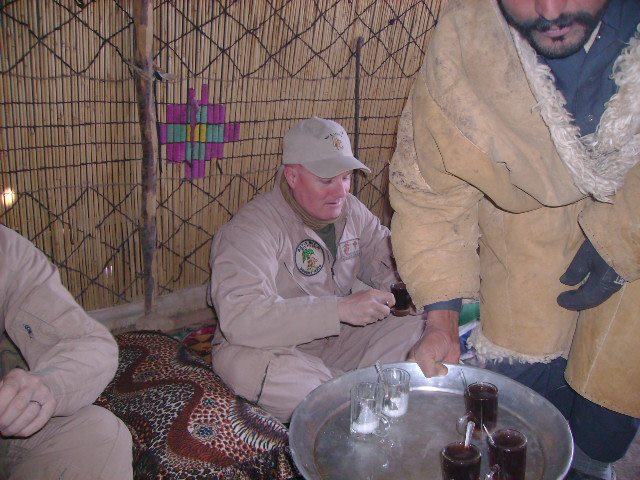
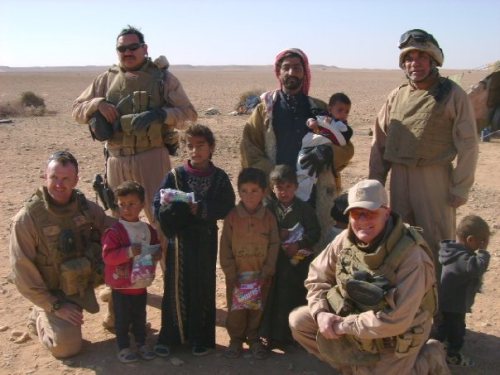
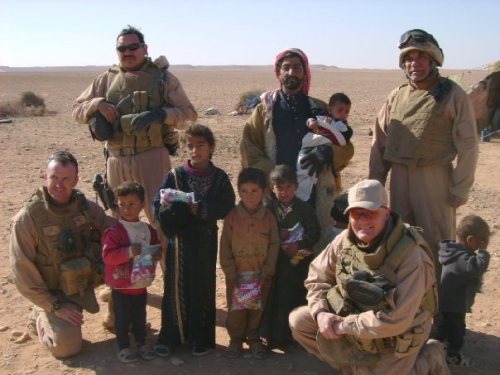
With the Bedouin on the Border, I’m the bald guy without the helmet. 

These outposts were terribly isolated. The men who served there served in incredibly austere conditions where danger lurked just beyond the sand berms that were the boundaries between them and the Islamist extremists of Al Qaeda Iraq and their supporters. The berms were not much comfort to anyone on either of the two most west most COPs in theater. Just to the west was Syria, a haven and support to the Al Qaeda Iraq insurgents and their supporters. All around were Iraqi Sunnis who many only recently had changed their allegiance to support the Americans against the largely foreign AQI forces.

The men that I served were not a typical congregation that you would find in the states. Methodists, Baptists, Presbyterians, Charismatics, Catholics, non-denominational types, Latter Day Saints and even a few Iraqi Christians, some who had not received Eucharist from any priest for years gathered for mass at COP South and COP North that Christmas of 2007. Iraqi Moslems wished us well. Peace on earth in the midst of war.

lastmass2

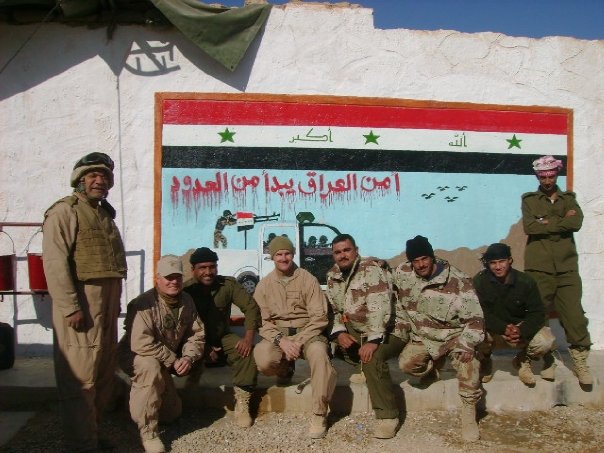
At Border Fort Five on the Syrian Border

As I mentioned I was exhausted. We had been on the road, flying and in small convoys of just a few vehicles since we arrived in theater, I was also on my last legs. I had stood with and stayed with the wounded, I had seen the destruction wrought on Iraqi facilities and people by both sides. All that mattered was to get out with the men and women who had no other formal spiritual support. I would have stayed another year to provide that support, but I knew that would not happen.

When they were done and we headed back to Ta’Qaddum, the base that we operated from I realized that the support we had provided was the high point of my military Chaplain career as well as my priesthood. Instead of my “last dance” as Dona Summer’s song said, it was my “last mass” to love.

Since then things have not been the same for me. I have talked and written about this before on this site, but those masses with those small groups of Americans and Iraqis meant more to me than any I have ever celebrated, especially those after my return from Iraq in 2008. For me, the magic and mystery have disappeared. I struggle with faith and belief even as I chose to believe in spite of my doubts.

There are times I wonder if it would have been better to have been killed by a rocket, an IED, an ambush or to have been shot down in Iraq, rather than to have to deal with this seemingly endless crisis of faith and to inflict my shit on those that I love. But then such is life and such is war.

Honestly I have to say that I believe again, but I am not sure why. I have to say that while I believe my doubts encompass me.

Christmas will never be the same for me. Yes, I have celebrated man masses since I returned, but to quote the Barry Manilow song, I’m “trying to get the feeling again” and sadly, despite my efforts I don’t think that will ever happen. If it does I will rejoice. If it doesn’t I will persevere just hoping and praying that feelings and facts matter less than faith and doing the best that I can.

Anyway. I am tired and just hoping that this Christmas will be different and that maybe I will get that feeling again, if not now, maybe someday….

Peace

Padre Steve+


Leave a comment

Filed under christian life, faith, iraq,afghanistan, Military, ministry, Pastoral Care, Religion, Tour in Iraq

Things that Go Bump in the Night Terrors of PTSD

IMG_0230

Bram Stoker wrote in Hamlet these immortal words in his novel Dracula:

“How blessed are some people, whose lives have no fears, no dreads; to whom sleep is a blessing that comes nightly, and brings nothing but sweet dreams.” 

I am getting ready to go to bed, hopefully a bit early tonight and hopefully without the terror of so many nights, but I dread to sleep. I can understand why the savior of Little Round Top, General Gouverneur Warren wrote his wife after the Civil War:

“I wish I did not dream that much. They make me sometimes dread to go to sleep. Scenes from the war, are so constantly recalled, with bitter feelings I wish to never experience again. Lies, vanity, treachery, and carnage.” 

Last night was difficult, the nightmares and night terrors were quite terrifying. Thus I almost dread bedtime tonight. Since the summer my dreams and nightmares have become much more vivid and often so terrifying that I either wake up or am woken up by Judy when she sees me becoming too physically active in them. I have when up several times either screaming or hitting the floor when I fall out of bed trying to attack something in my dream which is threatening me or Judy, or when I am fleeing a threat, usually as I hit the floor or the bookcase that doubled as my nightstand. Judy has woken me up a number of times, once when it appeared that I was shooting at someone. It must be thrilling for her. Of course Minnie our youngest Papillon decided that hanging on to mommy during such times is a good idea, while my unflappable Molly, my Papillon-Dachshund mix who helped get me through many nights after coming home from Iraq now simply looks up and goes back to sleep. Evidently she is used to me now, it is good that someone in our little household is able to not be too bothered by nightmares.

Last night I in a place where Judy and I had been trapped by enemy soldiers of some kind. I was unarmed and to allow Judy to escape up a hill I shut a gate to keep the enemy soldiers from pursuing us. As I struggled to lock the gate, I turned and saw that Judy had reached safety. I turned to join her but found that I could not get up the hill, I struggled and as I did the soldiers broke through the gate and began to shoot at me, I dove to avoid their bullets and was rudely awakened by my chin hitting the edge of the previously mentioned bookcase.

I slammed into it hard, so hard that my teeth cut my upper lip, and that my chin and jaw were swollen and in pain. I got up, walked into our master bathroom where my mouth was full of blood and my chin already swollen from the impact. Because of the hour I did not want to have Judy take me to the emergency room so I rinsed out my mouth, packed it with tissue to soak up the blood and lay back down until my normal time to wake up.

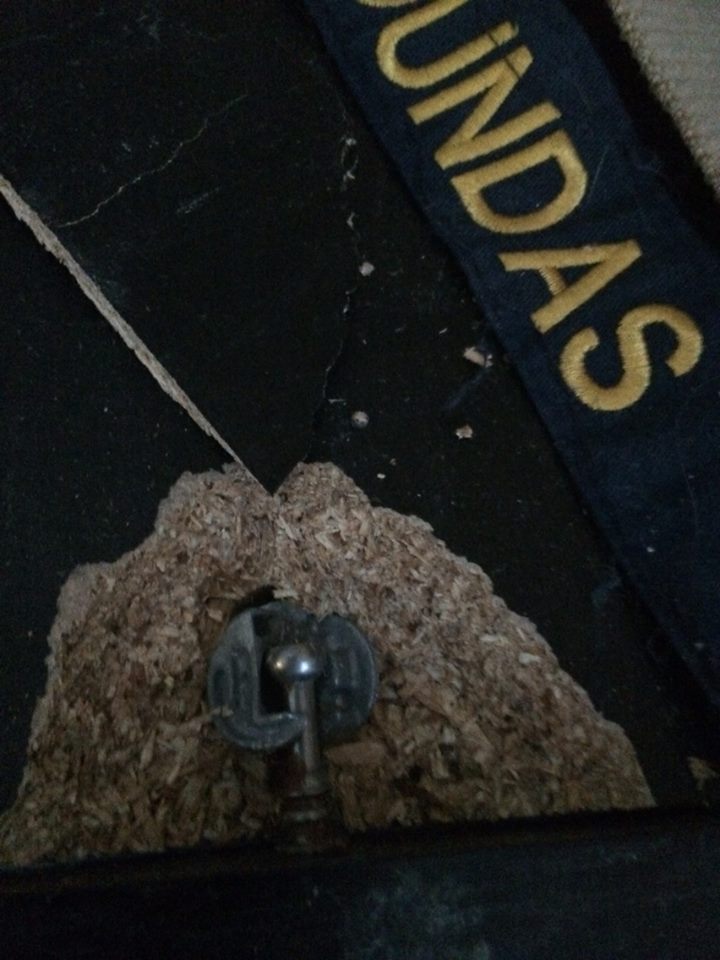
When boring came I got up, unpacked the very bloody tissue from my mouth and lips, showered and got ready for work. As I did so I noticed the damage to the bookcase, my jaw had shattered the pressed wood. I was shocked, evidently I have as hard of head as my dad accused me of as a child. I was surpassed, took a picture of he damage and went to work, where I reported what happened to my dean and went to our branch medical clinic. I spent most of the morning getting my head examined.

Though I hurt from the neck up, and was in a lot of pain nothing was broken so the doctor sent me home. The doctor said that though nothing was broken that I would be in pain for some time, and I am. He compared the impact to being in an auto accident. My neck is sore, the chin, jaw and mouth sore and I do have a pretty good headache.

When I see my new primary care doctor I will get scheduled for a sleep study.

Judy mentioned something that I didn’t think about either last night when this happened or while I was at the doctor. The fact is that had I not crushed the bookcase with my jaw I could have suffered a very severe injury, perhaps even a fractured skull.

I think that most of my current nightmares are triggered by reading about or seeing news reports about what is currently happening in Iraq where I left so much of my heart. But my dreams and nightmares are such surreal mixtures of fact, history, reality and imagination that it is sometime hard to tell where the dream ends and reality begins, or for that matter if there is much difference between the dream and reality, as Edward Allan Poe wrote:

I stand amid the roar
Of a surf-tormented shore,
And I hold within my hand
Grains of the golden sand-
How few! yet how they creep
Through my fingers to the deep,
While I weep- while I weep!
O God! can I not grasp
Them with a tighter clasp?
O God! can I not save
One from the pitiless wave?
Is all that we see or seem
But a dream within a dream?”

I make no pretense of saying that I can understand or interpret them. Last night may have been triggered by the F-18s from the USS George H.W. Bush flying in to the Naval Air Station following their return from deployment not far from where I work during the day. The noise of their jet engines took me back to Iraq.  When I was in Iraq, any time that I was going west or east and waiting on flights at Al Asad Air Base in Al Anbar, the Marine and Navy F-18s based there would keep me up all hours of the day and night as I tried to sleep in the tents that transients like me stayed. Of course those tents were only a couple hundred yards from the flight line, so sleep was rare and the noise got into my head.

I honestly do hope that my new therapist and medication manager can find the right combination of therapy and medications to manage this. It would be nice to be able to sleep without waking up in terror with dreams of war and of enemies, both real and imagined trying to kill me.

I have posted the photo of the broken bookcase here just to give you an idea of how hard I hit it with my chin. It shocked the hell out of me when I saw it. Yes that is the damaged that I caused, it is about three inches in size.

10423681_10152904072437059_4037095074761467544_n

So anyway, I am going to try to get some sleep. But as Guy Sajer, the author of the classic account of brutal combat wrote: “Only happy people have nightmares, from overeating. For those who live a nightmare reality, sleep is a black hole, lost in time, like death.” Since returning from Iraq, my nights have been nightmarish. I wish that I never had to sleep, for sleep is far worse than being awake, even awake in a combat zone. Like Gouverneur Warren, my dreams sometimes, in  fact most of the time cause me to dread going to sleep.

All that being said I do not want to lose my dreams, the good, the bad or even the terrifying. The somehow are a part of me, though I certainly would wish that they would not be so vivid that I end up physically bruised and sitting in an acute care clinic. That being said, I have to agree with Joseph Heller who wrote: “I want to keep my dreams, even bad ones, because without them, I might have nothing all night long.”

With that, I wish all of us peace and pleasant dreams, even in the midst of real life nightmares.

Padre Steve+

1 Comment

Filed under mental health, Military, PTSD, Tour in Iraq

The Results of Ignoring History: The Implosion of Iraq

bettertimes

Better Times: With the Bedouin in December 2007

Inshallah, (إن شاء اللهGod willing… or so say my Iraqi friends.

It is now 2014, over eleven years since the Bush administration launched its ill advised, preemptive and probably war against Saddam Hussein’s Iraq. That war, illegal under any definition of international law which violated most of the components of traditional Just War Theory and condemned by Pope John Paul II was a disaster for the United States and the unfortunate people of Iraq that we are only now beginning to the full negative implications.

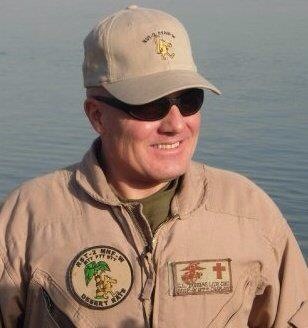
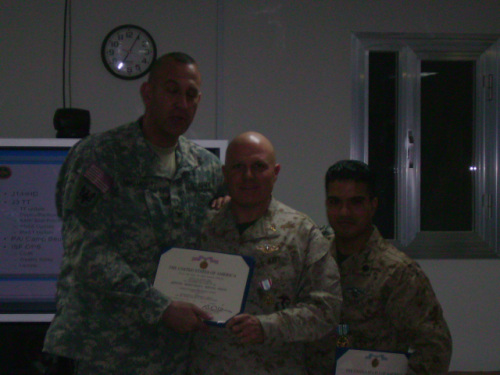
For me the past week has been gut-wrenchingly painful as I watched the forces of ISIL/ISIS rampage through Iraq and the demoralized Iraqi military, no longer trusting Prime Minister Maliki throwing down their weapons and running away. I left Iraq over six years years ago. When I left Iraq, I was in Baghdad at the Headquarters of the Iraq Assistance Group, on my way out of country, being awarded a Defense Meritorious Service Medal for my work with our advisors and the Iraqis in Al Anbar. That night was a melancholy night. I was wearing my last serviceable uniform, which I had preserved for the trip home by wearing flight suits and baseball caps with no badges of rank, throughout most of the deployment. Like Lawrence’s donning of the Bedouin robes, my uniform choice, done purely by necessity made me stand out conspicuously among other Americans in country.

I was heading home but didn’t really want to leave, but in the process I left a big part of me in that long suffering country.  I have written much about my experience there and how even today I have a deep regard for the Iraqi people and their hopes for a better future. However, I sense that what Lawrence wrote will be true:

“We had been hopelessly labouring to plough waste lands; to make nationality grow in a place full of the certainty of God… Among the tribes our creed could be only like the desert grass – a beautiful swift seeming of spring; which, after a day’s heat, fell dusty.” 

In 2003 the United States invaded Iraq and made short work of that country’s military. That military, defeated in 1991 and crippled by years of sanctions and bombings was no threat to its neighbors and couldn’t even defend itself against the U.S. and coalition forces.

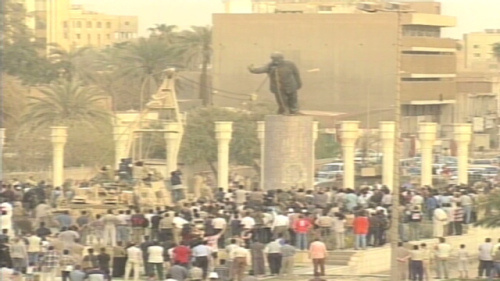
When we entered the country, many Iraqis of all creeds looked upon the US and coalition forces as liberators, but within a few months the illusion was over. Within weeks of the overthrow of Saddam, the US military personnel and leaders who were working with Iraqi officials, both military and civilian to get the country back on its feet were replaced by the Bush administration.

imperialpast

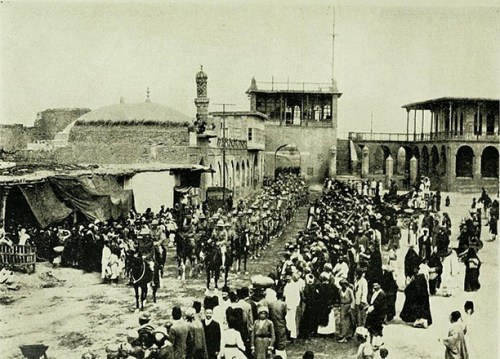
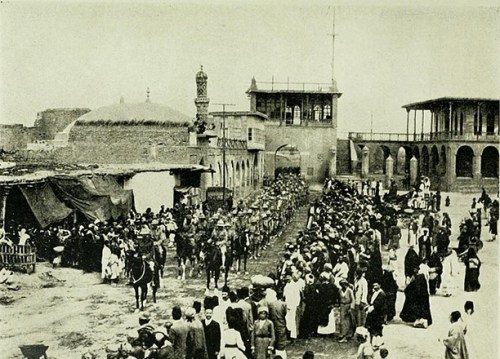
British Troops enter Baghdad 1919

In their place a new entity, the Coalition Provisional Authority was created and staffed. The first administrator of the entity was retired Army Lieutenant General Jay Garner. He had much experience in Iraq but was sacked quickly by Secretary of Defense Donald Rumsfeld for not conducting an immediate purge of members of the Baathist Party from key positions in the civil service or security forces, or implementing the agenda of the administration, an agenda that only saw Iraq as a stepping stone for future operations against Iran.

After Garner’s dismissal the CPA was led by Ambassador L. Paul Bremer, a man who had no experience in the Arab world, much less in Iraq. Bremer and his staff, most of who had little experience or knowledge of the country created conditions that directly led the the Iraq insurgency, the sacrifice of thousands of American and allied lives and the loss of friendship of the Iraqi people. They also gave a a bloodless strategic victory to Iraq’s traditional enemy and oppressor Iran, which became a dominant regional power without having to worry about their traditional Arab nemesis. It is deeply ironic that because of the terrible policy missteps of the Bush administration that the current crisis is forcing Iran and the United States to consider cooperation with one another to prevent the implosion of Iraq.


T.E. Lawrence wrote of the British incursion into Turkish Mesopotamia in 1915, managed by the British Indian Office:

“By brute force it marched then into Basra. The enemy troops in Irak were nearly all Arabs in the unenviable predicament of having to fight on behalf of their secular oppressors against a people long envisaged as liberators, but who obstinately refused to play the part.”

The actions of the CPA destroyed the plans pragmatists in the Pentagon and State Department to incorporate the existing civil service, police and military forces in the newly free Iraq.  Instead Bremer dissolved the Iraqi military, police and civil service within days of his arrival. Since the military invasion had been accomplished with minimal forces most Iraqi weapon sites, arsenals and bases were looted once their Iraqi guardians were banished and left their posts. The embryonic insurgency was thus provided by Bremer a full arsenal of weapons to use against American forces; many of whom were now mobilized Reservists and National Guardsmen that were neither trained or equipped to fight an insurgency or in urban areas.

It was as if Bremer, the leaders of the Bush administration and their neoconservative allies knew nothing of history. If they did they decided to ignore its lessons, believing that they were smarter than other occupiers. It was an act of unmitigated hubris and arrogance brought about by those who believed that they were above history. Whether it was ignorance of history, or a wanton disregard for it, it and the country we invaded it was immoral, unethical and probably criminal.
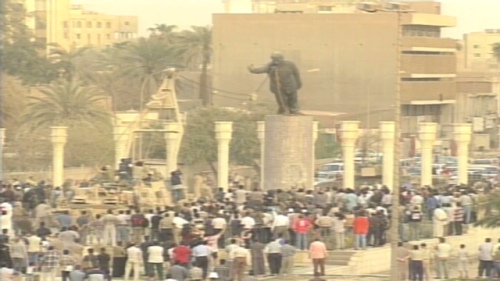
vault-von-saddam-statue-fall-itn-640x360-1

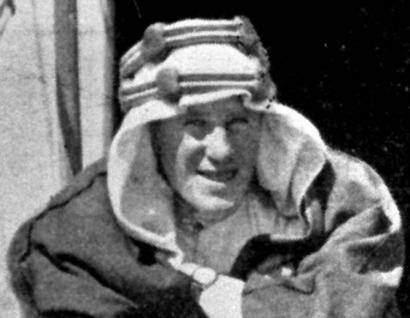
The reaction of the Iraqi Arabs to US occupation should have been anticipated. Lawrence wrote in 1920 a letter that could have easily been written in 2004:

“It is not astonishing that their patience has broken down after two years. The Government we have set up is English in fashion, and is conducted in the English language. So it has 450 British executive officers running it, and not a single responsible Mesopotamian. In Turkish days 70 per cent of the executive civil service was local. Our 80,000 troops there are occupied in police duties, not in guarding the frontiers. They are holding down the people.”

The actions of Bremer’s incompetent leadership team led to a tragic insurgency that need not have taken place. The now unnumbered US forces had to fight an insurgency while attempting to re-create an army, security forces and civil service from the wreckage created by Bremer’s mistakes; as well as its own often heavy handed tactics in the months following the invasion.


Nearly 4500 US troops would die and over 30,000 more wounded in the campaign. Hundreds of thousands of Iraqis were killed, wounded or died of disease during the war.  Lawrence wrote about the British administration of Iraq words that could well have been written about Bremer’s Coalition Provisional Authority:

“Meanwhile, our unfortunate troops, Indian and British, under hard conditions of climate and supply, are policing an immense area, paying dearly every day in lives for the willfully wrong policy of the civil administration in Bagdad.”

It took dramatic efforts in blood and treasure to restore the some modicum of security in Iraq, something that was only accomplished when the Sunni tribes of Anbar Province turned against the Al Qaeda backed foreign fighters. The surge under the command of General David Petreus achieved the desired result. It gave the Iraqis a chance to stabilize their government and increase their own security forces, however it can hardly be called a triumph.

Unfortunately many of those that remained in power of the Shia sect refused to share power in meaningful ways with Iraq’s Sunni and Kurds leading to a political crisis. The US military mission ended in December 2011 and since then Iraq security forces and civil authorities, often divided by tribal or sectarian loyalties have struggled to maintain order. The result is that by 2013 that Iraq was again heading toward the abyss of civil war. Most of this has to be laid at the feet of Prime Minister Nouri Al-Maliki who has done everything that he can to break promises made to Sunnis and Kurds, and dishonor the Sunnis who fought to save his government in 2007-2008. Sunni protestors in Anbar and other provinces conducted frequent protests which were met by brute force. Sectarian violence spread, and ISIL/ISIS a move violent and vicious offshoot of Al Qaida gained control of Fallujah and parts of Ramadi. In the north, Mosul and Tikrit have fallen and there are reports that some ISIL/ISIS fighters entered Baghdad this evening. Casualties in Iraq are continuing to mount and a humanitarian crisis is developing as hundreds of thousands of Iraqis flee the violence, feeling threatened by both the fighters and the Maliki government.
iraq-border_2939075c


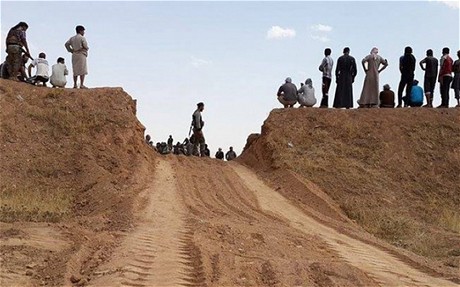
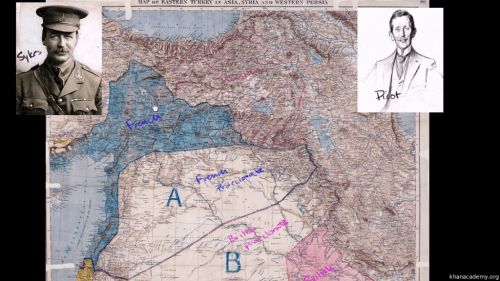
To the west in Syria a brutal civil war has been going on for three years. Like Iraq it pits Sunni against Shia, as well as Kurd and foreign fighters from a score of nations, some fighting as part of a Free Syria movement, others as part of the Al Qaeda coalition and others beside Syria’s government. Now many of the Iraqi elements of ISIS/ISIL have breached the border with Syria and are attempting to redraw the political map of the Middle East, ravaging the vestiges of the Sykes-Picot agreement.

In 1920 Lawrence wrote of the British intervention and occupation of Iraq:

“The people of England have been led in Mesopotamia into a trap from which it will be hard to escape with dignity and honour. They have been tricked into it by a steady withholding of information. The Bagdad communiqués are belated, insincere, incomplete. Things have been far worse than we have been told, our administration more bloody and inefficient than the public knows. It is a disgrace to our imperial record, and may soon be too inflamed for any ordinary cure. We are to-day not far from a disaster.”

His words have a sadly familiar tone. The US invasion of Iraq did have a different outcome than we imagined, one that is far worse than we bargained for and potentially cataclysmic in its impact.
Sykes-Picot-Map-1024x576


That being said, many if not most Arabs in all of these lands simply desire to live in peace and enjoy some amount of freedom for themselves and future for their children. The Iraqis are on the whole decent and honorable people. One has to remember that the freedom for which many are striving, and dying to attain is for them, not for the United States or any other power.

Lawrence’s words and wisdom concerning the Arabs who rebelled against the Turkish Ottoman Empire are as true today as when he wrote them after the war:

“The Arabs rebelled against the Turks during the war not because the Turk Government was notably bad, but because they wanted independence. They did not risk their lives in battle to change masters, to become British subjects or French citizens, but to win a show of their own.”

That is the case in Iraq and many other Arab countries today. One can only hope that for Iraq, Syria and those countries as that somehow peace will come. I do hope that we will do better in helping them achieve that than we have over the past dozen years of conflict, or than the British or French did almost 100 years ago.

But all of that being said, this situation is going to take at least a generation to settle. There are no easy answers and certainly sending troops in to restore the situation when Maliki and his regime make no attempt to reconcile with their Sunni and Kurdish countrymen, is not the answer. In fact if there is any answer that maintains Iraq as a unified state it has to be brought about by the Iraqis, particularly Maliki, who has shown no inclination to do this since the United States military left in 2011.

It is also very possible that what is happening, as bloody, horrible and painful as it is may be, is what is needed to correct the blunder of Sykes-Picot. Perhaps it should be left to the Arabs to redraw the natural boundaries of their regions, tribes and religions and let the chips fall where they may. In Iraq, the Sunni Sheikhs once the Shi’ite influence is diminished and they have regained some autonomy will drive out and destroy ISIL/ISIS as they did to AQI in 2007-2008.  The ISIL/ISIS fighters will not be welcome once they have achieved their goals.
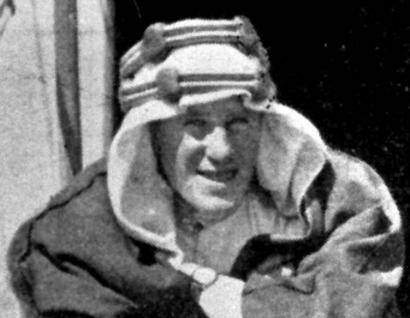
lawrence12

Lawrence wrote in 1920:

What is required is a tearing up of what we have done, and beginning again on advisory lines. It is no good patching with the present system….We are big enough to admit a fault, and turn a new page: and we ought to do it with a hoot of joy, because it will save us a million pounds a week.

We should listen to him.

As my Iraqi friends say Inshallah, (إن شاء الله) God willing.

Peace

Padre Steve+


1 Comment

Filed under Foreign Policy, History, iraq,afghanistan, middle east, News and current events

Moral Injury: The Silent Killer of Veterans

1622612_10152232336042059_727365308_n

This morning I woke up and got ready to go to work. My wife was up. She had been up most of the night because unbeknownst to me I had been fighting something in my sleep. Judy tried to wake me up, but I didn’t wake up, and evidently the episode lasted much of the night. I do remember some dreams, or rather nightmares last night dealing with a particular situation that I experienced in Iraq, but such nightmares are so common that unless there is something really unusual about them I really don’t think much about them.

I first heard of Moral Injury in 2009 about a year after I was diagnosed with severe and chronic PTSD. However, that being said as a military historian I have to admit that I have read about it time and time again in less clinical language. What I had more experience with were the memoirs of common soldiers and officers, as well as the experiences of Sailors, Marines and Soldiers who had confided in me at various times as their chaplain.

Marine Major General and two time Medal of Honor recipient Smedley Butler wrote in his book War is a Racket:

“Boys with a normal viewpoint were taken out of the fields and offices and factories and classrooms and put into the ranks. They were remolded; they were made over; they were made to “about face”; to regard murder as the order of the day. They were put shoulder to shoulder and through mass psychology, they were entirely changed. We used them for a couple of years and trained them to think of nothing but killing and being killed.

The suddenly, we discharged them and told them to make another “about face”! This time they had to do their own readjusting, sans mass psychology, sans officers’ aid and advice, sans nation-wide propaganda. We didn’t need them anymore. So we scattered them about without any “three minute” or “Liberty Loan” speeches or parades.”

Last year I was interviewed by David Wood of the Huffington Post for a series of three articles that he just published on moral injury.* If PTSD and TBI are considered “invisible wounds” then moral injury must be included. It is a condition as old as war itself and can be seen even in the most ancient of writings about war, Homer’s Iliad, King David’s grief over the loss of his friend Jonathan and many others.

I came home from Iraq forever changed. I served with Marine and Army advisers to Iraqi Army, Border Troops, Police, Highway Patrol and Port of Entry Police in Al Anbar Province in 2007 and 2008. That assignment, which took me throughout the province brought me into contact with a part of the war that many Americans, even those serving in Iraq were shielded from, a part of the war that was never shown in the media that exposed me to realities that before serving there I was unaware.

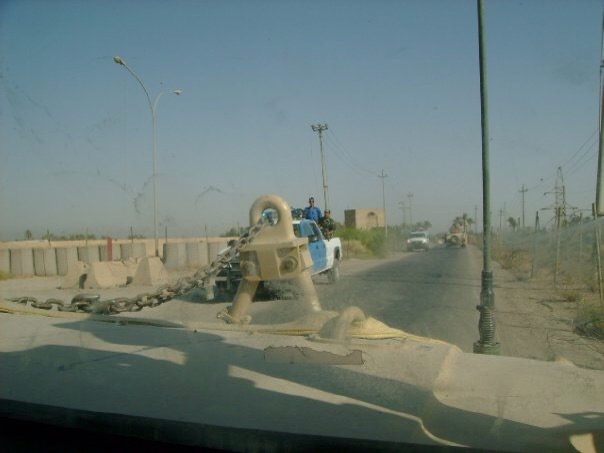
They were uncomfortable truths. The tensions between the various Iraqi factions, the real hopes for a better Iraq held by many Iraqis and the absolute devastation that the American invasion of Iraq had brought to that unfortunate country. I saw some of the disrespectful and insulting things done by American troops that had to be dealt with by the advisors, men who were as much diplomats as they were Soldiers and Marines. I saw the damage inflicted by bombing campaigns that had little to do with winning a war, but more with destroying infrastructure that even our own war plans had determined was vital to Iraq’s recovery after the success of our campaign. I saw children wounded in fire fights, as well as ministered to the wounded coming through the Fleet Surgical Facility at Ta’Qaddum on their way elsewhere.

I have spent time with Marines and Soldiers who feel real guilt from the actions that they saw or participated in both in Iraq and Afghanistan. Likewise I have dealt with the grief of men and women, Corpsmen, Doctors and Nurses who wish that they could have done more to save the lives of others or done more to prevent suffering. I have also dealt with those who have attempted suicide after taking part in actions that they could not live with or due to what they saw or experienced in Iraq or Afghanistan.

Unfortunately Moral Injury is not taken seriously by the military. This despite the fact many military physicians, mental health providers and chaplains are on the cutting edge of dealing with it. We are doing research, writing and treating those afflicted the services themselves do not even acknowledge it. Even as we do this some in the military, including Chaplains want to call it something more ambiguous using the Orwellian term “inner conflict” to describe something that is far more damaging and insidious.

I suppose that a big part of the reason is that all of the services do an amazing amount of work to built a set of moral values in those that serve. In the Navy we talk about courage, honor and commitment. We talk about being men and women of principle, doing what is right. Such ideas are a part of who we are, Douglas MacArthur spoke of “Duty, Honor Country” and our military academies have long taught the principle that “I will not lie, cheat or steal, or tolerate those that do.”

We teach our Soldiers, Marines, Sailors and Airmen values that are often more rigorous than what they grew up with at home or in school. Then we send them to war and they see and sometimes do things that are at odds with those values as well as the values that we as Americans cherish. We place them in situations where the moral values we teach them contradicted by what we teach and train them to do, and the real unvarnished truth about war, it is hell. Smedley Butler wrote:

“But the soldier pays the biggest part of this bill.
If you don’t believe this, visit the American cemeteries on the battlefields abroad. Or visit  any of the veterans’ hospitals in the United States….I have visited eighteen government hospitals for veterans. In them are about 50,000 destroyed men- men who were the pick of the nation eighteen years ago. The very able chief surgeon at the government hospital in Milwaukee, where there are 3,800 of the living dead, told me that mortality among veterans is three times as great as among those who stayed home.”

How we expect anyone to retain their soul and their sanity when we teach them a set of values that we as a nation fail to uphold is beyond me. The fact that the politicians, pundits and preachers who constantly insist on using the under one percent of the population that serves in the military to bear such burdens to satiate their bloodlust and then refuse to recognize their injuries and then deny them care or benefits is abhorrent.

One of the survivors of the famed World War One “Lost Battalion” wrote:

“We just do not have the control we should have. I went through without a visible wound, but have spent many months in hospitals and dollars for medical treatment as a result of those terrible experiences.”

While I was impacted very much by what happened to me and what I saw. The sad thing is that I was far better prepared and seasoned to survive what I experienced than most of my younger counterparts. After years of training and experience I felt that I was immune to PTSD or Moral Injury. Sadly, I was wrong and today, more than six years after I returned from Iraq I deal with the consequences of war, in my life and those of those that I serve.

I don’t pretend to have answers, but I do expect that our country takes responsibility for the injuries and suffering that its policies have created. Specifically I am speaking to that Trinity of Evil, the Politicians, Pundits and Preachers who constantly lobby for war and refuse to take personal responsibility for it when it comes, and who then for matters of political expediency throw aside the volunteers who went to war for far higher ideals and motives than those that sent them.

Okay, it is time for me to take a deep breath. But I do get really spun up about this, because I have lived this reality and I get angry when I see look around and realize that for most people in this country, the plight of veterans doesn’t matter. We are just another “special interest group” to use the words of a member of a committee appointed by former Secretary of Defense Donald Rumsfeld that wants to decimate military benefits. But even now people like Bill Kristol who have never served a day in the military and never seen a war that they didn’t like, urge that we send more men and women to war over Crimea. But I digress…

Moral injury is a silent killer of the soul and it is high time that we recognize just how deadly it is.

Guy Sager, author of the classic The Forgotten Soldier wrote: “Only happy people have nightmares, from overeating. For those who live a nightmare reality, sleep is a black hole, lost in time, like death.”

I don’t know what nightmares I will have tonight, hopefully at least for Judy’s sake I won’t have any.

With that, I will sign off for the night.

Peace

Padre Steve+

Wood’s Articles can be found here: http://projects.huffingtonpost.com/moral-injury/the-grunts
http://projects.huffingtonpost.com/moral-injury/the-recruits
http://projects.huffingtonpost.com/moral-injury/healing

6 Comments

Filed under iraq,afghanistan, Military, PTSD

A Night of Memories: Syria, Iraq and The Middle East in 2014, Echoes of T. E. Lawrence

410w-1-2

Inshallah, (إن شاء اللهGod willing…

It is now 2014, almost eleven years since the Bush administration launched its ill advised, preemptive and probably war illegal under international law, against Saddam Hussein’s Iraq. Tonight instead of watching the State of the Union Address, and the four separate Republican responses, or a sporting event, or some thing more frivolous I am watching Lawrence of Arabia.  

award-ceremony-dundas-31

It is fitting that I do so. I left Iraq just six years ago. In fact six years ago tonight I was in Baghdad at the Headquarters of the Iraq Assistance Group, on my way out of country, being awarded a Defense Meritorious Service Medal for my work with our advisors and the Iraqis in Al Anbar. It was a melancholy night. That night I was wearing my last serviceable uniform, which I had preserved for the trip home by wearing flight suits and baseball caps with no badges of rank, throughout most of the deployment. Like Lawrence’s donning of the Bedouin robes, my uniform choice, done purely by necessity made me stand out conspicuously among other Americans in country.

399202_10151366970802059_725286976_n-2

I was heading home but didn’t really want to leave, but in the process I left part of me in that long suffering country.  I have written much about my experience there and how even today I have a deep regard for the Iraqi people and their hopes for a better future. However, I wonder if what Lawrence wrote will be true:

“We had been hopelessly labouring to plough waste lands; to make nationality grow in a place full of the certainty of God… Among the tribes our creed could be only like the desert grass – a beautiful swift seeming of spring; which, after a day’s heat, fell dusty.” 

vault-von-saddam-statue-fall-itn-640x360

In 2003 the United States invaded Iraq and made short work of that country’s military. Many Iraqis of all creeds looked upon the US and coalition forces as liberators but within a few months the illusion was over. Within weeks of the overthrow of Saddam, the US military personnel and leaders who were working with Iraqi officials, both military and civilian to get the country back on its feet were replaced by the Bush administration.

rumsfeld-bremer-2

In their place a new entity, the Coalition Provisional Authority was created and staffed. The first administrator of the entity was retired Army Lieutenant General Jay Garner. He had much experience in Iraq but was sacked quickly by Secretary of Defense Donald Rumsfeld for not conducting an immediate purge of members of the Baathist Party from key positions in the civil service or security forces, or implementing the agenda of the administration.

After Garner’s dismissal the CPA was led by Ambassador L. Paul Bremer, a man who had no experience in the Arab world, much less in Iraq. Bremer and his staff, most of who had little experience or knowledge of the country created conditions that directly led the the Iraq insurgency, the sacrifice of thousands of American and allied lives and the loss of friendship of the Iraqi people. They also gave a a bloodless strategic victory to Iraq’s traditional enemy and oppressor Iran, which became a dominant regional power without having to worry about their traditional Arab nemesis.

It was as if Bremer, the leaders of the Bush administration and their neoconservative allies knew nothing of history. If they did they decided to ignore it. Whether it was ignorance of history, or a wanton disregard for it, and the country we invaded it was immoral, unethical and probably criminal.

baghdad1917-2

T.E. Lawrence wrote of the British incursion into Turkish Mesopotamia in 1915, managed by the British Indian Office:

“By brute force it marched then into Basra. The enemy troops in Irak were nearly all Arabs in the unenviable predicament of having to fight on behalf of their secular oppressors against a people long envisaged as liberators, but who obstinately refused to play the part.”

The actions of the CPA destroyed the plans pragmatists in the Pentagon and State Department to incorporate the existing civil service, police and military forces in the newly free Iraq.  Instead Bremer dissolved the Iraqi military, police and civil service within days of his arrival. Since the military invasion had been accomplished with minimal forces most Iraqi weapon sites, arsenals and bases were looted once their Iraqi guardians were banished and left their posts. The embryonic insurgency was thus provided by Bremer a full arsenal of weapons to use against American forces; many of whom were now mobilized Reservists and National Guardsmen that were neither trained or equipped to fight an insurgency or in urban areas.

mosul-41

The reaction of the Iraqi Arabs to US occupation should have been anticipated. Lawrence wrote in 1920 a letter that could have easily been written in 2004:

“It is not astonishing that their patience has broken down after two years. The Government we have set up is English in fashion, and is conducted in the English language. So it has 450 British executive officers running it, and not a single responsible Mesopotamian. In Turkish days 70 per cent of the executive civil service was local. Our 80,000 troops there are occupied in police duties, not in guarding the frontiers. They are holding down the people.”

The actions of Bremer’s incompetent leadership team led to a tragic insurgency that need not have taken place. The now unnumbered US forces had to fight an insurgency while attempting to re-create an army, security forces and civil service from the wreckage created by Bremer’s mistakes; as well as its own often heavy handed tactics in the months following the invasion.

OLYMPUS DIGITAL CAMERA

Nearly 4500 US troops would die and over 30,000 more wounded in the campaign. Hundreds of thousands of Iraqis were killed, wounded or died of disease during the war.  Lawrence wrote about the British administration of Iraq words that could well have been written about Bremer’s Coalition Provisional Authority:

“Meanwhile, our unfortunate troops, Indian and British, under hard conditions of climate and supply, are policing an immense area, paying dearly every day in lives for the willfully wrong policy of the civil administration in Bagdad.”

It took dramatic efforts in blood and treasure to restore the some modicum of security in Iraq, something that was only accomplished when the Sunni tribes of Anbar Province turned against the Al Qaeda backed foreign fighters. The surge under the command of General David Petreus achieved the desired result. It gave the Iraqis a chance to stabilize their government and increase their own security forces.

26iraq_image1-articleLarge

Unfortunately many of those that remained in power of the Shia sect refused to share power in meaningful ways with Iraq’s Sunni and Kurds leading to a political crisis. The US military mission ended in December 2011 and since then Iraq security forces and civil authorities, often divided by tribal or sectarian loyalties have struggled to maintain order. The result is that by 2013 that Iraq was again heading toward the abyss of civil war. Sunni protestors in Anbar and other provinces conducted frequent protests, sectarian violence spread, and an Al Qaeda affiliated group gained control of Fallujah and parts of Ramadi. Casualties in Iraq are continuing to mount.

Syria

To the west in Syria a brutal civil war has been going on for three years. Like Iraq it pits Sunni against Shia, as well as Kurd and foreign fighters from a score of nations, some fighting as part of a Free Syria movement, others as part of the Al Qaeda coalition and others beside Syria’s government.

In 1920 Lawrence wrote of the British intervention and occupation of Iraq:

“The people of England have been led in Mesopotamia into a trap from which it will be hard to escape with dignity and honour. They have been tricked into it by a steady withholding of information. The Bagdad communiqués are belated, insincere, incomplete. Things have been far worse than we have been told, our administration more bloody and inefficient than the public knows. It is a disgrace to our imperial record, and may soon be too inflamed for any ordinary cure. We are to-day not far from a disaster.”

lawrenceguerrillas1

His words have a sadly familiar tone. The US invasion of Iraq did have a different outcome than we imagined. The Arab Spring erupted and the consequences of it will be far reaching and effect much of the Middle East and the world. The internal conflicts in Iraq and Syria threaten every country that borders them, and the instability has the potential of bringing on an regional war.

295_26912097058_4309_n-4

That being said, many if not most Arabs in all of these lands simply desire to live in peace and enjoy some amount of freedom for themselves and future for their children. One has to remember that the freedom for which many are striving, and dying is for them, not for the United States or any other power.

Lawrence’s words and wisdom concerning the Arabs who rebelled against the Turkish Ottoman Empire are as true today as when he wrote them after the war:

“The Arabs rebelled against the Turks during the war not because the Turk Government was notably bad, but because they wanted independence. They did not risk their lives in battle to change masters, to become British subjects or French citizens, but to win a show of their own.”

That is the case in many Arab countries today. One can only hope that in those countries as well as in Afghanistan where our troops are embroiled in a war that cannot end well, that somehow peace will come. I do hope that we will do better than we have over the past dozen years of conflict, or than the British or French did almost 100 years ago.

As my Iraqi friends say Inshallah, (إن شاء الله) God willing.

Peace

Padre Steve+
1 Comment

Filed under ethics, Foreign Policy, History, iraq,afghanistan, middle east, Tour in Iraq

My Heart Remains in Al Anbar

262_29132382058_5961_n-2

I keep a close watch at what happens in Iraq, especially Al Anbar Province.  I was there in 2007-2008 in the midst of the Anbar Awakening.  I had the honor of working with our advisors and the Iraqis of the 1st and 7th Divisions, 2nd Border Brigade and local police and Iraqi Highway Patrol. In my time there, traveling the entirety of the province, getting to work with and know Iraqi military officers and tribal leaders I gained a great appreciation for them as people and sympathy for the people there who in the course of over 30 years of war have suffered so much.

295_26912097058_4309_n-3

To do so I have to use the English language services of various Arab and Iraqi news sources as well as some German and French services to get decent information. American media tends to ignore Iraq until it cannot be ignored because to be truthful most Americans don’t give a damn about Iraq or its long suffering people. Come to think of it, as I look at the voting records and actions of those that they elect to Congress of both parties, they don’t seem to give a damn about the Americans who served in Iraq or Afghanistan either. But then it is easy to buy a “I support the Troops” bumper sticker and then elect Congressmen who instead of cutting unnecessary and wasteful defense spending in their districts, cut the benefits to the troops.

n671902058_1153829_4642-2

The situation in Al Anbar now with Al Qaida ISIL militants gaining strength and attempting to seize both Fallujah and Ramadi has brought back many memories. It has also given me great concern for the Iraqi people who I served among and Iraqi military personnel who not only risk their lives in combat but whose families are often targeted by terrorists. They are true patriots because deciding to serve not only endangers them but their families.

185615_1857288397412_3950321_n

When I came home from Iraq I was a changed man. My life, faith, politics and values were  challenged by what I experienced. I came home afflicted with chronic and serve PTSD, something that while I do better in managing the symptoms now still affects me in many ways.

295_26912117058_5652_n

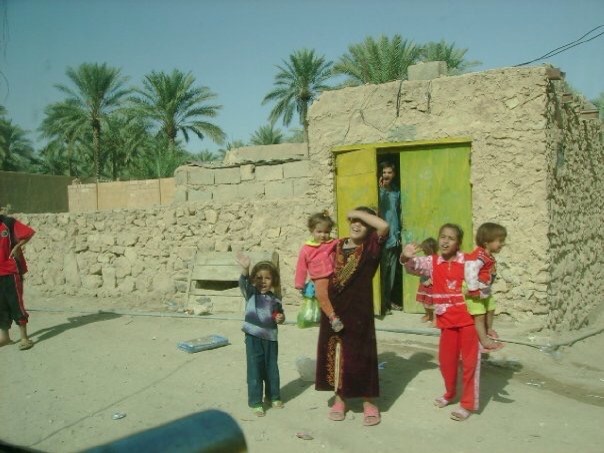
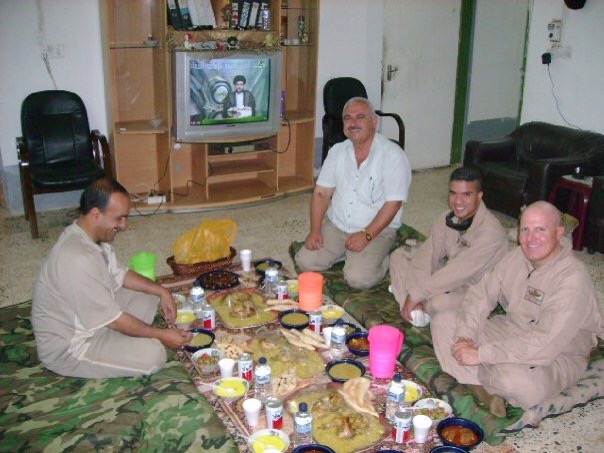
Nearly six years after I left Iraq it is amazing to me how much it still permeates my soul, my thoughts and life. I can close my eyes and I can be back there, on the Syrian border, in Ramadi, and in dozens of different camps and settlements. The kindness and hospitality of the Iraqis I met is something that I shall not forget.

399202_10151366970802059_725286976_n

I do pray that the Tribal leaders in Al Anbar can take the fight to the militants and defeat them with the help of the Iraqi Army, perhaps the most trusted institution in the country. I hope and pray that the Shia leaders of the Maliki government stop the heavy handed and undemocratic tactics they have been using against the Sunni in Al Anbar. It looks that after his last meeting with President Obama that Maliki might be getting the hint.

295_26912057058_2651_n-2

Too many people, Iraqis as well as Americans have shed their blood in a war of choice launched by the Bush Administration where Bush appointees squandered any good will after the invasion through sheer hubris and incompetence. Iraq will take years to recover even if a full fledged civil war does not erupt.

533506_10151366982462059_34997654_n

The costs have been so great and I do pray that the Iraqis will find a way to unite and defeat both Sunni and Shia extremists so that they may one day again live in peace with themselves and their neighbors.

481801_10151367001287059_1003164983_n-2

I would go back again, because I did leave a big part of me in Iraq. I left my heart in Al Anbar. I can echo the words of T. E. Lawrence in his opening sentences of Seven Pillars of Wisdom: 

“I loved you, so I drew these tides of men into my hands
and wrote my will across the sky in stars
To earn you Freedom” 

Peace

Padre Ste

2 Comments

Filed under History, iraq,afghanistan, Tour in Iraq

Living the Nightmares: PTSD and Iraq Six Years Later

481801_10151367001287059_1003164983_n-1.jpg

“Only happy people have nightmares, from overeating. For those who live a nightmare reality, sleep is a black hole, lost in time, like death.”  Guy Sajer, The Forgotten Soldier

Last week I woke up screaming thanks to some nightmare brought to me in high definition by PTSD. It woke Judy and both of the dogs up and well, it wasn’t exactly pleasant. Unfortunately this happens more often than I would like it to. When I was stationed away from home in North Carolina it was only Molly my faithfully dog who was disturbed by this, now I wake up Judy and our younger Papillon Minnie, or Minnie Scule as is her full name.

This afternoon I read a story of a Marine veteran who lost his battle with PTSD, taking his own life. I see a lot of these stories and each one makes me wonder what s going on and gives me pause when I think just how bad I was doing not too long ago.

It is hard for me to believe that nearly six years after I returned from Iraq that I still have a lot of trouble sleeping, though less trouble than a couple of years ago and that my nightmares associated with war still return with more regularity than I would like. Likewise it is hard for me to believe how much my life is impacted by this. I still experience a fair amount of hyper-vigilance, crowds of people are difficult and the craziness of traffic on the local freeways causes me a fair amount of distress.

n671902058_1153829_4642

Despite that I am doing a lot better than I was even a year or so ago when I was still struggling a lot more than I am now and let’s say 4 years ago when there were times I wondered why I was still alive. Of course the time from 2008-2010 was probably the worst time of my life when it seemed that everything that I had believed in had melted away. I didn’t know if God existed, I felt abandoned by my former Church and even by many peers. The only thing that kept me going was a deep sense of call and vocation as a Priest and Chaplain, even though I was for all practical purposes an agnostic who was praying that maybe God still might exist.

Those who have been with me on this blog over the years know how central that struggle has been. I have written about it many times.

Though I am doing much better than I was I still have my times of doubt, times of fear and times of absolute panic. I do what I can to manage but once in a while something will trigger a response. The biggest problem still is sleep and vivid dreams and nightmares. Once I finish the course I am in I am going to get back into therapy a couple of times a month. Thankfully my new job after I complete the school will be more academic with a small chapel where I serve the Students of the Joint Forces Staff College.

Physically I am doing much better, in terms of overall health and physical fitness. I am playing softball again and my PT regimen is much better. Spiritually I can say that being active in having a Chapel where I celebrate Eucharist in a small setting has been good for me. Having to preach again from the lectionary readings is a good thing. Likewise getting a break from five years of hospital ministry, dealing with death, suffering and psychological issues is good. After Iraq I threw myself into the most difficult areas of hospital ministry, the critical care Intensive Care Units hoping that such work would help bring me out of my own issues. Unfortunately, it made it more difficult.

Being at home again is good. I just wish that my nightmares would not cause distress to the rest of my little family. However, it is nice when after they look at me like I am nuts one or both dogs come to me and help calm me down.

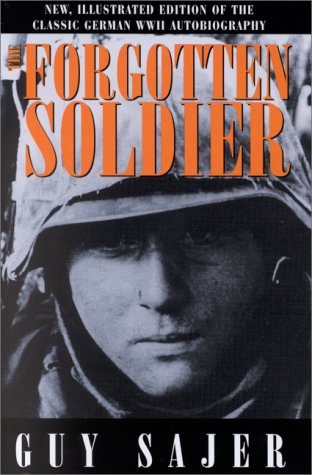
I quoted Guy Sajer, the author of the classic book The Forgotten Soldier. If anyone wants to understand something about what war does to a person and see PTSD in non-clinical terms I think it is possibly the best book to read.

Forgotten_Soldier

Since I have gone to war and experienced fear on a daily basis out in the hinterlands of Al Anbar Province with small groups of American Marines and Soldiers and Iraqi troops I understand a bit of what Sajer writes. My war was different, out with advisors on small Iraqi basis, traveling in dangerous areas far from any big American units, occasionally being shot at and seeing the devastation of war in that unfortunate country,  though my experience of war pales in comparison with what Sager describes.

That being said I do understand in ways that I never did before. Sajer makes a comment which I think is incredibly appropriate for those that read of war without having ever experienced it. too often is the case in the United States and Western Europe where very few ever put on a uniform and even fewer experience war. Sager wrote:

“Too many people learn about war with no inconvenience to themselves. They read about Verdun or Stalingrad without comprehension, sitting in a comfortable armchair, with their feet beside the fire, preparing to go about their business the next day, as usual.

One should really read such accounts under compulsion, in discomfort, considering oneself fortunate not to be describing the events in a letter home, writing from a hole in the mud. One should read about war in the worst circumstances, when everything is going badly, remembering that the torments of peace are trivial, and not worth any white hairs. Nothing is really serious in the tranquility of peace; only an idiot could be really disturbed by a question of salary. 

One should read about war standing up, late at night, when one is tired, as I am writing about it now, at dawn, while my asthma attack wears off. And even now, in my sleepless exhaustion, how gentle and easy peace seems!”

This weekend I will visit the Gettysburg Battlefield as part of a staff ride. I have been there a good number of times but not since I returned from Iraq. Thus in a sense it will take on new meaning, especially when I walk those hallowed fields of battle where so many died and so many more were maimed in our own terrible Civil War.

295_26911892058_4301_n

That being said I wonder if the solution to my nightmares is to go back to Iraq someday like so many WWII, Korea and Vietnam veterans have done to the places that they served. That has to remain in the future, but hopefully I will get the chance and maybe by then Iraq will at last be at peace.

Tonight I will attempt to sleep and hopefully what dreams I have, though they be high definition will at least not be nightmares that disturb Judy or the dogs.

Peace

Padre Steve+

2 Comments

Filed under civil war, faith, Military, ministry, Pastoral Care, PTSD

To Iraq and Back: Prelude: I was Born for This

295_27076757058_7361_n-1

Me in 1982 

This is the first actual chapter in my series “To Iraq and Back: Padre Steve’s War and Return.” I wrote last night that I was going to be doing this and I figure that there is no time like the present to start. Just about 6 years ago I was preparing to deploy to Iraq as an individual augment supporting the US Marine and Army advisors to Iraqi Army and Security Forces in Al Anbar Province. After 6 years I think I can finally complete my literary account of my experiences in Iraq, my return and subsequent struggle with Post Traumatic Stress Syndrome (PTSD). 

Though I am not certain, I do think that many of us were born for what we feel called to do. As bit of a theologian I can honestly say that I am not a Calvinist or strict Augustinian who believes that we are simply playing out some predetermined role or fate on earth. Neither am I a fatalist but I really do feel, that whether it was something God ordained, something genetic or a product of my environment growing up, that I was born to do what I do.

As one who has some training as well in psychology and pastoral care I also understand that the human mind is a very complicated lump of gray matter. I know that we as human being as products of our genetic make up, our upbringing and environment, education, spiritual formation, relationships ad infinitum, ad nauseum.

So I know what I believe about my calling to serve in the military and the priestly vocation cannot be scientifically proven. That being said, I believe and that belief in my calling survived even in my times of unbelief.  A paradox for sure, belief and unbelief coexisting at the same time in the same person, but Father Andrew Greeley said it well in his novel The Bishop and the Beggar Girl of St Germain: “Most priests, if they have any sense or any imagination, wonder if they truly believe all the things they preach. Like Jean-Claude they both believe and not believe at the same time.”

My tour in Iraq in a sense was the culmination of my calling, a call that I felt at a very early age, to serve in the military and later to be called to serve as a Priest in the military. I have long figured that to have served a full career in the military in time of war and not to have gone forward into danger to do what I have trained all my life to do.

I have a hard time not remembering when I wanted to serve in the military and serve in combat. That may sound strange but for some reason, even though I was not encouraged to follow this path it was something that growing up as the son of a Navy Chief Petty Officer who served at the Battle of An Loc in the Vietnam War that I felt was my destiny. Maybe it is faith, maybe it is some sort of mysticism or even fatalism, but I do believe that for good or for bad that I am doing what I was born to do.

George Patton commented: “A man must know his destiny. if he does not recognize it, then he is lost. By this I mean, once, twice, or at the very most, three times, fate will reach out and tap a man on the shoulder. if he has the imagination, he will turn around and fate will point out to him what fork in the road he should take, if he has the guts, he will take it.”

I am sure that my family and my earliest friends can testify to my love of all things military and the nearly romantic calling that soldiering had on my life. At nearly every turn in life I have responded to the military calling by volunteering for assignments that would place me closest to the action. There were times that my wishes were thwarted and my desires placed on hold, but they never died.

I served on the Fulda Gap in the Cold War and missed serving in ht First Iraq War because I had left active duty to attend seminary and my National Guard unit just missed being mobilized. I did support the Bosnia operation as a mobilized Army Reserve Major and during that mobilized period of service was told that I was not a place for me in the Regular Army. However, a few months after my last active reserve posting I was given the chance to apply for active duty as a Navy Chaplain. Less than 7 weeks after the first talk with the Navy I resigned my Army Reserve commission as a Major and accepted a lower rank, that of a Navy Lieutenant to enter active duty in February 1999.

The Marine unit that I was serving with in 1999 came very close to being sent to the Kosovo crisis and had Slobodan Milosevic not made a last minute peace deal after a 70 day air campaign I am sure I would have ended up there.

555306_316970661755579_1118848704_n

With my Boarding Team, April 2002 aboard USS Hue City

However it was 9-11-2001 that changed everything. I was in Camp LeJeune North Carolina with the 2nd Marine Division when the hijacked aircraft hit the Twin Towers and the Pentagon. Shortly after those attacks I was transferred to the USS Hue City, a Aegis Guided Missile Cruiser. My first wartime deployment was in 2002 aboard Hue City supporting Operation Enduring Freedom and Southern Watch. On that deployment I served as an advisor to one of our boarding teams and took part in over 70 boarding party operations against Iraqi and other oil smugglers who were breaking the United Nations oil sanctions against Iraq.

We were in the yards when Operation Iraqi Freedom began and in the fall of 2003 I was assigned to the Marine Security Force Battalion. In my time at Security Forces I travelled around the world and often to the Middle East and Europe, but not to Iraq or Afghanistan. Because the elements that we sent to Iraq were too small to rate an organic chaplain I did not deploy with them, though I heard about the experiences of many of those Marines and Navy Corpsmen as they came to me for counsel when they came home.

Despite having spent time of the boarding teams and having deployed numerous other places in my career there were times that I felt like William Tecumseh Sherman, who missed the war with Mexico having been sent to California who wrote: “I have felt tempted to send my resignation to Washington and I really feel ashamed to wear epaulettes after having passed through a war without smelling gun-powder.”

In October 2006 I was assigned to Navy EOD Group Two and shortly thereafter my life which had been very active with more time spent away from home than with my wife since my call up in 1996 to support the Bosnia operation became much more complicated. While at EOD I was supporting very skilled sailors most of whom had deployed multiple times in the always dangerous work of defusing and defending against Improvised Explosive Devices, or IEDs, the signature weapon of the wars in Iraq and Afghanistan. I also was called to support sailors either preparing to go to Iraq or Afghanistan as Individual Augments or those that were returning home.  As I heard their stories, especially those serving as advisors with Iraqis or Afghani soldiers I knew that was what I needed to be doing.

In early 2007 a call went out seeking chaplains to serve in Iraq and Afghanistan in various roles that were not supported by unit chaplains. With the permission of my supervisory Chaplain, Captain Deborah McGuire who was at the Navy Expeditionary Combat Command I put my name in the hat and was notified that I would be sent overseas. I explained to Judy that despite her misgivings that I felt that Nelson and I were the most ready, qualified and prepared team to take on the mission. Needless to say that did not assuage her fears and concerns and an emotional distance began to grow between us.

Initially we thought it would be sent to Iraq, then it was Afghanistan, and finally the first week of June 2007 the orders came down for Iraq. My faithful assistant, Religious Program Specialist Nelson Lebron would go with me. It was the first time that an existing Religious Ministry Team had been tagged to take on an independent mission of this nature.

Our orders were to support Marine Corps and Army advisors in Al Anbar Province, a mission that was new because when the advisory teams were first formed no one thought about organic religious or spiritual support. It was assumed that chaplains from nearby units would suffice but the Army and Marines learned that the assumption was wrong and that the advisors needed their own chaplain support.

The next few weeks would be a whirlwind as we prepared to go. They would be weeks that were trying both individually and for our families and neither of us would realize how much we would be impacted by our time in Iraq, but in June of 2007 that was still a part of our yet uncharted future.

Peace

Padre Steve+

Next: The Preparations


Leave a comment

Filed under PTSD, to iraq and back, Tour in Iraq