Tag Archives: al anbar province

Happy 235th Birthday Marines!

In 1775 a committee of the Continental Congress met at Philadelphia’s Tun Tavern to draft a resolution calling for two battalions of Marines able to fight for independence at sea and on shore.  The resolution was approved on November 10, 1775, officially forming the Continental Marines. The first order of business was to appoint Samuel Nicholas as the Commandant of the newly formed Marines. Robert Mullan the owner and proprietor of the said Tun Tavern became Nicholson’s first captain and recruiter. They began gathering support and were ready for action by early 1776.  They served throughout the War for Independence and like the Navy they were disbanded in April 1783 and reconstituted as the Marine Corps in 1798. The served on the ships of the Navy in the Quasi-war with France, against the Barbary Pirates where a small group of 8 Marines and 500 Arabs under Lieutenant Presley O’Bannon made a march of 500 miles across the Libyan Desert to lay siege Tripoli but only reached Derna. The action is immortalized in the Marine Hymn as well as the design of the Marine Officer’s “Mameluke” Sword. They served in the War of 1812, the Seminole Wars and in the Mexican-American War where in the storming of the on Chapultepec Palace they continued to build and enduring legacy. In the months leading up to the Civil War they played a key role at home and abroad.  In October 1859 Colonel Robert E. Lee led Marines from the Marine Barracks Washington DC to capture John Brown and his followers who had captured the Federal Armory at Harper’s Ferry.

The Corps would serve through the Civil War and on into the age of American Expansion serving in the Spanish American War in the Philippines, Puerto Rico and Cuba where they seized Guantanamo Bay at the battle of Cuzco Wells.  The would serve in China and be a key component of the international force that defended foreign diplomats during the Boxer Revolt as well as the international force that would relieve the diplomatic compound in Peking (Beijing).  In World War One the Marines stopped the German advance at Chateau Thierry and cemented their reputation as an elite fighting force at Belleau Wood where legend has it that the Germans nicknamed them Teufelhunden or Devil Dogs, a name that they Marines have appropriated with great aplomb.

During the inter-war years the Marines were quite active in the Caribbean and Asia and also developed amphibious tactics and doctrine that would be put to use in the Pacific Campaign.  During the war the Marines served in all theaters but won enduring fame at Wake Island, Guadalcanal, Tarawa, Iwo Jima, Okinawa and numerous other battles in the Pacific war. Marine Aviators flew in some the most desperate actions in the war to support the Navy and amphibious operations ashore.

After the war the Truman Administration sought to eliminate the Marine Corps but the Corps was saved by the efforts of Americans across the country and Marine supporters in Congress.  That was a good thing because the Marines were instrumental in keeping the North Koreans from overrunning the South during the Korean War on the Pusan Perimeter, turned the tide at Inchon and helped decimate Communist Chinese forces at the Chosin Reservoir.  After Korea the Marines would serve around the World in the Caribbean and Lebanon and in Vietnam where at Da Nang Keh Sanh, Hue City, Con Thien fighting the North Vietnamese and their Viet Cong allies.  The Marines took the initiative to implement innovative counter insurgency measures such as the Combined Action Platoons which enjoyed tremendous success until they were shut down by the Army high command.  These lessons would serve the Marines well in the new millennium during the Anbar Awakening in Iraq which changed the course of that insurgency and war.

The Marines would again be involved around the World after Vietnam serving in the Cold War, in Lebanon and the First Gulf War which was followed by actions in Somalia, the Balkans and Haiti. After the attacks of September 11th 2001 the Marines were among the first into Afghanistan helping to drive the Taliban from power. In the Iraq Campaign the Marines had a leading role both in the invasion and in the campaign in Al Anbar Province.  After theirwithdraw from Iraq the Marines became a central player in Afghanistan where today they are engaged around Khandehar and in Helmand Province.

The Marines are elite among world military organizations and continue to “fight our nations battles on the air and land and sea.” The Corps under General John LeJeune institutionalized the celebration of the Marine Corps Birthday and their establishment at Tun Tavern. General LeJeune issued this order which is still read at every Marine Corps Birthday Ball or observance:

MARINE CORPS ORDER No. 47 (Series 1921)
HEADQUARTERS
U.S. MARINE CORPS Washington, November 1, 1921

The following will be read to the command on the 10th of November, 1921, and hereafter on the 10th of November of every year. Should the order not be received by the 10th of November, 1921, it will be read upon receipt.

On November 10, 1775, a Corps of Marines was created by a resolution of Continental Congress. Since that date many thousand men have borne the name “Marine”. In memory of them it is fitting that we who are Marines should commemorate the birthday of our corps by calling to mind the glories of its long and illustrious history.

The record of our corps is one which will bear comparison with that of the most famous military organizations in the world’s history. During 90 of the 146 years of its existence the Marine Corps has been in action against the Nation’s foes. From the Battle of Trenton to the Argonne, Marines have won foremost honors in war, and in the long eras of tranquility at home, generation after generation of Marines have grown gray in war in both hemispheres and in every corner of the seven seas, that our country and its citizens might enjoy peace and security.

In every battle and skirmish since the birth of our corps, Marines have acquitted themselves with the greatest distinction, winning new honors on each occasion until the term “Marine” has come to signify all that is highest in military efficiency and soldierly virtue.

This high name of distinction and soldierly repute we who are Marines today have received from those who preceded us in the corps. With it we have also received from them the eternal spirit which has animated our corps from generation to generation and has been the distinguishing mark of the Marines in every age. So long as that spirit continues to flourish Marines will be found equal to every emergency in the future as they have been in the past, and the men of our Nation will regard us as worthy successors to the long line of illustrious men who have served as “Soldiers of the Sea” since the founding of the Corps.

JOHN A. LEJEUNE,
Major General
Commandant

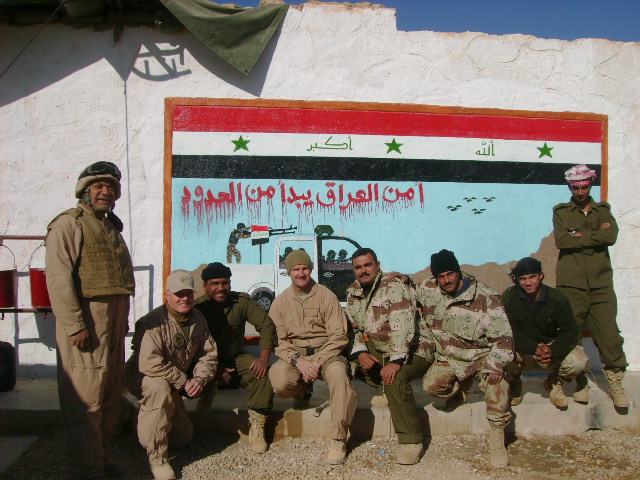
I have had the privilege of serving with the Marines in peace and war and the most memorable Marine Corps Birthday celebrations for me were in Ramadi with the Marine advisors to the Iraqi 7th Division and with the Marine Security Force Company at Guantanamo Bay Cuba. The highlight of my career was serving with the Marines in Iraq and I wear my Iraq Campaign Medal with pride.  The Marines have helped my professional development as an office through the Amphibious Warfare Course, Command and Staff College and the Fleet Marine Force Officer Qualification. I count my Marines as some of my most enduring friends.

Happy Birthday Marines. Thank you for all you do.

Peace

Padre Steve+


Leave a comment

Filed under History, iraq,afghanistan, Military

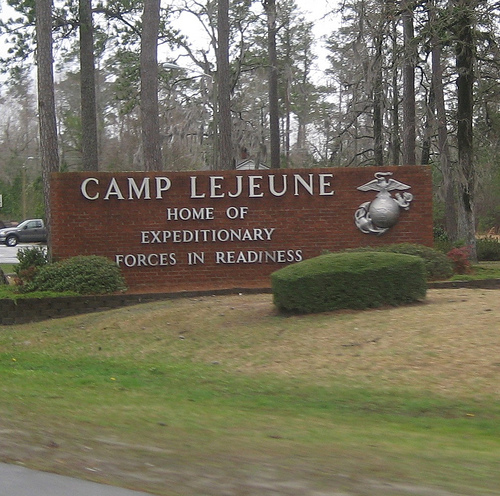
A Base at War: First Impressions of Camp LeJeune Nine Years after my First Tour

This is just a brief post on some first impressions on my assignment to Camp LeJeune after a nine year absence from the base. When I left LeJeune and my assignment with the Second Marine Division I had just completed twenty years in the military though I was not even three years into my service as a Naval Officer.

Today I was part of a Casualty Assistance Team meeting with the family of a young Navy Corpsman and Afghanistan veteran who killed himself in his apartment last night.  The Corpsman was part of a family with a long tradition of Naval Service who in his time in the Navy had gone to war with a Marine Battalion in Afghanistan’s Helmand Province and returned home changed by the war and struggling with PTSD and all the related symptoms of it.  This is something that I can understand having come back from Iraq in a rather bad way about two and a half years ago.  In my time with this young man’s parents today I found a young man that loved life but was wracked by his experiences of war.  He was well liked at his Marine Battalion as well as at the hospital and his death shocked the community almost as much as it did his family.  The sad thing is that this young man is emblematic the suicide problem in the military.  He is not alone, far too many Soldiers, Sailors, Marines and Airmen on active duty, in the Reserves or those that have left the service suffer so much from the unseen wounds of war that they commit suicide.  Since I have been here just a bit under two weeks this was a confirmation of what I knew just walking around the hospital, getting around the base and the local area.  Camp LeJeune is a base at war with Marines and Sailors fighting in Afghanistan and unfortunately many suffering from deep wounds of war at home living with physical, psychological, spiritual and moral injuries that don’t go away just because they return home.

When I left LeJeune in compliance with orders to the USS Hue City CG-66 in December 2001 we were just 3 months into the current war and barley two months into the Afghanistan campaign.  Marine morale was high though most Marines had not been to combat and those that had were veterans of Operation Desert Shield and Desert Storm, Somalia or the Balkans. Of course none of these actions lasted as long nor caused the amount of deaths as either the campaign in Iraq or Afghanistan.  Marines wanted to get a shot at the Al Qaeda terrorists that had attacked the United States and killed nearly 3000 Americans.

The Marines answered the call and have performed magnificently in every theater of the current war but the Corps has changed. Back in the late 1990s and early 2000s the Marines had a swagger that was typical of the work hard; train hard and play hard attitude of the Corps.  The Corps is now composed of many battle hardened veterans that have made deployment after deployment to the hottest combat zones in both Iraq and Afghanistan in which they took the initiative in both offensive operations in taking the battle to the enemy and employing solid counterinsurgency techniques especially in Al Anbar Province where the Iraqi Army performed quantitatively better under their tutelage in helping to turn the tide during the Anbar awakening.  Navy Corpsmen, Doctors and Chaplains serve alongside the Marines as they have done throughout our history.

I served with Marine and Army advisors in Al Anbar in 2007 and early 2008 in many of the remotest parts of the province and have dealt with individual Marines since. The Marines still have much of their swagger but it seems more fatalistic now.  An expert in trauma and moral injury told me of a recent visit to Camp Pendleton where Marines referred to themselves as “the walking dead” in an almost cavalier manner. The sad thing is that for many Marines this is only half a joke. The Corps in 2009 had the highest suicide rate in the military at 24 per 100,000 and suicides continue at a similar pace in 2010.  http://www.yuma.usmc.mil/desertwarrior/2010/03/11/feature6.html One occurred on Camp LeJeune where a Marine Sergeant pulled out a pistol and shot himself after being pulled over by Military Police in front of the base Fire Station.

As I made my way around the base the past week or so, I saw a lot more Marines with canes and obvious physical injuries from their combat injuries incurred in Iraq or Afghanistan. The Marines as always were professional but appeared to be much more serious than 9 years ago, many seeming to be old beyond their years. I love serving with and around Marines because they have a unique sense of professionalism combined with humor that is unlike almost any found in any part of the United States Military. However that positive is sometimes offset by a need to maintain an image of toughness even when they are dying on the inside which leads many not to seek help because it might make them look weak or broken, terms that no self-respecting Marine wants associated with his or her name.

In addition to the obvious injuries I noticed that while there was a much more serious tenor around the base that the Staff Sergeants and Gunnery Sergeants are a lot younger than they used to be back 9 years ago. With the war lasting as long as it has and the coupled with the expansion of the Marines during the war coupled with casualties and attrition by other means these young men and women are being promoted sooner than they were in the prewar days. Their leadership experience is mostly combat-related and they are in general superb combat leaders. However, this does not always translate well in a garrison setting especially if they are dealing with their own untreated PTSD or TBI nor is it helpful on the home front. As a result many of these young leaders are suffering the breakups of families at a record rate as well as substance abuse when they return home.

As Secretary of Defense Robert Gates noted in a speech at Duke University on September 29th of this year:

“There are a number of consequences that stem from the pressure repeated of deployments – especially when a service member returns home sometimes permanently changed by their experience.  These consequences include more anxiety and disruption inflicted on children, increased domestic strife and a corresponding rising divorce rate, which in the case of Army enlisted has nearly doubled since the wars began.  And, most tragically, a growing number of suicides.

While we often speak generally of a force under stress, in reality, it is certain parts of the military that have borne the brunt of repeat deployments and exposure to fire – above all, junior and mid-level officers and sergeants in ground combat and support specialties.  These young men and women have seen the complex, grueling, maddening face of asymmetric warfare in the 21st century up close.  They’ve lost friends and comrades.  Some are struggling psychologically with what they’ve seen, and heard and felt on the battlefield.  And yet they keep coming back.” http://www.defense.gov/speeches/speech.aspx?speechid=1508

These young men and women have forged a bond in combat and in many cases multiple combat tours. The have served well with honor and many don’t feel that people who have not been “in the shit” understand them or what they have been through.  There is a comradeship that comes out of war. There is segment at the end of the Band of Brothers mini-series where a German Commander is speaking to his soldiers after they have surrendered to the Americans. As the German Commander speaks to the survivors of his unit Corporal Joe Liebgott is asked to translate by another American. As he translates the German officer’s words the Americans know that he also speaks for their experience of war:

“Men, it’s been a long war, it’s been a tough war. You’ve fought bravely, proudly for your country. You’re a special group. You’ve found in one another a bond that exists only in combat, among brothers. You’ve shared foxholes, held each other in dire moments. You’ve seen death and suffered together. I’m proud to have served with each and every one of you. You all deserve long and happy lives in peace.”

I think that sums up what many feel today except unlike the Germans our war drags on with no end in sight.

The Marines are still tough and a force to be reckoned with on any battlefield. They, especially the Marine Divisions are an elite force but I believe that many are losing some of their resilience as the war goes in Afghanistan goes on.  Many from reports that I have read as well as those that I have talked with are concerned that much of the country doesn’t support the war nor appreciate their sacrifice. Many are concerned that their sacrifices as well as those of their friends, those killed and wounded will be wasted and the suffering that goes on after the war will be swept aside by politicians, the media and the public at large. They are also concerned that the people that they have worked with against the Taliban and Al Qaeda in Afghanistan and those that they have tried to protect and care for will suffer even more if the Taliban return to power.  I can say that I worry about my Iraqi friends and fear for them when I hear news of more attacks.

In the midst of this war we went through a number of elections and it troubles me that in the last election that the war and those fighting it were hardly ever mentioned by candidates from either party.  We mentioned it was usually for show to help politicians gain favor with voters.  We deserve better, we are not just a something to talk about at political rallies that when the election is over simply budget item to be slashed because the country is in a mess. These young men and women, as well as old guys like me are the sons, daughters, husbands and wives and brothers and sisters that have volunteered to serve this country.  The wounds that these young men and women, their experiences in combat that have left their souls scared will not go away when the last American leaves Iraq or Afghanistan.

This young man that we lost last night will be buried by his family and we will have a memorial service in his honor.  His many friends will grieve and those of us who are caring for his family will not forget them. I don’t want this young man or any other to be forgotten like so many who have returned from war before them.

Peace,

Padre Steve+


Leave a comment

Filed under iraq,afghanistan, Military, PTSD

“Victory” and Reality: Never think that War will be Easy

“No one starts a war-or rather, no one in his senses ought to do so-without first being clear in his mind what he intends to achieve by that war and how he intends to conduct it.” – Karl von Clausewitz

I was talking with a friend recently and the subject came to the support of a certain church for the war in Iraq back in 2003.  My friend, who is very thoughtful, spiritual and circumspect made the comment that “they were even against the war” when we discussed the merits of this particular church.  I thought for a second and said “after the past nine years of war was that wrong?” He paused a moment and said “I see your point.” I think that in the early months and years of this war, where we quickly deposed the Taliban in Afghanistan and Saddam Hussein in Iraq that we made unfounded assumptions about our “successes” with the end result that we have had to fight a much more protracted, bloody and costly series of wars than we had ever imagined. Like so many nations who entered into wars believing that they would have easy victories achieved at a cheap price in blood and treasure we have discovered once again that the serpent of the fog and friction of war coupled with hasty or politically expedient decisions has come to cause us great pain as a nation and after nine years a foreboding sense that we might not win in Afghanistan.

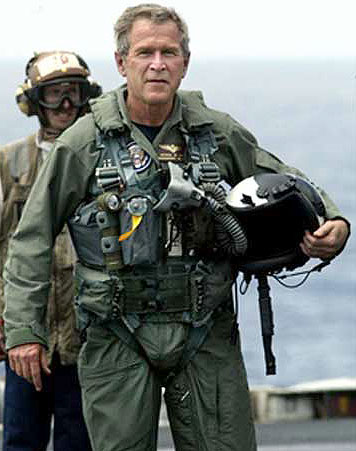
Like most Americans after the attacks of 9-11-2001 on the World Trade Center and the Pentagon I was all in favor of going after those that attacked this country wherever they were to bring those that planned these vile attacks to justice.  Within a month the United States had driven the Taliban out of power in Afghanistan and put the leaders of Al Qaida on the run.  By 2002 the US Government had began making a case against Iraq, one of a trio of nations identified as the “Axis of Evil.”  In 2003 we went to war with Iraq after failing to convince many allies of the necessity of the attack. When the “shock and awe” campaign was launched, Iraq forces defeated, Baghdad captured and Saddam Hussein driven from power there was a heady feeling of success.  Even those opposed to the invasion were amazed at the speed of and apparent ease of the conquest as pictures of cheering Iraqis filled the screen as the statues of Saddam came down.  In May President Bush landed on the USS Abraham Lincoln to proclaim “mission accomplished.” “We support the troops” ribbons and bumper stickers were the rage, victory has many friends and some churches even ascribed the victory to God.  But as the muse would say to the returning Roman conquerors, “victory is fleeting.”

We thought that we had achieved a “revolution in warfare” in the two campaigns but within months the tide had shifted in Iraq as in a colossal mistake of epic proportions a decision was made either in Washington DC or by the head of the Coalition Provisional Authority Ambassador Paul Bremer. A decision was made to disband the Iraqi Military, Police and Civil Service offices without having enough troops in place to police Iraq or civilians including NGOs and the UN available to fill the civil service gaps.  This was in direct contravention to years of CENTCOM plans. To make matters worse we had gone in so light that we had not disarmed or demobilized the Iraqi forces, thus we sent the people who could best help us restore Iraq to working order home. We sent them home and as anyone that knows Arab culture can tell you we dishonored them and created enemies out of potential friends while placing corrupt opportunists in power.  It was if we were making things up as we went rather than thinking things through and the result was a disaster.  By the end of 2004 a full-fledged insurgency had broken out an insurgency that would cost thousands of Americans and Iraqis their lives with tens of thousands of others wounded.  It was not until late 2007 and 2008 that the tides turned in Iraq as Iraqi Sunnis realized that Al Qaida backed insurgents were more of a threat to them than the American forces were.

Over the course of the war the thrill of the early days was forgotten as American Soldiers and Marines engaged a resourceful enemy that was willing to fight us in ways that we had neither expected nor planned.  War loses its luster when the thrill of victory is gone.  With the transition of the mission in Iraq and a renewed focus on Afghanistan where the Taliban had come back with a vengeance we are now moving toward being at war for 10 years.  We have fought the war with a military force that is well under 1% of the US population.  The military has fought well. We have not been defeated in open combat despite losing many troops to IEDs and ambushes; though in Afghanistan there have been a couple of near run events where small bases were nearly overrun by Taliban forces. We should remember General Hans Guderian, the creator of the Blitzkrieg and his words about the German campaign in Russia after the Battle of Kursk in 1943: “We have severely underestimated the Russians, the extent of the country and the treachery of the climate. This is the revenge of reality.” General Heinz Guderian

Nine plus years after 9-11 most of the American public as well as the political class of both parties have soured on the wars even while others seek war with Iran and maybe North Korea. I wonder about the wisdom of taking on even more enemies when the military is stretched to the breaking point and the nation is heading into bankruptcy.

But such things are not new from a historic point of view, if only we would look to history. Back in 1940 after their victories in France and the Low Countries the Germans felt as if they were invincible. By 1941 their troops were bailing out the Italians in North Africa and the Balkans while engaging the British in the air above Great Britain and in the seas around it. That did not stop Hitler from attacking the Soviet Union where as in France and the Balkans the German Army enjoyed amazing success until winter arrived and the Soviets counter-attacked.  Thereafter the German Army would not enjoy the same success and millions of German Soldiers; not to mention at least 20 million Soviet citizens and Red Army Soldiers died. Eventually the Wehrmacht was shattered, defeated and Europe devastated.

I am not saying that this will happen to the US, but it can.  We need to learn from history and look at how good people were enticed by the aphrodisiac of the “victory disease” that accompanied supposedly easy victories.  If one looks at Germany many officers, soldiers and civilians drank the aphrodisiac of victory and had their faith in Germany, their leaders and their cause destroyed as the war turned against them and they experienced defeat even while many times getting the best of their enemies on the battlefield.  Honorable men that had served their country well were either cashiered by the Nazi government and many killed by that instrument of evil because they voiced opposition to the regime.  Initially many had been lured into the trap of easy victory.

Back in 2001 and into 2003 I was like many of those men who served in the German military.  I was excited about the apparent easy victories in both Afghanistan and Iraq.   But like some German officers of that day who realized as the campaign in Russia was going badly into the fall of 1941 by late 2003 I began to sense that something was going terrible wrong in Iraq.  I think it was the moment that I heard that we had disbanded the Iraqi Army, Security forces and Civil Service as I started my course of study with the Marine Command and Staff College program held at the Joint Forces Staff College.  The experience of serving with thoughtful Marines in my unit and my fellow students; Marine, Navy, Coast Guard and Allied officers at the school helped me see the danger that was developing in our campaigns.  By the time I arrived in Iraq in the summer of 2007 the tide was beginning to turn but I saw the devastation of the country, ministered to wounded Marines and Soldiers and seen the affect of the war on Iraqis.  My duties with our advisors and their Iraqi counterparts were enlightening as I travelled about Al Anbar Province.

In the end I think that the Iraqis despite everything will do okay. I believe that most are tired of war and will not succumb again to sectarian violence on a large scale. I do not think that they have an easy road ahead but I believe the words of Brigadier General Ali as I left him for the final time: “You come back to Iraq in five years, as tourist, it will be better then.” I am not so optimistic about Afghanistan or Pakistan and I do not think we have yet seen the worst in those countries, but at least despite all of our mistakes Iraq most likely will do well.

The experience of war coupled with my study of history and military theory at the Command and Staff College as well as in my studies from my Master’s degree in Military History changed my perspective. I still serve faithfully and hope and pray for a conclusion to the wars that leaves us in better shape and brings peace to the lands that we have shed the blood of our Soldiers, Sailors, Marines, Airmen and other Federal intelligence, diplomatic and police agencies and treasure in.  I pray for my friends serving in harm’s way and those preparing to deploy and I pray for the safety of my Iraqi military friends and their families.

I am not a defeatist should someone level that charge at me.  I agree with Ralph Peters who made this comment: “We will not be beaten. But we may be shamed and embarrassed on a needlessly long road to victory.” However, I wonder if this country has the will to win and to make the sacrifices to do so and not just shovel them off on those that serve and have served throughout this war, a war which appears to have no end and which may expand to other countries.

Like the Germans we are engaged in a multi-front and multi-theater war but we have been trying to do so upon the backs of less than one percent of the population. This allows the rest of the country to live under the illusion of peace and prosperity with the bitter losses and memories of 9-11 fade into a yearly remembrance called “Patriot Day” by politicians of all stripes who often mouth empty words to eulogize the victims and thank the troops and then move on to their next fundraiser.  By doing this we have worn out the force without the full support of the nation which is absolutely necessary for the successful prosecution of a war, especially a long drawn out war such as we have now.  Unfortunately most Americans have little patience and while we mythologize a lot about World War Two one has to remember that there was a strong lobby that desired to end the war in 1944 even if victory had not been achieved.

We have a military now composed of many battle hardened and deployment weary soldiers who live in a world that the bulk of the nation does not understand nor really wants to understand.  We have seen the cost of the war multiply to the point that it has drained the ability of the military to prepare for other wars and modernize itself.  What happens if God forbid we are forced into a war with Iran or North Korea?  With what will we fight those wars?

When the Allies were cracking the German front in Normandy and the Red Army was decimating Army Group Center in the East, Field Marshall Gerd Von Rundstedt was asked what needed to be done by a General at Hitler’s military headquarters. The old Prussian warhorse simply said “make peace you idiot.” He was fired shortly thereafter. We certainly have not reached that point but should anything else break out while we are still engaged in Afghanistan and maintain a large number of troops in Iraq that could change.

One always needs to be careful when getting into “easy” and “quick” wars as more often than not they are neither easy nor quick.

Peace

Padre Steve+

Leave a comment

Filed under Foreign Policy, History, iraq,afghanistan, Military, national security

Fighting a World Wide Insurgency: The Problem Fighting Revolutionary Terrorists and Insurgents- Part One

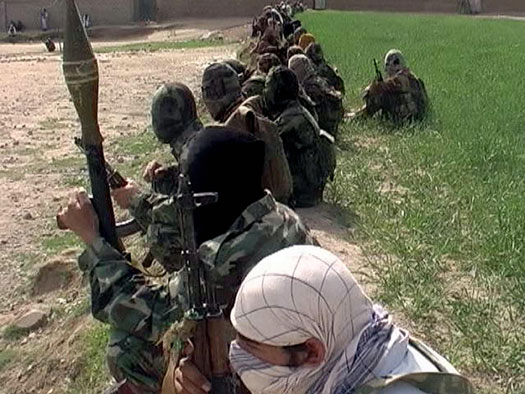
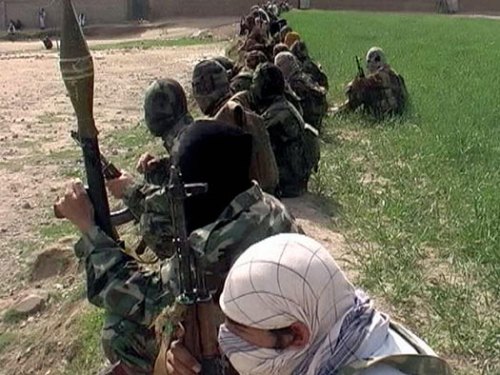
Taliban Insurgents

“Warfare is now an interlocking system of actions political, economic, psychological; military that aims at the overthrow of the established authority in a country and its replacement by another regime.  To achieve this end, the aggressor tries to exploit the internal tensions of the country attacked ideological, social, religious, economic, any conflict liable to have a profound influence on the population to be conquered.” Roger Trinquier Modern Warfare

The United State and our allies have been at war with Islamic terrorists as well as nationally based insurgencies for over nine years.  The war that we are fighting is not like the Second World War where we fought a conventional war against enemies that were defined by national, political and geographic boundaries.  That war as well as the First World War and most recently the 1991 Gulf War but rather is a global insurgency in which we are pitted against a number of sometimes disparate groups One of the things that seems to be misunderstood by much of the media as well as the public

Muslim terrorist groups they use some tenants of Islam, mostly from the Wahabi school that emerged on the Arabian Peninsula in the late 1700s to justify what they do. Hezbollah and the Iranian Revolutionary Guard use the Islam taught by the school of the Ayatollah to do the same.

However that being said there are a sizable number of Muslims worldwide that oppose the terrorists and their brands of Islam but still can be offended and driven to the other side by Americans doing just what pastor Jones got started. The radicals take this and use it as propaganda against us.

The fact is that it is all about using propaganda effectively and not giving the terrorists the grist they need to use against us. The terrorist or the insurgent has no need to tell the truth and usually will not and will twist any “truth” to his own end. This is true in every revolutionary war, which is what all of these groups are waging. They are fighting to turn all of Islam and anyone else they can against us. This is the case since the beginning of time and not limited to Muslims.

We as Americans have been pretty lousy at this except when we were the revolutionaries. It is a fact, not just with the Muslims but all revolutionaries that since they are on the weak side of the military equation that they use propaganda, especially what any of our people do to radicalize people on the fence against us. Jones and others played into their hands and by doing so jeopardize the mission and endanger our troops. The fact is that we neither have the resources or people to allow this to become a war against all of Islam. Thus we have to exploit natural divisions and cultural divides in the Moslem world to isolate and neutralize the radicals of Al Qaeda, Hamas, the Taliban, Hezbollah and the Iranian Revolutionary Guard.

It may seem on the surface to be politically correct appeasement but a true strategic purpose is served. The counter-insurgent cannot do what the insurgent can as they will lose the propaganda war and with it the broader war. We are fighting a world-wide revolutionary war against Moslem fundamentalist extremists that want us to make it a war against all of Islam. If that were to be the case we would have to go to a total war footing, ignore our own economy renew the draft and prepare for a war that in the long run we cannot win and will leave us as broken as Germany after WWII.

The problem with Islam as that for the most part much of Islam especially in the Middle East still lives in the 14th century with fancy technology. They did not have the Renaissance, Reformation or the enlightenment thus the appeal of the fundamentalist sects and radical Islam. That makes our job hard and that of Bin Laden easy as their world-view  promotes a black and white understanding of the world which makes recruitment of youthful idealists easy especially when the conflict is framed as against “Crusaders” or “Imperialists” opposed to Islam.

The war that we are engaged in is not conventional and we do not have a good record in recent times of fighting this kind of war. We lost in Vietnam because we ignored this. We won all the battles and lost the war. Despite what some pundits believe this is not like WWII and no new incarnation of George Patton will win it.

As I said we are engaged in a revolutionary war which is different than other types of war. In revolutionary wars the revolutionary no matter what his cause is able to use propaganda to influence opinion, usually of people that they are trying to bring to their side. Our founders were very good in portraying the British as violent and brutal occupiers. We used British excess especially in Boston and in the South against them very well. The Jihadists are promoting a revolutionary cause, that cause being the overthrow of established governments in the Middle East and bringing about a radical and fundamental brand of Islamic rule. This happened in Iran and after 30 years the young people are beginning to revolt against the Ayatollahs. It is also revolutionary because they are actively promoting the overthrow of established states and have a goal of establishing their brand of Islam over the entire world. The use revolutionary techniques and strategies used successfully by other revolutionaries attempting to control the populations where they operate through both terror and by discrediting unpopular or corrupt governments.

One of the problems that we in the United States have in understanding Al Qaida and other Islamic groups that rely on terrorism as their primary means of conducting warfare is the nature of the terrorist himself.  Roger Trinquier who observed and fought against such groups in the 1940s and 1950s wrote one of the fundamental books on this type of warfare.  Trinquier said something that will undoubtedly be taken wrong by some readers of this essay but if one understands the nature of Revolutionary war has been true going back for centuries and is not confined to militant Islamic Fundamentalism.   Trinquier observed that “the terrorist should not be considered an ordinary criminal.  Actually he fights within the framework of his organization, without personal interest, for a cause he considers noble and for a respectable ideal, the same as soldiers in the armies confronting him.”

One can see how this is demonstrated in history in such disparate groups as the Israeli Irgun fighters who used terrorist tactics from 1931 until the founding of the state of Israel in 1948 against the British occupiers, the Irish Republican Army.  This is even part of the American experience in the post Civil War South of the Reconstruction era.  Then many Southern whites organized into guerrilla terrorist units such as the Klan in Tennessee, the Red Shirts in South Carolina, the Knights of the White Camellia in Louisiana, the Young Men’s Democratic Club in Florida in order to attack anyone associated with Reconstruction. Their targets included newly free blacks, carpetbaggers, Scalawags, teachers from the North, Freedmen Bureau officials, northern troops, and Republicans.  If you read their writings or even query their current day descendants you will find that none believed that they were criminals and their actions, while unacceptable to many were justified.  One does not have to agree that the terrorists cause is right to acknowledge that terrorists believe this to be true.  Thus in fighting the terrorist organizations one has to employ a wide variety of tactics to protect the populations targeted by terrorists to include police, limited military involvement, the use of propaganda, and “soft” methods to provide aid to these populations and isolate the terrorists from them.

The current batch of Jihadists are actually fairly disparate and not necessarily allies as we found out in Iraq where Al Qaeda and the foreign fighters turned the population of Al Anbar Province against them and brought that Sunni population to our side. They also have sometimes conflicting goals or limit their cause to local areas. The Sunni and the Shi’a have a hard time working together so while this is a global revolution it is not monolithic. Thus if we are smart we can exploit natural divisions in these groups. To do so we have to play smart in how we fight them recognizing that the “soft” approach often is better as the French found out too late in Vietnam but did well with in Algeria. See books by David Galula “Counterinsurgency in Algeria 1956-1954” “Counterinsurgency Warfare”, Roger Trinquier’s “Modern Warfare” as well as the book by Alister Horne “A Savage War of Peace” all are excellent reads. Bernard Fall’s book “Street Without Joy” is a good study of how this happened in French Indochina. The US Counterinsurgency Manual is available online or in bookstores as is “Learning to Eat Soup with a Knife” by John Nagl, a major writer of US Counterinsurgency doctrine.
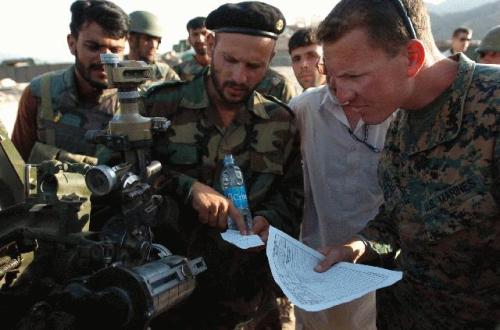
US Advisors with Afghan Army Officers

In a world-wide insurgency even actions which seem logical to Americans at home can be detrimental to US Forces and political goals in Afghanistan, Pakistan, and Iraq and throughout the Muslim world. I’m not a fan of the Mosque near the World Trade Center even though it is the equivalent of 6 normal city blocks away and not visible from the site. Many Americans if not an outright majority oppose this building project yet the builders don’t seem to understand the raw wounds that the project has opened for many Americans. I’m sure for them that much of it is a business, they are developers in New York City and the land was available. Yet the project can quite rightly be seen as insensitive because of what it means to the victims.

At the same time politicians and protesters by naming it the “Ground Zero Mosque” has raised its propaganda value exponentially, that is why Hamas and Hezbollah have also raised the ante in their talk about it. Thus what was an annoyance and hurtful to the victims has become a propaganda victory for the terrorists. In a sense we have let our collective outrage play into the terrorist’s hands. When he pastor of a small church in Florida threatened to burn a large number of copies of the Koran he helped ignite a firestorm of protest in many parts of the Islamic world especially in the epicenter of our current struggle in Afghanistan and neighboring Pakistan.

We are at war with the warlike highly militant strains of Islam and trying to keep the more Western leaning peaceful variants on the sidelines or enlist them to our side. This is a hard path for our leaders to walk as President Bush found out and President Obama is finding out is that most Americans don’t see it that way.  To many Americans all of Islam is the enemy and nothing can change that and the heated passion of our population often plays into the hands of our enemies.  Thus both Presidents’ comments about Islam have usually fallen on deaf ears and both have been excoriated for straddling this fence.

Anyway as you gather I have spent a considerable amount of time studying this type of warfare. I admit that this is pretty unusual for a chaplain, but I also have a Masters degree in Military History as well as the Marine Corps Command and Staff College. When I was in Iraq I knew more than many Marine and Army officers about fighting this type of war. Kind of weird I know but what can I say?

One of the most famous and successful practitioners of Counterinsurgency Warfare was French Colonel David Galula.  Galula in a sense is the “voice crying in the wilderness” of counterinsurgency doctrine and his methods have been used with some measure of success during the “Surge” in Iraq and the “Anbar Awakening” which turned the tide of the Iraqi insurgency.  Galula commented about terrorist tactics, tactics that have not changed in either Iraq or Afghanistan:

“The rebels realized that they could achieve the greatest psychological effect on the French and on world opinion at the cheapest price by stepping up terrorism in the main cities, notably in Algiers, which served as headquarters to most French and foreign correspondents and thus acted as a natural amplifier. A grenade or a bomb in a café there would produce far more noise than an obscure ambush against French soldiers in the Ouarsenis Mountains.” Galula “Counterinsurgency in Algeria”

One of the most frustrating aspects for military and police personnel fighting insurgencies that employ terrorist tactics is that quite often superior forces cannot finish off the insurgents. Galula provides an answer to this question.

“Our forces were vastly superior to the rebels. Then why couldn’t we finish with them quickly? Because they managed to mobilize the population through terror and persuasion . . . It was therefore imperative that we isolate the rebels from the population and that we gain the support of the population.  This implied that under no circumstances could we afford to antagonize the population even if we had to take risks for ourselves in sparing it.”

This is a lesson that we have not always learned as incidents such as the Abu Ghraib torture and most recently a series of targeted killings of Afghan civilians by a squad of Army Soldiers in Afghanistan in which they allegedly planned the killings in advance and kept body parts of their victims.  Unfortunately atrocities like this as was demonstrated at Mei Lai in Vietnam do little to the enemy and everything to turn the populations that we are trying to protect and world opinion against us. It also provides grist for the terrorist propaganda purposes and aids him in recruiting more insurgents to his cause.

Galula recognized the quandary that commanders of police and military units involved in counterinsurgency operations face when dealing with populations where terrorists operate. Galula was a realist about this and noted “If we distinguish between people and rebels, then we have a chance. One cannot catch a fly with vinegar. My rules are this: outwardly treat every civilian as a friend; inwardly you must consider him as a rebel ally until you have positive proof to the contrary.” This may seem contradictory but the concept was used by Ronald Reagan during the Cold War using the term “trust but verify” in relationship to the Soviet Union and arms control.

David Kilcullen an Australian Army Lieutenant Colonel and counterinsurgency expert and advisor to General David Petreus noted

Colonel Dennis Drew writing in 1988 understood the linkage of all parts of insurgency and how well an insurgency represents the essence of the thought of Prussian theorist Carl von Clausewitz: “Although theorists consider insurgent warfare to be anti-Clausewitzian, such warfare is the very embodiment of the Prussian master’s most famous dictum. Insurgency represents the total integration of political and military factors, but with political factors always in complete domination.” (INSURGENCY AND COUNTERINSURGENCY American Military Dilemmas and Doctrinal Proposals- Air University Press Maxwell Air Force Base, Alabama 1988)

Thus attempting to fight an insurgency and terrorist groups thinking that one can defeat them in the style of world War Two, as is so often espoused by pundits and amateur military theorists that crowd the airwaves and cyber space is foolish and only leads to the defeat of the counter-insurgent and the loss of the population targeted by the insurgent. The wars in Afghanistan and Iraq are not conventional wars and the political outweighs the military in every respect.  As Drew noted:

“Although the military aspect of the struggle may ebb and flow, the source of insurgent strength–a covert political infrastructure–remains constant. This infrastructure, the bitter fruit resulting from the perceived political and economic inequities sown much earlier, is the most important ingredient in the insurgent recipe for success. The political infrastructure performs at least six major functions vital to the survival, growth, and eventual success of the insurgency: (1) intelligence gathering and transmission; (2) provision of supplies and financial resources; (13) recruitment; (4) political expansion and penetration; (5) sabotage, terrorism, and intimidation; and (6) establishment of a shadow government.”

This is exactly what has happened in Afghanistan and why we have such difficulty in fighting the insurgency.

One of the most common tactics that the United States has attempted in attacking the insurgents is the strategy of decapitation. In this the U.S. has attempted to kill the leaders at the top echelons of the insurgency with limited success. Even when we kill off a senior Al Qaida or Taliban leader others rapidly take their place with little affect in their operations against us. Galula recognized the fallacy of this approach in Algeria when the French government succeeded in capturing five top leaders of the Algerian rebellion. “Then, five top leaders of the rebellion, including Ben Bella, had been neatly caught during a flight from Rabat to Tunis. Their capture, I admit, had little effect on the direction of the rebellion, because the movement was too loosely organized to crumble under such a blow.” The lesson here is that should we ever succeed in capturing or killing Osama Bin Laden or Mullah Omar that this will not lead to victory unless we are able to protect the population of Afghanistan.
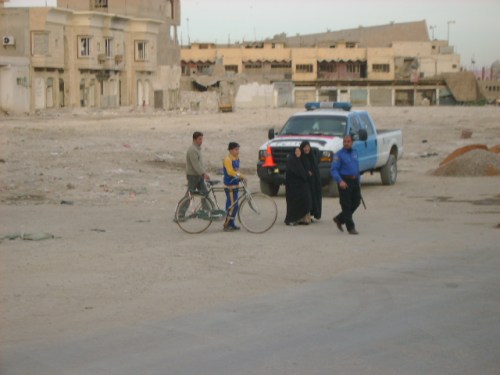
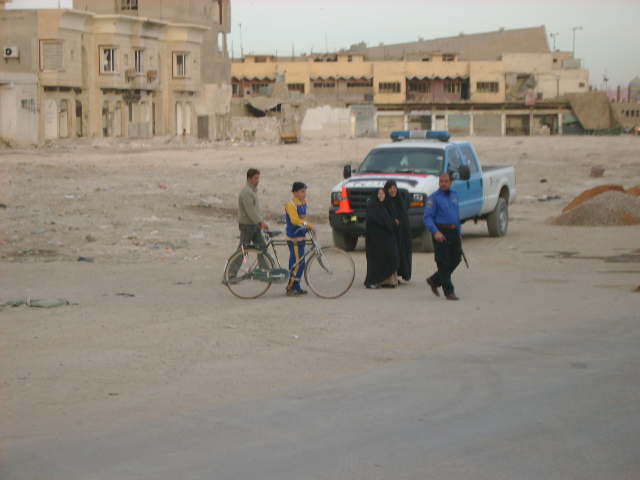
Protecting the population Iraqi Police and Civilians in Ramadi

To do this the population must come to our side because they know that we will stay the course and that we can be counted on to help them.  This cannot just be the military aspect of protecting them against the terrorists as well as economic and political reforms that is consistent with their traditional way of life which is not necessarily consistent with Western political and social traditions or practices. In fact the difficulty for the United States and NATO in Afghanistan is the political struggle on the home front where as Drew states:

“American military dilemma concerns time, public support, and image. Time is the ally of the insurgent; the longer an insurgent survives, the stronger its chances of growing. Meanwhile, as time drags on, the American military position is weakened by declining support, impatience, and war weariness at home, particularly if there is no perceived progress in the struggle. Maintaining public support is clearly a responsibility of the political side of the equation and involves factors far beyond the battlefield–although military progress is a key ingredient. The connection between the duration of the struggle and public support is the image of the insurgency presented to the American body politic.”

To be continued….

Peace

Padre Steve+

1 Comment

Filed under counterinsurency in afghanistan, History, iraq,afghanistan, Military, national security, Political Commentary

Raw Edges: Are there other Chaplains out there Like Me?

Before a Convoy

The past week or so I have had to go back and revisit my Iraq experience. Part of this is due to work, we have had seminars on the spiritual and moral affects of trauma, the challenge of forgiveness and most recently discussing best spiritual care practices for those who suffer from PTSD or Traumatic Brain Injury (TBI).  The training has been excellent but has kicked up a lot of stuff in me.  Added to this have been reports out of Afghanistan about more casualties in particular of a helicopter that crashed that killed 9 Americans, the Taliban claim credit for downing the aircraft but the circumstances are not fully known.

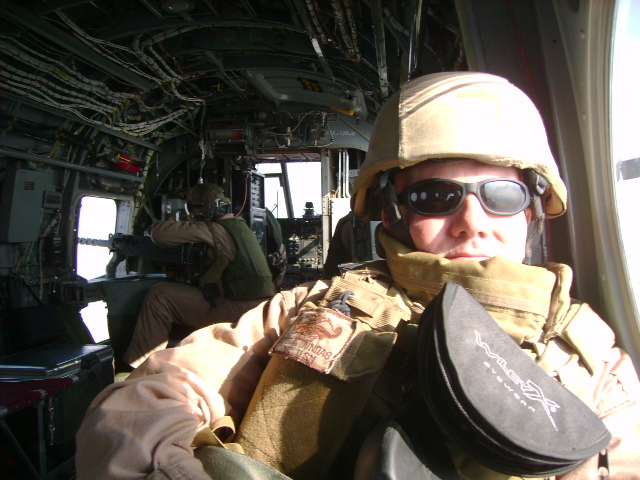
One of many helicopter flights, this a daylight flight in a Marine CH-46

The course last week on the spiritual and moral affect of trauma and the challenge of forgiveness brought up issues from Iraq but not upsetting.  In fact the seminar taught by Dr. Robert Grant author of The Way of the Wound was helpful to me in sorting out what I have been going through for the past couple of years.  The training this week is also good, good information but for me it is more unsettling because it deals with images, videos of convoys, burning vehicles and other things like that.  The convoy images coupled with the news of the helicopter crash actually had me pretty shaken as I spent a large amount of time in small convoys with small groups of Americans and Iraqis in pretty dangerous areas of Al Anbar Province stretching from Fallujah to the Syrian border as well as a couple of hundred hours in the air, usually at night in various Marine and Army helicopters as well as the MV-22 Osprey.  During those experiences we took fire a couple of times and had a few experiences on some of our flights that were a bit sporty.  So for a while I was lost in my own stuff but was able to pull out in not too long of time.

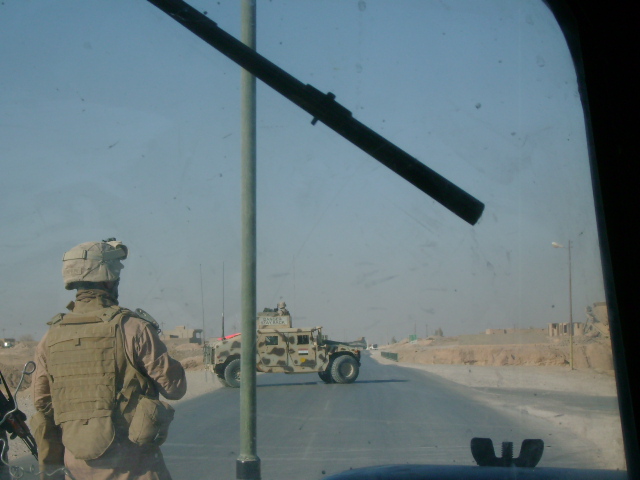
Convoy stopped near Al Qaim

Some of our discussions revolved around how trauma and war can impact a person’s image and relationship with God, whatever that may be.  The focus was on us as pastoral care givers caring for those in our charge.  Once again this really good information for me as I will be dealing with a lot of PTSD and TBI cases are Camp LeJeune.  But there was one thing that got me.  I came back from Iraq as most of my readers know in pretty bad shape dealing with PTSD and issues of abandonment feeling disconnected with the Navy and my church.  Part of that was what amounted to be a loss of faith so severe that I was for all practical purposes an agnostic for almost two years because I couldn’t make sense of anything to do with God, I felt God forsaken it was to use the image of St. John of the Cross, my Dark Night of the Soul.  I am doing better now and feel like my faith has returned to some degree, certainly not like it was before but while I have doubts I am okay with that part of the journey now.

Christmas Eve not far from Syria

I know a number of military Chaplains from the Navy and Army that have returned from Iraq or Afghanistan in some sort of faith crisis many suffering from PTSD or TBI.  I am actually wondering how many are out there.  I know that I am not alone, but I need to know if others are going through this experience too.  It was for me a desperate feeling to be the Chaplain, Priest, Pastor and spiritual care giver when I was struggling having no answers and only questions, when people asked me about God and I didn’t even know if God existed.  This is the unspoken cry of at least some and possibly quite a few Chaplains and other ministers who have experienced trauma and moral injury.  One thing my incoming CO at my old unit asked me was “where does the Chaplain go for help?”  At that point I said that I didn’t know.  The sad thing is that I know many chaplains and ministers that have a basic lack of trust in their fellow clergy and do not feel safe confiding in them because they feel that they will be judged, not listened to or blown off.

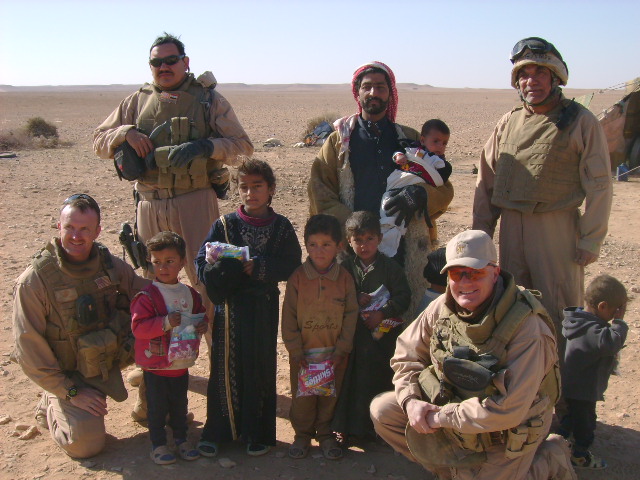
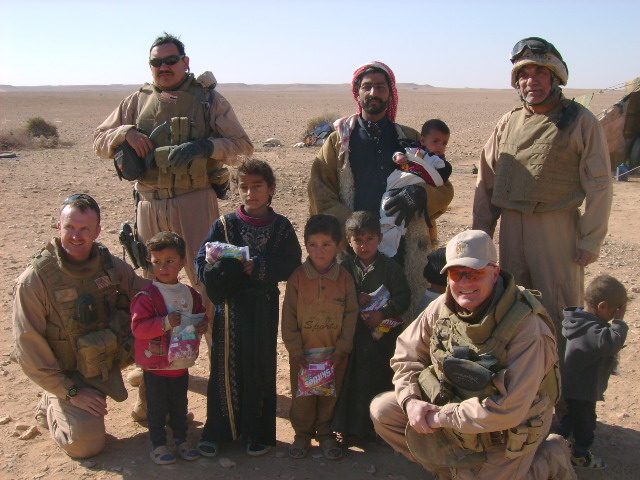
A different war with the Bedouin in the western desert of Iraq about 5 km from Syria.

When I was diagnosed with PTSD in the summer of 2008 I made it my goal to grow through this and hopefully as I go through this to be there for others. Part of my recovery came through sharing experiences, the good and the bad on this site.  Elmer the Shrink asked me back when I started this if I thought that it would be helpful to me in my recovery, but he also asked if I was okay in opening up about this topic.  Since I didn’t see many people writing about this from the perspective of being a “wounded healer” I told him that I thought that I had to do it.  The experience has been terribly painful but at the same time I think that it has been worth it because as a Priest and Chaplain I think now more than ever in my weakness I can be with people in their difficult times without trying to “fix” them.

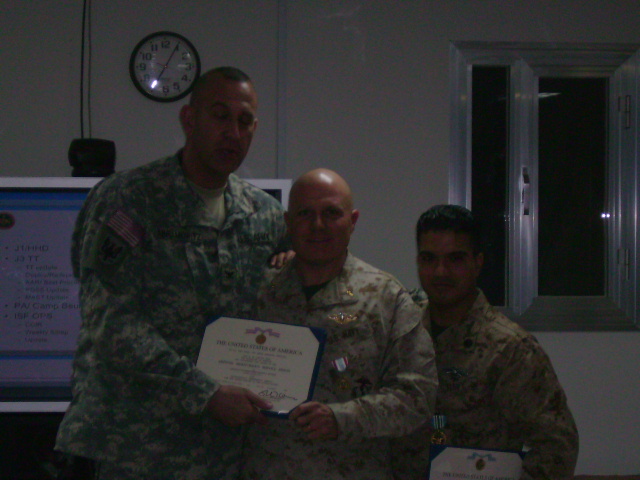
Colonel David Abramowitz with me and RP2 Nelson Lebron after presenting me with the Defense Meritorious Service Medal and Nelson the Joint Service Commendation Medal for our service with our advisors and Iraqis in Al Anbar with the Iraq Assistance Group. After this we both dealt with abandonment and other issues on our return home.

So who is there for “damaged” Chaplains? Who takes care of us? I was lucky or maybe blessed. I had Dr Chris Rogan ask me if I was okay. I had Elmer the Shrink do a lot of the hard work with me. At Naval Medical Center Portsmouth I had a Command Chaplain that was wise enough to protect me while I went through the deepest and darkest valley of my life.   As I recovered he challenged much like a Baseball Manager would challenge a pitcher who had been very successful on other clubs coming off the disabled list to regain his self confidence and ability to get back on the mound with a winning attitude. Not every Chaplain gets what I got and I am blessed.  I still have work to do and I need to recognize my limits, much as a pitcher who has recovered from Tommy John surgery makes adjustments.

So this is my question:  Are there others other there like me?  Are there other Chaplains experiencing such feelings after Iraq or Afghanistan? I’d really like to know because I believe that in what might be termed “a fellowship of the forsaken” that we can rediscover faith, belief and hope again and in doing so be there for others.

If you want please let me know if this encourages you or feel free to comment. Prayer is still hard for me but I promise that if someone asks that I will pray and to the best of my ability be available for them as others were for me because I don’t want any Chaplain to experience the abandonment that I felt went I returned from Iraq having felt that it was the pinnacle of my military career. To those Chaplains I just want to say that you are not alone.

Peace

Padre Steve+

4 Comments

Filed under faith, iraq,afghanistan, Military, Pastoral Care, philosophy, PTSD, Religion, Tour in Iraq, US Navy

Going to War: The First Mission Flying West in a C-130

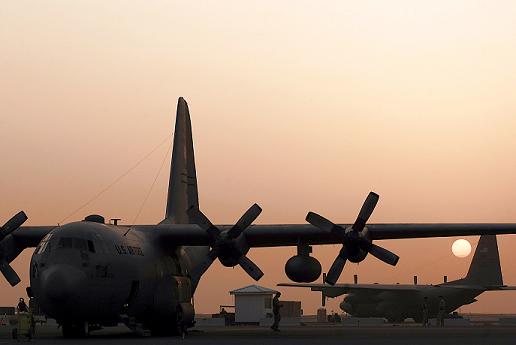
Workhorses: C-130s at an US Base in Iraq

This is another installment of my “Going to War” Series that I began last year.  In the Fall I had to take a break from posting anything more due to issues that I was having dealing with the effects of PTSD. I started this article in the spring but again put it on hold.  I have reached the point that I can again write about this. I will post follow up articles about our operations and experiences supporting our Marine Corps, Army and Joint Service advisor teams in Al Anbar province. The previous posts as well as others dealing with Iraq are filed in the “Tour in Iraq” link on the home page. The direct link to these articles is here: https://padresteve.wordpress.com/category/tour-in-iraq/

Nelson and I continued to prepare in the days leading up to our first mission to the Border Port of Entry at Waleed on the Syrian border with a planned follow on to the teams of the 3rd Brigade, 7th Iraqi Division at Al Qaim about a hundred miles to the north .  Waleed is about 350 miles west of TQ and 70 miles from the nearest FOB with any substantial American presence known as Korean Village or simply KV. We were in constant communication with the team that we to visit via VOIP and SVOIP telephone and secure and non-secure e-mail. The commander of the Border teams, which included Border and Port of Entry adviser teams was Lieutenant Colonel Bien.  Our mission in getting out to the furthest point west was to meet up with an incoming and an outgoing Port of Entry team and see what we could do to get out to other posts along the border.

Nothing in Iraq is easy.  The get out to Waleed we had to make a two day trip from TQ, through Al Asad out to Waleed.  Our flight out was a day flight on an Air Force C-130 to Al Asad.  Our contacts in the G3-Air at 2nd MLG were good in helping me figure out the Air Force flight request which was different than the normal Marine Air Support Request.  For this mission I had to submit two Air Force and three Marine Air Support requests.    Simply submitting a request does not guarantee a flight. Flights are based on precedence dictated by the overall mission.  Religious support was pretty high on the list but there was no telling that your flight would go until you had your approval message and even then things could change.  The actual missions were not known until about midnight the night prior to the flight. So if you were a frequent flyer it meant no sleep the night before a mission as you waited to see if you were approved.  This was my first time actually having to do this for real so I sat at my secure laptop in my office in the back of the TQ plywood Cathedral waiting for the flight list to be posted on the MLG G3 Air Secure Website.  Finally about 0100 the list popped and our first flight was on in.  It was a mid day flight which meant that we needed to be at the passenger terminal about 0930.  This entailed getting our ride from the Chapel to the terminal by 0900.

I told Nelson who was checking his e-mail on a computer in the RP office that it was a go and then headed off to my can to prepare.  Since most of my gear for the 10 day trip was already packed I tried to actually get ready to sleep.  I quickly found that simply being tired because I was up late was not enough to help me go to sleep.  I was really tired but the adrenaline was coursing through my body making it impossible to sleep.  I prayed the office of Compline and then played computer Ma-Jong until at least 0300 before I could finally pass out.  I was up early to shower and get breakfast before lugging my gear over to the chapel.  The weather as usual was about 100 degrees by the time I got back from the chow hall; I gathered my gear and went to the chapel.  I took my back pack, my laptop and a flight bag. I would learn on this mission that I would need to pack lighter the next time around, but live and learn.

The first leg of our trip was on an Air Force C-130 from TQ to Al Asad which we shared with a large number of previously unknown friends from every branch of service in the US military as well as various civilians and contractors.  All of us had our personal protective equipment as well as our bags. The bags that we did not want to lug were placed on pallets and transported with a large fork lift to the aircraft.  When you make one of these trips you are accounted for a good number of times before ever getting on the aircraft.  This first mission was still in the heat of the Iraqi summer and thus the temperature inside and outside of the aircraft was stifling.  We staged off the tarmac in the sun for a final role call and then in two lines who guided out to our aircraft which had just landed.  As we were trudging out to the aircraft two lines of assorted passengers primarily Soldiers and Marines passed us mid way to the aircraft.  As we neared the aircraft the propeller blast blew the hot air into our faces and I thanked God for the high speed Wiley-X ballistic sunglasses that I had been issued by EOD.  Entering into the aircraft we had to step up onto the cargo ramp and then took our seat in the narrow canvas mesh jump seats that lined both the side of the aircraft and the center.  The rear of the aircraft including the cargo ramp was used for several pallets of cargo including the bags that we elected not to carry.  Sitting in the aircraft and waiting for the pallets to be loaded I thought back to my early career as an Army Officer where I became an air-load planner and embarked my soldiers on six C-130s during Winter REFORGER 1985.  Back then instead of the 130 degree heat of Iraq we faced the coldest winter in 40 years in Europe in which the Rhine froze over.  Although the use of computers has become routine in load plans the principles are the same as they were 25 years ago and everything on the aircraft needs to be properly balanced to ensure the stability and safety of the aircraft and that weight limits are not exceeded.  As the sweat poured off of me I took off my helmet and downed part of the one liter bottle of water that I carried onto the aircraft and threw some on my face, though warm it was refreshing and I reattached my helmet as the aircrew came through the cabin giving a final safety brief.

As the last of the cargo pallets were loaded about the aircraft the cargo ramp was raised, the entire time that the aircraft was on the ground was under 15 minutes, it is amazing what the Marine and Air Force ground crews and cargo handlers can accomplish.  With the ramp raised the aircraft’s air conditioning began to take effect and though not the coolest air conditioning it was better than what we had up to that point. The aircraft began to roll and move down the taxiway and when it reached the end of the taxiway it made a fast turn and began its take off.  Since there was a real and present danger of possible missile or gun attacks on low flying aircraft the C-130 made a steep lift off and banked right over Lake Habbinyah and continued its ascent until it reached its cruise altitude.  The C-130, like any cargo aircraft is extremely loud and because of this hearing protection is worn by passengers and crew and conversation is nearly impossible.

The flight from TQ to Al Asad is only about 30 to 45 minutes depending on the route taken so most of the passengers took the opportunity to grab a bit of sleep or read.  Nelson and I sat together on the starboard side of the aircraft not far from the palletized cargo.  Nelson who can sleep almost anywhere on a moment’s notice was out quickly; and although I was tired I could do little more than close my eyes and try to clear my mind.  When we neared Al Asad the aircraft banking nearly perpendicular to the ground made a steep and fast approach.  As we landed I could see other aircraft on the ground including F-18’s, various transports and rotor wing aircraft.  The C-130 taxied to a spot on the tarmac where the ramp was dropped and we were instructed to exit the aircraft and led to the rear of the aircraft about 50 yards and then led between it and another aircraft to a group of tiny Japanese made Nissan and Mitsubishi buses in which we were loaded until every seat was full including the in aisle jump seats.  Packed into the bus like sardines and smelling almost as bad we sucked in the stench, which was somewhat like a European elevator in the 1980s.

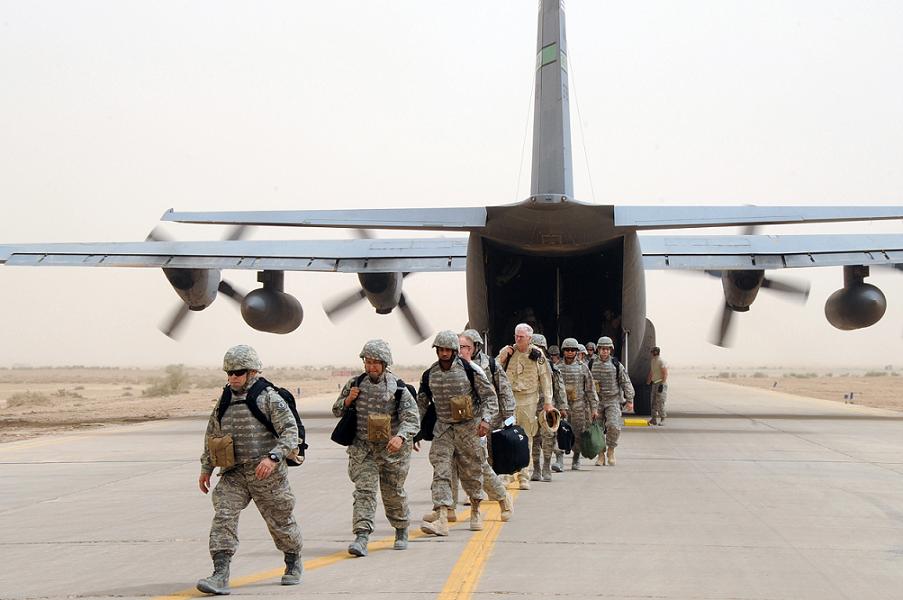
Passengers disembark from a C-130 at Al Asad

After a short ride to the terminal we picked up our gear which had been delivered on the pallets by forklifts.  Another muster was taken and after all personnel were accounted for those of us waiting on follow on flights checked in at the terminal.  After being accounted for we got our temporary billeting in large tents about a hundred yards from the terminal.  The tents were large and poorly lit with plywood floors and several air conditioners built into the sides of the tent.  The bunks were in very poor condition, many broken and even more with dirty worn out mattresses sagging in the middle.  Nelson and I looked at each other and Nelson made some comments about the accommodations and we each found a bunk grounded our gear and settled in for a bit in order to clean up before trying to go get some chow.

Next: Air Travel In Al Anbar: the California Line.

Leave a comment

Filed under iraq,afghanistan, Military, Tour in Iraq

Goodbyes and Prayers: Sending Friends off to War

My little war within the war, Christmas with the Bedouin

Yesterday I was honored to be at a pre-deployment ceremony for a number of my shipmates from Portsmouth Naval Medical Center about half of I know fairly well.  There were physicians, nurses and hospital corpsmen in the group, some going to Afghanistan with the Marines, NATO or the Army while others were going to Guantanamo Bay or Djibouti, the country rejected by both Eritrea and Ethiopia. I already have seen a good number of friends and colleagues from our Medical Center deploy and in some cases return and I know of one corpsman that came back wounded while serving with the Marines in Afghanistan.

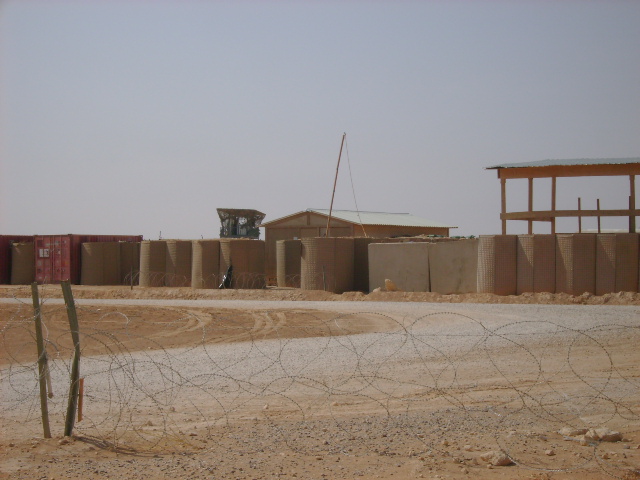
COP South

I have done many of these send offs since coming to Portsmouth but I think that today I knew a higher percentage of the personnel deploying than normally is the case.  At these ceremonies it is customary for the chaplain to pray for our shipmates as well as their family members.  This deployment comes in the midst of monthly casualties reaching their highest point in the war and shortly after two US Navy sailors being killed when for whatever reason they left their base in Kabul in an up armored Toyota Land Cruiser and proceeded to drive alone to one of the most dangerous areas of the country.  With that in mind the safety of our shipmates is something that I and those that serve are ever mindful of when we send our people to deploy.  Yesterday I spent more time with the deploying sailors before and following the ceremony because so many were friends or close colleagues. The goodbyes from me this time were different as I will not be at Portsmouth when my friends return. My assignment as the Command Chaplain at Naval Hospital Camp LeJuene means that I won’t be there but I will continue to keep them in my prayers and stay in contact with as many as I can through e-mail or Facebook.  At LeJuene I will meet old friends from Portsmouth as well as from my Marine tours.  I will also get to deal with a lot more Marines and Sailors dealing with physical as well as psychological injuries resulting from their time in harm’s way in either Iraq or Afghanistan or in many cases both countries.

Pause for possible IED

It has been three years since I deployed to Iraq, in fact three years to the day yesterday that I arrived in Kuwait to complete final training before going into country.  When I was over in Iraq I was blessed my many expressions of support of many people, churches, schools and veterans groups.  At the same time I did not sense the overwhelming support of the people for our troops and that included many members of the political establishment that seemed more interested in using the war to advance their political objectives and unfortunately that was truly a bi-partisan endeavor.  Since we are an all volunteer force it seems to me that the only people really paying attention are people with sons, daughters, mothers or fathers or other family members or friends in harm’s way.  For others supporting the troops is little more than a bumper sticker affirmation, which I appreciate as at least most people aren’t damning us as so many did in Vietnam, a war that my dad served in and which as a Navy dependant experienced in the way that military families were treated by the protest set.

On Syrian Border with Iraqi Border Troops

Today I saw an article about an Army Lieutenant one Christopher Babcock http://gen-reading.blogspot.com/ at a tiny base in Afghanistan.  I often felt this way when in Iraq, especially those times that I came back into the large base that I operated from and saw various news channels on AFN including Fox News, CNN, and MSNBC.  Much of what I saw coming out of the mouths of reporters or politicians, showed me just how out of touch and how little our leaders on both sides of the political divide, the media and the American public understood this war.

Convoy in Ramadi shortly before we took fire

My war experience was different. The places I went were the places most people never heard of or will ever hear about.  My assistant and I travelled thousands of miles in fixed and rotor wing aircraft as well as in many tiny poorly armed convoys in the badlands of Al Anbar Province to the small Iraqi bases where our advisors to the Iraqi Army and security forces worked.  In the assignment I got to know a decent number of Iraqi officers and even spoke to the first class of female Iraqi Police officers in training at Ramadi.  I believed then and now that Iraq will do well in the long run.  Back in 2007 very few people believed that, but having gotten to know many fine Iraqis I know that they will repair their country and move on with life. They have been at war in some way shape or form since 1980 and are war weary and most want to move on to live in peace and raise their children.

Guests of Major General Sabah of 7th Iraqi Division

I do not believe this to be the case in Afghanistan. History tells me that we will have no better outcome than the Soviets.  We lost our opportunity when we let up on the pressure in Afghanistan to concentrate on Iraq. The Taliban were able to rebuild and regain control of much of the country between the Iraq invasion and 2010.  I honestly don’t know if we as a nation have the wherewithal to win this war or the resources to do so.  Many outstanding Soldiers, Sailors, Marines and Airmen as well as personnel from the CIA perform heroic work on a daily basis but they do not have the numbers or resources to fight a successful counter-insurgency campaign when the Afghan people by and large hate the Karzai regime and cast their lot with the Taliban despite their miserable life under that brutal, medieval fundamentalist Islamic regime.

But we go on with each service sacrificing needed equipment and personnel to fund the war. Even now the Navy is going to be cut maybe up to 25,000 sailors without any mission decrease. Likewise there will be no let up of the use of Navy personnel as Individual Augments to Marine, Army or NATO forces in the Middle East and in other locations.  As it is the force seems to be stretched beyond belief with many sailors not only deploying in traditional at seas, Fleet Marine Force, Seabee or Special Operations billets but when they are supposedly on the downhill side in a shore billet are pulled to serve as an Individual Augment.   The Army and the Marines are worn down by constant deployments with no end in sight.  There are no new drafts of personnel, end strength is limited and the same people go back time and time again.  If I was told I needed to head to Afghanistan I would because that is where many of my friends are and as a Priest and Chaplain I could do no other, but I would go with no illusions about the mission, the risk or the likely outcome of the war. It would be the place to care for God’s people serving in harm’s way.

Brotherhood of War

While this is going on there is the ever present threat of war on the Korean Peninsula or with Iran. A war in either location would open yet another front in a worldwide conflict, when we are already stretched to the breaking point elsewhere.  Any conflict in those areas could generate more casualties in a short period of time than all the personnel that we have lost in Iraq or Afghanistan.

Goodbyes and prayers… I am sure that there will be more of both in my future.  I just ask my readers to keep their head in the game when it comes to the wars that we are in.  Don’t leave the troops on a bumper sticker but keep them in your hearts and prayers and serve them through your actions.

Peace

Padre Steve+
Leave a comment

Filed under counterinsurency in afghanistan, iraq,afghanistan, Military, shipmates and veterans, US Navy

PTSD in the Danger Zone and Blue Lights in the Rear View Mirror…Caught in the HOV damn!

Today I was able to have a pleasant chat with one of Virginia’s finest State Troopers.  The man was doing his duty and found me in violation of using the HOV-2 lane on I-264 West as I headed into work this morning. I didn’t get upset and was polite to this officer and did not make excuses to him to try to weasel out of the ticket even though I could have.  However I know that such excuse hold no weight with the officer writing the ticket, unless you are a good looking girl which I am not and I can say from past experiences that lady cops don’t take BS stories from guys they just glare at us and write the ticket, but I digress….

Any long term reader of this site knows that I am an Iraq veteran and have dealt with a pretty serious case of PTSD since my return from deployment in February of 2008, a condition that got a lot worse before it started getting better.  If you are curious my journey since that time please click the “PTSD” button on the subject list.  It has affected a considerable amount of my life, emotional, physical and spiritual and I am only really beginning to emerge from the nightmare.  However it still has an effect on me in crowded or unfamiliar places, airports and in bad traffic where I feel boxed in and vulnerable. My problems with nightmares, flashbacks and sleep problems are not as bad as they were and my life is on the uptick again, however bad traffic is a trigger.

I got started a bit late to work this morning, not real late to be late for work late, but late in the sense that the traffic was heavier than I normally deal with on my commute.  As I got on the highway the first thing that happened was that I got cut off and almost runoff the road by some idiot and once I got out into traffic things did not get better as people cut me off and boxed me in.  Anyone who has been on a lot of convoys in Iraq or Afghanistan can understand, congested areas are dangerous and for me and a good number of other veterans that I know when we get in a congested area it triggers the same hyper vigilance and need to get to a safe place or defend ourselves as similar situations in the combat zone. There are times on the road here if I had a turret gunner I would have him put a couple of rounds from the .50 cal or M240 series machine through the offending vehicle’s engine.  My hyper vigilance is keen on the road, it is among the places that I never relax and I can almost sense when someone is going to do something dangerous.

This morning was one of those kings of mornings, I had barely gone a mile down the road and I was looking for safety in an open space where I can get out of danger.  I found this today in the HOV lane and just as I thought I had gotten out of the danger zone I noticed a blue unmarked police car to my right. I immediate slowed down and moved back into the regular traffic lanes and moved toward the right anticipating that he would come and get me.  Once again I was right, he slowed down and worked his way behind me and just before the I-264 and I-64 interchange the pretty blue lights mounted in the pretty blue unmarked Chevy Impala came on and I pulled over.  The trooper asked if I knew why he had pulled me over and I acknowledged that I was in the HOV lane.  He took my license, registration and insurance paperwork as well as my military ID and about 7-8 minutes later came back with a ticket which is more like a sheet of paper and gave me the pink carbon copy.  He explained that signing was not an admission of guilt and informed me of a court date as well as how I could pay the fine early.

Was I guilty of driving in the HOV-2 without another passenger in the car?  Yes.  So by the letter of the law I am guilty.  However I do believe that I had mitigating circumstances so I will go to court not to claim that I was not where I was but to explain the danger that I felt that I was in and how I needed to get out of the danger zone.  I thought that the “Danger Stay Back” convoy sign sticker, the Multi-National Corps Iraq and “IRQ-I Served” bumper stickers would adequately identify me as someone who might be vulnerable but alas this was not the case.  The trooper was professional, polite and businesslike.  I could not find fault in anything that he did. I felt stupid that I had let myself get into the situation but at the same time knew that I was basically acting on instinct from my time in Iraq.

I will go to court to explain the mitigating circumstances and if I need to either bring a letter from or drag along Elmer the Shrink to explain this.  Who knows maybe the judge will have mercy on me, if not I pay the fine and until the state legislature passes an exemption for military personnel to use the HOV, which they are debating I will have to get blow up doll to inflate if I feel like I am in a danger zone and have to jump into the HOV.  On the way home I was able to hold it together.

So there it is, guilty as charged but with mitigating circumstances.  I know that I am not alone. I have heard countless stories of Iraq and Afghanistan vets doing the same thing in traffic.  It is no fun to feel danger.  I am an excellent driver, have driven thousands of miles on the German Autobahnen and in crazy traffic in a lot of countries as well as some of the worst traffic areas in this country, but that was before Iraq and PTSD.  I’m glad that I’m getting better but days like today show me that I still show the wear and tear from my time in Iraq and PTSD.  At least I did not have an emotional crash or anger rage that well could have happened just a few months ago.  The grace of God is good.

If you know any veterans from Iraq, Afghanistan or even those from Vietnam who suffer from stuff like this feel free to share this with them.

Pray for me a sinner,

Peace,

Padre Steve+
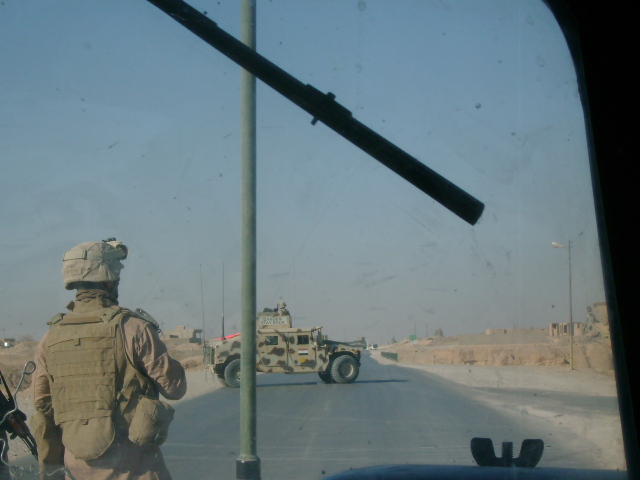
4 Comments

Filed under iraq,afghanistan, Military, PTSD

Mission Accomplished in Al Anbar: The Marines Turn Over the Mission to the Iraqis

Religious Support Team 2 MNF-W the Desert Rats at Al Waleed August 2007

There was a time not very long ago that names like Al Anbar, Fallujah and Ramadi were synonymous with futility and humiliation.  But that was before a long time ago in a galaxy far far away. In late 2007 the Marines and our Iraqi Allies aided in large part by the “Anbar Awakening” where the Sunni in the province realized that Al Qaida Iraq’s motives were not in the best interest of the people gained the upper hand in a very short time.  The success was heralded as part of the “surge” but was in large part due to the effort made by the Marines to be seen as something other than occupiers but allies in a fight against foreigners that would brutally kill Iraqis to achieve their goals.

Iraqi Children Happy to see us near Baghdadi

I arrived in Al Anbar in August of 2007 and spent my tour as the Chaplain to the Marine, Army and other advisers in the province which at the time of my arrival were still very much in play.  Within days of arriving at our base of operations I took part in a number of mass casualty situations at the Shock Surgery Trauma center at Ta Qaddum where I prayed for, anointed and looked after Marines wounded when their vehicles were destroyed by improvised explosive devices during combat missions.  My tour was the highlighter of my military career.  In my tour with the advisors as well as the Iraqis of the 1st and 7th Iraqi Army divisions, Second Border Brigade and Iraqi Police, Highway Patrol and even a reconstruction team or two.

Allies: Colonel Cottrell and General Murthi of the 7th Iraqi Division at the Marine Corps Birthday 10 November 2007

During my time there I was privileged to serve with great Marines, Soldiers and even a number of Navy, Air Force, US Border Patrol and Customs personnel and contractors working with the Iraqis.  The Iraqis in many cases were valiant men who while serving against the insurgency and Al Qaida knew that their families were in danger from retaliation as were their own lives.

Friendship: Dinner with General Sabah

While Marines and Army forces took the battle to the insurgents the Iraqi Sunni Muslims in Al Anbar suddenly turned on the insurgents and Al Qaida Iraq.  Soon Iraqi civilians who had been either hostile or neutral towards the Marines and their own Iraqi Army and Police units turned on the Al Qaida and their allies.  Suddenly violence began to subside; Iraqi civilians began to report insurgents, weapons caches and IEDs.

Near COP South waiting to clear suspected IED

By the time that I left Iraq in February 2008 the situation in the province was such that the 1st Iraqi Division was able to be dispatched to Basra and Diyala where they in conjunction they would take the lead in driving the insurgents from these regions. Just before I left an Iraqi General, General Ali in Habbinya told me that I should come back in 5 years as a tourist because everything would be alright. Another Iraqi officer told me that if anything ever happened between us and “the Persians” that the Iraqis would be on our side.  I knew when I left that Iraq would be okay in the long run and I still believe that to be true.

Me with General Ali January 2008

Thursday the Sergeant Major of what used to be Multinational Force West or MNF-West announced the Marines of II Marine Expeditionary Force (Forward) would be conducting a transfer of authority for the American mission to the 1st Armored Division of the US Army as part of the US drawdown in Iraq without a relief in place.   For most people in the United States this will be an event of little significance Iraq is now despite the continued presence of US forces has been forgotten by most.

With Advisers and Leaders of a Company of the Iraqi 2nd Border Brigade

Concern is now focused on US military actions in Afghanistan and the humanitarian relief operations in Haiti.  However, it was in Iraq that an insurgency was defeated, the first time since the British defeated the Malayan insurgency sponsored by Chinese Communists, and the French had militarily defeated the Algerian insurgency before the French government under DeGaulle surrendered the hard fought success of the Paras and Legionnaires betraying them even as he looked after what he viewed as the future of France.

With Bedouin Family and Advsiers near Syria

In the summer of 2007 Iraq was viewed as a lost cause by much of the American body-politic, politicians of both parties and the media.  Now it is becoming a functional state, in large part due to the sacrifices of US Military personnel and the Iraqi Army and security forces.  U.S. Forces are disengaging and exiting the country. While it is likely that and advisory and support mission will remain as the Iraqis continue to rebuild and their Army and security forces continue to expand their capabilities.  The Iraqis recently showed their metal by facing down an Iranian incursion into Iraqi territory on a strategic oil field.

The text of the Sergeant Major’s message describing the transfer is posted below:

From: Carpenter SgtMaj Kiplyn (USF-W SGTMAJ)

Sent: Thursday, January 21, 2010 15:55

Subject: FAREWELL OF THE MARINES FROM IRAQ

UNCLASSIFIED

Please pass on,

SgtsMaj, MGySgts, CMDCMs, Marines and Sailors, Saturday, 23 January at 1100 will mark the end of the Marines in Iraq as an organization.  II MEF (fwd) will conduct a Transfer of Authority Ceremony with the First Armored Division without a Relief in Place from any incoming unit. USF-W (formally MNF-W) will merge with USD-C (formally MND-Baghdad) and will cease to exist.

After 6 years, over 850 Marines and Sailors killed in combat and another 8800 wounded we have completed our mission.  At our peak, we had almost 26,000 Marines and Sailors on deck, close to 200 aircraft, over 380,000 pieces of ground equipment, and were averaging close to 2000 significant events a month.  We have added a whole new generation of Heros; and names like Al Nasiriyah, Fallujah and Ramadi will be added to our History books.

Words can’t begin to explain the magnitude of effort and sacrifice our Marines and Sailors have gone through to help the Iraqi people.  Each year since the initial invasion, Marines and Sailors from all over the Corps have been a part of the revolving I MEF (fwd) and II MEF (Fwd) Commands.  Each year has been different with its own sets of unique challenges and each successive year, the incoming organization has built upon the successes of the outgoing organization.

This year was no different, we didn’t have anywhere near the level of fighting that previous MEFs have done.  However, we did conduct many operations, maintained security, continue to professionalize the Iraqi Security Forces, develop good governance and economics, assisted with the continued establishment of the Rule of Law and oversaw the peaceful transition of the provincial government.  We also had one unique mission that we can call our own. That was to finally bring the Marine Corps home. Over the past year, we have simultaneously conducted the responsible drawdown of 24,000 Personnel, over 34 COPs and FOBs, including Baharia, Rawah, and TQ and sent six years worth of equipment out of theater.

For those of you who served with me this year, thank you.  It was long and difficult at times, with our own set of challenges, but we did it.

It has been an honor to serve with you.

For those of you who have left your boot prints over here at least once during the last six years; thanks to you too. You set the stage for us to finish the job.  It has been costly, it has been challenging, it has taken a while with quite a few dark days. But, in the end, it was worth it.

All Marines and Sailors, including those who remained stateside have contributed to the overall success of the Marines and Sailors in Iraq and; all of us have known someone who didn’t make it back alive or has permanent injuries. It is up to us to ensure that those who follow never forgot their sacrifice or what we did here.

Collectively, we have added another illustrious chapter to the successful story of our Marine Corps.  One that all of us can be proud of.

Semper Fidelis,

K. Carpenter

Sergeant Major

United States Force – West, Iraq

(Previously Multi National Force – West) II Marine Expeditionary Force (Fwd)

21 January 2010

UNCLASSIFIED

Iraqi Recruits going through Basic Training

I am proud today to have been part of a mission that appears to have ended in success, at least in Al Anbar Province.  Semper Fidelis to the Marine Corps and the Sailors, Soldiers and Airmen who served alongside of us in Al Anbar as well as the Iraqi Army and security forces who despite the odds set the stage for the Iraqis and US Forces in the rest of the country to begin to re-establish order and normalcy to a country that has known little but war, dictatorship and tragedy over the past 40 years. I look forward to going back to Iraq someday and maybe visit some of those Iraqis that I was privileged to serve alongside.  May God bless all those who served honorably in Iraq and the Iraqi Army, security forces and the people of Iraq.

Peace,

Padre Steve+

Leave a comment

Filed under History, iraq,afghanistan, Military

Padre Steve’s Decade in Review: Up Down Tryin’ to Get the Feeling Again

Happy New Year!

Well, we have killed off the first decade of the new millennium and I hate to say it but I miss the 1970s, 1980s and 1990s.  Somehow despite the threat of double secret nuclear annihilation, disco, and bad hair those decades seemed somehow more civil, more hopeful and dare I say just a bit nicer than the current decade has been.  However this decade is what it is, or maybe was what it was.  I think that most of us could say like the Barry Manilow  song that “I’ve been up down tryin’ to get that feeling again” but like Blobdie sang “Dreaming is Free.”

Personally Padre Steve had recently embarked on another phase of military service having left the Army Reserve in February 1999 to enter the Navy. Since that time my career has been pretty good and I’m glad that I made the switch.  I have had the chance to serve with some great folks and see a lot more of the world and do a lot of cool things, including going to war. This time in 1999 I was assigned to the 2nd Marine Division at Camp LeJeune North Carolina.  The big thing going on back then was the world being up in arms about the threat of something called Y2K.  Y2K was supposed to end life as we knew it as anything using computer technology was going to quit working, airplanes would fall from the sky, power plants would shut down and personal computers would stop working in the middle of trying to get a dial-up connection to AOL or Compuserve. We YTK fizzed and those that had made doomsday preparations felt pretty silly as they looked over their shoulders for Black Helicopters and hundreds of thousands of UN troops hiding out in our National Parks building detainment camps for real Americans.

Who the Hell Was this Guy Voting For?

As YTK fizzled the 2000 Presidential campaign got spun up.  Padre Steve missed a lot of it because he spent about 10 weeks in the dessert at 29 Palms with two different Marine battalions during two Combined Arms Exercises, or CAX.  He then left in December for a deployment to the Far East. Just before the election the destroyer USS Cole was attacked and heavily damaged by terrorists in an explosive laden boat while refueling in Yemen.  2000 ended without a decision in the election and the campaign culminated in January 2001 with a razor thin Electoral College victory for George W. Bush full of controversy over disputed ballots in Florida with an Army Corps of lawyers getting involved and taking the whole thing up the Supreme Court.  This process dragged on for what seemed like forever until I was in Okinawa with my battalion.  A new term was coined “the hanging chad.” Once the election nightmare was over things did not get better.  In 2000 lost some notable folks, former Dallas Cowboys Head Coach and Pro-Football Hall of Famer Tom Landry called his last play, Sir Alec Guinness crossed over the River Kwai and Montreal Canadiens Hockey legend Maurice “Rocket” Richard broke away and got his final hat trick.

9-11 Twin Towers Under Attack

As 2001 began it did seem that things were starting to settle down despite lingering hatred on both sides of the political aisle about the election.  But then there were the attacks of September 11th 2001 where terrorists flew hijacked airliners into both of the World Trade Center towers and the Pentagon. This caused a number of congressmen and senators to break forth in song outside the Capital and for a brief time it seemed that the whole country had united in common cause.  Soon US Special Forces, Rangers and Marines were fighting in Afghanistan to overthrow the Taliban and hunt for Osama Bin Laden, the mastermind of the terror attacks and the head of the Al Qaeda terrorist network.  US forces overran Afghanistan quickly with the help of Afghan tribes known as the Northern Alliance and it looked like despite not finding Bin Laden that the US goals were being accomplished even as the President was telling Americans to “go shopping” to many in the military giving the impression that while the military was at war that the nation was not.  In December 2001 Padre Steve was transferred from the Marines to the Guided Missile Cruiser USS Hue City, CG-66. The ship would complete a couple of underway periods and exercises before departing for the Middle East in early February.  This was Padre Steve’s first tour in a war zone and the ship conducted operations off the Horn of Africa, in the Northern Arabian Gulf as part of the UN Oil Embargo on Iraq intercepting smugglers, during which time Padre Steve was with a boarding team that made 75 boarding missions of Iraqi and other smugglers.

Iconic Picture of Padre Steve on a Boarding Mission

From there Hue City operated with the USS John F Kennedy conducting operations in the Gulf of Oman where our air controllers helped direct strikes against Al Qaida and the Taliban and during which time the ship was detached to keep watch on the Indians and Pakistanis who were on the brink of having a nuclear war.  Acting great and Academy Award winner Jack Lemmon, former Beatle George Harrison and NASCAR great Dale Earnhardt all made their final lap around the planet. In Baseball the Arizona Diamondbacks defeated the New York Yankees to win the World Series in 7 games.

2004 The Red Sox Break the Curse

2002 also saw John Allen Mohammed, the Beltway Sniper bring terror to Washington DC, Northern Virginia and Maryland, the Congress passed a joint resolution to allow President Bush to use US Military Forces as he deemed fit in Iraq and the Iraq War Resolution.  Shortly thereafter the Department of Homeland Security was established.  The San Francisco Giants lost the World Series to the Anaheim Angels after leading in the 7th inning of game six much to the consternation of Padre Steve and the other Giants faithful.  Calls for the public water boarding of Giants Manager and former “Evil Dodger” Dusty Baker to find why he took out Russ Ortiz went unheeded. Dave Thomas the founder of Wendy’s flipped his last burger, country music legend Waylon Jennings sang his last song and Baseball immortal Ted Williams all died in 2002 with Williams and his family trying to make him a real immortal by having his remains cryogenically frozen.

The Challenger Disintigrates

For Padre Steve 2003 was relatively uneventful, the Hue City was in the yards when Operation Iraqi Freedom was launched and was just getting ready for a deployment when he was reassigned to the Marine Security Force Battalion.  In short order he was travelling around the globe and before the end of the year had visited his Marines in Bahrain, Rota Spain and Guantanamo Bay Cuba and he and the Abbess celebrated their 20th wedding anniversary. The Iraq War and overthrow of Saddam Hussein was the big story of 2003 however there was other news. The Space Shuttle Columbia blew up on re-entry killing the 7 astronauts on board, California recalled Governor Gray Davis and replaced him with the Governator Arnold Schwarzenegger and the Florida Marlins defeated the New York Yankees to win the World Series. We lost some legends in 2003 comedian Bob Hope died at the age of 100 and is now doing his Christmas show for the Archangel Michael and the Armies of Heaven; US Senator Strom Thurman filibustered his last bill at the age of 100, Fred Rogers left the neighborhood and Joseph Coors brewed his last batch of really bad beer.

George Bush on the USS Abraham Lincoln

2004 saw yet another nasty Presidential election riddled with controversy as George W. Bush defeated Senator John Kerry to win re-election.  In Iraq Saddam Hussein was finally caught hiding in a hole in the ground by US Special Forces, the war in Iraq went south as the insurgency of former Ba’athists, disaffected Sunnis aided by Al Qaida and other foreign fighters and terrorists took up President Bush on his challenge to “bring it on.”  Facebook was founded in Cambridge Massachusetts, simultaneous suicide bombs devastated trains in Madrid in what became known as Spain’s 9-11, Lance Armstrong won his 6th consecutive Tour de France, Chechen terrorists seized a school in Beslan Russia and over 300 are killed and 700 wounded by the terrorists as the school was stormed by Russian security forces and the Boston Red Sox won the 2004 World Series to break the curse of the Bambino after coming back to defeat the Yankees in the ALCS after being down three games to none.  Death took no holidays in 2004 as Bob Keeshan better known as Captain Kangaroo was piped over the side, Rick James dated his last Super Freaky Girl without taking her home to mother and former President Ronald Reagan died of Alzheimer’s Disease after seeing his successors destroy his coalition and “big tent” and hopeful vision of conservatism.   Padre Steve continued to travel around the world with his Marines going to Japan, France, and Spain, Bahrain and Guantanamo Bay as well as a number of trips within the United States.  In France he taught seminars at the Belleau Wood battlefield site and in Normandy.

Hurricane Katrina as a Category 5 Storm

The war in Iraq continued to heat up in 2005 with the insurgency spreading throughout the country with the focal point being Sunni stronghold Al Anbar Province.  Hurricane Katrina ravaged Gulf coast devastating New Orleans and southern Mississippi killing over 1800 and forcing millions from their homes. The ineffective and inept government response beginning with the “fly by visit” of President Bush helped the Democrats regain control of the House and Senate in 2006.  Terrorism was alive and well as a terrorist attack on London’s Underground and a bus killed 56 and injured over 700.  As for Padre Steve well he was selected for promotion to Lieutenant Commander, completed the Marine Corps Command and Staff College and continued to travel around the world with his Marines going to Japan, France, Spain, Bahrain and Guantanamo Bay as well as a number of trips within the United States.  The highlight of this was being able to have the Abbess accompany him to Guantanamo Bay for the Marine Corps Birthday Ball. The Chicago White Sox defeated the Houston Astros in the World Series. In Washington DC baseball stars were hauled before a Congressional committee to testify on steroids in baseball or interrogated about their possible use of steroids. This wasted millions of dollars in taxpayer money as loser Congressmen who tolerate all sorts of illegal and immoral actions of their own sought to embarrass and destroy the careers and reputations of ballplayers in a grand act of inquisitional hypocrisy. Death came knocking for comedian Richard Pryor, Johnny Carson gave his last monologue, Pope John Paul II met Saint Peter and James Doohan, Mr. Scott from Star Trek was beamed up for the last time.

Israeli Merkeva Tank Destroyed by Hezbollah

In 2006 Padre Steve was promoted the Lieutenant Commander and was transferred to EOD Group Two after completing another year of travel with the Marine Security Forces.  Within months there was talk of a deployment to Iraq or Afghanistan for him and his trusty assistant and body guard Nelson Lebron. He also began a Masters Degree program in Military History at American Military University.  In the rest of the world the Republicans lost their majorities in Congress, the war in Iraq continued to grow in intensity and Israel went to war with Hezbollah forces on their northern border.  The attack was ill conceived and was a military failure revealing weaknesses in the Israeli ground forces training and tactical abilities forcing investigations of the military and the resignation of the head of the military.  Pope Benedict XVI the successor to Pope John Paul II published his first encyclical.  In the World Series Tony LaRussa’s St Louis Cardinals defeated the Detroit Tigers and Barry Bonds though tainted by controversy continued his march to the Baseball Home Run title.  Death paid a visit to former Secretary of Defense Caspar Weinberger, sportscaster Curt Gowdy called his last game and Don Knotts, Televisions Barney Fife gave up his bullet for the last time.

Barry Bonds the All Time Home Run Leader

The war in Iraq reached a climax in 2007 as President Bush heeded the advice of General David Petreus and initiated a “surge” of forces to help wage an actual counterinsurgency campaign.  Combined with the Al Anbar Awakening where the Sunni turned on the insurgents and allied themselves with the Americans the course of the war changed as insurgents lost support and the US and better trained and equipped Iraqi forces launched successful offensives to drive the insurgents out of key areas.  Padre Steve deployed to Iraq and served in Al Anbar Province working with US Marine and Army advisers to the Iraqi Army, Police and Border forces travelling thousands of miles in the province to go where few others went.

Padre Steve in Iraq with Bedouin on Syrian Border

Barry Bonds broke Hank Aaron’s all-time home run record while track star Marion Jones surrendered 5 Olympic Gold Medals after admitting to blood doping and the Boston Red Sox swept the Colorado Rockies to claim their second World Series title of the decade.  Meanwhile death came to Jerry Falwell who preached his last sermon; Tammy Faye (Baker) Messner applied her last coat of Bondo, Ike Tuner played his last guitar riff while Pavarotti exited the stage with Marcel Marceau who went rather silently I am told.

Barak Obama the 44th President

In 2008 Padre Steve returned from Iraq with a pretty good case of PTSD, chronic pain and anxiety coupled with depression and a crisis in faith.  He finished his tour at EOD and was assigned to Portsmouth Naval Medical Center. He and the Abbess celebrated thier 25th wedding anniversary.  The war in Iraq was now moving in a successful direction with the Iraqis taking more control of their security and the various religious, political and ethnic factions beginning to talk and work with one another rather than shoot at each other.  However the war in Afghanistan took a nasty turn as the Taliban came back with a vengeance and the Afghan government was revealed as weak, ineffective and corrupt.  The 2008 Presidential election was waged with bitterness and the Democrats sent Senator Barak Obama, who had defeated Senator Hillary Clinton up against Senator John McCain.  Obama won the election becoming the first African American man to become president while strengthening their majorities in Congress. The world entered a major economic crisis in 2008 and the United States suffered massive losses in financial markets, housing and rising unemployment.  Bank bailouts were the order of the day as President Bush left office and Obama took over.  A massive earthquake in Sichuan China killed over 80,000 people while American swimmer Michael Phelps won 8 gold medals to set an Olympic record.  The Philadelphia Phillies won the World Series defeating the surprising Tampa Bay Rays.  Death as always came along taking actors Heath Ledger and Charlton “Moses” Heston, comedian George Carlin and former Senator Jesse Helms.

Sarah Palin the New Leader of the GOP?

2009 came in with the inauguration of Barak Obama as President something that Padre Steve witnessed with a elderly African American women in her ICU room while holding her hand as she cried not believing that she would see an event of this kind in her lifetime.  The war in Iraq began to wind down as the US began to increase it’s withdraw of ground forces and turn over more security to the Iraqis.  In Afghanistan the war reached a crisis point as the military and political situation deteriorated within the country and support for the war dwindled in the US and Europe. Amid this President Obama agreed to a “surge” for Afghanistan.  The worldwide economic continued but by the end of the year some economic indicators were pointing upward again even as the US unemployment rate continued to rise. A bitter fight was waged over health care reform and economic policies while President Obama’s support and approval ratings crashed as people on both the left and right of the political spectrum criticized his leadership and policies.  Republican Vice-Presidential nominee and former Vice President Dick Cheney took the Republican lead in attacking the President while conservative talk radio delivered a daily barrage of criticism.  Some of Obama’s own actions did not help his cause especially in the manner in which he was viewed to respond to terrorist attacks including an attempted Christmas Eve bombing of a US airliner.  Tensions continued to grow between the West and Iran regarding that nation’s nuclear program even as widespread demonstrations wracked that country after an election which appeared to be rigged by the Iranian government. An outbreak of H1N1 Influence reached pandemic proportions across the globe but did not reach the lethality that it had the potential to do.  The Vatican announced a historic plan to allow conservative and traditionalist Anglicans come into the Catholic Church and retain their Anglican traditions and some measure of autonomy.

The Yankees Return

In baseball a revitalized New York Yankees team dominated the American league and went on to dominate their playoff and World Series opponents defeating the Phillies in 6 games. In football a good number of teams in both the NFL and NCAA were a parody of the sport and coaching scandals plagued the sport while at the box office Star Trek came back with a vengeance and a twist. Padre Steve continued his hospital work, battled PTSD, depression, his father’s Alzheimer’s disease and his own spiritual crisis but completed the academic requirements for his Masters Degree in Military History and by the end of the year began to experience some measure of healing.  He launched this site in February of 2009 and as of this post will have made 328 posts on the site.  He also bought his first ever season tickets for a baseball team and now claims Section 102, Row B seats 1 & 2 as his pew at the Church of Baseball, Harbor Park Parish.  Death prowled the earth looking for recruits finding legendary news anchorman Walter Cronkite who signed off of the last time, Pop Superstar Michael Jackson who “moon walked” the stairway to heaven or wherever, Senator Edward Kennedy who finalized his last legislation with his maker and Patrick Swayze who reprised his role in “Ghost.”

So it has been quite a decade personally for your friend Padre Steve as well as an eventual decade for the United States and the World.  The decade has been “interesting” and as the ancient Chinese curse says “may you live in interesting times.”  I hope that the next year and decade are a lot less interesting, that wars will cease and that people all over the world will join together like the old 1960’s Coca Cola commercial.

I’d Like to Teach the World to Sing?

Peace and Blessings in the New Year,

Padre Steve+

1 Comment

Filed under History, Loose thoughts and musings