Tag Archives: bush administration

Syria: The History and the Really Hard Questions for All of Us

20130831-164635.jpg

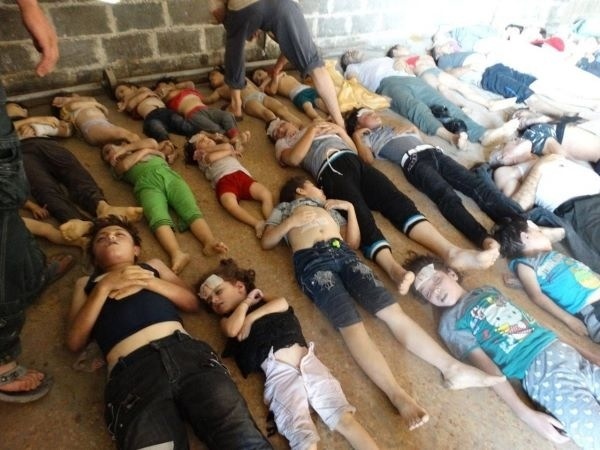
Today President Obama called on the U.S. Congress to take up and debate an authorization for the use of military force in Syria. From any moral viewpoint his words on the use of chemical weapons by the Syrian government his words were correct. Likewise his calling to account of the international community, 98% of whom are signatories to treaties outlawing the use of these weapons against anyone to support this action was correct. The fact that he also demanded that Congress come into session and do its job was correct.

In spite of all of that the use of military force to attempt to force a change in the way that the government of Bashir Assad is problematic and fraught with danger. The chances of escalation and the involvement of other nations and non-state actors are great and even a “successful” operation could lead to subsequent events detrimental to the United States, the West, the region and even to Syria and its people.

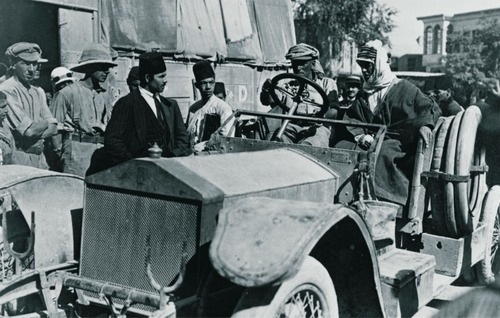
A big part of this is due to the complexity of Syria itself and its history. Syria is a complicated mosaic of cultures, peoples and religions often at odds with one another. The fact that the Assad regime has remained in power is because of its brutality and willingness to play off the various factions against each other. The Assad family is of the minority Alawite sect of Shi’a Moslems from the western region of the country. One needs to read T. E. Lawrence’s 1915 report on Syria to get a glimpse of the complexity of Syria and to understand that one has to proceed carefully when dealing with any faction. http://www.telstudies.org/writings/works/articles_essays/1915_syria_the_raw_material.shtml
20130831-171258.jpg

The fact is that the best chance for a stable Syria disappeared in 1920 when the French, emulating the British in Mesopotamia (Iraq) overthrew the government of Emir Faisal Hussein. Lawrence wrote a powerful essay about this http://www.telstudies.org/writings/works/articles_essays/1920_france_britain_and_the_arabs.shtml and when one examines the actions of the British and the French in Syria and Iraq one has to look at history. The British were willing to support the U.S. invasion of Iraq because of history, the same is true of why the French are willing to stand with the United States in Syria. The Germans for their own part frustrated by imperial ambitions in the Middle East in the First World War and a failed attempt to support an Iraqi uprising against the British in 1941 have no interest in a war that might bring disorder and terrorism among the many Moslems that reside in their country. The Turks of course have no love for the Arabs and once counted Syria as a valuable part of the Ottoman Empire. Disorder in Syria is dangerous to them but ultimately they could benefit since they have been shouldering much of the humanitarian burden.

The Jordanian royal family has no love for Syria being the descendants of Faisal Hussein while the Israelis see Syria as a mortal enemy. Lebanon which was carved out of Syria after the First World War is hopelessly divided and with Hezbollah, the erstwhile ally of Iran in de-facto control of the country in danger of becoming a front in the ongoing Syrian Civil War. Iran being the close ally of Syria has great opportunity to expand its power and should a military strike occur might become directly involved although the more likely scenario is that they would allow their Hezbollah allies to shoulder the burden of strikes against Israel and United States or other Western interests in the region. One cannot leave out the Russians who are behaving much as the Tsarist Regime did regarding the region in the First World War when they signed on to the Sykes-Picot agreement.

If the United States does nothing Assad wins. He shows that he and anyone like him who conduct themselves outside the norms of international law and human rights can get away it it. If we intervene it might strengthen his grip, likewise if our strikes were successful enough to weaken his grip and allow the rebels to take power the results could be even worse since the Al Qaeda ally Al Nursa is the strongest and most militarily effective part of the rebel forces.

In a sense the Obama administration is damned if it does, damned if it doesn’t and damned if it does no matter what the outcome. It sucks for him because he is the President and it is his job he will get the blame. This despite the fact that his freedom of action in large part is undermined by the actions of the Bush Administration in the Iraq lead up and invasion. There are always results in foreign policy decisions. The invasion of Iraq has harmed our interests in more ways than its architects ever imagined, it was a foreign policy disaster of the first order that impacts everything that we do today in the Middle East.

That is why before a single cruise missile is launched the United States Congress must debate the action and go all in or stay out. The fact is that if we do this, and I hope, we don’t we have to do it right. We have to understand the consequences and do what we can under our system of government to debate the issue, look at the ramifications, not just in the region but to our own economy and national power.

If we do it the Sequester has to be repealed in all parts, you cannot wage war on the cheap and expect a military that is worn out by 12 years of war to keep taking on more war without funding it. The Tea Party Republicans who are attempting to hold the government hostage through the Sequester and a possible government shutdown cannot have it both ways. It is irresponsible of them to continue this madness until we can get out of Afghanistan and avoid involvement in Syria or other conflicts.

20130831-175304.jpg

That my friends is the hard truth about Syria. So before you get too caught up in the opening of the College and NFL football seasons forgetting that a dangerous world exists take some time to ponder and if you have the civic decency to write your Congressman and Senator on the subject. Pro or con tell them what you think and demand accountability. If you don’t do that don’t blame President Obama for what happens because you have failed your country as citizens.

Sorry I guess that might hurt. But we didn’t do that in Iraq. Today the 4486 dead American military personnel as well as all the other dead and wounded, American, Allied and Iraqi alike and those like me afflicted with chronic PTSD demand that you do it now. It is a moral responsibility of the first order of much greater importance than your fantasy football league.

Peace

Padre Steve+
Leave a comment

Filed under Foreign Policy, History, middle east, Military, Political Commentary

Questions in Light of the NSA Leaks and More Answers from Star Trek Deep Space Nine

628px-Inquisition

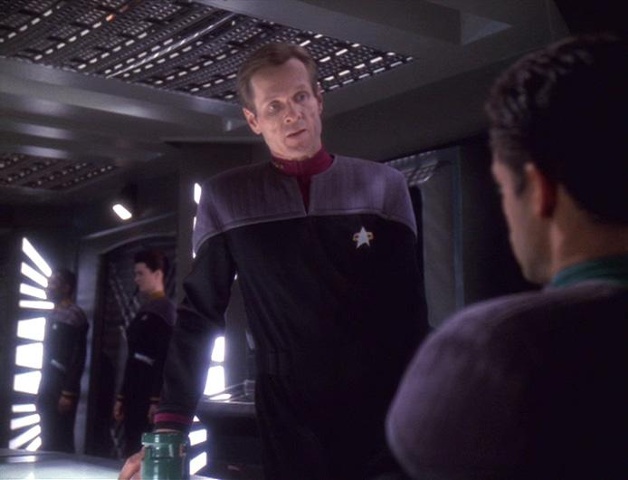
Doctor Bashir: What does Section 31 do, apart from kidnapping Starfleet officers?

Sloan: We search out and identify potential dangers to the Federation.

Doctor Bashir: And once identified?

Sloan: We deal with them.

Doctor Bashir: How?

Sloan: Quietly.

As I mentioned briefly last night I am finding interesting corollaries in the current NSA leak story and what we are facing in our Global War on Terror in Star Trek Deep Space Nine. I went back and watched again the season four episodes entitled Homefront and Paradise Lost. Tonight I also watched an episode called Inquisition in which Dr Bashir, the Chief Medical Officer of Deep Space Nine is abducted by the representative of a secretive entity of Starfleet Intelligence authorized in the original Federation Charter and accused of being a spy for the Dominion. It is a chilling episode because it shows the power of lawfully constituted organizations that are granted nearly unlimited powers and operate under the utmost secrecy.

What do we know? We know far less than what we think that we know, that much is clear.

So what do we know?

We know that a Booz Allen Hamilton contractor, a 29 year high school dropout named Edward Snowden leaked Top Secret FISA Court orders and other information to writer Glenn Greenwald of the Guardian newspaper. Something that he did evidently after offering them to others including the Washington Post.

We know that Snowden had worked for the CIA and NSA contractors in various capacities for a number of years. We know that he worked for the Booz Allen Hamilton contract with the NSA less than 4 months with a Top Secret Clearance and had lied to both his employer and girlfriend about his whereabouts when he left his home in Hawaii.

We know that he was unable to complete Army Special Forces entry training in 2003 after some kind of training accident.

We know that he supported the Ron Paul campaign with a financial contribution of $500 and that Paul has praised Snowden’s actions.

We know that some of the documents that Snowden leaked have been released by the Guardian and the Post. Likewise we know that Greenwald promises the release of more leaked information this week.

We know that this Snowden fled to Hong Kong in early May and then authorized the release of his identity and actions after the release of them by Greenwald.

We know that the documents leaked show that the FISA court authorize the sweeping collection of phone and internet data from American citizens as well as others overseas.

We know that Snowden is claiming that he is acting in the best interests of the country and the Constitution.

We know that the revelation of the FISA documents shows that National Intelligence Director James Clapper may have lied to Congress about those activities.

What don’t we know? Simply put we don’t know the truth. Likewise there is a good chance that no matter what happens in this case, no matter what is revealed and no matter what happens to Snowden or anyone implicated in the documents already released or to be released that we may never know the whole truth. Yes we may learn aspects of these operations and some activities, but believe me the real truth will remain classified and covered. And frankly that may not be a bad thing.

There have been some who are lionizing or demonizing the young Snowden. People are rapidly forming their opinions as to him being a “hero” or a “traitor.” I don’t think that we know enough yet to render judgement. He may be one or the other. He could be both and he could be neither. I do think the question goes beyond him. The fact that he fled to Hong Kong, a territory controlled by Communist China which has been engaged in much espionage against the United States is troubling. It makes it look like he may not quite be the hero after all.

The fact is that Snowden’s release of Top Secret classified documents is illegal. That is a fact whatever his motives. No matter if his motives were pure and patriotic as he claims, or were done for other reasons that we do not know including the possibility that he is working with Chinese agents. The unauthorized release of classified data has been a crime for decades, even before we devised our classification system. Even before the Patriot Act and the Global War on Terror.

Section_31_operatives

During the Inquisition episode, at the point that the Section 31 personnel determine that Bashir is innocent of possible cooperation with the Dominion and try to recruit him that the following exchange takes place.

Sloan: We’re on the same team. We believe in the same principles that every other Federation citizen holds dear.

Doctor Bashir: And yet you violate those principles as a matter of course.

Sloan: In order to protect them.

Doctor Bashir: Well, I’m sorry, but the ends don’t always justify the means.

Sloan: Really? – How many lives do you suppose you’ve saved in your medical career?

Doctor Bashir: What has that got to do with anything?

Sloan: Hundreds, thousands? Do you suppose those people give a damn that you lied to get into Starfleet Medical? I doubt it. We deal with threats to the Federation that jeopardize its very survival. If you knew how many lives we’ve saved, I think you’d agree that the ends do justify the means. I’m not afraid of bending the rules every once in a while if the situation warrants it. And I don’t think you are either.

The action of Snowden in releasing these classified documents appears to be criminal in that it broke long established law. However, criminality does not necessarily mean that he is a traitor. Could he be? The answer could be yes depending on his motive and what else may be released but quite possibly the answer could be no. For those that want to live in a world where everything is black and white that may be uncomfortable. But this messy world is the world that we live in, a world of infinite shades of gray, especially when it comes to intelligence and state secrets.

Now I can say that while I agree that Snowden broke the law I do not yet know if I can call him a traitor, nor do I know enough to call him a hero. One thing his actions have done is to spark a debate on the nature of the laws that our Congress enacted in the aftermath of the 9-11-2001 terrorist attacks. The Patriot Act vastly expanded previous laws regarding surveillance, intelligence, economic, military and law enforcement measures including the work of the FISA courts. I do think that the authors meant well, but the law that they passed has great potential as a platform for totalitarianism.

Those laws were rushed to completion and passed with strong bi-partisan majorities in both the House and Senate. Those powers were renewed by both the Bush and Obama administration and Congress. One can make good arguments for security as well as the dangers inherent in these laws and the expanded powers of the intelligence community which not only can be used for good, but can be used for evil.

I think it is time that we had a real debate over these laws as a society. We may not like what we see, but we may decide to keep some laws and restrict other powers granted. That is something that we must do as a society if we are to retain any form of our republic. We cannot afford the bumper sticker and Facebook meme type of debate in this that appeals to raw emotion and political certitude and bypasses the real issues involved.

At the end of the episode when Bashir is back on DS9 talking with Captain Sisko and the other senior staff of the station the questions asked are so pertinent to what we are doing today.

Doctor Bashir: I can’t believe the Federation condones this kind of activity.

Odo: Personally I find it hard to believe they wouldn’t. Every other great power has a unit like Section 31 – the Romulans have the Tal Shiar, the Cardassians had the Obsidian Order…

Doctor Bashir: But what does that say about us? When push comes to shove, are we willing to sacrifice our principles in order to survive?

Captain Sisko: I wish I had an answer for you, Doctor.

Likewise, I wish I had an answer…

Peace

Padre Steve+

Leave a comment

Filed under national security, Political Commentary, star trek

Reflections on the Invasion of Iraq: 10 Years Later in Light of Nuremberg

saddam0978

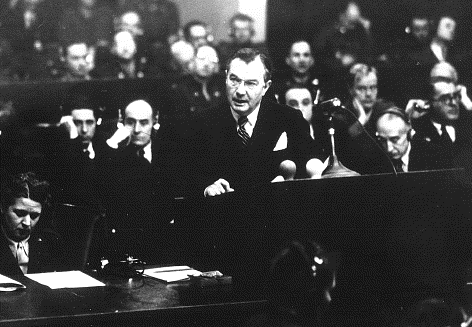
“If certain acts of violation of treaties are crimes, they are crimes whether the United States does them or whether Germany does them, and we are not prepared to lay down a rule of criminal conduct against others which we would not be willing to have invoked against us.” Justice Robert Jackson International Conference on Military Trials, London, 1945, Dept. of State Pub.No. 3080 (1949), p.330.

In March 2003 I like many of us on active duty at the time saw the nation embark on a crusade to overthrow an admittedly thuggish criminal head of state, Saddam Hussein. The images of the hijacked airliners crashing into the Twin Towers of the World Trade Center and the Pentagon were still relatively fresh in our minds. The “evidence” that most of us had “seen,” the same that most Americans and people around the world were shown led many of us to believe that Saddam was involved in those attacks in some manner and that he posed a threat to us.

Now it wasn’t that we didn’t have doubts about it or even the wisdom of invading Iraq. It didn’t matter that there was also credible evidence that maybe what we were being told was not correct, and it didn’t matter that some of our closest allies voted against a mandate to invade Iraq in the United Nations Security Council. We were emotionally charged by the events of 9-11 and “we knew” that Saddam was a “bad guy.” We also believed that we could not be defeated. We had defeated the Iraqis in 1991 and we were stronger and they weaker than that time.

We really didn’t know much about Iraq, its history, people, culture and certainly we paid little attention to the history of countries that had invaded and occupied Iraq in the past. T.E. Lawrence, the legendary Lawrence of Arabia wrote in August of 1920 about his own country’s misbegotten invasion and occupation of Iraq, or as it was known then Mesopotamia.

“The people of England have been led in Mesopotamia into a trap from which it will be hard to escape with dignity and honour. They have been tricked into it by a steady withholding of information. The Bagdad communiqués are belated, insincere, incomplete. Things have been far worse than we have been told, our administration more bloody and inefficient than the public knows. It is a disgrace to our imperial record, and may soon be too inflamed for any ordinary cure. We are to-day not far from a disaster.”

The sad thing is that the same could have been written of the United States occupation by 2004.

But even more troubling than the words of Lawrence are the Nuremberg War Crimes Trials. Somehow as a historian who has spent a great deal of time studying the Nazi period and its aftermath I cannot help but look back in retrospect and wonder what Supreme Court Justice Robert Jackson and the other Nuremberg prosecutors would have done had they had some of our leaders in the dock instead of the Nazis.

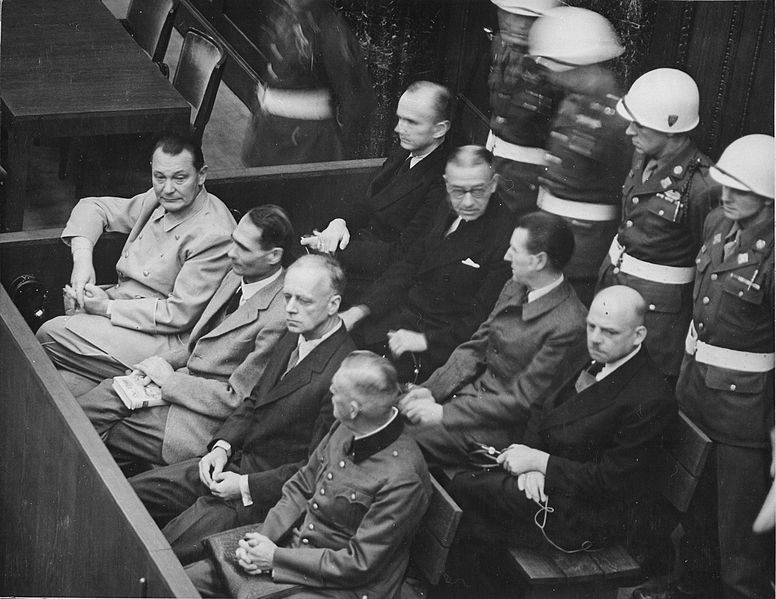
776px-Nuremberg-1-

The indictments against the Nazis at Nuremberg are chilling if we were to be held to the same standard that we held the Nazis leaders at Nuremberg. True, we did not have massive death camps or exterminate millions of defenseless people, nor did we run slave labor factories, but we did like they launched a war of aggression under false pretense against a country that had not attacked us.

At Nuremberg we charged twenty top Nazi political officials, as well as police and high ranking military officers with war crimes. The indictments included:

Count One: Conspiracy to Wage Aggressive War: This count addressed crimes committed before the war began, showing a plan by leaders to commit crimes during the war.

Count Two: Waging Aggressive War, or “Crimes Against Peace” which included “the planning, preparation, initiation, and waging of wars of aggression, which were also wars in violation of international treaties, agreements, and assurances.”

Count Three: War Crimes. This count encompassed the more traditional violations of the law of war already codified in the Geneva and Hague Conventions including treatment of prisoners of war, slave labor, and use of outlawed weapons.

Count Four: Crimes Against Humanity, which covered the actions in concentration camps and other death rampages.

While count four, Crimes Against Humanity would be difficult if not impossible to bring to trial because there was nothing in the US and Coalition war in Iraq that remotely compares to that of what the Nazis were tried, some US and British leaders could probably have been successful prosecuted by Jackson and the other prosecutors under counts one through three.

The fact is that none of the reasons given for the war by the Bush Administration were demonstrated to be true. Senior US and British officials knowing this could be tried and very probably convicted on counts one and two. We also know that some military and intelligence personnel have been convicted of crimes that would fall under count three.

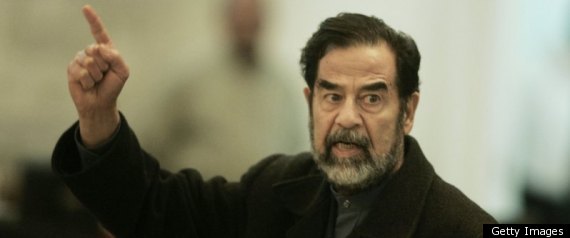
r-SADDAM-HUSSEIN-large570

Saddam Hussein was a war criminal. He was also a brutal dictator who terrorized and murdered hundreds of thousands of his own people. But we went to war over his alleged ties to Al Qaeda and WMDs and he had not attacked us. Looking back at history and using the criteria that we established at Nuremberg I have no doubt that had Dick Cheney or Donald Rumsfeld been in the dock that Justice Jackson would have destroyed them and the court would have convicted them.

So 10 years, nearly 5000 US military personnel dead, 32,000 wounded, over 100,000 afflicted with PTSD, and other spiritual and psychological injuries, with an estimated 22 veterans committing suicide every day; somewhere between 1 and 2 trillion dollars spent, hundreds of thousands of Iraqis dead, wounded and displaced from their homes and a country destroyed and still in turmoil. And somehow those that decided to take us to war roam free. They write books defending their actions and appear on “news” programs hosted by their media allies who 10 years ago helped manipulate the American public, still traumatized by the events of 9-11-2001 to support the war.

nuremberg-jackson-10400

http://www.youtube.com/watch?v=No06Lwk_TAg

Saddam and many of his henchmen are dead or rotting in Iraqi prisons for their crimes against the Iraqi people. However good this may be one has to ask if how it happened was legal or justified under US or International Law, if it was worth the cost in blood, treasure or international credibility. Likewise why have none of the men and women who plotted, planned and launched the war been held the standard that we as a nation helped establish and have used against Nazi leaders and others?

If we cannot ask that and wrestle with this then we as a nation become no better than the Germans who sought minimize their responsibility for the actions of their leaders, and in doing so enable future leaders to feel that they can do the same with impunity. That is a terrible precedent.

Peace

Padre Steve+

1 Comment

Filed under History, iraq,afghanistan, middle east

Iraq and the Middle East 2013: Lessons from T. E. Lawrence

295_26912097058_4309_n

The Author with Advisors and Bedouin on the Iraqi Syrian Border

I left Iraq just under five years ago and in the process left part of me in that long suffering country.  I have written much about my experience there and how even today I have a deep regard for the Iraqi people and their hopes for a better future.

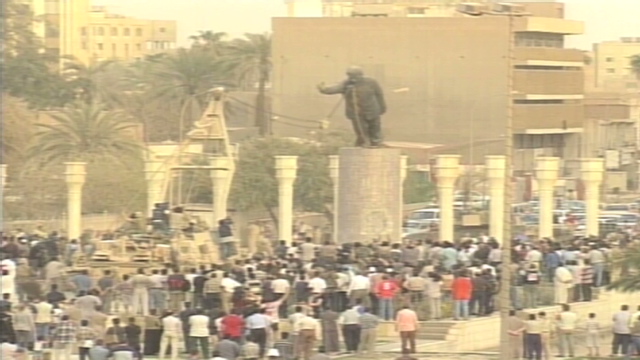
In 2003 the United States invaded Iraq and made short work of that country’s military. Many, if not most Iraqis of all creeds looked upon the US and coalition forces as liberators but within a few months the illusion was over. The US military personnel and leaders who were working with Iraqi officials, both military and civilian to get the country back on its feet were replaced by the Bush administration.

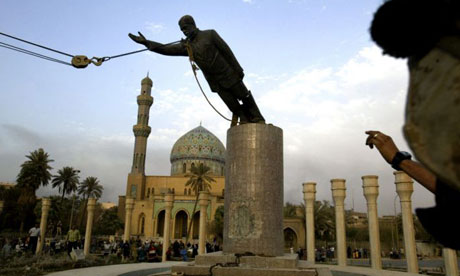
vault.von.saddam.statue.fall.itn.640x360

False Hopes in 2003, believing that US Forces were Liberators 

In their place a new entity, the Coalition Provisional Authority was created and staffed. The first administrator of the entity was retired Army Lieutenant General Jay Garner, who had much experience in Iraq but was replaced quickly for not conducting an immediate purge of members of the Ba’athist Party from key positions in the civil service or security forces.  Led by Ambassador L. Paul Bremer, a man who had no experience in the Arab world, much less in Iraq. Bremer and his staff, most of who had little experience or knowledge of the country created conditions that directly led the the Iraq insurgency, the sacrifice of thousands of American and allied lives and the friendship of the Iraqi people. They also gave a victory to Iraq’s traditional enemy and oppressor Iran to become a dominant regional power without having to worry about the Iraqi threat.

410w-1

Lawrence

rumsfeld-bremerL Paul Bremer (r) with SECDEF Donald Rumsfeld

It was as if Bremer, the leaders of the Bush administration and their neo-conservative allies knew nothing of history. T.E. Lawrence wrote of the British incursion into Turkish Mesopotamia in 1915, managed by the British Indian Office:

“By brute force it marched then into Basra. The enemy troops in Irak were nearly all Arabs in the unenviable predicament of having to fight on behalf of their secular oppressors against a people long envisaged as liberators, but who obstinately refused to play the part.”

The actions of the CPA laid waste pragmatists in the Pentagon and State Department who hoped that existing civil service, police and military forces would be retained and individuals with significant ties to the regime of Saddam removed. Instead Bremer dissolved the Iraqi military, police and civil service within days of his arrival. Since the military invasion had been accomplished with minimal forces most Iraqi weapon sites, arsenals and bases were looted once their Iraqi guardians were banished and left their posts. The embryonic insurgency was in effect given a full arsenal of weapons to use against American forces, many of who were now mobilized Reservists and National Guardsmen that were neither trained or equipped to fight an insurgency or in urban areas.

The reaction of the Iraqi Arabs to US occupation should have been anticipated. Lawrence wrote in 1920 a letter that could have easily been written in 2004:

“It is not astonishing that their patience has broken down after two years. The Government we have set up is English in fashion, and is conducted in the English language. So it has 450 British executive officers running it, and not a single responsible Mesopotamian. In Turkish days 70 per cent of the executive civil service was local. Our 80,000 troops there are occupied in police duties, not in guarding the frontiers. They are holding down the people.”

295_26912047058_2328_n

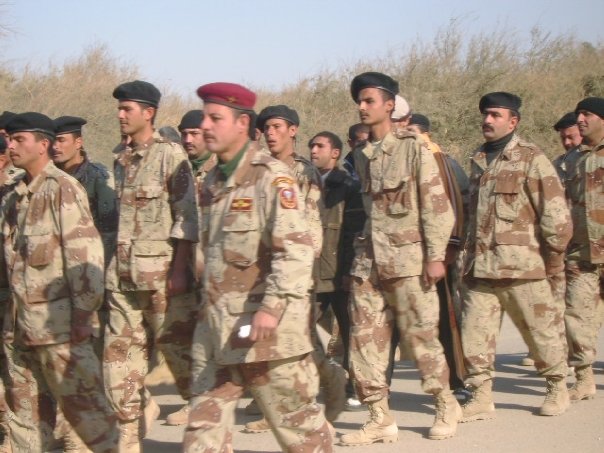
Rebuilding an Army

The actions of Bremer’s incompetent leadership team led to a tragic insurgency that need not have taken place. The now unnumbered US forces had to fight an insurgency while attempting to re-create an army, security forces and civil service from the wreckage created by Bremer’s mistakes and its own often heavy handed tactics in the months following the invasion. Nearly 4500 US troops would die and over 30,000 more wounded in the campaign. Hundreds of thousands of Iraqis were killed, wounded or died of disease during the war.  Lawrence wrote about the British administration of Iraq words that could well have been written about Bremer’s Coalition Provisional Authority: “Meanwhile, our unfortunate troops, Indian and British, under hard conditions of climate and supply, are policing an immense area, paying dearly every day in lives for the wilfully wrong policy of the civil administration in Bagdad.”

It took dramatic efforts in blood and treasure to rebuilt that was only beaten back after the US acted to conduct a surge in conjunction with the revolt of the Sunni of Anbar Province against foreign fighters who had become a dominant force in the insurgency. The surge under the command of General David Petreus achieved the desired result. It gave the Iraqis a chance to stabilize their government and increase their own security forces. Unfortunately many of those that remained in power of the Shi’ite sect refused to  share power in meaningful ways with Iraq’s Sunni and Kurds leading to a political crisis. The US military mission ended in December 2011 and since then Iraq security forces and civil authorities, often divided by tribal or sectarian loyalties have struggled to maintain order. The result is that in 2013 that Iraq is again heading toward the abyss of civil war. Sunni protestors in Anbar and other provinces conduct frequent protests as sectarian violence spreads. Many Iraqis of all sects have mixed feelings about the American invasion and the bloody aftermath and fear the future.

In 1920 Lawrence wrote of the continuing British intervention and occupation of Iraq: “The people of England have been led in Mesopotamia into a trap from which it will be hard to escape with dignity and honour. They have been tricked into it by a steady withholding of information. The Bagdad communiqués are belated, insincere, incomplete. Things have been far worse than we have been told, our administration more bloody and inefficient than the public knows. It is a disgrace to our imperial record, and may soon be too inflamed for any ordinary cure. We are to-day not far from a disaster.”

His words have a sadly familiar tone. The US invasion of Iraq did have a different outcome than we imagined. The Arab Spring erupted and the consequences of it will be far reaching and effect much of the Middle East and the world. However, Lawrence’s words and wisdom concerning the Arabs who rebelled against the Turkish Ottoman Empire are something that we in the West need to heed today.

baghdad1917

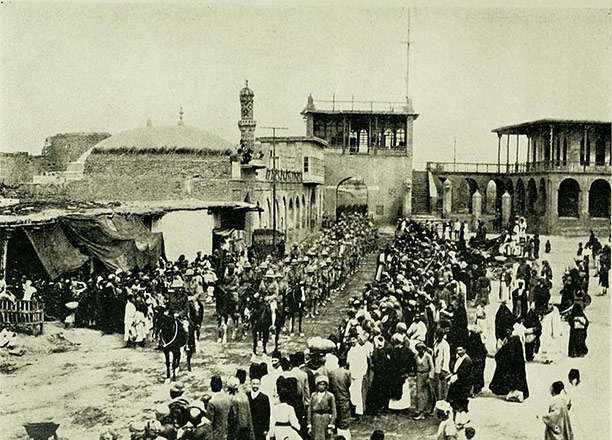
British Troops entering Baghdad

“The Arabs rebelled against the Turks during the war not because the Turk Government was notably bad, but because they wanted independence. They did not risk their lives in battle to change masters, to become British subjects or French citizens, but to win a show of their own.”

481801_10151367001287059_1003164983_n

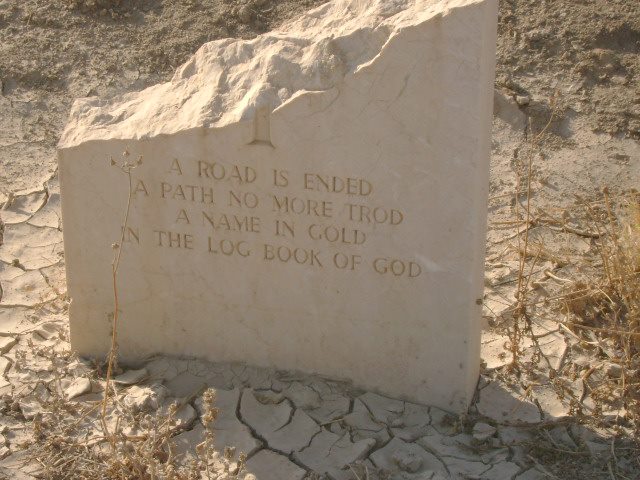
Grave of a British Soldier in Habbaniyah Iraq

That is the case in many Arab countries today. One can only hope that in those countries and in Afghanistan where our troops are embroiled in a war that cannot end well that we will do better.

Peace

Padre Steve+

2 Comments

Filed under Foreign Policy, History, iraq,afghanistan, middle east, national security

Thoughts on Choosing a President and the Results of Not Getting it Right: Lieutenant General Harold Moore at West Point

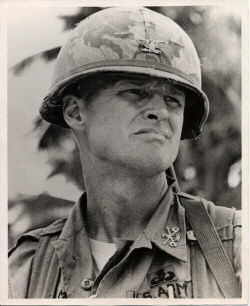
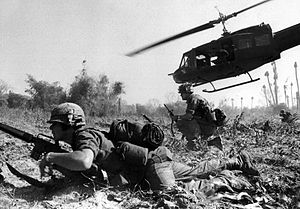
Lt.Gen. Harold (Hal) Moore is a legitimate American hero. Moore was commissioned as an infantry officer in the closing months of the Second World War, served in Korea and later in 1965 ed the 1st Battalion 7th Cavalry, 1st Cavalry Division into combat at the Battle of Ia Drang in Vietnam. In that battle, the first major engagement of US forces against North Vietnamese Army Regulars Moore’s outnumbered battalion held off elements of two NVA regiments. Moore’s book We Were Soldiers Once, and Young was adapted and released as the film We Were Soldiers where Moore was portrayed by Mel Gibson. His second book, We are Soldiers Still: A Journey back to the Battlefields of Vietnam are must reads for anyone who wants an honest assessment of going to war and the costs involved.

In 2005 Lt. Gen. Moore was invited to speak at West Point. It was during some of the worst times of the Iraq insurgency and Moore had been a critic of the war and Defense Secretary Donald Rumsfeld. He recounted the question and answer session in We are Soldiers Still:

“In a long question-and-answer session following my speech I was asked about Iraq and then Defense Secretary Rumsfeld. In this place-where cadets live by a code that says they never lie, cheat, steal, or quibble-I was bound to speak the truth as I knew it.

The war in Iraq, I said, is not worth the life of even one American soldier. As for Secretary Rumsfeld, I told them, I never thought I would live long enough to see someone chosen to preside over the Pentagon who made Vietnam-era Defense Secretary Robert McNamara look good by comparison. The cadets sat in stunned silence; their professors were astonished. Some of these cadets would be leading young soldiers in combat in a matter of a few months. They deserved a straight answer.

The expensive lessons learned in Vietnam have been forgotten and a new generation of young American soldiers and Marines are paying the price today, following the orders of civilian political leaders as they are sworn to do. The soldiers and those who lead them will never fail to do their duty. They never have in our history. This is their burden. But there is another duty, another burden, that rests squarely on the shoulders of the American people. They should, by their vote, always choose a commander in chief who is wise, well read in history, thoughtful, and slow-exceedingly slow-to draw the sword and send young men and women out to fight and die for their country. We should not choose for so powerful an office someone who merely looks good on a television screen, speaks and thinks in sixty-second sound bites, and is adept at raising money for a campaign.

If we can’t get that part right then there will never be an end to the insanity that is war and the unending suffering that follows in war’s wake-and we must get it right if we are to survive and prosper as free Americans in this land a million Americans gave their lives to protect and defend.” (Lt. Gen. Harold Moore at West Point Spring 2005) http://www.dailypaul.com/81039/inspiring-quote-from-lt-gen-harold-hal-moore-usa-ret

I make many comments about politics on this site. I am a critic of both parties and and their Presidential candidates. I find much to be desired in the leadership being displayed by many in political office and those running for office. However no matter which party a candidate belongs to I expect, like Lt. Gen. Moore that they are “wise, well read in history, thoughtful, and slow-exceedingly slow-to draw the sword and send young men and women out to fight and die for their country.”

I completely agree with Moore that We should not choose “someone who merely looks good on a television screen, speaks and thinks in sixty-second sound bites, and is adept at raising money for a campaign.”  

We should know better by now. We have experienced the tragedy of leaders who failed their soldiers and this nation in Vietnam, Somalia, Iraq and Afghanistan. However it is the responsibility of the American people to elect well qualified men and women to office. It is not to simply for people vote for their special interests and vote for those that can play the electoral game the best regardless of their actual qualifications or for that matter their wisdom.

I have served as an officer for 29 years in the Army and the Navy. I have served under five Presidents all of whom I found reason to agree with and disagree with on matters of policy. But they were the President and I was and still am not. It is possible that I will serve a sixth President before I retire from the military. Regardless of who that is or which party they represent I will be faithful to my oath and to the Constitution and be respectful of Office of the President and the man, or woman who holds it and I will pray for them. Likewise I pray that the men, or women that they chose as the civilian leaders of the military are both wise and morally courageous, unlike Robert McNamara or Donald Rumsfeld. The same is true for senior officers that set policy and lead troops in combat. We do not need what David Hackworth called the “perfumed princes” as leaders.

That being said I do pray that whoever is elected this November will be more than a good campaigner and be wise and thoughtful before committing the nation, and especially those that serve in the military to war. Our men and women serving in harms’ way deserve as much. Too many American Soldiers, Marines, Sailors and Airmen have died or come back horribly maimed from Vietnam, Iraq and Afghanistan for us not to expect as much from those that seek to lead the nation regardless of their political party.

Moore’s co-author, journalist Joe Galloway, a critic of both President Bush and President Obama wrote concerning Afghanistan in 2010:

“For God’s sake, don’t ratchet up slowly, buying time with the bodies of dead and wounded American soldiers, while you try to sell the wrong war in the wrong place against the wrong enemy to the American people.

For eight years, we’ve heard presidents and other politicians talk about setting conditions for a democratic central government in a country — really a bunch of tribes and clans — that’s never had such a thing in 2,000 years and seemingly doesn’t want one now.” http://www.mcclatchydc.com/2009/09/03/74876/commentary-afghanistan-isnt-worth.html#storylink=cpy   

We should listen more to men like Lt. Gen. Moore and Joe Galloway than to those that use the military for their political or economic gain spouting sound bite foreign policy to mask their ignorance.

Peace

Padre Steve+
4 Comments

Filed under History, iraq,afghanistan, leadership, News and current events, Political Commentary

Padre Steve Reviews “The Wounded Giant: America’s Armed Forces in an Age of Austerity” by Michael O’Hanlon

The Wounded Giant: America’s Armed Forces in an Age of Austerity (An eSpecial from The Penguin Press)

• Format: Kindle Edition
• File Size: 1685 KB
• Publisher: The Penguin Press (November 15, 2011)

I was recently asked to do a review of Michael O’Hanlon’s new book The Wounded Giant: America’s Armed Forces in an Age of Austerity by the folks at TLC Book Tours http://tlcbooktours.com/ I am a historian and have served 30 years in the United States Army and United States Navy. As such I try to look at the nuances of Defense policy from a historical as well as current point of view.

O’Hanlon’s book deals with a topic that is receiving much attention and debate in the wake of the 2011 Congressional Budget impasse and deal and the recently release of the 2012 Defense Strategic Guidance and the FY 2013 Department of Defense Budget request. O’Halon’s book was published in the midst of the budget impasse in which could bind Congress into cuts well in the excess of the proposed $500 Billion in cuts proposed by the Pentagon and the Obama Administration. Cuts that could total over a trillion dollars over the next decade.

O’Hanlon deals with the economic necessity of Defense budget cuts laying out his thesis in the first two chapters dealing with the history of US military budgets since the Second World War with particular attention to the post-Cold War cuts under the Bush and Clinton administrations. In the following chapters O’Hanlon argues for what I would call a strategy of calculated risk in which Defense budgets and the necessary force cuts are balanced with the economic realities of our present time. He does not argue for massive cuts and disengagement from the world that some argue for, at the same time he realizes that defense cuts are necessary but cannot be too great.

He then goes on to discuss the potential reductions for ground forces as well as air and naval forces within the context of potential threats, especially those posed by Iran as well as the potential threat from China.  He argues for a leaner military but also acknowledges the danger of cutting too much.

His conclusions regarding force size and composition will be attacked by some and defended by others.  I think that his arguments regarding ground forces which support going back to the approximate numbers in the Army and Marine Corps in 2001 are reasonable presuming that there is a substantial reduction of US forces in Afghanistan and no other major ground campaigns arise.  The current personnel authorizations were only made reluctantly after years of war by the Bush administration whose first Defense Secretary Donald Rumsfeld was no advocate of large ground forces.

O’Hanlon also discusses the possibility of savings through some base closure as well as reductions in some Air Force and Naval capabilities while attempting to minimize the effects of the reductions by crew rotations of forward based warships and more use of drone aircraft. He also discusses the US capabilities in intelligence and Homeland Security in the context of the overall defense structure.

One thing that I find lacking in O’Hanlon’s treatment of the defense strategy and budget is the lack of attention paid to the overall industrial base required to support the replacement or modernization of our current forces. He argues in favor of keeping production lines open but neglects the fact that most of the US defense industrial base is now the property of about five major corporations. At one time we had more shipyards  and other facilities that made the rapid production of war materials in times of national emergency which at the end of hostilities could revert to civilian industrial production. Much of that capability is now gone, outsourced to China and South Korea.

O’Hanlon has some good proposals and his numbers are not much different than those proposed by the Pentagon. His analysis does included what is called the DIME, the diplomatic, intelligence, military and economic aspects of national security strategy. He describes his vision for a military that despite cuts can still be mission capable. One may argue with his overall strategic thinking and his detailed proposals and many will. I have issues with some of the proposals.  Likewise anyone attempting to project a vision of a national security strategy and military force structure is always fraught with the ever present reality that no one can predict the future. However history tells us time and time again that we seldom are right and that threats yet unimagined can shred the most well thought out and detailed plans.  Making such decisions in an election year makes them all the more prone to being wrong because the political establishments of both parties

It is a good read for anyone seriously interested in national security strategy.It is not perfect by any means but worth the read.  It it is published in paperback as well as the Amazon Kindle edition.

The Author: Dr. Michael O’Hanlon is is director of research and a senior fellow in Foreign Policy at the Brookings Institution, where he specializes in U.S. defense strategy, the use of military force, homeland security and American foreign policy. He is a visiting lecturer at Princeton University and adjunct professor at John Hopkins University. O’Hanlon is the author of several books, most recently A Skeptic’s Case for Nuclear Disarmament. His writing has been published in The Washington Post, The New York Times, The Financial Times, The Wall Street Journal, among other publications, and he has appeared on TV or radio almost 2,000 times since 9/11. Before joining Brookings, O’Hanlon worked as a national security analyst at the Congressional Budget Office and served as a Peace Corps volunteer in Congo/Kinshasa (the former Zaire). He received his bachelor, masters, and doctoral degrees from Princeton, where he studied public and international affairs.

3 Comments

Filed under books and literature, Foreign Policy, Loose thoughts and musings, Military, national security

Adjusting Strategy to Reality

Taliban Fighters

“The core goal of the U.S. strategy in the Afghanistan and Pakistan theater remains to disrupt, dismantle, and eventually defeat al-Qa’ida in the region and to prevent its return to either country…” US Strategy in Afghanistan for 2011

“The aim of war should be the defeat of the enemy.  But what constitutes defeat?  The conquest of his whole territory is not always necessary, and total occupation of his territory may not be enough.” Carl Von Clausewitz

Strategic goals cannot remain fixed on geographic objectives which have lost their strategic importance because it is no longer the enemy’s center of gravity. On September 11th 2011 the Taliban ruled Afghanistan which harbored Osama Bin Laden’s Al Qaeda terrorist organization became the central front in the new “War on Terrorism.”  For about a year Afghanistan remained the central focus of United States efforts against Al Qaeda until President Bush and his administration changed the primary effort to the invasion of Iraq and the overthrow of the Saddam Hussein regime.

The effect of switching the American strategic focus from Afghanistan where we were making headway despite the limited resources provided to Iraq was a mistake of epic proportions that only became evident when Iraq did not go the way that the Bush administration led by Vice President Dick Cheney. Secretary of Defense Donald Rumsfeld and Paul Bremer the head of the Coalition Provision Authority planned.  Instead of a quick withdraw a series of mistakes and miscalculations turned the majority of the Iraqi people who had welcomed US Forces with open arms against us and an insurgency which claimed over 4000 American military personnel deaths and over 30,000 wounded became our primary focus.  We are still trying to figure out how to end our involvement in that country hoping that Iraq will not sink into another civil war.

Contrary to expectations Iraq became a front which consumed U.S. Forces and limited strategic flexibility in other regions of the world including Afghanistan.  In that country the indigenous Taliban which had been driven from power in 2001 began a gradual and deliberate return to political and military viability which was finally noticed by the United States in 2008 and 2009.  The Taliban were supported by the Pakistani Taliban, elements of the Bin Laden organization and in many cases duplicitous elements within the Pakistani military and intelligence services which were using the situation to support their own strategic goals of gaining influence in Afghanistan while strengthening their position against their perceived mortal enemy India.  Throughout the war the Pakistanis acted in their own interest while placating American demands to do more against the Taliban and Al Qaeda operating in Pakistan proper.

The Obama administration attempted to regain the initiative with a “surge” of 30,000 additional troops which raised the overall commitment of the United States to a force of over 100,000 troops assisted by NATO Allies and the corrupt, ill-trained and often Taliban Afghan Army and Police.  The surge was controversial and marked with controversy was the US Commander General Stanley McCrystal was relieved of command after an article in the Rolling Stone magazine which made it appear that he held the Obama administration in contempt. Since McCrystal recently returned to the Administration in a civilian capacity one wonders if the administration discovered that the article was meant to discredit McCrystal. McCrystal was relieved by his superior CENTCOM Commander General David Petreaus who had helped devise the strategy which in conjunction with the Anbar Awakening turned the tide against Al Qaeda and indigenous Iraqi insurgents in 2007-2008.  It achieved some success but even the United States recognizes that whatever success has been wrought is fragile and could easily be erased.

Unfortunately while the United States and its Allies continue to reinforce the campaign in Afghanistan their efforts are often undercut by the corrupt and duplicitous regime of Mohammed Karzai as well as our supposed Pakistani allies.  The Karzai regime hunkered down in Kabul has little influence outside the Presidential Palace except in its dealing in the Opium trade which helps finance the Taliban. The Pakistanis have over the 10 year duration of the war failed to maintain the security on their side of the border and often have clandestinely supported the Taliban and according to some may have given sanctuary to Al Qaeda.  The most recent setback came today when the Pakistani Chief of the General Staff General Ashfaq Parvez Kayani and Chief of Intelligence Ahmed Shuja Pasha issued a demand for the US to stop Predator Drone strikes in the border regions, cut Special Forces and CIA Staff and give the Pakistani Intelligence Service, the ISI visibility on CIA operations.  This has been long in the works but came to a head with the arrest of a CIA contractor under the suspicion of murdering two Pakistanis.  The incident created quite a rift in US and Pakistani relations in part brought about by internal Pakistani politics.  Of course the ISI has long been a source of aid to the Taliban so the United States has good reason not to trust the ISI with information that could endanger American lives.

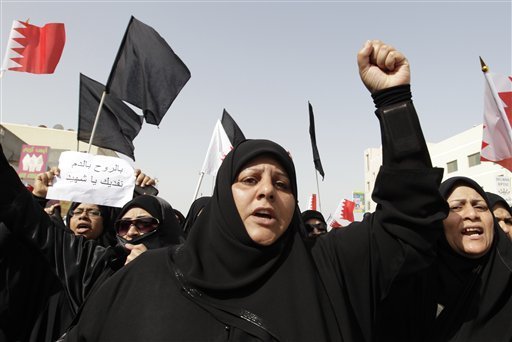
Protests in Bahrain: The Arabian Peninsula as the new Center of Gravity

The fact is without full Pakistani cooperation and substantial Afghani political reform to end corruption and provide real security to Afghani people there is no way to set conditions for a US withdraw that would leave Afghanistan a less dangerous place for its own people and for US and Western security interests. After all no one wants another 9-11 attack.  The US plans to begin withdrawing forces this year but the mission has been extended to at least 2014 at a cost of 119.4 billion dollars per year at the estimated 2011 rate and has increased exponentially since the US involvement began in 2001. The cost of the Afghanistan war in human, material and economic terms has imperiled other strategic priorities and limits the flexibility of the United States in other more vital regions.

Afghanistan is now an expensive sideshow in a larger war where the strategic center of gravity has shifted decisively to the Arabian Peninsula, North Africa and the Eastern Mediterranean where Al Qaeda seeks to use democratic revolts against autocratic despots to further its own ends. The key countries are Yemen, Saudi Arabia, Bahrain and Egypt with Lebanon, Syria, Jordan and the Israeli-Palestinian conflict boiling over.  While all of these crises grow on what seem to be a daily basis the United States and its Allies are mired in Afghanistan reinforcing failure.  Our troops on the ground have not lost a battle but like our brothers in Vietnam could “lose” the war.

This is the point where political and military leaders have to count the cost of the operation and weigh them against our actual strategic interests. The fact is if we withdrew the bulk of our ground combat forces and shifted to a lower footprint special operations and CIA campaign with a goal of ensuring that Al Qaeda cannot operate in Afghanistan with impunity as they did before 9-11 that we would likely be no worse off than we are now and have a greater amount of strategic flexibility to deal with other crises, political, military and humanitarian around the world.

The real crux of the issue is that Afghanistan is much like Stalingrad to the Germans in 1942. It has become a psychological more than a military campaign. We have invested so much in it that we do not believe that we can withdraw even though a scaled back presence would do much to improve our overall strategic situation.  Hitler denuded more important areas to attempt to capture Stalingrad and lost everything. Yes Al Qaeda used Afghanistan as its base to attack us in 2001 but they have moved on and Al Qaeda in Yemen and the Arabian Peninsula is a far greater strategic danger simply because of the oil supplies and strategic waterways in the area.

We simply need to look at all components of national strategy and decide where to concentrate.  Sometimes a strategic withdraw is necessary and actually vital to recover the initiative and set the stage for long term success. In Afghanistan this is not an admission of defeat but rather an acknowledgement that the central focus of the war and our strategic interests are elsewhere.  Our enemies would love to have us continue the campaign in Afghanistan in its current form, they know that our commitment drains our military, imperils our overall strategy and bleeds us dry economically all the while providing propaganda grist for them in their war against us.

However despite the cost the political situation in the United States keeps President Obama invested in Afghanistan. If he withdraws his opponents will say that he lost the war. Unfortunately the war in Afghanistan was ceded to the Taliban in 2003 when we decided that Iraq was more important. Now we reap the terrible consequences of that decision.  Now we have to decide how to make something positive out of this unenviable strategic position. But as Napoleon Bonaparte said “In order to govern, the question is not to follow out a more or less valid theory but to build with whatever materials are at hand. The inevitable must be accepted and turned to advantage.”

Peace

Padre Steve+


2 Comments

Filed under Loose thoughts and musings