Tag Archives: cold war

The Long Road to Freedom and Reconciliation: Rest in Peace Nelson Mandela

images-65

“As I walked out the door toward the gate that would lead to my freedom, I knew if I didn’t leave my bitterness and hatred behind, I’d still be in prison.”  Nelson Mandela

One of the greatest men of the last century passed away today at the age of 95. Nelson Mandela, the human and civil rights advocate in Apartheid South Africa who spent 27 years in prison before being released and overseeing the end of apartheid and the beginning of reconciliation in that country. As President he understood the importance of sport to the country and helped use the victory of the Springboks, a rugby team that during the Apartheid era embodied the spirit of that system as a way to unify the country. When the team played the New Zealand All Blacks in the World Cup of Rugby Mandela helped use it to unify the country.

world-cup

Nelson Mandela was one of the most influential men of our time. He was a rare man of grace, courage integrity and vision. He was a man who fought for the liberation of every South African, not just blacks; those imprisoned by walls and laws and those imprisoned by the attitudes of their hearts an minds.

ZZ628BFEC1

Unfortunately so many of us including me did not realize just what an amazing man he was until he had spent so many years in prison. It was only after his release that I began to appreciate and admire him. Up until that point I had only thought that he was another Marxist type revolutionary. Of course I had never read anything he had ever written and didn’t know anything about his life or story. All I knew is that South Africa was “democratic” and stood against the Soviets and their proxies.

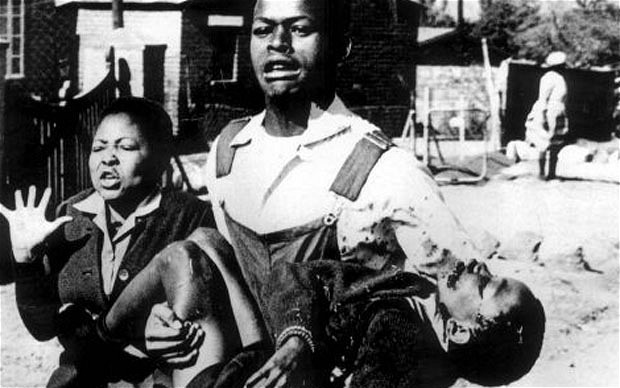
apartheid_sign_1980

My knowledge of him until his release and later election as the President of South Africa was the product of Cold War anti-Communist propaganda coupled with a distaste for “revolutionaries” in general. However when I began to read his works, understand his life and causes and put them into actual historical context of racism, imperialism and colonialism in Africa I was ashamed of my former views.

PHOTOS Century Collection

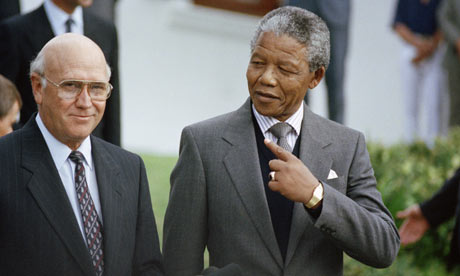
The sad thing was that in the United States I was anti-racism and discrimination and pro equal rights and integration for blacks and other minorities. I was a liberal here in regard to these issues even as I excused the vestiges of colonialism, imperialism and racism in South Africa simply because of the my Cold War “realism.” It is funny how a utilitarian ethic can lead people to positions that are diametrical opposites even in their own life and positions. The irony is that it was the fall of the Berlin Wall and collapse of Soviet Communism that brought the staunchly anti-Communist President F. W. De Klerk to release Mandela from captivity and eventually work with Mandela to end Apartheid.

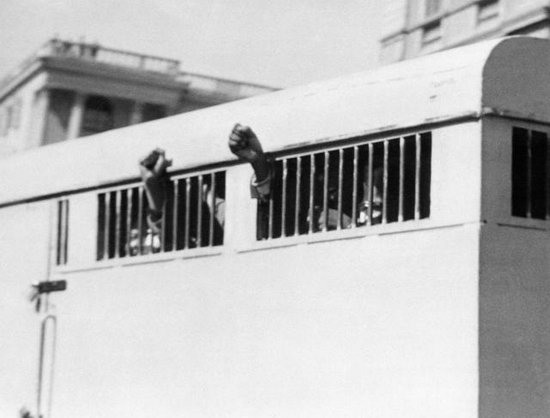
Nelson Mandela - Rivonia Trial - Life in Prison 16-6-1964

When Mandela became President of South Africa I finally began to understand the man who before had been a caricature painted by my supposed “foreign policy realism.” His actions upon his release from prison, his election and his life after leaving office were nothing more than amazing. He was a man of rare personal and pubic integrity, courage, grace and virtue.

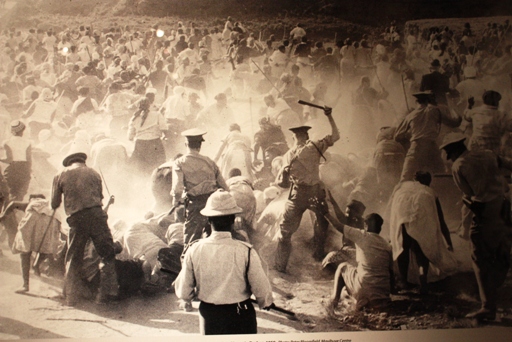
apartheid2

Unlike other victorious revolutionaries he did not seek vengeance or seek to settle old scores. His committee on reconciliation was just that. It was not a commission that sought to punish men and women who during the apartheid days persecuted him but all non-whites in South Africa. Mandela understood something that others across the political, racial and religious spectrum fail to understand. He understood that resentment  of the other is a poison. His comment that “Having resentment against someone is like drinking poison and thinking it will kill your enemy”  is among the most rue that an philosopher, politician or preacher has ever uttered.

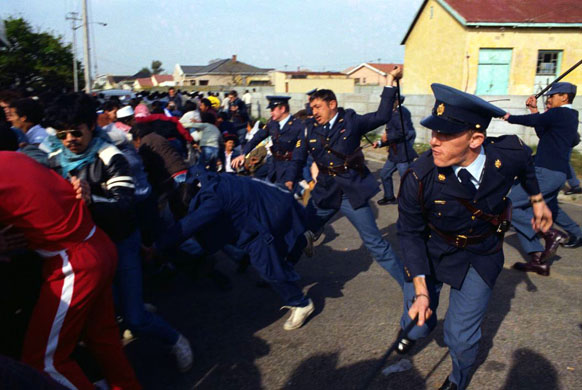
Police Officers Try to Control Protesters

Mandela’s personal leadership in South Africa’s transition from apartheid was perhaps on of his greatest triumphs. It would have been very easy for the country to collapse, for whites to be forced to flee or for civil war between the ANC, various tribal leaders and governments and the South Africa’s white population to tear the country apart and lead to great bloodshed. Instead Mandela modeled reconciliation. He understood something about freedom that many of us never really understand. He wrote: “For to be free is not merely to cast off one’s chains, but to live in a way that respects and enhances the freedom of others.”

Likewise Mandela understood the dynamic human tension that exists between hatred and love. He understood that both were learned behaviors. His words “for to be free is not merely to cast off one’s chains, but to live in a way that respects and enhances the freedom of others,” embody that dynamic. That goes back to Mandela’s many years of imprisonment, years that many in the same situation would become bitter, consumed by hatred and ready to seek revenge, a revenge that he knew would achieve nothing positive. He knew that unless he left hatred and bitterness behind that he would still be in prison, a prison that so many of us, including me at times find ourselves. A prison without physical walls and bars but a prison nonetheless.

He understood that that hatred and bitterness only served to fill a cup of resentment which in his words “resentment is like drinking poison then hoping it will kill your enemies.”

FW-de-Klerk-and-Nelson-Ma-001

He was not unrealistic. He understood that many people saw him as their enemy. He also understood that in a country where great differences existed that such was the case. That being said he understood something that is lacking in much political discourse in our country today. He noted “If you want to make peace with your enemy, you have to work with your enemy. Then he becomes your partner.” That is something that we need to learn again.

Nelson Mandela - South African Flag Face 01

I thank God for Nelson Mandela, his life and works. He was truly a man for the ages. He was a giant. May he rest in peace.

Peace

Padre Steve+

1 Comment

Filed under History, leadership, News and current events

Thoughts on the Iranian “Deal”

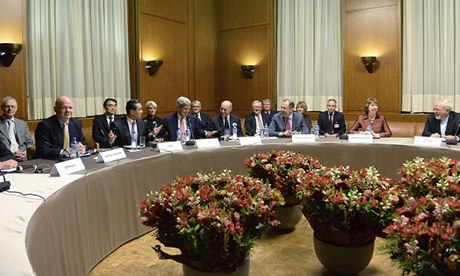
Iran nuclear talks

Yesterday negotiators from the United States, Britain, France, Germany, Russia and China finished hammering out a tentative deal with Iran regarding that nation’s nuclear program.

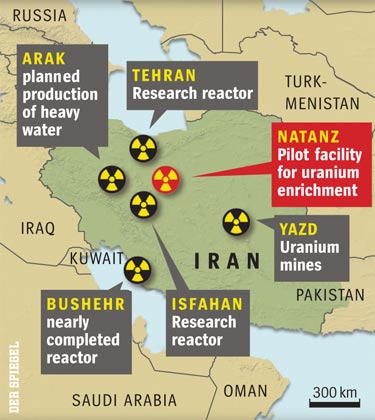
There are a lot of opinions about the deal, some positive, some definitely negative and quite a few like mine a wait and see attitude. Now I am hopeful that the deal is a positive first step in assuring that Iran does not build a nuclear weapon. In fact I pray that it does.

iran-nuclear-facilities

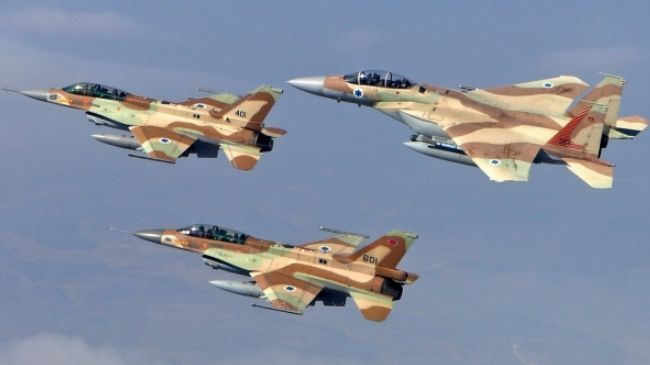
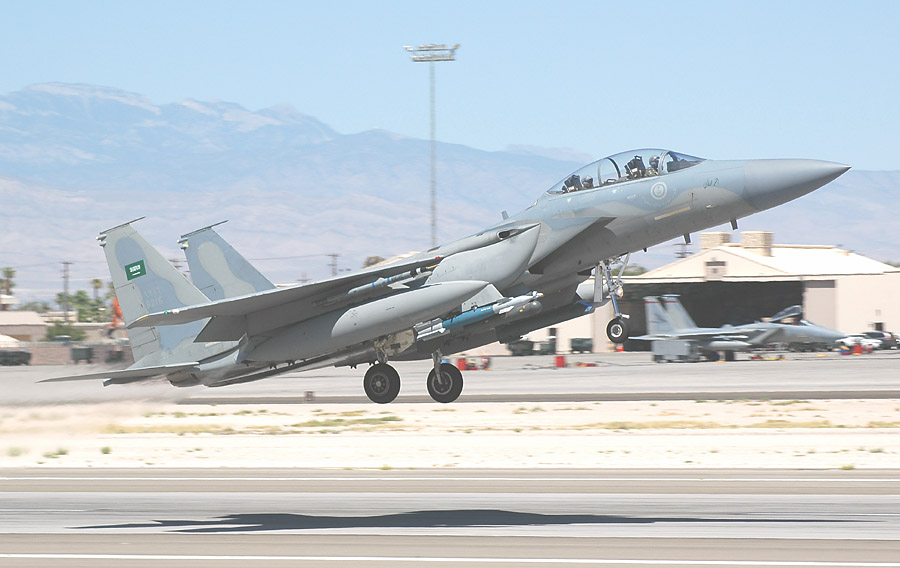
The fact is that we have to try, even if some allies for their own reasons disagree. The Israelis are understandably concerned, especially since the last President of Iran, most of the Mullahs that actually run that country and the Revolutionary Guard have expressed their belief that Israel should not exist. Thus for the Israelis this can be seen as an existential matter. If Iran were to get operational nuclear weapons and use them against Israel that state would suffer greatly. Likewise the Saudis are distrustful of the Iranians, but for different reasons. For the Saudis this is the great conflict between Sunni Islam and Shia Islam, a conflict that appears to be gaining steam in Syria, Iraq, Bahrain and Lebanon. It is  conflict that has the potential to be the Islamic equivalent of the Thirty Years war, that great bloodletting between Catholic and Protestant Europe. Iran and the Saudis are the leaders of the respective factions of Islam, they are mortal enemies.

iran_AP111222017357_620x350

We have to be cognizant of both the Israeli and Saudi concerns. They are legitimate and because they are allies we must take them into account. That being said the most important security needs to be addressed by the United States are those of the United States. Sometimes those are not always the same of allies, even allies like Israel and Saudi Arabia. That is something that has to be weighed in this case.

iran-nuclear-program

The cold fact of the matter is that for many years we in the United States have become accustomed to resorting to military force first and neglecting the other aspects of national and international power that could be brought to bear to in achieving our national security and foreign policy goals. Those other aspects include economic power, information and diplomacy which unfortunately have been neglected. Presidents and our Congress have, even in spite of the misgivings of military leaders pursued the military option first.

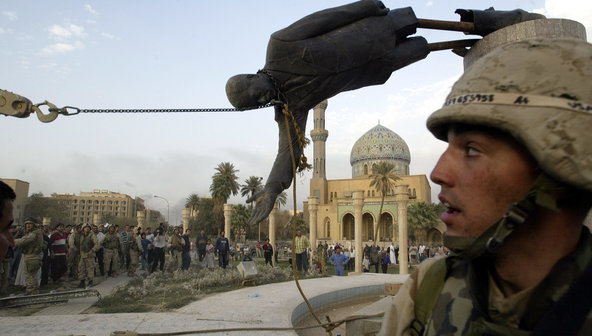
After the attacks of September 11th 2001 the Bush Administration with the authorization of Congress pursued an almost single minded military solution to those attacks. That response was not only against the Al Qaeda terrorists but against their Afghan Taliban hosts and Saddam Hussein’s Iraq.

07rdv-saddam-statue-iraq-anniversary-tmagArticle

Those campaigns have worn our military down. The resources spent in those countries, the lives lost, the money spent and the wear and tear on equipment have harmed our national security. But even above that in terms of strategy we eliminated the one natural enemy of Iran which helped hold them in check. We invaded Iraq and left it in a condition that it could no longer be the western bulwark against Iran. We turned down Iranian offers of help after September 11th and in doing so lost opportunities which might have led us and Iran down a different path. Instead President Bush declared Iran and Iraq both parts of an “Axis of Evil.”

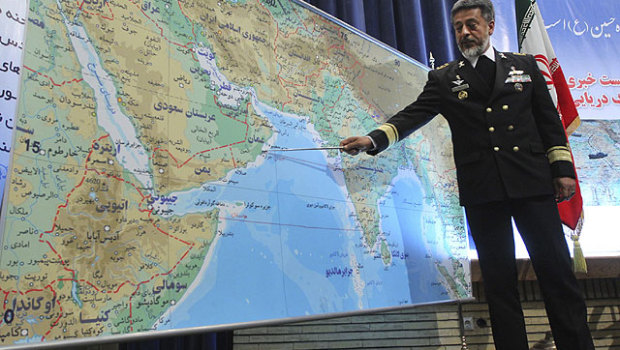
IRAN-DEFENCE-MISSILES

It was a declaration that the Iranians rightly understood as a declaration of war. Legally it may not have been, but the stated strategy enunciated by men like John Bolton and those we call the “Neocons” inside the Bush Administration and in associated think tanks could only be understood by the Iranians in that light. That end state envisioned by Bolton then and even now was regime change in not only Iraq, but also Iran. We have to ask ourselves this question: If another nation did this to us, how would we respond? I dare say that we, like the Iranians would dig in our heels and seek to develop military capacities that could defeat them, or if not defeat them make their “success” so costly that our enemies would not press us.

pirhayati20130312213337917

Now because of those choices we are faced with a situation where Iran is estimated to be reasonably close to developing a nuclear weapon capacity. It is something that if it happens will result in a nuclear arms race in the Middle East. The Israelis already have that capability and the Saudis are reportedly pursuing that capability. Thus it cannot be allowed to happen.

f15s-9216-92sqd-rsaf

That being said there are ways to ensure that does not happen. One advocated by those opposed to the deal is a hard line approach including pre-emptive military strikes against Iran, which not only would bring about a regional war but at best delay Iran a few years in procuring nuclear weapons.

The other is the course that has been pursued by the Obama Administration over the course of the past few years. That is the use of economic sanctions and diplomacy. As I said at the beginning this has not been our default policy over the past 12 years. But it is necessary. We are not in a good position to add yet another war, a war with world wide security and economic implications to our plate.

The fact is that due to the wars of the past 12 years as well as budget cuts including the sequestration cuts we are not in a good position to wage another war. We are stretched thin. Readiness thanks to sequestration is declining. The Chief of Staff of the Army stated that only two combat brigades are immediately deployable for combat operations. Could we launch another military campaign? Yes we could. But war, if we believe Clausewitz war is an extension of politics and policy. But we have to ask if would it achieve our overall policy goals? That I am not sure.  Clausewitz wrote: “No one starts a war–or rather, no one in his sense ought to do so–without first being clear in his mind what he intends to achieve by the war and how he intends to conduct it.”

In fact even if we delivered punishing strikes to Iran the costs could be great, and not just the economic costs.  Our campaign would have to be an air campaign to destroy hardened targets many of which we do not know the exact locations. Our record in such air campaigns is mixed. We spent over 70 days pounding Serbia with little to show for it in actual damage to their military. Likewise Iran is not Iraq, our targets will not be exposed in the open desert. Additionally Iranian A2/D2 (Anti-Access/Area Denial) capabilities pose great risks for US and Allied Warships as well as bases in the Arabian Gulf. If an Iranian Kilo Class submarine were to sink an American Aircraft Carrier it would not be a tactical setback, it would be a major loss of American strategic capability not just in the Middle East but world wide.

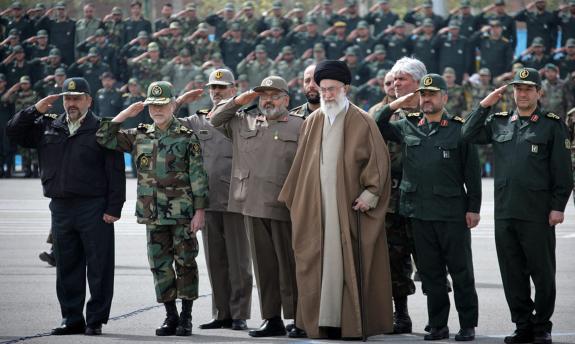
revolutionary-guards-and-khamenei

Likewise as I mentioned before we took out the one natural opponent of Iran when we overthrew Saddam Hussein. In doing so we destroyed every bit of infrastructure, military power and civil government structures that any new Iraqi government would need to maintain any sense of a balance of power in the Arabian Gulf.

All that being said do I trust the Iranians? I cannot say that I do. I am a realist. I enlisted in 1981 in large part because of the Iranian takeover of the American Embassy and the hostage crisis. They remain a dictatorial regime which persecutes religious minorities including Christians. They restrict their people from open access to the internet and persecute political opponents. The Revolutionary Guards Corps, the most powerful organization in Iran has actively worked to destabilize other countries in the region. Their influence is great especially in regards to Lebanon’s Hezbollah which has launched missile campaigns against Israel and been active on the side of Syria dictator Bashir Assad in that country’s brutal civil war.

However the path of diplomacy must be given a reasonable chance to succeed. In the early 1970s President Nixon started a process of detente with the Soviet Union and Communist China. It was not embraced by hawks. President Ford, Carter and Reagan continued those policies to one degree or another with the final result being the fall of the Berlin Wall, collapse of the Warsaw Pact and overthrow of Communism.

This deal is a start. It is not perfect at all. I see issues in it. but it is based on the politics and art of the possible. It has the potential to be a game changer in a region wracked by war and revolution, a region led for the most part by despots in which terrorists often operate freely. I don’t know if it will work, but I hope it does.

Peace

Padre Steve+

Leave a comment

Filed under Foreign Policy, History, iraq,afghanistan, middle east, Military, News and current events

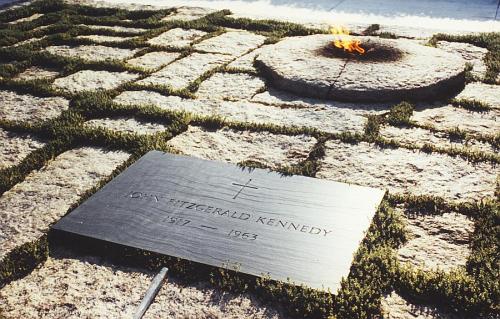
Civility is Not a Sign of Weakness: The Hope of John F Kennedy and his Inaugural Address

13420500

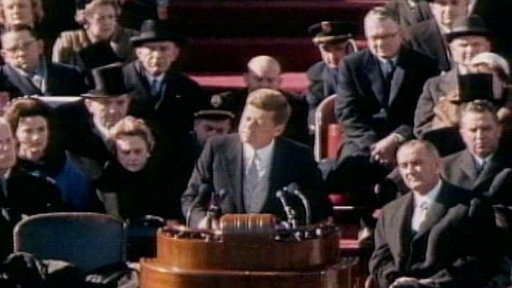
“So let us begin a new remembering on both sides that civility is not a sign of weakness, and sincerity is always subject to proof. Let us never negotiate out of fear. But let us never fear to negotiate.” John F Kennedy

Fifty-three years ago a young, handsome Irish Catholic from Massachusetts took the oath of office of the President of the United States. President John F. Kennedy had won an exceptionally close Presidential Race against Republican Voce President Richard M. Nixon, a race that some believe was decided by votes of the dead in places like Chicago and West Virginia. Despite the contested nature of the election Nixon was gracious and conceded the race to avoid deeper division.

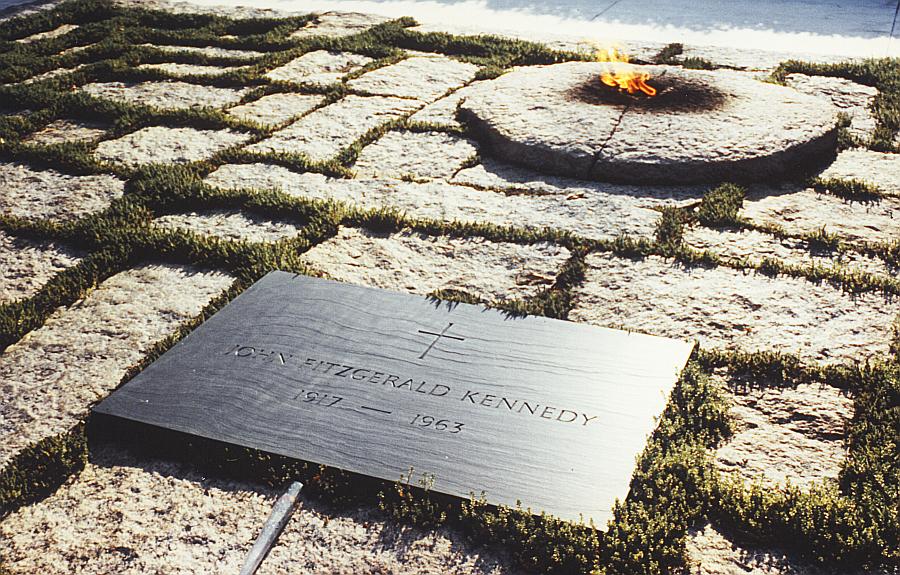
Fifty years ago today that young President was gunned down in Dealey Plaza in Dallas Texas by Lee Harvey Oswald. It was an event that shattered our nation which helped in many ways to foment the deep and abiding cynicism that is the hallmark of our recent political landscape.

The Kennedy administration had a wonderful vision but was not always successful. In fact there were time its policies and actions were in the case of the Bay of Pigs Invasion were mired in controversy. Decisions made by Kennedy to send more advisors to Vietnam would be followed by the Johnson Administration sending combat troops. Kennedy played a high stakes game of chess with Nikita Khrushchev during the Cuban Missile Crisis where the world came perilously close to nuclear war.

That being said he also inspired and energized Americans and our Allies to greatness. Kennedy’s speech at the Berlin Wall where he identified himself with the city saying “Ich bin Ein Berliner” inspired many in Germany who realized that in Kennedy they had a friend who would not abandon them.

Kennedy challenged us as Americans to put a man on the moon by 1970. He  supported NASA as they began to develop the Apollo program which did achieve that lofty goal when Apollo 11 landed on the Moon on July 11th 1969.

Kennedy was a visionary. He supported the establishment the Army Special Forces, or the Green Berets.  He helped to found and promote the Peace Corps.  His economic policies were fiscally conservative but did not ignore the poor. He pushed for equal rights for African Americans against a much divided nation.
jfkptfloat

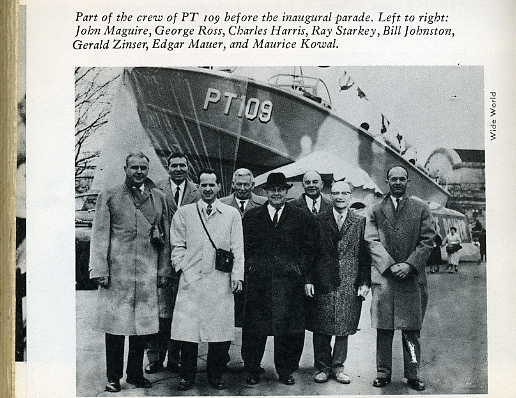
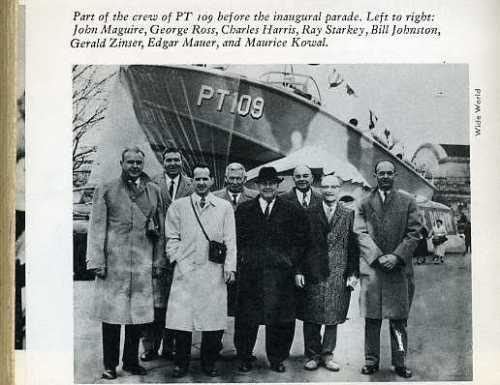
As I said, Kennedy was a flawed man. A deeply flawed man. I have written about that before. He was not known for his sexual morality and the stories of him with various mistresses including Marilyn Monroe abound. At the same time he was a hero. He volunteered to serve on PT Boats in the Second World War when his political connections would have ensured him a billet in a non-combat area and his physical condition would have exempted him from any military service.

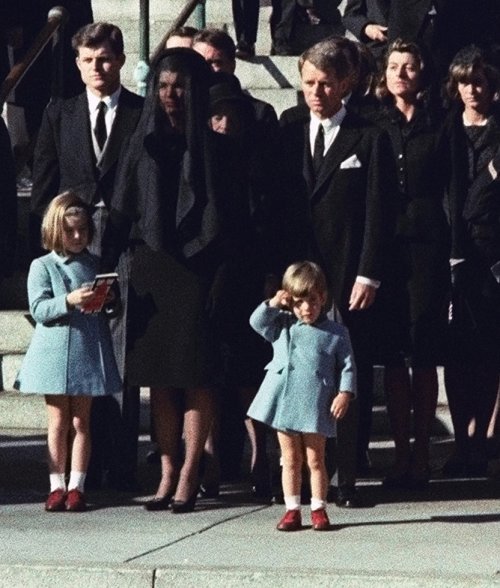
Kennedy died 50 years ago today. He was the victim of an assassin’s bullet in Dealey Plaza in Dallas Texas with his wife Jackie at his side. His death stunned the nation and in a sense ended our innocence.  Since that time American politics has been on a slow but steady descent into darkness which both parties have aided and abetted to the point that they view each other as mortal enemies and along with it have devastated our body politic.
JOHN F KENNEDY FUNERAL

In our divided state it seems that the nation has become nothing more than a collection of special interest groups. Each group is driven by their own wants and needs above that of others goaded into a frenzy by politicians who cater to those needs whether they be tax breaks, entitlements or “pork barrel” projects which only benefit the political benefactors of the politicians. I know that American politics has always had such elements but I don’t think that my parents or those other young people who heard and responded to this speech ever imagined that we would come to this.

While Kennedy still has critics and was a flawed man I find him still to be a great and compelling President. He is one of my favorite Presidents in large part because he understood that “civility is not a sign of weakness.” In our current poisonous political environment this is something that all of us need to take to heart, especially people of faith who so often seem to be the least civil and most hateful in our society.

Kennedy was one of those rare leaders who called us to better as individuals and as a nation. Today we remember his life and the tragedy of his death.

But today I think about his inaugural address. It is a speech that in my opinion calls us as Americans to higher and better ideals. It is a speech that if we actually listen to it can still help point us away from the abyss which we are staring into. I have posted the text of the speech as well as a link to the video of it here.

http://www.youtube.com/watch?v=BLmiOEk59n8

In the hope that we can learn at home and abroad from John F Kennedy.

Vice President Johnson, Mr. Speaker, Mr. Chief Justice, President Eisenhower, Vice President Nixon, President Truman, Reverend Clergy, fellow citizens:

We observe today not a victory of party but a celebration of freedom, symbolizing an end as well as a beginning, signifying renewal as well as change. For I have sworn before you and Almighty God the same solemn oath our forbears prescribed nearly a century and three-quarters ago.

The world is very different now. For man holds in his mortal hands the power to abolish all forms of human poverty and all forms of human life. And yet the same revolutionary beliefs for which our forebears fought are still at issue around the globe – the belief that the rights of man come not from the generosity of the state but from the hand of God.

We dare not forget today that we are the heirs of that first revolution. Let the word go forth from this time and place, to friend and foe alike, that the torch has been passed to a new generation of Americans, born in this century, tempered by war, disciplined by a hard and bitter peace, proud of our ancient heritage, and unwilling to witness or permit the slow undoing of those human rights to which this nation has always been committed, and to which we are committed today at home and around the world.

Let every nation know, whether it wishes us well or ill, that we shall pay any price, bear any burden, meet any hardship, support any friend, oppose any foe to assure the survival and the success of liberty.

This much we pledge – and more.

To those old allies whose cultural and spiritual origins we share, we pledge the loyalty of faithful friends. United there is little we cannot do in a host of cooperative ventures. Divided there is little we can do; for we dare not meet a powerful challenge at odds and split asunder.

To those new states whom we welcome to the ranks of the free, we pledge our word that one form of colonial control shall not have passed away merely to be replaced by a far more iron tyranny. We shall not always expect to find them supporting our view. But we shall always hope to find them strongly supporting their own freedom; and to remember that, in the past, those who foolishly sought power by riding the back of the tiger ended up inside.

To those people in the huts and villages of half the globe struggling to break the bonds of mass misery, we pledge our best efforts to help them help themselves, for whatever period is required – not because the communists may be doing it, not because we seek their votes, but because it is right. If a free society cannot help the many who are poor, it cannot save the few who are rich.

To our sister republics south of our border, we offer a special pledge: to convert our good words into good deeds in a new alliance for progress; to assist free men and free governments in casting off the chains of poverty. But this peaceful revolution of hope cannot become the prey of hostile powers. Let all our neighbors know that we shall join with them to oppose aggression or subversion anywhere in the Americas. And let every other power know that this Hemisphere intends to remain the master of its own house.

To that world assembly of sovereign states, the United Nations, our last best hope in an age where the instruments of war have far outpaced the instruments of peace, we renew our pledge of support, to prevent it from becoming merely a forum for invective, to strengthen its shield of the new and the weak, and to enlarge the area in which its writ may run.

Finally, to those nations who would make themselves our adversary, we offer not a pledge but a request: that both sides begin anew the quest for peace, before the dark powers of destruction unleashed by science engulf all humanity in planned or accidental self-destruction.

We dare not tempt them with weakness. For only when our arms are sufficient beyond doubt can we be certain beyond doubt that they will never be employed.

But neither can two great and powerful groups of nations take comfort from our present course – both sides overburdened by the cost of modern weapons, both rightly alarmed by the steady spread of the deadly atom, yet both racing to alter that uncertain balance of terror that stays the hand of mankind’s final war.

So let us begin a new remembering on both sides that civility is not a sign of weakness, and sincerity is always subject to proof. Let us never negotiate out of fear. But let us never fear to negotiate.

Let both sides explore what problems unite us instead of belaboring those problems which divide us.

Let both sides, for the first time, formulate serious and precise proposals for the inspection and control of arms – and bring the absolute power to destroy other nations under the absolute control of all nations.

Let both sides seek to invoke the wonders of science instead of its terrors. Together let us explore the stars, conquer the deserts, eradicate disease, tap the ocean depths and encourage the arts and commerce.

Let both sides unite to heed in all corners of the Earth the command of Isaiah to “undo the heavy burdens . . . (and) let the oppressed go free.”

And if a beachhead of cooperation may push back the jungle of suspicion, let both sides join in creating a new endeavor, not a new balance of power, but a new world of law, where the strong are just and the weak secure and the peace preserved.

All this will not be finished in the first one hundred days. Nor will it be finished in the first one thousand days, nor in the life of this Administration, nor even perhaps in our lifetime on this planet. But let us begin.

In your hands, my fellow citizens, more than mine, will rest the final success or failure of our course. Since this country was founded, each generation of Americans has been summoned to give testimony to its national loyalty. The graves of young Americans who answered the call to service surround the globe.

Now the trumpet summons us again; not as a call to bear arms, though arms we need; not as a call to battle, though embattled we are; but a call to bear the burden of a long twilight struggle, year in and year out, “rejoicing in hope, patient in tribulation” – a struggle against the common enemies of man: tyranny, poverty, disease and war itself.

Can we forge against these enemies a grand and global alliance, North and South, East and West, that can assure a more fruitful life for all mankind? Will you join in that historic effort?

In the long history of the world, only a few generations have been granted the role of defending freedom in its hour of maximum danger. I do not shrink from this responsibility; I welcome it. I do not believe that any of us would exchange places with any other people or any other generation. The energy, the faith, the devotion which we bring to this endeavor will light our country and all who serve it – and the glow from that fire can truly light the world.

And so, my fellow Americans: ask not what your country can do for you – ask what you can do for your country.

My fellow citizens of the world: ask not what America will do for you, but what together we can do for the freedom of man.

Finally, whether you are citizens of America or citizens of the world, ask of us here the same high standards of strength and sacrifice which we ask of you. With a good conscience our only sure reward, with history the final judge of our deeds, let us go forth to lead the land we love, asking His blessing and His help, but knowing that here on Earth God’s work must truly be our own.
Kennedy03290905

I do hope that we can after a half a century finally learn something from John F Kennedy.

Peace,

Padre Steve+

1 Comment

Filed under History, News and current events, Political Commentary

To Iraq and Back: Prelude: I was Born for This

295_27076757058_7361_n-1

Me in 1982 

This is the first actual chapter in my series “To Iraq and Back: Padre Steve’s War and Return.” I wrote last night that I was going to be doing this and I figure that there is no time like the present to start. Just about 6 years ago I was preparing to deploy to Iraq as an individual augment supporting the US Marine and Army advisors to Iraqi Army and Security Forces in Al Anbar Province. After 6 years I think I can finally complete my literary account of my experiences in Iraq, my return and subsequent struggle with Post Traumatic Stress Syndrome (PTSD). 

Though I am not certain, I do think that many of us were born for what we feel called to do. As bit of a theologian I can honestly say that I am not a Calvinist or strict Augustinian who believes that we are simply playing out some predetermined role or fate on earth. Neither am I a fatalist but I really do feel, that whether it was something God ordained, something genetic or a product of my environment growing up, that I was born to do what I do.

As one who has some training as well in psychology and pastoral care I also understand that the human mind is a very complicated lump of gray matter. I know that we as human being as products of our genetic make up, our upbringing and environment, education, spiritual formation, relationships ad infinitum, ad nauseum.

So I know what I believe about my calling to serve in the military and the priestly vocation cannot be scientifically proven. That being said, I believe and that belief in my calling survived even in my times of unbelief.  A paradox for sure, belief and unbelief coexisting at the same time in the same person, but Father Andrew Greeley said it well in his novel The Bishop and the Beggar Girl of St Germain: “Most priests, if they have any sense or any imagination, wonder if they truly believe all the things they preach. Like Jean-Claude they both believe and not believe at the same time.”

My tour in Iraq in a sense was the culmination of my calling, a call that I felt at a very early age, to serve in the military and later to be called to serve as a Priest in the military. I have long figured that to have served a full career in the military in time of war and not to have gone forward into danger to do what I have trained all my life to do.

I have a hard time not remembering when I wanted to serve in the military and serve in combat. That may sound strange but for some reason, even though I was not encouraged to follow this path it was something that growing up as the son of a Navy Chief Petty Officer who served at the Battle of An Loc in the Vietnam War that I felt was my destiny. Maybe it is faith, maybe it is some sort of mysticism or even fatalism, but I do believe that for good or for bad that I am doing what I was born to do.

George Patton commented: “A man must know his destiny. if he does not recognize it, then he is lost. By this I mean, once, twice, or at the very most, three times, fate will reach out and tap a man on the shoulder. if he has the imagination, he will turn around and fate will point out to him what fork in the road he should take, if he has the guts, he will take it.”

I am sure that my family and my earliest friends can testify to my love of all things military and the nearly romantic calling that soldiering had on my life. At nearly every turn in life I have responded to the military calling by volunteering for assignments that would place me closest to the action. There were times that my wishes were thwarted and my desires placed on hold, but they never died.

I served on the Fulda Gap in the Cold War and missed serving in ht First Iraq War because I had left active duty to attend seminary and my National Guard unit just missed being mobilized. I did support the Bosnia operation as a mobilized Army Reserve Major and during that mobilized period of service was told that I was not a place for me in the Regular Army. However, a few months after my last active reserve posting I was given the chance to apply for active duty as a Navy Chaplain. Less than 7 weeks after the first talk with the Navy I resigned my Army Reserve commission as a Major and accepted a lower rank, that of a Navy Lieutenant to enter active duty in February 1999.

The Marine unit that I was serving with in 1999 came very close to being sent to the Kosovo crisis and had Slobodan Milosevic not made a last minute peace deal after a 70 day air campaign I am sure I would have ended up there.

555306_316970661755579_1118848704_n

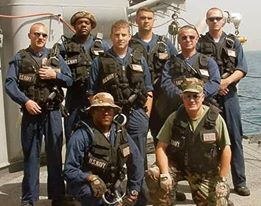
With my Boarding Team, April 2002 aboard USS Hue City

However it was 9-11-2001 that changed everything. I was in Camp LeJeune North Carolina with the 2nd Marine Division when the hijacked aircraft hit the Twin Towers and the Pentagon. Shortly after those attacks I was transferred to the USS Hue City, a Aegis Guided Missile Cruiser. My first wartime deployment was in 2002 aboard Hue City supporting Operation Enduring Freedom and Southern Watch. On that deployment I served as an advisor to one of our boarding teams and took part in over 70 boarding party operations against Iraqi and other oil smugglers who were breaking the United Nations oil sanctions against Iraq.

We were in the yards when Operation Iraqi Freedom began and in the fall of 2003 I was assigned to the Marine Security Force Battalion. In my time at Security Forces I travelled around the world and often to the Middle East and Europe, but not to Iraq or Afghanistan. Because the elements that we sent to Iraq were too small to rate an organic chaplain I did not deploy with them, though I heard about the experiences of many of those Marines and Navy Corpsmen as they came to me for counsel when they came home.

Despite having spent time of the boarding teams and having deployed numerous other places in my career there were times that I felt like William Tecumseh Sherman, who missed the war with Mexico having been sent to California who wrote: “I have felt tempted to send my resignation to Washington and I really feel ashamed to wear epaulettes after having passed through a war without smelling gun-powder.”

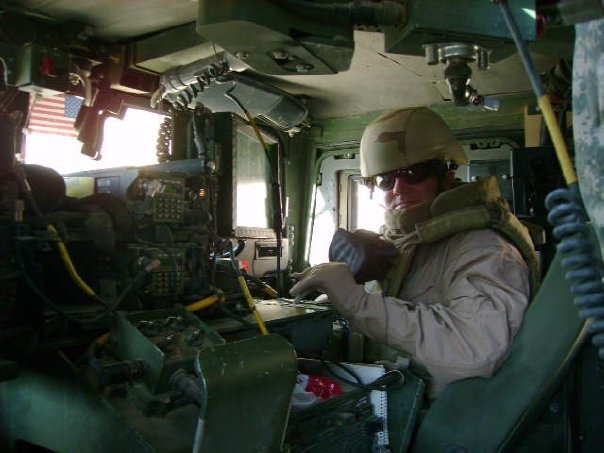
In October 2006 I was assigned to Navy EOD Group Two and shortly thereafter my life which had been very active with more time spent away from home than with my wife since my call up in 1996 to support the Bosnia operation became much more complicated. While at EOD I was supporting very skilled sailors most of whom had deployed multiple times in the always dangerous work of defusing and defending against Improvised Explosive Devices, or IEDs, the signature weapon of the wars in Iraq and Afghanistan. I also was called to support sailors either preparing to go to Iraq or Afghanistan as Individual Augments or those that were returning home.  As I heard their stories, especially those serving as advisors with Iraqis or Afghani soldiers I knew that was what I needed to be doing.

In early 2007 a call went out seeking chaplains to serve in Iraq and Afghanistan in various roles that were not supported by unit chaplains. With the permission of my supervisory Chaplain, Captain Deborah McGuire who was at the Navy Expeditionary Combat Command I put my name in the hat and was notified that I would be sent overseas. I explained to Judy that despite her misgivings that I felt that Nelson and I were the most ready, qualified and prepared team to take on the mission. Needless to say that did not assuage her fears and concerns and an emotional distance began to grow between us.

Initially we thought it would be sent to Iraq, then it was Afghanistan, and finally the first week of June 2007 the orders came down for Iraq. My faithful assistant, Religious Program Specialist Nelson Lebron would go with me. It was the first time that an existing Religious Ministry Team had been tagged to take on an independent mission of this nature.

Our orders were to support Marine Corps and Army advisors in Al Anbar Province, a mission that was new because when the advisory teams were first formed no one thought about organic religious or spiritual support. It was assumed that chaplains from nearby units would suffice but the Army and Marines learned that the assumption was wrong and that the advisors needed their own chaplain support.

The next few weeks would be a whirlwind as we prepared to go. They would be weeks that were trying both individually and for our families and neither of us would realize how much we would be impacted by our time in Iraq, but in June of 2007 that was still a part of our yet uncharted future.

Peace

Padre Steve+

Next: The Preparations


Leave a comment

Filed under PTSD, to iraq and back, Tour in Iraq

30 Years of Marriage: Marriage the Definitive Icebreaker in an Ever Changing World

1012128_10151749215177059_1902693993_n

A long time ago in a galaxy far, far away…

Luke Skywalker has returned to his home planet of Tatooine in an attempt to rescue his friend Han Solo from the clutches of the vile gangster Jabba the Hutt. Little does Luke know that the GALACTIC EMPIRE has begun construction on a new armored space station even more powerful than the first dreaded Death Star. When completed, this ultimate weapon will spell certain doom for the small band of rebels struggling to restore freedom to the galaxy…

Cut! Wrong galaxy…

295_26912077058_3276_n

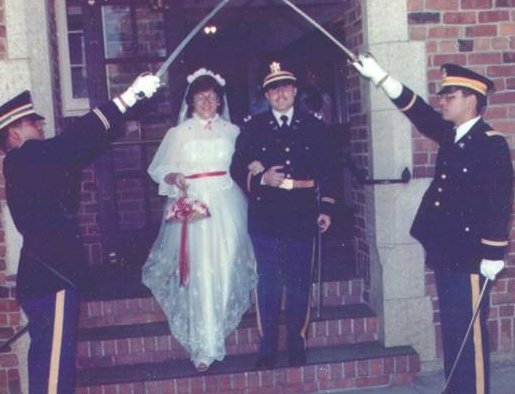
The year was 1983 and a newly commissioned Army Second Lieutenant was marrying the love of his life in an old Presbyterian Church in Stockton California. The wedding was done on a shoestring but was quite nice, you would never have known that on that warm but not too hot day in Stockton California, only 89 degrees at game time with almost no humidity. Since the groom’s 1975 Chevy Monza didn’t have air conditioning that was a good thing.

Other things were going on in the world that day and that year.

Yasir Arafat was expelled from Syria after his accusations that President Hafez al-Assad was behind the anti-Arafat rebellion among Palestine Liberation Organization troops in Lebanon.

Prince Charles and Princess Diana had just had their first son, William.

Evita closed on Broadway after 1568 performances.

215px-Flashdanceposter

Flashdance…What A Feeling by Irene Cara was the Billboard top single.

thriller-video

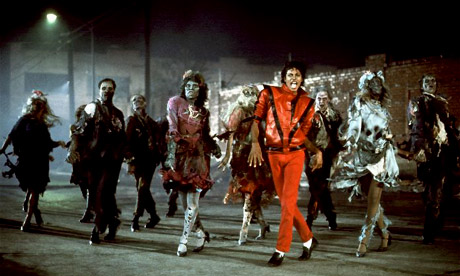
Michael Jackson’s Thriller music video became the biggest video hit of all time and he would die on our 26th wedding anniversary in 2009.

In sports an Indian team led by the legendary Kapil Dev overcame the mighty, two-time champion West Indies at Lord’s to win the Prudential World Cup.

The Orioles lost to the Tigers 9-3, the Giants lost to the Padres 3-2 and the A’s lost to the Rangers 8-3. The O’s would go on to win the World Series.

251651

Superman III was the top box office draw but would be de-throned by Star Wars VI, Return of the Jedi on the 26th. The top ten box office hits for 1983 were: Star Wars Episode VI: Return of the Jedi, Terms of Endearment, Flashdance, Trading Places, WarGames, Octopussy, Sudden Impact, Staying Alive, Mr. Mom and Risky Business.

images-48

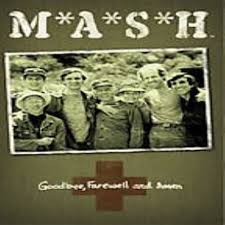
M*A*S*H had ended its epic run as one of the favorite television shows in the United States.

1983-stang-camaro-blog-dogear

The Car and Driver Magazine Top Ten Best list included the 1983 Pontiac 6000STE, 1983 Porsche 944, 1983 Toyota Celica Supra, 1983 Volkswagen Rabbit GTI, 1983 AMC/Renault Alliance, 1983 Chevrolet Caprice Classic, 1983 Ford Mustang GT 5.0, 1983 Honda Accord, 1983 Mazda RX-7 and the 1983 Mercedes-Benz 380SEL. Pontiac and AMC are no more and we now own a 2013 Mustang.

Ronald Reagan was President and Yuri Andropov the Soviet Premier as the Cold War began to reach its crescendo even as both countries were enmeshed in wars or attempts to subvert each other’s allies, the US in Nicaragua and the Soviets in Afghanistan even as Reagan proposed the Strategic Defense Initiative or Star Wars program.

The Polish Pope, John Paul II was making waves in Poland as the Solidarity movement continued to confound local Communist authorities and the Soviet Union, helping to set the stage for the eventual collapse of the Soviet Union and the Warsaw Pact.

Nelson Mandela was imprisoned in then a repressive and racist apartheid South Africa.

Iran and Iraq were locked in a bloody struggle, Israel had invaded Lebanon and become  involved in a quagmire and Saddam Hussein was considered to be our friend. Osama Bin Laden was supported by the United States in Afghanistan.

The Space Shuttle Challenger returned to earth after a historic mission with Sally Ride the first woman to go into space.

24419_10151620210532059_1908706513_n

It is hard to believe that all of that was going on. In fact since there was no internet yet and even cable news was still in its infancy most of us lived in a world that was not so complicated. In light of the current concerns regarding privacy which make Orwell’s 1984 seem all too real, that novel was merely interesting.

6095_128720537058_6625464_n

Who would have thought then that the world would be where we are today. Likewise who would believe that Judy and I are still married after all these years? Sure I think that most people enter into marriage with the intent of it lasting the rest of their lives but tragically so many don’t. In light of all the failed marriages out there I almost wonder if 30 is the new 50 as far as anniversaries are concerned. I guess that we are rather fortunate. We have done the whole sickness and in health, for richer or poorer deal a number of times already, seen our shares of joys and heartaches and since I have been in some type of military service our whole marriage endured many separations.  So far we still love each other.

6095_128718107058_2713239_n

One of my favorite movies about marriage is the classic Four Weddings and a Funeral. There is a great sequence in the film which sometimes I wonder might just be true:

Gareth: I’ve got a new theory about marriage. Two people are in love, they live together, and then suddenly one day, they run out of conversation.

Charles: Uh-huh.

Gareth: Totally. I mean they can’t think of a single thing to say to each other. That’s it: panic! Then suddenly it-it occurs to the chap that there is a way out of the deadlock.

Charles: Which is?

Gareth: He’ll ask her to marry him.

Charles: Brilliant! Brilliant!

Gareth: Suddenly they’ve got something to talk about for the rest of their lives.

Charles: Basically you’re saying marriage is just a way of getting out of an embarrassing pause in conversation.

Gareth: The definitive icebreaker.

Peace

Padre Steve+

1 Comment

Filed under Just for fun, Loose thoughts and musings, marriage and relationships

Looking Back at 30 Years of Commissioned Service

320578_10150433535627059_671902058_10348652_2128805973_n

I was going to write about the situation in Syria tonight but that will wait until tomorrow because June 19th is the 30th anniversary of my commissioning as a 2nd Lieutenant in the US Army. That was a long time ago. I had enlisted in the California Army National Guard in August of 1981 at the same time that I entered the Army ROTC program at UCLA.

295_27076757058_7361_n-1

California Army National Guard 1982

Like most of my life I can admit that my military career, 17 1/2 years in the Army and another 14 1/2 in the Navy has been to quote Jerry Garcia “a long strange trip.” It has been eventful and it is not over. One interesting thing is because I spent about 10 years of my career in the Army National Guard and Army Reserve in a drill status I still am able to serve, probably until I reach age 58 or maybe even 60. If so my career will span early 40 years. Judy tells me that she doesn’t think I will retire until I am 60 which would be just under another 7 years.  That being said I can still crush the Navy Physical Fitness Test. I am still in the game.

295_27076742058_6685_n-1

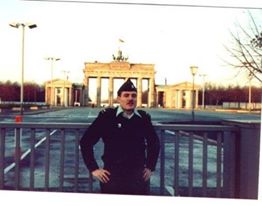
Berlin Wall (East Berlin) 1986

It is interesting what I have seen and where I have served. My career began back during the early days of the Reagan build up during the Cold War, not long after the Iranian Hostage Crisis, which was the catalyst for me volunteering even though the truth of the matter was that I wanted to serve in the military since I was a child. I was a Navy brat, my dad was a Chief Petty Officer and I loved that life.

603858_10151664883067059_2000407407_n

Germany 1984

I wanted to join the Navy out of high school but my parents convinced me to try college first, which I did, meeting my wife Judy my freshman year at San Joaquin Delta College in Stockton California. After that it was California State University at Northridge where I began the serious exploration of commissioning programs. I was actually accepted into the Air Force Program but turned it down, Judy told me that she wouldn’t marry me if I joined the Navy and the Navy ROTC program informed me that I would have to change my major to hard science, math or engineering to enter the ROTC program. So I asked who I could work with and they pointed me down the hall to the Army.

1006172_10151735951292059_1275042886_n-1

Marriage to Judy 25 June 1983

That was the beginning. A long time ago in a galaxy far far away. When I was commissioned in 1983 this college history major was commissioned into the Medical Service Corps, the administrative and operational side of the Army Medical Department. That made a lot of sense, or maybe it didn’t but it did save me from a career as an Ordinance Corps Maintenance Officer or Adjutant General’s Officer Corps paper pusher, both tasks that the Army trained and assigned me to do as a Medical Service Corps officer.

652_55115567058_8786_n

Company Commander 557th Medical Company (Ambulance) 1985

As a Medical Service Corps officer I attended my Medical Officer Basic Course, the Junior Officer Maintenance Corps, the NBC Defense Officer Corps, the Air Force Air Load Planner Course and the Military Personnel Officer course.

1929_55558982058_3465_n

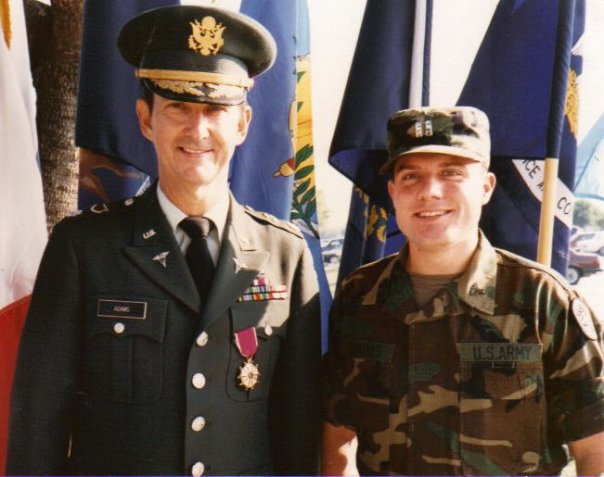
Academy of Health Sciences 1987 with LTC Ike Adams who was largely responsible for redirecting my career and calling to be a Chaplain

I served as a platoon leader, company XO, company commander and Group level staff officer in Cold Wr Germany. I then served as the Brigade Adjutant for the Academy Brigade of the Academy of Health Sciences, where I also helped draft the personnel instruction regarding personnel infected with the HIV virus.

652_55560577058_1525_n

Army Chaplain School August 1990 with LTC Rich Whaley and CPT Bill Blacky

I left active duty to attend seminary in 1988 and joined the texas Army National Guard, initially as an Armor Corps officer serving as the Adjutant for an Armored battalion, until the State Chaplain found out and demanded that I be transferred to the Chaplain Candidate Program which I entered in 1990. I was at the Chaplain Officer Basic Course in August 1999 when Saddam Hussein invaded Kuwait and the war ended just before our unit was to be mobilized for service. Technically Chaplain candidates can’t be mobilized, but one of the full time Guard personnel technician Warrant Officers in Austin kept me on the rolls for mobilization purposes as a Medical Service officer. But like I said the war ended, I graduated from seminary and was ordained and became a chaplain in 1992. I completed the Chaplain Officer Advanced Course and after completing my Pastoral Care Residency at Parkland Memorial Hospital in 1994 took a chaplain job in Huntington West Virginia where I transferred to the Virginia Army National Guard and once promoted to Major transferred to a local Army Reserve unit.

652_55560597058_3348_n

Exchange Officer with German Army at Panzer School 

That was a turn of events that got me mobilized to support the Bosnia mission in 1996 and allowed me to serve supporting a number of units and military communities in Germany. Upon my return to the states and no civilian employment I served as the final Federal Chaplain at fort Indiantown Gap Pennsylvania. When that assignment ended I went back to West Virginia.

652_55560592058_2987_n

295_27076797058_9175_n

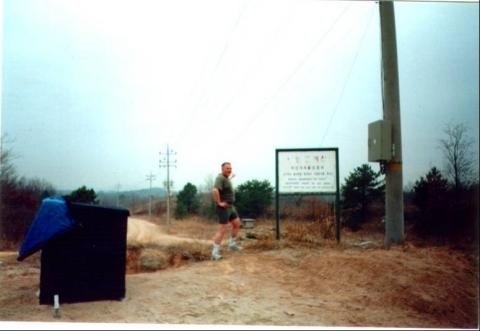
Mt Fuji Japan and Panmunjom Korea 2001

Just before Christmas 1998 I got a call from my bishop telling me that the Navy was willing to consider me for active duty. Remembering Judy’s admonition that she would not marry me if I joined the Navy I did it without asking her. Not a smart thing, she was quite pissed because had I bothered to consult her she probably would have said yes, but the way I did it devalued her. Likewise she was sort of looking forward to the time I hit 20 years in the reserves so she wouldn’t have to lose me all the time to the military.

295_27076837058_752_n

Korea DMZ PT Session

Long story short. The Navy took me and I took a reduction in rank to come on active duty. One day I was a Major in the Army Reserve and the next a Navy Lieutenant. I was given a choice of assignments. I wanted to serve on a ship. I was given the choice of Marines or Marines. So I chose Marines and after completing the Navy Chaplain Office Basic course I reported to the Second Marine Division where I served as the “relief pitcher” for the division Chaplain, whenever someone got in trouble or was transferred without a relief in place I went in like a baseball relief pitcher. I deployed with 3rd Battalion 8th Marines to Okinawa, Japan and Korea. I was at Camp LeJeune on 9-11-2001 and in December 2001 reported to the USS Hue City CG-66 in Mayport Florida deploying shortly thereafter to support Operation Enduring Freedom.

11787_4053256768208_1427277720_n

295_27076892058_2637_n-1

555306_316970661755579_1118848704_n

295_27076832058_495_n

USS Hue City Operation Enduring Freedom

In October 2003 I reported to the Marine Security Force Battalion (now Regiment) and travelled the world in support of those Marines, spending between 1-3 weeks a month on the road. That was an amazing assignment because it gave me a global perspective of the Navy Marine Corps mission traveling frequently to the Middle East, Europe, Asia, Guantanamo Bay Cuba and various locations in the United States. While in that billet I completed the Marine Corps Command and Staff College and my Fleet Marine Force Officer qualification and was promoted to Lieutenant Commander. After that I went to EOD Group 2 and from there was sent to Iraq as an Individual Augment to support advisors to the Iraqi 1st and 7th Divisions, 2nd Border Brigade, Highway Patrol and Police in Al Anbar Province working under the authority of the Iraq Assistance Group and II Marine Expeditionary Force Forward.

943043_10151694525692059_632653331_n

185615_1857288397412_3950321_n

25508_360207007058_7846512_n

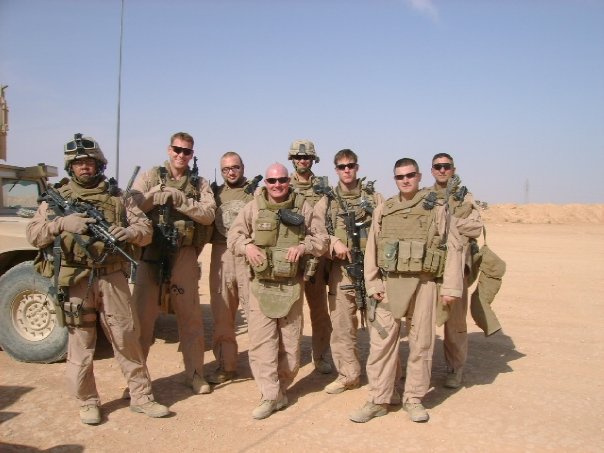
Iraq 2007-2008

I came back from Iraq in pretty bad shape but consider it the pinnacle of my operational ministry as a Chaplain that I would not trade for anything. Since I have written much about it I will not say more about it in this article. From EOD I was transferred to Naval Medical Center Portsmouth and after being selected for Commander in 2010 was transferred to Naval Hospital Camp LeJeune as the command chaplain. This tour was as a geographic bachelor and every couple of weeks I drove back to Virginia.

Now in a couple of months I will be reporting to be the Ethics Faculty and Chaplain at the Joint Forces Staff College in Norfolk.

652_55115572058_9345_n

1905_50393137058_7454_n

2097_58015302058_3658_n

295_26911967058_7489_n

652_55115587058_50_n

295_27076772058_8004_n

1905_50393107058_5924_n

295_27076822058_54_n

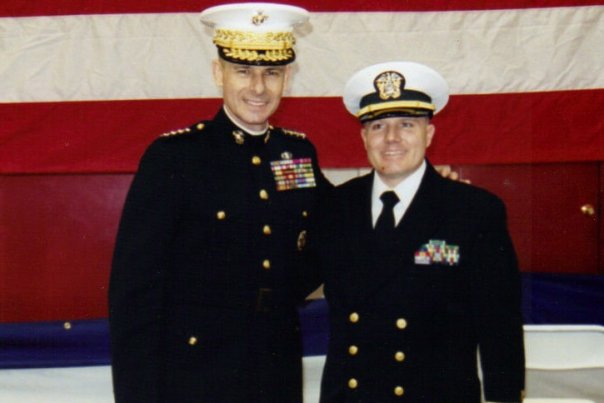
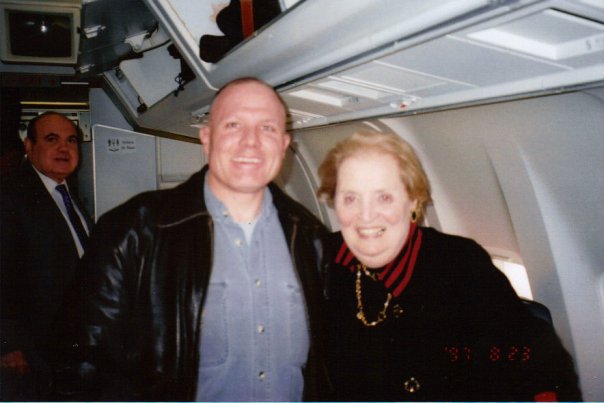
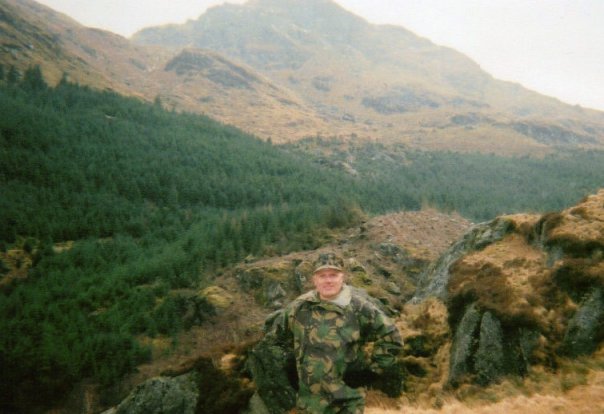
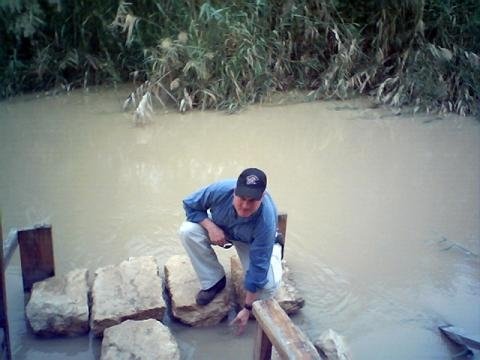
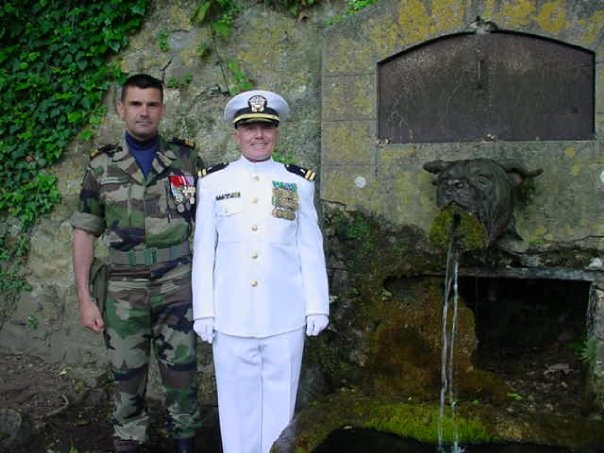
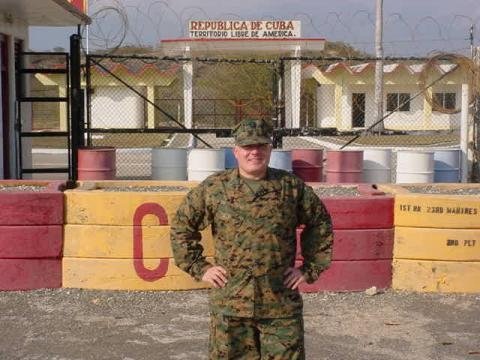
Various scenes top to bottom with General Peter Pace, teaching Marines at Normandy, with Secretary of State Madeline Albright 2005 Spain, with German office in Jordan 2007, Scottish Highlands with US Marines and Royal Marine Commandos 2005, Jordan River 2007, Belleau Wood France 2004, Guantanamo Bay Cuba 2003 or 2004

There have been highs and lows in my career and a few times that I thought that I wasn’t going to survive. But of all the things that I value in serving this country are the people that I have served with, Army, Navy, Marines and others including allied officers. I have met a lot of wonderful people, quite a few of whom I still stay in contact with despite the distance and years.

1905_50393027058_1870_n

295_27076762058_7573_n-1

295_27076892058_2637_n-1

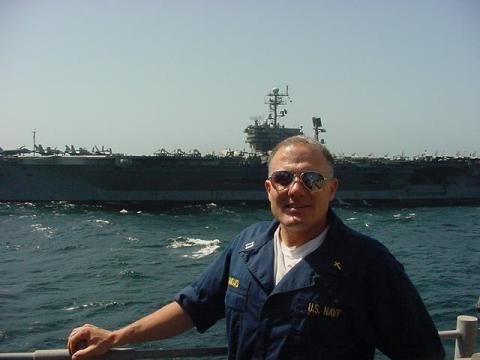
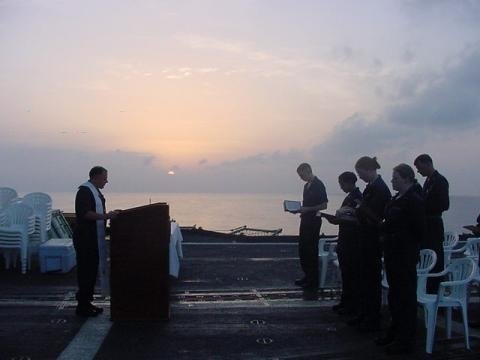
With FAST Marines in Bahrain 2004 or 2005, Easter Sunday 2002 aboard USS Hue City and aboard USS Hue City with USS John F Kennedy CV-67 in background.

While I value my service in the Army, because it is a big part of my life I echo President John F Kennedy who said “I can imagine no more rewarding a career. And any man who may be asked in this century what he did to make his life worthwhile, I think can respond with a good deal of pride and satisfaction: ‘I served in the United States Navy.'”

Until tomorrow,

Peace

Padre Steve+

2 Comments

Filed under Military

Red Lines… Syria and Sarin and United States Military Intervention: A Warning from History

chemical-weapons-490x326

Updated August 23rd 2013: Since this article was written back in April of this year the situation in Syria, not to mention the rest of the region has continued to get worse. This past week there appear to be credible new reports of the Syrian government using chemical weapons against their own people. It appears that the US and other powers are cautiously moving military forces into the region closer to Syria and that Lebanon, Turkey, Jordan, Iraq and Israel could be drawing closer to involvement in the war. Hundreds of thousands of Syrians of all ethnic groups and faiths are fleeing the country, primarily to Iraq, Jordan and Turkey. Lebanon is beginning to collapse and Israel launched air strikes into Lebanon after being hit by rockets fired by the Assad regime’s ally Hezbollah. This is all taking place as Egypt is perched at the abyss of civil war, and much of North Africa, the Horn of Africa and the Arabian Peninsula is in the throws of war, civil war or the collapse of any governmental order.

Needless to say it is not a good situation and the United States as well as many other governments and international bodies are trying to find a way through the eye of the needle to keep the multitude of problems from coalescing into a truly disastrous regional conflict which could effect the political, economic and military security of countries in the region and yes, like us on the far side of the globe. 

Carl von Clausewitz wrote: “No one starts a war–or rather, no one in his senses ought to do so–without first being clear in his mind what he intends to achieve by that war and how he intends to conduct it.” 

Personally I don’t think that there is anyone who has a clear understanding of what they think their country should do or accomplish in Syria of the Middle East. 

That being said here is what I wrote in April.

Peace

Padre Steve+
 

For the past number of weeks various news agencies and governments have reported the use of Sarin nerve gas by the Bashir Assad led Syrian government against rebels in that country’s civil war. The use of such weapons would be in defiance of international law and the law of war. The confirmed use of such weapons has been defined as a “red line” by the Obama administration. Israel, NATO and Turkey have all warned of the danger of the use of such weapons. Sarin has been banned and almost all nations have signed the 1993 treaty, but Syria is not one of them and reportedly has one of the largest stockpiles of Sarin in the world.

Today US Secretary of Defense Chuck Hagel stated:

“the U.S. intelligence community assesses with some degree of varying confidence that the Syrian regime has used chemical weapons on a small scale in Syria, specifically the chemical agent sarin.”

Last week both Britain and France wrote the Secretary General of the United Nations that they had evidence that the Syrian government had used chemical weapons against their own people. The Russians, a long term traditional ally of Syria have accused the West of attempting to “politicize” efforts to determine whether chemical weapons have been used and compared such efforts to the pre-Iraq War hunt for alleged Iraqi WMDs.

It is a dangerous time. The United States and NATO have deployed a number of Patriot Missile batteries to Turkey, which is harboring tens of thousands of Syrian refugees and a small number of US troops are in Jordan assisting with refugees and working with the Jordanians on other security matters. Lebanon is becoming involved in the conflict due to the activities of Hezbollah and Israel has stepped up its security along its border with both Syria and Lebanon. In Syria the civil war has claimed an estimated 70,000 lives with hundreds of thousands more displaced or living as refugees in other countries.

It is a human rights disaster and in a perfect world the international community would come together to right the situation. That will likely not happen. Instead I expect that hawks in the United States Congress and press and potentially Israel and its Washington lobby will force President Obama to intervene in the Syrian Civil War, perhaps unilaterally or as part of a relatively small coalition. Both Senators John McCain and Diane Feinstein made statements today on the need for intervention.

The fact is that as terrible as the situation is that an even worse situation will most likely develop should such a limited intervention take place to secure the chemical and possible biological weapons stored by the Syrian regime. Before Iraq I would have probably been on the bandwagon urging intervention, but I did learn something from Iraq. The fact is that though our intelligence agencies may believe that Sarin has been used in small quantities we need to be absolutely sure before any intervention is made. Some in the Defense Department are concerned because of what happened regarding supposedly good and solid intelligence. As such the Miguel Rodriquez of the White House Office of Legislative Affairs noted:

“Our intelligence community does assess with varying degrees of confidence that the Syrian regime has used chemical weapons on a small scale in Syria, specifically the chemical agent sarin. This assessment is based in part on physiological samples. Our standard of evidence must build on these intelligence assessments as we seek to establish credible and corroborated facts. …

“Given the stakes involved, and what we have learned from our own recent experiences, intelligence assessments alone are not sufficient — only credible and corroborated facts that provide us with some degree of certainty will guide our decision-making …”

I know what Sarin and other nerve gasses can do. I trained extensively as an Army Medical Service Corps Officer in NBC (Nuclear Chemical and Biological) weapon defense. The Soviets called Sarin GB and it was something that we trained to defend against during the Cold War. Back then we trained extensively to defend ourselves against chemical weapons, we practically lived in our MOPP (Mission Oriented Protective Posture) suits and protective masks. We trained to decontaminate personnel and equipment, we trained on knowing how such weapons were used, fallout patterns and half-life of the agents. We trained with atropine injectors in case we were contaminated and we learned that the triage of wounded was different when they were contaminated with chemical agents.

poison5

However, since 9-11 and our counter-insurgency efforts in Iraq and Afghanistan the general preparedness of most units in this type of warfare has been neglected because those wars did not require them.  With the exception of highly specialized units organized with the mission of Chemical, Biological and Nuclear weapon defense and response in the Continental United States few units are trained to the level that we were in the Cold War and even then most of us expected that if such weapons were used in the quantities amassed by the Soviets that most of us would die.

That being said we had damned well be absolutely sure that we know a lot more than we know now before committing a single American Soldier, Marine, Sailor or Airman to the mission of securing these weapons. Securing them in the existing environment in Syria would take tens of thousands of troops and based on the geography of Syria, the potential for Iranian intervention and the use of these WMDs against our troops by Syria should we intervene.

The question that I would ask anyone advocating military intervention now is “what is the cost in lives and treasure you are willing to make to do it? and what is your endgame?” The fact is that in two “low intensity” counterinsurgency campaigns we have lost over 6500 US troops killed and over 50,000 wounded not counting the hundreds of thousands afflicted with Traumatic Brain Injury and and PTSD. How many more would be sacrificed in a campaign in Syria and what will be the long term cost to them, their families, the military, national security and the economy?

The easy answer for the Hawks in Congress, the Beltway pundits and lobbyists is to send in the military. I think that it is a reflexive response now, send in the troops, damn the costs. That is easy for them to say because “the troops” are less than 1% of the US population. They can win elections without our vote. Sending in the troops looks strong and patriotic and people applaud when they see us on television doing a great job. But it is unrealistic. The military has been worn down by nearly 12 years of war. Equipment is wearing out, troops are tired, suicide rates skyrocketing, medical costs increasing. Add to this the fact that operational units are being squeezed by the budget fiasco forced by Congress in 2011 known as the sequester. But few will say this and that is as close to criminal negligence as one can get on the part of those advocating intervention in Syria.

I am offended by the knee jerk reactions of Congressmen and Senators as well as their enablers in the media and the beltway who seem to be advocating US involvement in yet another civil war in a Middle Eastern country. What is the legal basis for such an invasion or intervention? What is the human cost and what is the economic cost and who pays the bill?

Smedley Butler, Marine Corps Major General and two time Medal of Honor winner said it well when writing about the costs of war in his book War is a Racket following World War One, which by the way was the last time that US troops faced Chemical weapons:

“But the soldier pays the biggest part of this bill.

If you don’t believe this, visit the American cemeteries on the battlefields abroad. Or visit  any of the veterans’ hospitals in the United States….I have visited eighteen government hospitals for veterans. In them are about 50,000 destroyed men- men who were the pick of the nation eighteen years ago. The very able chief surgeon at the government hospital in Milwaukee, where there are 3,800 of the living dead, told me that mortality among veterans is three times as great as among those who stayed home.”

In another part of his book Butler wrote:

“In the government hospital at Marion, Indiana 1,800 of these boys are in pens! Five hundred of them in a barracks with steel bars and wires all around the outside of the buildings and on the porches. These have already been mentally destroyed. These boys don’t even look like human beings. Oh, the looks on their faces! Physically they are in good shape but mentally they are gone.” 

There are thousands and thousands of these cases and more and more are coming in all the time…

That’s a part of the bill. So much for the dead-they have paid their part of the war profits. So much for the mentally and physically wounded- they are paying now with their share of the war profits. But others paid with the heartbreaks when they tore themselves away for their firesides and their families to don the uniform of Uncle Sam- on which a profit had been made….”

Before any military actions are taken against Syria someone had better ask the hard questions that were so buried and ignored in the build up to the Iraq War. What is the cost? What is the legal basis? What is the endgame? If those questions cannot be answered in a satisfactory manner then not no American military forces be committed and not a dime spent.

Yes the situation in Syria is a tragedy, but intervention would likely make it even more so. As terrible as this conflict is, it is a Syrian affair. Yes we will have to deal with whatever comes out of it, but is American military intervention to secure the Syrian Chemical weapons the wise course of action, especially in light of how much that we do not know?

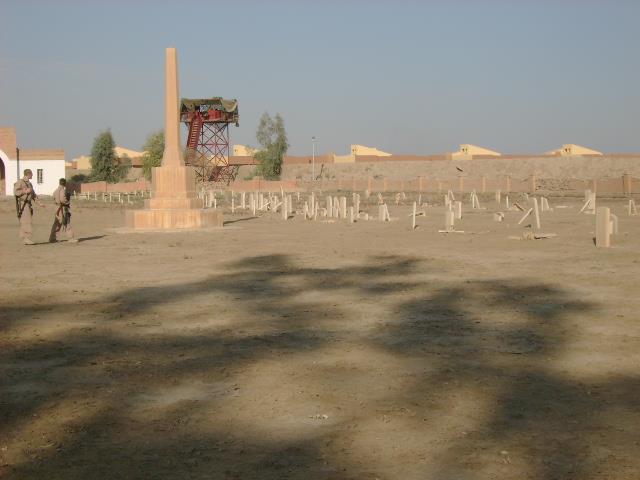
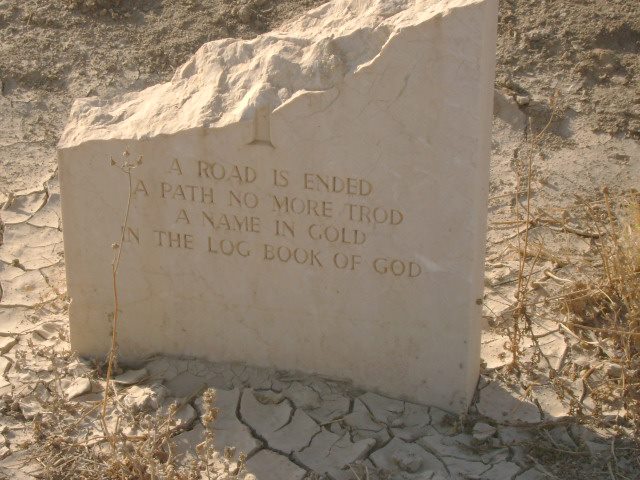
How many more coffins containing the bodies of US military personnel need to be shipped back from yet another war? Oh wait, I’ll bet you didn’t know that the bodies of soldiers killed by chemical agents are contaminated and most would not come home because of that risk. Somehow I don’t think that a military cemetery in Syria would be as well maintained as those in France, Belgium and Luxembourg where so many Americans lay in final repose following the First and Second World War. I know this because I have seen the British military cemetery in Habbaniyah Iraq.

429423_10151366999012059_698864942_n

Yes this is a big deal for all of us. It is much too important to be made without a full accounting before a single American Soldier, Marine, Sailor or Airman is committed to action.

Peace

Padre Steve+

1 Comment

Filed under History, iraq,afghanistan, middle east, national security, News and current events

The Terrible Costs of Not Learning the Lessons of War: Vietnam, Iraq Afghanistan

481801_10151367001287059_1003164983_nIn 1986 a Army Major working at the Office of the Secretary of Defense wrote a book that was a history of the US Army in the Vietnam War, and as it turns out to be a work of military prophecy. The young officer, Andrew Krepinevich wrote his book, The Army in Vietnam: 

“In the absence of a national security structural framework that address the interdepartmental obligations associated with FID operations, and considering the lack of incentives for organizational change within the Army, it is presumptuous for the political leadership to believe that the Army (or the military) alone will develop the capability to successfully execute U.S. security policy in Third World countries threatened by insurgency. This being the case, America’s Vietnam experience takes on a new and tragic light. For in spite of its anguish in Vietnam, the Army has learned little of value. Yet the nation’s policy makers have endorsed the service’s misconceptions derived from the war while contemplating an increased role in Third World low-intensity conflicts. This represents a very dangerous mixture that in the end may see the Army again attempting to fight a conventional war against a very unconventional enemy.” (The Army in Vietnam, Andrew F Krepinevich Jr., The Johns Hopkins University Press, Baltimore and London, 1986. p.275)

Krepinevich retired from the Army in the 1990s as a Lieutenant Colonel and has been busy in the world of think tanks and national security policy. Unlike his book, which is probably one of the best accounts of the Vietnam War and as I said before a book that is somewhat prophetic his later work has not been as well received. He has his critics. But despite that criticism once cannot deny the accuracy of his predictions concerning the Army’s subsequent operations in low intensity, or counter-insurgency campaigns beginning in Somalia and encompassing the wars in Iraq and Afghanistan.

If Krepinevich had been alone in his criticism, or his book not been widely read one might excuse policy makers of the 1990s and 2000s who sent the Army and the military into counterinsurgency campaigns involving massive numbers of troops and the commitment of blood and treasure that had practically no value to the national security of the United States. Instead thousands of American and Allied lives were sacrificed, tens of thousands wounded and one nation, Iraq that had nothing to do with the attacks of 9-11-2001 left devastated and crippled empowering Iran the sworn enemy of the United States no regional rival.

n671902058_1153793_4043

One cannot say that the Iraq war was worth the lives and treasure spent to cover the lies and hubris of the Bush Administration. Nor can one say that the effort to change the tribal structure of the fiercely independent Afghan peoples after driving Al Qaeda from that “Graveyard of Empires” been worth the expenditure of so many American lives and treasure. In fact the wars in Iraq and Afghanistan damaged the United States in more ways than their proponents could every admit. The military, now drained by years of war is hamstrung and will be hard pressed to meet legitimate threats to our national security around the world because of the vast amounts of blood and treasure expended in these wars.

In 1920 T.E. Lawrence wrote about the follies of the British government in Mesopotamia, what is now Iraq. His words could have been written about the Bush Administrations 2003 war in Iraq. Lawrence wrote in a letter to the Sunday Times:

The people of England have been led in Mesopotamia into a trap from which it will be hard to escape with dignity and honour. They have been tricked into it by a steady withholding of information. The Bagdad communiqués are belated, insincere, incomplete. Things have been far worse than we have been told, our administration more bloody and inefficient than the public knows. It is a disgrace to our imperial record, and may soon be too inflamed for any ordinary cure. We are to-day not far from a disaster.”

Krepinevech, like Lawrence before him was right, but he was not the only one. in 1993 Ronald H Spector in his book wrote:

“Americans dislike problems without solutions. Almost from the beginning of the U.S. involvement in Vietnam they have attempted to find “lessons” in the war. The controversy about the appropriate lessons to be learned continues with the same vigor and lack of coherence as the debates about the war itself.

Lessons are controversial and fleeting but lessons long. The memories of 1968 have remained and served to influence attitudes and expectations well into the 1990s. The ghosts of Vietnam haunted all sides of the recent deliberations about the Gulf War. In the wake of that war, President Bush hastened to announce that “we have kicked the Vietnam syndrome.” 

Doubtless many Americans would like to agree. It is easier to think of the Vietnam War as a strange aberration, a departure from the “normal” kind of war, like World War II and the recent war in the Gulf, where the course of military operations were purposeful and understandable and the results relatively clear cut. Yet the Vietnam War may be less of an aberration than an example of a more common and older type of warfare, reaching back before the Thirty Years’ War and including World War I. A type of warfare in which a decision is long delayed, the purposes of the fighting become unclear, the casualties mount, and the conflict acquires a momentum of its own. In a world which had recently been made safe for conventional, regional and ethnic wars, Vietnam rather than World War II may be the pattern of the future.” (After Tet: The Bloodiest Year in Vietnam, Ronald H Spector Vintage Books, a division of Random House, New York 1993 pp. 315-316

After serving in Iraq with the advisors to the Iraqi 7th and 1st Divisions and 2nd Border Brigade in 2007-2008 and seeing the results of the great misadventure brought upon our nation and Iraq by the Bush administration I cannot help but recognize how disastrous the wars unleashed after 9-11-2001 have been. I have lost friends and comrades in them, I see the human costs in our Navy hospitals every day. I have told too many If they had actually accomplished something it would be another matter. But the human, economic, strategic and even more importantly the moral costs have been so disastrous to our nation to make the loss of the Twin Towers and the victims of 9-11-2001 pale in significance.

sch0-017

The sad thing is that these wars have gone on so long that many of the young Marines and Soldiers fighting them have no understanding of why they deploy and deploy to Iraq and then Afghanistan, and they are far more knowledgeable than the population at large, many of whom are untouched by the personal costs of the war. We as Americans love to say “we support the troops” but most don’t even know one. For the most part big bases from where our troops train and deploy are far from where most Americans live and might as well be on a different planet. We are invisible to most of the country, except when they see a color guard at a sporting event or bump into one of us in uniform at an airport.

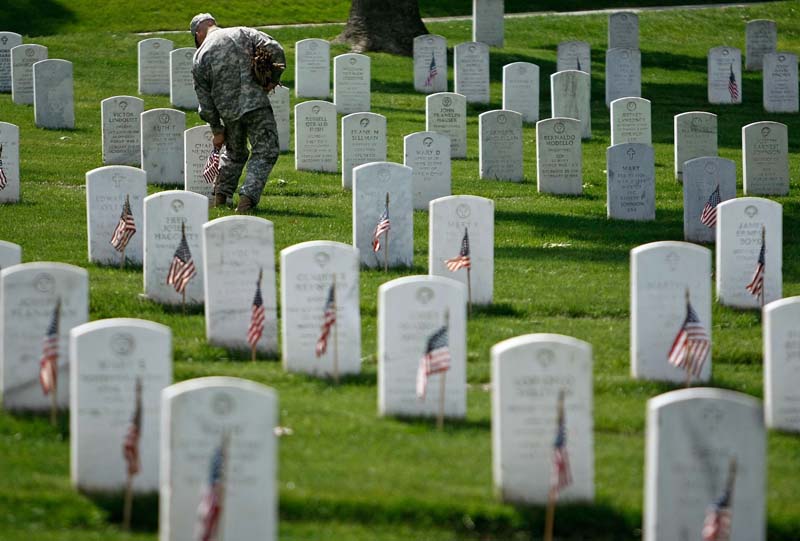
3rd Infantry Places American Flags At The Graves Of U.S. Soldiers

As a result the sacrifices that the under 1% of the population that serve in the military and fight these wars are really not understood, or fully appreciated. I don’t think that this is so much the fault of the people. but rather the product of the post Vietnam era and the “Peace Dividend” of the post Cold War era when the military was reduced, the draft ended and bases in major populations centers closed.

I have written about the effects of these kinds of wars before, not just Iraq or Afghanistan. You can see some of that writing the following articles on this site. They are not comprehensive but they do tell some of the tale of where we have been since 9-11-2001. 

The Anomaly of Operation Desert Storm and Its Consequences Today

Why History Matters: The Disastrous Effects of Long Insurgency Campaigns on the Nations that Wage them and the Armies that Fight Them 

Irrelevant Incidents and Un-winnable Wars: Thoughts on Returning from War 5 Years Later

 349: Active Duty Military Suicides Hit New High in 2012

The Fallacy of “Complete” Victory and the Seeds of Perpetual War and the Way to Peace

Thoughts on Choosing a President and the Results of Not Getting it Right: Lieutenant General Harold Moore at West Point

War is a Racket: Remembering Major General Smedley Butler USMC and Why He Matters

Armed Forces Day 2012: The Disconnection of the Military and Society and the Terrible Result

Failing to Learn from History: The Lesson of the First Anglo-Afghan War and Questions about the US-NATO Campaign

The War that Cannot Be Won: Afghanistan 2012

The 9-11 Generation: The Few

The “Comfortable” Experts and the Real Soldiers

Adjusting Strategy to Reality

No Illusions: The Cost of the Long War and its Potential impact on the United States

The sad thing is that we don’t learn from history. Krepinevech, Spector and Lawrence could have written what they wrote yesterday. Instead they all wrote many years before the 9-11 attacks and our military response to them. As a historian, a career officer and a chaplain I cannot help but think of the terrible costs of such wars and how they do not do anything to make us more secure. The fact is that we do not learn from history much to our detriment despite the great human, spiritual, moral and economic effects of such wars.

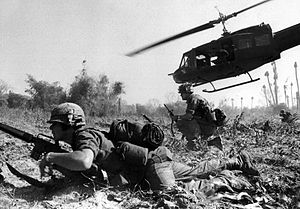
300px-Battle_of_Ia_Drang_Valley-1

What is the cost of war? what is the bill? Major General Smedley Butler wrote: “This bill renders a horrible accounting. Newly placed gravestones. Mangled bodies. Shattered minds. Broken hearts and homes. Economic instability. Depression and all of its attendant miseries. Back -breaking taxation for generations and generations. For a great many years as a soldier I had a suspicion that war was a racket; not only until I retired to civilian life did I fully realize it….”

Peace

Padre Steve+
Leave a comment

Filed under Foreign Policy, History, iraq,afghanistan, Military, national security, News and current events

Capital of the World: The Race to Host the United Nations: A TLC Book Tour Review

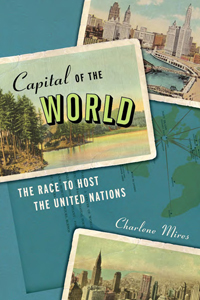
Capital of the World200

Professor Charlene Mires’ Capital of the World: The Race to Host the United Nations, NYU Press 4 March 2013 is the fascinating story of the competition by numerous cities in the United States to become the host of the United Nations.

Professor Mires’ account of the story of how the UN came to be located in New York City, over the objections of many members is highly informative, readable and enjoyable. It is about an America that once welcomed engagement with the world in the heady days following the Second World War before signs sponsored by the John Birth Society and others popped up across the country demanding “Get us out of the United Nations.”

Mires traces the stories of a number of major cities including San Francisco, Chicago, St Louis, New Orleans, Philadelphia and Detroit as well as the Rapid City South Dakota, Sault Ste. Marie Michigan, Niagara Falls New York, Stillwater Oklahoma and a host of other cities and towns that sought to host the UN.

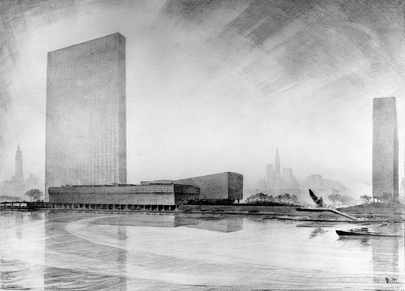
36640

The story which includes the attempts of various individuals, politicians and civic groups to lobby the UN to become its headquarters and thus the storied “Capital of the World” is fascinating. Though the campaign to host the UN happened over 60 years ago and we know the history of its location in New York the back story to how it came to located there is worth the read. Professor Mires tells the story of how the United States became the chosen nation of the location of the UN based on the history of Europe and questions of the emerging Cold War.

1326

What I found interesting was how the members of the UN finally settled on New York, despite the fact that many did not wish the UN to be in the United States and if it was not to be in a major city. The story of how San Francisco, a city close to my heart which hosted the inaugural meeting of the UN in 1945 was cut out of the running when a UN committee decided that no locations in the western part of the United States would be considered. That decision, which was based more on European objections to the geographic location was difficult to read. I cannot think of a better city and thankfully the mistake was rectified by the late Gene Roddenberry in Star Trek when the United Federation of Planets located Starfleet Headquarters and Starfleet Academy in San Francisco.

0aaunitednation

That aside the story that Professor Mires paints of how the committee and the UN decided on New York is compelling. The process which included geographic, political and social concerns. Politically the influence of the American government should the location be too close to Washington DC prompted conferees to seek a location at least 300 miles from Washington. The real effects of Racism and Jim Crow laws eliminated all Southern cities and towns south of the Mason Dixon Line from the competition. Issues regarding crime, graft and corruption eliminated Philadelphia as well as other cities leading to the eventual selection of New York as the location for the nascent United Nations.

Overall I enjoyed the book. It was a quick, informative and enjoyable read. As a person who genuinely appreciates the work and promise of the UN, despite its shortcomings and failures I found it a story that caught my imagination and made me wonder the “what if” scenarios and what might have been if…

To me those are fascinating questions. What would have happened had the UN been located in San Francisco? Could it have led to the emergence of a stronger and move toward the Pacific Rim becoming the economic and political center of the world? Could the location of the UN in a place like Rapid City brought Middle America more global perspective and perhaps a larger population and economy? Could the selection of a Southern city led to a quicker end to Jim Crow and beginning of equal rights?

Those are questions for those that write alternative histories. They are speculation. Professor Mires work made me think of all of the possibilities that did not happen.

images-30

I recommend this book for those interested in the development of the United States in the late 1940s and early 1950s as well as those that like to have their eyes opened to possibilities that they never before had imagined. Perhaps in an alternate timeline San Francisco not only has the Giants, but the United Nations. I would like to visit that city.

tlc tour host

Peace

Padre Steve+

11 Comments

Filed under History

“To Remain Oneself” A Review of “Prague Winter” by Madeline Albright

9780062030344_p0_v3_s260x420

“The main thing is to remain oneself,under any circumstances; that was and is our common purpose.” From an unpublished novel by Josef Korbel, the father of Madeline Albright

tlc tour host

Prague Winter: A Personal Story of Remembrance and War 1937-1948, Harper Collins Books New York, 2012.

Former Secretary of State Madeline Albright’s book Prague Spring provides an important look at the history of Czechoslovakia during the period between 1937 and 1948. It also provides the reader a succinct history of the Czech people and nation throughout the history of Europe going back to Charles IV (1316-1378) King Wenceslas, the pre-reformation martyr John Hus and revolutionary leader Jan Zizka.

Albright is the daughter of one of Czechoslovakia’s most distinguished diplomats and advocates for Czech independence, democracy, religious and ethnic pluralism. Her father, Josef Korbel was raised during the latter years of Bohemia and Moravia’s subjugation under the rule of the Austro-Hungarian Empire. He would become a diplomat in the years just prior to the dismemberment and occupation of his homeland by Nazi Germany. Serving as a press-attache at the Czech embassy in Belgrade Yugoslavia he and his family, including his young daughter, the future Secretary of State were forced into exile in Britain.

The book is a history written from the very personal perspective of a woman who when most of the events transpired was a child who experienced her first memories of life as an exile. She would not be able to return to her country of origin until after the fall of Soviet Union and the collapse of the Warsaw Pact.

The book fills a void for many Americans whose understanding of European history is limited to the popular coverage of British monarchy or the barbarity of the Hitler regime. The book provides a look at the relationships of the men who made Czechoslovakia beginning with Tomas Masaryk, the founder of the newly independent republic in 1918. Masaryk stressed that “love of nation does not imply hatred toward another.” In an age where xenophobic nationalism and race hatred was a staple of politics in much of Europe Masaryk emphasized tolerance, good relations between religions, peoples, and the equality of religion. Albright notes that the solution of Masaryk to the ways that the settled order of civilization, political order, religious convictions and economic status were under attack was “to embrace religion without the straightjacket of the Church, social revolution without the excesses of Bolshevism, and national pride without bigotry.”

Masaryk would die shortly before the deal cut by the leaders of Britain, France, Italy and Germany at Munich to dismember Czechoslovakia in 1938. His successor, Edvard Benes would be left to deal with a situation where despite the strengths of his nation would be abandoned by the leaders of nations that he, and many of his countrymen felt abandoned by the world. That was the world that Madeline Albright came to age in.

Albright would grow up to see her father working on behalf of Benes and the exiled Czech government during the war, and the post war struggles in the nation between Democrats of various parties against the Communist Party led by Klement Gottwald supported by the occupying Soviet Red Army.

Her narrative provides a very effective and history of the period meshed with the experiences of her family, both in exile and those who remained. Her family, of Jewish origin, though largely secular and Czech in outlook faced deportation to the Theresienstadt Concentration camp and extermination camps and many died. While in England her parents converted to Catholicism and she was baptized into the Catholic Church. Her own story is fascinating, though remaining a Christian in the Episcopal Church she honors her family who died as Jews at the hand of the Nazis and her own countrymen.

The book provides a badly needed narrative of a small but critical country which for much of the 20th Century was ground zero of the struggle between Democracy and Totalitarianism. It does not seek to make heroes of those that were not, but it does seek to understand the dilemmas faced by people whose existence is threatened by larger neighbors and how the experience of victimhood can lead to retribution and revenge. It points out the dangers of ideologues who have no other agenda but their own and the crushing of any opposition. Albright’s father, Josef would again have to go into exile following the Communist takeover of his country. His daughter, raised in that exile would go on to become an American citizen and rise to the pinnacle of the diplomatic world, as Ambassador to the United Nations and Secretary of State, the first woman to become Secretary of State.

She touches on her own connections to her family’s Holocaust experiences in this book, though they are secondary to the history of Czechoslovakia before, during and after the Second World War and the work of her father in that critical period.

I have always admired Secretary Albright and has the honor of meeting her and conversing with her on a flight between Madrid and London in March of 2005. I was traveling in connection with a trip to visit my Marines in Spain, Bahrain and Scotland and she, accompanied by former Senator Gary Hart were traveling between Madrid and London for a security conference on the anniversary of the March 11th 2004 Islamic terrorist bombings in Madrid. She was a most gracious woman and interested in what I was doing. I will not forget that trip.

In reading it I felt that I began to feel that I was beginning to know and understand men who were instrumental in history but always have been regulated to bit parts by American and British histories of the period. It is hard to imagine what those men placed in such and unenviable position had to endure, particularly the tragic story of Jan Masaryk, the son of Tomas Masaryk who would serve as foreign minister under Benes before and after the war and be murdered by the Communists shortly after the takeover.

23453_404297257058_7628878_n

I think that the message that I took away from the book was the message penned by Secretary Albright’s father Josef in his unpublished novel: “The main thing is to remain oneself,under any circumstances…” I believe that in an age where political, racial and religious ideologues of various persuasions seek to divide the peoples of nations against each other it is an important work. What the Nazi leaders of the German minority in the country led by Konrad Henlein did was to divide and destroy a people who had lived in peaceful co-existence for centuries. Their actions led to the Nazi seizure and dismemberment of Czechoslovakia. Following the war 9/10ths of the pre-war German population of the country would be forced out by the Czechs and Slovaks now under the control of Soviet agents, something that occurred throughout Eastern Europe following the war.

To remain oneself, under any circumstances.

I highly recommend this book. Secretary Albright has written a fitting companion to the other histories of the period that fills a critical gap for American readers about the history of Czechoslovakia.

Peace

Padre Steve+

3 Comments

Filed under books and literature, History