Tag Archives: desegrigation of armed forces

Fighting Prejudice on the Western Front 1918

800px-Harlem_Hell_Fighters

They were Americans who in spite of prejudice and in spite of intolerance and persecution loved their country. They were men who labored under the most difficult circumstance to show all Americans and the world that they were worthy of being soldiers and citizens of the United States of America.

They were all volunteers and many of them were veteran soldiers had already served full careers on the Great Plains. They were the Buffalo Soldiers, and when the United States entered the First World War, they were not wanted. Instead, the veterans  were left on the frontier and a new generation of African American draftees and volunteers became the nucleus of two new infantry divisions, the 92nd and 93rd.

lossy-page1-795px-Negro_Troops_in_France._Picture_shows_part_of_the_15th_Regiment_Infantry_New_York_National_Guard_or_._._._-_NARA_-_533488.tif


However in the beginning they too were kept out of action. These men were initially regulated to doing labor service behind the lines and in the United States. But finally, the protests of organizations such as the NAACP and men like W.E.B.DuBois and Phillip Randolph forced the War Department to reconsider the second class status of these men and form them into combat units.
hqdefault1a

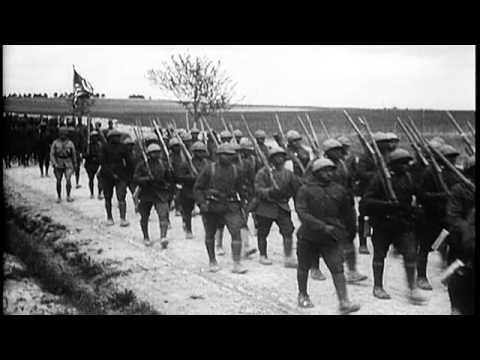
Despite this the leadership of the AEF, or the American Expeditionary Force of General John Pershing refused to allow these divisions to serve under American command. Somehow the concept of such men serving alongside White Americans in the “War to end All War” was offensive to the high command.

Instead these divisions were broken up and the regiments sent to serve out of American areas on the Western Front. The regiments of the 93rd Division were attached to French divisions. The 369th “Harlem Hellfighters” were first assigned to the French 16th Division and then to the 161st Division.

The 370th “Black Devils” were detailed to the French 26th Division and the 371st and 372nd Infantry Regiments were assigned to the French 157th (Colonial) Division, which was also known as the Red Hand Division.

These units performed with distinction. The 371st was awarded the French Croix de Guerre and Légion d’honneur and Corporal Freddie Stowers of the 1st Battalion 371st was the only African American awarded the Congressional Medal of Honor in the First World War. The 372nd was also awarded the Croix de Guerre and Légion d’honneur for its service with the 157th Division.

6ASAF00Z

The 157th (Colonial) Division had suffered badly during the war and been decimated in the unrelenting assaults in the trench warfare of the Western Front. It was reconstituted in 1918 with one French Regiment and two American regiments, the Negro 371st and 372nd Infantry. On July 4th 1918 the commanding General of the French 157th Division, General Mariano Goybet issued the following statement:

“It is striking demonstration of the long standing and blood-cemented friendship which binds together our two great nations. The sons of the soldiers of Lafayette greet the sons of the soldiers of George Washington who have come over to fight as in 1776, in a new and greater way of independence. The same success which followed the glorious fights for the cause of liberty is sure to crown our common effort now and bring about the final victory of right and justice over barbarity and oppression.”

220px-Red_Hand_Division

While many white American soldiers depreciated their French hosts and attempted to sow the seeds of their own racial prejudice against the black soldiers among the French, Southerners in particular warned the French of  the “black rapist beasts.” However the French experience of American blacks was far different than the often scornful treatment that they received from white American soldiers.

“Soldiers from the four regiments that served directly with the French Army attested to the willingness of the French to let men fight and to honor them for their achievements. Social interactions with French civilians- and white southern soldiers’ reactions to them- also highlighted crucial differences between the two societies. Unlike white soldiers, African Americans did not complain about high prices in French stores. Instead they focused on the fact that “they were welcomed” by every shopkeeper that they encountered.”

Official and unofficial efforts by those in the Army command and individual soldiers to stigmatize them and to try to force the French into applying Jim Crow to laws and attitudes backfired. Villages now expressed a preference for black over white American troops. “Take back these soldiers and send us some real Americans, black Americans,” wrote one village mayor after a group of rowdy white Americans disrupted the town.”

Stowers

The citation for Corporal Stowers award of the Medal of Honor reads as follows:

Corporal Stowers, distinguished himself by exceptional heroism on September 28, 1918 while serving as a squad leader in Company C, 371st Infantry Regiment, 93d Division. His company was the lead company during the attack on Hill 188, Champagne Marne Sector, France, during World War I. A few minutes after the attack began, the enemy ceased firing and began climbing up onto the parapets of the trenches, holding up their arms as if wishing to surrender. The enemy’s actions caused the American forces to cease fire and to come out into the open. As the company started forward and when within about 100 meters of the trench line, the enemy jumped back into their trenches and greeted Corporal Stowers’ company with interlocking bands of machine gun fire and mortar fire causing well over fifty percent casualties. Faced with incredible enemy resistance, Corporal Stowers took charge, setting such a courageous example of personal bravery and leadership that he inspired his men to follow him in the attack. With extraordinary heroism and complete disregard of personal danger under devastating fire, he crawled forward leading his squad toward an enemy machine gun nest, which was causing heavy casualties to his company. After fierce fighting, the machine gun position was destroyed and the enemy soldiers were killed. Displaying great courage and intrepidity Corporal Stowers continued to press the attack against a determined enemy. While crawling forward and urging his men to continue the attack on a second trench line, he was gravely wounded by machine gun fire. Although Corporal Stowers was mortally wounded, he pressed forward, urging on the members of his squad, until he died. Inspired by the heroism and display of bravery of Corporal Stowers, his company continued the attack against incredible odds, contributing to the capture of Hill 188 and causing heavy enemy casualties. Corporal Stowers’ conspicuous gallantry, extraordinary heroism, and supreme devotion to his men were well above and beyond the call of duty, follow the finest traditions of military service, and reflect the utmost credit on him and the United States Army.

Corporal Stowers is buried at the Meuse-Argonne American Cemetery. The award of the Medal of Honor was not made until 1991 when President George H. W. Bush presented it to Stowers’ two surviving sisters.

The contrast between the American treatment of its own soldiers and that of the French in the First World War is striking. The fact that it took President Harry S. Truman to integrate the U.S. Military in 1948 is also striking. African Americans had served in the Civil War, on the Great Plains, in Cuba and in both the European and Pacific Theaters of Operation in the Second World War and were treated as less than fully human by many Americans.

770px-369th_15th_New_York

Men of the 371st and 372nd Infantry Regiments of the French 157th Division Awarded the Croix d’Guerre

Even after President Truman desegregated the armed forces in 1948, African Americans, as well as other racial minorities, women and gays have faced very real discrimination. The military continues to make great strides, and while overt racist acts and other types of discrimination are outlawed, racism still remains a part of American life.

Today things have changed, and that in large part is due to the unselfish sacrifice in the face of hatred and discrimination of the men of the USCT and the State Black Regiments like the 54th Massachusetts and the Louisiana Home Guards who blazed a way to freedom for so many. Those who followed them as Buffalo Soldiers and volunteers during the World Wars continued to be trail blazers in the struggle for equal rights. A white soldier who served with the 49th Massachusetts wrote “all honor to our negro soldiers. They deserve citizenship. They will secure it! There would be much suffering in what he termed “the transition state” but a “nation is not born without pangs.”

Unfortunately racial prejudice is still exists in the United States. In spite of all the advances that we have made racism still casts an ugly cloud over our country. Despite the sacrifices of the Buffalo Soldiers, the leaders of the Civil Rights movement and others there are some people who like the leaders of the AEF in 1917 and 1918 cannot stomach having blacks as equals or God forbid in actual leadership roles in this country.

A good friend of mine who is a retired military officer, a white man, an evangelical Christian raised in Georgia who graduated from an elite military school in the South, who is a proponent of racial equality has told me that the problem that many white people in the South have with President Obama is that “he doesn’t know his place.” Yes racism is still real and rears its ugly head all too often.

Peace

Padre Steve+


1 Comment

Filed under civil rights, civil war, History, leadership, Military, Political Commentary

Character & Sacrifice: Generals Benjamin O. Davis Sr & Jr.

Benjamin_o_davis

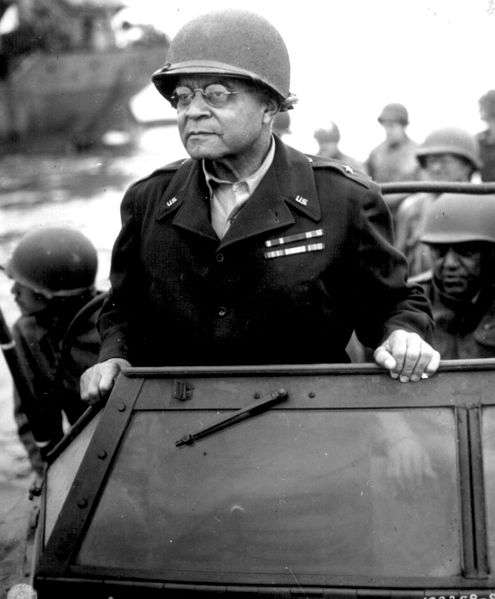
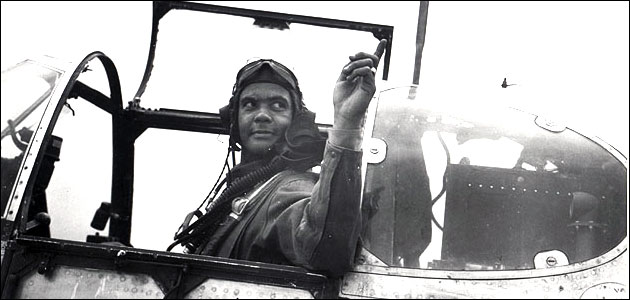
Brigadier General Benjamin O Davis in France 1944

“I have a dream that my four little children will one day live in a nation where they will not be judged by the color of their skin, but by the content of their character.” Dr. Martin Luther King, Jr.

American History would not be the same without the life, work and prophetic ministry of Dr. Martin Luther King Jr. Dr. King was born in a time when most of the country was segregated when “separate by equal” was simply façade to cover the lie that in no way did African Americans have equal rights or privileges in the United States.

Dr King was born less than 60 years after the secession of the Southern states from the Union and the beginning of the American Civil War. Though that blood conflict had freed the slaves it had not freed African Americans from prejudice, violence and discrimination.  When Dr. King began his ministry and was thrust upon the national stage as the strongest voice for equal rights and protections for blacks the discrimination and violence directed towards blacks was a very real and present reality in much of the United States.

However there were cracks beginning to appear in the great wall of segregation in the years preceding Dr. King’s ascent to leadership as the moral voice of the country in the matter of racial equality. In baseball Jackie Robinson became the first African American player in Major League Baseball opening a door for others who would become legends of the game as well as help white America begin its slow acceptance of blacks in sports and the workplace.

Likewise the contributions of a father and son Brigadier General Benjamin O. Davis Sr. and General Benjamin O. Davis Jr. were advancing the cause of blacks in the military which eventually led to the desegregation of the military in 1948.  The impact of these two men cannot be underestimated for they were trailblazers who by their lives, professionalism and character blazed a trail for African Americans in the military as well as society.

Benjamin O. Davis Sr. was a student at Howard University when the USS Maine exploded and sank in Havana Harbor.  He volunteered for service and was commissioned as a temporary 1st Lieutenant in the 8th United States Volunteer Infantry. He was mustered out of service in 1899 but enlisted as a private in the 9th United States Cavalry one of the original Buffalo Soldiers regiments.  He enlisted as the unit clerk of I troop of 3rd Squadron and was promoted to be the squadron Sergeant Major.

Davis was commissioned while the unit was deployed to the Philippines and assigned to the 10th Cavalry.  He was assigned in various positions throughout his career including command, staff and instruction duties including as Professor of Military Science and Tactics in various ROTC programs.  He reached the rank of rank of temporary Lieutenant Colonel and Squadron Commander of 3rd and later 1st Squadron 9th Cavalry from 1917-1920 in the Philippines before reverting to the rank of Captain on his return as part of the post World War I reduction in force.

Davis continued to serve during the inter-war years and assumed command of the 369th Infantry Regiment New York National Guard in 1938. He was promoted to Brigadier General on 25 October 1940 becoming the first African American elevated to that rank in the United States Army and was assigned as Commander 4th Brigade 2nd Cavalry Division. He later served in various staff positions at the War Department and in France and was instrumental in the integration of the U.S. Military. He retired after 50 years service in 1948 in a public ceremony with President Harry S. Truman presiding. He was a member of the American Battle Monuments Commission from 1953-1961 and died in 1970.

davis-3

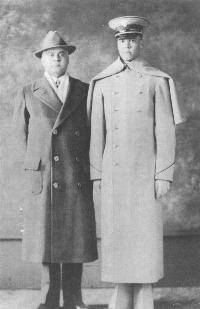
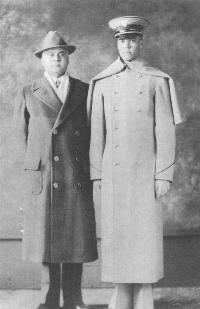
Colonel Davis with his son Cadet Benjamin O Davis Jr.

His son Benjamin O. Davis Jr. was appointed to West Point in 1932.  He graduated and was commissioned in 1936 graduating 35 out of 278, the fourth African American graduate of West Point. During his time at the Academy most of his classmates shunned him and he never had a roommate.  Despite this he maintained a dogged determination to succeed.  The Academy yearbook made this comment about him:

“The courage, tenacity, and intelligence with which he conquered a problem incomparably more difficult than plebe year won for him the sincere admiration of his classmates, and his single-minded determination to continue in his chosen career cannot fail to inspire respect wherever fortune may lead him.”

He was denied entrance to the Army Air Corps because of his race and assigned to the Infantry first to the all lack 24th Infantry Regiment at Ft Benning where he was not allowed in the Officers Club due to his race. Upon his commissioning the Regular Army had just 2 African American Line Officers, 2nd Lieutenant Davis and his father Colonel Davis.

After completion of Infantry School he was assigned as an instructor of Military Science and Tactics and the Tuskegee Institute.  In 1941 the Roosevelt Administration moved to create a black flying unit and Captain Davis was assigned to the first black class at the Tuskegee Army Air Field and in March 1942 one his wings as one of the first 5 African Americans to complete flight training.

In July 1942 he was assigned as Commanding Officer of the 99th Pursuit Squadron which served in North Africa and Sicily flying Curtiss P-40 Warhawks. He was recalled to the United States in September 1943 to command the 332nd Fighter Group. However some senior officers attempted to prevent other black squadrons from serving in combat alleging that the 99th had performed poorly in combat. Davis defended his squadron and General George Marshall ordered an inquiry which showed that the 99th was comparable to white squadrons in combat and during a 2 day period over the Anzio beachhead the pilots of the 99th shot down 12 German aircraft.

davis Library of congress   photo public domain

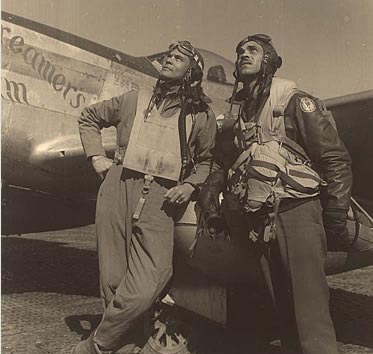
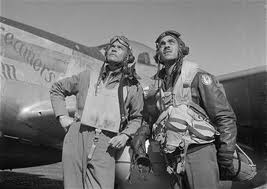
Colonel Benjamin O Davis Jr (left) with one of his Tuskegee Airmen

Davis took the 332nd to Italy where they transitioned to P-47 Thunderbolts and in July 1944 to the P-51 Mustang which were marked with a signature red tail. During the war, the units commanded by Davis flew more than 15,000 sorties, shot down 111 enemy planes, and destroyed or damaged 273 on the ground at a cost of 66 of their own planes.

Tuskegee_01


Their record against the Luftwaffe was outstanding and their protection of the bombers that they escorted was superb with very few bombers lost while escorted by them men that the Luftwaffe nicknamed the Schwarze Vogelmenschen and the Allies the Red-Tailed Angels or simply the Redtails. Davis led his Tuskegee Airmen to glory in the war and their performance in combat helped break the color barrier in the U.S. Military which was ended in 1948 when President Truman signed an executive order to end the segregation of the military. Colonel Davis helped draft the Air Force plan and the Air Force was the first of the services to fully desegregate.

ltgen Benjamindavis

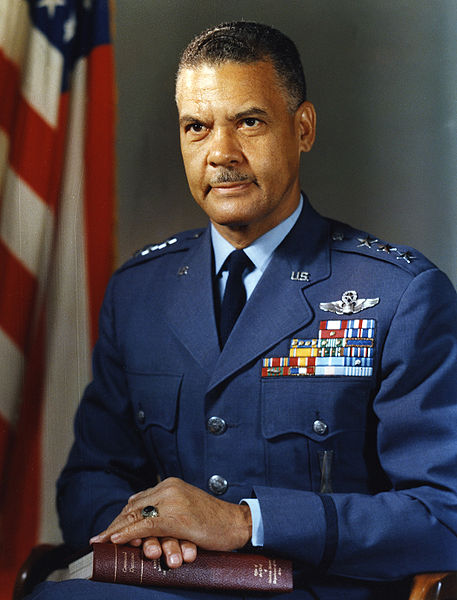
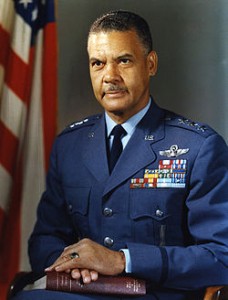
Lieutenant General Benjamin O Davis Jr

Colonel Davis transitioned to jets and let the 51st Fighter Interceptor Wing against Chinese Communist MIGs in the Korean War.  He was promoted to Brigadier General in 1954 and served in numerous command and staff positions. He retired in 1970 with the rank of Lieutenant General and was advanced to General while retired by President Clinton in 1998.  He died in 2002 at the age of 89.

The legacy of Benjamin O. Davis Senior and Benjamin O. Davis Junior is a testament to their character, courage and devotion to the United States of America. They helped pioneer the way for officers such as General Colin Powell and helped change this country for the better.  During times when discrimination was legal they overcame obstacles that would have challenged lesser men.  Benjamin O. Davis Junior remarked:

“My own opinion was that blacks could best overcome racist attitudes through achievements, even though those achievements had to take place within the hateful environment of segregation.”

Such men epitomize the selfless service of so many other African Americans who served the country faithfully and “by the content of their character” triumphed over the evil of racism and helped make the United States a more perfect union.

Peace

Padre Steve+
Leave a comment

Filed under civil rights, History, leadership, Military

Vice Admiral Samuel Gravely Jr. Pioneer of Civil Rights

gravely

Vice Admiral Samuel Gravely Jr.

Vice Admiral Samuel Gravely Jr. is among the great pioneers of civil rights in the U.S. Military. The first African-American ever to be promoted to Flag rank he helped pave the way for so many others. Gravely understood the pressures on him at every stage of his career, He wrote:

“I was sure that I could not afford to fail. I thought that would affect other members of my race if I failed anywhere along the line. I was always conscious of that, particularly in midshipman school and any other schools I went to…I tried to set a record of perfect conduct ashore and at sea.” Vice Admiral Samuel Gravely

gravely_young

Fireman Recruit Samuel Gravely Jr. 

Things have changed much since 1942 when following the attack on Pearl Harbor a young black college student from Richmond Virginia enlisted in the Navy. Samuel Gravely Jr. was the son of a postal worker and Pullman porter while his mother worked as a domestic servant for white families in Richmond. His mother died unexpectedly when he was 15 in 1937 and he remained to help care for his siblings as his father continued to work. Balancing the care of his family with his education he enrolled in Virginia Union College, a Baptist school in Richmond.

It is hard to imagine for most of us now to comprehend the world that the young Gravely grew up in. Segregation was the norm. Blacks in the south and many other locations faced personal as well as entrenched institutional racism. Violence against blacks was quite common and the Ku Klux Klan was strong.

The military was still segregated and a great gulf existed between white military personnel and blacks. Though the selective service law of 1940 called for the conscription of people regardless of race, creed or color the services enjoyed much latitude in determining how minorities could serve. The Secretary of the Navy at the time, Frank Knox resisted integration. Knox determined that African Americans would remain segregated and serve only as Mess Stewards to “prevent undermining and disruptive conditions in the Navy.” Knox told President Roosevelt in the presence of black leaders that “because men live in such intimacy aboard ship that we simply can’t enlist Negroes above the rank of messman. “

That sentiment was strong in both the Navy and the Marines, even more so than in the Army and Army Air Corps. The leaders of both the Navy and Marine Corps resisted attempts to broaden the ability for African Americans to serve and urged that blacks serve in the Army, not the Naval Service.  Marine Corps Commandant Major General Thomas Holcomb agreed with this stance. He commented:

“If we are defeated we must not close our eyes to the fact that once in they [Negroes] will be strengthened in their effort to force themselves into every activity we have. If they are not satisfied to be messmen. they will not be satisfied to go into the constriction or labor battalions. Don’t forger the colleges are turning out a large number of well educated Negroes. I don’t know how long we will be able to keep them out of the V-7 class. I think not very long.”

But Roosevelt was not deterred and by April 1942 changes were announced to allow African Americans to serve in other capacities. Even so African Americans selected for ratings other than messman were to be segregated and commanded by White Officers and Petty Officers.

images-18

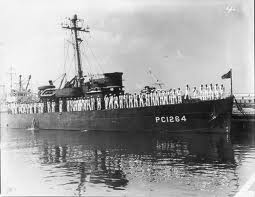
The USS PC-1264 and its crew, Gravely is the lone black officer

USS_PC-1264_officers_and_crew

Gravely enlisted in the Navy under these conditions. Serving as a Fireman Apprentice after receiving training as a Motor Machinist in San Diego he worked in menial jobs. In 1943 Gravely was one of only three sailors in his unit to be selected for the V-12 officer training program. He was the only black to make the cut. He was commissioned as an Ensign on December 14th 1944 and assigned to train black recruits at Great Lakes though the vast majority of his class went to sea. The was mainly due to the policy set forth by the General Board in 1942 that prescribed:

“(a) the white man will not accept the negro in a position of authority over him; (b) the white man considers that he is of a superior race and will not admit the negro as an equal; and (c) the white man refuses to admit the negro to intimate family relationships leading to marriage. These concepts may not be truly democratic, but it is doubtful if the most ardent lovers of democracy will dispute them, particularly in regard to inter-marriage.”

Despite this by 1945 the Navy was beginning to change. Gravely was chosen to serve on one of two ships assigned to the “experiment” of seeing how blacks in general ratings could serve at sea. The USS Mason (DE 539) and the USS PC-1264 were assigned black crews with majority white officers, except that Gravely was assigned to PC-1264. Though his commander was pleased with his service Gravely, who had been denied admittance to Officer Clubs and many other “white only” facilities resigned from the Navy in 1946. He believed that the inherent discrimination of the Navy left him no place for advancement. He returned to complete his bachelors degree at Virginia Union.

In 1949, following President Truman’s integration of the military Gravely was asked by the Navy to return to active duty. But the end of the old order was foreshadowed by a Navy pamphlet published in 1944 entitled The Guide to the Command of Negro Personnel. That publication included the statement that ”The Navy accepts no theories of racial differences in inborn ability, but expects that every man wearing its uniform be trained and used in accordance with his maximum individual capacity determined on the basis of individual performance.”

images-17

300px-USS_Taussig_(DD-746)_port_side_1965

cg29

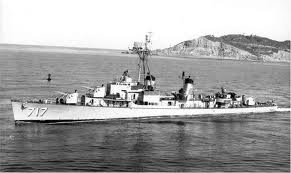
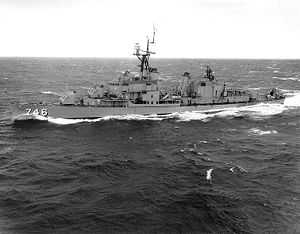
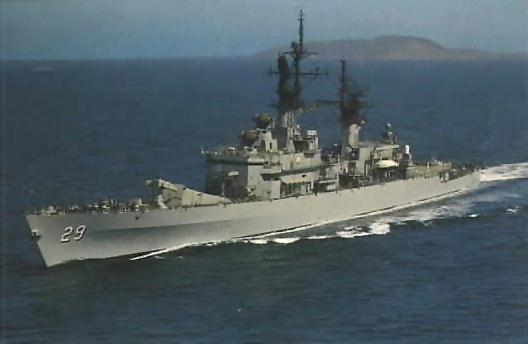
Gravely’s commands (top to bottom) USS Theodore E Chandler, USS Taussig and USS Jouett

Gravely accepted the offer to return to active duty and never looked back. He worked hard for respect and used his natural talents, personality and size to command respect. He was a man who would blaze the way for other African Americans, and later women and most recently gays to go on to greater things.

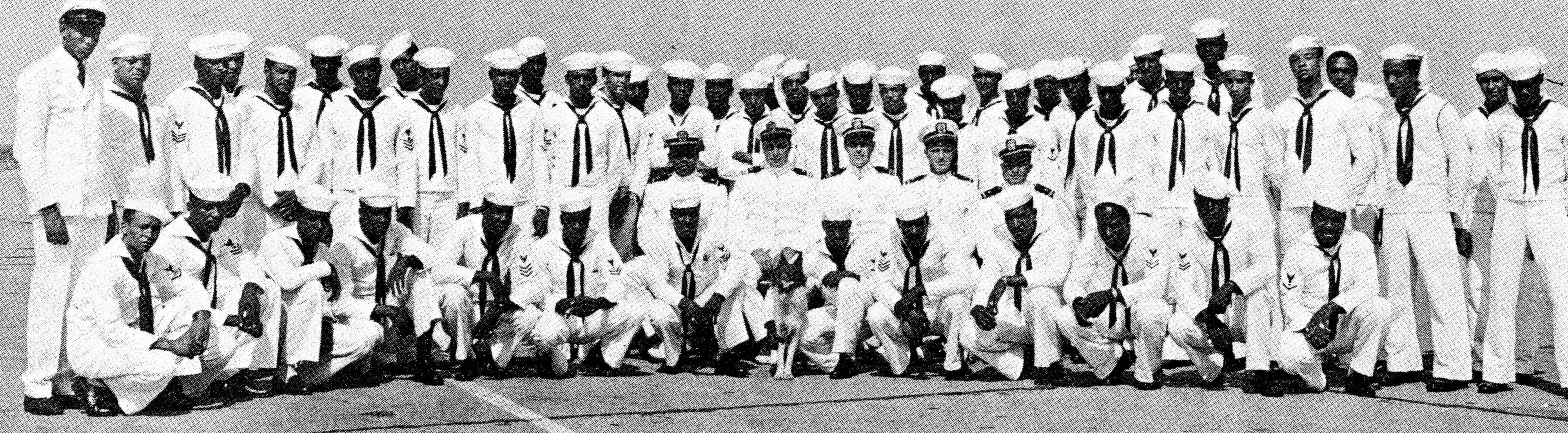
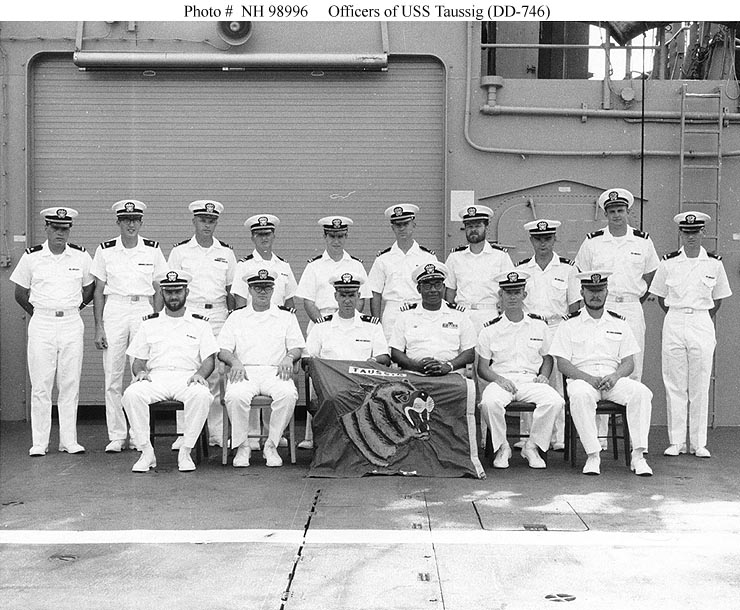
Gravely would go on to command three ships, all surface combatants. He was the first African American Naval Officer to command a Navy warship, the USS Theodore E Chandler (DD 717), the first to command a Navy ship in combat, the USS Taussig (DD 746) and the first to command a major warship, the USS Jouett (CG 29). Promoted to flag rank he eventually became the first to command a Fleet when he took command of 3rd Fleet. He retired in 1980 and passed away in 2004.

h98996

Commander Gravely and his officers on USS Taussig

Gravely gave his parents and conditions of his upbringing much credit for his success. He believed that those conditions which forced him to “capitalize on his strong points, build his weak areas and sustain the positive self-esteem and self-worth that his parents instilled in him as a young child.”

He was a great leader. LCDR Desiree Linson who interviewed him for her Air Command and Staff College project noted that Gravely like many other great military leaders before him learned to manage the image that he presented, be a caretaker for his people, what we would now call a mentor. He said “[If I was CNO] my responsibility would be to make sure enlisted men and families were taken care of. I would do everything in my power to make sure.”

Vice Admiral Gravely’s pursuit of excellence, self confidence and mastery of professional skills empowered him in an institution where he was still an anomaly and where racism still existed. He believed in effective communication, especially verbal communication and in building teams and in being a good follower, listening, learning and proactively anticipating the needs of his superiors. Gravely was also a believer in personal morality and self discipline and preparedness. He said:

“I did everything I could think of to prepare myself. If the opportunity came, I would be prepared for it. [The question would not be] “Why didn’t you prepare for this opportunity.” I would be prepared for whatever opportunity that came. If it came, fine. If it did not, fine, but I would be prepared if it did come.”

USS_Gravely

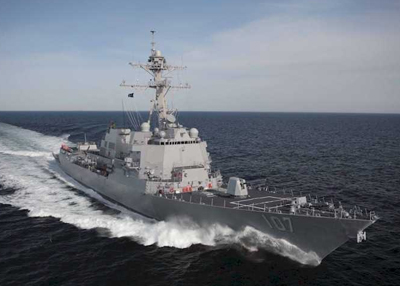
The USS Gravely DDG 107

Vice Admiral Gravely blazed a trail for those that followed him and set an example for all Naval Officers to follow. He did it under conditions that most of us could not imagine. I am proud to serve in the Navy that he helped to make.  I happen to work for an African-American Admiral at the Staff College, and I have served under African American commanders throughout every stage of my military career, in the Army and in the Navy. Admiral Gravely’s vision, service and memory are carried on in this navy and in the ship that bears his name, the USS Gravely DDG-107. Today that ship and her crew stand watch in defense of our nation and our friends around the world. It is a fitting tribute to such an amazing leader.

Peace

Padre Steve+
2 Comments

Filed under civil rights, History, Military, US Navy

Character Sacrifice, Service in the Face of Blatant Racism and the Dream that Cannot be Stopped: Brigadier General Benjamin O Davis Sr and Lieutenant General Benjamin O Davis Jr.

495px-Benjamin_o_davis

“I have a dream that my four little children will one day live in a nation where they will not be judged by the color of their skin, but by the content of their character.” Dr. Martin Luther King, Jr.

Last Friday, October 25th was the 73rd anniversary of the promotion of Colonel Benjamin O. Davis to the Rank of Brigadier General in the United States Army. In 1940 as the nation prepared for war many experienced officers were being promoted, some to Flag or General Officer rank. However, Colonel Davis was different, he was black.

Seldom do we take the time to remember that it really wasn’t that long ago that African Americans were for all practical purposes less than full citizens. Jim Crow laws, discrimination, segregation and impediments to voting were the norm in much of the country. Separate but equal was that mantra of racists in power. Blacks no matter how educated, how patriotic or how successful were discriminated against, held back and in far to many cases the target of hatred, violence and even murder. It was in such a climate that Benjamin O Davis served as an officer in the US Army.

While American History would not be the same without the life, work and prophetic ministry of Dr. Martin Luther King Jr. much of his hard fought success was brought about by men and women who served in the military, or for that matter played the game of baseball in an exemplary manner in an otherwise whiter than white bread world.

Dr. King was born in a time when most of the country was segregated when “separate by equal” was simply façade to cover the lie that in no way did African Americans have equal rights or privileges in the United States. Something some leaders attempt today through the use of voter purges that target Blacks, hispanics and other minorities. Sad to day that some things don’t change. Racists are still racists.

In 1922 Carrie Williams Clifford published the poem The Black Draftee from Georgia which alluded to to the lynching of Wilbur Little, a soldier and veteran of the First World War  who was lynched by a mob for wearing his uniform after being warned not to:

What though the hero-warrior was black?
His heart was white and loyal to the core;
And when to his loved Dixie he came back,
Maimed, in the duty done on foreign shore,
Where from the hell of war he never flinched,
Because he cried, “Democracy,” was lynched.

 Dr King was born less than 60 years after the secession of the Southern states from the Union and the beginning of the American Civil War. Though that blood conflict had freed the slaves it had not freed African Americans from prejudice, violence and discrimination.  When Dr. King began his ministry and was thrust upon the national stage as the strongest voice for equal rights and protections for blacks the discrimination and violence directed towards blacks was a very real and present reality in much of the United States.

Events_Buffalo_Soldier

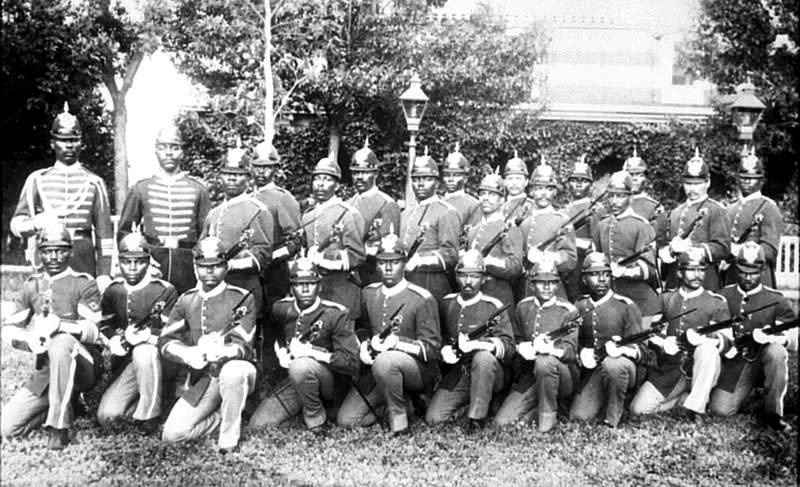
 Buffalo Soldiers in the 1880s 

However there were cracks beginning to appear in the great wall of segregation in the years preceding Dr. King’s ascent to leadership as the moral voice of the country in the matter of racial equality. In baseball Jackie Robinson became the first African American player in Major League Baseball opening a door for others who would become legends of the game as well as help white America begin its slow acceptance of blacks in sports and the workplace.

Likewise the contributions of a father and son Brigadier General Benjamin O. Davis Sr. and General Benjamin O. Davis Jr. were advancing the cause of blacks in the military which eventually led to the desegregation of the military in 1948.  The impact of these two men cannot be underestimated for they were trailblazers who by their lives, professionalism and character blazed a trail for African Americans in the military as well as society.

Benjamin O. Davis Sr. was a student at Howard University when the USS Maine exploded and sank in Havana Harbor.  He volunteered for service and was commissioned as a temporary 1st Lieutenant in the 8th United States Volunteer Infantry. He was mustered out of service in 1899 but enlisted as a private in the 9th United States Cavalry one of the original Buffalo Soldiers regiments.

9th_cavalry_camp_lawton_1

 Buffalo Soldiers in the Philippines 

He was initially the unit clerk of I troop of 3rd Squadron and was promoted to be the squadron Sergeant Major. He was commissioned while the unit was deployed to the Philippines counterinsurgency campaign and assigned to the 10th Cavalry.

Early in his career Davis was assigned in various positions including command, staff and instruction duties including as Professor of Military Science and Tactics in various ROTC programs.  He reached the rank of rank of temporary Lieutenant Colonel and Squadron Commander of 3rd and later 1st Squadron 9th Cavalry from 1917-1920 in the Philippines before reverting to the rank of Captain on his return as part of the post World War I reduction in force.

He continued to serve during the inter-war years and assumed command of the 369th Infantry Regiment New York National Guard in 1938. He was promoted to Brigadier General on 25 October 1940 becoming the first African American elevated to that rank in the United States Army and was assigned as Commander 4th Brigade 2nd Cavalry Division. He later served in various staff positions at the War Department and in France and was instrumental in the integration of the U.S. Military. He retired after 50 years service in 1948 in a public ceremony with President Harry S. Truman presiding. He was a member of the American Battle Monuments Commission from 1953-1961 and died in 1970.

davis-3

Colonel Davis with his son Cadet Benjamin O Davis Jr.

His son Benjamin O. Davis Jr. was appointed to West Point in 1932.  He graduated and was commissioned in 1936 graduating 35 out of 278, the fourth African American graduate of West Point. During his time at the Academy most of his classmates shunned him and he never had a roommate.  Despite this he maintained a dogged determination to succeed.  The Academy yearbook made this comment about him:

“The courage, tenacity, and intelligence with which he conquered a problem incomparably more difficult than plebe year won for him the sincere admiration of his classmates, and his single-minded determination to continue in his chosen career cannot fail to inspire respect wherever fortune may lead him.”

He was denied entrance to the Army Air Corps because of his race and assigned to the Infantry first to the all lack 24th Infantry Regiment at Ft Benning where he was not allowed in the Officers Club due to his race. Upon his commissioning the Regular Army had just 2 African American Line Officers, 2nd Lieutenant Davis and his father Colonel Davis. After completion of Infantry School he was assigned as an instructor of Military Science and Tactics and the Tuskegee Institute.

benjaminodavisjr02

Benjamin O Davis Jr in WWII

In 1941 the Roosevelt Administration moved to create a black flying unit and Captain Davis was assigned to the first black class at the Tuskegee Army Air Field and in March 1942 one his wings as one of the first 5 African Americans to complete flight training.  In July 1942 the younger Davis was assigned as Commanding Officer of the 99th Pursuit Squadron which served in North Africa and Sicily flying Curtiss P-40 Warhawks.

He was recalled to the United States in September 1943 to command the 332nd Fighter Group. However some senior officers attempted to prevent other black squadrons from serving in combat alleging that the 99th had performed poorly in combat. Davis defended his squadron and General George Marshall ordered an inquiry which showed that the 99th was comparable to white squadrons in combat and during a 2 day period over the Anzio beachhead the pilots of the 99th shot down 12 German aircraft.

images-58

Colonel Benjamin O Davis Jr (left) with one of his Tuskegee Airmen

Davis took the 332nd to Italy where they transitioned to P-47 Thunderbolts and in July 1944 to the P-51 Mustang which were marked with a signature red tail. During the war, the units commanded by Davis flew more than 15,000 sorties, shot down 111 enemy planes, and destroyed or damaged 273 on the ground at a cost of 66 of their own planes. Their record against the Luftwaffe was outstanding and their protection of the bombers that they escorted was superb with very few bombers lost while escorted by them men that the Luftwaffe nicknamed the Schwarze Vogelmenschen and the Allies the Red-Tailed Angels or simply the Redtails. Davis led his Tuskegee Airmen to glory in the war and their performance in combat helped break the color barrier in the U.S. Military which was ended in 1948 when President Truman signed an executive order to end the segregation of the military. Colonel Davis helped draft the Air Force plan and the Air Force was the first of the services to fully desegregate.

250px-Benjamindavis-228x300

Lieutenant General Benjamin O Davis Jr

 Colonel Davis transitioned to jets and let the 51st Fighter Interceptor Wing against Chinese Communist MIGs in the Korean War.  He was promoted to Brigadier General in 1954 and served in numerous command and staff positions. He retired in 1970 with the rank of Lieutenant General and was advanced to General while retired by President Clinton in 1998.  He died in 2002 at the age of 89.

The legacy of Benjamin O. Davis Senior and Benjamin O. Davis Junior is a testament to their character, courage and devotion to the United States of America. They helped pioneer the way for officers such as General Colin Powell and helped change this country for the better.  During times when discrimination was legal they overcame obstacles that would have challenged lesser men.

Benjamin O. Davis Junior remarked “My own opinion was that blacks could best overcome racist attitudes through achievements, even though those achievements had to take place within the hateful environment of segregation.”

Such men epitomize the selfless service of so many other African Americans who served the country faithfully and “by the content of their character” triumphed over the evil of racism and helped make the United States a more perfect union. Today many African Americans as well as members of other minorities including racial minorities, women and gays serve with distinction in the military. What they do today is in many part a direct result of the courage, character and convictions of men like Benjamin O Davis Sr and Benjamin O Davis Jr.

Unfortunately the struggle for equality is never over and current generation will have to work just as hard to ensure that the freedoms won at so great a cost are not lost. General Colin Powell, the first Black man to serve as Chairman of the Joint Chiefs of Staff and Secretary of State commented in 1994:

“I stand here today as a direct descendant of those Buffalo Soldiers and of the Tuskegee Airmen and all the black men and women who have served the nation in uniform, I will never forget my debt to them. I didn’t just show up. I climbed on the backs of those who never had the kind of opportunity that I had.”

Peace

Padre Steve+
4 Comments

Filed under civil rights, History, Military, Political Commentary, world war two in europe

Vice Admiral Samuel Gravely Jr: Pioneer of Integration and Civil Rights in the U.S. Navy

gravely

“I was sure that I could not afford to fail. I thought that would affect other members of my race if I failed anywhere along the line. I was always conscious of that, particularly in midshipman school and any other schools I went to…I tried to set a record of perfect conduct ashore and at sea.” Vice Admiral Samuel Gravely

Things have changed much since 1942 when following the attack on Pearl Harbor a young black college student from Richmond Virginia enlisted in the Navy. Samuel Gravely Jr. was the son of a postal worker and Pullman porter while his mother worked as a domestic servant for white families in Richmond. His mother died unexpectedly when he was 15 in 1937 and he remained to help care for his siblings as his father continued to work. Balancing the care of his family with his education he enrolled in Virginia Union College, a Baptist school in Richmond.

gravely_young

Fireman Apprentice Samuel Gravely Jr

It is hard to imagine for most of us now to comprehend the world that the young Gravely grew up in. Segregation was the norm. Blacks in the south and many other locations faced personal as well as intrenched institutional racism. Violence against blacks was quite common and the Ku Klux Klan was strong.

The military was still segregated and a great gulf existed between white military personnel and blacks. Though the selective service law of 1940 called for the conscription of people regardless of race, creed or color the services enjoyed much latitude in determining how minorities could serve. The Secretary of the Navy at the time, Frank Knox resisted integration. Knox determined that African Americans would remain segregated and serve only as Mess Stewards to “prevent undermining and disruptive conditions in the Navy.” Knox told President Roosevelt in the presence of black leaders that “because men live in such intimacy aboard ship that we simply can’t enlist Negroes above the rank of messman. “

That sentiment was strong in both the Navy and the Marines the leaders of which resisted attempts to broaden the ability for African Americans to serve and urged that blacks serve in the Army, not the Naval Service.  Marine Corps Commandant Major General Thomas Holcomb agreed with this stance. He commented:

“If we are defeated we must not close our eyes to the fact that once in they [Negroes] will be strengthened in their effort to force themselves into every activity we have. If they are not satisfied to be messmen. they will not be satisfied to go into the constriction or labor battalions. Don’t forger the colleges are turning out a large number of well educated Negroes. I don’t know how long we will be able to keep them out of the V-7 class. I think not very long.”

But Roosevelt was not deterred and by April 1942 changes were announced to allow African Americans to serve in other capacities. Even so African Americans selected for ratings other than messman were to be segregated and commanded by White Officers and Petty Officers.

USS_PC-1264_officers_and_crew

images-18

The USS PC-1264 and its crew, Gravely is the lone black officer

Gravely enlisted in the Navy under these conditions. Serving as a Fireman Apprentice after receiving training as a Motor Machinist in San Diego he worked in menial jobs. In 1943 Gravely was one of only three sailors in his unit to be selected for the V-12 officer training program. He was the only black to make the cut. He was commissioned as an Ensign on December 14th 1944 and assigned to train black recruits at Great Lakes though the vast majority of his class went to sea. The was mainly due to the policy set forth by the General Board in 1942 that prescribed:

“(a) the white man will not accept the negro in a position of authority over him; (b) the white man considers that he is of a superior race and will not admit the negro as an equal; and (c) the white man refuses to admit the negro to intimate family relationships leading to marriage. These concepts may not be truly democratic, but it is doubtful if the most ardent lovers of democracy will dispute them, particularly in regard to inter-marriage.”

Despite this by 1945 the Navy was beginning to change. Gravely was chosen to serve on one of two ships assigned to the “experiment” of seeing how blacks in general ratings could serve at sea. The USS Mason (DE 539) and the USS PC-1264 were assigned black crews with majority white officers, except that Gravely was assigned to PC-1264. Though his commander was pleased with his service Gravely, who had been denied admittance to Officer Clubs and many other “white only” facilities resigned from the Navy in 1946. He believed that the inherent discrimination of the Navy left him no place for advancement. He returned to complete his bachelors degree at Virginia Union.

In 1949, following President Truman’s integration of the military Gravely was asked by the Navy to return to active duty. But the end of the old order was foreshadowed by a Navy pamphlet published in 1944 entitled The Guide to the Command of Negro Personnel. That publication included the statement that ”The Navy accepts no theories of racial differences in inborn ability, but expects that every man wearing its uniform be trained and used in accordance with his maximum individual capacity determined on the basis of individual performance.”

images-17

300px-USS_Taussig_(DD-746)_port_side_1965

cg29

Gravely’s commands (top to bottom) USS Theodore E Chandler, USS Taussig and USS Jouett

Gravely accepted the offer to return to active duty and never looked back. He worked hard for respect and used his natural talents, personality and size to command respect. He was a man who would blaze the way for other African Americans, and later women and most recently gays to go on to greater things. Gravely would go on to command three ships. He was the first African American Naval Officer to command a Navy warship, the USS Theodore E Chandler (DD 717), the first to command a Navy ship in combat, the USS Taussig (DD 746) and the first to command a major warship, the USS Jouett (CG 29). Promoted to flag rank he eventually became the first to command a Fleet when he took command of 3rd Fleet. He retired in 1980 and passed away in 2004.

h98996

Commander Gravely and his officers on USS Taussig

Gravely gave his parents and conditions of his upbringing much credit for his success. He believed that those conditions which forced him to “capitalize on his strong points, build his weak areas and sustain the positive self-esteem and self-worth that his parents instilled in him as a young child.”

He was a great leader. LCDR Desiree Linson who interviewed him for her Air Command and Staff College project noted that Gravely like many other great military leaders before him learned to manage the image that he presented, be a caretaker for his people, what we would now call a mentor. He said “[If I was CNO] my responsibility would be to make sure enlisted men and families were taken care of. I would do everything in my power to make sure.”

His pursuit of excellence, self confidence and mastery of professional skills empowered him in an institution where he was still an anomaly and where racism still existed. He believed in effective communication, especially verbal communication and in building teams and in being a good follower, listening, learning and proactively anticipating the needs of his superiors. Gravely was also a believer in personal morality and self discipline and preparedness. He said:

“I did everything I could think of to prepare myself. If the opportunity came, I would be prepared for it. [The question would not be] “Why didn’t you prepare for this opportunity.” I would be prepared for whatever opportunity that came. If it came, fine. If it did not, fine, but I would be prepared if it did come.”

USS_Gravely

The USS Gravely

Vice Admiral Gravely blazed a trail for those that followed him and set an example for all Naval Officers to follow. He did it under conditions that most of us could not imagine. I am proud to serve in the Navy that he helped to make.  His vision, service and memory are carried on in this navy and in the ship that bears his name, the USS Gravely DDG-107.

Peace

Padre Steve+

3 Comments

Filed under History, laws and legislation, leadership, Military, Navy Ships, US Navy

Buffalo Soldiers and Racial Prejudice on the Western Front 1918

They were volunteers and many of their veteran soldiers had served full careers on the Great Plains. They were the Buffalo Soldiers. In the First World War they were left on the frontier and a new generation of draftees and volunteers became the nucleus of two infantry Divisions, the 92nd and 93rd. However in the beginning they were regulated to labor service units until the protests of organizations such as the NAACP and men like W.E.B.DuBois and Phillip Randolph forced the War Department to reconsider the second class status of these men and form them into combat units.

Despite this the leadership of the AEF, or the American Expeditionary Force refused to allow these divisions to serve under American command. Instead they were broken up and the regiments of the 93rd Division were attached to French divisions. The 369th “Harlem Hellfighters” were assigned to the French 16th Division and then to the 161st Division. The 370th “Black Devils” to the French 26th Division and the 371st and 372nd to the French 157th (Colonial) Division also known as the Red Hand Division. The 371st was awarded the French Croix de Guerre and Légion d’honneur and Corporal Freddie Stowers of the 1st Battalion 371st was the only African American awarded the Congressional Medal of Honor in the First World War. The 372nd was also awarded the Croix de Guerre and Légion d’honneur for its service with the 157th Division.

The 157th Division had suffered badly during the war and been decimated in the unrelenting assaults in the trench warfare of the Western Front. It was reconstituted in 1918 with one French Regiment and two American regiments, the Negro 371st and 372nd Infantry. On July 4th 1918 the commanding General of the French 157th Division, General Mariano Goybet issued the following statement:

“It is striking demonstration of the long standing and blood-cemented friendship which binds together our two great nations. The sons of the soldiers of Lafayette greet the sons of the soldiers of George Washington who have come over to fight as in 1776, in a new and greater way of independence. The same success which followed the glorious fights for the cause of liberty is sure to crown our common effort now and bring about the final victory of right and justice over barbarity and oppression.”

The citation for Corporal Stowers reads as follows:

Corporal Stowers, distinguished himself by exceptional heroism on September 28, 1918 while serving as a squad leader in Company C, 371st Infantry Regiment, 93d Division. His company was the lead company during the attack on Hill 188, Champagne Marne Sector, France, during World War I. A few minutes after the attack began, the enemy ceased firing and began climbing up onto the parapets of the trenches, holding up their arms as if wishing to surrender. The enemy’s actions caused the American forces to cease fire and to come out into the open. As the company started forward and when within about 100 meters of the trench line, the enemy jumped back into their trenches and greeted Corporal Stowers’ company with interlocking bands of machine gun fire and mortar fire causing well over fifty percent casualties. Faced with incredible enemy resistance, Corporal Stowers took charge, setting such a courageous example of personal bravery and leadership that he inspired his men to follow him in the attack. With extraordinary heroism and complete disregard of personal danger under devastating fire, he crawled forward leading his squad toward an enemy machine gun nest, which was causing heavy casualties to his company. After fierce fighting, the machine gun position was destroyed and the enemy soldiers were killed. Displaying great courage and intrepidity Corporal Stowers continued to press the attack against a determined enemy. While crawling forward and urging his men to continue the attack on a second trench line, he was gravely wounded by machine gun fire. Although Corporal Stowers was mortally wounded, he pressed forward, urging on the members of his squad, until he died. Inspired by the heroism and display of bravery of Corporal Stowers, his company continued the attack against incredible odds, contributing to the capture of Hill 188 and causing heavy enemy casualties. Corporal Stowers’ conspicuous gallantry, extraordinary heroism, and supreme devotion to his men were well above and beyond the call of duty, follow the finest traditions of military service, and reflect the utmost credit on him and the United States Army.

Corporal Stowers is buried at the Meuse-Argonne American Cemetery. The award of the Medal of Honor was not made until 1991 when President George H. W. Bush presented it to Stowers’ two surviving sisters.

The contrast between the American treatment of its own soldiers and that of the French in the First World War is striking. The fact that it took President Harry S. Truman to integrate the U.S. Military in 1948 is also striking. African Americans had served in the Civil War, on the Great Plains, in Cuba and in both the European and Pacific Theaters of Operation in the Second World War and were treated as less than fully human by many Americans.

Men of the 371st and 372nd Infantry Regiments of the French 157th Division Awarded the Croix d’Guerre

Unfortunately racial prejudice is still rampant in the United States. In spite of all the advances that we have made racism still casts an ugly cloud over our country. Despite the sacrifices of the Buffalo Soldiers, the leaders of the Civil Rights movement and others there are some people who like the leaders of the AEF in 1917 and 1918 cannot stomach having blacks as equals or God forbid in actual leadership roles in this country.  A good friend of mine who is a retired military officer, a white man, an evangelical Christian raised in Georgia who graduated from an elite military school in the South, who is a proponent of racial equality has told me that the problem that many white people in the South have with President Obama is that “he doesn’t know his place.” Yes racism is still real and rears its ugly head all too often.

Today is the anniversary of the Meuse-Argonne Offensive where American troops helped break the back of the German Army in World War One. As we remember the brave men who went “over the top” and suffered over 117,000 casualties in that battle let us not forget the intrepid Buffalo Soldiers who blazed a way to an equality that some would still seek to deny those of color.

Peace

Padre Steve+
9 Comments

Filed under History, Military

The Content of their Character: Brigadier General Benjamin O. Davis Sr. US Army and General Benjamin O. Davis Jr. US Air Force

Brigadier General Benjamin O Davis in France 1944

“I have a dream that my four little children will one day live in a nation where they will not be judged by the color of their skin, but by the content of their character.” Dr. Martin Luther King, Jr.

American History would not be the same without the life, work and prophetic ministry of Dr. Martin Luther King Jr. Dr. King was born in a time when most of the country was segregated when “separate by equal” was simply façade to cover the lie that in no way did African Americans have equal rights or privileges in the United States. Dr King was born less than 60 years after the secession of the Southern states from the Union and the beginning of the American Civil War. Though that blood conflict had freed the slaves it had not freed African Americans from prejudice, violence and discrimination.  When Dr. King began his ministry and was thrust upon the national stage as the strongest voice for equal rights and protections for blacks the discrimination and violence directed towards blacks was a very real and present reality in much of the United States.

However there were cracks beginning to appear in the great wall of segregation in the years preceding Dr. King’s ascent to leadership as the moral voice of the country in the matter of racial equality. In baseball Jackie Robinson became the first African American player in Major League Baseball opening a door for others who would become legends of the game as well as help white America begin its slow acceptance of blacks in sports and the workplace.

Likewise the contributions of a father and son Brigadier General Benjamin O. Davis Sr. and General Benjamin O. Davis Jr. were advancing the cause of blacks in the military which eventually led to the desegregation of the military in 1948.  The impact of these two men cannot be underestimated for they were trailblazers who by their lives, professionalism and character blazed a trail for African Americans in the military as well as society.

Benjamin O. Davis Sr. was a student at Howard University when the USS Maine exploded and sank in Havana Harbor.  He volunteered for service and was commissioned as a temporary 1st Lieutenant in the 8th United States Volunteer Infantry. He was mustered out of service in 1899 but enlisted as a private in the 9th United States Cavalry one of the original Buffalo Soldiers regiments.  He enlisted as the unit clerk of I troop of 3rd Squadron and was promoted to be the squadron Sergeant Major. He was commissioned while the unit was deployed to the Philippines and assigned to the 10th Cavalry.  He was assigned in various positions throughout his career including command, staff and instruction duties including as Professor of Military Science and Tactics in various ROTC programs.  He reached the rank of rank of temporary Lieutenant Colonel and Squadron Commander of 3rd and later 1st Squadron 9th Cavalry from 1917-1920 in the Philippines before reverting to the rank of Captain on his return as part of the post World War I reduction in force.  He continued to serve during the inter-war years and assumed command of the 369th Infantry Regiment New York National Guard in 1938. He was promoted to Brigadier General on 25 October 1940 becoming the first African American elevated to that rank in the United States Army and was assigned as Commander 4th Brigade 2nd Cavalry Division. He later served in various staff positions at the War Department and in France and was instrumental in the integration of the U.S. Military. He retired after 50 years service in 1948 in a public ceremony with President Harry S. Truman presiding. He was a member of the American Battle Monuments Commission from 1953-1961 and died in 1970.

Colonel Davis with his son Cadet Benjamin O Davis Jr.

His son Benjamin O. Davis Jr. was appointed to West Point in 1932.  He graduated and was commissioned in 1936 graduating 35 out of 278, the fourth African American graduate of West Point. During his time at the Academy most of his classmates shunned him and he never had a roommate.  Despite this he maintained a dogged determination to succeed.  The Academy yearbook made this comment about him:

“The courage, tenacity, and intelligence with which he conquered a problem incomparably more difficult than plebe year won for him the sincere admiration of his classmates, and his single-minded determination to continue in his chosen career cannot fail to inspire respect wherever fortune may lead him.”

He was denied entrance to the Army Air Corps because of his race and assigned to the Infantry first to the all lack 24th Infantry Regiment at Ft Benning where he was not allowed in the Officers Club due to his race. Upon his commissioning the Regular Army had just 2 African American Line Officers, 2nd Lieutenant Davis and his father Colonel Davis. After completion of Infantry School he was assigned as an instructor of Military Science and Tactics and the Tuskegee Institute.  In 1941 the Roosevelt Administration moved to create a black flying unit and Captain Davis was assigned to the first black class at the Tuskegee Army Air Field and in March 1942 one his wings as one of the first 5 African Americans to complete flight training.  In July 1942 he was assigned as Commanding Officer of the 99th Pursuit Squadron which served in North Africa and Sicily flying Curtiss P-40 Warhawks. He was recalled to the United States in September 1943 to command the 332nd Fighter Group. However some senior officers attempted to prevent other black squadrons from serving in combat alleging that the 99th had performed poorly in combat. Davis defended his squadron and General George Marshall ordered an inquiry which showed that the 99th was comparable to white squadrons in combat and during a 2 day period over the Anzio beachhead the pilots of the 99th shot down 12 German aircraft.

Colonel Benjamin O Davis Jr (left) with one of his Tuskegee Airmen

Davis took the 332nd to Italy where they transitioned to P-47 Thunderbolts and in July 1944 to the P-51 Mustang which were marked with a signature red tail. During the war, the units commanded by Davis flew more than 15,000 sorties, shot down 111 enemy planes, and destroyed or damaged 273 on the ground at a cost of 66 of their own planes. Their record against the Luftwaffe was outstanding and their protection of the bombers that they escorted was superb with very few bombers lost while escorted by them men that the Luftwaffe nicknamed the Schwarze Vogelmenschen and the Allies the Red-Tailed Angels or simply the Redtails. Davis led his Tuskegee Airmen to glory in the war and their performance in combat helped break the color barrier in the U.S. Military which was ended in 1948 when President Truman signed an executive order to end the segregation of the military. Colonel Davis helped draft the Air Force plan and the Air Force was the first of the services to fully desegregate.

Lieutenant General Benjamin O Davis Jr

Colonel Davis transitioned to jets and let the 51st Fighter Interceptor Wing against Chinese Communist MIGs in the Korean War.  He was promoted to Brigadier General in 1954 and served in numerous command and staff positions. He retired in 1970 with the rank of Lieutenant General and was advanced to General while retired by President Clinton in 1998.  He died in 2002 at the age of 89.

The legacy of Benjamin O. Davis Senior and Benjamin O. Davis Junior is a testament to their character, courage and devotion to the United States of America. They helped pioneer the way for officers such as General Colin Powell and helped change this country for the better.  During times when discrimination was legal they overcame obstacles that would have challenged lesser men.  Benjamin O. Davis Junior remarked “My own opinion was that blacks could best overcome racist attitudes through achievements, even though those achievements had to take place within the hateful environment of segregation.”

Such men epitomize the selfless service of so many other African Americans who served the country faithfully and “by the content of their character” triumphed over the evil of racism and helped make the United States a more perfect union.

Peace

Padre Steve+
 

4 Comments

Filed under History, leadership, Political Commentary, world war two in europe

Jackie Robinson and Dr. Martin Luther King they Changed America

“He led America by example. He reminded our people of what was right and he reminded them of what was wrong. I think it can be safely said today that Jackie Robinson made the United States a better nation.” – American League President Gene Budig

“He knew he had to do well. He knew that the future of blacks in baseball depended on it. The pressure was enormous, overwhelming, and unbearable at times. I don’t know how he held up. I know I never could have.”Duke Snider

“Life is not a spectator sport. If you’re going to spend your whole life in the grandstand just watching what goes on, in my opinion you’re wasting your life.”  Jackie Robinson

“There’s not an American in this country free until every one of us is free.” Jackie Robinson

Today is a day that we rightfully remembered the life, message, martyrdom and legacy of Dr. Martin Luther King Jr. However as much as Dr. King matters, there were a long line of African American heroes who in their own way helped bring about racial equality in this country.  While many toiled in obscurity one, a baseball player named Jackie Robinson would forever alter the playing field of racial relations and how African Americans were perceived and received in the United States.  April 15th 2010 will be the 63rd anniversary of Jackie Robinson’s first game in the Major Leagues with the Brooklyn.  Robinson is not remembered with a National holiday but then again that takes noting away from this giant of American history. When Robinson stepped onto Ebbett’s Field in April 15th 1947 it was a watershed moment and while racial discrimination and prejudice remained they would be fighting a losing battle from that time on. Dr King in life and in death would be the one who drove the stake into the heart of the evil of racism and discrimination it was Jackie Robinson who helped place that stake above the heart of this evil.

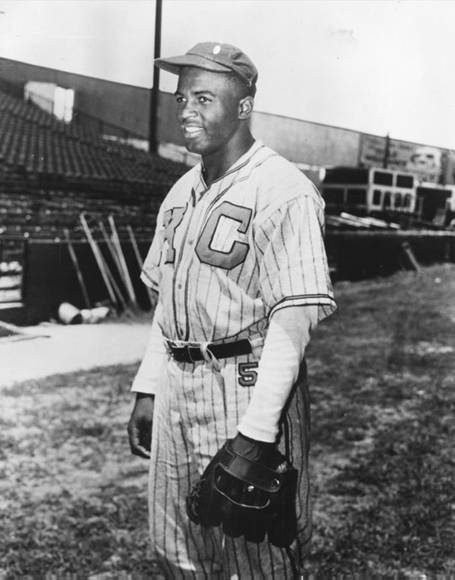
The Negro Leagues: Jackie in his Kansas City Monarch Uniform

We celebrate Dr King’s legacy today. However, without Jackie Robinson and the other African American baseball players who broke into the big leagues in the late 1940s and early 1950s it is conceivable that Dr, King would never have had the opportunity not only to be heard by African Americans, but to have his message heard and taken to heart by white America.

By the time Dr. King arrived on the scene much had already been done, and much due to Robinson and the owner of the Brooklyn Dodgers, Branch Rickey. Robinson’s first game with the Dodgers came a full year before President Truman integrated the military and a full seven years before the Supreme Court ruled school segregation unconstitutional.  It was not until 1964 that the Voters Rights act passed in Congress.  Jackie Robinson paved the way for a change in American society that has continued for 62 years since his debut at Ebbett’s Field on April 15th 1947.

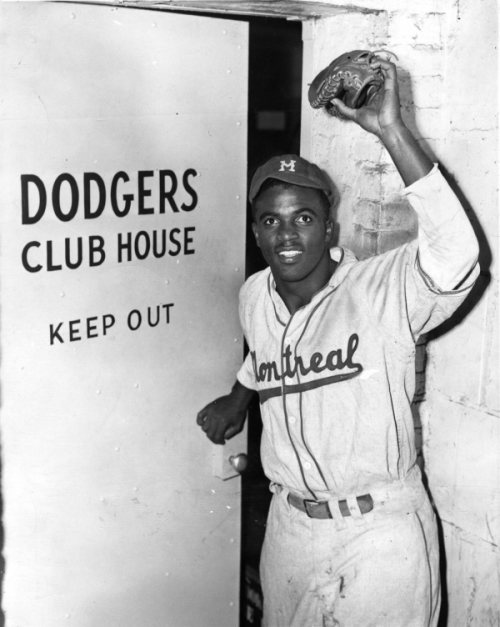
Even before he stepped onto the field Jackie Robinson was a pioneer in equal rights where at UCLA he was the first student to letter in four varsity sports and in the Second World War where in an action that was a precursor to later civil rights battles the young Lieutenant Jackie Robinson was arrested and tried for not moving to the back of a bus at Fort Hood Texas.  He would be acquitted and given an honorable discharge before beginning his professional baseball career with the Kansas City Monarchs of the Negro League prior to Rickey signing him to a minor league contract with the Montreal Royals of the International League. Although he was met with scorn my many white baseball fans and some players and had to endure the ignominy of hostility from white fans and media, having to live in separate hotels and eat at separate restaurants Robinson developed a loyal fan base in Montreal and over a million people saw him play in his year in the International League.

Jackie in his Montreal Royals Uniform outside the Dodger’s Clubhouse

When Branch Rickey talked with Robinson before the season he said: “Jackie (Robinson), we’ve got no army. There’s virtually nobody on our side. No owners, no umpires, very few newspapermen. And I’m afraid that many fans will be hostile. We’ll be in a tough position. We can win only if we can convince the world that I’m doing this because you’re a great ballplayer, a fine gentleman.”

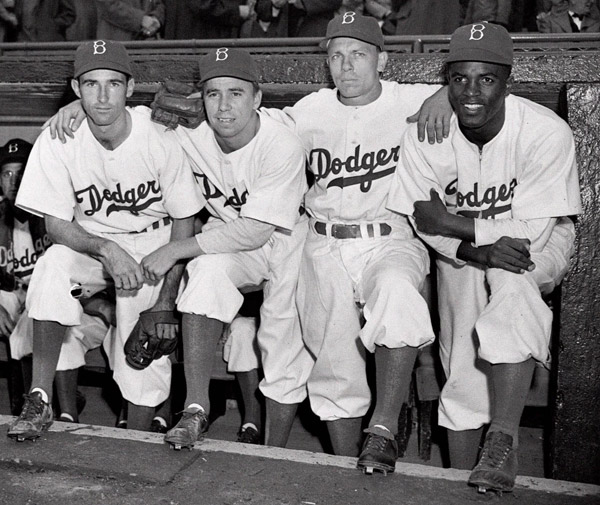
John Jorgensen, Pee Wee Reese, Ed Stanky and Jackie Robinson on opening day 1947

Jackie’s feat was a watershed moment in the history of our country.  Blacks had struggled for years against Jim Crow laws, discrimination in voting rights, and even simple human decencies such as where they could use a rest room, what hotels they could stay in or what part of the bus that they could sit.  In baseball many white fans were upset that blacks would be coming to see Robinson in stadiums that they would not have been allowed in before.  Players from other teams heckled Robinson, he received hate mail, people sent made death threats, and he was spiked and spit on.  But Jackie Robinson kept his pledge to Dodgers owner Branch Rickey not to lash out at his tormentors, as Rickey told him that he needed a man “with enough guts not to strike back.” In doing so his on field performance and poise under pressure won him the National League Rookie of the Year honor in 1947.

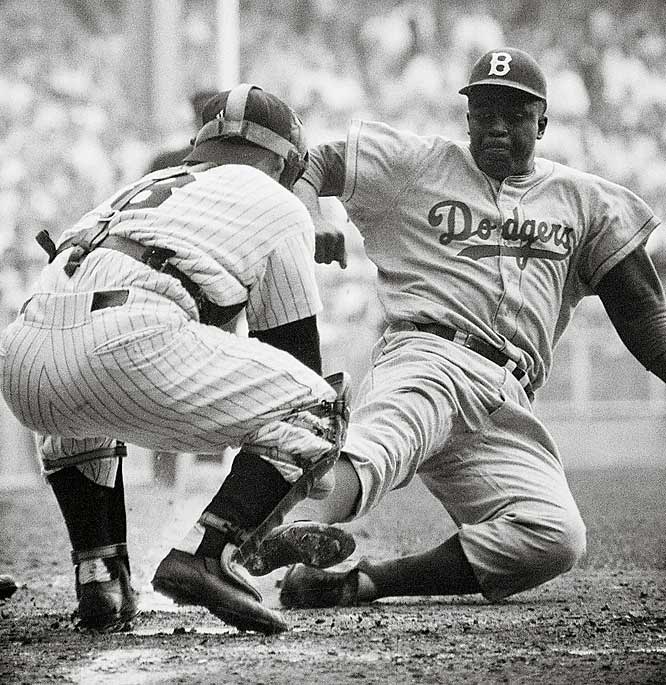
Jackie Stealing Home against the Yankees, the catcher is Yogi Berra

Jackie Robinson played the game with passion and even anger.  He took the advice of Hank Greenberg who as a Jew suffered continual racial epithets throughout his career “the best ways to combat slurs from the opposing dugout is to beat them on the field.” He would be honored as Rookie of the Year, was MVP, played in six World Series and six All Star Games.  He had a career .311 batting average, .409 on base percentage and a .474 Slugging percentage. He was elected to Baseball’s Hall of Fame in 1962. His teammate Pee Wee Reese would say: “Thinking about the things that happened, I don’t know any other ball player who could have done what he did. To be able to hit with everybody yelling at him. He had to block all that out, block out everything but this ball that is coming in at a hundred miles an hour. To do what he did has got to be the most tremendous thing I’ve ever seen in sports.”

Today Jackie Robinson’s feat is history, but it should not be forgotten.  He was a pioneer who made it possible for others to move forward.  He would be followed by players like Roy Campinella, Satchel Paige, Don Larson, Larry Dobie and Willie Mays.  His breakthrough had an effect not just on baseball but on society and helped make possible the later civil rights movement.  Dr. King would say of Jackie that he was “a legend and a symbol in his own time”, and that he “challenged the dark skies of intolerance and frustration.”  Historian Doris Kearns Godwin noted that Jackie’s “efforts were a monumental step in the civil-rights revolution in America” and that his “accomplishments allowed black and white Americans to be more respectful and open to one another and more appreciative of everyone’s abilities.” Time Magazine named him as one of the 100 most influential people of the 20th Century.

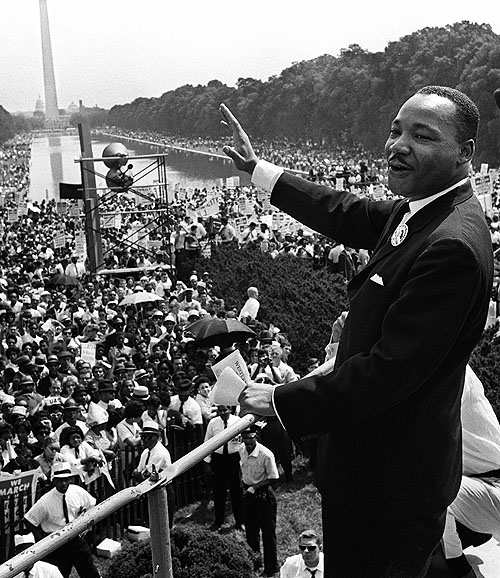
Dr Martin Luther King Jr “I have a dream”

We honor Dr King today and rightly so, but one can never forget those who paved the way so that we could all have the blessing of seeing Dr King’s dream come one step closer to fruition the dream that:

“one day this nation will rise up and live out the true meaning of its creed: ‘We hold these truths to be self-evident, that all men are created equal, that “children will one day live in a nation where they will not be judged by the color of their skin, but by the content of their character,” and that “one day on the red hills of Georgia the sons of former slaves and the sons of former slave owners will be able to sit down together at a table of brotherhood.”

Dr King would die by an assassin’s bullet in Memphis on the night of April 4th 1968 the day after finishing his final speech with these immortal remarks:

“And then I got to Memphis. And some began to say the threats, or talk about the threats that were out. What would happen to me from some of our sick white brothers? Well, I don’t know what will happen now. We’ve got some difficult days ahead. But it doesn’t matter with me now. Because I’ve been to the mountaintop. And I don’t mind. Like anybody, I would like to live a long life. Longevity has its place. But I’m not concerned about that now. I just want to do God’s will. And He’s allowed me to go up to the mountain. And I’ve looked over. And I’ve seen the Promised Land. I may not get there with you. But I want you to know tonight, that we, as a people, will get to the Promised Land. And I’m happy, tonight. I’m not worried about anything. I’m not fearing any man. Mine eyes have seen the glory of the coming of the Lord.”

Let us never forget Dr King nor those like Jackie Robinson who helped pave the way for Dr King.

Peace,

Padre Steve+
6 Comments

Filed under Baseball, History, Political Commentary