Tag Archives: ethics

Brilliant Soldiers & Evil Causes: Hans-Ulrich Rudel

Friends of Padre Steve’s World

I have been writing about the need to be as transparent and honest about history as possible. I have resorted to calling that un-sanitized history. I will be coming back to that in relation to the American Civil War in the not too distant future but tonight I am going to delve into a different era, an era where the acts of valiant and courageous military men are separated from the cases that they fought for and sometimes believed in.

HansUlrichRudel

Colonel Hans-Ulrich Rudel was undoubtedly the greatest ground attack pilot that ever lived. His record is unsurpassed by any combat pilot flying ground attack missions. According to official Luftwaffe records he flew 2350 combat missions beginning in June 1941 and  May 8th 1945.

Rudel was born in Rosenheim Bavaria in 1916. As a young man he joined the Luftwaffe as an officer cadet not long after Hitler took power in Germany. Like many young men and women of his era Rudel was an ardent Nazi. Despite that and his unrepentant admiration for Adolf Hitler and Hitler’s ideology, his combat achievements are unmatched by any ground attack pilot before or since. That ids one of the things that makes him, and others like him so difficult to evaluate for any honest historian.

Rudel’s early career as an aviator was inauspicious. He was not regarded well as a pilot and spent the Polish campaign as an observer.  He did not take part in a combat role during the campaign in the west, the Battle of Britain or Crete between May of 1940 and May of 1941. He was assigned to Sturzkampfgeschwader 2 (StG 2) “Immelmann” at the beginning of Operation Barbarossa, the German invasion of the Soviet Union.  He finally saw combat in June 1941 in the Soviet Union and thereafter was almost always in combat.

a76b1a78b54f96fc159903950317bccc

Flying various models of the Ju-87 Stuka Rudel was one of two pilots credited with sinking the Soviet Battleship Marat at Kronstadt harbor near Leningrad (Petersburg) on September 23rd 1941. During the war he was never shot down by an opposing aircraft but was shot down by anti-aircraft artillery or forced to land 32 times. He destroyed over 2000 targets including 519 tanks, hundreds of other vehicles and artillery pieces, he previously mentioned Battleship Marat, several other ships, 70 anding craft, bridges, armored trains and 9 aircraft in air to air combat. His accomplishments during the latter part of the war are remarkable because of the Soviet dominance of the airspace on the Eastern Front. Losses among ground attack pilots flying the obsolete Stukas were high and the fact that he flew multiple missions on a daily basis for several years is a record unsurpassed in modern warfare.

Hans Ulrich Rudel was the most highly decorated officer in the Luftwaffe, holding the highest decoration awarded to anyone other than Herman Goering. Among the holders of the Knight’s Cross with Oak Leaves, Swords and Diamonds,Rudel was the only one awarded the Gold Oak Leaves.

Rudel was critically wounded by the explosion of a 40mm anti-aircraft shell during a mission on February 8th 1945 and his life was saved by the quick action of his observer. His right leg was amputated below the knee and despite the severity and painfulness of his wound he returned to combat against the advancing Soviets on March 25th 1945. His war ended on May 8th 1945 when he led the remnants of his squadron to surrender to the Americans at an occupied airfield in Kitzingen Germany.

He spent 10 months in American captivity after his surrender and after his release moved to Argentina where he became a friend of the Argentinean dictator Juan Peron. He returned to Germany in the 1950s and became active in right wing nationalist politics. While he was a successful businessman his still openly National Socialist political views kept him marginalized in the newly established West German Bundeswehr.

However, with the threat of a Soviet armored assault across the German plain during the Cold War Rudel was tapped to assist the U.S. Air Force in the development of the A-10 Thunderbolt ground attack aircraft. Despite its ungainly appearance the A-10, known by its nickname “Warthog” has proven to be one of the most successful combat aircraft produced by the United States. His writings on tactics were required reading for pilots involved with the aircraft’s development by the A-10’s lead designer Pierre Sprey.

warthog2

Rudel was a remarkable pilot and combat flyer. His valor and combat accomplishments are unquestioned but his undying attachment to Nazi ideology following the war caused a scandal that claimed the careers of two Bundeswehr Luftwaffe Generals including World War Two fighter ace Walter Krupinski (197 kills). He died in 1982 still admired by British and American combat pilots including the legendary British ace Douglas Bader. However, many of those men did not know Rudel’s political activities or associations during or after the war. As a Luftwaffe pilot Rudel did not engage in the atrocities committed by the SS or Wehrmacht, nor was he ever tried as a war criminal.

In retrospect it is important to understand that Rudel’s political views were shaped by the times in which he lived and the radicalism that swept Germany during the 1920s and 1930s. Likewise it is also important to note that unlike many other officers who grew up during the same period, including fellow Luftwaffe aces Johannes Steinhoff and Adolf Galland, Rudel never recanted his Nazi views.  In the early 1950s he published a tract that condemned German officers who did not wholeheartedly support Adolf Hitler during the war. He also recommended attacking the Soviet Union in the 1950s in order to reacquire Lebensraum, the very doctrine which drove the Nazi invasion of Poland, Eastern Europe and the Soviet Union during the war.

I think it is important to be able to recognize military accomplishments but also to recognize that even valiant soldiers can serve evil governments. Even worse, some of them give their unrequited support to the evil ideology of those regimes. Thus Rudel is not alone. He stands with other Nazi, Communist, Fascist and others soldiers of totalitarianism whose valor and deeds are tainted by evil and the crimes of the regimes that they supported.

Rudel’s mixed legacy, like many from the Nazi era as well as from other nations should serve as a reminder to any soldier, sailor or airman, including Americans. That warning; to always be careful to ensure that honest patriotism does not become corrupted by the ideology of those that appeal to fear, hate and revenge as the source of their power is just as relevant now as it was when the young Hans Ulrich Rudel joined the Luftwaffe and enlisted in the cause of Adolf Hitler.

Peace

Padre Steve+
1 Comment

Filed under aircraft, History, leadership, Military, nazi germany, world war two in europe

Living in the National Security State

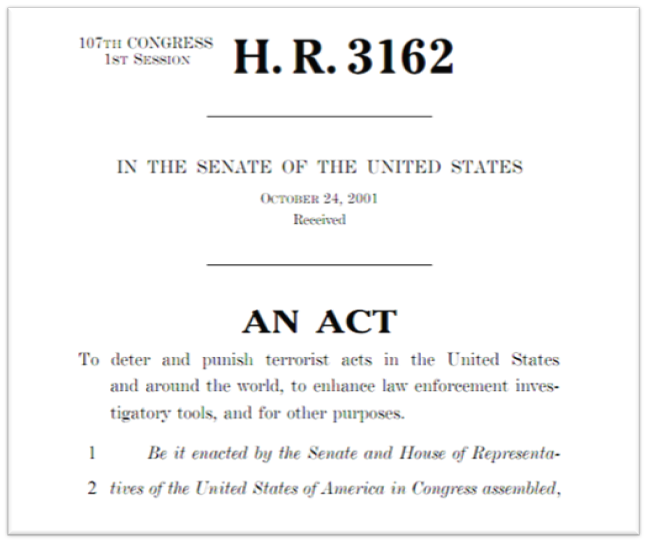
Patriot-Act-HR-3162

Inter Arma Enim Silent Leges, in time of war the law stands silent…

James Madison wrote that “A popular government, without popular information, or the means of acquiring it, is but a prologue to a farce or a tragedy; or, perhaps both.”

After September 11th 2001 the National Security State went into overdrive with the passage of the so called Patriot Act. That act opened the floodgates for an ever expanding national security state.

I have a lot of apprehension when I read the reports about the activities of the National Security Agency, other intelligence and police agencies at all levels of government and the pervasive erosion of civil rights.  The national security state and the seeming all pervasive security and surveillance apparatus which demolishes any sense of privacy, especially the protections enunciated in the Fourth Amendment and to some extent the First Amendment. Of course the use of similar methods by the private sector, often in conduction with government agencies is another concern, but that needs to wait for another day.

I also understand from history and empirical evidence that many others, many from unfriendly countries do not share those apprehensions. Many of these competitors are willing to use whatever openness that we have as a society against us, using similar technology and methods used by our intelligence, police, governmental and private sector. It makes for an ethical, legal and even constitutional conundrum. I know that I am not comfortable with this, and perhaps maybe none of us should be.

It is very easy on one hand in light of history, our Constitution and democratic process to condemn the NSA, the FISA courts and other lawfully constituted agencies and those that drafted the laws over the decades that allow the activities which they now conduct. The same can be said of foreign intelligence agencies which all engage in similar activities including the British GCHQ, the German Bundesnachrichtendienst and so many others including the Chinese and Russians.

Likewise it is equally easy in light of history, current events and national security concerns for people to jump to the other side of the fence and not only defend the activities of the NSA and agencies like it, and to demonize those that protest or expose such activities.

When I see the talking heads on cable news shows defending or condemning such activities and not agonizing over the complexity and issues involved I get worried. Because there are legitimate concerns voiced by critics as well as defenders. But since we live in an era of soundbites, gotcha and half-truths being portrayed as all truth I find it helpful to use either historical examples, literature or fiction, and even science fiction to wrestle with the fundamental truths. So I find looking at such issues through the prism of Star Trek sometimes more interesting and provocative than simply doing the whole moralizing pundit thing.

enimsilentleges_210

There was an episode of  Star Trek Deep Space Nine that aired well before the events of 9-11-2001, and the subsequent Global War on Terror, that I find fascinating. The episode deals with a secretive agency in Starfleet operating in the gray areas between the laws and ideals of the Federation and the threats that the Federation faces. Even when the Federation is a peace, Section 31, as it is called is engaged in activities against historic or potential enemies. In a way it is somewhat like the NSA or the Defense Intelligence Agency.

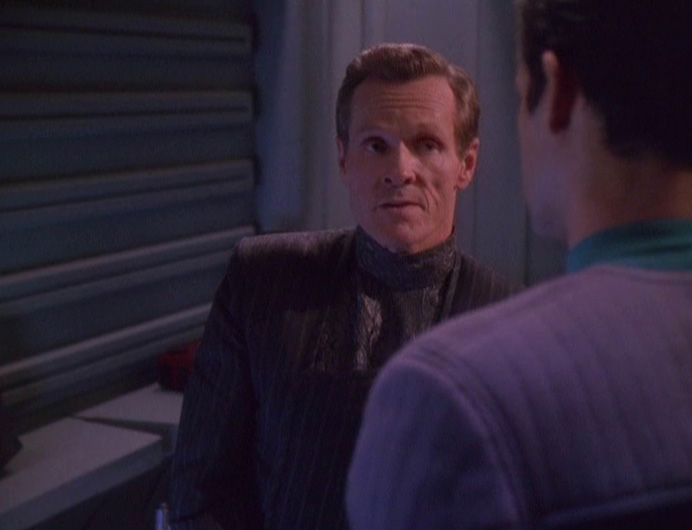
At the beginning of the Deep Space Nine Episode Inter Arma Enim Silent Leges the head of Section 31, a man only known as Sloan comes back Doctor Julia Bashir to involve him in an clandestine operation. An operation to on the Romulans who at this point are a Federation ally against the Dominion.

Sloan makes his approach and Bashir, who expresses his reservations:

BASHIR: You want me to spy on an ally.

SLOAN: To evaluate an ally. And a temporary ally at that. I say that because when the war is over, the following will happen in short order. The Dominion will be forced back to the Gamma Quadrant, the Cardassian Empire will be occupied, the Klingon Empire will spend the next ten years recovering from the war and won’t pose a serious threat to anyone. That leaves two powers to vie for control of the quadrant, the Federation and the Romulans.

BASHIR: This war isn’t over and you’re already planning for the next.

SLOAN: Well put. I hope your report is equally succinct.

BASHIR: How many times do I have to tell you, Sloan? I don’t work for you.

SLOAN: You will. It’s in your nature. You are a man who loves secrets. Medical, personal, fictional. I am a man of secrets. You want to know what I know, and the only way to do that is to accept the assignment.

I find the exchange both illuminating and riveting. The fact is that in the situation we face today the arguments of both sides should make us very uncomfortable.

Whether we like it or not or not, the incredibly rapid technical and communication advances of the past couple of decades have primed us for our present conundrum of liberty and privacy or security. That technology, as wonderful as it is  has enabled a generation to grow up in a virtual world in many ways detached from the moral and ethical balances between individual rights and liberties as well responsibility to community.

All the wonderful gadgets that we employ in everyday life, make it easy for enemies and “friends” to do things that were unimaginable to people other than science fiction writers even twenty to thirty years ago. Likewise they were certainly beyond the wildest imaginations of any of the founders who drafted Constitution.

The reality is, the things that make are lives so easy are also the things that have the potential to remove the very liberties that we treasure, either by our enemies using them, or those that defend us.

The truth is, that throughout history, even our own there have been operatives within the government in charge of secrets, as well as spies. In the Inter Arma Enim Silent Leges episode we see an operation that is full of duplicity and moral ambiguity all committed in the name of security. I won’t go into the details because it is too full of twists, and turns, you can read the plot of the episode at Memory Alpha.org http://en.memory-alpha.org/wiki/Inter_Arma_Enim_Silent_Leges_%28episode%29

There is an exchange between Dr. Bashir and Admiral Ross of Starfleet command which is very enlightening because it practically mirrors how many on both the civil liberties and the national security side of the current controversy feel about the War on Terror.

BASHIR: You don’t see anything wrong with what happened, do you.

ROSS: I don’t like it. But I’ve spent the last year and a half of my life ordering young men and young women to die. I like that even less.

BASHIR: That’s a glib answer and a cheap way to avoid the fact that you’ve trampled on the very thing that those men and women are out there dying to protect! Does that not mean anything to you?

ROSS: Inter arma enim silent leges.

BASHIR: In time of war, the law falls silent. Cicero. So is that what we have become? A twenty fourth century Rome driven by nothing more than the certainty that Caesar can do no wrong!

ROSS: This conversation never happened.

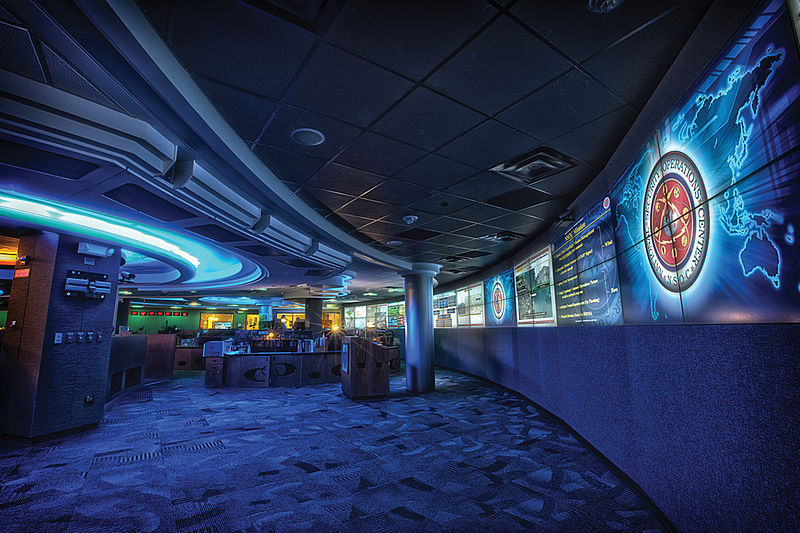
In light of the controversy of today regarding the NSA, FISA Courts, government secrecy and intelligence gathering information on its own citizens, as well as allies, friends and and enemies we face a growing tide of reporters and others seeking to reveal those secrets. Back in 1989 ethicist Sissela Bok wrote something very important in her book Secrets: Moral Choice in Public and Private Life:

“…as government secrecy expands, more public officials become privy to classified information and are faced with the choice of whether or not to leak … growing secrecy likewise causes reporters to press harder from the outside to uncover what is hidden. And then in a vicious circle, the increased revelations give government leaders further reasons to press for still more secrecy.”

As we wade through the continuing controversy surrounding these issues we will see people do exactly what Bok said. These are the exact arguments are being made by the people and officials directly involved in such activities, as well as former elected and appointed officials, and members of the press.

nsa-operations-center

The interesting thing to me is that very few of the people or agencies, past and present, Republican and Democrat involved have clean hands. It is amazing to see former champions of civil liberties defend the NSA actions and those that empowered the NSA in the Patriot Act now condemn it. I find it both fascinating and frightening.

At the end of the Inter Arma Enim Silent Leges episode the mysterious Sloan pops back in on Doctor Bashir who is in his quarters, asleep and depressed by what he experienced during the operation on Romulus and with Admiral Ross.

SLOAN: Good evening.

BASHIR: Are you expecting applause? Have you come to take a bow?

SLOAN: I just wanted to say thank you.

BASHIR: For what? Allowing you to manipulate me so completely?

SLOAN: For being a decent human being. That’s why we selected you in the first place, Doctor. We needed somebody who wanted to play the game, but who would only go so far. When the time came, you stood your ground. You did the right thing. You reached out to an enemy, you told her the truth, you tried to stop a murder. The Federation needs men like you, Doctor. Men of conscience, men of principle, men who can sleep at night. You’re also the reason Section Thirty one exists. Someone has to protect men like you from a universe that doesn’t share your sense of right and wrong.

BASHIR: Should I feel sorry for you? Should I be weeping over the burden you’re forced to carry in order to protect the rest of us?

SLOAN: It is an honor to know you, Doctor. Goodnight.

We live in this kind of world and maybe it is good to sometimes step back and look at issues using a different prism. I really don’t have the answers. I am a civil libertarian who places a high value on the openness of a government to its people. I also know that there are those that have no regard for such openness or, to quote Sloan don’t “share your sense of right and wrong.”

Maybe that is not a good answer. I really don’t know. All I know is that as uncomfortable as this all is that those on both sides of the issue have valid points and concerns. It is a debate that needs to happen if we are able to balance that a society needs to balance individual rights and responsibility to the community; openness and secrecy; civil liberties and national security.

But that being said. it is a debate that needs to happen, even if it makes us uncomfortable. I for one think that it is better that we be uncomfortable when looking at such an important debate than to be prisoners of our certitude.

Peace

Padre Steve+

2 Comments

Filed under History, laws and legislation, national security, Political Commentary, star trek

Can you Live With It? The Moral Costs of the War Against the Islamic State

pale-moonlight

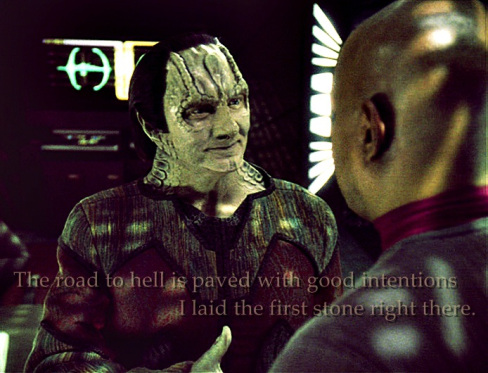
“My father used to say that the road to Hell is paved with good intentions. I laid the first stone right there. I’d committed myself. I’d pay any price, go to any lengths, because my cause was righteous. My… intentions were good. In the beginning, that seemed like enough.” Captain Benjamin Sisko (Avery Brooks) Star Trek Deep Space Nine, In the Pale Moonlight

I think that among the Star Trek series that my favorite is Star Trek Deep Space Nine. Of course all of the series deal with ethics, philosophy and morality to some extent, but Deep Space Nine is perhaps the most interesting to me. Don’t get me wrong I think that the Original Series and Start Trek the Next Generation were and are leap years ahead of most television series when it comes to addressing ethical, moral and existential issues, but somehow living in the post 9-11 “War on Terrorism” world I find Deep Space Nine to be the most compelling. I think that is that the fact that the moral issues get blurred which attracts me to the series, and to this episode in particular.

One of my favorite episodes is from season six and is entitled “In the Pale Moonlight.” The episode deals with the unsavory matter of contriving a reason to get the Romulan Empire to join with the Federation and the Klingons to fight the Dominion-Cardassian alliance that is threatening those entities as well as potentially the entire Alpha Quadrant. I have included a link to the conclusion of that episode here:

http://www.youtube.com/watch?v=dTgGtJ-PisA

The ethics of this episode seem very timely as I look at the new phase of the conflict that the United States has been engaged for the past thirteen years. The fact is that in spite of our appeal to higher ideals we are having to make alliances with powers that are only slightly less unsavory than ISIS, powers whose polices have help ISIS grow. In a sense it is the classic scenario of making a deal with the devil to defeat one’s enemy. Of course this is not new, individuals and nations have made such deals, sometimes with mortal enemies throughout history.

Unfortunately we usually judge such decisions based on their results, rather than wrestle with the ethical issues involved and how we might behave in similar situations. For me the philosophical and ethical issues involved in such alliances have a special interest and as such I tend to notice or recall instances where I saw, read or heard something that makes a connection to an ethical or moral dilemma faced by policy makers and planners today.

Some of the issues involved for policy makers are related to the traditional Just War Theory, and what is called the “Supreme Emergency” exemption. This exemption basically posits that when faced with a supreme and existential emergency a person or state may engage in behaviors that ordinarily would be considered unethical if the situation were not of a supreme emergency.

Of course such decisions in the real world are difficult. Those who have a system of beliefs that help them define right and wrong behaviors, even if they are not codified in law may struggle with with such decisions, while those who act according to what they deem necessary or expedient, unbridled by religious, philosophical or other similar codes may not, instead making their decisions based on what appears to be necessary at the time.

This Deep Space Nine episode is remarkable because we get to see an actor playing a military commander dealing with the morality of the course of action that he is taking. In one of the early scenes Captain Sisko expresses his doubts relating to the morality of a decision that he is making in a war that has already consumed the lives of tens of millions of people.

siskogarak


After an incident where a Federation starship was destroyed, Sisko went to Elim Garak (Andrew Robinson), an exiled Cardassian intelligence officer to uncover any evidence about Dominion-Cardassian collusion to attack the Romulans. When none was uncovered and Garak’s sources on Cardassia were compromised he agreed to allow Garak to manufacture evidence in order to get the Romulans into the war on the side of the Federation and Klingons. Sisko compounded the situation by having the Kilingons release a master forger who was on death row to help Garak. Sisko knew it was wrong and confided in his log:

“Why I didn’t listen to the voice in the back of my mind telling me not to believe a word he said, I’ll never know… But it didn’t take long for me to come face to face with the fact that I’d made a mistake.”

When the former prisoner gets drunk and attacks the owner of a tavern on the space station Sisko was in a bind. He wanted no evidence that the man had been on his station and in order to keep Quark, the bar owner quite had to bribe him. Sisko again expressed his doubts in his personal log:

“Maybe I should have put a stop to it right there. Maybe I should have said, “Thank you very much for your input, Mister Garak, I will take your suggestion under advisement,” and then gone back to my office and forgotten the whole thing. But I didn’t. Because in my heart, I knew what he was saying made sense.”

Even so Sisko still had doubts:

“That was my first moment of real doubt, when I started to wonder if the whole thing was a mistake. So I went back to my office. And there was a new casualty list waiting for me. People are dying out there every day! Entire worlds are struggling for their freedom! And here I am still worrying about the finer points of morality! No, I had to keep my eye on the ball! Winning the war, stopping the bloodshed, those were the priorities! So I pushed on. And every time another doubt appeared before me, I just found another way to shove it aside.”

When nations feel they are engaged in a life and death struggle, those who serve as policy makers, planners and military commanders often make uncomfortable compromises with their own religious, ethical or philosophical codes. Sisko continued down the path despite his doubts but justified his actions by the fact that Starfleet had approved them:

“Maybe… I was under more pressure than I realized. Maybe it really was starting to get to me, but I was off the hook. Starfleet Command had given the plan their blessing and I thought that would make things easier. But I was the one who had to make it happen. I was the one who had to look Senator Vreenak in the eye and convince him that a lie… was the truth.”

The forgery was completed and the Romulan Senator secretly arrived on the station to examine the evidence and as he did so all Sisko could do was wait, confiding in his log:

“So all I could do was wait… and see how masterful Tolar’s forgery really was. So I waited… tried to catch up on my paperwork, but I find it very difficult to focus on criminal activity reports, cargo manifests… So I went back to pacing, staring out of the window. I’m not an impatient man, I’m not one to agonize over decisions once they’re made. I got that from my father. He always says, “Worry and doubt are the greatest enemies of a great chef. The soufflé will either rise or it won’t – there’s not a damn thing you can do about it, so you might as well just sit back and wait and see what happens.” But this time the cost of failure was so high, I found it difficult to take his advice. If Vreenak discovered that the data rod was a forgery, if he realized that we were trying to trick them into the war it could push the Romulans even farther into the enemy camp. They could start to openly help the Dominion. If worst came to worst they could actually join the war against us. I had the distinct feeling that victory or defeat would be decided in the next few minutes.”

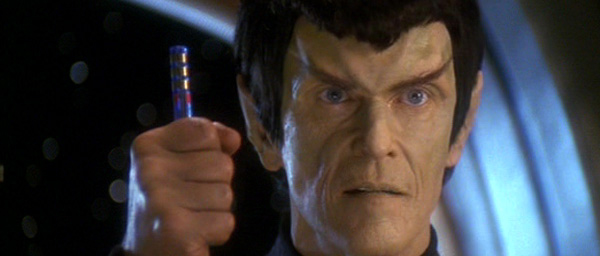
In-The-Pale-Moonlight

It did not work, Vreenak discovered that the data rod was a forgery and threatened to expose Sisko’s deception and possibly bring the Romulans into alliance with the Dominion. When Sisko’s actions blew up in his face and his deceit was revealed he was not happy and resigned himself to face the consequences:

“So it all blew up in my face. All the lies and the compromises, the inner doubts and the rationalizations – all for nothing. Vreenak was furious. I can’t say I blamed him; I’d have reacted the same way. After telling me in no uncertain terms that he intended to expose this “vile deception” to the entire Alpha Quadrant, he got back in his shuttle and headed home. There didn’t seem to be anything more to do… so I went back to work. Two days later we got the news.”

Sisko learned in a Starfleet communication that Vreenak’s shuttle had blown up and that is was suspected to be the work of the Dominion. When Sisko found that Vreenak was dead he went to Garak and forcefully confronted him, striking him in the process. He accused Garak of sabotaging the senator’s ship and killing him as well as the forger, Tolar. Instead of backing down Garak confronted the results and the ethical issue. The heated exchange between the two men is fascinating:

Garak: If you can allow your anger to subside for a moment, you’ll see that they did not die in vain! The Romulans will enter the war!

Captain Sisko: There’s no guarantee of that!

Garak: Oh, but I think that there is. You see, when the Tal Shiar finishes examining the wreckage of Vreenak’s shuttle, they’ll find the burnt remnants of a Cardassian optolythic data rod which somehow miraculously survived the explosion. After painstaking forensic examination, they’ll discover that the rod contains a recording of a high-level Dominion meeting, at which the invasion of Romulus was being planned.

Captain Sisko: And then they’ll discover that it is a fraud!

Garak: Oh, I don’t think they will! Because any imperfections in the forgery will appear to be a result of the explosion. So – with a seemingly legitimate rod in one hand, and a dead senator in the other, I ask you, Captain – what conclusion would you draw?

As Sisko’s anger subsided Garak continued:

“That’s why you came to me, isn’t it, Captain? Because you knew I could do those things that you weren’t capable of doing? Well, it worked. And you’ll get what you want: a war between the Romulans and the Dominion. And if your conscience is bothering you, you should soothe it with the knowledge that you may have just saved the entire Alpha Quadrant. And all it cost was the life of one Romulan senator, one criminal, and the self-respect of one Starfleet officer. I don’t know about you, but I’d call that a bargain.”

Shortly thereafter Sisko found out that the out that the deception was successful as Garak had said it would be. The Romulans who recovered the damaged data rod believed that it was genuine and declared war on the Dominion-Cardassian alliance and had entered the war on the side of the Federation. He completed his personal log:

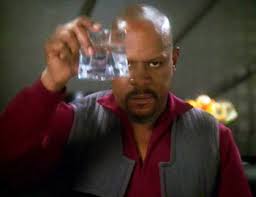
“At oh-eight-hundred hours, station time… the Romulan Empire formally declared war against the Dominion. They’ve already struck fifteen bases along the Cardassian border. So, this is a huge victory for the good guys! This may even be the turning point of the entire war! There’s even a “Welcome to the Fight” party tonight in the wardroom!… So… I lied. I cheated. I bribed men to cover up the crimes of other men. I am an accessory to murder. But most damning of all… I think I can live with it… And if I had to do it all over again… I would. Garak was right about one thing – a guilty conscience is a small price to pay for the safety of the Alpha Quadrant. So I will learn to live with it…Because I can live with it…I can live with it. Computer – erase that entire personal log.”

DS9SiskoToast

My guess is that before this war is over, there will be men and women serving in positions of responsibility in our or allied militaries, policy makers and government officials who will make similar deals, violating their own moral codes and even laws in order to defeat the Islamic State and prevent acts of terror against their citizens. Most, like Sisko will not be happy but will live with their decisions. The fact is that long asymmetrical wars in which nation states have to fight non-state terrorist entities get really ugly and the longer and more bloody that they become the more decent and honorable people will make decisions like Sisko and resort to actions that in normal times they would never countenance.

This is nothing new. Those who have fought in such wars throughout history have found ways to “live” with actions that they would not approve of had things been different. Wars such as the one that we are fighting and continue to fight in the years ahead have a corrosive affect on the human spirit. They corrupt and destroy even when they are “successful.”

The question is: Can we live with it? Sadly, as much as I hate to admit it, in a similar situation I think like Sisko, that I could condone or be complicit in something like this. I too could probably convince myself that the end justified the means and that I could live with it.

Peace

Padre Steve+

4 Comments

Filed under ethics, leadership, News and current events, philosophy, Political Commentary, star trek, War on Terrorism

Miscellaneous Musings on a Wednesday Night

20130403-153235.jpg

Well my friends it is another Wednesday night in the season of Lent and all is well at our little household. Since my return from Gettysburg Sunday night I have been in recovery mode. It is amazing how much work went into that trip and when I count in the fact that I had to spring forward over the weekend I have to admit that I was totally exhausted when I got home. I was in bed early last night and for once I got a relatively decent night of sleep in.

At work today I spent time with people, read, and did some reflecting on other Civil War and Gettysburg subjects. I also did some musing on Ethics and the state of it in our military, especially in the senior leadership over the past 15 to 20 years or so.

Both history and ethics matter a great deal to me. I think in our quest to become more efficient that we have forgotten both, and that many of the troubles that we face in this country are because we lack any real appreciation for history, philosophy or ethics. The fact is that they are not disciplines that lead to “job creation,” which is the mantra of so many Politicians, Pundits and Preachers, that Unholy Trinity, that it makes me want to vomit. Last year after he became Governor of North Carolina, the new governor and former “successful businessman” Pat McCrory promised to cut off financial aid for students taking courses not directly related to a “job.”

Of course to him this meant the humanities, history, philosophy, the social sciences and the arts. Not STEM or classes that teach people how to turn widgets, those  are immune because they produce a truly subservient class of people who do not ask questions.

Of course the study and teaching of the subject that McCrory and others want to cut are distinctly related to the preservation of our culture and society so I can see why a businessman like McCrory would so deftly attempt to sweep them aside. They are inconvenient if you are intent on creating a society to create a society of mindless drones who can do jobs but are incapable of any critical thought. So we wonder why at every level of government, private industry and even the church that people behave in ways which defy the norms of a civilized society.

Despite how loud many religious conservatives decry how far we have fallen, they are often complicit in the very things that they decry and condemn. The reason for this? Because they exalt in thought and action the very philosophies that they supposedly stand against. But then they have bought into the hateful philosophy of Ayn Rand and her violent Social Darwinism and are too poorly educated to realize it.

Wow, I think I just chased that rabbit and I have to admit that I digress… sorry.

So anyway, where was I?

Okay I remember, I was writing about what I was doing after the Gettysburg Staff Ride. It has been an interesting few days. I love the fact that there are baseball games on television again. It is a pleasant sensation to look up from a couch, bed or bar to see a baseball game. It will be even better when I am back at Harbor Park in section 102 watching the Norfolk Tides of the International League. Baseball you see is one of the few things that brings peace to my soul. No matter where or what level the sight of that diamond and smell of the freshly cut grass brings peace to my often troubled soul.

Tonight I am watching the Ken Burns Baseball series. I was struck by the comment that men who fail seven out of ten times are heroes. I think that is the case in real life. Most of us are lucky if we hit .250 in the game of life, much less .300. As for me I tend to operate by the grace of God at the Mendoza Line, or .200, just enough to stay in the game.

I have a number of writing projects planned, I am completing an application for a Ph.D. program in Organizational Leadership in which I will be able to combine my academic and professional interests into a multidisciplinary degree program. Unlike a lot of people pursuing a Ph.D. I already am pretty sure about the subject I will pursue for my dissertation. For those that haven’t guessed by what I have written the past few weeks it might have something to do with the Civil War.

So tomorrow at work I will start working on my Ethics class, the Gettysburg Staff Ride and preparations for teaching some other classes.

It is a good life. Have a great night and blessed tomorrow.

Peace

Padre Steve+

1 Comment

Filed under Baseball, ethics, Loose thoughts and musings, Political Commentary

Military Ethics, Legality and Morality: The Damage Being Caused by the Emphasis on STEM to the Detriment of the Humanities in Military Officer Programs

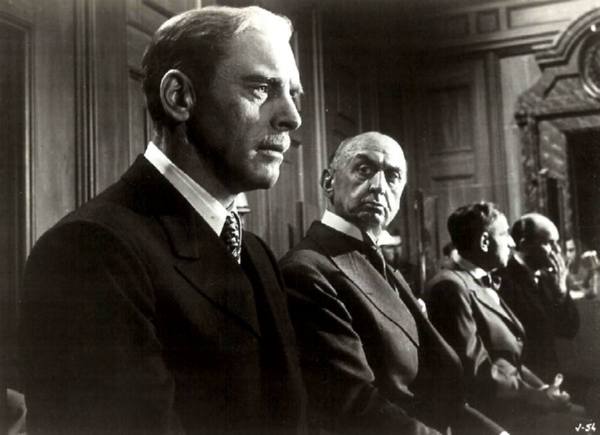
photo-jugement-a-nuremberg-judgment-at-nuremberg-1961-1

“We have been silent witnesses of evil deeds: we have been drenched by many storms; we have learnt the arts of equivocation and pretense; experience has made us suspicious of others and kept us from being truthful and open; intolerable conflicts have worn us down and even made us cynical. Are we still of any use?” Dietrich Bonhoeffer 

I have lost count of the number of scandals regarding the ethical failures of American military leaders. Today at lunch I was talking with a gentleman in charge of the military outreach for a local university where I am considering beginning a Ph.D. program in Organizational Leadership.

There are many reasons given for the these ethical failures, everything from the disintegration or the nuclear family, to the lack of religious upbringing, to the supposedly liberal educational system. However, while I think some of these issues may have some impact, I am not convinced that they are the root cause of the ethics crisis that seems to be plaguing the military.

As we discussed aspects of the program the subject got to the subject of military leaders being fired for ethical, legal and moral lapses. This is something that I am giving much though since I am now teaching ethics at a senior level military staff college. What I am noticing is that many officers struggle with basic concepts regarding history, philosophy, ethics, political science, religion, the arts and literature and other subjects that because I immerse myself in them just assume that any military professional should know.

But that is not the case. For the last thirty to forty years the commissioning programs of our services have given preference to those in the STEM, Science, Technology, Engineering and Mathematics fields. In fact the probability is that the liberal arts or social science major will not be admitted to service academy or ROTC program, even a non-scholarship program unless they are in a STEM major. This is especially true of my own service, the Navy and the Air Force but is not absent from the Army and the Marine Corps.

This is not new. In 1981 I joined Army ROTC because the Navy told me that even to be a non-scholarship student in the program I would have to change my major from history to a STEM major.

This is not simply a military issue, but it is a systemic issue in higher American education programs, programs which due to the demands of the business and technology sectors have gutted liberal arts programs and the social sciences. All of this has been done in the name of making sure that people are “prepared for jobs” and that education is related directly to employability and again jobs. That is why in large part for profit schools have proliferated offering programs focused on narrow job fields in technical majors. This has impacted higher education in public and private universities which at one time had thriving liberal arts, humanities and social science programs as well as the military where the emphasis on STEM has created havoc in terms of ethics.

Dietrich Bonhoeffer wrote:

“The ‘polymath’ had already died out by the close of the eighteenth century, and in the following century intensive education replaced extensive, so that by the end of it the specialist had evolved. The consequence is that today everyone is a mere technician, even the artist…”

Education is now viewed by most as a pathway to a better job, not a quest for understanding, knowledge or even personal improvement. That attitude is enmeshed in our culture and has been for decades. It even shows up in seminaries where programs are not focused in the classics and timeless subjects in theology, history, philosophy, ethics, languages and hermeneutics but instead methods of “growing” a church or running a program. When I was in seminary, a large conservative evangelical seminary many students complained about having to take classes that had nothing to do with running their church. Many of my fellow students despised Church History, Ethics, Philosophy of Religion, and even Systematic Theology and then complained that the courses that were oriented to running a church would be out of date in a few years.

The common theme whether this be in the for profit schools, the public and private universities, the military and seminaries is that we have trained two generations of people to be good technicians and technocrats. Men and women very skilled at getting at job done but that lack the basic ethical and moral grounding that those in previous generations received as part of their education, in the home, in their religious institutions and in the educational system.

The problem is that when you strip away a solid grounding in the arts, liberal arts and social sciences you breed people who may be very good at getting a job done. However they are people who lack the knowledge passed on by people who have shaped civilization for millennia.  They are ignorant of Hammurabi, Moses, Plato, Cicero, Aristotle, Marcus Aurelius, Thomas Aquinas, the great philosophers and thinkers from the East and the West, those who brought about the Reformation, the Renaissance and the Enlightenment and even the Scientific and Industrial Revolutions, Universal Suffrage, Emancipation and Civil Rights.

Their technical education divorces them from those that developed the legal, ethical and moral codes of our culture. They lack the cohesive understanding of social responsibility and connection that have held western civilization together. Those have been replaced by ethics that are dominated by pragmatism or utilitarianism, even in seminaries where classes on ethics or moral theology are often relegated to elective status. How else can we explain the wholesale disintegration of moral and ethical codes of behavior across the vocational spectrum be it business, government, the military or religious institutions?

The question for many people, and maybe most people in our society, including the military is not what is moral or ethical but what is “legal,” and what are the loopholes in the law that allow one to escape the consequences of their immoral, illegal or unethical behavior.

We have raised at least two, maybe three generations of technicians and technocrats, and that trend shows no sign of abating. In North Carolina last year the Republican Governor proposed eliminating tuition assistance from any program not directly related to “jobs.” By that he meant eliminating such assistance from non-STEM programs.

What this does, and I think we are seeing this today is produces people who are good at doing jobs, but have a difficult time in critical thinking or looking at the logical consequences of their ideas and actions.

Many cannot see the moral or ethical dimensions of life and even turn religion to an exercise designed to benefit them in a tangible material way. Thus there is a proliferation of churches that preach some kind of “prosperity Gospel” and those that pervert religion and use it to suppress the freedoms of others by force of law.

But let me return to the military implications of my thesis. What I have observed in my career of over 30 years of military service is a culture that has developed in an ethical vacuum. We have sought to inculcate a service culture based on Army, Navy, Air Force or Marine Corps “values” such as “honor, courage and commitment.” However, for many maybe even most those are mere words. They are shibboleths akin to religious creeds recited by people for whom they are irrelevant because they are not job related.

Now this is not an attack on those in the military, for those in the military simply reflect the culture that they come from. This includes the family, religious, social and educational systems of our society. In fact I actually believe that for the most part people in the military do a better job with values, ethics and morality than many in the civilian society. That being said there is something seriously wrong in what we are doing. If there wasn’t there would not be so many egregious lapses that call the moral fitness of senior military leadership into question.

This is especially important because the trust of the nation is invested in these men and women. The responsibilities that they have regarding the lives of people, the security of the nation and the maintenance, security and use of powerful weapons, including nuclear weapons and information technology that can be used to pry into the private lives of unknowing citizens all dictate that the ethical and moral standards of the military have to be above those found in the private sector.

Unfortunately there is no immediate “fix” for the problem because it it so systemically rooted in our society. However something will have to be done, the Chairman of the Joint Chiefs of Staff and Secretary of Defense have directed the military redouble its emphasis on teaching ethics at every level. However it is my opinion that we will have to go far beyond the recitation of creeds and repetition of words about “values” that have little relevance to people educated and brought up to simply do a job. This will be a difficult task, especially in military organizations being reduced in number while still engaged in war and increasing other operations around the world.

As to the broader societal issues, those run deep, but one thing in my mind is certain, there has to be a renewed emphasis on the humanities, liberal arts and social sciences to include the classics of western and world literature, art, philosophy, history and thought. We cannot reduce education to technical elements that require little in the way of critical thought, or for that matter provide people with “education” that does not force them to deal with the dark areas of life that are uncomfortable and the gray areas that fill our universe.

In the Second World War many of the best and brightest of young German intellectuals joined the SS and its sister organizations, organizing and executing the extermination of the Jews and others in Germany and occupied lands. Most of these men did not give their actions a second thought. They were doing their jobs, most of the time in a very dispassionate matter. They carried out orders because they were “legal.” Ethics and morality were no concern simply because they were sworn to obey orders.

The task to change this cannot be that of the military and its leadership alone. If we fail to change our education systems, our home life and even our religious life we will unleash the greatest generation of amoral technocrats who have ever walked the face of the earth. They will be men and women who will have no problem committing the greatest crimes, simply because they are “legal” and because they have only been taught to do their job.

Peace

Padre Steve+

5 Comments

Filed under ethics, leadership, Military, News and current events, philosophy

Re-entering Academia

20130906-213735.jpg

Education is the kindling of a flame, not the filling of a vessel. Socrates

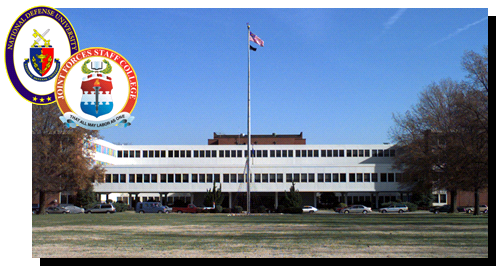
I signed in to my new assignment at the Ethics faculty and Command Chaplain at the Joint Forces Staff College today. The JFSC is part of the National Defense University and as such is not a Navy Command. it is a joint command responsible to the joint Chiefs of Staff and the Defense Department. There are faculty members from the Army, Navy, Marine Corps, Air Force, NSA, State Department and other agencies and the student body is composed of US military personnel from all branches, other Federal agencies as well as NATO and other allied nations. To put it succinctly my diverse background seems perfectly tailored for the job.

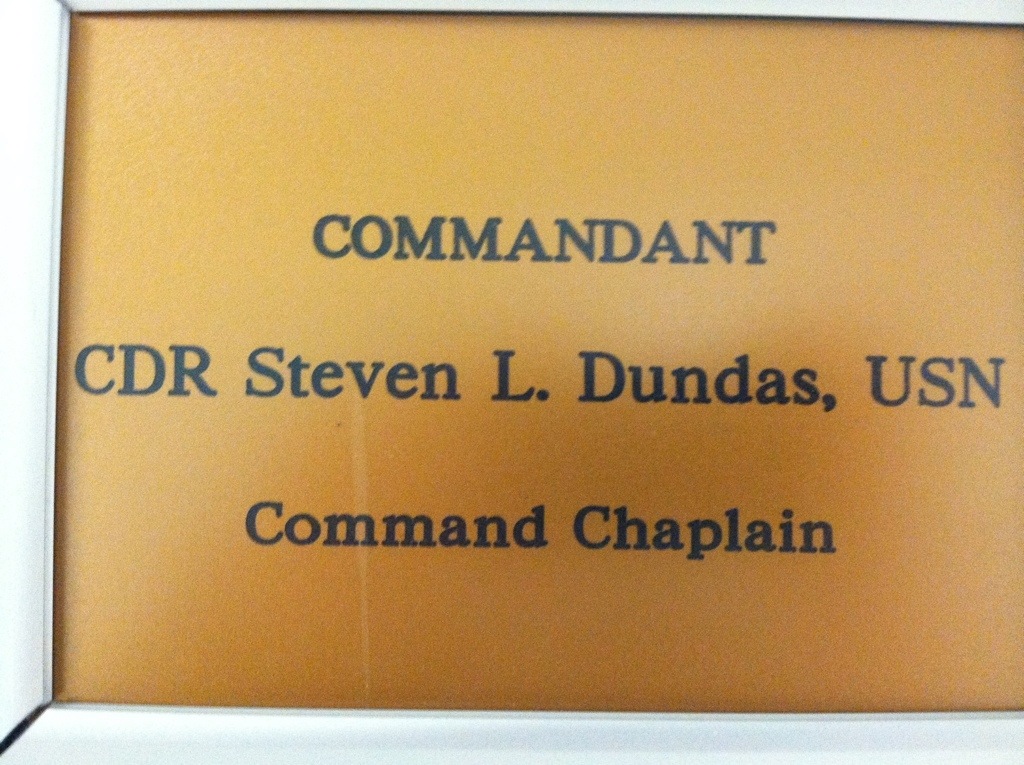
My friend Hal Scott is the outgoing chaplain and has already been a great help during the transition before I reported and today. What was really cool is even the little things were taken care of, right down to the name plate on my office door. Like Denny Crane said in Boston Legalname on the door.” But I digress…

20130906-214943.jpg

It is a good thing to have a friend in the position that you are moving in to. I have had many assignments in the military and had a number of good turnovers as we call them, but when someone who knows you and has your best interests at heart is on deck preparing the way it makes things a lot easier.

I met with the Commandant and Chief of Staff as well as some of the academic deans and professors today. It was really nice. Every single person asked me what “I wanted to do” at the college. Today the door to teaching, learning and deeper academic education was thrown open to me. I was told that I will have the chance to do anything I desire.

Now says my desires are pretty simple. I want to care for the faculty and staff members of the college as well as our students. Many of whom are catching one of our programs between arduous operation assignments and combat deployments. Quite a few I understand suffer from PTSD or some other type of combat stress injury and since they are senior officers many choose not to get help because of the stigma attached to getting it. Hopefully I will be someone who can be an encouragement to those that have not sought help,to get it and to be there for those that suffer in silence.

I also want to teach, not just Ethics, which is incredibly important in our world which appears to have gone mad, but also Military history and theory. Since I have my second Masters Degree in Military History it looks like I will get that chance as well. The doors have been opened.

That being said I do want to continue my own education. I for one do not think that a person should ever stop learning, no matter what their academic field or vocation. Since I lean toward academia it follows that I desire to continue to learn, both in my individual study and in formal education. I am looking at a number of doctoral programs which will,help me do that and help me in the academic world when I eventually retire from the military. Admittedly in that all I want to be is an adjunct professor to keep myself in the game but the additional education will help.

My first 10 weeks will be spent as a student in the Joint Advanced Warfighting School, which focuses on Joint, Multi-National and Inter-Agency operations even as I transition to being the Command Chaplain. I will be in a seminar group composed of a cross section of the student body that i already described. once i complete the course I will be teaching a number of Ethics courses and most likely get to teach other subjects as well. The last time I taught college courses was when I taught Western Civilization for Park University back in 2001.

From what Hal tells me the teaching methods encourage class participation and not doing data dumps of Power Point slides. That is good because I am okay with that and don’t mind chasing a rabbit once in a while if it helps students think more critically, ask hard questions and not be satisfied with easy answers to questions where there either are no easy answers or where multiple answers might be correct. That being said I believe that when we do this we give leaders the chance to do the right thing no matter what kind of situation that they find themselves in be it deployed or supporting combat operations or in garrison.

In this I am reminded of a quote from Star Trek the Next Generation. It is from an episode called “The First Duty.” in it the seasoned Captain Jean Luc Picard confronts his young protege Wesley Crusher after a disastrous accident that leaves a Star Fleet Academy cadet dead. Picard tells the young Crusher that “the first duty of every Starfleet officer is to the truth, whether it’s scientific truth, historical truth or personnel truth… in my book that sums up ethics.

Likewise the pursuit of truth, learning and seeking can never be brushed aside no matter how old we get or who wise that we think that we are. As the late great Hall of Fame Manager of the Baltimore Orioles Earl Weaver put it so well “It’s what you learn after you know it all that counts.”

So on Monday morning I will report to class and also give my first briefing on chaplain services, operational and combat stress issues, suicide prevention and other topics to an incoming class. My own class at that. Since we will have a few German officers in the class I will probably do at least part of my introduction in German. My Arabic or French is not good enough at the present to pull that off in either of those languages, but give me time.

Until tomorrow

Peace

Padre Steve+

20130906-233937.jpg

2 Comments

Filed under ethics, History, leadership, Military

Back To School: Welcome Back

welcome-back-kotter1

Welcome Back (Theme to Welcome Back Kotter) John Sebastian

Show intro: http://www.youtube.com/watch?v=5VlGyMG0ksg  complete song http://www.youtube.com/watch?v=xZzEzDkeHzI

Welcome back,

Your dreams were your ticket out. 

Welcome back, 

To that same old place that you laughed about. 

Well the names have all changed since you hung around, 

But those dreams have remained and they’re turned around. 

Who’d have thought they’d lead ya (Who’d have thought they’d lead ya) 

Here where we need ya (Here where we need ya) 

Yeah we tease him a lot cause we’ve hot him on the spot, welcome back, 

Welcome back, welcome back, welcome back.

In the morning I will check in to my new assignment at the Joint Forces Staff College where when I finish my initial course of instruction the Joint and Combined Warfighting School I will be on the faculty as the Ethics instructor and on the staff as the Chaplain.

NDU-JFSC-campus

It is the kind of assignment that I have always since my earliest days in the military I have desired to serve in. I will be teaching Ethics to mid grade and senior officers as they go out to serve in important billets in Joint Commands. I will also have responsibilities to pastor the small chapel at the College.

I love teaching and I love the academic world. I was listening to the radio today and the theme from Welcome Back Kotter came on the Sirius Radio 70s on 7 channel. The song always brings a tear to my eye, not in a bad way because those men and women who taught me in High School, College, Seminary and Grad School have had a tremendous influence on me. I hope that I will be fortunate enough to have my future students remember me so fondly.

Until tomorrow

Peace

Padre Steve+

Leave a comment

Filed under Loose thoughts and musings, Military

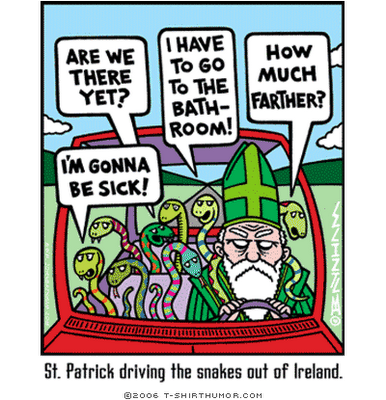
St Patrick’s Sunday Night Musing: So Many Topics So Little Time

st-pat-driving-snakes

Well, here we are the end of St Patrick’s Day and I have to say that I have basically took the weekend off. I slept more than I was awake and did as little as possible. I read a book, a baseball novel called Chin Music by Lee Edelstein which I will review tomorrow Monday night for TLC Book Tours. I also spent a good amount of time with my dog Molly, giving her walks and enjoying her joyfulness.

I did go over to the Emerald Isle St Patrick’s Festival, braving the crowds, which some say might have been 20,000 or more to take my place at Rucker John’s. What amazed me was the manner of how many people celebrate St Patrick’s Day. I am not a tea-totaler by any means and do enjoy my time at the bar with friends. By I go for the fellowship, the friendship and the relationships. I enjoy good beer, wine or the occasional whiskey, brandy or Jaegermeister, but cannot understand why people would come out with the sole purpose of getting drunk and acting like fools. There were very few of us that were regulars there last night as the festivities commenced and I was embarrassed to watch Marines from our local bases act completely foolish, being vulgar, rude and causing the management of have to cut them off.

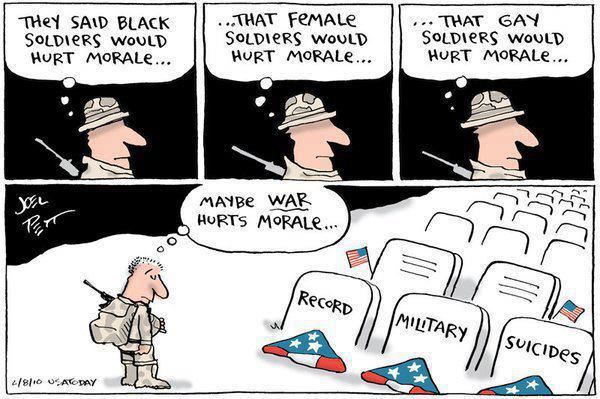
military-suicides

Last week was difficult, very busy and dealing with the effects of yet another suicide of a young sailor. I will be working in the early part of the week to conduct the memorial service for the young man, a veteran of Afghanistan whose demons were evidently more than he could bear, and to care for his shipmates. That suicide angered me. Not that I am angry with that young man and his choice to kill himself, but it angered me that so many young men and women, active duty, reserve, national guard as well as retirees and veterans who have left the service die every day.

The fact is that I don’t think that we as individuals, the military, the veterans administration or society are doing enough. I am tired of it and have resolved to do whatever I can to do what I can do to as an individual, a Chaplain and military officer to stem this tide. I may be pissing into the wind, but having been to the brink and stared into the abyss of hopelessness after I returned from Iraq I cannot just stand by and lament the situation anymore.

262_29132382058_5961_n

I have also been thinking about Iraq and all of the lives lost or destroyed, American, Iraqi and others, the treasure spent and the promises broken. As a veteran of that war I hope and pray that all the lives lost and treasure wasted will not be a complete waste. I pray that some good will still come from our misbegotten invasion of Iraq. Iraq remains a part of my thoughts and my dreams, and rarely a night goes by that my mid does not go back to Iraq, the men that I served with and the Iraqis that I got to know.

tumblr_mgszpffQIu1s1483mo1_500

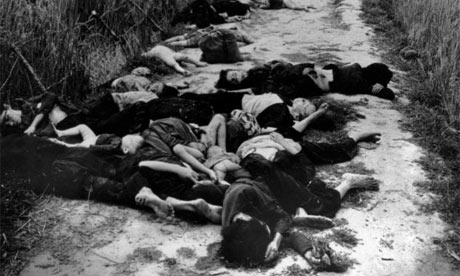
In the midst of Iraq I was reminded that yesterday was the anniversary of the My Lai Massacre and my distant connection to it. Of course that massacre was one of the most disgraceful episodes in the history of the US Army. I remember when the news broke about it and then remember what my first class advisor in Army ROTC at UCLA had to say about it. He was there after the massacre, his unit providing protection for those investigating it. His words about it and how bad it was remained with me.

In 1997 I was serving as the Chaplain at Fort Indiantown Gap Pennsylvania when I was requested to conduct the funeral for Colonel Oran Henderson, the man who commanded the brigade to which the men that conducted the massacre belonged. Henderson was tried and acquitted of a cover up at the longest running court-martial in US history. However, his career, which before My Lai appeared that he was destined to be a general. That destiny died at My Lai.

$T2eC16FHJHYE9nzpcDiuBQWg3T)P0g~~60_35

The tragic thing is, a that Henderson, who was a hero in many ways, a man who in World War II, Korea and Vietnam was wounded and conducted himself honor, failed in this crisis. At the time a thorough  investigation conducted by him that sought justice rather than a whitewash may have helped the county and changed his legacy. When I think of him I know that what we do matters, especially as military officers. Ethics is and has to be a central part of our life and faith. When we forget that, when we allow the utilitarian necessities of careerism and defend the institution even when it is wrong we like Henderson fail. That may be one of the lessons that we did not learn in Vietnam, Iraq or Afghanistan which will continue to haunt us. I’ll probably write something about My Lai and its relation to current conflicts and the necessity of military professionals to always seek the higher level of ethics in how they approach war.

Like I said, there is so much to write about and to discuss. I want to write some on the upcoming NCAA Basketball Tournament, a bit about baseball as well as some of the things happening in regard to North Korea, Iran, Syria and Afghanistan and the first days of the new Papacy of Pope Francis, which may turn out to be as surprising papacy as we have seen in decades, at least since Pope John XXIII.

Well, that is enough for tonight. Tomorrow I will post the review of Chin Music and we’ll see what the rest of the week portends.

Peace and blessings

Padre Steve+

Leave a comment

Filed under Loose thoughts and musings, Military

Martin Luther and My Theological Formation: An Old Catholic Priest talks about Luther’s Influence on his Life

The Luther Rose: When they stand under the Cross Christian Hearts turn to Roses

“Grace is given to heal the spiritually sick, not to decorate spiritual heroes.” Martin Luther

When a young Priest and Theology Professor at the University of  Wittenberg named Martin Luther posted the 95 Theses on the door of the Schlosskirche in Wittenberg it changed the course of Western as well as Church history.  He also changed mine.

Martin Luther was the first of a series of theologians that helped make me what I am now. When my Church History professor Dr. Doyle Young and Systematic Theology professor Dr. David Kirkpatrick introduced me to Luther’s writings and his “Theology of the Cross it was earth shaking.  It was his Theology of the Cross brought me to an incarnational understanding of the Christian faith because it is only through the Cross that we come to know God in a truly Christian sense of understanding.  For Luther the Cross was central to understanding the humanity’s relationship to the Trinity, and stands against Calvin whose understanding of God’s will and predestination from before time began tends minimize the Cross, for Calvin it is a mechanism but for Luther it is the most profound and personal revelation of God, Father Son and Holy Spirit. The incarnational and Trinitarian found in the Theology of the Cross also opened for me essential nature of the Eucharist to the Christian faith and which helping bring me to a catholic understanding of the faith.

The relational aspects of the Theology of the Cross were personalized in the Three Solas; Sola fides by faith alone, Sola Gratia by grace alone and Sola Scriptura by scripture alone. These became the hallmarks of the Reformation and without getting into the weeds to dissect all the ramifications for the Church and the world impact the way that many Christians practice and express their faith to the current day.

The Catholic in me tends to discount Sola Scriptura because Luther himself was such an imperfect practitioner of this. I find that the Anglican and Old Catholic triad of Scripture, Tradition and Reason is a more Biblical way of understanding what we can understand of God as well as in bearing witness of the self revelation of God in Christ in our world than is Sola Scriptura.

The Reformation which began when Luther posted his “theses” on the door of the Schlosskirche broke the hold of the Roman Catholic Church on Europe brought about many changes. It was the watershed moment when western church unity was fractured forever. As the years passed this increasingly fractured and diverse church in the west and helped end the primacy of the Church over the State.  The Reformation was also essential to the future Enlightenment as educational institutions, philosophers, historians and scientists gained the freedom to operate free from the all pervasive reach of the Church.

In the beginning when he walked up to the Schlosskirche to post his theses Luther intended nothing more than reforming and curtailing abuses in the Catholic Church and how the Church saw grace, faith and scripture.  Instead he changed the course of history in ways that most modern people, especially conservative Christians fail to comprehend today.  If they did they would not be embracing such heresy as the Dominion movement and it’s Seven MountainsTheology.

I did a lot of study on the Lutheran Reformation in and after seminary. In 1996 while stationed in Germany as a mobilized Army Reserve Chaplain had the privilege of organizing a series of Reformation tours to Wittenberg, Worms and Heidelberg.  We went to Wittenberg on Reformation day where we attended the Reformationstag service at the Schlosskirche.   I led a walking tour of the town that day.  One of the parishioners from the chapel asked me if I had been toWittenberg before because I seemed like I knew every place in the town.  I had to tell her that I had not been there in person but because of my study had imagined it so many times that I knew every place by heart.  When we went to Worms where Luther on trial before Charles V was told to recant his writings it as the same, except that in Worms the town hall where the Imperial Diet met was destroyed long ago.  However a stone in the pavement marks the spot where Luther concluding his defense before the Emperor Charles V and the assembled Princes and prelates with these immortal words:

“Unless I am convicted by scripture and plain reason – I do not accept the authority of the popes and councils, for they have contradicted each other – my conscience is captive to the Word of God. I cannot and I will not recant anything for to go against conscience is neither right nor safe. God help me. Amen.” It is legend that Luther said the words “Here I stand. I cannot do otherwise. God help me, Amen!”  These words were probably only added later by someone else to make the story more interesting as they do not appear in the council notes.  Not that Luther would have objected.  The film version is linked here:

http://www.youtube.com/watch?v=U0tk_EvWXQQ&feature=player_embedded

Likewise Luther’s debate with Swiss Reformer Ulrich Zwingli at the Marburgcolloquy regarding points of doctrine was significant for me. It was held that they might unify their separate reform movements. They agreed on all points except the Eucharist where Luther enunciated a very catholic understanding of the “Real Presence.”  Zwingli argued it to be a symbolic memorial though he conceded that it might have some spiritual component.   Luther would not budge and to each of Zwingli’s arguments pulled back the tablecloth to reveal the words “This is my body, this is my blood” which he had carved on the table.  They departed without achieving unity, something that has plagued Protestants to this day and when Zwingli was killed in battle when leading the militia from Zurich to fight the approaching Catholic Army.  When Luther heard about the Zwingli’s death he commented Zwingli drew his sword. Therefore he has received the reward that Christ spoke of, ‘All who take the sword will perish by the sword’ [Matt. 26:52]. If God has saved him, he has done so above and beyond the rule.” (Table Talk #1451) When I visitedMarburg with my friend Gottfried in 1997 I stood in the room where the men met and standing at that table I imagined Luther arguing with Zwingli.

Martin Luther helped begin the journey to the Priest that I am now. Others similar to Luther, the Catholic theologian and reformer in his own right Father Hans Kung who was able to do what Luther couldn’t do, make a case for Luther’s theology as part of catholic theology.  Lutheran theologian Jürgen Moltmann has brought Luther’s theology to the modern world and Dietrich Bonhoeffer who showed me an example of how to live out the incarnational message of theTheology of the Cross in a world gone mad.  Kung’s book On Being a Christian, Moltmann’s Theology of Hope and The Crucified God have being influential in my theological formation. Bonhoeffer’s contribution was how that theology is important in standing up to oppression in all forms, his writings including The Cost o Discipleship, Ethics Creation Fall and Temptation, Life Together and Letters and Papers from Prison.  All of these men helped me in my transition following seminary to a moderate Anglo-Catholic to an Old Catholic faith that places a high place to Scripture, Apostolic Tradition and Reason in interpreting and living out the faith.

Of course there are others that have influenced me, the early Church Fathers, Francis of Assisi, John Wesley, Karl Barth and Emil Brunner, Henri Nouwen, Father Andrew Greely  and Bernard Häring to name but a few.  But even so I have always had a special place in my heart for Luther even with all of his flaws which were many.  Luther was earthy, spoke his mind often in a direct and coarse way and had no problem with having fun or good beer.  I relate to him a lot and am in his debt because he helped me become who I am today.

Peace

Padre Steve+


2 Comments

Filed under christian life, faith, History, Religion

Cheating in Baseball: The Case of Barry Bonds and it’s Relationship to Modern America

Barry Bonds was convicted of one count of Obstruction of Justice in his trial on perjury charges. The obstruction count came as a result of Bonds’ 2003 Grand Jury testimony.  The three perjury charges were deadlocked and the judge has the option of retrying them.  Bonds’ defense team asked for the verdict to be set aside and the judge did not immediately rule on the request.  The Bonds legal saga is not over as a decision to retry the deadlocked perjury charges, the judge acting on the defense motion to set aside the guilty verdict and the outcome sentencing and any appeals are still to come.

Meanwhile the steroids era just will not go away as Roger Clemons is soon to stand trial for lying to Congress about his alleged steroid use and Manny Ramirez ended his already tarnished career with yet another positive steroid sample.  Ramirez should have known better. He was on the list of 103 players that tested positive in 2003 and he was suspended for 50 games last year for a positive test while playing on the Los Angeles Dodgers.  The fact that he was caught once again suggests that he was either incredibly arrogant or stupid or possibly both.

Unfortunately they are not alone. In fact 6 of the top 14 home run leaders (in italics) of all time are tainted by steroids only one of whom is still active.  Jim Thome who is also active has not been implicated in the steroids scandals but will still likely be scrutinized simply because he hit a lot of home runs during the era.  The sad thing is that the use of steroids according to some was so prevalent that almost anyone who set records during the era tainted or not will be viewed with suspicion.  As for Bonds people made up their minds about him years ago and there is little middle ground when it comes to him. The only thing now is how baseball will deal with the records of Bonds and the other players of the steroid era and admit him or any of them into the Hall of Fame.

1              Barry Bonds           762

2              Hank Aaron            755

3              Babe Ruth               714

4              Willie Mays             660

5              Ken Griffey, Jr.      630

6              Alex Rodriguez      617

7              Sammy Sosa          609

8              Jim Thome              590

9              Frank Robinson     586

10           Mark McGwire      583

11           Harmon Killebrew 573

12           Rafael Palmeiro                    569

13           Reggie Jackson      563

14           Manny Ramírez                    555

Now some like Palmeiro went and shook their fingers at Congress and then popped positive, not smart but so many others could very well have done steroids that have not been caught that we will never know.  There are numerous reports which implicate others most of whom will never be prosecuted or banned from baseball.  But thanks to IRS Special Agent Jeff Novitsky who transferred to the FDA to pursue elite athletes Bonds, Clemons and other legends of various sports have been singled out for prosecution in what amounts to a witch hunt designed to bring down the biggest names in sports.  In the case of Bonds this has cost the taxpayer over 50 million dollars.  In an era of massive deficits is this a good way to spend our money to get a guilty verdict on just one charge after almost 8 years of work?  To me it seems that Novitsky and his team have made a special effort including violating court prescribed limitations of search and seizure at the BALCO labs and to ensure that the case was tried in the media before Bonds ever went to court.  Do the math: 1 player, 8 years, 50 million dollars and 1 guilty verdict on one count of 5 that went to trial and 4 that went to the jury.

That being said I believe that Bonds knowingly took steroids as did so many of the players of his era and though Bonds has not admitted anything I imagine that he started to take steroids because of the wild success of those that were taking such as Mark McGuire and Sammy Sosa neither of who had all of the natural talent and ability of Bonds who was on course to be a Hall of Famer before he started using.  I wish that he had admitted that he did back in 2003 it probably would have done much to help end the era as well as put others on notice and it is likely that instead of being ever in our face the Steroid era would be in the past.  The conviction even on the one count of obstruction says much in how he is perceived in court and in public. While Bonds has many supporters he also has many detractors.

I think as does Bob Costas that Bonds should be elected to the Hall of Fame, not on the first ballot for sure because unlike McGuire and Sosa he was heading to hall of fame well before his numbers became inflated after the 1997 season.  Despite the fact that steroids undoubtedly had some impact there were many others that took steroids and still couldn’t hit, many that couldn’t get out of the minor leagues. To quote Minnesota Twins outfielder Shannon Stewart who was interviewed by Minneapolis Star Tribune sports writer Paul Reusse:

“The truth is, there were so many guys taking steroids for a few years, and they couldn’t hit like Barry Bonds. In my opinion, a guy hitting with a corked bat is taking a bigger advantage than someone who was on steroids….If Bonds was doing all of this … you still have to hit the ball. He still was going to hit 40 or 50 (each season), with or without steroids.”

Zach Moore compiled an interesting and enlightening portrait of Bonds’ performance before he began allegedly using steroids in 1998. I post it here with the link because with or without steroids Bonds would have made the Hall of Fame based on his pre-1998 statistics.  True he may not have topped Aaron or Ruth in Home Runs but the numbers and the company they put him in are impressive.

“Bonds’ stats prior to the 1998 season include a .288 batting average, a .408 on-base percentage, and a .551 slugging percentage. He had 1,750 hits, which included 321 doubles, 56 triples, and 374 round trippers. He drove in 1,094 runs, while crossing the plate 1,244 times himself.

He did all that while also walking 1,227 times. Bonds was not only a threat at the plate, but once he got on base, he stole 417 times. He did all this while only striking out 958 times.

In The New Bill James Historical Baseball Abstract, which was written just before the 2001 season during which Bonds hit 73 home runs, he calls Bonds “the most un-appreciated superstar of his lifetime.” That is one reason for Bonds’ desire to use steroids, according to Mark Fainaru-Wada and Lance Williams in Game of Shadows.

In the section of the Abstract where James ranks his 100 best players at each position of all time, James ranks Bonds the third best left fielder ever, only behind Ted Williams and Stan Musial.

James also calls Bonds “probably the second- or third-best hitter among the 100 listed left fielders (behind Williams and perhaps Musial), probably the third-best baserunner (behind Henderson and Raines), probably the best defensive left fielder. Griffey has always been more popular, but Bonds has been a far, far greater player.”

The astounding part about this is that James wrote this before Ken Griffey Jr. started getting hurt, so he could still vividly remember Griffey gliding around centerfield, robbing home runs, stealing bases, and that beautiful swing.

On the next page, James then went on to list his 10 best players of the 1990s; Bonds leads that list, with Craig Biggio of the Houston Astros coming in second, the 10th player on that list is Greg Maddux. I say this because James goes on to say, “the No. 2 man, Biggio, is closer in value to the No. 10 man than he is to Bonds.”

We tend to forget how good Bonds was, even before he went on this steroid-aided home run tear of recent years sometimes.

I can’t compare his 12-year career statistics with any one player because his ability to do everything does not allow that. Instead, I’ll use a few different Hall of Famers to nail home the point.

His .288 average is higher than both Rickey Henderson’s .282 and Carl Yastrzemski’s .285.

He hit 101 fewer home runs then Stan Musial in about eight less seasons and also hit 13 more home runs than Joltin’ Joe DiMaggio.

His on-base percentage was one point lower then Manny Ramirez’s current .409 career mark, and it tied Jackie Robinson’s career OBP.

Listen carefully to this next statistic, with his 12-year all-natural career, Bonds’ career slugging percentage of .551 would be eight points lower than Musial’s, six points lower than his godfather Willie Mays’, five points lower than Mickey Mantle’s, and only three points lower than Hammerin’ Hank Aaron’s.

Bonds had 15 less career runs scored than HOF centerfielder Duke Snider.

He finished with 29 less hits than HOF infielder Lou Boudreau.

Kirby Puckett’s 1,085 RBIs were nine less than Bonds’ sum. His 321 doubles tied Yogi Berra’s.

Bonds’ 1,227 base on balls are still more than future Hall of Famers Ken Griffey Jr., Chipper Jones, and Manny Ramirez’s current totals. He even had more than walk machine Jason Giambi, and he did it in only 12 seasons.

Bonds’ 417 stolen bases put him in the top 65 all-time.

Another testament to his incredible combination of speed and power is that he is one of only four players in the 40/40 Club (home runs and steals). He actually did it during 1996 when he was clean.

The other three members of that club are fellow abuser Jose Canseco who did it in 1988, Alex Rodriguez who did it in 1998 when he was still with the Mariners, and Alfonso Soriano who did it in 2006.

After only 12 seasons in the Major Leagues, Barry Bonds was unquestionably a first-ballot Hall of Famer.”  http://bleacherreport.com/articles/40505-were-barry-bonds-and-roger-clemens-hall-of-famers-before-steroids

Additionally Bonds before 1998 was a 7 time Gold Glove winner, 3 time MVP and 6 time Silver Slugger Award winner. For a complete list of Bonds accolades see the Baseball Almanac page at http://www.baseball-almanac.com/players/awards.php?p=bondsba01  Even after he was alleged to use steroids he won the 2004 Hank Aaron Award, the 2004 Most Valuable Player Award, 2004 Players Choice Outstanding Player of the Year Award, 2004 Players Choice Player of the Year Award, 2004 National League Silver Slugger Award and 2004 Sporting News Major League Player of the Year Award.  In a sense despite a widespread suspicion that he was using steroids the players and media recognized him as the best in the game. Then they didn’t seem very concerned about the possibility that he might have cheated. Now many in the media who made their money promoting Bonds condemn him as do many fans that have since abandoned him.  To me it is hypocritical.  Yes I think that he cheated but that takes little away from his pre-steroid accomplishments.

Because of the alleged steroid use and the subsequent investigation, trial and conviction he will be remembered as a cheater. However morally he is no different than all the players of the Steroid eras who abused PEDs but who were nowhere close to his skills and performance.  Bonds was certainly was an amazing player. His overall numbers would very well be lower without steroids especially the home runs, but he very well may have been the greatest overall player since his Godfather Willie Mays even without them.  Not many players can say that.

Bonds biggest problem was that he displayed a sense of arrogance toward the game and the law, the same arrogance that made him such a fearsome hitter even before steroids. The same is true with Roger Clemons, quite probably the greatest pitcher of the modern era. Like Bonds before him Clemons’ refusal to deal with the issue of his alleged steroid use forthrightly before Congress; will likely end in some kind of criminal conviction and Clemons in his first 14 seasons was certainly a Hall of Famer. I won’t go into his statistics here but they are also covered in Zack Moore’s article.

Are there men that cheated in the Hall of Fame? Yes one of the most flagrant being Gaylord Perry who admitted after his retirement and before his election to the Hall of Fame that he threw the “spit ball” which was illegal his entire career.  Players who “corked” bats were common but most were never caught because unlike today their bats were never inspected.  Pitchers used the spit ball, emery boards, diamond rings and sandpaper to alter the baseball to give it extra movement.  Since all ballplayers are human beings I have no doubt that had the technology to produce PEDs been available between the end of the Dead Ball era in 1919 and the late 1980s when they arrived on the scene that players would have abused them in order to increase their performance, win games and extend their careers.  Likewise they would have been cheered as much as the home run leaders of the 1990s were until they were exposed.  All one has to do is take a look at those who are known to have cheated as documented in this ESPN article http://espn.go.com/page2/s/list/cheaters/ballplayers.html  a number of whom are in the Hall of Fame.

My contention in this article is not that Bonds did not cheat the evidence certainly looks like he used steroids which were banned when he allegedly started using. Instead I would say that Bonds has been unfairly singled out by people in the government, the media and even in the game that would rather tear down a man than to place his actions in the broader context of the game, the era, human nature and history.  This will happens to Clemons too but not many others.

Meanwhile the government bails out financial institutions and industries that have defrauded the American public and helped impoverish the nation. We excuse the illegal and unethical lives of politicians and Presidential Candidates so long as they our on our side of the politic spectrum or failing that against the party that we oppose and we give churches and clergy who harm innocents a pass and say that the accusers are persecuting the Church. We worship celebrity and idolize people with talent or looks but not much else but we will do our best to destroy athletes who break the rules of their game.  Isn’t that somewhat hypocritical.

To put things in context I am 51 years old and coming up on 30 years in the military between the Army and Navy. In order to get the highest category of score on my Physical Fitness Test I have to perform at almost the same level as I did as a young Army enlisted man, ROTC Cadet and Officer. Likewise I have to meet almost identical height, weight and body fat standards.  On the physical side I can still outperform many young men 20-30 years younger than me. I deal with nagging injuries to my knees, shoulders and have a very fragile ankle that I have sprained or broken so many times that it is not even funny.  I suffer chronic pain. If someone had a way other than Icy Hot and 800mg Motrin to ease the pain and help my performance I cannot say that I wouldn’t take it, I probably wouldn’t break the law if it was illegal to use but if it wasn’t illegal but merely questionable I might use it.  I have another 5-7 years left before I expect to retire and like Mickey Mantle said “I always loved the game, but when my legs weren’t hurting it was a lot easier to love.”

Peace

Padre Steve+

4 Comments

Filed under Baseball