Tag Archives: henri nouwen

The Fallacy of Reductionist Fundamentalism: You Cannot be Competent in God

galaxy_universe-normal1

Today is a day for something a bit more theological in nature. A couple of days ago I wrote about the dangers of reductionist fundamentalism. One of the issues that fundamentalists of all stripes wrestle with is the issue of certitude. For them life has to be bounded by certainty. For them, whether in the matter of origins, or how life came about, in the matter of faith and morals, how life is lived in the present; or how the world ends, life must be certain. In fact, fundamentalism in all its forms inculcates believers that there is only one way of thinking, one way of knowing, one way of understanding things that are unknowable. 

Because of this need for certitude, Christians, Moslems, Jews and others of various persuasions have attempted to define the beginning and the end, as well as to dictate what is acceptable to believe, or acceptable behavior. However, this actually says more about their insecurity than reflects the strength of their beliefs. I can speak to this need for certitude from a Christian point of view, and from my study of other faiths make what I think is informed commentary.

But for people who supposedly believe in God, the reality is that in presuming certitude in what we think that we know  is actually a denial of faith. Dietrich Bonhoeffer wrote that “a God who would let us prove his existence is an idol.” Bonhoeffer was right, not only do those that presume to know exactly how creation came about, how the universe will end or say with unrequited certitude what constitutes proper belief or behavior in the eyes of God make an idol of their God, they also, whether they intend to or not, put themselves in the place of God.

According to the writer of the Book of Hebrews, “faith is the essence of things hoped for, the evidence of things unseen.” That writer, who I think is Priscilla (see Acts Priscilla and Aquila) understood that faith was not the same as empirical knowledge, otherwise it would not be faith. To understand faith in a modern sense it means that faith is something that we admittedly cannot prove. That is why it is faith.

I am admittedly a skeptic. I am. Christian, I do believe, but I doubt as much as I believe. In fact for nearly two years I lived as an agnostic, a priest praying that God still existed, thus is believe but even now doubt. That being said I have seen things that cannot be explained by science or anything rational, and there are physicians that I have worked with that can attest to those things. That being said I think there are a lot of events claimed by some as “miraculous” that are explainable and are not miraculous at all.

The fact is, whether it it about creation and the questions of origins, an exact definition by which to judge absolute truth for living or belief, or the manner of how creation will end; every single statement of such absolutes is contradicted by the fact that we live as Bonhoeffer wrote, and I like to call “the uncomfortable middle. Bonhoeffer wrote in his book Creation, Fall and Temptation that:

“Man no longer lives in the beginning–he has lost the beginning. Now he finds he is in the middle, knowing neither the end nor the beginning, and yet knowing that he is in the middle, coming from the beginning and going towards the end. He sees that his life is determined by these two facets, of which he knows only that he does not know them.”  

The reality for Christians is that we have to admit is that our belief is rooted in our faith, faith which is given to us through the witness of very imperfect people influenced by their own culture, history, traditions as well as limitations in terms of scientific knowledge. Even scripture does not make the claim to be inerrant, though some Christian Fundamentalist make that claim. Because of that, the Bible cannot be understood like the Koran or other texts which make the claim to be the infallible compendium of faith delivered by an angel or dictated by God himself. The Bible, of we actually believe it, is a Divine-human collaboration so symbolic of the relationship that God has with his people, often confusing and contradictory yet inspiring. As Hans Kung so rightly wrote:

“Christians are confident that there is a living God and that in the future of this God will also maintain their believing community in life and in truth. Their confidence is based on the promise given with Jesus of Nazareth: he himself is the promise in which God’s fidelity to his people can be read.” 

Does that mean that we fully comprehend the nature of Christ, or the doctrinal formulation of the Hypostatic Union which defines Christ as being fully human and fully God? Or does it mean that we fully comprehend or understand the doctrine of the Trinity encapsulated in either the Nicene or Athanasian Creed? Certainly not, none of those doctrines are provable by science, or for that manner even history, for there were and are people who consider themselves Christians who do not believe and who reject those doctrinal formulations. Thus for Christians to attempt to argue such matters as fact to those who do not believe is not productive at all. We must understand that faith in the living Christ is not in a doctrine but  a promise that we believe, by faith, is given given by God through Jesus of Nazareth.

The real fact of the matter is that fixed doctrines are much more comfortable than living with difficult questions or honestly examining the contradictions that exist within Scripture, history and tradition. The fact is this makes many people uncomfortable and thus the retreat into the fortress of fixed and immutable doctrine found in the various incarnations of Fundamentalism.

The fact is the world is not a safe place, and our best knowledge is always being challenged by new discoveries many of which make people nervous and uncomfortable, especially people who need the safety of certitude. So in reaction “true believers” become even more strident and sometimes even violent when confronted with issues that question immutable doctrine.

I wish it were otherwise but Christianity cannot get away unscathed by such criticism. At various points in our history we have had individuals, churches and Church controlled governments persecute and kill those that have challenged their particular orthodoxy. Since Christian fundamentalists are human they like others have the capacity for violence if they feel threatened, or the cause is “holy” enough. Our history is full of sordid tales of the ignorance of some Christians masquerading as absolute truth and crushing any opposition. Doctrinal certitude is comforting. It is as Eric Hoffer wrote:

“A doctrine insulates the devout not only against the realities around them but also against their own selves. The fanatical believer is not conscious of his envy, malice, pettiness and dishonesty. There is a wall of words between his consciousness and his real self.”

This is the magnetic attraction of fundamentalism in all of its forms, not just Christian fundamentalism.  Yet for me there is a comfort in knowing that no matter how hard and fast we want to be certain of our doctrines, that God has the last say in the matter in the beginning and the end.

But there some Christians who now faced with the eloquence of men like Neil DeGrasse Tyson and Bill Nye who make legitimate challenges respond in the most uncouth and ignorant manners. The sad thing is that their response reveals more about them and their uncertainty and insecurity than it does the faith that they boldly proclaim.

themiddle1

Our doctrines, the way we interpret Scripture and the way we understand God are limited by our humanity and the fact that no matter how clever we think we are that our doctrines are at best expressions of faith. We were not there in the beginning  and we will not be present at the end, at least in this mortal state. We do live in the uncomfortable middle. Our faith is not science, nor is it proof. That is why it is called faith, even in our scriptures where as Paul the Apostle says “If Christ is not raised your faith is worthless”  and we “are to be pitied among men.” (1 Cor. 15:17-18)

We are to always seek clarity and understanding. However it is possible that such understanding and the seeking of truth, be it spiritual, historical, scientific or ethical could well upset our doctrines about God and that is not heresy, it is an admission that God will not allow us to put hi m in our theological box. As Henri Nouwen wrote: “Theological formation is the gradual and often painful discovery of God’s incomprehensibility. You can be competent in many things, but you cannot be competent in God.”

With that I will close for tonight.

Peace

Padre Steve+

Leave a comment

Filed under christian life, faith, philosophy, Religion

Damaged Goods: Broken Clergy and God’s Grace

1622612_10152232336042059_727365308_n

I am broken…. That my friends is a fact that I am reminded of daily, especially when I open my life to strangers.

There is a quote by General William Tecumseh Sherman that defines my view of caring for people, friends, colleagues and peers. Sherman said of Grant: “Grant stood by me when I was crazy, and I stood by him when he was drunk, and now we stand by each other.”

That may seem confounding to some, even offensive. However, since I can say that I have been crazy and drunk that Sherman’s words have a particular relevance and affinity to me.

A few years ago as I was beginning to emerge from my period of complete loss of faith and agnosticism following my post Iraq PTSD crash I wrote an article called Raw Edges: Are there other Chaplains out there Like Me? It was an article that I basically wrote to see if there were other clergy or chaplains that were going through similar experiences.

While I did receive some feedback from chaplains and other clergy going through similar issues, the article eventually attracted the attention of a newspaper, followed by the DOD Real Warriors program. In late 2012 I was interviewed by David Wood of the Huffington Post about Moral Injury and featured in a front page article in the Washington Times in early April of this year. That being said all of those experiences, tough ending up being very positive I did not seek out and were quite scary because when I share intimate things about me with anyone it is risky, especially if they are clergy.

The fact is that I have a terrible fear and distrust of most clergy. I have written before that I am afraid of Christians, but I think that I am even more afraid of clergy. Frankly I don’t feel safe or normal when I am around most clergy. I actually feel more at home with atheists, agnostics and other skeptics or doubters hanging out at my favorite watering hole or the ballpark than I do with other clergy.

Part is from my own experience, but also my experience in seeing friends and others treated badly by other clergy. Thus I neither feel safe or accepted by most clergy, be they military chaplains or civilians. The sad thing is I know I am not alone.

That being said, clergy are often the last people who want to admit that they are broken or flawed. I may be a Priest and Chaplain but I know that I and both broken and terribly flawed, as I like to say I am a “Mendoza Line” Christian and Priest. I don’t do the Christian life very well, like Mario Mendoza I hit about .200, just enough to keep myself in the majors but never enough to be a Hall of Fame contender or super-star by any means. I am a flawed journeyman who works hard and cares about his work, but who lacks that natural ability as well as connections of others.

Today was hard. I was reminded by someone at work, a student who is a peer in the chaplain corps, in an incident that could have been intention or unintentional that I am flawed, and to some senior leaders inconsequential. I say this because as I have gone through the living hell of dealing with PTSD and Moral Injury over the past six years that for the most part it has not been fellow chaplains or clergy who have been there for me. Instead it has been atheists, agnostics, skeptics, other doubters as well as non-Christians of various persuasions who have taken the time to both care for me and affirm me and my ministry. Needless to say there have been some other Christians and clergy to do this, but they are a decided minority, as Dietrich Bonhoeffer so chillingly noted:

“Many people are looking for an ear that will listen. They do not find it among Christians, because these Christians are talking where they should be listening.”

If anyone wonders why people are fleeing the church and why the fastest growing religious preference in the United States is “none” one only has to look to me. If I wasn’t already a Christian there is little in American Christianity that would attract me to Jesus. But that being said I have to remind myself of the words of the man who coined the term “the wounded healer” Father Henri Nouwen. He noted “Ministry means the ongoing attempt to put one’s own search for God, with all the moments of pain and joy, despair and hope, at the disposal of those who want to join this search but do not know how.”

The fact is I am damaged goods, but then of we are honest all of us are, and that is not necessarily a bad thing. As far as what I believe that of itself is something that is at the heart of the Christian understanding of reconcilliation. Thus, to all of those that struggle as I do, I wish you all the best, knowing that somewhere in the grace of God that there is a place for all of us.

Peace

Padre Steve+

6 Comments

Filed under Loose thoughts and musings

Church, Faith, Tolerance and Reconcilliation

1622612_10152232336042059_727365308_n

“Sometimes I think it is my mission to bring faith to the faithless, and doubt to the faithful.” Paul Tillich

My friends, I write this because of something that happened to me a couple of days ago. It was an incident that upset me greatly because it ended up in the fracturing of a relationship by a friend who evidently could not tolerate where I was in my life as a priest and Christian. I discovered again the reality of what Dietrich Bonhoeffer wrote:

“Many people are looking for an ear that will listen. They do not find it among Christians, because these Christians are talking where they should be listening. But he who can no longer listen to his brother will soon be no longer listening to God, either; he will be doing nothing but prattle in the presence of God, too. This is the beginning of the death of the spiritual life, and in the end there will be nothing left but spiritual chatter and clerical condescension arrayed in pious words… never really speaking to others.”

My experience of the Church is profoundly influenced by my life in the nether world of the military culture. My world view is shaped by a blending of various Christian traditions, mutual support and collaboration among believers of often radically different points of view. Because of the love, care and mentoring of people from a blend of different traditions I came to know God and survived a tumultuous childhood with many moves.

As a historian I have been blessed to study church history from the early Church Fathers to the present. As I look to church history I find inspiration in many parts of the Christian tradition. In fact rather being threatened by them I have become appreciative of their distinctiveness. I think that there is a beauty in liturgy and stability in the councils and creeds of the Church. At the same time the prophetic voice of evangelical preaching shapes me, especially the message of freedom and tolerance embodied in the lives and sacrifice of men like John Leland, the American Baptist who helped pioneer the concept of Freedom of Religion established in the Constitution of the United States, of William Wilberforce who labored to end slavery in England and, Martin Luther King Jr. who led the Civil Rights movement.

Likewise that prophetic message of the faith is demonstrated in the ministry, writing and martyrdom of Dietrich Bonhoeffer and his contemporaries Martin Niemoller and Jesuit priest Father Rupert Meyer. All three resisted and preached against the evils of Nazism. In a more contemporary setting I am inspired by Bishop Desmond Tutu who helped topple apartheid in South Africa.

Women like Teresa of Avila and St Catherine show me that women have a legitimate place of ministry and leadership in the Church. I am convinced through my study of Church history, theology and a deep belief in the power of the Holy Spirit that women can and should serve as Priests and Bishops in the church.

My theology has shaped by the writings of Hans Kung, Yves Congar, Jurgen Moltmann, Andrew Greeley, and Henry Nouwen. I’ve been challenged by St Francis of Assissi, John Wesley and Martin Luther. I am especially inspired by Pope John XXIII whose vision brought about the Second Vatican Council and I am inspired by Pope Francis.

I pray that Christians can live in peace with one another and those who do not share our faith. I pray that we can find ways to overcome the often very legitimate hurts, grievances and divisions of our 2000 year history. At the same time I pray that we can repent from our own wrongs and work to heal the many wounds created by Christians who abused power, privilege and even those who oppressed others, waged war and killed in the name of Jesus.

I do not believe that neither triumphalism nor authoritarianism has a place in in a healthy understanding of the church and how we live. I am suspicious of any clergy who seek power in a church or political setting. I profoundly reject any argument that requires the subjection of one Church with its tradition to any other Church. In fact I think that the arrogance and intolerance of Christians to others is a large part of why people are leaving the church in droves and that the fastest growing “religious group” is the “nones” or those with no religious preference. Andrew Greeley said something that we should take to heart:

“People came into the Church in the Roman Empire because the Church was so good — Catholics were so good to one another, and they were so good to pagans, too. High-pressure evangelization strikes me as an attempt to deprive people of their freedom of choice.”

I grew up in and have lived my life in a very open and ecumenical environment. I have lost any trace denominational parochialism and competition that I might have had if I had become a pastor of a civilian parish instead of a chaplain. It is interesting that the pastor that first ordained me in the evangelical tradition and the bishop that ordained me as a priest both did so with the intent that I serve as a chaplain. Whether it was the recognition of a gifting for the work or the fact that they didn’t want me messing up their civilian operations by asking hard questions I will never know.

I believe that my environment and the men and women who have helped shape my life have been a stronger influence in the way I think about ecumenical relations and ministry than my actual theology or ecclesiology. Whether they were Catholics, Anglicans, Lutherans, Methodists, Presbyterians, Evangelicals or even those considered by many to be outside the faith including Jews, Moslems, Buddhists, Mormons and even complete non-believers all have contributed to my life and faith.

I have grown weary of refighting theological debates that have divided the church for a thousand years. Since what we know of theology including our Scriptures and Creeds are based on faith and not science I see no reason to continue to battle.

That doesn’t mean that I think we should put our brains in neutral but rather we must wrestle with how to integrate our faith with science, philosophy and reason, otherwise we will become irrelevant. In that sense I identify with Saint Anslem of Canterbury who wrote about a faith seeking understanding and Erasmus of Rotterdam who very well understood the importance of both faith and reason. In that sense I am very much at home with the Anglian triad of Scripture, Reason and Tradition when it comes to approaching faith.

I struggle with faith and belief. After Iraq I spent two years as a practical agnostic. As Andrew Greeley wrote: “Most priests, if they have any sense or any imagination, wonder if they truly believe all the things they preach. Like Jean-Claude they both believe and not believe at the same time.” Andrew Greeley “The Bishop and the Beggar Girl of St Germain”

I am an Old Catholic and believe that inter-communion does not require from either communion the acceptance of all doctrinal opinion, sacramental devotion, or liturgical practice characteristic of the other, but implies that each believes the other to hold all the essentials of the Christian faith. I like to think that I embody what the early Anglicans referred to as the via media and that somehow my life and ministry has been about building bridges at the intersections of faith with a wide diversity of people.

When I have tried to embrace traditionalism or choose to fight theological battles I have ended up tired, bitter and at enmity with other Christians. In a sense when I tried those paths I found that they didn’t work for me. I discovered that I was not being true to who God had created and guided my life, education and experience. I feel like T. E. Lawrence who wrote:

“The rare man who attains wisdom is, by the very clearness of his sight, a better guide in solving practical problems than those, more commonly the leaders of men, whose eyes are misted and minds warped by ambition for success….”

My favorite theological debates have been with other chaplains over pints of good beer in German Gasthausen or Irish pubs. Those were good times, we argued but we also laughed and always left as friends and brothers. I believe since we are human that none of us will ever fully comprehend all of God or his or her truth. I believe that the Holy Spirit, God’s gracious gift to her people will guide us into all Truth. For me my faith has become more about relationships and reconciliation than in being right.

As far as those who disagree with me that is their right, or your right if you disagree. I don’t expect agreement and I am okay with differences and even if I disagree with an individual or how another religious denominations polity, theology, beliefs or practices those are their rights. In fact I am sure that those that believe things that I don’t are at least as sincere as me and that those beliefs are important to them. I just ask that people don’t try to use them to force their faith or belief on others, be it in churches or by attempting to use the power of government to coerce others into their belief systems.

To my friend who broke contact with me when I refused to debate his argument that I should submit myself to his Church and tradition, the door is open for reconciliation.

Peace

Padre Steve+

2 Comments

Filed under christian life, faith, Religion

Easter and the Outcasts: For Many the Season is Painful

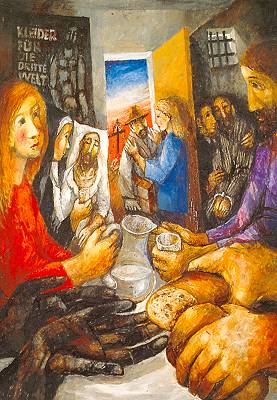
barmherzigkeit

Sieger Köder
“Barmherzigkeit” (Mercy)

“Let us not underestimate how hard it is to be compassionate. Compassion is hard because it requires the inner disposition to go with others to place where they are weak, vulnerable, lonely, and broken. But this is not our spontaneous response to suffering. What we desire most is to do away with suffering by fleeing from it or finding a quick cure for it.” Henri Nouwen

It is now Holy or Maundy Thursday, the beginning of the Easter Triduum. Mid-way through Holy Week and I am doing some thinking about Christians that have suffered a crisis in faith or loss of faith. I meet them all the time and read their stories on blogs, books and social media. Of course I run across more now because I have gone through such a crisis and have written about it and through that had my story publicized. As a result I am contacted by people who have suffered trauma, especially related to PTSD as well as those that care for such people.

For many Christians Holy Week and Easter can be particularly painful. Having known plenty of these people I can say that this phenomenon is one of the more tragic aspects of the season. People who at one time felt the presence of God in their life only sense emptiness and loneliness. For some this loneliness can transition to a feeling of hopelessness where even death appears more comforting than life in the present.

I say this because so many people suffering people often go unnoticed or are ignored in church. Their loss could be that of a spouse or child, the loss of something else significant or another type of trauma that devastates them. Others find that they are rejected by the communities of faith that they had been part of all of their lives because of divorce or because of their sexual preference. However, no matter the cause of the suffering many people discover that they are outcasts in the place where they should be cared about more than anywhere else.

Many pastors and priests are either unaware of them, uncomfortable around them or irritated by them because they don’t respond like “normal” people to the message of Easter. I have found from my own experience returning from Iraq that Easter despite the message of resurrection and hope often triggers a despair of life itself. It is not so bad this year for me but I can remember coming home from Iraq and going through an extended period of time where I felt absolutely alone and no longer sensed the presence of God. I have to say that as a Priest and Chaplain that experience was one of the most frightening of my life.

Years ago I believed that if someone was in the midst of a crisis in faith if they read the Bible more, prayed more and made sure that they were in church that things would work out. I believed then that somehow with a bit of counseling, the right concept of God and involvement in church activities that God would “heal” them.

Call me a heretic but I do not believe that now. That line of thinking is nice for people experiencing a minor bump in their life. However it is absolutely stupid advice to give people who are severely traumatized, clinically depressed, and suicidal or who no longer perceive the presence of God in their lives. This is especially true for those abused by parents or clergy. That kind of wound does damage to the victim’s very concept and understanding of God which can last a lifetime, and in some churches leads to continued re-victimization as the victims are blamed for their plight.

Thus I cannot condemn those who have lost their faith or are wavering in their faith due to trauma, abuse or any other psychological reason. The numbers of people victimized by family, teachers, clergy other authority figures is mind numbing. Likewise we don’t even bother to count the vast numbers of people in our churches who have lost children or other loved ones, experienced some kind of physical trauma related to accidents, had near death experiences or combat deal with the wounds of war. They are all over the place and many go unnoticed in the church.

Sometimes the damage makes it nearly impossible for people to comprehend a God who both cares about them and who is safe to approach. To some God is at best a detached and uncaring being who allowed them to be hurt, and those that serve him in positions of authority are willing accomplices and are no safe.

My experience of coming home from Iraq and the trauma of my return and were absolutely frightening. I was in such bad shape that I left Christmas Eve Mass in 2008 before it started and walked through the dark wondering if God even existed. My isolation from other Christians and the church community and despair that I experienced showed me that such a loss of faith is not to be trifled with by care givers. Nor is it to be papered over with the pretty wallpaper or neat sets of “principles” drawn up by “pastors” who refuse to deal with the reality of the consequences of a fallen world and their impact on real people.

Those that I have talked to and read about who have suffered a crisis or loss of faith almost always express how they feel cut off and even abandoned by God. It is also something that I experienced, thus for me it is not an academic exercise. It is not simply depression that people are dealing with, but despair of life itself. Sometimes it seems that death or just going to sleep is preferable to living. This overwhelming despair impacts almost all of life. It is if they never are able to leave the “God-forsakenness” of Good Friday and cannot climb out of the tomb. For some the pain is so much that suicide becomes an option and the belief that their family, friends and loved ones would be better off without them. I have seen this too many times to count.

It is hard to reach for the person experiencing this pain to reach out but it is also difficult for those who care enough to reach out to them. I can say that I was not easy to deal with and because of my distrust it was hard to believe that anyone cared, even when they did. However the people who chose to remain with me and walk with me through the ordeal in spite of my frequent crashes, depression, anger and even rage helped get me through the worst of this. I’m sure that some who had to deal with me in that condition got burned out as I was not easy to deal with. Some chose not walk with me as I began to go down this road in early 2008 and the sad thing is that many were ministers and fellow chaplains. In some ways I don’t blame them. However it is telling that the first person that asked me about my spiritual life “or how I was with the Big Guy” was my first therapist.

The topic of a loss of faith or the reality of feeling God forsaken is had to deal with but is something that we need to face especially during Holy Week. The Cross necessitates this, Jesus was considered “God-Forsaken” and that is what is so perplexing about Good Friday. He is the battered and abandoned victim on that day, a day when all hope appears to be gone. German theologian Jurgen Moltmann wrote something quite profound:

“When God becomes man in Jesus of Nazareth, he not only enters into the finitude of man, but in his death on the cross also enters into the situation of man’s godforsakenness. In Jesus he does not die the natural death of a finite being, but the violent death of the criminal on the cross, the death of complete abandonment by God. The suffering in the passion of Jesus is abandonment, rejection by God, his Father. God does not become a religion, so that man participates in him by corresponding religious thoughts and feelings. God does not become a law, so that man participates in him through obedience to a law. God does not become an ideal, so that man achieves community with him through constant striving. He humbles himself and takes upon himself the eternal death of the godless and the godforsaken, so that all the godless and the godforsaken can experience communion with him.” 

Scripture plainly teaches that we are to “bear one another’s burdens, and in this way you will fulfill the law of Christ.” But this can be hard to do, we don’t like dealing with suffering. But as Dietrich Bonhoeffer said “We must learn to regard people less in light of what they do or omit to do, and more in the light of what they suffer.” It is our willingness to be with people in their suffering that is one of the true marks of the Christian. Being with someone in triumph is far easier than with walking with and holding on to those who suffer the absence of God. It is presence and love not sermons that people who have lost their faith need as Bonhoeffer so eloquently said “Where God tears great gaps we should not try to fill them with human words.”

I do pray that as we walk with Jesus this Holy Week that we will not forget those who despair of live and feel as if they are “God-forsaken.”

Peace

Padre Steve+

1 Comment

Filed under christian life, faith, Pastoral Care, PTSD, Religion

Distant Origen: The Danger of Doctrinal Certitude While Living in the Uncomfortable Middle

galaxy_universe-normal

“Man no longer lives in the beginning–he has lost the beginning. Now he finds he is in the middle, knowing neither the end nor the beginning, and yet knowing that he is in the middle, coming from the beginning and going towards the end. He sees that his life is determined by these two facets, of which he knows only that he does not know them”  Dietrich Bonhoeffer

There is an episode of Star Trek Voyager called Distant Origin where a scientist of a race in the Delta Quadrant believes that genetic evidence indicated that their race originated on Earth. His thesis is challenged the doctrine of his species and he was accused of “heresy against Doctrine” for positing something different than his people believed. He ends up being persecuted and punished for his beliefs.

Now I want to be diplomatic about this. I am not someone who simply is contrary to established doctrines, be they theological, scientific or even military theories. That being said I think it is only right to question our presuppositions, as Anselm of Canterbury did through faith seeking understanding.

That understanding as a Christian is based on the totality of the message of the Christian faith. Hans Kung said it well:
“Christians are confident that there is a living God and that in the future of this God will also maintain their believing community in life and in truth. Their confidence is based on the promise given with Jesus of Nazareth: he himself is the promise in which God’s fidelity to his people can be read.” 

What we have to admit is that our belief is rooted in our faith, faith which is given to us through the witness of very imperfect people influenced by their own culture, history and traditions. Even scripture does not make the claim to be inerrant, and the Bible cannot be understood like the Koran or other texts which make the claim to be the infallible compendium of faith delivered by an angel or dictated by God himself. It is a Divine-human collaboration so symbolic of the relationship that God has with his people, often confusing and contradictory yet inspiring.

themiddle

There is a certain sense of relationship between God and humanity within scripture and that relationship creates certain tensions between God and those people. The interesting thing is that Scripture is a collection of texts which record often in terrible honesty the lack of perfection of both the writers and their subjects. They likewise record the sometimes unpredictable and seemingly contradictory behavior of God toward humanity in the Old Testament. They bear witness to the weaknesses, limitations and lack of understanding of the people of God of the message of God but even in that those limitations and weaknesses that God is still faithful to humanity in the life death and resurrection of Jesus of Nazareth.

The real fact of the matter is that fixed doctrines are much more comfortable than difficult questions than honestly examining the contradictions that exist within Scripture, history and tradition. The fact is this makes many people uncomfortable and thus the retreat into the fortress of fixed and immutable doctrine found in the various incarnations of Fundamentalism.

The fact is the world is not a safe place, and our best knowledge is always being challenged by new discoveries many of which make people nervous and uncomfortable, especially people who need the safety of certitude. So in reaction the true believers become even more strident and sometimes, in the case of some forms of Islam and Hinduism violent.

Picard

Christianity cannot get away unscathed by such criticism. At various points in our history we have had individuals, churches and Church controlled governments persecute and kill those that have challenged their particular orthodoxy. Since Christian fundamentalists are human they like others have the capacity for violence if they feel threatened, or the cause is “holy” enough. Our history is full of sordid tales of the ignorance of some Christians masquerading as absolute truth and crushing any opposition. It is as Eric Hoffer wrote:

“A doctrine insulates the devout not only against the realities around them but also against their own selves. The fanatical believer is not conscious of his envy, malice, pettiness and dishonesty. There is a wall of words between his consciousness and his real self.”

This is the magnetic attraction of fundamentalism in all of its forms, not just Christian fundamentalism.  Yet for me there is a comfort in knowing that no matter how hard and fast we want to be certain of our doctrines, that God has the last say in the matter in the beginning and the end. We live in the uncomfortable middle but I have hope in the faith that God was in the beginning. Besides as Bonhoeffer well noted “A God who let us prove his existence would be an idol” 

But there some Christians who now faced with the eloquence of men like Neil DeGrasse Tyson and Bill Nye who make legitimate challenges respond in the most uncouth and ignorant manners. The sad thing is that their response reveals more about them and their uncertainty than it does the faith that they boldly proclaim.

Our doctrines, the way we interpret Scripture and the way we understand God are limited by our humanity and the fact that no matter how clever we think we are that our doctrines are expressions of faith. This is because we were not in the beginning as was God and we will not be at the end, at least in this state. We live in the uncomfortable middle, faith is not science, nor is it proof, that is why it is called faith, even in our scriptures.

We are to always seek clarity and understanding but know that it is possible that such understanding and the seeking of truth, be it spiritual, historical, scientific or ethical could well upset our doctrines, but not God himself. As Henri Nouwen wrote: “Theological formation is the gradual and often painful discovery of God’s incomprehensibility. You can be competent in many things, but you cannot be competent in God.” Is that not the point of the various interactions of Jesus with the religious leaders of his day? Men who knew that they knew the truth and even punished people who had been healed by Jesus such as the man born blind in the 9th Chapter of John’s Gospel.

vasily-surikov-christ-healing-the-man-born-blind

“You are that man’s disciple; we are disciples of Moses! We know that God spoke to Moses, but we do not know where this one is from.” The man answered and said to them, “This is what is so amazing, that you do not know where he is from, yet he opened my eyes. We know that God does not listen to sinners, but if one is devout and does his will, he listens to him. It is unheard of that anyone ever opened the eyes of a person born blind. If this man were not from God, he would not be able to do anything.” They answered and said to him, “You were born totally in sin, and are you trying to teach us?” Then they threw him out.”

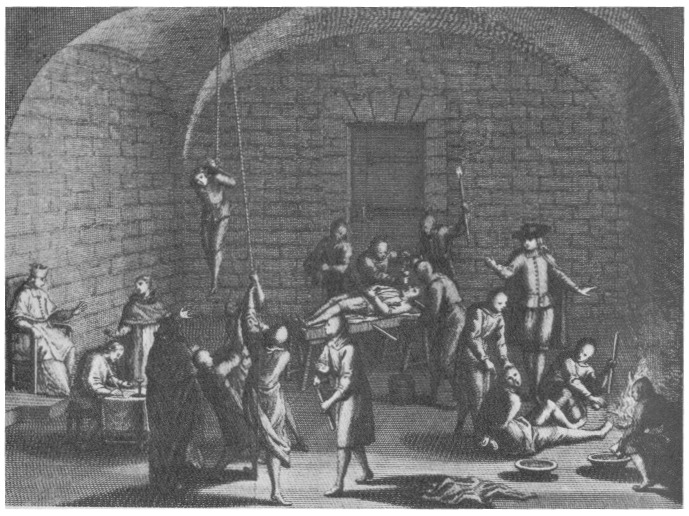
The interchange between the religious leaders and the man is not an indictment on Judaism, but rather on religious certitude in any time or place. The fact is that the Pharisees are no different than those who ran the Inquisition, or those who conducted Witch Trials or those who attempt to crush anyone who questions their immutable doctrine no matter what their religion. They were and are true believers.

In the episode of Star Trek the Next Generation called The Drumhead Captain Picard counsels Lieutenant Worf after their encounter with a special investigator who turned an investigation into a witch hunt on the Enterprise. Picard told Worf, who had initially been taken in by the investigator:

“But she, or someone like her, will always be with us, waiting for the right climate in which to flourish, spreading fear in the name of righteousness. Vigilance, Mister Worf – that is the price we have to continually pay.”

And that is true.

Peace

Padre Steve+

Leave a comment

Filed under faith, philosophy, Religion

Padre Steve’s Christmas Journey of Healing

996759_10152169414832059_1833080489_n

“God weeps with us so that we may one day laugh with him.” Jürgen Moltmann

Christmas is a special time for me, it always has been but in spite of that there were times that I took the faith element for granted. I believed and my faith in God, for me the Christian God, Father, Son and Holy Spirit was unquestioned. I knew the Scriptures, the Creeds and the Councils and I felt that my faith in a sense was untouchable. I was sure of it, in fact almost cocksure or arrogant about it. That came out in published writings in a very conservative Catholic monthly, the New Oxford Review back in 2000-2001.

For me the elements of my faith were very much intellectual. I could see other points of view but if I disagreed with them enough I would engage them with the purpose of defeating them. Of course this usually went to theological methods, history and hermeneutics. As far as those that lost their faith it was something that I had difficulty comprehending. Not that I was unsympathetic or uncaring of them or their plight, but I didn’t see how it could happen to me.

But that was before Iraq. That was before PTSD, moral injury and my own crisis of faith when I returned from the Iraq War in 2008.  That changed me as war has changed so many others before. Guy Sager wrote of his return from war in his classic The Forgotten Soldier:

“In the train, rolling through the sunny French countryside, my head knocked against the wooden back of the seat. Other people, who seemed to belong to a different world, were laughing. I couldn’t laugh and couldn’t forget.” 

iraq christmas

My return instigated a crisis of faith, I felt like I still belonged in Iraq and home seemed like a foreign land.  In the crisis I was for all practical purposes I was an agnostic trying to believe and feeling abandoned by God and many of his people, especially clergy.  Commodore Tom Sitsch at EOD Group Two, a veteran of much combat asked me “where does a Chaplain go for help?” I told him “not to other Chaplains or clergy.”

That crisis etched a permanent scar in my soul which led to some fairly major changes in my life.  It forced me to enter what Saint John of the Cross called the “Dark Night of the Soul.”

I will not tell of how my great spiritual disciplines and intellect helped me get through the crisis, as they did not. I found it hard to pray or believe in anything for nearly two years as I struggled with abandonment. I felt that God, the Church and the Navy had abandoned me.  The only thing that kept me going was my profound sense of vocation as a Priest and Chaplain and commitment to others who were suffering.

I was losing my battle with PTSD during that time, depressed, anxious and despairing I threw myself into my work among the critically ill ICU patients and those that cared for them.  Christmas Eve of 2008 was spent in despair as I wandered through the darkness on a cold night after leaving Mass because I could not get through it.

Though I found a community and camaraderie among those that I worked with and tried to provide spiritual care,  my own condition grew worse.  I was so bad enough that my clinical duties had to be curtailed over my objections in September of 2009.

I still stood the overnight duty and filled in for others as needed, but for a number of months I had no clinical assignments.  That meant that others in our minimally staffed department had to fill in for me. I am sure that they resented that, especially because before this I often worked 80-90 hours a week mostly in our ICUs and the staff of the ICUs now expected that kind of intensive ministry and support.

But in my desperation I was greeted with a surprise. On one of the on call nights not long before Christmas I received a call to the ER to provide the last rites to an elderly retired Navy Medical Doctor.  The man was a saint, faithful to God, his Church and the community. For years he dedicated much of his practice to the poorest members of the community, delivering babies for women with no insurance and caring for prisoners in the Portsmouth City Jail.  He breathed his last as I prayed this prayed the prayer of commendation following the anointing and something strange happened. I felt the presence of God for the first time since Christmas of 2007 in Iraq. It is too this day hard to explain.

Something miraculous happened that night and by Christmas Eve I realized that something was happening to me. As I wrote in Padre Steve’s Christmas Miracle on Christmas Eve of 2009:

“Mid afternoon I was walking down the hall and I experienced a wave of emotion flood over me, and unlike the majority of emotions that I have felt in the past couple of years this was different.  It was a feeling of grace and I guess the presence of God.  I went up and talked with Elmer the shrink about what I was feeling and the experience was awesome, I was in tears as I shared, not the tears of sadness, but of grace.  I am beginning to re-experience the grace of God, something that has been so long absent that I did not expect it, at least right now.  I didn’t do anything differently; I certainly was not working extra hard to pray more, get more spiritual or pack my brain full of Bible verses.  I was too far gone to do those things.  It was all I could do many mornings just to get out of bed and come to work.”

Since that time I have continued to recover faith and belief. I cannot say that it is the same kind of faith that I had before Iraq. This was a different kind of faith.  It was faith born of the terrible emptiness and pain of abandonment and despair, a faith that is not content with easy answers and not afraid to ask questions.  It is a faith in Jesus Christ, the crucified one who’s image we see hanging from the crucifix and adorning icons of the Crucifixion. It is as Jürgen Moltmann wrote in The Crucified God:

“The Symbol of the Crucifix in church points to the God who was crucified not between two candles on an altar, but between two thieves in the place of the skull, where the outcasts belong, outside the gates of the city. It is a symbol which therefore leads out of the church and out of religious longing in to the fellowship of the oppressed and abandoned. On the other hand, it is a symbol which calls the oppressed and godless into the church and through the church into the fellowship of the crucified God”

My Philosophy of Religion Professor, Dr. Yandall Woodfin at Southwestern Baptist Theological Seminary told us in class that until we had “dealt with the reality of suffering and death we were not doing Christian theology.” At the time the words were offensive to me, but by the time I had graduated and also done a year of Clinical Pastoral Education they became a part of my experience. However that did not prepare me for the darkness that I lived in from February of 2008 until that Christmas Eve of 2009.  I would say that in addition to Dr Woodfin’s understanding of grappling with suffering and death that one has to add the abandonment of the outcast to the equation.

The “I Believe in God” of the Creed is no longer for me simply a theological proposition to defend, but rather an experience of God born out of pain, despair, anxiety, doubt, unbelief and abandonment. During my crisis I found almost no Christians willing to walk through the darkness with me, including clergy. The only clergy willing to were those who were walking the same path of the outcast with me, suffering from PTSD, TBI and other unseen wounds of war. It was if I was radioactive. Many people had “answers” for me, but none sought to understood my questions until my first  therapist Dr. Elmer Maggard asked me “how I was with the big guy?”

When I finally collapsed in the summer of 2008 and met with Dr. Maggard I made a conscious decision that I would not hide what I was going through.  I felt that if someone didn’t speak out that others like me wouldn’t seek help. In the nearly six years since I returned from Iraq I have encountered many people, men and women, current and former military personnel and families of veterans who came to me either in person or through this website. It led to me being interviewed in a newspaper and being featured on the Real Warriors website http://www.realwarriors.net , a program run by the Department of Defense to help reduce the stigma of getting help for PTSD which features the stories of military personnel suffering from it. My story can be found here: http://www.realwarriors.net/multimedia/profiles.php

I have had a number of military chaplains come to me also experiencing a  faith crisis. Most said that I was the first Chaplain or minister that they had met or who admitted that he struggled with faith and the existence of God.  For a minister to be open about such struggles is dangerous. When my faith returned and was different I was asked to leave my former denomination because I was now “too liberal.”

295_26912092058_3949_n

In each of those encounters with those suffering there was a glimmer of hope for me and I think for them.  It was as if for the first time we had people that we could be open with.  Co-workers and others said that I was “real.” I certainly do not boast of that because it was painful to be transparent with people while in the depths of doubt and despair while hoping that somehow God would touch them with some measure of grace when I found it hard to believe.  I guess it was the fact that I was willing to walk with them in their crisis and let them be honest even if it meant facing my own pain and doubt. I learned something about being what Henri Nouwen called a wounded healer.  Nouwen wrote:

“Nobody escapes being wounded. We all are wounded people, whether physically, emotionally, mentally, or spiritually. The main question is not “How can we hide our wounds?” so we don’t have to be embarrassed, but “How can we put our woundedness in the service of others?” When our wounds cease to be a source of shame, and become a source of healing, we have become wounded healers.”

I do still struggle with the continued effects of War and PTSD, but I am in a much better place. I also struggle with faith at times when I look at the actions of those who profess to believe but treat others with contempt. I can understand the quote from the Gospel “I believe, help my unbelief.”

379132_10150515338077059_671902058_10701625_1511457102_n

So today this wounded healer will celebrate a special Christmas at home. My wife and I will celebrate a Mass, enjoy a Christmas dinner with our dogs, Molly and Minnie. Depending on how she feels we will either go out to a movie or watch one at home.

I want to thank all of my readers, especially those who like or comment on these posts. You are appreciated, some are lengthly and you choose to take your time to read them and often share them. If you are walking the path of the outcast feel free to drop me a line here or on my Facebook page. My wish for you and for all is a Christmas of peace, reconciliation and love.

Peace and blessings,

Padre Steve+

16 Comments

Filed under faith, Military, ministry, Pastoral Care, PTSD, Religion, Tour in Iraq

Letter to A New Military Chaplain Part V: Count it All Joy

20130822-235225.jpg

“The theologian who labors without joy is not a theologian at all. Sulky faces, morose thoughts and boring ways of speaking are intolerable in this field.” ― Karl Barth

This is fifth part of a response to a question I had from a new Navy Chaplain. I have decided to post it here without any identification of the chaplain because I know that many men and women who are new to the military chaplaincy or who are exploring the possibilities of becoming a chaplain have the same questions. I was fortunate to have had a number of chaplains who at various points in my decision process and formation as a minister, Priest and Chaplain in both the Army and the Navy help me with many of these questions. Likewise I learned far too much the hard way and blew myself up on some of the “land mines” that almost all who serve as chaplains experience in their careers. This is the fifth of several parts to the letter and is my attempt to systematically explain my understanding of what it is to be a Chaplain serving in the military and in particularly the Navy. As I wrote this tonight I thought of one more installment so I expect soon that I will write it, but not tonight. The first three parts are linked here:

Letter to a New Military Chaplain: Part One

Letter to a New Military Chaplain: Part Two The Minefields of the Heart 

Letter to a New Military Chaplain Part Three: The Minefields of the Soul: Power and Arrogance

Letter to a New Military Chaplain Part IV: The Minefields of the Flesh, Sex, Alcohol and Money

It has been a while since I started this series so tonight I figured that I would quickly finish what I started. The young Chaplain who I wrote this for is about to report to his new assignment and I do wish him well and pray that he will do well in it. If things go as I expect and he does well he should still be serving as a chaplain at least 15 years after I retire.

Thus for me this series is in a sense about passing the torch. I figure that in five or six years I will finally retire from the Navy Chaplain Corps. Of course that could change because I’m not God and so until I actually retire I will keep my head in the game. There is always a new generation and those of us who have labored need to be there for and be ready to do all we can to help, encourage and mentor those who follow us.

One of the things that I have learned over the course of 32 years in the military and 21 years as a military chaplain is that one must keep a sense of humor and not take oneself too seriously. In that time I have ran into many a chaplain and minister who lived their lives bereft of a sense of humor, had no ability to laugh at themselves and who were positively gloomy people. Saint Teresa of Avila made the comment “God save us from gloomy saints!” I think that she was right and she did take fire from people in the church because of her joyous spirit.

Now I have my times where I am not a happy camper. I can be morose and moody and sometimes even a bit cynical. However, that being said I try not to live my life that way and certainly do my best to keep a sense of humor, laugh at myself and even when things are not going well to try to find a silver lining in the otherwise dark clouds.

Chaplains have a unique ministry. We are not cloistered in parishes or trying to build churches. We serve in a secular institution with people who volunteer to serve their nation in often dangerous, lonely and arduous manners. Those who serve alongside of us on our ships, or in our units we in the Navy call “shipmate” and that transcends differences in religious beliefs, politics or philosophy. As the chaplain it is our duty in this secular institution to care for the people who we serve alongside. They are our parish whether they be believers or not. Pastoral care in this setting is about caring for and loving people who many times don’t believe like us (no matter what our religious tradition) respecting their faith or beliefs and treating them with the same dignity that we would want others to treat us, our families or our friends.

For me this is a joyful life. I like working outside the brick and mortar of the church because it suits my personality and way of doing life. I was a Navy “Brat” growing up. Had it not been for a Roman Catholic Navy Chaplain who helped care for my family when my dad was in Vietnam and a civilian church of our denomination made us unwelcome. I trace my calling back to that man. He was not about pushing his denominational or personal agenda, he simply cared about a military family who needed it.

I think that approaching life and ministry as a chaplain with joy is paramount. It is I think a reflection of the grace of God. As Karl Barth said: “Grace creates liberated laughter. The grace of God…is beautiful, and it radiates joy and awakens humor.”

In our military careers we chaplains will find many opportunities to lose our joy, to become graceless and to become consumed with our own status, promotion and even power. It is a temptation and danger of any kind of institutional ministry where there is an “up or out” promotion system.  Thus we must be careful to keep our focus on caring for others, doing our best in all things, build collegial relationships and real friendships with others and trust God with how everything else works out.

Joy is essential if we are to be living sacraments or vehicles of God’s grace and we have to chose joy. As Henri J. M. Nouwen said: “Joy does not simply happen to us. We have to choose joy and keep choosing it every day.”

So count it all joy.

Peace

Padre Steve+

1 Comment

Filed under christian life, faith, Military, ministry, US Navy

The Uncomfortable Middle: The Challenge to the Certitude of Unprovable Doctrine

holy-saturday

“Man no longer lives in the beginning–he has lost the beginning. Now he finds he is in the middle, knowing neither the end nor the beginning, and yet knowing that he is in the middle, coming from the beginning and going towards the end. He sees that his life is determined by these two facets, of which he knows only that he does not know them”  Dietrich Bonhoeffer

I was watching an episode of Star Trek Voyager tonight, one called Distant Origin where a scientist of a race in the Delta Quadrant believes that genetic evidence indicated that their race originated on Earth. His thesis is challenged the doctrine of his species and he was accused of “heresy against Doctrine” for positing something different than his people believed. He ends up being persecuted and punished for his beliefs.

Now I want to be diplomatic about this. I am not someone who simply is a contrarian to established doctrines, be they theological, scientific or even military theories. That being said I think it is only right to question our presuppositions, as Anselm of Canterbury did through faith seeking understanding.

That understanding as a Christian is based on the totality of the message of the Christian faith. Hans Kung said it well:

“Christians are confident that there is a living God and that in the future of this God will also maintain their believing community in life and in truth. Their confidence is based on the promise given with Jesus of Nazareth: he himself is the promise in which God’s fidelity to his people can be read.” 

What we have to admit is that our belief is rooted in our faith, faith which is given to us through the witness of very imperfect people influenced by their own culture, history and traditions. Even scripture does not make the claim to be inerrant, and the Bible cannot be understood like the Koran or other texts which make the claim to be the infallible compendium of faith delivered by an angel or dictated by God himself. It is a Divine-human collaberation so symbolic of the relationship that God has with his people.

There is a certain sense of relationship between God and humanity within scripture and that relationship creates certain tensions between God and those people. The interesting thing is that Scripture is a collection of texts which record often in terrible honesty the lack of perfection of both the writers and their subjects. They likewise record the sometimes unpredictable and seemingly contradictory behavior of God toward humanity in the Old Testament. They bear witness to the weaknesses, limitations and lack of understanding of the people of God of the message of God but even in that those limitations and weaknesses that God is still faithful to humanity in the life death and resurrection of Jesus of Nazareth.

The real fact of the matter is that fixed doctrines are much more comfortable than difficult questions than honestly examining the contradictions that exist within Scripture, history and tradition. The fact is this makes many people uncomfortable and thus the retreat into the fortress of fixed and immutable doctrine. This is the magnetic attraction of funamentalism in all of its forms, not just Christian fundamentalism.  Yet for me there is a comfort in knowing that no matter how hard and fast we want to be certain of our doctrines, that God has the last say in the matter in the beginning and the end. We live in the uncomfortable middle but I have hope in the faith that God was in the beginning. Besides as Bonhoeffer well noted “A God who let us prove his existence would be an idol” 

Our doctrines, the way we interpret Scripture and the way we understand God are limited by our humanity and the fact that no matter how clever we think we are that our doctrines are expressions of faith. This is because we were not in the beginning as was God and we will not be at the end, at least in this state. We live in the uncomfortable middle.

We are to always seek clarity and understanding but know that it is possible that such understanding and the seeking of truth, be it spiritual, historical, scientific or ethical could well upset our doctrines, but not God himself. As Henri Nouwen wrote: “Theological formation is the gradual and often painful discovery of God’s incomprehensibility. You can be competent in many things, but you cannot be competent in God.”

Peace

Padre Steve+

1 Comment

Filed under christian life, faith, philosophy, Religion

Relearning Ministry Again For the First Time

198177_10151361204842059_1890411795_n

“Ministry means the ongoing attempt to put one’s own search for God, with all the moments of pain and joy, despair and hope, at the disposal of those who want to join this search but do not know how.” Henri Nouwen 

It was over 20 years ago that I graduated from seminary. I was a very good student and took every opportunity to learn, even when what I learned challenged my assumptions. Thus in a Southern Baptist seminary I basically came out as an Anglo-Catholic or progressive Vatican II type Catholic. But even so I was was still quite limited in my understanding of ministry.

My time in a Clinical Pastoral Education Residency a year after I graduated from seminary was filled with more discovery, much of it very painful as I confronted many of my own demons, But even what I learned there was just a chip off the top of the iceberg. While it was valuable it was something that took many more years to begin to fully grasp.

In each of these places and times of learning I discovered much, but like any novice my actual understanding of what I learned with limited by my own strengths as an analytical thinker and intuitive personality type. I was quite convinced of my competencies, skills and abilities, particularly in history and theology. I could wear people out picking apart arguments that I thought were flawed. Likewise on the occasions people came to me for advice I often would fall back on my strengths in analyzing their situation and giving them an answer. I was so obnoxious about it Judy would sometimes call me “the Great White One Who Knows it All.”

At various points in my life, seminary, preparation for the ordination to the Priesthood, during Clinical Pastoral Education and in the various military Chaplain school course that I have attended had to write and sometimes present a philosophy or theology of ministry. As I think about them most did talk about being present, but much more focus was on  programs and methods of teaching or even counseling from a cognitive behavioral theory method, but little to do with just being present and listening, presence was more about showing my face and being known that it was actually being with people. The changes in my “philosophy or theology of ministry” were honed in the crucibles of critical care ministry in hospital Trauma Departments and ICUs, and at war, deployed on ship or in Iraq. In those places I learned that between life and death that sometimes what matters most is just being there and not avoiding the pain by giving advice, offering a prayer, no matter how sincere and getting out of Dodge before the hard questions got asked.

I have found that young ministers or those new to ministry regardless of their age are often quite zealous and even when quite sincere often run roughshod over others. I think that is not so much a human failing but rather a result of our theological and ministerial training process. We focus on everything but being with real people, and among the professions we often are those among the least likely to truly listen to people before we diagnose a situation and give an answer. If we come from or are influenced by a tradition where what we believe that we are accurately discerning what the Holy Spirit is saying, or that we have the authoritative interpretation of Holy Scripture or that our theological premise is more correct than the others out there.

Please know this is not an attack on any particular denomination or theological school of thought. It just happens to be very common across the board in the way we do ministry as American Christians regardless of our denominational affiliation or whether we are liberal or conservative. It was bad enough when we all pretty much attended seminary in residence with other people and had to physically interact with other students or professors, some of whom challenged our views.

I believe that in the present reality of theological education in America, where online seminary programs are flourishing that an overall lack of contact and isolation is making the overall quality of ministry worse.  Simply put this is because we spend our time in a theological cocoon of our own making, deviod of relationships with people who really know us.  The result is that we become less attentive to others and more convinced of our own correctness and often suffer from a dangerous amount of narciscistic behaviors which are quite often displayed for the world to see.

 I wonder at times if the Jesuit formation process than anything that we do here.  While the 12 years long process done by the Jesuits is difficult and maybe even unworkable for some, I wonder if it is actually a better model for ministry.  I also wonder wonder if possibly we can learn from Buddhism. From what I see there appear many practices in it that are not antithetical to the Christian faith and may actually help us to be better spiritual directors, guides and care givers. I read a book by Wolfhart Pannenberg years ago about commonalities and where Christians and Buddhists could learn from each other. I still have it and when I return home I will have to take the time to re-read it. Part of my curiousity lies in the fact that I am also a military historian and theoritician and much as I see much complementary thought in the military theories of Sun Tzu and Carl Von Clausewitz, one who was Eastern in thought and the other a product of Classic Western Liberal thought and philosphy. Both understood the human dimension of life, war and statesmanship and as such their military theories are timeless. Could it be that Christians could learn from Buddhists. I know that some do and I wonder if because our God is bigger than our conception that his grace allows people outside the Christian tradition to understand his will better than us sometimes. I think of the encounters of Jesus with Roman officials who he complimented saying “I have not seen such faith in all of Israel.”

I know this because I lived my ministerial life in this manner for many years. In a sense I remained a novice so long as I thought that I knew everything. The late and great Hall of Fame Manager of the Baltimore Orioles, Earl Weaver said “It’s what you learn after you know it all that counts.” 

For me it took falling apart and feeling abandoned by peers, colleagues, the church institution and even God that took me to a new place ministry. Of course that came through the pain of loss, madness and abandonment that basically left me questioning everything, even the existence of God, I was for all practical purposes an agnostic. Coming back from war changed and suffering from PTSD and its effects makes more of an impact on faith than you can imagine. Since I have written about this part of my experience many times before so I won’t go into detail here.

295_27076762058_7573_n

Needless to say five years ago I began a journey that challenged my beliefs and changed me quite a bit as a Priest and Navy Chaplain. I won’t bore you with those changes either because I have written about them at length.

What I have learned and over the past five years is that Henri Nouwen who I quoted at the beginning of this article was correct. We as ministers frequently fail in this, instead we feel the need to say something, when often saying little or nothing but simply being with people and fully engaged in hearing them and whether through their words, expressions, tears or silence stay with them. Our words, suggestions and advice, even when theologically correct and in accordance with good counseling theory often are not heard by the suffering person because we are not listening and instead offering a diagnosis. Dietrich Bonhoeffer stated this Christian conundrum well:

“Christians, especially ministers, so often think they must always contribute something when they are in the company of others, that this is the one service they have to render. They forget that listening can be a greater service than speaking.”

I cannot tell you how many times that I have met people who have been hurt by well meaning ministers who simply cannot shut up and need to give advice. Let’s face it, the temptation is by virtue of our calling, our ordination or commissioning that we believe that words are essential. St. Francis of Assisi said “preach the Gospel at all times, use words when necessary.” Actions do speak louder than words and one of those actions is listening and maintaining a holy silence as we allow the Spirit of God to work in a life even as we remain present. Henri Nouwen wrote:

“Somewhere we know that without silence words lose their meaning, that without listening speaking no longer heals, that without distance closeness cannot cure.” 

n671902058_1153804_6925

For me though I have continued to evolve in ministry I do often feel like a novice. I have to fight the temptation to simply diagnose and give advice every day. That being said I am much more comfortable with listening and being present even more than I was a year ago. A lot of this credit goes to my Command Master Chief Ed Moreno, who I spend many hours a week with. He is a very spiritual person, a good listener and patient man who in a sense is a companion and fellow traveller on this spiritual journey.

For me it is almost as if I am relearning everything about ministry for the first time.

Well, that is enough for tonight. It is time that I shut up.

Blessings and Peace,

Padre Steve+

Leave a comment

Filed under christian life, faith, Pastoral Care, philosophy, PTSD, Religion

Holy Week and the Outcasts

Sieger Köder
“Barmherzigkeit”

“Let us not underestimate how hard it is to be compassionate. Compassion is hard because it requires the inner disposition to go with others to place where they are weak, vulnerable, lonely, and broken. But this is not our spontaneous response to suffering. What we desire most is to do away with suffering by fleeing from it or finding a quick cure for it.” Henri Nouwen

Holy Week is here and on my way home from work and a visit with my shrink I was doing some thinking about Christians that have suffered a crisis in faith or loss of faith. I meet them all the time and read their stories on blogs, books and social media.  Of course I run across more now because I have gone through such a crisis and have written about it and through that had my story publicized. As a result I am contacted by people who have suffered trauma, especially related to PTSD as well as those that care for such people.

For many of the people Holy Week and Easter can be particularly painful. Having known plenty of these people I can say that this phenomena is one of the more tragic aspects of the season.  People who at one time felt the presence of God in their life only sense emptiness and aloneness which sometimes becomes a feeling of hopelessness where even death appears more comforting than life in the present.

I say this because people suffering through this often go unnoticed or are ignored in church. Their loss could be that of a spouse or child, the loss of something else significant or the experience of trauma that devastates them but no matter the cause of the suffering many people discover that they are now outcasts in the place where they should be cared about more than anywhere else.

Likewise there are many pastors and priests who are either unaware of them, uncomfortable around them or irritated by them because they don’t respond like “normal” people do to the message of Easter.  I have found from my own experience returning from Iraq that Easter despite the message of resurrection and hope often triggers a despair of life itself when one no longer senses the presence of God and feels alone against the world, especially in church.

Years ago I believed that if someone was in the midst of a crisis in faith if they read the Bible more, prayed more and made sure that they were in church that things would work out.  I believed then that somehow with a bit of counseling, the right concept of God and involvement in church activities that God would “heal” them.  Call me a heretic but that line of thinking is nice for people experiencing a minor bump in their life but absolutely stupid advice for people who are severely traumatized or clinically depressed and suicidal who no longer perceive the presence of God in their lives.  For those abused by parents or clergy this is I think an even deeper wound one in which the very concept and understanding of God becomes skewed in the minds and hearts of the victims.

I cannot condemn those who have lost their faith or are wavering in their faith due to trauma, abuse or other psychological reason. The numbers of people have been victimized by family, teachers, clergy other authority figures or physical trauma related to accidents, near death experiences or combat is mind numbing. They are all over the place and many go unnoticed in the church.

Sometimes the damage wrought on people makes it nearly impossible for them to comprehend a God who both cares about them and who is safe to approach.  My experience came from Iraq and the trauma of my return and were absolutely frightening so much so that I left a Christmas Eve Mass in 2008 and walked through the dark wondering if God even existed.  My isolation from Christian community and sense of despair during that time showed me that such a loss of faith is not to be trifled with or papered over with the pretty wallpaper or neat sets of “principles” drawn up in the ivory theological towers by theologians and “pastors” who refuse to deal with the reality of the consequences of a fallen world and their impact on real people.

Those that I have talked to and read about who have suffered a crisis or loss of faith almost always mention to me is that that feel cut off and even abandoned by God.  It is not simply depression that they are dealing with but despair of life itself when death or just going to sleep is preferable to living. This overwhelming despair impacts almost all of life.  It is if they never are able to leave the “God forsakenness” of Good Friday and cannot climb out of the tomb.   For some the pain is so much that suicide becomes an option and the belief that their family, friends and loved ones would be better off without them. I have seen this too many times to count.

It is hard to reach out to people in this situation.  I have to admit in my case that it was only people who chose to remain with me and walk with me through the ordeal in spite of my frequent crashes, depression, anger and even rage that helped get me through the worst of this.  However I’m sure that my condition burned some people out.  There were some that would not walk with me as I first began to go down this road and the sad thing is that many were ministers and fellow chaplains.  In some ways I don’t blame them.  However it is telling that the first person that asked me about my spiritual life “or how I was with the Big Guy” was my first therapist.

The topic of a loss of faith or the reality of feeling God forsaken is had to deal with but is something that we need to face especially during Holy Week. The Cross necessitates this, Jesus was considered “God-Forsaken” and that is what is so perplexing about Good Friday.

Yet scripture plainly teaches that we are to “bear one another’s burdens, and in this way you will fulfill the law of Christ.”  As Dietrich Bonhoeffer said  We must learn to regard people less in light of what they do or omit to do, and more in the light of what they suffer.”  It is our willingness to be with people in their suffering that is one of the true marks of the Christian.  Being with someone in triumph is far easier than with those who suffer the absence of God.  It is presence and love not sermons that people who have lost their faith need as Bonhoeffer so eloquently said “Where God tears great gaps we should not try to fill them with human words.”

I do pray that as we walk with Jesus this Holy Week that we will not forget those who despair of live and feel as if they are “God-forsaken.”

Peace

Padre Steve+

2 Comments

Filed under christian life, faith, Pastoral Care, PTSD, Religion