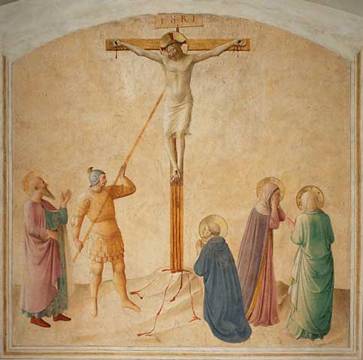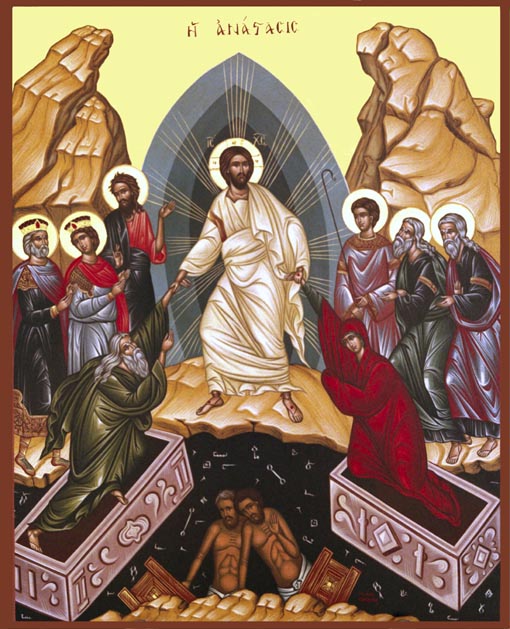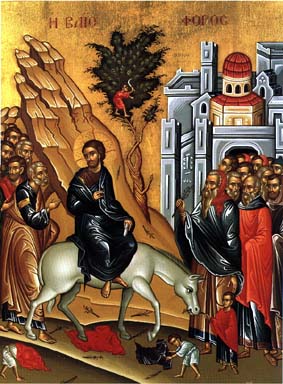
Tag Archives: holy week

A Centurion’s Sunday in Jerusalem: The Story of Longinus

triumphal-entry


This article is the prequel to a trilogy that I wrote about Longinus the Centurion who according to tradition commanded the detail in charge of the crucifixion of Jesus. I find a special affinity to this soldier who while serving his country in a land far from home whose people detested the occupiers of their country by a foreign power that most considered infidels. I don’t think that anyone can really understand the plight of the Roman officers assigned to the occupation of Judea and Samaria in the First Century until they have  done their time in Iraq or Afghanistan. These peoples, though not Jewish have similar divisions,  contradictions and prejudices against foreigners as those that lived in First Century Palestine. Those American, NATO or coalition troops that served in Iraq or Afghanistan, especially those who actually worked alongside or came to know the people in those countries understand the plight of the Roman soldiers assigned to occupation duty throughout the Empire, but especially in the volatile provinces of Judea and Samaria like Longinus. 

The others in the trilogy are linked below: 

Good Friday Special: The Long Good Friday of Longinus the Centurion

Holy Saturday Special: A Centurion Reflects on a Days Work

Easter Special: Trouble in River City the Centurion’s Easter: An Empty Tomb, Duplicitous Politicians and a Lingering Question

MLPPT_CenturionCross_1

Longinus and his men were tired. Pilate, the Governor had decided that he would travel from his Provincial capital of Caesarea in order to maintain a close watch on the Jews of Jerusalem during the annual celebration of Passover. During such times that city, the largest in the province would see its population expand exponentially as Jews from the diaspora, that is those living around the known world would make pilgrimage to the holy city.

Longinus’s men had helped provide the escort as Pilate travelled the nearly 80 miles moving up from the coastal plain where Caesarea was up to the hill country of Judea. The trip took three days as Pilate wanted to be in the city in plenty of time. The weather was conducive to the march, but though well trained Longinus’ men were not Romans but primarily recruited locally from drafts of Syrian’s and Samaritans.

Longinus never really enjoyed this assignment. He had served in other areas as a young officer and much preferred serving with and commanding Italians, Greeks, Macedonians and others to the men that he now commanded, but his duty was to serve wherever he was sent. He thought at times of his family in Italy near his home in Lanciano in the Abruzzo region near the Adriatic, missing his wife and children.

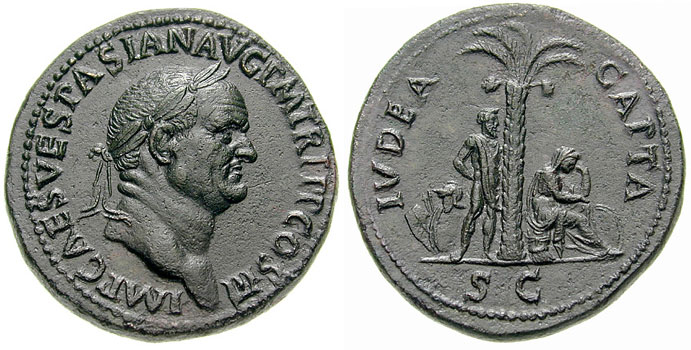
vespasian-judea-capta-sestertius

The duty of Longinus and other Romans in the region chiefly consisted of helping police the region and protecting the much despised tax collectors. One of those tax collectors, a Jewish man named Matthew had left the employ of Caesar a few years back and was now a “disciple” of some itinerant Jewish preacher named Jesus. He had heard a story from another Centurion about this preacher that made him chuckle. Evidently some Jews of the sect know as the Pharisees, a particularly strict group tried to trap the Jesus with the question of whether it was lawful to pay taxes to the Romans. They thought that they had trapped him because if he answered in the affirmative he would be rejected by them and discredited among the people, while if he answered that it was not they would have him on record as urging the people to disobey Caesar. The Centurion who told the story said how with him standing in the background watching and listening that Jesus asked one of the Pharisees to bring him a coin. Looking at the coin he asked the man whose image was on it. The Pharisee, a bit hesitantly replied that it was “Caesar” to which Jesus, who supposedly was an unlearned but charismatic bumpkin from Galilee replied “give to Caesar what is Caesar and to God that which was God’s.” Longinus’ colleague, an outsider looking in at this curious religious dispute was amazed with the acumen of Jesus in dealing with a question that someone less intuitive could have botched with potentially fatal consequences.

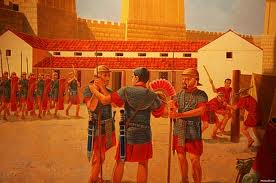
images-35

The march through Samaria was particularly uneventful but as the Legionaries entered Judea, a region seething with hostility toward the Romans he and his men became more guarded, very aware of the hostility that sometimes invited violence.

They arrived about noon on Friday in order not to stir up the Jewish faithful on their sabbath and took up residence in the Fortress Antonia, the symbol of Roman might in this always rebellious city. That evening and the next day were uneventful, but on Sunday, Longinus was told to have his troops stand by in case of violence. The man named Jesus was entering the city and pandemonium was expected. According to rumor this Jesus had raised a many from the dead in Bethany the day before and was being greeted as a potential King and liberator.

The Roman presence was muted, Pilate and senior commanders not wanting to do anything that might provoke an insurrection. The troops remained on alert at the fortress while Longinus and a number of other officers went to observe events at a distance.

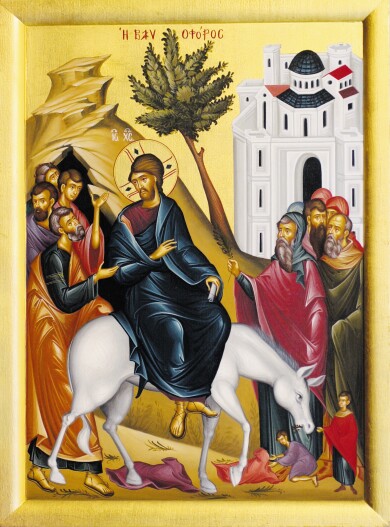
Longinus was amazed at what he saw. Thousands of people singing and throwing cloaks and palms along the street as Jesus, mounted on a white donkey accompanied by his disciples as well as numerous people from Bethany where he had been staying paraded down the street.

The procession moved toward the Temple where an understandably nervous delegation of Pharisees and the Priests of the Temple wondered what Jesus might do. If he was the “Messiah” that they preached about it could be a direct threat to their positions of power and provoke a Roman crackdown against them.

Jesus dismounted from the donkey and entered the Temple area, now crowed with thousands of pilgrims coming to offer sacrifice where he began to condemn the moneychangers. The moneychangers were in charge of selling animals for sacrifice to pilgrims, many of whom who could not bring their own animals for sacrifice. They were not according to what Longinus knew from his previous visits to the city at Passover and other Holy days men of good repute. They were believed to make their profit off the poor and widows and even the Romans that knew of the practice considered it less than honorable, and certainly the religious authorities were making money from their efforts.

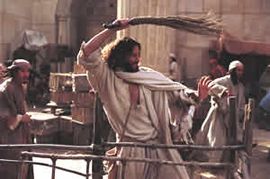
Jesus_temple

As Jesus went into the Temple Longinus and his fellow officers stayed back. As Gentiles their presence would create a crisis so they remained outside entrusting a Jew who worked with them to make the observation. They could hear commotion in the Temple and as they watched money changers and others came spilling out of the Temple grounds, many surrounded by their animals, lambs, doves and oxen. Longinus wondered what in the name of Jupiter was going on and soon his spy came running out of the Temple to make his report.

Slowing down as he approached Longinus he breathlessly gave his report. Jesus had taken a whip and driven out the moneychangers, condemning their activities and those of the religious leaders. Longinus had never heard of Jesus ever doing anything remotely violent before and this shocked him. He asked what else had happened and the spy reported that the Temple police and authorities did nothing and that Jesus left without further incident.

Pontius-Pilate

Longinus knew that the coming days could prove interesting. Going to Pilate that evening he gave his report. Pilate was quite concerned about the situation and considered it volatile. He ordered Longinus and the other officers to maintain an elevated state of readiness in case there was some sort of protest or even civil strife between the followers of Jesus and the Jewish authorities.

Longinus left Pilate and he and his fellow officers discussed the situation, briefed their subordinates and as night fell met in the tavern in the fortress where they quietly drank and wondered what the coming days might bring.

5 Comments

Filed under faith, History, Religion

Ash Wednesday and the Beginning of a Radical and Happy Lent

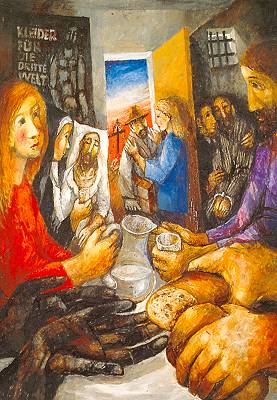
barmherzigkeit

“Accustom yourself continually to make many acts of love, for they enkindle and melt the soul.”  Teresa of Avila 

Well my friends today is Ash Wednesday and the beginning of the season of Lent. Lent is, for those unfamiliar with the custom is a penitential season in the days leading up to Easter in which Christians, through prayer, fasting and abstinence seek to prepare themselves for Holy Week and Easter. It really is a time of great value if its observance is not done simply out of legalism or even the need to show ones personal holiness as somehow more important than the relationships that one has with both God and one’s neighbor.

If you have read my articles on this site dealing with Ash Wednesday and Lent you will note that Lent is a season that I have struggled with throughout my life, even my life as a Priest. I did not grow up in the catholic tradition, Roman, Orthodox or Anglican. I came to a catholic understanding of faith in a Southern Baptist Seminary and my journey took years and when I finally came over to the “catholic” side of the line in 1995 and 1996 I attempted for a number of years to be more individualistically pious in my observance of the Lenten season and tradition than others.

That did not work well. Instead of finding a depth of meaning and transformation Lent became a burden. I observed it and did my best but without much joy. When I returned from Iraq in 2008, my faith shaken, and emotionally broken my Lenten observance was so painful that mid-way through it I abandoned it. The following year I declared that I was not going to do Lent in the way that I had done in the past, but even in this I struggled. That was not unexpected because by then I was for all intents and purposes an agnostic struggling to believe and praying that God might be real. The only thing that kept me going at times was the belief that my vocation as a Priest mattered, no matter how I felt.

The past few years Lent has been a struggle. I have worked to make it both meaningful and joyful. When I think of the irony that I was attempting to work to experience God’s grace I can now laugh.

This year Lent started out differently. Over the past number of months my life, including my spirituality has been coming back into focus and much more free and integrated than it was in the past.

Today I was part of our hospital Chapel ecumenical Ash Wednesday service. Our small chapel was full, with more people standing than sitting. Working with my two colleagues, a Southern Baptist Pastoral Counselor and an American Baptist Chaplain we served those who came, Catholics and various expressions of Protestants. My colleagues did most of the work for the service. I simply approved their work and though about what I was going to say and do as the primary celebrant during the service.

Our Old Testament reading out of Isaiah Chapter 58 actually set the tone for me because it has been something that has been zinging my spirit ever since my seminary days and early days as a Priest. In the passage Isaiah was speaking to a very religious people who seemed to take great pride in their external demonstrations of righteousness but whose hearts were far from God and the people that God had placed around them. Isaiah wrote:

Is not this the fast that I choose: to loose the bonds of injustice, to undo the thongs of the yoke, to let the oppressed go free, and to break every yoke?
Is it not to share your bread with the hungry, and bring the homeless poor into your house; when you see the naked, to cover them, and not to hide yourself from your own kin?
Then your light shall break forth like the dawn, and your healing shall spring up quickly;
your vindicator shall go before you, the glory of the LORD shall be your rear guard.
Then you shall call, and the LORD will answer; you shall cry for help, and he will say, Here I am.

Likewise Jesus warned his disciples about the dangers of religious hypocrisy in the Gospel reading which was from Matthew Chapter Six. “Beware of practicing your piety before others in order to be seen by them; for then you have no reward from your Father in heaven.” He then went on to warn them about how to pray and how to fast. In each case he was very much against public displays that would serve to show off an individual’s religious superiority. Instead he talked about prayer being in secret and fasting that did not attract the attention of others. That is actually quite a revolutionary idea if you take a look at the practices of many who call themselves Christian, or for that matter religious people of any religion.

Jesus seemed to “get off” so to speak in confounding the severely religious people of his day. He hung out with, care for, fed, healed and loved people that the people who were more concerned with outward religious displays actually despised. I think that Jesus actually understood the real meaning of Lent than we do. Yes, Jesus prayed, he fasted, actually for 40 days in the wilderness once and was tempted by the Devil who offered food, protection from harm if he jumped off the pinnacle of the Temple and even the whole world, if Jesus would only worship him. Of course Jesus withstood the temptation, but it was real and if we actually take the humanity of Jesus seriously it was a real temptation that actually threatened to destroy the eternal relationship that Jesus had with the Father and the Holy Spirit.

So there is a value in spiritual disciplines of prayer and fasting, but they are not the be all and end all of the Christian faith. Instead, they are important but unless they actually are part of a change in our hearts that turns them from us to God and maybe even more importantly the real people that we meet, especially the least, the lost and the lonely.

However according to the Barna Group, which surveys Christians and their attitudes it seems that American Christians don’t seem to get the message. Barna commented:

“The vast majority of (secularists) don’t need to hear the Good News. They have been exposed to Christianity in an astonishing number of ways, and that’s exactly why they’re rejecting it. They react negatively to our ‘swagger’, how we go about things, and the sense of self-importance we project.” They quote one outsider as saying: “Most people I meet assume that Christian means very conservative, entrenched in their thinking, antigay, antichoice, angry, violent, illogical, empire builders; they want to convert everyone, and they generally cannot live peacefully with anyone who doesn’t believe what they believe.”

Over the past few years I have gotten to the point that I have a hard time simply giving money to causes, ministries and churches but really have a hard time passing up the homeless, the hurting and the despondent people that I see every day.

I just wonder what it would be if people that call themselves Christians would during Lent, instead of giving up chocolate or going meatless on certain days would instead do something kind for a person that can do nothing for them, especially people who may or may not be Christians. I’m sorry but that seemed to be what Jesus did more often than not.

Can you imagine what the practical result of over one billion Christians doing one act of kindness a day to someone that can’t pay them back, that they don’t know, that may even to them seem to be of a class, religion or lifestyle that they do not approve? What if instead of giving billions of dollars to the money pits of self indulgent Christian ministries and churches they simply paid someone’s rent, bought a meal, or a tank of gas for someone in need, took someone to the doctor, or helped someone find a job?  What if instead of giving up something that for practical purposes is meaningless for 40 days, like our favorite food or drink seek out opportunities to do something as simple as walking up to the homeless person on the side of the road who has the “please help” sign and look them in the eye, ask them what they need and then do something to help them?

And let me preach. When we were down and out and losing almost every earthly possession we had when I was in seminary there were regular people who did those practical acts of kindness and mercy that helped us through terrible times. People bought us gas, let us borrow or gave us cars, paid for doctors visits, food and even tuition.  Of course I was working my ass off in two or more jobs at any given time, going to school full time and serving in the National Guard as we attempted to recover from the debacle we had experienced while still moving forward. Thus I approach this with a great deal of gratitude and empathy.

I think that this is a radical idea. Not original by any means, but certainly radical.

normal_LaughingJesus

And then there is one other thing, what we do should be done with a happy heart, not with a gloomy one. Saint Teresa of Avila once said “God save us from gloomy saints!”

Have a happy Lent.

Peace

Padre Steve+

Leave a comment

Filed under christian life, faith, Religion

Opening Day and Holy Week

“To connect faith and the national pastime is not to argue that baseball is something more than a game; it is to affirm that baseball is a game.” Christopher H. Evans and William R. Herzog II, The Faith of 50 Million

Baseball is reassuring.  It makes me feel as if the world is not going to blow up.  ~Sharon Olds, This Sporting Life, 1987

We are in the middle of Holy Week and coincidently it is also Opening Day in Baseball. I know that Opening Day this year actually took place last week between the A’s and Mariners in Tokyo but it really didn’t feel like Opening Day because of how inconvenient it was to try to watch it and because after the teams played their two game series they came back to the States and resumed Spring Training games.

However tonight it was Opening Day in the Continental United States or as we refer to it in the military as CONUS.  It was relaxing to watch Baseball Tonight followed by the St. Louis Cardinals game against the Miami Marlins. The Cardinals won that game by a score of 4-1 and starting pitcher Kyle Loshe took a no-hitter into the 7th inning to spoil the opening of the new Miami ball park.

There is something natural about baseball season beginning during Holy Week, it doesn’t always happen but it does often enough to not be an aberration of nature. Baseball though a game is a part of American life and faith is somehow connected to it and connecting the two is natural to the baseball fan and the person of faith. How can anyone forget the final scene in The Babe Ruth Story where the boy who the Babe had hit two home runs for when he was expected to die came to the Babe and gives Ruth a Miraculous Medal as he was being wheeled into surgery to operate on the Cancer that would kill him?

Somehow baseball and faith seem to go together more than almost any culture and religion combination.  There is something liturgical and sacramental to the ebb and flow of the baseball season that has a feel much like the liturgical seasons of the Christian faith.

For me baseball is something that helps draw me back to faith. When I say that I am a member of the Church of Baseball I certainly don’t diminish my Christian faith or Jesus because when I was struggling and in the midst of a crisis of faith following my tour in Iraq baseball was a place of refuge that helped me regain a sense of peace and stability that I’m sure helped me to make it through life until faith returned.

This year I will not make a home opener for the first time since 2003 unless I rearrange my schedule to see the Norfolk Tides home opener Monday.  I probably need to do that.

Peace

Padre Steve+

2 Comments

Filed under Baseball, faith

Holy Week and the Outcasts

Sieger Köder
“Barmherzigkeit”

“Let us not underestimate how hard it is to be compassionate. Compassion is hard because it requires the inner disposition to go with others to place where they are weak, vulnerable, lonely, and broken. But this is not our spontaneous response to suffering. What we desire most is to do away with suffering by fleeing from it or finding a quick cure for it.” Henri Nouwen

Holy Week is here and on my way home from work and a visit with my shrink I was doing some thinking about Christians that have suffered a crisis in faith or loss of faith. I meet them all the time and read their stories on blogs, books and social media.  Of course I run across more now because I have gone through such a crisis and have written about it and through that had my story publicized. As a result I am contacted by people who have suffered trauma, especially related to PTSD as well as those that care for such people.

For many of the people Holy Week and Easter can be particularly painful. Having known plenty of these people I can say that this phenomena is one of the more tragic aspects of the season.  People who at one time felt the presence of God in their life only sense emptiness and aloneness which sometimes becomes a feeling of hopelessness where even death appears more comforting than life in the present.

I say this because people suffering through this often go unnoticed or are ignored in church. Their loss could be that of a spouse or child, the loss of something else significant or the experience of trauma that devastates them but no matter the cause of the suffering many people discover that they are now outcasts in the place where they should be cared about more than anywhere else.

Likewise there are many pastors and priests who are either unaware of them, uncomfortable around them or irritated by them because they don’t respond like “normal” people do to the message of Easter.  I have found from my own experience returning from Iraq that Easter despite the message of resurrection and hope often triggers a despair of life itself when one no longer senses the presence of God and feels alone against the world, especially in church.

Years ago I believed that if someone was in the midst of a crisis in faith if they read the Bible more, prayed more and made sure that they were in church that things would work out.  I believed then that somehow with a bit of counseling, the right concept of God and involvement in church activities that God would “heal” them.  Call me a heretic but that line of thinking is nice for people experiencing a minor bump in their life but absolutely stupid advice for people who are severely traumatized or clinically depressed and suicidal who no longer perceive the presence of God in their lives.  For those abused by parents or clergy this is I think an even deeper wound one in which the very concept and understanding of God becomes skewed in the minds and hearts of the victims.

I cannot condemn those who have lost their faith or are wavering in their faith due to trauma, abuse or other psychological reason. The numbers of people have been victimized by family, teachers, clergy other authority figures or physical trauma related to accidents, near death experiences or combat is mind numbing. They are all over the place and many go unnoticed in the church.

Sometimes the damage wrought on people makes it nearly impossible for them to comprehend a God who both cares about them and who is safe to approach.  My experience came from Iraq and the trauma of my return and were absolutely frightening so much so that I left a Christmas Eve Mass in 2008 and walked through the dark wondering if God even existed.  My isolation from Christian community and sense of despair during that time showed me that such a loss of faith is not to be trifled with or papered over with the pretty wallpaper or neat sets of “principles” drawn up in the ivory theological towers by theologians and “pastors” who refuse to deal with the reality of the consequences of a fallen world and their impact on real people.

Those that I have talked to and read about who have suffered a crisis or loss of faith almost always mention to me is that that feel cut off and even abandoned by God.  It is not simply depression that they are dealing with but despair of life itself when death or just going to sleep is preferable to living. This overwhelming despair impacts almost all of life.  It is if they never are able to leave the “God forsakenness” of Good Friday and cannot climb out of the tomb.   For some the pain is so much that suicide becomes an option and the belief that their family, friends and loved ones would be better off without them. I have seen this too many times to count.

It is hard to reach out to people in this situation.  I have to admit in my case that it was only people who chose to remain with me and walk with me through the ordeal in spite of my frequent crashes, depression, anger and even rage that helped get me through the worst of this.  However I’m sure that my condition burned some people out.  There were some that would not walk with me as I first began to go down this road and the sad thing is that many were ministers and fellow chaplains.  In some ways I don’t blame them.  However it is telling that the first person that asked me about my spiritual life “or how I was with the Big Guy” was my first therapist.

The topic of a loss of faith or the reality of feeling God forsaken is had to deal with but is something that we need to face especially during Holy Week. The Cross necessitates this, Jesus was considered “God-Forsaken” and that is what is so perplexing about Good Friday.

Yet scripture plainly teaches that we are to “bear one another’s burdens, and in this way you will fulfill the law of Christ.”  As Dietrich Bonhoeffer said  We must learn to regard people less in light of what they do or omit to do, and more in the light of what they suffer.”  It is our willingness to be with people in their suffering that is one of the true marks of the Christian.  Being with someone in triumph is far easier than with those who suffer the absence of God.  It is presence and love not sermons that people who have lost their faith need as Bonhoeffer so eloquently said “Where God tears great gaps we should not try to fill them with human words.”

I do pray that as we walk with Jesus this Holy Week that we will not forget those who despair of live and feel as if they are “God-forsaken.”

Peace

Padre Steve+

2 Comments

Filed under christian life, faith, Pastoral Care, PTSD, Religion

The Paradox of the Passion: Reflections on Palm or Passion Sunday

I celebrated a quiet Palm Sunday liturgy this morning.  As I read the scriptures, especially the Passion Narrative of Mark the Evangelist I was moved in a way that I have not been for some time and found that my time of prayer following the readings and the recitation of the Creed was perhaps more impassioned on account of all the suffering and injustice that I see in the world.  As such I wondered what to write and thought about the story of Longinus the Centurion who was according to tradition the Centurion at the foot of the Cross of the day of the crucifixion.  I went back through a number of articles that I wrote last year about what I imagined a soldier and officer of his time might imagine in such a situation and I will repost those articles on Good Friday, Holy Saturday and Easter. However today I decided to go back into my archives and repost with a few modification a more theological reflection on this Sunday which marks the beginning of Holy Week for Christians around the world. 

“Although we praise our common Lord for all kinds of reasons, we praise and glorify him above all for the cross. Paul passes over everything else that Christ did for our advantage and consolation and dwells incessantly on the cross. The proof of God’s love for us, he says, is that Christ died for us while we were yet sinners. Then in the following sentence he gives us the highest ground for hope: If, when we were alienated from God, we were reconciled to him by the death of his Son, how much more, now that we are reconciled, shall we be saved by his life!” John Chrysostom (AD 347-407)

“God speaking to Luther: “Discipleship is not limited to what you can comprehend—it must transcend all comprehension. … Not to know where you are going is the true knowledge. My comprehension transcends yours. Thus Abraham went forth from His father… not knowing whither he went. … Behold, that is the way of the cross. You cannot find it yourself, so you must let me lead you as though you were a blind man. Wherefore it is not you, no man… but I myself, who instruct you by my Word and Spirit in the way you should go. Not the work which you choose, not the suffering you devise, but the road which is clean contrary to all you choose or contrive or desire—that is the road you must take. To that I call you and in that you must be my disciple.” Dietrich Bonhoeffer the Cost of Discipleship

Palm or Passion Sunday always is a day that invokes mixed emotions in me. It is the last Sunday of the Lenten Season and in modern times has become a juxtaposition of two events, the Triumphant Entry of Jesus into Jerusalem where he according to all four Gospels was greeted by crowds of people who lined the street with palms as Jesus riding on a donkey processed from Bethany and Bethphage where he had been staying with Lazarus into Jerusalem and the narrative of the Passion.  As such it is a roller coaster ride in our experience of walking with Jesus in the most difficult times.

This particular occasion is the Sunday where the disciples of Jesus are confronted with the reality that our earthy expectations of him do not meet the reality of his condensation to walk among us fully Divine yet fully Human but one too well acquainted with suffering, rejection and shame.  He shatters our expectations that he will bless any particular political or social ideology that we allow to take pre-eminence over him, even those that invoke his name. Thus our liturgy brings us to this strange day where in a sense we are confronted with celebrating the entrance of the King and in the next breath cursing him and betraying him to those who torture and crucify him.

In the Roman Catholic and Anglican liturgy the observance is divided between the Liturgy of the Palms which takes place outside the Church Nave either outside the church building or in the Narthex in cold or inclement weather.  After an opening collect and reading of the Gospel passage from one of the synoptic Gospels, which one depends on which of the three year liturgical readings that the church is in. Following the reading of the Gospel the congregation led by choir, acolytes and clergy process into the church reciting the words of Psalm 118: 18-29 or singing a hymn such as “All Glory Laud and Honor.”  Once the congregation is in the church the Liturgy of the Word continues and when the Passion Gospel is read and specific roles may be assigned to members of the congregation, while the congregation remains seated through the first part of the Passion the congregation stands at the verse where “Golgotha” is mentioned and remains standing.

The liturgy takes the congregation on an emotional and spiritual roller coaster.  As the congregation begins outside the following is read:

When Jesus had come near Bethphage and Bethany, at the place called the Mount of Olives, he sent two of the disciples, saying, “Go into the village ahead of you, and as you enter it you will find tied there a colt that has never been ridden. Untie it and bring it here. If anyone asks you, ‘Why are you untying it?’ just say this, ‘The Lord needs it.’” So those who were sent departed and found it as he had told them. As they were untying the colt, its owners asked them, “Why are you untying the colt?” They said, “The Lord needs it.” Then they brought it to Jesus; and after throwing their cloaks on the colt, they set Jesus on it. As he rode along, people kept spreading their cloaks on the road. As he was now approaching the path down from the Mount of Olives, the whole multitude of the disciples began to praise God joyfully with a loud voice for all the deeds of power that they had seen, saying,

“Blessed is the king who comes in the name of the Lord!

Peace in heaven, and glory in the highest heaven!”

Some of the Pharisees in the crowd said to him, “Teacher, order your disciples to stop.” He answered, “I tell you, if these were silent, the stones would shout out.” Luke 19:29-40

It is hard when you read this passage and be caught in the reenactment of this procession not to feel the excitement that must have accompanied that procession.  It has the feeling of a victory parade but this road ends in a manner that those present, those seeking an earthly king and Messiah who would drive our the Roman oppressor and restore the kingdom to Israel would not expect with some of them perhaps playing a role in the drama that would take place later in the week.  I particularly like the hymn “All Glory Laud and Honor.”

All glory, laud and honor,
To Thee, Redeemer, King,
To Whom the lips of children
Made sweet hosannas ring.

Thou art the King of Israel,
Thou David’s royal Son,
Who in the Lord’s Name comest,
The King and Blessèd One.
Refrain

The company of angels
Are praising Thee on High,
And mortal men and all things
Created make reply.
Refrain

The people of the Hebrews
With palms before Thee went;
Our prayer and praise and anthems
Before Thee we present.
Refrain

To Thee, before Thy passion,
They sang their hymns of praise;
To Thee, now high exalted,
Our melody we raise.
Refrain

Thou didst accept their praises;
Accept the prayers we bring,
Who in all good delightest,
Thou good and gracious King.

During the Liturgy of the Word one of the following is read, either Isaiah 45:21-25 or Isaiah 52:13-53:12, the second being the Song of the Suffering Servant.  The Psalm is Psalm 22 where the Psalmist foretells Jesus’ anguished cry from the Cross; “My God, my God, why have you forsaken me? and are so far from my cry and from the words of my distress?”And then we have the New Testament reading Philippians 2: 5-11, the hymn to Christ is read:

Let the same mind be in you that was in Christ Jesus, who, though he was in the form of God, did not regard equality with God as something to be exploited, but emptied himself, taking the form of a slave, being born in human likeness. And being found in human form, he humbled himself and became obedient to the point of death– even death on a cross. Therefore God also highly exalted him and gave him the name that is above every name, so that at the name of Jesus every knee should bend, in heaven and on earth and under the earth, and every tongue should confess that Jesus Christ is Lord, to the glory of God the Father.”
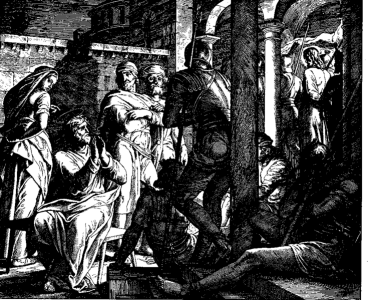
This year the Passion Narrative is that of Mark (14:1-15:47) but I find the passage in Luke 22:39-71 and 23:1-49 (50-56) to be more dramatic.  The three parts of Luke’s narrative that stand out in this narrative for me are Peter’s denial of Jesus, the interaction of Jesus with those crucified with him and that of the Centurion:

“Then they seized him and led him away, bringing him into the high priest’s house. But Peter was following at a distance. When they had kindled a fire in the middle of the courtyard and sat down together, Peter sat among them. Then a servant-girl, seeing him in the firelight, stared at him and said, “This man also was with him.” But he denied it, saying, “Woman, I do not know him.” A little later someone else, on seeing him, said, “You also are one of them.” But Peter said, “Man, I am not!” Then about an hour later still another kept insisting, “Surely this man also was with him; for he is a Galilean.” But Peter said, “Man, I do not know what you are talking about!” At that moment, while he was still speaking, the cock crowed. The Lord turned and looked at Peter. Then Peter remembered the word of the Lord, how he had said to him, “Before the cock crows today, you will deny me three times.” And he went out and wept bitterly.”

Peter’s denial is in large part because he has had his illusions about Jesus shattered and the fact that he had not understood the message up to that point.  As Bonhoeffer says “Jesus is a rejected Messiah. His rejection robs the passion of its halo of glory. It must be a passion without honor. Suffering and rejection sum up the whole cross of Jesus. To die on the cross means to die despised and rejected of men. Suffering and rejection are laid upon Jesus as a divine necessity, and every attempt to prevent it is the work of the devil, especially when it comes from his own disciples; for it is in fact an attempt to prevent Christ from being Christ.”

Likewise Jesus interaction with the condemned thieves that were crucified with him:

“One of the criminals who were hanged there kept deriding him and saying, “Are you not the Messiah? Save yourself and us!” But the other rebuked him, saying, “Do you not fear God, since you are under the same sentence of condemnation? And we indeed have been condemned justly, for we are getting what we deserve for our deeds, but this man has done nothing wrong.” Then he said, “Jesus, remember me when you come into your kingdom.” He replied, “Truly I tell you, today you will be with me in Paradise.”

Mark (15:25-32) records that interaction in this manner:

“It was nine o’clock in the morning when they crucified him. The inscription of the charge against him read, “The King of the Jews.” And with him they crucified two bandits, one on his right and one on his left. Those who passed by derided him, shaking their heads and saying, “Aha! You who would destroy the temple and build it in three days, save yourself, and come down from the cross!” In the same way the chief priests, along with the scribes, were also mocking him among themselves and saying, “He saved others; he cannot save himself. Let the Messiah, the King of Israel, come down from the cross now, so that we may see and believe.” Those who were crucified with him also taunted him.”

The final passage from this narrative that strikes me is the moment of Jesus’ death on the Cross:

“It was now about noon, and darkness came over the whole land until three in the afternoon, while the sun’s light failed; and the curtain of the temple was torn in two. Then Jesus, crying with a loud voice, said, “Father, into your hands I commend my spirit.” Having said this, he breathed his last. When the centurion saw what had taken place, he praised God and said, “Certainly this man was innocent.” And when all the crowds who had gathered there for this spectacle saw what had taken place, they returned home, beating their breasts. But all his acquaintances, including the women who had followed him from Galilee, stood at a distance, watching these things.”

Mark records that event in Mark 15: 33-39. In Mark’s account the reaction of the Centurion (15:39) to the death of Jesus is even more salient than the account of Luke.

“When it was noon, darkness came over the whole land until three in the afternoon. At three o’clock Jesus cried out with a loud voice, “Eloi, Eloi, lema sabachthani?” which means, “My God, my God, why have you forsaken me?” When some of the bystanders heard it, they said, “Listen, he is calling for Elijah.” And someone ran, filled a sponge with sour wine, put it on a stick, and gave it to him to drink, saying, “Wait, let us see whether Elijah will come to take him down.” Then Jesus gave a loud cry and breathed his last. And the curtain of the temple was torn in two, from top to bottom. Now when the centurion, who stood facing him, saw that in this way he breathed his last, he said, “Truly this man was God’s Son!”

The darkness of this is event is perplexing to those who want to find God in some place where he is untouched by human suffering to them the Cross is folly for what kind of God would submit himself to such ignominy but as Martin Luther wrote “He who does not know Christ does not know God hidden in suffering. Therefore, he prefers works to suffering, glory to the cross, strength to weakness, wisdom to folly. For they hate the cross and suffering and love works and the glory of works. Thus they call the good of the cross, evil and the evil of a deed, good. God can only be found in suffering and the cross.” It is in the contradiction of this week that we come to know God, not a God who seeks not the righteous or the powerful, those who seek the power of an earthy kingdom backed by an ideology of power which tramples the weak, but rather those who will simply walk in the footsteps of Jesus the Christ who rules by serving the least, the lost and the lonely.

The liturgy of this day be from any of the Passion narratives takes us to the heart of the Gospel as we led by the writers through the triumph of the entrance into Jerusalem, to the betrayal of Jesus by Judas, the abandonment of him by the disciples and the denial of Peter.  As the writers lead us through his trial, conviction, scourging and trek to Golgotha we see the gamut of human emotions and reactions to Jesus and we know that we can be there as well in any of the characters simply because we are human and capable of compassion or betrayal.  As Jesus is on the Cross it is not the religious or upstanding that remain with him.  He is left with his mother, the other Mary and John the beloved.  He is shown compassion by a thief and recognized as the Son of God by the Roman Centurion, a gentile serving an empire oppressing the people of Israel and whose governor had pronounced the sentence of death upon him.  In this liturgy we have been taken from the heights of exhilaration in the triumphant entry to the depths of despair felt by his disciples that Friday afternoon. It is in this time that we realize how right Dietrich Bonhoeffer is when he writes “God loves human beings. God loves the world. Not an ideal human, but human beings as they are; not an ideal world, but the real world. What we find repulsive in their opposition to God, what we shrink back from with pain and hostility, namely, real human beings, the real world, this is for God the ground of unfathomable love.”

It is the Centurion for which I have the greatest affinity in this story. He is a soldier and in the words of so many soldiers who have obey orders carried out the sentence upon Christ by crucifying him and then as the life ebbs out of Christ’s crucified body exclaims “surely this was a good man” or in other accounts “surely this was the Son of God.” That is the cry of a man who knows that he has executed an unjust sentence, the reaction of a true penitent, the reaction of a man who comes to realize even before many of Jesus’ closest followers understood.  According to tradition the Centurion was named Longinus who left the service of the Imperial Legion, was baptized by the Apostles and was martyred under the orders of Pontius Pilate by soldiers of the unit that he had once commanded.

It is important for the Church not to lose this identification.  The Church is not to become enmeshed and co-opted by those who attempt to use the Gospel to promote ideologies foreign to it as is the temptation in times of crisis.  As Jürgen Moltmann notes:

“In Christianity the cross is the test of everything which deserves to be called Christian… The Christian life of theologians, churches and human beings is faced more than ever today with a double crisis: the crisis of relevance and the crisis of identity. These two crises are complementary. The more theology and the church attempt to become relevant to the problems of the present day, the more deeply they are drawn into the crisis of their own Christian identity….Christian identity can be understood only as an act of identification with the crucified Christ, to the extent to which one has accepted that in him God has identified himself with the godless and those abandoned by God, to whom one belongs oneself.” The Crucified God [pgs. 7, 19]

Nor is our task is not to attempt to invent “crosses” for ourselves in acts of pseudo-martyrdom but simply to be faithful in loving Jesus and our neighbor as Bonhoeffer noted “Must the Christian go around looking for a cross to bear, seeking to suffer? Opportunities for bearing crosses will occur along life’s way and all that is required is the willingness to act when the time comes. The needs of the neighbor, especially those of the weak and downtrodden, the victimized and the persecuted, the ill and the lonely, will become abundantly evident.” The mark of the Christian is not to blindly give his life for a cause or be consumed by the false “messiah’s” promoted by politicians, pundits and even preachers captivated by the lust for power and glory.

As we walk through the mystery of Holy Week together let us renew our faith in the Crucified One and not be conformed to those things that seek to turn us from the way of discipleship and the way of the Cross.

Peace

Padre Steve+

Leave a comment

Filed under christian life, film, Religion

Musings on Lent and Holy Week…The Recovery of Joy in Doing Theology and Living

This has been an interesting time.  I began Lent with an actual desire to see some more spiritual progress in my life. By that I meant actually being able to slow down and take stock in order that I might continue what had begun with my Christmas miracle.  Last year I was still in a mess but Lent was a time that I found a local church home in the Hampton Roads area, St James Episcopal Church in Portsmouth. While I was not doing well it was a beginning.

This year Lent took an unexpected turn of events when on the 20th of February I was felled by a 7mm Kidney stone that pretty much put me down for almost a month, I returned to work on Saint Patrick’s Day.  That little stone stopped me cold and by chance, or some might say “God’s will” and allowed me to really think through a lot of what I believe as well as deepen my relationship with the Deity.  I found it strange to be down so hard but despite being in pretty much constant pain and unable to sleep well with pain medications just taking the edge off of the pain while making me loopy at times to be able to read and meditate on aspects of my faith as a Christian.  It was interesting as I came to integrate faith, theology and life and for the first time in many years actually began to write serious theology again.

The time was interesting from reminiscing about my Clinical Pastoral Education Residency at Parkland Memorial Hospital, thoughts on baseball and my dad, a number of articles dealing Glenn Beck and his attacks on churches and Christians that were opposed to his political and economic ideology which ended up getting a bit heated at times when a few miscreants decided to take me on.  I was surprised by the amount of negative energy and even hatred displayed by some of those who attacked me to include physical threats by another blogger.  However I did not back down once and even still tried to remain gracious to those who were critics, for the most part with the exception of the aforementioned blogger I was able to do so.

The latter part of Lent and most of Holy Week included articles about how life under the Cross impacts life in both an individual and corporate manner.  For the first time in years I was doing serious theology again.  This was very good because for the past 6 years I have been focused on doing a lot of academic work in history and military theory where I completed a Masters of Arts in Military History as well as the Marine Corps Command and Staff College which actually helped me become a better writer and researcher than I was in years past. The extra work as well as my tour in Iraq with our advisers and time at the Jordanian Army and UN Peace Operations Training Center gave me an academic depth as well as breadth that I lacked in seminary and in my early years as a priest. The fact that I had also gone through a terrible two years of psychological, physical and spiritual crisis returning from Iraq where much changed in my life.  That time was somewhat like what Saint John of the Cross called “The Dark Night of the Soul” where it seemed that God himself had turned his back on me.  This tied me back in to my seminary training and theological background of Luther’s theology of the Cross and reengaged me with the writings of Luther, Dietrich Bonhoeffer, Jürgen Moltmann, Hans Kung and Alistair McGrath.  Having gone through a period where I felt abandoned by God, the Church and many of my peers in ministry I gained a new appreciation for the theology of the Cross as something that made sense of life.  It was not as Luther called scholastic theology a “theology of glory” but a theology of reality in a broken world which I had now experienced hopelessness as something more than a theological or psychological concept. All of this combined during Lent to force me back to my theological roots.

The last week of Lent and Holy Week saw me return to some topics that have been important to me including returning to my journey in Iraq which I had not added to since last fall and a return to baseball.  I also found time to go back to write about some darkly humorous events of my Clinical Pastoral Education residency at Parkland Memorial Hospital and a couple of somewhat silly articles.

Life which had begun to return at Christmas came back through Lent to include the spiritual, psychological and physical.  I was able to come off of the “fat boy program” last week, recover from the Kidney stone and experience renewal and community.  To top things off my sense of humor and self-confidence has returned.  All in it was a rather eventful Lent and Holy Week in ways that I did not anticipate and ways that have helped me as of last week declare myself “back in commission.”

All in all I have gained a new found appreciation of God’s grace and mercy as well as an appreciation of friends of all kinds.  The understanding that “if anyone is in Christ, there is a new creation: everything old has passed away; see, everything has become new! All this is from God, who reconciled us to himself through Christ, and has given us the ministry of reconciliation; that is, in Christ God was reconciling the world to himself, not counting their trespasses against them, and entrusting the message of reconciliation to us” (2 Cor. 5:17-19) has found new meaning as I rediscovered the practical applications of what Bonhoeffer wrote “God loves human beings. God loves the world. Not an ideal human, but human beings as they are; not an ideal world, but the real world. What we find repulsive in their opposition to God, what we shrink back from with pain and hostility, namely, real human beings, the real world, this is for God the ground of unfathomable love.”

Since I am one of these kinds of rough cut human beings that Bonhoeffer talked about I have a propensity to enjoy fellowship with similar people.  I am certainly not perfect and sometimes my actions disappoint some of my more religious friends.  In a certain ironic twist I had a verbal altercation at Gordon Biersch late on Good Friday evening when Judy and I went in for a light meal and a beer. While attempting to take a seat I was threatened by a drunk and I refused to back down or shrink away getting back in his face using certain coarse language to get him to back down. It is funny how having been held up at gunpoint and shot at in combat will influence the fight or flight reaction in the direction fight even for a miscreant priest.  If the guy had actually tried anything big Randy and about five other Stein Club members were about to come over the bar to protect “their padre.” So I know that I miss the ideal of the “theologians of glory” and those who find such human faults as unworthy of God’s grace.

Even so joy has returned to my life admittedly part of this has to be the fact that Baseball season’s opening night coincided with Easter.  Luther said “It is pleasing to God whenever thou rejoice or laugh from the bottom of your heart” and I heartily agree.  It is good to have joy back in my life as Karl Barth said “Joy is the simplest form of gratitude” and “laughter is the closest thing to the grace of God.” The joy and laughter has even made to writing of theology an experience of God’s grace as Barth also said “The theologian who has no joy in his work is not a theologian at all.” To such theologians and preachers who have a joyless life heaven must be a tedious place and like Luther I would have to say “If you are not allowed to laugh in heaven, I don’t want to go there.” Thank God for his grace that enables flawed people like me to even have a chance and at the same time to experience that grace in joy and laughter.

So to all of my readers and friends who have walked through Lent and Holy Week with me I wish you all the best. I pray that if you at experiencing hard times that you will experience the grace, love and mercy of God and that joy and laughter will again be part of your life.

Peace and love,

Padre Steve+

Leave a comment

Filed under christian life, faith, philosophy, Religion

Alleluia Christ is Risen!

After the sabbath, as the first day of the week was dawning, Mary Magdalene and the other Mary went to see the tomb. And suddenly there was a great earthquake; for an angel of the Lord, descending from heaven, came and rolled back the stone and sat on it. His appearance was like lightning, and his clothing white as snow. For fear of him the guards shook and became like dead men. But the angel said to the women, “Do not be afraid; I know that you are looking for Jesus who was crucified. He is not here; for he has been raised, as he said. Come, see the place where he lay. Then go quickly and tell his disciples, `He has been raised from the dead, and indeed he is going ahead of you to Galilee; there you will see him.’ This is my message for you.” So they left the tomb quickly with fear and great joy, and ran to tell his disciples. Suddenly Jesus met them and said, “Greetings!” And they came to him, took hold of his feet, and worshiped him. Then Jesus said to them, “Do not be afraid; go and tell my brothers to go to Galilee; there they will see me.” Matthew 28:1-10

It is Easter at last and Christians around the world sing the triumphant message “alleluia Christ is risen, he is risen indeed!”  Just as the first disciples walked with Jesus we too have walked with Jesus through the penitential season of Lent beginning on Ash Wednesday where we remembered that “we are but dust and to dust we shall return.” With each thing that we abstained from or added to our spiritual discipline we in a small way were reminded that we are to “deny ourselves, take up our Cross and follow.”  In Holy week we experienced the nearly schizophrenic emotions of triumph and tragedy of Palm or Passion Sunday, the solemnity that comes on Holy or Maundy Thursday as we recall the institution of the Eucharist or the Lord’s Supper and the humility of Jesus as he takes on the mantle of a lowly servant and washes the feet of his disciples.  Leaving that we enter into the suffering of Jesus on Good Friday and see how even his friends betrayed or abandoned him with only a thief on an adjacent cross and the officer in charge of the crucifixion realizing just who was on that middle cross.  We wait overnight Friday and through Saturday in the uncomfortable middle between the crucifixion and resurrection that so often mirrors events in our own life where we sometimes experience what we feel to be forsaken by family, friends, church and sometimes even God.  Yet in the pre-dawn darkness of that first Easter morning we like the disciples awake to find that something has happened, that the stone is rolled away, the tomb is empty and Jesus is raised from the dead crushing sin death and hell.  We are greeted by Jesus who tells us not to be afraid but to go and tell others what has happened.  He greets us on the road to Emmaus and breaks bread with us even as we tell him about the tragedy of his death and then our eyes are opened.  Jesus is the victor and in his death burial and resurrection we have the forgiveness of sins.  The event is also eschatological in that it opens the door for him to return in glory and for him to be revealed in his people For the creation waits with eager longing for the revealing of the children of God;  “for the creation was subjected to futility, not of its own will but by the will of the one who subjected it, in hope that the creation itself will be set free from its bondage to decay and will obtain the freedom of the glory of the children of God.” Romans 8:20-21

Likewise it is in this series of inseparable events that Christ establishes our redemption by the forgiveness of sins “For while we were still weak, at the right time Christ died for the ungodly. Indeed, rarely will anyone die for a righteous person—though perhaps for a good person someone might actually dare to die. But God proves his love for us in that while we still were sinners Christ died for us.” Romans 5:6-8.

It is a universe changing event whereby Christ sets his people free and destroys the power of his enemies. Karl Barth wrote: “Look once again to Jesus Christ in his death upon the cross.  Look and try to understand that what he did and suffered he did and suffered for you, for me, for us all.  He carried our sin, our captivity and our suffering, and did not carry it in vain.  He carried it away.  He acted as the captain of us all.  He broke through the ranks of our enemies.  He has already won the battle, our battle.  All we have to do is to follow him, to be victorious with him.  Through him, in him we are saved.  Our sin no longer has any power over us.  Our prison door is open…when he, the Son of God, sets us free, we are truly free.” This is the redemption that the world awaits, not a redemption that is to be hoarded by believers but a redemption that extends beyond the present redemption for all people, especially those who believe and the people of God are to toil and struggle for this “For to this end we toil and struggle, because we have our hope set on the living God, who is the Savior of all people, especially of those who believe.” 1 Timothy 4:10

The Cross and Resurrection are to be a new and purifying wind in the world and the people of God are to be the vehicle for this wind empowered by the Holy Spirit of God.  It is not simply about mastering the art of dying as Socrates did but experiencing resurrection.  Christ did not merely die but he overcame the last enemy which is death itself. (1 Corinthians 15:26)  The power of this is not to be taken lightly in its possibilities for real change for as Dietrich Bonhoeffer wrote “If a few people really believed that and acted on it in their daily lives, a great deal would be changed. To live in the light of the Resurrection—that is what Easter means.”

While we live in the reality of the light of the Resurrection we simultaneously live under the shadow of the Cross of Christ as well as the cross that we are obliged by God to carry in our own lives. In the duality and unity of the Cross and Resurrection we have hope and in that hope we are not to be overwhelmed by events in the world that we cannot control.  Nor are we to be consumed by false “gospels” presented by various ideologues of the right and the left who may identify themselves as “Christian” but place their ideologies, social, political, national and economic over the Gospel itself.  Ideologues who quote scripture to buttress their arguments so that their ideology and the “Gospel” are one in the same much as Satan did during the temptation of Jesus to provide a veneer of Christianity to ideologies that are often opposed to the message of the Gospel. Such an idea is much like the message on German soldier’s belt buckles in the Second World War proclaimed “Gott Mit Uns” even as their nation made war on the world and executed an evil ideology of death upon the Jews and others unfortunate enough to be considered the enemies of the Nazi Party.

It is the ideologues who now endanger the Church and Gospel itself for many choose to remain inside the walls of the church and attempt to turn it into a tool of their ideology and in doing so these ideologues measure and evaluate “others only from the standpoint of whether they are supporters of this ideology, or whether they might become such, or whether they might at least be useful to it even without their consent, or whether they must be fought as its enemies. Its glory has already become for him the solution not only to the personal problem of his own life but to each and all of the problems of the world.” But the Cross and resurrection cry out “NO!” to such ideas even when they are drenched with so called “Biblical” support.

The Cross and the Resurrection bring us to life and promise that Christ who died and was raised will come again and in doing so will complete the redemption of the world for which he suffered and died. It is the real world for which God cares for enough to live suffer and die to save, as Dietrich Bonhoeffer so eloquently wrote “God loves human beings. God loves the world. Not an ideal human, but human beings as they are; not an ideal world, but the real world. What we find repulsive in their opposition to God, what we shrink back from with pain and hostility, namely, real human beings, the real world, this is for God the ground of unfathomable love.”

It is God’s unfathomable love that Easter proclaims as victorious and allows us will all people to cry out “Alleluia Christ is Risen! The Lord is Risen indeed!”

Peace and Happy Easter

Padre Steve+

1 Comment

Filed under christian life, faith, Religion

Palm or Passion Sunday…the Paradox of the Triumphant Entry and the Cross

The Triumphant Entry

“Although we praise our common Lord for all kinds of reasons, we praise and glorify him above all for the cross. Paul passes over everything else that Christ did for our advantage and consolation and dwells incessantly on the cross. The proof of God’s love for us, he says, is that Christ died for us while we were yet sinners. Then in the following sentence he gives us the highest ground for hope: If, when we were alienated from God, we were reconciled to him by the death of his Son, how much more, now that we are reconciled, shall we be saved by his life!” John Chrysostom (AD 347-407)

God speaking to Luther: “Discipleship is not limited to what you can comprehend—it must transcend all comprehension. … Not to know where you are going is the true knowledge. My comprehension transcends yours. Thus Abraham went forth from His father… not knowing whither he went. … Behold, that is the way of the cross. You cannot find it yourself, so you must let me lead you as though you were a blind man. Wherefore it is not you, no man… but I myself, who instruct you by my Word and Spirit in the way you should go. Not the work which you choose, not the suffering you devise, but the road which is clean contrary to all you choose or contrive or desire—that is the road you must take. To that I call you and in that you must be my disciple.” Dietrich Bonhoeffer the Cost of Discipleship

Palm or Passion Sunday always is a day that invokes mixed emotions in me. It is the last Sunday of the Lenten Season and in modern times has become a juxtaposition of two events, the Triumphant Entry of Jesus into Jerusalem where he according to all four Gospels was greeted by crowds of people who lined the street with palms as Jesus riding on a donkey processed from Bethany and Bethphage where he had been staying with Lazarus into Jerusalem and the narrative of the Passion.  As such it is a roller coaster ride in our experience of walking with Jesus in the most difficult times.

This particular occasion is the Sunday where the disciples of Jesus are confronted with the reality that our earthy expectations of him do not meet the reality of his condensation to walk among us fully Divine yet fully Human but one too well acquainted with suffering, rejection and shame.  He shatters our expectations that he will bless any particular political or social ideology that we allow to take pre-eminence over him, even those that invoke his name. Thus our liturgy brings us to this strange day where in a sense we are confronted with celebrating the entrance of the King and in the next breath cursing him and betraying him to those who torture and crucify him.

In the Roman Catholic and Anglican liturgy the observance is divided between the Liturgy of the Palms which takes place outside the Church Nave either outside the church building or in the Narthex in cold or inclement weather.  After an opening collect and reading of the Gospel passage from one of the synoptic Gospels, which one depends on which of the three year liturgical readings that the church is in. Following the reading of the Gospel the congregation led by choir, acolytes and clergy process into the church reciting the words of Psalm 118: 18-29 or singing a hymn such as “All Glory Laud and Honor.”  Once the congregation is in the church the Liturgy of the Word continues and when the Passion Gospel is read and specific roles may be assigned to members of the congregation, while the congregation remains seated through the first part of the Passion the congregation stands at the verse where “Golgotha” is mentioned and remains standing.

The liturgy takes the congregation on an emotional and spiritual roller coaster.  As the congregation begins outside the following is read:

When Jesus had come near Bethphage and Bethany, at the place called the Mount of Olives, he sent two of the disciples, saying, “Go into the village ahead of you, and as you enter it you will find tied there a colt that has never been ridden. Untie it and bring it here. If anyone asks you, ‘Why are you untying it?’ just say this, ‘The Lord needs it.'” So those who were sent departed and found it as he had told them. As they were untying the colt, its owners asked them, “Why are you untying the colt?” They said, “The Lord needs it.” Then they brought it to Jesus; and after throwing their cloaks on the colt, they set Jesus on it. As he rode along, people kept spreading their cloaks on the road. As he was now approaching the path down from the Mount of Olives, the whole multitude of the disciples began to praise God joyfully with a loud voice for all the deeds of power that they had seen, saying,

“Blessed is the king who comes in the name of the Lord!

Peace in heaven, and glory in the highest heaven!”

Some of the Pharisees in the crowd said to him, “Teacher, order your disciples to stop.” He answered, “I tell you, if these were silent, the stones would shout out.” Luke 19:29-40

It is hard when you read this passage and be caught in the reenactment of this procession not to feel the excitement that must have accompanied that procession.  It has the feeling of a victory parade but this road ends in a manner that those present, those seeking an earthly king and Messiah who would drive our the Roman oppressor and restore the kingdom to Israel would not expect with some of them perhaps playing a role in the drama that would take place later in the week.  I particularly like the hymn “All Glory Laud and Honor.”

All glory, laud and honor,
To Thee, Redeemer, King,
To Whom the lips of children
Made sweet hosannas ring.

Thou art the King of Israel,
Thou David’s royal Son,
Who in the Lord’s Name comest,
The King and Blessèd One.
Refrain

The company of angels
Are praising Thee on High,
And mortal men and all things
Created make reply.
Refrain

The people of the Hebrews
With palms before Thee went;
Our prayer and praise and anthems
Before Thee we present.
Refrain

To Thee, before Thy passion,
They sang their hymns of praise;
To Thee, now high exalted,
Our melody we raise.
Refrain

Thou didst accept their praises;
Accept the prayers we bring,
Who in all good delightest,
Thou good and gracious King.

During the Liturgy of the Word one of the following is read, either Isaiah 45:21-25 or Isaiah 52:13-53:12, the second being the Song of the Suffering Servant.  The Psalm is Psalm 22 where the Psalmist foretells Jesus’ anguished cry from the Cross; “My God, my God, why have you forsaken me? and are so far from my cry and from the words of my distress?”And then we have the New Testament reading Philippians 2: 5-11, the hymn to Christ is read:

“Let the same mind be in you that was in Christ Jesus, who, though he was in the form of God, did not regard equality with God as something to be exploited, but emptied himself, taking the form of a slave, being born in human likeness. And being found in human form, he humbled himself and became obedient to the point of death– even death on a cross. Therefore God also highly exalted him and gave him the name that is above every name, so that at the name of Jesus every knee should bend, in heaven and on earth and under the earth, and every tongue should confess that Jesus Christ is Lord, to the glory of God the Father.”

Peter Denies Christ

This year the Passion Narrative is that of Luke (22:39-71) 23:1-49 (50-56).  The three parts that stand out in this narrative for me are Peter’s denial of Jesus:

“Then they seized him and led him away, bringing him into the high priest’s house. But Peter was following at a distance. When they had kindled a fire in the middle of the courtyard and sat down together, Peter sat among them. Then a servant-girl, seeing him in the firelight, stared at him and said, “This man also was with him.” But he denied it, saying, “Woman, I do not know him.” A little later someone else, on seeing him, said, “You also are one of them.” But Peter said, “Man, I am not!” Then about an hour later still another kept insisting, “Surely this man also was with him; for he is a Galilean.” But Peter said, “Man, I do not know what you are talking about!” At that moment, while he was still speaking, the cock crowed. The Lord turned and looked at Peter. Then Peter remembered the word of the Lord, how he had said to him, “Before the cock crows today, you will deny me three times.” And he went out and wept bitterly.”

Peter’s denial is in large part because he has had his illusions about Jesus shattered and the fact that he had not understood the message up to that point.  As Bonhoeffer says “Jesus is a rejected Messiah. His rejection robs the passion of its halo of glory. It must be a passion without honor. Suffering and rejection sum up the whole cross of Jesus. To die on the cross means to die despised and rejected of men. Suffering and rejection are laid upon Jesus as a divine necessity, and every attempt to prevent it is the work of the devil, especially when it comes from his own disciples; for it is in fact an attempt to prevent Christ from being Christ.”

Likewise Jesus interaction with the condemned thieves that were crucified with him:

“One of the criminals who were hanged there kept deriding him and saying, “Are you not the Messiah? Save yourself and us!” But the other rebuked him, saying, “Do you not fear God, since you are under the same sentence of condemnation? And we indeed have been condemned justly, for we are getting what we deserve for our deeds, but this man has done nothing wrong.” Then he said, “Jesus, remember me when you come into your kingdom.” He replied, “Truly I tell you, today you will be with me in Paradise.”

The Crucifixion

The final passage from this narrative that strikes me is the moment of Jesus’ death on the Cross:

“It was now about noon, and darkness came over the whole land until three in the afternoon, while the sun’s light failed; and the curtain of the temple was torn in two. Then Jesus, crying with a loud voice, said, “Father, into your hands I commend my spirit.” Having said this, he breathed his last. When the centurion saw what had taken place, he praised God and said, “Certainly this man was innocent.” And when all the crowds who had gathered there for this spectacle saw what had taken place, they returned home, beating their breasts. But all his acquaintances, including the women who had followed him from Galilee, stood at a distance, watching these things.”

The darkness of this is event is perplexing to those who want to find God in some place where he is untouched by human suffering to them the Cross is folly for what kind of God would submit himself to such ignominy but as Martin Luther wrote “He who does not know Christ does not know God hidden in suffering. Therefore, he prefers works to suffering, glory to the cross, strength to weakness, wisdom to folly. For they hate the cross and suffering and love works and the glory of works. Thus they call the good of the cross, evil and the evil of a deed, good. God can only be found in suffering and the cross.” It is in the contradiction of this week that we come to know God, not a God who seeks not the righteous or the powerful, those who seek the power of an earthy kingdom backed by an ideology of power which tramples the weak, but rather those who will simply walk in the footsteps of Jesus the Christ who rules by serving the least, the lost and the lonely.

The liturgy of this day takes us to the heart of the Gospel as we led by the writers through the triumph of the entrance into Jerusalem, to the betrayal of Jesus by Judas, the abandonment of him by the disciples and the denial of Peter.  As the writers lead us through his trial, conviction, scourging and trek to Golgotha we see the gamut of human emotions and reactions to Jesus and we know that we can be there as well in any of the characters simply because we are human and capable of compassion or betrayal.  As Jesus is on the Cross it is not the religious or upstanding that remain with him.  He is left with his mother, the other Mary and John the beloved.  He is shown compassion by a thief and recognized as the Son of God by the Roman Centurion, a gentile serving an empire oppressing the people of Israel and whose governor had pronounced the sentence of death upon him.  In this liturgy we have been taken from the heights of exhilaration in the triumphant entry to the depths of despair felt by his disciples that Friday afternoon. It is in this time that we realize how right Dietrich Bonhoeffer is when he writes “God loves human beings. God loves the world. Not an ideal human, but human beings as they are; not an ideal world, but the real world. What we find repulsive in their opposition to God, what we shrink back from with pain and hostility, namely, real human beings, the real world, this is for God the ground of unfathomable love.”

St Longinus, Centurion at the Cross and Martyr

It is the Centurion for which I have the greatest affinity in this story. He is a soldier and in the words of so many soldiers who have obey orders carried out the sentence upon Christ by crucifying him and then as the life ebbs out of Christ’s crucified body exclaims “surely this was a good man” or in other accounts “surely this was the Son of God.” That is the cry of a man who knows that he has executed an unjust sentence, the reaction of a true penitent, the reaction of a man who comes to realize even before many of Jesus’ closest followers understood.  According to tradition the Centurion was named Longinus who left the service of the Imperial Legion, was baptized by the Apostles and was martyred under the orders of Pontius Pilate by soldiers of the unit that he had once commanded.

It is important for the Church not to lose this identification.  The Church is not to become enmeshed and co-opted by those who attempt to use the Gospel to promote ideologies foreign to it as is the temptation in times of crisis.  As Jürgen Moltmann notes:

“In Christianity the cross is the test of everything which deserves to be called Christian… The Christian life of theologians, churches and human beings is faced more than ever today with a double crisis: the crisis of relevance and the crisis of identity. These two crises are complementary. The more theology and the church attempt to become relevant to the problems of the present day, the more deeply they are drawn into the crisis of their own Christian identity….

Christian identity can be understood only as an act of identification with the crucified Christ, to the extent to which one has accepted that in him God has identified himself with the godless and those abandoned by God, to whom one belongs oneself.” The Crucified God [pgs. 7, 19]

Nor is our task is not to attempt to invent “crosses” for ourselves in acts of pseudo-martyrdom but simply to be faithful in loving Jesus and our neighbor as Bonhoeffer noted “Must the Christian go around looking for a cross to bear, seeking to suffer? Opportunities for bearing crosses will occur along life’s way and all that is required is the willingness to act when the time comes. The needs of the neighbor, especially those of the weak and downtrodden, the victimized and the persecuted, the ill and the lonely, will become abundantly evident.” The mark of the Christian is not to blindly give his life for a cause or be consumed by the false “messiah’s” promoted by politicians, pundits and even preachers captivated by the lust for power and glory.

As we walk through the mystery of Holy Week together let us renew our faith in the Crucified One and not be conformed to those things that seek to turn us from the way of discipleship and the way of the Cross.

Peace

Padre Steve+

2 Comments

Filed under christian life, faith, philosophy, Religion

The Last Week of Lent: Mediation on Life, Love and Public Witness

Lent is drawing to a close and Sunday begins Holy week where the Church remembers the last week in the early life of Jesus the Christ.  While I will write about the various aspects of Holy week to include Passion or Palm Sunday, Holy or Maundy Thursday, Good Friday and Easter but tonight a short meditation on the final week of this Lenten season.

I have discussed how this Lent has been different than previous observances of Lent.  In the past I was constantly trying to observe certain spiritual disciplines to include fasting, abstinence and prayer in a formal and legalistic manner.  Last year as I was “melting down” in my spiritual, psychological and physical life facing an existential crisis where after my tour in Iraq, experience of forsakenness, disillusionment concerning the Church, political institutions and the media and doubt about the existence of God I attempted to change the way that I observed Lent.  For the most part that attempt was an abysmal failure, however out of it came an association with the Pastor and people of Saint James Episcopal Church in Portsmouth which has been a place where at least part of me began to experience community and healing again.

This Lenten season has been one filled with an experience of God’s grace and love as well as a connection to others that I have missed for a long time.  It has been a time of continued healing, self discovery in the light of God’s grace and change in the way that I do life.  Admittedly this has been a gradual process that began back during Advent but has become more a part of my life.  The rediscovery of God’s grace in Jesus and a life in community with others has been a key factor in this experience.  I certainly have not figured everything out, far be it, I am re-learning my faith and it has been a time of refreshment.  Part of this is the experience of Christ in Scripture and sacred Tradition, but also in reason.  As such it has been a time where I have been able to enunciate how my Christian faith addresses the trying times that we are living in often through the witness of men like Dietrich Bonhoeffer and Karl Barth.

One thing that Bonhoeffer said has a particular resonance in my life because it aptly describes how I feel.  In prison Bonhoeffer wrote: “I often ask myself why a ‘Christian instinct’ often draws me more to the religionless people than to the religious, by which I don’t in the least mean with any evangelizing intention, but, I might almost say, ‘in brotherhood’. While I’m often reluctant to mention God by name to religious people – because that name somehow seems to me here not to ring true, and I feel myself to be slightly dishonest (it’s particularly bad when others start to talk in religious jargon; I then dry up almost completely and feel awkward and uncomfortable) – to people with no religion I can on occasion mention him by name quite calmly and as a matter of course.” Dietrich Bonhoeffer – Letters and Papers from Prison

In fact I find it easier on many occasions to have free flowing, intellectual, spiritual discussions with people who have a faith far different than mine than I do with many people in my own denomination. I am making no judgment on them as I have been the one going through a fundamental change in the way that I do life, theology and relationships.

As this has occurred I have rediscovered just how much God loves and cares for real people, as Bonhoeffer wrote:

“God loves human beings. God loves the world. Not an ideal human, but human beings as they are; not an ideal world, but the real world. What we find repulsive in their opposition to God, what we shrink back from with pain and hostility, namely, real human beings, the real world, this is for God the ground of unfathomable love.”

As I interact more with those “outside” the church I often find deep faith and integrity which sometimes I find to be more “real” than some of the Christians that I know. I am not saying that somehow the non-Christian is superior to the Christian but that God has also made them in his image and as such they are not the enemies of God. As Paul the Apostle wrote “Therefore, if anyone is in Christ, he is a new creation; the old has passed away, behold, the new has come. All this is from God, who through Christ reconciled us to himself and gave us the ministry of reconciliation; that is, in Christ God was reconciling the world to himself, not counting their trespasses against them, and entrusting to us the message of reconciliation.  So we are ambassadors for Christ, God making his appeal through us. We beseech you on behalf of Christ, be reconciled to God.  For our sake he made him to be sin who knew no sin, so that in him we might become the righteousness of God.” 2nd Cor. 5:17-21 NRSV and “For to this end we toil and struggle, because we have our hope set on the living God, who is the Savior of all people, especially of those who believe.” 1 Tim. 4:10 NRSV

Likewise I also have found it harder to deal with people who spout religious jargon and throw out Bible verses without any sense of context, history and or concern for their hearers.  It seems to me that many parts of American Christianity have substituted cultural and political issues for the preaching of the Gospel of life.  I recently saw some posts by religious leaders on social networking sites, websites and media outlets that accused pro-life Democrats of “betraying their faith” by voting for the Health Care Bill.  Now I am not thrilled with the bill and have major concerns about it.  However, if I decide to accuse someone of “betraying their faith” I had better be sure that I am on solid ground and stick to what is in the Creed over a particular interpretation of any moral or social issue on which even Christians disagree. Saying this will win me no friends in certain parts of the Church but I wonder the utility of alienating people and in our condemnation of them ensure that they will turn off anything that we say about Jesus who despite what they (and we) do still loves humanity with an undying and passionate love that is demonstrated by his death on the Cross as Paul wrote “But God proves his love for us in that while we still were sinners Christ died for us.”   Romans 5:8 NRSV

In all of the turmoil that has embroiled the country I still find myself at peace because of what has happened to me over the past couple of years. Going to war and seeing the tragedy of a people engulfed in civil war has given me an appreciation of seeking peaceful dialogue with those that I have disagreement rather than attacking them at the center of their being.  I believe the Gospel lived authentically and not wrapped in the incestuous embrace of venomous and often hate filled political ideologies which seems to be increasingly the case in United States is far more powerful than that of a political movement of any kind.  The church surrenders its authority and legitimacy by allowing itself to be a party organ of any political party or ideology.  Unfortunately simply because political parties and movements pay lip service to certain “Christian” values many Christians and churches lose themselves and endorse power for power sake hoping that the party will implement their beliefs.  Unfortunately history proves that more often than not when their party returns to power it will again sell them short with no return for their support.  The unintended consequence is that people who need the Gospel identify it with the political ideology of the party that the church supported.  This was not the witness of the early church, the Apostles and those that followed them.

The mimicking of ideologues by Christians gives credence and support to violent people who under the cover of God have no problem with praying for the death of their opponents and in some cases taking the responsibility of that in their own hands.  Should bloodshed arise out of this latest partisan political struggle the religious leaders who urged violence and prayed for death will have blood on their hands.  Having been threatened with violence on this website by a supposedly “Christian” person I take a deeply personal interest in just how violent some Christians have become and with actions and violent threats against members of the House of Representatives I wonder what will happen when someone assassinates one of these men or women or a religious leader who dares to oppose them.

The alternative to this is to cry “NO!” to the calls for violence and judgment no matter from what side of the political or ideological spectrum that they emerge.  The alternative is to in thought word and deed demonstrate the truth of the Gospel in love even to those that we have strong disagreement on very important issues.

Anyway I must close for the night.

Peace

Padre Steve+
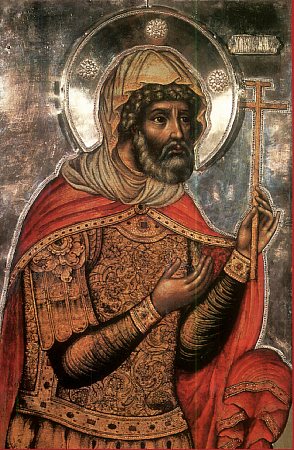
Leave a comment

Filed under christian life, History, philosophy, Political Commentary, Religion

One Week Warning: Lent Begins Next Wednesday

Contemplating Lent

I have never ever done the season of Lent well.  From Ash Wednesday through Good Friday I pray for it to end.  First I don’t look good in the liturgical color of the season, purple.  I actually prefer the green of Ordinary time or the Red of Pentecost.  However I do have a really cool “cope” (which is liturgical jargon for cape) and stole (liturgical scarf) in purple that I picked up at little religious goods store in Poland back in 1996. I thought it was a chasuble (liturgical poncho) but it is still pretty cool.  Unfortunately I have never had the occasion to wear it in a service despite the color which would not do me well.

However aesthetics aside Lent is my least favorite season of the Church year.  Now I am not adverse to it on principle as I do think that we all need to take stock of our relationship with God and humanity as well as the things that we mess up on a daily basis.  As someone whose spiritual life stays about at the Mendoza line I know that I have a lot that I need to improve in my life.  That is a given.  I would love to be a .300 spiritual hitter than a .215 spiritual hitter.  However I do work at trying to get better.  Lent is a season that reminds me of what a screw up I am, thus like anyone who doesn’t like to be reminded of their shortcomings for 40 days I find Lent a painful reminder of my imperfections.

So with that in mind and knowing that I am not the only person who is in my boat I have to provide some survival tips but those will wait.  Since many readers have little idea what Lent is about let me do some “splainin” as Ricky Ricardo would have said.

Lent is the season of spiritual preparation that leads up to Holy Week and Easter. It is a “penitential season” meaning a season where we examine our lives in relationship to God and the folks that we hang with, sometimes referred to as humanity and seek to receive God’s grace to make amends and to find ways to do better.  One of the ways that Christians have done is to give up certain foods or activities during the season. Others seek to add spiritual disciplines to their lives.

Lent begins on the Wednesday following “Fat Tuesday” which is called Ash Wednesday. On Ash Wednesday Christians have themselves marked with a cross from ashes on their forehead as a sign of the reality of their mortality and promise to use the season to return to God, make changes in their lives that will deepen their spiritual lives and their relationship with their neighbor. It’s the whole “which are the greatest commandments?” “Love God and love your neighbor” on steroids.  Unfortunately the whole relationship thing sometimes gets lost as folks get caught in the legalism and minutia or trying to figure out what to “give up” for Lent, which often is like a New Year’s resolution which almost invariably goes bad.  Lent then continues for 7 weeks but only 40 days are actually Lenten Lent as all the Sundays are “feast days” which mean that you can eat all the stuff that you don’t get to eat on Fridays or Wednesdays if your Church or Diocese is a bit stricter than others.  There are also three major Feast Days, Saint Matthias (Apostle), Saint Joseph and the Annunciation. There is also Saint Patrick’s Day which though not a major feast day is often locally observed and of it falls on a Wednesday or Friday is sometimes is allowed by the local Bishop to supersede the fast day.  Speaking of “Fast Days” these are days where the Christian gives up most food except for a couple of very small and simple meatless meals, though some are stricter in their observance of “Fast Days” and actually fast throughout the day, not that there is anything wrong with that.  Ash Wednesday and Good Friday are “Fast Days.” There are also days known as days of abstinence where the individual gives up certain foods or activities. Traditionally meat is given up on Fridays and depending on how strict your diocese is Wednesdays as well. Most people do fish on these days.  I will write more about this later in the week.

I have struggled with Lent for most of my life even as a Priest.  When I made my first confession I asked the Priest who heard it “if they deserved it was it still as sin?” Though that was not during Lent you get my drift.  I admit that I struggle with Lent but over the past few months I have had a rather remarkable spiritual and emotional start to recovering from my case of PTSD.  So as with most things I am not in dread of Lent this year. I will pick reasonable spiritual goals as well as things to abstain from during the season.

So with the warning given enjoy the next week.

Peace,

Padre Steve+

Leave a comment

Filed under Pastoral Care, philosophy, Religion