Tag Archives: i have a dream speech

Now More than Ever: The Importance of Dr. King’s Dream

Friends of Padre Steve’s World,

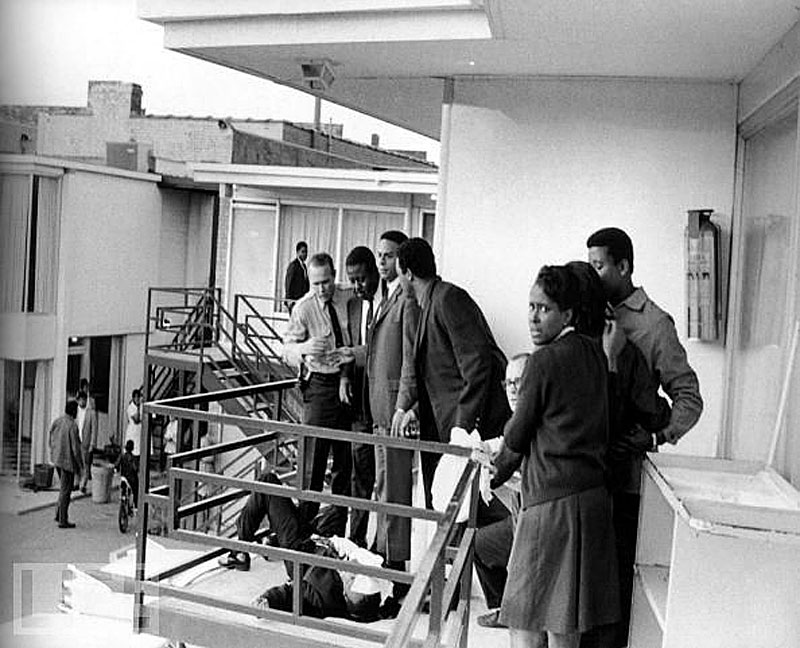
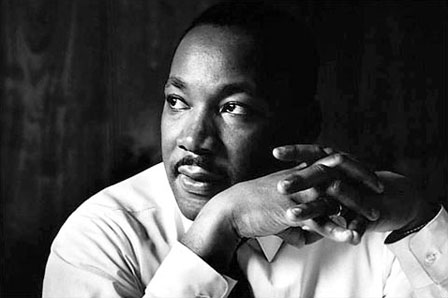
Dr. Martin Luther King Jr. has always been one of my heroes. This time of year I always ponder the importance of his life and work for civil rights, and I wonder what might have been had this man of peace not been cut down in cold blood at the young age of 39 by James Earl Ray on April 4th 1968. He was an amazing and courageous man whose memory should not be let to one day a year.

We live in a world where a minority of voters elected a man as President who through his words and actions demonstrates daily that he cares not for anything that Dr.King stood for. Thus, we have to ensure, though our words and actions that it is not allowed to die. Doing that may involve a high cost as the President-Elect is not known for playing nice with his opponents and now that he will have the police power of the state and a compliant Congress at his back you can expect that opponents will be harassed, intimidated, and maybe worse.

Dr. King was a man of courage, a man of honor, a man of conviction. But he came of age in a time when many people were willing to maintain the status quo and play things safe, like many clergy, even African-American clergy. Many pastors of the era, remained quiet about the conditions of segregation, and the racism of the day. Their lack of action did not mean they were bad people, they just understood that if they spoke up, their lives, and the lives of their families and congregations could be in danger. As such many pastors just hoped to see things slowly improve, without rocking the boat, and without endangering themselves or their families. They had seen what happened to blacks who spoke up or confronted the evil, lynching’s, cross burnings, threats and murder. They had contented themselves with just trying to get along. At the beginning of the movement, many pastors did not support or gave only lukewarm support to Dr. King, Andrew Young, Fred Shuttlesworth, and Ralph Abernathy going into that critical year of 1963.
lossless-page1-560px-Rosa_Parks_(detail).tiff

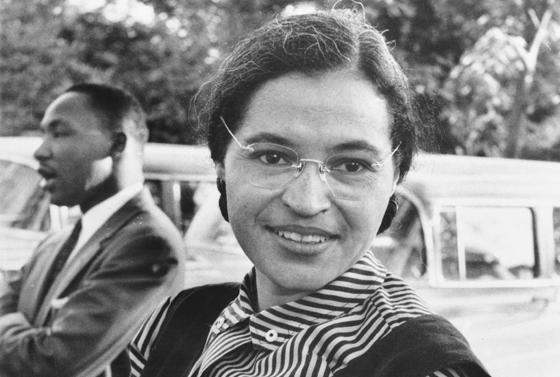
King did not start out to become a Civil Rights leader. However, he was inspired to actively join the movement through the example of Rosa Parks, who defiance of the law for blacks to sit “in the back of the bus” in 1955. He led the Montgomery Bus Boycott which lasted for 385 days. The reaction among segregationists to King and his protest was against violent. King’s house was bombed, and his life threatened. But he refused to stand down.

King’s leadership of the boycott brought the young pastor to national prominence. However, by 1963 much of the Civil Rights movement and the African American community was despairing of the lack of progress. Many people had become disenchanted with King, not considering him bold enough despite his rhetorical abilities.

But in April 1963, working with other Civil Rights leaders in Birmingham Alabama King relit the fires of the movement. Montgomery Police Chief “Bull” Conner used his police force to violently attack the demonstrators. Conner ordered his men to unleash their police dogs on the protestors, and used high pressure water cannon against them, including women, children and the elderly. The violent reaction to the protests shocked much of America and the world.

King was arrested and in the Birmingham jail composed one of his most famous works, the Letter from the Birmingham Jail.  The letter was a social, political and theological masterpiece. It was some of his harshest criticism was of white liberals, as well as black moderates:

“I have almost reached the regrettable conclusion that the Negro’s great stumbling block in his stride toward freedom is not the White Citizen’s Councilor or the Ku Klux Klanner, but the white moderate, who is more devoted to “order” than to justice; who prefers a negative peace which is the absence of tension to a positive peace which is the presence of justice; who constantly says: “I agree with you in the goal you seek, but I cannot agree with your methods of direct action”; who paternalistically believes he can set the timetable for another man’s freedom; who lives by a mythical concept of time and who constantly advises the Negro to wait for a “more convenient season”

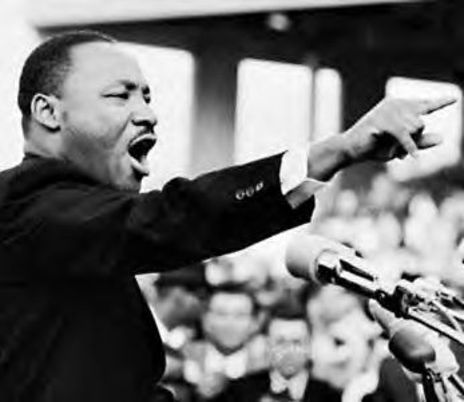
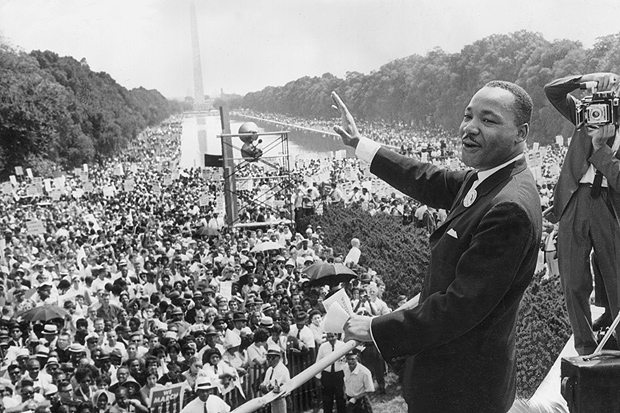
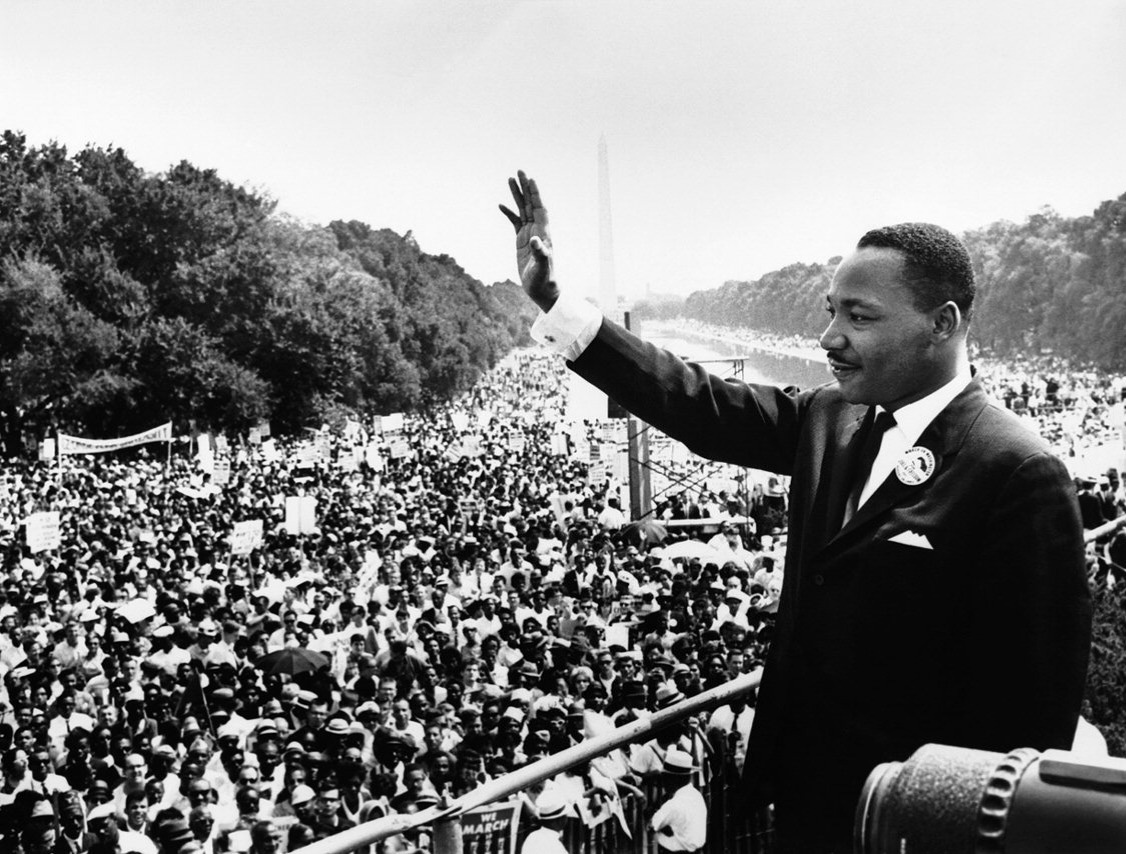
King continued his activism until his assassination. In August 1963 he led the March on Washington for Jobs and Freedom, where before a crowd of an estimated 200,000-300,000 he gave his I Have a Dream Speech.

http://www.americanrhetoric.com/speeches/mlkihaveadream.htm

The crescendo of the speech was remarkable and is perhaps one of the most remembered speeches in American history.

Let us not wallow in the valley of despair, I say to you today, my friends.

And so even though we face the difficulties of today and tomorrow, I still have a dream. It is a dream deeply rooted in the American dream.

I have a dream that one day this nation will rise up and live out the true meaning of its creed: “We hold these truths to be self-evident, that all men are created equal.”

I have a dream that one day on the red hills of Georgia, the sons of former slaves and the sons of former slave owners will be able to sit down together at the table of brotherhood.

I have a dream that one day even the state of Mississippi, a state sweltering with the heat of injustice, sweltering with the heat of oppression, will be transformed into an oasis of freedom and justice.

I have a dream that my four little children will one day live in a nation where they will not be judged by the color of their skin but by the content of their character.

I have a dream today!

I have a dream that one day, down in Alabama, with its vicious racists, with its governor having his lips dripping with the words of “interposition” and “nullification” — one day right there in Alabama little black boys and black girls will be able to join hands with little white boys and white girls as sisters and brothers.

I have a dream today!

I have a dream that one day every valley shall be exalted, and every hill and mountain shall be made low, the rough places will be made plain, and the crooked places will be made straight; “and the glory of the Lord shall be revealed and all flesh shall see it together.”2

This is our hope, and this is the faith that I go back to the South with.

With this faith, we will be able to hew out of the mountain of despair a stone of hope. With this faith, we will be able to transform the jangling discords of our nation into a beautiful symphony of brotherhood. With this faith, we will be able to work together, to pray together, to struggle together, to go to jail together, to stand up for freedom together, knowing that we will be free one day.

And this will be the day — this will be the day when all of God’s children will be able to sing with new meaning:

My country ’tis of thee, sweet land of liberty, of thee I sing.

Land where my fathers died, land of the Pilgrim’s pride,

From every mountainside, let freedom ring!

And if America is to be a great nation, this must become true.

And so let freedom ring from the prodigious hilltops of New Hampshire.

Let freedom ring from the mighty mountains of New York.

Let freedom ring from the heightening Alleghenies of Pennsylvania.

Let freedom ring from the snow-capped Rockies of Colorado.

Let freedom ring from the curvaceous slopes of California.

But not only that:

Let freedom ring from Stone Mountain of Georgia.

Let freedom ring from Lookout Mountain of Tennessee.

Let freedom ring from every hill and molehill of Mississippi.

From every mountainside, let freedom ring.

And when this happens, and when we allow freedom ring, when we let it ring from every village and every hamlet, from every state and every city, we will be able to speed up that day when all of God’s children, black men and white men, Jews and Gentiles, Protestants and Catholics, will be able to join hands and sing in the words of the old Negro spiritual:

                Free at last! Free at last!

                Thank God Almighty, we are free at last!

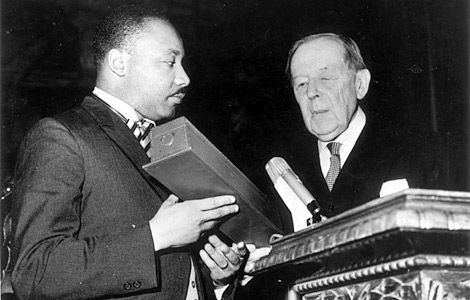
King knew the dangers and the risks of appealing to a strategy of non-violence based on love of his enemies. King spoke to the world when he accepted the Nobel Peace Prize in 1964:

“Here and there an individual or group dares to love, and rises to the majestic heights of moral maturity. So in a real sense this is a great time to be alive. Therefore, I am not yet discouraged about the future. Granted that the easygoing optimism of yesterday is impossible. Granted that those who pioneer in the struggle for peace and freedom will still face uncomfortable jail terms, painful threats of death; they will still be battered by the storms of persecution, leading them to the nagging feeling that they can no longer bear such a heavy burden, and the temptation of wanting to retreat to a more quiet and serene life. Granted that we face a world crisis which leaves us standing so often amid the surging murmur of life’s restless sea. But every crisis has both its dangers and its opportunities. It can spell either salvation or doom. In a dark confused world the kingdom of God may yet reign in the hearts of men.”  http://www.nobelprize.org/nobel_prizes/peace/laureates/1964/king-lecture.html 

Dr. King understood how easy hatred could consume people and movements and urged  people not to follow the course of hate, he wrote:

“Returning hate for hate multiplies hate, adding deeper darkness to a night already devoid of stars. Darkness cannot drive out darkness; only light can do that. Hate cannot drive out hate; only love can do that. Hate multiplies hate, violence multiplies violence, and toughness multiplies toughness in a descending spiral of destruction.”

The day before his assassination in Memphis, Dr. King still recognized what he might face. His “I have been to the Mountaintop” speech http://www.americanrhetoric.com/speeches/mlkivebeentothemountaintop.htm recounted many of the things that he had encountered, including an assassination attempt in 1958 which had come close to killing him. It was an amazing speech and one wonders if having lived under threat so long that he almost had a premonition of his death the next day.

And then I got into Memphis. And some began to say the threats, or talk about the threats that were out. What would happen to me from some of our sick white brothers?

Well, I don’t know what will happen now. We’ve got some difficult days ahead. But it really doesn’t matter with me now, because I’ve been to the mountaintop.

And I don’t mind.

Like anybody, I would like to live a long life. Longevity has its place. But I’m not concerned about that now. I just want to do God’s will. And He’s allowed me to go up to the mountain. And I’ve looked over. And I’ve seen the Promised Land. I may not get there with you. But I want you to know tonight, that we, as a people, will get to the promised land!

Dr. King’s dream is not dead and we who live today cannot allow it to die. There is still much work to see justice done for all Americans as well as those suffering from violence, persecution, discrimination and poverty around the world.

It is 2016. It has been 54 years since Dr. King sat in the Birmingham jail. Sadly, there are some who long for a return to the day of Jim Crow. In some states there have been and there are ongoing attempts to return it by stealth, especially through restrictions on voting that predominantly impact African Americans and the poor. Racism is not dead, nor are so many other “isms.” As Dr. King told us, “Now is the time to make real the promises of democracy,” and “It would be fatal for the nation to overlook the urgency of the moment.”

Dr. King and many of the leaders of the Civil Rights Movement have passed on. Likewise, many people today are complacent about the injustices present in our society, injustices experienced by many people. We need a generation of new men and women with hearts like Dr. King’s, who will be the conscience of the nation and confront these injustices.
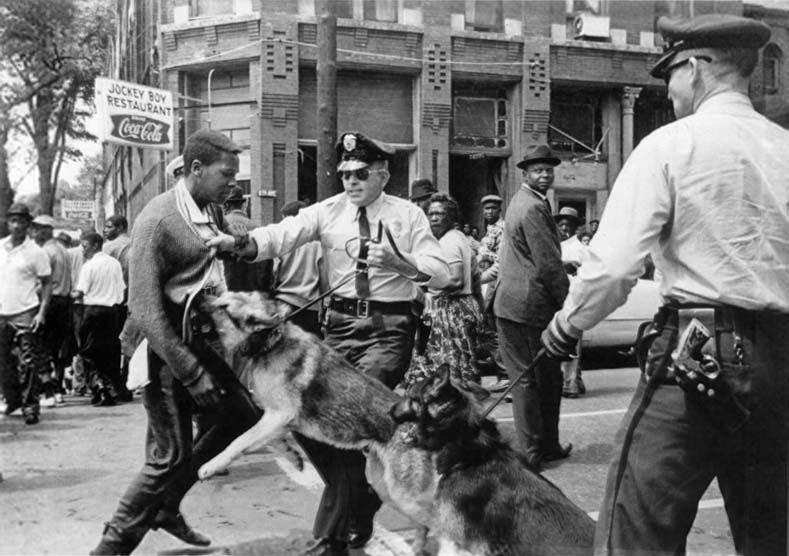
Birmingham_campaign_dogs

Likewise we cannot ghettoize Dr. King’s accomplishments as being something that only helped African Americans. They have helped all of us. Dr. King’s courage in standing for Constitutional Amendments that many of his opponents despised, the 13th, 14th, 15th and 19th Amendments, as well as the Civil Rights Act and Voting Rights Acts is of fundamental importance to all Americans, even those that think they don’t matter.

President Ulysses Grant was absolutely correct when he pointed out the plight of white Southerners in the ante-bellum South. They were people so bound to the slavery system and their place in it that they could not see how badly it hurt them so long as they had a group, in this case African American slaves who were below them. Grant wrote:

“The great bulk of the legal voters of the South were men who owned no slaves; their homes were generally in the hills and poor country; their facilities for educating their children, even up to the point of reading and writing, were very limited; their interest in the contest was very meagre–what there was, if they had been capable of seeing it, was with the North; they too needed emancipation. Under the old regime they were looked down upon by those who controlled all the affairs in the interest of slave-owners, as poor white trash who were allowed the ballot so long as they cast it according to direction.”

That my friends is descriptive of how President Elect Trump and the Republican Congress view those who put them in office. Trump supporters do not seem to realize that they will be hurt the most by the incoming administration and congresses policies. They too need emancipation and deliverance, thus we have to remain strong, for they too are our brothers and sisters.

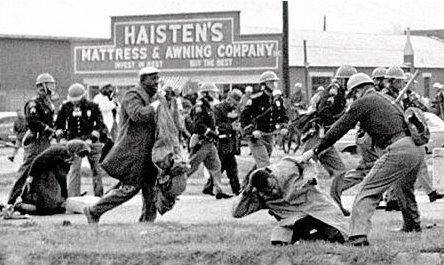
Representative John Lewis, one of the original Freedom Riders was beaten numerous times during those protests. When leading the march across the Pettus Bridge in Selma, Lewis had his skull fractured by a State Trooper when he stopped to pray.  Lewis’s words call us to action today:

“If not us, then who? If not now, then when?” 

Representative Lewis is still speaking out, and enduring the attacks of the President-Elect, and we must join him. We cannot let Dr. King’s dream die.

Peace

Padre Steve+

Leave a comment

Filed under civil rights, History, News and current events, Political Commentary

The Dream at 53: Still Laboring for the New Birth of Freedom


Friends of Padre Steve’s World,

Since I am out of town this week I am going to post a short article tonight. Today was the fifty-third anniversary of one of the greatest speeches in American history. It was on this day that Dr. Martin Luther King Jr. spoke at the Lincoln Memorial during the March on Washington for Jobs and Freedom. The speech was powerful, eloquent, and even today when one listnes to Dr. King’s marvelous oratory the effect is electrifying. I was on three years old and living in the Philippines when he spoke them and so it was not until years later that I heard it for the first time.  Every time I watch the films of Dr. King speaking those words I am forced to recall not just his eloquence, but the depth of what he said, and how much is still true today. While I think I am a pretty good writer I would only hope to half as gifted as a speaker as Dr. King. 

https://vimeo.com/2158959
http://www.americanrhetoric.com/speeches/mlkihaveadream.htm 
I did get to speak yesterday at the Morehead Pride Festival and afterwards I was thinking about Dr. King’s message for all people. I do have that dream for all who are oppressed. I was talking to a lot of people before and after and so many told me how many of how they had been ostracized by the church for being Gay but still longed for that sense of spiritual support and acceptance. I began thinking what it would be like if most churches would simply accept people and love them. But many churches and Christians, especially the more conservative types of churches who are so willing to accept people and even bless people like Donald Trump as “God’s choice” for the highest office in the land, treat LGBTQ people as worse than the devil. Why? Because they are gay and according to their interpretation of the Bible that seems to be the only sin God cannot forgive. Less than fifty years ago many people in this country felt the same way about African Americans. But I digress… 

But the fact is that for many people, especially African Americans, other people of color, poor whites, women, religious minorities, as well as LGBTQ people, the promise of this nation is not yet fully realized. Dr. King equated the words of the Declaration of Independence as a promissory note, meant for all people that had been defaulted on by our nation, and how could he not? 

As a historian I know the words of the preamble of the Declaration, as well as the Gettysburg Address are for all purposes are the cornerstone of American Secular Scripture. They define what we can and should be. And yesterday while I was speaking I again realized just how much promise those words have: they are what make us Americans and if we fail to remember them, if we fail to work to ensure that they are the basis of who we are as a people both in word and deed, then we too will default on that promissory note, and the treasury of freedom and justice will be bankrupt; and we have none to blame but ourselves. 

But I have a dream, as Dr. King so eloquently put it “that one day this nation will rise up and live out the true meaning of its creed: “We hold these truths to be self-evident, that all men are created equal.” Far too many people have shed their blood for that sacred proposition for us to abandon it: soldiers, civil rights leaders, men and women, black and white, straight and gay, of every religion and race that have ever longed for the realization of that proposition. Dr. King was one of them, as was Harvey Milk, they and so many others cut down by assassin’s bullets, or murdered, or lynched. So with them in mind we must take heed of the words of Abraham Lincoln, another martyr in the cause of freedom, who reminded those present at the dedication of the Soldier’s Cemetery at Gettysburg, “that is for us the living rather to be dedicated here to the unfinished work that they have thus far so nobly advanced. It is rather for us here to be dedication to the great task remaining before us – that from these honored dead we take increased devotion to the cause for which they gave the last full measure of devotion – that we here highly resolve that these dead shall not have died in vain, that this nation under God shall have a new birth of freedom, and that government of the people, by the people, for the people shall not perish from the earth.” 

So until tomorrow. 

Peace

Padre Steve+ 

Leave a comment

Filed under civil rights, History, Political Commentary

The Dream: Remembering Dr. Martin Luther King Jr.

index

Friends of Padre Steve’s World,

Dr. Martin Luther King Jr. has always been one of my heroes. This time of year I always ponder the importance of his life and work for civil rights, and I wonder what might have been had this man of peace not been cut down in cold blood at the young age of 39 by James Earl Ray on April 4th 1968. He was an amazing and courageous man whose memory should not be let to one day a year. We have to ensure, though our words and actions that it is not allowed to die.

King was a man of courage, a man of honor, a man of conviction. But he came of age in a time when many people were willing to maintain the status quo and play things safe, like many clergy, even African-American clergy. Many pastors of the era, remained quiet about the conditions of segregation, and the racism of the day. Their lack of action did not mean they were bad people, they just understood that if they spoke up, their lives, and the lives of their families and congregations could be in danger. As such many pastors just hoped to see things slowly improve, without rocking the boat, and without endangering themselves or their families. They had seen what happened to blacks who spoke up or confronted the evil, lynching’s, cross burnings, threats and murder. They had contented themselves with just trying to get along. At the beginning of the movement, many pastors did not support or gave only lukewarm support to Dr. King, Andrew Young, Fred Shuttlesworth, and Ralph Abernathy going into that critical year of 1963.

lossless-page1-560px-Rosa_Parks_(detail).tiff

King did not start out to become a Civil Rights leader. However, he was inspired to actively join the movement through the example of Rosa Parks, who defiance of the law for blacks to sit “in the back of the bus” in 1955. He led the Montgomery Bus Boycott which lasted for 385 days. The reaction among segregationists to King and his protest was against violent. King’s house was bombed, and his life threatened. But he refused to stand down.

King’s leadership of the boycott brought the young pastor to national prominence. However, by 1963 much of the Civil Rights movement and the African American community was despairing of the lack of progress. Many people had become disenchanted with King, not considering him bold enough despite his rhetorical abilities.

But in April 1963, working with other Civil Rights leaders in Birmingham Alabama King relit the fires of the movement. Montgomery Police Chief “Bull” Conner used his police force to violently attack the demonstrators. Conner ordered his men to unleash their police dogs on the protestors, and used high pressure water cannon against them, including women, children and the elderly. The violent reaction to the protests shocked much of America and the world.

King was arrested and in the Birmingham jail composed one of his most famous works, the Letter from the Birmingham Jail.  The letter was a social, political and theological masterpiece. It was some of his harshest criticism was of white liberals, as well as black moderates:

“I have almost reached the regrettable conclusion that the Negro’s great stumbling block in his stride toward freedom is not the White Citizen’s Councilor or the Ku Klux Klanner, but the white moderate, who is more devoted to “order” than to justice; who prefers a negative peace which is the absence of tension to a positive peace which is the presence of justice; who constantly says: “I agree with you in the goal you seek, but I cannot agree with your methods of direct action”; who paternalistically believes he can set the timetable for another man’s freedom; who lives by a mythical concept of time and who constantly advises the Negro to wait for a “more convenient season”

King continued his activism until his assassination. In August 1963 he led the March on Washington for Jobs and Freedom, where before a crowd of an estimated 200,000-300,000 he gave his I Have a Dream Speech.

http://www.americanrhetoric.com/speeches/mlkihaveadream.htm

The crescendo of the speech was remarkable and is perhaps one of the most remembered speeches in American history.

Let us not wallow in the valley of despair, I say to you today, my friends.

And so even though we face the difficulties of today and tomorrow, I still have a dream. It is a dream deeply rooted in the American dream.

I have a dream that one day this nation will rise up and live out the true meaning of its creed: “We hold these truths to be self-evident, that all men are created equal.”

I have a dream that one day on the red hills of Georgia, the sons of former slaves and the sons of former slave owners will be able to sit down together at the table of brotherhood.

I have a dream that one day even the state of Mississippi, a state sweltering with the heat of injustice, sweltering with the heat of oppression, will be transformed into an oasis of freedom and justice.

I have a dream that my four little children will one day live in a nation where they will not be judged by the color of their skin but by the content of their character.

I have a dream today!

I have a dream that one day, down in Alabama, with its vicious racists, with its governor having his lips dripping with the words of “interposition” and “nullification” — one day right there in Alabama little black boys and black girls will be able to join hands with little white boys and white girls as sisters and brothers.

I have a dream today!

I have a dream that one day every valley shall be exalted, and every hill and mountain shall be made low, the rough places will be made plain, and the crooked places will be made straight; “and the glory of the Lord shall be revealed and all flesh shall see it together.”2

This is our hope, and this is the faith that I go back to the South with.

With this faith, we will be able to hew out of the mountain of despair a stone of hope. With this faith, we will be able to transform the jangling discords of our nation into a beautiful symphony of brotherhood. With this faith, we will be able to work together, to pray together, to struggle together, to go to jail together, to stand up for freedom together, knowing that we will be free one day.

And this will be the day — this will be the day when all of God’s children will be able to sing with new meaning:

My country ’tis of thee, sweet land of liberty, of thee I sing.

Land where my fathers died, land of the Pilgrim’s pride,

From every mountainside, let freedom ring!

And if America is to be a great nation, this must become true.

And so let freedom ring from the prodigious hilltops of New Hampshire.

Let freedom ring from the mighty mountains of New York.

Let freedom ring from the heightening Alleghenies of Pennsylvania.

Let freedom ring from the snow-capped Rockies of Colorado.

Let freedom ring from the curvaceous slopes of California.

But not only that:

Let freedom ring from Stone Mountain of Georgia.

Let freedom ring from Lookout Mountain of Tennessee.

Let freedom ring from every hill and molehill of Mississippi.

From every mountainside, let freedom ring.

And when this happens, and when we allow freedom ring, when we let it ring from every village and every hamlet, from every state and every city, we will be able to speed up that day when all of God’s children, black men and white men, Jews and Gentiles, Protestants and Catholics, will be able to join hands and sing in the words of the old Negro spiritual:

                Free at last! Free at last!

                Thank God Almighty, we are free at last!

King knew the dangers and the risks of appealing to a strategy of non-violence based on love of his enemies. King spoke to the world when he accepted the Nobel Peace Prize in 1964:

“Here and there an individual or group dares to love, and rises to the majestic heights of moral maturity. So in a real sense this is a great time to be alive. Therefore, I am not yet discouraged about the future. Granted that the easygoing optimism of yesterday is impossible. Granted that those who pioneer in the struggle for peace and freedom will still face uncomfortable jail terms, painful threats of death; they will still be battered by the storms of persecution, leading them to the nagging feeling that they can no longer bear such a heavy burden, and the temptation of wanting to retreat to a more quiet and serene life. Granted that we face a world crisis which leaves us standing so often amid the surging murmur of life’s restless sea. But every crisis has both its dangers and its opportunities. It can spell either salvation or doom. In a dark confused world the kingdom of God may yet reign in the hearts of men.”  http://www.nobelprize.org/nobel_prizes/peace/laureates/1964/king-lecture.html 

Dr. King understood how easy hatred could consume people and movements and urged  people not to follow the course of hate, he wrote:

“Returning hate for hate multiplies hate, adding deeper darkness to a night already devoid of stars. Darkness cannot drive out darkness; only light can do that. Hate cannot drive out hate; only love can do that. Hate multiplies hate, violence multiplies violence, and toughness multiplies toughness in a descending spiral of destruction.”

https://www.youtube.com/watch?v=IDl84vusXos

The day before his assassination in Memphis, Dr. King still recognized what he might face. His “I have been to the Mountaintop” speech http://www.americanrhetoric.com/speeches/mlkivebeentothemountaintop.htm recounted many of the things that he had encountered, including an assassination attempt in 1958 which had come close to killing him. It was an amazing speech and one wonders if having lived under threat so long that he almost had a premonition of his death the next day.

And then I got into Memphis. And some began to say the threats, or talk about the threats that were out. What would happen to me from some of our sick white brothers?

Well, I don’t know what will happen now. We’ve got some difficult days ahead. But it really doesn’t matter with me now, because I’ve been to the mountaintop.

And I don’t mind.

Like anybody, I would like to live a long life. Longevity has its place. But I’m not concerned about that now. I just want to do God’s will. And He’s allowed me to go up to the mountain. And I’ve looked over. And I’ve seen the Promised Land. I may not get there with you. But I want you to know tonight, that we, as a people, will get to the promised land!

Dr. King’s dream is not dead and we who live today cannot allow it to die. There is still much work to see justice done for all Americans as well as those suffering from violence, persecution, discrimination and poverty around the world.

It is 2016. It has been 53 years since Dr. King sat in the Birmingham jail. Sadly, there are some who long for a return to the day of Jim Crow. In some states there have been and there are ongoing attempts to return it by stealth, especially through restrictions on voting that predominantly impact African Americans and the poor. Racism is not dead, nor are so many other “isms.” As Dr. King told us, “Now is the time to make real the promises of democracy,” and “It would be fatal for the nation to overlook the urgency of the moment.”

Dr. King and many of the leaders of the Civil Rights Movement have passed on. Likewise, many people today are complacent about the injustices present in our society, injustices experienced by many people. We need a generation of new men and women with hearts like Dr. King’s, who will be the conscience of the nation and confront these injustices.

Birmingham_campaign_dogs

Representative John Lewis, one of the original Freedom Riders was beaten numerous times during those protests. When leading the march across the Pettus Bridge in Selma, Lewis had his skull fractured by a State Trooper when he stopped to pray.  Lewis’s words call us to action today:

“If not us, then who? If not now, then when?” 

We cannot let Dr. King’s dream die.

Peace

Padre Steve+
Leave a comment

Filed under civil rights, laws and legislation, Political Commentary

May We All Have a Vision: New Year 2016

68136_10151386881662059_2126249630_n

Friends of Padre Steve’s World,

It is New Year’s Eve and in some parts of the world it is already 2016, it is amazing how time flies. After the year that was 2015 with its seeming unending cycle of violence, hate, war and destruction is over. I hope that 2016 is different, we certainly could use a break, but the forces of history and nature are sometimes greater than our hopes, but I can always hope.

Many people will see in the New Year singing Auld Lang Syne. I suppose that as Judy and I pop the Champagne and toast tonight when we watch the Ball descend in Times Square on our television, safe from all the drunk drivers that we may as well. Not that we will be isolated, we will go out earlier and see our friends at Gordon Biersch around dinner time and get out before the crowds get going and the place gets too loud and crazy for our tastes.

But my favorite song for the New Year is Abba’s Happy New Year.  Like Auld Lang Syne it is a melancholy song of the end of one year’s hopes, dreams and expectations and hopes and dreams for the New Year. I think one of the lines that I like, one which I think calls on us to actually do more than hope, but to act on hope, is “May we all have a vision…” A vision requires that we begin to imagine a better future, in a sense it is to dream, as Martin Luther King Jr. dreamed, I have a dream that one day this nation will rise up and live out the true meaning of its creed: “We hold these truths to be self-evident, that all men are created equal.”

To fulfill that dream and vision we must live, work, dream and imagine that things can be better, and as Dr. King said, Let us not wallow in the valley of despair, I say to you today, my friends.

And so even though we face the difficulties of today and tomorrow, I still have a dream…

The song, Happy New Year ends with this verse, May we all have our hopes, our will to try, If we don’t we might as well lay down and die, You and I

Here is wishing you the best New Year possible, and I for one will not lay down and die.

Peace

Padre Steve+

1 Comment

Filed under Loose thoughts and musings

The Desegregation of Baseball and Its Importance Today

robinson-dodgers

John Jorgensen, Pee Wee Reese, Ed Stanky and Jackie Robinson on opening day 1947

“Jackie, we’ve got no army. There’s virtually nobody on our side. No owners, no umpires, very few newspapermen. And I’m afraid that many fans will be hostile. We’ll be in a tough position. We can win only if we can convince the world that I’m doing this because you’re a great ballplayer, a fine gentleman.” Branch Rickey to Jackie Robinson 

My friends, in just a few days pitchers and catchers report for the 2015 Baseball Spring Training and it is time to reflect again on how Branch Rickey’s signing of Jackie Robinson helped advance the Civil Rights of Blacks in the United States. What Rickey did was a watershed, and though it took time for every team in the Major Leagues to integrate, the last being the Boston Red Sox in 1959, a dozen years after Jackie Robinson broke the color barrier.

Branch Rickey shook the foundations of America when he signed Jackie Robinson to a Major League deal in 1947, a year before President Truman desegregated the military and years before Jim Crow laws were overturned in many states.

Robinson and the early pioneers of the game did a service to the nation. They helped many white Americans see that Blacks were not only their equals as human beings, and as it was note about Ernie Banks and others that soon “little white boys wanted to grow up and be Ernie Banks.” 

robinson2-popup

Charles Thomas 

But for Rickey the crusade to integrate baseball began long before 1947. In 1903, Rickey, then a coach for the Ohio Wesleyan University baseball team had to console his star player, Charles Thomas when a hotel in South Bend Indiana refused him a room because he was black. Rickey found Thomas sobbing  rubbing his hands and repeating “Black skin. Black skin. If only I could make them white.” Rickey attempted to console his friend saying “Come on, Tommy, snap out of it, buck up! We’ll lick this one day, but we can’t if you feel sorry for yourself.”

Branch-Rickey

The Young Branch Rickey

Thomas, encouraged by Rickey was remembered by one alumnus who saw a game that Thomas played in noted that “the only unpleasant feature of the game was the coarse slurs cast at Mr. Thomas, the catcher.” However, the writer noted something else about Thomas that caught his eye: “But through it all, he showed himself far more the gentleman than his insolent tormentors though their skin is white.”

Baseball like most of America was not a place for the Black man. Rickey, a devout Christian later remarked “I vowed that I would always do whatever I could to see that other Americans did not have to face the bitter humiliation that was heaped upon Charles Thomas.”

In April 1947 Rickey, now the owner of the Brooklyn Dodgers had one African-American ballplayer at the Dodgers’ Spring Training site in Daytona Beach Florida. The South was still a hotbed of racial prejudice, Jim Crow was the law of the land and Blacks had no place in White Man’s baseball. That player was Jackie Robinson.

Jackie Robinson Shaking Branch Rickey's Hand

Jackie Robinson and Branch Rickey

The Dodgers had been coming to Florida for years. Rickey moved the Dodgers from Jacksonville to Daytona Beach in 1947 after Jacksonville had refused to alter its segregation laws to allow an exhibition game between the Dodgers International League affiliate the Montreal Royals, for whom Robinson starred.

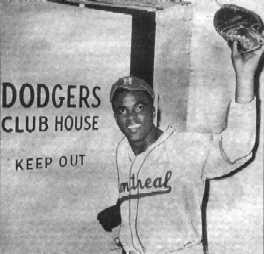
That was the year that Rickey signed Robinson to a minor league contract with the Royals.  When Rickey called up Robinson 6 days prior to the 1947 season, it was  Robinson broke the color barrier for the Dodgers and Major League Baseball. However it would take another 12 years before all Major League teams had a black player on their roster.

It is hard to imagine now that even after Jackie Robinson had broken the color barrier that other teams did not immediately sign black players. However Rickey and Robinson broke the color barrier a year before Harry Truman had integrated the Armed Forces and seven years before the Supreme Court ruled the segregation of public schools illegal. But how could that be a surprise? The country was still rampant with unbridled racism. Outside of a few Blacks in the military and baseball most African Americans had few rights. In the North racism regulated most blacks to ghettos, while in the South, Jim Crow laws and public lynchings of progressive or outspoken Blacks.

But Jackie Robison and Branch Rickey helped bring about change, and soon other teams were following suit.

images-24

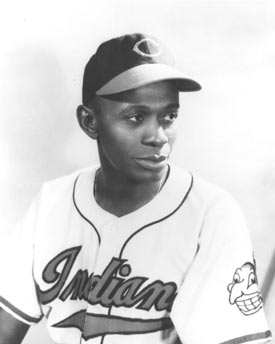
Larry Doby (above) and Satchel Paige signed by the Indians

pic1

The Cleveland Indians under their legendary owner Bill Veeck were not far behind the Dodgers in integrating their team. They signed Larry Doby on July 5th 1947. Doby would go on to the Hall of Fame and was a key player on the 1948 Indian team which won the 1948 World Series, the last that the storied franchise has won to this date.

Hank THOMPSON - LENNOX PEARSON BOHEMIA ARCHIVE

Hank Thompson and Roy Campanella

roy-campanella-ap2

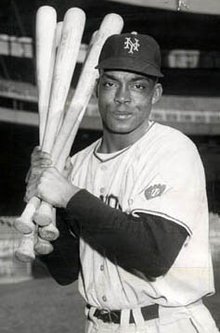
The St. Louis Browns signed Third Baseman Hank Thompson 12 days after the Indians signed Doby. But Thompson, Robinson and Doby would be the only Blacks to play in that inaugural season of integration. They would be joined by others in 1948 including the immortal catcher Roy Campanella who signed with the Dodgers and the venerable Negro League pitcher, Satchel Paige who was signed by the Indians.

monte_irvin

Monte Irvin (Above) and Willie Mays

WillieMays

It was not until 1949 when the New York Giants became the next team to integrate. They brought up Monte Irvin and Hank Thompson who they had acquired from the Browns. In 1951 these men would be joined by a young, rookie Willie Mays to become the first all African-American outfield in the Major Leagues. Both Mays and Irvin would enter the Hall of Fame and both are still a key part of the Giants’ story. Despite their age have continued to be active in with the Giants and Major League Baseball.

images-25

Samuel “the Jet” Jethroe

The Boston Braves were the next to desegregate calling up Samuel “the Jet” Jethroe to play Center Field. Jethroe was named the National League Rookie of the Year in 1950.

mlb_a_MinnieMinoso_cmg_600

Minnie Minoso

In 1951 the Chicago White Sox signed Cuban born Minnie Minoso who had played for Cleveland in 1949 and 1951 before signing with the White Sox. Minoso would be elected to 9 All-Star teams and win 3 Golden Gloves.

BANKS-ERNIE

Ernie Banks (above) and Bob Trice

Bob_Trice1953

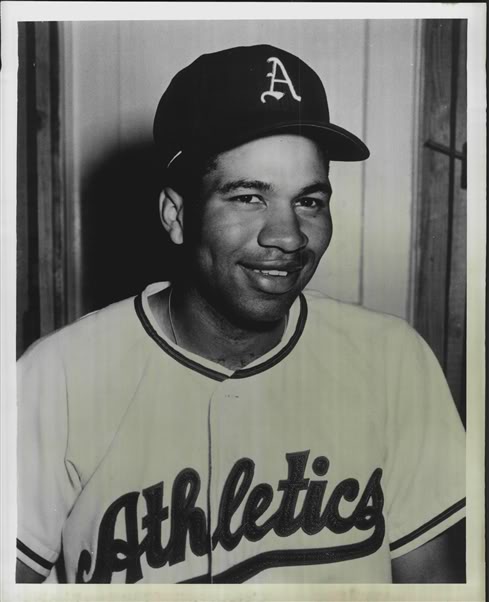
The Chicago Cubs and Philadelphia Athletics integrated at the end of the 1953 season. The Cubs signed Shortstop Ernie Banks who would go on to be a 14 time All-Star, 2 time National League MVP and be elected to the Hall of Fame in 1977 on the first ballot. The Athletics called up pitcher Bob Trice from their Ottawa Farm team where he had won 21 games. Trice only pitched in 27 Major League games over the course of three seasons with the Athletics.

6RI1

Curt Roberts

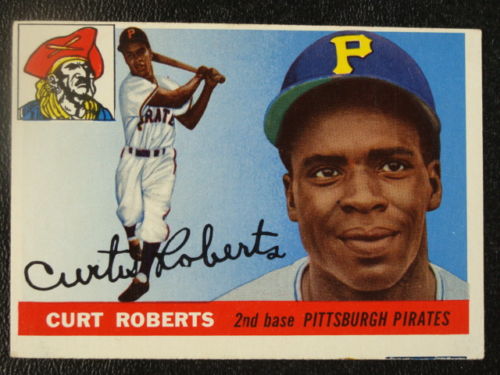
Four teams integrated in 1954. The Pittsburgh Pirates acquired Second Baseman Curt Roberts from Denver of the Western League as part of a minor league deal. He would play 171 games in the Majors.  He was sent to the Columbus Jets of the International League in 1956 and though he played in both the Athletics and Yankees farm systems but never again reached the Majors.

1954_alston_tom

Tom Alston

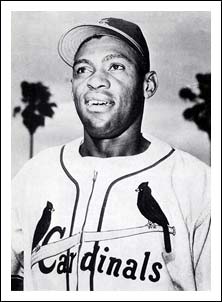
The St. Louis Cardinals, the team that had threatened to not play against the Dodgers and Jackie Robinson in 1947 traded for First Baseman Tom Alston of the Pacific Coast League San Diego Padres. Alston would only play in 91 Major League games with his career hindered by bouts with depression and anxiety.

100005

Nino Escalara (above) and Chuck Harmon

Chuck_Harmon

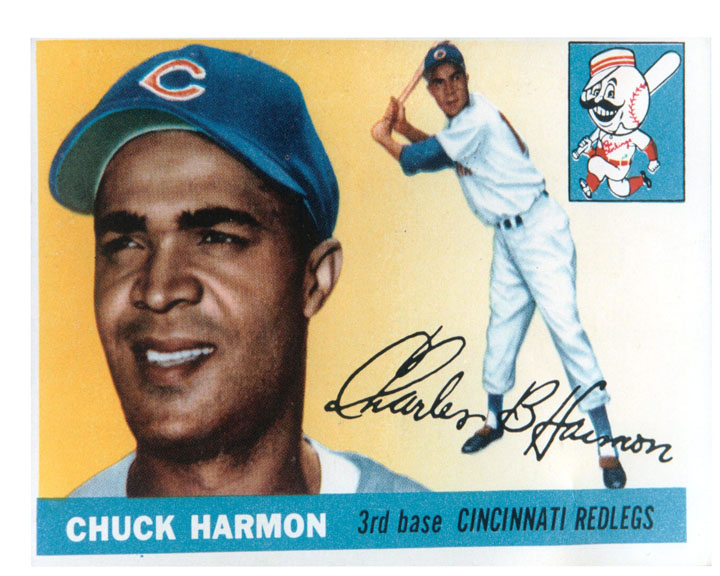
The Cincinnati Reds brought up Puerto Rican born First Baseman Nino Escalera and Third Baseman Chuck Harmon. Harmon had played in the Negro Leagues and had been a Professional Basketball player in the American Basketball League. Harmon who was almost 30 when called up played just 4 years in the Majors. Both he and Escalera would go on to be Major League scouts. Escalera is considered one of the best First Baseman from Puerto Rico and was elected to the Puerto Rican Baseball Hall of Fame. Harmon’s first game was recognized by the Reds in 2004 and a plaque hangs in his honor.

Carlos-Paula

The Washington Senators called up Cuban born Center Fielder Carlos Paula from their Charlotte Hornets’ farm team in September 1954. Paula played through the 1956 season with the Senators and his contract was sold to the Sacramento Salons of the Pacific Coast League. He hit .271 in 157 plate appearances with 9 home runs and 60 RBIs. He died at the age of 55 in Miami.

elston-howard

Elston Howard

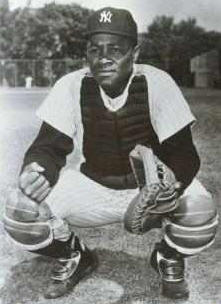
In April 1955 the New York Yankees finally integrated 8 years after the Dodgers and 6 years after the Giants. They signed Catcher/Left Fielder Elston Howard from their International League affiliate where he had been the League MVP in 1954. Howard would play 13 years in the Majors with the Yankees and later the Red Sox retiring in 1968. He would be a 12-time All Star and 6-time World Series Champion as a player and later as a coach for the Yankees. He died of heart disease in 1980.  His number #32 was retired by the Yankees in 1984.

58 kennedy, john f

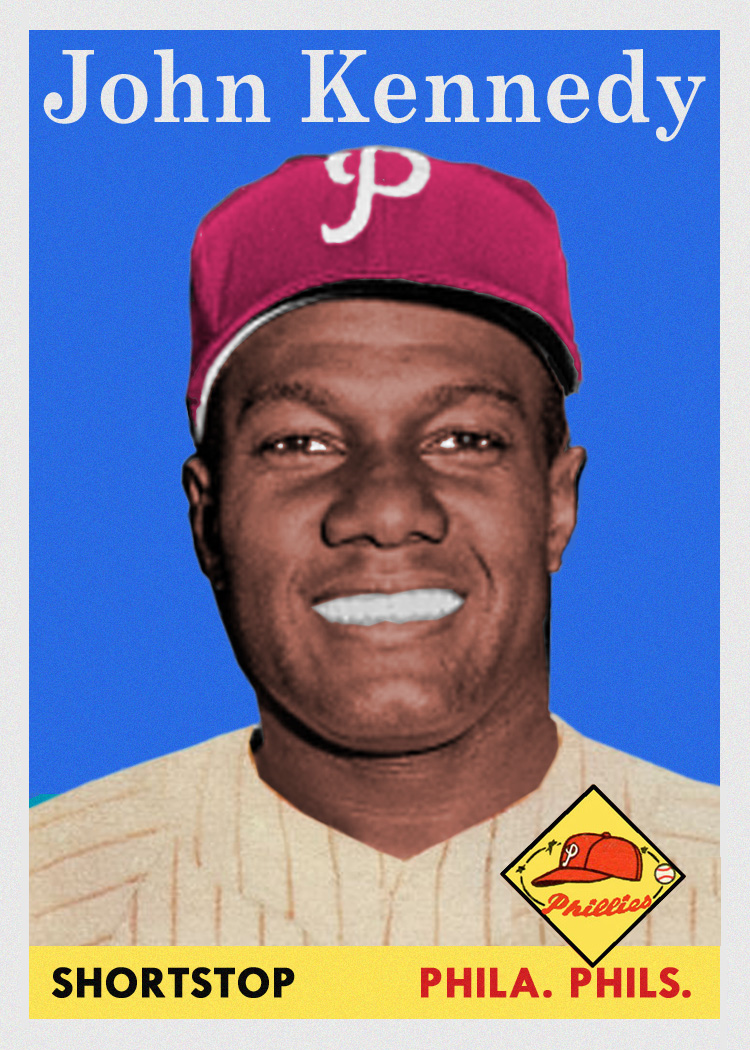
The Philadelphia Phillies purchased the contract of Shortstop John Kennedy from the Kansas City Monarchs of the Negro League at the end of the 1956 season. Kennedy played in just 5 games in April and May of 1957.

osvaldo4_195

 Ozzie Virgil Sr.

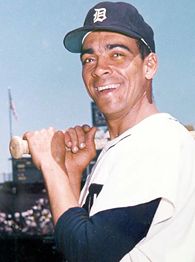
In 1958 the Detroit Tigers obtained Dominican born Utility Player Ozzie Virgil Sr. who had played with the Giants in 1955 and 1956. Virgil would play 9 seasons in the Majors with the Giants, Tigers, Athletics and Pirates and retire from the Giants in 1969. He later coached for 19 years in the Majors with the Giants, Expos, Padres and Mariners.

Pumpsie_Green_1962_Topps

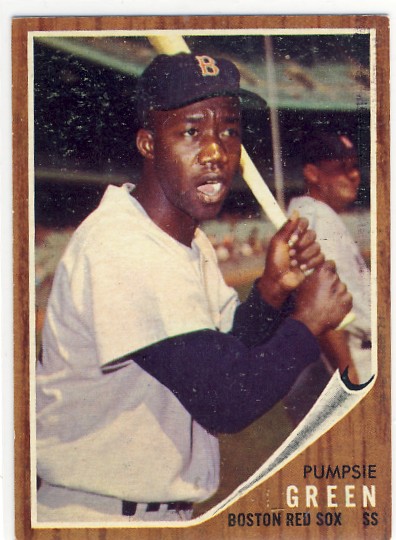
The last team to integrate was the Boston Red Sox who signed Infielder Pumpsie Green. Green made his debut on 21 July 1959 during his three years with the Red Sox was primarily used as a pinch runner. He played his final season with the New York Mets in 1963. He was honored by the Red Sox in 2009 on the 50th anniversary of breaking the Red Sox color barrier.

little-rock-stop-the-race-mixing

voter-registration-mississippi-1960-L-umRewg

luther-king

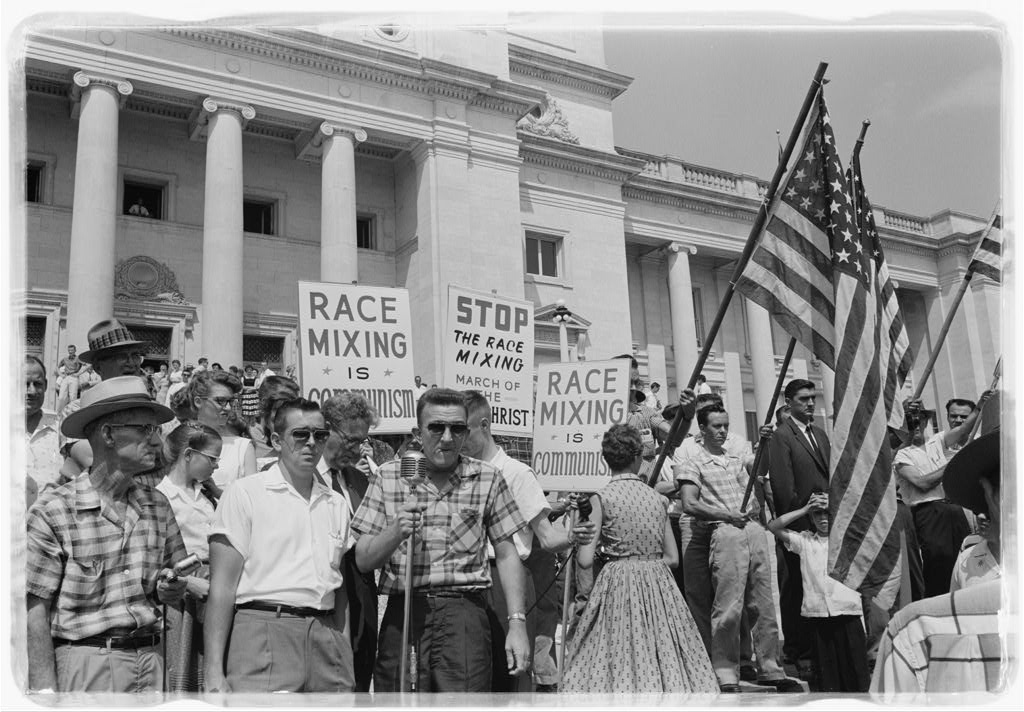
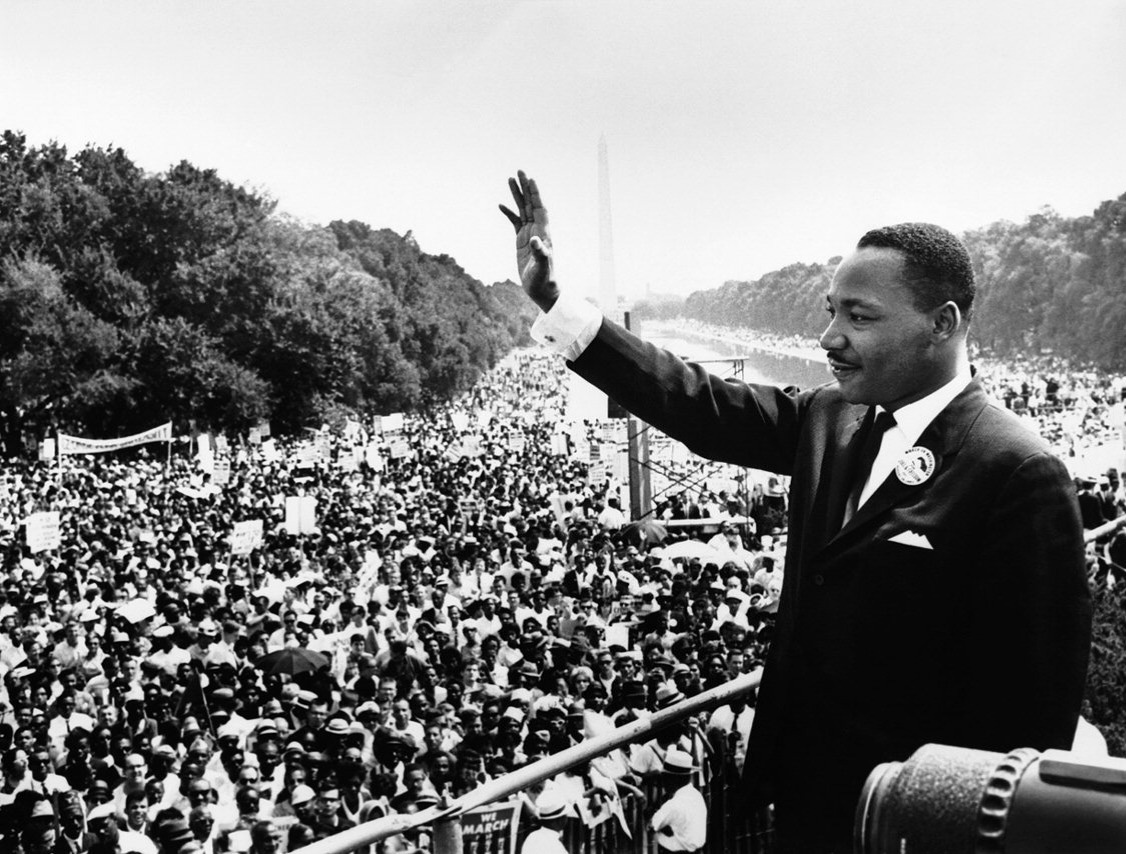
It took 12 years for all the teams of the Major Leagues to integrate, part of the long struggle of African Americans to achieve equality not just in baseball but in all areas of public life.  These men, few in number paved the way for African Americans in baseball and were part of the inspiration of the Civil Rights Movement itself.  They should be remembered by baseball fans, and all Americans everywhere for their sacrifices and sheer determination to overcome the obstacles and hatreds that they faced. It would not be until August of 1963 that Martin Luther King Jr. would give his I Have a Dream speech and 1964 that African Americans received equal voting rights.

robbyii

Spring training for the 2015 season is about to begin in Florida and Arizona, in what are called the Grapefruit and Cactus Leagues. It is hard to believe that only 68 years ago that only one team and one owner dared to break the color barrier that was, then, and often today is still a part of American life.

However in those 68 years despite opposition and lingering prejudice African Americans in baseball led the way in the Civil Rights Movement and are in large part responsible for many of the breakthroughs in race relations and the advancement of not only African Americans, but so many others.

We can thank men like Charles Thomas, Jackie Robinson and Branch Rickey for this and pray that we who remain, Black and White, Asian, and Latin American, as well as all others who make up our great nation will never relinquish the gains that have been won at such a great cost.

obamafirstpitch

President Obama throwing out the First Pitch for the Washington Nationals

Today we have a Black President who has the same kind of racial epitaphs thrown at him every day by whites who as they did to Charles Thomas, Jackie Robinson and so many other pioneers, Frankly such behavior can only be called what is it, unrepentant, unabashed, and evil racism. The fact is that such people don’t think that any Black man should hold such high an office, just as they did not think that Blacks should be allowed to play integrated baseball. It is anathema to them, and that is why their unabashed hatred for Obama runs so deep. They may disagree with his policies, but I guarantee if Obama was white, their opposition to him would be far more civil and respectful. But because he is half-black, and has a funny name they hate him with a passion, a passion that scares me, because words  and hateful beliefs can easily become actions.

Racism still exists, but one day thanks to the efforts of the early ball-players as well as pioneers like President Obama, and the undying commitment of decent Americans to accept people regardless of race, ethnicity, gender, religion, or even sexual orientation, we will see a new birth of freedom.

Peace

Padre Steve+

Leave a comment

Filed under Baseball, civil rights, History, political commentary

Martin Luther King Jr’s Dream that Cannot be Allowed to Die

index

“Let us rise up tonight with a greater readiness. Let us stand with a greater determination. And let us move on in these powerful days, these days of challenge to make America what it ought to be. We have an opportunity to make America a better nation.”

Over the past week I have been pondering the importance of the life and work of Dr. Martin Luther King Jr. It is important to not forget this man and what he stood for, his life and sacrifice.

You see King, like many Black clergy of his day could have played it safe. Many pastors, for good reason remained quiet about the conditions of segregation and the racism of the day. Many just hoped to see things slowly improve without rocking the boat and without endangering themselves or their families. They had seen what happened to blacks who spoke up or confronted the evil, lynchings, cross burnings, threats and murder. They had contented themselves with just trying to get along. Many pastors did not support or gave only lukewarm support to King, Andrew Young, Fred Shuttlesworth and Ralph Abernathy. going into 1963.

lossless-page1-560px-Rosa_Parks_(detail).tiff

King did not start out to become a Civil Rights leader. However, he was inspired to actively join the movement through the example of Rosa Parks, who defiance of the law for blacks to sit “in the back of the bus” in 1955. He led the Montgomery Bus Boycott which last 385 days. Reaction among segregationists against King was violent, his house was bombed and his life threatened.

The leadership of the boycott brought the young pastor to national prominence. However, by 1963 much of the Civil Rights movement and the African American community was despairing of the lack of progress. Many had become disenchanted with King, not considering him bold enough despite his rhetorical abilities.

Birmingham_campaign_dogs

But in April 1963, working with other Civil Rights leaders in Birmingham Alabama King relit the fires of the movement. Montgomery Police Chief “Bull” Conner used his force to violently attack the demonstrators, unleashing dogs and using high pressure water cannon on them, including women, children and the elderly. The violent reaction to the protests shocked much of America and the world.

King was arrested and in the Birmingham jail composed one of his most famous works, the Letter from the Birmingham Jail.  The letter was a social, political and theological masterpiece. It it some of his harshest criticism was of white, as well as black moderates:

“I have almost reached the regrettable conclusion that the Negro’s great stumbling block in his stride toward freedom is not the White Citizen’s Councilor or the Ku Klux Klanner, but the white moderate, who is more devoted to “order” than to justice; who prefers a negative peace which is the absence of tension to a positive peace which is the presence of justice; who constantly says: “I agree with you in the goal you seek, but I cannot agree with your methods of direct action”; who paternalistically believes he can set the timetable for another man’s freedom; who lives by a mythical concept of time and who constantly advises the Negro to wait for a “more convenient season”

gty_march_on_washington_martin_luther_king_ll_130819_16x9_992

King continued his activism until his assassination. In August 1963 he led the March on Washington for Jobs and Freedom, where before a crowd of an estimated 200,000-300,000 he gave his I Have a Dream Speech.

http://www.americanrhetoric.com/speeches/mlkihaveadream.htm

The crescendo of the speech was remarkable and is perhaps one of the most remembered speeches in American history.

Let us not wallow in the valley of despair, I say to you today, my friends.

And so even though we face the difficulties of today and tomorrow, I still have a dream. It is a dream deeply rooted in the American dream.

I have a dream that one day this nation will rise up and live out the true meaning of its creed: “We hold these truths to be self-evident, that all men are created equal.”

I have a dream that one day on the red hills of Georgia, the sons of former slaves and the sons of former slave owners will be able to sit down together at the table of brotherhood.

I have a dream that one day even the state of Mississippi, a state sweltering with the heat of injustice, sweltering with the heat of oppression, will be transformed into an oasis of freedom and justice.

I have a dream that my four little children will one day live in a nation where they will not be judged by the color of their skin but by the content of their character.

I have a dream today!

I have a dream that one day, down in Alabama, with its vicious racists, with its governor having his lips dripping with the words of “interposition” and “nullification” — one day right there in Alabama little black boys and black girls will be able to join hands with little white boys and white girls as sisters and brothers.

I have a dream today!

I have a dream that one day every valley shall be exalted, and every hill and mountain shall be made low, the rough places will be made plain, and the crooked places will be made straight; “and the glory of the Lord shall be revealed and all flesh shall see it together.”2

This is our hope, and this is the faith that I go back to the South with.

With this faith, we will be able to hew out of the mountain of despair a stone of hope. With this faith, we will be able to transform the jangling discords of our nation into a beautiful symphony of brotherhood. With this faith, we will be able to work together, to pray together, to struggle together, to go to jail together, to stand up for freedom together, knowing that we will be free one day.

And this will be the day — this will be the day when all of God’s children will be able to sing with new meaning:

My country ’tis of thee, sweet land of liberty, of thee I sing.

Land where my fathers died, land of the Pilgrim’s pride,

From every mountainside, let freedom ring!

And if America is to be a great nation, this must become true.

And so let freedom ring from the prodigious hilltops of New Hampshire.

Let freedom ring from the mighty mountains of New York.

Let freedom ring from the heightening Alleghenies of Pennsylvania.

Let freedom ring from the snow-capped Rockies of Colorado.

Let freedom ring from the curvaceous slopes of California.

But not only that:

Let freedom ring from Stone Mountain of Georgia.

Let freedom ring from Lookout Mountain of Tennessee.

Let freedom ring from every hill and molehill of Mississippi.

From every mountainside, let freedom ring.

And when this happens, and when we allow freedom ring, when we let it ring from every village and every hamlet, from every state and every city, we will be able to speed up that day when all of God’s children, black men and white men, Jews and Gentiles, Protestants and Catholics, will be able to join hands and sing in the words of the old Negro spiritual:

                Free at last! Free at last!

                Thank God Almighty, we are free at last!

King knew the dangers and the risks of appealing to a strategy of non-violence based on love of his enemies. King spoke to the world when he accepted the Nobel Peace Prize in 1964:

“Here and there an individual or group dares to love, and rises to the majestic heights of moral maturity. So in a real sense this is a great time to be alive. Therefore, I am not yet discouraged about the future. Granted that the easygoing optimism of yesterday is impossible. Granted that those who pioneer in the struggle for peace and freedom will still face uncomfortable jail terms, painful threats of death; they will still be battered by the storms of persecution, leading them to the nagging feeling that they can no longer bear such a heavy burden, and the temptation of wanting to retreat to a more quiet and serene life. Granted that we face a world crisis which leaves us standing so often amid the surging murmur of life’s restless sea. But every crisis has both its dangers and its opportunities. It can spell either salvation or doom. In a dark confused world the kingdom of God may yet reign in the hearts of men.”  http://www.nobelprize.org/nobel_prizes/peace/laureates/1964/king-lecture.html 

Dr. King understood how easy hatred could consume people and movements and urged  people not to follow the course of hate, he wrote:

“Returning hate for hate multiplies hate, adding deeper darkness to a night already devoid of stars. Darkness cannot drive out darkness; only light can do that. Hate cannot drive out hate; only love can do that. Hate multiplies hate, violence multiplies violence, and toughness multiplies toughness in a descending spiral of destruction.”

King_Last_Sermon

The day before his assassination in Memphis, Dr. King still recognized what he might face. His “I have been to the Mountaintop” speech http://www.americanrhetoric.com/speeches/mlkivebeentothemountaintop.htm recounted many of the things that he had encountered, including an assassination attempt in 1958 which had come close to killing him. It was an amazing speech and one wonders if having lived under threat so long that he almost had a premonition of his death the next day.

And then I got into Memphis. And some began to say the threats, or talk about the threats that were out. What would happen to me from some of our sick white brothers?

Well, I don’t know what will happen now. We’ve got some difficult days ahead. But it really doesn’t matter with me now, because I’ve been to the mountaintop.

And I don’t mind.

Like anybody, I would like to live a long life. Longevity has its place. But I’m not concerned about that now. I just want to do God’s will. And He’s allowed me to go up to the mountain. And I’ve looked over. And I’ve seen the Promised Land. I may not get there with you. But I want you to know tonight, that we, as a people, will get to the promised land!

Dr. King’s dream is not dead and we who live today cannot allow it to die. There is still much work to see justice done for all Americans as well as those suffering from violence, persecution, discrimination and poverty around the world.

It is 2015. It has been 52 years since Dr. King sat in the Birmingham jail. Sadly, there are some who long for a return to the day of Jim Crow. In some states there have been and there are ongoing attempts to return it by stealth, especially through restrictions on voting that predominantly impact African Americans and the poor. Racism is not dead, nor are so many other “isms.”

Dr. King and many of the leaders of the Civil Rights Movement have passed on. Likewise, many people today are complacent about the injustices present in our society, injustices experienced by many people. We need a generation of new men and women with hearts like Dr. King’s, who will be the conscience of the nation and confront these injustices.

John_Lewis_t580

John Lewis (right front) being beaten by an Alabama State Trooper at Selma

Representative John Lewis, one of the original Freedom Riders was beaten numerous times during those protests. When leading the march across the Pettus Bridge in Selma, Lewis had his skull fractured by a State Trooper when he stopped to pray.  Lewis’s words call us to action today:

“If not us, then who? If not now, then when?” 

We cannot let Dr. King’s dream die.

Peace

Padre Steve+

1 Comment

Filed under civil rights, History, News and current events, Political Commentary

The Dream: Keeping Dr. Martin Luther King Jr.’s Dream Alive in 2014

martinlutherking

“Let us rise up tonight with a greater readiness. Let us stand with a greater determination. And let us move on in these powerful days, these days of challenge to make America what it ought to be. We have an opportunity to make America a better nation.”

Over the past week I have been pondering the importance of the life and work of Dr. Martin Luther King Jr. It is important to not forget this man and what he stood for, his life and sacrifice.

You see King, like many Black clergy of his day could have played it safe. Many pastors, for good reason remained quiet about the conditions of segregation and the racism of the day. Many just hoped to see things slowly improve without rocking the boat and without endangering themselves or their families. They had seen what happened to blacks who spoke up or confronted the evil, lynchings, cross burnings, threats and murder. They had contented themselves with just trying to get along. Many pastors did not support or gave only lukewarm support to King, Andrew Young, Fred Shuttlesworth and Ralph Abernathy. going into 1963.

lossless-page1-560px-Rosa_Parks_(detail).tiff

King did not start out to become a Civil Rights leader. However, he was inspired to actively join the movement through the example of Rosa Parks, who defiance of the law for blacks to sit “in the back of the bus” in 1955. He led the Montgomery Bus Boycott which last 385 days. Reaction among segregationists against King was violent, his house was bombed and his life threatened.

The leadership of the boycott brought the young pastor to national prominence. However, by 1963 much of the Civil Rights movement and the African American community was despairing of the lack of progress. Many had become disenchanted with King, not considering him bold enough despite his rhetorical abilities.

Birmingham_campaign_dogs

But in April 1963, working with other Civil Rights leaders in Birmingham Alabama King relit the fires of the movement. Montgomery Police Chief “Bull” Conner used his force to violently attack the demonstrators, unleashing dogs and using high pressure water cannon on them, including women, children and the elderly. The violent reaction to the protests shocked much of America and the world.

Martin Luther King being arrested in Montgomery, Alabama 1963_jpg

King was arrested and in the Birmingham jail composed one of his most famous works, the Letter from the Birmingham Jail.  The letter was a social, political and theological masterpiece. It it some of his harshest criticism was of white, as well as black moderates:

“I have almost reached the regrettable conclusion that the Negro’s great stumbling block in his stride toward freedom is not the White Citizen’s Councilor or the Ku Klux Klanner, but the white moderate, who is more devoted to “order” than to justice; who prefers a negative peace which is the absence of tension to a positive peace which is the presence of justice; who constantly says: “I agree with you in the goal you seek, but I cannot agree with your methods of direct action”; who paternalistically believes he can set the timetable for another man’s freedom; who lives by a mythical concept of time and who constantly advises the Negro to wait for a “more convenient season”

gty_march_on_washington_martin_luther_king_ll_130819_16x9_992

King continued his activism until his assassination. In August 1963 he led the March on Washington for Jobs and Freedom, where before a crowd of an estimated 200,000-300,000 he gave his I Have a Dream Speech.

http://www.americanrhetoric.com/speeches/mlkihaveadream.htm

The crescendo of the speech was remarkable and is perhaps one of the most remembered speeches in American history.

Let us not wallow in the valley of despair, I say to you today, my friends.

And so even though we face the difficulties of today and tomorrow, I still have a dream. It is a dream deeply rooted in the American dream.

I have a dream that one day this nation will rise up and live out the true meaning of its creed: “We hold these truths to be self-evident, that all men are created equal.”

I have a dream that one day on the red hills of Georgia, the sons of former slaves and the sons of former slave owners will be able to sit down together at the table of brotherhood.

I have a dream that one day even the state of Mississippi, a state sweltering with the heat of injustice, sweltering with the heat of oppression, will be transformed into an oasis of freedom and justice.

I have a dream that my four little children will one day live in a nation where they will not be judged by the color of their skin but by the content of their character.

I have a dream today!

I have a dream that one day, down in Alabama, with its vicious racists, with its governor having his lips dripping with the words of “interposition” and “nullification” — one day right there in Alabama little black boys and black girls will be able to join hands with little white boys and white girls as sisters and brothers.

I have a dream today!

I have a dream that one day every valley shall be exalted, and every hill and mountain shall be made low, the rough places will be made plain, and the crooked places will be made straight; “and the glory of the Lord shall be revealed and all flesh shall see it together.”2

This is our hope, and this is the faith that I go back to the South with.

With this faith, we will be able to hew out of the mountain of despair a stone of hope. With this faith, we will be able to transform the jangling discords of our nation into a beautiful symphony of brotherhood. With this faith, we will be able to work together, to pray together, to struggle together, to go to jail together, to stand up for freedom together, knowing that we will be free one day.

And this will be the day — this will be the day when all of God’s children will be able to sing with new meaning:

My country ’tis of thee, sweet land of liberty, of thee I sing.

Land where my fathers died, land of the Pilgrim’s pride,

From every mountainside, let freedom ring!

And if America is to be a great nation, this must become true.

And so let freedom ring from the prodigious hilltops of New Hampshire.

Let freedom ring from the mighty mountains of New York.

Let freedom ring from the heightening Alleghenies of Pennsylvania.

Let freedom ring from the snow-capped Rockies of Colorado.

Let freedom ring from the curvaceous slopes of California.

But not only that:

Let freedom ring from Stone Mountain of Georgia.

Let freedom ring from Lookout Mountain of Tennessee.

Let freedom ring from every hill and molehill of Mississippi.

From every mountainside, let freedom ring.

And when this happens, and when we allow freedom ring, when we let it ring from every village and every hamlet, from every state and every city, we will be able to speed up that day when all of God’s children, black men and white men, Jews and Gentiles, Protestants and Catholics, will be able to join hands and sing in the words of the old Negro spiritual:

                Free at last! Free at last!

                Thank God Almighty, we are free at last!

09-martin-king-010909_14102_600x450

King knew the dangers and the risks of appealing to a strategy of non-violence based on love of his enemies. King spoke to the world when he accepted the Nobel Peace Prize in 1964:

“Here and there an individual or group dares to love, and rises to the majestic heights of moral maturity. So in a real sense this is a great time to be alive. Therefore, I am not yet discouraged about the future. Granted that the easygoing optimism of yesterday is impossible. Granted that those who pioneer in the struggle for peace and freedom will still face uncomfortable jail terms, painful threats of death; they will still be battered by the storms of persecution, leading them to the nagging feeling that they can no longer bear such a heavy burden, and the temptation of wanting to retreat to a more quiet and serene life. Granted that we face a world crisis which leaves us standing so often amid the surging murmur of life’s restless sea. But every crisis has both its dangers and its opportunities. It can spell either salvation or doom. In a dark confused world the kingdom of God may yet reign in the hearts of men.”  http://www.nobelprize.org/nobel_prizes/peace/laureates/1964/king-lecture.html 

Dr. King understood how easy hatred could consume people and movements and urged  people not to follow the course of hate, he wrote:

“Returning hate for hate multiplies hate, adding deeper darkness to a night already devoid of stars. Darkness cannot drive out darkness; only light can do that. Hate cannot drive out hate; only love can do that. Hate multiplies hate, violence multiplies violence, and toughness multiplies toughness in a descending spiral of destruction.”

The day before his assassination in Memphis, Dr. King still recognized what he might face. His “I have been to the Mountaintop” speech http://www.americanrhetoric.com/speeches/mlkivebeentothemountaintop.htm recounted many of the things that he had encountered, including an assassination attempt in 1958 which had come close to killing him. It was an amazing speech and one wonders if having lived under threat so long that he almost had a premonition of his death the next day.

King_Last_Sermon

And then I got into Memphis. And some began to say the threats, or talk about the threats that were out. What would happen to me from some of our sick white brothers?

Well, I don’t know what will happen now. We’ve got some difficult days ahead. But it really doesn’t matter with me now, because I’ve been to the mountaintop.

And I don’t mind.

Like anybody, I would like to live a long life. Longevity has its place. But I’m not concerned about that now. I just want to do God’s will. And He’s allowed me to go up to the mountain. And I’ve looked over. And I’ve seen the Promised Land. I may not get there with you. But I want you to know tonight, that we, as a people, will get to the promised land!

Dr. King’s dream is not dead. There is still much work to see justice done for all Americans as well as those suffering from violence, persecution, discrimination and poverty around the world.

It is 2014. It has been 51 years since Dr. King sat in the Birmingham jail and some still long for a return to the day of Jim Crow, and some who through legislation in some states are attempting to return it by stealth. Racism is not dead, nor are so many other “isms.”

Martin-Luther-King-Killed

Dr. King and many of the leaders of the Civil Rights Movement have passed on, and many people today are complacent about the injustices present in our society, injustices experienced by many people. We need a generation of new men and women with hearts like Dr. King’s, who will be the conscience of the nation and confront these injustices.

Peace

Padre Steve+
Leave a comment

Filed under civil rights, faith, History, News and current events

Fighting for the Dream at 50: Dr Martin Luther King Jr. Faith and All that Is, Can and Will Be True About America

luther2_1793927a

“I have a dream that one day this nation will rise up and live out the true meaning of its creed: “We hold these truths to be self-evident, that all men are created equal…”

Note: The complete text and video of Dr. King’s speech can be found here:http://www.americanrhetoric.com/speeches/mlkihaveadream.htm 

It is hard to believe that it has been 50 years since Dr Martin Luther King Jr. and other pioneers of the Civil Rights Movement marched in Washington. I am always inspired when I see the films of Doctor King speaking or read the text of that speech and so many other of his speeches and writings. He was a prophet who was not welcome by many, but his words and actions have reverberated through the decades. Though martyred, cut down by the bullets of James Earl Ray in Memphis his spirit lives on and is part of our country.

Now there are many today as there were then who want not only to keep blacks in thier place but other minorities, racial, ethnic, religious and even on the basis of gender or sexuality. Some may want to argue that point but the actions of some people and groups who vociferously fight against the rights of anyone that they disagree with to have the same rights as they have, be they political, religious, economic or legal demonstrate that this is the case every day.

Yesterday tens of thousands gathered in Washington on the anniversary of the March on Washington and Dr King’s I Have a Dream speech. I caught bits and pieces on the news, radio or Twitter as I made my way across country. I was inspired by the words of speakers, President Obama, Representative John Lewis, and former Presidents Carter and Clinton.  In my hotel room tonight have had some more time to reflect on this day the remarkable Dr. Martin Luther King Jr. and the other remarkable leaders of the Civil Rights Movement including all of the martyrs who gave their lives not just for blacks but for all Americans, the great and the small alike who gave their lives and offered up themselves that this country might have yet another new birth of freedom.

The struggle is not over until every American and those who want to be Americans have a place at the table. How can we fear the collective good of seeing freedom reign in this land that we sing as the sweet land of liberty? What do we have to fear of individual Americans of every race, creed, color, male and female, straight or gay, rich or poor enjoying the same legal rights and protections under the law as well as the same opportunity to succeed? What do we have to fear?

I actually think that what many of us fear is that if others that we think less of succeed that we will lose our place of privilege or even worse that maybe our political, religious or economic philosophy that undergirds our beliefs about others might be proven wrong.

But faith is the opposite of fear and Dr. King knew this. In that speech which still echoes today he said:

“With this faith, we will be able to hew out of the mountain of despair a stone of hope. With this faith, we will be able to transform the jangling discords of our nation into a beautiful symphony of brotherhood. With this faith, we will be able to work together, to pray together, to struggle together, to go to jail together, to stand up for freedom together, knowing that we will be free one day.”

The dream that Dr. King espoused is that of the prophets of old. It is the dream of those that championed liberty at the cost of their lives and freedom in dictatorships. It is the dream of those who struggled in every place and clime where injustice reigned knowing that the dream would not be accomplished in their lifetimes but had faith to labor so that others one day would enjoy the fruit of their life’s labors. As Dr. King said 50 years ago:

And this will be the day — this will be the day when all of God’s children will be able to sing with new meaning:

My country ’tis of thee, sweet land of liberty, of thee I sing.

Land where my fathers died, land of the Pilgrim’s pride,

From every mountainside, let freedom ring!

And if America is to be a great nation, this must become true.

And now since I am coming up on almost 24 hours of travel with little sleep I bid you a good night hoping that one morning we will awake to a new dawn. A dawn where people are judged by the content of their character and where we all can at last exclaim with the spirit of Dr King and so many others who died without seeing this come to pass: Free at last! Free at last! Thank God Almighty, we are free at last!

Peace

Padre Steve+

1 Comment

Filed under civil rights, faith, History, News and current events

The Long and Slow Integration of the Major Leagues: A Reflection on Desegregation and Spring Training

robinson-dodgers

John Jorgensen, Pee Wee Reese, Ed Stanky and Jackie Robinson on opening day 1947

“Thomas Jefferson, when he wrote the Declaration, made proper provision for baseball when he declared that ‘all men are, and of right out to be, free and equal.’ That’s why they are at the ball game, banker and bricklayer, lawyer and common laborer.” – Baseball magazine (1921)

“Baseball should be taken seriously by the colored player — and in this effort of his great ability will open the avenue in the near future wherein he may walk hand in hand with the opposite race in the greatest of all American games — baseball.” Ossie Davis

robinson2-popup

Charles Thomas 

It was in 1903 when Branch Rickey, then a coach for the Ohio Wesleyan University baseball team had to console his star player, Charles Thomas when a hotel in South Bend Indiana refused him a room because he was black. Rickey found Thomas sobbing  rubbing his hands and repeating “Black skin. Black skin. If only I could make them white.” Rickey attempted to console his friend saying “Come on, Tommy, snap out of it, buck up! We’ll lick this one day, but we can’t if you feel sorry for yourself.”

Branch-Rickey

Thomas, encouraged by Rickey was remembered by one alumnus who saw a game that Thomas played in noted that “the only unpleasant feature of the game was the coarse slurs cast at Mr. Thomas, the catcher.” However, the writer noted something else about Thomas that caught his eye: “But through it all, he showed himself far more the gentleman than his insolent tormentors though their skin is white.”

Baseball like most of America was not a place for the Black man. Rickey, a devout Christian later remarked “I vowed that I would always do whatever I could to see that other Americans did not have to face the bitter humiliation that was heaped upon Charles Thomas.”

In April 1947 Branch Rickey, now the owner of the Brooklyn Dodgers had one African-American ballplayer at the Dodgers’ Spring Training site in Daytona Beach Florida. The South was still a hotbed of racial prejudice, Jim Crow was the law of the land and Blacks had no place in White Man’s baseball. That player was Jackie Robinson.

Jackie Robinson Shaking Branch Rickey's Hand

The Dodgers had been coming to Florida for years. Rickey moved the Dodgers from Jacksonville to Daytona Beach in 1947 after Jacksonville had refused to alter its segregation laws to allow an exhibition game between the Dodgers International League affiliate the Montreal Royals, for whom Robinson starred.

That was the year that Rickey signed Robinson to a minor league contract with the Royals.  When Rickey called up Robinson 6 days prior to the 1947 season, it was  Robinson broke the color barrier for the Dodgers and Major League Baseball. However it would take another 12 years before all Major League teams had a black player on their roster.

It is hard to imagine now that even after Jackie Robinson had broken the color barrier that other teams did not immediately sign black players. However Rickey and Robinson broke the color barrier a year before Harry Truman had integrated the Armed Forces and seven years before the Supreme Court ruled the segregation of public schools illegal. But how could that be a surprise? The country was still rampant with unbridled racism. Outside of a few Blacks in the military and baseball most African Americans had few rights. In the North racism regulated most blacks to ghettos, while in the South, Jim Crow laws and public lynchings of progressive or outspoken Blacks.

images-24

Larry Doby (above) and Satchel Paige signed by the Indians

pic1

The Cleveland Indians under their legendary owner Bill Veeck were not far behind the Dodgers in integrating their team. They signed Larry Doby on July 5th 1947. Doby would go on to the Hall of Fame and was a key player on the 1948 Indian team which won the 1948 World Series, the last that the storied franchise has won to this date.

Hank THOMPSON - LENNOX PEARSON BOHEMIA ARCHIVE

Hank Thompson and Roy Campanella

roy-campanella-ap2

The St. Louis Browns signed Third Baseman Hank Thompson 12 days after the Indians signed Doby. But Thompson, Robinson and Doby would be the only Blacks to play in that inaugural season of integration. They would be joined by others in 1948 including the immortal catcher Roy Campanella who signed with the Dodgers and the venerable Negro League pitcher, Satchel Paige who was signed by the Indians.

monte_irvin

Monte Irvin (Above) and Willie Mays

WillieMays

It was not until 1949 when the New York Giants became the next team to integrate. They brought up Monte Irvin and Hank Thompson who they had acquired from the Browns. In 1951 they would be joined by rookie Willie Mays to become the first all African-American outfield in the Major Leagues. Both Mays and Irvin would enter the Hall of Fame and both are still a key part of the Giants’ story. Despite their age have continued to be active in with the Giants and Major League Baseball.

images-25

The Boston Braves were the next to desegregate calling up Samuel “the Jet” Jethroe to play Center Field. Jethroe was named the National League Rookie of the Year in 1950.

mlb_a_MinnieMinoso_cmg_600

Minnie Minoso

In 1951 the Chicago White Sox signed Cuban born Minnie Minoso who had played for Cleveland in 1949 and 1951 before signing with the White Sox. Minoso would be elected to 9 All-Star teams and win 3 Golden Gloves.

BANKS-ERNIE

Ernie Banks (above) and Bob Trice

Bob_Trice1953

The Chicago Cubs and Philadelphia Athletics integrated at the end of the 1953 season. The Cubs signed Shortstop Ernie Banks who would go on to be a 14 time All-Star, 2 time National League MVP and be elected to the Hall of Fame in 1977 on the first ballot. The Athletics called up pitcher Bob Trice from their Ottawa Farm team where he had won 21 games. Trice only pitched in 27 Major League games over the course of three seasons with the Athletics.

6RI1

Curt Roberts

Four teams integrated in 1954. The Pittsburgh Pirates acquired Second Baseman Curt Roberts from Denver of the Western League as part of a minor league deal. He would play 171 games in the Majors.  He was sent to the Columbus Jets of the International League in 1956 and though he played in both the Athletics and Yankees farm systems but never again reached the Majors.

1954_alston_tom

Tom Alston

The St. Louis Cardinals, the team that had threatened to not play against the Dodgers and Jackie Robinson in 1947 traded for First Baseman Tom Alston of the Pacific Coast League San Diego Padres. Alston would only play in 91 Major League games with his career hindered by bouts with depression and anxiety.

100005

Nino Escalara (above) and Chuck Harmon

Chuck_Harmon

The Cincinnati Reds brought up Puerto Rican born First Baseman Nino Escalera and Third Baseman Chuck Harmon. Harmon had played in the Negro Leagues and had been a Professional Basketball player in the American Basketball League. Harmon who was almost 30 when called up played just 4 years in the Majors. Both he and Escalera would go on to be Major League scouts. Escalera is considered one of the best First Baseman from Puerto Rico and was elected to the Puerto Rican Baseball Hall of Fame. Harmon’s first game was recognized by the Reds in 2004 and a plaque hangs in his honor.

Carlos-Paula

The Washington Senators called up Cuban born Center Fielder Carlos Paula from their Charlotte Hornets’ farm team in September 1954. Paula played through the 1956 season with the Senators and his contract was sold to the Sacramento Salons of the Pacific Coast League. He hit .271 in 157 plate appearances with 9 home runs and 60 RBIs. He died at the age of 55 in Miami.

elston-howard

Elston Howard

In April 1955 the New York Yankees finally integrated 8 years after the Dodgers and 6 years after the Giants. They signed Catcher/Left Fielder Elston Howard from their International League affiliate where he had been the League MVP in 1954. Howard would play 13 years in the Majors with the Yankees and later the Red Sox retiring in 1968. He would be a 12-time All Star and 6-time World Series Champion as a player and later as a coach for the Yankees. He died of heart disease in 1980.  His number #32 was retired by the Yankees in 1984.

58 kennedy, john f

The Philadelphia Phillies purchased the contract of Shortstop John Kennedy from the Kansas City Monarchs of the Negro League at the end of the 1956 season. Kennedy played in just 5 games in April and May of 1957.

osvaldo4_195

Ozzie Virgil Sr.

In 1958 the Detroit Tigers obtained Dominican born Utility Player Ozzie Virgil Sr. who had played with the Giants in 1955 and 1956. Virgil would play 9 seasons in the Majors with the Giants, Tigers, Athletics and Pirates and retire from the Giants in 1969. He later coached for 19 years in the Majors with the Giants, Expos, Padres and Mariners.

Pumpsie_Green_1962_Topps

The last team to integrate was the Boston Red Sox who signed Infielder Pumpsie Green. Green made his debut on 21 July 1959 during his three years with the Red Sox was primarily used as a pinch runner. He played his final season with the New York Mets in 1963. He was honored by the Red Sox in 2009 on the 50th anniversary of breaking the Red Sox color barrier.

little-rock-stop-the-race-mixing

voter-registration-mississippi-1960-L-umRewg

luther-king

It took 12 years for all the teams of the Major Leagues to integrate, part of the long struggle of African Americans to achieve equality not just in baseball but in all areas of public life.  These men, few in number paved the way for African Americans in baseball and were part of the inspiration of the Civil Rights Movement itself.  They should be remembered by baseball fans, and all Americans everywhere for their sacrifices and sheer determination to overcome the obstacles and hatreds that they faced. It would not be until August of 1963 that Martin Luther King Jr. would give his I Have a Dream speech and 1964 that African Americans received equal voting rights.

robbyii

Spring training for the 2013 season has begun in Florida and Arizona, in what are called the Grapefruit and Cactus Leagues. It is hard to believe that only 66 years ago that only one team and one owner dared to break the color barrier that was, and often still is a part of American life. However in those 66 years despite opposition and lingering prejudice African Americans in baseball led the way in the Civil Rights Movement and are in large part responsible for many of the breakthroughs in race relations and the advancement of not only African Americans, but so many others. We can thank men like  Charles Thomas, Jackie Robinson and Branch Rickey for this and pray that we who remain, Black and White, Asian, and Latin American, as well as all others who make up our great nation will never relinquish the gains that have been won at such a great cost.

Peace

Padre Steve+
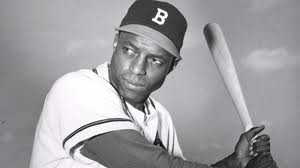
1 Comment

Filed under Baseball, History, laws and legislation, Political Commentary

Thoughts on the Inauguration of President Obama and the Legacies of Abraham Lincoln and Dr Martin Luther King Jr.

Obama2ndInaugurationOath640

“I have a dream that one day this nation will rise up and live out the true meaning of its creed: “We hold these truths to be self-evident: that all men are created equal.” Dr Martin Luther King Jr. 

No matter who the President is, what political party they were the candidate of and no matter if I supported them during their campaign I always try to partake of the inauguration. Today was like that, though this year I was on the road between Virginia and North Carolina and listened to the ceremony live on radio as I made my trip.

Radio is a wonderful way to take in a live event, be it something like today’s events as well as a baseball game. Radio forces you to actually listen to what is being said as well as use your imagination to envision the events themselves. If you are present at the actual ceremony you may not hear what is being said, or miss significant parts of it simply because of the way that sound travels, audio distortions and things happening nearby that distract you even as you take in the visual wonder of the event. Television is a wonderful thing that allows us to see an event live and can enhance our experience of it, but often it can be full of distractions.

Radio on the other hand forces us to imagine the spectacle of the event as well as the actual words spoken.

I watched President Obama’s first inauguration with a very sick and elderly African American woman in the ICU at Naval Medical Center Portsmouth. She held my hand as he took the Oath of Office and during his speech. She was in tears as she had lived through segregation, routine abuse by white people in the South, being treated as less of a human being on the basis of her race. She had lived the beginnings of the Civil Rights movement as a contemporary of Dr King. For her it was something that she never believed could happen in her lifetime coming true. It was at that moment I really began to appreciate the full impact of his election, what it meant to this dear woman, and what it meant to so many people. It was a watershed moment as she did not want me to pray for her medical condition, which was not good, but to pray with her for the new President.

The Second Inaugural Address was different as President Obama, now seasoned to the reality of the great political divide that has been part and parcel of our political climate went back to tradition to frame the current issues that are part of our daily life. He appealed to the Declaration of Independence, echoing it as Dr King had but continuing:

“We hold these truths to be self-evident, that all men are created equal; that they are endowed by their Creator with certain unalienable rights; that among these are life, liberty, and the pursuit of happiness.”

Today we continue a never-ending journey to bridge the meaning of those words with the realities of our time.  For history tells us that while these truths may be self-evident, they’ve never been self-executing; that while freedom is a gift from God, it must be secured by His people here on Earth.The patriots of 1776 did not fight to replace the tyranny of a king with the privileges of a few or the rule of a mob.  They gave to us a republic, a government of, and by, and for the people, entrusting each generation to keep safe our founding creed.”

The speech which touched on a number of potentially divisive issues echoed that of Abraham Lincoln’s Second Inaugural Address and the Gettysburg Address. It was an appeal to freedom, freedom for all and also the responsibility of each of us in the that endeavor.

“Through it all, we have never relinquished our skepticism of central authority, nor have we succumbed to the fiction that all society’s ills can be cured through government alone.  Our celebration of initiative and enterprise, our insistence on hard work and personal responsibility, these are constants in our character.”

His words near the end of the speech made that clear and he acknowledged the reality that American statesmen such as Washington, Lincoln, Theodore and Franklin Roosevelt and Ronald Reagan understood so clearly.

“That is our generation’s task — to make these words, these rights, these values of life and liberty and the pursuit of happiness real for every American.  Being true to our founding documents does not require us to agree on every contour of life. It does not mean we all define liberty in exactly the same way or follow the same precise path to happiness.  Progress does not compel us to settle centuries-long debates about the role of government for all time, but it does require us to act in our time.”

martin-luther-king-jr

Somehow it was fitting that the inauguration was held on the observed holiday of the Birthday of Dr Martin Luther King Junior and in the 50th year of his “I Have a Dream” speech on the Capital Mall. Having walked that Mall, and made numerous visits to our Nation’s capital I could picture these speeches, not just today’s speech by President Obama, but those of past Presidents, those that I have heard, seen or read as well as Doctor King’s speech.

I do not have to agree with every policy of a President to support them and pray for them as President. Today as I listened to both the President and Vice President Biden take their respective Oath of Office I was reminded of the Oath that I and those that serve in the Military take and then as I listened to his speech I heard the President refer to those similarities and the responsibility of all of that take it.

My fellow Americans, the oath I have sworn before you today, like the one recited by others who serve in this Capitol, was an oath to God and country, not party or faction.  And we must faithfully execute that pledge during the duration of our service.”

300px-Abraham_Lincoln_giving_his_second_Inaugural_Address_(4_March_1865)

After the ceremony was over I spent some time thinking about the closing words of Abraham Lincoln’s Second Inaugural Address and pray that we will be able to fulfill those words in our lifetimes.

“With malice toward none, with charity for all, with firmness in the right as God gives us to see the right, let us strive on to finish the work we are in, to bind up the nation’s wounds, to care for him who shall have borne the battle and for his widow and his orphan, to do all which may achieve and cherish a just and lasting peace among ourselves and with all nations.”

Peace

Padre Steve+
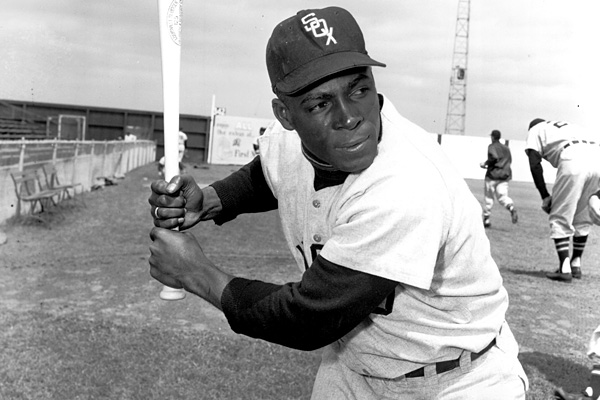
 

5 Comments

Filed under History, leadership, News and current events, Political Commentary