Tag Archives: ijn atago

An Invincible Fleet and a Flawed Plan: The Japanese at Midway

Note: This is the first of a series of articles coming over the next few days about the Battle of Midway, a major turning point of the Second World War.
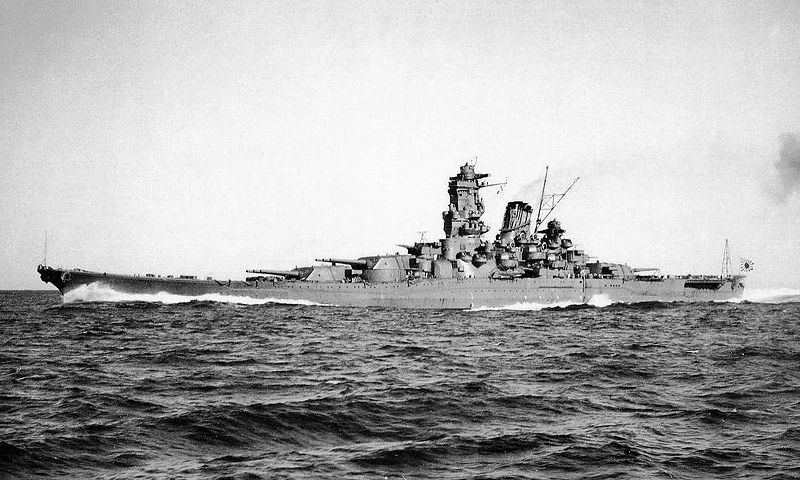
The Battleship Yamato, Flagship of the Combined Fleet and symbol of Japanese Naval Power

The Imperial Japanese Navy under the command of Admiral Isoruku Yamamoto had been humiliated. On April 18th 1942 16 B-25 bombers under the command of Colonel Jimmy Doolittle were launched from the deck of the USS Hornet and bombed Tokyo.  Though the physical damage was insignificant the psychological impact was massive on the Japanese military establishment. Yamamoto and his deputy Rear Admiral Matome Ugaki had explored the possibility of attacking Midway in the early months of 1942 as the Japanese armed forces competed with each other to determine an overall strategy for the war effort. The Army was insistent on a China strategy while the Navy preferred expansion in the Western, South and Central Pacific.  Yamamoto’s idea envisioned seizing Midway and using it as a forward base from which an invasion of Hawaii could be mounted as well as the bait to draw the carrier task forces of the U.S. Navy into battle and destroy them.
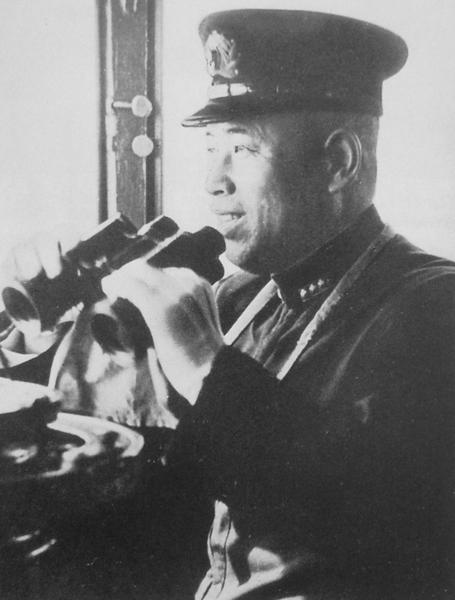
Admiral Isoruku Yamamoto, CinC Combined Fleet

The Japanese certainly had the forces to accomplish the mission outnumbering the U.S. Navy which had taken heavy losses at Pearl Harbor and in the Far East.  Following the Doolittle raid Yamamoto went ahead with the plan to invade Midway. The operation, named MI was coupled with an invasion of the islands of Attu and Kiska in the Aleutians which would form a picket line to prevent future attacks on the Japanese mainland. Fuchida
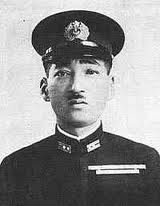
Yamamoto’s plan was not without its critics, the majority of the Staf of the First Air Fleet embarked on the First Carrier Striking Force was not in favor including the leader of the Pearl Harbor attack Commander Mitsuo Fuchida who considered it “grammar school strategy.”   Despite objections from them as well as his Fleet Operations Officer Yamamoto directed that the plan be implemented.  The plan was to have the First Carrier Striking Force attack Midway and reduce its defenses so that the Invasion Force could undertake the task of invading and occupying Midway.  Supporting these forces was the Main Body built around Battleship Division One included Yamamoto’s flagship the 72,000 ton behemoth Yamato.  Another strong force was assigned to the Aleutian operation. The task forces were spread out across the North Pacific and would not able to provide mutual support to each other in a timely manner.

Japanese Forces were organized in the following manner.

Main Body, Admiral Yamamoto

BatDiv 1, Admiral Yamamoto

BB Yamato (flagship, Yamato), Captain

BB Nagato (Nagato), Captain Hideo Yano

BB Mutsu (Nagato), Captain Teijiro Yamazumi

Carrier Group, Captain Kaoru Umetani

CVL Hosho (Hosho), Captain Umetani

Air Unit (8 bombers), Lieutenant Yoshiaki Irikiin

DD Yukaze (Minekaze), Lieutenant Commander Shizuka Kajimoto

Special Force, Captain Kaku Harada

Chiyoda (seaplane carrier, Chitose), Captain Harada

Nisshin (seaplane carrier, Nisshin), Captain Katsumi Komazawa

Screen (DesRon 3), RADM Shintaro Hashimoto

CL Sendai (flagship, Jintsu), Captain Nobue Morishita

DesDiv 11, Captain Kiichiro Shoji

DD Fubuki (Fubuki), Captain Shizuo Yamashita

DD Shirayuki (Fubuki), Captain Taro Sugahara

DD Hatsuyuki (Fubuki), Captain Lieutenant Commander Junnari Kamiura

DD Murakumo (Fubuki), Captain Commander Hideo Higashi

DesDiv 19, Captain Ranji Oe

DD Isonami (Fubuki), Commander Ryokichi Sugama

DD Uranami (Fubuki), Commander Tsutomu Hagio

DD Shikinami (Fubuki), Commander Akifumi Kawahashi

DD Ayanami (Fubuki), Commander Eiji Sakuma

1st Supply Unit, Captain Shigeyasu Nishioka

Naruto (Oiler), Captain Nishioka

Toei Maru (Oiler)

It was Yamamoto’s plan to use this force to polish off U.S. Forces that would only enter the fight after he had taken Midway. Despite the success of his carrier task forces at his heart Yamamoto was still a Battleship Sailor and believed that his battleships would be the deciding factor in the final destruction of the U.S. Navy forces in the Pacific.  This force could be augmented by the Aleutian Guard Force, detached from the Main Body under the command of Vice Admiral Shiru Takasu and was composed of the following fleet units:

GUARD (Aleutians Screening) FORCE, VADM Shiro Takasu in Hyuga

Chief of Staff, Rear Admiral Kengo Kobayashi

BatDiv 2

BB Hyuga (flagship, Hyuga), Captain Chiaki Matsuda

BB Ise (Hyuga), Captain Isamu Takeda

BB Fuso (Fuso), Captain Mitsuo Kinoshita

BB Yamashiro (Fuso), Captain Gunji Kogure

Screen, RADM Fukuji Kishi

CruDiv 9, Rear Admiral Kishi

CL Kitakami ( flagship, Kuma), Captain Saiji Norimitsu

CL Oi (Kuma), Captain Shigeru Narita

DesDiv 20, Captain Yuji Yamada

DD Asagiri (Fubuki), Commander Nisaburo Maekawa

DD Yugiri (Fubuki), Captain Masayoshi Motokura

DD Shirakumo (Fubuki), Commander Toyoji Hitomi

DD Amagiri (Fubuki), Captain Buichi Ashida

DesDiv 24, Captain Yasuji Hirai

DD Umikaze (Shiratsuyu), Commander Nagahide Sugitani

DD Yamakaze (Shiratsuyu), Commander Shuichi Hamanaka

DD Kawakaze (Shiratsuyu), Commander Kazuo Wakabayashi

DD Suzukaze (Shiratsuyu), Commander Kazuo Shibayama

DesDiv 27, Captain Matake Yoshimura

DD Ariake (Hatsuharu), Commander Shoichi Yoshida

DD Yugure (Hatsuharu), Commander Kiyoshi Kamo

DD Shigure (Shiratsuyu), Commander Noboru Seo

DD Shiratsuyu (Shiratsuyu), Lieutenant Commander Kimmatsu Hashimoto

2nd Supply Unit, Captain Matsuo Eguchi

San Clemente Maru (oiler), Captain Eguchi

Toa Maru (oiler)
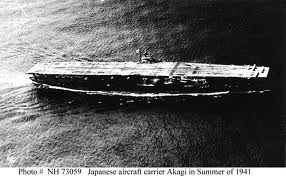
The force that was the true heart of the Japanese Navy in early 1942 was the First Carrier Striking Force which at Pearl Harbor and in the months following had run roughshod over all Allied opposition.  Initially composed of 6 flattops the force was reduced to four when the Shokaku was heavily damaged and Zuikaku’s air group decimated at the Battle of the Coral Sea on 8 May 1942.  Nevertheless it was still a formidable and experienced force in its own right.  Commanded by Vice Admiral Chuichi Nagumo it was composed of the following units:

FIRST CARRIER STRIKING FORCE (1st Air Fleet), VADM Chuichi Nagumo

Carrier Group, VADM Nagumo

CarDiv 1

CV Akagi  (flagship, Akagi) 21 Zero fighters, 21 dive bombers, 21 torpedo bombers

CV Kaga (Kaga) 21 Zero fighters, 21 dive bombers, 30 torpedo bombers

CarDiv 2 — RADM Tamon Yamaguchi

CV Hiryu (flagship, Hiryu) 21 Zero fighters, 21 dive bombers, 21 torpedo bombers

CV Soryu (Hiryu) 21 Zero fighters, 21 dive bombers, 21 torpedo bombers

Support Group — RADM Hiroaki Abe CruDiv 8

CA Tone (flagship, Tone)

CA Chikuma (Tone)

2nd Section, BatDiv 3 —

BB Haruna (Kongo)

BB Kirishima (Kongo)

Screen (DesRon 10) — RADM Susumu Kimura

CL Nagara (flagship, Nagara)

DesDiv 4 — 4 DDs

DesDiv 10 — 3 DDs

DesDiv 17 — 4 DDs

Supply Group — 5 oilers, 1 DD

The Invasion Force under the command of Vice Admiral Nobutake Kondo was a formidable surface strike group in its own right and was built around 2 Fast Battleships, 9 Heavy Cruisers and a light carrier.

MIDWAY INVASION FORCE, (2nd Fleet), VADM Nobutake Kondo

Invasion Force Main Body

CruDiv 4 (less 2nd section)

CA Atago (flagship, Takao),

CA Chokai (Takao)

CruDiv 5 (less 2nd section)

CA Myoko (Myoko)

CA Haguro (Myoko)

BatDiv 3 (less 2nd section) —

BB Kongo (Kongo)

BB Hiei (Kongo)

Screen (DesRon 4) — RADM Shoji Nishimura

CL Yura (flagship, Nagara)

DesDiv 2 — 4 DDs

DesDiv 9 — 3 DDs

Carrier Group Zuiho (CVL) — 12 Zero fighters, 12 torpedo bombers; 1 DD

Supply Group — 4 oilers, 1 repair ship

Close Support Group — VADM Takeo Kurita

CruDiv 7

CA Kumano (flagship, Mogami)

CA Suzuya (Mogami)

CA Mikuma (Mogami)

CA Mogami (Mogami)

DesDiv 8 — 2 DDs 1 oiler

Transport Group — RADM Raizo Tanaka

12 transports carrying troops

3 patrol boats carrying troops

1 oiler

Escort (DesRon 2) — RADM Tanaka

CL Jintsu (flagship, Jintsu)

DesDiv 15 — 2 DDs

DesDiv 16 — 4 DDs

DesDiv 18 — 4 DDs

Seaplane Tender Group — RADM Riutaro Fujita

Seaplane Tender Div 11

Chitose (CVS) — 16 fighter seaplanes, 4 scout planes

Kamikawa Maru (AV) — 8 fighter seaplanes, 4 scout planes

1 DD;

1 patrol boat carrying troops

Minesweeper Group

4 minesweepers

3 submarine chasers

1 supply ship

2 cargo ships

The Northern Force which was assigned to the invasion and occupation of Attu and Kiska was commanded by Vice Admiral Moshiru Hosogaya included the carriers Ryujo and Junyo which had they accompanied the First Carrier Striking Force might have given the Japanese the edge that they would have needed to recover when that force was destroyed on June 4th.  This force was composed of the following units:

NORTHERN (Aleutians) FORCE (5th Fleet) — VADM Moshiro Hosogaya

Northern Force Main Body

CA Nachi (flagship, Myoko)

Screen —

2 DDs

Supply Group —

2 oilers, 3 cargo ships

Second Carrier Striking Force — RADM Kakuji Kakuta

Carrier Group (CarDiv 4)

CVL Ryujo (flagship, Ryujo) — 16 Zero fighters, 21 torpedo bombers

CV Junyo (Junyo) — 24 Zero fighters, 21 torpedo bombers

Support Group (2nd section, CruDiv 4) —

CA Maya (Takao)

CA Takao (Takao)

Screen (DesDiv 7) —

3 DDs

1 oiler

Attu Invasion Force — RADM Sentaro Omori

CL Abukuma (flagship, Nagara)

DesDiv 21 —

4 DDs

1 minelayer

1 transport carrying troops

Kiska Invasion Force — Capt. Takeji Ono

CruDiv 21 —

CL Kiso

CL Tama 

AMC Asaka Maru (auxiliary cruiser)

Screen (DesDiv 6) —

3 DDs

2 transports carrying troops

Minesweeper Div. 13 —

3 minesweepers

Submarine Detachment — RADM Shigeaki Yamazaki

SubRon 1 — I-9 (flagship)

SubDiv 2 — 3 submarines

SubDiv 4 — 2 submarines

Note all Japanese Fleet information obtained online at http://www.microworks.net/pacific/orders_of_battle/midway_japan.htm

These forces were augmented by a submarine screening force and land based naval air forces stationed at Wake and Kwajalein.
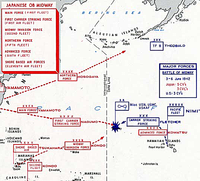
The plan was complicated and depended on the Americans reacting exactly as the plan anticipated them doing.  Yamamoto never expected that the Americans would be waiting for his forces and had knowledge of his plans due to the efforts of U.S. Navy code breakers under the direction of Commander Joseph Rochefort and the Fleet Intelligence Officer Captain Edwin Layton had broken the top secret Japanese Navy JN-25 Code.  Thus despite the massive amount of forces involved the plan was seriously flawed and left the advanced forces vulnerable to unexpected American moves.

Next: Calculated Risk: The American Forces and Strategy at Midway
6 Comments

Filed under History, Navy Ships, US Navy, world war two in the pacific

The South Dakota Class Battleships: The Best of the Treaty Battleships

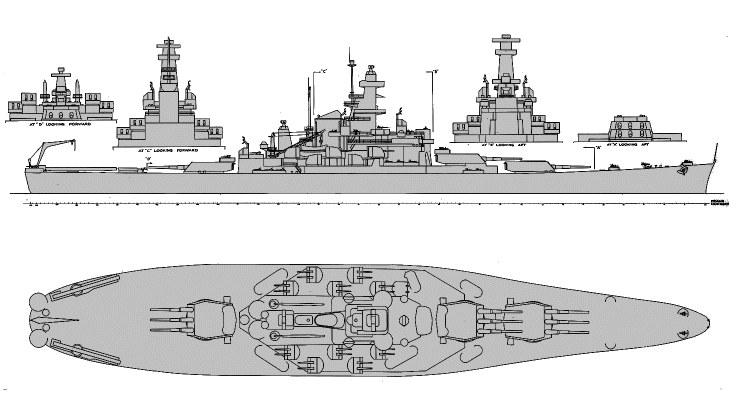
USS South Dakota Class Line Drawing

This is the fifth in a series of six articles on the battleships built under the provision of the Washington and London Naval Treaty limitations in the 1930s. I am not including the ships which were completed in the immediate aftermath of the Washington Treaty limitations. This series looks at the modern battleships that the World War II combatants would produce in the 1930s which saw service in the war. Part one covered the Italian Vittorio Veneto class entitled The Pride of the Regina Marina: The Vittorio Veneto Class Battleships. Part two French Firepower Forward: The unrealized potential of the Dunkerque and Richelieu Class Battleships covered the French Dunkerque class and Richelieu class Battleships. Part three covered the British Royal Navy King George V Classbattleships entitled British Bulwarks: The King George V Class Battleships Part Four  which was about the North Carolina Class is entitled The Next Generation: The North Carolina Class Battleships. I have already published the final part which covers the German Scharnhorst Class entitled Power and Beauty the Battle Cruisers Scharnhorst and Gneisenau . The German Bismarck, Japanese Yamato, British Vanguard and American Iowa

Classes will be covered in a subsequent series.

As the world edged closer to war in the late 1930s the U.S. Navy followed up its decision to build the two ship North Carolina class battleships with additional fast battleships. Initially the General Board wanted two additional North Carolina’s but the Chief of Naval Operations William H. Standley wanted a different design.

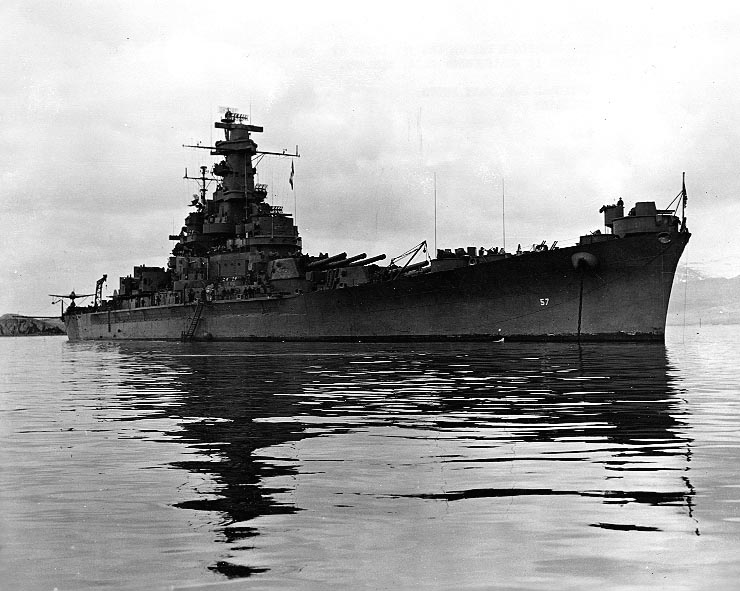
USS South Dakota BB-57 in 1943

Design work started in 1937 and several designs were proposed in order to correct known deficiencies in the preceding North Carolina class to include protection and the latest type of steam turbines.  As in the North Carolina’s the Navy struggled to find the optimal balance between armament, protection and speed. In the end the Navy decided on a shorter hull form with greater beam which necessitated greater power to maintain a high speed. The armor protection was maximized by using an interior sloped belt of 12.2 inch armor with 7/8” STS plates behind the main belt which made the protection the equivalent to 17.3 inches of vertical armor. The Belt continued to the bottom of the ship though it was tapered with the belt narrowing to 1 inch to provide addition protection against plunging fire which struck deeper than the main belt. As an added feature to protect against torpedo hits a multi-layered four anti-torpedo bulkhead system was included, designed to absorb the impact of a hit from a 700 pounds of TNT.

In order to accommodate the machinery necessary to provide the desired speed of 27 knots on the shorter hull the machinery spaces were rearranged.  The new design placed the boilers directly alongside the turbines with the ship’s auxiliaries and evaporators also placed in the machinery rooms. Additional design changes made to save space included making the crew berthing areas smaller. This included that of officers as well as the senior officers and shrinking the size of the galley’s and the wardroom from those on the North Carolina’s. The resultant changes allowed the ships to achieve the 27 knot speed, improved protection and the same armament of the North Carolina’s within the 35,000 treaty limit.

Two ships of the design were approved and with the escalator clause invoked by the Navy two more ships were ordered all with the nine 16” gun armament of the North Carolina’s.  The leading ship of the class the South Dakota was designed as a fleet flagship and in order to accommodate this role two of the 5” 38 twin mounts were not installed leaving the ship with 16 of these guns as opposed to the 20 carried by the rest of the ships of the class. The final design was a class of ships capable of 27.5 knots with a range of 17,000 miles at 15 knots mounting nine 16” guns with excellent protection on the 35,000 tons and full load displacement of 44,519 tons.

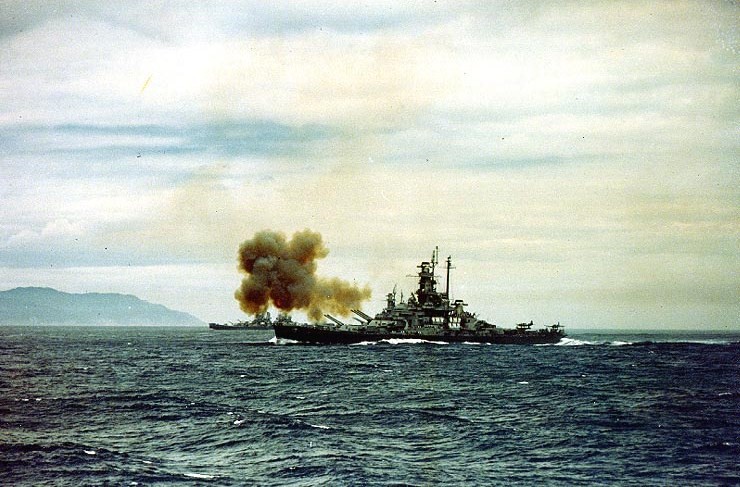
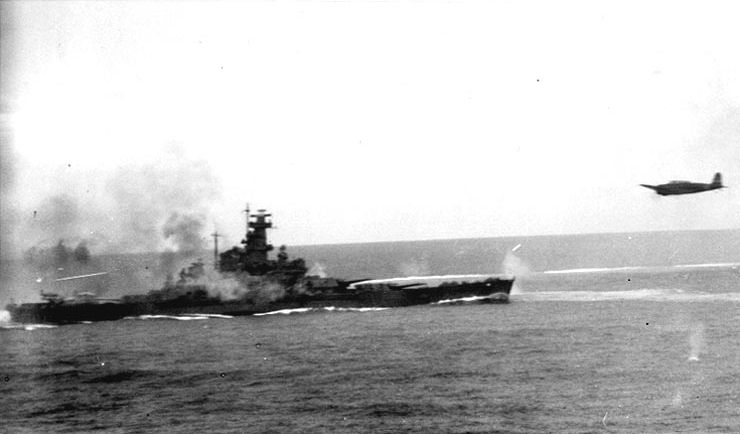
The lead ship of the class the USS South Dakota BB-57 was laid down 5 July 1939 at New York Shipbuilding in Camden New Jersey, launched on 7 June 1941 and commissioned on 20 March 1942.  Following her commissioning and her shakedown cruise South Dakota was dispatched to the South Pacific. Soon after her arrival she struck a coral reef at Tonga which necessitated a return to Pearl Harbor for repairs.  When repairs were complete she was attached to TF 16 escorting the USS Enterprise CV-6 during the Battle of the Santa Cruz Islands on 26 October 1942.  During the battle she was credited with shooting down 26 Japanese aircraft but was struck by a 500 lb bomb on her number one turret. She joined TF-64 paired with the battleship USS Washington during the Second Naval Battle of Guadalcanal on14-15 November 1942. During the action South Dakota suffered a power outage and was hit by over 40 shells from Japanese ships which knocked out 3 fire control radars, her radio and main radar set. 3 destroyers were also lost but the Washington mortally wounded the fast battleship Kirishima and destroyer Ayanami which were scuttled the next day and damaged the heavy cruisers Atago and Takao. She returned to New York for repairs which completed in February 1943 and joined the carrier USS Ranger CV-4 for operations in the Atlantic until April when she was attached to the British Home Fleet. She sailed for the Pacific in August 1943 and rejoined the Pacific Fleet in September and joined Battleship Divisions 8 and 9 and supported the invasion of Tarawa providing naval gunfire support to the Marines. The rest of the war was spent escorting carriers as well as conducting bombardment against Japanese shore installations. She was present at the Japanese surrender in Tokyo Bay and returned to the United States in 1945 and was decommissioned and placed in reserve on 31 January 1947. She was stricken from the Naval Register on 1 June 1962 and sold for scrap in October of that year. Various artifacts of this gallant ship to include a propeller, a 16” gun and the mainmast are part of the USS South Dakota Memorial Park in Sioux Falls South Dakota and 6,000 tons of armored plate were returned to the U.S. Atomic Energy Commission for use in civilian nuclear programs and a second screw is displaced outside the U.S. Naval Museum in Washington D.C.  She received 13 battle stars for World War II service.  South Dakota had the dubious distinction of having the youngest sailor of the war 12 year old Calvin Graham who confessed lying about his age to the Gunnery Officer Sergeant Schriver. Graham was court-martialed and given a dishonorable discharge spending 3 months in the ship’s brig before he was able to be returned to the United States where just after his 13th birthday he entered 7th grade.

USS Indiana BB-58 Bombarding Japan in 1945

The second ship of the class the USS Indiana BB-58 was laid down at Newport News Naval Shipyard on 20 November 1939 launched on 21 November 1941 and commissioned on 30 April 1942.  She served throughout the Pacific War by serving with the fast battleships of Vice Admiral Willis Lee’s TF-34, escorting carriers during major battles such that the Battle of the Philippine Sea or as it is better known the Marianas Turkey Shoot. She returned to the United States for overhaul and missed the Battle of Leyte Gulf but served at Iwo Jima, Okinawa and operations against the Japanese home islands.  Following the war she was decommissioned in 1947 and sold for scrap in September 1963.   A number of her relics are preserved at various locations in Indiana and her prow is located in Berkeley California.

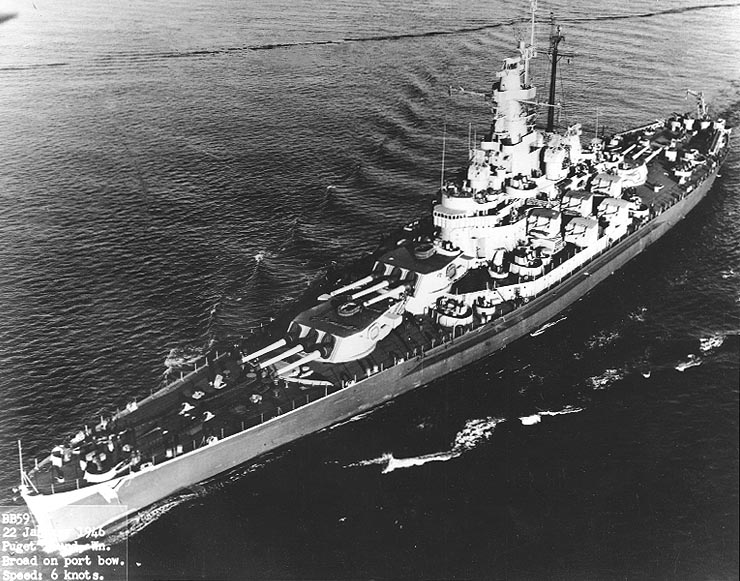
USS Massachusetts BB-59 in January 1946 in the Puget Sound

The third ship of the class the USS Massachusetts BB-59 was laid down on 20 July 1939 at Bethlehem Steel Corporation Fore River Yard in Salem Massachusetts and launched on 23 September 1941 and commissioned on 12 May 1942. After her shakedown cruise she was assigned to the Atlantic Fleet where she took part in Operation Torch, the Allied invasion of French North Africa. During the operation she engaged French shore batteries, damaged the battleship Jean Bart and sank 2 cargo ships and along with the heavy cruiser Tuscaloosa sank the destroyers Fougueux and Boulonnais and the light cruiser Primauguet. Following her assignment in the Atlantic she sailed for the Pacific where she began operations in January 1944. She took part in almost every major operation conducted by the Pacific Fleet escorting the Fast Carrier Task Forces and operating as a unit of TF-34 the Fast Battleship Task force including the Battle of Leyte Gulf.  She ended the war conducting operations against the Japanese home islands.  She was decommissioned in 1947 and stricken from the Naval Register on 1 June 1962. She was saved from the fate of Indiana and South Dakota as the people of Massachusetts with the assistance of schoolchildren who donated $50,000 for her renovation and preservation as a memorial. She became that in 1965 at Battleship Cove in Fall River Massachusetts and she remains there designated as a National Historic Landmark.  During the naval build up of the 1980s much equipment common to all modern battleships was removed for use in the recommissioned battleships of the Iowa class.

USS South Dakota at the Battle of the Santa Cruz Islands


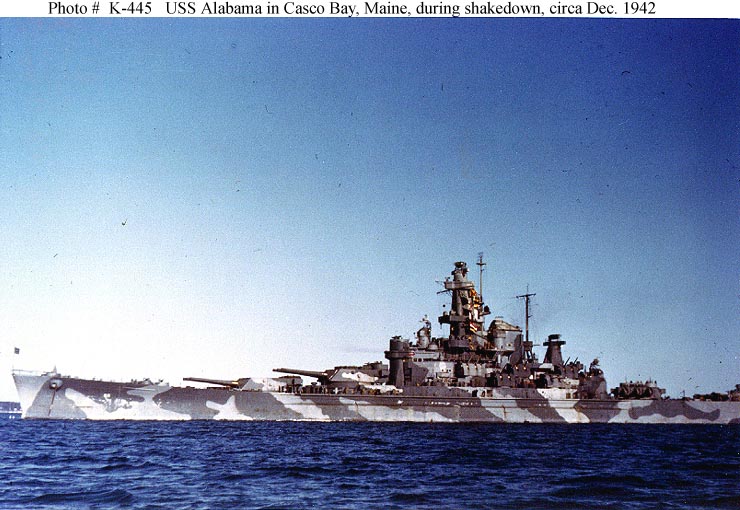
The final ship of the class the USS Alabama BB-60 was on 1 February 1940 at Norfolk Naval Shipyard. She was launched on 21 February 1942 and commissioned 16 August 1942. Following her shakedown cruise and initial training off the Atlantic coast she joined the repaired South Dakota and operated as part of TF 22 attached to the British Home Fleet. She conducted convoy escort operations, participated in the reinforcement of Spitsbergen and in an operation which attempted to coax the German battleship Tirpitz out of her haven in Norway. Tirpitz did not take the bait and Alabama and South Dakota returned to the United States in August 1943.  After training with the fast carriers she took part in the invasion of the Gilberts taking part in Operation Galvanic against Tarawa and the Army landings on Makin Island. As 1944 began Alabama continued her operations with the fast carriers and the fast battleships of TF-34.  She took part in operations against the Marshalls and took part in the invasion of the Marianas Islands and the Marianas Turkey Shoot. From there she supported the invasion of Palau and other islands in the Caroline Islands followed by operations against New Guinea and the invasion of the Philippine and the Battle of Leyte Gulf before returning to the United States for overhaul. She returned to action during the invasion of Okinawa and in shore bombardment operations against the Japanese Mainland. When the war ended the Alabama had suffered no combat deaths and only 5 wounded following the misfire of one of her own 5” guns earning her the nickname of “Lucky A.”  Hall of Fame pitcher Bob Feller served as a Chief Petty Officer and gun mount captain on Alabama during the war. She was decommissioned on 9 January 1947 and stricken from the Naval Register on 1 June 1962. The people of the State of Alabama formed the “Alabama Battleship Commission” and raised $1,000,000 including over $100,000 by schoolchildren to bring her to Alabama as a memorial.  She was turned over to the state in 1964 and opened as a museum on 9 January 1965. She was declared a National Historic Landmark in 1986.  She has been used as a set in several movies and continues to serve as a museum preserving the legacy of the men that served aboard her and all of the battleship sailors of World War II.

In the 1950s a number of proposals were considered to modernize the ships of the class to increase their speed to 31 knots using improved steam turbines or gas turbines. The Navy determined that to do this would require changes to the hull form of the ships making the cost too prohibitive.  The ships were certainly the best of the treaty type battleships produced by any nation in the Second World War. The damage sustained by South Dakota at the Second Naval Battle of Guadalcanal would have not only put most battleships of her era out of action but might have caused enough damage to sink them. Their armament was equal or superior to all that except the Japanese Yamato Class and their protection was superior to most ships of their era.

It is good that both the Massachusetts and the Alabama have been preserved as memorials to the ships of the class, their sailors and the United States Navy in the Second World War. Because of the efforts of the people of Massachusetts and Alabama millions of people have been able to see these magnificent ships and remember their fine crews. Both have hosted reunions of their ships companies since becoming museum ships and with the World War Two generation passing away in greater numbers every day soon these ships as well as the USS Texas, USS North Carolina, USS Missouri, USS New Jersey and USS Wisconsin will be all that is left to remember them unless a home can be found for the USS Iowa which stricken from the Naval Register awaits an uncertain fate as a resident of the “Ghost Fleet” in Suisun Bay California.  No other nation preserved any other dreadnought or treaty battleship thus only these ships remain from the era of the Dreadnought.

10 Comments

Filed under History, Military, Navy Ships, US Navy, world war two in europe, world war two in the pacific