Tag Archives: jesus

A Meeting of Centurions in Jerusalem

romans-35

This is another in the historical fiction series that I am writing with the Centurion Longinus, who according to tradition was the Centurion at the Cross who put his lance in the side of Jesus and who would exclaim “Surely this was the Son of God” as Jesus breathed his last.

This chapter takes up where after the Triumphant Entry of Jesus into Jerusalem and it asked an important question regarding a passage of scripture, that of the use of a Greek word for servant which only occurs once in the New Testament, the word Pais. In accent Greek literature the term denotes a homosexual relationship, that of a man with his houseboy. It is used to describe the servant of a Centurion in Matthew 8:6 instead of the usual word for servant Doulos.  Certainly the writer of this Gospel would understand that as would his readers. However, most commentators gloss over the passage. 

The day after the entry of this Jesus character into Jerusalem was uneventful for Longinus and his fellow Roman officers. Jesus had returned to Bethany after driving out the money changers and other assorted riff-raff out of the Temple but had returned without the tumult of the preceding day, Instead, Jesus with a number of his disciples went to the Temple where he engaged the people and some of the Pharisees in a time of teaching culminating in a series of what Longinus’ Jewish spy said were comments that could be interpreted as threats against the Temple establishment and veiled allusions to Jesus being the Messiah of the Jews.

Jesus left the Temple at the end of the day without incident but Longinus’ spy indicated that the Priests and other religious authorities were discussing ways by which they might rid themselves of this Galilean would be Messiah. Now Longinus and his fellow officers couldn’t care a whit about Jewish religious disputes so long as it did not make their job keeping the peace any more difficult than it already was.

When his spy reported back Longinus briefed Pilate of the simmering tensions. Pilate was with his wife Bernice when he received the report. Pilate did not like what was going on but had no contact with any of the religious leaders from any faction since his arrival and was troubled. His wife warned him in the presence of Longinus “not to have anything to do with that man” and he told Longinus to continue monitoring the situation, He also dispatched a messenger to the commander of the Legion in Caesarea to send reinforcements to Jerusalem just in case things got out of hand. Until then, Longinus, the Primus Pilus, or senior Centurion of the Legion was to help him maintain a close watch on the situation and hopefully keep the situation from boiling over.

After his meeting with Pilate and Bernice, Longinus sat around the tavern in Fortress Antonia with several others of his officers and Centurions from the Legion currently in Jerusalem. His Optio, or second in command Decius, a Roman from his former unit who had accompanied him to Palestine was there, as were two Decurio officers from the cavalry detachment and his Tesserarius, Quentin, a man who held a position much like a First Sergeant. Late in the evening another Centurion came to the tavern. This Centurion, was accompanied by his young servant was in charge of the Century based in Capernaum in Galilee.

The Centurion, Flavius by name ordered an ale from the barkeeper and walked over to the table where Longinus and the other officers sat. After the exchange of formalities Flavius sat with them. His young servant remained at the bar sitting alone.

Longinus had known Flavius for several years and known him to be an honorable man, though he did not necessarily approve of the very “Greek” arrangement that he had with his Pais,* which was common in the Roman and Greek military units, he respected Flavius’s soldiering abilities, leadership and integrity. Flavius and his Century had arrived in Jerusalem the previous night after Jesus had made his entry into the city. Longinus was glad to see Flavius because he felt that an officer stationed in Galilee might be able to shed more light on this man of mystery who had Jerusalem up in arms and so troubled Pilate.

Flavius asked what Longinus knew about Jesus, and Longinus told him what he had seen the day before as well as the information that he had obtained from his own Jewish spy.

Flavius, nodded and then began to tell Longinus and the other officers of his encounter with Jesus a couple of years before in Capernaum of Galilee.

Flavius began: “Longinus my friend, I met this Jesus in Capernaum and he is no ordinary man.” He paused to take a drink and continued as Longinus nodded for him to continue.

“It was a difficult time my friend. My Pais was very ill, sick to the point of death, He lay in our quarters and I heard that the miracle working Rabbi named Jesus was in town. Now, you know my friends that I care not a thing about what these Jews believe but I was desperate and from what I had heard and seen I believed that the Gods had to be with this man.”

Longinus continued to listen and then asked “Why didn’t you go to our Temple and have our Gods intercede for your Pais?”

“My friend I had already done that but my Pais’ condition had worsened. So I found this Jesus fellow as he was entering the city and sent some Jews that I had befriended to him.” He paused. “Those Jews convinced Jesus that I was a friend of the Jews and had done many good things for their community, and this my friend is true.”

“So the Jews helped you contact this Jesus fellow?” asked Decius. Longinus looked at his subordinate disapprovingly and asked Flavius to continue.

“I tell you my friends, this man is like no one that I have ever met, the Gods are certainly with him, whether our Gods or the Jewish God I know not which but he is not a normal Rabbi.”

The officers looked around the table as Flavius continued.
centurion1

“Gentlemen, when this Jesus came to me I felt something that I have never felt in my life. Jesus asked what he could do for me and I told him of the sickness of my Pais and he asked if he could come to my quarters. I replied that I didn’t need him to come, because I was not worthy for him to come under my roof but to only say the word and my Pais would be healed.”

Longinus looked at his fellow Centurion in disbelief. Flavius sensing this continued. “My friend, I could not believe that I uttered those words but Jesus peered into my eyes and I knew that he knew all about me. Then he replied that “your servant is healed” and then exclaimed to all of the Jews around us that he “had not seen such faith in all of Israel.” Then, he put his hand on my shoulder, blessed me with some Hebrew blessing and walked away with his friends. When I returned to my quarters, my Pais, the young man over at the bar was well.”

Longinus saw the deep emotion that Flavius was expressing and raised his mug. “A toast to this Jesus!, whatever and whoever he he is.”

“Here here” replied those at table as Flavius looked on and several laughed. He had not expected such a reaction and said softly.

“My friends I don’t think you understand.” He paused a second and looked Longinus in the eyes. “I do hope that whatever happens in the next few days that no harm will come to this man. I would hate that my spear could bring harm to him.”

Longinus responded. “I hope that nothing happens to cause any of us any problems. The city is boiling with emotion and unlike your friend Jesus, most of them hate us and would rather see us dead, and some of their leaders from what I understand wouldn’t mind seeing him dead either.” Longinus paused and emptied his mug, drinking the ale to the last and then continued “My friend, I appreciate what you have to say, but we have to do our duty for the Empire regardless of our personal feelings. We are outnumbered here and this Jesus, as much as we may find him fascinating is the source of much of the current discord.” He looked at Flavius. “You do understand this?”

Flavius looked down at his drink and looked back up at Longinus and then at the officers around the table.

“I do understand my duty my friend, but you have to know what he did for me.”

“We do understand my friend” replied Longinus, “but our honor is loyalty to Caesar, not any other man.”

“I know Longinus, I do know, more than you think, but what if he is more than just a man?”

Longinus and the other officers sat silently pondering Flavius’s words. The silence was deafening and slowly the junior officers individually asked to be excused, begging pressing duties to attend to leaving Flavius and Longinus at the table. The bartender brought each man another ale and they continued to drink silently.

To be continued…

Peace

Padre Steve+

The Greek word Pais is the word used in many Greek texts to to describe a homosexual relationship. The use by Matthew (Mt 8:6) in his account of the healing of the servant of the Centurion used the word Pais to describe the servant, not the typical Doulos which is used for slave or bond servant as is most common throughout the New Testament. In fact this is the only use of the word in the New Testament. Many Biblical scholars and linguists, though not completely certain do entertain that possibility that the Centurion that I call “Flavius” and his servant were a Gay couple.

Leave a comment

Filed under faith, History, LGBT issues, Religion

God’s Going to Get the Church for Its Greed

JoelOsteen_FOR_PROSPERITY

Back when I was in seminary at Southwestern Baptist, before the Fundamentalist takeover of that once proud school, my Church History professor, Dr. Doyle Young made the comment “God’s going to get us for our stained glass windows.” It was in the context of the rich and indolent nature of the American church. This was back in 1988 and 1989, sadly, things have only gotten worse.

In his various lectures Dr. Young was always able to weave church history into contemporary issues. He was really an amazing professor and he understood human nature more than most theologians. As such his lectures always had a profound amount of biography of the men and women who influenced church history. In fact, that biographical narrative is something that I have adopted in my own teaching and writing about history. That biographical emphasis helps keep me grounded and allows me to see that some things never change.


I noticed this again tonight when I posted a meme on Facebook about the televangelist and mega-church “pastor” Joel Osteen purchasing a 10.4 million dollar home. All of a sudden I had two men, one the son of a prominent televangelist that I worked for in the early 1990s, and the other a man who served with me as a Priest in my former denomination and now is a fairly high ranking priest in a diocese of the Episcopal Church open fire on me and defending the opulence of Osteen. When I asked what Jesus would do the televangelist’s son made comments made comments which were almost mocking of Jesus and his death for us. The Episcopal priest continued his defense and finished his post with the comment “cheers!” Frankly I found nothing to cheer about in their comments. When one of the men who served with me at war commented on the post, the Episcopal priest attacked him.

Do I really care what these men think of me? The hell no, not anymore. I invited both of them to drop me as “friends” because frankly I don’t want to be associated with people who make their living off the backs and hard earned money of the tithes and offerings of people who often cannot afford it and then defend the greed and opulence of wealthy minsters. I cannot do that. In fact when I retire from the Navy I will help other ministers and churches but I will not take any salary. I cannot do that, it seems to me that the Gospel which is supposedly freely given to us, should in turn be given.

Does that mean that I think that ministers should not be paid? Not at all. But there is a point, which is different in every church where what a minister makes is too much, and when the money that is sucked into a church or ministry only serves to prop that church or ministry up without helping any of God’s people but the livelihood of the minister.

I have heard so many rationalizations for this by ministers and Christians that it makes my head swim. I just remember reading the notes, letters and phone calls from poor people giving what they could not afford to the televangelist that I worked for in the early 1990s. Thinking about what those people gave and wrote breaks my heart to this day, especially when I see that man on television and radio talking about and actively backing the politicians who do the most to further impoverish the poor and support war without end.

Barry McGuire, the rock and roller who wrote and performed the song Eve of Destruction wrote another song after he became a Christian in the late 1960s called Don’t Blame God (for the Sins of America). Some of words in that song, a song of protest by a new Christian at the American church are even more accurate today.

On every worthless coin
and every dollar bill
you see the words in god we trust
but outta fear we kill

we got million dollar churches
but nobody’s on their knees
we got too many selfish people
just doin what they please

Sadly, because of the lives and actions of such people, many are fleeing the church, even those who grew up in it, the baptized. The fastest growing religious demographic in the country is the Nones those who ascribe to no religion. Many people blame God for the action of such people, but if I understand the message of justice of Jesus, John the Baptist and the prophets I know that it’s not God to blame. Instead it is us, those who claim to represent God while making our living off the backs of the weak and supporting the powerful. The Price Bishops of the Middle Ages would be jealous at how well we American Christians do this.

The song’s chorus would be banned in most churches especially those who have sold their souls for political power and economic wealth:

so don’t blame God for the
sins of america
america is fallen from the ways of the Lord
Don’t blame God for the
sins of america
livin for the dollar, she’ll be dyin’ by the sword


Anyway, this was one of those articles that I had thought about writing for a while and just needed a trigger. I guess I got it.

Peace

Padre Steve+


3 Comments

Filed under christian life, faith, Pastoral Care, political commentary, Religion

Heresy, Love, and Faith: My Journey

IMG_1915

I like hard questions and hard cases. My life has been quite interesting and that includes my faith journey as a Christian and human being. It is funny that in my life I have as I have grown older begun to appreciate those that do not believe and to rather distrust those who proclaim their religious faith with absolute certitude, especially when hard questions are asked.  I was reminded of this by an Orthodox Christian internet “troll” this week.

Paul Tillich once said “Sometimes I think it is my mission to bring faith to the faithless, and doubt to the faithful.” 

I find it amusing when trolls come by to condemn my “heresy” and I realize that most have some kind of psychological need to be right, as well as a deep fear, despite their certitude, that they might be wrong, that causes them to do this.

I think that the quote by the late theologian is quite appropriate to me and the ministry that I find myself. I think it is a ministry pattern quite similar to Jesus in his dealings with the people during his earthly incarnate ministry.

Jesus was always hanging out with the outcasts, whether they be Jewish tax collectors collaborating with the Romans, lepers and other “unclean” types, Gentiles including the hated Roman occupiers, Samaritans and most dangerously, scandalous women. He seemed to reach out to these outcasts while often going out of his way to upset the religious establishment and the “true believers” of his day.

There is even one instance where a Centurion whose servant he healed was most likely involved in a homosexual relationship, based on the writer of the Gospel of Matthew’s use of the Greek word “Pais” which connotes a homosexual servant, instead of the more common “Doulos.” That account is the only time in the New Testament where that distinction is made, and Pais is used throughout Greek literature of the time to denote a homosexual slave or “house boy” relationship. Jesus was so successful at offending the profoundly orthodox of his day that his enemies made sure that they had him killed.

I think that what has brought me to this point is a combination of things but most importantly what happened to me in and after my tour in Iraq. Before I went to Iraq I was certain of about everything that I believed and was quite good at what we theologians and pastors call “apologetics.” My old Chaplain Assistant in the Army, who now recently serves as a Lieutenant Colonel in the Army Chaplain Corps called me a “Catholic Rush Limbaugh” back in 1997, and he meant it quite affectionately.

I was so good at it that I was silenced by a former Archbishop in my former church and banned from publishing for about 7 years after writing two articles for a very conservative Roman Catholic journal, the New Oxford Review.

The funny thing is that he, and a number of my closest friends from that denomination are either Roman Catholic priests or priests in the Anglican Ordinariate which came into communion with Rome a couple of years back. Ironically while being “too Catholic” was the reason I was forbidden to write it was because I questioned certain traditions and beliefs of the Church including that I believed that there was a role for women in the ordained ministry, that gays and lesbians could be “saved” and that not all Moslems were bad that got me thrown out in 2010.

However when I returned from Iraq in the midst of a full blown emotional, spiritual and physical collapse from PTSD that certitude disappeared. It took a while before I was able to rediscover faith and life and when I did it wasn’t the same. There was much more mystery to faith as well as reason. I came out of that period with much more empathy for those that either struggle with or reject faith. Thus I tend to hang out at bars and ball games more than church activities or socials, which I find absolutely tedious. I also have little use for clergy than in dysfunctional and broken systems that are rapidly being left behind. I am not speaking about belief here, but rather structure and methodology.

I think that if there is anything that God will judge the American versions of the Christian church is our absolute need for temporal power in the political, economic and social realms and the propagation of religious empires that only enrich the clergy which doing nothing for the least, the lost and the lonely. The fact that the fastest growing religious identification in the United States is is “none” or “no preference” is proof of that and that the vast amounts of money needed to sustain these narcissistic religious empires, the mega-churches and “Christian” television industry will be their undoing.  That along with their lack of care for anyone but themselves. Jesus said that his disciples would be known by their love for one another, not the size of their religious empire or temporal power.

The interesting thing is that today I have friends and colleagues that span the theological spectrum. Many of these men even if they do not agree with what I believe trust me to love and care for them, even when those most like them in terms of belief or doctrine, both religious and political treat them like crap. Likewise I attract a lot of people who at one time were either in ministry or preparing for it who were wounded in the process and gave up, even to the point of doubting God’s love and even existence. It is kind of a nice feeling to be there for people because they do not have to agree with me for me to be there for them.

In my darkest times my only spiritual readings were Father Andrew Greeley’s Bishop Blackie Ryan mysteries which I began reading in Iraq to help me get through the nights in between missions in Iraq and through the nights when I returned from them.  In one of those books, the last of the series entitled “The Archbishop goes to Andalusia” the miscreant Auxiliary Bishop to the Cardinal Archbishop of Chicago goes to Seville Spain.  In the novel Bishop Blackie makes a comment after celebrating Mass in the cathedral at Seville. He said “Every sacramental encounter is an evangelical occasion. A smile warm and happy is sufficient. If people return to the pews with a smile, it’s been a good day for them. If the priest smiles after the exchanges of grace, it may be the only good experience of the week.”  (The Archbishop in Andalusia p.77)

That is something that I try to do now on a regular basis. Sure most of my sacramental encounters as a hospital chaplain do not occur during the liturgy, but often in the life and death moments and times of deep discouragement felt by the wounded, ill and injured. In that ministry I have found that there are many hurting people, people who like me question their faith and even long held beliefs.

I like the old song by Nazareth called Love Hurts. The song always gets me. It is one of those “real” songs from the 1960s and 1970s that nails how life can be sometimes.

Love hurts, love scars
Love wounds and mars
In any heart not tough
Nor strong enough
To take a lot of pain
And love is like a cloud
Holds a lot of rain
Love hurts

I’m young and I know
But even so, I know a thing or two
I have learned from you
I’ve really learned a lot
And love is like a stove
Burns you when it’s hot
Love hurts

Some fools rave of happiness
Of blissfulness, togetherness
Some fools fool themselves, I guess
But they’re not fooling me
I know it isn’t true
Love is just a lie
Made to make you blue
Love hurts

Love does hurt, and well deciding to love can bring a lot of pain, but I do think that it is worth it. Well, that is all for tonight. Until tomorrow.

Blessings and Peace

Padre Steve+

Love Hurts lyrics © Kobalt Music Publishing Ltd., Warner/Chappell Music, Inc., EMI Music Publishing, Sony/ATV Music Publishing LLC, HOUSE OF BRYANT PUBLICATIONS


2 Comments

Filed under christian life, faith, LGBT issues, mental health, Military, ministry, Religion

The Only Church that Truly Feeds the Soul

163017_10150113444907059_3944470_n

“The Only church that truly feeds the soul, day-in day-out, is the Church of Baseball” Annie Savoy (Susan Sarandon) in Bull Durham (MGM 1989)

Tonight I am going to the last home game of the Norfolk Tides. The Tides are our local Triple-A Minor League farm team of the Baltimore Orioles who are now 7 games up on the Yankees in the American League East. I love baseball. For me it is a source of peace, comfort and meaning in the sea of so much hatred, violence, inequity and injustice, angst and despair that fills our world.

Now honestly, while things seem are not good we tend to see life at any given time through they could be worse and certainly could be better they are not nearly as apocalyptic as the bearers of bad news make them out to be. Barbara Tuchman wrote “Disaster is rarely as pervasive as it seems from recorded accounts….The fact of being reported multiplies the apparent extent of any deplorable development by five-to tenfold.”

This is especially true for those who follow that loathsome Trinity of Evil, the Politicians, Pundits and Preachers who make their living causing people to be angry, covetous, anxious and on edge.

When I read or hear some of the vile things being said by allegedly conservative Bible believing Christian leaders be they politicians, pundits or preachers, or in the case of Mike Huckabee a despicable combination of all three, I become more convinced that Annie Savoy was right… the only church that truly feeds the soul is baseball.

In fact when I hear the likes of the Partisan Political Parsons, any of the big Mega-Church Pastors or television ministry hosts, or even some Catholic bishops start spouting off I feel like I have left this country and ended up in Medieval Europe or maybe Saudi Arabia. I wonder where the love has gone. When I read the words of men like Pat Robertson, James Robison, James Dobson, Bryan Fischer, Scott Lively, Franklin Graham, Tony Perkins, Gary Bauer and so many others I understand why people are fleeing the church in droves and so many hold the Christian faith, as well as other religions in such disdain.

Jonathan Swift once mused about the religion of his time, “We have just enough religion to make us hate, but not enough for us to love one another.”   Swift’s words are a perfect description of the American Religious Right as much as they are of non-Christian groups who hate, the Moslem extremists of ISIS, Al Qaeda, Hamas, Boko Haram and the Taliban; the Ultra-Orthodox Jews who think that they are the only acceptable form of Judaism and physically attack other Jews for not being Jewish enough even while persecuting Israeli citizens who are Christian or Moslem; and the Hindu fundamentalists that burn down Christian and Moslem villages in India.

Thankfully, though I am still a Christian and at that a rather miscreant Priest and Chaplain that struggles with faith and belief, I also belong to the Church of Baseball. I am so because I agree with the late Commissioner of Baseball A. Bartlett Giamatti, who said, “there is nothing bad that accrues from baseball.” 

While I am very frustrated at what I see going on in the Christian church as well as in other religions that dominate other countries or cultures, when I think about baseball I know that God still cares. Every time that I look at that beautiful green diamond that sits in the middle of the great cathedrals and parish churches of the Church of Baseball, my sense of hope and faith is renewed.

To true believers, that may seem like heresy. But God even loves heretics and unbelievers. For me baseball speaks to the soul, maybe it is because baseball is more than a game.  Conservative political commentator and long suffering Chicago Cubs fan George Will said “Baseball is only a game. True. And the Grand Canyon is only a hole in Arizona. Not all holes or games are created equal.” 

If that is heresy I don’t care. But then what is heresy? I don’t actually think that Jesus would recognize a lot of what we Christians do today as even being Christian.  I could be wrong but I recall Jesus was really big into the whole “two commandment” “love God with your whole heart and love your neighbor as yourself” way of life; and he wasn’t really cool with pompous religious leaders that give preference to the rich and powerful, and seek their own political power so they can use the state to enforce their religious views on non-believers like we do.

That is why I find something so right about baseball. Unlike the message of the political preachers that specialize in making themselves rich by keeping their followers anxious and angry while preaching the message that “God loved the world so much that he can’t wait to come back, judge and destroy it because of fouled up humanity” especially women and homosexuals; baseball caters to our hopes and dreams while recognizing that none of us, even those who play at the Hall of Fame level are perfect.

Unlike the false religious message preached by so many members of the Trinity of Evil, baseball deals with reality and life so well because of its ebb and flow. It deals with the grind of the long season, the constant demand for excellence and quest for perfection; but there is a realization that most of the time you won’t get there, and if you do, tomorrow you won’t and that is part of life.

Personally I don’t understand why if the Gospel of Jesus and God’s grace and love is actually true that we can’t apply this to our faith. Jesus, at least in the Gospel accounts seemed to accept the imperfections and foul ups of his followers, and not only that seemed to accept the people who the really righteous, religious leaders rejected and treated as less than human.

In fact, my paradigm of understanding the Christian faith comes from baseball. In baseball perfection is illusory and that life is full of times when things don’t go our way. It is much like real life and what is presented in Scripture. Ted Williams, the last player to hit for .400 said “Baseball is the only field of endeavor where a man can succeed three times out of ten and be considered a good performer.”

For some of us it seems like reaching the Mendoza Line* is the best we will ever do, and if we believe in God’s grace, that is probably okay.

Tommy Lasorda the Hall of Fame Los Angeles Dodgers’ manager put things in excellent perspective “No matter how good you are, you’re going to lose one-third of your games.  No matter how bad you are you’re going to win one-third of your games.  It’s the other third that makes the difference.”  That is true in life and faith.

While I am definitely a Christian I struggle and I admit it. I have enough of my own problems to empathize with others that struggle, but who in embracing the wacky formulas offered by greedy self-serving preachers treat Jesus and his message like some sort of magical talisman or good luck charm. But sorry, I agree with what Pedro Cerrano (Dennis Haysbert) said in the movie Major League: “Jesus, I like him very much, but he no help with curveball.”

Thus I have many problems with the perfidious political and prosperity preachers that seem to have forgotten the Gospel, who are basically Elmer Gantry like snake-oil salesmen more attuned to keeping their market share than tending their flock. In fact, I think are actually driving people away from Jesus, and the polls of Barna, the Pew Religious survey, Gallup and others as well as the statistics kept by various denominations say that I am right.

When I watch baseball I feel renewed. As Sharon Olds wrote back in the early 1970s “Baseball is reassuring.  It makes me feel as if the world is not going to blow up.” That my friends is why I agree with Annie Savoy that the only church that truly feeds the soul day in and day out is baseball.

Churchofbaseball


The late great and legendary Detroit Tigers announcer Ernie Harwell said: “Baseball?  It’s just a game – as simple as a ball and a bat.  Yet, as complex as the American spirit it symbolizes.  It’s a sport, business – and sometimes even religion.”   Yes, for me, the heretic that I am it is the latter, and tonight I am happy to be going to the Church of Baseball, Harbor Park Parish.

Peace,

Padre Steve+

*Mario Mendoza was a Major League Shortstop who played for the Pittsburgh Pirates and other organizations. He was an outstanding defensive player but was not much of a hitter. His career batting average was only .215 but a batting average of .200 is considered the minimum that a player can have to remain at the level that he plays.  I think that my career batting average in both baseball and softball barely clears the Mendoza Line. 

Leave a comment

Filed under Baseball, Batlimore Orioles, faith, movies, Political Commentary, Religion

Looking into the Face of Evil: A Centurion Meets the Terrorist Barrabas

centurioncross_1

This is the third chapter of a prequel to my series on Longinus the Centurion, who according to tradition was the Centurion in charge of the execution of Jesus. Today is how I imagine that the Centurion would deal with receiving orders to prepare for the execution of a condemned terrorist.

The next morning a messenger knocked on the door to Longinus’s quarters in Fortress Antonia. He told Longinus that Pilate wanted to speak to him and to report as soon as possible to Pilate’s headquarters in the fortress.

Longinus, who had been discussing the day with Decius in order to ensure his soldiers were ready for any contingency but also conduct some training was bothered by the request. He had discussed the situation in the city and about Jesus in particular the previous afternoon with Pilate and figured that unless there was some sort of incident that he would meet again later in the day to discuss the latest events.

Instead Longinus, was being ordered to report to Pilate again and it was interfering with his conduct of military business. Longinus hated dealing with politicians and diplomats and though he respected Pilate who he felt to be as decent of man as any politically appointed diplomat as any Pilate was still not a military man. He did not always understand military matters.

Longinus looked at the messenger and asked: “Tell me. what would the Governor need of me at this hour?”

“Centurion,” the messenger replied. I was only told to have you report as soon as possible.”

Bothered by the lack of detail Longinus told the messenger to go and tell Pilate that he would be there shortly. He then looked at Decius, and shook his head. “My friend, I am afraid that I will be delayed. Take care to conduct today’s training and be ready in case any trouble arises.” With that he put on his armored breastplate and cape and left the room.

pontius-pilate1

When he arrived at Pilate’s headquarters the Governor greeted him cheerfully. “Centurion, it is good to see you.”

“Likewise sir…” Pilate stopped him before he could continue.

“I don’t suppose that you know why I called you here do you?” Pilate asked, irritating Longinus who feeling even more irritated by Pilate’s levity kept his feelings to his self and simple replied: “No my Lord, your messenger only told me to report here, he did not give me a reason.”

Pilate smiled. “It was with good reason, had he done so I am sure that you, like any other Centurion in the province would have found some “pressing military duty,” isn’t that what you call it? to avoid coming here.”  He paused for just a moment and before Longinus could respond continued: “Of course I know the answer, you need not say anything and I suppose if I was in your position that I would feel the same way.”

Longinus knew this was the case and had no answer to Pilate who continued.

“Centurion, this week will unfortunately be a week where we must conduct some rather unpleasant business, less than soldierly business but necessary.” Pilate paused again and motioned for Longinus to take a seat at his desk and Longinus did so, looking about the room and noticing Pilate’s civilian staff and several soldiers assigned as his personal bodyguard.

Longinus, decided to hasten the length of the visit and asked: “My Lord, may I ask why I am here? After all I do have pressing military business to attend to.”

Pilate immediately caught the sarcasm in Longinus’s words and smiled. “Centurion, you amuse me, because I know how you military types think. You see I may not have served with a Legion, but I have served with enough officers to know that you would rather be fighting the enemies of the Empire than doing police work, but we are in Palestine, not the Teutonic Forrest.”

Longinus stared back at Pilate and said nothing.

“Centurion, this week we will dispense justice to three Jewish prisoners. Men of your unit will conduct the crucifixions this Friday.”

“Yes my Lord.” Longinus’s muted response spoke more than any protest could.

Pilate continued. “Centurion, I want you to see the prisoners and in doing so know in your heart why this must be done. These men are violent criminals, and one of them is the infamous Bar-Abbas.”  Longinus looked at Pilate, and asked “the insurgent who has attacked and killed our soldiers and officials?”

Pilate nodded and replied “so you know why this is important, in an environment as volatile as Judea we cannot let a man like this remain unpunished, it would only encourage more men to rise up like him.” Pilate smiled and continued. “We cannot forget how the Jews rose up and overthrew the Seleucid rulers underestimated these Jews when that Judas Maccabee fellow led that bloody revolt.”

Longinus replied “No we could not let that happen on our watch.”

Pilate nodded in agreement and continued. “So you understand Centurion, it is an unpleasant duty, but mind you history will thank us for it, as will any God that you believe in.” Pilate finished by telling Longinus to visit the prison for himself and begin to choose his soldiers for the crucifixion detail with care.

Longinus rose and saluted Pilate, turned and left the room without another word. He was not happy but proceeded to the dungeon where he met the Jailer of the Fortress, a rather obese and dirty looking man named Alexander, a Roman citizen of Greek origin hailing from Antioch.

When Longinus reached the dungeon he immediately noticed the stench and again realized why he was a Legionnaire and not a policeman. The prison was dark, and by Palestinian standards dank and moist smelling of human excrement and body odor.

“Well Centurion, welcome to my kingdom” said Alexander, a smile pressing through his grimy face.

“Thank you Alexander, where are the condemned?” asked Longinus icily.

They are in the cells to your left. Bar-Abbas is in the first and the other two, neither as notorious as he are in the next cell.”

“What are their names?”

“Dismas and Gestas, they are violent criminals of their own accord, but they were only out for personal gain. I think that one feels some remorse, but the other seems to be a rather hardened and unrepentant man.” The words came effortlessly to the unkempt jailer

“Thank you warden, I will see them now” said Longinus as he turned to look over these men as quickly as possible so he could return to his unit.

He walked past Bar-Abbas without making eye contact and went to the second cell. The two prisoners could not appear more different. One, seemed to accept his fate while the other looked at Longinus without remorse. After about a minute Longinus asked their names. The remorseful looking one answered, “I am Dismas, I stand condemned for robbery and murder. I accept my fate Centurion.” The other prisoner glared at his mate and with hatred in his voice and eyes said to Longinus “I am Gestas, and I am not sorry for anything that I did you Roman swine.”

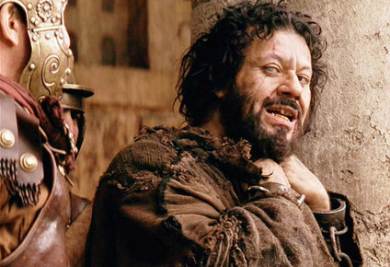
barabbas

Longinus stared back saying nothing, his continued lack of respect for such people seemed vindicated. He turned to the other cell and looked at the burly prisoner in it. “So you are Bar-Abbas?”

The prisoner snarled “So what is it to you Roman?”

Longinus began to feel better about his mission. “Well, Bar-Abbas, it seems that you have killed one too many of my comrades and it is I who will get to exact justice on you.”

Bar-Abbas smiled an evil smile and said, “The Roman that can kill me has not been born.” He laughed at Longinus who stood silently for a moment. Then, quietly Longinus replied, “We’ll see about that.” With that Longinus motioned to Alexander the Jailer to let him out. The jailer unlocked the door and Longinus walked up the steps and into the courtyard of the fortress where his unit was practicing battle drills.

Calling Decius to his side, he said. “We have a second mission this week, the mission of executing some dangerous prisoners, including Bar-Abbas the insurgent.”

“Bar-Abbas sir?” replied the junior officer.

“The same, but we have to wait until Friday. It seems that our governor wants to make a show if his generosity to the people here. If it was up to me I would have killed them in the dungeon and been done with it, we could have said that they died of the plague.” Longinus looked at his assistant and then continued “Of course that is not how we Romans do things, they will be executed in public to show these Jews that they cannot engage in such conduct, but it will only build more resentment.”

“Sir, are you saying that our methods are wrong?” asked Decius.

“Young man, look around you. You know the history of these people. They will continue to rise up until they regain their independence or we kill them all.” He paused. “That is their history and they can do no other. After all, if they were occupying our homes, establishing their God in cities and forcing our people to serve them how would we respond?”

Decius nodded his understanding and looked at the Legionnaires practicing close combat tactics that might be necessary in a pitched battle if the city was to erupt in revolt.

Longinus continued “Decius, choose a squad of men as the execution team and another as the escort. The rest of the Century is to be trained to maintain a secure perimeter and ensure that no Jews attempt to interfere with our mission.

“Sir, where is the execution to take place?” asked Decius.

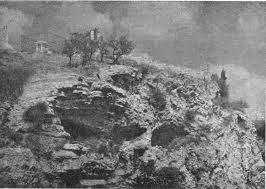
golgotha-36

Longinus motioned to a hill visible just outside the city walls. “Over there, that barren hill. The locals call it Golgotha.” He paused. “Fitting name, the place of the Skull. I perfect place to kill people that don’t want us here wouldn’t you say?” He chuckled and continued, “don’t answer, it is a rhetorical question.”

His assistant nodded and Longinus gave the order “Carry on with training, let me know which men you think should be on the execution team later tonight.”

Longinus turned and walked away wondering what else might happen, after all, the best laid plans of men sometimes don’t work out. He silently cursed under his breath the day that he was assigned to this place, which despite its history and splendor seemed forsaken by the Gods.

Peace

Padre Steve+

Leave a comment

Filed under faith, History, Religion

A Meeting of Centurions in Jerusalem

centurions

This is another part in the historical fiction series that I am wrote about the Centurion Longinus, who according to tradition was the Centurion at the Cross who put his lance in the side of Jesus and who would exclaim “Surely this was the Son of God” as Jesus breathed his last. This chapter takes up where after the Triumphant Entry of Jesus into Jerusalem and is about a meeting between Longinus and another Centurion who I call Flavius. This second character is based on the Centurion that Jesus meets in Capernaum recorded in Matthew Chapter eight. I began the first trilogy in 2012 and the second trilogy which is the prequel to the first last year as part of my Holy Week meditations. Hopefully I will to a concluding trilogy at some point imagining what things were like for these men in the years after that momentous week.  

The day after the entry of this Jesus character into Jerusalem was uneventful for Longinus and his fellow Roman officers. Jesus had returned to Bethany after driving out the money changers and other assorted riff-raff out of the Temple but had returned without the tumult of the preceding day, Instead, Jesus with a number of his disciples went to the Temple where he engaged the people and some of the Pharisees in a time of teaching culminating in a series of what Longinus’ Jewish spy said were comments that could be interpreted as threats against the Temple establishment and veiled allusions to Jesus being the Messiah of the Jews.

Jesus left the Temple at the end of the day without incident but Longinus’ spy indicated that the Priests and other religious authorities were discussing ways by which they might rid themselves of this Galilean would be Messiah. Now Longinus and his fellow officers couldn’t care a whit about Jewish religious disputes so long as it did not make their job keeping the peace any more difficult than it already was.

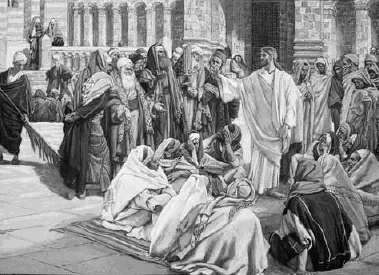
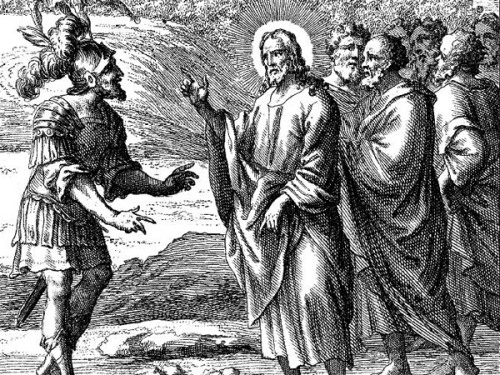
jesus teaching

When his spy reported back Longinus briefed Pilate of the simmering tensions. Pilate was with his wife Bernice when he received the report. Pilate did not like what was going on but had no contact with any of the religious leaders from any faction since his arrival and was troubled. His wife warned him in the presence of Longinus “not to have anything to do with that man” and he told Longinus to continue monitoring the situation, He also dispatched a messenger to the commander of the Legion in Caesarea to send reinforcements to Jerusalem just in case things got out of hand. Until then, Longinus, the Primus Pilus, or senior Centurion of the Legion was to help him maintain a close watch on the situation and hopefully keep the situation from boiling over.

After his meeting with Pilate and Bernice, Longinus sat around the tavern in Fortress Antonia with several others of his officers and Centurions from the Legion currently in Jerusalem. His Optio, or second in command Decius, a Roman from his former unit who had accompanied him to Palestine was there, as were two Decurio officers from the cavalry detachment and his Tesserarius, Quentin, a man who held a position much like a First Sergeant. Late in the evening another Centurion came to the tavern. This Centurion, was accompanied by his young servant was in charge of the Century based in Capernaum in Galilee.

The Centurion, Flavius by name ordered an ale from the barkeeper and walked over to the table where Longinus and the other officers sat. After the exchange of formalities Flavius sat with them. His young servant remained at the bar sitting alone.

Longinus had known Flavius for several years and known him to be an honorable man, though he did not necessarily approve of the very “Greek” arrangement that he had with his Pais,* which was common in the Roman and Greek military units, he respected Flavius’s soldiering abilities, leadership and integrity. Flavius and his Century had arrived in Jerusalem the previous night after Jesus had made his entry into the city. Longinus was glad to see Flavius because he felt that an officer stationed in Galilee might be able to shed more light on this man of mystery who had Jerusalem up in arms and so troubled Pilate.

Flavius asked what Longinus knew about Jesus, and Longinus told him what he had seen the day before as well as the information that he had obtained from his own Jewish spy.

Flavius, nodded and then began to tell Longinus and the other officers of his encounter with Jesus a couple of years before in Capernaum of Galilee.

Flavius began: “Longinus my friend, I met this Jesus in Capernaum and he is no ordinary man.” He paused to take a drink and continued as Longinus nodded for him to continue.

“It was a difficult time my friend. My Pais was very ill, sick to the point of death, He lay in our quarters and I heard that the miracle working Rabbi named Jesus was in town. Now, you know my friends that I care not a thing about what these Jews believe but I was desperate and from what I had heard and seen I believed that the Gods had to be with this man.”

Longinus continued to listen and then asked “Why didn’t you go to our Temple and have our Gods intercede for your Pais?”

“My friend I had already done that but my Pais’ condition had worsened. So I found this Jesus fellow as he was entering the city and sent some Jews that I had befriended to him.” He paused. “Those Jews convinced Jesus that I was a friend of the Jews and had done many good things for their community, and this my friend is true.”

“So the Jews helped you contact this Jesus fellow?” asked Decius. Longinus looked at his subordinate disapprovingly and asked Flavius to continue.

“I tell you my friends, this man is like no one that I have ever met, the Gods are certainly with him, whether our Gods or the Jewish God I know not which but he is not a normal Rabbi.”

The officers looked around the table as Flavius continued.

“Gentlemen, when this Jesus came to me I felt something that I have never felt in my life. Jesus asked what he could do for me and I told him of the sickness of my Pais and he asked if he could come to my quarters. I replied that I didn’t need him to come, because I was not worthy for him to come under my roof but to only say the word and my Pais would be healed.”

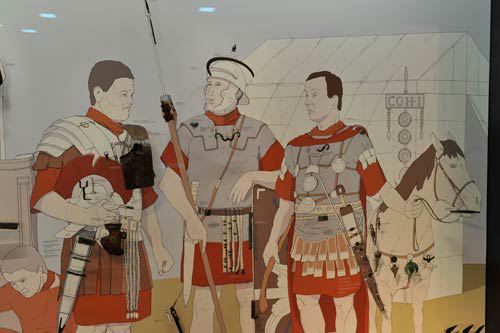
centurion1

Longinus looked at his fellow Centurion in disbelief. Flavius sensing this continued. “My friend, I could not believe that I uttered those words but Jesus peered into my eyes and I knew that he knew all about me. Then he replied that “your servant is healed” and then exclaimed to all of the Jews around us that he “had not seen such faith in all of Israel.” Then, he put his hand on my shoulder, blessed me with some Hebrew blessing and walked away with his friends. When I returned to my quarters, my Pais, the young man over at the bar was well.”

Longinus saw the deep emotion that Flavius was expressing and raised his mug. “A toast to this Jesus!, whatever and whoever he he is.”

“Here here” replied those at table as Flavius looked on and several laughed. He had not expected such a reaction and said softly.

“My friends I don’t think you understand.” He paused a second and looked Longinus in the eyes. “I do hope that whatever happens in the next few days that no harm will come to this man. I would hate that my spear could bring harm to him.”

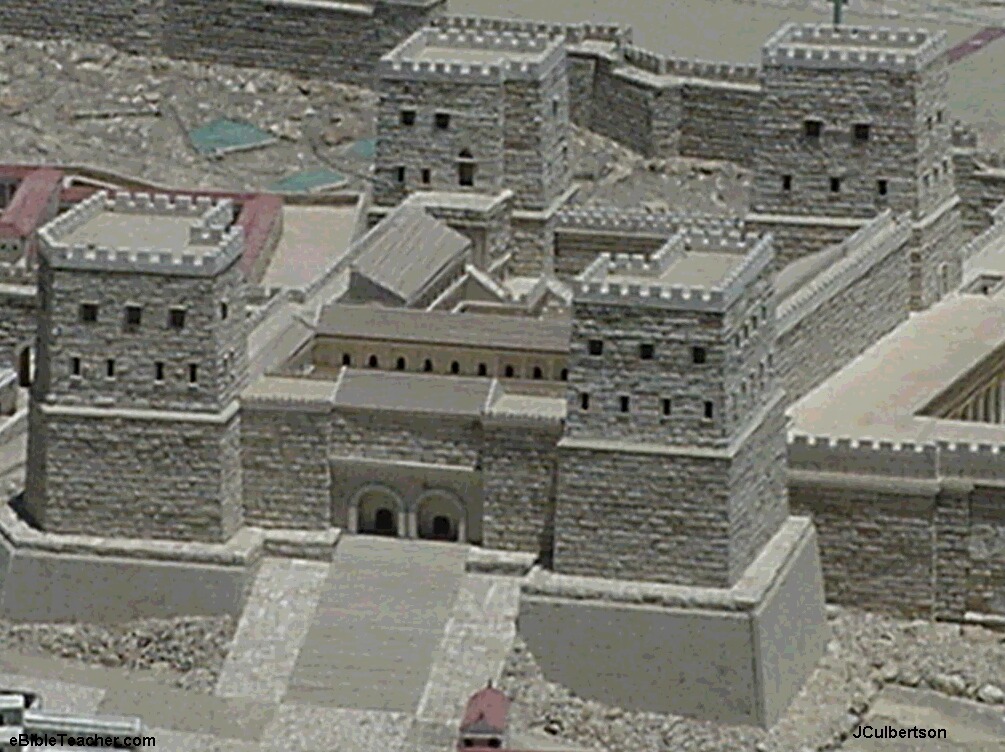
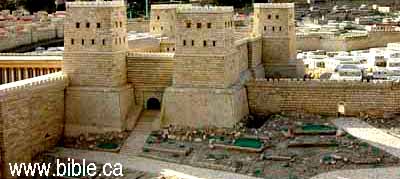
citadel

Longinus responded. “I hope that nothing happens to cause any of us any problems. The city is boiling with emotion and unlike your friend Jesus, most of them hate us and would rather see us dead, and some of their leaders from what I understand wouldn’t mind seeing him dead either.” Longinus paused and emptied his mug, drinking the ale to the last and then continued “My friend, I appreciate what you have to say, but we have to do our duty for the Empire regardless of our personal feelings. We are outnumbered here and this Jesus, as much as we may find him fascinating is the source of much of the current discord.” He looked at Flavius. “You do understand this?”

Flavius looked down at his drink and looked back up at Longinus and then at the officers around the table.

“I do understand my duty my friend, but you have to know what he did for me.”

“We do understand my friend” replied Longinus, “but our honor is loyalty to Caesar, not any other man.”

“I know Longinus, I do know, more than you think, but what if he is more than just a man?”

Longinus and the other officers sat silently pondering Flavius’s words. The silence was deafening and slowly the junior officers individually asked to be excused, begging pressing duties to attend to leaving Flavius and Longinus at the table. The bartender brought each man another ale and the two friends continued to drink in silence.

Note: The Greek word Pais is the word used in many Greek texts to to describe a homosexual relationship. The use by Matthew in his account of the healing of the servant of the Centurion used the word Pais to describe the servant, not the typical Doulos which is used for slave or bond servant as is most common throughout the New Testament. In fact this is the only use of the word Pais in the New Testament. Many Biblical scholars and linguists, though not completely certain do entertain that possibility that the Centurion that I call “Flavius” and his servant were a Gay couple. If so that would add an interesting twist of even more inclusiveness on the part of Jesus to the Gospel narratives.

Peace

Padre Steve+

Leave a comment

Filed under faith, History, Religion

Jesus and the Top 40

Jesus_is_Just_Alright

“And the three men I admire most, The Father, Son and the Holy Ghost, They caught the last train for the coast The day the music died” Don McLean American Pie 

Back in the 1960s to the early 1980s God was not absent from the Top 40. In fact back then it seemed that even non-believers were okay with Jesus. However by the late 1980s and early 1990s much of that good feeling had died away. Few artists would take up songs with spiritual or religious themes, especially those of Western Christianity after that, unless they were artists who cloistered themselves in the self licking ice cream cone and ghetto of the Contemporary Christian Music industry. That is sad because many of these artists are quite talented but through the separatist tendencies of many churches and “Christian” publishers these artists seldom ever break out. Some like Amy Grant have, but she is a rare exception and she has been rejected by many in the church who in her early years were devotees.

I guess that some of the reasons are that many artists had little religious background and for many of those who did their religious experience was negative. This is an indictment of the church if you ask me, both mainline churches and Evangelical churches. Part I am sure was that many churches, be they “liberal” mainline churches or “conservative” or “fundamental” churches lost any real sense of a God that transcended severely political, ideological or doctrinal beliefs that regular people could relate to. As Pope Francis noted about “ideological Christians:

“And when a Christian becomes a disciple of the ideology, he has lost the faith: he is no longer a disciple of Jesus, he is a disciple of this attitude of thought… For this reason Jesus said to them: ‘You have taken away the key of knowledge.’ The knowledge of Jesus is transformed into an ideological and also moralistic knowledge, because these close the door with many requirements.”

jesus-christ-superstar-1974-film-soundtrack

But back in the 1960s to early 1980s quite a few artists included references to God and Jesus in their music. In fact even if they were not believers themselves they were at least aware of the ideas, concepts and traditions of faith and included them in often unique ways in their “secular” music.

31Z399212AL

Here are some of those songs.

Doobie Brothers: Jesus is Just Alright http://www.youtube.com/watch?v=SwbGjzF3mB0

Kris Kristofferson: Why Me Lord http://www.youtube.com/watch?v=mtQOY-0sViQ

Norman Greenbaum: Spirit in the Sky http://www.youtube.com/watch?v=-cXrEPNvRO8

Ray Stevens: Everything is Beautiful http://www.youtube.com/watch?v=mlwfGh-SVXw

Petula Clark: I Don’t Know How to Love Him http://www.youtube.com/watch?v=aiBmvy0nR8g

ZZ Top: Jesus Just Left Chicago https://www.youtube.com/watch?v=pN69GC2amTg&feature=player_embedded

Jesus Christ Superstar: http://www.youtube.com/watch?v=BGYi1qJkb0M

Don McLean: American Pie http://www.youtube.com/watch?v=Y0Y_XRiJsCI

Simon and Garfunkel: Bridge over Troubled Water http://www.youtube.com/watch?v=C-PNun-Pfb4 and Sound of Silence http://www.youtube.com/watch?v=dTCNwgzM2rQ

David Bowie: Word on a Wing http://www.youtube.com/watch?v=q-ojMnEEmU4

Sister Janet Meade: The Lord’s Prayer http://www.youtube.com/watch?v=Bd4iJkNCaZ8

Godspell: Day By Day http://www.youtube.com/watch?v=P3PjfBQjJT8

Cat Stevens: Morning has Broken http://www.youtube.com/watch?v=1TWd3skb-Rw

Ocean: Put Your Hand in the Hand: https://www.youtube.com/watch?v=JI1DiddWCKs&feature=player_embedded

Paul Stookey: The Wedding Song (There is Love) http://www.youtube.com/watch?v=A1v84WKC6Pg

Bob Dylan: Gotta Serve Somebody http://www.youtube.com/watch?v=4cJhIu8PUFI

Some of these songs are true hymns or Gospel songs, others based at least loosely on the life of Jesus or scripture. Others are the artists interpretation of faith or of something that was a part of their experience of God and faith. This doesn’t mean that the theology in all of these songs was good, but it does show that faith regardless of its lack of perfection can still be an important part of life in the public square.

don-mclean-2

My hope is that new artists whether they are believers or not will rediscover the more transcendent and eternal dimensions of life and faith. I hope that they will be able to separate the knowledge of Jesus from the more ideological and moralistic aspects of faith and re-imagine the transcendent parts of life which have over the last 30 years or so for the most part disappeared from popular music.

Why me Lord, what have I ever done, To deserve even one, Of the pleasures I’ve known

Tell me Lord, what did I ever do, That was worth loving you, Or the kindness you’ve shown… Kris Kristofferson “Why” 

Enjoy and hopefully be inspired.

Peace

Padre Steve+

Leave a comment

Filed under faith, music, Religion

Would You Crucify Him? The Hard Question Christians Need to Ask Themselves Today

IMG_0643-726257

Would you crucify Him
Would you crucify Him…, my religious friend?
Would you crucify Him…, talking ’bout the sweet Lord Jesus
If He’d walk right here among you once again?

Well it’s another Jousting at Windmills Day at Padre Steve’s World and today we go back in history to a time the called the 70s.

Back in the late 1970s John Michael Talbot, a former rocker turned early contemporary Christian music artist became a Catholic and a lay Franciscan. Around that time he participated in a recording with a number of other artists from that early part of the CCM era, Second Chapter of Acts, Keith Greene, Barry McGuire and his brother Terry to perform a musical about the book of Acts called Firewind. In it John Michael wrote and performed a song that has haunted me ever since. It is a song that forces me to look at my life and the way that I treat others in the light of the demands of the Gospel. It is called Would You Crucify Him?

It really is one of the most haunting, and to use Evangelical Speak “convicting” songs I have ever heard. Unfortunately I think that the message of the song is often unheard or ignored by most Christians. I think this is the case since the time of Constantine when the Church gained the political backing of the State. Since then in almost every clime and place that the Church has enjoyed that privileged status it is almost always used in ways that would so grieve Jesus.

One cannot read the Gospels nor many of the Old Testament Prophets and think anything else. The harshest condemnations found in Jesus’ message almost always were directed at the religious establishment which used its power for its own gain. It was they who quite often despised the those that Jesus showed the greatest compassion and love: the alien, the woman, the leper, the tax collector, the criminal, the hated Roman occupiers of Palestine and others on the margins of society who were looked upon with scorn by the religious people of his day.

The sad thing is scorn and distain for the people that Jesus reached out to the most that is so often the case today among the leaders of what has to be called the political Religious Right. Unfortunately that attitude is so widespread among those people’s disciples that hatred in the name of Jesus is the new normal. The attitude is one of entitlement and privilege that frankly is scary. Rather than reach out in love and care to those different and than them they viciously attack them supposedly to “obey God and follow the Bible.” It is sad to say that quite often that we are no different than the Pharisees of Jesus’ day.

I have felt the sharpness of those attacks. Though I am a Christian I have been called a Nazi, a Communist, a Socialist an apostate and even most recently “Hitler’s Love Child” by a Twitter Troll and worse. The invective that I have been exposed to after my return from Iraq suffering from PTSD and questioning faith and struggling to believe in God again even while trying to minister to people facing death in ICUs and ERs really changed me. When faith returned it was different and I am glad for that and now for that matter really don’t give a damn what “Conservative Christians” think of me.

Unfortunately those that call me these things are all self identified Conservative Christians, mostly Evangelicals but sometimes Catholics and Mainline Christians who also identify themselves as Patriots who believe in the Constitution, whatever that means. The fact that I have sworn an oath to defend that Constitution and their rights under it and have done so for 32 years in both the Army and Navy in peace and war is lost on them. Instead I am the Nazi because I dare criticize their practice of the faith and stand up for those that they hate.

As a historian who has spent much of my academic life studying Weimar and the Nazi regime I have to say that those that most resemble the Nazis today are Conservative Christians, the whole God and Country crowd. The same understanding of faith that allowed “Conservative Bible Believing” German Christians to wholeheartedly support the Hitler regime and for those Evangelicals that want to claim the Martyr Dietrich Bonhoeffer as a “Conservative” they had better think again. If they had actually read his books, writings and sermons they would find that he and most of the other leaders of the Confessing Church weren’t conservative at all, not in the sense that modern “Conservative Christians” understand the word.

Thus I have become a bit sensitive and when I see people who wrap themselves in the flag and claim the banner of the Cross mistreat others bothers me. There is a quote often misattributed to Sinclair Lewis that says “When Fascism comes to America it will be wrapped in the flag and carrying a cross.” The quote actually appears to be a condensation of his thoughts and writings but taken in the context of when it appeared in the 1930s is quite correct. Hitler, Mussolini, Franco all co-opted the conservative Christians of their nations by appealing to their fears of atheistic Communism and Socialism as well as minorities, Jews, homosexuals and any other group.

The fact that many justify their assaults on others not like them by claiming that “the other side is just as bad or just as hateful” miss the whole point of Jesus who was quite empathetic about telling his disciples to “turn the other cheek” and “repay evil with good.” The really sad thing is that there will be probably at least one person at some time that visits this site and comments on this article who either tells me that I have misunderstood Jesus or cites another Bible verse to justify hating and mistreating others.

I am appalled at the way self identified Christians rant at people they disagree with, disapprove of or simply hate. I am appalled when I see them make common cause with non-Christian ideologues like Glenn Beck, Rush Limbaugh, Mark Levin and others who spew venom at liberals, gays, women, blacks, Moslems, immigrants and others on a daily basis. Because of this I have taken up the causes a support the liberties of these people because they are the people that Jesus would have done the same for in his day.

But back to the song. Talbot and others like him came out of the 1960s and large parts of the Christian church condemned the whole youth revolution of the time. The things said by preachers of the hippies and the war protesters and those that were in the rock and roll music scene were and are shameful. So when a few churches began welcoming the “Jesus Freaks” who came out of it it was pretty cool.

The Talbots, Barry McGuire and others were among the first and they were quite revolutionary for their day. Barry McGuire’s song Don’t Blame God for the Sins of America is terrifying, especially when one sees just the incestuous relationship between much of the Christian Right, big business and the industries that promote war and violence.

Of course this was before established “Christian” record companies sensed the chance to make a fast buck by commercializing “Contemporary Christian Music” bought up the original small market Christian labels such as Sparrow, Birdwing and Maranatha! Music and turned it into a pile of very profitable slick rubbish. The fact is that there is not an Evangelical Christian entertainment conglomerate that would ever allow an artist to record a song like Don’t Blame God or Would You Crucify Him? today.

The first time I heard Would You Crucify Him? in 1979 on Firewind I cried. It struck my heart and I realized how easy it would be for me to be just like the Pharisees, Sadducees or the Imperial Church that used religion to keep power and crush the weak or those that questioned them.

Take the time to let the lyrics of the song set in. If you claim to be any kind of Christian please don’t blow them off.

3334856

http://www.youtube.com/watch?v=s5pAyKWbtOU

Sometimes, in the cool of the evenin’
Truth comes like a Lover in the wind
Sometimes, when my thoughts have gone misleadin’
She’ll ask that same old question once again…

Chorus:
Would you crucify Him
Would you crucify Him…, my old friend?
Would you crucify Him…, talking ’bout the sweet Lord Jesus
If He’d walk right here among you once again?

She’s askin’, How many times have you looked down to the harlot
Lookin’ through her tears, pretendin’ you don’t know?
For once you were just like her, how can you be now so self righteous
When in the name of the Lord you throw the first stone

So now I turn to you through your years of your robes and stained-glass windows
Do you vainly echo your prayers “to please the Lord?”
Profess the Marriage with your tongue, but your mind dreams like the harlot
But if the Judge looks to your thoughts can’t you guess your reward?

Would you crucify Him
Would you crucify Him…, my religious friend?
Would you crucify Him…, talking ’bout the sweet Lord Jesus
If He’d walk right here among you once again?

Yet how many times have you quoted from your Bible
To justify your eye for your eye and your tooth for your tooth?
You say that He didn’t mean what He was plainly sayin’
But like the Pharisee, my friend, you’re an educated fool!

Copyright John Michael Talbot 1979 from the Album Firewind

Peace

Padre Steve+

4 Comments

Filed under christian life, civil rights, faith, Political Commentary, Religion

New Troubles: A Missing Body an Empty Tomb and Sleeping Soldiers The Story of Longinus the Centurion

PictJesusResBelll

This is the third chapter of the redone second part of a trilogy that I have been writing about the Roman Centurion known as Longinus who was at the cross when Jesus was crucified. I have tried to weave other characters from the Gospel narratives, including the Centurion whose “beloved servant” was healed by Jesus an account mentioned in both Matthew and Luke, where the Greek word for servant “pais” is only found in these accounts and is different from the word commonly used in the New Testament “doulos.” The difference leads to some interesting and potentially powerful understandings about the people that Jesus interacted during his earthly ministry.

The links the to preceding chapters are shown below. I will be doing a final section to the trilogy dealing with what I imagine happened later to the men in the narrative. The reason I am doing this is because I believe that many Christians cannot imagine what it must have felt like to be the Roman occupiers of Judea in a time where they were hated and deep divisions, religious, cultural and political complicated the lives of Roman officers like the Centurion known as Longinus.”

Part One: A Centurion in Jerusalem 

A Centurion’s Sunday in Jerusalem: The Story of Longinus

The Story of Longinus the Centurion: A Meeting of Friends

The Story of Longinus the Centurion: A Visit to Death Row

Duplicity in Jerusalem: An Official Visit and 30 Pieces of Silver

Part Two: An Unenviable Mission

The Long Good Friday of Longinus the Centurion

The Morning After a Most Unsettling Crucifixion: The Story of Longinus the Centurion

I do hope that you enjoy the series and that it and the Gospel narratives challenge you whether you are a Christian or not. I know from my time in Iraq serving with our advisors to the Iraqi forces that what the Roman officers dealt with was more difficult than any of us could imagine, unless you have been a soldier or officer of an occupying power.

Peace and Happy Easter…He is Risen!

Padre Steve+

The pounding on his door awakened Longinus before he expected on this day after the Jewish Passover. He was hoping perhaps beyond hope that the worst was over and that in a few days he could take his soldiers back to the confines of Caesarea and away from the troubled city of Jerusalem. He was tired of this duty and longed for service with a real Legion with real Roman soldiers. He wiped the sleep from his eyes and went to the door of his quarters in Fortress Antonia. He opened the door to find his Optimo, or second in command Decius, with a look of near panic on his face.

He asked the young officer to come into his quarters and take a seat at his table. They like the other officers had seen events that they could barely explain. some of those events had troubled Longinus in a manner in which he was not accustomed.

Longinus took a wineskin and poured the contents into two cups. He asked Decius what was so urgent and frightening that he had to be at his quarters well before the duty day began. The young man took off his helmet to reveal a crop of blondish brown hair common to the Tyrol in the northern part of Italy and told an almost unbelievable story. He explained that there was trouble at the tomb of the itinerant preacher named Jesus.

The two guards from their unit who had relieved the previous watch at the tomb had evidently fallen asleep and there had been a break in. They claimed that they had been overcome when some kind of angelic being who had descended in front of them and some of the women who had been at the execution site previously. The story seemed preposterous but Longinus could not believe that they had fallen asleep on duty either as such could be punished by a death sentence. Adding to the confusion was a report that two of the preacher’s “disciples” had reportedly entered the tomb and claimed that the body was gone as had some of the women that had been there at the crucifixion. It was unbelievable but yet in light of the strangeness of the man and his execution. Longinus had Decius bring the two soldiers to him along with the Sergeant of the Guard to explain what had happened.

RubensResurrection

The two soldiers, one a Samaritan and the other a Greek had good reputations in the unit. Neither had given him cause for concern and the terrified expression on their faces as they explained what happened gave Longinus reason to believe them. Yes it was possible that they were lying but Longinus believed their story. He threatened them and promised a light punishment if they only told the truth, but despite this they stuck with this outrageous story.

Longinus was not much of a believer in miracles angels or any sort of magic hocus pocus purveyed by seers, magicians or fortune tellers. that being the case here he was believing this outlandish story because to disbelieve would mean that there was a serious breakdown of discipline by two outstanding soldiers. He had some soldiers that he wouldn’t believe for an Athenian minute if they told him such a tale but he believed these men. The terror on their face as they told the story led Longinus to believe that they had to be telling the truth as improbable as it was.

Longinus again thought of his words as the darkness enfolded the city and the earth quaked preacher hung dying on the cross on that evil hill two day before.

Longinus went to Pilate’s headquarters when he and the other Centurions, including his friend Flavius were participants in a meeting with the High Priest and his representatives and two of Herod’s people.

The meeting reminded him of a meeting of criminals. The High Priest and his representatives were livid and Herod’s henchmen voiced their displeasure regarding the lapse of the Roman soldiers that allowed this to happen. Longinus spoke for his men and said that as improbable as it was that he believed their story. That only made the non-Romans angrier; he almost thought that they were engaging Pilate in some histrionic episode in order to force Pilate to do their bidding. They insisted that Longinus’ soldiers had to have fallen asleep and or that they had conspired with the preacher’s followers to remove the body from the tomb. This angered Longinus to the point that he interrupted their ranting to defend his men’s honor. Pilate finally ordered Longinus and the High Priest to be silent. He asked the non-Romans to step outside while he conferred with Longinus and the other Centurions.

Pilate explained his dilemma. He was afraid that if he sent the High Priest away by supporting his soldiers that there would be a revolt in the streets. He had seen the tumult on the streets by the supporters of the High Priest when he tried to release the “King of the Jews” and felt that this would be worse for security. He advised the Centurions that while he had no reason to doubt them or their men that he had to placate the High Priest and Herod in order to avoid chaos, chaos that could lose him his job if he wasn’t careful. Likewise he did not feel that he had the manpower in the city to handle a full-fledged revolt and that he would have to call for reinforcements from the Legions based in Syria, something that he was loathe to do as this would get back to the Emperor.

Longinus thought back to the day of the execution. Pilate had agreed to place a guard at the tomb at the urging of the High Council. Longinus had argued against placing any soldiers at the tomb as he felt that since the “King of the Jews” them man that he had called the “son of God” was dead that Rome’s obligation was over. The whole thing reeked of politics.

Longinus was overruled by Pilate who explained that Roman soldiers needed to guard the tomb because the High Priest who Longinus detested as much as Pilate insisted that Jesus’ followers would attempt to steal the body and claim that he had been raised from the dead to lead a revolt against the Council and eventually Rome itself.

Added to the Judean witches’ cauldron was the presence of Herod Antipas, the corpulent and corrupt “King” of Judea. If Longinus detested Pilate and Caiaphas he hated Herod and all that he stood for, it made him wonder why Roman lives and treasure were spent to solve the problems of this God-forsaken land which he believed would still be trouble two millennia from now if the world lasted that long. Longinus believed that as long as Rome allowed the High Council and Herod to rule the region by proxy that the troubles would never end. He believed that it was only a matter of time before these people, led by the Zealots would revolt as they had against the Seleucids nearly 200 years before. He knew if that happened that Rome would crush the revolt and not leave as much as a house standing. He hated this occupation and all that it stood for, especially when he saw a good man, an innocent man killed for no good reason other than the politics of it all. It sickened him.

When he was done explaining his decision to Longinus and the other Centurions Pilate now called the quite irate non-Romans back into the proceedings. He told the High Priest and Herod’s men that he would disciple the soldiers involved and he would assist them in finding just what parties removed the body from the tomb. In the mean time he would suppress any stories coming from the soldiers about this supposed “resurrection.”

The High Priest and Herod’s men agreed that this would suffice and thanked Pilate for his time and effort. Longinus and the other Centurions quietly seethed as this took place. When the non-Roman parties had left Pilate ensured the officers that no action would be taken against the men and that he would not actively assist the Jews in trying to find the perpetrators of the event. He then let the officer know that they would remain in Jerusalem for another week to allow the multitude of pilgrims to leave the city and then they would return to Caesarea. Longinus thought and for a brief moment admired Pilate’s duplicity. Pilate the consummate politician had again found a way to defuse the situation. As much as he despised the deal it was better than trying to deal with a full fledged rebellion with so few troops available in Jerusalem.

Longinus left with the others and met Decius and Flavius and stepped into the court of the fortress. He was very unhappy with the deal that Pilate made with the High Priest and Herod. He felt that he had dishonored his soldiers and the unit for the sake of political expediency. He felt ashamed of the Empire for what Pilate had done in cooperating with these people from beginning to end during this affair. He would not forget.

Empty-Tomb-Picture-07

That night he felt compelled to walk to the empty tomb with Flavius. In the darkness they looked into the sepulcher aided by a lantern. They saw the grave cloths where they remained; the large stone was rolled away and the seal that had been placed on it was broken. They looked for any evidence to suggest that the soldiers had fallen asleep but could not find any. Nor did either see how anyone could have stolen the body and gotten very far without being seen by anyone. Convinced by what they saw they set down in the tomb.

They sat silently and wondered. Finally Longinus asked Flavius. “You believe in this Jewish God, what do you think?”

Flavius sat for a moment staring silently ahead at the stone wall of the tomb. Finally he spoke “My friend, I believed something was different about the Galilean when he healed my servant, even though I’m sure that he knew that my servant was more than a servant to me.”

Longinus thought for a moment. “Friday morning I would have told you that the man was a simple but probably misunderstood Jew. Tonight I do not know.” He paused. “Perhaps he is the son of God, or whatever I said on that hill.”

“I believe that he is some kind of God my friend, one who may change all of our lives.” Replied Flavius.

“My friend, I really do not know what to believe anymore. Let’s get out of here and get back to Antonia, at least we can drink there.”

Longinus looked at ground where the body had been placed. In the dim light he noticed what appeared to be some thorns. He reached down and picked up the crown of thorns that had been on the Galilean’s head.

Flavius looked at him and said “the crown, how fitting that it was left here.”

“Somehow fitting. Maybe we should take it? Who knows maybe it will be worth something someday?” Responded Longinus.

“Maybe so my friend, maybe so. But maybe you should keep it to remind you of him.”

“No you take it. I have the Galilean’s blood on my spear. That is enough a reminder for me.” Longinus handed the crown of thorns to Flavius and they walked into the night out of the tomb, their path lit by their lamp.

They walked back to the fortress when both men went to the tavern in Officer’s Mess and had the barkeep pour them each an ale. He drank quite a few before the evening was out, Flavius leaving before him. he remained alone for hours and then went to his quarters where he lay down exhausted and perplexed by the events of the past few days.

1 Comment

Filed under christian life, faith, History, Political Commentary, Religion

The Story of Longinus the Centurion: A Visit to Death Row

MLPPT_CenturionCross_1

This is the third chapter of a prequel to my series on Longinus the Centurion, who according to tradition was the Centurion in charge of the execution of Jesus. The Previous chapters as well as the original series can be found at the links supplied below. 

A Centurion’s Sunday in Jerusalem: The Story of Longinus

The Story of Longinus the Centurion: A Meeting of Friends

Good Friday Special: The Long Good Friday of Longinus the Centurion

Holy Saturday Special: A Centurion Reflects on a Days Work

Easter Special: Trouble in River City the Centurion’s Easter: An Empty Tomb, Duplicitous Politicians and a Lingering Question

The next morning a messenger knocked on the door to Longinus’s quarters in Fortress Antonia. He told Longinus that Pilate wanted to speak to him and to report as soon as possible to Pilate’s headquarters in the fortress.

bible-archeology-jerusalem-temple-mount-antonia-fortress

Longinus, who had been discussing the day with Decius in order to ensure his soldiers were ready for any contingency but also conduct some training was bothered by the request. He had discussed the situation in the city and about Jesus in particular the previous afternoon with Pilate and figured that unless there was some sort of incident that he would meet again later in the day to discuss the latest events.

Instead Longinus, was being ordered to report to Pilate again and it was interfering with his conduct of military business. Longinus hated dealing with politicians and diplomats and though he respected Pilate who he felt to be as decent of man as any politically appointed diplomat as any Pilate was still not a military man. He did not always understand military matters.

Longinus looked at the messenger and asked: “Tell me. what would the Governor need of me at this hour?”

“Centurion,” the messenger replied. I was only told to have you report as soon as possible.”

Bothered by the lack of detail Longinus told the messenger to go and tell Pilate that he would be there shortly. He then looked at Decius, and shook his head. “My friend, I am afraid that I will be delayed. Take care to conduct today’s training and be ready in case any trouble arises.” With that he put on his armored breastplate and cape and left the room.

When he arrived at Pilate’s headquarters the Governor greeted him cheerfully. “Centurion, it is good to see you.”

“Likewise sir…” Pilate stopped him before he could continue.

“I don’t suppose that you know why I called you here do you?” Pilate asked, irritating Longinus who feeling even more irritated by Pilate’s levity kept his feelings to his self and simple replied: “No my Lord, your messenger only told me to report here, he did not give me a reason.”

Pilate smiled. “It was with good reason, had he done so I am sure that you, like any other Centurion in the province would have found some “pressing military duty,” isn’t that what you call it? to avoid coming here.”  He paused for just a moment and before Longinus could respond continued: “Of course I know the answer, you need not say anything and I suppose if I was in your position that I would feel the same way.”

Longinus knew this was the case and had no answer to Pilate who continued.

“Centurion, this week will unfortunately be a week where we must conduct some rather unpleasant business, less than soldierly business but necessary.” Pilate paused again and motioned for Longinus to take a seat at his desk and Longinus did so, looking about the room and noticing Pilate’s civilian staff and several soldiers assigned as his personal bodyguard.

Longinus, decided to hasten the length of the visit and asked: “My Lord, may I ask why I am here? After all I do have pressing military business to attend to.”

Pilate immediately caught the sarcasm in Longinus’s words and smiled. “Centurion, you amuse me, because I know how you military types think. You see I may not have served with a Legion, but I have served with enough officers to know that you would rather be fighting the enemies of the Empire than doing police work, but we are in Palestine, not the Teutonic Forrest.”

Longinus stared back at Pilate and said nothing.

“Centurion, this week we will dispense justice to three Jewish prisoners. Men of your unit will conduct the crucifixions this Friday.”

“Yes my Lord.” Longinus’s muted response spoke more than any protest could.

Pilate continued. “Centurion, I want you to see the prisoners and in doing so know in your heart why this must be done. These men are violent criminals, and one of them is the infamous Bar-Abbas.”  Longinus looked at Pilate, and asked “the insurgent who has attacked and killed our soldiers and officials?”

Pilate nodded and replied “so you know why this is important, in an environment as volatile as Judea we cannot let a man like this remain unpunished, it would only encourage more men to rise up like him.” Pilate smiled and continued. “We cannot forget how the Jews rose up and overthrew the Seleucid rulers underestimated these Jews when that Judas Maccabee fellow led that bloody revolt.”

Longinus replied “No we could not let that happen on our watch.”

Pilate nodded in agreement and continued. “So you understand Centurion, it is an unpleasant duty, but mind you history will thank us for it, as will any God that you believe in.” Pilate finished by telling Longinus to visit the prison for himself and begin to choose his soldiers for the crucifixion detail with care.

Longinus rose and saluted Pilate, turned and left the room without another word. He was not happy but proceeded to the dungeon where he met the Jailer of the Fortress, a rather obese and dirty looking man named Alexander, a Roman citizen of Greek origin hailing from Antioch.

When Longinus reached the dungeon he immediately noticed the stench and again realized why he was a Legionnaire and not a policeman. The prison was dark, and by Palestinian standards dank and moist smelling of human excrement and body odor.

“Well Centurion, welcome to my kingdom” said Alexander, a smile pressing through his grimy face.

“Thank you Alexander, where are the condemned?” asked Longinus icily.

They are in the cells to your left. Bar-Abbas is in the first and the other two, neither as notorious as he are in the next cell.”

“What are their names?”

“Dismas and Gestas, they are violent criminals of their own accord, but they were only out for personal gain. I think that one feels some remorse, but the other seems to be a rather hardened and unrepentant man.” The words came effortlessly to the unkempt jailer

“Thank you warden, I will see them now” said Longinus as he turned to look over these men as quickly as possible so he could return to his unit.

He walked past Bar-Abbas without making eye contact and went to the second cell. The two prisoners could not appear more different. One, seemed to accept his fate while the other looked at Longinus without remorse. After about a minute Longinus asked their names. The remorseful looking one answered, “I am Dismas, I stand condemned for robbery and murder. I accept my fate Centurion.” The other prisoner glared at his mate and with hatred in his voice and eyes said to Longinus “I am Gestas, and I am not sorry for anything that I did you Roman swine.”

Longinus stared back saying nothing, his continued lack of respect for such people seemed vindicated. He turned to the other cell and looked at the burley prisoner in it. “So you are Bar-Abbas?”

barabbas

The prisoner snarled “So what is it to you Roman?”

Longinus began to feel better about his mission. “Well, Bar-Abbas, it seems that you have killed one too many of my comrades and it is I who will get to exact justice on you.”

Bar-Abbas smiled an evil smile and said, “The Roman that can kill me has not been born.” He laughed at Longinus who stood silently for a moment. Then, quietly Longinus replied, “We’ll see about that.” With that Longinus motioned to Alexander the Jailer to let him out. The jailer unlocked the door and Longinus walked up the steps and into the courtyard of the fortress where his unit was practicing battle drills.

Calling Decius to his side, he said. “We have a second mission this week, the mission of executing some dangerous prisoners, including Bar-Abbas the insurgent.”

“Bar-Abbas sir?” replied the junior officer.

“The same, but we have to wait until Friday. It seems that our governor wants to make a show if his generosity to the people here. If it was up to me I would have killed them in the dungeon and been done with it, we could have said that they died of the plague.” Longinus looked at his assistant and then continued “Of course that is not how we Romans do things, they will be executed in public to show these Jews that they cannot engage in such conduct, but it will only build more resentment.”

“Sir, are you saying that our methods are wrong?” asked Decius.

“Young man, look around you. You know the history of these people. They will continue to rise up until they regain their independence or we kill them all.” He paused. “That is their history and they can do no other. After all, if they were occupying our homes, establishing their God in cities and forcing our people to serve them how would we respond?”

Decius nodded his understanding and looked at the Legionnaires practicing close combat tactics that might be necessary in a pitched battle if the city was to erupt in revolt.

Longinus continued “Decius, choose a squad of men as the execution team and another as the escort. The rest of the Century is to be trained to maintain a secure perimeter and ensure that no Jews attempt to interfere with our mission.

“Sir, where is the execution to take place?” asked Decius.

images-36

Longinus motioned to a hill visible just outside the city walls. “Over there, that barren hill. The locals call it Golgotha.” He paused. “Fitting name, the place of the Skull. I perfect place to kill people that don’t want us here wouldn’t you say?” He chuckled and continued, “don’t answer, it is a rhetorical question.”

His assistant nodded and Longinus gave the order “Carry on with training, let me know which men you think should be on the execution team later tonight.”

Longinus turned and walked away wondering what else might happen, after all, the best laid plans of men sometimes don’t work out. He silently cursed under his breath the day that he was assigned to this place, which despite its history and splendor seemed forsaken by the Gods

4 Comments

Filed under faith, History, Military, Religion