Tag Archives: lgbt rights

My Journey to Support Gay Rights

Friends of Padre Steve’s World
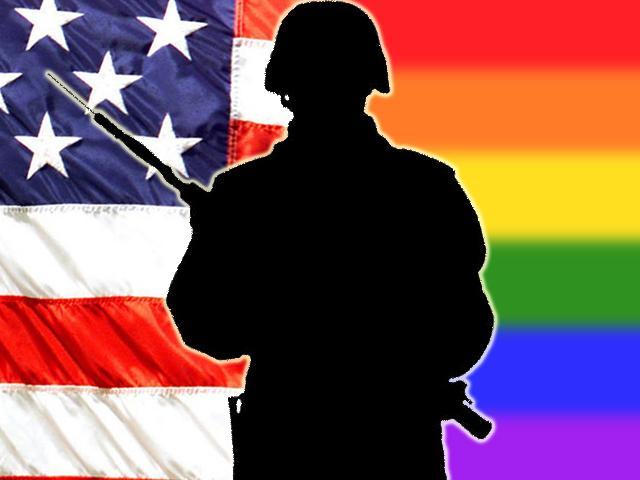
Gays-military-flag-rainbow-lgbt-don-t-ask-don-t-tell-19837645_67849_ver1.0_640_480

In light of what I have been writing about the Obergfell v. Hodges and comparing that case to the historic examples of the 1856 Dred Scott decision and the 1896 Plessy v. Ferguson ruling I think it is important for my readers to know I got to the place where I have become an advocate for the rights of my friends in the LGBTQ community.

Frankly my journey has been a long strange trip. Most of my life I would have considered myself a conservative Christian and a career military officer, most of that as Pa chaplain. Generally people with similar backgrounds to me do not end up as advocates for Gays and Lesbians. But throughout my life and career I have had problems with the way other Christians and fellow military members treated Gays and Lesbians. Even in the days that I considered homosexual behavior to be sinful, I had a hard time condemning, ridiculing or supporting those who sought to harm homosexuals in any way, including fellow clergy, members of my former church or fellow officers or chaplains.

Now I know that there will vehemently disagree on what I believe and stand for, believe me I have been called everything but a white man by some people, including some that I used to count as friends. Likewise I have been threatened by others. But as I see it I have to stand up for what I believe and defend those whose civil rights are constantly under attack by people who not only condemn them in this world, but to everlasting damnation as well.

But this my friends is my long strange trip. It is what I believe with all my heart, and why I pray that the Supreme Court will legalize Gay marriage throughout this land. though I am not Gay, this matters to me. I have too many Gay and Lesbian friends who have endured hellish persecution for people who call themselves Christians and claim to be defending Christian values when they forget that the most important part of the Christian life is to love, love even your enemies, both real and imagined. But I digress…here is my journey…

I have been in the military coming up on 34 years between the Army and the Navy. That is a long time. When I enlisted and through the first two thirds of my career I can safely say that I fell rather strongly on the conservative-Christian side of the social issues debates. Over the years, especially the last seven since I returned a changed many from my time in Iraq, I have evolved significantly on most of these issues where although I while consider myself to be rather moderate I now fall decidedly on the liberal side of most social issues.

A lot of this has to do with the attitudes that I saw in churches that I was associated. Many people in my former denominations endorsed policies of the Christian Dominionist or Reconstruction movements, that basically upended First and Fourteenth Amendment protections and if enacted would basically turn the country into a theocracy. I have written about those things time and time again so I won’t elaborate on them now.

It was not only the policies, it was the attitude towards the LGBT community that really bothered me. For some reason it seemed that to many of my friends and colleagues that homosexuality was the only unforgivable sin, and not only that that homosexuals were somehow less than human and not entitled to the same rights as any other American citizen. Not only that they were blamed for every economic, social, foreign policy or natural disaster. Hurricane, blame the gays. Stock market crash, blame the gays, the 9-11 attacks, God’s judgment on the United States because of the gays. You name it, blame the gays, and that my friends still happens every day.

But my journey to accepting and fighting for Gays and Lesbians began a lot earlier.

When I first enlisted in the Army in 1981 it was not uncommon for gay slurs to be hurled at soldiers as a matter of course, especially at young men who did not appear manly enough or women who wouldn’t put out sexually when it was demanded of the. They were queers, fags, dykes and worse. There is a scene in the movie Full Metal Jacket where R. Lee Ermey, a man who actually was a Marine Corps Drill Instructor berates one of his recruits:

Gunnery Sergeant Hartman: Where the hell are you from anyway, private?

Private Cowboy: Sir, Texas, sir.

Gunnery Sergeant Hartman: Holy dog shit! Texas? Only steers and queers come from Texas, Private Cowboy, and you don’t look much like a steer to me, so that kinda narrows it down. Do you suck dicks?

Private Cowboy: Sir, no, sir!

Gunnery Sergeant Hartman: Are you a peter puffer?

Private Cowboy: Sir, no, sir!

Gunnery Sergeant Hartman: I bet you’re the kind of guy who would fuck a person in the ass and not even have the goddamn common courtesy to give him a reach-around. I’ll be watching you!

The sad thing is that such behavior was still common even in the 1990s and though not nearly so pervasive still happened on occasion in after the 9-11 attacks. But those taunts really bothered me and when I was commissioned as a Medical Service Corps Officer in 1983 I met gays in my officer training, they were closeted but they were targets. When I served as a company commander in 1985-1986 I had a number of gays and lesbians in my unit. As I mentioned before they were among my best and most trustworthy soldiers, always going the extra mile.

Meanwhile the unit had the highest drug positive rate in Europe when I took command and had so many real disciplinary and criminal cases on the docket I was told by the Group Commander to “clean that company up.” But when I got down to It I realized that I was so overwhelmed with the real criminals that I didn’t want to harass or prosecute my best soldiers, including those gays and lesbians. That was a watershed. While other commanders sought out gays in order to prosecute them and throw them out of the military I was protecting and promoting them, not because they were gay, but because they were excellent soldiers.

When I went to my next assignment as a personnel officer at the Academy of Health Sciences discharges of trainees for being gay was common. I know because I had to sign off on every discharge packet before it was sent for approval. Since we had five to seven thousand students at any time, both officers and enlisted I did not know the details of most of the stories nor meet the individuals concerned.

However, in 1987 I was given the responsibility of helping soldiers diagnosed as HIV positive with their career options. I also helped officers from the Army Medical Department draft the Army’s policies for those infected with the AIDS virus. At the time many of the Christians that I went to church with believed the myths and lies being promoted by leading Evangelicals about AIDS and displayed a tremendous amount of distain and even hatred towards gays and others infected or dying of that disease. I was dumbfounded that people who preached the love of God had neither compassion nor empathy for those suffering.

I left active duty to attend seminary at Southwestern Baptist Theological Seminary. There I knew a few closeted homosexuals and lesbians who had deep faith in Jesus, were outstanding students and potentially outstanding pastors or chaplains but who had to remain closeted. After I graduated when I was going through my Clinical Pastoral Education Residency one of the men I graduate with did a one unit internship. During that time he made the agonizing decision to come out as Gay. For him there was much to lose, but his example was inspiring and I still stay in touch with him. I also met a chaplain from the Metropolitan Community Church who had been raised in a Black Pentecostal church. He was an amazing and compassionate minister.

In the hospital setting I worked with a lot of homosexuals, of which many were Christians who suffered in their churches as their pastors and friends railed against homosexuals. When I served as the installation chaplain of an Army base I hired an organist who was gay. He worked for the National Guard as a civilian and was a Log Cabin Republican. He grew up in a very conservative church and though he had deep faith was not welcome in most civilian churches. At the time I was a fairly new  in a very conservative denomination and my bishops held that giving communion to Gays was forbidden, in fact they called it a sin. However, when he presented himself for communion, knowing his faith I took the advice of a conservative Missouri Synod Lutheran chaplain, don’t ask, just trust the grace of God in the Sacrament. That became my model of ministry from then on. I never mentioned it to my bishop. Thankfully he never asked or I would have had to be honest. This encounter brought more homosexuals to the chapel, and the chapel community which was composed mainly of military retirees and National Guard personnel welcomed them.

In civilian churches of my old denominations I knew Gays and Lesbians who struggled and tried to do everything they could to change, but no-matter how hard they tried, how hard they prayed, how many times well meaning friends attempted to cast out their demons in rituals similar to exorcisms they struggled and suffered. Most eventually drifted away because they knew that they would not be accepted.  I have had friends in church whose children came out as gay or lesbian. Some loved and accepted them, others turned them away. Judy and I have always done what we can to support them as we would the children of any friend.

That understanding of God’s grace as well as what I believed were the fundamental Constitutional and human rights of Gays and Lesbians brought me to where I am today.

I know that a lot of conservative Christians have and will condemn me for these beliefs and actions, but for me honesty, integrity, empathy and love have to take precedence over hate, blame and prejudice, even when that prejudice is clothed in the words or faith and righteousness. I just figure that once we begin to use religion to condemn others and bolster our own political power that we are no better than people like Al Qaeda, ISIL or the Taliban. We are no better than the Inquisitors or others who destroyed cities and massacred people, even other Christians because they didn’t believe the right way.

I believe that it is just a small step from hateful thoughts and words to actions that end up in genocide. The “German Christians” of the Nazi era demonstrated that to a fine degree. The authors of the Bethel Confession, including Dietrich Bonhoeffer who protested the German Christian alliance with the Nazis noting:

“every attempt to establish a visible theocracy on earth by the church as a infraction in the order of secular authority. This makes the gospel into a law. The church cannot protect or sustain life on earth. This remains the office of secular authority.

That I believe with all my heart and that is why I will support and fight for the rights of the LGBT community in order to ensure that they have the same rights and privileges of any citizen. Otherwise what does the rule of law mean? What does the Constitution mean? What does that sentence in the Declaration of Independence that:

“We hold these truths to be self-evident, that all men are created equal, that they are endowed by their Creator with certain unalienable Rights, that among these are Life, Liberty and the pursuit of Happiness.–That to secure these rights, Governments are instituted among Men…” 

Abraham Lincoln wrote in 1854 concerning the rights of Blacks, something that is certainly applicable as well to homosexuals: “the standard maxim of free society …constantly spreading and deepening its influence,” ultimately applicable “to peoples of all colors everywhere.” 

That my friends, especially my conservative Christian friends who do not understand why I would speak up for the LGBT community, is why I do it. So in the words of my favorite heretic Martin Luther I state today: “Here I stand, I can do no other. So help me God. Amen.”

Peace

Padre Steve+


9 Comments

Filed under christian life, faith, History, LGBT issues, News and current events, Political Commentary

Dred Scott: A Warning for Today

Friends of Padre Steve’s World

I am a historian, and as such I look to history to understand people and current events. As such I am looking at the upcoming Supreme Court hearing in the case of Obergefell v. Hodges and thinking about it in relation to the Dred Scott Ruling of 1856.

This case deals with Gay marriage and the attempts of mainly Christian Conservatives to roll back the rights of those in the LBGTQ community to marry. Not only does they seek to prevent Gay marriage where it is not permitted but they seek to roll back those rights in states where the majority of voters through their legislators have passed those laws, and negate the traditional understanding of reciprocity between states concerning recognition of marriages performed in other states. As such it is a major case with big ramifications. 

On one hand if the justices rule in favor of those challenging the laws which allow gays to marry it will strike at the very heart of the meaning of the Declaration of Independence’s  central message that “all men are created equal.” Likewise such a ruling will return LBGTQ citizens to a second class status in which though they pay taxes and serve their country in many ways, and contribute to the positive good of all Americans, they will not enjoy the liberties of other citizens and can be denied basic services, or even the right to be at the bedside of a dying spouse. 

Though Gay marriage harms no one its opponents have announced that it will have apocalyptic consequences and will result in a massive persecution of Christians who oppose it. The legal arguments espoused by the opponents of Gay marriage are similar to those who supported the both the protection and expansion of slavery in the 1850s, and those who after emancipation and the Thirteenth Amendment enacted “Black” or “Jim Crow” laws. Sadly, if Gay marriage is upheld by the Court, a number of States are pledging to enact similar laws regarding Gays, and some states are already doing so. 

From more recent Court rulings it appears that the Gay marriage will be upheld, but you never know with the Roberts Court. Several members, Justices Thomas, Alito and Scalia have long histories of opposing and ruling against the rights of gays.  

Today I am looking at the effects of the Dred Scott decision of the Supreme Court. The decision was one of the worst, if not the worst ever enacted by the Supreme Court. The consequences were chilling as it proclaimed that Blacks were a “subordinate and inferior class of beings” who had no rights. It also in combination with the Compromise of 1850 opened territories to slavery and put Blacks in Free States at jeopardy of being re-enslaved.

I ask my readers to imagine what it will be like for Gays if the Supreme Court rules against Gay marriage. I will probably post something tomorrow about the use of the “Black laws” and “Jim Crow” and relate that to the “Gay laws” that are being enacted in many states and locales, laws which serve no purpose than to deprive citizens of basic rights, services and freedoms enjoyed by other citizens. 

This article is an edited part of one of the chapters of my Gettysburg/ Civil War text. I have worked it so that here it is a stand alone article. So please read this and share, it is important and none of us can be complacent.

Peace,

Padre Steve+

the-dred-scott-case-1846-1857-402x618

As the 1850s wore on, the divisions over slavery became deeper and voices of moderation retreated. The trigger for the worsening of the division was the political battle regarding the expansion of slavery; even the status of free blacks in the north who were previously slaves, over whom their owners asserted their ownership. Southerners considered the network to help fugitive slaves escape to non-slave states, called the Underground Railroad “an affront to the slaveholders pride” and “anyone who helped a man or woman escape bondage was simply a thief” who had robbed them of their property and livelihood, as an “adult field hand could cost as much as $2000, the equivalent of a substantial house.” (1)

In 1856 the Supreme Court, dominated by southern Democrats ruled in favor of southern views in the Dred Scott decision, one pillar of which gave slavery the right to expand by denying to Congress the power to prohibit slavery in Federal territories. Taney’s ruling in the case insisted that “Neither the Declaration of Independence nor the Constitution had been intended to apply to blacks he said. Blacks were “so far inferior that they had no rights which the white man was bound to respect.” Taney did not stop with this but he declared the Missouri Compromise itself unconstitutional for “Congress had exceeded its authority when it forbade slavery in the territories by such legislation as the Missouri Compromise, for slaves were private property protected by the Constitution.” (2)

The decision was momentous, but the judicial fiat of Taney and his court majority was a disaster for the American people. It solved nothing and further divided the nation:

“In the South, for instance, it encouraged southern rights advocates to believe that their utmost demands were legitimatized by constitutional sanction and, therefore, to stiffen their insistence upon their “rights.” In the North, on the other hand, it strengthened a conviction that an aggressive slavocracy was conspiring to impose slavery upon the nation, and that any effort to reach an accommodation with such aggressors was futile. While strengthening the extremists, it cut the ground from under the moderates.” (3)

The decision in the case is frightening when one looks upon its tenor and implications. The majority opinion which was written by Chief Justice Roger Taney was chilling, not only in its views of race, but the fact that blacks were perpetually property without the rights of citizens. Taney wrote:

“Can a negro, whose ancestors were imported into this country, sold as slaves, become a member of the political community formed and brought into existence by the Constitution of the United States, and as such become entitled to all the rights, and privileges, and immunities, guaranteed by that instrument to the citizen?…It is absolutely certain that the African race were not included under the name of citizens of a state…and that they were not included, and were not intended to be included, under the word “citizens” in the Constitution, and therefore claim none of the rights and privileges which that instrument provides for and secures to citizens of the United States. On the contrary, they were at that time considered as a subordinate and inferior class of beings, who had been subjugated by the dominant race, and, whether emancipated or not, yet remain subject to their authority, and had no rights or privileges but those who held the power and the Government might choose to grant them” (4)

The effect of the ruling on individuals and the states was far reaching. “No territorial government in any federally administered territory had the authority to alter the status of a white citizen’s property, much less to take that property out of a citizen’s hands, without due process of law or as punishment for some crime.” (5) Free slaves were no longer safe, even in Free States, from the possibility of being returned to slavery, because they were considered property. The tens of thousands of free blacks in the South were effectively stripped of citizenship, and became vulnerable to either expulsion or re-enslavement, something that the legislatures in Virginia, North Carolina and Missouri debated in 1858. Likewise the decision “cast doubt on the free status of every African American regardless of residence.” (6) 

But the decision had been influenced by President-Elect James Buchanan’s secret intervention in the Supreme Court deliberations two weeks before his inauguration. Buchanan hoped by working with the Justices that he would save the Union from breaking apart by appeasing slave owners and catering to their agenda. “The president-elect wanted to know not only when, but if the Court would save the new administration and the Union from the issue of slavery in the territories. Would the judges thankfully declare the explosive subject out of bounds, for everyone who exerted federal power? The shattering question need never bother President Buchanan.” (7) In his inaugural address he attempted to camouflage his intervention and “declared that the Court’s decision, whatever it turned out to be, would settle the slavery issue forever.” (8) 

But Buchanan was mistaken. The case made the situation even more volatile as it impaired “the power of Congress- a power which had remained intact to this time- to occupy the middle ground.” (9)  Taney’s decision held that Congress “never had the right to limit slavery’s expansion, and that the Missouri Compromise had been null and void on the day of its formulation.” (10)

The Court’s decision “that a free negro was not a citizen and the decision that Congress could not exclude slavery from the territories were intensely repugnant to many people in the free states” (11)  and it ignited a firestorm in the north where Republicans now led by Abraham Lincoln, decried the decision and southerners basked in their judicial victory. Southerners were exultant, the Richmond Enquirer wrote that the Court had destroyed “the foundation of the theory upon which their warfare has been waged against the institutions of the South.” (12) Northerners now quite rightly feared that an activist court would rule to deny their states the right to forbid slavery. As early as 1854 Lincoln posed the idea that the Declaration of Independence was “the standard maxim of free society …constantly spreading and deepening its influence,” ultimately applicable “to peoples of all colors everywhere.” (13) 

After the Dred Scott decision Lincoln warned that the Declaration was being cheapened and diluted, he remained insistent on this point, he noted:

“Our Declaration of Independence was held sacred by all, and thought to include all” Lincoln declared, “but now, to aid in making the bondage of the Negro universal and eternal, it is assaulted, and sneered at, and construed, and hawked at, and torn, till, its framers could ride from their graves, they could not recognize it at all.” (14)

Lincoln attacked the decision noting that Taney “insists at great length that negroes were no part of the people who made, or for whom made, the declaration of Independence or the Constitution.” But as Doris Kearns Goodwin notes “in at least five states, black voters action on the ratification of the Constitution and were among the “We the People” by whom the Constitution was ordained and established.” Lincoln acknowledged that the founders “did not declare all men equal in all respects. They did not mean to say that all were equal in color, size, intellect, moral developments, or social capacity.” But they dis declare all men “equal in ‘certain inalienable rights, among which are life, liberty, and the pursuit of happiness.’…They meant simply to declare the right, so the enforcement of it might follow as circumstances permit.” (15)

Not only that, Lincoln asked the logical question regarding Taney’s judicial activism. Lincoln and other Republican leaders “noted that all slavery needed was one more Dred Scott decision that a state could not bar slavery and the objective of Slave Power to nationalize slavery would be accomplished.” (16) How long would it be, asked Abraham Lincoln, before the Court took the next logical step and ruled explicitly that the:

“Constitution of the United States does not permit a state to exclude slavery from its limits?” How far off was the day when “we shall lie down pleasantly thinking that the people of Missouri are on the verge of making their State free; and shall awake to the reality, instead, that the Supreme Court has made Illinois a slave State?” (17)

Lincoln discussed the ramification of the ruling for blacks, both slave and free:

“to aid in making the bondage of the Negro universal and eternal….All the powers of the earth seem rapidly combining against him. Mammon is after him; ambition follows, and philosophy follows, and the theology of the day is fast joining the cry. They have him in his prison house;…One after another they have closed the heavy doors upon him…and they stand musing as to what invention, in all the dominions of mind and matter, can be produced the impossibility of his escape more complete than it is.” (18)

Frederick Douglass noted that “Judge Taney can do many things…but he cannot…change the essential nature of things – making evil good, and good, evil.” (19)

Lincoln was not wrong in his assessment of the potential effects of the Dred Scott decision on Free States. State courts in free-states made decisions on the basis of Dred Scott that bode ill for blacks and cheered slave owners. In newly admitted California the state supreme court ominously “upheld a slaveowner’s right to retain his property contrary to the state’s constitution.” (20)

A similar decision by a New York Court was being used by slave-states to bring that issue to the Taney Court following Dred Scott. “In 1852 a New York judge upheld the freedom of eight slaves who had left their Virginia owner while in New York City on their way to Texas.” (21) The Dred Scott decision brought that case, Lemon v. The People back to the fore and “Virginia decided to take the case to the highest New York court (which upheld the law in 1860) and would have undoubtedly appealed it to Taney’s Supreme Court had not secession intervened.” (22) Even non-Republican parties such as the Democrats could see the writing on the wall. The national publication of the Democratic Party, the Washington Union “announced that the clear implication of the Dred Scott decision was that all state laws prohibiting a citizen from another state, either permanently or temporarily, were unconstitutional.” (23)

Notes

1. Goodheart, Adam. Moses’ Last Exodus in The New York Times: Disunion, 106 Articles from the New York Times Opinionator: Modern Historians Revisit and Reconsider the Civil War from Lincoln’s Election to the Emancipation Proclamation Edited by Ted Widmer, Black Dog and Leventhal Publishers, New York 2013 p.15

2.  Goodwin, Doris Kearns Team of Rivals: The Political Genius of Abraham Lincoln Simon and Schuster, New York 2005 p. 189

3.  Potter, David M. The Impending Crisis: America before the Civil War 1848-1861 completed and edited by Don E. Fehrenbacher Harper Collins Publishers, New York 1976Ibid. Potter The Impending Crisis p.291

4. Guelzo Allen C. Fateful Lightening: A New History of the Civil War Era and Reconstruction Oxford University Press, Oxford and New York 2012 p.91

5. Ibid. Guelzo Fateful Lightening pp.91-92

6. Goldfield, David America Aflame: How the Civil War Created a Nation Bloomsbury Press, New York, London New Delhi and Sidney 2011p.142

7. Freehling, William. The Road to Disunion Volume II: Secessionists Triumphant 1854-1861 Oxford University Press, Oxford and New York 2007 p.115

8. Ibid. Freehling, The Road to Disunion Volume II: Secessionists Triumphant 1854-1861 p.109

9. Ibid. Potter The Impending Crisis p.291

10. Levine, Bruce Half Slave and Half Free: The Roots of the Civil War Revised Edition, Hill and Wang, a division of Farrar, Strauss and Giroux, New York 1992 and 1995   p.210

11. Ibid. Potter The Impending Crisis p.279

12. Ibid. Goodwin Team of Rivals p. 190

13.  Catton, William and Bruce, Two Roads to Sumter: Abraham Lincoln, Jefferson Davis and the March to Civil War McGraw Hill Book Company New York 1963, Phoenix Press edition London p.139

14. Ibid. Guelzo Fateful Lightening p.93

15. Ibid. Goodwin Team of Rivals p. 190

16. Gienapp, William The Republican Party and Slave Power in The Civil War and Reconstruction Documents and Essays Third Edition edited by Michael Perman and Amy Murrell Taylor Wadsworth Cengage Learning Boston MA 2011 p.81

17. Ibid. Levine Half Slave and Half Free p.211

18. Ibid. Catton Two Roads to Sumter p.139

19. Ibid. Goodwin Team of Rivals p. 190

20. Ibid. Gienapp The Republican Party and Slave Power p.81

21. McPherson, James. The Battle Cry of Freedom: The Civil War Era Oxford University Press, Oxford and New York 1988 p.181

22. Ibid. McPherson The Battle Cry of Freedom p.181

23. Ibid. Gienapp The Republican Party and Slave Power p.82

2 Comments

Filed under civil rights, civil war, History, laws and legislation, LGBT issues, marriage and relationships, Political Commentary
